

Exam Code: 312-96
Exam Name: Certified Application Security Engineer (CASE) - JAVA
Certification Provider: ECCouncil
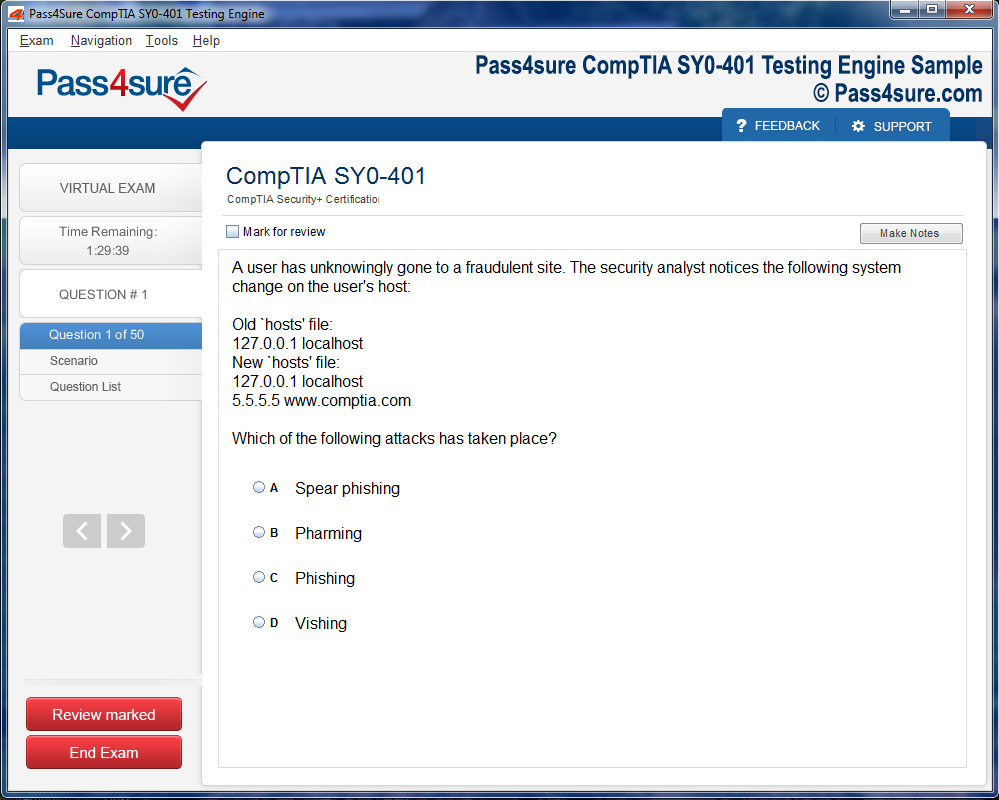
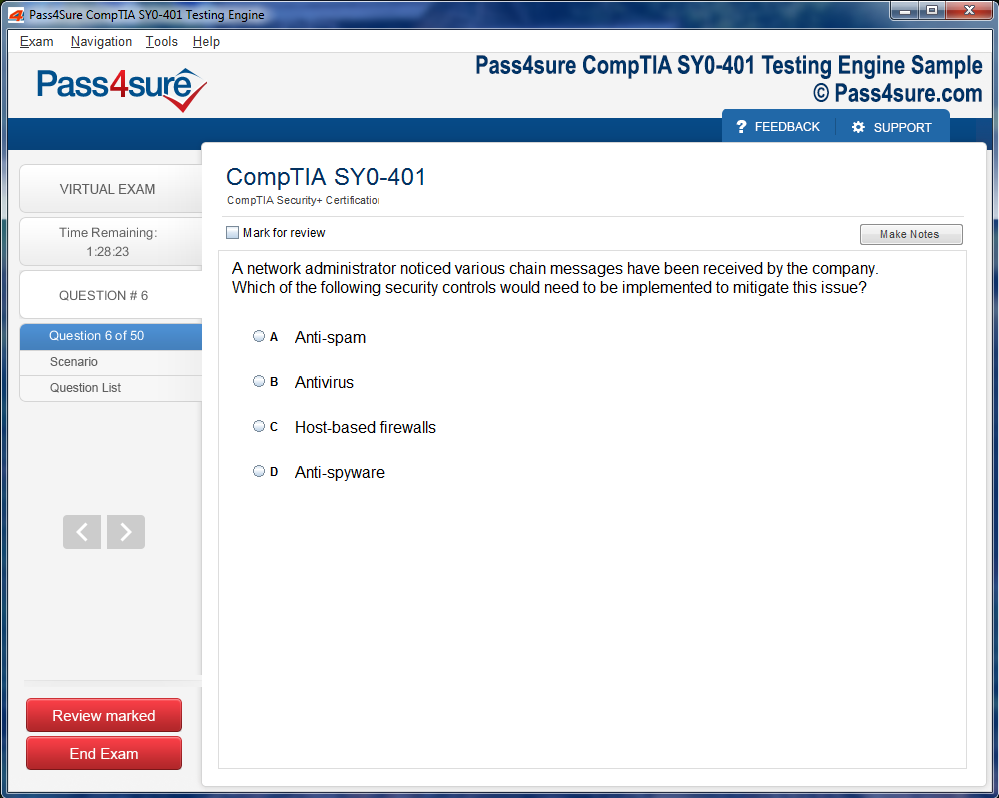
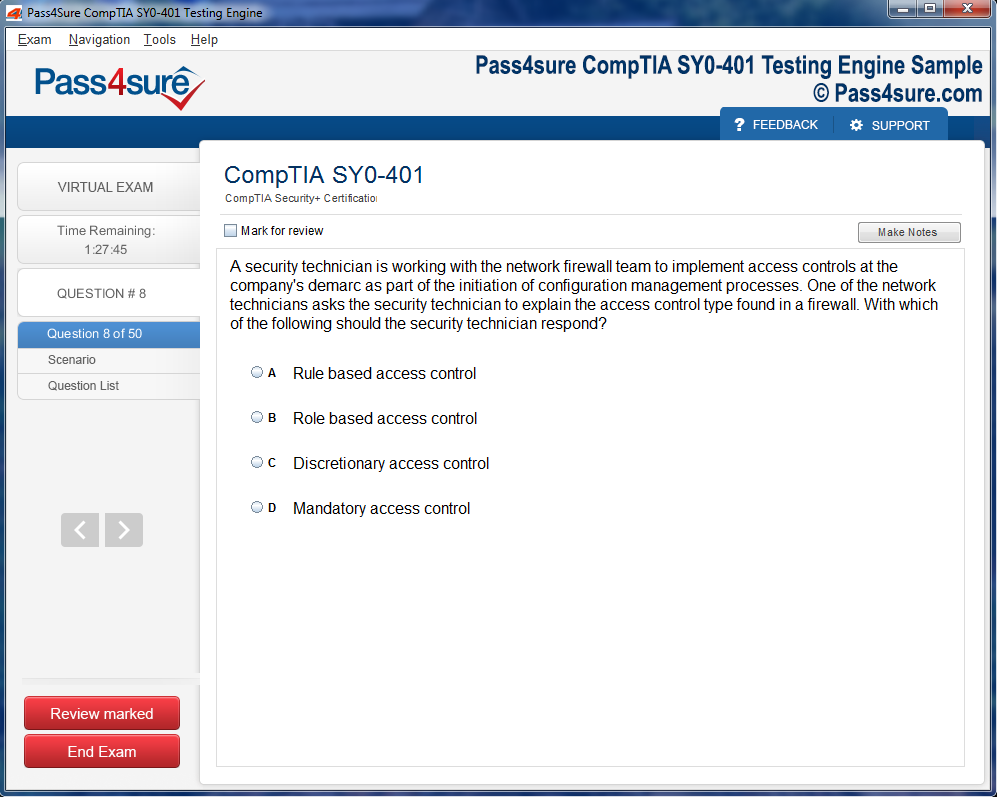
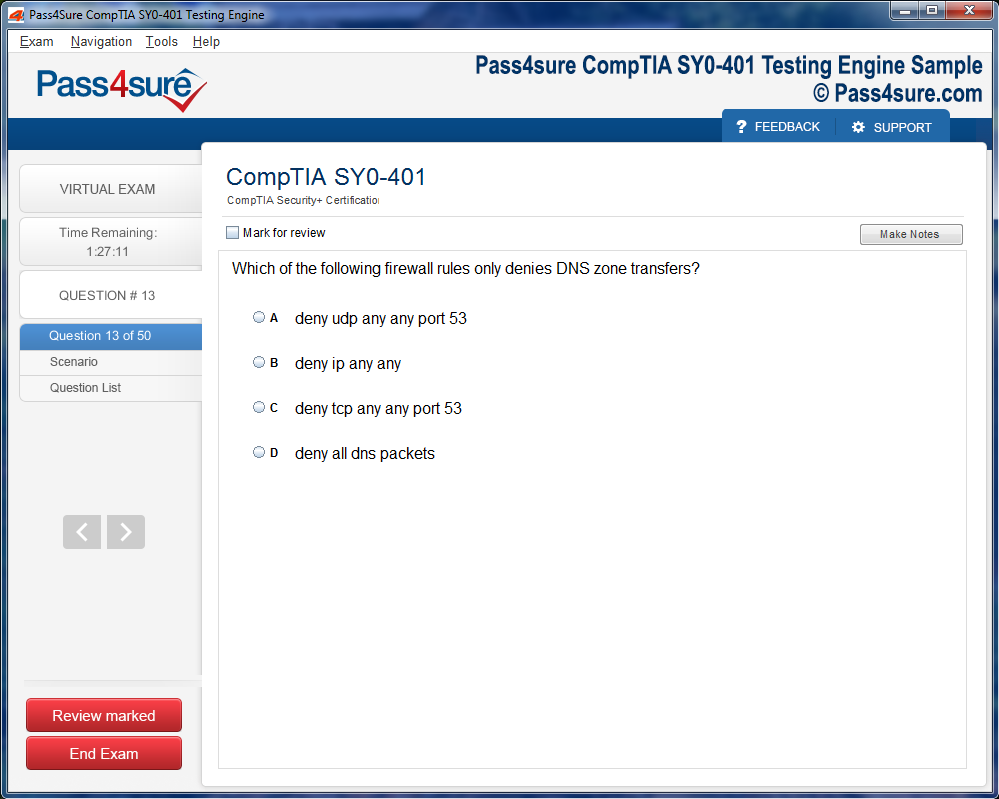
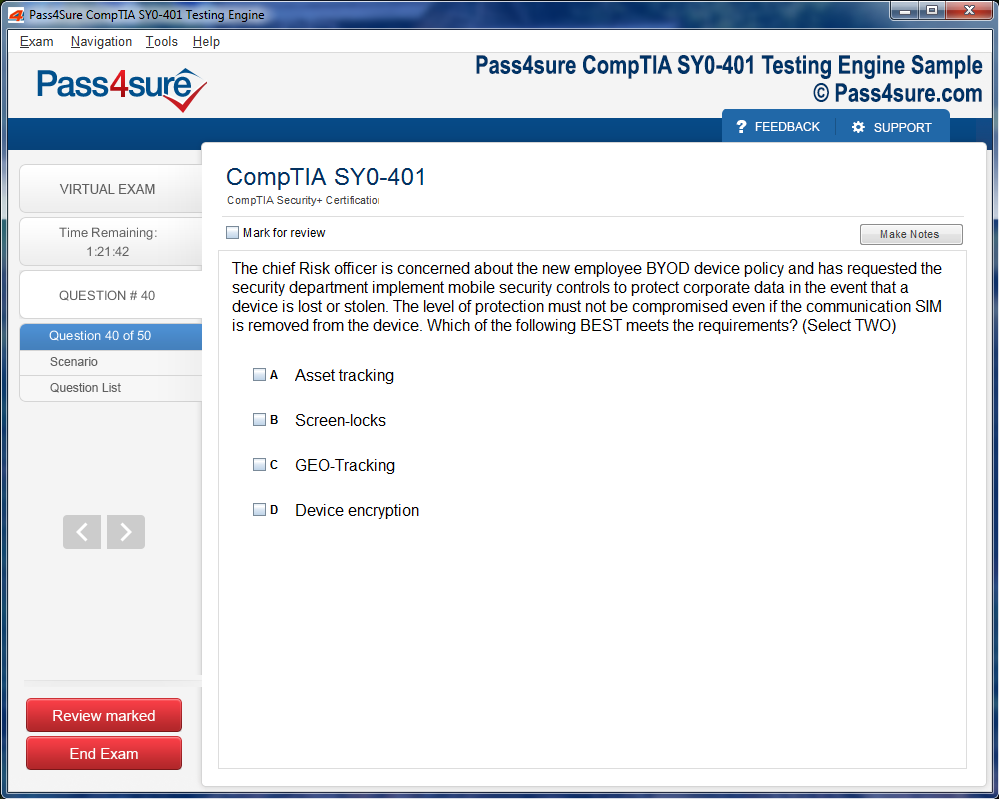
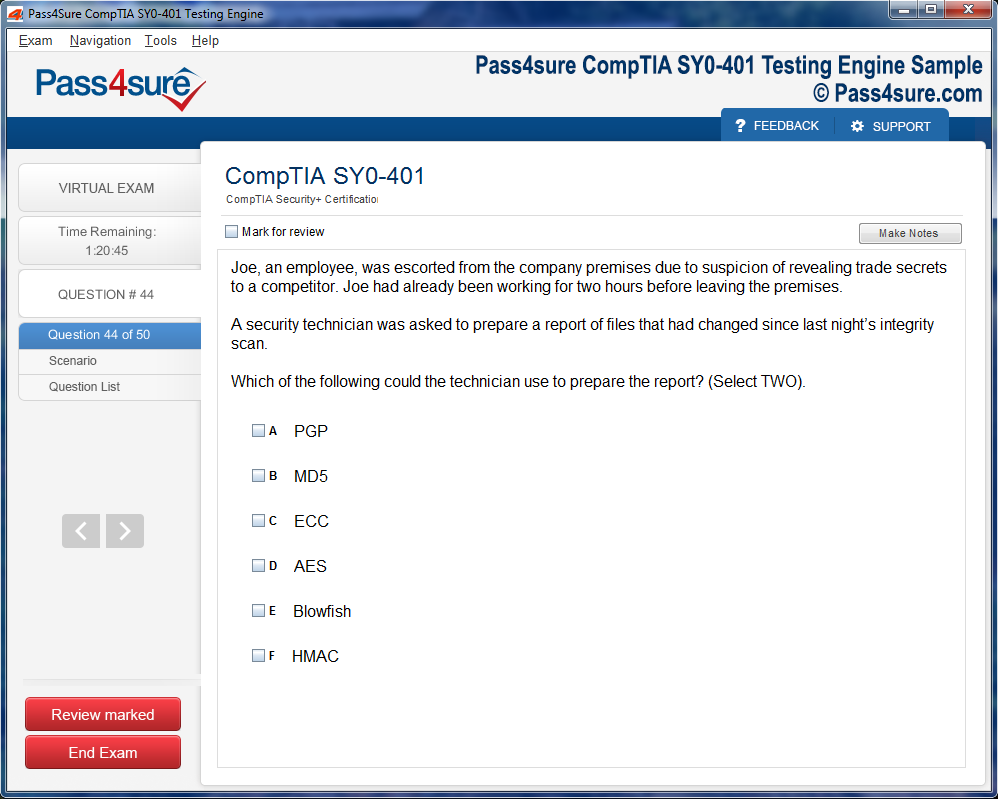
Product Screenshots
Frequently Asked Questions
How does your testing engine works?
Once download and installed on your PC, you can practise test questions, review your questions & answers using two different options 'practice exam' and 'virtual exam'. Virtual Exam - test yourself with exam questions with a time limit, as if you are taking exams in the Prometric or VUE testing centre. Practice exam - review exam questions one by one, see correct answers and explanations.
How can I get the products after purchase?
All products are available for download immediately from your Member's Area. Once you have made the payment, you will be transferred to Member's Area where you can login and download the products you have purchased to your computer.
How long can I use my product? Will it be valid forever?
Pass4sure products have a validity of 90 days from the date of purchase. This means that any updates to the products, including but not limited to new questions, or updates and changes by our editing team, will be automatically downloaded on to computer to make sure that you get latest exam prep materials during those 90 days.
Can I renew my product if when it's expired?
Yes, when the 90 days of your product validity are over, you have the option of renewing your expired products with a 30% discount. This can be done in your Member's Area.
Please note that you will not be able to use the product after it has expired if you don't renew it.
How often are the questions updated?
We always try to provide the latest pool of questions, Updates in the questions depend on the changes in actual pool of questions by different vendors. As soon as we know about the change in the exam question pool we try our best to update the products as fast as possible.
How many computers I can download Pass4sure software on?
You can download the Pass4sure products on the maximum number of 2 (two) computers or devices. If you need to use the software on more than two machines, you can purchase this option separately. Please email sales@pass4sure.com if you need to use more than 5 (five) computers.
What are the system requirements?
Minimum System Requirements:
- Windows XP or newer operating system
- Java Version 8 or newer
- 1+ GHz processor
- 1 GB Ram
- 50 MB available hard disk typically (products may vary)
What operating systems are supported by your Testing Engine software?
Our testing engine is supported by Windows. Andriod and IOS software is currently under development.
Your Roadmap to Cracking the EC-Council CASE Java (312-96) Certification
Preparing for the 312-96 exam resembles embarking on a trek across unpredictable landscapes. One cannot simply wander and hope to reach the destination. The syllabus is the compass that points toward success, guiding every step along the path. Many candidates underestimate its importance, but the truth is, the syllabus is not just a collection of topics—it is the very foundation of the journey. Without understanding it deeply, preparation turns into a gamble. The exam is not designed to reward guesswork; it rewards structured learning rooted in clarity. That is why the first and most critical step is to treat the syllabus as the cornerstone of your expedition.
Understanding the Blueprint Behind the Exam
The 312-96 syllabus functions as the architectural drawing of the exam’s inner workings. Each subject area is chosen with intent, representing skills that matter in practical, real-world scenarios. Candidates who see the syllabus merely as a checklist often miss its deeper message. Every section points toward a competency required of secure application developers.
For instance, secure design principles are not simply theoretical rules; they are the thought patterns of seasoned architects who envision software resilient to attacks. Likewise, input validation is not a trivial line in the document but a protective shield against one of the most exploited weaknesses in software systems.
Understanding the blueprint means appreciating why each topic exists, not just that it exists. By diving into this perspective, aspirants begin to realize the exam mirrors professional responsibilities. The syllabus becomes less of a burden and more of a training ground for future mastery.
Exploring the Core Territories of the Syllabus
The heart of the syllabus revolves around several central domains. Secure design, threat modeling, authentication, session management, error handling, input validation, cryptography, and deployment practices create the backbone of the exam. Each domain plays a distinct role, yet together they weave the complete picture of secure Java application development.
Secure design principles push developers to foresee weaknesses before they take shape. Threat modeling challenges learners to step into an attacker’s shoes, predicting malicious strategies before they cause harm. Authentication and session management highlight the delicate art of controlling access while safeguarding continuity. Error handling reminds us that even mistakes must be managed with care, lest they reveal sensitive information. Input validation, often overlooked, is the silent guardian against malicious inputs disguised as harmless data. Cryptography, with its codes and ciphers, safeguards information from prying eyes. Finally, secure deployment practices ensure that even the most robustly coded system doesn’t falter due to poor environment handling.
These subjects are not isolated islands; they interconnect. A weakness in one area often compromises another. Thus, studying the syllabus holistically rather than piecemeal is vital.
Balancing Study Efforts Across Topics
Many candidates stumble not because they lack intelligence but because they lack balance. Time is finite, and how it is distributed among syllabus topics can make the difference between passing and failing. A common mistake is to give disproportionate attention to topics perceived as either too easy or too difficult. Spending all energy on cryptography while neglecting session management, for example, creates an uneven preparation that exposes vulnerabilities on exam day.
One effective technique is the traffic-light method. Assign green to areas you already know well, yellow to areas of partial understanding, and red to areas that feel alien or intimidating. Then, structure your study plan to focus more on the yellow and red zones while revisiting the green areas occasionally to keep them sharp. This ensures that preparation progresses evenly rather than skewed toward personal preferences. Over weeks of disciplined study, the once-red zones gradually fade into yellow and eventually turn green. Balance, not intensity, drives long-term success.
Turning Theory into Hands-On Mastery
The 312-96 syllabus is not built for passive readers. It demands interaction, experimentation, and applied learning. Reading about input validation is one step, but writing Java code that demonstrates validation in action is where true comprehension blossoms. Deliberately inject flawed inputs, observe the results, then correct the weaknesses. This cycle turns theoretical lessons into muscle memory.
Similarly, explore authentication by building a sample Java web application. Implement weak authentication once, observe how easily it can be bypassed, then harden it using secure practices. The contrast between insecure and secure implementations leaves a lasting impression no textbook can match. Cryptography, too, becomes less abstract when you encrypt and decrypt small datasets with actual libraries, seeing firsthand how security transforms data.
Practical experiments not only embed knowledge but also make the process engaging. Instead of dreading long hours of theory, learners find themselves exploring, tinkering, and enjoying the discovery. This active approach keeps motivation alive even during extended preparation.
Reinforcement Through Writing and Teaching
One of the most powerful yet underutilized methods of learning is re-explaining material. When you attempt to teach a concept—even to an imaginary audience—you are forced to simplify, structure, and articulate your understanding. This process highlights any gaps in knowledge instantly.
Candidates should also consider creating concise notes in their own words for every syllabus topic. Avoid copying verbatim from books. Instead, translate ideas into simpler language that resonates with you personally. This act alone cements comprehension far deeper than rote memorization. When exam day approaches, these notes serve as an efficient revision tool. They are not just pages of text; they are personalized reminders of your journey through the syllabus.
Teaching, summarizing, and note-making transform passive learning into active engagement. They shift the role of the candidate from consumer of knowledge to creator of understanding.
Revisiting the Syllabus with Patience and Rhythm
The journey across the syllabus cannot be completed in a single sweep. Like polishing a gemstone, mastery comes from repeated passes. The first pass focuses on basic familiarity. The second adds examples and deeper practice. The third integrates practice questions and simulated scenarios. By the fourth or fifth pass, the syllabus feels less like an intimidating wall of information and more like a well-traveled road.
Patience becomes the secret companion here. Progress may appear invisible in the short term, but compounded effort reveals its strength over time. Candidates often underestimate the value of rhythm—regular daily engagement with the material rather than irregular bursts of intense study. Even thirty minutes of daily practice outweighs occasional marathon sessions. This rhythm gradually engrains knowledge into long-term memory. The syllabus transforms from daunting territory into a series of familiar pathways.
Connecting Syllabus Mastery to Career Growth
While the immediate goal is clearing the 312-96 exam, the long-term reward lies far beyond certification. Each syllabus topic mirrors real challenges faced in software development. A developer proficient in secure session management or cryptography doesn’t just score higher in an exam but also stands out in the workplace. Employers value professionals who not only write functional code but also ensure its resilience against threats.
Mastering error handling demonstrates foresight. Excelling in secure deployment shows maturity in thinking beyond code. Understanding threat modeling signals strategic awareness of risks. These qualities translate into professional credibility, opening doors to career growth and leadership opportunities. Thus, the syllabus is not a temporary hurdle but a lasting investment in one’s professional identity.
By internalizing its teachings, candidates evolve into practitioners who safeguard digital ecosystems, protect data, and ensure trust in technology. This transformation underscores why approaching the syllabus with diligence matters so deeply.
Crafting a Realistic Schedule
Preparing for the CASE Java exam is not only about memorizing formulas, codes, and theories—it is about creating a sustainable rhythm that carries you steadily toward mastery. Many learners make the mistake of building massive daily goals, promising themselves six to seven hours of uninterrupted study. At first glance, it looks productive. But within a few days, fatigue sets in, concentration fades, and motivation crumbles.
The secret lies in moderation. A realistic schedule does not demand a person’s entire day. Two hours daily, paired with extended but calm sessions on weekends, can be surprisingly effective. What matters more than the number of hours is the consistency with which they are followed. Studying for short but steady sessions builds habits, strengthens recall, and prevents burnout. Just as athletes gradually build stamina, learners gradually build academic resilience when they train daily without overwhelming themselves.
Another hidden advantage of a realistic schedule is flexibility. Life rarely moves in straight lines. Unexpected events arise, moods shift, and responsibilities compete for time. A balanced schedule offers room for adjustment. Missing one session does not collapse the whole structure, and this resilience keeps motivation intact. By accepting human limits, students actually maximize their long-term productivity.
Breaking the Journey into Phases
Looking at the CASE Java syllabus all at once can feel like staring at a mountain whose summit vanishes in the clouds. The weight of so many concepts—data types, inheritance, multithreading, collections, design principles—can cause immediate overwhelm. A strong study plan dissolves this anxiety by slicing the mountain into smaller, climbable segments.
The first phase focuses on exploration. This is not the time to dive into microscopic details. Instead, candidates skim through all key topics, becoming familiar with the landscape. This phase is like mapping a territory before starting the expedition. It builds awareness and prevents sudden shocks later when complex chapters emerge.
The second phase shifts into depth. Now the learner links abstract principles with applied scenarios. Reading code examples, practicing small programs, and solving conceptual questions strengthen connections between theory and practice. By integrating knowledge with real-world relevance, the learner transforms passive understanding into an active skill.
The third phase revolves around reinforcement. Here, the focus is on revision, note summarization, and repeated practice tests. This is the polishing stage, where errors are corrected, gaps are filled, and confidence begins to grow. By dividing preparation into phases, candidates avoid drowning in the enormity of the syllabus. Instead, they celebrate small victories along the way, which fuels momentum toward the ultimate goal.
Time Blocks and Short Breaks
Human minds are not designed for endless concentration. Beyond a certain point, the brain wanders, words blur, and fatigue hijacks memory. That is why strategic use of time blocks is a cornerstone of effective study. Instead of forcing the mind to labor for three or four hours without pause, wise learners divide study into manageable segments.
One well-known rhythm involves 25 minutes of focus followed by a five-minute break. But this is not a rigid rule. Some learners prefer forty minutes of focus with ten minutes of rest. The key principle remains the same: study in bursts, rest briefly, then return with refreshed energy.
Breaks must also be handled wisely. Scrolling through endless posts or watching random videos often devours more time than planned. Instead, breaks should serve as mini-recharges. Standing up to stretch, sipping water, walking a few steps, or practicing slow breathing can renew alertness. These small rituals sharpen concentration for the next session.
This structure transforms long hours into productive segments. Instead of dragging through time, the student feels momentum building. Each block completed feels like an achievement, and the cycle of effort and rest becomes a natural rhythm that carries preparation forward with balance.
Tracking Progress with Indices
One of the quiet killers of motivation is invisibility. When a student studies day after day without visible evidence of advancement, doubt creeps in. “Am I really moving forward? Have I learned enough?” To counter this, a progress-tracking system becomes a motivational compass.
An index can be as simple as a notebook checklist or as structured as a digital spreadsheet. Every topic can be listed with boxes to tick once completed. As the weeks pass, these boxes fill, turning abstract effort into tangible proof of progress. This visual reminder is powerful—it shows the learner not only where they have been but also where they are headed.
Another advantage of indices is clarity. When revision time arrives, the learner does not waste energy guessing which topics remain weak. The index points directly to them. This focused approach saves valuable time and ensures that preparation addresses the right areas.
Progress tracking is more than organization; it is psychology. Humans thrive on progress markers. Just as a runner feels stronger when they see milestones along the track, students feel renewed determination when they see chapters conquered, concepts understood, and practice tests improved.
Integrating Revision Sessions
Revision is often treated like an afterthought, reserved for the final frantic week before the exam. Yet memory does not work that way. Without regular reinforcement, knowledge slips quietly out of the mind. A powerful study plan respects this truth by weaving revision into the entire journey.
A simple strategy involves weekly review days. After six days of new study, the seventh day becomes a consolidation session. Notes are revisited, summaries are written, and weak points are clarified. This practice transforms fragile short-term memory into durable long-term understanding.
Layered revision adds another advantage: familiarity. Each time the learner revisits a concept, the brain strengthens its grip. With enough repetitions, even difficult topics begin to feel natural, as if they have always been part of the learner’s thinking. By the time the exam nears, nothing feels foreign or rushed—it is simply another review of well-traveled material.
Integrating revision from the start also prevents the chaos of last-minute cramming. Instead of drowning in panic, the learner walks into the exam hall calm and prepared, knowing that their knowledge has been reinforced across months, not just days.
Maintaining Mental and Physical Balance
Preparation is not just about the intellect; it is about the body and spirit that sustain it. Many students underestimate how deeply physical habits influence mental clarity. A tired, dehydrated, or undernourished brain cannot process information with precision. That is why lifestyle balance becomes part of the study plan itself.
Sleep is the most underrated ally of memory. During rest, the brain consolidates information, weaving it into lasting patterns. Skipping sleep to squeeze in extra hours often backfires, leaving the learner foggy and unproductive. Consistent sleep cycles, even if shorter, are far more valuable than erratic all-nighters.
Nutrition also plays a subtle role. Heavy, oily meals create sluggishness, while balanced meals rich in vegetables, proteins, and grains provide sustained energy. Hydration is equally crucial. Even mild dehydration can cloud thought processes and slow reaction times. Keeping water nearby during study sessions is a small but powerful habit.
Physical activity keeps both body and mind resilient. Simple stretches, brisk walks, or short exercise sessions pump oxygen through the body and sharpen focus. This balance between academic intensity and bodily care forms the hidden foundation of successful preparation. Without it, even the most detailed study plan risks collapse.
The Role of Accountability
Discipline is powerful, but it is not limitless. There are days when motivation wanes, when distractions seem irresistible, and when progress feels impossible. In such moments, accountability acts as a lifeline. Sharing study goals with another person creates a sense of responsibility beyond the self.
This accountability can take many forms. Some students form study partnerships where they share progress, quiz each other, or exchange notes. Others join supportive groups where everyone tracks their daily efforts. Even something as simple as telling a friend or family member about your study schedule can add a layer of external motivation.
The magic of accountability is psychological. When someone else knows your plan, skipping a session feels like breaking a promise—not only to yourself but also to them. This subtle pressure transforms discipline into commitment. Over time, accountability partners become sources of encouragement, helping each other through difficult chapters and celebrating milestones together.
By blending internal drive with external accountability, learners create a sturdy framework that keeps them moving forward, even when personal willpower falters.
Transforming Effort into Confidence
The greatest outcome of a structured study plan is not merely knowledge but the transformation of mindset. When preparation is guided by phases, reinforced by revision, supported by healthy habits, and tracked with clarity, the learner begins to feel a quiet confidence building.
Confidence is not arrogance—it is the calm assurance that comes from preparation. By exam day, the candidate no longer feels like a nervous student scrambling for answers. Instead, they feel like a skilled practitioner, ready to demonstrate what they have steadily mastered. This shift changes the entire exam experience. Questions are approached with composure, time is managed wisely, and even unexpected challenges are faced with resilience.
This transformation does not happen overnight. It emerges from months of disciplined effort, from showing up daily, from respecting the process. Effort slowly crystallizes into self-belief, and self-belief becomes the ultimate tool that carries the learner through the exam.
Harnessing the Value of Practice Tests
No matter how devotedly one prepares, theory alone often collapses when it meets the intensity of a timed examination. The 312-96 exam demands more than passive memorization; it requires agility, focus, and resilience under pressure. Practice tests, therefore, become more than just supplementary tools. They act as the engine that transforms raw knowledge into applicable skills, guiding learners through the unpredictable landscape of real exam conditions.
Simulating the Real Environment
A learner who only indulges in reading guides may stumble when confronted with 50 sudden questions bound by a strict 120-minute countdown. Books provide knowledge, but practice tests breathe life into that knowledge by simulating the authentic rhythm of examination halls. They reconstruct the scenario where each tick of the clock matters, nudging the mind to think fast without crumbling.
Every simulation builds psychological familiarity. When a candidate faces this timed environment repeatedly, the unknown begins to shrink. What once felt like chaos becomes routine. Practice tests rewire the brain, conditioning it to stay calm, alert, and unshaken when the final paper arrives. By transforming tension into habit, simulations ensure preparedness transcends theory.
Identifying Strengths and Weaknesses
Perhaps the most remarkable gift of practice tests is their diagnostic ability. Every score sheet acts like a mirror, reflecting not just knowledge but also gaps. While a textbook may assure one of complete coverage, only a simulated exam can unveil where the armor is thin.
This feedback is not a verdict; it is a compass. When results highlight weaknesses, candidates can focus energy on fragile areas instead of recycling what is already mastered. This precision reshapes the study strategy into a sharper, leaner plan. Over time, every weakness converted intoa strength strengthens overall confidence. The process ensures that preparation is not just wide but also deep.
Overcoming Exam Anxiety
Anxiety thrives in uncertainty. Walking into an exam hall for the first time without ever testing oneself feels like stepping into darkness. The heart races, the palms sweat, and the mind falters. Yet, repeated exposure through practice tests acts as light in that darkness.
By rehearsing the exam multiple times, candidates normalize the experience. Each attempt dissolves a portion of fear, replacing it with familiarity. The once-intimidating silence of an exam session begins to feel like a routine exercise. This psychological shift transforms nervousness into determination. With anxiety neutralized, focus sharpens, and performance naturally elevates.
Building Stamina and Speed
Knowledge alone cannot defeat the exam clock. Time becomes a silent rival, ticking away as questions stack up. Even the most prepared mind may stumble if pacing is ignored. Practice tests train the candidate to measure not just accuracy but also speed.
Every attempt is a workout for mental stamina. Just as athletes train their bodies to endure long matches, learners must train their minds to sustain two hours of unbroken concentration. Each practice run strengthens endurance, making it easier to think clearly under the weight of time. Speed, too, becomes instinctive. Candidates learn when to move swiftly, when to pause, and when to return later. This cultivated balance ensures that no question is left untouched, and no minute is wasted.
Strategic Use of Results
Chasing perfect scores on the first attempt is unnecessary and unwise. The true power of practice tests lies not in the number printed at the end but in the story that number tells. Each result becomes a guide, pointing toward what demands attention.
Instead of frustration, candidates should treat every mistake as a teacher. Strengths deserve celebration, but weaknesses demand dedication. By the third or fourth round of testing, the gradual climb in scores creates visible progress. This progression builds trust in one’s own preparation, transforming fear into assurance. By the time the actual exam arrives, confidence no longer needs to be borrowed; it is earned through repeated proof.
Cultivating Exam Discipline
Beyond knowledge, beyond pacing, practice tests instill a rare form of discipline. They train the mind to follow patterns: reading instructions carefully, eliminating distractions, marking difficult questions for later review, and managing time across sections. This routine becomes muscle memory, guiding candidates through the paper with a steady rhythm.
Discipline also emerges in emotional control. Practice tests teach when to let go of a stubborn question instead of wasting precious minutes. They cultivate patience in revisiting flagged items, ensuring rashness does not lead to errors. This mastery of process, as much as mastery of content, becomes a defining advantage.
Sustaining Motivation Through Measurable Growth
Preparation often feels endless, and fatigue can weaken determination. Practice tests counter this exhaustion by offering visible markers of progress. Watching scores rise fuels motivation, reminding candidates that their effort yields results. Each attempt becomes proof of growth, each improvement a reason to persist.
The structured cycle of testing and reviewing creates momentum. Instead of wandering blindly through study materials, learners see concrete evidence of advancement. This sense of achievement is powerful fuel, driving preparation forward even during low moments. Motivation, once fragile, becomes unshakable.
Expanding Job Opportunities
In the realm of modern technology, opportunities rarely present themselves without proof of capability. The CASE Java certification acts as a distinctive emblem of mastery, enabling candidates to stand out in a crowded field of software engineers. Recruiters and hiring managers view this credential as a tangible symbol of advanced understanding in secure development. It reassures them that the professional has not only theoretical comprehension but also the discipline to pursue deeper levels of expertise.
For aspirants seeking careers in secure software engineering, penetration testing, or auditing of codebases, this certification functions as a direct passport. Companies entrusted with sensitive data are perpetually seeking individuals who can design, review, and reinforce their systems against unseen threats. In such scenarios, the presence of a CASE Java certification instantly tilts decisions in favor of the candidate.
This elevated recognition does not remain confined to large corporations alone. Smaller organizations and startups—though leaner in resources—are increasingly valuing certified talent. They perceive it as insurance against risks that could prove catastrophic. For job seekers, this translates to an expanded horizon where both established enterprises and ambitious startups become viable options. Opportunities are no longer limited by the size or reputation of the organization, but rather broadened by the credentials themselves.
Beyond immediate employment, the certification enhances mobility. A professional may start in development but, armed with security-focused knowledge, seamlessly transition into auditing, compliance, or consultancy. In a marketplace where adaptability dictates longevity, such flexibility becomes invaluable. The reward here is not merely employment but the freedom to chart a varied and resilient career trajectory.
Enhancing Earning Potential
Remuneration has always been an area where credentials exert an undeniable influence. While talent and dedication are critical, certifications often act as multipliers of earning power. For individuals holding the CASE Java certification, salary discussions no longer revolve around mere claims of competence. They become anchored in verifiable accomplishment.
Employers appreciate efficiency in decision-making. A credential eliminates doubt about skill level, allowing organizations to confidently invest in professionals. That confidence translates into higher initial offers, greater annual increments, and opportunities for bonuses tied to specialized knowledge. Certified individuals regularly find themselves in a favorable position during negotiations, not because of empty persuasion but because their certification substantiates every argument.
The difference in compensation often extends beyond direct salary. Certified professionals frequently enjoy broader benefits packages, from training allowances to performance-based incentives. Companies are keen to retain individuals whose expertise guards them against costly breaches and compliance failures. Therefore, they create structures that make such professionals feel valued and rewarded.
Moreover, the earning potential is not restricted to full-time employment. Freelancers and independent consultants armed with this certification can demand higher rates for their services. Clients prefer to entrust critical projects to someone with recognized expertise, and they are often willing to pay premiums for that assurance. This capacity to command respect in both employment and freelance ecosystems makes the certification a versatile tool for financial growth.
For many, the true reward lies not only in immediate paychecks but also in long-term stability. Certified individuals develop reputations that follow them across roles and organizations. That reputation continuously compounds into better offers, more lucrative projects, and a steady climb up the financial ladder.
Building Professional Credibility
Professional credibility is an intangible yet powerful currency in any industry. In the competitive world of software and cybersecurity, where trust is everything, credibility becomes indispensable. The CASE Java certification distinctively cultivates this.
Colleagues recognize the dedication required to achieve such a milestone. It is not a credential earned casually; it demands discipline, study, and perseverance. When peers notice someone undertaking this challenge and emerging successful, respect naturally follows. That respect often translates into collaboration opportunities, where certified professionals are sought out for their judgment and input.
Managers and leaders also place amplified trust in certified employees. When projects involve sensitive operations—such as securing applications handling financial transactions or personal data—they prefer entrusting responsibilities to those who have demonstrated formal mastery. This leads to greater involvement in mission-critical tasks, giving certified professionals exposure to challenges that expand both skills and reputation.
Credibility does not stagnate; it accumulates over time. Each successful project, completed under the guidance of a certified engineer, strengthens that individual’s standing. Eventually, it creates pathways toward leadership roles, mentorship opportunities, and decision-making positions. The certification thus becomes more than a credential—it becomes a foundational stone upon which enduring professional trust is built.
Beyond organizations, credibility also extends to the broader industry. Conferences, workshops, and professional gatherings often feature certified individuals as speakers or panel contributors. Their insights are welcomed not merely because of their knowledge but because of the validation that certification represents. This visibility further strengthens professional credibility, ensuring that the recognition transcends internal teams and reaches across industries.
Networking with Experts
The professional journey is rarely a solitary one. Connections, collaborations, and mentorships often decide the pace of growth. The CASE Java certification brings with it entry into a global network of like-minded experts. This community is not limited to one region or one sector but stretches across countries, industries, and disciplines.
Within this network, professionals exchange insights that are often unavailable through textbooks or courses. Real-world experiences—such as how to respond to an emerging cyber threat or manage vulnerabilities in live systems—become accessible through peer-to-peer learning. For the certified individual, this means constant exposure to cutting-edge practices and collective wisdom.
Networking also unlocks tangible opportunities. Job postings, project collaborations, and consultancy roles often circulate within these communities before reaching the public domain. Being part of such a group increases the likelihood of seizing unique opportunities that others may never even hear about.
The mentorship aspect is equally invaluable. Experienced professionals frequently guide newer members, sharing strategies for handling complex challenges or advancing careers. This mentorship accelerates growth, helping certified individuals avoid pitfalls and adopt proven methods. For many, the value of the certification extends far beyond the paper credential, finding its true essence in these human connections.
In an industry that evolves rapidly, the network also acts as a safety net. Professionals can rely on peers to provide updates, warnings, and advice about changing technologies, regulations, or attack patterns. This collective awareness strengthens each member, making the entire community more resilient. Thus, networking becomes not just a side benefit but a powerful force that amplifies the rewards of certification.
Lifelong Learning Mindset
Perhaps the most profound reward of achieving CASE Java certification lies in the transformation of mindset. Preparing for such an exam is not a task that can be achieved through memorization alone. It requires analytical thinking, problem-solving, and disciplined study habits. Through this process, candidates cultivate a systematic approach that extends beyond the exam into every professional challenge.
This mindset values continuous growth. Certified individuals rarely remain static in their careers. The discipline instilled during preparation drives them to pursue new tools, frameworks, and methodologies long after the exam is over. This ongoing learning ensures relevance in an industry where technologies shift at breathtaking speed.
Furthermore, the security-first perspective embedded in the certification shapes every decision made in software development. Professionals begin to design systems with safety woven into their foundations rather than as an afterthought. This approach not only improves the quality of their work but also reduces long-term risks for organizations that rely on them.
A lifelong learning mindset also encourages adaptability. Whether facing evolving programming paradigms or shifting industry regulations, certified individuals respond with curiosity rather than resistance. They treat each new challenge as an opportunity to expand their skills, ensuring that their value grows alongside the industry itself.
The ripple effects of this mindset touch personal growth as well. The resilience, discipline, and problem-solving abilities developed during preparation enhance confidence in handling challenges beyond professional life. In this way, the certification does more than shape a career; it shapes the character of the individual.
Transformation Through Discipline
Behind every certificate lies a story of preparation, and within that story lies discipline. The process of studying for the CASE Java exam is rigorous, demanding not only technical comprehension but also endurance. Candidates learn to manage time effectively, balance competing priorities, and stay consistent despite distractions.
This discipline becomes transformative. Professionals who may have previously approached learning casually develop structured methods. They set goals, break them into manageable tasks, and monitor progress with determination. Such habits do not fade after the exam—they become ingrained. In future projects, certified individuals apply the same structured thinking to solve complex problems, streamline processes, and guide teams.
Discipline also breeds confidence. Knowing that one has successfully navigated the challenges of preparation instills assurance when facing new difficulties. That confidence radiates in interactions with peers and managers, creating a reputation for reliability. Over time, this reputation opens doors to responsibilities and opportunities that require unwavering dedication.
Thus, beyond the knowledge gained, the journey itself becomes a reward. It molds professionals into individuals who embody resilience, focus, and determination—qualities that carry immense value across every domain of life.
Becoming Guardians of the Digital World
In today’s interconnected environment, digital systems form the backbone of society. With that reliance comes vulnerability, as malicious actors constantly probe for weaknesses. Professionals who achieve CASE Java certification emerge as more than developers; they become protectors of this digital fabric.
By mastering secure coding principles and embedding them into applications, certified individuals directly contribute to safeguarding users’ data. Their work ensures that financial transactions remain confidential, healthcare records stay private, and critical infrastructures function reliably. In a world where breaches can disrupt economies, such contributions cannot be overstated.
This guardian role also carries prestige. Society increasingly recognizes the importance of cybersecurity, and professionals capable of defending digital environments enjoy a sense of responsibility that elevates their work beyond routine tasks. Their role blends technical mastery with moral duty, creating a profound sense of purpose.
The transformation is evident not only in the professional sphere but also in personal outlook. Certified individuals develop heightened awareness of digital risks, influencing how they protect their own information and guide those around them. They become advocates for safer practices, extending their impact from organizations to communities.
Ultimately, this guardian identity distinguishes certified professionals as contributors to a safer digital future. They do not merely write code—they defend trust, protect privacy, and preserve the integrity of systems upon which modern life depends.
Unlocking the Path to Becoming a Certified Application Security Engineer
Stepping into the domain of application security is not a casual decision; it is a professional journey. It requires dedication, structured study, and an adaptable mindset capable of handling modern cyber challenges. For Java developers who wish to stand apart as security-conscious professionals, the CASE Java certification exam, also known as 312-96, becomes a defining milestone.
Unlike many exams that rely heavily on memorization, this test demands proof of practical understanding. Candidates are expected to think like real engineers who not only write functional code but also weave security into its foundation. With two hours to complete fifty questions and a requirement of seventy percent to pass, the numbers appear manageable. Yet beneath this surface lies an intricate challenge, demanding precision and preparation.
This path is not merely about clearing an exam. It is about reshaping one’s professional approach. A programmer becomes more than a creator of code; they transform into a defender of digital systems, someone trusted to protect the software skeleton of organizations.
Certification Becomes a Defining Mark
In today’s age, software applications have become the life force of nearly every industry. They power financial systems, medical platforms, educational portals, communication channels, and entertainment networks. When these applications are secure, they enable growth and trust. When they are vulnerable, the consequences can be devastating.
The CASE Java credential verifies that a professional has mastered the art of secure coding. It demonstrates an ability to foresee threats, detect weaknesses, and design applications that withstand attacks. This distinction carries weight. Employers, managers, and clients recognize certified engineers as professionals who can be trusted with sensitive systems.
The influence of this certification extends beyond career advancement. During preparation, learners acquire habits that shape their daily work: cautious handling of user input, structured thinking about access control, and awareness of how even small oversights may open doors for attackers. These habits stay long after the exam is over, embedding themselves into one’s professional DNA.
Building the Foundation Before the Climb
Every strong building rests on a solid foundation. Similarly, preparing for the CASE Java exam requires strengthening basic knowledge first. Without these fundamentals, advanced topics feel overwhelming.
The essential groundwork includes understanding Java concepts thoroughly, becoming familiar with application design models, and learning about common vulnerabilities. Knowing how a buffer overflow occurs, why SQL injection is dangerous, or how session hijacking unfolds gives candidates a necessary edge.
Equally important is learning the exam’s format early. Some candidates underestimate the challenge by assuming their everyday programming experience is enough. But the exam is not about syntax; it is about integrating security into design and implementation. Reading the blueprint of the test helps avoid unnecessary surprises.
Skipping the foundation stage is like trying to solve a puzzle without first looking at the picture. Candidates who build strong basics move through advanced sections more smoothly and can dedicate energy to problem-solving rather than catching up on fundamentals.
Crafting a Study Plan That Truly Works
A scattered approach rarely leads to success. Preparation for a professional exam like CASE Java must be systematic. Designing a personal study plan becomes the first serious step toward mastery.
The syllabus is wide, covering topics from secure software lifecycle principles to handling advanced vulnerabilities. Breaking this into smaller, manageable segments prevents overwhelm. For example, one week may be devoted to input validation, another to secure error handling, and another to authentication practices. By progressing in chunks, learners cover the entire scope without losing focus.
Allocating fixed daily hours is equally important. Even two focused hours each day can produce remarkable results when maintained consistently. The secret lies in persistence. Sporadic bursts of study followed by long gaps often lead to forgetting more than learning.
Flexibility also plays its part. Life can interfere, and rigid schedules sometimes break under pressure. A practical plan accommodates rest, exercise, and personal time. A refreshed mind absorbs information far more efficiently than an exhausted one.
Harnessing the Power of Notes and Organized Indices
The difference between passive reading and active learning often determines success. Simply scanning through chapters creates the illusion of progress but does little to solidify knowledge. Writing down ideas, drawing flowcharts, or creating mini case studies engages the brain deeply, ensuring information is not only remembered but understood.
Notes also form a personalized revision tool. Before the exam, revisiting a self-written summary is far more effective than reopening lengthy textbooks. This method saves time and reinforces concepts with clarity.
Another powerful technique is indexing. Imagine a chart divided into mastered topics, semi-clear areas, and weak zones. Such a visual tool allows candidates to track their journey in real-time. It highlights progress while revealing where extra effort is required. By moving weak zones upward step by step, aspirants ensure balanced preparation.
These small habits transform preparation into a dynamic, interactive process rather than a dull routine. Over time, they create a sense of confidence—confidence that becomes visible on exam day.
Lifestyle Adjustments That Strengthen Preparation
Many aspirants ignore lifestyle while preparing, focusing solely on study hours. But the truth is that the human brain functions best when the body is nurtured. Preparing for CASE Java is as much a physical test as it is intellectual.
Healthy nutrition plays a crucial role. Protein-rich meals provide steady energy for concentration. Fruits, vegetables, and proper hydration keep the body active while preventing fatigue. Neglecting diet often leads to sluggishness, reducing efficiency despite long study hours.
Short exercise sessions or simple stretching breaks refresh the mind. They prevent stiffness from prolonged sitting and increase blood circulation, leading to sharper focus. Maintaining a proper posture while studying also prevents long-term discomfort.
Sleep is non-negotiable. Sacrificing rest may give the illusion of more study time, but the brain’s ability to retain information declines sharply without adequate sleep. A rested candidate learns faster and recalls better. In essence, lifestyle choices act as silent partners in success, supporting intellectual effort at every step.
Why Practice Tests Transform Preparation into Readiness
Covering the syllabus thoroughly gives a sense of completion, but it does not guarantee exam readiness. Real readiness emerges only when knowledge is tested under pressure. Practice exams provide this environment, acting as a mirror that reflects strengths and weaknesses.
By simulating the actual test conditions, practice exams teach time management. Two hours can feel surprisingly short when facing complex questions. Without practice, candidates may spend too long on certain sections, leaving others rushed. Repeated simulations train the brain to allocate time wisely.
Practice also strengthens mental endurance. Sitting through fifty challenging questions in one stretch requires focus and patience. The first attempt often feels draining, but with each simulation, the mind adapts to the pressure.
Another advantage is discovering weak areas. A candidate might feel confident in secure design principles but struggle with session management scenarios. Identifying such blind spots early gives room for improvement. With repeated practice, weak spots shrink until overall preparation becomes balanced and strong.
The Long-Term Impact of Certification
Earning the CASE Java certification is more than collecting a paper credential. It is a statement of expertise and a declaration of professional seriousness.
Employers value certified professionals because they bring trustworthiness to critical projects. This recognition often translates into better roles, leadership opportunities, and higher pay. Yet beyond the material benefits, the certification connects individuals to a wider professional network. Being part of a global group of certified engineers opens doors to knowledge-sharing, mentorship, and collaboration.
The most meaningful reward, however, is personal transformation. Through preparation and certification, a candidate learns to think beyond functionality and adopt a security-first mindset. They begin to view coding not just as building features but as protecting digital ecosystems. Their work contributes to safeguarding industries, customers, and societies from cyber threats.
Such professionals are more than employees; they are custodians of trust in an interconnected world. Their influence stretches beyond the workplace, shaping a safer digital future for all.
Conclusion
The path to becoming an EC-Council Certified Application Security Engineer through the 312-96 exam is not a simple undertaking. It requires discipline, planning, and a clear vision of why security matters in today’s technology-driven world. Yet for those willing to take the challenge, the journey offers not just an exam credential but a transformation of mindset, skillset, and professional identity.
Across the preparation stages, one lesson becomes clear: success in the 312-96 exam does not rest on hard work alone. It comes from working with intelligence, structure, and foresight. Understanding the exam parameters, exploring the syllabus in depth, and organizing a study plan provide the foundation for progress. These early steps ensure that effort is not wasted and that candidates move with direction instead of wandering.
The syllabus itself forms the backbone of preparation. Its wide range of topics—covering secure design, session management, input validation, cryptography, and more—mirrors the challenges professionals will face in the real world. By patiently dissecting and revisiting each area, candidates cultivate knowledge that extends far beyond exam halls. Every subject mastered equips them to tackle genuine software security issues in their future careers.
A structured study plan then turns ambition into daily action. Without discipline, even the most motivated learner can lose track. But with realistic schedules, consistent revision, and lifestyle adjustments such as proper rest, nutrition, and hydration, candidates discover sustainable momentum. The process also teaches resilience, balance, and the ability to learn strategically—qualities that extend into all areas of professional life.
Practice tests emerge as the turning point in preparation. They convert theory into application, knowledge into confidence, and anxiety into assurance. Reliable platforms like EduSum.com ensure candidates train with authentic scenarios, allowing them to measure progress accurately and refine weak areas. Through repetition, stamina grows, pacing improves, and the idea of facing 50 questions in 120 minutes shifts from intimidating to manageable.
The reward for this dedication is far more than a passing score. Earning the CASE Java certification elevates professional standing, increases job opportunities, and strengthens salary prospects. It builds credibility with peers and managers, while also connecting certified engineers to a global network of experts. But perhaps the greatest reward lies in the inner transformation. Candidates evolve from developers who write code to engineers who think about security at every level of design, development, and deployment. They become protectors of trust in a digital age where vulnerabilities can have devastating consequences.
In the end, the 312-96 exam is not just a test of memory or technical skill. It is a proving ground for determination, focus, and vision. Those who complete it successfully step forward as ambassadors of secure software engineering, ready to influence industries, safeguard systems, and inspire others to value security as an inseparable part of innovation. The journey is challenging, but the destination offers both professional prestige and the satisfaction of contributing to a safer digital world.
Top ECCouncil Exams
- 312-50v13 - Certified Ethical Hacker v13
- 212-89 - EC-Council Certified Incident Handler
- 312-39v2 - Certified SOC Analyst (CSA) v2
- 312-38 - Certified Network Defender
- 312-85 - Certified Threat Intelligence Analyst
- 312-49v11 - Computer Hacking Forensic Investigator
- 712-50 - EC-Council Certified CISO
- 312-50v12 - Certified Ethical Hacker v12 Exam
- ICS-SCADA - ICS-SCADA Cyber Security
- 312-40v2 - Certified Cloud Security Engineer (CCSE) v2
- 312-39 - Certified SOC Analyst
- 212-82 - Certified Cybersecurity Technician
- 312-97 - Certified DevSecOps Engineer (ECDE)
- 312-50 - CEH Certified Ethical Hacker (312-50v9)
- 312-49v10 - Computer Hacking Forensic Investigator
- 312-96 - Certified Application Security Engineer (CASE) - JAVA
- 312-40 - Certified Cloud Security Engineer
- 312-76v3 - EC-Council Disaster Recovery Professional
- 312-49 - Computer Hacking Forensic Investigator