

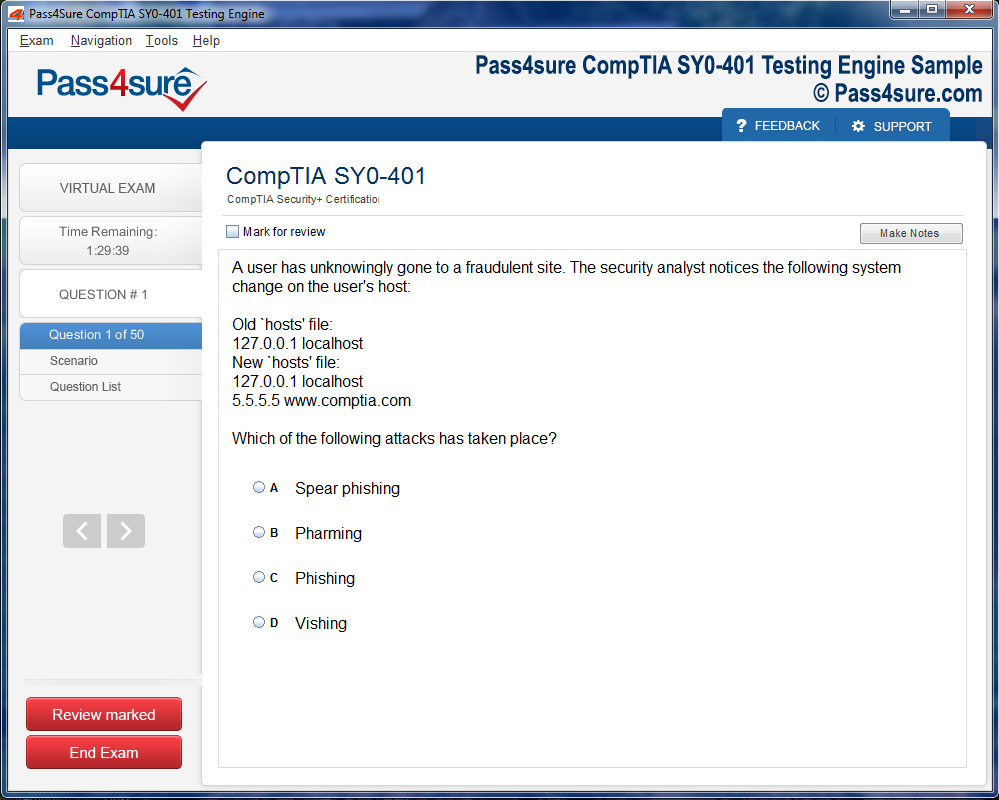
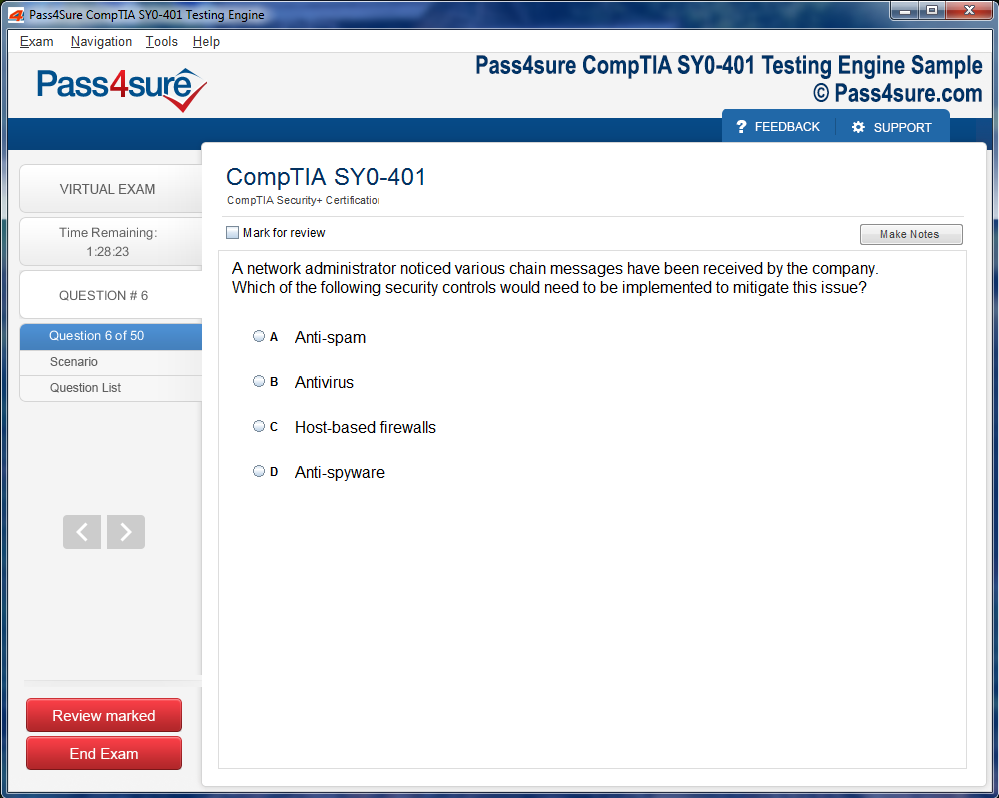
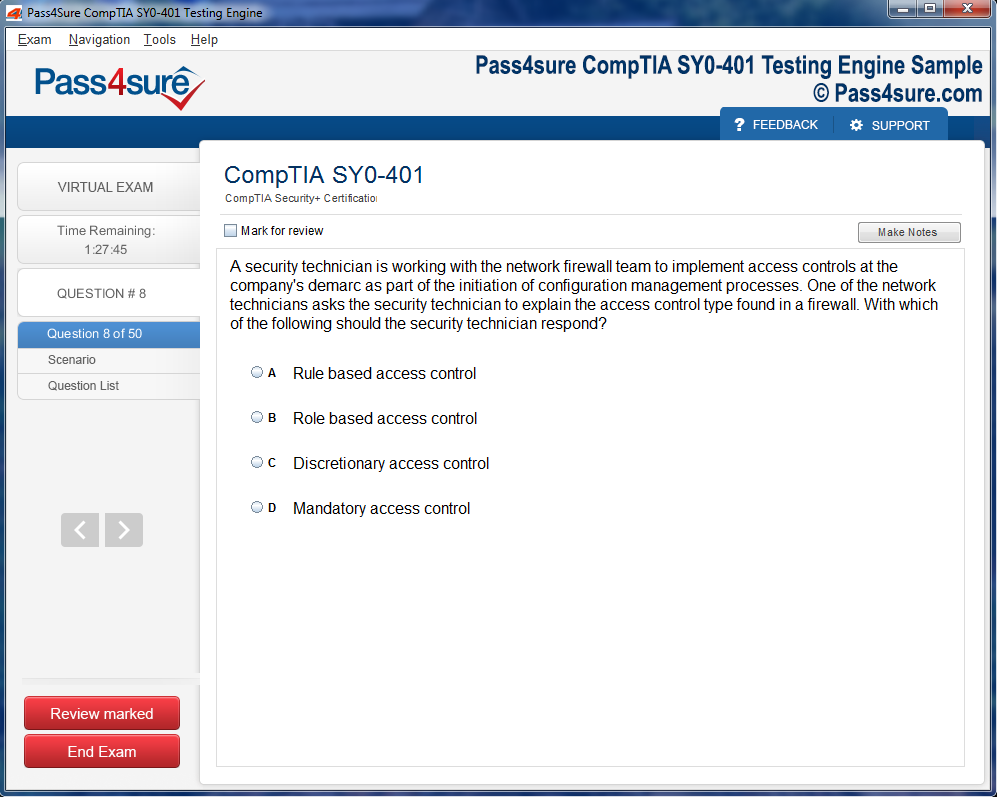
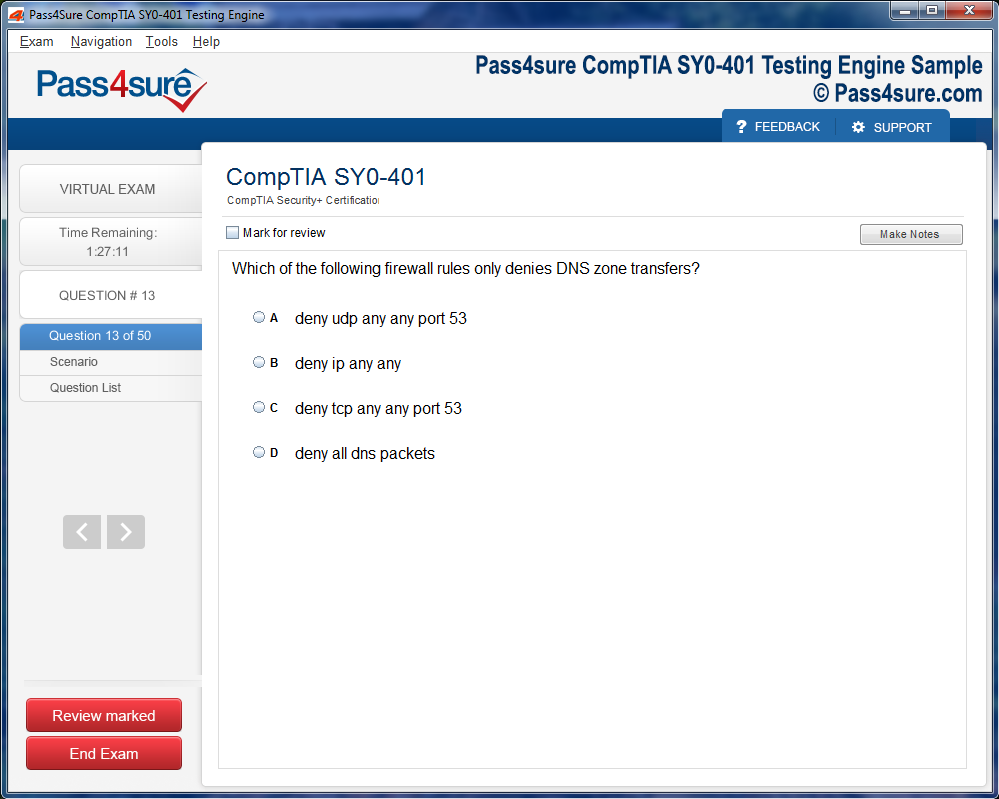
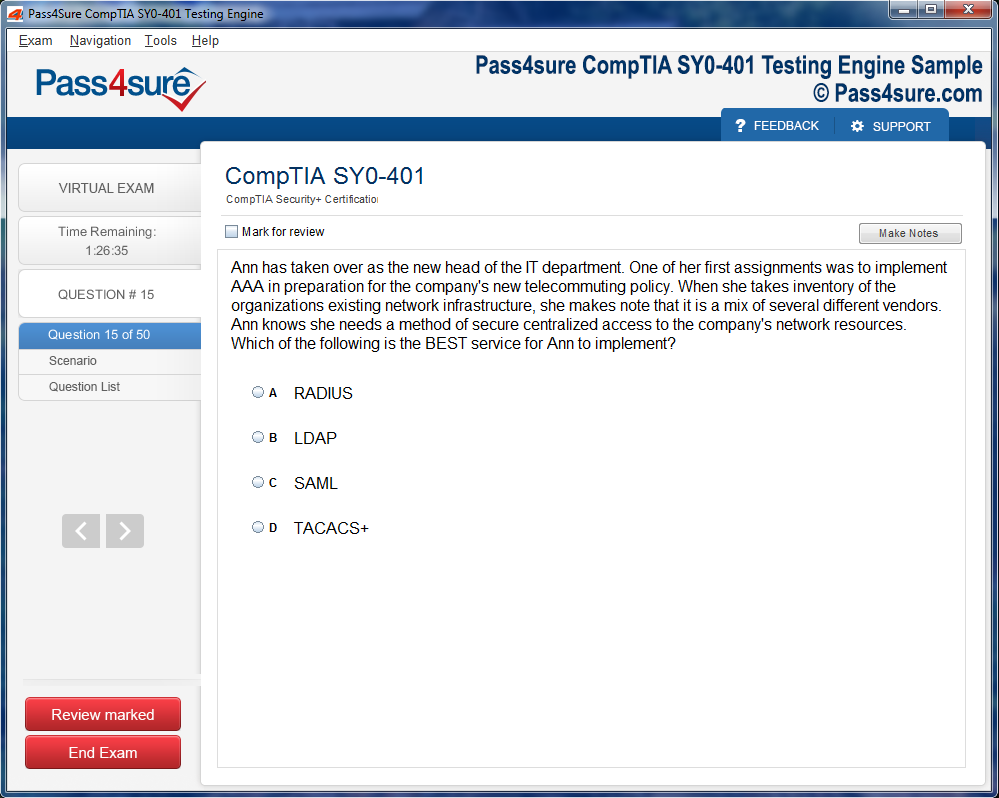
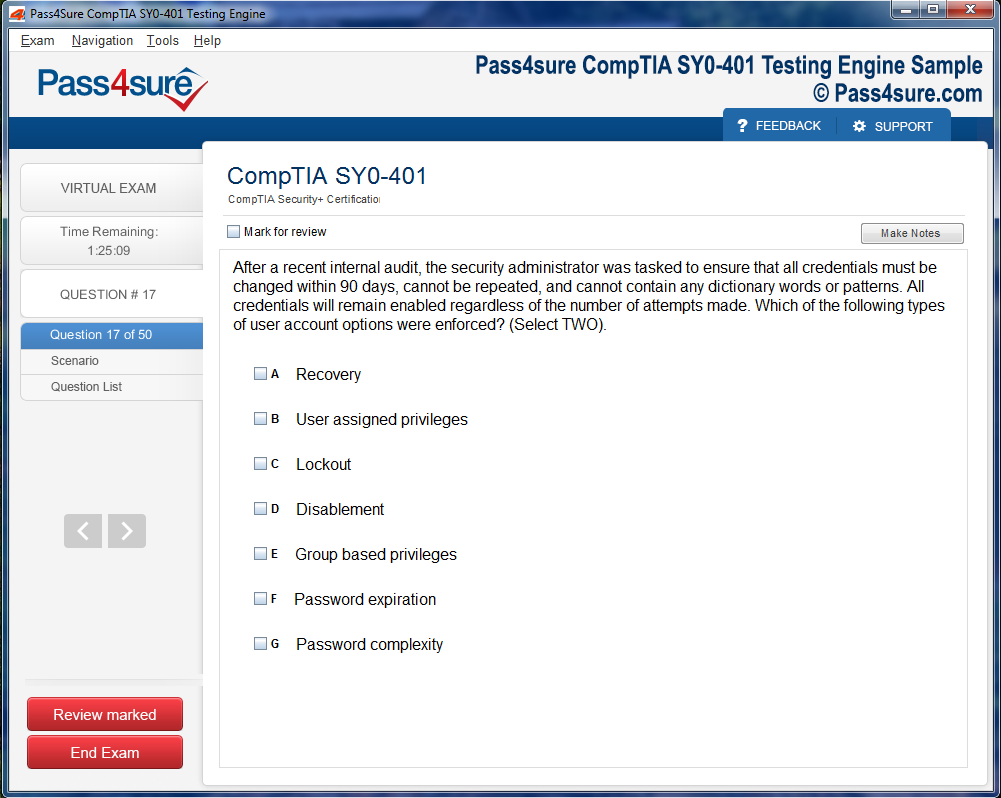
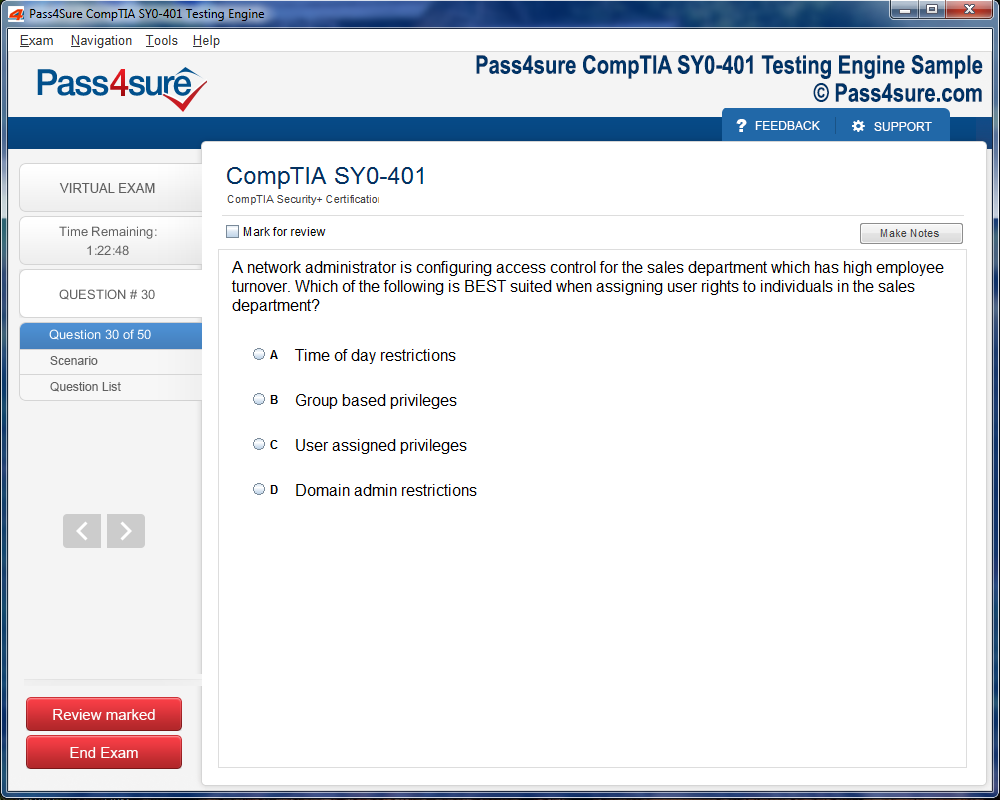
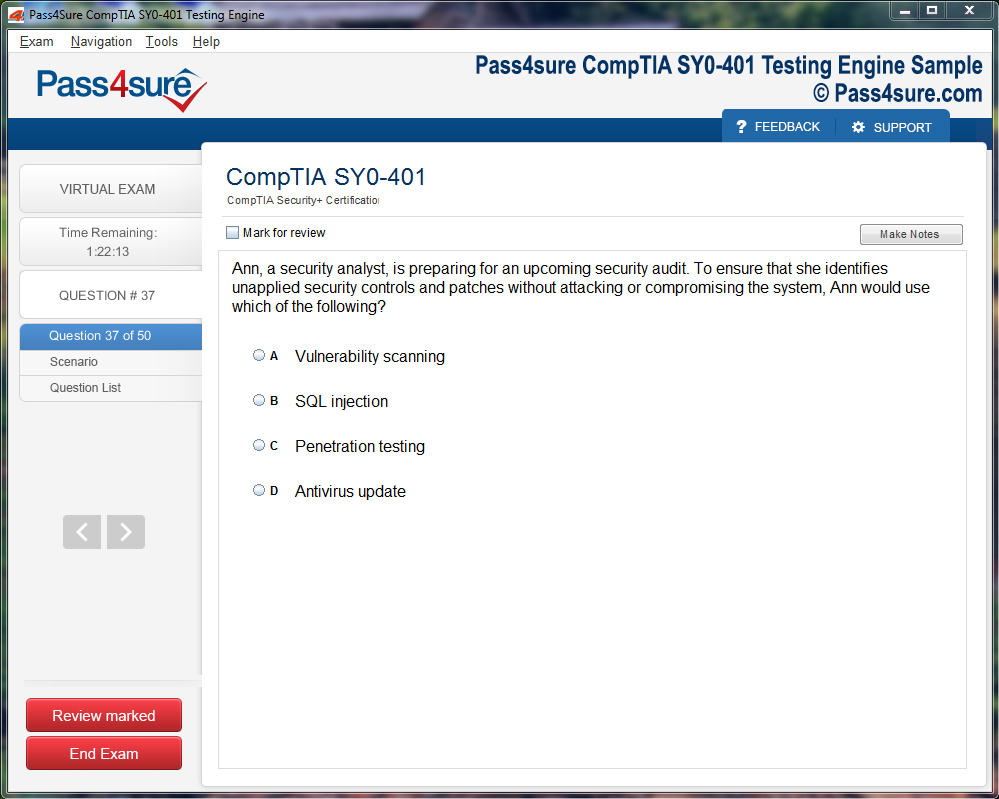
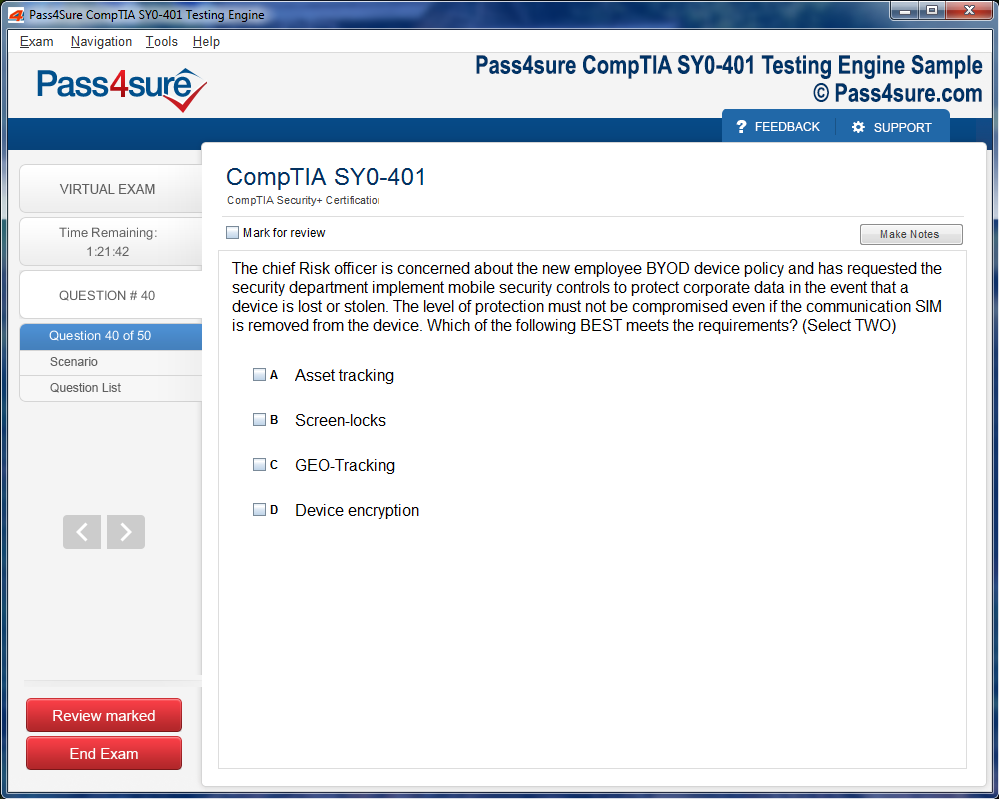
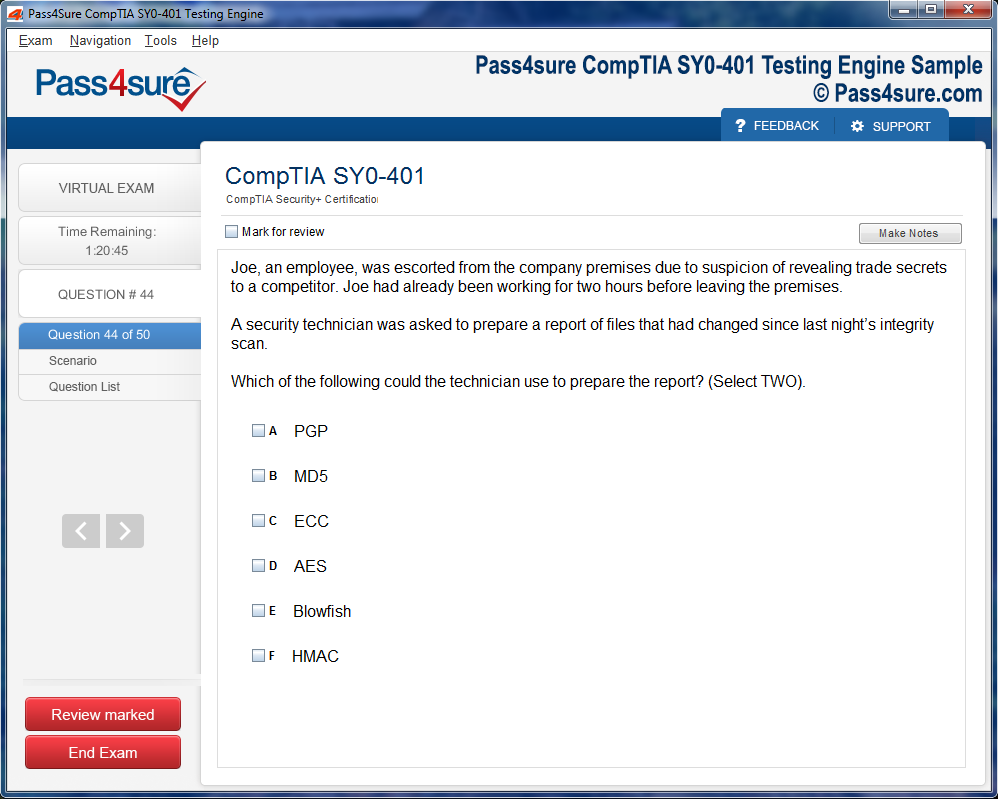
Product Screenshots
Frequently Asked Questions
How does your testing engine works?
Once download and installed on your PC, you can practise test questions, review your questions & answers using two different options 'practice exam' and 'virtual exam'. Virtual Exam - test yourself with exam questions with a time limit, as if you are taking exams in the Prometric or VUE testing centre. Practice exam - review exam questions one by one, see correct answers and explanations.
How can I get the products after purchase?
All products are available for download immediately from your Member's Area. Once you have made the payment, you will be transferred to Member's Area where you can login and download the products you have purchased to your computer.
How long can I use my product? Will it be valid forever?
Pass4sure products have a validity of 90 days from the date of purchase. This means that any updates to the products, including but not limited to new questions, or updates and changes by our editing team, will be automatically downloaded on to computer to make sure that you get latest exam prep materials during those 90 days.
Can I renew my product if when it's expired?
Yes, when the 90 days of your product validity are over, you have the option of renewing your expired products with a 30% discount. This can be done in your Member's Area.
Please note that you will not be able to use the product after it has expired if you don't renew it.
How often are the questions updated?
We always try to provide the latest pool of questions, Updates in the questions depend on the changes in actual pool of questions by different vendors. As soon as we know about the change in the exam question pool we try our best to update the products as fast as possible.
How many computers I can download Pass4sure software on?
You can download the Pass4sure products on the maximum number of 2 (two) computers or devices. If you need to use the software on more than two machines, you can purchase this option separately. Please email sales@pass4sure.com if you need to use more than 5 (five) computers.
What are the system requirements?
Minimum System Requirements:
- Windows XP or newer operating system
- Java Version 8 or newer
- 1+ GHz processor
- 1 GB Ram
- 50 MB available hard disk typically (products may vary)
What operating systems are supported by your Testing Engine software?
Our testing engine is supported by Windows. Andriod and IOS software is currently under development.
EC-Council CISO (712-50) Certification: Exam Prep, Tips & Career Growth
In the fast-paced domain of cybersecurity, where threats evolve with startling speed, the need for executive leaders who combine strategic foresight with hands-on expertise has never been greater. The EC-Council Certified Chief Information Security Officer (CCISO) certification represents a pivotal milestone for professionals aspiring to occupy top-tier security positions. Unlike purely technical certifications, CCISO emphasizes executive leadership, strategic alignment, and governance proficiency, transforming capable managers into visionary security leaders.
This credential is not just about knowing firewalls or intrusion detection systems; it is about understanding how to weave security into the very fabric of organizational strategy. CCISO prepares professionals to handle complex challenges that blend technology, business processes, and human factors. Through its rigorous framework, the certification instills an executive mindset, enabling professionals to anticipate risks, guide security initiatives, and influence decision-making at the highest levels.
The CCISO designation signifies more than technical mastery; it reflects the capacity to oversee an entire information security ecosystem. Organizations increasingly demand executives who can integrate security priorities with broader business goals, mitigate risks efficiently, and lead cross-functional teams with confidence. In this context, CCISO is a badge of credibility, demonstrating a candidate’s readiness to navigate both boardroom challenges and operational intricacies.
The Strategic Domains of the CCISO Curriculum
The CCISO certification is structured around five meticulously defined domains, each encompassing critical aspects of executive information security leadership. Understanding these domains is central to achieving mastery and excelling in the certification exam. The first domain, Governance and Risk Management, establishes the foundational principles of security leadership. Candidates explore frameworks for compliance, policy development, and risk assessment, learning how to quantify and communicate risk in ways that resonate with business stakeholders.
Security Program Management and Operations forms the second domain, emphasizing the orchestration of security initiatives across the organization. Here, aspirants learn to balance resource allocation, manage incident response teams, and ensure operational continuity even during crises. Information Security Controls, the third domain, focuses on designing, implementing, and assessing technical and procedural controls that safeguard sensitive data. Audit Management, the fourth domain, sharpens the ability to evaluate the effectiveness of controls, identify gaps, and report insights to executive leadership.
The fifth and final domain, Strategic Planning and Finance, underscores the business acumen required of a modern CISO. Candidates learn to align security objectives with corporate strategy, justify budgets, and demonstrate return on investment for security initiatives. Together, these five domains cultivate a holistic understanding of cybersecurity leadership, combining technical knowledge, risk awareness, and strategic vision.
Exam Preparation: Crafting a Roadmap to Success
Preparation for the CCISO 712-50 exam is a journey that demands meticulous planning, deliberate practice, and a thorough grasp of the content. The exam does not simply assess technical knowledge; it evaluates decision-making skills, strategic thinking, and the ability to prioritize under pressure. Aspiring CISOs must develop a study plan that balances conceptual understanding with scenario-based problem solving, ensuring readiness across all five domains.
A common approach begins with analyzing the weight of each domain within the exam structure. Governance and Risk Management often carries the heaviest emphasis, reflecting its importance in guiding organizational security strategy. Allocating more study time to this domain ensures a solid foundation, which, in turn, supports understanding of operational and strategic topics. Practice exams play a pivotal role in preparation, offering exposure to the types of scenarios candidates are likely to encounter in the real test. By simulating the test environment, these exercises hone both technical knowledge and executive judgment.
Effective preparation also involves iterative review. Revisiting previously studied topics, reflecting on errors, and adjusting strategies enhances retention and reduces the likelihood of oversight during the exam. Furthermore, candidates benefit from understanding the interconnectedness of domains; insights gained in one area, such as audit management, often complement concepts in risk management or strategic planning. This holistic perspective is crucial for addressing complex scenarios where multiple elements interact.
The Role of Practice Exams in Building Confidence
Practice exams are more than just a preparatory tool—they are a strategic instrument for mastery. They expose candidates to the pacing of the actual test, familiarize them with question formats, and highlight areas requiring deeper study. High-quality practice exams feature scenario-based questions, reflecting the real-world challenges that CISOs face. These scenarios encourage candidates to consider not only technical implications but also financial, operational, and reputational impacts, cultivating a multi-dimensional decision-making approach.
Timed practice sessions develop essential test-taking stamina, ensuring candidates can navigate the exam’s duration without fatigue. Regularly assessing performance against benchmarks allows for targeted improvement and reinforces learning. Moreover, practice exams foster confidence, transforming anxiety into readiness. The psychological benefit of repeated exposure to exam conditions cannot be overstated; it helps candidates internalize patterns, recognize pitfalls, and approach complex questions with clarity.
In addition to formal practice exams, creating personalized scenario exercises enhances preparation. For instance, candidates might simulate boardroom briefings or incident response decisions, articulating strategies, risk evaluations, and mitigation plans. This active learning strategy reinforces knowledge while sharpening communication and leadership skills—both critical for a successful CISO.
Integrating Business Acumen with Technical Proficiency
One of the defining features of the CCISO certification is its emphasis on business acumen. In today’s organizations, security decisions cannot exist in isolation from broader corporate objectives. Aspiring CISOs must understand financial principles, strategic planning processes, and organizational dynamics to secure resources, justify initiatives, and demonstrate value to stakeholders. This integration of business insight with technical expertise distinguishes CCISO holders from purely technical professionals.
Finance and budgeting modules within the certification teach candidates how to calculate return on investment for security projects, analyze cost-benefit scenarios, and prioritize investments according to strategic impact. By grasping these concepts, security leaders can make informed decisions that align with both security imperatives and organizational growth goals. Similarly, knowledge of governance structures and compliance frameworks enables CISOs to navigate regulatory requirements, reduce liability, and maintain stakeholder trust.
Technical proficiency remains indispensable, but it is the combination with executive judgment that defines a high-impact CISO. The ability to translate complex technical data into actionable business insights is a skill nurtured through the CCISO program, preparing professionals for leadership roles that demand both analytical rigor and strategic vision.
Career Advancement and Professional Recognition
Achieving CCISO certification significantly enhances career trajectories and professional visibility. Organizations recognize the designation as a marker of executive readiness, signaling that the holder can manage risk, lead security programs, and integrate cybersecurity into broader business strategy. This recognition often translates into expanded responsibilities, leadership roles, and increased influence within the organization.
Professionals who earn CCISO certification frequently move into positions such as Chief Information Security Officer, Security Program Director, or Senior Security Manager. These roles involve shaping organizational security culture, overseeing compliance initiatives, and guiding long-term strategic planning. Moreover, CCISO-certified leaders are often sought after for advisory roles, board participation, and consultancy, reflecting the trust placed in their judgment and expertise.
Beyond career advancement, the certification provides an intangible benefit: professional credibility. Colleagues, stakeholders, and industry peers view CCISO holders as capable decision-makers who balance technical insight with strategic foresight. This credibility fosters collaboration, enhances influence, and positions professionals as thought leaders in the cybersecurity community.
Cultivating a Leadership Mindset for Security Excellence
The journey to CCISO certification is as much about mindset as it is about knowledge. Successful candidates cultivate a leadership approach grounded in foresight, resilience, and adaptability. They learn to anticipate emerging threats, develop proactive strategies, and communicate risks in a manner that resonates with executives and boards. The ability to inspire and guide teams under pressure becomes a defining characteristic of certified leaders.
Leadership in cybersecurity requires empathy as well as decisiveness. Understanding the perspectives of stakeholders, aligning security priorities with organizational culture, and fostering a collaborative environment are essential skills for a CISO. The CCISO program emphasizes these competencies, encouraging candidates to think beyond technical tasks and embrace a holistic vision of organizational protection.
Ultimately, the development of an executive mindset transforms technical expertise into strategic impact. Professionals emerge not just as managers of security programs but as architects of organizational resilience, capable of steering their organizations through complex challenges with clarity and confidence.
Understanding the Significance of the 712-50 Exam
The 712-50 exam is not merely a credential; it is a gateway to demonstrating mastery in executive-level information security management. Unlike basic certification tests, this exam evaluates your ability to integrate technical knowledge with strategic decision-making, risk assessment, and governance within a corporate environment. Candidates who approach the exam with superficial preparation often falter because the questions demand practical comprehension rather than rote memorization.
Embracing the significance of this exam begins with acknowledging its purpose: to measure your readiness to lead security initiatives in complex organizations. Each domain of the exam reflects a facet of executive responsibility, ranging from policy formulation to incident oversight. Recognizing this purpose allows candidates to prioritize their study efforts on areas with high strategic impact. Instead of viewing the exam as a challenge to be endured, it should be approached as a journey of skill consolidation, sharpening both analytical reasoning and managerial foresight.
In addition, the exam serves as a benchmark for personal growth. By preparing strategically, candidates cultivate habits such as disciplined time management, methodical problem-solving, and adaptive thinking. These skills extend far beyond the exam room and into everyday leadership scenarios. Viewing the 712-50 as an opportunity for growth rather than a mere test encourages deeper engagement with the material and fosters a mindset conducive to long-term success.
Assessing Current Knowledge and Skill Gaps
Before diving into intensive study sessions, it is essential to perform an honest assessment of your current knowledge and skills. This initial evaluation lays the groundwork for a focused, efficient study plan. Many candidates underestimate the value of self-assessment, opting instead for haphazard study methods that lead to gaps in understanding and uneven retention.
Start by mapping your proficiency across the five CCISO domains: Governance, Risk Management, Security Program Management, Information Security Controls, and Strategic Planning. Identify areas where you feel confident and those that require deeper exploration. This targeted approach ensures that study time is allocated wisely, focusing more on weaker domains while reinforcing existing strengths.
Utilizing practice questions or diagnostic assessments is an effective way to uncover knowledge gaps. Interactive assessments offer immediate feedback, highlighting specific topics where comprehension may be shallow. For instance, repeated mistakes in risk assessment scenarios may indicate a need to revisit regulatory frameworks or risk scoring methodologies. Recognizing these patterns early prevents last-minute cramming and fosters a deeper understanding of complex concepts.
Beyond technical knowledge, evaluate your soft skills. Executive-level decision-making often relies on communication, resource prioritization, and leadership under pressure. Incorporating these evaluative elements into your self-assessment ensures a more holistic approach to preparation. Understanding not just what you know, but how effectively you can apply it, is key to succeeding on the 712-50 exam.
Designing a Structured Study Schedule
Once your knowledge gaps are identified, the next step is to create a structured study schedule that maximizes efficiency and retention. A scattershot approach rarely produces the desired outcome, while a well-organized timetable creates a rhythm of learning that balances reading, note-taking, and practice.
Break down the content into manageable segments, assigning dedicated time blocks to each domain. For instance, Governance and Risk Management might require focused sessions on regulatory compliance, risk evaluation frameworks, and policy development. Security Program Management may involve exercises in resource allocation, incident handling, and operational oversight. Dividing your study into clearly defined portions reduces cognitive overload and fosters incremental mastery.
In addition, scheduling periodic review sessions is critical. Repetition reinforces memory and allows for the integration of complex concepts into practical understanding. Rather than cramming a large volume of material at once, spacing study sessions over weeks or months allows knowledge to consolidate naturally. Pair this with self-testing to ensure that the information is not only understood but retrievable under exam conditions.
Flexibility should also be incorporated into your schedule. Unexpected work commitments or personal responsibilities may disrupt a rigid timetable. By anticipating such interruptions and building contingency periods into your plan, you maintain consistent progress without feeling overwhelmed. A resilient, adaptive schedule reduces stress while ensuring comprehensive coverage of all exam domains.
Utilizing Practice Exams Effectively
Practice exams are indispensable tools in preparing for the 712-50 exam. Unlike passive study guides, they offer an interactive, dynamic method to assess comprehension and readiness. Engaging with practice tests from the early stages of preparation fosters familiarity with question formats, sharpens timing strategies, and reveals subtle areas of misunderstanding.
The key to using practice exams effectively lies in deliberate repetition and reflective analysis. Begin by completing timed practice tests to simulate real exam conditions. This exercise not only builds endurance for the actual test but also highlights pacing issues, such as spending too much time on complex questions or rushing through simpler items. Over time, adjusting your approach based on these observations enhances both speed and accuracy.
After each practice session, review results meticulously. Examine incorrect answers to determine whether the mistake stemmed from knowledge gaps, misinterpretation, or exam stress. This reflective process transforms errors into learning opportunities, converting weaknesses into reinforced understanding. Furthermore, identify recurring patterns of mistakes, as these often reveal foundational concepts that require deeper study.
For maximum benefit, vary the difficulty of practice exams. Mixing standard-level questions with more challenging scenarios encourages adaptive thinking, ensuring that you are prepared for both straightforward and complex queries. This approach fosters confidence, reduces test anxiety, and cultivates a mindset capable of navigating the multifaceted challenges of the 712-50 exam.
Strengthening Knowledge Through Diverse Resources
Relying solely on a single source of study material is rarely sufficient for comprehensive preparation. To excel in the 712-50 exam, it is crucial to engage with a variety of resources, each offering unique perspectives and insights. This multifaceted approach deepens understanding, reinforces learning, and keeps engagement levels high.
Official study guides provide structured content that aligns directly with exam objectives, offering clear explanations and standardized frameworks. Complement these with peer-reviewed articles that delve into contemporary practices, case studies, and advanced concepts. Such material broadens your understanding of real-world applications and illustrates how theory translates into organizational impact.
Interactive workshops or webinars can further enhance preparation. These platforms allow candidates to engage actively with complex scenarios, participate in problem-solving exercises, and receive instant feedback from experienced professionals. Moreover, interacting with fellow candidates creates opportunities for collaborative learning, where diverse perspectives reveal nuances that individual study might overlook.
Additionally, developing personal study notes and visual aids strengthens retention. Summarizing concepts in your own words, creating flowcharts, or mapping processes visually transforms passive reading into active learning. This hands-on approach encourages critical thinking, making it easier to recall information during the exam and apply it in practical scenarios.
Refining Time Management and Exam Strategies
Effective time management is a cornerstone of success in the 712-50 exam. With a finite duration and a dense array of questions, candidates must balance accuracy with speed to complete the test confidently. Mastering this balance requires deliberate practice and strategic planning.
One effective method is to establish pacing benchmarks for each section or question type. For example, allocate a set amount of time for multiple-choice questions, reserving extra minutes for complex scenario-based items. Practice exams provide the ideal environment to test and refine these strategies, revealing both strengths and potential bottlenecks.
In addition to pacing, develop strategies for handling difficult questions. Techniques such as eliminating clearly incorrect options, marking uncertain items for review, or making educated guesses can prevent time wastage and reduce stress. By having a pre-defined approach to challenging items, candidates maintain momentum and avoid being derailed by complex scenarios.
Mental preparation also plays a vital role in time management. Maintaining focus, managing anxiety, and sustaining energy levels throughout the exam are essential for consistent performance. Techniques such as brief mental breaks, controlled breathing, or visualization of successful completion can bolster resilience under pressure, ensuring that both knowledge and strategy are effectively applied.
Integrating Peer Learning and Real-World Insights
Connecting with peers and industry professionals adds a dimension of practical insight often absent from textbooks. Peer learning enables candidates to exchange strategies, discuss challenging concepts, and explore varied approaches to problem-solving. Engaging in study groups or online forums fosters accountability, encourages critical thinking, and promotes a deeper understanding of complex topics.
Real-world insights complement theoretical preparation by illustrating how concepts are applied in organizational contexts. Discussing scenarios such as risk management decisions, incident response strategies, or compliance challenges with experienced professionals provides a nuanced understanding that static materials cannot replicate. These discussions also highlight potential pitfalls and best practices, equipping candidates with practical knowledge applicable beyond the exam room.
Moreover, peer interaction encourages adaptive learning. Exchanging perspectives exposes candidates to alternative interpretations of policies, frameworks, and strategies, cultivating flexibility in thought processes. This adaptability is crucial not only for answering diverse exam questions but also for applying executive-level security principles in dynamic organizational environments.
The Crucial Role of Scenario-Based Practice in CCISO Preparation
Scenario-based practice emerges as an indispensable pillar for aspirants of the CCISO certification, acting as a bridge between theoretical knowledge and real-world executive decision-making. Unlike conventional exams that focus on memorization, scenario-based evaluations demand comprehension, judgment, and adaptability. CCISO candidates encounter complex cybersecurity dilemmas that mirror the multifaceted challenges faced by Chief Information Security Officers in modern organizations. These scenarios necessitate an intricate blend of analytical acumen, business insight, and practical experience, making scenario-based practice an irreplaceable preparation tool.
The CCISO exam emphasizes situations rather than mere definitions. Candidates are not only tested on technical proficiency but also on their ability to translate that proficiency into actionable strategies that safeguard enterprise assets. For instance, a presented scenario may involve a multi-departmental security breach requiring immediate assessment of operational risk, resource allocation, and potential organizational impact. In such contexts, aspirants must synthesize fragmented information, prioritize actions, and demonstrate both technical and managerial judgment. Repeated exposure to these scenario-driven challenges cultivates a refined decision-making framework, a skill that extends far beyond the confines of the exam itself.
Enhancing Analytical Thinking Through Realistic Scenarios
Analytical thinking is honed through consistent interaction with scenario-based questions. Unlike rote memorization, which fosters surface-level comprehension, scenario practice encourages the learner to evaluate variables dynamically. Each question presents multiple pathways, requiring consideration of risk trade-offs, operational feasibility, and organizational consequences. For example, a data breach affecting multiple business units might compel the candidate to weigh immediate containment measures against long-term reputational repercussions. This exercise sharpens critical thinking and nurtures the ability to approach problems with nuanced discernment.
Scenario practice also fosters anticipatory thinking. As candidates work through simulations, they begin to anticipate potential pitfalls and collateral effects of decisions. This predictive capacity is crucial for CCISO aspirants, who must routinely operate in environments where the margin for error is narrow. Exposure to varied scenarios cultivates mental agility, enabling candidates to construct strategies that are resilient under pressure. The iterative process of analyzing, hypothesizing, and selecting the optimal course of action equips professionals with a cognitive toolkit essential for executive cybersecurity leadership.
Aligning Security Initiatives with Organizational Strategy
CCISO preparation transcends technical knowledge, emphasizing the alignment of security initiatives with broader business objectives. Scenario-based practice plays a pivotal role in this aspect by requiring candidates to consider organizational priorities, stakeholder interests, and strategic outcomes. When faced with a simulated incident, candidates must not only mitigate technical threats but also weigh financial implications, compliance obligations, and potential operational disruption. This holistic approach ensures that decisions contribute to the enterprise's overarching vision rather than merely addressing isolated technical concerns.
Moreover, scenarios compel candidates to integrate cost-benefit analysis into their decision-making framework. CCISO professionals must constantly evaluate whether proposed security measures are justified in light of budgetary constraints and anticipated return on investment. By repeatedly engaging in scenario-based exercises, aspirants develop the intuition to balance security imperatives with pragmatic business considerations. This synthesis of technical expertise and strategic foresight defines the proficiency of a competent Chief Information Security Officer.
Recognizing Patterns and Improving Exam Strategy
Another compelling benefit of scenario-based practice is the development of pattern recognition skills. Many CCISO questions, despite surface-level complexity, adhere to underlying logic frameworks that evaluate risk prioritization, compliance adherence, and resource optimization. Candidates who engage in regular scenario practice begin to recognize these recurring patterns, allowing them to approach unfamiliar questions with confidence and methodical reasoning. This strategic foresight reduces reliance on memorization and fosters adaptive thinking, which is equally valuable in both exam and executive contexts.
Pattern recognition also aids in time management, a critical factor given the CCISO exam's timed format. Candidates learn to identify key indicators within a scenario, discern the underlying problem, and quickly eliminate less viable options. This proficiency not only enhances exam performance but also mirrors real-life executive decision-making, where rapid assessment and prioritization are essential. Consequently, scenario-based preparation cultivates a mindset that is both analytical and expedient, a combination that distinguishes top-performing CISOs from their peers.
Stress Resilience and Decision-Making Under Pressure
The CCISO exam is inherently high-stakes, and scenario-based practice offers a structured mechanism for stress inoculation. Timed simulations replicate the pressure of real-world executive responsibilities, allowing candidates to develop composure and mental resilience. As aspirants encounter progressively complex scenarios, they learn to filter extraneous information, focus on critical variables, and make informed decisions efficiently. This repeated exposure diminishes anxiety and enhances cognitive endurance, ensuring that candidates remain composed during both the examination and professional challenges.
Moreover, stress resilience cultivated through scenario practice translates directly into leadership efficacy. Chief Information Security Officers routinely navigate crises that demand rapid, high-stakes decision-making. Candidates who have trained through scenario-based exercises develop an instinctive ability to remain calm under pressure, assess evolving situations objectively, and implement effective solutions without succumbing to panic or indecision. This alignment of exam preparation with practical executive skills exemplifies the comprehensive value of scenario-based methodology in CCISO readiness.
Deepening Knowledge Retention Through Application
Knowledge retention is significantly amplified when learning is anchored in realistic contexts. Scenario-based practice encourages candidates to apply theoretical concepts in practical settings, thereby transforming abstract information into actionable expertise. For example, understanding risk assessment frameworks in isolation is valuable, but analyzing a simulated multi-system attack reinforces how these frameworks function in operational environments. This experiential learning cultivates a deeper, more intuitive grasp of security principles, regulatory standards, and organizational dynamics.
Applied learning also promotes cognitive integration across disciplines. CCISO aspirants are required to amalgamate technical understanding, regulatory compliance, financial analysis, and stakeholder communication within each scenario. Engaging with diverse scenarios encourages the formation of mental connections between these domains, resulting in a holistic understanding that transcends compartmentalized knowledge. Consequently, candidates emerge not only prepared for certification but also equipped with the practical competence to excel in executive security leadership.
Iterative Refinement and Continuous Improvement
Scenario-based practice encourages iterative refinement, where candidates continuously evaluate their responses, identify errors, and adjust strategies accordingly. Each scenario functions as a microcosm of executive decision-making, providing feedback that is immediately applicable. For instance, a candidate may initially underestimate the impact of regulatory noncompliance, but through repeated practice, they learn to incorporate compliance considerations proactively in every decision. This iterative learning cycle cultivates a mindset of continuous improvement, an essential trait for lifelong leadership excellence.
Furthermore, scenario practice fosters adaptability in dynamic environments. Real-world cybersecurity challenges are seldom static; they evolve with technological advancements, organizational changes, and emerging threats. Candidates trained through scenario-based exercises develop the cognitive flexibility to navigate such volatility, applying learned principles creatively to novel situations. This adaptability not only enhances exam performance but also ensures that certified professionals remain effective leaders in a rapidly shifting cybersecurity landscape.
Strategic Communication and Stakeholder Engagement
Effective scenario-based practice also underscores the importance of strategic communication. Many CCISO scenarios require candidates to articulate decisions to diverse stakeholders, including executives, auditors, and technical teams. The exercise of framing complex information clearly and persuasively cultivates communication skills essential for executive leadership. Aspirants learn to tailor messages according to audience needs, balancing technical accuracy with organizational relevance, and ensuring that decisions are understood and supported across all levels of the enterprise.
In addition, scenario-based exercises encourage candidates to consider the human element in cybersecurity management. Decisions must account not only for systems and protocols but also for personnel behavior, cultural dynamics, and organizational politics. By engaging with these scenarios, aspirants develop empathy, negotiation skills, and stakeholder awareness, enhancing their overall leadership capability. This integration of human, technical, and strategic dimensions exemplifies the multifaceted nature of CCISO excellence.
The Digital Transformation of Certification Preparation
In the current technological era, the methods of learning and preparing for professional certifications have undergone a profound metamorphosis. The CCISO exam by EC-Council exemplifies this shift, as aspirants are increasingly turning to digital platforms to bolster their knowledge and skills. Unlike conventional books or static study guides, online platforms offer a vibrant ecosystem where interactivity, personalization, and continuous feedback converge. These platforms are not merely repositories of questions; they are immersive arenas where learners can engage with content dynamically, exploring scenarios that mirror real-world cybersecurity landscapes.
This digital transformation has made preparation not only more accessible but also more adaptable. Aspiring professionals can tailor their learning paths, focusing on domains where their comprehension may be less robust while reinforcing areas of strength. The flexibility of online systems empowers candidates to pace their studies according to personal schedules, ensuring that learning remains effective and stress-free. The infusion of technology into certification preparation has, therefore, elevated the standards of engagement and retention, making the journey toward professional mastery both efficient and compelling.
Adaptive Learning Systems for Personalized Growth
One of the most remarkable features of modern online preparation platforms is adaptability. Traditional study methods often present static content, leaving learners to navigate their weaknesses independently. In contrast, adaptive learning systems continuously assess performance, offering customized exercises that concentrate on less familiar topics. For the CCISO 712-50 exam, this means that areas such as governance, risk management, and strategic security planning can receive targeted attention based on an individual's performance history.
Such personalized learning not only maximizes efficiency but also cultivates deeper cognitive retention. By repeatedly engaging with content that challenges their current knowledge, candidates are encouraged to build connections between concepts, reinforcing their understanding in practical ways. The iterative nature of adaptive systems ensures that learning is not a passive experience but an evolving process that aligns closely with each learner's unique requirements. This method exemplifies a paradigm shift in education: one where technology orchestrates knowledge acquisition with precision and relevance.
Harnessing Community Insights for Strategic Advantage
The communal aspect of online learning platforms is another invaluable resource for exam aspirants. Professional forums, discussion boards, and peer-to-peer interactions create a network of shared expertise. For CCISO candidates, engaging with such communities offers insights that extend beyond textbook knowledge. Certified professionals and recent exam takers frequently share nuanced perspectives on question patterns, exam strategies, and practical approaches to complex scenarios.
This community-driven learning cultivates both strategic and tactical skills. Candidates gain awareness of trends in exam content, allowing them to anticipate challenges and prioritize preparation areas effectively. Moreover, these interactions provide motivational reinforcement, as learners witness the journeys of peers navigating similar challenges. The communal experience instills accountability, encourages collaborative problem-solving, and nurtures confidence—an essential ingredient for excelling in high-stakes examinations.
Data-Driven Insights Through Performance Analytics
Another pivotal advantage of online preparation platforms lies in their ability to deliver precise, data-driven feedback. Detailed analytics allow candidates to track progress over time, offering a panoramic view of improvement patterns and persistent gaps. For example, a learner might discover consistent errors in risk management scenarios or identify a slower response rate to governance-related questions. Such insights empower candidates to recalibrate their study approach, concentrating efforts where they are most impactful.
Performance tracking also introduces a sense of structure and purpose. Visual representations of progress—charts, heat maps, and trend lines—translate abstract efforts into tangible achievements. This transparency mitigates uncertainty and instills a sense of accomplishment, reinforcing engagement and perseverance. By marrying analytics with adaptive learning, online platforms create an ecosystem where preparation is both strategic and evidence-based, elevating the likelihood of success.
Simulating Exam Conditions for Optimal Performance
Timed practice tests constitute another indispensable facet of digital preparation. These simulations replicate the conditions of the actual CCISO exam, challenging candidates to navigate questions under time constraints. The experience of managing a ticking clock cultivates essential skills such as focus, stress management, and prioritization. Learners develop strategies to allocate attention efficiently across diverse topics, minimizing the risk of oversight or rushed errors.
The psychological benefits of simulated exam conditions are profound. By acclimating to the pressures of timed assessments, candidates build resilience and composure. This experiential learning ensures that exam-day performance reflects not only knowledge mastery but also the capacity to think clearly under stress. Over time, repeated exposure to timed scenarios fosters an intuitive understanding of pacing, allowing learners to optimize their approach for maximum efficiency.
Scenario-Based Learning for Real-World Competence
In addition to timed tests, modern online platforms often integrate scenario-based questions that mirror contemporary industry challenges. For CCISO aspirants, such scenarios provide invaluable opportunities to apply theoretical knowledge to practical situations. These exercises encompass risk assessments, incident response strategies, and strategic decision-making processes that are emblematic of the responsibilities faced by senior information security officers.
Scenario-based learning bridges the gap between exam preparation and professional competence. By engaging with realistic simulations, candidates cultivate skills that transcend the confines of testing environments, enhancing their operational effectiveness in real-world contexts. This approach ensures that knowledge retention is meaningful and actionable, equipping learners with the acumen necessary to navigate complex cybersecurity landscapes with confidence and precision.
Enhancing Motivation Through Gamified Elements
An often-overlooked feature of contemporary online platforms is gamification. By incorporating elements such as leaderboards, badges, and achievement milestones, these systems transform study sessions into engaging, interactive experiences. Gamification introduces a sense of challenge and reward, encouraging consistent effort and sustained focus. For learners preparing for high-stakes exams like the CCISO 712-50, these motivational cues can significantly enhance persistence and enthusiasm.
The psychological impact of gamified learning is multifaceted. It fosters friendly competition, stimulates curiosity, and promotes a growth-oriented mindset. Learners are incentivized to surpass previous performances, exploring content more thoroughly and experimenting with different problem-solving approaches. Gamification, therefore, not only makes preparation enjoyable but also amplifies cognitive engagement, contributing to higher retention and mastery.
Integrating Multi-Modal Resources for Comprehensive Learning
Effective preparation for complex certifications increasingly relies on multi-modal resources. Modern online platforms provide a rich tapestry of learning materials, including video tutorials, interactive quizzes, reading modules, and discussion forums. This diversity accommodates different learning styles, ensuring that visual, auditory, and kinesthetic learners alike can grasp concepts effectively.
The integration of multiple learning modalities also reinforces comprehension. For example, a candidate might watch a video on strategic risk management, attempt interactive scenarios to test understanding, and then discuss insights with peers for further clarification. This layered approach transforms abstract knowledge into tangible understanding, facilitating long-term retention and practical applicability. By leveraging multi-modal resources, learners can approach preparation holistically, addressing every dimension of professional competence.
Leveraging Real-Time Feedback for Continuous Improvement
Real-time feedback is another cornerstone of effective online preparation. Immediate responses to quiz questions or simulated exercises allow candidates to identify mistakes and correct misconceptions promptly. This iterative process accelerates learning by preventing the reinforcement of errors and solidifying correct approaches. For CCISO aspirants, instant feedback on governance, risk, and incident management scenarios cultivates sharper judgment and deeper analytical abilities.
The immediacy of feedback fosters a proactive learning mindset. Candidates are encouraged to reflect critically on their decisions, exploring alternative strategies and evaluating outcomes. This reflective practice enhances cognitive agility, a crucial attribute for information security leaders who must navigate dynamic threats and complex organizational structures. Real-time feedback, therefore, transforms preparation from a passive exercise into an active, intellectually stimulating journey.
Expanding Global Perspectives Through Online Communities
Finally, online platforms provide access to global perspectives that enrich learning. By connecting with peers and professionals from diverse regions, candidates gain exposure to varying approaches, regulatory environments, and cultural considerations. Such exposure broadens understanding, fostering adaptability and strategic thinking—qualities essential for leaders in the cybersecurity domain.
Global community engagement also cultivates empathy and collaboration. Candidates learn to appreciate different viewpoints, negotiate challenges collectively, and leverage shared knowledge for mutual benefit. This global dimension not only enhances exam readiness but also equips aspirants with a mindset attuned to the interconnected, international nature of modern cybersecurity challenges. Exposure to worldwide insights ensures that preparation is both comprehensive and globally relevant.
Understanding the Essence of CCISO Certification
The CCISO certification is not merely a technical accolade; it is a gateway to executive mastery in the information security domain. Unlike conventional certifications that focus primarily on technical acumen, CCISO emphasizes strategic thinking, risk management, and leadership qualities. This distinction is crucial for aspirants who aim to transcend routine operational roles and step into positions that influence organizational security at the highest level. The certification cultivates a profound understanding of governance frameworks, compliance imperatives, and business-centric risk assessments.
Achieving CCISO status involves more than memorizing concepts—it demands an internalization of security philosophies and a mindset that anticipates threats before they materialize. Candidates learn to harmonize technical defenses with organizational priorities, ensuring that security initiatives align seamlessly with broader business objectives. This dual focus—technical precision coupled with strategic foresight—forms the backbone of what makes CCISO a transformative credential for information security leaders.
Moreover, CCISO is designed to cultivate professionals who can translate complex security concepts into digestible insights for executives and stakeholders. The ability to communicate clearly, justify security investments, and advocate for policies is as critical as any technical skill. In essence, CCISO transforms skilled practitioners into visionary leaders who can navigate the intricate intersection of technology, risk, and business strategy.
Crafting a Structured Study Plan for Success
Structured preparation is the cornerstone of CCISO exam readiness. A well-organized study plan transcends mere scheduling; it cultivates a rhythm of learning that integrates comprehension, retention, and application. Aspiring candidates benefit from segmenting the syllabus into digestible modules, each focused on a distinct domain such as governance, risk management, or incident response. This approach not only enhances cognitive retention but also enables deeper engagement with practical scenarios.
Incorporating diverse learning modalities is equally essential. Reading authoritative guides, participating in webinars, and engaging in peer discussions create a multi-dimensional learning ecosystem. Such diversity reinforces concepts while accommodating different learning preferences, whether visual, auditory, or kinesthetic. Candidates who employ this holistic approach often report heightened confidence, greater conceptual clarity, and a reduced likelihood of cognitive overload.
Time management plays a pivotal role in structured preparation. Allocating dedicated slots for review, practice exams, and reflection ensures that knowledge is reinforced systematically. Revisiting complex topics periodically prevents decay of memory and fosters the ability to interlink concepts across multiple domains. A disciplined study plan, therefore, is not merely about passing an exam—it is about cultivating expertise that will resonate throughout a professional’s career.
The Power of Scenario-Based Practice
Scenario-based practice serves as the bridge between theoretical knowledge and executive decision-making. Unlike rote memorization, this method immerses candidates in real-world dilemmas, prompting them to apply principles, evaluate risks, and make strategic choices. Scenarios might involve responding to sophisticated cyber threats, orchestrating enterprise-wide security audits, or designing governance frameworks for diverse operational landscapes.
This experiential learning nurtures critical thinking and adaptability—skills that are indispensable for any information security leader. As candidates navigate increasingly complex scenarios, they refine judgment, anticipate consequences, and develop the foresight to prevent crises before they escalate. This process is invaluable not only for exam preparation but also for shaping professionals capable of steering organizations through turbulent security landscapes.
Additionally, scenario-based practice enhances time management and prioritization skills. In a controlled yet challenging environment, candidates learn to distinguish between urgent threats and long-term strategic initiatives. By mastering this balance, they become adept at allocating resources efficiently, a competence that is highly regarded in executive roles. Ultimately, scenario-based exercises foster resilience, confidence, and a proactive mindset that extends far beyond the confines of the CCISO exam.
Leveraging Online Platforms for Continuous Learning
The digital age has revolutionized the way professionals prepare for certifications. Online platforms provide unparalleled access to practice exams, interactive modules, discussion forums, and multimedia resources tailored to CCISO aspirants. These platforms create an immersive learning ecosystem where knowledge acquisition is continuous, adaptive, and engaging.
Participation in online communities is particularly beneficial. Engaging with peers, sharing insights, and debating solutions to complex scenarios enhances understanding while building a network of professionals who can offer guidance, mentorship, and collaboration opportunities. This network effect creates an environment of collective intelligence where candidates can learn from diverse perspectives, enriching their strategic outlook.
Furthermore, online platforms facilitate real-time updates on industry trends, regulatory changes, and emerging threats. Candidates who actively utilize these resources remain at the forefront of the cybersecurity landscape, ensuring that their skills are both relevant and anticipatory. The ability to integrate fresh knowledge into strategic decision-making not only improves exam performance but also cultivates an adaptive mindset essential for sustained career growth.
Strategic Career Advancement Through Certification
CCISO certification serves as a catalyst for career advancement by signaling mastery of executive-level security competencies. Certified professionals are often considered for leadership roles where they can influence organizational strategy, manage high-stakes security initiatives, and lead cross-functional teams. The credential conveys credibility, demonstrating that the holder possesses both the technical expertise and strategic acumen required to navigate complex security challenges.
Beyond immediate role enhancement, CCISO certification opens doors to consulting opportunities, advisory positions, and higher compensation tiers. Employers value professionals who can articulate security priorities in business terms, implement robust governance structures, and drive initiatives that mitigate risk while supporting organizational objectives. This combination of skills differentiates CCISO holders from peers and positions them as indispensable assets in any corporate or governmental setting.
The journey to career growth is not linear; it is iterative, requiring continuous learning, networking, and self-assessment. CCISO certification instills a mindset of professional evolution, encouraging candidates to seek new challenges, refine leadership skills, and remain agile in an ever-changing threat landscape. As a result, certified professionals enjoy sustained relevance and influence throughout their careers, rather than temporary recognition or transient success.
Cultivating Lifelong Learning and Professional Resilience
A defining characteristic of CCISO aspirants is their commitment to lifelong learning. Certification is not a terminal achievement but a stepping stone toward continuous professional development. Staying abreast of emerging threats, evolving regulations, and innovative security technologies ensures that executives maintain strategic relevance and operational readiness. In an era where cyber threats evolve daily and new technologies emerge rapidly, the ability to adapt is no longer optional—it is essential for survival and success in executive security roles.
Professional resilience is closely linked to continuous learning. By regularly engaging with industry research, attending workshops, and participating in cybersecurity forums, certified professionals develop the agility to respond effectively to unforeseen challenges. This resilience is critical in high-pressure executive roles, where decisions can have far-reaching consequences for organizational security, reputation, and compliance. A leader who can remain composed, make informed decisions under stress, and navigate ambiguity becomes a stabilizing force for their team and organization.
Additionally, cultivating curiosity and a growth mindset enhances adaptability. CCISO executives are trained to question assumptions, explore alternative solutions, and embrace innovation. This proactive approach reduces vulnerability to complacency, enabling leaders to anticipate threats, capitalize on opportunities, and steer their organizations toward sustained security excellence. Lifelong learning, therefore, is both a professional imperative and a personal commitment, reinforcing the value of the CCISO credential beyond the immediate scope of the exam.
Beyond formal learning, CCISO executives benefit from reflective practices that deepen insight and professional judgment. Journaling decisions, analyzing past incidents, and assessing the effectiveness of implemented strategies allow leaders to internalize lessons and avoid repeating mistakes. This reflective habit complements active learning, creating a feedback loop that continually strengthens decision-making capabilities.
Mentorship and peer collaboration further amplify the benefits of continuous learning. By exchanging ideas with colleagues and mentoring emerging security professionals, CCISO leaders both reinforce their own expertise and contribute to the development of the wider security community. This dual impact fosters a culture of knowledge-sharing and collective resilience within organizations.
Finally, embracing technological tools such as threat intelligence platforms, simulation exercises, and interactive training modules allows executives to stay ahead of evolving risks. Leveraging these resources not only sharpens tactical skills but also reinforces strategic thinking, enabling leaders to integrate real-time insights into organizational planning. Through this combination of active learning, reflection, mentorship, and technological engagement, CCISO professionals cultivate a level of resilience and adaptability that sustains career growth and drives organizational success in an unpredictable cyber landscape.
Integrating Holistic Security Management
Holistic security management is the culmination of CCISO preparation, requiring candidates to integrate technical, organizational, and strategic dimensions into cohesive decision-making. Executives learn to evaluate security challenges from multiple angles, balancing risk mitigation, resource allocation, and governance imperatives. This comprehensive perspective ensures that security initiatives support business goals without compromising operational efficiency.
Understanding the interplay between technology, policy, and organizational culture is vital for holistic management. Security executives must consider not only technical defenses but also human factors, regulatory obligations, and financial constraints. By mastering this integration, CCISO-certified professionals develop the capability to lead security programs that are both resilient and sustainable.
Moreover, holistic management fosters proactive leadership. Rather than reacting to incidents, executives anticipate potential vulnerabilities, implement preventive measures, and continuously refine security frameworks. This strategic foresight is a hallmark of effective leadership, distinguishing CCISO holders as architects of robust, forward-looking security ecosystems. By embracing a holistic approach, candidates ensure that their impact extends beyond compliance, creating lasting value for their organizations.
Conclusion
In the rapidly evolving landscape of cybersecurity, the role of a Chief Information Security Officer demands a unique blend of technical expertise, strategic insight, and executive decision-making. The EC-Council CCISO certification serves as a benchmark for professionals aspiring to lead information security programs at the highest level. Successfully navigating the 712-50 exam requires more than memorization; it demands critical thinking, scenario-based analysis, and practical application of knowledge.
Through structured study plans, scenario-driven practice, and the utilization of online platforms, candidates can build the confidence and competence necessary to excel both in the exam and in real-world leadership roles. Engaging with community insights, tracking performance, and refining strategies ensures that preparation is efficient, focused, and continuously evolving.
Ultimately, earning the CCISO credential is not just a professional milestone—it is a gateway to career growth, higher responsibility, and the ability to make a meaningful impact on organizational security strategy. By investing in disciplined preparation, embracing practical learning, and thinking strategically, aspiring CISOs position themselves for success, ready to navigate the complexities of cybersecurity leadership with skill, confidence, and vision.
Top ECCouncil Exams
- 312-50v13 - Certified Ethical Hacker v13
- 312-49v11 - Computer Hacking Forensic Investigator
- 312-39v2 - Certified SOC Analyst (CSA) v2
- 312-38 - Certified Network Defender
- 712-50 - EC-Council Certified CISO
- 312-85 - Certified Threat Intelligence Analyst
- 212-89 - EC-Council Certified Incident Handler
- 212-82 - Certified Cybersecurity Technician
- ICS-SCADA - ICS-SCADA Cyber Security
- 312-50v12 - Certified Ethical Hacker v12 Exam
- 312-96 - Certified Application Security Engineer (CASE) - JAVA
- 312-40 - Certified Cloud Security Engineer
- 312-97 - Certified DevSecOps Engineer (ECDE)
- 312-40v2 - Certified Cloud Security Engineer (CCSE) v2
- 312-39 - Certified SOC Analyst
- 312-49v10 - Computer Hacking Forensic Investigator
- 312-50 - CEH Certified Ethical Hacker (312-50v9)
- 312-50v11 - Certified Ethical Hacker v11 Exam