

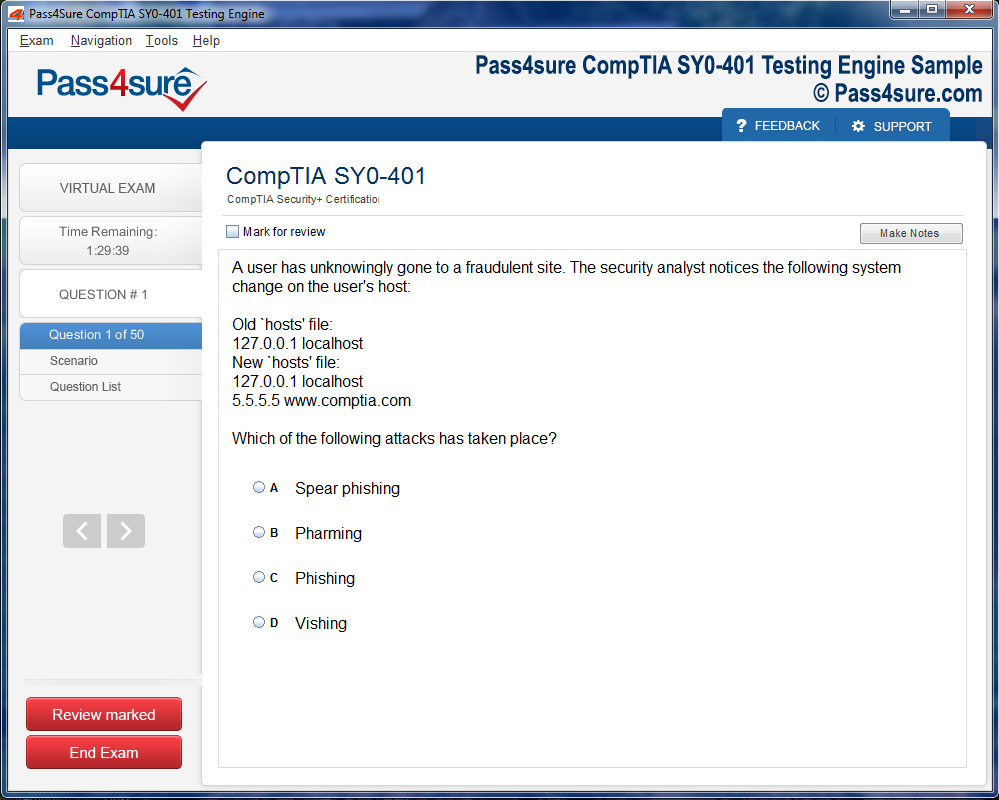
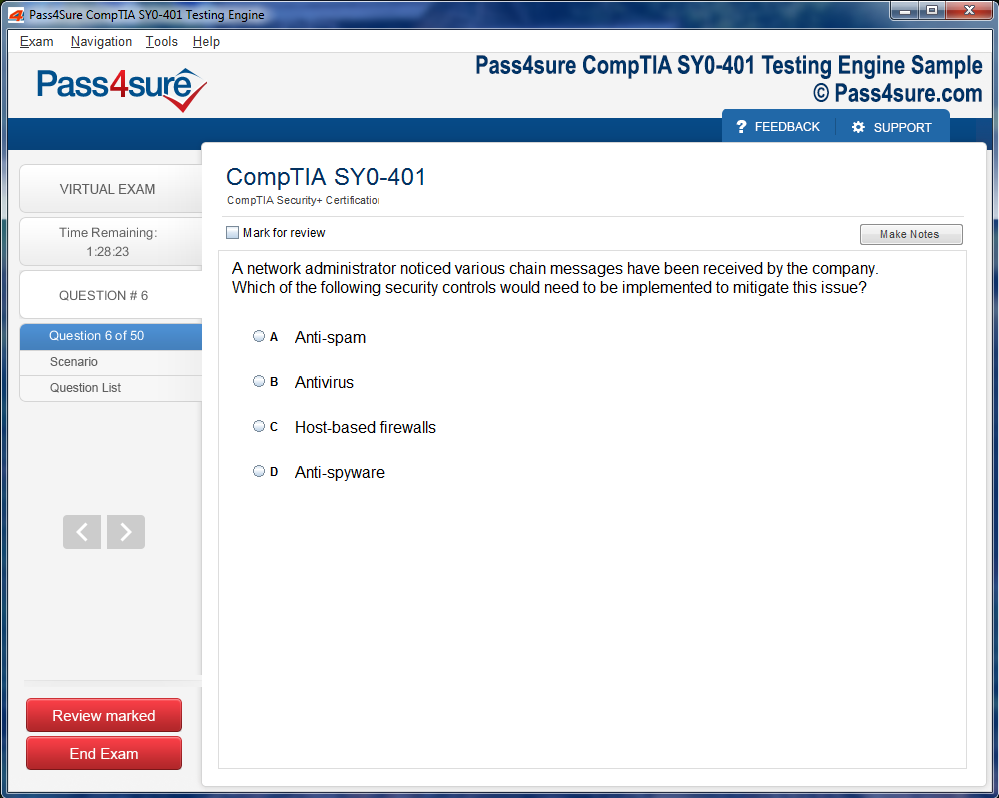
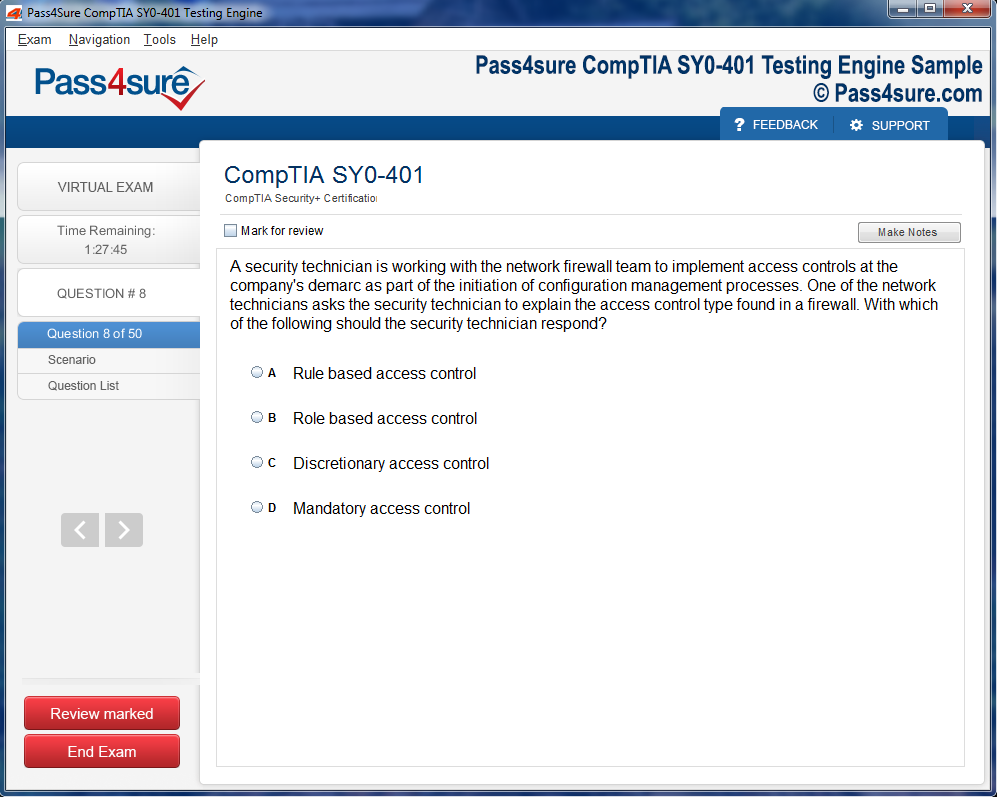
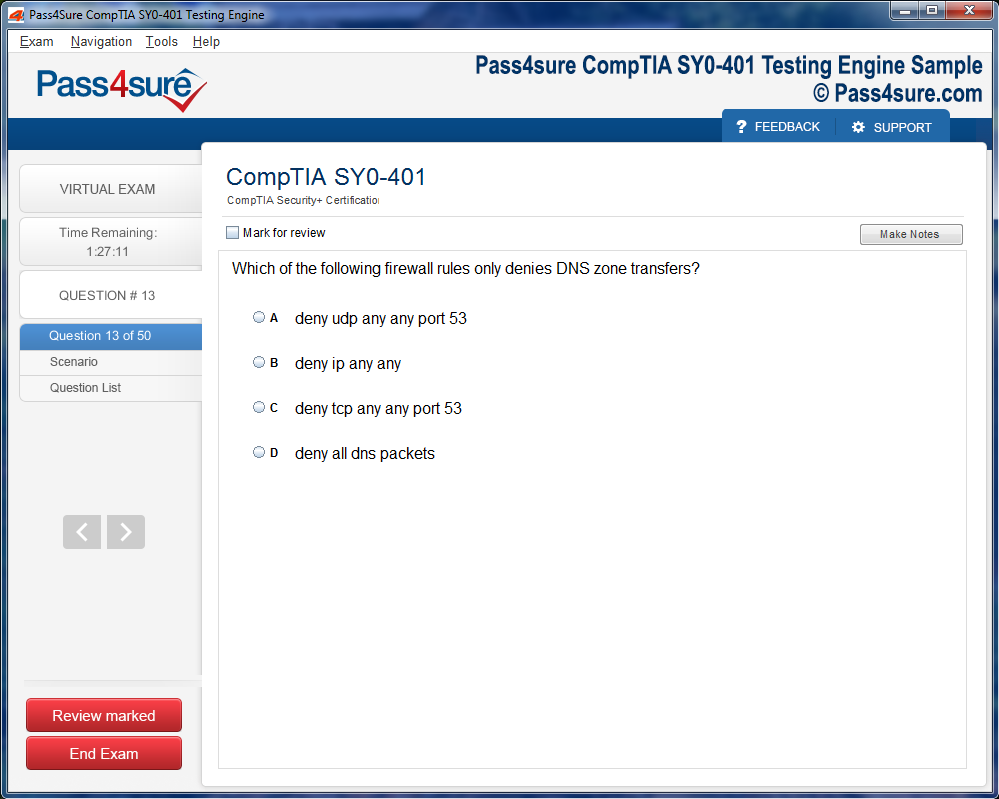
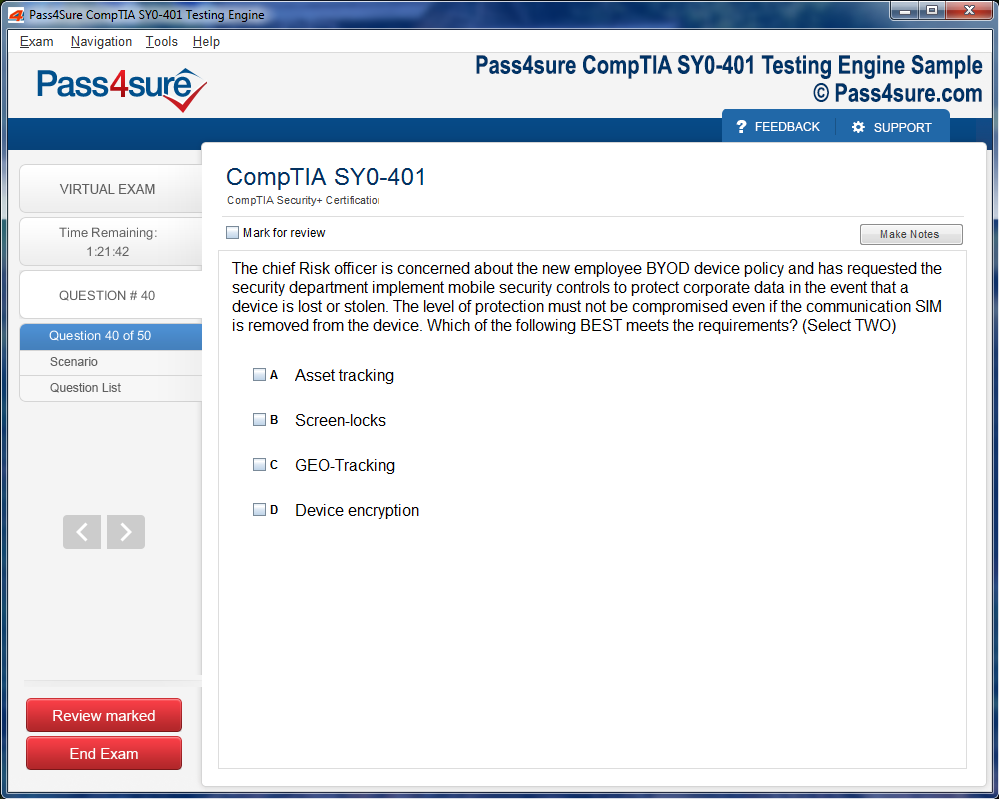
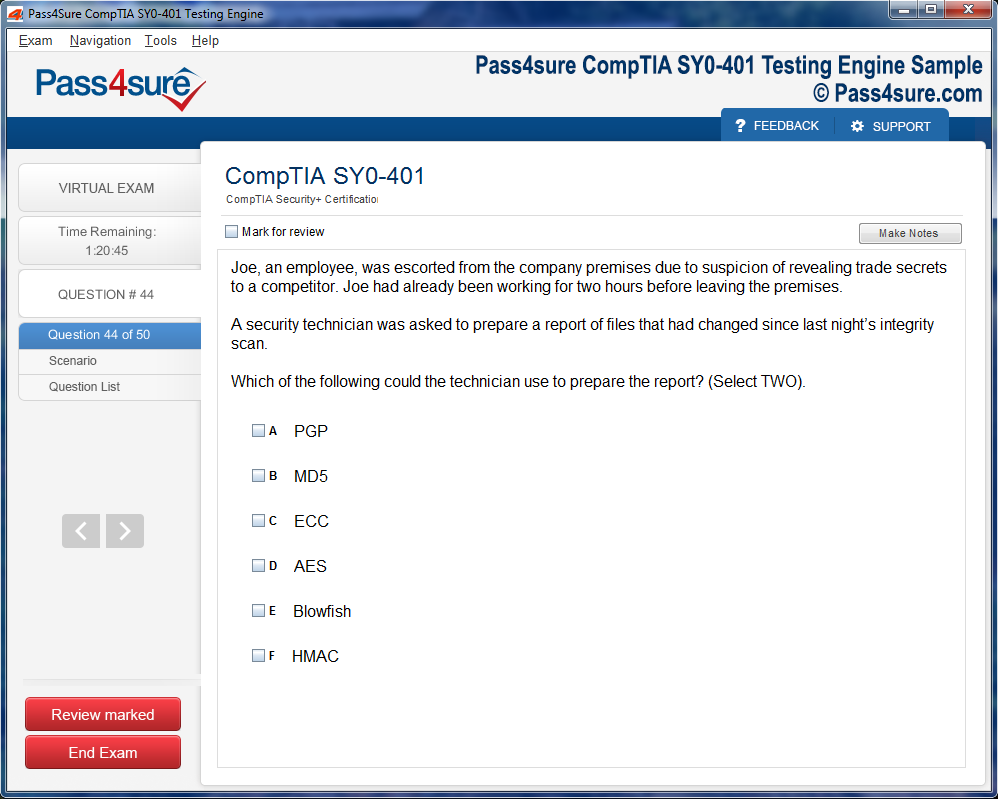
Product Screenshots
Frequently Asked Questions
How does your testing engine works?
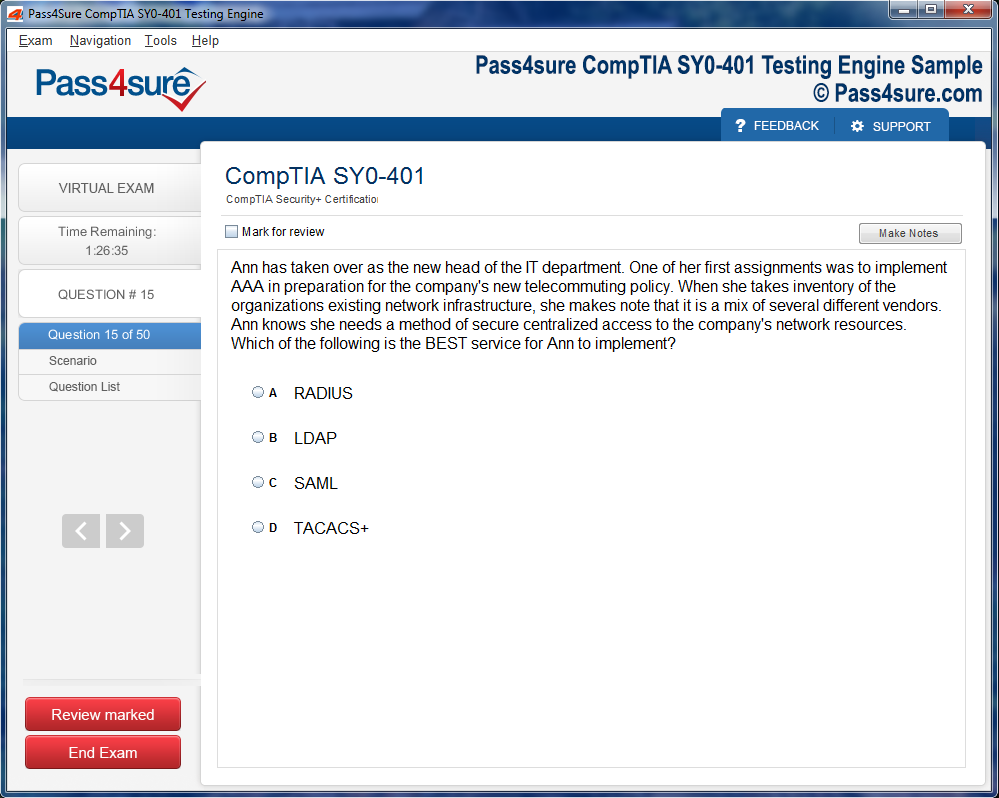
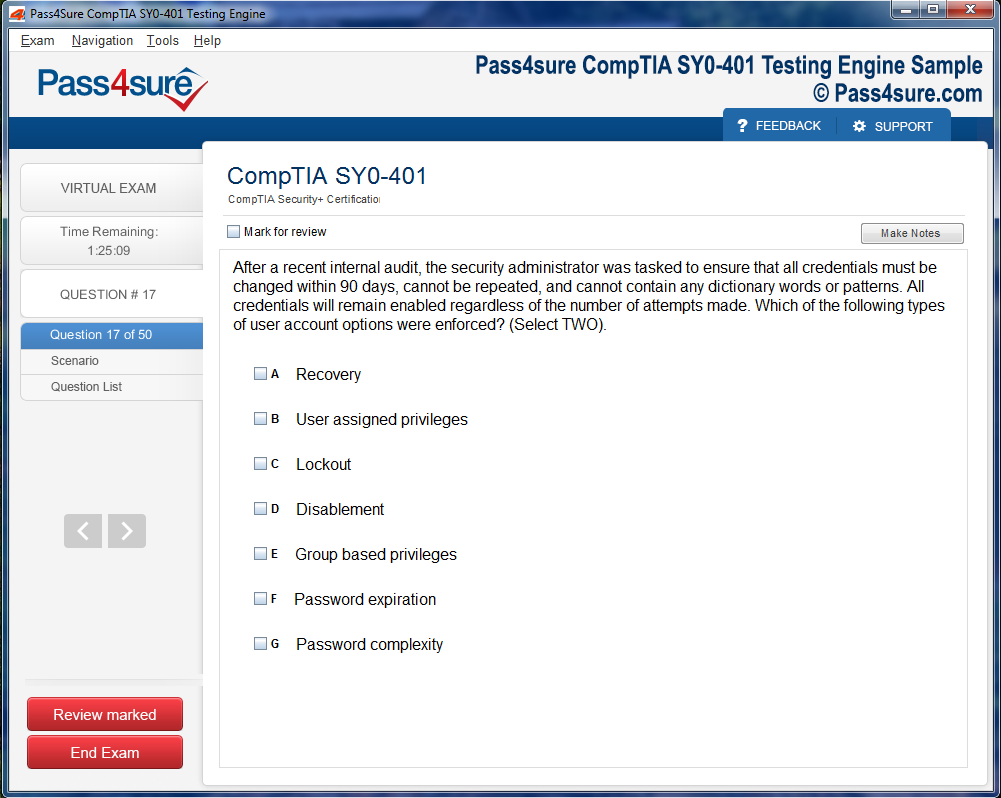
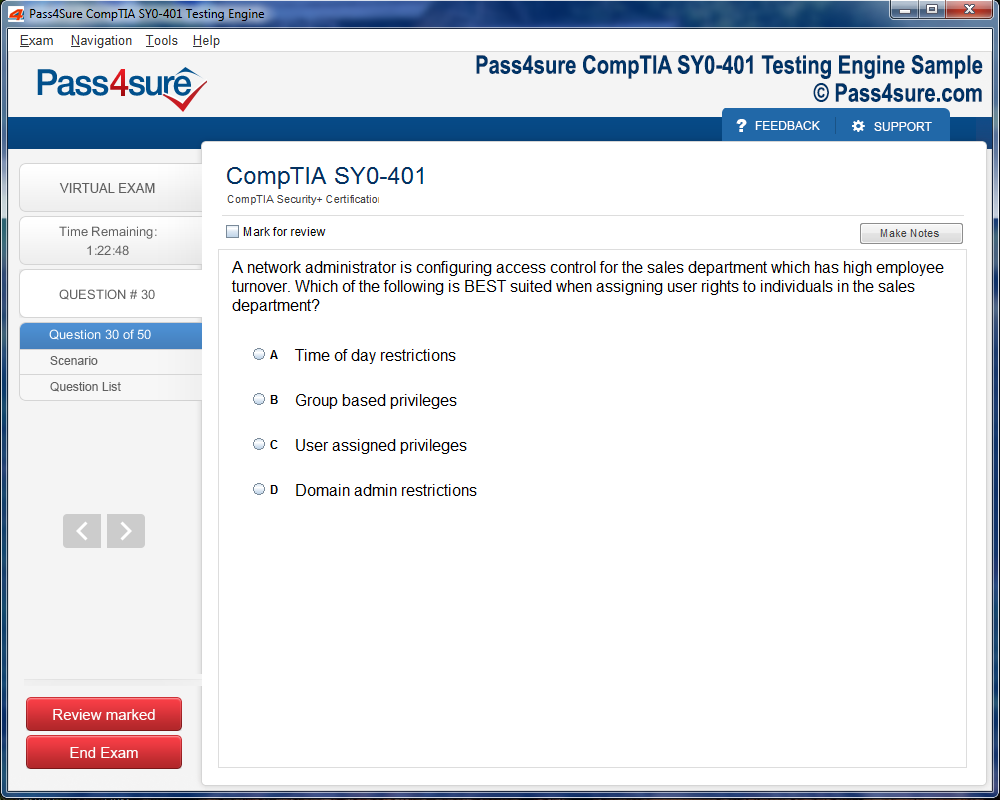
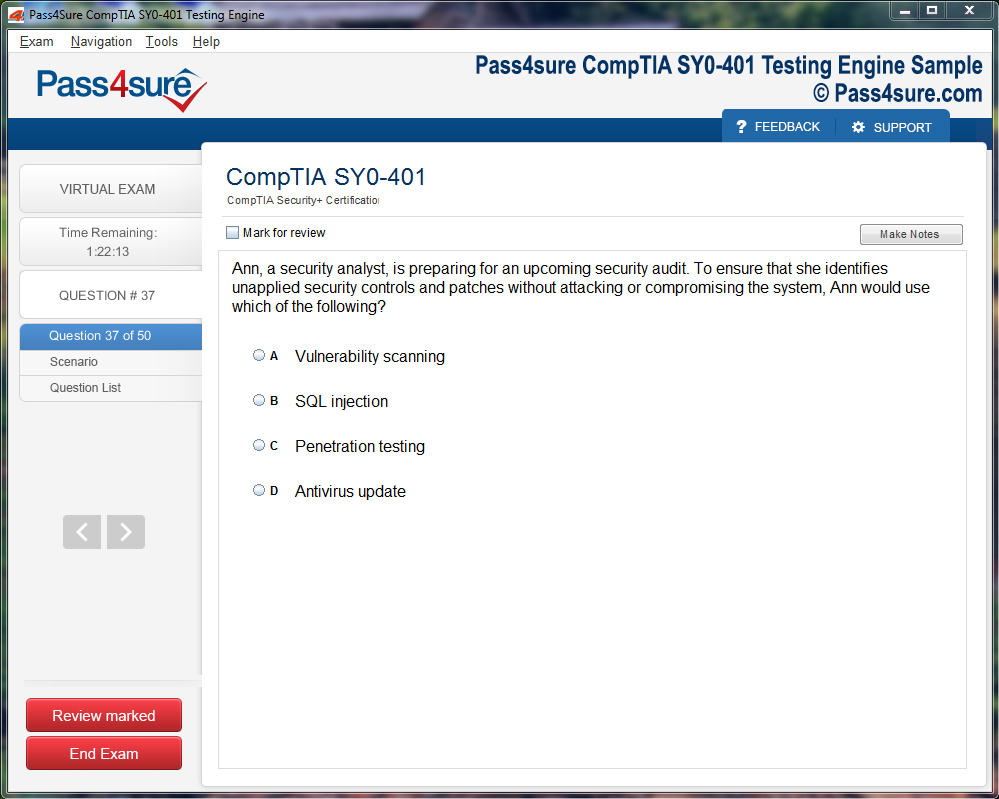
Once download and installed on your PC, you can practise test questions, review your questions & answers using two different options 'practice exam' and 'virtual exam'. Virtual Exam - test yourself with exam questions with a time limit, as if you are taking exams in the Prometric or VUE testing centre. Practice exam - review exam questions one by one, see correct answers and explanations.
How can I get the products after purchase?
All products are available for download immediately from your Member's Area. Once you have made the payment, you will be transferred to Member's Area where you can login and download the products you have purchased to your computer.
How long can I use my product? Will it be valid forever?
Pass4sure products have a validity of 90 days from the date of purchase. This means that any updates to the products, including but not limited to new questions, or updates and changes by our editing team, will be automatically downloaded on to computer to make sure that you get latest exam prep materials during those 90 days.
Can I renew my product if when it's expired?
Yes, when the 90 days of your product validity are over, you have the option of renewing your expired products with a 30% discount. This can be done in your Member's Area.
Please note that you will not be able to use the product after it has expired if you don't renew it.
How often are the questions updated?
We always try to provide the latest pool of questions, Updates in the questions depend on the changes in actual pool of questions by different vendors. As soon as we know about the change in the exam question pool we try our best to update the products as fast as possible.
How many computers I can download Pass4sure software on?
You can download the Pass4sure products on the maximum number of 2 (two) computers or devices. If you need to use the software on more than two machines, you can purchase this option separately. Please email sales@pass4sure.com if you need to use more than 5 (five) computers.
What are the system requirements?
Minimum System Requirements:
- Windows XP or newer operating system
- Java Version 8 or newer
- 1+ GHz processor
- 1 GB Ram
- 50 MB available hard disk typically (products may vary)
What operating systems are supported by your Testing Engine software?
Our testing engine is supported by Windows. Andriod and IOS software is currently under development.
EC-Council 312-75 Exam Success: Strategies You Need to Know
The Certified EC-Council Instructor (CEI) certification represents a pinnacle of instructional mastery in the realm of cybersecurity education. Known for its rigorous standards and industry-wide recognition, the CEI credential empowers professionals to not only demonstrate technical proficiency but also cultivate an environment conducive to learning. This credential, associated with the exam code 312-75, positions IT specialists as elite educators capable of delivering structured, impactful training in programs such as Certified Ethical Hacker (CEH), Computer Hacking Forensic Investigator (CHFI), and EC-Council’s Advanced Security Practitioner curricula. By attaining CEI status, professionals acquire the dual distinction of being subject matter experts and effective pedagogical leaders.
The CEI credential serves as a bridge between technical acumen and educational dexterity. It signifies that an individual is adept at translating complex cybersecurity principles into digestible lessons for diverse audiences. Whether guiding novices or seasoned practitioners, the CEI-certified instructor embodies a blend of knowledge, clarity, and engagement, fostering an enriching learning ecosystem.
Exam Structure and Core Competencies
The 312-75 CEI examination is meticulously designed to gauge instructional proficiency alongside technical expertise. Comprising 50 multiple-choice questions to be completed within a 180-minute window, the exam challenges candidates to demonstrate mastery over both pedagogical and cybersecurity concepts. Achieving a passing score of 70% is requisite for earning the coveted CEI certification.
The exam’s focus extends beyond rote memorization, emphasizing competencies crucial for effective instruction. Candidates are evaluated on their ability to analyze and synthesize course materials, construct comprehensive lesson plans, and maintain classroom engagement. Instructional credibility, clear communication, and strategic questioning techniques form the core pillars of assessment. Additionally, candidates must exhibit adaptability in addressing learner needs, managing diverse learning environments, and employing techniques that enhance knowledge retention. In essence, the exam tests both the mind and the method, ensuring that instructors are prepared for real-world teaching dynamics.
Eligibility Criteria and Prerequisites
Acquiring the CEI certification is contingent upon meeting rigorous eligibility standards. Prospective instructors must submit a detailed application for approval, either through an accredited EC-Council training center or directly via EC-Council. The process demands verification of prior professional experience and demonstrated technical proficiency in the specific EC-Council program intended for instruction. For instance, individuals aspiring to teach CEH courses must already hold a CEH certification.
In addition to certification prerequisites, applicants are expected to possess practical experience in cybersecurity, familiarity with instructional methodologies, and a commitment to continuous learning. The CEI framework is designed to ensure that instructors not only comprehend advanced technical topics but can also communicate them effectively to diverse learner groups. This blend of technical acumen and instructional competence fosters an educational environment where learners gain both theoretical insights and hands-on expertise.
Strategic Exam Preparation Techniques
Preparation for the CEI 312-75 exam requires a strategic, methodical approach. Success hinges on a balance of theoretical understanding, practical application, and mastery of instructional techniques. The first step in preparation involves a thorough review of the exam objectives. Candidates are advised to dissect each topic carefully, understanding the nuances of teaching methodologies, course structures, and instructional expectations. By doing so, aspirants gain clarity on the depth and scope of knowledge required, which allows them to focus their study efforts effectively.
A detailed analysis of the exam objectives also helps candidates identify areas that demand more attention. Some topics may be conceptually complex, requiring repeated review or hands-on practice to achieve mastery. Others may be procedural or scenario-based, necessitating familiarity with specific instructional strategies. Understanding these subtleties ensures that preparation is targeted rather than generic, reducing wasted study time and increasing overall efficiency. Furthermore, reviewing exam objectives provides a framework for organizing study sessions, enabling candidates to track progress systematically and measure readiness at regular intervals.
Official EC-Council materials serve as a comprehensive guide for exam preparation. Slide decks, lab exercises, and course outlines provide candidates with a detailed roadmap of the knowledge and skills required. These resources are carefully designed to align with exam objectives, ensuring that candidates are exposed to relevant content. Slide decks often summarize complex topics in digestible formats, aiding memory retention and understanding. Lab exercises, on the other hand, provide hands-on experience, reinforcing theoretical knowledge through practical application. By engaging actively with these materials, candidates can internalize concepts more effectively than through passive reading alone.
Simulated practice exams are indispensable in this process, helping candidates identify weak points, gauge readiness, and acclimate to the testing environment. These practice tests replicate the format, timing, and pressure of the actual exam, allowing candidates to develop strategies for answering questions efficiently and accurately. Repeated exposure to exam-style questions enhances familiarity, reducing anxiety and increasing confidence. More importantly, analyzing results from practice tests provides valuable insights into knowledge gaps, allowing candidates to adjust their study plan to address specific weaknesses. Over time, this iterative process strengthens both competence and confidence.
Structured study plans with dedicated daily or weekly study sessions prevent burnout while reinforcing retention. A strategic schedule balances intensity with rest, ensuring that the mind remains fresh and receptive. Study blocks can be divided by topic, with specific goals for each session, such as reviewing instructional methodologies, completing lab exercises, or practicing scenario-based questions. Incorporating short breaks between study intervals promotes mental rejuvenation, preventing fatigue and enhancing focus. In addition, allocating time for cumulative review allows candidates to revisit previously studied material, reinforcing retention and ensuring long-term mastery.
In addition to formal materials and structured schedules, candidates benefit from creating personalized study aids. Summaries, mind maps, and mnemonic devices transform complex information into manageable, memorable formats. For example, a candidate may develop a flowchart detailing instructional strategies for various classroom scenarios, allowing for quick reference during review sessions. These aids not only support memorization but also encourage active engagement with the material, which research shows significantly improves learning outcomes.
Time management is another critical component of strategic preparation. Candidates should simulate real exam conditions, practicing answering questions within strict time limits. This cultivates the ability to prioritize questions, allocate time efficiently, and maintain focus under pressure. Additionally, candidates can practice pacing strategies, such as answering easier questions first to build momentum and confidence, before tackling more challenging or scenario-based problems. Mastering time management not only boosts performance but also reduces stress during the actual exam.
Equally important is mental preparation. Confidence, composure, and resilience play a pivotal role in exam success. Candidates are encouraged to adopt techniques such as mindfulness exercises, visualization, and positive self-talk to maintain a calm and focused mindset. For instance, visualizing success in a mock classroom scenario or imagining the process of answering a complex question can reduce performance anxiety and strengthen mental clarity. Maintaining a balanced routine, including adequate sleep, nutrition, and light physical activity, also supports cognitive function and endurance.
Peer collaboration and discussion further enrich preparation. Study groups or discussion forums allow candidates to exchange ideas, clarify doubts, and explore alternative approaches to instructional scenarios. Teaching or explaining concepts to peers reinforces one’s own understanding and highlights areas that require further review. Collaborative learning encourages critical thinking and problem-solving, which are essential for scenario-based exam questions that test both knowledge and applied instructional skill.
Finally, integrating reflection into the study routine enhances overall preparation. After each study session or practice test, candidates should evaluate what strategies were effective, which topics need more attention, and how study habits can be optimized. Reflective practice creates a feedback loop that supports continuous improvement, ensuring that preparation evolves in response to the candidate’s developing understanding and exam readiness.
By systematically approaching preparation with a combination of strategic planning, active engagement with official materials, practice testing, mental resilience, peer collaboration, and reflective review, aspiring instructors enhance their confidence, competence, and likelihood of success. Each element of preparation works synergistically, creating a comprehensive, methodical, and highly effective roadmap to mastering the CEI 312-75 exam.
Pedagogical Excellence and Classroom Management
Beyond technical knowledge, CEI-certified instructors are distinguished by their pedagogical acumen. Effective classroom management is a cornerstone of teaching success, requiring a balance of authority, empathy, and adaptability. Instructors must cultivate an atmosphere that encourages curiosity, participation, and critical thinking. This involves tailoring instruction to the audience’s proficiency level, providing clear explanations, and fostering interactive discussions.
Questioning techniques are pivotal in engaging learners. By posing open-ended questions, scenario-based challenges, and thought experiments, instructors can stimulate analytical thinking and knowledge application. Additionally, structured lesson pacing, timely feedback, and the ability to address learner queries contribute to a dynamic and effective classroom environment. CEI-certified instructors are adept at blending technical rigor with engaging delivery, ensuring that learning extends beyond theoretical comprehension into practical application.
Advantages of Achieving CEI Certification
Earning the CEI credential offers multifaceted benefits that extend well beyond the classroom. Certified instructors gain access to a vast repository of teaching resources, including lab exercises, instructional slides, and detailed course manuals, which streamline lesson preparation and delivery. This comprehensive toolkit enables instructors to conduct courses efficiently while maintaining high-quality standards.
Professional recognition is another significant advantage. CEI-certified instructors are respected as industry leaders, enhancing credibility and fostering opportunities for career advancement. The credential also opens doors to international teaching assignments, workshops, and conferences, expanding professional networks and visibility. Additionally, continuous engagement with EC-Council resources ensures that instructors remain abreast of evolving cybersecurity trends, technologies, and best practices, sustaining both technical proficiency and instructional relevance.
Continuous Skill Enhancement and Professional Growth
CEI certification is not a static achievement but a commitment to lifelong learning. Instructors must consistently update their skills, adapt to emerging technologies, and refine teaching methodologies to remain effective. Participation in workshops, seminars, and advanced training sessions contributes to professional growth, keeping instructors aligned with industry advancements.
Furthermore, active engagement with student feedback and peer evaluations fosters reflective practice, enabling instructors to identify strengths and areas for improvement. By embracing continuous development, CEI-certified instructors cultivate a cycle of excellence, where professional growth, instructional mastery, and learner success reinforce each other. This dynamic approach ensures that CEI professionals remain at the forefront of cybersecurity education, delivering value and impact across every teaching interaction.
Enhancing Learner Experience Through Innovative Instruction
CEI-certified instructors prioritize learner experience, utilizing innovative strategies to create engaging and immersive learning environments. Interactive labs, gamified exercises, and real-world scenarios transform abstract concepts into tangible skills. By integrating technology into teaching—such as virtual labs, simulation tools, and collaborative platforms—instructors enhance comprehension, engagement, and retention.
Empathy-driven instruction is equally important. Recognizing individual learning styles, offering personalized guidance, and fostering a supportive atmosphere ensure that learners feel motivated and empowered. CEI instructors combine technical mastery with emotional intelligence, creating an educational space where curiosity thrives, mistakes become learning opportunities, and knowledge translates into practical expertise. This holistic approach solidifies the value of CEI certification as a transformative credential in cybersecurity education.
Grasping the Essence of the CEI Exam
The CEI 312-75 exam is not merely a test; it is a meticulous assessment designed to gauge both instructional acumen and technical proficiency. Candidates who approach this exam must recognize that it evaluates much more than rote memorization. It probes the candidate’s ability to analyze content, adapt to diverse learner needs, and effectively translate complex concepts into digestible knowledge. This understanding sets the foundation for instructors who aspire to excel not only in the examination but also in real-world teaching environments. The essence of the CEI exam is intertwined with both pedagogy and technology, forming a unique synergy that distinguishes certified instructors from others in the cybersecurity and IT education arena.
Success in this examination begins with comprehending the multi-layered objectives set by the EC-Council. Candidates must internalize the idea that teaching is as much about fostering understanding as it is about demonstrating expertise. Instructors are evaluated on their ability to bridge the gap between intricate technical details and accessible explanations for learners. This requires a nuanced perception of course materials, learner psychology, and the subtleties of delivering information with clarity and confidence. The CEI exam challenges candidates to prove that they are not just competent in content knowledge but are also adept at facilitating impactful learning experiences.
Analyzing Course Material with Precision
A central pillar of CEI exam success is the capacity to analyze and interpret course materials with discerning insight. Instructors are required to evaluate every module, lecture, and lab exercise for accuracy, relevance, and alignment with the desired learning outcomes. This meticulous approach ensures that every element of the curriculum serves a purpose and contributes to the overall educational journey. Beyond surface-level familiarity, candidates must engage in deep analysis, identifying potential gaps, redundancies, or outdated information that could compromise the learning experience.
This analysis extends beyond mere textual evaluation. Effective instructors assess the pedagogical flow of the material, ensuring that concepts are presented logically and incrementally. Complex topics must be scaffolded appropriately, enabling learners to build knowledge progressively rather than encountering cognitive overload. By scrutinizing the material with precision, instructors demonstrate that they can transform theoretical content into a structured, coherent, and impactful learning experience. This ability to distill essence from detail is a hallmark of CEI-certified professionals.
Understanding Learner Profiles and Needs
No instructional strategy can succeed without a profound understanding of the learners themselves. The CEI exam emphasizes the necessity for instructors to adapt teaching methods to diverse learner profiles. Each student brings a unique combination of prior knowledge, learning style, and cognitive preferences to the classroom. Instructors must recognize these variations and implement techniques that maximize engagement and comprehension for all participants. This includes identifying visual, auditory, and kinesthetic learners, as well as understanding the motivational factors that drive their curiosity and retention.
Engaging learners effectively requires more than knowledge—it demands empathy and adaptability. By tailoring explanations, examples, and exercises to the needs of the audience, instructors create an environment where learning is accessible and compelling. This approach not only enhances retention but also cultivates a sense of trust and respect between the instructor and the learners. Understanding learner profiles is a skill that elevates teaching from routine instruction to a transformative educational experience, which is precisely what the CEI certification seeks to validate.
Preparing Course Content with Strategic Foresight
Preparation is a cornerstone of instructional excellence. CEI-certified instructors are expected to exhibit thoroughness in their preparation, ensuring that every session is purposeful, engaging, and technically sound. This process involves not only reviewing course materials but also designing presentations, anticipating potential questions, and integrating interactive activities that reinforce learning. Real-world scenarios and practical labs are especially crucial, as they allow students to apply theoretical concepts in controlled yet realistic environments.
Strategic foresight in preparation also encompasses mastering technical exercises and demonstrations. Instructors must be able to execute hands-on activities with confidence, guiding learners through intricate processes without hesitation. This competence reassures students and fosters a productive learning atmosphere. Furthermore, thoughtful preparation allows instructors to handle unforeseen challenges, such as troubleshooting errors during lab exercises or addressing spontaneous questions. By approaching preparation strategically, CEI candidates demonstrate both mastery of content and the ability to create a dynamic, responsive educational environment.
Establishing Instructor Credibility and Authority
Credibility is a vital attribute for any successful instructor. CEI certification evaluates the capacity of candidates to project professionalism, subject matter expertise, and ethical conduct. Establishing credibility begins with deep knowledge of the subject matter but extends far beyond that. It includes demonstrating consistent professional behavior, staying abreast of industry developments, and exemplifying best practices in both instruction and personal conduct. A credible instructor commands respect and fosters trust, creating a classroom environment where learners feel confident in the guidance they receive.
In addition to content expertise, credibility involves effective classroom presence. This means communicating confidently, handling inquiries with poise, and modeling critical thinking and problem-solving skills. Instructors who maintain credibility are better equipped to manage classroom dynamics, motivate learners, and cultivate an atmosphere of intellectual curiosity. The CEI exam recognizes that instructor authority is not granted merely by certification but earned through deliberate actions, integrity, and demonstrated proficiency in both teaching and technical domains.
Mastering Communication Techniques
Communication is the lifeblood of effective instruction. CEI-certified instructors must be able to articulate complex technical concepts in a manner that is both clear and engaging. This requires a command of language, examples, analogies, and teaching aids that make challenging ideas accessible. Effective communication is not a monologue but a dynamic interaction that encourages participation, questions, and dialogue. Instructors should employ a variety of techniques, including open-ended questions, guided discussions, and interactive exercises, to foster a rich learning environment.
Questioning techniques are particularly valuable in enhancing comprehension. By prompting students to think critically and explore concepts from multiple angles, instructors stimulate deeper understanding and retention. Constructive feedback further reinforces learning by providing clarity, addressing misconceptions, and encouraging continued exploration. Mastery of communication techniques ensures that instructors can deliver content in ways that resonate with learners, making the educational experience both meaningful and memorable.
Managing the Learning Environment
Classroom management is an often-underestimated aspect of instructional success. CEI exam objectives highlight the importance of creating an inclusive, organized, and productive learning environment. This involves addressing diverse learning styles, maintaining attention, and managing potential disruptions without compromising the flow of instruction. Effective instructors anticipate challenges, implement structured routines, and cultivate a culture of respect and collaboration among learners.
An optimal learning environment balances structure with flexibility, allowing students to engage freely while remaining focused on learning objectives. Instructors should leverage strategies such as group activities, peer discussions, and hands-on exercises to sustain engagement and reinforce concepts. By managing the classroom environment effectively, CEI-certified instructors ensure that every learner has the opportunity to thrive, transforming the classroom into a space where knowledge is actively constructed rather than passively received.
The Enigmatic Allure of Cognitive Mastery
Human intellect has always danced along the boundaries of the known and the enigmatic. The pursuit of cognitive mastery is not merely an academic endeavor; it is a pilgrimage of the mind, where curiosity intertwines with diligence. In this pursuit, individuals often traverse a labyrinthine path of conceptual frameworks, mental exercises, and immersive learning. Cognitive mastery is less about rote memorization and more about cultivating a resilient, adaptable, and insightful intellect. Those who succeed do not simply retain facts—they orchestrate them, synthesize information, and generate novel interpretations that extend beyond the conventional.
To achieve this, one must cultivate a repertoire of mental habits that prioritize reflection, analysis, and synthesis. The mind, akin to an intricate mechanism, requires tuning through persistent engagement with diverse intellectual stimuli. Reading broadly, pondering deeply, and questioning assumptions are fundamental to nurturing a versatile cognitive apparatus. Each engagement with knowledge serves as a microcosm of discovery, allowing the individual to traverse multiple domains of thought simultaneously. Over time, these experiences coalesce into a robust intellectual framework capable of navigating the complexities of modern learning and professional challenges.
Strategems for Unparalleled Retention
Retention is the linchpin of effective learning, and yet it often eludes those who underestimate its intricacies. Traditional methods of memorization frequently falter because they treat knowledge as a static repository rather than a dynamic construct. Instead, employing strategic methodologies enhances retention by integrating material into the cognitive fabric. Techniques such as spaced repetition, mnemonic scaffolding, and elaborative interrogation serve as conduits for durable memory. Each approach fosters active engagement with material, transforming passive observation into meaningful interaction.
Spaced repetition leverages the natural rhythm of forgetting, systematically revisiting concepts at optimal intervals to fortify long-term memory. Mnemonic scaffolding, on the other hand, constructs associative frameworks that connect unfamiliar information with familiar patterns, enabling rapid retrieval. Elaborative interrogation challenges learners to explain the rationale behind facts, weaving understanding with retention. When combined, these techniques form a multifaceted strategy that transcends conventional memorization, allowing learners to internalize knowledge with unprecedented depth.
The Symphony of Practice and Application
Knowledge isolated from practice is akin to a symphony without performance—technically present, but devoid of resonance. Application transforms abstract understanding into tangible skill, rendering learning both practical and enduring. Deliberate practice, an orchestrated engagement with tasks slightly beyond current competence, catalyzes skill acquisition by challenging cognitive thresholds. Each repetition, correction, and reflection cycle knowledge into expertise, fostering mastery through iterative refinement.
Practical application extends beyond individual exercises; real-world scenarios provide fertile ground for cognitive growth. Problem-solving within authentic contexts encourages adaptive reasoning, a skill indispensable in complex environments. Peer collaboration further enriches this process, as exposure to diverse perspectives expands analytical frameworks and nurtures creative solutions. Through repeated practice and applied learning, knowledge transcends theoretical boundaries, evolving into an actionable competence that endures under scrutiny.
Cultivating a Resilient Study Ecosystem
Success in complex examinations or intellectual pursuits is rarely a product of isolated effort. Rather, it emerges from the cultivation of a resilient study ecosystem that harmonizes environment, routine, and cognitive strategy. An ecosystem-oriented approach recognizes the interplay between physical surroundings, temporal structure, and mental conditioning. Optimized study spaces, characterized by minimal distraction and supportive ergonomics, facilitate concentration and reduce cognitive fatigue.
Temporal structuring is equally crucial. Implementing focused study intervals interspersed with deliberate breaks aligns with natural attention cycles, enhancing productivity while preserving mental energy. Mindful engagement during these intervals prevents superficial interaction with material, promoting deep processing and meaningful retention. Complementing these structural elements, cognitive conditioning through meditation, reflective journaling, or visualization techniques fortifies mental resilience. Together, these components coalesce into a study ecosystem that is sustainable, adaptive, and conducive to peak intellectual performance.
Leveraging Multimodal Learning Pathways
The human mind thrives on diversity, and multimodal learning exploits this proclivity by integrating varied sensory and cognitive channels. Visual, auditory, kinesthetic, and textual modalities each engage distinct neural circuits, enhancing comprehension and retention. Incorporating multiple pathways prevents cognitive monotony, invigorates attention, and fosters robust mental representations. Learners who utilize multimodal strategies can approach complex topics from complementary angles, facilitating holistic understanding.
For instance, diagrams and infographics distill intricate processes into accessible visual representations, while verbal explanations articulate nuances often missed in text. Kinesthetic activities, such as role-playing or hands-on simulations, embed procedural knowledge through action. Textual resources offer depth, context, and precision, enabling detailed analysis. By interweaving these modalities, learners construct a cognitive mosaic where each element reinforces others, creating a rich tapestry of understanding that withstands both examination pressures and practical application demands.
The Alchemy of Peer Synergy
Human cognition is inherently social, and peer interaction catalyzes intellectual alchemy. Collaborative study sessions harness the power of collective reasoning, transforming individual insights into shared understanding. Engaging with peers illuminates alternative perspectives, challenges assumptions, and fosters critical thinking. This dynamic exchange not only clarifies ambiguous concepts but also instills confidence through mutual reinforcement.
Peer synergy extends beyond mere discussion. Cooperative problem-solving encourages negotiation of ideas, iterative refinement of solutions, and synthesis of diverse approaches. Teaching and explaining concepts to others consolidates one’s own understanding while revealing gaps in knowledge. Moreover, social accountability enhances commitment and consistency, as the presence of collaborators motivates sustained effort. By embedding learning within a community framework, individuals cultivate cognitive resilience, adaptability, and a deeper, more nuanced mastery of material.
Harmonizing Consistency with Flexibility
Consistency is often hailed as the cornerstone of achievement, yet rigidity can hinder creativity and engagement. Effective learners balance structured routines with adaptive flexibility, permitting responsiveness to evolving cognitive and environmental conditions. Establishing regular study schedules ensures progress, while integrating flexibility accommodates unforeseen challenges or novel opportunities for enrichment. This dynamic balance encourages experimentation with diverse learning techniques, fosters intrinsic motivation, and allows learners to explore alternative perspectives, ultimately enhancing retention, deepening understanding, and cultivating a more resilient and innovative approach to personal and academic growth.
Balancing consistency and flexibility also extends to cognitive strategies. While foundational techniques—such as summarization, practice testing, or mnemonic reinforcement—provide stability, adaptive adjustments allow learners to respond to weaknesses, capitalize on strengths, and explore alternative approaches. Mental agility, therefore, emerges from the interplay of steadfast discipline and adaptive responsiveness. This equilibrium cultivates both confidence and resilience, enabling learners to navigate complex examinations, dynamic professional environments, or evolving intellectual landscapes with poise and efficacy.
Understanding the Essence of Exam Preparedness
Exam preparedness transcends mere memorization of facts; it embodies a holistic approach to mastery. Success in any examination, particularly in specialized domains like CEI 312-75, requires harmonizing knowledge retention, mental agility, and strategic execution. Many candidates falter not because of a lack of understanding but due to insufficient familiarity with the testing environment and cognitive stressors. Exam preparedness, therefore, involves creating an ecosystem of study that nourishes both intellect and confidence.
Engaging with the subject matter through diverse learning methods, including reading, interactive simulations, and applied practice, catalyzes comprehension. Cognitive scientists often highlight that active engagement promotes neural connectivity, solidifying memory traces that passive reading rarely achieves. Furthermore, fostering an environment free from distractions, with focused intervals of study and deliberate pauses, optimizes mental receptivity. Embracing the subtleties of preparation enhances both the depth and breadth of understanding, enabling candidates to navigate questions with dexterity and precision.
Crafting a Strategic Study Plan
Strategic study planning is the linchpin of successful exam preparation. Rather than scattering efforts across topics indiscriminately, candidates benefit from a deliberate, goal-oriented schedule. The first step involves an in-depth audit of the exam syllabus, identifying high-weighted subjects, frequently recurring themes, and complex modules that necessitate extended focus. By categorizing topics into tiers of priority, candidates can allocate their cognitive resources judiciously.
Effective study plans integrate repetition with innovation. Incorporating varied methods such as flashcards, mnemonic devices, and diagrammatic representations ensures that learning remains dynamic and retains freshness. Balancing intensity with relaxation prevents mental fatigue, a critical factor often overlooked. For instance, the Pomodoro technique, which alternates concentrated study intervals with short restorative breaks, enhances both retention and motivation. A well-structured plan also anticipates contingencies, embedding buffer periods for unforeseen delays or areas requiring deeper exploration. Thus, meticulous planning transforms preparation into a navigable journey rather than a chaotic scramble.
Harnessing the Power of Active Recall
Active recall is a potent cognitive strategy that shifts learning from passive absorption to deliberate retrieval. Unlike passive reading or listening, active recall engages the brain in reconstructing information from memory, strengthening neural pathways, and improving long-term retention. Candidates can implement this by periodically quizzing themselves on previously studied topics, summarizing sections without reference materials, or explaining concepts aloud as though teaching someone else.
The power of active recall lies in its ability to highlight gaps in understanding. Attempting to retrieve information that is only partially encoded forces the mind to address weaknesses, ensuring that no knowledge remains superficial. Moreover, integrating spaced repetition—reviewing material at calculated intervals—enhances the durability of learning. By systematically revisiting concepts over days, weeks, or months, candidates embed knowledge more robustly than with continuous, last-minute cramming. Ultimately, active recall transforms passive familiarity into confident mastery.
Leveraging Practice Tests for Exam Success
Practice tests are indispensable instruments in the arsenal of exam preparation. These simulations replicate the pressures, timing, and cognitive demands of the actual CEI 312-75 exam, allowing candidates to acclimate to the testing environment. Engaging with practice tests offers more than familiarity; it cultivates resilience, enhances problem-solving speed, and strengthens decision-making under pressure. By repeatedly confronting realistic scenarios, candidates internalize exam dynamics and learn to approach questions strategically rather than impulsively.
A critical advantage of practice exams lies in illuminating knowledge gaps. Reviewing incorrect responses not only identifies weak areas but also encourages reflective learning, prompting targeted study that maximizes efficiency. Additionally, practice tests instill time management skills. Exams often penalize slow progression or disproportionate focus on certain sections. Timed simulations teach candidates to balance accuracy with pace, ensuring completion without sacrificing comprehension. Regular exposure to exam-like conditions also fosters confidence, reducing anxiety and instilling a sense of preparedness that carries into the actual test day.
Cultivating Mental Resilience and Focus
Mental resilience and sustained focus are pivotal for high-stakes exams. Cognitive endurance is not solely a function of knowledge; it hinges on the ability to maintain concentration under stress. Distractions, self-doubt, and mental fatigue can erode performance if not actively mitigated. Building mental resilience involves deliberate practices such as mindfulness meditation, visualization of success, and structured breathing exercises, which collectively enhance attention and reduce stress-induced cognitive lapses.
Focus is equally critical. Segmenting the study into defined objectives, eliminating multitasking, and creating a distraction-free environment cultivates a cognitive landscape conducive to absorption and synthesis. Additionally, reflection at the end of study sessions consolidates learning, allowing the mind to internalize and organize knowledge. By prioritizing mental fitness alongside intellectual preparation, candidates achieve a state of readiness that extends beyond rote memorization, enabling agile thinking and adaptive problem-solving in dynamic exam scenarios.
Implementing Collaborative Learning Techniques
Collaborative learning offers unique advantages by leveraging diverse perspectives and shared intellectual resources. Engaging with peers in study groups or discussion forums exposes candidates to alternative problem-solving approaches and broadens conceptual understanding. Teaching others reinforces one’s own comprehension; articulating knowledge clearly necessitates deep cognitive processing that strengthens memory and insight.
Collaboration also introduces accountability and structured pacing. Regular group interactions encourage consistent study habits, as participants maintain schedules and mutually motivate each other. Moreover, collaborative environments often simulate problem-solving under dialogue, mirroring real-world application of knowledge and fostering analytical thinking. The exchange of ideas, questioning of assumptions, and negotiation of differing viewpoints cultivate critical thinking skills, enabling candidates to approach exam questions with nuanced reasoning rather than linear, rote responses.
Integrating Mindful Revision Strategies
Mindful revision is the art of reviewing material with deliberate attention and purposeful focus. Unlike cursory rereading, mindful revision emphasizes quality over quantity, promoting understanding rather than superficial familiarity. Candidates can employ techniques such as concept mapping, thematic synthesis, and scenario-based questioning to integrate and connect disparate ideas. This approach enhances memory consolidation and ensures that information is retrievable in applied contexts.
Another dimension of mindful revision is adaptability. By periodically reassessing strengths and weaknesses, candidates refine their study strategy, concentrating effort where it yields the greatest improvement. Interleaving topics—alternating study between related subjects—prevents monotony and encourages cognitive flexibility. Additionally, reflective journaling during revision sessions allows candidates to track progress, articulate lingering uncertainties, and strategize next steps. This intentional and structured approach transforms revision into an active, engaging process that reinforces mastery and primes the mind for peak performance.
As the final countdown to your examination begins, the mind tends to oscillate between anticipation and anxiety. This is the juncture where strategic revision becomes paramount. Rather than inundating yourself with volumes of notes, it is more effective to synthesize your knowledge into compact, high-yield summaries. Condensing sprawling concepts into organized frameworks allows for a quick mental scan during the last hours before the test. Employing mnemonic devices, mind maps, and index sheets can transform the labyrinthine maze of information into coherent pathways, enabling the brain to navigate complex ideas with ease.
It is crucial to prioritize areas that have historically presented difficulty. Tackling these with targeted revision sessions can transform weaknesses into points of strength. Repetition, when paired with active recall, enhances retention and solidifies neural pathways. Visualization techniques can further augment comprehension; imagining real-world applications of theoretical concepts not only deepens understanding but also primes the mind to recall information under pressure. The synergy between systematic review and cognitive reinforcement is often the differentiator between satisfactory performance and exemplary achievement.
Nurturing Physical and Cognitive Vitality
Examination readiness is not solely an intellectual pursuit—it is intrinsically tied to physical and mental well-being. Sleep hygiene assumes an unparalleled significance in the days leading up to the exam. Deep, uninterrupted sleep facilitates memory consolidation, cognitive processing, and emotional regulation. A restful night before the test ensures alertness, sharpness, and resilience.
Nutrition also plays a pivotal role in optimizing brain function. Meals rich in complex carbohydrates, lean proteins, and essential fats support sustained energy levels and cognitive acuity. Hydration, often underestimated, directly impacts concentration, memory, and mood. Incorporating light physical activity, such as brisk walks or gentle stretches, can alleviate stress, boost endorphins, and enhance cerebral blood flow. Together, these practices create a physiological environment conducive to peak performance, ensuring that both body and mind are synchronized for the challenges ahead.
The Psychology of Exam Day Composure
The morning of the examination can trigger waves of trepidation. Managing this emotional turbulence requires a conscious application of psychological strategies. Arriving at the examination center ahead of schedule fosters a sense of control and reduces environmental shock. Familiarity with the surroundings can dissipate residual anxiety and create a mental space for focus.
Cognitive anchoring techniques, such as controlled breathing and brief mindfulness exercises, are highly effective in stabilizing the nervous system. By directing attention to the present moment and temporarily silencing intrusive thoughts, candidates can access their full cognitive potential. Self-affirmations, recited quietly or internally, reinforce confidence and self-efficacy. These mental scaffolds act as buffers against stress, allowing for measured, deliberate engagement with the exam content.
Mastering Question Navigation and Time Allocation
Efficient navigation of questions under time constraints is a skill often underestimated. A methodical approach entails first surveying the examination to identify familiar or high-confidence questions, addressing them initially to build momentum. Marking challenging questions for later review prevents early stagnation and maximizes available time.
Time segmentation should be both flexible and disciplined. Allocating fixed intervals for sections or question clusters ensures comprehensive coverage while preserving moments for reflection and verification. Maintaining a moderate pace prevents mental fatigue and minimizes careless errors. Furthermore, articulating answers with clarity, precision, and brevity enhances the likelihood of scoring, especially in written or problem-solving formats. By adopting a structured rhythm, candidates can navigate the exam landscape with poise and purpose.
Cultivating Resilient Confidence
Confidence on exam day is a culmination of preparation, practice, and mindset. Beyond rote memorization, repeated exposure to mock exams and practice questions fosters familiarity and self-assurance. Visualizing success and mentally rehearsing the act of completing the exam can psychologically condition the mind to perform under pressure.
It is essential to recognize that minor mistakes or uncertain answers are not catastrophic. Maintaining emotional equilibrium, even in the face of uncertainty, allows for strategic problem-solving. The capacity to stay composed and adaptable under duress differentiates exceptional performers from average candidates. By integrating self-belief with disciplined execution, candidates unlock their latent potential and approach the examination as a challenge rather than a threat.
Strategic Review and Reflective Adjustment
Post-exam reflection is a critical component of long-term skill enhancement. Reviewing performance, irrespective of immediate outcomes, allows candidates to identify patterns, conceptual gaps, and strategic missteps. This process not only aids in subsequent examinations but also cultivates a mindset of continuous improvement.
Creating a feedback loop that combines self-assessment with targeted adjustment empowers candidates to refine study habits, optimize time management, and strengthen weak areas. Even fleeting insights, such as the recognition of recurring question types or personal time allocation tendencies, can have a profound impact on future performance. In this iterative process, knowledge is transformed into wisdom, and preparation evolves into mastery.
Leveraging Certification for Professional Trajectory
Securing an examination credential represents more than a singular achievement; it is a gateway to professional expansion. Certification can enhance credibility, broaden career prospects, and foster opportunities for teaching or mentorship. Beyond immediate occupational benefits, the process itself nurtures intellectual growth, analytical acuity, and practical competence.
Engaging with the professional community associated with certification provides access to collaborative learning, networking, and exposure to best practices. Active participation in such networks enriches the candidate's perspective and positions them for advancement. In essence, the journey toward certification not only validates skill but also catalyzes personal and professional development, creating a foundation for sustained success in diverse environments.
The EC-Council 312-75 exam is a specialized assessment designed to evaluate a candidate’s knowledge and practical skills in cybersecurity principles. Unlike standard exams, this test requires a combination of theoretical understanding, analytical reasoning, and hands-on problem-solving. Many aspirants focus solely on memorization, but real success comes from mastering concepts and applying them under pressure. Preparing for this exam means balancing knowledge acquisition with mental agility, time management, and stress control.
Understanding the exam format is crucial. The test typically consists of multiple-choice questions, scenario-based problems, and real-world simulations. Each section is designed to evaluate a different skill set—from technical knowledge to decision-making under time constraints. Being familiar with the structure not only reduces anxiety but also allows candidates to approach questions strategically. This preparation lays the foundation for effective study planning and ensures candidates maximize their potential during the actual test.
Crafting a Personalized Study Plan
A well-structured study plan is the backbone of exam success. Every candidate has unique strengths, weaknesses, and learning styles, so a generic approach rarely works. Begin by auditing the exam syllabus carefully. Identify topics that are frequently tested or have complex content. Categorizing subjects into high-priority, medium-priority, and low-priority sections allows you to allocate study time efficiently.
Incorporate variety into your study plan. Mix reading, video tutorials, hands-on labs, and interactive simulations to keep your learning dynamic. Break study sessions into focused intervals with short breaks to maintain mental freshness. Tools like the Pomodoro technique can be particularly effective in enhancing concentration. Finally, set measurable goals for each week, so progress is visible and adjustments can be made as needed. A strategic plan transforms preparation into a manageable and productive journey.
Active Learning Techniques for Better Retention
Active learning is one of the most effective strategies for mastering complex exam topics. Instead of passively reading or watching tutorials, engage with the material through problem-solving, self-quizzing, and teaching others. Techniques like active recall, where you attempt to retrieve information without looking at notes, strengthen memory and understanding.
Spaced repetition further enhances retention. Revisiting topics at regular intervals ensures that knowledge moves from short-term memory to long-term memory. Flashcards, digital apps, and summary sheets can help implement this method efficiently. Active learning also promotes analytical thinking, allowing candidates to adapt their knowledge to different types of exam questions rather than relying on rote memorization.
Leveraging Practice Tests for Real Exam Readiness
Practice tests are invaluable in preparing for the 312-75 exam. They replicate the pressure, timing, and type of questions you will face, allowing candidates to familiarize themselves with the actual exam environment. By simulating real conditions, practice tests build confidence and reduce stress on the day of the exam.
Analyzing results from practice exams is equally important. Mistakes highlight weak areas that require further review, enabling targeted and efficient study. Additionally, timed practice helps improve speed and accuracy. Candidates learn to balance comprehension with pace, ensuring that they can complete all questions within the allotted time. Regular practice not only reinforces knowledge but also sharpens exam strategy, reducing uncertainty and boosting performance.
Building Mental Resilience and Focus
The 312-75 exam tests more than technical knowledge; it also challenges mental endurance and focus. Long exams can be mentally exhausting, and distractions or anxiety can affect performance. Building mental resilience is therefore crucial. Techniques like mindfulness meditation, deep breathing, and positive visualization help maintain calm and concentration during study and on exam day.
Creating a distraction-free study environment is equally important. Focused sessions, where attention is fully directed at the material, enhance absorption and comprehension. Additionally, reviewing content with intention—asking questions, making connections, and summarizing key points—strengthens cognitive engagement. Mental resilience combined with strategic focus ensures candidates remain alert and adaptable, even under pressure.
Collaborative Learning and Peer Support
Collaborative learning is a surprisingly powerful tool for exam success. Studying with peers allows candidates to discuss complex topics, ask questions, and learn alternative approaches to problem-solving. Teaching others reinforces your own understanding and highlights areas that require more attention.
Peer study groups also provide accountability, ensuring consistent progress and motivation. Engaging in discussion promotes critical thinking and prepares candidates for scenario-based questions that require analytical reasoning. Collaboration exposes students to diverse perspectives, making knowledge application more flexible and intuitive. In a challenging exam environment, these skills can significantly improve performance and confidence.
Revision Strategies for Maximum Retention
Effective revision is more than rereading notes; it is an intentional process of reinforcing and integrating knowledge. Techniques like concept mapping, scenario-based questioning, and thematic reviews help connect different topics and enhance understanding. Revising with purpose ensures that the knowledge is retrievable under exam conditions.
Interleaving—alternating between topics during revision—prevents monotony and promotes cognitive flexibility. Reflective journaling, where candidates note progress, lingering doubts, and insights, can further solidify learning. By structuring revision sessions mindfully, candidates maximize retention and ensure that knowledge is accessible when it matters most. This approach strengthens confidence and reduces uncertainty on exam day.
Mastering Exam-Day Strategies
Success in the EC-Council 312-75 exam is not just about preparation; it also depends on execution on the exam day. Effective strategies include managing time efficiently, prioritizing questions, and maintaining composure. Candidates should start with questions they are confident about, gradually moving to more challenging ones.
Reading each question carefully, avoiding impulsive answers, and applying systematic problem-solving methods improve accuracy. Short mental breaks between sections, controlled breathing, and positive self-talk help maintain focus and reduce stress. Exam-day strategies complement preparation by ensuring that knowledge is applied efficiently and effectively under pressure.
Conclusion
Earning the Certified EC-Council Instructor (CEI) credential through the 312-75 exam is a significant milestone for IT professionals seeking to advance their careers as instructors in cybersecurity and related domains. The journey toward certification requires careful planning, consistent study, and a deep understanding of both technical concepts and instructional strategies. By familiarizing themselves with the exam structure, mastering the syllabus topics, and leveraging practice tests, candidates can build confidence and improve their chances of success.
The CEI certification not only validates technical expertise but also demonstrates proficiency in teaching, communication, and learner engagement. It opens doors to global teaching opportunities, enhances professional credibility, and increases career prospects in a competitive industry. Effective preparation involves active learning, thoughtful review, and strategic time management, combined with attention to physical and mental well-being to maintain focus during exam preparation.
Ultimately, the CEI journey is about more than passing an exam. It’s about becoming a competent, confident instructor who can inspire and educate future cybersecurity professionals. By following a structured study plan, using quality resources, and dedicating effort to mastering both content and teaching skills, candidates position themselves for success and gain a powerful credential that can elevate their career in the global IT landscape.
Top ECCouncil Exams
- 312-50v13 - Certified Ethical Hacker v13
- 212-89 - EC-Council Certified Incident Handler
- 312-39v2 - Certified SOC Analyst (CSA) v2
- 312-85 - Certified Threat Intelligence Analyst
- 312-49v11 - Computer Hacking Forensic Investigator
- 312-38 - Certified Network Defender
- 712-50 - EC-Council Certified CISO
- 312-50v12 - Certified Ethical Hacker v12 Exam
- ICS-SCADA - ICS-SCADA Cyber Security
- 312-39 - Certified SOC Analyst
- 212-82 - Certified Cybersecurity Technician
- 312-97 - Certified DevSecOps Engineer (ECDE)
- 312-50 - CEH Certified Ethical Hacker (312-50v9)
- 312-40v2 - Certified Cloud Security Engineer (CCSE) v2
- 312-49v10 - Computer Hacking Forensic Investigator
- 312-96 - Certified Application Security Engineer (CASE) - JAVA
- 312-40 - Certified Cloud Security Engineer
- 312-76v3 - EC-Council Disaster Recovery Professional
- 312-49 - Computer Hacking Forensic Investigator