

Exam Code: H19-316
Exam Name: Huawei Certified Pre-sales Associate - ECC (HCPA-ECC)
Certification Provider: Huawei
Corresponding Certification: HCPA-ECC
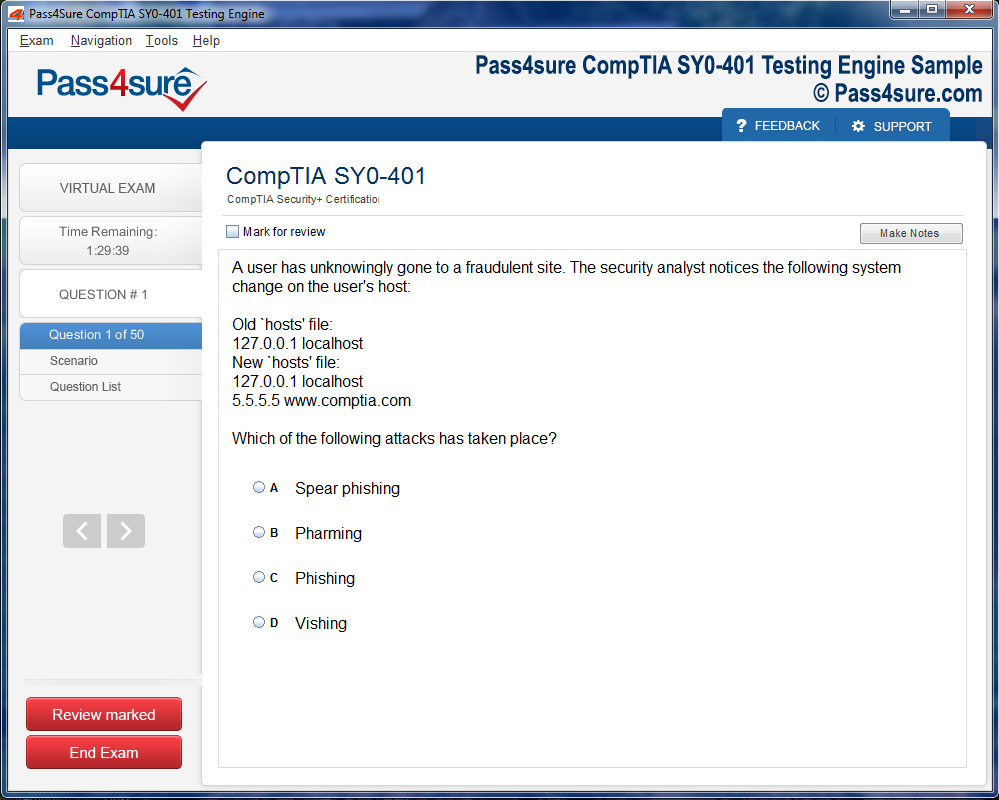
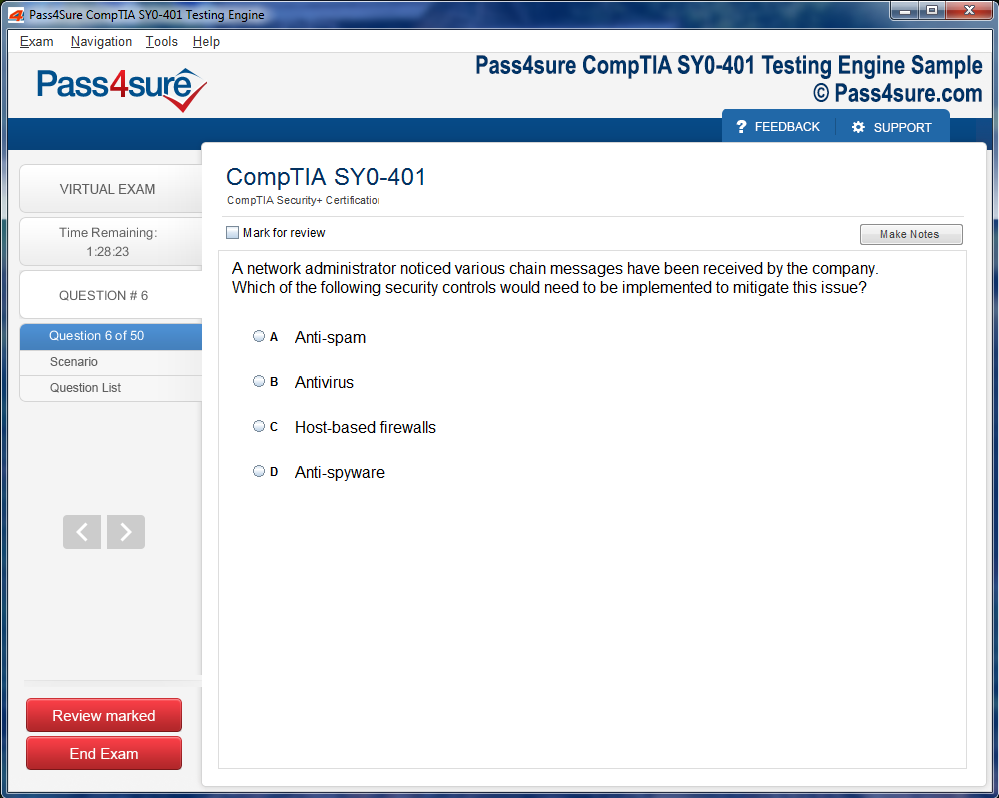
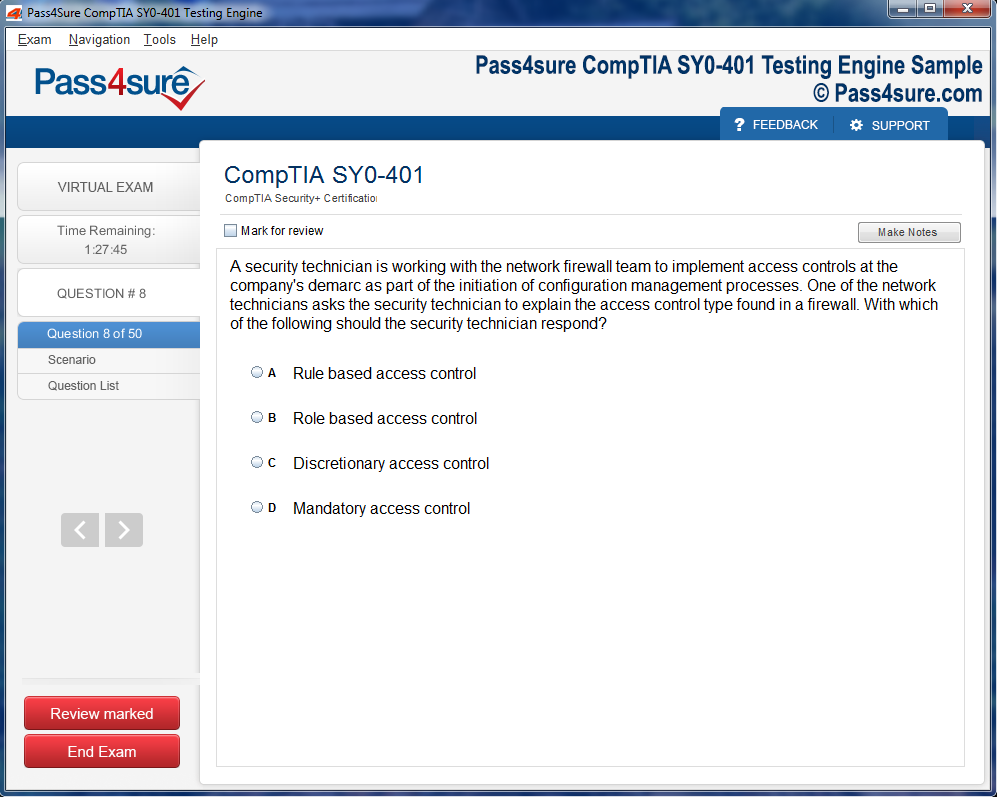
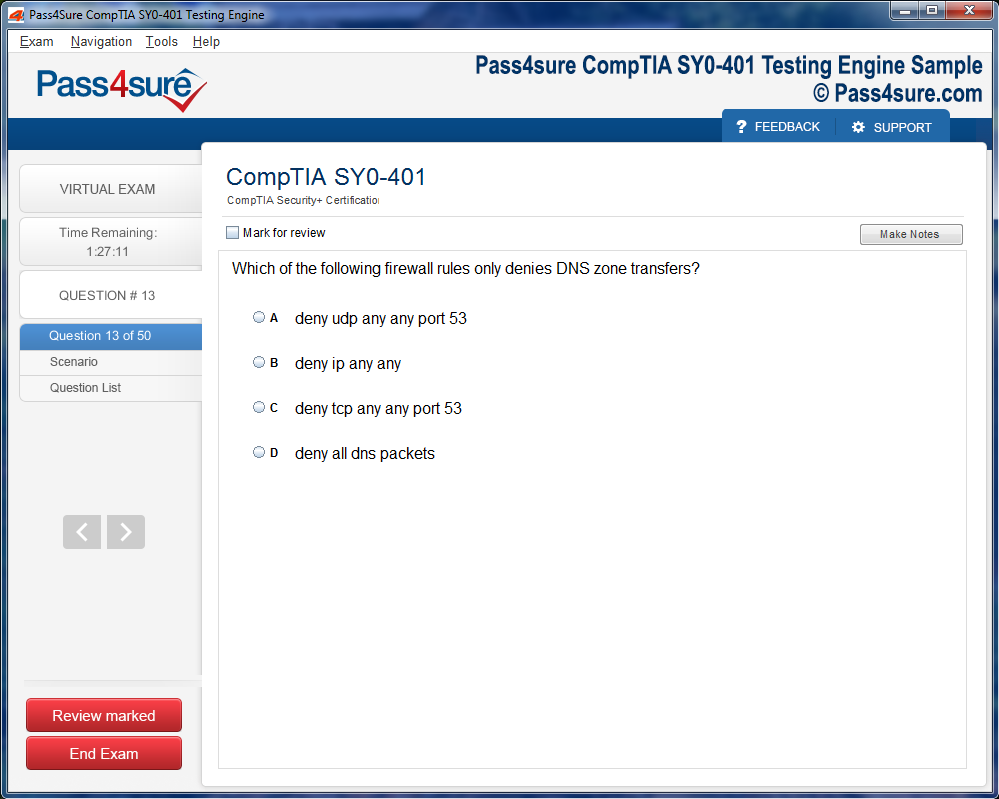
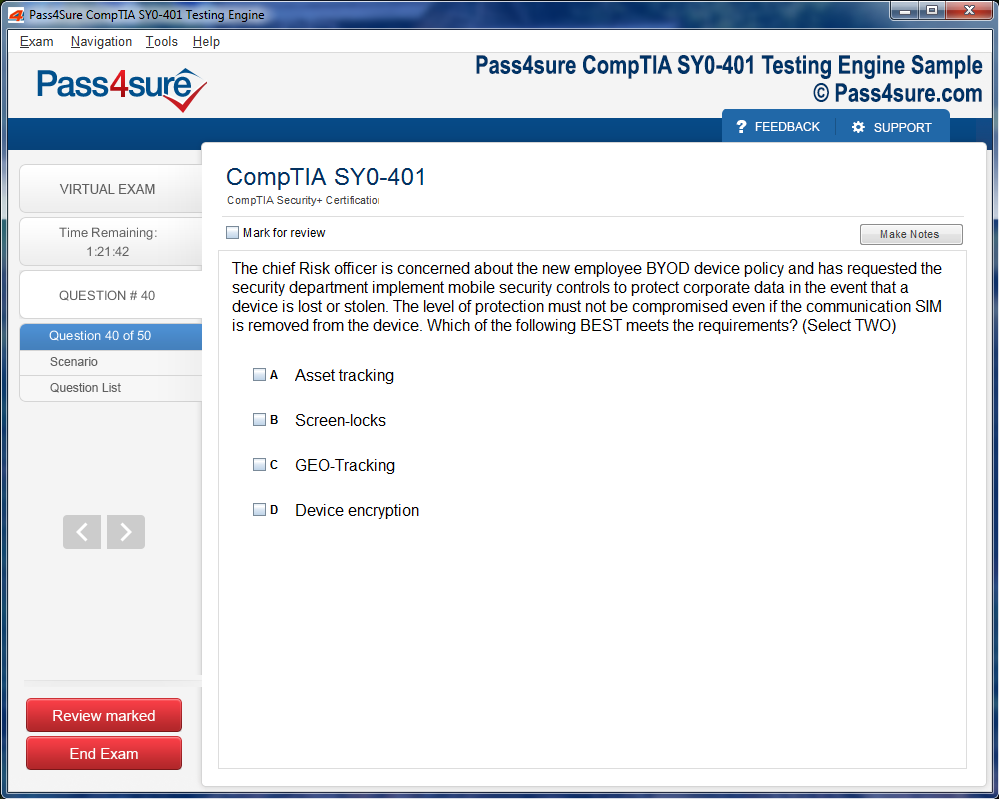
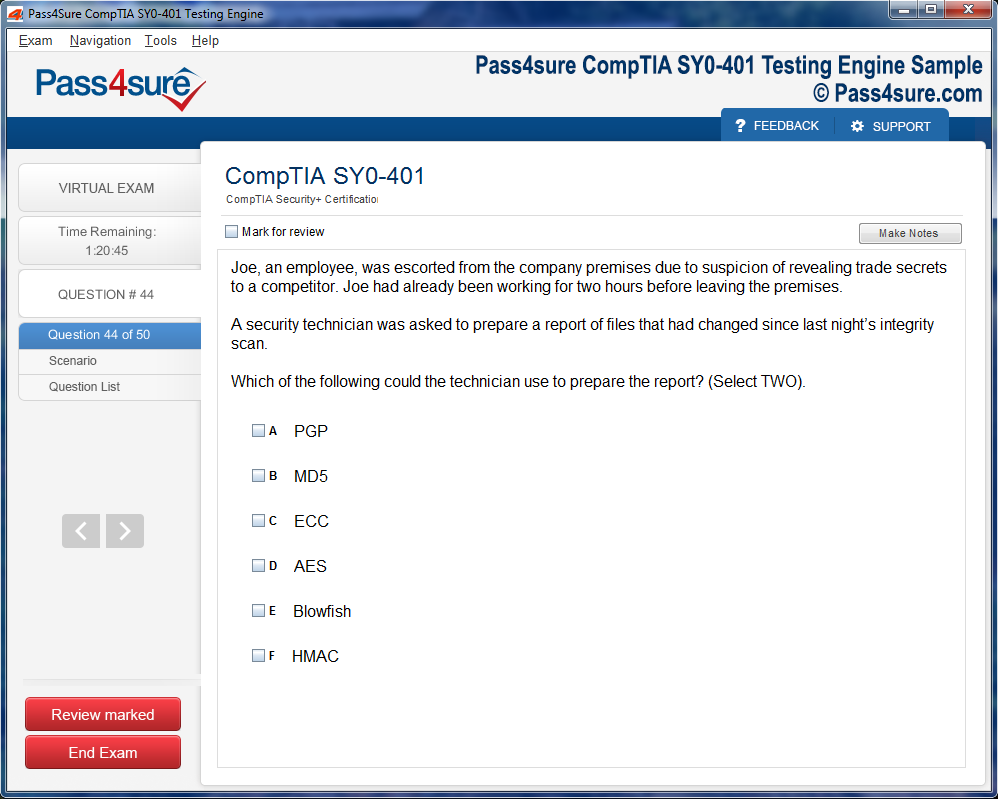
Product Screenshots
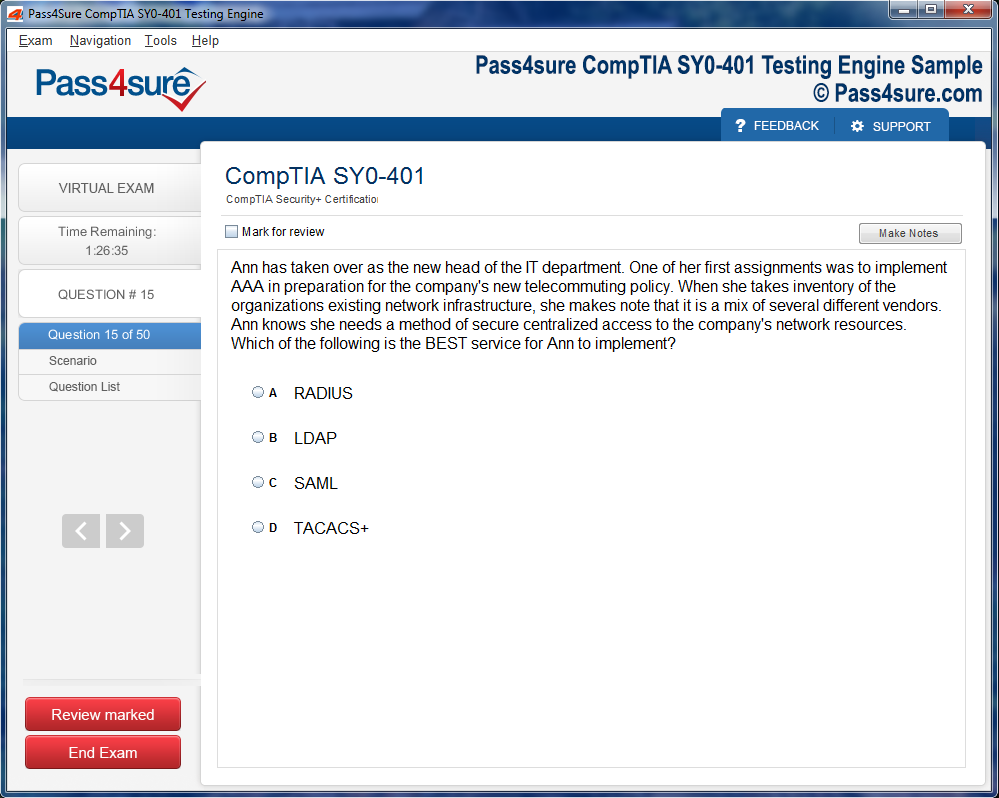
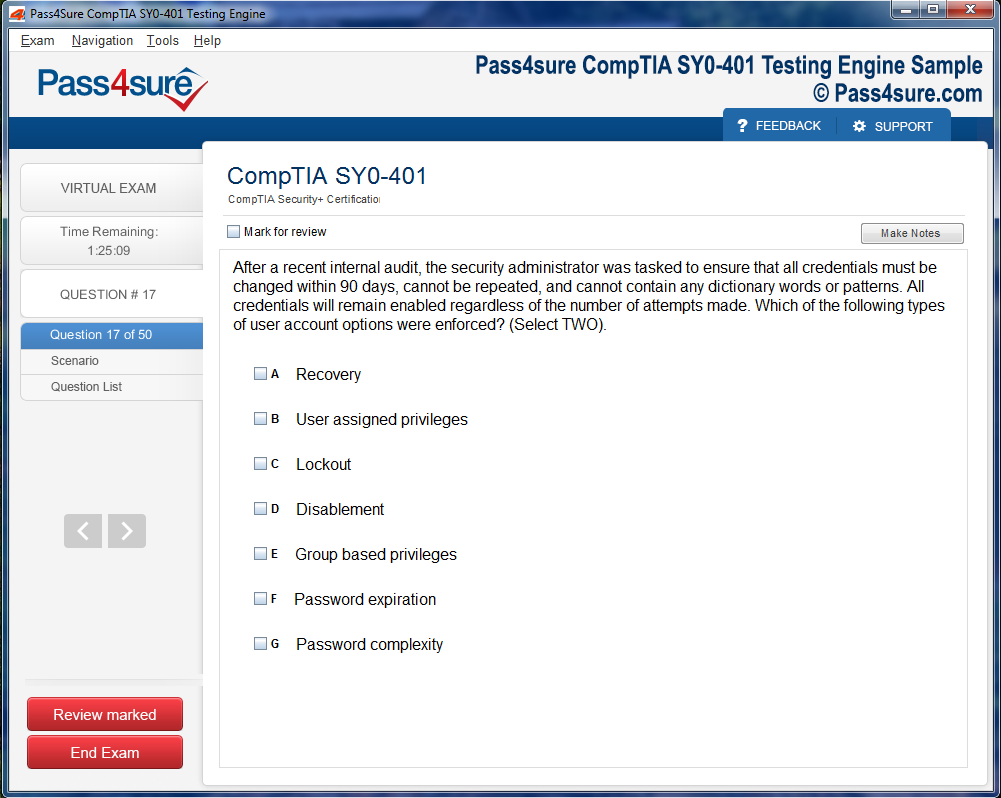
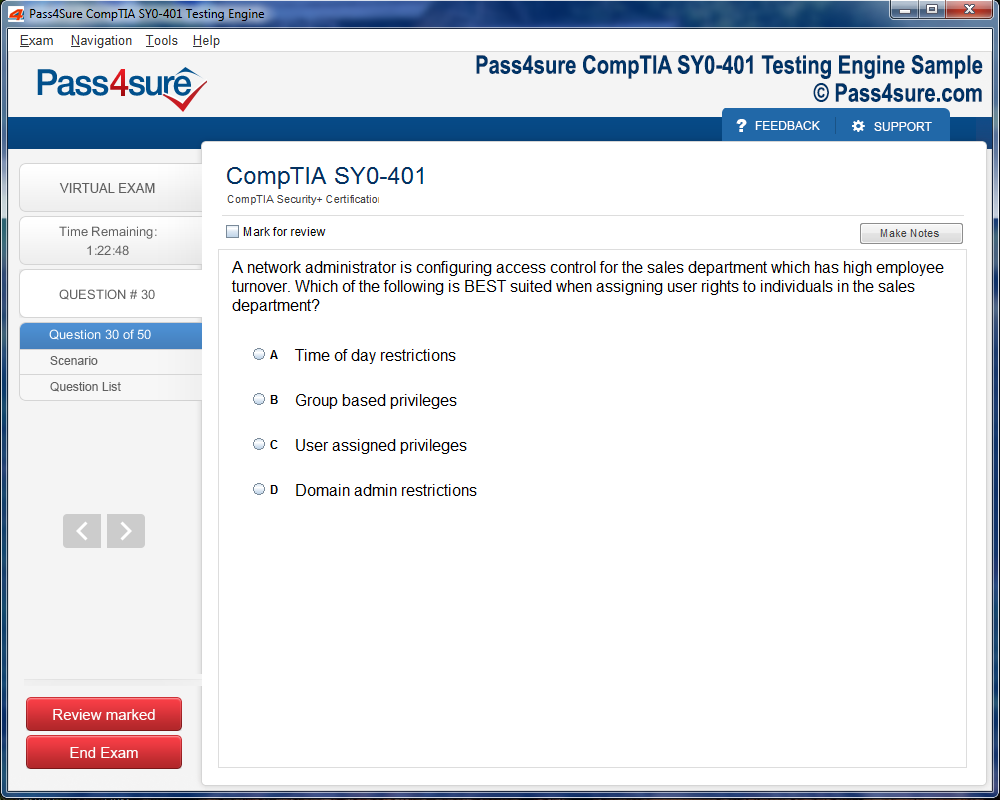
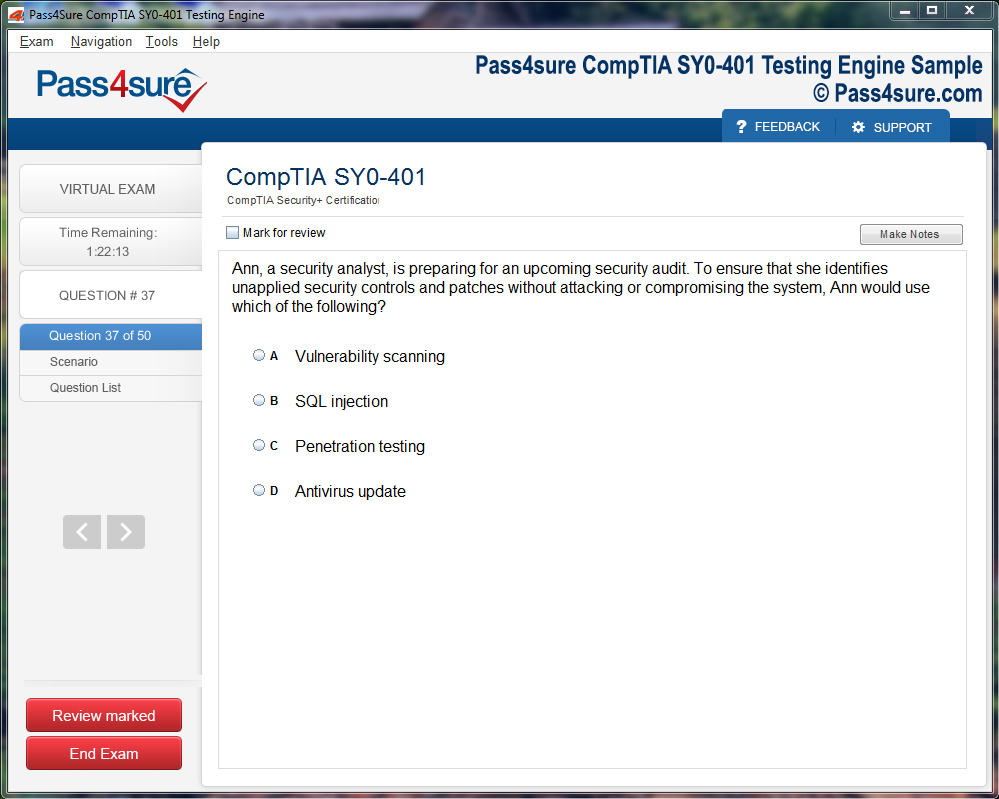
Frequently Asked Questions
How does your testing engine works?
Once download and installed on your PC, you can practise test questions, review your questions & answers using two different options 'practice exam' and 'virtual exam'. Virtual Exam - test yourself with exam questions with a time limit, as if you are taking exams in the Prometric or VUE testing centre. Practice exam - review exam questions one by one, see correct answers and explanations.
How can I get the products after purchase?
All products are available for download immediately from your Member's Area. Once you have made the payment, you will be transferred to Member's Area where you can login and download the products you have purchased to your computer.
How long can I use my product? Will it be valid forever?
Pass4sure products have a validity of 90 days from the date of purchase. This means that any updates to the products, including but not limited to new questions, or updates and changes by our editing team, will be automatically downloaded on to computer to make sure that you get latest exam prep materials during those 90 days.
Can I renew my product if when it's expired?
Yes, when the 90 days of your product validity are over, you have the option of renewing your expired products with a 30% discount. This can be done in your Member's Area.
Please note that you will not be able to use the product after it has expired if you don't renew it.
How often are the questions updated?
We always try to provide the latest pool of questions, Updates in the questions depend on the changes in actual pool of questions by different vendors. As soon as we know about the change in the exam question pool we try our best to update the products as fast as possible.
How many computers I can download Pass4sure software on?
You can download the Pass4sure products on the maximum number of 2 (two) computers or devices. If you need to use the software on more than two machines, you can purchase this option separately. Please email sales@pass4sure.com if you need to use more than 5 (five) computers.
What are the system requirements?
Minimum System Requirements:
- Windows XP or newer operating system
- Java Version 8 or newer
- 1+ GHz processor
- 1 GB Ram
- 50 MB available hard disk typically (products may vary)
What operating systems are supported by your Testing Engine software?
Our testing engine is supported by Windows. Andriod and IOS software is currently under development.
Step-by-Step Guide to Cracking the H19-316 Huawei Certification
In the realm of H19-316 preparation, a nuanced comprehension of network architectures is imperative. Candidates must transcend superficial understanding and immerse themselves in the intricacies of hierarchical design, modular topologies, and protocol interplay. Enterprise networks often employ multi-tiered topologies, including access, distribution, and core layers, each demanding distinct configuration acumen. Recognizing the interplay between these layers fosters a holistic mindset, crucial when troubleshooting multifaceted network anomalies.
The labyrinthine nature of routing protocols necessitates meticulous attention. OSPF areas, BGP path attributes, and route redistribution require not only conceptual clarity but also the dexterity to manipulate these protocols under variegated scenarios. Wireless integration compounds this complexity. Knowledge of 802.11 standards, channel optimization, interference mitigation, and signal propagation dynamics elevates candidates from rote operators to network virtuosos.
Mastery Through Simulation and Virtualization
Practical immersion is the sine qua non of Huawei exam mastery. While theoretical comprehension lays the scaffolding, virtualization transforms abstract knowledge into operational prowess. Tools enabling simulation of Huawei switches, routers, and firewalls allow aspirants to experiment with VLAN tagging, routing policy manipulation, and ACL enforcement in controlled environments. These virtual laboratories foster an experiential understanding unattainable through textbooks alone.
Simulation exercises encourage iterative problem-solving, prompting candidates to diagnose intricate network failures, optimize routing paths, and implement redundancy strategies. This iterative methodology ingrains procedural memory and cultivates the cognitive agility to navigate unforeseen network conundrums during the certification exam.
Advanced Troubleshooting Methodologies
Troubleshooting forms a cornerstone of the H19-316 examination. Candidates encounter scenarios requiring deductive reasoning, keen observational skills, and the ability to apply methodical diagnostic frameworks. Understanding the sequence of operations, from interface verification to protocol analysis and performance assessment, is paramount.
Latency anomalies, packet loss, misconfigured VLANs, and asymmetric routing are common pitfalls in exam scenarios. An aspirant's ability to parse logs, interpret diagnostic outputs, and execute corrective configurations under time constraints can delineate success from failure. Cultivating these skills demands a balance between analytical rigor and intuitive pattern recognition, often developed through repeated exposure to complex problem sets.
Integrating Cloud Solutions and Hybrid Networks
The contemporary networking paradigm increasingly intertwines with cloud architectures, necessitating proficiency beyond traditional LAN/WAN concepts. Candidates must apprehend hybrid deployments, including public cloud integration, private cloud orchestration, and Software-Defined Networking (SDN) principles. Knowledge of cloud-native protocols, secure tunneling mechanisms, and orchestration frameworks enhances employability while fortifying exam preparedness.
Hybrid networks introduce additional variables, such as latency optimization, bandwidth allocation, and multi-path redundancy, that challenge conventional troubleshooting heuristics. Mastery entails both conceptual fluency and hands-on experience, achieved through orchestrated lab exercises and scenario-based simulations.
Leveraging Cognitive Techniques for Knowledge Retention
Sustained retention of complex concepts requires cognitive strategies beyond passive study. Techniques such as interleaving, mnemonic chaining, and elaborative rehearsal enhance memory consolidation. Candidates who engage in active recall, periodically revisiting challenging configurations, often outperform peers reliant on linear review methods.
Time management extends beyond exam execution into preparation phases. Segmenting study sessions into focused intervals, interspersed with reflective pauses, accelerates cognitive absorption. Maintaining a repository of recurring pitfalls, nuanced command syntaxes, and scenario-specific resolutions aids in constructing a mental scaffold for rapid retrieval during the examination.
Securing Command-Line Proficiency
Command-line dexterity is an indispensable competency for H19-316 aspirants. Proficiency in Huawei’s VRP (Versatile Routing Platform) commands, interface configuration, and debugging utilities underpins practical success. Candidates must navigate hierarchical command structures, comprehend command interdependencies, and execute configurations with precision.
Simulated labs allow for experimentation with access control, routing redistribution, and QoS parameterization. Mastery emerges from repetitive execution, critical analysis of outcomes, and iterative refinement. Command-line fluency translates theoretical understanding into actionable expertise, bridging the gap between knowledge and application.
Cultivating Analytical Acumen for Scenario-Based Questions
Scenario-based questions test not merely memory but analytical acumen. Aspirants encounter intricate networks with embedded constraints, requiring the synthesis of multiple concepts to derive optimal solutions. Analytical rigor, coupled with the ability to extrapolate from prior experiences, is pivotal.
Developing this acumen involves deconstructing previous scenario problems, mapping causal relationships, and hypothesizing alternative solutions. Candidates should cultivate mental flexibility, enabling them to pivot strategies when confronted with atypical network configurations.
Deciphering the Intricacies of IP Topology
IP topology is an arcane tapestry of numerical hieroglyphs that govern the orchestrated symphony of connectivity. Beyond mere binary digits lies a labyrinthine framework where each octet conveys precise locational significance. Practitioners must internalize the nuances of subnet partitioning, embracing the arcana of CIDR notation and variable-length subnet masks. Understanding the interplay between public, private, and ephemeral addresses cultivates an adeptness that transcends superficial rote comprehension. Strategic IP allocation ensures scalable networks, averting address collisions that can precipitate cryptic anomalies in enterprise environments.
The Alchemy of Routing Mechanisms
Routing is the alchemical art of guiding packets through ethereal pathways, navigating labyrinthine topologies with perspicacity. Static routes, though rudimentary, serve as the skeleton of deterministic forwarding. Dynamic routing protocols, by contrast, emulate sentient organisms, recalibrating pathways in response to topological perturbations. OSPF’s hierarchical design, RIP’s distance-vector simplicity, and BGP’s inter-autonomous agility constitute the triad of routing mastery. Candidates are encouraged to engage with route redistribution, path preference hierarchies, and convergence optimization—esoteric techniques that transform theoretical knowledge into operational acumen.
Switchcraft and the Sorcery of VLANs
Switching transcends the mundane forwarding of frames; it is a delicate dance orchestrated by MAC address tables, VLAN delineations, and the judicious application of spanning-tree configurations. VLAN segmentation enables logical isolation, crafting microcosms within sprawling networks. Mastery of trunking protocols, inter-VLAN routing, and hierarchical switch design imbues candidates with a dexterity that is simultaneously technical and intuitive. Simulated enterprise topologies reveal the hidden choreography of frame traversal, exposing pitfalls in loop prevention, broadcast containment, and latency minimization.
Cybernetic Fortifications and Defensive Stratagems
Security in networking is less a peripheral concern and more a foundational bulwark. Firewalls, ACLs, VPNs, and intrusion prevention systems are the sentinels of digital fortresses. Candidates must cultivate a mindset attuned to anticipatory defense, scrutinizing traffic patterns and anomaly signatures with forensic precision. Scenario-based questions in examinations mimic real-world incursions, requiring analytical dexterity to devise countermeasures. Beyond physical devices, cloud-centric security paradigms demand an understanding of hybrid topologies, SDN policies, and virtualized enclaves, where protection is codified and orchestrated via programmable interfaces.
Cloud Networking and the Ethereal Realm
Cloud networking represents a paradigm shift, transmuting physical infrastructure into a malleable, programmable continuum. Candidates must grapple with concepts such as network virtualization, overlay networks, and orchestrated service chains. The abstraction of hardware resources into virtual entities allows experimentation in sandboxed environments, elucidating principles that were once obfuscated by tangible cabling and hardware constraints. Understanding latency propagation, load balancing, and inter-cloud peering transforms cloud networking from an esoteric concept into a tangible, navigable domain.
Mnemonics, Narratives, and Cognitive Cartography
Retention of complex networking knowledge benefits profoundly from cognitive scaffolding. Visual mnemonics, illustrative flowcharts, and narrative-driven memory techniques convert abstruse sequences into memorable constructs. Associating VLANs with imaginary departments or mapping routing protocols onto mythical creatures transforms learning into a captivating cognitive exercise. Mind maps elucidate dependencies between layered protocols, revealing emergent behaviors in packet traversal. The synthesis of storytelling with technical detail cultivates an intellectual elasticity that fortifies long-term retention and enhances problem-solving agility.
Temporal Strategies for Mastery
Regular temporal reinforcement is paramount for mastery. Distributed practice, interleaving topics, and iterative problem-solving consolidate understanding into an intuitive gestalt. Exam preparation is not a sprint but a carefully choreographed marathon where knowledge is revisited with increasing granularity. Engaging with practical lab scenarios, simulating packet loss, jitter, and routing failures, crystallizes abstract principles into tangible insights. Candidates emerge not only with procedural competence but with a perspicacious intuition that allows rapid adaptation to novel challenges in both examination and operational settings.
Analytical Acumen in Troubleshooting
Troubleshooting is the crucible in which theoretical understanding is transformed into operational expertise. Anomalies often manifest in subtle, non-linear patterns, demanding deductive reasoning, pattern recognition, and systemic analysis. Candidates must dissect packet flows, scrutinize routing tables, and interrogate switch logs to reveal latent misconfigurations. Embracing a methodical, hypothesis-driven approach mitigates the cognitive chaos inherent in network anomalies. This cultivated acumen differentiates novices who memorize commands from experts who anticipate network behaviors before aberrations emerge.
Decoding Huawei’s Command-Line Ecosystem
Navigating Huawei’s CLI necessitates perspicacity into its idiosyncratic syntax and hierarchical nuances. Unlike other networking environments, Huawei structures commands with an embedded contextual logic, demanding both sequential comprehension and situational foresight. Novices often falter when attempting linear translations from other vendors’ command sets, as subtle discrepancies—such as the handling of sub-interface configurations or dynamic routing attributes—can precipitate unintended behavior. To cultivate proficiency, aspirants must immerse themselves in the nuanced interplay between global configuration modes, interface contexts, and protocol-specific directives.
Orchestrating VLANs and Trunk Configurations
The architecture of Huawei switches revolves around meticulous VLAN orchestration. Constructing a multi-VLAN topology is an exercise in precision, where the order of port assignments, tagging protocols, and aggregation schemes can profoundly impact network stability. Trunk ports, for instance, require cognizant application of encapsulation modes and negotiation parameters. Misalignment between access and trunk configurations frequently induces broadcast storms or packet drops, underscoring the necessity of deliberate command sequencing. Mastery of these sequences cultivates both technical acuity and anticipatory troubleshooting skills.
Proficient Utilization of Display Commands
Huawei’s diagnostic suite is replete with display commands that afford instantaneous visibility into network operations. Executing display interface unveils interface statistics, packet anomalies, and error counters, serving as a foundational instrument for preemptive troubleshooting. Complementary commands, such as display ip routing-table or display ospf peer, permit granular inspection of routing dynamics and adjacency formations. Frequent, deliberate engagement with these commands fosters analytical intuition, enabling practitioners to discern subtle anomalies that might elude cursory observation.
Advanced Troubleshooting Methodologies
In exam simulations, troubleshooting scenarios are rarely overt; they necessitate deductive reasoning and procedural dexterity. Candidates must synthesize knowledge of protocol behaviors, command outputs, and logical inference to isolate aberrations. Common challenges include resolving OSPF misconfigurations, rectifying VLAN propagation anomalies, and navigating ACL-induced access restrictions. Systematic logging of command outcomes, hypothesis testing, and iterative validation forms the backbone of effective problem resolution. Habitual practice within virtualized environments crystallizes these methodologies, transforming theoretical comprehension into operational fluency.
Leveraging Virtual Labs for Experiential Mastery
Virtual platforms such as Huawei eNSP are indispensable for cultivating experiential understanding without jeopardizing production infrastructure. These environments permit repetitive iterations of complex configurations, enabling users to internalize both procedural mechanics and error mitigation strategies. Through immersive simulation, candidates can explore inter-VLAN routing, protocol convergence, and multi-device orchestration under controlled conditions. Each lab iteration is an opportunity to refine muscle memory, develop anticipatory reasoning, and document emergent solutions, creating a cumulative repository of personalized expertise.
Cloud Integration and Hybrid Network Topologies
The convergence of traditional networking with cloud-managed paradigms imposes an additional layer of complexity. Configuring VPN tunnels, virtual switches, and hybrid topologies demands fluency in Huawei’s cloud orchestration consoles. Candidates must navigate scenarios where virtual routers interface with physical counterparts, ensuring seamless connectivity and policy adherence. Understanding latency implications, traffic segmentation, and routing propagation across cloud boundaries is essential for both examination performance and real-world applicability. Systematic documentation of configuration anomalies and resolution strategies further fortifies the candidate’s adaptive competence.
Command Fluency and Cognitive Retention
Achieving command fluency is not merely about memorization; it is the assimilation of operational logic into instinctual execution. Repeated engagement with command sequences, paired with reflective analysis of outcomes, reinforces cognitive retention. Candidates are encouraged to approach labs as iterative experiments, hypothesizing, testing, and validating results in a disciplined cycle. This approach cultivates resilience against novel problem statements, ensuring readiness for both anticipated and unanticipated challenges.
Integrating Security Protocols Within Configuration Workflows
Security configuration is an inseparable aspect of Huawei device mastery. Implementing ACLs, port security, and encryption protocols requires meticulous attention to both syntax and contextual implications. Misapplied security commands can inadvertently obstruct legitimate traffic or compromise redundancy mechanisms. Proficiency demands anticipatory foresight, where security measures are harmonized with overarching network objectives. Simulated penetration and resilience tests within lab environments allow candidates to validate configurations against potential vulnerabilities, reinforcing both technical competence and strategic insight.
Real-Time Network Monitoring and Anomaly Detection
Effective operational oversight relies on proactive monitoring and anomaly detection. Huawei’s devices provide telemetry, logging, and statistical analytics that facilitate real-time visibility into network health. By interpreting traffic patterns, error rates, and convergence events, candidates can preemptively identify congestion points or misconfigurations. Developing an interpretive lens for these metrics enhances both exam performance and professional applicability, bridging theoretical knowledge with operational acuity.
Systematic Documentation for Knowledge Consolidation
Consistent documentation is the linchpin of sustained mastery. Recording command sequences, outcomes, error resolutions, and strategic insights creates a cumulative knowledge base that accelerates revision and bolsters confidence. This meta-cognitive practice transforms isolated lab experiences into an integrated framework of expertise, where each documented anomaly becomes a learning vector for future scenarios. By institutionalizing reflective documentation, candidates cultivate both retention and adaptive problem-solving agility.
Strategic Temporal Allocation for Cognitive Efficiency
Cognizant scheduling of study intervals is paramount for optimizing cognitive assimilation. The human mind assimilates information more efficiently when intense study sessions are interspersed with intervals of repose. Micro-sessions of focused exploration, punctuated by deliberate pauses, fortify memory consolidation and mitigate cerebral fatigue. For the H19-316 exam, partitioning study segments into theoretical disquisition, applied laboratory exercises, and scenario-based problem-solving cultivates an all-encompassing knowledge framework.
Allocating disproportionate attention to weak domains often yields exponential improvement, whereas overindulgence in familiar topics precipitates redundancy and diminished engagement. Integrating a modular timetable, wherein core networking paradigms such as OSPF adjacency, MPLS path computation, and VLAN segmentation receive iterative revisitation, nurtures neural reinforcement. Documenting progress through cognitive logs enables metacognitive reflection, which enhances self-awareness of learning efficacy.
Immersive Application and Synthesized Practice
Passivity is the nemesis of comprehension; active manipulation of concepts engenders profound retention. Constructing hypothetical network topographies, configuring inter-VLAN routing, and simulating packet traversal under constrained parameters transforms rote memorization into experiential cognition. This method, reminiscent of constructivist pedagogical principles, ensures knowledge is malleable and readily deployable under exam conditions.
Integrating virtualized lab environments accelerates proficiency. Simulators replicate intricate topologies, permitting iterative testing of routing protocols, firewall policies, and switch hierarchies. The tangibility of seeing protocol interactions manifest in real-time fosters intuitive understanding that textbooks alone cannot cultivate. Regular journaling of encountered anomalies and troubleshooting pathways augments problem-solving acumen and enhances cognitive agility.
Spaced Repetition and Retrospective Reinforcement
The axiom of “forgetting curve” underscores the necessity of spaced repetition. Revisiting concepts at calculated intervals prevents atrophy of comprehension. For H19-316 aspirants, implementing digital flashcards, mnemonic matrices, or iterative problem sets ensures high-frequency exposure to critical configurations and obscure protocol nuances.
Retrospective reinforcement, involving review of previous errors and misinterpretations, transforms mistakes into fertile learning soil. Categorizing misconceptions by thematic relevance—routing inefficiencies, VLAN misconfigurations, or access control errors—enables targeted remediation. Over time, this cyclical revisitation constructs a robust, interconnected knowledge lattice capable of sustaining performance under the exigencies of examination stress.
Simulated Examination as Cognitive Calibration
Mock examinations operate as cognitive barometers, gauging preparedness and simulating environmental pressures inherent in the H19-316 assessment. These practice trials cultivate temporal discipline, sharpen analytical acuity, and desensitize candidates to the psychological weight of high-stakes scenarios. Immediate post-mortem analysis of performance identifies latent gaps and guides subsequent study prioritization.
Moreover, iterative engagement with progressively challenging simulations accelerates adaptive thinking. Candidates confront increasingly nuanced permutations of routing anomalies, security misconfigurations, and protocol exceptions, engendering resilience against unfamiliar exam contingencies. The integration of mixed-resource study, encompassing both canonical documentation and heuristic-driven forums, enriches contextual understanding and mitigates myopic interpretations.
Collaborative Cognitive Augmentation
The solitary learner, while disciplined, often misses the synergistic benefits of peer collaboration. Engaging in dialectical discourse with study partners promotes epistemic refinement, compelling articulation of complex paradigms and exposing latent misconceptions. Joint troubleshooting exercises, wherein candidates co-navigate intricate network topologies, catalyze lateral problem-solving skills and imbue flexible thinking.
Furthermore, community engagement through moderated forums and focused study groups provides exposure to non-linear methodologies, often overlooked in traditional learning trajectories. Such cross-pollination of ideas amplifies conceptual clarity and accelerates cognitive integration. Concurrently, fostering psychological resilience remains indispensable; structured physical activity, mindfulness practices, and strategically timed cognitive breaks preserve neural efficiency and sustain engagement over protracted study durations.
Metacognitive Strategies for Exam Mastery
Metacognition, the awareness of one’s cognitive processes, serves as the lodestar for strategic learning. Candidates benefit from introspective techniques, such as reflective journaling, self-assessment rubrics, and iterative goal realignment. By continuously monitoring comprehension and adjusting study vectors, learners optimize efficiency and preempt stagnation.
In practice, this entails deliberate analysis of problem-solving patterns, scrutiny of recurring errors, and the formulation of contingency plans for unfamiliar question archetypes. Employing metacognitive scaffolds transforms passive familiarity into active mastery, ensuring that knowledge is not merely retained but dexterously applied under dynamic exam conditions.
The Imperative of Experiential Network Simulation
Immersive network simulations constitute the sine qua non of advanced H19-316 preparation. Mere theoretical perusal of topologies and protocols is insufficient; candidates must cultivate an operational intuition through meticulous lab engagement. Virtualized environments allow the replication of labyrinthine corporate networks without the logistical encumbrances of physical hardware. By deploying Huawei’s eNSP or analogous simulation platforms, aspirants can instantiate routers, switches, and hybrid nodes in a manner that mirrors real-world intricacies. Structured lab exercises—encompassing initial planning, methodical device configuration, connectivity verification, diagnostic troubleshooting, and meticulous documentation—instill both procedural rigor and cognitive dexterity.
Orchestrating Complex Enterprise Scenarios
To transcend superficial understanding, candidates should architect simulations that replicate multifaceted enterprise frameworks. Segmentation through VLAN hierarchies, inter-VLAN routing articulation, ACL fortification, and granular traffic monitoring cultivates not only theoretical comprehension but operational finesse. Engaging with labyrinthine topologies, such as multi-tiered routing domains or redundant failover meshes, imparts a nuanced grasp of network resiliency. Experiential familiarity with advanced routing protocols, spanning OSPF, BGP, and route redistribution schemas, reinforces the capacity to navigate scenario-based interrogatives that hinge upon both knowledge and adaptability.
Troubleshooting as Cognitive Sculpting
The crucible of troubleshooting exercises is indispensable for honing analytical acuity. Deliberate misconfigurations—ranging from IP address conflagrations to protocol misalignments—provoke critical reasoning and rapid diagnostic skills. Iterative problem-solving fortifies procedural memory and instills an almost instinctual capacity to identify anomalies. Maintaining a meticulous lab journal, complete with sequential command logging, diagnostic rationales, and outcome annotations, serves as both a cognitive scaffold and a rapid-reference compendium, invaluable in pre-exam review.
Integrating Hybrid and Cloud Lab Ecosystems
Hybrid network simulations, straddling both virtualized and physical infrastructures, offer a dimensionality unattainable in purely local labs. Experimentation with VPN tunnels, SDN orchestration, and cloud interconnectivity illuminates dynamic traffic flows, redundancy behaviors, and protocol interoperability. The capacity to visualize and manipulate such complex interactions cultivates an operational foresight that is frequently scrutinized in scenario-based assessments. Familiarity with cloud orchestration frameworks and ephemeral virtual topologies further enhances a candidate’s adaptability to modern, elastic network paradigms.
Advanced Protocol Experimentation and Failover Drills
Deep exploration of protocol intricacies and redundancy schemas forms the bedrock of high-level preparedness. Candidates should implement OSPF area hierarchies, BGP peer-to-peer configurations, and MPLS tunnels within simulated environments to internalize routing principles. Failover drills, involving link failures, route flaps, and deliberate misconfigurations, foster resilience in real-time problem-solving. The cognitive elasticity developed through these exercises ensures candidates can swiftly recalibrate their approach under pressure, an attribute often decisive in applied examinations.
Leveraging Analytical Metrics and Traffic Forensics
A sophisticated lab regimen incorporates systematic analysis of network metrics and traffic patterns. Tools that simulate packet flows, congestion, and latency variations reveal the latent behaviors of complex topologies. By scrutinizing logs, throughput statistics, and error events, candidates develop forensic-level insight into network performance. This practice not only solidifies theoretical knowledge but also sharpens the intuition required for scenario-based diagnosis and remediation.
Sustaining Mastery through Iterative Practice
The ultimate proficiency emerges from repetition and refinement. Cyclical engagement with lab exercises, scenario reconstructions, and troubleshooting drills consolidates command fluency. Incorporating incremental complexity—adding redundant links, multi-protocol interactions, or hybrid virtual-physical constructs—ensures continuous cognitive engagement. This iterative methodology transforms procedural knowledge into instinctive operational capability, a hallmark of expert network practitioners.
Exam-Day Preparation and Mindset Optimization
Approaching the examination locus with a methodical and perspicacious mindset can significantly modulate performance outcomes. Knowledge, while indispensable, is merely one prong of a trifurcated preparatory schema; psychological readiness wields equal influence. Commence with a meticulous review of all curricular nodes, accentuating areas that manifested fragility during prior simulations. Rehearse command syntaxes, troubleshooting heuristics, and scenario responses until they become reflexive, eradicating cognitive friction during examination execution.
Time allocation during the assessment is an exigent determinant of success. Strategically segment temporal resources among multiple-choice interrogatives, intricate lab simulations, and analytical scenario exercises. Ensuring measured pacing prevents inadvertent neglect of complex items. Reading comprehension at a granular level forestalls misinterpretation of nuanced prompts, particularly those designed to probe deductive reasoning rather than rote memorization.
Stress modulation is paramount and cannot be relegated to peripheral concern. Employ techniques such as diaphragmatic breathing, mindfulness meditation, and brief cognitive interludes between sections to sustain attentional acuity. Visualization exercises, wherein candidates envision seamless performance and successful completion, engender resilience and attenuate anxiety-induced cognitive perturbations. Concurrently, physical priming through adequate slumber, nutritionally balanced sustenance, and hydration optimizes cerebral alacrity, reinforcing the symbiosis between physiological and cognitive readiness.
Beyond the moment of examination, reflective introspection cements learning. Cataloging procedural successes, missteps, and emergent strategies nurtures metacognitive insight. This practice enhances adaptability for subsequent attempts, whether they occur immediately or after a prolonged interval. The integration of knowledge mastery, procedural dexterity, and psychological fortitude constitutes a triadic foundation that amplifies the probability of certification attainment in H19-316 Huawei evaluation contexts.
Exam-Day Preparation and Mindset Optimization
Approaching the examination locus with a methodical and perspicacious mindset can significantly modulate performance outcomes. Knowledge, while indispensable, is merely one prong of a trifurcated preparatory schema; psychological readiness wields equal influence. Commence with a meticulous review of all curricular nodes, accentuating areas that manifested fragility during prior simulations. Rehearse command syntaxes, troubleshooting heuristics, and scenario responses until they become reflexive, eradicating cognitive friction during examination execution.
Temporal Architecture and Strategic Sequencing
Time allocation during the assessment is an exigent determinant of success. Strategically segment temporal resources among multiple-choice interrogatives, intricate lab simulations, and analytical scenario exercises. Candidates should cultivate a temporal architecture that prioritizes high-yield questions while ensuring complex problem-solving segments are not truncated. Developing an internal chronometer, one that estimates elapsed time versus remaining sections, prevents inadvertent neglect of cognitively demanding items. Even a few minutes of misallocated attention can cascade into errors, undermining otherwise thorough preparation.
Precision in Question Interpretation
Reading comprehension at a granular level forestalls misinterpretation of nuanced prompts. Many scenario-based items are designed to probe deductive reasoning rather than rote memorization. The subtleties of phrasing often conceal logical traps, requiring candidates to parse syntax carefully, recognize implicit constraints, and anticipate system behavior under hypothetical conditions. A micro-analytic approach—examining each clause, conjunction, and conditional operator—fortifies understanding and diminishes cognitive missteps.
Cognitive Resilience and Stress Modulation
Stress modulation is paramount and cannot be relegated to peripheral concern. Employ techniques such as diaphragmatic breathing, mindfulness meditation, and brief cognitive interludes between sections to sustain attentional acuity. Visualization exercises, wherein candidates envision seamless performance and successful completion, engender resilience and attenuate anxiety-induced cognitive perturbations. A repeated mental rehearsal of complex scenarios strengthens neural encoding, effectively bridging theoretical knowledge with procedural execution.
Short mental respites between sections can recalibrate focus, preventing attentional drift. Even a thirty-second micro-pause, during which one engages in controlled inhalation, muscle relaxation, or a brief ocular scan of the examination environment, can restore cognitive equilibrium. These interludes act as temporal anchors, ensuring the mind does not succumb to fatigue-induced heuristic shortcuts or impulsive responses.
Physical Optimization for Cognitive Prowess
Concurrent physical priming through adequate slumber, nutritionally balanced sustenance, and hydration optimizes cerebral alacrity, reinforcing the symbiosis between physiological and cognitive readiness. Sleep architecture directly impacts memory consolidation and problem-solving speed. Candidates should aim for uninterrupted circadian alignment in the week preceding the exam, gradually adjusting schedules to peak alertness during examination hours.
Nutrition plays a subtle yet profound role in sustaining synaptic efficiency. Complex carbohydrates, lean proteins, and micronutrient-rich fruits enhance sustained energy release, while minimizing high-glycemic snacks prevents insulin spikes that could precipitate cognitive lethargy. Hydration, often underestimated, facilitates optimal neurotransmitter function, improves reaction time, and diminishes headache prevalence—conditions that can silently erode performance if neglected.
Adaptive Mental Frameworks
Beyond the physiological dimension, cultivating adaptive mental frameworks enables dynamic response to unexpected question constructs. Cognitive elasticity involves the capacity to pivot between paradigms—diagnostic, analytical, and procedural—without hesitation. When confronted with an unfamiliar lab simulation or an atypical configuration problem, candidates must engage in layered reasoning: hypothesize, validate, iterate. Each iterative cycle refines accuracy and mitigates the risk of entrenchment in erroneous pathways.
Candidates can enhance cognitive elasticity through deliberate exposure to non-canonical problems during preparatory exercises. Simulations that deliberately obfuscate conventional solutions foster analytical dexterity, rendering the exam environment less intimidating and more navigable. Moreover, documenting these exercises facilitates meta-cognition, allowing reflection on cognitive patterns, habitual errors, and successful heuristics.
Visualization and Positive Reinforcement
Visualization and positive reinforcement extend beyond ephemeral motivational strategies. Structured visualization entails mentally navigating the entirety of the exam experience: entering the testing environment, methodically addressing sections, applying known solutions, and resolving contingencies. This cognitive rehearsal enhances procedural memory and builds an anticipatory schema that diminishes the psychological weight of novelty.
Positive reinforcement complements this by consolidating confidence. Instead of generalized affirmations, candidates should engage in evidence-based reinforcement: recalling prior successful simulations, highlighting improvements in weak domains, and recognizing adaptive strategies honed through iterative practice. This strategy generates an internal feedback loop that reduces performance anxiety while promoting sustained attentional engagement.
Contingency Planning and Error Containment
Examination environments are inherently unpredictable. Candidates should preemptively develop contingency strategies for common disruptions: misreading prompts, accidental selection errors, or sudden attentional lapses. A structured approach might involve marking ambiguous questions for rapid review, employing mental triage to prioritize high-confidence responses first, and reserving a portion of time for reassessment.
Error containment is equally critical. Instead of succumbing to the spiral of frustration, candidates must employ cognitive compartmentalization: isolate the error, correct where possible, and proceed without allowing residual stress to impair subsequent responses. This technique prevents cascading mistakes and maintains overall performance integrity.
Post-Exam Reflective Analysis
Beyond the moment of examination, reflective introspection cements learning. Cataloging procedural successes, missteps, and emergent strategies nurtures metacognitive insight. Candidates are encouraged to maintain an examination journal, detailing which approaches facilitated efficient resolution and which induced cognitive friction. Over successive iterations, this record becomes an invaluable map of personal performance topology, highlighting growth trajectories and latent weaknesses.
This practice enhances adaptability for subsequent attempts, whether they occur immediately or after a prolonged interval. By examining patterns—such as recurring errors in command syntax, misinterpretation of scenario constraints, or time misallocation—candidates can recalibrate their preparation strategies, ensuring incremental improvement.
Integration of Knowledge, Agility, and Psychological Fortitude
The integration of knowledge mastery, procedural dexterity, and psychological fortitude constitutes a triadic foundation that amplifies the probability of certification attainment. Knowledge mastery encompasses both breadth and depth of theoretical understanding, procedural dexterity reflects applied proficiency in real-world configurations, and psychological fortitude embodies resilience under stress and ambiguity.
Excellence arises not merely from isolated competence in these domains but from their orchestrated synergy. Candidates who simultaneously cultivate cognitive endurance, situational adaptability, and emotional regulation gain a performance advantage disproportionate to their raw knowledge. In practical terms, this manifests as fluid navigation of multi-layered problem statements, rapid and accurate execution of commands, and calm, confident responses under temporal pressure.
Constructing Multi-Layered Network Architectures
In advanced lab simulations, the construction of multi-layered network architectures is essential for developing a holistic understanding of enterprise environments. Candidates should experiment with hierarchical topologies, including core, distribution, and access layers, to emulate the complexities of real-world deployments. Emphasis should be placed on integrating redundancy mechanisms, such as dual-homed links and spanning-tree optimizations, to ensure network resiliency. These exercises cultivate the ability to anticipate bottlenecks, predict failure cascades, and design mitigative strategies—a skill that transcends rote memorization and enters the domain of operational intuition.
Layered architecture exercises should also incorporate protocol interdependencies, such as integrating OSPF for intra-domain routing with BGP for inter-domain connectivity. Candidates may simulate link failures and route convergence scenarios, observing the dynamic recalibration of routing tables. Understanding these interactions in a controlled environment enhances cognitive agility and reinforces conceptual retention. Documentation of such experiments, noting configuration subtleties and traffic outcomes, solidifies both analytical skills and procedural accuracy.
Immersive VLAN Segmentation and ACL Implementation
VLAN segmentation is not merely a theoretical construct but a vital instrument in enterprise network design. Candidates should deploy multi-VLAN configurations, encompassing disparate departments or business units, and enforce inter-VLAN routing through Layer 3 interfaces or router-on-a-stick configurations. The implementation of Access Control Lists (ACLs) on both inbound and outbound interfaces introduces the necessity for precise rule crafting. Subtle misconfigurations, such as overlapping IP ranges or misapplied wildcard masks, provide fertile ground for troubleshooting exercises, compelling candidates to engage in methodical reasoning under pressure.
By integrating monitoring tools, aspirants can observe traffic flows between VLANs, detect anomalous packets, and refine ACL policies accordingly. This combination of hands-on configuration and analytical observation cultivates a duality of skills: procedural execution and investigative foresight. The iterative cycle of configuration, observation, and correction embeds a deep operational understanding that is frequently tested in practical examinations.
Orchestration of Redundant Topologies and Failover Mechanisms
Redundancy is a cornerstone of resilient network design, and lab simulations provide an ideal proving ground for its orchestration. Candidates should construct topologies with multiple redundant paths, leveraging protocols such as HSRP, VRRP, or GLBP to maintain seamless failover. Layered failover drills, including link outages, device shutdowns, and simulated power failures, expose vulnerabilities and enhance problem-solving acuity. Observing the behavior of routing protocols during these events provides an invaluable experiential insight into convergence processes and protocol hierarchies.
Advanced simulations may also introduce load-balancing scenarios, requiring candidates to optimize traffic distribution across redundant paths while maintaining high availability. These exercises develop an anticipatory mindset, enabling candidates to preempt network degradation and implement proactive mitigation strategies. Documenting such drills with comprehensive annotations of observed behaviors fosters both memory retention and procedural mastery.
Integrating VPN Tunnels and Remote Connectivity Simulations
Virtual Private Networks (VPNs) constitute a critical component of contemporary enterprise networks, particularly for secure remote access. Candidates should simulate site-to-site VPNs, configuring IPsec tunnels and testing encrypted traffic flows between disparate network segments. Additionally, remote-access VPN setups can be incorporated to emulate end-user connectivity from external endpoints. These simulations provide a practical framework for understanding encryption, tunneling protocols, and authentication mechanisms.
Deliberate introduction of misconfigurations—such as mismatched encryption algorithms, incorrect pre-shared keys, or misrouted traffic—offers fertile ground for troubleshooting exercises. By systematically resolving these anomalies, candidates develop an intuitive understanding of VPN dynamics, latency implications, and failover contingencies. Documenting each configuration, test, and correction in a lab journal ensures knowledge consolidation and serves as a reference for future scenario-based evaluations.
Emulating Dynamic Routing Protocols in Complex Scenarios
Dynamic routing protocols form the backbone of adaptive networks, and lab simulations afford candidates the opportunity to engage with these protocols in rich, multifaceted scenarios. OSPF experiments may include multi-area configurations, stub areas, and virtual links, challenging candidates to maintain both efficiency and loop-free topologies. BGP simulations can incorporate route filtering, path manipulation, and policy enforcement, highlighting the protocol’s influence over inter-domain connectivity.
The deliberate creation of network perturbations—such as route flaps, conflicting advertisements, or asymmetric routing—enhances analytical agility. Observing how routing tables adjust and converge under these conditions deepens conceptual comprehension. Candidates should document these exercises, noting configuration nuances, protocol interactions, and convergence timings, thereby cultivating a repository of knowledge that is both practical and exam-relevant.
Advanced Monitoring and Traffic Analysis Techniques
Monitoring and traffic analysis are indispensable for mastering network behavior in simulated environments. Candidates should employ packet capture tools, flow analysis, and synthetic traffic generators to examine latency, jitter, and congestion patterns across the lab topology. These analyses provide empirical insights into protocol performance, topology efficiency, and security vulnerabilities. By correlating observed behaviors with configuration parameters, candidates develop a forensic-level understanding of network dynamics.
Traffic simulation can also include anomaly injection, such as broadcast storms, malformed packets, or unauthorized access attempts, to evaluate the effectiveness of mitigation strategies. These exercises cultivate analytical resilience, teaching candidates to identify root causes and implement corrective measures with precision. Detailed recording of metrics and observations reinforces retention and provides a rapid-reference guide for scenario-driven challenges.
Implementing SDN Elements and Orchestration Practices
Software-Defined Networking (SDN) introduces a paradigm shift in network management, emphasizing centralized control and dynamic programmability. Candidates should simulate SDN controllers interacting with virtualized switches and routers, experimenting with policy enforcement, flow redirection, and automated provisioning. By observing how centralized logic influences distributed traffic patterns, aspirants gain a conceptual and operational understanding of SDN architectures.
Integrating SDN elements into lab exercises enhances adaptability, as candidates must navigate both traditional protocol behaviors and orchestrated, controller-driven actions. Experimentation with API-driven configurations, network slicing, and policy automation deepens cognitive agility and operational versatility, skills increasingly emphasized in applied examinations.
Cloud Interconnectivity and Hybrid Lab Exploration
Hybrid network simulations, bridging on-premises labs with cloud resources, provide a multidimensional learning experience. Candidates can simulate interactions between virtualized local devices and cloud-hosted services, configuring VPN tunnels, dynamic routing, and security policies across disparate environments. These exercises reveal the nuances of latency, bandwidth constraints, and protocol interoperability in hybrid topologies.
Advanced simulations may involve orchestrating ephemeral cloud instances, dynamically adjusting topologies, and monitoring real-time traffic patterns. Such exercises cultivate an anticipatory mindset, enabling candidates to preemptively address connectivity issues, optimize routing, and maintain secure communications. Meticulous documentation of these hybrid interactions reinforces learning and serves as a practical reference for both exams and real-world scenarios.
Layered Conceptual Integration
Understanding networking paradigms in isolation is insufficient; mastery emerges from layered conceptual integration. The H19-316 exam tests not only rote knowledge but the capacity to interlink principles across multiple domains. For instance, comprehending VLAN segmentation is amplified when paired with routing protocol nuances, QoS prioritization, and security policy enforcement. Candidates should endeavor to mentally map these interdependencies, constructing cognitive schemas that mirror real-world network complexity.
Visualization techniques, such as diagrammatic representations of packet flows or tabular cross-referencing of protocol behavior under varied topologies, enhance retention. Additionally, concept mapping aids in uncovering latent relationships that conventional linear study overlooks. By embracing these methods, aspirants cultivate a multidimensional understanding that enables rapid synthesis during scenario-based questioning.
Cognitive Load Modulation
Excessive cognitive load impairs learning efficacy. The H19-316 curriculum encompasses a plethora of protocols, configurations, and troubleshooting scenarios, making strategic load modulation essential. Dividing study sessions into micro-objectives prevents overwhelming the prefrontal cortex and facilitates deeper encoding of information.
Employing techniques such as chunking—wherein complex information is segmented into digestible units—enhances cognitive assimilation. For instance, memorizing VLAN IDs, IP schemas, and access control lists separately before integrating them into holistic network simulations can significantly improve recall and application. Periodic reflective pauses, wherein learners consciously consolidate acquired knowledge, further solidify neural pathways and reduce the likelihood of superficial comprehension.
Heuristic Problem-Solving Methodologies
The H19-316 exam rewards heuristic ingenuity. Beyond prescriptive learning, candidates must navigate unanticipated scenarios with analytical dexterity. Developing heuristic frameworks involves recognizing patterns, hypothesizing outcomes, testing configurations, and iteratively refining approaches.
Structured trial-and-error in controlled lab settings fosters this capacity. Candidates should purposefully manipulate protocol parameters, induce network anomalies, and observe cascading effects. Such exercises sharpen diagnostic acuity, ensuring that when confronted with novel exam permutations, learners can adaptively engineer solutions. Documenting these heuristic experiments in cognitive logs further enhances procedural memory and expedites recall under examination conditions.
Multimodal Learning and Sensory Encoding
Human cognition thrives when multiple sensory pathways are engaged. Relying solely on textual study limits retention; integrating auditory, visual, and kinesthetic modalities reinforces encoding. For example, explaining routing hierarchies aloud, sketching network topologies, and physically navigating virtual lab environments concurrently fortifies memory.
Moreover, interleaving diverse learning materials—such as textual guides, interactive labs, simulation software, and mnemonic devices—prevents habituation and maintains high attentional engagement. This multimodal strategy enables information to be stored in complementary neural circuits, enhancing durability and accessibility during timed assessments.
Error Analysis as a Learning Catalyst
Errors are often perceived negatively, yet systematic error analysis converts missteps into potent learning catalysts. After each practice session, candidates should meticulously examine the root cause of inaccuracies, distinguishing between conceptual misunderstandings, procedural misapplications, or simple oversight.
Creating an “error taxonomy” facilitates targeted remediation. For example, recurring mistakes in OSPF area configurations may indicate insufficient conceptual grasp, whereas inconsistent application of ACLs could stem from procedural oversight. By addressing errors in a structured, analytical manner, learners transform vulnerabilities into strengths, progressively cultivating mastery that is both resilient and adaptable.
Dynamic Scenario Anticipation
Examination success is contingent on anticipatory reasoning—the ability to predict the ramifications of configuration choices before executing them. Candidates can cultivate this skill by constructing hypothetical network perturbations and tracing protocol behavior preemptively.
Exercises might include predicting packet drops under VLAN misalignment, identifying routing loops under erroneous OSPF metrics, or evaluating security breaches following misconfigured ACLs. Anticipatory reasoning not only sharpens problem-solving agility but also reduces cognitive load during timed examinations, allowing for rapid identification of optimal solutions under pressure.
Cognitive Resilience and Neurophysiological Optimization
Long-term study demands not just intellectual rigor but neurophysiological optimization. Cognitive resilience is augmented through structured physical activity, mindfulness practices, and regulated sleep cycles. Aerobic exercise, in particular, enhances hippocampal function, facilitating long-term memory consolidation and executive functioning.
Mindfulness techniques, such as focused breathing or brief meditative interludes, mitigate stress-induced cognitive disruption, enhancing sustained attention and working memory. Additionally, strategic scheduling of study sessions to align with circadian peaks ensures maximal cognitive efficiency, enabling complex problem-solving and retention-intensive tasks to be performed with optimal efficacy.
Meta-Analytical Reflection and Iterative Refinement
A high-caliber H19-316 candidate engages in continuous meta-analytical reflection. This involves assessing not only content mastery but also the efficacy of study methodologies. Periodically evaluating which strategies yield the highest retention and fastest application informs iterative refinement of the learning process.
For instance, if virtual lab exercises consistently produce superior recall compared to passive reading, candidates should adjust their study allocation accordingly. This feedback loop ensures that cognitive effort is not expended uniformly but strategically, amplifying both learning velocity and depth of understanding. Over successive cycles, such meta-analytical rigor transforms study from routine rehearsal into an evolving, precision-tuned discipline.
Experiential Knowledge Consolidation
Experiential learning is invaluable for bridging theoretical constructs with practical application. The H19-316 exam encompasses scenarios that mirror operational environments, demanding both procedural knowledge and adaptive reasoning. Candidates should seek opportunities to simulate real-world challenges, from configuring redundant links to troubleshooting VLAN conflicts in dynamic topologies.
Documenting these experiences in detailed case studies not only reinforces learning but also develops a repository of mental heuristics. These case studies function as personalized playbooks, enabling rapid retrieval of strategies during high-pressure examination contexts. The synthesis of theory and hands-on practice ensures knowledge is durable, transferable, and operationally relevant.
Adaptive Mnemonics for Enhanced Retention
The intricate landscape of H19-316 content, with its amalgamation of networking paradigms, cloud orchestration principles, and configuration intricacies, often overwhelms conventional memorization strategies. Here, adaptive mnemonics emerge as a cognitive superstructure, enabling candidates to encode, retain, and retrieve multifaceted information with alacrity. Mnemonics transcend the mere creation of acronyms; they constitute a multidimensional architecture that interlaces narrative, spatial cognition, symbolic representation, and semantic layering. By leveraging these adaptive techniques, aspirants cultivate both retention fidelity and flexible applicability, crucial for high-stakes examination scenarios.
Narrative Mnemonics: Storytelling for Cognitive Embedding
Narrative mnemonics capitalize on the human predilection for storytelling, transforming abstract sequences into vivid cognitive tableaux. Consider the sequential operations involved in VLAN tagging, trunking, and inter-switch routing. Rather than attempting rote memorization of discrete commands, candidates can craft a storyline: envision each switch as a character, VLAN tags as identity badges, and trunk links as bridges facilitating interaction. By animating these elements in a narrative arc, the procedural steps acquire narrative causality, which enhances recall under pressure. This technique also facilitates conceptual abstraction: once the mnemonic story is internalized, its logic can be extrapolated to analogous networking constructs, such as VRF segmentation or dynamic routing protocols.
Spatial Loci: Mental Cartography for Procedural Mastery
The method of loci, or memory palace, leverages spatial cognition to anchor information in a mental topography. In the context of H19-316, each procedural domain—be it firewall rule configuration, NAT translation, or QoS prioritization—can be mapped onto a spatial locus within an imagined infrastructure. A candidate might visualize a multi-floor data center, with each floor representing a distinct network layer or orchestration module. Rooms within each floor house discrete elements: switches, routers, function triggers, or storage endpoints. As the candidate mentally navigates this architecture, each procedural step or configuration nuance is vividly encountered in a specific “room,” ensuring that abstract sequences are encoded in spatially coherent, retrievable memory traces.
Symbolic Associations: Conceptual Anchoring
Symbolic mnemonics involve associating abstract concepts with striking, often unconventional imagery, forging strong cognitive anchors. For instance, consider the process of load balancing across Kubernetes pods. One might visualize pods as floating orbs, with load balancers acting as magnetized conduits, channeling traffic fluidly based on magnetic polarity. Similarly, serverless function triggers can be conceptualized as ethereal sparks, igniting transient computational flames only when specific conditions coalesce. Such symbolic mapping converts intangible operations into perceptually concrete entities, facilitating rapid retrieval even under the cognitive duress of examination conditions.
Multi-Layered Encoding: Integrating Multiple Mnemonic Modalities
Adaptive mnemonics achieve maximal efficacy when multiple encoding strategies converge. A candidate might simultaneously employ narrative sequencing, spatial loci, and symbolic representation to encode a single process. For instance, the orchestration of a CI/CD pipeline could be mapped onto a multi-floor memory palace (spatial), narrated as a sequence of artisans each performing a unique task (narrative), and visually symbolized with gears, pulleys, and conveyor belts representing code transformations (symbolic). This multi-layered encoding leverages multiple cognitive pathways, enhancing resilience against forgetting and improving the ability to adapt learned knowledge to unforeseen scenarios.
Chunking and Hierarchical Mnemonics
Chunking remains an indispensable strategy in mnemonic adaptation. Large, dense bodies of information—such as the myriad protocols, command syntaxes, and orchestration constructs encountered in H19-316—can overwhelm short-term memory. By subdividing content into hierarchically organized clusters, candidates create mnemonic scaffolds that reduce cognitive load. For example, VLAN operations may be chunked into tagging, trunk negotiation, and inter-switch routing, each further encoded with a dedicated narrative or symbolic anchor. Higher-level clusters, such as all data-link layer operations, integrate these chunks into a cohesive mnemonic framework, promoting both retention and retrieval efficiency.
Temporal Sequencing: Rhythm and Cadence as Mnemonic Enhancers
Temporal mnemonics exploit rhythm, cadence, and sequencing to bolster memorization. Procedures that unfold in a linear temporal order, such as network configuration scripts or deployment sequences, can be internalized by associating them with rhythmic patterns or recitative chants. For instance, the steps of a Kubernetes deployment—image pull, pod instantiation, service exposure, ingress configuration—can be mentally recited in a rhythmic cadence, akin to a chant or a poem. Temporal sequencing not only reinforces procedural memory but also supports real-time recall during practical or examination scenarios, where rapid sequential execution is essential.
Analogical Mnemonics: Bridging Conceptual Gaps
Analogical reasoning underpins many effective mnemonic strategies. By mapping unfamiliar constructs to familiar cognitive domains, candidates facilitate conceptual anchoring. For example, the orchestration of containerized microservices can be likened to the coordination of a symphony orchestra: each microservice represents an instrument, orchestration policies dictate tempo and synchronization, and load balancers function as conductors ensuring harmonic distribution. Similarly, serverless functions can be analogized to sprouting vines in a garden, growing only when environmental triggers—sunlight, water, nutrients—align. Such analogies enable learners to anchor abstract cloud operations within intuitive, everyday frameworks.
Dynamic Mnemonics for Real-Time Adaptation
The hallmark of advanced mnemonic techniques is adaptability. Static memorization often falters under the variable demands of examination or practical deployment scenarios. Adaptive mnemonics, conversely, are designed to be flexible, permitting on-the-fly recombination and application. Candidates trained in adaptive frameworks can reconfigure their mnemonic constructs to accommodate new protocols, altered orchestration sequences, or hybrid deployment architectures. For instance, a mnemonic designed for VLAN operations can be adapted to encompass VXLAN or SD-WAN overlays, with the underlying narrative or spatial loci serving as a transferable scaffold.
Cross-Modal Reinforcement: Engaging Multiple Sensory Pathways
Engaging multiple sensory modalities strengthens mnemonic retention. Beyond visual and spatial encoding, candidates can incorporate auditory, kinesthetic, and even tactile dimensions. Auditory reinforcement might involve mentally “hearing” the sequence of commands as a melodic pattern. Kinesthetic encoding could entail tracing network topologies or function graphs with fingers on a desk or whiteboard while narrating steps aloud. Such cross-modal reinforcement exploits the brain’s multimodal processing capabilities, solidifying memory traces and enhancing recall fidelity under examination stress.
Mnemonic Testing and Iterative Refinement
Effective mnemonic practice extends beyond creation; it necessitates rigorous testing and iterative refinement. Candidates should periodically simulate recall, reconstructing narrative sequences, spatial loci, or symbolic mappings under timed conditions. Feedback loops identify weak associations, prompting adjustment of narrative detail, spatial specificity, or symbolic vividness. Iterative refinement ensures that mnemonic constructs are robust, resilient, and aligned with the cognitive demands of complex, high-density content like H19-316.
Cognitive Anchors for Complex Procedural Sequences
Complex procedural sequences, such as multi-stage cloud deployment pipelines, benefit from layered cognitive anchors. An anchor could integrate spatial positioning (memory palace room), symbolic imagery (gear-driven deployment conveyor), and narrative causality (artisan sequence completing tasks). Anchors act as mental beacons, guiding candidates through elaborate procedural labyrinths without losing fidelity or sequence integrity. This technique mitigates the cognitive entropy that often arises when navigating nested configuration steps or intertwined orchestration policies.
Mnemonics as Flexible Cognitive Tools
Ultimately, adaptive mnemonics are not static memory crutches but flexible cognitive instruments. When internalized, they serve as conceptual scaffolds, enabling learners to navigate novel problem sets, extrapolate learned sequences to unfamiliar contexts, and troubleshoot complex orchestration scenarios with ingenuity. By integrating narrative, spatial, symbolic, temporal, and analogical dimensions, aspirants cultivate a cognitive toolkit that transforms rote memorization into active, dynamic understanding.
Conclusion
Cracking the H19-316 Huawei certification is less about memorizing commands and more about cultivating a holistic understanding of networking principles, device configuration, and practical problem-solving. From grasping foundational IP addressing and routing protocols to mastering Huawei-specific equipment and simulation labs, each step builds both confidence and competence.
Success is driven by structured preparation, consistent practice, and strategic exam mindset. Active learning, repetition, and hands-on lab experience transform theoretical knowledge into practical skills that endure beyond the exam. Coupled with time management, stress control, and peer collaboration, these strategies ensure that candidates are well-equipped to tackle even the most complex scenario-based questions.
Ultimately, the H19-316 certification is a journey of professional growth. It enhances not only technical proficiency but also analytical thinking, resilience, and adaptability in real-world networking environments. By following a systematic, disciplined approach, aspiring professionals can achieve certification success and position themselves as confident, capable networking experts in the dynamic world of Huawei technologies.
Top Huawei Exams
- H12-811_V2.0 - HCIA-Datacom V2.0
- H12-821 - HCIP-Datacom-Core Technology V1.0
- H13-611 - HCIA-Storage
- H12-811 - HCIA-Datacom V1.0
- H13-624_V5.5 - HCIP-Storage V5.5
- H19-301 - Huawei Certified Pre-sales Associate-IP Network(Datacom)-ENU
- H19-308 - HCSA-Presales-Storage V4.0
- H19-101_V6.0 - HCSA-Sales-IP Network V6.0
- H12-831 - HCIP-Datacom-Advanced Routing & Switching Technology
- H35-210_V2.5 - HCIA-Access V2.5
- H19-338_V3.0 - HCSP-Presales-Storage V3.0
- H13-629 - HCIE-Storage
- H19-401_V2.0 - HCSP-Presales-Campus Network Planning and Design V2.0
- H13-624 - HCIP-Storage V5.0
- H13-821_V3.5 - HCIP-Cloud Service Solutions Architect V3.5
- H12-891 - HCIE-Datacom
- H12-711_V4.0 - HCIA-Security V4.0
- H19-110_V2.0 - HCSA-Sales-Storage V2.0
- H11-851 - HCNA-VC (Huawei Certified Network Associate - Video Conference)
- H12-841_V1.5 - HCIP-Datacom-Campus Network Planning and Deployment V1.5
- H12-323_V2.0 - HCIP-WLAN V2.0
- H13-811_V2.2 - HCIA-Cloud Service V2.2
- H11-851_V4.0 - HCIA-Collaboration V4.0
- H35-651_V1.0 - HCIP-5G-Core V1.0
- H12-351 - HCIE-WLAN (Written) V1.0