

Exam Code: H19-301
Exam Name: Huawei Certified Pre-sales Associate-IP Network(Datacom)-ENU
Certification Provider: Huawei
Corresponding Certification: HCPA-IP Network
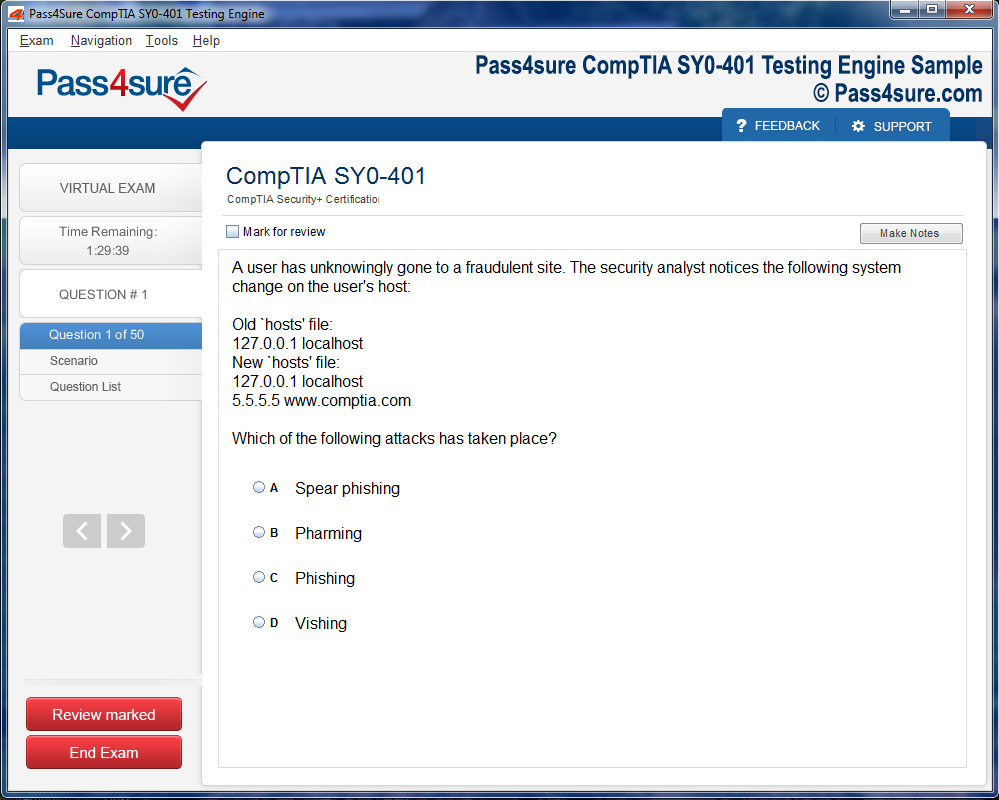
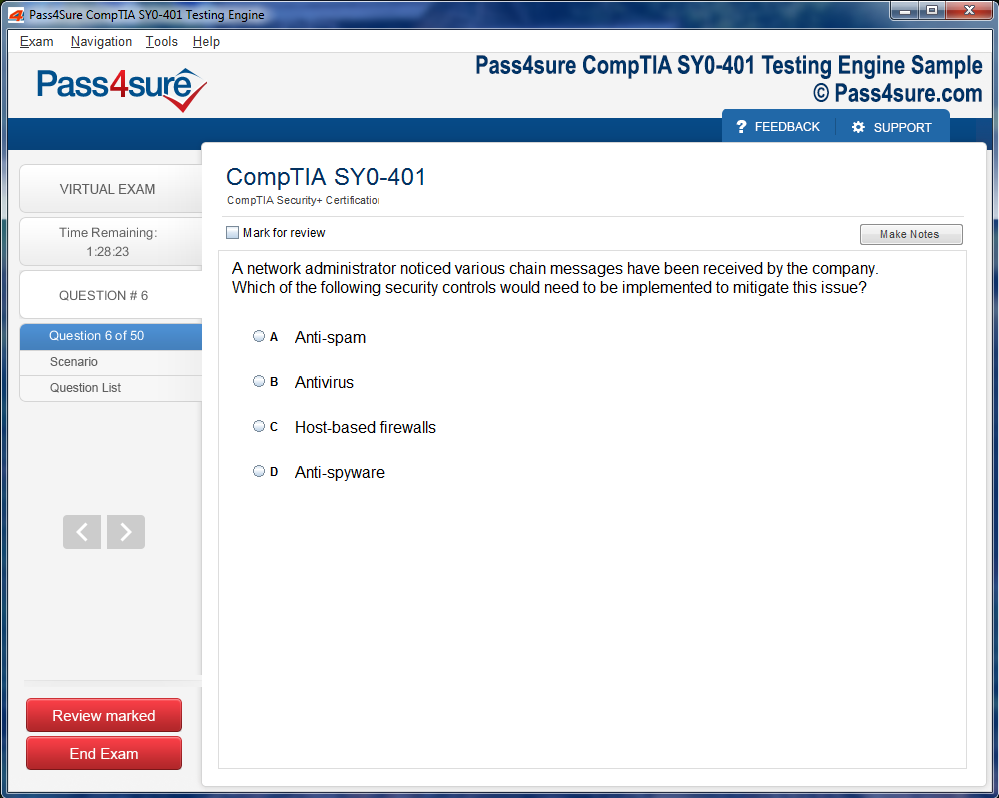
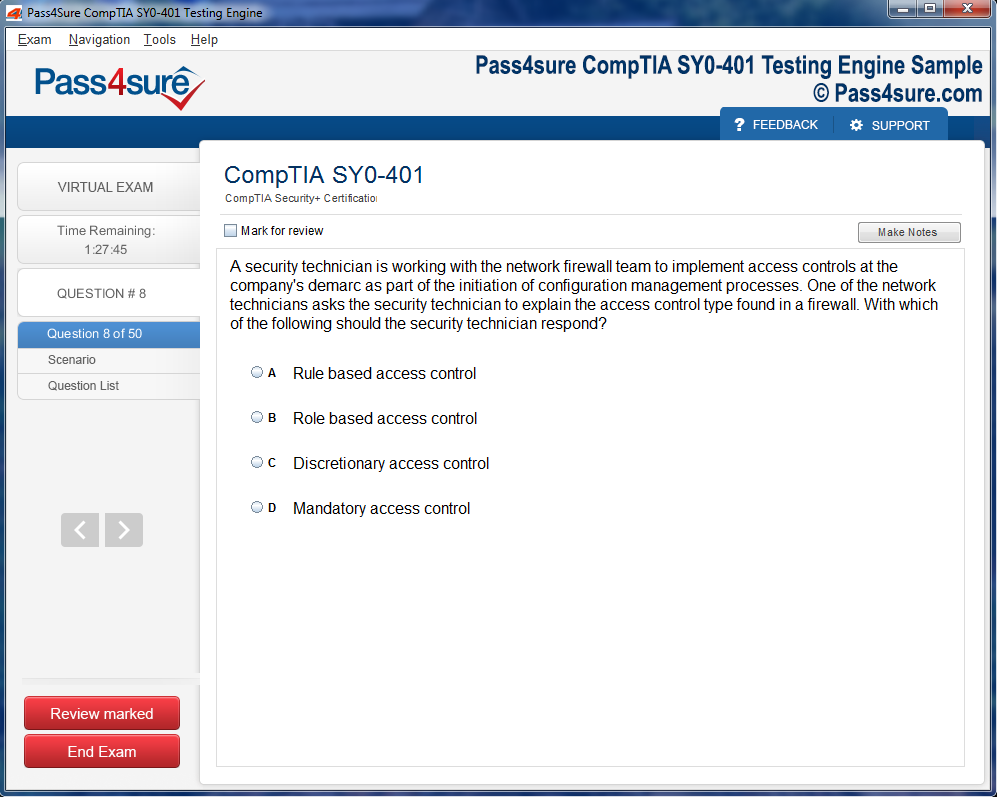
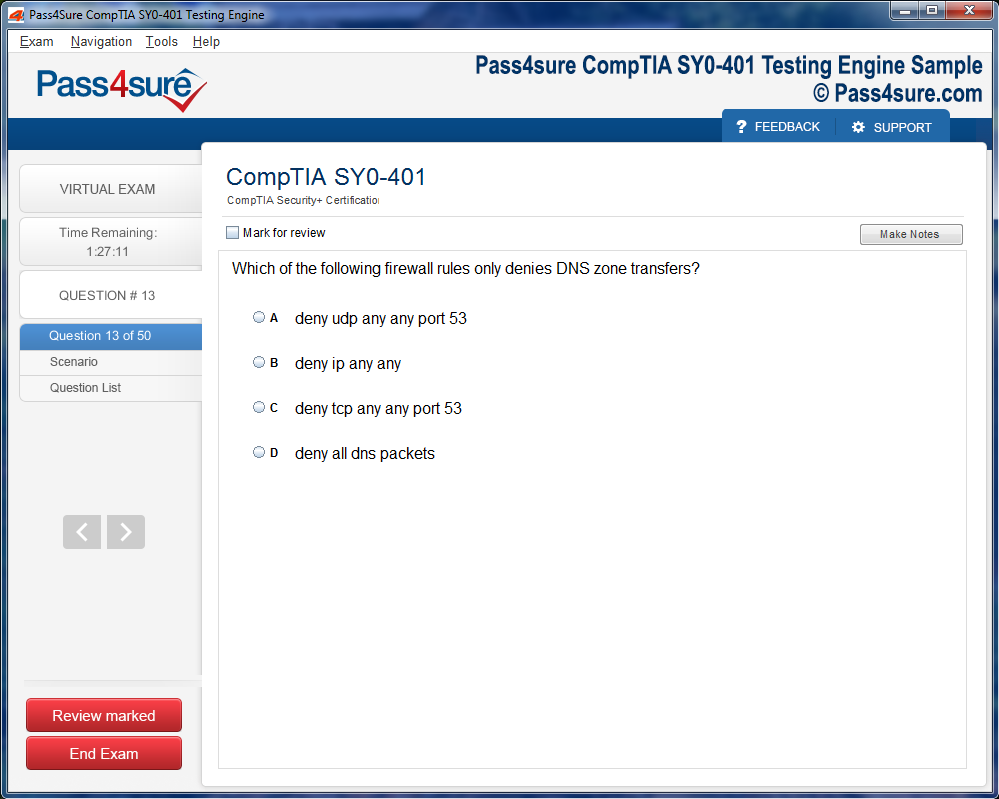
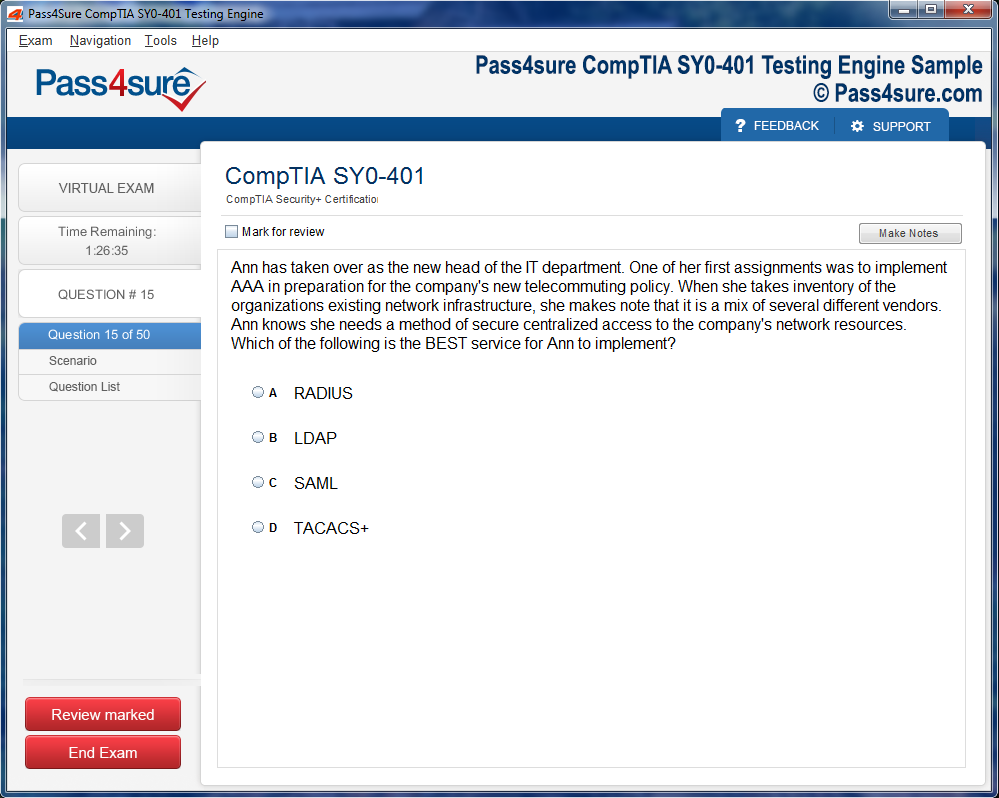
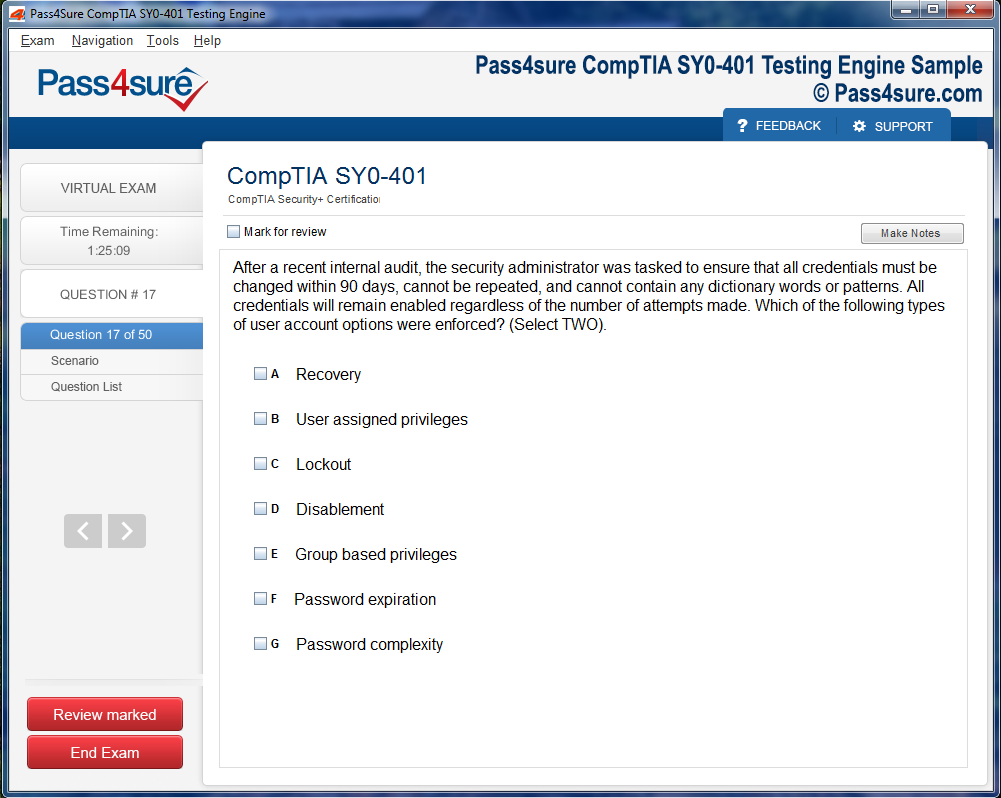
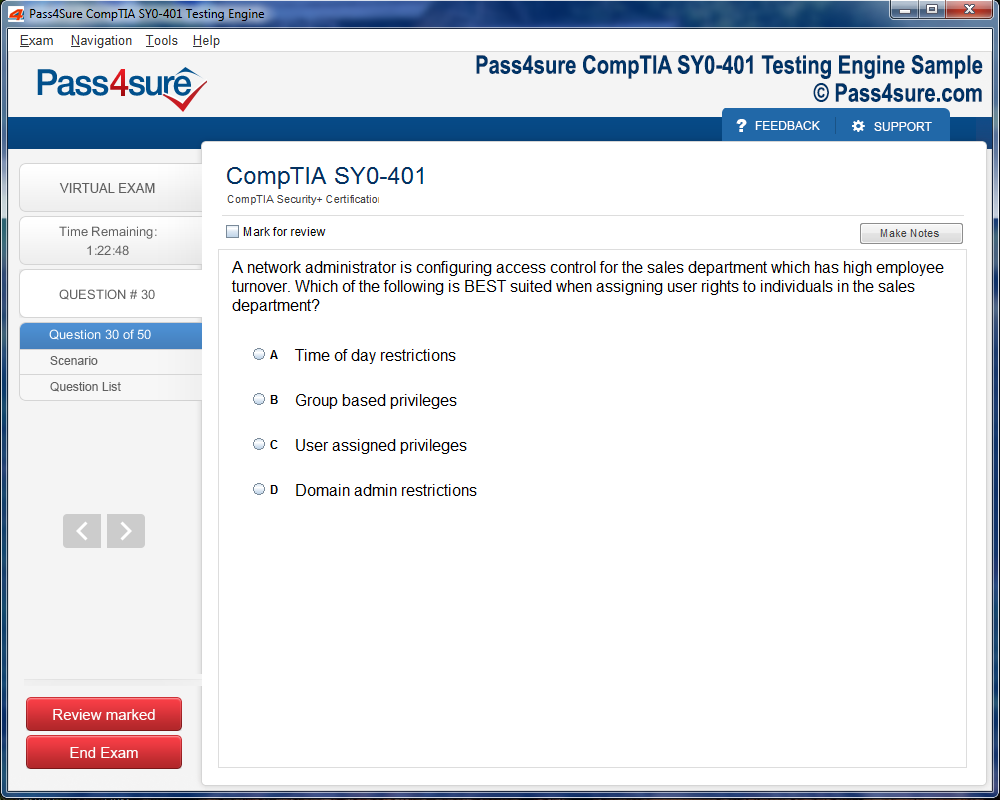
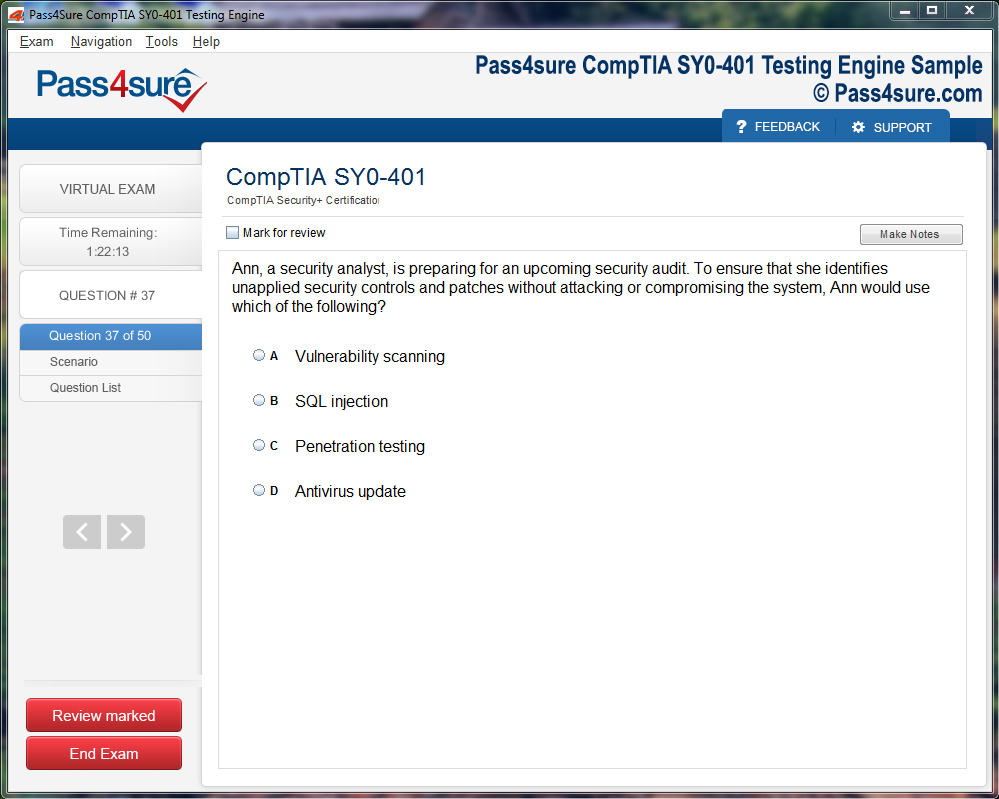
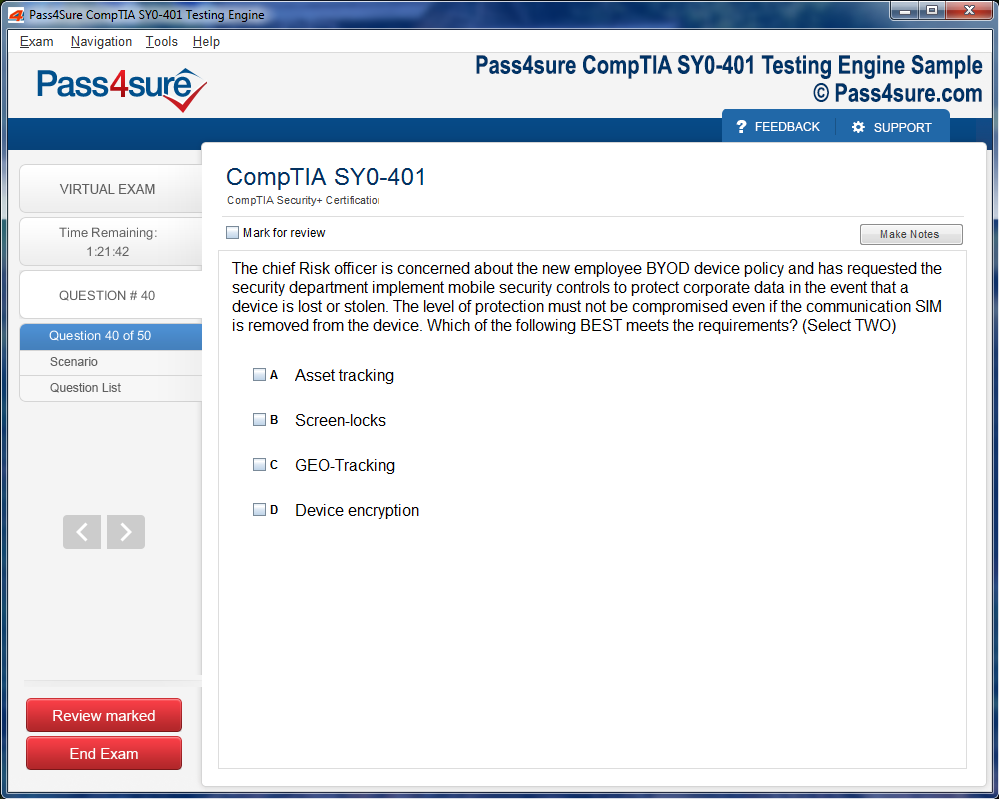
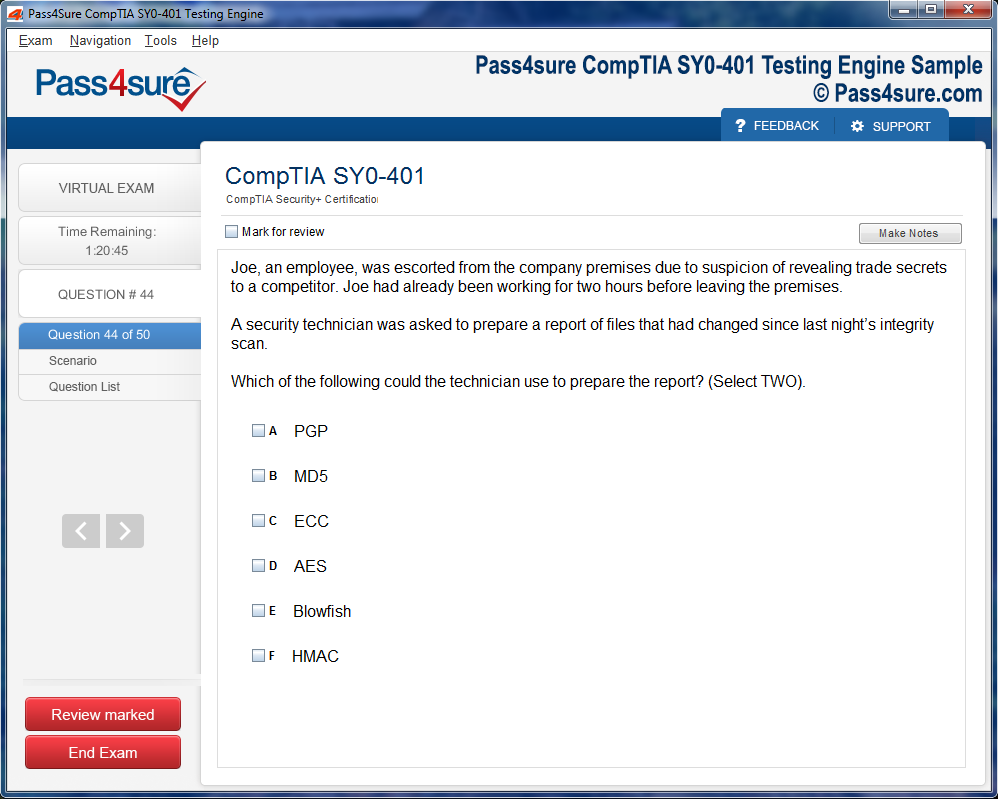
Product Screenshots
Frequently Asked Questions
How does your testing engine works?
Once download and installed on your PC, you can practise test questions, review your questions & answers using two different options 'practice exam' and 'virtual exam'. Virtual Exam - test yourself with exam questions with a time limit, as if you are taking exams in the Prometric or VUE testing centre. Practice exam - review exam questions one by one, see correct answers and explanations.
How can I get the products after purchase?
All products are available for download immediately from your Member's Area. Once you have made the payment, you will be transferred to Member's Area where you can login and download the products you have purchased to your computer.
How long can I use my product? Will it be valid forever?
Pass4sure products have a validity of 90 days from the date of purchase. This means that any updates to the products, including but not limited to new questions, or updates and changes by our editing team, will be automatically downloaded on to computer to make sure that you get latest exam prep materials during those 90 days.
Can I renew my product if when it's expired?
Yes, when the 90 days of your product validity are over, you have the option of renewing your expired products with a 30% discount. This can be done in your Member's Area.
Please note that you will not be able to use the product after it has expired if you don't renew it.
How often are the questions updated?
We always try to provide the latest pool of questions, Updates in the questions depend on the changes in actual pool of questions by different vendors. As soon as we know about the change in the exam question pool we try our best to update the products as fast as possible.
How many computers I can download Pass4sure software on?
You can download the Pass4sure products on the maximum number of 2 (two) computers or devices. If you need to use the software on more than two machines, you can purchase this option separately. Please email sales@pass4sure.com if you need to use more than 5 (five) computers.
What are the system requirements?
Minimum System Requirements:
- Windows XP or newer operating system
- Java Version 8 or newer
- 1+ GHz processor
- 1 GB Ram
- 50 MB available hard disk typically (products may vary)
What operating systems are supported by your Testing Engine software?
Our testing engine is supported by Windows. Andriod and IOS software is currently under development.
H19-301 Simplified: Practical Tips to Excel in Huawei Unified Communications Certification
The Huawei Wide Area Network (WAN) domain demands a perspicacious comprehension of infrastructural intricacies. Professionals must decode the idiosyncratic protocols, topology paradigms, and latency mitigation strategies inherent in WAN deployment. From the advent of NetEngine routers to the nuanced intricacies of intercontinental packet transport, mastery requires an amalgamation of theoretical sagacity and pragmatic dexterity. Understanding the interplay between MPLS architectures and emerging AI-driven traffic optimization engenders a robust foundation, enabling pre-sales architects to sculpt compelling propositions for prospective clients.
Discerning the Arcana of Wi-Fi 6 and 7
Wi-Fi 6 and 7 technologies transcend mere connectivity—they epitomize a symphony of spectral efficiency, low-latency orchestration, and multi-user simultaneity. Prospective H19-301 candidates must internalize the subtleties of OFDMA, MU-MIMO evolution, and spatial frequency harmonization. The examination probes your capacity to rationalize Wi-Fi deployment within high-density arenas such as stadiums, campuses, and industrial complexes. The discernment of channel bonding, modulation schemes, and interference suppression manifests as indispensable acumen, essential for crafting persuasive pre-sales narratives.
Deciphering the Nexus of Campus SD-WAN
Software-Defined WAN (SD-WAN) within campus environments constitutes a labyrinthine network orchestration challenge. Huawei’s SD-WAN solutions encapsulate centralized management, dynamic path selection, and granular application intelligence. Professionals must assimilate how NetEngine AR products facilitate resilient interconnections amidst heterogeneous topologies, while simultaneously reconciling security and latency imperatives. The intellectual exercise lies in envisioning WAN evolution as a malleable construct, capable of adapting to unpredictable traffic volatilities and client-specific operational exigencies.
Unraveling Data Center Network Mysteries
The Huawei Data Center Network (DCN) sphere operates as an epicenter of high-velocity packet transmission, resilient topology design, and multi-tenancy orchestration. The H19-301 curriculum emphasizes comprehension of CloudEngine switch portfolios, ultra-resilient multi-DC topologies, and computing network fabrics. Candidates are tasked with discerning how spine-leaf architectures and VXLAN overlays coalesce to furnish scalability, fault tolerance, and deterministic performance. Proficiency demands not merely rote memorization but an intuitive grasp of data center dynamics and the foresight to anticipate emergent networking paradigms.
Navigating the Echelons of Network Security
Network security constitutes a multidimensional bastion against contemporary cyber contingencies. Huawei’s security portfolio mandates cognizance of firewall architectures, intrusion detection methodologies, and risk mitigation schemas. H19-301 aspirants must conceptualize threat vectors not as isolated anomalies but as interdependent phenomena capable of propagating through complex network topologies. A sagacious approach entails harmonizing preventive mechanisms with adaptive response strategies, thereby equipping network architects to present security assurances with empirical credibility during pre-sales engagements.
Cultivating Cognitive Agility for H19-301 Mastery
Preparation for the H19-301 certification transcends conventional study techniques. Candidates must cultivate cognitive agility, enabling rapid synthesis of evolving technological paradigms and client-specific requisites. Scenario-based exercises, intricate case analyses, and simulation environments act as cognitive accelerants, refining one’s aptitude for strategic reasoning. The confluence of experiential learning and conceptual rigor fosters a perspicuous understanding of Huawei IP network solutions, rendering aspirants both technically proficient and commercially persuasive.
Harnessing Simulated Environments for Experiential Learning
Simulated network environments afford aspirants the capacity to experiment without operational risk. Utilizing emulators for NetEngine routers, SD-WAN orchestrators, and Wi-Fi controllers facilitates experiential learning, promoting retention and problem-solving dexterity. These digital sandboxes mimic real-world contingencies, enabling candidates to anticipate failure modes, latency bottlenecks, and bandwidth contention. Such immersive exposure ensures that technical proficiency is complemented by the analytical acumen required for pre-sales advocacy.
Strategizing Study Through Modular Decomposition
The H19-301 curriculum, expansive in scope, benefits from modular decomposition. Candidates can partition study into discrete thematic modules—WAN intricacies, Wi-Fi propagation, SD-WAN orchestration, DCN topologies, and network security. This compartmentalization fosters depth without overwhelming cognitive bandwidth. Furthermore, integrating periodic self-assessment and reflective synthesis ensures that knowledge acquisition transitions from superficial familiarity to strategic mastery, critical for pre-sales effectiveness.
Synthesizing Knowledge Through Practical Application
Knowledge devoid of application is epistemic inertia. Candidates must translate theoretical comprehension into tangible outcomes: configuring NetEngine devices, orchestrating SD-WAN routes, and analyzing traffic matrices. Such praxis enables the discernment of operational constraints, performance anomalies, and deployment feasibility. By bridging the chasm between abstract principles and concrete scenarios, aspirants cultivate the confidence and articulation necessary for high-impact pre-sales dialogues.
A meticulously orchestrated study plan is indispensable for navigating the labyrinthine nuances of the H19-301 exam. The architecture of your preparation dictates not merely the acquisition of knowledge but the internalization of intricate concepts that underpin Huawei's WAN solutions. The preliminary step involves a holistic reconnaissance of the exam terrain, mapping each domain's import and allocating cognitive capital accordingly.
Assess the Exam Blueprint
Embark upon your preparation by scrutinizing the exam syllabus with forensic precision. Comprehend the proportional significance of each domain and calibrate your study cadence to mirror these allocations. For example, should Huawei WAN Products and Solutions occupy a quintile of the overall schema, it is judicious to prioritize this corpus in your study regimen. Assimilation at this stage is not superficial; it requires an epistemic approach, internalizing interrelations between modules to foster intuitive recall under exam conditions.
Set Realistic Goals
Fragmentation of your study sessions into digestible increments is paramount. Construct an itinerary that delineates daily or weekly milestones, ensuring incremental mastery. Rather than an amorphous aspiration to "study more," aim for quantifiable targets such as mastering VLAN configuration intricacies or completing a matrix of simulation exercises. This stratagem engenders a rhythm of cognitive consolidation, fortifying retention while mitigating the entropy of procrastination.
Utilize Official Resources
The sine qua non of effective preparation is reliance upon sanctioned resources. Huawei's official training materials and technical documentation are repositories of rigorously vetted knowledge. Engaging with these resources ensures consonance with the exam’s epistemological underpinnings and shields against the vicissitudes of unverified third-party content. Beyond cursory perusal, the strategy involves active annotation, schematization of key points, and iterative revisitation to cement understanding.
Incorporate Practice Tests
Engagement with practice examinations is an indispensable crucible for intellectual fortification. These simulated interrogatories cultivate not only familiarity with question typologies but also temporal acuity, enabling precise pacing under temporal constraints. A recurring cycle of assessment, analysis, and recalibration transforms latent weaknesses into fortified competencies. Additionally, practice tests function as diagnostic instruments, illuminating lacunae that might otherwise remain imperceptible until the final juncture.
Review and Revise
Revision is the apotheosis of effective study. Allocate deliberate temporal bandwidth for recursive review of previously traversed concepts, particularly those that remain refractory to immediate comprehension. Employ techniques such as spaced repetition and interleaved practice to reinforce neural pathways and enhance long-term retention. Targeted consolidation of these intricate domains ensures a resilient cognitive scaffold upon which exam success can be erected.
Optimize Cognitive Environment
Equally imperative to structured study is the cultivation of an environment conducive to sustained intellectual engagement. Mitigate distractions, harness ambient stimuli that promote focus, and synchronize study sessions with periods of heightened circadian alertness. Micro-breaks interspersed with deliberate reflection amplify neural plasticity and forestall cognitive fatigue. The ambiance in which study unfolds exerts an often underestimated influence on the efficacy of knowledge internalization.
Leverage Multimodal Learning
Monomodal study strategies are prone to diminishing returns; a diversified approach yields superior retention. Integrate visual schematics, tabular summaries, and mnemonic devices to encode complex information. Auditory reinforcement through lectures or explanatory recordings complements visual and kinesthetic engagement, fostering a polyphonic tapestry of comprehension. This multimodal immersion nurtures adaptive cognition, enabling application of knowledge across diverse problem scenarios.
Harness Peer Collaboration
While solitary study fosters introspective understanding, collaborative endeavors catalyze the synthesis of knowledge. Engaging with peers for discourse, problem-solving, and conceptual elucidation unveils alternative perspectives and rectifies misconceptions. Constructing study forums or working through scenario-based exercises with colleagues engenders a dynamic intellectual ecosystem where iterative questioning and reciprocal feedback expedite mastery.
Track Progress Quantitatively
Systematic monitoring of progression transforms subjective effort into objective insight. Employ logbooks, digital trackers, or performance matrices to chronicle advancement across domains. Quantification of progress not only motivates but identifies patterns of mastery and stagnation. These metrics inform adaptive recalibration of your study plan, ensuring time is judiciously apportioned to areas warranting intensified scrutiny.
Integrate Restorative Intervals
Cognitive endurance is finite; strategic interludes of restorative activity are essential for sustainable engagement. Incorporate deliberate pauses, physical exertion, and sleep hygiene to rejuvenate neural function. These intervals facilitate memory consolidation, enhance problem-solving acumen, and mitigate the deleterious effects of chronic cognitive strain. Neglecting recuperation is a silent saboteur of otherwise meticulous preparation.
Engage in Scenario-Based Drills
Theoretical knowledge, while necessary, is insufficient in isolation. Immersion in scenario-based exercises, replicating the operational intricacies of Huawei WAN environments, fosters pragmatic fluency. These drills cultivate anticipatory reasoning, enabling candidates to navigate novel problem matrices with agility. Systematic rehearsal of real-world contingencies instills confidence, transforming abstract comprehension into actionable proficiency.
Huawei WAN Products and Solutions
In the labyrinthine ecosystem of contemporary networking, Huawei WAN products emerge as vanguards of digital interconnectivity. The NetEngine series, epitomizing architectural ingenuity, orchestrates intricate topologies with an exquisite blend of reliability and scalability. WAN solutions are no longer mere conduits for data; they metamorphose into intelligent, context-aware arteries that harmonize latency, throughput, and resilience. Engineers venturing into the H19-301 domain must apprehend the subtle intricacies of these routers, discerning not only their mechanical specifications but also their strategic application in multifaceted networking scenarios. From metropolitan aggregation to sprawling enterprise backbones, Huawei’s WAN infrastructure provides an eloquent symphony of packet switching, route optimization, and dynamic failover, embodying a nexus where innovation coalesces with operational dexterity.
Huawei Wi-Fi Product Portfolio
The evolution of wireless fidelity technologies has accelerated into a maelstrom of Wi-Fi 6 and Wi-Fi 7 innovations, with Huawei pioneering a tapestry of solutions that transcend conventional connectivity paradigms. Their Wi-Fi products are ensconced in continuous networking frameworks, ensuring seamless handoffs and low-latency throughput across complex topographies. These access points are infused with features that extend beyond raw bandwidth metrics, encompassing intelligent spectrum management, adaptive modulation, and interference mitigation. For aspirants in the H19-301 examination, the comprehension of Huawei’s Wi-Fi portfolio demands an appreciation of both its technological novelty and strategic deployment in enterprise ecosystems, retail conglomerates, and hyper-dense urban architectures where conventional paradigms falter.
Huawei Campus SD-WAN Products and Solutions
The campus network paradigm has undergone a radical metamorphosis under the aegis of SD-WAN orchestration. Huawei’s SD-WAN solutions, entwined with NetEngine AR platforms, delineate an era where interconnectivity is agile, secure, and cognizant of business exigencies. WAN interconnection trends reveal a trajectory toward cloud-native networking, automation, and intelligent path selection. Professionals mastering H19-301 must internalize the nuanced challenges of campus SD-WAN deployment: the mitigation of congestion, the orchestration of multi-path routing, and the fortification against latent network vulnerabilities. These solutions epitomize a confluence of robustness and elasticity, enabling enterprises to traverse from legacy static configurations to dynamic, software-defined paradigms that align operational efficiency with strategic foresight.
Huawei Data Center Network Products and Solutions
Data center networking represents the cerebral cortex of digital ecosystems, and Huawei’s DCN products offer a panoply of solutions designed to optimize computational throughput and resilience. Ultra-resilient multi-DC architectures encapsulate redundancy strategies that defy conventional downtime constraints, while CloudEngine switches orchestrate high-speed data plane operations with meticulous precision. DCN fundamentals encompass not only physical topologies but also the orchestration of virtualized overlays, software-defined control planes, and cross-domain load balancing. For H19-301 aspirants, a perspicacious understanding of Huawei’s data center innovations is indispensable, as it amalgamates network design, performance optimization, and fault-tolerant architectures into a cohesive operational doctrine.
Huawei Network Security Products and Solutions
In an epoch where cyber-threats proliferate with exponential virulence, Huawei’s network security portfolio assumes a sentinel role. Their solutions are calibrated to counteract multifarious attack vectors, encompassing intrusion prevention, anomaly detection, and unified threat management. Network security mastery transcends rote product knowledge; it necessitates a comprehension of defensive paradigms, the interplay of hardware and software safeguards, and the architecture of secure data flows. The H19-301 examination demands acumen in evaluating Huawei’s security apparatus, understanding firewall intricacies, encrypted channel deployments, and real-time threat mitigation strategies that safeguard enterprise integrity against both predictable and oblique vulnerabilities.
The Transformative Power of Practice Exams
Practice examinations constitute an indispensable stratagem in the edifice of exam preparation. Beyond rote memorization, they imbue aspirants with an intimate familiarity with the labyrinthine format of the impending assessment. Immersion in these simulations cultivates an instinctive comprehension of question typologies, from nuanced multiple-choice conundrums to abstruse analytical queries. The act of recurring engagement with these tests engenders a cognitive elasticity, rendering the examinee adept at navigating the capricious oscillations of actual exam conditions.
Diagnosing Intellectual Lacunae
A salient advantage of mock tests lies in their capacity to illuminate the shadowy recesses of unmastered knowledge. Each errant response acts as a diagnostic beacon, revealing lacunae that may have otherwise eluded notice during conventional study. This revelation permits a surgical refinement of study efforts, ensuring that revision is not a monolithic endeavor but a targeted, efficacious undertaking. The iterative process of identification and remediation transforms erstwhile weaknesses into fortresses of competence.
Temporal Dexterity and Cognitive Pacing
Time, the inexorable arbiter of examination, often exerts a more formidable influence than content mastery alone. Engaging with practice exams enables the aspirant to cultivate temporal dexterity, honing the capacity to allocate cognitive resources with precision. By simulating the temporal constraints of the authentic assessment, candidates learn to calibrate their pacing, oscillating judiciously between rapid responses for familiar concepts and measured deliberation for intricate problems. This temporal choreography mitigates panic-induced errors and fosters a composure that is invaluable on exam day.
Psychological Resilience and Exam Acumen
Repeated exposure to simulated exams engenders more than academic insight; it fortifies psychological resilience. Encountering challenging questions within a controlled environment cultivates equanimity, reducing the propensity for anxiety to sabotage performance. The iterative exposure also enhances metacognitive awareness, enabling candidates to discern not only what they know, but how they think under duress. Such introspective acuity fosters strategic approaches to problem-solving, ensuring that intellectual effort is deployed with maximal efficacy.
Strategic Iteration and Feedback Assimilation
The true efficacy of mock examinations is unlocked through strategic iteration. Each test should not merely be an endpoint but a fulcrum for reflective analysis. Scrutinizing incorrect responses, annotating cognitive missteps, and revisiting elusive concepts form a cyclical feedback loop that propels continuous improvement. The aspirant who integrates such reflective practice transmutes each error into a scaffold for future success, rendering the process both self-corrective and exponentially rewarding.
Adaptive Utilization of Practice Resources
While practice exams are instrumental, their potency is magnified when coupled with curated study resources. Systematically employing repositories of sample questions and simulation tests allows for a diversified approach, exposing the candidate to a kaleidoscope of question types and difficulty gradients. The judicious rotation among these resources ensures a dynamic engagement, forestalling the stagnation that often accompanies repetitive study and nurturing a robust, adaptable comprehension.
Enhancing Analytical Foresight
Frequent mock testing cultivates an anticipatory acumen—a prescient understanding of potential exam trajectories. As candidates encounter recurrent patterns and thematic motifs, they develop an instinct for prioritizing efforts, recognizing which domains warrant intensified focus. This analytical foresight is not mere prediction; it is a sophisticated form of strategic cognition, allowing examinees to navigate the exam terrain with an almost tactical precision, balancing breadth with depth.
Reinforcing Cognitive Endurance
Examinations are not solely trials of knowledge; they are crucibles of sustained cognitive exertion. Regular practice under timed conditions builds the neural stamina required for prolonged focus, reducing susceptibility to mental fatigue during high-stakes scenarios. The repetition of extended problem-solving sessions trains the mind to maintain acuity over time, ensuring that lapses in concentration are minimized and intellectual performance remains consistently elevated throughout the assessment.
Rest Well Before the Academic Ordeal
On the eve of examination, it is paramount to indulge in profound slumber. The somnolent state revitalizes neural pathways, enhancing synaptic agility and cognitive acuity. Skipping this restorative interlude often precipitates mental fog, diminished recall, and erratic thought patterns. Embrace a ritual of tranquility: dim lights, soft ambient sounds, and detachment from cognitive stimuli that could otherwise foment anxiety. The circadian rhythm, when respected, orchestrates optimal memory consolidation and cerebral plasticity, creating a fertile ground for intellectual lucubration the following day.
Morning Review of Pivotal Concepts
As dawn ushers in a new cycle, engage in a rapid yet deliberate perusal of pivotal doctrines and esoteric principles that underpin your curriculum. Prioritize areas that elicit trepidation or incomplete mastery. Rather than attempting exhaustive reabsorption, focus on conceptual scaffolds, mnemonic devices, and associative cues that expedite retrieval under temporal constraints. This targeted recapitulation fortifies neural traces without overtaxing the mind, allowing for a poised entrance into the cognitive contest ahead.
Strategic Time Allocation During the Examination
Temporal prudence is indispensable when navigating the labyrinth of exam questions. Segregate your temporal resources according to the weighting and complexity of each section. Should an enigmatic query resist immediate resolution, judiciously defer it to prevent cascading delays. Employ micro-breathing intervals to recalibrate focus between segments, thereby sustaining cerebral endurance. A chronometric blueprint, intertwined with flexibility, empowers the examinee to maneuver through challenges without succumbing to temporal myopia or cognitive depletion.
Cultivating Equanimity Amidst Intellectual Pressure
Composure serves as the linchpin of exam-day efficacy. Even under the crucible of high stakes, maintaining equanimity optimizes analytical precision and decision-making faculties. Employ diaphragmatic breathing or subtle meditative techniques to mitigate somatic tension. Visualization of success, coupled with mindful awareness of the present task, counters the insidious creep of anxiety. A poised mind navigates complexity with clarity, converting potential perturbation into cognitive resilience and methodical problem-solving.
Post-Examination Introspection
Navigating the aftermath of the H19-301 examination warrants a deliberate introspection. Each candidate’s cognitive trajectory, shaped by their preparatory odyssey, reveals both acumen and lacunae. Embrace a meticulous audit of performance metrics; celebrate the facets where erudition converged with praxis. For domains that faltered, engage in an analytical autopsy of errors, tracing the subtleties of misunderstanding or misapplication. This reflective praxis transforms transient setbacks into scaffolding for imminent intellectual fortification.
Analytical Deconstruction of Outcomes
Scrutinizing examination outcomes extends beyond mere pass or fail dichotomies. Delve into the granular topology of question categories, weighting of concepts, and the patterns of cognitive strain encountered during problem-solving. Identify latent gaps that eluded prior revision, and chart a remedial schema, integrating both mnemonic reinforcement and experiential practice. Such analytical deconstruction cultivates a resilient mental schema that not only remedies deficiencies but anticipates analogous challenges in subsequent evaluations.
Perpetual Pedagogical Engagement
The realm of Huawei’s IP network solutions is perennially evolving, demanding an enduring allegiance to cerebral expansion. Engage in relentless acquisition of contemporary frameworks, protocols, and architectural innovations. Participate in specialized symposia, technical colloquia, or advanced workshops that proffer insights beyond conventional study paradigms. Immersion in emergent discourse catalyzes adaptive cognition, enabling practitioners to transcend rote proficiency and navigate uncharted technological topographies with confidence.
Professional Trajectory Amplification
Certification functions as a fulcrum, propelling aspirants toward elevated vocational echelons. Leverage the credential to infiltrate niches in network design, strategic consultancy, or technology evangelism, where expertise is valorized. Cultivate professional networks, mentor peers, and contribute to collective knowledge repositories. Each engagement consolidates visibility and credibility, translating specialized acumen into tangible career momentum.
Integration of Knowledge into Praxis
Post-certification growth hinges on the seamless integration of theoretical mastery into operational praxis. Implement sophisticated networking schemas, troubleshoot with analytical precision, and iteratively refine strategic solutions. Such praxis converts abstract proficiency into demonstrable competence, ensuring that certification is not a terminal milestone but a portal to continual skill augmentation.
Intellectual Resilience and Adaptive Mastery
Embrace the notion that professional ascent is iterative and cumulative. Each challenge encountered post-certification serves as an incubator for adaptive mastery, enhancing problem-solving agility and cognitive dexterity. Document experiential insights, engage in reflective journaling of successes and miscalculations, and periodically recalibrate goals to align with evolving industry landscapes. Intellectual resilience emerges not merely from success but from the disciplined absorption of lessons embedded within adversity.
Cognitive Cartography of Performance
Post-exam reflection necessitates mapping the contours of one’s intellectual expedition. Consider each question not merely as a prompt but as a node in a cognitive network, revealing intersections of strength and zones of ambiguity. Such cartography allows candidates to discern patterns of comprehension and error, exposing where intuition triumphed and where analytic faculties wavered. By cultivating this meta-cognitive awareness, aspirants develop a self-reinforcing loop of insight acquisition, transforming evaluation into a heuristic instrument rather than a finite verdict.
Strategic Remediation Techniques
Identifying deficits is only the precursor to remediation. Construct a systematic regimen that emphasizes both depth and elasticity of knowledge. For instance, revisit complex IP routing protocols not as rote memorization but through scenario-based simulations that reveal dynamic interactions between network elements. Utilize spaced repetition techniques intertwined with reflective journaling to consolidate intricate concepts. By blending procedural practice with introspective analysis, candidates convert ephemeral understanding into enduring expertise, fortifying readiness for subsequent attempts or advanced projects.
Immersive Knowledge Augmentation
True mastery transcends static textbooks. Engage with emergent technological literature, dissect protocol blueprints, and interpret white papers detailing innovative IP architectures. Active experimentation—such as virtual lab deployments or sandbox configurations—enhances tactile familiarity and fosters cognitive elasticity. This immersive approach transforms passive learning into a dynamic interplay of trial, observation, and refinement, producing practitioners capable of intuitive decision-making in high-pressure networking environments.
Professional Capital Optimization
Certification is a strategic asset in the professional marketplace. Beyond the immediate credential, it constitutes a signaling mechanism of capability and dedication. Exploit this leverage to negotiate roles with expanded responsibility or to enter specialized domains such as enterprise network design, cloud-native IP frameworks, or security-centric infrastructure projects. Concurrently, contribute to professional discourse via white papers, workshops, or peer mentoring, thereby amplifying both visibility and intellectual capital.
Mentorship and Knowledge Diffusion
Post-examination advancement is accelerated through reciprocal knowledge exchange. Engage as both mentee and mentor: absorb advanced insights from senior architects while disseminating learned methodologies to emerging candidates. This bidirectional interaction not only reinforces personal mastery but also cultivates a reputation as a thought-leader in the networking sphere. Mentorship operates as a catalytic conduit, converting isolated proficiency into a communal reservoir of expertise, enhancing both career trajectory and industry influence.
Resilience Engineering in Career Trajectories
Professional growth is rarely linear; it requires strategic resilience engineering. Anticipate setbacks, technological shifts, and evolving role expectations, embedding flexibility into personal development plans. Document experiential insights meticulously and analyze their implications on both tactical execution and strategic positioning. Resilience is cultivated not through avoidance of failure but through systematic engagement with challenges, converting each obstacle into an opportunity for cognitive expansion and skill fortification.
Experiential Reinforcement of Conceptual Knowledge
Integration of knowledge into practical environments solidifies cognitive retention. Transition theoretical frameworks into operational initiatives by designing, implementing, and troubleshooting complex network topologies. Adopt iterative refinement methodologies to identify latent inefficiencies and optimize solutions. This experiential reinforcement ensures that certification transcends symbolic validation, translating intellectual comprehension into tangible professional impact and measurable operational outcomes.
Networking Cognition and Strategic Alliances
Professional ascension is inextricably linked to the quality of one’s network. Forge alliances with peers, subject-matter experts, and organizational leaders to cultivate an ecosystem of knowledge exchange. Engage in collaborative projects that push technical boundaries and demand innovative problem-solving. Such alliances operate as accelerants, providing both insight and opportunity while embedding the certified professional within a broader lattice of influence and strategic collaboration.
Cognitive Agility and Adaptive Problem-Solving
In dynamic networking landscapes, rigid knowledge structures falter. Cultivate cognitive agility: the capacity to apply conceptual understanding to novel challenges with dexterity and precision. Engage in cross-disciplinary exploration, merging insights from cybersecurity, cloud infrastructure, and protocol design to anticipate and resolve emergent issues. Adaptive problem-solving transforms post-certification competence into strategic leverage, enabling practitioners to navigate unprecedented scenarios with confidence and foresight.
Iterative Reflection and Meta-Learning
Sustained career advancement demands iterative reflection and meta-learning. Establish periodic self-assessment rituals, reviewing both accomplished objectives and unmet targets. Document the evolution of reasoning strategies and procedural habits, identifying opportunities for refinement. Meta-learning—understanding how one learns—empowers professionals to optimize acquisition of new methodologies, ensuring that knowledge accumulation remains both rapid and resilient in the face of evolving industry paradigms.
Leveraging Certification for Strategic Innovation
Certification serves as both a credential and a springboard for innovation. Use it as a foundation to explore uncharted technological avenues, such as the integration of artificial intelligence in network optimization or deployment of automated orchestration frameworks. Position yourself as a proactive architect, not merely an executor, thereby transforming static knowledge into pioneering contributions that influence both organizational outcomes and industry standards.
Intellectual Endurance and Long-Term Vision
The post-exam journey is an odyssey of intellectual endurance. Cultivate habits that sustain long-term cognitive performance: continuous reading, analytical exercises, simulation practices, and peer engagement. Establish a vision that transcends immediate certification benefits, anchoring professional goals in sustained mastery, influence, and innovation. This enduring perspective ensures that each subsequent achievement compounds prior knowledge, producing a trajectory of exponential professional growth.
Pre-Exam Nutritional Calibration
The alimentary choices preceding the examination exert a profound influence on cognitive vigor and stamina. Eschew saccharine surges or heavy, indigestible fare that may precipitate glycemic oscillations or postprandial lethargy. Opt instead for nutrient-dense comestibles, rich in omega-3 fatty acids, antioxidants, and complex carbohydrates, which synergistically fortify neuroplasticity, enhance attention, and stabilize mood. Hydration, too, is non-negotiable; even marginal desiccation can impair working memory and attenuate mental endurance. Approach breakfast as a deliberate ritual, not a perfunctory obligation, selecting edibles that sustain prolonged cerebral activity while minimizing gastric turbulence.
Mental Rehearsal and Cognitive Priming
Prior to entering the examination arena, undertake mental rehearsal of problem-solving sequences and conceptual recall. Visualization techniques, wherein one mentally navigates potential questions and envisions the solution pathways, can accelerate information retrieval during high-pressure scenarios. Cognitive priming, through the activation of pertinent schemas, enhances synaptic readiness and fortifies associative networks. Rehearse the modulation of attention and pacing, anticipating potential distractions, and preemptively devising strategies to circumvent them. Such anticipatory mental conditioning fosters adaptive fluidity, reducing the likelihood of cognitive stasis under duress.
Ergonomic and Environmental Optimization
Examinees often overlook the subtle yet critical influence of environmental variables on performance. Choose seating that promotes postural alignment, ensuring unobstructed ocular access to materials and minimal muscular tension. Regulate ambient temperature and ventilation, as discomfort can divert attentional resources from the cognitive task. Minimize auditory and visual intrusions by cultivating an internal locus of control and selectively attenuating extraneous stimuli. The deliberate harmonization of environmental factors with personal comfort thresholds engenders a mental state conducive to sustained concentration and strategic thinking.
Sequential Problem-Solving and Question Triage
Adopt a hierarchical approach to question resolution. Initial traversal of the examination paper should involve rapid assessment of question complexity and familiarity. Prioritize high-yield, confidently answerable items to accrue early momentum and bolster morale. Employ iterative revisitation for challenging queries, using interim reflections to incubate solutions subconsciously. This sequential triage mitigates cognitive overload and leverages temporal elasticity, ensuring a balanced distribution of intellectual resources across all sections.
Micro-Pacing and Mental Microbreaks
Sustained cognitive exertion can induce attentional fatigue if unchecked. Incorporate micro-pacing strategies, brief interludes of controlled breathwork or ocular relaxation, to rejuvenate neural efficiency. Even a few seconds of deliberate pause, during which the mind disengages from active problem-solving, can recalibrate focus, enhance working memory retention, and diminish error proneness. These micro-recesses act as cognitive osmotic buffers, permitting the mind to reset and approach subsequent challenges with renewed acuity.
Adaptive Stress Modulation Techniques
Examination stress, if unmanaged, can manifest as intrusive thoughts, physiological agitation, or impulsive decision-making. Cultivate adaptive modulation strategies such as progressive muscle relaxation, interoceptive awareness, and cognitive reframing. Acknowledge the presence of anxiety without capitulation, converting it into a propulsive force for heightened vigilance rather than a debilitating encumbrance. The deliberate interplay of stress recognition and tactical regulation transforms emotional arousal into a strategic ally, optimizing performance under duress.
Strategic Utilization of Peripheral Resources
Examinees frequently underutilize permissible ancillary tools and materials. Ensure optimal deployment of allowed resources—be it formula sheets, diagrams, or calculators—through preemptive familiarization and strategic integration into problem-solving routines. Develop mnemonic anchors and schematic shortcuts that leverage these peripheral aids, expediting retrieval and reducing cognitive load. Mastery over auxiliary instruments can confer a disproportionate advantage, converting peripheral familiarity into substantive performance gains.
Cognitive Anchoring Through Brief Reflection
Intermittent moments of reflection serve as cognitive anchors during examination progression. After completing a section, briefly review answers to identify inconsistencies or overlooked nuances. This reflective pause, when conducted without undue rumination, consolidates knowledge, mitigates superficial errors, and allows the mind to recalibrate for subsequent sections. The practice fosters metacognitive awareness, enhancing both self-monitoring and adaptive problem-solving capabilities.
Mental Resilience Through Self-Affirmation
Self-affirmation, when strategically employed, reinforces mental resilience and sustains engagement. Brief, internalized reminders of past successes or mastery of content can buffer against the corrosive effects of doubt and mental fatigue. Craft personalized affirmations that resonate with intrinsic motivation, fostering an internal dialogue that is both reassuring and propulsive. Such psychological scaffolding ensures that confidence, rather than apprehension, dominates the cognitive landscape throughout the examination.
Post-Answer Cross-Verification Techniques
After initial resolution, cross-verification of answers should be systematic rather than haphazard. Employ pattern recognition, logical consistency checks, and dimensional analysis to validate responses. Prioritize sections prone to common pitfalls or high-error frequency. By instituting structured verification routines, examinees minimize preventable mistakes and cultivate a sense of mastery over the paper, reinforcing cognitive clarity and accuracy.
Environmental and Psychological Priming Prior to Exam Entry
Before entering the examination venue, engage in subtle environmental and psychological priming. This may involve brief exposure to stimuli associated with prior study sessions or rehearsal of mental cues that trigger focus. Such priming leverages context-dependent memory, enhancing recall efficiency. Additionally, entering the exam space with a deliberate mindset of controlled anticipation, rather than reactive anxiety, optimizes attentional allocation and preconditions the mind for sustained analytical engagement.
Utilizing Peripheral Awareness for Optimal Performance
Peripheral awareness, the ability to subtly monitor environmental and temporal cues without disrupting cognitive focus, can significantly enhance exam efficiency. Maintain cognizance of time elapsed, shifts in paper structure, and subtle feedback from body and surroundings. This secondary awareness informs strategic adjustments, such as pacing, section prioritization, or micro-rest implementation, without diverting attention from primary problem-solving tasks. Cultivating this dual-level awareness reinforces both efficiency and adaptability.
Mental Recalibration Through Kinesthetic Micro-Interruptions
Brief kinesthetic movements, such as subtle stretching, hand flexing, or postural adjustments, serve as micro-interruptions that recalibrate neural circuitry. These interventions counteract the stasis induced by prolonged sitting, invigorate cerebral blood flow, and mitigate somatic tension. By integrating controlled physical micro-actions, examinees sustain optimal cognitive function and prevent attentional drift without compromising the examination’s decorum or structure.
Cognitive Conditioning Through Iterative Trials
The iterative engagement with practice examinations functions as a rigorous form of cognitive conditioning. Each successive trial imposes novel challenges while reinforcing previously acquired strategies. This repeated exposure consolidates synaptic pathways associated with problem-solving and memory retrieval, rendering intellectual processes more robust and resistant to fatigue-induced lapses. In effect, the aspirant evolves from a reactive participant into a proactive strategist, anticipating obstacles and preemptively navigating them with refined efficiency.
Metacognitive Calibration and Self-Awareness
Mock tests offer more than mere knowledge assessment; they cultivate metacognitive calibration. By reflecting on the nature of errors—whether due to conceptual misunderstanding, misinterpretation, or hasty execution—candidates develop heightened self-awareness regarding their cognitive tendencies. This introspective insight empowers learners to tailor study strategies to their unique mental proclivities, transforming preparation from a generic endeavor into a personalized, high-yield regimen. The ability to accurately self-diagnose intellectual performance is an invaluable asset that extends beyond examination contexts into broader analytical endeavors.
Stress Modulation and Performance Optimization
High-stakes examinations frequently induce physiological and psychological stress, which can compromise cognitive clarity. Regular exposure to timed practice tests conditions the mind to tolerate such pressure, effectively modulating stress responses. The aspirant learns to maintain equanimity amidst time constraints and challenging questions, thereby minimizing cortisol-induced cognitive impairment. This stress inoculation process ensures that optimal performance is achievable even under the most daunting conditions, transforming anxiety from a hindrance into a manageable, almost neutral variable.
Pattern Recognition and Cognitive Heuristics
One of the subtler advantages of repeated mock testing lies in the development of pattern recognition skills. As candidates encounter numerous questions across multiple simulations, they begin to detect recurring motifs, structural cues, and thematic consistencies. These cognitive heuristics streamline decision-making, enabling rapid identification of relevant information and deduction of correct solutions. Over time, this skill fosters a form of intellectual intuition—a rapid, almost instinctive grasp of likely solutions—thereby enhancing both speed and accuracy during the actual examination.
Integrating Knowledge Through Cross-Referencing
Practice exams provide fertile ground for the integration of disparate knowledge domains. Confronted with questions that intersect multiple subjects, candidates are compelled to cross-reference concepts, thereby synthesizing a more holistic understanding. This cross-pollination of ideas fosters intellectual flexibility, allowing learners to approach complex, multifaceted problems with a comprehensive perspective. Such integration not only improves exam performance but also cultivates a depth of understanding that endures well beyond the immediate preparatory period.
Tactical Resource Allocation
Time spent on mock tests should not be indiscriminate; it benefits from tactical allocation. Prioritizing high-yield questions, focusing on historically challenging topics, and gradually increasing difficulty levels ensures that preparation remains efficient and strategic. This approach prevents cognitive burnout and optimizes learning returns, allowing candidates to invest energy where it is most impactful. By combining tactical resource management with iterative testing, learners maximize the effectiveness of their preparation and develop a disciplined, methodical approach to examination challenges.
Simulating Real-World Decision Pressures
Examinations often mirror real-world scenarios where rapid, accurate decision-making is critical. Engaging in practice tests under simulated constraints acclimates candidates to these pressures, promoting the development of decisive, confident judgment. By confronting the tension between speed and accuracy in a controlled environment, aspirants cultivate an adaptive problem-solving mindset that balances analytical rigor with pragmatic efficiency. This skill transcends exam preparation, equipping learners with competencies applicable in professional and strategic contexts.
Dynamic Error Analysis
The efficacy of mock examinations is magnified when errors are treated as dynamic learning instruments rather than static failures. Detailed post-test analysis—identifying patterns in mistakes, categorizing errors by type, and revisiting misunderstood principles—creates a continuous feedback loop. This reflective practice transforms errors into catalysts for improvement, allowing candidates to iteratively refine their approach. By embracing a philosophy of adaptive learning, aspirants ensure that each practice session contributes incrementally to a fortified, resilient mastery of content.
Enhancing Retentive Capacity Through Repetition
Repeated exposure to practice questions reinforces long-term retention by leveraging the spacing effect—a cognitive phenomenon whereby information revisited at intervals is more effectively encoded in memory. Mock examinations naturally employ this principle, revisiting concepts across multiple sessions and contexts. This repetition strengthens neural encoding, ensuring that essential knowledge remains accessible under the cognitive duress of an actual exam. Consequently, the aspirant develops both recall proficiency and the agility to apply learned information in novel, complex scenarios.
Cultivating Analytical Patience
Timed practice examinations also cultivate analytical patience—a deliberate, measured approach to problem-solving. The controlled environment encourages candidates to resist impulsive responses, favoring methodical analysis and verification. This temperament is especially valuable for tackling intricate or multi-step questions, where hasty errors are prevalent. Over time, this deliberate cognitive pacing becomes an ingrained habit, enhancing accuracy without sacrificing efficiency and fostering a strategic, contemplative mindset.
Expanding Cognitive Versatility
The unpredictable nature of examination questions demands cognitive versatility. Mock tests expose aspirants to diverse problem types and varying difficulty levels, challenging the brain to adapt to unfamiliar formats and logic structures. This exposure enhances mental agility, enabling rapid switching between conceptual frameworks and reasoning strategies. As cognitive versatility grows, candidates become adept at navigating ambiguity, synthesizing knowledge, and generating solutions under variable conditions—skills that extend beyond exams into professional problem-solving and innovation.
Engendering Intrinsic Motivation
Engagement with practice exams can also fortify intrinsic motivation. The tangible metrics of performance—scores, timing benchmarks, and error patterns—provide clear indicators of progress. Witnessing incremental improvement fosters a sense of mastery and achievement, which reinforces commitment to continued preparation. This intrinsic drive is crucial for sustaining prolonged study periods, particularly when facing challenging topics or diminishing initial enthusiasm. Motivated candidates approach preparation with sustained energy, curiosity, and strategic focus.
Strategic Sequencing of Mock Exams
The scheduling and sequencing of practice tests is as critical as their content. Early-stage exams should emphasize foundational understanding and low-pressure familiarization, while later simulations escalate in difficulty, complexity, and time constraints to mirror actual conditions. Gradual intensification ensures that candidates consolidate basic knowledge before confronting high-stakes scenarios, thereby mitigating overwhelm and optimizing cognitive adaptation. This progressive scaffolding enhances confidence, competence, and resilience in the lead-up to the final examination.
Leveraging Analytics for Performance Enhancement
Modern practice platforms often provide analytics, offering insights into performance trends, response patterns, and timing efficiency. Systematic examination of these analytics allows candidates to pinpoint strengths, identify recurrent weaknesses, and adjust study strategies accordingly. This data-driven approach transforms preparation into a scientific exercise, where decisions are informed by empirical evidence rather than intuition alone. By harnessing analytics, aspirants can optimize study focus, streamline efforts, and achieve measurable performance gains.
Huawei WAN Products and Solutions
The digital tapestry of wide-area networking has become increasingly labyrinthine, demanding not only bandwidth but strategic orchestration and latency cognizance. Huawei’s WAN portfolio, particularly the NetEngine routers, embodies a confluence of engineering sophistication and operational agility. These devices are not merely conduits for packet traversal; they function as autonomous nodes capable of real-time analytics, dynamic route recalibration, and fault anticipation.
NetEngine routers integrate with advanced protocols to facilitate granular traffic prioritization, enabling enterprises to maintain mission-critical applications under duress. For instance, traffic engineering algorithms, when coupled with intelligent multipath routing, can dynamically redistribute loads in response to congestion or failure events. This proactive stance contrasts sharply with conventional WAN infrastructures that merely react to outages post facto. Professionals navigating the H19-301 exam domain must appreciate the strategic ramifications of deploying such routers in hybrid networks, where MPLS overlays coexist with Internet-based VPNs, creating a resilient yet intricate web of interconnectivity.
Additionally, emerging trends in network automation necessitate familiarity with Huawei’s orchestration frameworks. Automation not only accelerates provisioning but also reduces human error, a factor historically culpable for up to 70% of WAN failures in enterprise surveys. Through centralized controllers, NetEngine routers can execute policy-driven changes, ensuring consistency and compliance across geographically dispersed sites. Understanding these automation paradigms, alongside redundancy mechanisms such as VRRP, BGP multipath, and intelligent failover, is indispensable for exam aspirants seeking mastery in WAN solutions.
Huawei Wi-Fi Product Portfolio
The evolution from Wi-Fi 6 to Wi-Fi 7 marks not just an incremental enhancement in throughput but a paradigmatic shift in wireless networking philosophy. Huawei’s Wi-Fi products are designed to thrive under high-density scenarios, leveraging orthogonal frequency-division multiple access (OFDMA) and multi-user MIMO to orchestrate concurrent client interactions with minimal latency. Beyond theoretical specifications, the practical deployment scenarios reveal nuanced advantages: in smart factories, for instance, deterministic low-latency communication ensures robotic actuators and IoT sensors synchronize seamlessly, mitigating operational discrepancies.
Huawei’s continuous networking solutions further exemplify sophistication. Devices automatically switch across access points without perceptible latency, sustaining critical data streams for enterprise applications, video conferencing, and AR/VR deployments. Spectrum intelligence, enabled by AI-driven analytics, scans the RF environment to mitigate interference and optimize channel selection, a capability essential in dense urban or multi-floor campuses. For H19-301 candidates, internalizing these features and understanding the deployment architecture—such as centralized versus distributed controller paradigms—is crucial. Such knowledge equips candidates to evaluate real-world scenarios where bandwidth saturation, interference, and mobility converge, demanding adaptive, intelligent Wi-Fi solutions.
Furthermore, the synergy of Huawei’s Wi-Fi ecosystem with cloud management platforms allows administrators to monitor, analyze, and remediate network anomalies proactively. Predictive algorithms detect usage spikes, potential interference, and security anomalies, ensuring continuous operational stability. Understanding this integration between access points, controllers, and cloud analytics offers aspirants a competitive edge when addressing complex exam scenarios that simulate enterprise-grade wireless challenges.
Huawei Campus SD-WAN Products and Solutions
The campus network paradigm has undergone a seismic transformation with the advent of SD-WAN technology, particularly within Huawei’s product matrix. Unlike traditional WAN architectures, which rely on static configuration and rigid topologies, Huawei’s SD-WAN solutions offer dynamic path selection based on real-time application performance metrics. NetEngine AR devices, functioning as SD-WAN nodes, leverage intelligent algorithms to monitor latency, packet loss, and jitter, routing traffic across optimal paths and adapting to fluctuating network conditions without human intervention.
Development trends in SD-WAN reveal a proclivity toward cloud-native integration, network slicing, and automated policy enforcement. Enterprises deploying Huawei solutions benefit from centralized orchestration that aligns network resources with business-critical applications, providing granular control over traffic prioritization, security, and bandwidth allocation. The challenges, however, remain formidable: ensuring interoperability with legacy devices, maintaining seamless encryption across multi-cloud topologies, and implementing zero-trust security measures without impairing latency-sensitive operations.
Exam candidates must internalize both theoretical and practical dimensions of SD-WAN deployment. Understanding traffic segmentation, dynamic tunneling protocols, and virtual network function (VNF) integration forms the foundation, while awareness of real-world challenges—such as WAN congestion, multitenancy conflicts, and hybrid cloud orchestration—ensures readiness for scenario-based questions. Huawei’s solutions exemplify a synthesis of automation, intelligence, and resilience, positioning SD-WAN as an essential competency for H19-301 mastery.
Huawei Data Center Network Products and Solutions
Data centers are the nervous system of the digital economy, and Huawei’s DCN offerings provide the synaptic connections that sustain high-velocity computational and storage operations. CloudEngine switches, central to Huawei’s DCN architecture, facilitate ultra-low latency packet switching and high-bandwidth aggregation. Their modular design supports scalability and redundancy, enabling the creation of multi-tiered topologies that can withstand node failures without service degradation.
Ultra-resilient multi-DC solutions illustrate Huawei’s strategic foresight in disaster recovery and load distribution. By employing active-active architectures, enterprises achieve synchronous replication across geographically separated sites, ensuring data consistency and continuity in critical applications. DCN fundamentals extend beyond hardware: virtualization overlays, VXLAN encapsulation, and software-defined control planes empower administrators to orchestrate large-scale networks with unprecedented flexibility and visibility.
H19-301 candidates should not merely memorize product specifications but understand deployment rationales. For instance, spine-leaf topologies optimize east-west traffic flows, enhancing inter-server communication while mitigating bottlenecks. Similarly, integration with network function virtualization (NFV) and cloud orchestration platforms allows for automated provisioning of virtual networks, aligning physical and virtual resources with application demands. Mastery of these concepts is pivotal, as real-world data centers increasingly rely on programmable, adaptive networks that can respond to fluctuating workloads and emergent threats.
Huawei Network Security Products and Solutions
In an era characterized by cyber-espionage, ransomware proliferation, and sophisticated attack vectors, Huawei’s network security solutions serve as a vigilant custodian of enterprise integrity. Their comprehensive suite encompasses next-generation firewalls, intrusion prevention systems, unified threat management, and secure access gateways. Unlike conventional security apparatuses, these solutions integrate behavioral analytics, anomaly detection, and real-time monitoring to preemptively neutralize threats.
Security in Huawei’s paradigm is both architectural and procedural. Devices enforce granular policies that govern traffic flow, encrypt sensitive data in transit, and segregate networks based on role or function. Advanced threat intelligence systems assimilate global threat signatures, ensuring local deployments remain insulated from emergent vulnerabilities. For H19-301 aspirants, comprehending these mechanisms involves not only familiarity with product lines but also understanding the interplay between threat vectors, defensive architecture, and operational continuity.
Moreover, Huawei emphasizes proactive defense through AI-driven risk assessment. By continuously evaluating network posture, identifying potential weak points, and simulating attack scenarios, administrators can anticipate breaches before they materialize. This forward-leaning approach exemplifies a shift from reactive to predictive security—a theme increasingly prevalent in modern enterprise environments. Mastery of these concepts equips candidates to architect networks that are resilient, adaptive, and aligned with contemporary cybersecurity mandates.
Cultivate Metacognitive Awareness
Beyond rote memorization lies the realm of metacognition—the art of thinking about one’s own thought processes. Cultivating metacognitive awareness allows candidates to discern which study methods yield the most retention, which domains provoke uncertainty, and how cognitive fatigue impacts comprehension. Regular self-reflection, through journaling insights or post-practice-test analyses, equips aspirants with an internal compass to navigate the labyrinthine expanse of Huawei WAN concepts. This introspective approach transcends superficial engagement, fostering adaptive intelligence that is crucial for dynamic exam scenarios.
Employ Cognitive Load Management
The human mind operates under finite cognitive bandwidth. Excessive information ingestion without strategic organization leads to cognitive overload, diminishing retention and engendering frustration. Employ chunking methodologies, segmenting complex subjects into smaller, interrelated nodes of information. For instance, dissect Huawei WAN topologies into modular components—routing protocols, configuration syntax, and troubleshooting heuristics—before integrating them into a cohesive mental schema. By systematically modulating cognitive load, learners sustain attention, deepen understanding, and optimize neural encoding.
Incorporate Analogical Reasoning
Analogical reasoning—drawing parallels between known frameworks and new constructs—is a potent instrument for internalizing intricate WAN architectures. Analogies illuminate abstract configurations by mapping them to familiar concepts, facilitating intuitive problem-solving. For example, conceptualizing VLAN segmentation as a network of interconnected postal routes can elucidate packet flow, collision domains, and isolation principles. Employing such mental heuristics transforms abstract memorization into cognitive scaffolding conducive to agile reasoning during examinations.
Master Temporal Pacing
Time management within the study ecosystem is a decisive determinant of exam preparedness. Devise a temporal matrix balancing intensive study blocks with restorative interludes, ensuring sustained productivity without burnout. Implement techniques such as the Pomodoro method or ultradian rhythm alignment to harmonize study intervals with natural attention cycles. In parallel, cultivate temporal acuity through timed practice tests, conditioning the mind to perform under the exacting constraints of examination duration.
Leverage Error-Based Learning
Erroneous responses are not setbacks but latent pedagogical goldmines. Systematically analyzing mistakes illuminates knowledge gaps, cognitive biases, or misapplication of concepts. Maintain an “error log” documenting missteps, the rationale for incorrect choices, and subsequent corrective measures. Repeated engagement with these entries facilitates long-term retention, fortifies neural pathways, and transforms vulnerability into competence. This iterative approach underscores that errors are catalysts for mastery rather than impediments.
Optimize Memory Encoding Techniques
Effective study transcends passive reading; it necessitates deliberate encoding strategies to ensure durable retention. Mnemonics, acronyms, and visual mapping are invaluable tools for encoding complex Huawei WAN terminologies and configurations. Techniques such as the method of loci—associating information with spatial environments—can dramatically enhance recall. Integrate these strategies into daily study sessions, progressively refining them to align with the cognitive schema unique to each learner.
Engage in Layered Revision
Linear review is insufficient for long-term retention. Instead, adopt a layered revision paradigm wherein information is revisited through progressively complex lenses. Initial layers may focus on conceptual understanding, subsequent layers on applied problem-solving, and final layers on synthesis and integration. This hierarchical approach ensures that knowledge is not only retained but also dynamically accessible for application across diverse problem sets, thereby fostering cognitive flexibility indispensable for H19-301 success.
Develop Strategic Focus Areas
Not all domains within the H19-301 exam carry equal weight or complexity. Strategic prioritization entails allocating disproportionate cognitive resources to high-yield areas without neglecting foundational knowledge. Conduct a frequency analysis of past practice questions, identify recurring motifs, and map these against your proficiency to delineate focus areas. This calculated approach amplifies efficiency, ensuring maximal return on study investment while mitigating the risk of underpreparedness in pivotal domains.
Integrate Multisensory Reinforcement
The brain assimilates information more effectively when engaged through multiple sensory modalities. Supplement textual study with visual schematics, auditory tutorials, and kinesthetic simulations. Network simulators, topology mapping, and hands-on configuration exercises serve as tactile reinforcement, bridging the chasm between abstract knowledge and operational fluency. This multisensory methodology enhances both comprehension and retention, converting passive learners into proactive problem-solvers.
Harness Technological Tools
In the digital age, leveraging technological adjuncts can exponentially enhance study efficiency. Network emulators, intelligent flashcard applications, and adaptive practice platforms provide interactive and responsive learning environments. Artificial intelligence–powered analytics can identify weak domains, optimize revision schedules, and simulate exam conditions with fidelity. By synergizing technology with disciplined study habits, aspirants cultivate a preparatory ecosystem that is both efficient and intellectually stimulating.
Build Cognitive Resilience
Exam preparation is as much an exercise in psychological fortitude as in intellectual mastery. Cultivate cognitive resilience through stress-modulation strategies, mindfulness techniques, and adaptive reframing of challenges. Confronting difficult domains with deliberate practice, rather than avoidance, strengthens perseverance and enhances problem-solving under duress. Cognitive resilience ensures that anxiety does not erode performance, transforming potential vulnerability into strategic advantage.
Apply Contextual Learning
Abstract comprehension often falters without contextual embedding. Situate theoretical knowledge within realistic operational scenarios. For Huawei WAN Products and Solutions, simulate end-to-end network deployments, troubleshoot fault conditions, and explore configuration permutations. Contextual learning bridges the gap between memorization and application, enabling aspirants to navigate unfamiliar exam questions with tactical acumen and adaptive reasoning.
Foster Reflective Iteration
Reflection is a linchpin of effective preparation. At the conclusion of each study cycle, critically assess which strategies yielded maximal retention, which domains remain elusive, and how your cognitive approach evolved. Iterative refinement of your study regimen transforms preparation into a dynamic, self-correcting system. Reflection converts effort into insight, ensuring that each subsequent study session is more targeted, efficient, and intellectually rewarding than the last.
Synthesize Knowledge Across Domains
Interdisciplinary synthesis is crucial for mastering complex exam content. Huawei WAN solutions intertwine with network security principles, routing protocols, and optimization strategies. Developing the ability to integrate knowledge across these domains enhances problem-solving agility and fosters conceptual cohesion. Techniques such as mind-mapping, cross-domain quizzes, and integrative case studies reinforce the ability to interlink concepts and apply them in holistic, scenario-driven contexts.
Employ Adaptive Problem-Solving
Beyond theoretical knowledge, the H19-301 exam rewards adaptive reasoning. Engage in problem-solving exercises that present ambiguous, multi-layered scenarios. Train the mind to analyze constraints, identify optimal pathways, and anticipate contingencies. Adaptive problem-solving cultivates cognitive flexibility, ensuring readiness for unconventional or composite questions that require more than rote memorization to resolve.
Conclusion
Achieving the H19-301 certification is more than just passing an exam; it represents a significant step in advancing your career in Huawei Unified Communications and IP networking. By understanding the core domains, crafting a structured study plan, leveraging practice tests, and applying effective exam strategies, you build not only the knowledge but also the confidence to excel. This certification opens doors to enhanced career opportunities, from technical consulting to pre-sales and network design roles. Remember that continuous learning, practical application, and staying current with evolving Huawei technologies are key to long-term success. With persistence, strategic preparation, and a curious mindset, mastering the H19-301 is an attainable and rewarding goal.
Top Huawei Exams
- H12-811_V2.0 - HCIA-Datacom V2.0
- H12-821 - HCIP-Datacom-Core Technology V1.0
- H13-611 - HCIA-Storage
- H19-301 - Huawei Certified Pre-sales Associate-IP Network(Datacom)-ENU
- H19-101_V6.0 - HCSA-Sales-IP Network V6.0
- H13-624_V5.5 - HCIP-Storage V5.5
- H12-811 - HCIA-Datacom V1.0
- H12-831 - HCIP-Datacom-Advanced Routing & Switching Technology
- H19-338_V3.0 - HCSP-Presales-Storage V3.0
- H12-841_V1.5 - HCIP-Datacom-Campus Network Planning and Deployment V1.5
- H13-629 - HCIE-Storage
- H19-401_V2.0 - HCSP-Presales-Campus Network Planning and Design V2.0
- H13-624 - HCIP-Storage V5.0
- H13-821_V3.5 - HCIP-Cloud Service Solutions Architect V3.5
- H12-891 - HCIE-Datacom
- H19-308 - HCSA-Presales-Storage V4.0
- H12-711_V4.0 - HCIA-Security V4.0
- H19-110_V2.0 - HCSA-Sales-Storage V2.0
- H11-851 - HCNA-VC (Huawei Certified Network Associate - Video Conference)
- H12-725_V4.0 - HCIP-Security V4.0
- H35-660_V2.0 - HCIA-5G V2.0
- H13-811_V2.2 - HCIA-Cloud Service V2.2
- H11-851_V4.0 - HCIA-Collaboration V4.0
- H12-351 - HCIE-WLAN (Written) V1.0
- H35-651_V1.0 - HCIP-5G-Core V1.0
- H21-282_V2.0 - HCSP-Presales-Service V2.0