

Product Screenshots
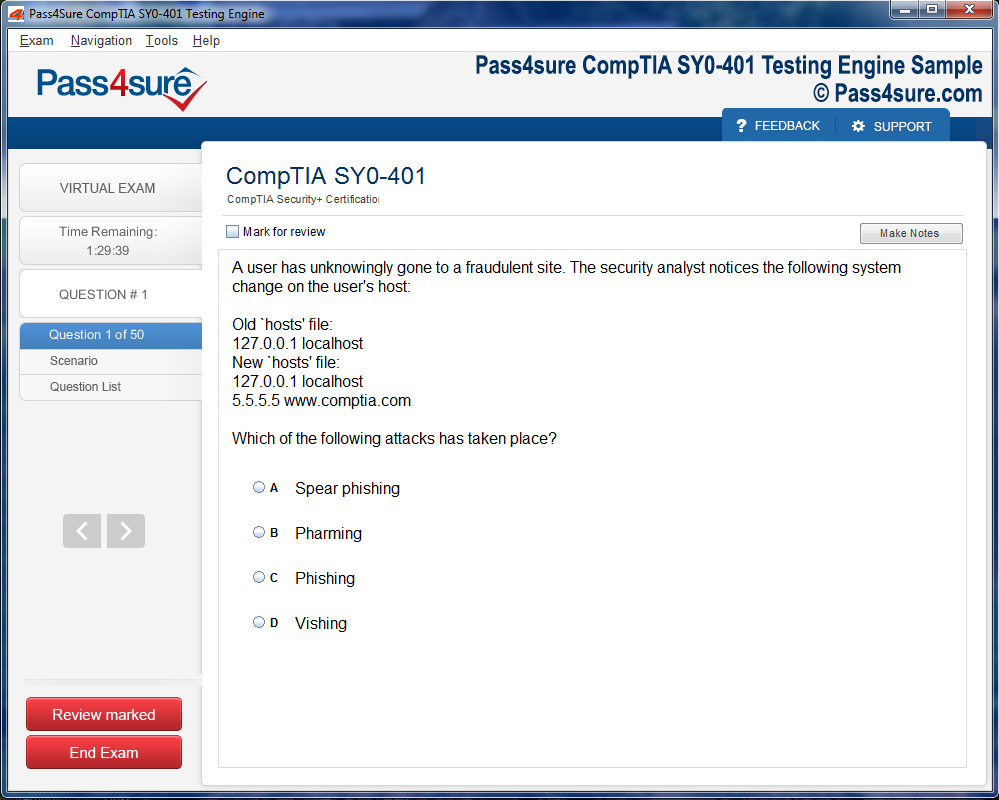
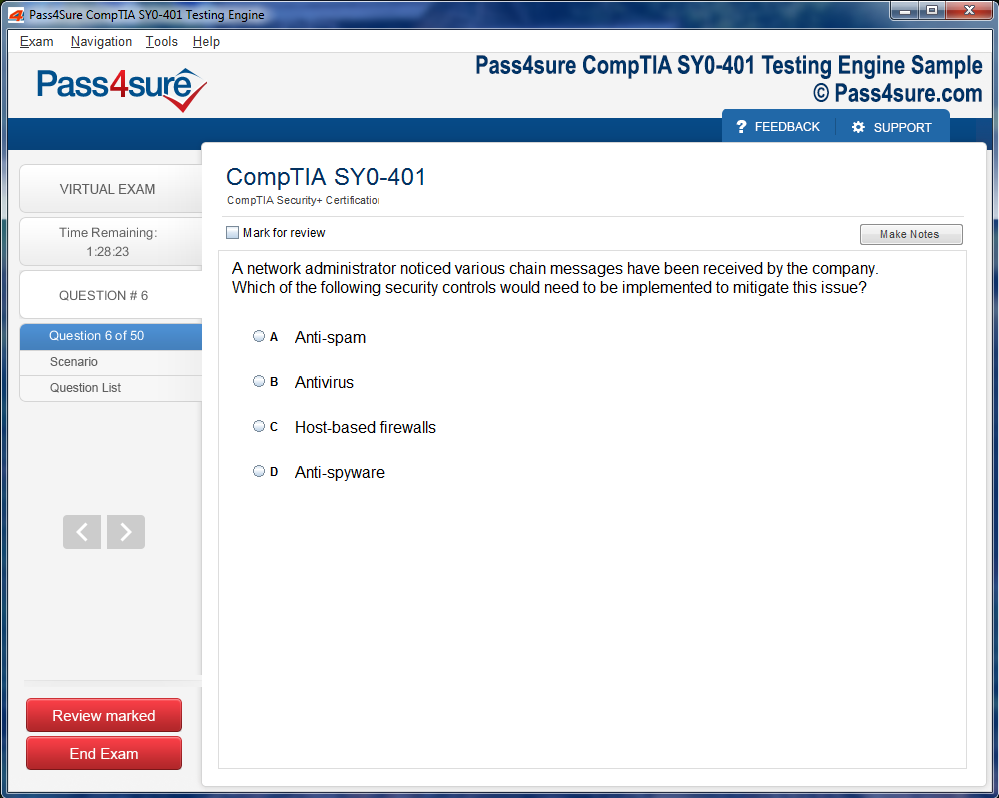
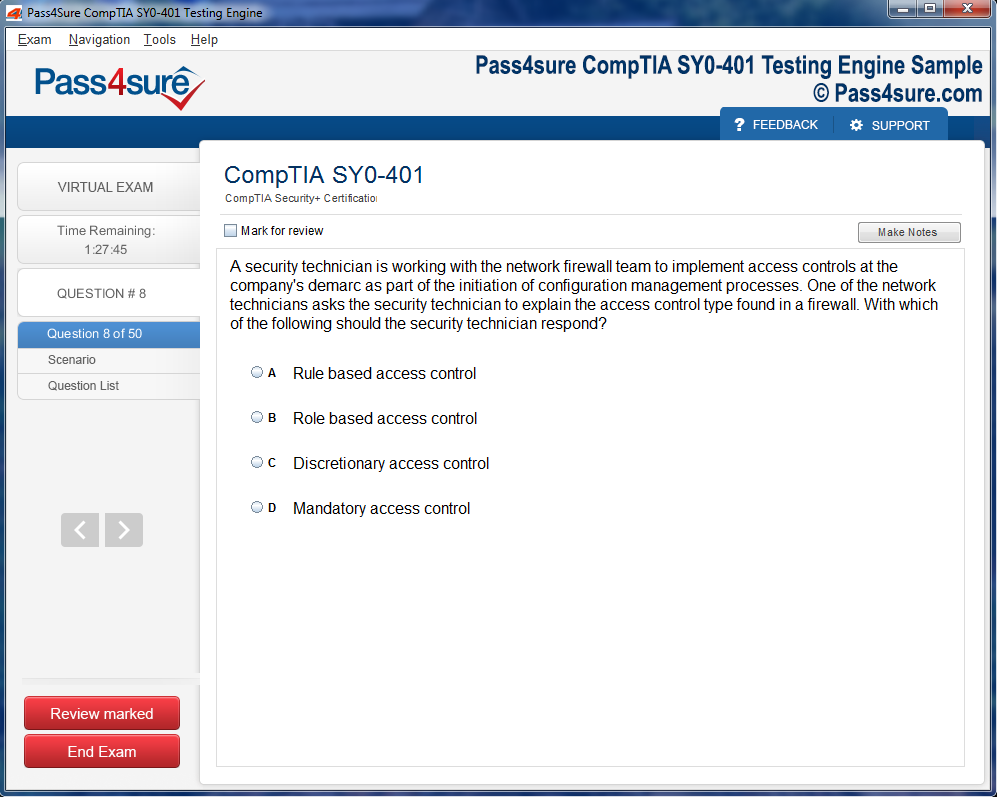
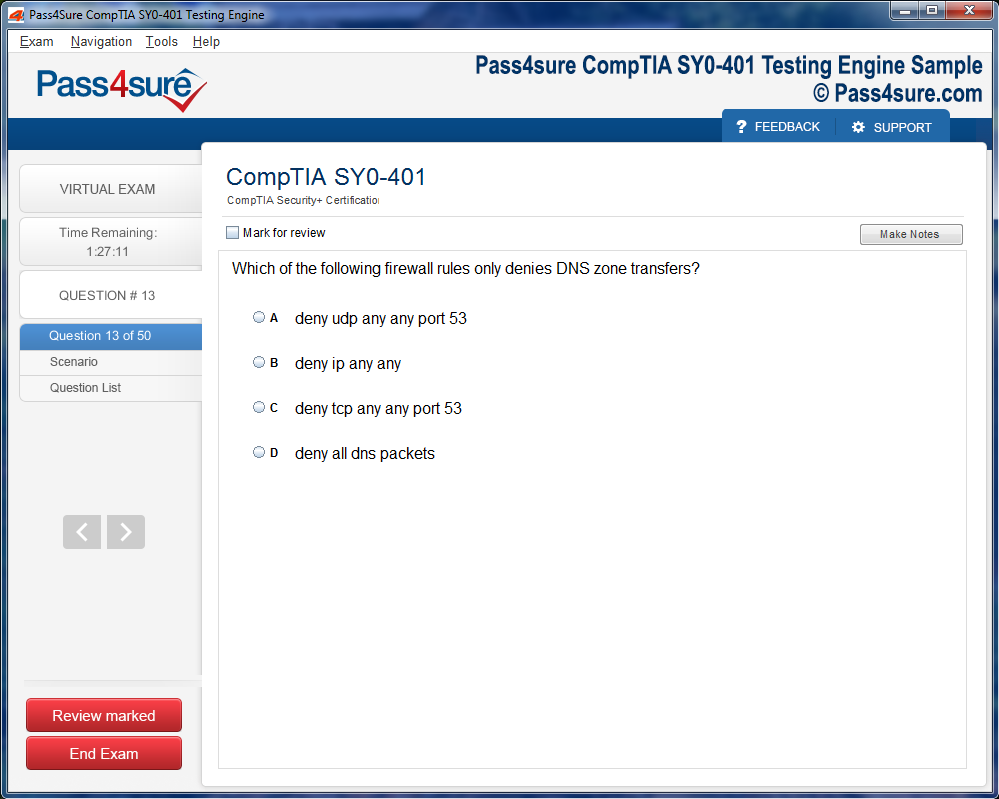
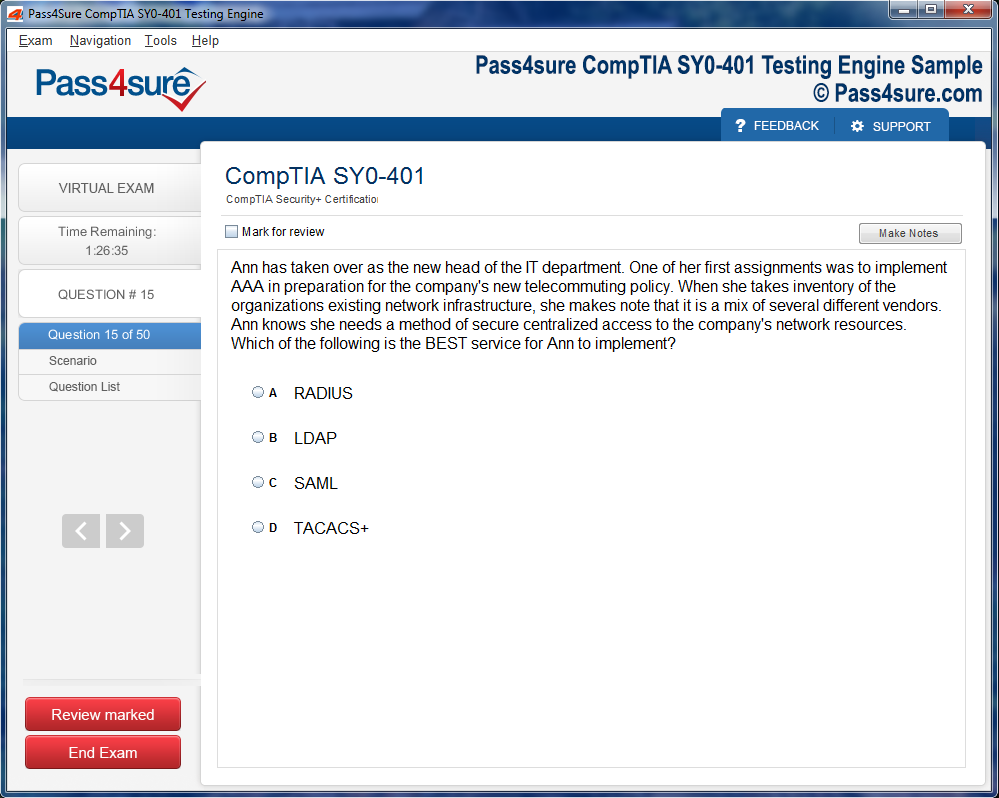
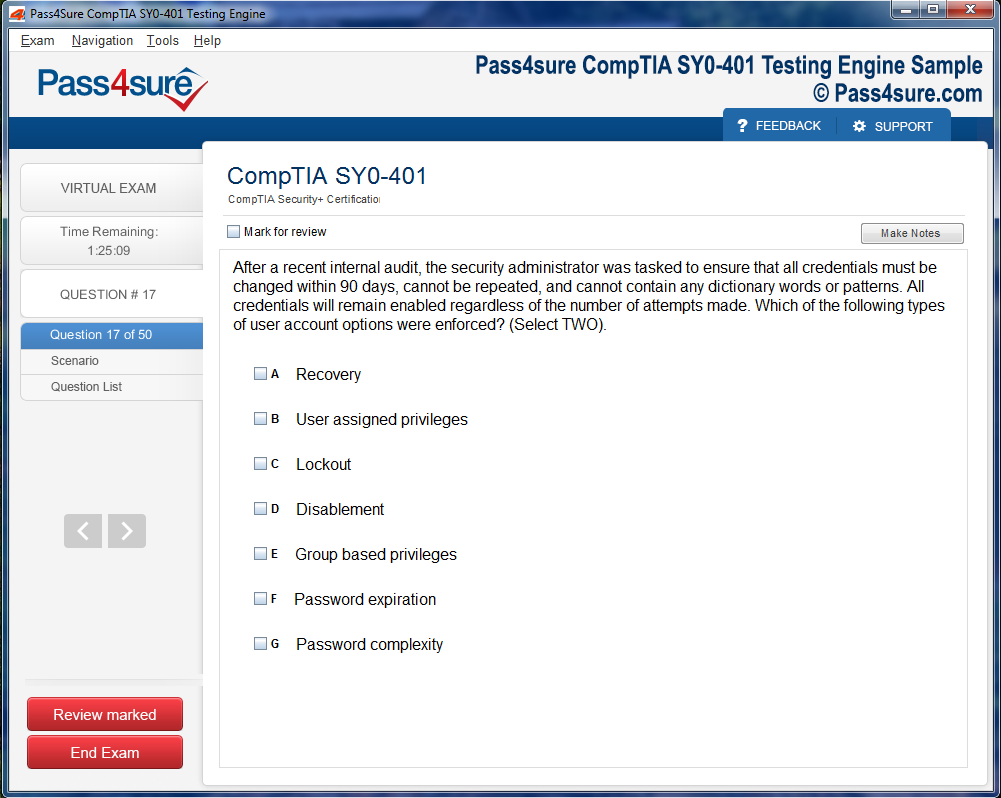
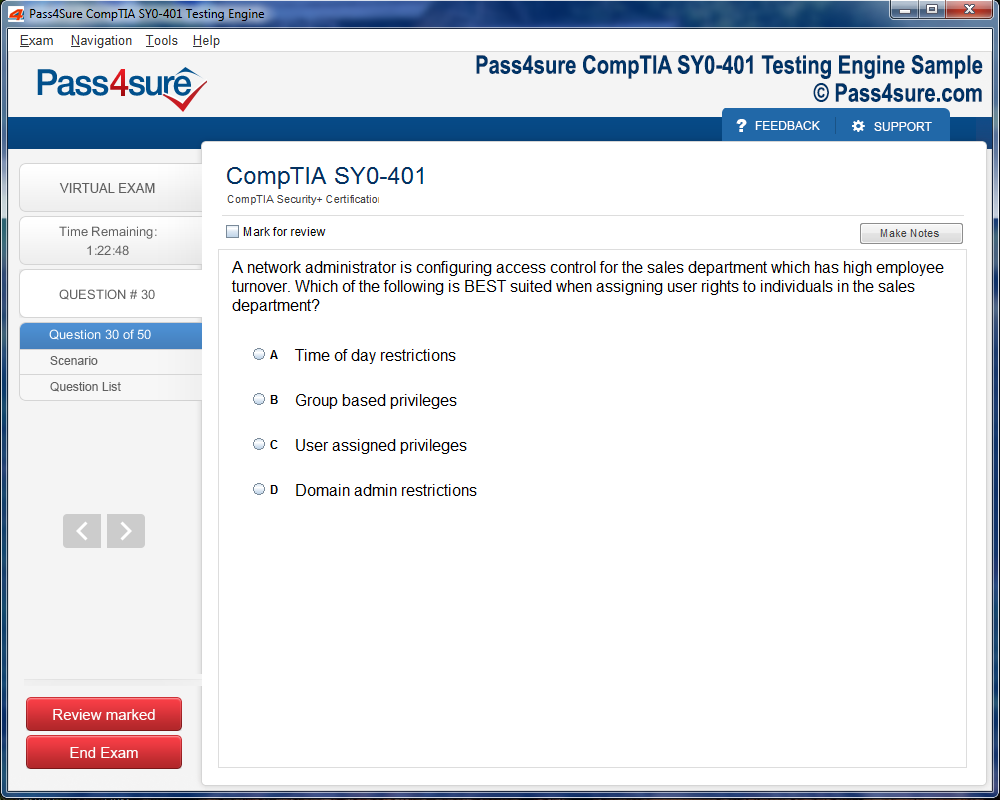
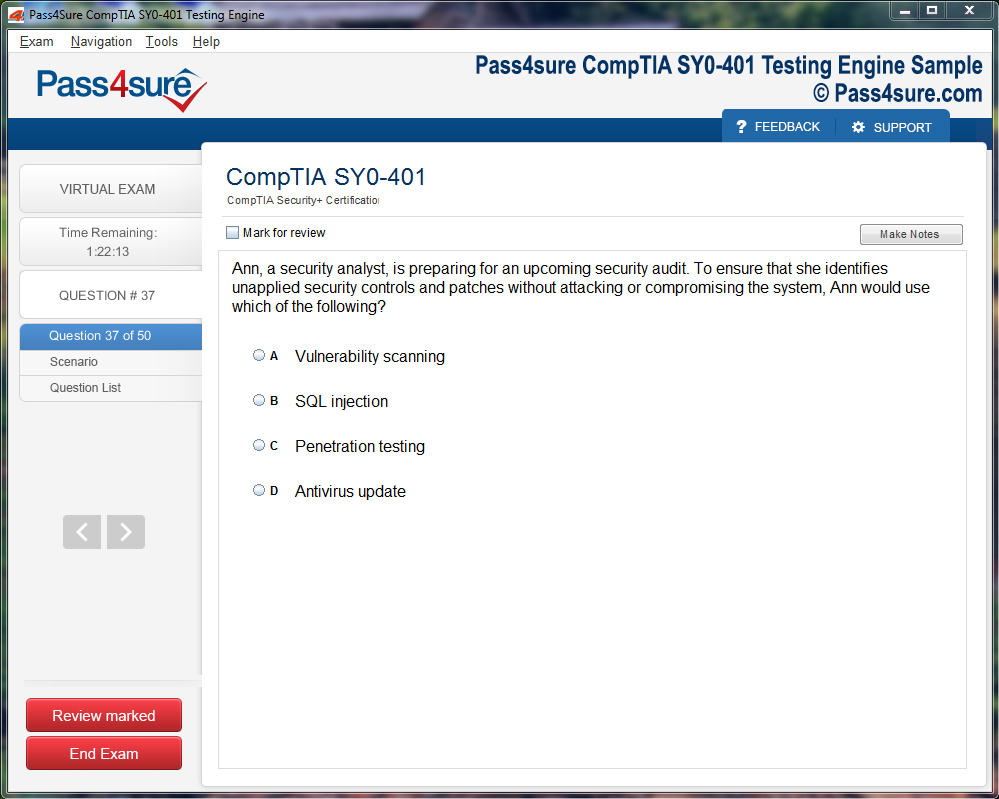
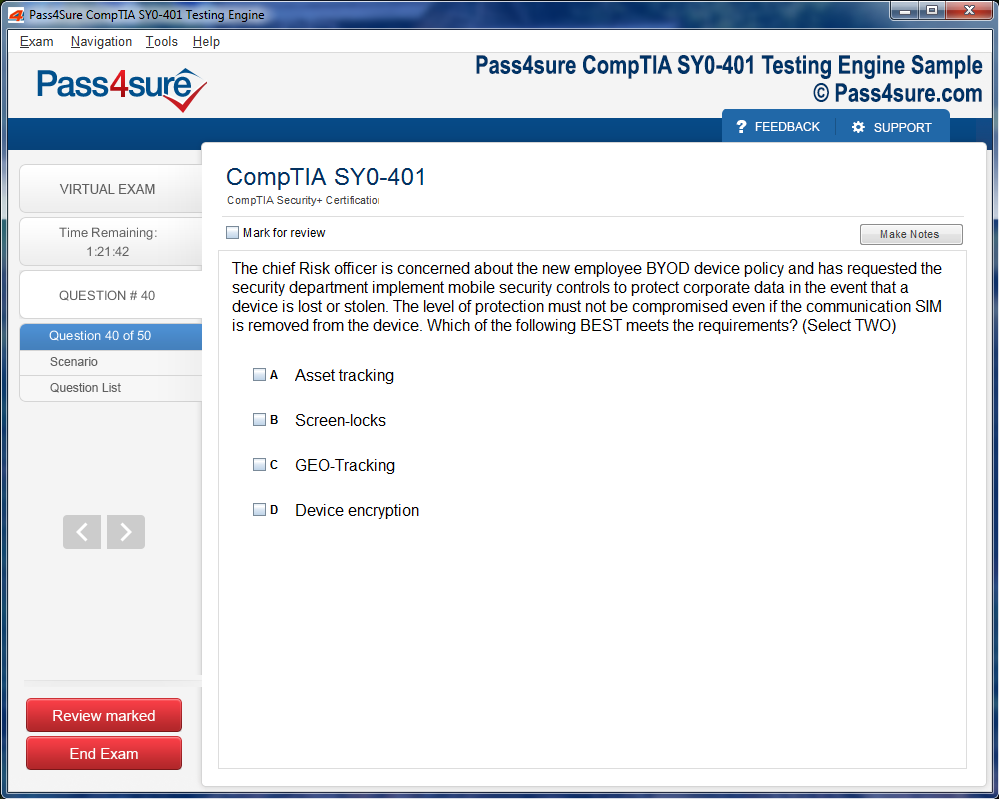
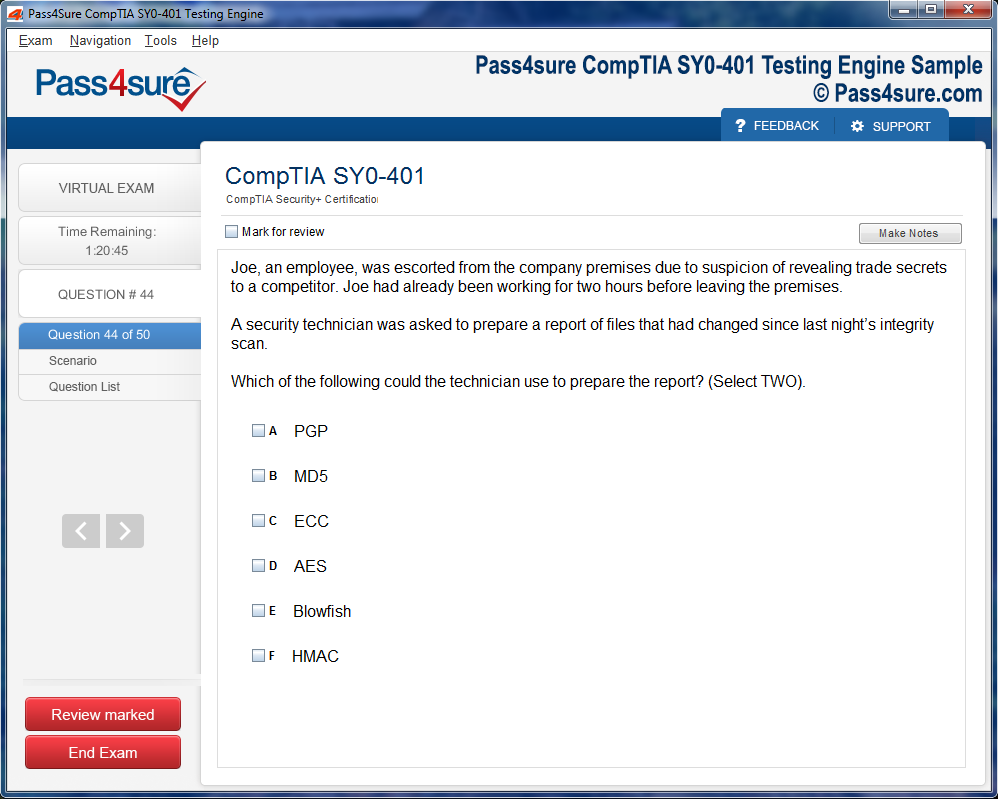
Frequently Asked Questions
How does your testing engine works?
Once download and installed on your PC, you can practise test questions, review your questions & answers using two different options 'practice exam' and 'virtual exam'. Virtual Exam - test yourself with exam questions with a time limit, as if you are taking exams in the Prometric or VUE testing centre. Practice exam - review exam questions one by one, see correct answers and explanations.
How can I get the products after purchase?
All products are available for download immediately from your Member's Area. Once you have made the payment, you will be transferred to Member's Area where you can login and download the products you have purchased to your computer.
How long can I use my product? Will it be valid forever?
Pass4sure products have a validity of 90 days from the date of purchase. This means that any updates to the products, including but not limited to new questions, or updates and changes by our editing team, will be automatically downloaded on to computer to make sure that you get latest exam prep materials during those 90 days.
Can I renew my product if when it's expired?
Yes, when the 90 days of your product validity are over, you have the option of renewing your expired products with a 30% discount. This can be done in your Member's Area.
Please note that you will not be able to use the product after it has expired if you don't renew it.
How often are the questions updated?
We always try to provide the latest pool of questions, Updates in the questions depend on the changes in actual pool of questions by different vendors. As soon as we know about the change in the exam question pool we try our best to update the products as fast as possible.
How many computers I can download Pass4sure software on?
You can download the Pass4sure products on the maximum number of 2 (two) computers or devices. If you need to use the software on more than two machines, you can purchase this option separately. Please email sales@pass4sure.com if you need to use more than 5 (five) computers.
What are the system requirements?
Minimum System Requirements:
- Windows XP or newer operating system
- Java Version 8 or newer
- 1+ GHz processor
- 1 GB Ram
- 50 MB available hard disk typically (products may vary)
What operating systems are supported by your Testing Engine software?
Our testing engine is supported by Windows. Andriod and IOS software is currently under development.
Pass H12-821 Huawei Faster with Expert Tips and Tricks
The Huawei H12-821_V1.0 assessment emerges as an intricate evaluation meticulously crafted for professionals intent on certifying their prowess in the arcane realm of core network technologies. Its ambit encompasses an eclectic spectrum of subjects indispensable for the architectural conception, implementation, and dexterous orchestration of intricate data communication ecosystems. Candidates are beckoned to navigate the labyrinthine nuances of network paradigms that orchestrate modern digital infrastructures.
Exam Overview
This examination functions as a crucible wherein theoretical acumen and pragmatic dexterity are simultaneously tested. Its design is predicated upon the necessity to gauge a candidate’s proficiency across multilayered networking constructs, demanding a synthesis of analytical sagacity and operational adroitness. Through this evaluative mechanism, aspirants confront scenarios mirroring real-world exigencies, requiring the deployment of erudition and strategic problem-solving.
Key Topics Include
Routing Protocols
Mastery of routing protocols constitutes the cornerstone of this assessment. Candidates must demonstrate sagacious command over OSPF, IS-IS, and BGP, deciphering their configurations, operational dynamics, and inter-protocol interactions. The examination probes the candidate's ability to orchestrate routing tables, troubleshoot convergence anomalies, and calibrate metrics to optimize path selection. Understanding the subtleties of route redistribution, autonomous system hierarchies, and policy-based routing strategies is paramount.
Traffic Control
Adeptness in traffic control techniques is essential for ensuring network fidelity and efficiency. Examinees are expected to manipulate bandwidth allocation, prioritize packets, and employ queueing mechanisms that mitigate congestion. Proficiency in traffic shaping, policing, and dynamic adaptation of network flows under variable load conditions is rigorously evaluated. The ability to anticipate bottlenecks and implement proactive countermeasures distinguishes a competent network professional from the merely acquainted.
Switching Technologies
An in-depth grasp of switching paradigms forms another critical axis of examination. VLAN segmentation, spanning tree protocols, and emergent switching methodologies demand nuanced comprehension. Candidates must elucidate the mechanisms underlying loop avoidance, broadcast containment, and hierarchical network segmentation. Competency extends to configuring complex switching topologies that harmonize performance and resilience while accommodating evolving organizational requirements.
Network Security
Ensuring the inviolability of network infrastructure and the confidentiality of transmitted data is an indispensable requisite. Examinees are required to demonstrate capability in deploying security frameworks, including access control lists, encryption mechanisms, and intrusion detection schemes. The examination scrutinizes the ability to anticipate vulnerabilities, orchestrate protective measures, and integrate security protocols seamlessly into existing network architectures without compromising operational fluidity.
Network Reliability
Sustaining network reliability mandates a profound understanding of redundancy architectures, fault tolerance, and disaster recovery methodologies. Candidates must navigate scenarios demanding the design of resilient infrastructures capable of enduring partial failures while maintaining service continuity. Knowledge of failover mechanisms, load balancing strategies, and real-time monitoring systems is imperative to ensuring uninterrupted operational integrity.
Exam Format
The Huawei H12-821_V1.0 assessment is characterized by a hybrid format encompassing multiple-choice interrogatives, veracity-based statements, and scenario-oriented challenges. Familiarity with these constructs facilitates cognitive agility, enabling candidates to navigate intricate questions with precision. Practicing under temporal constraints cultivates strategic time allocation, enhancing both accuracy and analytical depth. This format underscores the dual necessity of theoretical mastery and practical acumen, reflecting the multifaceted nature of contemporary network management.
Setting Realistic Goals
Embarking upon the labyrinthine odyssey of skill acquisition necessitates a meticulous introspection of one’s current intellectual repository. Before charting a trajectory toward mastery, discern your cognitive strongholds and identify lacunae that demand deliberate cultivation. Establishing attainable benchmarks is paramount; micro-milestones act as cognitive lighthouses, guiding progress through the fog of distraction and ennui. By adopting an incremental approach, learners circumvent the perilous abyss of overwhelm while sustaining an effervescent motivation to advance.
Visualizing your goals in a tangible schema—be it a mind map, a chronological roadmap, or a cognitive ledger—imbues your study regimen with clarity. Each delineated objective crystallizes intent, transforming nebulous ambition into actionable pursuit.
Allocating Study Time
Temporal architecture forms the backbone of efficacious learning. Designate precise intervals for cerebral engagement, favoring consistency over sheer duration. Short, immersive sessions of 60 to 120 minutes catalyze retention, whereas protracted, unstructured periods engender cognitive fatigue. Interspersing these sessions with deliberate pauses—moments of reflection or brief somatic rejuvenation—enhances neural consolidation, permitting the brain to encode knowledge with durable fidelity.
Consider the circadian predilections of your mind. For some, the auroral hours proffer unparalleled lucidity, while others thrive in the vesper twilight. Align study periods with peak cognitive acuity to amplify comprehension and mnemonic endurance. Employ temporal anchoring techniques, such as ritualistic commencement cues or environmental signifiers, to fortify habitual adherence and attenuate procrastinatory impulses.
Utilizing Diverse Resources
Cognitive versatility is augmented through exposure to heterogeneous reservoirs of information. Reliance upon a singular medium constricts intellectual elasticity, whereas diversified input fosters synaptic interconnectivity and robust problem-solving prowess.
Official Huawei documentation serves as an authoritative compass, delineating intricate technological topographies and configuration subtleties with precision. These documents, often recondite, furnish the scaffolding upon which practical competence is constructed.
Engagement with online forums and collaborative communities cultivates dialectical reasoning. Dialogues with peers, who traverse parallel academic trajectories, unravel nuanced perspectives, illuminate common pitfalls, and unveil strategies hitherto unconsidered. This collective intelligence functions as an accelerant for conceptual crystallization.
Practice examinations constitute a crucible for metacognitive refinement. Simulating authentic evaluative conditions accustoms learners to the psychological pressures of assessment, mitigating anxiety and fostering adaptive strategies. Iterative practice facilitates identification of recurring cognitive bottlenecks, enabling targeted remediation and continuous skill augmentation.
Integrating Active Learning Techniques
Passive absorption of information, though superficially comforting, seldom engenders enduring mastery. Active learning techniques—ranging from self-explanation and elaborative interrogation to mnemonic construction and spaced repetition—supercharge retention. Self-explanation compels articulation of underlying mechanisms, converting latent comprehension into explicit knowledge. Elaborative interrogation prompts interrogation of causality, fostering deep structural understanding rather than superficial familiarity.
Spaced repetition, a technique grounded in the temporal dynamics of memory decay, strategically intervals review sessions to optimize long-term retention. Complementary mnemonic devices transform abstruse concepts into memorable cognitive tokens, enhancing recall under evaluative duress.
Cultivating Metacognitive Awareness
A sagacious learner transcends rote memorization, cultivating metacognitive vigilance—a continuous appraisal of one’s cognitive processes. Periodically interrogate comprehension: Are concepts internalized or merely superficially recognized? Which strategies precipitate maximal retention, and which falter?
Journaling reflective observations serves as an externalized cognitive mirror, capturing insights into habitual thought patterns and learning efficacy. Through iterative reflection, learners refine strategic approaches, prune inefficacious techniques, and develop adaptive, self-directed learning heuristics.
Optimizing Environmental Context
The physical and digital milieu exerts a profound influence upon cognitive performance. Designate study spaces that minimize extrinsic distractions while promoting focus. Ergonomic considerations, such as proper seating posture and ambient illumination, mitigate somatic fatigue and augment attentional endurance.
Digital environments warrant circumspection. Notifications, social media, and extraneous multimedia are cognitive parasites that erode concentration. Employ techniques such as application blocking, timed focus intervals, and environmental conditioning to preserve the sanctity of intellectual engagement.
Routing Protocols
Navigating the labyrinthine architecture of routing protocols requires both perspicacity and methodical experimentation. Protocols such as OSPF, IS-IS, and BGP embody intricate orchestration of path selection, route advertisement, and convergence mechanisms that dictate the efficacy of packet traversal across heterogeneous networks. A granular comprehension of link-state algorithms and path-vector paradigms is indispensable for mitigating latent routing loops and oscillatory instabilities. Configuring OSPF entails the precise calibration of area hierarchies and cost metrics, while IS-IS mandates meticulous adjacency formations predicated on intermediate system-to-intermediate system communication. Meanwhile, BGP, often regarded as the sovereign arbiter of interdomain routing, demands judicious policy application and careful manipulation of route attributes such as AS-path, MED, and local preference. Embedding these protocols within a simulated lab topology fosters experiential learning, allowing one to apprehend the nuances of convergence anomalies, route flapping, and prefix propagation intricacies.
Traffic Control and Switching
The orchestration of traffic within modern network topologies necessitates an intimate understanding of switching fabrics, VLAN segmentation, and the intricacies of broadcast containment. VLANs, often deployed to enforce logical segregation, require deliberate tag management and pruning strategies to prevent inadvertent traffic leakage and multicast storm proliferation. Spanning tree protocols, the sine qua non of loop prevention in layer-two topologies, involve iterative calculation of root bridges, port roles, and path costs, culminating in a deterministic yet dynamic topology resilient to link failures. Beyond topology stabilization, traffic shaping methodologies, encompassing policing, queuing, and weighted fair scheduling, empower network engineers to modulate bandwidth consumption and mitigate latency spikes. Simulating diverse traffic matrices in lab environments enables practitioners to witness firsthand the interplay between packet queuing disciplines and end-to-end throughput, fostering an intuitive grasp of network elasticity and congestion mitigation techniques.
Network Security
Securing contemporary network infrastructures demands a multifaceted approach, encompassing both proactive deterrence and reactive countermeasures. Access control lists (ACLs) provide a granular filtration mechanism, allowing selective ingress and egress control predicated on protocol, port, and source-destination criteria. Firewalls, functioning as gatekeepers, necessitate meticulous rule articulation and logging strategies to balance protection with network performance. Complementing these, intrusion detection and prevention systems offer a sentinel capability, identifying anomalous patterns indicative of reconnaissance, exploitation, or exfiltration attempts. Implementing these mechanisms in controlled lab setups cultivates experiential acumen, enabling practitioners to correlate theoretical threat models with tangible packet behavior. Observing how ACLs interact with routing policies, or how firewalls manage stateful versus stateless inspection, provides a synoptic understanding of the multilayered defense architecture that undergirds resilient network deployments.
Importance of Practice Tests
Engaging in methodical rehearsal through practice examinations cultivates a perspicacious awareness of one’s cognitive lacunae, illuminating conceptual chasms that may otherwise elude scrutiny. These simulated interrogatives not only acclimate aspirants to the arcane architecture of the formal evaluation but also engender a sagacious grasp of temporal allocation, ensuring that each query receives judicious attention without succumbing to the quagmire of temporal insufficiency. Beyond mere rote rehearsal, the iterative immersion in practice tests fortifies mnemonic retention and fosters an intuitive agility, allowing the examinee to navigate convoluted scenarios with alacrity and equanimity.
Utilizing Simulation Tools
The deployment of network emulation instruments, such as virtual topography constructors, offers an unparalleled sandbox for experiential experimentation. These simulacra furnish a risk-averse milieu wherein configurations can be orchestrated, manipulated, and meticulously scrutinized, permitting an exhaustive comprehension of protocol behaviors, routing anomalies, and packet propagation dynamics. By interfacing with these synthetic networks, learners can transmute theoretical edicts into tactile proficiency, cultivating an almost clairvoyant acumen for anticipating network perturbations. The iterative interplay within these simulated ecosystems nurtures a dexterity that transcends conventional study methods, allowing for an intimate cognizance of intricate systems without imperiling operational infrastructure.
Active Recall and Spaced Repetition
In the labyrinthine corridors of cognition, the art of active recall emerges as a veritable talisman against forgetfulness. By deliberately retrieving information from memory rather than passively perusing notes, learners can ignite synaptic pathways that fortify retention. The deployment of mnemonic devices, layered with nuanced associations, amplifies this process. Spaced repetition, in turn, orchestrates temporal intervals between review sessions, harmonizing with the brain's proclivity for memory consolidation. When concepts are revisited with strategic cadence, they transition from ephemeral recognition to durable comprehension. This cyclical engagement cultivates a cognitive ecosystem where knowledge is not merely acquired but entrenched.
The practical execution of these techniques can manifest in multifaceted modalities. Digital flashcards, enriched with algorithmic scheduling, provide a scaffold for systematic review. Analog methods, such as handwritten prompts or visual schematics, tap into kinesthetic and spatial memory, engendering a multisensory reinforcement. Crucially, interleaving disparate subjects or topics during review sessions engenders neural plasticity, rendering the mind more agile in pattern recognition and application. Thus, active recall coupled with spaced repetition transcends rote memorization, evolving into a dynamic, self-reinforcing mechanism of intellectual accretion.
Group Study Sessions
The synergistic potency of collaborative learning is often underestimated in conventional pedagogical paradigms. When individuals convene to dissect intricate topics, a mosaic of perspectives emerges, illuminating nuances that solitary study may obscure. This dialogic interplay fosters metacognition, compelling participants to interrogate their assumptions and articulate reasoning with lucidity. The act of teaching peers crystallizes understanding, as elucidation demands precise mental representation and synthesis of knowledge.
Moreover, group study serves as a crucible for cognitive elasticity. Divergent viewpoints challenge entrenched conceptions, necessitating adaptive thinking and reconciliation of disparate ideas. Within this social matrix, the dynamics of questioning, debate, and constructive critique catalyze deeper comprehension. Ritualized review sessions within groups, when interspersed with reflective pauses, create an environment where information is not only reiterated but also interrogated, dissected, and contextualized. The resultant cognitive scaffolding is robust, capable of supporting complex problem-solving and integrative reasoning across disciplines.
Integrating Multimodal Reinforcement
Memory consolidation is potentiated when learning experiences engage multiple sensory and cognitive channels. The integration of visual, auditory, and kinesthetic stimuli within review routines cultivates a more holistic and resilient retention. Mind mapping, diagrammatic representations, and narrative storytelling transform abstract concepts into tangible cognitive artifacts. By weaving information into interconnected frameworks, learners can traverse associative networks, facilitating rapid retrieval and cross-contextual application.
Analogous to the way a polyphonic composition resonates with layered harmonics, multimodal reinforcement amplifies the depth and persistence of learning. Cognitive anchoring, the technique of linking novel information to pre-existing knowledge, further fortifies retention. When these strategies are systematically employed alongside spaced repetition and collaborative sessions, they engender an intellectual architecture that supports both mastery and creative exploration.
Cognitive Metacognition and Self-Assessment
The fulcrum of effective reinforcement lies in metacognitive awareness—the conscious appraisal of one’s own cognitive processes. Periodic self-assessment illuminates areas of strength and vulnerability, enabling the calibration of study strategies. Techniques such as reflective journaling, self-quizzing, and predictive testing cultivate introspective acuity, transforming passive learners into proactive navigators of knowledge. By continuously monitoring comprehension, learners preempt the pitfalls of superficial familiarity and foster enduring understanding.
Self-assessment also nurtures resilience and cognitive autonomy. The iterative cycle of evaluating, recalibrating, and reinforcing knowledge engenders a self-sustaining learning loop. Through deliberate reflection and critical appraisal, learners can discern patterns in their understanding, anticipate misconceptions, and strategically deploy mnemonic or collaborative strategies to shore up deficiencies.
Cognitive Interleaving for Long-Term Retention
Interleaving, the practice of alternating between topics or problem types during review, subverts conventional linear study methods and catalyzes durable learning. By juxtaposing concepts that are superficially dissimilar, learners enhance their capacity to discriminate between related ideas and apply knowledge flexibly. This technique exploits the brain’s pattern-recognition faculties, fostering a deeper, more integrated understanding of the material.
When interleaving is combined with active recall and spaced repetition, it creates a multidimensional reinforcement paradigm. The oscillation between topics prevents cognitive stagnation, reduces mental fatigue, and promotes adaptive retrieval pathways. This approach mirrors real-world problem-solving, where knowledge is seldom compartmentalized but interwoven across contexts, necessitating rapid integration and application of diverse insights.
The Role of Emotional Engagement in Reinforcement
Memory retention is intricately linked with emotional salience. Concepts imbued with affective resonance are more readily encoded and recalled. Techniques that stimulate curiosity, awe, or personal relevance can exponentially enhance the effectiveness of review strategies. Narrative contextualization, gamification of learning tasks, and goal-oriented challenges activate emotional circuits that reinforce cognitive processing.
Moreover, social reinforcement within group study settings can amplify this effect. Positive feedback, collaborative achievement, and peer encouragement create an emotionally supportive milieu, augmenting engagement and sustaining motivation. Emotional resonance, when intertwined with structured cognitive strategies, ensures that learning is not only effective but also intrinsically compelling, transforming review sessions from obligatory repetition into an immersive and gratifying intellectual endeavor.
Pre-Exam Checklist
The threshold of academic or professional examination success often hinges upon meticulous orchestration of preparatory elements that extend beyond mere memorization. A sagacious candidate comprehends that efficacy derives not solely from cognitive absorption but from an integrated confluence of physical, mental, and logistical readiness. At the forefront of pre-exam prudence is the review of key concepts. Engage in cerebral excavation, unearthing lacunae previously unnoticed in the ambit of your study sessions. Highlight anomalies in comprehension and nurture them with focused reiteration, employing mnemonic constructs or visual schemata that cement ephemeral understanding into enduring cognition.
Equally pivotal is rest and nutrition. The corporeal vessel is inextricably linked to the faculties of cognition; hence, somnolence and alimentary prudence become essential allies. A candidate should pursue nocturnal cycles that allow REM phases to coalesce seamlessly, thereby fortifying memory consolidation. Nutritional regimens should accentuate substrates conducive to neuroplasticity—omega-rich lipids, complex carbohydrates, and micronutrient-laden sustenance that obviate neurocognitive depletion during intensive examination exertions.
No preparation is complete without logistical verification. Confirm the precise coordinates of the examination venue, ensure possession of requisite identification, and catalogue ancillary materials—pens, calculators, or permitted reference sheets. The minutiae of logistical negligence often catalyze preventable anxiety, undermining even the most robust intellectual preparation.
Exam Day Strategy
Examination day itself embodies a crucible where prior preparation is transmuted into measurable performance. The primary stratagem is time management. Allocate chronological resources judiciously, partitioning the examination into discernible segments corresponding to question complexity and point value. Establish temporal benchmarks, permitting iterative review of responses while forestalling the peril of overinvestment in singular interrogatives.
Emotional equanimity is equally critical. The candidate must cultivate a demeanor of methodical serenity, approaching each query with the circumspection of a seasoned analyst. Techniques such as deep diaphragmatic breathing, micro-pauses between sections, and cognitive reframing—viewing challenging items as opportunities rather than obstacles—fortify mental resilience.
Where temporal margins permit, iterative review is invaluable. Revisiting previously addressed items often reveals overlooked nuances or errors introduced through cognitive fatigue. It is a juncture where pattern recognition, deductive reasoning, and rapid recalibration converge to refine final outputs.
Strategic Concept Reinforcement
During the final hours preceding the examination, focus should pivot toward strategic reinforcement rather than exhaustive coverage. Selective consolidation of high-yield topics, especially those historically problematic or conceptually intricate, magnifies retention while avoiding cognitive saturation. Utilize techniques such as interleaved practice, rapid-fire questioning, and simulated scenarios that mimic examination pressures, thus transforming theoretical knowledge into operational proficiency.
Complement this cerebral rehearsal with multisensory reinforcement. Auditory review, verbal articulation of concepts, or kinesthetic engagement with schematic diagrams can create mnemonic bridges between abstract principles and tangible understanding. This approach exploits multiple neural pathways, enhancing recall fidelity during high-stakes examination conditions.
Psychological Conditioning
The psychological substratum underpinning examination performance is often underestimated. Cultivating cognitive resilience entails deliberate engagement with stress inoculation strategies. Visualization of success, mindful anticipation of potential pitfalls, and structured problem-solving rehearsals mitigate anxiety and foster a proactive mindset. Recognize that stress, when harnessed judiciously, can become an ally—enhancing focus, accelerating information retrieval, and stimulating problem-solving acumen.
Equally, self-efficacy reinforcement is paramount. Affirming one’s preparedness through self-dialogue, reflective journaling of past achievements, and incremental goal validation cultivates confidence that translates directly into examination poise.
Environmental Optimization
The milieu in which the examination is undertaken exerts subtle yet potent influence on performance. Optimal environmental calibration involves regulating factors such as ambient lighting, seating ergonomics, and auditory stimuli prior to examination entry. Arriving early permits acclimatization, reducing novelty-induced stress and facilitating immediate immersion in cognitive tasks.
Physical comportment should mirror mental preparation. Postural alignment, regulated breathing patterns, and a measured gait foster neurophysiological states conducive to analytical clarity. These seemingly peripheral factors often distinguish marginally proficient candidates from those demonstrating comprehensive command of subject matter.
Advanced Routing Strategies and Optimization
Routing, at its quintessence, transcends mere path selection; it is a meticulous orchestration of logical hierarchies and metric calibrations. OSPF, for instance, requires candidates to navigate link-state databases, comprehend area types, and manipulate cost metrics to optimize convergence without inducing routing loops. The labyrinthine interplay between OSPF intra-area and inter-area communication can confound even seasoned network architects if nuances such as LSAs (Link-State Advertisements) and SPF (Shortest Path First) computations are misunderstood.
IS-IS, though structurally akin to OSPF, operates within the subtleties of CLNS (Connectionless Network Service) encapsulation, demanding an understanding of levels 1 and 2 routing domains. Candidates are expected to deftly manipulate IS-IS metrics, understand adjacency formation, and implement area segmentation strategies to achieve scalable, high-performance networks.
BGP, the sentinel of interdomain routing, introduces the complexity of path vector protocols. Examinees must reconcile the intricacies of AS path attributes, route aggregation, and policy-based route selection. Strategic deployment of BGP communities, local preference values, and route reflection paradigms becomes imperative to mitigate routing instabilities and to maintain optimal external connectivity.
Traffic Engineering and Congestion Management
Traffic control extends beyond rudimentary bandwidth allocation. It embodies the preemptive anticipation of congestion points, dynamic prioritization of latency-sensitive flows, and judicious application of queueing disciplines. Advanced techniques include Weighted Fair Queuing (WFQ), Class-Based Weighted Fair Queuing (CBWFQ), and Low Latency Queuing (LLQ), each tailored to specific operational exigencies.
Traffic policing and shaping, often conflated, possess distinct operational philosophies. Policing enforces compliance by discarding or remarking excess packets, whereas shaping smooths traffic bursts by buffering packets, effectively modulating transmission rates. A nuanced understanding of these mechanisms enables network architects to balance throughput, latency, and jitter, particularly in hybrid data and voice network environments.
Exam candidates must also anticipate emergent traffic patterns, such as those engendered by cloud migration or IoT proliferation. Implementing dynamic load balancing algorithms, adaptive congestion avoidance, and intelligent path selection is critical for sustaining optimal network performance under volatile load conditions.
Intricacies of Switching and Segmentation
Switching technologies, far from being mere conduits of data frames, embody the structural foundation of hierarchical and scalable networks. VLANs provide logical segmentation that isolates broadcast domains, enhancing both security and efficiency. The comprehension of VLAN tagging protocols (802.1Q), trunking configurations, and native VLAN considerations is indispensable.
Spanning Tree Protocol (STP) and its derivatives—Rapid STP (RSTP) and Multiple STP (MSTP)—demand precise understanding of loop prevention, port roles, and topology recalculation. Misconfigurations can induce network-wide broadcast storms, making mastery of these protocols essential for high-availability environments.
Advanced switching paradigms also encompass Layer 3 switching, virtual switching fabrics, and VXLAN (Virtual Extensible LAN) overlays. These technologies allow for seamless interconnection across sprawling datacenter fabrics, enabling scalability and segmentation while preserving low-latency data flows.
Securing Network Perimeters and Data Integrity
Network security extends beyond firewall rules and access control lists. Modern infrastructures necessitate proactive defense-in-depth strategies that encompass perimeter hardening, anomaly detection, and encrypted communication channels. Candidates must comprehend the operational intricacies of IPSec, SSL/TLS tunnels, and MACsec, ensuring end-to-end confidentiality and integrity.
Intrusion Detection Systems (IDS) and Intrusion Prevention Systems (IPS) are no longer optional but integral to resilient network design. The ability to discern subtle indicators of compromise, configure alert thresholds, and implement automated response mechanisms is pivotal. Security policy design must also harmonize with regulatory mandates, including data privacy frameworks, creating a balance between compliance and operational efficiency.
Additionally, network segmentation serves as a critical security layer. Microsegmentation, for instance, isolates workloads even within shared physical infrastructures, mitigating lateral threat propagation. Candidates should understand the interplay between segmentation, firewalling, and zero-trust models, fostering robust and adaptive defenses.
Reliability Engineering and Redundancy Schemes
Network reliability is predicated upon both architectural foresight and operational vigilance. Redundant topologies, such as dual-homed switches, stacked devices, and multipath routing, enhance fault tolerance. High-availability protocols, including VRRP, HSRP, and GLBP, provide seamless failover mechanisms for mission-critical environments.
Candidates are also expected to master link aggregation techniques, ensuring both load balancing and redundancy across physical paths. Knowledge of proactive monitoring, using SNMP traps, syslog aggregation, and network telemetry, enables rapid detection and remediation of anomalies before they precipitate service degradation.
Disaster recovery planning encompasses not only backup and restore procedures but also geographically distributed failover sites and synchronous replication strategies. Understanding Recovery Time Objectives (RTO) and Recovery Point Objectives (RPO) ensures that business continuity aligns with organizational exigencies, reinforcing network resilience.
Scenario-Based Problem Solving
The Huawei H12-821_V1.0 exam frequently employs scenario-based questions that simulate real-world dilemmas. Examinees may encounter topological diagrams with faulty routing configurations, ambiguous traffic congestion patterns, or security breach indicators. The ability to methodically dissect these scenarios, hypothesize root causes, and implement corrective measures distinguishes proficient candidates.
Scenario analysis also tests decision-making under temporal pressure. Candidates must weigh trade-offs between redundancy, performance, and cost, applying both theoretical knowledge and practical insight. This dimension of the exam underscores the importance of adaptive thinking, strategic foresight, and meticulous planning in professional network management.
Time Management and Exam Strategy
Effective navigation of the exam requires more than technical acumen; strategic time allocation is crucial. Candidates should prioritize questions based on complexity, leveraging initial strengths to secure points before addressing intricate scenarios. Familiarity with the distribution of multiple-choice, true/false, and scenario-based questions enhances cognitive efficiency.
Practice exams under timed conditions cultivate mental resilience and rapid analytical processing. Reviewing explanations for incorrect responses reinforces conceptual clarity, transforming weaknesses into strengths. Strategic pacing, combined with methodical problem-solving, enables candidates to optimize both accuracy and completion rates.
Leveraging Cognitive Load Management
The human brain is an exquisite yet finite computational organ, susceptible to the vicissitudes of cognitive load. Overextension of working memory precipitates diminution of comprehension and retention. Astute learners therefore orchestrate information intake with deliberate parsimony, fragmenting complex subjects into digestible cognitive morsels.
Segmenting intricate topics into modular units—conceptual microcosms—enhances assimilation while mitigating mental saturation. This strategy, frequently termed “chunking,” capitalizes upon the brain’s proclivity for pattern recognition, transforming overwhelming abstractions into manageable schemas. Coupled with interleaving—alternating practice across disparate topics—learners cultivate flexible problem-solving agility, circumventing the rigidity of rote compartmentalization.
Employing Retrieval Practice
Memory consolidation is accelerated not merely through passive review but through deliberate retrieval practice. Actively invoking stored information from memory fortifies neural circuits, engendering durable retention and amplifying recall under exigent circumstances.
Techniques for retrieval practice abound: self-quizzing, flashcard systems, and problem-based simulations engender iterative engagement with material. The act of recall itself constitutes a learning event; even erroneous attempts, when corrected, strengthen the robustness of cognitive frameworks. Retrieval practice transforms study from an ephemeral rehearsal into a dynamic, generative process, fostering deeper understanding and resilience against forgetting.
Harnessing Multimodal Learning
A singular sensory approach constrains intellectual absorption. Multimodal learning—integrating visual, auditory, kinesthetic, and textual inputs—invigorates cognitive circuits and enhances encoding fidelity. Diagrams, flowcharts, and schematics provide visual scaffolding, enabling abstraction of intricate processes. Auditory supplementation, whether through recorded lectures or verbal explanation, engages complementary pathways, reinforcing comprehension through parallel channels.
Kinesthetic enactment, though underutilized, proves invaluable in domains demanding procedural fluency. Manipulating models, simulating network topologies, or performing configuration drills translates theoretical knowledge into tangible mastery, bridging the chasm between conceptualization and praxis.
Strategic Note-Taking and Annotation
Note-taking is not a perfunctory transcription of information but a deliberate act of cognitive distillation. Employing hierarchically structured outlines, concept maps, or semantic trees transforms raw data into a relational schema, fostering integrative comprehension. Annotation, the marginalia of intellectual discourse, allows learners to interrogate, critique, and synthesize information in situ.
Dynamic note-taking—iteratively revising and expanding initial records—enhances metacognitive awareness and encourages the recognition of emergent patterns. Color coding, symbolic shorthand, and mnemonic cues further augment cognitive retrieval, converting the mundane act of recording into an active learning catalyst.
Utilizing Technological Augmentation
In the contemporary pedagogical landscape, digital augmentation is indispensable. Software tools designed for cognitive enhancement—spaced repetition platforms, mind mapping applications, and simulation environments—provide scaffolding for efficacious study.
Simulation tools permit experimentation within controlled virtual ecosystems, enabling risk-free exploration of scenarios and fostering experiential learning. Analytics integrated into such tools offer diagnostic feedback, revealing areas of proficiency and exposing latent deficiencies. By embracing technological symbiosis, learners accelerate acquisition while cultivating a nuanced, empirical understanding of subject matter.
Fostering Intrinsic Motivation
The fulcrum of sustainable learning lies in intrinsic motivation—the self-propelled drive to acquire knowledge for its inherent satisfaction rather than extrinsic rewards. Cultivation of this internal impetus transforms study from a perfunctory task into a vocation of intellectual curiosity.
Strategies to bolster intrinsic motivation include curiosity-driven exploration, the pursuit of mastery rather than performance, and recognition of personal growth trajectories. Framing challenges as opportunities for skill refinement, rather than as evaluative threats, shifts cognitive orientation from anxiety to engagement. By internalizing the value of learning itself, students create a resilient psychological framework impervious to episodic setbacks.
Implementing Reflective Practice
Reflection serves as the cerebral crucible in which experience is transmuted into insight. Regular contemplative sessions permit learners to evaluate the efficacy of strategies, reconcile misconceptions, and integrate novel perspectives. Reflection may take the form of journaling, peer discourse, or metacognitive self-questioning, each modality promoting nuanced awareness of learning trajectories.
Reflective practice illuminates patterns of success and failure, fostering adaptive recalibration. This iterative process of self-assessment ensures that learning is not linear but recursive, permitting continual refinement and deepening mastery.
Cultivating Resilience and Cognitive Grit
The vicissitudes of intensive study inevitably provoke frustration, fatigue, and occasional despondency. Cognitive resilience—or grit—is the psychological sinew that sustains perseverance in the face of such obstacles. Developing grit entails embracing challenges as vehicles for growth, normalizing the discomfort of rigorous learning, and maintaining steadfast commitment to long-term objectives.
Tactics to bolster resilience include micro-reward systems, stress modulation techniques, and cognitive reframing. By consciously cultivating a mindset of tenacity, learners transcend episodic setbacks and maintain consistent progression toward mastery.
Interdisciplinary Synthesis
True intellectual dexterity emerges at the confluence of multiple domains. Interdisciplinary synthesis involves the transposition of principles across disparate fields, revealing latent analogies and fostering innovative problem-solving. For instance, networking concepts may be elucidated through algorithmic theory, psychological insights, or systems engineering frameworks.
This synthesis encourages holistic cognition, nurturing the ability to navigate novel scenarios with agility. The resultant cognitive plasticity is a hallmark of advanced learners, enabling the transfer of expertise beyond narrowly circumscribed boundaries.
Time Management Through Prioritization
Temporal stewardship is a sine qua non of effective study. Not all tasks exert equal cognitive yield; prioritization ensures that energy is expended on high-value activities. Techniques such as the Eisenhower Matrix or the Pareto Principle allow learners to distinguish between urgent, important, and peripheral tasks.
Establishing daily, weekly, and monthly priorities creates a scaffold for strategic engagement, while temporal audits—periodic reviews of time allocation—identify inefficiencies and permit recalibration. By mastering the art of temporal triage, learners transform time from a limiting constraint into a strategic instrument of intellectual cultivation.
Enhancing Focus Through Mindfulness
Sustained concentration is often undermined by intrusive thoughts and environmental distractions. Mindfulness practices—encompassing meditation, breath regulation, and cognitive anchoring—train the mind to inhabit the present moment, enhancing attentional stability.
Even brief intervals of mindful practice prior to study sessions can attenuate cognitive interference, allowing deeper immersion in material. Furthermore, mindfulness fosters metacognitive awareness, enabling recognition of attention lapses and proactive redirection, thereby optimizing study efficacy.
Cognitive Networking and Peer Collaboration
Intellectual growth is amplified through engagement with peer networks. Collaborative learning, whether through study groups, discussion forums, or mentorship arrangements, exposes learners to heterogeneous perspectives and novel problem-solving heuristics.
Structured peer interaction, augmented by Socratic dialogue, encourages dialectical reasoning and hones the capacity to articulate complex concepts succinctly. Peer feedback, when constructively integrated, provides diagnostic insight into gaps in comprehension, thereby accelerating cognitive refinement.
Employing Psychological Anchoring Techniques
The efficacy of study sessions can be augmented through psychological anchoring—linking abstract concepts to concrete sensory or emotional cues. For instance, associating specific network protocols with vivid imagery, rhythm, or narrative stories transforms ephemeral data into memorable constructs.
Anchoring enhances recall by leveraging the brain’s proclivity for pattern recognition and emotional salience. When employed judiciously, it transforms the cognitive act of memorization into a creative, engaging endeavor.
Routing Protocols
Delving deeper into routing protocol intricacies reveals a tapestry of interwoven mechanisms that govern packet distribution across labyrinthine network topologies. OSPF, or Open Shortest Path First, operates on a link-state paradigm, wherein each router propagates its local topology knowledge via Link State Advertisements (LSAs). The aggregation of these LSAs forms a comprehensive network map, enabling each node to compute the shortest path tree with precision. Configurational missteps, such as mismatched area IDs or improper authentication parameters, can precipitate network segmentation or convergence latency. Furthermore, understanding the subtleties of OSPF timer tuning—hello intervals, dead intervals, and SPF calculation intervals—provides a granular lever to optimize network responsiveness and minimize transient routing anomalies.
IS-IS, though conceptually akin to OSPF in its link-state approach, diverges in nomenclature and operational layering. Its hierarchical design—partitioned into levels 1 and 2—necessitates careful orchestration to ensure route propagation occurs seamlessly between local and backbone domains. Beyond adjacency formation, the protocol’s capacity to handle large-scale topologies with minimal overhead renders it indispensable in service provider environments. Engineers must also grapple with metric tuning and the manipulation of external route redistribution to maintain optimal reachability while avoiding inadvertent loops.
BGP, the Border Gateway Protocol, transcends the confines of single-domain routing to dictate inter-autonomous system path selection. Its policy-driven approach leverages attributes such as local preference, AS-path, origin type, and MED to implement granular traffic engineering strategies. Misconfigured BGP sessions can cascade into widespread instability, as route flapping or erroneous prefix announcements propagate through the global routing fabric. Hence, mastering BGP entails not only understanding its operational syntax but also anticipating the ripple effects of route manipulation across complex peering arrangements. The deployment of route reflectors, confederations, and prefix filtering are instrumental techniques to scale and stabilize BGP operations in expansive environments.
Laboratory emulation, employing virtualized routers or containerized network nodes, offers an invaluable sandbox to experiment with these protocols. Practitioners can simulate link failures, manipulate cost metrics, and observe the temporal dynamics of convergence. Such immersive engagement cultivates an intuitive understanding of protocol behavior that transcends theoretical rote memorization, enabling engineers to anticipate and remediate anomalies before they manifest in production environments.
Traffic Control and Switching
The orchestration of traffic at layer two and layer three demands a meticulous appreciation of switching fabrics, hierarchical segmentation, and congestion mitigation strategies. VLANs constitute the cornerstone of logical segmentation, providing isolated broadcast domains within a shared physical medium. Effective VLAN deployment requires not merely creation and assignment, but also rigorous pruning, trunking, and tagging strategies to preclude unintended packet propagation and ensure adherence to security boundaries. The interplay between VLAN topology and spanning tree protocols is especially critical; misaligned root bridge placement or improper port cost assignments can inadvertently induce loops, creating catastrophic broadcast storms.
Spanning tree protocols (STP), in its myriad iterations—including Rapid STP (RSTP) and Multiple STP (MSTP)—serve as the scaffolding to enforce loop-free topologies. Each switch evaluates path costs and elects root ports, designated ports, and blocking ports to sculpt a deterministic forwarding tree. Engineers must balance the convergence speed of RSTP against the stability of traditional STP, particularly in environments with frequent topology changes or redundant link architectures. Fine-tuning of bridge priorities, port roles, and timer intervals facilitates an agile yet resilient network capable of absorbing transient link failures without service disruption.
Beyond structural stabilization, traffic shaping and Quality of Service (QoS) mechanisms provide the finesse required to optimize network performance under heterogeneous load conditions. Policing, queuing disciplines, and weighted fair queuing strategies empower network architects to prioritize latency-sensitive traffic, regulate bursty flows, and prevent bandwidth monopolization by any single source. Simulation of diverse traffic matrices in controlled lab environments allows engineers to observe emergent behaviors, such as queue buildup, packet drops, and jitter, thereby cultivating an intuitive appreciation for network elasticity and congestion dynamics.
Advanced switching concepts, including multi-chassis link aggregation, virtual switching systems, and software-defined overlays, introduce additional layers of complexity. Understanding how distributed control planes synchronize MAC address tables, or how VXLAN encapsulation interacts with underlay fabrics, equips engineers to navigate the challenges of contemporary high-density data center deployments. Experimentation in virtualized topologies elucidates the often counterintuitive behaviors that arise from redundancy, encapsulation, and dynamic traffic rerouting, reinforcing the symbiotic relationship between theoretical knowledge and hands-on mastery.
Network Security
Network security transcends mere device hardening, encompassing the synthesis of preventative, detective, and corrective controls. ACLs, the fundamental instrument of ingress and egress regulation, permit the selective passage of traffic based on IP addresses, protocol types, and port numbers. Crafting ACLs demands both precision and foresight; overly permissive rules introduce vulnerability, while overly restrictive configurations impair operational efficacy. Applying ACLs in conjunction with routing policies ensures that traffic not only reaches its intended destination but also conforms to security postulates designed to contain lateral movement and prevent data exfiltration.
Firewalls, as the principal gatekeepers of network perimeters, execute both stateless and stateful inspection to enforce policy-driven segmentation. The articulation of rules must account for bidirectional flows, application-specific ports, and dynamic session states. Logging and alerting mechanisms provide crucial telemetry for forensic investigation, facilitating the correlation of anomalous traffic patterns with potential threat vectors. Integrating firewall policies with routing considerations, such as policy-based routing or route maps, enables a cohesive defense posture that aligns with organizational risk management strategies.
Intrusion detection and prevention systems extend the defensive perimeter, providing visibility into emergent threat patterns. Signature-based detection allows the identification of known attack vectors, while anomaly-based methodologies infer malicious behavior through deviation from baseline network behavior. Deploying these systems within controlled lab environments permits practitioners to simulate attack scenarios, analyze packet traces, and validate policy efficacy. Observing the interaction between IDS/IPS alerts and ACL or firewall configurations reinforces an understanding of layered defense, illustrating the nuanced balance between security enforcement and network performance.
Additionally, network security now intersects with encryption and authentication protocols, including IPsec, TLS, and MACsec. Mastery of these cryptographic mechanisms ensures the confidentiality and integrity of data traversing both private and public networks. Configuring secure tunnels, validating digital certificates, and managing cryptographic key lifecycles represent critical competencies for engineers tasked with safeguarding sensitive traffic. Laboratory experimentation with encrypted overlays and segmented topologies deepens understanding of latency implications, handshake mechanisms, and failure recovery, reinforcing the importance of holistic, proactive security planning.
Refining Time Management Strategies
Temporal orchestration constitutes a quintessential facet of exam preparedness, often delineating the fulcrum between mediocrity and mastery. One must cultivate an almost preternatural acuity for gauging the temporal exigencies of each question, balancing deliberation with decisiveness. By chronometrically segmenting practice examinations into discrete intervals and systematically monitoring response cadence, aspirants can unveil latent inefficiencies in their problem-solving approach. This regimen transcends mere punctuality; it instills a rhythmic cognitive discipline, enabling the mind to oscillate fluidly between analytical rigor and intuitive resolution. Over time, such meticulous calibration engenders a cerebral alacrity that permits the simultaneous engagement of multiple cognitive strata, harmonizing synthesis, recall, and critical analysis under the inexorable march of the clock.
Cognitive Fortification Through Iterative Drills
Recurrent exposure to exam-like scenarios cultivates a cerebral tenacity that extends beyond superficial memorization. Iterative drills function as a cognitive crucible, wherein nascent understanding is transmuted into robust, retrievable knowledge. Each encounter with a perplexing query or counterintuitive scenario serves as a fulminant stimulus for neural consolidation, reinforcing synaptic pathways and engendering a resilient scaffold of expertise. Beyond reinforcing foundational concepts, these drills catalyze the development of metacognitive strategies, allowing the examinee to anticipate pitfalls, recognize patterns, and deploy heuristics with surgical precision. The repetition is not monotonous; rather, it becomes a dynamic interplay of challenge and adaptation, fostering an almost symbiotic relationship between cognition and applied knowledge.
Harnessing Analytical Reflection
Reflection post-practice is a crucible for intellectual metamorphosis. Merely completing a practice exam is insufficient; the aspirant must dissect errors with a forensic meticulousness, interrogating the rationale behind every misstep. This process transforms mistakes from mere obstructions into pedagogical catalysts, converting transient failure into enduring insight. By cataloging recurrent errors, one can distill a taxonomy of cognitive pitfalls, thereby preemptively mitigating analogous lapses in subsequent attempts. Moreover, reflective analysis cultivates a heightened sensitivity to nuance and complexity, enhancing the examinee’s capacity to discern subtle cues, interpret ambiguous prompts, and deploy multifaceted strategies under pressure.
Embracing Scenario-Based Simulations
Scenario-oriented simulations transcend conventional rote practice by immersing the learner in complex, holistic problem spaces. These exercises replicate the stochastic nature of real-world networks, presenting multifarious challenges that demand adaptive reasoning, strategic foresight, and dexterous troubleshooting. By navigating these synthetic contingencies, aspirants develop a cognitive elasticity that conventional study cannot engender. The simulations cultivate a capacity for anticipatory reasoning, wherein one predicts emergent behaviors, mitigates latent risks, and orchestrates responses with a precision that borders on preternatural. Such experiential immersion fosters a profound familiarity with systemic interactions, enabling the practitioner to approach even novel or unprecedented scenarios with confidence and composure.
Integration of Multimodal Learning
Augmenting practice exams with multimodal learning modalities magnifies retention and understanding. Visual schematics, interactive topology maps, auditory mnemonic devices, and kinesthetic configuration exercises synergistically reinforce the learner’s cognitive architecture. This polyphonic approach addresses diverse neural pathways, engendering a more holistic, integrative mastery of concepts. For instance, visualizing packet flows alongside executing configuration commands catalyzes a dual encoding of knowledge, facilitating rapid retrieval under duress. Multimodal integration not only solidifies technical proficiency but also cultivates an adaptable, context-sensitive intellect capable of translating abstract principles into operational competence.
Stress Desensitization Through Controlled Exposure
Repeated immersion in simulated examination conditions functions as an efficacious stress inoculation mechanism. The artificial intensity of timed practice tests and intricate simulations accustoms the aspirant to cognitive duress, mitigating the paralyzing effects of anxiety in authentic assessment contexts. By confronting these controlled stressors iteratively, the examinee develops a resilient composure, wherein analytical faculties remain unencumbered by affective interference. Such desensitization is not merely psychological; it induces measurable enhancements in cognitive throughput, decision-making speed, and precision, thereby transforming stress from an impediment into a catalytic force for performance optimization.
Expanding Problem-Solving Heuristics
Engagement with complex practice scenarios cultivates a rich repertoire of heuristics—mental shortcuts that enable rapid yet accurate decision-making. Each simulated challenge provides a crucible for heuristic experimentation, allowing the aspirant to evaluate, refine, and internalize optimal strategies. Over time, these heuristics coalesce into a sophisticated, adaptive framework capable of resolving multifactorial problems with efficiency and acuity. Crucially, this cognitive scaffolding is dynamic; it evolves in response to novel challenges, ensuring that the learner remains perpetually prepared for unforeseen contingencies, rather than rigidly reliant on rote methodologies.
Leveraging Peer Collaboration in Simulations
Collaborative engagement in network simulations amplifies the educational yield by introducing alternative perspectives and heuristic diversity. Interaction with peers enables a dialectical approach to problem-solving, wherein divergent strategies are compared, critiqued, and synthesized into superior methodologies. This social dimension fosters intellectual empathy, enhancing the ability to anticipate and interpret diverse operational behaviors. Furthermore, collaborative simulations replicate real-world networking environments, where coordination, negotiation, and cooperative troubleshooting are paramount. The aspirant thus acquires not only technical prowess but also interpersonal acumen, essential for holistic mastery.
Iterative Calibration of Knowledge Retention
Sporadic practice yields ephemeral gains, whereas methodical, iterative calibration consolidates enduring competence. By revisiting previously encountered challenges at staggered intervals, learners leverage the spacing effect to bolster long-term retention. This technique, grounded in cognitive science, ensures that knowledge remains robust, readily retrievable, and resilient to the entropy of temporal decay. Additionally, the iterative approach facilitates continuous self-assessment, allowing the aspirant to recalibrate focus, revisit neglected concepts, and progressively refine mastery with surgical precision.
Strategic Error Anticipation
Advanced preparation involves anticipating potential pitfalls with almost prophetic insight. By analyzing prior performance and common conceptual ambiguities, aspirants can preemptively devise counterstrategies to circumvent errors. This proactive stance transforms reactive problem-solving into anticipatory action, where latent complications are mitigated before they manifest. Such strategic foresight is particularly valuable in high-stakes assessments, where minute oversights can cascade into significant errors. By cultivating this anticipatory mindset, learners enhance both accuracy and efficiency, elevating their performance to a level of consistent reliability.
Neuroplasticity in Learning
The malleability of the human brain, encapsulated in the principle of neuroplasticity, underscores the capacity for cognitive evolution through persistent engagement. Every act of retrieval, reflection, or explanation strengthens synaptic connections and fosters the growth of novel neural pathways. Unlike static models of intelligence, neuroplasticity reveals cognition as a dynamic, adaptive system—responsive not merely to repetition but to the depth and richness of intellectual stimulus. Each deliberate act of reinforcement acts as a sculptor, subtly reshaping the architecture of memory and conceptual integration.
In practical terms, understanding neuroplasticity equips learners with strategies that transcend rote repetition. Techniques that involve problem-solving under varied contexts, mental visualization, and multi-step reasoning stimulate dendritic branching and enhance connectivity across cortical regions. The strategic oscillation between challenge and consolidation ensures that the cognitive system remains both resilient and receptive. By embracing the plastic nature of the brain, learners transform reinforcement from a mechanical exercise into an evolutionary process, where knowledge is actively molded and internalized.
Environmental Optimization for Study
The surroundings in which learning occurs exert a profound influence on memory consolidation and cognitive performance. Environmental optimization transcends mere physical comfort; it involves curating stimuli, managing sensory input, and aligning context with the mental demands of reinforcement. Ambient noise, lighting, temperature, and even olfactory cues can modulate attention, arousal, and retention. Spaces that minimize extraneous distraction while providing subtle cues for focus cultivate the ideal crucible for deep intellectual engagement.
Moreover, environmental cues can act as mnemonic anchors. Associating specific concepts with unique sensory or spatial stimuli enhances retrieval pathways and strengthens contextual memory. Periodic variation of study environments can also prevent habituation, sustaining attention and engagement. Through thoughtful orchestration of the physical and psychological setting, learners can amplify the efficacy of active recall, spaced repetition, and collaborative sessions, embedding knowledge in a contextually rich cognitive tapestry.
Memory Palaces and Loci Methods
Ancient mnemonic techniques, particularly the method of loci, remain unsurpassed in their capacity to consolidate and retrieve complex information. By mapping abstract concepts onto spatialized mental architectures, learners leverage the brain’s natural aptitude for navigational memory. Each “room” or locus within a memory palace serves as a repository for information, anchored by vivid, often surreal imagery to enhance retention. This fusion of imagination and structure transforms linear lists of facts into intricate, navigable landscapes of knowledge.
The memory palace technique synergizes remarkably with spaced repetition and active recall. Revisiting loci at strategic intervals not only reinforces content but also strengthens the spatial-cognitive scaffold underpinning it. By integrating narrative, sensory detail, and emotional resonance, learners create a multidimensional mnemonic ecosystem. This method is especially potent for complex sequences, abstract theories, or voluminous content that resists conventional memorization, converting ephemeral awareness into durable, retrievable mastery.
Dynamic Feedback Loops
Learning is profoundly enhanced when it is iterative and responsive, forming dynamic feedback loops that continuously refine comprehension. Immediate feedback—whether from self-testing, peer interaction, or digital platforms—enables learners to identify gaps, misconceptions, and areas of strength. This cyclical process fosters meta-cognition and adaptive strategy deployment, transforming reinforcement into an active, self-corrective enterprise.
Incorporating multi-tiered feedback amplifies the benefits of reinforcement. Micro-feedback, such as immediate correction of a flashcard error, addresses transient lapses, while macro-feedback, such as periodic performance review, reveals broader trends and structural gaps. The interplay between micro and macro insight fosters a nuanced awareness of mastery, enabling learners to recalibrate strategies with precision. Dynamic feedback loops, when coupled with collaborative discourse and multimodal encoding, ensure that review transcends repetition, evolving into a sophisticated mechanism for sustained intellectual growth.
Cognitive Load Management
Effective reinforcement requires careful management of cognitive load—the mental effort required for processing, encoding, and retrieval. Overburdened working memory can impede learning, while under-stimulation may hinder consolidation. Balancing intrinsic, extraneous, and germane cognitive loads is critical for optimizing retention. Intrinsic load relates to the inherent complexity of the material; extraneous load arises from suboptimal presentation; germane load reflects the effort invested in meaningful encoding and synthesis.
Strategies such as chunking information, sequential layering, and strategic interleaving mitigate overload while preserving depth. Additionally, incorporating brief pauses, reflective intervals, and sensory variation enhances consolidation by allowing synaptic processes to stabilize. By consciously calibrating cognitive load, learners create a fertile terrain for reinforcement, where attention is focused, memory pathways are strengthened, and comprehension flourishes.
Emotional Regulation and Motivation
The symbiotic relationship between affect and cognition is pivotal for reinforcement. Emotional regulation—the capacity to manage arousal, stress, and motivation—directly influences the efficacy of memory consolidation and active recall. High anxiety or frustration can impair encoding, while positive emotional states enhance engagement, persistence, and retrieval. Techniques such as mindful breathing, self-affirmation, and goal visualization cultivate emotional equilibrium, allowing learners to approach reinforcement with clarity and resilience.
Intrinsic motivation further amplifies the impact of review strategies. Curiosity, personal relevance, and the anticipation of mastery create a self-propelling cycle of engagement. Integrating gamified elements, narrative frameworks, or goal-oriented milestones enhances affective salience, ensuring that the reinforcement process is not merely dutiful but deeply compelling. Emotional engagement transforms repetition into an immersive cognitive experience, where learning is sustained by both intellectual and affective resonance.
Interdisciplinary Synthesis
The reinforcement of knowledge is most potent when learning transcends disciplinary boundaries. Interdisciplinary synthesis—drawing connections across fields, paradigms, and modalities—stimulates integrative thinking and enhances conceptual flexibility. By situating information within broader cognitive frameworks, learners create multidimensional associations, facilitating transferability and application. This approach encourages not merely memorization but a profound understanding of patterns, analogies, and principles that underpin diverse domains.
Techniques for interdisciplinary synthesis include comparative analysis, analogical reasoning, and thematic mapping. When practiced within collaborative settings, these strategies generate rich dialogues and expose learners to alternative heuristics. The result is a cognitive ecosystem that is both expansive and interconnected, where reinforcement strengthens not only isolated facts but a coherent web of knowledge that supports adaptive thinking and innovative problem-solving.
Cognitive Priming Techniques
Cognitive priming represents a sophisticated yet often underutilized strategy to optimize mental acuity in the lead-up to examinations. It involves the deliberate activation of neural circuits associated with prior learning, enhancing both speed and accuracy of information retrieval. Methods include rapid flashcard recapitulations, associative chaining of concepts, and targeted self-quizzing. By selectively reinforcing synaptic pathways that underpin crucial examination content, candidates can create an almost reflexive accessibility to essential information.
An adjunct to priming is contextual rehearsal, wherein abstract concepts are mentally transplanted into practical scenarios. For instance, network topology configurations or security protocols may be envisioned in real-world applications, thereby transforming static memorization into dynamic comprehension. Such mental simulation not only fortifies retention but also fosters adaptive problem-solving skills, invaluable for complex, multi-layered examination questions.
Strategic Error Anticipation
Proficiency in examinations is as much about preemptive error management as it is about knowledge mastery. Anticipating common pitfalls—misinterpretation of directives, overlooking edge-case parameters, or succumbing to cognitive bias—enables candidates to institute preemptive safeguards. One effective method is the creation of a mental error ledger, wherein previous mistakes from practice assessments are catalogued alongside corrective strategies. Revisiting this ledger during the final preparatory phase minimizes recurrence of analogous errors under examination pressure.
In addition, pattern analysis can identify latent vulnerabilities in problem-solving approaches. By scrutinizing recurring errors, candidates may discern whether lapses stem from conceptual gaps, inattentive reading, or time misallocation. Corrective intervention, whether through intensified review, procedural rehearsal, or temporal recalibration, ensures that the candidate’s approach is both methodical and resilient.
Mental Flexibility and Adaptive Thinking
Examination scenarios frequently present unforeseen complexities, necessitating cognitive elasticity. The ability to pivot between analytical frameworks, synthesize disparate information streams, and rapidly reconfigure problem-solving strategies distinguishes exceptional candidates from the merely competent. Exercises designed to enhance mental flexibility include cross-topic integration tasks, scenario-based hypotheticals, and time-constrained problem rotations. These activities simulate the dynamic cognitive demands of high-stakes assessments, reinforcing agility, and mitigating paralysis under uncertainty.
Heuristic deployment also enhances adaptive thinking. By constructing mental shortcuts grounded in deep understanding, candidates can navigate questions more efficiently without compromising accuracy. However, heuristics must be applied judiciously; over-reliance on superficial cues may precipitate errors in complex or non-standard question structures.
Sustained Concentration Protocols
The capacity to maintain prolonged attentional focus is a differentiator in examinations that extend over multiple hours or encompass intricate problem sets. Techniques for fortifying concentration include intervallic mental resets, micro-breaks incorporating physical stretching, and controlled breathing exercises to reduce cognitive fatigue. Visualization strategies—envisioning successful task completion or mentally rehearsing sequential steps—can also anchor attention, ensuring that the mind does not drift into counterproductive rumination.
Complementary to attentional fortification is sensory modulation. Limiting extraneous stimuli and creating a controlled mental environment enhances the efficiency of neural processing. Some candidates find auditory modulation, such as low-frequency ambient sounds or white noise, beneficial in sustaining focus, whereas others thrive in near-silent conditions. Personal experimentation during practice sessions can determine the optimal configuration for examination conditions.
Nutritional Neuroscience
The intersection of nutrition and cognitive performance is often underestimated. Nutritional neuroscience emphasizes the impact of macronutrient balance, micronutrient sufficiency, and hydration on memory, problem-solving, and executive function. Candidates should prioritize slow-release energy sources, such as whole grains and legumes, to maintain glycemic stability throughout prolonged testing. Omega-3 fatty acids, prevalent in fatty fish, walnuts, and flax seeds, contribute to synaptic plasticity, enhancing both short-term recall and long-term retention.
Hydration is equally pivotal. Even mild dehydration can impair working memory, reduce attentional capacity, and exacerbate mental fatigue. Candidates should consume water or electrolyte-balanced fluids in measured intervals, avoiding excessive intake immediately prior to the exam, which may induce discomfort or distraction.
Stress Mitigation Strategies
Examination stress is a pervasive phenomenon that can undermine even the most comprehensive preparation. Cognitive-behavioral techniques are effective in transforming stress from a performance inhibitor into a facilitator. Methods include reframing perceived threats as challenges, visualizing procedural fluency, and engaging in controlled breathing or progressive muscle relaxation exercises. By attenuating the physiological manifestations of stress—elevated heart rate, shallow breathing, and muscular tension—candidates can maintain cognitive clarity and decision-making precision.
Mindfulness meditation and brief grounding exercises prior to examination entry can also enhance situational awareness, mitigate anxiety spirals, and stabilize emotional responses. Candidates who practice these methods during preparatory phases often experience a smoother transition from study mode to high-stakes performance mode.
Simulation and Mock Examination Mastery
No preparatory regimen is complete without immersive simulation. Mock examinations replicate the temporal, procedural, and cognitive demands of the actual assessment, allowing candidates to internalize pacing strategies, identify latent weaknesses, and refine answer prioritization. The efficacy of simulation is amplified when candidates incorporate realistic constraints, such as strict timing, limited resource availability, and environmental conditions that mimic examination venues.
Post-simulation review is crucial. Analyzing performance metrics, error patterns, and decision-making rationales facilitates iterative refinement of strategy. Candidates can employ a dual approach: qualitative reflection on thought processes and quantitative evaluation of scores, ensuring a comprehensive understanding of both content mastery and procedural efficiency.
Adaptive Review Techniques
Traditional linear review methods may falter under the weight of voluminous material. Adaptive review leverages cognitive principles such as spaced repetition, interleaving, and retrieval practice to maximize retention while minimizing cognitive overload. By revisiting critical topics at strategically staggered intervals, candidates exploit the spacing effect to embed information deeply within long-term memory networks.
Interleaved practice, which juxtaposes disparate topics or question types, enhances problem-solving agility and reduces susceptibility to context-dependent recall errors. Similarly, retrieval-based exercises—actively recalling information without external prompts—strengthen synaptic reinforcement and increase the likelihood of spontaneous recall during examination stress.
Strategic Use of Reference Materials
While some examinations permit limited reference resources, their strategic deployment can confer significant advantage. Candidates should pre-familiarize themselves with the layout, indexing, and content scope of allowed materials. Rapid navigation and pinpoint retrieval minimize cognitive disruption and allow more time for analytical reasoning. Mental rehearsal of reference consultation procedures can prevent hesitation and optimize efficiency during the actual assessment.
Beyond permitted materials, candidates may also cultivate mental reference constructs. These internalized knowledge maps function as cognitive scaffolds, enabling rapid cross-referencing, deduction, and synthesis without external aids. Such constructs are particularly useful for complex, multi-part problem scenarios that demand layered analysis.
Conclusion
Preparing for the Huawei H12-821_V1.0 exam requires a blend of structured planning, consistent practice, and hands-on experience. By understanding the exam structure, focusing on core topics like routing, switching, traffic control, and network security, and using simulation tools and practice tests, candidates can build both confidence and competence. Effective study techniques such as spaced repetition, active recall, and group discussions further reinforce learning. On exam day, staying calm, managing time wisely, and reviewing key concepts can make the difference between uncertainty and success.
Ultimately, passing this certification is not just about memorizing facts—it is about cultivating a deep, practical understanding of network technologies that will serve you well in real-world scenarios. Dedication, smart preparation, and consistent effort are the keys to achieving this milestone.
Top Huawei Exams
- H12-811_V2.0 - HCIA-Datacom V2.0
- H12-821 - HCIP-Datacom-Core Technology V1.0
- H13-611 - HCIA-Storage
- H13-624_V5.5 - HCIP-Storage V5.5
- H19-301 - Huawei Certified Pre-sales Associate-IP Network(Datacom)-ENU
- H12-811 - HCIA-Datacom V1.0
- H19-101_V6.0 - HCSA-Sales-IP Network V6.0
- H12-831 - HCIP-Datacom-Advanced Routing & Switching Technology
- H19-338_V3.0 - HCSP-Presales-Storage V3.0
- H19-308 - HCSA-Presales-Storage V4.0
- H13-629 - HCIE-Storage
- H19-401_V2.0 - HCSP-Presales-Campus Network Planning and Design V2.0
- H13-624 - HCIP-Storage V5.0
- H13-821_V3.5 - HCIP-Cloud Service Solutions Architect V3.5
- H12-891 - HCIE-Datacom
- H35-210_V2.5 - HCIA-Access V2.5
- H12-711_V4.0 - HCIA-Security V4.0
- H19-110_V2.0 - HCSA-Sales-Storage V2.0
- H11-851 - HCNA-VC (Huawei Certified Network Associate - Video Conference)
- H12-841_V1.5 - HCIP-Datacom-Campus Network Planning and Deployment V1.5
- H35-660_V2.0 - HCIA-5G V2.0
- H13-811_V2.2 - HCIA-Cloud Service V2.2
- H11-851_V4.0 - HCIA-Collaboration V4.0
- H12-351 - HCIE-WLAN (Written) V1.0
- H35-651_V1.0 - HCIP-5G-Core V1.0