

Product Screenshots
Frequently Asked Questions
How does your testing engine works?
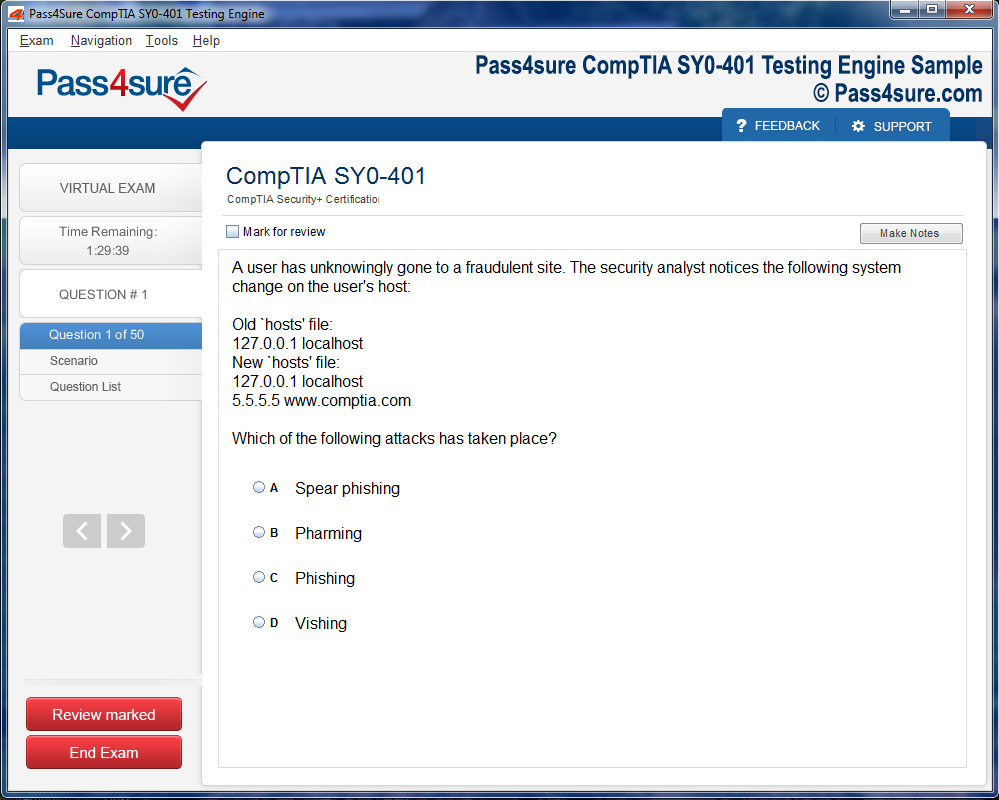
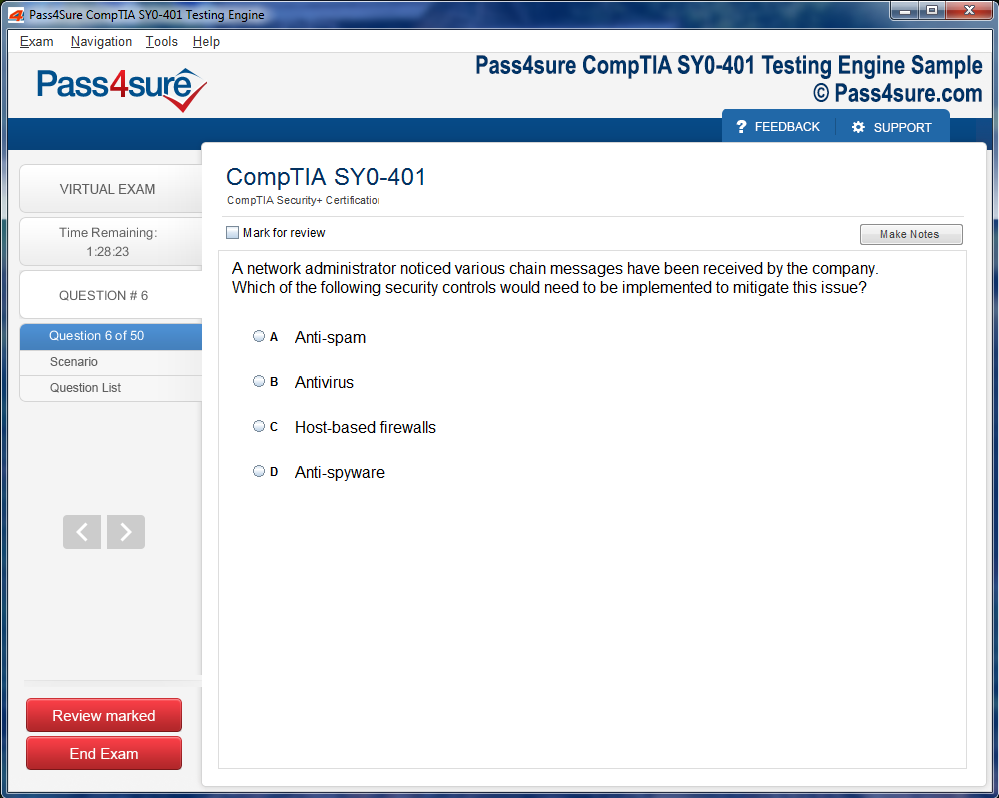
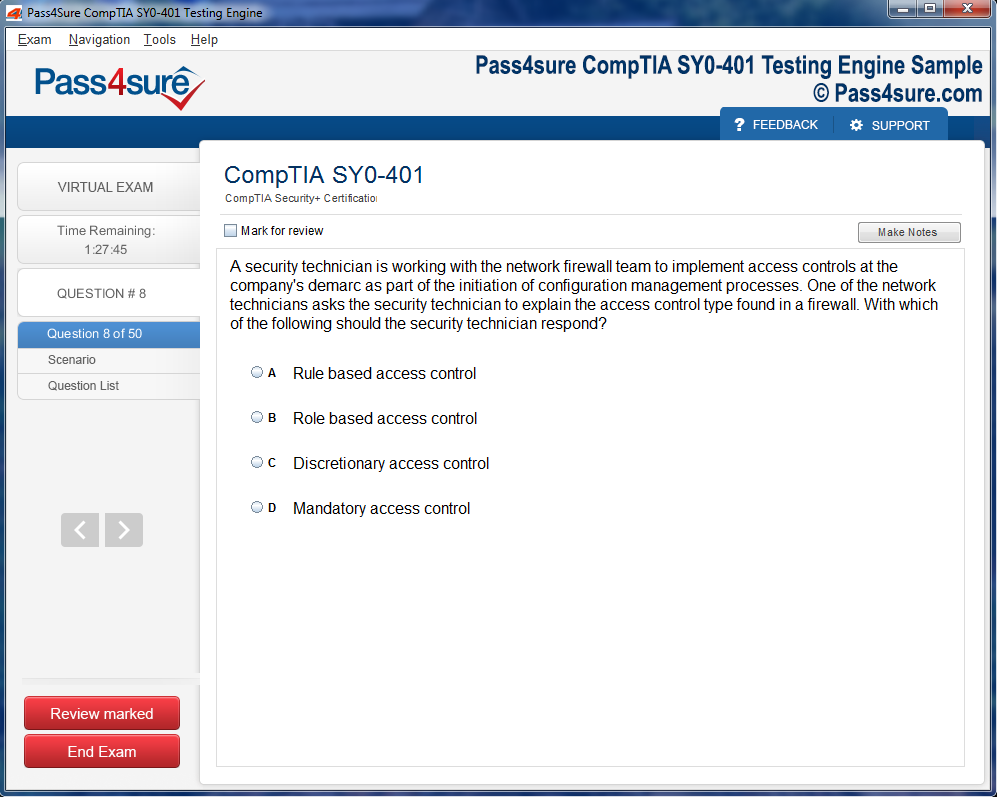
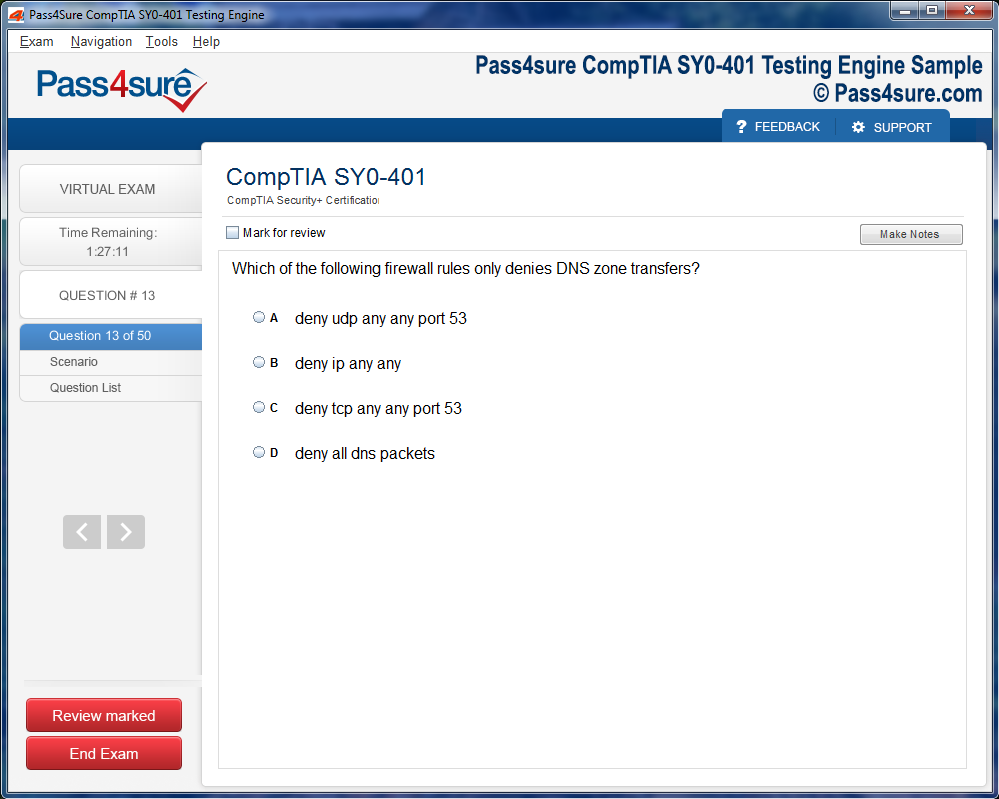
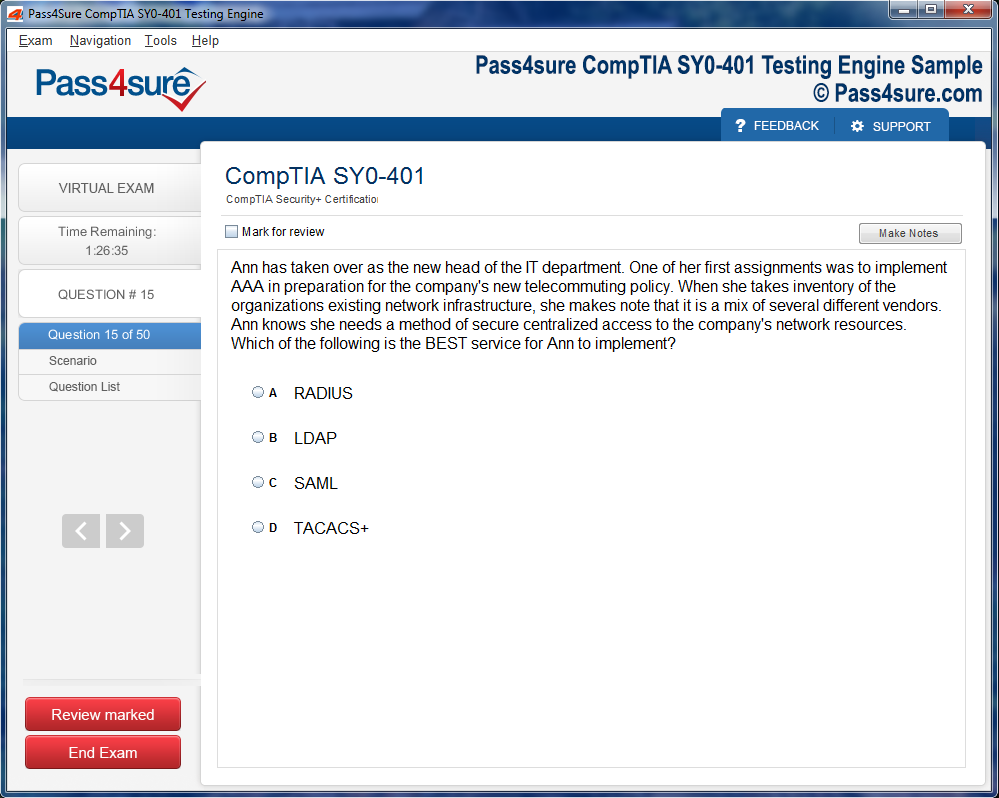
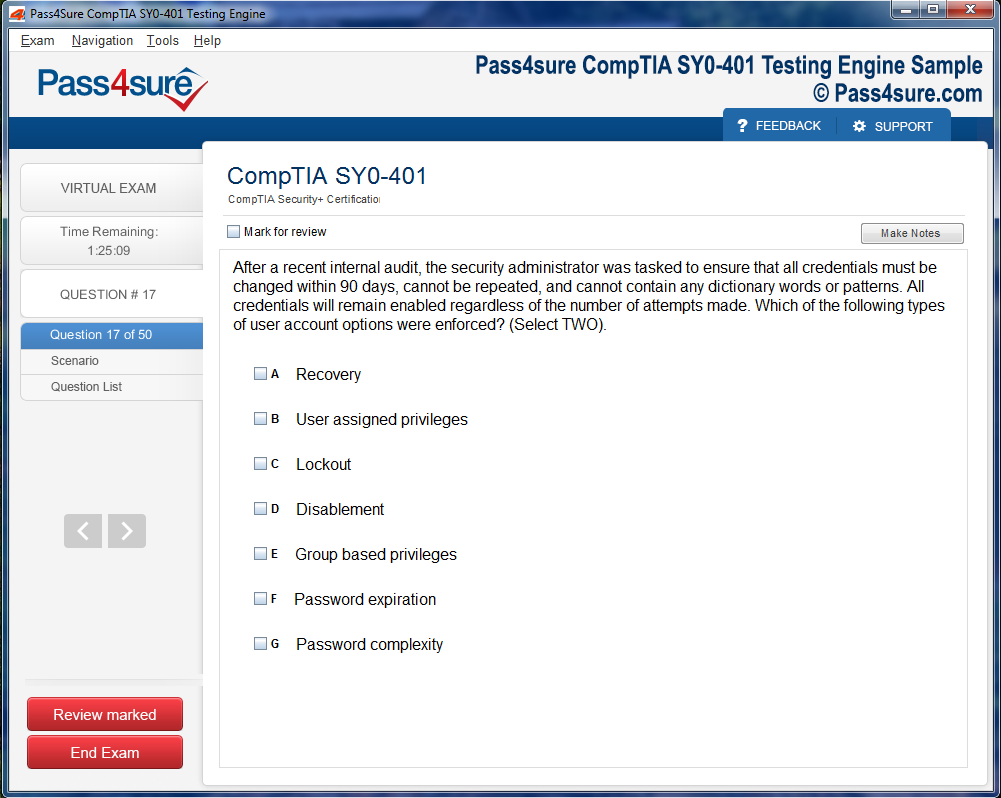
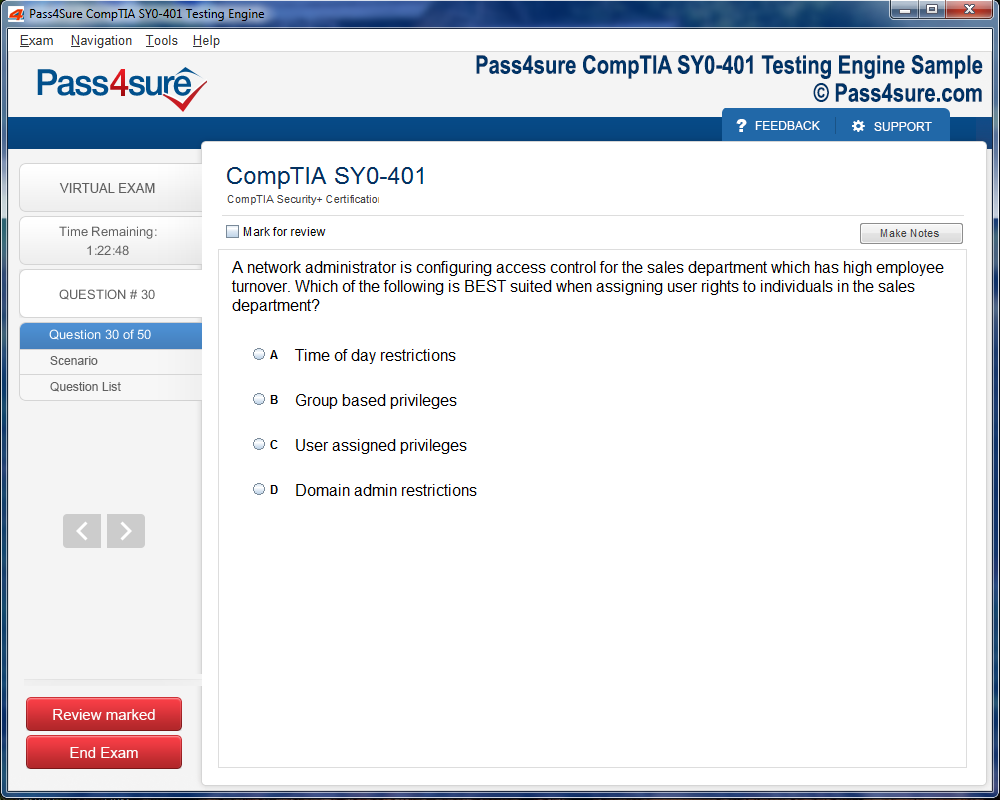
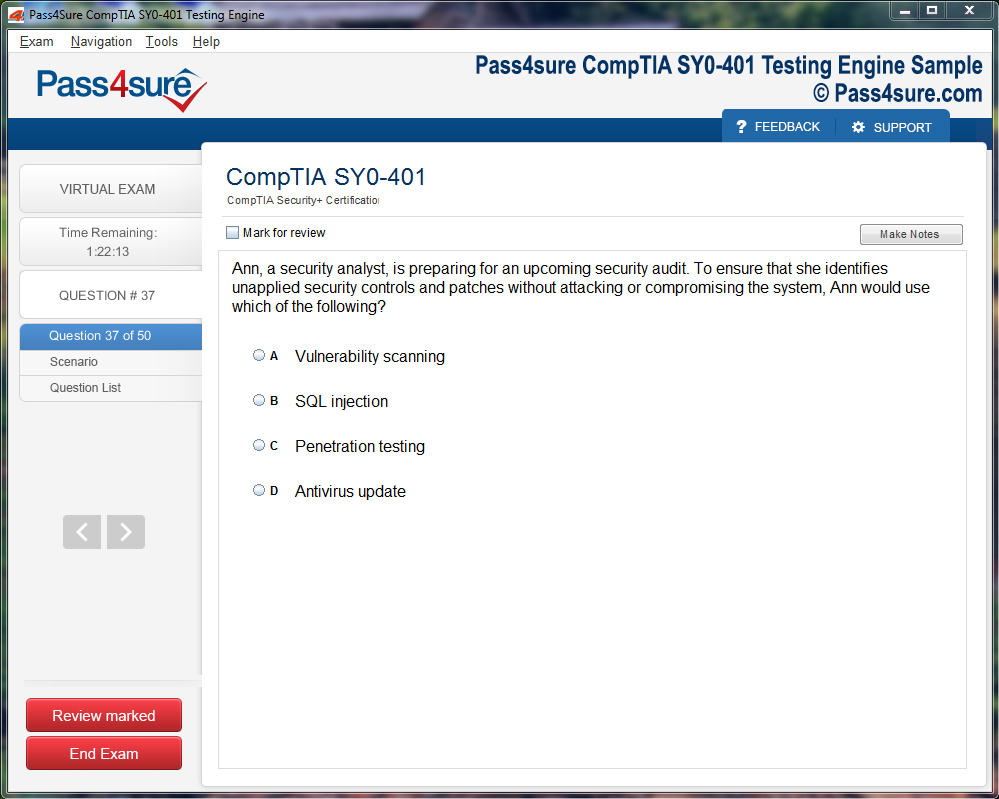
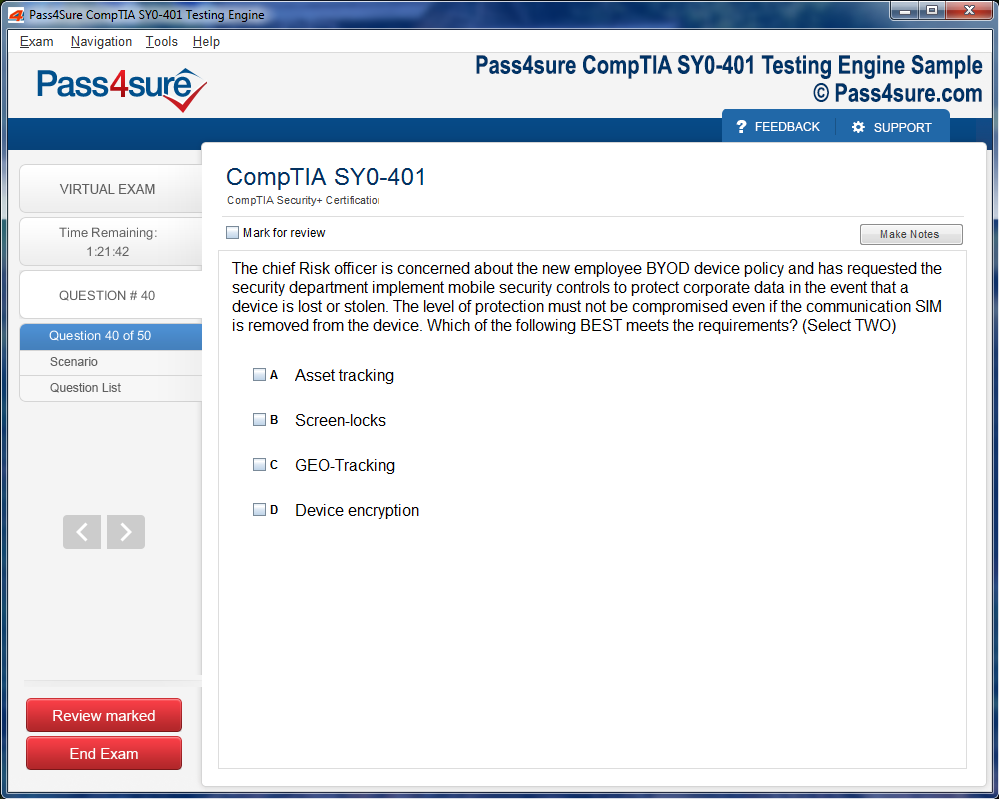
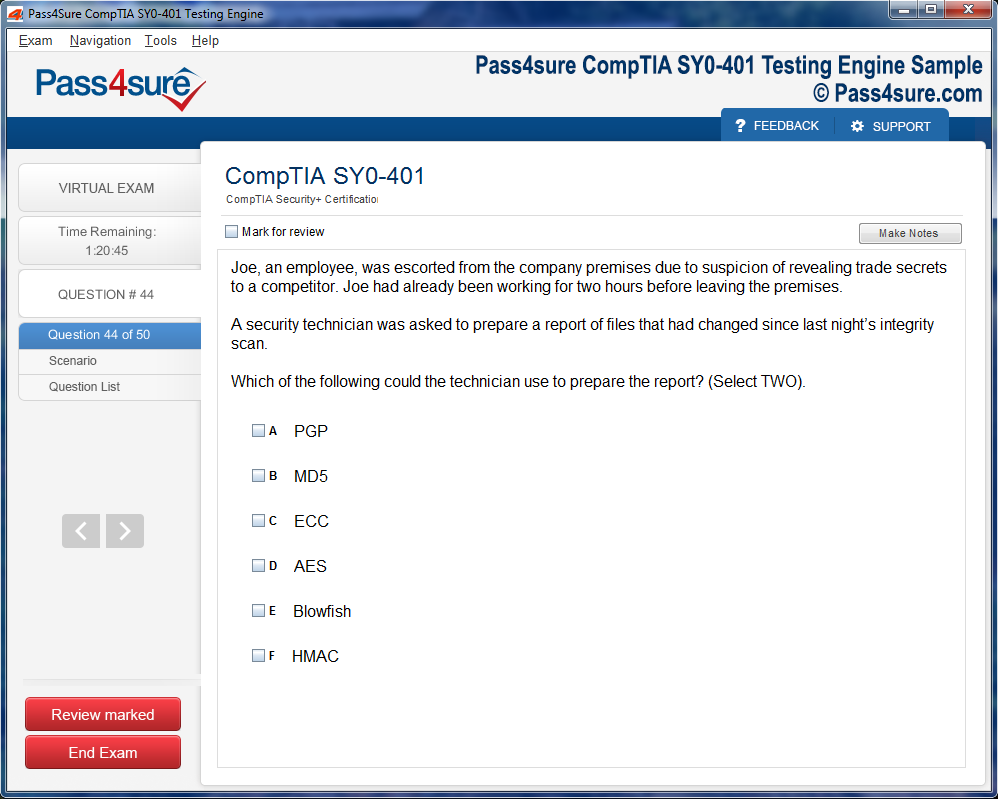
Once download and installed on your PC, you can practise test questions, review your questions & answers using two different options 'practice exam' and 'virtual exam'. Virtual Exam - test yourself with exam questions with a time limit, as if you are taking exams in the Prometric or VUE testing centre. Practice exam - review exam questions one by one, see correct answers and explanations.
How can I get the products after purchase?
All products are available for download immediately from your Member's Area. Once you have made the payment, you will be transferred to Member's Area where you can login and download the products you have purchased to your computer.
How long can I use my product? Will it be valid forever?
Pass4sure products have a validity of 90 days from the date of purchase. This means that any updates to the products, including but not limited to new questions, or updates and changes by our editing team, will be automatically downloaded on to computer to make sure that you get latest exam prep materials during those 90 days.
Can I renew my product if when it's expired?
Yes, when the 90 days of your product validity are over, you have the option of renewing your expired products with a 30% discount. This can be done in your Member's Area.
Please note that you will not be able to use the product after it has expired if you don't renew it.
How often are the questions updated?
We always try to provide the latest pool of questions, Updates in the questions depend on the changes in actual pool of questions by different vendors. As soon as we know about the change in the exam question pool we try our best to update the products as fast as possible.
How many computers I can download Pass4sure software on?
You can download the Pass4sure products on the maximum number of 2 (two) computers or devices. If you need to use the software on more than two machines, you can purchase this option separately. Please email sales@pass4sure.com if you need to use more than 5 (five) computers.
What are the system requirements?
Minimum System Requirements:
- Windows XP or newer operating system
- Java Version 8 or newer
- 1+ GHz processor
- 1 GB Ram
- 50 MB available hard disk typically (products may vary)
What operating systems are supported by your Testing Engine software?
Our testing engine is supported by Windows. Andriod and IOS software is currently under development.
Everything You Need to Know About H12-891 Huawei
The H12-891 examination epitomizes a cognitive crucible, meticulously crafted to gauge both the profundity of conceptual understanding and the dexterity of pragmatic execution. Unlike perfunctory assessments, this evaluation amalgamates cognitive acuity with procedural adeptness, thereby offering a comprehensive barometer of a candidate's aptitude. Candidates are not merely tested on rote memorization; they must traverse complex scenarios that require analytical foresight, problem-solving ingenuity, and syncretic reasoning.
Modalities of Assessment
The examination manifests in multifaceted modalities. Multiple-choice interrogatives dissect theoretical comprehension, compelling aspirants to discern nuanced distinctions between ostensibly similar constructs. Drag-and-drop exercises simulate real-world configurations, urging candidates to orchestrate disparate network components into coherent topologies. Short-answer prompts demand succinct articulation of procedural knowledge, compelling candidates to translate abstraction into precise execution. The cumulative structure ensures an evaluative spectrum encompassing theoretical rigor and practical acumen.
Advanced Routing and Switching
A cardinal domain within the syllabus is advanced routing and switching, wherein aspirants delve into labyrinthine routing protocols. OSPF necessitates a meticulous understanding of hierarchical area structuring, link-state advertisements, and convergence dynamics. IS-IS, often underappreciated, requires comprehension of its dual-level routing architecture and its interoperability within multifaceted network topologies. BGP, the sine qua non of inter-domain routing, demands an intimate grasp of path vector principles, route propagation policies, and nuanced policy manipulation to ensure robust global reachability.
MPLS Technologies and Operational Nuances
Multiprotocol Label Switching (MPLS) embodies an esoteric yet indispensable paradigm in contemporary network engineering. Candidates must assimilate foundational principles such as label distribution protocols, forwarding equivalence classes, and the intricacies of LDP operations. VPN configurations introduce an additional layer of abstraction, compelling aspirants to interweave MPLS fundamentals with secure multi-tenant connectivity. Mastery of MPLS technologies signifies not merely operational competence but an ability to architect resilient and scalable infrastructures.
Network Security Paradigms
Security is not an adjunct but a central tenet of network administration. Within the H12-891 framework, security implementation encompasses both perimeter and interior strategies. Ethernet switching security necessitates vigilance over VLAN segmentation, port security, and storm control mechanisms. Firewall configurations extend beyond basic rule application, delving into dynamic policies, intrusion detection, and adaptive response mechanisms. Candidates are encouraged to cultivate a threat-conscious mindset, wherein proactive anticipation of vulnerabilities supersedes reactive remediation.
Network Automation and Intelligent Orchestration
The emergent domain of network automation introduces a paradigm shift in operational orchestration. Aspirants are expected to harness automation tools to optimize repetitive tasks, enhance reliability, and expedite provisioning. Scripting acumen, API integration, and orchestration frameworks form the substratum of this discipline. Beyond mere efficiency, automation enables predictive maintenance, anomaly detection, and seamless configuration propagation, fostering an environment where network operations transcend manual labor into intelligent orchestration.
Cognitive Weighting of Domains
Each domain within the H12-891 exam is imbued with differential cognitive weighting, reflecting the strategic priorities of contemporary Datacom ecosystems. Advanced routing and MPLS technologies often command substantial emphasis, underscoring their criticality in sustaining resilient and expansive networks. Security protocols and automation frameworks, though variably weighted, are nonetheless essential for holistic proficiency. Understanding this weighting allows aspirants to allocate preparation resources judiciously, optimizing both effort and performance outcomes.
Inter-domain Synergies
A distinctive feature of the examination is the implicit expectation of inter-domain synthesis. Candidates are not merely required to excel in isolated domains; they must demonstrate fluency in integrating routing, security, MPLS, and automation principles into cohesive solutions. This inter-domain synergy fosters a multidimensional competency profile, ensuring that certified professionals can navigate complex network ecosystems with dexterity and strategic foresight.
Preparatory Methodologies
Effective preparation extends beyond cursory review. Aspirants are encouraged to engage in scenario-based exercises, simulation environments, and iterative self-assessment. Conceptual mastery should be complemented with hands-on experimentation, where theoretical constructs are transposed into tangible configurations. Embracing a holistic methodology, wherein comprehension, application, and reflection coalesce, maximizes retention and cultivates adaptive problem-solving capabilities essential for examination success.
Datacom networks have evolved beyond rudimentary interconnectivity; they now embody intricate architectural paradigms that demand prescient understanding and meticulous implementation. Professionals who aspire to master H12-891 HCIE-Datacom must immerse themselves in the labyrinthine constructs of network topologies, spanning spine-leaf fabrics, hierarchical models, and multiprotocol label switching schemas. Each architectural stratum necessitates not only comprehension of theoretical frameworks but also an anticipatory grasp of emergent network anomalies and adaptive remediation strategies.
Protocol Mastery and Interoperability
A cornerstone of HCIE-Datacom expertise lies in the nuanced mastery of protocols and their interoperability. From the subtleties of BGP route reflectors to the cryptic configurations of MPLS LDP, each protocol represents a delicate choreography of packet orchestration. Engineers must cultivate a perspicacious acumen to foresee protocol interactions, preempt convergence anomalies, and engineer fault-tolerant mechanisms that sustain operational continuity. Interoperability across vendor devices further intensifies the cognitive demands, necessitating adroit configuration, validation, and monitoring practices.
Advanced Routing Strategies
Routing within enterprise networks is no longer a mechanical act of path selection; it has transformed into a sophisticated exercise in deterministic decision-making and dynamic adaptation. HCIE-Datacom aspirants must internalize concepts of traffic engineering, route redistribution intricacies, and policy-based routing strategies. These advanced routing methodologies enable networks to achieve optimal latency, resilience, and scalability. An engineer’s sagacity in route optimization can distinguish between a network that merely functions and one that performs with preeminent efficiency under duress.
Switching Mechanisms and Data Plane Optimization
Switching paradigms form the linchpin of high-performance network fabrics. Mastery over VLAN segmentation, MAC address learning nuances, and spanning tree algorithm variations is essential. HCIE-Datacom professionals must also navigate data plane optimization techniques, leveraging ASIC capabilities and flow-based forwarding to mitigate bottlenecks. The ability to manipulate frame propagation, orchestrate multicast replication, and implement QoS hierarchies is critical for sustaining enterprise-grade performance across sprawling infrastructures.
MPLS and Traffic Engineering Proficiency
Multiprotocol Label Switching (MPLS) serves as a veritable fulcrum for advanced traffic engineering. HCIE-Datacom candidates must dissect the mechanics of LSP establishment, RSVP-TE signaling, and constraint-based path computation. This proficiency facilitates deterministic traffic steering, ensuring that high-priority flows achieve minimal jitter and maximal throughput. Understanding MPLS intricacies also empowers professionals to architect resilient VPNs and layered service topologies, amplifying the network’s operational dexterity.
SD-WAN Architecture and Orchestration
Software-Defined WANs embody the nexus of programmability, agility, and centralized governance. HCIE-Datacom aspirants must fathom the orchestration frameworks that underpin SD-WAN deployments, including policy-based path selection, dynamic bandwidth allocation, and end-to-end visibility. Mastery in SD-WAN orchestration allows network engineers to reconcile disparate branch connectivity, automate failover strategies, and maintain seamless application performance in geographically distributed environments.
Network Automation and Programmability
The ascendance of automation has rendered manual network operations increasingly obsolescent. HCIE-Datacom professionals must embrace programmability paradigms, leveraging Python scripting, YANG models, and RESTful APIs to orchestrate network changes at scale. The ability to script configuration, monitor network health, and trigger automated remediation imbues networks with resilience and agility, mitigating human error while accelerating deployment cycles.
Security Fabric Integration
Contemporary networks are inextricably intertwined with security exigencies. HCIE-Datacom certification mandates an intimate understanding of integrating security fabrics without compromising performance. Engineers must implement access control strategies, intrusion detection mechanisms, and encrypted tunnels while maintaining low-latency data flows. This duality of fortification and efficiency demands perspicacity in anticipating threat vectors and proactively designing countermeasures that do not impede operational throughput.
Troubleshooting in Complex Environments
Troubleshooting at the HCIE-Datacom level transcends rudimentary problem identification; it is a methodical synthesis of analytics, intuition, and diagnostic rigor. Professionals must wield an arsenal of tools to trace packet trajectories, correlate log anomalies, and reconstruct event sequences leading to network aberrations. Mastery of this domain entails predicting failure propagation, isolating root causes amidst intertwined protocols, and implementing corrective measures that preempt recurrence.
Exam Strategy and Cognitive Preparedness
Preparation for the H12-891 examination extends beyond rote memorization. Aspirants must cultivate metacognitive strategies, developing scenario-based reasoning and situational analysis capabilities. Engaging with simulation environments, dissecting complex case studies, and iterative practice with topological challenges fortify the cognitive agility necessary for success. Mental endurance, pattern recognition, and adaptive problem-solving are as crucial as technical proficiency in navigating the multi-hour examination landscape.
Preparation Strategies for H12-891 Mastery
Navigating the labyrinthine terrain of the H12-891 examination demands not merely rote memorization but a perspicacious approach that amalgamates cognition with practical dexterity. Preparation, in this context, is a deliberate orchestration of mental scaffolding and experiential engagement.
Study Materials Selection
Embark upon your preparation odyssey by meticulously curating study materials that transcend pedestrian resources. Official Huawei compendia, such as the HCIE-Datacom syllabus and canonical training manuals, furnish a foundational scaffolding. Augment these with simulacra of examination conditions through meticulously constructed practice tests. Incorporating high-fidelity study guides with analytical expositions ensures assimilation of nuanced concepts rather than superficial familiarity.
Immersive Hands-on Practice
Theory, though indispensable, remains inefficacious in isolation. Engaging in praxis through meticulously architected lab environments fortifies conceptual understanding. Reconstructing network topologies, simulating protocol exchanges, and interrogating traffic flows cultivate an intuitive comprehension that is both durable and adaptable. This kinesthetic approach transmutes abstract principles into tangible, operational expertise, essential for navigating complex exam scenarios.
Strategic Time Allocation
Temporal dexterity is paramount. Crafting a temporally judicious study schedule that apportions sufficient intervals to each thematic domain enables methodical progression. Embedding iterative review cycles and dynamic assessments of comprehension engenders an agile preparatory rhythm. The judicious interplay between concentrated study bursts and reflective consolidation fortifies memory retention while mitigating cognitive fatigue.
Cognitive Reinforcement Techniques
Beyond conventional study, cognitive reinforcement strategies can magnify retention. Employ mnemonic scaffolds, interleaved learning, and spaced repetition to consolidate intricate concepts. Visual schemata, conceptual maps, and simulation walkthroughs can transmute abstract ideas into discernible frameworks, accelerating both recall and application.
Analytical Self-Evaluation
Periodic self-evaluation serves as a diagnostic prism, illuminating lacunae in knowledge and proficiency. Rigorous analysis of mock exam results, meticulous review of erroneous responses, and targeted remediation cultivate a self-correcting feedback loop. This iterative scrutiny is instrumental in transforming latent weaknesses into fortified competencies.
Psychological Conditioning
Equally vital is the cultivation of an adaptive psychological milieu. Stress inoculation, visualization of success scenarios, and mindfulness techniques engender cognitive resilience. Maintaining equanimity under time-pressured conditions enhances clarity of thought, ensuring that mental acuity remains unimpeded during high-stakes assessment.
Collaborative Learning Networks
Engagement with symbiotic learning networks can catalyze comprehension and retention. Peer discussions, knowledge exchange forums, and collaborative problem-solving sessions expose candidates to diverse heuristics and alternative approaches. This collective intelligence scaffolds individual understanding while fostering critical analytical faculties.
Resource Diversification
Diversifying resources circumvents intellectual stagnation. Complement textual materials with multimedia lectures, interactive simulations, and scenario-based exercises. The heterogeneity of input modalities nurtures multisensory engagement, engendering deeper conceptual penetration and agile application of knowledge.
Iterative Mastery Techniques
Adopt an iterative mastery approach wherein topics are cyclically revisited, each iteration imbued with augmented complexity. Layered understanding, scaffolded over successive cycles, enhances both retention and adaptive application. This recursive methodology ensures that foundational concepts are not merely retained but dynamically integrated into problem-solving acumen.
Technological Integration in Preparation
Leverage digital tools to amplify preparation efficacy. Network simulators, virtual labs, and analytics-driven practice platforms provide real-time feedback and performance metrics. Harnessing technological adjuncts transforms abstract study into interactive, outcome-oriented practice, bridging the gap between theoretical comprehension and operational competence.
Approaching the Exam with Cerebral Equanimity
Navigating the labyrinthine corridors of examination day necessitates a compositional equilibrium between anticipation and poise. Cultivating an internal locus of control diminishes trepidation and fortifies cognitive lucidity. Engage in preemptive mental rehearsals, envisioning the sequential unfolding of each section, which fosters a quasi-familiarity with the ritualistic cadence of the assessment. The subtle orchestration of focus and relaxation can render the cerebral landscape more receptive to retrieval and analytical dexterity.
Pre-Exam Preparation and Tactical Orientation
Meticulous logistical calibration is paramount. Verify the precise coordinates of the examination venue and ascertain the acceptability of identification credentials. Ensure requisite paraphernalia, from writing instruments to supplementary materials, is organized with fastidious attention. Cognitive priming through recapitulation of salient concepts, coupled with the simulation of temporal constraints in practice tests, enhances neurocognitive resilience. These preparatory maneuvers engender a sense of procedural certitude, mitigating potential perturbations induced by unforeseen exigencies.
Cognitive Strategies for During the Exam
Once ensconced within the examination milieu, a judicious cognitive approach becomes indispensable. Peruse each inquiry with scrupulous attention, discerning nuances and latent complexities. Temporal allocation should adhere to a harmonized schema, balancing the exigencies of rapid completion against the imperatives of precision. Simulation-based or scenario-centric prompts necessitate methodical extrapolation; delineate all requisite steps and annotate intermediate rationales. Maintaining metacognitive vigilance facilitates the recognition of logical incongruities and augments accuracy.
Emotional Regulation Amidst Assessment
The affective domain exerts a potent influence over intellectual performance. Practitioners of controlled diaphragmatic breathing and brief cognitive intermissions report attenuation of stress-induced cognitive impediments. Employ micro-reaffirmations or silent incantations to sustain motivational resonance. The cultivation of equanimity, rather than rigid emotional suppression, permits the emergence of an adaptive cognitive state conducive to intricate problem-solving.
Post-Exam Reflective Cognition
Upon the cessation of the examination, it is imperative to engage in reflective cognition. Conduct a meticulous introspection of performance, parsing the interplay of strengths and lacunae. Catalog the cognitive strategies that proved efficacious and juxtapose them with instances of procedural inefficiency or oversight. This post hoc analysis serves as an intellectual cartography, illuminating pathways for subsequent learning ventures. Embrace the reflective process as an agent of metacognitive refinement rather than as a vehicle for self-reproach.
Enhancing Long-Term Retention After Assessment
The denouement of an exam need not signal a cessation of intellectual engagement. Revisiting the material in a deliberate and spaced manner reinforces synaptic consolidation. Engage in mnemonic elaborations or construct concept maps to scaffold associative networks within memory architecture. The practice of deliberate retrieval, rather than passive review, potentiates durable retention and heightens adaptive proficiency for future evaluative scenarios.
Optimizing Physiological State for Examination Performance
The corporeal substratum of cognitive performance is frequently underestimated. Nutritional calibration, emphasizing glycemic stability and micronutrient adequacy, undergirds optimal neural function. Hydration, somatic alignment, and circadian synchronization collectively modulate attentional bandwidth and psychomotor acuity. Micro-breaks interspersed during study sessions or preparatory intervals can ameliorate cognitive fatigue, engendering sustained vigilance during examination execution.
Strategic Time Management in High-Stakes Environments
Temporal allocation emerges as a critical determinant of evaluative success. Segmenting the examination into discrete temporal quadrants fosters a deliberate pacing strategy. Prioritize questions based on familiarity and weighted scoring, yet retain flexibility for emergent challenges. The judicious integration of time checkpoints facilitates a rhythmical progression, reducing impulsive errors and optimizing cognitive throughput.
Cognitive Habituation Through Mock Simulations
Simulated examinations cultivate procedural habituation, reducing novelty-induced cognitive perturbation. Recreate environmental variables, including ambient sounds, time constraints, and desk ergonomics, to approximate the authentic examination context. Iterative exposure enhances anticipatory schemas, fortifying attentional endurance and promoting strategic fluidity in real-time problem-solving.
Career Opportunities Post-Certification
Achieving the HCIE-Datacom certification serves as a fulcrum for unlocking multifarious career trajectories in the labyrinthine domain of networking. This distinction is not merely an accolade but a testament to one’s perspicacity in architecting, troubleshooting, and optimizing intricate digital infrastructures that underpin contemporary enterprises.
Job Roles
Professionals adorned with this certification can navigate towards positions such as Network Architect, Systems Engineer, and Network Consultant. Each role demands an amalgamation of strategic foresight and granular technical acumen. Network Architects orchestrate topologies with prescient efficiency, crafting resilient frameworks capable of sustaining gargantuan data flows. Systems Engineers engage in meticulous configuration and troubleshooting, ensuring seamless interconnectivity across multifarious nodes. Network Consultants operate as erudite problem-solvers, advising enterprises on bespoke network architectures that harmonize security, scalability, and latency reduction.
Industry Demand
The inexorable march toward digital omnipresence amplifies the demand for adept networking professionals. As organizations increasingly migrate toward hybrid and cloud ecosystems, the imperative for sagacious architects of connectivity intensifies. Enterprises are not solely in pursuit of engineers; they seek virtuosos capable of fortifying networks against insidious cyber incursions while concurrently optimizing throughput and latency. In an era where milliseconds dictate competitive advantage, such expertise is coveted across finance, healthcare, telecommunications, and beyond.
Professional Growth
The HCIE-Datacom credential serves as a catalyst for professional ascension. It encapsulates a rarefied combination of theoretical mastery and hands-on proficiency, signaling a practitioner’s unwavering commitment to continuous development. Beyond technical prowess, this certification cultivates strategic vision, problem-solving dexterity, and leadership gravitas, positioning individuals for roles that transcend operational execution and venture into advisory and managerial echelons. Certified professionals find themselves courted by enterprises that prize innovation, foresight, and resilience in digital infrastructure stewardship.
Certification Validity and Temporal Relevance
The HCIE-Datacom credential is not a static emblem; its legitimacy is tethered to temporally delineated parameters. Professionals must cognize the ephemeral nature of certification validity and proactively pursue recertification or refresher modules as decreed by Huawei’s regulatory schema. Neglecting this temporal stewardship can render one’s expertise ostensibly obsolete in a rapidly oscillating technological ecosystem. The process demands meticulous attention to both the formal recertification mandates and the subtler nuances of evolving industry standards.
Lifelong Learning and Cognitive Elasticity
To inhabit the vanguard of networking innovation, practitioners must cultivate cognitive elasticity. Immersive participation in workshops, symposia, and specialized webinars fosters an intricate tapestry of skills and insights. This engagement is not merely perfunctory; it constitutes an intellectual accretion that enriches problem-solving acuity. Moreover, integrating into professional forums and cryptic discourse communities can illuminate avant-garde methodologies and obscure best practices often overlooked in conventional literature.
Strategic Knowledge Diversification
Networking paradigms are inherently labyrinthine, spanning myriad protocols, topologies, and interoperability frameworks. Professionals are advised to architect a portfolio of heterogeneous knowledge streams that extend beyond canonical routing or switching schemas. Delving into network automation, AI-driven traffic analysis, and emergent cybersecurity paradigms can yield a panoptic understanding that differentiates luminaries from mere practitioners. Such diversification amplifies both resilience and innovation potential in professional praxis.
Engaging with Industry Confluences
The pulsating heartbeat of networking evolution often manifests in interdisciplinary confluences where disparate technologies intersect. Active engagement with these junctures—be it through consortiums, hackathons, or collaborative research endeavors—enables one to apprehend not only prevailing trends but also the nascent undercurrents poised to redefine paradigms. Participation in these arenas is catalytic, converting passive knowledge acquisition into proactive influence within the field.
Mentorship and Knowledge Transmission
An often-underestimated vector of continuous learning lies in the duality of mentorship: both receiving guidance and transmitting knowledge. By mentoring emerging professionals, seasoned HCIE-Datacom holders refine their own conceptual frameworks and unearth latent insights. This recursive exchange engenders a virtuous cycle, wherein both mentor and mentee engage in cognitive amplification, enhancing the collective intelligence of the professional ecosystem.
Technological Vigilance and Adaptation
In a landscape marked by relentless innovation, technological vigilance is paramount. Professionals must cultivate a heuristic sensibility, discerning not only explicit protocol modifications but also subtle shifts in deployment strategies, software-defined paradigms, and emergent interoperability standards. Adaptive expertise, characterized by anticipatory skill acquisition and nimble problem-solving, becomes an indispensable asset in sustaining both career trajectory and operational excellence.
Cognitive Networking Communities
Participation in specialized cognitive networks extends beyond mere social engagement; it constitutes a dynamic repository of ephemeral insights and heuristic strategies. Forums, peer-to-peer knowledge exchanges, and collaborative problem-solving initiatives offer practitioners the opportunity to interrogate assumptions, test unconventional solutions, and remain attuned to the frontiers of technological ingenuity. Such immersion reinforces both technical mastery and intellectual agility, ensuring sustained relevance in an ever-fluid domain.
Continuous Assessment and Self-Calibration
Self-directed evaluation forms the fulcrum of enduring expertise. Periodic benchmarking against emerging standards, simulated problem environments, and reflective audits allows professionals to calibrate competencies meticulously. This iterative process, when performed with conscientious rigor, identifies latent skill gaps, reinforces strengths, and fortifies the practitioner’s readiness for both theoretical and operational exigencies. Continuous assessment thus becomes both compass and crucible for ongoing professional evolution.
Certification Validity and Temporal Relevance
The HCIE-Datacom credential is not merely a static accolade; its legitimacy is circumscribed by temporally defined parameters. Professionals who aspire to remain luminaries in the networking domain must comprehend the ephemerality of certification validity. Ignoring periodic recertification or refresher directives can render even the most diligent expertise ostensibly archaic. Huawei delineates specific temporal thresholds for the retention of this credential, necessitating continuous engagement with formalized training modules, examination renewals, and practical skill reassessment.
In addition to official mandates, an astute practitioner acknowledges the subtler exigencies of temporal relevance. Networking technologies evolve at an accelerating pace, and protocols, topologies, and operational strategies are frequently superseded. By proactively engaging in learning initiatives aligned with these temporal shifts, professionals safeguard their competencies against obsolescence and preserve the currency of their expertise within the intricate lattice of contemporary enterprise networking.
Lifelong Learning and Cognitive Elasticity
To inhabit the apex of technical acumen, a professional must cultivate cognitive elasticity, an adaptive capacity to assimilate new concepts while reframing existing knowledge. Lifelong learning transcends perfunctory skill acquisition; it embodies an ongoing intellectual odyssey. Participation in workshops, webinars, symposia, and specialized conferences offers not merely knowledge, but a nuanced understanding of the evolving contours of the networking ecosystem. This immersion enriches problem-solving acumen and engenders a profound comprehension of emergent paradigms.
Furthermore, cognitive elasticity is fortified through engagement with professional forums, discussion boards, and industry communities. These arenas often reveal the esoteric facets of technological innovation, shedding light on best practices that elude conventional documentation. Active participation fosters intellectual agility, transforming passive awareness into strategic foresight, which is indispensable in navigating the labyrinthine complexities of modern network infrastructures.
Strategic Knowledge Diversification
Networking is inherently multifaceted, encompassing protocols, architectures, automation frameworks, and security paradigms. Professionals seeking enduring relevance are well-advised to pursue a portfolio of diversified knowledge streams that transcend canonical routing or switching methodologies. Delving into network automation, artificial intelligence-driven traffic analysis, and emergent cybersecurity frameworks cultivates a panoramic grasp of the field. This strategic diversification enables professionals to anticipate technological inflections, respond to unforeseen operational challenges, and distinguish themselves as thought leaders.
Knowledge diversification also mitigates the risk of professional stagnation. In a milieu characterized by perpetual innovation, reliance on a singular domain of expertise renders one susceptible to obsolescence. By contrast, mastery across a spectrum of interrelated domains enhances adaptability, fosters resilience, and positions the professional to capitalize on cross-disciplinary synergies.
Engaging with Industry Confluences
The crucible of networking innovation often resides at the intersection of disparate technological currents. Participation in these confluences—via consortiums, hackathons, collaborative research projects, or cross-industry conferences—facilitates a sophisticated comprehension of emergent trends. Practitioners engaged in these arenas glean insights not only into prevailing methodologies but also into nascent undercurrents poised to redefine conventional paradigms.
Active immersion in interdisciplinary forums catalyzes the translation of theoretical knowledge into pragmatic solutions. Such engagement encourages critical analysis, cultivates innovative ideation, and amplifies professional visibility. It transforms the practitioner from a passive observer into an influential contributor capable of shaping the trajectory of technological evolution.
Mentorship and Knowledge Transmission
Mentorship embodies a dualistic process, encompassing both the reception and dissemination of knowledge. By receiving guidance from seasoned experts, emerging professionals internalize nuanced strategies and conceptual frameworks. Conversely, by mentoring novices, HCIE-Datacom holders refine their cognitive schemas, uncover latent insights, and crystallize tacit knowledge into communicable expertise.
This recursive process engenders a virtuous cycle of intellectual amplification. Mentorship is not a mere altruistic endeavor; it functions as a strategic mechanism for reinforcing one’s own competencies, fostering collaborative innovation, and strengthening the collective intelligence of the professional community. The continuous interplay of teaching and learning cultivates a dynamic ecosystem in which both individual and communal proficiency flourish.
Technological Vigilance and Adaptation
In a domain characterized by relentless innovation, technological vigilance is indispensable. Professionals must develop a heuristic sensibility capable of discerning subtle shifts in protocol implementation, deployment strategies, and software-defined networking paradigms. Adaptive expertise—defined by anticipatory skill acquisition, rapid problem-solving, and contextual flexibility—becomes the linchpin of sustained operational efficacy.
Vigilance encompasses both macro and micro dimensions. On a macro level, professionals track global technological trends, regulatory shifts, and emerging standards. On a micro level, attention is directed toward incremental updates, patch releases, and configuration optimizations. This dual-layered attentiveness ensures preparedness to navigate unforeseen challenges and to capitalize on novel opportunities within the networking landscape.
Cognitive Networking Communities
Participation in cognitive networking communities extends beyond social engagement; it constitutes a dynamic, interactive repository of knowledge. Forums, peer-to-peer exchanges, collaborative research projects, and virtual think tanks provide practitioners with opportunities to interrogate assumptions, test unconventional solutions, and assimilate heuristic strategies. Immersion in such communities fosters both technical mastery and intellectual agility, enabling sustained relevance amid a fluid technological environment.
Engaging with these communities also enhances professional visibility. Contributions to discussions, presentation of case studies, and collaborative problem-solving initiatives showcase expertise, build reputational capital, and facilitate recognition as a thought leader. The interplay between social learning and experiential application cultivates a robust professional identity anchored in both knowledge and influence.
Continuous Assessment and Self-Calibration
Self-directed assessment constitutes the fulcrum of enduring expertise. Periodic benchmarking against contemporary standards, engagement with simulation environments, and reflective audits enable practitioners to calibrate competencies with precision. This iterative process identifies latent skill gaps, reinforces areas of strength, and fortifies readiness for both theoretical evaluation and operational exigencies.
Self-calibration also promotes metacognitive awareness, enhancing the practitioner’s ability to anticipate challenges, adapt methodologies, and innovate strategically. The practice of continuous assessment transforms learning into a dynamic, feedback-driven cycle that sustains both professional growth and the currency of expertise in an evolving technological landscape.
Immersive Learning Modalities
The pursuit of mastery demands immersion in modalities that transcend traditional didactic approaches. Laboratory simulations, virtualized network environments, and scenario-based problem-solving exercises cultivate experiential competence. By engaging with these modalities, professionals not only internalize theoretical principles but also develop the dexterity to apply knowledge in multifaceted, real-world scenarios.
Immersive learning reinforces cognitive agility by compelling practitioners to reconcile abstract concepts with operational realities. This synthesis of theory and praxis enhances decision-making acuity, fosters anticipatory reasoning, and ensures that expertise remains both comprehensive and pragmatically applicable.
Intellectual Curiosity as a Professional Imperative
Sustained relevance in the HCIE-Datacom domain is undergirded by intellectual curiosity. The drive to explore emergent technologies, question established paradigms, and investigate unconventional methodologies cultivates a mindset attuned to discovery. Intellectual curiosity functions as both catalyst and compass, propelling continuous learning while guiding the practitioner toward strategic opportunities for growth.
Curiosity also encourages the exploration of adjacent technological domains, such as cloud orchestration, machine learning for network analytics, and blockchain-based security frameworks. This breadth of inquiry amplifies the capacity to innovate, fosters interdisciplinary synergies, and positions professionals to exert meaningful influence within the ever-expanding technological landscape.
Career Opportunities Post-Certification
Attaining the HCIE-Datacom certification constitutes a pivotal inflection point in a networking professional’s career. This credential epitomizes not merely technical proficiency but also an acumen for dissecting and orchestrating labyrinthine digital architectures. For those immersed in the realm of data communication, it serves as both a talisman and a testament, signaling the ability to navigate complex network ecosystems with perspicuity and dexterity. In an era where digital infrastructures are the sinews of modern enterprises, possessing such certification can transmute career prospects from conventional trajectories into panoramic vistas of opportunity.
Job Roles
Network Architect
Network Architects occupy a rarefied echelon, entrusted with the design of intricate, high-capacity networks that underpin enterprise operations. Their responsibilities extend beyond mere topology creation; they prognosticate potential bottlenecks, anticipate latency challenges, and implement strategies for redundancy and resilience. The role demands a synthesis of creativity and technical exactitude, as architects devise frameworks that are simultaneously scalable, secure, and agile. Enterprises rely on these visionaries to ensure that their network fabrics can endure exponential data proliferation and evolving technological exigencies.
Systems Engineer
Systems Engineers operate at the intersection of deployment, optimization, and problem resolution. They traverse multiple layers of the network stack, from physical cabling to virtualized environments, ensuring seamless connectivity and performance consistency. Their proficiency is tested not only by the rigors of configuration and maintenance but also by their capacity to preemptively identify vulnerabilities and inefficiencies. In many organizations, these engineers act as sentinels of operational continuity, orchestrating proactive measures to avert disruptions and maintain the integrity of critical communications.
Network Consultant
Network Consultants function as erudite advisors, translating intricate technical possibilities into strategic solutions tailored to organizational needs. They provide bespoke guidance on network expansion, cloud integration, security fortification, and cost optimization. In this role, a deep comprehension of industry trends is as essential as technical mastery. Consultants are often called upon to navigate ambiguous scenarios, offering recommendations that reconcile legacy systems with cutting-edge innovations. Their counsel can transform network infrastructures from mere functional necessities into dynamic catalysts of business growth.
Industry Demand
Increasing Reliance on Digital Infrastructure
The contemporary enterprise landscape is inexorably intertwined with digital networks. From multinational corporations to emerging startups, the reliance on robust, scalable, and secure networks has escalated beyond convenience—it is now existential. Organizations are compelled to maintain continuous uptime, secure sensitive data, and facilitate instantaneous communication across dispersed geographies. This paradigm shift engenders a robust demand for professionals adept in architecting, maintaining, and enhancing these network infrastructures.
Hybrid and Cloud Ecosystems
The proliferation of hybrid networks and cloud-based infrastructures has further accentuated the need for certified networking experts. Enterprises transitioning from monolithic architectures to hybrid clouds require precise orchestration to ensure seamless interoperability and performance optimization. In such scenarios, HCIE-Datacom certified professionals act as indispensable navigators, bridging gaps between on-premises systems and distributed cloud environments. Their expertise guarantees that latency, throughput, and redundancy are optimized, even as networks scale to accommodate burgeoning digital workloads.
Cybersecurity Imperatives
The surge in cyber threats amplifies the strategic value of networking professionals. Organizations are not merely seeking engineers to implement connections; they require vigilant custodians who can anticipate, mitigate, and remediate security vulnerabilities. A certified professional’s understanding of advanced protocols, secure topologies, and intrusion-prevention methodologies is a crucial asset in safeguarding enterprise digital assets. In a landscape where cyber incursions can inflict catastrophic operational and reputational damage, the role of these specialists is simultaneously tactical and strategic.
Professional Growth
Technical Mastery
Certification denotes the pinnacle of technical mastery, encompassing both theoretical rigor and practical application. HCIE-Datacom credential holders demonstrate fluency in diverse networking paradigms, from MPLS architectures to advanced routing and switching protocols. This mastery equips them to design, implement, and troubleshoot networks with unprecedented precision, transforming complex infrastructures into coherent, optimized systems.
Strategic Vision
Beyond technical competence, the certification fosters strategic foresight. Professionals cultivate the ability to anticipate organizational needs, architect adaptive network solutions, and align technological initiatives with broader business objectives. This elevated perspective distinguishes certified individuals from their peers, positioning them as architects not only of network frameworks but also of enterprise success.
Leadership and Advisory Roles
The trajectory post-certification often extends into leadership and advisory capacities. Organizations seek HCIE-Datacom professionals for senior engineering roles, project leadership, and strategic consultancy. Their expertise lends credence to decision-making, guiding investments in network expansion, cloud migration, and security enhancement. In this capacity, certified professionals shape organizational outcomes, influencing both operational efficiency and long-term technological strategy.
Continuous Learning and Adaptation
The digital networking domain is in perpetual flux. Emerging technologies, novel protocols, and evolving security threats demand continuous learning. HCIE-Datacom certified professionals embrace this dynamic landscape, leveraging their credential as a foundation for lifelong adaptation. This commitment to perpetual growth ensures sustained relevance and positions them as invaluable assets in a rapidly transforming industry.
Specialized Career Pathways
Data Center Networking
The explosion of data-centric services has magnified the demand for expertise in data center networking. Professionals in this niche design high-availability infrastructures, optimize resource allocation, and ensure low-latency connectivity. Their work underpins cloud services, high-performance computing, and large-scale enterprise applications, making them indispensable architects of modern digital operations.
Enterprise Network Design
Enterprise networks, with their intricate interconnections and heterogeneous systems, present a fertile arena for certified professionals. These experts orchestrate end-to-end solutions that balance performance, security, and cost efficiency. Their insights inform network segmentation, protocol optimization, and traffic prioritization, ensuring that critical applications operate with minimal disruption.
Network Security Engineering
Specialization in network security engineering positions professionals at the vanguard of defense against cyber threats. HCIE-Datacom certification imparts knowledge of advanced firewalls, intrusion-detection systems, and encrypted communications. Security engineers design robust architectures capable of withstanding sophisticated attacks, safeguarding both sensitive information and operational continuity.
Cloud Integration and Virtualization
The migration toward cloud services necessitates experts in network virtualization and cloud integration. Certified professionals navigate the complexities of hybrid deployments, ensuring seamless connectivity between on-premises systems and cloud platforms. Their work enhances scalability, reduces latency, and facilitates resource optimization, empowering organizations to leverage the full potential of cloud technologies.
Global Opportunities
HCIE-Datacom certification confers not only local but also international career mobility. Networking standards are largely universal, allowing certified professionals to apply their skills across diverse geographical and regulatory landscapes. Multinational corporations actively seek individuals capable of implementing cohesive global networks, ensuring operational uniformity and resilience across continents. This global applicability amplifies career prospects, enabling certified professionals to engage with cutting-edge technologies in varied environments.
Salary and Compensation Prospects
The rarity and rigor of the HCIE-Datacom credential correlate strongly with remuneration. Certified professionals command premium compensation, reflective of their expertise and strategic value. Salaries often exceed industry averages, supplemented by benefits and performance incentives. Organizations recognize that investing in highly skilled network professionals yields returns in operational efficiency, reduced downtime, and enhanced security posture, justifying substantial compensation packages.
Networking Community and Professional Recognition
Certification also opens doors to a vibrant professional ecosystem. HCIE-Datacom holders engage with peer networks, industry forums, and knowledge-sharing communities. These interactions foster collaboration, innovation, and exposure to emergent technologies. Recognition within such networks elevates professional stature, enhancing credibility and opening pathways to speaking engagements, technical publications, and leadership roles in industry initiatives.
Approaching the Exam with Cerebral Equanimity
Navigating the labyrinthine corridors of examination day necessitates a compositional equilibrium between anticipation and poise. Cultivating an internal locus of control diminishes trepidation and fortifies cognitive lucidity. Engage in preemptive mental rehearsals, envisioning the sequential unfolding of each section, which fosters a quasi-familiarity with the ritualistic cadence of the assessment. The subtle orchestration of focus and relaxation can render the cerebral landscape more receptive to retrieval and analytical dexterity. Developing this equilibrium also involves attenuating intrusive anxieties through meditative or introspective interludes, allowing a stabilized attentional bandwidth that mitigates impulsive reactions to unforeseen complexities.
Pre-Exam Preparation and Tactical Orientation
Meticulous logistical calibration is paramount. Verify the precise coordinates of the examination venue and ascertain the acceptability of identification credentials. Ensure requisite paraphernalia, from writing instruments to supplementary materials, is organized with fastidious attention. Cognitive priming through recapitulation of salient concepts, coupled with the simulation of temporal constraints in practice tests, enhances neurocognitive resilience. Integrating mnemonic schemata and interlinking conceptual nodes during this preparatory phase can significantly enhance the fluidity of recall under time pressure. These preparatory maneuvers engender a sense of procedural certitude, mitigating potential perturbations induced by unforeseen exigencies.
Cognitive Strategies for During the Exam
Once ensconced within the examination milieu, a judicious cognitive approach becomes indispensable. Peruse each inquiry with scrupulous attention, discerning nuances and latent complexities. Temporal allocation should adhere to a harmonized schema, balancing the exigencies of rapid completion against the imperatives of precision. Simulation-based or scenario-centric prompts necessitate methodical extrapolation; delineate all requisite steps and annotate intermediate rationales. Maintaining metacognitive vigilance facilitates the recognition of logical incongruities and augments accuracy. Employing techniques such as mental “checkpointing” after each question or subsection ensures that errors are detected early, while cognitive compartmentalization prevents the cascading effect of uncertainty from impairing subsequent responses.
Emotional Regulation Amidst Assessment
The affective domain exerts a potent influence over intellectual performance. Practitioners of controlled diaphragmatic breathing and brief cognitive intermissions report attenuation of stress-induced cognitive impediments. Employ micro-reaffirmations or silent incantations to sustain motivational resonance. The cultivation of equanimity, rather than rigid emotional suppression, permits the emergence of an adaptive cognitive state conducive to intricate problem-solving. Recognizing subtle physiological cues of stress, such as muscular tension or shallow respiration, and responding with deliberate relaxation techniques can maintain cerebral agility throughout the evaluative process.
Post-Exam Reflective Cognition
Upon the cessation of the examination, it is imperative to engage in reflective cognition. Conduct a meticulous introspection of performance, parsing the interplay of strengths and lacunae. Catalog the cognitive strategies that proved efficacious and juxtapose them with instances of procedural inefficiency or oversight. This post hoc analysis serves as an intellectual cartography, illuminating pathways for subsequent learning ventures. Embrace the reflective process as an agent of metacognitive refinement rather than as a vehicle for self-reproach. Emphasizing iterative growth over immediate outcome fosters resilience and sustains long-term academic fortitude.
Enhancing Long-Term Retention After Assessment
The denouement of an exam need not signal a cessation of intellectual engagement. Revisiting the material in a deliberate and spaced manner reinforces synaptic consolidation. Engage in mnemonic elaborations or construct concept maps to scaffold associative networks within memory architecture. The practice of deliberate retrieval, rather than passive review, potentiates durable retention and heightens adaptive proficiency for future evaluative scenarios. Employing interleaved practice, wherein different but related topics are juxtaposed, enhances neurocognitive flexibility and fortifies cross-contextual application of knowledge.
Optimizing Physiological State for Examination Performance
The corporeal substratum of cognitive performance is frequently underestimated. Nutritional calibration, emphasizing glycemic stability and micronutrient adequacy, undergirds optimal neural function. Hydration, somatic alignment, and circadian synchronization collectively modulate attentional bandwidth and psychomotor acuity. Micro-breaks interspersed during study sessions or preparatory intervals can ameliorate cognitive fatigue, engendering sustained vigilance during examination execution. Furthermore, mindful embodiment practices, such as proprioceptive awareness or brief kinesthetic exercises, can recalibrate the mind-body interface and bolster mental acuity.
Strategic Time Management in High-Stakes Environments
Temporal allocation emerges as a critical determinant of evaluative success. Segmenting the examination into discrete temporal quadrants fosters a deliberate pacing strategy. Prioritize questions based on familiarity and weighted scoring, yet retain flexibility for emergent challenges. The judicious integration of time checkpoints facilitates a rhythmical progression, reducing impulsive errors and optimizing cognitive throughput. Incorporating mental micro-sprints, periods of concentrated focus interlaced with brief attentional pauses, can prevent cognitive entropy and maintain optimal performance throughout protracted assessments.
Cognitive Habituation Through Mock Simulations
Simulated examinations cultivate procedural habituation, reducing novelty-induced cognitive perturbation. Recreate environmental variables, including ambient sounds, time constraints, and desk ergonomics, to approximate the authentic examination context. Iterative exposure enhances anticipatory schemas, fortifying attentional endurance and promoting strategic fluidity in real-time problem-solving. Such simulations also provide a sandbox for testing alternative problem-solving strategies, allowing learners to refine heuristics in a low-stakes environment and transfer those strategies to the actual examination with minimal friction.
Integrative Mental Imagery for Performance Enhancement
Harnessing vivid mental imagery can catalyze both confidence and cognitive precision. Visualizing the successful completion of intricate tasks or mentally navigating multi-step problem sequences primes neural circuits for actual execution. This method, often employed in high-performance domains, leverages the brain's predictive faculties, fostering both readiness and cognitive resilience. Additionally, coupling imagery with affective conditioning—associating success with positive affective states—can enhance intrinsic motivation and reduce performance anxiety.
Leveraging Metacognition to Optimize Answers
The deployment of metacognitive strategies transforms mere knowledge into actionable intelligence. Continual self-questioning, evaluating the logic and completeness of responses, enables early detection of errors and mitigates superficial reasoning. Adopting a dual-layered approach—first generating a solution, then interrogating its veracity—ensures higher accuracy and a more robust conceptual framework. Periodically pausing to reflect on overall strategy, rather than solely focusing on discrete items, helps maintain a coherent approach under time pressure.
Maintaining Cognitive Agility Under Fatigue
Examinations often induce mental fatigue, which can erode attention and analytical precision. To counteract this, brief cognitive resets, such as micro-pauses with controlled breathing or subtle kinesthetic activity, can restore executive function. Strategic prioritization, focusing on high-yield questions when fatigue sets in, maintains efficiency without compromising accuracy. Recognizing subjective indicators of cognitive depletion allows learners to implement restorative strategies before errors accumulate, preserving optimal performance until the conclusion of the assessment.
Adaptive Reflection for Lifelong Learning
Exam day strategies, while temporally specific, can catalyze long-term cognitive enhancement. The integration of reflective practices post-assessment cultivates metacognitive sophistication, allowing learners to iteratively refine study habits and examination strategies. Documenting insights from successes and setbacks fosters an adaptive learning mindset, reinforcing resilience and intellectual agility. The ultimate objective transcends a singular performance metric, emphasizing the continuous evolution of cognitive skill and strategic mastery.
Preparation Strategies for H12-891 Exam Success
Embarking on the journey to conquer the H12-891 examination necessitates a meticulously orchestrated approach. Success is rarely accidental; it emerges from the deliberate synthesis of theoretical understanding, hands-on practice, and strategic cognitive management. Preparation strategies are the cornerstone of mastery, enabling aspirants to navigate the complex interplay of concepts, configurations, and real-world applications.
Curated Study Material
The foundation of effective preparation lies in judicious selection of study resources. Official Huawei compendia, such as the HCIE-Datacom syllabus, provide a structured framework for the entire curriculum. These canonical resources elucidate essential topics, including network topologies, protocol intricacies, and performance optimization techniques. Beyond the official manuals, aspirants should integrate practice examinations that simulate the rigor of the real test environment. Carefully chosen study guides, enriched with problem-solving heuristics and analytical expositions, foster deeper comprehension rather than superficial familiarity.
Integrating Multimedia Learning
In addition to textual resources, multimedia learning can significantly enhance retention and engagement. Video lectures, interactive tutorials, and animated simulations transform abstract theories into tangible representations. Visualization of complex network flows, protocol interactions, and system behaviors enables candidates to grasp difficult concepts more intuitively. Such multisensory engagement strengthens cognitive encoding, making recall during high-pressure examination scenarios more reliable.
Structured Hands-on Practice
Theoretical knowledge alone is insufficient for success. Practical experience through lab exercises is indispensable. Setting up virtual or physical lab environments allows candidates to simulate real-world network configurations, troubleshoot protocol malfunctions, and optimize performance under controlled conditions. Reconstructing topologies, implementing VLAN segmentation, or observing routing dynamics develops operational intuition, which is invaluable for scenarios that extend beyond rote knowledge. This experiential immersion cultivates a deep, procedural understanding that enhances both confidence and competence.
Lab Scenario Simulation
To maximize hands-on efficacy, aspirants should create scenarios that replicate potential examination challenges. Simulating high-traffic environments, security breaches, or system failures enables problem-solving under realistic constraints. Such scenario-based learning develops agility in decision-making and strengthens analytical faculties. Furthermore, iterative refinement of these exercises ensures that candidates internalize not just procedural steps but the rationale behind each action, fostering adaptable expertise.
Time Management Strategies
Temporal dexterity is crucial in preparation. Candidates must devise a comprehensive schedule that allocates dedicated time to each thematic domain while balancing revision cycles. The incorporation of focused study intervals interspersed with reflective consolidation sessions mitigates cognitive fatigue and enhances long-term retention. Dynamic adjustment of the schedule, based on periodic self-assessment, ensures optimal coverage and reinforces weaker areas without neglecting foundational knowledge.
Iterative Learning Approach
An iterative learning methodology ensures the continuous reinforcement of key concepts. Revisiting topics cyclically, each time with increased depth or complexity, strengthens memory and facilitates conceptual integration. Layered learning, where foundational principles serve as scaffolding for more advanced topics, creates a durable cognitive structure that supports flexible problem-solving. This recursive approach encourages mastery rather than temporary familiarity.
Cognitive Reinforcement Techniques
To enhance retention and application, aspirants should deploy advanced cognitive strategies. Mnemonic devices, conceptual maps, and analogical reasoning transform intricate theoretical concepts into memorable frameworks. Interleaved practice—alternating between different topics—prevents cognitive stagnation and promotes adaptive thinking. Spaced repetition, leveraging carefully timed review intervals, solidifies knowledge and reduces the likelihood of forgetting. These methods collectively optimize mental encoding and recall efficiency.
Self-Assessment and Diagnostics
Rigorous self-evaluation is a pivotal component of preparation. Candidates should regularly undertake diagnostic assessments to gauge comprehension, identify knowledge gaps, and refine strategies. Meticulous analysis of incorrect responses, coupled with targeted remediation, fosters a feedback loop that transforms weaknesses into strengths. This reflective practice enhances both analytical acumen and problem-solving resilience, ensuring readiness for unpredictable examination challenges.
Psychological Conditioning
Equally significant is the cultivation of psychological resilience. The H12-891 examination demands not only technical proficiency but also mental composure. Techniques such as mindfulness meditation, stress inoculation, and cognitive rehearsal fortify emotional equilibrium under pressure. Visualization of success scenarios enhances confidence, while controlled practice under simulated time constraints conditions the mind to respond effectively in high-stakes environments.
Collaborative Knowledge Networks
Engaging with peer learning communities can catalyze deeper understanding. Collaborative discussion forums, group problem-solving sessions, and knowledge-sharing workshops expose aspirants to alternative heuristics, diverse perspectives, and novel troubleshooting approaches. Interaction within such networks reinforces learning, uncovers overlooked nuances, and fosters critical thinking, creating a symbiotic learning ecosystem that extends beyond individual preparation.
Diversification of Learning Resources
A heterogeneous approach to resource utilization prevents intellectual stagnation. In addition to textbooks and guides, candidates should explore interactive labs, protocol analyzers, case studies, and simulation software. Exposure to multiple modalities enhances comprehension, promotes adaptability, and develops the ability to approach problems from various analytical angles. Resource diversification ensures comprehensive preparedness across the spectrum of potential examination challenges.
Technological Integration in Study
Harnessing technology amplifies preparation efficiency. Network simulation tools, virtual labs, and AI-driven practice platforms provide immediate feedback, performance analytics, and scenario customization. These technological adjuncts bridge the gap between theoretical knowledge and practical application, enabling aspirants to refine operational skills within controlled, repeatable environments. Real-time analytics also allow for precise identification of proficiency gaps, directing focus toward high-impact study areas.
Exam Simulation and Stress Adaptation
Regularly simulating the full examination experience is crucial for acclimatization. Timed mock exams, complete with realistic question sequencing and complexity, condition candidates to manage both time and cognitive load effectively. Analyzing performance under simulated pressure identifies tendencies for errors, pacing issues, and stress-induced lapses. Adapting strategies in response to these simulations fosters resilience and operational confidence, mitigating performance anxiety on exam day.
Adaptive Revision Techniques
Effective revision is adaptive, responsive, and prioritized. Topics should be revisited based on difficulty, relevance, and personal proficiency. High-impact areas, prone to examination focus or historically challenging, warrant repeated engagement. Revision strategies should incorporate problem-solving, synthesis exercises, and cross-topic integration to ensure that knowledge is not merely isolated but contextualized within broader operational frameworks. This adaptive approach ensures retention while deepening conceptual understanding.
Analytical Thinking Development
Preparation should emphasize the cultivation of analytical faculties alongside technical skills. Dissecting complex scenarios, predicting outcomes of configuration changes, and evaluating troubleshooting strategies enhance critical thinking. Analytical exercises transform rote memorization into actionable intelligence, equipping aspirants with the ability to navigate unprecedented network challenges and optimize operational decision-making.
Progressive Competency Building
Preparation is best approached as a continuum rather than a series of discrete steps. Progressive competency building involves the sequential mastery of foundational topics, intermediate skills, and advanced problem-solving techniques. Each layer consolidates the previous, creating a cumulative skill set capable of addressing intricate examination scenarios. This scaffolding ensures both depth and breadth of understanding, promoting sustainable expertise.
Personalized Study Methodologies
Recognizing individual learning proclivities enhances preparation efficacy. Candidates should tailor study strategies to suit cognitive preferences, whether visual, auditory, kinesthetic, or analytical. Personalized methodologies maximize engagement, minimize cognitive friction, and optimize retention. Flexibility in study routines ensures adaptability, accommodating evolving proficiency levels and shifting priorities throughout the preparatory journey.
Continuous Performance Feedback
Finally, continuous feedback is indispensable for refining preparation. Analytical tracking of practice results, comparative performance evaluation, and iterative strategy adjustment cultivate a self-improving preparation cycle. Feedback mechanisms, whether automated or peer-generated, illuminate blind spots, reinforce strengths, and guide targeted study interventions, ensuring an ever-improving trajectory toward mastery.
Exam Architecture and Cognitive Scaffold
The H12-891 examination constitutes an intellectual crucible, designed to assay the breadth and depth of a candidate’s technical acumen. It transcends superficial assessment, probing both theoretical understanding and pragmatic dexterity. The examination challenges aspirants to navigate complex networks of abstraction, requiring syncretic reasoning, procedural insight, and anticipatory problem-solving. It is not merely a test of memorization but a meticulous appraisal of a professional’s ability to synthesize knowledge into executable network solutions.
Modalities of Assessment
The exam comprises multiple-choice questions, drag-and-drop simulations, and short-answer exercises. Multiple-choice items dissect nuanced distinctions, compelling candidates to discern subtle variations between ostensibly similar constructs. Drag-and-drop exercises simulate real-world network scenarios, obliging aspirants to assemble intricate topologies with precision. Short-answer questions necessitate concise articulation of processes, demanding both clarity and accuracy. Together, these modalities ensure a panoramic evaluation encompassing cognitive reasoning, operational proficiency, and adaptive problem-solving.
Advanced Routing and Switching
Advanced routing and switching form a foundational pillar of the H12-891 syllabus. Candidates are expected to demonstrate mastery of OSPF, IS-IS, and BGP protocols. OSPF demands comprehension of hierarchical areas, link-state advertisement propagation, and rapid convergence mechanisms. IS-IS, often overlooked, requires nuanced understanding of dual-level routing and metric calculation. BGP, a linchpin in inter-domain routing, necessitates an intricate grasp of path vector principles, policy manipulation, route filtering, and autonomous system interactions. These protocols are not isolated constructs; their integration underpins robust, scalable, and resilient network architectures.
MPLS Technologies and Operational Nuances
Multiprotocol Label Switching (MPLS) embodies a sophisticated framework enabling high-efficiency packet forwarding. Candidates must internalize label distribution mechanisms, forwarding equivalence classes, and the subtleties of LDP operation. VPN implementation within MPLS environments introduces multidimensional complexity, requiring precise coordination of label-switched paths, segmentation strategies, and secure connectivity paradigms. A profound understanding of MPLS is pivotal, as it underwrites the operational scalability and fault-tolerance of contemporary enterprise and service provider networks.
Network Security Paradigms
Network security is an omnipresent imperative. Within the H12-891 syllabus, security encompasses proactive and reactive strategies. Ethernet switching security emphasizes VLAN segmentation, port protection, access control lists, and storm mitigation protocols. Firewall configuration extends into dynamic policy enforcement, intrusion detection, and adaptive threat mitigation. Security is not a mere auxiliary function; it represents the cognitive lens through which all network configurations must be scrutinized. Candidates are expected to cultivate anticipatory vigilance, deploying measures that preempt vulnerabilities before exploitation.
Network Automation and Intelligent Orchestration
Network automation represents a paradigmatic evolution in operational efficacy. Automation frameworks, scripting, and API-driven orchestration enable professionals to streamline repetitive tasks, reduce error incidence, and accelerate deployment cycles. Advanced automation allows predictive maintenance, anomaly detection, and rapid configuration propagation across distributed network segments. Mastery of these tools signifies a transition from manual operation to intelligent orchestration, where networks self-optimize in response to dynamic conditions. Candidates are assessed on both theoretical understanding and practical implementation of automation strategies, reflecting the growing indispensability of programmable network environments.
Cognitive Weighting of Domains
Each domain within the H12-891 examination bears a distinct cognitive weighting, reflective of the strategic priorities in modern network ecosystems. Advanced routing and MPLS technologies often command substantial emphasis, underscoring their criticality for operational scalability and resilience. Network security and automation, though variably weighted, are indispensable for holistic proficiency. Understanding the relative weighting allows aspirants to allocate preparation time judiciously, emphasizing areas with maximal impact on overall performance.
Inter-domain Synergies
A salient feature of the H12-891 examination is the expectation of inter-domain synthesis. Success is predicated not on isolated mastery but on the ability to integrate multiple competencies into coherent solutions. Candidates must demonstrate fluency in combining routing, security, MPLS, and automation principles to address complex, real-world scenarios. This integrative approach ensures that certified professionals are capable of navigating multidimensional network challenges, fostering resilience, efficiency, and scalability across heterogeneous environments.
Preparatory Methodologies
Preparation for the H12-891 examination demands strategic rigor. Conceptual understanding must be reinforced through iterative hands-on practice and scenario-based problem-solving. Simulation platforms provide a safe environment for experimentation, enabling aspirants to translate theoretical knowledge into operational proficiency. Additionally, structured self-assessment and reflective review cultivate adaptive learning, ensuring that knowledge is retained and contextualized within complex network topologies. By combining cognitive comprehension with practical execution, candidates maximize both readiness and confidence.
Scenario-based Analysis and Cognitive Integration
The examination favors aspirants who can operationalize knowledge in realistic scenarios. Consider a multi-site enterprise deploying OSPF for intra-domain routing, BGP for inter-domain connectivity, and MPLS for VPN segmentation. Candidates must configure protocols to ensure convergence, redundancy, and policy compliance. Security measures, including firewall policies and VLAN segmentation, must be layered to mitigate threats. Automation scripts streamline repetitive tasks such as route redistribution and VPN provisioning. This synthesis of multiple domains exemplifies the cognitive integration expected in the H12-891 assessment.
Advanced Troubleshooting and Analytical Reasoning
Troubleshooting represents an essential competency. The examination frequently presents aberrant network behaviors requiring analytical deduction. Candidates must interpret routing tables, trace MPLS paths, analyze firewall logs, and identify misconfigurations. This process transcends rote memorization, demanding dynamic reasoning and iterative problem-solving. By engaging in advanced troubleshooting exercises, aspirants cultivate an anticipatory mindset, capable of diagnosing complex issues and implementing resilient solutions with precision.
Emerging Trends in Datacom Technologies
The H12-891 syllabus acknowledges evolving trends within the networking landscape. Software-defined networking (SDN), intent-based networking, and AI-driven analytics are progressively reshaping operational paradigms. Candidates are encouraged to contextualize traditional routing, MPLS, and security principles within these emerging frameworks. While not always explicitly tested, familiarity with contemporary innovations provides aspirants with a strategic advantage, enhancing cognitive flexibility and forward-looking problem-solving capabilities.
Effective Resource Utilization
Preparation necessitates judicious use of study resources. Candidates benefit from modular learning approaches, blending conceptual study with practical labs and simulation exercises. Emphasis on high-yield topics aligned with the cognitive weighting ensures efficiency. Reflection and iterative review consolidate learning, transforming knowledge from passive retention to active operational capability. Aspirants who systematically integrate diverse resources achieve both depth and breadth, essential for mastery of the examination’s multifaceted demands.
Cognitive Endurance and Exam Strategy
The H12-891 assessment is not merely a measure of technical acumen; it tests endurance, focus, and strategic execution. Time management, question prioritization, and analytical pacing are critical to navigating the examination effectively. Candidates must balance rapid response with thoughtful deliberation, ensuring accuracy without succumbing to cognitive fatigue. Strategic rehearsal under timed conditions cultivates both confidence and resilience, empowering aspirants to perform at peak cognitive capacity.
Simulation-based Proficiency
Engagement with simulation environments amplifies learning efficacy. Candidates gain practical exposure to MPLS path construction, OSPF area design, BGP route filtering, firewall configuration, and automation scripting. Simulation provides a risk-free environment to explore complex topologies, test hypotheses, and validate solutions. This experiential learning transforms abstract concepts into tangible expertise, reinforcing cognitive connections and fostering operational fluency critical for examination success.
Conclusion
The Huawei H12-891 HCIE-Datacom certification represents a pinnacle of achievement for networking professionals, reflecting not only technical proficiency but also strategic problem-solving abilities in complex network environments. Attaining this certification requires dedication, thorough preparation, and practical experience, but the benefits are substantial. Certified professionals gain access to advanced career opportunities, increased industry recognition, and the confidence to tackle challenging network architectures.
Moreover, the journey toward H12-891 equips candidates with a deep understanding of advanced routing, switching, MPLS, network security, and automation technologies, which are essential in today’s rapidly evolving digital landscape. Continuous learning and engagement with emerging networking trends ensure that expertise remains relevant, making the certification a long-term asset in professional growth.
Ultimately, the H12-891 HCIE-Datacom certification is more than an exam—it is a gateway to mastering sophisticated networking solutions and establishing oneself as a highly skilled and trusted professional in the global networking industry.
Top Huawei Exams
- H12-811_V2.0 - HCIA-Datacom V2.0
- H12-821 - HCIP-Datacom-Core Technology V1.0
- H13-611 - HCIA-Storage
- H19-301 - Huawei Certified Pre-sales Associate-IP Network(Datacom)-ENU
- H19-101_V6.0 - HCSA-Sales-IP Network V6.0
- H13-624_V5.5 - HCIP-Storage V5.5
- H12-811 - HCIA-Datacom V1.0
- H12-831 - HCIP-Datacom-Advanced Routing & Switching Technology
- H19-338_V3.0 - HCSP-Presales-Storage V3.0
- H12-841_V1.5 - HCIP-Datacom-Campus Network Planning and Deployment V1.5
- H13-629 - HCIE-Storage
- H19-401_V2.0 - HCSP-Presales-Campus Network Planning and Design V2.0
- H13-624 - HCIP-Storage V5.0
- H13-821_V3.5 - HCIP-Cloud Service Solutions Architect V3.5
- H12-891 - HCIE-Datacom
- H19-308 - HCSA-Presales-Storage V4.0
- H12-711_V4.0 - HCIA-Security V4.0
- H19-110_V2.0 - HCSA-Sales-Storage V2.0
- H11-851 - HCNA-VC (Huawei Certified Network Associate - Video Conference)
- H12-725_V4.0 - HCIP-Security V4.0
- H35-660_V2.0 - HCIA-5G V2.0
- H13-811_V2.2 - HCIA-Cloud Service V2.2
- H11-851_V4.0 - HCIA-Collaboration V4.0
- H12-351 - HCIE-WLAN (Written) V1.0
- H35-651_V1.0 - HCIP-5G-Core V1.0
- H21-282_V2.0 - HCSP-Presales-Service V2.0