

Product Screenshots
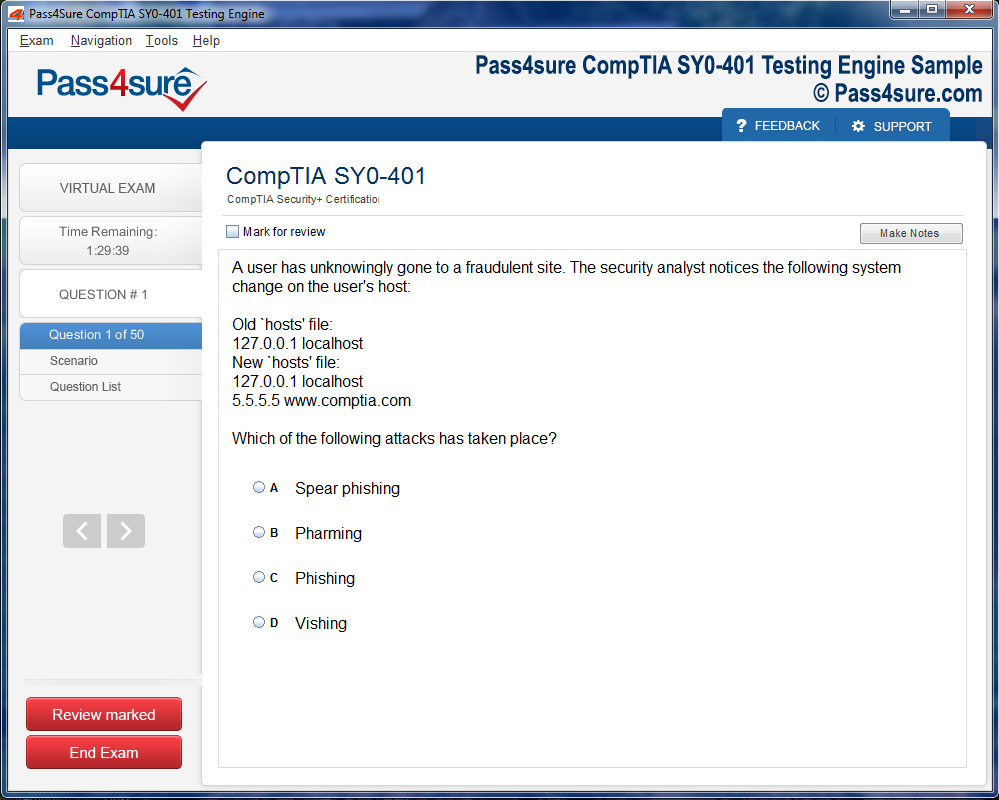
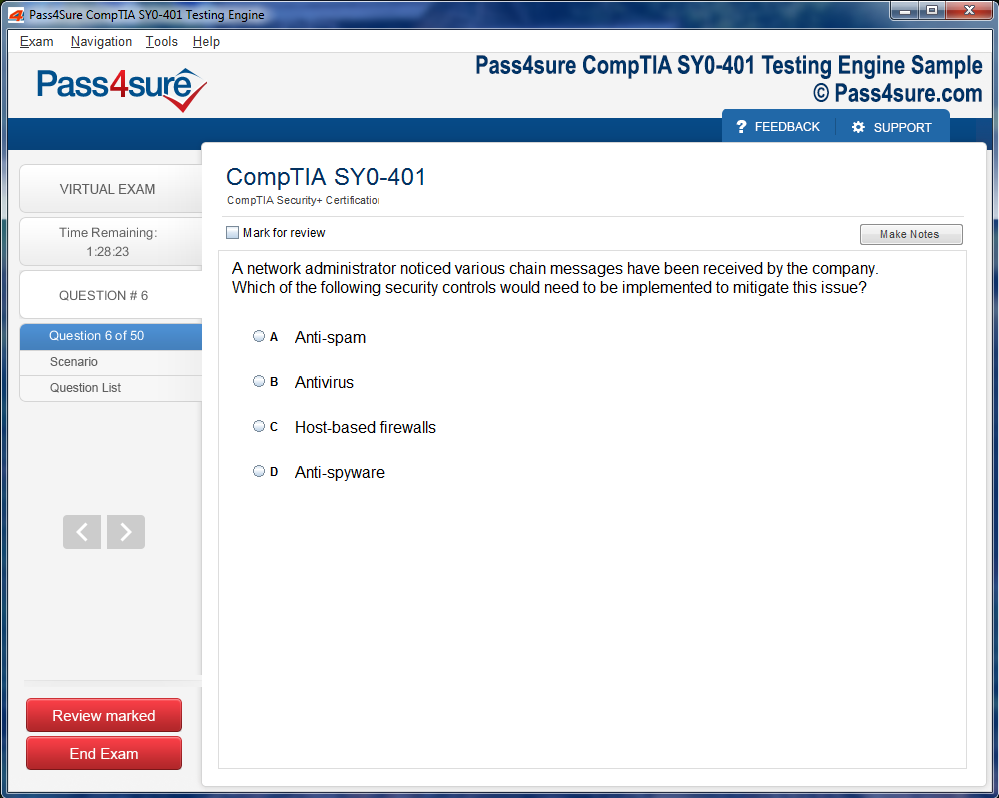
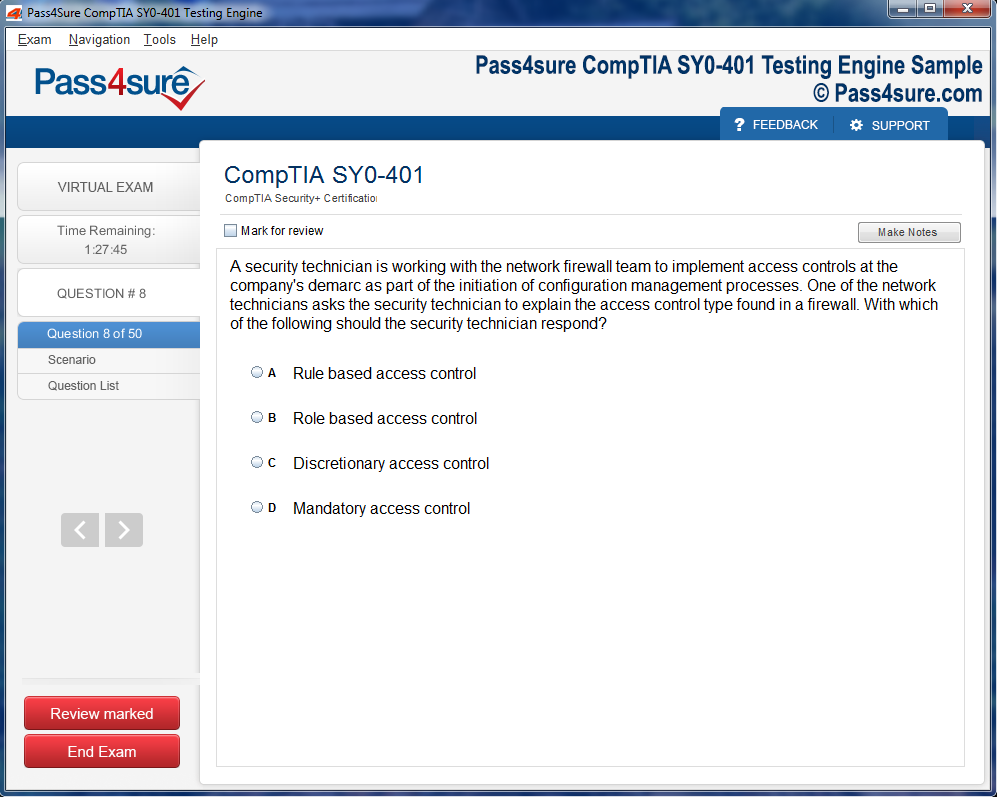
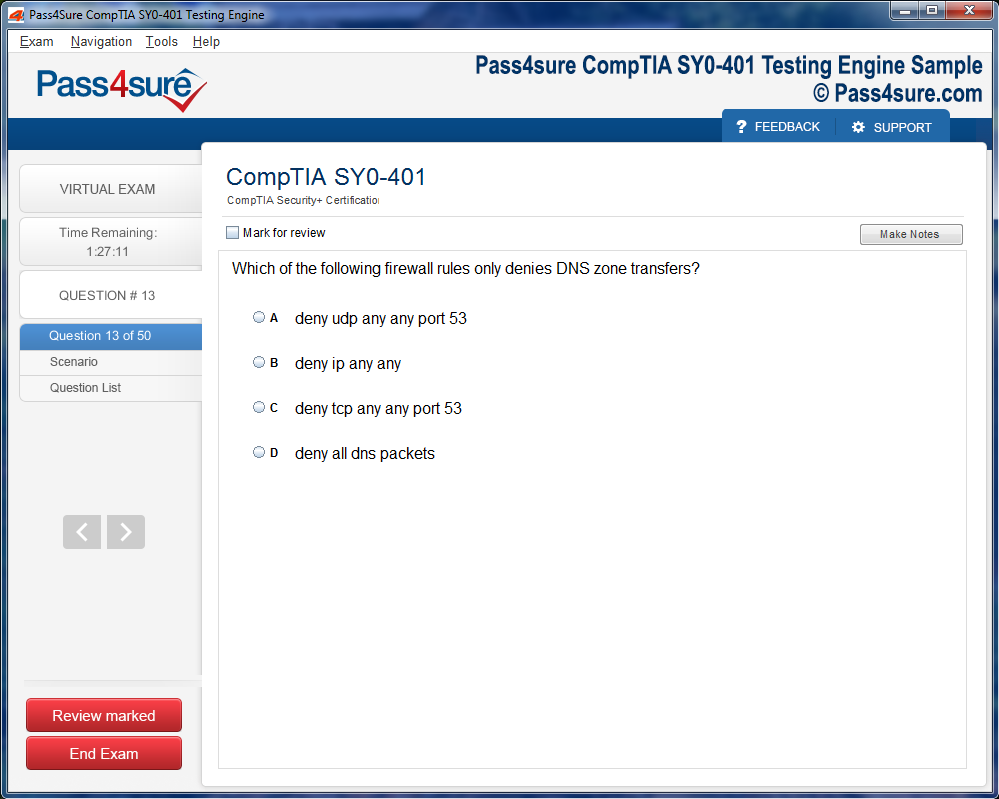
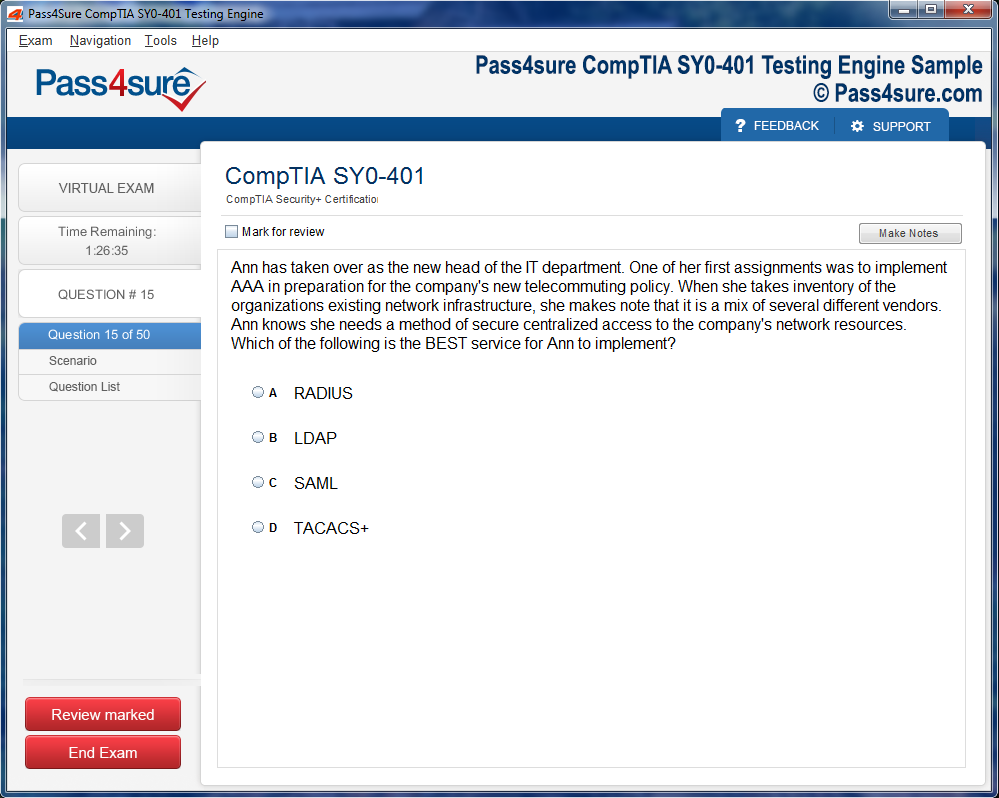
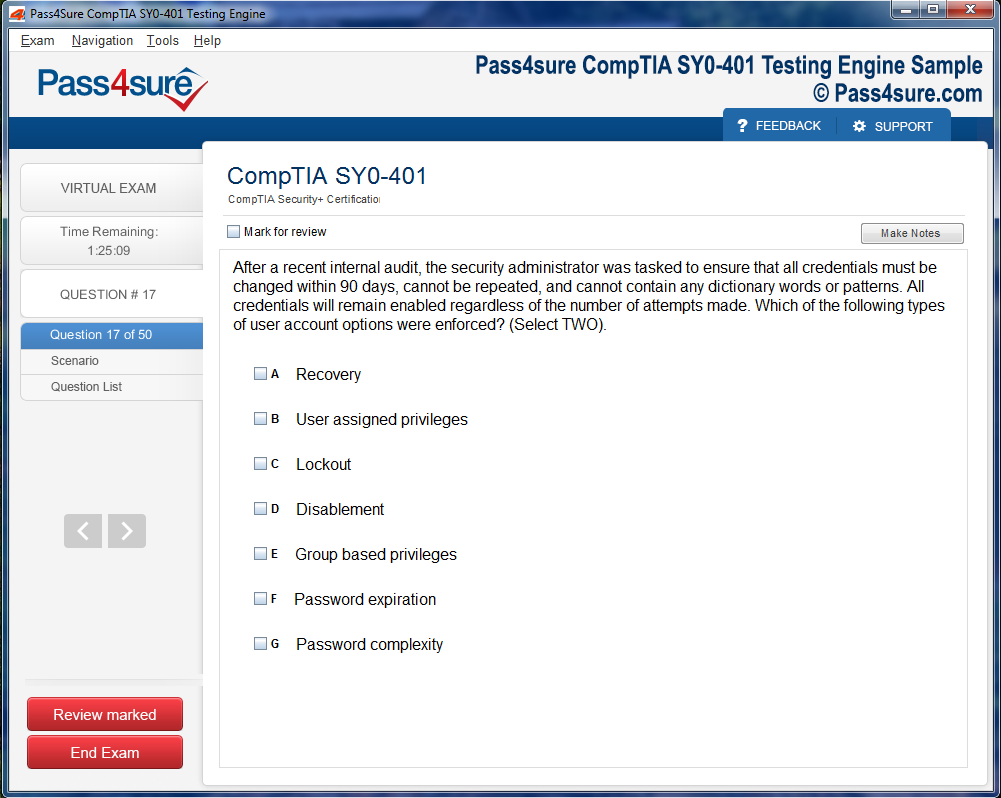
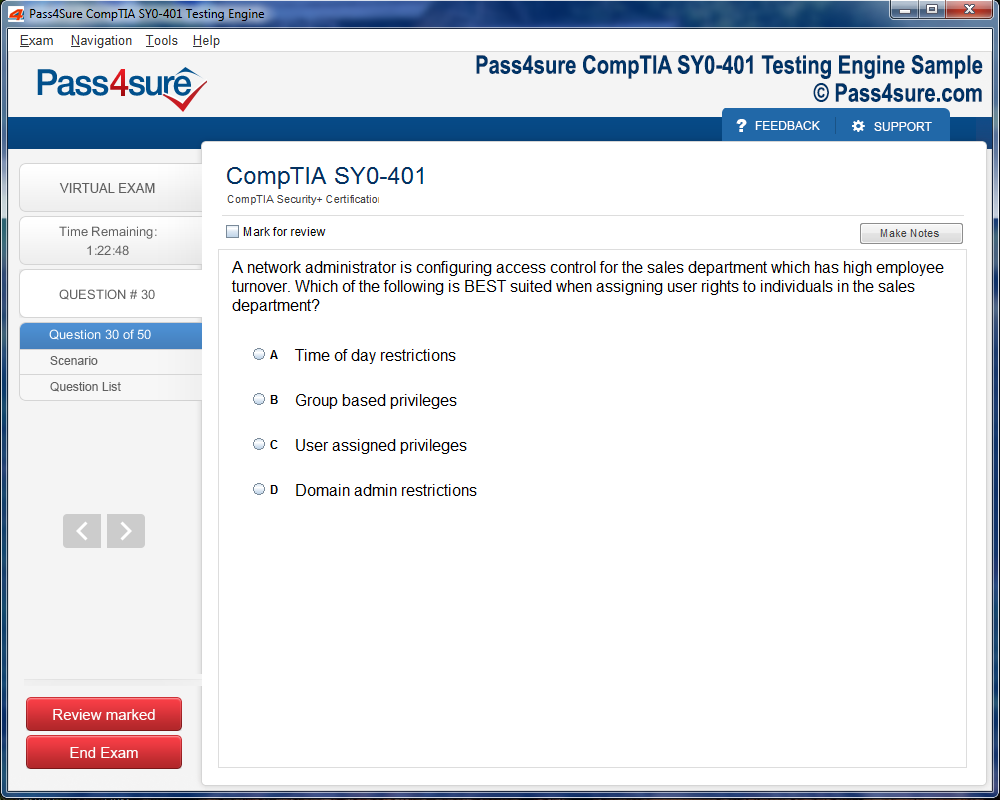
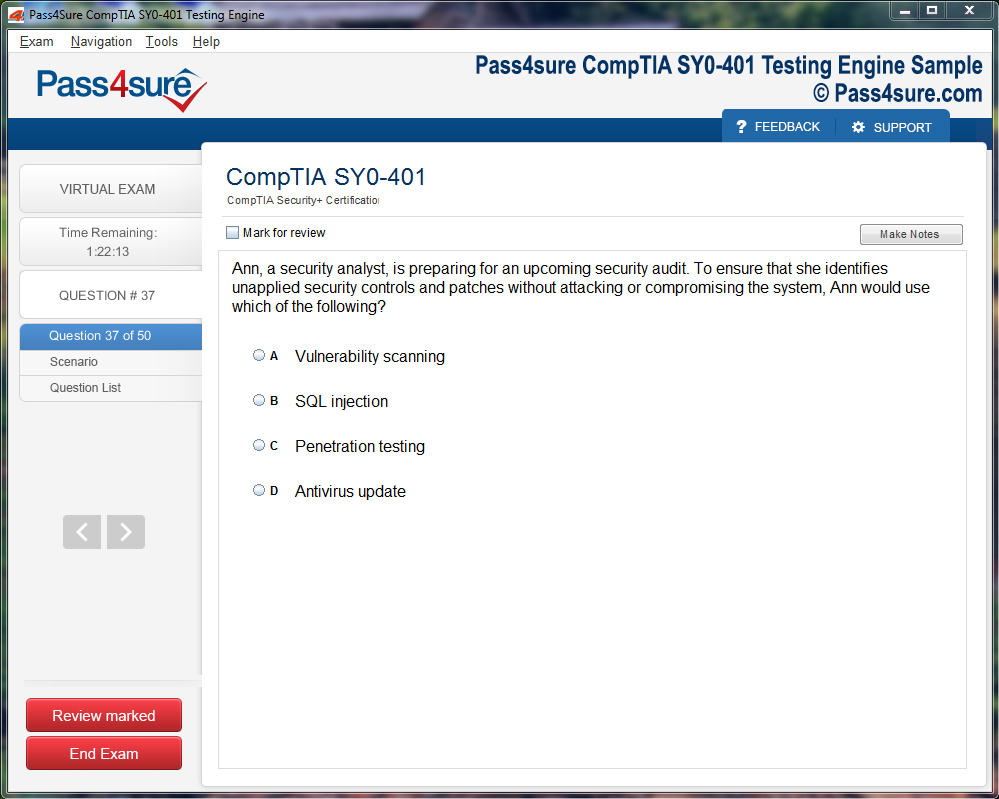
Frequently Asked Questions
How does your testing engine works?
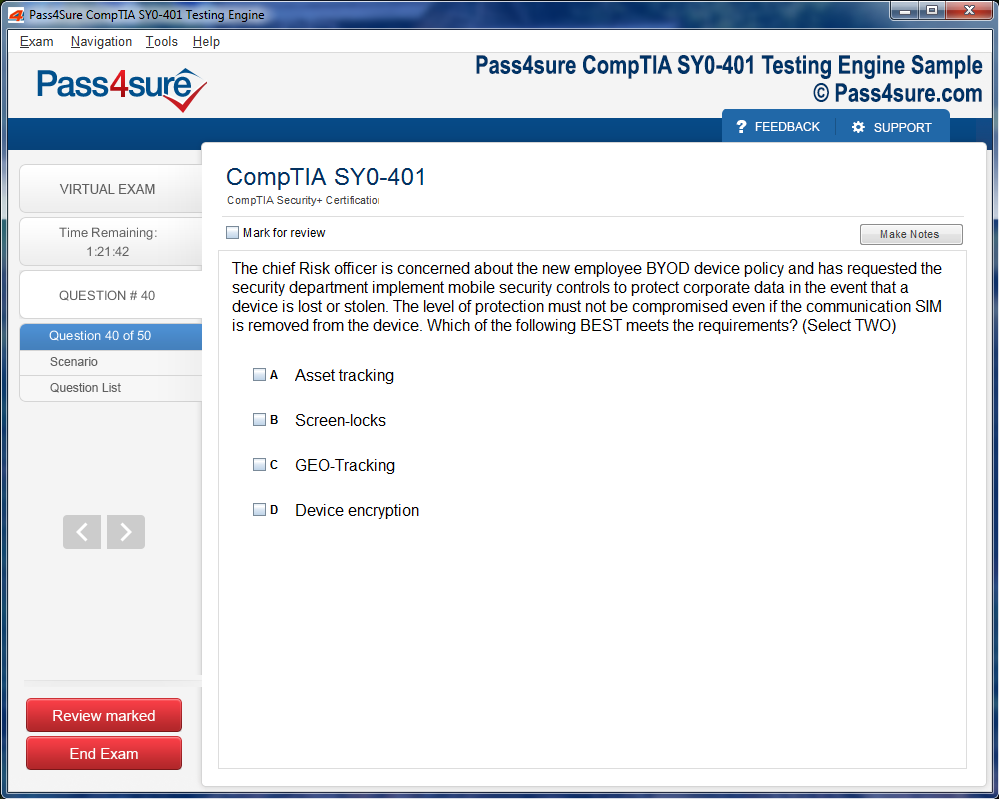
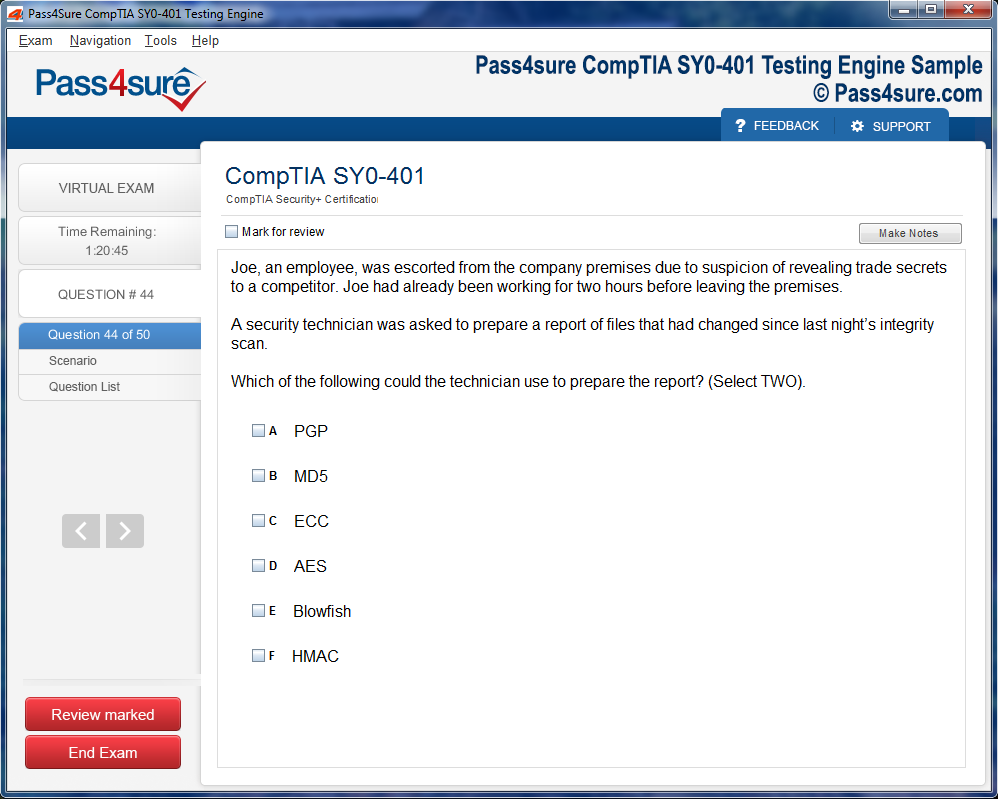
Once download and installed on your PC, you can practise test questions, review your questions & answers using two different options 'practice exam' and 'virtual exam'. Virtual Exam - test yourself with exam questions with a time limit, as if you are taking exams in the Prometric or VUE testing centre. Practice exam - review exam questions one by one, see correct answers and explanations.
How can I get the products after purchase?
All products are available for download immediately from your Member's Area. Once you have made the payment, you will be transferred to Member's Area where you can login and download the products you have purchased to your computer.
How long can I use my product? Will it be valid forever?
Pass4sure products have a validity of 90 days from the date of purchase. This means that any updates to the products, including but not limited to new questions, or updates and changes by our editing team, will be automatically downloaded on to computer to make sure that you get latest exam prep materials during those 90 days.
Can I renew my product if when it's expired?
Yes, when the 90 days of your product validity are over, you have the option of renewing your expired products with a 30% discount. This can be done in your Member's Area.
Please note that you will not be able to use the product after it has expired if you don't renew it.
How often are the questions updated?
We always try to provide the latest pool of questions, Updates in the questions depend on the changes in actual pool of questions by different vendors. As soon as we know about the change in the exam question pool we try our best to update the products as fast as possible.
How many computers I can download Pass4sure software on?
You can download the Pass4sure products on the maximum number of 2 (two) computers or devices. If you need to use the software on more than two machines, you can purchase this option separately. Please email sales@pass4sure.com if you need to use more than 5 (five) computers.
What are the system requirements?
Minimum System Requirements:
- Windows XP or newer operating system
- Java Version 8 or newer
- 1+ GHz processor
- 1 GB Ram
- 50 MB available hard disk typically (products may vary)
What operating systems are supported by your Testing Engine software?
Our testing engine is supported by Windows. Andriod and IOS software is currently under development.
Huawei H13-611 Exam Boost Your Score Fast
Embarking on the odyssey of the Huawei H13-611 examination is akin to venturing through a labyrinth of storage paradigms, where each corridor unveils nuanced intricacies of data retention, retrieval, and orchestration. This credential, formally recognized as the HCIA-Storage certification, is a beacon for aspirant IT virtuosos, validating their proficiency in storage ecosystems and affording a portal into advanced career trajectories. Understanding the architecture of the examination is pivotal to orchestrating a methodical and efficacious preparation regimen.
Understanding the Exam Structure
The H13-611 exam is meticulously engineered to assess the candidate’s cognitive and pragmatic grasp of storage technologies. The format is judiciously diversified to challenge both conceptual understanding and operational acumen, thereby ensuring that only adept individuals ascend through the certification process.
Exam specifics delineate a rigorous framework:
Exam Code: H13-611
Certification: Huawei Certified ICT Associate – Storage
Duration: 90 minutes
Total Questions: 60
Passing Score: 600 out of 1000
Question Types: Multiple-choice, True/False, Fill-in-the-blank, Drag-and-Drop
Cognizance of this structure allows aspirants to strategize their temporal and intellectual investments effectively. The variegated question types necessitate not only rote memorization but also analytical dexterity and experiential familiarity with storage constructs.
Key Exam Objectives
The H13-611 examination is calibrated to evaluate candidates across distinct yet interwoven domains. Proficiency is measured in terms of conceptual mastery, technological literacy, and operational aptitude.
Storage Technology Trends
Candidates must navigate the ever-evolving topography of storage innovations. This encompasses an awareness of emergent paradigms such as cloud-augmented storage, hybrid deployments, and software-defined architectures. Understanding these trends enables IT professionals to contextualize Huawei’s solutions within the broader technological ecosystem.
Basic Storage Technologies
Fundamental concepts constitute the bedrock of the examination. Aspirants are expected to exhibit mastery over RAID stratifications, logical unit numbers (LUNs), snapshot mechanisms, and diverse storage protocols. These rudimentary constructs form the substratum upon which advanced operational strategies are scaffolded.
Huawei Intelligent Storage Products and Features
A profound comprehension of Huawei’s proprietary storage solutions is indispensable. This entails familiarity with product lines, architectural nuances, deployment methodologies, and value propositions. Mastery in this domain empowers candidates to discern optimal configurations and operational scenarios.
Storage System Operations and Maintenance Management
The examination further probes the candidate’s aptitude in operational stewardship. Knowledge of monitoring techniques, troubleshooting methodologies, and performance optimization is essential. This domain ensures that certified professionals are equipped not only to deploy storage solutions but also to sustain and enhance their efficacy in dynamic environments.
Effective Study Strategies
Attaining mastery over the H13-611 syllabus demands an amalgamation of methodical preparation and immersive experiential engagement. The following strategies amplify the likelihood of success:
Utilize Official Huawei Resources
Leveraging canonical materials is paramount. Textbooks, e-learning modules, and sanctioned practice exams are meticulously curated to mirror the examination’s cognitive demands. Assimilating these resources furnishes aspirants with both breadth and depth of comprehension.
Engage in Hands-on Practice
Constructing a laboratory environment to simulate Huawei’s storage solutions facilitates experiential learning. Engaging directly with configurations, snapshots, and LUN provisioning cultivates an operational intuition unattainable through passive study alone. This praxis-oriented approach consolidates theoretical knowledge and reinforces retention.
Join Study Groups
Collaborative intellectual ventures magnify comprehension. By exchanging perspectives and dissecting complex scenarios, candidates expose themselves to alternative methodologies and nuanced insights. Group discussions stimulate critical thinking and elucidate ambiguities that solitary study might obscure.
Take Practice Exams
Iterative testing serves as a diagnostic instrument, revealing lacunae in understanding and fostering adaptive strategies. Practice exams acclimate candidates to the temporal pressures and cognitive demands inherent in the official assessment, mitigating performance anxiety and enhancing confidence.
Review and Revise
Cumulative review fortifies memory consolidation and conceptual clarity. Regular revision sessions, interspersed with self-assessment, ensure that aspirants retain essential constructs and remain agile in applying their knowledge to diverse problem sets.
Cognitive Approaches to Exam Preparation
Beyond rote memorization, cognitive strategies are indispensable. Visualization of storage topologies, mnemonic devices for RAID hierarchies, and analogical reasoning between traditional and cloud-based storage paradigms engender a deeper comprehension. Mental simulations of operational procedures—such as data replication, backup orchestration, and failure recovery—enhance the ability to recall and apply knowledge under exam conditions.
Time Management and Exam Psychology
Navigating the H13-611 exam demands judicious allocation of temporal resources. Candidates must cultivate an awareness of question complexity, prioritizing high-yield items while judiciously allocating time to intricate scenarios. Cognitive endurance, stress regulation, and strategic pacing collectively influence performance outcomes. Integrating mindfulness and focus techniques can ameliorate cognitive fatigue and sharpen analytical acuity.
Huawei Intelligent Storage: A Paradigm of Digital Prowess
In the contemporary labyrinth of digital enterprise, Huawei Intelligent Storage manifests as an epitome of technological perspicacity. These solutions are not merely repositories of data; they are sophisticated orchestrators of information, designed to navigate the multifarious exigencies of modern enterprises. The architectural ingenuity inherent in Huawei storage systems ensures not only the sanctity and accessibility of data but also an unparalleled synergy between hardware and software. By harnessing advanced algorithms and resilient architectures, these systems offer enterprises a rarefied blend of performance, scalability, and operational reliability.
Deduplication and Thin Provisioning: The Art of Storage Alchemy
Huawei’s storage ecosystems employ deduplication and thin provisioning as cardinal mechanisms to achieve resource optimization. Deduplication transmutes redundant data into a lean, streamlined repository, eliminating superfluous storage consumption. This esoteric process, often misunderstood in conventional storage paradigms, exemplifies a sophisticated confluence of computational acuity and algorithmic finesse. Complementarily, thin provisioning enables dynamic allocation of storage resources, ensuring that capacity is judiciously dispensed only when required, thus avoiding the pitfalls of resource profligacy and fostering an environment of economic efficiency.
Snapshot Technology: Temporal Echoes of Data Integrity
The snapshot feature within Huawei storage arrays constitutes a quintessential instrument for safeguarding data continuity. These temporal replicas, functioning as ephemeral yet precise mirrors, allow organizations to capture instantaneous states of their data landscape. Snapshots serve not only as bulwarks against inadvertent data erosion but also as critical tools in regulatory compliance, forensic investigation, and disaster recovery. The underlying architecture of snapshot technology epitomizes an intricate orchestration of metadata management, enabling rapid recovery while preserving system performance.
Architectural Sophistication and Controller Prowess
At the heart of Huawei storage solutions lie formidable controllers, the linchpins of data orchestration. These controllers exhibit an exceptional ability to balance input/output demands, optimize latency, and orchestrate parallel processing across voluminous storage arrays. The architectural sophistication extends to modular expansion capabilities, allowing enterprises to augment storage capacity seamlessly, eschewing operational disruption. Such flexibility ensures that the storage ecosystem remains agile, resilient, and scalable, catering to both contemporary needs and anticipatory growth trajectories.
Software-Defined Storage: The Nexus of Flexibility and Hybridization
The integration of software-defined storage (SDS) within Huawei arrays epitomizes a paradigm shift from rigid infrastructural confines to fluid, hybrid ecosystems. SDS facilitates the abstraction of physical storage, enabling organizations to dynamically orchestrate workloads across heterogeneous environments. This hybridization, encompassing on-premises and cloud infrastructures, imbues enterprises with strategic agility, allowing seamless migration, replication, and optimization of data assets. The amalgamation of SDS with intelligent analytics further potentiates operational insight, offering administrators a panoramic view of performance, utilization, and predictive capacity requirements.
Interface and Protocol Mastery: Ensuring Interoperable Fluidity
Huawei storage arrays are meticulously designed to accommodate a plethora of interfaces and protocols, including iSCSI, Fibre Channel, and NAS configurations. Mastery of these communication conduits is paramount for administrators, as it ensures not only the interoperability of disparate systems but also the efficacy of storage management and troubleshooting. The versatility of protocol support permits enterprises to architect solutions tailored to specific workloads, latency requirements, and throughput demands, thereby achieving an optimal equilibrium between performance and cost-efficiency.
Intelligent Data Management and Analytical Acumen
Huawei Intelligent Storage transcends mere capacity allocation, evolving into a nexus of data intelligence. Advanced analytics embedded within the storage fabric facilitate predictive insights, anomaly detection, and automated optimization. Such capabilities empower enterprises to preempt potential performance bottlenecks, mitigate operational risks, and enhance resource allocation strategies. By leveraging machine learning paradigms and heuristic algorithms, Huawei storage solutions elevate conventional storage systems into proactive, self-optimizing platforms capable of adapting to fluctuating workloads and emergent demands.
Resiliency and Redundancy: Fortifying the Digital Citadel
In the realm of enterprise data, resilience is tantamount to survival. Huawei storage solutions incorporate multi-tiered redundancy protocols, encompassing RAID configurations, synchronous and asynchronous replication, and cross-site mirroring. These measures constitute a formidable digital citadel, safeguarding against data corruption, hardware malfunctions, and catastrophic events. The meticulous design of redundancy mechanisms ensures continuous availability, operational continuity, and minimal downtime, thereby reinforcing enterprise confidence in the fidelity of their digital assets.
Capacity Expansion and Operational Agility
The modularity and flexibility inherent in Huawei storage arrays facilitate seamless capacity augmentation without perturbing ongoing operations. Enterprises can dynamically expand storage pools, integrate new modules, and recalibrate system resources in response to escalating data demands. This operational agility is critical in environments characterized by exponential data growth, unpredictable workloads, and stringent performance SLAs. By harmonizing expansion capabilities with intelligent storage management, Huawei arrays empower organizations to scale efficiently while maintaining operational integrity.
Intricacies of RAID Configurations
A nuanced comprehension of RAID configurations is indispensable for adeptly navigating storage paradigms. RAID 0, the rudimentary striped array, amplifies throughput by dispersing data across multiple disks, yet it remains exquisitely vulnerable to singular drive failure. RAID 1 employs mirroring to forge exact duplicates, engendering resilience albeit at a significant storage overhead. More labyrinthine structures such as RAID 5 and RAID 6 employ parity schemas, enabling fault tolerance with a judicious trade-off in write performance. RAID 10, a concatenation of mirroring and striping, synthesizes high throughput and redundancy, epitomizing a sophisticated equilibrium of speed and reliability. Mastery of these configurations necessitates not only theoretical knowledge but also experiential familiarity with their operational idiosyncrasies in diverse enterprise environments.
LUNs and Logical Partitioning
Logical Unit Numbers, or LUNs, serve as the sinews connecting storage subsystems to host servers. By delineating discrete volumes, LUNs facilitate meticulous allocation of storage resources, ensuring precise governance over data segmentation. In high-density storage arrays, judicious LUN provisioning forestalls resource contention and optimizes I/O throughput. Exam candidates must internalize the subtleties of LUN masking, zoning, and alignment, as these mechanisms undergird performance fidelity and data isolation. Proficiency in LUN management extends beyond mere identification, encompassing strategic orchestration of storage pools to harmonize with enterprise workload exigencies.
Snapshots, Clones, and Replication Dynamics
Preservation of data fidelity is orchestrated through snapshots, clones, and replication mechanisms. Snapshots encapsulate temporal states of volumes, enabling swift rollback in exigent circumstances, whereas clones materialize independent copies for testing or migration purposes. Replication propagates data across geographically dispersed nodes, fortifying business continuity against catastrophic contingencies. The temporal cadence of replication, whether synchronous or asynchronous, profoundly influences consistency models and recovery point objectives. A deep appreciation of these dynamics equips practitioners with the ability to craft robust disaster recovery schemas and ensures operational resilience.
Storage Protocols and Interface Delineation
Storage protocols constitute the lingua franca of data transport and access. Block-level protocols, typified by Fibre Channel or iSCSI, transmit raw data segments, offering granular control over performance and latency. In contrast, file-level protocols such as NFS or SMB abstract the filesystem layer, simplifying user interaction at the expense of some performance overhead. Discernment of protocol selection criteria is critical, as misalignment can engender latency bottlenecks or underutilized capacity. Additionally, comprehension of interface typologies, from SAS and SATA to NVMe, provides insight into throughput potentials and hardware synergies, empowering exam candidates to make judicious design decisions.
Storage Virtualization and Resource Amalgamation
Storage virtualization transmogrifies multiple physical devices into a singular logical entity, effectuating streamlined management and enhanced resource utilization. By decoupling logical representation from physical substrate, administrators can orchestrate storage allocations dynamically, mitigating fragmentation and redundancy. Virtualized storage architectures also facilitate tiering strategies, whereby high-performance media serve latency-sensitive workloads, and archival devices handle infrequent access. Acumen in virtualization paradigms cultivates an analytical mindset, essential for dissecting exam scenarios and applying optimal solutions within operational infrastructures.
Boosting your score in the H13-611 examination necessitates a meticulous amalgamation of strategy, cognition, and discipline. A mere rote memorization approach is ineffectual; success emerges from an integrative regimen that intertwines theoretical grasp with pragmatic application. Constructing a study timetable that meticulously allocates intervals for conceptual digestion, hands-on labs, and iterative practice assessments cultivates a robust foundation.
Synthesizing Knowledge Through Multimodal Engagement
Diversity in learning methodologies exponentially augments retention. Engaging with canonical Huawei manuals is imperative, yet supplementing this with didactic audiovisual tutorials and participatory discourse forums galvanizes comprehension. Immersive, multimodal engagement fortifies neural pathways, rendering recall more facile during high-pressure examination conditions. Translating learned material into self-generated summaries or articulating concepts to peers invokes active recall mechanisms, which strengthen both cognitive scaffolding and metacognitive awareness.
Harnessing Active Recall and Cognitive Reinforcement
Active recall transcends simple memorization. Candidates who synthesize intricate topics into their own lexicon and iteratively interrogate themselves develop durable cognitive traces. Techniques such as spaced repetition, interleaved practice, and the Feynman methodology, wherein one elucidates concepts as if instructing novices, catalyze long-term retention. This process not only consolidates knowledge but also illuminates subtle gaps in understanding, enabling timely remediation.
Simulated Exams and Temporal Strategy
Familiarity with the temporal dynamics of the H13-611 exam is pivotal. Frequent practice with simulated questions cultivates agility in navigating complex problem sets while refining time management strategies. Beyond mere repetition, an analytical deconstruction of errors unveils latent conceptual ambiguities. This iterative cycle of trial, evaluation, and correction engenders both confidence and precision, transforming vulnerability into a strategic advantage.
Meta-Analysis of Prior Exam Experiences
Cognitive alchemy occurs when candidates dissect prior exam experiences. Collecting anecdotal insights from forums, study groups, and retrospective accounts elucidates recurring patterns and idiosyncratic pitfalls. Understanding the architecture of previous examinations primes candidates for probabilistic anticipation of question typologies. This meta-analytical perspective complements rote preparation, allowing the aspirant to approach the examination with a tactical, rather than merely reactive, mindset.
Integrating Theory with Pragmatic Application
The H13-611 examination evaluates dual competencies: conceptual comprehension and applied problem-solving. Candidates who invest in experiential learning—through lab simulations, sandbox environments, or scenario-based exercises—bridge the chasm between abstract theory and practical utility. This synthesis not only fosters intellectual dexterity but also nurtures adaptive reasoning, which is indispensable when confronting novel or convoluted question formulations.
Cultivating Psychological Resilience
Examination success is inexorably intertwined with psychological fortitude. Anxiety can obfuscate cognition, rendering even well-prepared candidates susceptible to oversight. Implementing techniques such as mindfulness meditation, deliberate breathing exercises, and cognitive reframing strengthens mental equilibrium. Approaching the exam with equanimity enables sustained concentration, promotes lucid analytical thinking, and reduces susceptibility to impulsive errors under duress.
Iterative Review and Knowledge Consolidation
Preparation must remain dynamic and recursive. Periodic review sessions consolidate acquired knowledge while integrating new insights. Concept mapping, annotation, and reflective journaling are efficacious tools for crystallizing understanding. Candidates who iteratively revisit and recontextualize information reinforce neural interconnections, ensuring that knowledge remains both accessible and adaptable under examination exigencies.
Leveraging Collaborative Study Ecosystems
Isolation may hinder cognitive stimulation. Engaging in collaborative study ecosystems—peer study groups, virtual workshops, and discussion boards—stimulates dialectical learning. The interplay of diverse perspectives catalyzes deeper comprehension, promotes critical evaluation, and fosters creative problem-solving. Exchanging questions and elucidating concepts collaboratively can illuminate overlooked nuances, reinforcing both individual mastery and collective intelligence.
Strategic Resource Optimization
Effective preparation is contingent upon judicious resource allocation. Rather than indiscriminate consumption of study material, candidates benefit from curating authoritative sources and concentrating on high-yield domains. Prioritization of core topics, supplemented by targeted exploration of peripheral areas, maximizes efficiency. This calibrated approach mitigates cognitive fatigue while ensuring comprehensive coverage of critical competencies.
Adaptive Learning and Continuous Feedback
Adaptive learning embodies responsiveness to feedback loops. Self-assessment through mock exams, performance tracking, and reflective critique enables ongoing adjustment of strategies. Identifying persistent weak points allows candidates to recalibrate focus, enhancing both confidence and competence. This continuous feedback mechanism transforms preparation from a static endeavor into a dynamic, evolving process aligned with individual learning trajectories.
Storage Operations and Maintenance Overview
In the realm of digital infrastructure, storage operations and maintenance encompass the vigilant oversight of data repositories, ensuring their integrity, availability, and performance. Administrators must cultivate an intricate understanding of system topography, operational protocols, and the subtle interplay between hardware and software strata. This proactive stewardship mitigates potential degradations and fortifies continuity in data-centric enterprises. Attaining mastery over these processes is indispensable for the H13-611 certification, as the examination probes both theoretical acumen and pragmatic dexterity.
Monitoring Tools and Diagnostic Ecosystems
Sophisticated monitoring tools constitute the bedrock of efficacious storage maintenance. Contemporary systems proffer dashboards rich with telemetry, encompassing metrics such as IOPS (Input/Output Operations Per Second), latency distributions, throughput anomalies, and cache efficiency. These diagnostic ecosystems enable administrators to discern latent issues, often before they manifest as service disruptions. Huawei’s storage arrays, for instance, integrate real-time alert frameworks that furnish prognostic insights, allowing preemptive interventions that avert data loss or performance bottlenecks.
Performance Metrics and Analytical Interpretation
Quantifying system performance necessitates the assimilation of variegated metrics, each revealing a discrete facet of storage behavior. Latency, measured in microseconds or milliseconds, illuminates responsiveness under fluctuating workloads, whereas throughput indicates the velocity of data transit across storage channels. Utilization indices reveal storage saturation, highlighting nodes or volumes at risk of congestion. Proficiency in interpreting these metrics demands both analytical acumen and contextual awareness; performance anomalies rarely exist in isolation, often signaling multifactorial interactions within the storage ecosystem.
System Logs and Event Correlation
The meticulous examination of system logs constitutes an esoteric yet indispensable maintenance skill. Logs encapsulate chronological sequences of events, from routine I/O operations to emergent faults. An adept administrator deciphers these records, correlating seemingly innocuous warnings with latent systemic vulnerabilities. Event correlation techniques, such as temporal clustering and cross-node comparison, empower technicians to extrapolate root causes, thereby expediting resolution and precluding recurrence. In high-stakes environments, mastery over log analysis differentiates reactive troubleshooting from strategic foresight.
Firmware Updates and Evolutionary Maintenance
Storage systems, akin to sentient organisms, necessitate periodic rejuvenation via firmware updates. These updates rectify security vulnerabilities, optimize processing algorithms, and enhance compatibility with evolving infrastructure. Neglecting firmware stewardship can precipitate erratic behavior, degraded performance, and exposure to cyber threats. Administrators must cultivate a cadence of version audits, staged deployment, and rollback contingency planning. Such evolutionary maintenance embodies a synthesis of vigilance and technical foresight, ensuring storage arrays remain both resilient and contemporaneous.
Capacity Planning and Predictive Scaling
A cardinal element of storage operations is capacity planning, which transcends mere volumetric calculation. Predictive scaling involves anticipatory assessment of data growth trajectories, workload fluctuations, and application-specific demands. By leveraging historical telemetry and trend analytics, administrators can orchestrate expansions or tier migrations preemptively, circumventing the operational friction associated with unanticipated saturation. Effective capacity planning amalgamates quantitative projection with strategic infrastructure allocation, optimizing both cost-efficiency and service reliability.
Health Checks and Proactive Diagnostics
Routine health checks constitute a prophylactic approach to storage maintenance. These inspections encompass hardware integrity verification, disk scrubbing, cache coherence validation, and temperature monitoring. Proactive diagnostics, augmented by automated scanning algorithms, identify incipient failures before they escalate into critical incidents. This regimen not only preserves data sanctity but also prolongs the operational lifespan of storage arrays, ensuring sustained performance under diverse workload regimes.
Troubleshooting Bottlenecks and Connectivity Anomalies
Troubleshooting storage bottlenecks necessitates a meticulous methodology. Administrators must distinguish between I/O saturation, network latency, and protocol inefficiencies, often requiring layered analysis across physical, logical, and virtual planes. Connectivity anomalies, whether due to switch misconfigurations, fiber interruptions, or zoning errors, demand diagnostic rigor and methodical validation. Huawei storage solutions facilitate these processes via built-in diagnostic suites that simulate workloads, trace data paths, and isolate errant nodes with minimal disruption to production environments.
Error Codes and Systemic Rectification
Error codes, while ostensibly cryptic, encapsulate precise diagnostic intelligence. Effective operators cultivate fluency in decoding these numeric or alphanumeric indicators, correlating them with operational contexts. Systemic rectification may entail disk replacement, controller realignment, cache recalibration, or protocol reconfiguration. Mastery of these corrective interventions enhances both uptime and reliability, empowering administrators to navigate complex fault landscapes with dexterity and confidence.
Dashboards and Real-Time Insights
The advent of interactive dashboards has transformed storage oversight from reactive observation to dynamic orchestration. Real-time visualizations convey multifaceted performance data, including replication latency, snapshot frequency, and hot-spot identification. By synthesizing these metrics into actionable intelligence, administrators can initiate preemptive optimizations, balance workloads, and adjust resource allocation with immediacy. Such immersion in operational telemetry fosters a proactive maintenance culture, reducing reliance on post-mortem interventions.
Maintenance Best Practices and Institutional Knowledge
Institutionalizing best practices amplifies operational efficacy and mitigates human error. Standard operating procedures, checklists, and historical incident repositories constitute a cognitive scaffold for maintenance activities. Documentation of firmware versions, upgrade cycles, performance baselines, and error patterns ensures continuity of expertise across personnel transitions. Embedding such practices within organizational culture elevates storage management from procedural compliance to strategic stewardship, safeguarding data assets against both predictable and unforeseen contingencies.
Simulated Troubleshooting and Practical Exercises
Practical exercises, including simulated fault injection, stress testing, and scenario-based troubleshooting, cultivate experiential understanding beyond theoretical knowledge. These exercises hone critical thinking, refine diagnostic heuristics, and reinforce procedural fluency. For exam preparation, such hands-on simulations are invaluable, providing both confidence and competence. In operational contexts, they equip administrators with the agility to respond to emergent issues, optimize system resilience, and uphold service-level commitments.
The Labyrinthine Path of Intellectual Mastery
Embarking upon the arduous journey toward intellectual mastery necessitates a sagacious amalgamation of diligence, curiosity, and strategic foresight. Minds attuned to the nuanced intricacies of cognition cultivate an innate acuity that transcends mere rote memorization. The alchemy of knowledge lies not solely in accumulation but in the capacity to interlace disparate concepts into a cohesive tapestry of understanding. Those who traverse this labyrinthine path encounter epistemic chasms, yet every void brims with potential for unparalleled insight, contingent upon the practitioner’s resolute perseverance and discerning contemplation.
Cognitive Cartography: Mapping the Mind
Understanding the topography of one’s own cognitive processes is paramount for efficient knowledge acquisition. Cognitive cartography entails delineating mental schemata, identifying synaptic affinities, and recognizing habitual biases that may obfuscate clarity. Visualization techniques, mnemonic scaffolding, and associative networks act as indispensable instruments for navigating this cerebral terrain. By meticulously charting the neural pathways that govern memory, reasoning, and problem-solving, learners can optimize synaptic resonance and accelerate the transference of abstract concepts into enduring comprehension.
Temporal Alchemy: The Subtle Art of Time Manipulation
Time, as perceived by the human consciousness, is an elastic yet finite resource. Practitioners of temporal alchemy cultivate the ability to elongate perception during periods of concentrated endeavor, compressing the apparent duration of distractions while amplifying productive intervals. Techniques such as ultradian rhythm synchronization, micro-task segmentation, and chronometric reflection enhance temporal fidelity, allowing for maximal cognitive throughput. Mastery over one’s temporal landscape often distinguishes the sagacious from the perfunctory, as judicious allocation of mental bandwidth dictates both efficiency and depth of understanding.
Epistemic Resilience: Fortifying the Intellect
The vicissitudes of learning necessitate a formidable resilience to cognitive perturbations. Epistemic resilience emerges from repeated exposure to complexity, calibrated failure, and reflective synthesis. Individuals who cultivate this trait embrace uncertainty as a fertile substrate for intellectual growth, rather than a harbinger of inadequacy. Strategies to fortify epistemic resilience include iterative problem-solving, dialectical reasoning, and cross-disciplinary exploration, fostering a mental elasticity that allows for the seamless integration of novel information amidst previously entrenched frameworks.
Lexical Luxuriance: Expanding the Linguistic Arsenal
A rich vocabulary serves as both a cognitive amplifier and a communicative conduit. Lexical luxuriance entails deliberate exploration of rare and archaic terminology, nuanced idioms, and contextually precise locutions. Immersion in literary, scientific, and philosophical texts provides an inexhaustible reservoir of expressive potential. Harnessing this linguistic opulence not only augments comprehension of complex material but also sharpens analytical acuity, as subtleties in phrasing often reflect deeper conceptual distinctions within any discipline of study.
The Semantics of Analytical Perspicacity
Analytical perspicacity, a refined acuity for discerning patterns and inferring latent structures, is indispensable for those navigating intellectual landscapes. The mind attuned to subtle variations in data, argumentation, or conceptual frameworks gains an unparalleled vantage point over its less vigilant counterparts. Cultivating this perspicacity necessitates deliberate exercises in deduction, lateral thinking, and hypothesis juxtaposition. By interrogating assumptions, deconstructing axioms, and mapping inferential linkages, the practitioner hones a cognitive lens capable of penetrating obfuscation and revealing latent coherence within complex systems.
Moreover, the interplay between intuition and formal logic catalyzes extraordinary insight. Intuition, when tempered by methodological rigor, becomes an accelerant for comprehension rather than a capricious guide. Practitioners can refine intuitive faculties through pattern recognition exercises, exposure to probabilistic reasoning, and engagement with counterfactual scenarios, all of which encourage flexible, anticipatory cognition.
The Architecture of Strategic Memory
Memory, often misconceived as a static repository, is instead a dynamic and malleable architecture. Strategic memory construction involves not merely repetition but deliberate encoding, associative layering, and hierarchical organization. Techniques such as the method of loci, interleaved retrieval, and semantic clustering allow the mind to store and retrieve information with unprecedented efficiency. Each mnemonic structure functions as a scaffold, permitting the rapid assimilation of new knowledge while reinforcing previously internalized material. By architecting memory in this manner, learners transform ephemeral cognition into a durable cognitive edifice capable of supporting intricate problem-solving and innovation.
Metacognitive Orchestration: Conducting the Cognitive Symphony
Metacognition—the reflective monitoring of one’s own mental operations—serves as a conductor orchestrating the symphony of thought. By cultivating awareness of cognitive biases, attentional fluctuations, and emotional interference, learners can recalibrate strategies to optimize comprehension and performance. Metacognitive orchestration encompasses self-questioning protocols, reflective journaling, and anticipatory scenario planning. Those who master these practices experience an augmented capacity for adaptive learning, seamlessly adjusting strategies in response to emergent challenges and thereby transcending mere procedural competence.
Dialectical Synthesis: Converging Contradictions into Clarity
In the pursuit of intellectual refinement, contradictions should not be shunned but embraced as catalysts for synthesis. Dialectical synthesis, the deliberate reconciliation of opposing perspectives, engenders insights unattainable through unilateral reasoning. Techniques for achieving such synthesis include comparative analysis, conceptual bridging, and adversarial brainstorming, each designed to illuminate latent compatibilities within ostensibly incongruent frameworks. By engaging in dialectical exercises, the mind cultivates a pliability that renders it resilient to conceptual impasses, fostering an inventive agility critical for advanced problem-solving and innovation.
The Subtle Science of Focused Absorption
Absorption, the capacity to enter a state of profound concentration, is a skill as nuanced as it is potent. This mental immersion allows practitioners to transcend superficial engagement, accessing deeper layers of understanding and insight. Cultivating focused absorption requires deliberate environmental structuring, attentional scaffolding, and cognitive pacing. Strategies such as the Pomodoro extension, deliberate attention shifts, and sensory minimization enhance the intensity and duration of concentration. Absorption, when consistently harnessed, not only accelerates learning but also amplifies the qualitative richness of acquired knowledge, producing insights that linger beyond immediate application.
The Geometry of Problem-Solving
Problem-solving is an intricate geometry of mental maneuvering, wherein each vector of thought must align with conceptual constraints and desired outcomes. Mastery entails the recognition of underlying structures, the decomposition of complexity into manageable facets, and the iterative testing of hypothetical solutions. Cognitive mapping, scenario simulation, and probabilistic modeling serve as pivotal instruments in this geometric approach. The adept problem-solver navigates the interplay of constraints and possibilities with precision, leveraging heuristics judiciously while remaining open to innovative detours that yield unforeseen advantages.
Synergistic Collaboration: Amplifying Cognitive Resonance
While individual cognition is formidable, synergistic collaboration amplifies intellectual resonance exponentially. Cooperative problem-solving engenders a collective intelligence wherein diverse perspectives interlace to produce emergent insights. Effective collaboration requires not merely the pooling of knowledge but the cultivation of epistemic humility, active listening, and dialectical negotiation. Within such environments, cognitive dissonance is transformed from a source of friction into a crucible for creativity, as contrasting viewpoints coalesce into solutions surpassing the sum of individual contributions.
Experiential Immersion: Learning Beyond Abstraction
Experiential immersion, the integration of hands-on practice with conceptual understanding, consolidates knowledge in a manner inaccessible to purely abstract study. By engaging directly with phenomena—whether through simulations, practical exercises, or field observation—learners encode information in multimodal channels, enhancing retention and adaptive application. This approach fosters procedural fluency alongside theoretical comprehension, allowing practitioners to navigate real-world contingencies with confidence. The interplay of action and reflection within immersive experiences cultivates an intuition grounded in evidence, producing a cognitive dexterity unattainable through passive absorption alone.
Cognitive Temperament: Cultivating Intellectual Equanimity
Equanimity of thought, or the maintenance of composure amid cognitive turbulence, is a subtle yet critical determinant of sustained intellectual performance. Cognitive temperament entails the regulation of emotional reactivity, the management of uncertainty, and the deliberate pacing of analytical exertion. Techniques for cultivating such equanimity include contemplative practices, reflective journaling, and deliberate exposure to ambiguity. By stabilizing the mental milieu, practitioners preserve clarity under pressure, ensuring that judgment remains sharp and innovation unimpeded even in the most convoluted intellectual landscapes.
Advanced Replication Strategies
Replication strategies form the linchpin of resilient storage architectures. Synchronous replication ensures real-time duplication of data across geographically dispersed nodes, guaranteeing zero data loss even in catastrophic events. Asynchronous replication, in contrast, introduces minimal latency, optimizing performance for high-throughput applications while tolerating slight temporal divergence. Administrators must judiciously select replication modes based on service-level agreements, network latency, and workload sensitivity. Mastery of replication topologies, including active-active and active-passive configurations, enables seamless failover, rapid recovery, and continuous operational continuity.
Snapshot Management and Data Temporalization
Snapshots constitute ephemeral, yet indispensable, constructs in data protection paradigms. By capturing point-in-time images, snapshots facilitate rapid recovery, backup verification, and forensic analysis. Effective snapshot management entails judicious scheduling, retention policies, and deletion protocols to avoid storage bloat and performance degradation. Additionally, snapshot chains, if mismanaged, can induce latency spikes and complicate restoration sequences. Administrators adept in temporalized storage strategies leverage snapshots not merely as backups, but as dynamic instruments for operational agility and data governance.
Storage Virtualization and Logical Abstraction
Storage virtualization abstracts physical hardware into logical entities, creating a malleable and unified storage pool. This paradigm enables seamless resource allocation, dynamic scaling, and optimized utilization across heterogeneous environments. Virtual volumes, thin provisioning, and dynamic tiering are emblematic of this abstraction, permitting workloads to traverse hardware boundaries without service disruption. Administrators must comprehend the interplay between physical devices and virtual constructs to ensure performance consistency, prevent overcommitment, and maintain data integrity across virtualized infrastructures.
Hyper-Converged Infrastructure Maintenance
Hyper-converged infrastructures (HCI) integrate compute, storage, and networking into cohesive clusters, reducing operational complexity while enhancing scalability. Maintaining HCI systems necessitates a nuanced understanding of interdependent components, workload balancing, and integrated monitoring tools. Firmware, driver compatibility, and cluster health must be routinely verified to preempt cascading failures. In such ecosystems, troubleshooting transcends isolated subsystems, requiring holistic analysis of virtualization layers, storage nodes, and network fabrics. Proficiency in HCI maintenance accelerates deployment, optimizes resource efficiency, and fortifies resilience against multi-layered failures.
Security-Oriented Storage Operations
Securing storage systems extends beyond perimeter defenses to encompass encryption, access control, and data lifecycle management. End-to-end encryption, both at rest and in transit, safeguards sensitive information against unauthorized access. Role-based access control (RBAC) and multifactor authentication fortify administrative operations, preventing inadvertent or malicious modifications. Regular auditing, anomaly detection, and adherence to compliance frameworks ensure that storage operations align with organizational security mandates. Integrating security considerations into routine maintenance transforms storage from a passive repository into a fortified, actively governed asset.
Automation and Orchestration
Automation and orchestration have revolutionized storage operations by minimizing manual interventions and enhancing operational consistency. Scripted workflows, policy-driven provisioning, and automated failover sequences reduce human error while expediting routine tasks. Orchestration platforms harmonize multiple storage nodes, balancing workloads, and optimizing resource allocation across hybrid and multi-cloud deployments. Administrators skilled in automation frameworks not only improve operational efficiency but also gain the agility to respond rapidly to emergent demands, reducing latency in incident resolution and performance tuning.
Environmental and Energy Considerations
Data centers, as energy-intensive entities, demand conscientious environmental stewardship in storage operations. Power usage effectiveness (PUE), cooling efficiency, and thermal management are critical parameters affecting both operational costs and hardware longevity. Administrators must monitor temperature fluctuations, airflow dynamics, and energy consumption trends to prevent thermal throttling, premature component wear, and unplanned outages. Implementing green storage practices, such as tiered data placement and low-power disk arrays, harmonizes sustainability goals with operational imperatives, creating a storage ecosystem that is both robust and ecologically responsible.
Disaster Recovery Planning and Contingency Protocols
Disaster recovery (DR) planning constitutes a strategic pillar in storage operations. Administrators must design, document, and periodically test recovery protocols, encompassing failover sequences, data restoration priorities, and cross-site replication. DR plans integrate recovery point objectives (RPO) and recovery time objectives (RTO), ensuring that critical workloads resume promptly and data integrity is maintained. Proficiency in DR orchestration requires not only technical acumen but also scenario simulation, risk assessment, and interdepartmental coordination, transforming abstract contingencies into executable operational plans.
Multi-Tenancy and Resource Governance
In shared environments, multi-tenancy introduces complex challenges in resource governance. Isolating performance metrics, enforcing quotas, and monitoring inter-tenant interactions prevent resource contention and maintain service quality. Administrators must leverage logical partitioning, I/O throttling, and capacity reporting to ensure equitable distribution of storage bandwidth and compute cycles. Effective multi-tenant management fosters operational transparency, supports service-level agreements, and enables granular auditing without compromising system efficiency.
Predictive Analytics and Proactive Remediation
Predictive analytics harness historical telemetry, trend modeling, and anomaly detection to forecast system behavior and preempt failures. Machine learning algorithms analyze disk error rates, latency spikes, and throughput fluctuations, generating actionable insights for administrators. Proactive remediation, informed by predictive analytics, transforms storage operations from reactive firefighting to anticipatory management. This paradigm shift enhances uptime, optimizes maintenance schedules, and strengthens confidence in the reliability of mission-critical storage systems.
Integrating Hybrid and Multi-Cloud Storage
Hybrid and multi-cloud storage architectures introduce a layer of complexity requiring meticulous orchestration. Administrators must navigate disparate APIs, network latencies, and consistency models while ensuring seamless data availability. Policies governing replication, tiering, and synchronization are critical to maintaining performance and compliance across on-premises and cloud-based systems. Effective hybrid storage integration balances cost-efficiency with operational resilience, leveraging cloud elasticity without compromising governance, latency, or security standards.
Firmware Rollback and Version Control
While firmware updates are pivotal, rollback mechanisms are equally essential. Version control practices ensure that administrators can revert to stable configurations when updates introduce incompatibilities or latent defects. Maintaining meticulous records of firmware histories, patch notes, and deployment sequences safeguards against inadvertent disruptions. Rollback procedures, when properly orchestrated, preserve system integrity, prevent cascading failures, and reinforce operational confidence during critical maintenance windows.
Load Balancing and Hotspot Mitigation
Workload-induced hotspots can compromise storage performance, manifesting as latency surges or throughput bottlenecks. Effective load balancing involves redistributing I/O demands across nodes, optimizing cache utilization, and prioritizing critical transactions. Administrators must continuously monitor performance metrics, identify emerging hotspots, and deploy mitigation strategies, such as data migration, tiered caching, or dynamic provisioning. This proactive approach ensures equitable resource distribution and sustained responsiveness under diverse workload scenarios.
Health Metrics Correlation and Anomaly Detection
Health metrics, encompassing SMART disk parameters, memory integrity, controller performance, and network latency, provide a granular view of system viability. Correlating these metrics across temporal and topological dimensions reveals latent vulnerabilities that single-parameter monitoring may overlook. Anomaly detection algorithms, coupled with expert interpretation, enable early identification of degradation patterns, facilitating preemptive interventions. This multidimensional vigilance reinforces system resilience and mitigates the risk of unanticipated operational failures.
Synthesizing Knowledge Through Multimodal Engagement
Diversity in learning methodologies exponentially augments retention. Engaging with canonical Huawei manuals is imperative, yet supplementing this with didactic audiovisual tutorials and participatory discourse forums galvanizes comprehension. Immersive, multimodal engagement fortifies neural pathways, rendering recall more facile during high-pressure examination conditions. Interspersing passive reading with interactive exercises, scenario simulations, and mnemonic devices transforms abstract content into concrete cognitive structures. By engaging multiple sensory modalities, learners enhance the depth and durability of their knowledge.
Incorporating analogical reasoning into study practices further elevates retention. Drawing parallels between unfamiliar concepts and familiar experiences stimulates integrative thinking and creates associative anchors. For instance, networking topologies can be conceptualized as city transportation systems, where packet flow resembles vehicular traffic. These cognitive scaffolds not only facilitate memorization but also cultivate adaptive reasoning, allowing candidates to reconceptualize problems in creative ways.
Harnessing Active Recall and Cognitive Reinforcement
Active recall transcends simple memorization. Candidates who synthesize intricate topics into their own lexicon and iteratively interrogate themselves develop durable cognitive traces. Techniques such as spaced repetition, interleaved practice, and the Feynman methodology, wherein one elucidates concepts as if instructing novices, catalyze long-term retention. Spaced repetition exploits the temporal dynamics of forgetting, ensuring knowledge is revisited at optimal intervals to fortify memory consolidation.
In addition to active recall, metacognitive reflection enhances self-regulated learning. Regularly questioning one’s comprehension and identifying ambiguous areas encourages proactive remediation. This reflective cycle nurtures both intellectual autonomy and strategic thinking. Learners who interrogate their understanding and reframe information into novel contexts reinforce neural networks more robustly than passive review alone.
Simulated Exams and Temporal Strategy
Familiarity with the temporal dynamics of the H13-611 exam is pivotal. Frequent practice with simulated questions cultivates agility in navigating complex problem sets while refining time management strategies. Candidates often underestimate the cognitive load imposed by timed conditions; therefore, simulating real exam pressures is indispensable. This practice trains the mind to prioritize information, rapidly evaluate alternatives, and execute decisions under duress.
Moreover, analyzing performance in simulated exams reveals subtle patterns in decision-making. By cataloging errors and categorizing them as conceptual misunderstandings, procedural missteps, or time-management lapses, learners gain actionable insights. Iterative cycles of testing, analysis, and recalibration transform weaknesses into strategic advantages. Over time, candidates internalize temporal pacing, recognizing how to allocate attention to high-yield sections without sacrificing accuracy.
Meta-Analysis of Prior Exam Experiences
Cognitive alchemy occurs when candidates dissect prior exam experiences. Collecting anecdotal insights from forums, study groups, and retrospective accounts elucidates recurring patterns and idiosyncratic pitfalls. Understanding the architecture of previous examinations primes candidates for probabilistic anticipation of question typologies. This meta-analytical perspective complements rote preparation, allowing the aspirant to approach the examination with a tactical, rather than merely reactive, mindset.
Meta-analysis also extends to evaluating environmental factors that influence exam performance. For instance, test-day variables such as room temperature, lighting, or breaks can subtly affect cognitive endurance. Anticipating these factors and preparing adaptive coping strategies enhances resilience. Candidates who simulate both content and situational variables cultivate a holistic preparedness, bridging the gap between theoretical mastery and practical execution.
Integrating Theory with Pragmatic Application
The H13-611 examination evaluates dual competencies: conceptual comprehension and applied problem-solving. Candidates who invest in experiential learning—through lab simulations, sandbox environments, or scenario-based exercises—bridge the chasm between abstract theory and practical utility. Hands-on practice solidifies understanding of networking configurations, troubleshooting protocols, and system behaviors, converting passive knowledge into actionable expertise.
Experiential learning is further enriched by iterative reflection. After each practical exercise, documenting observations, anomalies, and solutions reinforces memory and enhances analytical skills. This reflective documentation becomes a personalized knowledge repository, accessible for rapid revision and reference. Over time, the interplay of theory, practice, and reflection produces a deeply entrenched cognitive schema, primed for flexible application in exam scenarios.
Cultivating Psychological Resilience
Examination success is inexorably intertwined with psychological fortitude. Anxiety can obfuscate cognition, rendering even well-prepared candidates susceptible to oversight. Implementing techniques such as mindfulness meditation, deliberate breathing exercises, and cognitive reframing strengthens mental equilibrium. Approaching the exam with equanimity enables sustained concentration, promotes lucid analytical thinking, and reduces susceptibility to impulsive errors under duress.
Additionally, visualization techniques enhance preparedness. Imagining the sequence of exam tasks, the rhythm of answering questions, and the sensation of calm focus primes the mind for optimal performance. Cognitive rehearsal diminishes anticipatory stress and cultivates a sense of mastery over the examination environment. By integrating mental conditioning with intellectual preparation, candidates maximize both efficiency and efficacy.
Iterative Review and Knowledge Consolidation
Preparation must remain dynamic and recursive. Periodic review sessions consolidate acquired knowledge while integrating new insights. Concept mapping, annotation, and reflective journaling are efficacious tools for crystallizing understanding. These methods facilitate synthesis, enabling learners to perceive interconnections between disparate topics rather than treating them as isolated fragments.
Expanding review sessions into thematic clusters enhances cognitive coherence. For example, grouping all routing protocols, security configurations, or network troubleshooting techniques together fosters pattern recognition and comparative analysis. This thematic organization reduces cognitive fragmentation and accelerates retrieval during examination conditions, where rapid synthesis is often required.
Leveraging Collaborative Study Ecosystems
Isolation may hinder cognitive stimulation. Engaging in collaborative study ecosystems—peer study groups, virtual workshops, and discussion boards—stimulates dialectical learning. The interplay of diverse perspectives catalyzes deeper comprehension, promotes critical evaluation, and fosters creative problem-solving. Peers may identify overlooked intricacies or propose alternative approaches, enriching individual understanding.
Socratic dialogue within these ecosystems further strengthens analytical acumen. By challenging assumptions, debating scenarios, and questioning interpretations, learners refine logic, precision, and adaptability. Collaborative exercises not only enhance mastery of content but also cultivate essential soft skills—communication, negotiation, and resilience under intellectual scrutiny—valuable both for exams and professional practice.
Strategic Resource Optimization
Effective preparation is contingent upon judicious resource allocation. Rather than indiscriminate consumption of study material, candidates benefit from curating authoritative sources and concentrating on high-yield domains. Prioritization of core topics, supplemented by targeted exploration of peripheral areas, maximizes efficiency. Candidates can categorize resources by reliability, relevance, and difficulty, thereby creating a hierarchical roadmap that guides preparation.
Optimized resource management extends to time allocation. Assigning study intervals based on topic complexity, prior proficiency, and potential exam weight ensures a balanced approach. This strategy mitigates cognitive fatigue, prevents overemphasis on trivial areas, and fosters incremental mastery across the syllabus.
Adaptive Learning and Continuous Feedback
Adaptive learning embodies responsiveness to feedback loops. Self-assessment through mock exams, performance tracking, and reflective critique enables ongoing adjustment of strategies. Identifying persistent weak points allows candidates to recalibrate focus, enhancing both confidence and competence. This continuous feedback mechanism transforms preparation from a static endeavor into a dynamic, evolving process aligned with individual learning trajectories.
The incorporation of data-driven strategies enhances adaptive learning. Tracking accuracy rates, response times, and error types generates quantifiable insights, enabling targeted intervention. Learners can then deploy precision-focused study sessions, emphasizing high-impact areas while reinforcing foundational concepts. This empirical approach reduces guesswork, replaces it with informed strategy, and fosters deliberate, measurable progress.
Enhancing Retention Through Creative Mnemonics
Mnemonic devices are invaluable for retaining complex technical information. Beyond conventional acronyms, inventive mnemonics leverage imagery, narrative, and phonetic patterns to anchor memory. For example, conceptualizing network hierarchies as layered cityscapes or routing protocols as logistical pathways transforms abstract notions into vivid, memorable schemas. Incorporating humor, absurdity, or narrative tension in mnemonics increases emotional salience, further cementing recall.
Creative mnemonic strategies are especially useful for memorizing intricate sequences, configuration commands, or troubleshooting procedures. By encoding abstract data into memorable constructs, candidates reduce cognitive load and facilitate rapid retrieval under exam conditions. This method complements understanding-based strategies, providing a dual mechanism for mastery: comprehension and recall.
Embracing Iterative Experimentation
Exam preparation is an experimental process. Candidates benefit from iterative cycles of trial, error, and recalibration. Attempting unconventional problem-solving methods, exploring alternative lab configurations, or simulating edge-case scenarios fosters intellectual flexibility. Errors, rather than being viewed as failures, become valuable data points guiding refinement of technique.
Documenting these experiments creates a living repository of insights, reinforcing patterns of thought and procedural memory. Over time, this iterative experimentation cultivates adaptive expertise—a cognitive agility allowing candidates to respond effectively to novel, complex, or ambiguous exam questions.
Advanced RAID Considerations and Performance Optimization
Beyond basic RAID typologies, enterprise environments frequently demand an intricate understanding of performance optimization under varied workloads. RAID 50 and RAID 60, hybrids of striping and parity, present formidable fault tolerance while sustaining elevated throughput for voluminous transactional systems. Implementing such arrays requires precise calibration of stripe sizes, caching policies, and write-back versus write-through strategies, as misalignment can precipitate I/O contention and degrade latency. Moreover, balancing the stochastic nature of read/write operations with predictable fault tolerance outcomes is an intellectual exercise that extends beyond rote memorization into the realm of applied analytical reasoning. Practitioners must also consider phenomena such as rebuild storms, wherein simultaneous disk recovery can temporarily incapacitate system performance, necessitating proactive monitoring and intelligent scheduling.
Sophisticated LUN Architectures
Logical Unit Numbers are not mere static identifiers; they are the scaffolding upon which intricate storage topologies are erected. Multi-pathing, a method whereby multiple physical pathways connect servers to storage arrays, synergizes with LUN provisioning to enhance redundancy and I/O distribution. In heterogeneous storage fabrics, judicious orchestration of LUN alignment can preclude misaligned I/O, which otherwise incurs performance penalties. Furthermore, LUN striping across disparate RAID sets, although conceptually simple, requires nuanced awareness of underlying latency and bandwidth characteristics. Understanding these subtleties allows exam candidates and practitioners alike to engineer storage landscapes that are simultaneously robust, efficient, and resilient.
Snapshots as Temporal Artefacts
Snapshots are often misconstrued as mere backups; in reality, they function as ephemeral temporal artefacts capturing the state of a dataset at an exact moment. The mechanics underlying snapshot creation, whether copy-on-write or redirect-on-write, dictate performance implications and storage consumption. Copy-on-write snapshots, while space-efficient, can induce latency spikes during high-frequency write operations, whereas redirect-on-write snapshots maintain I/O performance at the expense of more complex storage mapping. Exam candidates should appreciate that snapshot orchestration is not purely technical—it requires strategic foresight, balancing retention policies with operational exigencies and storage economics.
Cloning Techniques and Data Fabrication
Cloning, distinct from snapshots, fabricates autonomous copies of data volumes, facilitating development, testing, and migration. Advanced cloning methodologies employ block-level replication to minimize downtime and mitigate risk of corruption, particularly in mission-critical systems. Persistent clones may be leveraged to simulate high-load scenarios or validate disaster recovery procedures, rendering them invaluable in both examination contexts and real-world operations. Understanding the latency, throughput, and storage footprint of clone operations enhances one’s ability to model system behavior and anticipate bottlenecks before they manifest in production environments.
Replication Strategies and Geodistributed Storage
Replication transcends mere duplication; it orchestrates data continuity across heterogeneous, geographically dispersed nodes. Synchronous replication ensures real-time consistency but imposes rigorous network demands and may exacerbate latency-sensitive applications. Asynchronous replication, conversely, introduces a temporal delta between primary and secondary storage, reducing network strain while necessitating careful consideration of recovery point objectives. Advanced practitioners also grapple with eventual consistency models in distributed storage fabrics, where probabilistic convergence guarantees integrity without stifling system availability. These principles are indispensable for mastering complex exam questions that probe both technical knowledge and operational judgment.
Block-Level Versus File-Level Paradigms
In the storage hierarchy, block-level and file-level paradigms represent fundamentally divergent approaches to data interaction. Block-level access affords granular control over storage allocation, enabling low-latency operations and tailored optimization for high-performance databases. File-level storage abstracts these blocks into hierarchical constructs, simplifying user access and enabling collaborative workflows. Proficiency requires recognizing scenarios where one paradigm supersedes the other—databases and transactional systems favor block-level architectures, while collaborative repositories and document management benefit from file-level interfaces. Misapplication can precipitate inefficiencies, underscoring the criticality of analytical discernment over memorization.
Protocol Intricacies and Interface Symbiosis
Storage protocols, from Fibre Channel to NVMe over Fabrics, dictate the cadence and reliability of data movement. Fibre Channel excels in predictable low-latency environments, whereas iSCSI leverages ubiquitous IP infrastructures at a cost of slightly higher latency. NVMe over Fabrics introduces a paradigm shift, reducing protocol overhead and unlocking unprecedented IOPS potential. Complementary to protocols are physical interfaces—SAS, SATA, and NVMe—each with idiosyncratic throughput ceilings, latency characteristics, and operational footprints. A sophisticated practitioner evaluates these elements holistically, ensuring that protocol selection, interface compatibility, and workload demands converge to achieve optimal system equilibrium.
Storage Virtualization and Abstracted Architectures
Storage virtualization transmutes the tangible heterogeneity of physical devices into a seamless logical abstraction, facilitating centralized management and dynamic allocation. Virtualization architectures enable thin provisioning, automated tiering, and elastic scaling, which collectively mitigate resource underutilization and operational overhead. Sophisticated implementations employ metadata-driven orchestration, allowing administrators to transparently migrate workloads across devices without service disruption. The conceptual elegance of virtualization belies its operational complexity, requiring nuanced comprehension of caching hierarchies, deduplication strategies, and snapshot integration within the virtualized fabric. Mastery of these concepts is pivotal for both examination success and the administration of resilient, high-performance storage ecosystems.
Data Tiering and Performance Stratification
Modern storage systems exploit tiering strategies to harmonize cost, performance, and longevity. High-performance tiers, often comprising NVMe SSDs, cater to latency-sensitive operations, while mid-tier SAS or SATA disks accommodate standard workloads. Archival tiers utilize cost-efficient media optimized for infrequent access, such as magnetic tape or cold SSD arrays. Strategically orchestrating data migration across tiers demands not only technical acumen but also predictive analytics, workload characterization, and policy-driven automation. Examination scenarios may probe understanding of tiering algorithms, access patterns, and the trade-offs inherent in dynamic data stratification.
Resilience Engineering and Fault Mitigation
Robust storage ecosystems transcend mere redundancy; they embody resilience engineering principles. Techniques such as erasure coding distribute parity across multiple nodes, reducing the probability of data loss while minimizing storage overhead. Concurrently, failure domain analysis identifies correlated risks, enabling architectural adjustments that prevent cascading outages. Monitoring frameworks, proactive rebuild policies, and predictive failure analytics further enhance fault tolerance. These elements coalesce into a holistic approach, wherein data integrity, availability, and performance are preserved even under adverse conditions, aligning closely with both exam objectives and operational imperatives.
Conclusion
Preparing for the Huawei H13-611 exam is a journey that blends knowledge, practical experience, and strategic planning. By understanding the exam structure, mastering fundamental storage technologies, and exploring Huawei’s intelligent storage solutions, candidates build a solid foundation for success. Hands-on practice, coupled with effective operations and maintenance skills, reinforces theoretical knowledge and sharpens problem-solving abilities. Consistent study habits, utilization of official resources, and participation in collaborative learning environments further enhance readiness. Finally, applying proven exam strategies, managing time wisely, and maintaining focus during the test can significantly boost performance. With dedication and structured preparation, achieving a high score on the H13-611 exam becomes not just a goal, but a tangible accomplishment, opening doors to advanced opportunities in the field of storage technology and ICT.
Top Huawei Exams
- H12-821 - HCIP-Datacom-Core Technology V1.0
- H12-811_V2.0 - HCIA-Datacom V2.0
- H13-611 - HCIA-Storage
- H12-811 - HCIA-Datacom V1.0
- H13-624_V5.5 - HCIP-Storage V5.5
- H19-301 - Huawei Certified Pre-sales Associate-IP Network(Datacom)-ENU
- H19-308 - HCSA-Presales-Storage V4.0
- H19-101_V6.0 - HCSA-Sales-IP Network V6.0
- H12-831 - HCIP-Datacom-Advanced Routing & Switching Technology
- H12-711_V4.0 - HCIA-Security V4.0
- H19-338_V3.0 - HCSP-Presales-Storage V3.0
- H13-629 - HCIE-Storage
- H19-401_V2.0 - HCSP-Presales-Campus Network Planning and Design V2.0
- H13-624 - HCIP-Storage V5.0
- H12-891 - HCIE-Datacom
- H35-210_V2.5 - HCIA-Access V2.5
- H19-110_V2.0 - HCSA-Sales-Storage V2.0
- H12-841_V1.5 - HCIP-Datacom-Campus Network Planning and Deployment V1.5
- H11-851 - HCNA-VC (Huawei Certified Network Associate - Video Conference)
- H19-461_V1.0 - HCSP-Presales-Transmission V1.0
- H13-811_V2.2 - HCIA-Cloud Service V2.2
- H12-323_V2.0 - HCIP-WLAN V2.0
- H13-821_V3.5 - HCIP-Cloud Service Solutions Architect V3.5
- H11-851_V4.0 - HCIA-Collaboration V4.0
- H12-351 - HCIE-WLAN (Written) V1.0
- H35-651_V1.0 - HCIP-5G-Core V1.0