

Exam Code: H12-425
Exam Name: HCIP-Data Center Facility Deployment V2.0
Certification Provider: Huawei
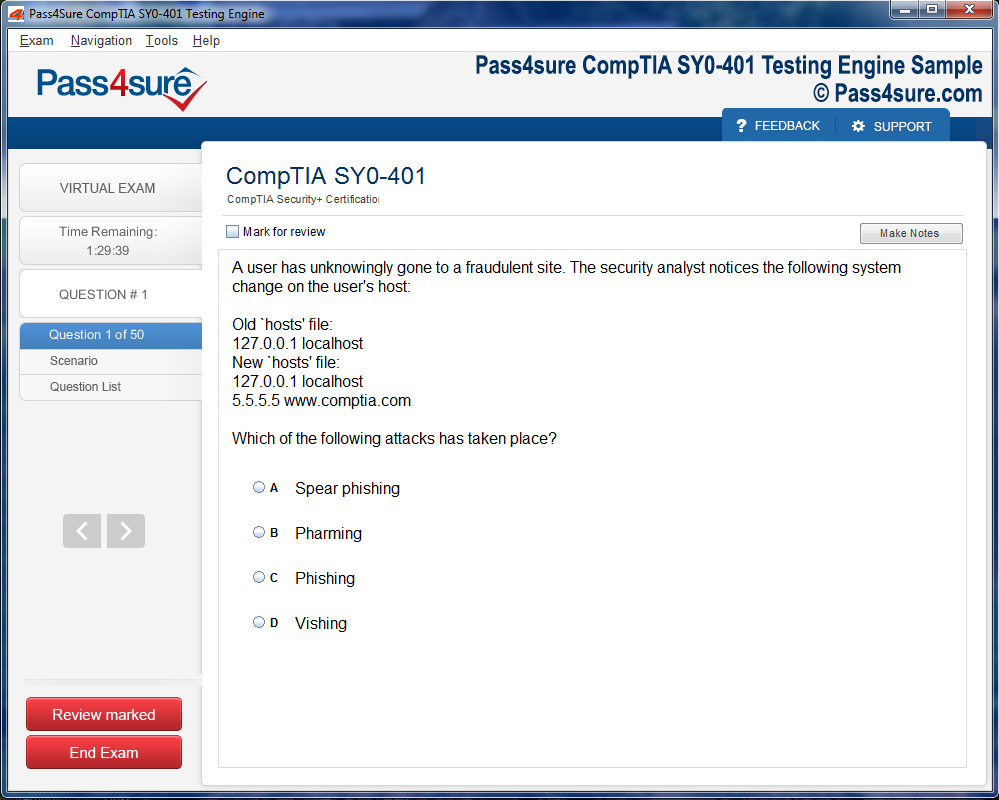
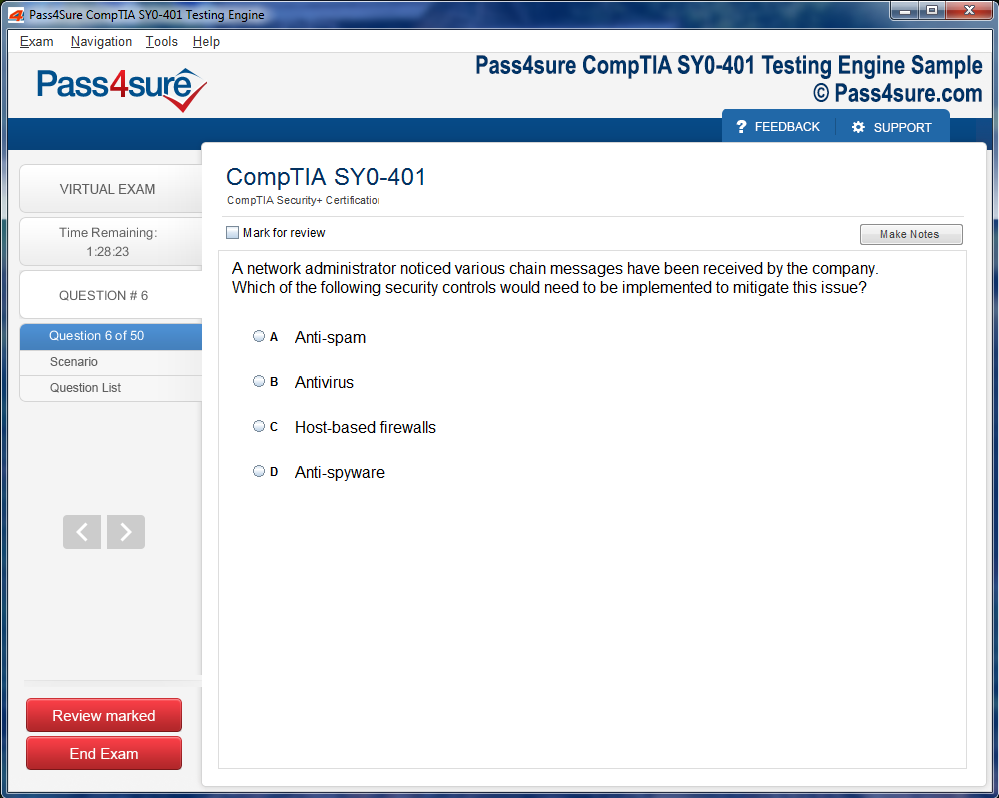
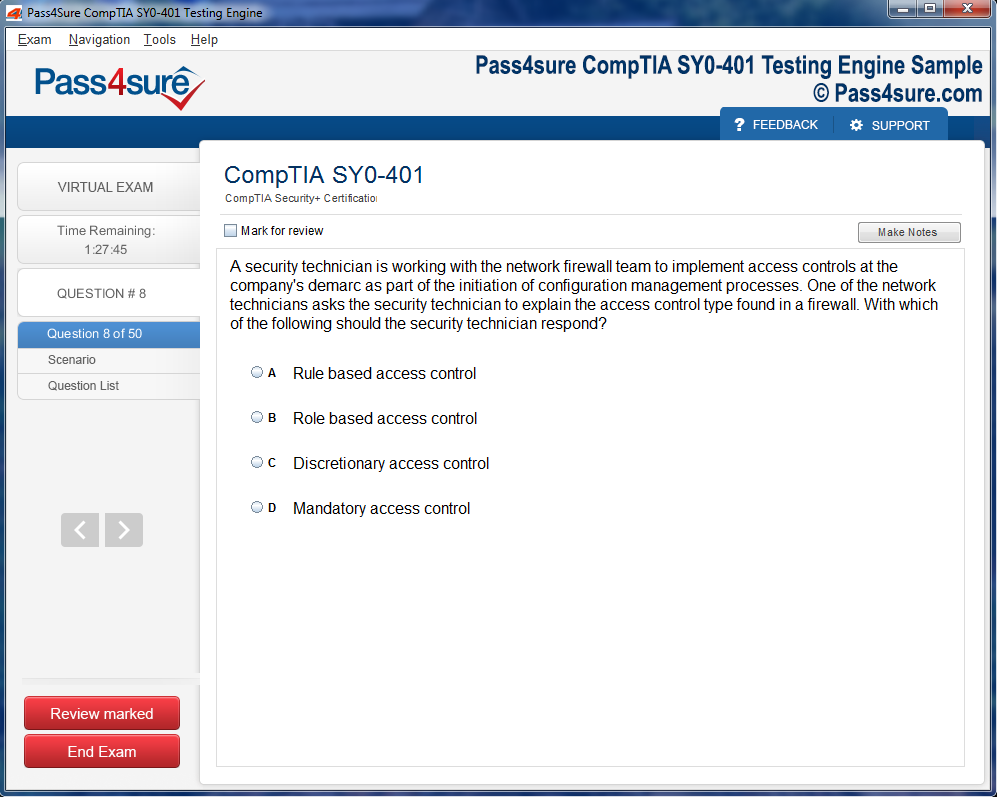
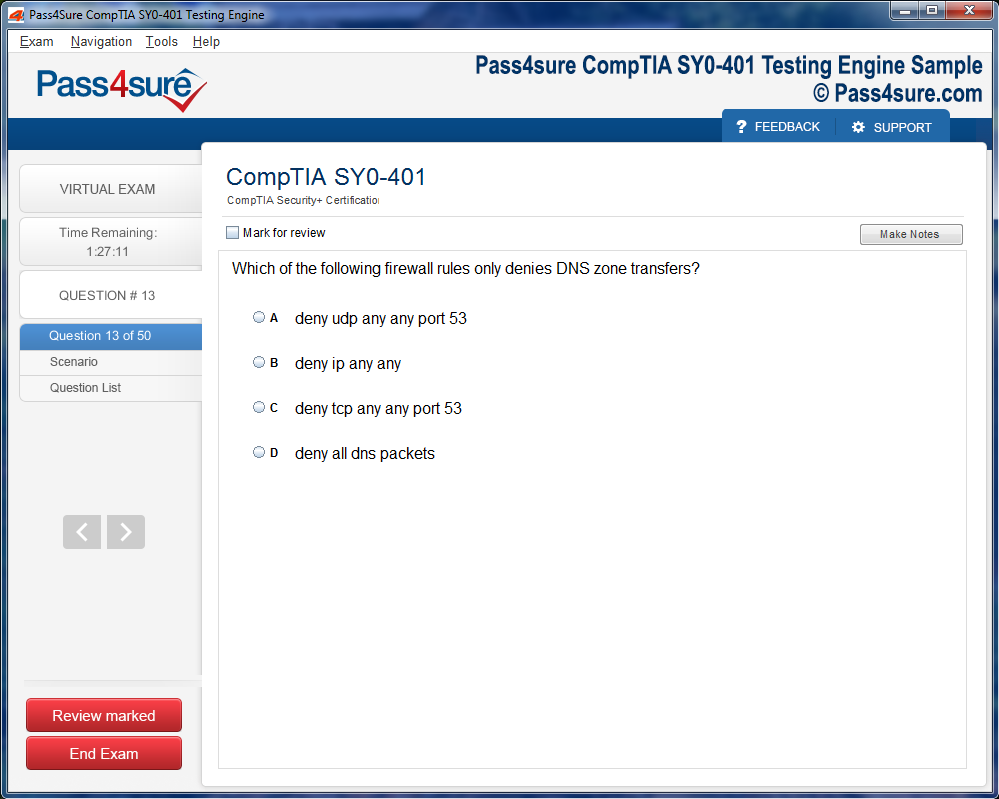
Product Screenshots
Frequently Asked Questions
How does your testing engine works?
Once download and installed on your PC, you can practise test questions, review your questions & answers using two different options 'practice exam' and 'virtual exam'. Virtual Exam - test yourself with exam questions with a time limit, as if you are taking exams in the Prometric or VUE testing centre. Practice exam - review exam questions one by one, see correct answers and explanations.
How can I get the products after purchase?
All products are available for download immediately from your Member's Area. Once you have made the payment, you will be transferred to Member's Area where you can login and download the products you have purchased to your computer.
How long can I use my product? Will it be valid forever?
Pass4sure products have a validity of 90 days from the date of purchase. This means that any updates to the products, including but not limited to new questions, or updates and changes by our editing team, will be automatically downloaded on to computer to make sure that you get latest exam prep materials during those 90 days.
Can I renew my product if when it's expired?
Yes, when the 90 days of your product validity are over, you have the option of renewing your expired products with a 30% discount. This can be done in your Member's Area.
Please note that you will not be able to use the product after it has expired if you don't renew it.
How often are the questions updated?
We always try to provide the latest pool of questions, Updates in the questions depend on the changes in actual pool of questions by different vendors. As soon as we know about the change in the exam question pool we try our best to update the products as fast as possible.
How many computers I can download Pass4sure software on?
You can download the Pass4sure products on the maximum number of 2 (two) computers or devices. If you need to use the software on more than two machines, you can purchase this option separately. Please email sales@pass4sure.com if you need to use more than 5 (five) computers.
What are the system requirements?
Minimum System Requirements:
- Windows XP or newer operating system
- Java Version 8 or newer
- 1+ GHz processor
- 1 GB Ram
- 50 MB available hard disk typically (products may vary)
What operating systems are supported by your Testing Engine software?
Our testing engine is supported by Windows. Andriod and IOS software is currently under development.
Step Up Your Game: Huawei H12-425 Study Guide
Embarking on the odyssey toward the Huawei Certified ICT Professional (HCIP) in Data Center Facility Deployment V2.0 necessitates an intimate cognizance of the certification’s purview. This credential functions as a lodestar for IT practitioners aiming to transcend conventional operational understanding and achieve mastery in sophisticated infrastructural orchestration. Grasping its quintessence catalyzes efficient preparation and positions aspirants to navigate the intricate labyrinth of modern data center ecosystems.
The H12-425 certification delineates a structured framework for professionals intent on validating their prowess in deploying and administering data center facilities. Unlike superficial assessments, this credential probes the substrata of operational mechanics, ensuring that certified individuals possess both pragmatic acumen and theoretical perspicacity.
It encapsulates multiple dimensions, including:
Data Center Infrastructure
An erudite comprehension of data center infrastructure is imperative. Candidates must navigate the labyrinthine interdependencies of physical architecture, environmental contingencies, and redundancy schemas. Understanding cooling topologies, power distribution matrices, and cabling stratagems enables technicians to engineer resilient, high-availability environments. This facet of the certification demands a meticulous appreciation for both macroscopic layouts and microscopic details, intertwining physics, engineering, and logistical foresight.
Deployment Techniques
Deployment mastery extends beyond mere installation; it encompasses a deliberate choreography of configuration, integration, and orchestration. Candidates are expected to elucidate methodologies for modular deployment, virtualization, and automated provisioning. The H12-425 examination tests not only procedural dexterity but also the capacity to troubleshoot emergent anomalies with alacrity, ensuring that data centers remain both operable and scalable.
Operational Management
Operational stewardship forms the sine qua non of sustainable data center management. Certified professionals must exhibit fluency in continuous monitoring, predictive maintenance, and resource optimization. They are required to anticipate latent inefficiencies, implement fault-tolerant mechanisms, and foster operational resilience. The ability to synergize technological insight with managerial strategy distinguishes H12-425 holders as adept custodians of complex infrastructural ecosystems.
Strategic Imperatives Behind Certification
The contemporary technological milieu venerates agility, precision, and scalability. Data centers, as fulcrums of digital enterprise, necessitate personnel who can navigate the multidimensional landscape of deployment and operational governance. H12-425 certification confers legitimacy, signaling to employers a practitioner’s capacity to synthesize architectural sophistication with operational acumen.
Organizations increasingly demand professionals who can not only erect robust physical infrastructures but also anticipate emergent digital exigencies. The certification equips aspirants with heuristics for efficient deployment, environmental mitigation, and energy-conscious design. Consequently, certified individuals are not merely executors of predefined protocols but architects of resilient, future-proofed digital ecosystems.
Pedagogical Approaches for Mastery
Preparation for the H12-425 exam mandates a nuanced amalgamation of didactic study, experiential learning, and cognitive rehearsal. Candidates are encouraged to employ immersive simulation techniques, scenario-based problem-solving, and iterative assessment. The cultivation of expertise in this domain is less about rote memorization and more about fostering an adaptive mindset capable of navigating technological contingencies.
Practical engagement with real-world facilities, augmented by meticulous case analysis, reinforces theoretical knowledge. Aspirants benefit from dissecting complex deployment scenarios, identifying systemic vulnerabilities, and architecting remediation strategies. This iterative cognitive scaffolding ensures that the learner develops not only procedural competence but also strategic foresight.
Core Competencies for H12-425 Aspirants
Candidates must internalize a constellation of competencies that collectively underpin data center excellence. These include:
Environmental Proficiency: Understanding thermodynamics, airflow dynamics, and redundancy principles to optimize cooling and energy efficiency.
Technical Dexterity: Command over installation techniques, cabling schematics, power management, and modular integration.
Analytical Acumen: Capacity to interpret telemetry, identify bottlenecks, and anticipate systemic failures.
Strategic Foresight: Designing infrastructure that accommodates both immediate operational needs and long-term scalability.
Mastery of these competencies signals readiness to navigate the multifaceted exigencies of high-stakes data center management, enhancing professional gravitas.
Emerging Trends in Data Center Deployment
The data center domain is characterized by relentless innovation, demanding that H12-425 aspirants remain conversant with emerging paradigms. Hyperscale architectures, edge computing integration, and AI-driven operational analytics are reshaping deployment strategies. Proficiency in these avant-garde methodologies confers a competitive edge, positioning certified professionals as vanguards of infrastructural evolution.
Adoption of modular and prefabricated data center units has accelerated, emphasizing rapid deployment without compromising resilience. Similarly, sustainability imperatives—ranging from green cooling technologies to energy recuperation systems—require a sophisticated understanding of both technical implementation and ecological impact. H12-425 certification serves as a conduit for navigating these convergent trends with precision and strategic insight.
Leveraging Certification for Career Ascendancy
Possession of the H12-425 credential materially augments a professional trajectory. It signals to stakeholders a rare amalgam of technical acuity, operational prudence, and strategic foresight. Certified practitioners are often earmarked for leadership roles, tasked with orchestrating mission-critical infrastructures and guiding organizations through technological metamorphoses.
The certification facilitates entrée into high-demand sectors, including cloud service provisioning, hyperscale data centers, and enterprise IT infrastructure management. Its recognition underscores the individual’s capacity to harmonize operational exigencies with architectural innovation, thereby amplifying both employability and industry standing.
The Nexus of Knowledge and Practicality
H12-425 certification epitomizes the confluence of theoretical knowledge and pragmatic expertise. Candidates are not merely tested on procedural fluency but on their ability to integrate multifarious dimensions of data center functionality. This nexus—where intellectual acuity meets hands-on dexterity—distinguishes certified professionals from generalist practitioners.
It is this synthesis that underpins the strategic value of certification. Professionals who internalize the interdependencies between environmental controls, deployment protocols, and operational analytics are uniquely equipped to anticipate disruptions, implement preemptive mitigations, and maintain peak operational efficiency.
Preparing for the Examination: A Cognitive Blueprint
Effective preparation for the H12-425 examination demands a structured cognitive blueprint. Candidates benefit from sequential learning modules, progressive scenario simulations, and iterative self-assessment. Employing mnemonic devices, concept mapping, and interleaved practice reinforces retention and enables adaptive problem-solving under examination conditions.
Immersive engagement with simulated environments fosters intuitive understanding, transforming abstract concepts into operational fluency. Aspirants are encouraged to cultivate metacognitive awareness, reflecting on decision-making processes, error patterns, and efficiency heuristics. This approach ensures preparation transcends superficial familiarity, culminating in deep, actionable expertise.
Exam Overview and Structure
Comprehending the intricate architecture of the H12-425 examination is pivotal for aspirants seeking mastery in data center facility deployment. Unlike cursory assessments, this exam evaluates candidates on multifaceted dimensions, demanding both theoretical acuity and pragmatic insight. The examination operates not merely as a litmus test but as an odyssey through the labyrinthine realm of data center design, deployment, and maintenance. Scholars venturing into this domain must cultivate a perspicacious understanding of core principles, alongside agile problem-solving aptitudes, to navigate the rigorous evaluation landscape.
Exam Format
The H12-425 examination is predominantly a multiple-choice format, designed to probe both breadth and depth of expertise. This configuration mandates a meticulous approach to each question, ensuring candidates engage in discerning analysis rather than superficial recollection. The structure encapsulates three cardinal domains:
Data Center Design Principles
The first domain emphasizes conceptual mastery over architectural paradigms intrinsic to data centers. It delves into redundancy matrices, scalability frameworks, and fault-tolerant mechanisms, demanding candidates decipher systemic interdependencies. Mastery here requires more than rote familiarity; it necessitates an intuitive comprehension of how infrastructural variables influence operational resilience and energy efficiency. The questions often challenge candidates to reconcile conflicting priorities, such as optimizing uptime while managing cost constraints.
Installation and Configuration
This section interrogates procedural proficiency, compelling examinees to navigate the complexities of equipment installation, network topology configuration, and systems integration. Candidates must exhibit dexterity in orchestrating sequential deployment steps, ensuring all components—servers, cooling systems, power distribution units—coalesce seamlessly. Precision and procedural fidelity are scrutinized rigorously, as even minor misconfigurations can cascade into systemic vulnerabilities. Practical acumen in this arena is pivotal, as it demonstrates readiness to execute data center deployments in live, high-stakes environments.
Maintenance and Troubleshooting
The final segment concentrates on operational sustainment and anomaly rectification. Candidates confront scenarios necessitating rapid diagnostic acuity, identifying performance degradations, network bottlenecks, and hardware failures. The examination evaluates both analytical and prescriptive competencies—understanding root causes, applying remediation protocols, and anticipating potential recurrence. This domain is emblematic of the exam’s overarching philosophy: theoretical knowledge must converge with pragmatic problem-solving to ensure continuous operational integrity.
Scoring and Passing Criteria
Evaluation is quantified on a numerical continuum ranging from 0 to 1000 points, with a delineated threshold of 600 as the passing benchmark. This metric reflects the exam’s rigorous calibration, ensuring only those possessing a holistic comprehension of data center intricacies succeed. Temporal management is integral; candidates are allocated approximately 90 minutes to navigate the full spectrum of questions. Strategic pacing is essential to prevent cognitive fatigue while maximizing accuracy. Inherent in this temporal constraint is the subtle test of endurance and focus, mirroring real-world pressures encountered during operational oversight of complex data center environments.
Preparation Strategies for H12-425
Strategic preparation underpins successful performance on the H12-425. Candidates must blend scholarly diligence with experiential immersion, cultivating both conceptual clarity and operational familiarity. A singular reliance on memorization is insufficient; rather, aspirants should immerse themselves in case studies, simulation exercises, and iterative problem-solving drills. This multifaceted preparation ensures readiness for the nuanced challenges embedded in the exam’s questions.
Resource Optimization
Effective resource deployment is crucial during exam preparation. Prospective candidates should curate a compendium of study materials, prioritizing those emphasizing systemic principles over procedural minutiae. Analytical guides, whitepapers, and domain-specific schematics serve as invaluable adjuncts to conventional textbooks. Simultaneously, scheduling regular intervals for focused study, supplemented by reflective review sessions, enhances retention and fosters cognitive consolidation of intricate concepts.
Cognitive Techniques for High-Stakes Testing
Exam performance is influenced not solely by knowledge but by cognitive dexterity. Techniques such as active recall, interleaved practice, and metacognitive monitoring can significantly elevate outcomes. Candidates are encouraged to engage in reflective questioning, self-assessment quizzes, and scenario-based simulations, cultivating mental agility to navigate complex problem spaces. Moreover, stress modulation strategies, including controlled breathing and brief cognitive resets, mitigate performance-impairing anxiety during the examination.
Integrating Theoretical and Practical Knowledge
The H12-425 exam accentuates the symbiosis between theoretical understanding and practical application. Aspirants must not only memorize architectural concepts but also extrapolate their implementation in operational scenarios. This integration manifests in questions requiring scenario-based decision-making, where candidates must evaluate trade-offs, anticipate system interactions, and deploy best-practice methodologies. The ability to synthesize knowledge into actionable insight distinguishes proficient candidates from those with superficial familiarity.
Common Pitfalls and Mitigation Strategies
Several recurrent pitfalls compromise candidate performance. Overreliance on memorization, neglect of scenario-based practice, and inadequate time allocation are predominant factors. Mitigation requires deliberate engagement with problem-solving exercises, meticulous time management, and iterative review of both successes and errors. Awareness of these hazards equips candidates with foresight, enabling adaptive strategies to counteract potential examination pitfalls.
Emphasis on Systemic Thinking
Systemic thinking is a recurrent theme within the H12-425 framework. Candidates are evaluated on their capacity to perceive interconnections, anticipate cascading effects, and optimize operational resilience. This perspective transcends linear comprehension, demanding an appreciation of how individual components coalesce into cohesive, resilient data center infrastructures. Exercises in systemic analysis and simulation fortify candidates’ proficiency in this domain.
Adaptive Strategies for Dynamic Questioning
The examination frequently incorporates dynamic questioning, presenting evolving scenarios that require adaptive reasoning. Candidates must remain cognitively flexible, recalibrating solutions in response to new parameters. This test tests both conceptual mastery and strategic agility, emphasizing the importance of versatile problem-solving approaches. Practicing with adaptive simulation tools fosters preparedness for this challenging aspect of the exam.
Core Topics and Study Resources for H12-425 Exam
Embarking upon the labyrinthine odyssey of H12-425 preparation necessitates not merely rote memorization but a meticulous dissection of core topics paired with judicious selection of study resources. The exam, revered for its intricate intertwining of theoretical comprehension and pragmatic acuity, demands that aspirants cultivate both perspicacity and procedural finesse.
Data Center Facility Design
The architecture of data centers is a symphony of structural precision and operational ingenuity. Comprehending data center facility design transcends mere spatial awareness; it encompasses the orchestration of server racks, cabling conduits, airflow stratification, and redundancy schematics. Prospective candidates must develop an acumen for evaluating floor load capacities, modular expansion capabilities, and spatial ergonomics that optimize both accessibility and cooling efficacy.
A nuanced understanding of hot aisle and cold aisle configurations, raised flooring paradigms, and seismic fortification measures is paramount. Candidates should also explore the juxtaposition of traditional brick-and-mortar layouts with emergent pod-based modular designs, which introduce an avant-garde paradigm in scalability and fault tolerance.
Power and Cooling Systems
Electro-thermal dynamics are the sine qua non of data center functionality. Knowledge of electrical and HVAC systems extends beyond superficial voltage and airflow comprehension. The aspirant must fathom power distribution units (PDUs), uninterruptible power supplies (UPS), and redundancy topologies such as N+1, 2N, and N+N configurations.
Equally, the thermodynamic choreography of cooling mechanisms—chillers, CRAC units, in-row cooling, and liquid cooling—demands analytical rigor. Understanding thermal load calculations, airflow resistance, and psychrometric properties fortifies one’s capacity to preempt hotspots and ensure environmental equilibrium. Mastery of these principles is critical, as even marginal miscalculations can precipitate catastrophic system failures.
Network Infrastructure
The neurological framework of a data center lies in its network infrastructure. Aspirants must immerse themselves in the stratified hierarchy of switches, routers, and cabling topologies. Comprehending the interplay between Layer 2 and Layer 3 devices, VLAN segmentation, and routing protocols underpins operational proficiency.
The examination emphasizes both redundancy and latency mitigation, necessitating familiarity with link aggregation, spanning-tree protocols, and dynamic routing algorithms. Moreover, an adept understanding of fiber optic transmission, copper cabling standards, and patch panel configurations is indispensable for ensuring minimal signal degradation and optimal throughput.
Security Measures
Security within a data center is an amalgamation of physical fortification and cybernetic vigilance. Candidates must internalize protocols encompassing biometric access controls, video surveillance integration, intrusion detection systems, and environmental monitoring.
On the cybersecurity frontier, encryption methodologies, firewall architectures, and network segmentation strategies form the bulwark against malevolent incursions. Knowledge of compliance mandates, disaster recovery frameworks, and incident response protocols further elevates an aspirant’s preparedness, creating a holistic security paradigm.
Recommended Study Resources
Navigating the multifaceted landscape of H12-425 necessitates leveraging authoritative study materials and immersive experiential learning. Official Huawei training modules provide the scaffolding for exam comprehension, offering structured elucidation of core topics alongside pragmatic exemplars.
Augmenting these materials with meticulously curated practice examinations enhances cognitive endurance and hones problem-solving acumen. Regular engagement with timed assessments cultivates familiarity with question typologies and evaluative nuances. Concurrently, active participation in study collectives and technical forums fosters dialectical learning, enabling the exchange of esoteric insights, mnemonic techniques, and tactical examination strategies.
Strategic Time Management
Time orchestration is an often-underestimated determinant of success in the H12-425 exam. Delineating study blocks for each core topic and interspersing them with periodic recapitulation sessions promotes retention and cognitive consolidation. Aspirants are encouraged to construct bespoke study matrices, mapping out topic weightings, revision frequencies, and knowledge gaps.
Integration of iterative feedback loops—self-assessment quizzes, peer reviews, and simulated examinations—ensures a dynamic and responsive learning trajectory. Such a disciplined approach mitigates the peril of superficial comprehension and cultivates a profound mastery of both theoretical and applied concepts.
Cognitive Techniques for Retention
Leveraging mnemonic constructs, visualization schemas, and concept mapping can significantly amplify retention of complex data center protocols and architectural principles. Spatial mnemonic devices, for instance, allow candidates to encode airflow pathways or network topologies within memory palaces, facilitating rapid retrieval under exam conditions.
Furthermore, interleaving topics during study sessions—alternating between power systems, cooling strategies, and network infrastructure—enhances cognitive flexibility and strengthens associative learning networks. Sleep hygiene, deliberate rest intervals, and periodic cognitive recalibration are equally essential in sustaining mental acuity over protracted preparation periods.
Application of Practical Knowledge
A theoretical understanding devoid of practical application is insufficient for enduring proficiency. Candidates should endeavor to replicate real-world scenarios, utilizing simulation software or lab environments to configure network topologies, calculate thermal loads, and implement security protocols.
Such experiential learning crystallizes abstract concepts into actionable expertise, cultivating an intuitive grasp of operational interdependencies. By iteratively engaging with both normal and anomalous operational conditions, aspirants develop diagnostic acumen, preemptive troubleshooting skills, and procedural dexterity requisite for the H12-425 examination.
Analytical Approaches to Problem-Solving
The H12-425 exam emphasizes analytical precision, requiring candidates to dissect multifaceted problems with systematic rigor. Employing stepwise reasoning, leveraging cause-and-effect matrices, and applying quantitative analysis methodologies fortify problem-solving capabilities.
Candidates are encouraged to develop heuristic frameworks, such as flowcharts and decision trees, to navigate scenarios encompassing network failures, power outages, or thermal anomalies. Such structured analytical approaches diminish cognitive overload, reduce error susceptibility, and enhance exam performance efficacy.
Continuous Knowledge Augmentation
The realm of data center technologies is in perpetual flux, necessitating ongoing knowledge acquisition. Engaging with emergent research, white papers, and technical bulletins enriches conceptual frameworks and ensures contemporaneity of understanding. Continuous engagement with evolving standards, protocols, and architectural innovations maintains a competitive edge and deepens subject matter proficiency.
Effective Study Strategies
Implementing structured study strategies cultivates cognitive retention and facilitates a more profound comprehension of abstruse subjects. The act of studying is not merely an exercise in rote memorization but an orchestration of cognitive pathways that enhance neural plasticity. Individuals who adopt systematic study techniques often experience a heightened acuity in problem-solving and analytical reasoning.
A pivotal aspect of effective study strategies involves understanding the interplay between attention span, memory consolidation, and the iterative reinforcement of information. Cognitive science reveals that humans retain knowledge more efficaciously when material is approached in layered, repetitive sequences interspersed with periods of reflective pause. This approach mitigates the hazards of cognitive saturation and promotes synaptic potentiation.
Creating a Study Plan
Devising an intricate and meticulously structured study plan constitutes the cornerstone of intellectual mastery. An efficacious study schedule is not merely a chronological arrangement of topics but a dynamic blueprint that interlaces revision, application, and evaluation. Begin by delineating all requisite areas of knowledge, categorizing them according to complexity, interrelatedness, and personal proficiency.
Incorporate temporal allotments that accommodate both intensive focus and restorative intermissions. Cognitive endurance diminishes with prolonged continuous study, making strategically timed breaks indispensable. Techniques such as the Pomodoro method, where concentrated study is alternated with brief respites, optimize mental stamina and fortify information retention.
Additionally, infuse the plan with iterative review cycles. Revisiting concepts at progressively expanding intervals—termed spaced repetition—exponentially enhances long-term retention and reduces the proclivity for information decay. Include varied modalities such as textual analysis, visual schematics, and mnemonic devices to cultivate multisensory encoding of knowledge.
Active Learning Techniques
Active learning embodies an immersive engagement with information, transcending passive reading or listening. It catalyzes cognitive integration by transforming abstract concepts into tangible understanding. The following strategies exemplify active learning and can dramatically amplify study efficacy.
Summarizing Information
Post-study summarization entails condensing complex material into concise renditions articulated in one’s own lexicon. This synthesis requires critical evaluation of salient points, fostering analytical discernment. By distilling information, learners not only reinforce retention but also create portable cognitive frameworks that facilitate rapid recall.
Teaching Others
Pedagogical exchange serves as a formidable reinforcement mechanism. Explaining intricate concepts to peers or even to oneself necessitates clarity of thought and the identification of knowledge lacunae. This process, often termed the protégé effect, consolidates comprehension while simultaneously honing communication acumen.
Hands-On Practice
Experiential application bridges the chasm between theory and practice. Whenever feasible, translate abstract principles into tangible exercises or simulations. This iterative engagement with material cultivates procedural memory and embeds knowledge within a practical context, thereby enhancing cognitive fluidity and adaptive problem-solving.
Utilizing Practice Tests
The strategic utilization of practice tests functions as both a diagnostic and an educational instrument. Frequent exposure to evaluative scenarios elucidates personal proficiency, highlights latent weaknesses, and augments metacognitive awareness. Moreover, practice assessments acclimate learners to the temporal pressures and cognitive demands of formal examinations.
Employing tests in a cyclical fashion—study, test, review, and relearn—maximizes retention and consolidates understanding. Furthermore, the deliberate analysis of erroneous responses cultivates analytical acuity and reinforces the correct cognitive pathways. Integrating progressively challenging questions ensures continuous intellectual growth and precludes stagnation.
Cognitive Optimization Through Environmental Modulation
The physical and psychological environment exerts a profound influence on study efficiency. Factors such as illumination, ambient noise, ergonomics, and air quality directly modulate attention and cognitive endurance. An environment meticulously curated for minimal distraction, adequate comfort, and sufficient sensory stimulation enhances focus and mitigates mental fatigue.
Supplementary environmental interventions may include the use of olfactory cues, such as subtle aromas, to reinforce memory associations, and auditory stimuli like binaural beats to synchronize neural oscillations conducive to concentration. Even minor adjustments in seating posture or desk arrangement can yield measurable gains in cognitive performance.
Incorporating Multimodal Learning
Humans exhibit diverse cognitive predilections, with some thriving through visual stimuli, others through auditory channels, and yet others through kinesthetic engagement. Multimodal learning capitalizes on these variances by integrating multiple sensory pathways. For example, textual content can be complemented with infographics, auditory narration, and tactile engagement through writing or manipulation of objects.
This synesthetic approach reinforces synaptic connections by recruiting disparate neural circuits, thereby enhancing both comprehension and retention. Multimodal learning also fosters resilience against information decay by providing multiple retrieval cues during memory recall.
Time Management and Prioritization
Effective study strategies are inextricably linked to proficient time management and judicious prioritization. Allocating temporal resources according to both task complexity and individual cognitive rhythms ensures optimal productivity. High-priority, cognitively demanding topics should be tackled during peak alertness periods, while less taxing material may occupy lower-energy intervals.
Additionally, the deliberate avoidance of multitasking is critical. Cognitive research underscores that task-switching diminishes working memory efficiency and prolongs the duration required for mastery. Structured scheduling, combined with rigorous focus on singular objectives, cultivates both depth and efficiency in learning.
Leveraging Memory Techniques
Memory augmentation techniques constitute an indispensable component of advanced study methodology. Mnemonics, loci-based visualization, chunking, and associative mapping provide robust scaffolds for the retention of voluminous information. For instance, mnemonic acronyms enable rapid encoding of sequential data, while the method of loci leverages spatial memory for durable recall.
Associative mapping, which involves linking new information to preexisting cognitive structures, promotes meaningful learning rather than superficial memorization. Chunking, or the segmentation of information into digestible units, reduces cognitive load and enhances retrieval fluency. A judicious combination of these strategies can exponentially amplify retention and accessibility of knowledge.
Emotional and Motivational Regulation
Cognitive efficacy is intricately entwined with emotional state and motivational disposition. Anxiety, stress, or diminished confidence can erode memory consolidation and impair attention. Therefore, proactive emotional regulation is paramount. Techniques such as mindfulness meditation, deep breathing exercises, and reflective journaling cultivate emotional equilibrium and enhance cognitive receptivity.
Intrinsic motivation, fueled by curiosity, goal orientation, and self-determined achievement, is more efficacious than extrinsic incentives. Engaging with content in a personally meaningful manner, setting incremental challenges, and celebrating micro-accomplishments fosters sustained engagement and resilience in the learning process.
Integrating Technology and Digital Tools
Digital tools, when judiciously employed, can significantly amplify study efficacy. Interactive learning platforms, spaced-repetition software, and digital flashcards provide adaptive, personalized reinforcement of knowledge. Moreover, analytical tools capable of tracking performance metrics facilitate data-driven refinement of study strategies.
However, technological engagement requires circumspection to avoid distraction. The strategic use of applications that block extraneous notifications, coupled with intentional scheduling of digital study intervals, ensures that technology serves as an enhancer rather than a deterrent to learning.
Test-Taking Tips and Techniques
Navigating the labyrinthine corridors of examination halls requires more than rote memorization; it necessitates a synthesis of perspicacity, composure, and stratagem. Approaching the exam with a deliberate mindset and meticulous preparation can metamorphose anxiety into acumen. Cultivating cognitive elasticity and employing nuanced strategies is quintessential to transmuting potential into tangible achievement.
Time Management
Temporal allocation during examinations is a pivotal fulcrum upon which success pivots. Prioritize questions that resonate with your strengths, thereby accruing early momentum and diminishing psychological encumbrances. Subsequent engagement with formidable questions should be executed with calibrated composure, ensuring that mental resources are judiciously expended. Partition your temporal reservoir into digestible increments, facilitating intermittent recalibration and vigilance against inadvertent haste.
Reading Questions Carefully
Perusal of interrogatives demands acute attentiveness, for the subtlest lexical inflections may subvert comprehension. Scrutinize words such as “not,” “unless,” or “except,” as they often harbor decisive implications that pivot the answer’s orientation. Cultivating a meticulous eye for semantic nuance forestalls inadvertent misinterpretation, allowing the examinee to traverse the question’s labyrinth with precision. Employing annotation or mental highlighting of pivotal terms can further enhance interpretative fidelity.
Eliminating Incorrect Answers
The heuristic of exclusion operates as a formidable instrument in navigating multiple-choice mazes. Systematically excising patently erroneous options heightens the probabilistic advantage of selecting the veracious response. This deductive filtration fosters cognitive clarity and attenuates the clutter of competing hypotheses. Integrating intuition with analytical rigor ensures that each excision is both deliberate and defensible.
Harnessing Mnemonic Devices
Mnemonic scaffolding transforms abstruse information into accessible cognitive constructs. Leveraging acronyms, rhymes, or vivid imagery facilitates retention, enabling rapid retrieval under temporal duress. For instance, associating abstruse concepts with idiosyncratic visualizations can forge neural linkages that resist ephemeral forgetfulness. Mnemonics operate not merely as mnemonic crutches but as cognitive accelerators, enhancing both recall velocity and retention depth.
Strategic Guessing
When certainty falters, a judiciously engineered conjecture can salvage potentially lost points. Strategic guessing transcends randomness; it is predicated on deductive elimination, pattern recognition, and probabilistic assessment. Consider the plausibility of each remaining option in context, weighing semantic congruity and logical coherence before committing to a selection. This methodical approach converts uncertainty into a calculated advantage rather than a liability.
Cognitive Warm-Ups
Priming the mind before engagement enhances acuity and mitigates cognitive inertia. Brief exercises such as mental arithmetic, pattern recognition puzzles, or reading dense material can stimulate neural circuits and promote alertness. Such pre-examination rituals serve as neurological awakenings, fostering an optimal equilibrium between focus, memory retrieval, and analytical agility.
Stress Mitigation Techniques
Examination anxiety is an omnipresent adversary capable of eroding cognitive efficiency. Integrating breath-centric mindfulness, progressive muscular relaxation, or visualization techniques can attenuate physiological tension and mental turbulence. Cultivating an internal locus of control ensures that stress functions as an ally, sharpening focus rather than triggering paralysis. Regular practice of these techniques fortifies resilience, permitting clarity of thought even amidst high-stakes scenarios.
Note-Taking and Organizational Strategies
Meticulous annotation and structured notes facilitate rapid reference and reinforce memory consolidation. Employ hierarchical frameworks, color-coded cues, or symbolic shorthand to distill complex material into digestible units. The act of selective documentation engages active cognition, converting passive observation into durable knowledge networks. Efficient organizational strategies also permit fluid navigation between topics, conserving temporal and cognitive resources during high-pressure evaluation.
Understanding Question Patterns
Examiners often employ recurrent patterns or stylistic idiosyncrasies that reward familiarity. Analyzing past papers or practice questions illuminates these tendencies, enabling anticipatory strategies and targeted preparation. Recognizing the structural nuances of questions transforms passive reading into an interactive dialogue, empowering the examinee to approach each prompt with informed confidence.
Memory Consolidation Techniques
Optimizing memory retention necessitates more than repetition; it demands structured reinforcement. Techniques such as spaced repetition, interleaving, and elaborative interrogation foster synaptic consolidation and enhance long-term retrieval. Engaging multiple cognitive pathways—visual, auditory, and kinesthetic—creates a multifaceted encoding experience, fortifying resistance to mnemonic decay.
Managing Exam Fatigue
Prolonged cognitive exertion precipitates fatigue, undermining analytical precision and decision-making. Strategically timed micro-breaks, hydration, and light physical activity invigorate mental faculties. Micro-restorative interventions, even as brief as thirty seconds of deep breathing or ocular relaxation, can reset attention spans and preserve optimal neurocognitive functioning throughout the exam.
Leveraging Practice Exams
Immersive simulation through practice exams cultivates familiarity, reduces novelty-induced anxiety, and benchmarks progress. Treat practice tests as diagnostic instruments rather than mere rehearsal; analyze errors meticulously and adapt strategies accordingly. Repeated exposure to exam conditions acclimates both mind and body, rendering the actual assessment a more predictable and manageable experience.
Psychological Anchoring Techniques
Anchoring the mind with positive affirmations, ritualized routines, or cognitive cues can stabilize performance under pressure. Establishing reliable psychological anchors reduces susceptibility to erratic emotional fluctuations and cultivates a steady performance baseline. The mind, much like a finely tuned instrument, responds optimally when primed with consistent and affirming preconditions.
Adaptive Answering Strategies
Flexibility in approach is paramount when confronting heterogeneous question formats. Alternate between rapid-response methods for straightforward items and contemplative deliberation for complex challenges. Adaptation ensures that neither time constraints nor cognitive load disproportionately impact performance, fostering equilibrium between speed and accuracy.
Optimizing Exam Environment
The physical and perceptual environment exerts a subtle yet significant influence on cognitive functioning. Ergonomic seating, minimal auditory distractions, and comfortable lighting conditions collectively facilitate sustained concentration. Small adjustments in posture, line-of-sight, or hand positioning can produce appreciable gains in mental endurance and information processing.
Cognitive Load Management
Efficient management of cognitive load prevents overwhelming working memory and preserves executive function. Chunking information, externalizing intermediate calculations, and prioritizing sequential reasoning allow the mind to allocate resources judiciously. Awareness of cognitive bottlenecks enables strategic pacing, preventing the precipitous decline in accuracy often observed under intense mental strain.
Enhancing Focus Through Mindfulness
Sustained attention is both trainable and cultivable through mindfulness practices. Techniques such as focused breathing, body scanning, or attentional anchoring facilitate immersion in the present task. This heightened awareness mitigates distractions, optimizes neural resource allocation, and promotes consistent analytical performance across varied question types.
Interpreting Vague or Ambiguous Questions
Ambiguity in question phrasing can destabilize even well-prepared examinees. Deciphering the intended meaning necessitates careful contextual analysis, syntactic parsing, and logical inference. Identifying core assumptions, underlying premises, and potential traps ensures that responses align with examiner expectations rather than superficial interpretations.
Peer Discussion and Collaborative Learning
Engaging with peers in analytical discourse before examinations stimulates alternative perspectives and reinforces conceptual understanding. Articulating reasoning aloud and challenging assumptions engenders cognitive flexibility and deepens retention. Collaborative learning complements solitary preparation by exposing latent gaps and promoting robust, multidimensional comprehension.
Post-Exam Actions and Career Advancement
Navigating the aftermath of the H12-425 examination necessitates a perspicacious approach, wherein each action undertaken can significantly amplify one’s vocational trajectory. Rather than succumbing to the ephemeral relief of completion, judicious strategizing ensures that the credential manifests tangible career propulsion.
Receiving Your Results
Once the examination has been concluded, candidates are typically confronted with the immediacy of result dissemination. This juncture offers a rare opportunity for introspective analysis. Scrutinizing performance metrics allows candidates to delineate competencies from latent deficiencies. Beyond mere score interpretation, an analytical approach can illuminate patterns in conceptual assimilation, problem-solving acumen, and temporal management. Employing a methodical post-result audit fosters an empirical understanding of personal aptitude and paves the way for refined skill cultivation.
Leveraging the Certification
Possessing the H12-425 credential confers a veritable imprimatur of expertise in data center orchestration. To capitalize on this, one must integrate the certification into professional narratives with strategic finesse. Augmenting curricula vitae and digital professional portfolios with this credential signals specialized acumen to prospective employers. Beyond conventional platforms, embedding certification within targeted professional networks and industry-specific forums catalyzes visibility. Engaging in dialogic dissemination of newly acquired knowledge, through webinars or symposia, further solidifies professional standing and facilitates reciprocal learning with peers.
Continuous Learning
The data center management ecosystem is in perpetual flux, propelled by emergent technologies, evolving protocols, and systemic innovations. Static knowledge, however formidable, attenuates in value over temporal scales. Hence, continuous learning constitutes a sine qua non for sustained vocational relevance. Immersive engagements—ranging from specialized workshops to avant-garde industry conferences—enable practitioners to apprehend nascent paradigms and operational methodologies. Additionally, leveraging asynchronous digital repositories for self-directed exploration enhances cognitive flexibility and ensures adaptability in multifaceted technological milieus. Such proactive intellectual investment functions as both a bulwark and an accelerant in a career marked by dynamism.
Networking and Professional Symbiosis
Post-certification, one’s professional ascent is inextricably linked to the cultivation of strategic relationships. Networking transcends perfunctory acquaintance; it necessitates the creation of symbiotic connections predicated upon mutual edification. Engaging with industry veterans, mentoring peers, and participating in think tanks cultivates a reservoir of knowledge exchange. The resultant confluence of ideas often engenders opportunities for collaborative projects, thought leadership, and innovation incubation. In the competitive arena of data center management, such relational capital frequently surpasses technical proficiency in yielding career-enhancing dividends.
Specialization and Niche Expertise
While the H12-425 exam establishes a foundational mastery, distinguishing oneself often requires the pursuit of niche specialization. Delving into subdomains—such as hyperconverged infrastructure, energy-efficient data center design, or advanced virtualization—renders a practitioner indispensable. Specialization necessitates a dual approach: intensive theoretical study coupled with pragmatic implementation. Engaging in pilot projects, simulations, or cross-functional initiatives within organizational ecosystems not only reinforces conceptual understanding but also manifests demonstrable results that can be leveraged during professional negotiations or leadership aspirancies.
Advanced Data Center Facility Design Concepts
Beyond foundational layout comprehension, data center facility design incorporates avant-garde innovations in modularity and resilience. Hyper-scale data centers, now ubiquitous among enterprises, utilize prefabricated modules that can be deployed with astonishing alacrity. These modules often integrate power, cooling, and network infrastructure in self-contained units, enabling near-instantaneous scaling and minimizing construction-induced latency in operations.
Candidates should also explore the concept of tiered redundancy. The Uptime Institute delineates four tiers (I–IV), each escalating in complexity, fault tolerance, and cost. Mastery of these tiers is not simply theoretical; it requires an understanding of how design decisions—such as dual-powered equipment, bypass pathways, and geographic dispersion—impact operational continuity and disaster recovery capabilities.
Spatial ergonomics, often overlooked, plays a critical role. Hot aisle/cold aisle containment systems reduce recirculation of heated air and improve cooling efficiency by up to 20–40%. Aspirants should study both passive containment (physical barriers) and active containment (pressurized airflow systems) to optimize thermal management strategies. Coupled with precision airflow monitoring sensors, these systems form a nexus of intelligent environmental control.
Electrical Systems: Nuanced Comprehension
Electricity in data centers is not merely a supply of electrons but a symphony of orchestration between generation, distribution, and failover. Aspirants must dissect load-balancing strategies that ensure the uniform distribution of electrical loads across redundant circuits. This entails an understanding of single-phase versus three-phase power, voltage drop calculations, and the integration of transformers and switchgear.
Redundancy topologies such as 2N+1 or N+N are critical to maintaining uptime. For instance, a 2N configuration involves two independent power paths, each capable of supporting the entire load. Understanding these architectures requires a grasp of potential failure modes, circuit monitoring, and predictive maintenance paradigms.
Aspirants should also familiarize themselves with harmonics analysis and power factor correction. Harmonics, often generated by non-linear loads, can cause overheating, equipment degradation, and inefficiency. Mitigating them involves using filters, capacitors, and active monitoring—a subtle yet high-impact consideration for the H12-425 exam.
Cooling Systems: Thermodynamic Mastery
HVAC systems in data centers are complex assemblies of fluid dynamics, heat transfer, and thermodynamic principles. Advanced aspirants must understand psychrometrics, the study of air-water vapor mixtures, to accurately calculate humidity, dew point, and sensible vs latent heat loads.
Liquid cooling systems, increasingly prevalent in hyper-dense server environments, introduce new paradigms. Direct-to-chip and immersion cooling reduce energy consumption while enhancing thermal dissipation efficiency. Candidates should study the trade-offs of water-based vs dielectric fluid cooling, including leak mitigation, thermal conductivity, and maintenance implications.
Chiller plant optimization represents another layer of complexity. Variable-speed pumps, economizers, and thermal storage systems can significantly reduce energy footprints. Knowledge of PUE (Power Usage Effectiveness) metrics and the methods to optimize them is vital, as exam scenarios often incorporate energy-efficiency calculations.
Networking Intricacies
Network infrastructure is the neural network of a data center, transmitting data with precision and minimal latency. Candidates should explore multi-tier architectures, including spine-leaf topologies, which reduce bottlenecks in high-performance environments. A deep understanding of network segmentation, VLANs, and VXLAN overlays enables better traffic isolation and resilience.
Redundancy strategies like link aggregation, Equal-Cost Multi-Path (ECMP) routing, and BGP failover configurations ensure uninterrupted connectivity. Aspirants should also examine cabling media—single-mode versus multi-mode fiber, OM4 vs OM5 standards—and their respective attenuation properties and distance limitations.
Security integration within networking is equally crucial. Implementing ACLs (Access Control Lists), firewall segmentation, and network monitoring through SNMP or NetFlow provides a dual layer of operational and protective oversight, merging the disciplines of networking and cybersecurity.
Cyber-Physical Security Paradigms
Security measures in modern data centers have evolved from rudimentary locks to cyber-physical symbiosis. Biometric verification, retina scanning, and RFID-controlled ingress are often supplemented with AI-driven behavioral anomaly detection for personnel monitoring.
Cybersecurity, however, forms the invisible layer protecting the data center’s core. Encryption protocols, VPN tunnels, zero-trust network access (ZTNA), and intrusion detection/prevention systems (IDS/IPS) are integral. Candidates should grasp encryption standards (AES, RSA, ECC) and how they are applied in both storage and transmission contexts.
Understanding compliance frameworks—ISO 27001, GDPR, HIPAA—is critical. These standards dictate operational behavior, audit readiness, and incident response protocols. Awareness of regulatory intersections allows aspirants to anticipate exam scenarios requiring both technical and procedural reasoning.
Strategic Resource Utilization
Optimizing study resources is as critical as mastering core topics. Official Huawei training materials provide structured, modular knowledge; however, aspirants gain the greatest advantage when these resources are coupled with analytical note-taking, mind maps, and self-generated question banks.
Practice examinations, particularly those employing adaptive questioning algorithms, simulate real-time cognitive stress and identify weak points. Candidates should systematically review incorrect responses to internalize reasoning errors and reinforce conceptual frameworks.
Peer discussion forums and study groups offer intangible benefits. Exposure to diverse problem-solving approaches, mnemonic strategies, and scenario-based interpretations enhances depth of understanding. Aspirants benefit from articulating their reasoning to others, reinforcing neural encoding of complex material.
Temporal Mastery and Cognitive Pacing
Effective preparation mandates meticulous temporal allocation. The aspirant must balance intensive focus intervals with restorative breaks to leverage the spacing effect, which enhances long-term retention. Employing methods such as Pomodoro sessions, interleaved study blocks, and progressive topic rotation ensures both comprehensive coverage and cognitive freshness.
Self-assessment should be cyclical. Weekly diagnostic tests, followed by targeted remedial sessions, foster iterative knowledge consolidation. Candidates should track progression metrics—topic completion percentages, error frequency, and speed of problem-solving—to inform adaptive study planning.
Applied Simulation and Scenario Analysis
Simulation-based learning bridges theory and praxis. Utilizing virtualized environments to emulate data center configurations allows candidates to enact problem-solving under near-authentic conditions. For example, constructing a redundant power topology, integrating cooling systems, or implementing security protocols in a sandboxed lab consolidates both procedural knowledge and analytical reasoning.
Scenario analysis, wherein aspirants predict outcomes of operational anomalies (e.g., UPS failure, network loop, HVAC malfunction), cultivates anticipatory thinking. Developing contingency matrices and action hierarchies equips aspirants with structured, high-confidence responses for both exam questions and real-world applications.
Advanced Problem-Solving Techniques
The H12-425 exam demands cognitive dexterity, requiring the integration of multiple domains into coherent solutions. Candidates should leverage flowcharts, decision matrices, and root-cause analysis methods to dissect intricate scenarios. Employing these tools transforms abstract challenges into tractable tasks, mitigating stress-induced errors.
Heuristics, derived from prior experience, guide rapid decision-making. For example, recognizing patterns of thermal hotspots in modular configurations or network congestion loops enables immediate corrective reasoning without exhaustive computation. These high-level cognitive shortcuts are particularly useful in time-constrained exam conditions.
Knowledge Expansion and Future-Proofing
The data center domain is in perpetual evolution, driven by cloud proliferation, AI workloads, and green energy initiatives. Aspirants should engage with emerging standards, such as liquid-immersion cooling protocols, AI-driven predictive maintenance, and quantum-safe encryption techniques. Keeping abreast of technological advances ensures that knowledge remains both current and operationally relevant.
Incorporating insights from white papers, technical bulletins, and cross-disciplinary research enhances conceptual breadth. This holistic approach not only prepares candidates for the H12-425 exam but also cultivates a mindset of continuous improvement, essential for long-term professional competence.
Integration of Multi-Domain Knowledge
True mastery is achieved when candidates integrate insights across architecture, electrical systems, cooling, networking, and security. For instance, an airflow design may necessitate modifications in power distribution to accommodate cooling equipment, which in turn impacts redundancy planning. Recognizing these interdependencies transforms fragmented knowledge into actionable, systemic expertise.
The ability to synthesize multi-domain concepts is often tested through complex scenario-based questions in the H12-425 exam. Candidates must evaluate trade-offs, anticipate cascading effects, and propose optimized configurations. This form of integrative thinking is both cognitively demanding and highly distinguishing.
Adaptive Metacognition in Learning
Metacognition, the awareness and regulation of one’s cognitive processes, constitutes a linchpin of efficacious study. Learners who cultivate adaptive metacognition can strategically monitor comprehension, detect knowledge lacunae, and modulate study techniques to optimize retention.
Self-questioning is an instrumental metacognitive strategy. By interrogating the material with queries such as “How does this concept interrelate with previous knowledge?” or “What underlying assumptions exist?”, learners transition from passive absorption to analytical synthesis. Moreover, reflective journaling of cognitive successes and failures promotes insight into habitual errors, allowing for recalibration of study methodologies.
Adaptive metacognition also encompasses the iterative modification of strategies. For instance, recognizing that visual schematics enhance retention for one topic while textual summaries prove more efficacious for another enables a dynamic, customized approach. This self-directed adaptability fosters intellectual agility and deep comprehension.
Cognitive Load Management
Cognitive load, the total amount of mental effort expended during learning, is a critical determinant of study efficacy. Exceeding optimal load leads to cognitive saturation, diminished working memory efficiency, and impaired retention. Effective study techniques involve both the measurement and modulation of cognitive load.
Segmenting information into hierarchical layers, starting with foundational concepts and progressing toward intricate interconnections, prevents cognitive overwhelm. Similarly, incorporating micro-reviews after each segment reinforces neural encoding while minimizing interference. Variegated encoding, in which knowledge is represented through diverse modalities, further alleviates excessive load by distributing processing across multiple neural pathways.
Incorporating metacognitive checkpoints within study sessions—brief pauses to evaluate comprehension—enables learners to recalibrate effort dynamically. This conscious modulation of cognitive load ensures that the study remains productive and intellectually sustainable.
Interleaved Practice
Interleaving, the deliberate alternation of related but distinct topics, enhances conceptual understanding and problem-solving acumen. Unlike blocked practice, where a single topic is mastered in isolation, interleaved practice fosters discrimination between similar concepts, facilitating flexible retrieval and adaptive application.
For example, in mathematics, alternating between algebraic manipulations, geometry proofs, and statistical problems within a single session encourages learners to recognize underlying principles rather than rely on rote procedures. Interleaving also enhances metacognitive awareness, as learners must continually evaluate the applicability of previous strategies in new contexts.
Empirical research demonstrates that interleaved practice produces long-term retention gains, even if initial performance appears slower. This technique underscores the paradoxical truth that optimal learning often requires grappling with increased cognitive challenge.
Distributed Learning and Temporal Spacing
Distributed learning, also termed spaced repetition, exploits the temporal dimension of memory consolidation. By revisiting information at strategically expanding intervals, learners leverage the brain’s natural forgetting curve to reinforce durable retention. Immediate repetition solidifies short-term memory, while spaced retrieval strengthens long-term encoding.
Digital platforms facilitate distributed learning by algorithmically optimizing intervals based on individual performance metrics. However, even analog approaches—such as physical flashcards or iterative revision schedules—can produce significant retention benefits when executed with consistency.
Temporal spacing also synergizes with sleep cycles, as research indicates that memory consolidation is significantly enhanced during slow-wave and REM sleep stages. Strategically aligning study sessions with circadian rhythms and sleep periods can exponentially amplify cognitive retention.
Cognitive Anchoring Through Analogy
Analogical reasoning, the process of mapping knowledge from familiar contexts to novel situations, serves as a potent cognitive anchor. Analogies enable learners to integrate new information into preexisting cognitive schemas, thereby accelerating comprehension and retention.
For instance, conceptualizing electrical circuits as water flow systems provides tangible analogical scaffolding for abstract principles. Similarly, likening organizational structures in management studies to ecological hierarchies can elucidate complex relational dynamics. Analogical thinking not only facilitates understanding but also fosters creative problem-solving by encouraging cross-domain synthesis.
Effective analogical learning requires discernment; superficial or overly simplistic analogies may engender misconceptions. Optimal analogical reasoning balances conceptual fidelity with cognitive accessibility, ensuring that the analogy illuminates rather than obfuscates.
Emotionally Intelligent Study Practices
Emotional intelligence, the capacity to recognize, regulate, and utilize emotions constructively, significantly influences cognitive performance. High emotional intelligence mitigates stress, enhances focus, and fortifies intrinsic motivation.
In practice, learners can cultivate emotional intelligence by monitoring affective states during study sessions. Experiencing frustration when confronting challenging material should prompt adaptive strategies—short breaks, positive self-talk, or micro-goal reorientation—rather than disengagement. Likewise, celebrating incremental successes reinforces positive emotional feedback loops, sustaining motivation over extended periods.
Integrating mindfulness techniques, such as focused breathing or guided meditation, attenuates cognitive interference from extraneous anxieties. This emotional regulation not only preserves working memory capacity but also primes the neural substrate for efficient information consolidation.
The Science of Multisensory Encoding
Multisensory encoding exploits the principle that information processed through multiple sensory modalities is more robustly retained. Humans exhibit heterogeneous sensory proclivities; therefore, integrating visual, auditory, and kinesthetic channels maximizes the likelihood of durable retention.
Visual learners benefit from infographics, concept maps, and color-coded annotations. Auditory learners excel when reading aloud, engaging with podcasts, or participating in discussions. Kinesthetic learners achieve deeper understanding through simulation, model manipulation, or gestural enactment of concepts.
Combining modalities produces synergistic effects. For example, reading a passage, annotating it visually, and then teaching it aloud engages distributed neural circuits, reinforcing synaptic connectivity. Such strategies transform passive reception into active encoding, thereby enhancing both comprehension and retrieval.
Sleep and Memory Consolidation
Sleep exerts an indispensable role in memory consolidation and cognitive optimization. During slow-wave sleep, hippocampal-neocortical interactions facilitate the stabilization of declarative memory. REM sleep, in contrast, supports the integration of procedural memory and creative problem-solving.
Optimal study strategies align intensive learning sessions with subsequent sleep periods. Naps after focused study, known as “power consolidation,” can substantially enhance memory encoding. Conversely, sleep deprivation impairs executive function, reduces attentional control, and hinders long-term retention. Recognizing the symbiotic relationship between sleep and study efficacy is critical for sustained cognitive performance.
Nutritional Modulation for Cognitive Enhancement
Dietary choices exert a profound influence on cognitive performance. Nutrients such as omega-3 fatty acids, flavonoids, and polyphenols bolster synaptic plasticity and neurogenesis. Hydration maintains neurotransmitter balance, enhances attentional stability, and reduces mental fatigue.
Conversely, high glycemic load meals can precipitate energy crashes, impairing focus and executive function. Strategic nutritional planning—such as small, frequent meals with complex carbohydrates, lean proteins, and micronutrient-dense fruits and vegetables—optimizes metabolic support for sustained cognitive engagement. Integrating these considerations into a study regimen can produce tangible gains in attentional endurance and memory consolidation.
Mind Mapping for Cognitive Synthesis
Mind mapping, the visualization of hierarchical and associative relationships among concepts, is a potent tool for cognitive synthesis. By spatially organizing information, learners externalize neural representations, enabling pattern recognition, integration, and retrieval.
Effective mind maps employ branching structures, color differentiation, and symbolic annotations to encode relational nuances. For instance, complex biochemical pathways or historical event sequences can be distilled into interconnected visual schemas, facilitating both memorization and analytical interpretation. Mind mapping transforms fragmented information into coherent cognitive networks, thereby enhancing intellectual fluency.
Gamification and Cognitive Motivation
Gamification, the integration of game principles into study routines, enhances motivation, engagement, and retention. Techniques include point systems, achievement badges, progress tracking, and competitive elements with peers or oneself.
The psychological mechanisms underlying gamification include reinforcement learning, intrinsic motivation, and dopaminergic reward pathways. By framing the study as a dynamic, goal-oriented challenge, learners experience heightened focus, reduced procrastination, and increased persistence. Digital platforms can facilitate gamified learning, but even analog approaches—such as self-reward systems or study competitions—produce comparable motivational benefits.
Cognitive Resilience Through Reflection
Reflective practice consolidates knowledge, strengthens metacognitive awareness, and cultivates cognitive resilience. Post-study reflection involves evaluating not only what was learned but how it was learned, identifying strategies that were effective, and noting areas for improvement.
Journaling reflections promotes iterative learning cycles, while oral recitation or discussion with peers fosters critical evaluation and synthesis. Over time, reflective practices enhance adaptability, enabling learners to navigate increasingly complex intellectual challenges with confidence and efficiency.
Strategic Use of Retrieval Practice
Retrieval practice, the deliberate act of recalling information without external prompts, is a cornerstone of durable learning. Unlike passive review, retrieval strengthens neural pathways and enhances long-term memory accessibility.
Effective retrieval strategies include self-testing, flashcards, and essay-style recall exercises. Varying the context and modality of retrieval—such as alternating written, oral, and conceptual prompts—further reinforces flexible application. Importantly, errors during retrieval are not detrimental; instead, they create corrective feedback loops that consolidate accurate knowledge.
Pre-Exam Cognitive Priming
Before even stepping into the examination venue, mental priming can drastically influence performance. Cognitive priming involves activating relevant neural pathways through subtle exercises, such as rapid-fire recall, mental visualization of complex processes, or interleaved problem-solving drills. By stimulating these circuits, examinees prepare their minds for high-load cognitive operations, effectively converting pre-exam nervous energy into enhanced focus. Rehearsing mental retrieval in advance diminishes the latency of recognition during actual assessments.
Interleaved Practice for Long-Term Retention
Traditional rote memorization often leads to ephemeral retention, vulnerable to rapid decay. Interleaved practice, which involves alternating between disparate topics and question types, strengthens neural associations and fortifies adaptive retrieval. For instance, alternating between conceptual physics problems and linguistic analysis ensures that memory traces are diversified and resilient. This method cultivates cognitive agility, allowing rapid context switching without compromise in accuracy.
The Science of Spaced Repetition
Spaced repetition leverages the psychological principle of diminishing retrieval intervals to consolidate information into long-term memory. Rather than intensive cramming, examinees review material at strategically increasing intervals. This technique reduces the risk of cognitive saturation, optimizes synaptic consolidation, and ensures that even low-frequency information remains accessible during critical moments of the exam. Integrating digital flashcards or manual index-card systems enhances both engagement and retrieval fidelity.
Cognitive Anchoring Through Mental Imagery
Creating vivid mental imagery can anchor abstract concepts to concrete sensory experiences. Associating a biochemical pathway with a kaleidoscopic visual, or a historical timeline with a sequence of spatial locations, fosters robust mnemonic pathways. The mind, predisposed to visual stimuli, more readily encodes and recalls information when it is represented as an interactive, perceptual tableau. These cognitive anchors operate as mental scaffolds, reducing the cognitive load during intensive examinations.
Metacognitive Reflection
Metacognition, the awareness of one’s own thinking processes, provides a meta-strategic layer for examination preparation. Periodic reflection on strengths, weaknesses, and habitual errors allows adaptive calibration of study and test-taking approaches. Maintaining a reflective journal detailing problem-solving strategies, recurring pitfalls, and time management efficacy reinforces intentional learning and ensures continuous improvement. This practice converts passive preparation into an iterative cycle of performance optimization.
Environmental Optimization for Cognitive Efficiency
The physical environment exerts a subtle yet profound influence on cognitive throughput. Ergonomic seating, unobtrusive lighting, and minimal auditory interference create conditions conducive to sustained attention. Even olfactory stimuli, such as mild peppermint or citrus aromas, have been associated with enhanced alertness and memory performance. Examinees should experiment with sensory modulation during practice sessions to identify environmental cues that maximize focus and reduce distractibility.
Nutritional Strategies for Mental Endurance
Cognitive stamina is closely tied to nutritional intake. Foods rich in omega-3 fatty acids, complex carbohydrates, and antioxidants support neural function and maintain glucose levels critical for sustained concentration. Hydration is equally vital, as even mild dehydration can impair working memory and attention. Incorporating light, easily digestible snacks before and during examinations prevents cognitive dips, while avoiding high-glycemic foods mitigates rapid energy crashes.
Micro-Routines for Psychological Consistency
Establishing micro-routines—brief, repeatable pre-exam rituals—can anchor psychological states and reduce performance variability. Techniques may include a short sequence of stretching, deep breathing, and self-affirmations before each assessment. These micro-routines prime the mind, inducing a state of anticipatory calm that reduces anxiety-induced cognitive interference. The consistency of these rituals conditions the brain to enter an optimized cognitive mode automatically.
Cognitive Load Distribution
Managing cognitive load is crucial to preventing working memory saturation. Chunking complex problems into discrete sub-tasks allows mental resources to be allocated efficiently. For example, multi-step mathematical or logical reasoning problems can be segmented into identifiable modules, each addressed sequentially. Externalizing intermediate steps through notes or sketches further offloads memory demands, preserving mental energy for higher-order problem-solving.
Strategic Question Sequencing
The order in which questions are tackled can influence overall performance. Beginning with familiar or less cognitively demanding questions allows early accumulation of points, instills confidence, and minimizes decision fatigue. More complex or ambiguous questions should be approached later, once mental acuity is fully engaged and anxiety levels have subsided. Strategic sequencing optimizes cognitive efficiency and enhances error detection under pressure.
Mnemonic Expansion Through Loci Techniques
The method of loci, an ancient mnemonic strategy, involves associating information with specific spatial locations within a familiar environment. By mentally “walking” through these loci during recall, examinees can access sequential information in a structured and retrievable format. This method is particularly effective for ordered lists, sequential processes, or multi-step problem solutions, providing a spatial scaffold for otherwise abstract material.
Advanced Visualization for Problem Solving
Beyond memorization, visualization can aid complex problem-solving. Mentally simulating physical systems, mathematical graphs, or abstract models allows the mind to predict outcomes, identify constraints, and test hypothetical solutions without physical execution. This cognitive rehearsal enhances pattern recognition, reduces error rates, and accelerates the transition from comprehension to application.
Neuropsychological Techniques for Anxiety Modulation
Anxiety, if unmanaged, can inhibit prefrontal cortex function, impairing working memory and decision-making. Neuropsychological interventions, such as paced diaphragmatic breathing, biofeedback, or guided imagery, modulate autonomic responses, restoring prefrontal efficiency. Training these techniques before examinations ensures that stress transforms into heightened arousal rather than cognitive disruption.
Adaptive Memory Encoding
Encoding information adaptively—by integrating semantic, emotional, and procedural contexts—enhances long-term retrieval. For example, linking a historical fact to a personal anecdote, a visual cue, or an emotional resonance creates multiple retrieval pathways. Adaptive encoding converts rote memorization into meaningful knowledge, making recall faster, more accurate, and less susceptible to interference from extraneous stressors.
Exam Simulation for Neural Conditioning
Rehearsal under simulated examination conditions acclimates both mind and body to high-pressure cognitive environments. Timed practice, realistic question complexity, and environmental mimicry train neural circuits to maintain focus and resilience under stress. These simulations allow examinees to anticipate fatigue, refine pacing strategies, and internalize optimal stress-response mechanisms.
Leveraging Analytical Heuristics
Heuristics, cognitive shortcuts derived from experience, can streamline problem-solving under time constraints. Techniques such as pattern recognition, elimination strategies, or analogical reasoning reduce computational overhead, allowing the brain to allocate resources to more complex or ambiguous tasks. When combined with reflective analysis, heuristics become powerful tools rather than sources of error.
Cognitive Flexibility in Dynamic Testing Scenarios
Examinations often present unforeseen challenges, requiring rapid adaptation. Cognitive flexibility—the ability to switch strategies, reframe problems, and adjust hypotheses—is essential for maintaining performance under variability. Exercises that promote flexible thinking, such as cross-disciplinary problem-solving or creative reasoning tasks, prepare the mind to navigate uncertainty without succumbing to rigidity or panic.
Strategic Pacing and Energy Management
Pacing is both a temporal and cognitive exercise. Rapid engagement with straightforward questions conserves mental energy for intricate or multi-layered items. Awareness of personal cognitive rhythms—recognizing peak concentration periods and natural dips—allows strategic allocation of effort. Energy management, through brief mental resets or physical micro-movements, preserves sustained attention across extended examination durations.
Analytical Error Tracking
Post-practice error analysis reveals patterns that inform targeted remediation. Tracking errors by type, cognitive domain, or temporal pressure identifies latent weaknesses that may recur during the actual examination. Systematic documentation and iterative correction reinforce metacognition and prevent repetitive mistakes, converting errors into potent learning catalysts.
Multi-Sensory Learning Integration
Engaging multiple sensory modalities during preparation enhances memory encoding and retention. Incorporating visual diagrams, auditory mnemonics, tactile manipulations, and kinesthetic activities creates rich, interconnected neural pathways. Multi-sensory integration strengthens recall under stress, as the brain can access diverse retrieval routes when primary memory channels are inhibited.
Cognitive Resilience Under Fatigue
Extended cognitive effort invariably produces fatigue, threatening accuracy and strategic thinking. Techniques to bolster resilience include periodic cognitive micro-breaks, hydration, and brief physical activation to restore circulation. Micro-restorative strategies, such as focused breathing, ocular relaxation, or postural shifts, reinvigorate attention and sustain mental endurance for the entirety of the examination.
Dynamic Review Techniques
Effective review balances breadth and depth. Initial scanning of all questions identifies key areas of strength and potential traps, while targeted deep dives into ambiguous or complex items ensure accuracy. Dynamic review involves iterative cycles: first pass for rapid responses, subsequent passes for refinement and cross-verification, and final pass for error correction. This layered approach maximizes efficiency and reduces oversight.
The Role of Positive Self-Talk
Internal dialogue profoundly influences performance. Positive self-talk reinforces confidence, diminishes anxiety, and sustains motivation. Phrases emphasizing competence, preparedness, and past success counteract the paralytic effects of doubt. Consistent practice of affirmative cognition fortifies psychological resilience, transforming negative rumination into productive focus.
Temporal Awareness and Clock Management
Examinees must maintain acute temporal awareness, balancing time spent per question with overall pacing objectives. Visual or mental checkpoints allow recalibration, preventing overinvestment in singular items at the expense of others. Developing an intuitive sense of temporal allocation through practice enhances both efficiency and confidence during the actual examination.
High-Yield Focused Revision
Targeting revision toward high-yield concepts—the topics most frequently tested or conceptually foundational—optimizes study efficiency. By concentrating on areas of maximal impact, examinees consolidate critical knowledge while minimizing cognitive saturation. High-yield focus, combined with spaced repetition and active recall, creates a robust scaffold of exam-relevant expertise.
Conclusion
Abstract reasoning underpins complex problem-solving across disciplines. Exercises in pattern identification, logical inference, and hypothetical analysis cultivate mental agility. By challenging the mind to perceive relationships beyond surface-level information, examinees develop a flexible, conceptual framework that enables rapid and accurate responses to unfamiliar or ambiguous questions.
Top Huawei Exams
- H12-811_V2.0 - HCIA-Datacom V2.0
- H12-821 - HCIP-Datacom-Core Technology V1.0
- H13-611 - HCIA-Storage
- H12-811 - HCIA-Datacom V1.0
- H13-624_V5.5 - HCIP-Storage V5.5
- H19-301 - Huawei Certified Pre-sales Associate-IP Network(Datacom)-ENU
- H19-308 - HCSA-Presales-Storage V4.0
- H19-101_V6.0 - HCSA-Sales-IP Network V6.0
- H12-831 - HCIP-Datacom-Advanced Routing & Switching Technology
- H35-210_V2.5 - HCIA-Access V2.5
- H19-338_V3.0 - HCSP-Presales-Storage V3.0
- H13-629 - HCIE-Storage
- H19-401_V2.0 - HCSP-Presales-Campus Network Planning and Design V2.0
- H13-624 - HCIP-Storage V5.0
- H13-821_V3.5 - HCIP-Cloud Service Solutions Architect V3.5
- H12-891 - HCIE-Datacom
- H12-711_V4.0 - HCIA-Security V4.0
- H19-110_V2.0 - HCSA-Sales-Storage V2.0
- H11-851 - HCNA-VC (Huawei Certified Network Associate - Video Conference)
- H12-841_V1.5 - HCIP-Datacom-Campus Network Planning and Deployment V1.5
- H12-323_V2.0 - HCIP-WLAN V2.0
- H13-811_V2.2 - HCIA-Cloud Service V2.2
- H11-851_V4.0 - HCIA-Collaboration V4.0
- H35-651_V1.0 - HCIP-5G-Core V1.0
- H12-351 - HCIE-WLAN (Written) V1.0