

Exam Code: H12-223
Exam Name: HCNP-R&S-IENP (Huawei Certified Network Professional-Improving Enterprise Network Performance)
Certification Provider: Huawei
Corresponding Certification: HCNP-R&S
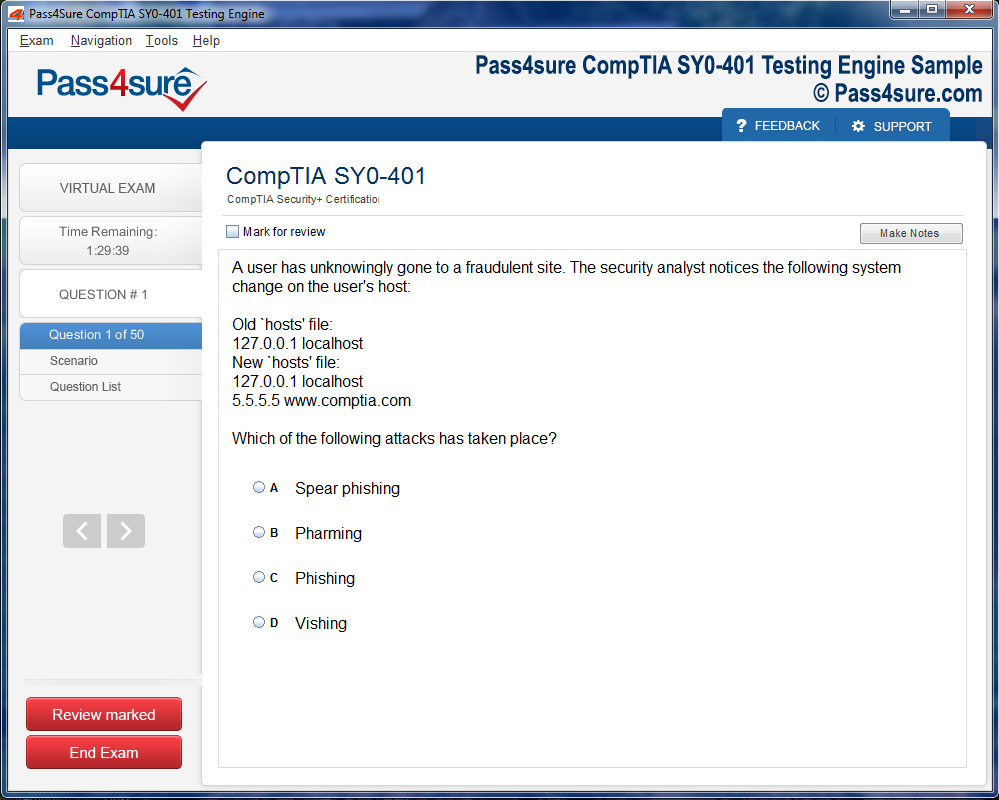
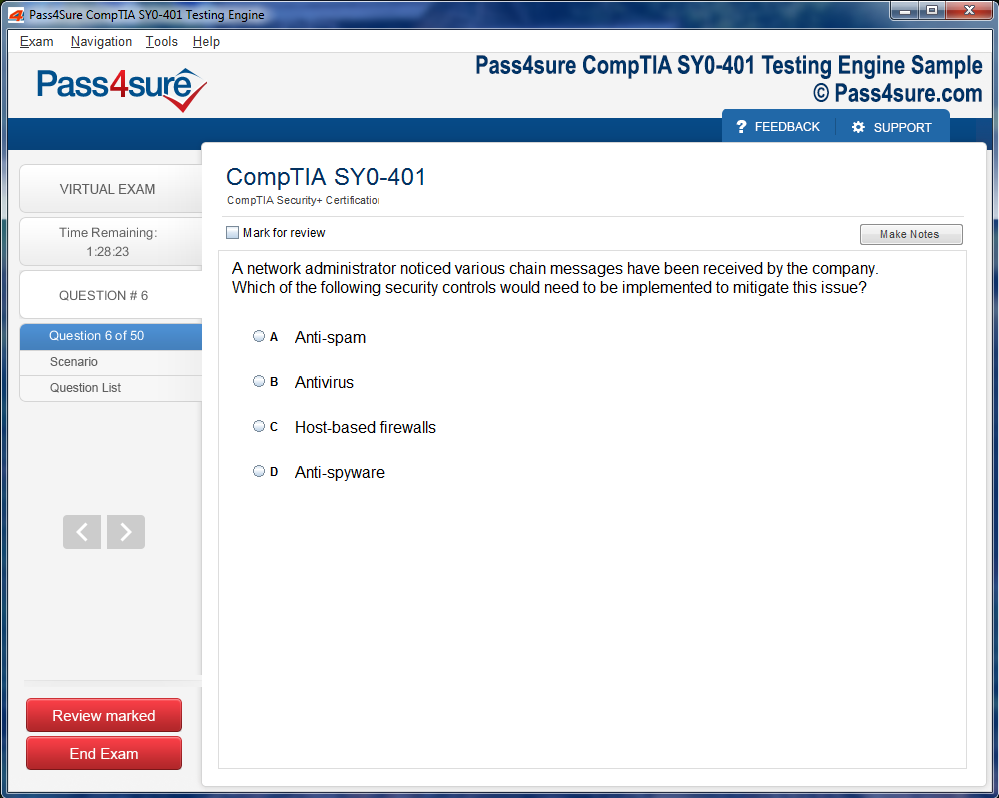
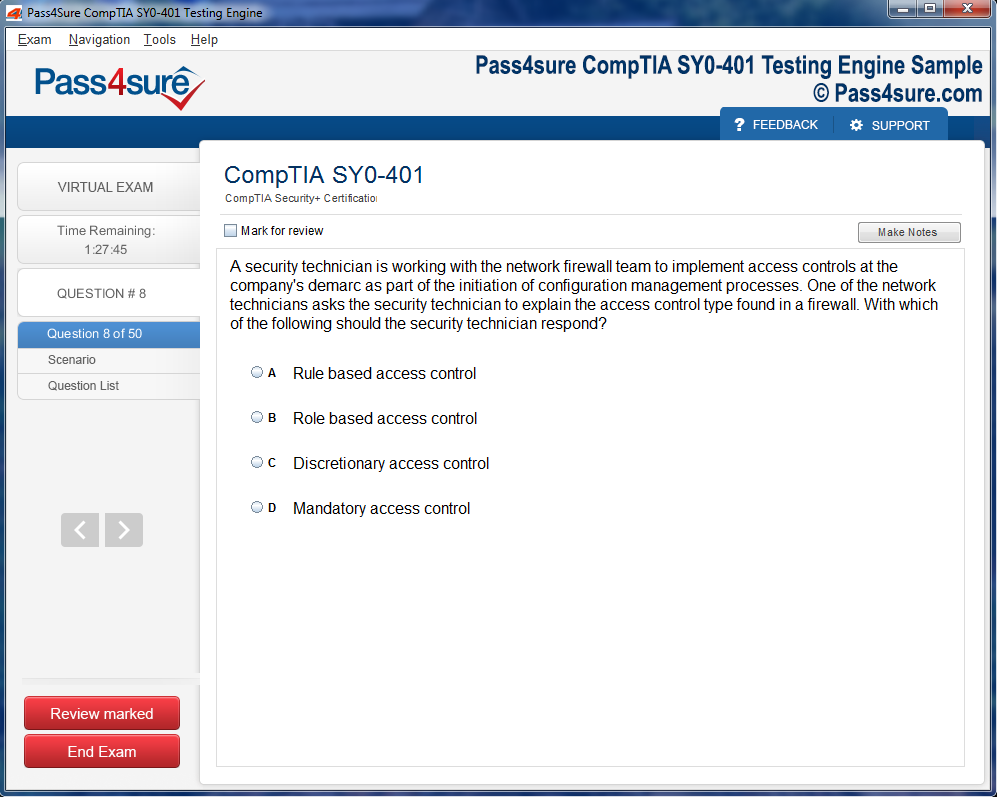
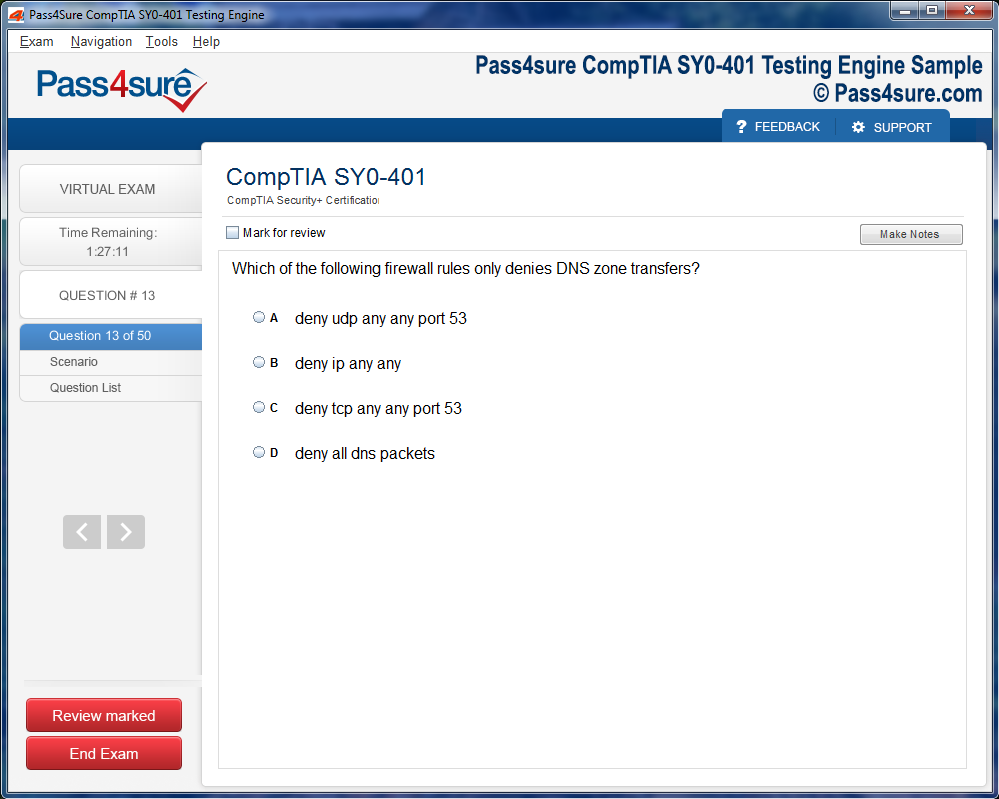
Product Screenshots
Frequently Asked Questions
How does your testing engine works?
Once download and installed on your PC, you can practise test questions, review your questions & answers using two different options 'practice exam' and 'virtual exam'. Virtual Exam - test yourself with exam questions with a time limit, as if you are taking exams in the Prometric or VUE testing centre. Practice exam - review exam questions one by one, see correct answers and explanations.
How can I get the products after purchase?
All products are available for download immediately from your Member's Area. Once you have made the payment, you will be transferred to Member's Area where you can login and download the products you have purchased to your computer.
How long can I use my product? Will it be valid forever?
Pass4sure products have a validity of 90 days from the date of purchase. This means that any updates to the products, including but not limited to new questions, or updates and changes by our editing team, will be automatically downloaded on to computer to make sure that you get latest exam prep materials during those 90 days.
Can I renew my product if when it's expired?
Yes, when the 90 days of your product validity are over, you have the option of renewing your expired products with a 30% discount. This can be done in your Member's Area.
Please note that you will not be able to use the product after it has expired if you don't renew it.
How often are the questions updated?
We always try to provide the latest pool of questions, Updates in the questions depend on the changes in actual pool of questions by different vendors. As soon as we know about the change in the exam question pool we try our best to update the products as fast as possible.
How many computers I can download Pass4sure software on?
You can download the Pass4sure products on the maximum number of 2 (two) computers or devices. If you need to use the software on more than two machines, you can purchase this option separately. Please email sales@pass4sure.com if you need to use more than 5 (five) computers.
What are the system requirements?
Minimum System Requirements:
- Windows XP or newer operating system
- Java Version 8 or newer
- 1+ GHz processor
- 1 GB Ram
- 50 MB available hard disk typically (products may vary)
What operating systems are supported by your Testing Engine software?
Our testing engine is supported by Windows. Andriod and IOS software is currently under development.
Step-by-Step H12-223 Exam Preparation for Busy Professionals
Embarking on the H12-223 exam preparation journey requires more than simple rote memorization. It begins with cultivating a profound understanding of core concepts and fostering mental clarity. Establishing a solid foundation means first recognizing your strengths and weaknesses. Self-assessment is a critical step that allows you to channel efforts into areas needing improvement while reinforcing existing knowledge. By dissecting each topic methodically, you can create a mental roadmap that ensures all concepts interconnect seamlessly, enabling smooth recall during the exam.
Your study environment plays a pivotal role in this journey. A space free from clutter nurtures focus and minimizes mental fatigue. Simple adjustments, such as arranging study materials within arm’s reach or ensuring comfortable lighting, can make hours of study more productive. In today’s digital age, leveraging tools for note-taking and scheduling enhances efficiency. Portable devices allow brief, meaningful study sessions even amid professional obligations. Treating study sessions with the same commitment as work responsibilities instills discipline and creates a rhythm that supports consistent learning.
Understanding the exam objectives from the beginning prevents wasted effort. Familiarity with topic weightings, question types, and examination patterns enables targeted preparation. Jumping into practice questions without grasping foundational concepts often leads to confusion and frustration. By prioritizing comprehension over speed, you lay the groundwork for effortless navigation of advanced subjects. When you internalize the fundamentals first, advanced topics feel logical rather than intimidating.
High-quality study materials are indispensable for effective preparation. Resources that combine clarity with practical examples make learning more engaging and tangible. Rather than accumulating an overwhelming number of sources, focus on materials that provide depth and context. Supplement reading with visual aids like diagrams, mind maps, and flowcharts. These tools help synthesize complex ideas into digestible formats, enhancing retention and making connections between concepts intuitive.
Patience is essential. Achieving mastery is a gradual process that thrives on consistency. Embrace incremental progress and resist the urge for quick results. Recognize challenges as stepping stones rather than obstacles. Each difficulty navigated strengthens not only understanding but also confidence. A disciplined, persistent approach establishes the foundation for an effective, sustainable preparation strategy that transforms study sessions into meaningful milestones toward success.
Structuring Time for Maximum Efficiency
Efficient time management is a cornerstone of effective preparation. Without a structured approach, even the most motivated learners risk drifting aimlessly through study material. Begin by creating a timetable that reflects your unique professional and personal commitments. Identify windows of uninterrupted focus and reserve them for high-priority topics. Short, concentrated study sessions often yield better results than extended, unfocused hours, as cognitive fatigue can impair retention.
Integrating review sessions into your schedule is equally crucial. Revisiting material at regular intervals reinforces learning and prevents forgetting. Employing a cyclical approach to studying—alternating between new concepts and previously covered topics—ensures knowledge remains fresh while fostering deeper understanding. Time management also requires flexibility. Unexpected work demands or personal responsibilities may arise, but a well-structured plan allows adjustments without derailing progress.
Prioritization is essential. Not all topics carry equal weight or complexity, so identifying areas that significantly influence exam performance is strategic. Allocate additional time to challenging sections while maintaining periodic review of familiar material. Avoid overcommitting to one area at the expense of others, as balanced preparation prevents gaps in understanding. Discipline and consistency are reinforced when study time is treated as non-negotiable, fostering both momentum and confidence in your preparation journey.
Harnessing Cognitive Techniques for Deep Learning
Deep learning requires more than repetitive reading. Cognitive techniques designed to engage memory and comprehension transform passive study into active mastery. One effective method involves connecting new concepts to existing knowledge. By forming associations, the brain creates stronger neural pathways, facilitating recall under exam conditions. Analogies, real-world examples, and narrative storytelling can all enhance the meaningfulness of abstract material.
Visualization is another powerful tool. Transforming complex topics into diagrams or mental images allows the brain to process information spatially. Mind maps, charts, and symbolic representations enable learners to view interconnections at a glance, simplifying seemingly intricate subjects. Writing summaries in your own words consolidates understanding and reinforces neural encoding, ensuring that knowledge becomes flexible rather than static.
Repetition, when executed strategically, promotes long-term retention. Spaced repetition, which involves revisiting material at expanding intervals, combats forgetting and strengthens memory consolidation. Active recall—testing oneself on key ideas without reference materials—forces engagement and highlights areas that need reinforcement. Integrating these techniques transforms passive study into a dynamic, interactive process that accelerates comprehension and retention.
Integrating Practical Application into Learning
Theoretical understanding gains depth when paired with practical application. Applying knowledge in simulated scenarios bridges the gap between abstract concepts and real-world implementation. Case studies, sample questions, and scenario-based exercises allow learners to practice decision-making and problem-solving within the context of exam objectives. This approach not only reinforces learning but also builds confidence in handling unfamiliar situations.
Practical exercises stimulate critical thinking and adaptability. By confronting material from multiple angles, learners discover nuances and interconnections that are often overlooked in passive study. Hands-on application transforms knowledge from mere memorization into functional competence, enabling learners to navigate complex questions with ease. Repetition of practical exercises ensures familiarity with common patterns while sharpening analytical skills, preparing candidates to respond accurately and efficiently under exam conditions.
Cultivating Mental Resilience and Focus
Exam preparation is as much a mental endeavor as an intellectual one. Maintaining focus, managing stress, and sustaining motivation are essential for prolonged engagement with study material. Mindfulness techniques, such as brief meditation or deep-breathing exercises, can reduce cognitive fatigue and sharpen attention. Establishing a routine that incorporates mental breaks helps maintain clarity and prevents burnout.
Resilience is nurtured by embracing challenges rather than avoiding them. Difficult topics often provoke frustration, but approaching them with curiosity transforms obstacles into opportunities for growth. Positive reinforcement—acknowledging small achievements and progress—builds confidence, reinforcing the mindset necessary for enduring preparation. By combining mental discipline with reflective practice, learners cultivate the persistence and adaptability required to thrive throughout the preparation process.
Leveraging Technology for Enhanced Learning
In the digital age, technology offers tools that make preparation more effective and flexible. Interactive study platforms, simulation software, and digital flashcards provide dynamic alternatives to traditional study methods. Online resources allow learners to access explanations, demonstrations, and examples anytime, facilitating learning during commutes or short breaks.
Digital tools also support organization and tracking of progress. Applications for note-taking, task scheduling, and revision planning allow learners to structure preparation efficiently. Analytics from practice tests and performance tracking can identify knowledge gaps, guiding targeted review sessions. By integrating technology thoughtfully, learners enhance engagement, optimize efficiency, and create a responsive study environment that adapts to individual needs and schedules.
Fostering Collaboration and Knowledge Sharing
While self-study is central to preparation, collaboration amplifies understanding. Engaging with peers, discussion forums, or study groups encourages the exchange of insights and strategies. Explaining concepts to others reinforces personal comprehension and reveals overlooked details, deepening mastery.
Collaborative learning also introduces diverse perspectives, enhancing problem-solving skills and broadening conceptual understanding. By debating scenarios, analyzing sample questions, and sharing study techniques, learners create a supportive ecosystem that fosters accountability and sustained motivation. Combining individual effort with strategic collaboration accelerates learning, ensures comprehensive coverage of topics, and nurtures confidence ahead of the exam.
Understanding the Foundations of Effective Learning
Before embarking on the journey of acquiring knowledge, it is essential to comprehend the underpinnings of learning itself. The human mind does not absorb information uniformly; it thrives on clarity, repetition, and meaningful engagement. Establishing a solid foundation means recognizing personal learning tendencies, identifying strengths and weaknesses, and understanding how attention and memory interact. Attention acts as the gatekeeper of cognition, determining which stimuli reach long-term memory, while memory organizes, stores, and retrieves the absorbed knowledge. A learner who recognizes these mechanisms can tailor strategies to enhance retention, prevent mental fatigue, and build a framework upon which more complex concepts can be layered seamlessly. Understanding these foundations transforms learning from a passive act into an intentional, structured endeavor, setting the stage for consistent progress and intellectual growth.
Harnessing the Power of Active Engagement
Active engagement is a transformative strategy in efficient learning. Merely reading or listening without deliberate interaction yields fleeting comprehension. True understanding emerges when learners interrogate the material, draw connections, and anticipate outcomes before verification. Summarizing concepts in one’s own words stimulates critical thinking, while predicting potential applications strengthens neural pathways related to problem-solving. Additionally, reflecting on information through questioning nurtures curiosity and resilience against cognitive inertia. The act of interacting with knowledge, rather than passively absorbing it, engraves learning into the mind’s architecture. Professionals and students alike benefit from this approach, as it cultivates a sense of ownership over the content and fosters intellectual agility across diverse subjects.
Structuring Study Sessions for Maximum Retention
One of the most overlooked aspects of learning is the structure of study sessions. The brain functions optimally when given focused intervals interspersed with rest. Segmentation of topics into concise, manageable sessions prevents mental saturation and enhances memory consolidation. Short bursts of intense focus, followed by brief periods of relaxation, create a rhythm conducive to high productivity. This method, often referred to as micro-learning, allows complex topics to be digested without overwhelming the learner. Embedding study routines into daily life further amplifies results. Moments that might otherwise remain idle—such as commuting, short breaks, or waiting periods—become fertile grounds for reinforcement. Regular, well-structured sessions ensure knowledge is both acquired and retained, forming a resilient cognitive scaffold for more advanced learning endeavors.
Practicing With Intentional Precision
Knowledge without practice is fragile, like a structure without a foundation. Exercises, applications, and real-world problem solving are crucial in transforming comprehension into capability. Immediate application of concepts helps identify gaps, while careful analysis of mistakes cultivates deeper understanding. Speed is a temptation in practice sessions, yet precision yields greater long-term benefits. The act of examining why an answer is incorrect often reveals underlying misconceptions, fostering clarity and preventing repetition of errors. Deliberate practice encourages learners to approach tasks methodically, emphasizing understanding over mere completion. As skills solidify through focused repetition, confidence grows, and learners develop a refined capacity to adapt knowledge to unfamiliar contexts, making learning both practical and enduring.
Engaging Multiple Senses for Deeper Learning
The mind absorbs information most effectively when stimulated through multiple channels. Reading, listening, writing, and visualization create a network of sensory input that strengthens memory and recall. Writing summaries in one’s own handwriting, reading aloud, or mentally picturing processes engages both hemispheres of the brain, facilitating robust learning. For professionals with constrained schedules, auditory learning through recordings or podcasts transforms idle time into productive moments. Multisensory approaches not only enhance retention but also improve the ability to apply knowledge creatively in complex scenarios. By interweaving senses, learners build more durable cognitive links, allowing understanding to emerge naturally even in high-pressure or unexpected situations. This technique elevates learning from rote memorization to dynamic comprehension, preparing the mind for intricate tasks.
Sustaining Motivation and Monitoring Progress
Motivation is the invisible engine driving consistent learning. Without it, even the most meticulously planned study sessions falter. Tracking achievements, no matter how minor, provides reinforcement and a tangible sense of progress. Celebrating milestones fuels confidence, while reflecting on incremental improvement nurtures a growth mindset. Learning should be perceived as an evolving journey rather than a static task; this perspective keeps engagement high and prevents discouragement. For busy professionals or learners juggling multiple responsibilities, establishing visible markers of progress—through journals, logs, or verbal affirmations—ensures that efforts are acknowledged and directed purposefully. Motivation intertwined with strategy transforms learning from a chore into an energizing pursuit, propelling individuals toward mastery with enthusiasm and clarity.
Integrating Knowledge Into Daily Life
Acquired knowledge reaches its pinnacle when seamlessly integrated into daily routines and professional practice. The ultimate test of learning is the ability to recall, apply, and adapt information in real-world scenarios. This integration requires reflection, synthesis, and application beyond structured study sessions. Observing patterns, connecting concepts across disciplines, and experimenting with newly acquired ideas embed learning in the lived experience. Daily interactions, conversations, and tasks provide continuous opportunities to reinforce and refine understanding. By weaving knowledge into habitual activity, learners create a dynamic feedback loop that perpetually strengthens cognition and enhances adaptability. This stage transforms learning from theoretical accumulation into practical competence, empowering individuals to navigate challenges with insight and resourcefulness.
Cultivating Foundational Knowledge
Every journey toward mastery begins with a sturdy foundation of understanding. Without a solid base, learning becomes fragmented and fragile. Immersing oneself in the essential principles of a subject is akin to laying bricks for a resilient structure. Each concept absorbed strengthens the ability to connect ideas, facilitating deeper comprehension over time. This foundational stage requires patience and deliberate attention, as rushing often leads to superficial knowledge that cannot withstand rigorous application.
At this stage, learners benefit from structured reading and attentive observation. Engaging with material repeatedly helps internalize terminology, mechanisms, and relationships. The mind begins to form frameworks, mental scaffolds that support later exploration. Though initially laborious, these steps cultivate a familiarity that allows for quicker problem recognition and more intuitive decision-making as complexity increases. Small daily efforts accumulate, creating a knowledge reservoir that sustains confidence and enables steady progress.
Equally important is the development of discernment during this stage. Not all information holds equal value, and filtering material through critical evaluation ensures that time is spent wisely. Recognizing patterns in foundational knowledge enhances retention and reduces cognitive overload. This selective absorption is particularly effective when combined with reflection, as learners consolidate connections between concepts and begin to perceive underlying structures that govern subject matter.
Finally, cultivating foundational knowledge instills an early sense of self-efficacy. Each concept understood reinforces the belief that mastery is attainable. This psychological readiness prepares learners for more challenging tasks ahead, as confidence interacts with competence to create a fertile environment for sustained growth. By committing fully to this stage, learners establish a platform from which they can engage in more sophisticated applications and navigate complex scenarios with greater ease.
Enhancing Conceptual Fluency
After establishing a strong foundation, the next critical step is achieving conceptual fluency. Conceptual fluency allows learners to move beyond rote memorization, enabling them to manipulate ideas fluidly and apply them in varying contexts. This skill involves recognizing not just the ‘what’ but the ‘why’ behind concepts, fostering a deeper comprehension that supports flexible thinking.
Developing fluency requires repeated exposure to material under varied conditions. Working with analogies, examples, and counterexamples sharpens the ability to discern patterns. The brain begins to anticipate outcomes, connecting seemingly unrelated ideas to generate insights. This stage transforms learning from passive reception into active engagement, making the learner an architect of knowledge rather than a mere collector of facts.
Reflection is central to this process. After engaging with new material, taking time to summarize, rephrase, or illustrate concepts solidifies understanding. Visualization techniques, such as mental mapping or conceptual diagrams, can dramatically enhance clarity and retention. These methods encourage learners to see relationships and hierarchies within information, reinforcing a sense of coherence and organization that supports both study and practical application.
Conceptual fluency also builds resilience in the face of ambiguity. As learners gain confidence in their ability to navigate diverse scenarios, they develop an intuitive sense of which strategies are likely to succeed. This competence is particularly valuable in real-world applications, where unpredictability is the norm. The ability to adjust reasoning dynamically fosters not only academic success but also long-term adaptability in professional contexts.
Applied Practice for Real-World Mastery
Knowledge alone is insufficient without the capacity to apply it effectively. Applied practice bridges the gap between understanding and execution, transforming theory into actionable skill. Engaging in scenario-based exercises, simulations, or case studies replicates the complexity of real-world challenges, providing opportunities to test knowledge under realistic conditions.
Structured practice emphasizes methodical problem-solving. Breaking complex tasks into smaller, manageable components allows learners to identify dependencies and anticipate obstacles. Over time, repeated exposure to varied scenarios cultivates pattern recognition and enhances strategic thinking. Learners gain insight into common pitfalls and develop a repertoire of techniques for navigating challenges efficiently.
Time management is a critical aspect of applied practice. Working under simulated pressure conditions encourages both speed and accuracy. Timed exercises teach the mind to prioritize, balance multiple considerations, and make effective decisions quickly. This skill is invaluable in high-stakes environments, where hesitation or miscalculation can have amplified consequences. Practicing within constraints strengthens mental agility and fosters confidence, essential elements for achieving peak performance.
Reflection amplifies the benefits of applied practice. Reviewing errors and successes alike illuminates the reasoning behind outcomes, reinforcing effective strategies while correcting misconceptions. Maintaining concise notes or visual summaries of insights supports continuous improvement and ensures lessons learned are retained for future application. Through persistent practice and thoughtful reflection, learners transform their understanding into reliable competence, preparing them for both examinations and professional challenges.
Strategic Knowledge Expansion
Beyond practice lies the need to expand knowledge strategically. This involves identifying areas where comprehension is limited and deliberately focusing effort to address gaps. Targeted learning prevents stagnation and encourages adaptability, ensuring that the learner is prepared for unfamiliar challenges.
Strategic expansion requires careful prioritization. Not every topic warrants equal attention, and discerning the high-impact areas maximizes efficiency. By concentrating on concepts that yield the most significant returns in understanding and skill, learners achieve accelerated growth without overwhelming themselves. This targeted approach balances depth with breadth, fostering comprehensive knowledge while avoiding the trap of superficiality.
Integration of new information is enhanced by contextual learning. Relating novel concepts to previously acquired knowledge strengthens memory retention and promotes meaningful connections. The mind is adept at recognizing patterns and associations, and leveraging these natural tendencies accelerates learning. Over time, this method produces a more coherent and interconnected understanding, empowering learners to navigate complex systems with ease and confidence.
Strategic knowledge expansion also cultivates intellectual curiosity. By exploring areas that challenge current understanding, learners develop a habit of inquiry that fuels long-term growth. This proactive attitude toward learning ensures that skills remain dynamic and adaptable, a necessity in environments where change is constant and innovation is prized.
Developing Analytical Acumen
Analytical acumen is the capacity to dissect information, identify underlying principles, and predict outcomes. It represents a higher-order skill that emerges from both a strong foundation and deliberate applied practice. Developing this acumen requires disciplined observation, critical reasoning, and the ability to synthesize diverse pieces of information into coherent insights.
Cultivating analytical skills begins with careful examination of patterns and relationships. Rather than accepting information at face value, learners probe beneath the surface to uncover mechanisms and dependencies. This approach nurtures a questioning mindset that not only identifies solutions but also anticipates complications. By analyzing the ‘why’ and ‘how’ behind phenomena, learners enhance their decision-making precision and strategic foresight.
Exercises in comparative analysis accelerate skill development. Evaluating different scenarios, identifying similarities and divergences, and considering alternative strategies encourages flexible thinking. This method strengthens problem-solving capabilities and enhances the ability to adapt strategies in dynamic circumstances. Analytical acumen, once developed, becomes a tool for navigating both academic challenges and complex professional tasks with confidence and efficacy.
Integration of analysis with reflection deepens mastery. Evaluating outcomes, considering the impact of decisions, and assessing alternative approaches cultivates a comprehensive understanding of consequences. Over time, learners internalize patterns of reasoning, transforming analytical practice into intuitive competence. This skill not only supports effective problem-solving but also reinforces confidence, as learners recognize their capacity to navigate uncertainty and complexity.
Enhancing Cognitive Resilience
Cognitive resilience is the ability to maintain effective thinking under stress, ambiguity, or fatigue. It is a critical attribute for sustained performance in demanding scenarios. Developing resilience involves building mental stamina, adaptive strategies, and an attitude that treats challenges as opportunities rather than obstacles.
Training cognitive resilience begins with deliberate exposure to complexity. By gradually increasing difficulty and introducing variability, learners strengthen their capacity to manage uncertainty. This incremental approach prevents overwhelm while fostering confidence, allowing the mind to adapt to pressure without compromising accuracy or efficiency. Resilience is thus cultivated through structured challenge and reflective adjustment.
Mindset plays a pivotal role in sustaining resilience. Viewing errors as learning opportunities rather than failures encourages persistence and continuous improvement. Self-compassion and patience support sustained engagement, while proactive reflection transforms mistakes into actionable insights. Over time, this mindset develops the fortitude necessary to thrive in high-pressure environments, whether academic or professional.
Practical exercises complement cognitive strategies. Timed problem-solving, scenario simulations, and adaptive questioning cultivate agility and reinforce mental endurance. Coupled with reflection and conceptual reinforcement, these activities ensure that learners remain prepared for both predictable and unexpected challenges. Cognitive resilience, once honed, empowers learners to maintain clarity, focus, and decisiveness under demanding conditions.
Strategic Planning for Focused Learning
Effective exam preparation begins with deliberate planning. A scattered approach dissipates energy, whereas a structured roadmap channels effort efficiently. Allocate study periods based on priority areas, recognizing both strengths and weaknesses. Understanding the exam blueprint is essential: it reveals which topics demand deeper engagement and which require only reinforcement. This targeted approach conserves time and reduces unnecessary stress.
Time-blocking is an essential tool in this phase. Segmenting study hours into manageable intervals allows focused attention without mental exhaustion. Breaks are not interruptions but strategic pauses that enhance assimilation. During these intervals, light activities such as walking or listening to instrumental music encourage cognitive rejuvenation. Maintaining consistency over sporadic cramming ensures retention that endures beyond exam day.
Reflection is equally critical in strategic planning. At the end of each week, reviewing achievements against goals creates awareness of progress and highlights gaps in understanding. This self-assessment fosters a sense of ownership over the learning journey, motivating sustained engagement. Professionals juggling multiple responsibilities benefit particularly from this conscious orchestration of study, as it aligns preparation with real-life constraints.
Active Engagement Through Practice
Memorization alone seldom guarantees exam success. Active engagement transforms passive knowledge into usable expertise. This involves deliberate interaction with material, requiring both comprehension and application. Summarizing concepts in your own words, teaching them to a hypothetical audience, or translating information into visual frameworks ensures deeper assimilation.
Problem-solving exercises exemplify active engagement. Attempting complex questions without immediate reference to notes encourages retrieval practice, a technique proven to reinforce long-term memory. Deliberate mistakes are learning opportunities, guiding refinement of strategies. Each error is a signal rather than a setback, prompting analysis and corrective action.
Repetition in varied forms strengthens connections across the knowledge spectrum. Alternating subjects and types of problems prevents monotony and promotes flexible thinking. This technique, known as interleaving, ensures that concepts are not isolated fragments but part of a coherent mental map. Over time, this mental map becomes intuitive, allowing rapid recognition and recall under pressure.
Consolidating Knowledge with Summaries
Condensation of knowledge into concise forms enhances retention and clarity. Extended reading alone often leads to cognitive fatigue, whereas distilled summaries offer concentrated access to essential ideas. Summaries should not merely be shortened versions of texts; they must capture the essence of concepts in accessible language.
Visual tools accelerate recall. Mind maps, flowcharts, and diagrams translate abstract ideas into structured visuals that are easier to navigate during high-stress moments. The act of creating these representations further reinforces learning, as it requires synthesis rather than rote copying. Busy individuals gain an added advantage by keeping these visual aids readily accessible, turning downtime into productive reinforcement.
Periodic review of these condensed materials ensures knowledge stays fresh. Revisiting them at strategically spaced intervals strengthens retention without overwhelming cognitive resources. Each session of review consolidates understanding, ensuring the foundation is robust before the final assessment.
Simulating Exam Conditions
Preparation reaches its zenith when practice mirrors reality. Simulating exam conditions cultivates both stamina and composure. Allocating the exact duration of the test, minimizing distractions, and adhering to strict time limits trains the mind to perform under pressure. This method transforms anxiety into familiarity, making the actual environment less intimidating.
Post-practice reflection is indispensable. Detailed analysis of each attempt identifies recurring weaknesses and missteps. Were errors caused by misreading, conceptual gaps, or poor time management? Each insight feeds into the next cycle of preparation, transforming weaknesses into tactical advantages. This iterative refinement ensures that confidence is grounded in competence rather than mere repetition.
Integrating a scoring system adds motivation and objectivity. Tracking performance over successive trials highlights trends in improvement and exposes areas still requiring attention. Quantifying progress turns preparation into a measurable journey rather than an amorphous effort, providing psychological reinforcement alongside cognitive readiness.
Emotional and Mental Calibration
Equally important as knowledge mastery is emotional readiness. Stress, if unregulated, diminishes performance. Cultivating calmness and composure allows cognitive resources to operate at peak efficiency. Techniques such as brief meditation, controlled breathing, or progressive muscle relaxation provide mental clarity. Over time, these habits build resilience, ensuring that pressure enhances focus rather than undermines it.
Visualization strategies complement this mental calibration. Envisioning success, calmly navigating complex problems, or mentally rehearsing the exam day routine creates a sense of familiarity. This mental rehearsal reduces uncertainty, transforming apprehension into poised execution. Emotional stability, when paired with robust preparation, significantly amplifies performance potential.
Consistency in lifestyle habits reinforces this calibration. Adequate sleep, balanced nutrition, and moderate physical activity sustain both energy levels and cognitive acuity. Neglecting these fundamentals undermines even the most disciplined study plan. A well-rounded approach integrates mental, emotional, and physical preparation to ensure holistic readiness.
Leveraging Technology and Resources
Modern preparation benefits immensely from technology when used judiciously. Digital tools facilitate organization, accelerate revision, and enhance engagement. Interactive applications, digital flashcards, and online practice modules provide varied exposure and instant feedback, allowing targeted refinement.
However, technology must be deployed with discipline. Overreliance or uncontrolled browsing dissipates focus. Curated resources, used purposefully, complement core study materials rather than replace them. Professionals can integrate these tools into their daily routine, maximizing productivity during limited pockets of time.
Recording insights digitally aids long-term consolidation. Notes, summaries, and visual aids stored on accessible platforms enable quick retrieval whenever needed. This approach ensures that learning is portable and flexible, accommodating busy schedules without sacrificing depth of engagement.
Mastery Through Iterative Reinforcement
True mastery emerges from iterative reinforcement. Knowledge is not static but evolves through continuous interaction. Revisiting challenging concepts repeatedly, under different contexts and conditions, strengthens cognitive frameworks. This dynamic approach ensures that understanding is not superficial but deeply internalized.
Reflection cycles enhance this process. After each study session, reviewing what was learned and identifying unresolved gaps solidifies retention. Combining active engagement, summarization, practice simulations, and emotional calibration forms a comprehensive loop of preparation. The mind gradually internalizes strategies, making performance more instinctive and resilient under pressure.
Even minor improvements compound over time. Each session of deliberate practice, review, and reflection contributes to a growing reservoir of competence. The sense of control that accompanies this gradual accumulation of mastery boosts confidence, allowing focus on performance rather than anxiety.
The Art of Cognitive Priming
Cognitive priming is a subtle but powerful technique that can enhance memory retention and mental agility during exams. The human mind responds well to consistent cues and mental routines, which can be harnessed to trigger optimal recall. By establishing preparatory rituals, such as reviewing key concepts in a fixed order or using mnemonic frameworks, candidates can activate memory pathways more efficiently. These routines become ingrained, creating an almost automatic recall process under exam pressure.
The essence of cognitive priming lies in repetition combined with strategic variation. Studying the same material in slightly different contexts—such as verbal explanations, visual diagrams, and practical examples—reinforces neural connections, making the brain more flexible in retrieving information. The goal is to create a mental network so rich that recalling a single node triggers multiple related ideas, allowing complex questions to be addressed with ease. Consistency in these habits builds confidence, reducing the anxiety that often undermines performance.
Mental simulations are another facet of priming. Visualizing the exam environment, imagining the act of reading and answering questions, and mentally rehearsing challenging scenarios all prepare the brain for real-time stressors. This method conditions the mind to perform under pressure, transforming uncertainty into familiarity. Over time, candidates develop a nuanced sense of how to pace themselves, anticipate difficulties, and maintain mental clarity, which contributes to overall efficiency and a heightened sense of control.
Mastering Focus Through Micro-Intervals
Concentration is a scarce resource, particularly in prolonged examinations. Micro-interval techniques involve breaking study sessions and exam practice into short, intense periods followed by brief restorative pauses. This pattern capitalizes on the brain’s natural rhythm, enhancing attention and reducing cognitive fatigue. Unlike extended, unfocused study marathons, micro-intervals maintain engagement and preserve mental energy for critical thinking during the exam itself.
During these intervals, candidates can practice hyper-focused reading, mental calculation, or problem-solving, using timers to simulate real exam conditions. The brief recovery periods are equally essential, allowing subtle consolidation of information and preventing the accumulation of stress. This cyclical approach not only improves comprehension but also fosters the development of endurance, which becomes crucial in lengthy or mentally demanding tests.
Micro-interval practice encourages the brain to adapt to fluctuating cognitive demands. It fosters resilience against distractions and sharpens the ability to switch between topics or question types seamlessly. When applied to actual exams, this technique enhances responsiveness, enabling candidates to sustain peak performance for extended periods without succumbing to mental fatigue or lapses in attention.
Strategic Memory Anchoring
Memory anchoring is a method of associating abstract information with vivid, memorable constructs to enhance retention. By linking facts, formulas, or concepts to unique imagery, stories, or personal experiences, candidates can create durable mental “hooks” that facilitate rapid recall. Unlike rote memorization, anchoring leverages the brain’s natural affinity for narrative and visual association, transforming mundane details into compelling mental markers.
This method is particularly useful for dense or technical material that is otherwise challenging to internalize. Anchors may take the form of imaginative metaphors, spatial memory techniques, or emotional triggers, each reinforcing a different layer of comprehension. When a question evokes an anchor, the associated knowledge is retrieved effortlessly, often along with additional contextual insights. This approach not only improves recall accuracy but also reduces stress, as candidates feel more prepared to tackle diverse question types.
Memory anchoring also integrates well with other study strategies, such as cognitive priming and micro-interval practice. Anchors become activated during focused intervals, reinforced through repetition, and solidified through visualization. This interconnected strategy strengthens both short-term recall and long-term retention, providing a competitive edge in examinations that demand both precision and adaptability.
Navigating Cognitive Biases
Even well-prepared candidates can fall prey to cognitive biases that distort judgment during exams. Familiarity bias, overconfidence, and anchoring on initial impressions can lead to errors despite accurate knowledge. Recognizing these pitfalls is essential for strategic examination performance. By cultivating self-awareness and reflective habits, candidates can mitigate the influence of biases and make more objective decisions.
One practical approach is to maintain a mental checklist for decision-making. Before finalizing an answer, examine whether assumptions or first impressions are unduly influencing choice. Consider alternative perspectives and verify reasoning against core knowledge. This deliberate pause reduces impulsive errors and ensures that confidence aligns with competence. Over time, such metacognitive practices become second nature, transforming the examination process from reactive to deliberate, improving both accuracy and efficiency.
Stress amplifies the impact of cognitive biases. Anxiety can cause tunnel vision, exaggerating the weight of certain options while dismissing others prematurely. Techniques such as slow breathing, brief meditation, or visualization of successful outcomes can reduce the intensity of stress responses. With lower stress, the brain functions more rationally, allowing candidates to leverage their knowledge fully rather than succumbing to distorted judgment.
Integrating Multisensory Learning
Multisensory learning engages more than one sense to enhance understanding and retention. Reading, writing, speaking, and listening, when combined, create multiple pathways for information storage and retrieval. For exam candidates, integrating these modalities produces richer cognitive maps, making recall faster and more flexible under pressure.
Practical implementation might involve reading concepts aloud, summarizing them in one’s own words, or creating simple diagrams while explaining ideas to oneself. Physical engagement, such as tracing formulas or sketching flowcharts, anchors abstract material in tangible experience. Multisensory exposure not only strengthens memory but also makes learning more engaging, which increases motivation and reduces the monotony of preparation.
This approach also encourages active problem-solving rather than passive memorization. By interacting with information through multiple channels, candidates develop a deeper, more intuitive understanding of concepts. When faced with complex exam questions, this holistic grasp allows for quicker identification of patterns, more accurate application of principles, and greater confidence in responses.
Optimizing Environmental Factors
The physical and mental environment profoundly affects exam preparation and performance. Factors such as lighting, noise, seating posture, and even ambient temperature can influence concentration, stress levels, and cognitive efficiency. Professionals who pay attention to these elements gain a subtle but powerful advantage in sustaining focus and clarity during both study sessions and actual exams.
Creating a consistent study environment mimics the conditions of the exam room, reducing surprises and improving adaptability. Minimal distractions, ergonomic seating, and organized materials contribute to sustained attention. Ambient cues, such as quiet background sound or consistent lighting, reinforce concentration and mental readiness. This environmental optimization is not about perfection; it is about providing conditions conducive to maintaining peak cognitive function for extended periods.
Mental preparation complements environmental adjustments. Visualization of exam scenarios, positive affirmations, and mindful breathing enhance readiness and reduce anxiety. By integrating environmental and psychological strategies, candidates transform preparation into a holistic process, ensuring that both mind and surroundings are aligned to support optimal performance.
Advanced Analytical Techniques
Examination success often hinges on analytical ability rather than mere memorization. Advanced analytical techniques involve breaking complex problems into smaller components, identifying patterns, and synthesizing information in a structured manner. This methodical reasoning allows candidates to navigate challenging questions systematically, converting apparent obstacles into manageable tasks.
A key element of analytical efficiency is the use of layered thinking. Begin by understanding the overall question, then dissect it into constituent parts, examining each element critically. Cross-referencing with known concepts or prior examples enhances clarity, while hypothesis testing allows for iterative refinement of answers. These strategies encourage deep engagement with material, fostering confidence and reducing errors arising from superficial understanding.
Analytical thinking also interacts with time management. By allocating initial time to problem decomposition, candidates avoid wasted effort on unproductive approaches. The combination of structured analysis, efficient pacing, and informed decision-making maximizes both accuracy and output. Through repeated practice, this approach becomes intuitive, transforming complex examinations into challenges that can be navigated with precision and composure.
Foundations of Achievement – Building the Core
Every journey toward mastery begins with establishing a firm foundation. True accomplishment is rooted in understanding the essentials, and rushing past them can lead to fragile progress. Professionals seeking excellence often overlook the subtle layers that create long-term resilience. It begins with cultivating awareness of personal strengths and weaknesses. Recognizing these traits provides clarity in how to approach challenges and allocate energy most efficiently.
Consistent routines act as scaffolding for sustained growth. Structured schedules, even when modest, create rhythms that promote focus and reduce decision fatigue. Early mornings or quiet intervals in the day become fertile grounds for deep engagement with material. Incorporating reflection periods enhances insight, allowing the mind to digest concepts gradually. This deliberate pacing nurtures both comprehension and retention.
Moreover, the cultivation of curiosity fuels motivation. Approaching topics with genuine interest transforms repetitive practice into engaging exploration. Rather than treating tasks as mere obligations, reframing them as opportunities for discovery enhances both enjoyment and performance. Professionals who internalize this mindset find themselves naturally gravitating toward additional practice and refinement.
The environment also plays a crucial role. Spaces that minimize distraction and maximize concentration encourage immersive study. Light, sound, and organization contribute to cognitive readiness. Surrounding oneself with inspiration—through books, visual prompts, or notes—supports mental engagement, subtly reinforcing commitment to goals.
Cognitive Strategies – Enhancing Mental Efficiency
Success relies not only on the acquisition of information but also on the brain’s ability to process it efficiently. Cognitive strategies are tools that transform raw knowledge into actionable understanding. Techniques such as spaced repetition and interleaved practice strengthen neural pathways, making retrieval more automatic and intuitive. Regularly revisiting material in varied contexts ensures that memory is flexible rather than brittle.
Visualization plays a profound role in reinforcing learning. Imagining scenarios in which knowledge is applied encourages practical integration. This method allows the mind to simulate problem-solving, increasing confidence when confronting real-world tasks or exams. By mentally rehearsing procedures, decision-making becomes faster and more accurate.
Analogical thinking fosters creativity and adaptability. Drawing parallels between familiar and new concepts bridges gaps in understanding. Professionals who master this skill can approach unfamiliar challenges with innovative perspectives, leveraging prior knowledge effectively. It also reduces cognitive overload by structuring novel information in familiar frameworks.
Active engagement with material is far more productive than passive review. Summarizing concepts in one’s own words, teaching peers, or creating diagrams solidifies comprehension. Each of these actions forces the mind to process information deeply rather than merely recognizing it superficially. Repeatedly employing these strategies produces long-lasting fluency in both foundational and complex topics.
Habitual Practice – The Engine of Progress
Persistent, purposeful practice underpins all genuine achievement. Talent alone cannot compensate for lack of repetition, nor can sporadic effort replace structured application. Establishing practice as a habitual element of daily life cultivates both skill and confidence. Short, focused sessions often outperform marathon efforts, as the brain thrives on frequent reinforcement without fatigue.
Diversity in practice ensures robust learning. Varying problem types, scenarios, or application methods prevents rigidity and prepares individuals for unexpected challenges. Encountering multiple approaches enhances adaptability, ensuring readiness across a spectrum of possibilities. Reflection after each session deepens comprehension, as identifying errors and successes clarifies thinking patterns.
Tracking progress cultivates motivation and insight. Detailed logs of completed exercises, response accuracy, and timing allow for targeted refinement. Awareness of improvement reinforces confidence, while recognition of persistent difficulties signals areas for concentrated attention. Professionals who embrace systematic tracking maintain a sense of control and direction throughout their preparation.
Mindset during practice sessions is equally critical. Approaching tasks with deliberate focus rather than distraction fosters efficiency. Internalizing the value of mistakes as learning opportunities rather than setbacks transforms challenges into growth. This psychological shift nurtures resilience and diminishes anxiety, ensuring consistent progress over time.
Analytical Reflection – Turning Experience into Insight
Reflection is the bridge between experience and mastery. Simply completing tasks or consuming information is insufficient without contemplation. Professionals who analyze their performance uncover patterns that guide future strategy. This analytical approach transforms routine practice into a learning laboratory.
Post-task evaluation is vital. Examining why certain responses were correct or incorrect reveals underlying cognitive processes. Identifying missteps rooted in misunderstanding, oversight, or rushed judgment allows for targeted intervention. Reflective analysis also highlights strengths, reinforcing effective methods and bolstering confidence.
Journaling thoughts and outcomes deepens insight. Articulating reasoning in written form exposes gaps in understanding that might remain unnoticed otherwise. This deliberate externalization of internal processes supports metacognition—the awareness of one’s own thought patterns—which is instrumental in optimizing learning.
Periodic review of accumulated reflections consolidates knowledge. Revisiting earlier analyses highlights progress and uncovers lingering vulnerabilities. This iterative loop of practice, reflection, and adjustment enhances both skill and self-awareness, fostering a comprehensive sense of preparedness for complex challenges.
Resilience and Mental Fortitude – Strengthening Inner Resolve
Achievement demands more than knowledge; it requires resilience in the face of adversity. Mental fortitude is cultivated through intentional exposure to manageable challenges. Encountering difficulties within a controlled environment prepares professionals for the unpredictable pressures of real-world application.
Emotional regulation supports sustained performance. Techniques such as mindfulness, controlled breathing, and visualization enable focus even under stress. By training the mind to remain calm, individuals prevent anxiety from disrupting cognitive processing, ensuring clarity in critical moments.
Persistence in the face of setbacks is essential. Mistakes and failures are not merely obstacles; they are essential feedback mechanisms. Professionals who embrace this perspective develop a growth-oriented mindset, transforming temporary disappointments into opportunities for deeper understanding and long-term progress.
Energy management complements mental resilience. Adequate rest, nutrition, and physical activity sustain cognitive performance and emotional stability. Ignoring these elements may produce short-term gains but ultimately undermines effectiveness. Professionals who integrate holistic care into preparation enhance both endurance and adaptability.
Strategic Integration – Coordinating Knowledge and Skill
True mastery emerges when knowledge, practice, and reflection converge into cohesive strategy. Integration transforms isolated competencies into a dynamic skill set, ready for practical application. This phase emphasizes synthesis over accumulation, connecting discrete insights into a seamless operational framework.
Planning becomes crucial. Professionals map objectives, identify priority areas, and allocate resources judiciously. Strategic allocation of time and effort ensures that preparation is both comprehensive and efficient. Revisiting and adjusting plans based on progress reinforces flexibility and responsiveness, crucial traits in high-stakes environments.
Simulation exercises consolidate integration. Mimicking real-world conditions under controlled scenarios allows for practical testing of learned strategies. Observing performance under these conditions identifies gaps and reinforces successful techniques, creating confidence and preparedness for actual challenges.
Collaboration enhances strategic integration. Discussing approaches with peers or mentors exposes alternative perspectives and strategies. Engaging in dialogue fosters critical thinking, sharpens reasoning, and strengthens the ability to defend or adapt chosen methods. Collective insight often illuminates pathways that solitary effort might overlook.
Mindful Execution – Translating Preparation into Performance
The culmination of effort lies in execution. Preparation, practice, and reflection serve their ultimate purpose only when applied effectively. Mindful execution transforms readiness into tangible accomplishment. Professionals must approach each task with presence, directing full attention to the process rather than anticipating outcomes.
Confidence arises from familiarity and competence. Awareness of one’s preparation reduces hesitation and enhances decisiveness. Mindful attention ensures that each step is deliberate, reducing errors caused by haste or distraction. Maintaining a calm, focused mindset optimizes cognitive and emotional resources, allowing knowledge and skill to operate at peak efficiency.
Adaptability during execution is equally important. Despite thorough preparation, unexpected scenarios inevitably arise. Professionals who remain flexible, drawing on integrated knowledge and experience, navigate uncertainty with poise. The ability to adjust strategies on-the-fly distinguishes merely prepared individuals from truly proficient ones.
Reflection continues even during execution. Noticing reactions, decision patterns, and emotional responses during performance informs immediate adjustments and future refinement. This self-awareness fosters continuous improvement, turning every experience into an opportunity for enhanced mastery and confidence.
Conclusion
Preparing for the H12-223 exam as a busy professional requires more than just memorization; it demands strategy, consistency, and focused effort. Throughout this journey, you have learned to lay a solid foundation, build and apply knowledge, refine your skills, and execute with confidence under pressure. Each stage of preparation reinforces not only understanding but also the ability to perform efficiently during the actual exam.
Success comes from integrating smart study techniques, deliberate practice, and self-reflection. By organizing study materials, using active learning strategies, practicing under realistic conditions, and managing time effectively, busy professionals can maximize retention and minimize stress. Equally important is the cultivation of a confident mindset, which transforms preparation into readiness and apprehension into calm determination.
Ultimately, the H12-223 exam is not simply a test of knowledge—it is an opportunity to demonstrate mastery, strategic thinking, and professional discipline. By following a structured approach and maintaining perseverance, you convert preparation into achievement, turning ambition into certification. With consistent effort, thoughtful practice, and mental resilience, passing the H12-223 exam becomes an attainable and rewarding goal.
Top Huawei Exams
- H12-821 - HCIP-Datacom-Core Technology V1.0
- H12-811_V2.0 - HCIA-Datacom V2.0
- H12-811 - HCIA-Datacom V1.0
- H13-611 - HCIA-Storage
- H13-624_V5.5 - HCIP-Storage V5.5
- H19-301 - Huawei Certified Pre-sales Associate-IP Network(Datacom)-ENU
- H19-308 - HCSA-Presales-Storage V4.0
- H19-338_V3.0 - HCSP-Presales-Storage V3.0
- H19-101_V6.0 - HCSA-Sales-IP Network V6.0
- H19-401_V2.0 - HCSP-Presales-Campus Network Planning and Design V2.0
- H12-831 - HCIP-Datacom-Advanced Routing & Switching Technology
- H35-210_V2.5 - HCIA-Access V2.5
- H12-711_V4.0 - HCIA-Security V4.0
- H13-629 - HCIE-Storage
- H13-624 - HCIP-Storage V5.0
- H12-891 - HCIE-Datacom
- H19-110_V2.0 - HCSA-Sales-Storage V2.0
- H12-841_V1.5 - HCIP-Datacom-Campus Network Planning and Deployment V1.5
- H11-851 - HCNA-VC (Huawei Certified Network Associate - Video Conference)
- H19-461_V1.0 - HCSP-Presales-Transmission V1.0
- H13-811_V2.2 - HCIA-Cloud Service V2.2
- H12-323_V2.0 - HCIP-WLAN V2.0
- H13-821_V3.5 - HCIP-Cloud Service Solutions Architect V3.5
- H12-351 - HCIE-WLAN (Written) V1.0
- H35-651_V1.0 - HCIP-5G-Core V1.0