

Exam Code: NSE5_FSM-6.3
Exam Name: Fortinet NSE 5 - FortiSIEM 6.3
Certification Provider: Fortinet
Corresponding Certification: NSE5
Product Screenshots
Frequently Asked Questions
How does your testing engine works?
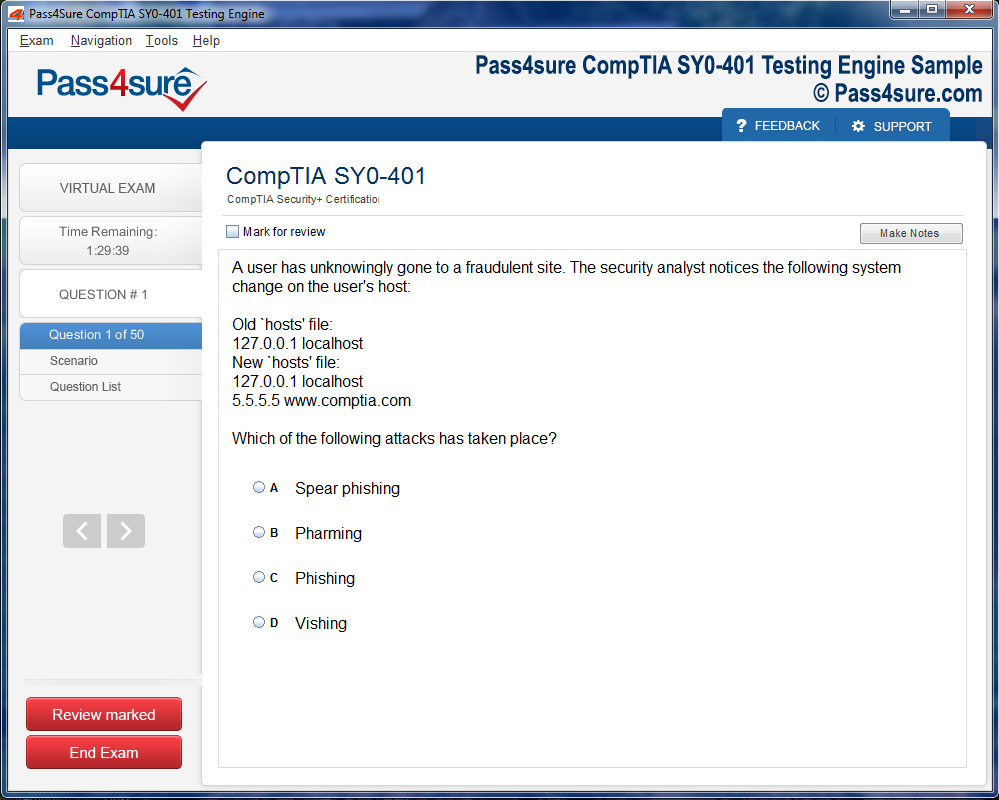
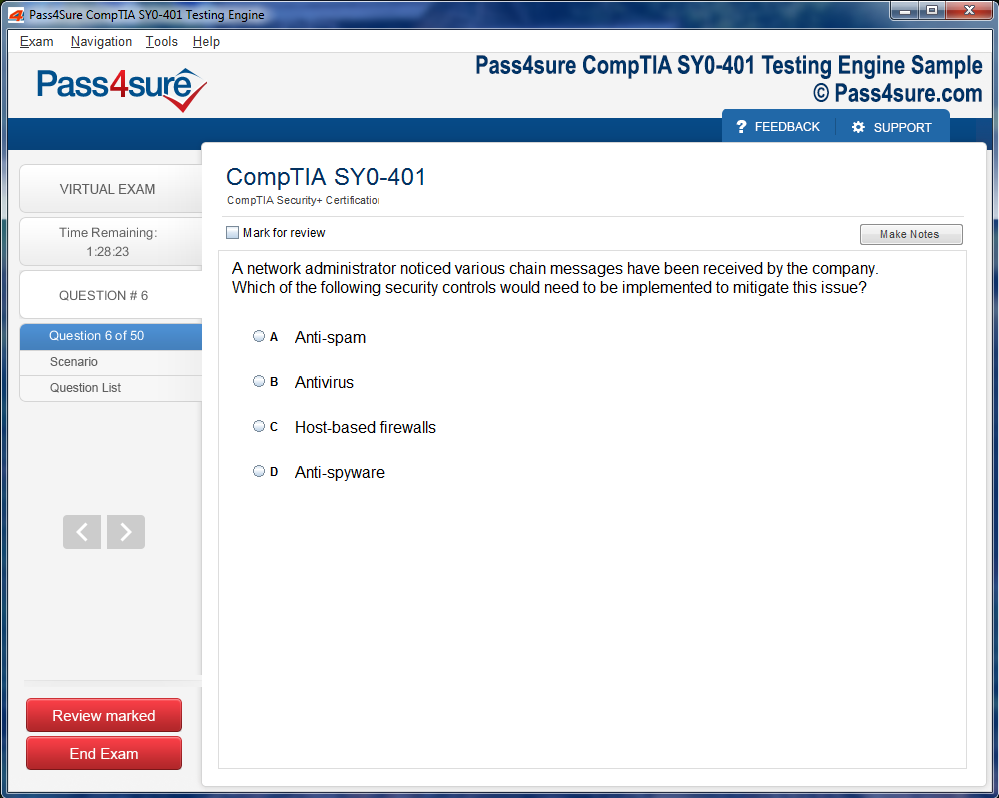
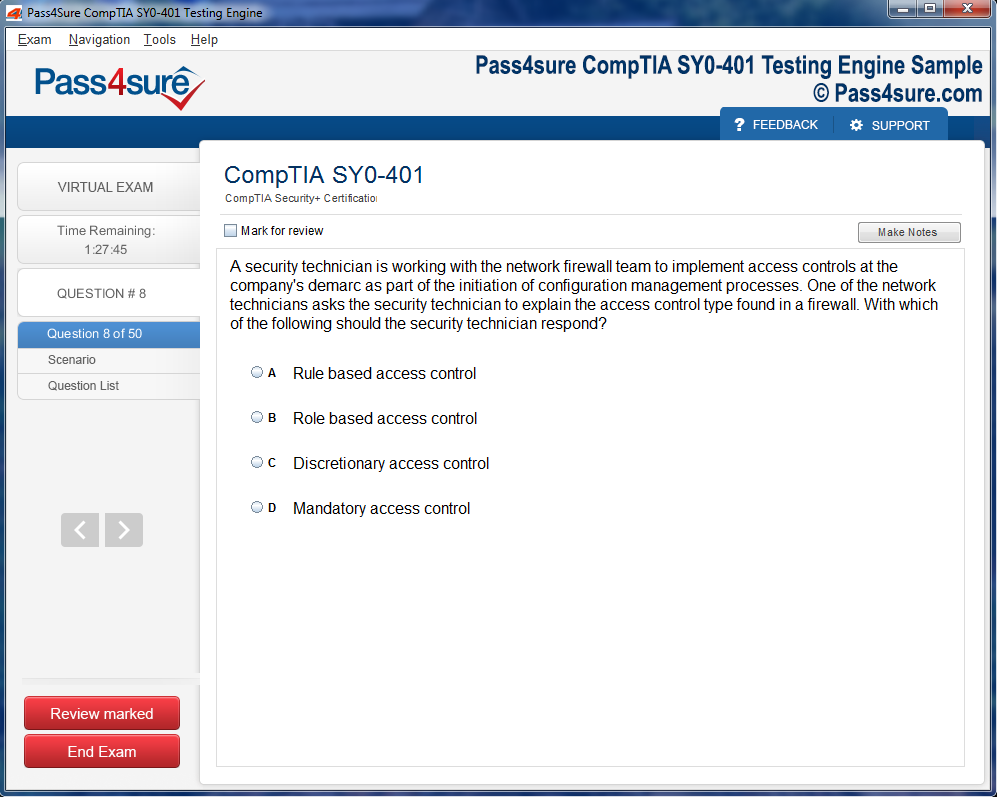
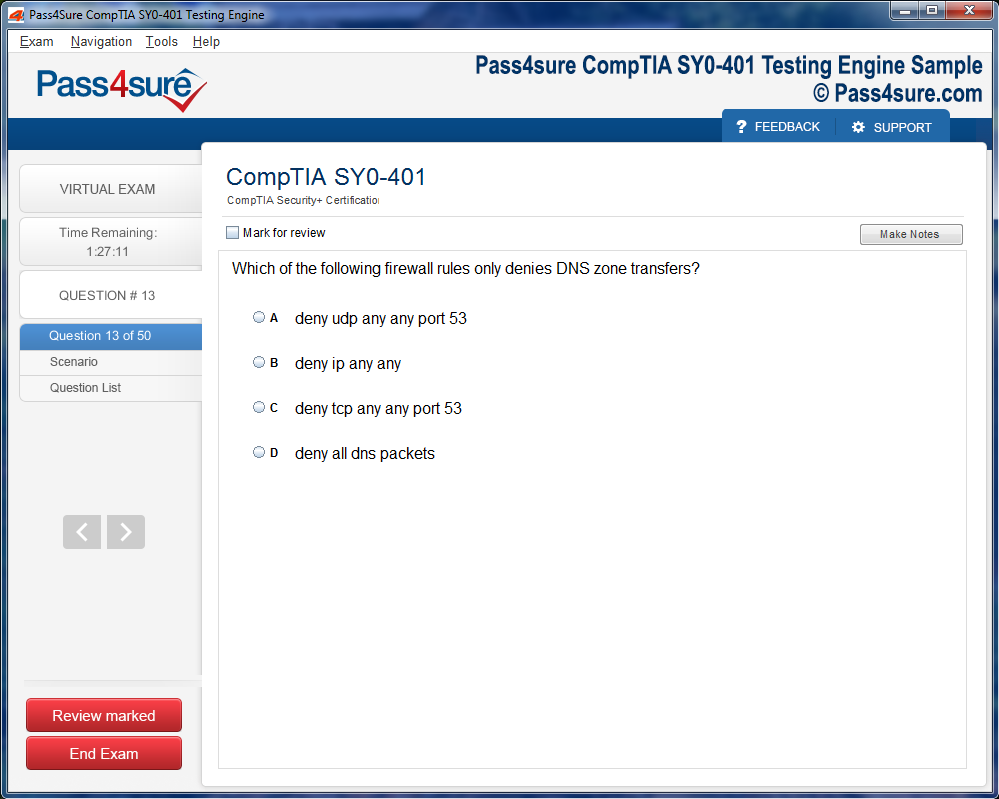
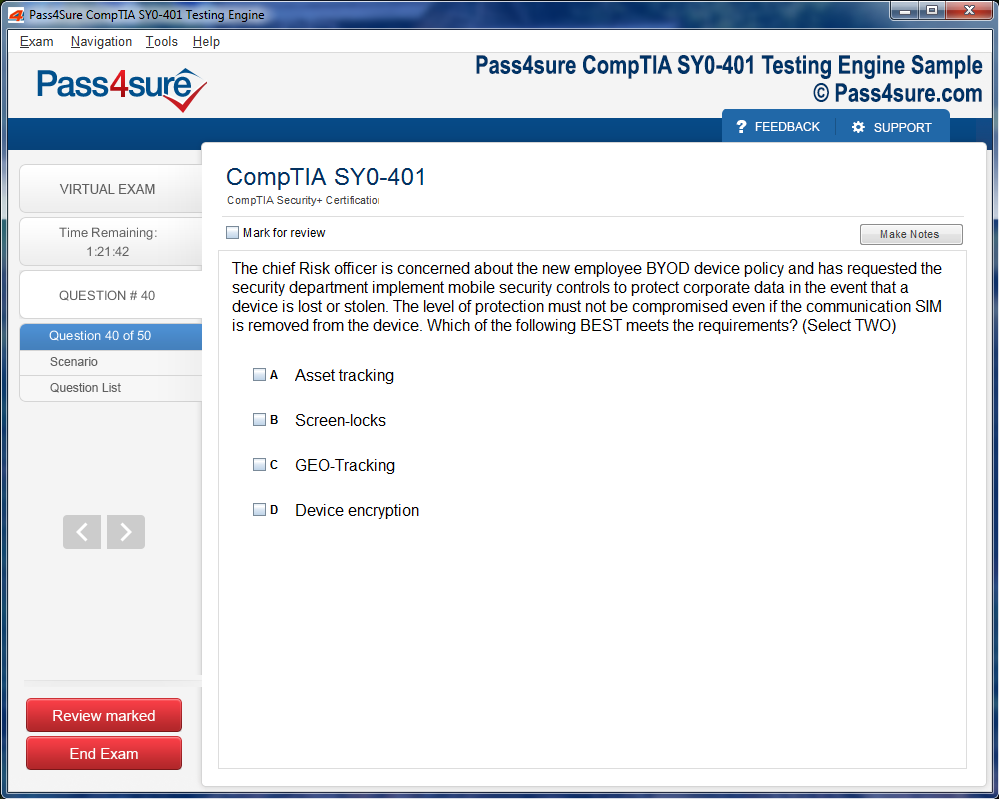
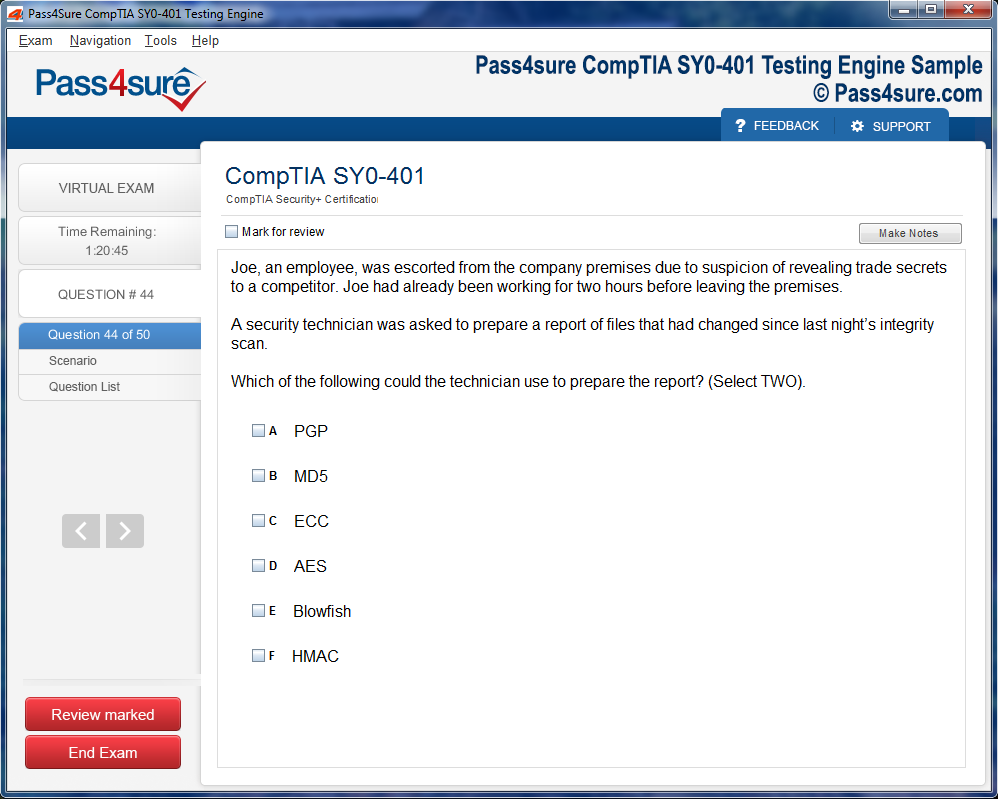
Once download and installed on your PC, you can practise test questions, review your questions & answers using two different options 'practice exam' and 'virtual exam'. Virtual Exam - test yourself with exam questions with a time limit, as if you are taking exams in the Prometric or VUE testing centre. Practice exam - review exam questions one by one, see correct answers and explanations.
How can I get the products after purchase?
All products are available for download immediately from your Member's Area. Once you have made the payment, you will be transferred to Member's Area where you can login and download the products you have purchased to your computer.
How long can I use my product? Will it be valid forever?
Pass4sure products have a validity of 90 days from the date of purchase. This means that any updates to the products, including but not limited to new questions, or updates and changes by our editing team, will be automatically downloaded on to computer to make sure that you get latest exam prep materials during those 90 days.
Can I renew my product if when it's expired?
Yes, when the 90 days of your product validity are over, you have the option of renewing your expired products with a 30% discount. This can be done in your Member's Area.
Please note that you will not be able to use the product after it has expired if you don't renew it.
How often are the questions updated?
We always try to provide the latest pool of questions, Updates in the questions depend on the changes in actual pool of questions by different vendors. As soon as we know about the change in the exam question pool we try our best to update the products as fast as possible.
How many computers I can download Pass4sure software on?
You can download the Pass4sure products on the maximum number of 2 (two) computers or devices. If you need to use the software on more than two machines, you can purchase this option separately. Please email sales@pass4sure.com if you need to use more than 5 (five) computers.
What are the system requirements?
Minimum System Requirements:
- Windows XP or newer operating system
- Java Version 8 or newer
- 1+ GHz processor
- 1 GB Ram
- 50 MB available hard disk typically (products may vary)
What operating systems are supported by your Testing Engine software?
Our testing engine is supported by Windows. Andriod and IOS software is currently under development.
Simplifying NSE5_FSM-6.3: A Beginner’s Approach to Fortinet Mastery
Fortinet Security Fabric distinguishes itself by weaving threat intelligence directly into operational mechanisms. Threat intelligence is more than a static database; it is a dynamic tapestry of emerging vulnerabilities, malware signatures, and exploit techniques. By integrating this intelligence into firewalls and endpoints, organizations gain prescient awareness, transforming reactive security postures into proactive fortifications.
The fabric’s sensors continuously harvest telemetry from disparate network segments, including endpoints, cloud instances, and IoT devices. These feeds are then correlated to identify anomalous behavior. For instance, unusual lateral movement within a segmented virtual domain may indicate a stealthy intrusion. By leveraging machine learning heuristics, Fortinet devices can flag these deviations with minimal latency, ensuring prompt investigation.
Additionally, the Security Fabric employs automated mitigation strategies. Rather than waiting for manual intervention, a detected anomaly can trigger quarantine protocols, adjust access rules, or isolate affected virtual domains. For newcomers, this might resemble a sentient ecosystem where each component senses disturbances and self-adjusts to preserve equilibrium.
FortiOS: The Pulsating Core
At the heart of the Security Fabric lies FortiOS, an operating system meticulously engineered to synchronize security operations across hardware and software vectors. Unlike conventional operating systems, FortiOS embodies both agility and robustness, supporting granular policy enforcement, deep packet inspection, and multi-layered threat prevention simultaneously.
FortiOS’s architecture is modular, allowing features to be toggled according to organizational needs. Modules for VPN, application control, sandboxing, and web filtering coexist harmoniously, yet remain independently configurable. This modularity enables bespoke deployments, tailoring security to intricate network topologies without sacrificing performance.
A salient feature is the FortiOS CLI and GUI duality. While the graphical interface simplifies policy creation, the CLI unveils advanced configurations for meticulous administrators. For beginners, mastering the GUI offers immediate operational fluency, whereas understanding CLI commands fosters long-term adaptability and precision.
Orchestrating Visibility and Analytics
Visibility is the lifeblood of modern network security. Fortinet achieves this through FortiAnalyzer and the broader Security Fabric, aggregating logs from multiple endpoints, firewalls, and switches into cohesive dashboards. These dashboards are not merely aesthetic; they encode intelligence, highlighting trends, anomalies, and threat vectors in real time.
Correlation engines within FortiAnalyzer parse petabytes of telemetry, extracting actionable insights without overwhelming administrators with raw data. For example, simultaneous failed login attempts across geographically dispersed offices can be visualized, revealing potential coordinated attack campaigns. Such foresight empowers security teams to enact preventive measures rather than reactive remediation.
Moreover, the analytics layer supports predictive modeling. By analyzing historical threat patterns, Fortinet can suggest policy adjustments, anticipate potential breaches, and optimize traffic inspection strategies. For learners, this illustrates the evolution from static defense mechanisms to anticipatory, self-tuning security infrastructures.
Segmentation and Micro-Segregation Tactics
Network segmentation remains a fundamental pillar of resilient security, and Fortinet amplifies its potency through virtual domains and micro-segmentation. By isolating sensitive workloads into distinct segments, the propagation of malware or lateral movement by attackers is drastically curtailed.
VDOMs allow a single FortiGate to simulate multiple virtual appliances, each with independent policies, routing tables, and inspection engines. Micro-segmentation extends this principle, often down to application or process levels, ensuring that even compromised endpoints cannot threaten the broader network.
From a pedagogical perspective, one can liken this to an intricately designed castle. Each chamber has reinforced gates, secret passageways, and surveillance mechanisms. Breaching one chamber provides no unfettered access to others, thereby increasing the attacker’s difficulty exponentially.
Automating Response and Adaptive Security Postures
Automation is not an ancillary feature; it is a core philosophy within Fortinet’s Security Fabric. Adaptive security leverages contextual intelligence, behavioral analytics, and orchestration to reduce human latency in threat response.
Security orchestration, automation, and response (SOAR) principles are embedded into Fortinet workflows. Alerts from FortiGate firewalls can trigger dynamic policy adjustments in FortiManager, isolate endpoints via FortiEDR, or initiate sandbox analysis on suspicious payloads. These actions occur with minimal manual oversight, dramatically reducing mean time to containment.
Adaptive security also incorporates anomaly learning. By monitoring normal behavioral baselines for users, devices, and applications, the system can discern deviations that might indicate advanced persistent threats. Over time, the fabric becomes increasingly perceptive, fine-tuning its defensive posture in alignment with evolving threat landscapes.
Fortinet’s Approach to Cloud and Hybrid Environments
Modern enterprise architectures frequently span cloud, on-premises, and hybrid networks. Fortinet’s Security Fabric extends its protective canopy across these diverse ecosystems, ensuring consistent policy enforcement and threat intelligence.
Cloud integration is achieved through FortiGate-VMs and native connectors, allowing granular inspection of north-south traffic, east-west lateral flows, and cloud-native services. By integrating with public cloud APIs, Fortinet can enforce identity-based policies, detect misconfigurations, and identify anomalous API calls, effectively bridging traditional network defenses with dynamic cloud environments.
For hybrid infrastructures, Fortinet ensures seamless orchestration between physical devices, virtual firewalls, and cloud-native controls. This interoperability provides administrators with a singular pane of glass, simplifying operations while maintaining uncompromising security standards.
The Quintessence of Centralized Network Orchestration
FortiManager epitomizes the quintessence of centralized network orchestration, transforming labyrinthine device ecosystems into symphonic ensembles of controlled traffic and secure pathways. The essence lies not merely in configuration but in the harmonization of multiple devices under a singular strategic vision. Beginners navigating NSE5_FSM-6.3 will find that understanding the subtleties of centralized orchestration unlocks a latent capacity for efficiency, eliminating redundant administrative gestures that often plague sprawling networks.
Through FortiManager, policy propagation transcends mere repetition; it becomes an act of systemic precision. Administrators sculpt global mandates—security protocols, bandwidth constraints, VPN stipulations—then disseminate them to multiple FortiGate devices with meticulous uniformity. This methodical approach mitigates human fallibility and ensures congruent security postures across geographically divergent nodes. Each device, once integrated, adheres to the policy choreography with near-mathematical fidelity, resulting in a network that resonates with operational consonance.
Illuminating Network Topography Through Device Discovery
Before policy symphonies can commence, device discovery forms the cardinal step in FortiManager utilization. This process is akin to casting light upon a shadowed topography: previously invisible device statuses and latent configuration discrepancies emerge with clarity. Administrators acquire a consolidated perspective on network health, spanning traffic flow anomalies, firmware discrepancies, and interface irregularities. This elevated vantage point enhances troubleshooting efficacy, reduces mean time to resolution, and fortifies auditing capabilities.
Device discovery also catalyzes proactive governance. By detecting latent misconfigurations or dormant vulnerabilities, administrators preempt potential breaches before they manifest. In this sense, FortiManager does not merely react—it anticipates, furnishing the network steward with prescient intelligence crucial for strategic decision-making.
Policy Packages: Modular Fortification of Security
Policy packages exemplify modular fortification, enabling incremental deployment of security constructs without endangering production traffic. Beginners may initiate with rudimentary constructs: controlling internet egress, delineating VPN corridors, or filtering unsolicited traffic. As proficiency matures, more intricate configurations—SSL inspection profiles, application control matrices, and heuristic firewall rules—can be integrated seamlessly.
This modularity fosters experimental rigor. Policies may be vetted within isolated enclaves, mitigating risk and allowing iterative refinement. Each deployment becomes a calculated foray rather than a leap into uncertainty. Consequently, administrators cultivate not only operational competence but also a deeper intuitive grasp of security orchestration and behavioral network analytics.
The Imperative of Version Control and Change Management
Version control and change management are indispensable pillars within FortiManager’s architecture. By archiving historical configurations, the platform renders the network environment reversible, enabling rapid rollback in the event of misconfigurations or policy conflicts. This archival depth engenders a culture of experimentation, encouraging learners to explore advanced security paradigms without the specter of irreversible consequences.
Change management further integrates accountability into network governance. Administrators can track modifications, identify contributing agents, and evaluate the impact of each alteration. The result is a layered defense against inadvertent errors, enhancing overall reliability while nurturing analytical thinking in network stewardship.
Automation: The Engine of Operational Elegance
Automation represents the engine that propels operational elegance within FortiManager. By orchestrating scheduled backups, automated firmware revisions, and bulk policy propagation, repetitive tasks are abstracted into seamless processes. This not only economizes administrative effort but also enshrines best practices in network hygiene.
In practical terms, automation transforms the mundane into the strategic. Devices maintain synchronization, compliance metrics are continuously refreshed, and the risk of configuration drift is substantially abated. The administrator is liberated to focus on optimization, anomaly detection, and forward-looking security initiatives rather than repetitive maintenance chores.
Insightful Analytics and Proactive Monitoring
FortiManager’s monitoring and reporting suite translates complex configurations into perceptible intelligence. Dashboards, alerts, and analytical summaries provide administrators with a lucid view of network vitality, policy adherence, and event anomalies. For novices, this metamorphosis of abstract data into actionable insight is invaluable; it renders the otherwise opaque workings of FortiGate devices intelligible and operationally meaningful.
Proactive monitoring also fosters anticipatory governance. By surfacing potential threats and irregular traffic patterns before they escalate, administrators can intervene with precision, mitigating risk while sustaining optimal performance. FortiManager thus functions as both sentinel and strategist, guiding networks with informed foresight.
Cultivating Strategic Acumen Through FortiManager
Engagement with FortiManager extends beyond technical proficiency into the realm of strategic acumen. Administrators develop an appreciation for systemic cohesion, where every policy, deployment, and automated process is a deliberate stroke within a broader operational canvas. Centralized management evolves into a cognitive framework: efficiency, consistency, and resilience coalesce into an integrated modus operandi.
Beginners who immerse themselves in this paradigm gain not only the skillset to manage devices but also the cognitive infrastructure to anticipate challenges, optimize configurations, and harmonize security initiatives across sprawling networks. FortiManager thus becomes more than a tool—it is a crucible for cultivating sophisticated network stewardship.
FortiAnalyzer: The Sentinel of Network Cognition
In the labyrinthine corridors of contemporary cybersecurity, anticipation often eclipses reaction in significance. FortiAnalyzer emerges as a cerebral adjunct to FortiGate and FortiManager, distilling voluminous data into perspicuous intelligence. Novices frequently undervalue the profundity of raw logs until they witness emergent patterns, subtle anomalies, and precursory indicators capable of circumventing cataclysmic breaches.
FortiAnalyzer functions as a central nexus, aggregating logs from disparate devices to forge a panoramic vista of network operations. Firewalls, VPN gateways, and intrusion detection systems converge into a singular tableau, allowing nascent practitioners to observe temporal trends, correlate disparate events, and audit historical sequences with surgical precision. Beginners are encouraged to commence with elementary reports, then incrementally evolve toward bespoke dashboards that render network dynamism tangible and intuitive.
The Alchemy of Correlation Rules
Among the arsenal of FortiAnalyzer’s capabilities, correlation rules are tantamount to an esoteric craft. By identifying covert symmetries and recurrent motifs across multiple devices, FortiAnalyzer can preemptively flag incipient threats before they metastasize. This prescient detection transforms conventional reactionary paradigms into proactive fortifications, a cognitive shift imperative for those at the genesis of their cybersecurity odyssey.
For the neophyte, engaging with correlation rules can feel akin to decoding cryptic hieroglyphs. Yet through iterative exploration, beginners internalize the logic underpinning threat synthesis, cultivating a nuanced comprehension of network behavior. Each triggered alert becomes not a mere notification but a didactic episode, embedding strategic acumen alongside technical dexterity.
Artisanal Report Generation
The orchestration of reports within FortiAnalyzer constitutes both artistry and methodical rigor. Comprehensive reports serve as irrefutable evidence for compliance audits, whereas executive synopses distill salient intelligence into digestible vignettes for decision-makers. Novices often wrestle with harmonizing exhaustive detail with lucid clarity, a skill honed through repeated engagement and iterative refinement.
By experimenting with template customization, filtration, and temporal visualization, learners cultivate an appreciation for the symbiosis of aesthetics and analytical precision. Report generation ceases to be a perfunctory chore and evolves into a cognitive exercise in narrative construction and evidentiary storytelling.
Synergistic Integration with FortiManager
The confluence of FortiAnalyzer with FortiManager amplifies operational efficacy, engendering a feedback loop of continual refinement. Security policies promulgated via FortiManager can be scrutinized within FortiAnalyzer to verify alignment, detect deviations, and optimize configurations. This closed-loop framework instills in beginners a comprehension of iterative improvement, underscoring the philosophy that cybersecurity is an evolving discipline rather than a static checklist.
Monitoring policy compliance in real time fosters an anticipatory mindset, while historical trend analysis enables foresight into potential vulnerabilities. This dual lens of immediacy and retrospection equips learners with a rare cognitive dexterity, blending tactical execution with strategic foresight.
Experiential Learning Through Event Simulation
An often-overlooked facet for novices is the pedagogical potency of event simulation. FortiAnalyzer facilitates the replay of historical incidents, allowing learners to dissect attack vectors, trace causal chains, and understand the nuanced interplay of system components. This experiential approach supersedes rote memorization, engendering an intuitive grasp of network dynamics that textual study alone cannot replicate.
Through simulated exercises, beginners witness firsthand the interplay of defensive mechanisms, misconfigurations, and emergent threats. Each reenacted scenario crystallizes complex principles into tangible experience, bridging the chasm between abstract comprehension and applied expertise.
Strategic Perspective Beyond Technical Proficiency
Mastery of FortiAnalyzer transcends mere operational knowledge; it cultivates a strategic lens through which network security is perceived. Visualization, correlation, and proactive intelligence coalesce into an overarching framework, enabling learners to anticipate, interpret, and mitigate threats with confidence. The transition from competence to strategic insight is neither instantaneous nor linear but is expedited by deliberate engagement with FortiAnalyzer’s multifaceted tools.
In navigating dashboards, generating reports, and interrogating historical data, beginners internalize a meta-cognition of security operations. Security no longer appears as a reactive discipline but as a living, evolving ecosystem where foresight, pattern recognition, and judicious intervention converge to safeguard digital infrastructure.
Advanced FortiGate Features for Everyday Security Challenges
Once foundational configuration becomes intuitive, the aspirant network guardian can delve into FortiGate’s arcane functionalities that transmute ordinary defenses into formidable fortresses. Here, VPNs, application governance, intrusion deterrence, and SSL scrutiny emerge as indispensable armaments in the cybersecurity arsenal.
Enigmatic VPN Architectures
Virtual Private Networks, often abbreviated as VPNs, orchestrate encrypted conduits across volatile networks. Neophytes often embark with site-to-site VPNs, which seamlessly conjoin disparate branch offices in cryptographic matrimony, before venturing into the labyrinthine realm of remote-access VPNs for individual operatives. Mastery over encryption ciphers, multifactor authentication paradigms, and tunneling protocols ensures that these conduits are impervious to interception, rendering the network a sanctum of inviolable data flow.
Intricate Application Governance
Application control metamorphoses FortiGate from a mere firewall into a sentient traffic sentinel. It discerns legitimate applications from clandestine or malevolent ones, even when masquerading on conventional ports. Administrators may delineate policies that favor productivity instruments while incarcerating social diversions or clandestine file-sharing tools, tailoring security schemas to the organization’s unique ethos. This granularity instills an almost preternatural insight into network behavior, empowering guardians to predict and preempt anomalies before they crystallize into breaches.
Proactive Intrusion Deterrence
Intrusion Prevention Systems (IPS) epitomize preemptive defense, intercepting and neutralizing threats in their embryonic stages. Though initially labyrinthine, IPS rules may be incrementally deployed, commencing with cataloged vulnerabilities. When coupled with meticulous logging, IPS furnishes continuous empirical feedback, enabling practitioners to calibrate policies with near-oracular precision. This symbiosis of observation and intervention cultivates a profound comprehension of adversarial strategies while enhancing real-time network resilience.
Decryptive SSL Inspection
In an era where encrypted traffic harbors clandestine threats, SSL inspection assumes paramount significance. FortiGate decrypts encrypted packets, scrutinizes them for anomalous patterns or malware signatures, and subsequently re-encrypts the data for safe passage. Novices benefit from microcosmic deployments, scaling progressively as operational confidence solidifies. The capacity to illuminate hidden threats within ostensibly innocuous encrypted streams marks the juncture where routine administration evolves into strategic mastery.
Multi-Layered Defensive Stratagems
Beyond VPNs, application control, IPS, and SSL inspection, FortiGate’s arsenal includes web filtering, heuristic antivirus scanning, and sandboxing. Collectively, these constitute a multi-tiered bulwark, wherein failure of a solitary mechanism does not precipitate systemic collapse. This layered defense paradigm embodies the quintessence of Fortinet philosophy, where redundancy synergizes with precision to preclude compromise.
Experiential Exercises for Cognitive Fortification
Practical immersion is indispensable. Simulated incursions, traffic analytics, and iterative policy adjustments transform abstract knowledge into kinetic expertise. Observing the network’s response to contrived threats fosters reflexive competence and situational acuity. By engaging with these exercises, practitioners internalize the nuances of advanced FortiGate functionality, ultimately navigating quotidian security challenges with assured dexterity.
Embarking on the Fortinet Odyssey
Networking is not merely the act of connecting devices; it is the orchestration of digital symphonies where packets traverse labyrinthine conduits. The Fortinet ecosystem emerges as a crucible for security acumen, offering a medley of appliances and protocols designed to harmonize protection and performance. Beginners embarking upon the NSE5_FSM-6.3 pathway encounter a microcosm of this intricate realm, where theoretical constructs and lab exercises coalesce into tangible mastery.
Synthesizing FortiGate, FortiManager, and FortiAnalyzer
The triumvirate of FortiGate, FortiManager, and FortiAnalyzer represents a triad of operational synergy. FortiGate acts as the sentinel, enforcing security policies with granular precision. FortiManager orchestrates these policies across sprawling network topographies, mitigating the chaos of decentralized administration. FortiAnalyzer metamorphoses raw logs into perspicacious insights, unveiling anomalies hidden within terabytes of telemetry. Integrating these tools transforms abstract proficiency into actionable competence, where every configuration choice reverberates through the network ecosystem.
Audit as Alchemy
Auditing an existing network is akin to the alchemy of digital ecosystems. Identify the devices scattered across topologies, document the arcane policies that govern their behavior, and chart the flow of traffic as if tracing tributaries in an intricate river system. This process illuminates inefficiencies and vulnerabilities while fostering an intuitive grasp of operational interdependencies. Meticulous documentation serves not only as a map but as a mnemonic scaffold for future strategic maneuvers.
Triadic Enforcement and Strategic Oversight
The practical confluence of FortiGate, FortiManager, and FortiAnalyzer embodies a triadic enforcement paradigm. Policies are conceived centrally, deployed peripherally, and analyzed holistically. Alerts from FortiAnalyzer become the lodestar for FortiManager adjustments, while FortiGate enforces the calibrated directives. This synergy cultivates a proactive operational rhythm where administrators anticipate disruptions rather than merely react. Beginners witness firsthand the elegance of coordinated oversight, where each tool amplifies the efficacy of the others.
Logarithms of Troubleshooting
Troubleshooting transcends mere problem-solving; it is an epistemic journey through the chronicles of system logs, alerts, and event cadences. Fortinet environments present a rich tapestry of telemetry, each entry a cipher revealing network truths. Understanding the nuances of these signals allows practitioners to diagnose anomalies with prescient acuity. Regularly parsing logs, interpreting alert heuristics, and correlating event timelines forge an analytical mindset that transforms novice uncertainty into methodological confidence.
Perpetual Learning and Threat Cognizance
The digital security landscape is inherently protean, evolving with the velocity of emerging threats. Fortinet perpetually augments its arsenal, introducing new features, security profiles, and threat intelligence updates. Cultivating a mindset of continuous learning is not optional; it is the sine qua non of adept administration. Subscribers to Fortinet intelligence become digital sentinels, foreseeing vulnerabilities before adversaries exploit them. This proactive disposition distinguishes the reactive administrator from the guardian who anticipates challenges with prescient dexterity.
Experiential Projects and Tangible Mastery
Abstract comprehension solidifies when theory manifests in tangible experiments. Multi-VDOM environments simulate compartmentalized network segments, offering insights into policy isolation and traffic segregation. Site-to-site VPN implementations elucidate cryptographic tunneling and cross-site connectivity nuances, while high-availability (HA) clusters exemplify resilience engineering. Documenting these exercises crystallizes knowledge, transforming ephemeral understanding into permanent expertise. Such experiential undertakings bridge the gap between lab proficiency and professional operational competence.
Operational Symbiosis and Professional Acumen
Integration of Fortinet knowledge into real-world practice catalyzes a metamorphosis from novice to competent administrator. Strategic thinking becomes interlaced with procedural execution, each decision weighted by its potential systemic impact. Monitoring becomes proactive, troubleshooting becomes anticipatory, and policy deployment achieves a cadence of operational elegance. The learner emerges not merely as a technician but as a steward of network integrity, entrusted with the orchestration of digital fortresses in an increasingly hostile cyber milieu.
Reflexive Documentation and Iterative Refinement
Reflection is a powerful conduit for intellectual retention. Documenting network configurations, policy rationales, and troubleshooting chronologies fosters meta-cognitive awareness. Each iteration of deployment and observation sharpens intuition, revealing latent patterns and recurring anomalies. Iterative refinement, guided by empirical observation, transforms sporadic competence into sustained expertise, ensuring that lessons learned extend beyond the immediate scenario and permeate broader operational understanding.
Cultivating Cognitive Dexterity in Security Practice
Security administration demands cognitive dexterity, the ability to pivot between high-level strategy and granular technical execution. Beginners encounter diverse challenges: anomaly detection, policy conflicts, latency analysis, and threat mitigation. Each obstacle necessitates a blend of deductive reasoning and heuristic exploration. Engaging with Fortinet’s integrated tools accelerates this cognitive maturation, compelling learners to synthesize disparate information streams into cohesive operational judgments.
The Continuum of Network Vigilance
Network security is not static; it is a continuum of vigilance, adaptation, and anticipatory strategy. Mastery is measured not solely by adherence to protocols but by the ability to evolve practices in response to novel threats and emergent architectures. The Fortinet ecosystem serves as a microcosm of this continuum, where logs, alerts, policies, and configurations converge into a living, adaptive system. Beginners who embrace this dynamic interplay internalize principles that transcend the confines of any singular network, equipping them to navigate complexity with acumen and foresight.
Advanced FortiGate Architecture and Strategic Deployment
FortiGate appliances are not merely devices; they are orchestrators of cyber fortresses. Deploying them effectively demands comprehension of layered defense mechanisms and contextual awareness of network topology. Beyond basic configuration, administrators encounter intricate functionalities such as application control, intrusion prevention systems (IPS), and advanced threat protection. Application control enables nuanced traffic inspection, distinguishing between benign and malevolent payloads with granular precision. IPS, in contrast, acts as an anticipatory bulwark, intercepting potential exploits before they proliferate, while advanced threat protection leverages heuristic and behavioral analytics to flag subtle intrusions invisible to traditional signature-based mechanisms.
Strategic deployment of FortiGate appliances often follows a tiered model. Edge units form the first line of defense, mitigating inbound threats while performing deep packet inspection. Internal segments incorporate segmentation policies to isolate sensitive zones, minimizing lateral threat movement. Cloud-integrated FortiGates extend the perimeter into virtualized environments, ensuring a seamless defense continuum across hybrid architectures. Beginners engaging with these configurations develop not only technical dexterity but also an appreciation for architectural coherence, understanding that security efficacy is proportional to systemic foresight rather than isolated appliance configuration.
Orchestrating Policies Through FortiManager
FortiManager functions as the cerebral cortex of network security orchestration. Its capacity to administer policies across multiple FortiGate appliances introduces a paradigm shift from isolated rule enforcement to coordinated governance. Administrators define policies centrally, leveraging hierarchical structures to streamline complex deployments while ensuring consistency and compliance. In multi-site organizations, this orchestration reduces human error and accelerates incident response times, transforming policy management into a precise, deterministic process.
FortiManager’s audit capabilities further enhance operational transparency. By tracking configuration modifications and policy iterations, it enables forensic retrospection, revealing both systemic inefficiencies and procedural anomalies. Beginners leveraging FortiManager in tandem with FortiGate not only enforce security policies but also cultivate strategic foresight, developing an anticipatory mindset critical for preemptive threat mitigation.
Illuminating Insights with FortiAnalyzer
FortiAnalyzer transforms raw data into operational sagacity. Logs, alerts, and telemetry streams become interpretable narratives, unveiling subtle patterns invisible to casual observation. The platform employs sophisticated correlation mechanisms, enabling administrators to detect anomalies, recurrent attack vectors, and latent vulnerabilities. This analytical prowess elevates operational response from reactive troubleshooting to proactive fortification, where insights inform both tactical adjustments and long-term architectural evolution.
For beginners, FortiAnalyzer presents a dual opportunity: first, to understand the nuances of log interpretation and second, to develop an analytical intuition for network behavior. Parsing event sequences, recognizing abnormal traffic signatures, and correlating incidents across devices fosters a cerebral acuity essential for modern cybersecurity guardianship. By internalizing these analytical patterns, novices evolve into adept interpreters of complex network ecosystems, capable of discerning subtle indicators of compromise before they escalate into critical incidents.
Multi-VDOM Architectures: Segmentation and Security Depth
Virtual Domains (VDOMs) embody the principle of segmentation, allowing administrators to partition a single FortiGate appliance into multiple logical domains. Each VDOM functions as a discrete network enclave, possessing independent routing, security policies, and administrative domains. This capability is particularly valuable in multi-tenant or multi-departmental environments, where operational isolation mitigates risk and enhances compliance adherence.
Beginners exploring multi-VDOM architectures confront several layered challenges: ensuring inter-VDOM communication policies are precise, preventing policy leakage, and maintaining consistent monitoring across domains. Successfully navigating these complexities imbues learners with an appreciation for compartmentalized security strategies and the operational discipline required for high-stakes environments.
High-Availability Clusters and Resilient Network Design
High-availability (HA) configurations represent the apex of network resilience. By deploying FortiGate appliances in redundant clusters, organizations ensure continuity in the event of hardware failure, software anomalies, or targeted attacks. HA implementations demand careful planning: synchronization of configurations, failover testing, and latency monitoring are paramount to prevent unintended service interruptions.
Practical engagement with HA clusters cultivates not only technical proficiency but also strategic patience. Learners experience firsthand the nuances of stateful failover, session persistence, and resource allocation under dynamic conditions. These exercises transform abstract principles of resilience into tangible operational competence, preparing beginners to manage mission-critical environments where uptime is paramount.
Site-to-Site VPNs and Encrypted Connectivity
Secure communication between disparate network segments is a cornerstone of enterprise architecture. FortiGate facilitates site-to-site VPNs, enabling encrypted tunnels across public infrastructure while maintaining confidentiality and integrity. Beginners configuring VPNs confront both cryptographic concepts and practical routing considerations. Ensuring proper key management, alignment of IPsec policies, and consistent encryption standards demands analytical rigor.
The learning curve extends beyond mere connectivity; it encompasses monitoring tunnel health, optimizing throughput, and integrating VPN metrics into broader network analytics. These exercises reinforce the principle that security is inseparable from operational continuity and that cryptographic implementations are as much strategic instruments as they are technical mechanisms.
Continuous Monitoring and Proactive Incident Management
Vigilance in cybersecurity is perpetual. Logs, alerts, and behavioral analytics form a continuous stream demanding attentive observation. Proactive incident management transcends reactive measures, requiring administrators to anticipate anomalies, predict potential vulnerabilities, and enact preemptive policy adjustments. Beginners engaging in this iterative monitoring cultivate an anticipatory mindset, where each signal, however minor, informs broader security strategy.
FortiAnalyzer, in conjunction with FortiManager, facilitates automated reporting, anomaly detection, and trend analysis. These tools transform the administrative experience from manual oversight to strategic orchestration, enabling learners to focus on cognitive interpretation rather than repetitive data aggregation. Over time, this practice fosters cognitive resilience, equipping administrators to respond to emergent threats with agility and precision.
Threat Intelligence Integration and Adaptive Security
Fortinet’s continuous threat intelligence feeds provide a dynamic framework for adaptive security. Signature updates, zero-day alerts, and behavioral heuristics converge to inform policy adjustments and proactive defense strategies. Beginners integrating this intelligence gain experiential insight into the fluidity of cybersecurity: defenses are never static, and effectiveness hinges upon timely assimilation of emergent data.
Adaptive security demands analytical elasticity. Administrators must correlate threat intelligence with existing configurations, evaluate potential exposure vectors, and prioritize mitigation strategies based on organizational risk posture. These exercises enhance strategic judgment, enabling learners to anticipate adversarial behavior and implement nuanced countermeasures that transcend reactive paradigms.
Reflection, Documentation, and Experiential Synthesis
The journey from novice to competent administrator is punctuated by reflection and documentation. Maintaining detailed records of configurations, troubleshooting steps, and experimental outcomes solidifies cognitive frameworks. This process not only facilitates future replication and refinement but also cultivates an analytical habit of mind indispensable in complex, evolving environments.
Experiential synthesis—where theory, practice, and analytical reflection converge—represents the pinnacle of applied learning. Multi-VDOM setups, VPN deployments, HA configurations, and threat intelligence integration are not merely exercises; they are cognitive crucibles, forging practitioners capable of nuanced judgment and operational foresight. By internalizing these experiences, beginners internalize principles of digital stewardship that extend far beyond the Fortinet ecosystem.
Adaptive Threat Intelligence Integration
FortiGate’s prowess is magnified when coupled with adaptive threat intelligence frameworks. These systems ingest global attack patterns, zero-day exploit alerts, and polymorphic malware indicators, translating abstract data into actionable policies. The acolyte administrator witnesses a metamorphosis from reactive defense to anticipatory vigilance. By integrating threat feeds and dynamic signatures, FortiGate preemptively neutralizes anomalies, mitigating risks before they metastasize into full-blown compromises. The interplay between automated intelligence and manual oversight cultivates a cognitive duality, wherein the human operator and the machine collaborate as co-guardians of the digital sanctum.
Granular Traffic Orchestration
Beyond mere inspection, FortiGate enables hyper-granular traffic orchestration. Through deep packet analysis and contextual heuristics, administrators can prioritize critical business applications while quarantining or throttling bandwidth for ancillary or suspicious activities. This capability, often overlooked by novices, transforms network administration into a symphony of precision, balancing efficiency and security. By understanding the subtle interplay between packet metadata, session duration, and application signatures, one can sculpt the network’s behavior almost like a maestro conducting a complex orchestral arrangement.
Contextual User and Device Profiling
Advanced FortiGate deployments exploit contextual profiling, wherein user identities and device characteristics inform policy enforcement. Rather than relying solely on IP addresses or static access rules, administrators may define adaptive policies that respond to temporal, geographical, or behavioral anomalies. For instance, an employee attempting to access sensitive resources from an unrecognized device in a foreign country triggers multi-layered authentication and selective session limitations. This dynamic approach elevates cybersecurity from static control to fluid, context-aware guardianship, where policies evolve in real time to meet emergent threats.
Strategic Sandboxing Utilization
Sandboxing, the containment of potentially malicious executables in isolated virtual environments, exemplifies FortiGate’s proactive methodology. By observing the behavior of untrusted files without endangering production systems, administrators gain empirical insights into malware logic, propagation mechanisms, and exploit chains. Novices benefit from incremental exposure—initially observing benign scripts, then progressing to sophisticated payloads—until the nuances of sandbox-triggered alerts, behavioral heuristics, and anomaly scoring are internalized. This experiential approach crystallizes theoretical knowledge, rendering abstract malware taxonomy tangible and operationally relevant.
Orchestrated Web and Content Filtering
FortiGate’s web filtering transcends rudimentary blacklist/whitelist paradigms. Administrators can implement multilayered semantic, categorical, and reputation-based filters, ensuring that content aligns with organizational values while preemptively neutralizing drive-by exploits. By integrating real-time threat intelligence with behavioral analytics, web filtering becomes an anticipatory shield rather than a reactive barrier. Traffic that superficially appears innocuous can be intercepted, analyzed, and redirected, reinforcing a culture of cybersecurity mindfulness across the digital ecosystem.
Advanced Logging and Forensic Analytics
Logging, often relegated to peripheral attention by beginners, attains strategic significance in advanced FortiGate operations. Granular logs, encompassing session metadata, intrusion events, application usage, and anomalous behavioral patterns, serve as the bedrock for forensic analysis and continuous improvement. By leveraging FortiAnalyzer or similar platforms, administrators transform raw data into narratives of network behavior, identifying emergent threat vectors and latent vulnerabilities. This analytical proficiency fosters not only reactive remediation but also predictive fortification, turning mundane logs into instruments of strategic foresight.
Threat Hunting and Proactive Reconnaissance
Once foundational defenses are established, practitioners can engage in active threat hunting—systematic exploration for latent adversarial activity within the network. FortiGate’s rich telemetry, combined with anomaly detection and pattern recognition, allows administrators to uncover dormant malware, unauthorized exfiltration attempts, or misconfigured access controls before they precipitate crises. This proactive reconnaissance cultivates an anticipatory mindset, training administrators to think like attackers while defending like sentinels. Each hunting expedition yields experiential knowledge, reinforcing both procedural skill and strategic intuition.
Dynamic Policy Automation
FortiGate supports dynamic policy automation, wherein predefined triggers adjust firewall, IPS, or application control behaviors based on environmental cues. For example, detection of a sudden surge in remote access attempts can automatically trigger stricter authentication protocols or initiate temporary access lockdowns. This automation, while preserving human oversight, reduces response latency and ensures consistent enforcement across diverse network segments. By mastering these programmable paradigms, administrators can harmonize operational efficiency with adaptive defense, effectively creating a self-regulating security ecosystem.
Integration with Multi-Cloud Environments
Modern enterprises increasingly operate across hybrid and multi-cloud infrastructures. FortiGate extends its protective reach into cloud-hosted workloads, providing consistent security policy enforcement across virtualized environments, SaaS applications, and on-premises assets. Administrators may implement uniform segmentation, threat detection, and logging across heterogeneous platforms, ensuring that cloud adoption does not dilute defensive rigor. This continuity of protection necessitates a sophisticated understanding of API integration, inter-cloud routing, and cloud-native security paradigms—skills that elevate network administration from basic operations to strategic architecture.
Behavioral Anomaly Detection
FortiGate’s behavioral anomaly detection leverages machine learning and heuristic analysis to identify deviations from normative traffic patterns. Rather than relying solely on static signatures, this approach detects subtle, emergent threats such as lateral movement, beaconing, or covert data exfiltration. Administrators can calibrate sensitivity thresholds, monitor alert fidelity, and investigate flagged anomalies, transforming abstract behavioral insights into actionable intelligence. Over time, this fosters an almost intuitive understanding of the network’s digital “heartbeat,” allowing preemptive responses to potential compromises.
Granular VPN Traffic Analytics
Beyond merely establishing secure tunnels, FortiGate permits exhaustive scrutiny of VPN traffic. Administrators can dissect payload metadata, session longevity, and anomalous encryption patterns to ensure that remote-access channels are not exploited as vectors for infiltration. By combining VPN analytics with IPS, SSL inspection, and application control, a layered protective lattice emerges, ensuring that even encrypted tunnels remain subject to vigilant scrutiny. This level of granularity transforms network encryption from a passive safeguard into an actively monitored frontier of security.
Microsegmentation and Zero Trust Enforcement
FortiGate facilitates microsegmentation, isolating sensitive assets and enforcing zero-trust principles within the network. Even within ostensibly secure perimeters, individual applications, users, and devices are constrained by strict access policies, reducing the blast radius of potential intrusions. Administrators can define granular access matrices, incorporate behavioral analytics, and automate policy adjustments, creating a dynamic, compartmentalized architecture. This paradigm shift from perimeter-centric defense to identity-and-context-driven enforcement epitomizes modern cybersecurity doctrine.
Continuous Learning Through Simulated Threats
Practical mastery emerges through iterative simulation. FortiGate allows administrators to orchestrate controlled attacks, probe response mechanisms, and observe the interplay between IPS, sandboxing, and SSL inspection. These exercises, when paired with meticulous logging and analytic review, reinforce cognitive retention and operational dexterity. The iterative loop of action, observation, and adjustment transforms theoretical constructs into embodied skill, ensuring that every administrator internalizes both the art and science of advanced FortiGate security.
Log Aggregation as Cognitive Cartography
The aggregation of logs within FortiAnalyzer is not a mere technical chore—it functions as a form of cognitive cartography. Each log entry, whether it chronicles a VPN handshake, firewall alert, or intrusion attempt, constitutes a coordinate on a sprawling map of network behavior. For beginners, appreciating this metaphorical landscape is pivotal. Instead of perceiving logs as isolated events, learners begin to recognize constellations of activity, emergent patterns, and potential vulnerabilities.
By correlating disparate logs, FortiAnalyzer facilitates the construction of multi-dimensional models of network interactions. Temporal sequencing, anomaly detection, and cross-device correlation converge to reveal previously obscured interdependencies. Novices engaging with this holistic perspective acquire a rare cognitive elasticity, enabling them to anticipate threats not through brute-force analysis but via pattern recognition and strategic inference.
Temporal Trend Analysis: Seeing the Unseen
A particularly enthralling dimension of FortiAnalyzer lies in its capacity for temporal trend analysis. Unlike instantaneous alerts that reflect singular occurrences, trend analysis illuminates gradual, systemic behaviors that often presage security incidents. Beginners who engage with temporal visualization can detect creeping misconfigurations, subtle policy violations, or recurring access anomalies before they escalate into crises.
Understanding these temporal rhythms is akin to interpreting the cadence of a symphony: individual notes might seem innocuous, but when observed in sequence, the harmonic structure reveals underlying motifs. Through dashboards that chart event frequency, bandwidth anomalies, or user behavior trajectories, learners cultivate an anticipatory mindset, interpreting signals that others might overlook.
Anomaly Detection as Intellectual Forensics
FortiAnalyzer’s anomaly detection extends beyond mere alert generation—it functions as an instrument of intellectual forensics. Each deviation from established baselines invites inquiry: why did this pattern emerge, and what latent risks does it signify? Beginners are encouraged to adopt a detective-like curiosity, interrogating data anomalies to extract causal narratives and anticipate consequences.
The process transforms raw logs into investigative artifacts. Suspicious spikes in login attempts, unusual VPN tunneling patterns, or irregular firewall denials become threads in a broader tapestry of network activity. By following these threads, novices develop analytical acuity, synthesizing disparate data points into coherent interpretations and actionable insights.
Dashboard Customization for Cognitive Fluency
While FortiAnalyzer provides default dashboards, true mastery emerges when beginners craft bespoke visualizations. Custom dashboards allow learners to emphasize metrics most relevant to their environment, prioritizing clarity over superfluous detail. This practice encourages cognitive fluency—rapid recognition of critical patterns without being overwhelmed by extraneous noise.
Customization also fosters creativity. By experimenting with chart types, threshold indicators, and real-time alert panels, learners transform abstract data into intelligible visual narratives. Each dashboard becomes a personal lexicon of network intelligence, reflecting the user’s evolving comprehension and strategic priorities.
Compliance Audits as Structured Inquiry
Compliance audits, often perceived as bureaucratic obligations, assume new significance within the FortiAnalyzer ecosystem. For beginners, audit preparation is an exercise in structured inquiry. By systematically examining policy adherence, log completeness, and event correlations, learners cultivate methodological rigor alongside technical knowledge.
The generation of audit-ready reports trains novices to balance granularity with brevity. Detailed logs underpin compliance verification, while executive summaries distill complex activity into digestible insights. This duality cultivates versatility, allowing learners to communicate effectively with both technical teams and organizational decision-makers.
Predictive Analytics: Foreseeing the Inflection Point
A profound capability of FortiAnalyzer lies in its nascent predictive analytics. By extrapolating historical trends and anomalies, the platform can anticipate potential threat inflection points. For beginners, engaging with predictive models encourages a mindset shift: security is not merely reactive but anticipatory.
Through simulation of potential attack scenarios, learners observe how minor deviations can cascade into significant incidents. This foresight cultivates strategic thinking, allowing novices to prioritize interventions, optimize policies, and allocate resources preemptively. Predictive insights elevate security from tactical execution to informed decision-making, bridging the gap between operational competence and strategic foresight.
Closed-Loop Security as Iterative Mastery
The synergy between FortiManager and FortiAnalyzer manifests as a closed-loop security paradigm. Policies are deployed, monitored, and refined in a continual cycle of feedback and optimization. For beginners, this iterative process illustrates that cybersecurity is a dynamic discipline rather than a static checklist.
Closed-loop security reinforces a culture of experimentation. By adjusting firewall rules, testing new policies, and observing resultant data patterns, novices gain experiential knowledge that textbooks cannot impart. The iterative nature of this system cultivates resilience, adaptability, and a nuanced understanding of cause-and-effect relationships within complex networks.
Threat Hunting as Cognitive Gymnastics
FortiAnalyzer transforms passive monitoring into proactive threat hunting, a form of cognitive gymnastics for beginners. Threat hunting requires analytical dexterity: scanning logs, correlating anomalies, and tracing hidden attack vectors. Each discovery enhances pattern recognition skills, fortifying the learner’s capacity to anticipate malicious activity.
This practice cultivates intellectual stamina. Novices learn to sustain focus across voluminous datasets, identify subtle irregularities, and prioritize remediation efforts. Over time, threat hunting becomes intuitive, with learners internalizing heuristics for anomaly detection and risk assessment, bridging the divide between novice understanding and expert intuition.
Event Replay for Experiential Resonance
Event replay, a feature often underutilized by beginners, offers a rare opportunity for experiential resonance. By reconstructing historical incidents, learners can observe attack progression, defensive responses, and policy efficacy in granular detail. Each replayed scenario serves as a microcosm of network dynamics, rendering abstract principles tangible and memorable.
Experiential learning through event replay encourages reflective practice. Beginners can experiment with alternative responses, analyze outcomes, and refine strategies without jeopardizing live systems. This method accelerates comprehension, embedding complex cause-effect relationships within the learner’s cognitive framework.
Visual Analytics as Narrative Interpretation
FortiAnalyzer’s visual analytics extend beyond mere charts—they function as narrative instruments. Dashboards, heatmaps, and correlation graphs translate raw data into stories of network behavior. For beginners, interpreting these visual narratives cultivates critical thinking and intuitive understanding, transforming numerical abstraction into actionable insight.
Each visualization invites inquiry: why does a particular subnet exhibit anomalous activity? Which user behaviors correlate with security incidents? By engaging with these questions, novices develop a narrative literacy, decoding the underlying story told by the data and situating their technical actions within a broader strategic context.
Strategic Foresight Through Proactive Insights
The culmination of FortiAnalyzer proficiency is strategic foresight. Beyond technical mastery, beginners develop the capacity to anticipate, interpret, and mitigate threats preemptively. Insight, visualization, and correlation converge into an analytical lens through which network security is apprehended holistically.
Strategic foresight empowers learners to prioritize interventions, optimize policies, and navigate emergent risks with confidence. It transforms cybersecurity from a reactive vocation into a dynamic, anticipatory discipline, where comprehension, intuition, and action coalesce to safeguard digital ecosystems with precision.
Granular Policy Customization and Hierarchical Structuring
FortiManager affords administrators a rarefied degree of granularity in policy customization. Policies are not monolithic decrees; they can be hierarchically structured, allowing distinct layers of governance for different device clusters or geographic domains. Beginners may start with overarching policies, gradually integrating nuanced exceptions and conditional rules. This hierarchical structuring permits a lattice of control, ensuring both broad coverage and precise intervention where anomalies or specialized requirements exist.
The modularity extends to traffic classification. Administrators can create categories based on application type, user identity, or behavioral signatures. For instance, streaming services, social media, and corporate intranet access can be delineated and subjected to unique inspection protocols. Such fine-grained regulation transforms the network from a passive conduit into a dynamically regulated ecosystem, responsive to both organizational priorities and threat intelligence.
Multi-Tiered Device Deployment Strategies
FortiManager excels in supporting multi-tiered deployment strategies, which is critical for expansive infrastructures. Devices can be grouped into tiers—core, distribution, and edge—with policies tailored to their operational context. Core devices maintain high-throughput, mission-critical protections, whereas edge devices may focus on user-access segmentation or threat containment.
This stratification enhances both security and performance. Policies at the edge filter undesirable traffic before it reaches central resources, mitigating risk while reducing processing overhead. In parallel, tiered deployment facilitates staged rollouts, allowing administrators to observe incremental effects, fine-tune configurations, and ensure systemic coherence before wide-scale implementation.
Orchestration of VPN Architectures
Virtual Private Networks (VPNs) are quintessential elements of contemporary network security, and FortiManager simplifies their orchestration with extraordinary finesse. Administrators can define site-to-site and remote-access VPN configurations centrally, then propagate them across multiple FortiGate devices without manual repetition.
This central orchestration mitigates inconsistencies that often arise when VPN configurations are handled device-by-device. Additionally, administrators can apply conditional access rules, enforce encryption standards, and manage authentication methods holistically. The result is a robust, auditable, and easily scalable VPN ecosystem that maintains integrity even under dynamic network topologies.
Advanced SSL Inspection and Encrypted Traffic Governance
In an era dominated by encrypted communication, SSL inspection has become indispensable. FortiManager provides centralized mechanisms to configure SSL inspection policies across multiple devices, ensuring that encrypted traffic does not bypass critical security scrutiny.
Administrators can define profiles that selectively inspect traffic based on risk assessment, application type, or user group, balancing security and privacy considerations. This centralized approach prevents policy fragmentation, reduces administrative overhead, and ensures consistent threat detection, even across geographically dispersed nodes. The platform’s ability to log inspection results further enhances forensic analysis, threat correlation, and compliance auditing.
Application Control and Behavioral Analytics
Application control is not merely a matter of traffic blocking; it is a portal into behavioral analytics. FortiManager enables administrators to define and enforce application usage policies, capturing granular behavioral data that can inform future security strategies.
For beginners, this capability may begin with simple allow/block decisions. As expertise grows, administrators can leverage behavioral baselines to detect anomalies, flag unusual access patterns, or predict potential breaches. By coupling application control with traffic analytics, networks evolve from reactive fortresses into predictive, intelligence-driven ecosystems capable of self-optimization and dynamic risk management.
Change Auditing and Accountability Mechanisms
FortiManager’s change auditing capabilities foster a culture of accountability and operational transparency. Every policy modification, device update, or configuration adjustment is logged with time stamps, administrator identification, and contextual metadata.
This auditing framework serves multiple purposes. Operationally, it allows quick identification of misconfigurations and their origin. Strategically, it provides an evidentiary trail for compliance audits, ensuring adherence to regulatory mandates. For beginners, auditing becomes a learning tool: they can analyze past changes, understand impact trajectories, and internalize best practices, accelerating the maturation of their network stewardship capabilities.
High-Fidelity Monitoring and Anomaly Detection
Beyond static monitoring, FortiManager excels in high-fidelity anomaly detection. Its dashboards synthesize traffic flows, event frequencies, and device health indicators into visual matrices that reveal patterns invisible to conventional oversight.
By correlating disparate data points, FortiManager surfaces subtle deviations that may presage security incidents or performance degradation. For example, a sudden spike in encrypted traffic on an atypical port may indicate a latent threat, while minor fluctuations in CPU load across devices could signal misconfigured routing rules. This predictive capacity transforms network administration from reactive troubleshooting into proactive orchestration, where potential disruptions are anticipated and mitigated before they escalate.
Bulk Configuration and Template Deployment
For large-scale infrastructures, the power of bulk configuration cannot be overstated. FortiManager enables administrators to create templates—predefined policy frameworks—that can be instantiated across hundreds of devices.
This templating approach ensures policy consistency, reduces human error, and accelerates deployment cycles. Moreover, templates are dynamic: updates to the template propagate automatically to all associated devices, ensuring that systemic changes maintain coherence without repetitive manual intervention. This method empowers administrators to scale operations efficiently while preserving meticulous control over security parameters.
Firmware Lifecycle Management and Predictive Maintenance
FortiManager’s firmware management capabilities extend beyond simple updates. Administrators can schedule firmware revisions, validate compatibility, and orchestrate phased deployments that minimize operational disruption.
Coupled with predictive maintenance analytics, FortiManager anticipates potential hardware failures or performance bottlenecks, prompting preemptive intervention. This proactive posture reduces unplanned downtime, extends device longevity, and strengthens overall network resilience. Beginners quickly recognize that firmware governance is not a mere administrative chore; it is a strategic lever that influences network reliability and operational continuity.
Integration with External Security Intelligence
FortiManager can synergize with external security intelligence feeds, enhancing the platform’s situational awareness. Threat signatures, reputation databases, and anomaly indicators can be imported to enrich policy decisions and alerting mechanisms.
This integration transforms the centralized management hub into an adaptive sentinel, capable of responding to emerging threats in near real-time. Administrators can adjust policies based on evolving intelligence, enforce geo-fencing rules, or isolate compromised segments dynamically. The fusion of internal oversight with external intelligence renders the network not only secure but anticipatory, preempting vulnerabilities before exploitation occurs.
FortiGate VPN Architecture: Securing Remote Conduits
Virtual Private Networks (VPNs) are the arterial conduits through which secure communications flow, and FortiGate’s VPN architecture is both versatile and formidable. For beginners, configuring IPsec VPNs establishes encrypted tunnels between remote sites, safeguarding data traversing untrusted networks. The configuration entails defining phase 1 parameters, including authentication methods, encryption algorithms, and key lifetimes, followed by phase 2 policies governing traffic selectors and encapsulation modalities. SSL VPNs, conversely, enable secure remote access for end-users, leveraging FortiGate’s web portal or client applications. Beyond the mere establishment of tunnels, administrators must vigilantly manage VPN redundancy, employing multiple gateways or dynamic routing to ensure uninterrupted connectivity. The VPN subsystem embodies the dual imperatives of accessibility and security, requiring a nuanced understanding of cryptographic principles, authentication mechanisms, and network topology interactions.
Advanced Firewall Policies: Orchestrating Multi-Layered Defense
The sophistication of FortiGate’s firewall policies extends well beyond rudimentary allow-or-deny constructs. Advanced policies incorporate nuanced criteria, such as deep packet inspection outcomes, user identity mapping via FortiAuthenticator integration, and dynamic adjustments based on real-time threat intelligence. Policies may employ nested objects, leveraging hierarchical groupings to implement layered security. For example, a policy may simultaneously enforce application control, antivirus scanning, IPS signatures, and web filtering, all while logging granular metadata for forensic analysis. Administrators cultivate an art of policy sequencing, understanding that rule order directly impacts efficacy, throughput, and operational clarity. The disciplined orchestration of advanced firewall policies transforms FortiGate into a proactive, adaptive sentinel, rather than a reactive gatekeeper.
FortiGate Threat Intelligence Integration: Proactive Defense
FortiGate appliances integrate seamlessly with FortiGuard threat intelligence services, enabling real-time updates to antivirus signatures, IPS databases, and web filtering categories. This dynamic alignment with emergent threat landscapes imbues the device with anticipatory capabilities. Administrators can configure automated responses to known attack vectors, dynamically block newly identified malicious IPs, and adapt policy enforcement to evolving conditions. The cognitive advantage of integrating threat intelligence lies in the reduction of latency between threat detection and mitigation. By leveraging these capabilities, the network evolves from a static defensive posture into an intelligent ecosystem capable of preempting attacks and minimizing dwell time for adversarial activity.
Application Control and Deep Packet Inspection
Application control represents one of FortiGate’s most sophisticated security modalities. Unlike conventional firewalls, which rely on port and protocol heuristics, FortiGate analyzes the behavioral characteristics of applications traversing the network. Deep packet inspection (DPI) forms the underpinning of this capability, scrutinizing packet payloads for application signatures, anomalous behaviors, and potential exploits. Administrators can create granular policies, permitting or restricting specific functions within applications, such as social media interactions, file transfers, or video streaming. DPI, when combined with application control, empowers organizations to enforce security and productivity mandates without impeding legitimate operations. This dual-layered scrutiny enhances visibility, mitigates data exfiltration risks, and fortifies the network against stealthy or polymorphic threats.
FortiGate User Identity and Access Management
The intersection of network security and user identity is a critical dimension of FortiGate administration. By integrating with directory services such as LDAP or leveraging FortiAuthenticator, FortiGate can enforce policies based on individual users, groups, or roles. This granular control allows administrators to tailor security enforcement to organizational hierarchies, ensuring that sensitive resources are accessible only to authorized personnel. Identity-based policies, when combined with logging and monitoring, provide an audit trail that correlates user actions with network events, enhancing accountability and forensic capability. Mastery of identity management transforms policy enforcement from a static, device-centric approach to a dynamic, user-aware security paradigm.
FortiGate High Availability Optimization
Beyond the foundational active-passive HA setup lies a spectrum of optimization techniques that enhance reliability and performance. Session synchronization, for instance, ensures that stateful connections persist seamlessly during failover events. Administrators may configure link health monitoring, employing multiple interfaces and diagnostic pings to preemptively detect failures. In complex topologies, the HA cluster can be integrated with routing protocols such as OSPF to optimize failover paths and minimize latency. Active-active configurations require meticulous bandwidth management, ensuring that simultaneous processing does not introduce session conflicts or packet loss. Optimizing HA elevates FortiGate from a protective device to a resilient, self-healing network node capable of sustaining enterprise-critical operations.
FortiGate Logging Granularity and Forensic Potential
Logging within FortiGate extends far beyond rudimentary alerts. Administrators can configure granular logging at multiple levels—per policy, per interface, per application—capturing detailed metadata about every session, including source and destination addresses, application signatures, session duration, and user identity. These logs are instrumental for forensic investigations, allowing administrators to reconstruct attack vectors, identify compromised endpoints, and validate policy efficacy. Advanced correlation techniques, employing FortiAnalyzer or third-party SIEM systems, enable pattern recognition, anomaly detection, and predictive security analytics. The mastery of logging transforms FortiGate into a cognitive lens, revealing the intricate choreography of network events and adversarial interactions.
Traffic Shaping and Bandwidth Management
FortiGate’s capabilities extend into the realm of traffic orchestration, enabling administrators to implement Quality of Service (QoS) policies that prioritize critical applications while constraining non-essential traffic. Traffic shaping can be applied per interface, per user group, or per application, ensuring equitable bandwidth distribution and preventing network congestion. Advanced techniques such as guaranteed bandwidth allocation, burst control, and traffic policing allow precise modulation of throughput. Effective bandwidth management not only enhances user experience but also fortifies the network against denial-of-service vectors and unintentional oversubscription, reflecting a sophisticated understanding of operational efficiency and security symbiosis.
FortiGate Intrusion Prevention System: Preemptive Sentinels
The Intrusion Prevention System (IPS) embedded within FortiGate appliances constitutes a preemptive layer of defense against known exploits and zero-day threats. IPS operates by inspecting network traffic against a continuously updated database of attack signatures and heuristic patterns. Administrators can configure IPS policies to block, monitor, or log suspicious traffic, with fine-grained control over protocol anomalies, exploit attempts, and behavioral deviations. The IPS subsystem is not static; it evolves in concert with threat intelligence updates, providing adaptive protection across multiple vectors. Mastery of IPS involves not only configuration acumen but also interpretive skill, analyzing alerts and refining policies to balance security, performance, and operational continuity.
Virtual LANs and Segmentation Strategies
Network segmentation is a fundamental tenet of FortiGate architecture, facilitating both security and operational efficiency. VLANs enable the logical separation of network traffic, preventing lateral movement of threats and isolating sensitive segments. Administrators may implement microsegmentation, defining policies at granular levels within VLANs to enforce least-privilege access. Segmenting traffic reduces the attack surface, simplifies policy enforcement, and enables more precise monitoring. When combined with HA clusters, dynamic routing, and identity-based policies, segmentation strategies contribute to a resilient, compartmentalized network ecosystem, optimized for both security and performance.
FortiGate Redundancy Beyond HA: Load Balancing and Clustering
FortiGate’s redundancy paradigms extend beyond conventional HA configurations into load balancing and clustering. Administrators can distribute traffic across multiple FortiGate nodes, balancing processing loads while maintaining high availability. Layer 4 and Layer 7 load balancing techniques allow traffic distribution based on IP, port, application type, or user session characteristics. Clustering fortifies redundancy, enabling multiple appliances to operate as a cohesive unit, sharing session states and synchronizing configurations. The amalgamation of load balancing and clustering transforms FortiGate from a singular point of defense into a distributed, resilient network fabric capable of scaling in accordance with enterprise demands.
FortiGate Centralized Management: Orchestrating Complexity
As network infrastructures expand, centralized management becomes paramount. FortiManager provides a cohesive interface for orchestrating multiple FortiGate devices, enabling consistent policy deployment, configuration versioning, and firmware management. Centralized templates facilitate rapid provisioning of new appliances, ensuring uniformity and compliance across diverse network segments. Administrators can leverage global logging, alert aggregation, and role-based access control, transforming operational complexity into a manageable, auditable workflow. Centralized management epitomizes strategic foresight, allowing organizations to maintain both operational agility and stringent security standards.
Conclusion
Embarking on the journey of NSE5_FSM-6.3 mastery may seem daunting at first, but with a structured approach, beginners can transform uncertainty into competence. Fortinet’s ecosystem—anchored by FortiGate, FortiManager, and FortiAnalyzer—offers both simplicity for newcomers and depth for those seeking advanced security skills.
Understanding the foundational concepts of security fabric, policies, and virtual domains lays the groundwork. Hands-on configuration with FortiGate builds confidence, while centralized management through FortiManager streamlines operations and ensures consistency. FortiAnalyzer provides the critical insight needed to move from reactive to proactive security, teaching learners to anticipate threats rather than merely respond to them.
As skills advance, exploring VPNs, application control, IPS, and SSL inspection equips administrators to tackle real-world challenges. Integrating all these components through practical exercises, monitoring, and reflective learning bridges the gap between theory and professional expertise.
Ultimately, mastery is not just about memorizing commands or configurations—it is about developing a mindset of curiosity, vigilance, and continuous learning. By combining conceptual understanding, practical experience, and strategic thinking, beginners can confidently navigate modern network security landscapes, ready to safeguard their organizations against evolving threats.
This journey shows that Fortinet mastery is accessible, logical, and rewarding—one step, one policy, and one log at a time.
Top Fortinet Exams
- NSE4_FGT_AD-7.6 - Fortinet NSE 4 - FortiOS 7.6 Administrator
- NSE7_FSN_AR-7.6 - Fortinet NSE 7 - Secure Networking 7.6 Architect
- FCP_FGT_AD-7.6 - FCP - FortiGate 7.6 Administrator
- NSE5_FSW_AD-7.6 - Fortinet NSE 5 - FortiSwitch 7.6 Administrator
- FCP_FMG_AD-7.6 - Fortinet NSE 5 - FortiManager 7.6 Administrator
- FCP_FAZ_AN-7.6 - Fortinet NSE 5 - FortiAnalyzer 7.6 Analyst
- NSE5_SSE_AD-7.6 - Fortinet NSE 5 - FortiSASE and SD-WAN 7.6 Core Administrator
- FCSS_EFW_AD-7.6 - NSE 7 - Enterprise Firewall 7.6 Administrator
- FCP_FCT_AD-7.4 - Fortinet NSE 6 - FortiClient EMS 7.4 Administrator
- NSE7_SOC_AR-7.6 - Fortinet NSE 7 - Security Operations 7.6 Architect
- NSE6_FSM_AN-7.4 - Fortinet NSE 6 - FortiSIEM 7.4 Analyst
- NSE7_SSE_AR-26 - Fortinet NSE 7 - FortiSASE 26 Architect
- NSE6_OTS_AR-7.6 - Fortinet NSE 6 - OT Security 7.6 Architect
- NSE6_SDW_AD-7.6 - Fortinet NSE 6 - SD-WAN 7.6 Enterprise Administrator
- NSE5_FWB_AD-8.0 - Fortinet NSE 5 - FortiWeb 8.0 Administrator
- FCSS_CDS_AR-7.6 - FCSS - Public Cloud Security 7.6 Architect
- FCSS_SDW_AR-7.6 - FCSS - SD-WAN 7.6 Architect
- NSE5_FNC_AD-7.6 - Fortinet NSE 5 - FortiNAC-F 7.6 Administrator
- FCSS_SASE_AD-25 - FCSS - FortiSASE 25 Administrator
- NSE4_FGT-7.0 - Fortinet NSE 4 - FortiOS 7.0
- NSE7_SSE_AD-25 - Fortinet NSE 7 - FortiSASE 25 Enterprise Administrator
- NSE6_EDR_AD-7.0 - Fortinet NSE 6 - FortiEDR 7.0 Administrator
- NSE6_FNC_AD-7.6 - Fortinet NSE 6 - FortiNAC-F 7.6 Administrator
- NSE6_FNC-8.5 - Fortinet NSE 6 - FortiNAC 8.5
- NSE8_812 - Fortinet NSE 8 Written Exam
- FCP_FGT_AD-7.4 - FCP - FortiGate 7.4 Administrator
- FCP_FAZ_AD-7.4 - FCP - FortiAnalyzer 7.4 Administrator
- FCP_FMG_AD-7.4 - FCP - FortiManager 7.4 Administrator
- FCP_FWB_AD-7.4 - FCP - FortiWeb 7.4 Administrator
- FCP_FML_AD-7.4 - FCP - FortiMail 7.4 Administrator
- FCP_FWF_AD-7.4 - FCP - Secure Wireless LAN 7.4 Administrator