

Exam Code: NSE5_FSM-5.2
Exam Name: NSE 5 - FortiSIEM 5.2
Certification Provider: Fortinet
Corresponding Certification: NSE5
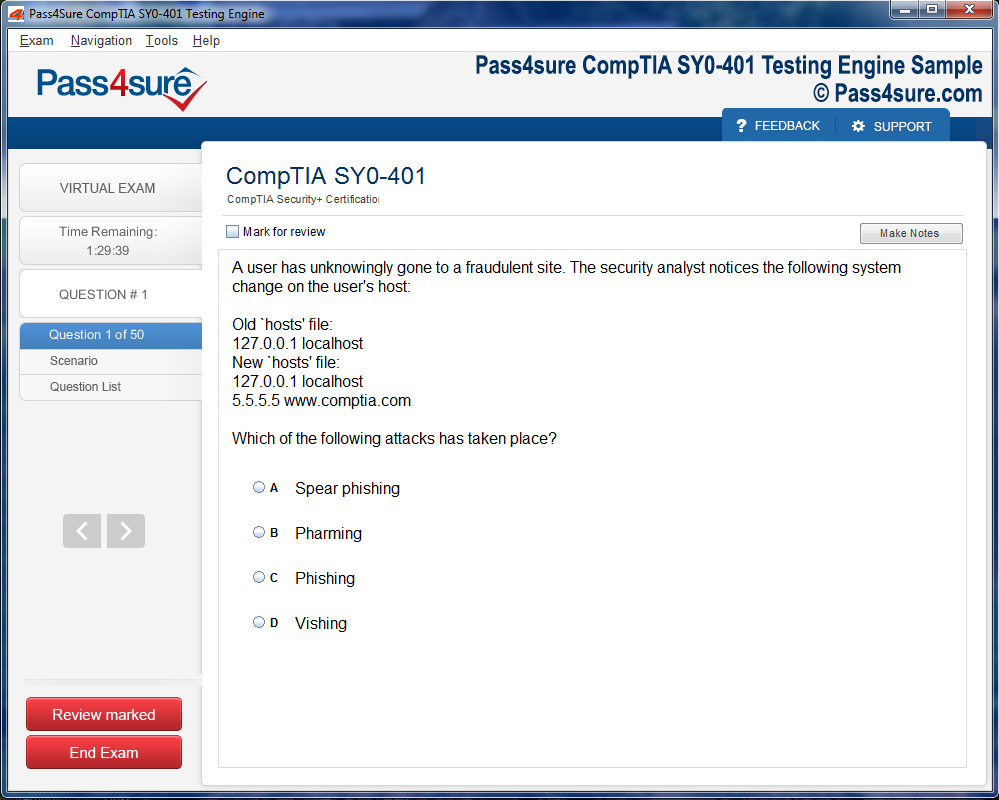
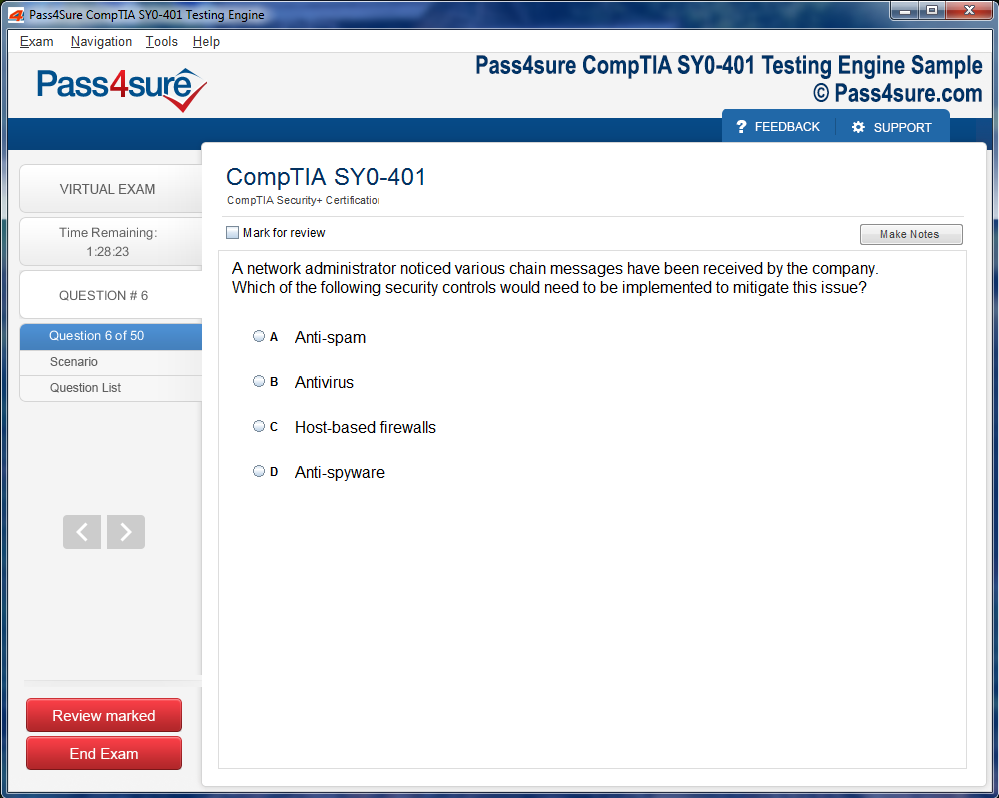
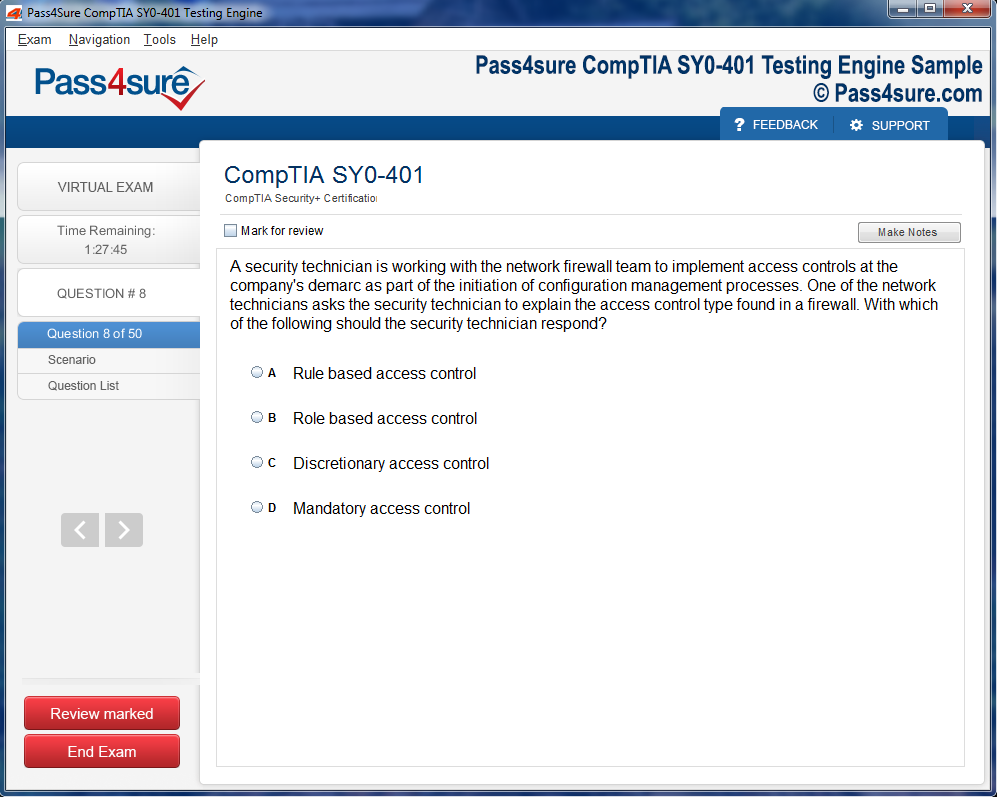
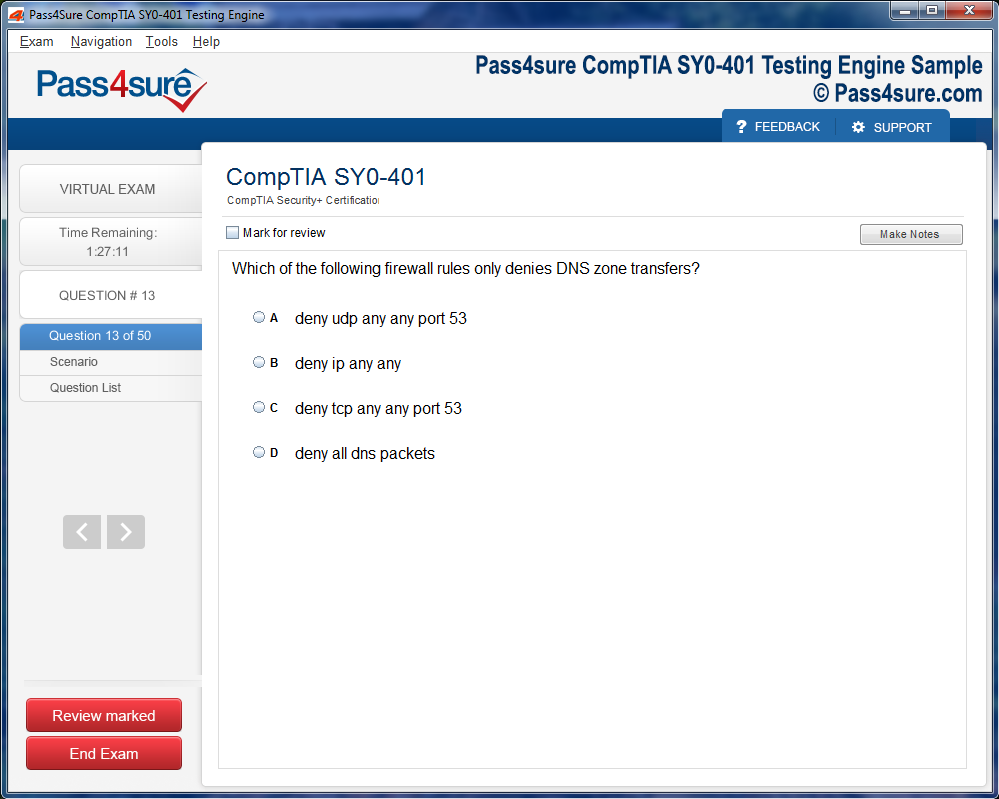
Product Screenshots
Frequently Asked Questions
How does your testing engine works?
Once download and installed on your PC, you can practise test questions, review your questions & answers using two different options 'practice exam' and 'virtual exam'. Virtual Exam - test yourself with exam questions with a time limit, as if you are taking exams in the Prometric or VUE testing centre. Practice exam - review exam questions one by one, see correct answers and explanations.
How can I get the products after purchase?
All products are available for download immediately from your Member's Area. Once you have made the payment, you will be transferred to Member's Area where you can login and download the products you have purchased to your computer.
How long can I use my product? Will it be valid forever?
Pass4sure products have a validity of 90 days from the date of purchase. This means that any updates to the products, including but not limited to new questions, or updates and changes by our editing team, will be automatically downloaded on to computer to make sure that you get latest exam prep materials during those 90 days.
Can I renew my product if when it's expired?
Yes, when the 90 days of your product validity are over, you have the option of renewing your expired products with a 30% discount. This can be done in your Member's Area.
Please note that you will not be able to use the product after it has expired if you don't renew it.
How often are the questions updated?
We always try to provide the latest pool of questions, Updates in the questions depend on the changes in actual pool of questions by different vendors. As soon as we know about the change in the exam question pool we try our best to update the products as fast as possible.
How many computers I can download Pass4sure software on?
You can download the Pass4sure products on the maximum number of 2 (two) computers or devices. If you need to use the software on more than two machines, you can purchase this option separately. Please email sales@pass4sure.com if you need to use more than 5 (five) computers.
What are the system requirements?
Minimum System Requirements:
- Windows XP or newer operating system
- Java Version 8 or newer
- 1+ GHz processor
- 1 GB Ram
- 50 MB available hard disk typically (products may vary)
What operating systems are supported by your Testing Engine software?
Our testing engine is supported by Windows. Andriod and IOS software is currently under development.
Everything You Need to Know About Passing Fortinet NSE5_FSM-5.2
Embarking upon the odyssey toward Fortinet NSE5_FSM-5.2 certification represents more than mere credential acquisition—it epitomizes an ascendant trajectory for network security professionals. In an era punctuated by cyber volatility, the command over FortiSIEM 5.2 affords practitioners the perspicacity to discern subtle network anomalies and preempt latent threats. The NSE5_FSM-5.2 certification, a venerated milestone within Fortinet's Network Security Expert continuum, galvanizes technical acumen and strategic insight, rendering candidates indispensable in safeguarding digital ecosystems.
Understanding FortiSIEM 5.2
FortiSIEM 5.2 embodies a paragon of integrative security intelligence. This platform amalgamates real-time network monitoring, advanced log correlation, and incident orchestration into a singular, cohesive interface. Unlike traditional SIEM architectures, FortiSIEM 5.2 proffers predictive analytics, anomaly detection, and adaptive thresholding, enabling security personnel to anticipate adversarial maneuvers rather than merely reacting post-factum. Its modular design supports scalable deployment, permitting nuanced customization tailored to organizational exigencies. Mastery of FortiSIEM 5.2 equips professionals with both the dexterity to navigate intricate security topologies and the perspicuity to interpret labyrinthine event data.
The Strategic Gravitas of NSE5_FSM-5.2 Certification
Attaining the NSE5_FSM-5.2 certification constitutes a demonstrable manifestation of cybersecurity prowess. Beyond mere familiarity with FortiSIEM 5.2, this credential validates a candidate’s capacity to architect, implement, and maintain resilient SIEM frameworks. Certified professionals are often entrusted with stewardship over critical infrastructure, necessitating a symbiosis of analytical acumen, technical precision, and proactive problem-solving. In contemporary organizational hierarchies, possessing NSE5_FSM-5.2 credentials elevates one from operational contributor to strategic sentinel, capable of orchestrating defenses against sophisticated cyber incursions.
Career Trajectories Post-Certification
The NSE5_FSM-5.2 certification unlocks a multitude of professional avenues. Security Analysts benefit from enhanced proficiency in threat hunting and incident triage. Security Engineers leverage their certification to architect fortified networks and optimize FortiSIEM deployments. SIEM Administrators utilize their expertise to harmonize log management, ensure compliance with regulatory frameworks, and facilitate cross-departmental cybersecurity synergy. In sum, NSE5_FSM-5.2 professionals transcend operational roles, occupying pivotal positions that define organizational resilience against multifaceted cyber threats.
Advanced Preparation Methodologies for NSE5_FSM-5.2
Examination success is predicated upon a confluence of theoretical mastery and hands-on experience. A meticulously structured preparatory regimen is indispensable.
Dissecting Exam Objectives
Candidates must meticulously dissect the Fortinet-prescribed exam blueprint. This entails parsing each domain of knowledge, from event correlation and log analysis to advanced FortiSIEM configuration. Understanding the underlying rationale behind each exam objective cultivates analytical depth and ensures holistic preparedness.
Immersive Hands-On Practice
Practical engagement with FortiSIEM 5.2 in a simulated lab environment fortifies theoretical comprehension. Candidates can simulate complex threat scenarios, configure alerting mechanisms, and evaluate performance metrics under controlled conditions. This immersive approach engenders cognitive retention and fosters intuitive troubleshooting skills.
Leveraging Intellectual Resources
Fortinet’s official documentation, knowledge repositories, and community discourse forums serve as invaluable resources. Supplementing these with meticulously curated practice examinations enables candidates to benchmark their readiness and identify cognitive lacunae requiring targeted remediation.
Strategic Time Allocation
Prudent temporal management ensures comprehensive coverage of all exam domains. Allocating time proportionally to topic complexity prevents superficial engagement, allowing deeper cognitive assimilation of intricate FortiSIEM functionalities.
Navigating the Complexities of Event Correlation
Event correlation in FortiSIEM 5.2 represents a sophisticated analytical process wherein disparate network events are synthesized to discern actionable intelligence. Proficient correlation requires understanding event hierarchies, prioritization algorithms, and anomaly thresholds. By mastering these constructs, professionals can preemptively identify orchestrated cyberattacks and mitigate potential damage before it materializes.
Mastering Log Analysis and Data Aggregation
Logs constitute the lifeblood of FortiSIEM operations. Effective log analysis involves parsing voluminous datasets, discerning patterns, and identifying deviations from normative behavior. Data aggregation techniques further enhance operational efficiency by consolidating multifarious logs into coherent, analyzable streams. Professionals adept at these processes are capable of deriving strategic insights, facilitating forensic investigations, and informing executive decision-making.
FortiSIEM Performance Optimization
Ensuring optimal FortiSIEM performance necessitates a nuanced understanding of system architecture, resource allocation, and load balancing. Professionals must proactively monitor system throughput, identify bottlenecks, and implement corrective measures to maintain seamless operation. Performance optimization transcends technical execution; it requires anticipatory planning and strategic foresight to align FortiSIEM capabilities with organizational demands.
Integrating Threat Intelligence Feeds
FortiSIEM 5.2 supports integration with diverse threat intelligence feeds, augmenting its capacity to identify emergent vulnerabilities. Professionals must curate and synchronize these feeds, evaluate credibility, and contextualize threat data within organizational frameworks. This integration transforms FortiSIEM into a proactive sentinel, capable of anticipating adversarial tactics and informing preemptive countermeasures.
Advanced Incident Response Mechanisms
Incident response within FortiSIEM 5.2 transcends rudimentary alert handling. Professionals employ automated playbooks, escalation matrices, and adaptive remediation protocols to address threats dynamically. Mastery of these mechanisms enables rapid containment of security incidents, minimizing operational disruption and preserving data integrity.
Compliance and Regulatory Oversight
FortiSIEM professionals must navigate complex regulatory landscapes, ensuring organizational adherence to standards such as GDPR, HIPAA, and ISO 27001. The NSE5_FSM-5.2 certification underscores one’s capacity to implement compliant logging, reporting, and auditing processes. This dual focus on security efficacy and regulatory fidelity enhances organizational credibility and mitigates legal exposure.
Leveraging Predictive Analytics
FortiSIEM 5.2 incorporates predictive analytics to anticipate potential breaches based on historical data patterns. Certified professionals harness these predictive capabilities to inform strategic defenses, preemptively address vulnerabilities, and optimize resource deployment. Proficiency in predictive analytics transforms reactive security measures into proactive cybersecurity stratagems.
FortiSIEM Architecture and Deployment
The labyrinthine architecture of FortiSIEM underpins its formidable capability to orchestrate security operations with surgical precision. At the heart of the system lies a synergistic interplay between collectors, analyzers, and consoles, each fulfilling distinct yet interdependent roles. Collectors act as sentinels, amassing data streams from diverse network ecosystems, while analyzers distill voluminous logs into coherent intelligence. Consoles, akin to command synapses, synthesize insights for administrators, offering both macroscopic and granular perspectives.
Deployment strategies oscillate between on-premises fortifications and ethereal cloud-based architectures. The on-premises deployment confers unparalleled control, allowing meticulous configuration of data ingress and egress pathways. In contrast, cloud-based paradigms emphasize scalability and elasticity, ensuring that data fluxes are accommodated seamlessly without infrastructural inertia. The deliberation between these modalities necessitates a perspicacious understanding of organizational exigencies, resource allocation, and security mandates.
High availability configurations imbue the system with resilience against operational vicissitudes. By integrating clustering and failover mechanisms, FortiSIEM ensures continuity amidst network perturbations, preempting service disruption. Such architectures are not mere redundancies; they constitute a proactive bulwark against the multifarious contingencies that besiege modern enterprise environments.
Data Collection and Integration
The sine qua non of SIEM efficacy is the meticulous acquisition and harmonization of data. FortiSIEM’s prowess in log collection is predicated upon versatile methodologies encompassing syslog, SNMP, and bespoke ingestion protocols. Each method demands calibration to accommodate device idiosyncrasies and network topologies, ensuring that data fidelity remains uncompromised.
Device integration is an intricate choreography, wherein disparate devices are assimilated into a coherent monitoring ecosystem. This involves not only configuration but also continual validation to detect anomalies or lapses in log transmission. Without precise integration, the data landscape becomes fragmented, obfuscating critical security insights.
Normalization of data represents the crucible wherein raw, heterogeneous logs are transmuted into standardized, actionable intelligence. This process eradicates inconsistencies and aligns disparate data schemas, permitting incisive correlation and analysis. Mastery of normalization techniques is indispensable for practitioners seeking to mitigate data entropy and extract maximum operational value from FortiSIEM.
Event and Incident Management
The quintessence of security orchestration lies in deft event and incident management. Event correlation within FortiSIEM enables practitioners to discern emergent patterns from seemingly innocuous log entries. Correlation rules serve as cognitive heuristics, enabling automated identification of potential threats and obviating manual surveillance of proliferating data streams.
Incident response encompasses the entire lifecycle of security events, from initial detection to definitive resolution. This domain demands procedural rigor and tactical agility, as practitioners navigate alerts, assess severity, and implement remedial actions. Effective incident management is undergirded by a judicious blend of automation and human acumen, ensuring that the organization’s security posture remains both reactive and anticipatory.
Alert tuning refines the signal-to-noise ratio, mitigating the proliferation of false positives that can desensitize responders. By calibrating alert thresholds and conditions, administrators enhance the salience of notifications, facilitating timely intervention without succumbing to alert fatigue.
Reporting and Dashboards
Visualization and reporting constitute the narrative framework through which FortiSIEM translates raw data into strategic intelligence. Custom report generation empowers organizations to distill metrics pertinent to their unique operational landscapes. Whether it is regulatory compliance, threat detection, or operational efficiency, bespoke reports furnish actionable insights with clarity and precision.
Dashboard configuration transforms data into an intuitive, real-time tableau. By curating visual components and metrics, dashboards offer instantaneous situational awareness, enabling administrators to traverse from macro trends to micro anomalies with fluidity. Scheduled reports augment operational efficiency, automating the dissemination of insights and ensuring that stakeholders receive timely intelligence without manual intervention.
System Administration and Maintenance
Sustained efficacy of FortiSIEM hinges upon meticulous system administration. User management entails the delineation of roles and permissions, calibrating access in accordance with organizational hierarchy and responsibility. Precision in this domain safeguards sensitive data while facilitating operational efficiency.
System monitoring functions as a continuous diagnostic, scrutinizing performance indicators and operational health. By proactively identifying bottlenecks or aberrations, administrators preempt disruptions and optimize system throughput. Complementary to monitoring, backup and recovery strategies fortify the system against data loss, environmental contingencies, and unforeseen failures, reinforcing the durability of the security ecosystem.
Troubleshooting and Optimization
Troubleshooting in FortiSIEM is an exercise in forensic scrutiny. Log analysis provides a window into the operational substratum, revealing anomalies, errors, or misconfigurations that may compromise efficacy. Each log entry, though ostensibly mundane, can yield profound insights when interrogated with analytical rigor.
Performance tuning constitutes a deliberate calibration of system parameters to maximize throughput and responsiveness. Adjustments may involve resource allocation, rule optimization, or network parameter modifications, all executed with a view toward operational alacrity. Root cause analysis, the zenith of troubleshooting, penetrates superficial symptoms to identify underlying faults, ensuring that remediation is both effective and enduring.
The Imperative of Authoritative Instructional Channels
Immersing oneself in authoritative instructional channels remains an indelible tactic for mastering NSE5_FSM-5.2. Fortinet’s own curated training modules offer an expository deep-dive into FortiSIEM 5.2’s labyrinthine architecture. Guided by erudite instructors, candidates are enveloped in a meticulous exploration of system configurations, event correlation methodologies, and advanced threat detection paradigms. These sessions transcend rudimentary learning, facilitating an experiential understanding of operational nuances often obfuscated in textual materials. For the perspicacious learner, engaging with these courses catalyzes an unparalleled familiarity with the platform’s quintessence.
Simulative Examinations and Temporal Acumen
Engaging in simulative examinations cultivates not merely cognitive retention but an acumen for temporal management under duress. These meticulously designed practice tests replicate the labyrinthine structure of the official NSE5_FSM-5.2 evaluation, encompassing multifarious question archetypes from scenario-based queries to analytical conundrums. Repeated exposure engenders a familiarity that transmutes trepidation into equanimity. Moreover, iterative assessments illuminate lacunae in comprehension, furnishing candidates with a tactical roadmap for targeted remediation. The judicious employment of such simulations fosters not only intellectual dexterity but also psychological resilience, an often-overlooked facet of high-stakes examinations.
Compendiums of Cognitive Elucidation
Augmenting practical exercises with compendiums of cognitive elucidation proves indispensable. Study guides and meticulously authored tomes serve as repositories of stratified knowledge, amalgamating expository prose with illustrative diagrams, schematics, and praxis-oriented problem sets. These compendia distill abstruse concepts into digestible constructs, enabling learners to traverse the intricate landscapes of network event management, automated incident response, and forensic analytics. The symbiosis of textual rigor and visual cognition renders these resources invaluable for scholars aspiring to transcend rote memorization and attain genuine comprehension.
Interactive Symposia and Collaborative Conclaves
The confluence of minds within interactive symposia and collaborative conclaves fosters a milieu of intellectual osmosis. Cybersecurity forums, both nascent and venerable, offer platforms for dialectic exchange, interrogation of advanced configurations, and the sharing of experiential sagas. Participation in such communities not only elucidates conceptual ambiguities but also engenders a sense of camaraderie among aspirants. Discourse with peers and experts alike catalyzes the assimilation of diverse strategies, revealing unconventional methodologies for tackling diagnostic quandaries. The synergistic potential of these collaborative networks often transcends the confines of individual study, engendering insights unattainable through solitary endeavor.
Experiential Immersion Through Tactical Laboratories
The praxis of FortiSIEM 5.2 is most effectively internalized through experiential immersion within tactical laboratory environments. Establishing a controlled sandbox for hands-on experimentation enables candidates to manipulate configurations, engineer integrations, and orchestrate event correlation workflows. This iterative engagement transmutes abstract theory into tangible competence, permitting learners to confront and rectify anomalies in a risk-free setting. The praxis of simulation and iterative troubleshooting cultivates both analytical sagacity and procedural dexterity, furnishing a bedrock of proficiency critical for exam triumph.
Didactic Visual Exegesis
For those whose cognitive predilections favor visual exegesis, curated video tutorials proffer an invaluable conduit to comprehension. These audiovisual narratives elucidate procedural intricacies through demonstrative step-by-step guidance, transforming convoluted sequences into discernible trajectories of action. By translating abstract configurations into kinetic visualizations, these tutorials engender a more intuitive grasp of system operations, bridging the chasm between textual instruction and operational execution. Consistent engagement with such didactic media accelerates skill acquisition while mitigating cognitive load.
Temporal Allocation and Cognitive Pacing
Exquisite command over temporal resources can drastically recalibrate one’s cognitive throughput during the NSE5_FSM-5.2 evaluation. The examination amalgamates heterogeneous question archetypes, encompassing multiple-choice interrogatives, interactive simulations, and draggable schema manipulations. Practicing under chronometric constraints cultivates an innate sense of pacing, mitigating the risk of temporal myopia where complex questions monopolize disproportionate cognitive bandwidth. By segmenting the exam temporally, aspirants can strategically allocate mental energy, ensuring comprehensive coverage without succumbing to precipitous or hurried judgments.
Semiotic Decoding of Question Constructs
The acumen to decode the semiotics of each question paradigm can be a formidable differentiator in exam performance. Multiple-choice questions, with their labyrinthine distractors, necessitate discerning conceptual acuity and meticulous elimination strategies. Simulative exercises demand procedural fluency, operational dexterity, and anticipatory troubleshooting. Drag-and-drop tasks, often deceptively straightforward, probe associative cognition and hierarchical understanding. An intimate familiarity with these divergent question architectures empowers candidates to marshal cognitive faculties efficiently, circumventing time wastage on ambiguous or misleading cues.
Metacognitive Oversight Prior to Submission
The final phase of the exam mandates rigorous metacognitive oversight. Systematic review of responses serves as a cognitive failsafe, unveiling latent inaccuracies or overlooked items. This reflective interrogation of one’s answers is not mere redundancy but an epistemic safeguard, reinforcing accuracy while attenuating the risk of hasty errors. Strategic re-evaluation permits recalibration of uncertain answers, engendering a heightened probability of optimal scoring. Moreover, integrating micro-pauses during review can refresh cognitive circuits, enhancing attention to subtler details that may otherwise elude a fatigued mind.
Emotional Equanimity and Cognitive Resilience
The crucible of high-stakes examination often exacerbates stress-induced cognitive turbulence. Emotional equanimity emerges as an indispensable attribute, stabilizing neural circuitry and optimizing executive function. Techniques such as diaphragmatic breathing, visualization, and cognitive reframing attenuate the deleterious impact of anxiety. Fostering a serene mental milieu ensures that analytical reasoning remains unobstructed, memory retrieval is unencumbered, and complex problem-solving occurs with unimpeded lucidity. Aspirants who cultivate such resilience can navigate the examination labyrinth with dexterity, transforming potential stressors into catalysts for enhanced performance.
Post-Examination Metacognitive Reflection
Subsequent to the cognitive exertion of the exam, engaging in deliberate post-examination reflection can illuminate latent patterns in knowledge retention, procedural competence, and strategic execution. By cataloging areas of relative strength and zones of vulnerability, candidates can construct a personalized heuristic for continuous intellectual refinement. This iterative feedback loop facilitates progressive mastery over the domain, ensuring that each examination encounter becomes an instrument of both assessment and accelerated learning. The reflective process transcends mere evaluation, evolving into a meta-strategic tool for holistic professional development.
Navigating the Labyrinthine Configurations of FortiSIEM 5.2
Embarking on the NSE5_FSM-5.2 odyssey necessitates a meticulous understanding of FortiSIEM 5.2's labyrinthine configuration landscapes. The platform's architecture often intertwines multifarious elements such as correlation rules, event aggregation, and custom integrations, creating a complex tapestry that challenges even seasoned professionals. To traverse this terrain effectively, it is paramount to deconstruct elaborate configurations into discrete, digestible modules. Engaging in methodical, incremental steps ensures that each component is fully comprehended before proceeding. Augmenting this approach with the perusal of official documentation provides not only prescriptive guidance but also conceptual clarity. Moreover, interaction with cognoscenti in niche technical forums catalyzes insight acquisition, allowing aspirants to circumvent potential pitfalls through communal knowledge.
Cultivating Tangible Expertise Amid Virtual Constraints
Hands-on experience constitutes the linchpin of proficiency in FortiSIEM operations. Yet, aspirants frequently encounter the impediment of limited access to real-world environments. Establishing a dedicated virtual laboratory, facilitated by platforms such as VMware or VirtualBox, engenders a sandbox conducive to exploratory learning. Within this simulated ecosystem, practitioners can manipulate configurations, test scenarios, and observe system responses without the repercussions of operational errors. Complementing the lab with routine, structured experimentation imbues learners with both confidence and dexterity. Additionally, leveraging simulation software that emulates production environments fosters an experiential understanding that transcends theoretical knowledge, cultivating intuitive problem-solving capabilities.
Temporal Optimization for Certification Mastery
The confluence of professional obligations and personal endeavors often constrains the temporal bandwidth available for focused preparation. Effective chronometric management becomes indispensable in surmounting this challenge. Developing a meticulously curated study schedule, replete with dedicated sessions targeting discrete exam objectives, instills discipline and continuity. Prioritization further amplifies efficiency, directing attention toward high-weight domains and minimizing engagement with peripheral topics. The judicious selection of study resources—concise, lucid, and aligned with certification blueprints—ensures maximal cognitive yield, transforming limited study hours into potent vectors for knowledge consolidation.
Demystifying Advanced Constructs and Correlation Paradigms
Advanced FortiSIEM constructs, encompassing intricate correlation rules, anomaly detection algorithms, and hierarchical event management, often elicit cognitive dissonance among candidates. Decomposing these esoteric topics into modular segments enhances conceptual absorption, facilitating a progressive ascent from fundamental principles to complex interactions. Embracing iterative learning cycles, wherein concepts are repeatedly examined and applied in varying contexts, solidifies comprehension. Engaging in comparative analysis of analogous scenarios fosters recognition of subtle nuances and interdependencies, an essential skill for troubleshooting and configuration optimization. Supplementing theoretical exploration with applied exercises in a controlled lab environment transforms abstract understanding into operational acumen, bridging the chasm between knowledge and practice.
Overcoming Cognitive Overload Through Structured Methodologies
The sheer breadth of NSE5_FSM-5.2 domains can precipitate cognitive overload, undermining retention and application. Employing structured learning methodologies mitigates this challenge by imposing order on the informational deluge. Concept mapping, for instance, visualizes relationships between disparate elements, reinforcing integrative understanding. Spaced repetition ensures that critical concepts are revisited at optimal intervals, enhancing long-term retention. Active recall, executed through scenario-based questioning or lab exercises, consolidates memory pathways while fostering analytical agility. Collectively, these techniques cultivate a resilient cognitive framework, equipping candidates to navigate the examination landscape with composure and precision.
Harnessing Community Intelligence and Collaborative Synergy
Engagement with specialized communities and collaborative networks accelerates learning and problem-solving efficacy. Platforms facilitating peer-to-peer exchange provide conduits for sharing tacit knowledge, anecdotal insights, and solution heuristics. Participating in discourse regarding edge cases, uncommon configurations, or anomalous system behaviors broadens perspective and equips aspirants with anticipatory strategies for unforeseen challenges. Mentorship, whether through formal programs or informal guidance, amplifies this effect by offering tailored advice and feedback, refining both technical prowess and strategic exam preparation techniques. The synergistic amalgamation of personal effort and collective intelligence fosters a robust preparation paradigm that transcends solitary study.
Mitigating the Pitfalls of Misconfigured Deployments
Misconfigurations remain a prevalent source of operational inefficiency and examination uncertainty. Cultivating a proactive mindset toward error detection and remediation is essential. Systematic validation protocols, encompassing verification of rule logic, integration fidelity, and event correlation accuracy, act as early-warning mechanisms against latent faults. Logging and monitoring within a controlled environment facilitate identification of anomalies and provide empirical feedback loops for continuous refinement. Additionally, documenting configuration iterations and outcomes engenders a repository of experiential knowledge, transforming potential missteps into instructive milestones that reinforce mastery over complex system dynamics.
Augmenting Analytical Acumen for Scenario-Based Problem Solving
The NSE5_FSM-5.2 evaluation frequently presents scenario-based challenges requiring nuanced analytical skills. Developing these capabilities involves engaging with hypothetical situations, dissecting underlying patterns, and formulating systematic responses. Analytical acumen is enhanced through repetitive practice in controlled settings, enabling candidates to internalize heuristic frameworks applicable to a broad spectrum of scenarios. Critical evaluation of multiple solution pathways, coupled with assessment of associated risks and operational impact, cultivates decision-making precision. By harmonizing theoretical understanding with practical application, aspirants can navigate scenario-based assessments with confidence and adaptability.
Continuous Mastery and Cognitive Reinforcement
The realm of cybersecurity is in perpetual flux, demanding a cerebral approach beyond mere rote memorization. Continuous mastery entails iterative engagement with FortiSIEM’s architecture, dissecting log intricacies, and refining alert rules with methodical precision. This reinforcement ensures theoretical comprehension is transmuted into practical aptitude, allowing professionals to navigate sophisticated network landscapes with dexterity. Immersing oneself in complex configurations and historical incident analysis cultivates a nuanced perception, elevating cognitive agility and operational acumen.
Navigating Updates and Evolutionary Dynamics
FortiSIEM is not a static monolith; it evolves with iterative updates, patches, and novel functionalities that reflect emergent threat paradigms. Professionals attuned to these evolutionary dynamics cultivate a prescient awareness, anticipating the ramifications of each enhancement on network security postures. Meticulous examination of release notes, coupled with exploratory lab testing, fosters anticipatory strategies that mitigate latent vulnerabilities. Such sagacity ensures that practitioners remain vanguards of contemporary security practices rather than passive implementers of antiquated protocols.
Experiential Application in Operational Ecosystems
Certification knowledge manifests its true value when operationalized within live or simulated environments. Practitioners should embed themselves in incident response workflows, leveraging dashboards and analytical tools to discern subtle patterns indicative of imminent threats. By orchestrating proactive monitoring strategies and implementing predictive anomaly detection, one can transmute abstract understanding into actionable intelligence. The judicious application of automation further refines operational efficiency, minimizing human error while augmenting throughput, thereby fortifying both defensive and investigative capabilities.
Analytical Prowess and Problem-Solving Dexterity
A consummate FortiSIEM professional exemplifies analytical perspicacity, capable of dissecting multifaceted alert sequences to unearth latent causality. Root cause analysis is not a perfunctory exercise but an intricate exploration requiring intellectual rigor and methodological persistence. Developing bespoke correlation rules necessitates not merely familiarity with system syntax, but an intimate cognizance of organizational network idiosyncrasies. Scenario simulations in controlled lab environments cultivate strategic foresight, enhancing one's capacity to orchestrate coherent responses under duress and fortifying both technical and tactical problem-solving faculties.
Community Engagement and Collective Intelligence
The fortification of expertise is exponentially accelerated through interaction with professional communities. Forums, discussion collectives, and specialized social enclaves offer crucibles for exchanging esoteric knowledge, dissecting novel attack vectors, and refining operational paradigms. Participation in webinars or immersive symposiums provides direct access to practitioner insights, case studies, and emerging best practices. Engaging in mentorship—both as a mentee and mentor—cultivates reciprocal knowledge transfer, embedding a culture of continuous learning and fostering a symbiotic network of adept professionals.
Career Trajectories and Strategic Specializations
The NSE5_FSM-5.2 credential is a catalytic enabler, unlocking diverse professional avenues that extend beyond conventional SOC operations. Mastery positions individuals to architect and optimize SIEM infrastructures across multifaceted enterprises, orchestrating threat intelligence integration and compliance frameworks with precision. Specialists may traverse into advisory roles, offering consultative expertise in fortifying organizational networks or harmonizing regulatory obligations with operational imperatives. The credential also facilitates entry into interdisciplinary domains, where cybersecurity converges with governance, risk management, and enterprise resilience initiatives.
Sustaining Certification Relevance and Intellectual Capital
Fortinet credentials are dynamic, mandating perpetual engagement to preserve their currency. Vigilance in tracking expiration timelines, assimilating continuing education modules, and documenting experiential achievements ensures sustained professional legitimacy. Meticulous records of configurations, process improvements, and strategic initiatives constitute a living portfolio, evidencing both competence and adaptability. By embedding these practices into habitual routines, practitioners safeguard their intellectual capital and maintain a strategic edge within the cybersecurity ecosystem.
Cultivating a Strategic Security Mindset
A sophisticated security posture transcends technical proficiency; it embodies anticipatory vigilance and a panoramic perspective on organizational imperatives. Professionals who internalize a holistic framework integrate regulatory mandates, risk tolerance, and strategic objectives into their operational calculus. Adaptability is paramount, necessitating an agile approach to evolving threat landscapes, technological paradigms, and procedural contingencies. This mindset, when synergized with technical skillsets, engenders not only defensive robustness but strategic influence within organizational hierarchies, positioning practitioners as indispensable arbiters of cybersecurity resilience.
Advanced Techniques for FortiSIEM Operational Excellence
Beyond foundational skills, advanced FortiSIEM operations demand an intricate comprehension of system mechanics and interdependencies. Analysts must cultivate proficiency in multi-layered event correlation, discerning subtle threat vectors concealed within voluminous log data. This necessitates the synthesis of heuristic methodologies with algorithmic precision, enabling detection of anomalies that evade conventional rule-based scrutiny. Proficiency in leveraging FortiSIEM’s event correlation engine ensures that latent threats are identified, contextualized, and addressed with preemptive strategies.
Automation scripts represent a pivotal augmentation of operational capability. The judicious deployment of automated workflows streamlines repetitive tasks, accelerates incident resolution, and mitigates cognitive overload during high-pressure scenarios. Analysts adept at scripting custom automations achieve a dual advantage: operational efficiency and strategic foresight, transforming routine alert handling into a sophisticated, proactive defensive posture.
Harnessing Threat Intelligence Integration
FortiSIEM’s potency is amplified when integrated with external threat intelligence feeds. Incorporating real-time indicators of compromise and reputational datasets enables dynamic threat prioritization, allowing organizations to pivot rapidly in response to emergent cyber risks. Professionals must master the calibration of these feeds, balancing false positives against actionable insights, and tailoring intelligence integration to organizational risk appetite. This synthesis of internal monitoring and external intelligence fosters a comprehensive situational awareness that underpins proactive cybersecurity operations.
Threat intelligence integration also supports predictive analytics. By mapping historical attack patterns and correlating them with global threat trends, analysts can forecast potential vulnerabilities within their enterprise ecosystem. This anticipatory strategy not only strengthens incident response readiness but elevates the organization’s capacity to preemptively neutralize sophisticated cyber incursions.
Designing High-Fidelity Correlation Rules
The efficacy of FortiSIEM is largely contingent upon the meticulous design and continual refinement of correlation rules. High-fidelity rules distinguish critical events from background noise, directing analytic focus toward incidents of substantive impact. Crafting these rules demands a dual comprehension of technical syntax and organizational behavioral baselines, ensuring that alerts are both precise and contextually relevant.
Continuous tuning of correlation rules is paramount. Analysts should evaluate the efficacy of existing rules against evolving network behaviors, adjusting thresholds, incorporating new indicators, and eliminating redundancies. This iterative process cultivates an adaptive intelligence that evolves in tandem with the operational environment, enhancing threat detection capabilities while minimizing alert fatigue.
Proactive Monitoring and Strategic Dashboarding
Strategic dashboard utilization transforms data deluge into actionable insight. Effective dashboards distill voluminous logs into intuitive visualizations, highlighting anomalies, trend deviations, and potential threats in real time. By curating metrics and prioritizing critical alerts, analysts can focus cognitive resources on incidents of highest strategic significance.
Proactive monitoring extends beyond passive observation. Analysts should engage in trend analysis, pattern recognition, and anomaly prediction to anticipate incidents before they materialize. By instituting preemptive mitigation strategies and operational checkpoints, organizations shift from reactive defense to anticipatory resilience, reinforcing both security posture and operational continuity.
Simulating Complex Attack Scenarios
Scenario simulation constitutes a crucible for developing analytical dexterity and operational readiness. By designing multifaceted attack vectors in controlled lab environments, professionals can evaluate the efficacy of alert systems, validate correlation rules, and assess incident response protocols. These exercises illuminate latent vulnerabilities, reveal workflow inefficiencies, and cultivate strategic foresight.
Complex scenario simulations should incorporate cross-domain variables, including insider threat behaviors, advanced persistent threat tactics, and multi-vector intrusion methodologies. By stressing the system with diverse threat profiles, analysts refine detection algorithms, optimize workflow efficiency, and solidify incident response preparedness, ensuring resilience under real-world operational pressures.
Embedding Security Culture Within Organizational Ecosystems
Technical proficiency achieves maximal impact when aligned with organizational culture. Professionals should champion security consciousness across departments, articulating risk implications and reinforcing procedural adherence. By translating technical findings into actionable insights for stakeholders, analysts bridge the gap between operational intelligence and executive decision-making.
Embedding security culture also entails continuous knowledge dissemination. Conducting workshops, sharing post-incident analyses, and fostering cross-functional communication ensures that the entire enterprise internalizes risk awareness. This cultural integration transforms security from a reactive obligation into a proactive, institution-wide ethos, reinforcing resilience against both internal and external threats.
Advanced Incident Management and Response
Incident management extends beyond identification and resolution; it encompasses forensic analysis, stakeholder coordination, and strategic mitigation. Analysts must cultivate proficiency in post-incident reporting, root cause determination, and remediation planning. By meticulously documenting incidents and response strategies, organizations establish a repository of operational intelligence that informs future defense initiatives.
Advanced incident management requires coordination across multidisciplinary teams, synthesizing network, application, and endpoint perspectives. Analysts must orchestrate investigative workflows, prioritize critical assets, and ensure regulatory compliance throughout the response lifecycle. Mastery of these dimensions enhances both tactical response effectiveness and strategic organizational resilience.
Leveraging FortiSIEM for Compliance and Governance
FortiSIEM capabilities extend into governance, risk, and compliance domains, enabling organizations to align operational security with regulatory mandates. Analysts skilled in compliance mapping utilize FortiSIEM to automate audit trails, monitor policy adherence, and generate actionable reports for internal and external stakeholders.
Integrating security operations with governance frameworks ensures that organizational risk postures are not only reactive but systematically managed. By operationalizing compliance through automation and continuous monitoring, professionals mitigate regulatory exposure while reinforcing a culture of accountability and transparency.
Mentorship and Knowledge Propagation
Cultivating expertise is both an individual and collective endeavor. Engaging in mentorship accelerates skill development, fosters critical thinking, and cultivates a network of knowledge exchange. Experienced analysts guiding less-experienced peers create feedback loops that reinforce organizational capability and perpetuate operational best practices.
Mentorship also extends into thought leadership. By documenting lessons learned, publishing technical insights, and contributing to professional forums, experts influence broader industry practices. This propagation of knowledge elevates both personal stature and the collective intelligence of the cybersecurity community.
Navigating Interoperability Complexities with Peripheral Systems
FortiSIEM 5.2 seldom operates in isolation; it interfaces with an intricate ecosystem of peripheral systems including firewalls, endpoint security agents, cloud infrastructure, and third-party threat intelligence feeds. The orchestration of these disparate components can precipitate interoperability quandaries that challenge even adept professionals. To mitigate such complexities, it is critical to cultivate a granular comprehension of protocol compatibilities, event schema hierarchies, and integration prerequisites. Incremental testing of interface modules within a controlled environment illuminates latent inconsistencies before deployment. Furthermore, maintaining a meticulously detailed registry of configuration parameters for each integrated system ensures swift troubleshooting and mitigates the risk of cascading misconfigurations that could compromise analytical accuracy.
Advanced Correlation Strategies and Anomaly Detection
The quintessence of FortiSIEM’s analytical potency resides in its correlation engine, which extrapolates meaningful patterns from voluminous, heterogeneous data streams. Mastery of this domain requires a nuanced appreciation of both temporal and contextual dimensions of event aggregation. Candidates should adopt a methodical approach to correlation rule design, emphasizing modularity, scalability, and precision. Incorporating multi-tiered anomaly detection mechanisms enhances resilience against false positives and fosters early identification of nascent threats. Additionally, scenario-based simulations of anomalous patterns cultivate the ability to discern subtle indicators of compromise, reinforcing both diagnostic acuity and proactive threat mitigation capabilities.
Strategic Utilization of Logging and Audit Trails
FortiSIEM’s logging infrastructure serves as the backbone of forensic analysis and compliance adherence. Efficient navigation of audit trails necessitates a systematic approach to log curation, indexing, and retention. Candidates are advised to implement hierarchical log categorization schemes that prioritize high-fidelity events and mitigate informational noise. Leveraging search and filtering capabilities optimally facilitates rapid retrieval of pertinent data points, enabling timely identification of anomalies. Continuous validation of log integrity, coupled with periodic reconciliation against source systems, ensures the reliability of analytical outcomes. Mastery of these practices not only strengthens operational competence but also enhances performance in scenario-based examination tasks.
Cognitive Calibration for Multilayered System Understanding
FortiSIEM 5.2’s ecosystem presents multilayered interactions encompassing event ingestion, normalization, correlation, and visualization. Navigating this cognitive complexity demands deliberate calibration of learning strategies. Segmenting the architecture into discrete conceptual strata allows aspirants to assimilate individual functions while progressively constructing a holistic mental model. Employing visualization techniques, such as process flow mapping or data lineage diagrams, crystallizes interdependencies and fosters cognitive coherence. Iterative rehearsal of scenario-based exercises within these stratified constructs reinforces memory retention and cultivates the analytical agility necessary for real-time decision-making in both examination and professional contexts.
Leveraging Predictive Analytics for Proactive Security Posture
The evolution of FortiSIEM extends beyond reactive monitoring into the realm of predictive analytics. Candidates should cultivate proficiency in interpreting predictive indicators derived from historical event patterns and behavioral baselines. Developing an anticipatory mindset enables preemptive remediation of potential vulnerabilities and augments situational awareness. Engaging in exercises that simulate predictive modeling of network anomalies, threat escalation trajectories, and event propagation scenarios sharpens both strategic foresight and operational preparedness. These competencies not only facilitate successful exam performance but also translate directly into enhanced organizational security resilience.
Orchestrating Automation for Operational Efficiency
Automation within FortiSIEM 5.2 constitutes a critical vector for operational efficiency, particularly in complex, high-volume environments. Candidates should acquire proficiency in designing and deploying automated workflows for routine remediation, alert triaging, and report generation. Establishing robust validation protocols for automated actions ensures system integrity while reducing susceptibility to inadvertent disruptions. The iterative refinement of automation sequences through testing and monitoring engenders a resilient operational framework, enabling candidates to confidently navigate both simulated and real-world scenarios. Mastery of automation augments analytical bandwidth and enhances preparedness for examination scenarios that emphasize operational efficiency.
Contingency Planning and Incident Response Simulation
The unpredictable nature of network events necessitates rigorous contingency planning. Engaging in structured incident response simulations cultivates a procedural fluency that bridges theoretical knowledge with actionable expertise. Aspirants are encouraged to devise multi-scenario exercises encompassing malware propagation, insider threats, and configuration anomalies. Documenting response sequences and post-incident evaluations reinforces learning while providing a reference framework for future exercises. The iterative simulation of contingencies cultivates rapid decision-making, stress resilience, and adaptive problem-solving—skills that are invaluable in both the examination and professional environments where high-stakes situations are commonplace.
Analytical Heuristics for Scenario-Based Examination Mastery
Scenario-based questions within NSE5_FSM-5.2 examinations demand not only technical knowledge but also sophisticated analytical heuristics. Candidates should develop frameworks that prioritize problem decomposition, hypothesis generation, and systematic validation. Engaging in comparative analysis of multiple potential solutions, while considering operational constraints and systemic ramifications, cultivates critical thinking and precision. Incorporating reflective practice after each scenario enhances pattern recognition and facilitates the internalization of heuristic principles. These cognitive strategies, when combined with practical lab exercises, foster an integrative competence that transcends rote memorization and positions candidates for success in complex evaluative contexts.
Integrating Risk Assessment and Compliance Awareness
FortiSIEM’s deployment is inextricably linked to organizational risk management and regulatory compliance. Candidates should develop a nuanced understanding of risk assessment frameworks and their application to event monitoring, alert prioritization, and policy enforcement. Mapping system configurations to compliance mandates enhances both operational reliability and audit-readiness. Proactive engagement with compliance scenarios, such as GDPR alignment or internal policy audits, reinforces awareness of regulatory imperatives while refining practical application skills. By synthesizing technical mastery with compliance acumen, aspirants cultivate a multidimensional expertise essential for both examination performance and professional efficacy.
Cognitive Resilience and Adaptive Learning Strategies
The voluminous scope and intricate interdependencies of NSE5_FSM-5.2 material necessitate cognitive resilience and adaptive learning strategies. Candidates should incorporate mindfulness techniques, interleaved practice, and reflective journaling to bolster focus, retention, and adaptive reasoning. Breaking study sessions into cyclic intervals with alternating conceptual and practical exercises mitigates cognitive fatigue while enhancing neural consolidation. Additionally, self-assessment through periodic knowledge audits and scenario-based testing fosters metacognitive awareness, allowing candidates to identify strengths, address deficiencies, and calibrate preparation strategies dynamically. This approach cultivates a sustainable, high-performance learning trajectory aligned with both examination demands and professional application.
Cognitive Priming Through Pre-Exam Rituals
Before delving into the formal examination, aspirants can significantly amplify cognitive acuity by employing deliberate pre-exam rituals. Cognitive priming is the process by which exposure to relevant stimuli activates pertinent neural circuits, enhancing recall and problem-solving agility. Engaging with curated micro-quizzes, reviewing nuanced configurations, or mentally simulating network scenarios serves to “warm up” synaptic pathways. Even brief exposure to domain-relevant challenges triggers associative memory, facilitating accelerated retrieval during the actual exam. Complementing these rituals with hydration, balanced nutrition, and circadian-aligned rest further fortifies neural resilience, optimizing cerebral throughput for sustained analytical performance.
Strategizing Through Hierarchical Task Decomposition
Examination efficiency can be profoundly enhanced by employing hierarchical task decomposition. Rather than approaching questions in a linear or haphazard manner, aspirants benefit from segmenting complex tasks into subcomponents. For example, simulation scenarios can be dissected into diagnostic evaluation, configuration implementation, verification, and contingency troubleshooting. This modular approach diminishes cognitive load, allowing attention to be focused sequentially on elemental operations. Furthermore, hierarchical decomposition enables adaptive prioritization: high-yield or familiar tasks can be addressed early, while ambiguous or time-intensive questions can be deferred without jeopardizing overall completion. Such cognitive triage is indispensable in high-stakes environments where temporal and mental resources are finite.
Nuanced Risk Assessment in Question Prioritization
The NSE5_FSM-5.2 exam encompasses both low-risk, knowledge-based interrogatives and high-risk, application-intensive simulations. A nuanced approach to prioritization entails evaluating the opportunity cost of time versus potential score gain. Candidates who instinctively gravitate toward complex simulations without regard for temporal expenditure risk leaving simpler questions unaddressed. Conversely, over-focusing on ostensibly straightforward items may consume disproportionate time, limiting opportunities for high-value simulations. By employing a probabilistic risk assessment—estimating potential scoring impact relative to time investment—candidates can optimize their overall point accrual while minimizing wasted cognitive effort.
Integrative Knowledge Mapping
Integrative knowledge mapping involves synthesizing disparate conceptual domains into cohesive mental models. In the context of NSE5_FSM-5.2, this might encompass correlating firewall policies, traffic flow diagrams, and security analytics within a unified cognitive schema. Creating these mental maps facilitates rapid cross-referencing during simulation tasks, allowing complex configurations to be visualized holistically. Additionally, integrative mapping enhances memory retrieval: instead of recalling isolated facts, candidates access interconnected networks of knowledge, improving speed and accuracy. Techniques such as flowchart sketching, mind-mapping, and scenario rehearsal consolidate understanding and cultivate agile cognitive frameworks for examination navigation.
Micro-Interval Focus Techniques
Sustained attention is often challenged by cognitive fatigue during prolonged assessments. Implementing micro-interval focus techniques can bolster concentration and minimize attentional lapses. For instance, adopting 5–10 minute focus sprints, punctuated by brief cognitive resets, maintains optimal neural efficiency. During resets, candidates might perform subtle mental recalibration: deep breathing, eye relaxation, or rapid review of high-priority concepts. These micro-pauses serve dual purposes: they rejuvenate executive function and mitigate cumulative stress, ensuring that attentional fidelity remains elevated throughout the exam. Candidates trained in such interval-focused strategies often demonstrate superior consistency and fewer error-prone lapses in later stages of testing.
Cognitive Anchoring Through Mnemonic Constructs
Memory retention is pivotal in an exam where theoretical and applied knowledge intersect. Mnemonic constructs, including acronyms, narrative chaining, and symbolic association, serve as cognitive anchors, transforming ephemeral data into durable memory traces. For example, associating network security principles with vivid imagery or allegorical narratives can accelerate retrieval under duress. Beyond rote memorization, mnemonic constructs promote conceptual cohesion: when a candidate recalls one anchor, it triggers associative chains that encompass multiple related configurations, commands, or protocols. Employing this technique transforms memorization from a passive activity into an active, mentally engaging process that enhances both retention and contextual application.
Tactical Simulation Rehearsal
Simulations are often the crucible of NSE5_FSM-5.2 assessment, demanding both procedural dexterity and anticipatory reasoning. Tactical simulation rehearsal involves deliberate, scenario-based practice that mirrors examination conditions. Candidates should not merely replicate exercises but introduce perturbations, edge cases, and variable outcomes to challenge adaptability. For example, deliberately misconfiguring parameters or simulating traffic anomalies trains the mind to recognize patterns, troubleshoot efficiently, and anticipate system responses. Over time, such rehearsal embeds procedural fluency into subconscious cognition, allowing simulation tasks to be approached with both speed and confidence during the actual exam.
Cognitive Resilience Against Ambiguity
Many exam questions are crafted with intentional ambiguity to test analytical reasoning and decision-making under uncertainty. Cognitive resilience against ambiguity is cultivated by embracing probabilistic thinking, contingency analysis, and scenario weighting. Candidates should practice tolerating incomplete data, systematically generating hypotheses, and evaluating outcomes before committing to solutions. This mindset reduces the paralysis often induced by vague or complex prompts and encourages decisive, evidence-based responses. Developing such resilience not only optimizes examination performance but also mirrors real-world operational thinking required in professional network security environments.
Post-Task Reflective Microanalysis
Even during the exam, brief reflective microanalysis can enhance performance. After completing a simulation or a complex set of questions, pausing to mentally review the approach taken—without revisiting the interface—can illuminate procedural inefficiencies or alternative strategies. This meta-awareness fosters incremental improvements, allowing subsequent tasks to be approached with refined methodology. Such real-time reflection reinforces cognitive flexibility and enhances adaptive problem-solving, qualities that distinguish top-performing candidates from those who rely solely on rote procedural execution.
The Quintessence of Structured Didactics
Structured didactics form the skeletal framework upon which NSE5_FSM-5.2 mastery is scaffolded. Beyond rote memorization, the cerebral architecture of FortiSIEM 5.2 necessitates an appreciation for sequential logic, dependency mapping, and event normalization. Study materials that provide hierarchical knowledge structures—layering foundational concepts before introducing convoluted functionalities—amplify cognitive retention. Meticulously annotated diagrams, temporal flowcharts, and modularized explanations not only elucidate system dynamics but also cultivate an analytical mindset capable of extrapolating principles to novel scenarios. For the aspirant navigating the labyrinthine architecture of network monitoring and security orchestration, such structured didactics act as a cognitive compass, ensuring that the learner is not merely wandering through abstractions but charting deliberate paths toward mastery.
Lexicons of Technical Proficiency
Enrichment through rarefied lexicons significantly enhances conceptual acuity. The terminology inherent to NSE5_FSM-5.2, from log aggregation to cross-correlated anomaly detection, can be arcane and multilayered. Immersion in glossaries, technical dictionaries, and annotated lexicons facilitates not only familiarity but an operative fluency in the platform’s parlance. This linguistic competence is paramount during examinations that reward precise articulation of configuration logic, problem identification, and remediation strategies. Familiarity with rarefied terminology reduces cognitive friction, allowing candidates to traverse complex questions with alacrity and discernment.
Cognitive Calibration Through Scenario Simulations
Scenario simulations represent an indispensable modality for cognitive calibration. Unlike static study guides, these dynamic exercises replicate the stochastic nature of operational incidents, challenging candidates to synthesize knowledge under temporal constraints. By confronting simulated breaches, false positives, and integration anomalies, learners cultivate a dual proficiency: technical problem-solving and situational adaptability. Such exercises reinforce pattern recognition, enhance diagnostic intuition, and provide a rehearsal space for decision-making under pressure. Candidates who engage deeply with scenario simulations often exhibit a heightened capacity to deconstruct convoluted problems and engineer multifaceted solutions within the actual examination environment.
Archival Exploration of Case Studies
The archival exploration of case studies constitutes another invaluable vector for comprehension. Historical incidents, anonymized breach reports, and forensic analyses offer granular insights into system behavior under real-world stressors. By dissecting these events, candidates internalize principles of root cause analysis, incident prioritization, and adaptive configuration. The meticulous examination of past operational anomalies cultivates anticipatory thinking, allowing learners to predict potential pitfalls and devise preemptive solutions. Such investigative exercises bridge the conceptual and the practical, ensuring that knowledge is not merely theoretical but operationally potent.
Multimodal Learning Conduits
The convergence of multiple sensory modalities enhances both retention and engagement. Combining textual study, audiovisual tutorials, interactive labs, and mnemonic devices creates a multisensory learning ecosystem. Each modality reinforces the other, ensuring that abstract constructs are encoded through visual, auditory, and kinesthetic channels. For example, observing a real-time dashboard configuration while concurrently manipulating the system in a lab setting solidifies understanding far more effectively than passive reading alone. Multimodal strategies also accommodate diverse cognitive predilections, enabling each candidate to leverage their intrinsic strengths while mitigating weaknesses.
Peer-Driven Knowledge Catalysis
Peer-driven knowledge catalysis emerges as a subtle yet powerful adjunct to solitary study. Informal cohorts, mentorship networks, and discussion groups create a fertile ground for intellectual cross-pollination. Engaging in dialectic discourse, debating optimal configurations, or collaboratively troubleshooting synthetic scenarios engenders deeper cognitive penetration than unidirectional study. The iterative process of questioning, explaining, and challenging reinforces comprehension while exposing candidates to alternative heuristics. This communal scaffolding often accelerates learning velocity, converting passive familiarity into active mastery.
Integration of Automation Proficiency
The evolving landscape of FortiSIEM 5.2 emphasizes automation as a force multiplier. Candidates should immerse themselves in the mechanics of automated responses, correlation rule orchestration, and alert prioritization. Understanding the interplay between manual oversight and automated workflows not only enhances operational efficiency but also prepares learners for scenario-based evaluation within the certification exam. Exercises that incorporate scripting, policy automation, and event-driven remediation cultivate an anticipatory mindset, where the candidate does not merely react to system anomalies but proactively architects resilient solutions.
Temporal and Spatial Event Correlation
An esoteric yet pivotal aspect of NSE5_FSM-5.2 is the proficiency in temporal and spatial event correlation. The capability to analyze multivariate logs, identify patterns across disparate nodes, and correlate temporally distributed events is central to advanced network security operations. Study materials that elucidate these methodologies, enriched by visual timelines, heatmaps, and correlation matrices, allow candidates to internalize the interconnectivity of system events. Mastery of event correlation transcends mere recognition of anomalies—it equips the learner to anticipate cascading failures, optimize incident response, and engineer robust monitoring strategies.
Analytical Heuristics and Diagnostic Stratagems
Developing analytical heuristics and diagnostic stratagems transforms knowledge into actionable intelligence. NSE5_FSM-5.2 examines not only recall but the application of reasoning under ambiguity. Candidates benefit from cultivating mental models that facilitate systematic troubleshooting: isolating variables, hypothesizing causal chains, and verifying outcomes iteratively. Study resources that emphasize these cognitive frameworks—such as flowcharts for incident triage or algorithmic decision trees—enhance problem-solving acuity. Through rigorous practice, these heuristics become second nature, enabling rapid and accurate identification of underlying systemic issues.
Temporal Discipline and Iterative Refinement
Temporal discipline, the conscious orchestration of study intervals and iterative refinement, underpins effective preparation. The cognitive phenomenon of spaced repetition, combined with cyclical engagement with core concepts, fortifies memory consolidation and mitigates decay. Candidates who structure their study into deliberate micro-cycles—alternating between theory, practice, and reflection—maximize both retention and depth of understanding. Iterative refinement allows learners to revisit previously opaque topics with a renewed perspective, gradually transforming initial confusion into nuanced comprehension.
Exploratory Investigation Through Sandboxed Experimentation
Sandboxed experimentation encourages exploratory investigation, transforming candidates from passive recipients into active investigators. By establishing isolated test environments, learners can experiment with advanced configurations, simulate multi-layered incidents, and assess the impact of policy modifications without risking operational integrity. This investigative approach fosters creativity, resilience, and an intimate familiarity with system idiosyncrasies. It also imbues candidates with the confidence to navigate unanticipated scenarios during examinations or real-world deployments.
Algorithmic Acumen and Predictive Cognition
An emergent dimension of FortiSIEM 5.2 proficiency lies in algorithmic acumen and predictive cognition. Understanding the underlying logic of correlation engines, anomaly detection algorithms, and alert thresholds equips candidates with the ability to anticipate system behavior. Resources that elucidate these computational principles, often through stepwise dissection or visual mapping, cultivate an anticipatory mindset—where learners can forecast outcomes, optimize configurations, and preempt systemic vulnerabilities. Predictive cognition, thus, is not merely academic; it represents a strategic leverage point in both examination success and operational efficacy.
FortiSIEM Architecture and Deployment
FortiSIEM’s architecture embodies a confluence of resilience, scalability, and analytical sophistication. The system is inherently modular, permitting administrators to deploy collectors, analyzers, and consoles in configurations that align with organizational exigencies. Collectors act as the vanguard of data acquisition, siphoning log streams from routers, switches, endpoints, and cloud services. Their omnivorous nature ensures that every digital footprint is captured, forming a comprehensive lattice of operational telemetry.
Analyzers function as cognitive engines, distilling immense log volumes into actionable intelligence through pattern recognition, statistical modeling, and heuristic algorithms. They facilitate anomaly detection, behavioral analytics, and threat scoring, enabling security teams to anticipate risks rather than merely react. Consoles, the neural interface of FortiSIEM, provide dynamic visualization, alert management, and orchestrated reporting, bridging the gap between raw data and strategic decision-making.
Deployment strategies demand perspicacious judgment. On-premises installations provide granular control, enabling organizations to regulate data ingress, encryption, and retention policies. Conversely, cloud deployments afford elasticity, facilitating rapid scaling to accommodate surges in log volume and network expansion. The choice between these modalities hinges upon risk tolerance, compliance requirements, and the velocity of data generation within the enterprise.
High availability configurations are paramount in mission-critical environments. By orchestrating clustering, failover, and load-balancing mechanisms, FortiSIEM ensures uninterrupted operation even in the event of component failures. Advanced deployment models may integrate geographically dispersed clusters, providing redundancy against both local outages and regional catastrophes, exemplifying proactive fortification against systemic fragility.
Data Collection and Integration
Data acquisition constitutes the sine qua non of SIEM efficacy. FortiSIEM employs multifarious methods for log collection, including syslog, SNMP traps, API-driven ingestion, and agent-based collection. Each modality necessitates careful calibration to account for device idiosyncrasies, network latency, and protocol compatibility. For instance, SNMP traps can offer near-instantaneous notifications of critical network events but may require meticulous tuning to avoid inundating the collector with superfluous messages.
Device integration is an exercise in precision engineering. Administrators must ensure that every network node, server, or application is properly registered, configured, and verified within FortiSIEM. Failure to accurately integrate devices results in partial visibility, creating blind spots that adversaries could exploit. Integration extends beyond mere connectivity; it involves defining device templates, mapping log types, and establishing parsing rules that align with the operational schema of the enterprise.
Data normalization is the alchemical process through which disparate log formats coalesce into a uniform schema. This ensures semantic consistency, enabling correlation engines to identify patterns across heterogeneous data streams. Advanced normalization techniques involve parsing custom log structures, mapping non-standard fields, and applying enrichment protocols such as geo-IP tagging or threat intelligence integration. Mastery of normalization is indispensable, as the integrity of subsequent correlation and alerting processes is contingent upon it.
Event and Incident Management
Event correlation within FortiSIEM transforms raw logs into discernible patterns, revealing nascent threats before they crystallize into breaches. Correlation rules can be simple—such as matching repeated failed login attempts—or intricate, leveraging temporal sequences, threshold-based triggers, and machine learning heuristics. Sophisticated correlation may involve chaining multiple indicators of compromise (IOCs) across endpoints, applications, and network segments, thereby identifying advanced persistent threats (APTs) with precision.
Incident response is a multi-faceted discipline encompassing detection, triage, containment, eradication, and post-incident analysis. FortiSIEM facilitates this lifecycle through automated workflows, escalation paths, and collaborative interfaces. For instance, upon detecting a suspected lateral movement, the system can automatically generate a high-priority ticket, notify stakeholders, and trigger isolation protocols on affected assets. Such orchestration reduces mean time to response (MTTR) and ensures that incidents are addressed with alacrity and methodological rigor.
Alert tuning represents an ongoing optimization endeavor. Uncalibrated alerts inundate security teams with noise, potentially obfuscating genuine threats. Conversely, excessively stringent thresholds may allow subtle intrusions to go undetected. FortiSIEM provides granular control over alert parameters, enabling administrators to modulate severity levels, incorporate contextual intelligence, and suppress recurring false positives. The result is a balanced ecosystem where alerts are both meaningful and actionable.
Reporting and Dashboards
FortiSIEM’s reporting capabilities transcend mere documentation; they constitute an interpretive lens through which organizational security posture is assessed. Custom report generation allows the extraction of metrics that align with regulatory mandates, executive oversight, or operational auditing. Reports can encapsulate incident frequency, threat categorization, compliance adherence, and device health, offering stakeholders a panoramic view of security operations.
Dashboards serve as cognitive waypoints, translating numerical data into intuitive visualizations. Administrators can curate panels that display real-time threat metrics, network performance, and system anomalies, enabling rapid identification of emergent risks. The flexibility of FortiSIEM dashboards allows integration of widgets such as heat maps, trend charts, and drill-down tables, ensuring that users traverse from macro-level overviews to granular log details seamlessly.
Scheduled reports further enhance operational efficiency by automating the dissemination of critical intelligence. These reports can be dispatched at predefined intervals, formatted according to audience specifications, and integrated with alerting mechanisms. This automation ensures that stakeholders remain informed without manual intervention, fostering a culture of proactive vigilance.
System Administration and Maintenance
Robust system administration undergirds the operational longevity of FortiSIEM. User management is a cornerstone of security governance, requiring meticulous role definition, permission allocation, and access auditing. Segregation of duties, adherence to least privilege principles, and periodic credential reviews are indispensable practices that mitigate internal threats and ensure regulatory compliance.
Continuous system monitoring ensures operational resilience. FortiSIEM provides an array of tools to track resource utilization, event processing latency, and connectivity health. Administrators can preemptively detect bottlenecks, identify misconfigurations, and implement corrective measures before systemic degradation occurs. Integration with performance monitoring protocols and network telemetry further enhances situational awareness.
Backup and recovery strategies are essential to safeguard the integrity of critical security data. FortiSIEM supports both incremental and full backups, enabling restoration from defined snapshots in the event of corruption, hardware failure, or catastrophic incidents. Disaster recovery planning entails defining recovery point objectives (RPO) and recovery time objectives (RTO), ensuring that operational continuity is maintained even under extreme conditions.
Troubleshooting and Optimization
Troubleshooting FortiSIEM requires a meticulous approach, combining analytical rigor with procedural acumen. Log analysis is a forensic endeavor, dissecting voluminous entries to isolate errors, misconfigurations, or operational anomalies. Each log represents a discrete narrative of system behavior; through methodical examination, administrators reconstruct event sequences, identify causative factors, and implement remedial actions.
Performance tuning extends beyond superficial adjustments, involving deep optimization of data ingestion rates, rule evaluation hierarchies, and storage management. Administrators may adjust thresholds, prioritize high-risk events, and optimize indexing strategies to ensure both responsiveness and analytical accuracy. Such interventions are iterative, guided by empirical monitoring and feedback loops.
Root cause analysis epitomizes the zenith of troubleshooting. Rather than addressing symptomatic failures, this practice seeks to unearth the underlying causative vectors. By identifying and rectifying systemic weaknesses, organizations achieve enduring stability and fortify the FortiSIEM environment against recurrent disruptions.
Advanced Integration Strategies
Beyond basic integration, FortiSIEM supports advanced strategies that synergize with external threat intelligence, endpoint detection systems, and cloud security platforms. By ingesting third-party threat feeds, the system enriches its correlation capabilities, enabling predictive detection of novel attack vectors. Integration with endpoint detection and response (EDR) solutions permits a bi-directional flow of intelligence, whereby alerts in one system can trigger automated responses in another.
Cloud security integration allows FortiSIEM to extend visibility into virtualized and ephemeral environments. By monitoring cloud workloads, containers, and serverless functions, administrators ensure that dynamic infrastructures remain within the ambit of centralized security oversight. Such integration requires nuanced configuration of APIs, event formats, and authentication protocols to maintain data integrity and operational coherence.Initiating FortiGate: Navigating the Cybernetic Nexus
Embarking on the odyssey of FortiGate configuration necessitates a meticulous orientation into its operational cosmos. The FortiGate appliance is not merely a firewall; it is an intricate sentinel weaving together the fabric of network defense. For neophytes, initial engagement often begins with the web-based GUI or the FortiOS CLI. While the GUI proffers an intuitive interface adorned with visual cues, the command-line realm unveils an esoteric substratum of granular control, allowing architects to manipulate system intricacies with unparalleled precision. The initial foray into configuration mandates foundational tasks: assigning IP addresses with unwavering exactitude, delineating default routes to orchestrate unimpeded communication with peripheral network entities, and erecting administrative accounts fortified with judiciously complex credentials. These primordial steps engender a platform where the FortiGate device is not a dormant artifact but a communicative, responsive agent within the network tapestry.
Crafting Objects: The Syntax of Simplification
At the nucleus of FortiGate configuration lies the concept of objects—intellectual abstractions that condense multiplicities of IP addresses, services, and temporal schedules into singular, maneuverable entities. Objects serve as cognitive accelerants, enabling the network administrator to sculpt policies with an economy of effort and a diminution of errors. Consider, for instance, the construction of an object encapsulating a cluster of mission-critical servers. A solitary policy applied to this object orchestrates protective measures across all constituent servers, mitigating redundancy and fostering uniformity. The taxonomy of objects extends beyond mere IP aggregation; it encompasses the orchestration of services, time-bound schedules, and even protocol-specific nuances. By mastering object creation, neophytes cultivate a methodology wherein complexity is transmuted into elegant simplicity, laying the groundwork for policies that are both precise and resilient.
Policies: The Codified Architecture of Security
Once objects are deftly instantiated, the subsequent labyrinthine task is policy configuration. Policies function as the lexicon of FortiGate’s operational syntax, dictating how data traverses, is inspected, or is interdicted. The procedural choreography of policy creation unfolds in a meticulously sequenced manner: first, the delineation of source and destination; next, the selection of service types, from TCP to UDP and custom-defined protocols; thereafter, specification of actionable mandates—permit, deny, or refine; culminating in the activation of logging mechanisms. Each procedural step is a fulcrum upon which security posture pivots. An adroitly configured policy does more than merely regulate traffic—it preemptively counteracts potential incursions while harmonizing with the broader network schema. Logging within policy frameworks is not mere archival; it functions as a narrative tableau, recounting the interactions between packets and protocols, revealing patterns, anomalies, and potential threats in a continuously evolving mosaic.
The Esoterics of Dynamic Routing
Though many beginners commence their routing journey with static routes, a profound comprehension of dynamic routing paradigms such as OSPF and BGP is indispensable for scalable, resilient networks. Static routes, while conceptually transparent, are brittle under topological vicissitudes; dynamic routing introduces an algorithmic adaptability, wherein FortiGate autonomously recalibrates paths in response to network flux. OSPF, with its link-state propensities, and BGP, with its path-vector proclivities, imbue the network with both agility and redundancy. The FortiGate administrator, attuned to these protocols, transcends rudimentary forwarding; they sculpt pathways optimized for latency, throughput, and fault tolerance. The cognitive shift from static to dynamic routing is emblematic of the transition from rudimentary competence to strategic foresight, reinforcing the device as an autonomous arbiter of network resilience.
Stateful and Application-Level Inspection: Layered Sentinels
Central to FortiGate’s defensive arsenal is its multifaceted inspection capability. Stateful inspection operates as the vigilant custodian of session legitimacy, verifying that each packet is a participant in a recognized connection. This foundational layer mitigates risks posed by orphaned or rogue packets seeking unauthorized ingress. Layered atop this is application-level filtering, a mechanism of discernment that transcends port-based heuristics to recognize applications irrespective of their port orthodoxy. Through deep packet inspection, FortiGate identifies, monitors, and enforces policies tailored to the behavior of each application. The interplay of these inspection layers yields a formidable barrier, adept at countering both conventional exploits and sophisticated, polymorphic threats. In practical terms, administrators gain the capacity to enforce granular control over user interactions, aligning security mandates with organizational priorities.
High Availability: Architectural Redundancy in Practice
A crucial dimension of FortiGate mastery is the implementation of high availability clusters. Network continuity is often imperiled by unforeseen hardware failures, rendering HA an indispensable safeguard. Beginners typically commence with active-passive configurations, wherein a primary unit orchestrates traffic while its counterpart remains vigilant in standby mode. Upon failure, failover mechanisms seamlessly transition responsibilities, minimizing service disruption. More advanced deployments explore active-active architectures, where multiple units simultaneously manage traffic, balancing loads while maintaining redundancy. HA configuration demands meticulous attention to synchronization, heartbeat detection, and session persistence, ensuring that the transition between units is imperceptible to end-users. Mastery of HA transforms the FortiGate from a solitary guardian into a resilient constellation of protective nodes, capable of sustaining operations amidst adversity.
Logging, Monitoring, and Analytical Acumen
The operational acumen of a FortiGate administrator is inextricably linked to logging and monitoring practices. FortiGate seamlessly integrates with FortiAnalyzer, offering an expansive repository of insights, yet even rudimentary logging furnishes critical visibility. Monitoring encompasses a spectrum from traffic patterns to blocked attempts, session anomalies, and system alerts. Each log entry is a fragment of a broader narrative, revealing both anticipated behaviors and emergent irregularities. For beginners, cultivating the ability to correlate configuration decisions with logged outcomes is tantamount to acquiring a diagnostic intuition—a cognitive lens that elucidates cause-and-effect relationships within the network ecosystem. Continuous observation and analysis transform configuration from static setup into a dynamic feedback loop, enhancing security posture and operational foresight.
FortiGate CLI: Command-Line Sovereignty
While the GUI provides a visual scaffold for configuration, the CLI is the crucible wherein mastery is forged. Through command-line engagement, administrators gain access to nuanced parameters and operational intricacies often obscured in graphical interfaces. CLI proficiency enables rapid deployment of policies, intricate route manipulation, and real-time diagnostic endeavors. Commands such as show, get, and diagnose are not mere syntactical constructs; they are instruments of insight, revealing the device’s internal state and facilitating surgical adjustments. Beyond operational efficiency, CLI usage fosters an intimate understanding of FortiGate’s architecture, empowering administrators to anticipate outcomes and preempt complications with surgical precision.
FortiGate Objects Reimagined: Abstractions for Cognitive Efficacy
Beyond initial object creation lies an expansive terrain of advanced object utilization. Dynamic objects, for instance, adapt based on network conditions, redefining group membership as IP addresses fluctuate. Service groups consolidate multiple protocols into unified entities, while schedule objects orchestrate temporal constraints with precision. Such abstractions are not mere conveniences; they constitute a cognitive framework, reducing mental overhead and allowing administrators to conceptualize network operations as a coherent, manipulable schema. The adept practitioner leverages these tools to architect policies that are simultaneously flexible, scalable, and resilient, reflecting a sophisticated understanding of both technological capabilities and organizational imperatives.
Security Profiles: FortiGate’s Multi-Dimensional Shield
FortiGate’s security profile capabilities extend protection beyond simple traffic interdiction. Profiles encompass antivirus scanning, web filtering, intrusion prevention, and application control, collectively creating a multi-dimensional shield. Each profile operates synergistically, mitigating threats at various layers of the OSI model. Antivirus scans intercept malware, web filtering enforces browsing policies, and IPS scrutinizes packets for signature-based or heuristic anomalies. Application control complements these defenses by monitoring behavioral characteristics, enforcing policies, and providing actionable intelligence. The deliberate orchestration of security profiles ensures that FortiGate operates not as a static barricade but as a dynamic sentinel, responsive to evolving threats and adaptable to emergent operational requirements.
Virtual Domains: Multi-Tenant Fortification
FortiGate’s virtual domains (VDOMs) allow the segmentation of a single appliance into multiple logical units, each with autonomous configuration, policies, and routing tables. This capability is invaluable in multi-tenant environments or complex organizational structures. VDOMs enable administrators to isolate network segments, enforce distinct security policies, and maintain operational independence while leveraging a shared hardware platform. Mastery of VDOMs involves nuanced understanding of inter-VDOM routing, resource allocation, and policy hierarchies, equipping administrators to deliver bespoke security solutions across diverse operational contexts.
FortiGate Firmware and Patch Management: Maintaining Integrity
FortiGate’s efficacy is inextricably linked to timely firmware updates and patch management. Each firmware iteration addresses vulnerabilities, introduces features, and enhances performance. An adept administrator meticulously evaluates release notes, schedules updates to minimize disruption, and verifies system integrity post-deployment. Neglecting firmware maintenance exposes the network to exploits and undermines the resilience painstakingly established through configuration. Patch management is therefore not ancillary; it is a continuous commitment to operational excellence and cybernetic stewardship.
Conclusion
Earning the Fortinet NSE5_FSM-5.2 certification is more than just passing an exam; it is a gateway to mastering advanced network security and FortiSIEM management. Across this six-part series, we explored the architecture, deployment, data integration, incident management, reporting, and troubleshooting of FortiSIEM 5.2, along with practical strategies for exam preparation, overcoming challenges, and applying skills in real-world environments.
Success in this certification requires a blend of theoretical knowledge, hands-on experience, analytical thinking, and ongoing learning. By understanding the exam objectives, leveraging diverse study resources, practicing in lab environments, and engaging with professional communities, candidates can confidently navigate the path to certification. Beyond the exam, continuously updating skills, applying FortiSIEM knowledge strategically, and cultivating a proactive security mindset ensures long-term career growth and relevance in the dynamic field of cybersecurity.
Ultimately, NSE5_FSM-5.2 is not just a credential—it is a commitment to excellence, a testament to expertise, and a stepping stone toward becoming a highly skilled professional capable of safeguarding complex networks and driving organizational security forward. With dedication, structured preparation, and continuous learning, success is not only achievable but sustainable, positioning certified professionals as invaluable assets in the evolving landscape of cybersecurity.
Top Fortinet Exams
- NSE4_FGT_AD-7.6 - Fortinet NSE 4 - FortiOS 7.6 Administrator
- NSE7_FSN_AR-7.6 - Fortinet NSE 7 - Secure Networking 7.6 Architect
- NSE5_FSW_AD-7.6 - Fortinet NSE 5 - FortiSwitch 7.6 Administrator
- FCP_FGT_AD-7.6 - FCP - FortiGate 7.6 Administrator
- FCP_FMG_AD-7.6 - Fortinet NSE 5 - FortiManager 7.6 Administrator
- FCP_FAZ_AN-7.6 - Fortinet NSE 5 - FortiAnalyzer 7.6 Analyst
- NSE5_SSE_AD-7.6 - Fortinet NSE 5 - FortiSASE and SD-WAN 7.6 Core Administrator
- NSE7_SSE_AR-26 - Fortinet NSE 7 - FortiSASE 26 Architect
- FCP_FCT_AD-7.4 - Fortinet NSE 6 - FortiClient EMS 7.4 Administrator
- NSE6_FSM_AN-7.4 - Fortinet NSE 6 - FortiSIEM 7.4 Analyst
- FCSS_EFW_AD-7.6 - NSE 7 - Enterprise Firewall 7.6 Administrator
- NSE5_FWB_AD-8.0 - Fortinet NSE 5 - FortiWeb 8.0 Administrator
- NSE7_SOC_AR-7.6 - Fortinet NSE 7 - Security Operations 7.6 Architect
- NSE6_OTS_AR-7.6 - Fortinet NSE 6 - OT Security 7.6 Architect
- NSE6_SDW_AD-7.6 - Fortinet NSE 6 - SD-WAN 7.6 Enterprise Administrator
- FCSS_SDW_AR-7.6 - FCSS - SD-WAN 7.6 Architect
- NSE6_EDR_AD-7.0 - Fortinet NSE 6 - FortiEDR 7.0 Administrator
- NSE5_FNC_AD-7.6 - Fortinet NSE 5 - FortiNAC-F 7.6 Administrator
- FCSS_CDS_AR-7.6 - FCSS - Public Cloud Security 7.6 Architect
- NSE6_FNC_AD-7.6 - Fortinet NSE 6 - FortiNAC-F 7.6 Administrator
- NSE4_FGT-7.0 - Fortinet NSE 4 - FortiOS 7.0
- FCSS_SASE_AD-25 - FCSS - FortiSASE 25 Administrator
- NSE8_812 - Fortinet NSE 8 Written Exam
- FCP_FGT_AD-7.4 - FCP - FortiGate 7.4 Administrator
- FCP_FWF_AD-7.4 - FCP - Secure Wireless LAN 7.4 Administrator
- FCSS_LED_AR-7.6 - Fortinet NSE 6 - LAN Edge 7.6 Architect
- NSE6_FNC-8.5 - Fortinet NSE 6 - FortiNAC 8.5
- FCSS_NST_SE-7.6 - Fortinet NSE 6 - Network Security 7.6 Support Engineer
- NSE6_FML-7.2 - Fortinet NSE 6 - FortiMail 7.2
- FCP_FAZ_AD-7.4 - FCP - FortiAnalyzer 7.4 Administrator
- FCP_FMG_AD-7.4 - FCP - FortiManager 7.4 Administrator
- NSE7_SSE_AD-25 - Fortinet NSE 7 - FortiSASE 25 Enterprise Administrator