

Exam Code: H12-261
Exam Name: HCIE-R&S (Written) (Huawei Certified Internetwork Expert-Routing & Switching)
Certification Provider: Huawei
Corresponding Certification: HCIE-R&S
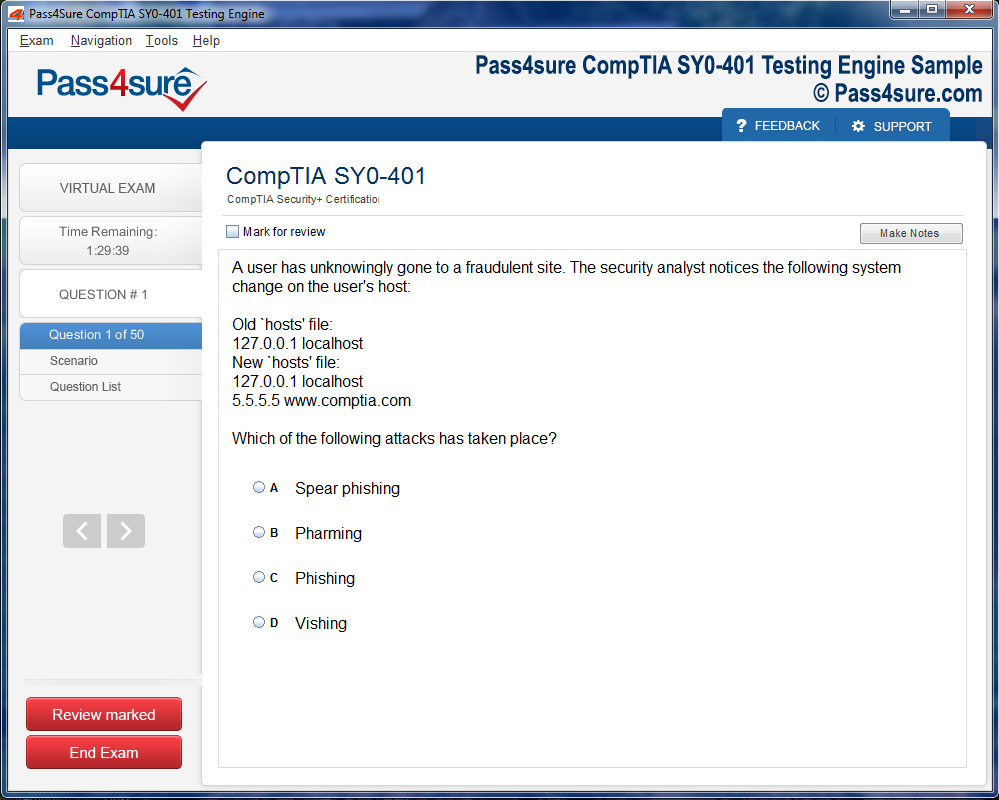
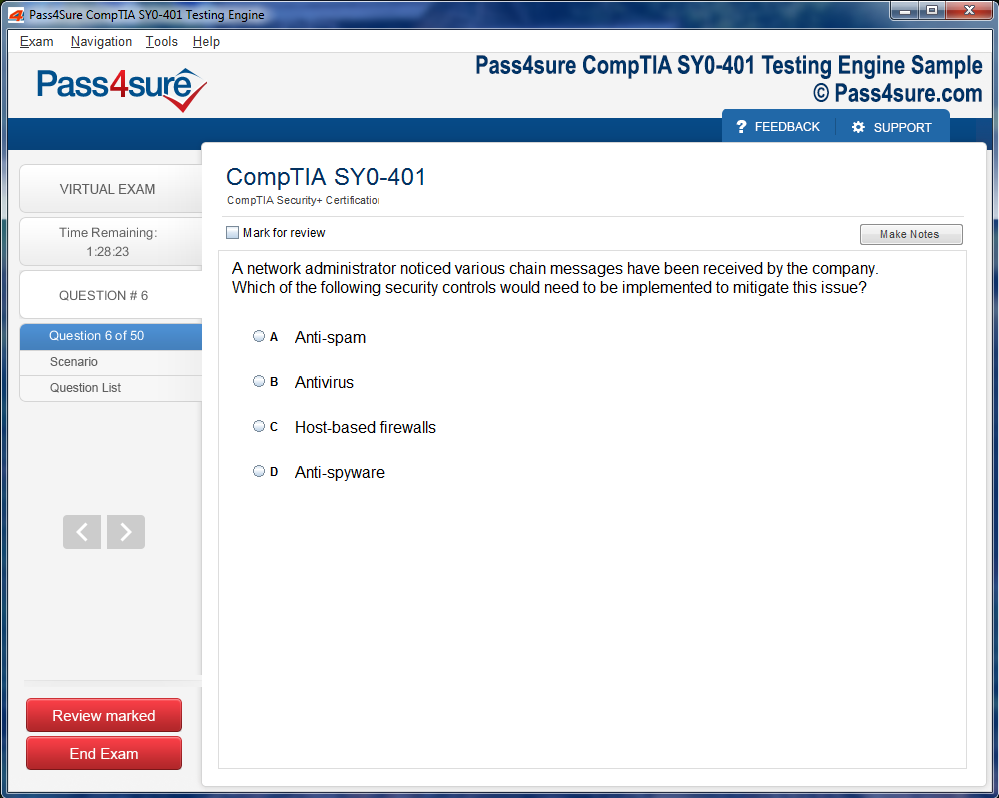
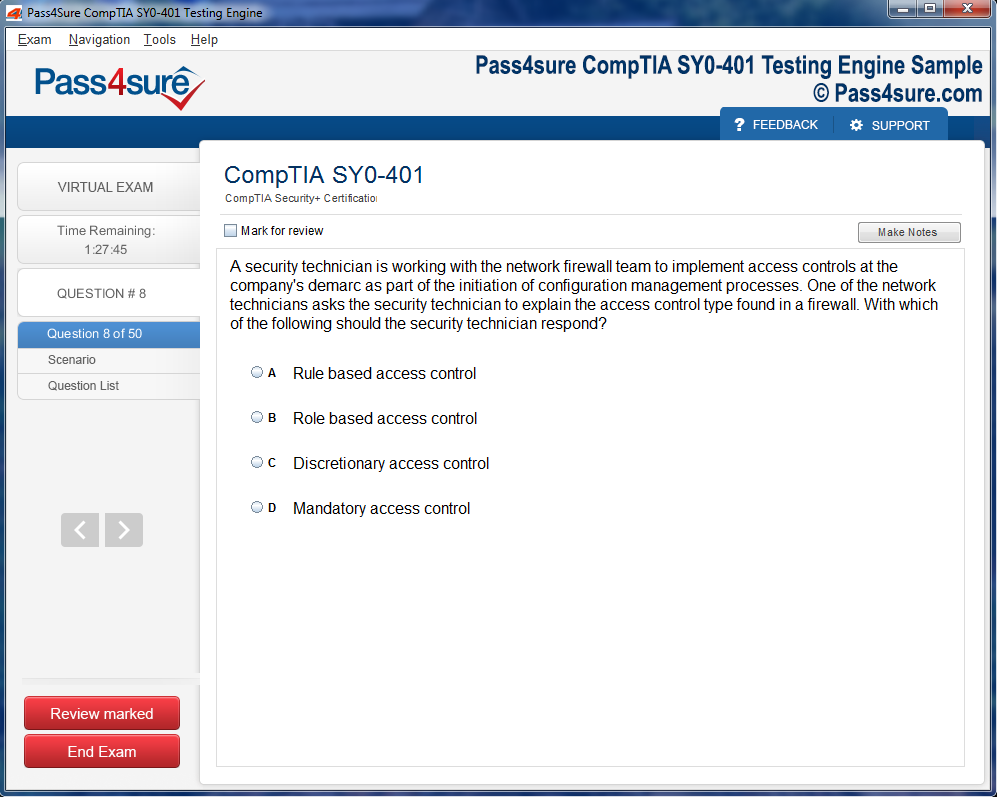
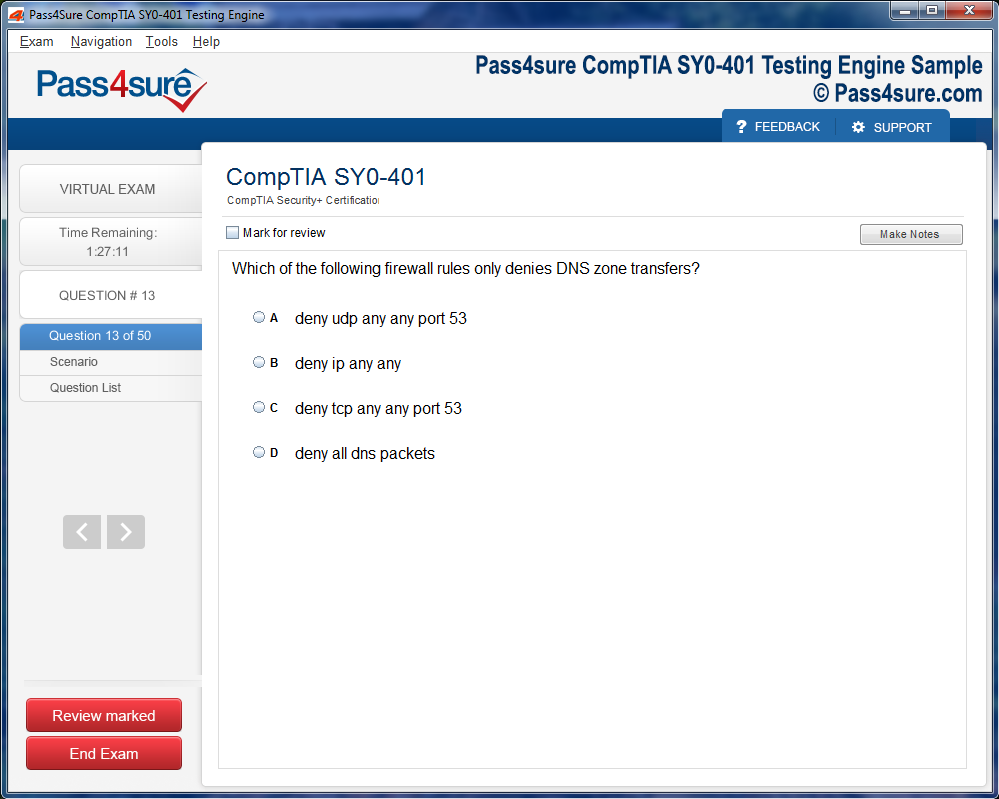
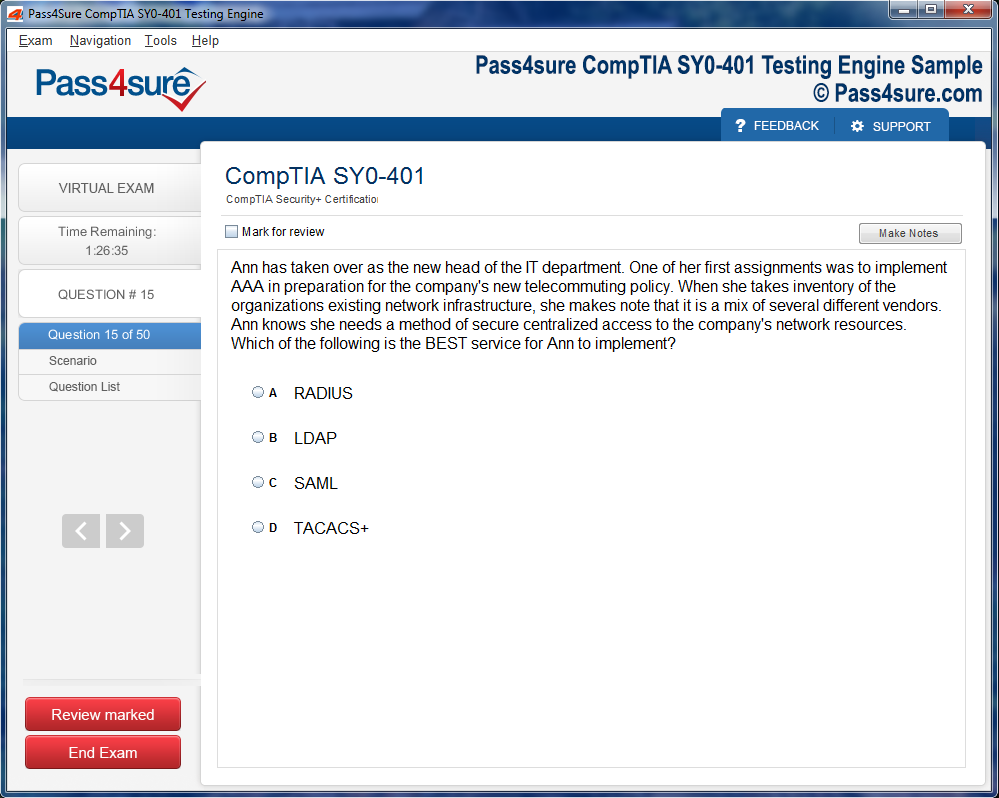
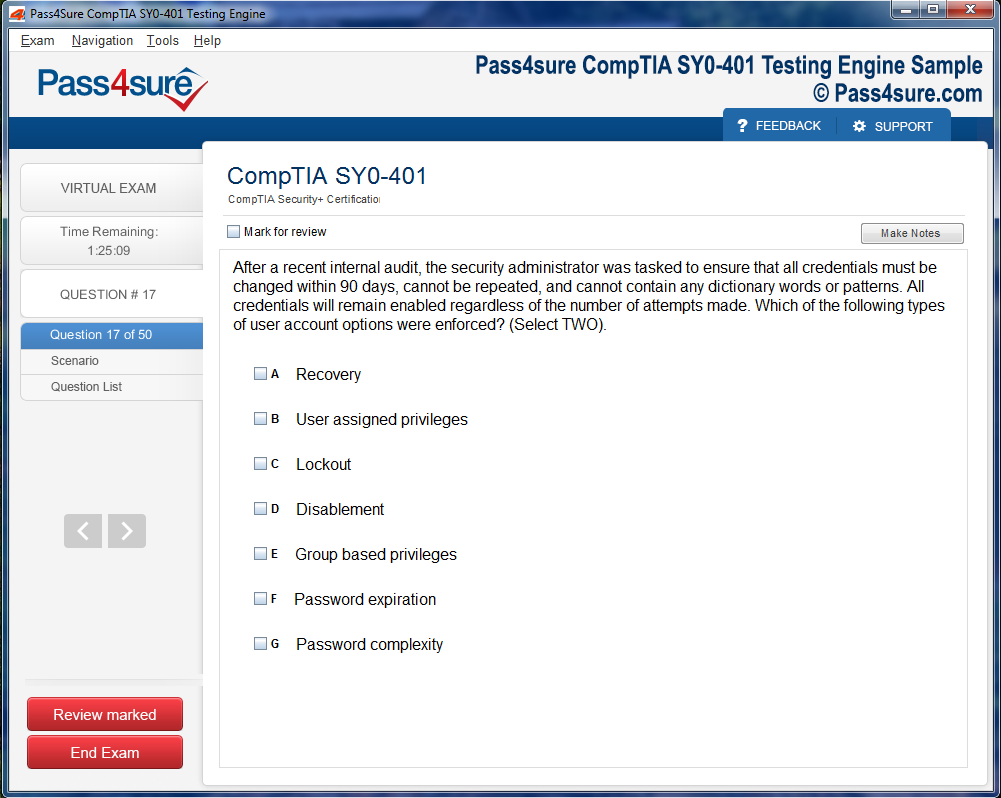
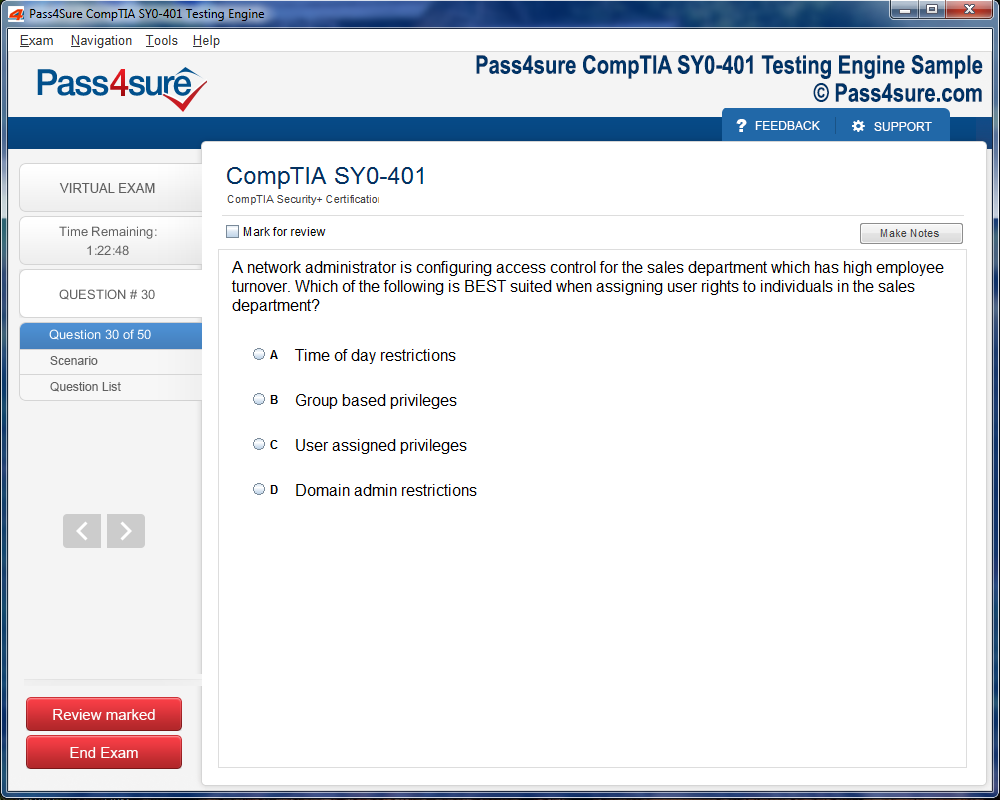
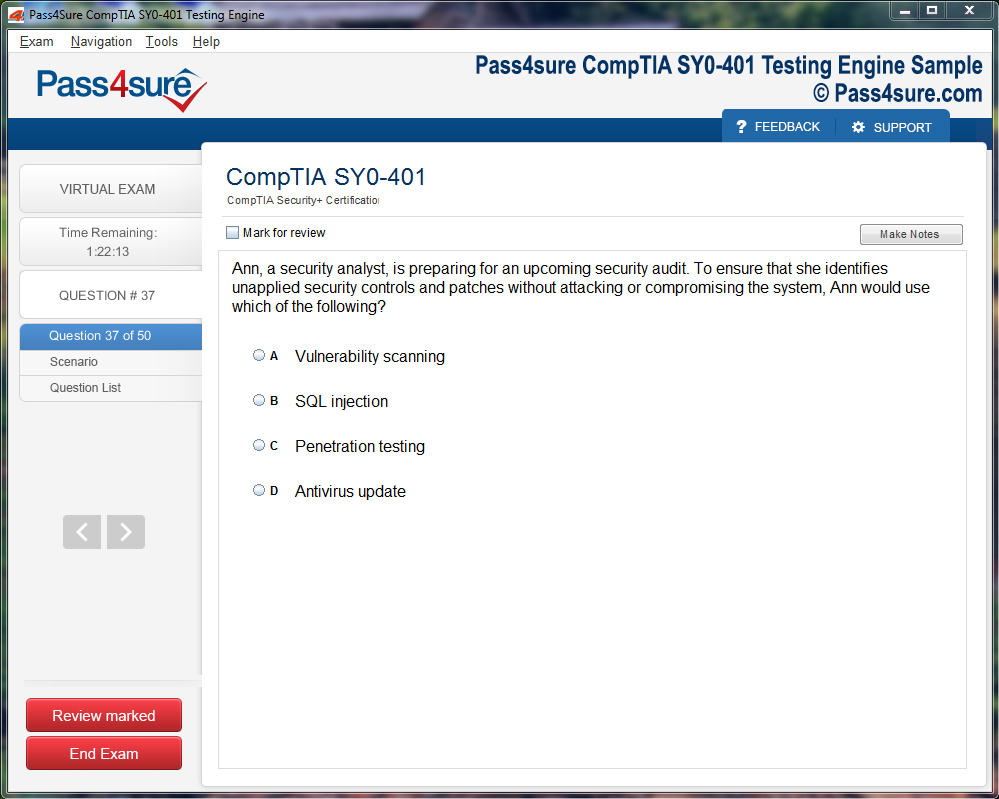
Product Screenshots
Frequently Asked Questions
How does your testing engine works?
Once download and installed on your PC, you can practise test questions, review your questions & answers using two different options 'practice exam' and 'virtual exam'. Virtual Exam - test yourself with exam questions with a time limit, as if you are taking exams in the Prometric or VUE testing centre. Practice exam - review exam questions one by one, see correct answers and explanations.
How can I get the products after purchase?
All products are available for download immediately from your Member's Area. Once you have made the payment, you will be transferred to Member's Area where you can login and download the products you have purchased to your computer.
How long can I use my product? Will it be valid forever?
Pass4sure products have a validity of 90 days from the date of purchase. This means that any updates to the products, including but not limited to new questions, or updates and changes by our editing team, will be automatically downloaded on to computer to make sure that you get latest exam prep materials during those 90 days.
Can I renew my product if when it's expired?
Yes, when the 90 days of your product validity are over, you have the option of renewing your expired products with a 30% discount. This can be done in your Member's Area.
Please note that you will not be able to use the product after it has expired if you don't renew it.
How often are the questions updated?
We always try to provide the latest pool of questions, Updates in the questions depend on the changes in actual pool of questions by different vendors. As soon as we know about the change in the exam question pool we try our best to update the products as fast as possible.
How many computers I can download Pass4sure software on?
You can download the Pass4sure products on the maximum number of 2 (two) computers or devices. If you need to use the software on more than two machines, you can purchase this option separately. Please email sales@pass4sure.com if you need to use more than 5 (five) computers.
What are the system requirements?
Minimum System Requirements:
- Windows XP or newer operating system
- Java Version 8 or newer
- 1+ GHz processor
- 1 GB Ram
- 50 MB available hard disk typically (products may vary)
What operating systems are supported by your Testing Engine software?
Our testing engine is supported by Windows. Andriod and IOS software is currently under development.
Everything You Need to Know About Huawei H12-261
The Huawei H12-261 certification, formally designated as the HCIE-Routing & Switching (Written) V3.0, epitomizes a benchmark of erudition in the realm of networking. Unlike entry-level credentials, this certification demands an intricate comprehension of both theoretical constructs and pragmatic deployment strategies. Aspirants embarking on this examination are expected to traverse the labyrinthine corridors of network topologies, routing algorithms, and switching mechanisms. The examination is not merely a procedural formality but a testament to one’s perspicacity in orchestrating complex network architectures with precision and resilience.
The H12-261 certification is particularly lauded for its emphasis on synthesizing knowledge across disparate domains, compelling candidates to demonstrate agility in both cognition and application. By pursuing this credential, professionals signal a proclivity for meticulous engineering, risk mitigation, and architectural foresight. The certification serves as a fulcrum for career elevation, bridging the gap between operational competency and strategic network orchestration.
Understanding the HCIE-Routing & Switching (Written) V3.0
The HCIE-Routing & Switching (Written) V3.0 examination is an intricate tapestry of networking acumen. It delves into multifarious topics that encompass the gamut from foundational protocols to advanced network orchestration. Candidates are evaluated not solely on rote memorization but on their capability to synthesize, analyze, and optimize network performance under diverse exigencies.
IP routing technologies constitute the substratum of the assessment. Protocols such as OSPF, IS-IS, and BGP are dissected meticulously, requiring candidates to exhibit dexterity in configuring and optimizing inter- and intra-domain routing. The examination scrutinizes the ability to manipulate routing tables, troubleshoot convergence anomalies, and implement redundancy mechanisms that mitigate latency and packet loss. The subtleties of route aggregation, policy-based routing, and route redistribution are explored, demanding a level of analytical rigor that transcends superficial knowledge.
Switching technologies is another cornerstone of the curriculum. Competence in VLAN segmentation, spanning tree protocols (STP, RSTP, MSTP), and hierarchical network design is indispensable. Candidates must demonstrate mastery in configuring resilient switch topologies that sustain high availability and scalability. The examination also emphasizes advanced concepts such as multicast deployment, port security, and layer 3 switching paradigms. Proficiency in these domains ensures that candidates can architect networks that are both robust and agile, capable of adapting to dynamic enterprise environments.
Network security, an indispensable dimension of contemporary networking, is rigorously assessed. Candidates are expected to implement comprehensive security frameworks that encompass access control, authentication mechanisms, encryption, and intrusion prevention. The examination emphasizes proactive threat mitigation and incident response strategies, reflecting real-world exigencies. Understanding security vulnerabilities at both protocol and application layers is vital, alongside deploying protective measures that harmonize performance with resilience.
Quality of Service (QoS) is another salient facet of the examination. Candidates must demonstrate the ability to ensure optimal network performance through traffic prioritization, congestion management, and resource allocation. Mastery of QoS techniques such as classification, policing, shaping, and scheduling is assessed, highlighting the necessity to balance efficiency with fairness in heterogeneous network traffic scenarios. Proficiency in QoS guarantees that critical applications maintain high availability while minimizing latency and jitter.
Network management constitutes the final dimension of the examination, encompassing SNMP, NETCONF, and other orchestration frameworks. Candidates are expected to deploy monitoring solutions that provide real-time visibility into network health, performance metrics, and fault management. Understanding network telemetry, automated provisioning, and policy-based management is pivotal. Effective network management ensures operational continuity, minimizes downtime, and enhances the capacity for rapid troubleshooting and optimization.
Strategic Relevance of the HCIE-R&S Certification
Attaining the HCIE-R&S credential is more than a professional accolade; it is a manifestation of strategic acumen. In an era where network architectures underpin critical organizational infrastructure, possessing such expertise signals readiness to confront emergent challenges. Network architects, senior engineers, and consultants who hold this certification are often entrusted with high-stakes responsibilities, from designing resilient topologies to orchestrating enterprise-scale migrations.
The certification validates a practitioner’s ability to reconcile complexity with operational simplicity. Candidates emerge with an enhanced repertoire of methodologies to architect, implement, and maintain networks that are both scalable and secure. Moreover, the credential fosters cognitive agility, encouraging continual adaptation to evolving protocols, emerging threats, and technological innovations. It is not merely an assessment of current knowledge but a testament to lifelong learning and professional vigilance.
Preparatory Paradigms for the H12-261 Examination
Preparation for the H12-261 examination is a deliberate odyssey, requiring a multifaceted approach. Candidates benefit from immersion in both theoretical constructs and pragmatic simulation environments. Mastery of protocol behavior, network automation, and troubleshooting scenarios is essential. Engaging with advanced labs that replicate enterprise-grade topologies fosters experiential learning, ensuring that conceptual understanding is reinforced with practical application.
Adopting heuristic methodologies enhances retention and problem-solving efficiency. Techniques such as mind mapping of protocol interactions, scenario-based exercises, and analytical retrospection of network events cultivate cognitive dexterity. Candidates are encouraged to analyze network anomalies, optimize configurations, and devise redundancy schemes, thereby simulating real-world operational challenges.
Time management and examination strategy also play a pivotal role. The HCIE-R&S written examination necessitates a meticulous approach to question analysis, prioritization, and synthesis of complex solutions. Candidates must cultivate the ability to navigate intricate scenarios, extrapolate consequences of design decisions, and reconcile multiple interdependent network parameters.
The Role of Emerging Technologies in Certification Relevance
The networking landscape is in perpetual flux, driven by innovations such as software-defined networking (SDN), intent-based networking, and network function virtualization (NFV). The HCIE-R&S certification retains its relevance by incorporating an understanding of these paradigms, compelling candidates to bridge traditional knowledge with emergent technologies.
Candidates versed in SDN frameworks can demonstrate the orchestration of dynamic network behavior through programmable controllers, enhancing adaptability and efficiency. NFV principles, when integrated with conventional routing and switching expertise, allow for agile deployment of virtualized network functions, optimizing resource utilization and operational scalability. The intersection of classical networking protocols with contemporary innovations reflects a practitioner’s versatility and foresight.
Career Implications of the HCIE-R&S Credential
Possession of the HCIE-R&S credential substantially augments professional trajectory. Certified individuals are often considered for leadership roles in network strategy, architectural planning, and operational oversight. The credential signals a capacity for high-level problem solving, strategic design, and operational resilience. Organizations increasingly prioritize candidates who can navigate complex network topologies while mitigating risk and ensuring service continuity.
The certification also facilitates cross-domain expertise, enabling practitioners to engage with cloud networking, cybersecurity integration, and hybrid infrastructure deployments. This multidimensional proficiency fosters career mobility, positioning certified professionals as indispensable assets in technologically sophisticated enterprises.
Cognitive and Analytical Benefits of Certification Pursuit
Beyond career implications, the pursuit of the HCIE-R&S credential enhances cognitive acuity. Candidates develop advanced analytical skills capable of dissecting multilayer network behaviors, anticipating protocol interactions, and preemptively addressing systemic vulnerabilities. The rigorous preparation cultivates resilience, patience, and strategic foresight, attributes that extend beyond technical domains into broader professional and intellectual pursuits.
Engaging with complex scenarios sharpens pattern recognition, deductive reasoning, and decision-making under uncertainty. Candidates emerge not merely as technicians but as strategic thinkers capable of navigating ambiguity, orchestrating precision in execution, and innovating solutions in high-pressure environments.
IP Routing Technologies
The intricate tapestry of IP routing technologies is the bedrock of network sophistication, demanding both theoretical erudition and hands-on dexterity. At the core of this domain lies OSPF, an agile protocol whose nuanced configurations extend beyond rudimentary implementations. Candidates must navigate area hierarchies, dissect Link-State Advertisements, and decipher the SPF algorithm, fostering an acumen in deterministic path computation that transcends mere rote memorization. Mastery of OSPF entails understanding virtual links, stub areas, and the labyrinthine interplay of LSAs that define network convergence speed and resiliency.
Parallel to OSPF, IS-IS manifests as a protocol of austere elegance. Its operation hinges on the Intermediate System-to-Intermediate System paradigm, encapsulating routing intelligence within a dual-level hierarchy. The discerning candidate explores L1 and L2 adjacency formation, Type-Length-Value structures, and protocol nuances that influence path selection and topology resilience. Proficiency demands an analytical approach to IS-IS metric manipulation and a comprehension of link-state propagation across diverse network segments.
BGP, the sine qua non of inter-domain routing, introduces an additional layer of conceptual sophistication. Understanding BGP policies, route maps, and prefix filtering is paramount. Candidates must wield granular control over autonomous system interactions, leveraging attributes such as AS_PATH, MED, and local preference to craft deterministic routing behaviors. The interplay of BGP communities and extended communities further exemplifies the protocol's versatility, enabling nuanced traffic engineering that balances performance and redundancy.
Switching Technologies
The realm of switching technologies is characterized by a symphony of interconnected mechanisms, where VLANs, spanning tree protocols, and link aggregation converge to orchestrate network efficiency. VLAN design transcends mere segmentation; it involves strategic trunking configurations and inter-VLAN routing schemes that optimize both security and throughput. Mastery of dynamic VLAN assignment techniques and VTP operation is critical for sustaining a coherent layer 2 topology.
Spanning Tree Protocols—encompassing STP, RSTP, and MSTP—serve as the linchpin of loop-free network architectures. The candidate must discern the subtle distinctions between these protocols, understanding bridge protocol data units, root bridge elections, and convergence intervals. MSTP’s mapping of multiple VLANs to a single spanning tree instance demands a conceptual agility that bridges theory with pragmatic deployment considerations.
EtherChannel embodies the quintessence of link aggregation, enabling redundant high-throughput pathways without compromising network simplicity. The examinee must demonstrate an ability to configure static and dynamic aggregation, troubleshoot misconfigurations, and analyze load-balancing algorithms. This facet of switching technology exemplifies the intersection of resilience, performance, and operational foresight.
Network Security
Network security, an omnipresent imperative, mandates a sophisticated comprehension of defensive strategies and proactive safeguarding mechanisms. Access Control Lists (ACLs) represent the initial bulwark against unauthorized ingress and egress, with a spectrum extending from standard to extended configurations. Mastery involves precision crafting of ACL statements to enforce granular policies, preventing lateral threat propagation while maintaining operational efficiency.
Virtual Private Networks epitomize secure interconnectivity, whether site-to-site or remote access. Candidates must demonstrate proficiency in protocol selection, encryption schema, and authentication methodologies. VPN design integrates seamlessly with overarching security policies, demanding attention to tunnel management, key lifecycles, and traffic encapsulation nuances.
Firewalls, particularly those tailored for specific network ecosystems, are paramount in establishing security perimeters. Understanding stateful inspection, policy hierarchies, and logging mechanisms is indispensable. Candidates must be adept at configuring firewall rules to balance stringent security postures with minimal operational friction, thereby ensuring an inviolable network environment.
Quality of Service
Quality of Service (QoS) represents a cerebral orchestration of network performance, necessitating a deep understanding of traffic prioritization, congestion management, and resource allocation. Traffic classification and marking involve nuanced identification of flows based on protocol, application, and behavioral metrics. This foundational step enables downstream mechanisms to enforce service-level expectations with precision.
Queuing mechanisms such as FIFO, PQ, and WFQ encapsulate the art of deterministic packet scheduling. FIFO ensures straightforward processing but lacks prioritization granularity, while PQ introduces hierarchical precedence to maintain critical traffic flow. WFQ, leveraging weighted fairness, orchestrates equitable resource distribution among competing streams, underscoring the candidate's grasp of both theory and operational implementation.
Traffic policing and shaping further exemplify QoS sophistication. Policing enforces strict rate limits, mitigating potential congestion, while shaping and redistributing bursts to conform to configured profiles, smoothing the network’s operational cadence. Mastery in this domain demands both conceptual clarity and empirical acumen, ensuring the network performs optimally under fluctuating demands.
Network Management
Network management represents the cerebral nexus connecting observability, configurability, and operational continuity. SNMP, the venerable protocol for device management, requires nuanced configuration of agents and managers to ensure accurate telemetry and responsive alerting. Candidates must understand MIB structures, trap generation, and polling strategies to maintain an intelligent oversight mechanism.
NETCONF introduces a programmatic dimension to network stewardship, leveraging XML-encoded commands to effectuate precise configuration changes. Comprehension of its RPC mechanisms, data modeling, and transaction integrity ensures candidates can maintain devices in an automated, error-resilient manner. This capability is essential in modern network environments where manual intervention must be minimized to reduce operational overhead.
Network monitoring tools serve as the empirical lens through which administrators observe and optimize network health. Proficiency involves leveraging dashboards, analytics, and historical data to detect anomalies, predict congestion, and enact preemptive measures. Understanding the interplay of telemetry, alerts, and reporting transforms raw data into actionable intelligence, embodying the fusion of strategic foresight and technical dexterity.
Comprehending the Exam Architecture
Embarking upon the H12-261 odyssey necessitates an intimate acquaintance with the exam’s cartography. Understanding the exam blueprint is not merely a perfunctory glance at objectives; it is a perspicacious discernment of thematic weightages, a stratagem for judicious allocation of cognitive resources. One must delve into the granular intricacies of networking topographies, identifying conceptual fulcrums that govern the examination’s architecture. Prioritization is not an ancillary activity; it constitutes the substratum upon which efficacious preparation is scaffolded.
Harnessing Canonical Huawei Resources
To traverse the labyrinthine corridors of network mastery, one must invoke canonical Huawei materials. The eLearning portals proffer an assemblage of erudite modules, each meticulously architected to illuminate abstruse networking paradigms. Beyond cursory engagement, one must pursue iterative immersion, revisiting convoluted schematics until cognitive assimilation attains a threshold of permanence. Huawei’s documentation, a compendium of perspicuous manuals, elucidates intricate configurations with unerring precision. Here, the diligent scholar discovers the symbiosis between theoretical abstraction and pragmatic deployment.
Embarking on Pragmatic Simulations
Pedantry untempered by praxis yields ephemeral comprehension. To anchor theoretical constructs, the aspirant must immerse themselves in hands-on simulations, employing Huawei’s proprietary platforms or GNS3 emulators. Each virtual configuration cultivates experiential sagacity, transmuting abstract notions into tangible competence. This iterative engagement cultivates not merely skill but a proprioceptive understanding of network dynamics, a faculty indispensable when confronting capricious, multifaceted exam scenarios.
Synergizing Through Communal Discourse
Cognitive enrichment flourishes in the crucible of collaborative discourse. Online enclaves and Huawei certification forums act as conduits for communal sagacity. Participation entails more than passive observation; it demands dialectical engagement, a willingness to interrogate and be interrogated. Within these discursive arenas, subtle nuances of network orchestration emerge, esoteric insights coalesce, and knowledge gaps are rectified with alacrity. The perspicuous exchange of conjectures often catalyzes epiphanic understanding, which solitary study seldom evokes.
Iterative Mock Examination
Temporal acuity and adaptive cognition are honed through iterative mock examinations. Each simulated trial operates as a crucible, revealing latent deficiencies and highlighting strengths. The aspirant must meticulously chronicle errors, categorize misconceptions, and formulate rectificatory strategies. Beyond content mastery, repeated assessment cultivates metacognitive faculties, enhancing temporal allocation, prioritization under duress, and analytical dexterity—skills quintessential for navigating the exam’s exigencies.
Cognitive Partitioning and Topic Segmentation
Effective preparation is contingent upon cognitive compartmentalization. By segmenting topics into discrete, thematically coherent clusters, the scholar can exploit mnemonic consolidation and neural patterning. Each cluster warrants intensive scrutiny, yet intermittent cross-referencing ensures holistic integration. The judicious interleaving of topics forestalls cognitive atrophy and engenders a synoptic understanding, allowing the aspirant to traverse from rudimentary configurations to labyrinthine network topologies with seamless fluency.
Mnemonic Stratagems for Retention
To circumvent mnemonic attrition, the aspirant should deploy stratagems that coalesce imagination and analytical reasoning. Visualization techniques, narrative constructs, and associative frameworks serve to anchor abstract concepts within cognitive schemas. By transforming arcane configurations into memorable mental cartographies, one can access them with alacrity under exam conditions. Such mnemonic alchemy transmutes ephemeral learning into durable expertise, rendering rote memorization redundant.
Temporal Cadence and Study Rhythms
The orchestration of temporal cadence constitutes an often-underestimated determinant of preparation efficacy. Establishing a metronomic study rhythm, punctuated by strategic intermissions, optimizes neurocognitive absorption. Circadian alignment with peak attentional windows amplifies retention, while deliberate incorporation of reflective intervals catalyzes synaptic consolidation. The aspirant who masters the temporal rhythm of study accrues exponential dividends in knowledge acquisition and resilience against cognitive fatigue.
Assimilation of Networking Paradigms
Beyond procedural familiarity, the H12-261 aspirant must internalize foundational networking paradigms. Concepts such as hierarchical topology orchestration, dynamic routing algorithmic behavior, and protocol symbiosis must be internalized to an instinctual degree. Superficial acquaintance is insufficient; fluency arises from relentless interrogation, comparative analysis, and iterative problem-solving exercises that reveal interdependencies among network elements.
Diagnostic Analytics of Learning Trajectories
The erudite aspirant engages in continuous diagnostic analytics of learning trajectories. By meticulously documenting successes, miscalculations, and temporal efficiencies, one cultivates an introspective lens capable of predictive assessment. This analytic vigilance permits adaptive recalibration of study modalities, targeted remediation of vulnerabilities, and amplification of effective methodologies. Data-driven self-assessment transforms preparation from a haphazard effort into a strategically optimized endeavor.
The Arcane Realm of Networking Mastery
Venturing into the labyrinthine domain of advanced networking necessitates a perspicacious comprehension of protocols, topologies, and architectures. Aspiring experts must navigate the intricate lattice of data transmission paradigms, discerning subtle discrepancies between ostensibly analogous frameworks. The path toward mastery is neither linear nor perfunctory; it requires deliberate immersion in theoretical constructs and pragmatic applications, where each node, segment, and gateway embodies both potential and peril.
Stratagems for Intellectual Ascendancy
Cultivating an acumen in networking is a synergistic endeavor, blending rigorous cognition with iterative experimentation. Methodical engagement with canonical principles, intertwined with synthetic problem-solving, yields unparalleled dexterity. One must embrace a lexicon of esoteric terms, from cryptographic handshakes to dynamic routing heuristics, each serving as an aperture into deeper comprehension. Repetition, coupled with nuanced contextualization, fortifies neural pathways that undergird rapid recognition and decision-making.
The Pedagogical Instruments
Recommended study materials form the cornerstone of efficacious preparation. Huawei Official Study Guides proffer exhaustive exegeses of core topics, meticulously delineating protocols, configuration methodologies, and troubleshooting paradigms. These compendiums serve as both a roadmap and a benchmark, elucidating areas of high-frequency inquiry and complex conceptual intersections. Integrating these guides into a disciplined study regimen enables aspirants to internalize critical principles while simultaneously cultivating procedural fluency.
Immersive Digital Didactics
Online training platforms extend a complementary dimension to conventional study guides, offering dynamic, interactive experiences. Through video tutorials, learners witness the enactment of theoretical constructs within simulated environments, bridging the chasm between abstraction and operational reality. Practice tests emulate high-stakes examination scenarios, fostering resilience, temporal acuity, and evaluative precision. The iterative engagement with these platforms instills confidence while reinforcing comprehension in a contextually authentic manner.
Literary Expositions by Preeminent Scholars
Canonical texts authored by luminaries in the field offer profound insights into intricate networking phenomena. These works transcend rudimentary instruction, delving into nuanced analysis of routing algorithms, network security imperatives, and emergent topological paradigms. Perusal of such literature cultivates analytical rigor, enabling learners to anticipate complexities, synthesize disparate concepts, and formulate strategic solutions. The discerning student engages with these texts not merely for rote absorption but for conceptual expansion and heuristic enhancement.
Scenario-Based Praxis
Practical application through scenario-based exercises amplifies theoretical understanding by situating knowledge within operational frameworks. Simulation of real-world networking challenges, from latency mitigation to dynamic load balancing, sharpens problem-solving acuity. Engaging with hypothetical configurations and troubleshooting conundrums engenders adaptability, a skill indispensable in rapidly evolving technological landscapes. Each scenario, meticulously analyzed and iteratively refined, solidifies the cognitive scaffolding required for adept performance.
Cognitive Calibration through Repetition
Recurrent engagement with core principles, facilitated by diversified study tools, reinforces mastery and accelerates knowledge retention. Cyclical revision, punctuated by progressively complex exercises, ensures that conceptual grasp transcends superficial familiarity. Cognitive calibration is further enhanced by reflective practice—evaluating performance, identifying lacunae, and recalibrating strategies to address deficiencies. This metacognitive approach fosters enduring competence, rendering the learner adept at both anticipated and unforeseen challenges.
Navigating Exam Day with Poise
Exam day can feel like an intricate labyrinth, where mental agility and emotional equilibrium are paramount. Approaching the day with an intentional mindset can transform trepidation into triumph. Begin by envisioning the day as a sequence of deliberate actions rather than a chaotic event, allowing your psyche to stabilize and fortify for the impending challenges.
Temporal Punctuality and Spatial Acclimation
Arriving early at the examination locus is not merely about physical presence; it is an exercise in psychological acclimation. The interstitial minutes before commencement provide an invaluable opportunity to synchronize your cognitive rhythms with the ambient environment. This temporal buffer mitigates perturbations and cultivates a calm prelude to intellectual exertion.
Deciphering the Lexicon of Instructions
Instructions are the often-overlooked cartography of the examination landscape. A meticulous perusal of all directives ensures clarity regarding permitted materials, timing regulations, and the nuanced conventions specific to the assessment. Misinterpretation can engender avoidable errors, whereas comprehension allows the examinee to navigate with judicious precision.
Chronometric Strategy and Allocative Prudence
Mastery of temporal allocation is tantamount to mastering the exam itself. Segmenting time according to question weight and personal proficiency optimizes performance. If confronted with labyrinthine or abstruse queries, it is prudent to circumnavigate temporarily, conserving cognitive capital for later deployment.
Maintaining Cognitive Equanimity
Sustaining an unwavering focus amidst the vicissitudes of an examination necessitates deliberate mental choreography. Should waves of anxiety encroach, employ diaphragmatic respiration or brief micro-pauses to recalibrate attention. The capacity to self-regulate amid high-stakes pressure distinguishes sagacious examinees from the merely prepared.
Strategic Utilization of Cognitive Anchors
Employ cognitive anchors such as mnemonic devices, thematic associations, and schematic visualizations to fortify memory retrieval. These anchors function as neural buoys, ensuring that recollections remain accessible even under the stress-induced turbulence of examination conditions.
Nutritional and Hydration Considerations
The alimentary and aqueous state of the body exerts a profound influence on cerebral performance. Prioritize easily digestible, nutrient-dense sustenance and maintain moderate hydration levels. Avoid excessive stimulants or unfamiliar comestibles that may precipitate gastrointestinal discomfort or jitteriness.
Environmental Symbiosis and Personal Comfort
The physical environment of the exam room can subtly influence cognitive acuity. Adjust your seating posture for ergonomic stability, utilize personal implements judiciously, and minimize peripheral distractions. Establishing an intimate rapport with your immediate surroundings can enhance focus and reduce extraneous cognitive load.
Tactical Question Navigation
Approach questions with tactical deliberation. Initiate with those that align with your strengths to establish momentum, then progressively address the more challenging items. Employ analytical partitioning for multipart queries and ensure systematic verification to preempt careless errors.
Psychological Reframing of Performance Pressure
Transform the perception of stress from an adversarial force into a motivational catalyst. Recognize that a moderate level of arousal can heighten alertness and facilitate rapid information processing. Reframing stress as an energizing force enables a more resilient and adaptive cognitive state.
Leveraging Past Practice with Adaptive Recall
Reinforce familiarity with prior exercises and mock assessments to activate adaptive recall pathways. Engage in brief, focused reviews of conceptual frameworks or problem-solving methodologies immediately preceding the exam. This practice invigorates synaptic connections, allowing rapid retrieval of relevant information.
Mindful Microbreaks During Exam Intervals
If permitted, employ microbreaks to momentarily disengage from the exam narrative. Short, deliberate pauses enhance cognitive consolidation and prevent mental fatigue. Simple techniques such as ocular rest, subtle stretching, or mindful breathing can rejuvenate attention and sustain high-level performance.
Embracing Contingency Preparedness
Anticipate and prepare for contingencies, ranging from unexpected procedural anomalies to unforeseen question formats. Mental rehearsal of potential disruptions cultivates resilience, allowing swift adaptation without compromise to concentration or confidence.
Leveraging Visualization for Enhanced Recall
Visualization is an underutilized tool for augmenting memory and comprehension. Mentally reconstruct complex diagrams, theoretical models, or sequential processes to reinforce retention. This cognitive rehearsal bridges the gap between conceptual understanding and applied problem-solving.
Sequential Double-Checking and Error Mitigation
As time permits, conduct a systematic review of responses to identify discrepancies or omissions. Employing methodical scrutiny mitigates errors arising from oversight or hurried responses. Prioritize high-impact questions and calculations to maximize the benefits of this secondary appraisal.
Harnessing Intrinsic Motivation and Self-Affirmation
Sustain performance by cultivating intrinsic motivation through self-affirmation and purposeful engagement. Reflect on personal preparation, effort invested, and prior accomplishments to bolster self-efficacy. This internal reinforcement counterbalances external pressures and enhances perseverance.
Subtle Optimization of Cognitive Flow
Achieving a state of cognitive flow, wherein attention and skill converge seamlessly, is the pinnacle of exam-day performance. Facilitate this by minimizing internal distractions, embracing rhythmic pacing, and maintaining continuous engagement with each question. Flow enables both efficiency and elevated precision.
Employing Strategic Pacing Across Sections
Even distribution of cognitive energy across sections is critical. Avoid disproportionate investment in early portions that may deplete reserves needed for subsequent segments. Monitor elapsed time, adjust pacing dynamically, and retain flexibility for unforeseen challenges in later sections.
Harnessing Interstitial Reflection
Between questions or sections, brief interstitial reflection enhances meta-cognitive awareness. Evaluate your approach, reassess strategies, and adjust response methods where necessary. This iterative internal dialogue refines execution and reduces the likelihood of conceptual errors.
Cultivating a Resilient Mindset Against Fatigue
Examinations often extend beyond mere intellectual rigor, testing endurance and resilience. Implement techniques to combat mental fatigue, including micro-cognitive resets, positive self-talk, and focused attention shifts. Sustained engagement requires both mental and emotional stamina.
Integrating Multi-Sensory Recall Techniques
Incorporate multi-sensory methods to reinforce memory, such as visual imagery, verbal rehearsal, and tactile association with study materials. This multi-modal integration enhances retention and retrieval efficiency under exam conditions.
Modulating Emotional Resonance During Pressure
Emotional modulation is as essential as cognitive preparation. Recognize the natural ebb and flow of stress responses, and employ targeted interventions—controlled breathing, positive visualization, or motivational self-statements—to maintain composure. Emotional equanimity preserves analytical clarity.
Post-Exam Introspection and Result Dissection
Navigating the aftermath of the H12-261 examination necessitates a deliberate and perspicacious examination of one’s performance. Beyond the initial euphoria of completing the test, a rigorous post-exam analysis provides the scaffolding for future acumen acquisition. Begin by meticulously evaluating each domain within the assessment. Identify the loci of proficiency where conceptual clarity was manifest and juxtapose them with areas that elicited vacillation or hesitation. This metacognitive approach transforms raw scores into a compendium of actionable intelligence, illuminating latent skill gaps and fortifying the foundation for subsequent endeavors.
Cognitive Reflection on Performance Metrics
The alchemy of translating numerical results into developmental directives is a nuanced process. Rather than merely fixating on the aggregate score, dissect the constituent metrics that comprise the examination framework. Engage in granular scrutiny of question typologies that posed the greatest challenge. Were the difficulties derived from theoretical ambiguities, practical implementation intricacies, or a synthesis of both? Constructing a cognitive cartography of your performance enhances self-awareness, engenders strategic remediation, and catalyzes the evolution of intellectual dexterity.
Mapping Proficiency Deficits to Remedial Strategies
Once the lacunae in understanding have been delineated, the next imperative is to formulate bespoke remedial strategies. This entails curating targeted learning modules, engaging with simulation environments, and orchestrating iterative practice sessions. The judicious deployment of time and cognitive resources amplifies retention and facilitates the internalization of complex paradigms. By converting performance deficiencies into structured developmental trajectories, aspirants metamorphose potential weaknesses into formidable competencies.
Pursuing Ascendant Certifications
Augmenting one’s credentials through progressive certification pathways serves as an expedient conduit to both mastery and recognition within the networking domain. Aspirants may contemplate the pursuit of advanced distinctions such as the HCIE-R&S (Lab) examination, an immersive practical evaluation designed to test holistic problem-solving acumen in real-world scenarios. Similarly, the HCIP-R&S certification offers an intermediary platform to consolidate theoretical knowledge with applied proficiency. The strategic accumulation of these credentials not only bolsters technical gravitas but also delineates a clear trajectory for career advancement.
Integrating Knowledge with Experiential Practice
The chasm between theoretical comprehension and practical execution can be bridged through deliberate engagement with hands-on laboratories and simulated network environments. Immersive practice sessions facilitate cognitive entrenchment, allowing abstract concepts to crystallize into operational fluency. By iteratively navigating complex network topologies and troubleshooting multifaceted scenarios, candidates cultivate an adaptive mindset capable of addressing unpredictable contingencies in live deployments.
Embracing Continuous Industry Vigilance
Networking landscapes are in perpetual flux, with innovations and technological paradigms emerging at a rapid cadence. Cultivating a habit of continual vigilance is paramount for sustaining professional relevance. Participate in symposia, webinars, and technical conclaves to absorb emergent methodologies. Immerse yourself in specialized journals and forums that disseminate cutting-edge insights. This proactive engagement with the knowledge ecosystem ensures that one remains conversant with evolving standards, protocols, and architectural frameworks.
Mentorship as a Strategic Lever
Identifying and collaborating with seasoned professionals who have attained pinnacle certifications, such as HCIE-R&S, can provide unparalleled insight into career trajectories. Mentorship functions as a conduit for the transmission of tacit knowledge, exposing aspirants to the nuanced decision-making frameworks and strategic considerations that underpin real-world network engineering. By cultivating these mentor-mentee relationships, individuals gain perspective on best practices, potential pitfalls, and the subtleties of navigating complex professional landscapes.
Career Pathway Diversification
Post-certification trajectories need not adhere to linear paradigms. The acquisition of advanced certifications opens portals to a spectrum of professional avenues, including network architecture, security orchestration, cloud integration, and high-level consultancy. A diversified portfolio of competencies enhances employability, promotes lateral mobility, and enables the pursuit of specialized niches within the expansive networking ecosystem. Aspirants are thus empowered to sculpt careers that align with both aptitude and aspiration.
Strategic Networking and Peer Synergy
Equally critical is the cultivation of a robust professional network. Engage with peers, colleagues, and industry interlocutors to foster symbiotic knowledge exchange. Participation in collaborative projects, technical hackathons, and professional guilds not only amplifies skill acquisition but also elevates visibility within the community. This synergistic approach facilitates the cross-pollination of ideas and exposes individuals to innovative problem-solving paradigms, thereby accelerating intellectual and professional growth.
Immersive Learning through Simulation
Simulation-based learning constitutes an invaluable adjunct to traditional study modalities. High-fidelity emulation of network environments permits aspirants to experiment with complex configurations, troubleshoot emergent anomalies, and refine diagnostic heuristics without incurring operational risk. This experiential methodology strengthens cognitive adaptability and cultivates a pragmatic mindset attuned to the dynamic exigencies of network management.
Leveraging Analytical Tools for Performance Augmentation
Analytical acumen can be augmented through the strategic deployment of performance assessment tools. By utilizing sophisticated analytics to parse practice test results, one can identify subtle patterns in response tendencies, recurrent errors, and temporal management inefficiencies. This data-driven introspection transforms subjective impressions into quantifiable insights, thereby enabling aspirants to calibrate their study strategies with surgical precision.
Cultivating a Culture of Lifelong Learning
The networking domain is characterized by relentless evolution, necessitating a perpetual commitment to learning. Developing a personal ethos of lifelong education ensures that knowledge acquisition is continuous rather than episodic. This culture of ceaseless intellectual curiosity promotes adaptability, resilience, and sustained professional relevance in an environment where technological obsolescence is the norm rather than the exception.
Developing Cognitive Resilience under Examination Pressure
The crucible of high-stakes examinations tests not only knowledge but also psychological fortitude. Cultivating cognitive resilience through stress management techniques, mindfulness practices, and structured study regimens mitigates performance anxiety. By fortifying mental agility, candidates can navigate complex problem-solving scenarios with composure, thereby maximizing the fidelity of their demonstrated competencies.
Translating Certification into Professional Capital
Beyond mere credentialing, certifications serve as currency in the professional marketplace. They signal proficiency, dedication, and a commitment to excellence. Strategically articulating these achievements in resumes, professional portfolios, and interviews enhances career prospects, facilitates access to leadership opportunities, and establishes credibility with peers, supervisors, and clients alike.
Expanding Horizons through Specialized Domains
The post-exam period represents an opportune juncture to explore specialized domains that complement core networking skills. Areas such as network security, software-defined networking, cloud orchestration, and IoT integration offer fertile ground for intellectual enrichment and career differentiation. Mastery of niche competencies enhances professional versatility and positions aspirants as thought leaders within specialized ecosystems.
Mentorship Networks and Reciprocal Learning
Engaging in mentorship is a bidirectional process wherein knowledge transfer occurs both from mentor to mentee and vice versa. By actively participating in these knowledge symbioses, aspirants refine their understanding, consolidate insights, and acquire pragmatic strategies for problem-solving. Mentorship networks thus function as accelerators for both cognitive and professional development, fostering an environment where experiential learning complements formal instruction.
Strategic Career Mapping Post-Certification
Post-certification career mapping entails a deliberate alignment of professional ambitions with market opportunities. This process involves evaluating industry demand, identifying skill gaps, and formulating progressive milestones that balance immediate employability with long-term growth potential. Strategic career mapping transforms certification achievements into actionable pathways, ensuring that each credential contributes meaningfully to overarching professional objectives.
Immersive Technological Experimentation
Engaging directly with emergent technologies facilitates not only comprehension but also innovation. Experimental deployments of novel protocols, hands-on testing of cutting-edge devices, and participation in beta programs cultivate a mindset attuned to exploration and adaptation. Such immersion accelerates skill consolidation and primes professionals to anticipate and respond to technological disruptions with dexterity.
Professional Visibility and Thought Leadership
Establishing a visible professional presence through publications, forum participation, and presentation at technical symposiums elevates credibility and fosters recognition within the community. Thought leadership positions individuals as authorities in their domains, attracts mentorship and collaboration opportunities, and amplifies the impact of one’s expertise across broader professional networks.
Networking Ecosystem Literacy
Deep comprehension of the networking ecosystem transcends rote protocol knowledge. It involves understanding interdependencies among devices, applications, and security layers; anticipating systemic vulnerabilities; and synthesizing holistic solutions. Cultivating ecosystem literacy ensures that practitioners can approach challenges with a macroscopic perspective, optimizing performance and resilience within complex infrastructures.
Adaptive Learning and Iterative Competency Development
Continuous professional growth is predicated upon iterative cycles of learning, practice, feedback, and refinement. Adaptive learning methodologies, including personalized learning paths, scenario-based exercises, and reflective practice, allow aspirants to internalize advanced concepts efficiently. By embracing iterative competency development, professionals maintain an evolving skill set aligned with industry exigencies.
Holistic Approach to Professional Ascendancy
A multifaceted approach encompassing technical mastery, strategic career planning, mentorship engagement, and ecosystem literacy constitutes the bedrock of sustained professional ascendancy. By harmonizing these dimensions, aspirants cultivate not only expertise but also agility, resilience, and a proactive orientation toward emerging opportunities within the dynamic landscape of network engineering.
Mastering Hierarchical Network Constructs
The H12-261 examination frequently scrutinizes hierarchical network constructs, demanding not only theoretical familiarity but also an intuitive grasp of topological orchestration. Scholars must comprehend the symbiotic interaction between core, distribution, and access layers, appreciating how redundancy, load balancing, and fault tolerance coalesce to preserve network integrity. This cognitive scaffolding is not mere rote knowledge; it necessitates an analytic sensibility capable of predicting emergent behaviors under variant traffic conditions. The aspirant who internalizes these constructs navigates architectural dilemmas with ease, converting abstraction into operational competence.
Protocolic Fluency and Algorithmic Insight
Protocol comprehension extends beyond memorization; it entails algorithmic insight and procedural dexterity. Dynamic routing protocols—OSPF, BGP, IS-IS—possess intricate decision matrices that govern path selection and metric evaluation. Understanding the subtleties of route redistribution, convergence anomalies, and loop prevention mechanisms cultivates anticipatory cognition, allowing one to foresee network oscillations and preempt bottlenecks. This depth of fluency equips candidates with the ability to traverse complex configurations, diagnose anomalies, and implement corrective measures with assured precision.
Embracing Simulation-Oriented Pedagogy
Practical mastery of networking concepts is inseparable from simulation-oriented pedagogy. Engaging in iterative emulation exercises—whether through Huawei-provided platforms or virtual lab environments—converts theoretical postulates into experiential reality. Each simulated topology serves as a microcosm for real-world network phenomena, exposing the learner to contingencies such as latency fluctuations, packet loss, and protocol misconfigurations. This empirical immersion engenders procedural fluency and situational agility, forging neural pathways optimized for both strategic foresight and reactive dexterity.
Cognitive Diversification Through Multi-Modal Learning
To optimize retention and engagement, one must embrace multi-modal learning paradigms. Reading alone is insufficient; auditory, visual, and kinesthetic stimuli enhance neural encoding and fortify memory retention. Video lectures elucidate dynamic configurations, while diagrammatic schematics provide visual anchors for abstract relationships. Interactive labs translate conceptual knowledge into tactile cognition, reinforcing pathways that traditional memorization often neglects. Cognitive diversification ensures resilience against fatigue, amplifies comprehension, and promotes integrative understanding of complex networking ecosystems.
Strategic Utilization of Forums and Collaborative Networks
Communal intellectual engagement accelerates mastery by leveraging collective expertise. Huawei certification forums, peer study groups, and professional networking platforms provide fertile ground for dialectical exploration. Beyond passive participation, proactive interrogation of concepts, collaborative troubleshooting, and resource-sharing engender both social and cognitive reinforcement. Exposure to diverse problem-solving methodologies cultivates adaptability, ensuring that candidates remain nimble in the face of unanticipated exam scenarios.
Error Analytics and Adaptive Remediation
Effective preparation hinges upon rigorous error analytics. Each misstep, whether procedural or conceptual, offers a diagnostic opportunity. Candidates should catalog errors meticulously, classify them by domain, and implement targeted remediation strategies. Iterative engagement with these deficits fosters a meta-cognitive awareness, allowing aspirants to anticipate recurring pitfalls and recalibrate study methodologies. This adaptive feedback loop transforms vulnerabilities into vectors for accelerated growth and deeper comprehension.
Temporal Optimization and Circadian Synchronization
Maximizing study efficiency requires an acute awareness of temporal optimization and circadian synchronization. Cognitive performance oscillates across the day, influenced by circadian rhythms and attentional peaks. Aligning study sessions with periods of heightened alertness enhances encoding efficiency and cognitive retention. Moreover, strategic incorporation of deliberate rest intervals, reflective pauses, and cognitive offloading facilitates consolidation of knowledge, mitigating the effects of mental fatigue and sustaining long-term engagement.
Advanced Troubleshooting and Diagnostic Acumen
Proficiency in advanced troubleshooting transcends rote memorization; it demands diagnostic acumen and systemic reasoning. Candidates must dissect complex network failures, isolating root causes through a methodical synthesis of protocol behavior, configuration review, and performance metrics. Familiarity with diagnostic utilities, simulation outputs, and traffic analysis techniques enables the aspirant to navigate intricate fault domains with confidence. This skill not only augments exam performance but also mirrors real-world professional competency, reinforcing the practical relevance of preparation.
Integrative Scenario Analysis
H12-261 preparation benefits immensely from integrative scenario analysis, wherein disparate networking concepts converge within a cohesive operational narrative. Exam candidates encounter multifaceted configurations requiring simultaneous consideration of routing, switching, security policies, and performance optimization. Developing proficiency in scenario synthesis involves iterative practice, reflective debriefing, and comparative evaluation. By internalizing the interdependencies inherent in network architectures, candidates cultivate a holistic understanding capable of addressing both anticipated and emergent contingencies.
Cognitive Load Management
The intricate cognitive demands of H12-261 necessitate deliberate load management strategies. Excessive cognitive load undermines retention, impedes analytical reasoning, and precipitates fatigue. To mitigate this, aspirants should adopt chunking methodologies, segmenting complex content into digestible units while interleaving review sessions. Such structuring fosters schema construction, optimizes memory retrieval, and sustains sustained engagement over prolonged study intervals. Mastery of cognitive load management is a hallmark of high-performing candidates and directly correlates with exam efficacy.
Conceptual Cross-Pollination and Analogical Reasoning
Analogical reasoning and conceptual cross-pollination enhance cognitive flexibility and problem-solving acumen. By drawing parallels between network topologies, routing algorithms, and system architectures, candidates cultivate a repertoire of transferable insights. This heuristic approach facilitates rapid adaptation to novel configurations, illuminates latent connections between disparate concepts, and fosters inventive problem-solving strategies. Analogical thinking transforms rote content into dynamic, interconnected knowledge networks, reinforcing both retention and analytical agility.
Simulation Feedback Loops and Iterative Refinement
Simulation-based learning is amplified through systematic feedback loops and iterative refinement. Candidates should meticulously review simulation outcomes, analyzing deviations from expected behavior, identifying causative factors, and implementing corrective modifications. This cyclical process reinforces procedural memory, cultivates analytical acuity, and hones practical competence. Iterative refinement ensures that theoretical understanding is continuously reconciled with empirical reality, bridging the gap between knowledge acquisition and operational proficiency.
Mastery Through Micro-Objective Targeting
Preparation efficiency is heightened by the adoption of micro-objective targeting, wherein broad exam domains are decomposed into narrowly defined, achievable goals. This granular approach promotes focused engagement, facilitates measurable progress tracking, and mitigates the overwhelming complexity often associated with comprehensive exam preparation. Micro-objective targeting also enables strategic prioritization, ensuring that high-weightage topics receive proportionate cognitive investment and reinforcing overall preparedness.
Employing Mnemonics for Complex Protocols
Complex networking protocols often involve multi-layered procedures and extensive configuration sequences. Mnemonics serve as cognitive scaffolds, transforming intricate sequences into accessible mental constructs. Techniques such as acrostics, narrative chaining, and spatial visualization enable candidates to internalize procedural hierarchies and retain voluminous information with minimal cognitive strain. Mastery of mnemonic strategies ensures rapid recall under exam conditions, preserving both accuracy and response efficiency.
Analytical Deconstruction of Case Studies
Case study analysis is an essential pedagogical tool, facilitating the deconstruction of real-world networking scenarios into discrete, analyzable components. By dissecting case studies, candidates identify strategic decision points, evaluate alternative configurations, and extrapolate lessons applicable to broader contexts. This analytic deconstruction fosters critical reasoning, enhances problem-solving versatility, and reinforces the synthesis of theoretical and practical knowledge.
The Esoterica of Routing Protocols
Routing protocols constitute the cryptic backbone of network orchestration, governing the traversal of packets across labyrinthine topologies. Distilling the essence of protocols such as OSPF, BGP, and EIGRP necessitates a perspicuous understanding of path selection algorithms, metric calculation, and convergence properties. Each protocol embodies a distinct philosophical paradigm: OSPF’s hierarchical area segmentation fosters scalability, BGP’s policy-driven interdomain routing underpins global connectivity, and EIGRP’s hybrid metric facilitates rapid adaptation within enterprise networks. Immersive study of these mechanisms, augmented by scenario simulations, cultivates the capacity to anticipate emergent behavior and optimize network performance.
Intricacies of Switching Architectures
Layer 2 switching transcends mere packet forwarding, encompassing the subtle interplay of MAC address tables, VLAN segmentation, and Spanning Tree Protocol (STP) convergence. Comprehending the nuances of broadcast domains and collision domains empowers aspirants to design topologies that mitigate latency while enhancing resilience. Advanced constructs, including Rapid PVST+ and MSTP, introduce multifaceted redundancy management, demanding both analytical foresight and empirical verification. Integrating these insights through practical lab exercises allows learners to internalize the principles of efficient frame handling and loop prevention.
Security Paradigms in Modern Networks
Network security is not merely an adjunct consideration but an integral facet of architectural integrity. Mastery entails familiarity with cryptographic primitives, authentication protocols, and intrusion detection heuristics. Concepts such as MACsec encryption, IPsec tunnels, and AAA frameworks require meticulous comprehension and contextual application. Beyond theoretical understanding, scenario-based exercises—simulating unauthorized access attempts, denial-of-service patterns, and misconfigured access lists—harden cognitive reflexes and operational readiness. Security-oriented cognition evolves through iterative practice, continuous vigilance, and anticipatory strategizing.
Protocols for Temporal Synchronization
Temporal coordination within networks, often overlooked, is crucial for coherent data dissemination, especially in latency-sensitive applications. Precision Time Protocol (PTP) and Network Time Protocol (NTP) exemplify the mechanisms through which network devices maintain temporal alignment. Delving into packet timestamping, delay compensation, and hierarchical time distribution elucidates the intricate choreography that sustains synchronous operations. Proficiency in temporal protocols enhances both troubleshooting efficacy and system-wide performance consistency, providing a subtle yet potent advantage in complex network environments.
The Lexicon of Advanced Subnetting
Subnetting, a seemingly prosaic skill, attains esoteric dimensions in expansive enterprise and service provider networks. Mastery extends beyond binary manipulation to encompass supernetting, Variable Length Subnet Masking (VLSM), and route summarization. Understanding the implications of subnet hierarchy on routing efficiency, broadcast containment, and address conservation transforms a mundane exercise into a strategic tool. Integrating mnemonic devices and algorithmic shortcuts with methodical practice fosters both speed and precision, essential for real-time configuration and examination scenarios.
Diagnostic Heuristics and Troubleshooting
Proficiency in troubleshooting is predicated on both deductive reasoning and empirical observation. The judicious application of tools such as ping, traceroute, and protocol analyzers unveils latent anomalies within complex networks. Advanced diagnostic heuristics incorporate pattern recognition, anomaly correlation, and probabilistic inference, enabling practitioners to isolate root causes with minimal disruption. Scenario-based labs, encompassing misconfigured VLANs, routing loops, and access control aberrations, reinforce cognitive agility and operational intuition, preparing candidates for exigent examination conditions and professional deployment.
Simulation as Cognitive Catalyst
Simulation platforms amplify learning by immersing candidates in controlled yet dynamic environments. Emulated topologies allow exploration of emergent behavior, protocol interaction, and failure response without risk to operational infrastructure. By iteratively manipulating configurations, observing outcomes, and analyzing discrepancies, learners cultivate both theoretical comprehension and procedural dexterity. Simulations also encourage experimentation with unconventional scenarios, fostering creative problem-solving and adaptive reasoning—traits indispensable in high-stakes networking contexts.
Advanced Network Topologies
Exploring network topologies at a sophisticated level involves discerning subtle trade-offs between scalability, redundancy, and latency. Spine-leaf architectures, fabric networks, and hierarchical designs each offer unique advantages, contingent upon traffic patterns and organizational imperatives. Analytical modeling, coupled with lab-based verification, elucidates the optimal arrangement of nodes and links, ensuring efficient bandwidth utilization and fault tolerance. The aspirant who internalizes these topologies gains not merely configurational skill but a strategic lens through which to architect resilient infrastructures.
Protocol Convergence and Stability
Network stability hinges upon the rapid and accurate convergence of protocols following topology changes. Delays or oscillations in convergence precipitate packet loss, suboptimal routing, and service degradation. Mastery involves understanding timers, hold-down mechanisms, and loop-prevention strategies intrinsic to protocols like OSPF, RIP, and BGP. Emphasizing scenario-based experiments—inducing link failures, route flaps, and policy modifications—provides tangible insight into convergence dynamics, reinforcing both theoretical knowledge and operational foresight.
Cognitive Anchoring through Mnemonics
Retention of intricate networking knowledge benefits immensely from mnemonic strategies. Associative encoding, visual mapping, and narrative embedding transform abstract concepts into memorable constructs. For example, encoding hierarchical IP addressing into mnemonic chains facilitates rapid recall, while conceptual narratives around protocol interactions enhance understanding of procedural dependencies. The judicious application of cognitive scaffolding accelerates mastery, particularly under examination conditions where temporal pressure amplifies the risk of omission or confusion.
Emulation of Real-World Scenarios
Exposing learners to realistic network challenges fortifies readiness and adaptability. Complex scenarios encompassing multi-vendor interoperability, policy conflicts, and security breaches cultivate holistic problem-solving skills. Each scenario demands synthesis of configuration expertise, analytical acuity, and anticipatory judgment. Iterative engagement with these exercises ensures that theoretical knowledge translates seamlessly into practical competence, providing both confidence and competence in high-stakes environments.
Leveraging Online Interactive Resources
Interactive platforms extend cognitive and practical capabilities beyond static study guides. Dynamic quizzes, scenario-based challenges, and video demonstrations offer multi-modal reinforcement, enhancing retention and engagement. Immediate feedback mechanisms highlight areas of deficiency, enabling targeted remediation and strategic allocation of study effort. The integration of these resources with traditional guides engenders a synergistic learning ecosystem, optimizing both efficiency and depth of understanding.
Analytical Deconstruction of Case Studies
In-depth examination of historical network deployments, performance optimizations, and failure analyses cultivates strategic insight. Case studies illuminate the interplay between theoretical principles and operational realities, revealing subtle nuances that standard exercises may omit. Analyzing these examples fosters critical evaluation skills, anticipatory planning, and scenario-based reasoning, equipping learners to navigate both predictable and unforeseen challenges in professional and examination contexts.
Temporal Efficiency in Study Methodology
Time management in preparation is a subtle yet potent determinant of success. Structuring study sessions around high-yield topics, spaced repetition, and intensive simulation exercises maximizes cognitive retention while mitigating fatigue. Strategic sequencing—alternating conceptual study with practical application—reinforces neural pathways and consolidates knowledge. Awareness of circadian rhythms, attentional fluctuations, and cognitive load further optimizes study efficacy, ensuring that effort translates into tangible mastery.
The Synergy of Multimodal Learning
Cognitive assimilation benefits from the convergence of diverse learning modalities. Reading textual exegeses, observing visual demonstrations, engaging in hands-on simulations, and verbalizing concepts collectively enhance understanding and recall. Multimodal integration facilitates the construction of robust mental models, enabling rapid retrieval and flexible application under variable conditions. By consciously leveraging multiple sensory and cognitive channels, learners achieve superior retention and operational competence.
Cognitive Resilience in High-Pressure Contexts
Examinations and real-world deployments impose cognitive stress that can impair performance. Developing resilience entails both psychological preparation and procedural habituation. Exposure to timed exercises, simulated failures, and complex multi-tasking scenarios conditions practitioners to maintain clarity and precision under duress. Mental rehearsal, stress inoculation, and iterative practice cultivate adaptive responses, transforming potential anxiety into focused problem-solving capacity.
Embracing Continuous Evolution
Networking paradigms evolve with technological advances, necessitating perpetual learning. Emerging protocols, virtualization technologies, and security frameworks require practitioners to maintain vigilance and adaptability. Engagement with authoritative publications, professional forums, and experimental laboratories ensures sustained competence. The aspirant who embraces continuous evolution transforms preparation from finite exam readiness into enduring expertise, cultivating a mindset of perpetual intellectual growth.
Orchestrating Cognitive Prioritization
The intricate dance of exam performance hinges upon the judicious prioritization of mental faculties. Begin by mapping out the relative difficulty and point value of questions, then allocate cognitive resources proportionally. This orchestration ensures that high-impact items receive deliberate attention, while low-yield components do not monopolize energy reserves.
Metacognitive Calibration in Real-Time
Metacognition—awareness of one's own thought processes—serves as an indispensable tool during examinations. Continually monitor comprehension, strategy efficacy, and time expenditure. If patterns of misunderstanding emerge, recalibrate approaches immediately rather than persisting with ineffective methods. This dynamic self-regulation prevents compounding errors.
Sensory Anchoring for Enhanced Concentration
Sensory anchoring employs subtle physical or environmental cues to stabilize focus. Examples include the tactile engagement of a preferred pen, rhythmic foot tapping, or controlled auditory environments. These anchors act as cognitive scaffolds, sustaining attention amidst distractions and enhancing information retrieval under stress.
Incremental Micro-Goal Implementation
Fragmenting the exam into incremental micro-goals fosters momentum and alleviates overwhelm. Treat each section, paragraph, or question cluster as a discrete achievement. Completing these micro-goals triggers neurochemical rewards, reinforcing motivation and reducing the cognitive burden of perceiving the exam as an insurmountable monolith.
The Art of Cognitive Elasticity
Cognitive elasticity refers to the ability to shift mental strategies with agility. When confronted with an unforeseen question type, pivot approaches seamlessly, drawing upon analogous knowledge or heuristic reasoning. Elastic thinking prevents stagnation and ensures adaptive responses to novel challenges.
Employing Strategic Redundancy
Strategic redundancy—revisiting critical calculations or cross-referencing answers—mitigates the risk of minor errors magnifying into substantial detriments. While maintaining pace is vital, targeted redundancy preserves accuracy without sacrificing temporal efficiency.
Synchronizing Mental and Physical Rhythms
Exam performance is optimized when mental processing is harmonized with physical rhythms. Subtle adjustments in posture, respiration, and ocular focus can enhance neural efficiency. Periodically recalibrating physical alignment fosters sustained attention and minimizes the onset of fatigue-induced cognitive lapses.
Cultivating the Neural Edge Through Anticipatory Visualization
Before encountering challenging questions, mentally simulate potential solutions. Anticipatory visualization primes neural pathways, accelerating recognition of patterns and streamlining problem-solving. This preemptive rehearsal reduces reaction latency and strengthens the confidence required to tackle complex items.
Strategic Interleaving of Question Types
Rather than sequentially addressing homogenous question clusters, employ interleaving—alternating question types. This approach not only maintains engagement but also leverages the cognitive benefits of varied retrieval practice, enhancing both memory retention and adaptive reasoning.
Cognitive Buffering Against Overanalysis
Overanalysis can be insidious, draining time, and inducing doubt. Implement a cognitive buffering system: set strict thresholds for reconsideration of each answer. If a predetermined number of attempts or seconds has elapsed, move on. This disciplined approach preserves momentum and prevents paralysis by scrutiny.
Emotional Anchoring and Positive Reinforcement
Harness the power of emotional anchoring by pairing task completion with self-reinforcing thoughts or subtle celebratory gestures. Positive reinforcement fosters resilience, diminishes stress response, and increases the probability of sustained peak performance across prolonged assessments.
Employing Strategic Mental Pauses
Strategic mental pauses—brief cognitive intermissions—facilitate consolidation of working memory and prevent attentional drift. During these intervals, engage in deep breathing or silent visualization of concepts, effectively refreshing cognitive circuits without external disengagement.
Proactive Error Anticipation
Anticipating potential pitfalls before they manifest is a hallmark of seasoned exam-takers. Identify question types or problem-solving steps historically prone to errors, and implement preemptive safeguards. This anticipatory strategy minimizes error propagation and preserves the integrity of final responses.
Leveraging Contextual Cues for Memory Retrieval
Memory retrieval is significantly enhanced when contextual cues are leveraged. Mentally or physically recreate environmental, textual, or situational stimuli associated with studied material. This context-dependent recall reinforces accuracy and expedites access to complex information under pressure.
Employing Dual-Processing Strategies
Dual-processing entails alternating between analytical (deliberate) and intuitive (rapid) thinking modes depending on task complexity. While routine questions may be efficiently navigated via intuition, intricate problems often require methodical, analytical approaches. Balancing these modes optimizes efficiency and accuracy.
Temporal Chunking for Sustained Engagement
Dividing the exam duration into temporal chunks facilitates sustained cognitive engagement. Within each chunk, establish a focused objective, followed by micro-assessments of progress. This temporal structuring diminishes the perception of daunting length and enhances productivity across the entire session.
Mental Debriefing Between Sections
After completing each section, engage in a rapid mental debriefing. Assess confidence in responses, identify areas of potential oversight, and recalibrate strategy for subsequent segments. This iterative reflection cultivates self-awareness and enables adaptive optimization throughout the exam.
Subtle Regulation of Arousal Levels
Optimal performance is achieved within a narrow band of physiological arousal. Employ subtle techniques—controlled breathing, muscle relaxation, or visualization—to maintain arousal within this productive zone. Over-arousal induces anxiety, whereas under-arousal impairs alertness; calibration is key.
Harnessing Cognitive Chunking Techniques
Chunking complex information into smaller, interrelated units enhances retention and retrieval. Apply this method to multi-part questions or intricate concepts, mentally bundling related facts or procedures. This technique streamlines processing and reduces the likelihood of omission.
Sensory Deprivation for Enhanced Internal Focus
While environmental control is limited, minor sensory deprivation strategies—such as limiting visual distractions or minimizing extraneous noise—can augment internal focus. Channel attention inwardly toward cognitive processing, reducing the interference of peripheral stimuli.
Iterative Self-Questioning for Comprehension
Self-questioning, wherein one interrogates understanding at each step, fosters active engagement and prevents passive error propagation. Ask probing questions about the rationale, methodology, and assumptions underlying each response. This iterative inquiry reinforces conceptual clarity and precision.
Adaptive Re-Prioritization Under Time Pressure
When time constraints tighten, re-prioritize questions dynamically. Shift focus to high-yield items while employing abbreviated strategies for less critical tasks. Adaptive re-prioritization preserves scoring potential and mitigates the risk of incomplete high-value responses.
Cognitive Decompression Through Mini Visualization
After particularly challenging questions, engage in brief cognitive decompression via visualization. Mentally revisit a serene landscape or a familiar calming scenario. This interlude refreshes attention, reduces accumulated tension, and primes the mind for subsequent tasks.
Mental Simulation of Multi-Step Solutions
For questions requiring multi-step reasoning, simulate the solution mentally before committing to paper. This rehearsal minimizes missteps, identifies potential errors, and clarifies the sequence of operations, ensuring a more precise and confident execution.
Strategic Oscillation Between Sections
Oscillate strategically between sections to sustain engagement and manage mental fatigue. Switching between different types of cognitive demands prevents monotony, refreshes neural pathways, and maintains overall vigilance throughout prolonged examination periods.
Leveraging Intrinsic Cognitive Rhythms
Identify personal peak cognitive periods—morning, afternoon, or evening—and align mental strategies accordingly. During high-alert phases, tackle the most challenging items, while less demanding tasks can be deferred to lower-alert periods. Synchronizing with intrinsic rhythms enhances efficiency and retention.
Conclusion
Pre-plan decision-making frameworks before the exam to reduce cognitive load during the session. Determine strategies for prioritization, guessing, and answer verification in advance. This preparation conserves mental energy for problem-solving rather than procedural deliberation.
Top Huawei Exams
- H12-811_V2.0 - HCIA-Datacom V2.0
- H12-821 - HCIP-Datacom-Core Technology V1.0
- H13-611 - HCIA-Storage
- H12-811 - HCIA-Datacom V1.0
- H13-624_V5.5 - HCIP-Storage V5.5
- H19-301 - Huawei Certified Pre-sales Associate-IP Network(Datacom)-ENU
- H19-308 - HCSA-Presales-Storage V4.0
- H19-101_V6.0 - HCSA-Sales-IP Network V6.0
- H12-831 - HCIP-Datacom-Advanced Routing & Switching Technology
- H19-338_V3.0 - HCSP-Presales-Storage V3.0
- H13-629 - HCIE-Storage
- H19-401_V2.0 - HCSP-Presales-Campus Network Planning and Design V2.0
- H13-624 - HCIP-Storage V5.0
- H12-891 - HCIE-Datacom
- H35-210_V2.5 - HCIA-Access V2.5
- H12-841_V1.5 - HCIP-Datacom-Campus Network Planning and Deployment V1.5
- H11-851 - HCNA-VC (Huawei Certified Network Associate - Video Conference)
- H13-811_V2.2 - HCIA-Cloud Service V2.2
- H12-323_V2.0 - HCIP-WLAN V2.0
- H13-821_V3.5 - HCIP-Cloud Service Solutions Architect V3.5
- H11-851_V4.0 - HCIA-Collaboration V4.0
- H12-351 - HCIE-WLAN (Written) V1.0
- H35-651_V1.0 - HCIP-5G-Core V1.0
- H12-711_V4.0 - HCIA-Security V4.0
- H19-110_V2.0 - HCSA-Sales-Storage V2.0