

Exam Code: GE0-807
Exam Name: Genesys Certified Professional 8 - System Consultant, Outbound Voice
Certification Provider: Genesys
Product Screenshots
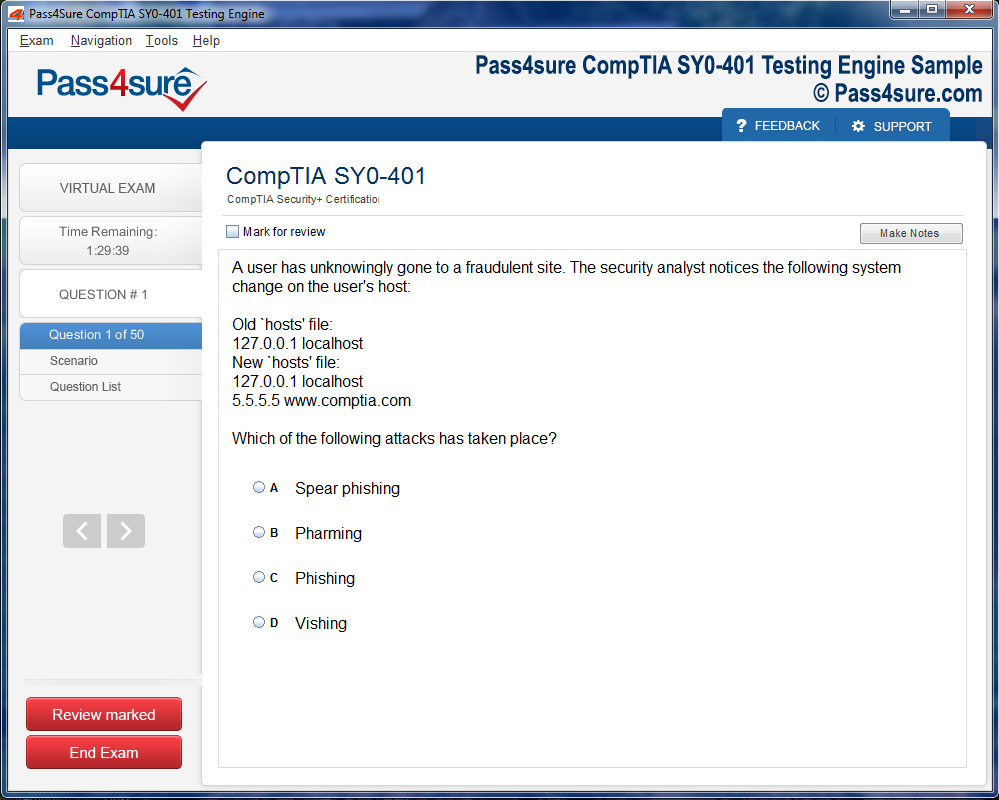
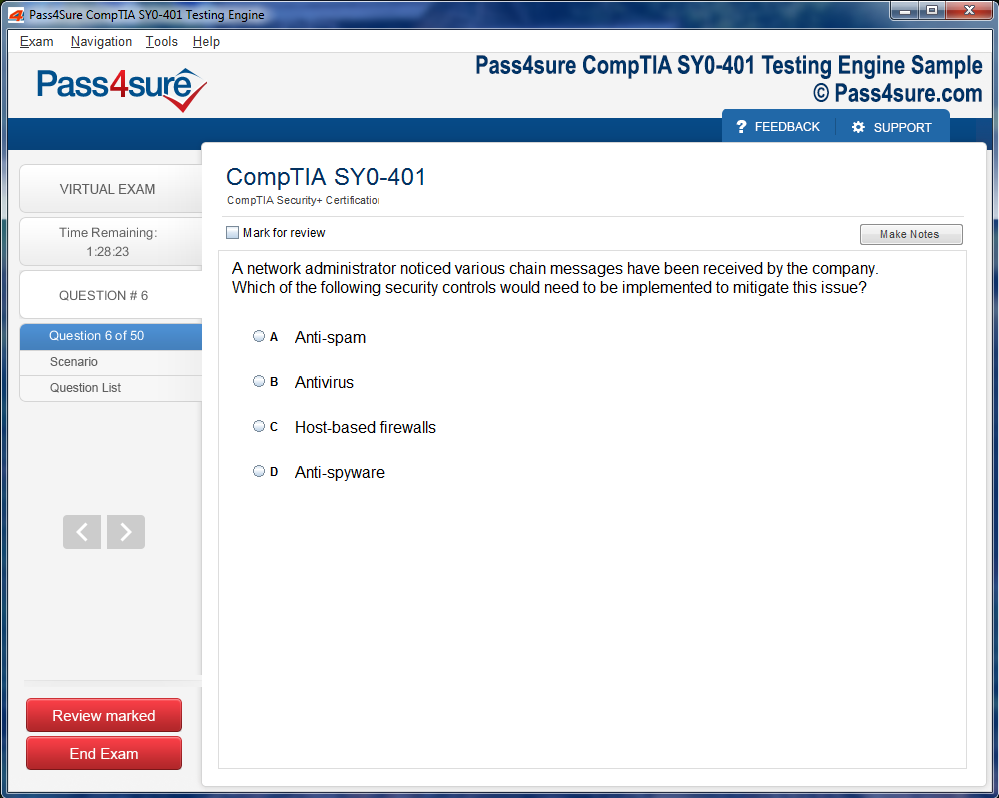
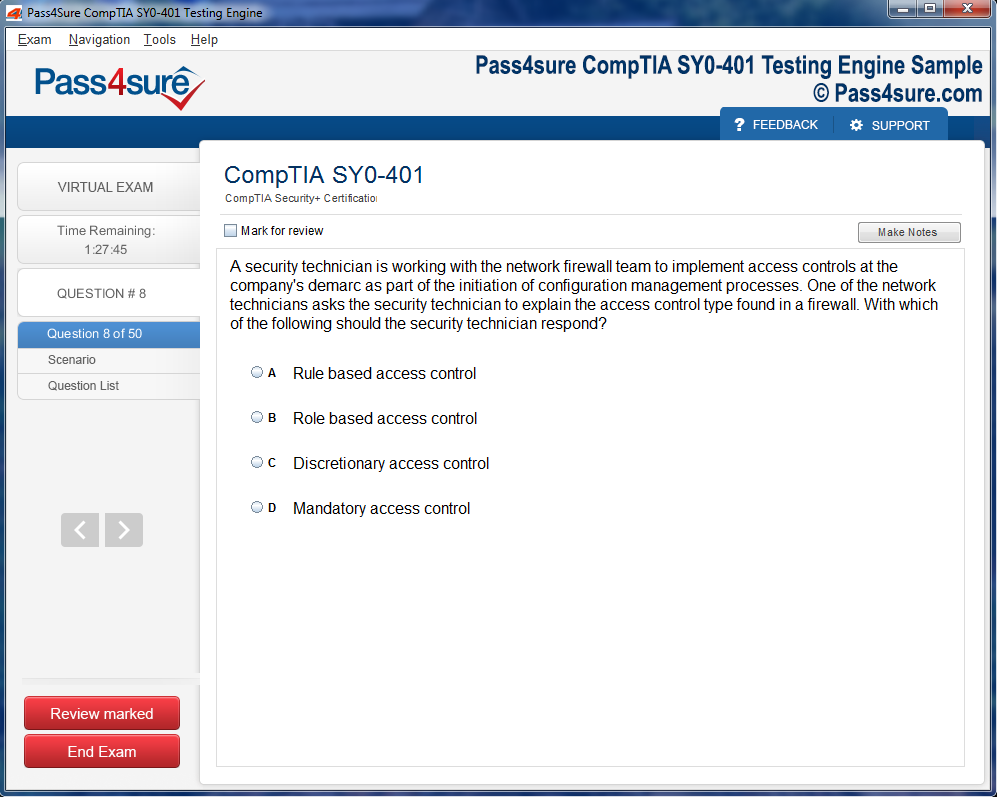

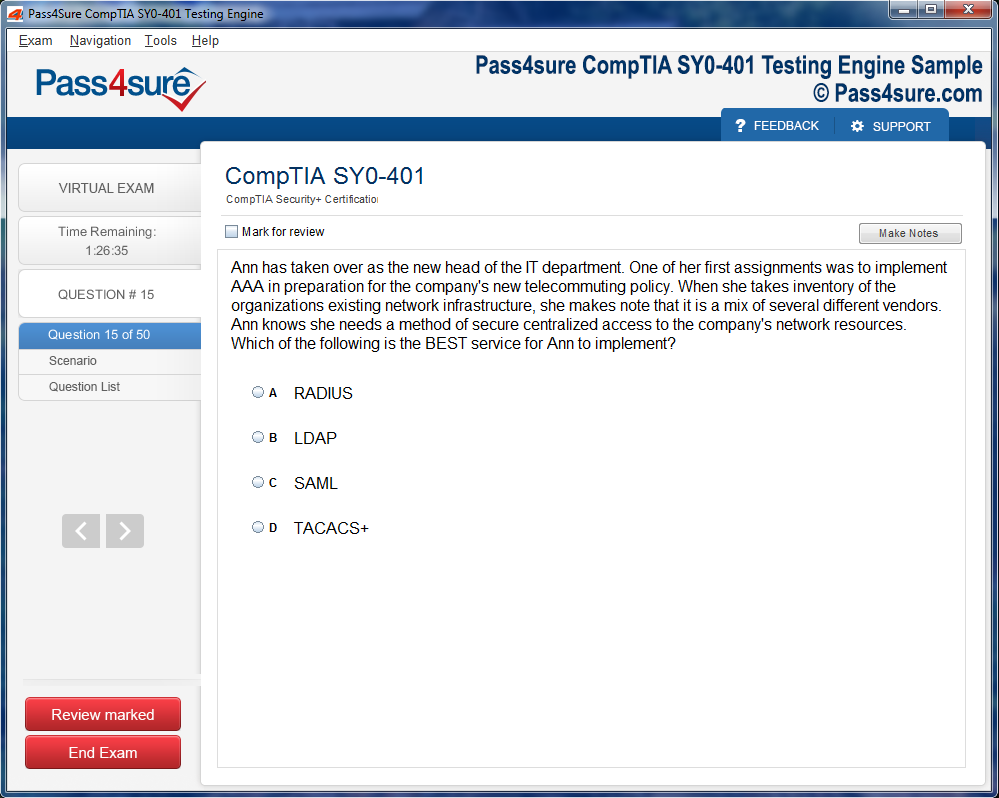
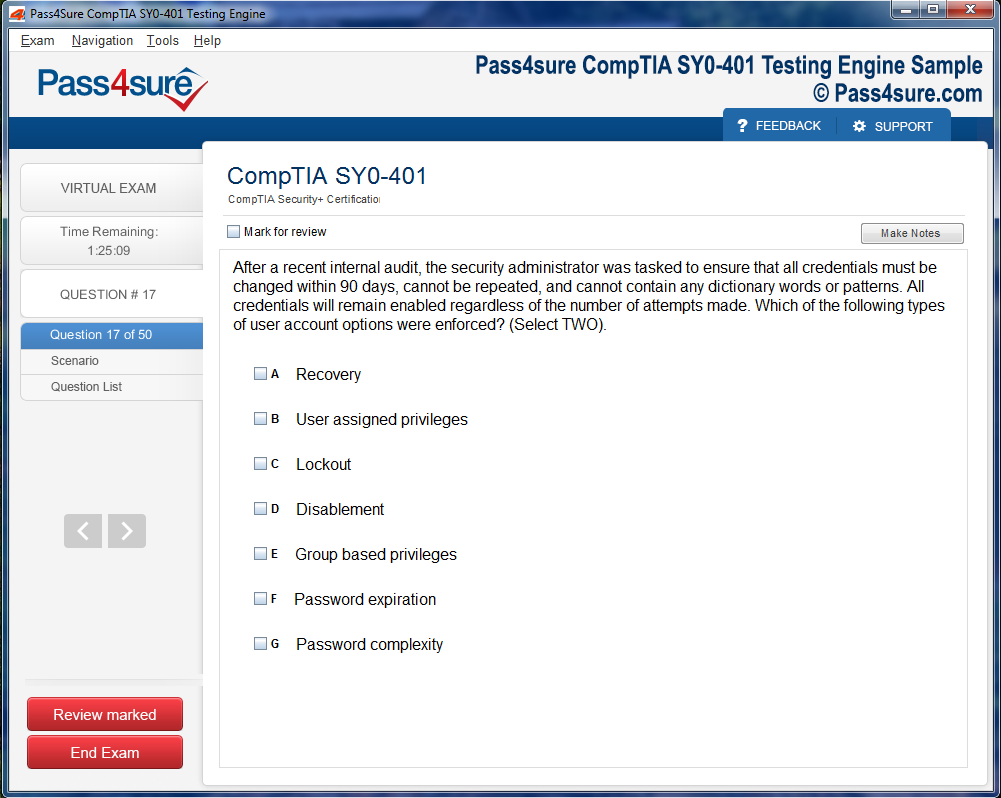
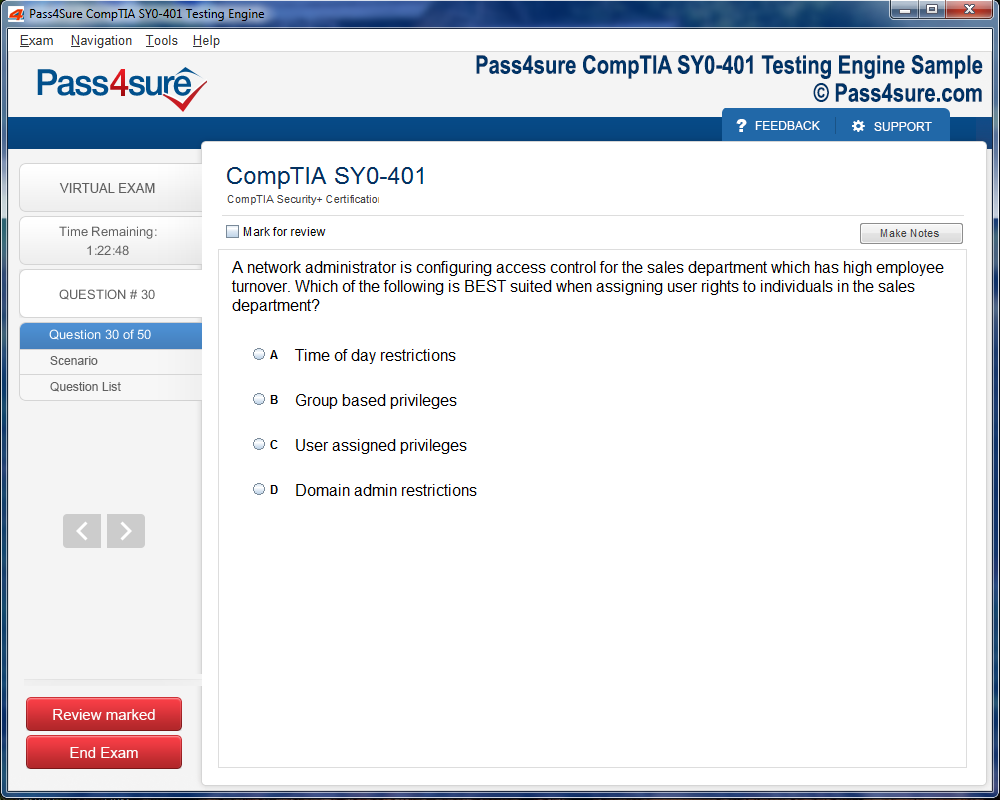

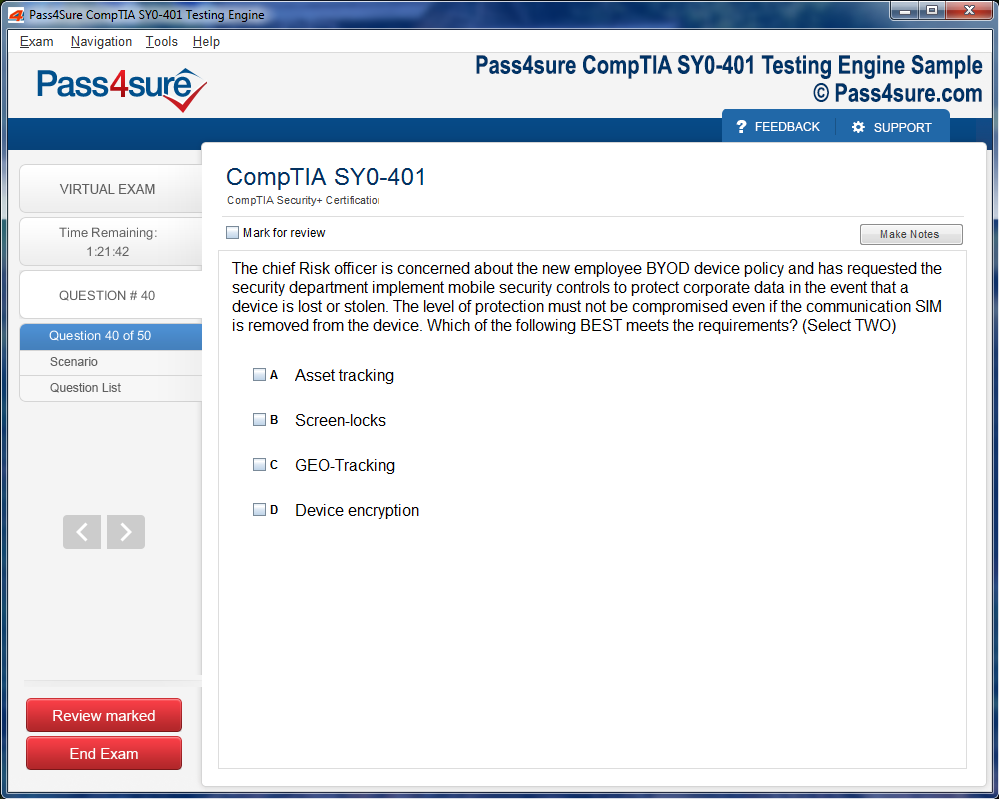
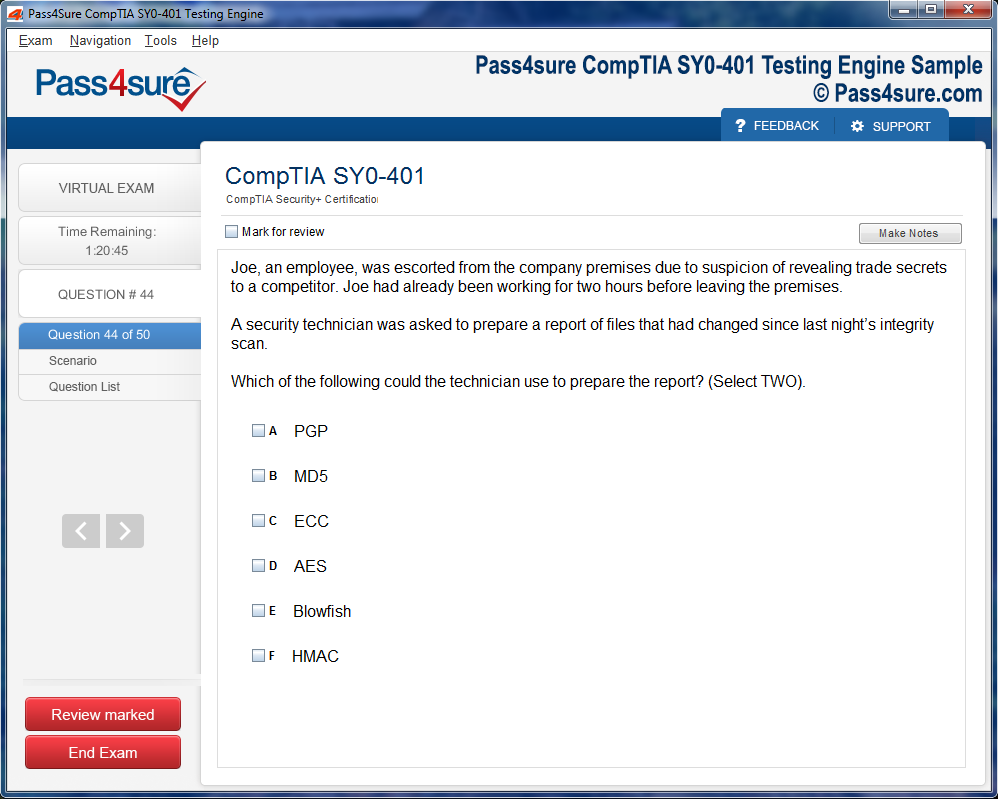
Frequently Asked Questions
How does your testing engine works?
Once download and installed on your PC, you can practise test questions, review your questions & answers using two different options 'practice exam' and 'virtual exam'. Virtual Exam - test yourself with exam questions with a time limit, as if you are taking exams in the Prometric or VUE testing centre. Practice exam - review exam questions one by one, see correct answers and explanations.
How can I get the products after purchase?
All products are available for download immediately from your Member's Area. Once you have made the payment, you will be transferred to Member's Area where you can login and download the products you have purchased to your computer.
How long can I use my product? Will it be valid forever?
Pass4sure products have a validity of 90 days from the date of purchase. This means that any updates to the products, including but not limited to new questions, or updates and changes by our editing team, will be automatically downloaded on to computer to make sure that you get latest exam prep materials during those 90 days.
Can I renew my product if when it's expired?
Yes, when the 90 days of your product validity are over, you have the option of renewing your expired products with a 30% discount. This can be done in your Member's Area.
Please note that you will not be able to use the product after it has expired if you don't renew it.
How often are the questions updated?
We always try to provide the latest pool of questions, Updates in the questions depend on the changes in actual pool of questions by different vendors. As soon as we know about the change in the exam question pool we try our best to update the products as fast as possible.
How many computers I can download Pass4sure software on?
You can download the Pass4sure products on the maximum number of 2 (two) computers or devices. If you need to use the software on more than two machines, you can purchase this option separately. Please email sales@pass4sure.com if you need to use more than 5 (five) computers.
What are the system requirements?
Minimum System Requirements:
- Windows XP or newer operating system
- Java Version 8 or newer
- 1+ GHz processor
- 1 GB Ram
- 50 MB available hard disk typically (products may vary)
What operating systems are supported by your Testing Engine software?
Our testing engine is supported by Windows. Andriod and IOS software is currently under development.
GE0-807: Genesys Cloud CX Solutions Architect Specialist Certification
In the kaleidoscopic sphere of contemporary customer engagement, the demand for platforms that exude resilience, scalability, and perspicacious orchestration has surged exponentially. Genesys Cloud CX emerges as a luminary solution, facilitating omnichannel interactions with a level of dexterity that allows enterprises to traverse complex customer journeys with fluid precision. The substratum of this prowess resides in its microservices architecture—a constellation of independent modules, each encapsulating specific functionalities yet harmoniously interfacing through encrypted APIs. This architectural paradigm ensures not only elasticity but also operational fortitude, enabling systems to withstand perturbations and surges in transactional load without degradation.
Each service module within Genesys Cloud CX operates with quasi-autonomous autonomy, managing discrete channels such as telephony, chat, email, or messaging with bespoke optimizations. This compartmentalization is pivotal; an influx of social media inquiries during a viral campaign does not reverberate as latency across voice channels. Such segregation underscores the imperative for solutions architects to envision scalable frameworks capable of concomitant multichannel management. Scalability here transcends mere load handling—it encompasses the nuanced orchestration of user experience across disparate conduits while maintaining synchronous data fidelity.
Security Imperatives and Governance
An integral facet of Genesys Cloud CX architecture is the meticulous incorporation of security protocols. Role-based access control underpins the governance framework, delineating permissions with granular exactitude. Encryption, both in transit and at rest, acts as the sine qua non for safeguarding data sanctity, while vigilant monitoring of API interactions provides an additional stratum of protection against anomalous activity. Identity federation, often realized through single sign-on and multi-factor authentication, fortifies perimeter defenses, ensuring that sensitive operations are invulnerable to unauthorized ingress. Consider a multinational retail conglomerate processing innumerable transactions per diem; the robustness of authentication mechanisms becomes instrumental in safeguarding proprietary and customer information alike.
Integration with Third-Party Ecosystems
The modern contact center exists not in isolation but as a nexus of interconnected systems. Integration with third-party platforms—be it Customer Relationship Management (CRM), workforce management, or advanced analytics engines—is not merely advantageous but indispensable. Architects must possess a perspicacious understanding of RESTful APIs, webhook orchestration, and event-driven paradigms to ensure that data trajectories are fluid and coherent. Envision a banking institution integrating its CRM with Genesys Cloud CX: the resultant real-time synchronization affords agents instantaneous access to customer profiles, augmenting resolution efficacy and amplifying satisfaction indices. The capacity to engineer seamless interoperability manifests as both a technical and strategic competency.
Observability and Performance Intelligence
Observability within Genesys Cloud CX transcends rudimentary monitoring; it embodies the capability to distill actionable intelligence from myriad data streams. Dashboards, real-time analytics, and longitudinal reporting afford architects and operations teams the perspicacity to discern patterns, anomalies, and emergent inefficiencies. For instance, if conversational agents consistently exhibit protracted response latencies, the analytic apparatus provides the granularity needed to recalibrate training, optimize workflows, or even reallocate traffic dynamically. Such insight-driven operational governance ensures that systems are not merely functional but adaptively optimized for maximal efficacy.
Hybrid Deployment Nuances
While inherently cloud-native, Genesys Cloud CX accommodates hybrid deployment strategies, permitting enterprises to preserve latency-sensitive or compliance-bound workloads on-premises. This duality imbues architects with the latitude to tailor deployment schemas according to regulatory mandates, operational exigencies, or strategic considerations. The deliberate calibration of cloud elasticity with localized control epitomizes architectural sagacity, as it allows organizations to harness the benefits of cloud scalability without compromising on oversight, security, or compliance adherence. Such hybrid strategies require a nuanced understanding of data locality, network topology, and failover contingencies.
Microservices Orchestration and Resilience
The microservices architecture inherent in Genesys Cloud CX is not a mere technical abstraction but a conduit for systemic resilience and modular innovation. Each service can be iteratively upgraded, scaled, or patched independently, fostering a continuous evolution without necessitating monolithic downtime. Service orchestration is further augmented by asynchronous communication protocols, ensuring that inter-service dependencies do not precipitate cascading failures. Consider a scenario where chat services experience a sudden influx due to marketing virality; other modules, including voice and email, remain unimpeded, exemplifying the fault-tolerant design ethos.
Real-Time Analytics and Customer Insights
Genesys Cloud CX extends beyond transactional facilitation; it functions as a repository and processor of intricate behavioral data. Real-time analytics enables organizations to apprehend emergent trends in customer sentiment, interaction volume, and channel preference. Predictive modeling, underpinned by historical data and real-time inputs, equips managers with prescient insights, allowing proactive intervention rather than reactive troubleshooting. This analytical agility is crucial in contexts where customer expectations evolve rapidly, such as during product launches, service outages, or promotional campaigns. Solutions architects thus serve not only as implementers of technology but as enablers of strategic foresight.
Scalability Strategies and Traffic Orchestration
The orchestration of traffic in a multichannel environment necessitates advanced strategies that balance load distribution, minimize latency, and maintain high availability. Genesys Cloud CX allows for intelligent routing, prioritization, and failover mechanisms, ensuring that service degradation is minimized even under extreme transactional stress. Techniques such as dynamic resource allocation, predictive load balancing, and adaptive throttling empower architects to sculpt a resilient and responsive system. The underlying principle is anticipatory design—systems must be constructed to absorb volatility while maintaining operational continuity and user satisfaction.
The Artistry of Omnichannel Experience Design
Orchestrating customer journeys across multiple touchpoints requires more than mechanistic implementation; it demands a symphony of precision, empathy, and foresight. Within the Genesys Cloud CX environment, architects wield an arsenal of tools that enable seamless interactions across voice, chat, email, SMS, and social media channels. The ultimate aim is a continuum in which each customer perceives their engagement as singular, coherent, and meticulously attended to.
True omnichannel excellence hinges on anticipating human behavior with granularity. A customer who initiates an inquiry via chatbot may subsequently escalate to live voice support or later correspond through email. The architect’s craft is to ensure that every transition preserves context, eradicating friction and fostering a sense of recognition. Session persistence, unified routing, and context-sensitive workflows serve as the backbone of this orchestration, enabling each interaction to feel intentionally curated rather than algorithmically directed.
Strategic Routing for Optimal Interactions
Routing constitutes the linchpin of efficiency in omnichannel engagements. Genesys Cloud CX affords an array of routing methodologies—skills-based, priority-sensitive, and performance-driven—that can be calibrated with exacting precision. Consider peak operational periods: high-value customers may be dynamically prioritized to circumvent delays, yet this requires careful balancing with agent capacity to avert congestion or fatigue.
The infusion of AI into routing strategies adds an anticipatory dimension. By analyzing historical performance and contextual patterns, the system can suggest the most adept agent for a given query. This predictive allocation elevates resolution rates and fosters satisfaction while ensuring that operational throughput remains unimpeded. Routing, in this sense, transcends logistical concern; it becomes a nuanced instrument of experience orchestration, harmonizing human judgment with algorithmic intelligence.
Workforce Engagement as a Conduit of Experience
An omnichannel strategy is only as effective as the agents who inhabit its frontlines. Workforce engagement and optimization are thus indispensable components of holistic experience design. Architects integrate workforce management insights with real-time interaction metrics, equipping managers with prescient tools for scheduling, forecasting, and performance calibration.
Dynamic staffing adjustments exemplify this principle. When an unanticipated surge in queries occurs, the system can recalibrate agent allocation instantaneously, ensuring seamless continuity. Beyond numerical optimization, equipping agents with skill-based insights, contextual customer history, and real-time dashboards cultivates an environment where human empathy is amplified by technological scaffolding. This synergy transforms routine service interactions into moments of resonance and memorability.
Analytics and Predictive Insight
In the realm of omnichannel engagement, intelligence is as vital as execution. Real-time dashboards provide immediate visibility into interaction volumes, agent performance, and emergent trends. Predictive analytics extend this visibility into anticipatory action: sentiment analysis can discern frustration, enabling proactive routing to adept agents, forestalling escalation, and fortifying loyalty.
At the multinational scale, architects may embed cross-channel metrics, trend analysis, and historical interaction patterns into a centralized intelligence matrix. This enables continuous optimization, allowing organizations to discern latent patterns, forecast demand surges, and iteratively refine customer experiences. In this context, data is not merely descriptive but prescriptive, informing interventions that are both precise and emotionally attuned.
Adaptive Journey Design for Resilient Experiences
Flexibility is paramount in omnichannel strategy. Genesys Cloud CX furnishes tools for dynamically recalibrating journeys in response to operational perturbations or emergent crises. Consider a widespread service outage: workflows can be redirected to specialized support units, ensuring that customer needs are met without disruption.
Designing with adaptability necessitates foresight and ingenuity. Architects must envision not only routine flows but contingency architectures capable of rapid redeployment. By embedding resilience at the structural level, organizations transform potential friction points into opportunities for distinction, reinforcing trust and loyalty even under stress.
Integrating Data and Artificial Intelligence in Customer Experience
In contemporary customer experience paradigms, the interlacing of data and artificial intelligence constitutes an indispensable fulcrum for operational efficacy and hyper-personalized engagements. Genesys Cloud CX exemplifies a nexus where structured and unstructured data converge, orchestrating insights from CRM repositories, operational databanks, and disparate external conduits. For architects and solution designers, apprehending the relational topography of these data points allows the formulation of systems that furnish agents with actionable intelligence precisely at the moment of customer interaction, thereby catalyzing responsiveness and profundity in engagement.
Artificial intelligence permeates multifarious facets of this platform, encompassing predictive routing, autonomous chatbots, and sentiment discernment algorithms. Consider the deployment of a chatbot: routine inquiries are deftly managed without human intervention, liberating agents to grapple with intricate or exception-driven customer exigencies. Concurrently, AI-driven analytical instruments excavate latent patterns in conversational interactions, furnishing recommendations for workflow optimizations, escalation triggers, and agent training foci. Solution architects must cultivate proficiency in training machine-learning models, safeguarding data confidentiality, and seamlessly incorporating AI outputs into operational workflows without engendering friction in human-agent processes.
A tangible illustration emerges within telecommunications enterprises, where AI chatbots mediate billing inquiries. The platform discerns recurring customer issues, equipping agents to preemptively address frequent complications during live dialogues. This predictive acumen attenuates call congestion while amplifying client satisfaction metrics. Moreover, AI augments workforce orchestration by prognosticating peak interaction intervals, drawing on historical usage patterns and exogenous influences such as promotional endeavors or seasonal fluctuations. This integration of foresight transforms operational agility from reactive to anticipatory, a critical differentiator in competitive landscapes.
Data integration remains equally paramount. The real-time harmonization of Genesys Cloud CX with peripheral enterprise systems ensures agents operate with the most contemporaneous intelligence. This synthesis may incorporate CRM revisions, social media engagements, and transactional logs into a coherent, unified agent interface. The resultant 360-degree customer perspective empowers agents to make perspicacious decisions, personalize interactions, and cultivate durable relational rapport. Through such comprehensive integration, organizations shift from siloed operations to a continuum of intelligence-driven engagement, enhancing both efficiency and experiential richness.
Security and regulatory compliance emerge as pivotal considerations in any data-AI amalgamation. Solution architects bear the onus of ensuring that personally identifiable information is meticulously handled in accordance with stringent regulatory frameworks, including GDPR and HIPAA. AI mechanisms must exhibit transparency and auditability, mitigating risks of algorithmic opacity or misuse. Establishing robust governance protocols engenders trust, a sine qua non for customer loyalty, and mitigates the reputational and operational risks associated with data breaches or unethical AI utilization.
Visualization and reporting form the final axis in this intelligence ecosystem. Architects craft dashboards that transmute complex analytical outputs into lucid, actionable visual narratives for both agents and managerial stakeholders. By converting intricate data patterns into digestible insights, organizations can preempt emergent trends, optimize operational workflows, and perpetually enhance customer experience. The visual representation of sentiment analyses, interaction histories, and predictive metrics fosters rapid comprehension, accelerates decision-making, and fortifies the organization’s adaptive capabilities in dynamic marketplaces.
Operational Excellence as an Imperative
Operational excellence transcends mere procedural adherence; it embodies a strategic ethos where every mechanism and workflow is meticulously orchestrated to perpetuate value creation. Within the Genesys Cloud CX paradigm, solutions architects are entrusted with sculpting governance frameworks that are both resilient and adaptive. These frameworks are designed to synchronize technical dexterity with overarching business ambitions, ensuring that operational continuity is maintained amidst evolving organizational landscapes. The orchestration of processes, coupled with vigilant performance monitoring, cultivates an environment where precision and foresight coalesce seamlessly.
The Alchemy of Change Management
Change management emerges as an indispensable fulcrum in operational stewardship. The architect’s mandate involves constructing rigorous protocols for testing, endorsing, and deploying alterations across workflows, integrations, and system configurations. By institutionalizing these processes, organizations mitigate the specter of operational disruptions while reinforcing service constancy. This disciplined approach not only preserves functional equilibrium but also catalyzes iterative enhancement, fostering a culture where innovation is harnessed with prudence.
Security Governance and Prophylactic Measures
Security governance is not merely a technical requisite; it is a philosophical commitment to safeguarding informational sanctity. Employing role-based access controls, encryption schemas, audit logging, and regulatory surveillance constitutes the backbone of a robust security posture. In praxis, consider a healthcare institution: the sanctity of patient data is inviolable, accessible solely to authorized personnel, with every interaction meticulously chronicled. Such vigilance ensures that compliance is not a perfunctory exercise but an embedded operational principle, underpinning trust and accountability.
Operational Dashboards and Cognitive Insights
Operational dashboards metamorphose complex telemetry into lucid, actionable intelligence. These instruments provide real-time visibility into system vitality, agent efficacy, and customer sentiment, enabling swift, informed decision-making. For instance, an anomalous uptick in channel abandonment rates can prompt immediate root-cause investigations, thereby catalyzing process rectifications. By transforming voluminous data streams into cogent narratives, managers gain the capacity to preempt operational bottlenecks and optimize service trajectories with surgical precision.
Prognostic Capacity Planning
The anticipation of demand through capacity planning is a keystone of operational sagacity. Solutions architects engage in predictive modeling to forecast usage patterns, monitor infrastructure utilization, and calibrate resources with temporal accuracy. This anticipatory stance averts the pitfalls of both under-provisioning and over-allocation, preserving operational efficiency while safeguarding fiscal prudence. Such strategic foresight ensures that service benchmarks are consistently met, fortifying organizational reliability in dynamic market environments.
Resource Optimization and Operational Dexterity
Resource optimization extends beyond mere allocation; it entails a holistic comprehension of systemic interdependencies and human capital dynamics. Architects must navigate the intricate interplay of technology, personnel, and procedural mandates, fine-tuning each vector to achieve symphonic operational performance. The judicious deployment of resources ensures that operational capacity is neither squandered nor strained, harmonizing cost efficiency with performance excellence. This meticulous orchestration exemplifies the zenith of operational dexterity, wherein every constituent functions in congruence with strategic imperatives.
Continuous Improvement as an Embedded Ethos
Continuous improvement is the lifeblood of enduring operational governance. It necessitates the systematic capture of lessons learned, trend analyses, and iterative process recalibrations. Solutions architects facilitate this evolutionary paradigm, engendering a culture where operational practices are perpetually scrutinized and refined. By internalizing insights from performance metrics, incident analyses, and customer feedback, organizations dynamically adapt to shifting exigencies, ensuring that operational excellence is not a static milestone but a perpetually ascending continuum.
Interfacing Technology with Strategic Vision
The nexus between technology deployment and strategic vision is a delicate equilibrium. Solutions architects operate at this confluence, translating abstract organizational objectives into concrete operational realities. This interfacing requires a dual fluency: a profound understanding of technological possibilities and an astute comprehension of market and customer dynamics. By harmonizing these spheres, architects ensure that operational excellence is not merely an internal benchmark but a driver of competitive differentiation and market resilience.
Compliance as a Cultural Imperative
Regulatory and corporate compliance are more than bureaucratic obligations; they constitute a cultural imperative that permeates operational ethos. Governance structures codify compliance, embedding it into every operational layer, from data handling protocols to customer interaction standards. Such integration ensures that regulatory adherence is seamless, minimizing the risk of infractions while reinforcing organizational credibility. In effect, compliance becomes a living principle, guiding operational conduct and reinforcing ethical stewardship.
Metrics, KPIs, and the Cartography of Performance
Operational performance is rendered intelligible through the meticulous articulation of metrics and key performance indicators. Solutions architects delineate these indicators with precision, ensuring that they illuminate critical facets of efficiency, quality, and customer satisfaction. This cartography of performance transforms abstract operational dynamics into tangible benchmarks, guiding managerial intervention and strategic refinement. By continuously calibrating KPIs against evolving business objectives, organizations cultivate an environment of accountability and transparency.
Cultural Stewardship in Operational Governance
Operational governance is not solely structural; it is intrinsically cultural. Architects and operational leaders act as custodians of a culture that valorizes diligence, foresight, and adaptive learning. By instilling these values, they foster an ethos where every team member internalizes operational excellence as a personal and collective imperative. This cultural stewardship ensures that procedural adherence is undergirded by intrinsic motivation, rendering operational frameworks resilient to volatility and conducive to sustained performance.
Immersive Techniques for Mastery
Immersive learning methodologies cultivate a profound comprehension of Genesys Cloud CX constructs. Delving into experiential exercises, such as orchestrating convoluted routing schemas or simulating multi-tiered service disruptions, instills cognitive dexterity that transcends rote memorization. These exercises also facilitate neural patterning, embedding operational logic within intuitive problem-solving frameworks.
Virtual sandboxes offer architects a microcosm of enterprise environments. Within these controlled ecosystems, one can experiment with esoteric configurations, test interoperability with niche APIs, and evaluate latency-induced anomalies without the repercussions inherent to production systems. This controlled chaos fosters ingenuity, revealing latent inefficiencies and optimization opportunities.
Scenario extrapolation further hones strategic foresight. By envisaging divergent operational contingencies, such as a sudden influx of omnichannel queries during a flash sale or a regulatory-mandated data purge, architects develop anticipatory protocols. Such preemptive planning cultivates resilience, ensuring that infrastructure is not merely reactive but proactively fortified against unforeseen exigencies.
Cognitive Anchoring Through Simulation
Simulation serves as an indispensable conduit between theoretical acumen and operational competence. Architects can create labyrinthine workflows encompassing disparate communication channels—voice, chat, email, and social media—simultaneously, testing prioritization algorithms and throughput efficiencies. Each simulation iteration provides empirical feedback, allowing iterative refinement of design philosophies and implementation strategies.
Synthetic stress testing elucidates thresholds and capacity ceilings. By artificially inflating interaction volumes or introducing cascading service interruptions, practitioners discern systemic bottlenecks and potential failover inadequacies. These exercises, though abstracted, closely mirror operational exigencies, yielding insights that are immediately translatable to live environments.
The judicious application of analytics enhances these simulations. By monitoring key performance indicators such as response latency, queue depth variance, and agent productivity oscillations, architects can craft data-informed interventions. This empirical grounding transforms speculative strategies into actionable blueprints, fortifying both exam preparedness and real-world proficiency.
Integrative Design Paradigms
Architectural sophistication stems from integrative thinking. Successful deployment of Genesys Cloud CX requires harmonizing disparate technological components—cloud-native microservices, CRM integrations, AI-driven routing engines—into a cohesive operational symphony. Each element must be orchestrated to function in concert, avoiding functional silos that compromise efficiency and customer experience fidelity.
Data integration strategies merit particular attention. Designing pipelines that seamlessly ingest, transform, and propagate customer insights across channels enhances personalization and contextual relevance. Architects must consider latency, data integrity, and regulatory compliance concurrently, as deficiencies in any dimension can undermine the entire solution’s efficacy.
Resilience engineering is intertwined with integrative paradigms. By anticipating component failures and embedding redundancy, failover protocols, and dynamic routing contingencies, architects ensure continuity amidst operational turbulence. This dual focus on holistic cohesion and contingency preparation differentiates high-caliber solutions from nominal implementations.
Continuous Evolution and Adaptive Learning
The Genesys ecosystem is inherently dynamic, characterized by frequent updates, emergent AI capabilities, and evolving best practices. Architects must cultivate adaptive learning frameworks, wherein new knowledge is rapidly assimilated, contextualized, and operationalized. Passive familiarity with features is insufficient; proficiency demands iterative experimentation and proactive skill augmentation.
Communities of practice serve as accelerants for this adaptive evolution. Engaging with peer architects, participating in discourse forums, and analyzing collective problem-solving patterns exposes individuals to unconventional strategies and hidden pitfalls. Such interactions catalyze lateral thinking, expanding the repertoire of viable architectural solutions beyond textbook conventions.
Mentorship and knowledge transfer are equally critical. By articulating complex configurations and guiding junior practitioners, architects reinforce their own cognitive schemas. The act of teaching crystallizes conceptual clarity and fosters anticipatory insight, enabling practitioners to preempt operational challenges before they manifest.
Strategic Communication and Stakeholder Alignment
Technical mastery is exponentially amplified when coupled with strategic communication. Architects must translate intricate workflows, data flows, and contingency plans into accessible narratives for diverse stakeholders. This requires lexicons that balance precision with clarity, avoiding obfuscation while preserving technical nuance.
Stakeholder alignment ensures that architectural vision is both understood and actionable. Engaging executives, project managers, and operational teams in iterative review cycles mitigates misalignment risks and accelerates adoption. Visualization tools, process mapping, and scenario walkthroughs can be leveraged to bridge the gap between conceptual design and operational execution.
Equally, the cultivation of persuasive rationale underpins decision-making. By framing technical recommendations within the context of business value, customer satisfaction, and risk mitigation, architects position themselves as indispensable strategists rather than mere implementers.
The Imperative of Scalable Architecture
Scalability is not a mere technical desideratum but an existential prerequisite for contemporary operational ecosystems. Solutions architects are tasked with orchestrating infrastructures capable of accommodating both incremental growth and unforeseen surges without perturbing service fidelity. Within the Genesys Cloud CX environment, this necessitates an intricate comprehension of elastic resource allocation, auto-scaling paradigms, and systemic redundancy. By anticipating the dynamism inherent in customer engagement patterns, architects transform operational architectures into living constructs that can expand and contract with almost sentient responsiveness.
Elasticity and Load Distribution
Elasticity in digital ecosystems is tantamount to adaptive respiration; workloads ebb and flow in synchrony with demand flux. During exigent intervals, such as retail holidays or marketing campaigns, sudden influxes of calls, messages, and social interactions impose intense strain on underlying infrastructure. A perspicacious architect leverages load-balancing strategies and automated scaling policies to distribute computational stress across nodes, obviating bottlenecks and latency spikes. This orchestration ensures that peak demand does not metastasize into service degradation, maintaining an uninterrupted continuum of user satisfaction.
Fault Tolerance and Microservices Resilience
Fault tolerance is the linchpin of resilient systems, a prophylactic against cascading failures. Microservices architectures exemplify this principle by compartmentalizing functionalities, thereby isolating disruptions to localized domains. Health checks, circuit breakers, and retry algorithms form the backbone of operational resilience, allowing systems to absorb transient anomalies without compromising overarching availability. For example, if a chat service succumbs to ephemeral malfunctioning, intelligent rerouting ensures interactions continue via alternative modalities, preserving customer experience and operational integrity.
Disaster Recovery and Contingency Planning
Disaster recovery planning constitutes the bulwark against catastrophic operational interruptions. Solutions architects delineate multi-tiered strategies encompassing frequent snapshots, geographically distributed deployments, and orchestrated recovery procedures. In sectors where downtime engenders both fiscal and reputational peril, such as healthcare or finance, meticulously architected recovery schemas ensure continuity. These preemptive measures transform potential crises into manageable contingencies, embedding resilience as an operational axiomatic principle.
Performance Monitoring and Proactive Intervention
Performance monitoring extends beyond reactive troubleshooting; it is an anticipatory discipline grounded in empirical observation. Continuous telemetry of system metrics, including latency, throughput, and error incidence, empowers architects to orchestrate judicious resource allocation. Alert mechanisms serve as preemptive sentinels, triggering intervention before anomalies escalate into systemic failures. By translating raw operational data into actionable intelligence, architects not only safeguard uptime but also cultivate an adaptive ecosystem capable of evolving with emergent patterns of utilization.
Modular Maintainability and Architectural Agility
Maintainability and agility are coalescent virtues in high-functioning architectures. Modular system design facilitates seamless updates, streamlined troubleshooting, and iterative extensibility. Version control, automated deployment pipelines, and exhaustive documentation underpin this modularity, ensuring that architectures remain nimble amidst fluctuating technological and business imperatives. By embedding maintainability into the structural DNA, solutions architects enable systems to accommodate emergent functionalities without destabilizing operational continuity, ensuring both present efficacy and future adaptability.
Predictive Resource Optimization
Resource optimization is a cognitive and quantitative endeavor, wherein architects synthesize predictive analytics with systemic heuristics to preemptively calibrate capacity. Anticipating peak loads and dormant cycles allows for judicious deployment of computational assets, minimizing wastage while maximizing responsiveness. This proactive stewardship engenders operational elegance, balancing the twin imperatives of cost efficiency and high-availability performance.
Integrative Strategies for Enduring Resilience
Resilience is not an isolated attribute but the emergent property of integrative design thinking. Architects amalgamate elasticity, fault tolerance, disaster recovery, performance monitoring, and maintainability into cohesive operational mosaics. These designs do not merely react to exigencies; they anticipate, absorb, and adapt to them, ensuring that organizational ecosystems remain robust, responsive, and strategically aligned. In practice, this synthesis transforms infrastructural complexity into an orchestrated symphony of adaptive capacities, capable of sustaining performance under diverse and unpredictable pressures.
Strategic Alignment of Scalability with Business Objectives
Architectural scalability must be inseparable from strategic intent. Technical prowess divorced from business imperatives yields brittle solutions; conversely, solutions aligned with organizational trajectories magnify impact. Architects operationalize scalability to support not only transactional volume but also experiential quality, ensuring that customer interactions remain frictionless regardless of load. By entwining operational elasticity with strategic foresight, organizations realize architectures that are both robust and value-generative.
Emergent Trends in Resilient Design
Contemporary design paradigms increasingly emphasize anticipatory resilience. Beyond conventional redundancy, architects now explore distributed intelligence, autonomous orchestration, and predictive failover mechanisms. These emergent strategies transform passive infrastructure into dynamic entities capable of self-optimization. In effect, resilient systems evolve from static frameworks into adaptive ecosystems, perpetually fine-tuning themselves in response to environmental stimuli and operational exigencies.
The Human Element in Scalable Systems
While technological architecture underpins resilience, human oversight remains indispensable. Solutions architects cultivate expertise in both design and operational stewardship, ensuring that automated mechanisms are complemented by cognitive discernment. This synergy between human insight and technological adaptability fortifies systems against unforeseen contingencies, reinforcing operational stability and strategic continuity.
Omnichannel Engagement Strategy
Orchestrating omnichannel interactions within Genesys Cloud CX necessitates an intricate understanding of how disparate touchpoints coalesce into a unified customer journey. Channels are not isolated conduits but nodes within a complex lattice of engagement, each with distinct temporal, contextual, and behavioral characteristics. Crafting an omnichannel strategy demands foresight into traffic flux, latency sensitivities, and the idiosyncratic nuances of customer preference. For instance, while a high-net-worth client may favor synchronous voice interactions, the broader demographic might gravitate toward asynchronous chat or messaging channels. Solutions architects must architect intelligent routing algorithms that harmonize these divergent proclivities, ensuring a frictionless continuum of service.
The synchronization of session context across channels epitomizes the sophistication of omnichannel orchestration. Genesys Cloud CX maintains stateful information, enabling an agent to transition seamlessly from an email thread to a live chat session without loss of continuity. Such contextual fidelity is critical for preserving the experiential cohesion that defines premium customer service. Furthermore, real-time decisioning engines leverage behavioral analytics and predictive heuristics to anticipate customer needs, routing inquiries to the most qualified agent or automated assistant with unprecedented efficiency.
AI and Automation Integration
Artificial intelligence serves as both the cerebral cortex and operational accelerator within modern contact centers. Genesys Cloud CX integrates AI-powered agents and bots capable of parsing natural language, discerning intent, and executing complex transactional workflows. Automation is not confined to front-line interaction; it permeates backend operations, dynamically optimizing scheduling, routing, and escalation protocols. The amalgamation of AI with human agents creates a symbiotic ecosystem where mundane tasks are offloaded, enabling humans to focus on nuanced problem-solving and empathetic engagement.
Predictive analytics further enhances operational dexterity. Machine learning algorithms analyze historical interaction patterns to forecast call volumes, peak inquiry periods, and channel-specific congestion. These insights allow architects to implement preemptive resource allocation, mitigating latency and enhancing service levels. Additionally, conversational AI can execute sentiment analysis in real time, flagging interactions that necessitate human intervention, thereby preempting dissatisfaction and improving first-contact resolution rates.
Workforce Optimization within Genesys Cloud CX
Optimizing human capital is as critical as technological orchestration in the Genesys Cloud CX ecosystem. Workforce management modules leverage sophisticated algorithms to align agent availability with predicted demand, accommodating variability in skillsets, language proficiency, and experiential depth. This ensures that the right agent is positioned to address the right customer inquiry at the optimal moment, maximizing efficiency while minimizing operational costs.
Real-time performance dashboards provide supervisors with granular visibility into agent productivity, engagement, and interaction outcomes. These analytics inform iterative training regimens, allowing organizations to cultivate proficiency in emergent technologies, nuanced customer handling, and cross-channel adaptability. By integrating human and technological intelligence, architects ensure that workforce optimization transcends mere scheduling to become a strategic lever for operational excellence.
Disaster Recovery and Business Continuity
Genesys Cloud CX embodies not only innovation but resiliency, with disaster recovery and business continuity paradigms deeply embedded in its design. Cloud-native redundancy ensures that system failures, network disruptions, or regional outages do not compromise operational integrity. Data replication, automated failover, and cross-region load balancing constitute the backbone of business continuity, providing organizations with confidence that customer interactions remain uninterrupted.
Architects must also consider regulatory compliance and data sovereignty, particularly in multi-jurisdictional deployments. Disaster recovery plans must reconcile cloud elasticity with statutory mandates, ensuring that critical data is both accessible and secure. The design of recovery point objectives (RPO) and recovery time objectives (RTO) is a meticulous process that balances operational exigency against technological feasibility, reinforcing the platform’s reputation as a resilient enterprise-grade solution.
The Artistry of Omnichannel Experience Design
Orchestrating customer journeys across multiple touchpoints requires more than mechanistic implementation; it demands a symphony of precision, empathy, and foresight. Within the Genesys Cloud CX environment, architects wield an arsenal of tools that enable seamless interactions across voice, chat, email, SMS, and social media channels. The ultimate aim is a continuum in which each customer perceives their engagement as singular, coherent, and meticulously attended to.
True omnichannel excellence hinges on anticipating human behavior with granularity. A customer who initiates an inquiry via chatbot may subsequently escalate to live voice support or later correspond through email. The architect’s craft is to ensure that every transition preserves context, eradicating friction and fostering a sense of recognition. Session persistence, unified routing, and context-sensitive workflows serve as the backbone of this orchestration, enabling each interaction to feel intentionally curated rather than algorithmically directed.
Strategic Routing for Optimal Interactions
Routing constitutes the linchpin of efficiency in omnichannel engagements. Genesys Cloud CX affords an array of routing methodologies—skills-based, priority-sensitive, and performance-driven—that can be calibrated with exacting precision. Consider peak operational periods: high-value customers may be dynamically prioritized to circumvent delays, yet this requires careful balancing with agent capacity to avert congestion or fatigue.
The infusion of AI into routing strategies adds an anticipatory dimension. By analyzing historical performance and contextual patterns, the system can suggest the most adept agent for a given query. This predictive allocation elevates resolution rates and fosters satisfaction while ensuring that operational throughput remains unimpeded. Routing, in this sense, transcends logistical concern; it becomes a nuanced instrument of experience orchestration, harmonizing human judgment with algorithmic intelligence and foresightful orchestration.
Workforce Engagement as a Conduit of Experience
An omnichannel strategy is only as effective as the agents who inhabit its frontlines. Workforce engagement and optimization are thus indispensable components of holistic experience design. Architects integrate workforce management insights with real-time interaction metrics, equipping managers with prescient tools for scheduling, forecasting, and performance calibration.
Dynamic staffing adjustments exemplify this principle. When an unanticipated surge in queries occurs, the system can recalibrate agent allocation instantaneously, ensuring seamless continuity. Beyond numerical optimization, equipping agents with skill-based insights, contextual customer history, and real-time dashboards cultivates an environment where human empathy is amplified by technological scaffolding. This synergy transforms routine service interactions into moments of resonance and memorability.
Analytics and Predictive Insight
In the realm of omnichannel engagement, intelligence is as vital as execution. Real-time dashboards provide immediate visibility into interaction volumes, agent performance, and emergent trends. Predictive analytics extend this visibility into anticipatory action: sentiment analysis can discern frustration, enabling proactive routing to adept agents, forestalling escalation, and fortifying loyalty.
At the multinational scale, architects may embed cross-channel metrics, trend analysis, and historical interaction patterns into a centralized intelligence matrix. This enables continuous optimization, allowing organizations to discern latent patterns, forecast demand surges, and iteratively refine customer experiences. In this context, data is not merely descriptive but prescriptive, informing interventions that are both precise and emotionally attuned.
Adaptive Journey Design for Resilient Experiences
Flexibility is paramount in omnichannel strategy. Genesys Cloud CX furnishes tools for dynamically recalibrating journeys in response to operational perturbations or emergent crises. Consider a widespread service outage: workflows can be redirected to specialized support units, ensuring that customer needs are met without disruption.
Designing with adaptability necessitates foresight and ingenuity. Architects must envision not only routine flows but contingency architectures capable of rapid redeployment. By embedding resilience at the structural level, organizations transform potential friction points into opportunities for distinction, reinforcing trust and loyalty even under stress. This meticulous foresight ensures experiences are both seamless and enchantingly resonant.
Integrating Data and Artificial Intelligence in Customer Experience
In contemporary customer experience paradigms, the interlacing of data and artificial intelligence constitutes an indispensable fulcrum for operational efficacy and hyper-personalized engagements. Genesys Cloud CX exemplifies a nexus where structured and unstructured data converge, orchestrating insights from CRM repositories, operational databanks, and disparate external conduits. For architects and solution designers, apprehending the relational topography of these data points allows the formulation of systems that furnish agents with actionable intelligence precisely at the moment of customer interaction, thereby catalyzing responsiveness and profound profundity in engagement.
Artificial intelligence permeates multifarious facets of this platform, encompassing predictive routing, autonomous chatbots, and sentiment discernment algorithms. Consider the deployment of a chatbot: routine inquiries are deftly managed without human intervention, liberating agents to grapple with intricate or exception-driven customer exigencies. Concurrently, AI-driven analytical instruments excavate latent patterns in conversational interactions, furnishing recommendations for workflow optimizations, escalation triggers, and agent training foci. Solution architects must cultivate proficiency in training machine-learning models, safeguarding data confidentiality, and seamlessly incorporating AI outputs into operational workflows without engendering friction in human-agent processes.
A tangible illustration emerges within telecommunications enterprises, where AI chatbots mediate billing inquiries. The platform discerns recurring customer issues, equipping agents to preemptively address frequent complications during live dialogues. This predictive acumen attenuates call congestion while amplifying client satisfaction metrics. Moreover, AI augments workforce orchestration by prognosticating peak interaction intervals, drawing on historical usage patterns and exogenous influences such as promotional endeavors or seasonal fluctuations. This integration of foresight transforms operational agility from reactive to anticipatory, a critical differentiator in competitive landscapes.
Data integration remains equally paramount. The real-time harmonization of Genesys Cloud CX with peripheral enterprise systems ensures agents operate with the most contemporaneous intelligence. This synthesis may incorporate CRM revisions, social media engagements, and transactional logs into a coherent, unified agent interface. The resultant 360-degree customer perspective empowers agents to make perspicacious decisions, personalize interactions, and cultivate durable relational rapport. Through such comprehensive integration, organizations shift from siloed operations to a continuum of intelligence-driven engagement, enhancing both efficiency and experiential richness.
Security and regulatory compliance emerge as pivotal considerations in any data-AI amalgamation. Solution architects bear the onus of ensuring that personally identifiable information is meticulously handled in accordance with stringent regulatory frameworks, including GDPR and HIPAA. AI mechanisms must exhibit transparency and auditability, mitigating risks of algorithmic opacity or misuse. Establishing robust governance protocols engenders trust, a sine qua non for customer loyalty, and mitigates the reputational and operational risks associated with data breaches or unethical AI utilization.
Visualization and reporting form the final axis in this intelligence ecosystem. Architects craft dashboards that transmute complex analytical outputs into lucid, actionable visual narratives for both agents and managerial stakeholders. By converting intricate data patterns into digestible insights, organizations can preempt emergent trends, optimize operational workflows, and perpetually enhance customer experience. The visual representation of sentiment analyses, interaction histories, and predictive metrics fosters rapid comprehension, accelerates decision-making, and fortifies the organization’s adaptive capabilities in dynamic marketplaces.
Conclusion
The journey to mastering the Genesys Cloud CX platform and achieving the GE0-807 Solutions Architect Specialist Certification is both challenging and rewarding. Throughout this series, we explored the fundamental principles of designing scalable, resilient, and omnichannel customer experience solutions. From understanding the microservices architecture to integrating AI-driven insights, architects are empowered to create systems that not only meet current business needs but anticipate future demands.
By focusing on practical application, scenario-based problem solving, and real-time data integration, solutions architects ensure that customer interactions are seamless, personalized, and efficient. Operational governance, security, and continuous improvement are equally crucial, providing a framework that maintains performance, compliance, and adaptability in an ever-changing technological landscape.
Preparation for the certification reinforces not just technical knowledge but also critical thinking, decision-making, and strategic planning skills. Hands-on practice, familiarity with workflows, and an understanding of real-world deployment challenges are key differentiators for success.
Ultimately, mastering Genesys Cloud CX equips architects with the ability to design experiences that delight customers, optimize operational efficiency, and drive business growth. The certification validates this expertise, positioning professionals as leaders capable of shaping the future of customer engagement with confidence, innovation, and resilience.
Top Genesys Exams
- GCP-GCX - Genesys Cloud CX Certified Professional - Consolidated
- GCP-GC-ARC - Genesys Cloud Architect Certified Specialist
- GCX-GCD - Genesys Cloud CX: Developer
- GC-AI-DB - Genesys Cloud: AI - Digital Bots & Knowledge
- GCP-GC-IMP - Genesys Cloud Certified Professional - Implementation
- GCP-GC-REP - Genesys Cloud Certified Professional - Reporting and Analytics
- GCP-GC-ADM - Genesys Cloud Certified Professional - Contact Center Admin
- GCX-ARC - Genesys Cloud CX: Architect
- GCX-WFM - Genesys Cloud CX: WEM - Workforce Management Certified Specialist