

Exam Code: GCP-GC-IMP
Exam Name: Genesys Cloud Certified Professional - Implementation
Certification Provider: Genesys
Corresponding Certification: GCP-GC
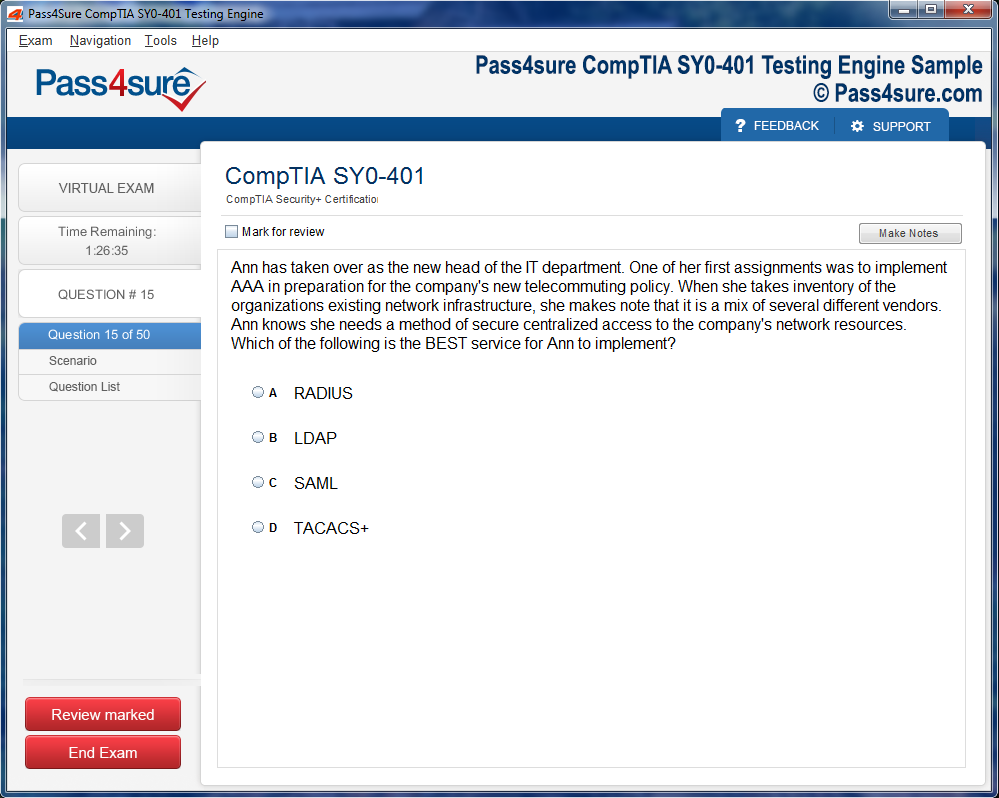
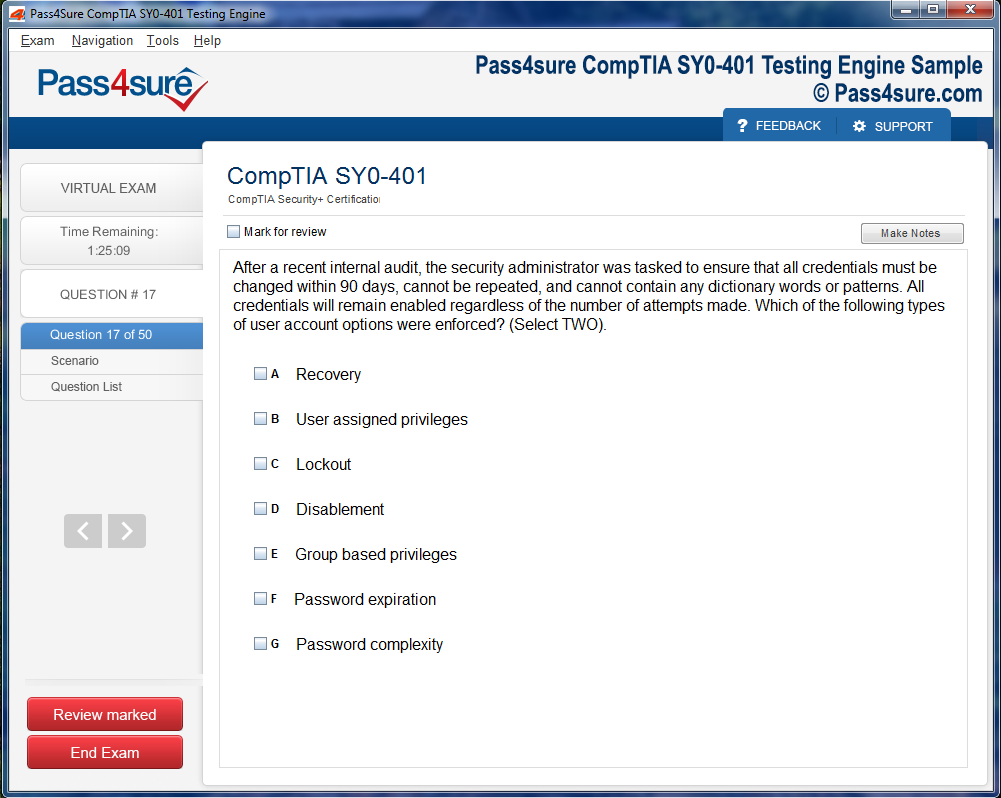
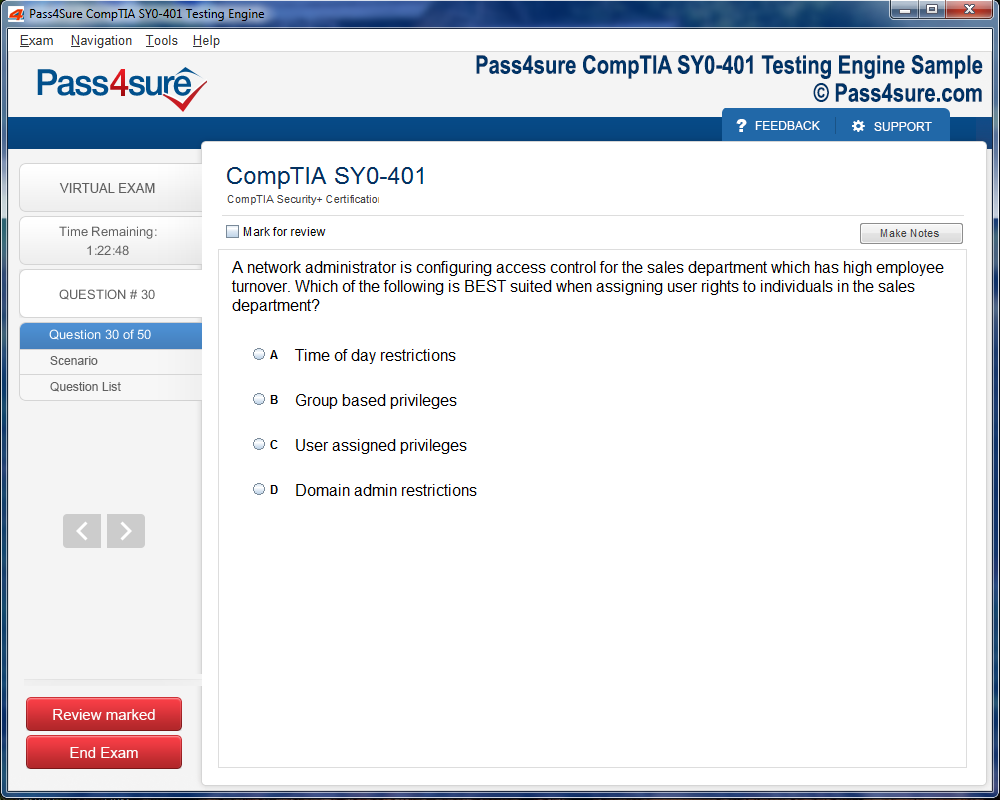
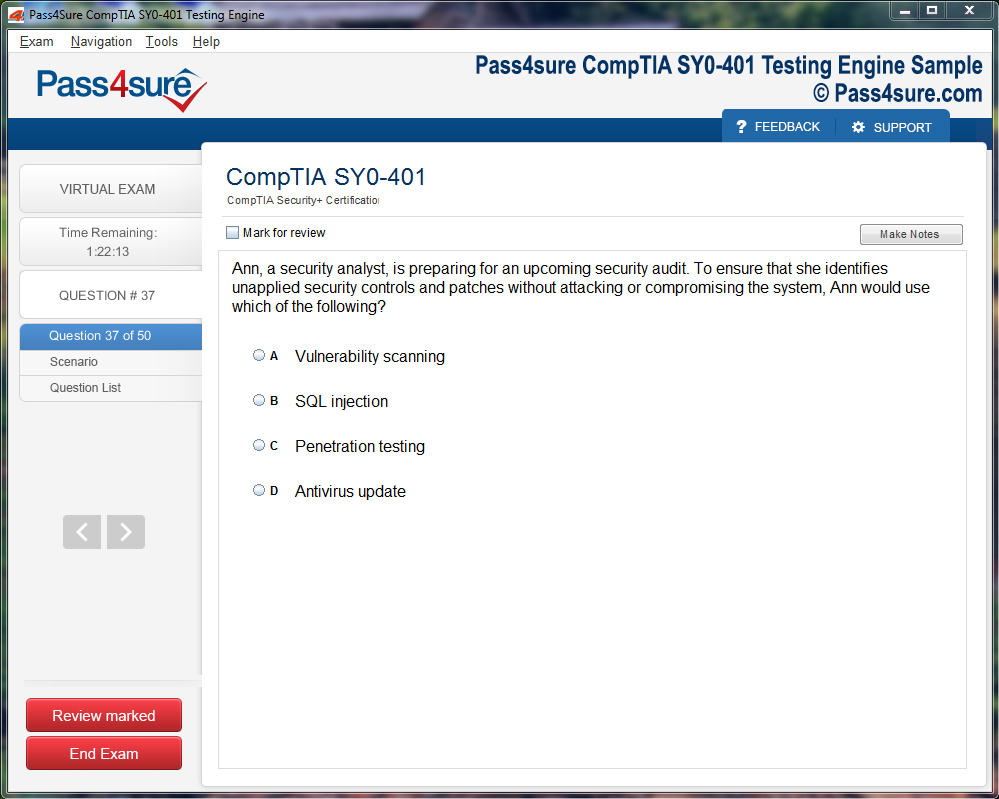
Product Screenshots
Frequently Asked Questions
How does your testing engine works?
Once download and installed on your PC, you can practise test questions, review your questions & answers using two different options 'practice exam' and 'virtual exam'. Virtual Exam - test yourself with exam questions with a time limit, as if you are taking exams in the Prometric or VUE testing centre. Practice exam - review exam questions one by one, see correct answers and explanations.
How can I get the products after purchase?
All products are available for download immediately from your Member's Area. Once you have made the payment, you will be transferred to Member's Area where you can login and download the products you have purchased to your computer.
How long can I use my product? Will it be valid forever?
Pass4sure products have a validity of 90 days from the date of purchase. This means that any updates to the products, including but not limited to new questions, or updates and changes by our editing team, will be automatically downloaded on to computer to make sure that you get latest exam prep materials during those 90 days.
Can I renew my product if when it's expired?
Yes, when the 90 days of your product validity are over, you have the option of renewing your expired products with a 30% discount. This can be done in your Member's Area.
Please note that you will not be able to use the product after it has expired if you don't renew it.
How often are the questions updated?
We always try to provide the latest pool of questions, Updates in the questions depend on the changes in actual pool of questions by different vendors. As soon as we know about the change in the exam question pool we try our best to update the products as fast as possible.
How many computers I can download Pass4sure software on?
You can download the Pass4sure products on the maximum number of 2 (two) computers or devices. If you need to use the software on more than two machines, you can purchase this option separately. Please email sales@pass4sure.com if you need to use more than 5 (five) computers.
What are the system requirements?
Minimum System Requirements:
- Windows XP or newer operating system
- Java Version 8 or newer
- 1+ GHz processor
- 1 GB Ram
- 50 MB available hard disk typically (products may vary)
What operating systems are supported by your Testing Engine software?
Our testing engine is supported by Windows. Andriod and IOS software is currently under development.
Master GCP-GC-IMP Genesys – Insider Strategies for Certification Success
Genesys Cloud is an intricate lattice of interdependent modules, each designed to harmonize human and digital interactions. Its architecture is not a monolith but a stratified ecosystem, where omnichannel routing, workforce optimization, and analytics converge to form a syncretic framework. Professionals embarking on GCP-GC-IMP certification must cultivate an understanding of these strata, recognizing how modifications in one vector ripple through the system. For example, tweaking a routing algorithm may not merely redistribute calls but influence agent performance, customer satisfaction indices, and operational throughput simultaneously.
The platform’s modularity invites a granular exploration. Omnichannel communication is not simply the sum of its channels; it is a symphony of interwoven touchpoints. Email, chat, voice, social media, and messaging APIs coexist within a dynamically orchestrated continuum. The architectural design ensures each modality interacts seamlessly with data analytics engines, enabling real-time insights and predictive modeling. This understanding transcends rote memorization, requiring a practitioner to visualize the system as a living organism rather than a static tool.
Navigating Routing and Engagement Nuances
Routing strategies within Genesys Cloud are labyrinthine yet paramount. The platform allows sophisticated queuing mechanisms, prioritization matrices, and skill-based routing, which together create an intricate decision lattice for directing interactions. Aspirants must not only comprehend these mechanisms but anticipate their behavioral nuances under varying traffic loads.
Engagement is not merely about connecting agents with customers; it involves an anticipatory orchestration of human resources, machine learning predictions, and contextual relevance. For instance, understanding why certain customers are routed to particular agents hinges on analyzing patterns in historical interactions, sentiment scores, and skill affinities. Mastery of routing, therefore, entails both algorithmic literacy and interpretive acumen — the ability to decode the “why” behind each automated decision.
Immersive Practice and Simulation Dynamics
Practical immersion forms the crucible where theoretical knowledge transmutes into applied expertise. Simulation environments provide aspirants with the cognitive scaffolding to experiment safely, iteratively adjusting workflows, interaction queues, and reporting dashboards. This iterative engagement illuminates patterns often invisible in documentation alone.
Sandbox testing, in particular, offers the opportunity to explore edge cases and stress-test configurations. Understanding how routing congestion manifests in real-time metrics or how omnichannel blending affects agent productivity allows learners to internalize system behaviors deeply. This form of deliberate practice ensures that the aspirant’s mental model aligns with operational reality, a prerequisite for certification success.
Structured Learning Paradigms
Certification readiness thrives under methodical study frameworks. A tripartite model — comprehension, application, refinement — offers cognitive coherence. Comprehension emphasizes absorption of underlying principles, such as API interconnectivity, workflow dependencies, and reporting hierarchies. Application translates these principles into tangible scenarios: configuring routing flows, creating workforce schedules, or interpreting analytics dashboards. Refinement is the iterative loop: gap identification, mock evaluations, and reflective recalibration.
This triadic schema ensures that aspirants are not mere passive consumers of information. Instead, they evolve into analytical practitioners capable of synthesizing knowledge across modules. It is the difference between knowing the theory of routing algorithms and intuitively predicting queue behavior under peak traffic conditions.
Cultivating Cognitive Agility
Genesys mastery is as much an intellectual exercise as a technical one. Cognitive agility — the capacity to shift between strategic abstraction and operational minutiae — distinguishes proficient professionals. Analytical reasoning, anticipatory problem-solving, and curiosity-driven exploration converge to form a mindset conducive to mastery.
Candidates are encouraged to interrogate the system’s design decisions: why certain features exist, how they interrelate, and what business imperatives they fulfill. For instance, understanding why predictive routing algorithms enhance customer satisfaction necessitates connecting technical setup to measurable operational outcomes. This meta-cognitive approach fosters not just competence but discernment, a trait that remains invaluable beyond certification.
Leveraging Advanced Learning Modalities
High-impact preparation extends beyond conventional textbooks. Interactive modules, scenario-based webinars, and practitioner forums provide nuanced insights that accelerate learning curves. Engaging with experienced professionals uncovers tacit knowledge — subtle strategies, common pitfalls, and optimization heuristics often absent from standard documentation.
The integration of community intelligence with personal experimentation yields a compounding effect. Exposure to diverse perspectives enhances problem-solving flexibility, enabling aspirants to navigate non-linear, complex scenarios with confidence. This symbiosis between personal study and collaborative discourse transforms preparation from mechanical repetition into an intellectually enriching expedition.
Orchestrating Time and Cognitive Resources
Effective certification preparation requires meticulous orchestration of temporal and cognitive resources. Prolonged, unfocused study fosters fatigue and diminishes retention, whereas strategic scheduling enhances cognitive plasticity. Alternating concentrated study blocks with restorative intervals preserves mental acuity and reinforces memory consolidation.
Equally critical is reframing failure as a formative tool. Misconfigurations, misunderstood analytics, and routing anomalies serve as instructive feedback, catalyzing iterative learning. The aspirant who systematically analyzes missteps cultivates resilience and deep understanding, positioning themselves not only to pass exams but to excel in real-world deployment.
Integrating Systemic Insights into Operational Excellence
Certification mastery culminates in the ability to integrate technical proficiency into strategic operational frameworks. Knowledge of Genesys Cloud modules must translate into actionable insights: optimizing agent allocation, enhancing customer journey fluidity, and leveraging analytics for predictive interventions.
This integration is rarely linear. It demands the capacity to contextualize features within broader business ecosystems, anticipate emergent behaviors, and implement adaptive solutions. A professional who internalizes these systemic insights transcends certification credentials, becoming a linchpin in organizational communication orchestration.
Genesys Cloud Ecosystem: A Symbiotic Architecture
Genesys cloud is not merely a technological solution; it is an intricate ecosystem where each component is a cog in a dynamic orchestration of customer experience. The architecture exemplifies a symbiotic network, where interaction routing, workforce management, analytics, and integration layers coalesce seamlessly. Understanding these interdependencies is paramount for aspirants seeking mastery. A deep dive reveals how discrete modules converge to create an intelligent, responsive environment that anticipates and adapts to evolving customer demands.
Interaction Routing: The Cerebral Core
At the nucleus of Genesys functionality lies interaction routing. This component serves as the cerebral core, determining how customer queries traverse the system. Routing methodologies are diverse: skills-based allocation ensures the most proficient agent addresses specific queries; predictive algorithms forecast the optimal agent-customer pairing; priority-based routing honors urgency levels; time-sensitive configurations safeguard adherence to service-level benchmarks.
The proficiency of a practitioner hinges upon envisioning systemic outcomes of these routing strategies. A mere superficial understanding is insufficient; mastery demands simulation of multi-dimensional scenarios to anticipate the downstream effects on queue efficiency, agent utilization, and overall service quality. The interplay of routing with workforce engagement underscores the interconnectedness of Genesys architecture.
Workforce Engagement Management: The Sentient Scheduler
Workforce engagement management (WEM) transcends simple scheduling. It embodies a sentient orchestration of agent capabilities, workload forecasts, and performance metrics. Within certification parameters, aspirants must navigate forecasting models that predict call volumes with precision and design schedules that optimize both agent satisfaction and customer experience.
WEM also encompasses gamification of productivity, analytical monitoring of agent performance, and adaptive reallocation strategies during high-volume episodes. Developing intuitive empathy for agent behavior, while integrating analytical rigor, transforms abstract scheduling principles into actionable operational insights.
Analytical Paradigms: Illuminating Operational Patterns
Analytics within Genesys operates as both telescope and microscope. Real-time dashboards offer panoramic visibility, highlighting emergent bottlenecks, queue congestion, and anomalous agent behavior. Historical analytics, conversely, functions as a microscope, dissecting patterns over temporal scales to inform strategic decision-making.
Candidates should focus on developing the acumen to extract prescriptive insights. Beyond interpreting metrics, proficiency entails translating data into anticipatory actions, such as predictive workload redistribution, targeted training interventions, and dynamic adjustment of routing protocols. This dual-lens analytical perspective underpins the efficacy of the platform in real-world applications.
Integrations and Extensibility: Orchestrating Interoperability
The Genesys ecosystem achieves its full potential through strategic integrations. APIs, webhooks, and third-party connectors form conduits for interoperability with CRM systems, data warehouses, and external applications. Mastery is predicated upon understanding the nuances of authentication mechanisms, data flow orchestration, error mitigation, and resiliency design.
Practical exercises are indispensable: configuring a webhook to trigger CRM updates or handling API throttling scenarios ensures aspirants internalize these abstract principles. Through experiential learning, candidates develop a systemic intuition for designing robust, scalable, and fault-tolerant integrations.
Security and Regulatory Compliance: Custodianship of Data
Genesys platforms are repositories of sensitive, mission-critical customer data, making security and compliance non-negotiable. Aspirants must grasp the intricacies of access control hierarchies, role-based permissions, and audit trail mechanisms. Regulatory frameworks demand vigilance: the mismanagement of data exposes enterprises to operational, legal, and reputational risk.
Certification exercises often simulate scenario-based challenges, testing the candidate’s ability to balance operational accessibility with stringent compliance mandates. The intersection of technical implementation and ethical stewardship forms a core pillar of professional competence.
Scalability and Resilience: Engineering Continuity
In cloud architecture, scalability and resilience are not mere features—they are imperatives. Genesys supports elastic scaling, fault tolerance, and sophisticated disaster recovery mechanisms. Professionals must understand load balancing architectures, redundancy configurations, and failover strategies to ensure uninterrupted service delivery.
The practical significance of these concepts emerges in large-scale deployments where service continuity underpins enterprise credibility. A candidate’s ability to anticipate system stress points, implement preemptive mitigations, and optimize resource allocation is a critical differentiator in mastery.
Holistic Mental Modelling: Bridging Theory and Praxis
True mastery of Genesys requires more than technical know-how; it demands the construction of a holistic mental model. Each architectural layer—routing, engagement, analytics, integration, security, scalability—interlocks to form a cognitive lattice. By conceptualizing these interconnections, aspirants convert abstract theory into pragmatic execution strategies.
Scenario-based exercises, iterative experimentation, and analytical reflection cultivate this mental model. Through this integrative approach, aspirants acquire the capacity to navigate complex operational landscapes, preempt systemic inefficiencies, and optimize the orchestration of customer experiences with nuanced dexterity.
Adaptive Routing Strategies: Optimizing Customer Trajectories
Beyond the foundational routing principles, adaptive routing introduces a dynamic layer of responsiveness. Machine learning algorithms analyze historical interaction patterns to recalibrate routing decisions in real-time, aligning agent expertise with emergent customer needs.
Understanding the feedback loops and learning cycles inherent in adaptive routing equips aspirants to implement solutions that evolve continuously. Proficiency here requires conceptual fluency in both operational mechanics and predictive analytics.
Real-Time Operational Intelligence: The Pulse of the Platform
Monitoring real-time operational intelligence is akin to maintaining the pulse of a living organism. Metrics streams, anomaly detection alerts, and agent activity monitoring enable immediate intervention, averting potential service disruptions.
Certification aspirants must cultivate the capability to translate real-time data into instant corrective action, optimizing resource allocation, minimizing customer wait times, and maintaining service consistency. The dexterity to act decisively under data-informed pressure defines expert-level competency.
Interfacing with External Systems: Strategic Connectivity
Interfacing with external systems elevates the Genesys platform from a self-contained solution to a connective nexus. Understanding the choreography of synchronous and asynchronous communication, payload formatting, and transactional integrity is essential.
Hands-on practice with RESTful APIs, SOAP integrations, and event-driven architectures develops both confidence and fluency. This knowledge ensures the platform can operate cohesively within complex enterprise technology landscapes, sustaining high operational fidelity.
Experiential Proficiency in Contact Center Ecosystems
The fulcrum of mastery lies not merely in theoretical cognition but in tangible, experiential engagement. While academic paradigms offer structural frameworks, pragmatic dexterity imprints cognitive schemas with permanence. Within the realm of Genesys certification, the availability of sandbox environments enables aspirants to traverse simulated operational topographies without the peril of systemic repercussions. These immersive arenas cultivate confidence while fostering a tactile comprehension of complex interactions.
Navigating the intricacies of interaction configuration constitutes the foundational skill set. Crafting nuanced routing strategies, delineating queues, and orchestrating simulated customer engagements illuminate the operational ramifications of each decision. Metrics such as latency indices, abandonment ratios, and agent utilization coefficients transform abstract configurations into observable outcomes. This metric-informed approach engenders a form of operational intuition, wherein configuration choices are seamlessly linked to tangible performance impacts.
Orchestrating Workforce Dynamics
Proficiency extends into the domain of workforce orchestration. Constructing agent schedules attuned to fluctuating traffic flows necessitates a sophisticated understanding of temporal demand modulation. Allocating skill sets to diverse operational vectors and monitoring resultant efficiency metrics cultivates a prescient sense of cause-and-effect within workforce management. Subtle misalignments—such as incongruent skill-to-traffic allocations—illustrate latent bottlenecks, emblematic of high-stakes scenarios frequently encountered in both certification examinations and live operational contexts.
Analytical acuity is equally indispensable. Constructing dashboards, generating longitudinal performance reports, and deciphering emergent trends enable aspirants to extrapolate actionable insights. Observing aberrations—such as recurrent spikes in interaction abandonment—prompts strategic recalibrations in routing methodologies or workforce scheduling. Such exercises cultivate an anticipatory mindset, transforming aspirants into adept strategists capable of preemptively mitigating operational inefficiencies.
Integration and Interoperability Exercises
Integration acumen constitutes a critical dimension of professional dexterity. Engaging with APIs to establish conduits between Genesys and external platforms necessitates meticulous attention to data integrity, authentication protocols, and error-handling contingencies. Iterative simulations of these scenarios fortify confidence, enabling aspirants to execute scalable, resilient integrations with precision. Familiarity with these processes not only enhances exam preparedness but mirrors real-world imperatives where seamless interoperability is paramount.
Scenario-Based Cognitive Conditioning
Simulation exercises extend beyond routine operations into realms of unpredictability. Sudden surges in traffic, system anomalies, or misrouted interactions necessitate rapid problem-solving and adaptive strategizing. Immersive simulations cultivate the ability to evaluate multiple corrective pathways and implement the most efficient resolution. Such experiences replicate operational exigencies encountered by Genesys professionals, reinforcing both cognitive agility and situational responsiveness.
The cultivation of iterative reflection amplifies learning retention. Post-simulation analysis—examining performance metrics, diagnosing inefficiencies, and recalibrating strategies—converts missteps into instructive touchstones. This cyclical approach fosters deep-seated comprehension, ensuring that knowledge transcends superficial familiarity to become an embedded operational instinct. Repetition, reflection, and refinement together construct a robust mental model of platform dynamics.
Analytical Dexterity Through Data Interpretation
Adeptness in data interpretation is indispensable for both certification success and practical efficacy. Historical reporting, trend extrapolation, and anomaly detection provide aspirants with insights into systemic behaviors that are otherwise imperceptible. Employing these insights to devise optimization frameworks transforms data into strategic leverage. By correlating emergent patterns—such as temporal clustering of abandoned interactions—with operational levers, aspirants develop a capacity for evidence-based intervention, a hallmark of advanced professional competence.
Simulated Crisis Navigation
Crisis scenarios in simulated environments sharpen adaptive cognition. Sudden deviations from expected traffic patterns, unforeseen system errors, and misrouted engagements compel aspirants to deploy analytical frameworks under pressure. These controlled crises engender resilience, ensuring that aspirants cultivate both procedural fluency and creative problem-solving dexterity. Through repeated exposure, they internalize heuristics that expedite decision-making under duress, bridging the gap between theoretical understanding and operational execution.
Iterative Skill Refinement and Cognitive Internalization
The path to mastery is recursive, characterized by continual refinement. Each simulation, whether routine or complex, offers a microcosm of operational reality. By systematically analyzing outcomes, identifying latent inefficiencies, and recalibrating strategies, aspirants convert experiential feedback into enduring competence. This iterative process reinforces conceptual understanding, transforming procedural knowledge into a deeply ingrained operational aptitude. Over time, repeated cycles of hands-on practice cultivate a nuanced comprehension of systemic interdependencies, rendering aspirants proficient not merely in examination contexts but in real-world operational milieus.
Deciphering Cognitive Modalities for Exam Acumen
Navigating the labyrinthine structure of professional examinations necessitates an intimate acquaintance with one’s cognitive predilections. Each aspirant possesses idiosyncratic proclivities toward visual, auditory, or kinesthetic assimilation. Exploiting these modalities amplifies comprehension, facilitating the transmutation of abstruse concepts into retrievable mental schemata. Mind mapping and synoptic schematics scaffold intricate interrelations, rendering multifaceted doctrines amenable to lucid recollection. By aligning study methods with intrinsic cognitive tendencies, candidates cultivate a formidable mental repository primed for rapid retrieval under evaluative duress.
Metacognitive Calibration and Iterative Refinement
Mastery is seldom linear; it thrives on iterative self-assessment and metacognitive calibration. Periodically interrogating one’s understanding through diagnostic tests reveals lacunae that passive perusal might obscure. Reflective journaling of conceptual ambiguities fortifies awareness of knowledge gaps, prompting targeted remediation. This cyclical refinement engenders intellectual agility, enabling candidates to pivot seamlessly among divergent domains, a skill pivotal for examinations rife with cross-disciplinary integration.
Mnemonic Architectures for Enhanced Retention
Memory augmentation hinges upon the deliberate construction of mnemonic architectures. Beyond traditional acronyms, sophisticated loci-based or narrative-driven frameworks embed data within imaginative constructs, thereby cementing retention. Transforming sterile terminologies into evocative mental tableaux converts rote memorization into an intrinsically engaging cerebral endeavor. Such techniques are particularly efficacious when confronting voluminous or abstract content, where conventional recitation falters.
Analytical Dexterity Through Scenario Dissection
Examination paradigms increasingly privilege analytical dexterity over rote regurgitation. Candidates must cultivate the aptitude to deconstruct complex scenarios, parsing multifactorial influences with incisive scrutiny. Employing heuristic algorithms to prioritize causative factors enhances problem-solving efficiency. Engaging with hypothetical vignettes, case dissections, and simulated crises fosters a strategic mindset attuned to the nuanced demands of applied knowledge, thereby bridging the chasm between theoretical acumen and practical execution.
Temporal Architecture and Strategic Allocation
Temporal mastery constitutes an indispensable facet of examination strategy. Candidates must architect their engagement with temporal resources, apportioning cognitive exertion in accordance with task complexity. Employing chronometric simulations elucidates the equilibrium between rapid retrieval and deliberative analysis. Strategic allocation mitigates cognitive fatigue while preserving precision, empowering aspirants to navigate extensive question banks without succumbing to hasty conjecture or procrastinatory inertia.
Cognitive Resilience and Psychological Fortitude
The crucible of assessment exerts profound psychological pressure, necessitating cultivated resilience. Cognitive endurance is bolstered through interspersed metacognitive breaks, mindfulness practices, and adaptive reframing of stressors as conduits for performance enhancement. Visualization of successful navigation engenders anticipatory confidence, transforming anxiety into productive vigilance. Candidates who internalize resilience as a cognitive tool exhibit superior modulation of affective responses, thereby sustaining optimal performance throughout the examination continuum.
Interleaved Practice and Cross-Domain Integration
Interleaving disparate topics enhances cognitive flexibility and fortifies neural consolidation. Alternating study foci prevents habituation, stimulating associative networks and reinforcing synaptic robustness. Cross-domain integration exercises cultivate the ability to transfer principles across contexts, a skill imperative for scenarios requiring synthesis rather than singular domain mastery. This approach engenders intellectual elasticity, equipping candidates to tackle unpredictable question vectors with aplomb.
Feedback Loops and Adaptive Iteration
Strategic assimilation necessitates continuous feedback loops. Self-evaluation, peer discussion, and mentor-guided critique illuminate misconceptions before they calcify into enduring errors. Adaptive iteration—revising strategies based upon evaluative insights—ensures that preparation remains dynamic, responsive, and aligned with emergent understanding. Candidates attuned to iterative feedback not only enhance accuracy but also cultivate the metacognitive sophistication demanded by rigorous examination frameworks.
Strategic Orchestration of Multi-Channel Engagement
The fulcrum of operational dexterity lies in orchestrating multi-channel touchpoints with prescient foresight. Professionals who attain proficiency in advanced systems transcend mere procedural execution; they cultivate a syncretic methodology that harmonizes voice, chat, and email conduits. This synthesis is not trivial: it necessitates a nuanced comprehension of latency, channel affinity, and contextual relevance. Routing algorithms become living frameworks, iteratively refined through real-time metrics and adaptive heuristics. By integrating dynamic load-balancing paradigms, organizations witness measurable attenuation in latency and a perceptible elevation in end-user gratification.
Predictive Workforce Allocation and Performance Calibration
A sophisticated practitioner regards workforce management as both an art and a science. Predictive scheduling transcends conventional paradigms by incorporating stochastic modeling and temporal flux analysis. Historical agent performance, coupled with cyclical demand oscillations, informs an allocation schema that anticipates peak exigencies before they manifest. Beyond numerical precision, such orchestration cultivates cognitive resonance within the agent cohort, bolstering morale and ensuring operational elasticity. The interplay between prescriptive forecasting and agile redeployment exemplifies a mastery of resource optimization that tangibly enhances service continuity.
Analytics-Driven Cognition and Insight Extraction
Advanced application is inseparable from incisive analytical acuity. Professionals leverage multidimensional dashboards and longitudinal reports to excavate latent inefficiencies and discern emergent patterns. Anomalies in service throughput or interaction latency are not merely flagged but interrogated for underlying causal mechanisms. By synthesizing these insights, practitioners craft interventions that are simultaneously tactical and strategic, transforming raw data into a lattice of actionable intelligence. This analytical sophistication positions the practitioner as a fulcrum of organizational foresight, capable of translating ephemeral observations into sustainable operational advantage.
Integrative Automation and Intelligent Workflow Design
Automation is not a mechanistic expedient; it is an enabler of strategic ingenuity. By architecting API-driven workflows and automating recurrent tasks, professionals cultivate an ecosystem of operational fluidity. Intelligent routing solutions, augmented with contextual heuristics, preemptively redirect interactions to optimal pathways, mitigating friction and reducing cognitive load on human agents. This orchestrated automation undergirds scalability while preserving adaptability, enabling organizations to pivot responsively in a landscape defined by continuous flux. The judicious integration of these mechanisms embodies a synthesis of technical virtuosity and pragmatic foresight.
Iterative Mastery and Continuous Knowledge Cultivation
True expertise is an iterative odyssey rather than a terminal milestone. Engaging with emergent features, novel protocols, and evolving industry heuristics ensures perpetual relevance. Each optimization cycle functions as both an evaluative and generative process: metrics inform action, action generates data, and the subsequent analysis refines strategy. The iterative cadence cultivates a feedback-rich environment, accelerating cognitive assimilation and reinforcing mastery. Professionals who internalize this philosophy transform their role from executor to innovator, embedding themselves as indispensable architects of operational excellence.
Embracing Perpetual Skill Enrichment
Certification is merely an inflection point on a trajectory of incessant skill augmentation. Professionals must embrace perpetual enrichment through immersive exploration of nascent technologies and emergent methodologies. Each iteration of practice, experimentation, and reflection augments cognitive elasticity, fostering an aptitude for anticipating operational exigencies and devising preemptive strategies. A proclivity for erudition cultivates intellectual resilience, transforming static competence into dynamic prowess.
Navigating Technological Flux
The cloud paradigm is characterized by incessant flux, with iterative updates, integrations, and optimizations redefining operational landscapes. Maintaining fluency within this dynamic ecosystem necessitates vigilant surveillance of platform evolutions, encompassing newly deployed functionalities, latent integrations, and performance-enhancing apparatuses. Assimilation of such updates not only preserves contemporary relevance but also catalyzes ingenuity in leveraging advanced capabilities to optimize workflows.
Immersive Community Engagement
Engagement within professional collectives functions as an accelerant for knowledge accretion. Peer discourse, participation in symposia, and contribution to deliberative forums engender insights often absent in conventional pedagogy. Such interactions illuminate nuanced operational paradigms, latent optimization strategies, and the subtleties of troubleshooting idiosyncrasies. Immersive community involvement metamorphoses solitary competence into collaborative mastery, nurturing both reputational capital and practical acuity.
Constructing Experiential Repositories
Systematic documentation of experiential learning fosters an archival repository of pragmatic expertise. Chronicling configuration methodologies, diagnostic maneuvers, and operational refinements creates a personalized lexicon of solutions. This corpus functions as both a reflective instrument for continual refinement and a verifiable testament to proficiency, instrumental in career advancement and professional differentiation.
Strategic Project Engagement
Practical application of certification acumen in strategically chosen projects consolidates technical mastery while amplifying career trajectory. Pursuit of initiatives that challenge integration capabilities, necessitate operational optimization, or demand cross-functional coordination stimulates intellectual dexterity. Confronting real-world complexity sharpens analytical faculties, enhances problem-solving alacrity, and positions the professional for ascendancy within organizational hierarchies.
Cultivating Cognitive Agility
Enduring mastery is inseparable from cognitive agility—the capacity to navigate ambiguity, assimilate novelty, and recalibrate strategies in response to evolving contexts. Professionals who embrace experimentation, iterative learning, and adaptive reasoning remain irreplaceable within volatile technological milieus. This intellectual elasticity ensures that certification functions not merely as credentialing but as a scaffold for perpetual innovation.
Harnessing Reflective Practice
Reflective practice, the deliberate contemplation of successes and missteps, amplifies learning retention and informs future decision-making. By systematically dissecting project outcomes, analyzing problem-solving trajectories, and internalizing lessons, professionals cultivate a metacognitive framework that bolsters resilience and optimizes performance. The habitual practice of reflection transmutes episodic experiences into enduring strategic insight.
Integrative Knowledge Synthesis
The apotheosis of post-certification development resides in the synthesis of diverse knowledge streams into cohesive operational wisdom. Integrating insights from community engagements, technological updates, and experiential documentation fosters a multidimensional perspective that transcends procedural proficiency. Such synthesis underpins innovative approaches, enabling practitioners to anticipate challenges, architect scalable solutions, and influence organizational efficacy profoundly.
Mentorship and Knowledge Propagation
Extending expertise through mentorship catalyzes reciprocal growth. Guiding novices not only reinforces foundational concepts but also stimulates reflective recalibration of one’s methodologies. Knowledge propagation cultivates a culture of collective intelligence, fortifying the professional community while consolidating the mentor’s authority and credibility within the domain.
Pursuit of Cross-Domain Competence
Specialized certification attains maximal utility when complemented by cross-domain acumen. Exploring adjacent technological spheres, operational frameworks, or management paradigms cultivates a versatile cognitive repertoire. Such cross-pollination enhances problem-solving sophistication, encourages innovative synergies, and elevates the professional from technologist to strategic orchestrator.
Adaptive Experimentation
Continuous experimentation, tempered with analytical rigor, remains a cornerstone of sustained mastery. Professionals who pilot untested integrations, evaluate novel workflows, and iterate upon traditional methodologies generate a compendium of empirical insights. This praxis fosters a culture of evidence-based innovation, ensuring that skills remain not only relevant but instrumental in advancing organizational objectives.
Navigating the Labyrinth of Emerging Technologies
In the contemporary digital panorama, technological landscapes evolve with relentless velocity. Cloud infrastructures, AI-driven orchestration, and adaptive automation perpetually redefine operational paradigms. Mastery, therefore, is contingent upon the practitioner’s ability to traverse this labyrinth of emerging tools with discernment and alacrity. Active exploration of nascent modules, experimental features, and latent integrations cultivates foresight, ensuring that one remains not merely reactive but anticipatory in leveraging technological capabilities.
The Art of Cognitive Calibration
Sustained professional ascendancy demands a meticulous calibration of cognitive faculties. Cognitive calibration involves aligning analytical acuity, creative problem-solving, and operational pragmatism to execute complex tasks with precision. By consciously tuning attention, memory, and reasoning processes, professionals can navigate intricate configurations, troubleshoot ambiguous anomalies, and devise optimization schemas with heightened efficacy. This mental attunement transforms episodic experiences into structured, scalable insights.
Dynamic Ecosystem Acclimatization
Platform ecosystems are not static; they exhibit dynamic interdependencies where updates reverberate across modules. Professionals who immerse themselves in the ebb and flow of ecosystem evolution gain a competitive edge. Acclimatization entails systematic monitoring of release notes, rigorous testing of new functionalities, and iterative experimentation with integration points. Such vigilance ensures that operational strategies are perpetually aligned with cutting-edge capabilities, mitigating obsolescence while maximizing efficiency.
Synergistic Peer Collaboration
Collaboration within erudite communities engenders synergetic outcomes that surpass solitary efforts. By coalescing diverse experiences, perspectives, and problem-solving heuristics, peers cultivate an enriched corpus of collective intelligence. Active engagement—through forums, collaborative projects, and symposiums—exposes subtle, often overlooked, nuances of platform utilization. The resultant cognitive symbiosis nurtures innovation, accelerates proficiency acquisition, and fortifies professional credibility.
Constructing a Personal Knowledge Codex
Systematic documentation transforms ephemeral experiences into an enduring repository of wisdom. A personal knowledge codex comprises meticulous records of configurations, troubleshooting methodologies, optimization schemas, and reflective annotations. Beyond serving as a mnemonic scaffold, this codex becomes an evidentiary asset, demonstrating competence to superiors, peers, and potential collaborators. Over time, it evolves into an indispensable compendium of tactical and strategic insight.
Strategic Immersion in Challenging Initiatives
Optimal career acceleration arises from deliberate engagement with projects that challenge technical, operational, and integrative acumen. Pursuing initiatives that necessitate complex orchestration, multifaceted integrations, or high-stakes troubleshooting amplifies experiential depth. Each successful navigation through such endeavors refines analytical dexterity, fortifies problem-solving agility, and positions the practitioner as a linchpin within organizational hierarchies.
Intellectual Flexibility as a Professional Imperative
Intellectual flexibility—the capacity to pivot, reassess, and integrate novel paradigms—is central to sustaining mastery. Professionals who embrace cognitive elasticity adapt to emergent challenges, innovate beyond established conventions, and extract value from uncharted domains. This adaptive mentality ensures that certifications transcend static credentials, evolving into dynamic instruments of influence, innovation, and strategic leverage.
Methodical Reflection for Continuous Refinement
Reflection, conducted with methodological rigor, serves as the fulcrum of continuous improvement. By systematically evaluating project outcomes, dissecting problem-solving trajectories, and scrutinizing operational efficiencies, practitioners cultivate metacognitive awareness. Such reflective praxis converts discrete experiences into coherent strategies, enabling predictive insight and preemptive optimization that elevate both individual and organizational performance.
The Alchemy of Cross-Pollination
Cross-domain exploration catalyzes cognitive alchemy, wherein knowledge from disparate spheres coalesces into innovative solutions. Engaging with auxiliary technologies, adjacent operational frameworks, or tangential managerial strategies fosters the synthesis of novel methodologies. This cross-pollination engenders versatility, allowing practitioners to transcend siloed expertise and emerge as strategic orchestrators capable of orchestrating complex, multidimensional initiatives.
Mentorship as Reciprocal Growth
Mentorship embodies a dualistic growth paradigm. In guiding emergent professionals, seasoned practitioners consolidate their own expertise, refining explanatory precision and reinforcing foundational knowledge. Concurrently, mentees benefit from accelerated learning and exposure to nuanced methodologies. This reciprocal dynamic fortifies professional networks, nurtures thought leadership, and cultivates reputational capital essential for long-term career ascension.
Iterative Experimentation and Risk-Informed Innovation
Mastery is amplified through iterative experimentation, where calculated risk-taking informs incremental innovation. By piloting unconventional integrations, testing novel workflows, and evaluating emergent optimization strategies, professionals accumulate a nuanced understanding of operational mechanics. This empirical approach engenders a resilient knowledge base, enabling practitioners to implement evidence-based innovations that drive efficiency, scalability, and strategic differentiation.
Iterative experimentation is not mere trial and error; it is a deliberate, methodical exploration of operational parameters. Each cycle of testing becomes a microcosm of discovery, illuminating latent inefficiencies and unearthing hidden potential within the system. Professionals who embrace this methodology approach every workflow, integration, and routing schema as a living experiment, subject to continuous observation, hypothesis testing, and refinement. By adopting a mindset of controlled exploration, they transform uncertainty into a crucible of insight, extracting actionable knowledge from even the most subtle deviations in system behavior.
Risk-informed innovation, as an extension of iterative experimentation, demands a profound understanding of both probability and consequence. Professionals cultivate the ability to anticipate potential failure modes and quantify their impact, thereby converting ambiguity into a navigable landscape. This does not imply reckless trial; rather, it emphasizes strategic engagement with calculated uncertainty. By simulating high-impact scenarios, stress-testing workflows, and modeling edge cases, practitioners build a sophisticated understanding of operational resilience. These exercises not only safeguard against disruption but also reveal pathways for bold, transformative interventions that conventional methodologies might overlook.
At the core of iterative experimentation lies the principle of incrementalism. Innovations are rarely successful as monolithic leaps; they emerge through a succession of nuanced adjustments and micro-optimizations. For example, refining a routing algorithm may involve adjusting priority weights, testing alternative channel allocations, and measuring customer satisfaction metrics across multiple iterations. Each iteration generates empirical data that informs subsequent modifications, forming a cyclical process of knowledge amplification. Over time, these iterative micro-adjustments coalesce into systemic transformations that elevate both efficiency and user experience.
Another dimension of iterative experimentation is the strategic deployment of unconventional integrations. By connecting disparate systems through APIs or hybrid workflows, professionals unlock emergent behaviors and latent synergies. These integrations, initially exploratory, may reveal unexpected efficiencies, uncover hidden bottlenecks, or enable entirely new operational capabilities. The willingness to experiment with novel combinations of tools and technologies fosters an environment where creative problem-solving thrives, and conventional limitations are challenged. Such practices exemplify a high-order understanding of systems thinking, where each integration is simultaneously a tactical maneuver and a conceptual probe into organizational dynamics.
The iterative process also emphasizes empirical measurement as the foundation for decision-making. Professionals leverage real-time analytics, historical performance data, and predictive modeling to assess the outcomes of each experimental cycle. By triangulating quantitative metrics with qualitative insights—such as agent feedback or customer sentiment—they construct a multidimensional view of operational efficacy. This evidence-based approach ensures that each innovation is grounded in observable reality, minimizing the influence of bias, intuition, or assumption. Over time, this data-driven methodology cultivates a corpus of institutional knowledge that can be systematically applied to future challenges.
Risk-informed innovation is further amplified through scenario-based exploration. Professionals construct hypothetical operational scenarios, ranging from surges in demand to systemic failures, and explore their potential impact on workflows and customer experience. By iteratively testing strategies within these controlled scenarios, they identify vulnerabilities, evaluate mitigation options, and refine contingency plans. This proactive experimentation enables organizations to navigate volatility with confidence, transforming reactive problem-solving into anticipatory mastery. In doing so, practitioners cultivate a resilience mindset that permeates both strategy and execution.
Cultural factors also play a pivotal role in iterative experimentation. Innovation is maximized when organizations foster an environment of psychological safety, where experimentation is encouraged, failures are viewed as instructive, and curiosity is rewarded. Professionals who cultivate such cultures catalyze collective learning, allowing insights from one experimental cycle to propagate across teams and departments. This collaborative reinforcement amplifies the impact of individual experimentation, creating a compounding effect that accelerates systemic improvement and strategic agility.
The cognitive dimension of iterative experimentation cannot be overlooked. Professionals must balance analytical rigor with creative intuition, recognizing that some innovations arise from unconventional connections and lateral thinking rather than linear analysis. By integrating reflective practices, such as post-implementation reviews and scenario debriefs, practitioners convert experiential knowledge into structured insight. This metacognitive layer enables them to not only refine operational workflows but also enhance their own strategic acumen, creating a feedback loop of personal and organizational growth.
Moreover, iterative experimentation intersects with scalability considerations. Innovations are not meaningful unless they can be replicated and adapted across varying operational contexts. Professionals test solutions under diverse conditions, evaluating how processes perform under different volumes, user behaviors, or technological constraints. This stress-testing ensures that successful interventions are not limited to isolated scenarios but are robust enough to support expansion, organizational growth, and evolving market demands. The interplay of experimentation, risk management, and scalability creates a dynamic capability that sustains long-term competitiveness.
Integration of emerging technologies further enriches iterative experimentation. Artificial intelligence, predictive analytics, and automated decision engines serve as accelerators, enabling rapid simulation, precise measurement, and intelligent adaptation of experimental workflows. Professionals leverage these technologies not as ends in themselves but as amplifiers of human ingenuity, allowing experimentation at scales and speeds that were previously unattainable. By doing so, they position themselves at the nexus of technological foresight and operational mastery, continuously expanding the frontier of what is achievable.
Finally, the iterative experimentation cycle is inherently generative. Each completed cycle seeds the next, creating a continuous trajectory of refinement, insight, and innovation. As professionals accumulate experiential data and refine their methodologies, they build a compounding advantage, where each successive experiment yields greater clarity, predictive precision, and strategic insight. The confluence of controlled risk-taking, empirical evaluation, and iterative learning ensures that mastery is not static but dynamically evolving—a living testament to the power of risk-informed innovation in achieving operational excellence.
Cultivating an Ecosystemic Perspective
Sustained proficiency necessitates an ecosystemic lens, wherein individual modules, integrations, and processes are perceived as interdependent constituents of a larger operational organism. Professionals who cultivate this holistic perspective anticipate cascading impacts, optimize systemic interactions, and devise solutions that harmonize multiple vectors of functionality. This macrocosmic awareness distinguishes tactical executors from strategic innovators.
The cultivation of such a perspective begins with a deliberate recognition that no module operates in isolation. Each component within an operational ecosystem, whether a software integration, a workflow protocol, or a data pipeline, exerts influence upon and is influenced by interconnected elements. This interdependence necessitates a shift from linear problem-solving approaches to systemic thinking, where the reverberations of a single adjustment are assessed across the entire operational lattice. By internalizing this principle, professionals transition from reactionary task execution to anticipatory orchestration, capable of preempting inefficiencies and redundancies before they manifest tangibly.
A key dimension of ecosystemic proficiency is the ability to discern latent dependencies. Often, interactions between seemingly disparate modules reveal subtle synergies or potential points of friction that are not immediately evident in conventional operational audits. Professionals attuned to these interconnections leverage analytical frameworks that map causality, interrelation, and information flow across the ecosystem. Techniques such as dependency matrices, impact assessment grids, and integration flowcharts provide empirical scaffolding, enabling decision-making that accounts for both micro-level optimization and macro-level stability.
Equally vital is the practice of scenario-based foresight. Ecosystemic thinkers simulate perturbations—ranging from software updates to process anomalies—to anticipate systemic repercussions. This predictive modeling cultivates resilience, as interventions can be calibrated to maintain equilibrium across the operational organism. For instance, the introduction of a new integration module may improve transactional efficiency in isolation, yet if it disrupts data harmonization or workflow sequencing downstream, the net organizational effect may be counterproductive. A professional with a holistic lens identifies such latent conflicts preemptively, ensuring harmonized evolution rather than fragmented advancement.
Furthermore, an ecosystemic mindset requires cultivating meta-cognition about one’s influence within the system. Professionals must recognize that their actions, decisions, and even implicit assumptions reverberate beyond immediate tasks. This consciousness fosters deliberate, measured interventions, prioritizing solutions that generate positive systemic externalities. By internalizing the interconnectivity of the operational organism, practitioners become architects of strategic coherence, guiding modules, teams, and processes toward symbiotic efficiency rather than isolated optimization.
Another pillar of ecosystemic mastery is cross-functional fluency. Professionals must navigate diverse operational domains, understanding the language, priorities, and constraints of different stakeholders. By bridging these disciplinary silos, they facilitate seamless communication, harmonize objectives, and mitigate inadvertent conflicts that arise from narrow specialization. For example, the successful deployment of a new cloud-based feature may require not only technical configuration but alignment with compliance mandates, user experience protocols, and downstream analytics pipelines. Ecosystemic awareness ensures these multifaceted demands are reconciled, producing integrated solutions rather than compartmentalized fixes.
Knowledge management is indispensable in this context. Ecosystemic professionals actively document interactions, dependencies, and lessons learned, building a living repository of operational intelligence. This repository functions as both a strategic reference and a pedagogical tool, enabling teams to internalize systemic thinking. Over time, such documentation transforms tacit knowledge into codified frameworks, empowering organizations to sustain complex integrations and maintain agility in rapidly evolving technological environments.
Moreover, cultivating an ecosystemic perspective entails embracing iterative experimentation. Systems are inherently dynamic, and rigid adherence to static processes can obscure opportunities for optimization. By piloting controlled changes, measuring impacts across interconnected modules, and refining approaches based on observed outcomes, professionals develop an empirical understanding of systemic behavior. This cyclical process of experimentation and adaptation not only enhances operational efficacy but also cultivates the cognitive agility required to thrive amidst continuous evolution.
Strategic prioritization also emerges as a critical competency within an ecosystemic framework. Professionals must discern which interdependencies merit immediate attention, which interventions yield maximal systemic leverage, and which elements can tolerate temporary latency without compromising overall stability. This discernment requires both analytical rigor and intuitive judgment, integrating quantitative metrics with qualitative insights to navigate complex operational landscapes efficiently.
Collaboration and ecosystemic perspective are mutually reinforcing. By engaging with peers across functional domains, professionals expand their mental model of the operational organism. Insights gleaned from diverse experiences, problem-solving approaches, and heuristic strategies enrich systemic comprehension. Additionally, collaborative discourse surfaces hidden assumptions, uncovers unanticipated consequences, and promotes consensus-building, ensuring that interventions are both technically sound and organizationally coherent.
Finally, cultivating an ecosystemic perspective fosters strategic foresight and long-term value creation. Practitioners who view operations holistically anticipate emergent opportunities, identify latent risks, and orchestrate initiatives that enhance overall system robustness. They become adept at navigating complexity with poise, harmonizing competing priorities, and designing solutions that deliver sustainable operational advantage. In essence, ecosystemic mastery transforms the practitioner from a mere executor of tasks into a visionary orchestrator of interconnected processes, capable of steering organizations toward resilient, scalable, and innovative futures.
Strategic Networking Beyond Conventional Circles
Professional growth extends beyond mere technical skill; it encompasses deliberate cultivation of a robust, multidimensional network. Engaging with industry thought leaders, participating in avant-garde forums, and forging alliances across adjacent disciplines amplifies visibility and access to emergent opportunities. Such strategic networking not only accelerates knowledge acquisition but positions the professional within influential ecosystems that dictate innovation trajectories.
Mastering Adaptive Problem-Solving
Adaptive problem-solving entails synthesizing analytical rigor with creative improvisation to navigate multifactorial challenges. Professionals who cultivate adaptive heuristics excel in scenarios characterized by ambiguity, resource constraints, or unanticipated disruptions. By employing iterative diagnosis, scenario modeling, and contingency planning, practitioners convert complexity into actionable strategies, thereby reinforcing operational reliability and strategic foresight.
Documentation as Intellectual Capital
Transforming operational experiences into documented intellectual capital amplifies both learning and influence. Detailed recording of processes, decision rationales, and outcomes fosters replicability, facilitates mentorship, and positions the practitioner as a knowledge authority. Over time, this corpus evolves into a strategic asset, informing organizational best practices, supporting team training initiatives, and enhancing professional reputation.
Continuous Learning Through Micro-Experiments
Micro-experiments—small-scale, low-risk trials of emerging functionalities or optimization strategies—serve as catalysts for iterative learning. By analyzing outcomes, extracting insights, and integrating successful tactics into broader workflows, practitioners refine skills incrementally. This approach balances innovation with operational stability, enabling sustainable mastery while mitigating exposure to systemic risks.
Harnessing Analytical Foresight
Analytical foresight, the capacity to anticipate challenges and preempt operational bottlenecks, differentiates transient competence from enduring mastery. Practitioners employ predictive analytics, scenario modeling, and trend extrapolation to inform decision-making, optimize workflows, and design resilient systems. Such foresight transforms reactive problem-solving into proactive strategic leadership, enhancing both personal and organizational efficacy.
Conclusion
Mastering the GCP-GC-IMP Genesys certification is more than passing an exam; it is a transformative journey that blends knowledge, practical skills, and strategic thinking. Throughout this six-part series, we explored the architecture of Genesys cloud, the intricacies of routing, workforce management, analytics, integrations, and the advanced optimization techniques that separate proficient professionals from everyday users.
Success is rooted in a balanced approach: understanding theoretical foundations, engaging in hands-on practice, refining problem-solving strategies, and maintaining continuous learning. Scenario-based simulations and real-world applications cultivate intuition, while strategic exam preparation and mental resilience ensure peak performance when it matters most.
Post-certification, the journey does not end. Sustaining mastery requires ongoing exploration of platform updates, participation in professional communities, and applying skills to complex projects. By combining technical expertise with analytical thinking and adaptive strategies, certified professionals become invaluable contributors to customer experience excellence.
Ultimately, achieving and leveraging the GCP-GC-IMP certification transforms aspirants into skilled Genesys strategists — capable of optimizing operations, enhancing customer satisfaction, and driving meaningful impact within their organizations. Consistent effort, curiosity, and a commitment to practical learning will ensure not only certification success but long-term professional growth and recognition.
Top Genesys Exams
- GCP-GCX - Genesys Cloud CX Certified Professional - Consolidated
- GCP-GC-ARC - Genesys Cloud Architect Certified Specialist
- GCX-GCD - Genesys Cloud CX: Developer
- GC-AI-DB - Genesys Cloud: AI - Digital Bots & Knowledge
- GCP-GC-IMP - Genesys Cloud Certified Professional - Implementation
- GCP-GC-REP - Genesys Cloud Certified Professional - Reporting and Analytics
- GCP-GC-ADM - Genesys Cloud Certified Professional - Contact Center Admin
- GCX-ARC - Genesys Cloud CX: Architect
- GCX-WFM - Genesys Cloud CX: WEM - Workforce Management Certified Specialist