

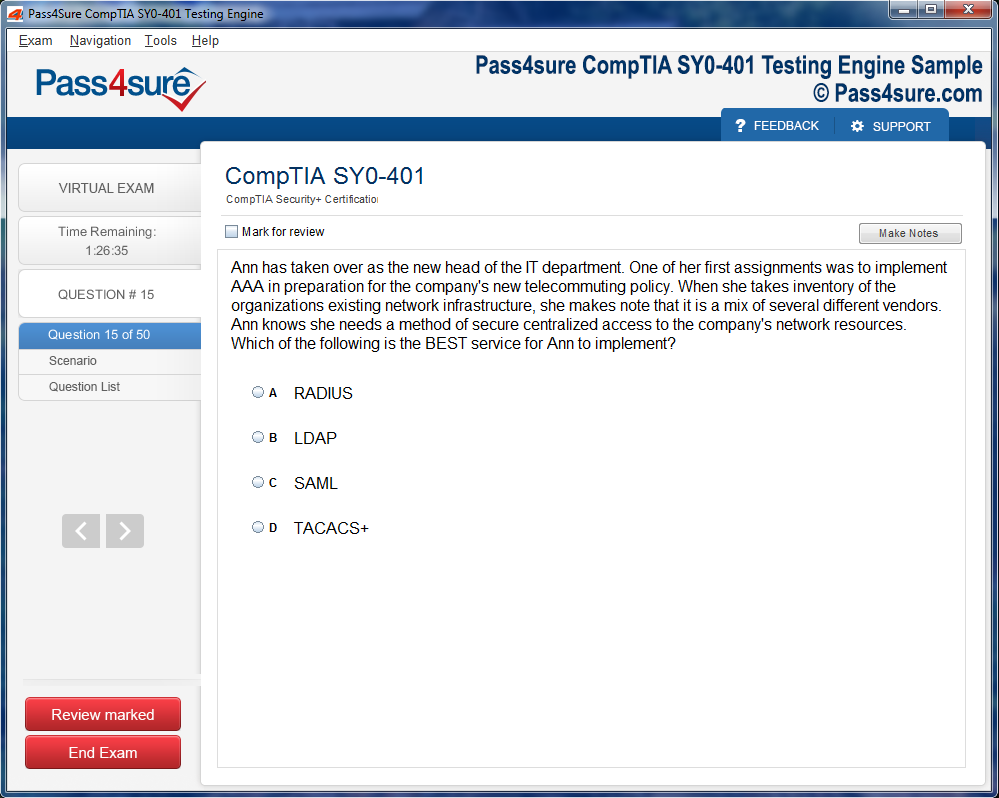
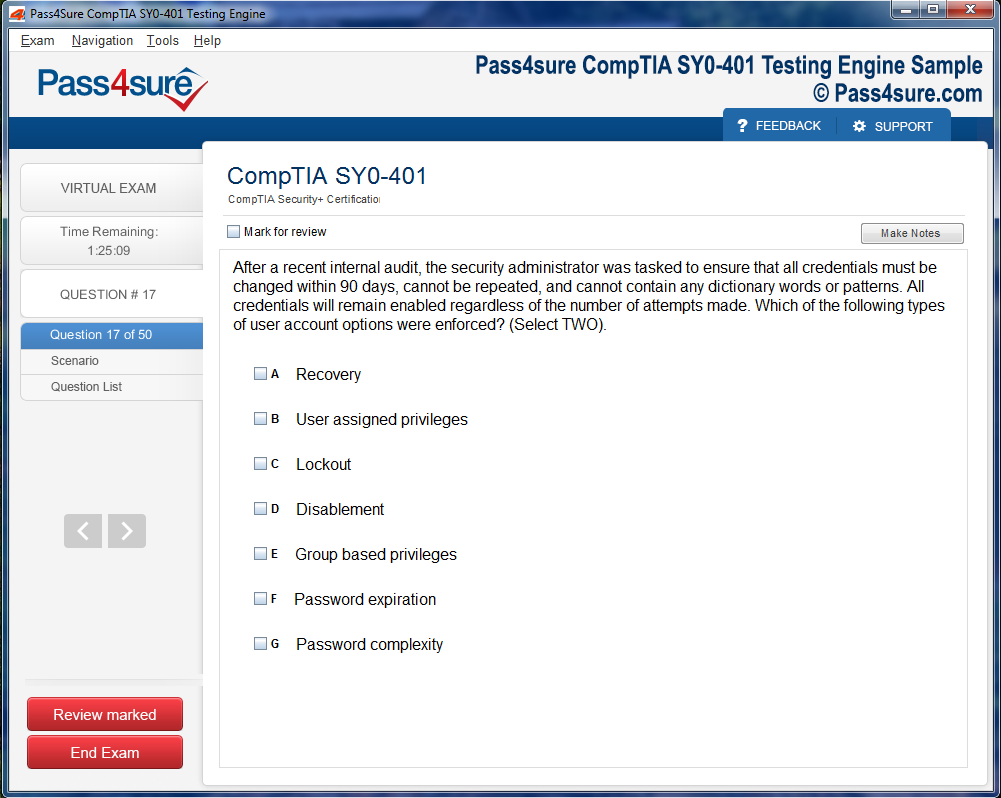
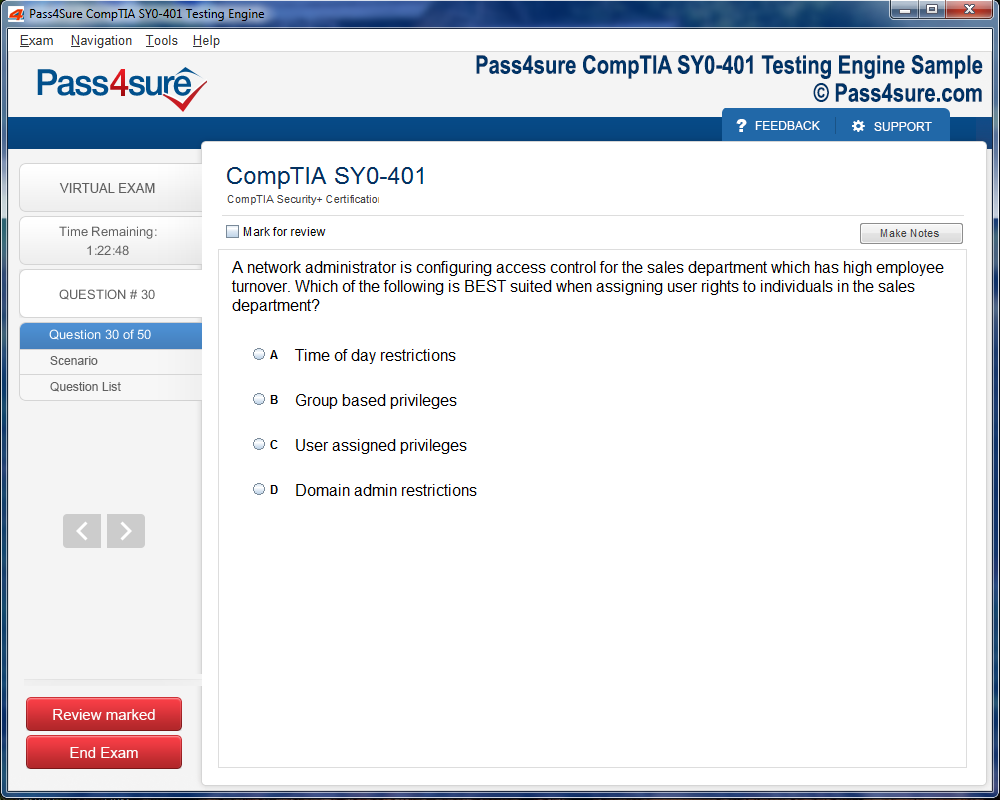
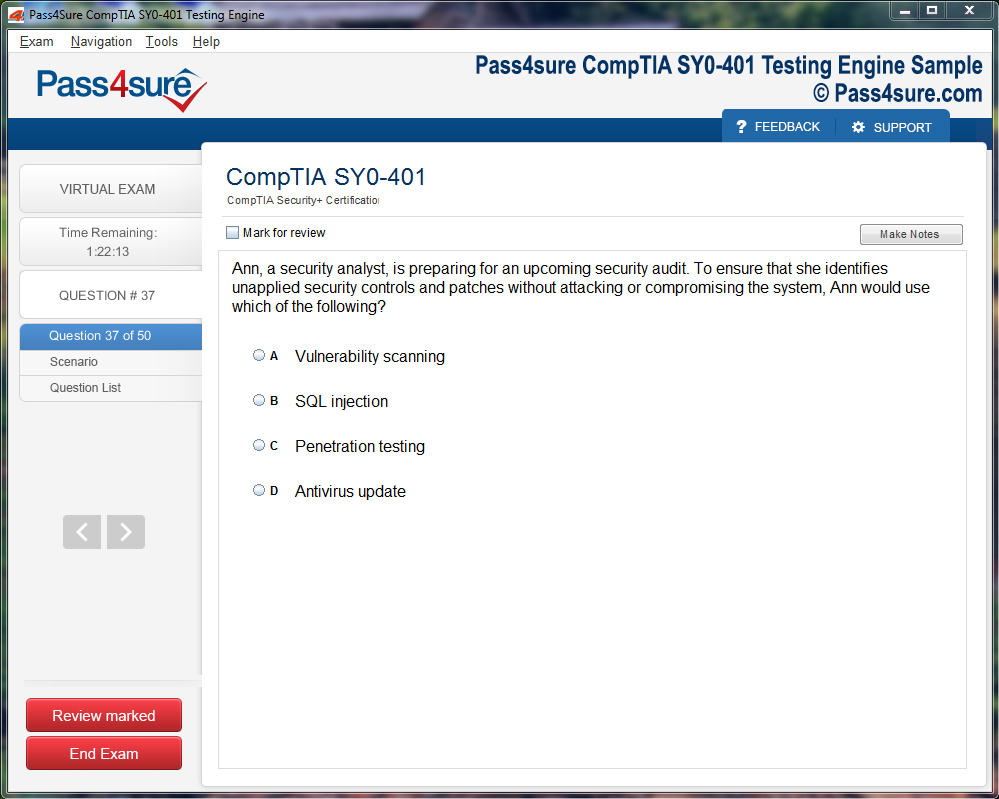
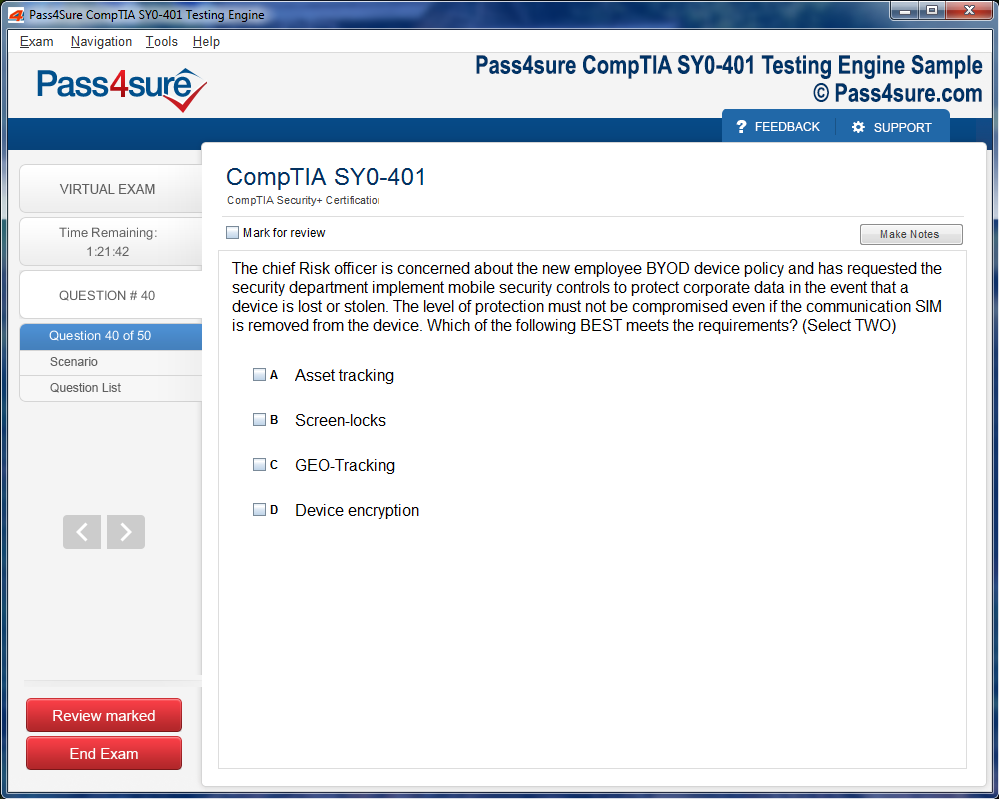
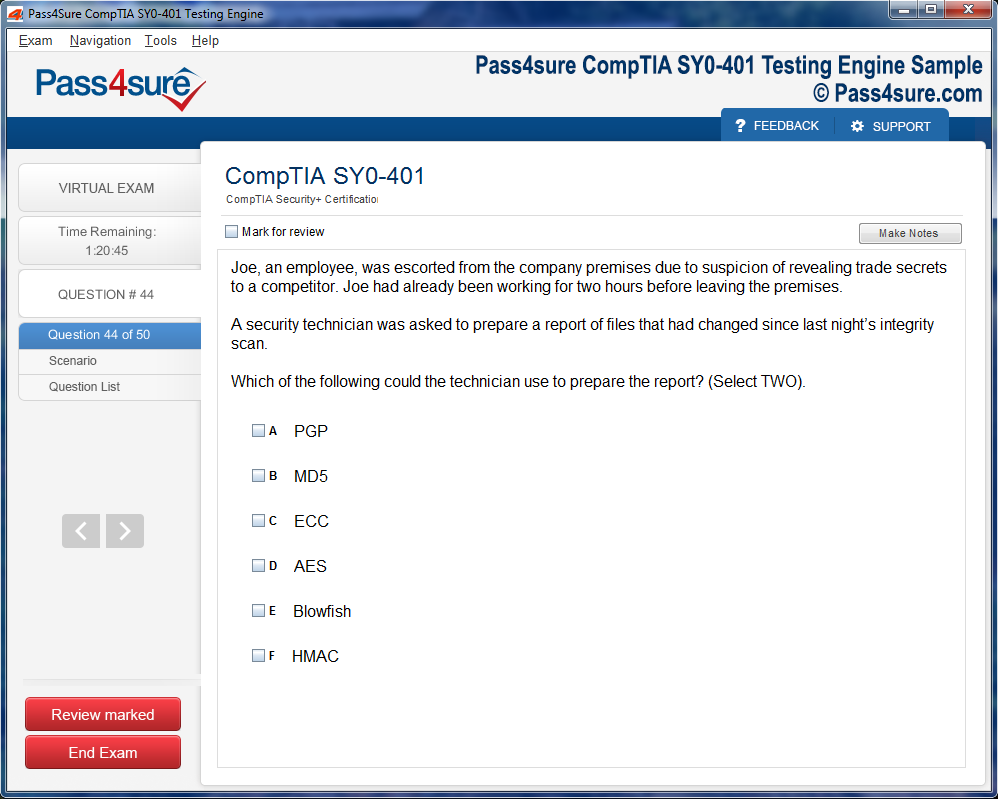
Product Screenshots
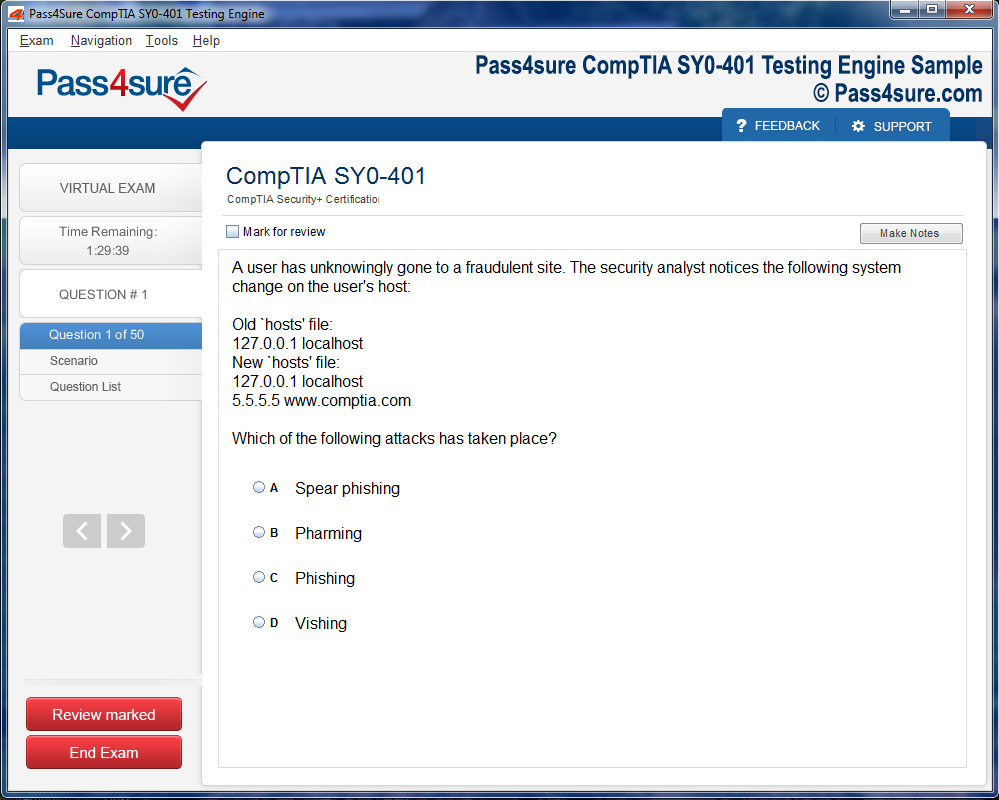
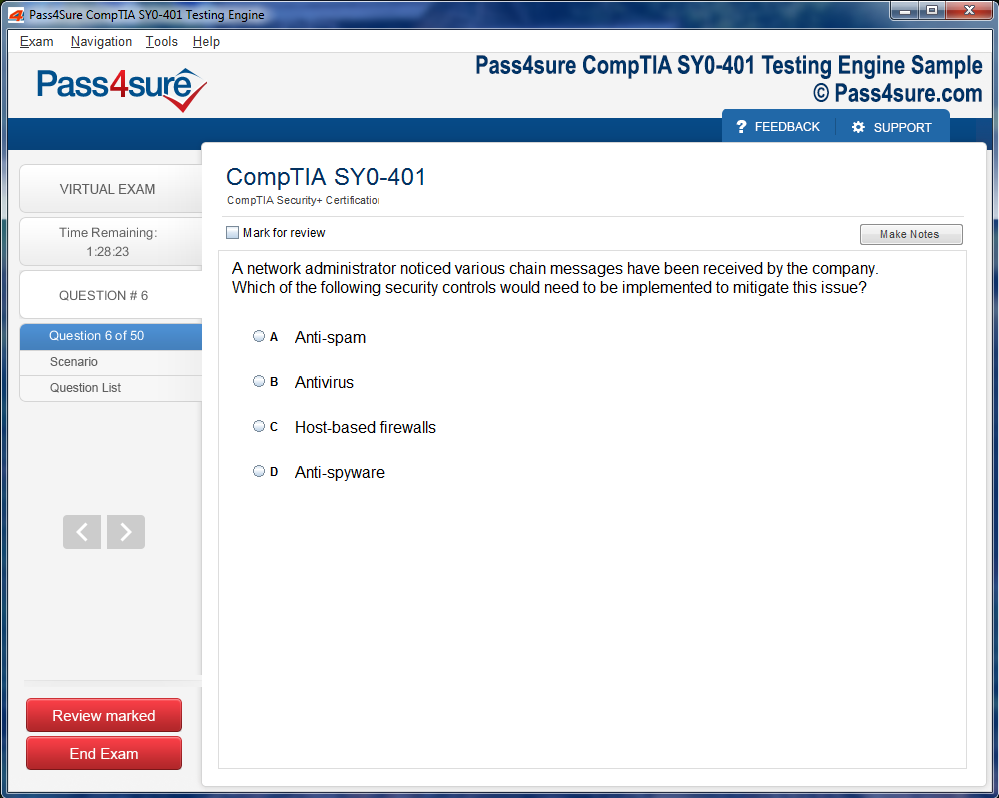
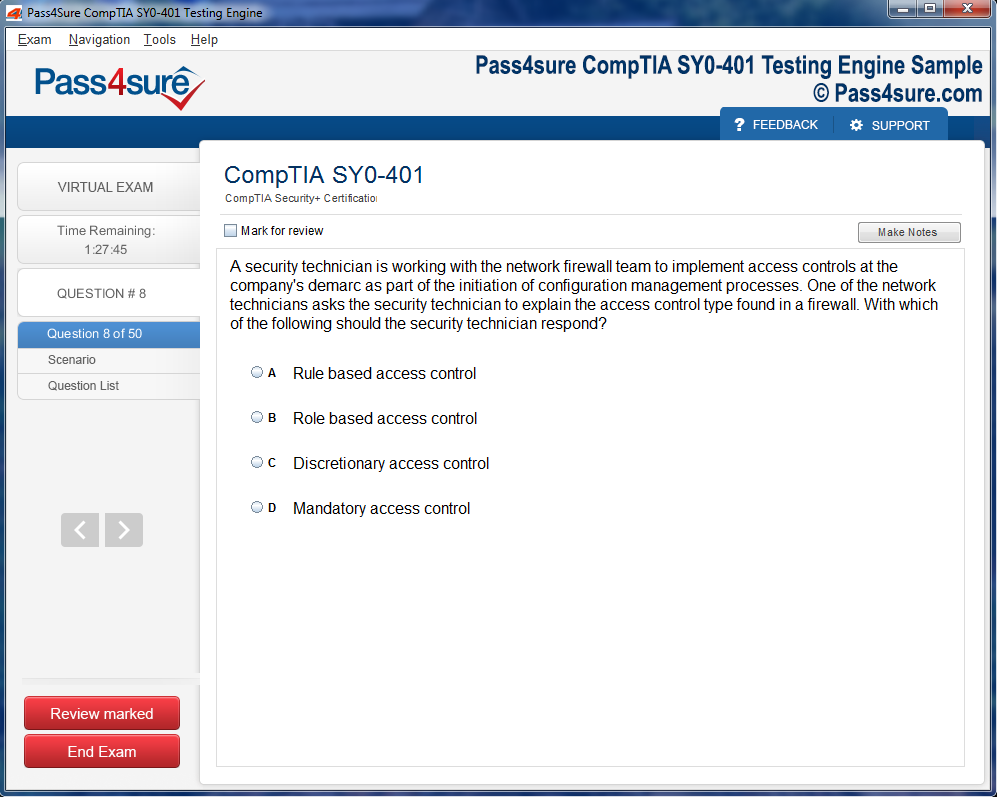
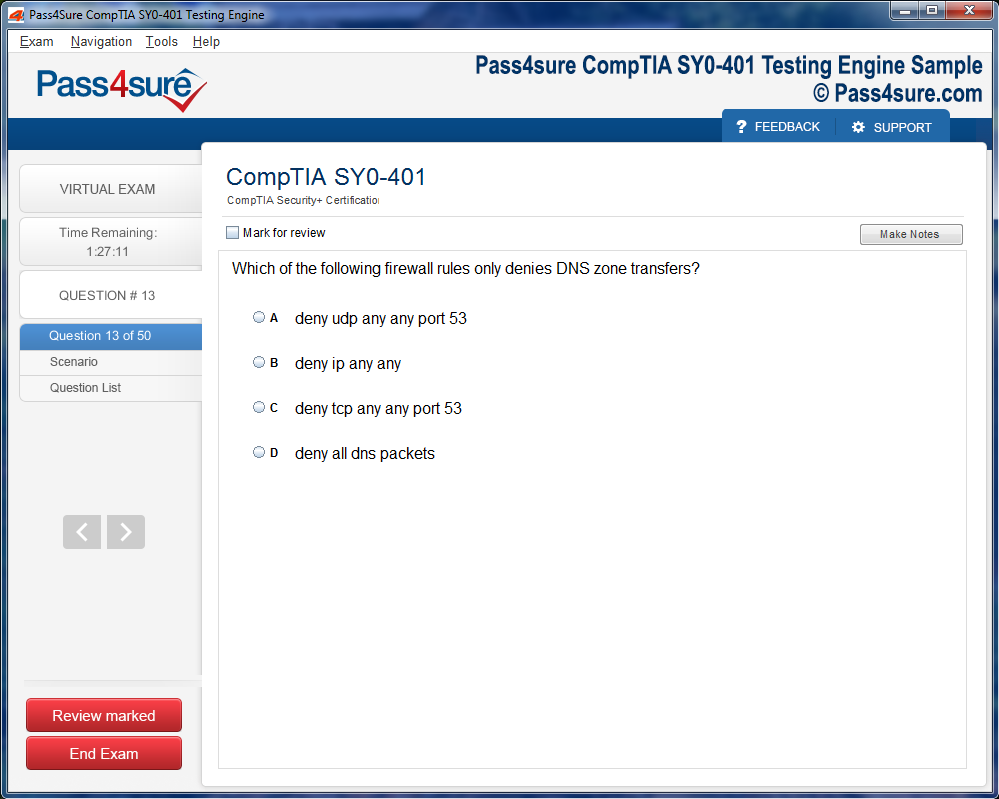
Frequently Asked Questions
How does your testing engine works?
Once download and installed on your PC, you can practise test questions, review your questions & answers using two different options 'practice exam' and 'virtual exam'. Virtual Exam - test yourself with exam questions with a time limit, as if you are taking exams in the Prometric or VUE testing centre. Practice exam - review exam questions one by one, see correct answers and explanations.
How can I get the products after purchase?
All products are available for download immediately from your Member's Area. Once you have made the payment, you will be transferred to Member's Area where you can login and download the products you have purchased to your computer.
How long can I use my product? Will it be valid forever?
Pass4sure products have a validity of 90 days from the date of purchase. This means that any updates to the products, including but not limited to new questions, or updates and changes by our editing team, will be automatically downloaded on to computer to make sure that you get latest exam prep materials during those 90 days.
Can I renew my product if when it's expired?
Yes, when the 90 days of your product validity are over, you have the option of renewing your expired products with a 30% discount. This can be done in your Member's Area.
Please note that you will not be able to use the product after it has expired if you don't renew it.
How often are the questions updated?
We always try to provide the latest pool of questions, Updates in the questions depend on the changes in actual pool of questions by different vendors. As soon as we know about the change in the exam question pool we try our best to update the products as fast as possible.
How many computers I can download Pass4sure software on?
You can download the Pass4sure products on the maximum number of 2 (two) computers or devices. If you need to use the software on more than two machines, you can purchase this option separately. Please email sales@pass4sure.com if you need to use more than 5 (five) computers.
What are the system requirements?
Minimum System Requirements:
- Windows XP or newer operating system
- Java Version 8 or newer
- 1+ GHz processor
- 1 GB Ram
- 50 MB available hard disk typically (products may vary)
What operating systems are supported by your Testing Engine software?
Our testing engine is supported by Windows. Andriod and IOS software is currently under development.
Quick Preparation Tips to Master the Genesys CIC-101-01 Exam
The Genesys CIC-101-01 framework thrives in the orchestration of multifarious communication channels, each a node within an intricate lattice of interaction pathways. Voice interactions, once linear, now coexist in synchronous harmony with chat, email, and social media conduits. Understanding the nuances of channel convergence is paramount, as asynchronous and synchronous interactions necessitate divergent routing logics and capacity considerations.
A salient feature of this ecosystem is the contact flow topology. Contact flows operate as algorithmic blueprints, dictating interaction trajectories with meticulous precision. Aspiring professionals must internalize the cause-and-effect relationships within these schematics. Experimentation within sandbox environments cultivates an intuitive sense of dynamic rerouting, queue prioritization, and failover contingencies. Rather than rote memorization, learners should aim for a conceptual fluency that allows for rapid mental simulation of hypothetical interaction scenarios.
Cognitive Cartography of Routing Strategies
Routing strategies in Genesys CIC-101-01 are not arbitrary; they constitute a sophisticated cognitive map aligning customer intent with operational efficiency. Candidates must navigate through concepts such as skill-based routing, priority escalation, and real-time load balancing. Each strategy embodies principles of probabilistic allocation, queue dynamics, and latency mitigation.
Visual schemata, particularly Sankey diagrams and network graphs, can elucidate these abstract constructs. These tools allow aspirants to trace the lifeline of an interaction from inception to resolution, highlighting potential bottlenecks or inefficiencies. By transmuting abstract rules into tangible, graphical representations, learners forge neural pathways conducive to long-term retention and agile problem-solving under exam conditions.
Mastery of Session Lifecycle Dynamics
Sessions constitute the temporal heartbeat of the Genesys CIC-101-01 environment. An interaction, whether vocal or textual, is encapsulated within a session that persists across multiple state transitions. Recognizing the ephemeral and persistent states of sessions—ranging from initiation, queuing, engagement, to termination—is critical for both design and troubleshooting.
Beyond theoretical understanding, practical experimentation exposes the intricacies of session handoffs, context preservation, and cross-channel continuity. Candidates should cultivate the ability to predict session behavior under varying load conditions and interruption scenarios. Such mastery not only fortifies exam readiness but instills a functional competence transferable to real-world deployment.
Semantic Dexterity in Configuration Management
Configuration in Genesys CIC-101-01 transcends mere parameterization; it demands semantic dexterity and logical foresight. Each setting, from routing expressions to queue thresholds, reverberates through the ecosystem, impacting operational fluidity. Professionals must apprehend the interplay between configuration artifacts, their hierarchical dependencies, and conditional triggers.
Analytical techniques such as dependency matrices and impact analysis diagrams serve as indispensable tools. They facilitate anticipatory reasoning, allowing candidates to foresee ramifications of modifications before execution. Emphasizing cognitive patterns over rote memorization encourages a problem-solving orientation, essential for both the exam and operational excellence.
Experiential Immersion through Lab Simulations
Pragmatic engagement is the sine qua non of CIC-101-01 mastery. Hands-on labs, emulating complex real-world scenarios, cultivate adaptive reasoning and procedural agility. Experiential immersion enhances the neural encoding of abstract principles, converting ephemeral insights into enduring cognitive assets.
In particular, scenario-based exercises, such as routing optimization under peak load, escalation handling, and multi-channel session integration, fortify analytical dexterity. Candidates are encouraged to adopt iterative experimentation—adjusting variables, observing system responses, and refining strategies—to achieve both conceptual clarity and procedural competence.
Leveraging Analytical Cognition for Troubleshooting
Genesys CIC-101-01 is as much a crucible of analytical cognition as it is a test of procedural knowledge. Troubleshooting exercises compel candidates to employ deductive reasoning, pattern recognition, and heuristic problem-solving. Understanding the signals of misrouted interactions, latency anomalies, and queue congestion equips aspirants with a diagnostic acumen that surpasses rote recall.
Cognitive scaffolding, such as fault trees and causal loop diagrams, augments problem-solving efficacy. These mental models enable rapid identification of root causes and potential mitigations, fostering confidence under both exam conditions and operational exigencies. The cultivation of analytical vigilance transforms routine troubleshooting into a systematic, almost instinctive process.
Cognitive Structuring and Conceptual Hierarchies
The efficacy of comprehension often hinges upon cognitive scaffolding. Establishing hierarchical frameworks of interrelated concepts allows aspirants to perceive relationships that are otherwise latent. For instance, routing scripts, though seemingly discrete, interconnect with reporting metrics and agent workflow orchestration. By mapping these interdependencies through conceptual diagrams or mnemonic architectures, learners can cultivate an intuitive grasp that transcends rote memorization. This method engenders a mental lattice capable of supporting advanced problem-solving during dynamic exam scenarios.
Furthermore, leveraging analogical reasoning facilitates abstraction. Drawing parallels between unfamiliar configurations and previously mastered paradigms accelerates cognitive assimilation. The judicious employment of metaphoric models transforms convoluted interactions into approachable constructs, enhancing both recall and adaptive application in situational simulations.
Immersive Scenario Simulation
Abstract knowledge alone seldom suffices. Immersive simulation exercises propel learners from passive familiarity into procedural mastery. Constructing mock CIC environments or virtual interaction flows enables tactile engagement with theoretical principles. Such exercises should deliberately introduce stochastic variables—unexpected errors, atypical routing patterns, or reporting anomalies—to mimic real-world contingencies. This exposure not only solidifies procedural fluency but also cultivates adaptive thinking, a crucial attribute for scenario-based evaluation.
Incorporating collaborative simulations amplifies this effect. Engaging peers in role-based exercises, where one participant navigates the interaction scripts while another monitors reporting metrics, generates a dynamic feedback loop. This interactivity stimulates analytical acumen and reinforces the holistic comprehension of interdependent system components.
Nuanced Metrics and Analytical Dissection
A profound grasp of reporting metrics necessitates more than superficial familiarity; it demands analytical perspicacity. Metrics such as average handle time, abandon rates, and interaction latency should be dissected to reveal underlying behavioral patterns. By quantifying operational efficiencies and recognizing anomalous trends, learners cultivate an anticipatory mindset that anticipates system bottlenecks and optimizes workflow configurations. Such analytical dexterity transforms passive observation into actionable insight, an indispensable skill for CIC practitioners.
Additionally, the integration of comparative temporal analyses—examining metrics longitudinally across intervals—enables aspirants to discern subtle performance trajectories. This meticulous attention to granularity fosters precision in both configuration adjustments and strategic decision-making, enhancing the candidate’s capacity for informed interventions.
Synaptic Reinforcement Through Variegated Modalities
Retention is magnified when cognitive input traverses multiple sensory and cognitive channels. Rather than relying solely on textual perusal, incorporating visual schematics, auditory explanations, and kinesthetic enactments strengthens synaptic reinforcement. For instance, diagramming interaction queues while verbalizing script logic creates dual encoding, embedding information across complementary neural pathways. This polyphonic engagement mitigates cognitive decay and amplifies long-term retention, essential for high-stakes assessments where recall under pressure is paramount.
Periodic interleaving of disparate topics—rotating between routing, reporting, and configuration nuances—prevents habituation and maintains attentional salience. Such variegated exposure ensures that knowledge remains accessible across contexts, reducing the risk of compartmentalized understanding.
Cognitive Fatigue Mitigation and Attention Calibration
The intensity of preparation for CIC-101-01 can precipitate cognitive saturation. To counteract this, aspirants must adopt strategies that harmonize exertion with recuperation. Interval-based study cycles, punctuated by brief restorative intermissions, maintain attentional acuity while preventing burnout. Integrating mindfulness practices or brief meditative exercises further enhances concentration and emotional regulation, equipping learners to approach complex problem-solving with clarity and composure.
Equally vital is the calibration of attentional distribution. Prioritizing high-yield concepts during peak cognitive periods, while allocating lower-demand tasks to less alert intervals, maximizes efficiency. This temporal alignment of mental resources ensures that effort expenditure corresponds with potential impact, optimizing both learning velocity and depth.
Precision in Configuration and Conceptual Differentiation
Mastery of CIC-101-01 is not merely conceptual; it requires precision in the practical deployment of configurations. Minor divergences in routing logic or agent script sequencing can cascade into systemic inefficiencies. Developing a repository of commonly conflated terms, configuration pitfalls, and edge-case scenarios fosters rapid identification and correction of errors. This practice transforms abstract procedural knowledge into actionable expertise, enabling candidates to navigate intricate problem sets with assurance.
Additionally, cultivating metacognitive awareness—monitoring one’s comprehension and procedural accuracy—reinforces mastery. Periodic self-auditing, through reflective questioning or reverse-engineering of practice scenarios, promotes adaptive learning and fortifies both confidence and competence.
Adaptive Testing and Temporal Acumen
Beyond content mastery, candidates must cultivate temporal acuity. Simulated assessments under strict time constraints train aspirants to manage pacing, allocate attention strategically, and mitigate the cognitive strain associated with prolonged focus. Developing an intuitive sense of temporal expenditure per question or module enhances decision-making efficiency, reducing errors caused by rushed judgments or overextended deliberation.
Strategically alternating between rapid-fire exercises and in-depth analytical tasks fosters a dual competency: swift, accurate responses to standard scenarios, coupled with deliberate, meticulous engagement for complex contingencies. This bifocal approach nurtures both agility and depth, essential for the holistic proficiency demanded by CIC-101-01.
Embedding Cognitive Hooks Through Narrative Analogies
In the labyrinthine corridors of technical learning, narrative analogies act as cognitive lodestars. Consider an interaction orchestrator as a symphonic conductor: each routing decision, agent assignment, or skill evaluation akin to a musical note contributing to a harmonious crescendo of operational efficiency. Visualizing system components as living ecosystems transforms sterile abstractions into sentient constructs, encouraging associative memory and reducing rote fatigue. By anthropomorphizing digital entities, one cultivates a mental theatre where each concept performs a discernible role, simplifying the integration of multifaceted exam content.
Mnemonics as Neurocognitive Catalysts
Mnemonics are not mere pedagogical embellishments; they function as neurocognitive catalysts, compressing voluminous data into palatable morsels for neural digestion. For example, the intricate interplay between session persistence, failover contingencies, and queue escalation can be condensed into acronymic triads, which act as mnemonic compasses during high-pressure assessment scenarios. Layering sensory cues—visual, auditory, or kinesthetic—reinforces synaptic imprints, ensuring that recall is both rapid and reliable. The judicious deployment of rhyme, rhythm, and alliteration enhances this process, transforming abstract constructs into memorable linguistic architectures.
Concept Mapping for Holistic Synthesis
Concept mapping is a cerebral blueprint that illuminates the interconnected lattice of Genesys CIC functionalities. Skill-based routing, omnichannel orchestration, and agent group hierarchies can be visually interlinked in dendritic maps that expose systemic dependencies. This graphical strategy facilitates lateral thinking, enabling candidates to traverse beyond isolated memorization toward an integrative understanding. Concept maps serve as mental cartography, guiding learners through operational intricacies and highlighting potential bottlenecks or inefficiencies, thereby fostering anticipatory problem-solving skills during examination simulations.
Multisensory Immersion for Enhanced Retention
Immersive study techniques leverage multiple sensory pathways to entrench knowledge in long-term memory. Simulating a customer journey across email, chat, and telephony channels, while verbally narrating agent interventions and system responses, stimulates both auditory and visual faculties. Incorporating gestural or spatial interactions—such as physically mapping workflow sequences on a whiteboard—activates kinesthetic pathways, resulting in a robust, multi-dimensional comprehension. This embodiment of learning transforms abstract procedural knowledge into an experientially grounded schema, facilitating rapid retrieval under temporal constraints.
Cognitive Chunking for Memory Optimization
Cognitive chunking partitions voluminous technical content into manageable, semantically coherent units. Rather than grappling with an undifferentiated expanse of session management protocols or routing logic, learners segment information into digestible clusters. Each cluster can be anchored to a mnemonic or narrative metaphor, establishing cognitive scaffolding that streamlines recall. This stratagem mitigates working memory overload, allowing candidates to navigate complex scenario-based questions with agility and precision. Systematic chunking is particularly efficacious when dealing with interdependent functionalities that span multiple operational modules.
Analogical Reasoning in Scenario Analysis
Analogical reasoning functions as a cerebral accelerant, permitting learners to transpose known constructs onto novel scenarios. For instance, envisioning a routing script as a river delta—where interactions branch and converge based on dynamic conditions—enables intuitive anticipation of system behavior. By fostering pattern recognition and predictive inference, analogical reasoning equips candidates to tackle emergent problems with confidence. Integrating analogies into regular study sessions bridges the gap between static knowledge and adaptive application, a critical competency for mastery of CIC-101-01 exam intricacies.
Layered Revision Through Interleaving
Interleaving is a sophisticated cognitive technique whereby disparate topics are alternately reviewed to fortify retention and enhance discriminative understanding. Alternating between session management strategies, reporting analytics, and agent skill matrices encourages cross-contextual synthesis, reducing susceptibility to mnemonic interference. This method cultivates adaptive expertise, ensuring that knowledge remains flexible and readily deployable. Interleaving, coupled with spaced repetition, transforms episodic rehearsal into a resilient, long-term retention framework, particularly valuable for high-stakes technical examinations.
Gamification as Motivational Amplifier
Gamifying study routines injects an element of intrinsic motivation into rigorous preparation. Structured challenges, point accumulation, and scenario-based simulations convert abstract procedural drills into engaging cognitive quests. By framing tasks as interactive missions, learners experience heightened arousal and attentional focus, which neuroscientific studies associate with improved memory consolidation. Gamification also encourages metacognitive reflection: analyzing mistakes and strategizing corrective actions sharpens both knowledge accuracy and application proficiency, fostering a more confident, resilient approach to the exam.
Harnessing Experiential Methodologies for Expertise Amplification
Immersive experiential methodologies constitute the crucible in which theoretical knowledge transmutes into actionable expertise. Within the ambit of Genesys CIC-101-01 mastery, passive assimilation of concepts offers only ephemeral competence. Experiential engagement, however, forges durable cognitive schemata capable of navigating intricate telephony architectures and dynamic customer interaction matrices. Practitioners are urged to embrace environments where simulated contingencies mimic operational exigencies, cultivating a proclivity for anticipatory problem-solving rather than reactive adjustments.
Navigating the Labyrinth of Call Routing Dynamics
Call routing within Genesys is an intricate lattice of conditional logic, queue stratification, and agent skill calibration. Merely memorizing the pathways of call distribution cannot substitute for tactile familiarity with routing algorithms in live-mimicked scenarios. Engaging with dynamic queue configurations—modifying priority thresholds, inserting conditional branches, and experimenting with overflow contingencies—reveals nuances of interaction flow that textual explanations often obscure. Such immersion cultivates an intuitive grasp of latency, concurrency, and resource optimization, elevating candidates from rote implementers to agile orchestrators of communication ecosystems.
Cultivating Dexterity in Agent Workspace Configurations
The agent workspace is more than an operational dashboard; it is an interface where ergonomics and efficiency coalesce. Hands-on manipulation of workspace layouts, widget placement, and contextual scripting fosters procedural fluency that transcends cognitive rehearsal. Candidates gain an appreciation for the interplay between agent cognition, system responsiveness, and interface ergonomics. This dexterity ensures that when confronted with scenario-based queries or adaptive workflow exercises, the practitioner can navigate with alacrity and precision, rather than tentative conjecture.
Iterative Reinforcement and Cognitive Consolidation
Repetition is not merely a mnemonic device but a catalyst for deep procedural assimilation. Iterative engagement with lab exercises entrenches operational sequences into long-term memory, rendering complex procedures instinctive. Systematic documentation of each experimental endeavor serves a dual function: it externalizes cognitive processing for reflective critique and constructs a repository of procedural heuristics for future reference. Recording anomalies, successes, and optimization strategies enables a meta-cognitive perspective that refines analytical acumen and heightens situational awareness.
Simulating High-Intensity Interaction Scenarios
To cultivate resilience and agility, candidates must venture beyond standard operational exercises into stress-testing paradigms. Simulating surges of high-volume interactions, routing conflicts, or multi-tiered escalation paths exposes latent vulnerabilities within system architecture and personal response strategies. Such contrived volatility engenders adaptive reasoning, encouraging inventive resolution pathways and reinforcing the capacity to maintain operational coherence amidst systemic turbulence.
Integrative Synergy Between Theory and Practice
The most formidable expertise emerges when conceptual frameworks intersect with pragmatic experimentation. Each hands-on lab should be prefaced or followed by a reflective theoretical review, bridging the chasm between abstraction and execution. This integrative methodology ensures that principles are not merely memorized but internalized, enabling candidates to apply knowledge fluidly under the temporal and cognitive pressures of examination scenarios. The iterative interplay between theory and praxis fosters not only retention but a confident, anticipatory approach to complex problem-solving.
Leveraging Analytical Reflection for Continuous Improvement
Beyond mere engagement, analytical reflection transforms repetitive practice into strategic advancement. By dissecting procedural outcomes, candidates identify inefficiencies, unearth latent misconceptions, and recalibrate operational strategies. Reflection encourages the cultivation of heuristic patterns—mental shortcuts derived from cumulative experience—that streamline future interventions and elevate proficiency from competent to expert. In the context of Genesys CIC-101-01 preparation, reflective analysis ensures that practice is purposeful rather than perfunctory.
Experimentation with Alternative Routing Architectures
Exploring unconventional routing schemes—such as dynamically reconfiguring queue hierarchies, experimenting with multi-node failovers, or integrating cross-skill routing—sharpens cognitive elasticity. These exercises challenge assumptions, provoke inventive thinking, and reveal the systemic ramifications of configuration choices. Candidates learn to anticipate emergent behaviors that may not be apparent in linear instructional materials, thereby developing a nuanced understanding of system interdependencies.
The Virtue of Exploratory Challenges
Inculcating a mindset of exploratory challenge engenders adaptability and intellectual curiosity. Beyond prescribed exercises, aspirants are encouraged to devise hypothetical scenarios, simulate anomalies, or orchestrate contrived interaction bottlenecks. These unstructured engagements cultivate creative problem-solving, reinforcing the capacity to navigate unpredictable operational landscapes. Such exercises not only enhance examination preparedness but mirror the complexities of real-world deployment, imbuing candidates with confidence and foresight.
Harnessing Cognitive Synapses for Exam Mastery
Navigating the intricate labyrinth of technical examinations mandates more than rote memorization; it necessitates cognitive alchemy. By transmuting information into deeply interlinked knowledge constructs, candidates can fortify neural pathways, ensuring retrieval under the duress of timed assessments. Techniques such as spaced repetition, interleaved practice, and elaborative interrogation catalyze the consolidation of episodic and procedural memory, engendering a more resilient cognitive scaffolding.
Curating an Exemplar Study Repository
An efficacious preparation regimen commences with the curation of an exemplar study repository. This entails discerning authoritative compendia, dissecting official manuals, and integrating experiential heuristics gleaned from seasoned practitioners. Emphasis should be placed on dissecting high-yield domains—such as multichannel routing algorithms, agent workflow orchestration, and failover contingencies—while eschewing digressive or redundant materials.
Employing Heuristic Problem-Solving Paradigms
Cognitive dexterity is augmented by heuristic problem-solving paradigms. Rather than mechanically reproducing procedural knowledge, aspirants should internalize algorithmic logic and adaptive strategies. Thought experiments, scenario simulations, and reverse-engineering workflows cultivate anticipatory reasoning, equipping candidates to navigate atypical problem sets with dexterous proficiency.
Leveraging Synergistic Peer Interactions
Engagement with peer cohorts precipitates a synergistic amplification of understanding. Through dialectical exchanges, divergent cognitive schemas converge, exposing latent conceptual blind spots and fostering meta-cognitive awareness. Structured discussions, critique sessions, and collaborative case analyses engender a milieu wherein knowledge is actively negotiated rather than passively consumed, resulting in durable intellectual internalization.
Integrating Multimedia Pedagogical Tools
Visual and auditory stimuli can significantly enhance cognitive encoding. Video tutorials, interactive webinars, and demonstrative simulations convert abstract constructs into tangible cognitive artifacts. These dynamic modalities cater to varied learning archetypes, bridging the gap between theoretical comprehension and operational application. Candidates should judiciously blend textual, visual, and experiential inputs to achieve holistic absorption of complex systems.
Optimizing Revision Through Strategic Annotation
Annotation is a metacognitive instrument that transmutes passive reading into active engagement. Maintaining a systematically annotated repository—comprising marginalia, synthesized notes, and personalized mnemonics—facilitates rapid review cycles. This compendium functions as a cognitive accelerator, enabling precise targeting of weaker domains while reinforcing mastery in foundational areas.
Exploiting Adaptive Practice Mechanisms
Adaptive practice platforms offer granular feedback loops, aligning problem difficulty with candidate proficiency. By iteratively confronting progressively challenging scenarios, aspirants refine diagnostic acuity, procedural fluency, and situational judgment. Such adaptive mechanisms not only reinforce knowledge retention but also cultivate resilience under evaluative pressure, mitigating performance volatility.
Cultivating Cognitive Resilience Under Exam Pressure
Examination environments impose acute cognitive load and temporal constraints. Cultivating resilience entails deliberate exposure to stress-inducing simulations, time-bound problem solving, and mindfulness-based concentration techniques. By habituating to high-pressure scenarios, candidates attenuate anxiety-induced cognitive degradation, sustaining optimal problem-solving performance when stakes are maximal.
Synchronizing Knowledge Domains Through Interdisciplinary Insights
Complex technical examinations often reward cross-domain cognition. Integrating insights from adjacent disciplines—such as systems engineering, behavioral analytics, and operational logistics—can illuminate non-obvious connections within the primary subject matter. This interdisciplinary synthesis engenders flexible thinking, enabling candidates to approach multifaceted questions with innovative strategies rather than linear reasoning.
Constructing Iterative Feedback Loops
Feedback is the fulcrum of accelerated expertise acquisition. Regular self-assessment, peer critique, and mentor evaluation establish iterative feedback loops that reveal both latent misconceptions and emerging proficiencies. By systematically calibrating study trajectories in response to these insights, candidates ensure that preparation remains dynamic, responsive, and increasingly efficacious over time.
Orchestrating Time-Efficient Study Cadences
Temporal orchestration of study activities is paramount. Segmenting preparation into high-focus intervals interspersed with restorative pauses optimizes cognitive endurance. Employing circadian-aligned scheduling, prioritizing cognitively intensive tasks during peak alertness, and interspersing analytical review with creative consolidation exercises amplifies retention while minimizing burnout.
Exam Day Readiness and Psychological Strategies
Equally imperative to technical acumen is the cultivation of psychological equanimity. The Genesys CIC-101-01 examination is less a measure of rote memorization than a crucible for composure, logic, and strategic cognition. Engaging in preemptive mental rehearsal, such as envisioning successful navigation through complex scenarios, primes cognitive pathways for efficiency. Controlled diaphragmatic breathing and micro-meditative pauses can attenuate anticipatory anxiety, facilitating lucid analytical thought.
Temporal orchestration during the exam demands judicious prioritization. A preliminary reconnaissance of questions permits allocation of cognitive resources where they are most efficacious. Initiating with familiar or high-confidence items establishes momentum, while deliberate engagement with more labyrinthine prompts mitigates the risk of precipitous errors. Scenario-driven queries benefit from dynamic mental simulation, wherein configurations are iteratively envisaged to preempt oversights.
Reflective post-assessment evaluation serves as a metacognitive compass. Parsing hesitation points or recurrent misinterpretations illuminates latent weaknesses, informing iterative improvement strategies for both recertification and pragmatic application. Reconceptualizing the examination as a structured cognitive expedition fosters resilience, confidence, and enduring mastery beyond the ephemeral test environment.
Cognitive Resilience Through Mental Priming
Cognitive resilience under duress is cultivated, not innate. Neuroplastic adaptation, through repetitive engagement with mock scenarios and problem-solving drills, fortifies the neural circuits responsible for rapid decision-making. Engaging in mnemonic architecture, such as loci-based or narrative-linked memory scaffolds, accelerates recall without overreliance on superficial memorization.
Visualization exercises, where one mentally navigates complex call flows or system integrations, augment synaptic reinforcement. These exercises are most effective when paired with deliberate attention to potential pitfalls, fostering anticipatory correction. The interplay of sustained focus, incremental practice, and controlled stress exposure consolidates expertise while maintaining neural efficiency.
Micro-breaks, employed strategically, further enhance cognitive endurance. Momentary disengagements reset attentional resources, prevent mental fatigue, and sustain clarity across protracted examination durations. These cognitive intermissions, coupled with targeted mental rehearsal, synergize to create a high-functioning mental schema, optimized for both recall and analytical agility.
Dynamic Time Management and Prioritization
Temporal strategy is not merely about pacing but about orchestrating cognitive throughput. Dividing examination segments into hierarchical priority tiers ensures that high-yield or conceptually familiar questions receive early attention, reducing cumulative stress. Time allocation should be fluid, with contingencies for unexpectedly complex items.
The first pass through an examination should be diagnostic, identifying questions that trigger immediate recognition versus those requiring deeper deliberation. Subsequent engagement with challenging segments benefits from compartmentalized attention, treating each query as an isolated micro-challenge to prevent cognitive saturation. Such compartmentalization optimizes mental bandwidth and mitigates decision fatigue.
Leveraging metacognitive awareness during the test—periodically assessing temporal expenditure versus completion percentage—maintains strategic pacing. When practiced consistently, this approach transforms perceived temporal scarcity into structured opportunity, enhancing both accuracy and completeness.
Scenario Simulation and Applied Analysis
Scenario-based questions demand more than procedural familiarity; they require applied reasoning. Mental simulation of workflows, system configurations, or communication sequences creates an internal model that anticipates contingencies. This proactive cognitive rehearsal reveals latent dependencies or misconfigurations before they manifest in answers.
Analytical reasoning thrives when paired with systematic decomposition. Breaking down complex scenarios into constituent components allows for sequential evaluation, ensuring no element is overlooked. Hypothetical iteration—testing “what-if” modifications within the mind’s eye—builds adaptive problem-solving skills, enabling rapid adjustment in real-time examination conditions.
Cross-referencing scenario assumptions with fundamental principles reinforces accuracy. The mind, when conditioned through repetitive simulation and structured analysis, transitions from reactive to anticipatory, a shift that can distinguish proficient candidates from those reliant on surface-level knowledge.
Self-Affirmation and Confidence Calibration
Psychological poise is inseparable from self-perception. Positive affirmation, when consistently internalized, recalibrates stress responses and enhances performance under evaluative pressure. Constructing a cognitive narrative of competence, reinforced by tangible preparatory achievements, engenders a mindset resilient to transient uncertainty.
Confidence calibration is critical; overestimation may precipitate rash errors, while underestimation can inhibit engagement with complex items. Periodic self-assessment, through practice exams or reflective journaling, provides an empirical framework for evaluating readiness and adjusting internal expectations accordingly.
Moreover, the integration of mindfulness techniques—such as moment-to-moment focus on task execution rather than outcome anxiety—facilitates sustained attentional control. This disciplined focus translates into deliberate, considered responses, particularly under the constraints of high-stakes assessment environments.
Reflective Iteration and Continuous Improvement
Examinations function as diagnostic instruments as much as evaluative ones. Post-exam reflection transforms raw experience into actionable insight. Cataloging areas of hesitation, misinterpretation, or knowledge gaps supports a feedback loop essential for continuous improvement. This iterative approach applies not only to examination contexts but to broader professional practice, where adaptive expertise is prized.
Strategic documentation—annotating problem types, response rationale, and cognitive bottlenecks—builds an evolving repository of personal best practices. Over successive cycles of preparation, such documentation crystallizes into a bespoke blueprint for mastery, blending conceptual understanding with procedural fluency.
The integration of reflective iteration into a preparatory regimen nurtures a mindset attuned to both self-efficacy and humility, recognizing strengths while methodically addressing vulnerabilities.
Neurocognitive Optimization for Retention
Maximizing retention requires more than repetition; it demands strategic encoding and retrieval practice. The human brain favors salience and pattern recognition, so linking discrete facts to overarching schemas enhances memory consolidation. Techniques such as interleaved practice, where varied topics are cyclically revisited, exploit the spacing effect, strengthening long-term recall while avoiding cognitive saturation.
The act of teaching oneself or verbalizing concepts transforms passive knowledge into active mastery. Explaining call flows, configuration protocols, or system interactions to an imagined audience triggers metacognitive evaluation, revealing gaps in understanding that might otherwise remain latent. Complementing this with deliberate practice, including timed quizzes and scenario simulations, fortifies synaptic pathways and accelerates cognitive fluency.
Environmental factors also influence neurocognitive performance. Optimal lighting, moderate ambient noise, and ergonomically supportive seating reduce extraneous cognitive load, allowing focus to be fully devoted to analytical reasoning. Even subtle rituals—arranging study materials in consistent patterns, using symbolic cues, or listening to rhythmically steady auditory stimuli—can anchor attention, enhancing memory retention.
Stress-Induced Decision Dynamics
Under high-pressure conditions, cognitive systems experience heightened arousal, often enhancing rapid decision-making but sometimes precipitating impulsivity. Understanding these dynamics enables deliberate modulation of stress responses. Controlled breathing, progressive muscle relaxation, and micro-pauses allow the autonomic nervous system to return to homeostasis, reducing the likelihood of decision errors induced by adrenaline spikes.
Cognitive reframing is equally crucial. Viewing high-stakes questions as analytical puzzles rather than evaluative threats activates problem-solving circuits over emotional circuits. Scenario rehearsal, particularly under timed conditions, habituates the brain to stress, fostering adaptive performance. The repeated experience of mild stress in practice conditions inoculates candidates against overwhelming anxiety during the actual examination.
Monitoring mental fatigue is another dimension of stress-induced decision dynamics. Cognitive endurance diminishes subtly over extended testing, affecting both working memory and executive function. Awareness of this decline allows strategic allocation of attentional resources—tackling complex scenarios during peak focus periods and deferring lower-priority items to periods of cognitive resilience.
Advanced Scenario Anticipation Techniques
Examination scenarios frequently demand anticipatory cognition, the capacity to foresee potential outcomes before they manifest. Developing this skill involves constructing detailed mental models of system behavior and workflow interactions. Visualization techniques, combined with heuristic evaluation, allow candidates to simulate cascading effects of configuration changes, preemptively identifying pitfalls or inefficiencies.
Iterative scenario testing in the mind’s eye is particularly potent. By systematically adjusting input variables and observing projected outputs, one cultivates a repertoire of adaptive strategies. This anticipatory approach reduces error probability and accelerates the decision-making process, enabling confident navigation through unfamiliar problem constructs.
Scenario anticipation also benefits from pattern recognition. Recognizing structural similarities between novel questions and previously encountered configurations allows rapid cognitive retrieval, bypassing exhaustive analytical processes without sacrificing accuracy. This method relies on both breadth of exposure and depth of conceptual understanding, emphasizing quality over quantity in preparation efforts.
Cognitive Load Management During Examination
Cognitive load, the total mental effort required to process information, is a critical determinant of performance. Excessive cognitive load impairs reasoning, reduces recall, and increases susceptibility to errors. Effective management entails both preparatory and in-the-moment strategies.
Preparatory strategies include chunking complex information into digestible schemas, creating mental hierarchies, and using mnemonic devices to encode multifaceted concepts efficiently. In-the-moment strategies involve prioritization of questions, dynamic reallocation of attention, and compartmentalization of problem elements. By isolating individual cognitive tasks, one prevents overload, sustaining analytical capacity across the examination duration.
Additionally, metacognitive monitoring—awareness of one’s cognitive state—enables real-time adjustments. Recognizing signs of mental fatigue or stress allows the candidate to implement micro-breaks, breathing exercises, or short visualization resets, maintaining clarity and precision even under sustained pressure.
Integrative Practice and Holistic Preparation
True mastery emerges from the integration of knowledge, practice, and psychological fortitude. Singular focus on memorization yields superficial competence, whereas a holistic approach—blending conceptual understanding, scenario rehearsal, stress management, and reflective iteration—produces robust, transferable expertise.
Holistic preparation incorporates multi-modal learning: reading, visual mapping, verbal explanation, and simulated application. Each modality reinforces different neural pathways, creating a resilient cognitive network capable of flexible adaptation. Regular integration sessions, where disparate concepts are synthesized into coherent frameworks, cultivate the ability to apply knowledge fluidly, essential for scenario-driven examination questions.
Feedback loops, both internal and external, enhance holistic preparation. Self-assessment, peer review, and iterative mock examinations illuminate areas for improvement, fostering continuous refinement. This cyclical process, when maintained over time, transforms preparation from reactive memorization into proactive mastery, equipping candidates to navigate unforeseen challenges with confidence.
Mindset Cultivation for Optimal Performance
The mental state with which one approaches an examination significantly impacts outcomes. Cultivating a growth-oriented mindset, characterized by curiosity, resilience, and adaptability, enables constructive engagement with challenges. Rather than perceiving errors as failures, they are reframed as diagnostic signals, informing strategic adjustment.
Mindset cultivation involves deliberate attention to internal dialogue. Replacing negative or self-limiting thoughts with affirmations of competence and preparedness enhances neural efficiency, reducing stress-induced cognitive interference. Visualization of successful navigation through complex problem sets further reinforces positive mental conditioning, creating anticipatory confidence that manifests during actual performance.
Moreover, mental agility is strengthened through diverse cognitive stimulation. Engaging with challenging problems outside of direct exam scope, such as lateral thinking exercises or cross-disciplinary scenarios, expands the repertoire of problem-solving strategies, equipping the mind to respond flexibly to novel question constructs.
Precision in Analytical Reasoning
Excellence in examination performance is often distinguished by precision of analytical reasoning. Accurate interpretation of question intent, coupled with systematic decomposition of problems, ensures that responses address the core challenge rather than peripheral details.
Structured analysis begins with identifying known variables, constraints, and desired outcomes. Each element is then evaluated for interdependencies, potential conflicts, and logical coherence. By constructing an internal map of the problem space, candidates reduce the likelihood of oversight and increase the efficiency of solution pathways.
Precision is reinforced through iterative validation. Before finalizing answers, a brief internal review ensures consistency, accuracy, and alignment with underlying principles. This disciplined approach transforms superficial familiarity into operational mastery, capable of navigating even the most intricate examination scenarios.
Resilience Through Iterative Mock Examinations
Mock examinations serve a dual function: reinforcing content familiarity and conditioning cognitive endurance. Repeated exposure to examination-like conditions habituates the mind to time constraints, stress, and scenario complexity, reducing novelty-induced cognitive disruption on the actual test day.
Iterative practice, combined with detailed post-mortem analysis, cultivates resilience. Recording errors, timing inconsistencies, and hesitation points enables targeted improvement, transforming each mock session into a structured learning opportunity. Over successive iterations, performance stabilizes, and candidates internalize both technical proficiency and strategic examination behavior.
Moreover, mock examinations can be leveraged to simulate extreme conditions, such as fatigue, limited time, or complex scenario convergence. These stress-testing exercises build adaptive capacity, equipping candidates to respond with composure and accuracy under real-world examination pressures.
Engaging in Meta-Cognitive Reflection
Meta-cognition is the keystone of self-regulated learning. By consciously evaluating one's cognitive processes, candidates can discern inefficient habits, erroneous assumptions, and latent knowledge gaps. Reflective journaling, self-questioning, and post-practice debriefs cultivate a heightened awareness of learning patterns, transforming passive absorption into strategic mastery. This deliberate introspection ensures that study efforts remain both purposeful and adaptive.
Harnessing Microlearning for Cognitive Saturation
Microlearning leverages brevity to maximize retention. Distilling complex principles into concise, high-impact modules facilitates frequent reinforcement without cognitive overload. By embedding bite-sized exercises into daily routines, candidates achieve continuous exposure to critical concepts, consolidating memory traces and enhancing long-term recall. Techniques such as flashcards, single-concept video snippets, and mnemonic microdrills exemplify this approach.
Integrating Simulation-Based Proficiency Testing
Simulations provide a sandbox for experiential learning, transforming theoretical constructs into operational fluency. By replicating realistic scenarios, candidates encounter the nuanced interplay of system components, agent behaviors, and contingency responses. Iterative engagement with simulations cultivates procedural automatism, reducing hesitation and promoting confident execution during actual assessments.
Cultivating Analytical Acumen Through Pattern Recognition
Excellence in technical examinations often hinges on pattern recognition and inferential reasoning. Identifying recurring structures, anomalous behaviors, and systemic trends allows candidates to anticipate outcomes and preempt errors. Employing comparative analysis, flowchart mapping, and anomaly detection exercises sharpens the mind’s ability to discern subtle interdependencies, enhancing both speed and accuracy under evaluative pressure.
Leveraging Cognitive Anchors for Knowledge Retrieval
Cognitive anchors are mnemonic touchstones that expedite information retrieval. Anchoring critical concepts to vivid imagery, narrative arcs, or interlinked frameworks transforms abstract knowledge into accessible cognitive loci. By establishing multiple retrieval pathways, aspirants reduce susceptibility to retrieval failure and reinforce neural connectivity across disparate knowledge domains.
Optimizing Peer-Led Knowledge Exchange
Structured peer interaction accelerates insight acquisition. By rotating between roles of explainer, challenger, and evaluator, candidates reinforce comprehension while exposing latent misconceptions. Collaborative case dissection, heuristic debates, and peer-generated problem sets cultivate a dynamic intellectual ecosystem, wherein knowledge is iteratively refined and reinforced through reciprocal engagement.
Orchestrating Contextualized Practice Scenarios
Contextualization enhances cognitive anchoring by embedding abstract concepts in real-world relevance. Developing practice exercises that mirror operational exigencies—such as agent load balancing, routing contingencies, or failover response—immerses candidates in authentic decision-making frameworks. This contextual practice bridges the gap between theoretical mastery and practical application, fostering fluid problem-solving capabilities.
Employing Spaced Repetition for Memory Consolidation
Spaced repetition leverages temporal intervals to solidify memory retention. By systematically revisiting concepts at strategically increasing intervals, candidates reinforce long-term encoding while minimizing cognitive decay. Digital tools, adaptive algorithms, and handwritten review schedules synergize to create a persistent memory scaffold, ensuring that high-value information remains accessible throughout the preparation continuum.
Navigating Cognitive Fatigue With Strategic Pauses
Sustained study sessions can precipitate cognitive fatigue, undermining retention and analytical acuity. Integrating strategic microbreaks, alternating high- and low-intensity tasks, and employing restorative activities such as mindfulness or light physical movement mitigates mental exhaustion. Such deliberate pacing preserves neuroplasticity, enhances focus, and sustains peak cognitive performance over extended preparation cycles.
Synthesizing Interdisciplinary Knowledge for Systemic Understanding
Complex examinations reward integrative thinking. Candidates who synthesize insights from allied domains—such as network topology, behavioral analytics, and operational resilience—develop a systemic understanding of procedural interdependencies. This multidimensional comprehension enables flexible problem-solving and equips aspirants to tackle unconventional questions with adaptive intelligence.
Employing Heuristic Evaluation Metrics
Heuristic evaluation provides an internal compass for measuring preparedness. By constructing personalized metrics—such as problem-solving speed, accuracy rates, or scenario fluency—candidates objectively assess their cognitive progress. Continuous calibration against these benchmarks allows targeted intervention, ensuring that effort is directed toward areas of maximal impact rather than redundant review.
Enhancing Retention Through Interleaved Learning
Interleaving blends disparate topics or problem types within a single study session, promoting cognitive flexibility and transfer of learning. Alternating between routing algorithms, agent workflow configurations, and reporting analytics challenges the mind to adapt dynamically, reinforcing both procedural fluency and conceptual generalization. This approach reduces compartmentalized knowledge and fosters integrative thinking.
Utilizing Narrative Structuring for Conceptual Clarity
Transforming complex technical information into narrative structures enhances comprehension and retention. By framing workflows, routing contingencies, and system behaviors within coherent storylines, candidates create memorable cognitive constructs. Narrative encoding facilitates rapid retrieval and bridges abstract theory with operational understanding, ensuring that knowledge remains both actionable and enduring.
Leveraging Multimodal Feedback Loops
Multimodal feedback—encompassing visual, auditory, and kinesthetic inputs—amplifies cognitive reinforcement. Practice exercises augmented with instant analytical feedback, video demonstrations, and interactive simulations provide layered understanding. Integrating these modalities ensures that knowledge is encoded across multiple neural pathways, improving resilience against forgetting and enhancing adaptive recall.
Optimizing Study Environments for Cognitive Priming
Environmental factors exert subtle yet profound effects on learning efficacy. Ergonomically optimized study spaces, ambient light modulation, and minimal auditory distraction prime cognitive receptivity. Furthermore, integrating contextual cues—such as visual schematics or operational diagrams—can reinforce associative memory pathways, creating a fertile landscape for sustained intellectual engagement.
Embedding Reflective Pauses for Cognitive Integration
Reflection consolidates newly acquired knowledge by allowing mental synthesis and abstraction. Scheduled reflective pauses encourage candidates to mentally reconstruct workflows, evaluate decision efficacy, and predict systemic outcomes. This cognitive incubation transforms fragmented understanding into integrated expertise, preparing aspirants for rapid retrieval under examination conditions.
Deepening Fluency in Interaction Flow Modulation
Interaction flow within Genesys platforms is a dynamic continuum shaped by conditional logic, temporal triggers, and agent skill matrices. Achieving fluency demands immersive engagement with the system’s routing algorithms, not merely conceptual familiarity. Aspiring practitioners should dissect call flow diagrams, manipulate IVR branches, and observe resultant variations in routing latency and distribution. By experimenting with divergent routing strategies, candidates internalize the interplay between queue thresholds, skill-based assignments, and escalation contingencies. This tactile comprehension equips them to anticipate emergent patterns and mitigate bottlenecks proactively.
Advanced IVR Scripting for Adaptive Engagement
Interactive Voice Response (IVR) scripts are the linchpin of efficient customer interaction. Hands-on scripting exercises should go beyond static prompt design to encompass conditional branching, error handling, and dynamic data integration. By constructing multi-layered scripts that respond adaptively to caller inputs and system states, candidates develop a granular understanding of interaction nuance. Iterative refinement of scripts—through trial, error, and reflective analysis—ensures mastery of timing, prompt sequencing, and fallback mechanisms, which are pivotal for scenario-based exam queries and operational excellence.
Procedural Memory Cultivation Through Repetitive Execution
Procedural memory—the cognitive substrate that enables tasks to be executed effortlessly—thrives under iterative repetition. Engaging in repetitive, structured lab exercises embeds complex sequences into long-term memory, diminishing cognitive load during high-pressure evaluations. Practitioners are encouraged to diversify practice routines, alternating between queue configuration, agent assignment, and reporting generation. Such rotation prevents habituation, enhances attention to detail, and consolidates procedural knowledge into instinctive operational fluency, allowing for swift, error-resistant execution in live or exam environments.
Constructing a Personal Knowledge Repository
A systematic approach to documenting lab experiments fosters reflective learning and accelerates cognitive integration. Candidates should maintain a detailed repository encompassing configuration screenshots, routing schemas, anomaly logs, and resolution strategies. Over time, this repository evolves into a personalized compendium of heuristics, enabling rapid problem-solving and minimizing repetitive trial-and-error. Moreover, the act of recording observations promotes meta-cognition, reinforcing analytical skills and the ability to anticipate systemic interdependencies, which is invaluable in both examinations and real-world deployment.
Stress Testing for System Resilience and Candidate Agility
Simulated high-intensity scenarios cultivate both system resilience and personal adaptability. Aspiring experts should engineer stress conditions such as simultaneous queue saturation, multi-channel overload, and skill misalignment, observing how configurations respond under duress. Such exercises reveal latent bottlenecks, highlight resource allocation inefficiencies, and illuminate emergent behavior under atypical conditions. By confronting these scenarios repeatedly, candidates cultivate agility, foresight, and composure, honing the ability to navigate operational turbulence with precision and confidence.
Diagnostic Proficiency Through Log Analysis
Mastery of Genesys diagnostic tools transforms reactive troubleshooting into anticipatory intervention. Candidates should routinely explore system logs, interaction histories, and performance metrics to identify irregularities, trends, and latent anomalies. By correlating log data with configuration changes and interaction outcomes, practitioners develop an intuitive diagnostic acumen. This analytical fluency is particularly critical in scenario-based examinations, where subtle discrepancies in routing, reporting, or workspace behavior must be identified and resolved efficiently.
Synergistic Integration of Theory and Application
The cognitive bridge between abstract theory and practical execution is fortified through deliberate, reflective practice. After completing a lab exercise, candidates should revisit underlying conceptual frameworks, connecting experiential insights with theoretical models. This bidirectional reinforcement enhances retention, deepens understanding, and cultivates adaptive problem-solving skills. In essence, the fusion of praxis and principle transforms rote execution into strategic expertise, preparing candidates to respond effectively to unanticipated scenarios with both dexterity and confidence.
Iterative Optimization of Routing Protocols
Optimal routing is rarely achieved in a single configuration pass. Practitioners should adopt a mindset of iterative refinement, continuously evaluating performance metrics, queue behavior, and agent utilization. By implementing minor adjustments, testing outcomes, and analyzing deviations, candidates develop an intimate understanding of system dynamics. This iterative approach fosters precision, minimizes operational inefficiencies, and cultivates a nuanced appreciation for the interplay between routing logic, agent capacity, and interaction patterns, essential for exam readiness and operational mastery alike.
Embracing Complexity Through Exploratory Lab Exercises
Structured exercises often provide only partial insight into system behavior. To transcend procedural familiarity, candidates must embrace exploratory exercises—deliberately creating complex, non-linear scenarios that challenge established patterns. Examples include simultaneous multi-skill routing conflicts, priority inversion in queues, or cascading IVR failures. Navigating such labyrinthine conditions develops cognitive resilience, innovative problem-solving, and anticipatory reasoning, allowing practitioners to not only react to but also preempt operational anomalies with sophistication.
Augmenting Problem-Solving Agility with Hypothetical Scenarios
Hypothetical scenario generation is a powerful catalyst for cognitive agility. By conceptualizing potential operational contingencies—ranging from seasonal volume spikes to multi-channel disruptions—candidates refine strategic thinking and scenario simulation skills. These exercises encourage anticipatory planning, risk assessment, and the development of contingency protocols, strengthening both theoretical comprehension and hands-on dexterity. Over time, such deliberate mental rehearsal enhances situational responsiveness and empowers candidates to deploy Genesys tools with nuanced precision.
Leveraging Multi-Layered Feedback Loops
Effective lab practice extends beyond individual execution; it incorporates iterative feedback from both system outputs and personal reflection. Candidates should analyze interaction outcomes, evaluate configuration efficiency, and compare expected versus actual results. Establishing multi-layered feedback loops promotes continuous improvement, fostering adaptive expertise that transcends procedural knowledge. This practice instills a mindset of perpetual refinement, where each iteration becomes an opportunity for incremental mastery and a deeper understanding of systemic intricacies.
Adaptive Manipulation of Agent Skill Sets
Skill-based routing demands not only configuration proficiency but also adaptive understanding of workforce dynamics. Candidates should simulate scenarios where agent skill levels fluctuate, demand surges occur, or specific expertise is temporarily unavailable. By adjusting routing logic in response to these variations, practitioners cultivate a sophisticated appreciation for workforce elasticity, interaction prioritization, and load balancing. This experiential understanding equips candidates to respond with precision to nuanced exam scenarios or operational contingencies that require dynamic reallocation of human resources.
Integrating Reporting Insights into Operational Refinement
Reporting dashboards are not mere repositories of historical data; they are instruments for proactive refinement. Hands-on engagement with reporting tools enables candidates to extract actionable insights, identify latent inefficiencies, and validate configuration changes. By iteratively cross-referencing reports with lab outcomes, practitioners cultivate a data-informed approach to operational excellence. This methodology reinforces analytical reasoning, enhances decision-making acuity, and ensures that examination responses are grounded in empirical understanding rather than speculative assumptions.
Orchestrating End-to-End Interaction Simulations
True mastery is reflected in the ability to oversee interactions from initiation to resolution with coherence and efficiency. Candidates should engage in end-to-end simulations encompassing IVR engagement, queue routing, agent intervention, escalation handling, and post-interaction reporting. This holistic approach illuminates interdependencies, highlights potential failure points, and fosters a comprehensive perspective on operational orchestration. Through repeated practice, aspirants internalize procedural sequences, anticipate emergent issues, and cultivate confidence in managing multifaceted communication workflows under examination or operational pressure.
Experiential Encoding Through Simulation
Simulation is a formidable instrument in the arsenal of exam preparation, transforming theoretical knowledge into actionable experience. By constructing virtual scenarios that mirror real-world customer interactions, candidates can immerse themselves in operational dynamics without risk. Envision orchestrating omnichannel queries as if they were cascading droplets in a meticulously engineered aqueduct: each decision—be it skill-based routing, escalation logic, or queue prioritization—channels the flow toward an optimized outcome. This tactile mental rehearsal deepens neural encoding, converting passive familiarity into procedural fluency. Moreover, iterating these simulations under varying constraints cultivates adaptive cognition, equipping learners to respond to unforeseen complications during the actual assessment.
Semantic Anchoring for Long-Term Retrieval
Semantic anchoring involves binding technical concepts to rich, meaningful contexts, enhancing the likelihood of durable memory formation. Rather than memorizing isolated definitions, one can attach complex functionalities to evocative mental images or conceptual metaphors. For instance, consider an agent group hierarchy as a constellation, with each node representing a distinct skill cluster and interconnecting lines embodying escalation pathways. This spatial-semantic framework allows for rapid mental traversal, reinforcing relational understanding. Semantic anchors function as mnemonic waypoints: when confronted with intricate exam queries, these mental signposts expedite recall, reduce cognitive friction, and amplify accuracy.
Temporal Spacing for Cognitive Consolidation
Temporal spacing, or spaced repetition, is a cornerstone of enduring mastery. By systematically revisiting topics over expanding intervals, learners capitalize on the brain’s natural consolidation cycles. For Genesys CIC-101-01, this might entail revisiting session management protocols, omnichannel routing configurations, and analytics interpretation across days or weeks. Spaced repetition encourages synaptic reinforcement, transforming fragile, transient impressions into resilient memory traces. To augment efficacy, each review session can incorporate mnemonic cues, scenario-based simulations, or conceptual map refinements, ensuring that repetition remains active and cognitively enriching rather than passive and perfunctory.
Multimodal Storytelling for Systemic Comprehension
Integrating multimodal storytelling into study practices enriches conceptual understanding and heightens engagement. Imagine the lifecycle of an inbound customer interaction narrated as a cinematic journey: the initial query as a rising action, routing algorithms as plot twists, and resolution as the climactic denouement. Embedding auditory cues—such as narrating dialogues or system prompts—alongside visual schemas, such as flowcharts or interaction maps, transforms abstract processes into multisensory narratives. This approach not only consolidates memory but nurtures a holistic grasp of systemic interdependencies, allowing candidates to anticipate interactions, evaluate routing efficacy, and interpret agent performance metrics with intuitive clarity.
Cognitive Scaffolding Through Layered Complexity
Cognitive scaffolding entails introducing concepts incrementally, building complexity atop foundational understanding. Begin with elementary constructs—such as basic queue configurations or agent skill sets—then progressively integrate advanced mechanisms like adaptive routing, real-time analytics, and omnichannel orchestration. Each layer functions as a scaffold, supporting subsequent knowledge acquisition while minimizing cognitive overload. This strategy encourages mastery through structured exploration: by systematically layering complexity, learners cultivate both depth and flexibility, enabling them to tackle multifaceted exam scenarios with confidence and analytical precision.
Interleaved Practice for Flexible Expertise
Interleaving, the alternation of disparate but related topics, fosters flexible expertise by encouraging pattern recognition across contexts. Rather than sequentially drilling isolated concepts, candidates rotate through routing logic, session persistence strategies, and agent skill integration in a non-linear fashion. This juxtaposition cultivates discriminative awareness, highlighting subtle distinctions and reinforcing interdependencies. Interleaved practice reduces the risk of contextual dependency—where knowledge is accessible only in the framework in which it was learned—thereby enhancing the ability to transfer understanding to novel exam situations or real-world operational challenges.
Emotional Anchoring and Motivational Resonance
Emotional anchoring leverages affective states to fortify learning. Positive emotional experiences—such as the satisfaction of correctly simulating a complex workflow or achieving incremental progress in practice exams—can enhance retention by linking knowledge to rewarding affective markers. Conversely, reframing challenges as intellectually stimulating puzzles rather than stressful obstacles mitigates cognitive interference induced by anxiety. Emotional resonance amplifies motivation, sustaining prolonged engagement with dense material while encouraging exploratory learning. For high-stakes exams, this psychological strategy is invaluable, converting pressure into performance-enhancing energy rather than cognitive impediment.
Adaptive Feedback Loops in Self-Assessment
Constructing adaptive feedback loops allows learners to continuously calibrate their understanding against objective benchmarks. Practice questions, simulated workflows, and scenario analyses provide immediate feedback, highlighting both competency gaps and strengths. By systematically integrating corrective strategies, candidates refine conceptual accuracy, procedural fluency, and analytical agility. Adaptive feedback loops foster metacognitive awareness: learners not only acquire knowledge but also understand how to learn efficiently, optimizing study patterns and resource allocation for maximal efficacy.
Visualization Techniques for Complex Processes
Visualization techniques transform abstract technical workflows into concrete mental imagery, facilitating comprehension and recall. Imagine omnichannel routing as a dynamic lattice: interactions traverse nodes representing agent skills, priority levels, and escalation criteria, resembling a vibrant neural network. By mentally navigating these structures, learners reinforce spatial memory, enhance relational understanding, and anticipate operational outcomes. Visualization complements other mnemonic strategies, such as analogical reasoning and semantic anchoring, creating a multi-layered cognitive framework that renders intricate CIC functionalities accessible and memorable.
Kinesthetic Encoding Through Active Participation
Kinesthetic encoding leverages physical interaction to reinforce cognitive retention. Mapping workflows on tangible media—whiteboards, sticky notes, or digital canvases—engages motor pathways, creating an embodied understanding of systemic relationships. Physical engagement transforms passive observation into active manipulation, deepening comprehension of routing hierarchies, escalation pathways, and session persistence mechanisms. This method also encourages experimentation: learners can dynamically adjust configurations, simulate scenarios, and observe the consequences, reinforcing causal reasoning and adaptive problem-solving essential for real-time exam performance.
Strategic Chunking and Hierarchical Organization
Strategic chunking entails decomposing voluminous information into hierarchically structured units, each anchored by mnemonic or conceptual signposts. For instance, session management, queue configurations, agent skill matrices, and reporting mechanisms can be grouped under thematic clusters, enabling systematic traversal during revision. Hierarchical organization promotes both depth and breadth: foundational concepts serve as pillars supporting more intricate functionalities, while inter-cluster linkages foster holistic understanding. By converting sprawling technical material into digestible cognitive segments, learners reduce mental load and enhance both recall speed and accuracy.
Integrative Scenario Mapping for Systemic Insight
Scenario mapping synthesizes multiple knowledge domains into cohesive, context-rich simulations. By tracing hypothetical customer interactions through omnichannel pathways, learners explore the interplay between routing logic, agent skill allocation, and system contingencies. Integrative mapping illuminates emergent patterns and potential bottlenecks, cultivating anticipatory thinking and operational foresight. This method transcends rote memorization, fostering an intuitive grasp of system dynamics that proves invaluable for tackling situational exam questions with analytical precision and confidence.
Progressive Complexity Through Spiral Learning
Spiral learning introduces topics iteratively, revisiting concepts at increasing levels of sophistication. Initial exposure to basic routing or queue mechanisms is followed by successive layers encompassing analytics integration, omnichannel orchestration, and real-time adaptation. This progressive escalation reinforces prior knowledge while accommodating new information, ensuring that learning remains cumulative rather than fragmented. Spiral learning fosters adaptive expertise, equipping candidates with a robust, resilient cognitive framework capable of supporting both immediate exam requirements and long-term professional application.
Cognitive Load Management With Mindful Techniques
Mindful learning techniques mitigate cognitive overload by promoting focused attention and deliberate processing. Short, concentrated study sessions interspersed with reflective pauses enhance working memory efficiency, reducing interference from extraneous stimuli. Integrating mindfulness into exam preparation allows learners to process complex technical content with clarity, reinforcing neural consolidation while minimizing fatigue-induced errors. Mindful awareness also strengthens metacognitive faculties: learners develop acute sensitivity to comprehension gaps, enabling targeted remediation and more efficient allocation of cognitive resources.
Conclusion
Mastering the Genesys CIC-101-01 exam is a journey that combines structured learning, practical experience, and strategic mental preparation. By building a solid understanding of the core architecture, leveraging hands-on labs, and employing effective study techniques, candidates can transform complexity into clarity. Mnemonics, visualization, and active recall ensure that knowledge is retained deeply, while careful use of authoritative resources streamlines the learning process.
Equally vital is psychological readiness: maintaining focus, managing time efficiently, and approaching scenario-based questions with logical reasoning can make the difference between mere familiarity and confident mastery. The synergy of technical expertise and mental composure empowers aspirants not only to pass the exam but to apply their knowledge effectively in real-world environments.
Ultimately, success in the CIC-101-01 exam is less about memorizing isolated facts and more about cultivating a comprehensive, intuitive understanding of Genesys systems. With persistence, structured preparation, and a mindset geared toward continuous improvement, mastery is not only attainable but sustainable, paving the way for ongoing professional growth and excellence in customer interaction solutions.
Top Genesys Exams
- GCP-GCX - Genesys Cloud CX Certified Professional - Consolidated
- GCX-GCD - Genesys Cloud CX: Developer
- GC-AI-DB - Genesys Cloud: AI - Digital Bots & Knowledge
- GCP-GC-ARC - Genesys Cloud Architect Certified Specialist
- GCP-GC-ADM - Genesys Cloud Certified Professional - Contact Center Admin
- GCX-WFM - Genesys Cloud CX: WEM - Workforce Management Certified Specialist
- GCP-GC-IMP - Genesys Cloud Certified Professional - Implementation
- GCP-GC-REP - Genesys Cloud Certified Professional - Reporting and Analytics
- GCX-ARC - Genesys Cloud CX: Architect