

Exam Code: NSK300
Exam Name: Netskope Certified Cloud Security Architect
Certification Provider: Netskope
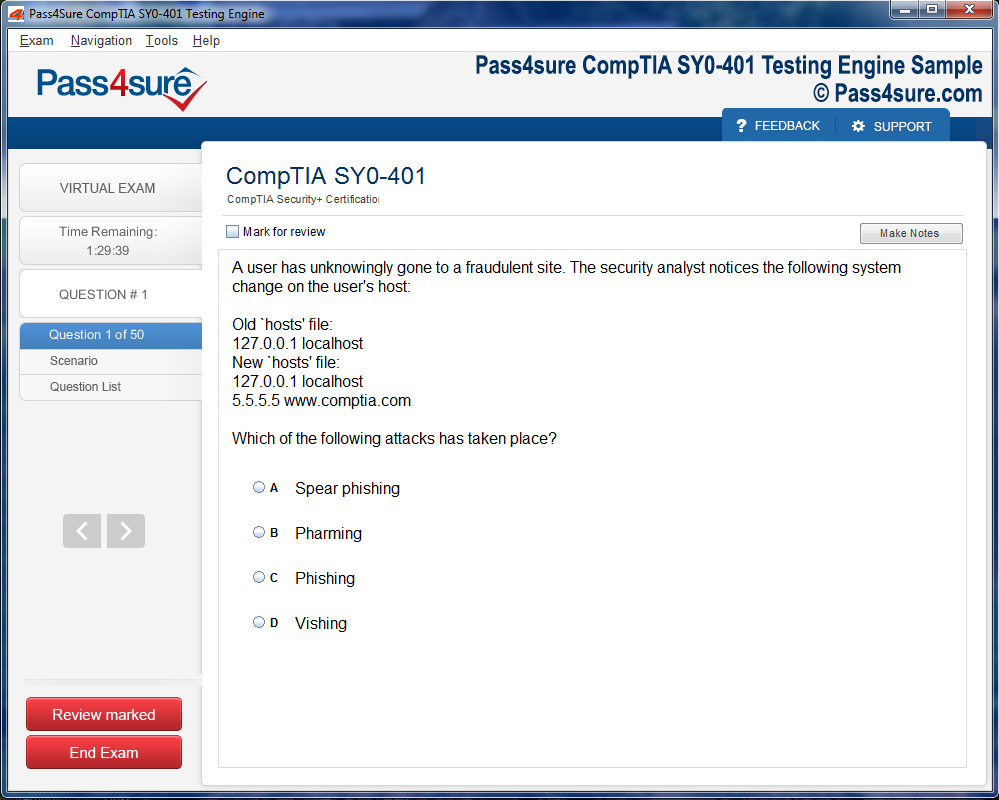
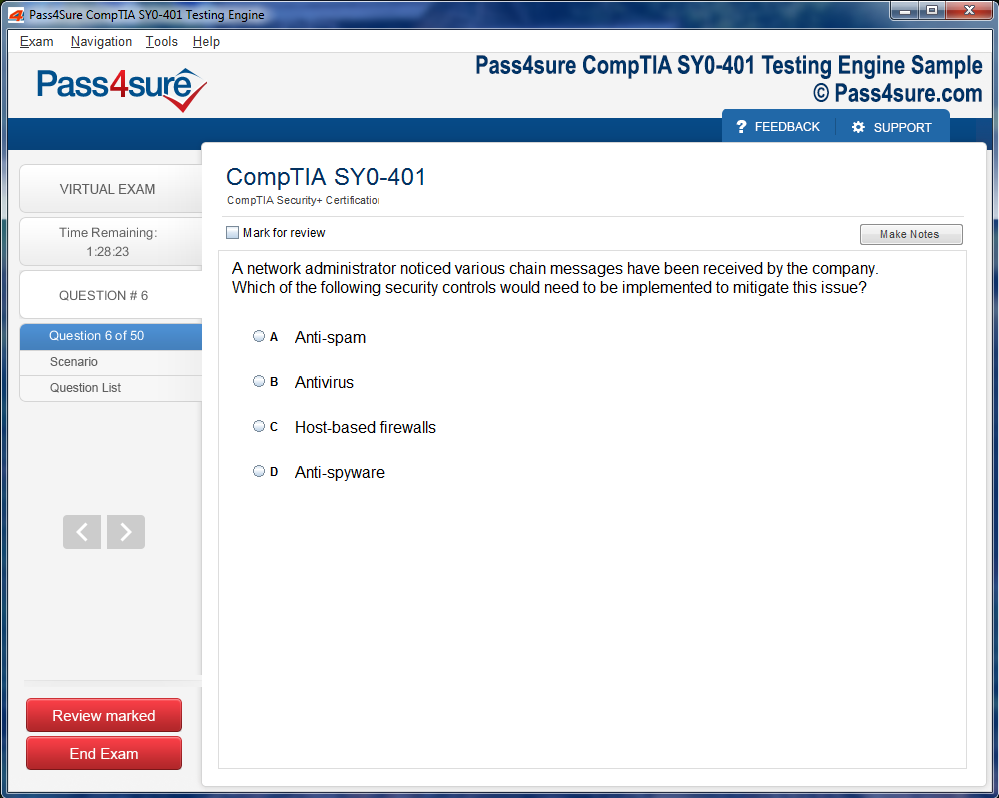
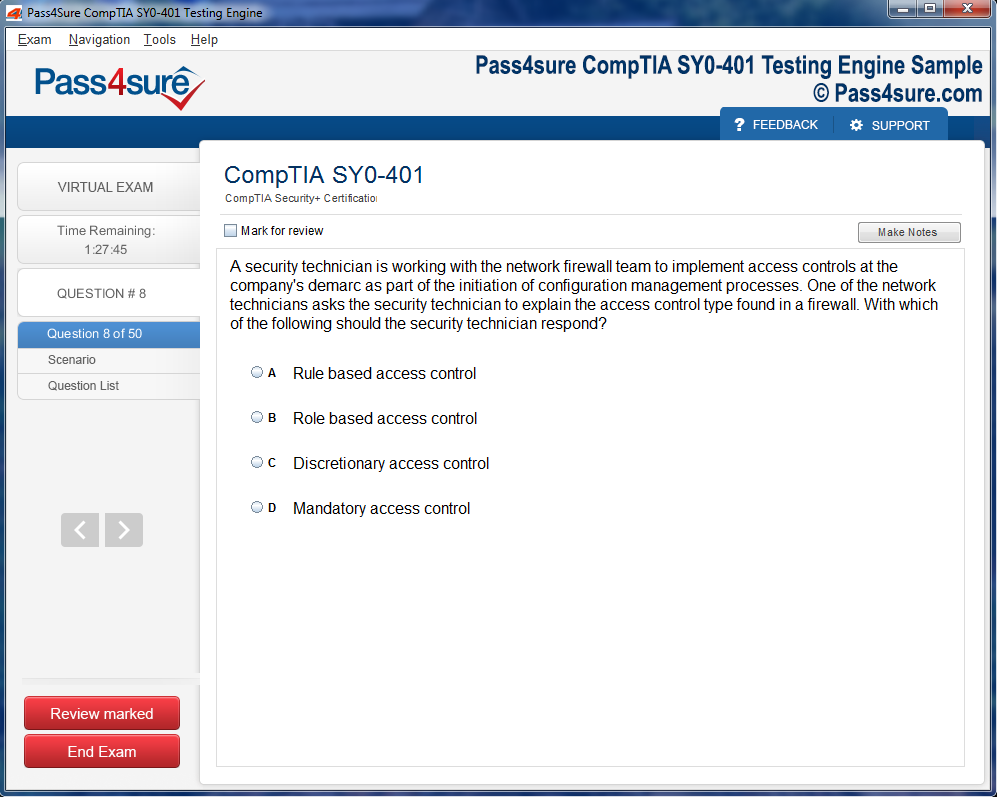
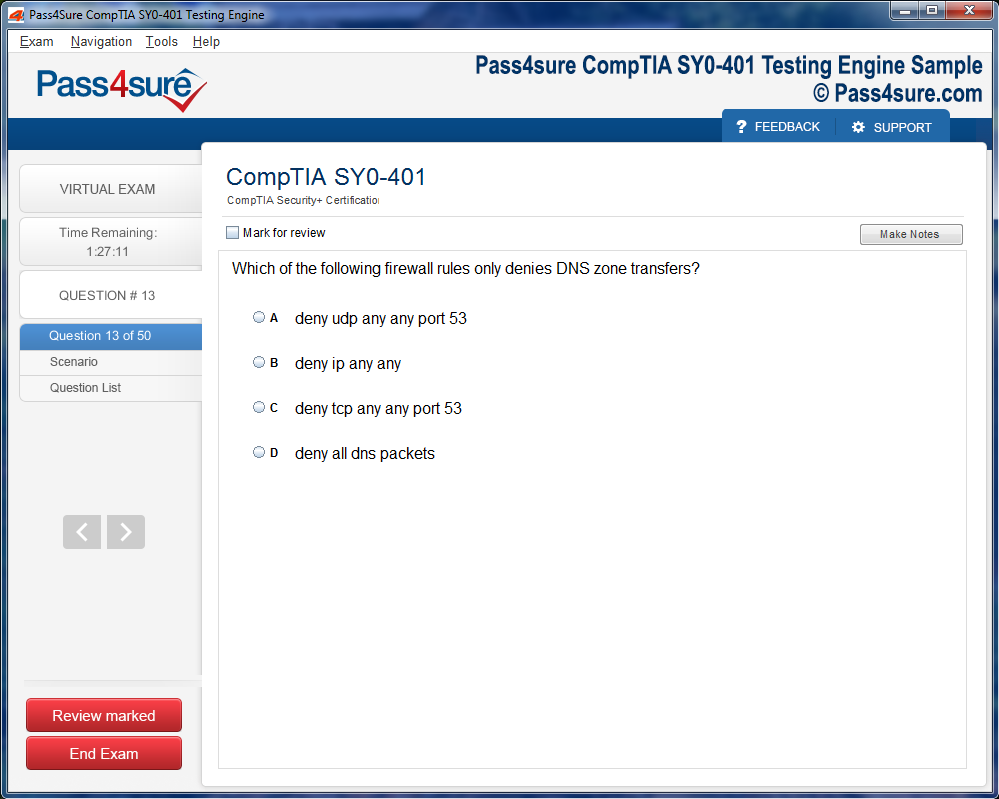
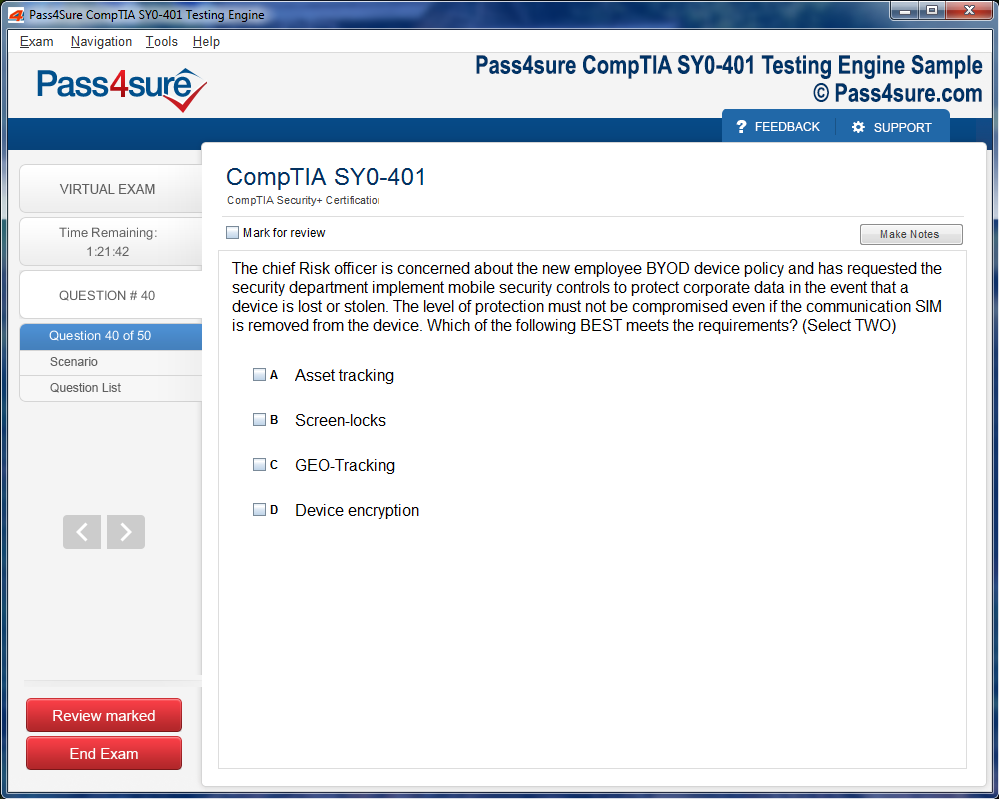
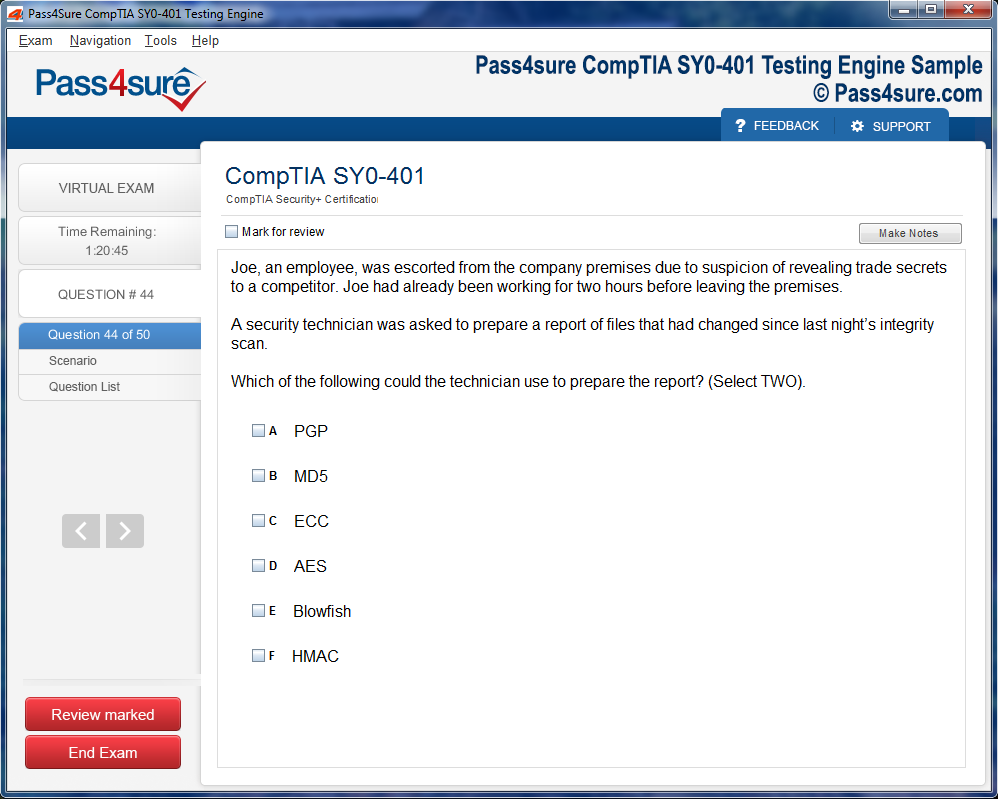
Product Screenshots
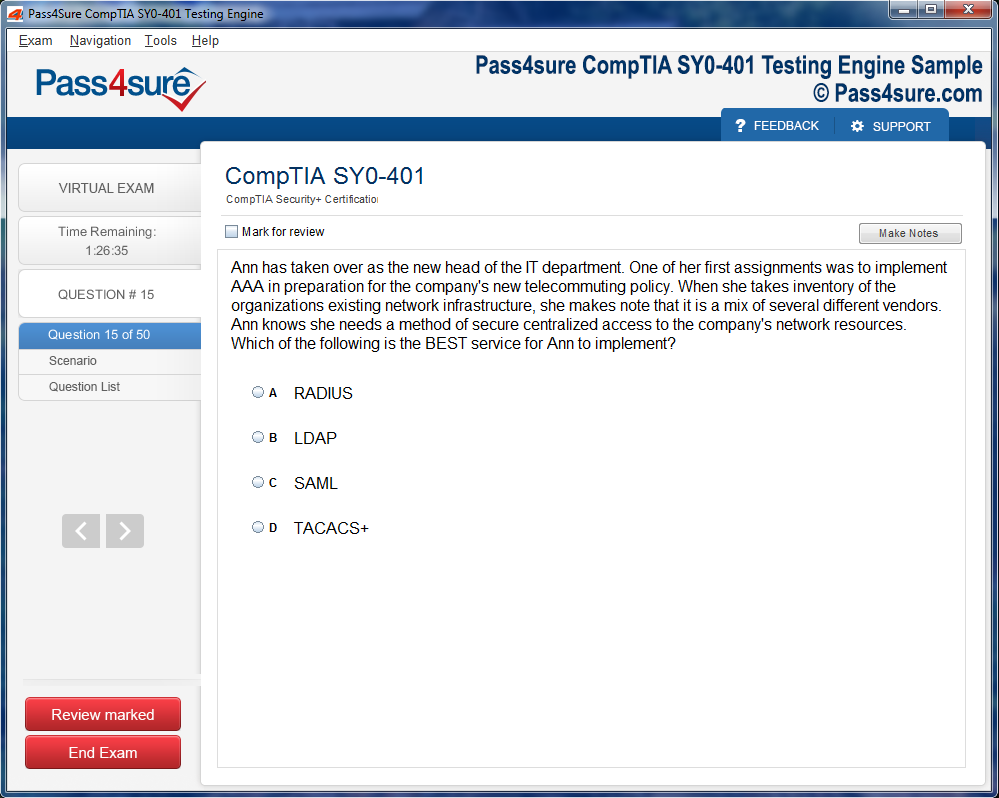
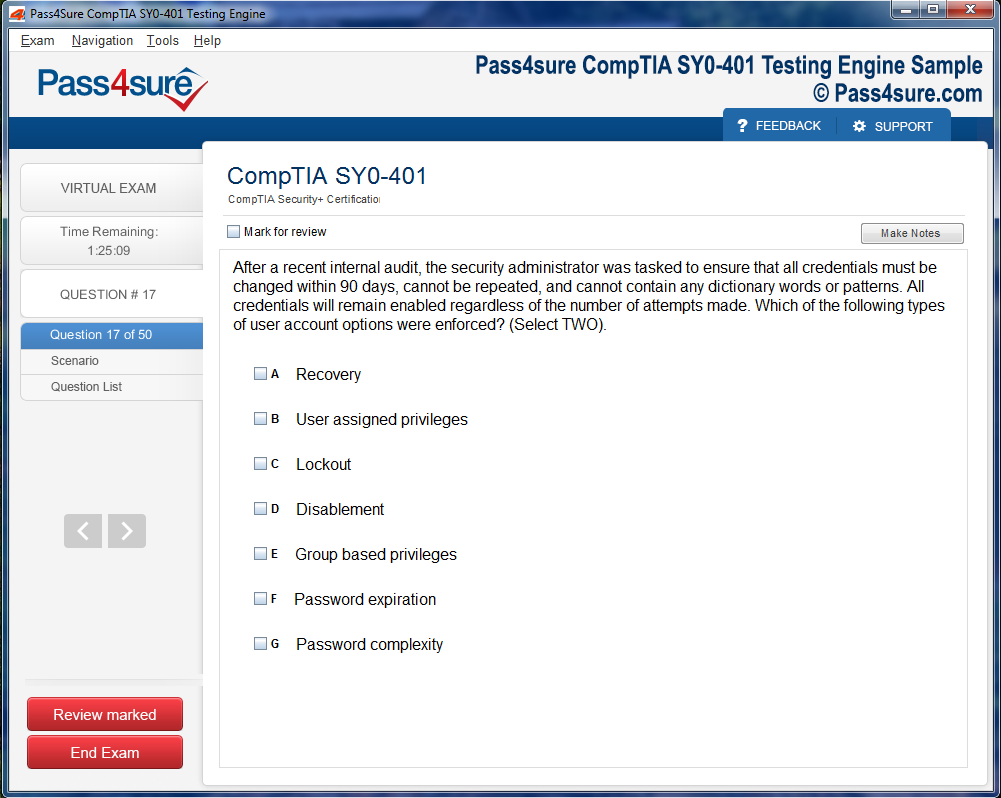
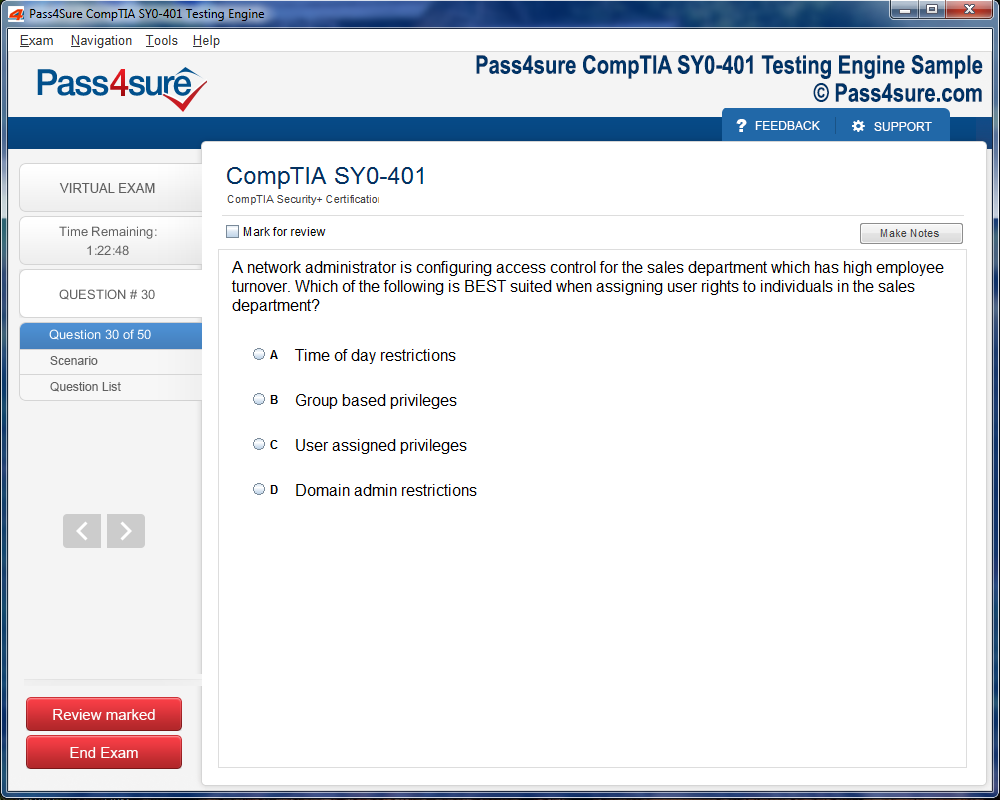
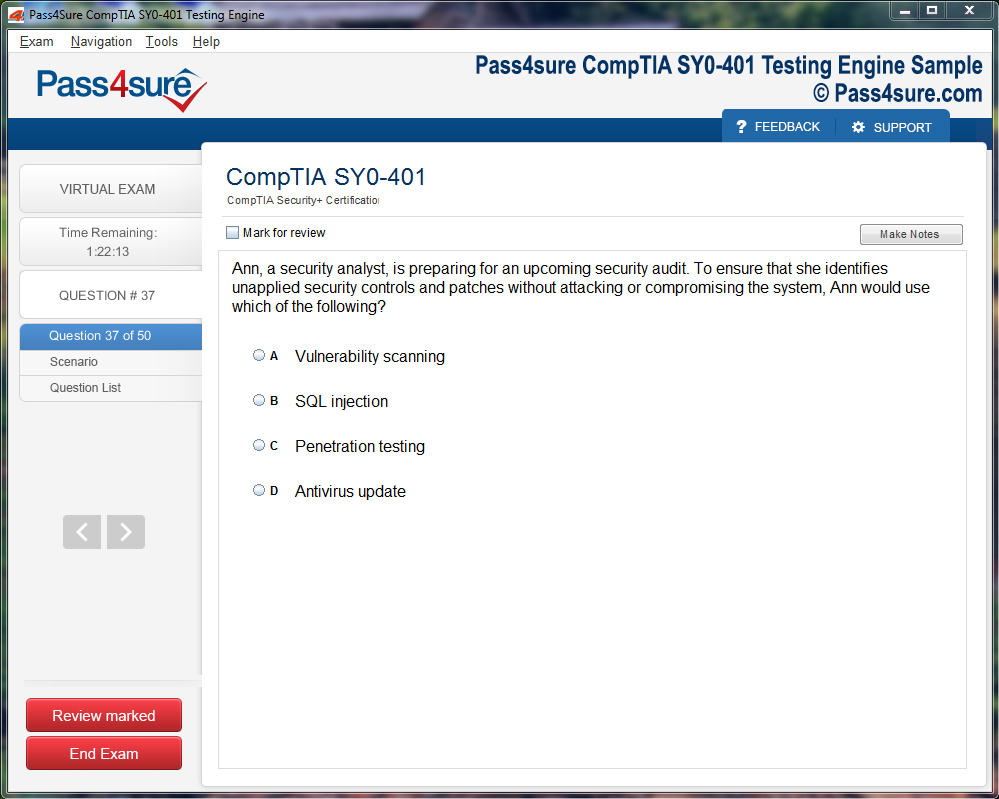
Frequently Asked Questions
How does your testing engine works?
Once download and installed on your PC, you can practise test questions, review your questions & answers using two different options 'practice exam' and 'virtual exam'. Virtual Exam - test yourself with exam questions with a time limit, as if you are taking exams in the Prometric or VUE testing centre. Practice exam - review exam questions one by one, see correct answers and explanations.
How can I get the products after purchase?
All products are available for download immediately from your Member's Area. Once you have made the payment, you will be transferred to Member's Area where you can login and download the products you have purchased to your computer.
How long can I use my product? Will it be valid forever?
Pass4sure products have a validity of 90 days from the date of purchase. This means that any updates to the products, including but not limited to new questions, or updates and changes by our editing team, will be automatically downloaded on to computer to make sure that you get latest exam prep materials during those 90 days.
Can I renew my product if when it's expired?
Yes, when the 90 days of your product validity are over, you have the option of renewing your expired products with a 30% discount. This can be done in your Member's Area.
Please note that you will not be able to use the product after it has expired if you don't renew it.
How often are the questions updated?
We always try to provide the latest pool of questions, Updates in the questions depend on the changes in actual pool of questions by different vendors. As soon as we know about the change in the exam question pool we try our best to update the products as fast as possible.
How many computers I can download Pass4sure software on?
You can download the Pass4sure products on the maximum number of 2 (two) computers or devices. If you need to use the software on more than two machines, you can purchase this option separately. Please email sales@pass4sure.com if you need to use more than 5 (five) computers.
What are the system requirements?
Minimum System Requirements:
- Windows XP or newer operating system
- Java Version 8 or newer
- 1+ GHz processor
- 1 GB Ram
- 50 MB available hard disk typically (products may vary)
What operating systems are supported by your Testing Engine software?
Our testing engine is supported by Windows. Andriod and IOS software is currently under development.
Complete Study Guide for Netskope NSK300 Certification
Cloud security transcends traditional perimeter-based defenses, demanding an orchestration of multifaceted strategies that harmonize visibility, control, and predictive analytics. In the Netskope ecosystem, security is not merely a reactive mechanism; it embodies a proactive stance, anticipating anomalous behaviors before they metastasize into breaches. This paradigm shift necessitates mastery of telemetry ingestion, contextual analysis, and adaptive enforcement. Professionals must cultivate an appreciation for the ephemeral yet intricate nature of cloud-native infrastructures, where microservices proliferate and workloads flux across hybrid architectures.
Dissecting Cloud Traffic Topographies
Cloud traffic exhibits labyrinthine pathways that often elude conventional monitoring methodologies. Unlike static network topographies, cloud environments manifest transient endpoints and dynamically routed connections. Netskope's approach emphasizes an incisive taxonomy of traffic, employing heuristics to distinguish between benign, anomalous, and nefarious activities. Understanding the nuances of API calls, asynchronous message queues, and inter-service communication is indispensable. Candidates should also apprehend techniques such as traffic redirection, reverse proxying, and SSL interception, which collectively fortify the inspection and enforcement continuum.
Zero-Trust Ethos and Access Containment
Zero-trust philosophies underpin Netskope's security apparatus, predicated upon a rigorous verification of every entity requesting resource access. This epistemology refutes implicit trust and mandates granular entitlements, continuous authentication, and behavioral profiling. Candidates must explore multifactor authentication, contextual device posture evaluation, and adaptive access policies that adjust to anomalous environmental signals. Moreover, the integration of risk scoring algorithms and conditional access matrices fortifies the zero-trust edifice, ensuring that privilege escalation and lateral movement within cloud ecosystems are meticulously curtailed.
Data Exfiltration Mitigation and Policy Enforcement
Data egress represents a critical vector for compromise, particularly in distributed cloud architectures. Netskope’s policy engine deploys sophisticated heuristics to identify exfiltration attempts, leveraging machine learning to discern subtle deviations in data transfer patterns. Candidates should be conversant with policy constructs such as content inspection, entropy-based anomaly detection, and file fingerprinting. Equally imperative is the comprehension of incident response orchestration, which automates containment procedures while maintaining audit fidelity. These mechanisms collectively reduce the surface area for unauthorized data dissemination, bolstering organizational resilience.
Compliance Stratagems and Regulatory Adherence
Regulatory landscapes impose stringent obligations on data custodians, encompassing frameworks such as GDPR, HIPAA, and ISO 27001. Netskope facilitates compliance by rendering real-time visibility into data flows, tagging sensitive content, and enforcing retention protocols. Professionals preparing for the NSK300 must internalize the intricacies of compliance reporting, alert management, and audit trail generation. This involves familiarity with automated remediation workflows, data residency controls, and policy templating, which collectively ensure that adherence is not perfunctory but dynamically verifiable.
Behavioral Analytics and User-Centric Vigilance
Human actors represent both the linchpin and vulnerability in cloud security architectures. Netskope integrates sophisticated user and entity behavior analytics (UEBA) to discern anomalies indicative of compromised accounts, social engineering attacks, or inadvertent misconfigurations. Candidates should understand how risk scoring models, anomaly clustering, and temporal behavior analysis coalesce to flag high-risk activities. Additionally, training modules and awareness programs augment technological safeguards, cultivating a security-conscious culture that reinforces policy adherence and reduces exposure to opportunistic threats.
Advanced Threat Detection and Response Orchestration
Sophisticated threat vectors necessitate an equally sophisticated detection apparatus. Netskope employs AI-driven anomaly detection, signature-less malware identification, and behavioral heuristics to intercept threats that circumvent traditional antivirus solutions. Professionals must explore the mechanisms of sandboxing, cloud malware analysis, and real-time correlation of telemetry across disparate services. Mastery of automated incident response, including orchestration of containment, notification, and remediation workflows, is crucial for ensuring that threats are neutralized with minimal operational disruption.
Strategic Deployment Paradigms in Cloud Security
Navigating the labyrinthine terrain of cloud security necessitates a meticulous appreciation of deployment paradigms that harmonize protection, usability, and scalability. Organizations grappling with multifarious cloud environments must embrace deployment schemas that accommodate heterogeneity in application architecture while safeguarding sensitive data. Modular policy frameworks, meticulously segmented by departmental requisites or data sensitivity tiers, engender operational agility. They facilitate expedient modifications without perturbing ongoing processes, ensuring that organizational resiliency remains intact. Such modularization is not merely a procedural convenience but a strategic imperative for maintaining a dynamic security posture.
Policy Engineering for Adaptive Resilience
The fulcrum of efficacious cloud security lies in policy engineering that encapsulates dynamic adaptability. Policies should be conceived as living constructs, evolving in tandem with organizational objectives and threat landscapes. Leveraging reusable templates, security architects can engender a polymorphic policy framework, minimizing administrative overhead while enhancing fidelity. The orchestration of granular controls—verifying user identity, device posture, and contextual vectors such as geolocation or temporal parameters—embodies the essence of zero-trust paradigms. Conditional access, calibrated through risk-weighted algorithms, enables nuanced enforcement without compromising user efficacy.
Shadow IT Discovery and Mitigation
Shadow IT manifests as an insidious vector for data exfiltration and regulatory noncompliance, often operating beneath the radar of conventional monitoring mechanisms. Organizations must adopt continuous reconnaissance of cloud service utilization, categorizing applications through risk-based lenses. Visibility into unsanctioned services, coupled with policy-driven interdiction mechanisms, transforms reactive security measures into proactive custodianship. Analyzing user behavior, identifying anomalous adoption patterns, and integrating these insights into governance protocols underpin a robust strategy to mitigate shadow IT perils.
Selective Traffic Inspection and Performance Equilibrium
Optimizing security operations mandates a delicate equilibrium between comprehensive threat scrutiny and system performance. Techniques such as selective SSL inspection, whereby deep packet analysis is judiciously applied to high-risk vectors, exemplify strategic calibration. This mitigates latency while preserving robust threat detection. Bandwidth allocation, caching heuristics, and strategic traffic routing contribute to the preservation of user experience without diluting security efficacy. Deployment considerations—choosing among forward proxies, reverse proxies, or API-mediated enforcement—necessitate critical evaluation of trade-offs between inspection granularity and performance overhead.
Forward Proxy Versus API-Based Enforcement
The dichotomy between forward proxy and API-based enforcement illustrates the tension between inspection depth and operational efficiency. Forward proxies furnish comprehensive visibility and inspection capabilities but introduce latency and potential bottlenecks. Conversely, API integrations provide near-real-time monitoring with minimal impact on throughput, although some inspection granularity may be attenuated. Security architects must synthesize organizational risk tolerance, compliance mandates, and operational imperatives to devise hybrid architectures that reconcile these competing exigencies.
Iterative Monitoring and Analytical Feedback Loops
Continuous observation is the linchpin of proactive security stewardship. Dashboards, telemetry feeds, and analytics engines enable real-time scrutiny of traffic patterns, policy adherence, and anomalous activity. Establishing iterative feedback loops ensures that observational insights catalyze actionable refinements. Policy violation metrics, high-risk application utilization, and threat detection efficacy indices inform adaptive recalibration. This cyclic process fosters a virtuous cycle of continuous improvement, enhancing both operational robustness and strategic foresight.
Metrics Interpretation and Operational Intelligence
Security professionals must cultivate acumen in interpreting a panoply of operational metrics. Policy violation counts, sandboxing outcomes, and high-risk behavioral anomalies constitute critical intelligence for proactive intervention. Parsing these data streams demands both analytical precision and contextual awareness, enabling informed decision-making in dynamically shifting cloud environments. The synthesis of quantitative analytics with qualitative insights augments the organization’s capacity to preempt incidents and optimize policy efficacy.
Exam-Oriented Scenario Simulation
For NSK300 aspirants, mastering practical application is as pivotal as conceptual comprehension. Scenario simulation, encompassing file upload restrictions, anomaly detection, and sandbox analysis, fosters cognitive assimilation of complex operational dynamics. These exercises cultivate familiarity with procedural intricacies, from policy deployment to incident remediation. Repeated exposure to controlled simulations reinforces procedural fluency, ensuring candidates are well-prepared to navigate exam scenarios and real-world contingencies alike.
Policy Configuration and Incident Response Exercises
Hands-on engagement with policy configuration and incident response operations enhances both dexterity and comprehension. Deliberate practice in calibrating access controls, orchestrating alert mechanisms, and configuring compliance reports consolidates conceptual understanding. Incident response simulations, particularly those incorporating threat intelligence feeds and SIEM integration, cultivate rapid diagnostic capability, methodical remediation strategies, and confidence under operational pressure.
Advanced Case Study Analysis
Analyzing real-world deployments elucidates the rationale underpinning Netskope configurations and policy design decisions. Case studies illuminate trade-offs, emergent challenges, and adaptive strategies, enabling candidates to extrapolate principles to diverse operational contexts. Critical evaluation of incident responses, threat mitigation efficacy, and policy optimization strategies enhances the practitioner’s ability to synthesize best practices with experiential insights.
Cultivating a Proactive Security Ethos
Certification success is amplified through the cultivation of a proactive security ethos. Continuous learning, attunement to evolving threat vectors, and engagement with regulatory shifts fortify professional competency. Emphasizing principles such as least privilege access, risk-weighted decision making, and multi-layered defense architectures ensures Netskope deployments maintain both efficacy and resilience. Practitioners must internalize these philosophies, transforming theoretical understanding into strategic operational acumen.
Incident Response Optimization Techniques
Proficiency in incident response necessitates dexterity with alerts, intelligence feeds, and SIEM orchestration. Rapid containment and remediation hinge on preemptive scenario planning and iterative practice. By simulating diverse incidents, professionals refine analytical acumen, develop methodical response protocols, and cultivate confidence in high-stakes environments. These exercises not only reinforce procedural knowledge but also instill a resilient and adaptive mindset essential for cloud security stewardship.
Adaptive Risk Assessment Methodologies
Dynamic cloud environments demand adaptive risk assessment methodologies that anticipate emergent threats. Risk modeling, incorporating probabilistic threat vectors, behavioral analytics, and contextual variables, provides a granular understanding of potential vulnerabilities. Practitioners must integrate these models into policy orchestration, ensuring enforcement mechanisms are both preemptive and responsive. This proactive orientation transforms security from a reactive endeavor into a strategic organizational capability.
Continuous Policy Recalibration and Operational Fluidity
Policies in cloud security are not static artifacts but evolving instruments that must be continuously recalibrated. Feedback from monitoring systems, incident analyses, and organizational shifts inform iterative refinement. Operational fluidity, characterized by rapid adaptation without disruption, ensures sustained security efficacy. Professionals adept at balancing prescriptive controls with adaptive flexibility enhance organizational resilience and readiness for unforeseen contingencies.
Multi-Dimensional Threat Analytics
Sophisticated threat landscapes necessitate multi-dimensional analytics encompassing user behavior, application interaction, and anomalous traffic patterns. Aggregating these dimensions provides a holistic perspective, revealing latent vulnerabilities and emergent risk vectors. Integration of these insights into policy orchestration enhances predictive security, enabling preemptive interventions before incidents materialize.
Strategic Credential and Access Management
Credential and access management is a cornerstone of zero-trust architectures. Multi-factor authentication, contextual access policies, and temporal limitations collectively fortify security posture. Fine-grained access controls, informed by continuous behavioral analytics, mitigate unauthorized access while maintaining operational fluidity. Mastery of these mechanisms is pivotal for both practical deployment and exam proficiency.
Cloud Application Governance and Compliance Oversight
Effective cloud governance encompasses both policy enforcement and compliance stewardship. Regulatory adherence, data sovereignty, and audit readiness require systematic monitoring, documentation, and reporting. By integrating governance protocols with Netskope’s analytic capabilities, professionals ensure that cloud operations align with statutory mandates and internal control frameworks, preserving both organizational integrity and stakeholder confidence.
Granular Visibility Across Cloud Workloads
One of the cardinal tenets of Netskope’s architecture is granular visibility, which transcends rudimentary monitoring to provide real-time insight into cloud workloads and data trajectories. In distributed environments, workloads often migrate across regions, leveraging ephemeral instances that complicate conventional security inspection. Netskope’s telemetry aggregation synthesizes logs, API calls, and session metadata into actionable intelligence. Professionals must internalize the mechanisms of context-rich analysis, encompassing user identity, device posture, geolocation, and temporal patterns. By constructing multidimensional views of cloud activity, organizations can preemptively isolate irregularities and implement adaptive policy enforcement.
The Alchemy of Traffic Steering
Traffic steering is an art and science that ensures that all data traversing cloud networks can be subjected to security scrutiny. Unlike legacy network perimeters, cloud traffic frequently bypasses centralized inspection points. Netskope leverages reverse proxies, forward proxies, and API connectors to channel traffic for inspection without impeding performance. Professionals must comprehend the interplay between inline and out-of-band inspection, SSL/TLS decryption intricacies, and latency considerations. Mastery of these techniques allows security architects to balance operational efficiency with comprehensive threat detection, transforming cloud networks from opaque conduits into scrutinized pipelines of controlled data flow.
Microsegmentation and the Reduction of Attack Surfaces
Microsegmentation is a strategic imperative in modern cloud security. By partitioning workloads into discrete, isolated segments, organizations drastically reduce lateral movement opportunities for attackers. Netskope’s capabilities in microsegmentation extend beyond simple network isolation; they integrate contextual awareness and behavioral analytics to dynamically adjust access controls. Professionals should study segmentation policies, traffic whitelisting, and conditional inter-service communication rules. Understanding the subtleties of ephemeral segment creation in containerized or serverless environments is crucial, as attackers often exploit transient resources that evade static security policies.
The Convergence of Cloud Access Security Brokers and Threat Intelligence
Netskope operates at the intersection of Cloud Access Security Broker (CASB) functionalities and real-time threat intelligence. This convergence empowers organizations to detect, analyze, and respond to threats with unprecedented agility. Threat intelligence feeds, encompassing signature databases, anomaly indicators, and heuristic patterns, are fused with CASB insights to provide predictive threat detection. Candidates must grasp the principles of correlation engines, enrichment of raw telemetry with contextual intelligence, and automated remediation triggers. By synthesizing threat intelligence with cloud usage data, organizations transform reactive security postures into anticipatory frameworks.
API Security: The Invisible Frontline
APIs form the connective tissue of modern cloud ecosystems, enabling integration and orchestration across services. However, APIs also represent conduits for exploitation if inadequately secured. Netskope’s architecture includes API monitoring, anomaly detection, and enforcement of data exfiltration policies at the API layer. Professionals must study API token validation, rate limiting, schema enforcement, and payload inspection. A nuanced understanding of API behaviors, including asynchronous and event-driven interactions, is essential. API abuse often manifests subtly, and proficiency in detection methods ensures that organizations maintain both functional agility and stringent security hygiene.
Encryption Paradigms and Key Management
Encryption is the bedrock of data confidentiality in cloud architectures. Netskope facilitates encryption across data at rest, in transit, and in use, employing robust algorithms and key management practices. Professionals must delve into asymmetric versus symmetric encryption, key rotation protocols, and hardware security module (HSM) integration. Understanding granular encryption policies, including field-level encryption for sensitive attributes, enables organizations to comply with regulatory mandates while maintaining operational transparency. Candidates should also explore tokenization, data masking, and homomorphic encryption, which provide additional layers of data protection in complex, multi-tenant cloud environments.
Incident Response Automation and Playbooks
In the milieu of modern cloud security, automated incident response is indispensable. Netskope incorporates orchestration engines that execute predefined playbooks upon detection of anomalous behavior or policy violations. Professionals must internalize the logic behind conditional triggers, escalation paths, and remediation sequences. Playbooks often integrate multiple enforcement points, including user notification, session termination, access revocation, and log archival. Understanding how to customize and optimize these workflows ensures that security operations remain both rapid and precise, reducing dwell time for adversaries and mitigating operational disruptions.
Behavioral Anomalies and Machine Learning Applications
Machine learning underpins Netskope’s advanced behavioral analytics, enabling detection of subtle anomalies in user and system behavior. Candidates must comprehend model training, feature selection, and anomaly scoring, as these processes dictate the sensitivity and specificity of threat detection. Unsupervised learning techniques, such as clustering and density estimation, allow identification of novel threats that evade signature-based detection. Supervised learning, conversely, refines predictive models based on historical incident data. Professionals should also explore feedback loops, retraining mechanisms, and the ethical considerations of automated decision-making to ensure that machine learning enhances, rather than supplants, human judgment.
Shadow IT Discovery and Risk Assessment
Shadow IT, the unsanctioned adoption of cloud services, introduces latent risks that evade traditional IT oversight. Netskope’s discovery capabilities identify unauthorized applications, categorize their risk profiles, and quantify exposure levels. Professionals should examine heuristic risk scoring, application fingerprinting, and policy enforcement mechanisms that mitigate the consequences of shadow IT. By providing visibility into user-driven adoption of unsanctioned tools, organizations can balance innovation with control, ensuring that productivity does not compromise security posture.
Advanced Threat Emulation and Simulation
Proactive defense strategies involve not merely reacting to threats but simulating adversarial behavior to uncover vulnerabilities. Netskope supports threat emulation frameworks that test policies, traffic inspection rules, and anomaly detection thresholds under controlled conditions. Candidates must familiarize themselves with simulation techniques, including synthetic attack injection, red-teaming methodologies, and scenario-driven evaluation of policy efficacy. This approach fosters resilience, allowing organizations to preemptively identify gaps and fine-tune controls before malicious actors exploit them.
Multi-Cloud Orchestration and Unified Security Posture
Enterprises increasingly leverage multi-cloud architectures, integrating disparate providers to optimize cost, performance, and redundancy. Netskope provides unified visibility and control across these heterogeneous environments, mitigating the complexity inherent in multi-cloud orchestration. Professionals must master policy consistency, cross-cloud telemetry aggregation, and identity federation to maintain a cohesive security posture. Understanding nuances of workload migration, inter-cloud communication protocols, and hybrid connectivity models is essential for ensuring that security enforcement is seamless, irrespective of cloud provider boundaries.
Netskope's architectural paradigm is an intricate lattice of cloud-native fortifications meticulously engineered to navigate the labyrinthine exigencies of contemporary cloud ecosystems. This architecture manifests as an amalgamation of proxies, enforcement nodes, and intelligence conduits that synergistically orchestrate a resilient security fabric. The infrastructure functions as a kinetic ensemble where data, policy, and threat vectors coalesce, ensuring that cloud interactions remain inviolably guarded.
The foundational substrate is the Netskope Security Cloud, an omnipresent orchestrator bridging disparate cloud applications. It manifests as an amalgam of API conduits, proxied gateways, and forward-deployed sentinel nodes. These elements collectively ensure unobstructed visibility, proactive threat neutralization, and seamless enforcement of data governance edicts without perturbing operational throughput. Distinctions between inline proxies and API-based enforcement exemplify divergent paradigms, each possessing idiosyncratic benefits and deployment exigencies.
Inline Proxy Dynamics
Inline proxies operate as vigilant custodians, intercepting data streams in real-time as they traverse the cloud continuum. Their operational prowess lies in granular policy enforcement, dynamic content scrutiny, and instantaneous interdiction of nefarious maneuvers. These proxies serve as crucibles for operational policy implementation, integrating heuristic algorithms with signature-based deterrence mechanisms to thwart unauthorized exfiltration and malevolent incursions.
Deployment strategies necessitate careful orchestration, balancing latency considerations against inspection depth. Policy curation within this context requires an adept understanding of contextual triggers, anomaly thresholds, and exception handling workflows. Inline proxies are particularly efficacious for sanctioned applications requiring real-time governance, situational awareness, and prompt remediation.
API-Centric Enforcement Mechanisms
API-based enforcement, by contrast, cultivates a more contemplative observatory role, interfacing directly with provider APIs to perpetually monitor cloud service interactions. This modality affords an unobtrusive vantage point, facilitating panoramic visibility over both sanctioned and shadow IT environments. Unlike inline proxies, API enforcement does not impede traffic flow, yet it extends nuanced insights into data residency, sharing patterns, and latent threat vectors.
The implementation of API-centric strategies necessitates a perspicacious understanding of service-specific API architectures, rate limits, and authentication schemas. Policy articulation in this paradigm demands meticulous attention to entity classification, privilege hierarchies, and exception matrices. This modality is invaluable for continuous compliance assurance, audit readiness, and longitudinal behavioral analysis of user interactions within cloud landscapes.
Data Loss Prevention Intricacies
Netskope's DLP apparatus represents a sophisticated lattice safeguarding both structured and unstructured datasets across hybrid and multi-cloud ecosystems. Its operational philosophy rests upon a meticulous confluence of heuristic analysis, pattern recognition, and contextual intelligence, forging a dynamic barrier against inadvertent or malicious data egress. By harnessing advanced algorithms and adaptable policy constructs, DLP frameworks transcend rudimentary inspection, enabling both preemptive and reactive mitigation strategies.
Heuristic and Contextual Frameworks
At the core of Netskope’s DLP ecosystem lies the orchestration of heuristic and contextual frameworks. Predefined heuristics, derived from industry best practices and compliance mandates, provide an initial scaffold for sensitive data detection. These heuristics encompass common identifiers such as Social Security numbers, credit card sequences, bank account formats, and standardized regulatory markers. However, heuristic detection alone cannot fully address the polymorphic nature of contemporary cloud data flows.
Contextual evaluation augments heuristic mechanisms by interpreting metadata, usage patterns, and semantic content. For instance, a document labeled “Financial Projections 2025” accessed by a contractor outside business hours may trigger contextual suspicion, even if the content superficially lacks identifiable markers. Semantic inference techniques further enhance detection fidelity, enabling the system to discern nuanced patterns indicative of intellectual property, proprietary formulas, or strategic plans. This dual-layered approach ensures that DLP mechanisms operate with precision, minimizing false positives while maximizing protective coverage.
Regex-Driven Pattern Recognition
Regular expressions form the computational backbone for fine-grained pattern recognition within Netskope’s DLP apparatus. Through regex constructs, the system can identify intricate alphanumeric sequences, code snippets, or formatted identifiers spanning structured databases and free-form documents. For instance, regex may capture multi-tiered identifiers embedded within unstructured text, such as hierarchical employee IDs or composite financial instruments.
Beyond mere detection, regex patterns can be parameterized to incorporate contextual thresholds. By calibrating pattern sensitivity against operational risk levels, administrators can dynamically modulate DLP enforcement. This capability ensures that low-risk transits do not impede workflow efficiency, while high-risk transmissions are rigorously intercepted and remediated.
Semantic Inference and Anomaly Detection
Semantic inference operates at the intersection of natural language processing (NLP) and behavioral analytics. Netskope leverages NLP algorithms to parse textual constructs, identify relationships among entities, and evaluate contextual meaning. This enables detection of sensitive content that may evade traditional pattern recognition, such as confidential strategy memos or trade secret documentation.
Anomaly detection complements semantic inference by highlighting deviations from established user or application behavior. For example, unusual download volumes, atypical sharing patterns, or access from geolocations inconsistent with historical usage may signify potential data exfiltration. Integrating anomaly detection with semantic analysis transforms DLP from a static inspection tool into a dynamic intelligence engine capable of predictive risk assessment.
Structured Versus Unstructured Data Protection
Effective DLP strategies must accommodate the inherent heterogeneity of organizational data. Structured data, residing in relational databases, ERP systems, or CRM platforms, typically conforms to well-defined schemas. Netskope’s DLP engine applies precise matching and rule-based inspection to these datasets, ensuring regulatory compliance and internal governance standards are upheld.
Unstructured data, encompassing documents, spreadsheets, images, and multimedia, presents a significantly greater challenge. Here, classification relies on a hybrid approach: content parsing, pattern recognition, contextual heuristics, and semantic evaluation converge to detect sensitive artifacts. Machine learning models are often employed to continuously refine classification accuracy, reducing false positives while adapting to evolving data characteristics.
Hybrid and Multi-Cloud Deployments
Modern enterprises increasingly operate across hybrid and multi-cloud environments, amplifying DLP complexity. Netskope’s architecture accommodates this diversity by integrating seamlessly with SaaS applications, IaaS platforms, and on-premises storage solutions. Data flows are continuously monitored across API interfaces, forward proxies, and reverse proxies, ensuring that policy enforcement remains consistent irrespective of deployment topology.
Policy orchestration in hybrid environments necessitates meticulous mapping of data flows, user privileges, and regulatory obligations. Sensitive datasets migrating between cloud services must be tracked and evaluated for compliance adherence. The DLP engine must also reconcile variations in encryption protocols, access controls, and service-level agreements across providers, maintaining a cohesive protective lattice.
Policy Granularity and Enforcement Nuances
Netskope’s DLP capabilities are amplified by the granularity and adaptability of policy constructs. Policies may be scoped by user identity, role, department, or geolocation, enabling fine-grained enforcement that aligns with operational realities. Threshold-based policies, for instance, may permit low-risk data transfers while intercepting anomalous or high-value transmissions.
Enforcement actions can range from passive alerts to active blocking, quarantining, or encryption. For example, a policy may automatically encrypt documents flagged as containing PII before allowing cloud upload, or it may trigger incident response protocols if anomalous activity persists. This spectrum of enforcement options ensures that security measures remain both proportionate and efficacious.
Continuous Monitoring and Adaptive Learning
A defining characteristic of Netskope DLP is its continuous monitoring and adaptive learning capability. Data flows are scrutinized in real time, with system behavior continuously adjusted based on operational feedback and emerging threat intelligence. Machine learning algorithms ingest historical patterns, enabling predictive modeling that anticipates potential breaches or misconfigurations.
Adaptive learning extends to policy evolution as well. By analyzing trends in policy violations, access anomalies, and remediation efficacy, administrators can iteratively refine DLP rules. This iterative process enhances operational precision, reduces administrative burden, and ensures that protective mechanisms remain aligned with both business objectives and regulatory mandates.
Integration with Threat Intelligence
DLP efficacy is magnified through integration with external and internal threat intelligence feeds. By correlating detected anomalies with global threat patterns, Netskope can differentiate between benign irregularities and indicators of compromise. For instance, a sudden surge in outbound transfers to an IP address flagged in a threat intelligence feed may trigger automated containment procedures.
Integration also facilitates proactive threat mitigation. By embedding intelligence into policy orchestration, the system can preemptively adjust thresholds, block high-risk data flows, and alert security teams before incidents escalate. This intelligence-driven approach transforms DLP from a passive compliance tool into a proactive sentinel safeguarding organizational assets.
Incident Response and Forensic Capabilities
Netskope DLP is intrinsically linked to incident response and forensic analysis. All policy violations and anomalous detections are logged with granular metadata, providing a comprehensive audit trail. This data supports root cause analysis, regulatory reporting, and internal governance reviews.
Forensic capabilities extend to content inspection and lineage tracking, enabling administrators to reconstruct data flows and identify affected assets. In hybrid cloud contexts, this granular visibility is indispensable for pinpointing exfiltration vectors, determining culpability, and implementing remediation measures.
Regulatory Compliance and Governance Alignment
DLP mechanisms are inextricably linked to regulatory compliance obligations. Netskope’s DLP engine is equipped to enforce GDPR, HIPAA, PCI-DSS, CCPA, and other jurisdictional mandates through customizable policy templates and automated enforcement. Continuous monitoring ensures that data residency requirements, consent obligations, and audit prerequisites are upheld.
Governance integration further aligns DLP activities with internal control frameworks. Role-based access control, policy exception workflows, and audit reporting collectively ensure that organizational standards are maintained without impeding operational efficiency. This alignment is critical in multi-jurisdictional contexts, where inconsistent policy application can incur legal and reputational risks.
User Behavior Analytics and Insider Threat Detection
Beyond external threats, insider risk constitutes a significant vector for data loss. Netskope leverages user behavior analytics (UBA) to establish baselines, detect deviations, and predict potential insider threats. Behavioral anomalies—such as unusual access times, mass downloads, or cross-application data transfers—trigger targeted investigations or automated containment actions.
The combination of semantic inference, contextual evaluation, and UBA provides a multi-dimensional view of risk. By correlating these dimensions, DLP mechanisms can discern between inadvertent mistakes, negligent practices, and malicious intent, ensuring proportionate and effective response.
Encryption, Tokenization, and Data Masking
Advanced DLP strategies incorporate encryption, tokenization, and data masking to safeguard sensitive content. Netskope can enforce encryption policies automatically for high-risk datasets, ensuring secure transit and storage. Tokenization replaces sensitive fields with surrogate values for testing or analytics purposes, while masking enables controlled exposure for operational tasks without revealing underlying data.
These cryptographic techniques complement detection and monitoring capabilities, providing a layered defense that mitigates exposure even when data is inadvertently transmitted outside trusted boundaries.
Cloud-Native Integrations and API Enforcement
In modern SaaS-dominated environments, API-based enforcement enhances DLP efficacy while minimizing latency. Netskope’s API integrations enable direct inspection of data at rest, in motion, and in use, eliminating reliance solely on network interception. This cloud-native approach ensures comprehensive coverage across collaboration platforms, storage solutions, and productivity suites without disrupting user workflows.
By embedding enforcement within application APIs, the system can apply policy in real time, encrypt sensitive fields, trigger alerts, or block actions as necessary. API-centric DLP represents a paradigm shift from reactive network security to proactive application-aware governance.
Adaptive Thresholding and Risk Scoring
Dynamic thresholding and risk scoring are critical components of DLP precision. Each data transfer or access event is evaluated against multiple risk dimensions, including content sensitivity, user role, geolocation, temporal context, and anomaly probability. Events exceeding cumulative risk thresholds can trigger automated actions, while lower-risk events may generate informational alerts for monitoring.
This adaptive methodology ensures that DLP policies remain contextually sensitive, balancing security rigor with operational efficiency. By continuously recalibrating thresholds based on empirical insights, Netskope maintains a responsive and intelligent defense posture.
Multi-Tiered Alerting and Workflow Automation
Netskope’s DLP platform integrates sophisticated alerting and workflow automation to streamline incident handling. Alerts are tiered by severity, enabling security teams to prioritize investigations and remedial actions. Workflow automation can initiate containment procedures, escalate incidents to management, or trigger compliance reporting automatically.
By combining intelligent alerting with automated response, organizations reduce response latency, minimize human error, and enhance overall operational resilience. This orchestration transforms DLP from a passive detection mechanism into an active component of the security operations lifecycle.
Threat Intelligence and Behavioral Fortification
Embedded within Netskope's framework is an avant-garde threat intelligence lattice, synthesizing heuristic evaluation, sandboxing, and behavioral telemetry. This matrix enables anticipatory defenses against emerging adversarial stratagems. Sandboxing workflows deconstruct potentially malignant payloads, while behavioral analysis extrapolates deviations from normative usage patterns to flag anomalies.
Candidates exploring this domain should immerse in threat feed integration, automated triaging protocols, and heuristic evolution methodologies. Mastery here necessitates a nuanced understanding of both file-level inspection intricacies and network-level anomaly heuristics, ensuring threats are intercepted before they propagate within the cloud infrastructure.
Reporting and Analytical Cognizance
Operational efficacy is further amplified by a sophisticated reporting and analytics framework. This module consolidates heterogeneous logs, surfaces latent anomalies, and furnishes actionable intelligence for governance and compliance mandates. The analytical apparatus empowers administrators to configure dashboards, calibrate alert thresholds, and generate bespoke reporting vistas tailored to organizational exigencies.
Engagement with this system requires fluency in metric selection, anomaly interpretation, and trend extrapolation. It transforms raw telemetry into strategic insights, enabling informed decision-making while providing a transparent audit trail that reinforces both security postures and regulatory adherence.
Deployment Paradigms in Modern Cloud Security
Navigating the labyrinthine landscape of cloud security necessitates a sagacious approach to deployment paradigms. The strategic implementation of security frameworks is contingent upon harmonizing surveillance efficacy, latency attenuation, and user experiential fluidity. Contemporary enterprises gravitate toward varied architectures, each imbued with distinct merits and caveats, necessitating perspicacious discernment during system design. Deployment modalities encompass forward proxies, reverse proxies, and API-driven integrations, each orchestrating a discrete symphony of inspection, access control, and monitoring.
Forward Proxy Mechanisms and Inline Oversight
Forward proxy deployment epitomizes a preemptive interception of egress traffic, ensconcing data streams within a controlled inspection lattice. This architecture enables decryption of encrypted payloads, real-time anomaly detection, and exacting policy enforcement across user cohorts. Its utility is accentuated in environments demanding granular scrutiny of internet-bound communications, where unbridled exfiltration could precipitate catastrophic data compromise. Forward proxies, however, necessitate meticulous configuration to mitigate latency proliferation and ensure transparency in user interaction, preserving seamless operational cadence.
Reverse Proxy Methodologies for Application Protection
Contrasting with the broad interception of forward proxies, reverse proxies operate as custodians for discrete SaaS applications, mediating ingress traffic and orchestrating access governance. This approach affords granular visibility into application-specific user activity without imposing network-wide redirection. Reverse proxies excel in scenarios where selective enforcement is paramount, such as safeguarding confidential repositories or regulating privileged access within collaboration platforms. Intrinsic to this deployment is the delicate equilibrium between security rigor and application responsiveness, necessitating vigilant tuning of inspection parameters.
API Integrations as Non-Intrusive Sentinels
API integrations introduce a paradigm of unobtrusive observability, leveraging native application interfaces to continuously surveil user and data interactions. This model circumvents inline traffic manipulation, instead embedding policy enforcement directly into cloud service workflows. API-based oversight proves invaluable in ecosystems where latency sensitivity or compliance constraints preclude pervasive interception. The modality enables dynamic adaptation, real-time alerts, and automated remediation predicated upon anomaly detection, thereby fortifying security posture while maintaining operational elegance.
Crafting Policies for Multifaceted Governance
The fulcrum of effective cloud security resides within meticulously crafted policy frameworks. Policies codify acceptable behavior, delineate data protection thresholds, and orchestrate threat mitigation maneuvers. Exemplary policy formulation integrates multidimensional criteria, encompassing user cohorts, device typologies, geospatial origin, risk stratification, and content typology. Real-world enactments manifest in prohibitions on unauthorized cloud uploads, restrictions on sensitive file downloads, or conditional access predicated upon contextual parameters. Precision in policy articulation underpins organizational resilience and operational predictability.
Risk Scoring and Proactive Remediation
Integral to policy efficacy is the comprehension and application of risk scoring matrices. These matrices quantify the likelihood of threat manifestation by aggregating historical activity, contextual indicators, and intelligence feeds. Risk scores are subsequently leveraged to trigger alerts, initiate automated countermeasures, or dynamically adjust access privileges. This proactive orchestration transforms reactive defense into anticipatory security governance. Practitioners must cultivate proficiency in interpreting these scores, configuring thresholds, and integrating remediation workflows into the broader security architecture.
Policy Testing, Auditing, and Exception Management
Operational robustness is contingent upon rigorous testing, auditing, and exception management within policy enforcement cycles. Policy simulation environments facilitate pre-deployment validation, illuminating potential conflicts and performance bottlenecks. Audit trails offer forensic granularity, documenting user interactions, policy triggers, and remedial actions, thereby ensuring compliance visibility. Exception management frameworks empower nuanced responses, accommodating anomalous but legitimate activities without compromising overarching security imperatives. Mastery of these mechanisms is indispensable for sustaining a resilient, adaptable security ecosystem.
Strategic Considerations in Deployment Selection
The selection of an optimal deployment model necessitates a confluence of organizational priorities, risk appetite, and infrastructural constraints. Forward proxies proffer exhaustive oversight but may introduce latency overheads, whereas reverse proxies offer targeted protection at the expense of network-wide visibility. API integrations furnish seamless, non-intrusive monitoring, contingent upon API maturity and service compatibility. Strategic acumen lies in harmonizing these approaches, potentially orchestrating hybrid architectures that amalgamate the strengths of each modality to achieve comprehensive, scalable security coverage.
Contextual Policy Application and Dynamic Adaptation
Policies must transcend static enforcement, evolving in response to shifting threat landscapes, user behaviors, and regulatory exigencies. Contextual application leverages risk scoring, geolocation, temporal factors, and device posture to tailor policy execution dynamically. This adaptivity transforms conventional rule sets into intelligent, context-aware guardians capable of modulating enforcement intensity based on situational risk vectors. The iterative refinement of policies, informed by telemetry and behavioral analytics, cultivates a continuously resilient security framework.
The Quintessence of Threat Detection in Contemporary Cybersecurity
In the labyrinthine corridors of modern digital ecosystems, threat detection has transcended mere signature scanning to embrace a kaleidoscope of sophisticated methodologies. A nuanced comprehension of attack vectors, malware machinations, and aberrant user behaviors forms the bedrock of efficacious cyber defense. Advanced platforms employ behavioral analytics to scrutinize entity activities, anomaly detection to unearth deviations from canonical patterns, and dynamic sandboxing to interrogate files of dubious provenance. These techniques coalesce to erect an intricate tapestry of cyber vigilance.
Behavioral Analytics: Deciphering User and Entity Dynamics
Behavioral analytics extends beyond superficial activity monitoring, delving into the psyche of user and entity patterns. By establishing a meticulous baseline of conventional operations, anomalies such as atypical logins from geographically incongruent locales or a sudden surge in data exfiltration attempts become conspicuous. The praxis of contextual prioritization enables security operatives to allocate remediation resources with judicious precision, ensuring high-risk incidents receive immediate attention while innocuous deviations are cataloged for longitudinal study.
Anomaly Detection: Illuminating Deviations in Digital Terrain
Anomaly detection operates as an epistemic lighthouse in the digital expanse. Utilizing stochastic models and probabilistic heuristics, deviations from normative behavior are flagged with unprecedented acuity. This method identifies surreptitious malware propagation, exfiltration of sensitive data, and other insidious activities that would elude conventional signature-based systems. By synthesizing historical telemetry with real-time event streams, anomaly detection fosters a proactive posture, preempting adversarial maneuvers before they metastasize into systemic compromise.
Dynamic Sandboxing: A Crucible for Suspicious Entities
Sandboxing constitutes an experimental crucible wherein suspect files undergo controlled execution. In these insulated environments, malignancies reveal their operational semantics—ransomware may attempt encryption cycles, trojans may initiate clandestine communications, and polymorphic malware may expose mutative patterns. Observational analytics capture these manifestations, generating actionable intelligence that informs subsequent containment strategies. The sandboxing workflow—spanning submission, examination, alerting, and remediation—ensures containment without endangering live operational infrastructure.
Incident Response Workflows: From Detection to Mitigation
Incident response embodies the kinetic arc from threat detection to tangible remediation. Structured workflows integrate automated alerting mechanisms, forensic capture modules, and preordained escalation protocols. Integration with Security Information and Event Management (SIEM) systems augments the orchestration of real-time countermeasures, enabling seamless synchronization across distributed security assets. Exercises simulating scenarios such as data exfiltration or lateral movement fortify operator proficiency, cultivating both reflexive and analytical incident management capacities.
Machine Learning in Threat Detection
Machine learning algorithms augment threat detection with predictive perspicacity. By parsing voluminous datasets, these models discern latent patterns imperceptible to human analysis. Clustering algorithms classify anomalies, neural networks predict potential attack vectors, and reinforcement learning facilitates adaptive security postures that evolve in response to emergent threats. This confluence of statistical rigor and operational intelligence engenders a security apparatus that is simultaneously anticipatory and resilient.
Integrating Threat Intelligence for Situational Awareness
Threat intelligence functions as the navigational compass within the cybersecurity theatre. Aggregating global indicators of compromise with local observables allows for nuanced prioritization of incidents. Dynamic correlation engines synthesize disparate threat feeds, calibrating alert thresholds and contextualizing malicious activity. Mastery of threat feed integration, report interpretation, and actionable insight extraction ensures that security operations transcend reactive paradigms, embracing a proactive, intelligence-driven methodology.
The Semantics of Attack Vectors
Attack vectors manifest as conduits through which malign actors orchestrate incursions. These pathways may encompass phishing campaigns, zero-day exploits, lateral movement strategies, or supply chain manipulations. Comprehending the taxonomy of these vectors facilitates the anticipation of adversarial strategies and the preemptive fortification of vulnerable nodes. Security operatives are thus equipped to deploy mitigative countermeasures with surgical precision, forestalling systemic degradation.
Correlation of Alerts and Event Management
The deluge of security alerts necessitates an epistemologically rigorous approach to event management. Correlation engines parse, categorize, and prioritize alerts based on severity, historical context, and potential impact. By employing probabilistic inference and Bayesian reasoning, disparate incidents are amalgamated into coherent narratives that guide remediation. This synthesis reduces alert fatigue while ensuring that critical threats receive immediate attention.
Post-Incident Forensics and Knowledge Refinement
Post-incident analysis constitutes the reflective dimension of cybersecurity. Detailed forensic investigations dissect the lifecycle of threats, elucidating propagation mechanisms, exploited vulnerabilities, and temporal characteristics. These insights feed back into the behavioral baseline, anomaly detection parameters, and machine learning models, engendering a continuous cycle of operational refinement. Exercises in retrospection cultivate institutional memory, fortifying defenses against recidivist threats.
The Imperative of Regulatory Compliance in Cloud Ecosystems
Navigating the labyrinthine intricacies of regulatory frameworks constitutes a quintessential aspect of contemporary cloud security paradigms. Organizations must adhere to mandates such as GDPR, HIPAA, PCI DSS, and ISO 27001, each imposing nuanced obligations upon data custodianship. Compliance is not merely a bureaucratic chore; it functions as a sentinel, ensuring digital sanctuaries remain impervious to regulatory transgressions.
Intricate configurations of compliance templates are pivotal in automating audit readiness. These templates operationalize the confluence of policy enforcement and data governance, providing a scaffold upon which continuous monitoring can flourish. Candidates aspiring to mastery in this domain must internalize the symbiotic relationship between compliance policy architecture and operational oversight, recognizing that misalignment could precipitate catastrophic breaches or regulatory sanctions.
Advanced Reporting Mechanisms and Observability
Reporting, in the cloud security milieu, transcends rudimentary logging; it metamorphoses into a kaleidoscope of observability. Activity logs, policy violation enumerations, and granular data access chronicles converge to create a panoramic tableau of organizational behavior. The facility to generate audit-ready reports with precision amplifies governance efficacy, engendering transparency that regulators scrutinize with unwavering acuity.
Sophisticated dashboards allow for tailored visualizations, transforming abstruse data into actionable intelligence. The strategic scheduling of reports and seamless exporting mechanisms ensures stakeholders receive timely, digestible insights. The interplay between automated observability and human interpretive skill forms the bedrock of proactive compliance vigilance.
The Art and Science of Data Classification
Data classification is an esoteric yet indispensable element of reporting veracity. Utilizing content inspection, contextual analysis, and sophisticated pattern-matching algorithms, organizations can delineate sensitive data with surgical precision. Proper categorization mitigates the risk of unauthorized access and fortifies digital fortresses against latent breaches.
Contextual analysis empowers systems to evaluate data not in isolation but as part of a larger informational ecosystem. The nuanced discernment between ephemeral and critical datasets enables refined policy application, ensuring that security measures are commensurate with data sensitivity. In essence, classification transmutes raw information into a substrate for informed, anticipatory action.
Metrics, KPIs, and the Quantification of Security Posture
Metrics and Key Performance Indicators (KPIs) function as the lodestar guiding organizational security initiatives. Exemplars include the enumeration of interdicted threats, the detection cadence of high-risk applications, and the frequency of policy contraventions. Interpreting these indicators requires a confluence of analytical rigor and strategic foresight.
Beyond mere quantification, KPIs catalyze prioritization of remediation efforts. High-severity anomalies demand immediate attention, whereas recurring low-impact events may warrant trend analysis and policy recalibration. Conveying these insights to stakeholders necessitates narrative clarity, bridging the often-arcane lexicon of security analytics with executive comprehension.
Proactive Analytics and Risk Revelation
The zenith of cloud security reporting lies in the realm of proactive analytics. Beyond reactive monitoring, organizations can discern latent vulnerabilities, unmask shadow IT, and anticipate threat vectors before they materialize. Advanced anomaly detection algorithms scrutinize behavioral baselines, flagging deviations that may portend insidious activity.
Leveraging predictive models, organizations can prioritize mitigation strategies with surgical efficiency. This anticipatory lens transforms compliance and reporting from static artifacts into dynamic instruments of security orchestration. Understanding the delicate balance between automated detection and human intuition is paramount, as over-reliance on algorithms without contextual interpretation may yield oversight in critical junctures.
Dashboard Customization and Intelligence Synthesis
The confluence of data aggregation and dashboard visualization embodies a subtle alchemy. Customization empowers security architects to highlight high-fidelity insights while suppressing superfluous noise. Layered visualization, such as heatmaps and anomaly trend graphs, facilitates rapid cognition of potential threats and compliance drift.
Synthesis of these insights into coherent intelligence requires discernment beyond technical proficiency; it necessitates epistemic agility, the ability to discern meaningful patterns from the morass of digital telemetry. Candidates must cultivate the aptitude to tailor dashboards not only for operational clarity but also for strategic foresight, converting data streams into prescient decision-making instruments.
Reporting Cadence and Operational Discipline
The cadence of reporting is a variable of strategic significance. Continuous monitoring engenders an always-on vigilance, while periodic audits provide structured checkpoints for regulatory verification. The orchestration of reporting intervals, aligned with organizational risk tolerance and regulatory expectations, ensures that compliance remains both proactive and adaptive.
Automated alerts supplement scheduled reports, providing instantaneous visibility into aberrant activity. Such operational discipline precludes the drift of latent risks into materialized breaches, fostering a culture of persistent accountability. Mastery of cadence optimization allows organizations to calibrate their observability apparatus with surgical exactitude, balancing resource expenditure against risk mitigation imperatives.
Integration of Behavioral Analytics and Anomaly Detection
Behavioral analytics is a rarified domain that transforms raw log data into predictive foresight. By modeling normative usage patterns, organizations can detect subtle deviations indicative of insider threats or compromised credentials. These models synthesize cross-system telemetry, yielding a multi-dimensional perspective on operational integrity.
Anomaly detection leverages statistical and machine learning methodologies to highlight incongruities that human oversight might overlook. The fusion of behavioral insights with real-time policy enforcement engenders a resilient security posture, reducing dwell time for potential adversaries and enhancing the fidelity of compliance reporting mechanisms.
Policy Efficacy and Iterative Refinement
Compliance is a dynamic endeavor, necessitating continuous refinement of policies based on empirical insights. Reporting analytics illuminate the effectiveness of current measures, identifying both gaps and redundancies. Iterative calibration ensures that policies evolve in concert with emerging threats and shifting regulatory landscapes.
This iterative paradigm requires nuanced understanding of organizational workflows, threat topologies, and regulatory expectations. The interplay of proactive analytics and policy refinement establishes a feedback loop that incrementally fortifies the enterprise, rendering it increasingly impervious to both inadvertent and malicious transgressions.
Contextual Risk Prioritization and Strategic Mitigation
In a complex cloud ecosystem, not all threats are equal; contextual risk prioritization becomes indispensable. The synthesis of threat intelligence, policy violation frequency, and data sensitivity informs the allocation of remediation resources. Candidates must develop acumen in distinguishing between high-impact exigencies and routine operational variances.
Strategic mitigation is then orchestrated based on this hierarchy, ensuring that organizational attention is directed where it yields maximal risk reduction. This disciplined approach transforms reporting from a perfunctory obligation into a potent instrument of strategic foresight and operational resilience.
Conclusion
Preparing for the Netskope NSK300 certification requires a comprehensive understanding of cloud security principles, Netskope architecture, deployment strategies, threat detection, compliance, and operational best practices. This study guide has provided a structured roadmap, combining conceptual clarity with practical, real-world scenarios.
Cloud environments are dynamic, and effective security demands both technical proficiency and strategic insight. From configuring granular policies and managing data loss prevention to optimizing performance and leveraging analytics, each aspect contributes to a resilient security posture. Emphasizing zero-trust principles, continuous monitoring, and proactive threat mitigation ensures that organizations can safeguard sensitive information while maintaining agility and compliance.
Success in the NSK300 exam is enhanced by hands-on practice, scenario-based exercises, and a proactive security mindset. By internalizing the principles, techniques, and strategies outlined in this guide, candidates not only prepare effectively for the exam but also develop the expertise required to excel in cloud security roles. Mastery of Netskope solutions equips professionals to navigate modern cloud environments confidently, addressing challenges with insight, precision, and strategic foresight.