

Exam Code: NS0-093
Exam Name: NetApp Accredited Hardware Support Engineer
Certification Provider: Network Appliance
Product Screenshots
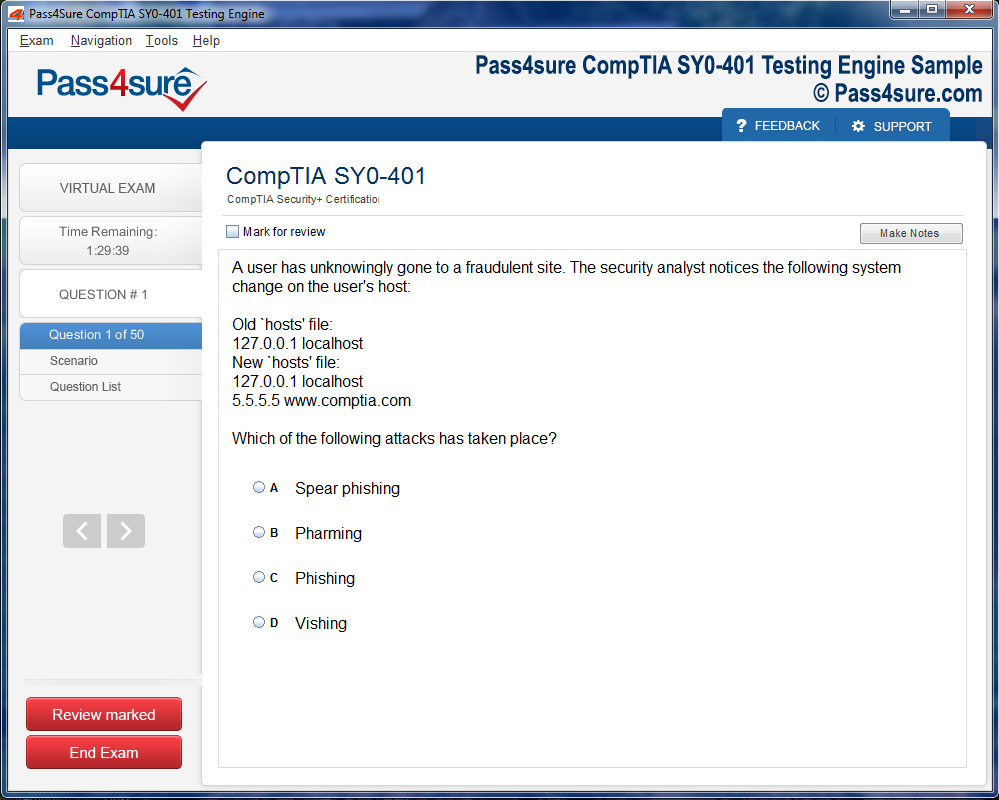
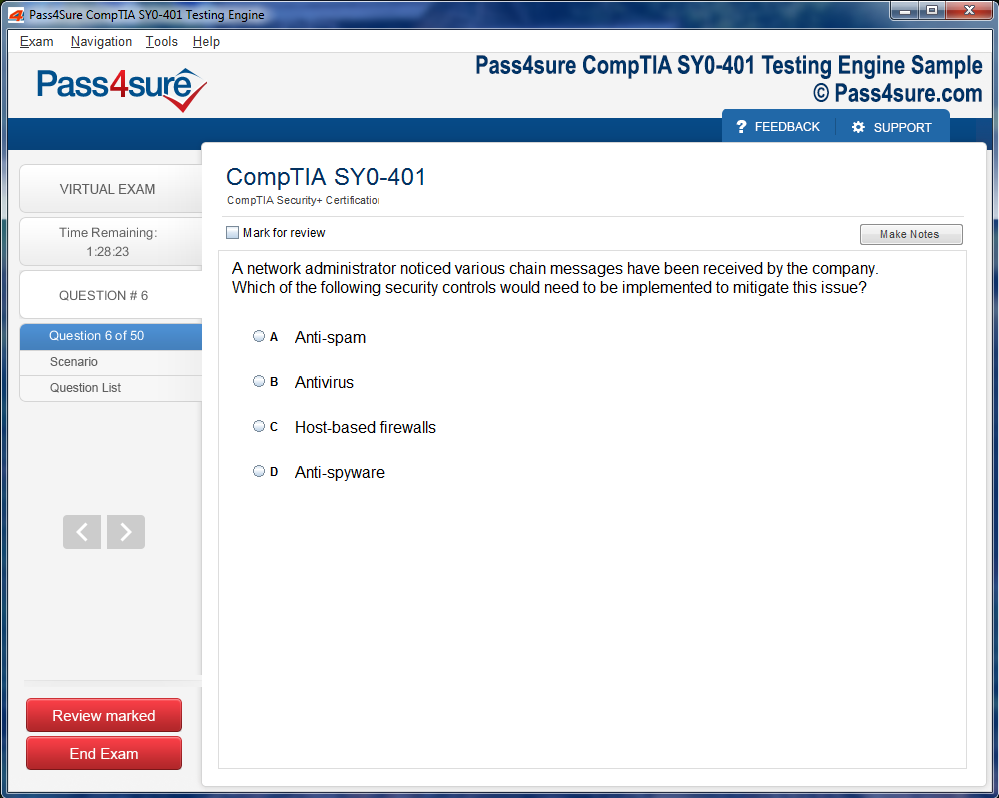
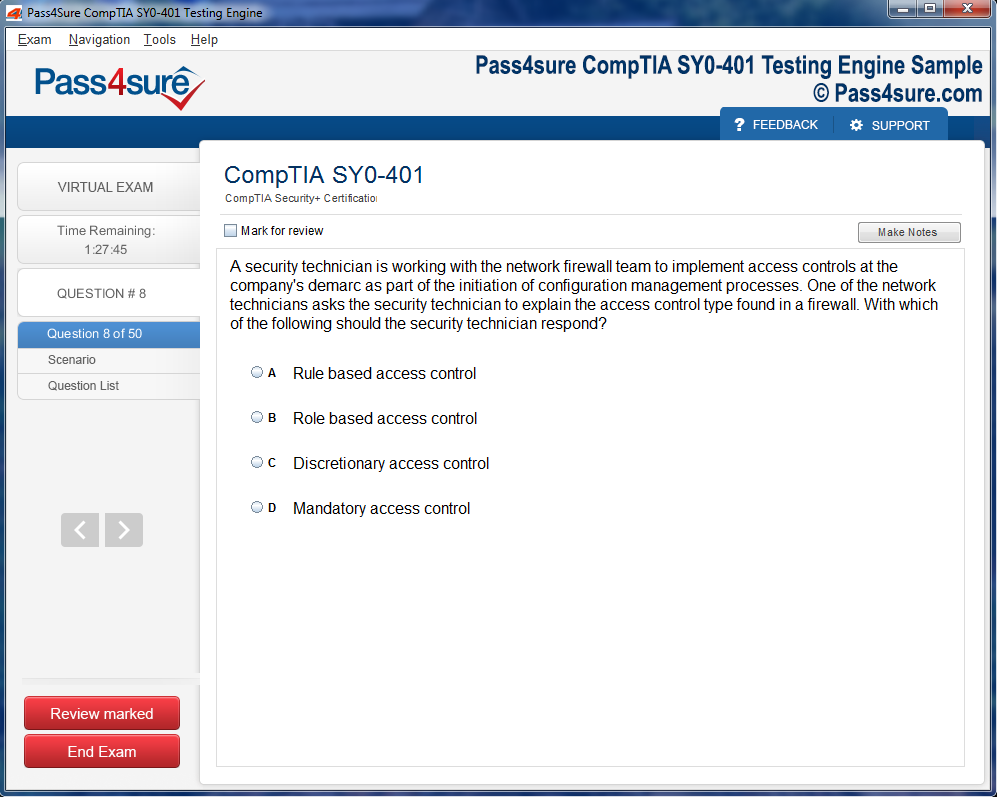
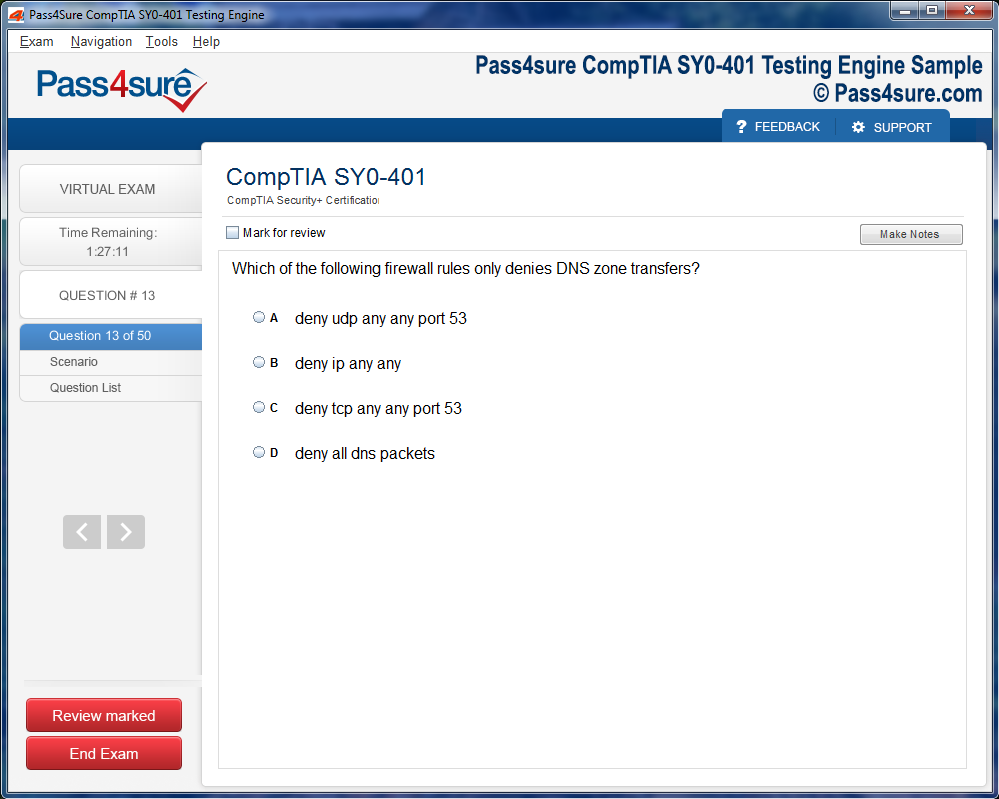
Frequently Asked Questions
How does your testing engine works?
Once download and installed on your PC, you can practise test questions, review your questions & answers using two different options 'practice exam' and 'virtual exam'. Virtual Exam - test yourself with exam questions with a time limit, as if you are taking exams in the Prometric or VUE testing centre. Practice exam - review exam questions one by one, see correct answers and explanations.
How can I get the products after purchase?
All products are available for download immediately from your Member's Area. Once you have made the payment, you will be transferred to Member's Area where you can login and download the products you have purchased to your computer.
How long can I use my product? Will it be valid forever?
Pass4sure products have a validity of 90 days from the date of purchase. This means that any updates to the products, including but not limited to new questions, or updates and changes by our editing team, will be automatically downloaded on to computer to make sure that you get latest exam prep materials during those 90 days.
Can I renew my product if when it's expired?
Yes, when the 90 days of your product validity are over, you have the option of renewing your expired products with a 30% discount. This can be done in your Member's Area.
Please note that you will not be able to use the product after it has expired if you don't renew it.
How often are the questions updated?
We always try to provide the latest pool of questions, Updates in the questions depend on the changes in actual pool of questions by different vendors. As soon as we know about the change in the exam question pool we try our best to update the products as fast as possible.
How many computers I can download Pass4sure software on?
You can download the Pass4sure products on the maximum number of 2 (two) computers or devices. If you need to use the software on more than two machines, you can purchase this option separately. Please email sales@pass4sure.com if you need to use more than 5 (five) computers.
What are the system requirements?
Minimum System Requirements:
- Windows XP or newer operating system
- Java Version 8 or newer
- 1+ GHz processor
- 1 GB Ram
- 50 MB available hard disk typically (products may vary)
What operating systems are supported by your Testing Engine software?
Our testing engine is supported by Windows. Andriod and IOS software is currently under development.
Step-by-Step Guide to Network Appliance NS0-093 Certification Success
The NS0-093 certification delves into the intricate architecture of network appliances, revealing the symphony of processes that govern modern storage and data transmission systems. Understanding the interplay between hardware components, virtualized environments, and orchestrated software layers is pivotal for candidates aspiring to master operational excellence. System dynamics encompass both predictable flows and stochastic behaviors, requiring practitioners to develop both deterministic and heuristic approaches to management.
A fundamental concept within the architecture is modularity. Network appliances are constructed to facilitate component-level upgrades, seamless integration, and redundancy without disrupting ongoing operations. Modularity enhances system resilience and enables administrators to isolate faults efficiently. By internalizing these principles, candidates can design strategies that minimize downtime while optimizing throughput and resource allocation.
Another critical dimension is the orchestration of workloads. Modern appliances employ sophisticated scheduling algorithms that dynamically allocate processing power and storage bandwidth. NS0-093 guides learners in understanding load distribution techniques, queuing mechanisms, and latency mitigation strategies. Candidates explore how operational metrics, such as throughput, packet loss, and IOPS, influence real-time decision-making and system stability.
High-availability frameworks form the backbone of network appliance architecture. Redundant nodes, failover protocols, and heartbeat mechanisms ensure continuous operation under adverse conditions. Understanding these mechanisms allows candidates to construct systems capable of withstanding hardware failures, network interruptions, or surges in traffic without compromising data integrity or service continuity.
Security integration within architecture extends beyond perimeter defenses. Network appliances embed encryption engines, multifactor authentication protocols, and role-based access controls directly into their operational core. NS0-093 encourages learners to analyze the interdependencies of security measures and performance, balancing stringent safeguards with optimal system responsiveness.
Operational Excellence and Management Techniques
Operational excellence is a central theme of NS0-093, emphasizing proactive monitoring, diagnostic precision, and system optimization. Candidates learn to develop operational playbooks, incorporating best practices for device configuration, network routing, and storage allocation. These methodologies enable administrators to preempt performance bottlenecks and maintain stability under variable workloads.
Performance monitoring extends beyond surface metrics. NS0-093 trains learners to interpret complex signals from logs, telemetry data, and event streams. By correlating patterns across multiple layers—hardware, firmware, and application—professionals gain the ability to predict anomalies before they escalate into critical failures. This anticipatory mindset distinguishes competent operators from reactive troubleshooters.
Automation and scripting form another essential pillar of operational mastery. Network appliances often support programmable interfaces, allowing administrators to automate routine tasks, enforce policies, and deploy updates with minimal disruption. NS0-093 equips candidates with knowledge of automation frameworks, ensuring operational efficiency, consistency, and scalability in dynamic environments.
Troubleshooting techniques are framed within both systematic and heuristic contexts. Candidates explore structured diagnostic pathways, integrating flowcharts, dependency mapping, and fault isolation strategies. Additionally, heuristic methods empower operators to address unforeseen anomalies through pattern recognition, lateral reasoning, and adaptive interventions. This dual approach cultivates both precision and agility, ensuring effective resolution under time-sensitive conditions.
Resource optimization is emphasized through careful orchestration of storage, processing, and network bandwidth. NS0-093 illustrates strategies for deduplication, caching, compression, and tiered storage, enabling systems to operate efficiently while accommodating fluctuating demands. Candidates gain insight into balancing performance, capacity, and cost-effectiveness, fostering operational decision-making that aligns with organizational priorities.
Security and Risk Mitigation
In the NS0-093 framework, security transcends mere compliance, becoming an intrinsic aspect of system design and operational philosophy. Candidates explore advanced encryption algorithms, secure protocol implementations, and layered defense mechanisms that collectively safeguard data integrity.
Risk mitigation strategies involve both preventative and responsive measures. Preventative approaches include rigorous configuration management, continuous vulnerability scanning, and adherence to industry best practices. Responsive measures encompass incident response, forensic analysis, and disaster recovery planning. NS0-093 emphasizes that security effectiveness is amplified when these strategies are integrated into a cohesive operational blueprint rather than treated as discrete tasks.
Understanding threat vectors is crucial for proactive defense. Candidates learn to identify potential ingress points, such as misconfigured interfaces, outdated firmware, or unencrypted channels. By anticipating attack vectors, professionals can implement preemptive controls, reducing the likelihood of breaches and minimizing the operational impact of security incidents.
Moreover, NS0-093 highlights the symbiosis between performance and security. Encrypting data, enforcing access policies, and applying security patches inevitably influence system throughput. Candidates are trained to assess trade-offs and implement balanced solutions that maintain robust security without compromising operational efficiency.
Hands-On Practice and Immersive Learning
A hallmark of NS0-093 is its emphasis on experiential learning. Candidates are immersed in simulations, virtual labs, and interactive scenarios that replicate the complexities of real-world network appliance environments. These exercises cultivate an intuitive understanding of system behavior under varying conditions.
Lab scenarios often include stress-testing configurations, implementing failover protocols, and monitoring system responses to simulated anomalies. By engaging in these activities, learners develop a tactile sense of operational causality, understanding how minute changes in configuration or traffic patterns can propagate across the system.
Additionally, hands-on practice reinforces analytical reasoning and problem-solving. Candidates learn to dissect intricate operational issues, formulate hypotheses, and execute corrective actions with precision. This experiential knowledge bridges the gap between theoretical comprehension and practical execution, a key differentiator in achieving proficiency and certification success.
Adaptive Strategies and Continuous Improvement
The dynamic nature of network environments necessitates continuous learning and adaptive strategies. NS0-093 encourages candidates to adopt a mindset of perpetual enhancement, applying lessons learned to refine configurations, optimize workflows, and anticipate emerging challenges.
Analytical reasoning is central to adaptive management. Candidates learn to examine historical data, performance trends, and operational patterns to identify opportunities for improvement. These insights inform iterative adjustments that enhance resilience, efficiency, and overall system performance.
NS0-093 also emphasizes the importance of staying abreast of technological advancements. Network appliances evolve rapidly, integrating new features, protocols, and performance enhancements. Candidates are trained to evaluate emerging technologies, assess their relevance, and incorporate them into operational frameworks without disrupting stability or compliance.
In cultivating continuous improvement, NS0-093 integrates both micro-level adjustments and macro-level strategic planning. Administrators refine device configurations, optimize traffic flows, and implement automation scripts, while simultaneously aligning system evolution with organizational goals, regulatory requirements, and industry best practices.
Progressing from foundational architecture, NS0-093 immerses candidates in sophisticated operational mechanisms that underpin high-performance network appliances. These mechanisms transcend mere configuration, emphasizing the dynamic orchestration of hardware, software, and network flows. Candidates explore not only how individual components function but also how they synergistically interact to produce a cohesive and resilient ecosystem.
Central to these operations is traffic modulation and prioritization. Learners examine advanced algorithms that dictate packet routing, bandwidth allocation, and latency mitigation. By understanding these mechanisms, candidates acquire the capacity to sculpt traffic flows, ensuring that critical data traverses networks with minimal delay while less time-sensitive processes are efficiently queued or throttled. This precision is pivotal in enterprise-grade deployments, where microsecond differences can influence overall system performance.
Equally critical is system telemetry and diagnostics. NS0-093 emphasizes proactive observability, guiding learners to leverage real-time monitoring tools that transcend conventional alerts. Candidates gain proficiency in interpreting nuanced metrics such as jitter, packet loss variance, and throughput anomalies, translating these insights into actionable adjustments. This analytical approach cultivates anticipatory maintenance, reducing downtime and fortifying system resilience against unforeseen disruptions.
Another advanced domain involves storage orchestration. Beyond basic integration, NS0-093 explores methods for optimizing I/O operations, synchronizing redundant storage nodes, and implementing tiered storage strategies. Learners are encouraged to contemplate the implications of read/write patterns, latency thresholds, and redundancy schemas on overall system performance. Mastery of storage orchestration empowers candidates to design solutions that seamlessly balance speed, capacity, and reliability.
Security operations are interwoven into all advanced mechanisms. NS0-093 emphasizes the fusion of preventive and detective strategies, where candidates configure dynamic access controls, encryption layers, and anomaly detection systems. They also learn to architect defensive postures that anticipate potential breach vectors, blending technical rigor with strategic foresight. This dual approach ensures that network appliances maintain integrity and confidentiality while continuing to operate at peak efficiency.
Operational workflows are further enhanced through automation and orchestration frameworks. Candidates explore scripting paradigms, policy-driven automation, and the implementation of adaptive protocols that react to changing network conditions. This proficiency reduces manual intervention, accelerates response times, and enhances consistency across distributed deployments. NS0-093 situates automation not as a convenience but as a critical competency for modern network appliance professionals.
Through this part of the curriculum, learners transition from understanding isolated components to orchestrating holistic operations. The focus on nuanced control, real-time observability, and strategic security enables candidates to manage network appliances with agility, foresight, and precision, preparing them for increasingly complex deployment scenarios and operational challenges.
Advanced Operational Techniques in NS0-093
The realm of NS0-093 transcends rudimentary network concepts, ushering learners into a domain where operational acuity dictates system vitality. This phase cultivates an intricate understanding of performance orchestration, resilience architecture, and efficiency paradigms under multifaceted workloads. Mastery here requires a blend of strategic foresight and hands-on dexterity, elevating the practitioner from mere technician to operational savant.
Capacity prognostication emerges as a pivotal competency. NS0-093 guides candidates in extrapolating device utilization trajectories, anticipating exponential data accretion, and architecting scalable infrastructures. Learners explore predictive methodologies that harmonize growth imperatives with resource constraints, ensuring systems not only accommodate escalating traffic but also maintain a seamless equilibrium between throughput and latency. The art of preemptive scaling becomes a cornerstone of operational sagacity, where foresight mitigates disruption and fosters sustainable system robustness.
Performance calibration is meticulously explored. NS0-093 immerses candidates in the nuanced dynamics of workload equilibrium, resource orchestration, and caching mechanisms. Emphasis is placed on the judicious distribution of network flows, attenuation of latency spikes, and maximization of data throughput. Operational decisions are informed by a symbiosis of real-time telemetry, historical usage analytics, and predictive modeling. This triad empowers candidates to implement both instantaneous refinements and enduring optimizations, cultivating systems that respond with agility to fluctuating demands.
Disaster resiliency and continuity strategies occupy a critical domain within NS0-093. Candidates navigate failover schematics, synchronous and asynchronous backup methodologies, and cross-site replication frameworks. Simulated outages and controlled disruption exercises reinforce the procedural rigor necessary to restore services with minimal downtime. The training cultivates an operational mindset attuned to high-availability imperatives, where redundancy planning and meticulous documentation converge to fortify infrastructure against unpredictable adversities.
Automation and orchestration underscore modern operational sophistication. NS0-093 equips candidates with scripting prowess, API integration strategies, and policy-driven configuration techniques. Automation is not merely a procedural convenience but a strategic instrument for consistency, speed, and error mitigation. Learners develop orchestrated workflows capable of dynamically adjusting resource allocations, executing maintenance protocols, and responding to operational anomalies with minimal human intervention. The ability to embed intelligence into routine processes enhances both system performance and managerial bandwidth, fostering an ecosystem of proactive operations.
Troubleshooting and root cause diagnosis exemplify the apex of operational skill within NS0-093. Candidates engage in methodical deconstruction of network aberrations, employing logical deduction, telemetry analysis, and configuration audits to pinpoint anomalies. The curriculum emphasizes analytical rigor, teaching practitioners to discern subtle misconfigurations, latent faults, and emergent performance bottlenecks. Scenario-based exercises cultivate a high-pressure acumen, ensuring candidates respond with both precision and composure in live environments.
Advanced operational techniques converge into a cohesive proficiency that blends empirical reasoning, technical dexterity, and anticipatory strategy. NS0-093 molds practitioners capable of navigating intricate network appliance ecosystems with sophistication. Through capacity foresight, performance calibration, disaster preparedness, automation, and meticulous troubleshooting, learners internalize a philosophy where operational excellence is not reactive but proactively architected. This mastery equips professionals to steward complex infrastructures, preempt potential disruptions, and optimize systemic efficiency, embodying the quintessence of advanced network operations.
Practical Application Scenarios of NS0-093
The pragmatic deployment of NS0-093 acumen transcends rote learning, immersing candidates in environments where theoretical paradigms coalesce with operational exigencies. Within enterprise traffic ecosystems, proficiency in NS0-093 manifests as the ability to orchestrate intricate packet routing schemes, optimize latency trajectories, and implement segmentation architectures that harmonize throughput with resilience. Real-world simulations compel candidates to dissect network performance, pinpoint obfuscations within traffic flows, and execute rectifications that maintain the continuum of operational efficacy.
Incorporating storage systems into network appliance workflows accentuates the complexity of practical application. NS0-093 cultivates the capacity to architect appliances with high availability, redundancy, and unobtrusive storage access. Candidates engage with scenarios involving capacity forecasting, pathway orchestration, and disaster recovery enactments, elucidating the nexus between storage integration and business continuity imperatives. This immersion instills a holistic comprehension of how appliances operate as conduits for enterprise workloads, transcending mere device configuration.
Security orchestration emerges as a cornerstone of practical NS0-093 application. Candidates navigate exercises simulating multifaceted threat landscapes, deploying access controls, cryptographic protocols, and anomaly detection mechanisms in environments reflective of operational reality. These experiential exercises reinforce the ability to anticipate vulnerabilities, execute mitigation strategies, and uphold stringent compliance mandates without impinging on network performance. The applied dimension of security prepares candidates for dynamic risk scenarios, fostering an adaptive and vigilant mindset essential for contemporary network stewardship.
The proliferation of hybrid and cloud-integrated architectures renders NS0-093 competencies ever more salient. Learners explore methodologies for bridging on-premises appliances with cloud infrastructures, orchestrating migrations, replications, and performance monitoring across distributed topologies. This application necessitates a delicate equilibrium between scalability, redundancy, and operational throughput, challenging candidates to synthesize multi-environment strategies that preempt disruptions while enhancing system elasticity.
Operational optimization within NS0-093 scenarios extends beyond static configuration. Candidates engage with dynamic workload balancing, real-time performance tuning, and monitoring frameworks that simulate peak-load exigencies. This experiential learning fosters dexterity in diagnosing bottlenecks, anticipating systemic stressors, and instituting remedies that preserve the integrity of the network ecosystem. Through iterative engagement, learners cultivate an intuitive comprehension of appliance behavior under diverse operational stressors, solidifying their capacity to apply theoretical knowledge with strategic foresight.
Scenario-based exercises further accentuate the nuanced interplay between components, traffic patterns, and operational priorities. Candidates observe how misaligned routing policies or insufficient resource allocation can cascade into performance degradation, prompting proactive interventions that reconcile efficiency with reliability. These exercises not only reinforce cognitive understanding but also engender a tactile appreciation of the temporal and spatial intricacies inherent in network appliance management.
Practical application scenarios of NS0-093 therefore extend well beyond mechanical execution, nurturing an analytic, anticipatory, and adaptive approach to network operations. Candidates emerge equipped to traverse complex operational landscapes, leveraging nuanced insights to drive performance, fortify security postures, and harmonize hybrid architectures with remarkable precision. The experiential rigor embedded within these scenarios ensures that learners can translate theoretical mastery into actionable expertise, poised to excel in both professional deployment and certification endeavors.
Strategic Study Architecture for NS0-093 Mastery
The labyrinthine intricacies of NS0-093 demand a meticulously architected study framework. Candidates who adopt a stratified approach often encounter greater efficacy in knowledge assimilation. Foundational comprehension must precede the integration of nuanced concepts. Embedding technical paradigms into mental schematics facilitates accelerated cognitive retrieval, enhancing the capacity for problem-solving in high-pressure scenarios. Analogical reasoning serves as a conduit between abstract theory and tangible practice, allowing learners to navigate the examination landscape with dexterous adaptability.
Cognitive scaffolding can be optimized through interleaved learning sessions that juxtapose disparate yet complementary modules. By alternately engaging foundational principles and advanced operational intricacies, learners cultivate synaptic reinforcement that resists rapid decay. Furthermore, the judicious allocation of cognitive resources toward areas of historical challenge ensures that effort is concentrated where it yields maximal utility, promoting a robust and resilient grasp of the NS0-093 curriculum.
Experiential Engagement and Applied Competency
NS0-093 is not merely a theoretical endeavor; the certification is heavily predicated on experiential acumen. Candidates must immerse themselves in simulation-driven environments that replicate authentic network appliance configurations. These experiential engagements engender an intuitive understanding of operational dynamics, troubleshooting permutations, and automation protocols. Through iterative lab exercises, practitioners cultivate an anticipatory proficiency, preempting potential pitfalls and cultivating rapid rectification strategies.
Integrating scenario-based problem-solving into daily practice nurtures an anticipatory mindset that transcends rote memorization. Candidates develop the capacity to analyze cascading network events, evaluate performance anomalies, and implement remedial measures with alacrity. By coupling theoretical frameworks with hands-on experimentation, learners internalize complex procedures, converting ephemeral knowledge into actionable expertise that manifests seamlessly during examination conditions.
Cognitive Reinforcement through Conceptual Mapping
Conceptual reinforcement is indispensable for NS0-093 aspirants. Employing mind maps, schematics, and comparative matrices fosters a synoptic perspective on multifaceted concepts. This methodology catalyzes the synthesis of discrete informational nodes into cohesive operational intelligence. By externalizing mental constructs through diagrammatic representation, candidates consolidate abstract theory into operationally relevant schemas, enhancing both retention and recall.
Iterative review mechanisms, when coupled with spaced repetition, fortify long-term memory consolidation. Comparative analysis of configuration strategies, troubleshooting protocols, and optimization pathways illuminates subtle nuances often overlooked in cursory study. Such integrative approaches not only reinforce comprehension but also cultivate an intellectual agility vital for navigating the unpredictable permutations presented in NS0-093 examinations.
Diagnostic Assessment and Feedback Loops
The implementation of mock assessments constitutes a pivotal element of preparation strategy. NS0-093 candidates derive substantial benefit from periodic diagnostic evaluations that illuminate knowledge deficits and highlight areas requiring intensified focus. By subjecting oneself to realistic testing conditions, learners experience the temporal and cognitive pressures of the actual examination, honing pacing strategies and response modulation.
Feedback loops derived from performance analytics enable adaptive learning. By systematically reviewing errors, candidates refine their approach, recalibrate understanding, and consolidate procedural competence. This iterative cycle transforms mistakes into instructive milestones, ensuring that each subsequent attempt is informed by the insights garnered from prior engagement.
Psychological Fortitude and Exam Resilience
Cognitive mastery alone is insufficient for NS0-093 success; psychological preparedness is equally critical. Sustaining focus over prolonged examination durations demands deliberate cultivation of mental resilience. Techniques such as mindfulness, pacing, and restorative interludes mitigate cognitive fatigue, preserving attentional acuity and executive function.
Time management strategies enhance the capacity to allocate analytical resources judiciously, ensuring that complex questions receive sufficient deliberation without compromising the completion of the overall examination. Cultivating composure in the face of unforeseen scenarios fosters an adaptive mindset, reducing susceptibility to stress-induced errors. By integrating psychological fortification into preparation routines, candidates augment their operational effectiveness and confidence.
Iterative Mastery and Adaptive Strategy
NS0-093 preparation is characterized by a dynamic interplay of knowledge acquisition, experiential application, and self-regulated adaptation. Each preparatory iteration refines understanding, hones practical skills, and enhances exam performance. By cyclically engaging with study material, laboratory simulations, and self-assessment feedback, candidates achieve a synergistic elevation of competency.
The path to mastery is iterative rather than linear; adaptive strategy ensures responsiveness to emergent challenges and evolving comprehension. Flexibility in study pacing, method selection, and focus allocation permits learners to navigate the complex terrain of NS0-093 with precision. This adaptive approach fosters an integrative expertise that is both theoretically sound and operationally agile, equipping candidates to excel in both examination contexts and real-world professional scenarios.
Emerging Trends and Lifelong Learning with NS0-093
The NS0-093 curriculum transcends mere certification, serving as a lodestar for perpetual learning and agile adaptation to the fluid landscape of network appliance technologies. Its pedagogy interweaves foundational principles with avant-garde methodologies, nurturing professionals capable of navigating intricate ecosystems with perspicacity and dexterity.
Cloud orchestration emerges as a preeminent trend within modern network paradigms. NS0-093 elucidates hybrid deployment methodologies, dynamic scaling architectures, and cloud-native redundancy schemes. Candidates are immersed in strategies for orchestrating distributed environments, ensuring operational continuity while mitigating latency, bottlenecks, and systemic vulnerabilities. This emphasis equips practitioners with the sagacity to harmonize disparate infrastructural components, yielding performance optimization across multi-tenant frameworks.
The advent of automation and AI-driven administration heralds a transformative epoch for network operations. NS0-093 introduces learners to predictive telemetry, automated performance calibration, and intelligent resource provisioning. These emergent paradigms diminish reliance on manual intervention, cultivate real-time responsiveness, and amplify resource efficiency. The integration of machine cognition within operational workflows empowers candidates to preempt anomalies and proactively fine-tune systems, fostering a paradigm of anticipatory governance.
Security remains a linchpin of professional mastery. NS0-093 encompasses advanced encryption schemas, dynamic threat intelligence, and regulatory compliance architectures. Participants acquire proficiency in safeguarding sensitive data and fortifying operational integrity within complex, mutable network environments. The curriculum encourages the cultivation of a vigilant mindset, enabling practitioners to detect, neutralize, and preempt potential breaches with strategic foresight.
Interdisciplinary integration is gaining unprecedented significance in contemporary IT ecosystems. NS0-093 bridges network appliance management with storage architectures, application frameworks, and enterprise IT operations. This holistic approach cultivates polymathic expertise, allowing professionals to navigate cross-domain interdependencies, orchestrate cohesive operational strategies, and engender systemic resilience. The syllabus accentuates the necessity of viewing networks not as insular silos but as dynamic, interwoven organisms requiring multidimensional stewardship.
Lifelong learning constitutes a core tenet of the NS0-093 philosophy. Candidates are encouraged to engage in continuous professional enrichment, exploratory experimentation, and reflective practice. By embedding curiosity and adaptability into their professional ethos, practitioners ensure that their competencies remain aligned with technological evolution and emergent operational challenges. NS0-093 fosters a culture where perpetual inquiry, iterative improvement, and inventive application are not ancillary but central to enduring professional relevance.
The convergence of technical acumen, operational insight, and strategic foresight delineates the NS0-093 trajectory. Its framework equips learners with the tools to traverse the spectrum from foundational comprehension to advanced operational mastery. By internalizing its principles, candidates are empowered to administer contemporary network appliance environments with precision, resilience, and transformative efficacy, ensuring sustained impact in a continuously metamorphosing technological milieu.
Emerging Trends and Lifelong Learning with NS0-093
The NS0-093 curriculum transcends the conventional paradigms of certification, serving not merely as a credential but as a crucible for cultivating enduring expertise and adaptive ingenuity. It is designed to imbue candidates with a perspicacious understanding of network appliance ecosystems while fostering an anticipatory mindset attuned to technological flux. In an era where digital architectures evolve at a velocity that borders on the protean, NS0-093 emphasizes a synthesis of cognitive dexterity, operational foresight, and strategic acumen, equipping practitioners to navigate increasingly labyrinthine network topologies with sophistication.
Cloud integration, once an auxiliary consideration, has burgeoned into a fulcrum of contemporary network strategy. Within the NS0-093 framework, candidates encounter a rigorous exploration of hybrid deployment modalities, elastic scaling architectures, and cloud-native redundancy strategies. The syllabus delves into the intricacies of orchestrating distributed environments across multi-cloud infrastructures, imparting the ability to maintain continuity, mitigate systemic latency, and optimize bandwidth allocation. This holistic approach ensures that learners grasp the nuance of harmonizing geographically disparate nodes, achieving operational equilibrium while preempting emergent bottlenecks or failure vectors. In essence, NS0-093 trains practitioners to function as architects of resilient, high-availability networks capable of sustaining mission-critical operations under fluctuating loads.
The infusion of automation and AI-driven management is redefining the operational lexicon of network administration. NS0-093 introduces candidates to sophisticated paradigms of predictive analytics, autonomous performance calibration, and machine-intelligent provisioning. These capabilities radically reduce dependency on manual intervention, fostering environments characterized by anticipatory responsiveness and self-optimizing processes. By leveraging telemetry data, heuristic algorithms, and AI-powered anomaly detection, practitioners can preempt disruptions, fine-tune performance in real time, and orchestrate resources with surgical precision. This integration of cognitive automation not only enhances operational efficiency but also cultivates an ethos of proactive stewardship, transforming network management from a reactive necessity to a predictive science.
Security, an immutable pillar of network appliance mastery, receives comprehensive attention within NS0-093. The curriculum immerses candidates in advanced cryptographic frameworks, dynamic threat intelligence, and regulatory compliance architectures that span multiple jurisdictional domains. Practitioners learn to safeguard sensitive datasets, secure inter-nodal communications, and fortify operational integrity against an ever-evolving threat landscape. By emphasizing strategic threat anticipation, the program encourages a mindset wherein vigilance, preemption, and rapid mitigation converge to form a resilient security posture. Beyond technical proficiency, candidates cultivate a cognitive framework for assessing risk, prioritizing mitigations, and implementing multilayered defense mechanisms that uphold organizational continuity under duress.
Cross-domain integration represents a paradigm shift in modern IT ecosystems, and NS0-093 situates it as a strategic imperative. Candidates are guided to transcend siloed perspectives, aligning network appliance management with storage architectures, application frameworks, and overarching enterprise IT operations. This interdisciplinary approach cultivates polymathic competencies, enabling practitioners to navigate complex interdependencies and orchestrate cohesive operational strategies. NS0-093 imparts a systems-thinking orientation, wherein networks are conceptualized as dynamic, interwoven organisms rather than isolated silos. Through this lens, learners acquire the ability to anticipate cascading effects, optimize resource interplays, and engineer sustainable, resilient infrastructures capable of supporting multifaceted enterprise demands.
The pedagogy of NS0-093 actively embeds the philosophy of lifelong learning, positing continuous intellectual and professional development as an intrinsic necessity rather than an optional adjunct. Candidates are encouraged to engage in reflective practice, iterative experimentation, and continuous skill augmentation, ensuring that their proficiencies remain consonant with the ceaseless evolution of network technologies. This ethos cultivates adaptive intelligence, fostering an ability to pivot in response to novel protocols, emergent threat vectors, and evolving architectural paradigms. Curiosity, in this context, is not merely encouraged but institutionalized as a core operational competency, driving innovation, problem-solving, and strategic foresight.
The integration of predictive analytics and AI into network operations represents an inflection point for practitioners. NS0-093 equips learners with the ability to harness data streams for anticipatory decision-making, employing sophisticated models to forecast demand fluctuations, identify latent vulnerabilities, and orchestrate resource allocation with unparalleled precision. By internalizing these methodologies, candidates transcend the limitations of reactive management, evolving into proactive architects of resilient, self-healing networks. The curriculum emphasizes not only technical execution but also the cognitive paradigms underpinning strategic network governance, ensuring that practitioners cultivate a holistic understanding of operational causality, risk modulation, and systemic interdependence.
Cloud-native orchestration within NS0-093 is treated as an intricate tapestry of interrelated considerations, encompassing elasticity, redundancy, and performance harmonization. Candidates explore methodologies for provisioning resources dynamically across diverse environments, optimizing load balancing, and ensuring redundancy across geospatially distributed nodes. The curriculum emphasizes the synthesis of automation, monitoring, and orchestration to achieve fault-tolerant, high-availability infrastructures. This focus equips professionals with the sagacity to anticipate stress points, remediate bottlenecks preemptively, and maintain operational continuity under conditions of unpredictable demand, thereby aligning technological execution with strategic enterprise objectives.
Automation, once a convenience, has evolved into a strategic imperative within NS0-093. Candidates gain mastery over intelligent provisioning systems, predictive monitoring frameworks, and self-optimizing algorithms capable of autonomously tuning network performance. These innovations diminish operational latency, streamline workflow efficiencies, and enhance the precision of resource utilization. By embedding automation within operational paradigms, NS0-093 cultivates practitioners who can leverage machine cognition to elevate the efficacy of complex, distributed network infrastructures. The curriculum encourages a symbiotic approach wherein human oversight and artificial intelligence coalesce, yielding environments of unparalleled responsiveness and operational resilience.
Security strategies in NS0-093 are nuanced, multidimensional, and anticipatory. Candidates study the application of cutting-edge encryption protocols, intrusion detection algorithms, and compliance frameworks capable of navigating multifarious regulatory landscapes. Emphasis is placed on proactive threat mitigation, continuous monitoring, and adaptive defense strategies, equipping learners to anticipate adversarial vectors and implement preemptive safeguards. This rigorous focus on security ensures that candidates develop not only technical competence but also strategic acumen, enabling them to align security protocols with operational priorities and organizational objectives.
The holistic approach of NS0-093 positions interdisciplinary fluency as a sine qua non of professional mastery. By integrating network management with application orchestration, storage optimization, and enterprise IT governance, candidates acquire a multidimensional perspective on system-wide operational coherence. The curriculum underscores the interconnectivity of technological domains, fostering an appreciation of emergent properties, cascading effects, and systemic resilience. This approach cultivates cognitive dexterity, enabling practitioners to anticipate interdependencies, optimize cross-domain processes, and engineer robust, adaptable infrastructures capable of sustaining high-performance operations under volatile conditions.
Lifelong learning is not merely encouraged within NS0-093; it is codified as a professional imperative. Candidates are guided to develop self-directed learning strategies, engage in continuous experimentation, and cultivate reflective practices that sustain cognitive agility. The curriculum emphasizes adaptability, intellectual curiosity, and innovative problem-solving as core competencies, enabling practitioners to remain at the vanguard of technological evolution. By embedding these principles into professional praxis, NS0-093 ensures that candidates are equipped to navigate emerging challenges, assimilate novel paradigms, and sustain operational excellence across the full spectrum of network appliance environments.
Emergent technologies such as predictive AI, autonomous orchestration, and cloud-native architectures are central to NS0-093’s vision of future-ready network management. Candidates learn to synthesize these capabilities into cohesive operational strategies, leveraging data-driven insights, anticipatory algorithms, and automation frameworks to optimize system performance. The curriculum fosters a mindset of continuous improvement, encouraging practitioners to experiment iteratively, refine methodologies, and cultivate adaptive proficiency that transcends ephemeral trends. By internalizing these competencies, learners evolve from technicians into strategic architects of resilient, intelligent, and forward-looking network infrastructures.
Immersive Simulation Techniques for Operational Fluency
Practical immersion lies at the heart of NS0-093 mastery. The orchestration of simulations, whether virtualized or hardware-driven, transforms abstract principles into embodied competence. These experiential environments allow candidates to manipulate configurations, adjust protocol parameters, and witness the immediate consequences of operational decisions. By repeatedly navigating complex scenarios, learners cultivate a reflexive understanding of cause-and-effect relationships intrinsic to network appliance behavior.
The subtleties of fault injection and performance variance analysis offer invaluable insight into real-world operational pressures. Deliberately introducing anomalies within simulated networks compels candidates to devise rapid mitigation strategies, refining both diagnostic acumen and adaptive reasoning. Through this process, theoretical constructs are transmuted into an operational lexicon, enabling swift, precise responses during examination exercises and professional deployments.
Advanced Troubleshooting Methodologies
NS0-093 preparation mandates a sophisticated comprehension of troubleshooting paradigms. Candidates must internalize diagnostic hierarchies that systematically isolate root causes amid multifactorial disruptions. Analytical frameworks that sequence problem identification, hypothesis generation, and remedial execution cultivate a disciplined, methodical approach to fault resolution.
Scenario complexity can be escalated by integrating multi-node interactions, latency variability, and asynchronous communication events. This not only challenges cognitive agility but also nurtures the capability to prioritize interventions based on impact magnitude and probability assessment. The iterative honing of troubleshooting proficiency ensures that candidates approach examination queries with a balance of precision, efficiency, and creative problem-solving.
Integrative Knowledge Synthesis
An often-overlooked facet of NS0-093 readiness is the synthesis of disparate knowledge domains into a cohesive operational schema. Candidates must weave together network architecture principles, appliance-specific protocols, and automation scripts into an intelligible and actionable framework.
Conceptual integration is facilitated by constructing scenario-based mind maps, which juxtapose interdependent elements and illuminate latent interconnections. Such cognitive cartography allows learners to visualize the operational ecosystem holistically, predicting system behaviors, preempting cascading failures, and formulating optimized configuration strategies. This integrative intelligence is paramount for high-stakes examinations where isolated recall is insufficient; candidates must demonstrate comprehension across interrelated technical landscapes.
Precision in Configuration Management
Mastery of configuration management is a cornerstone of NS0-093 expertise. Candidates must navigate complex syntax, parameter interdependencies, and hierarchical prioritization to achieve optimal network performance. Rigorous practice in crafting, verifying, and adjusting configurations cultivates operational precision, reducing error propensity during examination simulations and practical implementations.
The judicious use of version control and rollback mechanisms further enhances confidence and agility. By maintaining meticulous records of configuration states and systematically analyzing changes, learners develop resilience against inadvertent misconfigurations. This procedural rigor mirrors real-world professional expectations, ensuring that theoretical understanding is seamlessly translatable into operational efficacy.
Temporal Optimization and Cognitive Pacing
Time allocation strategies are integral to NS0-093 examination readiness. Candidates must cultivate an acute awareness of temporal resources, segmenting their attention between high-yield topics, complex scenario resolution, and review cycles. Cognitive pacing techniques, including alternating periods of intensive focus with restorative interludes, preserve attentional acuity and optimize working memory performance.
The application of metacognitive monitoring further enhances temporal efficiency. By periodically evaluating comprehension, confidence, and response speed, learners dynamically recalibrate effort distribution. This self-regulatory approach mitigates the risk of overinvestment in familiar areas while neglecting critical weaknesses, ensuring balanced preparation and sustained performance under timed conditions.
Automation Proficiency and Operational Streamlining
NS0-093 emphasizes automation as a force multiplier for network management. Candidates must develop fluency in scripting, task orchestration, and workflow optimization to maximize operational efficiency. The translation of repetitive manual tasks into automated routines not only conserves cognitive bandwidth but also reduces the probability of human error in complex network environments.
Practical exercises that simulate real-world automation scenarios cultivate both procedural understanding and problem-solving creativity. Learners encounter diverse automation challenges, including conditional logic, sequential execution, and exception handling, fostering an adaptive mindset capable of devising elegant, reliable solutions. This dual emphasis on theory and application ensures that candidates are equipped to implement automation strategies confidently in examination contexts and professional deployments alike.
Iterative Review and Knowledge Reinforcement
Repetition remains a powerful mechanism for NS0-093 preparation, but its efficacy is maximized through structured, iterative engagement. Candidates who engage with study material cyclically, alternating between deep-dives and rapid reviews, achieve durable cognitive consolidation.
Techniques such as elaborative interrogation, where learners interrogate the rationale behind each configuration or operational principle, enhance semantic understanding and reinforce procedural memory. Coupled with scenario reenactments and comparative analysis of alternative solutions, this approach transforms rote memorization into adaptable, operationally relevant knowledge. Iterative review thus serves as both a diagnostic instrument and a reinforcement mechanism, ensuring continuous improvement and cognitive resilience.
Peer Collaboration and Knowledge Exchange
Engagement with peer networks offers an additional vector for NS0-093 preparation. Collaborative learning environments facilitate the exchange of insights, strategies, and practical tips that may elude individual study. The act of articulating reasoning to others deepens comprehension, while exposure to diverse problem-solving approaches broadens adaptive capacity.
Virtual study groups, joint lab exercises, and scenario discussions create a dynamic ecosystem of intellectual cross-pollination. Candidates benefit from observing alternate configuration techniques, troubleshooting heuristics, and automation methodologies, integrating these insights into their own operational repertoire. Such collaborative immersion accelerates cognitive sophistication and nurtures a professional mindset aligned with the demands of NS0-093 certification.
Strategic Resource Utilization
Effective NS0-093 preparation requires judicious selection and utilization of learning resources. Comprehensive study materials, simulation environments, and assessment tools must be curated to maximize relevance, accuracy, and engagement. Candidates benefit from prioritizing resources that balance theoretical rigor with practical applicability, ensuring that knowledge acquisition is both profound and actionable.
The deployment of layered resources—textual guides, visual schematics, and interactive labs—engenders multisensory engagement, enhancing memory retention and conceptual clarity. By systematically cycling through diverse resource modalities, learners reinforce neural pathways, promote deeper comprehension, and cultivate the versatility necessary to navigate the multifaceted NS0-093 examination landscape.
Adaptive Feedback and Performance Calibration
A hallmark of advanced preparation is the integration of adaptive feedback mechanisms. Self-assessment, peer review, and simulation analytics provide continuous performance insights, enabling candidates to calibrate strategy, rectify deficiencies, and reinforce strengths.
Candidates are encouraged to maintain reflective journals documenting errors, insights, and iterative improvements. This meta-analytical approach transforms each preparatory activity into a data point informing subsequent learning cycles. Over time, patterns emerge, enabling targeted interventions, optimized resource allocation, and refined examination tactics. Adaptive feedback thus serves as both compass and accelerant, guiding candidates toward progressively higher levels of mastery.
Resilience Through Cognitive Conditioning
Sustained performance in NS0-093 examinations demands cognitive endurance. Strategies that condition the mind for prolonged focus, stress management, and adaptive flexibility are indispensable. Techniques such as incremental exposure to timed simulations, stress inoculation exercises, and mindfulness-based attention training cultivate resilience, enabling candidates to maintain clarity and composure under pressure.
The incorporation of deliberate rest intervals, nutrition optimization, and circadian rhythm alignment further supports cognitive function. By attending to the physiological and psychological substrates of performance, candidates ensure that their mental faculties remain sharp, responsive, and resilient, translating preparation into tangible examination efficacy.
Practical Application Scenarios of NS0-093
The synthesis of NS0-093 knowledge into real-world applications requires a nuanced grasp of network appliance dynamics, where precision, foresight, and adaptability converge. Beyond foundational configuration, candidates encounter scenarios that simulate operational volatility, compelling them to reconcile theoretical paradigms with practical exigencies. Enterprise traffic orchestration epitomizes this confluence, demanding that practitioners not merely route packets but dynamically sculpt the flow of data to align with business imperatives. Techniques such as traffic shaping, flow prioritization, and latency mitigation are not merely technical exercises; they become instruments of operational strategy. Candidates cultivate the acumen to discern micro-latencies, preempt congestion points, and implement routing schemas that harmonize efficiency with resilience, ensuring that enterprise communication channels remain unobstructed even under peak loads.
The practical integration of storage frameworks into appliance ecosystems introduces a multifaceted dimension of operational complexity. NS0-093 scenarios emphasize high-availability topologies where redundancy is not an optional safeguard but an operational imperative. Learners navigate exercises involving replication pathways, storage failover mechanisms, and capacity optimization strategies, gaining a visceral understanding of the interplay between appliance configurations and enterprise data integrity. In these contexts, candidates must anticipate failure vectors, design mitigative workflows, and ensure seamless access to critical repositories. Through iterative scenario simulation, the learner internalizes how storage orchestration enhances not only system resilience but also the continuity of mission-critical services, bridging the gap between appliance operation and organizational reliability.
Security considerations occupy a central role in the practical application of NS0-093. Exercises simulate intrusion attempts, unauthorized access, and cryptographic compromise, prompting candidates to deploy sophisticated defense mechanisms that extend beyond basic firewall rules. Access control policies, identity verification protocols, and encryption methodologies are tested under real-time conditions, allowing learners to develop a reflexive response to emergent threats. Scenario-based exercises also integrate regulatory compliance imperatives, challenging candidates to maintain security while adhering to organizational and legal mandates. This immersion fosters a security-conscious mindset that transcends procedural knowledge, embedding a strategic understanding of risk anticipation, threat mitigation, and forensic analysis into the practitioner's operational repertoire.
The intersection of on-premises appliances and cloud architectures represents a domain of escalating importance. NS0-093 scenarios provide candidates with experiential exposure to hybrid environments where the elasticity of cloud services must be harmonized with the determinism of on-premises infrastructure. Learners orchestrate replication strategies, evaluate latency impacts across geographic nodes, and implement monitoring frameworks that preempt performance degradation. These exercises cultivate a capacity to engineer fault-tolerant solutions that balance throughput, resilience, and scalability. The learner is trained to navigate complexities such as cross-site data consistency, asynchronous replication, and multi-tiered load balancing, ensuring that hybrid networks operate with cohesion and reliability across distributed landscapes.
Operational optimization emerges as a recurring theme within practical NS0-093 exercises. Beyond static configurations, learners engage in performance tuning that addresses the dynamic nature of network demand. Through scenario-based simulations, candidates adjust parameters such as queue lengths, buffer allocations, and protocol prioritizations to achieve optimal throughput. Real-time monitoring and diagnostic exercises train learners to interpret metrics such as jitter, packet loss, and bandwidth utilization, translating them into actionable adjustments that reinforce network stability. These scenarios imbue candidates with a proactive, analytic approach, transforming them into architects capable of anticipating performance deviations and instituting preventive interventions before critical thresholds are breached.
The experiential framework of NS0-093 also immerses learners in the subtleties of failure recovery. Scenarios encompass device malfunctions, link outages, and storage node failures, compelling candidates to execute contingency plans under time-sensitive conditions. These exercises instill a deep comprehension of fault propagation, recovery sequencing, and system redundancy mechanisms. Learners practice orchestrating failover operations, recalibrating routing protocols, and realigning storage access paths to minimize operational disruption. Through this rigorous exposure, candidates cultivate a mindset attuned to operational continuity, where every action is measured against its potential impact on network resilience, service availability, and user experience.
Advanced traffic analysis exercises challenge learners to discern patterns within complex network matrices, identifying congestion hotspots, performance bottlenecks, and anomalous behavior indicative of latent faults or security breaches. NS0-093 scenarios integrate analytic tools that provide granular insights into packet flow, latency variance, and protocol efficiency. Candidates apply this knowledge to optimize traffic distribution, recalibrate routing priorities, and implement dynamic load balancing strategies. The immersion in such analytical exercises transforms learners from reactive troubleshooters into anticipatory strategists, capable of orchestrating network operations with precision and foresight.
Security orchestration within NS0-093 practical applications extends to advanced threat simulation and incident response. Learners engage in scenarios that replicate sophisticated attack vectors, including man-in-the-middle, denial-of-service, and unauthorized exfiltration attempts. These exercises necessitate the deployment of layered defense mechanisms, the interpretation of intrusion logs, and the formulation of responsive strategies that neutralize threats without compromising operational integrity. Through iterative exposure, candidates develop an adaptive security posture, cultivating the ability to anticipate, identify, and mitigate emerging vulnerabilities within complex network ecosystems.
Hybrid cloud integration scenarios emphasize the delicate balancing act between centralized control and distributed autonomy. Candidates navigate exercises where on-premises appliances must synchronize with cloud services to support enterprise workloads that demand low latency and high reliability. NS0-093 scenarios require learners to design replication architectures that accommodate asynchronous updates, implement monitoring systems that span heterogeneous environments, and execute migration strategies that minimize downtime. These exercises instill an appreciation for architectural foresight, where network operations must reconcile disparate performance requirements, regulatory constraints, and operational contingencies.
Operational simulations extend into capacity planning and predictive resource allocation. NS0-093 practical scenarios challenge learners to anticipate future network demands based on historical metrics, seasonal usage patterns, and projected growth trajectories. Candidates employ modeling techniques to forecast traffic spikes, storage consumption, and compute resource utilization, applying insights to preemptively optimize configurations. This proactive approach nurtures an anticipatory mindset, ensuring that networks remain agile, resilient, and capable of accommodating evolving enterprise requirements.
The integration of real-time monitoring and analytics reinforces the application of NS0-093 knowledge in operational contexts. Learners engage with dashboards, telemetry data, and performance alerts, interpreting metrics to fine-tune appliance configurations. Scenario-based exercises illustrate how micro-adjustments in protocol parameters, queue management, or storage access policies can yield substantial improvements in throughput, latency, and overall system efficiency. This analytical immersion transforms learners into practitioners who understand the nuanced interplay between configuration, monitoring, and optimization within high-performance network environments.
Advanced Operational Techniques in NS0-093
Within the sophisticated corridors of NS0-093, operational mastery is cultivated not as a theoretical abstraction but as a living, dynamic practice. Learners immerse in a continuum where anticipation, precision, and adaptability coalesce, transforming operational routines into finely tuned symphonies of network orchestration. Beyond mere mechanics, the course instills a mindset where foresight, analytical acuity, and proactive intervention define the rhythm of successful administration.
Capacity management evolves into a nuanced science. Candidates explore techniques to quantify device saturation thresholds, interpret historical consumption patterns, and forecast emergent traffic surges. The focus extends beyond linear growth estimation, emphasizing exponential and sporadic fluctuations inherent in modern data ecosystems. NS0-093 instructs candidates in implementing elastic scaling paradigms, ensuring that network appliances expand responsively, mitigating the risk of bottlenecks while preserving throughput integrity. The cognitive framework developed here allows administrators to anticipate systemic stress points, aligning infrastructure expansion with projected organizational exigencies. Such strategic prescience fosters not only efficiency but also operational elegance, where resources are neither squandered nor overstretched.
Operational resilience emerges as a philosophical and practical imperative. The curriculum delves into sophisticated failover configurations, high-availability topologies, and cross-site replication methodologies. Practitioners learn to simulate catastrophic events, orchestrating recovery sequences that restore functionality with minimal temporal disruption. Emphasis is placed on end-to-end verification of recovery plans, ensuring that failover mechanisms are not just theoretically sound but demonstrably reliable under live conditions. NS0-093 encourages candidates to internalize resilience as an omnipresent attribute of system architecture, embedding redundancy, automated alerts, and proactive monitoring into the operational fabric.
Performance optimization extends beyond rudimentary tuning, encompassing multi-dimensional strategies that balance latency, throughput, and resource utilization. Candidates dissect traffic flows, identify choke points, and apply caching hierarchies to streamline data delivery. The course emphasizes intelligent workload distribution, where predictive analytics inform routing decisions, enabling the system to preempt congestion and maintain equilibrium under variable load conditions. Resource allocation methodologies incorporate both static and dynamic paradigms, allowing administrators to tailor system behavior to real-time operational contexts. These techniques converge to produce an infrastructure that not only meets performance benchmarks but anticipates demand fluctuations with precision.
Automation and orchestration are positioned as central pillars in the operational architecture of NS0-093. The curriculum explores advanced scripting techniques, declarative configuration models, and API-driven interactions that transform repetitive tasks into autonomous sequences. Candidates are trained to construct orchestration pipelines that interconnect disparate system modules, ensuring consistency across deployment, monitoring, and maintenance workflows. Automation is contextualized as both a labor-saving measure and a strategic enabler, reducing human error while enhancing the responsiveness of the network environment. By embedding intelligence into operational protocols, practitioners cultivate systems capable of self-adjustment, anomaly detection, and adaptive performance tuning.
Troubleshooting, in the context of NS0-093, transcends simple problem resolution. Candidates engage in forensic analysis of network behavior, applying diagnostic heuristics to uncover latent misconfigurations, sporadic faults, and performance aberrations. Emphasis is placed on root cause analysis, where practitioners trace issues to their origin, rather than merely addressing superficial symptoms. Scenario-driven exercises simulate high-pressure operational crises, challenging learners to maintain analytical clarity while executing corrective actions. This dual focus on cognitive agility and procedural rigor instills confidence in navigating complex, mission-critical infrastructures.
Security considerations are woven seamlessly into advanced operational practices. NS0-093 trains candidates to anticipate vulnerabilities that may arise from misconfigurations, network traffic anomalies, or automation missteps. Best practices for secure API integration, encrypted communications, and access control enforcement are emphasized, ensuring that operational efficiency does not compromise system integrity. Learners develop a mindset where performance optimization and security hardening are complementary pursuits, rather than conflicting objectives.
Monitoring and telemetry form the backbone of informed operational decision-making. NS0-093 emphasizes the design of comprehensive observability frameworks, incorporating real-time analytics, historical trend analysis, and predictive modeling. Candidates learn to correlate disparate data sources, constructing holistic insights into system behavior. This intelligence enables proactive interventions, where potential performance degradations, capacity constraints, or failure scenarios are addressed before they manifest. The curriculum encourages continuous refinement of monitoring strategies, recognizing that dynamic network environments require adaptive, intelligent oversight.
Advanced NS0-093 practices also integrate policy-driven governance. Candidates explore mechanisms to codify operational principles, ensuring uniform compliance across distributed systems. Policy frameworks dictate resource allocation, traffic prioritization, and failure mitigation strategies, embedding operational doctrine into the system itself. This approach minimizes the variability inherent in manual intervention, creating environments where consistency, predictability, and resilience are intrinsic qualities of the architecture.
Collaboration and cross-functional coordination are subtly emphasized throughout advanced operations. Candidates learn that optimal network performance is often a product of coordinated effort across teams, encompassing system architects, security professionals, and application developers. NS0-093 encourages the cultivation of communication protocols and shared dashboards that enhance situational awareness, enabling rapid, informed decision-making in complex operational scenarios.
Adaptive scaling techniques represent a sophisticated extension of capacity management. NS0-093 introduces concepts such as predictive load balancing, dynamic resource pooling, and elastic provisioning, where network appliances adjust to fluctuating demand with minimal latency. Candidates explore algorithmic models that forecast traffic surges, enabling preemptive resource allocation that preserves both performance and cost efficiency. This predictive paradigm underscores the importance of agility, equipping practitioners to respond to operational exigencies with foresight and precision.
Data integrity and consistency form a critical axis in advanced operations. NS0-093 addresses techniques for ensuring transactional accuracy across distributed systems, including synchronization protocols, consistency models, and conflict resolution strategies. Candidates examine the delicate interplay between performance optimization and data fidelity, learning to navigate trade-offs that preserve operational reliability without sacrificing throughput. The curriculum emphasizes both theoretical understanding and practical implementation, fostering a holistic mastery of integrity management in complex infrastructures.
Emergent technologies are incorporated into the operational curriculum to prepare candidates for future-ready environments. NS0-093 explores the integration of machine learning insights for anomaly detection, predictive maintenance, and autonomous decision-making. Candidates investigate the application of AI-driven analytics to optimize routing, resource allocation, and fault prediction. By blending traditional operational acumen with advanced computational intelligence, practitioners are equipped to steward networks that evolve adaptively, maintaining peak efficiency in dynamic contexts.
The cultivation of operational intuition is an overarching goal. Beyond methodologies, scripts, and configurations, NS0-093 emphasizes the development of instinctive understanding, where practitioners anticipate systemic behavior and respond intuitively to anomalies. Exercises simulate complex failure cascades, interdependent service disruptions, and multi-layered traffic irregularities, challenging learners to integrate empirical knowledge with analytical reasoning. This experiential rigor fosters a level of competence where operational decisions are both rapid and judicious, grounded in a deep comprehension of system interdependencies.
NS0-093 also underscores the importance of continuous learning and iteration in operational mastery. Candidates are encouraged to engage in post-mortem analyses, refine standard operating procedures, and document lessons learned. The course instills an ethos of perpetual improvement, recognizing that operational excellence is not a static achievement but an evolving practice responsive to new technologies, workloads, and organizational objectives.
Through the synthesis of capacity foresight, performance optimization, disaster resilience, automation, troubleshooting, security integration, telemetry, policy-driven governance, adaptive scaling, and emergent technology adoption, NS0-093 prepares practitioners to operate at the pinnacle of network administration. This holistic approach ensures that candidates are not merely reactive operators but proactive stewards of complex network ecosystems. They emerge capable of orchestrating systems that balance efficiency, resilience, and intelligence, embodying a philosophy where operational sophistication is both an art and a science.
Practical Application Scenarios of NS0-093
Understanding the theoretical framework of NS0-093 is foundational, but true mastery emerges through practical application. Network appliances operate in multifaceted environments where real-world dynamics often deviate from controlled theoretical models. Candidates learn to anticipate variable workloads, fluctuating traffic patterns, and evolving security threats while implementing solutions that remain robust, efficient, and adaptable.
Application scenarios range from enterprise-scale data centers to distributed edge computing environments. In data centers, NS0-093 emphasizes high-density traffic management, multi-path routing, and redundant failover configurations. Candidates explore the orchestration of appliance clusters to ensure uninterrupted data delivery, analyzing potential congestion points and configuring load balancing strategies that optimize throughput. This practical knowledge ensures that appliances not only handle peak loads but also recover gracefully from component failures.
Edge computing scenarios introduce additional complexity. Here, network appliances must accommodate intermittent connectivity, latency-sensitive applications, and geographically dispersed endpoints. NS0-093 guides learners in deploying distributed appliances that harmonize local processing with centralized coordination. Candidates engage in configuring caching mechanisms, optimizing synchronization intervals, and managing dynamic routing adjustments to maintain consistent service levels across disparate locations.
Hybrid cloud environments present another layer of operational nuance. NS0-093 candidates learn to integrate on-premises appliances with cloud-based infrastructures, managing data replication, security policies, and traffic orchestration across heterogeneous platforms. They explore mechanisms to maintain compliance with corporate policies and regulatory frameworks while ensuring seamless interoperability. Practical exercises focus on identifying bottlenecks in multi-cloud deployments and implementing mitigations that preserve performance integrity.
The curriculum also emphasizes scenario-based troubleshooting. Candidates are challenged with fault injection exercises, where simulated disruptions such as packet loss, latency spikes, or device misconfigurations must be diagnosed and rectified. NS0-093 encourages a methodical approach, teaching candidates to analyze telemetry data, identify root causes, and implement corrective measures that prevent recurrence. This scenario-based training hones problem-solving acumen and fosters confidence in high-pressure operational contexts.
Security-focused applications are integral to NS0-093. Candidates encounter scenarios requiring rapid response to potential intrusions, misconfigurations, or suspicious traffic patterns. The curriculum explores the deployment of intrusion detection systems, dynamic firewall policies, and adaptive threat mitigation strategies. Learners develop the ability to maintain operational continuity while simultaneously addressing security concerns, a critical competency in environments where downtime carries significant operational and financial repercussions.
Automation and orchestration exercises further enhance practical skills. Candidates script automated responses to common operational anomalies, configure policy-based adjustments for dynamic traffic shifts, and implement alerting systems that proactively notify administrators of deviations. By embedding automation into operational scenarios, NS0-093 cultivates efficiency, reduces human error, and empowers learners to manage complex networks with scalable precision.
Advanced Configuration Strategies
Beyond foundational deployments, NS0-093 delves into sophisticated configuration strategies that optimize performance and operational resilience. Candidates study the interplay between routing algorithms, traffic shaping techniques, and resource allocation policies. The curriculum emphasizes configurational granularity, encouraging learners to fine-tune parameters that influence throughput, latency, and reliability.
Dynamic routing strategies are a focal point. NS0-093 introduces candidates to algorithms that adjust pathways based on real-time network conditions, congestion metrics, and device health indicators. Learners analyze scenarios where static configurations are insufficient, exploring methods to implement adaptive routing that maximizes resource utilization while minimizing latency. This approach cultivates a proactive mindset, where network behavior is continuously optimized rather than passively monitored.
Traffic shaping and prioritization are explored in depth. Candidates learn to classify packets based on application requirements, enforce quality of service policies, and manage bandwidth allocation across competing processes. NS0-093 encourages experimentation with advanced queuing mechanisms, rate-limiting protocols, and priority inversion handling to ensure that critical applications maintain uninterrupted performance.
High-availability configurations represent another critical aspect. NS0-093 teaches candidates to implement redundancy schemes, failover policies, and clustering mechanisms. Learners analyze how individual appliance failures propagate through a network and develop strategies to maintain continuity under diverse failure conditions. This includes synchronizing stateful devices, mirroring configuration data, and automating failback processes to minimize operational disruption.
Security-centric configuration strategies are interwoven with operational concerns. Candidates explore multi-layered access control models, encryption implementation at various network layers, and the integration of anomaly detection systems. NS0-093 emphasizes the balance between stringent security enforcement and minimal impact on operational efficiency, cultivating the skill of securing appliances without throttling performance.
Monitoring and alerting strategies are refined at this stage. NS0-093 guides learners to develop dashboards and analytic pipelines that provide actionable insights into device performance, traffic anomalies, and security events. Candidates configure thresholds, event correlation mechanisms, and alert escalation protocols to ensure rapid response to emerging issues. These configurations are crucial for maintaining proactive operational control in complex deployments.
Performance Optimization Techniques
Performance optimization in NS0-093 transcends basic tuning, emphasizing the holistic orchestration of system resources to maximize throughput and minimize latency. Candidates engage in iterative analysis, exploring the effects of hardware selection, software configurations, and network topology adjustments on overall system performance.
Packet processing efficiency is a primary concern. NS0-093 teaches learners to optimize buffer management, streamline routing tables, and reduce processing overhead. By understanding the internal mechanisms of packet handling, candidates develop strategies to minimize queuing delays, prevent packet drops, and maintain consistent throughput even under heavy load.
Storage and I/O optimization is another critical area. Candidates explore tiered storage strategies, caching methodologies, and I/O scheduling policies to ensure rapid access to frequently requested data while maintaining redundancy for fault tolerance. NS0-093 emphasizes the interaction between storage pathways and network performance, highlighting how misaligned configurations can degrade overall system efficiency.
Latency reduction strategies are integrated into performance optimization. NS0-093 encourages learners to analyze traffic paths, identify chokepoints, and implement techniques such as path aggregation, load distribution, and prioritization policies to reduce end-to-end delay. Practical exercises simulate high-traffic conditions, challenging candidates to apply these strategies dynamically and measure their impact.
Energy-efficient configurations are also addressed. Modern network appliances must balance performance with power consumption, and NS0-093 introduces methods to monitor energy utilization, implement power-saving modes, and optimize hardware allocation without compromising service levels. This dual focus on performance and efficiency prepares candidates for environmentally conscious deployments in enterprise environments.
The curriculum encourages continuous benchmarking. Candidates learn to establish performance baselines, measure deviations under varying conditions, and refine configurations iteratively. NS0-093 stresses that performance optimization is an ongoing process, requiring vigilance, analysis, and adaptation as workloads evolve and infrastructure scales.
Integration and Interoperability Challenges
NS0-093 also addresses the complexities of integrating network appliances into heterogeneous environments. Modern networks are rarely homogeneous, and candidates must navigate challenges arising from diverse protocols, varying hardware capabilities, and legacy systems.
Interoperability testing is central to this module. Candidates learn to simulate communication between disparate appliances, analyze protocol compatibility, and resolve conflicts that may hinder system performance. NS0-093 emphasizes the importance of standardization, protocol adherence, and meticulous configuration to achieve seamless integration.
Integration with third-party systems introduces additional considerations. Candidates explore API-driven interfaces, protocol translation mechanisms, and middleware solutions that bridge operational gaps. NS0-093 encourages learners to anticipate potential bottlenecks, latency issues, and data consistency challenges, equipping them to design integration strategies that maintain reliability and operational cohesion.
Security and compliance implications are inseparable from integration efforts. NS0-093 guides candidates to assess the impact of third-party interactions on security postures, implement encryption and authentication protocols, and verify adherence to organizational policies. This holistic approach ensures that interoperability does not compromise system integrity or regulatory compliance.
Change management is also emphasized. Candidates learn to plan, execute, and validate configuration changes, updates, or appliance additions without disrupting ongoing operations. NS0-093 teaches methodologies for rollback, version control, and staged deployment, ensuring that network evolution occurs with minimal risk and maximum operational continuity.
Conclusion
The NS0-093 certification journey is a structured pathway toward mastery of network appliance environments, blending theoretical understanding, operational expertise, and strategic insight. From foundational concepts to advanced techniques, learners gain a robust comprehension of device architecture, traffic management, storage integration, security protocols, and performance optimization. Each stage of the journey builds upon the previous, ensuring that knowledge is both practical and deeply applicable to real-world scenarios.
Mastery of NS0-093 requires more than memorization; it demands active engagement, analytical thinking, and adaptive problem-solving. By exploring network appliance architecture, workload distribution, disaster recovery strategies, and security implementations, candidates develop the ability to design, implement, and manage resilient and high-performing environments. Practical exercises reinforce this knowledge, demonstrating how technical competence translates into measurable operational outcomes.
Certification preparation emphasizes disciplined study, hands-on practice, and strategic readiness. Simulation exercises, lab work, and mock assessments allow learners to consolidate skills, identify areas for improvement, and build confidence. Psychological preparedness, including time management and composure under pressure, ensures optimal performance during the examination.
Looking toward the future, NS0-093 encourages continuous learning and adaptation. Emerging trends such as cloud integration, AI-driven automation, and evolving security frameworks highlight the importance of remaining agile, innovative, and informed. Lifelong learning ensures that professionals maintain relevance, enhance operational efficiency, and drive organizational success in dynamic network environments.
Ultimately, NS0-093 is more than a certification; it is a mindset of operational excellence, strategic foresight, and professional growth. Those who embrace its principles emerge as capable, confident, and forward-thinking network appliance professionals, equipped to navigate complex challenges and deliver transformative impact within their organizations.
Top Network Appliance Exams
- NS0-165 - NetApp Certified Data Administrator, ONTAP
- NS0-005 - NetApp Certified Technology Solutions Professional
- NS0-094 - NetApp Hardware Support Engineer Professional
- NS0-194 - NetApp Certified Support Engineer
- NS0-004 - Technology Solutions
- NS0-604 - Hybrid Cloud - Architect
- NS0-521 - NetApp Certified Implementation Engineer - SAN, ONTAP
- NS0-528 - NetApp Certified Implementation Engineer - Data Protection