

Exam Code: 305-300
Exam Name: Linux Professional Institute LPIC-3 Virtualization and Containerization
Certification Provider: LPI
Corresponding Certification: LPIC-3
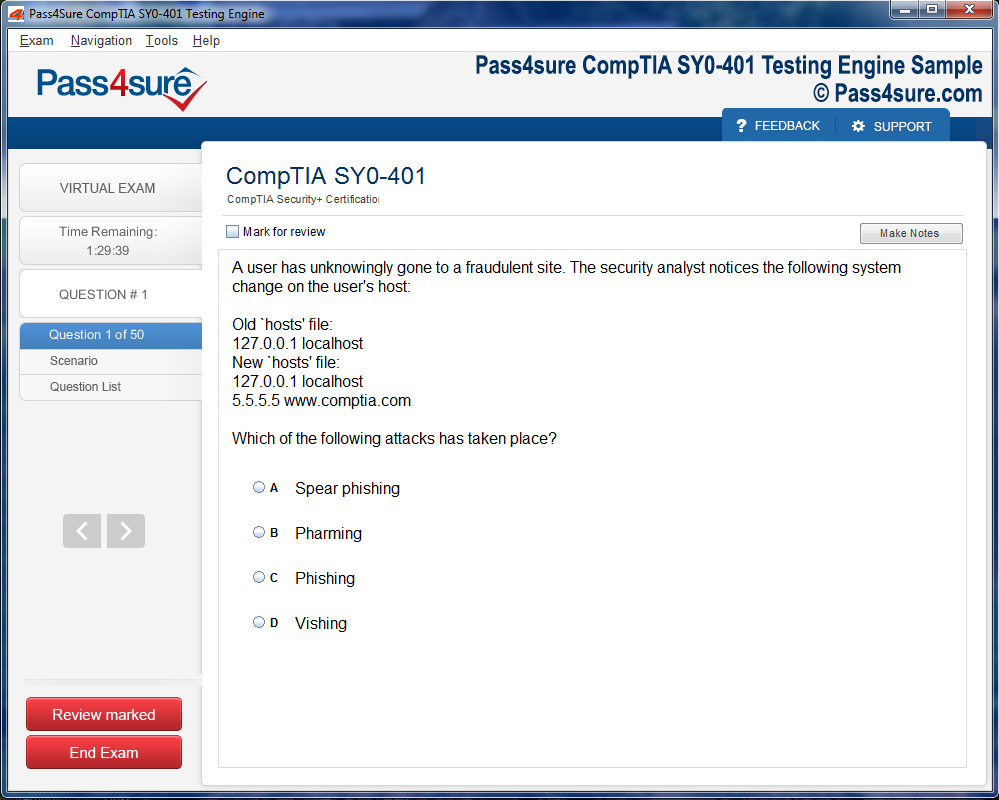
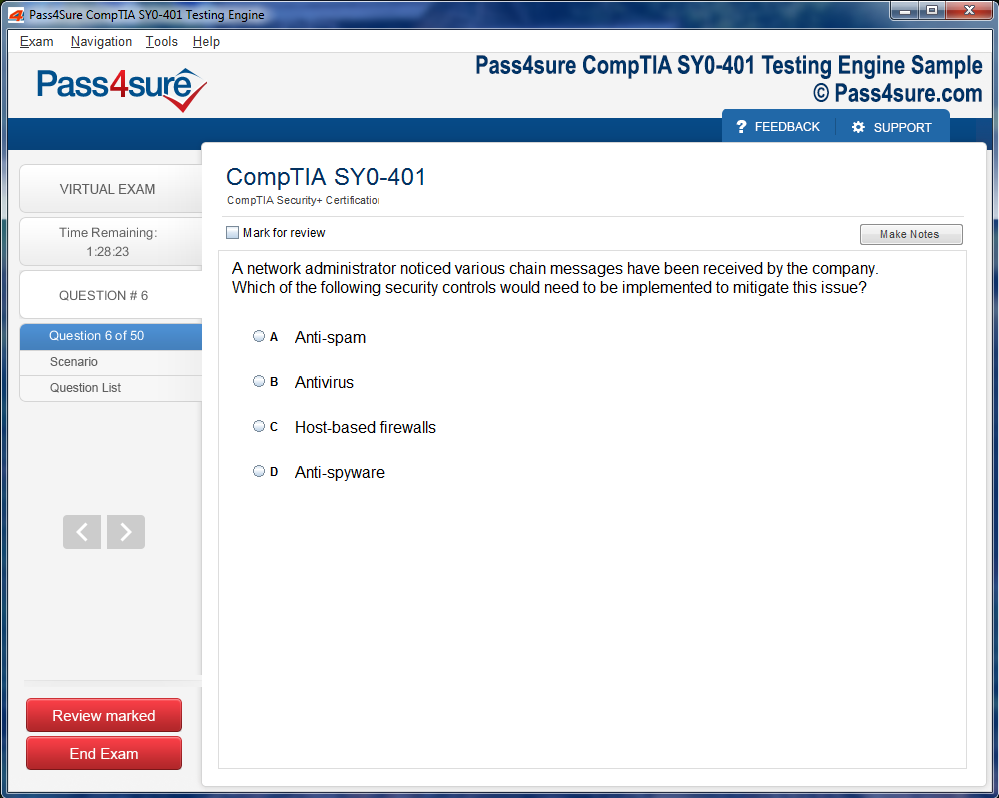
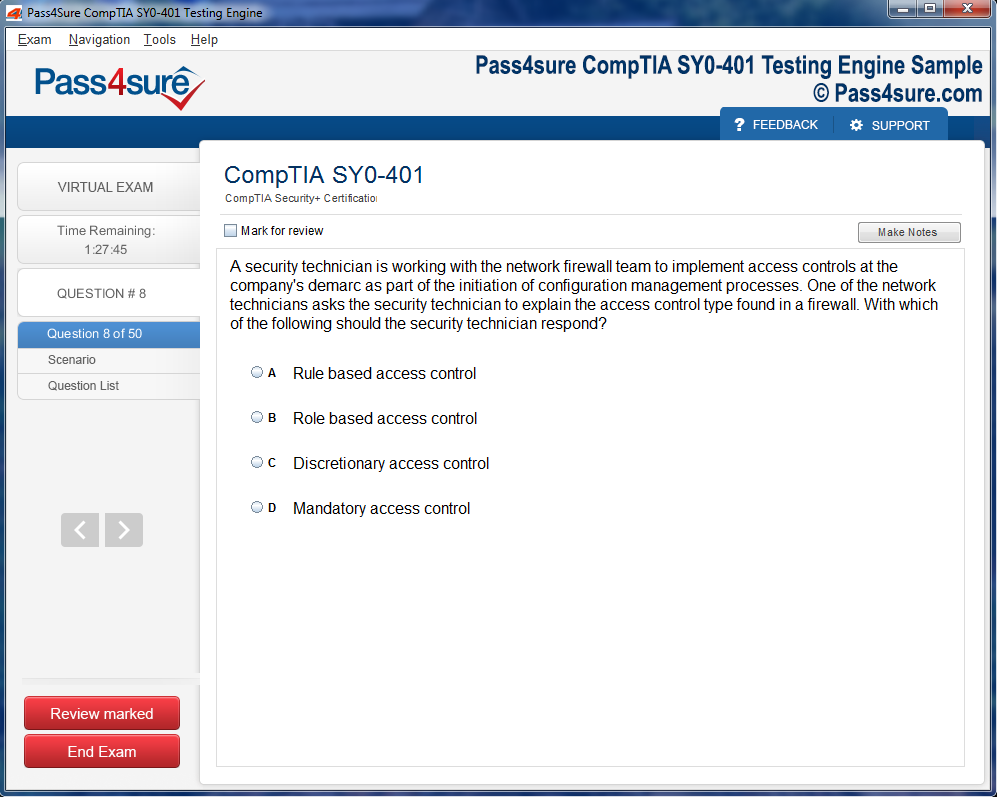
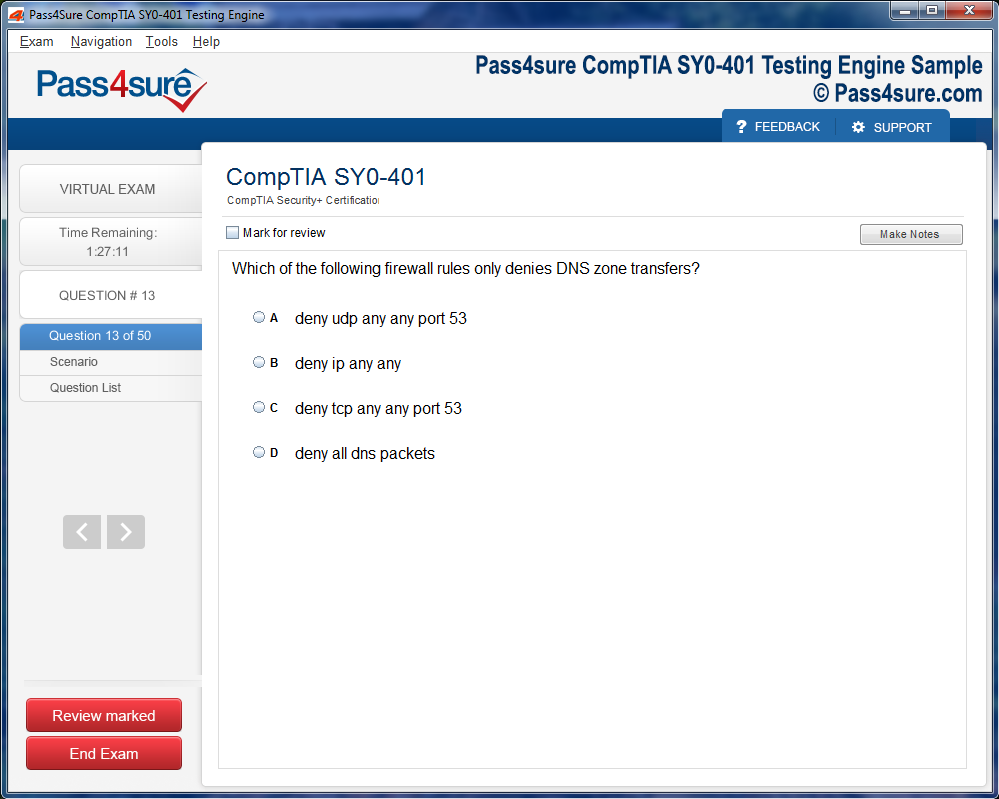
Product Screenshots
Frequently Asked Questions
How does your testing engine works?
Once download and installed on your PC, you can practise test questions, review your questions & answers using two different options 'practice exam' and 'virtual exam'. Virtual Exam - test yourself with exam questions with a time limit, as if you are taking exams in the Prometric or VUE testing centre. Practice exam - review exam questions one by one, see correct answers and explanations.
How can I get the products after purchase?
All products are available for download immediately from your Member's Area. Once you have made the payment, you will be transferred to Member's Area where you can login and download the products you have purchased to your computer.
How long can I use my product? Will it be valid forever?
Pass4sure products have a validity of 90 days from the date of purchase. This means that any updates to the products, including but not limited to new questions, or updates and changes by our editing team, will be automatically downloaded on to computer to make sure that you get latest exam prep materials during those 90 days.
Can I renew my product if when it's expired?
Yes, when the 90 days of your product validity are over, you have the option of renewing your expired products with a 30% discount. This can be done in your Member's Area.
Please note that you will not be able to use the product after it has expired if you don't renew it.
How often are the questions updated?
We always try to provide the latest pool of questions, Updates in the questions depend on the changes in actual pool of questions by different vendors. As soon as we know about the change in the exam question pool we try our best to update the products as fast as possible.
How many computers I can download Pass4sure software on?
You can download the Pass4sure products on the maximum number of 2 (two) computers or devices. If you need to use the software on more than two machines, you can purchase this option separately. Please email sales@pass4sure.com if you need to use more than 5 (five) computers.
What are the system requirements?
Minimum System Requirements:
- Windows XP or newer operating system
- Java Version 8 or newer
- 1+ GHz processor
- 1 GB Ram
- 50 MB available hard disk typically (products may vary)
What operating systems are supported by your Testing Engine software?
Our testing engine is supported by Windows. Andriod and IOS software is currently under development.
305-300 Exam Guide: Master LPI Virtualization and Containerization
The LPI 305-300 certification marks a pinnacle achievement for Linux professionals seeking to demonstrate mastery in virtualization and containerization. This credential extends beyond mere recognition; it embodies deep technical proficiency and the capability to operate within sophisticated Linux environments. IT professionals attaining this certification not only gain respect within the industry but also unlock opportunities in high-paying roles and critical system administration positions. The certification demonstrates knowledge that spans both theoretical understanding and practical implementation, making it an essential milestone for those aiming to excel in enterprise-level IT infrastructure.
In contemporary IT ecosystems, virtualization and containerization are central pillars that underpin operational efficiency. Companies increasingly rely on Linux servers to deploy scalable, secure, and flexible applications. Virtual machines and containers have become standard tools, allowing businesses to optimize hardware utilization, enhance system security, and streamline deployment cycles. Professionals equipped with hands-on experience in managing these technologies are highly sought after. The LPI 305-300 exam tests these skills rigorously, ensuring that certified individuals possess the competence to navigate real-world scenarios effectively.
The preparation process for the 305-300 exam requires more than surface-level study. It demands consistent engagement with both theory and practice. Online practice exams provide a structured mechanism to develop familiarity with exam patterns, timing, and complexity. These exercises cover a broad spectrum of topics, including KVM, Xen, Docker, LXC, and OpenVZ, providing a simulated experience that mirrors professional challenges. Regular interaction with such tools allows candidates to identify strengths, address weaknesses, and cultivate a strategic approach to problem-solving in virtualized environments.
Practice exams are particularly valuable because they simulate real-world scenarios rather than focusing solely on memorization. Candidates might encounter situations requiring the configuration of containerized applications, optimization of resource allocation, or troubleshooting malfunctioning virtual machines. By repeatedly engaging with these practical questions, learners develop critical thinking skills and operational intuition. This process nurtures a mindset aligned with professional IT responsibilities, preparing candidates to implement solutions confidently under pressure.
Achieving LPI certification not only affirms technical skill but also enhances professionalism. Successfully navigating virtualization tasks requires precise planning, strategic decision-making, and a comprehensive understanding of organizational infrastructure requirements. Certified professionals are distinguished by their ability to design and implement effective solutions while adhering to industry best practices. This recognition often leads to accelerated career progression, leadership roles, and improved compensation prospects, reflecting the tangible value of the credential in professional growth.
Exploring Virtualization Technologies in Linux
Virtualization is a transformative technology in modern computing, enabling multiple operating systems and applications to run concurrently on a single physical machine. It reduces hardware costs, simplifies system management, and allows for flexible deployment strategies. The LPI LPI 305-300 exam emphasizes mastery of virtualization solutions like KVM and Xen, which are widely implemented in enterprise Linux environments. Understanding these platforms involves deep comprehension of hypervisor mechanisms, memory management, and efficient allocation of CPU resources to virtual machines.
KVM, or Kernel-based Virtual Machine, integrates directly into the Linux kernel, offering high performance and seamless compatibility with a variety of Linux distributions. It allows professionals to create isolated virtual environments where applications can run independently, ensuring system stability and security. Xen, on the other hand, provides a hypervisor framework capable of supporting multiple guest operating systems with minimal overhead. Both technologies require careful configuration and ongoing management to optimize performance, demonstrating the practical knowledge expected from LPI candidates.
Beyond traditional hypervisors, containerization has emerged as an essential component of virtualization. Unlike virtual machines, containers share the host system’s kernel while maintaining isolated user spaces. This approach reduces overhead, speeds deployment, and enhances portability across platforms. Docker is a popular containerization tool, providing developers and system administrators with a streamlined environment for packaging applications and dependencies. LXC and OpenVZ also offer container-based solutions, each with unique features suited to different operational requirements.
For IT professionals, expertise in these technologies is indispensable. Mastery allows for the implementation of secure, scalable, and resilient systems. Configuring container orchestration, managing resource quotas, and troubleshooting performance bottlenecks are daily tasks in high-functioning IT teams. The LPI 305-300 certification ensures that candidates are capable of addressing these challenges with precision, fostering both technical competence and strategic insight into system operations.
The Role of Scenario-Based Practice Exams
Scenario-based practice exams form the cornerstone of effective LPI 305-300 preparation. Unlike theoretical study methods, these exercises immerse candidates in real-world situations, requiring them to analyze problems, devise solutions, and implement configurations under exam-like conditions. This experiential learning enhances retention, sharpens decision-making skills, and builds confidence for the actual examination.
Candidates engaging with scenario-based questions might be tasked with designing a virtual network topology, allocating memory to high-priority containers, or resolving performance degradation in a clustered environment. Each question is crafted to simulate authentic IT challenges, compelling learners to apply knowledge dynamically rather than rely on rote memorization. This approach fosters an adaptive mindset, equipping professionals to respond effectively to evolving technological landscapes in their workplace.
Regular practice with such exams also provides valuable feedback mechanisms. Online tools offer immediate evaluation of answers, highlighting errors and suggesting areas for further study. Progress tracking allows candidates to monitor improvement over time, revealing persistent knowledge gaps and guiding focused learning efforts. This iterative process ensures a more holistic grasp of virtualization and containerization concepts, translating directly into improved practical performance in professional settings.
The mental preparation fostered by scenario-based practice is equally critical. Encountering complex, multi-step problems repeatedly instills a sense of familiarity and reduces exam-related anxiety. Candidates develop a structured approach to problem-solving, learning to prioritize tasks, manage resources efficiently, and anticipate potential conflicts. These skills mirror the demands of real-world IT environments, making scenario-based preparation a highly effective tool for certification success.
Enhancing Practical Knowledge Through Hands-On Exercises
Hands-on exercises are essential for mastering the competencies required for the LPI 305-300 exam. Technical knowledge alone is insufficient; practical application reinforces understanding and builds the confidence needed to perform under real-world conditions. Exercises such as creating virtual machines, configuring containerized applications, and implementing security policies enable candidates to internalize concepts and develop operational proficiency.
Working with KVM and Xen hypervisors in a lab environment allows learners to experiment with configurations, resource allocation, and troubleshooting techniques. They can simulate failures, monitor system behavior, and refine solutions in a controlled setting. This experiential learning bridges the gap between theoretical knowledge and practical skill, ensuring candidates are prepared to tackle complex scenarios in professional roles.
Containerization exercises similarly deepen expertise. Deploying Docker containers, managing LXC environments, and optimizing OpenVZ configurations teach candidates how to isolate applications, manage dependencies, and maintain performance efficiency. By manipulating real systems, learners encounter nuances not fully captured in textbooks or static guides, reinforcing problem-solving skills and fostering operational intuition.
Continuous practice also encourages exploration of advanced topics such as container orchestration, network virtualization, and resource scaling. These exercises cultivate a forward-thinking approach, encouraging professionals to anticipate challenges and implement proactive solutions. The result is a robust, well-rounded skill set that aligns closely with the demands of enterprise Linux environments and the expectations of LPI certification.
The Professional Advantage of LPI Certification
Obtaining the LPI 305-300 certification provides tangible benefits for career advancement. It signifies technical excellence, signaling to employers that the holder possesses the expertise necessary to manage complex Linux infrastructures. Certified professionals are often entrusted with critical projects, elevated responsibilities, and leadership roles, reflecting their capability to deliver reliable and scalable solutions.
The certification enhances credibility and visibility within the IT community. Organizations recognize LPI certified individuals as proficient in virtualization and containerization, positioning them as valuable assets in planning, deployment, and maintenance of enterprise systems. This recognition translates into tangible rewards such as higher salaries, career stability, and expanded professional networks.
Beyond individual gain, LPI certification fosters organizational efficiency. Certified professionals are equipped to implement best practices, optimize resource usage, and ensure system resilience. Their expertise reduces downtime, minimizes security vulnerabilities, and enhances operational performance. By bridging technical proficiency with strategic insight, LPI certified personnel contribute significantly to organizational success, making the credential both personally and professionally transformative.
Strategic Preparation for Exam Success
Achieving success in the LPI 305-300 exam requires a strategic, disciplined approach to preparation. Structured study plans, coupled with consistent practice exams and hands-on exercises, create a balanced methodology that enhances learning retention. Candidates benefit from breaking complex topics into manageable segments, dedicating focused time to mastering each domain thoroughly.
Utilizing online practice tools provides an interactive learning environment, enabling immediate assessment and refinement of knowledge. Scenario-driven exercises cultivate practical skills, while hands-on labs reinforce theoretical concepts. Candidates who consistently engage with these resources develop confidence, reduce exam anxiety, and build the problem-solving abilities necessary for success.
Time management and adaptive learning strategies also play a crucial role. Allocating sufficient periods for review, revisiting challenging topics, and simulating exam conditions foster readiness and resilience. By cultivating both technical proficiency and exam temperament, candidates position themselves to excel in the LPI 305-300 assessment and demonstrate comprehensive expertise in virtualization and containerization.
Embracing Continuous Learning in Linux Environments
The field of Linux virtualization and containerization is continually evolving, demanding a commitment to lifelong learning. Achieving LPI 305-300 certification represents a milestone, not an endpoint. Professionals must stay abreast of emerging technologies, evolving best practices, and novel deployment strategies to maintain relevance and effectiveness.
Engaging with community resources, participating in lab experiments, and exploring new tools contribute to sustained growth. Mastery of contemporary technologies such as container orchestration frameworks, advanced hypervisor configurations, and automated deployment pipelines enhances both practical skill and strategic insight. Continuous learning ensures that certified professionals remain at the forefront of industry developments, capable of innovating and optimizing within complex Linux environments.
By integrating ongoing education with practical experience, LPI certified individuals cultivate a mindset of adaptability and innovation. They are equipped not only to meet current organizational demands but also to anticipate future challenges and opportunities. This proactive approach strengthens career resilience, enhances professional reputation, and ensures long-term success in dynamic IT landscapes.
Virtualization and containerization are the twin pillars of contemporary computing infrastructure, transforming how organizations manage applications and resources. Virtualization allows multiple operating systems to coexist on a single physical server, enhancing efficiency, reducing hardware costs, and providing scalability. This paradigm is crucial in Linux environments, where technologies such as KVM, Xen, and QEMU dominate due to their robust integration with the kernel and broad community support. Understanding virtualization is not just a technical requirement but a strategic necessity for IT professionals seeking to optimize resource utilization while maintaining operational agility.
Virtualization abstracts the underlying hardware, presenting virtual machines (VMs) that function as independent computing entities. Each VM has its own operating system, applications, and storage, yet all share the same physical resources. This abstraction allows organizations to consolidate workloads that would otherwise require multiple servers, decreasing both operational costs and energy consumption. For Linux professionals, familiarity with virtualization concepts, configuration, and management is indispensable, as it forms the foundation for advanced topics in cloud computing, container orchestration, and hybrid infrastructure.
Containerization complements virtualization by offering a lightweight, portable alternative. Unlike VMs, containers do not require a full operating system instance. Instead, they encapsulate applications with their dependencies, libraries, and configurations, ensuring consistent behavior across different deployment environments. This approach is particularly advantageous in Linux, where the system’s modular design supports efficient container orchestration, seamless networking, and rapid scaling. Mastery of both virtualization and containerization equips professionals to manage diverse workloads while maintaining system integrity, security, and performance.
Kernel-Based Virtual Machine and Its Practical Implementation
The Kernel-based Virtual Machine, or KVM, represents a high-performance virtualization solution embedded directly into the Linux kernel. KVM converts Linux into a hypervisor capable of running multiple VMs with near-native performance. For candidates preparing for the LPI 305-300 exam, in-depth knowledge of KVM is essential. This includes understanding how to configure virtual networks, manage CPU and memory allocation, and handle I/O device passthrough. Practical exercises such as creating and managing VMs using KVM provide hands-on experience that bridges theory with real-world application.
One of KVM’s most notable strengths is its ability to scale resources dynamically. Administrators can adjust memory, CPU cores, and storage for virtual machines without disrupting running workloads. This flexibility allows for optimal resource distribution, preventing performance bottlenecks during high-demand periods. In practice exams, candidates are often asked to simulate scenarios involving resource reallocation, VM migration, and troubleshooting performance degradation. Mastery of these scenarios ensures that IT professionals can maintain service continuity while optimizing system efficiency.
KVM’s integration with Linux networking features allows the creation of complex virtual network topologies. Administrators can establish virtual bridges, manage network namespaces, and configure firewall rules for each VM. These capabilities are critical when deploying multi-tier applications or testing network configurations in isolated environments. Hands-on experience with network setup, including IP allocation and connectivity verification, builds the confidence required to manage production-level virtualized environments securely and efficiently.
Xen Virtualization: Paravirtualization and Full Virtualization
Xen is another cornerstone of Linux-based virtualization, offering both paravirtualization and full virtualization capabilities. Understanding the distinction between these two approaches is vital for IT professionals and exam candidates alike. Full virtualization allows unmodified guest operating systems to run independently, providing complete isolation and compatibility. Paravirtualization, on the other hand, requires slight modifications to the guest OS but achieves superior performance due to closer integration with the hypervisor.
Xen’s dual-mode capability allows administrators to tailor deployments according to workload requirements. For example, high-performance database servers may benefit from paravirtualization, whereas legacy applications may require full virtualization for compatibility. Practice exams often simulate real-world scenarios where candidates must decide which virtualization mode to use based on performance, compatibility, and resource considerations. Understanding these trade-offs ensures optimized system performance and efficient resource allocation.
The Xen hypervisor also provides advanced features such as live migration, memory ballooning, and virtual CPU scheduling. Live migration enables VMs to move between physical hosts without downtime, ensuring uninterrupted services during maintenance. Memory ballooning dynamically adjusts memory allocation based on VM demand, enhancing system efficiency. Exam preparation should include hands-on exercises simulating these advanced features, as familiarity with Xen’s capabilities strengthens both theoretical knowledge and practical skill sets.
Containerization and Lightweight Application Deployment
Containerization revolutionizes application deployment by isolating software and its dependencies in lightweight, portable units. Unlike traditional virtualization, containers share the host OS kernel, making them faster and more resource-efficient. Docker has emerged as the dominant container platform, widely adopted for its ease of use, robust ecosystem, and powerful orchestration capabilities. LPI 305-300 candidates must gain proficiency in building Docker images, managing container lifecycles, and orchestrating multi-container applications to succeed in practical scenarios.
The process of creating Docker images begins with writing a Dockerfile, which defines the base image, application dependencies, and configuration steps. Proper image management ensures that containers remain lightweight and maintain consistent behavior across different environments. Persistent storage, another critical aspect of containerization, allows data to survive container restarts, enabling stateful applications to operate reliably. Understanding volume management, bind mounts, and storage drivers is essential for deploying resilient containerized applications.
Beyond Docker, Linux Containers (LXC) and OpenVZ provide alternative containerization frameworks. These platforms offer varying levels of isolation, resource control, and networking capabilities. Familiarity with multiple container paradigms equips IT professionals to select the most suitable technology based on workload requirements, security considerations, and deployment complexity. Containerization is not merely a technical skill but a strategic approach to modern application delivery, enabling rapid scaling, consistent performance, and simplified maintenance.
Networking Considerations in Virtual and Containerized Environments
Networking is a critical component of both virtualization and containerization. Virtual machines and containers often operate within isolated networks, necessitating careful configuration to ensure communication with other entities. Virtual bridges, network namespaces, and port forwarding are fundamental concepts that enable connectivity in complex topologies. Candidates preparing for exams must practice configuring network interfaces, testing connectivity, and troubleshooting network issues to gain confidence in real-world deployments.
Containers, in particular, introduce unique networking challenges. Each container may have its own IP address, firewall rules, and routing policies. Administrators must understand how to configure container networks to interact seamlessly with host machines, external networks, and other containers. Network orchestration tools, such as Docker Compose and Kubernetes networking plugins, simplify these tasks, allowing administrators to define network relationships declaratively. Mastery of these tools ensures that multi-container applications function reliably, even under dynamic scaling and high-load conditions.
Security is closely intertwined with networking. Misconfigured virtual or container networks can expose systems to unauthorized access, data breaches, and service disruptions. Best practices include isolating sensitive workloads, enforcing strict firewall policies, and monitoring network traffic for anomalies. Exam simulations often include scenarios requiring candidates to implement secure network configurations, demonstrating both theoretical understanding and practical expertise.
Security Best Practices for Virtualization and Containerization
Security is paramount when managing virtual and containerized environments. Both technologies introduce potential attack surfaces, making rigorous security practices essential. Candidates must understand user permission management, secure image handling, and firewall configuration to mitigate risks effectively. Virtual machines should be hardened by limiting access, applying timely updates, and isolating critical services from less trusted workloads.
Container security presents unique challenges. Images downloaded from public repositories may contain vulnerabilities, making it essential to verify authenticity and apply security patches. Running containers with least privilege, managing secrets securely, and monitoring container activity help reduce the risk of compromise. Security-focused practice exams expose candidates to real-world threats, ensuring they are prepared to implement protective measures in production environments.
Monitoring and auditing also play a critical role in maintaining security. Virtual and container environments generate extensive logs, including system events, access records, and network activity. Regularly reviewing these logs helps identify unusual patterns, detect intrusions, and respond proactively to incidents. Candidates who develop strong monitoring habits gain a distinct advantage in managing secure, resilient IT infrastructure.
Real-World Applications and Practical Skills Development
Mastery of virtualization and containerization extends beyond exam preparation into real-world IT operations. Organizations leverage these technologies to optimize resource utilization, enhance deployment agility, and streamline maintenance processes. Virtual machines allow legacy applications to coexist with modern workloads, while containers enable rapid application scaling and consistent performance across development, testing, and production environments.
Hands-on experience is invaluable for skill development. Candidates should practice deploying VMs using KVM and Xen, building Docker containers, and configuring complex network topologies. Scenario-based exercises, such as troubleshooting performance issues, handling resource contention, and implementing secure configurations, reinforce theoretical knowledge and cultivate problem-solving abilities. These skills translate directly to professional environments, equipping IT specialists to manage dynamic, high-demand infrastructure with confidence and precision.
The Strategic Advantage of Practice Exams for LPI LPI 305-300
Practice exams serve as more than a mere evaluation tool; they constitute a strategic pathway toward mastering the LPI LPI 305-300 certification. Immersed in a simulated exam environment, candidates experience the pressures, timing constraints, and technical challenges of the real test. This immersion develops not only familiarity with the question format but also a disciplined approach to problem-solving. Engaging repeatedly in these simulations fosters an adaptive mindset, allowing candidates to approach each question with precision and confidence. The act of practicing under conditions that mirror the actual exam environment bridges the gap between theoretical knowledge and applied expertise.
In this controlled setting, aspirants can identify subtle patterns in question phrasing, gauge the complexity of various sections, and develop strategies for prioritizing time and effort. Each attempt provides an opportunity to refine approaches, optimize strategies, and reinforce knowledge that might otherwise remain superficial. This iterative process ensures that candidates enter the exam with a sense of preparedness that transcends rote memorization, instead emphasizing applied understanding.
Performance Tracking as a Catalyst for Growth
One of the most significant benefits of practice exams is their ability to provide detailed performance tracking. By recording answers, timing, and recurring mistakes, candidates gain a comprehensive map of their strengths and weaknesses. This visibility allows focused improvement in specific domains, whether it is configuring virtual machines, managing containerized applications, or troubleshooting complex network configurations. Regularly analyzing these results fosters an informed approach to study, transforming each attempt into a diagnostic tool for skill enhancement.
Over time, candidates can observe patterns in their performance, identifying topics that require deeper understanding or repeated practice. The iterative nature of this tracking ensures that learning is cumulative, building upon previous attempts rather than starting anew each session. This methodical approach enables learners to concentrate efforts on areas that promise the greatest returns in knowledge and exam readiness, creating a feedback loop that encourages steady progression toward mastery.
Time Management and Efficiency
Time is a critical factor in the LPI 305-300 exam, and practice exams provide a natural framework for honing this skill. Timed simulations teach candidates to allocate minutes effectively across questions, avoid getting bogged down in complex problems, and maintain consistent momentum throughout the test. With repeated exposure, learners develop a natural sense of pacing, balancing speed and accuracy to maximize performance.
Beyond simple timing, practice exams cultivate strategic thinking. Candidates learn to identify questions that can be solved quickly versus those that require deeper analysis. This differentiation enhances decision-making under pressure, ensuring that high-value points are captured efficiently. The ability to manage time gracefully is a hallmark of successful candidates, and repeated practice under timed conditions makes this skill second nature.
Active Learning Through Applied Scenarios
Unlike passive study methods, practice exams encourage active learning. Each question presents a scenario requiring application of theoretical knowledge, transforming abstract concepts into practical skills. For instance, a question may challenge a candidate to migrate a running virtual machine with minimal downtime, requiring both technical understanding and situational judgment. Repeated engagement with such scenarios develops a muscle memory for problem-solving, strengthening both analytical reasoning and intuitive decision-making.
Active engagement also fosters retention. When candidates are required to think critically and apply knowledge rather than simply recall facts, learning becomes deeply embedded. This experiential approach ensures that candidates are not only prepared for the exam but also equipped with skills relevant to real-world environments. The transfer of knowledge from simulation to practice creates a robust foundation that enhances both technical competence and confidence.
Exposure to Diverse Question Formats
LPI LPI 305-300 exams encompass a broad array of topics, including virtualization management, container orchestration, network troubleshooting, and system optimization. Practice exams expose candidates to this diversity, ensuring familiarity with the breadth and depth of possible questions. Scenario-based problems, often contributed by seasoned professionals, reflect industry standards and evolving best practices.
Encountering varied question types prepares candidates for the unexpected. By simulating real-world problem-solving challenges, practice exams prevent surprises during the actual test and cultivate adaptive thinking. Exposure to diverse formats not only enhances technical comprehension but also develops resilience and flexibility, essential qualities for excelling under timed, high-stakes conditions.
Psychological Preparedness and Confidence Building
The mental dimension of examination is often overlooked, yet it plays a pivotal role in performance. Anxiety and stress can undermine even well-prepared candidates. Practice exams serve as a rehearsal for the psychological pressures of the real test, helping candidates develop strategies to remain calm, focused, and systematic. Familiarity with the testing process mitigates fear of the unknown, replacing apprehension with a sense of mastery.
This psychological conditioning is cumulative. Each simulation reinforces confidence, transforming nerves into purposeful energy and fostering a mindset conducive to optimal performance. Candidates learn to approach questions with clarity, trust their preparation, and execute solutions efficiently. Such mental readiness is as crucial as technical knowledge, and practice exams provide a structured avenue for cultivating it.
Immediate Feedback and Iterative Learning
An additional advantage of practice exams is the immediacy of feedback. Correct answers, accompanied by detailed explanations, illuminate why specific solutions are effective and why alternatives may fail. This instant clarification transforms errors into learning opportunities, reinforcing understanding and preventing the repetition of mistakes.
Iterative engagement with feedback ensures that study becomes a dynamic process rather than a static endeavor. Candidates refine strategies, correct misconceptions, and consolidate knowledge continuously. The cycle of attempting, reviewing, and improving accelerates mastery and deepens comprehension, making learning both efficient and enduring. Over time, candidates internalize patterns of reasoning and problem-solving approaches that remain valuable well beyond the exam itself.
Continuous Review and Habit Formation
Regular interaction with practice exams fosters a habit of continuous review, ensuring knowledge retention and consistent readiness. Daily or weekly practice embeds concepts more deeply than sporadic study sessions, creating a rhythm of engagement that reinforces learning. This habitual exposure to simulated questions promotes familiarity with exam structure, nurtures confidence, and maintains cognitive sharpness.
Moreover, consistent practice transforms preparation into an integrated part of daily learning routines. Candidates develop discipline, persistence, and resilience, qualities that extend beyond the immediate goal of certification. The structured nature of practice exams encourages focused study sessions, enhances retention, and ensures that knowledge remains active rather than dormant, ready to be recalled under exam conditions.
Bridging Theory and Practical Expertise
Practice exams uniquely bridge the gap between theoretical knowledge and practical application. The LPI 305-300 exam tests not only rote memory but also problem-solving ability, critical thinking, and hands-on technical skills. Simulated questions replicate real-world scenarios, requiring candidates to deploy knowledge in meaningful ways. This integration of theory and practice enhances overall competency, ensuring that candidates emerge from preparation not merely with memorized content but with applicable, functional expertise.
Through this bridge, learners gain the ability to anticipate challenges, analyze complex systems, and implement solutions effectively. The immersive experience cultivates a holistic understanding of system administration, virtualization, containerization, and networking, equipping candidates to handle both exam questions and professional tasks with confidence.
Adapting to Evolving Exam Patterns
The technology landscape and certification exams continually evolve, and practice exams offer a mechanism for staying current. Simulations often incorporate contemporary scenarios, reflecting changes in infrastructure, virtualization techniques, and container orchestration practices. Engaging with these evolving questions ensures that candidates remain aligned with current industry standards, preventing outdated knowledge from undermining exam performance.
Adaptation through practice exams also fosters a proactive learning mindset. Candidates learn to anticipate changes, integrate new information, and refine approaches dynamically. This adaptability enhances resilience, enabling learners to navigate shifting exam patterns with assurance and maintain technical relevance in professional environments.
Mastery Through Repetition and Immersion
Ultimately, mastery arises from repetition and immersion. Each practice exam contributes incrementally to understanding, confidence, and efficiency. By engaging repeatedly with simulations, candidates solidify technical skills, develop effective strategies, and cultivate mental resilience. Immersive practice ensures that knowledge becomes instinctive, timing strategies are intuitive, and problem-solving approaches are automatic.
The cumulative effect of repeated practice exams transforms preparation from a passive endeavor into an active journey toward mastery. Candidates gain fluency in technical language, familiarity with exam rhythms, and assurance in their ability to navigate complex scenarios. This holistic engagement equips learners with a level of preparedness that mere reading or passive study cannot achieve, making success in the LPI 305-300 exam a natural outcome of consistent effort and strategic practice.
The LPI 305-300 certification represents a pinnacle of expertise in enterprise-level Linux administration. It is a rigorous assessment that delves into advanced system integration, virtualization, and security. Candidates approaching this certification must navigate a labyrinth of technologies, each requiring precise comprehension and practical dexterity. Grasping the fundamental concepts before diving into intricate scenarios is paramount. The exam does not simply reward memorization; it gauges the depth of understanding in configuring, maintaining, and optimizing complex Linux environments. Mastery of virtualization frameworks, container orchestration, networking intricacies, and cryptographic methodologies forms the bedrock of preparation. This foundational knowledge allows a professional to interpret situational questions with clarity and confidence. By conceptualizing how various Linux subsystems interact, candidates develop a mental map of operational dependencies. Such cognitive frameworks are invaluable during the exam, transforming abstract queries into actionable problem-solving pathways. In essence, the 305-300 certification is not a test of speed alone but an exploration of nuanced technical reasoning.
Navigating Virtualization and Containerization
Virtualization is the cornerstone of modern enterprise computing, and the LPI 305-300 exam emphasizes its practical application. Virtual machines provide isolated environments that mimic physical hardware, enabling deployment flexibility and resource efficiency. Understanding KVM, Xen, or other hypervisors, alongside their configuration parameters, allows candidates to manipulate system resources adeptly. Beyond virtual machines, containerization introduces lightweight, portable instances that share the host kernel. Docker remains the prevalent tool, demanding familiarity with image management, container orchestration, volume mapping, and networking intricacies. Candidates must discern subtle differences between containers and VMs, such as isolation levels, resource overhead, and startup latency. Scenario-based questions often present deployment dilemmas where choosing between a virtual machine or container is critical. Hands-on experimentation becomes essential: building containers, adjusting port mappings, and configuring persistent storage bridges theoretical knowledge with practical competence. The nuanced understanding of namespaces, cgroups, and overlay networks becomes instrumental when optimizing containerized workloads for performance and security.
Mastering Networking in Enterprise Environments
Networking is the circulatory system of any IT infrastructure, and the LPI 305-300 exam rigorously evaluates networking proficiency. Candidates must command protocols, IP addressing schemes, routing tables, and firewall rules. Understanding TCP/IP behavior, packet encapsulation, and subnet segmentation provides a framework for diagnosing connectivity issues. Additionally, proficiency with tools like iproute2, netstat, and tcpdump enhances the ability to observe and interpret network traffic patterns. The exam frequently tests scenario-based problem solving, requiring the implementation of secure and efficient network configurations. Network bridges, VLAN tagging, and virtual interfaces often form part of containerized or virtualized deployments, blending networking with system administration. Candidates must also anticipate the performance implications of various network topologies, ensuring low latency, high throughput, and fault tolerance. Practical exercises in setting up routing protocols, configuring firewalls, and simulating multi-node deployments solidify conceptual understanding. Mastery of networking is not merely about configuration; it encompasses the ability to analyze, optimize, and troubleshoot complex systems dynamically.
Securing Systems and Data Integrity
Security is a persistent concern in enterprise computing, and the LPI 305-300 exam heavily emphasizes the ability to protect systems and data. Beyond superficial measures, candidates must understand cryptography, authentication frameworks, and access control mechanisms. Configuring firewalls, implementing SELinux policies, and managing user permissions are not just technical exercises—they reflect operational discipline. The exam often presents hypothetical breaches or misconfigurations, requiring candidates to remediate vulnerabilities promptly and efficiently. Knowledge of secure file storage, encrypted communication channels, and kernel-level security modules becomes pivotal. Hands-on practice with tools such as iptables, nftables, and OpenSSL allows candidates to internalize security procedures. Moreover, anticipating the interaction between security configurations and system performance is crucial. Overly restrictive rules may hinder operations, while lax configurations invite exploitation. By harmonizing security measures with system usability, candidates demonstrate the sophisticated judgment expected of a certified LPI professional. The focus extends to auditing, logging, and continuous monitoring, ensuring that security is proactive rather than reactive.
Optimizing System Performance
Performance optimization represents another crucial pillar of the 305-300 certification. Efficient resource utilization is essential in both virtualized and containerized environments, where CPU, memory, and storage constraints may impact application throughput. Candidates must grasp the intricacies of process scheduling, load balancing, and memory management to configure high-performing systems. Disk I/O optimization, network tuning, and caching strategies further enhance operational efficiency. The exam often includes questions that simulate real-world constraints, such as high-concurrency scenarios or memory-limited deployments. Practical exercises, such as monitoring system metrics using top, htop, or iostat, help identify bottlenecks and validate configuration adjustments. Fine-tuning services like databases, web servers, or container runtimes ensures responsiveness under diverse workloads. Performance optimization also entails understanding trade-offs, as certain configurations may improve speed while impacting security or stability. Candidates who cultivate the ability to balance these competing priorities demonstrate a holistic approach to system administration. Mastery of optimization transforms theoretical knowledge into measurable operational impact, a skill highly valued in enterprise environments.
Implementing Real-World Scenarios
Scenario-based problem solving is central to the LPI 305-300 exam, reflecting the real-world responsibilities of enterprise Linux administrators. Candidates encounter complex setups that demand integration of virtualization, containerization, networking, and security skills simultaneously. The exam challenges professionals to deploy applications across multiple environments, configure resilient infrastructures, and troubleshoot unexpected failures. Practicing these scenarios in controlled environments bridges the gap between conceptual knowledge and practical implementation. Building virtual machines, orchestrating containers, and configuring interconnected networks replicate the challenges faced by system administrators in production. Iterative practice develops not only technical skill but also the cognitive flexibility to anticipate problems, evaluate solutions, and adjust configurations dynamically. Scenario implementation also emphasizes documentation, change tracking, and reproducibility—key principles in enterprise IT management. Professionals who internalize these practices gain both exam readiness and operational excellence. The ability to synthesize disparate skills into cohesive solutions defines the essence of LPI expertise.
Time Management and Exam Strategy
Success in the LPI 305-300 certification extends beyond technical prowess; effective time management and exam strategy are pivotal. Candidates must pace themselves, ensuring sufficient attention to all questions while reserving time for complex scenarios. Timed practice exams develop endurance, reveal strengths and weaknesses, and foster familiarity with the question format. Analytical review of practice results helps prioritize study efforts, focusing on recurring weaknesses or challenging topic areas. Structured study schedules, interleaving theoretical study with hands-on exercises, reinforce learning and prevent cognitive fatigue. The exam rewards logical reasoning as much as factual recall, making strategic approaches essential. Candidates who develop a rhythm for answering questions, identifying high-yield content, and managing difficult scenarios efficiently increase their likelihood of success. Integrating community insights, studying recent updates, and engaging with experiential feedback further enhances preparation. Mastery of time management, coupled with rigorous study and practical practice, transforms exam challenges into manageable tasks.
The Strategic Significance of LPI 305-300 Certification
The LPI 305-300 certification occupies a strategic position in the modern IT landscape. As organizations increasingly adopt virtualization and containerization to streamline operations, the demand for professionals with verified expertise intensifies. This credential signals that a professional has not only mastered advanced Linux system administration but can also architect complex virtual infrastructures and deploy containerized solutions efficiently. The recognition attached to this certification is substantial, often influencing recruitment decisions, promotions, and compensation packages. For IT professionals seeking to establish themselves as authorities in Linux-based virtualization, the LPI 305-300 certification acts as a decisive differentiator, elevating them above peers in an increasingly competitive market.
The intricacy of the certification underscores its value. Candidates are required to navigate multifaceted system architectures, configure virtual machines with precision, and implement container orchestration frameworks that adhere to best practices. Mastery of these domains demonstrates a rare blend of theoretical knowledge and hands-on competence. As organizations rely on scalable and secure IT infrastructures, professionals who possess this certification are seen as pivotal contributors capable of ensuring operational continuity and resilience. Their expertise becomes instrumental in shaping the infrastructure strategy of businesses, reducing downtime, and optimizing resource utilization.
Elevating Career Trajectories Through Certification
Acquiring the LPI 305-300 credential profoundly influences career trajectories. Professionals who achieve this milestone frequently witness rapid advancements, transitioning into roles that require higher responsibility and strategic decision-making. The certification validates a professional’s ability to handle sophisticated scenarios involving virtualization clusters, container deployment, and resource allocation optimization. Such capabilities are highly sought after in sectors ranging from cloud computing to enterprise IT, where efficiency and reliability are paramount.
Beyond the tangible benefits of promotions and salary enhancements, the certification fosters professional confidence. Knowing that one possesses verified expertise in critical IT domains allows individuals to approach complex projects with composure and decisiveness. This confidence often translates into leadership opportunities, enabling certified professionals to spearhead initiatives, mentor colleagues, and contribute to organizational innovation. Moreover, the credibility associated with LPI certification can open doors to consulting engagements, freelance projects, and advisory roles that were previously inaccessible. It positions professionals as authoritative voices in discussions about Linux infrastructure design and virtualization strategies.
Mastery of Virtualization and Containerization
The core strength of the LPI 305-300 certification lies in the mastery of virtualization and containerization technologies. These domains are no longer peripheral; they are central to modern IT operations. Virtualization enables organizations to maximize hardware utilization, streamline deployment processes, and isolate critical workloads to improve security. Containerization complements this by offering lightweight, portable environments that ensure consistency across development, testing, and production stages. Together, these technologies form the backbone of scalable and resilient IT architectures.
Certified professionals are proficient in configuring and managing virtual machines using advanced hypervisors, ensuring optimal allocation of CPU, memory, and storage resources. They can also implement container orchestration frameworks, enabling automated deployment, scaling, and management of containerized applications. These skills are instrumental in creating agile infrastructures that respond dynamically to fluctuating workloads, optimize operational costs, and support rapid software delivery. Mastery of these technologies provides a tangible edge in career growth, as organizations increasingly prioritize efficiency, security, and scalability in their IT operations.
The Cognitive Benefits of Advanced Certification
Pursuing LPI 305-300 certification fosters not only technical acumen but also cognitive growth. The preparation process is intellectually stimulating, requiring candidates to engage with complex system interactions, troubleshoot intricate network configurations, and anticipate potential points of failure in virtualized and containerized environments. This rigorous approach cultivates analytical thinking, problem-solving abilities, and a deep understanding of Linux internals that extends well beyond the exam itself.
Continuous engagement with advanced topics encourages a mindset of exploration and mastery. Professionals develop an aptitude for dissecting problems methodically, evaluating multiple solutions, and implementing the most effective approaches. This cognitive discipline is highly transferable, benefiting not only day-to-day administrative tasks but also strategic decision-making in broader IT contexts. Over time, the intellectual rigor demanded by the LPI certification process fosters resilience, adaptability, and an enduring capacity for learning—qualities that are increasingly vital in a technology landscape marked by rapid change and innovation.
Networking and Professional Communities
One of the often-overlooked advantages of earning the LPI 305-300 certification is the opportunity for networking and community engagement. Certification holders become part of a global network of Linux experts, exchanging insights, strategies, and practical solutions. This collaborative environment facilitates knowledge-sharing that goes beyond textbooks and study guides, exposing professionals to diverse real-world scenarios and advanced problem-solving techniques.
Engaging with a community of like-minded peers encourages mentorship and professional dialogue. Experienced practitioners often provide guidance, share lessons learned from complex deployments, and highlight emerging trends in virtualization and containerization. These interactions cultivate professional relationships that can lead to collaborative projects, consulting opportunities, and career mobility. By participating in these networks, certified professionals not only reinforce their own expertise but also contribute to the collective advancement of the IT community, enhancing their visibility and reputation within the field.
Practical Application and Real-World Impact
The value of LPI 305-300 certification is most evident when applied to real-world IT environments. Certified professionals are adept at translating theoretical knowledge into actionable solutions, designing infrastructures that are secure, scalable, and efficient. They implement virtualization strategies that optimize hardware utilization, manage containerized applications to ensure consistent deployment, and enforce best practices for system performance and reliability.
This practical expertise positions certified individuals as critical assets within their organizations. They are frequently entrusted with mission-critical systems, responsible for maintaining uptime, optimizing workflows, and mitigating security risks. By leveraging their advanced skills, these professionals contribute directly to organizational success, supporting growth initiatives, enhancing operational resilience, and driving technological innovation. Their ability to implement solutions that align with business objectives underscores the strategic importance of the certification, reinforcing its status as a catalyst for both professional and organizational advancement.
Long-Term Career Sustainability and Growth
LPI 305-300 certification offers more than immediate career benefits; it lays the foundation for long-term professional sustainability. In a technology landscape defined by constant evolution, certified professionals possess the adaptability and knowledge necessary to remain relevant and competitive. Their expertise in virtualization and containerization equips them to handle emerging challenges, integrate new technologies, and respond proactively to shifts in IT infrastructure demands.
Over time, certified individuals often become thought leaders within their organizations, influencing technology strategies, advising on infrastructure investments, and mentoring junior staff. The combination of certification, practical experience, and continuous learning fosters a career trajectory characterized by upward mobility, skill diversification, and sustained relevance. By maintaining engagement with the broader professional community and staying abreast of technological advancements, LPI 305-300 holders secure a durable professional identity that is resilient to industry fluctuations and conducive to ongoing achievement.
Conclusion
The journey to achieving the LPI LPI 305-300 certification is both challenging and rewarding. It goes beyond memorizing commands or concepts; it equips IT professionals with practical skills in virtualization and containerization, enabling them to manage complex Linux environments efficiently and securely. Through consistent practice, scenario-based learning, and hands-on experimentation, candidates not only prepare to pass the exam but also gain expertise that is directly applicable to real-world IT operations.
Practice exams serve as a cornerstone of preparation, offering insight into exam structure, timing, and critical thinking required for success. They reveal strengths, highlight areas for improvement, and instill confidence, making the transition to the actual certification seamless. Beyond exam readiness, the knowledge acquired enhances career prospects, opens doors to higher-paying roles, and establishes credibility in the competitive Linux professional landscape.
Ultimately, obtaining the LPI 305-300 certification is an investment in one’s career, providing technical mastery, professional recognition, and a pathway to long-term growth. For those willing to dedicate time, embrace hands-on learning, and leverage high-quality practice resources, success is not just possible—it is inevitable.
Top LPI Exams
- 010-160 - Linux Essentials Certificate Exam, version 1.6
- 101-500 - LPIC-1 Exam 101
- 102-500 - LPI Level 1
- 202-450 - LPIC-2 Exam 202
- 201-450 - LPIC-2 Exam 201
- 300-300 - LPIC-3 Mixed Environments
- 305-300 - Linux Professional Institute LPIC-3 Virtualization and Containerization
- 304-200 - LPIC-3 Virtualization & High Availability
- 303-200 - Security
- 300-100 - LPIC-3 Exam 300: Mixed Environments