

Exam Code: 156-110
Exam Name: Check Point Certified Security Principles Associate (CCSPA)
Certification Provider: Checkpoint
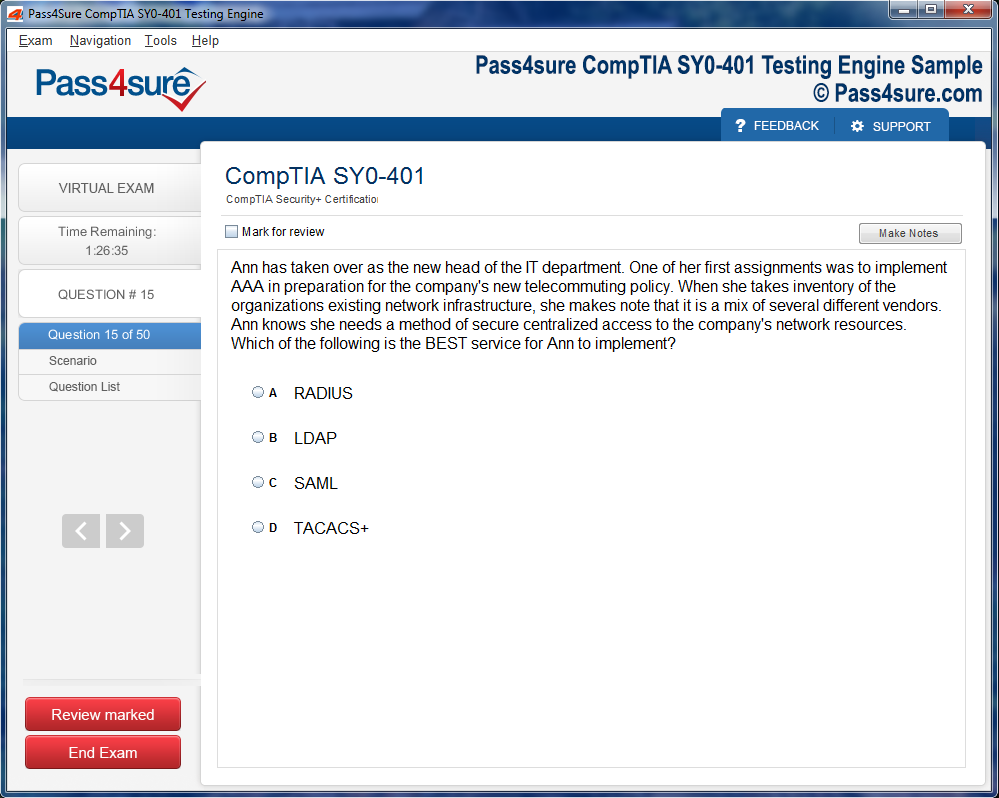
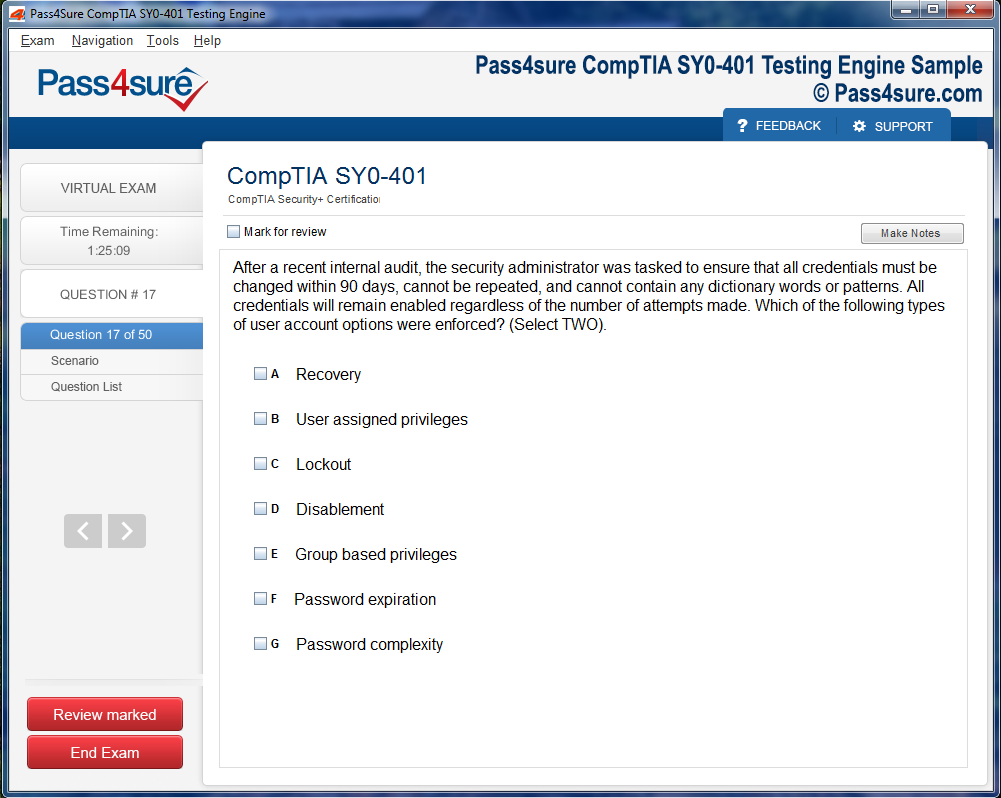
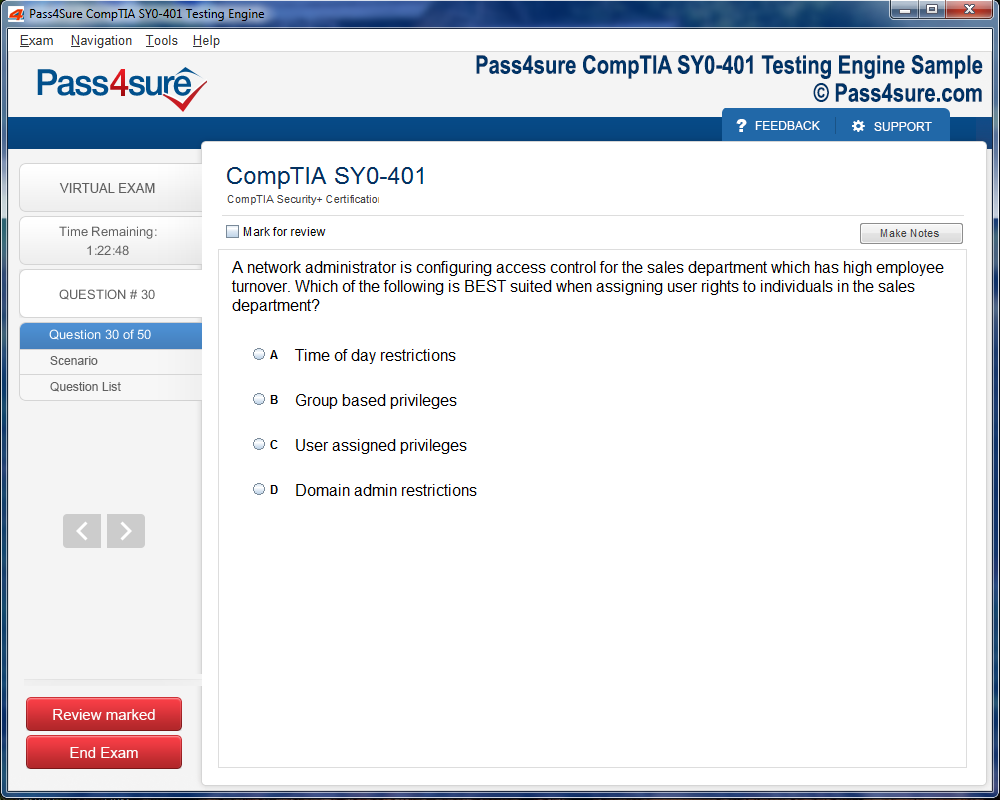
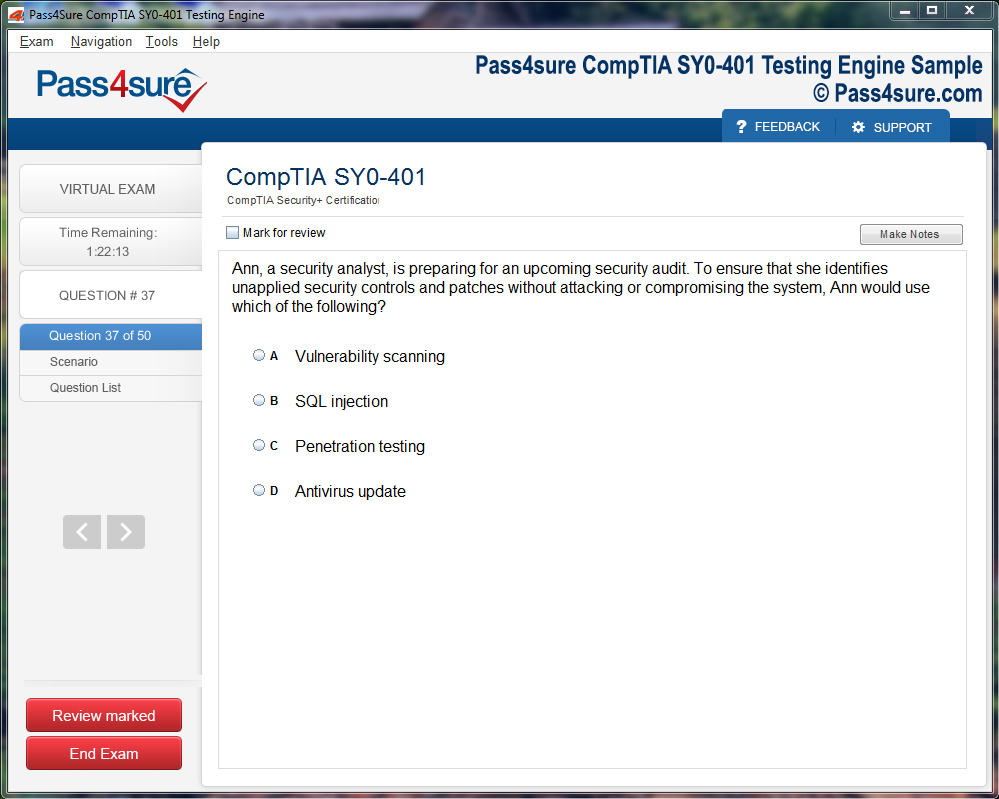
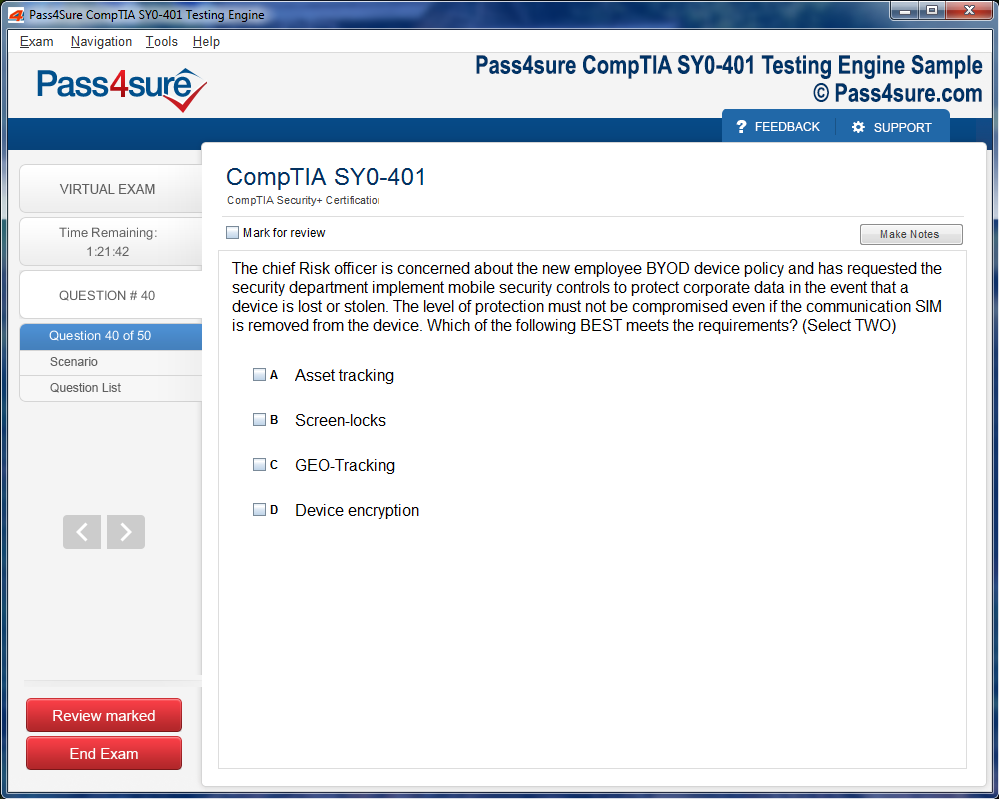
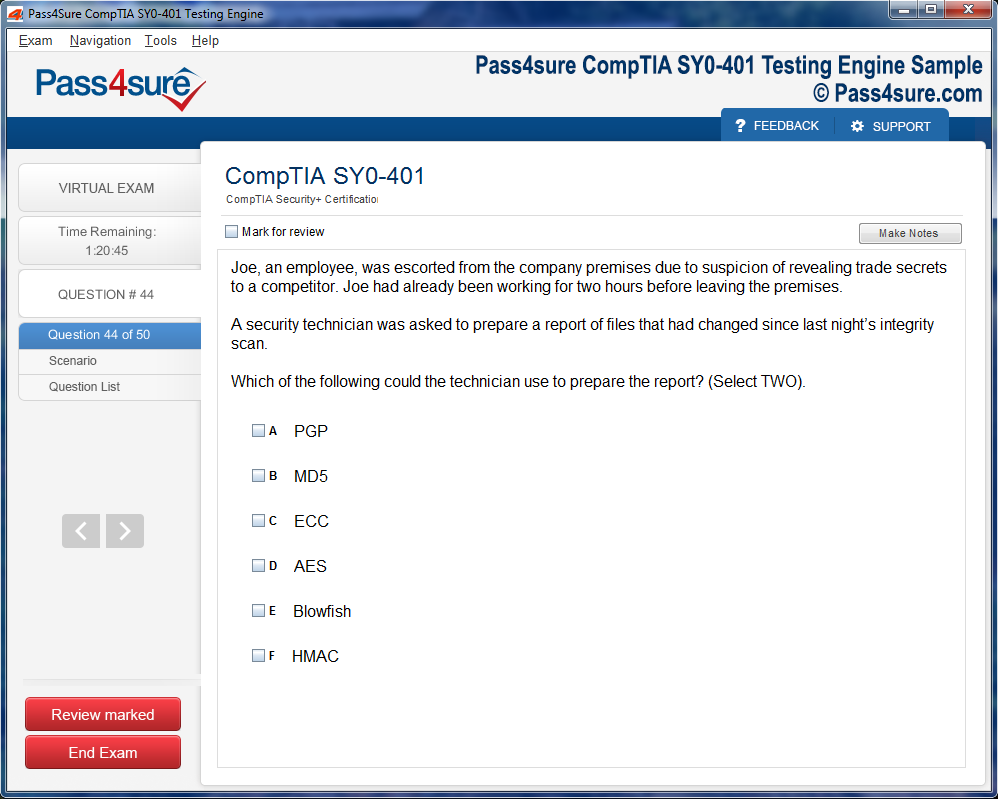
Product Screenshots
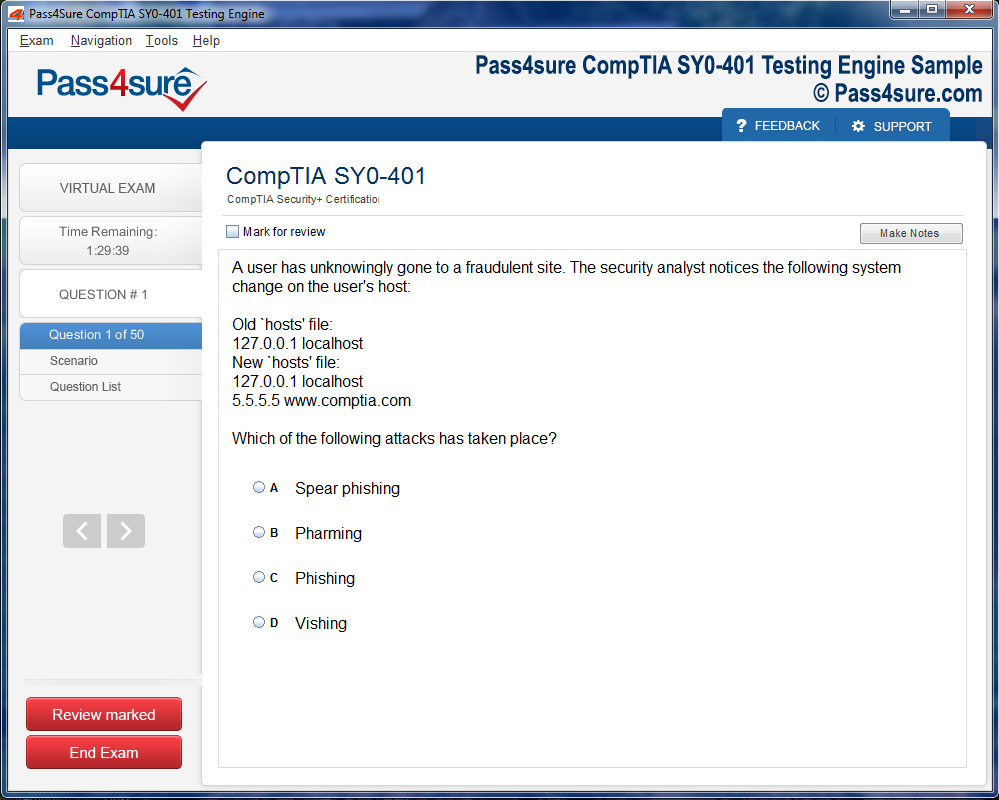
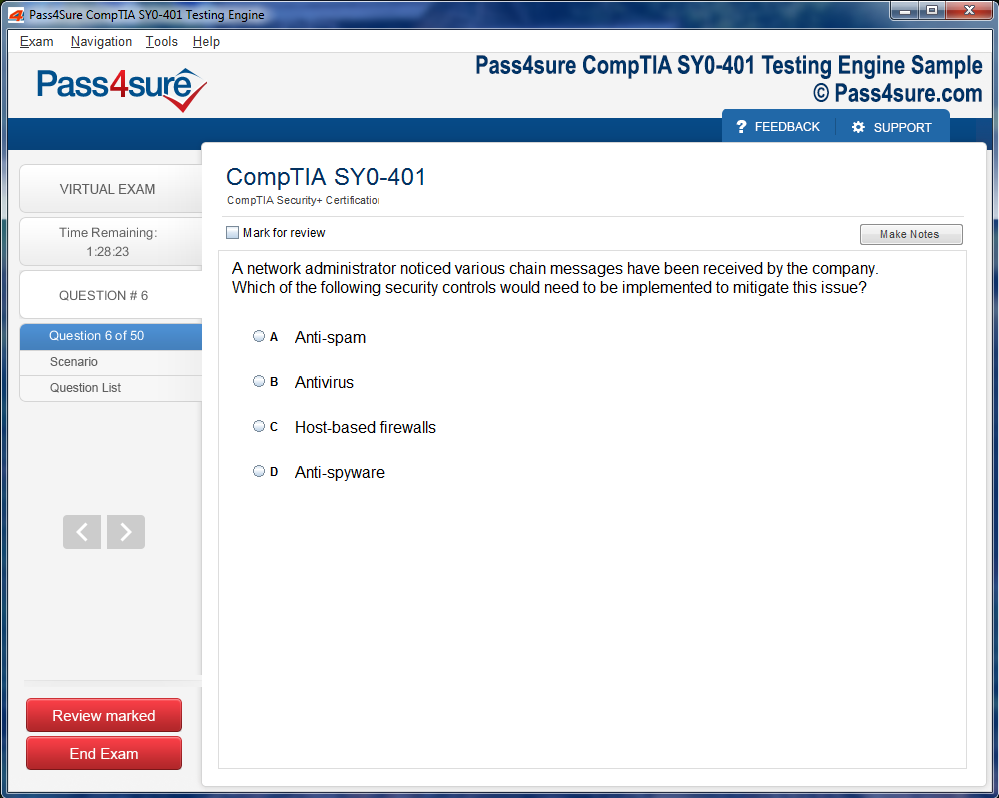
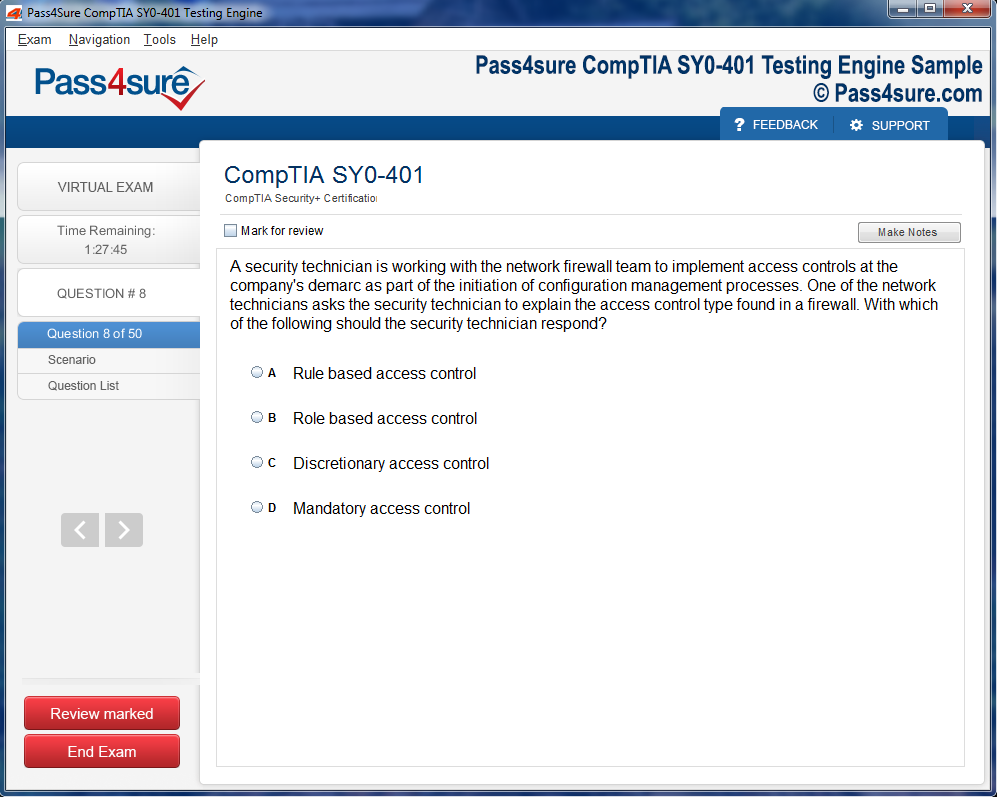
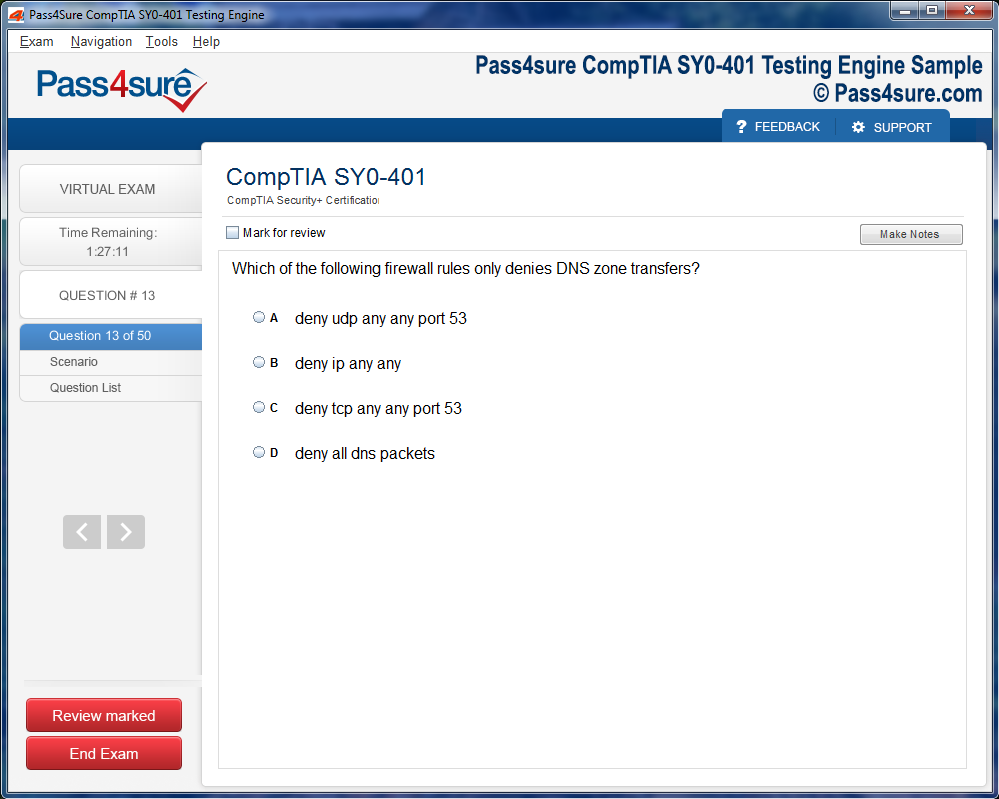
Frequently Asked Questions
How does your testing engine works?
Once download and installed on your PC, you can practise test questions, review your questions & answers using two different options 'practice exam' and 'virtual exam'. Virtual Exam - test yourself with exam questions with a time limit, as if you are taking exams in the Prometric or VUE testing centre. Practice exam - review exam questions one by one, see correct answers and explanations.
How can I get the products after purchase?
All products are available for download immediately from your Member's Area. Once you have made the payment, you will be transferred to Member's Area where you can login and download the products you have purchased to your computer.
How long can I use my product? Will it be valid forever?
Pass4sure products have a validity of 90 days from the date of purchase. This means that any updates to the products, including but not limited to new questions, or updates and changes by our editing team, will be automatically downloaded on to computer to make sure that you get latest exam prep materials during those 90 days.
Can I renew my product if when it's expired?
Yes, when the 90 days of your product validity are over, you have the option of renewing your expired products with a 30% discount. This can be done in your Member's Area.
Please note that you will not be able to use the product after it has expired if you don't renew it.
How often are the questions updated?
We always try to provide the latest pool of questions, Updates in the questions depend on the changes in actual pool of questions by different vendors. As soon as we know about the change in the exam question pool we try our best to update the products as fast as possible.
How many computers I can download Pass4sure software on?
You can download the Pass4sure products on the maximum number of 2 (two) computers or devices. If you need to use the software on more than two machines, you can purchase this option separately. Please email sales@pass4sure.com if you need to use more than 5 (five) computers.
What are the system requirements?
Minimum System Requirements:
- Windows XP or newer operating system
- Java Version 8 or newer
- 1+ GHz processor
- 1 GB Ram
- 50 MB available hard disk typically (products may vary)
What operating systems are supported by your Testing Engine software?
Our testing engine is supported by Windows. Andriod and IOS software is currently under development.
156‑110 Exam Prep: Key Concepts and Study Strategies for Success
To navigate the complex terrains of the 156‑110 exam, one must engage in cognitive cartography—a deliberate act of mapping knowledge in ways that transcend rote memorization. This process entails charting conceptual territories, identifying intellectual landmarks, and plotting potential pitfalls. It is not merely a rehearsal of facts but a meta-cognitive exercise in which the learner anticipates questions, visualizes problem frameworks, and constructs mental scaffolds that facilitate rapid retrieval.
Cognitive cartography thrives on the interplay between synaptic plasticity and structured repetition. Each study session becomes an opportunity to reinforce neural pathways while simultaneously forging new connections. Conceptual juxtaposition, where related ideas are contrasted and synthesized, serves as an accelerant for comprehension. By examining not just what each topic entails but also how it interfaces with other domains, candidates develop a holistic vision that transforms fragmented knowledge into an integrated schema.
Visualization techniques augment this mapping process. Creating mental diagrams, flowcharts, or scenario-based simulations allows learners to internalize complex procedures. This multidimensional engagement converts abstract theory into tangible constructs, making recall more fluid under examination conditions. The cognitive map thus becomes a dynamic, living instrument—continuously refined as understanding deepens and practice exposes latent vulnerabilities.
Temporal Alchemy: Transforming Study Hours into Mastery
Effective preparation for the 156‑110 exam is as much an exercise in temporal alchemy as it is in intellectual rigor. Time, when transmuted through deliberate practice, becomes a conduit for deep mastery. The principle rests on allocating temporal resources with precision: dividing attention between consolidation, application, and reflection.
Early morning sessions, when cognitive energy peaks, are ideal for tackling complex, high-density topics. Later periods can be devoted to review, synthesis, and low-stakes problem solving. Interspersing focused intervals with brief restorative pauses optimizes retention by mitigating mental fatigue. The objective is to cultivate a rhythm wherein study hours accumulate into exponential gains rather than linear effort.
Equally crucial is the practice of spaced repetition. Revisiting material after increasing intervals leverages the spacing effect, a cognitive phenomenon that fortifies long-term memory. This disciplined orchestration of time transforms study from a reactive endeavor into a proactive, strategically modulated campaign. Each hour becomes a potent vector, channeling potential into demonstrable competence.
Semantic Resonance: The Power of Language in Conceptual Retention
Mastery of the 156‑110 exam is inseparable from linguistic precision. The ability to articulate concepts, frame hypotheses, and interpret problem statements with semantic fidelity is paramount. Words are not mere vessels of information; they are instruments of cognition. Engaging with vocabulary at a nuanced level enhances comprehension and facilitates the construction of mental models.
Semantic resonance can be cultivated by rephrasing definitions, generating analogies, and linking terminology to experiential knowledge. This deep encoding ensures that terms are not inert labels but active nodes in a cognitive network. When confronted with unfamiliar scenarios, the mind can draw upon these nodes, retrieving and adapting information with agility. Language, thus, becomes both a lens and a lever, magnifying understanding while enabling nimble application.
Interstitial Mastery: Leveraging Liminal Moments for Insight
Often, breakthroughs in exam preparation occur not during formal study sessions but within interstitial spaces—the moments between tasks, during commutes, or in reflective pauses. These liminal intervals permit subconscious processing, allowing ideas to coalesce in novel configurations.
Harnessing these micro-moments requires intentionality. Brief mental rehearsals, reflective questioning, or silent recitations can catalyze insight. The mind continues to integrate and reorganize knowledge during these periods, transforming peripheral cognition into actionable understanding. Interstitial mastery exemplifies the principle that preparation extends beyond overt effort; it is a continuous, pervasive engagement with material that infiltrates everyday consciousness.
Problematique Exploration: Confronting Complexity with Analytical Agility
The 156‑110 exam thrives on nuanced problem sets that test analytical agility as much as factual recall. Confronting these challenges demands a mindset attuned to complexity rather than simplicity. Problematique exploration involves dissecting questions, hypothesizing solutions, and evaluating outcomes within hypothetical frameworks.
Learners benefit from iterative engagement with practice problems, progressively escalating in difficulty. Each attempt generates a feedback loop, revealing patterns, highlighting misconceptions, and refining strategic approaches. Analytical agility develops when candidates move beyond formulaic responses to embrace adaptive reasoning. This capacity to navigate ambiguity is not innate; it emerges from persistent, deliberate confrontation with challenging material.
Epistemic Resilience: Cultivating Adaptability Under Pressure
Examination conditions introduce cognitive stressors that can erode performance if not anticipated. Epistemic resilience—the capacity to maintain clarity, composure, and adaptability—is therefore a cornerstone of success. Resilience is cultivated through calibrated exposure to simulated test environments, timed exercises, and adaptive problem-solving drills.
By normalizing the presence of pressure, learners train their cognitive systems to function optimally even under strain. Reflective journaling, mindfulness practices, and strategic rest intervals further reinforce resilience. The interplay between preparedness and adaptability ensures that candidates respond to the unexpected with calculated precision rather than reactive anxiety.
Strategic Study Architectonics for the 156‑110 Examination
Success in the 156‑110 examination is seldom a serendipitous event. It emanates from deliberate orchestration of intellectual exertion rather than perfunctory reading. The first principle of effective preparation is to cultivate a latticework of interconnected concepts, rather than amassing isolated tidbits. When ideas coalesce into coherent clusters, neural pathways fortify themselves, fostering both accelerated recall and cognitive cohesion. This gestalt-oriented approach encourages a panoramic comprehension of thematic interrelations rather than superficial rote memorization.
The Imperative of Simulated Examination Environments
A cardinal instrument in high-yield preparation is the disciplined engagement with simulated examinations. Such exercises reproduce the cadence, psychological tension, and idiosyncratic question structures inherent to the actual exam. Each iteration functions as a diagnostic lens, highlighting areas of tenuous understanding and latent misconceptions. Rather than stigmatizing errors as deficiencies, a sagacious candidate interprets them as navigational markers for targeted remediation. Over iterative cycles, this practice cultivates a cognitive fluency that transmutes anxiety into methodical assurance.
Layered Review: Constructing Cognitive Palimpsests
Another pivotal methodology is layered review, which entails a systematic deepening of comprehension. Initially, one apprehends a macroscopic framework to scaffold knowledge. Subsequent passes penetrate granular intricacies, akin to an artisan layering pigments on a canvas to achieve nuance and depth. This stratified engagement not only cements foundational precepts but also illuminates complex interdependencies, transforming fragmented knowledge into an integrated mental tapestry.
Active Recall and Spaced Reinforcement
Passive consumption of material can engender a deceptive familiarity; genuine mastery arises from active retrieval. Active recall obliges the mind to summon information autonomously, thereby solidifying synaptic consolidation and exposing cognitive lacunae that passive reading obscures. When synergized with spaced repetition—a methodical cadence of revisiting topics at expanding intervals—the retention of intricate or abstract concepts becomes resilient, capable of withstanding the vicissitudes of temporal decay.
Adaptive Modalities for Intellectual Absorption
Effective preparation is contingent upon the judicious calibration of study modalities. Some topics yield more readily to visual schematics, whereas others demand scenario-based problem solving or verbal explication. This methodological plasticity ensures that cognitive strategies are optimally aligned with the epistemic nature of the content. Periodic reassessment of weaker domains, coupled with strategic shifts in approach, prevents intellectual stagnation and fosters a trajectory of continuous advancement.
Cognitive Equilibrium and Sustained Engagement
Sustaining motivation and concentration necessitates an equilibrium between rigorous study and restorative interludes. Cognitive overload precipitates fatigue, undermining both retention and analytical acuity, whereas sporadic or fragmented study engenders incomplete mastery. Integration of restorative practices—brief mental resets, light physical activity, or meditative breathing—facilitates synaptic consolidation and invigorates attention. This holistic orchestration renders prolonged preparation not only feasible but intellectually gratifying, allowing candidates to persist with consistent vigor.
Analytical Dissection of Examination Topography
Familiarity with the structural anatomy of the 156‑110 examination amplifies strategic advantage. Understanding the proportional allocation of topics, typology of questions, and recurring thematic motifs empowers candidates to prioritize efforts judiciously. Analytical deconstruction of previous question patterns, coupled with hypothetical scenario construction, cultivates anticipatory cognition, mitigating the impact of novel or unanticipated prompts.
Metacognitive Surveillance and Self-Calibration
An advanced stratagem involves metacognitive monitoring, whereby learners actively interrogate their own comprehension, biases, and tendencies. Self-assessment extends beyond superficial grading to an introspective scrutiny of cognitive efficacy. This reflective practice engenders an adaptive feedback loop: strengths are reinforced, inefficiencies recalibrated, and mental schemas optimized for maximal retention and agile application.
Integrative Problem-Solving and Conceptual Synthesis
The apex of preparation lies in synthesizing disparate concepts into cohesive analytical frameworks. Rather than treating each topic as an autonomous island, the adept candidate identifies synergies, analogies, and hierarchical relationships that transcend individual content silos. Integrative exercises, such as cross-topic case simulations or multidimensional problem-solving drills, fortify cognitive flexibility, enhancing both procedural speed and strategic foresight.
Psychological Fortitude and Exam Resilience
Psychological conditioning is an often-overlooked pillar of preparation. Exposure to timed simulations, cognitive stressors, and performance variability fosters resilience. Techniques such as controlled visualization, anticipatory scenario planning, and cognitive reframing transform trepidation into purposeful vigilance. The mind, when trained to remain equanimous under evaluative pressure, converts stress from a detractor into a catalyst for precision and clarity.
Navigating Cognitive Complexity in Exam Preparation
Cognitive dexterity is indispensable when approaching the multifaceted nature of the 156‑110 exam. The mind must oscillate between micro-level specifics and macro-level frameworks, a process that fosters integrative thinking. Engaging with material through layered cognition allows concepts to crystallize into a cohesive mental schema. This metamorphic approach ensures that learning is not a static accumulation of facts, but a dynamic interplay of ideas and principles.
The deliberate cultivation of mental schemas enhances both pattern recognition and problem anticipation. By internalizing the structural anatomy of core topics, one begins to anticipate plausible scenarios even before encountering them. This predictive cognition diminishes the reliance on reactive reasoning, replacing it with proactive insight that thrives under temporal pressure.
The Role of Analogical Reasoning
Analogical reasoning serves as a formidable tool in transcending rote memorization. By mapping new information onto previously mastered frameworks, learners accelerate comprehension and retention. Analogies function as cognitive bridges, connecting unfamiliar terrain to familiar cognitive landmarks. This approach not only expedites the learning curve but also fosters creative problem-solving by allowing cross-domain insights to emerge organically.
When applied judiciously, analogical reasoning transforms abstract theoretical constructs into intelligible paradigms. It permits learners to envision complex interactions and operational mechanisms through lenses that are inherently relatable, rendering esoteric concepts more approachable. Such mental scaffolding is especially potent in domains with high interconnectivity, where isolated understanding is insufficient.
Temporal Distribution of Study Effort
Temporal modulation of study effort constitutes a subtle yet impactful determinant of mastery. Rather than unstructured, marathon study sessions, judicious temporal spacing promotes consolidation and fortification of memory traces. Distributed practice aligns with neurocognitive principles, facilitating the long-term encoding of knowledge while mitigating cognitive fatigue.
The orchestration of review intervals is equally critical. Rotational revisitation across domains enhances cognitive elasticity, permitting learners to traverse disparate topics with ease. This methodology mirrors the exam’s eclectic architecture, training the mind to pivot seamlessly between conceptual and applied challenges without compromise in precision or agility.
Embedding Experiential Learning
Experiential immersion transforms abstract knowledge into actionable competence. By situating theoretical constructs within tangible or simulated scenarios, learners cultivate an intuitive grasp of procedural dynamics. Experiential engagement stimulates neural pathways that traditional rote learning often neglects, engendering deep comprehension that persists under the duress of high-stakes evaluation.
Scenarios may range from hypothetical problem-solving exercises to elaborate case reconstructions, each tailored to accentuate underlying principles. This practical embedding fosters a dual-layered understanding: one grounded in procedural familiarity and another in conceptual rationale. The synthesis of these layers enhances both adaptability and confidence in confronting unforeseen challenges.
Cultivating Metacognitive Awareness
Metacognition, the conscious awareness of one’s cognitive processes, underpins strategic mastery. Learners attuned to their strengths, limitations, and preferred cognitive modalities optimize study efficiency and conceptual absorption. Reflective practice—evaluating the effectiveness of one’s approaches and recalibrating strategies accordingly—ensures continuous improvement.
This meta-layer of cognition encourages intentionality over mechanical repetition. By scrutinizing the interplay between comprehension, retention, and application, learners can refine their methodologies, selectively deepening engagement where it yields maximal impact. Metacognitive awareness ultimately transforms preparation from a passive accumulation of knowledge into an active, self-directed pursuit of expertise.
Leveraging Intrinsic Motivation
Intrinsic motivation serves as a catalyst for sustained intellectual investment. Curiosity-driven engagement amplifies the depth and breadth of learning, rendering effortful tasks not merely tolerable but intellectually gratifying. When learners internalize the relevance of content, they transition from performing for external validation to exploring for personal mastery.
This motivational shift engenders resilience, particularly under periods of intensive review or when confronting intransigent topics. By framing challenges as opportunities for cognitive expansion rather than obstacles, learners cultivate persistence, curiosity, and adaptive problem-solving—the pillars of enduring academic success.
Synthesizing Knowledge Networks
Mastery is most evident when isolated information coalesces into intricate knowledge networks. Recognition of interdependencies across domains fosters a holistic perspective, where individual concepts are not discrete islands but nodes within a vast, interconnected system. This networked cognition enables flexible application and rapid contextualization, essential for navigating the exam’s diverse and unpredictable question patterns.
Synthesis involves active integration: correlating procedural protocols with underlying theories, aligning foundational principles with emergent trends, and interweaving analogous constructs across domains. Such multidimensional cognitive mapping enhances both retention and problem-solving acuity, cultivating the capacity to navigate complexity with confidence and dexterity.
The Alchemy of Mental Rehearsal
Mental rehearsal is a deceptively potent strategy that converts latent knowledge into kinetic readiness. By vividly envisioning exam scenarios, the mind rehearses decision-making pathways without the physical execution of problems. This cognitive simulation strengthens neural circuits, enhancing recall speed and precision during actual testing. The mind begins to anticipate pitfalls, recognize patterns, and calibrate responses almost instinctively. This approach is particularly efficacious when interwoven with tangible practice, creating a synergy that elevates both confidence and capability.
Micro-Cognitive Conditioning
Subtle adjustments in thought processes, termed micro-cognitive conditioning, refine the brain’s responsiveness to stimuli. Engaging in brief, high-intensity problem-solving bursts trains rapid pattern recognition and adaptive reasoning. Unlike extended study marathons, these micro-sessions minimize cognitive fatigue while maximizing mental elasticity. Over time, repeated conditioning fosters an almost instinctual acuity for identifying the crux of complex problems, an invaluable skill during timed examinations where split-second analysis determines outcomes.
The Semantics of Error Analysis
Error analysis transcends simple correction; it is a meticulous excavation of cognitive misfires. Every incorrect response harbors insight into the mind’s processing idiosyncrasies. By categorizing mistakes according to conceptual misunderstanding, procedural lapses, or hasty judgment, learners uncover latent weaknesses. This semantic mapping of errors allows targeted intervention, ensuring that rectification is both precise and enduring. Over successive iterations, the mind develops resilience against similar pitfalls, transforming previous liabilities into sources of strength.
Experiential Amplification Through Scenario Diversification
Exposure to heterogeneous scenarios expands cognitive horizons and cultivates intellectual dexterity. By varying context, complexity, and constraints, learners simulate a kaleidoscope of possible challenges. This diversification prevents habituation, compelling the mind to engage creatively and strategically. The fluidity cultivated through such practice equips examinees to handle unanticipated questions with poise, leveraging adaptable heuristics that blend intuition with learned principles.
Temporal Modulation in Study Rhythms
Optimizing temporal structures of practice sessions enhances retention and responsiveness. Alternating between concentrated focus intervals and reflective pauses exploits the brain’s natural processing rhythms, consolidating memory and reinforcing neural pathways. Such modulation prevents mental stagnation and maintains heightened cognitive acuity throughout extended preparation periods. By tuning study durations and rest cycles, learners harness an almost orchestral timing that synchronizes attention, comprehension, and application.
Integrative Synthesis of Knowledge
The final step in practice transcends rote repetition, moving toward integrative synthesis. Knowledge becomes truly actionable when discrete principles interweave into coherent strategic frameworks. Students learn to draw connections between seemingly disparate concepts, constructing a mental tapestry that supports rapid problem dissection and solution generation. This synthetic mastery transforms preparation from a static accumulation of facts into a dynamic, adaptable skillset capable of confronting the multifaceted challenges of high-stakes examinations.
Cultivating Cognitive Elasticity
Cognitive elasticity is an often-overlooked pillar of mastery. It embodies the ability to navigate shifting mental landscapes without succumbing to rigidity. In exam contexts, cognitive elasticity allows one to pivot between problem-solving modalities, synthesize disparate concepts, and improvise solutions when conventional approaches falter. Developing this agility requires engaging with complex scenarios beyond rote memorization. Confronting paradoxical problems or ambiguous case studies fosters a mindset attuned to nuance, sharpening discernment and mental flexibility simultaneously.
The Art of Mental Distillation
Equally vital is the practice of mental distillation—compressing vast swathes of information into distilled, retrievable mental constructs. The mind functions optimally when it can access essential knowledge swiftly and without clutter. Techniques such as metaphorical mapping, interlinking related ideas, and constructing narrative frameworks around technical content transform abstract data into cohesive mental schemas. These strategies heighten recall efficiency and reduce cognitive fatigue, enabling one to tackle labyrinthine questions with poise and precision.
Emotional Calibration Under Duress
Examination pressure often precipitates emotional turbulence. Emotional calibration, the deliberate modulation of internal affective states, becomes indispensable. It involves recognizing the onset of stress or self-doubt and employing targeted interventions to restore equilibrium. Subtle shifts, such as adjusting posture, altering breathing rhythms, or invoking cognitive reframing, can recalibrate the emotional baseline. Mastery in this domain translates to sustained focus and clarity, even amidst unanticipated question constructs or time constraints.
Iterative Feedback Integration
Success is rarely linear; it is sculpted through iterative feedback integration. Each practice session, mock test, or conceptual review offers an opportunity to refine strategy, identify blind spots, and optimize cognitive pathways. Embracing errors as instructive rather than punitive fosters a dynamic learning loop. Reflective journaling of mistakes, dissecting rationale, and mentally rehearsing corrected approaches strengthens retention while cultivating adaptive reasoning. The most formidable performers are those who convert each misstep into a stepping stone for elevated proficiency.
Neuro-Linguistic Priming Techniques
Neuro-linguistic priming enhances the subconscious alignment of thought patterns with desired outcomes. By framing mental scripts in affirmative, precise language, one can subconsciously reinforce confidence and resilience. Visualization paired with verbal cues—phrases that encapsulate determination, focus, and adaptive problem-solving—ensures that these qualities become automatic under stress. Over time, this primes the brain to respond to pressure with fluidity rather than rigidity, transforming performance anxiety into productive engagement.
Rhythmic Study Cadences
The structuring of study intervals profoundly impacts retention and cognitive endurance. Rhythmic cadences—alternating periods of intensive focus with deliberate, restorative breaks—optimize neural encoding. These cadences prevent burnout and encourage sustained attention, enabling prolonged engagement with intricate material. Integrating micro-pauses for reflective synthesis or kinesthetic movement invigorates the brain, ensuring that energy and concentration are preserved for the most challenging analytical tasks.
Adaptive Scenario Simulation
Adaptive scenario simulation immerses the learner in variable exam-like conditions. By constructing scenarios with fluctuating complexity, time constraints, and unexpected twists, one develops anticipatory skills and rapid strategic adjustment capabilities. This form of rehearsal transcends simple memorization, cultivating intuition and cognitive dexterity. The brain learns not only to recall knowledge but to manipulate it creatively, responding to novel problem configurations with confidence and ingenuity.
Metacognitive Surveillance
Self-monitoring, or metacognitive surveillance, constitutes a higher-order cognitive safeguard. By maintaining awareness of thought processes, potential biases, and error tendencies, one gains an internal regulatory mechanism. This vigilance enables timely interventions—correcting missteps before they compound and optimizing decision-making under temporal pressures. Regularly practicing metacognitive reflection transforms reactive cognition into proactive mastery, rendering the mind both vigilant and adaptive.
Somatic Synergy and Mental Alertness
The interplay between physical state and cognitive acuity cannot be overstated. Somatic synergy—the harmonious integration of bodily condition with mental performance—enhances focus and endurance. Hydration, nutritional support, and regulated physical activity amplify neural efficiency, while subtle adjustments in posture, ocular focus, and controlled micro-movements maintain alertness. The body becomes an ally in sustaining attention, translating physical equilibrium into cerebral clarity.
Strategic Knowledge Networking
True mastery transcends isolated fact acquisition. Strategic knowledge networking involves connecting concepts across domains, drawing analogies, and uncovering latent patterns. By constructing a web of interrelated ideas, the learner enhances both comprehension and application. This networked cognition allows one to approach unconventional problems with resourcefulness, leveraging associative thinking to bridge gaps and craft innovative solutions that linear study rarely permits.
Cognitive Resonance and Mental Harmonization
Cognitive resonance refers to the alignment of thought patterns with optimal problem-solving frequency. When the mind operates in resonance, ideas flow fluidly, and connections emerge almost spontaneously. Achieving this state necessitates deliberate harmonization of attention, prior knowledge, and emotional stability. Techniques such as rhythmic mental pacing, associative mapping, and controlled reflection enhance the brain’s natural oscillations, fostering an intuitive grasp of complex interrelationships. Mental harmonization reduces the friction of cognitive overload, allowing one to approach multi-layered questions with elegance and dexterity.
Incremental Complexity Engagement
Mastery is seldom the product of abrupt immersion. Incremental complexity engagement involves gradually increasing the difficulty and ambiguity of study material to build adaptive competence. By layering challenges, the learner conditions neural pathways to tolerate uncertainty and maintain composure. This approach trains both analytical precision and creative flexibility, enabling the mind to transition seamlessly between familiar and novel problem constructs. Over time, the brain develops a robust tolerance for cognitive strain, reducing the paralysis often induced by unexpected question structures.
Subconscious Pattern Recognition
The human mind excels at pattern recognition, but the subconscious often surpasses conscious detection. Deliberate exercises that cultivate pattern recognition—such as analyzing atypical problem sequences or exploring variant scenarios—enhance intuitive decision-making. The subconscious begins to anticipate outcomes, providing rapid heuristics for complex problems. This accelerates both comprehension and execution, allowing one to navigate dense or convoluted exam material with near-effortless fluency. The synergy between conscious analysis and subconscious insight produces an exponential boost in cognitive efficiency.
Emotional Contingency Planning
Examination environments are fertile grounds for unforeseen emotional fluctuations. Emotional contingency planning involves anticipating potential stress triggers and preemptively deploying coping strategies. By constructing a repertoire of emotional interventions—ranging from micro-breathing adjustments to deliberate cognitive reframing—one maintains composure under duress. This preparation transforms anxiety from a disruptive force into a navigable signal, allowing the mind to channel heightened arousal into focused concentration. The capacity to modulate affective responses becomes as critical as knowledge mastery in ensuring peak performance.
Metaphoric Cognition and Analogy Crafting
Metaphoric cognition leverages symbolic thinking to simplify and encode complex constructs. Analogical reasoning allows one to transpose familiar frameworks onto novel problems, reducing cognitive load while expanding interpretive range. Constructing detailed mental analogies fosters deep comprehension and accelerates retrieval during high-pressure examinations. This process is not mere intellectual decoration; it functions as a cognitive scaffold, providing multiple access points to information and enabling creative problem manipulation even in the most abstract scenarios.
Temporal Acuity and Pacing Awareness
Time pressure is an omnipresent element of rigorous examinations. Temporal acuity—the ability to perceive and manipulate one’s internal pacing—enhances both efficiency and strategic allocation of attention. Developing this skill requires repeated practice under controlled conditions, allowing the mind to internalize a sense of rhythm and prioritize tasks dynamically. By recognizing subtle cues of time mismanagement, one can adjust focus and intensity, preventing rushed errors and optimizing accuracy. Temporal acuity transforms the mere management of minutes into a refined tool for cognitive dominance.
Layered Review Mechanisms
Retention and retrieval benefit immensely from layered review mechanisms. Rather than uniformly revisiting material, structured layering emphasizes revisiting content at progressively longer intervals and through varied cognitive lenses. This creates depth in understanding and resilience against forgetting. Engaging multiple sensory modalities—visual mapping, narrative reconstruction, and auditory reinforcement—further solidifies knowledge networks. Layered review not only consolidates memory but also promotes adaptable application, allowing one to approach unfamiliar exam scenarios with confidence and resourcefulness.
Introspective Cognitive Journaling
The act of introspective cognitive journaling fosters self-awareness and strategic reflection. Recording thought processes, errors, and solution rationales cultivates metacognitive clarity, making it easier to identify patterns of weakness and strength. Over time, this practice uncovers subconscious biases, habitual oversights, and areas ripe for cognitive expansion. Journaling transforms passive study into an active dialogue with one’s own mind, nurturing insight and promoting deliberate, self-directed improvement that standard rote study rarely achieves.
Somatic-Affective Integration
Cognitive performance is inseparable from somatic-affective states. Integrating body and mind involves monitoring physiological cues—heart rate, muscle tension, ocular fatigue—and adjusting posture, breathing, and micro-movements accordingly. This somatic awareness prevents fatigue from impairing cognitive output and allows emotional regulation to remain consistent. Integrating affective calibration—consciously modulating emotional intensity in tandem with bodily signals—ensures sustained engagement and prevents stress from undermining intellectual performance. The body becomes not a passive vessel but an active participant in mental mastery.
Dynamic Scenario Reconstruction
Adaptive performance relies on the ability to reconstruct scenarios dynamically. Faced with unexpected questions, the mind must rapidly reinterpret prior knowledge within a novel framework. Practicing dynamic reconstruction through exercises that alter problem parameters or introduce contradictory data hones this skill. The learner cultivates an anticipatory agility, swiftly generating multiple solution pathways while maintaining cognitive composure. This flexibility ensures that no single surprise or unconventional question disrupts the strategic flow of problem-solving, transforming unpredictability into an opportunity for cognitive advantage.
Resonant Knowledge Webs
Building resonant knowledge webs involves creating an intricate network of interrelated concepts where each node reinforces and contextualizes others. This interconnected structure enhances retention, facilitates rapid retrieval, and allows for cross-domain analogical reasoning. Engaging with material through this lens shifts focus from memorization to synthesis, promoting a richer understanding of underlying principles. Resonant knowledge webs empower the mind to draw connections under pressure, fostering creative yet precise application of complex ideas during examination conditions.
Mindful Cognitive Reset Intervals
Strategic breaks, when deliberately framed as mindful cognitive resets, amplify long-term mental endurance. Rather than passive interruptions, these intervals involve conscious disengagement from active problem-solving, coupled with focused awareness of breath, posture, and sensory input. Such practices recharge neural circuits, reduce cognitive fatigue, and enhance subsequent attentional capacity. Mindful resets ensure that mental clarity is preserved throughout prolonged study sessions or high-stakes examinations, preventing performance decline even under sustained intellectual exertion.
Adaptive Heuristic Development
Developing adaptive heuristics equips the mind with a flexible toolkit for problem resolution. These heuristics—compact, transferable strategies for decision-making—emerge from repeated exposure to variable question types and iterative feedback. The adaptive heuristic is not a rigid formula but a malleable guideline, allowing for rapid contextual adjustment. By internalizing these techniques, one develops an ability to navigate unfamiliar or complex challenges efficiently, relying on an instinctive yet analytically grounded approach to problem-solving.
Psychological Scaffold Reinforcement
Psychological scaffolds underpin the learner’s ability to maintain focus and resilience under pressure. Constructing these scaffolds involves layering self-efficacy, cognitive strategies, and emotional regulation into an integrated mental framework. Regular reinforcement through rehearsal, reflection, and scenario testing ensures the scaffolds remain robust, providing support even during moments of heightened stress. These invisible structures allow one to operate at peak capacity, converting potential cognitive fragility into enduring psychological fortitude.
Neuroplastic Conditioning Through Deliberate Challenge
Deliberate engagement with cognitively demanding material strengthens neuroplastic pathways, enhancing both memory and problem-solving agility. By repeatedly confronting tasks that challenge current understanding, the brain undergoes structural reinforcement, forming novel connections and refining existing ones. This deliberate conditioning enhances the capacity to integrate new knowledge, apply principles in varied contexts, and adaptively navigate the mental demands of examination scenarios. Neuroplastic conditioning is a subtle yet profound force in transforming rigorous preparation into consistent performance mastery.
Cognitive Symphony Under Examination Pressure
Examination mastery emerges when multiple cognitive dimensions harmonize into a seamless symphony. Attention, memory, emotional regulation, physical readiness, and strategic reasoning converge, producing a state of optimal performance. Each element amplifies the others: mental flexibility enhances problem-solving, emotional equilibrium sustains focus, and embodied awareness maintains stamina. Achieving this cognitive symphony requires consistent, deliberate cultivation of interdependent skills, creating a resilient and responsive mind capable of excelling under the exacting demands of high-stakes evaluation.
Cognitive Cartography of Patterns
Advanced mastery begins with cognitive cartography, the mapping of recurrent patterns that underpin complex problems. Each question type contains subtle cues, structural motifs, and relational symmetries that, once discerned, guide response strategies. By charting these cognitive landscapes, learners develop predictive instincts that reduce decision latency and fortify mental efficiency. This cartographic approach transforms problem-solving from reactive attempts into premeditated strategies, allowing the mind to navigate intricate scenarios with a blend of intuition and deliberate reasoning.
The Elegance of Elimination
Elimination operates not merely as a mechanical discard of improbable choices but as an elegant mental sieve, purifying the decision-making process. In scenarios teeming with distractors or convoluted alternatives, the systematic removal of implausible options sharpens focus, concentrating cognitive resources on viable pathways. This technique harmonizes speed with accuracy, mitigating the paralysis of overanalysis. Mastery of elimination fosters decisional clarity, enabling learners to act decisively under the crucible of timed assessment.
Interdisciplinary Synthesis
Excellence demands the fusion of knowledge across domains. Problems rarely adhere to a single silo of understanding, instead weaving multiple strands of information into a singular, intricate tapestry. By engaging in interdisciplinary synthesis, learners cultivate the ability to discern hidden correlations, integrate principles fluidly, and construct multi-faceted solutions. This mental dexterity reflects the intellectual agility demanded in high-stakes examinations, where the interplay of diverse concepts defines the boundary between success and mediocrity.
Mental Simulation and Cognitive Forethought
The practice of mental simulation elevates problem-solving from reactive to preemptive. By envisioning procedural steps, anticipating obstacles, and projecting outcomes, learners convert abstract challenges into concrete cognitive maps. This foresight diminishes hesitation and fortifies confidence, as each mental rehearsal internalizes a blueprint for execution. Over time, the mind develops a repertoire of predictive schemas, allowing for rapid adaptation when confronted with novel or deceptively complex questions.
Temporal Endurance and Cognitive Stamina
Preparation extends beyond mere understanding to the cultivation of endurance. Extended examinations impose cognitive strain, where fatigue amplifies minor miscalculations into substantive errors. By simulating full-length test conditions and integrating pacing strategies, learners condition the mind to sustain vigilance over protracted intervals. Endurance training encompasses the orchestration of attention, management of mental energy, and strategic allocation of rest periods. This holistic conditioning ensures that precision is maintained not only in the initial stages but throughout the entirety of the assessment.
Performance Analytics and Iterative Refinement
The apex of advanced preparation lies in continuous self-scrutiny. Performance analytics function as a compass, revealing hidden inefficiencies, timing bottlenecks, and persistent conceptual gaps. By systematically analyzing results, learners identify both overt and subtle weaknesses, facilitating targeted remediation. This iterative refinement converts ordinary practice into a dynamic cycle of improvement, where each session incrementally elevates competence. Over repeated iterations, the mind adapts, optimizing strategies, enhancing speed, and internalizing best practices that transcend rote memorization.
Strategic Heuristics and Cognitive Economization
Heuristics represent distilled cognitive strategies that economize mental effort without compromising accuracy. Advanced learners cultivate a repertoire of such heuristics, including prioritization algorithms, conditional reasoning shortcuts, and contingency frameworks. These mental tools expedite complex decision-making, allowing rapid navigation through labyrinthine problem sets. The judicious application of heuristics balances efficiency with reliability, empowering examinees to respond with agility even when confronted with unfamiliar or multifactorial questions.
Adaptive Reasoning Under Pressure
High-stakes examination conditions necessitate adaptive reasoning, a fluid mental agility that reconciles speed with analytical depth. The mind must simultaneously interpret data, anticipate ramifications, and select optimal courses of action under temporal duress. Through repeated exposure to high-pressure simulations, learners internalize adaptive schemas that mitigate stress-induced errors and enhance responsiveness. This cultivated resilience transforms potential cognitive bottlenecks into avenues for strategic advantage, ensuring performance remains robust across diverse and unpredictable challenges.
Navigating the Labyrinth of Complex Problem-Solving
Complex problem-solving requires a fusion of analytical rigor and imaginative cognition. It is not sufficient to merely understand discrete facts; one must apprehend the interplay between variables and the cascading consequences of choices. Each problem is a microcosm of a broader conceptual ecosystem, and the ability to traverse these interconnections distinguishes proficient learners from those who rely solely on mechanical recall.
Dynamic visualization of problem architecture enhances comprehension. By mentally mapping cause-and-effect relationships, constraints, and potential outcomes, learners cultivate a predictive intuition. This anticipatory mindset allows them to preempt pitfalls and exploit structural efficiencies, transforming ostensibly intractable problems into solvable frameworks. The process is iterative, demanding continuous refinement of strategies as each new insight emerges.
Cognitive Agility and Adaptive Thinking
Cognitive agility is the ability to switch fluidly between modes of thought, oscillating from analytical dissection to holistic synthesis. Adaptive thinking underpins mastery of exams that encompass diverse domains, requiring instantaneous recalibration of mental strategies. This fluidity is cultivated through deliberate practice that challenges habitual patterns and encourages mental flexibility.
Adaptive thinkers engage in meta-analysis of their own problem-solving processes, recognizing when conventional approaches falter and alternative pathways are required. By embedding this reflexive evaluation, learners develop resilience against conceptual bottlenecks. Over time, this dynamic adaptability becomes second nature, allowing rapid assimilation of novel problem types without hesitation or error.
The Subtle Art of Knowledge Encoding
Encoding knowledge with fidelity demands more than mere repetition. High-level mastery involves encoding information in multidimensional formats that enhance retrievability. Techniques such as semantic elaboration, contextual embedding, and narrative construction facilitate the conversion of abstract material into enduring cognitive structures.
Semantic elaboration entails expanding the meaning of concepts beyond their superficial definitions, situating them within broader theoretical or practical contexts. Narrative construction transforms procedural steps or abstract principles into coherent stories, creating mnemonic scaffolds that anchor memory. Contextual embedding links knowledge to tangible experiences, reinforcing neural pathways that aid recall under stress.
Harnessing the Power of Mental Models
Mental models serve as cognitive lenses through which complex phenomena are interpreted. Developing a repertoire of robust models allows learners to approach unfamiliar questions with structured, principled reasoning rather than ad hoc guesswork. Each model functions as a heuristic, guiding analysis, predicting outcomes, and illuminating hidden relationships.
Constructing effective mental models requires abstraction and selective simplification. Learners must discern the essential components of a system, stripping away peripheral noise without losing critical interdependencies. This balance between fidelity and parsimony ensures models are both accurate and usable. Once internalized, mental models accelerate decision-making and problem-solving, particularly in time-constrained exam scenarios.
Iterative Refinement Through Self-Assessment
Self-assessment is not a perfunctory exercise but a deliberate mechanism for iterative refinement. By scrutinizing performance across multiple dimensions—accuracy, efficiency, conceptual coherence, and error patterns—learners identify latent weaknesses and recalibrate strategies. This cyclic process transforms mistakes from sources of frustration into catalysts for cognitive growth.
Effective self-assessment combines quantitative and qualitative evaluation. Beyond scoring correctness, learners must analyze reasoning pathways, detect faulty assumptions, and evaluate alternative approaches. This reflective practice reinforces metacognitive awareness, fostering self-directed learning that continually evolves toward higher-order mastery.
Semantic Networking for Retention
Retention is exponentially enhanced when knowledge is interlinked through semantic networks. Instead of isolated memorization, learners cultivate associative webs where each concept is connected to multiple nodes of meaning. These networks enable rapid retrieval through multiple cognitive pathways, ensuring information is accessible even under pressure.
The process of building semantic networks benefits from deliberate synthesis. Comparative analysis, cross-domain mapping, and analogical linkage forge new connections, integrating knowledge into a cohesive mental tapestry. Over time, these networks support not only recall but creative application, allowing learners to adapt principles to novel contexts with minimal cognitive friction.
The Interplay of Curiosity and Mastery
Curiosity is a potent accelerant of mastery. Intellectual curiosity drives learners to explore tangential domains, uncover hidden patterns, and challenge conventional assumptions. This exploratory mindset fosters deeper engagement, transforming preparation from a perfunctory task into an intellectually invigorating endeavor.
Curiosity also stimulates intrinsic motivation, which sustains prolonged focus during intensive study periods. When learners are genuinely interested in understanding the “why” and “how” behind each concept, engagement becomes self-reinforcing. The brain rewards exploration with heightened attentional focus and memory consolidation, creating a virtuous cycle that propels mastery forward.
Experiential Simulations as Cognitive Anchors
Simulated environments and hypothetical scenarios function as cognitive accelerators. By placing learners in quasi-realistic situations, these exercises translate abstract knowledge into actionable competence. Such experiential learning strengthens procedural memory, reinforces conceptual understanding, and exposes gaps that purely theoretical study may obscure.
Simulations vary from straightforward procedural walkthroughs to complex, multi-variable case reconstructions. Each exercise requires learners to analyze inputs, anticipate outcomes, and implement strategic responses. The iterative nature of simulations mirrors real-world unpredictability, preparing learners for dynamic cognitive challenges and enhancing adaptability.
Strategic Prioritization of Cognitive Resources
High-yield preparation demands strategic prioritization. Not all concepts contribute equally to exam performance, and discerning which domains warrant intensified focus is crucial. This prioritization involves analyzing historical trends, understanding foundational dependencies, and evaluating the cognitive payoff of each study investment.
Prioritization does not imply neglect but rather judicious allocation of mental resources. By focusing energy on high-impact topics while maintaining baseline familiarity with peripheral domains, learners maximize the efficiency of their preparation. This strategic triage ensures that effort translates into performance gains rather than dissipating across low-return areas.
Embodied Cognition in Learning
Embodied cognition emphasizes the integration of physical, sensory, and motor processes into learning. Movements, gestures, and spatial manipulation of study materials reinforce neural encoding and conceptual clarity. This multisensory approach aligns cognitive processes with kinesthetic and visual cues, producing more robust mental representations.
Simple acts such as sketching diagrams, acting out procedures, or physically arranging elements of a system enhance memory and understanding. Embodied cognition transforms abstract constructs into tangible experiences, bridging the gap between theoretical knowledge and practical application.
Recursive Knowledge Integration
Recursive integration involves revisiting previously learned material with increasing depth and complexity. Each cycle reinforces prior understanding while layering new insights, creating an accumulative effect that consolidates mastery. This recursive approach prevents superficial familiarity, ensuring knowledge is both durable and versatile.
By cycling through topics in varied sequences, learners reinforce interconnections, detect inconsistencies, and internalize principles at multiple levels. Recursive integration mirrors the exam’s demand for fluid application across domains, fostering both confidence and cognitive resilience.
Cultivating Resilience Through Cognitive Challenge
Cognitive resilience is forged through deliberate exposure to challenge. Encountering difficult or counterintuitive problems cultivates persistence, analytical creativity, and stress tolerance. Rather than avoiding obstacles, learners embrace them as opportunities for growth, transforming cognitive adversity into a crucible for skill refinement.
This resilience extends beyond content mastery, influencing mindset and performance under pressure. Learners who have habituated themselves to challenge develop mental stamina, enabling sustained focus, rapid problem-solving, and adaptability in unpredictable testing scenarios.
Temporal Optimization and Cognitive Chronometry
Efficient study is as much a matter of temporal orchestration as intellectual effort. The brain exhibits circadian fluctuations in alertness, memory consolidation, and creative synthesis. Recognizing one’s personal chronotype enables optimization of study windows for maximum efficacy. Morning hours may favor analytical rigor and procedural accuracy, while evening periods could enhance creative synthesis and conceptual linkage. Strategically aligning intensive study sessions with periods of peak cognitive acuity minimizes fatigue and maximizes the assimilation of intricate concepts. Temporal segmentation, interlaced with deliberate recovery intervals, fosters sustained focus and mitigates the insidious erosion of concentration over extended preparation periods.
Semantic Mapping and Conceptual Cartography
A salient method for deep comprehension involves constructing semantic maps that visually articulate the interconnectedness of concepts. These cognitive cartographies render abstract ideas tangible, revealing interdependencies that textual linearity often obscures. By mapping nodes and their relational vectors, learners cultivate a multidimensional grasp of content, enabling swift navigation between thematic clusters during high-pressure examination conditions. Such graphical scaffolding not only accelerates recall but enhances meta-understanding, allowing learners to predict emergent question trajectories based on the structural logic of the material.
The Role of Interleaved Practice
Contrary to traditional sequential study, interleaved practice—alternating between disparate topics within a single session—fosters robust neural encoding. This method challenges the mind to pivot between cognitive schemas, strengthening adaptive flexibility and reducing context-dependent recall limitations. By juxtaposing contrasting subjects, learners are compelled to engage in deeper processing, synthesizing cross-disciplinary linkages and reinforcing memory through varied contextual cues. Over time, this dynamic approach mitigates cognitive rigidity, preparing candidates to respond with agility to novel problem constructs.
Cognitive Anchoring Through Analogy
Analogy serves as a potent instrument for intellectual anchoring, transforming unfamiliar or abstract concepts into relatable cognitive structures. By linking novel material to preexisting schemas, the mind constructs stable mnemonic scaffolds that facilitate long-term retention. Analogical reasoning also promotes transferability, allowing candidates to apply foundational principles to unanticipated scenarios. The strategic deployment of metaphor and comparative frameworks transforms rote memorization into a generative, analytical process, empowering learners to navigate the unpredictable contours of examination challenges with dexterity.
Multisensory Engagement for Deep Encoding
Learning is optimized when information is encoded across multiple sensory modalities. Incorporating auditory, visual, and kinesthetic elements into study routines fortifies memory traces, enhancing retention and recall. Diagrams, narrated explanations, tactile simulations, and mental visualization converge to create a rich, multidimensional cognitive representation of material. This multisensory synthesis ensures that knowledge is not merely superficial but deeply embedded, accessible under diverse cognitive pressures encountered during the exam. Engaging multiple pathways simultaneously accelerates synaptic consolidation, rendering information both durable and retrievable.
Strategic Error Analysis and Feedback Integration
Errors are not adversaries but invaluable informants in the learning journey. Systematic error analysis reveals latent misconceptions, procedural missteps, and gaps in conceptual integration. A meticulous record of inaccuracies, coupled with reflective annotation, transforms mistakes into actionable intelligence. Feedback integration—whether self-generated or obtained through mentorship—ensures that remediation is precise and targeted. Over successive iterations, this deliberate confrontation with fallibility sharpens analytical acumen and reinforces cognitive resilience, transforming weaknesses into calibrated strengths.
Cognitive Load Management
Effective study demands judicious management of cognitive load. Overloading working memory with excessive stimuli or complex interleaved tasks can inhibit encoding and reduce retrieval efficacy. Segmenting information into digestible units, employing mnemonic devices, and pacing intellectual exertion ensures that cognitive bandwidth is utilized optimally. Techniques such as progressive scaffolding, chunking, and hierarchical organization allow learners to navigate complexity without succumbing to mental saturation. The deliberate modulation of cognitive load enhances efficiency, promotes clarity, and sustains motivation over prolonged periods of intensive preparation.
Emotional Regulation and Neurocognitive Efficiency
Emotional states exert a profound influence on memory consolidation, attention, and analytical performance. Heightened anxiety or emotional volatility can compromise working memory and impede strategic reasoning. Conversely, cultivating emotional equilibrium through mindfulness, controlled breathing, and cognitive reframing enhances neurocognitive efficiency. By stabilizing affective states, learners create a fertile mental environment for rigorous analysis, nuanced problem-solving, and precise recall. Emotional regulation is thus not ancillary but integral to the architecture of effective examination preparation.
Integrative Simulation and Applied Reasoning
Beyond rote familiarity, mastery emerges through integrative simulation exercises that mimic the holistic demands of the exam. These simulations interweave multiple conceptual domains, requiring candidates to apply principles in concert rather than isolation. Scenario-driven problem-solving cultivates adaptive reasoning, reinforcing the capacity to extrapolate from foundational knowledge to complex, multi-layered challenges. Iterative engagement with these high-fidelity simulations accelerates cognitive automation, enabling rapid, confident, and accurate responses under temporal constraints.
Meta-Strategic Planning for Study Cohesion
A sophisticated preparation strategy incorporates meta-strategic planning, whereby the learner constructs a dynamic blueprint for study progression. This plan articulates temporal sequencing, topic prioritization, modality selection, and feedback cycles. By explicitly mapping study objectives and contingencies, candidates can anticipate bottlenecks, redistribute effort, and maintain forward momentum. Meta-strategic awareness transforms preparation from reactive effort into proactive orchestration, ensuring that each session advances mastery rather than perpetuating aimless repetition.
The Symbiosis of Rest and Consolidation
Neurocognitive research underscores the indispensable role of restorative cycles in memory consolidation. Sleep, micro-rest intervals, and periods of cognitive disengagement facilitate the stabilization of newly acquired knowledge within long-term memory. During these intervals, the brain actively integrates conceptual networks, resolves ambiguities, and strengthens associative pathways. Structured incorporation of rest into intensive study regimens prevents burnout, augments retention, and enhances the overall efficacy of preparatory endeavors. The disciplined alternation of exertion and restoration embodies the principle of sustainable cognitive investment.
Dynamic Adaptation to Conceptual Complexity
Not all content is homogenous in its cognitive demands. Certain subjects exhibit high intrinsic complexity, requiring analytical deconstruction, iterative rehearsal, and conceptual abstraction. Effective candidates dynamically adjust study intensity, modality, and frequency to align with the intrinsic difficulty of each topic. This adaptive calibration ensures that cognitive resources are optimally allocated, allowing for deep mastery of challenging domains while maintaining overall study momentum. The capacity for flexible modulation of approach underpins both efficiency and comprehension depth.
Synaptic Synthesis: Integrating Knowledge for Fluid Recall
The architecture of mastery for the 156‑110 exam is not constructed solely through accumulation of discrete facts but through the process of synaptic synthesis. This involves weaving disparate threads of understanding into cohesive patterns that allow instantaneous retrieval under the crucible of examination pressure. Each concept becomes a node, each principle a connector, producing a latticework of cognition capable of accommodating both predictable queries and novel scenarios.
The act of synthesis is enhanced by cross-referencing material, exploring interdisciplinary linkages, and contextualizing principles within real-world analogs. This not only strengthens memory encoding but also promotes flexibility. When faced with complex questions, learners can navigate the conceptual lattice, pulling relevant strands and assembling coherent solutions with fluidity. The mind, in effect, transforms into a dynamic repository rather than a static archive.
Experiential Calibration: The Role of Simulation in Exam Readiness
True understanding often crystallizes when theory encounters practice. Experiential calibration emphasizes the value of simulations, mock examinations, and scenario-based exercises in shaping cognitive preparedness. These exercises provide a controlled environment to experiment, fail safely, and internalize procedural fluency.
Simulation exercises force learners to reconcile speed with accuracy, bridging the gap between abstract comprehension and applied competence. Each iteration provides feedback, exposing latent weaknesses and illuminating patterns in reasoning. Over time, repeated calibration refines judgment, enhances confidence, and transforms hesitation into assured action. The process exemplifies how knowledge, when operationalized, gains durability and adaptability.
Mnemonic Cartography: Navigating Memory with Inventive Encoding
In preparation for complex examinations, the art of mnemonic cartography offers a potent mechanism for encoding and retrieval. Beyond conventional memorization techniques, inventive encoding strategies—acronyms, narrative weaving, and spatial mapping—enable learners to imprint intricate concepts onto long-term memory.
Constructing mental “memory palaces” or narrative sequences can convert abstract formulas into storylines with logical progression. Linking ideas to sensory cues, emotional resonance, or personal experiences enhances retention by creating multidimensional anchors. These mnemonic devices not only facilitate recall but also promote intuitive understanding, allowing candidates to navigate challenging questions with cognitive grace.
Metacognitive Vigilance: Monitoring Understanding and Adjusting Strategy
A critical component of high-level exam preparation is metacognitive vigilance—the continuous monitoring of one’s comprehension, strategy, and performance. This entails self-assessment, reflection, and recalibration to ensure that study efforts yield maximal cognitive returns.
Metacognitive vigilance encourages learners to recognize areas of overconfidence, identify persistent misunderstandings, and adapt study tactics accordingly. Reflection may involve verbal articulation of concepts, written summaries, or teaching material to peers. By fostering an ongoing dialogue between knowledge and self-awareness, candidates can preempt stagnation, refine reasoning, and maintain a trajectory of progressive mastery.
Interdisciplinary Cognition: Leveraging Diverse Knowledge Domains
Excellence in the 156‑110 exam often hinges on the ability to draw upon multiple knowledge domains, synthesizing insights across disciplines. Interdisciplinary cognition nurtures versatility, enabling learners to approach problems from unconventional angles and uncover latent connections.
Engagement with peripheral topics, historical precedents, and emerging technologies can illuminate hidden patterns, providing conceptual scaffolding for difficult questions. By situating exam material within a broader epistemic context, candidates cultivate intellectual elasticity, enhancing both comprehension and the capacity for innovative problem-solving. This multidimensional approach transforms rote study into a fertile exploration of knowledge.
Heuristic Fluidity: Developing Adaptive Problem-Solving Techniques
Rigid adherence to formulaic approaches is insufficient for the nuanced challenges presented in the 156‑110 exam. Heuristic fluidity emphasizes adaptive problem-solving, where learners develop flexible strategies to navigate unfamiliar scenarios.
By experimenting with multiple pathways to a solution, candidates cultivate an intuitive sense of method selection. This involves analyzing prior outcomes, recognizing recurring patterns, and modifying approaches dynamically. Heuristic fluidity not only enhances efficiency but also reinforces resilience, as the learner is prepared to pivot seamlessly when confronted with atypical or ambiguous questions.
Reflective Iteration: Harnessing Feedback for Continuous Improvement
Feedback is a transformative catalyst for deep learning. Reflective iteration entails systematically reviewing performance, identifying gaps, and integrating insights into subsequent study cycles.
Each review session, whether analyzing errors in practice tests or revisiting misunderstood concepts, strengthens cognitive circuits. Reflection transforms mistakes into instructive experiences, fostering incremental improvement and reinforcing the discipline of self-guided refinement. Over time, iterative reflection consolidates knowledge into a robust, adaptable foundation, equipping candidates to respond with precision under pressure.
Cognitive Ergonomics: Optimizing Mental States for Peak Performance
The physiology of cognition is inseparable from the psychology of preparation. Cognitive ergonomics examines how environmental factors, lifestyle habits, and mental conditioning influence learning efficacy. Lighting, ambient noise, ergonomic seating, and temporal structuring of study sessions all affect concentration, retention, and problem-solving efficiency.
Integrating mindfulness, strategic breaks, and mental rehearsal techniques optimizes cerebral functioning. Nutritional choices, sleep hygiene, and physical activity further modulate cognitive capacity. By cultivating an environment and lifestyle conducive to peak performance, learners ensure that intellectual potential is fully actualized when confronting the rigors of examination.
Pattern Cognition: Recognizing Structures Within Complexity
Complex exam problems often conceal underlying patterns that, once recognized, simplify seemingly intricate challenges. Pattern cognition involves training the mind to detect recurring structures, procedural consistencies, and conceptual motifs within diverse problem types.
Through repeated exposure and comparative analysis, candidates develop a repository of recognizable templates. This skill not only accelerates problem-solving but also imbues confidence, as learners approach questions with an anticipatory framework rather than reactive uncertainty. Mastery of pattern cognition transforms ambiguity into clarity, enabling rapid, accurate responses even under temporal pressure.
Conclusion
Preparing for the 156‑110 exam is a journey that blends knowledge, strategy, and mental resilience. Success does not stem from last-minute cramming or superficial memorization; it emerges from consistent, deliberate effort and a structured approach. Each step—understanding foundational concepts, practicing deliberately, applying strategies, and refining advanced problem-solving skills—contributes to a cumulative mastery that shows on exam day.
Equally important is psychological readiness. The ability to remain calm under pressure, adapt to unexpected challenges, and sustain focus over extended periods can be the difference between good performance and exceptional performance. By integrating stress management, visualization, and reflection into preparation, aspirants cultivate mental clarity that complements their technical knowledge.
The 156‑110 exam ultimately rewards holistic preparation. It is a test not only of memory but of reasoning, application, and composure. By combining structured study, continuous practice, strategic thinking, and mental preparedness, candidates transform themselves from learners into confident problem-solvers. Every hour spent reviewing, every practice question attempted, and every reflective insight gained adds to a foundation that is durable, flexible, and exam-ready.
In essence, preparation for the 156‑110 exam is a journey of growth. With commitment, strategy, and perseverance, success is not just attainable—it becomes a natural outcome. Those who embrace the process with focus and resilience enter the exam not with anxiety, but with assurance, ready to demonstrate both mastery of content and the agility to apply it effectively.
Top Checkpoint Exams
- 156-215.82 - Check Point Certified Security Administrator R82
- 156-315.82 - Check Point Certified Security Expert - R82 (CCSE)
- 156-587 - Check Point Certified Troubleshooting Expert - R81.20 (CCTE)
- 156-590 - Check Point Certified Threat Prevention Specialist (CTPS)
- 156-536 - Check Point Certified Harmony Endpoint Specialist - R81.20 (CCES)
- 156-582 - Check Point Certified Troubleshooting Administrator - R81.20 (CCTA)
- 156-560 - Check Point Certified Cloud Specialist (CCCS)
- 156-835 - Check Point Certified Maestro Expert
- 156-315.81.20 - Check Point Certified Security Expert - R81.20
- 156-215.81.20 - Check Point Certified Security Administrator - R81.20 (CCSA)