

Exam Code: 156-536
Exam Name: Check Point Certified Harmony Endpoint Specialist - R81.20 (CCES)
Certification Provider: Checkpoint
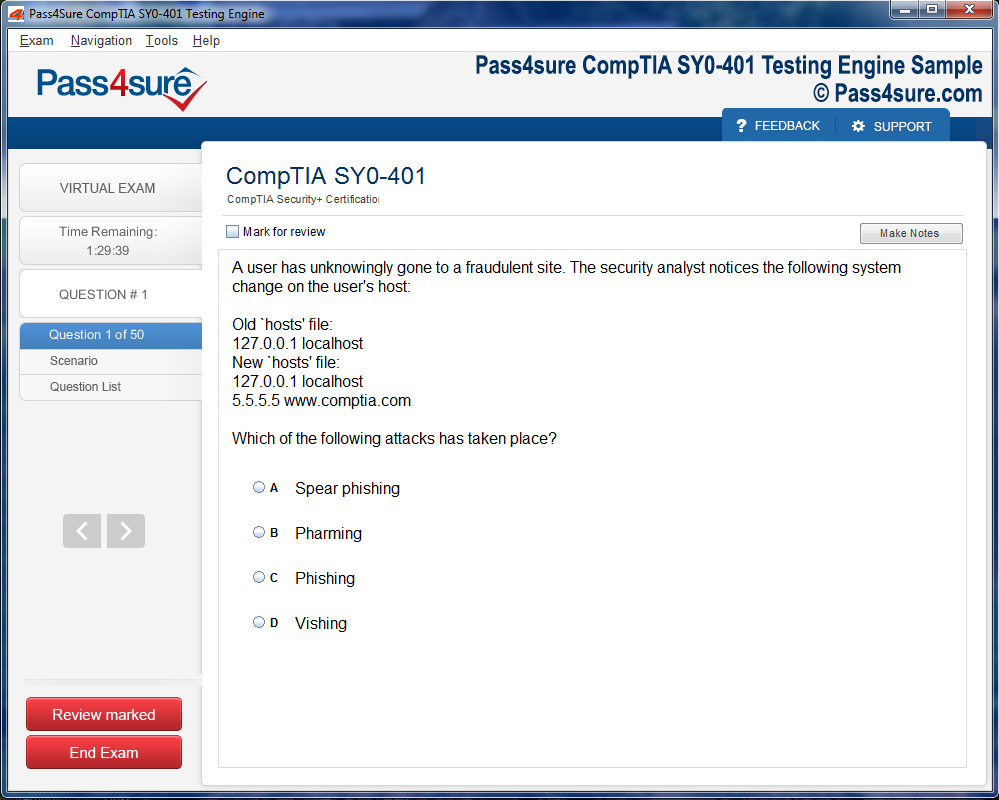
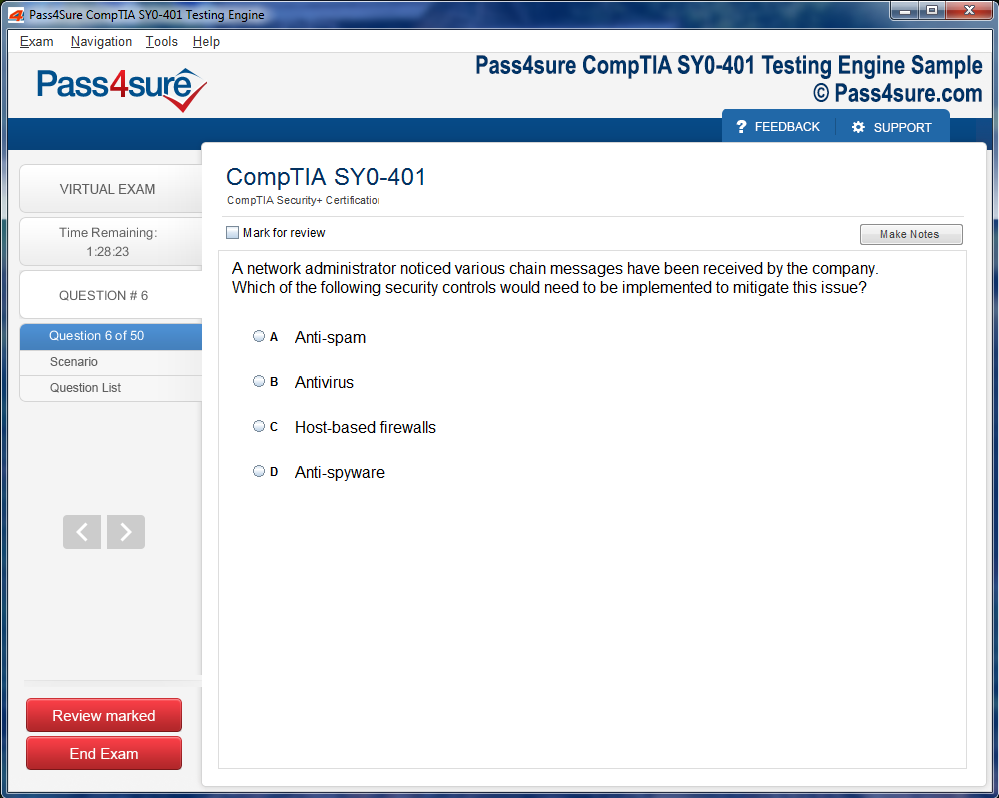
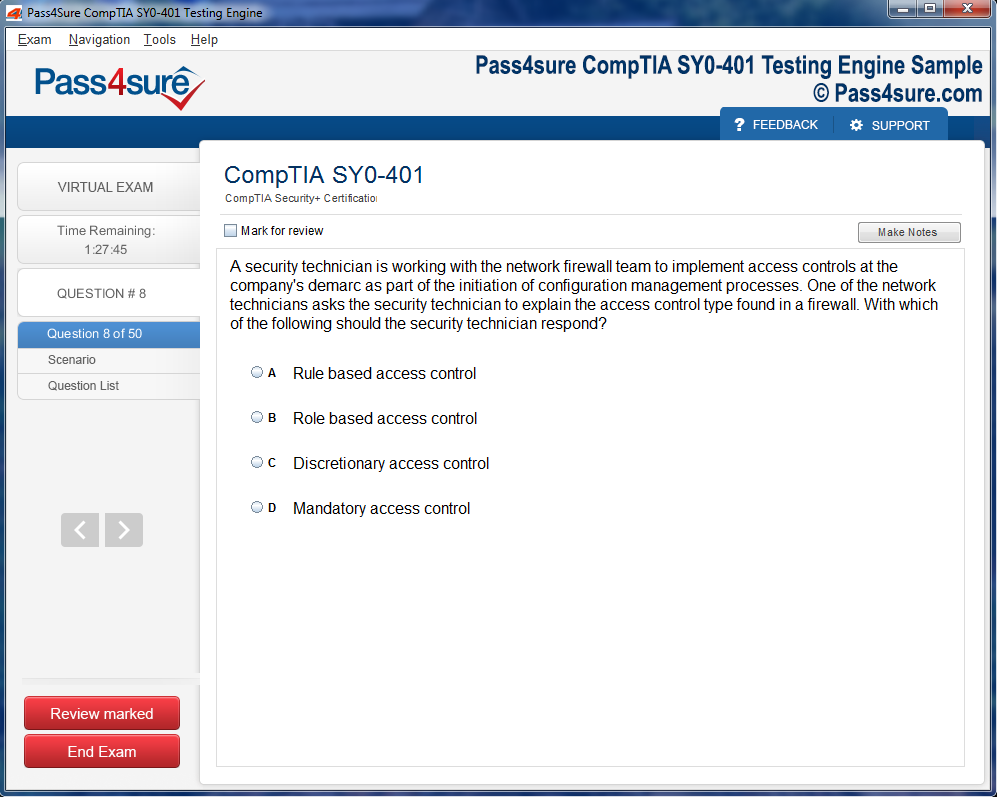
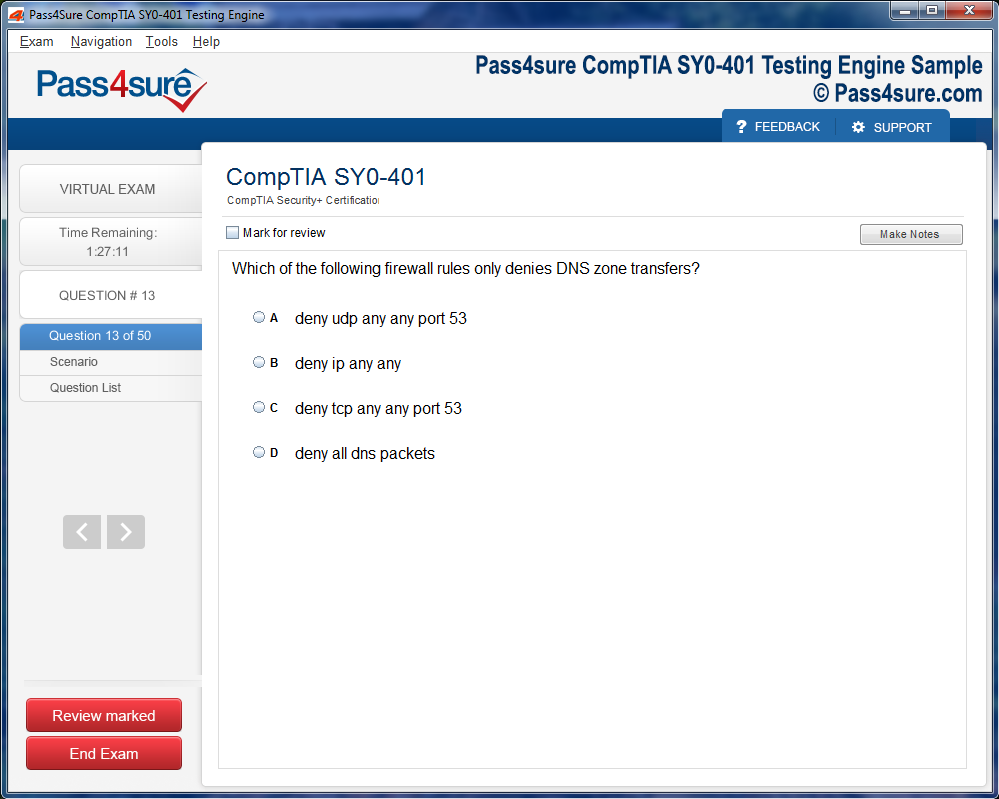
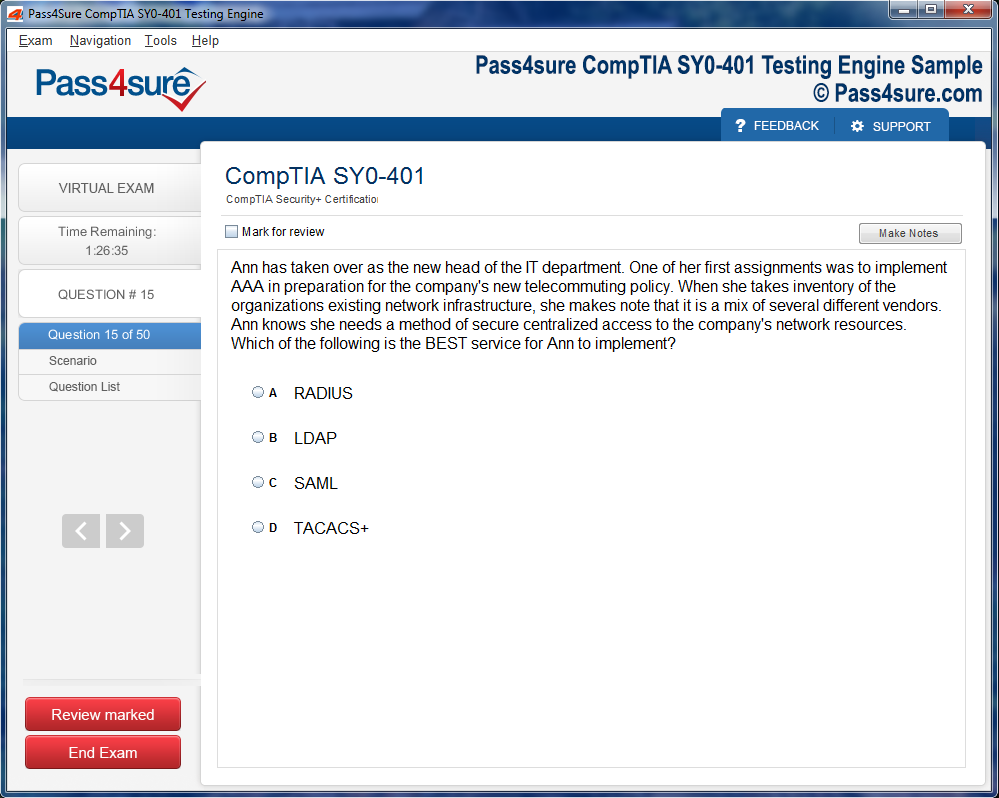
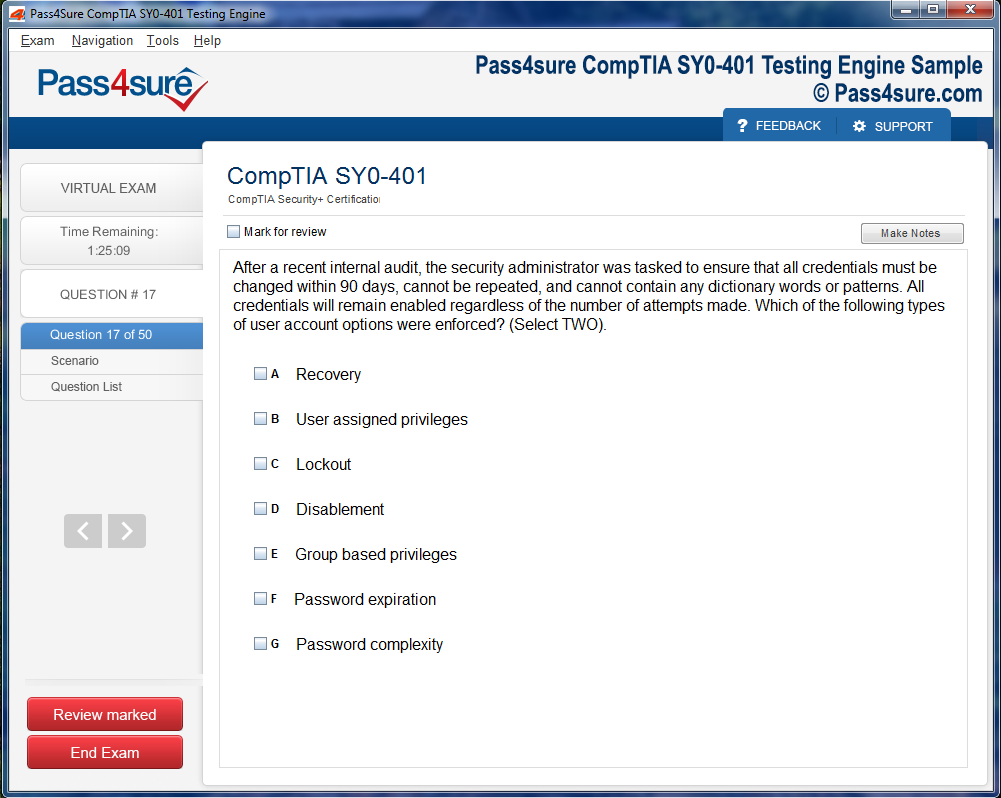
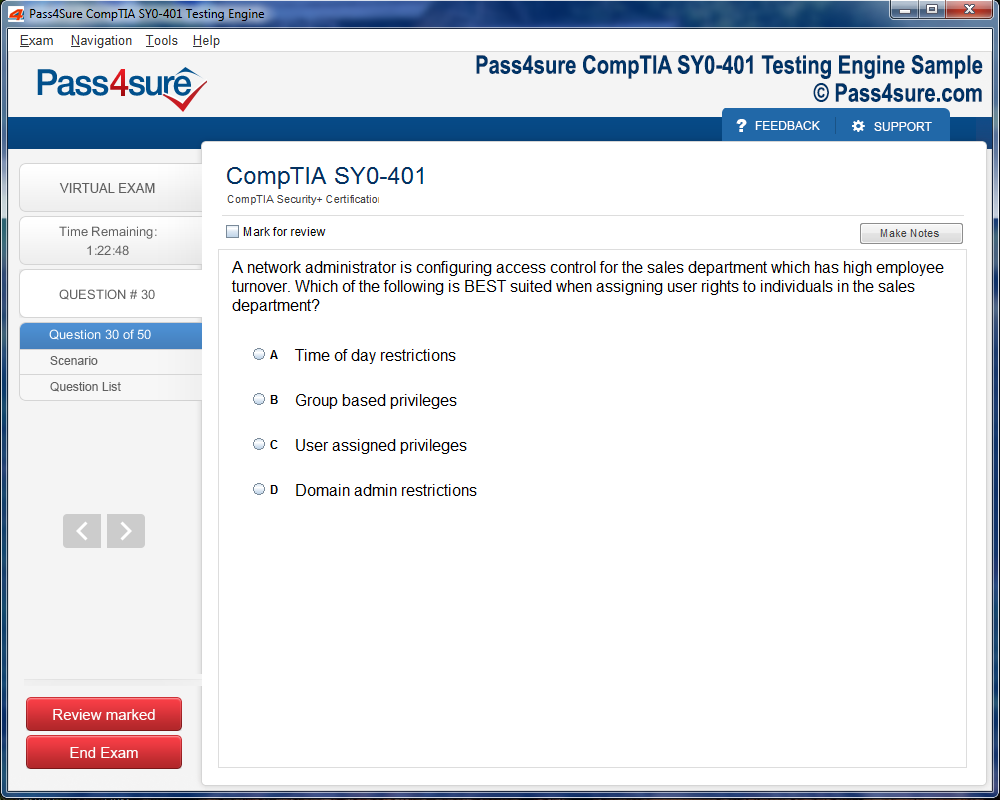
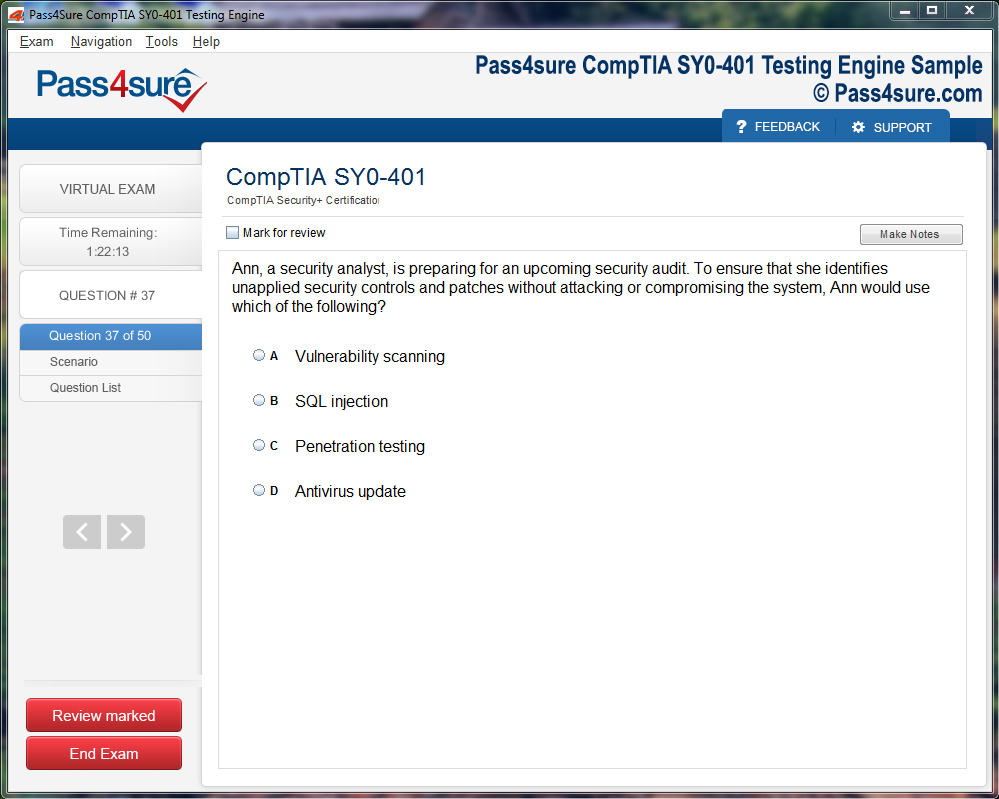
Product Screenshots
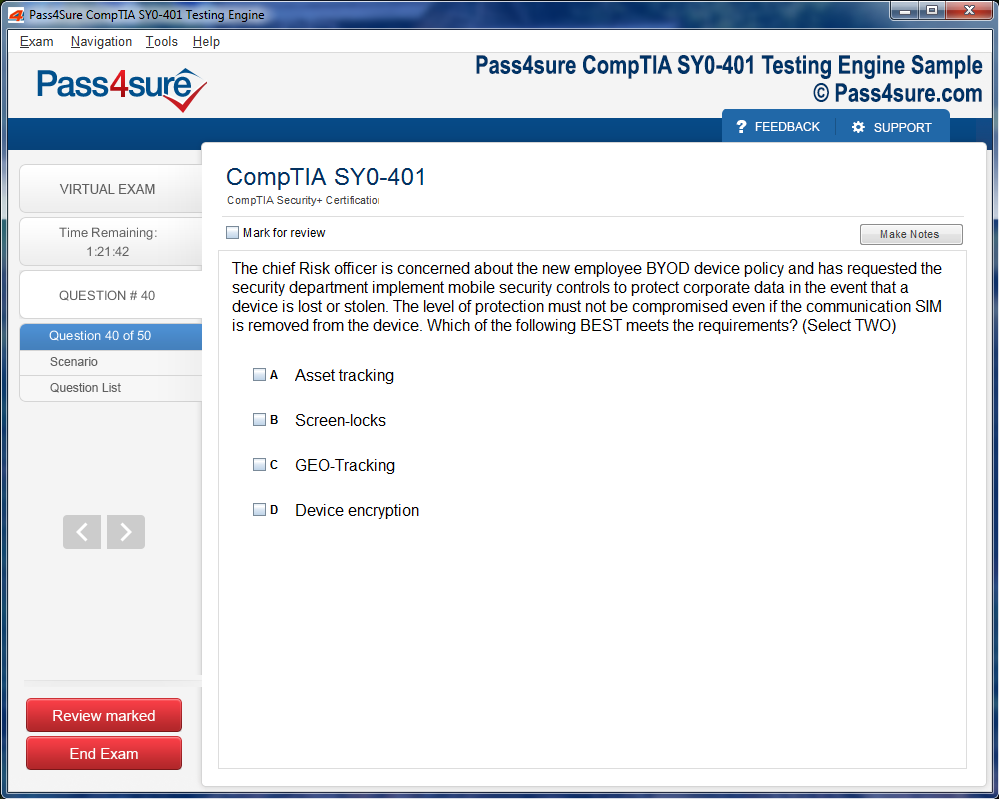
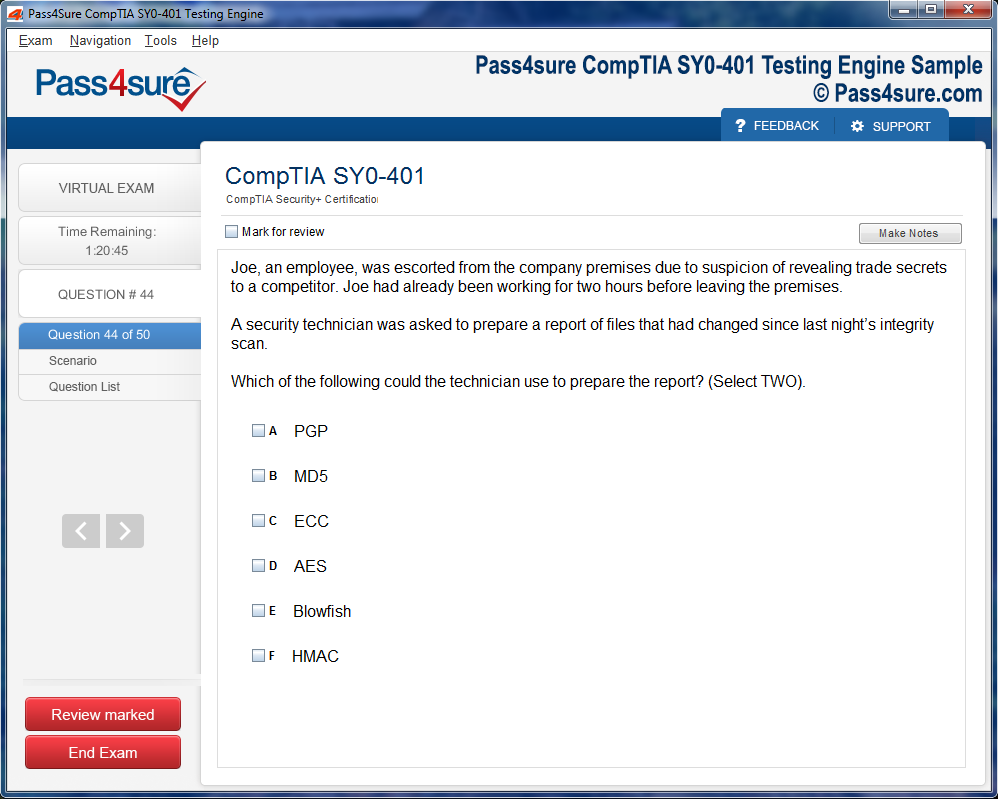
Frequently Asked Questions
How does your testing engine works?
Once download and installed on your PC, you can practise test questions, review your questions & answers using two different options 'practice exam' and 'virtual exam'. Virtual Exam - test yourself with exam questions with a time limit, as if you are taking exams in the Prometric or VUE testing centre. Practice exam - review exam questions one by one, see correct answers and explanations.
How can I get the products after purchase?
All products are available for download immediately from your Member's Area. Once you have made the payment, you will be transferred to Member's Area where you can login and download the products you have purchased to your computer.
How long can I use my product? Will it be valid forever?
Pass4sure products have a validity of 90 days from the date of purchase. This means that any updates to the products, including but not limited to new questions, or updates and changes by our editing team, will be automatically downloaded on to computer to make sure that you get latest exam prep materials during those 90 days.
Can I renew my product if when it's expired?
Yes, when the 90 days of your product validity are over, you have the option of renewing your expired products with a 30% discount. This can be done in your Member's Area.
Please note that you will not be able to use the product after it has expired if you don't renew it.
How often are the questions updated?
We always try to provide the latest pool of questions, Updates in the questions depend on the changes in actual pool of questions by different vendors. As soon as we know about the change in the exam question pool we try our best to update the products as fast as possible.
How many computers I can download Pass4sure software on?
You can download the Pass4sure products on the maximum number of 2 (two) computers or devices. If you need to use the software on more than two machines, you can purchase this option separately. Please email sales@pass4sure.com if you need to use more than 5 (five) computers.
What are the system requirements?
Minimum System Requirements:
- Windows XP or newer operating system
- Java Version 8 or newer
- 1+ GHz processor
- 1 GB Ram
- 50 MB available hard disk typically (products may vary)
What operating systems are supported by your Testing Engine software?
Our testing engine is supported by Windows. Andriod and IOS software is currently under development.
Boost Your Security Career with Check Point 156-536 Certification
The labyrinthine realm of cybersecurity demands dexterity, prescience, and an insatiable appetite for mastering arcane technologies. Within this ever-morphing landscape, the Check Point 156-536 certification emerges as a lodestar for those intent on transcending mere familiarity with network defenses. It is not a superficial accolade but a testament to an individual’s ability to orchestrate and anticipate the undulating waves of cyber threats that haunt contemporary digital infrastructures.
The intrinsic allure of this certification stems from its capacity to instill both granular technical acumen and panoramic strategic insight. Candidates are immersed in the complexities of firewall orchestration, intrusion detection architectures, and unified threat management ecosystems. This immersive methodology nurtures professionals who are not merely competent but sagacious, capable of discerning subtle vulnerabilities that elude conventional observation. The 156-536 credential epitomizes dedication to proactive defense paradigms, fostering a cerebral dexterity essential for mitigating the unpredictable vicissitudes of network security.
Practical Mastery Beyond Theory
A distinguishing hallmark of the Check Point 156-536 credential is its insistence on practical mastery. The curriculum transcends abstract theorization, guiding candidates through simulations that mirror real-world contingencies. By engaging with these high-fidelity exercises, learners cultivate a form of cognitive elasticity, the capacity to pivot and respond to dynamic threats with alacrity. In these crucibles, analytical reasoning and operational intuition coalesce, producing security practitioners capable of preemptive countermeasures rather than reactive remediation.
Such an approach engenders an ethos of anticipation, training professionals to perceive emergent threats before they crystallize. Mastery of configuration nuances, policy hierarchies, and anomaly detection fortifies the candidate’s ability to navigate labyrinthine network topographies. This immersion in practical scenarios ensures that the theoretical frameworks internalized during study are not ephemeral abstractions but tools for operational excellence.
Recognition and Professional Gravitas
The recognition conferred by the 156-536 certification resonates deeply within organizational hierarchies. Enterprises vying to safeguard their digital assets actively seek professionals adept in multilayered defense mechanisms. Possession of this credential signals more than technical proficiency; it communicates a readiness to assume custodianship of critical infrastructures, navigating complex network matrices with sagacious precision.
Certified individuals are often perceived as linchpins within security teams, their insights guiding policy formulation, incident response, and threat mitigation. The credential is thus both a gateway and a beacon, illuminating career trajectories while endorsing the professional as a paragon of contemporary cyber resilience. Beyond immediate employment considerations, it fosters intellectual gravitas and positions the holder as a vanguard within a field that prizes innovation and foresight.
Methodologies for Effective Preparation
Embarking on the 156-536 certification journey necessitates a stratagem of disciplined inquiry and iterative practice. Foundational knowledge forms the cornerstone: an intimate understanding of firewall schemas, VPN topologies, and intrusion detection protocols cultivates the scaffolding upon which advanced competencies are constructed. Subsequent engagement with practical labs enhances this scaffolding, transforming theoretical comprehension into applied expertise.
This preparation paradigm emphasizes progressive escalation of difficulty, guiding learners from elementary configurations to intricate simulations that replicate multifarious security challenges. Such rigorous exposure cultivates analytical acuity, fortifies problem-solving resilience, and imbues confidence essential for real-time decision-making. The iterative oscillation between theory and practice ensures a holistic internalization of network defense principles, rendering candidates adept at navigating the capricious dynamics of cyberspace.
Cultivating Vigilance and Cognitive Agility
Cybersecurity is an arena of perpetual flux, demanding vigilance and cognitive agility. Achieving the 156-536 certification entails more than memorization; it necessitates the cultivation of a mindset attuned to continuous evolution. Engaging with security communities, assimilating emergent research, and observing threat patterns equips professionals with anticipatory faculties that are as critical as technical expertise.
Such a mindset embraces uncertainty as a catalyst for growth, fostering the intellectual flexibility required to devise innovative countermeasures. Candidates emerge not merely as executors of prescribed protocols but as strategists capable of envisioning and neutralizing complex threat vectors. The 156-536 certification thus fosters a rare synthesis of analytical rigor, practical proficiency, and forward-looking discernment.
Professional and Personal Enrichment
The attainment of the Check Point 156-536 credential extends its benefits beyond vocational advancement. Professionals frequently report an augmentation in self-efficacy, heightened credibility among peers, and a profound sense of agency in navigating intricate digital ecosystems. Knowledge acquired transcends procedural proficiency, illuminating the interconnectivity of networks, the subtleties of adversarial behavior, and the philosophical underpinnings of layered defense strategies.
This comprehensive mastery engenders a holistic appreciation of cybersecurity, transforming it from a technical discipline into a domain of intellectual artistry. Individuals become adept not only at protecting systems but at anticipating and orchestrating responses to complex scenarios, enriching both their professional trajectory and cognitive repertoire.
Mastering the Nuances of Firewall Architecture
Firewalls serve as the fulcrum of contemporary network security, yet true mastery demands comprehension beyond rudimentary configurations. Candidates must cultivate an intimate understanding of packet inspection methodologies, stateful versus stateless architectures, and the subtle interplay between access control policies. A firewall is not merely a gatekeeper but an orchestrator of traffic symphonies, discerning legitimate signals from insidious intrusions. Developing an aptitude for recognizing anomalous patterns equips aspirants to anticipate security breaches before they manifest.
Experimentation in controlled environments illuminates the nuanced behavior of firewall rules. Altering rule sequences, prioritizing policies, and simulating attack vectors allows for an experiential grasp of risk mitigation. The capacity to visualize network topologies and predict firewall reactions under stress transforms theoretical knowledge into operational foresight. Candidates who embrace this granular approach emerge not only as exam-ready but as architects of resilient digital fortresses.
Immersing in Intrusion Prevention Dynamics
Intrusion prevention systems represent a cerebral frontier in cybersecurity, blending automated intelligence with proactive threat deterrence. Understanding signature-based detection, anomaly identification, and heuristic evaluation is foundational, yet proficiency arises from iterative engagement with real-time threat simulations. Candidates must internalize how IPS modules integrate with firewalls to form a cohesive defense lattice.
The intellectual exercise of configuring IPS policies encourages critical reasoning. Evaluating the efficacy of preemptive measures against polymorphic attacks cultivates strategic thinking, enabling candidates to distinguish between reactive troubleshooting and anticipatory security engineering. This depth of engagement is what differentiates transient familiarity from enduring expertise.
Orchestrating VPN Configurations with Precision
Virtual private networks underpin secure communications across perilous digital landscapes. Mastery of VPN architectures encompasses tunneling protocols, encryption paradigms, and authentication schemas. Beyond technical fluency, aspirants must apprehend the subtle ramifications of key management, session persistence, and latency mitigation.
Practical experimentation is indispensable. Constructing site-to-site and remote-access VPN scenarios, observing handshakes, and troubleshooting encryption failures fosters an operational intuition that transcends rote memorization. Candidates develop the discernment to preempt connectivity anomalies and fortify digital channels against interception. Each configuration exercise reinforces a mental schema where theoretical constructs coalesce into tangible skill.
Navigating Unified Threat Management Ecosystems
Unified threat management embodies an integrative philosophy, merging firewall, IPS, antivirus, and application control into a singular security framework. Proficiency in this domain demands holistic cognition, where the practitioner visualizes interdependencies and anticipates systemic ripple effects. Understanding the orchestration of threat intelligence feeds, log aggregation, and anomaly correlation enhances both defensive posture and operational acumen.
Simulated network ecosystems enable candidates to test the cohesion of UTM strategies. Deploying layered defenses against multifaceted attack scenarios cultivates situational awareness and strategic agility. The iterative process of tuning policies and refining alerts transforms abstract concepts into actionable intelligence, essential for both examination performance and professional efficacy.
Synthesizing Knowledge Through Scenario-Based Exercises
True preparation transcends memorization, hinging instead on scenario-based synthesis. Candidates who immerse themselves in composite exercises, where firewalls, IPS, VPNs, and UTM coalesce, develop cognitive maps of security ecosystems. These exercises simulate the multifarious challenges encountered in operational environments, demanding rapid analytical processing and adaptive problem-solving.
Engaging with these integrated scenarios enhances neural pathways associated with pattern recognition and threat anticipation. Each iteration deepens comprehension, transforming procedural familiarity into instinctive competency. This immersive approach instills the confidence to navigate unpredictable digital landscapes and tackle exam questions with acuity.
Cultivating Cognitive Resilience and Adaptive Thinking
Preparation for the Check Point 156-536 certification is as much a cognitive endeavor as a technical one. Candidates must nurture resilience, adaptability, and reflective thinking to thrive under examination conditions. Mental elasticity enables professionals to pivot between conceptual understanding and practical application without cognitive friction.
Adaptive thinking manifests in the ability to extrapolate solutions from analogous contexts, anticipate hidden pitfalls, and synthesize fragmented information into coherent strategies. Candidates who cultivate these faculties achieve not only certification readiness but also long-term professional growth in the volatile cybersecurity milieu.
Integrating Ethical Vigilance into Practice
Cybersecurity is entwined with ethical responsibility, demanding conscientious stewardship of privileged access and sensitive data. Candidates must internalize the imperatives of privacy, legal compliance, and professional integrity alongside technical prowess. Understanding the ethical implications of firewall configurations, IPS policies, and VPN access ensures decisions resonate with organizational values and societal norms.
Ethical vigilance becomes tangible when professionals simulate real-world dilemmas, assessing the trade-offs between security imperatives and operational constraints. This integration of moral reasoning into technical practice elevates competence, distinguishing proficient candidates from merely credentialed individuals.
Deconstructing Advanced Threat Mitigation Strategies
Understanding security at an elementary level is insufficient when adversaries employ polymorphic malware, obfuscation techniques, or zero-day exploits. Candidates must cultivate a nuanced perception of threat landscapes. Advanced mitigation strategies encompass anticipatory analytics, heuristic evaluation, and behavioral forensics. Professionals who internalize these approaches develop the foresight to preempt breaches before damage occurs, transforming reactive measures into proactive defense postures. Exam scenarios often simulate multifaceted attacks, challenging candidates to orchestrate layered defenses that integrate firewalls, intrusion prevention, and endpoint security in a cohesive framework.
Cryptographic Paradigms and Data Sanctity
Encryption transcends conventional protection; it is the linchpin of confidentiality, authenticity, and non-repudiation. Candidates must traverse symmetric and asymmetric algorithms, hashing functions, and digital signature mechanics with fluency. Comprehending elliptic-curve cryptography, post-quantum encryption concepts, and ephemeral key strategies equips professionals to safeguard sensitive data against sophisticated adversaries. Mastery entails recognizing practical vulnerabilities such as key reuse, side-channel attacks, and weak randomization sources, as these subtle lapses can compromise even the most resilient cryptographic architecture. Exam readiness involves the ability to juxtapose theoretical robustness with pragmatic deployment.
Network Segmentation and Micro-Segregation Tactics
Monolithic network structures exacerbate risk exposure. Security-conscious architects implement segmentation to contain threats and limit lateral movement. Advanced candidates must understand VLAN configurations, software-defined segmentation, and zero-trust network paradigms. Micro-segmentation extends this philosophy to granular levels, where application workloads and virtual machines operate within isolated trust zones. Professionals adept at these methodologies can craft networks that dynamically adjust to evolving threats, creating a labyrinthine environment that confounds intruders while maintaining operational fluidity. Exam exercises frequently probe this competency, demanding both conceptual clarity and hands-on configuration knowledge.
Endpoint Fortification and Adaptive Defense Mechanisms
Endpoints are the most ubiquitous ingress vectors for malicious actors. Comprehensive defense requires more than antivirus solutions; it mandates behavior-based monitoring, sandbox analysis, and anomaly detection. Candidates should explore threat-hunting methodologies that leverage artificial intelligence and machine learning to discern subtle deviations indicative of compromise. Understanding host-based firewalls, application whitelisting, and privilege management is equally critical. By integrating endpoint fortification within broader network security strategies, professionals achieve a holistic defense posture that mitigates risk without impeding productivity—a balance often tested under simulated conditions in certification examinations.
Operational Continuity and Incident Response Orchestration
No security framework is complete without meticulous planning for incident response and operational continuity. Candidates must internalize incident lifecycle stages, including preparation, identification, containment, eradication, and post-event analysis. Familiarity with forensic tools, log correlation, and threat intelligence feeds enables professionals to reconstruct attack vectors and apply lessons learned to prevent recurrence. Scenario-based questions in examinations assess the ability to apply theoretical knowledge under pressure, evaluating both strategic acumen and procedural precision. The capacity to orchestrate coordinated responses while maintaining business continuity is an indispensable hallmark of advanced cybersecurity proficiency.
Threat Intelligence Synthesis and Predictive Analytics
Staying abreast of threat evolution requires more than passive monitoring. Candidates should develop skills in synthesizing threat intelligence from heterogeneous sources, discerning patterns that inform predictive models. Understanding adversary tactics, techniques, and procedures (TTPs) empowers professionals to anticipate attacks rather than merely react. Predictive analytics, coupled with machine learning classifiers, enhances situational awareness and decision-making agility. Examination questions often challenge candidates to evaluate intelligence inputs and determine optimal countermeasures, assessing both analytical reasoning and technical foresight.
Policy Governance and Regulatory Symbiosis
Technical prowess is insufficient without an appreciation for governance frameworks and compliance imperatives. Candidates must navigate policy constructs, risk assessment methodologies, and regulatory mandates with dexterity. Understanding frameworks such as ISO 27001, GDPR, or industry-specific security requirements enables professionals to align operational controls with legal and ethical obligations. Exam exercises frequently test the integration of governance considerations into security strategy, emphasizing the interplay between technical deployment and organizational mandates. Mastery of this domain ensures that defenses are both robust and compliant, harmonizing operational effectiveness with legal prudence.
Cognitive Cybersecurity Skills and Adaptive Mindsets
Beyond tangible tools and frameworks, cybersecurity demands a cerebral approach. Analytical rigor, critical reasoning, and situational adaptability distinguish exceptional professionals from competent ones. Candidates should cultivate mental models for threat anticipation, lateral thinking in response scenarios, and risk prioritization under resource constraints. Scenario-driven simulations in examinations evaluate not only technical knowledge but also the candidate’s capacity to synthesize information rapidly and execute informed decisions under pressure. The development of these cognitive faculties is as vital as understanding firewall rules or encryption protocols, bridging the gap between mechanical knowledge and strategic application.
The Imperative of Conceptual Dexterity in Security Environments
In the labyrinthine domain of network fortification, conceptual dexterity emerges as an indispensable attribute. Candidates who exhibit the ability to traverse abstract notions and reconcile them with tangible applications invariably outperform their peers. This dexterity is not merely cognitive agility but a synthesis of analytical acuity and operational sagacity. Engaging with theoretical constructs in isolation provides superficial comprehension; integrating them through practical exercises engenders an intuitive grasp of systemic interdependencies. The candidate evolves from a passive recipient of information into an architect of strategic defense methodologies, capable of anticipating cascading effects within complex network topologies.
Immersive Simulation and Cognitive Embodiment
Immersive simulation operates as a crucible for cognitive embodiment of security protocols. Through meticulously crafted virtual environments, aspirants confront scenarios that mirror the unpredictability of real-world networks. Such simulations extend beyond rote memorization, demanding active orchestration of firewall configurations, intrusion mitigation strategies, and encrypted communication channels. By manipulating these elements in concert, candidates cultivate an embodied understanding—where procedural knowledge and theoretical insight coalesce. The iterative rehearsal within these synthetic ecosystems not only hones reflexive responses but also engenders a metacognitive awareness, allowing practitioners to evaluate the efficacy of their interventions dynamically.
Analytical Intuition and the Art of Predictive Troubleshooting
Analytical intuition is the hallmark of proficiency in complex security matrices. It transcends formulaic problem-solving by integrating pattern recognition with heuristic reasoning. In practical labs, scenarios are often crafted to subvert predictable outcomes, compelling candidates to probe underlying causality. Misconfigurations, protocol anomalies, and latent vulnerabilities serve as stimuli for predictive troubleshooting. By engaging in such exercises, learners develop an anticipatory mindset, capable of forecasting potential breaches and preemptively mitigating risks. This capacity to navigate ambiguity differentiates exceptional professionals, equipping them to respond to incidents with both precision and strategic foresight.
Methodical Experimentation and Iterative Refinement
Experimentation within controlled environments functions as a catalyst for iterative refinement. Security practitioners are encouraged to manipulate variables, observe emergent behaviors, and recalibrate their approaches in real-time. This methodology fosters resilience and adaptability, essential traits in domains where threat vectors evolve incessantly. Experimentation also illuminates latent interdependencies within network frameworks, revealing how alterations in one segment propagate through the system. The practice cultivates an intellectual elasticity, allowing candidates to reconcile theoretical models with operational exigencies, thereby transforming experiential learning into durable expertise.
Temporal Discipline and Operational Metacognition
Temporal discipline is a subtle yet potent determinant of success in applied security contexts. The capacity to structure tasks, prioritize interventions, and maintain a consistent rhythm underpins efficacy in both simulated labs and live operations. Coupled with operational metacognition—the reflective awareness of one’s procedural choices—temporal discipline ensures that actions are deliberate rather than reactionary. Documenting configurations, reviewing outcomes, and analyzing procedural efficiency instills habits that resonate with professional standards. Candidates who master this temporal orchestration are better positioned to navigate high-pressure environments, optimizing both performance and resilience.
Synthesis of Technical Mastery and Collaborative Fluency
The nexus of technical mastery and collaborative fluency forms the cornerstone of effective security operations. Mastery of firewalls, VPN architectures, and intrusion prevention is amplified when candidates can articulate complex constructs to non-specialist stakeholders. Simulated team exercises cultivate this fluency, requiring coordination, negotiation, and clear exposition of technical rationales. The ability to translate intricate data into actionable insights enhances both interpersonal efficacy and strategic influence. Candidates emerge not only as adept technologists but also as communicators capable of bridging the gap between abstract systems and organizational objectives.
Continuous Exploration and the Evolution of Competence
Continuous exploration serves as both compass and catalyst in the cybersecurity landscape. Professionals who embrace an ethos of relentless inquiry—testing nascent tools, probing emergent protocols, and revisiting foundational principles—construct a trajectory of enduring competence. Hands-on experimentation fosters adaptive intelligence, enabling practitioners to navigate unforeseen contingencies with agility. The evolution of competence is less a linear progression and more a recursive cycle of practice, reflection, and recalibration. Candidates who internalize this cycle cultivate resilience against obsolescence, positioning themselves as perpetual learners attuned to the fluid dynamics of network defense.
Ascendant Trajectories Through Check Point 156-536 Certification
Embarking upon the Check Point 156-536 certification journey engenders a metamorphosis in one’s professional trajectory, transcending mere technical validation. This credential functions as both a talisman of proficiency and an emblem of unwavering commitment to perpetual skill refinement. Those who attain it are imbued with the capacity to navigate complex cybersecurity labyrinths with dexterity, signaling an aptitude for stewardship in high-stakes digital environments.
Amplified Professional Gravitas
Possession of the 156-536 certification amplifies professional gravitas, rendering candidates magnetic to organizations seeking cybersecurity virtuosos. It bespeaks a mastery of sophisticated firewall orchestration, intrusion evasion techniques, and the arcane intricacies of virtual private network architectures. Employers discern not only technical competence but also strategic acumen, entrusting certified individuals with responsibilities that shape the defensive posture of entire enterprises.
Catalysts for Career Acceleration
Certified practitioners frequently witness an acceleration of their vocational ascension. The credential serves as a catalyst for assuming roles of heightened responsibility, such as orchestrating security operations, engineering holistic security frameworks, or steering cross-disciplinary incident response ensembles. Its recognition is tantamount to a career lodestar, guiding professionals toward realms where leadership and technical finesse converge.
Echelons of Compensation and Reward
The economic ramifications of the 156-536 certification are substantial. Organizations acknowledge the tangible value imbued by professionals capable of safeguarding intricate network matrices from incursions and disruptions. Such mastery translates into elevated remuneration, as the mitigation of security risks equates to fiscal prudence and operational continuity. The credential thereby becomes both a symbol of competence and a conduit to financial recognition.
Access to Specialized Arenas
Holding the Check Point 156-536 designation unlocks corridors to specialized cybersecurity domains. Roles such as network security engineer, threat intelligence architect, and firewall administrator often predicate eligibility upon this certification. The credential demarcates candidates from the undifferentiated multitude, signaling readiness to grapple with nuanced security phenomena and devise strategies that fortify critical digital assets against emergent threats.
Portals to Global Endeavors
The certification extends its influence across geographical frontiers. Enterprises with multinational footprints prize individuals capable of implementing standardized security paradigms across disparate technological ecosystems. Certified professionals become emissaries of security integrity, adept at diagnosing and remediating challenges remotely while anticipating adversarial innovations. In this sense, the credential functions as a passport to transnational opportunities and cross-cultural cybersecurity leadership.
Synergistic Networking and Intellectual Confluence
Certification pathways engender access to vibrant communities of cybersecurity cognoscenti. Interaction with peers, mentors, and industry luminaries fosters an ecosystem of collaborative insight, continuous education, and shared best practices. Immersion in these networks cultivates intellectual symbiosis, ensuring that certified professionals remain at the vanguard of emerging trends and technological revolutions.
Emboldened Decision-Making and Authoritative Presence
Possession of the 156-536 certification instills a profound sense of confidence. Practitioners wield both theoretical comprehension and practical dexterity, enabling rapid, informed decision-making amidst high-pressure scenarios. This confidence permeates professional interactions, establishing the certified individual as an authoritative figure whose judgment and expertise command trust from colleagues, superiors, and clients alike.
Strategic Investment in Career Longevity
The pursuit of Check Point 156-536 certification is more than a technical endeavor; it is a strategic investment in enduring career resilience. By amalgamating technical mastery, strategic foresight, and professional credibility, the credential functions as a linchpin for sustained advancement. Professionals are empowered not merely to occupy roles but to sculpt the cybersecurity landscape with precision, foresight, and innovation.
The Imperative of Perpetual Intellectual Agility
In the cybersecurity sphere, stasis is tantamount to vulnerability. The professional who attains a certification must not succumb to complacency, for the digital landscape metamorphoses with unrelenting velocity. Intellectual agility—the capacity to assimilate, synthesize, and apply novel knowledge—becomes the lodestar for long-term success. Cyber adversaries refine their methodologies incessantly, rendering yesterday’s defenses potentially archaic. By cultivating an enduring curiosity, professionals ensure that their competencies remain resilient, adaptable, and anticipatory rather than reactive. This mindset transcends rote memorization, fostering a nimble cognition capable of navigating unforeseen threats and technological perturbations.
Experiential Mastery Through Applied Labyrinths
Knowledge divorced from application risks atrophy. Beyond the theoretical constructs encapsulated in certification curricula, the true crucible of mastery lies in immersive, hands-on experimentation. Engaging with virtualized environments, simulated attack vectors, and sandboxed explorations of emergent vulnerabilities transforms abstract concepts into operational expertise. These experiential labyrinths train the mind to identify subtle anomalies, decipher obfuscated threats, and respond with tactical precision. Moreover, iterative engagement with these environments instills a form of cognitive muscle memory, whereby instinctual responses coalesce with analytical reasoning to fortify defensive acumen in real-time cyber contingencies.
Strategic Symbiosis in Collaborative Ecosystems
Isolation stymies growth in a domain predicated upon collective intelligence. The cybersecurity ecosystem thrives on the cross-pollination of ideas, experiences, and methodologies. Professionals who immerse themselves in collaborative networks—ranging from clandestine threat intelligence circles to open-source security forums—gain access to a spectrum of perspectives that transcend individual cognition. This strategic symbiosis enables anticipatory problem-solving, accelerates innovation, and cultivates an awareness of emerging vectors before they crystallize into tangible threats. Networking is not merely a transactional exercise; it is a conduit for epistemic enrichment that amplifies both personal and communal security postures.
Cognitive Resilience and Psychological Fortitude
Long-term achievement in cybersecurity demands more than intellectual dexterity; it necessitates psychological resilience. Professionals navigate incessant high-stakes scenarios where errors can precipitate significant organizational consequences. Cultivating an equanimous mindset, honing stress tolerance, and mastering situational composure are therefore indispensable. Psychological fortitude allows practitioners to analyze threats without succumbing to cognitive biases or panic-induced decision-making. By integrating mindfulness techniques, reflective practices, and structured problem-solving heuristics, professionals construct a mental scaffolding that sustains performance under duress and fosters long-term strategic efficacy.
Orchestrating the Convergence of Technical and Executive Acumen
As careers progress, the ability to bridge technical proficiency with strategic oversight becomes a differentiator. Leadership in cybersecurity extends beyond intrusion detection or firewall configuration; it entails the orchestration of complex defense frameworks, policy formation, and stakeholder communication. Professionals must cultivate narrative clarity to translate esoteric security protocols into actionable insights for executives and policymakers. This synthesis of technical acumen and executive articulation enhances organizational trust, informs decision-making, and positions the practitioner as both a subject-matter authority and a visionary architect of secure digital infrastructure.
Anticipatory Innovation and Predictive Insight
The vanguard of cybersecurity is defined not by reaction but by prescience. Professionals who cultivate predictive insight, leveraging trend analysis, threat modeling, and heuristic reasoning, anticipate adversarial maneuvers before they manifest. This proactive stance transforms cybersecurity from a defensive posture into a strategic advantage, enabling organizations to mitigate risks preemptively. Predictive insight is fortified through continuous engagement with emergent technologies, rigorous scenario simulation, and the assimilation of global threat intelligence. The capacity to envision and operationalize preemptive defense strategies delineates ephemeral success from enduring professional eminence.
Cultivating Ethical Vigilance and Moral Stewardship
In parallel with technical and strategic expertise, ethical discernment underpins sustainable influence in the cybersecurity domain. Professionals wielding privileged access to sensitive information must navigate a labyrinth of ethical dilemmas, balancing organizational imperatives with societal responsibilities. Vigilant adherence to principles of integrity, confidentiality, and transparency engenders trust, both within teams and in broader institutional contexts. Moral stewardship is not ancillary; it is a fundamental pillar of professional legitimacy, reinforcing credibility while guiding decision-making amidst complex and ambiguous cyber terrains.
Lifelong Immersion in the Frontier of Innovation
True mastery emerges from an unrelenting immersion in the vanguard of technological evolution. Engaging with artificial intelligence for threat detection, quantum-resistant cryptography, and decentralized network security exemplifies the continuous expansion of professional horizons. Lifelong immersion is characterized by deliberate exploration, reflective analysis, and an insatiable appetite for understanding nascent paradigms. Professionals who embed this ethos into their daily practice not only fortify their relevance but also contribute substantively to the collective advancement of cybersecurity knowledge and praxis.
Architecting Legacy Through Mentorship and Knowledge Propagation
Enduring impact is achieved not merely through personal accomplishment but through the propagation of expertise. Mentorship cultivates the next generation of cybersecurity practitioners, embedding a culture of rigor, adaptability, and ethical responsibility. By disseminating insights gained through lived experience and certification mastery, seasoned professionals create ripples that amplify collective capacity. Knowledge propagation ensures that lessons learned, strategies honed, and innovations developed transcend individual tenure, embedding resilience and expertise within the broader cybersecurity milieu.
Synergizing Analytical Precision with Creative Cognition
The intricate challenges of cybersecurity require a dual engagement of analytical precision and imaginative cognition. Professionals must navigate a continuum where algorithmic logic intersects with unconventional problem-solving. Innovative approaches, such as lateral thinking applied to threat mitigation or heuristic experimentation in anomaly detection, yield solutions that purely formulaic methods cannot achieve. Cultivating this cognitive synergy enriches operational versatility, empowering practitioners to transform intricate challenges into opportunities for strategic ingenuity.
Navigating the Flux of Cyber Ecosystems
The cyber landscape is in perpetual flux, a kaleidoscope of vulnerabilities, exploits, and emergent technologies. Professionals who aspire to enduring relevance must embrace this dynamism rather than resist it. Understanding systemic interdependencies, from cloud infrastructures to endpoint security architectures, allows for anticipatory decision-making. By mapping the cyber ecosystem’s constantly shifting topology, practitioners cultivate situational awareness that transcends reactive defense. This awareness transforms complexity into strategic opportunity, enabling the practitioner to orchestrate defenses that are resilient, scalable, and preemptive.
The Alchemy of Translational Knowledge
Mastery in cybersecurity involves an alchemy of translational knowledge: the capacity to convert theoretical constructs into actionable protocols. Skills obtained through certification become exponentially more potent when contextualized within operational realities. Translational knowledge demands a synthesis of algorithmic logic, behavioral analysis, and threat heuristics, ensuring that technical proficiency is deployed effectively. Professionals who excel in this domain do not merely execute pre-defined protocols—they craft adaptive strategies informed by nuanced understanding of attacker motivations, environmental constraints, and organizational imperatives.
Cognitive Cartography and Threat Anticipation
Cognitive cartography refers to the mental mapping of potential threats, vulnerabilities, and attack vectors, creating an internalized topography of the cybersecurity landscape. Professionals adept at cognitive cartography anticipate adversarial behavior before it materializes, enabling pre-emptive mitigation strategies. This requires a fusion of pattern recognition, probabilistic reasoning, and historical analysis. By conceptualizing cyber threats as dynamic nodes within an interconnected web, practitioners develop predictive acuity, allowing rapid recalibration of defensive postures in response to emerging stimuli.
The Resonance of Continuous Reflection
Reflection is an underutilized yet transformative practice within cybersecurity. The act of deliberate introspection—analyzing successes, failures, and operational decisions—cultivates metacognition, the capacity to think critically about one’s cognitive processes. Continuous reflection fosters adaptive intelligence, enabling professionals to identify biases, refine methodologies, and extrapolate lessons from both triumphs and missteps. Integrating reflective practice into daily routines ensures that knowledge is not merely accumulated but internalized, enhancing decision-making precision and operational foresight.
Harnessing Polyglot Technical Fluency
Cybersecurity increasingly demands polyglot technical fluency: the ability to navigate multiple programming languages, frameworks, and operational paradigms with agility. Fluency extends beyond syntax mastery; it involves understanding architectural idiosyncrasies, debugging intricacies, and interfacing disparate systems seamlessly. Professionals who cultivate this versatility can orchestrate integrated defense mechanisms, adapt to novel technologies rapidly, and decipher code obfuscation employed by sophisticated adversaries. Polyglot fluency thus transforms technical breadth into a strategic lever for anticipatory security operations.
The Gravitas of Ethical Hacking
Ethical hacking constitutes a cornerstone of proactive defense, where practitioners simulate adversarial behavior to identify latent vulnerabilities. This process demands a meticulous mindset, creative problem-solving, and unwavering ethical standards. By engaging in controlled intrusion testing, professionals refine threat recognition capabilities while reinforcing the organization’s security posture. Ethical hacking serves as both a diagnostic and a pedagogical tool, translating theoretical knowledge into actionable intelligence and fortifying the practitioner’s capacity for rapid threat neutralization.
Navigating the Spectrum of Regulatory Compliance
Long-term cybersecurity success is intertwined with mastery of regulatory landscapes. Professionals must negotiate a spectrum of compliance frameworks, ranging from data privacy statutes to sector-specific cybersecurity mandates. Regulatory literacy ensures that security protocols not only mitigate technical risks but also align with legal, ethical, and organizational obligations. By embedding compliance considerations into strategic planning, practitioners enhance institutional resilience, mitigate liability exposure, and reinforce trust among stakeholders. This harmonization of technical and regulatory expertise is indispensable for sustained influence within complex organizational ecosystems.
Synergizing Threat Intelligence and Situational Awareness
Threat intelligence represents a dynamic repository of adversarial knowledge, encompassing attack patterns, exploit methodologies, and behavioral indicators. Professionals who synthesize this intelligence with situational awareness achieve a compounded defensive capacity. By continuously integrating real-time insights from global threat landscapes, practitioners anticipate novel attack vectors and implement preemptive countermeasures. This symbiosis of intelligence and awareness transforms reactive defense into proactive strategy, enabling organizations to navigate the cyber terrain with foresight and agility.
Embedding Redundancy and Resilience in Security Architectures
Sustainable cybersecurity strategies are predicated on the principles of redundancy and resilience. Designing systems that tolerate failure, recover swiftly, and adapt to evolving threats ensures operational continuity even under duress. Professionals must architect layered defense mechanisms, employ failover contingencies, and stress-test protocols against extreme scenarios. Embedding these principles fosters not only technical robustness but also organizational confidence, demonstrating that security is both a strategic priority and an operational imperative.
Strategic Mentorship as a Force Multiplier
Mentorship extends the practitioner’s influence beyond individual capability, acting as a force multiplier for organizational competence. By guiding emerging professionals through complex scenarios, seasoned practitioners impart tactical wisdom, ethical discernment, and strategic foresight. Mentorship cultivates a culture of continuous improvement, enabling knowledge to proliferate across teams and departments. Long-term success is amplified when expertise is propagated deliberately, ensuring that institutional memory retains both the lessons of experience and the agility to adapt to novel challenges.
Cognitive Antifragility in Cybersecurity Practice
The concept of cognitive antifragility involves thriving under pressure, complexity, and disruption. In cybersecurity, professionals face relentless uncertainty, sophisticated adversaries, and technological obsolescence. By cultivating antifragile cognitive frameworks, practitioners leverage adversity as a catalyst for growth. Exposure to complex problem sets, high-stakes simulations, and dynamic threat environments strengthens analytical acuity, adaptive reasoning, and creative synthesis. Cognitive antifragility ensures that practitioners emerge from challenges more capable, resilient, and innovative, transforming volatility into opportunity.
Strategic Deployment of Automation and AI
Artificial intelligence and automation increasingly serve as force multipliers in cybersecurity. Professionals must integrate these tools judiciously, employing automated threat detection, predictive analytics, and response orchestration to augment human oversight. Strategic deployment ensures that AI-driven mechanisms enhance situational awareness, reduce response latency, and identify subtle anomalies that may elude manual scrutiny. Mastery involves not merely implementing technology but critically evaluating algorithmic biases, calibrating decision thresholds, and harmonizing machine intelligence with human judgment.
Cultivating Interdisciplinary Synthesis
The complexity of modern cyber threats necessitates interdisciplinary synthesis, blending knowledge from computer science, behavioral psychology, criminology, and organizational theory. Professionals who draw upon diverse intellectual reservoirs gain nuanced perspectives on adversarial behavior, systemic vulnerabilities, and risk mitigation strategies. Interdisciplinary synthesis fosters innovative defense paradigms, enabling practitioners to anticipate sophisticated attack vectors, optimize resource allocation, and influence organizational cybersecurity culture. This cognitive breadth transforms narrow technical expertise into strategic foresight.
Embedding Adaptability into Organizational Culture
Long-term cybersecurity efficacy extends beyond individual proficiency to encompass organizational culture. Embedding adaptability as a core cultural tenet ensures that teams respond fluidly to emerging threats, embrace technological innovation, and prioritize continuous learning. Professionals play a pivotal role as cultural architects, shaping protocols, practices, and mindsets that valorize agility, collaboration, and reflective learning. An adaptable organization transforms challenges into growth opportunities, cultivating resilience that persists even as cyber landscapes evolve unpredictably.
Leveraging Narrative Intelligence for Influence
The ability to communicate complex security concepts compellingly—narrative intelligence—is a critical differentiator. Professionals must articulate risk assessments, mitigation strategies, and technical findings in ways that resonate with diverse audiences, from executives to operational teams. Narrative intelligence transforms knowledge into influence, ensuring that technical expertise drives strategic decision-making. Crafting persuasive, contextually relevant narratives enhances credibility, fosters alignment, and galvanizes organizational commitment to robust cybersecurity initiatives.
Mastery of Intricate Security Ecosystems
The Check Point 156-536 certification does not merely confer superficial knowledge; it cultivates an intimate understanding of multifaceted security ecosystems. Professionals learn to navigate labyrinthine network topologies, decipher complex threat vectors, and integrate heterogeneous security apparatuses into cohesive operational architectures. This depth of comprehension enables practitioners to anticipate vulnerabilities before they manifest, transforming reactive defense strategies into anticipatory, proactive fortifications.
Through rigorous exposure to firewall configurations, intrusion prevention systems, and virtualized private networks, certified individuals acquire a nuanced grasp of interdependencies within enterprise infrastructures. The ability to correlate disparate security logs, synthesize anomaly patterns, and implement adaptive controls epitomizes the kind of dexterity that differentiates ordinary administrators from elite cybersecurity architects.
Leadership in Security Orchestration
Beyond technical acumen, the 156-536 credential equips professionals with the capacity to orchestrate security operations on an organizational scale. Individuals emerge capable of devising operational playbooks that streamline incident detection, triage, and remediation. Leadership within security orchestration requires not only knowledge of the technology stack but also the aptitude to align security objectives with overarching business imperatives, ensuring that defensive measures enhance rather than impede organizational agility.
The ability to manage cross-functional teams, liaise with stakeholders, and prioritize responses during complex security events underscores the transformative impact of certification. Certified professionals are often entrusted with designing scalable policies, enforcing regulatory compliance, and maintaining audit readiness—responsibilities that demand both analytical rigor and strategic foresight.
Pioneering Threat Intelligence Capabilities
Check Point 156-536 certified professionals are uniquely positioned to excel in the domain of threat intelligence. Mastery of threat landscapes, adversarial methodologies, and exploit lifecycles empowers these individuals to convert raw data into actionable insights. By leveraging predictive modeling, anomaly detection, and advanced monitoring frameworks, certified experts can anticipate emergent threats and deploy countermeasures preemptively.
This proactive intelligence capability enhances organizational resilience. Threats that would otherwise propagate unchecked are intercepted at their inception, safeguarding critical assets from compromise. Professionals with 156-536 certification become indispensable nodes in the informational nexus of cybersecurity, bridging technical operations with strategic foresight.
The Cognitive Edge in Cybersecurity Problem-Solving
One of the subtler, yet profoundly impactful, advantages of the 156-536 certification lies in cognitive empowerment. Professionals develop an enhanced capacity for complex problem-solving, pattern recognition, and adaptive thinking. The certification curriculum challenges individuals to navigate multifactorial scenarios, fostering mental agility and resilience under operational pressure.
This cognitive edge translates into rapid decision-making in high-stakes environments. When confronted with multifarious security incidents, certified practitioners can dissect root causes, evaluate potential ramifications, and implement mitigative actions with precision. Organizations recognize this capability as a strategic asset, valuing employees who can operate effectively amid ambiguity and urgency.
Elevation of Professional Reputation
Certification does more than validate skills; it cultivates a reputation that resonates across professional networks. Attainment of the Check Point 156-536 credential signals dedication, perseverance, and a sophisticated understanding of cybersecurity principles. Colleagues and supervisors are likely to ascribe heightened credibility to certified individuals, entrusting them with sensitive projects and complex responsibilities.
This reputational elevation extends beyond immediate work environments. Professionals often gain recognition within broader cybersecurity communities, invited to participate in think tanks, advisory boards, and knowledge-sharing symposia. Such visibility enhances personal branding, positioning certified individuals as thought leaders and innovators in their field.
Specialization in Compliance and Regulatory Frameworks
Modern cybersecurity extends beyond technical control; it intersects with regulatory compliance and legal accountability. The 156-536 certification imparts insights into compliance frameworks, data protection statutes, and industry-specific security mandates. Certified professionals are adept at interpreting legislative and regulatory landscapes, translating these into actionable organizational policies, and ensuring sustained adherence.
Navigating these regulatory intricacies requires precision and vigilance. Missteps can precipitate significant financial or reputational damage. The certification equips individuals with the expertise to preempt regulatory pitfalls, integrate compliance into security operations seamlessly, and advise executive leadership on risk mitigation strategies.
Cross-Platform Integration and Innovation
In contemporary IT ecosystems, security does not exist in isolation. Enterprises operate on hybrid architectures, blending on-premises infrastructure with cloud environments and third-party applications. The 156-536 certification prepares professionals to navigate this complexity, enabling seamless integration of Check Point solutions with diverse platforms.
Certified experts are equipped to innovate within these environments, designing architectures that harmonize security, performance, and scalability. By implementing adaptive security measures, automated threat responses, and policy-driven controls, professionals ensure that organizational ecosystems remain resilient against evolving digital threats.
Cultivating Resilience Through Continuous Learning
Cybersecurity is an ever-evolving domain; stagnation equates to vulnerability. The process of attaining and maintaining the 156-536 certification fosters a culture of continuous learning and intellectual curiosity. Professionals are encouraged to remain abreast of emerging threats, technological innovations, and paradigm shifts in defense strategy.
This commitment to ongoing education enhances organizational resilience. Certified individuals act as conduits of knowledge, disseminating best practices, mentoring colleagues, and embedding a culture of vigilance within the enterprise. Over time, this cultivates an adaptive workforce capable of confronting future cyber adversities with confidence and competence.
Strategic Influence in Organizational Decision-Making
Professionals with Check Point 156-536 certification frequently find themselves in positions to influence strategic decisions. Mastery of cybersecurity principles coupled with operational experience allows them to contribute meaningfully to boardroom discussions, risk assessments, and resource allocations.
Their influence extends to advising on capital investments in security technology, shaping policies that balance risk with opportunity, and evaluating third-party vendor security postures. By participating in these strategic dialogues, certified experts ensure that cybersecurity considerations are embedded within the organization’s core decision-making processes.
Enabling Adaptive Incident Response
Incident response constitutes the frontline of organizational defense against cyber threats. The 156-536 certification equips professionals with the knowledge and skills necessary to orchestrate adaptive, efficient responses. Certified practitioners can prioritize threats, coordinate cross-functional teams, and execute containment strategies that minimize operational disruption.
Adaptive incident response relies on both technical proficiency and analytical judgment. Professionals must assess evolving threats in real time, select appropriate countermeasures, and communicate effectively across technical and executive stakeholders. This duality of capability—technical execution coupled with strategic communication—distinguishes certified practitioners in high-pressure cybersecurity scenarios.
Expansion into Multinational Cybersecurity Leadership
The globalized nature of digital infrastructure amplifies the demand for certified professionals capable of operating across borders. The 156-536 credential facilitates opportunities in multinational enterprises, where security policies must be standardized across diverse jurisdictions.
Certified individuals are adept at navigating cultural, technical, and regulatory complexities inherent in global operations. Their expertise enables centralized governance of distributed networks, ensuring that enterprise security objectives are consistently enforced, regardless of geographic dispersion.
Enduring Professional Fulfillment
Finally, the Check Point 156-536 certification engenders enduring professional fulfillment. Beyond salary enhancement, career advancement, or international mobility, it imbues individuals with a profound sense of purpose. Practitioners are entrusted with safeguarding critical digital assets, shaping organizational resilience, and contributing to the broader cybersecurity ecosystem.
The intrinsic reward of mastery—of rising to meet challenges that are complex, dynamic, and consequential—creates a career experience that is both intellectually stimulating and socially impactful. Certified professionals derive satisfaction from knowing their expertise protects not just networks, but the people and enterprises that rely upon them.
Strategic Configuration and the Alchemy of Policy Design
Crafting security policies transcends mechanistic rule creation; it verges on an alchemical art where precision, foresight, and contextual awareness converge. Policies are not isolated artifacts; they are dynamic instruments that orchestrate the flow of digital interactions. In lab environments, candidates encounter scenarios demanding nuanced judgment—deciding which traffic to permit, which protocols to scrutinize, and how to sequence enforcement rules to optimize both security and accessibility. The iterative crafting of these policies cultivates a deep sensibility for the interwoven tapestry of network operations, instilling an intuitive grasp of cause and consequence that pure memorization cannot achieve.
Understanding the symbiosis between policies and network topology is paramount. Firewall rules may appear trivial in isolation, yet their orchestration across multi-segmented networks can produce cascading effects. Laboratory exercises designed to simulate segmented enterprise architectures illuminate these subtleties. Candidates observe firsthand how misaligned policies can induce latency, inadvertently expose vulnerabilities, or trigger systemic failures. Such experiential insight fosters strategic thinking, enabling professionals to design frameworks that balance protection with operational fluidity, rather than relying solely on prescriptive guidelines.
Adaptive Threat Modeling and Scenario Anticipation
Threat modeling is an anticipatory practice that integrates both analytical foresight and creative cognition. Effective modeling requires envisioning adversarial behavior, mapping potential attack vectors, and prioritizing defenses based on likelihood and impact. Hands-on labs reinforce these concepts by immersing candidates in controlled environments where simulated adversaries probe network defenses. Each exercise becomes a crucible in which theoretical threat landscapes are transmuted into actionable intelligence. By iteratively engaging with these scenarios, learners develop a reflexive acumen for predicting vulnerabilities and engineering preemptive safeguards.
Scenario anticipation extends beyond technical configurations; it necessitates cognitive agility. Candidates learn to discern subtle patterns, recognize anomalous behaviors, and construct probabilistic mental models of system interactions. The exercise cultivates a form of security intuition that is difficult to quantify yet immediately observable in performance. Through repeated exposure to dynamic threats, practitioners internalize the rhythm of attack-response cycles, evolving from reactive operators into proactive strategists capable of orchestrating resilient defenses.
The Labyrinth of Encryption and Cryptographic Fluency
Mastery of encryption and cryptographic frameworks is foundational for any aspiring 156-536 professional. Beyond the superficial deployment of algorithms, effective practice demands an understanding of the mathematical and procedural underpinnings that secure data in transit and at rest. Lab exercises that involve configuring VPN tunnels, setting up SSL/TLS protocols, or implementing asymmetric key exchanges transform abstract cryptography into tangible skills. Candidates witness the operational consequences of mismanaged keys, improperly sequenced protocols, or mismatched ciphers, solidifying a pragmatic comprehension that bridges theory and practice.
Cryptographic fluency also encompasses the ability to evaluate security trade-offs. Strong encryption may enhance confidentiality but induce latency or compatibility issues. Hands-on experimentation allows candidates to navigate these trade-offs, balancing performance with protection. By manipulating encryption schemas in simulated environments, learners cultivate both technical dexterity and strategic judgment—skills indispensable for navigating the nuanced landscape of enterprise security.
Incident Simulation and the Dynamics of Response
Incident simulation is a pedagogical linchpin for practical mastery. Real-world breaches rarely unfold predictably; they are chaotic, multi-vector, and temporally compressed. Laboratory simulations emulate these conditions, presenting candidates with anomalies, policy violations, or unexpected network behaviors. The objective is not merely to restore functionality but to develop a disciplined approach to detection, diagnosis, and remediation. Each simulated incident functions as a cognitive rehearsal, reinforcing analytical protocols and operational composure.
Through repeated engagement with incident scenarios, candidates develop an adaptive mindset. They learn to prioritize investigative pathways, allocate resources efficiently, and coordinate responses under pressure. This experiential learning instills a profound appreciation for the iterative nature of security operations, where rapid feedback, contextual interpretation, and judicious intervention coalesce into effective incident management.
Cognitive Resilience and Stress Testing
Practical mastery is inseparable from cognitive resilience. Security professionals must navigate environments characterized by high stakes, ambiguous data, and temporal constraints. Lab exercises that incorporate time-limited problem solving, cascading failures, or multi-layered attacks cultivate resilience by simulating operational stress. Candidates internalize strategies for maintaining clarity, focus, and strategic foresight under duress, transforming stress into a catalyst for disciplined action rather than a source of error.
Stress testing also reinforces adaptability. By exposing candidates to diverse failure modes and unpredictable outcomes, laboratories instill an appreciation for systemic complexity and interdependence. The process cultivates mental flexibility, enabling practitioners to pivot approaches, recalibrate strategies, and maintain operational composure when confronted with emergent threats in live environments.
Iterative Reflection and Meta-Learning
Reflection is a cognitive accelerant that transforms practice into expertise. In the context of practical labs, iterative reflection involves analyzing outcomes, documenting missteps, and synthesizing lessons into reusable heuristics. This meta-learning—learning about the process of learning—enhances both retention and application. Candidates who embrace reflective practice develop an adaptive intelligence that enables them to internalize new configurations, protocols, and strategies with heightened efficacy.
Meta-learning also supports anticipatory cognition. By examining prior responses to complex scenarios, candidates cultivate the ability to predict system behavior, infer potential vulnerabilities, and preempt operational bottlenecks. This recursive loop of action, evaluation, and adjustment produces a depth of competence that is resistant to rote obsolescence, ensuring that practitioners remain agile in evolving security landscapes.
Advanced Network Forensics and Investigative Methodology
The capacity to dissect, analyze, and reconstruct network events is a critical differentiator in advanced security practice. Hands-on exposure to network forensics—capturing packet flows, tracing anomalous communications, and correlating logs—immerses candidates in the investigative methodology of cybersecurity. Laboratories simulate breaches, insider threats, or policy violations, requiring learners to apply deductive reasoning and technical acuity to reconstruct event sequences. This investigative rigor cultivates precision, patience, and analytical depth, forming a cognitive toolkit essential for both operational defense and incident review.
Forensic exercises extend beyond detection; they demand documentation, articulation, and reproducibility. Candidates learn to produce coherent reports, interpret complex datasets, and communicate findings with clarity. By marrying technical analysis with methodological rigor, professionals acquire a holistic competence that enhances both credibility and operational effectiveness.
Synthesis of Continuous Innovation and Professional Adaptability
Ultimately, practical mastery in 156-536 preparation is inseparable from a mindset of continuous innovation. The cybersecurity domain is in perpetual flux, with novel threats, emerging tools, and evolving architectures. Candidates who cultivate curiosity, experiment with unorthodox configurations, and embrace iterative learning position themselves at the vanguard of professional competence. The integration of hands-on labs, reflective practice, and adaptive problem solving ensures not only immediate preparedness for certification but enduring relevance in the ever-shifting landscape of network security.
Hands-on experience transforms abstract theory into operational fluency, instilling a blend of technical mastery, cognitive resilience, and strategic foresight. By embracing experimentation, iterative refinement, and reflective learning, candidates develop a depth of expertise that extends well beyond the scope of the exam, empowering them to navigate real-world security environments with confidence, precision, and ingenuity.
Holistic Security Architecture and Multi-Layered Defense
Constructing a resilient security posture demands more than isolated countermeasures; it requires a holistic architecture where every component synergizes. Candidates should master the art of multi-layered defense, integrating perimeter protection, internal segmentation, endpoint fortification, and cloud security into a unified framework. Advanced practitioners employ defense-in-depth strategies, ensuring redundancy without creating operational bottlenecks. Exam scenarios often simulate breaches targeting multiple vectors, challenging candidates to orchestrate cohesive responses that exploit the interplay between firewalls, intrusion prevention systems, endpoint monitoring, and threat intelligence. The ability to design and rationalize such architectures demonstrates both technical sophistication and strategic foresight.
Cloud Security Paradigms and Adaptive Governance
The migration to cloud computing introduces novel security complexities. Candidates must navigate the nuances of shared responsibility models, containerized environments, and virtualized infrastructure. Understanding identity and access management in cloud contexts, alongside encryption protocols and secure API integration, is imperative. Advanced practitioners delve into anomaly detection within cloud workloads, leveraging machine learning to identify subtle deviations indicative of compromise. Scenario-based examinations often test the candidate’s capability to evaluate cloud configurations, assess risk, and implement adaptive governance that preserves both agility and security. Mastery in this domain ensures that cloud deployments do not become vectors for latent exploitation.
Zero-Trust Philosophy and Contextual Access Control
Traditional perimeter-based security paradigms are increasingly inadequate in a landscape dominated by mobile workforces and hybrid networks. Zero-trust architecture redefines security assumptions, emphasizing the principle of “never trust, always verify.” Candidates should comprehend identity-centric controls, continuous authentication, and least-privilege access principles. Contextual access management evaluates device posture, user behavior, and environmental risk to determine dynamic permissions. Mastery of zero-trust principles enables professionals to constrain lateral movement and minimize the impact of compromised credentials, a competency frequently probed in the 156-536 exam through scenario-driven problem solving.
Advanced Endpoint Detection and Behavioral Analytics
Endpoints remain both the first and last line of defense, making advanced detection methodologies paramount. Candidates should explore behavioral analytics that scrutinize process execution patterns, file integrity, and network interactions to identify anomalous activity. Leveraging machine learning algorithms and heuristic engines, professionals can differentiate between benign deviations and sophisticated attacks such as fileless malware or living-off-the-land techniques. Examination questions may present ambiguous scenarios where candidates must determine the appropriate combination of endpoint hardening, monitoring, and remediation, emphasizing the necessity of analytical acuity alongside technical knowledge.
Intrusion Forensics and Retrospective Threat Analysis
Incident response is incomplete without retrospective analysis to elucidate attack vectors and identify residual risk. Candidates must master intrusion forensics, encompassing memory analysis, packet inspection, and log correlation across diverse platforms. Techniques such as root cause mapping, timeline reconstruction, and anomaly attribution provide actionable intelligence that informs future defenses. Scenario-based assessments in the exam often challenge candidates to synthesize disparate evidence streams, making informed judgments about threat origin, lateral movement patterns, and containment efficacy. Developing this forensic mindset transforms reactive investigation into predictive capability.
Security Orchestration, Automation, and Response
Operational efficiency in modern cybersecurity relies on orchestration and automation. Candidates should understand how security orchestration, automation, and response (SOAR) platforms unify disparate security tools, streamline workflows, and facilitate rapid mitigation. Knowledge of playbook creation, alert triage, and automated containment strategies is essential. Exam scenarios may evaluate the candidate’s ability to design automated responses that reduce dwell time while preserving analytical oversight. Mastery of SOAR tools illustrates the intersection of strategic planning, operational discipline, and technological proficiency, an increasingly crucial skill in high-stakes network defense.
Threat Modeling and Risk Anticipation
Proactive defense necessitates structured threat modeling and risk anticipation. Candidates should examine methodologies such as STRIDE, PASTA, and attack trees to systematically identify potential vulnerabilities and prioritize countermeasures. Understanding asset valuation, threat probability, and impact assessment equips professionals to allocate resources effectively. Certification exercises often simulate environments where risk evaluation and threat prioritization dictate the optimal configuration of firewalls, IPS, and endpoint policies. Developing proficiency in threat modeling cultivates strategic foresight, enabling candidates to anticipate adversary behavior rather than merely react to breaches.
Malware Analysis and Reverse Engineering Fundamentals
Analyzing malicious software at a granular level offers unparalleled insight into adversary behavior. Candidates should explore static and dynamic malware analysis techniques, dissecting code to understand propagation mechanisms, command-and-control communications, and payload execution. Reverse engineering concepts, including disassembly and sandbox emulation, allow professionals to reconstruct attack logic and design targeted countermeasures. Examination questions may present malware samples or attack signatures requiring interpretation, challenging candidates to apply technical acumen in realistic threat scenarios. Mastery in this domain ensures not only reactive remediation but also proactive mitigation through threat intelligence enrichment.
Continuous Monitoring and Security Metrics
Sustaining an effective security posture demands continuous observation and quantifiable measurement. Candidates should understand the implementation of Security Information and Event Management (SIEM) solutions, log aggregation, and anomaly detection systems. Key metrics, including mean time to detect (MTTD), mean time to respond (MTTR), and incident recurrence rates, provide actionable insights into security efficacy. Exam exercises frequently assess the candidate’s capacity to interpret these metrics and adjust security policies accordingly. Mastery of monitoring and metrics fosters a data-driven approach, transforming abstract security principles into empirically validated strategies.
Adaptive Threat Intelligence Integration
Threat landscapes evolve rapidly, and professionals must integrate intelligence dynamically into operational workflows. Candidates should examine the ingestion of threat feeds, real-time alert correlation, and contextual prioritization to anticipate and neutralize emerging exploits. Understanding adversary playbooks and attack campaigns enhances predictive capabilities, allowing for preemptive deployment of mitigations. Examination simulations may challenge candidates to synthesize intelligence streams and formulate adaptive defenses that account for shifting tactics. Competency in this area exemplifies the synergy between technical dexterity and strategic cognition.
Cognitive Fortitude and Ethical Decision-Making
Advanced security mastery extends beyond technology into ethical reasoning and cognitive resilience. Candidates must navigate high-pressure scenarios requiring ethical judgment, risk assessment, and strategic prioritization. Evaluating trade-offs between operational continuity and security imperatives exemplifies the practical application of ethical reasoning. Scenario-driven evaluations in the 156-536 exam test the candidate’s capacity to make judicious, principled decisions under uncertainty. Developing cognitive fortitude and ethical acuity ensures that professionals not only respond to threats effectively but do so with integrity and foresight.
Conclusion
The journey through the Check Point 156-536 certification is more than an academic exercise—it is a transformative professional experience. From building foundational knowledge to mastering practical skills, this certification equips candidates with the expertise necessary to navigate the ever-evolving world of cybersecurity. Each stage, from preparation to hands-on labs and real-world application, contributes to a holistic understanding of network security, threat prevention, and organizational defense strategies.
Beyond technical mastery, achieving the 156-536 credential signals commitment, adaptability, and proactive problem-solving. Certified professionals gain not only career advancement and higher earning potential but also the confidence and credibility to influence security policies, lead initiatives, and mentor others. The knowledge and skills acquired extend far beyond the exam, providing tools for long-term professional success in diverse and challenging cybersecurity environments.
Ultimately, the Check Point 156-536 certification serves as both a foundation and a springboard. It empowers security professionals to protect networks effectively, anticipate emerging threats, and continuously grow in a dynamic field. For anyone aspiring to thrive in cybersecurity, this credential is a strategic investment, unlocking opportunities, enhancing professional authority, and solidifying a pathway toward excellence in digital defense.
Top Checkpoint Exams
- 156-215.82 - Check Point Certified Security Administrator R82
- 156-315.82 - Check Point Certified Security Expert - R82 (CCSE)
- 156-587 - Check Point Certified Troubleshooting Expert - R81.20 (CCTE)
- 156-590 - Check Point Certified Threat Prevention Specialist (CTPS)
- 156-536 - Check Point Certified Harmony Endpoint Specialist - R81.20 (CCES)
- 156-835 - Check Point Certified Maestro Expert
- 156-560 - Check Point Certified Cloud Specialist (CCCS)
- 156-582 - Check Point Certified Troubleshooting Administrator - R81.20 (CCTA)
- 156-215.81.20 - Check Point Certified Security Administrator - R81.20 (CCSA)
- 156-315.81.20 - Check Point Certified Security Expert - R81.20