

Exam Code: NS0-162
Exam Name: NetApp Certified Data Administrator, ONTAP
Certification Provider: Network Appliance
Corresponding Certification: NCDA ONTAP
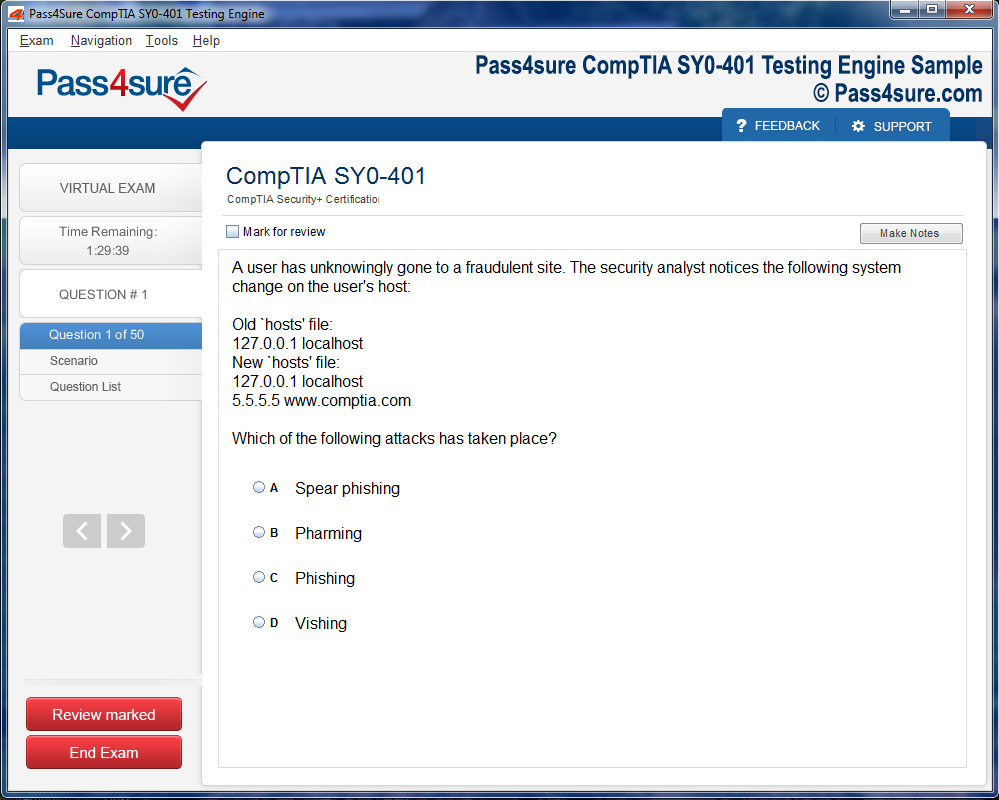
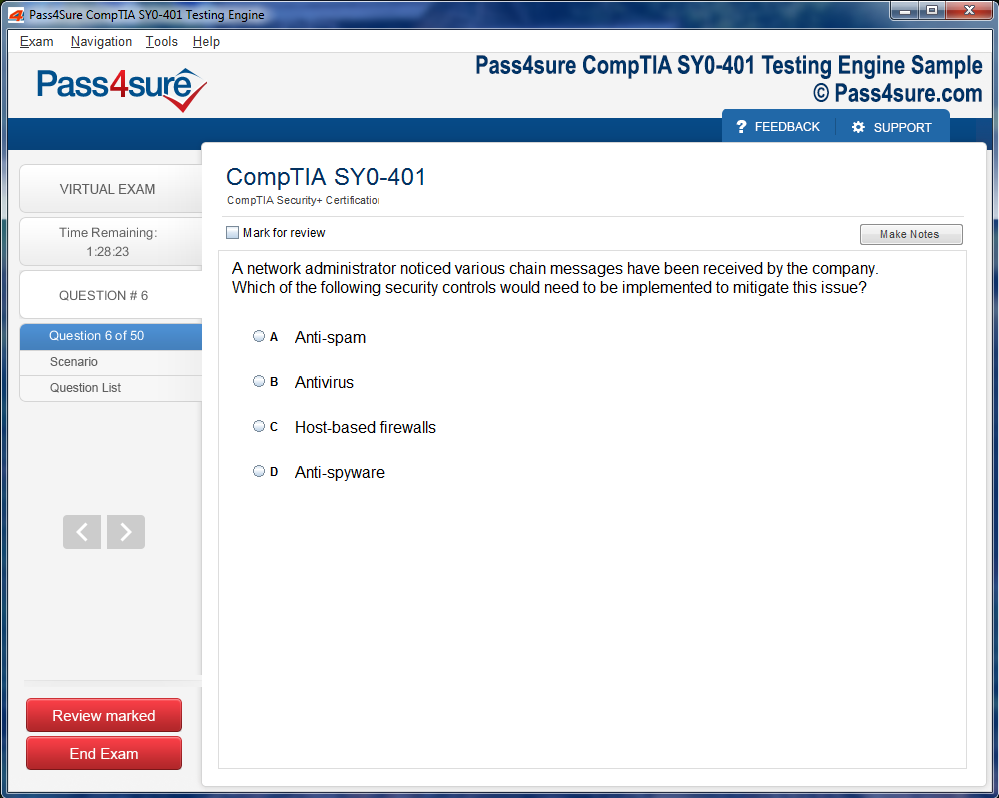
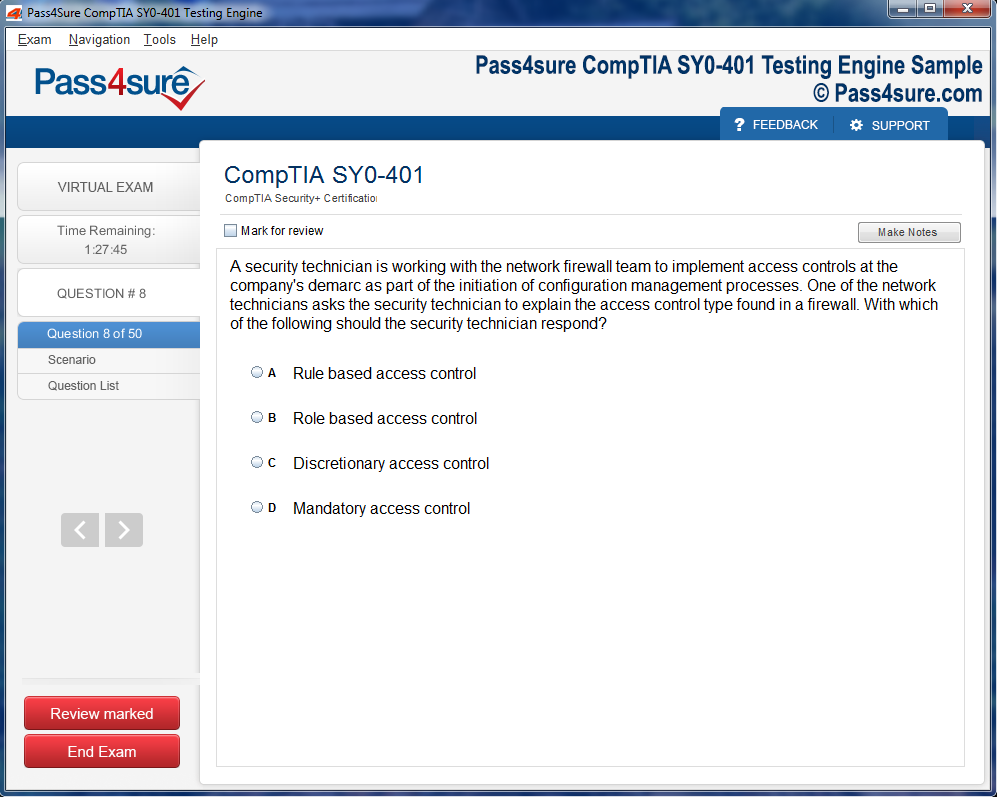
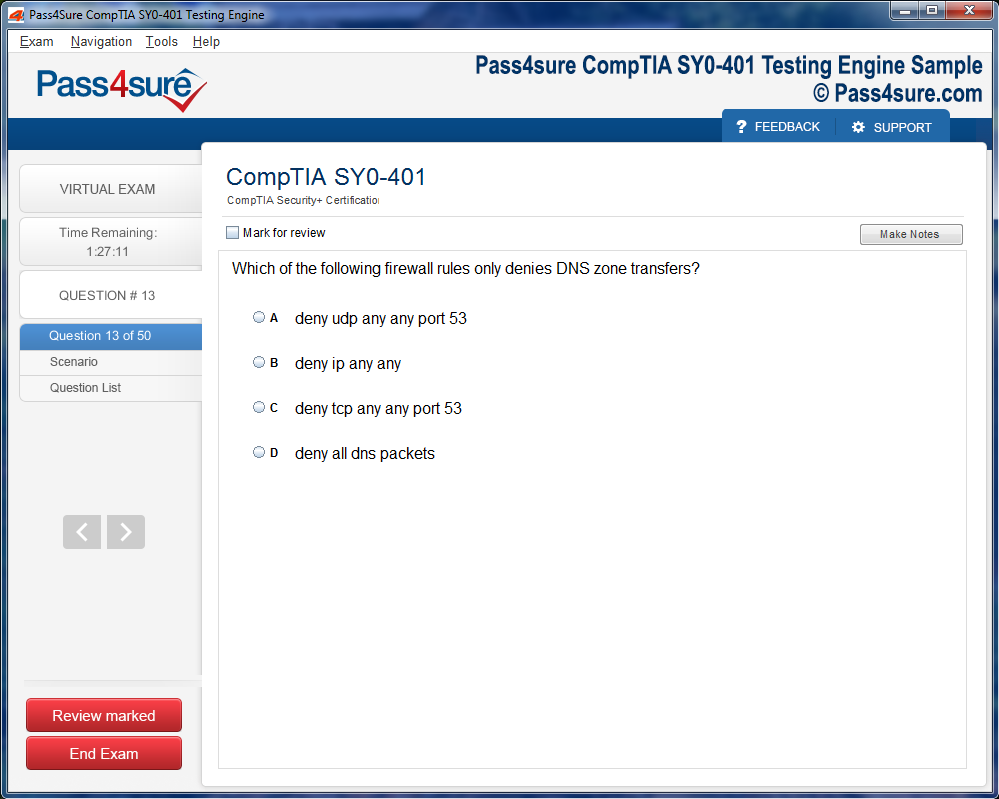
Product Screenshots
Frequently Asked Questions
How does your testing engine works?
Once download and installed on your PC, you can practise test questions, review your questions & answers using two different options 'practice exam' and 'virtual exam'. Virtual Exam - test yourself with exam questions with a time limit, as if you are taking exams in the Prometric or VUE testing centre. Practice exam - review exam questions one by one, see correct answers and explanations.
How can I get the products after purchase?
All products are available for download immediately from your Member's Area. Once you have made the payment, you will be transferred to Member's Area where you can login and download the products you have purchased to your computer.
How long can I use my product? Will it be valid forever?
Pass4sure products have a validity of 90 days from the date of purchase. This means that any updates to the products, including but not limited to new questions, or updates and changes by our editing team, will be automatically downloaded on to computer to make sure that you get latest exam prep materials during those 90 days.
Can I renew my product if when it's expired?
Yes, when the 90 days of your product validity are over, you have the option of renewing your expired products with a 30% discount. This can be done in your Member's Area.
Please note that you will not be able to use the product after it has expired if you don't renew it.
How often are the questions updated?
We always try to provide the latest pool of questions, Updates in the questions depend on the changes in actual pool of questions by different vendors. As soon as we know about the change in the exam question pool we try our best to update the products as fast as possible.
How many computers I can download Pass4sure software on?
You can download the Pass4sure products on the maximum number of 2 (two) computers or devices. If you need to use the software on more than two machines, you can purchase this option separately. Please email sales@pass4sure.com if you need to use more than 5 (five) computers.
What are the system requirements?
Minimum System Requirements:
- Windows XP or newer operating system
- Java Version 8 or newer
- 1+ GHz processor
- 1 GB Ram
- 50 MB available hard disk typically (products may vary)
What operating systems are supported by your Testing Engine software?
Our testing engine is supported by Windows. Andriod and IOS software is currently under development.
Step-by-Step Guide to Network Appliance NS0-162 Certification
The architectural paradigms underpinning NS0-162 are multifaceted, intertwining principles of modularity, scalability, and resilience. Candidates explore the conceptual scaffolding of network appliances, which necessitates comprehension of hardware-software symbiosis. The interplay between processing units, memory hierarchies, and storage subsystems constitutes the backbone of enterprise-grade network management. Understanding these elements facilitates precise orchestration of workloads, ensuring optimal throughput and minimal latency.
Network orchestration within NS0-162 extends beyond mere connectivity; it involves the meticulous alignment of protocols, data streams, and application demands. Learners are introduced to intricate topologies where redundancy, failover mechanisms, and dynamic routing converge. This knowledge enables the construction of fault-tolerant environments capable of sustaining mission-critical operations amidst unpredictable disruptions. Architectural fluency also equips candidates to anticipate bottlenecks and implement preemptive mitigation strategies.
The certification also delves into virtualization and abstraction layers, which have become quintessential in modern network ecosystems. By mastering hypervisor interactions, containerization, and logical partitioning, learners develop the capacity to optimize resource allocation across diverse workloads. Virtualization not only enhances operational agility but also simplifies management by decoupling physical constraints from logical functionality, a concept central to NS0-162 proficiency.
Advanced Security Mechanisms
NS0-162 advances security understanding by immersing candidates in nuanced methodologies that transcend conventional practices. Core topics include cryptographic rigor, identity federation, and policy-driven access management. Security paradigms are presented as dynamic constructs, evolving alongside emergent threats and regulatory mandates. Candidates are encouraged to cultivate a mindset that anticipates vulnerabilities, integrating defensive measures into the architectural blueprint rather than treating them as afterthoughts.
The certification emphasizes proactive threat modeling, encouraging learners to simulate attack vectors, assess risk exposure, and deploy layered defenses. Network appliances are examined not merely as nodes but as sentinels, responsible for safeguarding interdependent systems. The curriculum fosters mastery of intrusion detection mechanisms, anomaly analysis, and real-time response protocols, equipping professionals with the acumen to maintain both system integrity and organizational resilience.
Operational Excellence and Performance Optimization
Operational excellence within NS0-162 encompasses strategic resource management, predictive analytics, and continuous performance enhancement. Candidates are guided to implement monitoring frameworks that leverage telemetry data, providing insights into device health, throughput patterns, and latency anomalies. Such vigilance empowers administrators to fine-tune configurations, balance loads, and preemptively rectify performance degradation.
Performance optimization is inseparable from automation, which NS0-162 integrates as a core competency. Candidates explore scripting, orchestration tools, and policy-driven automation to streamline routine tasks and reduce human error. Automation not only enhances efficiency but also fosters repeatability, a critical factor in enterprise deployments where consistency underpins reliability. Learners are trained to craft intelligent automation workflows that respond adaptively to fluctuating network demands.
Storage Systems and Data Management
Understanding storage systems is pivotal to NS0-162. Candidates examine the architecture of high-performance storage arrays, distributed file systems, and network-attached solutions. Concepts such as data tiering, replication, and deduplication are explored in the context of both operational efficiency and cost-effectiveness. Learners gain insight into the trade-offs between speed, capacity, and reliability, enabling them to architect storage strategies aligned with organizational objectives.
Data management extends into backup, recovery, and archival strategies. NS0-162 emphasizes resilience through redundancy, snapshot mechanisms, and disaster recovery planning. Professionals are trained to design data lifecycles that balance immediacy with retention, ensuring that critical information remains accessible while mitigating storage overhead. The curriculum underscores the intersection of storage strategy with regulatory compliance, highlighting the importance of secure, auditable data stewardship.
Troubleshooting and Adaptive Problem-Solving
NS0-162 cultivates an advanced problem-solving ethos, blending analytical rigor with adaptive intuition. Troubleshooting is framed as an investigative process, where symptoms are dissected to reveal underlying systemic issues. Candidates engage with complex scenarios requiring multi-layered diagnostics, from connectivity anomalies to performance bottlenecks. This experiential learning fosters resilience, patience, and strategic thinking under operational pressure.
The certification emphasizes iterative problem-solving, encouraging professionals to refine solutions through observation, testing, and adjustment. Learners are trained to develop heuristics that accelerate fault identification, enhancing both efficiency and accuracy. The ability to navigate ambiguity and implement pragmatic solutions distinguishes proficient NS0-162 practitioners from those who rely solely on prescriptive knowledge.
Architecture and Core Components in NS0-162
The architecture of network appliances embodies a sophisticated interplay of modular subsystems, each meticulously designed to orchestrate seamless data movement and computational efficiency. NS0-162 elucidates this multi-layered framework, emphasizing the symbiotic relationship between hardware, software, and management protocols. Mastery of these elements enables candidates to engineer resilient systems capable of dynamic scalability and optimized throughput.
Network appliances operate through stratified layers, each with distinct responsibilities. Hardware forms the bedrock, encompassing specialized processors, high-throughput interfaces, and redundant power systems that collectively ensure uninterrupted service. The software layer overlays this substrate, providing orchestration logic, traffic management algorithms, and adaptive resource allocation. Interface protocols mediate interactions, translating abstract operational commands into tangible network behavior. By internalizing these layers, candidates gain the foresight to anticipate bottlenecks, streamline operations, and deploy infrastructures that endure high-demand workloads.
Traffic Orchestration and Latency Optimization
Central to NS0-162 is the nuanced study of traffic orchestration. Candidates delve into techniques for load distribution, congestion mitigation, and intelligent packet scheduling. These strategies reduce latency, maximize bandwidth utilization, and sustain quality of service in complex network topologies. Understanding data flow dynamics allows practitioners to implement advanced routing schemas, including path redundancy, priority queuing, and dynamic rerouting, which collectively safeguard operational continuity even under volatile conditions.
Equally critical is the comprehension of traffic analytics. Real-time monitoring systems provide insights into throughput, jitter, and packet loss, enabling predictive adjustments and proactive troubleshooting. By interpreting these signals, network administrators can preemptively recalibrate resources, mitigate performance degradation, and uphold stringent service-level agreements.
Storage Integration and Scalability Paradigms
NS0-162 also examines the intricate integration of storage systems with network appliances. Learners explore interactions with block, file, and object storage architectures, learning to orchestrate access, ensure redundancy, and maintain seamless availability. Scalability principles are emphasized, highlighting strategies for capacity planning, horizontal expansion, and fault-tolerant deployments. Understanding these paradigms equips candidates to design infrastructures that gracefully accommodate surges in demand without compromising performance or resilience.
Appliance interaction with storage encompasses advanced mechanisms such as synchronous replication, snapshot orchestration, and tiered caching. Candidates develop the ability to align storage performance with network throughput, ensuring that data-intensive applications operate with minimal latency and maximum reliability. These skills are pivotal for enterprises that depend on high-volume transactions, real-time analytics, and large-scale virtualization environments.
Operational Visibility and Proactive Management
Operational visibility forms a cornerstone of NS0-162. Candidates engage with monitoring platforms that aggregate performance metrics, detect anomalies, and facilitate dynamic configuration adjustments. Analytical tools provide granular insights into system behavior, enabling administrators to make informed decisions that enhance efficiency and preempt failures.
Proactive management extends beyond mere observation. By leveraging predictive modeling, anomaly detection, and automated remediation protocols, learners cultivate the ability to maintain peak operational health. This foresight ensures that network appliances not only respond to immediate challenges but also anticipate future disruptions, thereby optimizing uptime and reliability.
Security and Compliance in Network Appliances
Security architecture within NS0-162 encompasses a broad spectrum of protocols and safeguards. Candidates explore access control mechanisms, encryption standards, and policy enforcement strategies that protect sensitive information from unauthorized access or compromise. Compliance adherence is integrated into operational workflows, ensuring that networks conform to industry regulations and best practices.
Beyond conventional security measures, learners examine intrusion detection, anomaly-based threat identification, and layered defense architectures. By synthesizing these approaches, candidates can fortify appliances against emerging vulnerabilities, maintain operational integrity, and uphold organizational trust. Security is thus interwoven with architecture and performance, underscoring the inseparability of safety and efficiency in modern deployments.
Integration of Core Components for Resilient Design
The culmination of NS0-162 studies lies in synthesizing architecture, traffic management, storage integration, operational visibility, and security into cohesive, resilient designs. Candidates learn to harmonize discrete subsystems, orchestrating a network appliance environment capable of sustaining high-demand applications with minimal latency.
Design principles emphasize redundancy, modularity, and fault tolerance. By anticipating failure scenarios and pre-implementing contingency measures, practitioners cultivate networks that continue to function optimally under duress. The knowledge gained in NS0-162 enables professionals to navigate the complexity of enterprise-grade systems, ensuring reliability, performance, and adaptability in evolving technological landscapes.
Advanced Operational Techniques in NS0-162
Once the foundational scaffolding of system architecture is comprehended, NS0-162 progresses into sophisticated operational methodologies. This echelon emphasizes the fine-tuning of performance matrices, fortifying resilience, and orchestrating enterprise-grade network ecosystems with exacting precision. Practitioners traverse a terrain where foresight and analytical acuity converge to transform theoretical knowledge into operational excellence.
Strategic Capacity Planning
Capacity planning emerges as a linchpin for operational mastery. NS0-162 delves into prognostic methodologies for system utilization, encompassing predictive analytics, workload projection, and infrastructural scaling. Candidates assimilate techniques to allocate computational resources judiciously, ensuring appliances sustain optimal throughput amidst escalating demands. The orchestration of resources is calibrated to circumvent bottlenecks, a practice essential for maintaining high-fidelity network performance and preempting operational stagnation. Anticipatory planning extends to data proliferation scenarios, where predictive modeling becomes a fulcrum for strategic resource deployment.
Performance Optimization and Traffic Orchestration
Performance optimization embodies an intricate symphony of workload distribution, caching strategies, and latency mitigation. NS0-162 elucidates advanced techniques for balancing computational loads, ensuring equitable resource allocation, and minimizing systemic friction. Learners immerse in strategies that harness real-time telemetry, historical analytics, and predictive modeling to sculpt environments with superior throughput. Sophisticated routing paradigms and traffic orchestration principles empower candidates to transform otherwise chaotic network flux into harmonized, deterministic flows, enhancing overall efficiency and service quality.
Disaster Recovery and Resilience Engineering
Resilience engineering and disaster recovery planning constitute critical pillars of operational dexterity. NS0-162 emphasizes multifaceted failover strategies, redundant replication protocols, and comprehensive backup methodologies. Learners simulate system anomalies, ranging from node outages to complex data corruption events, cultivating agility in restoring operational continuity. This experiential approach instills a reflexive competency to safeguard mission-critical infrastructures against unpredictable disruptions. Beyond mere restoration, these techniques nurture environments where redundancy and resilience are embedded within the fabric of the network, ensuring uninterrupted service continuity.
Automation and Orchestration Paradigms
Automation is no longer ancillary but a cornerstone of contemporary network operations. NS0-162 immerses candidates in the strategic deployment of scripting, API integrations, and policy-driven automation frameworks. By reducing repetitive manual intervention, automation mitigates human error and enforces operational consistency across heterogeneous appliances. Learners explore orchestration workflows that dynamically adjust system parameters, synchronize updates, and preemptively address anomalies. This paradigm liberates operational personnel from routine maintenance tasks, channeling intellectual resources toward proactive network enhancement and strategic innovation.
Troubleshooting and Analytical Forensics
The discipline of troubleshooting transcends mere problem resolution; it embodies analytical forensics applied to complex operational landscapes. NS0-162 equips learners with systematic methodologies to identify misconfigurations, dissect latency anomalies, and remediate systemic inefficiencies. Through a combination of hands-on exercises and scenario-driven problem-solving, candidates cultivate diagnostic rigor and cognitive precision. Root cause analysis evolves into a deliberate practice, where iterative hypothesis testing, data-driven insights, and empirical validation converge to resolve operational irregularities. This cultivates a cadre of practitioners capable of maintaining robust, high-performing environments, even under unpredictable conditions.
Operational Foresight and Strategic Acumen
Advanced operational proficiency extends beyond immediate technical competencies to encompass strategic foresight. NS0-162 instills an awareness of the interdependencies within complex network topologies and the cascading impact of operational decisions. Learners are encouraged to adopt a holistic perspective, integrating performance metrics, capacity forecasts, and resiliency considerations into a cohesive operational strategy. This anticipatory lens fosters proactive decision-making, ensuring the environment remains agile, scalable, and resilient against emergent challenges.
Integration of Predictive Analytics
Predictive analytics becomes an indispensable instrument in the operational repertoire. Candidates in NS0-162 explore methods to leverage historical performance data, anomaly detection models, and predictive algorithms to anticipate network behaviors. By transforming data into actionable intelligence, practitioners preempt degradation, optimize resource distribution, and refine operational procedures with surgical precision. The synthesis of analytics with real-time monitoring cultivates a feedback-rich ecosystem, where strategic interventions are informed by empirical evidence rather than reactive conjecture.
Orchestrating Enterprise-Scale Environments
Operational mastery within NS0-162 extends to managing sprawling, enterprise-scale network environments. Candidates grapple with heterogeneous infrastructures, multi-site deployments, and complex interconnectivity challenges. By harmonizing disparate appliances through centralized management frameworks and standardized protocols, learners develop the capability to maintain uniformity, enforce compliance, and optimize inter-network communication. This facet of operational skill underscores the symbiosis of technical expertise and managerial foresight necessary to administer large-scale, high-stakes environments effectively.
Transforming Theoretical Acumen into Operational Mastery
The NS0-162 certification transcends rote knowledge, demanding the conversion of theoretical constructs into operational dexterity. Candidates encounter multifaceted scenarios where analytical reasoning converges with hands-on implementation. Through immersive labs, aspirants refine their ability to orchestrate network appliances with precision, ensuring that abstract paradigms are rendered into functional, high-performing architectures. The certification cultivates a mindset attuned to anticipating system behavior, diagnosing anomalies, and effectuating proactive adjustments, producing professionals capable of navigating complex digital ecosystems.
Enterprise Traffic Management and Latency Mitigation
A quintessential domain of NS0-162 is the nuanced orchestration of enterprise traffic. The curriculum emphasizes strategic routing, workload equilibrium, and latency abatement across heterogeneous network devices. Practical exercises immerse learners in scenarios where they identify bottlenecks, implement adaptive configurations, and ensure uninterrupted service delivery. These simulations cultivate an intuitive understanding of packet flow dynamics, jitter minimization, and congestion control, fostering professionals who can optimize enterprise traffic while safeguarding performance integrity.
Integration with High-Availability Storage Ecosystems
NS0-162 foregrounds the symbiotic relationship between network appliances and enterprise storage systems. Candidates engage with configuration strategies that enhance redundancy, maximize uptime, and optimize data throughput. Hands-on labs involve meticulous capacity management, fault tolerance validation, and disaster recovery simulations. Learners experiment with replication protocols, failover mechanisms, and storage tiering, revealing the intricate interplay between storage resiliency and appliance performance. This immersion solidifies comprehension of end-to-end data lifecycle management and underscores the necessity of cohesive infrastructure planning.
Advanced Security Implementations and Threat Mitigation
Security is not ancillary but foundational in the NS0-162 landscape. Practical exercises compel candidates to deploy encryption schemas, access governance frameworks, and real-time threat detection mechanisms. Simulated security breaches provide a dynamic environment to test incident response, risk containment, and compliance adherence. Through iterative exposure to these high-fidelity scenarios, learners internalize the principles of proactive security posture, mastering the anticipation of vulnerabilities, and reinforcing defense strategies in alignment with enterprise policies.
Hybrid and Cloud Convergence Scenarios
In contemporary network ecosystems, hybrid deployments are ubiquitous. NS0-162 equips candidates with the expertise to seamlessly integrate on-premises appliances with cloud infrastructures, negotiating the trade-offs between scalability, latency, and redundancy. Learners engage with exercises on workload migration, cross-environment replication, and cloud-native monitoring techniques. These practical experiences illuminate the intricacies of distributed system management, ensuring that candidates can maintain operational cohesion across physical and virtual domains, and optimize performance in dynamically evolving environments.
Operational Optimization and Performance Tuning
Performance is an omnipresent imperative in NS0-162 practice modules. Candidates refine skills in workload allocation, resource prioritization, and latency reduction through iterative tuning exercises. Monitoring tools provide granular insights, enabling learners to correlate performance metrics with operational decisions. This methodology fosters a mindset attuned to continuous improvement, equipping aspirants with the acumen to preempt degradation, streamline throughput, and sustain system resilience under fluctuating loads. Real-time operational simulations bridge theoretical understanding with pragmatic execution, preparing professionals for immediate applicability in production environments.
Scenario-Based Troubleshooting and Adaptive Learning
NS0-162 encourages adaptive problem-solving by situating candidates within intricate troubleshooting scenarios. Learners are tasked with diagnosing anomalous behavior, isolating systemic faults, and implementing corrective strategies under temporal constraints. These exercises enhance cognitive agility, analytical precision, and technical creativity. By repeatedly engaging with diverse problem sets, candidates cultivate a robust capacity for anticipatory reasoning, ensuring that the transition from controlled practice to real-world operational challenges is seamless and confident.
Strategic Immersion for NS0-162 Mastery
Preparation for NS0-162 transcends rote memorization; it demands a deliberate, immersive engagement with the subject matter. Aspirants are encouraged to cultivate a cognitive ecosystem where theoretical comprehension converges with operational acuity. Structured timelines, segmented into immersive modules, allow candidates to assimilate foundational principles, intricate configurations, and nuanced problem-solving techniques in a harmonized manner.
Conceptual scaffolding plays a pivotal role. By employing techniques such as synoptic mapping, interrelational comparison, and heuristic exploration, learners internalize complex interdependencies within network architectures. These strategies foster an intellectual environment where knowledge is not merely retained but dynamically applied, bridging abstract paradigms with real-world configurations.
Experiential Reinforcement Through Simulated Environments
Hands-on engagement with simulated network environments is indispensable. NS0-162 rigorously evaluates practical competence alongside theoretical insight. Candidates who navigate through virtual laboratories, emulate system anomalies, and orchestrate performance optimization exercises develop an intuitive grasp of operational intricacies. This experiential reinforcement transforms knowledge into tacit expertise, enabling the seamless translation of procedural understanding into actionable skills.
Automation and orchestration exercises further cultivate operational agility. By experimenting with scripted deployments, configuration templates, and anomaly detection routines, aspirants hone both precision and adaptability. Such immersive practice ensures that learners internalize procedural methodologies, fostering proficiency under the dynamic conditions that typify the NS0-162 exam scenario.
Cognitive Calibration and Conceptual Reinforcement
The consolidation of knowledge is amplified through cognitive calibration techniques. Iterative review cycles, coupled with spaced repetition, fortify memory retention while reinforcing conceptual interconnections. Mind-mapping exercises elucidate hierarchical dependencies within complex network topologies, aiding candidates in visualizing intricate relationships. Comparative analysis, wherein diverse configurations and troubleshooting methodologies are juxtaposed, sharpens discernment and enhances problem-solving acuity.
Translational cognition remains central to NS0-162 success. Abstract theoretical constructs must be interpreted as functional strategies within network operations. By contextualizing principles into operational paradigms, learners cultivate both analytical rigor and practical dexterity, ensuring their readiness for scenario-driven examination tasks.
Mock Evaluations as Feedback Loops
Simulated assessments function as both diagnostic tools and confidence enhancers. NS0-162 practice tests illuminate latent knowledge gaps, guiding candidates to recalibrate study focus and refine procedural strategies. Performance analytics from mock exams inform targeted remediation, enabling learners to iteratively enhance their proficiency. The cyclic process of assessment, feedback, and recalibration cultivates adaptive expertise, fortifying preparedness for the nuanced demands of the certification.
Psychological conditioning intertwines with cognitive readiness. Techniques such as controlled pacing, focused attention exercises, and stress inoculation optimize mental acuity. Candidates develop resilience and composure, mitigating the cognitive load imposed by complex multi-step configurations, and ensuring optimal performance during examination conditions.
Synthesis of Knowledge and Skill
Ultimately, NS0-162 preparation is a symbiosis of disciplined study, experiential engagement, and strategic refinement. The integration of conceptual mastery, practical immersion, and evaluative calibration creates a holistic preparatory framework. Learners who internalize these principles cultivate both confidence and competence, aligning cognitive readiness with operational proficiency.
Emerging Paradigms in Network Appliance Management
NS0-162 transcends conventional certification paradigms, fostering a culture of perpetual learning, anticipatory thinking, and awareness of avant-garde developments in network appliance ecosystems. The curriculum encourages candidates to cultivate intellectual agility while navigating increasingly complex technological landscapes.
Cloud Convergence and Distributed Orchestration
Cloud integration has become a seminal vector in modern network strategies. NS0-162 elucidates hybrid deployment modalities, dynamic orchestration, and resilient cloud-based architectures. Candidates acquire the acumen to govern distributed infrastructures with meticulous precision, ensuring unerring performance continuity and operational fortitude even amidst volatile workloads.
Automation, Intelligence, and Predictive Governance
Artificial intelligence and automation are metamorphosing network operations into anticipatory, self-optimizing systems. NS0-162 imparts expertise in predictive monitoring, algorithmic tuning, and intelligent provisioning protocols. These methodologies not only mitigate human error but also enhance system responsiveness, optimize resource allocation, and foster a proactive operational ethos.
Fortification and Regulatory Vigilance
Security remains an immutable cornerstone of NS0-162. The curriculum encompasses cryptographic safeguards, heuristic threat detection, and compliance frameworks tailored to regulatory exigencies. Professionals emerge equipped to preserve the sanctity of sensitive information, sustain operational integrity, and preemptively counteract emergent cyber threats.
Interdisciplinary Integration and Holistic Strategy
Modern network appliance management demands cross-domain synthesis. NS0-162 aligns networking operations with storage solutions, application ecosystems, and enterprise-wide IT infrastructure. This integrative approach nurtures holistic thinking, allowing professionals to implement strategies that are both technically sound and operationally coherent across multiple domains.
Cultivation of Lifelong Learning
At the heart of NS0-162 lies the ethos of continuous professional evolution. Candidates are encouraged to engage in reflective practice, iterative experimentation, and adaptive learning cycles. By fostering curiosity, strategic foresight, and intellectual resilience, professionals can sustain relevance, cultivate innovation, and drive excellence throughout their careers.
Emerging Paradigms in Network Appliance Management
NS0-162 extends far beyond mere certification, shaping a framework in which professionals cultivate perpetual intellectual curiosity, adaptive cognition, and anticipatory problem-solving. Modern network ecosystems are no longer static; they demand dexterity, foresight, and strategic intuition. NS0-162 positions candidates to navigate these intricate landscapes, equipping them with the ability to translate abstract principles into operational mastery. Within this framework, network appliance management is reconceptualized as a dynamic, evolutionary discipline rather than a rigid technical protocol. Professionals are trained to perceive patterns, anticipate systemic fluctuations, and implement interventions that balance efficiency with resilience.
The syllabus emphasizes not only procedural expertise but also cognitive sophistication, encouraging learners to synthesize knowledge across domains. Through case studies, scenario analyses, and immersive simulations, candidates develop the capacity to discern latent vulnerabilities and emergent opportunities within distributed infrastructures. In this sense, NS0-162 functions as both a technical compendium and a cognitive scaffold, nurturing adaptive reasoning, strategic foresight, and operational creativity.
Cloud Convergence and Distributed Orchestration
The ascendance of cloud computing has precipitated a paradigmatic shift in network management. NS0-162 underscores the imperative of hybrid deployment strategies, elucidating methods for seamlessly integrating on-premises infrastructure with cloud-based services. Candidates explore the nuances of multi-cloud orchestration, dynamic resource scaling, and redundant architectures designed to withstand systemic perturbations.
A crucial aspect of this convergence is the management of distributed workloads. Professionals learn to navigate latency constraints, optimize bandwidth allocation, and ensure fault tolerance across heterogeneous environments. NS0-162 provides the tools to architect self-healing infrastructures capable of autonomously mitigating disruptions and maintaining operational continuity. In doing so, the course cultivates a mindset attuned to systemic interdependencies, enabling candidates to orchestrate networks that are simultaneously agile, resilient, and scalable.
Moreover, cloud convergence within NS0-162 is framed not merely as a technological adoption but as a strategic lever for organizational efficiency. Professionals are encouraged to consider economic optimization, performance metrics, and compliance implications when designing hybrid deployments. This holistic approach ensures that network strategies are both technically robust and aligned with broader enterprise objectives.
Automation, Intelligence, and Predictive Governance
The infusion of automation and artificial intelligence into network operations has transformed the managerial paradigm. NS0-162 introduces candidates to intelligent orchestration, predictive analytics, and algorithmically driven optimization. Through these tools, networks evolve from reactive systems to anticipatory ecosystems capable of self-regulation.
Predictive monitoring, a cornerstone of this approach, enables the identification of performance anomalies before they escalate into operational crises. NS0-162 guides candidates through methodologies for constructing predictive models, interpreting telemetry data, and configuring adaptive alerts. This proactive approach reduces downtime, minimizes human error, and enhances overall operational efficacy.
Intelligent provisioning further extends these capabilities by enabling autonomous resource allocation. Networks can dynamically redistribute workloads, tune configurations, and implement performance enhancements without continuous human intervention. The course emphasizes not only the technical mechanics of these processes but also the governance structures required to ensure accountability, compliance, and risk mitigation.
Through these innovations, NS0-162 positions network appliance professionals as architects of self-optimizing infrastructures. The integration of AI-driven operations requires both technical acuity and conceptual dexterity, fostering an advanced cognitive toolkit for interpreting complex system behaviors and orchestrating automated interventions.
Fortification and Regulatory Vigilance
Security, within the NS0-162 framework, is conceptualized as a multidimensional discipline encompassing prevention, detection, and compliance. Candidates gain mastery over cryptographic methodologies, heuristic threat analysis, and regulatory frameworks governing data sovereignty and privacy.
Encryption is emphasized not only as a technical safeguard but as a strategic imperative. Professionals learn to implement end-to-end encryption, secure key management practices, and protocol-level hardening. These measures ensure the confidentiality, integrity, and availability of critical data, even in highly distributed and heterogeneous environments.
Equally important is the proactive detection of threats. NS0-162 equips candidates with heuristic and anomaly-based intrusion detection techniques, enabling rapid identification of emergent threats. Through scenario simulations, learners gain experience in orchestrating rapid containment strategies, balancing operational continuity with security imperatives.
Regulatory compliance is also a focal point. Professionals explore frameworks governing financial data, personal information, and industry-specific mandates. NS0-162 instills an awareness that compliance is not merely a bureaucratic requirement but a strategic dimension of operational integrity. By internalizing these principles, candidates develop the capacity to safeguard organizational assets while navigating the intricate legal and ethical landscape of modern network management.
Interdisciplinary Integration and Holistic Strategy
Modern enterprise networks are increasingly interwoven with broader IT, storage, and application ecosystems. NS0-162 encourages candidates to adopt an interdisciplinary perspective, integrating network appliance management with storage strategies, application performance monitoring, and enterprise IT operations.
This holistic approach promotes operational coherence across domains. Professionals are trained to map interdependencies, forecast systemic ripple effects, and coordinate cross-functional initiatives. NS0-162 emphasizes the value of harmonizing disparate technological silos into cohesive operational frameworks. By mastering these integrative techniques, candidates are positioned to orchestrate strategies that enhance both system efficiency and organizational agility.
Furthermore, interdisciplinary integration fosters cognitive versatility. Professionals are encouraged to translate principles across domains, leveraging insights from storage management, application deployment, and network optimization to inform decision-making. This approach cultivates a strategic lens through which technology is not merely deployed but purposefully aligned with broader organizational imperatives.
Cultivation of Lifelong Learning
At the epicenter of NS0-162 is the principle of continuous professional evolution. In an era of relentless technological flux, adaptability and intellectual agility are paramount. The curriculum instills practices of reflective analysis, iterative experimentation, and knowledge synthesis. Professionals are encouraged to maintain an active engagement with emergent trends, experimental technologies, and evolving operational paradigms.
Lifelong learning, as emphasized in NS0-162, is not limited to technical skill acquisition. Candidates are encouraged to cultivate meta-cognitive awareness, developing the capacity to evaluate their own learning processes, identify cognitive biases, and adjust strategies accordingly. This self-directed approach ensures sustained relevance, intellectual resilience, and adaptive creativity.
The ethos of perpetual learning extends to practical experimentation. NS0-162 promotes sandboxed simulations, scenario-based testing, and real-time operational audits. Through these experiences, candidates internalize both procedural competence and strategic foresight, allowing them to anticipate challenges, innovate solutions, and implement sustainable improvements across complex network ecosystems.
By fostering a mindset that privileges curiosity, critical analysis, and proactive adaptation, NS0-162 ensures that professionals emerge not merely as certified practitioners but as thought leaders and innovators. The cultivation of such cognitive and operational dexterity is essential for navigating the accelerating pace of technological change and maintaining organizational relevance in competitive, digitally-driven landscapes.
Strategic Anticipation and Future-Proofing
A further dimension of NS0-162 is the emphasis on strategic foresight. Candidates are encouraged to analyze emerging trends, anticipate technological disruptions, and develop contingency strategies. This proactive orientation equips professionals to future-proof network operations, ensuring sustained performance, resilience, and scalability.
Future-proofing extends beyond infrastructure to include processes, policies, and human factors. NS0-162 emphasizes the design of adaptive protocols, dynamic governance frameworks, and continuous skills development pipelines. By integrating these elements, professionals can cultivate environments that are not only operationally efficient but also resilient in the face of unpredictable technological evolution.
The curriculum also underscores the importance of interdisciplinary foresight. Candidates learn to evaluate the impact of emerging technologies such as edge computing, quantum cryptography, and AI-driven orchestration on network appliance ecosystems. This analytical rigor enables proactive adaptation, ensuring that organizations remain agile and competitive amidst accelerating technological change.
Strategic Immersion for NS0-162 Mastery
The journey toward NS0-162 certification is not merely an academic pursuit; it is an intellectual odyssey requiring the harmonization of analytical reasoning, operational acuity, and procedural dexterity. Candidates who embrace a strategic immersion paradigm gain a decisive advantage. This approach entails cultivating a layered understanding, where foundational principles interweave with advanced procedural strategies, resulting in a cohesive cognitive architecture.
Segmentation of study modules enhances cognitive retention. Candidates should partition preparation into domains such as network orchestration, fault resolution methodologies, security frameworks, and performance optimization protocols. Each domain, when studied intensively and cyclically, fosters the development of mental schemas that allow for rapid recognition of patterns, anomalies, and operational dependencies. Such mental scaffolding equips learners to handle unforeseen scenarios, both in simulated environments and under exam conditions.
Emphasizing iterative mastery is crucial. Repetition, far from being mundane, catalyzes the neural consolidation of knowledge. Each review session should integrate practical exercises, conceptual mapping, and critical reflection. By cyclically revisiting concepts through varied cognitive lenses, candidates transform passive memorization into active mastery. This dynamic engagement ensures that knowledge remains both accessible and adaptable.
Experiential Reinforcement Through Simulated Environments
Practical immersion is the fulcrum upon which NS0-162 success balances. Theoretical understanding, while necessary, is insufficient without experiential reinforcement. Virtual labs, emulated network topologies, and scenario-based exercises allow candidates to bridge the chasm between abstraction and operational reality. By navigating complex configurations and troubleshooting simulated anomalies, learners cultivate an intuitive grasp of system dynamics and interdependencies.
Configuration orchestration exercises enhance procedural fluency. Candidates should practice deploying multi-layered network architectures, automating repetitive tasks, and monitoring system performance metrics. Such exercises reinforce both technical acumen and cognitive agility. The repetition of these hands-on tasks fosters muscle memory for operational workflows, ensuring that candidates can execute precise configurations even under the cognitive pressure of examination conditions.
Automation exercises assume a dual significance. Beyond technical skill-building, they cultivate analytical foresight. By scripting procedural routines, learners anticipate potential system responses, preemptively resolve bottlenecks, and cultivate predictive troubleshooting capabilities. This foresight transforms the candidate from a reactive technician into a proactive strategist, a distinction that is crucial for NS0-162 mastery.
Cognitive Calibration and Conceptual Reinforcement
The cultivation of deep understanding demands meticulous cognitive calibration. Candidates benefit from spaced repetition schedules, which optimize memory retention and facilitate the integration of complex interrelated concepts. Mind mapping and synoptic schematics elucidate hierarchical and lateral dependencies across network components, enabling learners to visualize operational relationships with clarity and precision.
Comparative analysis enhances discernment. By juxtaposing alternate configuration methodologies, performance tuning strategies, and troubleshooting approaches, candidates develop an evaluative mindset. This evaluative acumen ensures that learners can identify optimal solutions under time constraints and adapt strategies dynamically to novel scenarios. Such cognitive flexibility is indispensable for navigating the multifaceted challenges of NS0-162 examinations.
Translational cognition serves as the bridge between knowledge and application. Abstract theoretical constructs must be converted into actionable operational strategies. For instance, understanding latency metrics is insufficient without the ability to implement corrective measures through configuration tuning or load balancing techniques. This translation ensures that candidates are not merely academically proficient but operationally competent, capable of delivering measurable outcomes in practical scenarios.
Mock Evaluations as Feedback Loops
Assessment serves as both mirror and catalyst for improvement. NS0-162 practice exams illuminate latent gaps in understanding, guiding candidates to recalibrate focus and refine study strategies. Each mock evaluation generates a feedback loop: identifying weaknesses, implementing corrective measures, and reassessing performance. This iterative cycle accelerates skill acquisition, ensuring comprehensive mastery across the certification’s breadth.
Performance analytics derived from mock assessments provide actionable insights. Patterns of recurring errors, time management deficiencies, and procedural hesitations can be systematically addressed. By engaging in targeted remediation based on these insights, learners develop not only proficiency but also efficiency. This efficiency is critical under examination conditions, where time-bound problem-solving and multi-step configurations demand precision and speed.
Psychological conditioning intertwines seamlessly with evaluative practices. Controlled exposure to high-pressure simulation environments cultivates resilience, focus, and composure. Techniques such as mindfulness, structured pacing, and cognitive visualization prepare candidates to manage stress effectively, mitigating performance degradation caused by examination anxiety.
Integration of Multidimensional Knowledge
NS0-162 preparation transcends compartmentalized study; it necessitates the integration of multidimensional knowledge domains. Candidates must synthesize insights from network architecture, security protocols, performance monitoring, and automation strategies into a cohesive operational framework. This synthesis transforms fragmented knowledge into a dynamic toolkit capable of addressing diverse and unpredictable challenges.
Cross-domain integration fosters problem-solving sophistication. For example, recognizing a performance anomaly involves synthesizing diagnostic metrics, evaluating configuration settings, and predicting system behavior under variable loads. Mastery of such integrative reasoning ensures candidates can navigate complex, interdependent scenarios with confidence and precision, a hallmark of NS0-162 excellence.
Scenario-based exercises enhance the development of situational intelligence. By engaging with simulated network crises, candidates practice real-time decision-making, balancing immediate remediation with long-term system optimization. This iterative practice cultivates adaptive expertise, enabling learners to approach novel problems with analytical rigor and strategic foresight.
Temporal Optimization and Study Discipline
Effective NS0-162 preparation requires disciplined time management. Candidates should establish structured study routines that balance intensive technical immersion with periods of cognitive consolidation. Temporal optimization enhances retention, mitigates cognitive fatigue, and ensures sustainable engagement over prolonged preparation periods.
Restorative practices complement rigorous study. Sleep, nutrition, and mindfulness exercises underpin cognitive performance, facilitating memory consolidation and attentional acuity. Candidates who integrate these restorative measures into their preparation regimen experience heightened analytical clarity and operational responsiveness, reinforcing both learning outcomes and exam performance.
Iterative review schedules should align with cognitive load management. By strategically alternating between high-intensity problem-solving sessions and reflective conceptual analysis, candidates maintain cognitive equilibrium while deepening understanding. This balance is essential to prevent burnout and ensure that each study session yields maximal retention and insight.
Precision in Technical Execution
Technical precision underpins NS0-162 proficiency. Candidates must cultivate meticulous attention to detail, ensuring flawless execution of configurations, performance tuning, and troubleshooting routines. Errors in syntax, procedural sequencing, or system parameterization can propagate cascading failures; thus, disciplined practice and meticulous verification are indispensable.
Simulation exercises enhance precision by providing a risk-free environment for experimentation. Candidates can explore alternative configurations, test recovery protocols, and analyze system responses without compromising operational integrity. This iterative experimentation reinforces procedural accuracy, enabling learners to internalize correct workflows and mitigate error-prone behaviors.
Automation and scripting exercises further refine technical execution. By codifying repetitive tasks and standardizing operational procedures, candidates cultivate both efficiency and consistency. These skills not only enhance exam performance but also translate into practical expertise applicable in professional environments.
Analytical Foresight and Problem Anticipation
NS0-162 preparation emphasizes anticipatory problem-solving. Candidates who develop analytical foresight can predict system behaviors, identify potential anomalies, and implement preemptive corrective measures. This foresight arises from deep understanding of system architectures, interdependencies, and operational dynamics.
Pattern recognition enhances predictive capability. By analyzing historical data, configuration trends, and performance metrics, candidates learn to anticipate system responses under varying conditions. This predictive acumen transforms learners from reactive responders into proactive strategists, capable of mitigating operational disruptions before they escalate.
Scenario simulation enhances foresight development. By confronting candidates with diverse operational challenges, from network latency spikes to configuration conflicts, simulations cultivate adaptability and strategic thinking. Each scenario reinforces the ability to anticipate outcomes, optimize interventions, and ensure seamless system performance.
Transforming Theoretical Acumen into Operational Mastery
The NS0-162 certification is not merely a testament to conceptual knowledge; it is a crucible for operational refinement. Candidates are immersed in environments where theoretical paradigms collide with practical exigencies, demanding an intuitive yet methodical approach to network appliance management. Through meticulously crafted labs, learners navigate the labyrinthine complexities of enterprise networks, where each configuration decision resonates across interconnected systems. This dynamic interplay nurtures cognitive dexterity, enabling professionals to anticipate systemic behavior, orchestrate multifarious components, and preempt potential failures. The practical emphasis ensures that candidates internalize the intrinsic relationship between network topology, device performance, and enterprise demands, cultivating an ability to translate abstract principles into executable strategies with precision and foresight.
In real-world contexts, operational mastery transcends rote memorization; it requires a synthesis of analytical reasoning, adaptive troubleshooting, and procedural rigor. NS0-162 emphasizes scenarios where multiple failure vectors coexist, compelling candidates to reconcile performance, security, and availability concerns simultaneously. The iterative nature of these exercises cultivates resilience, situational awareness, and the capacity to operate under pressure, qualities indispensable for professional network engineers and architects.
Enterprise Traffic Management and Latency Mitigation
Traffic management within an enterprise ecosystem is an art as much as it is a science. NS0-162 immerses learners in exercises designed to optimize routing, equilibrate workloads, and attenuate latency across heterogeneous network fabrics. Candidates confront dynamic traffic scenarios where congestion points emerge unpredictably, requiring the application of adaptive load-balancing strategies and traffic-shaping mechanisms. Through hands-on experimentation, aspirants discern subtle distinctions between protocol behaviors, packet queuing methodologies, and prioritization schemas, developing an innate sense for orchestrating seamless data flow.
The curriculum’s emphasis on latency mitigation extends beyond theoretical constructs. Learners engage in simulations where high-throughput and low-latency objectives must coexist, fostering proficiency in configuring network appliances for real-time responsiveness. These exercises illuminate the interplay between bandwidth allocation, device CPU utilization, and memory caching, reinforcing an understanding that network efficiency is contingent on holistic system comprehension rather than isolated optimizations. By cultivating these competencies, NS0-162 ensures that candidates emerge capable of maintaining peak operational performance, even amidst unpredictable traffic surges and evolving enterprise requirements.
Integration with High-Availability Storage Ecosystems
Network appliances rarely operate in isolation; their efficacy is intertwined with the performance and reliability of underlying storage infrastructures. NS0-162 instructs candidates in the intricate art of storage integration, emphasizing redundancy, fault tolerance, and capacity optimization. Learners engage in hands-on exercises that simulate storage failures, requiring the implementation of automated failover mechanisms, synchronous and asynchronous replication strategies, and tiered storage management. This practical immersion develops a nuanced appreciation for the dependencies between data storage resilience and appliance availability, fostering a mindset attuned to preemptive system safeguarding.
Furthermore, candidates explore scenarios involving the optimization of storage throughput in conjunction with network traffic management. By manipulating parameters such as cache allocation, read/write prioritization, and I/O scheduling, learners gain an experiential understanding of how storage efficiency directly impacts network appliance performance. These exercises underscore the necessity of harmonizing multiple infrastructural components, equipping professionals with the capability to design integrated solutions that maintain operational continuity under diverse enterprise pressures.
Advanced Security Implementations and Threat Mitigation
Security forms the backbone of NS0-162’s practical framework, challenging candidates to deploy, configure, and monitor advanced protective mechanisms. The curriculum immerses learners in environments rife with simulated threats, compelling proactive detection, response, and mitigation. Candidates implement encryption algorithms, fine-grained access controls, and intrusion detection schemas while analyzing system logs for subtle indicators of compromise. By navigating these scenarios, learners develop an anticipatory approach to security, understanding not only how to respond to breaches but also how to architect networks that inherently resist infiltration.
Simulated incidents, ranging from ransomware propagation to lateral movement attacks, cultivate analytical acumen and operational reflexes. Candidates learn to correlate anomalous network behavior with potential vulnerabilities, leveraging monitoring tools to triangulate issues before they escalate. NS0-162 emphasizes regulatory compliance, guiding candidates in the practical application of security frameworks aligned with industry mandates. This dual focus on proactive defense and regulatory adherence ensures that learners emerge capable of safeguarding enterprise networks against both technical and procedural risks.
Hybrid and Cloud Convergence Scenarios
The modern enterprise landscape demands proficiency in hybrid and cloud-integrated network architectures. NS0-162 equips candidates to bridge on-premises appliances with distributed cloud resources, negotiating the multifactorial challenges of performance, scalability, and resiliency. Learners engage with migration simulations, orchestrating the transfer of workloads across heterogeneous environments while maintaining service continuity. These exercises illuminate the nuances of replication, load distribution, and latency management in hybrid networks, fostering the ability to anticipate and resolve performance bottlenecks in distributed contexts.
Cloud integration scenarios extend beyond connectivity; candidates explore monitoring strategies, automated provisioning, and adaptive scaling techniques that ensure optimal utilization of both on-premises and cloud resources. By engaging with these exercises, learners develop proficiency in balancing redundancy with cost-efficiency, orchestrating failover strategies, and maintaining operational coherence across physically disparate environments. This practical exposure positions NS0-162 graduates to navigate complex enterprise deployments with confidence, ensuring that digital transformation initiatives are executed seamlessly and sustainably.
Operational Optimization and Performance Tuning
Performance optimization constitutes a persistent focus within NS0-162, with candidates refining skills in workload orchestration, resource prioritization, and real-time monitoring. Exercises involve fine-tuning network appliances under variable load conditions, leveraging analytical tools to correlate performance metrics with configuration adjustments. Candidates explore latency profiling, CPU and memory optimization, and interface throughput calibration, gaining an experiential understanding of how minor adjustments propagate across network operations. These iterative exercises develop an intuitive sense of system balance, enabling professionals to anticipate performance degradation and implement corrective strategies before user impact occurs.
Operational optimization extends to proactive maintenance, where candidates simulate fault scenarios and apply diagnostic protocols to identify potential performance impediments. By engaging in these scenarios, learners cultivate an anticipatory mindset, enhancing their ability to sustain high availability, throughput consistency, and service quality. NS0-162 bridges theoretical knowledge with practical execution, ensuring that candidates can translate performance insights into actionable optimizations that enhance enterprise efficiency.
Scenario-Based Troubleshooting and Adaptive Learning
Adaptive problem-solving lies at the heart of NS0-162’s practical philosophy. Candidates encounter multifarious troubleshooting exercises, each designed to emulate real-world unpredictabilities. From network loop detection to appliance misconfiguration and intermittent service disruptions, learners are challenged to diagnose and resolve issues with methodical precision. These exercises promote cognitive agility, compelling candidates to integrate analytical reasoning, system intuition, and procedural knowledge to achieve timely remediation.
The curriculum emphasizes iterative learning, where repeated exposure to complex scenarios reinforces memory retention and operational confidence. Candidates develop heuristics for prioritizing remediation steps, identifying root causes, and implementing sustainable solutions. Through these immersive exercises, NS0-162 instills a capacity for dynamic reasoning, empowering professionals to transition seamlessly from controlled practice environments to high-stakes operational contexts.
Advanced Redundancy Strategies and Failover Simulations
A sophisticated understanding of redundancy and failover mechanisms is critical for NS0-162 aspirants. Practical exercises encompass the orchestration of multi-node deployments, automated failover triggers, and real-time replication strategies. Candidates simulate node failures, examining how traffic is rerouted, session persistence is maintained, and data integrity is preserved. These scenarios reveal the subtle interplay between appliance logic, network topology, and operational policies, ensuring that learners internalize principles of fault resilience and continuity planning.
Exercises extend to hybrid redundancy scenarios, where both local and cloud-based failover solutions must operate in concert. Learners experiment with latency-sensitive routing, bandwidth optimization, and conflict resolution, developing proficiency in ensuring uninterrupted service delivery across diverse environments. This hands-on approach ensures that candidates possess not only the technical knowledge but also the operational intuition required to implement robust, enterprise-grade redundancy architectures.
Advanced Operational Techniques in NS0-162
Once the foundational scaffolding of system architecture is comprehended, NS0-162 progresses into sophisticated operational methodologies. This echelon emphasizes the fine-tuning of performance matrices, fortifying resilience, and orchestrating enterprise-grade network ecosystems with exacting precision. Practitioners traverse a terrain where foresight and analytical acuity converge to transform theoretical knowledge into operational excellence.
Strategic Capacity Planning
Capacity planning emerges as a linchpin for operational mastery. NS0-162 delves into prognostic methodologies for system utilization, encompassing predictive analytics, workload projection, and infrastructural scaling. Candidates assimilate techniques to allocate computational resources judiciously, ensuring appliances sustain optimal throughput amidst escalating demands. The orchestration of resources is calibrated to circumvent bottlenecks, a practice essential for maintaining high-fidelity network performance and preempting operational stagnation. Anticipatory planning extends to data proliferation scenarios, where predictive modeling becomes a fulcrum for strategic resource deployment.
In practical terms, candidates explore memory and CPU utilization patterns, storage latency, and network bandwidth consumption under varying workloads. Advanced simulations mimic peak traffic surges, enabling learners to refine resource allocation strategies preemptively. This practice not only improves performance under pressure but also cultivates an instinct for recognizing latent capacity constraints before they manifest as operational issues. The discipline of capacity planning evolves into a predictive science, blending quantitative modeling with experiential intuition.
Performance Optimization and Traffic Orchestration
Performance optimization embodies an intricate symphony of workload distribution, caching strategies, and latency mitigation. NS0-162 elucidates advanced techniques for balancing computational loads, ensuring equitable resource allocation, and minimizing systemic friction. Learners immerse in strategies that harness real-time telemetry, historical analytics, and predictive modeling to sculpt environments with superior throughput. Sophisticated routing paradigms and traffic orchestration principles empower candidates to transform otherwise chaotic network flux into harmonized, deterministic flows, enhancing overall efficiency and service quality.
Micro-optimization techniques are introduced to refine packet handling, reduce jitter, and optimize connection persistence. Candidates analyze network telemetry to detect transient congestion points, employing dynamic rerouting and intelligent queue management to maintain seamless traffic flow. This approach emphasizes proactive intervention, leveraging machine learning models and heuristics to anticipate bottlenecks. Over time, learners cultivate an operational mindset that views network performance as a malleable continuum, continually refined through iterative feedback and predictive intervention.
Disaster Recovery and Resilience Engineering
Resilience engineering and disaster recovery planning constitute critical pillars of operational dexterity. NS0-162 emphasizes multifaceted failover strategies, redundant replication protocols, and comprehensive backup methodologies. Learners simulate system anomalies, ranging from node outages to complex data corruption events, cultivating agility in restoring operational continuity. This experiential approach instills a reflexive competency to safeguard mission-critical infrastructures against unpredictable disruptions. Beyond mere restoration, these techniques nurture environments where redundancy and resilience are embedded within the fabric of the network, ensuring uninterrupted service continuity.
Participants engage with synchronous and asynchronous replication techniques, evaluating trade-offs between data integrity, latency, and resource consumption. Advanced simulations may include cascading failures, multi-site outages, or latency-induced inconsistencies, all designed to stress-test recovery strategies. Through this rigorous exploration, candidates internalize the principles of business continuity planning, disaster response, and system hardening, ensuring preparedness for both foreseeable and stochastic disruptions.
Automation and Orchestration Paradigms
Automation is no longer ancillary but a cornerstone of contemporary network operations. NS0-162 immerses candidates in the strategic deployment of scripting, API integrations, and policy-driven automation frameworks. By reducing repetitive manual intervention, automation mitigates human error and enforces operational consistency across heterogeneous appliances. Learners explore orchestration workflows that dynamically adjust system parameters, synchronize updates, and preemptively address anomalies. This paradigm liberates operational personnel from routine maintenance tasks, channeling intellectual resources toward proactive network enhancement and strategic innovation.
Scripting in Python or other automation frameworks enables the implementation of predictive maintenance routines, log aggregation, and event-driven system adjustments. Candidates learn to develop modular scripts that interface with network APIs, enabling dynamic reconfiguration based on real-time telemetry. Additionally, policy-based orchestration ensures that predefined operational thresholds trigger automated responses, such as redistributing workloads, activating redundant systems, or optimizing routing paths. The combination of automation and orchestration transforms operational management from reactive troubleshooting into anticipatory, strategic governance.
Troubleshooting and Analytical Forensics
The discipline of troubleshooting transcends mere problem resolution; it embodies analytical forensics applied to complex operational landscapes. NS0-162 equips learners with systematic methodologies to identify misconfigurations, dissect latency anomalies, and remediate systemic inefficiencies. Through a combination of hands-on exercises and scenario-driven problem-solving, candidates cultivate diagnostic rigor and cognitive precision. Root cause analysis evolves into a deliberate practice, where iterative hypothesis testing, data-driven insights, and empirical validation converge to resolve operational irregularities. This cultivates a cadre of practitioners capable of maintaining robust, high-performing environments, even under unpredictable conditions.
Advanced troubleshooting scenarios often involve multi-layered dependencies, where performance issues manifest at the intersection of hardware limitations, software misconfigurations, and network topology challenges. Candidates are trained to dissect these complexities through meticulous data gathering, cross-referencing telemetry, and correlating events across multiple subsystems. This fosters not only technical acumen but also cognitive agility, enabling practitioners to navigate ambiguous situations with precision and confidence.
Operational Foresight and Strategic Acumen
Advanced operational proficiency extends beyond immediate technical competencies to encompass strategic foresight. NS0-162 instills an awareness of the interdependencies within complex network topologies and the cascading impact of operational decisions. Learners are encouraged to adopt a holistic perspective, integrating performance metrics, capacity forecasts, and resiliency considerations into a cohesive operational strategy. This anticipatory lens fosters proactive decision-making, ensuring the environment remains agile, scalable, and resilient against emergent challenges.
Candidates explore scenario modeling and risk assessment methodologies to quantify operational exposure. Techniques such as Monte Carlo simulations, stress testing, and hypothetical outage analysis enable learners to visualize potential vulnerabilities and develop mitigation strategies. Strategic acumen thus becomes the ability to anticipate systemic reactions, preemptively allocate resources, and orchestrate responses in alignment with organizational objectives, embedding resilience and efficiency into every operational decision.
Integration of Predictive Analytics
Predictive analytics becomes an indispensable instrument in the operational repertoire. Candidates in NS0-162 explore methods to leverage historical performance data, anomaly detection models, and predictive algorithms to anticipate network behaviors. By transforming data into actionable intelligence, practitioners preempt degradation, optimize resource distribution, and refine operational procedures with surgical precision. The synthesis of analytics with real-time monitoring cultivates a feedback-rich ecosystem, where strategic interventions are informed by empirical evidence rather than reactive conjecture.
Predictive models are applied to bandwidth consumption, appliance health metrics, and latency fluctuations, enabling preemptive scaling, automated resource reallocation, and anomaly mitigation. By combining statistical inference, machine learning algorithms, and domain-specific heuristics, NS0-162 prepares candidates to make data-driven decisions that enhance performance while minimizing risk exposure. The capacity to transform raw telemetry into strategic foresight distinguishes proficient operators from reactive administrators.
Orchestrating Enterprise-Scale Environments
Operational mastery within NS0-162 extends to managing sprawling, enterprise-scale network environments. Candidates grapple with heterogeneous infrastructures, multi-site deployments, and complex interconnectivity challenges. By harmonizing disparate appliances through centralized management frameworks and standardized protocols, learners develop the capability to maintain uniformity, enforce compliance, and optimize inter-network communication. This facet of operational skill underscores the symbiosis of technical expertise and managerial foresight necessary to administer large-scale, high-stakes environments effectively.
Enterprise orchestration demands proficiency in network segmentation, cross-site synchronization, and hierarchical policy enforcement. NS0-162 emphasizes the deployment of monitoring dashboards, centralized logging, and automated alerts to provide a comprehensive operational overview. Candidates develop strategies to harmonize performance across geographically dispersed nodes, ensuring latency minimization, redundancy optimization, and policy adherence without compromising operational agility.
Advanced Security and Compliance Integration
Operational techniques in NS0-162 intertwine with robust security practices. Learners are introduced to methodologies for embedding security policies directly within operational workflows. Automated compliance verification, vulnerability scanning, and configuration audits become routine aspects of appliance management. By integrating security into day-to-day operations, candidates ensure that performance optimization and resilience are never achieved at the expense of system integrity or regulatory adherence.
Advanced candidates explore anomaly detection algorithms for identifying suspicious patterns in network traffic, preemptive mitigation strategies for potential breaches, and adaptive policy enforcement that evolves with emerging threats. This integration of operational and security frameworks ensures that high-performance, resilient networks remain impervious to evolving cybersecurity challenges.
Advanced Protocols and Interfacing
The orchestration of network appliances necessitates an intimate understanding of advanced protocols that govern communication and data integrity. NS0-162 imparts proficiency in intricate protocols that dictate packet routing, congestion avoidance, and synchronization across disparate systems. Candidates explore proprietary and open-standard protocols, dissecting the nuances that affect throughput, error handling, and compatibility.
Interfacing with peripheral systems requires mastery of abstraction layers, where hardware drivers, firmware modules, and middleware converge. Effective interfacing ensures seamless interoperability between storage arrays, virtualization platforms, and application servers. Candidates are trained to mitigate protocol misalignments, orchestrate compatibility adjustments, and optimize end-to-end data pipelines, thus achieving performance equilibrium across heterogeneous infrastructures.
High-Availability Architectures
A defining characteristic of enterprise network appliances is their capacity for high availability. NS0-162 emphasizes the design and implementation of resilient topologies that minimize downtime. Learners examine clustering techniques, failover strategies, and stateful redundancy to construct systems that withstand hardware failures, software anomalies, and network interruptions.
High-availability architectures often involve synchronous and asynchronous replication, enabling seamless continuity between primary and secondary nodes. Candidates explore heartbeat mechanisms, quorum-based decision frameworks, and distributed consensus protocols, all of which ensure that failover operations execute with minimal disruption. This knowledge equips professionals to maintain continuous service delivery, a critical expectation in modern digital enterprises.
Advanced Load Balancing Techniques
Load balancing is more than mere traffic distribution; it is an art of algorithmic equilibrium. NS0-162 introduces learners to sophisticated techniques that allocate workloads intelligently, taking into account server capacity, latency, and service-level priorities. Candidates delve into weighted round-robin, least connections, and dynamic resource-aware methodologies, each designed to optimize performance under variable conditions.
Intelligent load balancing also integrates health monitoring and predictive analytics. By analyzing historical traffic patterns, system resource utilization, and latency trends, network appliances can proactively redistribute workloads to prevent congestion before it occurs. This proactive paradigm transforms reactive management into strategic orchestration, ensuring network fluidity even during peak demand.
Fault Tolerance and Redundancy Planning
Fault tolerance extends beyond reactive mitigation; it requires anticipatory design. NS0-162 equips candidates with strategies for redundancy across hardware, software, and network layers. Redundant power supplies, mirrored storage arrays, and multi-path network connectivity constitute the physical foundation, while software clustering, checkpointing, and automated failover mechanisms provide logical resilience.
Learners study predictive failure analysis, where real-time telemetry informs decision-making, allowing administrators to isolate vulnerable nodes, redistribute workloads, and initiate preemptive maintenance. This approach not only preserves operational integrity but also extends the lifespan of critical components, reinforcing the long-term sustainability of enterprise infrastructures.
Traffic Analysis and Predictive Optimization
Network appliances thrive on data-driven decision-making. NS0-162 encourages a deep dive into traffic analysis, leveraging packet inspection, flow aggregation, and anomaly detection to optimize system performance. Candidates learn to identify congestion hotspots, predict latency spikes, and implement corrective measures before they impact service quality.
Predictive optimization integrates machine learning insights, statistical modeling, and historical traffic patterns to anticipate network behavior. By correlating diverse metrics such as packet loss, jitter, and throughput fluctuations, network administrators can dynamically recalibrate routing paths, balance workloads, and adjust resource allocation. This continuous feedback loop fosters a self-optimizing ecosystem that maximizes efficiency while minimizing human intervention.
Security-Oriented Architectural Strategies
Security within NS0-162 transcends traditional perimeter defenses. Candidates explore architectural strategies that embed security into the fabric of network appliances. Layered encryption, role-based access controls, and granular audit mechanisms are integrated into every subsystem, ensuring that data remains protected during transmission, storage, and processing.
The curriculum addresses emerging threats, including advanced persistent attacks, lateral movement within networks, and zero-day vulnerabilities. Learners gain practical insight into mitigating these risks through segmentation, micro-perimeter enforcement, and continuous monitoring. By embedding security into architectural decisions, professionals ensure that performance and safety are complementary rather than conflicting priorities.
Virtualization and Multi-Tenant Management
Modern network appliances often operate within virtualized environments, supporting multi-tenant deployments that require meticulous resource partitioning. NS0-162 covers the principles of virtual network functions, containerized workloads, and hypervisor orchestration, enabling candidates to efficiently allocate resources while maintaining isolation and performance guarantees.
Multi-tenant management involves sophisticated scheduling, bandwidth allocation, and priority queuing. Candidates learn to balance competing demands, prevent resource starvation, and enforce policy-based governance. These skills are pivotal in service provider environments and enterprise data centers, where diverse workloads coexist on shared infrastructure without compromising performance or security.
Observability and Intelligent Diagnostics
Operational observability is a distinguishing feature of advanced network appliances. NS0-162 emphasizes diagnostic frameworks that provide holistic insight into system health. Learners explore logging architectures, telemetry aggregation, and advanced alerting mechanisms that enable rapid detection and resolution of anomalies.
Intelligent diagnostics combine heuristic analysis, anomaly detection algorithms, and historical trend evaluation. This allows administrators to not only respond to incidents but also predict potential points of failure. Such foresight reduces mean time to repair, improves service reliability, and supports continuous performance optimization across complex, distributed environments.
Energy Efficiency and Resource Optimization
Sustainability is increasingly intertwined with enterprise network design. NS0-162 addresses energy-conscious architectural strategies, emphasizing efficient utilization of processing power, storage, and networking resources. Candidates explore power-aware routing, dynamic load distribution, and resource throttling techniques that reduce energy consumption without compromising performance.
By correlating energy utilization metrics with traffic patterns and system loads, network administrators can implement adaptive optimization strategies. This fosters environmentally responsible operations while simultaneously lowering operational costs, demonstrating that resilience and sustainability are not mutually exclusive.
Advanced Integration with Enterprise Ecosystems
Network appliances rarely exist in isolation; they are integral components of broader enterprise ecosystems. NS0-162 trains candidates to integrate appliances with orchestration platforms, identity management systems, cloud services, and application stacks. Such integration ensures seamless interoperability, unified monitoring, and coordinated security enforcement across heterogeneous environments.
Candidates explore API-based automation, policy-driven orchestration, and cross-domain analytics. This enables end-to-end visibility, consistent policy application, and streamlined operational workflows, transforming individual appliances into a cohesive, intelligent network fabric that adapts dynamically to organizational needs.
Conclusion
The NS0-162 certification journey represents a complete pathway to mastering network appliance environments, blending technical knowledge, operational expertise, and strategic insight. From foundational concepts to advanced operational techniques, learners gain a deep understanding of device architecture, traffic management, storage integration, security protocols, and performance optimization. Each stage builds upon the previous, ensuring that knowledge is not only theoretical but highly applicable in real-world enterprise environments.
Success in NS0-162 requires more than rote learning; it demands practical engagement, analytical thinking, and adaptive problem-solving. Candidates learn to design, implement, and manage resilient and high-performing network appliances, integrating operational efficiency with security and compliance. Hands-on practice and scenario-based exercises reinforce this knowledge, translating theoretical understanding into measurable operational outcomes.
Preparation for NS0-162 emphasizes structured study, simulation exercises, and reflective practice. Mock assessments and hands-on labs enable learners to identify strengths, address weaknesses, and cultivate confidence. Psychological readiness, including time management and composure under exam conditions, further enhances performance.
Looking forward, NS0-162 encourages continuous learning and adaptability. Emerging trends such as cloud integration, AI-driven automation, and evolving security frameworks require professionals to remain agile, innovative, and informed. Lifelong learning ensures that skills remain relevant and that practitioners can navigate complex, dynamic network appliance environments effectively.
Ultimately, NS0-162 is more than a certification; it is a framework for operational excellence, professional growth, and strategic foresight. Those who embrace its principles emerge as capable, confident, and forward-thinking network appliance professionals, equipped to tackle challenges and deliver transformative impact across organizations.
Top Network Appliance Exams
- NS0-165 - NetApp Certified Data Administrator, ONTAP
- NS0-005 - NetApp Certified Technology Solutions Professional
- NS0-094 - NetApp Hardware Support Engineer Professional
- NS0-194 - NetApp Certified Support Engineer
- NS0-521 - NetApp Certified Implementation Engineer - SAN, ONTAP
- NS0-184 - NetApp Certified Storage Installation Engineer, ONTAP
- NS0-004 - Technology Solutions
- NS0-604 - Hybrid Cloud - Architect
- NS0-164 - NetApp Certified Data Administrator, ONTAP