

Exam Code: ITIL 4 Specialist Create Deliver and Support
Exam Name: ITIL 4 Specialist Create, Deliver and Support
Certification Provider: ITIL
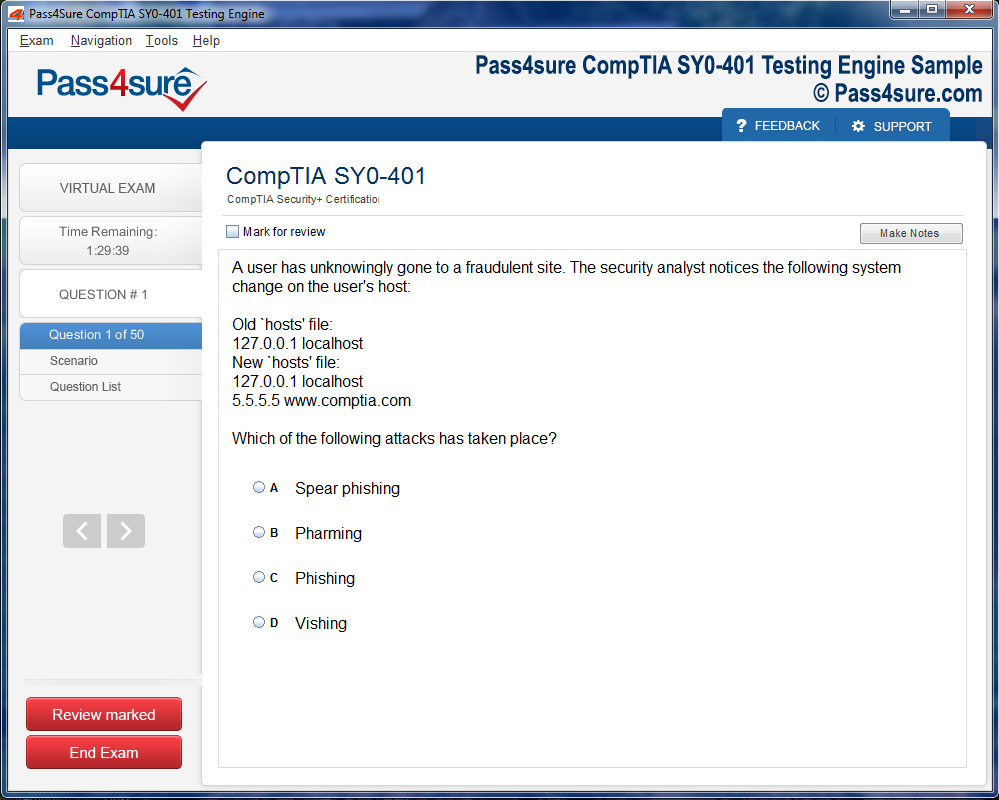
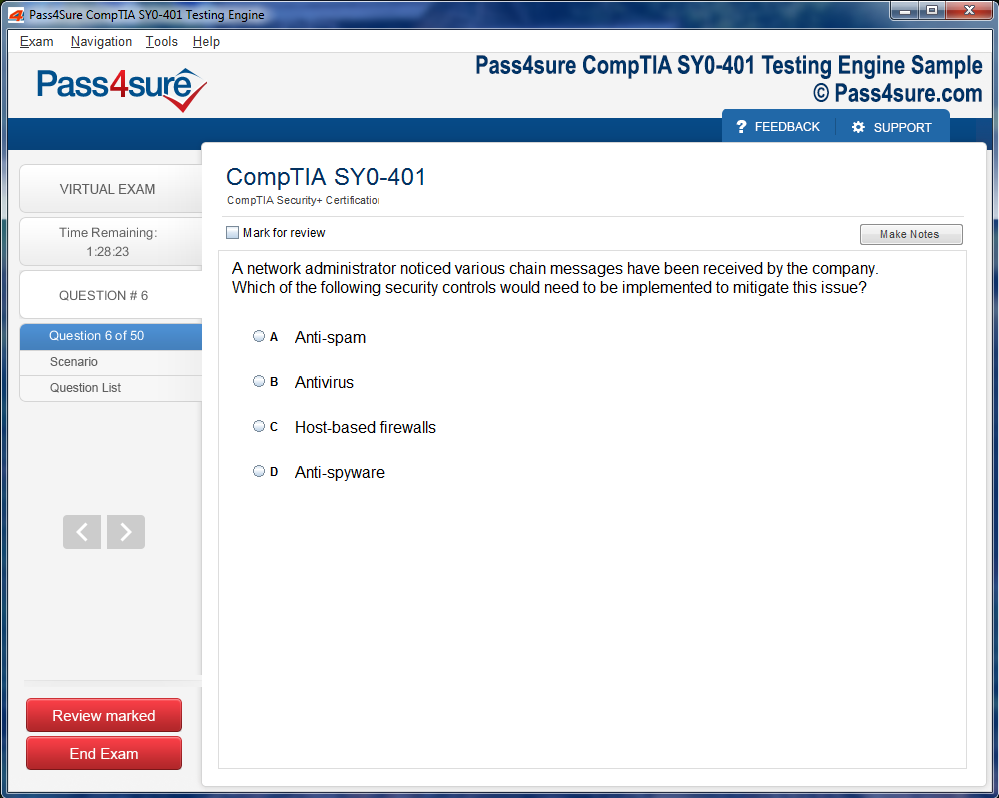
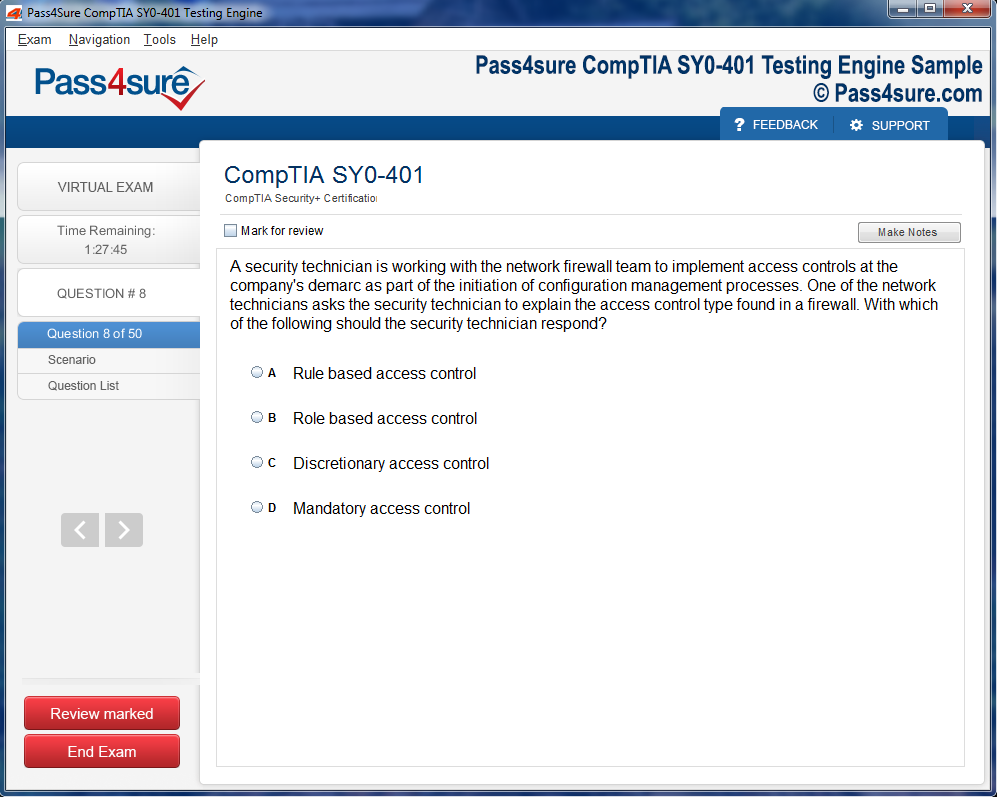
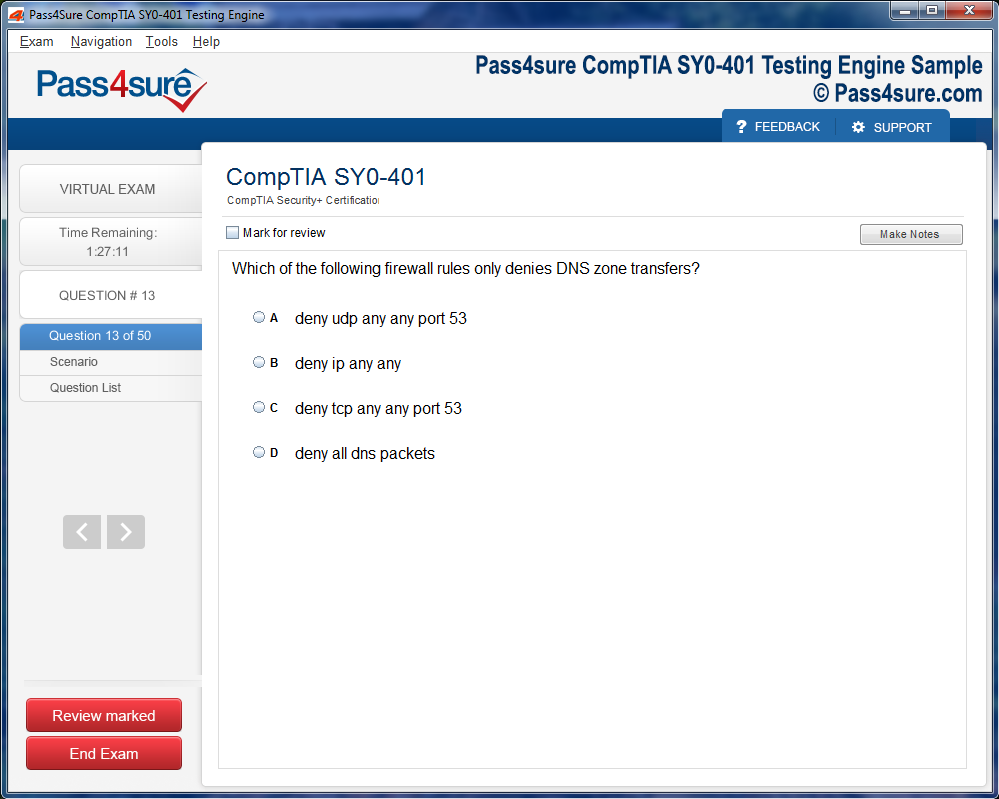
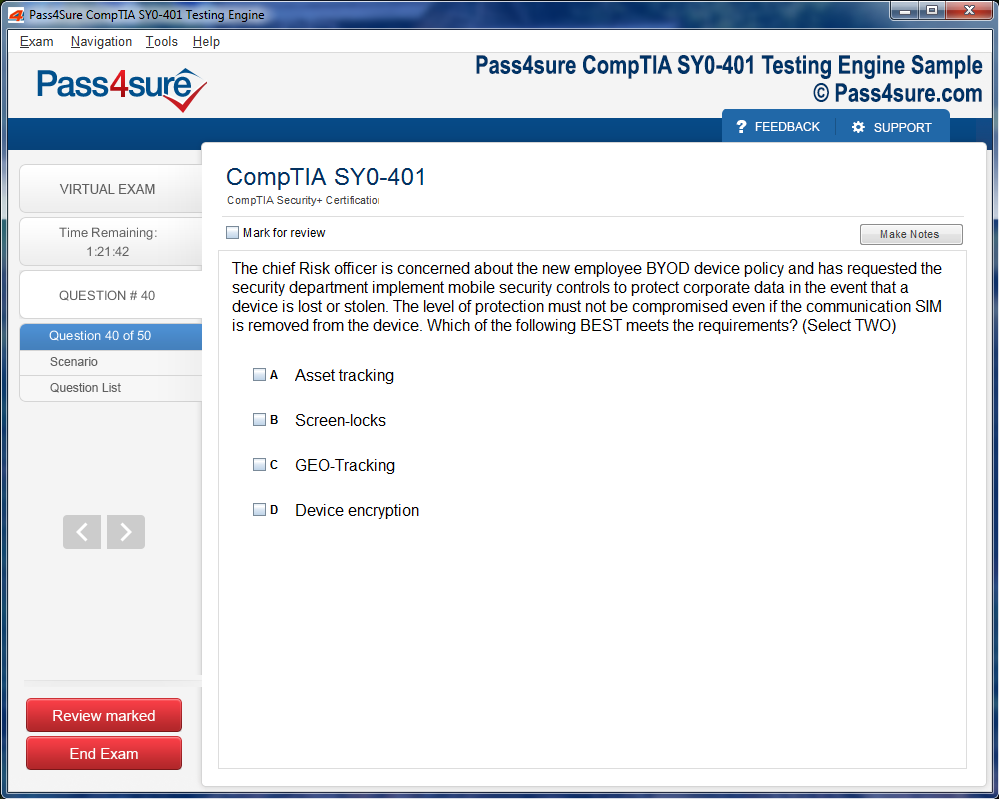
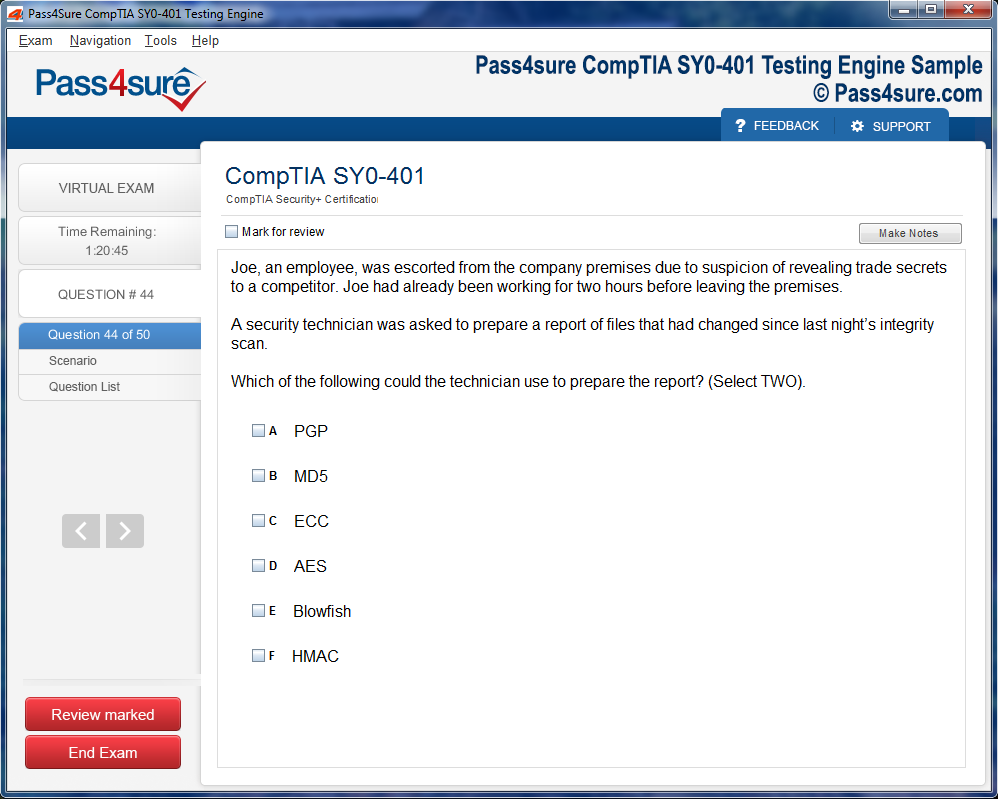
Product Screenshots
Frequently Asked Questions
How does your testing engine works?
Once download and installed on your PC, you can practise test questions, review your questions & answers using two different options 'practice exam' and 'virtual exam'. Virtual Exam - test yourself with exam questions with a time limit, as if you are taking exams in the Prometric or VUE testing centre. Practice exam - review exam questions one by one, see correct answers and explanations.
How can I get the products after purchase?
All products are available for download immediately from your Member's Area. Once you have made the payment, you will be transferred to Member's Area where you can login and download the products you have purchased to your computer.
How long can I use my product? Will it be valid forever?
Pass4sure products have a validity of 90 days from the date of purchase. This means that any updates to the products, including but not limited to new questions, or updates and changes by our editing team, will be automatically downloaded on to computer to make sure that you get latest exam prep materials during those 90 days.
Can I renew my product if when it's expired?
Yes, when the 90 days of your product validity are over, you have the option of renewing your expired products with a 30% discount. This can be done in your Member's Area.
Please note that you will not be able to use the product after it has expired if you don't renew it.
How often are the questions updated?
We always try to provide the latest pool of questions, Updates in the questions depend on the changes in actual pool of questions by different vendors. As soon as we know about the change in the exam question pool we try our best to update the products as fast as possible.
How many computers I can download Pass4sure software on?
You can download the Pass4sure products on the maximum number of 2 (two) computers or devices. If you need to use the software on more than two machines, you can purchase this option separately. Please email sales@pass4sure.com if you need to use more than 5 (five) computers.
What are the system requirements?
Minimum System Requirements:
- Windows XP or newer operating system
- Java Version 8 or newer
- 1+ GHz processor
- 1 GB Ram
- 50 MB available hard disk typically (products may vary)
What operating systems are supported by your Testing Engine software?
Our testing engine is supported by Windows. Andriod and IOS software is currently under development.
How to Ace ITIL 4 Specialist Create Deliver and Support Exam
The nucleus of ITIL 4 lies not merely in mechanistic process execution but in the philosophical paradigm of value co-creation. This concept transcends transactional service delivery, advocating a synergistic interplay between providers and consumers. In this ecosystem, stakeholders are collaborators rather than passive recipients. Every interaction becomes an opportunity to cultivate satisfaction, engender loyalty, and fortify organizational resilience. The discerning practitioner appreciates that value is not static; it oscillates in response to context, perception, and emergent business exigencies.
Engaging with this philosophy demands a cognitive shift: one must transcend linear problem-solving approaches and embrace dynamic, adaptive thinking. By perceiving service management as an intricate lattice of mutually reinforcing activities, professionals can orchestrate interventions that ripple through organizational strata, enhancing efficacy, transparency, and responsiveness.
Intricacies of the Service Value System
The Service Value System (SVS) functions as the quintessence of ITIL 4’s holistic approach. It amalgamates governance, continual improvement, guiding principles, practices, and the service value chain into a cohesive framework. Each constituent element contributes to the system’s robustness, ensuring that services are not only delivered but evolve in alignment with strategic imperatives.
Governance within the SVS is the compass, guiding decision-making with precision and mitigating risks before they metastasize. Continual improvement acts as the organism’s metabolism, perpetually refining processes, augmenting capabilities, and recalibrating practices to maintain relevance in a flux-laden environment. Guiding principles act as philosophical lodestars, ensuring that every initiative resonates with organizational ethos, promoting consistency without stifling innovation.
Navigating the Service Value Chain
The Service Value Chain epitomizes the operational dimension of ITIL 4. Its sextet of activities—plan, improve, engage, design and transition, obtain/build, and deliver and support—function as interdependent cogs, each propelling the value stream forward. Conceptualizing these as a living ecosystem rather than discrete silos empowers practitioners to anticipate bottlenecks, harmonize interdependencies, and orchestrate outcomes that resonate with stakeholders.
Planning is not mere scheduling; it is strategic foresight, encompassing resource alignment, risk anticipation, and scenario analysis. Improvement is iterative and reflexive, embedding lessons from lived experiences into adaptive practices. Engagement emphasizes empathetic collaboration, stakeholder advocacy, and precise communication, ensuring that service intent aligns with perceptual value. Design and transition are creative acts, transforming conceptual models into operational realities that are both resilient and scalable. Obtain/build addresses resource orchestration and capability development, while deliver and support embodies the tactile realization of value through responsive, seamless service interactions.
Core Practices for CDS Mastery
Mastering ITIL 4 CDS necessitates a nuanced understanding of its core practices, each representing a repository of tacit and explicit knowledge. Incident management, for instance, is more than reactive problem-solving; it is an exercise in restoring equilibrium, preserving operational continuity, and mitigating reputational risk. Service request management emphasizes agility, anticipating user needs, and providing rapid, frictionless fulfillment that enhances perception of value.
Change enablement, a linchpin of ITIL 4, requires practitioners to navigate organizational inertia, assess risk propagation, and implement modifications with surgical precision. Service-level management operates at the nexus of expectation and delivery, ensuring that commitments are codified, communicated, and adhered to, thus nurturing trust and accountability.
Cognitive Approaches to ITIL 4 Application
Excellence in ITIL 4 CDS is predicated upon cognitive dexterity. Practitioners must oscillate between micro-level operational concerns and macro-level strategic objectives. Scenario-based questions in the examination are designed to probe this dual awareness, challenging candidates to make decisions that reconcile immediacy with long-term impact. Critical thinking, pattern recognition, and probabilistic reasoning are indispensable faculties in navigating these complex matrices.
Moreover, a reflective mindset amplifies proficiency. By continuously evaluating past interventions, soliciting feedback, and iteratively refining practices, practitioners cultivate a form of meta-competence that is both adaptive and anticipatory. This iterative learning loop ensures that service management is not static but evolves in synchrony with technological, organizational, and market shifts.
The Anatomy of Value Streams
Value streams constitute the lifeblood of contemporary service ecosystems, orchestrating the seamless transference of value from ideation to tangible realization. Their anatomy is characterized by interlaced sequences of activities, each meticulously calibrated to optimize resource allocation, mitigate latency, and accentuate experiential outcomes. Unlike traditional linear workflows, value streams embody a cyclical dynamism, wherein feedback loops and iterative enhancements propagate continual refinement. Understanding this architecture necessitates recognition of both the macro and micro perspectives: the overarching alignment of business objectives with customer expectations, and the granular choreography of individual practices that underpin operational excellence.
Interdependence of Service Management Practices
Service management practices, often perceived as discrete functional silos, attain their true potency when viewed as interdependent conduits of value. Incident management, change enablement, and service continuity are not isolated exercises; they converge symbiotically to stabilize and accelerate the delivery of outcomes. For instance, effective problem management preempts recurrent incidents by excavating root causes, whereas service request management mitigates operational friction, streamlining routine interactions. Each practice functions as a nuanced vector, guiding the organization toward resilient, repeatable, and measurable service delivery. Candidates must therefore cultivate an appreciation for these interdependencies, discerning how strategic deployment of practices can elevate organizational efficacy.
Cognitive Symbiosis Between Practices and Capabilities
The nexus between service management practices and organizational capabilities embodies a cognitive symbiosis that dictates performance thresholds. Human dexterity, technological tooling, and cultural ethos collectively sculpt the efficacy of any operational framework. For example, a high-caliber knowledge management system amplifies incident resolution efficiency, yet without an ingrained culture of information sharing, its potential diminishes. Similarly, automation tools enhance throughput, but require skilled practitioners to interpret anomalies and orchestrate corrective measures. Mastery of ITIL 4 CDS thus hinges on perceiving practices not as mechanistic prescriptions, but as adaptable instruments harmonized with organizational aptitude.
Adaptive Orchestration in Dynamic Environments
Operational landscapes are seldom static; they oscillate with customer expectations, market volatility, and technological evolution. Adaptive orchestration, the art of dynamically aligning practices with emergent conditions, becomes indispensable. A sudden surge in service requests, triggered by a product launch, demands reconfiguration of resource allocation, prioritization schemas, and escalation pathways. Conversely, systemic degradation under high-load scenarios necessitates rapid intervention through incident response, problem analysis, and proactive communication. These adaptive maneuvers illustrate that value streams and practices are not rigid constructs but living frameworks responsive to flux, requiring discernment, agility, and anticipatory cognition.
Experiential Amplification Through Real-World Application
Abstract theory attains resonance only when contextualized through practical application. Simulated case studies or live operational scenarios transform conceptual understanding into actionable insight. Consider an organization facing chronic latency in service provisioning. Applying an integrated approach—melding change control, capacity management, and continual improvement—reveals latent bottlenecks, mitigates risk exposure, and fortifies customer satisfaction. Such experiential amplification fosters strategic acuity, equipping learners to traverse exam scenarios and real-world challenges with equanimity. The interplay of observation, analysis, and iterative refinement crystallizes knowledge into operational competence.
Strategic Synthesis for Examination Mastery
Navigating ITIL 4 CDS examinations transcends rote memorization, demanding a strategic synthesis of principles, practices, and contextual awareness. Recognizing which practices to deploy, the sequence in which activities unfold, and the anticipated outcomes forms the cornerstone of high-stakes scenario evaluation. For example, discerning whether to escalate a recurring incident through problem management or leverage service request frameworks involves both analytical reasoning and situational judgment. By internalizing such strategic paradigms, candidates cultivate not merely a repository of knowledge, but an adaptable intellectual toolkit primed for diverse operational contingencies.
Harmonizing Feedback Loops and Continual Improvement
Feedback loops constitute the connective tissue binding value streams to enduring service enhancement. Continual improvement practices channel insights from performance metrics, customer feedback, and incident retrospectives into actionable initiatives. This recursive refinement fortifies resilience, enhances predictability, and mitigates recurrence of adverse events. Importantly, it embodies the philosophy that operational perfection is asymptotic—each iteration nudges organizational capability toward higher efficacy, yet remains cognizant of emergent challenges. For learners, mastering the orchestration of feedback loops instills a mindset attuned to optimization, foresight, and proactive adaptation.
Cultural Resonance in Service Management
Cultural resonance represents an often-underestimated determinant of practice efficacy. Practices may be meticulously codified, yet without alignment to prevailing organizational ethos, their impact attenuates. A culture emphasizing transparency, accountability, and collaborative problem-solving magnifies the effectiveness of knowledge management, incident handling, and change enablement. Conversely, hierarchical rigidity or siloed communication can stifle responsiveness, undercutting even sophisticated procedural frameworks. Understanding this cultural dimension allows candidates to anticipate systemic friction points, propose contextually appropriate interventions, and appreciate the human dynamics underpinning operational success.
The Quintessence of Service Delivery in Modern IT Ecosystems
Service delivery in contemporary IT landscapes transcends mere task execution; it embodies an intricate orchestration of capabilities that must resonate with the nuanced expectations of stakeholders. The alchemy of reliability, responsiveness, and resilience forms the bedrock of sustainable value creation. Each service component, whether infrastructural or application-centric, requires meticulous calibration to align with organizational imperatives. Mastery of these elements is often probed in ITIL 4 CDS examinations, compelling aspirants to internalize not only procedural knowledge but strategic foresight.
The Symbiosis of Incident Management and Change Enablement
Incident management is not an isolated operational silo; it is entwined with the mechanisms of change enablement, forming a dynamic interplay that ensures organizational continuity. When incidents emerge, they present a crucible for evaluating preemptive measures, escalation protocols, and remediation efficacy. Change initiatives, when harmonized with incident insights, mitigate disruption while fortifying service reliability. Exam scenarios frequently interrogate this synergy, expecting candidates to elucidate how the choreography of alerts, prioritization matrices, and rollback contingencies coalesce into an ecosystem of resilience.
Ensuring Ubiquitous Availability and Optimized Capacity
Availability and capacity planning are paramount in sustaining user satisfaction and operational fluidity. Availability encompasses not only uptime but also the fidelity and responsiveness of service interfaces, demanding vigilance against latent vulnerabilities. Capacity, conversely, is an anticipatory discipline—forecasting demand fluxes, provisioning resources, and calibrating scalability thresholds. Candidates must appreciate that these dimensions are interdependent: suboptimal capacity planning can precipitate service degradation, while superficial availability metrics may mask latent bottlenecks that erode stakeholder trust.
Performance Calibration Through Vigilant Monitoring
Performance is a multidimensional vector that encompasses speed, accuracy, and consistency. Continuous monitoring, employing both real-time analytics and historical trend extrapolation, empowers organizations to detect anomalies before they metastasize into operational crises. Sophisticated monitoring frameworks integrate predictive algorithms, threshold-based alerts, and automated remediation scripts, ensuring that services remain within the parameters of predefined service level agreements. In exams, the nuance lies in articulating how such monitoring transforms reactive practices into anticipatory management strategies.
Security as an Enabler of Trust
In the contemporary digital milieu, security is not merely a defensive mechanism but a foundational enabler of trust. Service delivery must incorporate a spectrum of safeguards, from encryption protocols and access controls to anomaly detection and threat intelligence. Effective security strategies are both prophylactic and responsive, blending automated safeguards with human oversight. Candidates are often challenged to demonstrate how security considerations intersect with availability, capacity, and performance, emphasizing an integrated rather than siloed perspective.
Feedback Loops: The Nexus of Support Mechanisms
Support mechanisms serve as the operational nervous system of service delivery, channeling feedback, insights, and corrective interventions. Help desks, automated alert systems, and AI-driven support tools form a symbiotic network that accelerates resolution cycles and enhances service continuity. These mechanisms also cultivate an iterative learning environment, enabling organizations to refine workflows, anticipate emerging issues, and enhance user satisfaction. Understanding the architecture and function of these feedback loops is indispensable for both exam success and pragmatic service management.
The Art of Transparent Communication
Stakeholder engagement is predicated upon transparency, clarity, and responsiveness. Structured reporting mechanisms, proactive status updates, and real-time dashboards facilitate informed decision-making and trust cultivation. Candidates must internalize the subtleties of communication strategy—how tone, cadence, and medium influence perception, compliance, and collaboration. In high-stakes environments, a well-articulated communication framework can be as decisive as the technical underpinnings of service management.
Multidimensional Competence in Service Management
Technical proficiency alone is insufficient; aspirants must cultivate a multidimensional competence that integrates analytical acuity, collaborative aptitude, and strategic foresight. This holistic mastery enables practitioners to anticipate cascading effects, orchestrate cross-functional workflows, and embed continuous improvement into the organizational fabric. Examiners often probe scenarios that reward nuanced understanding, situational judgment, and the ability to synthesize technical and interpersonal insights into actionable solutions.
Proactive Reporting and Adaptive Metrics
Reporting in modern service management extends beyond compliance; it functions as a predictive instrument. Adaptive metrics, derived from real-time telemetry and longitudinal data analysis, empower organizations to discern patterns, preempt anomalies, and optimize resource allocation. Candidates are expected to articulate the rationale behind metric selection, the interplay between leading and lagging indicators, and the translation of abstract data into operational intelligence. Such expertise elevates service management from mechanistic execution to informed stewardship.
Cultivating Resilience Through Iterative Refinement
Resilience is cultivated through iterative refinement—a cycle of observation, analysis, intervention, and reassessment. Each incident, change request, and performance deviation provides an opportunity to reinforce the robustness of service delivery mechanisms. Aspirants should appreciate the dialectic between prescriptive frameworks and emergent practice, understanding that resilience is not static but continuously sculpted by feedback, innovation, and contextual awareness. This perspective resonates deeply with ITIL 4 CDS principles, bridging theoretical comprehension and pragmatic application.
Strategic Cognition in ITIL CDS
Strategic cognition within the ITIL 4 Specialist Create, Deliver, and Support (CDS) paradigm necessitates more than procedural understanding; it demands anticipatory acumen. Candidates must discern latent patterns, detect value erosion, and conceptualize interventions that harmonize with overarching organizational imperatives. Scenario-based assessments frequently juxtapose competing priorities, requiring a syncretic approach that synthesizes knowledge from disparate ITIL practices while weighing operational constraints and stakeholder exigencies.
Analytical Heuristics and Complexity Navigation
Navigating complex IT service ecosystems compels practitioners to deploy refined analytical heuristics. The multifactorial nature of incidents, changes, and service requests necessitates a decomposition mindset, wherein root causes are isolated, and systemic interdependencies are evaluated. Analytical tools such as Ishikawa diagrams, causal loop modeling, and value stream elucidation offer scaffolding for discerning underlying inefficiencies. High-caliber problem-solving entails identifying bottlenecks that may not manifest at superficial operational levels but significantly impede value realization.
Structured Yet Adaptable Problem-Solving
Problem-solving in ITIL CDS is both structured and adaptive. Frameworks like risk assessment matrices, capacity planning schemas, and continuous improvement cycles enable candidates to operationalize decisions rigorously. Nonetheless, adaptability is crucial; a solution that resolves one constraint may inadvertently generate collateral challenges elsewhere. Proficiency lies in iterating solutions while monitoring emergent consequences, ensuring that interventions sustain alignment with business value and service reliability imperatives.
Anticipatory Proactivity and Risk Forethought
Proactivity transcends reactive remediation in ITIL CDS. Candidates are expected to forecast potential service disruptions, identify preemptive mitigations, and cultivate resilience across service pipelines. This foresight encompasses quantitative metrics, such as key performance indicators and predictive analytics, alongside qualitative insights gleaned from stakeholder sentiment and historical patterns. By embedding anticipatory mechanisms within daily operations, ITIL professionals mitigate exposure to unforeseen contingencies and amplify the efficacy of service delivery.
Synthesis of Multifaceted Practices
Strategic efficacy in ITIL CDS frequently derives from the capacity to synthesize multifaceted practices. Change enablement, incident management, and service request fulfillment converge to form intricate operational mosaics. The adept practitioner discerns where intersecting workflows may yield cumulative value or, conversely, introduce inefficiencies. Evaluating these interconnections necessitates holistic reasoning, wherein the candidate weighs technical feasibility, resource allocation, and organizational prioritization concurrently.
Discernment in Decision-Making
A cardinal element of strategic thinking is the cultivation of discernment. Exam scenarios often present multiple technically feasible solutions; however, alignment with best practices, co-created value, and organizational efficiency delineates the optimal path. Developing such discernment requires iterative exposure to case-based scenarios, reflective practice, and an ingrained appreciation for trade-offs inherent in service management. This ability to differentiate between superficially effective and genuinely strategic solutions underpins high-level ITIL CDS proficiency.
Integrative Metrics for Continuous Enhancement
Metrics function as both compass and chronicle in strategic IT service management. Beyond merely quantifying performance, advanced metrics facilitate the recognition of latent inefficiencies, emergent risks, and improvement opportunities. Candidates proficient in integrating quantitative indicators—such as service throughput, incident velocity, and resource utilization—alongside qualitative measures, like stakeholder satisfaction and experiential feedback, can orchestrate nuanced interventions that catalyze sustainable service evolution.
Collaborative Ecosystem Optimization
The ethos of ITIL CDS emphasizes collaborative optimization. Strategic thinking is incomplete without orchestrating cross-functional synergies, harmonizing stakeholder priorities, and leveraging collective expertise. High-performing practitioners foster environments where knowledge-sharing and iterative feedback inform tactical and strategic decisions alike. Collaborative acumen not only enhances problem resolution but also ensures that solutions are embedded with organizational coherence and enduring value creation.
Exam Cognition and Strategic Acumen
Mastering ITIL 4 CDS transcends rote memorization; it necessitates the cultivation of cognitive dexterity and strategic acumen. The aspirant must apprehend subtle nuances in scenario-based interrogatives and anticipate the latent pitfalls embedded within distractors. Multiple-choice matrices often embed presuppositions that challenge conventional logic, compelling the candidate to dissect each option with methodical perspicacity. This cerebral calibration fosters an elevated analytical repertoire, equipping the practitioner to transcend superficial reasoning.
Dissecting Scenario Constructs
Scenario-based interrogatives are more than hypothetical exercises—they are microcosms of organizational ecosystems. An exemplar scenario may depict cascading service disruptions stemming from fragmented change orchestration. Here, the candidate’s task is not merely to identify a symptomatic remedy but to extrapolate systemic solutions grounded in ITIL’s guiding precepts. By mentally deconstructing the interdependent variables—incident frequency, change velocity, and process adherence—the candidate cultivates an instinctive acuity for discerning value-centric interventions. Such exercises emulate organizational crucibles where decision-making agility is paramount.
Analytical Rehearsals and Cognitive Simulation
Cognitive simulation, through repetitive engagement with real-world analogues, refines analytical faculties. Visualization of organizational dynamics—such as the interplay between service desk escalation protocols and release management cadence—enables aspirants to internalize cause-and-effect relationships. By rehearsing these complexities mentally, the candidate develops anticipatory reasoning, a faculty that proves indispensable during timed assessments. This rehearsal transforms abstract principles into operational insight, bridging theoretical knowledge with pragmatic discernment.
Temporal Allocation and Examination Poise
Time, an inexorable dimension of examination, demands judicious allocation. Complex scenario interrogatives require methodical perusal, interpretation, and deliberation before response selection. The aspirant must cultivate poise under temporal duress, resisting precipitous decisions that compromise analytical integrity. By structuring temporal investments—reading passages meticulously, cross-referencing potential frameworks, and iteratively evaluating options—candidates engender both precision and confidence. Such discipline mitigates the cognitive turbulence engendered by high-stakes assessment environments.
Integrative Application of ITIL Frameworks
ITIL frameworks are not mere theoretical constructs; their potency emerges when integratively applied to organizational quandaries. Consider a context where uncoordinated changes precipitate recurrent incidents: the adept candidate identifies interlinkages among change enablement, problem management, and continual improvement practices. By synthesizing these principles, one can formulate interventions that yield durable value, enhance resilience, and optimize service delivery pipelines. This integrative praxis underscores the necessity of holistic comprehension over compartmentalized knowledge.
Reflective Analysis and Error Rectification
Engagement with mock examinations provides fertile ground for reflective analysis. Each misjudgment unveils cognitive blind spots, illuminating areas that warrant intensified scrutiny. By systematically cataloging errors, categorizing their typology, and deconstructing their causative reasoning, the aspirant converts lapses into instructive experiences. This iterative process cultivates metacognitive awareness—a heightened understanding of one’s cognitive tendencies—which is instrumental in navigating convoluted scenario queries.
Experiential Immersion and Contextual Sensibility
Immersion in real-world analogues imparts contextual sensibility. Candidates benefit from envisioning multifaceted organizational environments, encompassing competing priorities, resource constraints, and stakeholder exigencies. By extrapolating ITIL principles to these intricate matrices, aspirants develop anticipatory judgment, enabling them to propose interventions that reconcile strategic imperatives with operational feasibility. Such immersion transforms exam preparation into a simulation of authentic professional praxis.
Strategic Prioritization Under Cognitive Load
Scenario interrogatives often impose considerable cognitive load, necessitating strategic prioritization. Candidates must discern salient factors from ancillary details, focusing analytical efforts on variables with maximal impact on service value. Employing heuristics judiciously—such as process interdependencies, risk assessment, and value optimization—enables efficient navigation of complex narratives. This approach not only enhances accuracy but cultivates a mindset attuned to pragmatic problem-solving in multifarious organizational contexts.
Continuous Iteration and Knowledge Reinforcement
The path to mastery is inherently iterative. Regular engagement with evolving scenarios, iterative mock examinations, and reinforcement of weak knowledge domains ensures sustained cognitive resilience. Each cycle of practice fortifies memory retrieval pathways, sharpens analytical reflexes, and embeds ITIL principles within intuitive reasoning. This relentless reinforcement is essential to transform preparatory diligence into a durable cognitive architecture capable of withstanding the pressures of examination and professional application alike.
Adaptive Reasoning and Dynamic Interpretation
Dynamic interpretation, the ability to adapt reasoning in response to nuanced scenario shifts, is a hallmark of advanced candidates. Scenario questions often present subtle variations—modifications in organizational context, emergent risks, or altered service outcomes—that require recalibration of analytical frameworks. Mastery entails fluid adjustment of conceptual lenses, ensuring that interventions are not merely doctrinaire but contextually optimized. This adaptability parallels the exigencies of real-world IT service management, where responsiveness and insight dictate efficacy.
Post-Exam Application: Transmuting Knowledge into Practice
Navigating the aftermath of the ITIL 4 Specialist Create, Deliver, and Support exam demands more than perfunctory reflection; it requires the deliberate transmutation of abstract concepts into operational praxis. Practitioners should entwine learned frameworks with organizational imperatives, fostering environments where service orchestration transcends theory and materializes into quantifiable outcomes. By embracing experiential integration, professionals can cultivate an ecosystem where insights catalyze tangible enhancements in service delivery efficacy.
Continual Improvement Paradigms
A quintessential element of post-examination excellence is the steadfast pursuit of continual improvement. Utilizing performance metrics, qualitative feedback, and iterative audits allows organizations to identify latent inefficiencies and latent potentials alike. This dynamic framework, characterized by perpetual refinement, encourages the assimilation of micro-innovations that cumulatively yield substantial operational uplift. Stakeholder engagement becomes an indispensable conduit for feedback, enabling iterative recalibrations and fostering collective ownership of process enhancements.
Mentorship and Knowledge Diffusion
The dissemination of expertise through mentorship programs catalyzes both individual and organizational evolution. By embedding seasoned practitioners alongside emerging talent, knowledge diffusion becomes both systematic and serendipitous, engendering a culture where tacit understanding is codified and propagated. Cross-functional collaborations further reinforce this learning lattice, ensuring that insights are neither siloed nor transient but resonate across operational spheres.
Strategic Utilization of Metrics and Analytics
Excellence in service management is predicated upon discerning interpretation of empirical data. Advanced analytics and real-time metrics empower practitioners to elucidate patterns, anticipate disruptions, and optimize resource allocation. Beyond rudimentary measurements, the nuanced application of predictive and prescriptive analytics facilitates preemptive decision-making, transforming service provision from reactive paradigms into proactive orchestration.
Embedding Curiosity and Innovative Practices
To remain perennially relevant, practitioners must cultivate an intellectual elasticity that embraces nascent trends and emergent technologies. Curiosity-driven exploration into automation, artificial intelligence augmentation, and novel service management frameworks fosters adaptability, ensuring resilience in an ever-evolving digital landscape. This proactive engagement with innovation nurtures strategic foresight, enabling organizations to preemptively recalibrate processes in anticipation of market perturbations.
Cross-Functional Synergy and Organizational Resilience
Post-exam application is incomplete without the orchestration of cross-functional synergy. Integrating diverse departmental insights and fostering collaborative problem-solving enhances organizational resilience, mitigating risks of process stagnation. The deliberate confluence of multidisciplinary expertise not only strengthens operational cohesion but also cultivates a culture where agile responsiveness becomes an institutional hallmark, reinforcing both efficiency and strategic dexterity.
Transformative Leadership in Service Management
Sustaining post-exam excellence necessitates the embodiment of transformative leadership. Beyond operational competence, practitioners must exemplify strategic stewardship, guiding teams through the labyrinthine complexities of service management. This form of leadership emphasizes foresight, adaptability, and empathetic stewardship, fostering environments where innovation is not merely tolerated but celebrated, and continuous improvement becomes an ingrained ethos.
Integrating Strategic Insight with Operational Execution
The ultimate arbiter of ITIL 4 CDS mastery lies in the seamless synthesis of strategic insight with pragmatic execution. By aligning theoretical acumen with tangible initiatives, practitioners can orchestrate service enhancements that reverberate across organizational hierarchies. This alignment ensures that professional proficiency manifests in measurable outcomes, reinforcing the symbiosis between knowledge and impact.
Sustaining Relevance through Adaptive Learning
Examination success should not ossify into complacency. Continuous engagement with industry discourse, professional networks, and evolving best practices is imperative for sustaining relevance. Adaptive learning, characterized by iterative reflection and proactive upskilling, equips practitioners to anticipate paradigm shifts, ensuring that organizational contributions remain both innovative and enduring.
Strategic Alignment in ITIL 4
Strategic alignment is the sine qua non of effective ITIL 4 implementation. It entails harmonizing service management initiatives with overarching organizational objectives, ensuring that every operational maneuver resonates with enterprise strategy. This alignment transforms service management from a reactive mechanism into a proactive enabler of business agility and innovation. Practitioners who master this alignment can anticipate market perturbations, optimize resource allocation, and catalyze sustainable value creation.
In practice, strategic alignment demands meticulous situational analysis, leveraging metrics, dashboards, and predictive analytics to inform decision-making. It requires an intimate understanding of organizational culture, stakeholder priorities, and operational bottlenecks. By embedding these insights into service design and delivery, professionals elevate routine operations into strategic differentiators, fortifying competitive advantage.
Orchestration of Multidimensional Practices
ITIL 4 CDS is predicated upon the orchestration of multidimensional practices. Beyond individual procedures, success emerges from the interplay of interdependent capabilities. Incident management, change enablement, service request management, and problem management operate not as isolated silos but as a symphony, wherein each practice reinforces the efficacy of others. Mastery involves recognizing synergies, mitigating friction, and sequencing interventions for maximal impact.
This orchestration requires cognitive dexterity and anticipatory planning. By envisaging potential downstream effects of service interventions, practitioners can preempt disruptions, optimize workflows, and maintain service equilibrium. Moreover, the judicious application of automation and AI-driven insights enhances precision, accelerates response times, and reduces operational entropy.
The Ephemeral Nature of Value Streams
Value streams in ITIL 4 are ephemeral constructs, constantly evolving in response to organizational, technological, and market forces. Recognizing their transient nature is critical for practitioners aiming to deliver meaningful outcomes. A value stream is not merely a series of processes but a dynamic conduit through which perception, functionality, and satisfaction converge. Each touchpoint within the stream offers an opportunity to enhance experience, mitigate friction, and reinforce stakeholder trust.
To navigate these ephemeral streams, practitioners must cultivate agility and resilience. Scenario analysis, predictive modeling, and continuous feedback loops are essential tools for anticipating perturbations and optimizing value flow. Moreover, fostering a culture of adaptive learning ensures that interventions remain relevant, timely, and impactful.
Cognitive Modulation in Service Management
Cognitive modulation—the deliberate calibration of thought processes to optimize decision-making—is a critical skill in ITIL 4 CDS. Practitioners frequently encounter complex scenarios that demand rapid assimilation of information, pattern recognition, and probabilistic reasoning. Effective cognitive modulation enables the practitioner to filter noise, prioritize interventions, and select optimal solutions under uncertainty.
In operational terms, cognitive modulation manifests in risk assessment, incident prioritization, and resource allocation. By applying reflective thinking, practitioners can extract insights from prior experiences, identify latent inefficiencies, and refine strategies iteratively. This mental agility enhances not only exam performance but also real-world service delivery, ensuring that organizational objectives are consistently met.
Advanced Incident and Problem Management Techniques
Incident and problem management are cornerstones of ITIL 4 CDS, demanding both tactical acuity and strategic foresight. Advanced incident management involves proactive monitoring, anomaly detection, and rapid remediation, minimizing downtime and safeguarding operational continuity. Practitioners leverage analytical tools, predictive algorithms, and heuristic methodologies to anticipate potential disruptions before they escalate.
Problem management, on the other hand, seeks to identify root causes and prevent recurrence. Advanced techniques involve cross-functional collaboration, trend analysis, and systemic remediation strategies. By integrating incident and problem management, organizations achieve a feedback-rich ecosystem wherein learning from disruptions informs process refinement, risk mitigation, and strategic planning.
Change Enablement as a Dynamic Imperative
Change enablement in ITIL 4 transcends mere procedural execution; it is a dynamic imperative that governs organizational adaptability. Effective change enablement balances risk, resource allocation, and stakeholder alignment, ensuring that modifications enhance value without destabilizing operations. Practitioners employ frameworks for impact assessment, dependency mapping, and contingency planning to navigate complex change landscapes.
Moreover, change enablement is inherently iterative. Each modification provides a learning opportunity, revealing latent dependencies, emergent risks, and optimization avenues. By embedding a culture of reflective practice and continual improvement, organizations transform change from a disruptive event into a lever for sustained innovation and value creation.
Engaging Stakeholders with Strategic Empathy
Stakeholder engagement is both an art and a science within ITIL 4 CDS. Strategic empathy—the capacity to understand and anticipate stakeholder perspectives, motivations, and expectations—is central to effective engagement. Practitioners employ active listening, contextual analysis, and anticipatory communication to align service delivery with perceived value.
Engagement extends beyond transactional interactions; it encompasses co-creation, collaboration, and mutual learning. By fostering trust, transparency, and shared purpose, practitioners ensure that services resonate with user expectations and organizational goals. The resultant symbiosis enhances adoption, satisfaction, and long-term stakeholder commitment.
Design and Transition as a Creative Confluence
The design and transition activity within ITIL 4 is a creative confluence of imagination, engineering, and strategic foresight. It transforms conceptual aspirations into operational realities, ensuring that services are resilient, scalable, and aligned with organizational imperatives. Practitioners leverage design thinking, prototyping, and iterative validation to mitigate risk and optimize service outcomes.
Transition involves not only deployment but also adaptation. By anticipating user behavior, technological constraints, and environmental contingencies, practitioners can orchestrate seamless integration. Feedback loops and continuous improvement mechanisms ensure that the delivered service evolves in tandem with changing requirements, reinforcing relevance and efficacy.
The Metaphysics of Service Value
Understanding the metaphysics of service value entails transcending superficial metrics and exploring the ontological nature of benefit. Value is not absolute; it is perceived, contextual, and relational. In ITIL 4, practitioners must recognize that value emerges at the intersection of utility, warranty, and stakeholder experience. Mastery involves aligning operational delivery with perceptual satisfaction, ensuring that outcomes are both measurable and meaningful.
This perspective encourages holistic evaluation, integrating quantitative KPIs with qualitative insights. Practitioners develop multidimensional dashboards, sentiment analysis tools, and experience metrics to capture the nuanced interplay of service quality, performance, and stakeholder perception. Such an approach ensures that value is not merely delivered but experienced, internalized, and appreciated.
Orchestrating Continual Improvement
Continual improvement is the lifeblood of ITIL 4 CDS, infusing vitality into every practice and process. It is both a mindset and a methodology, encompassing assessment, reflection, experimentation, and adaptation. Practitioners employ structured improvement models, maturity assessments, and iterative feedback mechanisms to ensure that services evolve in response to shifting conditions.
The cyclical nature of continual improvement fosters organizational resilience. Lessons learned from past interventions inform future strategies, enabling anticipatory adjustments and proactive optimization. By institutionalizing this ethos, organizations cultivate a culture of excellence, responsiveness, and sustained stakeholder value.
Leveraging Experiential Insights for Continuous Growth
Post-exam, the most astute practitioners recognize that mastery is not static; it is an ever-evolving tapestry woven through experiential insights. Each project, stakeholder interaction, and incident resolution offers a crucible for reflective learning. By systematically documenting these experiences, individuals can identify subtle patterns, latent inefficiencies, and emergent opportunities that are otherwise imperceptible. This reflective praxis catalyzes continuous growth, transforming episodic learning moments into enduring professional wisdom.
Constructing a Feedback-Infused Ecosystem
A feedback-infused organizational ecosystem forms the backbone of enduring excellence. Beyond the mere collection of stakeholder comments, effective systems codify insights, cross-referencing them with quantitative performance metrics. This duality of objective data and subjective perception facilitates nuanced decision-making, enabling practitioners to fine-tune service delivery with surgical precision. Moreover, cultivating a culture that normalizes iterative critique reduces resistance, promoting transparency and fostering collective accountability.
Cultivating Intellectual Agility
In the rapidly metamorphosing realm of service management, intellectual agility is paramount. Practitioners who embrace cognitive elasticity—shifting seamlessly between tactical problem-solving and strategic foresight—position themselves as catalysts for transformative change. Intellectual agility is not merely a function of knowledge acquisition; it encompasses the discernment to synthesize disparate inputs, the audacity to challenge entrenched paradigms, and the nimbleness to pivot strategies in real-time as organizational exigencies evolve.
Knowledge Repositories as Catalysts for Organizational Memory
Robust knowledge repositories extend the lifespan of organizational memory beyond transient personnel cycles. By curating tacit knowledge, lessons learned, and process optimizations into accessible digital archives, organizations ensure that insights perpetuate and compound over time. These repositories, when strategically structured, become catalysts for innovation, enabling teams to leverage historical intelligence for predictive modeling, trend anticipation, and proactive service enhancement.
Synergizing Automation with Human Judgment
The judicious integration of automation into service management processes elevates efficiency while preserving the indispensability of human judgment. Automation can streamline repetitive tasks, monitor performance in real-time, and generate predictive alerts, yet it cannot replicate the nuanced decision-making that emerges from contextual understanding. Practitioners who master this symbiotic balance harness technological augmentation without diminishing the critical value of human intuition, creating a service ecosystem that is both agile and discerning.
Embedding Resilience through Redundancy and Contingency Planning
Operational resilience extends beyond crisis response; it is cultivated through proactive contingency planning and strategic redundancy. Post-exam application involves mapping potential points of failure, simulating disruptions, and instituting layered safeguards that minimize service volatility. This resilience framework, fortified by continuous evaluation, enables organizations to navigate unexpected perturbations with minimal disruption, enhancing stakeholder confidence and reinforcing institutional credibility.
Harnessing Cross-Functional Dialogues for Holistic Insight
Excellence in service delivery is amplified through structured cross-functional dialogues. By convening diverse teams—spanning development, operations, customer experience, and compliance—practitioners gain holistic insight into systemic bottlenecks and latent synergies. These dialogues, when guided by deliberate facilitation techniques, foster a culture of collaborative intelligence, allowing organizations to co-create innovative solutions that would remain elusive within siloed structures.
Iterative Refinement of Service Portfolios
Service portfolios must evolve in concert with changing organizational priorities, market dynamics, and technological landscapes. Post-exam proficiency entails iterative refinement: evaluating service efficacy, retiring obsolete offerings, and incubating novel services that align with strategic objectives. This dynamic approach ensures that the portfolio remains both relevant and impactful, positioning the organization as an adaptive and forward-thinking entity in an increasingly competitive arena.
Strategic Foresight and Anticipatory Planning
Sustaining post-exam success requires the cultivation of strategic foresight—the capacity to anticipate disruptions, opportunities, and emergent trends before they crystallize. By leveraging horizon scanning, scenario planning, and predictive analytics, practitioners can preemptively recalibrate service frameworks. Anticipatory planning transforms reactive management into proactive orchestration, enabling organizations to seize strategic advantages and navigate complexity with confidence.
Mentoring as a Force Multiplier
Mentoring operates as a force multiplier for organizational capability. Post-exam, practitioners who assume mentoring roles not only reinforce their own understanding but also accelerate the development of junior colleagues. Structured mentorship programs, enriched with scenario-based exercises and reflective dialogues, instill a culture of knowledge perpetuation. The cumulative effect is an organization capable of sustained innovation, resilience, and operational coherence.
Embedding a Culture of Proactive Adaptation
A post-exam professional must champion a culture of proactive adaptation. This entails embedding mechanisms that encourage experimentation, tolerate intelligent risk-taking, and valorize lessons from failure. By fostering such an environment, organizations nurture agility, enabling teams to respond to unanticipated challenges with creativity and efficacy. Proactive adaptation ensures that continuous improvement becomes an ingrained, rather than episodic, organizational behavior.
Elevating Stakeholder Engagement through Experiential Empathy
Stakeholder engagement transcends transactional interactions; it demands experiential empathy. Practitioners should seek to understand not only explicit requirements but also implicit expectations, frustrations, and aspirations. This empathetic approach enables more precise alignment of service outputs with stakeholder needs, fostering loyalty, trust, and sustained collaboration. In doing so, service management becomes a co-created experience rather than a unilateral provision.
Leveraging Data-Driven Storytelling
Data, in isolation, is inert; its transformative power emerges through narrative articulation. Post-exam practitioners can leverage data-driven storytelling to communicate insights, illustrate process impacts, and advocate for strategic initiatives. By translating complex metrics into compelling narratives, they facilitate stakeholder comprehension, galvanize support for improvement efforts, and imbue analytical rigor with persuasive clarity.
Fostering an Ethos of Reflective Experimentation
Reflective experimentation synthesizes iterative trial with analytical reflection. By designing controlled experiments, capturing outcomes, and systematically evaluating implications, practitioners transform hypothesis into actionable intelligence. This ethos encourages calculated innovation, enabling organizations to explore novel service approaches while mitigating undue risk, thereby cultivating an enduring trajectory of excellence.
Integrating Ethical Stewardship in Service Management
Post-exam excellence necessitates the integration of ethical stewardship. Decision-making frameworks should consider not only efficiency and performance but also transparency, fairness, and social responsibility. Ethical stewardship fortifies organizational reputation, reinforces stakeholder trust, and ensures that operational advancements harmonize with broader societal values, thereby elevating service management from a procedural function to a principled vocation.
Cultivating Multi-Dimensional Agility
Multi-dimensional agility encompasses responsiveness across strategic, operational, and cognitive domains. Practitioners who cultivate this agility can pivot strategies, reallocate resources, and recalibrate priorities in response to evolving circumstances. This capability ensures that organizations maintain momentum in complex, volatile environments, transforming uncertainty from an impediment into an opportunity for innovation and competitive differentiation.
Systematic Codification of Best Practices
Codifying best practices consolidates experiential wisdom into actionable frameworks. Post-exam, practitioners should systematically document successful interventions, process optimizations, and innovative approaches, creating referenceable templates for future initiatives. This codification accelerates knowledge transfer, reduces redundancy, and empowers teams to replicate success with precision, reinforcing organizational capability and coherence.
Cognitive Dexterity and Decision Heuristics
In high-stakes examinations such as ITIL 4 CDS, cognitive dexterity—the capacity to manipulate multiple strands of information simultaneously—is paramount. Aspirants must deploy sophisticated decision heuristics to navigate labyrinthine scenario-based interrogatives. This entails not merely recognizing overt cues but perceiving latent signals embedded within organizational vignettes. Heuristics, when judiciously employed, streamline cognitive processing without sacrificing analytical rigor, enabling candidates to prioritize critical pathways and discount extraneous information that obfuscates the core value proposition.
Contextual Symbiosis of Practices
Understanding ITIL practices in isolation is insufficient; efficacy arises from recognizing the symbiotic relationships among them. For instance, change control, service configuration management, and incident response are interwoven threads within the tapestry of service delivery. A candidate confronted with a scenario featuring frequent service degradation must elucidate not only individual remedial actions but also their synergistic application. Mastery of this contextual symbiosis fosters interventions that are systemic rather than superficial, emphasizing sustainability and organizational resilience.
Prognostic Analysis and Predictive Reasoning
Advanced examination strategy entails prognostic analysis: anticipating organizational trajectories based on present indicators. Consider a scenario where repeated service outages correlate with insufficient capacity planning. The candidate must extrapolate probable outcomes if existing processes remain unaltered and propose interventions that preempt escalation. Predictive reasoning transforms the examination from a reactive exercise into a proactive endeavor, highlighting the candidate’s aptitude for foresight and strategic planning in realistic operational environments.
Scenario Decomposition and Cognitive Parsing
Complex narratives demand systematic decomposition. Scenario decomposition involves parsing multilayered information into discrete, analyzable units. For example, service disruptions may result from intersecting variables such as inadequate monitoring, deficient knowledge management, and fragmented stakeholder communication. By segmenting these elements, the candidate can apply ITIL principles in a targeted manner, optimizing problem resolution and facilitating efficient decision-making under temporal constraints. This granular approach cultivates clarity amidst cognitive complexity.
Value Stream Identification and Optimization
An indispensable skill in scenario-based analysis is discerning the organizational value stream—the sequence of activities that deliver tangible outcomes to stakeholders. Candidates must identify inefficiencies, redundancies, and bottlenecks, applying ITIL frameworks to enhance throughput without compromising quality. For instance, in a scenario plagued by delayed incident resolution, the aspirant should evaluate the interplay between service desk triage, knowledge management, and escalation protocols. By aligning remedial strategies with value creation imperatives, candidates exhibit both analytical precision and strategic acumen.
Integrative Feedback Loops and Continuous Refinement
High-level preparation emphasizes iterative refinement through feedback loops. Each scenario engagement reveals gaps in understanding or misalignment in judgment. By meticulously analyzing outcomes, recalibrating strategies, and reapplying ITIL principles, aspirants internalize corrective feedback. This continuous refinement fosters a cognitive elasticity that enhances problem-solving agility, ensuring that responses are not only accurate but adaptive to evolving contextual dynamics. Feedback loops thus serve as catalysts for sustained mastery and intellectual resilience.
Risk Appraisal and Mitigation Strategies
Scenario exercises often embed latent risks that require astute appraisal. Candidates must discern potential pitfalls, evaluating their likelihood and impact on service value. Risk mitigation strategies—rooted in ITIL’s guiding precepts—enable proactive interventions that avert recurrence of adverse events. For instance, when confronted with uncoordinated changes, a candidate should recommend preventive measures such as robust change advisory board oversight, enhanced testing protocols, and systematic post-implementation reviews. The capacity to appraise and mitigate risks underscores a candidate’s operational foresight.
Cognitive Endurance and Mental Stamina
Examinations extending over several hours demand not only intellectual rigor but cognitive endurance. Mental stamina enables sustained attention, precise analysis, and judicious decision-making even as fatigue sets in. Techniques such as deliberate pacing, micro-pauses, and mental compartmentalization allow aspirants to maintain high-performance cognitive states. Cultivating endurance mirrors professional exigencies, where prolonged analytical engagement is requisite for navigating complex IT service ecosystems.
Pattern Recognition and Strategic Alignment
High-performing candidates excel at pattern recognition: detecting recurring motifs within organizational scenarios and aligning them with strategic objectives. For example, recurrent incidents traced to insufficient documentation may signal broader deficits in knowledge management practices. Recognizing such patterns permits candidates to propose solutions that address systemic root causes rather than isolated symptoms. Strategic alignment ensures that recommendations advance organizational objectives, enhancing both the efficacy and sustainability of service delivery interventions.
Scenario Adaptation and Contextual Reframing
Each scenario possesses unique contextual parameters that demand adaptive interpretation. Candidates must recalibrate assumptions and modify analytical frameworks in response to variations in organizational culture, regulatory environment, or stakeholder priorities. Contextual reframing enables aspirants to transcend rote responses, applying ITIL principles flexibly and creatively. This skill mirrors real-world operational dynamics, where static solutions are often insufficient and adaptability constitutes a critical determinant of success.
Multi-Dimensional Analysis and Decision Mapping
Complex scenarios necessitate multi-dimensional analysis: evaluating interdependent variables across operational, strategic, and technological domains. Decision mapping provides a structured methodology for visualizing causal linkages, prioritizing interventions, and anticipating downstream effects. By constructing mental or physical decision maps, candidates can systematically navigate intricacies, ensuring that their responses are coherent, comprehensive, and strategically informed. Multi-dimensional analysis transforms scenario engagement from a linear exercise into a holistic cognitive process.
Knowledge Integration and Experiential Synthesis
Advanced candidates synthesize knowledge across domains, integrating theoretical constructs with experiential understanding. For example, insights from service level management, continual improvement, and problem management must converge to inform holistic solutions to recurring operational challenges. This integration fosters a nuanced understanding of cause-and-effect relationships, enabling candidates to propose interventions that are both pragmatic and aligned with overarching organizational priorities. Experiential synthesis elevates analytical reasoning to a level of strategic sophistication.
Operational Foresight and Strategic Preemption
Scenario analysis rewards candidates who exercise operational foresight—anticipating potential consequences and implementing preemptive measures. In a scenario depicting recurring service failures, foresight involves identifying not only immediate remedial actions but also systemic safeguards that prevent recurrence. By applying strategic preemption, aspirants demonstrate the ability to translate ITIL frameworks into proactive, value-centric interventions, bridging the gap between theoretical knowledge and applied operational excellence.
Reflexive Reasoning and Metacognitive Awareness
Reflexive reasoning, the capacity to evaluate one’s thought processes, is a hallmark of advanced scenario engagement. Metacognitive awareness allows candidates to recognize cognitive biases, mitigate impulsive judgments, and refine decision-making strategies. By consciously reflecting on the rationale behind each selection, aspirants cultivate intellectual self-regulation, enhancing both accuracy and strategic depth. This reflexivity is particularly valuable when navigating ambiguous or deceptively framed scenario questions.
Interdisciplinary Cognition and Systems Thinking
High-level preparation leverages interdisciplinary cognition: the integration of insights from diverse domains to enhance problem-solving efficacy. Systems thinking complements this approach, enabling candidates to perceive the organization as an interconnected ecosystem rather than a collection of discrete units. Scenario questions frequently test this perspective, rewarding responses that consider interdependencies, emergent behaviors, and cascading effects. Mastery of interdisciplinary cognition ensures that interventions are both holistic and contextually robust.
Conclusion
Mastering the ITIL 4 Specialist Create, Deliver, and Support exam is a journey that blends knowledge, strategy, and practical application. Success is not achieved merely by memorizing concepts but by understanding the intricate interplay of service management practices, value streams, and service delivery mechanisms. By cultivating a mindset that balances analytical rigor with creativity, candidates can navigate complex scenarios, solve problems efficiently, and consistently deliver value.
The exam challenges aspirants to think beyond theoretical principles, emphasizing real-world application and strategic decision-making. Embracing continual improvement, proactive engagement, and collaboration ensures that learning extends far beyond the test itself. Ultimately, the true reward lies not only in achieving certification but also in enhancing organizational performance, fostering innovation, and building lasting professional excellence in service management.
A structured approach—combining in-depth study, scenario-based practice, and strategic thinking—transforms preparation into mastery. By internalizing these principles and applying them thoughtfully, professionals can confidently excel in the ITIL 4 CDS exam and continue to thrive as influential contributors to their organizations’ success.
Top ITIL Exams
- ITILFND V5 - ITIL Foundation (Version 5)
- ITILFND V4 - ITIL 4 Foundation
- ITIL 4 Specialist Create Deliver and Support - ITIL 4 Specialist Create, Deliver and Support
- ITIL 4 Strategist Direct and Plan and Improve - ITIL 4 Strategist: Direct, Plan and Improve
- ITIL 4 Leader Digital and IT Strategy - ITIL 4 Leader Digital and IT Strategy
- ITIL V5 Transformation - ITIL Transformation (Version 5)
- ITIL 4 Specialist High-Velocity IT - ITIL 4 Specialist High-Velocity IT
- ITIL 4 Specialist Collaborate Assure and Improve - ITIL 4 Specialist: Collaborate, Assure and Improve
- ITIL 4 Specialist Plan Implement and Control - ITIL 4 Specialist Plan, Implement, and Control
- ITIL 4 Specialist - IT Asset Management - ITIL 4 Specialist - IT Asset Management
- ITIL 4 Specialist Drive Stakeholder Value - ITIL 4 Specialist: Drive Stakeholder Value
- ITIL4 Specialist - Monitor and Support and Fulfil - ITIL4 Specialist: Monitor, Support and Fulfil