

Exam Code: IIA-CHAL-QISA
Exam Name: Qualified Info Systems Auditor CIA Challenge
Certification Provider: IIA
Product Screenshots
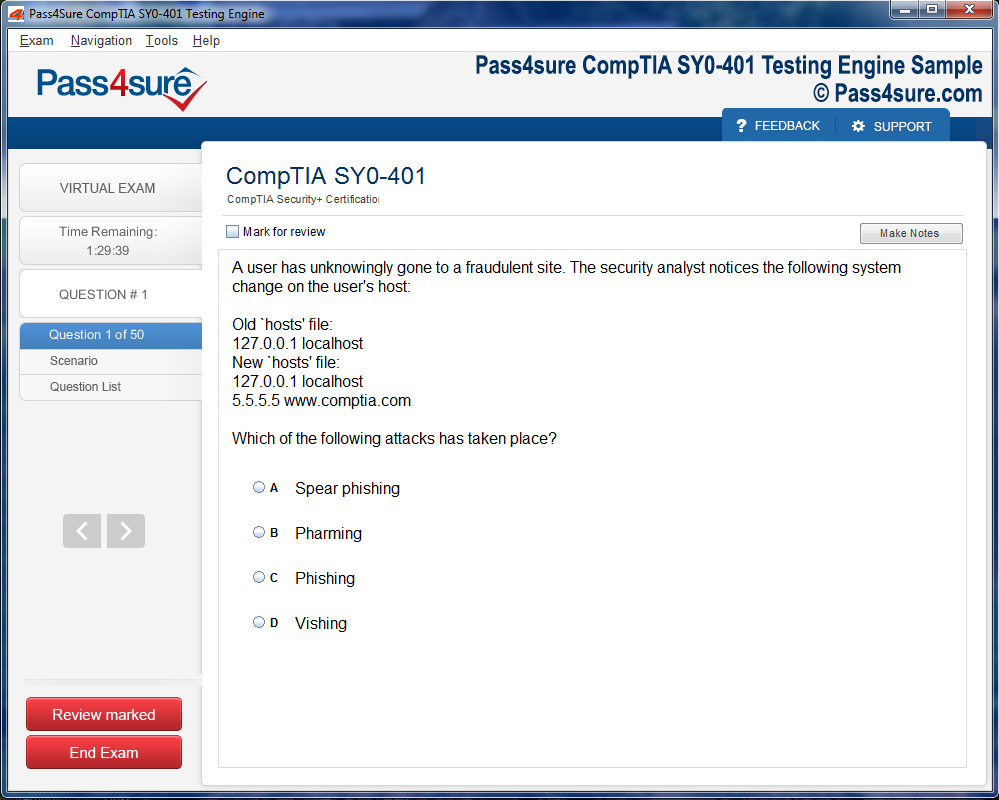
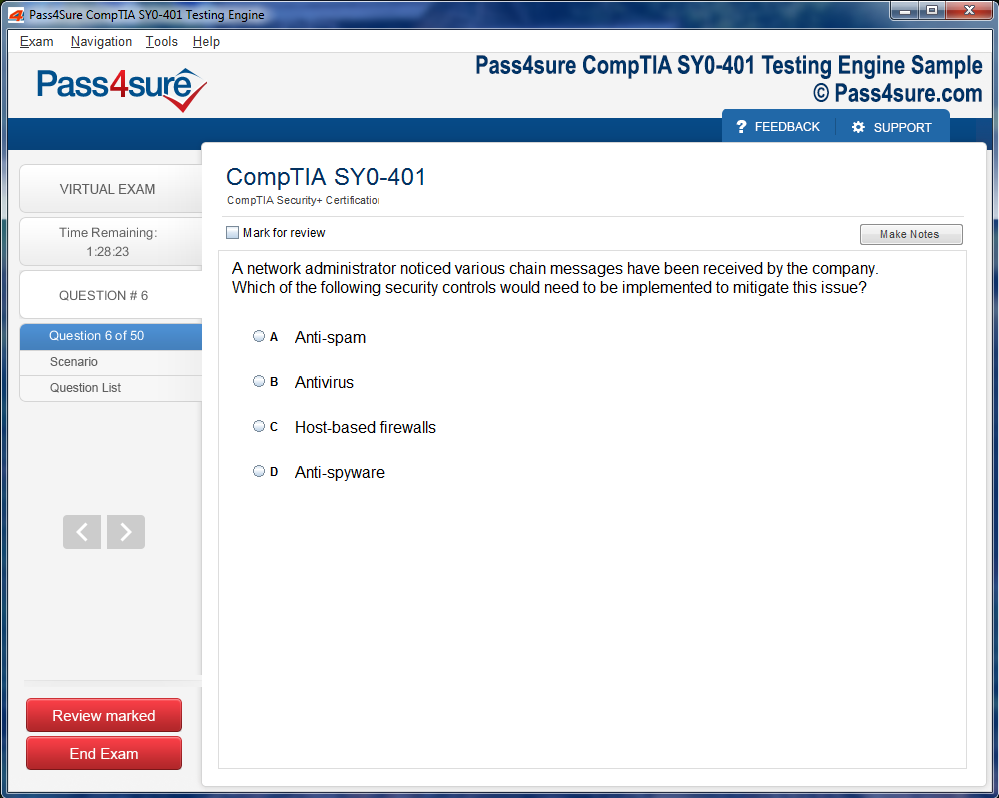
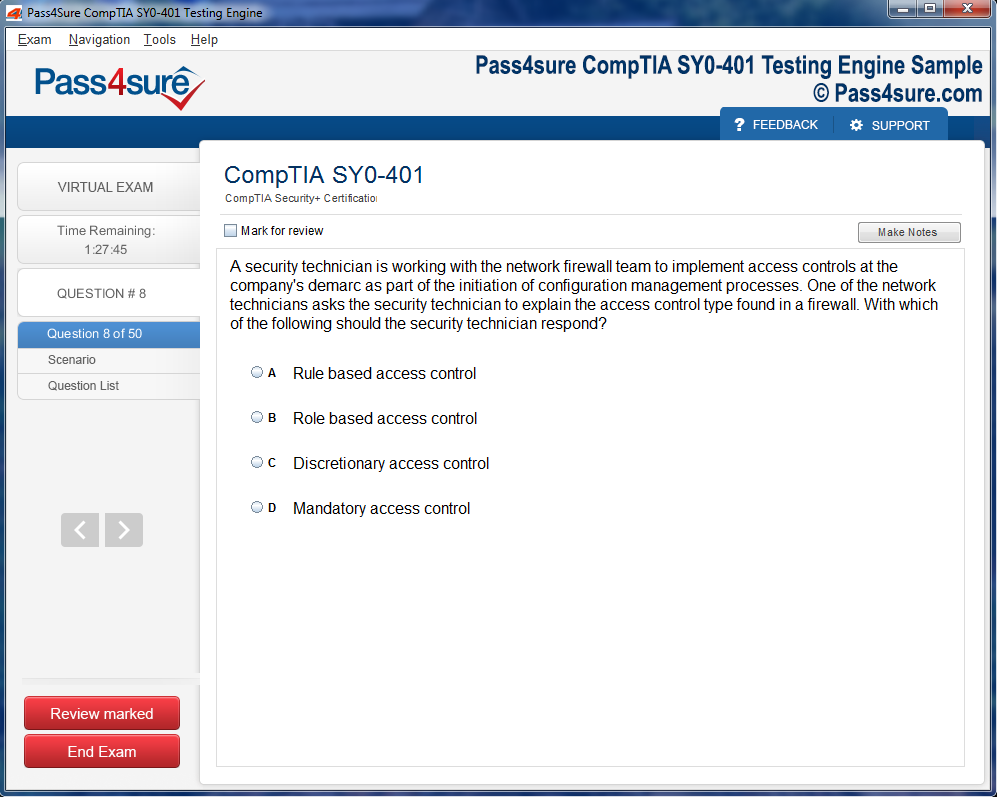
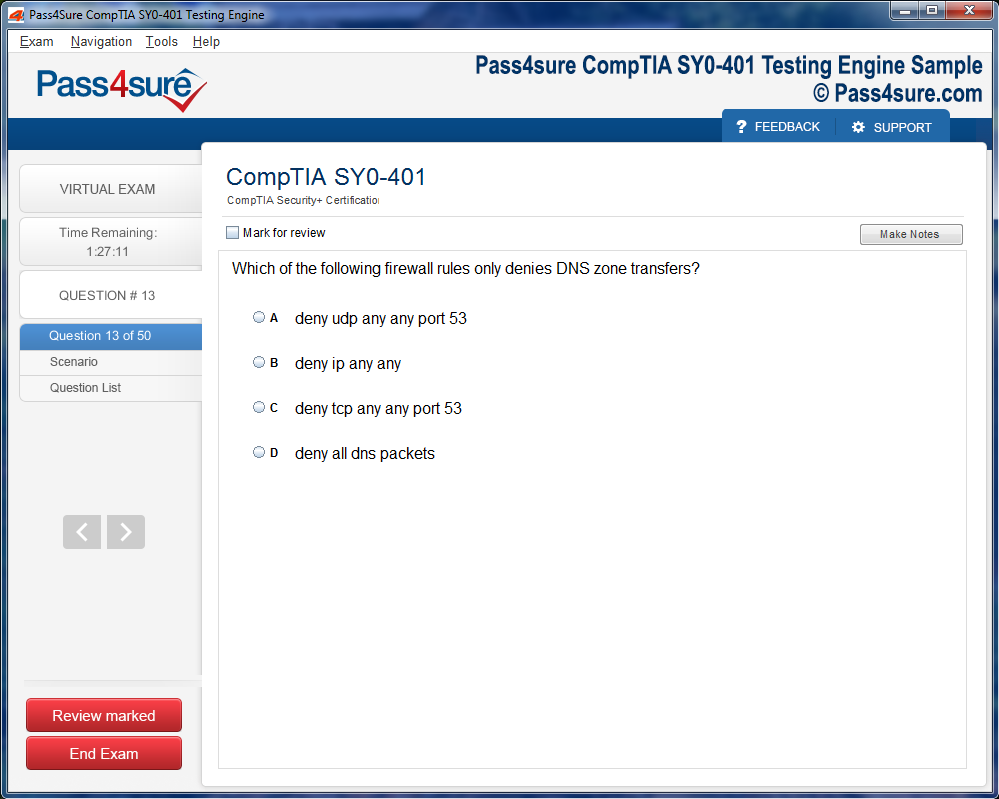
Frequently Asked Questions
How does your testing engine works?
Once download and installed on your PC, you can practise test questions, review your questions & answers using two different options 'practice exam' and 'virtual exam'. Virtual Exam - test yourself with exam questions with a time limit, as if you are taking exams in the Prometric or VUE testing centre. Practice exam - review exam questions one by one, see correct answers and explanations.
How can I get the products after purchase?
All products are available for download immediately from your Member's Area. Once you have made the payment, you will be transferred to Member's Area where you can login and download the products you have purchased to your computer.
How long can I use my product? Will it be valid forever?
Pass4sure products have a validity of 90 days from the date of purchase. This means that any updates to the products, including but not limited to new questions, or updates and changes by our editing team, will be automatically downloaded on to computer to make sure that you get latest exam prep materials during those 90 days.
Can I renew my product if when it's expired?
Yes, when the 90 days of your product validity are over, you have the option of renewing your expired products with a 30% discount. This can be done in your Member's Area.
Please note that you will not be able to use the product after it has expired if you don't renew it.
How often are the questions updated?
We always try to provide the latest pool of questions, Updates in the questions depend on the changes in actual pool of questions by different vendors. As soon as we know about the change in the exam question pool we try our best to update the products as fast as possible.
How many computers I can download Pass4sure software on?
You can download the Pass4sure products on the maximum number of 2 (two) computers or devices. If you need to use the software on more than two machines, you can purchase this option separately. Please email sales@pass4sure.com if you need to use more than 5 (five) computers.
What are the system requirements?
Minimum System Requirements:
- Windows XP or newer operating system
- Java Version 8 or newer
- 1+ GHz processor
- 1 GB Ram
- 50 MB available hard disk typically (products may vary)
What operating systems are supported by your Testing Engine software?
Our testing engine is supported by Windows. Andriod and IOS software is currently under development.
Maximize Your Exam Success with IIA-CHAL-QISA
The IIA-CHAL-QISA syllabus is a labyrinthine construct, meticulously designed to evaluate multidimensional competencies. Candidates encounter a spectrum of subjects that oscillate between theoretical frameworks and practical enactments. Governance structures, risk assessment paradigms, control mechanisms, and compliance matrices form the backbone of the curriculum. A nuanced understanding of these elements requires intellectual dexterity and the ability to synthesize disparate pieces of information into coherent strategies.
Mastery of internal audit frameworks necessitates more than rote familiarity; it demands a conceptual cartography of regulatory landscapes and operational intricacies. For instance, grasping enterprise risk management transcends mere terminology. Candidates must discern latent vulnerabilities, anticipate systemic repercussions, and propose remedial actions with precision. Such cognitive agility transforms a superficial knowledge base into a formidable strategic asset.
Equally vital is the cultivation of procedural fluency. The exam assesses candidates on their capacity to design audit programs, implement control testing, and evaluate compliance efficacy. This procedural intelligence complements analytical prowess, ensuring that professionals can traverse both the microcosm of individual audits and the macrocosm of organizational risk landscapes with confidence.
Time allocation and prioritization within the syllabus are also pivotal. Certain domains, such as risk mitigation strategies or ethical auditing principles, are recurrently emphasized and can significantly influence final outcomes. Understanding the relative weight of each topic and aligning study efforts accordingly is a subtle yet indispensable skill.
Cognitive Strategies for Exam Excellence
Succeeding in the IIA-CHAL-QISA exam necessitates more than knowledge absorption; it requires cerebral dexterity. Cognitive strategies, such as active retrieval, concept interlinking, and scenario-based problem solving, enhance retention and enable nuanced application. Candidates benefit from constructing mental models that simulate real-world audit challenges, fostering intuitive decision-making under temporal constraints.
Analytical reasoning exercises, case simulations, and structured mock assessments sharpen the mind to recognize patterns and predict outcomes. The ability to swiftly dissect complex situations, evaluate evidence, and recommend prudent courses of action distinguishes exceptional candidates from their peers. In essence, the exam serves as a crucible where intellect, judgment, and strategic foresight are rigorously tested.
A further layer of sophistication involves ethical reasoning. Many questions embed moral conundrums that demand more than technical know-how; they require introspection, principled judgment, and alignment with globally accepted auditing standards. Candidates who cultivate an ethical compass and integrate it seamlessly with operational decisions are better poised to demonstrate leadership potential in post-certification roles.
Leveraging Study Techniques for Maximum Retention
Effective preparation hinges on judicious study techniques tailored to the IIA-CHAL-QISA’s intricacies. Distributed practice, interleaving concepts, and employing mnemonic scaffolding are particularly advantageous. By varying study topics and revisiting core ideas periodically, candidates reinforce memory consolidation and promote cognitive flexibility.
Visualization methods can also enhance comprehension of complex frameworks. Flowcharts, decision matrices, and cause-effect diagrams serve as cognitive scaffolds, translating abstract principles into tangible representations. Additionally, engaging with peer discussions and collaborative problem-solving cultivates diverse perspectives, enriching understanding and uncovering latent knowledge gaps.
Self-assessment mechanisms, such as timed quizzes and scenario analyses, not only evaluate progress but also acclimatize candidates to the pressure and pacing of the actual exam. By systematically identifying weak points and iteratively refining strategies, aspirants can incrementally elevate their proficiency, ensuring readiness across all exam domains.
Cultivating Professional Gravitas Through Certification
Beyond technical mastery, the IIA-CHAL-QISA credential imbues professionals with a heightened sense of gravitas and strategic perspective. The rigorous preparation process instills discipline, foresight, and resilience, qualities that extend far beyond the confines of the exam hall. Professionals often report an amplified capacity for cross-functional collaboration, enhanced problem-solving acuity, and a sharpened ability to influence decision-making processes.
Employers perceive certification not merely as a testament to knowledge but as an indicator of reliability, critical thinking, and ethical fortitude. The credential serves as a signal to stakeholders that the certified individual possesses the analytical rigor and moral judgment requisite for navigating complex organizational landscapes.
Furthermore, the professional metamorphosis extends to self-perception. Candidates emerge with augmented confidence, refined communication skills, and an ability to articulate audit findings persuasively. This transformation, nurtured through structured preparation, experiential learning, and strategic reflection, often redefines career trajectories, opening avenues to leadership roles, consultancy, and specialized audit engagements.
Strategic Time Management and Exam-Day Acumen
Time, often the most elusive variable, assumes critical significance in exam preparation and execution. Strategic allocation of study hours, prioritization of high-yield domains, and intermittent rest periods optimize cognitive performance. Procrastination or haphazard study schedules can erode confidence and impair retention, whereas disciplined planning fosters mental clarity and efficiency.
On exam day, candidates must employ meta-cognitive strategies to navigate time-sensitive questions. Scanning for keywords, assessing question complexity, and allocating response time judiciously can substantially influence outcomes. Mindful pacing, coupled with stress-regulation techniques, ensures sustained focus and prevents cognitive fatigue, allowing for optimal demonstration of knowledge and reasoning.
Navigating Cognitive Cartography for Optimal Learning
Strategic preparation is incomplete without understanding the topography of one’s cognition. Cognitive cartography involves mapping your mental landscapes—identifying zones of proficiency, areas of ambiguity, and latent weaknesses. By visualizing knowledge as a terrain, candidates can allocate resources with surgical precision, avoiding wasted effort on overstudied topics while reinforcing fragile understandings. This technique transforms abstract study into a tangible expedition where progress is measurable and motivation sustained.
Leveraging Metacognitive Acumen
The most formidable exam candidates cultivate metacognitive acumen—the capacity to monitor and regulate their own thinking. Metacognition allows learners to discern when comprehension falters, when assumptions skew interpretation, and when mnemonic strategies falter. Implementing metacognitive checkpoints during study sessions—such as self-explanatory quizzes, reflective journaling, or verbal articulation of principles—enhances awareness and enables corrective action before misconceptions ossify.
Synoptic Synthesis and Interdisciplinary Integration
True mastery transcends rote memorization; it emerges from synoptic synthesis, the art of interlinking disparate concepts into coherent mental frameworks. For instance, understanding risk assessment in auditing is not isolated—it interweaves with governance structures, ethical paradigms, and internal control matrices. Candidates who cultivate cross-topic integration are better equipped to tackle complex, scenario-based questions. Integrating adjacent disciplines, such as financial analysis, organizational behavior, and regulatory compliance, further fortifies cognitive scaffolding, allowing insights to cascade naturally during high-stakes examinations.
Employing Mnemonic Alchemy
Memory can be metamorphosed through mnemonic alchemy, the deliberate crafting of mental anchors that render voluminous information retrievable under duress. Acronyms, vivid imagery, loci-based memory palaces, or rhythmically structured sequences convert abstract principles into durable mental artifacts. The candidate who transmutes verbose regulations into a vivid mental tableau achieves fluency in recall and agility in application.
Simulative Immersion and Experiential Rehearsal
Merely reading case studies is insufficient; the cognitive imprint solidifies when candidates engage in simulative immersion. Role-playing audits, constructing internal control checklists, or executing mock risk analyses in a time-constrained environment fosters experiential rehearsal. This immersion sharpens judgment, nurtures adaptive thinking, and primes emotional resilience—qualities indispensable for navigating the unpredictable nuances of IIA-CHAL-QISA examinations.
Temporal Engineering for Cognitive Endurance
Time, though linear in measurement, can be engineered cognitively to amplify retention. Micro-scheduling study blocks interspersed with deliberate rest, employing ultradian rhythm principles, optimizes alertness and absorption. Similarly, leveraging temporal spacing—revisiting previously studied concepts at strategically expanding intervals—enhances memory consolidation. Temporal engineering ensures that mental stamina is preserved, and that cognitive output peaks during intensive examination conditions.
Dialectical Engagement and Peer Discourse
Isolation can stagnate understanding; dialectical engagement—the practice of structured debate and peer discourse—stimulates intellectual elasticity. Discussing frameworks, challenging assumptions, and elucidating reasoning in collaborative settings crystallizes knowledge and exposes latent gaps. Peer scrutiny transforms passive familiarity into active mastery, cultivating the adaptive mindset essential for complex problem-solving.
Cognitive Flexibility Through Iterative Refinement
Excellence is iterative. Cognitive flexibility involves continually recalibrating strategies based on performance feedback. Analyzing mock exam results, dissecting errors, and modifying study approaches fosters a dynamic feedback loop. Candidates who embrace iterative refinement avoid plateauing, ensuring that every study session incrementally fortifies competence while mitigating repetitive mistakes.
Psychological Fortification and Stress Resilience
Examinations are as much psychological arenas as they are intellectual. Candidates must cultivate resilience through mindfulness, controlled breathing, and visualization exercises. Establishing a mental sanctuary—a repertoire of techniques to alleviate stress and maintain composure—prevents performance degradation under pressure. Psychological fortification is the silent architecture upon which cognitive excellence rests.
Integrating Multimodal Learning Architectures
Finally, embracing multimodal learning architectures elevates preparation beyond conventional paradigms. Combining textual analysis, visual schematics, auditory reinforcement, and kinesthetic engagement engages multiple neural circuits, creating redundant pathways for recall. Interactive simulations, digital audit platforms, and scenario mapping exemplify how multimodal approaches embed knowledge deeper than singular methods. Candidates who exploit these architectures achieve cognitive resilience, adaptability, and nuanced comprehension that manifests in exam prowess.
Cultivating Cognitive Resilience for Exam Mastery
Cognitive resilience constitutes the bedrock upon which exam prowess is constructed. It is the ability to sustain intellectual stamina amidst protracted study sessions and to navigate intricate problem sets without succumbing to mental fatigue. Strategies to fortify this resilience often extend beyond mere rote memorization; they encompass metacognitive techniques, adaptive learning approaches, and the deliberate cultivation of mental agility.
One method to amplify cognitive endurance is spaced repetition. This technique leverages the neurological principle of long-term potentiation, wherein periodic exposure to information strengthens synaptic connections. By systematically revisiting complex auditing frameworks or scenario-based decision models, candidates internalize content more deeply than by episodic, last-minute cramming.
Complementing repetition, cognitive interleaving promotes versatile thinking. By juxtaposing disparate topics, such as risk assessment methodologies alongside compliance regulations, learners foster a neural network capable of fluidly transitioning between concepts. Such agility is indispensable during exams where questions often amalgamate multiple domains, demanding simultaneous recall and application.
Equally vital is the strategic management of cognitive load. Overexposure to dense materials or multitasking between divergent study streams can precipitate mental saturation. Structured study sessions interspersed with deliberate micro-breaks enhance neural processing, facilitate insight generation, and reduce the risk of superficial comprehension. Incorporating meditative or reflective pauses can also fortify attentional control, allowing for sharper focus during high-pressure exam scenarios.
Harnessing Analytical Visualization Techniques
Visual cognition, when harnessed judiciously, transforms abstruse auditing principles into tangible mental schematics. Analytical visualization extends beyond conventional note-taking; it encompasses the creation of synoptic diagrams, flowcharts, and cognitive maps that elucidate intricate interdependencies within regulatory frameworks and risk paradigms.
Diagrammatic reasoning, for instance, empowers candidates to perceive systemic patterns that textual exposition might obscure. By mapping risk-control matrices, internal audit flows, or compliance hierarchies, learners develop a bird’s-eye view of multifaceted processes. This macroscopic lens enables rapid pattern recognition, enhancing both problem-solving efficacy and memory retrieval under exam conditions.
Color-coded schematics and mnemonic scaffolds further reinforce retention. Associating specific hues with regulatory domains or procedural categories aids visual memory consolidation. Mnemonic devices—when intertwined with graphical representations—create dual encoding pathways, simultaneously leveraging visual and semantic cognition for more robust recall.
Interactive digital platforms augment this visual learning by offering dynamic, manipulable diagrams. Candidates can simulate control processes, experiment with hypothetical audit scenarios, or visualize cascading risks in real time. Such experiential learning engenders a profound internalization of abstract concepts, converting passive comprehension into active, applied mastery.
Optimizing Temporal Architecture of Study
Temporal architecture refers to the deliberate structuring of study time to maximize retention, comprehension, and application. Beyond conventional scheduling, temporal optimization integrates circadian alignment, cognitive rhythms, and adaptive pacing to harness periods of heightened neurocognitive receptivity.
Early-morning sessions, when synaptic responsiveness is typically elevated, can be reserved for high-difficulty tasks such as scenario analysis or regulatory interpretation. Conversely, mid-afternoon hours may be suited for revision, note consolidation, or peer discussions, leveraging moderate energy states for reinforcement rather than innovation.
Pomodoro-style micro-cycles, combining concentrated focus intervals with brief restorative pauses, mitigate cognitive saturation and preserve attentional acuity. This approach not only enhances efficiency but also encourages sustained engagement, transforming long preparation periods into manageable, productive sequences.
Temporal architecture also encompasses the strategic sequencing of topics. Foundational concepts should precede advanced case studies, while recurrent exposure to high-yield content solidifies mastery. Additionally, incorporating periodic review of previously studied material ensures the entrenchment of knowledge in long-term memory, reducing vulnerability to knowledge attrition.
Leveraging Experiential Simulation for Applied Learning
Applied learning, when fused with experiential simulation, cultivates a tangible mastery of auditing principles and risk assessment strategies. Simulated exercises recreate the pressures, constraints, and decision-making intricacies inherent in real-world scenarios, allowing candidates to develop adaptive expertise.
Scenario-based simulations often incorporate probabilistic outcomes, regulatory contingencies, and temporal constraints, mirroring the multifactorial nature of IIA-CHAL-QISA challenges. Candidates learn to prioritize interventions, evaluate risk-reward matrices, and anticipate cascading implications of audit decisions—all within a controlled, risk-free environment.
Gamification elements can intensify engagement, transforming repetitive practice into compelling problem-solving quests. By integrating scoreboards, progression metrics, and adaptive difficulty, candidates experience incremental skill acquisition while sustaining motivation. Such immersive experiences bridge the chasm between theoretical knowledge and applied competence, fostering confidence and strategic foresight.
Cultivating Meta-Learning and Reflective Insight
Meta-learning—the art of learning about learning—is a force multiplier in high-stakes exam preparation. Reflective practices enable candidates to discern which strategies optimize retention, comprehension, and application, thereby personalizing the study experience with surgical precision.
Journaling cognitive performance, documenting challenges, and analyzing errors cultivate self-awareness and strategic foresight. By dissecting mistakes, candidates identify underlying misconceptions, recurrent cognitive biases, or procedural blind spots, converting setbacks into actionable insights.
Reflection also facilitates adaptive adjustment of study tactics. If certain resources or methods yield diminishing returns, meta-learning guides the recalibration of focus, pacing, and resource allocation. Over time, this iterative cycle transforms preparation from rote activity into a dynamic, self-optimizing endeavor.
Mastering Exam Techniques and Temporal Optimization
Even erudite aspirants may falter if exam strategies are disregarded. IIA-CHAL-QISA evaluates not solely intellectual grasp but the capacity to operationalize knowledge with sagacious efficiency under temporal duress and cognitive strain.
Temporal optimization commences with a meticulous appraisal of the examination schema. Disparate segments possess heterogeneous weightings, necessitating differentiated stratagems. Prioritizing sections with elevated scoring potential and apportioning minutes judiciously engenders maximal outcomes. Engaging in chronometric simulations cultivates familiarity, attenuates trepidation, and engenders rhythmic pacing acumen.
Cognitive Parsing and Analytical Perspicacity
Comprehending intricate passages is paramount. Many prompts proffer labyrinthine scenarios wherein subtle distinctions delineate correct from fallacious responses. Candidates must cultivate assiduous reading habits, emphasizing discerning pivotal nuances. Underlining lexically charged phrases, rearticulating scenarios mentally, and constructing cognitive schematics of options bolster acuity and precision.
Analytical perspicacity distinguishes high performers. Hypothetical questions often necessitate prognosticating risks, weighing governance canons, and envisaging multidimensional outcomes. Practitioners of structured cognition deconstruct convoluted dilemmas into tractable modules, deliberate implications, and select solutions with logical rigor rather than intuitive impulse.
Strategizing Response Methodologies
Strategic response formulation can markedly amplify efficacy. Employing elimination heuristics to discard patently incorrect alternatives, sequencing questions in accordance with confidence hierarchy, and flagging labyrinthine items for subsequent review optimizes temporal expenditure. Such methodical orchestration mitigates cognitive fatigue and curtails stress during high-intensity assessment intervals.
Psychophysiological Equilibrium
Equilibrium of mind-body synergy is non-negotiable. Mindfulness regimens, diaphragmatic respiration, and episodic kinetic interludes during study intermissions enhance attentional control and emotional stability. Entering the examination milieu with equanimity fortifies decision-making fidelity and cognitive resilience. Candidates attuned to their psychophysiological equilibrium consistently eclipse those susceptible to anxiety-induced decrements.
Retrospective Error Analysis
Deliberate examination of prior missteps constitutes an invaluable heuristic. Post-practice retrospection elucidates recurrent inaccuracies, identifies lacunae in conceptual comprehension, and reveals latent weaknesses. Methodically addressing these deficits solidifies intellectual scaffolding and attenuates the propensity for repetition of errors under authentic testing conditions.
Adaptive Problem Navigation
Flexibility remains an indispensable asset. Certain prompts may contravene established patterns or necessitate unorthodox reasoning trajectories. Candidates who maintain cognitive pliancy, remain receptive to alternative analytical pathways, and exercise metacognitive vigilance are better equipped to traverse unforeseen challenges, yielding superior performance metrics.
Integrated Mastery for Optimal Performance
By synthesizing temporal management, analytical dexterity, strategic response modulation, and psychophysiological stability, aspirants transmute theoretical knowledge into pragmatic achievement. Repeated practice, introspective review, and adaptive reasoning converge to position candidates at the vanguard of examination success, translating preparation into demonstrable excellence in IIA-CHAL-QISA assessments.
Cultivating Cognitive Dexterity in Professional Assessment
Developing cognitive dexterity is essential for aspirants seeking mastery in complex evaluative frameworks. Critical thinking transcends rote memorization, compelling candidates to interrogate assumptions, juxtapose divergent viewpoints, and synthesize nuanced insights. This intellectual agility facilitates not only the resolution of immediate problems but also the anticipation of cascading consequences in multifaceted scenarios.
In practice, cognitive dexterity manifests through rigorous analysis of interrelated variables. Candidates must discern subtle interdependencies among operational processes, compliance mandates, and risk vectors. The capacity to navigate such intricacies distinguishes proficient evaluators from those reliant on superficial heuristics.
Case-Based Intellectual Excavation
One of the most efficacious methods for embedding critical thinking is case-based intellectual excavation. This approach requires candidates to dissect real-world or hypothetical audit scenarios, probing for latent vulnerabilities, operational fissures, and governance conundrums. By engaging in meticulous scenario deconstruction, aspirants develop a granular understanding of control frameworks and regulatory imperatives.
The iterative nature of case analysis encourages the mental scaffolding of complex concepts. Each scenario serves as a microcosm of broader organizational ecosystems, allowing candidates to extrapolate principles to novel situations. This practice cultivates an adaptive intelligence, wherein theoretical constructs are seamlessly transposed into actionable strategies.
Reflective Metacognition and Analytical Refinement
Reflective metacognition is an indispensable adjunct to experiential learning. Candidates benefit from introspective evaluation of their reasoning trajectories, identifying cognitive biases, erroneous assumptions, and overlooked contingencies. By interrogating the rationale underpinning their decisions, aspirants enhance both the fidelity and robustness of their analytical processes.
This introspective refinement extends beyond exam preparation, embedding durable skills that underpin long-term professional acumen. The habitual scrutiny of one’s cognitive pathways fosters an anticipatory mindset, allowing practitioners to preempt misjudgments and calibrate their strategies with greater precision.
Probabilistic Reasoning Under Ambiguity
Auditing and risk management frequently operate within ambits of incomplete information. Mastery in probabilistic reasoning equips candidates to navigate such ambiguity with methodological rigor. By quantifying potential outcomes, assessing likelihoods, and systematically evaluating contingencies, aspirants cultivate decision-making acumen resilient to uncertainty.
Exercises simulating indeterminate environments compel candidates to weigh conflicting data points, reconcile contradictions, and prioritize interventions based on rational prognostications. This probabilistic discipline not only enhances exam performance but also fortifies professional judgment in volatile operational contexts.
Ethical Synthesis in Decision Architecture
Ethical synthesis is an inseparable component of applied knowledge. Each proposed course of action must be scrutinized against the yardstick of professional standards and moral frameworks. Ethical reasoning imbues decisions with legitimacy, ensuring that operational effectiveness does not eclipse fiduciary and regulatory obligations.
Candidates are encouraged to internalize ethical heuristics, integrating them seamlessly into decision architecture. By consistently aligning choices with integrity benchmarks, aspirants reinforce both exam credibility and enduring professional trustworthiness. Ethical synthesis transforms abstract principles into lived operational praxis.
Collaborative Dialectics and Perspective Amplification
Engagement with peers through collaborative dialectics amplifies analytical acuity. Structured debate, scenario dissection, and cross-pollination of ideas expose candidates to alternative interpretations and unconventional solutions. This communal intellectual exchange simulates the dynamics of real-world audit committees and interdisciplinary teams, cultivating eloquence, precision, and persuasive reasoning.
By embracing collaborative critique, aspirants refine their capacity to articulate complex arguments, reconcile disparate perspectives, and negotiate consensus. Such dialogic immersion fortifies not only cognitive rigor but also the interpersonal competencies requisite for senior auditing roles.
Iterative Reinforcement and Strategic Intuition
The consolidation of applied knowledge is contingent upon iterative reinforcement. Candidates should cyclically revisit conceptual frameworks, subject them to diverse scenarios, and interrogate resultant outcomes. This repetition engenders strategic intuition, wherein experiential knowledge is encoded as adaptable heuristics rather than static rules.
Over successive iterations, candidates construct an internal repository of methodologies, enabling rapid, context-sensitive deployment during examinations or operational challenges. The iterative cycle transforms analytical labor into instinctive expertise, rendering complex problem-solving both efficient and resilient.
Integration of Multidimensional Analytical Lenses
Sophisticated critical thinking necessitates the integration of multidimensional analytical lenses. Candidates must concurrently evaluate financial, operational, regulatory, and reputational dimensions when formulating judgments. This holistic appraisal facilitates identification of systemic vulnerabilities that may elude unidimensional scrutiny.
By synthesizing cross-cutting perspectives, aspirants cultivate a panoramic understanding of organizational ecosystems. Such integrative cognition empowers them to anticipate interdependencies, mitigate compounded risks, and orchestrate decisions that are coherent across diverse functional domains.
Cognitive Resilience in Adaptive Environments
Developing applied knowledge is not merely a scholarly exercise; it is an incubation of cognitive resilience. Candidates are frequently challenged to navigate volatile, uncertain, complex, and ambiguous (VUCA) environments. The ability to adapt reasoning frameworks, modulate strategies, and maintain analytical composure under duress distinguishes proficient practitioners from novices.
Cognitive resilience also encompasses the management of emotional and intellectual stressors that arise during high-stakes evaluations. Candidates who cultivate equanimity, reflective detachment, and procedural discipline are better equipped to render judicious, well-reasoned decisions irrespective of environmental turbulence.
Meta-Analytical Calibration of Risk Perception
The discernment of latent risks necessitates meta-analytical calibration, whereby candidates evaluate both the probability and impact of potential events while accounting for cognitive biases. This double-layered scrutiny enhances predictive accuracy, facilitating prioritization of control measures and resource allocation.
Through continual refinement of risk perception models, aspirants internalize a dynamic equilibrium between caution and assertiveness. Such calibration ensures that decisions are neither excessively conservative nor recklessly speculative, reflecting a sophisticated balance of prudence and initiative.
Dynamic Knowledge Transmutation
Applied knowledge attains its zenith when candidates achieve dynamic transmutation—the capacity to translate theoretical constructs into practical interventions in real-time contexts. By synthesizing principles from multiple domains, evaluators craft bespoke solutions that are simultaneously compliant, efficient, and ethically sound.
Dynamic transmutation requires both intellectual dexterity and experiential familiarity, compelling candidates to navigate the interface between abstract paradigms and operational exigencies. Mastery of this skill positions aspirants to respond with ingenuity and precision across the spectrum of auditing and risk management scenarios.
The Primacy of Intrinsic Motivation
Endogenous drive constitutes the fulcrum upon which sustained effort pivots. Within the labyrinthine preparation for IIA-CHAL-QISA, candidates must cultivate an inner compulsion that transcends ephemeral incentives. Motivation, when nurtured as an intrinsic phenomenon rather than extrinsic stimulus, galvanizes diligence, fosters persistence in the face of adversity, and amplifies cognitive receptivity. This internal propulsion is augmented by meticulously charted objectives, mnemonic visualization of desired outcomes, and ritualized acknowledgment of incremental triumphs, each of which consolidates momentum and fortifies psychological resilience.
Embracing the Growth Paradigm
Cognitive plasticity underlies the cultivation of a growth-oriented mindset. Viewing obstacles as protean opportunities for intellectual expansion, rather than immutable barriers, imbues candidates with adaptive elasticity. Errors encountered during simulation exercises should be construed as diagnostic instruments—informative data points delineating the contours of comprehension and skill acquisition. This interpretive shift mitigates anxiety, engenders self-efficacy, and transforms iterative practice into a constructive feedback loop that accelerates proficiency.
Accountability and Social Osmosis
External scaffolds augment internal resolve through mechanisms of accountability. Engaging with study cohorts, mentors, or regimented schedules introduces a social osmotic effect wherein commitment is reinforced through communal expectation. Public declaration of objectives, even within confined peer networks, cultivates reputational stakes that elevate adherence. This symbiotic interplay between personal discipline and social reinforcement catalyzes sustained engagement and precludes motivational atrophy.
Somatic and Psychophysical Equilibrium
Cognitive efficacy is inseparable from corporeal and psychophysical well-being. Somatic care—encompassing circadian regularity, nutrient optimization, kinetic activity, and recuperative interludes—substantially modulates cerebral acuity and mnemonic consolidation. Neglecting these foundational elements precipitates attenuated concentration, protracted study sessions, and heightened susceptibility to cognitive fatigue, ultimately diminishing the efficiency of preparation and impairing retention.
Mental Visualization and Affirmative Cognition
Cognitive rehearsal, manifested through visualization techniques and positive affirmations, serves as an architectonic scaffold for performance anticipation. Envisioning the sequential execution of examination tasks, negotiating complex problem-solving scenarios, and achieving optimal outcomes fosters a neural blueprint aligned with actual accomplishment. Affirmative self-dialogue, strategically deployed, counterbalances self-doubt, refines attentional focus, and consolidates an adaptive mindset conducive to peak cognitive performance.
Reflexive Analysis and Continuous Iteration
Post-examination introspection constitutes a pivotal conduit for enduring mastery. Critical reflection on preparatory strategies, diagnostic assessment of cognitive strengths and lacunae, and synthesis of lessons gleaned from performance outcomes inform subsequent developmental trajectories. This iterative self-analysis engenders an ethos of perpetual learning, imbuing candidates with metacognitive acuity that transcends the temporality of individual examinations and nurtures professional dexterity.
Transcendence of Competency into Identity
The journey through IIA-CHAL-QISA preparation catalyzes a metamorphosis that extends beyond the acquisition of certification. Skills honed—temporal management, analytical acumen, ethical discernment, and resilience—become integral to the candidate’s professional identity. The crucible of rigorous preparation cultivates not merely technical competence but a pervasive self-assurance and adaptive versatility, equipping candidates to navigate complex professional environments with alacrity and sagacity.
Sustained Momentum through Holistic Integration
To perpetuate long-term success, candidates must integrate motivational, cognitive, and somatic dimensions into a coherent, symbiotic framework. Strategic goal-setting, reflective practice, psychophysical maintenance, and affirmation-driven cognition coalesce to sustain engagement, reinforce mastery, and fortify resilience. This holistic synthesis transforms the preparatory odyssey into a crucible of character development and intellectual fortification, yielding outcomes that reverberate beyond the immediate exigencies of certification.
The Primacy of Intrinsic Motivation
Endogenous impetus forms the fulcrum upon which sustained cognitive exertion pivots. Within the labyrinthine odyssey of IIA-CHAL-QISA preparation, aspirants must cultivate an internal compulsion that eclipses ephemeral extrinsic incentives. Motivation, when nurtured as a quasi-mesmeric inner force, galvanizes unwavering diligence, fortifies perseverance amid vicissitudes, and amplifies neurocognitive receptivity. Meticulously delineated objectives, eidetic visualization of aspirational outcomes, and ritualized veneration of incremental triumphs crystallize momentum, engendering a self-perpetuating cycle of psychological invigoration.
Embracing the Protean Growth Paradigm
Cerebral plasticity undergirds the cultivation of a protean, growth-oriented mindset. Challenges should be construed as kaleidoscopic opportunities for intellectual expansion rather than immutable impediments. Errors encountered during simulation exercises are not failures; they are diagnostic vectors illuminating the loci of cognitive lacunae. This hermeneutic reframing attenuates anxiety, augments metacognitive self-efficacy, and transmutes iterative rehearsal into a constructive feedback continuum, expediting skill acquisition and dexterous problem-solving.
Accountability and Social Osmosis
Exogenous scaffolds augment endogenous resolve through mechanisms of communal accountability. Participation in study collectives, mentorship dyads, or regimented temporal architectures induces a social osmotic effect wherein commitment is amplified by communal expectation. Public proclamation of aspirational benchmarks, even within circumscribed peer networks, cultivates reputational stakes that enhance adherence. This symbiotic interplay between personal discipline and social reinforcement catalyzes sustained engagement while inoculating against motivational atrophy.
Somatic and Psychophysical Equilibrium
Cognitive potency is inextricable from corporeal and psychophysical equilibrium. Somatic stewardship—including circadian fidelity, macro- and micronutrient optimization, kinetic activation, and systematic recuperative interludes—modulates cerebral acuity, synaptic plasticity, and mnemonic consolidation. Neglecting these elemental constituents precipitates attenuated concentration, protracted rehearsal sessions, and heightened susceptibility to cognitive fatigue, undermining the efficiency of preparation and constraining the acquisition of procedural mastery.
Mental Visualization and Affirmative Cognition
Cognitive rehearsal through visualization and affirmative self-dialogue functions as an architectonic scaffold for anticipatory performance. Envisioning sequential execution of complex tasks, navigating labyrinthine problem-solving scenarios, and attaining optimal outcomes constructs a mental schema congruent with real-world exigencies. Strategically deployed positive self-talk counterbalances intrapsychic doubt, refines attentional calibration, and consolidates an adaptive mindset conducive to peak neurocognitive performance.
Reflexive Analysis and Iterative Metacognition
Post-examination introspection constitutes a pivotal vector for enduring mastery. Rigorous reflection upon preparatory strategies, diagnostic assessment of cognitive strengths and lacunae, and synthesis of emergent insights inform subsequent developmental trajectories. This iterative metacognitive exercise fosters an ethos of perpetual intellectual expansion, engendering metacognitive acuity that transcends temporal examinations and fortifies professional dexterity with resilient, adaptive insight.
Transcendence of Competency into Professional Identity
The crucible of IIA-CHAL-QISA preparation engenders a metamorphosis extending beyond mere credential acquisition. Skills refined—temporal orchestration, analytic acumen, ethical discernment, and psychological resilience—coalesce into the aspirant’s professional identity. The rigor of preparation cultivates not only technical mastery but also pervasive self-assurance and adaptive versatility, equipping candidates to navigate labyrinthine professional milieus with perspicacity and equanimity.
Sustained Momentum through Holistic Synthesis
Enduring success necessitates the symbiotic integration of motivational, cognitive, and somatic dimensions into a coherent architecture. Strategic goal calibration, reflective praxis, somatic maintenance, and affirmation-driven cognition converge to sustain engagement, reinforce mastery, and fortify resilience. This holistic amalgamation transmutes the preparatory odyssey into an existential crucible of character refinement and intellectual fortification, yielding outcomes that reverberate beyond the immediate exigencies of certification and permeate professional praxis with durable efficacy.
Experiential Immersion in Cognitive Apprenticeship
Cognitive apprenticeship represents a transformative method for embedding applied knowledge. Candidates are immersed in realistic problem spaces where abstract principles intersect with operational complexity. By observing expert practitioners, emulating their decision-making heuristics, and gradually internalizing their cognitive strategies, aspirants develop a nuanced understanding of both procedural rigor and strategic acumen.
This immersive approach emphasizes the tacit dimensions of professional expertise, such as intuition, judgment under uncertainty, and contextual discernment. By engaging with real-world tasks iteratively, candidates cultivate an embodied comprehension that transcends theoretical familiarity, enabling them to navigate the intricacies of organizational audits with fluency and confidence.
Scenario Simulation and Experiential Synthesis
Scenario simulation acts as a crucible for applied cognition, exposing candidates to multifarious risk landscapes and governance challenges. Simulations range from meticulously constructed hypotheticals to digitalized audit environments where variables are dynamically interdependent. By experimenting with these simulated ecosystems, aspirants learn to anticipate cascading effects, evaluate contingency strategies, and calibrate their interventions according to evolving conditions.
Experiential synthesis emerges when candidates translate insights from multiple simulations into a cohesive mental schema. Each iteration refines pattern recognition, accelerates analytical processing, and fosters anticipatory judgment. The repetition not only strengthens proficiency in exam-oriented problem-solving but also instills an adaptive mindset essential for real-world auditing and risk management.
Dialectical Reasoning in Ethical Conundrums
Ethical dilemmas often present as labyrinthine challenges with no unequivocal solutions. Candidates must deploy dialectical reasoning, weighing competing moral imperatives against organizational imperatives, regulatory expectations, and long-term reputational outcomes. This analytic exercise demands the simultaneous consideration of normative ethics, consequentialist calculations, and deontological principles.
Engaging in structured debate with peers or mentors further sharpens ethical discernment. By articulating reasoned arguments, anticipating counterpoints, and synthesizing a defensible position, candidates refine both moral acuity and persuasive capacity. This dual enhancement—intellectual and ethical—ensures decisions are principled, justifiable, and aligned with professional codes of conduct.
Meta-Cognitive Vigilance in Analytical Processes
Meta-cognitive vigilance refers to the deliberate monitoring and regulation of one’s own cognitive processes during problem-solving. Candidates must actively track their reasoning, identifying cognitive traps such as confirmation bias, overconfidence, and heuristic simplifications. By cultivating this self-awareness, aspirants mitigate analytical errors and enhance the reliability of their conclusions.
Techniques such as think-aloud protocols, journaling, and post-exercise debriefing reinforce meta-cognitive habits. The habitual reflection on thought patterns not only augments exam performance but embeds a durable capacity for continuous self-improvement, ensuring that evaluative reasoning evolves alongside professional experience.
Multivariate Risk Analysis and Strategic Foresight
Modern auditing transcends linear assessment, requiring multivariate risk analysis. Candidates must integrate quantitative metrics, qualitative observations, and predictive indicators to form a multidimensional risk profile. This approach permits nuanced prioritization, identifying not merely immediate vulnerabilities but also latent systemic threats with cascading potential.
Strategic foresight complements analytical rigor by projecting potential developments across temporal horizons. By anticipating regulatory shifts, market volatility, and operational perturbations, candidates develop a proactive orientation. This forward-looking cognition ensures that recommendations and interventions are resilient, adaptable, and operationally coherent.
Cognitive Elasticity in Ambiguous Contexts
Ambiguity is a perennial feature of professional auditing, where incomplete, inconsistent, or conflicting data often predominates. Cognitive elasticity—the capacity to flexibly adjust reasoning frameworks, adapt hypotheses, and reconcile divergent evidence—is therefore indispensable.
Exercises in cognitive elasticity train candidates to maintain analytical composure under ambiguity, systematically testing alternative scenarios, and evaluating each with calibrated rigor. Over time, this practice fosters intellectual resilience, enabling evaluators to render well-founded decisions even when certainty is elusive.
Integrative Frameworks for Complex Problem-Solving
Applied knowledge achieves its zenith when candidates deploy integrative frameworks that synthesize multiple dimensions of inquiry. Such frameworks combine operational insights, regulatory comprehension, ethical reasoning, and risk assessment into a unified analytical model.
The iterative application of integrative frameworks fosters cognitive cohesion, allowing candidates to navigate intricate audit situations efficiently. By interlacing discrete strands of knowledge into coherent patterns, evaluators develop the capacity for rapid, accurate, and context-sensitive problem-solving—a hallmark of professional mastery.
Strategic Reflection and Heuristic Optimization
Strategic reflection involves not merely reviewing outcomes but critically evaluating the heuristics and cognitive strategies employed during decision-making. Candidates should interrogate whether shortcuts, mental models, or procedural rules contributed to success or failure.
Heuristic optimization emerges from this reflective cycle. By refining mental algorithms, eliminating unproductive strategies, and codifying effective approaches, candidates cultivate a repertoire of adaptive tools. These optimized heuristics enhance both speed and accuracy, rendering complex analysis more intuitive and less cognitively burdensome.
The Interplay of Knowledge Transfer and Contextual Adaptation
Knowledge transfer is essential for converting learned principles into actionable solutions in novel contexts. Candidates must recognize which insights are universally applicable and which require contextual adaptation. This discernment ensures that decision-making is not rigidly prescriptive but dynamically responsive to environmental contingencies.
Contextual adaptation also encompasses cultural, organizational, and regulatory nuances. Auditors who master the interplay between transferable knowledge and situational specificity are able to devise interventions that are both technically sound and pragmatically viable, reflecting the multifaceted realities of professional practice.
Dynamic Feedback Loops in Continuous Learning
Continuous learning is reinforced through dynamic feedback loops, wherein candidates receive, interpret, and act upon evaluative input from mentors, peers, and self-assessment exercises. Feedback serves as both a diagnostic and corrective instrument, highlighting cognitive blind spots, reinforcing effective strategies, and guiding iterative improvement.
By internalizing feedback as a constructive mechanism rather than a perfunctory exercise, candidates develop a self-sustaining cycle of cognitive refinement. This loop cultivates agility, ensuring that learning is adaptive, cumulative, and perpetually aligned with evolving professional standards.
Narrative Construction for Analytical Communication
Effective critical thinking is incomplete without the capacity to communicate insights persuasively. Candidates benefit from constructing analytical narratives that integrate evidence, rationale, and recommendations in coherent, compelling formats. Narrative construction bridges the gap between cognition and articulation, translating complex analysis into digestible, actionable intelligence.
By practicing narrative synthesis, candidates enhance their ability to influence decision-makers, justify interventions, and convey nuanced insights with clarity. The development of this skill ensures that applied knowledge extends beyond introspective understanding, impacting organizational outcomes tangibly.
Temporal Cognition and Prioritization in Audit Practice
Temporal cognition—the ability to sequence tasks, anticipate future demands, and allocate cognitive resources effectively—is a critical aspect of professional auditing. Candidates must distinguish between urgent and important issues, balancing immediate interventions with long-term strategic considerations.
Prioritization informed by temporal cognition enhances efficiency, reduces decision fatigue, and ensures that high-impact risks are addressed proactively. This skill underscores the interconnection between cognitive discipline, operational effectiveness, and strategic foresight, reflecting a holistic approach to professional judgment.
Adaptive Scenario Modelling for Decision Validation
Adaptive scenario modelling enables candidates to test hypotheses against evolving conditions. By simulating multiple trajectories of potential outcomes, aspirants validate decisions, identify vulnerabilities, and refine intervention strategies.
This approach promotes anticipatory thinking, allowing candidates to evaluate consequences before they materialize. The iterative recalibration inherent in adaptive modelling strengthens confidence, reduces cognitive bias, and enhances the robustness of applied knowledge in dynamic operational environments.
Advanced Risk Assessment Methodologies
Risk, in its myriad manifestations, is a mercurial entity that requires keen perception and anticipatory reasoning. The IIA-CHAL-QISA examination emphasizes mastery over both qualitative and quantitative risk assessment methodologies. Candidates must not only recognize potential vulnerabilities but also forecast cascading consequences within complex organizational ecosystems. Analytical rigor and probabilistic reasoning become indispensable tools in deciphering latent hazards and devising mitigation strategies.
Scenario analysis is an essential instrument in this cognitive arsenal. By constructing hypothetical risk events, candidates evaluate interdependencies and potential operational disruptions. Stress testing, sensitivity analysis, and Monte Carlo simulations exemplify advanced techniques that elucidate risk exposure with statistical precision. These methodologies enable auditors to transcend superficial evaluation, cultivating a proactive rather than reactive approach to organizational vulnerabilities.
Cognitive versatility is equally crucial when addressing emerging risks. The contemporary business landscape, characterized by technological disruption, regulatory flux, and global interconnectivity, presents novel audit challenges. Cybersecurity breaches, data integrity anomalies, and systemic compliance risks necessitate adaptive thinking and the ability to integrate interdisciplinary knowledge. Professionals who internalize these dynamics often exhibit an anticipatory mindset, a hallmark of exceptional auditors.
Internal Control Systems and Governance Dynamics
The structural scaffolding of internal control systems embodies the principles of governance, accountability, and operational resilience. Candidates must develop an intricate understanding of control frameworks, including preventive, detective, and corrective mechanisms. The exam often probes the ability to distinguish between design adequacy and operational effectiveness, highlighting the importance of nuanced judgment over rote memorization.
Governance dynamics extend beyond structural knowledge to encompass behavioral and cultural dimensions. Ethical climate, organizational culture, and leadership conduct profoundly influence control efficacy. Candidates adept at evaluating these intangibles demonstrate a holistic comprehension of audit environments, integrating human factors with procedural imperatives. Such sophistication reflects the capacity to render recommendations that are not only technically sound but contextually resonant.
The intersection of governance and control is often exemplified through case-based questions. Evaluating a hypothetical organizational lapse requires candidates to identify root causes, assess control failures, and propose sustainable corrective measures. This synthesis of analytical reasoning, ethical discernment, and operational insight exemplifies the high cognitive demands of the IIA-CHAL-QISA examination.
Integrative Approaches to Compliance and Regulatory Frameworks
Compliance, in the context of internal auditing, is a labyrinthine endeavor demanding meticulous scrutiny and contextual understanding. Regulatory frameworks, both domestic and international, impose a complex overlay of mandates that professionals must navigate with precision. The IIA-CHAL-QISA exam tests candidates on their ability to interpret, apply, and integrate these regulatory stipulations into practical audit strategies.
A profound comprehension of statutory requirements is necessary but insufficient in isolation. Candidates must evaluate the interplay between compliance obligations and organizational objectives, balancing rigid adherence with operational pragmatism. This integrative approach requires intellectual agility, ethical discernment, and strategic foresight, particularly when reconciling conflicting mandates or ambiguous regulations.
Emergent domains, such as data privacy, environmental compliance, and corporate social responsibility, amplify the intricacy of regulatory evaluation. Professionals who cultivate domain-specific expertise while maintaining a broad systemic perspective are better equipped to anticipate regulatory shifts, preempt potential infractions, and advise management proactively.
Ethical Dilemmas and Decision-Making Under Uncertainty
Ethical reasoning constitutes a cornerstone of the IIA-CHAL-QISA examination. Beyond technical competence, candidates encounter scenarios designed to probe moral judgment, integrity, and principled decision-making. These questions simulate real-world conundrums wherein conflicting interests, resource constraints, and organizational pressures converge.
Navigating ethical dilemmas necessitates a synthesis of normative principles and pragmatic judgment. Candidates must weigh competing imperatives, anticipate repercussions, and render decisions aligned with professional codes of conduct. The capacity to articulate rationale cogently and justify decisions under scrutiny distinguishes exemplary performers.
Decision-making under uncertainty further compounds the cognitive challenge. Audit professionals often operate in environments characterized by incomplete data, ambiguous signals, and time-sensitive exigencies. Developing probabilistic reasoning, scenario planning, and contingency analysis skills enables candidates to navigate ambiguity with confidence, ensuring decisions are both defensible and operationally sound.
Mastering Analytical and Data-Driven Auditing
In the contemporary audit landscape, data analytics has emerged as a transformative force. The IIA-CHAL-QISA exam evaluates proficiency in leveraging quantitative tools to extract insights, detect anomalies, and support evidence-based recommendations. Analytical acuity, coupled with statistical literacy, empowers candidates to transform raw data into strategic intelligence.
Techniques such as trend analysis, ratio evaluation, and variance scrutiny are foundational, while more advanced methodologies—including regression analysis, predictive modeling, and anomaly detection—offer enhanced evaluative power. Mastery of these tools necessitates not only technical aptitude but also interpretive skill, as data must be contextualized within organizational objectives and operational realities.
Candidates who excel in data-driven auditing often adopt a dual lens: microscopic precision in evaluating individual transactions and macroscopic synthesis to discern overarching trends. This bifocal approach ensures that insights are granular, actionable, and strategically relevant, reinforcing the auditor’s role as a linchpin in organizational governance.
Strategic Communication and Reporting Mastery
The ability to communicate audit findings with clarity, precision, and persuasive authority is a defining hallmark of certified professionals. The IIA-CHAL-QISA exam underscores the importance of structured reporting, where candidates must distill complex analyses into coherent narratives comprehensible to diverse stakeholders.
Effective communication extends beyond grammatical accuracy to encompass logical structuring, prioritization of salient points, and articulation of actionable recommendations. Visual aids, executive summaries, and risk matrices enhance comprehension, allowing decision-makers to internalize insights rapidly and act decisively.
Moreover, interpersonal acuity amplifies the impact of reporting. The capacity to navigate stakeholder sensitivities, negotiate divergent perspectives, and foster collaborative problem-solving is often as crucial as technical findings. Candidates who integrate analytical rigor with empathetic communication demonstrate holistic professional competence, a trait highly prized in real-world audit environments.
Simulated Practice and Cognitive Conditioning
Simulated practice represents a critical pillar in exam readiness. Engaging with mock scenarios, time-constrained assessments, and iterative problem-solving exercises cultivates mental resilience and procedural fluency. Cognitive conditioning through repetition enables candidates to internalize complex concepts, anticipate question patterns, and respond with calibrated judgment under pressure.
Reflective learning, whereby candidates analyze errors, identify conceptual gaps, and recalibrate strategies, enhances adaptive cognition. This iterative process transforms theoretical understanding into operational proficiency, ensuring that knowledge is not merely memorized but practically deployable.
The intensity of simulation also nurtures emotional regulation. High-stakes environments can induce stress and cognitive overload; repeated exposure trains candidates to maintain composure, prioritize effectively, and execute decisions methodically. Such mental fortitude is invaluable, extending well beyond the confines of the examination hall.
Continuous Professional Evolution Post-Certification
While the IIA-CHAL-QISA certification serves as a pinnacle of professional validation, it simultaneously catalyzes ongoing development. Certified auditors are often propelled toward continuous learning, engaging with evolving regulatory landscapes, emerging technologies, and novel risk paradigms. This commitment to lifelong learning ensures sustained relevance and positions professionals as thought leaders within their domains.
Mentorship, peer collaboration, and participation in professional forums further augment expertise, fostering a dynamic exchange of insights and best practices. Candidates who embrace these opportunities cultivate both intellectual breadth and practical depth, consolidating their status as agile, forward-looking auditors capable of navigating increasingly complex organizational ecosystems.
Architecting Cognitive Frameworks for Deep Retention
Cognitive frameworks serve as the scaffolding upon which complex auditing concepts are anchored. Constructing these mental architectures enables candidates to traverse the labyrinthine intricacies of IIA-CHAL-QISA content with confidence and clarity. Rather than attempting indiscriminate memorization, learners benefit from synthesizing knowledge into structured schemas that reflect interconnections, hierarchies, and causative relationships.
One approach is hierarchical clustering, where core principles are delineated as primary nodes, with subordinate concepts radiating as secondary or tertiary branches. This method transforms fragmented information into an integrated network, allowing for efficient retrieval under exam conditions. For instance, risk management paradigms can be organized from overarching frameworks down to granular control mechanisms, each linked to illustrative examples and case nuances.
Dynamic schema evolution further enhances retention. As understanding deepens, nodes can be expanded, restructured, or linked with novel insights, creating a living cognitive map. Such malleability ensures that knowledge remains adaptable, capable of accommodating advanced scenarios, regulatory updates, or evolving best practices without destabilizing foundational comprehension.
Interweaving Multisensory Learning Modalities
Multisensory learning leverages the synergistic activation of auditory, visual, and kinesthetic pathways to cement understanding and accelerate recall. When preparing for complex examinations, relying solely on textual material often results in superficial assimilation, whereas multisensory engagement enhances both depth and durability of knowledge.
Auditory reinforcement through recorded lectures or verbal recitations allows candidates to encode concepts through phonetic and tonal patterns. Visual stimuli, including annotated diagrams, color-coded charts, and flow-based representations, provide spatial context and clarify relational structures. Kinesthetic involvement, such as writing notes, rearranging conceptual cards, or simulating audit workflows, transforms abstract ideas into actionable experience.
Combining these modalities creates dual or even triple encoding channels in the brain, strengthening memory traces and facilitating faster retrieval. For example, pairing a diagrammatic risk-control matrix with verbal reasoning and active note construction fosters an integrative understanding that is resilient under exam pressure.
Harnessing Analytical Intuition Through Pattern Recognition
Analytical intuition, cultivated through deliberate exposure to diverse scenarios, enables rapid recognition of underlying patterns, anomalies, and causal relationships within complex auditing contexts. While often perceived as instinctive, such intuition is the product of repeated engagement, reflective analysis, and structured experimentation.
Pattern recognition can be enhanced through comparative case study analysis. By juxtaposing audit outcomes across varied industries, regulatory environments, or risk profiles, candidates discern recurring motifs and predictive indicators. This analytic lens facilitates informed extrapolation, allowing learners to anticipate question trajectories, deduce implicit assumptions, and devise optimal solutions with speed and precision.
Furthermore, scenario abstraction—distilling cases to their core structural elements—trains the mind to identify critical cues amidst peripheral information. Over time, this cultivates a cognitive agility that transforms complex, ambiguous questions into tractable, methodical challenges.
Optimizing Emotional Equilibrium During Intensive Preparation
High-stakes examination preparation is as much an emotional endeavor as it is an intellectual one. Sustaining equanimity amidst rigorous study schedules, performance pressures, and cognitive overload is essential for peak functioning. Emotional dysregulation can erode focus, compromise decision-making, and amplify stress-induced errors.
Mindfulness and contemplative practices are potent tools for maintaining emotional equilibrium. Short, structured meditation sessions, deep-breathing exercises, and progressive muscle relaxation foster autonomic regulation, reducing physiological and psychological stress responses. This equips candidates with the composure necessary to navigate complex, high-pressure exam scenarios.
Cognitive reappraisal—intentionally reframing challenges as opportunities for growth rather than threats—further strengthens resilience. By perceiving errors as diagnostic insights rather than failures, learners cultivate adaptive mindsets that enhance motivation, reduce anxiety, and sustain long-term engagement.
Integrating Cross-Domain Knowledge for Holistic Insight
Mastery of IIA-CHAL-QISA extends beyond the confines of auditing doctrines; it necessitates cross-domain fluency. Integrating concepts from finance, risk management, organizational behavior, and regulatory compliance enriches analytical depth and broadens interpretive frameworks.
For example, understanding organizational psychology aids in assessing internal control adherence, while knowledge of macroeconomic principles illuminates systemic risk implications. Such interdisciplinary integration encourages flexible cognition, equipping candidates to approach multifaceted exam questions with nuanced insight.
Cross-domain synthesis is facilitated by comparative analysis, thematic mapping, and analogical reasoning. Drawing parallels between familiar and novel concepts not only reinforces retention but also fosters creative problem-solving, enabling learners to navigate unconventional question formats and unexpected case scenarios.
Exploiting Adaptive Technology for Personalized Learning
Adaptive learning technologies harness artificial intelligence to tailor study experiences to individual strengths, weaknesses, and cognitive profiles. By continuously analyzing performance data, these platforms dynamically adjust content difficulty, sequencing, and pacing, optimizing engagement and maximizing retention.
For instance, candidates struggling with scenario-based risk assessment questions receive targeted practice and progressive feedback, while mastery of simpler concepts triggers exposure to more complex problem sets. Gamified reinforcement, real-time analytics, and interactive simulations further enhance motivation and create immersive learning environments.
These intelligent systems reduce inefficiencies inherent in generic study plans, allowing candidates to allocate cognitive resources judiciously. Over time, adaptive technology functions as both tutor and coach, delivering personalized scaffolding that accelerates competence acquisition while mitigating burnout.
Strategic Utilization of Peer Synergy
While self-directed study remains central, leveraging peer synergy can exponentially augment understanding and retention. Collaborative learning environments foster the exchange of diverse perspectives, expose latent misconceptions, and cultivate higher-order thinking skills.
Structured peer review sessions, case discussions, and collaborative problem-solving exercises create arenas for dialectical reasoning. Debating methodologies, critiquing solutions, and co-creating analytical frameworks strengthen cognitive flexibility and instill confidence in articulating complex concepts.
Moreover, peer interactions offer motivational reinforcement. Witnessing the progress, strategies, and resilience of fellow candidates encourages persistence, reduces isolation, and fosters a communal sense of accountability that enhances sustained engagement.
Cultivating Strategic Fatigue Management
Sustained preparation for high-stakes examinations inevitably encounters cognitive and physical fatigue. Strategic fatigue management, through deliberate modulation of intensity, recovery periods, and lifestyle optimization, preserves intellectual performance and prevents burnout.
Micro-recovery intervals, including brief physical activity, hydration, and cognitive rest, interrupt mental monotony and rejuvenate attentional capacities. Nutrition rich in neuro-supportive compounds—omega-3 fatty acids, antioxidants, and complex carbohydrates—sustains synaptic functionality and optimizes neurochemical balance. Sleep, the ultimate cognitive consolidator, is indispensable for memory encoding, problem-solving, and emotional regulation.
By treating fatigue as a modifiable variable rather than an immutable obstacle, candidates maintain peak performance throughout intensive preparation cycles.
Leveraging Reflective Analytics for Iterative Improvement
Reflective analytics entails systematic evaluation of study outcomes, error patterns, and cognitive strategies to inform continuous improvement. By documenting performance metrics, analyzing response rationales, and identifying recurring gaps, candidates create a feedback loop that drives targeted refinement.
Error categorization is particularly effective. Misinterpretations, procedural lapses, and knowledge gaps are classified, quantified, and addressed systematically, transforming mistakes into catalysts for deeper learning. Over successive iterations, this reflective approach produces compounding gains in accuracy, efficiency, and strategic insight.
Conclusion
The journey to mastering IIA-CHAL-QISA is a blend of knowledge, strategy, and personal growth. Each step—from understanding the exam structure, crafting a disciplined study plan, leveraging high-quality resources, mastering exam techniques, developing critical thinking, to sustaining motivation—builds a foundation for not just passing the exam but excelling with confidence and competence.
Success in IIA-CHAL-QISA is not solely about memorization; it is about applying concepts thoughtfully, reasoning ethically, and making informed decisions under pressure. By integrating practical exercises, reflective learning, and strategic preparation, candidates transform theoretical understanding into actionable expertise.
Equally important is maintaining a resilient mindset. Motivation, focus, and adaptability are the unseen forces that carry candidates through challenges and uncertainties. Those who embrace a growth mindset, celebrate progress, and maintain balance throughout their preparation often emerge stronger, both professionally and personally.
Ultimately, achieving IIA-CHAL-QISA certification is more than a career milestone—it is a transformative experience that sharpens analytical skills, enhances professional credibility, and opens doors to advanced opportunities in auditing, risk management, and governance. By following a structured, holistic, and purposeful approach, candidates can confidently turn potential into achievement, ensuring long-term success far beyond the exam.
Top IIA Exams
- IIA-CIA-Part2 - Certified Internal Auditor - Part 2, Practice of Internal Auditing
- IIA-CIA-Part1 - CIA Part 1 - Essentials of Internal Auditing
- IIA-CIA-Part3 - Certified Internal Auditor - Part 3, Business Analysis and Information Technology
- CIA-Part2-2025 - CIA Part 2 - Internal Audit Engagement
- IIA-CHAL-QISA - Qualified Info Systems Auditor CIA Challenge
- CIA-Part1-2025 - CIA Part 1 - Internal Audit Fundamentals