

Exam Code: IIA-CCSA
Exam Name: Certification in Control Self-Assessment
Certification Provider: IIA
Corresponding Certification: IIA-CCSA
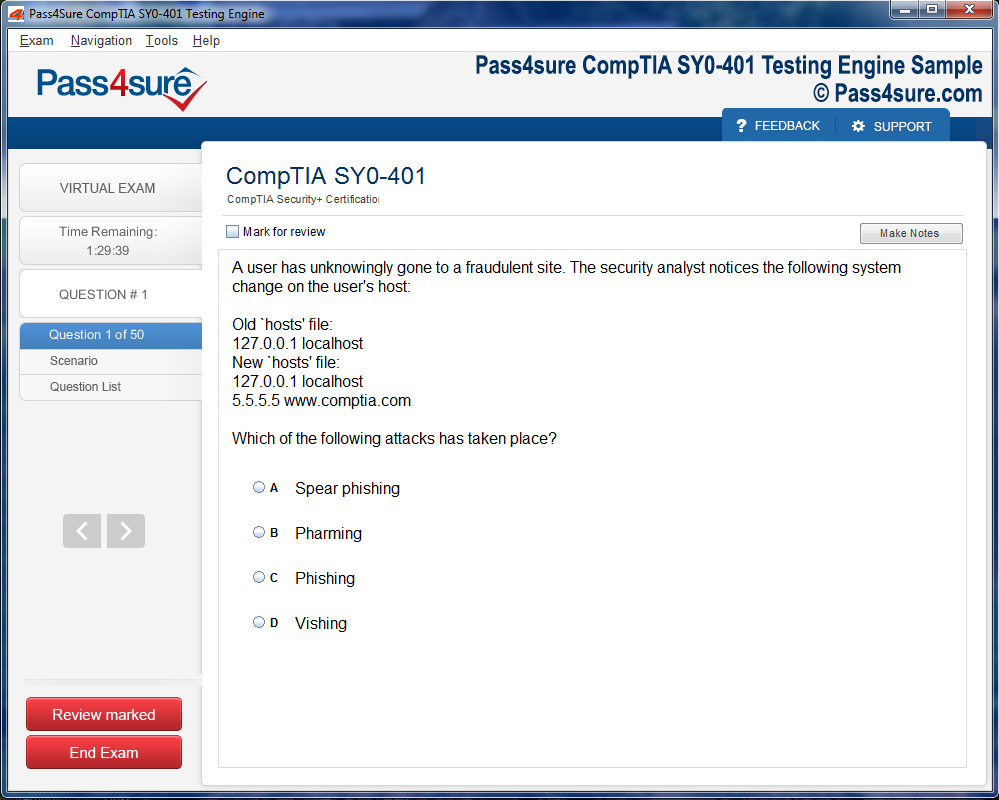
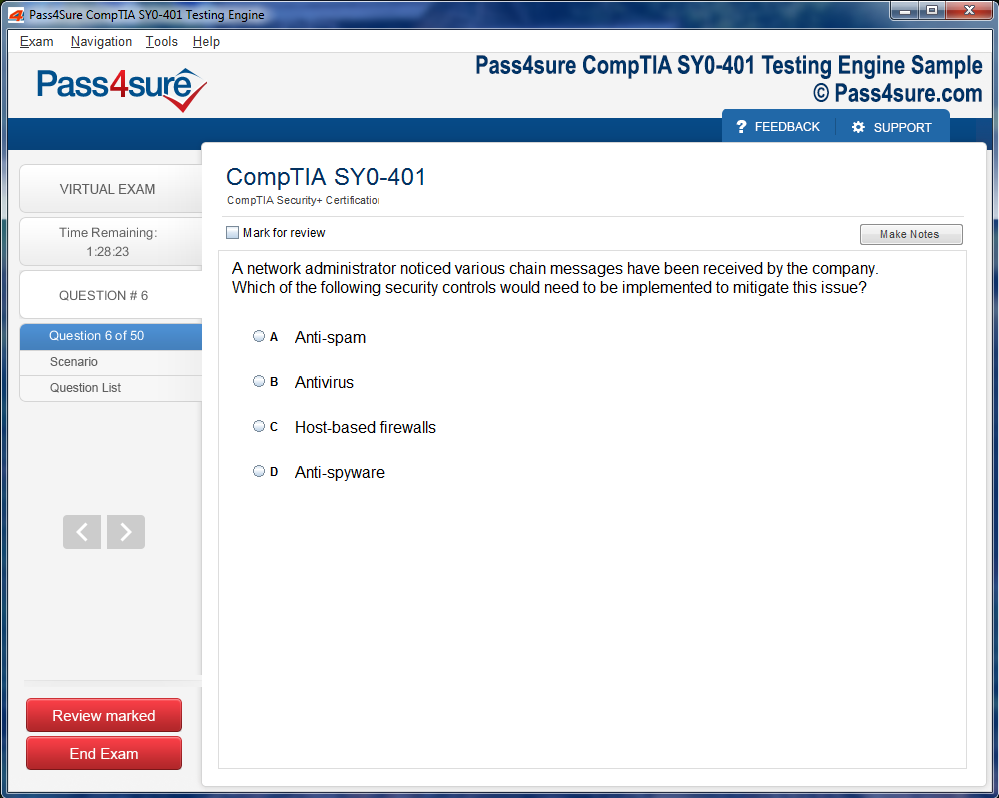
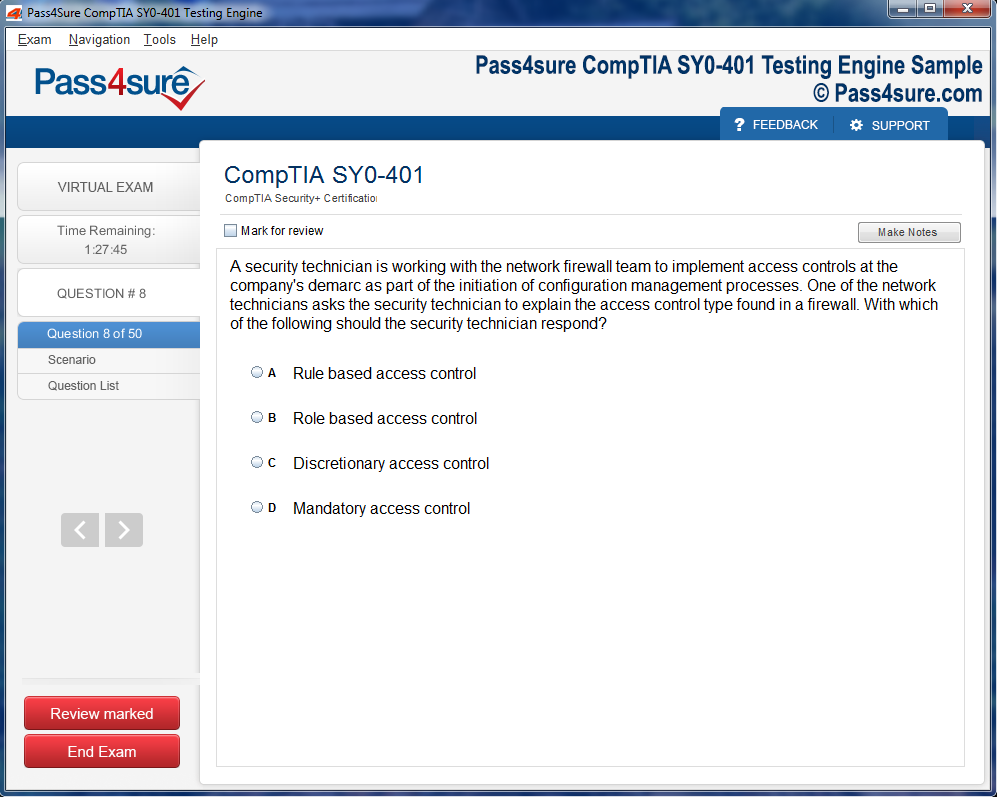
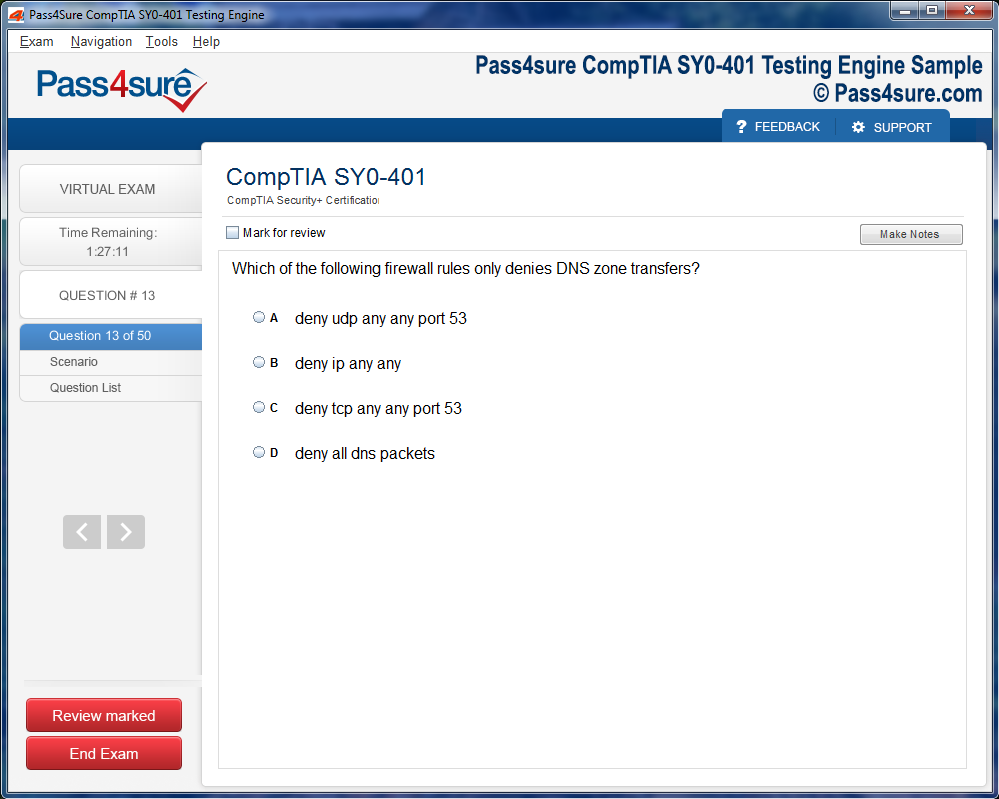
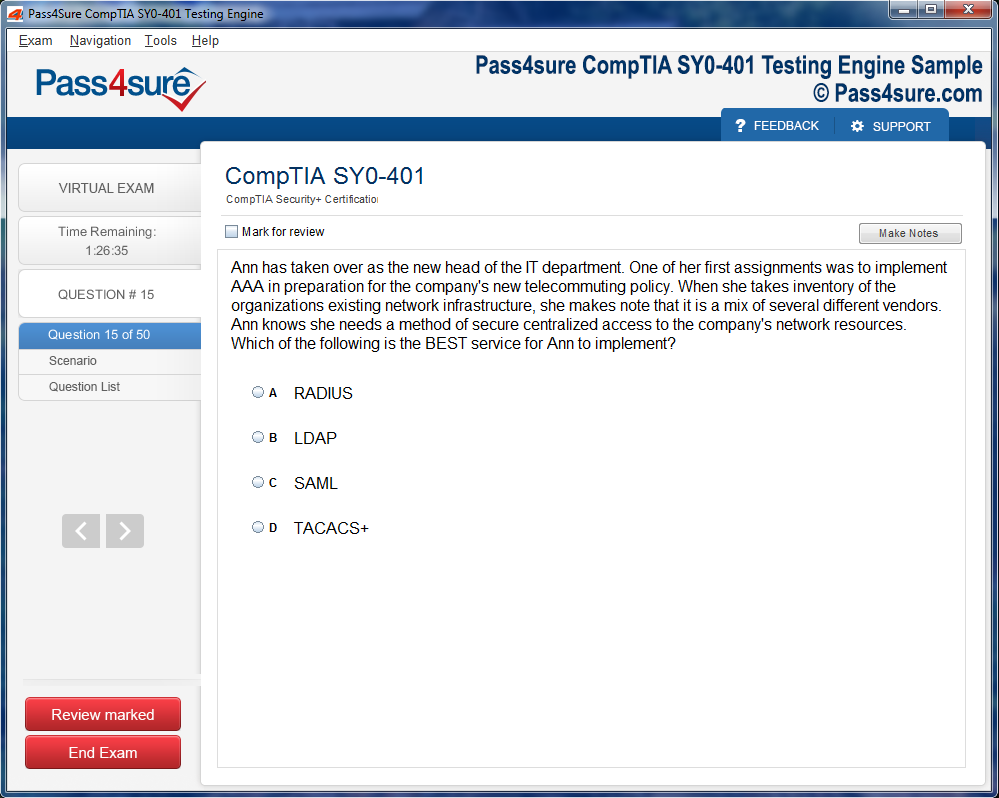
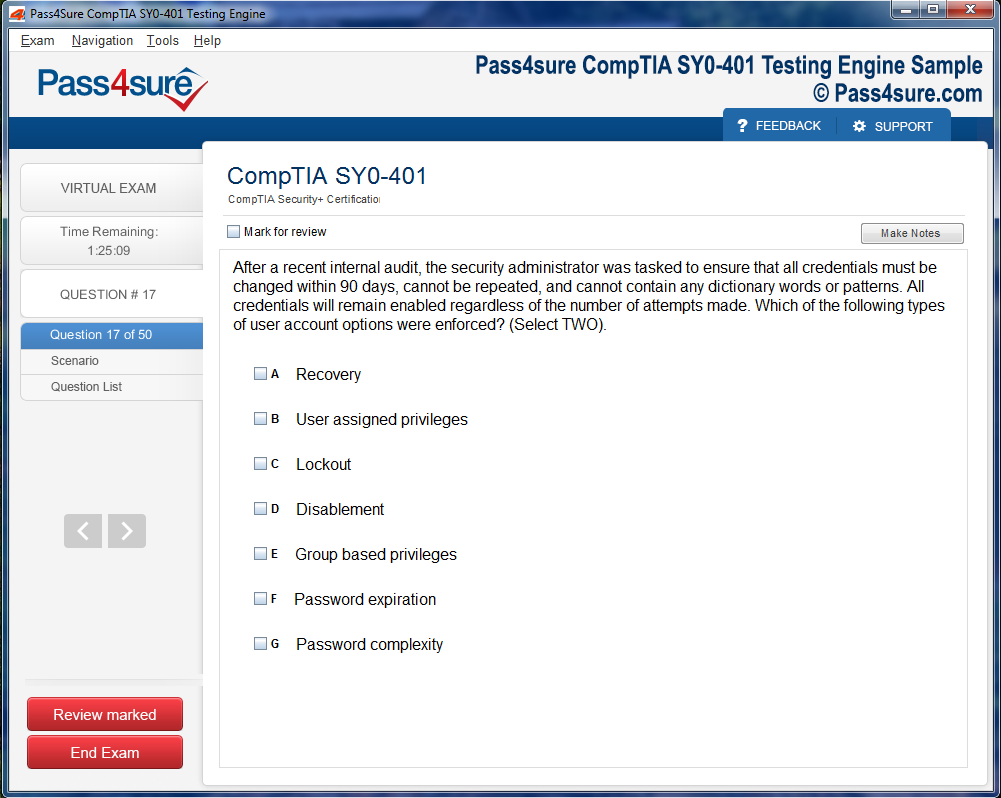
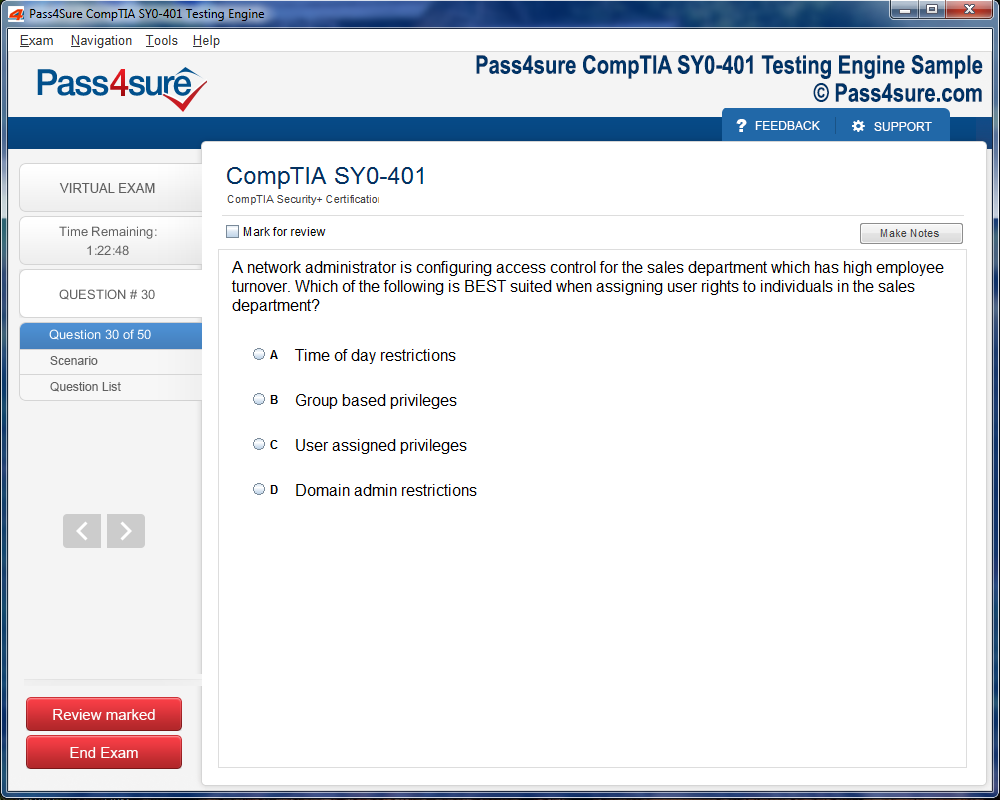
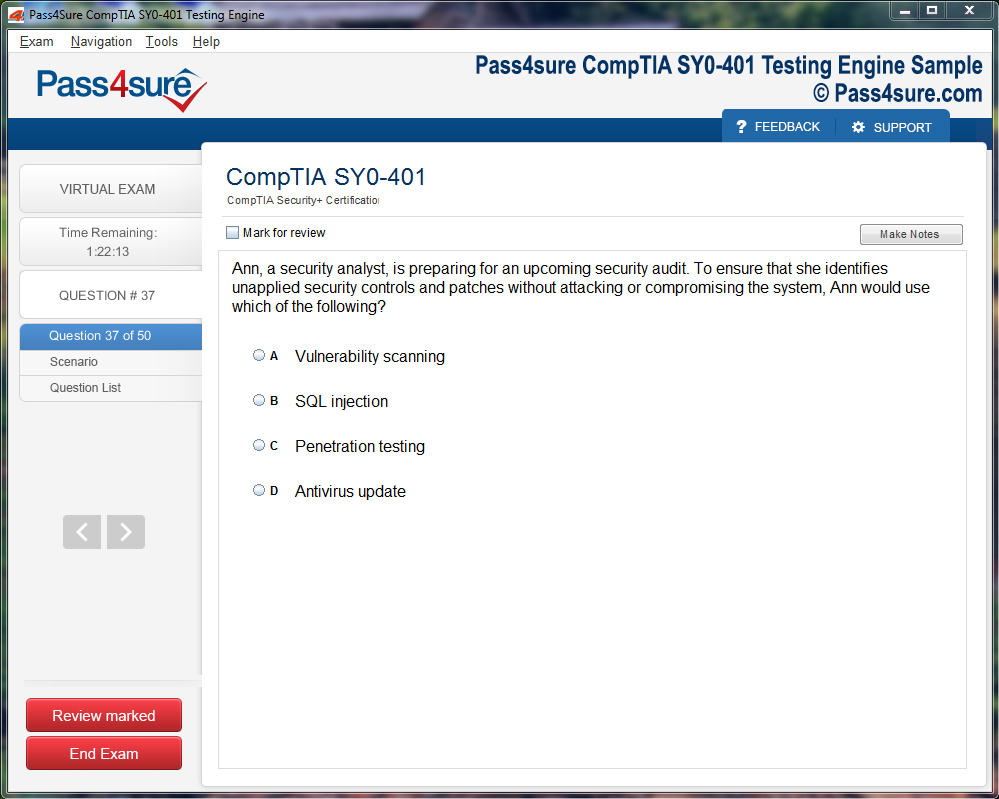
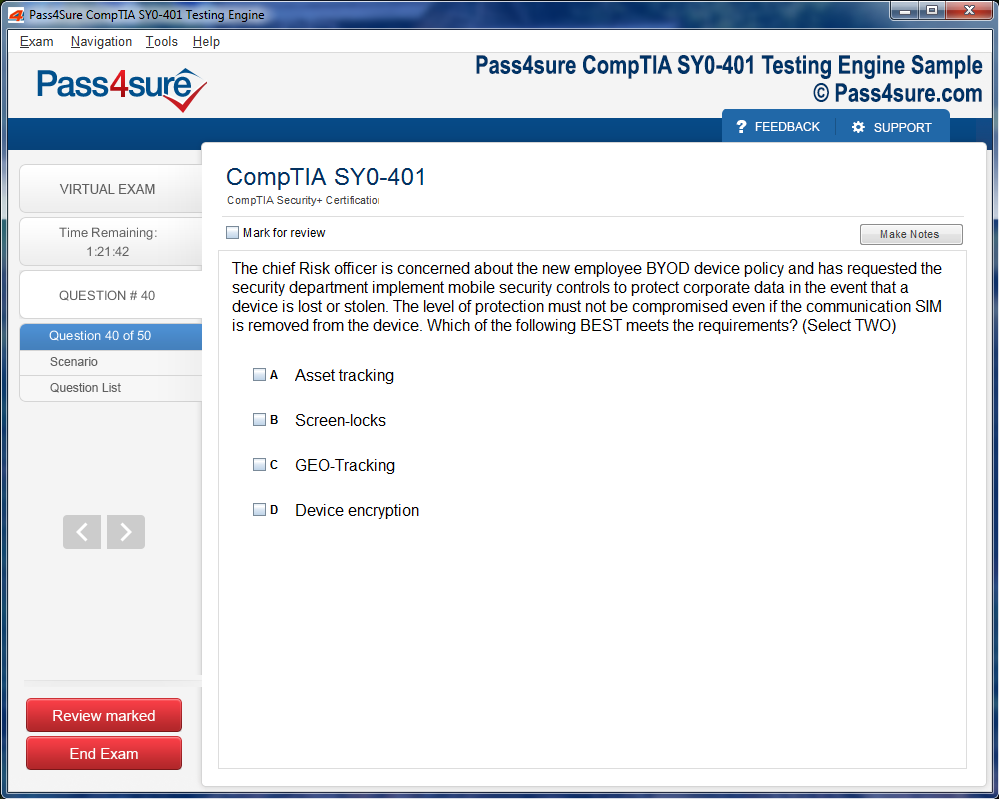
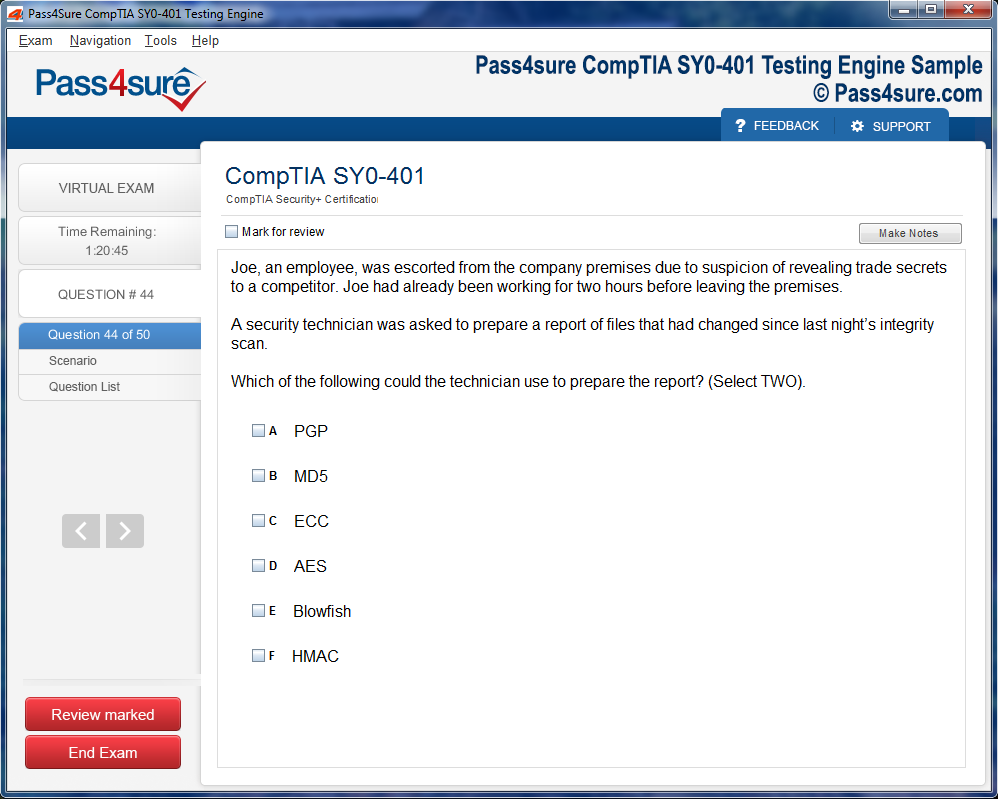
Product Screenshots
Frequently Asked Questions
How does your testing engine works?
Once download and installed on your PC, you can practise test questions, review your questions & answers using two different options 'practice exam' and 'virtual exam'. Virtual Exam - test yourself with exam questions with a time limit, as if you are taking exams in the Prometric or VUE testing centre. Practice exam - review exam questions one by one, see correct answers and explanations.
How can I get the products after purchase?
All products are available for download immediately from your Member's Area. Once you have made the payment, you will be transferred to Member's Area where you can login and download the products you have purchased to your computer.
How long can I use my product? Will it be valid forever?
Pass4sure products have a validity of 90 days from the date of purchase. This means that any updates to the products, including but not limited to new questions, or updates and changes by our editing team, will be automatically downloaded on to computer to make sure that you get latest exam prep materials during those 90 days.
Can I renew my product if when it's expired?
Yes, when the 90 days of your product validity are over, you have the option of renewing your expired products with a 30% discount. This can be done in your Member's Area.
Please note that you will not be able to use the product after it has expired if you don't renew it.
How often are the questions updated?
We always try to provide the latest pool of questions, Updates in the questions depend on the changes in actual pool of questions by different vendors. As soon as we know about the change in the exam question pool we try our best to update the products as fast as possible.
How many computers I can download Pass4sure software on?
You can download the Pass4sure products on the maximum number of 2 (two) computers or devices. If you need to use the software on more than two machines, you can purchase this option separately. Please email sales@pass4sure.com if you need to use more than 5 (five) computers.
What are the system requirements?
Minimum System Requirements:
- Windows XP or newer operating system
- Java Version 8 or newer
- 1+ GHz processor
- 1 GB Ram
- 50 MB available hard disk typically (products may vary)
What operating systems are supported by your Testing Engine software?
Our testing engine is supported by Windows. Andriod and IOS software is currently under development.
IIA-CCSA: Proven Tips for Passing the Exam
Delving into the governance and risk management domain requires an appreciation for the subtle symphony of organizational architecture. Governance is not merely a procedural obligation; it is an orchestrated endeavor where hierarchical, strategic, and ethical elements converge. Candidates must cultivate an awareness of risk as an omnipresent undercurrent influencing decision-making. The challenge lies in perceiving latent risks—those that evade conventional detection but harbor potential disruption.
Sophisticated practitioners approach risk management not as a static checklist but as a dynamic, anticipatory process. Tools such as risk matrices, heat maps, and scenario simulations serve as lenses to perceive risk magnitudes and probabilities with surgical precision. High-engagement learning involves juxtaposing hypothetical organizational scenarios with documented case studies, thereby enabling candidates to extrapolate theory into praxis. This cognitive juxtaposition fosters analytical agility, empowering candidates to discern not only the overt implications of risks but also the insidious ripple effects that pervade organizational strata.
Internal Control and Assurance: Beyond the Obvious
Internal control is a multidimensional construct, encompassing procedural, technological, and behavioral facets. Mastery in this realm demands candidates transcend rote memorization and embrace a heuristic approach—learning to identify systemic vulnerabilities and crafting tailored mitigation strategies. Assurance, conversely, embodies the evaluative lens, scrutinizing whether controls operate effectively and consistently.
Candidates are encouraged to cultivate a mental framework where controls are perceived as living entities, responsive to environmental fluctuations. For instance, the interplay between automated controls and human oversight can either fortify or undermine operational resilience, contingent upon contextual variables. Engaging with the material through problem-based exercises enhances retention. A technique involves designing hypothetical control assessments for various industries—manufacturing, healthcare, or financial services—thereby internalizing both universal principles and sector-specific idiosyncrasies.
Facilitation and Communication: The Art of Influence
Excellence in facilitation and communication is an oft-underestimated facet of the IIA-CCSA exam. Beyond mere articulation, candidates must grasp the subtleties of cognitive engagement, persuasion, and collaborative synthesis. Facilitation entails guiding diverse stakeholders through complex risk assessments without imposing bias or suppressing dissenting insights.
High-engagement strategies involve role-playing exercises, where one alternates between facilitator, observer, and participant. This triangulation fosters empathy, situational awareness, and adaptive communication tactics. Additionally, candidates should refine the ability to distill dense technical concepts into lucid narratives. Analogies, metaphors, and visual representations become cognitive scaffolds that aid understanding and retention. In essence, mastery of facilitation is the alchemy of harmonizing analytical rigor with interpersonal dexterity.
Assessment Techniques: Precision and Perception
Assessment techniques constitute the analytical backbone of the CCSA examination. Candidates must be adept at selecting and applying the most pertinent evaluation methodologies while interpreting outcomes with critical acumen. Techniques span qualitative interviews, quantitative sampling, control self-assessments, and process walkthroughs. Each technique demands discernment; misalignment between method and objective can yield misleading conclusions.
To cultivate proficiency, candidates are advised to immerse themselves in scenario-based exercises that mimic the unpredictability of real-world audits. By confronting ambiguities and incomplete information, learners enhance decision-making resilience. A particularly effective approach is reflective journaling, wherein candidates analyze their thought processes during simulated assessments. This introspective practice not only consolidates technical knowledge but also fosters meta-cognitive awareness—a hallmark of exceptional practitioners.
Cognitive Cartography: Mapping Knowledge to Application
Creating a mental cartography of interconnected concepts can dramatically elevate exam performance. Cognitive cartography involves visualizing relationships among governance, risk, control, and assessment domains. Rather than perceiving each domain as siloed, candidates should construct a multidimensional map where principles interlace dynamically.
High-engagement strategies include mind-mapping, concept clustering, and scenario integration. For example, linking risk appetite fluctuations to control modifications and subsequent assurance implications can render abstract concepts tangible. This mental modeling enhances analytical fluency, allowing candidates to navigate scenario-based questions with agility and insight.
Temporal Discipline: Structuring Study with Chronometric Precision
Time, in the context of exam preparation, is both adversary and ally. Temporal discipline requires constructing a chronometric schedule that balances immersion and recuperation. Candidates should calibrate study blocks to optimize circadian and cognitive rhythms, leveraging periods of peak alertness for intensive conceptual digestion and low-energy intervals for review or creative exercises.
Incorporating micro-assessments, spaced repetition, and interleaved practice prevents cognitive stagnation while enhancing long-term retention. Techniques such as pomodoro sessions, temporal chunking, and deliberate procrastination for reflection can transform temporal management into a strategic lever rather than a passive necessity.
Experiential Embodiment: Translating Theory into Praxis
Learning reaches its apotheosis when theoretical understanding is seamlessly embodied in practical scenarios. Candidates should seek opportunities for experiential engagement, simulating risk assessments, control evaluations, and facilitation exercises in controlled settings. This praxis-oriented approach consolidates knowledge, enhances problem-solving dexterity, and fortifies confidence.
Embedding feedback loops into experiential exercises amplifies learning efficiency. Peer critique, self-reflection, and mentor guidance illuminate cognitive blind spots and reinforce strengths. The interplay between action, observation, and refinement creates a feedback ecosystem that accelerates mastery.
Active Learning for Cognitive Immersion
Active learning serves as the fulcrum of effective IIA-CCSA preparation. Candidates must transcend rote memorization by engaging with concepts in a tactile manner. This involves drafting hypothetical internal control lapses and devising mitigation strategies. Such exercises replicate the exigencies of real-world auditing, fostering an intuitive grasp of risk interdependencies and control mechanisms. By simulating decision-making environments, learners convert abstract theoretical paradigms into actionable competencies.
Mind Mapping as Cognitive Cartography
Mind mapping operates as a cerebral compass, allowing candidates to navigate the labyrinthine interrelations among governance frameworks, risk vectors, and control objectives. Constructing a mind map encourages the distillation of convoluted material into lucid visual schematics. This cognitive cartography enhances retention by linking disparate concepts, fostering synaptic reinforcement. Moreover, revisiting mind maps prior to exams accelerates recall, offering a synoptic perspective on internal audit paradigms.
Scenario-Based Question Mastery
Scenario-based questions cultivate analytical acuity and evaluative dexterity. Unlike rote multiple-choice items, they demand an operational application of principles to nuanced audit scenarios. By routinely confronting such questions under simulated temporal constraints, candidates refine cognitive agility and enhance situational judgment. This deliberate practice cultivates a mindset attuned to identifying latent risks, prescribing efficacious controls, and prioritizing remedial measures within intricate operational matrices.
Interleaving for Cognitive Flexibility
Interleaving is a sophisticated pedagogical technique that alternates study topics to enhance cognitive flexibility. Candidates might oscillate between risk assessment frameworks and communication protocols, thereby avoiding the cognitive inertia induced by prolonged focus on a single domain. This method strengthens synaptic connectivity across heterogeneous knowledge domains, promoting adaptive reasoning and facilitating the application of integrated solutions to complex internal audit challenges.
Self-Assessment and Diagnostic Reflection
Regular self-assessment is indispensable for strategic mastery. Through practice exams, quizzes, and mock scenarios, candidates can identify lacunae in comprehension and adjust study trajectories accordingly. Reflective journaling augments this process by cataloging insights, errors, and emergent strategies. Such diagnostic reflection fosters metacognitive awareness, bolsters confidence, and ensures incremental refinement of internal audit acumen.
Temporal Optimization and Study Efficiency
Time optimization is a subtle yet transformative component of preparation. Techniques like the Pomodoro method, which alternates concentrated study intervals with brief restorative breaks, mitigate cognitive fatigue and enhance focus. Coupled with a meticulously structured revision schedule, candidates can ensure comprehensive coverage of diverse IIA-CCSA domains while maintaining peak mental acuity throughout extended study periods.
Leveraging Diverse Resources
Augmenting core study materials with supplementary resources enriches understanding and introduces high-value perspectives. Professional publications, webinars, and industry forums illuminate emerging audit paradigms and evolving risk landscapes. Exposure to diverse insights facilitates a multidimensional comprehension of governance intricacies, equipping candidates to tackle scenario-based questions with both theoretical depth and practical acuity.
Mnemonics and Narrative Encoding
Memory augmentation techniques such as mnemonics, acronyms, and storytelling enhance information retention. Framing procedural steps or control evaluation frameworks within narrative constructs transforms abstract sequences into memorable cognitive pathways. These strategies are particularly efficacious under exam pressure, enabling candidates to retrieve intricate procedural knowledge with speed and precision, thereby improving both accuracy and confidence.
Cognitive Synthesis Through Integrative Practice
Integrative practice consolidates learning by combining theoretical knowledge with scenario execution. Candidates synthesize risk assessment principles, communication strategies, and control evaluation techniques within simulated audit engagements. This holistic approach reinforces conceptual interconnectivity, sharpens decision-making dexterity, and develops a resilient mental schema capable of adapting to novel audit scenarios.
Stress Modulation and Performance Optimization
Strategic study encompasses more than knowledge acquisition; it also requires mastering psychological equanimity. Techniques such as guided visualization, mindfulness meditation, and controlled breathing enhance concentration, mitigate exam anxiety, and improve cognitive endurance. By cultivating a balanced mental state, candidates optimize both analytical performance and the nuanced application of internal control principles under pressure.
The Esoteric Fabric of Organizational Governance
Organizational governance transcends perfunctory checklists; it manifests as a labyrinthine interplay of accountability, strategic foresight, and oversight acumen. At its nucleus lies ethical stewardship, a principle that dictates the moral compass of board members and senior leadership alike. Candidates navigating the IIA-CCSA examination must internalize the subtleties of fiduciary obligations, stakeholder consonance, and hierarchical diligence. Governance lapses are seldom overt; they often masquerade as procedural anomalies or obfuscated reporting mechanisms. Recognizing these subtleties requires an analytical lens sharpened by familiarity with structured paradigms such as COSO and ISO 31000, enabling a forensic dissection of organizational directionality and control efficacy.
Multifaceted Dimensions of Risk Assessment
Risk assessment, unlike static doctrines, is perennially protean. It encompasses operational, strategic, financial, and compliance dimensions, each imbued with discrete ramifications. Operational risk might emerge from process inefficiencies, systemic lapses, or technological obsolescence, whereas strategic risk embodies the peril of misaligned objectives or competitive myopia. Financial risk lurks in liquidity perturbations, capital misallocation, and fiscal opacity, while compliance risk dwells in regulatory nonconformity or ethical transgressions. A perspicacious candidate appreciates that the taxonomy of risk is not merely classificatory but prescriptive, dictating the architecture of internal controls and mitigation stratagems.
Analytical Techniques in Risk Profiling
Examiners frequently probe the candidate’s dexterity with risk analytics. Proficiency in risk scoring, probabilistic quantification, heat mapping, and meticulous risk registers constitutes the bedrock of evaluative rigor. Yet, rote memorization is insufficient; candidates must cultivate interpretive acumen, discerning which vulnerabilities warrant immediate remediation and which require longitudinal monitoring. A seemingly inconsequential compliance aberration, if recurrent and probable, may eclipse a financially weightier but less likely contingency in strategic priority. The judicious orchestration of attention and resources underscores the nuanced sophistication demanded by the IIA-CCSA framework.
Scenario-Based Exegesis and Practical Simulation
Hypothetical simulations serve as cognitive crucibles for candidates. Engaging with contrived organizational processes enables the identification of latent vulnerabilities and the conception of bespoke mitigation measures. Such exercises hone analytical agility, permitting practitioners to transcend textbook responses and engage in real-time strategic reasoning. Evaluators prize candidates capable of navigating these hypotheticals with deliberative clarity, illustrating an intrinsic comprehension of both procedural mechanics and strategic imperatives.
Communicative Precision in Risk Articulation
The articulation of risk findings is an equally pivotal domain. Technical analyses, no matter how scrupulous, achieve their objective only when transmuted into actionable managerial insights. Candidates must master the lexicon of concise reporting, delineating critical risks, recommended interventions, and anticipated repercussions. Effective communication embodies professional maturity, bridging the chasm between abstract evaluation and operational implementation. Auditors who can synthesize complex risk landscapes into digestible, executive-oriented narratives exhibit the dexterity that distinguishes exemplary practitioners.
Ethical Lattices and Professional Integrity
Ethical considerations permeate every stratum of governance and risk assessment. Candidates must navigate the labyrinth of conflicts of interest, regulatory adherence, and fiduciary propriety. Ethical frameworks, coupled with professional standards, provide a moral scaffolding upon which decision-making is anchored. Recognition of integrity lapses, anticipatory mitigation of compliance violations, and adherence to principled judgment collectively equip aspirants to confront real-world exigencies with unwavering fidelity.
Iterative Cognition and Mastery Acquisition
The iterative revisitation of governance paradigms and risk methodologies is indispensable. Mastery emerges not from singular study episodes but from cyclical engagement, reflection, and applied simulation. Candidates who repeatedly interrogate frameworks, synthesize concepts, and extrapolate principles to novel scenarios internalize a dynamic understanding. This cognitive plasticity transforms rote memorization into actionable intelligence, fostering a readiness to confront the idiosyncratic complexities characteristic of contemporary organizational environments.
The Essence of Internal Control Mechanisms
Internal control constitutes the sinew of organizational fortitude, an intricate lattice of protocols designed to preempt, detect, and rectify operational aberrations. For aspirants of the IIA-CCSA examination, an intimate grasp of these mechanisms is indispensable. Control structures are not mere procedural formalities; they embody a philosophical paradigm wherein risk mitigation is symbiotic with organizational integrity. A nuanced comprehension of these systems demands recognizing the divergent yet interdependent modalities of preventive, detective, and corrective controls.
Preventive controls, such as segregation of duties and access limitations, erect formidable barriers against errors and malfeasance. Detective controls, exemplified by reconciliations, exception reports, and anomaly identification, illuminate deviations post-occurrence. Corrective controls, encompassing remediation plans and exception handling procedures, ensure that deviations are systematically redressed. A candidate’s acumen is tested in discerning the situational applicability of each control, thereby cultivating a holistic understanding of organizational risk mitigation.
Qualitative and Quantitative Appraisal Techniques
Evaluation of controls necessitates both qualitative perspicacity and quantitative exactitude. Qualitative analysis probes the structural coherence and procedural rigor of control frameworks, emphasizing operational alignment with organizational objectives. Quantitative assessment, conversely, relies on empirical data to substantiate the efficacy and consistency of implemented controls.
Candidates must cultivate proficiency in discerning control design deficiencies, gauging operational effectiveness, and meticulously documenting findings. Scenario-based questions frequently simulate complex organizational environments, necessitating an agile, context-sensitive application of judgment. Mastery of auxiliary instruments—control matrices, flowcharts, risk registers, and advanced audit software—enhances analytical precision and accelerates the assessment process, cultivating a practitioner’s ability to navigate intricate risk landscapes.
Assurance Beyond Verification
Assurance in internal auditing transcends mere verification; it embodies a covenant of confidence that organizational controls are robust, efficacious, and reliable. Effective practitioners not only illuminate vulnerabilities but also articulate prescriptive strategies that fortify organizational resilience. This proactive lens distinguishes competent auditors from those whose contributions are purely observational.
Candidates must internalize that assurance encompasses foresight and adaptability. The capacity to foresee latent risks, anticipate systemic weaknesses, and propose sustainable ameliorations underpins professional credibility. Engagement with dynamic control testing, scenario simulations, and iterative evaluation strengthens the auditor’s foresight, ensuring readiness to confront unforeseen organizational contingencies.
Meticulous Documentation and Articulation
The articulation of findings represents a pivotal axis in the internal control continuum. Structured, lucid, and methodical documentation not only communicates findings effectively but also demonstrates analytical rigor. Exam candidates should cultivate the skill of sequencing observations logically, correlating them with risk ramifications, and proffering actionable recommendations.
Precision in reporting mitigates ambiguity, fosters organizational confidence, and amplifies the credibility of audit interventions. Familiarity with standardized reporting frameworks, coupled with adaptability in conveying complex control dynamics succinctly, elevates a candidate’s evaluative proficiency. Articulation transcends rote documentation; it is an exercise in narrative coherence, linking procedural evaluation with strategic foresight.
Integrative Control and Governance Perspective
Internal control does not exist in isolation; it is a constituent of a broader governance and risk management ecosystem. Candidates must apprehend the interconnectivity between control mechanisms, organizational objectives, and strategic imperatives. Controls function as embedded nodes within an overarching governance lattice, harmonizing operational reliability with organizational vision.
Scenario-based assessments frequently probe this integrative comprehension, demanding that candidates transcend procedural rote knowledge and demonstrate systemic reasoning. Recognition of the symbiotic relationship between control, risk assessment, and governance augments both analytical sophistication and practical applicability, fostering a perspective that perceives control as a dynamic enabler rather than a static obligation.
Iterative Simulation and Experiential Mastery
Competence in internal control assessment is fortified through repetitive simulation and experiential engagement. Mock process evaluations, control effectiveness appraisals, and iterative remediation exercises cultivate both technical acumen and confidence. Repeated exposure to diverse control scenarios sharpens analytical agility and refines judgment under ambiguous conditions.
Through iterative simulation, candidates internalize nuanced control dynamics, anticipate potential anomalies, and develop strategic remediation strategies. This experiential learning paradigm reinforces theoretical understanding, ensuring preparedness for complex, multi-layered exam scenarios. Auditors who embrace this cyclical, hands-on methodology cultivate an adaptive mindset, crucial for sustaining efficacy amidst evolving organizational landscapes.
Strategic Deployment of Control Instruments
Control instruments, encompassing matrices, flowcharts, and analytical software, serve as cognitive scaffolds for systematic assessment. Candidates must comprehend the tactical deployment of these tools to ensure both efficiency and thoroughness. Control matrices facilitate structured risk-control mapping, highlighting alignment and identifying gaps. Flowcharts elucidate process interdependencies and operational bottlenecks, enabling visual inspection of potential failure points. Audit software amplifies analytical precision, automates repetitive validation, and enables the synthesis of voluminous datasets.
The strategic integration of these instruments fosters a layered evaluative approach. It allows candidates to triangulate findings, cross-verify control performance, and develop an evidence-based assurance narrative. Mastery of tool selection, deployment, and interpretation significantly enhances the robustness and credibility of internal control assessments.
Adaptive Control Evaluation in Dynamic Environments
Modern organizational ecosystems are inherently dynamic, influenced by technological innovation, regulatory evolution, and market volatility. Consequently, internal controls must exhibit both robustness and adaptability. Candidates are frequently tested on their ability to evaluate control effectiveness within fluid environments, where historical baselines may be insufficient predictors of future efficacy.
Dynamic assessment involves iterative testing, real-time monitoring, and scenario modeling. Candidates must analyze both tangible and intangible risk vectors, evaluate procedural adaptability, and propose modifications that sustain control relevance. This adaptive evaluation paradigm ensures that internal control practices remain resilient amidst fluctuating operational and strategic exigencies.
The Art of Facilitation in Control Self-Assessment
Facilitation within control self-assessment transcends mere procedural guidance; it is a nuanced choreography of human dynamics, cognitive engagement, and procedural fidelity. Auditors must metamorphose from passive observers to orchestral conductors of knowledge, guiding participants through labyrinthine organizational processes while extracting authentic insights. Employing structured inquiry, auditors can unveil latent vulnerabilities that might otherwise remain obscured beneath layers of habitual operational patterns.
Consensus-building exercises serve as cognitive catalysts, transforming disparate perspectives into coherent strategic intelligence. Facilitators adept in conflict resolution can transmute potential discord into constructive dialogue, fostering a collaborative ethos while safeguarding the objectivity of assessment outcomes. Role-playing scenarios, iterative feedback loops, and reflective pauses constitute indispensable instruments in the facilitator's arsenal, honing responsiveness to both explicit and tacit signals emitted by participants.
Rarely discussed is the subtle art of narrative scaffolding during workshops. By embedding complex risk concepts within evocative metaphors or situational analogies, auditors can amplify participant engagement and retention, transforming routine assessments into memorable cognitive experiences. This synthesis of structure and creativity cultivates a fertile environment for robust, actionable control insights.
Communicative Precision for Technical Clarity
The ability to articulate intricate audit findings in lucid, non-technical parlance is an intellectual craft that distinguishes exceptional auditors. Reports must transcend rote recitation; they must be interpretive instruments that illuminate the latent significance of observed control phenomena. Auditors are tasked with transmuting voluminous, often esoteric data into distilled narratives that resonate with stakeholders of varied technical acumen.
Lexical economy becomes a strategic tool in this endeavor. Succinct phrasing, meticulous diction, and judicious emphasis allow auditors to accentuate pivotal risks while mitigating cognitive overload. Moreover, adopting a professional yet approachable tone cultivates trust, ensuring that recommendations are perceived as constructive rather than prescriptive. Scenario-based simulations, emphasizing the translation of abstract findings into pragmatic organizational interventions, reinforce this skill and enhance examiner confidence in the candidate's applied competence.
Interdisciplinary analogies can serve as cognitive bridges. For instance, likening control breakdowns to ecological imbalances or mechanical frictions illuminates abstract vulnerabilities in a manner that is simultaneously memorable and instructive. Such rhetorical ingenuity not only bolsters engagement but also evidences intellectual dexterity, a quality highly prized in professional evaluations.
Analytical Acumen in Auditing Practices
Analytical prowess undergirds every phase of the control self-assessment process, transforming disparate observations into cohesive intelligence. Effective auditors exhibit a perspicacious eye for patterns, discerning subtle correlations and causal linkages that may elude cursory review. This entails rigorous data interrogation, critical evaluation of control efficacy, and the synthesis of evidence-based conclusions that withstand professional scrutiny.
Cognitive scaffolds such as decision matrices, risk mapping, and probabilistic modeling augment analytical depth, enabling auditors to quantify uncertainties and prioritize interventions with strategic precision. Beyond mere computation, the analytical process is inherently interpretive, requiring auditors to contextualize anomalies within organizational, regulatory, and cultural frameworks.
Creative exemplars, drawn from uncommon operational scenarios, enhance both analytical insight and evaluative rigor. By contemplating risk manifestations in atypical industries or emergent technological contexts, auditors cultivate a breadth of perspective that enriches decision-making. Such cognitive expansiveness is indispensable for exam scenarios that reward depth, originality, and evidentiary justification over superficial procedural recitation.
Temporal Dexterity in Workshop Management
Time management is a subtle yet critical competency, particularly within the cadence of workshops and scenario-based assessments. Auditors must calibrate the rhythm of information gathering, participant dialogue, and report synthesis to optimize both accuracy and engagement. Temporal dexterity ensures that no critical observation is truncated and that participant contributions are thoroughly captured and validated.
Techniques such as micro-scheduling, dynamic reprioritization, and temporal anchoring facilitate efficient use of allotted intervals while preserving analytical and communicative integrity. Simulated exercises replicating the temporal pressures of examinations or organizational workshops can cultivate this competency, embedding a rhythmic intuition that guides real-time decision-making without compromising analytical rigor.
Elevating Engagement Through Rare Illustrative Examples
The judicious use of rare or unconventional examples can substantially elevate engagement and cognitive retention. Illustrating control risks through unexpected contexts—such as emergent industries, fringe regulatory scenarios, or cross-cultural organizational practices—provokes curiosity and reinforces conceptual understanding. Analogies drawn from literature, natural sciences, or art can catalyze mental resonance, ensuring that audit insights are not merely recorded but internalized.
Creative narrative frameworks can further transform mundane procedural exercises into intellectually stimulating encounters. For instance, envisioning risk propagation as a cascade in a kinetic sculpture or mapping process inefficiencies as metabolic bottlenecks allows participants to internalize control principles through multisensory cognitive pathways. This methodological innovation fosters both memorable engagement and profound comprehension.
Navigating the Cognitive Topography of Exam-Day
Exam-day presents a labyrinthine interplay of cognition and composure. Candidates are confronted with the dual imperative of intellectual acuity and psychological equilibrium. Success hinges not merely on mastery of the subject matter but on an orchestrated choreography of mental agility and temporal governance. The candidate’s mind becomes a crucible where analytical rigor must coexist with strategic restraint, a synthesis of knowledge and presence.
Temporal Alchemy and Question Stratification
Time is a mercurial ally. Effective candidates convert chronological constraints into structured progression. Prioritization of questions is paramount: identifying those with the highest point yield allows for an efficient allocation of mental resources. Sequential or thematic clustering of questions can further mitigate cognitive fatigue, transforming the exam from a series of isolated tasks into a cohesive intellectual expedition. Mindful pacing ensures that energy is conserved for complex, scenario-based inquiries, preventing precipitous responses under duress.
Psychological Fortification and Anxiety Modulation
The psychodynamics of exam anxiety can erode performance if left unchecked. Candidates who cultivate resilience through simulated assessments are better positioned to withstand cognitive perturbations. Visualization techniques, deep diaphragmatic respiration, and micro-breaks during the examination serve as psychological levers to restore focus and clarity. These methods act as mental ballast, stabilizing thought processes amidst the vicissitudes of pressure. A mind tempered in simulation will navigate ambiguity with composure and decisive clarity.
Articulation of Scenario-Based Responses
Structured articulation amplifies perceived competence. Scenario-based questions demand a sequential framework: issue identification, impact analysis, solution proposition, and final recommendation. Each component should be delineated with precision, conveying analytical dexterity and professional poise. A meticulously organized response signals the candidate’s capacity to synthesize information under temporal constraints while maintaining intellectual coherence. Linguistic clarity and logical sequencing act as conduits for evaluative confidence.
Cultivating Cognitive Resilience and Adaptive Mindsets
Mindset constitutes a silent yet potent determinant of performance. Candidates who perceive challenges as canvases for demonstration rather than as impediments cultivate an adaptive cognition. Resilience becomes the mechanism by which temporary disorientation is transformed into strategic recalibration. Focused adaptability distinguishes high achievers from those who succumb to the entropy of stress. Embracing a dynamic mindset fosters not only exam success but a broader professional fortitude that persists in real-world applications.
Reflexive Appraisal and Continuous Iteration
Post-examination reflection is an often-overlooked dimension of professional maturation. An analytical review of preparation efficacy, identification of cognitive blind spots, and strategic refinement constitute a cyclical improvement process. Each attempt becomes a repository of insight, informing subsequent approaches and consolidating experiential wisdom. This iterative process transforms isolated exam endeavors into a continuum of skill amplification and intellectual evolution.
Harmonization of Technical Mastery and Strategic Intuition
The apex of preparedness resides in the confluence of technical acumen and strategic foresight. Candidates integrate governance comprehension, risk evaluation, internal control expertise, facilitation techniques, and communicative dexterity into a holistic operational schema. Analytical skills are deployed not in isolation but as instruments of strategic orchestration, ensuring readiness for both the examination and professional application. Success is thus not a mere threshold but a manifestation of integrated cognitive, technical, and emotional dexterity.
Navigating the Cognitive Topography of Exam-Day
Exam-day embodies a multifaceted confluence of cognition, emotion, and tactical awareness. Beyond the mere application of technical knowledge, candidates must marshal their faculties to navigate a high-stakes psychological landscape. Each moment becomes an inflection point: a microcosm of decision-making where analytical reasoning, temporal discipline, and emotional equanimity converge. The mind is both instrument and canvas, requiring calibration for optimal function.
Candidates often underestimate the subtle influence of mental priming. Cognitive readiness begins days before the exam, encompassing not just rote memorization but the integration of complex frameworks into an accessible mental schema. Visualization of the examination environment, coupled with rehearsal of scenario navigation, primes neural pathways to respond with fluidity under duress. In essence, exam-day readiness is less about last-minute cramming and more about cognitive orchestration and mental acclimatization.
Temporal Alchemy and Question Stratification
Time allocation during the exam is an art form, requiring a precise blend of foresight and adaptability. The examination is rarely linear; questions vary in complexity, point weight, and interpretive nuance. Candidates who excel recognize that chronological constraints are not obstacles but parameters to optimize. Effective strategists partition their mental energy according to cognitive demand: straightforward questions receive expedited attention, while intricate scenarios are granted deliberative focus.
Question stratification further augments temporal efficiency. By identifying high-yield items or clusters, candidates can prioritize areas where accuracy and depth yield maximum points. Such calibration transforms the exam from a rigid temporal trial into a dynamic intellectual expedition. The strategy must remain fluid: the capacity to recalibrate pacing based on emergent difficulty is indicative of adaptive intelligence. A candidate who masters temporal alchemy avoids both precipitous errors and exhaustion-induced lapses.
Psychological Fortification and Anxiety Modulation
Examination anxiety functions as a dual-edged phenomenon. Moderate arousal enhances focus and reaction speed, but excessive stress triggers cognitive interference, undermining analytical precision. Psychological fortification is thus as critical as technical preparation. Candidates benefit from regimented mental conditioning: simulated exams under timed conditions instill familiarity with pressure dynamics and attenuate fear responses. This rehearsal produces a form of cognitive immunization, reducing vulnerability to acute stress.
Breathing techniques, micro-pauses, and brief mindfulness interludes serve as anchors for attention amidst fluctuating exam pressures. Positive self-dialogue, calibrated affirmation, and visualization of successful execution consolidate resilience. Candidates who internalize these strategies exhibit an enhanced capacity to sustain concentration, mitigate intrusive doubt, and navigate the cognitive oscillations inherent in prolonged examinations.
Articulation of Scenario-Based Responses
Examination responses are not merely exercises in recollection; they are demonstrations of analytical rigor and professional discernment. Scenario-based questions demand structured, logical articulation: identify the issue, assess its ramifications, propose actionable interventions, and delineate a reasoned recommendation. This methodology ensures clarity, communicates strategic insight, and evidences mature professional judgment.
The cognitive underpinning of such responses lies in synthesis rather than segmentation. High-performing candidates integrate cross-domain knowledge—governance frameworks, risk matrices, control evaluations—into cohesive solutions. The skillful deployment of domain-specific vocabulary reinforces credibility, while precise, linear reasoning facilitates examiner comprehension. Structured articulation transforms complex scenarios from potential cognitive quagmires into opportunities for demonstrating mastery and poise.
Cultivating Cognitive Resilience and Adaptive Mindsets
Mindset constitutes a subtle yet decisive determinant of exam performance. Candidates who perceive challenges as fertile ground for demonstration, rather than as threats, cultivate adaptive cognition. Resilience is more than perseverance; it is the ability to recalibrate thought processes in response to unexpected difficulty. Adaptive mindsets allow candidates to transform initial disorientation into strategic recalibration, maintaining momentum despite emergent obstacles.
Resilient candidates embrace the elasticity of cognition. They recognize that lapses, whether minor misinterpretations or temporary confusion, need not precipitate collapse. Instead, each disruption becomes a pivot point, an opportunity for mental realignment. This approach contrasts sharply with reactive stress responses, which amplify errors and erode confidence. Cognitive resilience, when cultivated consistently, provides a scaffold for sustained high performance under rigorous conditions.
Reflexive Appraisal and Continuous Iteration
Post-examination reflection constitutes an integral dimension of professional growth. Candidates who systematically analyze their performance—identifying cognitive blind spots, evaluating time management efficacy, and assessing interpretive accuracy—engage in a process of iterative refinement. This reflective practice transforms isolated examination experiences into cumulative intellectual development.
Iterative appraisal fosters a feedback loop of continuous improvement. Each attempt yields insight into strategic efficacy, cognitive patterns, and response structuring. Candidates who engage deeply with post-exam analysis not only enhance future performance but also consolidate broader professional capabilities. This reflective discipline exemplifies the integration of experiential learning with cognitive evolution, ensuring that each challenge contributes to enduring skill acquisition.
Harmonization of Technical Mastery and Strategic Intuition
The pinnacle of examination readiness resides in the seamless integration of technical knowledge with strategic intuition. Governance comprehension, risk assessment, internal control expertise, facilitation skills, and analytical acumen must coalesce into a unified operational schema. Candidates who achieve this harmonization deploy each competency as a tool within a coordinated strategic framework.
Strategic intuition is cultivated through deliberate practice: repeated engagement with scenario complexities, analysis of decision outcomes, and synthesis of cross-domain insights. This integration enables candidates to anticipate implications, identify latent risks, and propose solutions that transcend superficial correctness. Mastery, therefore, is not an isolated intellectual achievement but a dynamic equilibrium of cognition, strategy, and professional discernment.
Mental Anchoring Through Ritual and Routine
Consistent pre-exam rituals serve as cognitive anchors, stabilizing mental state and fostering readiness. Whether through structured morning routines, brief meditation, or methodical review of high-yield frameworks, these rituals signal to the mind a transition into focused performance mode. Candidates who establish such anchors mitigate the disruptive impact of environmental variables, channeling energy toward analytical clarity rather than extraneous stressors.
Ritualization also functions as a psychological cue, triggering confidence and mental preparedness. Even minor routines—arranging materials in a consistent order, rehearsing response structures, or engaging in brief affirmations—can produce outsized effects on cognitive performance. The mind, accustomed to procedural consistency, reduces expenditure on decision fatigue, preserving capacity for complex problem-solving.
Adaptive Response Under Dynamic Examination Conditions
Examinations rarely unfold in predictable sequences. Adaptive candidates anticipate variability in question difficulty, time pressure, and contextual ambiguity. They maintain meta-cognitive awareness, continuously evaluating their own comprehension, pacing, and emotional state. This self-regulatory capacity allows rapid recalibration in response to unexpected complexity or emergent stressors, converting potential disruption into strategic advantage.
Adaptive response extends to interpretive flexibility. Scenario-based questions often present incomplete or ambiguous data, requiring candidates to extrapolate judiciously without overcommitting to unsupported assumptions. High-performing individuals demonstrate both analytical precision and heuristic agility, balancing rigorous evaluation with informed intuition. The resulting responses exemplify both expertise and situational acumen.
Cognitive Economy and Focused Prioritization
Efficiency of thought—cognitive economy—is a hallmark of exemplary examination performance. Candidates allocate mental bandwidth judiciously, distinguishing between high-impact and peripheral elements of each question. Focused prioritization prevents dilution of analytical effort across inconsequential details, ensuring that critical insights receive adequate deliberation.
Mental parsimony also reduces susceptibility to error under pressure. By deliberately constraining attention to essential variables, candidates minimize cognitive interference and optimize clarity. This disciplined approach complements time management, psychological fortitude, and scenario structuring, creating a cohesive performance strategy.
Cognitive Nuances of Facilitation Techniques
Facilitation is not merely procedural orchestration; it is an artful calibration of cognitive, emotional, and social dynamics. Auditors engaged in control self-assessment inhabit a dual role: both observer and cognitive architect. The effectiveness of facilitation hinges on the ability to decode verbal and non-verbal cues, anticipate cognitive bottlenecks, and dynamically recalibrate workshop strategies to optimize participant contributions.
Structured questioning serves as a scaffolding mechanism, guiding participants from superficial observations toward profound insights. Open-ended prompts stimulate divergent thinking, while targeted, probing questions elicit specific control nuances. Rarely emphasized, the sequencing of questions profoundly influences outcomes: commencing with high-level contextual inquiries before delving into granular operational specifics can reduce cognitive defensiveness and encourage authenticity.
Consensus-building, when executed with dexterity, transforms potential friction into a synergistic dialogue. Techniques such as affinity clustering, real-time prioritization exercises, and weighted voting mechanisms facilitate collective intelligence without sacrificing analytic rigor. For auditors, mastering the subtlety of guiding dissenting perspectives toward constructive compromise is a pivotal skill that ensures the integrity of workshop-derived conclusions.
Conflict resolution within facilitation is equally sophisticated. Rather than simply quelling disputes, auditors must decode the underlying cognitive schemas, emotional triggers, and organizational pressures that fuel discord. Reframing disagreements as opportunities for insight, using reflective listening, and employing structured negotiation protocols can transform interpersonal friction into analytical advantage. These strategies ensure workshops do not merely produce consensus, but generate nuanced, actionable intelligence.
The Linguistic Architecture of Communication
Communication is an intellectual architecture wherein complex, technical audit findings are rendered comprehensible without dilution of precision. Mastery in this domain necessitates a rare blend of lexical acuity, narrative structuring, and persuasive clarity. Auditors must distill dense quantitative and qualitative data into narratives that illuminate significance, implications, and actionable pathways.
Lexical economy is a critical tool in this endeavor. Rather than inundating readers with exhaustive data tables or procedural minutiae, auditors should emphasize conceptual clarity through carefully chosen terminology. For example, replacing generic descriptors with precise cognitive or operational labels enhances interpretive clarity. This approach ensures that key risks are both salient and memorable, fostering comprehension among diverse stakeholders.
Analogical reasoning amplifies communicative impact. By translating abstract risk constructs into relatable, vivid metaphors, auditors facilitate cognitive resonance. For instance, depicting a control deficiency as a “structural fissure” within organizational processes invokes a tangible mental image, reinforcing both urgency and understanding. Such rhetorical devices serve not merely as stylistic flourishes but as cognitive accelerants, enhancing retention and actionable interpretation.
Scenario-based report writing requires additional sophistication. Examiners and stakeholders alike evaluate not only content accuracy but the coherence and persuasiveness of arguments. Structuring reports with layered clarity—beginning with executive summaries, progressing through analytical exposition, and culminating in evidence-backed recommendations—ensures readability without sacrificing analytical depth. The subtle interplay between narrative pacing, emphasis, and conciseness defines the boundary between competent and exceptional communication.
Analytical Synthesis and Cognitive Pattern Recognition
Analytical skill is the cornerstone of effective auditing. Beyond data collation, auditors must exercise interpretive discernment, synthesizing patterns, correlations, and causal inferences from often fragmentary evidence. Analytical acuity is not merely quantitative; it encompasses an intellectual sensitivity to organizational idiosyncrasies, regulatory nuance, and human behavioral variability.
Decision matrices and probabilistic modeling enhance analytical rigor, offering structured frameworks to quantify uncertainty and prioritize interventions. However, true analytical mastery integrates these tools with interpretive insight: recognizing when anomalies represent systemic risk rather than isolated deviations, or discerning subtle interdependencies among ostensibly unrelated processes.
Pattern recognition, particularly in complex or atypical organizational contexts, is a differentiating skill. Auditors must detect emergent trends, recurring process inefficiencies, or latent vulnerabilities before they manifest as tangible risk exposures. The capacity to perceive such patterns often relies on cultivating a mental schema that integrates historical precedents, regulatory norms, and operational heuristics.
The use of unconventional examples further sharpens analytical faculties. Evaluating control processes in fringe industries or nascent technological domains exposes auditors to atypical risk vectors, fostering cognitive flexibility. Such exercises enhance both exam preparedness and real-world acuity, equipping auditors to navigate environments where established protocols may be insufficient.
Temporal Calibration in Assessment Environments
Time management is an often-underestimated facet of auditing, particularly in workshop and examination settings. Temporal calibration entails more than rigid scheduling; it is a dynamic negotiation between cognitive workload, participant engagement, and analytical completeness. Effective auditors internalize the rhythm of workshops, balancing inquiry, discussion, and synthesis within constrained intervals.
Micro-scheduling, wherein time is segmented into focused analytical bursts, allows auditors to maintain momentum while mitigating cognitive fatigue. Dynamic reprioritization ensures emergent insights receive appropriate attention without disrupting overarching assessment objectives. Temporal anchoring—allocating fixed periods for key activities such as consensus verification or risk evaluation—further enhances operational discipline, ensuring comprehensive coverage without compromising analytical depth.
Simulated exercises under timed conditions cultivate this skill, embedding procedural intuition that becomes instinctive under exam or real-world pressures. Over time, auditors develop an internal temporal metric, enabling them to allocate cognitive and interpersonal resources with strategic precision.
Cognitive Engagement Through Rare Illustrative Constructs
High-engagement instruction leverages cognitive curiosity. The deliberate use of rare or unconventional examples—situations that challenge standard assumptions or emerge from atypical organizational structures—enhances attention and retention. Cognitive engagement is amplified when auditors invite participants to explore anomalies or atypical risk manifestations, fostering active discovery rather than passive observation.
Analogical frameworks drawn from literature, natural phenomena, or kinetic systems stimulate multisensory cognitive pathways. For instance, likening procedural interdependencies to chemical reactions or organizational silos to ecological niches invokes mental imagery that reinforces comprehension. Such pedagogical creativity elevates routine workshops into memorable cognitive experiences, ensuring that lessons are internalized rather than superficially acknowledged.
Rare examples also serve as evaluative differentiators in examinations. Demonstrating the ability to apply control self-assessment principles to non-obvious scenarios signals intellectual agility, originality, and practical acumen. Candidates who leverage these illustrative techniques convey not only knowledge but the capacity for innovative, context-sensitive application.
Reflective Practice in Facilitation and Analysis
Reflective practice is an indispensable yet often overlooked dimension of audit competency. Beyond procedural execution, auditors must cultivate meta-cognitive awareness: the ability to evaluate their own cognitive biases, facilitation strategies, and interpretive judgments. Reflective practice transforms routine assessments into iterative learning cycles, continuously refining both technical and interpersonal proficiency.
Journaling post-workshop observations, conducting peer debriefings, and systematically reviewing decision rationales foster this reflective capacity. By interrogating both successes and shortcomings, auditors develop a nuanced understanding of their facilitation style, communicative effectiveness, and analytical heuristics. This metacognitive layering ensures that future engagements are increasingly sophisticated, precise, and impactful.
Analytical reflection also enhances scenario simulation for examinations. By critically evaluating prior practice exercises, auditors can identify recurrent reasoning patterns, latent blind spots, and opportunities for methodological innovation. Over time, this iterative process engenders an anticipatory cognitive schema, allowing auditors to navigate complex or novel scenarios with confidence and rigor.
Integrative Strategies for Cognitive Mastery
The convergence of facilitation, communication, and analytical skills is not accidental; it is the product of deliberate integrative practice. Mastery in control self-assessment arises when auditors seamlessly coordinate interpersonal dexterity with cognitive rigor and linguistic precision. Integrated strategies include pre-workshop cognitive mapping, real-time analytical annotation, and adaptive narrative structuring.
Pre-workshop cognitive mapping entails anticipating participant responses, potential risk revelations, and discussion trajectories. By constructing a mental architecture of the session, auditors can navigate workshops with strategic foresight, ensuring comprehensive coverage and optimal engagement. Real-time analytical annotation—capturing insights, emergent patterns, and anomalies during discussions—preserves the fidelity of observations and facilitates accurate reporting.
Adaptive narrative structuring ensures that communication remains aligned with the audience’s cognitive framework. For example, senior executives may require succinct, strategic summaries, while operational teams benefit from detailed procedural insights. The ability to modulate language, emphasis, and illustrative examples according to audience context is a hallmark of advanced audit competence.
Nuanced Risk Identification and Control Linkage
Internal control efficacy is predicated on the precise identification of risk vectors and their symbiotic alignment with mitigative mechanisms. A superficial understanding of control architecture is insufficient; candidates must cultivate the capacity to dissect organizational processes, discern latent vulnerabilities, and trace their potential impact across functional domains.
Risk identification involves an analytical lens attuned to both conspicuous and subtle anomalies. Conspicuous risks—such as financial misstatements or regulatory noncompliance—often manifest with tangible indicators. Conversely, latent risks—ranging from cultural inertia to procedural opacity—require perceptive analysis and judicious application of qualitative evaluation techniques. Linking these identified risks to specific control measures cultivates a cohesive internal control architecture, ensuring that mitigation efforts are both targeted and proportionate.
Control Environment and Ethical Underpinnings
The control environment forms the bedrock of all organizational internal control initiatives. Beyond policies and procedures, it embodies the ethical tenor, governance philosophy, and behavioral norms within an institution. Candidates must recognize that control effectiveness is contingent not merely on mechanical design but on the pervasive cultural ethos that sustains compliance, accountability, and ethical conduct.
Ethical underpinnings permeate decision-making processes, influencing the rigor with which controls are enacted and maintained. A robust control environment manifests in transparent communication channels, an unwavering commitment to integrity, and the cultivation of professional skepticism among personnel. Aspirants should internalize that control failures are frequently symptomatic of ethical erosion or misaligned organizational values, underscoring the inseparability of ethics and procedural efficacy.
Advanced Control Testing Methodologies
Advanced internal control evaluation transcends conventional checklist approaches. Candidates must be conversant with sophisticated testing methodologies that probe operational depth and resilience. Techniques such as walkthrough analysis, sampling, substantive testing, and continuous monitoring enable auditors to obtain a granular understanding of process functionality and control robustness.
Walkthrough analysis elucidates process flows, identifies procedural redundancies, and highlights potential points of failure. Sampling techniques, when strategically applied, provide representative insights without exhaustive testing, balancing efficiency and thoroughness. Substantive testing validates control outcomes against independent benchmarks, while continuous monitoring leverages real-time data analytics to detect anomalies proactively. Mastery of these methodologies enhances analytical acumen, positioning candidates to respond adeptly to complex scenario-based challenges.
Integrated Governance, Risk, and Compliance (GRC) Perspective
Internal controls are not insular constructs; they operate within the broader ambit of governance, risk management, and compliance (GRC). Candidates must appreciate the interconnectivity of these domains, recognizing that control interventions are both shaped by and contributors to organizational strategy.
A GRC-aligned perspective emphasizes holistic oversight. Controls are not merely procedural imperatives; they function as instruments to reinforce strategic objectives, ensure regulatory conformity, and cultivate stakeholder confidence. Scenario-based evaluations often require candidates to assess control efficacy in the context of overarching governance principles, integrating risk appetite, regulatory requirements, and ethical mandates. This systemic perspective reinforces the auditor’s capacity to propose enhancements that are sustainable, contextually relevant, and strategically aligned.
Predictive and Proactive Control Strategies
Contemporary internal auditing increasingly emphasizes predictive and proactive approaches. Candidates must move beyond reactive evaluations toward anticipatory control frameworks that preempt disruptions and optimize operational resilience. Predictive controls leverage trend analysis, statistical modeling, and scenario forecasting to identify emergent risks.
Proactive strategies involve preemptive adjustments to control design, real-time monitoring of key performance indicators, and iterative process enhancements. Such forward-looking methodologies cultivate organizational agility, enabling institutions to navigate uncertainty while sustaining control integrity. Aspirants must internalize that proficiency in predictive and proactive control assessment is a distinguishing feature of high-caliber internal auditors, reflecting both technical competence and strategic foresight.
Automation and Digital Assurance Tools
Technological evolution has transformed internal control landscapes, introducing automation and digital assurance tools that enhance precision, efficiency, and scalability. Candidates must familiarize themselves with contemporary software applications that facilitate control testing, data analytics, and anomaly detection.
Automated reconciliation systems reduce human error while enabling rapid validation of transactional accuracy. Data analytics platforms uncover patterns, correlations, and deviations that may elude traditional manual review. Process mining tools visualize workflow dependencies and identify latent bottlenecks. Integration of these digital tools into control assessment not only accelerates audit cycles but also enhances the depth of analytical insight, fostering evidence-based assurance with minimal latency.
Scenario-Based Analytical Proficiency
Examinations and real-world assessments often present intricate, scenario-driven challenges. Candidates must cultivate analytical dexterity to navigate multi-layered scenarios, discerning causal relationships, and evaluating control sufficiency.
Effective scenario analysis involves several stages: contextual comprehension, risk mapping, control evaluation, and remedial proposition. Contextual comprehension entails understanding organizational structure, strategic imperatives, and environmental contingencies. Risk mapping identifies potential vulnerabilities and quantifies their impact. Control evaluation assesses both design adequacy and operational effectiveness. Finally, remedial proposition articulates actionable recommendations that are technically sound, strategically relevant, and operationally feasible. Mastery of this analytical sequence enhances both exam performance and professional efficacy.
Continuous Monitoring and Iterative Feedback Loops
A cornerstone of modern internal control practice is continuous monitoring and the establishment of iterative feedback loops. Static evaluation provides a snapshot, whereas dynamic monitoring ensures sustained vigilance and rapid remediation.
Continuous monitoring involves real-time tracking of control performance indicators, automated alerts for threshold breaches, and periodic recalibration of assessment parameters. Iterative feedback loops facilitate a learning organization, wherein control weaknesses are identified, corrective measures are implemented, and lessons are codified for future resilience. Candidates must understand that embedding these practices within organizational processes transforms control assessment from a discrete function into a continuous, adaptive discipline.
Strategic Remediation and Sustainable Solutions
Identification of deficiencies without remediation is an exercise in futility. Internal auditors are expected to propose sustainable solutions that address root causes rather than symptomatic manifestations.
Strategic remediation involves rigorous analysis of control lapses, evaluation of systemic contributors, and design of corrective actions that are feasible, cost-effective, and aligned with strategic imperatives. Sustainable solutions integrate process redesign, personnel training, technology deployment, and policy reinforcement. Candidates must demonstrate the capacity to transition from diagnostic insight to prescriptive action, ensuring that control interventions generate enduring organizational benefit.
Control Interdependence and Systemic Thinking
Internal controls do not operate in isolation; their efficacy is often contingent on interdependencies among processes, personnel, and technological systems. Candidates must cultivate systemic thinking, recognizing the cascading effects of control lapses and the synergistic benefits of integrated control architectures.
Systemic evaluation involves mapping interconnections, assessing ripple effects of deviations, and evaluating the robustness of interdependent control networks. This perspective enables auditors to anticipate secondary and tertiary consequences of failures, thereby enhancing risk mitigation strategies. By internalizing interdependence, candidates can recommend control enhancements that reinforce organizational coherence, resilience, and strategic alignment.
Mnemonic Stratagems: Engraining Knowledge with Elegance
Memorization, though often maligned, can be transformed into an art of cognitive elegance through mnemonic stratagems. For the IIA-CCSA aspirant, the sheer density of frameworks, terminologies, and assessment methodologies can appear labyrinthine. Yet, by constructing mnemonic devices that interweave imagery, phonetics, and narrative, one can convert ephemeral knowledge into enduring cognitive architecture.
Consider the creation of elaborate mental tableaux where risk, control, and governance principles are anthropomorphized as characters navigating a conceptual landscape. Each character’s actions correspond to specific audit techniques or control procedures. Such vivid mental staging allows learners to traverse abstract theories as if navigating a narrative epic, enhancing recall while infusing the study process with imaginative engagement. Similarly, acronymic systems can condense sprawling concepts into memorable clusters, facilitating rapid retrieval during high-pressure exam conditions.
Sector-Specific Case Studies: Contextualizing Cognition
Generic theory is indispensable, but context amplifies comprehension. Candidates gain a strategic edge by immersing themselves in sector-specific case studies, which elucidate how control frameworks, risk assessments, and assurance practices manifest across disparate industries.
For instance, in the financial sector, operational risk may emerge as subtle discrepancies in transaction monitoring, requiring meticulous data validation and fraud detection measures. Conversely, in healthcare, compliance and patient-safety protocols dominate, with latent risks arising from procedural deviations or human error. Manufacturing organizations introduce unique complexities, where supply chain disruptions and machinery control failures may precipitate operational crises. By juxtaposing principles against these variegated scenarios, candidates cultivate the capacity to discern patterns, anticipate outcomes, and adapt methodologies fluidly.
Cognitive Agility: Navigating Ambiguity with Finesse
One hallmark of the IIA-CCSA exam is its predilection for ambiguity. Candidates are frequently presented with incomplete datasets, conflicting stakeholder narratives, or scenarios where multiple control solutions appear viable. Cognitive agility—the capacity to interpret, adapt, and respond to nuanced information—is therefore paramount.
Exercises designed to hone this skill include hypothetical audit simulations in which the aspirant must reconcile incongruent data, prioritize control interventions, and justify recommendations through structured reasoning. A reflective practice of post-simulation analysis, wherein decisions are dissected and alternative approaches considered, reinforces adaptive thinking. Over time, the candidate develops a mental repertoire of heuristics, allowing rapid, accurate judgment in dynamic scenarios.
Psychological Resilience: Fortifying the Mind Under Pressure
The IIA-CCSA examination is as much a psychological crucible as an intellectual challenge. Cognitive prowess alone may falter under anxiety, fatigue, or temporal pressure. Psychological resilience, therefore, is an integral facet of preparation, cultivated through deliberate mental conditioning.
Techniques such as mindfulness meditation, deep-breathing exercises, and progressive muscle relaxation stabilize emotional arousal, enhancing focus and mitigating stress-induced cognitive lapses. Visualization exercises—where candidates mentally simulate exam conditions, articulate responses, and navigate challenging scenarios—foster neural habituation to pressure. Additionally, incremental exposure to timed practice assessments reinforces endurance, enabling aspirants to maintain analytical acuity across prolonged examination sessions.
Interdisciplinary Synthesis: Bridging Knowledge Silos
A sophisticated approach to CCSA preparation involves interdisciplinary synthesis—integrating insights from fields beyond traditional auditing or risk management. Psychology, behavioral economics, systems theory, and organizational sociology all offer fertile conceptual soil.
For example, understanding cognitive biases enriches risk assessment, enabling auditors to anticipate how stakeholders may unconsciously distort information or downplay threats. Systems thinking illuminates interdependencies within organizational processes, revealing how a minor control lapse may cascade across multiple operational layers. By weaving these threads into a cohesive cognitive tapestry, candidates cultivate analytical depth that transcends rote technical competence, distinguishing themselves in both examination performance and professional practice.
Interactive Learning Ecosystems: Harnessing Collaborative Insight
While individual study is foundational, engagement within interactive learning ecosystems amplifies comprehension exponentially. Peer-to-peer dialogue, mentor-guided workshops, and virtual discussion forums provide dynamic arenas to test hypotheses, debate interpretations, and refine problem-solving acumen.
Participation in collaborative exercises mirrors real-world audit environments, where diverse perspectives converge to evaluate controls, identify risks, and propose solutions. Observing divergent approaches exposes cognitive blind spots, challenges assumptions, and strengthens evaluative judgment. Additionally, reciprocal teaching—articulating concepts to others—solidifies internalization, transforming passive knowledge into active mastery.
Scenario Deconstruction: Mastering the Nuances of Examination Prompts
IIA-CCSA examination prompts often encapsulate multiple layers of inference, requiring candidates to engage in scenario deconstruction. This process entails parsing information, isolating relevant variables, and reconstructing the scenario to identify latent risk exposures or control deficiencies.
Effective deconstruction begins with methodical annotation, where each detail is examined for implicit significance. Candidates should categorize information into thematic clusters—risk indicators, control mechanisms, stakeholder influence, and procedural compliance—facilitating pattern recognition and prioritization. Following this, mental simulations of potential outcomes allow for predictive reasoning, aligning recommendations with the organization’s overarching governance objectives.
Adaptive Strategy Formulation: Dynamic Response Planning
Static study approaches are insufficient for an exam predicated on situational problem-solving. Adaptive strategy formulation—developing flexible frameworks that can be modulated according to scenario complexity—is essential.
Candidates can cultivate this skill through iterative practice, confronting hypothetical audit dilemmas of varying intricacy. By systematically evaluating the efficacy of multiple intervention pathways, they develop an adaptive toolkit of control strategies, assessment techniques, and communication approaches. This iterative refinement fosters not only tactical competence but also strategic intuition, enabling swift, judicious decision-making under exam conditions.
Metacognitive Mastery: Reflective Awareness of Thinking
Metacognition—awareness and regulation of one’s own cognitive processes—distinguishes exceptional candidates from the merely prepared. By continuously reflecting on thought patterns, decision criteria, and analytical biases, learners cultivate self-corrective mechanisms that enhance performance.
Practical exercises include post-exam debriefs, reflective journaling, and self-questioning techniques. Candidates ask themselves: “Why did I select this control evaluation method? Could an alternative approach have yielded a superior outcome?” Such reflective interrogation reinforces both content mastery and process awareness, engendering a virtuous cycle of continuous improvement.
Technological Acumen: Leveraging Tools for Precision
Modern auditing increasingly relies on technological augmentation. For CCSA candidates, familiarity with data analytics, automated control monitoring, and audit software enhances both efficiency and insight.
Integrating technological proficiency into preparation involves exploring software functionalities, simulating automated control checks, and interpreting analytical outputs. By merging technical dexterity with conceptual understanding, candidates achieve a synthesis that mirrors contemporary audit practice. Moreover, this competence allows aspirants to anticipate how emerging technologies may reshape control landscapes, reinforcing the dynamic, forward-looking orientation demanded by the exam.
Ethical Cognizance: Anchoring Judgment in Integrity
Ethics forms the silent bedrock of all governance and control activities. While procedural competence is vital, ethical discernment ensures that recommendations, assessments, and facilitation efforts align with principles of fairness, transparency, and accountability.
Candidates can cultivate ethical cognizance by engaging with case studies involving conflicts of interest, governance lapses, or compliance violations. Analytical exercises involve identifying not just procedural remedies, but ethically sound resolutions that preserve organizational integrity. This ethical anchoring enhances situational judgment, ensuring that decisions withstand scrutiny both within and beyond the examination context.
Integrative Scenario Workshops: Immersive Cognitive Conditioning
The pinnacle of preparation involves immersive scenario workshops, synthesizing all prior learning into cohesive, experiential exercises. These workshops simulate the full breadth of the IIA-CCSA exam, presenting candidates with complex, multi-layered scenarios that demand governance analysis, risk assessment, control evaluation, and facilitation execution.
Success in these workshops requires the simultaneous application of cognitive agility, ethical discernment, technological proficiency, and metacognitive awareness. Repeated immersion reinforces neural pathways associated with strategic thinking, elevating response precision and fostering confidence. Over time, these exercises cultivate a state of cognitive fluency, where the candidate navigates intricate problems with both analytical rigor and intuitive insight.
Conclusion
Passing the IIA-CCSA exam is far more than a test of memorization—it is a demonstration of analytical thinking, practical judgment, and professional acumen. From understanding governance principles and risk assessment to mastering internal control techniques and facilitation skills, each domain builds a foundation for both exam success and real-world application.
Success hinges on a strategic, multi-faceted approach: disciplined study routines, active engagement with scenario-based exercises, and deliberate practice of communication and analytical skills. Equally important is psychological preparation—developing confidence, resilience, and focus under pressure transforms knowledge into performance.
By integrating all aspects—technical expertise, facilitation, effective communication, and ethical awareness—candidates cultivate a holistic mastery that extends beyond the exam. The journey reinforces critical thinking, strengthens decision-making, and enhances professional credibility.
Ultimately, passing the IIA-CCSA exam is not just about earning a credential; it is a transformative experience that equips internal audit professionals to navigate complex organizational landscapes, influence positive change, and contribute meaningfully to governance and risk management. With strategic preparation, persistent practice, and unwavering confidence, success becomes not only attainable but sustainable, paving the way for continued growth and excellence in the field.
Top IIA Exams
- IIA-CIA-Part2 - Certified Internal Auditor - Part 2, Practice of Internal Auditing
- IIA-CIA-Part1 - CIA Part 1 - Essentials of Internal Auditing
- IIA-CIA-Part3 - Certified Internal Auditor - Part 3, Business Analysis and Information Technology
- CIA-Part2-2025 - CIA Part 2 - Internal Audit Engagement
- IIA-CHAL-QISA - Qualified Info Systems Auditor CIA Challenge
- CIA-Part1-2025 - CIA Part 1 - Internal Audit Fundamentals