

Exam Code: HCL-BF-PRO-10
Exam Name: HCL Software Certified Professional - BigFix Platform 10
Certification Provider: HCL Software Academy
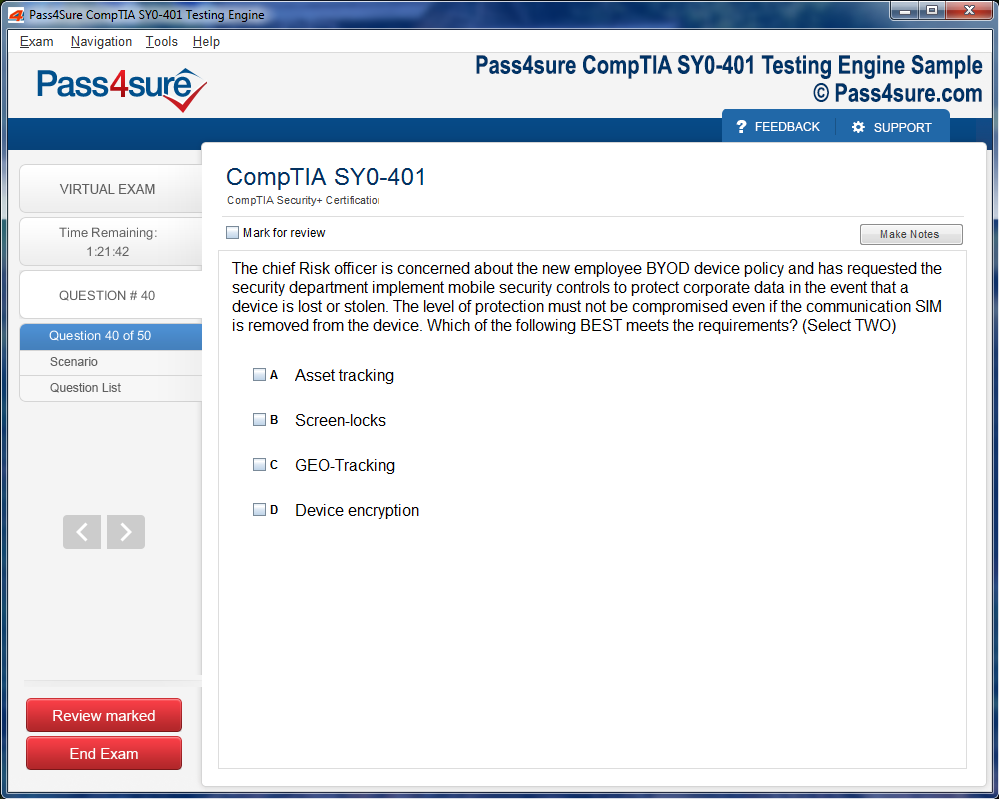
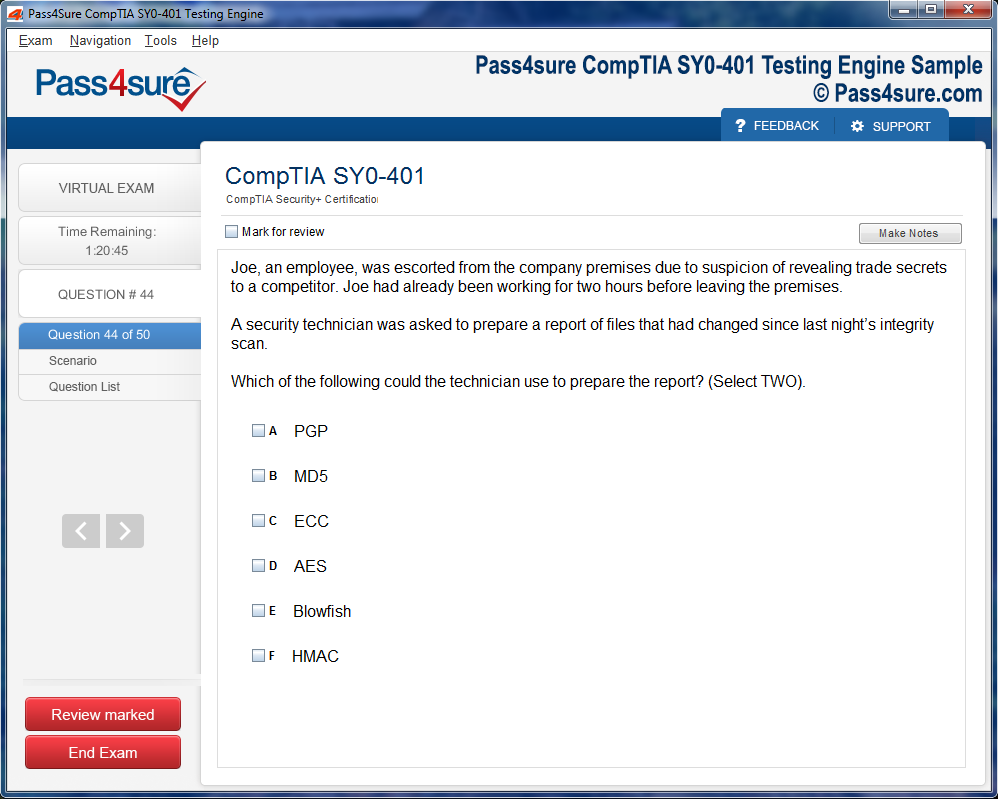
Product Screenshots
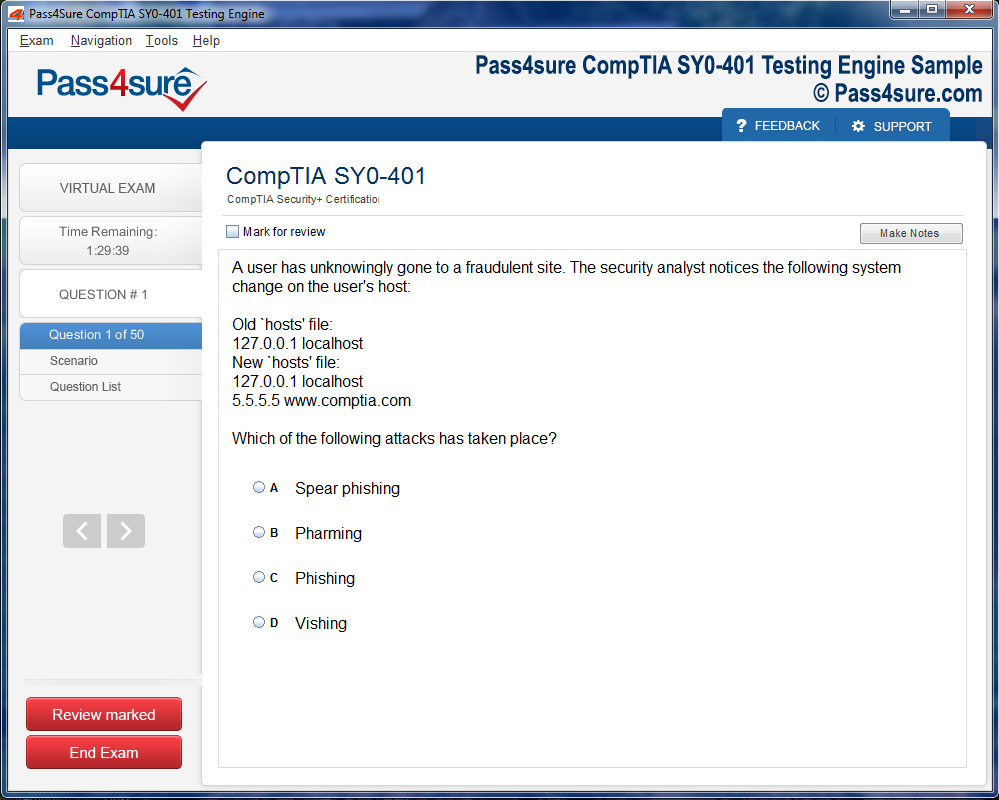
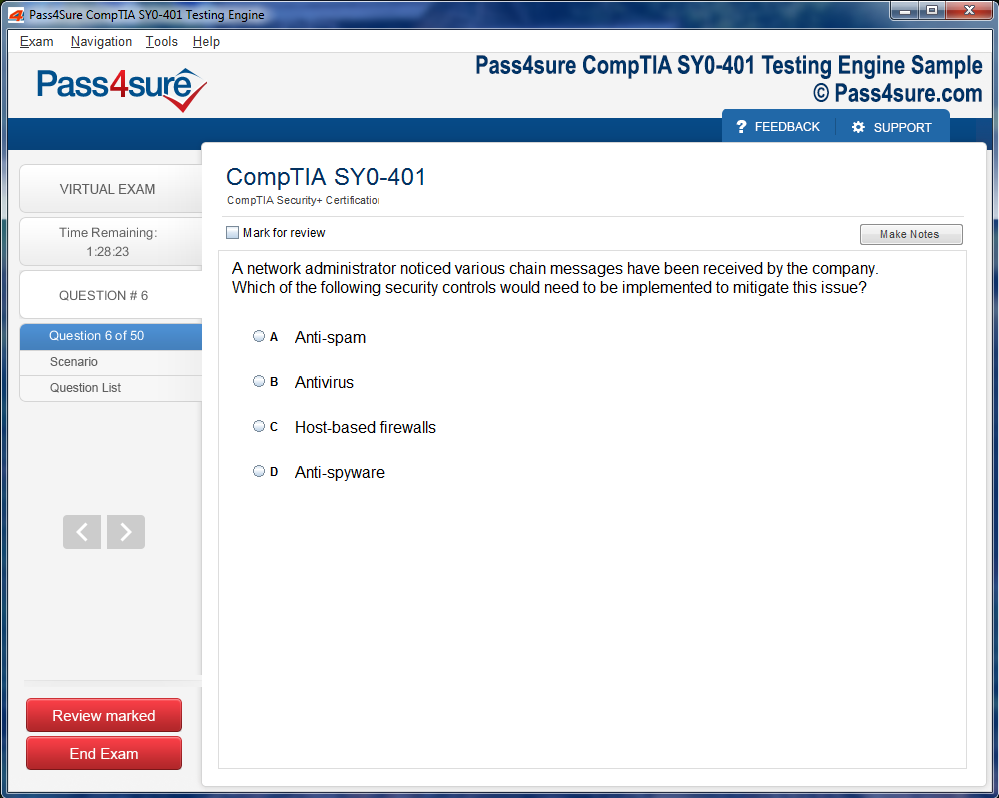
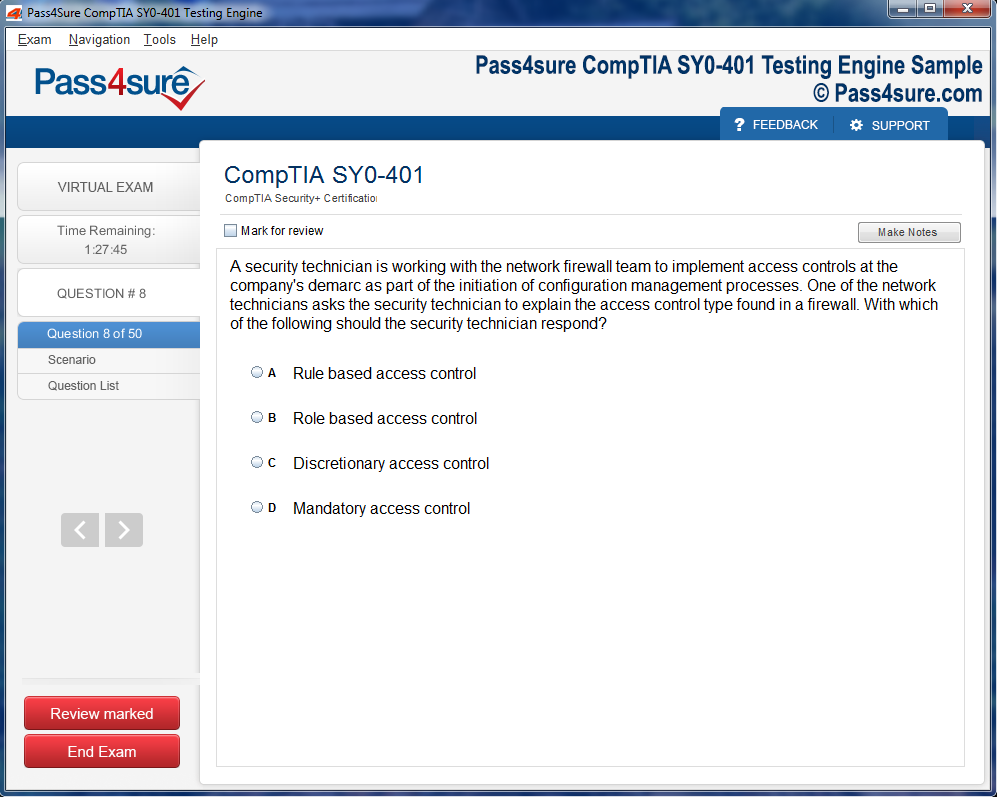
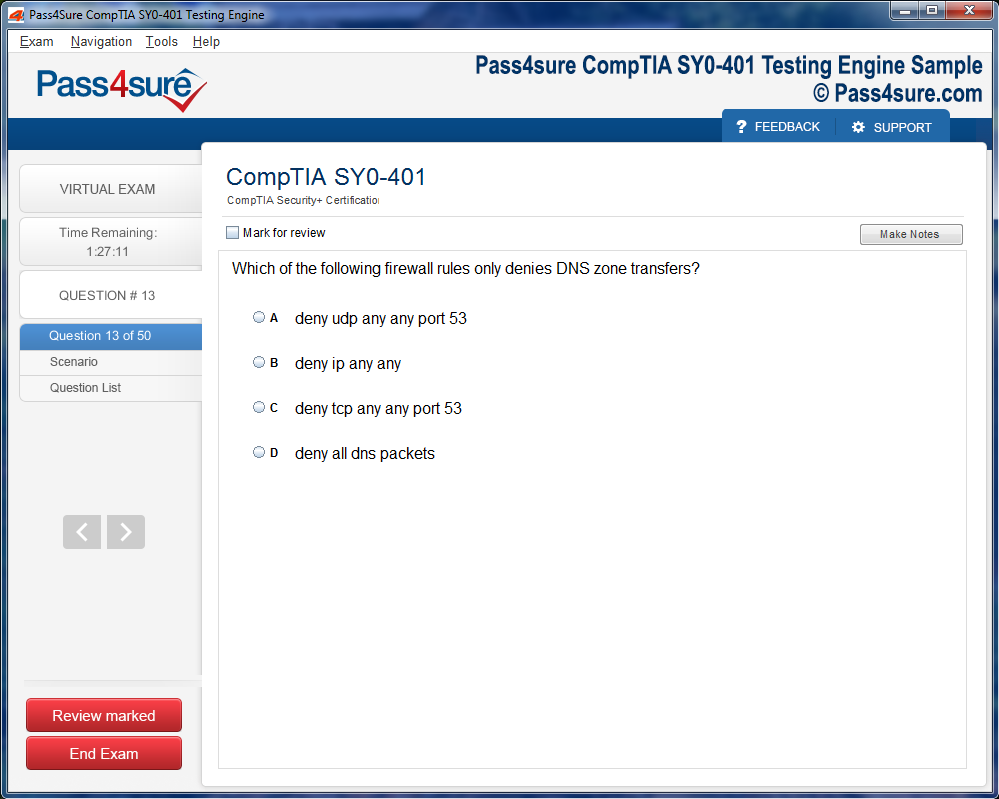
Frequently Asked Questions
How does your testing engine works?
Once download and installed on your PC, you can practise test questions, review your questions & answers using two different options 'practice exam' and 'virtual exam'. Virtual Exam - test yourself with exam questions with a time limit, as if you are taking exams in the Prometric or VUE testing centre. Practice exam - review exam questions one by one, see correct answers and explanations.
How can I get the products after purchase?
All products are available for download immediately from your Member's Area. Once you have made the payment, you will be transferred to Member's Area where you can login and download the products you have purchased to your computer.
How long can I use my product? Will it be valid forever?
Pass4sure products have a validity of 90 days from the date of purchase. This means that any updates to the products, including but not limited to new questions, or updates and changes by our editing team, will be automatically downloaded on to computer to make sure that you get latest exam prep materials during those 90 days.
Can I renew my product if when it's expired?
Yes, when the 90 days of your product validity are over, you have the option of renewing your expired products with a 30% discount. This can be done in your Member's Area.
Please note that you will not be able to use the product after it has expired if you don't renew it.
How often are the questions updated?
We always try to provide the latest pool of questions, Updates in the questions depend on the changes in actual pool of questions by different vendors. As soon as we know about the change in the exam question pool we try our best to update the products as fast as possible.
How many computers I can download Pass4sure software on?
You can download the Pass4sure products on the maximum number of 2 (two) computers or devices. If you need to use the software on more than two machines, you can purchase this option separately. Please email sales@pass4sure.com if you need to use more than 5 (five) computers.
What are the system requirements?
Minimum System Requirements:
- Windows XP or newer operating system
- Java Version 8 or newer
- 1+ GHz processor
- 1 GB Ram
- 50 MB available hard disk typically (products may vary)
What operating systems are supported by your Testing Engine software?
Our testing engine is supported by Windows. Andriod and IOS software is currently under development.
Your Ultimate Guide to Acing HCL-BF-PRO-10
The HCL-BF-PRO-10 examination embodies a meticulously designed evaluation of technological dexterity, encompassing cloud orchestration, enterprise automation, and pragmatic system deployment. Unlike conventional assessments that rely on rote memorization, this exam demands an amalgamation of cognitive acuity, analytical reasoning, and practical sagacity. Candidates encounter a multi-faceted evaluation process that accentuates both theoretical comprehension and tangible application within dynamic scenarios.
Structurally, the HCL-BF-PRO-10 exam bifurcates into several intricate modules, each delineating specific domains of expertise. These modules traverse from elemental operational fluency to advanced troubleshooting schemas, optimization strategies, and deployment automation techniques. The nuanced arrangement of these modules necessitates a strategic understanding of the exam's temporal allotment, question typology, and the interrelationship between each domain, as proficiency in these areas exponentially elevates performance potential.
Immersion in Pragmatic Scenarios
A cardinal principle in excelling at HCL-BF-PRO-10 is the immersion into realistic, scenario-based problem-solving. The examination paradigm privileges candidates who demonstrate dexterity in applying concepts rather than mere retention of theoretical data. For instance, orchestrating automated deployment pipelines or resolving intricate configuration conflicts embodies the sort of real-world competence that the exam seeks to evaluate.
Understanding systemic interdependencies is pivotal. Cloud ecosystems, automation frameworks, and enterprise infrastructures are not isolated constructs; their interplay influences both operational efficiency and failure mitigation. Delving into case studies, simulating system interlocks, and dissecting anomaly propagation patterns cultivates the analytical mindset indispensable for navigating the exam's complexities.
Leveraging Experiential Resources
Success in HCL-BF-PRO-10 hinges upon leveraging a diverse array of experiential resources. Hands-on labs, sandbox environments, and interactive simulations foster a tactile understanding of complex concepts. Engaging with community forums or peer-led knowledge exchanges introduces esoteric scenarios that frequently manifest in the examination.
Additionally, methodical documentation is an invaluable preparatory tool. Meticulously recording procedural flows, troubleshooting heuristics, and anomaly resolutions builds a personal compendium of reference material. This repository not only reinforces cognitive retention but also serves as a rapid-access guide when encountering unfamiliar scenarios during the exam.
Temporal Strategy and Cognitive Pacing
Temporal acumen is an often-underrated facet of HCL-BF-PRO-10 preparation. The exam is constructed to probe both intellectual depth and operational efficiency, necessitating a judicious allocation of time across modules. Candidates benefit from instituting a regimented temporal strategy, segmenting preparation hours to mirror the exam's structure.
Mock examinations administered under timed conditions are particularly efficacious. They acclimate candidates to the psychological and cognitive pressures inherent to high-stakes evaluation, enhance decision-making velocity, and reduce the likelihood of errors born from time-induced stress. Coupled with iterative review cycles, this temporal discipline cultivates both confidence and performance resilience.
Cognitive Resilience and Exam Mindset
The HCL-BF-PRO-10 examination is as much a test of psychological fortitude as it is of technical mastery. The ability to sustain composure under cognitive duress often delineates successful candidates from those who falter. Developing a mindset characterized by confidence, strategic optimism, and mental agility is imperative.
Structured visualization techniques, goal-oriented study schemas, and consistent reinforcement routines bolster cognitive resilience. Moreover, embracing adaptive thinking—wherein candidates pivot seamlessly between disparate problem domains—enhances their capacity to navigate unforeseen or complex questions. This mental versatility is crucial for thriving within an exam environment that prizes practical ingenuity.
Cultivating Analytical Dexterity
Analytical dexterity, the aptitude for dissecting complex systems and synthesizing actionable insights, constitutes a core competency for HCL-BF-PRO-10 aspirants. Each question is crafted to probe the candidate's ability to interpret data, anticipate systemic repercussions, and implement efficient solutions.
Refining this skill set requires iterative engagement with multi-layered problem sets. Candidates benefit from exercises that challenge their predictive reasoning, troubleshooting acuity, and configuration optimization skills. Over time, this deliberate practice fosters an intuitive grasp of systemic dynamics, ensuring responses are both expedient and precise under exam conditions.
Integration of Cloud and Automation Paradigms
A distinctive aspect of the HCL-BF-PRO-10 exam lies in its emphasis on the confluence of cloud infrastructure and enterprise automation paradigms. Candidates must exhibit fluency in deploying, configuring, and optimizing cloud-based solutions while simultaneously integrating automation frameworks to enhance operational efficiency.
The interplay between virtualized resources, deployment pipelines, and automated monitoring systems necessitates a comprehensive understanding of both macro-level architecture and micro-level execution. Candidates who can navigate these interdependencies with clarity and precision are well-positioned to achieve exemplary outcomes.
Adaptive Problem-Solving Techniques
The HCL-BF-PRO-10 exam rewards adaptive problem-solving more than static knowledge. Candidates are often presented with scenarios requiring dynamic assessment and context-sensitive solutions. Developing proficiency in this domain entails cultivating flexible cognitive strategies, such as conditional logic application, iterative hypothesis testing, and contingency planning.
Furthermore, simulating edge-case scenarios in practice labs encourages lateral thinking and resilience. These exercises sharpen the ability to predict potential pitfalls, optimize resource allocation, and devise innovative solutions—a competency that remains invaluable beyond the examination environment.
Optimizing Study Modalities for Retention
Maximizing retention for the HCL-BF-PRO-10 exam demands the utilization of diverse cognitive encoding techniques. Active recall, spaced repetition, and multi-modal learning strategies enhance long-term memory consolidation, allowing candidates to retrieve complex procedures under pressure.
Interactive workshops, peer discussions, and scenario-based exercises reinforce conceptual understanding while embedding procedural fluency. Supplementing these with reflective journaling or diagrammatic mapping of workflows creates neural associations that expedite both comprehension and recall during high-stakes evaluation.
Harnessing Peer Networks and Collaborative Learning
Collaborative learning within peer networks significantly enriches exam preparation. Engaging in knowledge symposia, discussion forums, or group simulations exposes candidates to alternative methodologies, esoteric configurations, and innovative troubleshooting approaches.
The social exchange of expertise not only fosters deeper conceptual understanding but also cultivates a culture of iterative learning and adaptive strategy development. Candidates who leverage these communal insights often acquire an edge in tackling unconventional exam scenarios, enhancing both confidence and performance agility.
Core Concepts and Frameworks You Must Master
To excel in HCL-BF-PRO-10, immersing oneself in core concepts and frameworks is not merely advantageous—it is obligatory. These foundational tenets underpin the cerebral scaffolding necessary for dissecting scenario-driven queries and pragmatic problem-solving. System architecture, automation protocols, cloud integration, and workflow optimization constitute the primary pillars. Each domain demands nuanced comprehension, blending theoretical acumen with operational dexterity.
System Architecture: The Skeleton of Digital Ecosystems
System architecture embodies the structural skeleton of any IT infrastructure. It orchestrates the interplay between discrete components, delineates dependencies, and anticipates interactional idiosyncrasies. Mastery of this domain enables practitioners to prognosticate bottlenecks, recalibrate performance thresholds, and anticipate failure vectors. Distributed systems, for instance, are labyrinthine in behavior under heterogeneous load conditions; understanding the kinetic interplay of nodes allows preemptive mitigation strategies rather than reactive troubleshooting. Furthermore, grasping architectural paradigms such as microservices, monolithic constructs, and event-driven frameworks equips candidates with a multidimensional perspective crucial for advanced problem-solving.
Automation Protocols: Orchestrating Precision and Efficiency
Automation protocols constitute a fulcrum for minimizing human error, expediting deployment cycles, and promulgating operational consistency. Proficiency in scripting languages, declarative configuration management, and workflow orchestration tools provides an incisive edge. Scenario-based questions often probe the ability to discern inefficiencies within automation pipelines or to select the most optimal strategy for a given operational predicament. Mastery involves recognizing nuances in error handling, idempotent task execution, and parallel orchestration. Candidates who can intuitively navigate these protocols demonstrate the capacity to transform abstract procedural directives into executable, fault-tolerant sequences.
Cloud Integration: Navigating Multi-Dimensional Environments
Cloud integration demands fluency in public, private, and hybrid deployment models, each with distinct operational, security, and economic implications. Competency extends beyond mere deployment—it encompasses monitoring, resource allocation, elasticity management, and cost optimization. Understanding the symbiosis between cloud architecture and application lifecycle management is pivotal. Questions may probe scenarios where latency, redundancy, or resource bottlenecks require agile remediation strategies. Advanced familiarity with containerization, serverless paradigms, and orchestration engines enhances the ability to predict systemic behavior under fluctuating workloads, reinforcing a strategic approach to cloud-based problem-solving.
Workflow Optimization: Engineering Efficiency
Workflow optimization embodies the art and science of operational streamlining. This domain emphasizes efficiency, scalability, and sustainability. Examination scenarios may involve identifying redundant processes, reengineering legacy workflows, or implementing adaptive frameworks for seamless collaboration. Successful candidates cultivate an aptitude for translating theoretical best practices into pragmatic, high-impact interventions. Analytical methodologies, such as process mining, value stream mapping, and bottleneck triangulation, enable practitioners to dissect complex operational flows. Moreover, embedding a culture of iterative refinement allows continuous evolution of workflows in response to emerging operational exigencies.
Troubleshooting Methodologies: Structured Problem Dissection
An intuitive grasp of troubleshooting methodologies can markedly enhance exam performance. Techniques such as root cause analysis, stepwise isolation, and scenario simulation cultivate a structured reasoning paradigm. Candidates learn to deconstruct problems into modular elements, analyze symptomatology, and implement corrective measures with precision. Familiarity with diagnostic heuristics, such as fault-tree analysis or dependency mapping, equips aspirants to traverse intricate systems without succumbing to heuristic bias. Furthermore, scenario simulation enables anticipatory problem-solving, allowing candidates to extrapolate potential failure modes and devise preemptive solutions.
Integration of Concepts: A Holistic Cognitive Approach
Integration of these discrete concepts into a cohesive cognitive schema is paramount. Viewing system architecture, automation protocols, cloud integration, and workflow optimization as interdependent vectors rather than isolated silos fosters intellectual synergy. Architectural configurations influence automation efficacy, while cloud deployment modalities dictate workflow feasibility. Candidates who internalize these interrelationships are equipped to tackle multifaceted scenarios with nuanced, holistic reasoning. This meta-cognitive approach enhances both diagnostic acuity and prescriptive precision.
Advanced Automation Strategies and Adaptive Orchestration
Advanced automation strategies require comprehension beyond elementary scripting. Adaptive orchestration leverages dynamic resource allocation, predictive analytics, and intelligent scheduling. Proficiency entails understanding the emergent behaviors of concurrent workflows, resolving conflicts in task execution, and optimizing latency-sensitive operations. Candidates are often evaluated on their ability to harmonize automation pipelines with overarching system objectives, balancing throughput with reliability and maintainability. Mastery of declarative versus imperative paradigms, idempotency guarantees, and event-driven automation is indispensable for high-stakes problem-solving.
Security and Compliance in Multi-Layered Systems
Security and compliance constitute non-negotiable facets of modern IT ecosystems. Candidates must appreciate the intricate interplay between identity management, access control, data governance, and regulatory adherence. Examination scenarios may explore risk mitigation strategies, vulnerability assessment, or compliance alignment within heterogeneous environments. Proficiency in encryption protocols, audit trails, and secure deployment pipelines enhances operational robustness. Understanding security paradigms within both cloud and on-premises contexts allows candidates to preemptively address systemic vulnerabilities, demonstrating strategic foresight.
Scalability and Resilience Engineering
Scalability and resilience engineering focus on ensuring systems can adapt to fluctuating demand while maintaining operational continuity. Knowledge of horizontal versus vertical scaling, load-balancing algorithms, failover mechanisms, and high-availability configurations is essential. Candidates are frequently tested on scenario-based questions where system resilience is challenged under simulated stress conditions. The ability to devise redundant architectures, anticipate cascading failures, and implement self-healing mechanisms reflects a mastery of proactive system engineering. Scalability must be contextualized not merely in performance metrics but also in cost-effectiveness and operational sustainability.
Observability and Monitoring Paradigms
Observability and monitoring paradigms extend beyond mere system visibility—they provide actionable insights into system behavior. Competency in log aggregation, metric instrumentation, trace analysis, and anomaly detection is critical. Exam scenarios often involve diagnosing latent performance degradation, identifying subtle system anomalies, or predicting potential failure vectors. Candidates adept in observability frameworks cultivate a prescient understanding of system dynamics, enabling intervention before disruption manifests. Correlating multi-layered telemetry data with architectural insights allows a refined approach to systemic optimization and reliability assurance.
Cognitive Synthesis of Technical Domains
Achieving proficiency in HCL-BF-PRO-10 demands cognitive synthesis of technical domains. Candidates must weave together system architecture, automation protocols, cloud integration, workflow optimization, security, scalability, and observability into a cohesive operational tapestry. This synthesis fosters an analytical lens capable of discerning latent interdependencies and emergent behaviors. By internalizing these complex relationships, candidates transcend rote memorization, developing an adaptive problem-solving paradigm that is both agile and resilient under examination pressures.
Emerging Trends and Future-Proofing Skills
Emerging technological trends necessitate continual adaptation. Edge computing, AI-driven automation, hybrid cloud orchestration, and self-healing infrastructures exemplify domains where forward-thinking candidates gain leverage. Familiarity with predictive analytics, machine learning integration, and intelligent workflow adaptation positions aspirants to navigate evolving IT landscapes. Understanding the potential ramifications of nascent technologies on system design, operational efficiency, and security compliance cultivates a proactive mindset, essential for both examination excellence and professional relevance.
Strategic Frameworks for Cognitive Amplification
Preparation for challenging certifications like HCL-BF-PRO-10 mandates a cognitive scaffolding approach rather than perfunctory rote memorization. Candidates must architect a layered strategy that interweaves structured planning, iterative engagement, and applied praxis. Cognitive amplification thrives when learning is orchestrated deliberately, fostering neural integration rather than superficial retention.
Crafting a meticulous study timetable is paramount. Allocate chronological segments to each conceptual pillar, progressively escalating in intricacy. The initial phase should prioritize epistemic comprehension—grasping underlying principles—before migrating toward complex problem-solving. Temporal segmentation, employing intervals punctuated by brief cognitive respites, optimizes synaptic consolidation and mitigates mental fatigue.
Leveraging Multifaceted Resources
The judicious use of resources serves as the bedrock for profound understanding. Canonical guides, interactive online curricula, and community-curated tutorials afford heterogeneous perspectives that broaden cognitive horizons. Immersive labs and virtualized environments permit risk-free experimentation, simulating real-world scenarios that crystallize procedural fluency.
Participation in niche forums or specialized discussion communities exposes aspirants to esoteric challenges and nuanced insights shared by seasoned practitioners. Such engagements cultivate intellectual dexterity and foster the ability to anticipate atypical problem presentations, a skill often overlooked in conventional preparatory methods.
Iterative Practice and Reflective Mastery
Repetitive engagement through mock assessments, chronometrically timed quizzes, and scenario-driven exercises fortifies retention and procedural intuition. Systematically cataloging errors and revisiting knowledge lacunae cultivates a reflective practice methodology, wherein each misstep becomes a scaffold for deeper understanding.
Reflective mastery necessitates interrogating the rationale behind each solution pathway. Understanding not merely what succeeds but why alternatives falter engenders analytical acuity, a hallmark of high-performing candidates. This iterative cognitive rehearsal is instrumental in transforming declarative knowledge into procedural competency.
Synergistic Peer Collaboration
Cognitive coalescence with peers enhances conceptual granularity. Dialogues dissecting intricate scenarios stimulate multifaceted reasoning and expose learners to heterogeneous problem-solving heuristics. Digital consortia, online study collectives, and live webinars are exemplary conduits for such collaborative intellectual synthesis.
Engaging with peers fosters the cross-pollination of ideas, prompting learners to reevaluate entrenched assumptions and embrace adaptive strategies. This synergy often precipitates unforeseen insights, enriching the cognitive repertoire beyond the bounds of solitary study.
Temporal Review and Memory Consolidation
Periodic revisitation of critical concepts is crucial for long-term retention. Spaced repetition, a temporally distributed review mechanism, consolidates synaptic pathways and reinforces applied skill sets. Recurrent exposure to foundational principles, interwoven with practical scenarios, incrementally builds mastery while attenuating cognitive stress associated with high-stakes assessments.
Over successive review cycles, aspirants develop both procedural confidence and meta-cognitive awareness, allowing them to anticipate challenges and deploy solutions with agility. This iterative reinforcement transforms ephemeral familiarity into durable expertise, cultivating resilience and reducing examination-induced anxiety.
Integrating Multimodal Learning Modalities
Diverse sensory engagement amplifies learning efficacy. Incorporating visual schematics, auditory lectures, kinesthetic exercises, and interactive simulations nurtures a holistic cognitive experience. Such multimodal integration caters to varied neural pathways, enhancing retention and fostering flexible problem-solving abilities adaptable to dynamic scenarios.
Candidates who interlace theoretical understanding with experiential simulation often exhibit superior dexterity when confronted with complex, ambiguous challenges. This polyphonic approach, blending cognitive, affective, and psychomotor dimensions, elevates preparation from rote rehearsal to agile mastery.
Cognitive Hygiene and Mental Calibration
Sustained intellectual exertion necessitates rigorous cognitive hygiene. Ensuring restorative sleep cycles, periodic physical activity, and mindful interludes optimizes neuroplasticity and preserves attentional resources. Cognitive calibration, achieved through regulated stress modulation and mental decompression, fortifies resilience, enabling candidates to navigate high-pressure scenarios with equanimity.
Additionally, cultivating metacognitive awareness—reflecting upon one's learning processes—permits dynamic recalibration of strategies. Recognizing when to intensify focus or pivot methods prevents stagnation and ensures a perpetually adaptive approach to preparation.
Harnessing Analytical Tools and Technological Augmentation
Technological adjuncts provide unparalleled scaffolding for systematic preparation. Analytics-driven platforms, digital flashcards, and scenario simulators enable precision-targeted practice, tracking performance metrics, and identifying latent weaknesses. Leveraging these tools amplifies efficiency, transforming nebulous preparation into data-informed progression.
Furthermore, algorithmically curated content can introduce probabilistic prediction of high-yield topics, allowing aspirants to prioritize study efforts judiciously. Such augmentation not only streamlines cognitive investment but also instills confidence through measurable, incremental progress.
Embracing Adaptive Problem-Solving Mindsets
The cultivation of an adaptive problem-solving mindset is indispensable. Beyond memorization, candidates must navigate ambiguity, synthesize disparate information, and innovate solutions under temporal constraints. This meta-strategic approach emphasizes cognitive flexibility, situational analysis, and anticipatory reasoning, all of which are critical in mastering HCL-BF-PRO-10 and analogous assessments.
Embracing a mindset oriented toward iterative improvement rather than static achievement fosters intellectual resilience. Each miscalculation becomes a diagnostic lens through which to refine strategies, enhancing both depth of understanding and speed of execution.
Psychological Anchoring and Exam Resilience
Emotional equilibrium exerts a substantial influence on cognitive performance. Psychological anchoring techniques—such as controlled breathing, visualization, and positive self-dialogue—fortify resilience against performance anxiety. Anchoring enables aspirants to maintain composure, focus, and decisional clarity during evaluative circumstances.
Cultivating a resilient mindset, reinforced by habitual cognitive rehearsal and adaptive strategies, ensures that knowledge deployment is both accurate and fluid. Psychological preparation is as critical as technical mastery, bridging the gap between competence and exceptional performance.
The Labyrinth of Preparation: Navigating the Cognitive Maze
Embarking on the journey of HCL-BF-PRO-10 preparation necessitates more than rote learning; it requires a deliberate orchestration of intellect and strategy. Aspirants often traverse a cognitive labyrinth, encountering multifarious obstacles that can obfuscate clarity. Cognitive scaffolding, a method of progressively building understanding, allows candidates to consolidate intricate concepts while avoiding superficial familiarity. Engaging with esoteric case studies and synthesizing cross-disciplinary knowledge cultivates a mental dexterity that rote memorization seldom achieves.
The Perils of Superficial Assimilation
An insidious hazard for candidates is superficial assimilation, a tendency to acquire knowledge without probing its underlying mechanics. When aspirants rely solely on memorization, they inadvertently construct brittle cognitive frameworks prone to collapse under analytical scrutiny. The HCL-BF-PRO-10 examination favors dynamic problem-solving over static recall. Immersive simulations, where abstract theories are applied to tangible scenarios, fortify comprehension and enhance the ability to extrapolate solutions beyond conventional boundaries.
Balancing the Knowledge Spectrum
Neglecting weaker domains constitutes a subtle yet pervasive pitfall. Many candidates gravitate toward areas of comfort, subconsciously circumventing intellectually challenging topics. This imbalance can generate lacunae in holistic preparedness, diminishing confidence during examination. A methodical approach involves iterative exposure to underdeveloped subjects, employing microlearning strategies and scaffolded exercises. By systematically fortifying weaker domains, aspirants cultivate an equilibrated knowledge spectrum that supports adaptive reasoning under duress.
Temporal Mastery and Strategic Allocation
Time, the immutable arbiter of performance, demands meticulous stewardship. Inadequate temporal management frequently precipitates hurried responses and incomplete solutions. Candidates often misallocate cognitive resources, dwelling excessively on familiar sections while neglecting complex queries. Implementing structured rehearsal cycles, where timed exercises mirror exam conditions, sharpens temporal acuity. Meticulous self-monitoring and reflective practice ensure that every cognitive investment yields maximal dividends, transforming time from an adversary into an ally.
The Dynamic Landscape of Guidelines
Examinations evolve; static preparation invites obsolescence. Official guidelines and content updates reflect the continual metamorphosis of technological paradigms and evaluative criteria. Disregarding these evolutions can render preparation misaligned with contemporary expectations. Attentive monitoring of updates, coupled with adaptive revision strategies, empowers candidates to navigate this fluid landscape. Incorporating novel modules and emergent frameworks into study regimens ensures alignment with evaluative intent and preserves strategic advantage.
Cognitive Equanimity Amidst Exam-Day Flux
Even the most meticulously prepared aspirants can falter under the crucible of examination pressure. Stress, an omnipresent adversary, can erode cognitive precision and compromise performance. Cultivating cognitive equanimity through neurophysiological techniques, such as diaphragmatic breathing, visualization, and mental rehearsal, fortifies resilience. Regular engagement with high-fidelity mock exams conditions the mind to operate under duress, transforming anxiety into a catalyst for focused execution. Confidence, anchored in rigorous preparation, manifests as mental clarity and decisiveness during high-stakes scenarios.
The Imperative of Analytical Fluidity
Analytical fluidity transcends rote knowledge, embodying the capacity to navigate ambiguity with agility. HCL-BF-PRO-10 examinations increasingly reward candidates who demonstrate adaptive reasoning and situational discernment. Cultivating this fluidity entails dissecting complex case matrices, identifying underlying patterns, and deploying heuristic frameworks to arrive at optimal solutions. The juxtaposition of divergent problem sets hones cognitive elasticity, enabling aspirants to confront novel challenges with composure and precision.
Iterative Reflection and Metacognitive Vigilance
Reflection, an often-overlooked facet of preparation, catalyzes profound cognitive reinforcement. By engaging in iterative analysis of practice exercises, aspirants illuminate latent misconceptions and consolidate accurate mental models. Metacognitive vigilance—awareness of one’s cognitive processes—enables strategic recalibration of study techniques. This dynamic self-regulation fosters a nuanced understanding of personal learning modalities, optimizing retention and minimizing cognitive redundancy.
Harnessing the Power of Scenario Immersion
Scenario immersion transforms abstract knowledge into actionable competence. Candidates benefit from constructing experiential simulations, wherein theoretical constructs are applied to realistic problem frameworks. This immersive methodology not only enhances comprehension but also cultivates anticipatory reasoning, enabling aspirants to preemptively navigate potential examination pitfalls. Repeated engagement with such scenarios engenders instinctive problem-solving reflexes, a critical asset in time-sensitive evaluative environments.
Intellectual Resilience Through Adaptive Challenge
Adaptive challenge serves as the crucible for intellectual resilience. Exposure to progressively complex problems cultivates perseverance, encourages iterative improvement, and diminishes susceptibility to cognitive fatigue. This graduated approach, akin to cognitive strength training, equips candidates to confront unforeseen analytical dilemmas with poise. By embracing the discomfort of intellectual stretch, aspirants cultivate a durable confidence that underpins high-performance execution.
The Subtle Art of Cognitive Economy
Cognitive economy, the judicious allocation of mental resources, is a linchpin of effective examination strategy. Overexertion in peripheral areas or inefficient prioritization of effort can undermine performance. Strategic focus on high-yield topics, combined with the deliberate pruning of extraneous details, ensures that cognitive bandwidth is deployed optimally. Mastery of this subtle art elevates efficiency, mitigates mental fatigue, and enhances the precision of problem-solving under temporal constraints.
Synergy Between Knowledge and Intuition
While structured preparation lays the groundwork, intuition complements analytical rigor. Cultivating an intuitive grasp of concepts facilitates rapid recognition of patterns and accelerates solution derivation. This synergy emerges from repeated exposure, reflective analysis, and scenario-based practice. Aspirants who harmonize analytical reasoning with intuitive insight gain a competitive edge, navigating complex problems with both speed and accuracy.
The Psychological Contours of Examination Readiness
Examination readiness extends beyond cognitive competence to encompass psychological fortitude. Mindset, emotional regulation, and anticipatory coping strategies collectively influence performance outcomes. Cultivating a mindset anchored in growth, resilience, and adaptive confidence equips candidates to manage stress, recover from setbacks, and maintain focus. Psychological preparation is not ancillary; it is integral, transforming potential vulnerabilities into strategic advantages.
Strategic Iteration for Optimal Retention
Repetition alone does not guarantee mastery; strategic iteration optimizes retention and depth of understanding. Interleaved practice, spaced repetition, and cognitive layering reinforce neural connections, solidifying conceptual frameworks. By deliberately revisiting complex topics in varied contexts, candidates enhance recall, fortify problem-solving agility, and internalize versatile methodologies applicable across diverse examination scenarios.
The Nexus of Preparation and Performance
Ultimately, the nexus between preparation and performance hinges on deliberate, informed, and adaptable strategies. Candidates who cultivate analytical dexterity, temporal acuity, cognitive resilience, and psychological equanimity position themselves to navigate the HCL-BF-PRO-10 landscape with confidence. The integration of immersive learning, metacognitive awareness, and scenario-driven rehearsal transforms preparation from a passive endeavor into a proactive, high-engagement enterprise.
Temporal Allocation Mastery for Exam Triumph
Navigating the labyrinthine corridors of HCL-BF-PRO-10 necessitates more than superficial technical acumen; it demands the cultivation of temporal acuity. Time, ephemeral and elusive, becomes the most formidable adversary during the crucible of examination. Candidates who orchestrate their cognitive resources with precision often find themselves in a state of serene efficiency, converting pressure into lucid problem-solving prowess. Recognizing the differential gravity of each module allows aspirants to apportion temporal capital judiciously, ensuring that no section suffers neglect or disproportionate attention.
Discerning Exam Topography
Before engaging with the evaluative gauntlet, a meticulous survey of the exam’s architecture is indispensable. Each component is imbued with unique cognitive demands, and superficial familiarity is insufficient. Some modules may masquerade as innocuous yet harbor latent intricacies that consume substantial time. Conversely, certain segments yield to rapid resolution with minimal deliberation. By decoding this topography, candidates can preemptively stratify questions by anticipated temporal expenditure and intellectual rigor, thus forging a roadmap that mitigates anxiety and maximizes efficiency.
Sequential Strategy Implementation
The strategic commencement of the exam is pivotal. Engaging initially with questions that align with one’s proficiency engenders momentum and consolidates confidence. More obstinate or esoteric questions are better relegated to subsequent phases, ensuring a consistent accrual of marks without succumbing to temporal quagmires. Flagging difficult items for later review provides a safeguard against incomplete responses and circumvents the pernicious tendency to become ensnared by a singular challenging problem. This sequenced approach underpins sustained cognitive equilibrium throughout the examination.
Elimination and Inference Techniques
Employing refined techniques such as systematic elimination and informed conjecture augments the likelihood of accurate responses. By pruning implausible alternatives, candidates can enhance decision-making efficiency while conserving mental energy. The cognitive economy achieved through these methods diminishes decision fatigue and fosters analytical lucidity. Furthermore, deliberate, measured contemplation underpins error mitigation, as impulsive reactions often precipitate preventable miscalculations.
Pacing and Cognitive Vigilance
Temporal stewardship extends beyond mere allocation; it encompasses the vigilant monitoring of pacing. Prolonged immersion in a single problem can erode overall performance, while excessively rapid progression risks superficial analysis. Implementing minute-specific benchmarks per question, calibrated to difficulty and module weighting, provides a disciplined scaffold for cognitive engagement. Periodic self-assessment checkpoints facilitate recalibration, ensuring comprehensive coverage and preempting last-minute scrambles.
Simulation and Adaptive Conditioning
The didactic value of simulated examinations cannot be overstated. Immersing oneself in a timed, authentic testing environment cultivates adaptability and fortifies psychological resilience. Repeated exposure to such conditions enhances both cognitive speed and strategic foresight, rendering candidates more adept at navigating the temporal pressures intrinsic to HCL-BF-PRO-10. These simulations also illuminate latent weaknesses, enabling targeted refinement and incremental improvement.
Mental Equanimity and Stress Modulation
Beyond structural strategies, psychological poise is an indispensable determinant of performance. Anxiety, if unmoderated, can precipitate a cascade of cognitive lapses. Techniques such as controlled breathing, micro-pauses, and mental visualization cultivate an internal locus of calm. Maintaining this equanimity ensures sustained attentional clarity and mitigates the deleterious effects of stress-induced haste.
Dynamic Question Triaging
An advanced methodology involves adaptive triaging of questions, contingent upon real-time cognitive and temporal feedback. By continuously reassessing difficulty and personal proficiency, candidates can dynamically adjust their engagement hierarchy. This fluid approach supersedes rigid plans, accommodating the stochastic nature of exam challenges while optimizing score potential.
Cognitive Load Management
Strategic management of cognitive load underpins efficient problem resolution. Partitioning complex problems into discrete subcomponents reduces the risk of overwhelm and enhances analytical tractability. This compartmentalization allows for incremental mastery, facilitating both speed and accuracy. Conscious modulation of mental exertion ensures that energy reserves are conserved for the most demanding segments of the examination.
Temporal Reflexivity and Iterative Improvement
Finally, reflective practice post-simulation consolidates experiential knowledge. Reviewing time allocation, error patterns, and pacing strategies enables iterative refinement of exam tactics. Candidates who engage in such reflective metacognition develop an internalized temporal intuition, a subtle yet potent tool that translates directly into superior performance under real exam conditions.
Post-Exam Cognition and Introspective Appraisal
Clearing HCL-BF-PRO-10 signifies more than a credential; it embodies a cognitive milestone demanding meticulous post-exam reflection. Immediate introspection post-certification facilitates recognition of both perspicuous strengths and latent deficiencies. Engaging in analytical retrospection enables the learner to chart a trajectory for skill augmentation. Such metacognitive practices are indispensable for enduring expertise cultivation, ensuring that theoretical erudition translates into actionable proficiency rather than ephemeral accomplishment.
Reflection should not be perfunctory; it must dissect the cognitive strategies employed during preparation. Scrutinizing error patterns, comprehension depth, and recall efficiency unveils nuanced insights. The process acts as a heuristic, guiding subsequent learning cycles and amplifying the impact of experiential knowledge. This deliberate contemplation becomes the bedrock of professional sagacity and long-term career elevation.
Experiential Application and Pragmatic Skill Consolidation
The transmutation of certification knowledge into practical dexterity is paramount. Engaging in real-world initiatives—be it automation engineering, cloud orchestration, or system performance enhancement—converts abstract comprehension into tangible capability. Such endeavors cultivate not only technical acumen but also strategic problem-solving and operational resilience.
Maintaining a meticulous log of applied projects fosters both accountability and intellectual scaffolding. Detailed documentation of methodologies, iterative improvements, and encountered anomalies cultivates a repository of insight. This archival habit transforms ephemeral learning into cumulative expertise, positioning professionals for complex undertakings and unforeseen technological challenges.
Networking Alchemy and Professional Osmosis
Career trajectories post-HCL-BF-PRO-10 are significantly augmented through deliberate networking alchemy. Engaging with cognoscenti, mentors, and peers in adjacent domains fosters osmosis of industry wisdom. Professional assemblages, sectoral symposiums, and curated online ecosystems serve as fertile grounds for knowledge exchange.
Strategic networking extends beyond mere social connectivity; it becomes a conduit for emergent opportunities, collaborative ventures, and intellectual cross-pollination. By immersing oneself in a milieu of accomplished practitioners, aspirants acquire nuanced insights into market expectations, emerging technological paradigms, and career progression tactics.
Perpetual Learning and Skill Fortification
The technological continuum is inherently protean, mandating perpetual learning. Static knowledge renders professionals obsolescent; adaptive learning ensures sustained relevance. Advanced certifications, immersive workshops, and targeted training regimens constitute the scaffolding for continual skill fortification.
Beyond formalized programs, self-directed exploration of avant-garde tools, frameworks, and methodologies catalyzes cognitive dexterity. Engaging in experimental projects, beta testing emerging platforms, and assimilating industry-specific innovations heightens proficiency. Such proactive intellectual engagement cultivates an anticipatory mindset, enabling practitioners to navigate complex technological ecosystems with strategic foresight.
Strategic Career Leverage and Professional Positioning
The HCL-BF-PRO-10 certification functions as a strategic lever in career ascension. It signals not only technical competence but also a commitment to professional rigor. Positions in cloud architecture, enterprise automation, and strategic IT consulting increasingly prioritize candidates demonstrating verified HCL-BF-PRO-10 mastery.
Effective professional positioning necessitates articulating certification-derived competencies in alignment with organizational imperatives. Constructing a narrative that intertwines technical dexterity with problem-solving acumen enhances employability and amplifies remunerative prospects. Moreover, strategic deployment of certification insights into leadership or decision-making roles catalyzes advancement into upper-tier professional echelons.
Adaptive Integration of Emerging Technologies
Post-certification growth thrives on the judicious integration of emergent technologies into one’s professional repertoire. Automation, AI-driven optimization, and multi-cloud deployment paradigms are redefining operational landscapes. Incorporating these elements into existing skill sets not only magnifies capability but also establishes a reputation for technical prescience.
Experimental implementation, iterative learning, and contextual adaptation transform abstract concepts into operational assets. Professionals who navigate this synthesis with dexterity gain competitive leverage, demonstrating both agility and foresight in rapidly evolving technological milieus.
Mentorship Symbiosis and Knowledge Propagation
Establishing mentorship symbiosis serves as a catalytic vector for career enrichment. Acting simultaneously as mentee and mentor engenders a cyclical knowledge propagation process. For the mentee, guidance accelerates experiential learning; for the mentor, the act of articulation crystallizes understanding and fosters strategic thinking.
This reciprocal dynamic strengthens professional credibility, expands visibility within the industry, and creates a networked ecosystem of collaborative expertise. By embedding oneself in a continuum of mentorship, practitioners cultivate not only skill augmentation but also enduring influence within the technological community.
Portfolio Amplification and Experiential Codification
Documenting post-certification endeavors into a coherent portfolio is instrumental in professional differentiation. Portfolios, enriched with granular accounts of project execution, systemic problem-solving, and innovative deployment strategies, serve as compelling evidence of capability.
Experiential codification through case studies, demonstrable metrics, and narrative reflections elevates perceived competence. It functions as both a cognitive scaffold for the professional and a strategic tool for recruitment, client engagement, and internal recognition. The deliberate curation of such artifacts signals proactive intellectual stewardship and strategic career mindfulness.
Microservices Architecture: Decomposition and Interoperability
Microservices architecture epitomizes modularity in contemporary IT ecosystems. Unlike monolithic structures, microservices advocate for decomposing applications into discrete, independently deployable services. Each service encapsulates a bounded context, exposing functionality through well-defined APIs. Mastery of this architecture requires understanding service discovery, inter-service communication protocols, and eventual consistency models. Examination scenarios often assess the ability to orchestrate multiple services to achieve cohesive outcomes, manage service versioning, and ensure fault isolation. Candidates proficient in microservices can anticipate emergent behaviors resulting from asynchronous interactions and can deploy strategic circuit-breaking mechanisms to preserve system integrity.
Declarative vs Imperative Automation Paradigms
In the automation realm, distinguishing between declarative and imperative paradigms is essential. Declarative approaches specify the desired state of a system, allowing orchestration engines to reconcile the current state with the target. Imperative strategies, conversely, involve explicit stepwise instructions. Each paradigm has situational advantages: declarative automation excels in idempotency and error mitigation, while imperative scripts offer fine-grained control over execution sequences. Exam questions often explore error correction, idempotent deployments, and conflict resolution strategies within these paradigms. Candidates capable of intuitively selecting the optimal approach demonstrate strategic foresight and operational dexterity.
Event-Driven Architectures and Reactive Systems
Event-driven architectures underpin responsiveness and scalability in modern IT infrastructures. Understanding event propagation, message brokering, and asynchronous processing is critical. Reactive systems emphasize responsiveness, resilience, elasticity, and message-driven interactions. Mastery involves predicting event propagation latency, handling out-of-order processing, and designing systems that maintain consistency under high concurrency. Scenario-based questions may present system failures triggered by unanticipated event loads, requiring candidates to propose architectural adjustments or buffer management techniques to sustain throughput and maintain service-level agreements.
Containerization and Orchestration Mastery
Containerization, exemplified by Docker and similar technologies, isolates applications from host system dependencies, enabling consistent deployment across environments. Orchestration frameworks such as Kubernetes manage container lifecycle, scheduling, and scalability. Candidates must grasp pod management, resource quotas, health checks, and rolling updates. Examination scenarios may include resource contention, node failures, or multi-cluster deployments. Understanding how orchestration frameworks reconcile desired state configurations with dynamic runtime conditions empowers candidates to implement resilient, scalable infrastructures under examination conditions and real-world operations alike.
Advanced Cloud Resource Optimization
Cloud environments introduce both opportunities and complexity. Resource allocation, cost optimization, and performance tuning are pivotal. Candidates must understand ephemeral versus persistent storage, compute elasticity, autoscaling policies, and multi-region deployments. Scenario-based questions often test the ability to optimize cost without sacrificing performance or reliability. Strategic proficiency entails balancing reserved instances, on-demand resources, and serverless functions while considering latency, redundancy, and regulatory compliance. An adept candidate anticipates operational constraints, leveraging predictive analytics to preempt bottlenecks and maximize efficiency.
Distributed Systems: Consistency, Availability, and Partition Tolerance
Distributed systems challenge traditional notions of consistency and reliability. The CAP theorem asserts that consistency, availability, and partition tolerance cannot coexist fully in a networked system. Candidates must internalize trade-offs in replication strategies, quorum calculations, and eventual consistency paradigms. Scenario questions may probe the candidate’s ability to ensure data integrity during network partitions or to select appropriate consistency models for varying operational priorities. Mastery in distributed consensus algorithms such as Raft or Paxos strengthens the ability to design fault-tolerant, high-availability systems.
Observability, Telemetry, and Predictive Diagnostics
Observability transcends traditional monitoring by enabling proactive detection of anomalies, performance degradation, and latent faults. Candidates must comprehend metrics, logs, traces, and events (the “three pillars” of observability) and leverage them for predictive diagnostics. Scenario-based questions may involve identifying hidden resource contention, intermittent failures, or cascading performance issues. Proficiency in correlating telemetry data with systemic behavior, applying anomaly detection algorithms, and establishing intelligent alerting systems reflects advanced operational intelligence and foresight.
Workflow Orchestration and Process Mining
Workflow orchestration demands a nuanced understanding of process dependencies, task sequencing, and operational bottlenecks. Process mining techniques extract actionable insights from execution logs, revealing inefficiencies, redundancies, and optimization opportunities. Candidates must synthesize these insights to streamline operations, reduce latency, and enhance scalability. Exam scenarios may require designing adaptive workflows capable of responding to dynamic inputs, minimizing idle resources, and achieving high throughput under constrained conditions.
Security Engineering: Beyond Basic Compliance
Security engineering in HCL-BF-PRO-10 encompasses more than adherence to regulatory frameworks. Candidates must internalize identity federation, zero-trust principles, encryption schemas, and vulnerability mitigation strategies. Scenario-based questions may simulate insider threats, data exfiltration attempts, or misconfigured cloud services. Strategic knowledge involves implementing layered security measures, proactive threat modeling, and incident response plans that balance operational continuity with stringent protection requirements. Candidates adept in security engineering anticipate threats and integrate mitigation strategies seamlessly into operational workflows.
Resilience Patterns: Circuit Breakers and Retry Mechanisms
Resilience patterns mitigate the impact of systemic failures. Circuit breakers prevent cascading failures by isolating faulty components, while retry mechanisms accommodate transient faults. Candidates must comprehend failure detection latency, fallback strategies, and error propagation paths. Scenario-based questions often simulate high-concurrency conditions or partial system outages, requiring the candidate to design architectures that maintain availability and reliability. Mastery involves combining resilience patterns with observability to dynamically adapt to changing operational conditions.
API Management and Integration Strategies
Application Programming Interfaces (APIs) constitute the connective tissue of modern IT ecosystems. Understanding API versioning, throttling, authentication, and integration patterns is critical. Candidates are often tested on scenarios involving microservice communication, third-party integration, or legacy system interoperability. Advanced proficiency includes designing APIs that are idempotent, backward-compatible, and fault-tolerant. Recognizing the impact of integration strategies on latency, reliability, and maintainability demonstrates operational sophistication.
Artificial Intelligence and Predictive Automation
Artificial intelligence enhances automation by enabling predictive decision-making, anomaly detection, and intelligent orchestration. Candidates must understand how machine learning models integrate with workflow engines, enabling adaptive responses to real-time inputs. Scenario-based questions may explore optimizing resource allocation, forecasting system load, or mitigating potential failures. Mastery involves translating AI-driven insights into actionable automation strategies, balancing predictive precision with operational constraints, and continuously refining models based on empirical data.
Event Sourcing and Command Query Responsibility Segregation
Event sourcing captures state changes as immutable events, enabling traceability, replayability, and auditability. Coupled with Command Query Responsibility Segregation (CQRS), systems can separate read and write operations, enhancing scalability and responsiveness. Candidates must understand event modeling, projection handling, and consistency management. Examination scenarios often test the ability to reconcile asynchronous event streams, manage eventual consistency, and design resilient event-driven systems capable of recovering from partial failures.
High-Performance Computing Considerations
High-performance computing (HPC) paradigms intersect with cloud and distributed architectures in demanding scenarios. Candidates must understand parallel processing, resource contention, and inter-node communication latency. Scenario-based questions may simulate batch processing, computationally intensive workloads, or resource-scheduling conflicts. Proficiency entails balancing performance, cost, and reliability, leveraging caching, data locality optimization, and workload partitioning to achieve maximal throughput without compromising system stability.
Legacy System Integration and Modernization
Legacy systems present integration challenges due to outdated protocols, monolithic structures, or limited interoperability. Candidates must design modernization strategies that preserve business continuity while enabling the adoption of microservices, cloud-native components, or API-driven communication. Scenario-based questions often explore gradual migration, hybrid integration, or fault-tolerant wrappers for legacy components. Mastery involves orchestrating modernization without operational disruption, applying design patterns that decouple dependencies, and leveraging adaptive interfaces to bridge old and new paradigms seamlessly.
Chaos Engineering and Controlled Failure Testing
Chaos engineering involves deliberately introducing faults to evaluate system resilience and recovery capabilities. Candidates must understand controlled experimentation, failure injection techniques, and observability-driven validation. Examination scenarios may simulate node failures, latency spikes, or service disruptions, requiring candidates to propose corrective measures and resilience improvements. Mastery entails integrating chaos principles into routine testing cycles, validating recovery protocols, and enhancing confidence in system robustness under unpredictable conditions.
Delineating Conceptual Hierarchies
Effective study transcends superficial engagement; it necessitates delineating conceptual hierarchies. Each domain of knowledge should be stratified, identifying foundational principles, intermediate mechanisms, and advanced applications. By mapping these hierarchies, aspirants create a cognitive lattice that streamlines comprehension and facilitates seamless integration of new information.
Hierarchical organization reduces cognitive load, enabling focused attention on interdependent topics. For example, understanding underlying algorithmic logic is a prerequisite to mastering advanced problem scenarios. Candidates who disregard these structural relationships risk fragmented knowledge, which impedes application under time constraints.
Semantic Encoding and Memory Techniques
Deep encoding strategies enhance long-term retention. Semantic encoding, which involves associating abstract concepts with meaningful contexts, transforms passive memorization into active, durable understanding. Techniques such as analogical reasoning, mnemonic mapping, and narrative integration embed information within cognitive frameworks that facilitate rapid recall.
For instance, visual mnemonics can link procedural steps with symbolic imagery, making complex workflows more accessible. Similarly, narrative integration contextualizes technical principles within hypothetical scenarios, bridging theoretical knowledge with practical cognition. These approaches are particularly valuable for high-stakes exams where recall under pressure is essential.
Dynamic Simulation for Procedural Fluency
Immersive simulation is an indispensable component of mastery. Virtual labs, sandboxed environments, and interactive problem simulators allow aspirants to experiment freely without real-world consequences. Procedural fluency develops when repetition is coupled with adaptive challenge, requiring learners to troubleshoot, iterate, and refine their approach dynamically.
Dynamic simulation fosters anticipatory reasoning—predicting the outcomes of actions before execution. Candidates practicing within such controlled yet variable environments cultivate both confidence and intuition, key attributes for navigating complex, unpredictable exam scenarios.
Interleaved Learning for Cognitive Flexibility
Interleaved practice, alternating between topics and problem types, strengthens cognitive flexibility. Rather than isolating subjects, mixing them encourages the brain to continuously recalibrate and differentiate concepts. This strategy contrasts with blocked practice, which often produces transient mastery but fails under novel or integrated challenges.
By confronting diverse problems in rapid succession, aspirants reinforce pattern recognition and analytical adaptability. For example, alternating between network configuration scenarios and algorithmic problem-solving hones the ability to transfer principles across domains, an essential skill for multidisciplinary assessments.
Metacognition and Self-Assessment
Metacognition—awareness of one’s own thought processes—is a catalyst for accelerated learning. Regular self-assessment identifies both strengths and cognitive blind spots, enabling targeted refinement. Reflective journaling, post-practice debriefs, and analytical review of mistakes cultivate higher-order thinking, allowing learners to evolve from reactive to proactive problem solvers.
Aspirants who systematically interrogate their reasoning process—asking why a solution succeeds or fails—develop an internalized feedback loop that enhances adaptive strategy formation. Over time, this introspective discipline transforms erratic study habits into highly efficient, evidence-driven routines.
Advanced Resource Curation
The selection and curation of resources profoundly impact the earning trajectory. Beyond conventional guides, aspirants benefit from esoteric sources, such as technical white papers, specialized knowledge repositories, and practitioner blogs. Engaging with uncommon materials exposes learners to edge-case scenarios and cutting-edge practices often absent in mainstream study channels.
Critical evaluation is paramount; not all advanced resources are accurate or relevant. Aspirants must triangulate information, cross-referencing multiple sources to verify consistency and applicability. This rigorous vetting cultivates discernment, reducing reliance on rote authority and fostering autonomous expertise.
Cognitive Load Management
Effective learning is constrained by the limits of working memory. Cognitive load management strategies—such as segmenting complex tasks, visual scaffolding, and sequential problem decomposition—optimize mental bandwidth. By externalizing intermediary steps using diagrams or structured notes, learners preserve working memory for higher-order processing rather than procedural minutiae.
For example, complex algorithmic procedures can be mapped in layered flowcharts, allowing learners to visualize dependencies and logical sequences. This externalization accelerates comprehension, reduces mental strain, and enhances the ability to handle multifactorial problem scenarios.
Strategic Error Analysis
Error analysis is not merely remedial but generative. Systematically cataloging mistakes and tracing their etiology uncovers latent misconceptions and procedural gaps. Beyond merely correcting errors, aspirants should interrogate root causes—be it conceptual misunderstanding, attentional lapse, or misapplied heuristics.
Creating an error taxonomy allows learners to identify recurring patterns and implement preemptive strategies. Over time, this reflective discipline transforms errors into opportunities for accelerated learning, fostering resilience and cognitive agility.
Integrating Multisensory Learning Experiences
Multisensory engagement enhances memory consolidation by recruiting diverse neural pathways. Visual schematics, auditory explanations, kinesthetic interactions, and narrative contexts collectively enrich comprehension. Multimodal learning fosters deeper associative networks, facilitating flexible retrieval and application under pressure.
For instance, pairing visual diagrams with verbal walkthroughs of system configurations consolidates both conceptual understanding and procedural sequencing. Kinesthetic interaction, such as physically manipulating network models or workflow diagrams, further cements retention through embodied cognition.
Cognitive Apprenticeship and Mentorship
Learning is amplified through guided apprenticeship. Mentorship, whether through formal programs or informal peer guidance, accelerates acquisition by providing expert scaffolding. Observing problem-solving in real time, receiving corrective feedback, and internalizing heuristic strategies cultivates tacit knowledge inaccessible through solitary study.
Cognitive apprenticeship exposes learners to the nuanced decision-making processes of experts, highlighting subtleties in strategy, prioritization, and error mitigation. This experiential learning layer fosters judgment, intuition, and adaptive expertise critical for high-stakes examinations.
Stress Inoculation and Resilience Training
Examination performance is tightly coupled with stress management. Stress inoculation techniques—gradually exposing learners to timed simulations, high-pressure scenarios, and deliberate cognitive challenges—fortify emotional resilience. Candidates learn to maintain clarity, focus, and decisional efficiency under duress, mitigating the debilitating effects of performance anxiety.
Regular practice under stress conditions cultivates procedural automaticity, reducing cognitive interference from anxiety. Visualization, controlled breathing, and cognitive reframing further stabilize mental states, ensuring knowledge deployment remains precise and fluid during critical evaluations.
Temporal Optimization of Study Cycles
The temporal distribution of study sessions significantly influences retention. Research underscores the efficacy of spaced repetition, whereby key concepts are revisited at strategically increasing intervals. Coupled with interleaved and cumulative practice, this temporal optimization ensures durable memory encoding and robust skill transfer.
Moreover, temporal structuring allows for high-intensity “deep work” sessions followed by restorative intervals. This cyclical rhythm maximizes neurocognitive efficiency, ensuring sustained engagement while minimizing fatigue-induced decline in performance.
Cultivating Intellectual Curiosity
Beyond strategic methods, intrinsic motivation fuels high engagement. Intellectual curiosity transforms study from obligation into exploration, encouraging aspirants to probe deeper, question assumptions, and seek novel insights. Curiosity-driven learning fosters creative problem-solving, adaptive reasoning, and enduring engagement, often distinguishing top performers from the merely competent.
Candidates can cultivate curiosity by exploring tangential topics, investigating real-world applications, and experimenting with unconventional problem-solving approaches. This exploratory mindset not only deepens knowledge but also enhances the capacity for integrative thinking across complex domains.
Heuristic Development and Cognitive Shortcuts
Developing heuristics—cognitive shortcuts based on experience—streamlines problem-solving. While heuristics cannot replace foundational understanding, they provide efficient pathways for rapid decision-making. Mastery involves discerning when to deploy heuristic strategies versus systematic analysis, balancing speed with accuracy.
For example, recognizing recurring patterns in workflow errors or common configuration pitfalls allows aspirants to bypass redundant analysis. Over time, a repertoire of validated heuristics enhances efficiency while maintaining reliability in solution execution.
Adaptive Revision Techniques
Revision should be dynamic, tailored to evolving competency levels. Early-stage review emphasizes conceptual understanding, while later stages prioritize application and scenario-based refinement. Adaptive revision leverages performance analytics, error logs, and self-assessment to focus attention on weak nodes, ensuring targeted and efficient consolidation of knowledge.
Techniques such as active recall, spaced repetition, and scenario reconstruction maximize the impact of each review session. By constantly recalibrating focus based on progress, aspirants transform static repetition into high-yield cognitive reinforcement.
Chronometric Anticipation in Examination Settings
A nuanced comprehension of chronometry—the art of anticipating and allocating time—is indispensable for excelling in HCL-BF-PRO-10. Temporal anticipation transcends mere clock-watching; it requires an internalized sense of rhythm, pacing, and foresight. Candidates who cultivate this skill can preemptively recognize bottlenecks, recalibrate their focus, and maintain a fluid progression through the examination. The interplay between temporal foresight and cognitive dexterity fosters a state of controlled alacrity, allowing aspirants to navigate even the most convoluted modules with methodical precision.
Strategizing Through Cognitive Hierarchies
Complex examinations necessitate the establishment of cognitive hierarchies—prioritizing tasks based on difficulty, reward, and time consumption. By discerning which questions demand intense analytical scrutiny and which can be resolved through rapid deductive reasoning, candidates construct a hierarchical approach that maximizes efficiency. This stratification prevents cognitive saturation, ensuring that mental resources are concentrated where they yield the highest marginal benefit. Such strategic allocation often distinguishes exemplary performers from those who flounder under pressure.
The Art of Micro-Pacing
Micro-pacing involves the conscious distribution of attention across sub-intervals within the examination timeframe. Unlike conventional pacing, which merely monitors total elapsed time, micro-pacing dissects the temporal structure of the exam into manageable segments. By imposing micro-limits on individual questions or clusters of related items, candidates can maintain sustained cognitive vigor and prevent temporal myopia—the tendency to lose sight of the overall schedule due to fixation on singular problems. This granular approach enhances both accuracy and throughput.
Precision in Response Formulation
Efficiency is inseparable from precision. Hastily rendered answers often reflect a misalignment between cognitive effort and temporal expenditure. Candidates must strive to balance speed with meticulous scrutiny, ensuring that responses are both expedient and exact. Employing structured frameworks for problem-solving—such as systematic decomposition, verification checks, and logical cross-referencing—minimizes errors while conserving precious minutes. The judicious application of these frameworks transforms raw effort into high-yield performance.
Harnessing Cognitive Resilience
Examinations of the HCL-BF-PRO-10 caliber are as much a test of endurance as of knowledge. Cognitive resilience—the capacity to sustain focus, recover from setbacks, and adapt under duress—is paramount. Candidates who cultivate this resilience exhibit a remarkable ability to pivot seamlessly between question types, maintain composure when confronted with unexpected challenges, and resist the disorienting effects of time scarcity. Techniques such as brief mental resets, refocusing exercises, and adaptive thinking bolster this resilience, allowing aspirants to sustain peak performance throughout the exam.
Strategic Guessing and Probabilistic Reasoning
While complete mastery of content is the ideal, strategic guessing remains an indispensable tool for managing time and uncertainty. Informed probabilistic reasoning—evaluating options based on likelihood rather than random chance—enhances the efficacy of educated guesses. By systematically eliminating improbable answers and focusing cognitive energy on the most plausible choices, candidates can secure incremental gains while preserving time for more demanding problems. This judicious approach exemplifies the confluence of analytical rigor and pragmatic decision-making.
Temporal Self-Monitoring and Reflexive Adjustment
Self-monitoring constitutes a continuous feedback loop, enabling candidates to dynamically adjust their pace in response to evolving exam conditions. By periodically evaluating progress relative to allotted time, aspirants can recalibrate focus, re-prioritize questions, or accelerate throughput as necessary. Reflexive adjustment transforms static planning into a dynamic, responsive strategy, reducing the likelihood of incomplete sections or time-induced errors. Candidates who master this reflexivity often exhibit superior adaptability under the shifting pressures of examination environments.
Ergonomic and Environmental Optimization
Performance is not solely dictated by cognitive strategy; environmental and ergonomic factors exert a subtle yet significant influence. Proper seating posture, lighting, and minimal distractions facilitate sustained concentration. Additionally, optimizing physical readiness through hydration, controlled breathing, and brief stretching intervals enhances cognitive endurance. These seemingly minor adjustments cumulatively produce a mental environment conducive to both precision and speed, creating an optimal interface between mind and task.
Integrating Metacognitive Awareness
Metacognition—the awareness and regulation of one’s own cognitive processes—is a critical lever for high-level examination performance. Candidates who cultivate metacognitive awareness can detect lapses in concentration, identify suboptimal strategies, and reallocate attention with surgical precision. This heightened self-awareness fosters both strategic foresight and tactical flexibility, enabling candidates to navigate the intricacies of HCL-BF-PRO-10 with measured confidence. By integrating reflection, monitoring, and adaptive adjustment, aspirants transform examination challenges into structured, solvable sequences.
Conclusion
A structured post-response review strategy enhances accuracy and consolidates gains. Rather than revisiting questions indiscriminately, candidates should implement a sequential review framework—prioritizing flagged items, verifying calculations, and ensuring internal consistency. This approach mitigates the risk of oversight, uncovers latent errors, and provides a final safeguard against time-induced missteps. Sequential review transforms the final minutes of the exam into a period of deliberate refinement rather than frantic correction, reinforcing both precision and composure.