

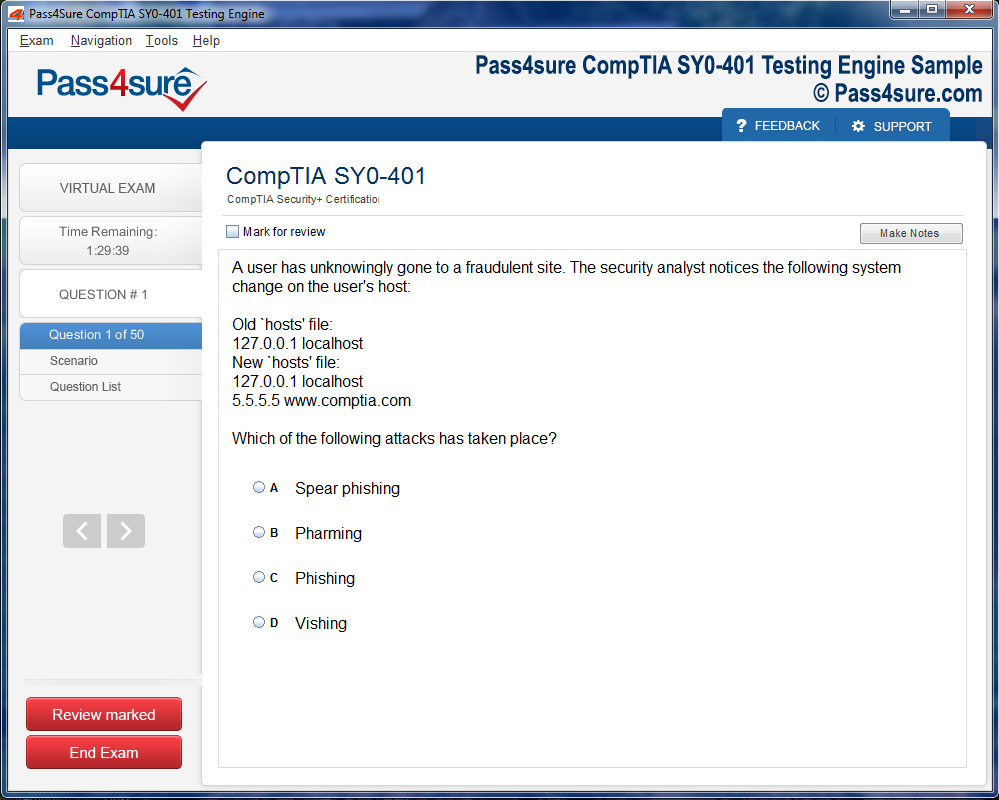
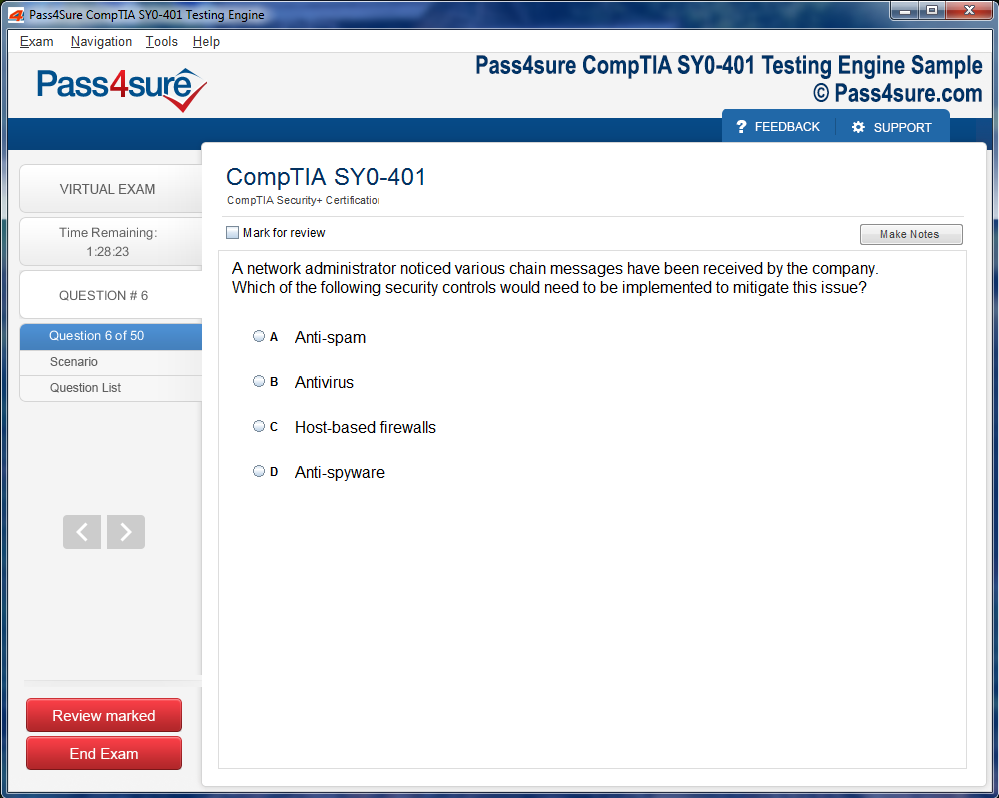
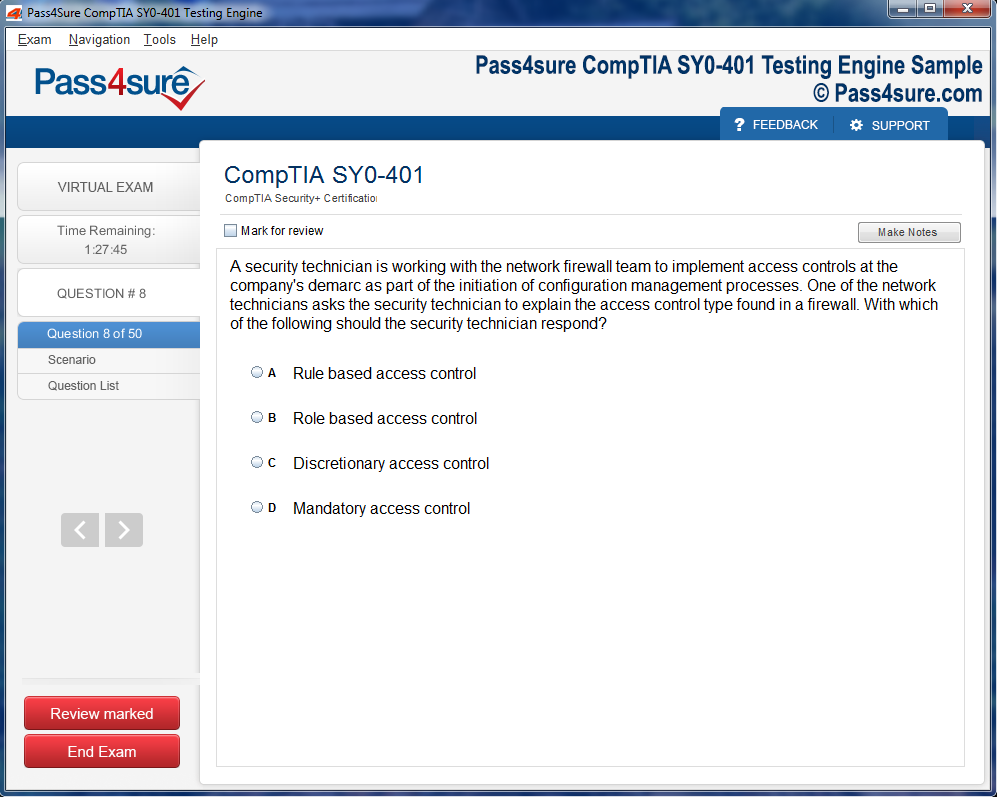
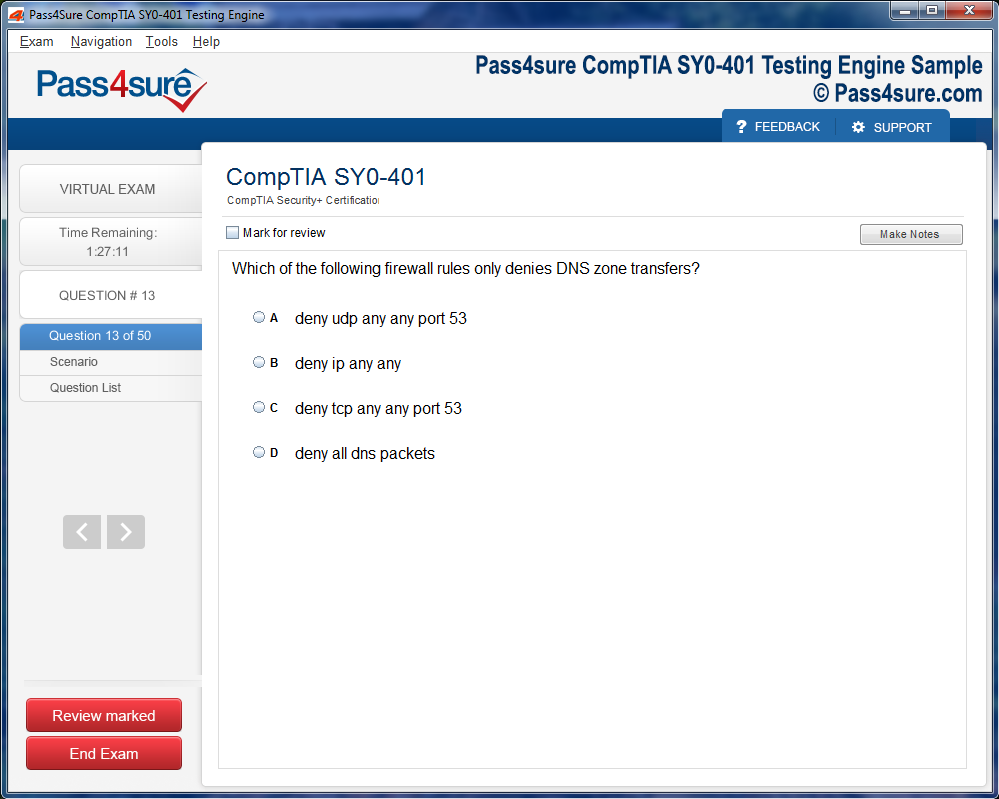
Product Screenshots
Frequently Asked Questions
How does your testing engine works?
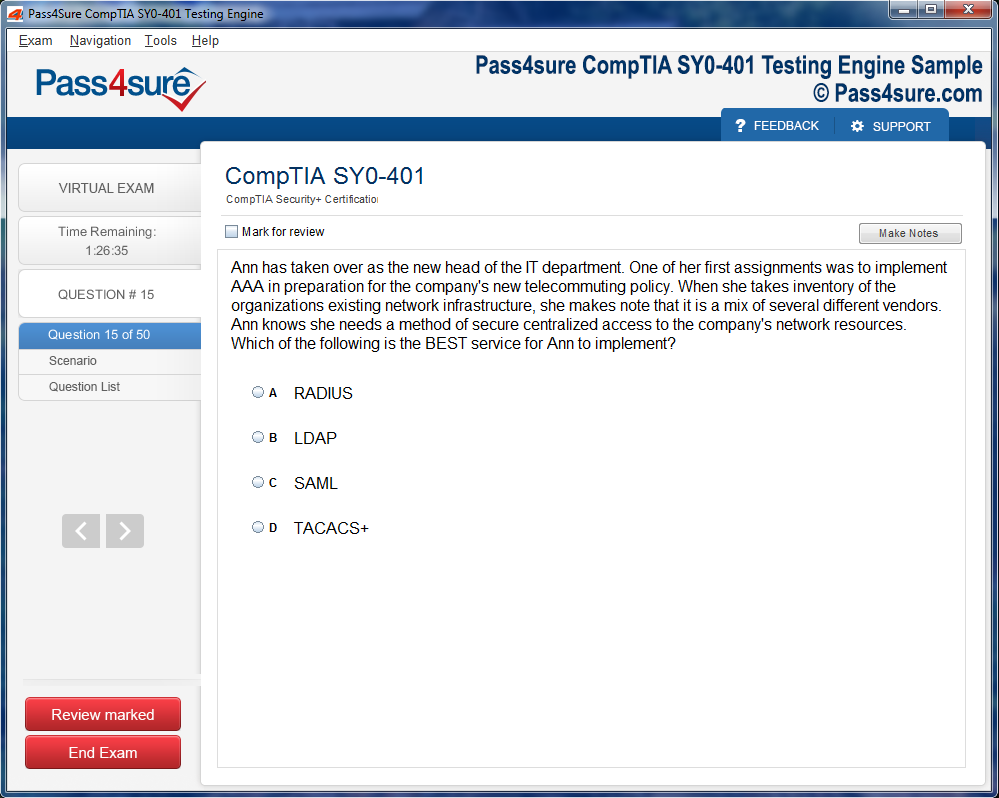
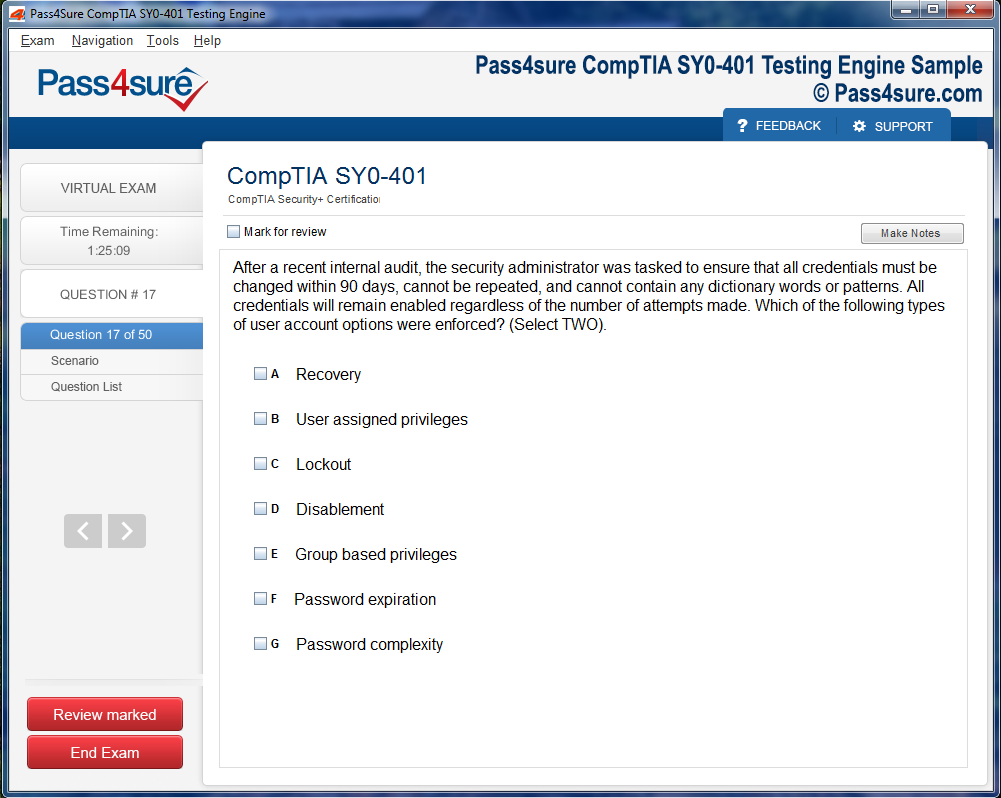
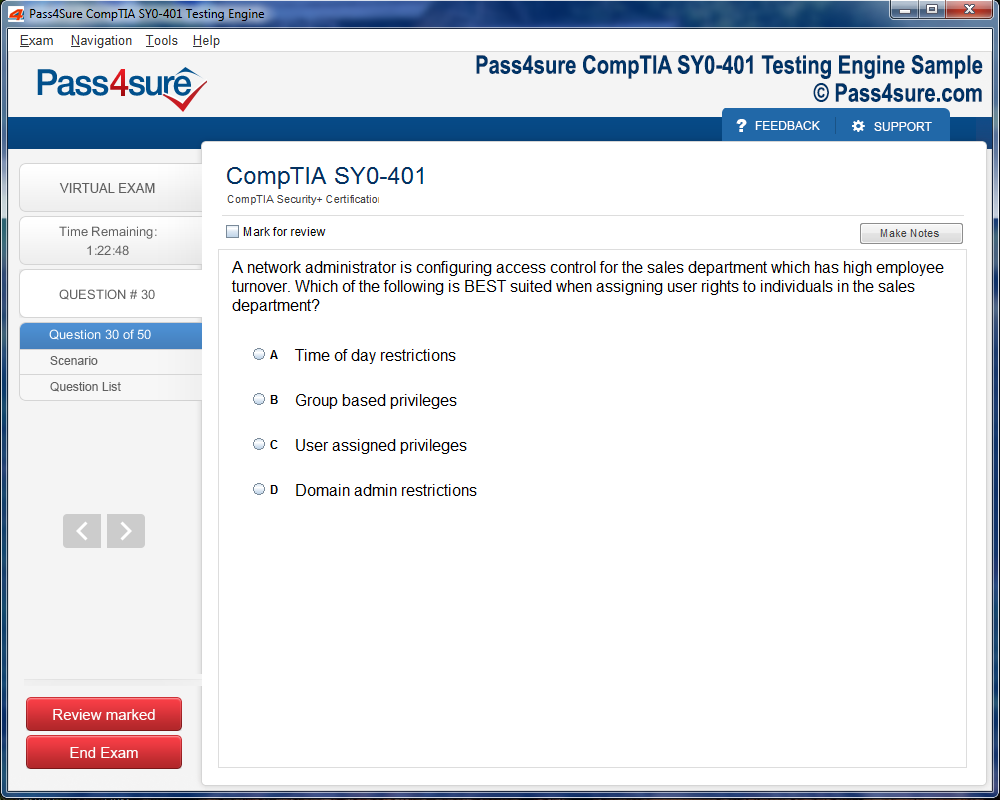
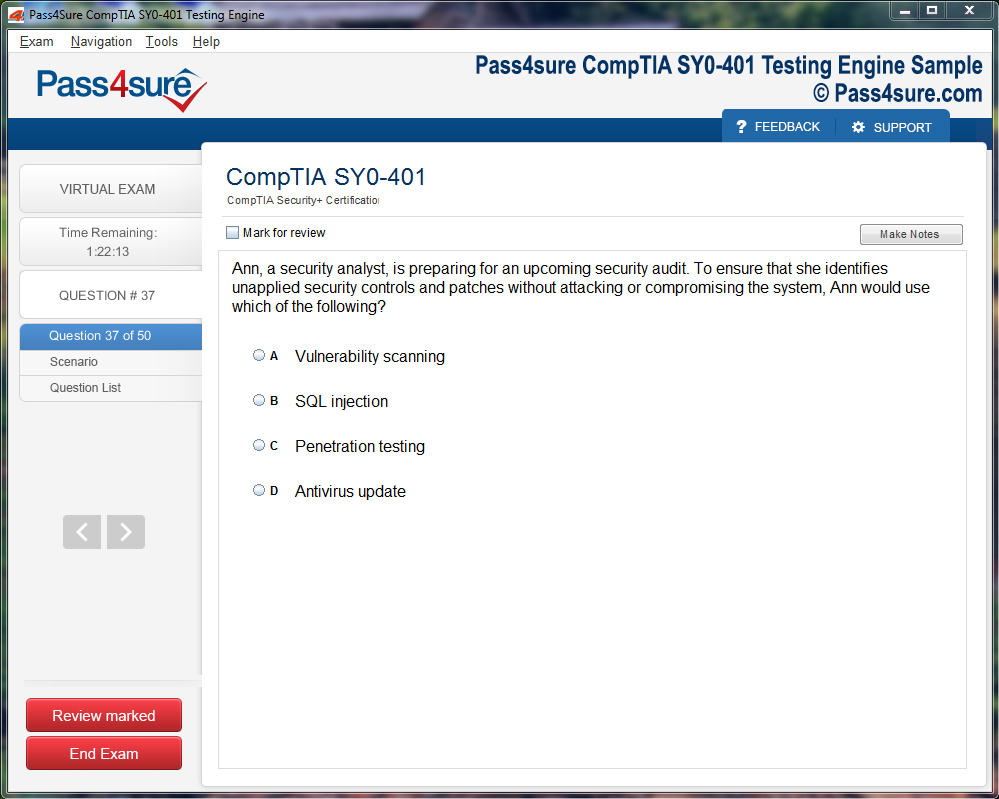
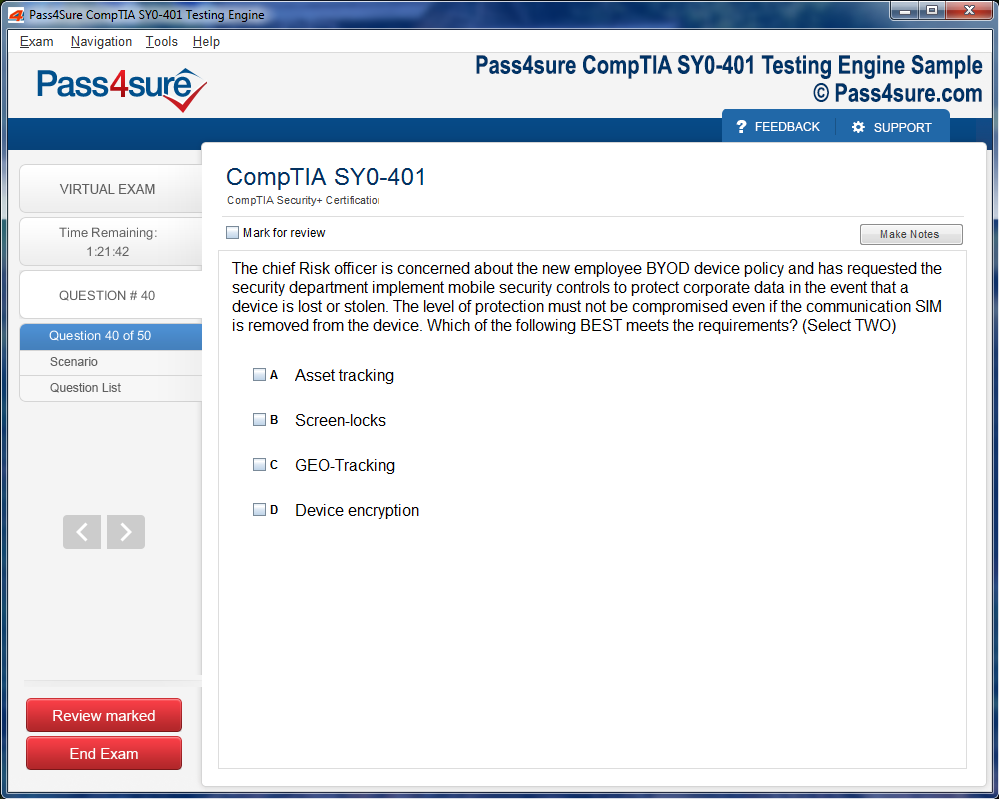
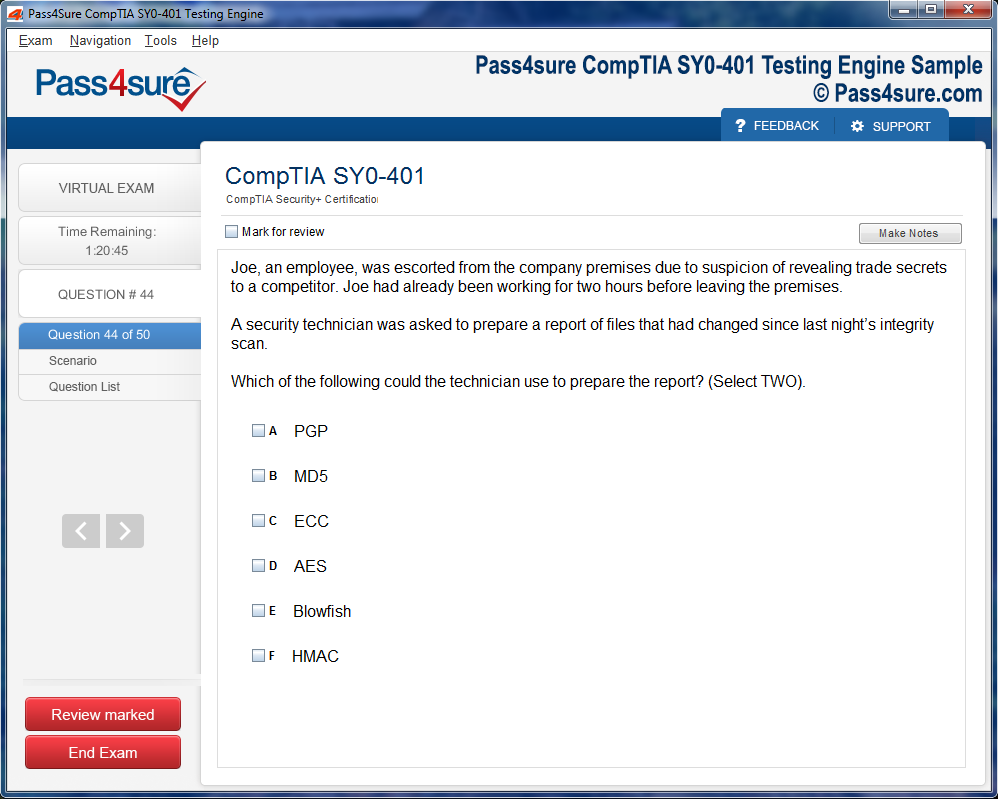
Once download and installed on your PC, you can practise test questions, review your questions & answers using two different options 'practice exam' and 'virtual exam'. Virtual Exam - test yourself with exam questions with a time limit, as if you are taking exams in the Prometric or VUE testing centre. Practice exam - review exam questions one by one, see correct answers and explanations.
How can I get the products after purchase?
All products are available for download immediately from your Member's Area. Once you have made the payment, you will be transferred to Member's Area where you can login and download the products you have purchased to your computer.
How long can I use my product? Will it be valid forever?
Pass4sure products have a validity of 90 days from the date of purchase. This means that any updates to the products, including but not limited to new questions, or updates and changes by our editing team, will be automatically downloaded on to computer to make sure that you get latest exam prep materials during those 90 days.
Can I renew my product if when it's expired?
Yes, when the 90 days of your product validity are over, you have the option of renewing your expired products with a 30% discount. This can be done in your Member's Area.
Please note that you will not be able to use the product after it has expired if you don't renew it.
How often are the questions updated?
We always try to provide the latest pool of questions, Updates in the questions depend on the changes in actual pool of questions by different vendors. As soon as we know about the change in the exam question pool we try our best to update the products as fast as possible.
How many computers I can download Pass4sure software on?
You can download the Pass4sure products on the maximum number of 2 (two) computers or devices. If you need to use the software on more than two machines, you can purchase this option separately. Please email sales@pass4sure.com if you need to use more than 5 (five) computers.
What are the system requirements?
Minimum System Requirements:
- Windows XP or newer operating system
- Java Version 8 or newer
- 1+ GHz processor
- 1 GB Ram
- 50 MB available hard disk typically (products may vary)
What operating systems are supported by your Testing Engine software?
Our testing engine is supported by Windows. Andriod and IOS software is currently under development.
C1000-132 Exam: Your Guide to IBM Maximo Manage v8.0 Implementation Certification
IBM Maximo Manage is anchored on a robust architectural framework designed to accommodate the dynamic needs of modern enterprises. Its foundation is predicated on a layered system architecture that ensures flexibility, security, and operational continuity. At its core, Maximo leverages an object-oriented structure that simplifies asset management processes while enabling scalability. This structure is pivotal for organizations managing thousands of assets across diverse locations.
The platform’s architecture also emphasizes modularity, allowing organizations to implement only the components they need while retaining the option to expand in the future. Core modules such as asset management, work order tracking, preventive maintenance, and service request management form the backbone of this ecosystem. Each module interacts seamlessly, creating a cohesive workflow that mirrors real-world operations. Understanding these interconnections is crucial for professionals aiming to deploy Maximo effectively.
Integration layers play a significant role in the architecture, providing connectivity with other enterprise applications, IoT devices, and data analytics platforms. These integration points ensure that information flows smoothly across the organization, creating a single source of truth for asset data. Professionals preparing for the C1000-132 exam must familiarize themselves with these architectural nuances, as they often form the basis of scenario-based exam questions.
Security architecture is another integral component, designed to protect sensitive organizational data while maintaining compliance with industry regulations. Role-based access control, encryption protocols, and audit trails are embedded within the platform, allowing organizations to manage data access without compromising functionality. For those pursuing certification, understanding these security principles is critical, as it demonstrates an ability to implement Maximo in environments that demand stringent data governance.
Optimizing Asset Lifecycle Management
The essence of IBM Maximo Manage lies in its ability to streamline the entire asset lifecycle, from procurement to decommissioning. Effective lifecycle management begins with a comprehensive understanding of asset hierarchies, attributes, and interdependencies. Maximo provides tools to categorize and monitor assets based on criticality, usage patterns, and performance metrics. This granular visibility ensures that organizations can prioritize maintenance efforts, allocate resources efficiently, and minimize operational disruptions.
Preventive maintenance is a cornerstone of lifecycle optimization within Maximo. By scheduling routine inspections and repairs based on predictive analytics or historical trends, organizations can avert costly breakdowns and extend asset longevity. Work order management complements this by providing a structured approach to task assignment, progress tracking, and completion reporting. These modules, when utilized cohesively, reduce downtime and enhance operational efficiency.
Another aspect of lifecycle management is compliance tracking. Maximo enables organizations to monitor regulatory requirements, safety protocols, and environmental standards across their assets. This ensures that maintenance practices align with both internal policies and external regulations. For candidates pursuing certification, the ability to configure compliance settings and generate audit-ready reports is a demonstration of practical mastery.
Data analytics further enhances lifecycle management. By leveraging historical performance data, organizations can identify patterns of failure, optimize maintenance schedules, and forecast replacement timelines. Maximo’s reporting tools transform raw data into actionable insights, allowing decision-makers to anticipate challenges before they arise. Certification aspirants must understand how to configure these analytical tools, as real-world application scenarios often mirror exam questions.
Integration and Interoperability
A defining strength of IBM Maximo Manage is its ability to integrate seamlessly with other enterprise systems. Modern organizations rarely operate in isolation; they rely on multiple platforms for procurement, inventory management, financial tracking, and operational reporting. Maximo’s interoperability ensures that asset data remains consistent and synchronized across these diverse systems, eliminating redundancy and errors.
Application programming interfaces (APIs) are central to this integration capability. They allow Maximo to exchange data with external systems in real time, supporting operations that range from automated inventory updates to predictive maintenance alerts. Professionals preparing for the C1000-132 exam must understand these integration points, including the configuration of data synchronization rules and the handling of exceptions.
Maximo also supports IoT-enabled asset monitoring, which represents the forefront of intelligent asset management. Sensors embedded in machinery, vehicles, or infrastructure feed live data into the Maximo platform, enabling predictive maintenance, energy optimization, and anomaly detection. Understanding how to configure IoT integrations, interpret sensor data, and trigger automated workflows is an essential skill for certification aspirants and real-world practitioners alike.
The platform’s interoperability extends to mobile solutions, allowing field technicians to access work orders, record asset conditions, and update maintenance logs from remote locations. This mobility enhances operational efficiency, reduces response times, and ensures data accuracy. Exam candidates should be able to demonstrate an understanding of mobile configuration settings and workflow automation to maximize the value of Maximo’s integrated ecosystem.
Strategic Reporting and Analytics
IBM Maximo Manage transforms raw data into strategic intelligence, enabling organizations to make informed decisions about asset utilization, maintenance, and resource allocation. Reporting tools within Maximo allow the creation of custom dashboards, key performance indicators, and trend analyses that highlight operational strengths and vulnerabilities.
For certification aspirants, mastering these reporting tools is essential. The ability to design, configure, and interpret reports demonstrates a practical understanding of Maximo’s analytical capabilities. It also reflects an aptitude for translating data insights into actionable operational strategies. Reports can be generated for various stakeholders, including management, finance, and regulatory authorities, ensuring that decision-making is informed and transparent.
Predictive analytics within Maximo adds a proactive dimension to asset management. By analyzing historical data and identifying patterns, the system can forecast potential failures, suggest maintenance interventions, and recommend resource allocations. This forward-looking approach reduces operational risk and enhances efficiency. Exam preparation should include understanding the configuration of predictive models, thresholds, and alert mechanisms.
Additionally, Maximo supports performance benchmarking across different sites, asset types, or operational units. Organizations can compare efficiency, maintenance costs, and asset performance, identifying opportunities for optimization and cost savings. Professionals must be adept at configuring these benchmarks and interpreting comparative data to provide actionable insights.
Advanced Workflow Automation
Automation is a pivotal element of IBM Maximo Manage, allowing organizations to streamline repetitive tasks, reduce human error, and improve response times. Workflows in Maximo are highly customizable, enabling organizations to design automated sequences that reflect operational priorities and organizational hierarchies.
From routine maintenance approvals to complex asset inspection protocols, workflow automation ensures consistency and accountability. Field technicians, supervisors, and managers benefit from predefined processes that guide task execution and provide real-time visibility into progress. Certification aspirants should understand how to configure, test, and refine workflows to align with operational goals.
Automation extends to notifications and alerts, ensuring that critical maintenance issues are addressed promptly. By integrating automated triggers with mobile solutions, Maximo ensures that the right personnel receive timely updates, minimizing downtime and improving asset performance. Exam candidates should be familiar with creating conditional alerts, escalation rules, and notification templates to demonstrate comprehensive workflow management skills.
Another dimension of workflow automation is integration with external systems. For example, automated procurement requests can be triggered when inventory thresholds are reached, or maintenance schedules can update ERP systems in real time. Understanding these automated interactions is crucial for professionals aiming to implement Maximo in complex enterprise environments.
Enhancing User Experience and Accessibility
IBM Maximo Manage emphasizes user experience and accessibility, ensuring that personnel across all organizational levels can engage with the system effectively. The interface is intuitive, with navigation designed to simplify complex asset management tasks. This accessibility is critical for adoption, as even the most powerful system is ineffective if users struggle to interact with it.
Training and role-based customization further enhance usability. Users can access modules relevant to their responsibilities, reducing clutter and focusing attention on critical tasks. Certification aspirants must understand how to configure role-based access, personalize dashboards, and provide user-friendly navigation to demonstrate their mastery of the platform.
Mobile accessibility is equally important, particularly for field operations. Technicians can access Maximo from smartphones or tablets, receive work orders, update asset conditions, and capture photographic evidence of maintenance work. This immediacy reduces errors, enhances record accuracy, and improves overall operational efficiency. Professionals preparing for certification exams should be able to configure mobile workflows, offline access, and synchronization protocols.
Accessibility extends beyond usability to compliance with accessibility standards, ensuring that personnel with diverse abilities can interact with the platform effectively. Understanding these configurations reflects an awareness of inclusive design and organizational best practices.
IBM Maximo Manage stands as a towering solution in the realm of asset lifecycle management, offering a versatile and integrated approach to maintain, monitor, and optimize organizational assets. The software is meticulously designed to encompass multiple operational domains, ensuring that every facet of asset handling—from procurement to retirement—is seamlessly orchestrated. Each module within Maximo is a powerhouse of functionality, yet the true strength emerges when these modules converge, delivering an ecosystem that is both intuitive and robust. For professionals preparing for the C1000-132 exam, developing a granular understanding of these modules is paramount. The intricacies of Maximo extend beyond mere navigation; they require the ability to manipulate workflows, configure hierarchies, and interpret data streams to ensure optimized decision-making.
The architecture of Maximo Manage encourages users to adopt a structured approach to asset management. Workflows, alerts, and automated triggers are embedded within the system to reduce manual oversight and increase efficiency. The system’s adaptability enables organizations to tailor the platform to specific operational requirements, whether in manufacturing, utilities, transportation, or facility management. By integrating both traditional and modern asset management paradigms, Maximo ensures that enterprises are equipped to handle both predictable maintenance routines and unforeseen operational challenges.
Work Order Management and Operational Precision
The work order management module forms the cornerstone of Maximo’s operational capabilities. At its essence, this module governs the creation, tracking, prioritization, and completion of maintenance activities. The module’s design is rooted in a philosophy of operational precision, ensuring that tasks are executed in a timely and cost-effective manner. Work orders within Maximo are dynamic entities, capable of capturing intricate details about the asset, assigned personnel, required resources, and scheduled timelines.
Understanding work order hierarchies is critical. Each task can be classified by priority levels, status indicators, and workflow sequences that determine how it moves from initiation to closure. For exam candidates, proficiency in configuring these sequences is essential. A subtle misalignment in workflow settings can cascade into operational inefficiencies, delaying maintenance or misallocating resources. In real-world scenarios, this module acts as a nerve center, harmonizing the efforts of technicians, managers, and procurement teams to maintain uninterrupted asset performance.
Additionally, work order management facilitates detailed reporting. Users can analyze task completion times, recurring issues, and resource utilization to identify areas requiring improvement. The system’s flexibility allows for automation of routine maintenance alerts, ensuring that preventative strategies are consistently applied. By mastering this module, professionals develop the ability to orchestrate complex operational schedules with clarity and foresight, an essential competency for both examination success and organizational efficiency.
Preventive Maintenance and Predictive Insights
Preventive maintenance within Maximo is a pivotal module designed to mitigate the risks associated with unexpected downtime. In industries where operational continuity is critical, unplanned failures translate directly into financial losses and workflow disruption. Maximo empowers organizations to anticipate maintenance needs through carefully configured schedules and automated alerts. Historical asset performance data plays a crucial role in this process, offering insights into wear patterns, failure rates, and component longevity.
The preventive maintenance module allows users to establish intervals for routine inspections, calibrations, and replacements. This proactive approach ensures that equipment remains in optimal condition and extends its operational lifespan. For exam preparation, candidates must grasp the methodology of calculating ideal maintenance frequencies, factoring in variables such as asset usage intensity, environmental conditions, and historical failure data.
Moreover, Maximo integrates predictive elements through analytics and emerging IoT functionalities. Sensor data can provide early warnings for deviations in performance metrics, enabling technicians to intervene before a minor issue escalates into a critical failure. This blend of preventive and predictive maintenance represents a transformative approach in asset management, highlighting Maximo’s capacity to not just react to problems but to foresee and forestall them. Mastery of this module equips professionals with the ability to safeguard operational continuity, enhance reliability, and optimize the allocation of maintenance resources.
Inventory and Procurement Management Efficiency
Inventory and procurement management is a module where operational efficiency meets strategic foresight. Effective control over spare parts, materials, and consumables is indispensable for uninterrupted asset performance. Maximo’s inventory module enables organizations to monitor stock levels, set reorder thresholds, and trigger automated procurement processes, all within a centralized platform.
The ability to maintain optimal inventory balances reduces the risks of stockouts or excessive holdings, both of which carry significant financial implications. Candidates must understand how to configure inventory parameters, monitor material usage patterns, and anticipate procurement needs. Scenario-based exercises in the C1000-132 exam often simulate situations requiring careful planning of stock replenishment and distribution strategies.
Procurement within Maximo is intricately linked to inventory management. The system can automatically generate purchase requisitions, select vendors based on predefined criteria, and track the status of ordered items. This seamless integration ensures that operational demands are met without unnecessary delays. Furthermore, the module provides detailed reporting and analytics, allowing managers to assess vendor performance, material consumption rates, and overall procurement efficiency. Proficiency in this domain empowers professionals to harmonize supply chains, enhance cost management, and ensure the timely availability of critical assets.
Asset Hierarchies and Configuration Dynamics
Asset management within Maximo is not merely about cataloging equipment; it involves establishing complex hierarchies and relational structures that enable nuanced oversight. Assets are organized in parent-child relationships, facilitating detailed tracking from high-level systems down to individual components. This structure supports precise maintenance planning, reporting, and decision-making.
Candidates preparing for the C1000-132 exam must practice creating, modifying, and linking assets within these hierarchies. Each configuration decision can influence the visibility of asset data, workflow efficiency, and reporting accuracy. Understanding the relational dynamics of assets also allows for more strategic maintenance scheduling, ensuring that dependencies between components are respected and operational bottlenecks are avoided.
In addition, asset hierarchies enhance reporting capabilities. Managers can aggregate performance metrics at various levels, from individual machines to entire operational units. This capability fosters data-driven decisions, enabling targeted interventions and optimized resource allocation. The sophistication of Maximo’s asset management module lies in its ability to balance granular oversight with overarching operational perspective, providing a comprehensive view of organizational assets.
Integration, Reporting, and Analytical Mastery
The integration and reporting functionalities of Maximo significantly amplify its operational value. Integration capabilities ensure that asset data flows seamlessly across enterprise systems, eliminating redundancies and ensuring consistency. By synchronizing Maximo with financial, human resources, and other operational platforms, organizations achieve a unified view of their asset landscape.
Reporting modules transform raw operational data into actionable insights. Detailed dashboards, trend analyses, and compliance reports empower managers to make informed decisions and identify patterns that may not be immediately apparent. Exam candidates must understand both the technical setup of these integrations and the practical interpretation of the reports they generate. Mastery in this area requires an analytical mindset, capable of translating complex data streams into strategic actions.
Maximo’s analytical capabilities also extend to performance benchmarking and predictive modeling. By examining historical data, organizations can forecast asset lifecycles, anticipate maintenance needs, and optimize resource allocation. The combination of integration and analytics fosters a proactive operational culture, where data drives decisions rather than intuition. Candidates who internalize these principles are better positioned to excel in both examinations and real-world asset management scenarios.
Security, Mobility, and Cloud Evolution
Security and user management within Maximo are critical yet often overlooked aspects of system administration. Configuring user roles, access permissions, and security protocols ensures that sensitive operational data remains protected. Candidates must familiarize themselves with security groups, role-based access, and segregation of duties to prevent unauthorized actions and maintain compliance.
Simultaneously, Maximo’s mobile and IoT-enabled modules are reshaping the asset management landscape. Field technicians can access work orders, record maintenance activities, and report asset conditions in real-time, enhancing operational responsiveness. IoT sensors feed predictive insights into the system, facilitating preemptive interventions and minimizing downtime. Understanding how to configure mobile workflows and interpret IoT data is increasingly vital for both practical application and exam preparation.
Cloud deployment adds another dimension of sophistication. Multi-tenant architectures, data security protocols, and performance optimization are key considerations in cloud-based implementations. Professionals must grasp configuration best practices for cloud environments, ensuring that Maximo’s capabilities are fully leveraged while maintaining system integrity. The convergence of security, mobility, and cloud technologies underscores Maximo’s adaptability and its capacity to evolve alongside enterprise requirements.
The IBM Certified Deployment Professional - Maximo Manage v8.0 exam is not a test of rote memorization but a rigorous evaluation of practical expertise. Unlike traditional assessments that reward passive reading, this exam emphasizes scenario-based problem solving, analytical reasoning, and operational implementation skills. Success requires more than theoretical knowledge; it demands an ability to translate concepts into actionable solutions within real-world frameworks. Candidates who approach preparation with a strategic mindset often outperform those who rely solely on memorization. Recognizing the practical orientation of the C1000-132 exam is the first step toward structuring an effective study regimen.
A deep comprehension of the exam blueprint is fundamental. IBM provides detailed outlines that cover topic weightage, question formats, and the total number of questions. These insights allow candidates to allocate study time efficiently, ensuring high-weight topics receive priority without neglecting less emphasized areas. Understanding the blueprint transforms preparation from random reading into a structured plan. By knowing how the exam evaluates skills, candidates can focus on developing operational competencies alongside conceptual understanding. The blueprint is essentially a map guiding learners through a landscape that blends theory with applied knowledge.
In addition, the C1000-132 exam evaluates how candidates respond under pressure. Time constraints and complex problem scenarios require not just accuracy but efficiency. Familiarity with the format reduces anxiety and enhances confidence, allowing candidates to navigate the exam with a composed mindset. Preparing for time management as part of the study strategy ensures that responses are not only correct but also delivered promptly. Awareness of these exam dynamics encourages a disciplined and focused approach to preparation.
Structured Study Plans for Maximum Retention
A structured study plan serves as the foundation for effective preparation. Random or haphazard study patterns often result in superficial understanding and inconsistent performance. A well-organized plan outlines daily, weekly, and monthly targets, balancing conceptual learning with practical exercises. Candidates should schedule focused blocks for theory, hands-on practice, and revision, creating a rhythm that promotes consistent progression. Structured study plans also allow for incremental evaluation of readiness, enabling learners to adjust intensity and focus areas based on ongoing performance.
Incorporating a variety of study materials strengthens comprehension. Textbooks, official IBM guides, video tutorials, and practical exercises provide multiple perspectives on the same topic. Exposure to diverse resources reduces the likelihood of knowledge gaps and enhances cognitive flexibility, which is critical for scenario-based problem solving. Switching between different learning modalities—reading, watching, and doing—activates multiple areas of the brain, reinforcing memory retention and application skills. This diversified approach cultivates a robust knowledge base that supports confident exam performance.
Another aspect of structured planning is identifying strengths and weaknesses. Not all topics carry the same weight or difficulty, and understanding personal proficiency levels allows for targeted study. Advanced topics may require repeated practice or additional reference materials, while familiar areas can be reinforced through lighter review. Continuous assessment ensures that no topic is overlooked and that study efforts are aligned with individual learning curves. Candidates who systematically identify and address weak points often demonstrate higher consistency in performance compared to those who adopt a uniform study pace.
The Power of Practice Exams and Simulations
Practice exams are indispensable tools for mastering the C1000-132 exam. They serve as diagnostic instruments, revealing areas of strength and identifying gaps that need attention. Simulated exams replicate the real test environment, exposing candidates to time constraints, question types, and scenario-based challenges. Repeated exposure to this environment reduces anxiety and builds familiarity, ensuring that candidates are not caught off guard on exam day. Practice exams also reinforce learning by allowing repeated interaction with concepts in a controlled setting, solidifying retention through application.
Reviewing practice exam results is equally important. Each incorrect response offers a learning opportunity, highlighting misconceptions or gaps in understanding. Candidates should analyze errors critically, understanding why an answer was incorrect and how to approach similar questions in the future. This reflective process transforms mistakes into productive learning experiences, preventing repetition of the same errors. Systematic review ensures that study efforts are both efficient and effective, maximizing the return on invested time.
Simulations extend beyond mere question-answer practice. They can include creating workflows, configuring asset hierarchies, and performing administrative tasks within a controlled Maximo Manage environment. Translating theory into practical execution strengthens problem-solving abilities and reinforces conceptual knowledge. By repeatedly navigating real-world scenarios, candidates develop an instinctive understanding of how Maximo Manage functions operationally. This hands-on experience is invaluable, as it prepares candidates to handle complex questions that mimic workplace situations.
Active Learning Techniques for Deep Understanding
Active learning is a powerful strategy for retaining knowledge and enhancing comprehension. Passive reading or watching tutorials alone often results in surface-level understanding. Engaging with material through creation, simulation, or discussion activates deeper cognitive pathways. For Maximo Manage, this could involve constructing process diagrams, mapping asset hierarchies, or configuring modules in a sandbox environment. By interacting directly with content, learners internalize workflows and gain practical insight into system functionalities.
One effective technique is summarizing concepts in one's own words. Rewriting workflows, configuration steps, or module functionalities in a personalized study journal consolidates understanding and facilitates faster recall. These personalized notes act as quick reference materials, especially valuable during the final stages of preparation. Additionally, visual aids such as flowcharts and diagrams support memory retention by translating abstract concepts into tangible representations. Active engagement with material ensures that candidates are prepared not only to recognize information but to apply it effectively.
Scenario-based learning is another key aspect of active engagement. Candidates should immerse themselves in practical situations that mirror real-world challenges. For example, simulating a maintenance scheduling problem or troubleshooting asset discrepancies allows learners to apply theoretical knowledge in a controlled yet realistic context. This experiential approach develops critical thinking, analytical reasoning, and operational decision-making skills—all essential for success in the C1000-132 exam. Active learning transforms preparation from a passive accumulation of facts into an immersive, skill-building experience.
Collaborative Learning and Knowledge Exchange
Learning in isolation has limitations, particularly when preparing for a practical exam. Collaborative learning fosters diverse perspectives and enriches understanding. Candidates can join online forums, discussion groups, or study communities focused on Maximo Manage. Interaction with peers facilitates the exchange of strategies, clarification of ambiguous topics, and discussion of complex scenarios. Exposure to varied problem-solving approaches broadens cognitive flexibility and enhances adaptability, which is critical for scenario-based questions.
Insights from recently certified professionals can be particularly valuable. Their firsthand experience provides practical tips that may not be covered in standard study materials. Learning about common pitfalls, frequently tested areas, and effective preparation techniques adds a strategic advantage. Collaborative discussions also encourage deeper engagement, as explaining concepts to others reinforces one’s own understanding. Peer learning, therefore, is not just about knowledge exchange; it is a tool for reflection, reinforcement, and confidence building.
Additionally, collaboration cultivates motivation and accountability. Regular study sessions, discussions, or shared practice exams create a structured environment that encourages consistent effort. Candidates who engage with a community are more likely to maintain disciplined study habits and persist through challenging topics. Social learning complements individual preparation by offering both intellectual and emotional support, enhancing the overall effectiveness of the study process.
Time Management and Study Discipline
Time management is critical for successful exam preparation. Balancing theoretical study, hands-on practice, and revision requires a disciplined approach. Techniques such as setting fixed study hours, dividing sessions into focused blocks, and implementing short breaks enhance concentration and productivity. Structured time allocation ensures that every component of the exam syllabus receives adequate attention, reducing the risk of neglected topics or rushed revision at the last moment.
Timed practice tests simulate exam conditions, training candidates to manage the clock effectively. They foster the ability to prioritize questions, allocate time wisely, and maintain composure under pressure. Time management also extends to long-term preparation, ensuring consistent progress toward milestones without burnout. A disciplined approach prevents last-minute cramming and encourages a steady, confidence-building trajectory toward exam readiness.
Incorporating real-world relevance into study routines further strengthens time utilization. Instead of abstract memorization, candidates can dedicate study blocks to solving practical problems or simulating industrial workflows. This approach not only improves retention but ensures that time spent studying yields skills directly applicable in professional contexts. Efficient time management, therefore, combines structured scheduling, focused engagement, and practical application to maximize results.
Personal Documentation and Reflective Practice
Documentation is an often-overlooked yet crucial element of preparation. Maintaining a personal study journal allows candidates to consolidate knowledge, record insights, and track progress. Summarizing complex concepts, workflows, and configuration steps in one’s own language enhances understanding and creates a ready reference for rapid revision. Documentation is not merely note-taking; it is a cognitive tool that transforms information into personalized knowledge.
Reflective practice complements documentation. Regular self-assessment of strengths and weaknesses provides insight into learning effectiveness and highlights areas requiring reinforcement. Reflection encourages iterative improvement, ensuring that study efforts evolve in response to observed performance. Candidates who engage in systematic reflection develop not only knowledge but also analytical thinking and problem-solving competencies. This continuous cycle of learning, documentation, and reflection builds resilience and adaptability—qualities essential for tackling scenario-driven examinations.
Integrating reflection into preparation also enhances metacognitive awareness. Candidates become conscious of their learning strategies, identifying what works best for them and refining techniques accordingly. This awareness promotes efficient study habits, reduces wasted effort, and strengthens confidence. By combining documentation with reflective practice, learners create a self-reinforcing preparation system that transforms information into expertise and readiness for the practical challenges of the C1000-132 exam.
Preparing for an examination as intricate as the C1000-132 requires more than surface-level memorization. Many candidates enter the preparation phase with confidence, yet they quickly realize that the true challenge lies not in knowing the material but in applying it effectively. The examination tests both knowledge and the ability to adapt that knowledge to practical situations, which often catches candidates off guard. Understanding the underlying structure of the exam, including its scenario-based questions and time constraints, provides a solid foundation for successful preparation. Candidates who grasp the nuances of the exam are better equipped to navigate complex scenarios and make informed decisions under pressure.
One of the most critical aspects of preparation is recognizing that each question is designed to evaluate practical understanding rather than rote memorization. Candidates who rely solely on memorizing facts or procedural steps may struggle to connect theoretical knowledge with real-world applications. Therefore, a deep comprehension of the exam content, combined with the ability to analyze situations logically, becomes essential. This approach fosters not only competence but also confidence, which is a vital component of performance during the actual examination.
Additionally, candidates often underestimate the cognitive load associated with scenario-based questions. These questions require careful analysis, critical thinking, and the ability to prioritize solutions effectively. Without adequate practice in interpreting scenarios, candidates risk misjudging the intent of the questions, leading to errors despite possessing sufficient knowledge. Developing the skill to evaluate each scenario comprehensively ensures that responses are not only correct but also contextually appropriate.
The Trap of Over-Reliance on Study Materials
Many aspirants make the mistake of over-relying on study guides, PDFs, and static resources. While these materials are valuable for understanding theoretical concepts, they are insufficient for developing practical skills. The static nature of printed guides does not replicate the dynamic environment of a real-world implementation, which the exam aims to simulate. Candidates who limit their preparation to reading materials alone often find themselves unprepared when faced with applied scenarios.
To overcome this, it is crucial to diversify study methods. Engaging in hands-on lab exercises, using online simulation platforms, and participating in interactive workshops enhance understanding and retention. Experiential learning enables candidates to internalize workflows, troubleshoot issues, and navigate module interactions confidently. By complementing theoretical knowledge with practical exposure, candidates can bridge the gap between knowing and doing, which is the cornerstone of exam success.
Peer collaboration also plays a significant role in reducing over-reliance on static study materials. Discussing complex scenarios with fellow candidates or professionals helps uncover nuances that may not be apparent from reading alone. Collaborative learning fosters multiple perspectives, allowing candidates to approach problems more creatively and confidently. This multidimensional preparation method equips candidates with both depth and breadth of understanding, which is indispensable for tackling the diverse questions encountered in the C1000-132 exam.
Mastering Time Management During Preparation
Time management is one of the most overlooked aspects of exam preparation, yet it is critical for success. Candidates often dedicate disproportionate amounts of time to certain modules or topics, neglecting others that are equally important. Without a structured schedule, preparation becomes uneven, and candidates may struggle to complete the full syllabus or revise effectively before the exam.
Implementing a disciplined study plan with clearly defined time blocks ensures balanced coverage of all topics. Allocating time for focused study, revision, and practical exercises prevents last-minute cramming and reduces stress. In addition, incorporating timed practice exams simulates real testing conditions, training candidates to manage the pace and allocate sufficient time to complex questions. Over time, consistent practice under time constraints cultivates both efficiency and accuracy, two qualities essential for high performance.
Equally important is the concept of iterative learning. Revisiting challenging modules periodically reinforces understanding and uncovers gaps in knowledge. This cyclical approach allows candidates to refine their strategies, strengthen weak areas, and enhance overall readiness. By managing time effectively and adopting a structured routine, candidates build a resilient framework that supports both learning and retention.
Navigating Scenario-Based Questions with Precision
Scenario-based questions are a defining feature of the C1000-132 exam and present unique challenges. These questions often contain subtle hints or complex conditions that require careful interpretation. Misreading a scenario can lead to errors, even when the candidate possesses adequate knowledge. Therefore, developing strategies to analyze and respond to scenarios is critical.
Visualization is a powerful tool for tackling scenario-based questions. Candidates who mentally simulate the described environment, map out workflows, and anticipate potential issues are better prepared to select appropriate solutions. This method encourages active engagement with the question, transforming it from a passive reading exercise into an interactive problem-solving process.
Careful attention to keywords is equally vital. Many questions include specific terminology that guides the selection of the optimal solution. Recognizing these cues helps eliminate incorrect options and narrows the focus to the most relevant responses. By practicing these techniques regularly, candidates enhance their ability to navigate complex scenarios efficiently, reducing errors and improving confidence during the examination.
Regular exposure to diverse scenarios also contributes significantly to preparedness. Candidates who tackle a wide range of practice problems develop adaptability, which is crucial for managing unexpected or unfamiliar situations in the exam. This experience builds both competence and assurance, allowing candidates to approach each scenario methodically and confidently.
Bridging the Gap Between Theory and Practice
A common obstacle for candidates is the lack of hands-on experience. Relying solely on theoretical understanding may leave gaps in practical skills, which are frequently tested in the C1000-132 exam. Questions that require applying configurations, managing workflows, or integrating modules demand a practical perspective that cannot be achieved through reading alone.
Creating a simulated environment is an effective way to gain hands-on experience. Candidates can experiment with modules, replicate real-world workflows, and troubleshoot hypothetical problems. This immersive approach reinforces theoretical knowledge, enabling candidates to understand the functional implications of each action within the system. Over time, practical exposure cultivates confidence, precision, and familiarity with common operational challenges.
Additionally, reflecting on practical exercises enhances cognitive retention. Candidates who analyze the outcomes of their experiments, identify errors, and understand the rationale behind correct solutions deepen their comprehension. This reflective practice transforms experiential learning into long-term knowledge, ensuring that skills acquired during preparation are readily deployable during the examination.
Enhancing Retention Through Iterative Revision
Revision is often underestimated in exam preparation, yet it is essential for ensuring long-term retention of knowledge. Many candidates study intensively in the initial phases but neglect systematic review, resulting in fading memory and incomplete understanding. Iterative revision, which involves revisiting topics multiple times, reinforces critical concepts and strengthens recall under pressure.
Mini-quizzes and self-assessment exercises serve as valuable tools for reinforcing knowledge. By testing themselves periodically, candidates identify weak areas, monitor progress, and adapt their study plans accordingly. These exercises also simulate the retrieval process required during the exam, enhancing both confidence and performance.
Spacing out revision sessions over time is another effective strategy. Rather than cramming, candidates benefit from distributing study sessions, allowing the brain to consolidate information gradually. This approach reduces cognitive fatigue, promotes deeper understanding, and supports retention over the long term. By combining structured revision with active self-testing, candidates ensure that knowledge remains accessible and actionable during the examination.
Cultivating Confidence and Mental Resilience
Beyond technical preparation, the psychological aspect of exam readiness plays a crucial role in performance. Anxiety, self-doubt, and mental fatigue can undermine even the most prepared candidate. Cultivating confidence and resilience through consistent practice, preparation, and reflection is therefore essential.
Mindful strategies, such as visualizing success, rehearsing problem-solving approaches, and maintaining a calm focus, help candidates manage stress effectively. By approaching the exam with a composed mindset, candidates enhance their ability to think clearly, interpret questions accurately, and respond decisively.
Confidence is further reinforced through repeated exposure to simulated exam conditions. Timed practice tests, scenario exercises, and peer discussions create a sense of familiarity and mastery. As candidates experience repeated success in controlled environments, their self-assurance grows, reducing anxiety and improving overall performance.
Ultimately, the combination of technical proficiency, practical experience, structured revision, and psychological preparedness forms a holistic framework for exam readiness. Candidates who invest in these strategies are not only equipped to succeed but also to navigate complex challenges with competence and composure.
IBM Maximo Manage has emerged as a cornerstone in contemporary enterprise asset management. Organizations operating in manufacturing, transportation, energy, and utilities increasingly rely on integrated solutions to monitor, maintain, and optimize their critical assets. Maximo Manage offers a unified platform to streamline asset lifecycle management, from procurement to decommissioning, ensuring operational continuity and efficiency. The system provides tools for work order management, inventory control, preventive maintenance, and performance tracking, allowing organizations to achieve transparency and measurable outcomes. Professionals who gain proficiency in Maximo Manage become instrumental in facilitating asset optimization and strategic decision-making. Their role extends beyond simple operational support to encompass insights into organizational processes and workflow enhancements. Mastery of Maximo Manage equips professionals to handle complex challenges, contributing directly to cost savings, improved reliability, and sustainable operations. As industries continue to digitize, Maximo Manage becomes a central pillar for organizations striving to maintain competitiveness and operational excellence.
The Significance of Certification in Career Development
Attaining certification in Maximo Manage, specifically the IBM Certified Deployment Professional - Maximo Manage v8.0 credential, signifies a commitment to professional growth and technical mastery. Certification is not merely a formal acknowledgment; it is a strategic differentiator in competitive job markets. Employers prioritize certified individuals because they demonstrate validated knowledge, practical skills, and readiness to implement enterprise solutions effectively. The C1000-132 certification highlights a professional’s ability to navigate Maximo Manage’s architecture, configure modules, and deploy asset management strategies that align with organizational objectives. Certified experts often assume critical roles in implementation projects, ensuring that processes are optimized and systems function seamlessly. Their contributions impact operational efficiency, compliance adherence, and strategic planning, positioning them as indispensable assets within organizations. Beyond immediate employment benefits, certification paves the way for long-term career advancement, enabling professionals to move into leadership roles and expand their influence across technical and managerial domains.
Building Expertise Through Structured Preparation
The journey toward Maximo Manage certification demands a disciplined and methodical approach to learning. Candidates must develop both theoretical understanding and practical proficiency to succeed in deployment scenarios. Familiarity with Maximo’s modules, workflows, and integration mechanisms is essential, along with an appreciation for the nuances of asset management strategy. Structured preparation involves studying official documentation, engaging with simulation environments, and participating in hands-on exercises that mimic real-world operational challenges. Such immersive learning experiences cultivate critical thinking and problem-solving capabilities, which are vital in dynamic enterprise contexts. Practicing with realistic scenarios enhances adaptability and instills confidence, allowing candidates to navigate complex system configurations and troubleshoot operational anomalies effectively. The process of preparation is as much about intellectual development as it is about technical skill-building. Candidates emerge with heightened analytical abilities, a deeper understanding of asset lifecycle management, and an awareness of best practices that drive efficiency and sustainability in organizational operations.
Maximizing Career Opportunities Through Certification
Certification in Maximo Manage unlocks diverse career avenues and positions professionals for roles of increasing responsibility. Organizations across sectors recognize the strategic importance of effective asset management and actively seek certified experts to lead implementation initiatives. Professionals can transition into positions such as asset management consultant, system administrator, implementation leader, or technical strategist. With accumulating experience, these roles expand into project management, business process analysis, and IT strategy development, offering pathways to senior leadership and executive-level opportunities. Certified individuals are often entrusted with optimizing workflows, designing preventive maintenance schedules, and enhancing operational visibility across departments. Their insights guide resource allocation, risk mitigation, and process improvement initiatives. By demonstrating both technical proficiency and strategic foresight, certified professionals become indispensable contributors to organizational success, and their credentials serve as tangible evidence of expertise in high-demand domains.
Enhancing Personal and Professional Growth
The pursuit of certification fosters personal growth alongside professional advancement. Preparing for the C1000-132 exam develops essential cognitive and organizational skills, including strategic planning, critical evaluation, and solution-oriented thinking. Professionals gain a nuanced understanding of asset management principles, lifecycle analytics, and system integrations, which empowers them to make informed decisions and implement impactful changes. Beyond technical mastery, certification encourages a mindset of continuous learning, adaptability, and innovation. Individuals learn to anticipate operational challenges, optimize workflows, and contribute to long-term organizational strategies. These capabilities extend beyond the immediate workplace, enhancing overall problem-solving aptitude, decision-making confidence, and leadership potential. In essence, certification nurtures a well-rounded professional capable of excelling in complex environments while fostering personal fulfillment through skill acquisition and meaningful contributions to enterprise success.
Networking and Community Engagement Opportunities
Obtaining Maximo Manage certification opens doors to vibrant professional networks and communities. Certified experts gain access to forums, collaborative groups, and knowledge-sharing platforms where industry practitioners exchange ideas, best practices, and emerging trends. Such engagement fosters continuous learning and professional enrichment, keeping individuals informed of technological innovations and operational advancements. Networking opportunities enable collaboration on challenging projects, mentorship exchanges, and exposure to diverse organizational contexts. Professionals can leverage these connections to develop innovative solutions, enhance their credibility, and participate in initiatives that influence industry standards. Being part of a certified community also provides recognition and validation, reinforcing the value of one’s expertise and creating pathways for career mobility. Active engagement in professional networks complements technical proficiency with interpersonal skills, strategic thinking, and industry awareness, further consolidating a professional’s role as a leader in asset management.
Establishing Thought Leadership in Asset Management
Certification in Maximo Manage positions professionals as thought leaders within enterprise asset management. Certified individuals are recognized not only for their ability to operate complex systems but also for their capacity to innovate, optimize processes, and implement impactful solutions. They contribute to organizational strategies by anticipating operational challenges, designing efficient workflows, and integrating technology-driven improvements. Thought leadership involves guiding teams, influencing decision-making, and establishing benchmarks for performance excellence. Professionals with deep expertise in Maximo Manage often become advisors for large-scale projects, shaping policies and methodologies that drive organizational growth. Their insights facilitate alignment between operational goals and strategic priorities, ensuring that asset management practices support both efficiency and sustainability. Certification validates this expertise, providing a platform for recognition, professional influence, and ongoing engagement in shaping the future of enterprise operations.
Leveraging Practical Experience for Career Longevity
While certification provides knowledge validation, practical experience ensures sustained professional relevance and long-term career success. Hands-on experience in deploying, configuring, and optimizing Maximo Manage enhances problem-solving skills and operational intuition. Professionals who engage with real-world challenges develop resilience, adaptability, and a nuanced understanding of organizational dynamics. Practical expertise complements certification by enabling the application of theoretical knowledge to complex, unpredictable scenarios. Over time, this experience cultivates proficiency in project leadership, risk assessment, and performance optimization. Organizations value professionals who combine certified knowledge with practical insights, as they deliver tangible results, improve operational efficiency, and drive innovation. Continuous engagement with Maximo Manage ensures that professionals remain current with technological updates, evolving industry standards, and emerging methodologies, thereby securing their relevance and influence in enterprise asset management over the long term.
Conclusion
Embarking on the journey to IBM Certified Deployment Professional - Maximo Manage v8.0 certification is more than just preparing for an exam; it is about embracing a transformative approach to enterprise asset management. Throughout this series, we have explored the significance of Maximo Manage Implementation, examined its core modules and functionalities, discussed effective study strategies, highlighted common pitfalls, and outlined the long-term career benefits of certification.
Maximo Manage stands as a powerful platform that enables organizations to streamline operations, optimize asset performance, and make data-driven decisions. For candidates, understanding its architecture, mastering the modules, and gaining hands-on experience are critical steps to not only passing the C1000-132 exam but also delivering tangible value in real-world implementations.
Preparation for the exam is most effective when it combines structured study, practice in simulated environments, active engagement with the community, and scenario-based problem solving. Avoiding common preparation mistakes, such as neglecting practical exercises or mismanaging study time, can significantly enhance both confidence and performance.
Ultimately, achieving the C1000-132 certification opens doors to advanced career opportunities, recognition as a skilled professional, and the ability to contribute meaningfully to organizational success. It validates expertise, fosters critical thinking, and positions individuals as leaders in enterprise asset management.
By committing to continuous learning, hands-on practice, and strategic preparation, candidates can transform their understanding of IBM Maximo Manage into both professional mastery and career growth. The journey to certification is demanding, but the rewards—enhanced knowledge, professional credibility, and impactful career progression—are well worth the effort. Master IBM Maximo Manage, embrace practical excellence, and let the C1000-132 certification be a milestone that propels your career to new heights.
Top IBM Exams
- C1000-183 - IBM Maximo Manage v9.0 Functional Deployment - Professional
- S2000-025 - IBM AIX v7.3 Administrator Specialty
- C1000-004 - IBM Curam SPM V7.X Application Developer
- C1000-171 - IBM App Connect Enterprise V12.0 Developer
- C1000-197 - IBM Guardium Data Protection v12.x Administrator - Professional
- C1000-174 - IBM WebSphere Application Server Network Deployment v9.0.5 Administrator