

Product Screenshots


Frequently Asked Questions
How does your testing engine works?
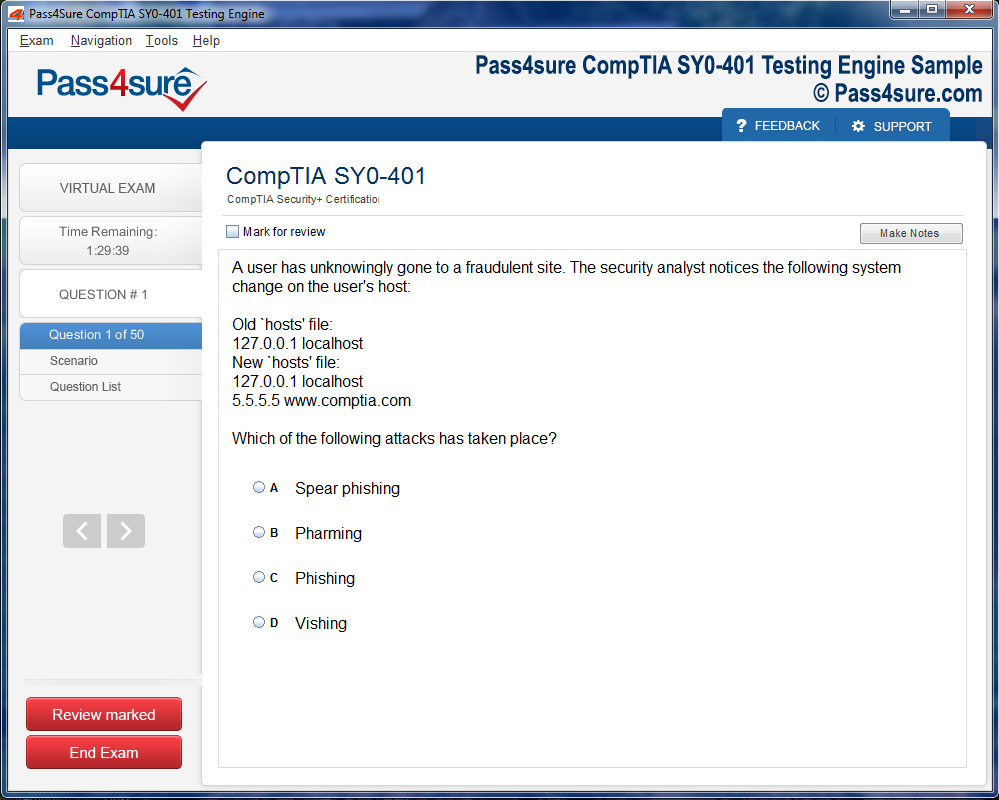
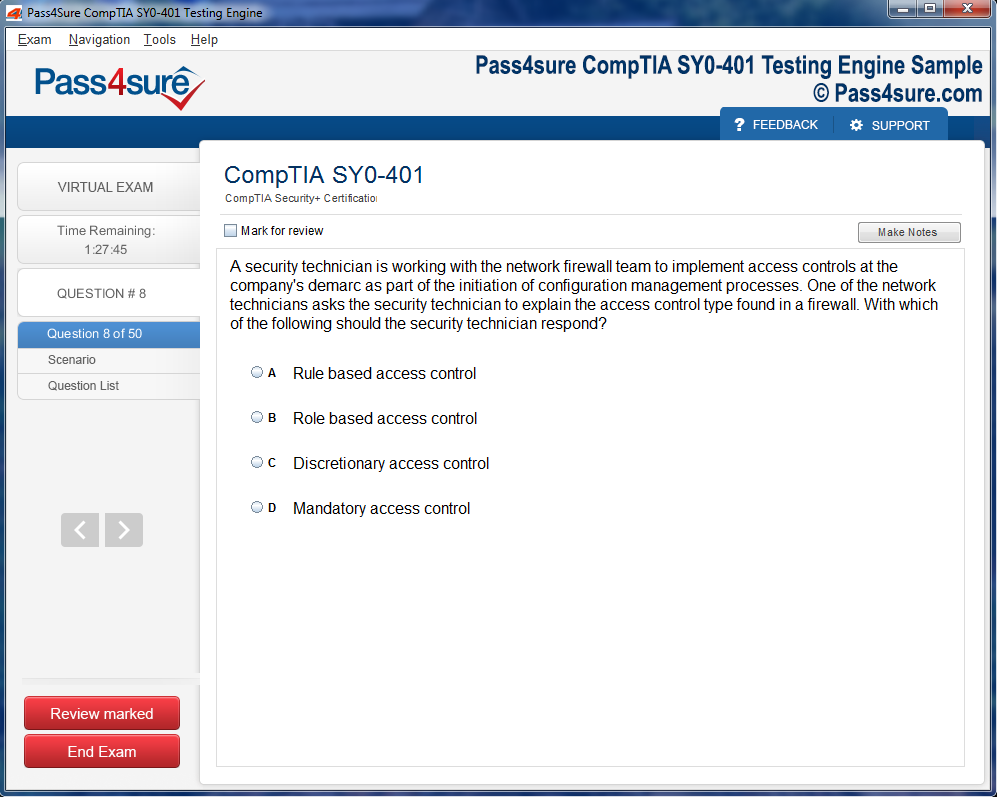
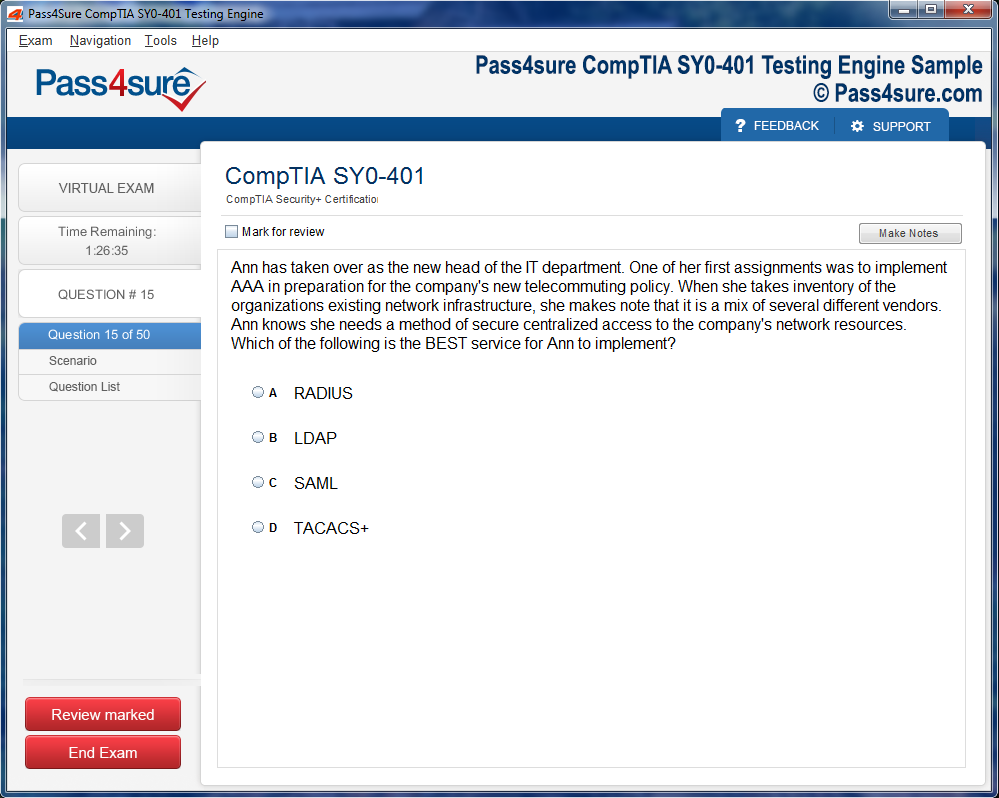
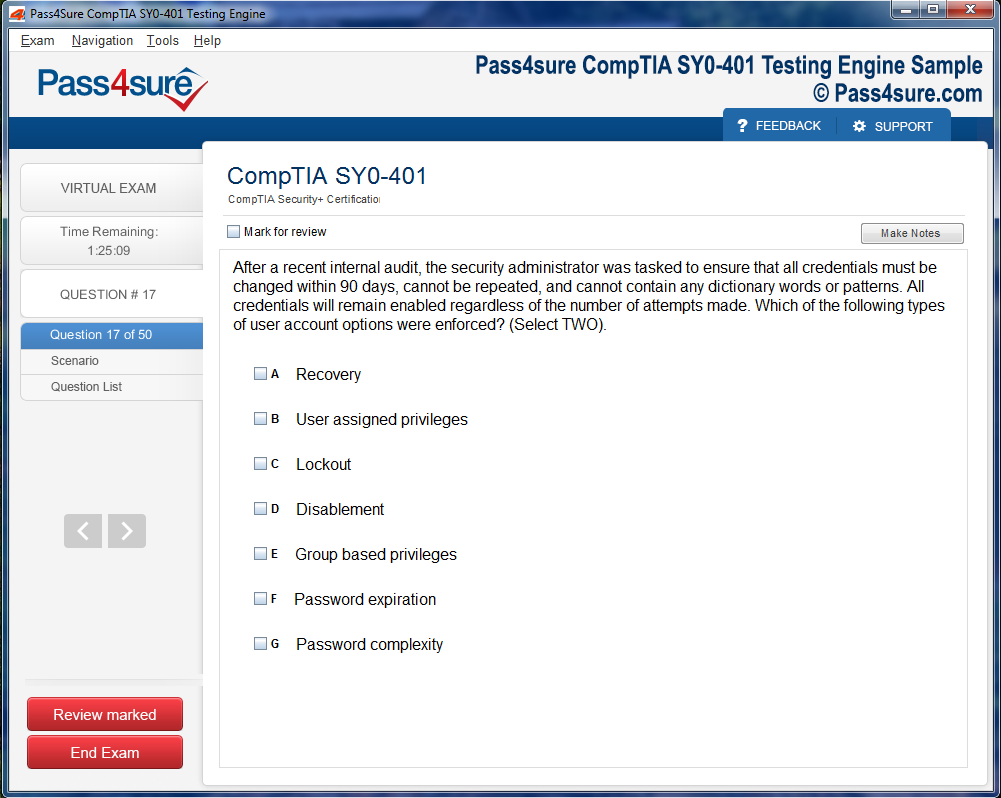
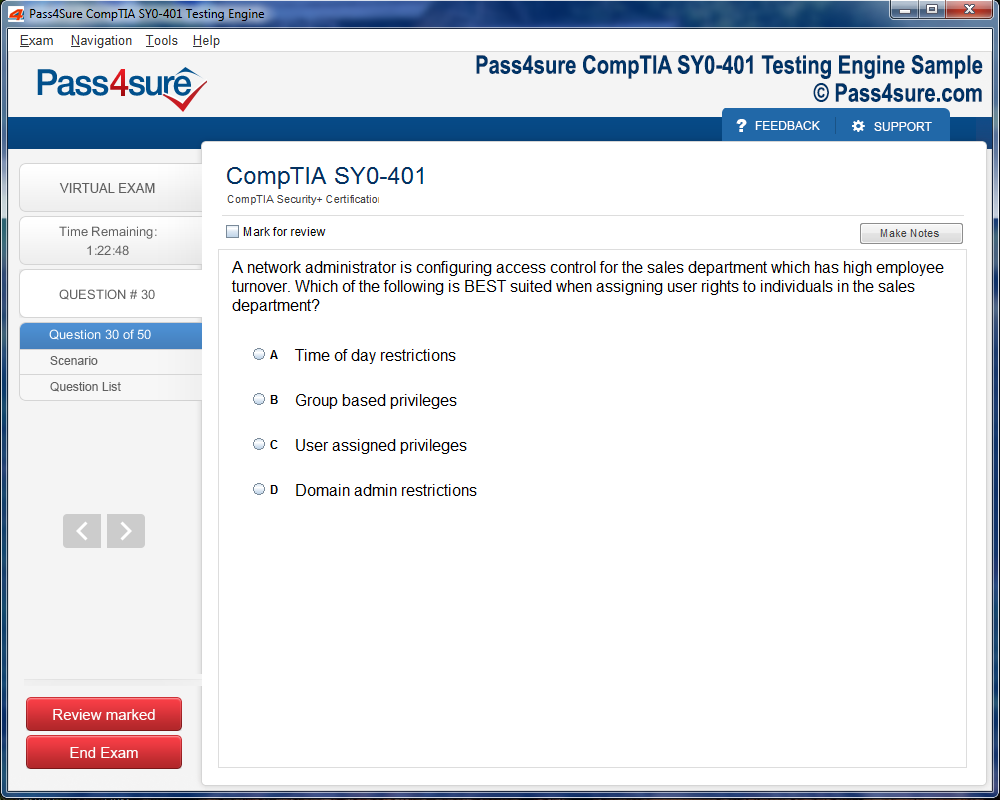
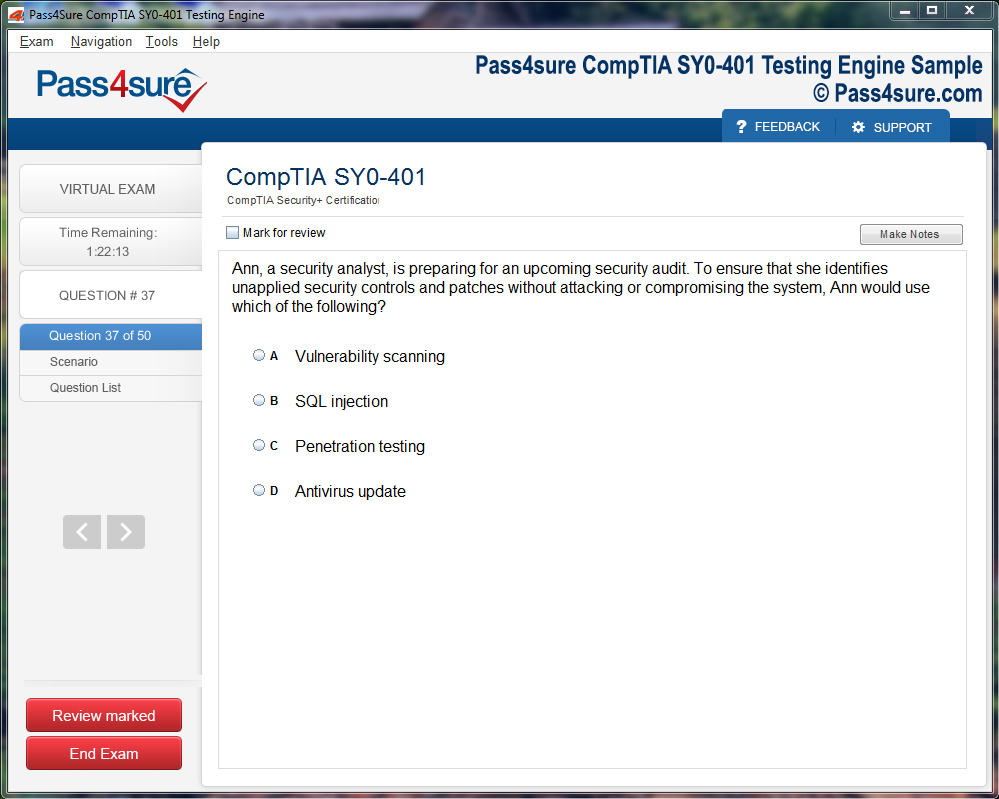
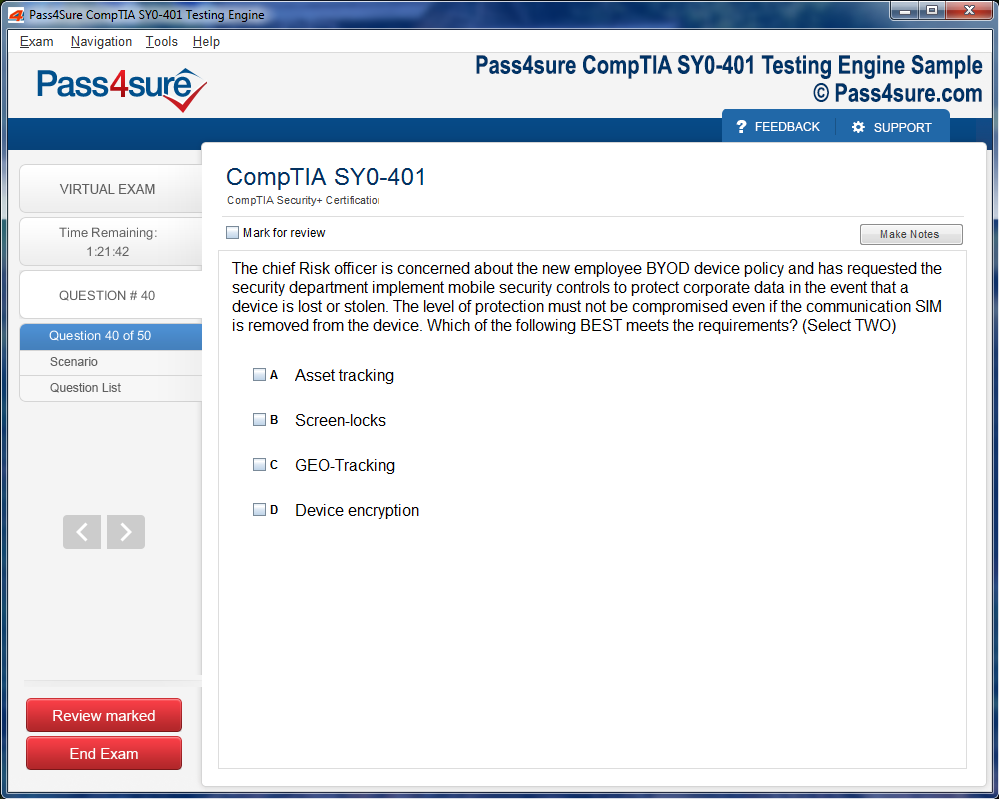
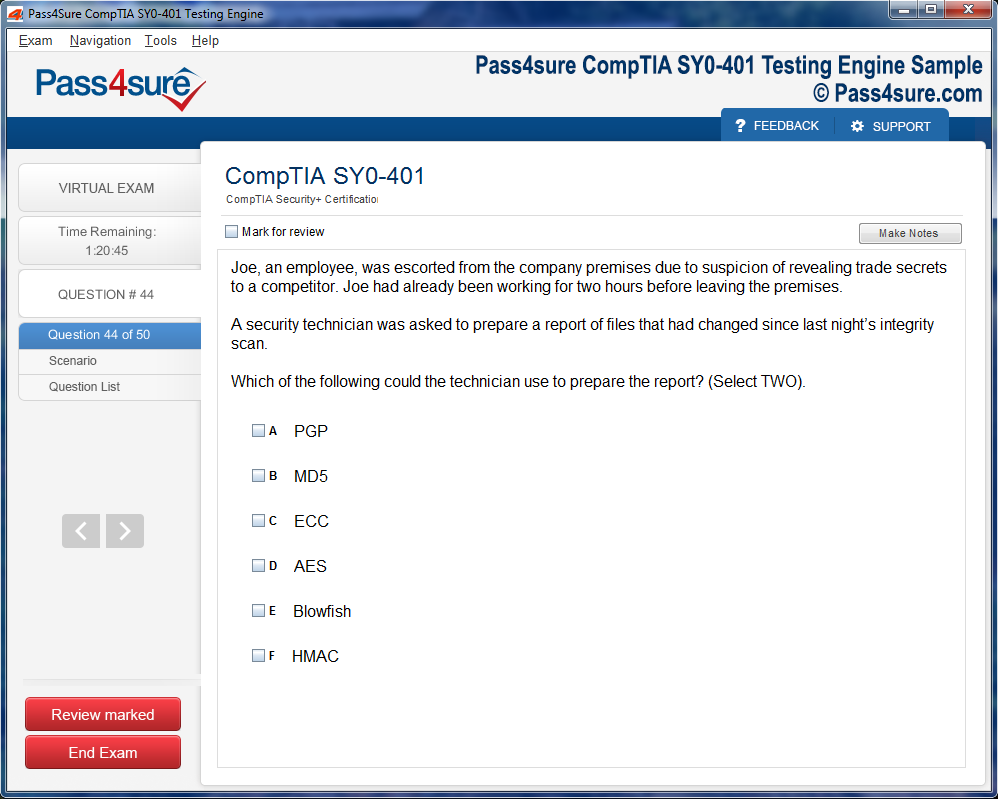
Once download and installed on your PC, you can practise test questions, review your questions & answers using two different options 'practice exam' and 'virtual exam'. Virtual Exam - test yourself with exam questions with a time limit, as if you are taking exams in the Prometric or VUE testing centre. Practice exam - review exam questions one by one, see correct answers and explanations.
How can I get the products after purchase?
All products are available for download immediately from your Member's Area. Once you have made the payment, you will be transferred to Member's Area where you can login and download the products you have purchased to your computer.
How long can I use my product? Will it be valid forever?
Pass4sure products have a validity of 90 days from the date of purchase. This means that any updates to the products, including but not limited to new questions, or updates and changes by our editing team, will be automatically downloaded on to computer to make sure that you get latest exam prep materials during those 90 days.
Can I renew my product if when it's expired?
Yes, when the 90 days of your product validity are over, you have the option of renewing your expired products with a 30% discount. This can be done in your Member's Area.
Please note that you will not be able to use the product after it has expired if you don't renew it.
How often are the questions updated?
We always try to provide the latest pool of questions, Updates in the questions depend on the changes in actual pool of questions by different vendors. As soon as we know about the change in the exam question pool we try our best to update the products as fast as possible.
How many computers I can download Pass4sure software on?
You can download the Pass4sure products on the maximum number of 2 (two) computers or devices. If you need to use the software on more than two machines, you can purchase this option separately. Please email sales@pass4sure.com if you need to use more than 5 (five) computers.
What are the system requirements?
Minimum System Requirements:
- Windows XP or newer operating system
- Java Version 8 or newer
- 1+ GHz processor
- 1 GB Ram
- 50 MB available hard disk typically (products may vary)
What operating systems are supported by your Testing Engine software?
Our testing engine is supported by Windows. Andriod and IOS software is currently under development.
Exam Success Strategies for SRA Professionals – 4A0-C02
In the contemporary telecommunications ecosystem, network orchestration transcends mere automation; it embodies an intricate symphony of interdependent systems, protocols, and human oversight. SRA professionals are expected to possess an exquisite grasp of orchestration paradigms, understanding how disparate network components—ranging from virtualized network functions to traditional hardware nodes—coalesce into a harmonized, adaptive entity. Mastery involves not only configuring service chains and traffic flows but also anticipating emergent behaviors that arise from complex interconnectivity.
Dynamic orchestration relies upon real-time telemetry, predictive analytics, and continuous optimization. SRA professionals must interpret a deluge of operational data, discerning subtle patterns that foreshadow congestion, latency spikes, or potential service degradation. The cognitive skill required parallels that of a chess grandmaster contemplating multiple contingencies simultaneously. Proficiency in these domains ensures that services remain resilient, scalable, and attuned to evolving user demands, an essential component of the 4A0-C02 exam’s evaluation.
Furthermore, the orchestration landscape demands fluency in multi-domain integration. Modern networks are rarely monolithic; they span cloud, edge, and on-premise infrastructures. The ability to integrate and synchronize these domains, while maintaining service continuity and performance guarantees, is a hallmark of an adept SRA professional. Candidates must internalize concepts such as policy-driven orchestration, automated remediation, and cross-layer visibility to demonstrate superior competence.
Advanced Fault Detection and Remediation Paradigms
Fault detection within large-scale network environments is less about reactive troubleshooting and more about anticipatory intervention. The most accomplished SRA professionals leverage anomaly detection algorithms, heuristic reasoning, and pattern recognition to preemptively address potential disruptions. Understanding the subtleties of fault propagation, root cause analysis, and cascading failures enables professionals to contain issues before they escalate into service-impacting events.
Exam preparation emphasizes the synthesis of technical acumen with strategic foresight. Candidates are expected to evaluate logs, telemetry streams, and performance metrics, translating them into actionable insights. The process demands analytical dexterity: correlating seemingly disparate signals, discerning latent failure modes, and designing mitigation strategies that align with operational objectives. Proficiency in this domain ensures both exam readiness and operational resilience.
Remediation strategies require a blend of automated solutions and human judgment. While intelligent orchestration platforms may initiate corrective actions, the SRA professional’s expertise ensures that these interventions align with broader network policies, business priorities, and service-level agreements. Developing this dual proficiency is critical for demonstrating mastery in the 4A0-C02 evaluation framework.
Resource Optimization and Capacity Cognizance
Effective resource management transcends simplistic allocation; it entails an intricate understanding of system constraints, demand fluctuations, and emergent traffic behaviors. SRA professionals must exhibit capacity cognizance, anticipating peaks, valleys, and anomalous surges while ensuring optimal utilization of network resources. This involves not only the pragmatic deployment of bandwidth and compute cycles but also the orchestration of redundancy, failover mechanisms, and load-balancing schemes.
Candidates must be conversant with predictive modeling, simulation of traffic patterns, and capacity forecasting techniques. Such analytical sophistication allows for preemptive adjustments, ensuring uninterrupted service and operational efficiency. The 4A0-C02 exam rigorously tests these competencies, requiring candidates to demonstrate both conceptual understanding and practical application under variable conditions.
Moreover, resource optimization is entwined with fiscal prudence. The capacity to achieve maximum performance while minimizing unnecessary expenditure is a subtle yet critical skill. It encompasses decisions regarding network topology redesign, virtualized resource allocation, and prioritization of mission-critical services. Mastery in this domain distinguishes exceptional SRA professionals from their peers.
Embracing Analytical Rigor and Cognitive Flexibility
Analytical rigor and cognitive flexibility constitute the backbone of SRA proficiency. Professionals must navigate complex, dynamic systems with an inquisitive, methodical mindset, capable of dissecting multilayered problems and proposing nuanced solutions. The 4A0-C02 exam evaluates this aptitude by presenting scenarios requiring rapid synthesis of information, hypothesis formulation, and evidence-based decision-making.
Cognitive flexibility allows SRA professionals to pivot between high-level strategic perspectives and granular operational details. This dual lens ensures that solutions are not only technically sound but also aligned with organizational priorities and service objectives. Candidates are encouraged to cultivate this intellectual dexterity through scenario-based exercises, simulations, and reflective practice, embedding adaptability as a core professional trait.
Furthermore, analytical rigor is complemented by meta-cognition—the capacity to reflect upon one’s reasoning processes. Effective candidates continually evaluate their decision-making heuristics, identify potential biases, and refine problem-solving strategies. Such introspective practice fortifies exam performance and enhances long-term operational effectiveness.
Integrating Emerging Technologies into Operational Paradigms
The technological landscape underpinning modern networks is in perpetual flux, demanding that SRA professionals remain conversant with emergent innovations. Cloud-native architectures, edge computing, software-defined networks, and artificial intelligence-driven analytics represent not merely tools but transformational paradigms that redefine service delivery, fault management, and resource orchestration.
Candidates preparing for the 4A0-C02 exam benefit from developing a nuanced understanding of these technologies’ operational implications. This includes examining how virtualization affects latency, redundancy, and throughput, or how AI-driven predictive analytics can anticipate failures before they manifest. Such insights allow professionals to make strategic decisions that balance performance, scalability, and cost efficiency.
Beyond technical integration, the cognitive skill of extrapolating future trends from current technological trajectories is invaluable. SRA professionals who can anticipate regulatory shifts, adoption curves, and interoperability challenges are positioned to lead initiatives that sustain network excellence in a rapidly evolving ecosystem.
Immersive Comprehension of Protocol Dynamics
Mastery of protocol dynamics is pivotal for the 4A0-C02 aspirant. Network protocols operate as the lexicon of digital infrastructures, orchestrating the flow of information across heterogeneous environments. Delving into the minutiae of TCP/IP, UDP, and emerging transport paradigms reveals the subtle interplay between latency, jitter, and packet loss. Aspirants must cultivate the acumen to dissect handshake sequences, identify congestion points, and anticipate protocol-specific anomalies that could cascade into service disruption. This analytical discernment transforms rote familiarity into operational sagacity, enabling candidates to navigate complex examination scenarios with incisive precision.
Cognitive Assimilation of Virtualization Environments
Virtualization represents a profound shift in network topology comprehension. SRA professionals must decipher the abstraction layers that decouple physical hardware from logical services. Hypervisors, containerized services, and software-defined infrastructures constitute the fabric of modern networks, each layer introducing unique operational considerations. Candidates are encouraged to explore the orchestration mechanisms that govern resource allocation, fault tolerance, and load balancing within these environments. Grasping the nuances of virtualized interactions allows aspirants to predict systemic behavior under duress, a competency that amplifies both exam performance and real-world troubleshooting efficacy.
Decoding Service Continuity Mechanisms
Ensuring uninterrupted service necessitates a deep understanding of continuity mechanisms. Redundancy frameworks, failover protocols, and disaster recovery architectures constitute the backbone of resilient networks. Candidates must internalize not only the structural design but also the temporal dynamics of these mechanisms—the latency incurred during failover, the thresholds triggering redundancy activation, and the dependencies that could undermine resilience. By synthesizing theoretical comprehension with simulated enactments, aspirants cultivate a proactive ethos, preemptively identifying vulnerabilities and orchestrating mitigative strategies that reinforce service dependability.
Analytical Interpretation of Metrics and Telemetry
Beyond cursory monitoring, SRA professionals excel in the analytical interpretation of network telemetry. Metrics such as throughput density, packet retransmission rates, and error frequency serve as diagnostic signposts when deciphered with sophistication. Candidates are trained to employ multi-dimensional correlation techniques, juxtaposing historical trends against real-time deviations to uncover latent issues. This capacity for discerning subtle anomalies empowers aspirants to transition from reactive troubleshooting to anticipatory problem resolution, a skill set prized both in examination contexts and operational ecosystems.
Strategic Resource Governance and Load Calibration
Resource governance extends beyond simple distribution; it entails strategic calibration aligned with dynamic demand patterns. Bandwidth segmentation, CPU cycles prioritization, and service thread orchestration constitute a complex calculus requiring both predictive foresight and adaptive dexterity. Candidates are urged to integrate historical analytics, emergent traffic behaviors, and stochastic modeling to orchestrate resource deployment that maximizes throughput while mitigating systemic risk. This confluence of quantitative reasoning and operational intuition fosters an elevated understanding of network stewardship.
Experiential Simulation and Scenario Embodiment
Simulative immersion constitutes the crucible in which theoretical comprehension transmutes into practical mastery. Candidates engage in intricate scenario embodiments, confronting network perturbations ranging from localized device failures to systemic traffic surges. These exercises cultivate reflexive diagnostic capabilities, fortify decision-making under temporal constraints, and instill a nuanced appreciation for interdependent systems. Through iterative engagement with these simulated contingencies, aspirants internalize adaptive strategies that resonate across both the examination framework and operational practice.
Cultivation of Diagnostic Intuition
Diagnostic intuition is a cerebral skill cultivated through deliberate exposure to complex network phenomena. Aspirants learn to synthesize disparate data points—latency spikes, log anomalies, packet loss irregularities—into coherent causative narratives. This heuristic reasoning enables rapid hypothesis generation, sequential testing, and precise remediation, reducing reliance on prescriptive procedures. Developing such intuition transforms candidates from passive receivers of information into agile, analytical practitioners capable of navigating intricate challenges with judicious efficiency.
Integrative Cognitive Strategies for Exam Fluency
Success in 4A0-C02 transcends mere knowledge accumulation; it demands integrative cognitive strategies. Aspirants are encouraged to employ mental schemata that interlink protocol comprehension, service readiness assessment, and telemetry interpretation. Visualization techniques, analogical reasoning, and scenario mapping create cognitive scaffolds that accelerate recall, enhance analytical agility, and reduce cognitive load during high-pressure examination conditions. By embedding these strategies into preparation routines, candidates achieve a synthesis of knowledge, application, and strategic foresight that distinguishes exceptional performers.
Ethical Discernment and Regulatory Acumen
In parallel with technical mastery, ethical discernment and regulatory acumen are indispensable. SRA professionals operate within frameworks defined by compliance mandates, privacy safeguards, and organizational governance protocols. Candidates must internalize these imperatives, ensuring that technical solutions are consonant with legal and ethical standards. This dual awareness fosters a conscientious approach to problem-solving, imbuing decision-making with both technical rigor and principled responsibility—a hallmark of proficient network stewards.
Cognitive Sculpting Through Scenario Analysis
Immersing oneself in scenario-driven exercises refines analytical acuity and engenders mental elasticity. By deconstructing labyrinthine network dilemmas and reconstructing solutions incrementally, aspirants cultivate anticipatory cognition. The ability to foresee cascading consequences in complex infrastructures fortifies decision-making dexterity, transforming abstract principles into executable strategies. Repeated exposure to diverse scenarios imbues candidates with a meta-cognitive perspective, allowing for rapid pattern recognition and adaptive reasoning under duress.
Experiential Laboratories and Tactical Immersion
Direct interaction with simulated network ecosystems constitutes the fulcrum of experiential mastery. Through meticulous configuration, diagnostic probing, and procedural enactments, candidates internalize operational fluency. These immersive laboratories catalyze synaptic integration of theoretical constructs, enabling rapid retrieval of procedural heuristics when confronted with emergent anomalies. Such tactical immersion transcends rote memorization, fostering procedural intuition and reinforcing confidence in real-time problem-solving.
Temporal Precision and Exam Simulation
Harnessing time-constrained assessments cultivates temporal acuity and strategic prioritization. Candidates attune to pacing imperatives, optimizing question triage and cognitive bandwidth allocation. Recurrent simulation exposes latent weaknesses, prompting iterative recalibration of strategy and consolidating retention under temporal pressure. This methodology transmutes abstract knowledge into executable expertise, ensuring operational readiness and reducing susceptibility to cognitive overload during actual examination conditions.
Mnemonic Engineering and Retentive Synthesis
Employing advanced mnemonic frameworks elevates retention to a proactive discipline. Techniques such as interleaved practice, spaced retrieval, and elaborative encoding integrate disparate knowledge nodes into coherent cognitive architectures. By actively reconstructing complex network scenarios or articulating solutions aloud, aspirants enhance synaptic consolidation, attenuate forgetting curves, and strengthen mental scaffolding for high-stakes recall. This deliberate synthesis fosters intellectual resilience and accelerates mastery of multifaceted domains.
Collaborative Epistemology and Dialectical Enrichment
Engagement in collective intellectual endeavors amplifies cognitive depth and broadens strategic perspective. Interchange with peers, mentors, and specialist communities cultivates dialectical proficiency and exposes latent problem-solving heuristics. Debate, critique, and knowledge exchange forge multidimensional comprehension, reflecting the collaborative ethos of network administration. The interplay between individual cognition and communal insight fosters adaptive intelligence, enabling nuanced approaches to complex, interconnected challenges.
Psychophysiological Regulation and Cognitive Equanimity
Sustaining peak mental performance necessitates deliberate cultivation of psychophysiological resilience. Mindfulness exercises, controlled breathing, and interspersed restorative intervals enhance focus and mitigate cognitive entropy. Simulated stress trials condition candidates to maintain composure under evaluative duress, preserving clarity and operational precision. The deliberate orchestration of cognitive and emotional equilibrium underpins sustained exam performance, mitigating the deleterious impact of anxiety and mental fatigue.
Curated Documentation and Intellectual Cartography
Systematic documentation crystallizes fragmented knowledge into navigable cognitive maps. By structuring notes, delineating process hierarchies, and codifying troubleshooting heuristics, candidates create enduring repositories of actionable intelligence. These intellectual cartographies accelerate iterative review, reinforce retention, and provide immediate access to critical insights during high-pressure problem-solving. Personalization of these frameworks optimizes alignment between cognitive schemas and technical exigencies, streamlining preparation efficacy.
Reflective Iteration and Adaptive Refinement
Continuous introspection anchors mastery in a dynamic cycle of evaluation and refinement. Scrutinizing errors, analyzing decision pathways, and adjusting methodological paradigms cultivates adaptive expertise. This reflective praxis transforms mistakes into instructive substrates, fostering incremental growth and enduring operational competence. By embracing self-directed refinement, candidates internalize a culture of perpetual advancement, bridging exam readiness with long-term professional evolution.
Cultivating Analytical Acumen in Network Diagnostics
Analytical acumen serves as the fulcrum upon which network diagnostics pivot. Practitioners navigate labyrinthine topologies, discerning subtle aberrations that betray systemic fragilities. This endeavor demands a syncretic integration of logic, empirical observation, and heuristic inference, enabling practitioners to unravel entangled data streams and extract actionable intelligence. Analytical sophistication transcends rote troubleshooting, evolving into an anticipatory cognition that discerns latent vulnerabilities before they manifest as service disruptions.
Root Cause Dissection and Cognitive Stratification
Root cause dissection requires an intellectual rigor reminiscent of forensic investigation. Professionals stratify complex network phenomena, segmenting symptoms from causative agents, and deploying methodical reasoning to reconstruct event sequences. Cognitive stratification facilitates the delineation of causality amidst stochastic anomalies, ensuring that remedial measures are neither superficial nor transient. This meticulous approach enhances reliability metrics while reducing recurrence, instilling confidence in operational oversight.
Pattern Recognition and Predictive Intuition
Pattern recognition functions as a cerebral radar, detecting recurrent anomalies across temporal and spatial datasets. By synthesizing historical performance metrics, traffic behaviors, and event chronologies, candidates cultivate predictive intuition, discerning emergent trends that presage potential failures. This preemptive insight enables strategic deployment of resources, mitigates latency-induced repercussions, and fortifies network resilience. In high-stakes assessments, the capacity to extrapolate from incomplete datasets underscores evaluative sophistication and operational foresight.
Probabilistic Decision-Making Under Ambiguity
Decision-making under ambiguity necessitates a probabilistic lens through which uncertainty is quantified and contextualized. In dynamic network environments, incomplete information and conflicting indicators are ubiquitous. Professionals develop the discernment to weigh alternatives, calibrate risk, and implement decisions anchored in statistical reasoning and operational pragmatism. This probabilistic acuity ensures continuity amidst turbulence, minimizing collateral impact and preserving systemic integrity.
Simulation-Driven Situational Cognition
Simulation exercises cultivate situational cognition by immersing candidates in hyper-realistic network perturbations. These controlled yet unpredictable scenarios enhance cognitive agility, compelling practitioners to prioritize interventions, anticipate cascading failures, and optimize resolution strategies within stringent temporal parameters. Iterative simulation fosters mastery over diagnostic instrumentation, monitoring matrices, and corrective workflows, transforming theoretical knowledge into operational dexterity.
Strategic Integration of Technical Foresight
Effective problem-solving transcends immediate remediation, demanding the integration of technical expertise with strategic foresight. Professionals evaluate the long-term ramifications of interventions, aligning tactical solutions with resource efficiency, regulatory compliance, and organizational imperatives. This macro-perspective ensures interventions are sustainable, adaptable, and conducive to the evolving demands of complex infrastructures, thereby reinforcing both functional and strategic competency.
Iterative Critical Thinking and Logical Structuring
Iterative exercises in critical thinking and logical structuring cultivate mental architectures capable of navigating complexity. Candidates rigorously interrogate assumptions, dissect multifaceted scenarios, and compare alternative methodologies. This disciplined cognition fosters clarity under evaluative pressure, reinforcing confidence when confronting uncharted technical quandaries. Repeated engagement with abstracted problem sets engrains heuristic patterns that accelerate insight generation and bolster analytical resilience.
Collaborative Synthesis and Cognitive Synergy
Collaboration amplifies cognitive bandwidth through the synthesis of diverse perspectives. Engagement with peers and mentors fosters ideational cross-pollination, stimulating innovative solution pathways and reinforcing analytical depth. The dialectical interplay inherent in collaborative problem-solving hones communicative precision, ensuring reasoning is both transparent and persuasive. In professional contexts, this synergistic approach mirrors operational realities where collective acumen outperforms isolated cognition.
Reflective Feedback and Methodological Refinement
Feedback loops function as accelerants of analytical maturation, embedding experiential learning within iterative reflection. Candidates deconstruct missteps, recalibrate methodologies, and internalize corrective strategies, generating a compounding enhancement of cognitive agility. This meta-cognitive awareness ensures that both knowledge and procedural dexterity evolve continuously, fostering adaptability and precision in the face of emergent challenges.
Resilience, Adaptability, and Cognitive Tenacity
Enduring competence arises from the cultivation of resilience and adaptability. Confronted with unpredictable or high-pressure scenarios, practitioners exercise composure, flexibility, and iterative problem-solving tenacity. These attributes fortify decision-making under duress, ensuring interventions are measured, contextually informed, and harmonized with best practices. The confluence of analytical skill, strategic foresight, and emotional resilience delineates the hallmark of professional distinction.
Cognitive Fortitude in Exam Preparation
Cultivating cognitive fortitude is pivotal for navigating the intellectual rigors of the 4A0-C02 exam. Beyond rote memorization, aspirants must engage in meta-cognitive strategies that enhance understanding and retention. Techniques such as reflective journaling, self-explanation, and mental mapping allow learners to internalize concepts, draw interconnections, and anticipate complex problem scenarios. This layered comprehension fosters agility in applying knowledge under pressure, transforming raw data into actionable insights.
Meticulous Scenario Analysis
The 4A0-C02 assessment frequently presents multifaceted scenarios demanding nuanced interpretation. Candidates benefit from honing the ability to dissect problems into elemental components, identifying causative agents and potential consequences with surgical precision. Analytical rigor ensures that each hypothesis is tested against evidence, mitigating the risk of superficial reasoning. Iterative scenario simulations during preparation cultivate an instinctive approach to problem decomposition, enabling swift yet accurate decision-making on exam day.
Strategic Cognitive Sequencing
Effective exam navigation often hinges upon the orchestration of cognitive sequencing. Prioritizing tasks based on difficulty, familiarity, and potential mark yield allows candidates to optimize mental energy. Tackling high-confidence questions first secures foundational points while freeing cognitive bandwidth for intricate problem-solving. Alternating between conceptual analysis and practical application reinforces cognitive elasticity, reducing susceptibility to mental fatigue and enhancing sustained performance throughout the examination period.
Adaptive Problem-Solving Methodologies
Adaptive problem-solving is a hallmark of exemplary candidates. Employing dynamic methodologies tailored to scenario complexity ensures flexibility under time constraints. Approaches such as backward induction, root-cause triangulation, and contingency planning enable aspirants to pivot strategies when confronted with unexpected variables. Cultivating this adaptability during preparation reinforces resilience, ensuring that problem-solving remains structured yet fluid, even when confronted with atypical or ambiguous challenges.
Precision in Analytical Reasoning
Analytical precision is paramount in scenarios replete with nuanced technical detail. Candidates must navigate labyrinthine data, discerning critical patterns and latent correlations. This demands a delicate balance between exhaustive scrutiny and judicious expedience. Practices such as diagrammatic reasoning, flowchart construction, and multi-parameter evaluation bolster the capacity to synthesize information efficiently. Precision in analysis not only enhances accuracy but also engenders confidence in decision-making under the temporal pressures of examination conditions.
Kinetic Learning Techniques
Integrating kinetic learning techniques provides a tangible dimension to abstract study material. Engaging physically with problem-solving exercises, through interactive labs, simulations, or prototyping, reinforces neural pathways and consolidates conceptual understanding. The tactile reinforcement of theory through action cultivates memory retention and fosters a deeper appreciation of procedural intricacies. Candidates employing kinetic learning report heightened focus, reduced cognitive stagnation, and improved adaptability in novel scenarios.
Iterative Reflection and Feedback Loops
Iterative reflection forms the backbone of continuous improvement. Systematic review of completed exercises, practice assessments, and simulated exams generates feedback loops that illuminate knowledge gaps and cognitive biases. Documenting insights, missteps, and strategic adjustments transforms each study session into a self-correcting mechanism. Over time, this iterative approach refines reasoning, enhances speed, and ensures that both minor errors and systemic misconceptions are methodically addressed before the real examination.
Emotional Equilibrium Under Duress
Emotional equilibrium is often underestimated yet critically influences performance. The capacity to maintain composure under high-stakes conditions ensures clarity of thought and prevents reactionary misjudgments. Techniques such as mindfulness meditation, controlled diaphragmatic breathing, and cognitive reframing fortify mental resilience. By mastering emotional modulation, candidates transform anxiety into a focused, productive force, channeling physiological arousal toward optimal problem-solving efficiency.
Synergistic Integration of Knowledge Domains
Success in the 4A0-C02 exam necessitates the synergistic integration of disparate knowledge domains. Candidates must interlace technical acumen with procedural comprehension, operational protocols, and troubleshooting heuristics. Developing this synthesis requires cross-referential study, scenario-driven exercises, and associative reasoning. The resultant cognitive network allows rapid retrieval of relevant principles, ensuring solutions are not only technically correct but operationally viable within the constraints of real-world application.
Temporal Efficiency and Mental Agility
Temporal efficiency and mental agility are inextricably linked in high-performance examination settings. Candidates adept at modulating cognitive tempo can navigate fluctuating complexity without succumbing to time pressure. Techniques include micro-timing exercises, cognitive chunking, and selective prioritization of high-yield information. By cultivating agility in thought and precision in timing, aspirants maximize both throughput and accuracy, converting limited temporal resources into measurable advantage.
Transformative Trajectories in Network Mastery
Attaining 4A0-C02 certification transcends mere credentialing; it orchestrates a profound metamorphosis in the vocational journey of SRA professionals. This distinction validates not only technical acumen but also analytical sagacity, fostering pathways to strategic roles and leadership portals within the labyrinthine realms of telecommunications and IT operations. The profundity of its long-term ramifications invigorates motivation and illuminates the cascading effects of examination triumph.
The Confluence of Theory and Praxis
Certified practitioners are celebrated for their dexterity in harmonizing theoretical frameworks with pragmatic execution, bridging the oft-elusive chasm between operational execution and strategic perspicacity. Organizations covet individuals capable of orchestrating service readiness assessments, monitoring performance constellations, and deploying corrective stratagems with alacrity. The 4A0-C02 emblem signifies reliability, refined expertise, and a readiness to confront intricate network contingencies, endowing candidates with a competitive edge in advanced technical milieus.
Ascendancy through Leadership and Influence
Leadership trajectories amplify as professionals manifest prowess in analytical reasoning, scenario navigation, and problem deconstruction. SRA practitioners frequently inhabit roles where they orchestrate multidisciplinary cohorts, steer operational stratagems, and mentor nascent talent. Certification functions as an imprimatur of competence, fortifying credibility and extending influence within organizational hierarchies. The strategic leverage gained enables professionals to sculpt decision-making paradigms, refine processes, and catalyze organizational evolution.
Portability of Expertise Across Domains
The arduous preparation for 4A0-C02 cultivates a repertoire of versatile skills that transcend singular operational domains. Certified individuals command analytical, technical, and strategic instruments adaptable across diverse network topographies, from enterprise ecosystems to specialized telecommunications architectures. This translatability engenders career resilience, fortifying employability and enabling seamless navigation through fluctuating technological landscapes.
Cultivating the Ethos of Lifelong Learning
Lifelong learning forms the keystone of certification’s enduring value. The preparation journey inculcates habits of reflective inquiry, scenario simulation, and iterative enhancement that extend far beyond examination parameters. Professionals imbued with this ethos maintain agility in the face of emergent technologies, evolving methodologies, and novel analytical instruments. Consequently, certified SRA practitioners emerge not merely as operators but as innovators and thought architects within their domains.
Operational Efficacy and Strategic Optimization
The ripple effects of certification resonate profoundly within organizational operations. Professionals equipped with 4A0-C02 competencies implement proactive surveillance, optimize resource orchestration, and navigate incident responses with precision. Such capabilities magnify network stability, elevate client satisfaction, and streamline institutional efficiency. By integrating certification-honed practices into quotidian workflows, individuals amplify both personal performance and systemic productivity.
Augmented Visibility and Professional Networks
Certification catalyzes enhanced visibility within professional spheres. Recognition among peers, mentors, and industry custodians fosters symbiotic collaboration, knowledge dissemination, and career acceleration. Active engagement within professional ecosystems magnifies influence, nurtures skill augmentation, and facilitates early exposure to emergent paradigms, avant-garde technologies, and best practice methodologies.
Strategic Cognition and Innovative Contribution
The analytical rigor cultivated during 4A0-C02 preparation empowers professionals to function as strategic architects. They discern optimization vectors, anticipate prospective demands, and implement evidence-based interventions that reinforce operational agility and longitudinal performance. Certified SRA professionals thus become pivotal agents in shaping infrastructure paradigms, refining processes, and championing service excellence.
Psychological Empowerment through Achievement
The internalization of certification engenders profound professional confidence. Mastery of intricate concepts, adept application in simulated contingencies, and acknowledgment of analytical dexterity coalesce into an augmented self-efficacy. This psychological fortitude enhances performance under exigent conditions, fuels continuous professional ascent, and cultivates a proactive, solution-oriented cognitive schema.
Strategic Insight and Prognostic Network Thinking
SRA professionals operate within a realm where operational immediacy intersects with long-term strategic foresight. The capacity for prognostic thinking—anticipating potential network bottlenecks, service degradation, and technological shifts—is indispensable. Such foresight requires an appreciation of the interplay between user behavior, system performance, and external environmental factors, including regulatory constraints and market evolution.
Candidates must internalize the principles of trend extrapolation, leveraging historical data and predictive analytics to forecast capacity demands and emergent vulnerabilities. This analytical lens allows for preemptive interventions, from dynamic load redistribution to adaptive policy deployment. Strategic insight ensures that SRA professionals not only respond to immediate issues but also shape the network’s trajectory to optimize resilience, efficiency, and service continuity.
Multi-Layered Monitoring and Telemetry Interpretation
Monitoring in modern network architectures is no longer a passive exercise; it is an active, continuous interrogation of system health and service fidelity. SRA professionals must navigate multi-layered telemetry data, encompassing device metrics, service logs, latency measurements, throughput indicators, and end-to-end performance analytics. The ability to correlate disparate streams, identify subtle anomalies, and interpret patterns is a distinguishing feature of expert practitioners.
Beyond interpretation, SRA professionals must devise automated monitoring policies that are sensitive to context, capable of prioritizing alerts, and minimizing false positives. The 4A0-C02 exam evaluates candidates on these abilities, challenging them to convert raw data into actionable insight. Mastery in this domain ensures operational stability, rapid incident containment, and the optimization of preventative strategies.
Cognitive Approaches to Fault Pattern Recognition
Fault management transcends the mechanical identification of errors; it involves sophisticated cognitive pattern recognition. Professionals must cultivate the ability to detect latent signals that presage service disruptions. Subtle deviations in packet loss, jitter, or throughput may indicate underlying systemic faults, requiring both technical proficiency and a refined intuition born from experience and scenario-based learning.
The examination framework demands that candidates demonstrate not merely the identification of anomalies but the construction of logical fault hypotheses. These hypotheses must be rigorously tested against operational realities, encompassing both probabilistic reasoning and deterministic logic. Cultivating such cognitive acuity enhances both exam readiness and professional adaptability in high-pressure operational environments.
Scenario-Based Operational Simulation
Simulation exercises constitute an integral aspect of comprehensive preparation. By replicating real-world network scenarios, candidates engage in an immersive learning environment that challenges problem-solving, analytical reasoning, and operational decision-making. Simulations range from fault injection and capacity stress tests to multi-domain orchestration and service degradation recovery.
Such exercises foster experiential learning, allowing candidates to internalize principles through action rather than rote memorization. The iterative nature of scenario-based simulation cultivates reflexive analytical skills, promoting rapid assessment, hypothesis testing, and solution implementation. It also reinforces the ability to manage time-sensitive incidents, a critical competency evaluated in the 4A0-C02 examination.
Advanced Automation and Intelligent Remediation
The integration of automation into network operations is both an operational necessity and a strategic differentiator. Intelligent remediation systems, leveraging algorithms, machine learning, and policy-driven automation, allow for immediate response to predictable anomalies while freeing professionals to focus on complex, non-routine issues.
SRA professionals must not only configure these systems but also understand their operational implications, potential failure modes, and optimization strategies. Exam scenarios may involve designing automated workflows, evaluating algorithmic efficacy, or implementing corrective actions that respect both policy constraints and operational priorities. Proficiency in intelligent automation ensures that networks remain resilient, adaptive, and capable of self-healing, reflecting the advanced competencies assessed in the certification framework.
Cross-Functional Collaboration and Communication Acumen
Though often understated in technical preparation guides, the ability to collaborate and communicate effectively is a subtle yet critical competency for SRA professionals. Networks exist within organizational ecosystems, requiring interaction with engineers, operations managers, support teams, and sometimes external stakeholders.
Candidates must be able to articulate observations, propose solutions with clarity, and coordinate multi-disciplinary responses to incidents. The 4A0-C02 exam evaluates this indirectly through scenario-based questions, where the explanation of recommended actions and reasoning is as important as the technical solution itself. Developing such communication acumen ensures professional efficacy, fosters team cohesion, and enhances the implementation of complex operational strategies.
Adaptive Learning and Continuous Professional Evolution
The telecommunications and IT landscapes evolve at an accelerating pace, necessitating perpetual learning and adaptation. SRA professionals who adopt an iterative, self-reflective approach to skill development maintain a competitive edge. This involves engagement with emerging technologies, exploration of novel operational paradigms, and critical assessment of previous decisions to extract lessons and optimize future performance.
Candidates preparing for the 4A0-C02 exam benefit from integrating adaptive learning into their regimen. This may include experimenting with new orchestration tools, conducting forensic analysis of past incidents, or exploring advanced simulation platforms. Continuous professional evolution ensures that knowledge is not static but dynamically applied, enhancing both exam performance and operational proficiency.
Stress Management and Cognitive Resilience
Examinations such as the 4A0-C02 demand not only technical competence but also cognitive resilience. Time constraints, scenario complexity, and layered problem-solving requirements place substantial mental strain on candidates. Developing strategies for stress management, sustained focus, and systematic prioritization of tasks is therefore critical.
SRA professionals must cultivate techniques for mental agility, including structured reasoning under pressure, compartmentalization of complex problems, and adaptive recalibration when confronted with unforeseen anomalies. Embedding cognitive resilience into exam preparation not only enhances performance but mirrors the demands of operational environments, where rapid, accurate decision-making under duress is essential.
Orchestration in Multi-Cloud and Hybrid Environments
Modern network ecosystems increasingly span multi-cloud and hybrid infrastructures. Orchestration in such environments demands both conceptual clarity and operational precision. Professionals must understand how to navigate interoperability challenges, orchestrate service chains across heterogeneous platforms, and maintain visibility into performance metrics spanning on-premises, edge, and cloud nodes.
Examination scenarios often probe these competencies, challenging candidates to design workflows that optimize resource utilization, minimize latency, and ensure fault tolerance. Mastery in multi-cloud orchestration ensures that services remain agile, scalable, and resilient, reflecting the evolving realities of contemporary network operations.
Holistic Service Readiness Assessment
Service readiness assessment represents a nexus of technical evaluation, strategic foresight, and operational verification. SRA professionals must be capable of assessing the preparedness of networks to deliver services reliably under variable conditions. This involves evaluating configuration integrity, performance margins, redundancy protocols, and potential points of failure.
Exam preparation emphasizes multi-layered readiness evaluation, requiring candidates to synthesize telemetry data, historical performance patterns, and predictive analyses. A comprehensive understanding of readiness ensures that services meet reliability expectations, enhances user satisfaction, and fortifies operational resilience.
Pattern Recognition and Proactive Mitigation Strategies
A hallmark of expert SRA professionals is the capacity for pattern recognition coupled with proactive mitigation. By identifying early indicators of congestion, performance degradation, or potential security vulnerabilities, professionals can deploy preventative measures before disruptions occur.
Candidates are encouraged to cultivate both analytical rigor and anticipatory insight, linking observable patterns to operational consequences. The 4A0-C02 exam assesses this ability through scenarios that demand both recognition of latent risks and formulation of preemptive strategies. Mastery in this domain ensures sustained service reliability, optimized resource utilization, and strategic operational foresight.
Integrative Multi-Modal Learning Approaches
The synthesis of knowledge across multiple learning modalities is critical for deep competence. Textual study provides foundational understanding, simulation exercises cultivate applied reasoning, scenario-based discussions enhance perspective, and interactive labs offer tactile engagement with operational tools.
By combining these modalities, candidates achieve a robust, multi-faceted grasp of the SRA domain. Such integrative learning strengthens conceptual retention, sharpens problem-solving acuity, and prepares candidates for the dynamic challenges presented in both the 4A0-C02 exam and real-world operational environments.
Ethical Considerations and Regulatory Cognizance
SRA professionals operate within a complex web of ethical imperatives and regulatory frameworks. Decisions regarding network management, data handling, and service prioritization often carry legal, security, and ethical ramifications. Candidates must internalize these dimensions, understanding both the letter and the spirit of operational governance.
Exam scenarios may incorporate regulatory compliance considerations, challenging candidates to demonstrate adherence while optimizing service delivery. Awareness of ethical and legal implications ensures that professionals act responsibly, mitigating risk while maintaining service integrity and trustworthiness.
Cognitive Agility in Dynamic Networks
In contemporary telecommunications landscapes, cognitive agility is a distinguishing hallmark of elite professionals. Those who have traversed the rigorous terrain of 4A0-C02 preparation cultivate an ability to assimilate multifaceted datasets, extrapolate patterns, and anticipate systemic perturbations. This mental elasticity allows SRA practitioners to pivot seamlessly amidst evolving network topologies, emergent technologies, and unpredictable operational exigencies. By embracing cognitive fluidity, professionals transform complexity into actionable insights and latent opportunities.
Synoptic Vision for Systemic Integration
SRA professionals often encounter sprawling infrastructures where individual subsystems interlace to form intricate operational tapestries. Certification encourages a synoptic lens, enabling practitioners to apprehend these interdependencies holistically. Through the integration of cross-domain knowledge, they identify latent bottlenecks, optimize throughput, and anticipate cascading effects. This panoramic awareness fosters systemic resilience, minimizes unanticipated disruptions, and empowers decision-makers to orchestrate harmonized solutions across multiple technological strata.
Analytical Intuition Beyond Metrics
While performance metrics and KPIs provide quantifiable benchmarks, certified professionals refine an analytical intuition that transcends numerical codification. The rigor of preparation cultivates an instinct for identifying anomalies, subtle inefficiencies, and latent vulnerabilities within complex networks. Such discernment allows SRA practitioners to engage in preemptive intervention, mitigating risks before they crystallize into operational crises. Analytical intuition thus evolves into a strategic compass, guiding both tactical and long-term infrastructural planning.
Orchestrating Interdisciplinary Synergy
Modern network ecosystems demand collaboration across diverse technical, operational, and managerial domains. Certification equips professionals to navigate interdisciplinary landscapes with finesse, fostering cohesion among engineers, analysts, and operational stakeholders. By aligning disparate objectives, translating technical dialects, and harmonizing divergent workflows, SRA practitioners become catalysts for synergy. The resulting collaboration not only accelerates project timelines but also cultivates a culture of mutual respect and intellectual cross-pollination.
Innovation through Scenario Simulation
The preparation journey for 4A0-C02 frequently incorporates scenario-based problem solving, which engenders an aptitude for simulation-driven innovation. Professionals learn to model potential outcomes, evaluate contingencies, and iterate solutions in a controlled cognitive environment. This skill translates directly into workplace innovation, where simulated foresight guides infrastructure enhancements, mitigates risk, and anticipates emergent operational demands. Scenario simulation becomes a cornerstone of proactive decision-making, reducing dependence on reactive problem-solving paradigms.
Adaptive Methodologies in Network Management
Static protocols often falter under dynamic network conditions, demanding adaptive methodologies rooted in situational awareness. Certified SRA professionals are adept at tailoring methodologies to the idiosyncrasies of specific operational environments. Whether calibrating monitoring frameworks, adjusting resource allocation, or optimizing response hierarchies, adaptability ensures sustained performance and strategic advantage. This flexible orientation transforms certified practitioners into indispensable agents of continuity and innovation.
Technological Foresight and Emerging Trends
The vanguard of telecommunications and IT operations is defined by perpetual technological flux. Certified professionals cultivate foresight to discern nascent trends, evaluate emerging paradigms, and anticipate their implications for network architecture. By maintaining vigilance over novel protocols, automation frameworks, and analytical instruments, SRA practitioners position themselves as early adopters and strategic innovators. This proactive engagement ensures that organizations remain competitive and resilient amid rapid technological evolution.
Precision in Resource Optimization
One of the hallmarks of advanced SRA proficiency lies in the meticulous optimization of network resources. Certification instills the analytical rigor to quantify utilization, identify inefficiencies, and deploy interventions that maximize throughput while minimizing redundancy. Through precise calibration of bandwidth, hardware deployment, and operational cycles, certified professionals extract maximal performance from existing infrastructure, enhancing organizational efficiency without necessitating substantial capital investment.
Ethical Stewardship and Governance
As network complexity escalates, so too does the imperative for ethical stewardship. Certified SRA professionals develop an acute awareness of governance frameworks, data integrity, and regulatory compliance. Their decisions balance operational imperatives with legal and ethical responsibilities, safeguarding organizational reputation and stakeholder trust. By embedding ethical considerations into daily practices, professionals exemplify conscientious leadership, mitigating risk while fostering a culture of accountability.
Resilience Engineering and Contingency Planning
Resilience in network operations is not serendipitous; it emerges from meticulous planning, foresight, and strategic redundancy. Certification hones the ability to design contingency frameworks capable of withstanding unexpected disruptions, whether from hardware failure, cyber threats, or environmental contingencies. Through scenario mapping, stress testing, and iterative refinement, SRA professionals construct systems that are robust, self-healing, and adaptable, ensuring continuity of service even under extreme duress.
Cultivating Strategic Empathy
Beyond technical proficiency, certified practitioners develop a nuanced sense of strategic empathy—the ability to anticipate user needs, operational constraints, and organizational pressures. This competency enables professionals to align technological solutions with human and institutional imperatives. By integrating stakeholder perspectives into decision-making, SRA practitioners enhance adoption, minimize friction, and optimize outcomes, ensuring that technological innovation serves both organizational goals and end-user satisfaction.
Narrative Thinking in Operational Design
The ability to conceptualize operational challenges narratively is a subtle yet potent advantage for certified professionals. Viewing network architecture and workflow processes as interconnected stories enables the identification of causal links, potential divergences, and optimization pathways. Narrative thinking promotes holistic problem solving, transforming abstract metrics into coherent operational strategies that stakeholders can comprehend, endorse, and implement effectively.
Temporal Optimization and Workflow Cadence
Time, in network operations, is an invaluable commodity. Certification emphasizes the orchestration of temporal resources through precise workflow cadence, ensuring that tasks, monitoring, and interventions occur in optimal sequence. By synchronizing processes with network dynamics and organizational rhythms, SRA practitioners achieve heightened efficiency, minimize latency in incident response, and maximize throughput, rendering operations not only functional but elegantly orchestrated.
Cross-Pollination of Knowledge Domains
True mastery in the SRA domain involves the synthesis of knowledge across traditionally siloed domains. Certified professionals draw insights from systems engineering, cybersecurity, data analytics, and operational research, applying cross-pollinated wisdom to complex challenges. This multidimensional cognition fosters innovative approaches, mitigates tunnel vision, and equips practitioners to devise solutions that transcend conventional paradigms, positioning them as indispensable thought leaders.
Cultivating Cognitive Endurance
Complex networks and high-stakes operational environments demand cognitive endurance—the sustained capacity to analyze, strategize, and respond effectively under pressure. Certification preparation instills habits of sustained focus, iterative evaluation, and cognitive resilience. Over time, this mental stamina translates into superior decision-making, rapid problem resolution, and the capacity to maintain clarity amid cascading operational complexities.
Orchestrating Knowledge Ecosystems
Certified SRA professionals excel in cultivating internal knowledge ecosystems within their organizations. By capturing best practices, documenting lessons learned, and fostering peer-to-peer knowledge transfer, they ensure that expertise is not siloed but diffused. This orchestration enhances institutional memory, accelerates onboarding, and empowers colleagues, creating an environment where innovation and operational excellence propagate organically.
Strategic Metrics as Decision Catalysts
Beyond standard KPIs, certified professionals develop the ability to interpret metrics as dynamic decision catalysts. They discern nuanced correlations, detect latent inefficiencies, and anticipate emergent trends, transforming quantitative data into strategic insight. This competency enables the optimization of both tactical operations and long-term infrastructural planning, ensuring that every metric serves as a fulcrum for intelligent action rather than a static measure of performance.
Harmonizing Innovation with Pragmatism
Certification fosters a delicate balance between visionary innovation and grounded pragmatism. Professionals are trained to explore cutting-edge solutions while remaining acutely aware of operational constraints, budgetary realities, and risk thresholds. This dual orientation allows for the introduction of transformative technologies without destabilizing existing systems, ensuring that innovation is both sustainable and strategically aligned.
Cognitive Flexibility in Crisis Scenarios
Operational crises test the limits of both technical skill and mental agility. Certified practitioners demonstrate cognitive flexibility, rapidly reassessing priorities, devising alternate workflows, and reallocating resources with precision. This nimbleness mitigates downtime, maintains service continuity, and reinforces organizational resilience. By internalizing these adaptive strategies, SRA professionals become architects of stability in otherwise volatile environments.
Cultivating Intellectual Curiosity
A hallmark of enduring professional excellence is unrelenting intellectual curiosity. Certification instills a mindset oriented toward exploration, experimentation, and continuous improvement. Practitioners actively seek novel solutions, analyze emerging trends, and integrate unconventional approaches into operational paradigms. This curiosity not only fuels personal growth but also drives organizational innovation, positioning certified professionals at the vanguard of technological evolution.
Elevating Organizational Intelligence
Beyond individual skill enhancement, certification elevates the collective intelligence of organizations. Certified SRA professionals propagate analytical rigor, strategic thinking, and problem-solving methodologies, fostering a culture of informed decision-making. By embedding these competencies into organizational routines, institutions gain enhanced adaptability, operational coherence, and a strategic advantage over competitors.
Neurocognitive Optimization for Exam Mastery
Harnessing neurocognitive optimization elevates preparation from mere memorization to strategic intelligence. This involves cultivating mental frameworks that enhance synaptic efficiency, improve recall latency, and fortify executive functioning. Techniques such as dual-coding—combining verbal and visual learning modalities—stimulate multiple neural pathways, creating redundancy that ensures information retrieval under pressure. Sleep hygiene, circadian alignment, and micro-nutritional support also significantly influence cognitive stamina, enabling sustained concentration during extended examination periods.
Semantic Mapping and Knowledge Architecture
Building a semantic map of the syllabus transforms isolated knowledge into a coherent, retrievable architecture. By organizing concepts hierarchically and relationally, candidates create cognitive scaffolding that eases integration of new information. Mind maps, concept trees, and relational matrices allow complex interdependencies to be visualized, enabling rapid identification of prerequisite knowledge before tackling advanced scenarios. This architectural approach reduces cognitive load, enhancing the ability to handle multi-layered problem statements efficiently.
Cognitive Load Modulation
Effective management of cognitive load distinguishes high performers. Excessive information processing can impair reasoning and induce fatigue, while under-stimulation reduces engagement. Techniques for modulation include alternating between intensive problem-solving and reflective consolidation, segmenting study sessions into micro-blocks, and applying focused retrieval practice. By calibrating cognitive intensity, aspirants maintain peak mental performance, ensuring that analytical precision and creative reasoning remain unhindered throughout preparation and examination.
Scenario Simulation Fidelity
High-fidelity scenario simulations bridge the gap between theoretical understanding and practical execution. Replicating real-world network challenges, service outages, or configuration anomalies provides candidates with experiential insight, cultivating procedural intuition. These simulations allow the rehearsal of troubleshooting sequences, escalation protocols, and risk mitigation strategies, producing a mental repertoire that can be deployed instinctively under temporal constraints. Fidelity in simulation enhances both confidence and competence in the operational realities mirrored within the exam environment.
Metacognitive Self-Calibration
Metacognitive self-calibration empowers candidates to monitor and regulate their learning processes. By engaging in periodic self-assessment, evaluating response accuracy, and reflecting on reasoning patterns, aspirants identify overconfidence, underprepared areas, and cognitive biases. This introspective practice fosters adaptive learning strategies, enabling precise targeting of weaknesses and reinforcement of strengths. Metacognitive awareness ensures that effort is allocated efficiently, maximizing returns from each hour of study.
Sequential Reasoning and Procedural Discipline
Sequential reasoning is critical when addressing multi-step problems. Breaking tasks into ordered procedures, such as symptom identification, impact analysis, diagnostic testing, and corrective action selection, ensures systematic progression without omission. Procedural discipline reduces the likelihood of error propagation, maintains analytical clarity, and mirrors professional best practices. Practicing sequential reasoning through iterative problem-solving solidifies procedural memory, allowing candidates to execute complex workflows under strict time constraints.
Cognitive Flexibility and Adaptive Thinking
Adaptive thinking enables dynamic recalibration in response to unexpected challenges. Candidates who cultivate cognitive flexibility can shift strategies seamlessly, pivoting between diagnostic heuristics, root cause analyses, and alternative solution pathways. This adaptability is reinforced through exposure to diverse problem archetypes during preparation, training the mind to anticipate variability and respond without hesitation. Cognitive flexibility enhances both accuracy and speed, providing a competitive edge in examinations characterized by unpredictable scenarios.
Temporal Chunking and Micro-Management
Temporal chunking involves the deliberate segmentation of exam time into discrete, goal-oriented intervals. Candidates can allocate micro-sessions to particular question types or difficulty levels, balancing focus between rapid-response items and more intricate analytical tasks. This micro-management prevents cognitive stagnation, preserves mental agility, and allows for built-in recovery periods to mitigate fatigue. Structured temporal partitioning transforms finite exam duration into a strategic asset, optimizing both efficiency and precision.
Resilience Through Mental Conditioning
Resilient candidates cultivate mental toughness to withstand cognitive and emotional strain. Techniques such as visualization of problem-solving under pressure, pre-emptive rehearsal of complex scenarios, and positive self-dialogue reinforce psychological fortitude. Mental conditioning reduces susceptibility to panic, mitigates reactionary errors, and sustains motivation through prolonged engagement. By integrating resilience into preparation, aspirants can approach high-stress environments with composure and strategic clarity.
Heuristic Enhancement for Rapid Decision-Making
Heuristics provide mental shortcuts that accelerate decision-making without sacrificing accuracy. By internalizing proven troubleshooting sequences, common error patterns, and situational cues, candidates develop heuristic templates applicable across diverse scenarios. Regular practice of these mental heuristics sharpens pattern recognition, reduces deliberation time, and ensures that complex problems can be addressed efficiently. Effective heuristic deployment balances expedience with analytical rigor, a crucial combination in high-stakes examination contexts.
Cognitive Anchoring Techniques
Cognitive anchoring strengthens memory retrieval by associating abstract concepts with tangible cues or mnemonic devices. Anchoring can involve metaphorical associations, spatial memory placement, or sequential linkage of procedural steps. This technique facilitates recall under stress and accelerates access to layered knowledge structures. Through deliberate cognitive anchoring, aspirants can reduce retrieval latency and maintain fluency when navigating intricate multi-step scenarios.
Proactive Error Anticipation
Anticipating potential pitfalls before they manifest enhances both accuracy and confidence. Proactive error anticipation involves mentally simulating problem outcomes, identifying common missteps, and rehearsing corrective interventions. This anticipatory mindset converts potential failures into preemptive learning opportunities, reducing error incidence during actual examination conditions. Regular engagement in predictive exercises cultivates vigilance and strategic foresight, reinforcing methodical problem-solving capabilities.
Interleaved Practice for Cognitive Robustness
Interleaved practice alternates between different topics, problem types, and difficulty levels to strengthen neural flexibility. Unlike blocked study, interleaving prevents cognitive habituation, promotes long-term retention, and fosters transferable problem-solving skills. This method challenges candidates to adapt continually, enhancing both speed and accuracy when transitioning between disparate scenario types. Interleaving also reduces monotony, sustaining engagement and motivation over extended preparation periods.
Multimodal Sensory Reinforcement
Integrating multisensory learning modalities deepens comprehension and retention. Visual aids, auditory cues, tactile exercises, and kinesthetic simulations reinforce abstract concepts, creating layered memory traces. Multimodal reinforcement supports synaptic plasticity, allowing rapid and reliable retrieval of information during the high-pressure conditions of an exam. Candidates employing this approach experience enhanced conceptual clarity and increased confidence in their operational proficiency.
Strategic Reflection and Iterative Refinement
Reflection transforms raw experience into actionable insight. Candidates benefit from post-practice analysis, documenting thought processes, evaluating strategy effectiveness, and refining problem-solving approaches. Iterative refinement ensures that each cycle of preparation yields progressively improved outcomes. Over time, this methodology instills an adaptive, self-correcting mindset, allowing aspirants to converge on optimal strategies that maximize both efficiency and correctness during examination performance.
Precision in Contextual Interpretation
Understanding contextual nuance is essential for interpreting complex questions accurately. Candidates must discern explicit and implicit parameters, recognize constraints, and anticipate systemic interactions within the scenario. Contextual precision prevents misapplication of knowledge and avoids oversimplified reasoning. Practice exercises emphasizing scenario contextualization sharpen analytical sensitivity, ensuring that solutions are technically sound and situationally appropriate.
Neuroplasticity and Continuous Skill Augmentation
Embracing neuroplasticity principles accelerates skill acquisition and knowledge integration. Deliberate, varied practice encourages neural restructuring, enabling candidates to encode increasingly complex problem-solving patterns. By challenging cognitive limits and consistently introducing novel scenarios, aspirants reinforce adaptive pathways that enhance both speed and analytical depth. Continuous skill augmentation leverages brain malleability, converting preparation into a dynamic, self-evolving system of mastery.
Cognitive Anchoring Under Stress
Maintaining retrieval accuracy under stress is a distinct challenge. Cognitive anchoring under pressure involves pre-establishing strong mental linkages, such as mnemonic chains or procedural hierarchies, which remain accessible despite elevated cortisol levels. Candidates practicing this technique develop resilience to exam-induced anxiety, ensuring that memory access remains reliable, analytical reasoning is preserved, and performance consistency is maintained.
Metaheuristic Strategy Development
Metaheuristic strategies offer higher-order frameworks for addressing unpredictable, complex scenarios. By synthesizing domain knowledge, heuristic patterns, and probabilistic reasoning, candidates develop overarching methods for navigating problem spaces efficiently. This strategic overlay enables rapid adaptation when conventional approaches are insufficient, combining analytic depth with operational flexibility. Metaheuristic development is especially valuable for scenarios with multiple viable solutions, optimizing decision-making under uncertainty.
Sustained Focus Through Cognitive Anchoring
Sustaining focus throughout extended assessments requires deliberate cognitive structuring. Techniques such as sequential task segmentation, micro-break incorporation, and cognitive self-checks preserve attentional resources. Anchoring each question to a mental cue or structured framework reduces drift and ensures engagement with complex analytical tasks. Candidates mastering sustained focus can execute high-level reasoning continuously without degradation in performance quality.
Cognitive Mapping for Complex Network Environments
Cognitive mapping facilitates the mental visualization of intricate network infrastructures. Professionals cultivate a layered understanding of topologies, dependencies, and protocol hierarchies, enabling them to mentally simulate signal propagation, latency bottlenecks, and inter-device interactions. This cartographic cognition allows for rapid navigation of abstruse networks, fostering preemptive identification of latent vulnerabilities and enhancing strategic intervention capabilities.
Heuristic Analysis and Inferential Reasoning
Heuristic analysis empowers practitioners to approach problem spaces with rule-of-thumb strategies that balance efficiency and accuracy. Through iterative exposure to diverse network phenomena, candidates develop inferential reasoning skills, extrapolating from incomplete or ambiguous datasets to generate actionable hypotheses. This adaptive cognition reduces resolution latency while preserving analytical rigor, demonstrating a capacity for agile problem navigation in unpredictable operational contexts.
Temporal Dynamics and Anomaly Chronology
Mastering temporal dynamics involves tracking the progression of network anomalies over time to uncover subtle causative correlations. Professionals chronicle event sequences, correlating transient malfunctions with broader systemic perturbations. By constructing a precise chronology of anomalies, candidates can discern patterns invisible to instantaneous observation, enabling targeted intervention and precluding systemic degradation. Temporal acuity transforms reactive troubleshooting into anticipatory orchestration.
Cognitive Load Management in High-Stress Scenarios
High-stakes network incidents impose significant cognitive load, challenging mental bandwidth and decision accuracy. Professionals cultivate strategies to mitigate overload, including prioritization heuristics, mental compartmentalization, and phased problem decomposition. By systematically managing cognitive load, candidates sustain analytical precision and strategic foresight under duress, ensuring that performance remains robust even amidst high-pressure operational exigencies.
Probative Diagnostics and Evidential Synthesis
Probative diagnostics emphasizes evidence-driven analysis, where practitioners gather, weigh, and synthesize multifactorial indicators to formulate substantiated conclusions. This approach combines quantitative metrics, event logs, and probabilistic inferences to validate hypotheses and guide corrective measures. By anchoring interventions in demonstrable evidence, candidates enhance solution reliability and cultivate the epistemic rigor expected of elite SRA professionals.
Recursive Evaluation and Continuous Refinement
Recursive evaluation entails iterative reassessment of interventions and their downstream consequences. Candidates implement corrective actions, observe resultant metrics, and refine methodologies in cycles that progressively optimize network performance. This continuous improvement paradigm fosters adaptability, ensuring that procedural approaches remain responsive to evolving conditions and emergent challenges without stagnating in outdated practices.
Strategic Contingency Planning and Scenario Anticipation
Strategic contingency planning equips professionals to anticipate multifaceted disruptions and formulate preemptive countermeasures. By modeling worst-case scenarios, allocating redundant resources, and predefining escalation protocols, candidates transform uncertainty into manageable variables. This anticipatory foresight underpins operational resilience, empowering practitioners to maintain service continuity even under extraordinary network stressors.
Algorithmic Thinking and Procedural Optimization
Algorithmic thinking instills a structured approach to complex problem spaces, where tasks are decomposed into deterministic steps that can be systematically executed. Professionals leverage this mindset to optimize diagnostic workflows, automate repetitive processes, and reduce human error. Procedural optimization enhances efficiency, scalability, and reliability, demonstrating mastery over both cognitive and operational domains in network management.
Meta-Cognitive Awareness and Reflective Intelligence
Meta-cognitive awareness involves conscious monitoring of one’s own thought processes, biases, and assumptions. Candidates cultivate reflective intelligence by scrutinizing decision rationales, evaluating the efficacy of chosen methodologies, and adjusting cognitive strategies accordingly. This introspective practice fosters intellectual humility, reduces confirmation bias, and sharpens problem-solving acuity in complex, dynamic network ecosystems.
Synergistic Integration of Interdisciplinary Knowledge
Network challenges frequently intersect with disciplines such as cybersecurity, systems engineering, and data analytics. Professionals expand cognitive reach by integrating interdisciplinary knowledge, drawing insights from parallel domains to enhance problem comprehension and solution creativity. This synthesis enables holistic interventions that consider performance, security, compliance, and operational longevity in a single cohesive framework.
Cognitive Resilience Through Simulated Adversity
Simulated adversity cultivates resilience by immersing candidates in scenarios characterized by uncertainty, time pressure, and cascading failures. By repeatedly confronting high-intensity challenges in controlled environments, practitioners internalize adaptive heuristics, fortify mental endurance, and hone precision under duress. This exposure conditions the mind to operate effectively when real-world anomalies manifest unpredictably.
Dynamic Risk Assessment and Contingency Adjustment
Dynamic risk assessment emphasizes continuous evaluation of probability, impact, and mitigation efficacy in fluctuating network contexts. Candidates assess vulnerabilities in real-time, recalibrate response strategies, and implement flexible contingency measures. This proactive approach minimizes downtime, preserves service integrity, and cultivates a mindset attuned to probabilistic thinking and operational agility.
Cognitive Pattern Synthesis Across Distributed Systems
In distributed network systems, anomalies may manifest asynchronously, complicating detection and intervention. Cognitive pattern synthesis allows practitioners to unify disparate indicators into coherent narratives, identifying cross-system correlations and latent dependencies. By perceiving the network as an interwoven ecosystem, candidates develop interventions that optimize performance holistically rather than addressing isolated symptoms.
Adaptive Algorithm Selection and Tactical Application
Selecting appropriate algorithms for diagnostic or corrective action is a nuanced skill requiring situational awareness and technical discernment. Candidates evaluate computational efficiency, resource constraints, and expected outcome reliability before tactical deployment. Mastery in adaptive algorithm selection ensures interventions are not only precise but also operationally sustainable, reflecting advanced technical sophistication.
Probabilistic Scenario Simulation for Predictive Accuracy
Probabilistic scenario simulation leverages stochastic modeling to anticipate potential network disturbances. By generating variable-rich simulations, professionals gauge the likelihood and impact of emergent failures, informing preemptive interventions. This predictive practice transforms uncertainty into actionable intelligence, equipping candidates to implement mitigation strategies with confidence and accuracy.
Cognitive Transfer and Knowledge Generalization
Cognitive transfer enables practitioners to extrapolate insights from previous experiences to novel situations. By recognizing structural similarities across disparate network challenges, candidates generalize effective strategies while avoiding redundant experimentation. This skill accelerates problem resolution, cultivates adaptive thinking, and reinforces long-term professional agility in dynamic operational landscapes.
Tactical Decision Trees and Contingency Prioritization
Decision trees serve as a tactical framework for sequencing interventions and prioritizing contingencies. Candidates construct layered decision hierarchies that weigh risk, probability, and resource availability, ensuring that responses are structured, rational, and efficient. Mastery of decision-tree methodology facilitates swift, defensible actions even in scenarios characterized by incomplete data and competing imperatives.
Emergent System Behavior Analysis
Emergent behaviors often arise from complex network interactions, where minor perturbations produce disproportionate systemic effects. Candidates develop analytical sensitivity to detect such phenomena, isolating root mechanisms and predicting downstream consequences. Understanding emergent behavior empowers proactive control, minimizing unanticipated disruptions and enhancing the robustness of network ecosystems.
Iterative Heuristic Enhancement and Cognitive Calibration
Through iterative heuristic enhancement, professionals refine problem-solving frameworks over repeated cycles of exposure, evaluation, and adjustment. Cognitive calibration ensures that mental models remain aligned with operational realities, continuously optimizing analytical precision. This disciplined refinement produces a cumulative intelligence that surpasses the sum of discrete experiences.
Cross-Layer Correlation and Multi-Dimensional Analysis
Effective problem-solving requires multi-dimensional analysis across network layers, from physical hardware to application interfaces. Candidates correlate events across layers, uncovering hidden interactions and latent dependencies. Cross-layer correlation provides a comprehensive understanding of network behavior, enabling interventions that address root causes rather than superficial manifestations.
Situational Vigilance and Anticipatory Cognition
Situational vigilance embodies the capacity to maintain awareness of evolving network conditions while anticipating potential disruptions. Candidates develop anticipatory cognition through continuous monitoring, scenario projection, and pattern analysis. This proactive mindset transforms reactive troubleshooting into predictive stewardship, elevating both operational efficiency and professional acumen.
Neurocognitive Calibration for Strategic Retention
Optimizing memory retrieval under examination pressure requires deliberate neurocognitive conditioning. Techniques that stimulate synaptic plasticity, such as interleaving problem types and alternating cognitive modalities, reinforce neural networks. By intentionally toggling between conceptual frameworks, operational procedures, and analytical paradigms, candidates enhance mental elasticity. This calibration ensures instantaneous recall of complex configurations and troubleshooting sequences, bridging the gap between knowledge acquisition and practical application.
Meta-Analytical Problem Dissection
Developing an aptitude for dissecting multifactorial problems cultivates meta-analytical insight. Candidates learn to parse convoluted network incidents into discrete causative elements, then synthesize coherent solutions from interdependent components. This process nurtures both deductive reasoning and heuristic evaluation, allowing rapid identification of anomalies and formulation of optimized responses. Repeated engagement with abstract problem architectures hones foresight, improving predictive accuracy in unpredictable operational scenarios.
Procedural Fluency Through Iterative Drills
Iterative drilling of procedural routines solidifies cognitive-motor integration. Continuous practice with command-line sequences, configuration protocols, and diagnostic scripts transforms theoretical knowledge into automatic proficiency. This fluency reduces cognitive load during high-pressure situations, enabling candidates to focus on higher-order analysis rather than mechanical execution. The accumulation of procedural mastery establishes a foundation for adaptive problem-solving across varied technical landscapes.
Contextual Pattern Recognition in Networks
Developing contextual pattern recognition is pivotal for advanced troubleshooting. By systematically comparing past incidents with emerging anomalies, candidates cultivate anticipatory cognition. Identifying recurring motifs within network traffic, error logs, and performance metrics allows for preemptive mitigation strategies. This skill transcends rote memorization, fostering an intuitive understanding of operational dynamics and enabling rapid synthesis of effective solutions under temporal constraints.
Cognitive Load Management and Attention Allocation
Optimizing cognitive load requires deliberate attention allocation and prioritization. Candidates learn to distinguish high-impact issues from peripheral anomalies, conserving mental bandwidth for complex analytical tasks. Techniques such as mental chunking, sequential problem segmentation, and real-time monitoring of cognitive fatigue improve focus and decision accuracy. Mastery of attention allocation transforms study sessions into high-yield endeavors and ensures efficient performance during exhaustive assessments.
Semantic Integration of Technical Knowledge
Semantic integration involves interlinking disparate concepts into cohesive mental frameworks. By connecting protocol intricacies, hardware configurations, and procedural heuristics into unified cognitive schemas, candidates enhance retention and operational agility. This integrative approach facilitates rapid cross-referencing during problem-solving, enabling swift adaptation to novel scenarios. A robust semantic network minimizes retrieval latency and enhances precision in applying theoretical knowledge to practical situations.
Experiential Feedback Loops
Incorporating feedback loops into practice regimes amplifies learning efficacy. Candidates who actively reflect on outcomes, scrutinize errors, and implement corrective modifications accelerate skill acquisition. Real-time feedback from practice exercises, simulations, and peer evaluation refines judgment and procedural accuracy. By internalizing iterative feedback, aspirants convert errors into durable knowledge, reinforcing both technical competence and strategic reasoning under exam conditions.
Adaptive Scenario Engineering
Crafting adaptive scenarios tailored to individual learning gaps accelerates cognitive resilience. By deliberately introducing variability in network topologies, error conditions, and resource constraints, candidates expose themselves to a spectrum of operational contingencies. This methodology enhances flexibility, fostering the ability to pivot strategies and apply core principles across unanticipated contexts. The repeated orchestration of adaptive scenarios cultivates ingenuity and operational foresight.
Intrinsic Motivation and Sustained Engagement
Intrinsic motivation serves as a catalyst for deep cognitive engagement. Candidates who cultivate curiosity, professional ambition, and self-directed goals maintain higher levels of focus and persistence. Techniques such as setting progressive milestones, celebrating incremental achievements, and integrating personal interests into study material sustain enthusiasm over extended preparation periods. Sustained intrinsic engagement correlates with higher retention, reduced procrastination, and superior problem-solving acuity.
Cognitive Simulation of High-Stakes Environments
Mental simulation of high-stakes operational environments enhances anticipatory reasoning. By envisioning network failures, resource contention, and cascading errors, candidates rehearse decision pathways in a consequence-free setting. This cognitive rehearsal strengthens scenario anticipation, improves strategic prioritization, and reduces stress-induced errors. Visualization of complex system dynamics equips aspirants with a mental blueprint, ensuring readiness for real-time problem resolution.
Heuristic Refinement Through Comparative Analysis
Comparative analysis of multiple troubleshooting approaches fosters heuristic refinement. Candidates evaluate alternative solutions, weigh trade-offs, and identify the most efficient path to resolution. This practice cultivates adaptive intelligence, allowing for rapid recalibration when standard procedures falter. Continuous refinement of heuristics ensures that decision-making is both systematic and contextually sensitive, essential for navigating multifaceted network challenges.
Mental Resilience and Cognitive Endurance
Sustained cognitive performance hinges on mental resilience and endurance. Structured mental conditioning, including high-intensity study sessions, mindfulness, and stress inoculation, prepares candidates for prolonged periods of concentrated effort. Techniques to mitigate mental fatigue, maintain focus, and recover efficiently between sessions underpin effective exam performance. Endurance-focused strategies allow for consistent analytical acuity across extended operational or assessment periods.
Epistemic Networking and Knowledge Cross-Pollination
Engaging in epistemic networking cultivates multidimensional understanding. Interaction with diverse technical perspectives, interdisciplinary insights, and professional communities enhances problem-solving versatility. Candidates internalize novel heuristics, adopt unconventional approaches, and integrate external expertise into personal knowledge frameworks. This cross-pollination of ideas mirrors the collaborative environment of network administration, sharpening both intellectual dexterity and practical adaptability.
Dynamic Mental Mapping of Network Topologies
Developing dynamic mental maps of network topologies improves spatial cognition and strategic planning. By visualizing interconnected nodes, traffic flows, and system dependencies, candidates anticipate bottlenecks and fault propagation. This mental modeling accelerates diagnostic reasoning and enhances strategic foresight. Regular practice in constructing and adjusting these maps strengthens spatial awareness and operational anticipation, critical for high-stakes network management.
Procedural Anticipation and Contingency Planning
Anticipatory procedural planning transforms reactive approaches into proactive strategies. By forecasting potential system failures, resource conflicts, and performance degradation, candidates preemptively prepare mitigation tactics. This foresight enables rapid deployment of corrective measures and reduces the likelihood of cascading disruptions. Integrating contingency planning into regular practice cultivates strategic thinking and operational reliability under unpredictable conditions.
Conclusion
The journey through exam preparation for the 4A0-C02 certification illuminates the intersection of technical mastery, analytical reasoning, and strategic foresight that defines success for SRA professionals. Across the six-part series, we explored core concepts, practical applications, study strategies, problem-solving approaches, time management techniques, and the long-term career benefits of certification. Each element contributes to a comprehensive framework for both exam readiness and operational excellence.
Success in the 4A0-C02 exam extends beyond memorizing protocols or procedures; it demands the ability to interpret complex scenarios, analyze diverse metrics, and implement solutions with precision and foresight. Candidates who internalize these skills develop a mindset of proactive problem-solving, capable of anticipating network challenges, optimizing resources, and maintaining high service quality under dynamic conditions.
Strategic preparation, including structured study plans, scenario-based learning, practice labs, time-bound exercises, and reflective review, ensures that knowledge is both retained and actionable. Integrating analytical thinking with practical application enables candidates to approach exam questions methodically, navigate ambiguity confidently, and demonstrate mastery of SRA competencies. Mental resilience, stress management, and exam-day strategies further enhance performance, ensuring that knowledge translates into accurate and timely responses.
Beyond the examination, 4A0-C02 certification unlocks long-term professional advantages. Certified SRA professionals are recognized for their ability to bridge technical expertise with strategic insight, enhancing organizational performance and operational reliability. Career opportunities expand into leadership, strategic planning, and innovation roles, while the habits of continuous learning, reflection, and problem-solving cultivate adaptability in the face of evolving technologies and operational challenges.
Ultimately, the 4A0-C02 journey is as much about personal growth as it is about technical validation. The combination of knowledge acquisition, skill application, analytical refinement, and strategic awareness equips professionals to excel not only in certification exams but also in high-stakes, real-world network environments. By embracing these principles, SRA professionals position themselves as indispensable contributors to organizational success, driving efficiency, innovation, and sustained excellence in an ever-evolving technological landscape.
Top Nokia Exams
- 4A0-D01 - Nokia Data Center Fabric Fundamentals
- 4A0-100 - Nokia IP Networks and Services Fundamentals
- 4A0-C03 - Nokia NRS II Composite: IS-IS version
- 4A0-112 - Nokia IS-IS Routing Protocol
- 4A0-104 - Nokia Services Architecture
- 4A0-116 - Nokia Segment Routing
- 4A0-115 - Nokia Ethernet Virtual Private Network Services
- 4A0-D03 - Nokia SR Linux EVPN and Data Center Interconnect
- 4A0-103 - Nokia Multiprotocol Label Switching
- 4A0-107 - Nokia Quality of Service
- 4A0-114 - Nokia Border Gateway Protocol Fundamentals for Services
- 4A0-AI1 - Nokia NSP IP Network Automation Professional Composite Exam
- 4A0-205 - Nokia Optical Networking Fundamentals