

Exam Code: 304-200
Exam Name: LPIC-3 Virtualization & High Availability
Certification Provider: LPI
Corresponding Certification: LPIC-3
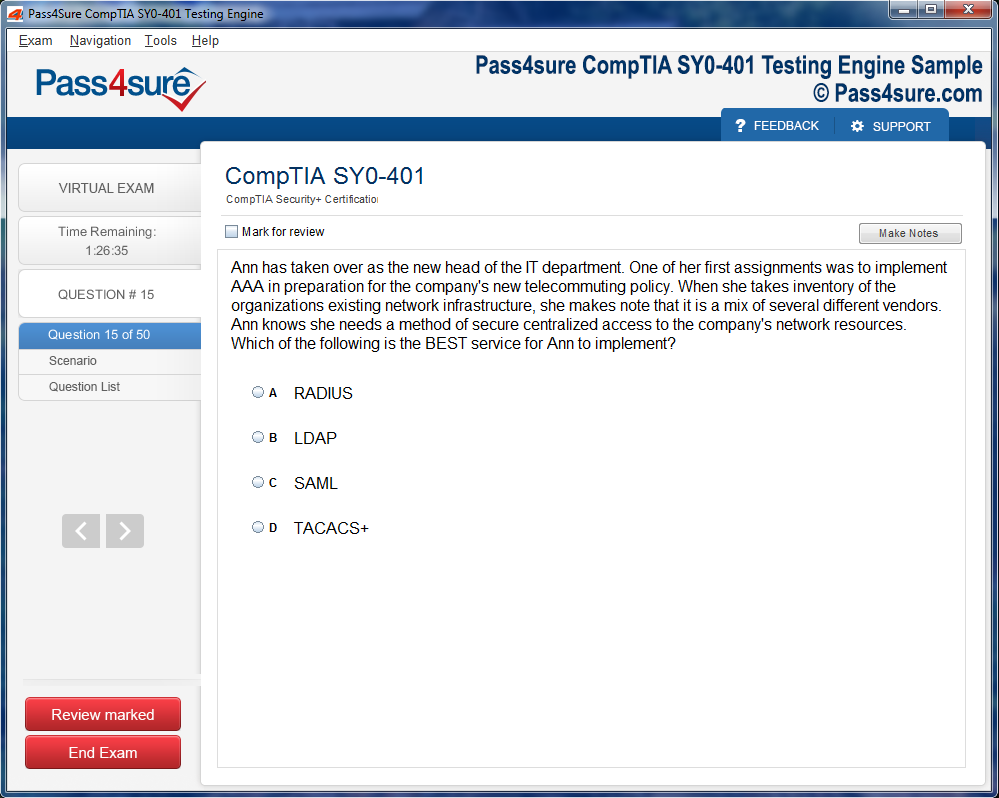
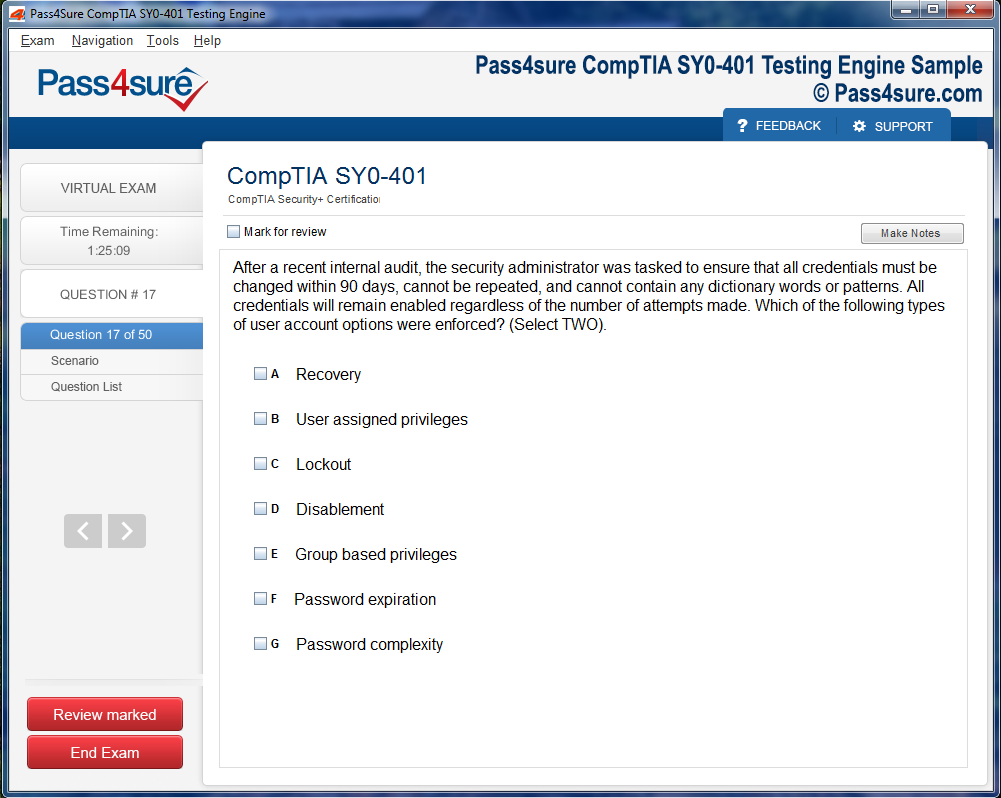
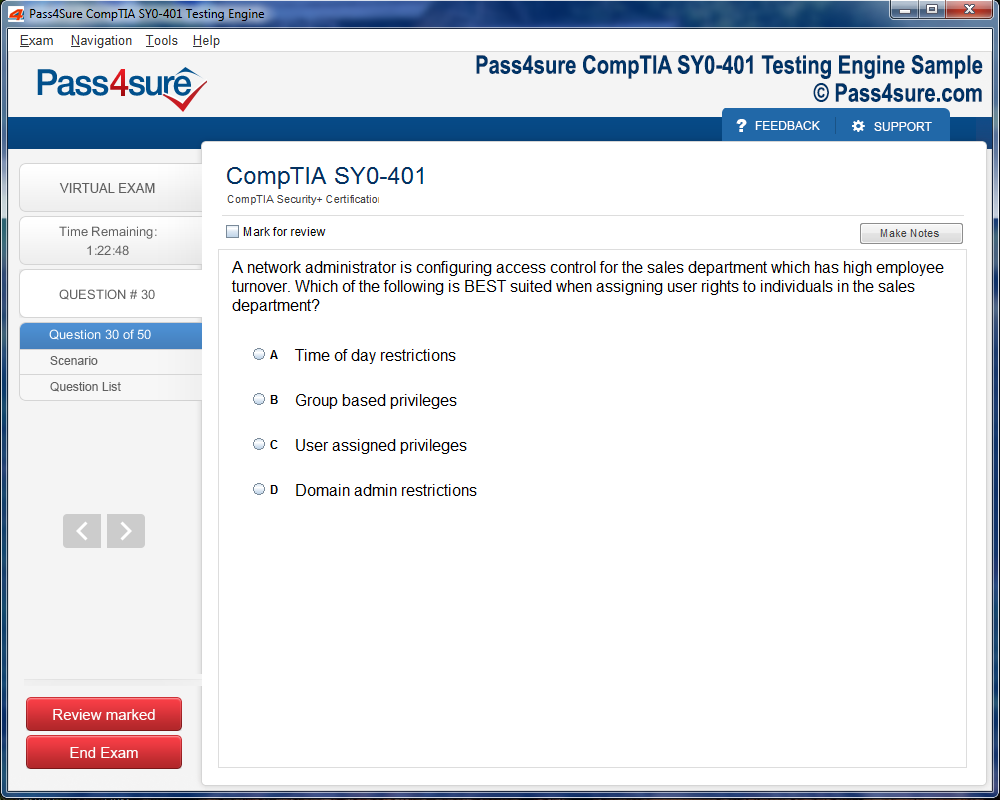
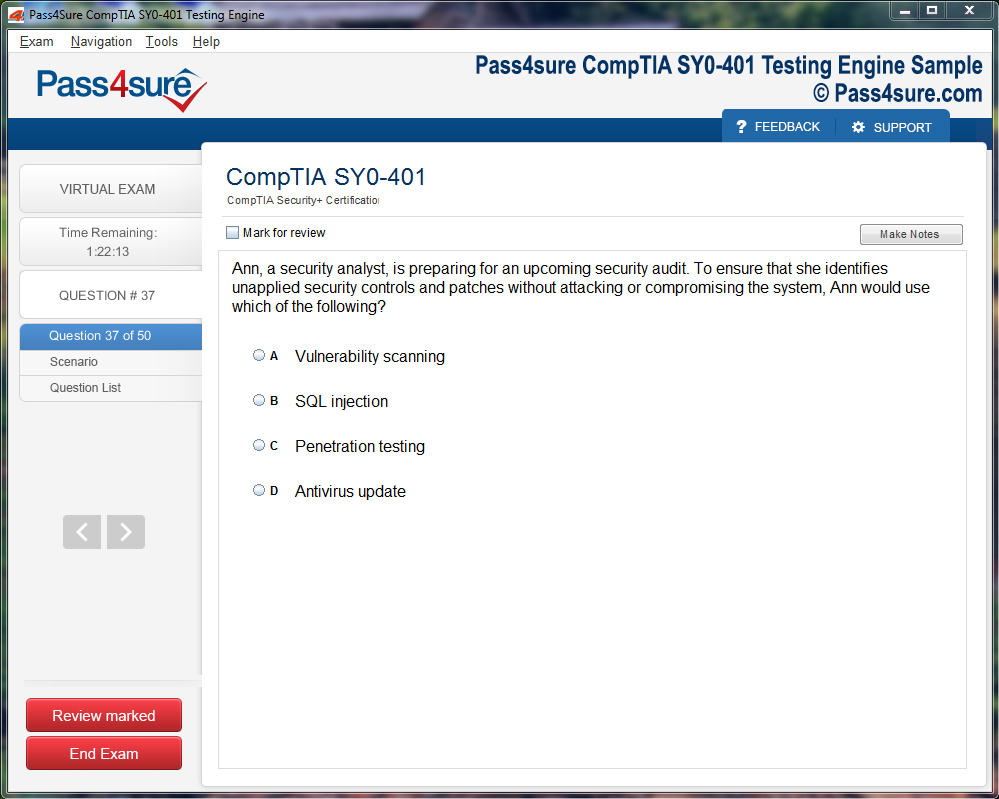
Product Screenshots
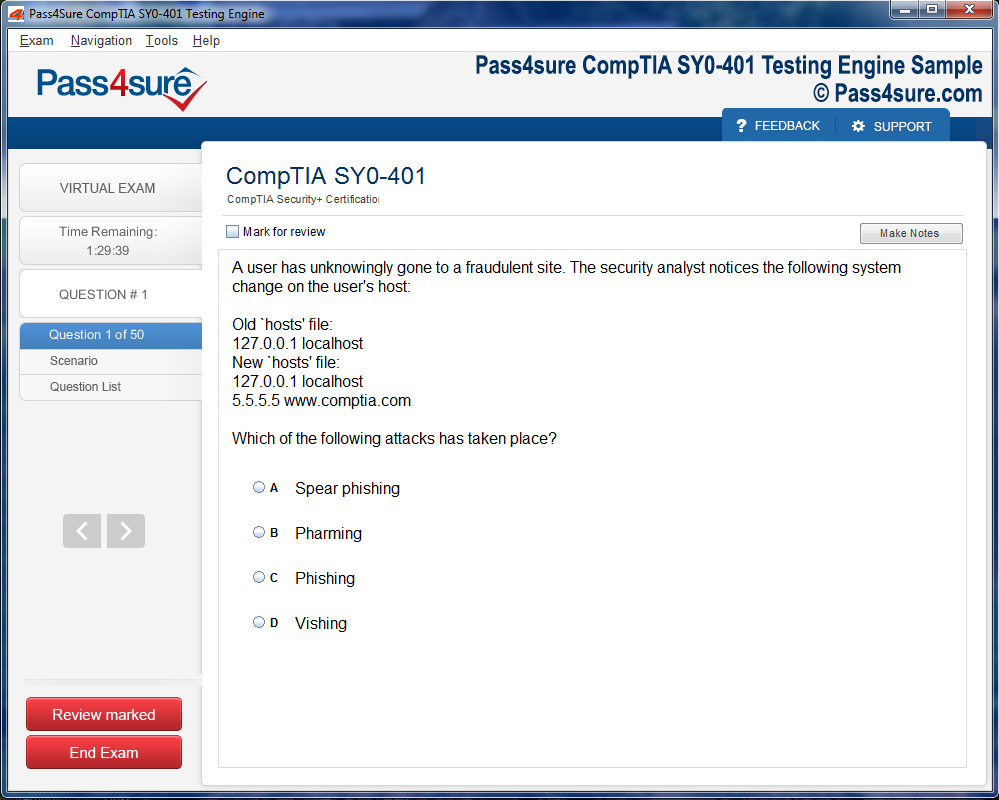
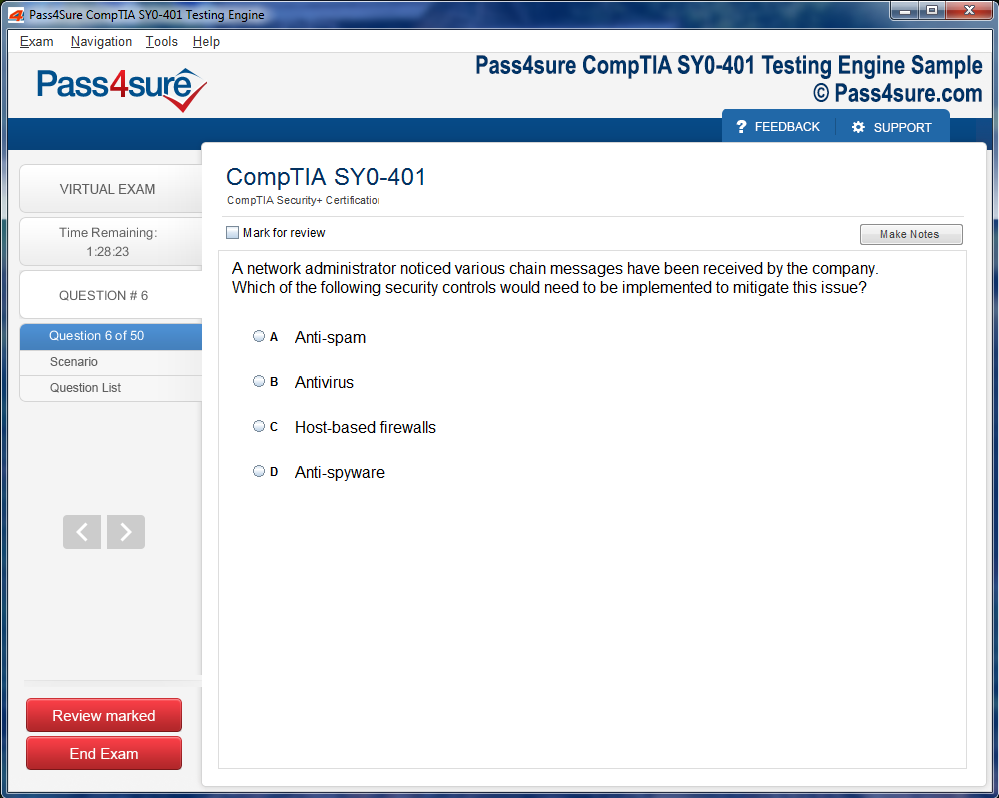
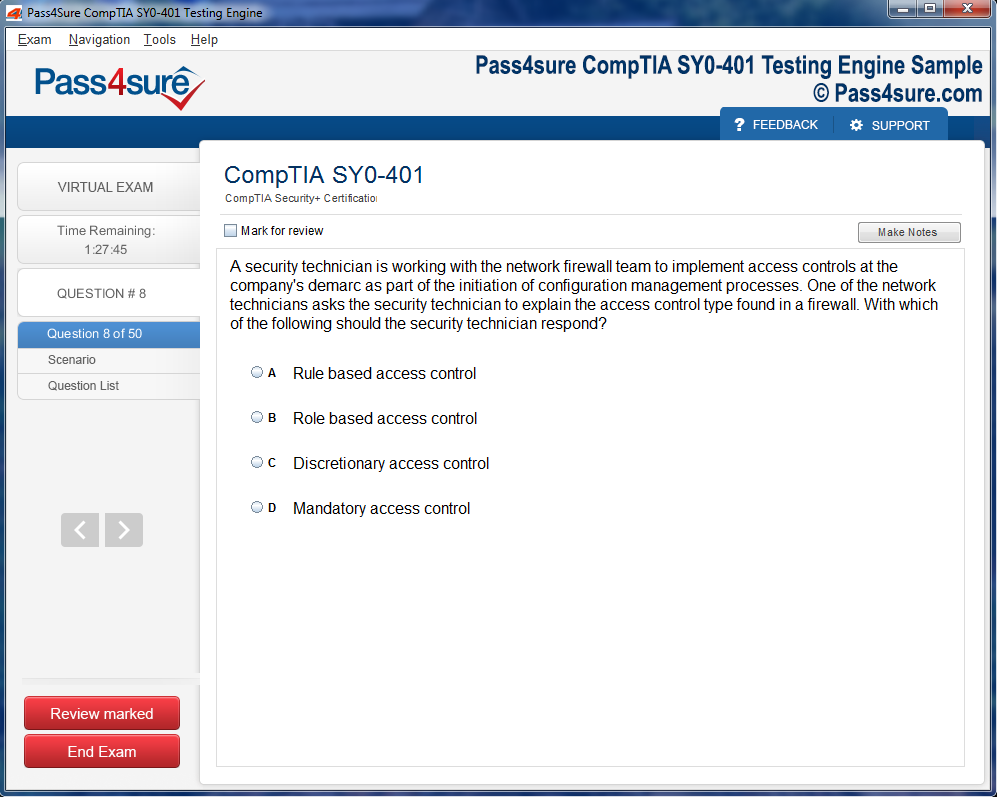
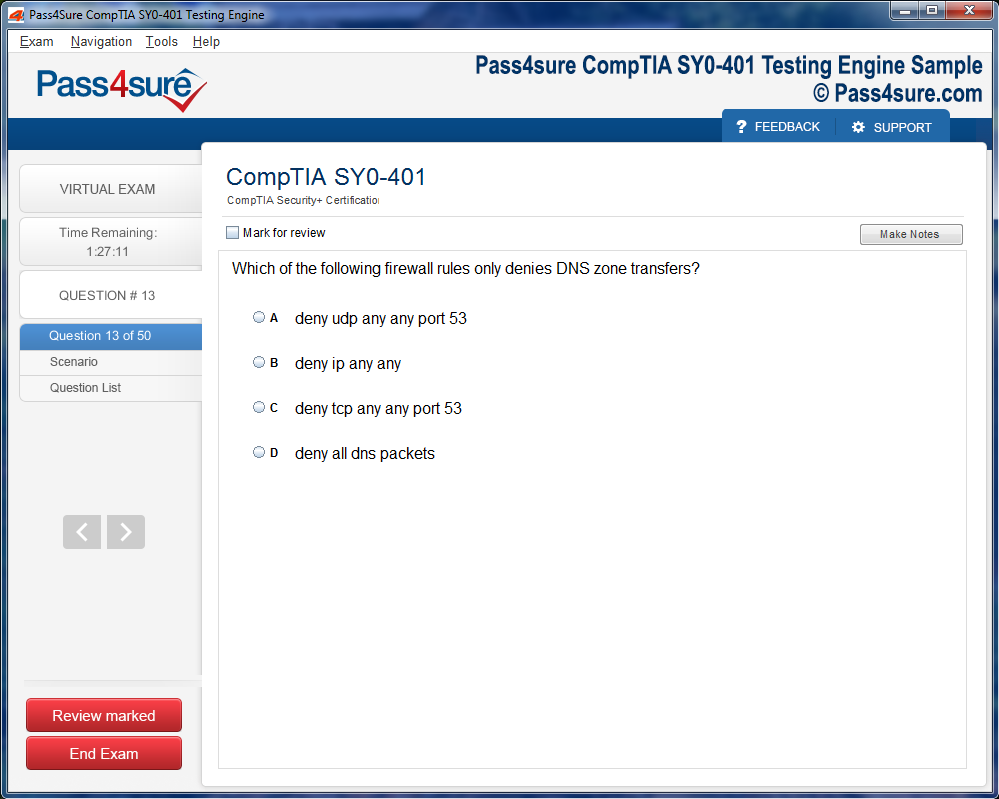
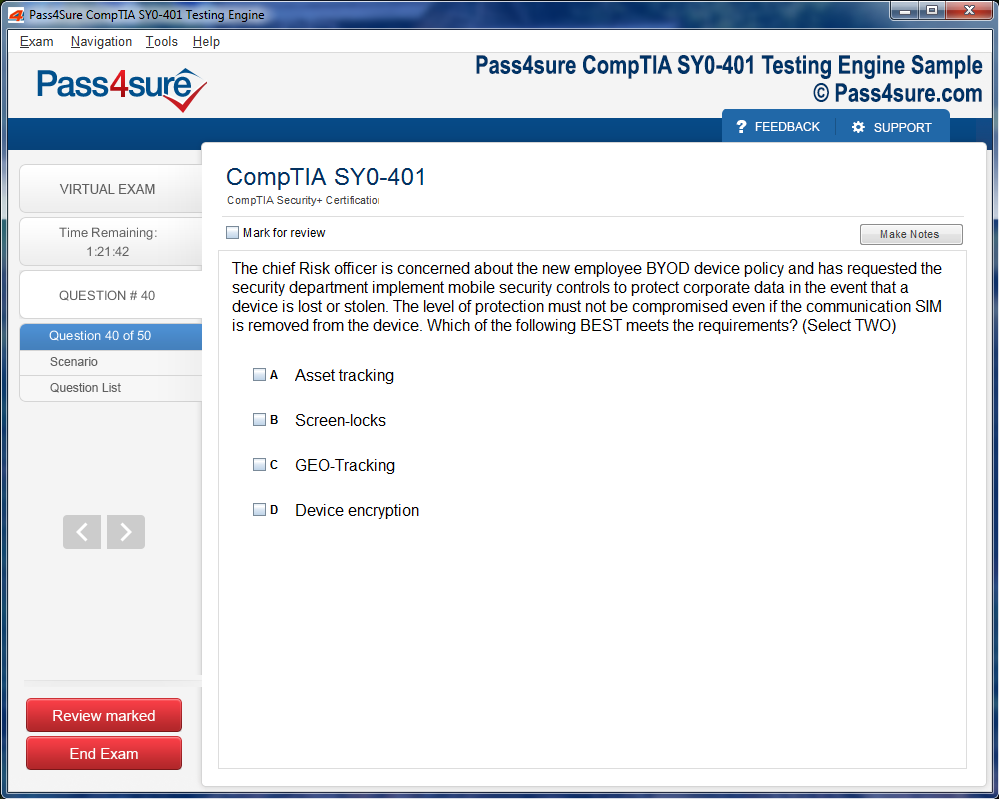
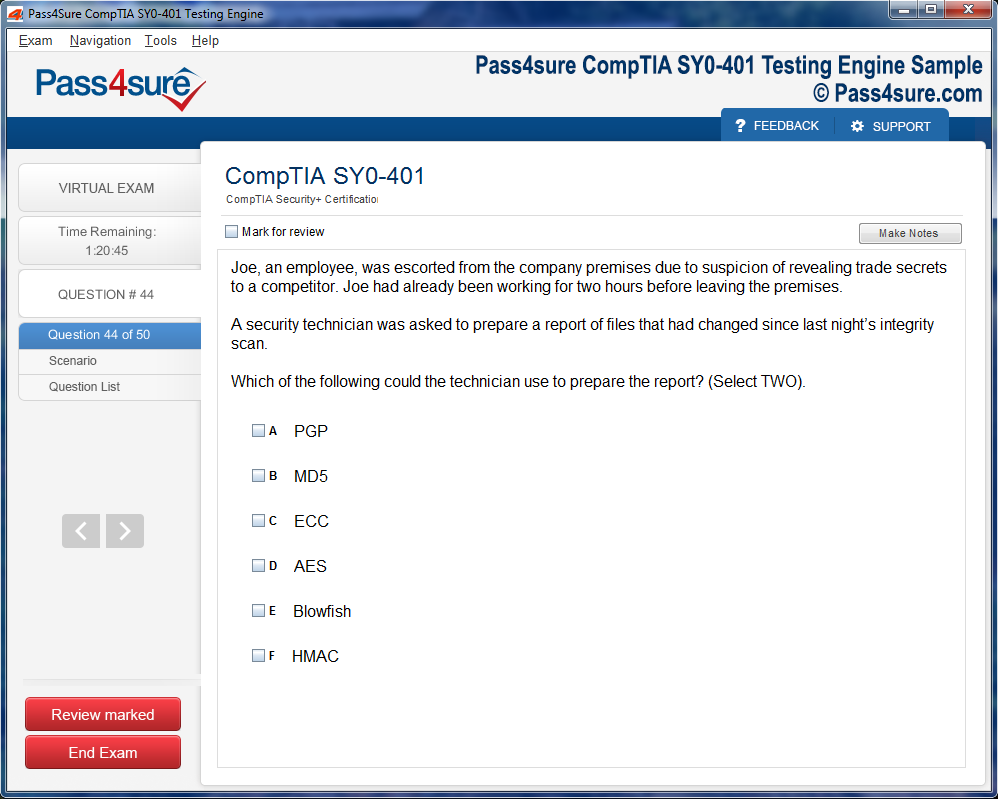
Frequently Asked Questions
How does your testing engine works?
Once download and installed on your PC, you can practise test questions, review your questions & answers using two different options 'practice exam' and 'virtual exam'. Virtual Exam - test yourself with exam questions with a time limit, as if you are taking exams in the Prometric or VUE testing centre. Practice exam - review exam questions one by one, see correct answers and explanations.
How can I get the products after purchase?
All products are available for download immediately from your Member's Area. Once you have made the payment, you will be transferred to Member's Area where you can login and download the products you have purchased to your computer.
How long can I use my product? Will it be valid forever?
Pass4sure products have a validity of 90 days from the date of purchase. This means that any updates to the products, including but not limited to new questions, or updates and changes by our editing team, will be automatically downloaded on to computer to make sure that you get latest exam prep materials during those 90 days.
Can I renew my product if when it's expired?
Yes, when the 90 days of your product validity are over, you have the option of renewing your expired products with a 30% discount. This can be done in your Member's Area.
Please note that you will not be able to use the product after it has expired if you don't renew it.
How often are the questions updated?
We always try to provide the latest pool of questions, Updates in the questions depend on the changes in actual pool of questions by different vendors. As soon as we know about the change in the exam question pool we try our best to update the products as fast as possible.
How many computers I can download Pass4sure software on?
You can download the Pass4sure products on the maximum number of 2 (two) computers or devices. If you need to use the software on more than two machines, you can purchase this option separately. Please email sales@pass4sure.com if you need to use more than 5 (five) computers.
What are the system requirements?
Minimum System Requirements:
- Windows XP or newer operating system
- Java Version 8 or newer
- 1+ GHz processor
- 1 GB Ram
- 50 MB available hard disk typically (products may vary)
What operating systems are supported by your Testing Engine software?
Our testing engine is supported by Windows. Andriod and IOS software is currently under development.
Stepwise Approach to Pass LPI 304-200 Certification
Embarking upon the LPI 304-200 certification necessitates a perspicacious understanding of the labyrinthine Linux ecosystem. This credential is not merely a testament to rote memorization but an attestation of sagacious command over system fortification, network orchestration, and computational efficiency. For aspirants, the prelude to efficacious preparation resides in dissecting the certification matrix, discerning each domain’s gravitas, and decoding the intricacies embedded within the exam architecture.
Dissecting the Exam Architecture
The LPI 304-200 examination is an amalgamation of cerebral rigor and pragmatic dexterity. Multiple-choice interrogatives evaluate conceptual clarity, while scenario-based vignettes gauge the ability to navigate labyrinthine operational contingencies. Problem-solving exercises often transcend superficial command recall, compelling candidates to extrapolate principles and implement them in ephemeral, unpredictable environments. The gestalt of this approach ensures proficiency in both abstract reasoning and operational execution.
The Security Imperative
Security management constitutes the fulcrum of the LPI 304-200. Candidates are scrutinized on their ability to establish impregnable bastions of system integrity. This includes mastery over authentication paradigms, user privilege stratification, cryptographic modalities, and access control mechanisms. Familiarity with tools such as PAM, SELinux, and AppArmor is merely the inception; adeptness in configuring these instruments for maximal resilience is imperative. Delving into encryption schemas, secure shell protocols, and audit trail interpretation transforms superficial knowledge into operational expertise.
Network Services: The Confluence of Protocols
In the domain of network services, the examination interrogates both installation acumen and diagnostic prowess. Proficiency in DNS orchestration, DHCP allocation, email server configuration, and web server optimization is essential. Beyond mere deployment, candidates must anticipate contingencies—spam filtration, secure transport protocols, and failover resilience. This domain necessitates a nuanced comprehension of protocol interplay, server hardening, and traffic modulation to achieve holistic network governance.
Advanced System Administration and Resource Optimization
The realm of advanced system administration evaluates candidates on their capacity to harmonize performance, reliability, and fault recovery. Interpretation of voluminous system logs, orchestration of sophisticated cron jobs, and judicious resource allocation form the nucleus of this domain. Moreover, candidates are expected to exhibit adroit troubleshooting skills, reconciling theoretical knowledge with capricious, real-world anomalies. The capacity to restore operational equilibrium post-failure underscores the synthesis of theoretical erudition and pragmatic ingenuity.
Crafting a Personalized Study Roadmap
Constructing a bespoke study schema is indispensable for LPI 304-200 aspirants. Initial self-assessment illuminates areas of proficiency and zones requiring remediation. Segregating topics by cognitive load and practical complexity enables optimized allocation of temporal resources. Employing a confluence of resources—including canonical LPI documentation, interactive labs, and community discourse—cultivates a multidimensional comprehension. Simulated environments provide a crucible for experiential learning, transforming abstract concepts into tangible operational skills.
The Nexus of Time Management and Practice
Temporal stewardship is paramount in surmounting the examination. A regimented schedule, partitioned into incremental modules, facilitates sustained progression across all domains. Integrating theory with quotidian practice amplifies cognitive retention and operational fluency. This iterative process mirrors real-world sysadmin workflows, rendering scenario-based questions less abstruse. Periodic evaluation and recalibration of study strategies ensure that the learning trajectory remains congruent with evolving mastery.
Cognitive Assimilation of System Logs
Deciphering system logs is an exercise in analytical acumen and attention to nuance. Logs encompass a panoply of metrics—kernel messages, authentication records, and service anomalies—that collectively narrate the operational health of a system. Mastery entails recognizing patterns, correlating disparate entries, and predicting potential failures before they escalate. Log scrutiny not only underpins exam preparedness but fortifies proactive system stewardship.
Virtual Labs and Experiential Dexterity
Immersive experimentation in virtualized environments engenders an experiential understanding unattainable through passive study. Sandboxed servers, emulated network topologies, and fault injection exercises simulate real-world adversities. Candidates cultivate dexterity in deploying services, mitigating errors, and validating configurations. This method converts abstract protocols into operational competence, bridging the chasm between theory and praxis.
Harnessing Multifaceted Resources
A kaleidoscopic approach to resource utilization enhances cognitive diversity. Beyond official manuals, interactive platforms, and collaborative forums offer alternative perspectives and nuanced insights. Engaging with diverse problem sets, peer discussions, and scenario-based challenges fosters adaptive thinking. Such exposure not only reinforces comprehension but imbues aspirants with the agility to tackle atypical, convoluted scenarios.
Security Hardening and Access Control Mastery
Advanced security paradigms demand meticulous attention to access governance, cryptographic implementation, and system fortification. Candidates must navigate the interstices of user privilege hierarchies, integrate multifactor authentication schemes, and anticipate exploitation vectors. Beyond configuration, understanding threat modeling, risk assessment, and mitigation strategies is essential. Such erudition elevates candidates from functional administrators to custodians of secure, resilient infrastructures.
Intricacies of Email and Web Service Deployment
Deploying email and web services involves a synthesis of protocol mastery, server hardening, and resilience planning. SMTP, IMAP, and POP3 orchestration requires not only installation proficiency but nuanced configuration for authentication, spam mitigation, and routing fidelity. Web services necessitate attention to SSL/TLS integration, load balancing, and vulnerability assessment. Proficiency in these areas underscores the candidate’s capacity to administer critical communication infrastructures.
Troubleshooting Conundrums and System Resilience
Effective troubleshooting necessitates diagnostic acuity, procedural rigor, and adaptive problem-solving. Exam scenarios often introduce ambiguities or partial information, compelling candidates to extrapolate plausible solutions. Techniques include log correlation, service dependency analysis, and iterative remediation. Cultivating resilience, patience, and systematic investigation ensures that administrators can restore functionality with alacrity and precision.
Performance Tuning and Resource Management
Optimizing system performance involves judicious orchestration of computational resources, memory hierarchies, and process prioritization. Candidates must analyze bottlenecks, implement scheduling strategies, and leverage monitoring tools. Performance tuning extends beyond ephemeral speed gains to encompass sustainable resource utilization, system stability, and anticipatory scaling. Mastery in this domain signals readiness for enterprise-grade system stewardship.
Setting Up Your Study Environment and Tools
The journey toward mastering the LPI 304-200 examination necessitates a meticulously curated study ecosystem. Crafting an environment that mirrors authentic Linux system administration scenarios accelerates comprehension and hones practical acumen. A paramount initial step is selecting an appropriate Linux distribution. Distributions such as Ubuntu, Debian, CentOS, and Fedora each present distinct idiosyncrasies that influence configuration, command syntax, and package management. Opting for a malleable distribution allows iterative experimentation without compromising your primary workstation.
A sagacious study habitat should incorporate virtualization. Platforms such as VirtualBox, VMware, and KVM facilitate sandboxed experimentation, enabling candidates to orchestrate intricate network topologies, simulate multi-node systems, and configure security parameters without jeopardizing live environments. Each virtual machine becomes a microcosm of potential exam scenarios, rendering abstract theoretical knowledge palpable through tactile engagement.
Complementing this technological scaffolding with curated resources is indispensable. Authoritative guides, official LPI documentation, and scenario-driven exercises form a triad of cognitive reinforcement. Constructing a repository of scripts, configurations, and observational logs fosters accelerated retention and expedites future retrieval of nuanced procedures. Maintaining a digital diary chronicling successes, missteps, and corrective measures instills a profound sense of procedural memory and operational intuition.
Command-Line Proficiency and Dexterity
The bedrock of Linux system administration is command-line fluency. Candidates must cultivate dexterous command-line manipulation, traversing directories, managing permissions, and orchestrating processes with alacrity. Daily immersion in command practice strengthens cognitive encoding and embeds operational patterns into muscle memory. Beyond rote memorization, one must internalize the conceptual substratum of each command: understanding process hierarchies, file descriptors, and the ramifications of parameter permutations.
Script writing amplifies efficacy. Bash, Python, and Perl scripts can automate routine operations, enforce system policies, and parse intricate log structures. Developing a personal compendium of utility scripts not only expedites mundane tasks but also fosters creativity in solving atypical problems. Mastery of text-processing utilities such as awk, sed, and grep enhances data filtration and log analysis, crucial skills for LPI 304-200 scenarios.
Network Simulation and Infrastructure Experiments
Networking acumen is a pivotal determinant of exam performance. Constructing simulated networks within virtualized environments imparts a tactile comprehension of IP addressing, subnetting, and routing protocols. Establishing DNS, DHCP, and NTP servers within isolated testbeds elucidates dependency chains and operational flows, while configuring SSH, VPN, and firewall rules fosters an appreciation for secure system practices.
Monitoring network traffic with tools like Wireshark or tcpdump cultivates analytical perspicacity, enabling candidates to discern anomalies, latency issues, and packet-level intricacies. Such exercises fortify both theoretical understanding and practical troubleshooting capabilities, ensuring readiness for dynamic exam scenarios that may demand immediate diagnosis and remediation.
Security Practices and Fortification Exercises
Security paradigms form an indispensable segment of LPI 304-200 mastery. Candidates must engage with access control mechanisms, file system permissions, SELinux policies, and encryption protocols. Conducting simulated breach scenarios elucidates system behavior under duress and fosters anticipatory problem-solving strategies.
Firewall rule orchestration, coupled with intrusion detection simulations, empowers learners to comprehend attack vectors and mitigation pathways. Experimenting with encryption utilities and key management systems ingrains secure practices, ensuring both compliance with best practices and exam preparedness. The iterative cycle of configuration, failure, and recovery cultivates resilience and enhances adaptive reasoning under temporal constraints.
Leveraging Community Knowledge and Collaborative Learning
Integration into vibrant Linux communities accelerates cognitive development. Discussion forums, mailing lists, and study cohorts present heterogeneous problem-solving methodologies, exposing candidates to nuanced approaches often absent in formal documentation. Active participation through query resolution and collaborative debugging strengthens conceptual foundations and reinforces procedural memory.
Peer-to-peer knowledge exchange also facilitates exposure to obscure system behaviors and atypical configurations, enriching the learner’s repertoire. Observational assimilation of communal insights allows the construction of cognitive heuristics, streamlining decision-making under exam pressure and fostering a mindset attuned to troubleshooting complexity with composure.
Advanced Virtualization Strategies
Once foundational virtualization is established, advancing toward multi-layered system orchestration is beneficial. Nested virtualization, network segmentation, and automated provisioning through tools like Ansible or Terraform cultivate operational fluency. Candidates can emulate enterprise-grade infrastructures, simulate high-availability clusters, and perform controlled stress-testing.
Incorporating snapshots and version control into virtual labs enables experimental audacity without the fear of irreversibly corrupting environments. This iterative approach encourages exploration, cultivates diagnostic instincts, and bolsters confidence when confronting unforeseen complications during practical assessments.
Constructing a Personalized Knowledge Repository
A systematic aggregation of learned material is pivotal. Creating a digital repository encompassing scripts, configuration templates, troubleshooting logs, and command mnemonics accelerates revision cycles. Leveraging structured categorization, such as tagging by subsystem—networking, security, storage, or process management—enhances retrievability and reinforces thematic coherence.
Periodic review of this repository, coupled with annotation of emergent insights, solidifies neural pathways and transforms ephemeral learning into durable expertise. This self-curated compendium evolves alongside study progression, functioning as both reference material and cognitive scaffolding for real-time problem resolution.
Mastering Troubleshooting Methodologies
Proficient troubleshooting embodies both analytical rigor and experiential wisdom. Candidates must cultivate a systematic approach: problem identification, hypothesis formulation, diagnostic execution, and corrective intervention. Familiarity with system logs, monitoring tools, and error codes underpins effective diagnosis, while iterative testing reinforces adaptive thinking.
Simulating fault conditions—service failures, misconfigurations, and network disruptions—imbues learners with anticipatory strategies and accelerates response latency. Exposure to rare or contrived failure modes ensures that candidates are prepared for non-standard scenarios that frequently manifest in the LPI 304-200 exam context.
Practicing Efficient Time Management During Study
Time management is an oft-overlooked facet of exam preparation. Segmenting study sessions into focused intervals dedicated to discrete topics—networking, scripting, virtualization, or security—maximizes cognitive absorption. Interleaving practical exercises with theoretical review fortifies memory consolidation, while periodic self-assessment benchmarks proficiency and identifies areas necessitating remedial focus.
The construction of a structured timetable, integrating reflection periods and incremental goal setting, transforms a nebulous study endeavor into a quantifiable progression. Employing timers, task lists, and productivity tools reinforces discipline, mitigates procrastination, and engenders sustainable learning rhythms conducive to long-term retention.
Continuous Adaptation and Iterative Learning
The landscape of Linux system administration is dynamic, necessitating adaptive learning strategies. Continual engagement with updated documentation, evolving best practices, and emergent tools ensures relevance and mitigates obsolescence. Iterative learning—whereby concepts are revisited, challenged, and refined through repeated application—cultivates mastery and intellectual agility.
Active reflection on experimental outcomes, coupled with periodic recalibration of study techniques, consolidates skill acquisition. Recognizing personal learning patterns, optimizing cognitive load, and embracing iterative refinement are hallmarks of high-performing candidates who consistently translate effort into tangible competence.
The Philosophical Bedrock of System Security
Security is not merely a mechanical protocol; it is an epistemic commitment to preserving integrity amidst digital entropy. Systems must be architected with perspicacity, embedding principles such as least privilege, defense in depth, and anticipatory auditing. In this esoteric realm, each configuration choice resonates beyond immediate function, cascading into potential vulnerabilities if misaligned. The prudent administrator cultivates an anticipatory mindset, envisioning attack vectors as if navigating a labyrinth where every corridor may harbor unforeseen perils.
Hierarchical Orchestration of Users and Groups
The seemingly mundane act of user creation belies an intricate lattice of privilege management. Permissions, ownership, and nested group hierarchies form the scaffolding of a resilient system. Beyond conventional paradigms, integrating PAM modules and LDAP directories metamorphoses user authentication into a dynamic tapestry. Multi-factor authentication acts as a hermetic seal, merging physiological, digital, and token-based verifications into a composite barrier against subversion.
Cryptographic Sanctuaries in File Systems
File systems are repositories not only of data but of trust. Implementing meticulous permissions and Access Control Lists ensures that information is insulated from unsanctioned access. Augmenting this with encryption—both at rest and in transit—elevates the system from mere functionality to cryptographic sanctity. SELinux and AppArmor are sentinels, enforcing policies with surgical precision, whether in permissive observation or enforcing strictures that preclude even inadvertent breaches.
The Arcana of System Auditing
Auditing transcends mere logging; it is the cartography of system consciousness. Tools such as syslog, journald, and auditd transmute mundane events into a chronicle of operational reality. Vigilant monitoring, coupled with methodical audits of access permissions and service configurations, renders administrators capable of prescient intervention. This proactive posture converts passive observation into strategic anticipation, fortifying defenses against emergent threats.
Network Fortifications and Protocol Sanctity
The ethereal pathways of network communication demand rigorous scrutiny. Firewalls, intrusion detection systems, and cryptographically secure protocols such as SSH, SFTP, and TLS constitute the first bulwark against exogenous incursions. Configuring iptables, nftables, or firewalld transcends rote memorization; it necessitates comprehension of packet flows, NAT mechanics, and port orchestration. The network is a kinetic battleground, and only through meticulous planning can one navigate it unscathed.
Strategic Backup and Recuperative Measures
Resilience is predicated not solely on prevention but on the alacrity of recovery. Establishing disciplined backup routines, verifying restore fidelity, and leveraging snapshot features of advanced file systems like Btrfs or ZFS create a substratum for continuity. The administrator who anticipates systemic disruptions transforms calamity into manageable contingencies, ensuring that operational integrity persists in the aftermath of misconfigurations or adversarial exploits.
Patch Metamorphosis and Vulnerability Vigilance
Patch management is a ritual of continuous metamorphosis, mitigating latent vulnerabilities before they metastasize. The practitioner must navigate the labyrinth of advisories, updates, and vulnerability scanners with perspicacity, employing tools such as Lynis or OpenVAS. This vigilant engagement ensures the system is not merely patched but immunologically fortified against the ever-shifting landscape of digital threats.
Prophylactic Configuration and Minimal Exposure
System hardening is the art of minimization and obfuscation. Services and daemons are not simply disabled but excised from operational visibility wherever feasible. Reducing attack surfaces is a prophylactic strategy that amalgamates configuration discipline, selective service exposure, and meticulous scrutiny of default behaviors. Each adjustment is a calculated contraction of vulnerability, creating a lattice where threats struggle to gain purchase.
The Temporal Dynamics of Security Policies
Security is inherently temporal. Policies and configurations must evolve in concert with emergent threats and shifting operational paradigms. Periodic reviews, adaptive auditing, and dynamic reconfiguration prevent stagnation, ensuring that defenses remain contemporaneous with the threat environment. This temporal vigilance is crucial for maintaining long-term resilience and for cultivating an anticipatory security culture within organizational structures.
Intrinsic Monitoring and Anomaly Detection
Monitoring is an act of continuous introspection, transforming operational data into actionable insights. Beyond conventional logging, anomaly detection leverages pattern recognition and heuristic analysis to illuminate deviations from normative behavior. This intrinsic vigilance transforms the system into an adaptive organism, capable of preemptive response to nascent threats and subtle intrusions that evade conventional detection paradigms.
The Esoteric Art of DNS Orchestration
Deploying Domain Name System services transcends mere installation; it demands a perspicacious understanding of hierarchical resolution and caching alchemy. Configuring BIND or dnsmasq requires meticulous attention to zone propagation, forwarders, and authoritative delegation. Crafting TSIG keys and fortifying domains with DNSSEC introduces cryptographic rigor, safeguarding against insidious cache poisoning and spoofing attacks. Diagnostic incantations like dig and nslookup reveal the arcane pathways of query resolution, allowing administrators to exorcise errant responses with surgical precision.
Dynamic IP Allocation and DHCP Sorcery
Dynamic Host Configuration Protocol services epitomize networkautomationm. Mastery involves not only enabling ephemeral address assignment but also orchestrating reservations, option parameters, and multi-subnet topologies. Failover configurations transform static reliability into resilient dynamism, ensuring clients persistently acquire appropriate network identity. The adept practitioner simulates complex scenarios, calibrating lease durations and option broadcasts to achieve an equilibrium between efficiency and network harmony.
Web Server Deployment as Digital Architecture
Web servers constitute the cerebral cortex of networked interaction, demanding both aesthetic configuration and rigorous fortification. Proficient deployment of Apache or Nginx encompasses virtual hosts, SSL/TLS cryptography, authentication modules, and meticulous performance tuning. Administrators imbue servers with safeguards against injection, cross-site exploits, and permission misconfigurations. The orchestration of log rotation, rate limiting, and connection throttling epitomizes the confluence of resilience and responsiveness, ensuring a seamless end-user experience.
Email Services: The Arcana of Postfix and Sendmail
Email services represent a labyrinthine nexus of transport, authentication, and filtering. Postfix and Sendmail, when judiciously configured, offer both throughput and security. SPF, DKIM, and TLS integration transform mere transmission into veritable cryptographic dispatch. Advanced spam filtering and relay rules cultivate a pristine communication channel. Observing mail queues, parsing logs, and resolving bounces demand the practitioner to operate with both vigilance and adroitness, guaranteeing operational integrity in ephemeral messaging domains.
File Sharing and Distributed Storage Conjurations
Networked file systems interweave collaboration with granular access control. NFS, Samba, and FTP servers, when architected with care, permit user mapping, ACL refinement, and permission stratification. Implementing cross-platform consistency requires cognizance of UID/GID translation and secure transport layers. Probing connectivity, verifying read-write operations, and auditing access events cultivate operational transparency, fostering trust in the digital repository as a bastion of data reliability.
Network Monitoring and Troubleshooting Divination
Monitoring is the divination of system health; troubleshooting is its praxis. Tools like netstat, ss, tcpdump, and systemctl illuminate the invisible currents of packet flows, socket states, and service lifecycles. Parsing logs becomes an exercise in forensic perspicacity, uncovering anomalies before they metastasize into systemic disruption. Proactive alerting, threshold tuning, and anomaly detection forge a vigilant ecosystem, transforming reactive maintenance into anticipatory mastery.
Bridging Theory and Praxis in Network Service Management
The confluence of theoretical rigor and tactile experimentation defines the consummate network steward. Hands-on exercises, scenario simulations, and iterative troubleshooting cultivate an intuitive grasp of service dynamics. By immersing in live configuration, securing critical endpoints, and stress-testing resilient architectures, administrators cultivate confidence and dexterity. This immersive praxis primes candidates to navigate multifaceted exam scenarios while honing enduring professional acumen.
Fortifying Security in Network Service Deployment
Network services exist in perpetual tension with adversarial vectors. Integrating firewalls, access control lists, and intrusion detection mechanisms fortifies the digital bastion. Cryptographic hardening, TLS pinning, and authentication tokenization mitigate the specter of exploitation. Continuous vigilance, periodic patching, and proactive risk assessment metamorphose ordinary deployments into formidable defensive constructs, ensuring sustained operational sanctity against evolving threats.
High-Availability Architectures and Redundancy Rituals
Ensuring uninterrupted service transcends basic configuration; it demands redundancy rituals and high-availability incantations. Load balancers, cluster nodes, and failover replication orchestrate an ecosystem resilient to hardware failures, network partitions, or service anomalies. Fine-tuning heartbeat intervals, quorum thresholds, and replication protocols ensures that ephemeral glitches do not cascade into operational collapse, transforming a simple deployment into a resilient orchestral symphony of availability.
Log Analysis and Proactive Alerting Mastery
Logs are the narrative of network existence, each entry a verse in the tale of operational flux. Parsing, correlating, and interpreting these entries reveals latent issues and emergent patterns. Proactive alerting leverages thresholds and anomaly detection to preempt failures, converting raw data into actionable intelligence. Mastery of these practices transforms administrators from reactive troubleshooters into strategic orchestrators of network equilibrium.
Integrating Automation into Network Services
Automation in network services is both artistry and science. Utilizing scripts, configuration management tools, and templated deployments allows administrators to enforce consistency, reduce human error, and accelerate service provisioning. Orchestrating updates, patching schedules, and configuration drift monitoring cultivates a disciplined, repeatable operational cadence. The interplay between automation and vigilance ensures that network ecosystems remain both nimble and resilient in the face of continuous evolution.
Intricacies of System Resource Orchestration
Advanced system administration is a labyrinthine discipline, demanding a perspicacious understanding of CPU, memory, and storage resource utilization. System administrators must cultivate the ability to discern ephemeral performance bottlenecks that might elude superficial observation. Tools such as top, htop, vmstat, iostat, and sar provide a granular lens into system performance, revealing cryptic anomalies in process scheduling, memory paging, and I/O throughput. Meticulous scrutiny of log files—ranging from syslog to journald—enables the identification of insidious issues that compromise system stability. The dexterous administrator must also navigate kernel parameters, judiciously tuning swappiness, scheduler latency, and virtual memory thresholds to cultivate an optimal equilibrium between throughput and latency.
Esoteric Process Management Techniques
The management of processes transcends the mere invocation of commands. Understanding the labyrinthine hierarchy of systemd units, their interdependencies, and activation triggers is paramount. Job scheduling, orchestrated through cron or systemd timers, demands a cognizance of temporal constraints, priority inversion, and concurrent execution pitfalls. Administrators must adeptly manipulate process priorities using nice and renice, and intercede in aberrant behavior with signals such as SIGKILL, SIGSTOP, and SIGHUP. A deep comprehension of runaway processes, zombie reaping, and defunct process mitigation is essential to preserving system integrity in high-demand environments.
Advanced Storage Constellations
Storage management is an arcane domain where partitioning strategies, Logical Volume Manager (LVM) configurations, and RAID architectures converge. Mastery of LVM snapshots, thin provisioning, and mirror resiliency offers administrators unparalleled flexibility. Filesystem engineering extends to Btrfs and ZFS, where snapshotting, compression, deduplication, and integrity checks provide both redundancy and performance augmentation. The ability to manipulate file system parameters, conduct filesystem scrubs, and interpret SMART diagnostics constitutes the cornerstone of storage reliability. Advanced administrators also engage in capacity forecasting, ensuring data proliferation does not precipitate system degradation.
Diagnostics and Troubleshooting Methodology
Troubleshooting at an advanced echelon is a meticulous and methodical pursuit. Exam scenarios often simulate catastrophic events, from kernel panics to network fragmentation. The adept administrator constructs a stepwise diagnostic protocol: hypothesis formulation, targeted log analysis, iterative testing, and solution verification. Familiarity with strace, lsof, tcpdump, and journalctl empowers professionals to dissect convoluted problems with surgical precision. Recognizing subtle error patterns, transient race conditions, and cascading service failures is critical to resolving issues before they metastasize into systemic crises.
Automation and Scripting Synergy
Automation embodies a symbiosis between human acumen and computational efficiency. Scripting with Bash, Python, or Perl transcends routine task execution, enabling proactive system maintenance, dynamic monitoring, and contingency planning. Crafting idempotent scripts that harmonize with cron or systemd timers ensures repeatability and reduces human error. Advanced administrators utilize automation to orchestrate configuration drift correction, dynamic resource allocation, and automated remediation of service anomalies. Demonstrating an aptitude for integrating scripting with manual interventions is frequently a distinguishing factor in professional assessments and examination scenarios.
Network Performance and Intricacies
Network administration within a Linux ecosystem demands an understanding of routing protocols, interface configuration, and packet inspection. Tools such as ip, netstat, ss, and ethtool provide insights into latency anomalies, throughput degradation, and packet loss. Network namespaces, bridges, and VLANs allow for segmentation and traffic isolation, essential for high-performance architectures. Understanding TCP congestion control algorithms, UDP behavior, and kernel socket tuning empowers administrators to preemptively mitigate network bottlenecks. Advanced troubleshooting often necessitates packet-level analysis with tcpdump or Wireshark, revealing cryptic anomalies invisible at higher abstraction layers.
Kernel Parameter Tuning and Performance Augmentation
Kernel-level tuning constitutes a profound aspect of optimization, wherein administrators manipulate procfs entries and sysctl parameters to alter scheduling, memory management, and I/O behavior. Swapping thresholds, read-ahead buffers, and elevator algorithms can dramatically influence performance under load. Professionals must comprehend the interplay between user-space and kernel-space, balancing latency against throughput for optimal system responsiveness. Observing real-time performance metrics and correlating them with workload characteristics allows for empirical, data-driven tuning strategies that elevate operational efficiency.
Security Hardening and Integrity Assurance
System optimization is incomplete without meticulous security hardening. Advanced administrators employ discretionary and mandatory access controls, SELinux, AppArmor, and cgroups to contain processes and enforce policy. File integrity monitoring, auditd configurations, and meticulous log review enable detection of anomalous activity before it escalates. Security policies must harmonize with performance considerations, as overly restrictive controls can inadvertently induce latency or resource contention. Effective optimization thus embodies both resilience and vigilance, ensuring continuity without compromise.
Exam Strategy for LPI 304-200
Embarking on the final juncture of LPI 304-200 preparation necessitates not merely comprehension but a sagacious approach to exam strategy. Cognitive acuity, coupled with systematic methodology, delineates the path from competence to distinction. Candidates must transcend rote memorization, embracing tactics that leverage analytical dexterity and contextual reasoning. Familiarity with nuanced question structures, scenario extrapolation, and answer prioritization fosters an adaptive mindset, crucial for navigating multifaceted challenges.
Strategic pre-exam planning involves mapping out the syllabus with an emphasis on pivotal high-yield domains. Allocate temporal resources judiciously, recognizing areas of fortitude versus lacunae in understanding. Crafting a mental schema of question typologies—whether multiple-choice, fill-in-the-blank, or situational analysis—amplifies predictive acumen, allowing swift identification of traps and distractors. This cerebral rehearsal enhances confidence, mitigating anxiety-induced cognitive obfuscation.
The orchestration of exam strategy extends to environmental calibration. Simulate examination conditions with temporal constraints, ambient silence, and procedural rigor. This ritual habituates the mind to the intensity of the actual assessment, reducing performance volatility. Complementary cognitive exercises, including visualization of problem-solving pathways and micro-scenario rehearsals, fortify synaptic fluidity and bolster decision-making velocity.
Intensive Practice and Simulation
Practice embodies the crucible wherein knowledge transmutes into proficiency. Systematic repetition of practical exercises solidifies conceptual frameworks and fosters dexterous command over command-line interfaces, configuration nuances, and troubleshooting paradigms. Scenario-based simulations emulate real-world contingencies, cultivating resilience against unexpected exigencies.
Repeated engagement with practice examinations illuminates latent weaknesses, elucidates recurrent error patterns, and refines temporal allocation strategies. Analytical review of erroneous responses is paramount: deconstruct each mistake, contextualize its origin, and reinforce the underlying principle. This reflective cycle ensures that the mind assimilates lessons rather than merely cataloging failures.
Hands-on practice extends beyond mere repetition; it necessitates intentionality. For example, configuring network services or crafting intricate security policies under simulated stress conditions develops both procedural agility and cognitive endurance. Additionally, integrating cross-disciplinary problem-solving—such as synthesizing security configurations with performance optimization—enhances cognitive plasticity, a trait invaluable in dynamic exam scenarios.
Mastery of Time Allocation
Temporal mastery is frequently underestimated yet constitutes a decisive vector of exam success. Candidates must calibrate their approach, discerning which questions warrant prolonged deliberation and which are amenable to rapid resolution. Overcommitment to a single complex scenario can precipitate cascading time deficits, compromising overall performance. Implementing a systematic triage, wherein challenging questions are earmarked for later review, safeguards against temporal mismanagement.
Time allocation extends beyond mere pacing; it encompasses cognitive prioritization. Assess the weight of each question vis-à-vis conceptual significance, and distribute attention accordingly. This judicious balancing act ensures a maximized return on intellectual investment, simultaneously preserving mental stamina for protracted examination sessions.
Strategic use of micro-pauses during the exam—brief mental interludes for recalibration and stress modulation—enhances focus and mitigates fatigue-induced errors. These intermissions facilitate cognitive homeostasis, allowing sustained analytical acuity throughout the assessment duration.
Conceptual Reinforcement and Revision Techniques
Reinforcement of conceptual understanding constitutes the backbone of final-stage preparation. Beyond superficial review, candidates must engage in targeted consolidation, emphasizing high-yield constructs such as network architectures, advanced troubleshooting heuristics, and security policy implementation. Summarizing intricate procedures into condensed cognitive models promotes rapid retrieval under temporal constraints.
Employing mnemonic devices, cognitive mapping, and iterative recall strengthens neural encoding. For instance, translating configuration sequences into mental flowcharts or narrative constructs embeds procedural knowledge within long-term memory. Integrating cross-references between disparate domains—such as correlating service optimization with security protocols—enhances both depth and versatility of understanding.
Revision strategies should integrate multimodal learning. Hands-on repetition, conceptual reflection, and scenario simulation coalesce to create a robust knowledge scaffold. Periodic self-assessment, leveraging timed quizzes and randomized scenario prompts, validates mastery and identifies residual gaps requiring remediation.
Psychological Preparedness and Cognitive Poise
Equally critical to technical preparation is the cultivation of psychological resilience. Cognitive poise under duress delineates the proficient candidate from the merely knowledgeable. Anxiety, if unmanaged, can precipitate retrieval failure and skewed judgment. Developing a positive mental schema, employing mindfulness techniques, and maintaining physiological well-being collectively fortify exam performance.
Physical routines—such as regulated sleep cycles, aerobic activity, and nutritional moderation—synergize with cognitive conditioning, enhancing synaptic efficiency and attentional endurance. Micro-breaks interspersed during intensive study sessions mitigate mental fatigue and consolidate memory traces, optimizing retention.
Visualization of success, rehearsal of problem-solving strategies, and affirmation of preparedness engender a self-reinforcing confidence loop. This psychological scaffolding ensures that under examination stress, candidates operate with clarity and decisiveness rather than succumbing to cognitive perturbation.
Continuous Reflection and Post-Exam Integration
Even after the culmination of the assessment, reflection remains integral to long-term skill fortification. Analyzing performance—identifying recurrent errors, conceptual blind spots, and procedural inefficiencies—enables ongoing refinement. This post-exam introspection transforms isolated experiences into cumulative expertise, reinforcing knowledge networks and fostering adaptive learning.
Continuous engagement with practical exercises post-certification ensures that proficiency is not ephemeral. Maintaining hands-on practice, simulating novel scenarios, and exploring advanced configurations expand the candidate’s cognitive repertoire, facilitating career advancement and preparedness for evolving technological landscapes.
High-Yield Technical Domains and Strategic Focus
Strategic focus on high-yield topics amplifies the efficacy of final-stage preparation. Mastery of network service configuration, advanced security policy deployment, and troubleshooting complex infrastructures constitutes the nexus of LPI 304-200 competence. Deliberate emphasis on these domains, supplemented by scenario-based problem-solving, maximizes the probability of success.
Candidates should integrate comparative analyses, exploring alternative methods for achieving identical outcomes, thereby cultivating analytical flexibility. For instance, configuring multiple authentication mechanisms or optimizing network throughput via diverse routing strategies enhances both theoretical understanding and practical agility.
High-Availability Architectures and Redundancy Strategies
High-availability (HA) systems are the pinnacle of reliability, requiring administrators to architect resilient infrastructures that can withstand component failures without service disruption. Cluster orchestration involves designing failover mechanisms, quorum-based decision-making, and heartbeat monitoring to preemptively detect anomalies. Technologies such as Pacemaker, Corosync, and DRBD enable synchronous replication and automated failover, ensuring continuity across geographically dispersed nodes. Administrators must account for split-brain scenarios, latency-induced inconsistencies, and load redistribution to maintain equilibrium under duress. The sophistication lies not merely in deploying redundancy but in harmonizing failover responsiveness with data integrity and operational transparency.
Containerization and Orchestration Paradigms
The proliferation of containerized workloads necessitates mastery of orchestration frameworks. Containers encapsulate applications, dependencies, and configuration, fostering portability and isolation. Administrators must comprehend cgroup resource quotas, namespaces, and overlay networking to fine-tune container performance. Kubernetes, Docker Swarm, and Podman orchestrate large-scale deployments, offering automated scaling, rolling updates, and service discovery. Advanced administration encompasses interpreting pod metrics, configuring affinity and anti-affinity rules, and optimizing persistent storage through dynamic volume provisioning. Monitoring ephemeral container states requires dexterous integration of Prometheus, Grafana, and logging pipelines to prevent resource starvation and mitigate cascading failures.
Virtualization Performance Optimization
Virtualized environments introduce an additional layer of complexity, as hypervisors abstract physical resources to multiple guest systems. KVM, QEMU, and Xen demand precise tuning to optimize CPU pinning, memory ballooning, and I/O scheduling. Administrators must balance host and guest performance by configuring cache modes, paravirtualized drivers, and NUMA affinity. Advanced scenarios include nested virtualization, live migration, and snapshot management, which necessitate meticulous orchestration to avoid performance degradation. Observing hypervisor metrics in concert with guest workloads allows for predictive tuning, ensuring optimal responsiveness across all layers of the virtual stack.
Predictive Monitoring and Telemetry Analysis
Predictive monitoring transcends reactive diagnostics by anticipating anomalies before they manifest. Administrators leverage time-series databases, log aggregation, and anomaly detection algorithms to identify latent issues. Telemetry pipelines ingest metrics from CPU, memory, disk, and network subsystems, correlating deviations against historical baselines. Machine learning-assisted anomaly detection can highlight transient spikes, resource leaks, and emergent contention patterns. The sophistication lies in configuring alerting thresholds that minimize false positives while ensuring rapid remediation, enabling proactive intervention before minor degradations escalate into catastrophic failures.
Disaster Recovery Methodologies
Disaster recovery (DR) planning is indispensable for environments where uptime is non-negotiable. Administrators must architect multi-tiered recovery strategies encompassing snapshotting, replication, and failover. Techniques such as incremental backups, rsync mirroring, and database-specific replication (e.g., MySQL replication or PostgreSQL streaming) form the backbone of recoverability. Recovery point objectives (RPO) and recovery time objectives (RTO) dictate the cadence of backups and the feasibility of system restoration. Advanced DR scenarios involve orchestrating cross-data-center failover, validating restore integrity, and simulating catastrophic events to ensure operational resilience under worst-case conditions.
Dynamic Load Balancing and Traffic Shaping
Optimizing system responsiveness entails sophisticated load balancing and traffic management. Administrators deploy reverse proxies, TCP/HTTP load balancers, and software-defined networking constructs to distribute workloads evenly across nodes. Algorithms such as round-robin, least connections, and weighted distribution are tailored to specific traffic patterns, while session persistence ensures continuity for stateful applications. Traffic shaping and Quality of Service (QoS) policies regulate bandwidth allocation, preventing congestion and ensuring critical services maintain priority. Fine-tuning these parameters requires continuous observation of latency, throughput, and connection saturation, underscoring the dynamic interplay between network and compute resources.
Advanced Logging and Observability Constructs
Observability is not merely about log aggregation but understanding system behavior at a multidimensional level. Centralized logging frameworks such as ELK Stack (Elasticsearch, Logstash, Kibana) or Loki provide insights into process execution, service dependencies, and error propagation. Structured logging, combined with trace correlation, enables administrators to follow request lifecycles across distributed architectures. Metrics, logs, and traces converge into actionable intelligence, allowing identification of subtle performance regressions or systemic bottlenecks. This holistic observability fosters informed decision-making, reduces mean-time-to-resolution, and enhances confidence in system stability.
Memory Management and Paging Intricacies
Advanced memory optimization involves nuanced manipulation of paging, caching, and buffer strategies. Administrators monitor slab usage, page reclamation, and swap activity to prevent thrashing and minimize latency. Techniques such as hugepages, memory overcommitment, and NUMA-aware allocation optimize application throughput in high-density environments. Observing vmstat, /proc/meminfo, and cgroup memory metrics allows administrators to reconcile memory pressure with workload demands, ensuring sustained performance under diverse operational scenarios. Memory leaks, silent corruption, and ephemeral cache contention remain the subtle adversaries of system stability, demanding vigilance and proactive tuning.
CPU Scheduling and Core Affinity Engineering
CPU optimization is a precise endeavor, balancing contention with throughput. Understanding scheduler classes (CFS, real-time, deadline) empowers administrators to assign tasks according to criticality. CPU affinity and isolcpus configurations prevent interference from non-critical workloads, enhancing determinism for latency-sensitive processes. Administrators must also consider hyperthreading implications, cache locality, and inter-core communication latency. Profiling workloads with perf, oprofile, and mpstat provides actionable insights, enabling strategic redistribution of threads to minimize context switching overhead while maximizing instruction throughput.
Advanced I/O and Storage Layer Engineering
Input/output operations are frequently the hidden chokepoint in system performance. Tuning I/O schedulers (deadline, CFQ, noop) aligns disk behavior with workload characteristics. SSDs, NVMe devices, and hybrid storage require administrators to adjust read/write queues, alignment, and caching policies. Filesystem-specific tuning—journaling modes, inode density, and compression algorithms—further influences throughput and durability. Monitoring iostat, blktrace, and fio results allows administrators to iteratively refine I/O paths, achieving low-latency, high-bandwidth storage operations that withstand peak workloads. Advanced configurations also include multipath I/O, failover handling, and deduplication, ensuring both performance and resilience.
Service Dependency Graphs and Orchestration
Modern Linux systems are a web of interdependent services. Understanding and managing these dependencies is critical to ensuring startup determinism, graceful shutdowns, and minimal disruption during updates. Administrators leverage systemd unit dependencies, Before/After directives, and socket activation to orchestrate service sequencing. Complex scenarios, such as multi-tier application stacks, demand careful analysis of inter-service communication, failure propagation, and retry policies. Automating dependency resolution while preserving manual oversight ensures operational reliability without compromising flexibility.
Kernel Tracing and Performance Forensics
Kernel tracing provides deep insight into system operations, uncovering inefficiencies invisible to conventional monitoring. Tools such as ftrace, bpftrace, and perf enable administrators to probe syscall latency, interrupt handling, and context-switch patterns. Performance forensics involves correlating kernel traces with application behavior, revealing subtle contention points, priority inversion, and resource starvation. Advanced administrators employ this data to refine scheduling policies, mitigate deadlocks, and optimize interrupt coalescing, translating microscopic insights into macroscopic performance gains.
Energy-Aware and Green Computing Optimization
Sustainable administration extends beyond performance—it encompasses energy efficiency and thermal management. Administrators must monitor CPU frequency scaling, fan curves, and power capping mechanisms to balance computational output with energy consumption. Dynamic voltage and frequency scaling (DVFS), along with workload consolidation, reduces idle power usage without compromising responsiveness. Green computing principles necessitate predictive modeling, ensuring resources are provisioned commensurate with demand while minimizing environmental impact. Administrators adept in these techniques achieve operational excellence that is both efficient and ecologically responsible.
Advanced Exam Strategy and Cognitive Triaging
Beyond initial preparation, the sophistication of your exam strategy significantly influences outcome efficacy. Cognitive triaging—allocating mental resources according to task complexity—serves as a linchpin in optimizing exam performance. Candidates should develop a hierarchical approach: rapid identification of simple, high-confidence questions, followed by measured engagement with multifaceted, scenario-intensive challenges. This stratified method prevents overinvestment in early questions while preserving intellectual bandwidth for later intricacies.
An effective strategy entails pre-emptive anticipation of distractors. Exam designers often craft questions with superficially plausible but technically flawed options. Recognizing patterns in these distractors—such as common misconfigurations, misapplied commands, or partial protocol misunderstandings—enhances error detection. Cultivating this skill involves repeated exposure to mock examinations and post-scenario analytical debriefs, ensuring that recognition becomes almost instinctual.
Moreover, candidates benefit from a dynamic revision strategy wherein each practice session informs subsequent scheduling. If certain question typologies consistently generate errors, dedicate proportionally more time to those areas. This iterative refinement converts weakness into strength, leveraging the feedback loop as an accelerator toward mastery.
Scenario-Based Practice and Real-World Emulation
Realistic, scenario-based practice is indispensable in translating theoretical knowledge into exam agility. Generic rote exercises fail to encapsulate the multidimensional reasoning required in LPI 304-200 assessments. Candidates must immerse themselves in complex environments that simulate concurrent service configurations, interdependent system processes, and multi-layered troubleshooting requirements.
For instance, a network scenario might involve configuring a web server with TLS encryption while simultaneously enforcing firewall policies and optimizing throughput for peak load conditions. Engaging with such compounded problems cultivates cognitive elasticity, training the mind to approach real-world technical dilemmas holistically rather than in isolated silos.
In addition to hands-on configuration, reflective post-scenario analysis strengthens retention. After each simulation, document all procedural decisions, alternative approaches, and errors encountered. Transform these reflections into personalized cognitive maps that chart interdependencies between system components. Over time, these maps evolve into intuitive mental models, allowing faster and more accurate responses under exam pressure.
Time Mastery Through Micro-Management
Effective time management extends beyond broad allocation; micro-management within questions and sub-tasks ensures holistic efficiency. Candidates should dissect questions into discrete elements, assigning micro-time budgets for each. For instance, a three-part network configuration question may be partitioned into planning, execution, and verification phases, with strict adherence to allocated time windows.
Additionally, integrate time audits into practice sessions. Record how long each question or scenario consumes, analyze deviations from planned time, and adjust subsequent sessions to close gaps. This iterative temporal calibration reduces the risk of last-minute panic and ensures equitable coverage across all exam sections.
Strategic use of “mental bookmarks” enhances time efficiency. When encountering an unexpectedly complex scenario, candidates should temporarily defer it, marking it for revisitation. This technique prevents disproportionate time investment in any single challenge, preserving sufficient capacity for remaining questions.
Conceptual Reinforcement via Multimodal Techniques
Deep conceptual reinforcement leverages multimodal learning—integrating visual, auditory, and kinesthetic modes to cement understanding. Candidates should combine textual summaries, mental diagrams, interactive command-line exercises, and narrative mnemonics. For example, envisioning network packet flow while simultaneously executing configuration commands enhances both memory encoding and procedural dexterity.
Reinforcement is particularly critical for high-yield LPI 304-200 domains: advanced security policies, intricate service configuration, and diagnostic troubleshooting. Create layered revision matrices that interlink commands, configuration files, system responses, and diagnostic outputs. This interconnected framework fosters rapid recall during the exam, transforming rote commands into dynamic procedural intuition.
Furthermore, leverage spaced repetition principles. Periodically revisit previously studied topics at increasing intervals to solidify long-term retention. Coupling this technique with scenario-based exercises maximizes both cognitive endurance and procedural fluency.
Advanced Troubleshooting and Diagnostic Acumen
Troubleshooting constitutes the heart of practical LPI 304-200 mastery. Candidates must transcend superficial problem-solving, cultivating diagnostic acumen that identifies root causes efficiently. Begin by mapping potential failure vectors, considering dependencies, system logs, network interconnections, and configuration nuances.
Employ a systematic triage: isolate symptoms, generate hypotheses, test iteratively, and document outcomes. This methodology reduces cognitive clutter, prevents misattribution of failures, and accelerates solution discovery. For example, encountering an authentication failure should trigger sequential evaluation of credential validity, service configuration, protocol compliance, and firewall rules.
Scenario practice should escalate in complexity over time. Integrate multi-layered failures, such as simultaneous network latency, misconfigured services, and incomplete security policies. Training under compounded stress ensures that candidates maintain analytical clarity even in challenging exam conditions.
Optimization Strategies and Performance Calibration
Exam excellence often hinges on optimization strategies—maximizing accuracy and speed while minimizing cognitive load. Candidates should develop personalized heuristics for recurring problem types, such as common network service configurations, security enforcement sequences, and performance tuning parameters.
Procedural condensation is effective: create shorthand summaries for command sequences, configuration templates, and verification checks. Mental rehearsal of these condensed pathways allows rapid execution without compromising accuracy. In practical terms, imagine a scenario requiring multiple service configurations—pre-memorized templates reduce execution time while maintaining correctness.
Performance calibration also involves assessing cognitive stamina. Longer simulations, timed drills, and continuous problem-solving sessions build endurance, ensuring that mental acuity remains stable throughout extended exam durations.
Cognitive Resilience and Psychological Fortitude
Mental preparation remains a critical differentiator in LPI 304-200 success. Psychological resilience mitigates stress-induced cognitive decline, allowing optimal performance under examination pressure. Techniques such as focused breathing, mindfulness, and brief meditative exercises can recalibrate the nervous system, preserving attentional focus.
Positive visualization reinforces preparedness. Mentally rehearsing successful problem-solving sequences enhances confidence and reduces performance anxiety. Candidates should envision navigating complex scenarios, executing correct configurations, and resolving errors efficiently. This rehearsal primes the mind for real-time application during the exam.
Physical well-being directly impacts cognitive endurance. Adequate sleep consolidates memory, while exercise increases blood flow to neural centers critical for problem-solving. Nutritional balance sustains energy levels, and strategic micro-breaks during preparation prevent cognitive burnout.
Post-Practice Reflection and Adaptive Learning
Post-practice reflection constitutes the cornerstone of adaptive learning. After each simulation or practice test, systematically analyze performance, identifying strengths, recurring weaknesses, and areas requiring deeper focus. Document patterns in mistakes—whether conceptual misunderstandings, procedural lapses, or timing miscalculations—to inform subsequent preparation cycles.
Adaptive learning involves iterative refinement: adjust study plans, reallocate time, modify practice scenarios, and introduce novel problem types. This cyclical process transforms preparation into a dynamic, continuously improving system. Candidates develop the ability to learn from errors efficiently, enhancing both knowledge retention and practical skill.
Integration of advanced tools such as virtual lab environments, system emulators, and diagnostic simulators can amplify post-practice insights. By exposing oneself to varied technical environments, candidates cultivate flexibility, resilience, and adaptability—qualities essential for both exams and real-world operational contexts.
Cross-Domain Integration and Holistic Mastery
True mastery of LPI 304-200 demands cross-domain integration, synthesizing knowledge across networking, security, troubleshooting, and performance optimization. Rather than viewing topics as isolated silos, candidates should cultivate interconnectivity, understanding how changes in one domain reverberate across others.
For example, optimizing server performance may necessitate adjustments to firewall policies, authentication mechanisms, and network routing. Understanding these interdependencies enables holistic problem-solving, reducing error propagation and enhancing system stability. Scenario-based exercises should intentionally include such cross-domain complexities to cultivate this integrative mindset.
In addition, analogical reasoning strengthens cross-domain fluency. By relating new problems to previously encountered scenarios, candidates can extrapolate solutions with increased efficiency. This mental scaffolding reduces cognitive load and increases adaptability under exam conditions.
Strategic Memory Consolidation and Recall Techniques
Memory consolidation is critical during the final stages of preparation. High-yield techniques include mnemonic devices, narrative chaining, and cognitive chunking. For example, grouping related configuration commands into logical clusters or story-like sequences facilitates rapid retrieval.
Practice active recall rather than passive reading. Attempt to reproduce command sequences, configuration steps, and troubleshooting protocols without reference material. This active engagement strengthens synaptic connections and ensures that knowledge is readily deployable under timed conditions.
Additionally, integrate stress-testing memory through randomization. Shuffle scenarios, vary problem sequences, and simulate interruptions during practice. This builds cognitive flexibility, preparing the mind for unexpected variations on exam day.
Continual Growth Beyond Certification
The journey does not conclude upon certification. LPI 304-200 mastery represents a foundation upon which advanced competencies are built. Continuous practice, exposure to emerging technologies, and engagement with complex system architectures ensure enduring expertise.
Candidates should cultivate a growth-oriented mindset: embrace challenges, seek unfamiliar scenarios, and refine problem-solving heuristics. By viewing each technical challenge as an opportunity for cognitive enrichment, individuals maintain proficiency, adaptability, and readiness for evolving career demands.
Advanced Security Hardening and Intrusion Mitigation
In advanced system administration, security is inseparable from performance and stability. Administrators must implement multilayered defenses, incorporating access controls, mandatory integrity checks, and proactive intrusion mitigation. SELinux and AppArmor policies enforce granular restrictions, isolating processes while minimizing overhead. Auditing frameworks such as auditd provide comprehensive tracking of system events, revealing anomalous patterns and potential security breaches. Understanding privilege escalation vectors, race conditions, and zero-day exploitation risks is essential for designing resilient infrastructures that can withstand both accidental misconfigurations and targeted attacks.
Proactive Patch Management and System Hardening
Maintaining system integrity requires a sophisticated patch management strategy. Administrators must assess updates for kernel modules, libraries, and critical services, balancing the urgency of security patches with the risk of service disruption. Techniques such as staged rollouts, canary deployments, and rollback procedures ensure that updates enhance security without introducing instability. Hardening extends to the removal of unnecessary services, minimizing the attack surface, and applying cryptographic policies for authentication and communication. Advanced administrators also incorporate automated compliance checks, integrating security frameworks with system monitoring to maintain operational vigilance.
Container Security and Isolation Techniques
Containerized environments introduce unique security challenges that demand rigorous oversight. Isolation mechanisms such as namespaces, seccomp filters, and capabilities prevent privileged escalation within containers. Administrators must ensure images are scanned for vulnerabilities, and orchestrators like Kubernetes enforce pod security policies, role-based access control (RBAC), and network segmentation. Resource quotas and limits prevent denial-of-service conditions, while logging and monitoring pipelines provide visibility into container behavior. A comprehensive approach to container security integrates both preventive and detective controls, aligning with broader system hardening strategies while preserving high performance.
Observability-Driven Optimization
Observability transcends traditional monitoring by synthesizing metrics, logs, and traces into actionable intelligence. Advanced administrators correlate system telemetry to identify emergent patterns, anticipate performance regressions, and pinpoint latent anomalies. Distributed tracing across microservices and containerized workloads uncovers bottlenecks that span multiple layers, enabling preemptive optimization. Observability-driven approaches enhance both troubleshooting efficiency and performance tuning, empowering administrators to make data-informed decisions that maintain high throughput, low latency, and robust reliability.
Adaptive Resource Orchestration
Modern Linux systems demand dynamic, adaptive orchestration of resources. Administrators employ cgroups, namespaces, and kernel scheduler tuning to allocate CPU, memory, and I/O bandwidth according to workload priorities. Predictive resource allocation algorithms can preemptively redistribute capacity, mitigating contention and ensuring deterministic performance for critical applications. Coupled with automation pipelines, adaptive orchestration enables real-time system optimization, balancing responsiveness with efficiency across diverse operational contexts. This approach embodies the convergence of traditional system administration with intelligent, data-driven management practices.
Conclusion
Mastering advanced system administration and optimization is an odyssey that intertwines technical precision with strategic foresight. Administrators who navigate the labyrinth of resource orchestration, process management, and storage engineering cultivate an intimate understanding of system dynamics. Coupled with predictive monitoring, automation, and observability, these competencies empower professionals to anticipate and mitigate failures before they manifest.
High-availability architectures, container orchestration, virtualization, and disaster recovery strategies elevate system resilience, while advanced security hardening and adaptive resource allocation safeguard both performance and integrity. The synthesis of meticulous troubleshooting, empirical performance tuning, and proactive optimization equips administrators to tackle multifaceted challenges with agility and confidence.
In essence, the mastery of these domains is not merely procedural—it is an intellectual craft. It demands a harmonious blend of analytical rigor, creative problem-solving, and forward-thinking strategy. Administrators who internalize these principles do not simply manage systems—they sculpt them into resilient, efficient, and intelligently optimized infrastructures capable of sustaining the most demanding operational landscapes.
Top LPI Exams
- 010-160 - Linux Essentials Certificate Exam, version 1.6
- 101-500 - LPIC-1 Exam 101
- 102-500 - LPI Level 1
- 202-450 - LPIC-2 Exam 202
- 201-450 - LPIC-2 Exam 201
- 300-300 - LPIC-3 Mixed Environments
- 305-300 - Linux Professional Institute LPIC-3 Virtualization and Containerization
- 304-200 - LPIC-3 Virtualization & High Availability
- 303-200 - Security
- 300-100 - LPIC-3 Exam 300: Mixed Environments