

Exam Code: 156-586
Exam Name: Check Point Certified Troubleshooting Expert
Certification Provider: Checkpoint
Corresponding Certification: CCTE
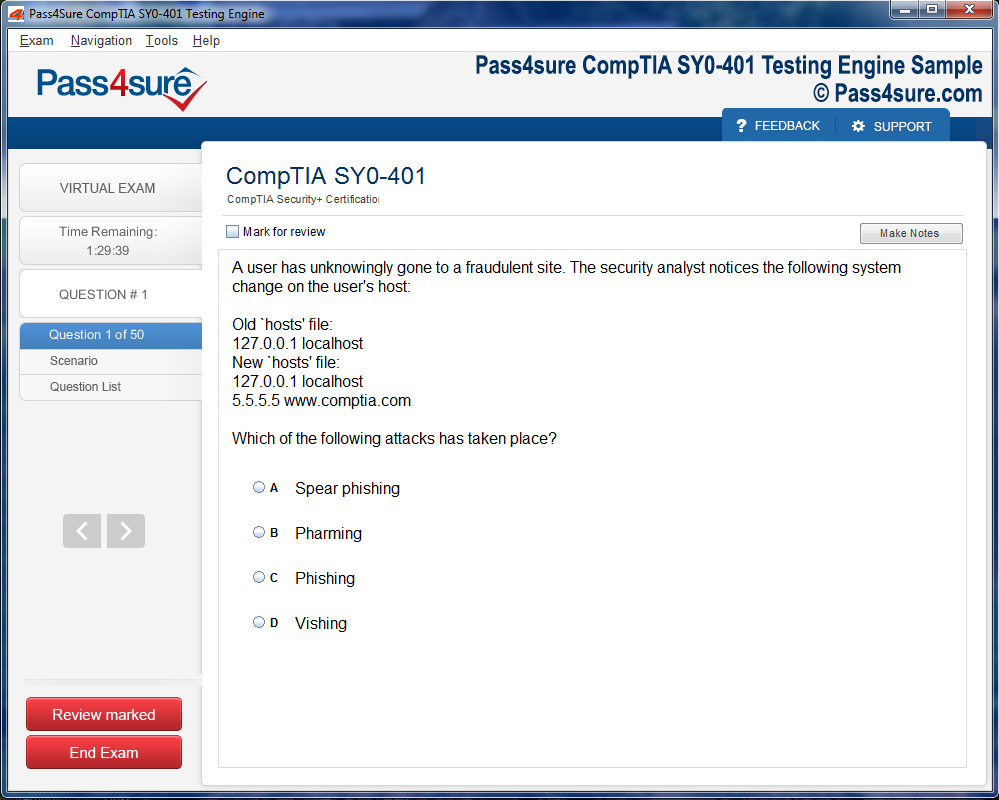
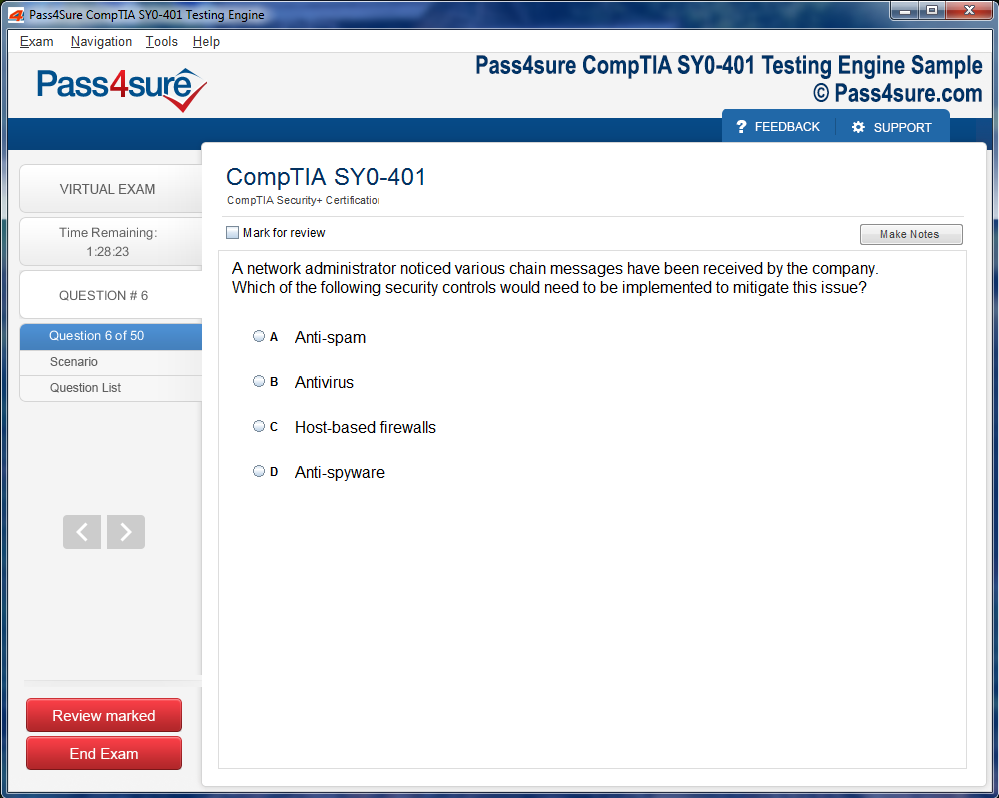
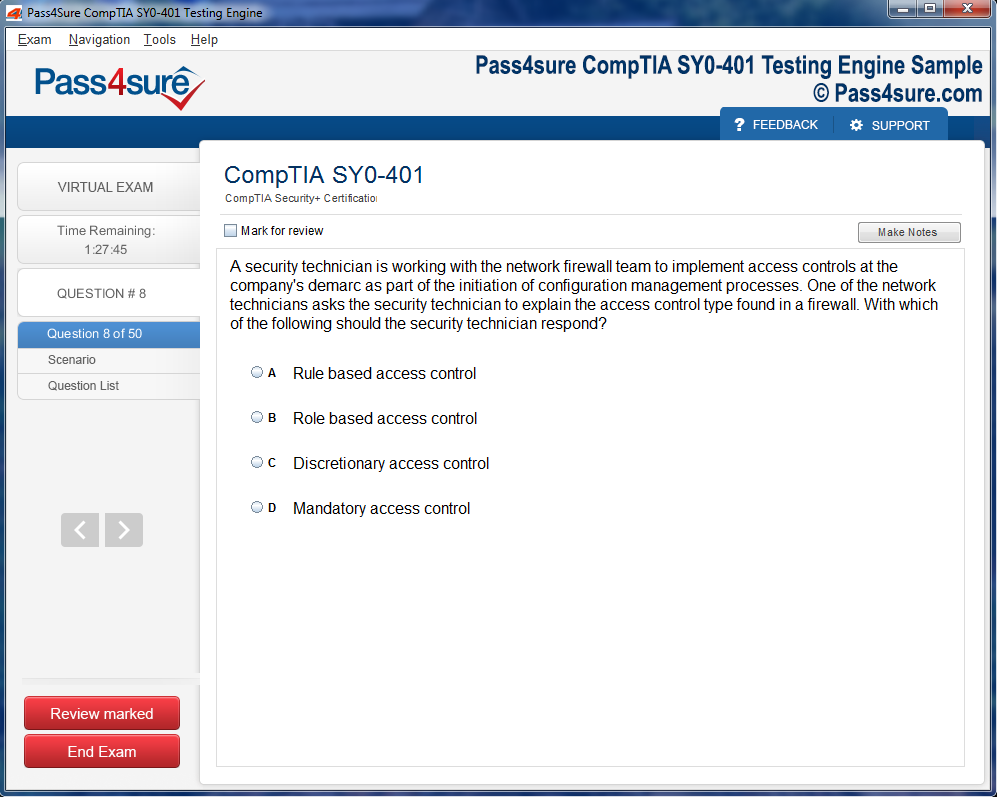
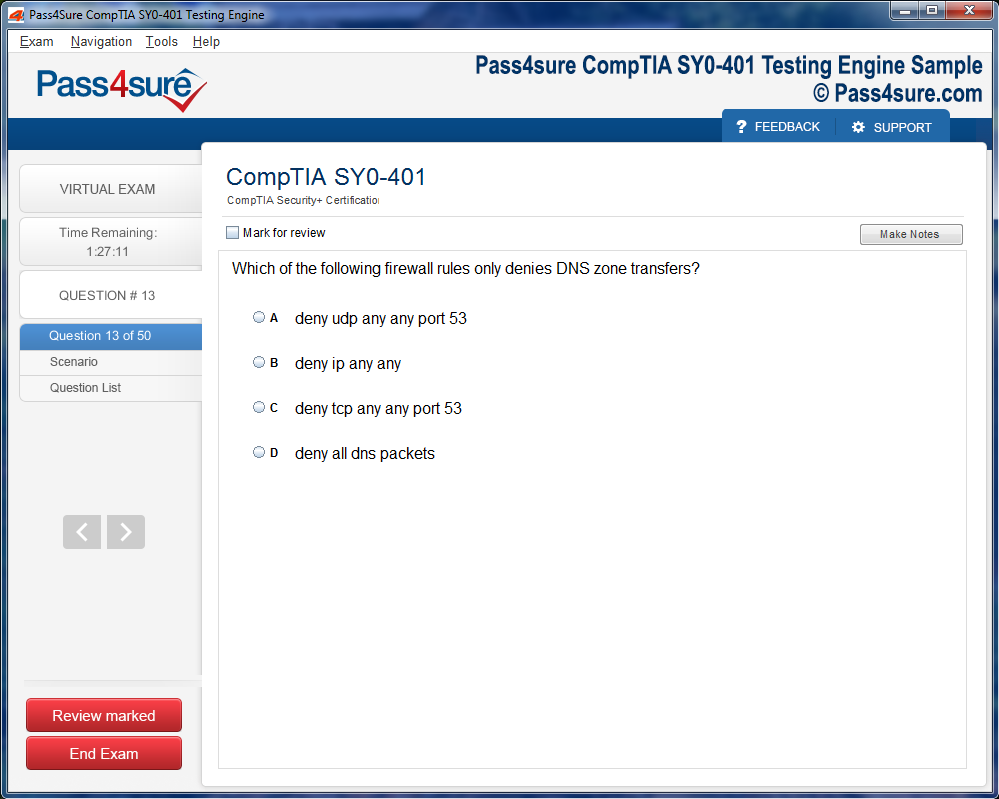
Product Screenshots
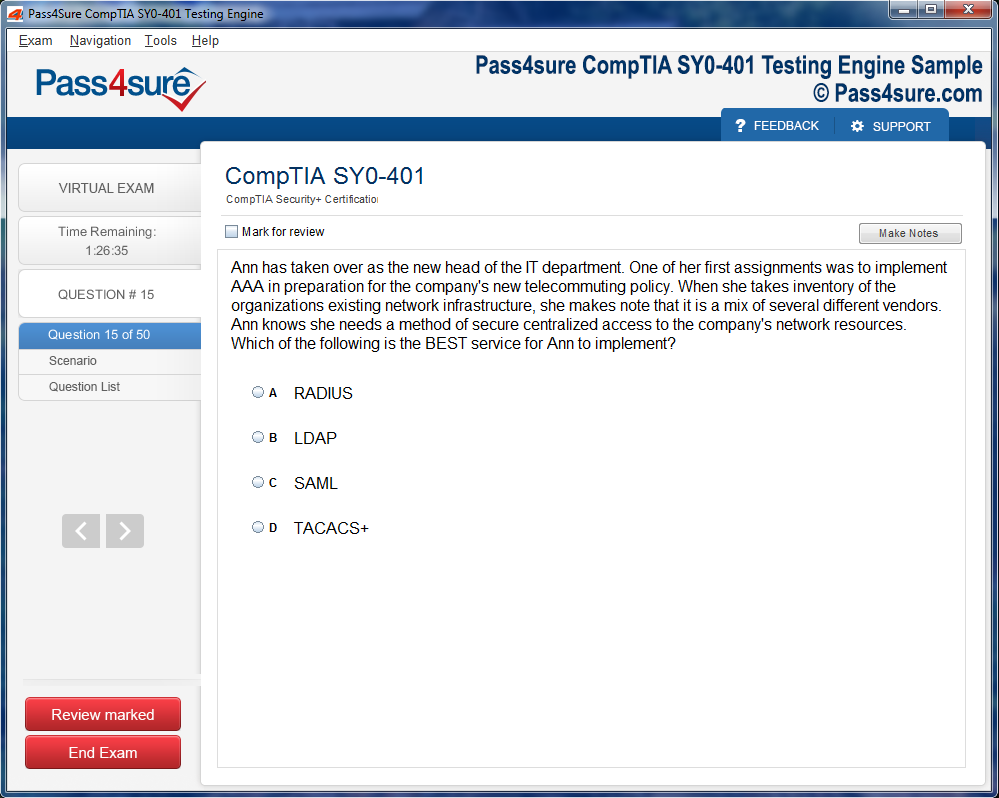
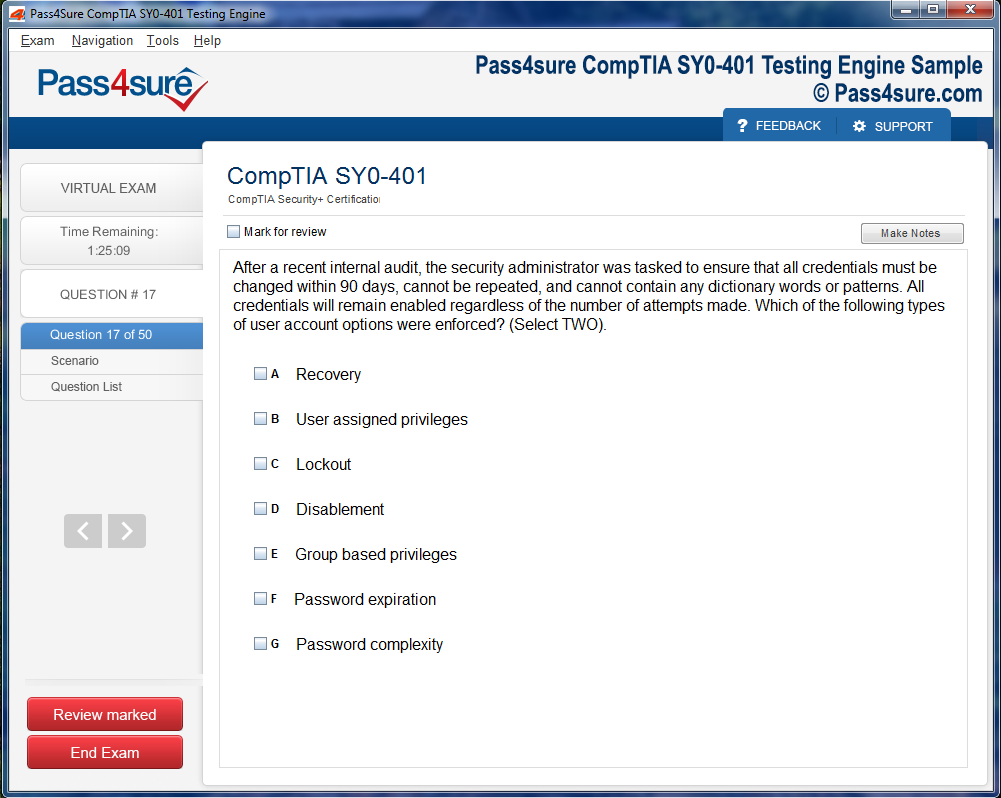
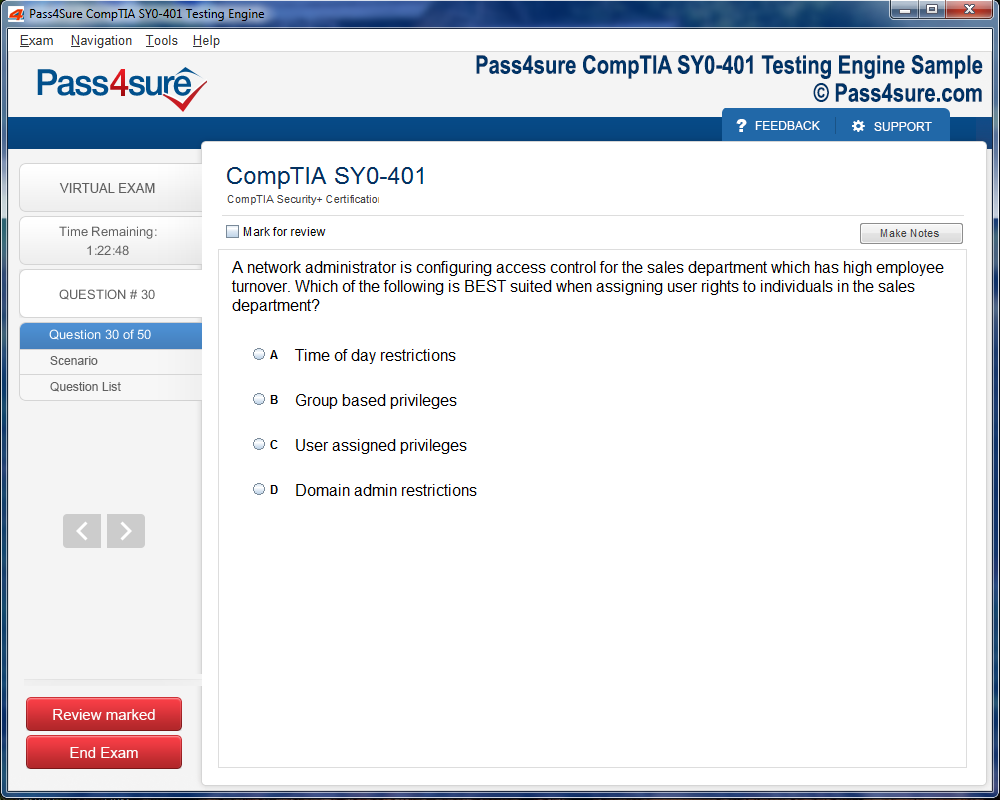
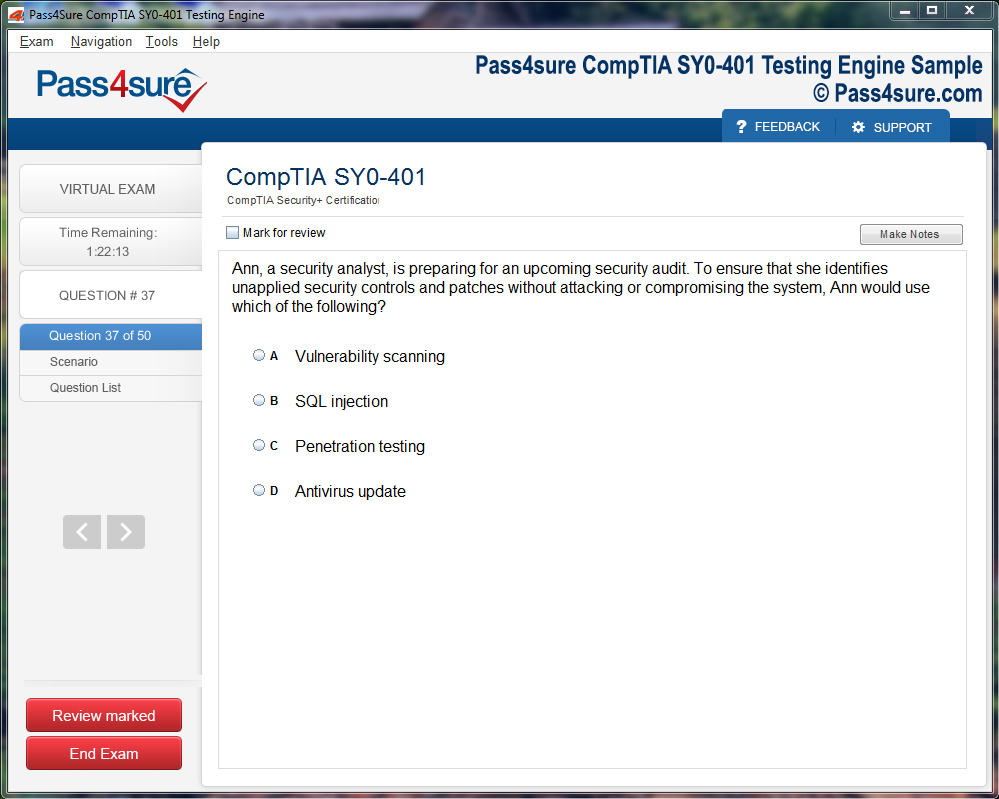
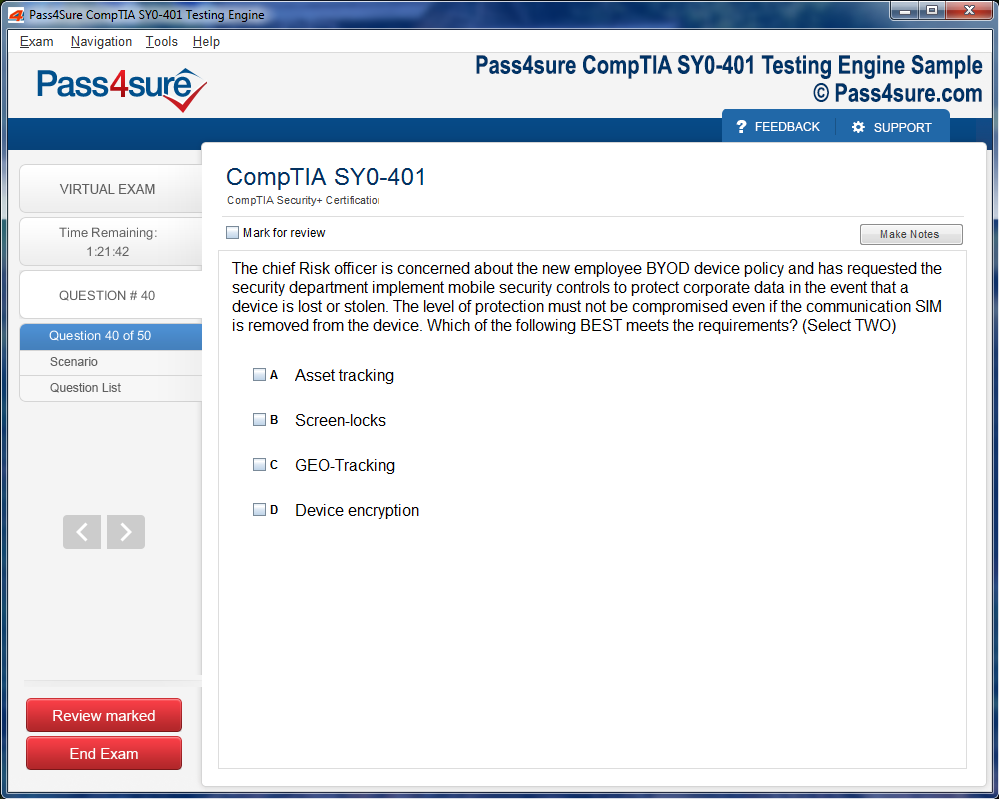
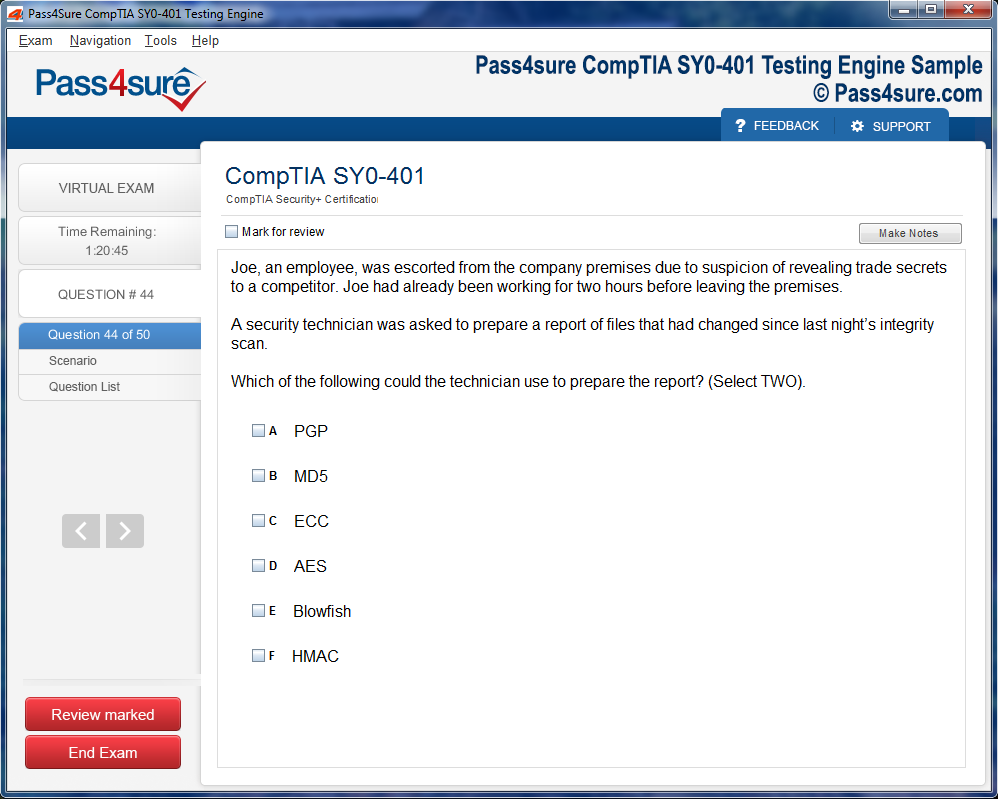
Frequently Asked Questions
How does your testing engine works?
Once download and installed on your PC, you can practise test questions, review your questions & answers using two different options 'practice exam' and 'virtual exam'. Virtual Exam - test yourself with exam questions with a time limit, as if you are taking exams in the Prometric or VUE testing centre. Practice exam - review exam questions one by one, see correct answers and explanations.
How can I get the products after purchase?
All products are available for download immediately from your Member's Area. Once you have made the payment, you will be transferred to Member's Area where you can login and download the products you have purchased to your computer.
How long can I use my product? Will it be valid forever?
Pass4sure products have a validity of 90 days from the date of purchase. This means that any updates to the products, including but not limited to new questions, or updates and changes by our editing team, will be automatically downloaded on to computer to make sure that you get latest exam prep materials during those 90 days.
Can I renew my product if when it's expired?
Yes, when the 90 days of your product validity are over, you have the option of renewing your expired products with a 30% discount. This can be done in your Member's Area.
Please note that you will not be able to use the product after it has expired if you don't renew it.
How often are the questions updated?
We always try to provide the latest pool of questions, Updates in the questions depend on the changes in actual pool of questions by different vendors. As soon as we know about the change in the exam question pool we try our best to update the products as fast as possible.
How many computers I can download Pass4sure software on?
You can download the Pass4sure products on the maximum number of 2 (two) computers or devices. If you need to use the software on more than two machines, you can purchase this option separately. Please email sales@pass4sure.com if you need to use more than 5 (five) computers.
What are the system requirements?
Minimum System Requirements:
- Windows XP or newer operating system
- Java Version 8 or newer
- 1+ GHz processor
- 1 GB Ram
- 50 MB available hard disk typically (products may vary)
What operating systems are supported by your Testing Engine software?
Our testing engine is supported by Windows. Andriod and IOS software is currently under development.
Mastering 156-586: Your Complete Guide to the Check Point Certification
The trajectory toward 156-586 mastery is punctuated by a deep immersion into advanced threat prevention mechanisms. In this domain, the practitioner transcends basic firewall administration, venturing into the orchestration of multi-layered defenses designed to thwart both overt and covert intrusions. Threat landscapes are protean, morphing with alarming velocity, and the adept professional must develop a prescient understanding of how disparate threat vectors intersect. Malware, ransomware, zero-day exploits, and lateral movement tactics necessitate a synthesis of analytical rigor and creative anticipation. The aspirant learns to weave predictive policies, leveraging heuristic algorithms and behavioral analysis to render the network an inhospitable terrain for adversaries.
Decoding VPN and Remote Access Architectures
Integral to enterprise fortification is the nuanced management of VPNs and remote access channels. Here, 156-586 aspirants encounter the dual challenge of enabling seamless connectivity while imposing inviolable security boundaries. The labyrinthine intricacies of site-to-site tunnels, client-based access, and SSL/VPN configurations demand precision. Subtle misconfigurations can precipitate vulnerabilities, exposing critical resources to external compromise. A seasoned professional internalizes cryptographic protocols, key exchange mechanisms, and encryption hierarchies, ensuring confidentiality and integrity even in distributed operational contexts. Beyond technical implementation, this stage cultivates foresight, as each access pathway becomes a potential attack vector requiring proactive mitigation.
Mastery of Policy Optimization and Layer Interactions
A defining hallmark of 156-586 proficiency lies in the artful orchestration of policy layers and optimization strategies. Policies are not mere directives but living constructs that govern traffic inspection, threat neutralization, and resource prioritization. The aspirant explores the subtleties of rule ordering, implicit and explicit object hierarchies, and the ramifications of policy inheritance across complex networks. Performance analytics intersect with policy management, revealing the delicate interplay between security efficacy and throughput. Optimization techniques such as session table tuning, connection limits, and inspection heuristics allow for a network that is both impenetrable and resilient, where latency is minimized without compromising the protective envelope.
Logging, Forensics, and Strategic Intelligence
Logs, often perceived as ancillary artifacts, are in fact repositories of strategic intelligence. 156-586 aspirants are trained to excavate latent insights from voluminous event data, discerning patterns that presage potential breaches. The discipline extends beyond mere log review; it encompasses forensic reconstruction, anomaly detection, and correlation of seemingly disparate incidents. SmartEvent and related analytic tools act as extensions of the professional’s cognitive apparatus, enabling predictive insights and preemptive interventions. In this domain, proficiency is defined by the capacity to transform raw telemetry into actionable intelligence, rendering the network not merely reactive but proactively fortified.
High Availability and Performance Resilience
Enterprise networks are subjected to incessant demands, and security must coexist with unwavering performance. The 156-586 curriculum emphasizes high availability architectures, clustering paradigms, and load-balancing methodologies. Candidates internalize failover mechanisms, redundancy schemas, and the orchestration of synchronous and asynchronous clusters. The objective is to engineer environments that withstand hardware failures, traffic surges, and unexpected perturbations without compromising security posture. Mastery of this discipline signifies a professional capable of harmonizing robustness with agility, ensuring that protective measures augment rather than inhibit operational fluidity.
Navigating Advanced Troubleshooting Paradigms
Troubleshooting at the 156-586 level is a sophisticated exercise in deductive reasoning, technical dexterity, and methodical investigation. Candidates learn to dissect convoluted network anomalies, trace the provenance of policy conflicts, and resolve configuration discrepancies that could otherwise erode the security perimeter. This process demands fluency in packet inspection, session diagnostics, and real-time traffic analysis. The professional cultivates an investigative intuition, recognizing subtle symptoms that presage broader systemic issues. Here, problem-solving transcends rote procedural application; it becomes an analytical ballet, blending technical insight with experiential intuition to restore integrity and functionality.
Continuous Learning and Evolutionary Mindset
The realm of cybersecurity is inherently ephemeral, defined by perpetual evolution. The 156-586 aspirant embraces this dynamism, cultivating a mindset of relentless curiosity and adaptive learning. Beyond textbooks and simulation labs, the professional engages with emergent threat research, experimental configurations, and iterative practice. Knowledge becomes a living continuum, refined through experiential engagement and reflective evaluation. This philosophy instills resilience, ensuring that proficiency is not static but evolves in tandem with technological innovation and threat proliferation. The aspirant emerges not merely as a credentialed practitioner but as a vigilant sentinel, capable of navigating the shifting topography of cyber warfare with acuity and foresight.
The Art of Strategic Preparation for the 156-586 Examination
Embarking on the journey toward Check Point’s 156-586 certification transcends conventional rote memorization. It is a meticulous odyssey of cognitive dexterity, immersive engagement, and experiential learning. The examination is a crucible designed not merely to test knowledge but to gauge an aspirant’s adeptness at orchestrating, configuring, and troubleshooting complex Check Point infrastructures. Preparation, therefore, demands an amalgamation of structured study, methodical practice, and perceptive insight into network security dynamics.
Understanding the blueprint of the examination serves as the fulcrum of preparation. The exam encompasses diverse domains including granular security policy configuration, sophisticated threat prevention, VPN topology management, clustering intricacies, high-availability strategies, and advanced troubleshooting methodologies. Mastery of each domain requires a nuanced approach, prioritizing areas with higher weight while simultaneously reinforcing foundational concepts. The candidate’s ability to navigate this multidimensional landscape hinges on both analytical discernment and disciplined time allocation.
Immersive Learning through Multi-modal Engagement
True proficiency emerges from the synthesis of theoretical comprehension and applied practice. Immersive learning, which blends cognitive absorption with interactive execution, is indispensable. While perusing documentation and manuals provides conceptual scaffolding, genuine mastery crystallizes only through active engagement. Scenario-driven exercises, intricate simulations, and iterative quizzes cultivate procedural memory, sharpening the reflexes necessary for precise policy deployment and configuration adjustments. This fusion of theory and praxis nurtures an intuitive fluency with Check Point systems.
Laboratory-based practice forms the cornerstone of skill internalization. Virtual environments or sandbox deployments provide a risk-free arena for experimentation, fostering familiarity with firewall configurations, VPN architectures, and policy enforcement mechanisms. Within these controlled ecosystems, aspirants cultivate an intimate understanding of SmartConsole navigation, log interpretation, and connectivity troubleshooting. The repetitive cycle of deployment, testing, and refinement engenders a heuristic grasp of system behavior, a faculty that proves invaluable during the high-pressure milieu of the examination.
Cultivating a Troubleshooting Mindset
A salient hallmark of 156-586 aspirants is the capacity for meticulous troubleshooting. The examination often presents labyrinthine scenarios requiring rapid identification and rectification of misconfigurations, performance inefficiencies, and latent security vulnerabilities. Developing a troubleshooting acumen entails systematic log analysis, SmartEvent scrutiny, and traffic-path tracing to uncover anomalies. Such exercises refine analytical precision, fostering a mindset attuned to cause-and-effect relationships within intricate network topologies. This form of cognitive rigor transcends memorized procedures, equipping professionals to navigate unforeseen challenges with poise.
Within this framework, candidates learn the interdependence of network components and the cascading impact of configuration decisions. Each firewall rule, routing adjustment, or policy modification can reverberate across the infrastructure, highlighting the importance of foresight and strategic deliberation. Mastery of these subtleties differentiates proficient candidates from merely knowledgeable ones, transforming preparation into an exercise in strategic foresight and adaptive problem-solving.
The Imperative of Temporal Discipline
Time emerges as both ally and adversary in the preparation landscape. Structured scheduling ensures that cognitive resources are allocated judiciously across reading, hands-on practice, and reflective review. Segmenting study materials into coherent modules, embedding cyclical revision, and periodically assessing comprehension through mock examinations cultivates both competence and confidence. Temporal discipline mitigates burnout, preserves cognitive stamina, and engenders a rhythm conducive to sustained intellectual absorption. Candidates who internalize this balance approach the examination with equanimity and clarity of thought.
Psychological Fortitude and Intellectual Resilience
Preparation is as much a psychological endeavor as it is technical. Sustained motivation, the capacity to embrace challenges, and resilience in the face of complex scenarios are indispensable. Engaging with peers, exchanging insights in collaborative forums, and participating in group study sessions introduces diverse problem-solving perspectives, enriching the learning process. Intellectual camaraderie mirrors real-world operational collaboration, reinforcing both knowledge retention and adaptive agility. These interactions nurture not only technical acumen but also professional comportment, echoing the demands of enterprise-grade environments.
Mastering the Interplay of Theory and Practice
Excellence in the 156-586 examination hinges on the seamless interplay between abstract theory and concrete application. Candidates must internalize principles of network architecture, threat mitigation, and policy design while simultaneously honing the dexterity to execute commands under pressure. This dual competency cultivates a form of operational intuition, enabling aspirants to anticipate system responses, preempt anomalies, and optimize configurations with fluidity. Immersion in both conceptual and practical dimensions transforms preparation into a dynamic exercise of cognitive and procedural synthesis.
Navigating Complex Lab Scenarios with Precision
Lab exercises serve as microcosms of enterprise network environments, presenting multifaceted challenges that demand both creativity and discipline. Configuring redundant firewalls, establishing intricate VPN topologies, and simulating traffic flows cultivates proficiency in a risk-free milieu. The iterative process of deployment, observation, troubleshooting, and refinement fosters an anticipatory mindset, allowing candidates to predict potential misconfigurations and rectify inefficiencies preemptively. This approach not only enhances technical skill but also instills the confidence necessary to navigate high-stakes scenarios during the examination.
Developing Analytical Acumen through Simulation
Simulation exercises are instrumental in developing analytical dexterity. By replicating real-world anomalies, aspirants engage in meticulous observation, deduction, and solution formulation. Each scenario reinforces an understanding of systemic interdependencies, demonstrating how modifications in one domain can cascade through the infrastructure. This cultivated awareness equips candidates with an adaptive, solution-oriented mindset, essential for managing dynamic network environments. Continuous exposure to such exercises accelerates cognitive flexibility, fostering the ability to respond effectively to unforeseen challenges.
Immersive Network Security Architectonics
Lab work extends beyond mere configuration into the realm of architectural cognition. Candidates cultivate an awareness of network topologies, interdependencies, and latent vulnerabilities that theory alone cannot convey. By dissecting packet flows, inspecting layered protocols, and simulating attack vectors, learners develop an almost cartographic understanding of enterprise environments. This immersive exploration fosters anticipatory thinking, allowing professionals to foresee the ramifications of policy decisions and infrastructure modifications with prescient accuracy.
Understanding the subtle interplay between security appliances, routing paths, and application traffic requires sustained engagement. Repeated exposure to dynamic scenarios in lab settings hones the capacity to detect anomalies before they escalate into tangible threats. This form of experiential acumen is invaluable for a Check Point 156-586 aspirant, as it bridges the divide between abstract principles and operational exigencies.
Advanced Threat Containment Dynamics
Practical exercises in threat containment introduce candidates to multifaceted attack vectors and the strategies to mitigate them. By emulating sophisticated intrusions, such as polymorphic malware propagation, lateral movement, and zero-day exploits, learners confront scenarios that demand both analytical precision and creative problem-solving. Check Point’s inspection layers become instruments of proactive defense, enabling practitioners to implement adaptive responses tailored to threat evolution.
The nuance in these labs lies in the judicious calibration of security rules. Overzealous policies may stifle legitimate communication, while lax configurations leave chinks in the armor. Through iterative experimentation, candidates internalize the delicate equilibrium between vigilance and operational fluidity, cultivating an instinctive sense of defensive proportionality.
Cryptographic Protocol Mastery
A crucial component of Check Point proficiency is the adept handling of cryptographic mechanisms. Labs provide an arena to demystify encryption algorithms, certificate hierarchies, and authentication protocols. Candidates configure IPsec, SSL, and TLS channels, scrutinizing handshake sequences, key exchanges, and cipher suite selections. Such meticulous practice instills confidence in deploying secure communications under enterprise constraints.
Beyond configuration, troubleshooting encrypted traffic necessitates forensic acuity. Learners analyze log outputs, trace packet-level anomalies, and diagnose misaligned authentication mechanisms. This procedural rigor reinforces a mindset that values not only functional implementation but also the subtle integrity of cryptographic assurance.
Stateful Inspection and Deep Packet Analysis
Deep engagement with Check Point’s inspection engines cultivates an appreciation for stateful packet analysis and session continuity. Candidates learn to interpret session tables, track connection states, and recognize anomalies that may signify policy breaches or malicious activity. Lab exercises frequently involve crafting nuanced rulesets to balance throughput, latency, and threat mitigation, requiring an orchestration of both precision and foresight.
Experiments with inspection layers illuminate the cascading effects of rule order, NAT translation, and application control. Candidates witness firsthand how micro-level decisions ripple through network behavior, reinforcing a holistic understanding of system dynamics.
Resilient Infrastructure Implementation
High-availability clusters and fault-tolerant designs are more than technical prerequisites; they represent a philosophy of resilience. Lab scenarios immerse candidates in the orchestration of redundant gateways, synchronized rulebases, and failover mechanisms. Through iterative simulation of hardware failure, network disruption, and traffic surges, learners develop an intuitive grasp of resilient deployment strategies.
The subtleties of clustering—heartbeat intervals, state synchronization, and load distribution—become second nature through hands-on repetition. This experiential knowledge equips professionals to anticipate infrastructural bottlenecks, ensuring enterprise networks remain robust under duress.
Proactive Performance Optimization
Optimization transcends reactive problem-solving; it is an anticipatory art form. Labs provide opportunities to fine-tune throughput, minimize latency, and maximize session handling capabilities. Candidates experiment with inspection acceleration, resource allocation, and traffic prioritization, observing the tangible impact of configuration choices on performance metrics.
This engagement cultivates an instinctive sensitivity to system behavior. Professionals emerge able to preemptively identify potential performance degradations and implement measures to sustain operational excellence, ensuring security does not come at the expense of efficiency.
Analytical Forensics and Incident Response
Hands-on exercises in log analysis, event correlation, and anomaly detection reinforce forensic capabilities. Candidates learn to dissect SmartEvent outputs, interpret SmartView Tracker records, and correlate alerts with underlying system events. Lab simulations often introduce multi-layered incidents, demanding stepwise diagnosis and methodical remediation.
This deliberate immersion builds not only technical competence but also investigative temperament. Practitioners develop a procedural mindset, capable of reconstructing event sequences, assessing impact, and implementing durable solutions. The capacity to conduct forensic scrutiny underpins both operational reliability and strategic foresight.
Procedural Discipline and Documentation
Competence in lab environments is inseparable from disciplined process management. Candidates are encouraged to maintain meticulous documentation, validate configuration changes, and cross-reference policy adjustments. This procedural rigor mirrors enterprise expectations, ensuring that transitions from experimental setups to production deployments are seamless and accountable.
Through repetitive adherence to structured workflows, learners cultivate habits that reduce errors, streamline troubleshooting, and facilitate knowledge transfer within organizational contexts. The discipline instilled in labs translates directly into professional credibility and operational confidence.
Advanced Configurations and Security Policies
Once foundational skills are entrenched, the subsequent progression necessitates the assimilation of advanced configurations and multifaceted security policies. Practitioners traverse beyond elementary deployment, navigating intricate architectures to shield networks against variegated threats. These configurations demand a perspicacious comprehension of traffic orchestration, object interdependencies, and rule precedence, equipping candidates to sculpt frameworks that reconcile operational dexterity with impenetrable defenses.
Nuanced Policy Layering
At the core of advanced configurations lies the artistry of nuanced policy layering. Each layer acts as a sieve, selectively permitting or curtailing traffic according to meticulously defined criteria. This stratification fosters a labyrinthine yet coherent structure, allowing security professionals to isolate vulnerabilities and preempt lateral movement. Mastery in object hierarchies and inspection sequences cultivates an anticipatory mindset, wherein administrators foresee potential attack vectors and mitigate them prior to manifestation.
Threat Prevention Integration
Threat prevention is no longer a peripheral consideration; it becomes a central paradigm. Integrated systems encompassing intrusion detection, heuristic antivirus, botnet mitigation, and application governance converge to form a cohesive bulwark. Candidates engage in rigorous exercises that decode threat signatures, implement countermeasures, and calibrate rules to curtail false positives without diminishing vigilance. Scenario-based simulations enhance predictive acumen, fostering proactive strategies that outmaneuver adversarial ingenuity.
Encryption and VPN Orchestration
In advanced operational contexts, encryption and VPN orchestration ascend in complexity. Multi-site connectivity, high-performance tunnels, and redundant gateways require meticulous configuration. Candidates refine skills in key management, authentication paradigms, and cryptographic standards, ensuring secure, uninterrupted data flow. The interplay of redundancy and encryption fortifies communication channels, rendering them impervious to interception while sustaining regulatory adherence.
Dynamic NAT and Routing Sophistication
Network address translation and routing evolve into dynamic, adaptive disciplines. Professionals deploy multifarious NAT schemas, implement intricate routing protocols, and engineer policies that reconcile accessibility with containment. These strategies accommodate fluid traffic patterns while preserving robust security postures. Understanding the nuances of translation tables, failover mechanisms, and route optimization equips candidates to navigate the mercurial demands of modern networks.
Integrated Monitoring and Auditing
Advanced practitioners transcend conventional monitoring, adopting holistic frameworks that synthesize analytics with operational telemetry. Platforms that amalgamate performance metrics with threat intelligence afford unparalleled visibility into network health. Dashboards, meticulously curated reports, and predictive models enable rapid anomaly detection, proactive mitigation, and iterative policy refinement. This vigilant orchestration ensures continuity and fortifies defenses against emerging threats.
Redundancy and High Availability Design
Critical network infrastructures mandate resiliency through redundancy and high availability. ClusterXL configurations and HA paradigms safeguard continuity under duress, encompassing failover orchestration, session persistence, and resource allocation. Practitioners simulate operational contingencies, scrutinizing system responses to stressors, thereby cultivating robust, fail-safe architectures. Such preparedness ensures service reliability and operational resilience across multifaceted enterprise environments.
Strategic Security Architecture
The culmination of advanced configuration mastery is strategic security architecture. Professionals transition from tactical implementers to visionary architects, designing ecosystems that anticipate threat evolution and operational exigencies. Through adept layering, integrated threat management, and resilient network orchestration, candidates construct infrastructures that not only withstand sophisticated attacks but also optimize performance and scalability. The acumen acquired at this echelon is indispensable for safeguarding critical digital assets and sustaining enterprise-grade operational integrity.
Navigating Intricacies in Check Point Troubleshooting
The labyrinthine nature of Check Point environments demands an aptitude for discerning subtle discrepancies in network behavior. Troubleshooting is not a linear pursuit; it is an intellectual expedition through layers of interwoven systems, each potentially harboring latent anomalies. A practitioner’s ability to differentiate between symptomatic manifestations and root causes distinguishes mastery from mere familiarity. When network latency, sporadic connectivity failures, or erratic policy enforcement arises, only a meticulous and methodical approach unravels the obfuscation inherent in complex infrastructures.
Systematic Methodologies in Real-Time Diagnostics
Cultivating a disciplined, stepwise methodology is paramount in real-world troubleshooting. Hastily applied fixes can exacerbate latent issues, turning minor misconfigurations into systemic disruptions. The process commences with a granular examination of traffic flows, assessment of gateway vitality, and meticulous scrutiny of policy architecture. By dissecting the network into analytically digestible components, professionals attain a lucid understanding of potential interdependencies. In such environments, even ostensibly trivial anomalies—an overlooked NAT rule or a misplaced inspection layer—can propagate cascading effects across multiple gateways, undermining system stability.
Log Analysis as a Narrative of Network Activity
Logs constitute an indispensable diagnostic instrument, offering a chronological account of network operations. Through perspicacious interpretation of log sequences, anomalies emerge from seemingly innocuous events. SmartView Tracker, in concert with SmartEvent correlation, provides a multi-dimensional perspective, revealing unauthorized incursions, packet drops, or latent configuration conflicts. Proficiency in filtering, cross-referencing event codes, and tracing anomalies to origin points cultivates a cognitive acuity vital for rapid resolution. Subtle misconfigurations, such as incongruous VPN tunnels or misaligned NAT translations, manifest through these records, permitting anticipatory corrections before they escalate.
Deconstructing Network Connectivity Conundrums
Network connectivity malfunctions are among the most palpable challenges in operational environments. Disentangling routing complexities, evaluating firewall dispositions, and validating overarching security protocols are fundamental exercises. Professionals simulate traffic using diagnostic commands, trace policy hits, and isolate perturbations within traffic flows. These investigative rituals enhance not only technical competence but also analytical agility, reinforcing the principle that microscopic errors may reverberate throughout intricate topologies. Persistent engagement with these scenarios fosters resilience and cultivates a propensity for anticipatory troubleshooting.
High Availability and Clustered Resilience
The incorporation of high availability mechanisms and clustering introduces nuanced troubleshooting dimensions. Failover orchestration, session replication, and resource allocation demand vigilance, as any disruption can precipitate service degradation. Practitioners must navigate scenarios wherein a primary gateway succumbs to operational anomalies, compelling a standby unit to assume control seamlessly. Detecting and rectifying synchronization inconsistencies or performance diminutions necessitates both intimate architectural comprehension and nuanced operational intuition. Repetitive exposure to such conditions instills a granular understanding of resilient system design and operational contingencies.
Performance Optimization in Complex Architectures
Optimizing performance within Check Point environments requires both diagnostic precision and strategic foresight. Latency accumulation, throughput constriction, or CPU overutilization frequently signals misaligned inspection layers, uneven clustering, or suboptimal policy design. Professionals engage in vigilant resource monitoring, calibrating inspection engines, and refining policies to harmonize security with efficiency. This equilibrium mandates a judicious balance: ensuring protective mechanisms neither compromise legitimate traffic nor introduce inadvertent bottlenecks. Mastery in this domain arises from iterative analysis, predictive adjustments, and empirical validation.
Integration Challenges and Cross-System Coordination
Advanced troubleshooting frequently intersects with broader enterprise ecosystems, encompassing VPN interconnectivity, authentication integration, and multi-instance orchestration. Real-world exigencies compel professionals to transcend procedural orthodoxy, crafting bespoke solutions that reconcile disparate system behaviors. This necessitates agility, foresight, and a comprehensive understanding of both Check Point constructs and external network paradigms. Scenario-based engagement equips practitioners with adaptive strategies, facilitating operational continuity amidst unforeseen interactions and interdependencies.
Cultivating Intuition Through Experiential Learning
Beyond methodical analysis lies the development of a keen, anticipatory intuition. Recurrent engagement with system anomalies nurtures an instinctive ability to forecast emergent complications and recognize subtle precursors to disruption. This cognitive agility enables professionals to preemptively intervene, mitigate risk, and maintain systemic integrity. Within high-stakes environments, this foresight becomes an invaluable asset, transforming reactive troubleshooting into proactive network stewardship.
Embracing Complexity in Enterprise Environments
Troubleshooting within Check Point environments is a crucible where technical acumen, analytical reasoning, and experiential knowledge converge. The practitioner navigates an intricate ecosystem, diagnosing interwoven issues, restoring operational continuity, and optimizing systemic performance. Each challenge encountered deepens the practitioner’s repository of insights, cultivating an adaptive mindset and a problem-solving ethos essential for sustained success. Mastery emerges not from rote familiarity but from continuous engagement with the unpredictable and multifaceted nature of enterprise network landscapes.
Consolidating Knowledge into Expertise
The culmination of the Check Point 156-586 journey transcends the mere act of passing an exam; it demands an alchemy of knowledge, dexterity, and strategic foresight. Mastery emerges not from rote memorization but from the capacity to navigate multifarious network ecosystems, anticipate latent threats, and orchestrate security operations with precision. Professionals at this stage cultivate a cerebral dexterity that allows them to translate abstract configurations into concrete, operational fortifications.
Examination readiness is an intricate tapestry of repetitive refinement and focused rehearsal. Revisiting foundational constructs, configuring policies with scrupulous attention, and simulating high-intensity scenarios are indispensable rituals. The employment of mock evaluations, chronometric lab exercises, and nuanced scenario problem-solving fortifies both confidence and acumen. Nuanced distinctions—subtle policy discrepancies, gateway idiosyncrasies, and log data interpretations—often delineate success from failure, making vigilance a non-negotiable attribute.
Embracing the Flux of Cybersecurity
Professional mastery is inseparable from perpetual engagement with the mercurial contours of cybersecurity. Threat landscapes evolve with relentless velocity, accompanied by emergent protocols, updated defenses, and inventive attack vectors. Proficient practitioners cultivate an insatiable curiosity, immersing themselves in iterative learning through sanctioned updates, webinars, experiential experimentation, and collaborative discourse. Such perpetual development ensures that competencies remain nimble and anticipatory, equipping professionals to meet challenges that have yet to materialize.
Translating Certification into Operational Prowess
The true essence of 156-586 certification is manifest in its operational application. Certified professionals often navigate the labyrinthine intricacies of enterprise networks, designing resilient architectures and instituting multi-layered security protocols. They convert theoretical paradigms into actionable stratagems, ensuring organizational fortifications are robust, efficient, and adaptive. The confluence of conceptual knowledge and practical execution delineates elite practitioners from the merely competent, fostering a security posture that is proactive rather than reactive.
Within organizational contexts, these professionals frequently assume pivotal roles: orchestrating security architectures, guiding interdisciplinary teams, and mediating complex configurations. The ability to seamlessly integrate knowledge and practice underscores the transformative impact of certification, creating professionals capable of wielding both influence and expertise in dynamic environments.
Ascending the Trajectory of Career Advancement
156-586 certification serves as a veritable beacon of professional credibility. It signals technical mastery to employers, bolsters reputational capital, and catalyzes upward mobility. Positions such as network security engineer, senior firewall administrator, and security architect become attainable milestones, each requiring a synthesis of technical proficiency, strategic vision, and operational dexterity. The credential validates both mastery and commitment, opening gateways to leadership opportunities, specialized projects, and roles of strategic significance.
Career advancement, however, is not purely a function of technical skill. Effective practitioners exhibit communicative clarity, translating complex configurations into intelligible narratives for stakeholders, management, and cross-functional teams. Mastery entails persuasive articulation of decisions, the distillation of risk assessments into actionable insights, and the cultivation of trust across organizational hierarchies. In essence, the intersection of technical acumen and communication dexterity amplifies professional impact.
Cultivating Adaptability and Strategic Foresight
True mastery instills an anticipatory mindset. Certified professionals prepare not solely to neutralize immediate threats but to foresee emergent vulnerabilities and innovate preemptive solutions. Scenario-based exercises, immersive lab practice, and meticulous exploration of system capabilities foster resilience and ingenuity. Practitioners develop a capacity to operate under duress, maintain continuity amidst disruption, and implement proactive mitigations with alacrity.
This adaptive philosophy extends beyond technical execution. Professionals become architects of operational foresight, capable of aligning security initiatives with evolving organizational imperatives. The mastery cultivated through certification is thus a dynamic continuum, encompassing both tactical execution and strategic cognizance, ensuring relevance in an environment where threats are ephemeral but consequences are enduring.
Bridging Theory and Practice in Enterprise Security
The crucible of professional proficiency lies in harmonizing theoretical knowledge with pragmatic execution. 156-586-certified professionals act as intermediaries between abstract configurations and tangible outcomes, transforming lab-based understanding into enterprise-grade resilience. They engineer policies that are simultaneously granular and comprehensive, anticipate exploit pathways, and implement defenses that are agile yet robust.
Collaboration forms a cornerstone of this operational alchemy. Security experts coordinate with IT, interface with management, and advise stakeholders, translating technical nuance into actionable intelligence. This orchestration ensures that security measures are neither insular nor perfunctory but integrated, strategic, and continuously evolving.
The Lifelong Pursuit of Cybersecurity Mastery
Certification marks a juncture, not a terminus. The journey towards proficiency is iterative, demanding continual recalibration, reflection, and exploration. Professionals embrace hands-on experimentation, engage with evolving technologies, and pursue emergent strategies with relentless curiosity. This sustained engagement transforms certification from a static credential into a living instrument of capability, empowering individuals to navigate the fluid topography of network security with confidence, dexterity, and strategic insight.
Immersive Lab Practice as the Crucible of Mastery
Laboratory practice constitutes the epicenter of 156-586 proficiency, transforming conceptual understanding into operational fluency. The lab is a controlled microcosm where policies are stress-tested, threat scenarios are enacted, and network behaviors are meticulously observed. Candidates engage with intricately designed topologies, simulating real-world complexities that demand both rapid reasoning and nuanced judgment. The iterative cycle of configuration, observation, and recalibration ensures that learning is cemented in both cognitive and procedural memory.
Within the lab, subtle divergences in behavior—such as packet routing anomalies, session state inconsistencies, or nuanced gateway responses—become critical learning opportunities. Recognizing these subtleties cultivates a heightened situational awareness, fostering the ability to diagnose and remediate emergent anomalies in live environments. In essence, the lab is not merely a pedagogical tool but a crucible where expertise is forged under conditions of controlled ambiguity.
Scenario-Based Learning for Tactical Foresight
Scenario-based exercises simulate the unpredictability of operational networks, compelling practitioners to reconcile theoretical knowledge with practical exigencies. Candidates confront multi-vector attacks, complex policy conflicts, and cascading failures, honing their capacity for rapid problem resolution. Such exercises cultivate tactical foresight, enabling professionals to anticipate the downstream ramifications of configuration decisions and threat mitigations.
By engaging with these scenarios, candidates develop a dual competency: reactive agility and proactive strategizing. The ability to swiftly remediate an incident while simultaneously implementing preventative measures elevates the professional from a technician to a strategist. In doing so, the practitioner embodies the full spectrum of cybersecurity mastery, balancing immediate operational imperatives with long-term network resilience.
Advanced Policy Configuration and Optimization
A cornerstone of 156-586 expertise lies in the mastery of policy configuration and optimization. Policies constitute the structural scaffolding of security, dictating the interaction of users, applications, and network segments. Advanced practitioners discern the interplay between granular rule sets and overarching security objectives, ensuring policies are both precise and efficient.
Optimization involves more than mere efficiency; it is a philosophical approach to balance security, performance, and maintainability. Excessive rules introduce latency and complexity, while insufficient rules expose vulnerabilities. 156-586 professionals navigate this dichotomy with a nuanced understanding of risk tolerance, operational context, and emergent threats. The result is a harmonized policy architecture that is resilient, scalable, and strategically aligned with organizational imperatives.
Real-Time Monitoring and Proactive Threat Mitigation
Proficiency in network monitoring transcends passive observation, demanding a proactive orientation. Professionals analyze logs, session data, and threat alerts to identify patterns, anomalies, and nascent vulnerabilities. Real-time monitoring equips practitioners to intercept attacks at incipient stages, mitigating potential disruptions before they escalate.
Equally important is the capacity to contextualize data. Raw logs are inscrutable without interpretation; actionable insight emerges from correlating events, discerning trends, and understanding the operational environment. The adept practitioner transforms data into intelligence, leveraging it to fortify defenses, recalibrate policies, and guide organizational strategy. This iterative vigilance defines the operational heartbeat of a 156-586-certified professional.
Navigating Complex Network Topologies
Enterprise networks are rarely monolithic; they comprise multifaceted topologies integrating cloud infrastructures, on-premises gateways, and hybrid architectures. Mastery necessitates fluency in navigating these intricate environments, ensuring coherent security postures across heterogeneous components.
Professionals must reconcile the peculiarities of disparate systems, anticipate interdependencies, and design policies that are both uniform in principle and adaptive in application. This complexity demands not only technical dexterity but also strategic insight, as decisions reverberate through interconnected networks, influencing availability, performance, and resilience. 156-586 certification equips practitioners with the cognitive and procedural tools to orchestrate these elaborate environments with precision and foresight.
Incident Response as a Strategic Imperative
Incident response is both a tactical and strategic endeavor. Rapidly identifying, containing, and neutralizing threats is essential, but equally critical is the post-incident analysis that informs future defenses. 156-586 professionals engage in rigorous post-mortem evaluations, extracting insights from anomalies, misconfigurations, and threat vectors to refine policies and preempt subsequent incidents.
This cyclical process—detect, respond, analyze, and fortify—cultivates resilience at both individual and organizational levels. Practitioners internalize lessons from each incident, enhancing their anticipatory capacities and reinforcing a mindset of continuous improvement. In this manner, incident response is not a reactive obligation but an engine for perpetual professional evolution.
Strategic Collaboration and Cross-Functional Influence
Mastery extends beyond individual capability into the domain of strategic influence. Security professionals collaborate with cross-functional teams, translating technical imperatives into actionable organizational policy. They advise management on risk posture, communicate threat scenarios in comprehensible language, and advocate for investments in infrastructure or procedural enhancements.
Such collaboration requires diplomacy, clarity, and persuasive communication. The 156-586 professional serves as a conduit between technical and executive domains, ensuring that security initiatives are not siloed but integrated into broader strategic objectives. Influence, in this context, is the product of credibility, demonstrated competence, and the ability to articulate complex concepts with clarity and impact.
Continuous Exploration of Emerging Threats
The cyber threat landscape is perennially dynamic. Malicious actors innovate with relentless sophistication, leveraging novel vectors, exploiting emergent vulnerabilities, and circumventing traditional defenses. Staying ahead demands continuous exploration, vigilant study of threat intelligence, and iterative adaptation of defensive strategies.
156-586 professionals embrace a mindset of perpetual curiosity, engaging with emerging protocols, dissecting attack methodologies, and experimenting with new security paradigms. This proactive engagement ensures that expertise remains contemporaneous, and preparedness is anticipatory rather than reactive. Mastery, therefore, is synonymous with intellectual agility, resilience, and the relentless pursuit of relevance in an ever-shifting domain.
Mentorship and Knowledge Dissemination
A hallmark of true mastery is the capacity to mentor and disseminate knowledge. Seasoned practitioners cultivate junior talent, instilling best practices, procedural rigor, and strategic foresight. Mentorship fosters not only individual growth but also organizational resilience, embedding expertise within the collective consciousness of the team.
By guiding peers through lab exercises, scenario simulations, and real-world configurations, mentors reinforce their own mastery while multiplying the impact of their knowledge. Knowledge dissemination transforms solitary proficiency into communal capability, ensuring that organizational security posture evolves in step with technological and threat landscapes.
Leveraging Certification for Strategic Impact
Certification is not merely a personal milestone; it is a lever for strategic organizational impact. 156-586 professionals translate their technical mastery into improved network architecture, fortified defenses, and informed policy decisions. They bridge the chasm between theoretical knowledge and operational execution, embedding security as a fundamental enabler rather than a reactive constraint.
Through informed design, vigilant monitoring, and proactive mitigation, certified professionals contribute tangibly to organizational resilience, operational efficiency, and long-term strategic stability. Their influence permeates beyond firewalls and gateways, shaping the culture, policies, and priorities of the entire enterprise.
Advanced Policy Conflict Resolution
Policy conflicts represent one of the most insidious challenges in Check Point environments. Unlike overt connectivity failures, these conflicts often manifest as subtle disruptions in traffic flow, intermittent application errors, or sporadic session terminations. Professionals must cultivate a meticulous mindset, identifying overlapping rules, shadowed policies, or contradictory NAT directives. SmartPolicy and rule-based analysis tools allow administrators to dissect policy hierarchies, trace the precedence of rules, and simulate hypothetical traffic scenarios. By applying logical deduction and scenario simulation, latent policy conflicts can be uncovered and neutralized before they evolve into network-wide disruptions.
In enterprise deployments, policy complexity often escalates exponentially. Multiple administrators may modify rules independently, leading to cumulative discrepancies that defy superficial scrutiny. Troubleshooting such conflicts demands not only technical skill but a form of forensic patience, reconstructing rule changes chronologically, cross-referencing log data, and evaluating the potential for inadvertent policy interactions. Mastery in this domain transforms practitioners from mere implementers into vigilant custodians of network coherence.
Intricacies of VPN Troubleshooting
Virtual Private Networks (VPNs) epitomize the confluence of security, connectivity, and system interdependence. VPN misconfigurations or latent errors often evade immediate detection, manifesting as intermittent connection failures, slow throughput, or selective packet drops. Troubleshooting requires an intimate understanding of encryption algorithms, tunnel negotiation protocols, and gateway interoperability. Practitioners simulate end-to-end traffic, validate phase one and phase two negotiations, and trace cryptographic handshakes to ensure consistency with organizational security policies.
Interoperability with third-party devices adds a further layer of complexity. Each vendor may implement protocol variations or default security settings that subtly diverge from Check Point’s standards. Successful troubleshooting entails adaptive reasoning, crafting bespoke configurations that reconcile these differences without compromising security integrity. Through repeated exposure to such intricacies, professionals develop a cognitive toolkit capable of anticipating VPN anomalies and devising preventive strategies, ensuring seamless connectivity in heterogeneous network landscapes.
Diagnostic Approaches to Threat Prevention Anomalies
Check Point’s threat prevention layers, while robust, are not immune to misconfiguration or operational inefficiencies. Professionals often encounter scenarios where intrusion prevention systems, antivirus engines, or application control mechanisms inadvertently impede legitimate traffic. Diagnosing such anomalies requires a dual perspective: identifying whether the issue originates from rule enforcement or system performance, and understanding the broader implications of modifying threat prevention policies.
Advanced diagnostic approaches involve staged isolation techniques, selectively disabling layers in controlled simulations to pinpoint bottlenecks or misapplied filters. Monitoring real-time logs in conjunction with SmartEvent correlation reveals nuanced patterns of false positives, unintentional policy denials, or inspection conflicts. The practitioner’s challenge lies in maintaining the delicate equilibrium between rigorous security enforcement and operational fluidity, ensuring that protective mechanisms enhance rather than obstruct enterprise functionality.
Gateway Performance Degradation and Resource Optimization
Gateway performance issues present a recurring theme in real-world Check Point operations. Symptoms may include delayed packet inspection, irregular session drops, or CPU saturation. Addressing these problems necessitates a granular understanding of gateway architecture, traffic patterns, and inspection mechanisms. Professionals examine the distribution of security blades, inspect CPU and memory utilization trends, and evaluate the interplay between policy enforcement and throughput.
Optimization often requires creative balancing. Adjusting inspection intensity, redistributing session loads across clusters, or refining rule application can dramatically improve performance without sacrificing security. This iterative process blends analytical rigor with experiential intuition, as professionals learn to anticipate which changes yield tangible improvements and which may introduce new inefficiencies. The ability to optimize resources while maintaining security fidelity defines the threshold between competent administration and true mastery.
Troubleshooting Multi-Domain and Distributed Environments
Enterprise deployments frequently span multiple domains or geographically distributed sites, each with distinct gateways, policies, and operational priorities. Troubleshooting within such a context requires not only technical dexterity but also a sophisticated understanding of systemic interdependencies. Traffic routing, policy inheritance, and session synchronization may behave unpredictably across domains, revealing anomalies only under specific operational conditions.
Practitioners engage in a combination of localized diagnostics and cross-domain correlation. Logs from multiple sites are compared, routing tables validated, and policy hierarchies examined to trace the propagation of errors. Real-world scenarios often reveal that a disruption in one domain may trigger latent conflicts or misalignments elsewhere, underscoring the importance of a holistic analytical perspective. Mastery in distributed troubleshooting emerges from repeated exposure, methodical reasoning, and the cultivation of anticipatory insight.
Session Persistence and Stateful Inspection Challenges
Stateful inspection is foundational to Check Point’s ability to monitor and protect enterprise traffic. However, session persistence issues frequently emerge in high-throughput or failover environments. Symptoms such as dropped connections during failover, inconsistent session routing, or incomplete state replication necessitate careful diagnostic scrutiny. Professionals examine session tables, analyze failover logs, and validate synchronization mechanisms to ensure continuity of traffic inspection and session integrity.
In clustered gateways, these challenges amplify. Session handoff between active and standby units requires precise timing and resource coordination. Subtle misalignments in state tables or inspection layers can precipitate session loss or erratic traffic behavior. Through iterative troubleshooting, professionals develop an intuitive grasp of session dynamics, enabling them to predict potential failures and implement proactive mitigation strategies.
Adaptive Troubleshooting in Dynamic Threat Environments
Modern network environments are dynamic, with evolving threats, fluctuating traffic patterns, and changing operational requirements. Troubleshooting within this context requires adaptability, the capacity to integrate new intelligence, and the ability to anticipate emergent complications. Professionals must continuously monitor security feeds, analyze anomaly trends, and refine rulesets to align with evolving threat landscapes.
This adaptive troubleshooting extends beyond reactive problem-solving. It encompasses preemptive analysis, simulation of potential failure scenarios, and scenario-based contingency planning. Practitioners develop a proactive mindset, leveraging historical data, real-time analytics, and predictive modeling to maintain operational resilience. In doing so, they transform troubleshooting from a purely reactive process into a strategic function, safeguarding enterprise integrity against both known and emergent threats.
Advanced Log Correlation and Event Attribution
In sophisticated Check Point deployments, individual anomalies may appear innocuous until contextualized through advanced log correlation. By juxtaposing traffic logs, policy events, and system alerts, professionals identify patterns that single-event analysis might obscure. SmartEvent and related correlation tools provide a multi-dimensional perspective, revealing relationships between disparate incidents, tracing potential attack vectors, or identifying recurring misconfigurations.
Event attribution requires analytical precision. Professionals must differentiate between coincidental anomalies and causally linked events, avoiding premature conclusions. This form of investigative rigor demands both cognitive agility and methodical discipline, fostering a mindset attuned to nuance and complexity. The resultant proficiency enables practitioners to not only remediate current issues but anticipate potential vulnerabilities and fortify defenses accordingly.
Interfacing with External Authentication and Identity Systems
Integration with external authentication systems, such as LDAP, RADIUS, or multi-factor authentication platforms, introduces additional troubleshooting complexities. Misconfigurations, latency, or inconsistent responses from authentication servers can disrupt VPN access, firewall policies, or user session continuity. Professionals must meticulously trace authentication flows, analyze response codes, and reconcile policy expectations with system realities.
Challenges often involve subtle timing discrepancies, misaligned security parameters, or policy inheritance conflicts. By systematically testing authentication scenarios and validating integration points, practitioners ensure seamless interoperability. This capability is particularly critical in environments where user identity directly influences access control, policy enforcement, and regulatory compliance, requiring precision and foresight in troubleshooting practices.
Granular Access Control and Identity Governance
At the forefront of advanced security lies granular access control, where permissions are sculpted with surgical precision. Every entity, from a service account to a privileged administrator, is assigned meticulously defined capabilities. This extends beyond rudimentary role-based access models, incorporating contextual parameters such as temporal access windows, geolocation constraints, and device integrity verifications. Identity governance becomes a living ecosystem, dynamically adjusting entitlements in response to behavioral analytics and anomalous activity patterns. Mastery in this domain empowers administrators to enforce the principle of least privilege with unerring exactitude, mitigating insider threats while preserving operational fluidity.
Behavioral Analytics and Anomaly Detection
In environments saturated with data flows, behavioral analytics provides a lens to perceive subtleties invisible to conventional monitoring. By constructing baselines of normal network and user behavior, security systems detect deviations with uncanny precision. Machine-learning-infused algorithms parse voluminous logs, uncovering stealthy intrusion attempts or lateral movements that might otherwise evade notice. Candidates develop expertise in correlating disparate signals, converting raw telemetry into actionable intelligence. The capacity to predict, rather than merely react, transforms the security posture from defensive to anticipatory, a hallmark of sophisticated enterprise governance.
Application Control and Microsegmentation
Application control ascends beyond superficial whitelisting, evolving into fine-grained governance over process execution, data exfiltration, and inter-application communication. When fused with microsegmentation strategies, networks become modular landscapes, each segment insulated against compromise in neighboring zones. Professionals learn to map dependencies, enforce inter-segment policies, and implement dynamic segmentation rules that adapt to shifting workloads. This approach dramatically reduces attack surfaces, isolates breaches, and maintains operational continuity even under targeted intrusion scenarios.
Advanced Threat Intelligence Correlation
A sophisticated security architect leverages threat intelligence as a living, evolving repository of adversarial knowledge. Correlation engines digest feeds from multiple vectors, distilling indicators of compromise into predictive insights. Candidates gain fluency in integrating intelligence with firewall rules, IPS systems, and endpoint defenses, transforming abstract data into tactical and strategic advantage. Through iterative refinement and simulation, they develop a clairvoyant awareness of emerging threats, crafting policies that preemptively neutralize vulnerabilities before exploitation.
Cryptographic Agility and Key Lifecycle Management
In modern digital landscapes, encryption is not static; it is an evolving, agile discipline. Professionals must navigate the complex choreography of key lifecycle management, from generation to rotation, revocation, and archival. Cryptographic agility allows seamless transitions between algorithms and protocols without service disruption, ensuring resilience against cryptanalytic advancements. Candidates explore symmetric and asymmetric schemes, elliptic curve cryptography, and quantum-resistant protocols, gaining the dexterity to protect sensitive traffic while maintaining regulatory and operational fidelity.
Multi-Factor Authentication and Adaptive Security
Multi-factor authentication is more than a procedural safeguard; it is a dynamic, context-aware barrier. Adaptive security mechanisms assess environmental variables such as device posture, geolocation, historical behavior, and risk scoring to enforce authentication rigor selectively. Professionals learn to configure conditional access policies that balance security and user experience, reducing friction while fortifying defenses. Mastery in this domain ensures that only authorized actors navigate critical systems, even in distributed or hybrid environments.
Incident Response Orchestration
Even with impeccable preventive measures, incident response remains an indispensable pillar. Advanced configurations incorporate automated playbooks that orchestrate triage, containment, and remediation in real-time. Candidates develop fluency in mapping network topologies, tracing attack vectors, and simulating breach scenarios to optimize response efficiency. By integrating security analytics with orchestration platforms, practitioners transform reactive interventions into methodical, repeatable processes that minimize operational disruption and data compromise.
Cloud-Native Security Architectures
Modern enterprises increasingly inhabit hybrid or fully cloud-native environments, demanding adaptive security postures. Professionals design architectures that integrate on-premises firewalls with cloud security groups, identity providers, and workload protection platforms. Emphasis is placed on ephemeral instances, containerized deployments, and serverless workloads, each requiring policy granularity, real-time monitoring, and dynamic enforcement. Candidates gain expertise in securing multi-cloud ecosystems without sacrificing performance, achieving harmonized visibility and control across diverse infrastructures.
Regulatory Compliance and Audit Readiness
Advanced security professionals must also navigate the labyrinth of regulatory compliance. Policies and configurations are not only defensive measures but also instruments of accountability. Candidates explore frameworks that encompass privacy regulations, industry standards, and organizational mandates, ensuring that every firewall rule, encryption protocol, and access control policy is auditable. Automated reporting, continuous compliance monitoring, and proactive adjustments fortify the organization against legal and operational exposure, embedding resilience into the security architecture itself.
Adaptive Policy Tuning
Security is not static; it evolves with the threat landscape and organizational requirements. Professionals engage in adaptive policy tuning, continuously analyzing logs, performance metrics, and threat reports to refine configurations. By iteratively adjusting rules, thresholds, and inspections, administrators cultivate a living security ecosystem capable of self-optimization. This iterative process enhances efficiency, minimizes false positives, and aligns protection measures with operational priorities, ensuring that the network remains resilient without impeding productivity.
High-Fidelity Threat Simulation
A hallmark of advanced expertise is high-fidelity threat simulation. Professionals construct complex attack emulations that mirror real-world adversarial techniques, testing network resilience under controlled yet realistic conditions. These simulations encompass penetration testing, red team exercises, and attack surface evaluations, exposing vulnerabilities that traditional monitoring might overlook. Candidates learn to analyze results, calibrate defenses, and fortify policies against sophisticated, multi-vector threats, achieving a level of preparedness that transcends conventional reactive paradigms.
Automated Policy Management and Orchestration
As enterprise networks scale, manual policy management becomes both cumbersome and error-prone. Lab exercises in automated orchestration familiarize candidates with advanced mechanisms that streamline security administration. Using Check Point’s orchestration tools, learners explore automated rule deployment, dynamic object synchronization, and event-driven policy adjustments. The focus is on efficiency without compromising precision, allowing policies to adapt responsively to evolving network conditions.
Practitioners also simulate scenarios where policies must be modified in real time to respond to emergent threats. These exercises highlight the subtle interplay between automation and oversight, emphasizing that mechanized processes require thoughtful governance. By mastering automated policy management, candidates cultivate a hybrid skill set: the agility of automation with the discernment of human oversight.
Hybrid and Cloud Environment Simulations
Modern enterprises increasingly operate across hybrid infrastructures, blending on-premises gateways with cloud deployments. Lab environments replicate these complex ecosystems, enabling candidates to configure Check Point solutions across virtualized platforms, cloud networks, and hybrid topologies. Exposure to cloud-native controls, VPN extensions, and multi-region routing consolidates a practitioner’s adaptability.
Candidates learn to harmonize security policies across disparate environments, mitigating the risk of configuration drift. Labs allow the exploration of cross-cloud threats, interconnectivity challenges, and latency-sensitive operations. This simulated exposure fosters a cognitive map of heterogeneous networks, ensuring practitioners are capable of securing data flows in intricate, distributed infrastructures.
Threat Intelligence Integration
In advanced labs, candidates engage with threat intelligence integration, connecting Check Point gateways to dynamic feeds and anomaly detection systems. These exercises teach learners to ingest, parse, and operationalize external threat indicators, transforming abstract intelligence into actionable policy adjustments.
Simulation of emergent attacks, such as targeted malware campaigns or lateral propagation exploits, allows candidates to observe intelligence-driven responses in real time. This hands-on exposure cultivates a mindset where proactive anticipation replaces reactive remediation. Practitioners develop the ability to not only recognize threats but also orchestrate preventative measures, embedding intelligence into operational workflows.
Red Team and Blue Team Exercises
To fully internalize operational readiness, labs frequently simulate adversarial scenarios. Red team exercises emulate sophisticated attacks, including stealthy intrusion, privilege escalation, and polymorphic payload deployment. Blue team exercises, conversely, task candidates with detecting, containing, and remediating these threats.
This dialectic of attack and defense hones analytical dexterity and operational agility. By alternating roles between offensive and defensive postures, learners cultivate a dual perspective, understanding both the mechanics of exploitation and the intricacies of mitigation. These exercises foster cognitive elasticity, enabling professionals to anticipate adversary strategies and implement robust countermeasures.
Policy Conflict Resolution and Optimization
A nuanced yet critical skill in lab practice is the detection and resolution of policy conflicts. In complex networks, overlapping rules, redundant objects, and misaligned access controls can introduce vulnerabilities or operational inefficiencies. Labs challenge candidates to identify conflicting configurations, analyze their impact, and reconcile discrepancies without compromising security posture.
This discipline develops procedural foresight, encouraging learners to anticipate the downstream consequences of rule changes. Through iterative exercises, candidates internalize the logic of policy hierarchies, mastering the balance between layered defense, operational continuity, and throughput optimization.
Network Forensics and Historical Analysis
Lab exercises often extend into historical event reconstruction, simulating the aftermath of breaches or performance anomalies. Candidates examine archived logs, session histories, and policy changes to uncover causal relationships and latent weaknesses. This retrospective analysis sharpens diagnostic intuition, reinforcing the capacity to anticipate recurring issues.
By systematically dissecting historical data, learners cultivate a forensic mindset that merges analytical rigor with investigative creativity. They learn to trace subtle indicators of compromise, recognize patterns of abnormal activity, and devise long-term mitigation strategies. These exercises embed a principle of anticipatory security, where lessons from the past inform resilient future deployments.
Multi-Protocol and Multi-Application Traffic Management
Modern networks carry a mélange of protocols and applications, each with unique security implications. Lab exercises expose candidates to diverse traffic types, ranging from HTTP/HTTPS streams to proprietary application protocols. Learners configure inspection rules, optimize throughput, and ensure policy alignment across heterogeneous flows.
Experiments include analyzing application behavior under constrained bandwidth, prioritizing critical services, and mitigating protocol-specific threats. Through sustained practice, candidates develop an intuitive sense of traffic patterns, enabling them to implement configurations that preserve operational fluidity while maintaining comprehensive security coverage.
Incident Simulation and Crisis Response
Beyond routine configuration, advanced labs simulate high-intensity incidents, such as coordinated DDoS attacks, ransomware infiltration, or multi-vector compromise attempts. Candidates respond to these scenarios by diagnosing the situation, executing containment measures, and coordinating mitigation steps in real time.
These simulations foster decisional clarity under pressure, emphasizing structured problem-solving, rapid assessment, and adaptive strategy. Candidates learn to maintain operational composure, prioritize remediation efforts, and restore system integrity efficiently. The experiential learning mirrors the high-stakes nature of real-world cybersecurity operations, preparing professionals for enterprise-level responsibility.
Continuous Monitoring and Predictive Analytics
Lab exercises also integrate concepts of continuous monitoring and predictive system behavior. Candidates configure monitoring dashboards, establish alerts for anomalous activity, and analyze system trends over time. These practices cultivate the ability to anticipate performance bottlenecks, predict resource exhaustion, and preemptively adjust configurations.
By experimenting with historical trends and live traffic data, learners develop a forward-looking perspective. This proactive approach minimizes reactive firefighting, enabling professionals to maintain optimal security posture while ensuring network resilience. Predictive analytics, though technically advanced, becomes intuitive through immersive practice.
Layered Defense and Segmentation Strategy
Effective security is rarely monolithic; it relies on strategic segmentation and layered defense. Lab exercises challenge candidates to deploy multi-tiered policies, segregate sensitive segments, and enforce controlled access between network zones. These tasks illuminate the principles of defense-in-depth and the subtle interactions between segmentation and inspection.
Candidates observe how micro-segmentation reduces lateral attack surfaces, while layered rulesets provide redundancy in threat mitigation. Through iterative experimentation, learners internalize the nuanced choreography of policy placement, access control, and threat containment. This skill ensures enterprise networks remain resilient against multi-vector adversarial campaigns.
Behavioral Analysis and Anomaly Detection
Advanced labs cultivate the ability to detect deviations from normal behavior. Candidates study baseline traffic patterns, session anomalies, and policy deviations, developing an instinct for identifying subtle indicators of compromise. Exercises often involve simulating insider threats, low-and-slow attacks, or stealthy reconnaissance activity.
Through repeated practice, learners refine observational acuity, connecting disparate signals to uncover hidden threats. Behavioral analysis becomes a cognitive habit rather than a technical chore, reinforcing a proactive security mindset essential for 156-586 mastery.
Conclusion
The journey to achieving Check Point 156-586 certification is a transformative one, blending knowledge, practice, and strategic insight into a comprehensive skillset. From understanding foundational concepts and navigating the management and gateway architecture to mastering advanced configurations, layered security policies, and real-world troubleshooting, each step builds both competence and confidence.
Certification is not merely a milestone on a professional path; it is an affirmation of the ability to safeguard enterprise networks, anticipate threats, and respond decisively to complex challenges. Through rigorous preparation, immersive lab practice, and hands-on troubleshooting, candidates develop a deep intuition for system behavior, policy impact, and operational optimization. This expertise translates directly into practical effectiveness, whether configuring high-availability clusters, managing VPNs, or monitoring network traffic for anomalies.
Beyond technical proficiency, the 156-586 journey cultivates a mindset of continuous learning and adaptability. Cybersecurity landscapes evolve rapidly, demanding vigilance, creativity, and the ability to implement forward-thinking solutions. By embracing this philosophy, certified professionals not only maintain organizational security but also position themselves for career growth, leadership roles, and opportunities to influence enterprise strategies.
Ultimately, Check Point 156-586 certification represents more than an exam passed—it embodies mastery, resilience, and readiness to excel in dynamic, high-stakes environments. Those who embark on this path emerge as capable, confident, and forward-looking experts, equipped to safeguard networks, empower organizations, and thrive in the ever-evolving world of cybersecurity.
Top Checkpoint Exams
- 156-215.82 - Check Point Certified Security Administrator R82
- 156-315.82 - Check Point Certified Security Expert - R82 (CCSE)
- 156-587 - Check Point Certified Troubleshooting Expert - R81.20 (CCTE)
- 156-536 - Check Point Certified Harmony Endpoint Specialist - R81.20 (CCES)
- 156-590 - Check Point Certified Threat Prevention Specialist (CTPS)
- 156-582 - Check Point Certified Troubleshooting Administrator - R81.20 (CCTA)
- 156-835 - Check Point Certified Maestro Expert
- 156-560 - Check Point Certified Cloud Specialist (CCCS)
- 156-215.81.20 - Check Point Certified Security Administrator - R81.20 (CCSA)
- 156-315.81.20 - Check Point Certified Security Expert - R81.20