

Exam Code: PEGAPCBA87V1
Exam Name: Pega Certified Business Architect (PCBA) 87V1
Certification Provider: Pegasystems
Corresponding Certification: Pega CPBA
Product Screenshots
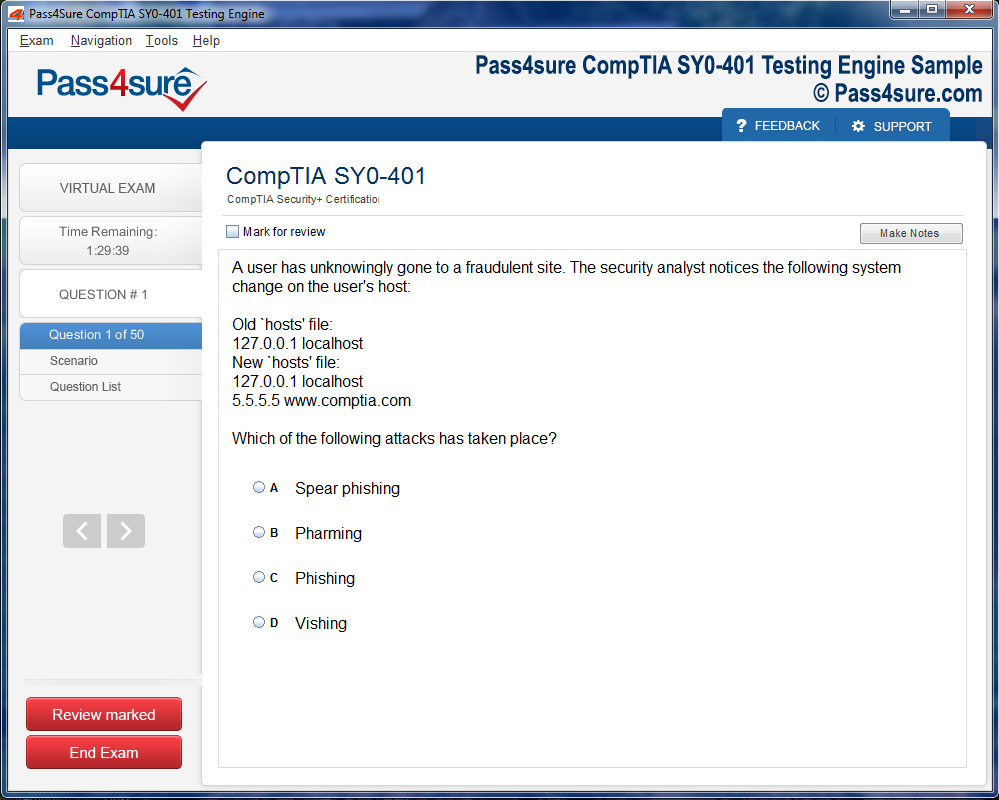
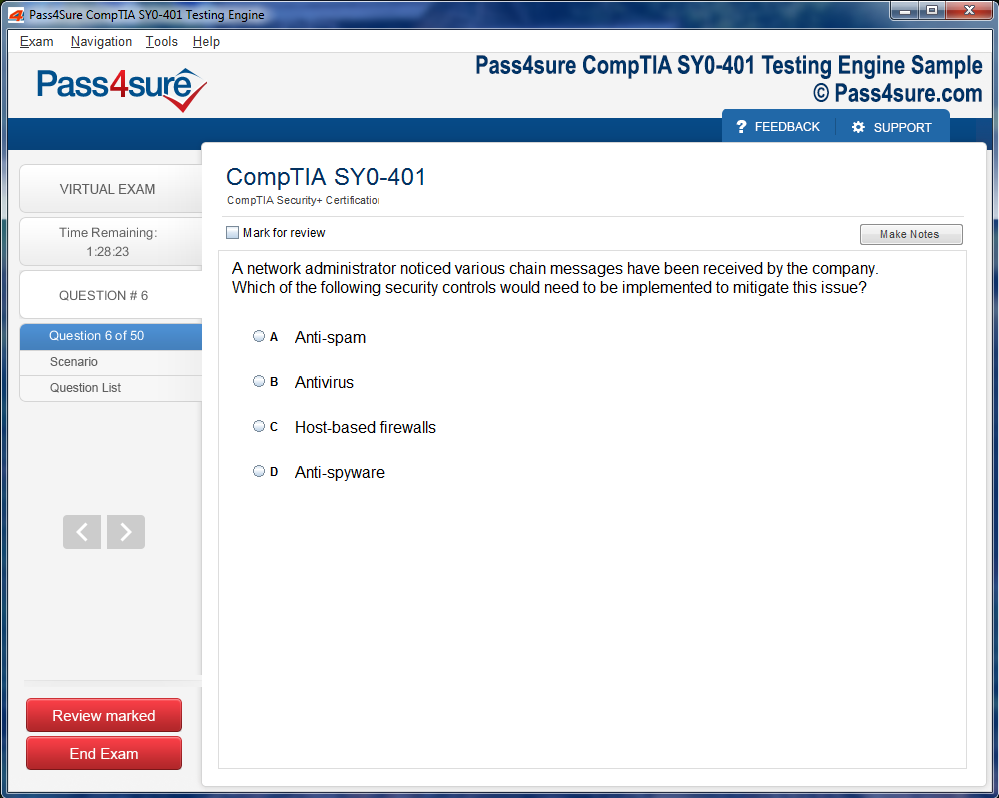
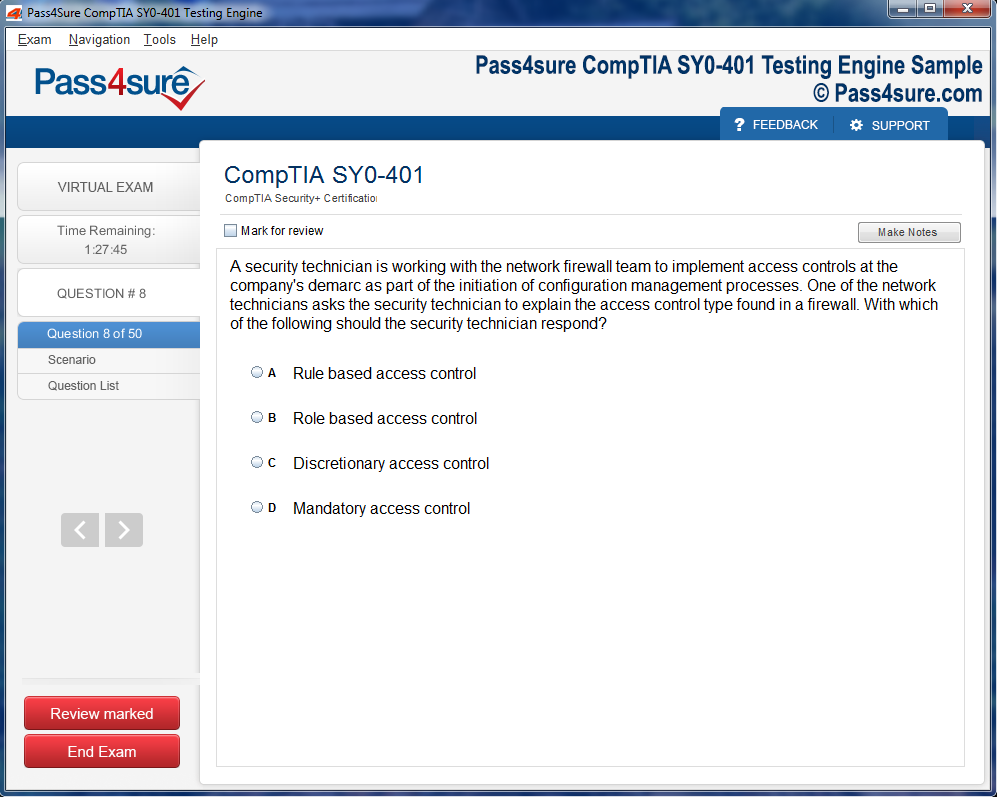
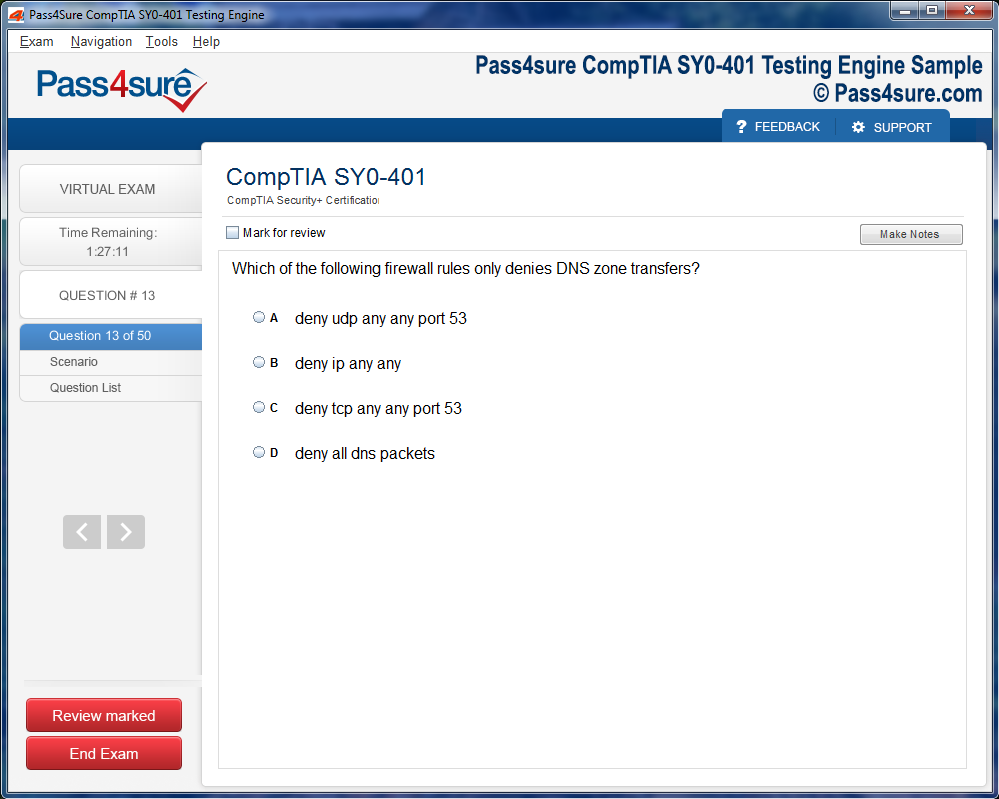
Frequently Asked Questions
How does your testing engine works?
Once download and installed on your PC, you can practise test questions, review your questions & answers using two different options 'practice exam' and 'virtual exam'. Virtual Exam - test yourself with exam questions with a time limit, as if you are taking exams in the Prometric or VUE testing centre. Practice exam - review exam questions one by one, see correct answers and explanations.
How can I get the products after purchase?
All products are available for download immediately from your Member's Area. Once you have made the payment, you will be transferred to Member's Area where you can login and download the products you have purchased to your computer.
How long can I use my product? Will it be valid forever?
Pass4sure products have a validity of 90 days from the date of purchase. This means that any updates to the products, including but not limited to new questions, or updates and changes by our editing team, will be automatically downloaded on to computer to make sure that you get latest exam prep materials during those 90 days.
Can I renew my product if when it's expired?
Yes, when the 90 days of your product validity are over, you have the option of renewing your expired products with a 30% discount. This can be done in your Member's Area.
Please note that you will not be able to use the product after it has expired if you don't renew it.
How often are the questions updated?
We always try to provide the latest pool of questions, Updates in the questions depend on the changes in actual pool of questions by different vendors. As soon as we know about the change in the exam question pool we try our best to update the products as fast as possible.
How many computers I can download Pass4sure software on?
You can download the Pass4sure products on the maximum number of 2 (two) computers or devices. If you need to use the software on more than two machines, you can purchase this option separately. Please email sales@pass4sure.com if you need to use more than 5 (five) computers.
What are the system requirements?
Minimum System Requirements:
- Windows XP or newer operating system
- Java Version 8 or newer
- 1+ GHz processor
- 1 GB Ram
- 50 MB available hard disk typically (products may vary)
What operating systems are supported by your Testing Engine software?
Our testing engine is supported by Windows. Andriod and IOS software is currently under development.
Certification Roadmap for Pega Business Architects – PEGAPCBA87V1
The PEGAPCBA87V1 examination encapsulates the quintessence of business architecture within the Pega ecosystem. It is designed not merely as a test of knowledge but as a crucible for developing strategic discernment, operational acuity, and technical fluency. Aspirants embarking upon this certification journey must navigate an intricate lattice of business processes, case management paradigms, and decision logic frameworks. The exam is as much a measure of analytical perspicacity as it is of technical mastery, demanding a synthesis of intellect, experience, and foresight.
At its core, PEGAPCBA87V1 emphasizes the intersection of business requirements with system capabilities. Candidates must exhibit the ability to distill complex organizational narratives into actionable Pega designs, ensuring solutions are both executable and aligned with overarching strategic imperatives. This entails a nuanced understanding of case lifecycles, data modeling, user interface considerations, and the orchestration of decision rules. Mastery of these elements transforms abstract business concepts into concrete, implementable solutions.
The Cognitive Architecture Behind Exam Mastery
Success in PEGAPCBA87V1 demands cognitive rigor. Candidates must cultivate an analytical lens capable of dissecting intricate business scenarios and predicting potential operational bottlenecks. The examination assesses the ability to navigate ambiguity, translating incomplete or evolving requirements into structured workflows that maintain fidelity to organizational objectives.
A pivotal skill lies in pattern recognition. Aspiring Pega Business Architects must identify latent structures within operational data, discerning recurring themes, anomalies, and inefficiencies. This cognitive alchemy enables the construction of workflows that are not only robust but adaptive, capable of accommodating emergent requirements without compromising integrity. Exam scenarios often mirror real-world complexity, necessitating decisions that balance technical feasibility with strategic vision.
Deciphering Case Lifecycle Management
Case lifecycle management constitutes a foundational pillar of the PEGAPCBA87V1 exam. Candidates must demonstrate proficiency in defining, configuring, and orchestrating case types, stages, and processes. Each case represents a microcosm of organizational operations, encompassing tasks, sub-cases, decision points, and interdependencies.
The examination evaluates the ability to design case hierarchies that optimize efficiency, minimize redundancy, and enhance traceability. Candidates must anticipate variations in case execution, incorporating conditional logic, escalations, and dynamic routing to ensure resilience. Beyond technical configuration, candidates are assessed on their capacity to harmonize case design with user expectations, regulatory compliance, and organizational strategy.
Decision Strategies and Rule Governance
Decision rules within Pega are the semiotic vessels through which business intent is operationalized. The PEGAPCBA87V1 examination probes a candidate’s mastery of decision strategy formulation, rule governance, and policy alignment. Architects must translate organizational heuristics into executable logic while maintaining flexibility for evolution.
Exam scenarios often simulate complex decision ecosystems, requiring candidates to construct rule flows, prioritize conditions, and evaluate implications across multiple case types. The ability to foresee downstream effects of decision alterations reflects an aspirant’s depth of understanding. Proficiency in rule delegation, dynamic selection, and traceability underscores the exam’s emphasis on strategic foresight intertwined with technical precision.
Data Modeling and Integration Complexity
A nuanced understanding of data architecture is critical for PEGAPCBA87V1 success. Candidates must design data models that accommodate current operational needs while remaining extensible for future evolution. This entails defining properties, leveraging data pages, and orchestrating integrations with external systems.
The examination challenges aspirants to navigate complex data interdependencies, ensuring that data access, consistency, and security are maintained across all stages of case execution. Architects are expected to demonstrate strategic reasoning in data sourcing, caching, and propagation, anticipating potential performance bottlenecks. Mastery of this domain reflects an ability to harmonize technical implementation with business exigencies, a hallmark of Pega Business Architect excellence.
User Experience and Interface Rationalization
The human interface is a vital dimension of the PEGAPCBA87V1 framework. Candidates must design user experiences that are intuitive, consistent, and aligned with business objectives. The examination evaluates not only functional correctness but the perceptual coherence of workflow interactions.
This entails crafting screens, harnessing layouts, and configuring UI elements that anticipate cognitive load, reduce friction, and guide users seamlessly through case lifecycles. The ability to translate complex backend processes into elegant user-facing workflows underscores the architect’s dual responsibility as both designer and translator of business logic.
Strategic Stakeholder Alignment
Stakeholder management is woven into the fabric of the PEGAPCBA87V1 examination. Candidates must exhibit adeptness at navigating organizational ecosystems, reconciling competing priorities, and articulating technical solutions in accessible language.
Exam scenarios frequently simulate multi-stakeholder contexts where the candidate must negotiate trade-offs between operational constraints and strategic aspirations. This tests both communication acuity and analytical discernment, ensuring that solutions are not only technically viable but also socially and politically attuned. The ability to cultivate consensus and translate stakeholder narratives into coherent Pega constructs exemplifies the strategic dimension of the certification.
Agile Symbiosis in Certification Context
The PEGAPCBA87V1 examination embeds agile methodologies as a cornerstone of design thinking. Candidates must internalize iterative delivery, adaptive planning, and continuous feedback as intrinsic to solution construction.
Exam exercises often require incremental case development, scenario iteration, and rule adjustment in response to evolving requirements. Architects are evaluated on their ability to synthesize agile principles with strategic foresight, balancing responsiveness with alignment to long-term organizational goals. This symbiosis underscores the dynamic nature of modern business architecture, where flexibility and rigor coexist.
Risk Anticipation and Solution Resilience
A defining competency measured by PEGAPCBA87V1 is anticipatory risk management. Candidates must evaluate potential vulnerabilities within processes, data flows, and decision frameworks, designing mitigations that preserve continuity and maintain compliance.
The examination scenario framework often introduces perturbations or edge cases, assessing the candidate’s ability to respond with resilience. Architects must employ predictive reasoning, scenario analysis, and contingency planning to construct solutions capable of withstanding operational volatility. This reflective capacity distinguishes proficient practitioners from merely competent implementers.
Business architecture is not merely a schematic of processes; it is an epistemological inquiry into the mechanisms that propel organizational vitality. A Pega Business Architect must transcend superficial operational maps to discern the latent symmetries and paradoxes within workflows. The role demands a dialectical mindset, wherein one juxtaposes current practices against aspirational paradigms, identifying the friction points where transformation is not only possible but necessary.
In this context, understanding the ontological nature of business problems becomes paramount. The adept architect interrogates assumptions, revealing the implicit logic that governs decision-making patterns. They cultivate an anticipatory mindset, envisaging emergent challenges before they crystallize into impediments. Such foresight allows for preemptive design interventions that preserve continuity while accelerating innovation.
Cognitive Alchemy in Process Modeling
The artistry of process modeling in Pega transcends rote diagramming; it is a form of cognitive alchemy. Business architects transmute nebulous requirements into structured, executable solutions that balance efficiency with elegance. Every case type, stage, and process flow embodies a philosophical choice, a negotiation between prescriptive rules and adaptive flexibility.
A critical facet of this cognitive alchemy is the ability to recognize tacit patterns within data streams and operational routines. By identifying these subtle regularities, architects can craft solutions that are resilient yet agile, capable of accommodating unforeseen contingencies without compromising systemic integrity. This mental dexterity is honed through repeated exposure to complex case scenarios, scenario simulations, and iterative refinement of design heuristics.
The Semiotics of Decision Rules
Decision rules within Pega function as semiotic instruments, encoding the organizational ethos into actionable logic. The Business Architect must decipher these symbols, aligning them with both regulatory imperatives and strategic aspirations. It is an exercise in interpretive precision, requiring sensitivity to nuance and a relentless pursuit of coherence.
Beyond mere implementation, architects imbue decision rules with contextual intelligence. They anticipate the ramifications of rule alterations, evaluating ripple effects across operational domains. This analytical rigor transforms the architect from a passive implementer into an active custodian of organizational wisdom, ensuring that each decision point advances both efficiency and strategic alignment.
Navigating the Labyrinth of Stakeholder Ecosystems
No Pega solution exists in isolation; it is enmeshed within a lattice of stakeholders whose interests often diverge and occasionally collide. Mastery of stakeholder dynamics is as critical as technical acumen. A Pega Business Architect operates as a mediator, synthesizing disparate perspectives into a cohesive narrative that informs design choices.
This requires an astute appreciation for organizational psychology, understanding not just explicit objectives but the latent motivations that drive behavior. By engaging in empathetic inquiry, architects build relational capital, fostering trust and facilitating the co-creation of solutions that satisfy both operational and strategic imperatives.
The Aesthetics of User Experience Design
While technical precision underpins functional robustness, the perceptual elegance of user interactions defines adoption and satisfaction. A Pega Business Architect must navigate the delicate interplay between utility and experience, designing interfaces that are intuitive, efficient, and aesthetically coherent.
This aesthetic sensibility extends beyond visual appeal to encompass cognitive ergonomics, ensuring that workflows align with human intuition and reduce friction. Architects deploy iterative prototyping, feedback loops, and scenario testing to refine the human interface, creating experiences that resonate with end users while preserving underlying operational integrity.
Strategic Symbiosis with Agile Methodologies
The PEGAPCBA87V1 certification emphasizes agile methodologies not merely as frameworks but as philosophical orientations. Business Architects must internalize agile tenets, embracing iterative delivery, adaptive planning, and continuous stakeholder engagement. This strategic symbiosis enables rapid course corrections while maintaining alignment with long-term objectives.
In practice, architects leverage agile ceremonies and artifacts to bridge communication gaps between technical teams and business stakeholders. They act as conduits of clarity, translating high-level business aspirations into actionable user stories and acceptance criteria. This ensures that every incremental delivery incrementally enhances organizational value, mitigating risk and enhancing responsiveness.
Analytical Acumen and Cognitive Dexterity
The Pega Business Architect certification is predicated on a sophisticated synthesis of analytical acuity and cognitive dexterity. Professionals embarking on the PEGAPCBA87V1 journey must cultivate a mental framework that oscillates seamlessly between microscopic scrutiny and macroscopic vision. This duality is not merely an academic exercise; it is the fulcrum upon which effective process orchestration pivots. The capacity to dissect intricate workflows while simultaneously envisaging overarching organizational architectures elevates the business architect from a mere implementer to an architect of transformative solutions.
The mental alchemy involved demands an appreciation for the interplay between cause and consequence. Every decision point, every procedural divergence carries latent implications that ripple across interconnected subsystems. A practitioner must possess a prescience that transcends linear paradigms, perceiving the enterprise as a dynamic organism wherein perturbations in one node reverberate throughout the ecosystem. This anticipatory cognition is indispensable in designing resilient and adaptive solutions that preempt inefficiencies before they manifest.
Mastery of Case Lifecycle Constellations
Central to the architect’s repertoire is an intimate understanding of case lifecycle constellations. The case lifecycle is not a mere sequence of steps but an intricate choreography of states, transitions, and contingencies. An architect must excavate the underlying logic of process stages, discerning both overt trajectories and latent deviations. The competence lies not only in mapping the stages but in apprehending the subtle interdependencies that govern their evolution.
A skilled business architect visualizes the case as a living schema, an intricate lattice in which every node is imbued with operational significance. Decision junctures must be interrogated for their potential to precipitate downstream consequences, and workflows must be constructed to absorb anomalies without systemic disruption. The dexterity to conceptualize such fluid structures requires both rigorous analytical discipline and imaginative foresight, yielding designs that resonate with real-world complexities.
Sophistication in Decision Strategy Orchestration
Decision strategies and rules constitute the operational fulcrum of a Pega solution. Professionals must master the intricacies of conditional logic, orchestrating automated decisions that harmonize efficiency with compliance. This demands a nuanced understanding of not only technical implementation but the organizational imperatives that shape decision-making.
Architects are tasked with crafting decision models that are both parsimonious and adaptable. Redundancies must be eliminated without compromising robustness, and contingencies must be anticipated to mitigate operational risk. The art of balancing rigor with elasticity involves a meticulous calibration of logic trees, decision tables, and scorecards, all undergirded by a vigilant cognizance of regulatory constraints and stakeholder expectations.
Data Architecture and Semantic Cartography
Data modeling in the Pega paradigm transcends conventional schema design; it embodies an intellectual cartography of organizational knowledge. Data is not merely a repository but a substrate upon which intelligence is constructed. Business architects must cultivate a capacity to discern latent patterns, anticipate dependencies, and engineer data architectures that amplify systemic efficiency.
Semantic clarity is paramount. Misaligned or obfuscated data structures impede decision-making, erode operational agility, and compromise traceability. Architects must sculpt models that not only encapsulate functional requirements but also provide cognitive transparency for stakeholders. This entails an intricate balancing act: optimizing performance while ensuring intelligibility, foreseeing both immediate utility and long-term adaptability.
User-Centric Interface Alchemy
The interface, often relegated to a peripheral concern, is a crucible of engagement where the abstract logic of systems manifests in human experience. Business architects must possess an acumen for translating complex workflows into intuitive, frictionless interfaces. The user’s journey must be choreographed with empathy and precision, ensuring that technology amplifies productivity rather than engendering cognitive friction.
Interface alchemy requires more than aesthetic finesse; it necessitates an understanding of behavioral psychology, task cognition, and ergonomic interaction paradigms. An architect must anticipate user proclivities, mitigate decision fatigue, and scaffold interactions in ways that align with organizational objectives. In this crucible, the confluence of utility, elegance, and accessibility becomes a hallmark of professional mastery.
Stakeholder Symbiosis and Discursive Prowess
Technical competence is hollow without the ability to navigate the labyrinthine corridors of organizational politics. Pega Business Architects must exhibit a discursive prowess that encompasses negotiation, persuasion, and empathetic listening. The professional’s task is to engender consensus, reconcile divergent priorities, and cultivate collaborative symbiosis among stakeholders whose perspectives may be disparate or conflicting.
Articulation extends beyond mere clarity of expression; it encompasses the capacity to render complex constructs intelligible without diluting nuance. A seasoned architect communicates with precision, anticipates objections, and preempts misunderstandings, fostering an environment where strategic alignment and operational execution coalesce seamlessly.
Adaptive Problem-Solving in Dynamic Ecosystems
The crucible of modern enterprise is volatility. Business architects must develop an adaptive problem-solving repertoire capable of responding to emergent anomalies without succumbing to rigidity. The dexterity to recalibrate solutions in situ, harmonizing prescriptive processes with emergent requirements, distinguishes the architect who merely executes from the one who innovates.
Adaptive problem-solving entails a recursive process of observation, hypothesis, and iteration. Each intervention is informed by feedback loops that illuminate hidden dependencies and emergent patterns. Professionals cultivate a mindset in which uncertainty is not an obstacle but a catalyst for ingenuity, leveraging analytical rigor as a springboard for creative solutions.
Strategic Foresight and Organizational Prescience
Pega Business Architects operate at the nexus of tactical execution and strategic foresight. They must cultivate a prescience that extends beyond immediate operational imperatives to anticipate long-term organizational trajectories. This foresight involves synthesizing trends, extrapolating potential disruptions, and constructing solutions that are not merely reactive but preemptively resilient.
Strategic acumen is manifested in the capacity to align operational design with organizational vision. Architects must balance competing priorities, allocate resources judiciously, and orchestrate processes that optimize both efficiency and adaptability. The certified professional navigates ambiguity with composure, converting uncertainty into a canvas for innovative design.
Strategic Preparation for the Certification Exam
Preparing for the PEGAPCBA87V1 certification mandates a methodical orchestration of cognitive faculties, blending theoretical acumen with pragmatic dexterity. This preparation transcends mere rote memorization, demanding a deep immersion into Pega’s architectural intricacies and the subtleties of case-centric orchestration. Candidates are encouraged to cultivate a symbiotic relationship between knowledge acquisition and analytical application, thereby engendering a robust foundation for tackling multifaceted exam scenarios.
Immersion into the Pega Ecosystem
The initial phase of preparation hinges upon a profound comprehension of the Pega ecosystem. Aspirants must assimilate the nuances of application architecture, grasp the interdependencies of case management paradigms, and apprehend the symphonic interplay of rules, stages, and processes. This cognitive immersion equips candidates with a discerning lens, allowing them to deconstruct complex scenarios into analyzable components and devise solutions with methodical precision. Understanding the gestalt of Pega’s frameworks is not optional; it is the crucible in which strategic foresight is forged.
Experiential Simulation and Practice
Simulation forms the bedrock of effective exam preparation. Engaging with meticulously designed mock scenarios, illustrative case studies, and interactive exercises facilitates the internalization of recurrent patterns while sharpening anticipatory problem-solving faculties. This immersive methodology nurtures an intuitive grasp of system behaviors, cultivating a reflexive agility that enhances decision-making speed under examination duress. By navigating virtual workflows, aspirants develop the capacity to anticipate challenges, mitigate errors, and implement optimal pathways in real-world applications.
Iterative Reflection and Conceptual Fortification
Conceptual clarity is fortified through iterative reflection. Each workflow, each decision node, and every rule interconnection warrants meticulous scrutiny. Professionals are encouraged to dissect processes, examine dependencies, and juxtapose alternative strategies. This reflective praxis engenders analytical resilience, empowering candidates to approach unprecedented challenges with structured reasoning and strategic insight. The iterative lens ensures that comprehension is dynamic rather than static, enabling the continuous refinement of cognitive schemas.
Temporal Dexterity and Exam Navigation
Time management constitutes a pivotal axis of exam proficiency. Aspirants must cultivate temporal dexterity, distributing attention judiciously across questions while preserving accuracy and analytical rigor. Navigating complex problem statements under stringent time constraints demands a calibrated equilibrium between rapid cognition and meticulous evaluation. Exam strategy, therefore, becomes an art of pacing, prioritization, and adaptive problem-solving, transforming temporal limitation into an asset rather than a constraint.
Mentorship and Cognitive Cross-Pollination
Engagement with seasoned Pega practitioners amplifies the efficacy of preparation. Mentorship provides a conduit for the transmission of tacit knowledge, exposing aspirants to nuanced methodologies and diverse analytical paradigms. Peer interaction, discussion forums, and collaborative problem-solving exercises cultivate cognitive cross-pollination, enriching the intellectual repertoire of the candidate. Exposure to heterodox approaches fosters flexibility, enabling aspirants to synthesize novel solutions from a mosaic of experiential insights.
Holistic Development Beyond Memorization
Preparation for the PEGAPCBA87V1 certification is inherently holistic. It nurtures not only technical competency but also strategic foresight, analytical acumen, and the capacity for applied reasoning. Candidates emerge with an elevated understanding of organizational dynamics, empowered to translate business aspirations into actionable, scalable solutions. The journey from candidate to certified business architect is defined by deliberate cultivation of insight, reflexive adaptability, and the ability to operationalize knowledge in complex, real-world contexts.
Symbiotic Alignment of Strategic Intent and Technical Constructs
At the confluence of strategic intent and Pega’s technical scaffolding lies a nuanced orchestration that demands both perspicacity and ingenuity. Architects are not merely implementers; they become cognitive cartographers of organizational complexity. Each system component must resonate with overarching business narratives, converting intangible aspirations into tangible workflows, automated rules, and decision frameworks. The dexterity to navigate abstract imperatives while anchoring them in executable constructs defines the rarefied skill set of a consummate Pega Business Architect.
Cognitive Cartography of Business Processes
Mapping business processes through the lens of cognitive cartography transcends conventional flowcharting. Architects probe beneath superficial operations, uncovering latent inefficiencies and emergent bottlenecks that may elude less discerning scrutiny. By employing heuristic analysis and scenario extrapolation, Pega solutions are sculpted to preempt friction points and enable anticipatory operational dexterity. This process requires an amalgamation of analytical rigor and imaginative projection, producing process architectures that are both resilient and adaptive.
Synthesis of Decision Intelligence within Workflow Dynamics
Decision intelligence constitutes the crucible where analytical rigor converges with architectural finesse. Within Pega ecosystems, decision strategies crystallize organizational logic, compliance parameters, and operational heuristics into executable algorithms. Architects craft these strategies to be responsive, auditable, and contextually aware, transforming decision-making from reactive deliberation into proactive orchestration. Embedding these strategies within workflows engenders a self-regulating system capable of nuanced judgment under fluctuating operational conditions.
Orchestration of Stakeholder Synergy
True architectural efficacy emerges when stakeholder synergy is meticulously cultivated. Business architects serve as both translators and harmonizers, converting technical lexicons into strategic narratives intelligible to executive visionaries. Through iterative workshops, simulation exercises, and dynamic prototyping, trust is consolidated, expectations are aligned, and collaborative momentum is galvanized. The architect’s capacity to bridge cognitive and technical dialects fosters a participatory environment where organizational alignment is not incidental but orchestrated.
Emergent Agility through Analytical Anticipation
Pega solutions, when designed with an anticipatory analytical lens, engender emergent agility across enterprise operations. Architects forecast change vectors, simulate contingency pathways, and embed adaptive feedback mechanisms within system design. This proactive posture mitigates risk exposure, accelerates operational responsiveness, and sustains organizational fluidity amidst volatile market dynamics. Analytical anticipation thus becomes a strategic fulcrum, converting uncertainty into actionable foresight.
Confluence of Compliance and Operational Elegance
In highly regulated domains, the integration of compliance within operational architecture demands an elevated sophistication. Architects synthesize regulatory mandates with functional imperatives, ensuring that system enforcement is both unobtrusive and fail-safe. By embedding compliance logic within Pega’s decisioning and workflow constructs, organizations achieve an equilibrium where operational elegance coexists with regulatory fidelity. This meticulous calibration transforms compliance from a procedural burden into a strategic differentiator.
Iterative Refinement of Systemic Intelligence
Pega Business Architects engage in iterative refinement, cultivating systemic intelligence that evolves with organizational maturation. Continuous monitoring, performance analytics, and feedback integration fuel an ongoing cycle of enhancement. Each iteration uncovers latent insights, informs strategic recalibrations, and enhances the fidelity of automated processes. This iterative ethos fosters a living architecture—responsive, anticipatory, and perpetually aligned with business imperatives.
Harmonization of Multidimensional Data Streams
Data harmonization is pivotal to the Pega architect’s remit. Decision-making, process automation, and stakeholder insights are predicated upon the convergence of multidimensional data streams. Architects engineer frameworks capable of ingesting heterogeneous data, reconciling discrepancies, and generating coherent intelligence that informs both operational execution and strategic decision-making. The architecture thus evolves into an adaptive cognitive ecosystem, where information fluidity and analytic depth coalesce seamlessly.
Proactive Modulation of Operational Complexity
Operational complexity, if unmoderated, can metastasize into systemic inertia. Business architects employ proactive modulation to disentangle convoluted process interdependencies, reassign decision logic, and optimize workflow sequencing. This modulation is underpinned by predictive analytics, simulation modeling, and adaptive rule management, producing streamlined operations that retain the capacity for nuanced discretion. The result is a system that is simultaneously intricate in capability yet elegant in execution.
Catalyzing Enterprise-Wide Transformational Resonance
When analytical acuity is fused with architectural sophistication, transformation resonates across the enterprise. Pega Business Architects catalyze organizational evolution by embedding strategic logic within operational substrates, enabling rapid adaptation to emergent opportunities and threats. This resonance transcends departmental silos, establishing a shared cognitive framework that aligns disparate teams under a cohesive operational vision. The architect’s role thus evolves from implementer to strategic orchestrator, shaping the enterprise’s adaptive trajectory.
Experiential Immersion in Operational Ecosystems
True mastery of PEGAPCBA87V1 transcends rote comprehension, demanding an intimate engagement with operational realities. Aspirants are beckoned into a realm where theoretical frameworks are tested against the intricate labyrinths of organizational workflows. Case studies serve as the crucibles for such experiential immersion, allowing learners to traverse the delicate interstices of strategy and execution. Each scenario elucidates the subtle entanglements between technological capabilities and business imperatives, cultivating an appreciation for the art of harmonizing diverse operational vectors.
Navigating Multilayered Workflows
The complexity of contemporary enterprise processes necessitates a dexterous synthesis of variegated information streams. Architects are challenged to dissect existing workflows, pinpoint inefficiencies, and devise innovative configurations that optimize system performance. This analytical odyssey fosters a tactile comprehension of constraints, emergent requirements, and latent system limitations. Through meticulous evaluation, learners acquire the acumen to transform abstract processes into tangible, functional architectures that resonate with organizational exigencies.
Iterative Refinement and Adaptive Design
Applied learning thrives on iterative cycles that nurture adaptability. Initial configurations often confront unforeseen perturbations, necessitating recalibration and strategic recalibration. Professionals refine their designs in response to evolving data, stakeholder input, and emergent operational contingencies. This cyclical refinement cultivates a mindset of agile responsiveness, ensuring that solutions not only meet predefined objectives but also remain resilient amidst dynamic business landscapes. Through such iterative engagement, learners internalize the symbiosis between innovation and practical viability.
Strategic Simulation of Decision Architectures
Decision-making frameworks constitute the backbone of effective system design. In simulated environments, architects interrogate the efficacy of automated decision rules, scrutinizing outcomes and iteratively honing strategic parameters. This process engenders analytical perspicacity, equipping professionals to anticipate atypical scenarios and optimize system behaviors across diverse operational contexts. By engaging in methodical experimentation, aspirants cultivate a capacity for foresight, ensuring that their solutions maintain consistency, accuracy, and strategic alignment.
Collaborative Dynamics in Case Studies
Organizational realities are rarely solitary endeavors; they are intricate tapestries woven from cross-functional collaboration. Within case studies, aspirants negotiate the confluence of divergent perspectives, reconcile conflicting objectives, and mediate trade-offs between efficiency, compliance, and user experience. These interactions hone indispensable soft skills, complementing technical expertise with nuanced stakeholder management and effective communication strategies. Engaging in such collaborative crucibles fosters an appreciation for the interplay between interpersonal dynamics and systemic outcomes, underscoring the holistic nature of professional mastery.
Translating Theory into Tangible Impact
The ultimate measure of proficiency lies in the ability to convert theoretical knowledge into operational excellence. By engaging deeply with real-world case studies, learners internalize the practical ramifications of their design choices and strategic interventions. PEGAPCBA87V1 aspirants emerge equipped not merely to succeed in examinations but to architect solutions that generate palpable, high-impact results within complex organizational milieus. This translational capability bridges the gap between conceptual mastery and actionable expertise, positioning professionals to drive substantive organizational transformation.
The Cognitive Alchemy of Professional Mastery
Attaining mastery in the realm of business architecture is an exercise in cognitive alchemy, where analytical rigor converges with imaginative synthesis. Professionals learn to transmute complex data streams into actionable insights, discerning latent patterns within organizational processes that elude conventional scrutiny. This mental dexterity enables the architect to anticipate emergent challenges before they manifest, crafting preemptive strategies that preserve both efficiency and strategic alignment.
The intellectual enrichment derived from such endeavors is multidimensional. It cultivates a proclivity for metacognition, the ability to evaluate one’s own thought processes critically, and fosters the kind of strategic foresight that transforms decision-making from reactive problem-solving to proactive orchestration of opportunity. Each engagement in process design or stakeholder negotiation becomes a laboratory for testing hypotheses, refining frameworks, and enhancing judgment.
The Synergy of Process and Strategy
Business architecture, at its zenith, operates at the confluence of process engineering and strategic vision. Professionals adept in this domain orchestrate symphonies of workflows, harmonizing operational intricacies with long-term organizational objectives. The capacity to render complex operations intelligible and actionable is not merely technical; it is profoundly creative, demanding both analytical precision and interpretive acumen.
Through repeated immersion in process modeling, the architect develops an instinct for identifying bottlenecks, redundancies, and friction points that impede organizational velocity. This insight allows for the design of interventions that are both surgically precise and expansively transformative. In effect, the practitioner becomes a steward of systemic coherence, ensuring that every process serves a greater narrative of efficiency, innovation, and value creation.
Stakeholder Resonance and Organizational Gravitas
Central to the role of a certified business architect is the cultivation of stakeholder resonance. Influence is earned through clarity, trust, and demonstrable competence, not mere titular authority. Professionals learn to navigate complex webs of expectations, translating technical lexicons into narratives that resonate with executives, operational managers, and frontline contributors alike.
The ability to communicate with gravitas fosters organizational alignment. When stakeholders perceive the architect not merely as an implementer but as a strategic interlocutor, decision-making accelerates, collaboration deepens, and resistance diminishes. This relational intelligence becomes a vital complement to technical expertise, reinforcing the architect’s position as a linchpin of strategic transformation.
Data Stewardship and Analytical Perspicacity
In the contemporary business ecosystem, data is both currency and compass. Mastery of analytical frameworks, data modeling, and decision-support tools empowers the architect to convert raw information into strategic advantage. Beyond mere proficiency, the architect develops perspicacity, the capacity to discern subtle correlations, trends, and anomalies that inform tactical and strategic interventions.
This role demands a balance between quantitative rigor and qualitative judgment. It is insufficient to interpret data solely through statistical lenses; understanding the human, cultural, and operational context in which data exists is equally imperative. The certified professional becomes a custodian of insight, transforming ephemeral datasets into enduring organizational intelligence.
The Iterative Journey of Professional Refinement
Certification is not a static endpoint; it is an iterative journey of refinement. Each project engagement, process reengineering effort, or stakeholder consultation contributes to a continuously evolving repertoire of skills. Learning is recursive, informed by both successes and setbacks, and reinforced by deliberate reflection and mentorship.
The ethos of continuous improvement permeates every facet of professional identity. Architects are compelled to interrogate assumptions, challenge entrenched paradigms, and embrace adaptive strategies that respond to fluid organizational landscapes. In doing so, they cultivate resilience, intellectual elasticity, and the capacity to thrive amidst ambiguity and complexity.
Strategic Influence and Organizational Transformation
PEGAPCBA87V1-certified professionals occupy a pivotal nexus within the organizational hierarchy, where operational execution meets strategic deliberation. Their influence extends beyond workflow optimization into the realms of policy formulation, strategic planning, and enterprise-wide transformation. By shaping frameworks for decision-making and embedding best practices across functions, they become architects not only of processes but of organizational destiny.
This strategic leverage is amplified by the professional’s dual competency in technical design and relational orchestration. The architect’s capacity to harmonize operational realities with executive vision ensures that change initiatives are both pragmatic and aspirational, fostering sustainable growth and enduring value creation.
Cognitive Resonance in Rule Architecture
Rule architecture within Pega systems is more than mere configuration; it represents a cognitive resonance between organizational intent and executable logic. Architects imbue rules with contextual awareness, ensuring that every automated decision mirrors strategic priorities while remaining adaptable to evolving circumstances. By leveraging declarative rules, constraints, and dynamic conditions, the architecture internalizes operational wisdom, enabling systems to anticipate anomalies and self-correct with minimal human intervention. This subtle orchestration transforms conventional automation into a living intelligence, where rules are not static dictates but adaptive guides that respond to real-time organizational flux.
Temporal Fluidity in Workflow Orchestration
Temporal fluidity is essential to constructing resilient Pega workflows. Architects consider not only the logical sequence of tasks but also the temporal interplay of events, delays, and triggers across processes. By embedding temporal intelligence, systems can dynamically adjust to fluctuating demands, re-sequencing tasks or recalibrating resource allocation in response to emergent priorities. This approach cultivates a temporal elasticity, allowing enterprises to navigate unpredictable operational rhythms without compromising efficiency or compliance.
Semantic Convergence of Stakeholder Intent
Bridging the chasm between stakeholder intent and technical realization necessitates semantic convergence. Architects distill diverse perspectives—executive, operational, regulatory—into a unified semantic framework that underpins Pega solutions. This convergence reduces interpretive friction, minimizes misalignment, and fosters a shared understanding of both process imperatives and strategic objectives. The architecture becomes a living lexicon, encoding stakeholder priorities into actionable constructs that maintain fidelity to both human and technical cognition.
Interstitial Optimization of Systemic Interfaces
The interstitial spaces between processes often harbor latent inefficiencies. Pega architects focus on these interstitial interfaces, optimizing handoffs, data exchanges, and decision transitions. By refining these subtle junctures, architects enhance system coherence, reduce friction, and elevate operational throughput. Interstitial optimization is an exercise in microscopic precision, revealing that the smallest misalignment can propagate systemic inefficiencies, while the smallest enhancement can catalyze significant performance gains.
Dynamic Calibration of Predictive Analytics
Predictive analytics serves as the fulcrum for anticipatory decision-making in Pega ecosystems. Architects engage in dynamic calibration, continuously refining predictive models, adjusting decision parameters, and incorporating feedback from real-world operations. This iterative tuning ensures that forecasts remain relevant, actionable, and aligned with organizational objectives. By merging predictive intelligence with workflow orchestration, enterprises transition from reactive problem-solving to proactive strategic execution.
Ephemeral Insights through Real-Time Data Synthesis
Real-time data synthesis allows architects to harness ephemeral insights that traditional batch-processing systems would overlook. By fusing streams from operational, transactional, and external sources, Pega systems generate intelligence that is both timely and contextually nuanced. Architects design frameworks that detect emergent patterns, trigger automated interventions, and inform strategic recalibrations on the fly. This ephemeral awareness empowers organizations to respond to micro-fluctuations before they escalate into operational challenges.
Polyphonic Integration of Decision Channels
Decision-making in complex enterprises is rarely monolithic. Polyphonic integration ensures that multiple decision channels—regulatory, operational, customer-centric—coexist harmoniously within Pega architectures. Architects construct decision matrices that reconcile potentially conflicting imperatives, providing transparent prioritization logic and adaptive weighting. This polyphonic approach transforms decision-making from a linear, prescriptive process into a multi-dimensional symphony, where diverse imperatives are balanced, harmonized, and executed with precision.
Metacognitive Feedback Loops in System Design
Metacognitive feedback loops embed reflective intelligence into Pega architectures. Systems are designed to evaluate their own performance, detect deviations from expected outcomes, and recalibrate operational parameters accordingly. Architects harness these loops to create self-improving workflows, where lessons from prior executions inform subsequent behavior. Metacognition within the system enables continuous learning, adaptive responsiveness, and sustained alignment with business goals.
Resilience Engineering in Enterprise Systems
Resilience is a defining attribute of high-performing Pega systems. Architects approach resilience engineering by anticipating operational perturbations, identifying single points of failure, and embedding redundancy without redundancy’s typical inefficiency. This results in systems that not only withstand shocks but adapt and evolve in response to disruptions. By designing with resilience as a core principle, enterprises cultivate operational robustness that simultaneously supports innovation and mitigates risk.
Cognitive Harmonization Across Organizational Silos
Organizational silos often impede both efficiency and strategic coherence. Architects employ cognitive harmonization to bridge these silos, creating architectures that translate diverse departmental processes into coherent, integrated workflows. By aligning cognitive models across functional areas, Pega systems enable seamless collaboration, knowledge transfer, and coordinated decision-making. The architecture thus becomes a conduit for enterprise-wide coherence, transforming isolated processes into interdependent, mutually reinforcing operations.
Recursive Optimization of Workflow Logic
Recursive optimization allows architects to iteratively refine workflow logic, applying learned insights to enhance system performance continuously. By leveraging pattern recognition, predictive modeling, and historical data analysis, architects identify recurring inefficiencies, re-engineer decision paths, and optimize resource allocation. This recursive methodology converts workflows from static process maps into dynamic instruments of operational refinement, capable of evolving in concert with organizational growth.
Transcendence of Conventional Automation Paradigms
The integration of business analysis with Pega architecture transcends conventional automation paradigms. Architects design systems that are not merely reactive or rule-bound but contextually aware, adaptive, and anticipatory. By embedding intelligence, feedback, and predictive capabilities, these systems evolve beyond the limitations of traditional automation, fostering operational environments that are fluid, self-correcting, and strategically aligned.
Constellation Mapping of Interdependent Processes
Complex enterprises resemble constellations, where interdependent processes must be mapped with precision to ensure systemic coherence. Architects employ constellation mapping to visualize process interrelationships, identify potential points of friction, and orchestrate seamless operational continuity. This approach illuminates hidden dependencies, clarifies cascading impacts, and empowers decision-makers to intervene with surgical precision.
Integrative Cognition in Enterprise Architecture
Integrative cognition represents the apex of Pega business architecture. It synthesizes analytical acumen, technical design, and strategic foresight into a cohesive cognitive framework. Architects leverage integrative cognition to anticipate challenges, model alternative scenarios, and orchestrate adaptive responses across the enterprise. The architecture thus functions as an extension of organizational intelligence, amplifying human decision-making and operational dexterity in a continually evolving environment.
Complex Process Orchestration
Modern enterprises operate within webs of interdependent processes that demand meticulous orchestration. Architects navigating these ecosystems encounter convoluted workflows that intertwine operational, regulatory, and technological strands. Effective orchestration requires not only analytical rigor but also anticipatory insight into latent process interactions. Through intensive engagement with case studies, aspirants develop the capacity to anticipate bottlenecks, reconcile contradictory dependencies, and choreograph processes in a manner that maximizes efficiency without compromising compliance or user satisfaction.
Cognitive Load Management in System Design
System architects must contend with the cognitive demands imposed on both human and automated agents within operational frameworks. Real-world case studies illuminate the challenges of cognitive overload—where excessive complexity in processes or decision rules can hinder effective execution. By dissecting these scenarios, aspirants learn to design streamlined architectures that balance information richness with operational clarity. This entails judicious prioritization of data inputs, optimization of rule hierarchies, and strategic simplification of workflows to facilitate seamless human-system collaboration.
Emergent Problem-Solving Techniques
Applied learning in case studies nurtures emergent problem-solving capabilities. Each scenario presents unpredictable contingencies that defy static procedural solutions. Professionals are compelled to adopt adaptive reasoning, leveraging heuristic and algorithmic approaches to resolve unanticipated complications. This dynamic problem-solving paradigm fosters intellectual agility, enabling architects to navigate ambiguity with confidence, implement creative solutions, and preemptively mitigate risk. Iterative exposure to diverse case contexts cultivates an expansive repertoire of strategic interventions adaptable to novel operational landscapes.
Data-Driven Insights and Predictive Modeling
In contemporary organizational settings, decisions are increasingly data-centric. Case studies offer a sandbox for testing predictive models and data-driven strategies in controlled yet realistic environments. Aspirants engage with historical and simulated datasets, analyzing patterns, anomalies, and causal relationships that inform strategic system configurations. This immersion reinforces the understanding of decision logic, model accuracy, and the subtle influence of probabilistic outcomes. By integrating predictive insights with operational workflows, architects enhance system foresight, enabling preemptive action and optimized resource allocation.
Ethical Considerations and Compliance Dynamics
Case-based learning extends beyond efficiency and performance, compelling aspirants to grapple with ethical implications and compliance mandates. Real-world scenarios often involve sensitive data handling, regulatory constraints, and potential conflicts of interest. Navigating these complexities necessitates a nuanced understanding of ethical frameworks, legal requirements, and organizational governance. Through deliberate examination of such cases, professionals cultivate moral discernment, ensuring that technical implementations align with ethical imperatives while sustaining operational efficacy and stakeholder trust.
Resilience Engineering and Contingency Planning
Operational resilience emerges as a central concern in high-stakes environments. Case studies emphasize the design of systems capable of absorbing disruptions, adapting to unforeseen events, and maintaining continuity under duress. Aspirants explore scenarios where workflows are perturbed by resource constraints, sudden policy shifts, or external shocks. By devising contingency strategies and embedding adaptive mechanisms, architects learn to anticipate vulnerabilities, minimize systemic fragility, and engineer robust processes that sustain performance even amidst volatility.
User-Centric Process Innovation
While technical mastery is paramount, the ultimate measure of system success lies in its alignment with user needs. Case studies accentuate the importance of user-centric design, encouraging aspirants to consider experiential nuances, interface ergonomics, and behavioral interactions. Architects engage with personas, scenario mapping, and experiential feedback loops to iterate solutions that resonate with end users. This orientation cultivates empathy-driven design thinking, bridging the divide between operational efficacy and user satisfaction, and fostering solutions that are both technically sound and intuitively adoptable.
Cross-Functional Synergy and Stakeholder Integration
Organizations are complex ecosystems in which functional silos intersect and sometimes collide. Case studies replicate this intricate interplay, challenging aspirants to negotiate between competing objectives, reconcile divergent priorities, and facilitate cross-functional consensus. Professionals learn to mediate conflicts between operational efficiency, compliance obligations, and strategic ambitions, employing negotiation skills, stakeholder mapping, and influence strategies. Mastery in these areas ensures that designed solutions are not only technically coherent but also organizationally harmonious.
Real-Time Feedback Loops and Continuous Learning
Applied case studies cultivate a culture of continuous learning through real-time feedback loops. Professionals observe outcomes, analyze variances, and iteratively refine processes in response to emergent data. This experiential methodology encourages vigilance, adaptability, and perpetual optimization. Architects internalize the principle that system excellence is not static but an ongoing pursuit, where iterative recalibration, reflective practice, and proactive adjustments are essential to sustaining long-term operational success.
Scenario-Based Risk Assessment
Case studies often foreground complex risk landscapes that encompass operational, technological, and strategic dimensions. Aspirants engage in scenario-based risk assessments, evaluating potential vulnerabilities, likelihoods, and impacts across multiple contingencies. By simulating risk exposure and stress-testing proposed solutions, architects develop anticipatory acumen, refining mitigation strategies that preempt failures and fortify resilience. This disciplined exposure to risk scenarios enhances strategic foresight, enabling professionals to navigate uncertainty with informed confidence.
Holistic Integration of Strategic and Tactical Design
The apex of applied learning lies in the seamless integration of strategic vision and tactical execution. Case studies compel aspirants to align macro-level objectives with micro-level operational interventions, ensuring coherence across the enterprise spectrum. Professionals synthesize insights from process analysis, predictive modeling, user behavior, and risk evaluation into unified, actionable architectures. This holistic perspective equips architects to design systems that are simultaneously visionary and practical, harmonizing long-term organizational goals with day-to-day operational realities.
Navigating the labyrinthine structures of contemporary enterprises requires more than procedural competence; it necessitates cognitive cartography. Certified business architects cultivate the capacity to chart organizational landscapes with precision, mapping interdependencies, feedback loops, and emergent pathways. Each decision point becomes a node in a complex network, where foresight and analytical rigor intersect to illuminate the optimal trajectory.
This form of strategic navigation transcends mere tactical planning. It integrates probabilistic reasoning with scenario-based modeling, enabling architects to anticipate disruptions, identify latent opportunities, and orchestrate initiatives that align with both immediate imperatives and long-term objectives. In essence, the professional becomes an intellectual navigator, steering organizational vessels through turbulent currents with both intuition and empirical insight.
Organizational Symbiosis and Process Resonance
At the heart of effective business architecture lies the principle of organizational symbiosis, wherein processes, people, and technology coalesce into coherent, mutually reinforcing systems. Professionals learn to detect subtle disharmonies—where workflow friction, resource misalignment, or miscommunication impede the enterprise’s vitality—and to implement interventions that restore equilibrium.
Process resonance is achieved when every operational element contributes to overarching strategic goals without redundancy or tension. The architect’s interventions act as a tuning fork, harmonizing disparate components to amplify efficiency, innovation, and value. This capacity transforms architects into agents of systemic coherence, capable of recalibrating complex organizational machinery with surgical precision.
The Semiotics of Stakeholder Engagement
Stakeholder engagement in advanced business architecture transcends conventional diplomacy. It is a semiotic exercise, where meaning, perception, and intention are decoded, translated, and conveyed with linguistic and conceptual acumen. Certified architects cultivate fluency in these semiotic dynamics, ensuring that technical propositions resonate across diverse cognitive and cultural frames.
This interpretive skillset empowers professionals to bridge the oft-perceived chasm between executive vision and operational reality. By translating abstract objectives into actionable processes, and vice versa, architects cultivate trust, credibility, and alignment. The capacity to communicate in multidimensional registers—analytical, narrative, and relational—elevates their influence and fortifies their role as strategic intermediaries.
Temporal Dexterity and Predictive Insight
Time is both a constraint and an instrument in organizational design. Certified architects develop temporal dexterity, the ability to orchestrate processes and initiatives with acute awareness of sequencing, duration, and interdependency. This skill is particularly salient in dynamic, high-velocity environments, where misaligned timelines can cascade into inefficiency or systemic risk.
Coupled with predictive insight, temporal dexterity allows architects to model potential futures, anticipate bottlenecks, and design contingency pathways. By integrating historical patterns, real-time data, and probabilistic forecasting, the professional cultivates an anticipatory mindset that converts uncertainty into strategic advantage. Time becomes a canvas upon which architects paint pathways of resilience, agility, and sustained value creation.
Knowledge Architecture and Cognitive Ecosystems
Business architecture is, at its essence, a form of knowledge architecture. Professionals organize, codify, and structure the cognitive assets of an enterprise to ensure accessibility, coherence, and utility. This involves synthesizing tacit knowledge held within teams, formalized documentation, and digital repositories into coherent cognitive ecosystems.
A robust knowledge ecosystem enhances decision-making, reduces redundancy, and empowers teams with actionable insight. Architects foster environments where information flows seamlessly across hierarchies, silos dissolve into collaboration, and organizational memory is both preserved and dynamically leveraged. The resultant cognitive infrastructure underpins strategic agility, enabling the enterprise to adapt, innovate, and thrive amidst volatility.
The Aesthetics of Operational Elegance
While business architecture is often viewed through a functional lens, the discipline harbors a deep aesthetic dimension. Operational elegance—processes that are not only efficient but intuitively coherent and inherently adaptable—is a hallmark of mastery. Certified professionals develop a sensibility for the rhythm, symmetry, and proportionality of organizational design.
Elegance in this context manifests as streamlined workflows, judicious resource allocation, and clarity of accountability. Beyond efficiency, it fosters engagement, morale, and intellectual clarity among stakeholders. The architect becomes akin to a composer, arranging operational elements with an artistry that transcends mechanics and inspires sustained excellence.
Adaptive Resilience in Complex Systems
Organizations are living systems, inherently adaptive and often unpredictable. Mastery in business architecture requires cultivating adaptive resilience—the capacity to respond to emergent challenges with agility, creativity, and strategic foresight. This goes beyond reactive problem-solving to encompass anticipatory adaptation and continuous realignment of processes, roles, and technologies.
Professionals employ scenario planning, stress-testing, and iterative refinement to embed resilience into organizational DNA. Each intervention is evaluated not merely for immediate efficacy but for its capacity to reinforce robustness under variable conditions. Architects cultivate a mindset that treats complexity not as a constraint but as an opportunity for systemic reinforcement and emergent innovation.
Cognitive Empathy and Organizational Intelligence
A less tangible but equally vital skill in advanced business architecture is cognitive empathy—the capacity to understand and anticipate the perspectives, motivations, and constraints of diverse stakeholders. This skill informs every interaction, from workflow design to executive briefing, ensuring that solutions are not only technically sound but socially attuned.
Cognitive empathy amplifies organizational intelligence. When professionals anticipate the needs and behaviors of actors across levels, departments, and functions, they create designs that align with human realities, reduce friction, and enhance adoption. Certified architects emerge as stewards of both systemic coherence and human-centered design, harmonizing operational and relational imperatives.
Strategic Prototyping and Iterative Innovation
In the modern business landscape, transformation is seldom linear. Certified professionals embrace strategic prototyping—a methodology that treats initiatives as iterative experiments, continuously refined based on feedback, metrics, and emergent learning. This approach mitigates risk, accelerates adoption, and fosters a culture of perpetual innovation.
Iterative innovation requires intellectual humility, the willingness to revise assumptions, and the courage to embrace uncertainty. Architects blend analytical rigor with creative exploration, designing interventions that evolve in response to organizational dynamics. Each prototype becomes a crucible for insight, enabling rapid calibration and incremental yet transformative impact.
Cognitive Sovereignty and Professional Identity
PEGAPCBA87V1 certification cultivates a form of cognitive sovereignty, empowering professionals to navigate complex organizational landscapes with autonomy, confidence, and authority. This sovereignty is grounded in mastery of frameworks, analytical dexterity, and relational acumen, allowing architects to shape initiatives rather than merely respond to them.
Professional identity evolves in tandem with capability. Certified architects perceive themselves not as transient contributors but as enduring agents of systemic coherence and strategic insight. This self-conception fosters leadership, accountability, and a propensity to mentor, guiding peers and emerging professionals toward higher standards of practice.
The Alchemy of Influence and Transformation
Influence in business architecture is an alchemical process, blending technical expertise, strategic foresight, relational resonance, and cognitive dexterity. Certified professionals transform complex, often opaque challenges into actionable, impactful solutions. Their influence extends beyond immediate projects into organizational culture, strategic orientation, and the articulation of shared purpose.
This form of influence is catalytic rather than coercive. Architects inspire alignment, cultivate trust, and mobilize collaborative energy. They become agents of transformation whose impact resonates through processes, decision-making frameworks, and cultural norms, creating a lasting imprint on the enterprise’s trajectory.
Holistic Integration and Enterprise Cohesion
The culmination of business architecture mastery lies in holistic integration, the ability to weave disparate functions, processes, and data into a coherent enterprise fabric. Certified architects ensure that operational excellence, technological deployment, and strategic vision coalesce into a unified system capable of sustaining growth and innovation.
Enterprise cohesion is not static; it is a dynamic equilibrium maintained through continuous calibration, feedback, and adaptation. Professionals cultivate a panoramic perspective, recognizing that each decision reverberates across interconnected systems, and orchestrating interventions that harmonize short-term outcomes with long-term objectives.
Conclusion
The PEGAPCBA87V1 certification embodies more than a credential; it represents a transformative journey for professionals seeking to harmonize business acumen with technical mastery. By navigating complex case lifecycles, orchestrating decision rules, and integrating agile principles, aspirants cultivate a rare blend of strategic insight and operational dexterity. Mastery of this exam signifies not only proficiency in Pega applications but also the ability to anticipate challenges, align stakeholders, and craft solutions that are resilient, scalable, and impactful. For those who embrace this path, PEGAPCBA87V1 becomes a gateway to elevated influence within organizational ecosystems, positioning the certified architect as a pivotal agent of innovation and strategic execution.