

Exam Code: PEGACSA74V1
Exam Name: Certified System Architect (CSA) 74V1
Certification Provider: Pegasystems
Corresponding Certification: Pega CSA
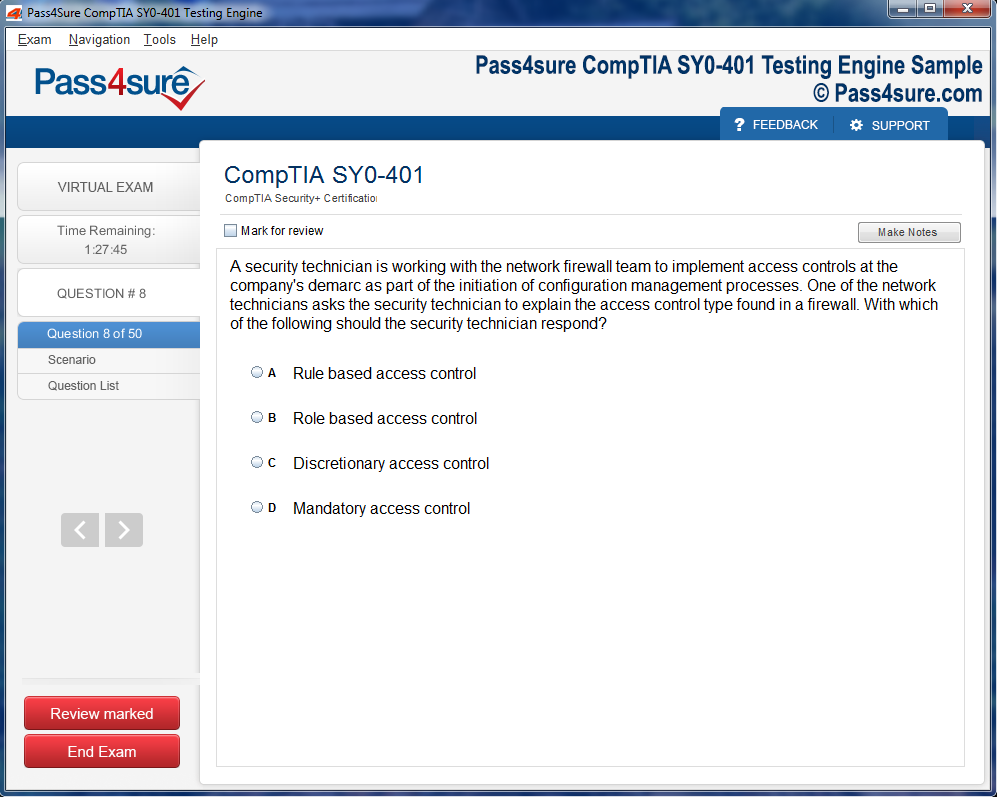
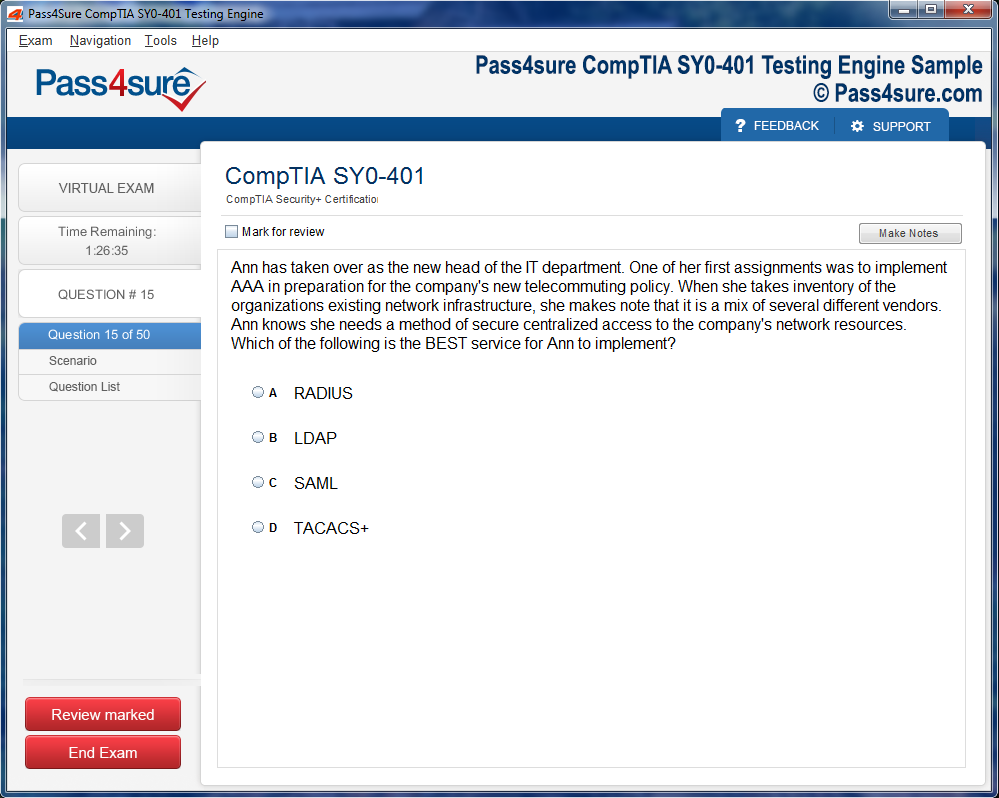
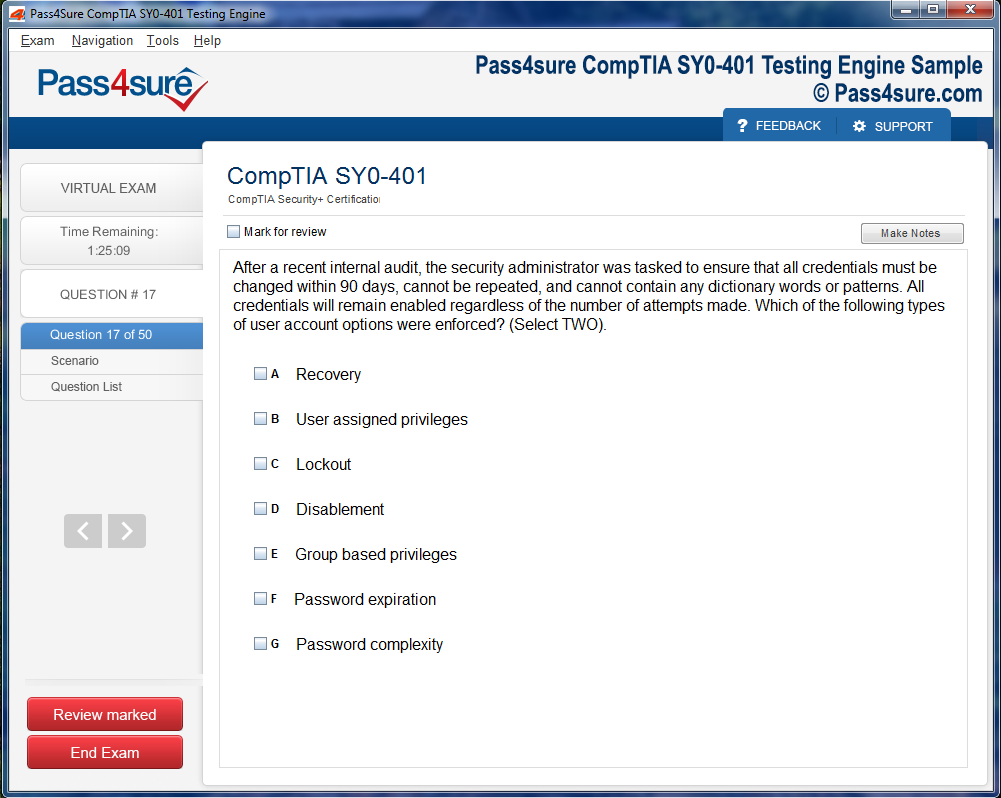
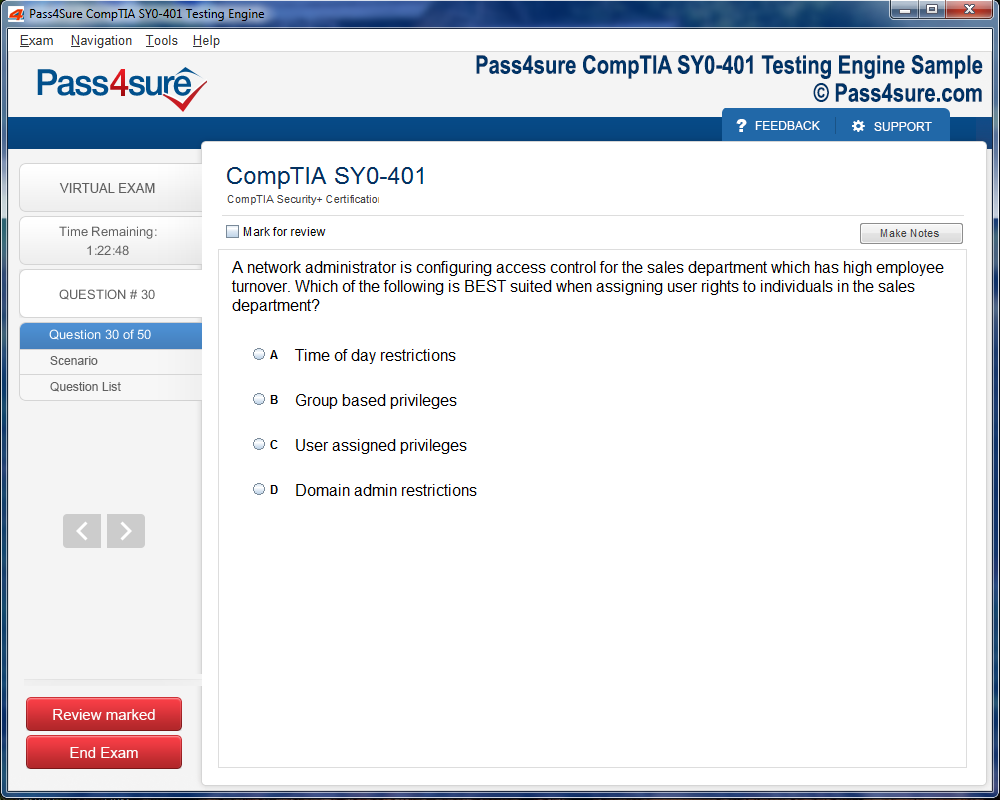
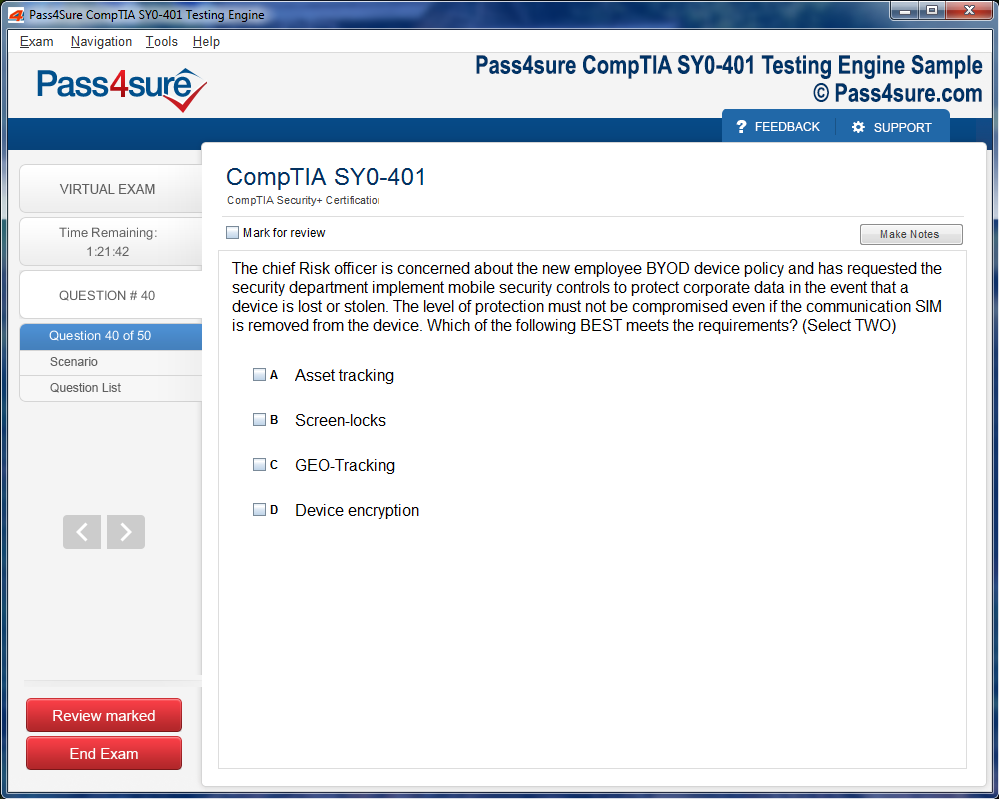
Product Screenshots





Frequently Asked Questions
How does your testing engine works?
Once download and installed on your PC, you can practise test questions, review your questions & answers using two different options 'practice exam' and 'virtual exam'. Virtual Exam - test yourself with exam questions with a time limit, as if you are taking exams in the Prometric or VUE testing centre. Practice exam - review exam questions one by one, see correct answers and explanations.
How can I get the products after purchase?
All products are available for download immediately from your Member's Area. Once you have made the payment, you will be transferred to Member's Area where you can login and download the products you have purchased to your computer.
How long can I use my product? Will it be valid forever?
Pass4sure products have a validity of 90 days from the date of purchase. This means that any updates to the products, including but not limited to new questions, or updates and changes by our editing team, will be automatically downloaded on to computer to make sure that you get latest exam prep materials during those 90 days.
Can I renew my product if when it's expired?
Yes, when the 90 days of your product validity are over, you have the option of renewing your expired products with a 30% discount. This can be done in your Member's Area.
Please note that you will not be able to use the product after it has expired if you don't renew it.
How often are the questions updated?
We always try to provide the latest pool of questions, Updates in the questions depend on the changes in actual pool of questions by different vendors. As soon as we know about the change in the exam question pool we try our best to update the products as fast as possible.
How many computers I can download Pass4sure software on?
You can download the Pass4sure products on the maximum number of 2 (two) computers or devices. If you need to use the software on more than two machines, you can purchase this option separately. Please email sales@pass4sure.com if you need to use more than 5 (five) computers.
What are the system requirements?
Minimum System Requirements:
- Windows XP or newer operating system
- Java Version 8 or newer
- 1+ GHz processor
- 1 GB Ram
- 50 MB available hard disk typically (products may vary)
What operating systems are supported by your Testing Engine software?
Our testing engine is supported by Windows. Andriod and IOS software is currently under development.
Master Pega 7.4 System Design with PegaSystem PEGACSA74V1 Certification
The landscape of Pega 7.4 system design is suffused with intricate interconnections that demand meticulous comprehension. A system architect navigating this terrain encounters a multilayered ecosystem, each stratum orchestrating a delicate balance between process agility and system integrity. At the core lies the PegaRULES engine, an analytical nexus where rules are not static artifacts but dynamic entities capable of evolving with business exigencies. Within this engine, rulesets are organized hierarchically, and circumstancing rules enable context-aware decisioning, forming a lattice of logical precision that underpins the system's operational fidelity.
Case Management Paradigm
Case types in Pega 7.4 serve as the linchpins of process orchestration, encapsulating workflows from inception to resolution. Each case unfolds through stages, processes, and steps that reflect real-world business dynamics. System architects must craft cases that are simultaneously standardized and flexible, ensuring adaptability without fracturing systemic coherence. The choreography of stages involves careful consideration of dependencies, exception handling, and milestone tracking, producing a framework where automation and human intervention coalesce seamlessly.
Integration and Connectivity
The integration architecture of Pega 7.4 exemplifies technical sophistication. Connectors and services facilitate communication with external applications, databases, and messaging frameworks. Architects must discern optimal communication protocols—whether REST, SOAP, or JMS—while balancing latency, throughput, and transactional integrity. Integration strategies also encompass resiliency, ensuring that transient failures are absorbed without cascading disruptions. A nuanced understanding of both technical specifications and underlying business imperatives is essential to maintain seamless data flow across the enterprise ecosystem.
Data Design and Management
Data in Pega 7.4 is both the substrate and the lifeblood of system functionality. Persistent storage of case and work object information occurs primarily within the PegaRULES database, yet architects frequently leverage external sources to enhance data richness. Data pages, a distinctive abstraction, provide ephemeral yet consistent access to disparate data sources. Designing effective data pages requires harmonizing scope, refresh strategy, and load balancing, ensuring that information is timely, accurate, and synchronized across multiple application layers. The interplay between transient and persistent data structures dictates performance, reliability, and scalability.
User Experience Architecture
User interfaces in Pega 7.4 are sculpted with meticulous attention to context and role-specific workflows. Sections, harnesses, and portals provide tailored views, guiding users through complex processes with clarity and efficiency. The system architect must envisage interfaces not merely as navigational tools but as immersive experiences, where user input drives case evolution. Attention to accessibility, responsiveness, and visual coherence ensures that users remain engaged while cognitive friction is minimized. The fusion of process logic with intuitive interface design amplifies system usability and operational efficiency.
Performance Optimization
Performance considerations permeate every aspect of Pega 7.4 architecture. Sophisticated queuing mechanisms, background processing, and task delegation alleviate peak loads and optimize throughput. Architects analyze transaction patterns, identify concurrency bottlenecks, and design scaling strategies that balance horizontal and vertical expansion. Caching, database indexing, and efficient rule resolution serve as critical levers in maintaining responsiveness. Continuous performance instrumentation, coupled with iterative tuning, enables architects to craft systems that are both resilient under stress and nimble in day-to-day operations.
Security and Governance
Security architecture in Pega 7.4 transcends conventional access controls. Role-based access, data encryption, and secure integration practices safeguard sensitive information across multiple layers. Architects must anticipate potential vulnerabilities, embedding security measures that adhere to regulatory frameworks without impeding operational fluidity. Governance structures complement security, ensuring that rulesets, application versions, and deployment pipelines are orchestrated with precision. Change management, traceability, and impact analysis form an integral toolkit, supporting collaborative development while preserving architectural integrity.
Extensibility and Evolution
Pega 7.4 architecture thrives on extensibility, allowing integration with custom modules, emerging technologies, and artificial intelligence capabilities for decisioning. Architects must judiciously determine when to extend native functionality, balancing innovation with maintainability. The ongoing evolution of system design requires foresight, technical mastery, and strategic alignment. By synthesizing these elements, architects construct robust, scalable, and adaptive solutions that align seamlessly with organizational objectives and respond to shifting business landscapes.
Process Orchestration and Rule Strategy
The orchestration of business processes in Pega 7.4 demands a sophisticated rule strategy. Rules are deployed not only to automate repetitive tasks but also to inject context-sensitive intelligence into workflows. Circumstancing, versioning, and rule delegation enable modularity, ensuring that changes can be applied incrementally without destabilizing the entire system. The interplay between declarative and procedural rules allows for proactive case management, where the system anticipates outcomes and dynamically adjusts processes, enhancing both efficiency and user satisfaction.
Integration of Decisioning and AI
Advanced decisioning capabilities in Pega 7.4 extend the system's cognitive footprint. Predictive analytics, adaptive models, and AI-driven recommendations inform decision strategies, enabling personalized outcomes and optimizing operational efficiency. System architects must design decision flows that harmonize AI insights with established business rules, ensuring consistency while embracing adaptive intelligence. This integration transforms static workflows into responsive systems capable of learning from historical patterns and real-time inputs.
Scalability and System Resilience
Scalability in Pega 7.4 is not merely a function of hardware resources but an architectural principle embedded in process design, rule execution, and data management. Architects plan for high availability, fault tolerance, and horizontal scaling, ensuring that system performance remains consistent under varying load conditions. Resiliency is reinforced through proactive monitoring, automated recovery procedures, and redundancy in both application and data layers. The system's elasticity is thus a direct reflection of deliberate architectural foresight.
Collaboration and Lifecycle Management
The collaborative dimension of Pega 7.4 extends across development, testing, and deployment lifecycles. Architects foster synergy among cross-functional teams by enforcing standards, managing ruleset hierarchies, and orchestrating version control. Lifecycle management ensures seamless transitions between environments, with governance protocols mitigating conflict and preserving system stability. By integrating collaboration into the architecture, Pega 7.4 projects achieve operational coherence while accommodating rapid innovation.
Advanced Integration Patterns
Complex integrations within Pega 7.4 necessitate nuanced architectural patterns. Service orchestration, messaging queues, and hybrid connector strategies enable multi-system interoperability. Architects evaluate trade-offs between synchronous and asynchronous communication, balancing immediacy with reliability. Advanced patterns also incorporate error-handling frameworks and monitoring mechanisms, ensuring that integrations remain resilient and maintain data fidelity across distributed environments.
Analytical Insights and Reporting
Data-driven insights are intrinsic to Pega 7.4's architecture. Real-time reporting, predictive analytics, and operational dashboards provide transparency into process efficiency and system health. Architects design reporting structures that harmonize with case lifecycles, ensuring that analytics are contextual, actionable, and aligned with business objectives. The integration of analytical intelligence into operational flows enhances decision-making, accelerates response times, and elevates organizational agility.
Rule Resolution Optimization
Efficient rule resolution is a cornerstone of Pega 7.4 performance. The system employs algorithms that determine the most appropriate rule instance, factoring in inheritance, circumstances, and rule delegation. Architects optimize rule hierarchies, minimize redundant evaluations, and leverage declarative processing where appropriate. This meticulous approach ensures that the system remains agile even as rule complexity escalates, preserving responsiveness and maintaining operational coherence.
Customization and Extensibility
Pega 7.4 encourages judicious customization, allowing architects to tailor solutions without compromising maintainability. Custom code, reusable components, and bespoke integrations extend platform capabilities while preserving core functionality. The challenge lies in striking a balance between innovation and system coherence, ensuring that customizations integrate seamlessly with native rules, data models, and user interfaces.
Operational Monitoring and Maintenance
Sustaining Pega 7.4 systems demands proactive monitoring and maintenance. Performance dashboards, exception logs, and automated alerts enable architects to identify bottlenecks and remediate issues swiftly. Preventive maintenance, coupled with iterative optimization, ensures that system reliability remains high and operational continuity is preserved. The architecture is thus not static but a living framework, continuously tuned to meet evolving demands.
Advanced Case Lifecycle Dynamics
In Pega 7.4, the lifecycle of a case transcends mere linear progression. Each case embodies a microcosm of enterprise activity, punctuated by decision junctures, parallel task executions, and conditional transitions. Stages are not simply sequential; they are interwoven with triggers, dependencies, and event-driven stimuli that dictate the next course of action. Architects must perceive the case as an evolving organism, where each interaction modifies its trajectory and outcome probability. This conceptualization demands mastery of Pega’s flow rules, subflows, and harnessing capabilities to embed adaptability into the core architecture.
Interweaving human judgment with automated responses necessitates meticulous orchestration. Cases often require discretionary input from subject matter experts, which introduces variability in timing and quality of decisions. Workflow orchestration in Pega 7.4 addresses this by dynamically allocating tasks based on skill competency, workload distribution, and historical performance metrics. Intelligent work queues and real-time routing ensure that each task reaches the most suitable resource, minimizing latency and maximizing accuracy. This dynamic allocation also allows enterprises to scale operations without proportional increases in administrative overhead.
Intelligent Decisioning and Predictive Guidance
Decisioning extends beyond static rule execution; it is a conduit for cognitive automation. Pega 7.4 enables predictive decisioning where historical patterns, behavioral analytics, and contextual inputs converge to anticipate outcomes and propose optimal interventions. Decision trees, when fused with real-time predictive models, allow the system to preemptively redirect cases, flag anomalies, and reduce human intervention on routine scenarios. The architect’s responsibility is to design decision frameworks that balance automation with oversight, preventing decision fatigue while preserving auditability and compliance.
Embedded within these decision frameworks is the principle of traceability. Every decision point must be transparent, with auditable logs detailing inputs, logic paths, and resulting actions. This traceability is critical in regulated industries where accountability is paramount. By architecting decision flows with visibility in mind, enterprises mitigate operational risk and enhance stakeholder confidence in automated processes.
Seamless Collaboration Ecosystems
Collaboration within Pega 7.4 is not ancillary; it is integral to case evolution. The work party construct allows diverse stakeholders—internal teams, external vendors, and automated agents—to interact with shared visibility and accountability. Messaging, notifications, and contextual alerts are woven into the case lifecycle, creating a persistent communication thread that chronicles every intervention and decision. The architect’s mandate is to ensure these collaboration channels are intuitive, secure, and contextually relevant, reducing cognitive load while fostering real-time alignment among participants.
Moreover, collaborative mechanisms support knowledge propagation. As cases traverse stages, embedded decision rationales and historical annotations accumulate into a knowledge reservoir, empowering future cases with precedent-based guidance. This accumulation transforms the platform into a self-reinforcing learning ecosystem, where patterns and insights emerge organically from daily operational activity.
Integrated Data Orchestration
Data is the lifeblood of intelligent workflows. In Pega 7.4, data orchestration underpins both operational execution and analytical insight. Data pages act as curated repositories, providing a consistent, unified view of critical information across cases. Service integrations enable both synchronous and asynchronous interactions with external systems, ensuring real-time responsiveness without overloading the ecosystem. Architects must calibrate caching strategies, refresh intervals, and data scoping meticulously, as these decisions directly influence performance, reliability, and user experience.
The interplay of operational and reference data within workflows also allows for proactive intervention. By correlating historical trends, real-time inputs, and contextual signals, the system can identify deviations, trigger corrective actions, and maintain continuity. This data-driven orchestration elevates Pega cases from static workflows to anticipatory, intelligent processes that adapt to fluctuating business environments.
Resilience and Exception Management
In dynamic enterprise landscapes, exceptions are inevitable. Pega 7.4 equips architects with robust mechanisms to handle deviations without systemic disruption. Exception flows, escalation rules, and automated reassignment ensure that cases encountering anomalies continue progressing toward resolution. Error-handling strategies can be layered with contingency decisioning, enabling workflows to adapt intelligently based on the nature, severity, and recurrence of exceptions.
Furthermore, resilience extends beyond technical mechanisms; it encompasses process architecture. Anticipating potential choke points, modeling fallback sequences, and simulating stress scenarios enable architects to embed robustness into the foundation of every case. This proactive design philosophy mitigates operational risk while maintaining service quality and user confidence.
Insights, Monitoring, and Continuous Refinement
Visibility into case performance is a critical enabler of operational excellence. Pega 7.4 provides rich monitoring capabilities, including dashboards, real-time metrics, and process mining analytics. These insights illuminate bottlenecks, highlight process inefficiencies, and uncover latent patterns in task execution. Architects leverage these findings to iterate on process design, refine routing logic, and enhance decisioning models, creating a cycle of continuous improvement that evolves with enterprise objectives.
The ability to correlate workflow performance with business outcomes empowers leadership with actionable intelligence. By translating operational metrics into strategic insight, enterprises can optimize resource allocation, identify training gaps, and align process improvements with broader organizational imperatives. This fusion of operational monitoring and strategic foresight epitomizes the next-generation capabilities of Pega 7.4 in high-performance environments.
Sophisticated Property Structures and Inheritance Nuances
In Pega 7.4, properties are the elemental carriers of information within the data model, yet their management transcends mere storage. Architects orchestrate intricate hierarchies, leveraging inheritance to propagate common attributes across classes while preserving specificity in subclasses. This stratified design reduces redundancy, fosters consistency, and empowers rules to access coherent datasets without manual duplication. Complex properties, encompassing embedded lists and page references, enable modeling of real-world phenomena such as customer interactions, transactional histories, or nested service entities. The judicious use of property scoping further delineates the accessibility of data, ensuring that contextually sensitive information remains encapsulated within its intended operational envelope.
Data Pages as Dynamic Orchestrators
Data pages in Pega serve not only as transient caches but as dynamic orchestrators of operational intelligence. They aggregate data from heterogeneous sources, whether through connectors, reports, or calculated properties, into consumable structures for business processes. Architecting data pages requires consideration of refresh strategies, load balancing, and system impact. The ephemeral nature of these pages allows the application to maintain agility while avoiding unnecessary persistence overhead. Additionally, parameterized data pages permit context-sensitive retrievals, providing precise data tailored to individual user interactions, transaction types, or workflow stages, which enhances responsiveness and reduces latency.
Declarative Rules and Reactive Intelligence
Declarative rules epitomize the reactive essence of Pega applications, functioning as autonomous agents that propagate changes across the system when inputs evolve. The creation of decision tables, decision trees, and declare expressions allows architects to embed nuanced business logic that responds seamlessly to environmental or transactional shifts. These rules can interoperate with data pages and connectors, enabling a cascade of updates across multiple properties and records without explicit procedural intervention. The integration of declarative logic fosters a resilient and adaptive application layer where dependencies are intelligently managed, reducing human intervention and mitigating the risk of inconsistencies.
Layered Architecture for Evolutionary Agility
Application layering is a crucible of maintainability and strategic evolution. Rulesets, harnesses, flows, and components can be orchestrated in ascending hierarchies to separate concerns and isolate changes. This compartmentalization allows enhancements to be introduced incrementally without destabilizing core functionality. Architects benefit from a modular approach, where domain-specific rules can coexist with enterprise-wide policies, enabling agile adaptation to regulatory shifts, market demands, or organizational realignments. The careful orchestration of layering supports parallel development, facilitates controlled deployment, and ensures that modifications remain reversible, preserving operational continuity and minimizing regression risks.
Optimized Rule Resolution and System Performance
Performance tuning at the application layer is a delicate interplay of rule resolution efficiency, caching strategies, and judicious data access. Pega’s resolution mechanism traverses layered rulesets to locate the optimal rule for execution, and architects must meticulously configure priorities, availability, and inheritance paths to prevent bottlenecks. Transient storage and asynchronous processing are pivotal in balancing responsiveness with resource utilization, particularly in high-volume transactional environments. The implementation of cacheable data pages and prudent query optimization further accelerates interactions, ensuring that the system retains a nimble and user-centric performance profile even under fluctuating load conditions.
Security, Compliance, and Contextual Governance
Security within the data model and application layer is an omnipresent concern that intersects architecture, operations, and compliance. Role-based access, property-level security, and declarative access strategies ensure that data is exposed strictly according to organizational rules. Encryption at rest and in transit, coupled with audit trails, provides a forensic lens into system activity, safeguarding sensitive information and maintaining compliance with regulatory mandates. Architects must anticipate potential attack vectors, including injection, manipulation, or unauthorized propagation of sensitive properties, ensuring that protective measures are both robust and seamlessly integrated into the application’s functional flows.
Integrating External Systems with Connectors
Connectors form the vital nexus between Pega applications and external systems, facilitating a continuous and bidirectional flow of information. Whether integrating with CRM, ERP, or third-party analytics platforms, connectors abstract communication protocols, data transformations, and exception handling. Architects define mapping rules, error-handling procedures, and retry mechanisms to maintain integrity and continuity of operations. Properly designed connectors ensure that external dependencies do not compromise the responsiveness or resilience of the application, enabling seamless orchestration of composite business processes that span organizational boundaries.
Analytical and Predictive Layering
The fusion of data modeling and application layering permits the infusion of predictive intelligence and analytical acuity into operational processes. By leveraging structured and semi-structured datasets, Pega architects can implement machine learning-driven decision strategies, risk scoring, and customer behavior prognostics. Data pages, declarative rules, and connectors converge to supply real-time insights, while layered application constructs ensure that advanced models coexist without perturbing transactional stability. This approach transforms the application from a static procedural engine into an anticipatory system, capable of adaptive behavior and preemptive recommendations that enhance business outcomes and user satisfaction.
Adaptive Change Management in Layered Environments
Change management within a layered architecture demands foresight, meticulous orchestration, and a granular understanding of dependencies. By isolating rulesets and application versions, architects can propagate enhancements in a controlled manner, minimizing operational friction. Versioning, rollback capabilities, and test harnesses embedded within the layering strategy allow organizations to validate changes in isolated contexts before promotion to production. This methodology supports continuous improvement cycles, iterative enhancements, and proactive resolution of defects, while preserving the coherence and stability of the application ecosystem.
Synthesis of Flexibility and Structural Discipline
Ultimately, Pega’s data modeling and application layering converge to create an environment where flexibility is harmonized with structural discipline. Architects are entrusted with crafting data constructs and layered assemblies that are simultaneously robust, adaptive, and conducive to innovation. The interplay of declarative intelligence, ephemeral data orchestration, and modular layering ensures that applications are responsive to evolving business landscapes while maintaining operational integrity. This synergy allows enterprises to scale, adapt, and innovate with confidence, ensuring that each incremental enhancement integrates seamlessly into a resilient and intelligent framework.
Integration as an Enterprise Nexus
Integration within Pega 7.4 manifests as the nucleus of digital cohesion, where disparate systems coalesce into a harmonized orchestration of business logic. It is not merely a technical interlinkage but a conduit for enterprise fluency, enabling transactional continuity and operational synchronicity. Connectors and services operate as conduits, bridging Pega applications with external repositories, legacy systems, and cloud-native platforms. The judicious selection between RESTful endpoints, SOAP interfaces, JMS brokers, or direct database interactions demands a nuanced understanding of throughput, latency tolerance, and transactional fidelity. Each modality embeds trade-offs: REST excels in stateless agility, SOAP in structured robustness, JMS in asynchronous orchestration, and database connections in transactional immediacy.
Synchronization and Data Fidelity
The lifeblood of integration is data coherence. Synchronization strategies ensure that distributed information maintains integrity across heterogeneous ecosystems. Architects employ mechanisms such as cache invalidation, temporal refresh cycles, and real-time streaming to reconcile state across systems. Data pages, when orchestrated with precision, function as ephemeral reservoirs, optimizing retrieval while minimizing latency. Integration connectors mediate flow, translating and normalizing disparate data structures, mitigating schema divergence, and preempting transactional anomalies. Exception handling frameworks fortify these processes, enabling graceful degradation in the face of network perturbations or incomplete payloads, ensuring that operational continuity is preserved without systemic disruption.
Event-Driven Paradigms
Event-driven design augments integration with reactive intelligence, transforming static workflows into dynamic, stimulus-responsive processes. Listeners, event subscriptions, and message queues act as sentinels, triggering actions in response to external stimuli. The architectural choreography requires idempotency and fault tolerance; redundant processing must be mitigated, while ensuring that state mutations are both consistent and traceable. Event-driven mechanisms infuse agility into enterprise operations, enabling near-instantaneous adaptation to market fluctuations, user behaviors, and infrastructural events. Architects must calibrate concurrency, queue depth, and retry policies, ensuring that reactive processes scale symbiotically with transaction intensity.
Security and Trust Constructs
Integration surfaces are inherently sensitive, and security cannot be an afterthought. Authentication protocols, token management schemas, and encryption standards converge to safeguard data in transit. Architectures are designed with vigilant access control, anticipating threat vectors from both internal and external actors. Regulatory compliance, encompassing privacy mandates and cross-border data governance, must be baked into every connector and service. Security strategies extend to auditing, anomaly detection, and continuous validation of credentials, establishing a resilient perimeter around integration touchpoints. In a landscape where trust is paramount, these mechanisms form the bedrock of enterprise credibility.
Performance Alchemy
The efficacy of integration is inseparable from its performance. Architects analyze transaction cadence, concurrency bottlenecks, and computational overhead to architect for maximal throughput and minimal latency. Strategies such as asynchronous queuing, batching, and load distribution mitigate resource contention while maintaining consistency. Performance tuning extends beyond raw speed, encompassing resilience against transient failures, temporal spikes, and cascading errors. The result is an integration ecosystem that scales intuitively, responding elastically to evolving enterprise demands without compromising stability or fidelity.
Observability and Operational Cognition
Monitoring transforms integration from a black box into a visible, intelligible system. Metrics collection, logging pipelines, and operational dashboards provide real-time insight into performance anomalies, throughput variances, and systemic inefficiencies. Observability enables proactive remediation, ensuring that issues are addressed before they metastasize into critical failures. Furthermore, insights from continuous monitoring feed back into architectural refinement, informing the selection of connectors, data orchestration patterns, and performance optimizations. This cyclic learning process fortifies the integration landscape, rendering it both adaptive and anticipatory.
Evolution and Extensibility
Integration is inherently evolutionary, requiring a framework that accommodates technological innovation and shifting business priorities. Pega 7.4’s extensibility—through custom connectors, rule configurations, and APIs—empowers architects to innovate while preserving systemic cohesion. The integration architecture must balance rigidity with flexibility, ensuring that new interfaces can be absorbed seamlessly without destabilizing existing processes. By harmonizing agility, reliability, and security, enterprises can construct a resilient connective lattice, capable of sustaining complexity while remaining responsive to emergent requirements and unforeseen perturbations.
Performance Optimization and Scalability in Pega 7.4
Performance optimization in Pega 7.4 transcends mere acceleration; it embodies the orchestration of computational elegance, resource harmonization, and anticipatory architecture. System architects are tasked with discerning latent bottlenecks that arise not only from case execution but also from the labyrinthine interplay of rulesets, database queries, and integration conduits. The holistic vision encompasses both immediate perceptual responsiveness for end-users and deferred efficiency for background orchestrations.
Rule Resolution and Declarative Prudence
The fulcrum of Pega’s performance is rule resolution, a nuanced mechanism where hierarchical inheritance, circumstantial applicability, and version precedence converge. Architects must cultivate a deep awareness of frequently invoked rules, pruning redundant execution paths and streamlining logic hierarchies. Declarative rules, while exuding expressive potency, possess latent computational gravity; cascading recalculations can propagate system strain if left unregulated. Astute management of these constructs ensures equilibrium between declarative elegance and operational pragmatism.
Database Cognition and Cache Orchestration
Underlying Pega’s case management, relational databases sustain vast repositories of case objects, temporal snapshots, and auxiliary constructs. Optimal indexing strategies, judicious join configurations, and query rationalization form the bedrock of database efficiency. Pega’s in-memory caching mechanisms, when tuned with precision, attenuate latency and mitigate repeated disk access. Architects orchestrate cache refresh intervals and scope definitions to maintain fidelity without imposing undue load, ensuring that both immediacy and consistency coexist.
Horizontal and Vertical Scalability Dynamics
Scalability within Pega is a dual-faceted endeavor. Horizontal expansion leverages distributed nodes and cluster cohesion to disperse workload, whereas vertical augmentation exploits resource enrichment—CPU cycles, memory allocation, and threading optimization. Load balancing algorithms harmonize session persistence, queue processor distribution, and deferred execution strategies, ensuring operational continuity under fluctuating demand. This stratified approach fortifies system elasticity, preserving responsiveness even amidst surges of concurrent activity.
Monitoring, Diagnostics, and Proactive Refinement
Continuous observability is indispensable. Pega equips architects with telemetry, instrumentation, and dashboard analytics, revealing both overt and subtle inefficiencies. Execution traces, latency patterns, and resource consumption metrics provide actionable insights for iterative tuning. Predictive analysis, leveraging historical trends and workload forecasting, empowers architects to anticipate emergent pressure points, enabling preemptive optimization rather than reactive mitigation.
Security-Aware Performance Engineering
Performance optimization exists in symbiosis with security imperatives. Encryption schemas, authentication workflows, and auditing mechanisms introduce inherent overhead. Architects navigate this tension by implementing selective encryption, tokenized session management, and streamlined access validation. The objective is a dual assurance of operational integrity and sustained system agility, where neither dimension is sacrificed for the other.
Iterative Refinement and Adaptive Evolution
Performance management in Pega is not static but evolutionary. Architects embrace cyclical profiling, stress testing, and recalibration as perpetual instruments of refinement. Emerging AI-driven monitoring augments human oversight, detecting anomalies, predicting bottlenecks, and suggesting interventions. System architecture thus evolves symbiotically with business exigencies, harmonizing efficiency, resilience, and user-centric responsiveness into a living, adaptive ecosystem.
Governance as an Architectural Compass
Governance in Pega 7.4 operates as an architectural compass, guiding system evolution with precision. It is not merely administrative oversight but a sophisticated orchestration of standards, protocols, and procedural rigour. Through meticulous configuration of rulesets, version hierarchies, and access schemas, architects engender a platform that is simultaneously flexible and resilient. This layered oversight ensures that modifications propagate systematically, preserving operational integrity and mitigating latent risks. Auditing mechanisms provide a panoramic view of changes, offering a narrative of system evolution that supports both accountability and foresight.
Deployment as a Strategic Continuum
Deployment in Pega transcends simple release management; it is a strategic continuum of operational continuity. Incremental deployments enable fine-grained updates that preserve ongoing business functions, whereas full-stack migrations deliver holistic transformations with controlled disruption. Each deployment is buttressed by preemptive validation and automated testing frameworks, ensuring that regressions are intercepted before reaching production. Environmental orchestration, including service endpoints and database configurations, is choreographed to harmonize system behaviour across multiple landscapes. Rollback procedures act as a safeguard, providing elasticity in the face of unforeseen anomalies.
Innovation through Adaptive Intelligence
Strategic innovation in Pega 7.4 manifests as adaptive intelligence, blending process automation with cognitive augmentation. AI-driven decisioning, predictive analytics, and robotic process orchestration empower systems to evolve beyond static rule execution into dynamic, context-sensitive processes. Architects must navigate a delicate balance, extending native capabilities without introducing systemic entropy or maintenance burdens. Innovation is neither sporadic nor superficial; it is the deliberate calibration of technological augmentation to enterprise imperatives. Each enhancement is a conduit for operational dexterity, transforming routine workflows into anticipatory, responsive processes.
Continuous Feedback as an Evolutionary Engine
Monitoring and continuous feedback act as the evolutionary engine of both governance and innovation. Real-time performance metrics, process analytics, and user interaction patterns form a rich tapestry of insights that inform architectural refinement. Decision points regarding process redesign, rules optimization, and integration reconfiguration are anchored in empirical data rather than conjecture. This iterative paradigm fosters agility, enabling the system to adapt incrementally to emergent business requirements while preserving structural coherence. Feedback loops operate as a subtle form of intelligence, translating operational noise into actionable insight.
Security as a Foundational Imperative
Security and compliance are foundational imperatives interwoven into every architectural decision. Governance frameworks enforce granular access policies, traceable audit trails, and adherence to regulatory mandates. Deployment pipelines integrate vulnerability assessments, secure communication protocols, and privacy-preserving mechanisms, ensuring that innovation does not compromise resilience. Architects serve as custodians of both system fidelity and data sanctity, embedding security into the lifecycle rather than treating it as an ancillary concern. This proactive posture fortifies enterprise trust and operational continuity.
Collaborative Synergy Across Domains
Effective governance catalyzes collaborative synergy among development, operations, and business units. Structured decision-making frameworks, coupled with transparent change management protocols, harmonize priorities and mitigate conflict. Traceability mechanisms provide a shared understanding of system evolution, allowing cross-functional teams to respond nimbly to shifting requirements. Communication channels are not mere conduits but instruments of strategic alignment, ensuring that innovations are comprehensively integrated and operationalized across organizational domains. Collaboration thus becomes both a methodology and a cultural imperative.
The Architect as Strategic Conductor
The role of the Pega architect extends beyond technical implementation into strategic orchestration. Architects choreograph the interplay of stability, scalability, and adaptability, ensuring that the platform evolves in synchrony with enterprise vision. Each decision—be it a ruleset configuration, a deployment schema, or an innovation initiative—reflects a deliberate strategy to maximize operational dexterity while minimizing systemic fragility. In this capacity, Pega 7.4 transforms from a transactional automation tool into a strategic instrument, capable of navigating complex, multifaceted business landscapes. Through governance, deployment discipline, and iterative innovation, architects shape a living system, one that is simultaneously resilient, intelligent, and forward-looking.
Governance as a Dynamic Framework
Governance in Pega 7.4 extends beyond static policy enforcement; it is a dynamic framework that adapts to organizational flux. Every rule, flow, and data element is governed by meticulous oversight that ensures compliance, traceability, and strategic alignment. By instituting version hierarchies and dependency maps, architects create a lattice of operational certainty that reduces the risk of systemic divergence. Governance is simultaneously prescriptive and adaptive—it defines boundaries while allowing controlled experimentation within those confines. Through this duality, organizations can innovate confidently without fracturing their operational core.
Role-based access models are a critical component of governance, dictating the precise privileges for each stakeholder. Fine-grained access controls prevent unauthorized manipulation of rules or data while providing transparency into system interactions. Audit logs capture the granular evolution of applications, forming a forensic repository that can be analyzed retrospectively for process refinement or compliance verification. This capability transforms governance from a bureaucratic necessity into an active enabler of both trust and agility, ensuring that the system remains robust under scrutiny.
Orchestrating Deployment Pipelines
Deployment in Pega is an orchestration of complexity, where multiple interdependent elements converge to realize functional excellence. Architects design pipelines that accommodate parallel development streams, ensuring that incremental innovations propagate seamlessly across environments. Continuous integration frameworks validate code, rules, and configurations at each stage, providing early detection of anomalies that could disrupt production systems. Deployment is thus not a single event but a meticulously choreographed continuum of validation, migration, and monitoring.
Environment-specific configurations are orchestrated with precision. Connection strings, external service endpoints, and security certificates are managed in a controlled fashion, eliminating inconsistencies that could undermine system reliability. Rollback mechanisms are embedded at multiple levels, providing resilience against inadvertent disruptions. This level of operational sophistication ensures that business continuity is maintained, even as new features, integrations, and optimizations are introduced. In essence, deployment pipelines transform technical changes into predictable, high-fidelity business outcomes.
Strategic Innovation through Integrative Intelligence
Pega 7.4 empowers organizations to transcend traditional automation through integrative intelligence. Artificial intelligence modules, decision strategies, and robotic process automation converge to form adaptive systems capable of learning from interactions and anticipating outcomes. The implementation of predictive analytics enables processes to dynamically adjust based on historical patterns, while sentiment analysis and context-aware decisioning imbue workflows with nuanced understanding. Architects must carefully integrate these capabilities, ensuring that they complement rather than complicate the foundational system architecture.
Innovation is iterative and deeply contextual. Each enhancement must align with overarching enterprise objectives, ensuring that technology amplifies rather than distracts from strategic goals. By leveraging Pega’s extensibility, organizations can embed cognitive logic into processes, creating systems that evolve in tandem with both business demands and user behavior. These intelligent processes reduce operational latency, enhance user experience, and provide actionable insights that inform continuous process refinement.
Monitoring and Adaptive Feedback Loops
Monitoring is not merely observation—it is the conduit for adaptive feedback loops that drive systemic evolution. Pega 7.4 supports real-time telemetry, capturing performance metrics, transaction histories, and user engagement patterns. These data streams are analyzed to identify inefficiencies, bottlenecks, or deviation from expected outcomes. Insights derived from this continuous observation guide rule adjustments, workflow reconfigurations, and integration optimizations. The system becomes self-reinforcing, where each cycle of monitoring and adjustment fosters incremental improvement, cultivating a culture of perpetual operational refinement.
Adaptive feedback loops are particularly potent when combined with predictive analytics. Anticipatory alerts signal potential disruptions before they manifest, allowing architects and operational teams to intervene preemptively. This proactive orientation transforms reactive maintenance into strategic orchestration, reducing downtime and enhancing the reliability of critical business processes. The confluence of monitoring, analytics, and feedback ensures that Pega systems remain resilient, agile, and continuously aligned with enterprise objectives.
Security as an Enduring Mandate
Security is interwoven into every architectural thread, forming an enduring mandate that safeguards both data and process integrity. Governance frameworks enforce stringent access controls, encryption protocols, and audit trails that withstand scrutiny from regulatory bodies. Sensitive transactions are protected through secure APIs and tokenized authentication, ensuring that external integrations do not introduce vulnerabilities. Architects embed security considerations into the design phase rather than as an afterthought, creating systems that are inherently resilient to both internal and external threats.
Regulatory compliance is harmonized with operational agility. Role segregation, traceable decisioning, and audit-ready data structures ensure adherence to industry standards while enabling rapid deployment of innovations. Security audits, vulnerability assessments, and penetration testing are routine components of the governance cycle, providing assurance that systems are fortified against evolving threats. By embedding security into the DNA of Pega applications, organizations cultivate trust with stakeholders while maintaining the flexibility to innovate without compromising resilience.
Collaborative Governance and Cross-Functional Alignment
Effective governance catalyzes cross-functional collaboration, transforming isolated teams into a cohesive ecosystem. Decision-making frameworks delineate responsibilities and establish accountability, reducing the potential for misalignment or conflict. Transparent change management protocols ensure that modifications are visible across development, operations, and business units, facilitating informed dialogue and coordinated execution. This alignment is critical in complex enterprise landscapes, where interdependencies can amplify the impact of even minor alterations.
Traceability mechanisms enhance collaborative efficacy by providing a comprehensive view of system evolution. Each change, from rules modifications to deployment adjustments, is documented and accessible to stakeholders. This visibility fosters trust, reduces friction, and enables rapid adaptation to emerging business requirements. Collaborative governance thus functions as both a procedural safeguard and a strategic enabler, ensuring that innovation is pursued within a coherent and accountable operational framework.
Architectural Stewardship and Strategic Vision
The architect’s role in Pega 7.4 is both technical and visionary, blending operational stewardship with strategic foresight. Architects sculpt the system’s trajectory, balancing immediate functional needs with long-term adaptability. Each decision—be it the implementation of a ruleset, the orchestration of a deployment pipeline, or the integration of an AI module—reflects a deliberate strategy to maximize scalability, maintainability, and strategic alignment. Pega thus evolves from a transactional automation platform into an instrument of enterprise transformation, capable of supporting sophisticated business models with agility and precision.
Architects must also anticipate emergent technological trends, incorporating innovations such as low-code extensions, AI-driven decisioning, and robotic process augmentation in a manner that enhances system coherence. By harmonizing these innovations with foundational processes, they prevent architectural fragmentation and reduce maintenance complexity. The result is a living system, resilient yet adaptable, capable of sustaining enterprise operations while evolving in response to technological and market forces.
Embedding Resilience through Operational Discipline
Resilience in Pega 7.4 is cultivated through operational discipline. Governance ensures that every rule, workflow, and integration is subject to rigorous validation, while deployment protocols enforce consistency across environments. Continuous monitoring detects deviations, allowing for corrective action before they escalate into systemic disruptions. By embedding resilience into the operational DNA, organizations mitigate risk, enhance reliability, and maintain trust with stakeholders even amidst complex, high-volume transactional landscapes.
Operational discipline extends to resource management and system performance. Load balancing, queue management, and optimized database interactions reduce latency and prevent bottlenecks. Strategic deployment scheduling minimizes downtime, while rollback capabilities ensure recovery from unforeseen issues. This disciplined approach transforms Pega into a robust platform capable of sustaining high-performance operations without compromising agility or innovation potential.
Innovation Governance as a Strategic Lever
Innovation governance ensures that creative exploration does not compromise systemic integrity. Policies, approval workflows, and risk assessments guide the introduction of new functionalities, ensuring that they complement rather than conflict with existing architecture. This structured approach allows organizations to pursue technological evolution with confidence, balancing the desire for innovation with the necessity for operational stability. Architects act as curators of innovation, evaluating potential enhancements against long-term strategic goals and operational feasibility.
Through governance-informed innovation, Pega 7.4 becomes more than a process automation tool; it emerges as a strategic lever capable of shaping business outcomes. Integrating AI, advanced analytics, and robotic process orchestration within governed boundaries transforms routine operations into intelligent, adaptive, and anticipatory workflows. The symbiosis of governance and innovation thus empowers enterprises to pursue transformation with calculated audacity, turning operational insights into actionable strategies that drive sustainable competitive advantage.
Performance Optimization and Scalability in Pega 7.4
Architecting performance in Pega 7.4 demands a syncretic understanding of system kinetics, where workflows, integrations, and database interactions resonate in harmonic coherence. Performance is rarely a singular construct; it manifests as an emergent property of architectural foresight, computational parsimony, and anticipatory tuning. Latency, throughput, and resource utilization become interwoven metrics that cannot be optimized in isolation. Achieving optimal responsiveness necessitates a confluence of predictive analytics, workflow engineering, and strategic delegation of processing loads.
The end-user experience is a perceptual touchstone of performance, yet system architects must balance perceptual immediacy with the efficiency of background orchestrations. Tasks such as asynchronous processing, deferred evaluation, and batched updates permit the system to absorb high-throughput workloads without perceptible degradation. Architects conceptualize performance not only in terms of raw speed but as an elegant choreography of computational resourcefulness and latency mitigation.
Rule Resolution and Declarative Prudence
Rule resolution in Pega represents a lattice of hierarchical inheritance, version precedence, and circumstantial applicability. Each invocation entails traversing a complex graph of potential resolutions, where redundant paths or suboptimal circumstances amplify execution time. Architects engage in meticulous analysis of frequently executed rules, rationalizing their hierarchy to minimize traversal complexity. Advanced profiling uncovers latent inefficiencies, such as repeated evaluations of rules triggered by minor changes in declarative properties.
Declarative rules, including calculations, constraints, and dependencies, are powerful instruments of system intelligence but carry inherent computational gravity. Cascading updates can provoke reverberating recalculations, sometimes overwhelming even well-resourced environments. Effective performance design entails judicious scoping of declarative rules, establishing precise triggers, and leveraging optimization techniques such as isolating high-impact rules to minimal-case propagation zones. This equilibrium ensures that the expressiveness of declarative constructs does not compromise throughput or responsiveness.
Circumstantial rules amplify this complexity. Variations contingent upon organizational or case-specific conditions demand careful consideration, as poorly designed circumstantial layers can lead to excessive resolution paths. Architects often employ analytical modeling and rule resolution heatmaps to identify hotspots, pruning extraneous or rarely executed rule paths to reduce systemic overhead. Such fine-grained tuning transforms Pega from a functional orchestration engine into a performant, scalable ecosystem.
Database Cognition and Cache Orchestration
At the substrate of Pega’s architecture, relational databases host case objects, history tables, and auxiliary metadata. Optimizing database interactions is paramount, as inefficient queries, excessive joins, and unindexed search paths can precipitate systemic bottlenecks. Database tuning encompasses strategic indexing, query rationalization, and meticulous schema design, ensuring that the flow of read and write operations remains unencumbered.
Pega’s caching mechanism introduces an additional dimension of performance sophistication. Cache scopes, refresh intervals, and invalidation policies must be calibrated to balance data freshness with resource efficiency. Misconfigured caching can lead to stale data, redundant database hits, or memory exhaustion. Architects adopt layered caching strategies, employing node-level, session-level, and distributed caching judiciously to minimize latency while preserving consistency.
Moreover, cache orchestration interplays with background processing. Queue processors and agent-based mechanisms leverage cached data to expedite processing, reducing database contention during peak loads. Adaptive caching strategies, informed by usage patterns, ensure that high-demand data remains readily accessible without imposing undue memory overhead. Regular monitoring and automated tuning protocols enable the system to respond dynamically to evolving workload patterns, sustaining performance under diverse operational conditions.
Horizontal and Vertical Scalability Dynamics
Scalability in Pega encompasses both vertical and horizontal paradigms. Vertical scaling involves augmenting node resources, including CPU, memory, and thread allocation, thereby increasing individual node capacity. Horizontal scaling, conversely, distributes workloads across multiple nodes, facilitating high-availability clusters capable of absorbing variable user demands.
Architects design load-balancing strategies that harmonize session persistence, work object distribution, and service orchestration. Intelligent routing ensures that no single node becomes a performance bottleneck, while queue processor allocation mitigates backlogs and optimizes processing throughput. Deferred processing mechanisms, such as scheduled batch agents and asynchronous services, permit non-critical operations to execute without impeding user-perceived responsiveness.
Service-level agreements (SLAs) form another vector of scalability strategy. By assigning priority and urgency to work objects, Pega dynamically allocates resources, ensuring that high-priority cases are expedited while lower-priority work is deferred. This SLA-driven orchestration aligns resource utilization with business objectives, enhancing both operational efficiency and stakeholder satisfaction.
Architects must anticipate peak loads and system perturbations. Stress testing, synthetic load simulations, and predictive modeling reveal potential performance inflection points. Proactive scaling—adding nodes or dynamically adjusting thread pools—prevents degradation before it impacts end-users. This anticipatory approach transforms system architecture from reactive problem-solving to strategic performance engineering.
Monitoring, Diagnostics, and Proactive Refinement
Continuous observability is integral to sustained performance. Pega provides a robust suite of instrumentation tools, dashboards, and logging mechanisms that reveal execution anomalies, latency clusters, and resource utilization trends. Architects employ these tools to construct performance baselines, detect deviations, and implement corrective actions in near real-time.
Execution traces and telemetry reveal nuanced patterns, including cyclical load spikes, agent contention, and queue bottlenecks. Profiling at this granularity uncovers latent inefficiencies that might otherwise elude detection. Predictive analytics, leveraging historical usage and machine learning models, anticipate emergent workloads, enabling proactive adjustments in caching, thread allocation, and queue processing.
Diagnostics extend beyond mere observation. Architects engage in iterative tuning, analyzing the downstream effects of rule modifications, database indexing strategies, and integration patterns. This continuous refinement fosters a resilient performance ecosystem, capable of absorbing unanticipated spikes without compromising user experience or operational continuity.
Moreover, monitoring informs strategic architectural evolution. Identifying recurrent performance bottlenecks informs design revisions, such as modularizing high-impact rules, decoupling integration endpoints, or implementing more efficient declarative logic. Over time, this iterative approach cultivates a system architecture that is not only performant but inherently adaptive to business and technological evolution.
Security-Aware Performance Engineering
Security considerations intersect profoundly with performance optimization. Encryption protocols, authentication workflows, and auditing mechanisms introduce overhead, often subtly impacting response times. Architects must harmonize security and performance, deploying selective encryption, tokenized session management, and minimal-access principles without eroding system throughput.
Authentication workflows can be optimized through caching of session tokens and ephemeral credentials, reducing repeated verification calls. Auditing mechanisms, while necessary for compliance and governance, can be tuned to aggregate logs and batch write operations, minimizing synchronous performance penalties. Such optimizations preserve system integrity while safeguarding user experience.
Integration points also demand careful consideration. Secure endpoints, encrypted communication channels, and API throttling must be designed with performance impact in mind. Architects employ asynchronous integration patterns, message queuing, and load-balancing proxies to mitigate latency introduced by security measures. This intersection of security and performance is a delicate equilibrium, where neither is sacrificed at the expense of the other.
Iterative Refinement and Adaptive Evolution
Performance optimization is a continuous, evolutionary endeavor. Pega architects embrace iterative testing, stress simulations, and profiling as ongoing practices rather than one-time interventions. AI-assisted monitoring augments human oversight, detecting anomalies, suggesting optimizations, and even predicting emerging bottlenecks based on evolving patterns.
Adaptive evolution encompasses both micro-level adjustments, such as fine-tuning queue processors or cache refresh cycles, and macro-level architectural evolution, including modularization, decoupling, and horizontal scaling enhancements. The system adapts dynamically to shifting business demands, incorporating insights from both operational telemetry and predictive analytics.
Automation further amplifies refinement capabilities. Continuous integration and deployment pipelines, augmented by performance regression testing, ensure that each incremental update preserves system efficiency. Architectures evolve in tandem with business complexity, achieving an intricate balance of efficiency, scalability, and user-centric responsiveness.
Strategic foresight is paramount. Anticipating future workflows, user behaviors, and data growth allows architects to embed scalability and performance resilience into the foundational architecture. The result is a system that is not merely reactive to performance concerns but proactively optimized to maintain equilibrium under evolving operational and business landscapes.
Advanced Connector Design
In the intricate tapestry of Pega 7.4, connectors transcend the mere role of conduits; they are intelligent mediators capable of interpreting, transforming, and relaying complex information between disparate systems. Architects must navigate a landscape where each connector’s characteristics dictate performance, scalability, and resiliency. REST connectors, with their lightweight statelessness, offer malleable interfacing for web and mobile ecosystems, while SOAP connectors, rooted in rigid WSDL contracts, provide reliability where transactional precision and structured validation are non-negotiable. JMS connectors, operating asynchronously, imbue the system with the ability to decouple workloads, ensuring that high-volume event streams do not impede synchronous processes. Database connectors offer direct transactional access, yet they demand meticulous attention to locking strategies, indexing, and query optimization. Understanding these subtleties allows architects to engineer solutions where connectors are not bottlenecks but accelerators of enterprise efficiency.
The design of connectors extends beyond mere data passage; they serve as translation nodes, reconciling heterogeneity in data models, field types, and semantic interpretations. A connector may ingest a JSON payload, convert it into Pega’s internal class structures, enforce validation rules, and persist it within transactional contexts—all while maintaining a minimal latency footprint. Error handling is integral to this process: architects employ structured retries, exponential backoffs, and circuit breaker patterns to ensure that transient failures do not cascade into systemic instability. The strategic placement of connectors—proximal to source systems or embedded within orchestration layers—further influences operational efficiency and recovery timelines.
Orchestration and Workflow Integration
Integration cannot exist in isolation; it thrives when embedded within the orchestration of enterprise workflows. Pega 7.4 enables architects to bind connectors to case lifecycles, decision rules, and process automations. This embedding transforms integration from a reactive conduit to a proactive enabler of business logic. For instance, a customer onboarding workflow may trigger a REST connector to fetch verification data from an external system, invoke decision rules to assess eligibility, and finally propagate the processed information to a CRM system via a SOAP interface. Such orchestration ensures that data flows in alignment with business intent rather than merely technical expediency.
Architects must contemplate idempotency and atomicity in workflow integration. A misfiring connector could trigger duplicate processing, resulting in inconsistent records or errant transactions. To mitigate this, Pega offers mechanisms such as transient work objects, service-level locking, and transaction grouping, ensuring that integration activities are executed exactly once, in the correct sequence, and with full auditability. Orchestration also extends to exception handling: workflow design must anticipate partial failures, invoking compensating transactions or alternative execution paths without disrupting the overarching business process.
Real-Time Data Streams
In an era of instantaneous insight, real-time integration has shifted from novelty to necessity. Pega 7.4 architects leverage streaming data paradigms to ensure that external events propagate into case lifecycles with minimal latency. Event streaming architectures, often employing Kafka or JMS backbones, enable the enterprise to react to stimuli such as payment confirmations, sensor readings, or user interactions. Real-time integration demands attentiveness to ordering guarantees, message durability, and backpressure handling. Architects design systems that ingest high-velocity data streams, process them asynchronously, and update case data or trigger downstream workflows without introducing systemic strain.
Data consistency in streaming contexts requires a dual focus on eventual consistency and transactional integrity. Architects may implement reconciliation jobs, periodic audits, and consistency checks to detect drift between systems, ensuring that transient discrepancies do not compromise operational decision-making. Additionally, leveraging Pega’s data pages as ephemeral caches reduces repetitive calls to external systems, improving throughput while maintaining the fidelity of real-time information.
Security Orchestration in Integration
In the sprawling ecosystem of enterprise integration, security transcends individual connectors; it becomes a pervasive design principle. Architects must harmonize multiple layers of security, from transport-level encryption to application-level access policies. OAuth tokens, JWT assertions, and API keys form the backbone of authentication mechanisms, ensuring that only authorized entities initiate or consume integration endpoints. Encryption protocols such as TLS protect data in transit, while data-at-rest strategies safeguard persistence layers.
Security orchestration also involves anticipating threat vectors. Replay attacks, man-in-the-middle attempts, and unauthorized access to sensitive endpoints must be mitigated proactively. Architects deploy rate limiting, anomaly detection, and anomaly-driven alerts to ensure that irregular access patterns are swiftly identified. Moreover, regulatory considerations, including GDPR and HIPAA, necessitate careful handling of personally identifiable information (PII), logging of consent, and enforcement of cross-border data governance. Security is not a static artifact but a continuously evolving shield that integrates deeply with connectivity strategy.
Latency Optimization and Throughput Scaling
Integration performance is a multidimensional challenge. Architects must optimize for latency, throughput, and resiliency simultaneously. Techniques such as asynchronous queuing allow external system calls to decouple from synchronous processing, enabling workflows to proceed without waiting for slower endpoints. Batching consolidates repetitive requests, reducing network overhead and transactional load. Load balancing across multiple service instances ensures that peak traffic does not overwhelm any single node.
Profiling and simulation form essential components of performance strategy. Architects employ synthetic load tests, concurrency analyses, and resource utilization metrics to predict bottlenecks before they manifest in production. The Pega environment offers diagnostic tools to monitor connector execution times, queue depths, and memory consumption, enabling iterative refinement. These practices transform integration from a potential choke point into a conduit of high-velocity operations, capable of sustaining enterprise-scale throughput.
Observability and Predictive Monitoring
Observability is the cognitive layer of integration, translating raw telemetry into actionable intelligence. Logging frameworks capture granular execution traces, while metrics aggregation reveals trends in performance, error frequency, and data flow anomalies. Dashboards consolidate this information, providing architects and operations teams with real-time situational awareness.
Beyond reactive monitoring, predictive mechanisms empower preemptive intervention. Machine learning models can anticipate load surges, detect emerging error patterns, and recommend optimizations in routing or connector utilization. Event correlation allows identification of systemic issues that may not manifest in single transaction logs, enabling architects to address root causes rather than superficial symptoms. By embedding observability into the integration architecture, enterprises gain a feedback loop that informs continuous evolution, ensuring that connectivity remains robust, agile, and efficient.
Customization and Extensibility
No two enterprise landscapes are identical, and integration must accommodate bespoke requirements. Pega 7.4 allows for custom connectors, bespoke APIs, and rule-based adaptations that extend out-of-the-box capabilities. Architects leverage these extensibility options to integrate niche systems, legacy platforms, or industry-specific services. Custom connectors may encapsulate complex translation logic, support specialized authentication schemes, or handle non-standard payloads, ensuring seamless interoperability across unique technological ecosystems.
Rule-based customization empowers dynamic adaptation without necessitating code-level changes. Integration points can adjust behavior based on context, user roles, or transaction characteristics. This flexibility fosters resilience in the face of evolving business demands and ensures that the enterprise can absorb innovation without jeopardizing existing stability. Extensibility is thus both a design imperative and a strategic enabler, bridging the gap between static infrastructure and adaptive business processes.
Governance and Lifecycle Management
Integration governance ensures that every connector, API, and data flow adheres to enterprise standards. Lifecycle management encompasses versioning, deprecation policies, and change auditing, maintaining coherence across complex systems. Architects implement governance frameworks to track dependencies, enforce quality controls, and validate compliance with internal and external regulations.
This governance extends to monitoring connector usage, observing SLA adherence, and documenting exception handling outcomes. Effective lifecycle management reduces operational risk, enhances maintainability, and provides a transparent blueprint for audit and regulatory purposes. By institutionalizing governance, integration becomes not just a functional capability but a disciplined practice that sustains enterprise integrity over time.
Conclusion
Mastering Pega 7.4 system design is a journey that transcends technical proficiency, encompassing strategic insight, architectural acumen, and adaptive thinking. The platform’s richness lies in its ability to model complex business processes, orchestrate dynamic workflows, and integrate seamlessly with diverse systems, all while maintaining performance, security, and compliance. Through meticulous study and practical application, architects cultivate the ability to transform abstract business requirements into resilient, scalable, and intelligent solutions.
The essence of success in Pega 7.4 is the harmonious balance between structure and flexibility. Case management and workflow orchestration enable processes to flow with precision while accommodating variations in real-world scenarios. Data modeling and application layering create an underlying framework that ensures integrity, maintainability, and performance efficiency. Integration strategies extend the platform’s reach, connecting disparate systems and fostering enterprise interoperability. Performance optimization and scalability safeguard responsiveness and operational continuity, while governance, deployment, and strategic innovation ensure that the platform evolves sustainably with organizational needs.
Pega 7.4 is not merely a technical toolkit; it is a strategic enabler. Architects who grasp its subtleties can leverage decisioning, AI, and automation to create systems that are not only efficient but also intelligent and adaptive. The combination of analytical rigor, creative problem-solving, and disciplined governance equips professionals to design solutions that anticipate business evolution rather than simply react to it.
Certification in PEGACSA74V1 validates this mastery, demonstrating an ability to architect solutions that are technically sound, strategically aligned, and operationally robust. Beyond the certification, the principles explored in this series empower practitioners to approach Pega 7.4 projects with confidence, vision, and precision. Architects become stewards of both technology and process, translating complex requirements into streamlined, high-performing, and future-ready systems.
Ultimately, mastery of Pega 7.4 system design is a continuous pursuit. It requires curiosity, experimentation, and reflection. Those who embrace this journey develop not only expertise in a leading enterprise platform but also the capacity to drive meaningful transformation within their organizations. Pega 7.4 becomes a canvas upon which architects paint intricate yet coherent solutions, blending technical excellence with business insight, and forging pathways for innovation, resilience, and sustainable success.