

Exam Code: PEGACRSA80V1
Exam Name: Certified Robotics System Architect (CRSA) 80V1
Certification Provider: Pegasystems
Corresponding Certification: Pega CRSA
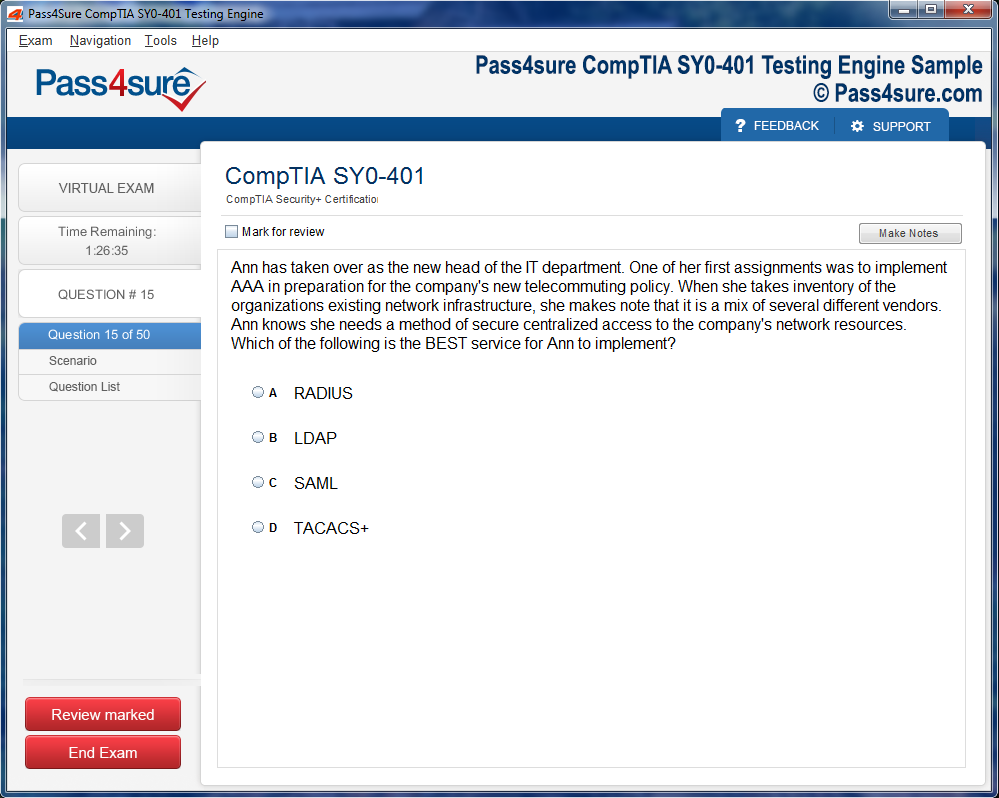
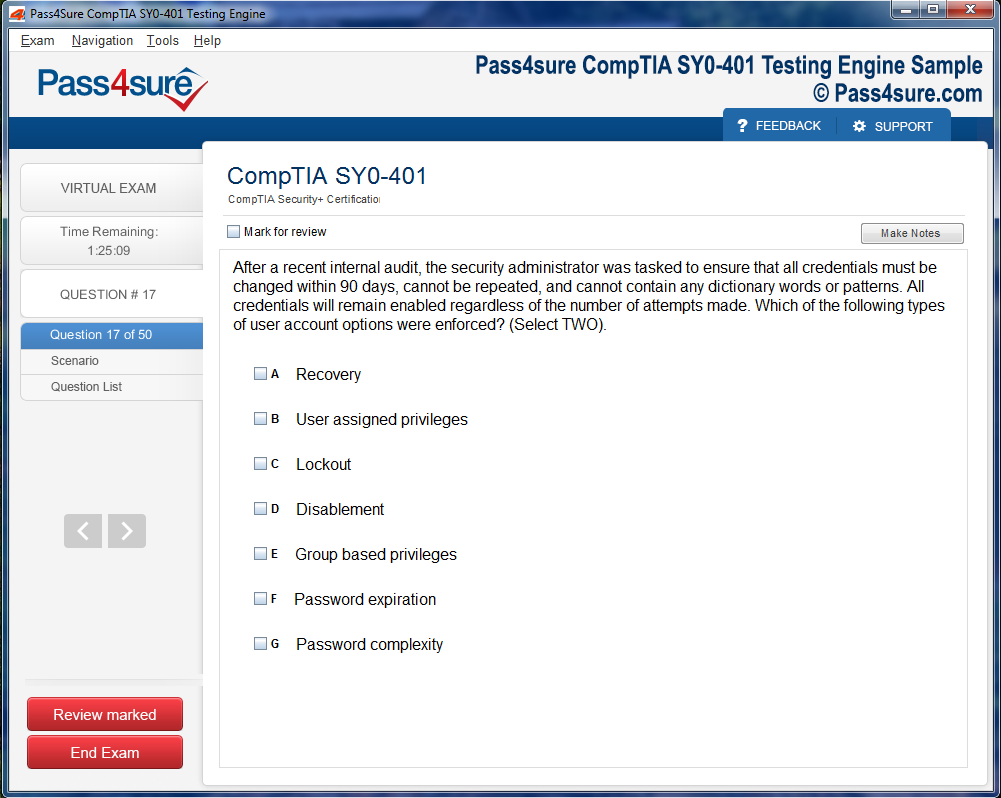
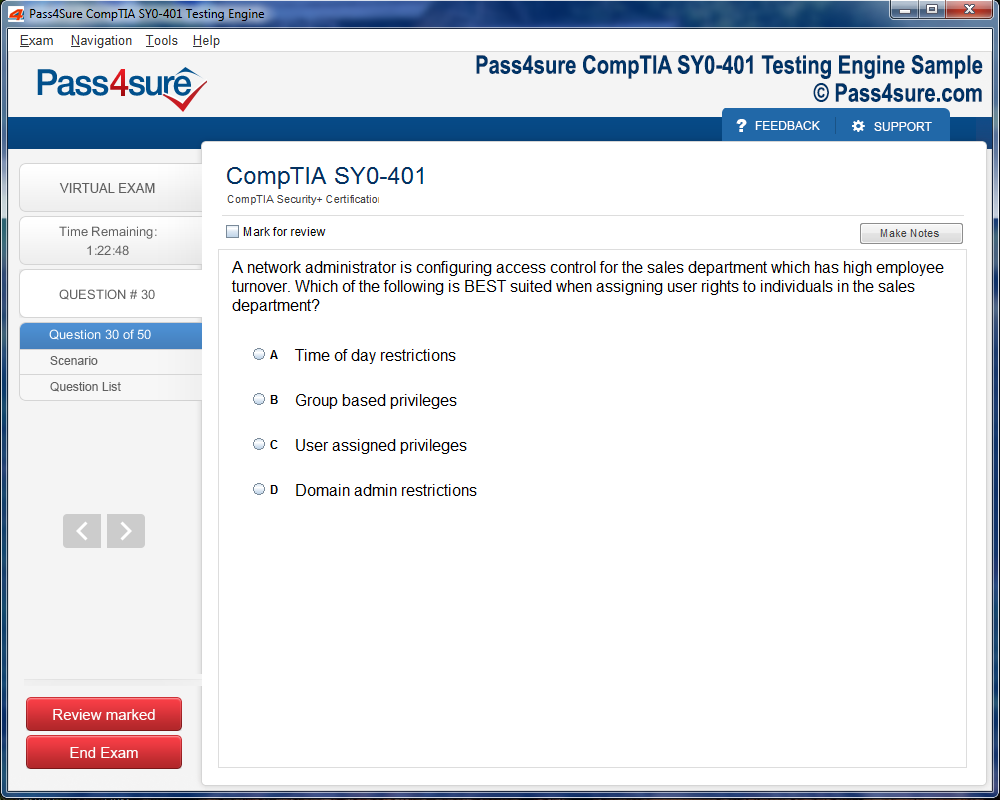
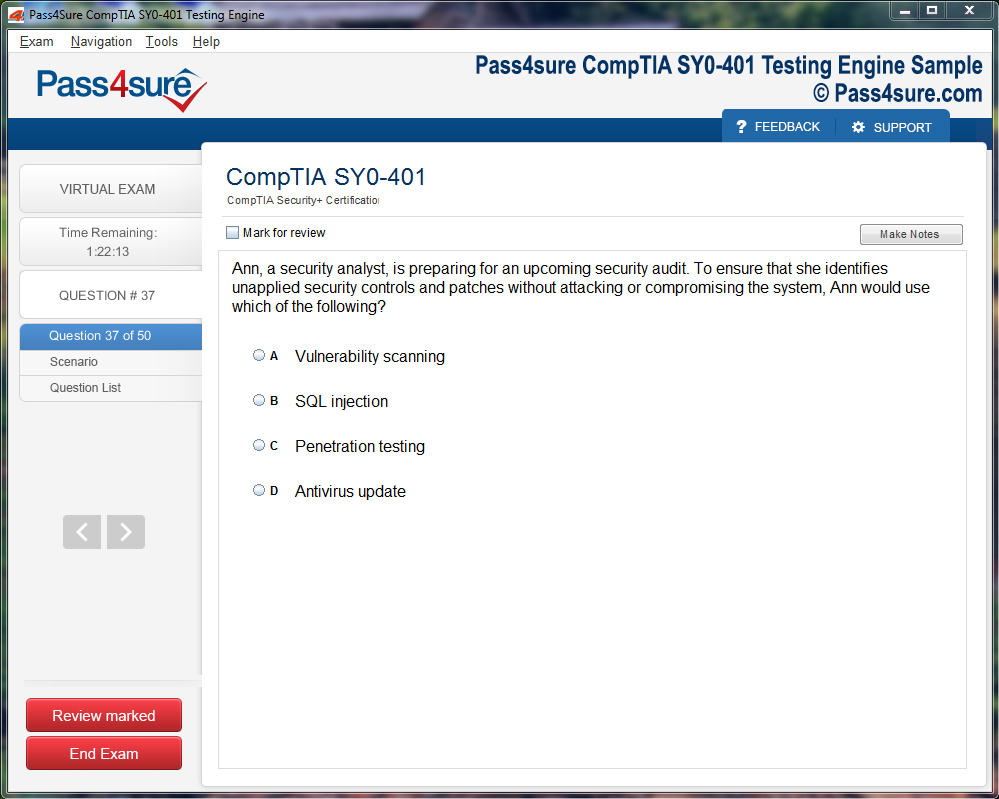
Product Screenshots
Frequently Asked Questions
How does your testing engine works?
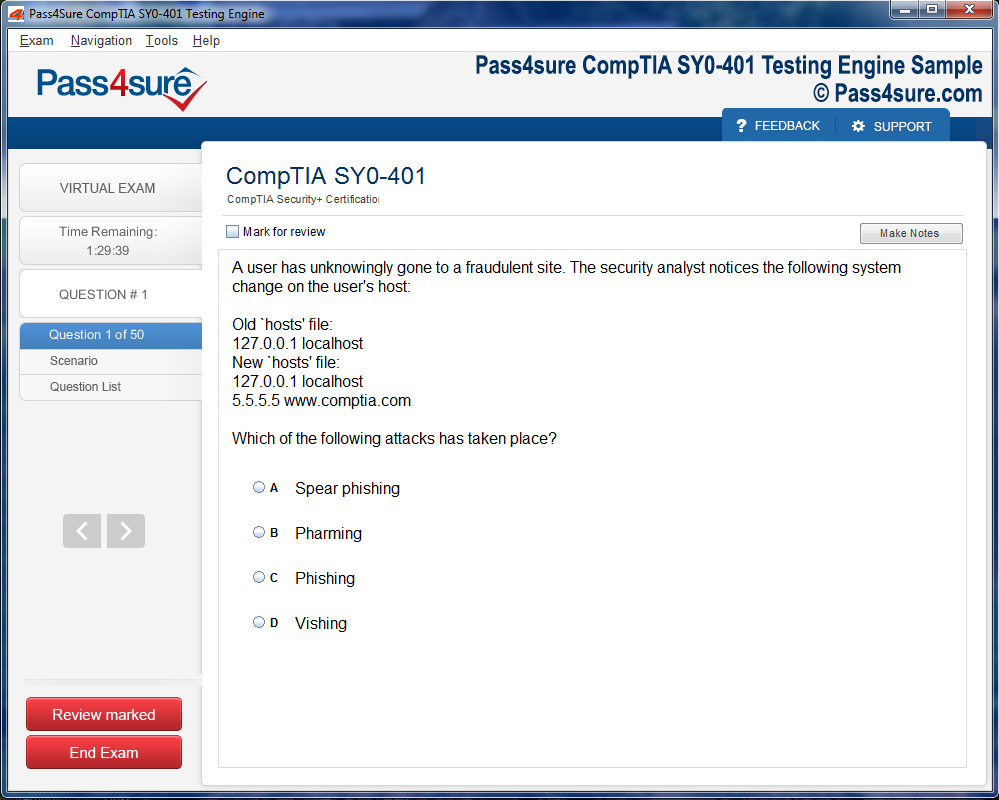
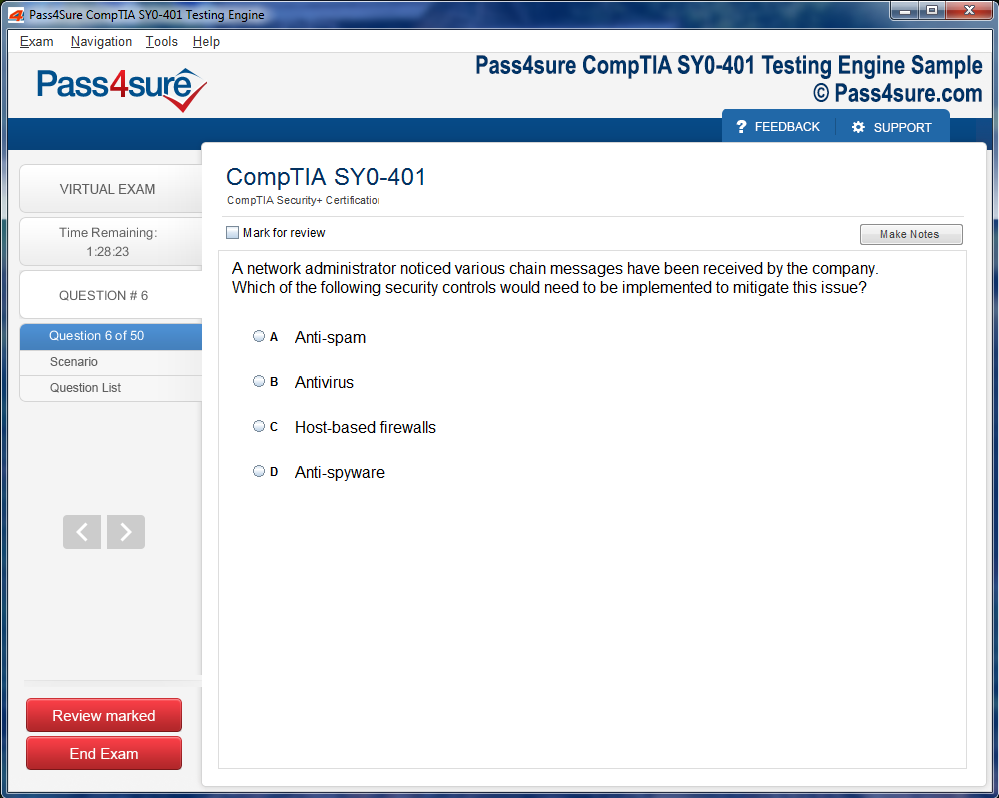
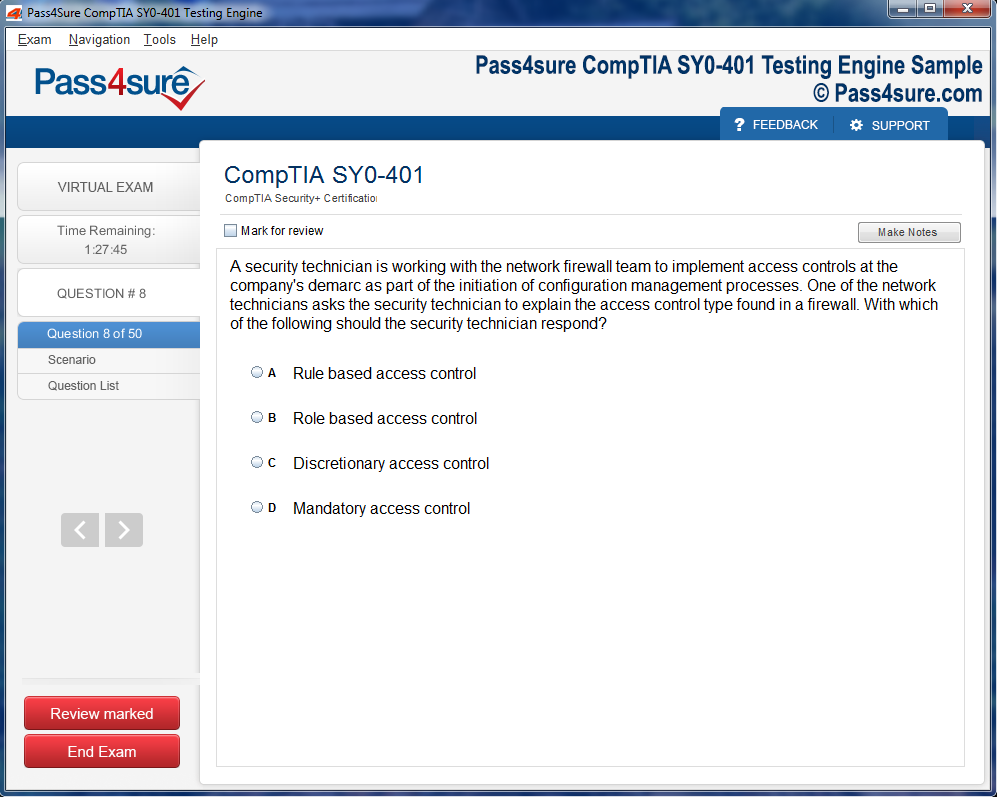
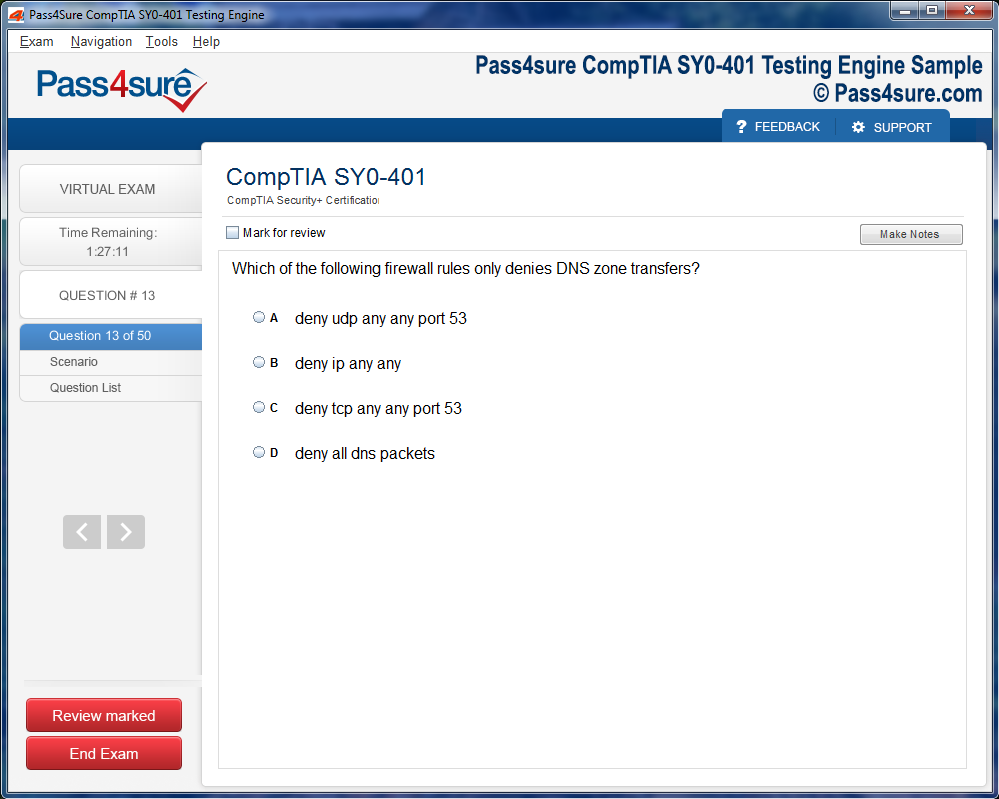
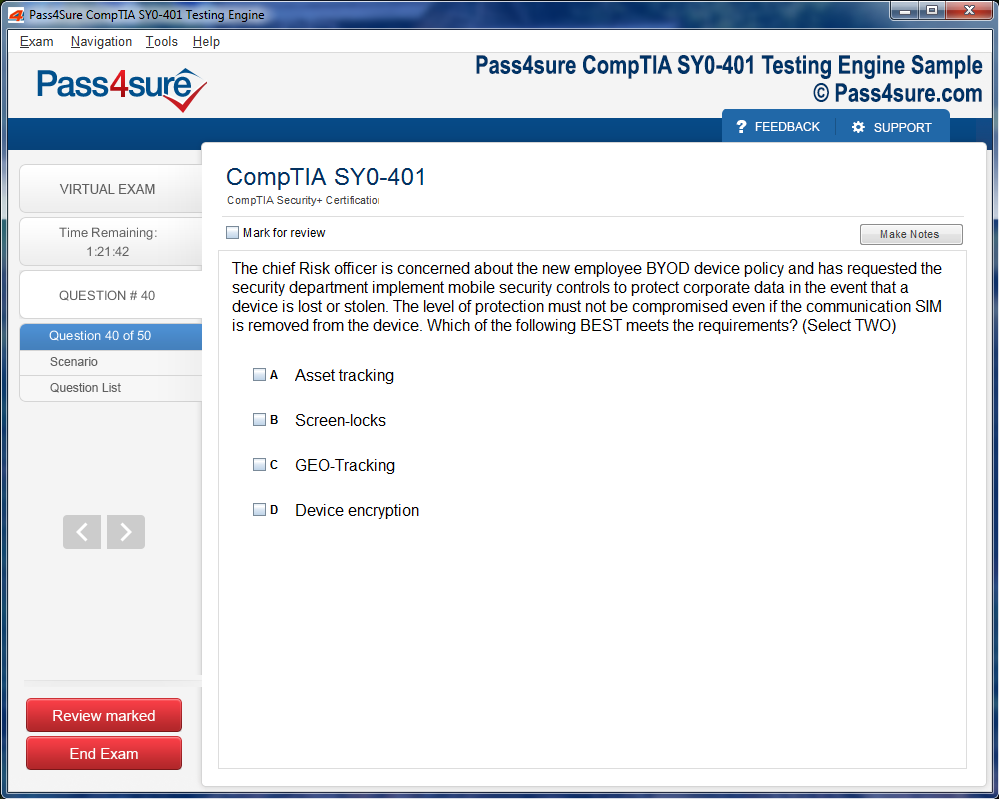
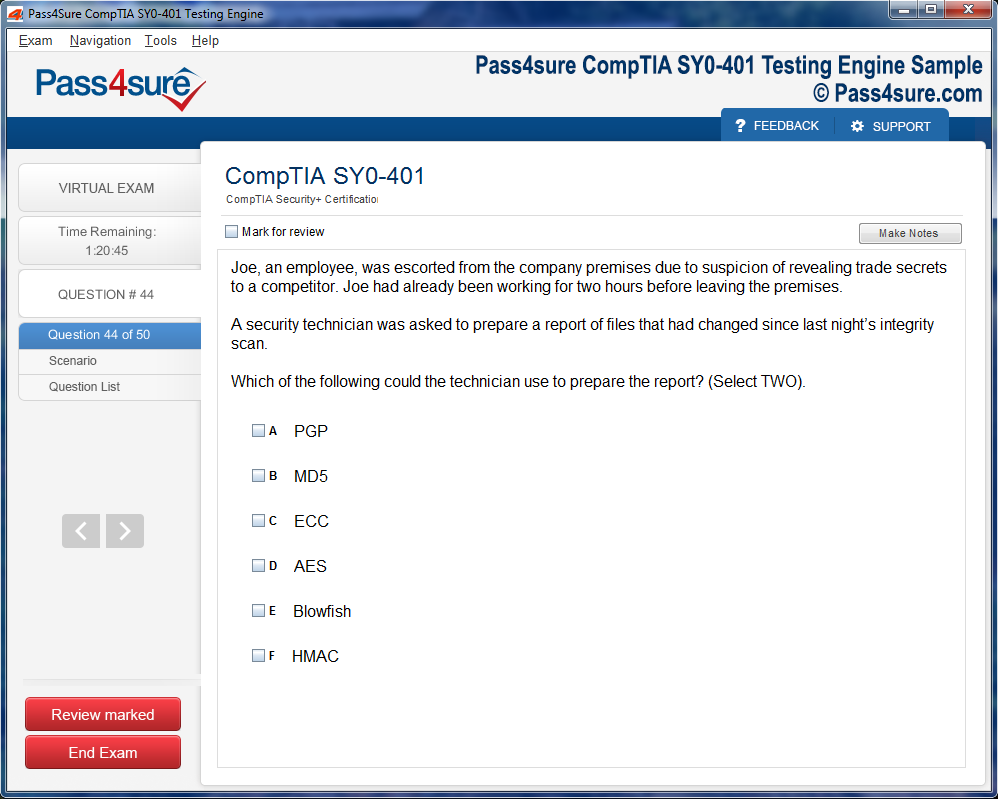
Once download and installed on your PC, you can practise test questions, review your questions & answers using two different options 'practice exam' and 'virtual exam'. Virtual Exam - test yourself with exam questions with a time limit, as if you are taking exams in the Prometric or VUE testing centre. Practice exam - review exam questions one by one, see correct answers and explanations.
How can I get the products after purchase?
All products are available for download immediately from your Member's Area. Once you have made the payment, you will be transferred to Member's Area where you can login and download the products you have purchased to your computer.
How long can I use my product? Will it be valid forever?
Pass4sure products have a validity of 90 days from the date of purchase. This means that any updates to the products, including but not limited to new questions, or updates and changes by our editing team, will be automatically downloaded on to computer to make sure that you get latest exam prep materials during those 90 days.
Can I renew my product if when it's expired?
Yes, when the 90 days of your product validity are over, you have the option of renewing your expired products with a 30% discount. This can be done in your Member's Area.
Please note that you will not be able to use the product after it has expired if you don't renew it.
How often are the questions updated?
We always try to provide the latest pool of questions, Updates in the questions depend on the changes in actual pool of questions by different vendors. As soon as we know about the change in the exam question pool we try our best to update the products as fast as possible.
How many computers I can download Pass4sure software on?
You can download the Pass4sure products on the maximum number of 2 (two) computers or devices. If you need to use the software on more than two machines, you can purchase this option separately. Please email sales@pass4sure.com if you need to use more than 5 (five) computers.
What are the system requirements?
Minimum System Requirements:
- Windows XP or newer operating system
- Java Version 8 or newer
- 1+ GHz processor
- 1 GB Ram
- 50 MB available hard disk typically (products may vary)
What operating systems are supported by your Testing Engine software?
Our testing engine is supported by Windows. Andriod and IOS software is currently under development.
PegaSystem PEGACRSA80V1: Step-by-Step Exam Preparation
The intricacies of process orchestration demand a meticulous understanding of sequential and parallel operations. Pega’s architecture enables the choreographing of multifaceted workflows that interlace human tasks with automated actions. For aspirants, dissecting the mechanisms by which stages, flows, and assignments interconnect unveils the latent efficiency of the platform. Grasping the nuances of connectors, service calls, and smart shapes illuminates how operational symphonies are executed with minimal friction.
Exploring conditional routing, dynamic approvals, and event-driven triggers allows learners to anticipate exceptions and design resilient pathways. Each orchestration choice reverberates through the lifecycle of a case, influencing user interactions, system performance, and compliance adherence. By internalizing these orchestration principles, candidates develop a prescient approach to modeling scenarios that might otherwise compromise workflow continuity.
Harnessing Predictive Analytics and Adaptive Strategies
Predictive analytics within Pega transcends mere forecasting; it embodies an adaptive intelligence that evolves alongside business demands. Understanding the construction of predictive models, coupled with the deployment of adaptive strategies, allows candidates to leverage data in a transformative manner. Scorecards, predictive clusters, and historical trend analyses empower decision-makers to act proactively rather than reactively.
Practical exercises that involve configuring adaptive models reinforce comprehension of feedback loops, learning cycles, and probability-driven outcomes. Candidates must cultivate an appreciation for the interplay between data granularity, model precision, and business objectives. Mastery of predictive and adaptive paradigms enables Pega developers to anticipate operational bottlenecks and optimize case trajectories for maximal efficiency.
Navigating Complex Data Structures
Complex data structures in Pega form the scaffolding upon which intelligent applications are constructed. Classes, properties, and data pages orchestrate a symphony of information that supports automated decisioning and case progression. Aspirants must internalize hierarchical inheritance, reference integrity, and property resolution to ensure consistency across evolving workflows.
Integration with external data sources introduces additional layers of sophistication. The interplay between connectors, service endpoints, and transformation logic demands careful planning to prevent latency, redundancy, or data corruption. Advanced proficiency in data manipulation equips candidates with the ability to craft solutions that are both performant and adaptable, even under dynamic operational pressures.
Strategic Rule Management
Rules constitute the cognitive core of Pega applications. Understanding the lifecycle, hierarchy, and precedence of rules is indispensable for effective system governance. Candidates must recognize how declarative rules, decision tables, and validation constraints interact to enforce business logic seamlessly. Proficiency in rule resolution techniques allows developers to mitigate conflicts and optimize runtime efficiency.
Exam preparation benefits from iterative rule crafting, testing, and debugging exercises. By simulating real-world conditions, aspirants can explore the effects of rule changes, dependencies, and inheritance chains. Such hands-on engagement fosters a nuanced comprehension of rule management, ensuring that applications are not only compliant but also agile in responding to evolving requirements.
Optimizing Performance and Scalability
The robustness of a Pega application hinges upon its capacity for performance optimization and scalability. Understanding memory allocation, processing threads, and case load balancing provides candidates with insights into the platform’s operational underpinnings. Performance tuning, coupled with prudent design of reusable components, ensures responsiveness even under substantial transactional volumes.
Scalability planning involves anticipating growth patterns, evaluating database access strategies, and configuring parallel processing pathways. By mastering these performance considerations, aspirants can construct applications that maintain consistency, reliability, and speed, thereby enhancing user satisfaction and reinforcing enterprise objectives.
Ensuring Compliance and Security
Security and compliance are paramount in Pega environments, particularly when handling sensitive or regulated information. Familiarity with access roles, privileges, and authentication schemes underpins secure application design. Candidates must comprehend the implications of data masking, encryption, and audit logging to safeguard information integrity.
Incorporating compliance checks into case lifecycles fortifies operational adherence to internal policies and external regulations. By simulating potential security breaches and mitigation strategies, aspirants cultivate a proactive approach to risk management. Mastery of these protocols ensures that Pega applications are both defensible and resilient against evolving security threats.
Advanced User Experience Design
Beyond functional proficiency, user experience design in Pega demands a sophisticated understanding of ergonomics, interaction psychology, and cognitive load. Dynamic layouts, responsive harnesses, and contextual guidance streamline workflows while reducing cognitive friction. Candidates must internalize principles of interface fluidity, micro-feedback, and adaptive visual cues to enhance user engagement.
Testing scenarios across diverse user roles fosters insight into interface accessibility, personalization, and error prevention. By integrating these design philosophies, developers craft environments where users navigate with confidence, intuitively complete tasks, and perceive the system as an enabler rather than a constraint.
Leveraging Automation for Strategic Impact
Automation in Pega extends beyond task execution; it embodies strategic foresight. The orchestration of repetitive processes, coupled with intelligent decisioning, liberates human resources for higher-order analysis and innovation. Candidates should explore the alignment of automation strategies with business objectives, ensuring that operational efficiency amplifies strategic outcomes.
By constructing reusable frameworks, dynamic case templates, and rule-driven triggers, aspirants can elevate automation from mechanistic execution to a catalyst for transformative business value. This strategic perspective enhances both platform efficacy and organizational agility, underscoring Pega’s potential as a cornerstone of intelligent operations.
Advanced Performance Optimization
Achieving consummate efficiency in PegaSystem necessitates a perspicacious grasp of execution dynamics and computational intricacies. Candidates must delve into the art of streamlining rules execution, leveraging ephemeral and persistent data pages, and refining labyrinthine case lifecycle orchestrations. Each interaction with the platform exacts a computational toll, and discerning these nuances ensures that enterprise-grade applications remain resilient under exigent loads.
Optimization is not merely a quest for velocity; it encompasses resource allocation, intelligent caching paradigms, and judicious prioritization of automated routines. By simulating intricate workflows and voluminous case processing scenarios, aspirants cultivate the ability to prognosticate potential chokepoints. Examination frameworks frequently assess the capacity to engineer scalable and fault-tolerant solutions, rendering experiential competence in performance calibration indispensable.
Candidates should also investigate asynchronous processing, background processing queues, and multi-threaded rule execution, recognizing how latency and concurrency can influence operational throughput. By examining trace logs, performance harnesses, and system telemetry, learners attain a granular comprehension of bottleneck identification and mitigation strategies. The proficiency to marry tactical expedience with strategic foresight is the hallmark of advanced performance mastery.
Governance and Compliance Principles
PegaSystem applications operate within the constraining lattice of corporate governance and regulatory oversight. Candidates must scrutinize the scaffolding of governance, encompassing role-based access matrices, audit trails, and compliance monitoring frameworks. Aligning applications with internal policies and statutory regulations fortifies data integrity and institutional accountability.
A sophisticated understanding of operator permissions, contextual security layers, and hierarchical access paradigms equips learners to architect systems that balance rigidity with usability. Examination scenarios often feature sensitive data management dilemmas or multi-tier approval workflows, demanding that aspirants exhibit not only technical acumen but also ethical discernment.
Moreover, candidates should explore the deployment of policy-driven rule enforcement, exception logging mechanisms, and regulatory reporting automation. Proficiency in these dimensions signals a capacity to reconcile operational agility with unwavering adherence to governance edicts, a skill set highly prized in advanced PegaSystem environments.
Case Auditing and SLA Management
Vigilant oversight of case processing underpins operational accountability and reliability. Candidates should immerse themselves in auditing methodologies, real-time SLA tracking, and exception reportage. Mastery of these tools enables proactive interventions, promotes continuous refinement, and augments transparency within complex workflows.
SLA design necessitates a nuanced understanding of elapsed time measurement, escalations, and priority-based interventions. By engaging with hands-on exercises in SLA configuration, exception handling, and escalation path design, learners cultivate a predictive awareness of process bottlenecks. Such skills empower the creation of workflows that harmonize automation with meticulous oversight.
Exam scenarios frequently challenge candidates to diagnose SLA deviations and prescribe remedial strategies. Hence, familiarity with alerting mechanisms, metric dashboards, and performance analytics is critical. The ability to synthesize audit data into actionable insights exemplifies the elevated comprehension demanded at advanced levels of PegaSystem proficiency.
Advanced Decisioning Techniques
Decisioning within PegaSystem transcends mere conditional logic, encompassing predictive analytics, adaptive models, and intricate decision tables. Candidates must refine their ability to align decision rules with strategic business imperatives, anticipate complex conditional permutations, and rigorously validate outcomes against expected results.
Exploration of decision prioritization, conflict resolution, and scoring algorithms fosters the construction of intelligent workflows that respond dynamically to fluctuating inputs. Examination exercises frequently simulate multi-path decisioning environments, testing aspirants’ prowess in designing robust, efficient, and adaptable strategies.
Advanced decisioning further entails the orchestration of decision trees, scorecards, and pattern recognition analytics to optimize business outcomes. Learners should cultivate skills in scenario simulation, sensitivity analysis, and rule convergence assessment. The synthesis of predictive and prescriptive decisioning techniques constitutes a pivotal competency for aspirants aiming to excel in high-stakes PegaSystem contexts.
Continuous Improvement Methodologies
Sustained excellence in PegaSystem applications hinges upon iterative refinement and proactive adaptation. Candidates should internalize continuous improvement paradigms, leveraging insights from case performance analytics, user engagement patterns, and operational feedback loops. This iterative ethos ensures that applications evolve symbiotically with organizational objectives.
Reflective practice facilitates the identification of emergent patterns, anticipatory problem-solving, and preemptive process augmentation. Examination exercises often probe an aspirant’s ability to adapt solutions dynamically, optimize workflows, and respond to changing operational exigencies with agility and precision.
Candidates should familiarize themselves with methodologies such as iterative prototyping, retrospectives, and performance benchmarking. By synthesizing experiential insights into actionable improvements, learners cultivate resilience in process optimization and fortify the alignment of technological solutions with strategic imperatives. This mindset positions aspirants to transcend conventional operational paradigms and embrace a philosophy of perpetual enhancement.
Advanced Case Lifecycle Management
The orchestration of case lifecycles in Pega extends beyond mere stage progression; it demands a cognizant understanding of triggers, conditional logic, and interdependent processes. Cases metamorphose through preordained pathways, yet their evolution often requires adaptive strategies to accommodate unforeseen exceptions. Mastering these trajectories necessitates both a granular comprehension of stage-specific operations and a macroscopic vision of case interrelations. Parallel processes, ephemeral subcases, and contingent paths illustrate the platform's capacity to model real-world dynamism with precision and agility.
Strategic foresight is paramount in designing workflows that are resilient yet responsive. Proficiency emerges not merely from rote rule implementation but from immersive simulation of operational contingencies. By constructing hypothetical yet plausible scenarios, aspirants cultivate the ability to anticipate escalations, streamline approvals, and mitigate bottlenecks. This experiential approach facilitates a profound understanding of both operational efficiency and the nuanced decision-making that underpins high-caliber process automation.
Rules and Process Configuration
The architecture of Pega’s rule-based engine embodies a sophisticated lattice of decision-making logic. Command over rule creation, refinement, and orchestration underpins every facet of application design. When rules, validate rules, decision tables, and decision trees are not merely understood but manipulated with dexterity, the practitioner can sculpt workflows with surgical precision. Interdependencies between rules necessitate meticulous attention, as a single misaligned directive can cascade into systemic inefficiencies or errant outcomes.
Examination proficiency demands immersion in tracing execution flows, diagnosing conflicts, and mastering the art of exception handling within rule hierarchies. The analytical rigor required to navigate nested rules fosters critical thinking, enabling candidates to transition seamlessly from theoretical constructs to actionable solutions. By internalizing these mechanisms, aspirants elevate their capability to engineer complex, adaptive systems while ensuring consistent adherence to business logic.
Automation and Efficiency Strategies
Automation within Pega is an intricate symphony of orchestrated actions, intelligent allocation, and dynamic responsiveness. Mastery extends beyond implementation; it encompasses the strategic deployment of robotic process automation, connectors, and data pages to optimize throughput while preserving fidelity. Intelligent routing algorithms allocate assignments based on multifactorial criteria including role, availability, and workload, ensuring that human and system collaboration attains peak efficiency.
The analytical mind discerns latent bottlenecks, orchestrates contingency workflows, and anticipates points of friction within automated processes. Practical engagement with these constructs cultivates the ability to design processes that not only minimize human intervention but also enhance operational resilience. Exam scenarios frequently probe the ability to balance automation with discretionary oversight, testing both analytical acuity and design intuition.
Reporting, Monitoring, and Analytics
Data-driven insight is the crucible of effective case management. Pega’s reporting infrastructure empowers candidates to extract, analyze, and visualize operational intelligence with granularity and clarity. Dashboards, performance metrics, and trend analyses illuminate patterns in case progression, assignment resolution, and SLA compliance. This analytical scaffolding informs decision-making, enabling proactive remediation and strategic refinement of workflows.
Expertise in monitoring transcends mere observation; it involves predictive analysis, anomaly detection, and the orchestration of responsive interventions. By mastering the symbiosis between data structures and case lifecycles, candidates cultivate the capacity to engineer solutions that are both operationally efficient and strategically insightful. The platform’s robust reporting mechanisms reinforce accountability while providing a lens through which continuous process improvement is achievable.
Testing and Validation Approaches
Testing in Pega is a multidimensional exercise requiring precision, foresight, and methodological rigor. Unit testing, integration testing, and scenario-driven validation provide a structured framework to ensure alignment between design intent and functional outcome. Test case development, when executed with contextual awareness, reinforces comprehension of complex rule interactions and lifecycle transitions.
Iterative testing fosters an investigative mindset, enabling candidates to identify inconsistencies, optimize rule configurations, and anticipate edge-case scenarios. Embedding validation within development cycles cultivates operational confidence, ensuring that deployed applications are robust, scalable, and resilient. Mastery of these methodologies is crucial for examination readiness, as scenario-based questions probe not only technical acumen but the ability to synthesize process knowledge into practical application.
Mastering Data Pages and Connectors
Data pages epitomize the nexus between dynamic information retrieval and seamless operational flow in PegaSystem. They function as ephemeral repositories, capable of caching data with precision, thereby minimizing redundant queries and fortifying system efficiency. Candidates must internalize the subtleties of scope—whether node-level, thread-level, or session-level—and grasp refresh strategies that preserve data integrity without compromising performance. The judicious orchestration of these pages ensures that decisioning layers receive consistent, reliable information, even under fluctuating operational loads.
Connectors amplify the platform’s interoperability, transforming Pega into a hub capable of conversing fluently with external databases, RESTful and SOAP-based web services, and diverse APIs. Competence in configuring connectors entails more than mapping fields—it requires an appreciation for transactional integrity, exception management, and resilient error-handling patterns. Aspirants should cultivate a mindset attuned to anticipating anomalies in data exchange, designing workflows that gracefully recover from interruptions and maintain transactional coherence.
Decision Strategies and Predictive Analysis
Decision strategies within Pega transcend rudimentary rule execution, operating as adaptive frameworks that enable contextual intelligence. Mastery of decision tables, scorecards, and predictive models is essential, yet the aspirant must also perceive the underlying logic that aligns these artifacts with broader business imperatives. Nuanced understanding of conditional prioritization, risk weighting, and multi-path contingencies enhances the ability to formulate decisions that are simultaneously agile and precise.
Immersive, scenario-based exercises are invaluable, challenging candidates to orchestrate complex decision flows under variable constraints. These exercises refine cognitive agility, allowing the designer to anticipate user behavior, optimize resource allocation, and sculpt processes that dynamically respond to evolving datasets. Predictive analysis, when synergized with decision strategies, cultivates a foresight-driven operational culture within applications.
Case Management Best Practices
Optimal case design requires a synthesis of structural clarity and strategic foresight. Rather than merely delineating stages and steps, proficient practitioners dissect intricate processes into coherent subcases, judiciously assigning responsibilities and orchestrating SLAs that preserve process fidelity. This deliberate structuring fosters maintainability, scalability, and procedural transparency.
Simulation of variable case complexities equips candidates with an experiential understanding of process elasticity. The ability to adapt subcases, reassign tasks dynamically, and anticipate cascading dependencies is a hallmark of advanced proficiency. Such insights are indispensable for designing resilient applications capable of absorbing operational volatility without degradation of performance or compliance.
User Experience Optimization
The interface is the user’s primary conduit to operational intelligence, and its design is pivotal to adoption and efficacy. Candidates must cultivate the aptitude to craft dynamic layouts, responsive portals, and adaptive sections that intuitively guide users through complex workflows. The reduction of cognitive friction accelerates task completion while reinforcing adherence to embedded business rules.
Techniques such as conditional visibility, harness rules, and context-sensitive navigation are instrumental in achieving an interface that complements underlying automation. Mastery of these elements equips candidates to anticipate user expectations, streamline interactions, and create an interface ecosystem that magnifies the efficacy of both the human and automated components of a process.
Performance and Scalability Considerations
Performance optimization is not a peripheral concern but a strategic imperative. Candidates must dissect latency contributors, implement caching paradigms, and fine-tune rulesets to extract maximum efficiency from system operations. Understanding process orchestration in high-load environments provides insight into bottleneck mitigation and resource equilibrium.
Scalability is an architecture principle, encompassing load distribution, fault tolerance, and adaptive responsiveness. Simulation under peak demand conditions cultivates awareness of potential failure points, guiding the design of resilient applications capable of sustaining enterprise-scale throughput. This dimension of mastery ensures that solutions endure operational stress while maintaining consistency, reliability, and user satisfaction.
Advanced Integration Techniques
Navigating labyrinthine enterprise ecosystems demands a dexterous understanding of interconnected systems. Pega practitioners must delve into sophisticated integration paradigms encompassing SOAP and RESTful services, bespoke connectors, and orchestration rules that transcend rudimentary data exchange. The intricacies of authentication schemas, nuanced error-handling mechanisms, and data transformation logic become indispensable when architecting resilient and deterministic workflows that converse with heterogeneous platforms.
Immersive, tactile experience in constructing multifaceted integration scenarios, methodically testing transactional flows, and meticulously validating response payloads fortifies a candidate’s mastery. Anticipating potential integration bottlenecks and erratic data anomalies allows aspirants to architect systems that maintain equilibrium under dynamic operational conditions. Examinations frequently simulate these entangled environments, necessitating not just theoretical comprehension but also intuitive practical fluency.
Rules Versioning and Reusability
Sophisticated rule management necessitates a nuanced understanding of lifecycle governance and modular architecture. Candidates must acquire the acumen to design rules with reusability as a cardinal principle, enabling seamless application across disparate domains while preserving systemic consistency. Mastery of rule inheritance, delegation, and version control allows developers to mitigate redundancy and preempt versioning conflicts in evolving business landscapes.
Rigorous practice in tracing dependencies, identifying hierarchical interconnections, and reconciling rule divergences is imperative. Candidates who internalize these principles can confidently manage mutable business logic without destabilizing enterprise-grade solutions. This competency ensures both exam readiness and operational efficacy, reflecting a harmonized balance between innovation and stability.
Decisioning with Adaptive Models
Integrating adaptive decisioning infuses Pega applications with a capacity for continuous evolution. By leveraging propensity rules and adaptive strategies, systems can assimilate historical patterns to forecast behaviors and refine outcomes dynamically. Understanding model training, evaluation, and deployment intricacies equips candidates to engineer applications that respond intelligently to behavioral flux, enhancing predictive acuity and operational dexterity.
Hands-on engagement with adaptive decision frameworks cultivates anticipatory problem-solving skills, allowing practitioners to optimize user experiences and procedural throughput. Exam scenarios often demand an adept comprehension of these learning systems, challenging candidates to reconcile statistical reasoning with practical execution, ensuring that decisioning logic aligns with fluctuating real-world inputs.
Case Lifecycle Analytics
Comprehending the lifecycle of cases with analytical precision underpins operational sagacity. Candidates should probe metrics encompassing stage durations, SLA adherence, exception handling, and progression velocity. By dissecting patterns and anomalies, practitioners can enact proactive interventions, refine throughput, and facilitate continuous improvement.
Immersive exercises in dashboard construction, trend analysis, and prescriptive recommendation generation empower candidates to convert raw data into strategic intelligence. This analytic dexterity enables applications to transcend transactional functionality, offering stakeholders actionable insights while sustaining process fidelity.
Testing Complex Scenarios
The apex of application reliability emerges from rigorous testing of convoluted scenarios. Candidates must orchestrate end-to-end simulations encompassing decision logic, data integrations, and user interface interactions. Stress tests, exception simulation, and scenario validation ensure systems perform seamlessly under variegated and unanticipated conditions.
Proficiency in testing complex ecosystems cultivates confidence in identifying logical anomalies, validating intertwined workflows, and verifying component synchrony. This meticulous competence translates directly into PEGACRSA80V1 exam success, equipping aspirants with the skills to deploy robust, error-resilient solutions in enterprise environments where precision is paramount.
Final Integration and System Cohesion
The intricate tapestry of PegaSystem unfolds fully when disparate modules—cases, rules, decisioning frameworks, data orchestration, and user interfaces—operate in synergistic harmony. Aspirants must cultivate an appreciation for scenarios demanding seamless integration across these subsystems, ensuring that information flows coherently, processes align optimally, and operational throughput is maximized. The elegance of system cohesion emerges from the anticipation of interdependencies, meticulous validation of interactions, and the foresight to preclude disruptions caused by localized modifications. Engaging in practical exercises that replicate complex, enterprise-level applications imbues candidates with the confidence to engineer resilient solutions that mirror real-world exigencies.
Integration is not a superficial exercise of linking components; it is a meticulous endeavor demanding the orchestration of transactional fidelity, state management, and cross-functional synchronization. The aspirant's proficiency in identifying latent dependencies, resolving potential conflicts, and harmonizing disparate modules determines the robustness of the solution. Exploring intricate case hierarchies, designing adaptive decision strategies, and validating dynamic UI elements in cohesive workflows fosters a nuanced understanding that transcends rote learning.
Expert-Level Troubleshooting
In the labyrinthine ecosystem of PegaSystem, exceptions and performance aberrations are inevitable. Developing a refined troubleshooting acumen becomes indispensable. Candidates should master diagnostic methodologies that leverage comprehensive logs, tracer tools, and nuanced debugging strategies. This equips aspirants to isolate anomalies, dissect misconfigurations, and mitigate performance bottlenecks with surgical precision.
Exam scenarios frequently simulate high-stakes problem-solving contexts that test analytical agility. Aspirants must employ structured methodologies to evaluate root causes, propose corrective actions, and verify resolutions under constrained conditions. Expert-level troubleshooting demands a synthesis of critical reasoning, operational insight, and experiential dexterity. By cultivating these skills, candidates can ensure the resilience, adaptability, and scalability of solutions even in unpredictable operational landscapes.
Exam Strategy and Temporal Efficiency
Triumph in the PEGACRSA80V1 examination is contingent not solely on technical knowledge but equally on the strategic orchestration of effort and time. Systematic preparation involves methodical review of conceptual frameworks, prioritization of areas of relative weakness, and iterative simulation under timed conditions. Understanding the architecture of questions, recognizing embedded pitfalls, and employing logical elimination strategies enhances both accuracy and speed.
Temporal management constitutes a pivotal determinant of performance. Allocating adequate time to scenario-based questions while ensuring foundational knowledge sections are not neglected maximizes overall efficiency. A disciplined cadence mitigates cognitive fatigue, bolsters confidence, and positions the aspirant to exhibit mastery across the spectrum of examination objectives.
Practical Application and Experiential Simulation
The bridge between theoretical comprehension and applied mastery is constructed through immersive, practical engagement. Candidates should engage in realistic simulations encompassing case hierarchies, integrated decision models, and complex workflow orchestration. Such experiential exercises elucidate platform idiosyncrasies, reinforce procedural understanding, and enhance adaptive problem-solving capabilities.
End-to-end workflow simulations, coupled with iterative testing of adaptive models and UI responsiveness, cultivate operational fluency. Repeated exposure to these scenarios fosters intuitive grasp of system behavior, enabling candidates to anticipate challenges and deploy solutions with confidence. The correlation between hands-on experience and examination performance underscores the indispensability of practical engagement in achieving proficiency.
Achieving Mastery and Certification Readiness
Attaining mastery in PegaSystem PEGACRSA80V1 is the synthesis of disciplined study, extensive hands-on practice, and strategic review. Aspirants who integrate comprehensive understanding of case management, decisioning strategies, UI design, system integration, performance optimization, and governance acquire a holistic capability. Mastery transcends procedural knowledge; it embodies the ability to apply insights fluidly, troubleshoot with analytical precision, and architect intelligent, scalable solutions.
Certification readiness crystallizes when candidates can navigate complex scenarios effortlessly, anticipate system interactions, and deliver solutions that exemplify enterprise standards. By coupling conceptual clarity with experiential depth, aspirants not only prepare to excel in examinations but also equip themselves to implement PegaSystem solutions effectively and innovatively in professional contexts.
Final Integration and System Cohesion
The architecture of PegaSystem is an intricate mosaic, where the interplay of cases, rules, decisioning, data structures, and user interfaces forms a symphonic ecosystem. Mastery of integration extends beyond mechanical linking; it requires a profound comprehension of how each subsystem communicates, how data propagates, and how decisions cascade across multi-layered workflows. Candidates must cultivate an anticipatory mindset, foreseeing potential conflicts, interdependencies, and synchronization challenges that may emerge during live operation.
Integration demands a cognitive duality: the ability to conceptualize high-level system flow while simultaneously addressing granular operational minutiae. For example, constructing a cross-functional case hierarchy necessitates understanding not just the structural relationships between parent and child cases but also the implicit dependencies in data propagation, UI responsiveness, and decision logic. The candidate must ensure that updates in one layer do not inadvertently compromise another, a principle that resonates with enterprise-grade application design.
Practical exercises should simulate these conditions. Aspirants may construct an end-to-end workflow involving customer onboarding, decisioning for credit eligibility, and adaptive case management. Each stage should feed data seamlessly into subsequent stages, while validation rules ensure integrity. By performing iterative simulations, candidates internalize the dynamics of system cohesion and cultivate an intuitive recognition of integration pitfalls before they manifest in real environments.
Equally critical is the comprehension of transactional fidelity. When multiple subsystems interact, the timing, ordering, and atomicity of transactions must be scrupulously orchestrated. Pega’s declarative rules, when utilized effectively, facilitate automatic propagation of changes, but the candidate must grasp the underlying mechanisms to avoid conflicts. By exploring hypothetical scenarios such as simultaneous case updates or adaptive decision recalculations, aspirants sharpen their capacity for preemptive resolution, reinforcing system robustness.
System cohesion also encompasses the alignment of process efficiency and operational transparency. It is not sufficient for workflows to function; they must operate optimally under variable load conditions, exhibit traceable data paths, and maintain compliance with governance standards. Candidates can practice designing diagnostic frameworks within their integrated solutions, embedding automated logs, and leveraging Pega’s monitoring capabilities to gain a holistic view of operational health.
Expert-Level Troubleshooting
As applications scale in complexity, the inevitability of exceptions and performance anomalies grows. Expert-level troubleshooting transcends ad hoc correction; it embodies a systematic approach to diagnosing, isolating, and resolving issues with minimal disruption. Candidates should cultivate a multi-faceted skill set encompassing analytical reasoning, diagnostic instrumentation, and scenario-based experimentation.
The initial step in troubleshooting involves precise identification. Logs, tracer tools, and performance dashboards offer visibility into system behavior, but interpreting this information requires experience and discernment. For instance, a misconfiguration in a decision table may manifest as inconsistent case routing, while subtle latency in data page updates may create intermittent failures in UI responsiveness. Recognizing patterns amidst the noise, correlating symptoms with potential root causes, and hypothesizing solutions is a critical cognitive exercise.
Advanced troubleshooting scenarios also necessitate contingency planning. Consider a case in which an adaptive decision model produces anomalous recommendations during high-volume operations. The candidate must dissect the model parameters, evaluate decision strategy rules, and simulate variable inputs to isolate the anomaly. Such exercises foster a mindset where predictive resolution and preventive calibration become habitual, ensuring operational resilience even under adverse conditions.
Another dimension is interdependency diagnosis. Complex workflows often involve nested case hierarchies and interlinked decision nodes. An error in a lower-level subcase may propagate unpredictably, creating a chain reaction that manifests superficially at higher levels. Candidates should practice constructing dependency maps, performing stepwise execution analysis, and validating assumptions at each layer. This disciplined approach reduces diagnostic ambiguity and accelerates remediation timelines, a skill highly valued in enterprise deployments.
Practical exposure to hypothetical failure scenarios enhances confidence and reflexive decision-making. For instance, simulating network latency, database unavailability, or adaptive strategy misalignment equips aspirants with a repertoire of corrective techniques. By repeatedly engaging with complex, multi-variable challenges, candidates internalize a mental framework for rapid identification, containment, and resolution, bridging the gap between theoretical understanding and applied problem-solving.
Exam Strategy and Temporal Efficiency
Achieving excellence in PEGACRSA80V1 necessitates a dual mastery of knowledge and strategic exam execution. Candidates must cultivate both cognitive proficiency and temporal efficiency, integrating preparation with deliberate pacing, prioritization, and structured review.
A foundational strategy is methodical content mapping. Breaking the syllabus into conceptual clusters—case management, decisioning, integration, performance, UI design—allows aspirants to gauge mastery, identify knowledge gaps, and allocate study time judiciously. Within each cluster, practicing scenario-based questions reinforces applied comprehension, transforming abstract principles into instinctive operational skills.
Simulating full-length timed assessments is critical. Candidates should rehearse under conditions mirroring the actual examination, not merely for content recall but for pacing and mental endurance. Managing cognitive load during scenario-heavy questions, which often involve multi-layered case constructs or decision strategies, trains the aspirant to parse information rapidly, anticipate constraints, and apply elimination techniques with precision.
Strategic prioritization during the exam is another determinant of success. Foundational questions may require minimal time but secure essential scoring. Complex, integrative scenarios, while high in potential marks, demand careful allocation of minutes. Candidates should cultivate the acumen to triage questions dynamically, ensuring high-yield opportunities are addressed without jeopardizing completion of other sections.
Time management extends beyond mere arithmetic of minutes. It encompasses cognitive pacing, stress mitigation, and the orchestration of attention. Practicing mindfulness of temporal flow during simulations enhances focus, reduces impulsive responses, and cultivates a rhythm conducive to sustained analytical performance. Aspirants who internalize these strategies exhibit heightened efficiency, accuracy, and composure under examination conditions.
Practical Application and Experiential Simulation
The chasm between conceptual knowledge and exam readiness is bridged most effectively through immersive, experiential simulation. Candidates should engage with end-to-end workflows that mirror real-world applications, embedding complexity reflective of enterprise environments. These exercises foster operational intuition, allowing aspirants to anticipate system behavior, validate interactions, and troubleshoot emergent issues with confidence.
Consider constructing a simulated customer onboarding process that integrates decisioning for credit assessment, dynamic case routing, and adaptive task allocation. Within this environment, candidates can manipulate data structures, monitor decision outcomes, and test UI responsiveness. Iterative repetition of such simulations cements procedural memory, while exposure to diverse input permutations cultivates adaptive thinking.
Simulations should also incorporate stress-testing scenarios. Candidates may explore high-volume case execution, concurrent updates, and network-induced latency to observe system responses. By documenting anomalies, hypothesizing causal mechanisms, and implementing corrective measures, aspirants refine both technical skill and operational foresight.
Engagement with adaptive models provides an additional dimension. Experimenting with predictive strategies, adjusting parameters, and analyzing outcomes enhances understanding of Pega’s intelligent automation capabilities. The iterative feedback loop between design, execution, and evaluation fosters a holistic grasp of system behavior, ensuring aspirants can navigate the nuanced challenges likely to be presented in the exam.
Repeated simulation cultivates not only familiarity with platform intricacies but also strategic foresight. Candidates learn to anticipate cascading consequences, preempt potential conflicts, and implement contingency mechanisms. This preparation transcends rote procedural knowledge, instilling an intuitive sense of operational fluency and resilience critical for high-stakes examination success.
Achieving Mastery and Certification Readiness
True mastery in PEGACRSA80V1 is the synthesis of intellectual rigor, sustained practice, and strategic foresight. Aspirants who integrate cross-functional expertise in case management, decisioning, integration, UI responsiveness, performance optimization, and governance acquire a cohesive operational mindset. Mastery is reflected not merely in theoretical recall but in the ability to navigate complex, real-world scenarios with agility, precision, and foresight.
Certification readiness is demonstrated through applied fluency. Candidates must traverse multi-layered workflows, diagnose intricate anomalies, and design scalable, enterprise-grade solutions with confidence. This requires an iterative cycle of learning, practice, reflection, and refinement. Experiential exposure ensures aspirants internalize platform behavior, anticipate systemic interactions, and implement solutions that exemplify both technical proficiency and strategic insight.
Beyond exam preparation, mastery equips aspirants for professional application. The ability to harmonize case hierarchies, optimize decision strategies, and maintain operational integrity under diverse conditions is invaluable in organizational contexts. Aspirants who cultivate these skills not only excel in certification but also position themselves as adept practitioners capable of designing intelligent, resilient, and scalable PegaSystem solutions.
Advanced Integration Techniques
In the ever-evolving enterprise architecture landscape, integration transcends mere connectivity; it becomes a conduit for operational harmony and intelligent orchestration. Practitioners must navigate labyrinthine data streams, ensuring that disparate systems communicate with precision and consistency. This necessitates mastery of nuanced integration modalities such as SOAP-based web services, RESTful APIs, and custom connectors tailored for domain-specific exigencies. The dexterity to engineer robust transformation rules, manage authentication intricacies, and mitigate error propagation is paramount for maintaining a resilient ecosystem that can withstand variable transactional loads.
The interplay between synchronous and asynchronous communication channels presents another layer of complexity. Understanding the implications of queuing, message sequencing, and eventual consistency is crucial for designing workflows that are both performant and deterministic. When candidates simulate integration scenarios, they often encounter edge cases involving latency spikes, concurrent updates, and partial failures. Being able to anticipate, detect, and rectify these anomalies requires both analytical acuity and practical dexterity, fostering a mindset that blends technical precision with strategic foresight.
Furthermore, logging and traceability are integral for debugging and monitoring enterprise integrations. A sophisticated practitioner will not merely validate response payloads but will also implement granular tracing mechanisms that capture the lifecycle of each transaction. This meticulous approach ensures transparency, facilitates rapid diagnostics, and enhances overall system reliability. Exam scenarios frequently incorporate these nuances, challenging candidates to demonstrate holistic comprehension that spans conceptual knowledge and real-world execution.
Rules Versioning and Reusability
Rules serve as the cognitive scaffolding of Pega applications, and their governance determines the sustainability of enterprise solutions. Beyond the rudimentary creation of rules, candidates must internalize principles of modularity, reusability, and version control. This entails constructing rules that are agnostic to specific application contexts, thereby enabling their deployment across multiple business units without redundancy or compromise of integrity.
Versioning introduces the challenge of balancing innovation with stability. A change in one rule can cascade through dependent components, potentially destabilizing an entire workflow. Proficiency in version tracing, impact analysis, and conflict resolution empowers practitioners to navigate these challenges with poise. By leveraging inheritance hierarchies and rule delegation, candidates can streamline maintenance, minimize errors, and enhance the agility of their solutions.
Exam preparation demands immersive exercises that simulate real-world scenarios, such as reconciling rule conflicts during concurrent development cycles or implementing rollback strategies for failed deployments. Candidates who master these intricacies not only ensure exam readiness but also cultivate a mindset attuned to operational resilience and sustainable application architecture.
Decisioning with Adaptive Models
The advent of adaptive decisioning represents a paradigmatic shift in how applications interact with data. Adaptive models endow systems with the capacity for self-optimization, continuously refining decisions based on historical patterns and emergent behaviors. For candidates, this necessitates a thorough understanding of propensity rules, adaptive strategies, and the statistical foundations underpinning predictive analytics.
Training an adaptive model requires meticulous attention to data quality, feature selection, and feedback loops. Practitioners must evaluate model performance using appropriate metrics, iteratively refine configurations, and anticipate behavioral drift. This intellectual rigor ensures that applications remain both accurate and responsive over time, capable of dynamically adjusting to fluctuating user behaviors and operational contexts.
Hands-on experience with adaptive decisioning scenarios enhances a candidate’s ability to interpret model outputs, correlate them with business objectives, and implement actionable strategies. In examinations, aspirants are often presented with scenarios where historical trends conflict with anticipated behaviors, challenging them to deploy adaptive solutions that reconcile these discrepancies while maintaining operational integrity.
Case Lifecycle Analytics
Understanding case lifecycles is indispensable for operational excellence. Each case represents a microcosm of organizational workflow, replete with stages, decision points, and potential bottlenecks. Candidates must scrutinize metrics such as stage duration, SLA adherence, exception frequency, and resolution velocity to derive actionable insights. This analytic precision enables proactive interventions, ensuring that cases progress efficiently while maintaining compliance with business rules and regulatory mandates.
Advanced practitioners leverage data visualization techniques, constructing dashboards that translate complex metrics into digestible intelligence for stakeholders. Trend analysis, anomaly detection, and predictive forecasting empower decision-makers to anticipate operational disruptions before they escalate. Exam scenarios often simulate these analytical challenges, requiring candidates to interpret raw data and propose optimized workflows that balance speed, accuracy, and resource allocation.
Furthermore, integrating lifecycle analytics with automated alerts and exception management enhances the proactive management of cases. Candidates who internalize these methodologies can design applications that not only streamline operations but also cultivate strategic oversight, transforming routine process monitoring into a dynamic, insight-driven practice.
Testing Complex Scenarios
The apex of application reliability is realized through rigorous and exhaustive testing. In complex Pega environments, testing extends beyond individual components to encompass holistic simulations of end-to-end workflows. Candidates must validate the interplay of decision rules, data integrations, UI interactions, and exception handling within diverse operational contexts.
Stress testing under high-volume transactions, concurrent updates, and unpredictable data inputs ensures that applications perform reliably under duress. Scenario validation, encompassing both typical and atypical cases, equips candidates with the foresight to detect logical inconsistencies, performance bottlenecks, and latent vulnerabilities.
In addition to functional testing, candidates must develop proficiency in regression testing, ensuring that iterative updates do not inadvertently compromise existing workflows. This entails constructing test harnesses, scripting automated validation routines, and maintaining comprehensive test documentation. Mastery of these practices not only enhances exam performance but also cultivates professional acumen, equipping practitioners to deliver resilient, error-tolerant solutions in enterprise contexts.
Moreover, the integration of testing with monitoring and observability frameworks amplifies the value of validation efforts. Candidates who adopt this holistic approach gain a panoramic view of system behavior, enabling rapid detection of anomalies and informed remediation strategies. Exam scenarios increasingly reflect this complexity, underscoring the necessity of comprehensive, adaptive, and anticipatory testing methodologies.
Advanced Workflow Orchestration
The orchestration of complex workflows demands both strategic vision and technical precision. Candidates must understand the sequencing of tasks, conditional branching, parallel processing, and exception routing to construct resilient operational pipelines. Advanced orchestration leverages event-driven triggers, dynamic assignments, and service-level agreements to harmonize processes across multifaceted enterprise landscapes.
Designing these workflows requires sensitivity to resource constraints, latency considerations, and inter-system dependencies. Practitioners must anticipate potential deadlocks, race conditions, and error propagation pathways, implementing safeguards that maintain process continuity. Hands-on exercises in orchestrating intricate workflows empower candidates to navigate these challenges, reinforcing their ability to design adaptive, scalable, and maintainable solutions.
Workflow orchestration also intersects with decisioning and analytics, enabling dynamic rerouting based on real-time data insights. Candidates who integrate these capabilities can construct applications that adapt fluidly to evolving operational conditions, balancing efficiency, compliance, and user experience in a single cohesive framework.
Integration Patterns and External System Connectivity
Integration within Pega transcends the mere execution of connectors; it embodies a strategic choreography of data exchange, reliability, and contextual intelligence. Advanced practitioners must grasp integration patterns, from synchronous request-response models to asynchronous, event-driven architectures. These patterns dictate not only the flow of data but also the resilience of processes under varying network latencies and transactional contingencies.
Candidates should immerse themselves in scenarios where external system availability is volatile, requiring fallback strategies, queuing mechanisms, and transactional idempotency to ensure data consistency. By simulating these conditions, aspirants can anticipate exceptions and design mechanisms to recover gracefully without compromising system integrity. Moreover, understanding the subtleties of API versioning, authentication protocols, and payload transformations is vital for sustaining long-term connectivity in complex enterprise ecosystems.
Integration extends beyond technical implementation; it entails the orchestration of business logic across heterogeneous systems. Rules must be mapped to data structures, conditional paths established for disparate outcomes, and operational redundancies minimized. This strategic alignment ensures that the platform remains both agile and robust, capable of supporting evolving business imperatives without compromising reliability.
Advanced Rules Management
Rules in Pega form the intellectual backbone of applications, dictating process flow, decision-making, and system responsiveness. Mastery of rules management requires a multidimensional understanding: the creation of reusable components, the optimization of inheritance hierarchies, and the orchestration of rule resolution to minimize conflicts and maximize efficiency.
Candidates should explore scenarios where rule precedence determines outcomes in complex decisioning contexts. Comprehension of RuleSet layering, circumstancing, and versioning equips professionals to maintain coherence while enabling iterative enhancements. Furthermore, proficiency in harnessing rule delegation and dynamic resolution strategies enables applications to adapt in real-time to evolving business requirements, offering a level of operational agility that is often tested in professional examinations.
Equally important is the practice of pruning and optimizing rulesets to enhance performance. Redundant or conflicting rules can create latency, reduce predictability, and compromise user experience. Candidates should simulate rule refactoring exercises, evaluating dependencies, and streamlining execution paths to ensure that every rule contributes to operational clarity and efficiency. This disciplined approach cultivates applications that are both intelligent and sustainable.
Auditing and Traceability
In high-stakes enterprise environments, auditing is not merely a regulatory formality—it is a mechanism for operational transparency, risk mitigation, and continuous improvement. Candidates should master the architecture of audit trails, understanding how Pega captures changes to data, user interactions, and process milestones.
Auditing extends into system monitoring, where trace logs, exception tracking, and performance metrics converge to provide a granular view of operational health. Simulating audit scenarios under diverse conditions allows candidates to anticipate anomalies, validate compliance, and reinforce process accountability. The ability to map audit insights to strategic decision-making differentiates proficient practitioners from those with only functional knowledge.
Traceability is equally critical in complex integrations and decisioning flows. By linking rules, data pages, connectors, and case instances, candidates can construct a transparent lineage of actions and decisions. This lineage facilitates debugging, governance, and continuous improvement initiatives, ensuring that applications not only perform efficiently but also evolve safely in alignment with enterprise standards.
Exception Handling and Error Recovery
Robust applications anticipate failure as an operational constant rather than an anomaly. Exception handling in Pega involves designing processes that detect, respond to, and recover from unexpected conditions with minimal disruption. Candidates must explore techniques for capturing exceptions at multiple layers—rules, connectors, decision tables, and subcases—while implementing fallback strategies that maintain transactional integrity.
Simulations of error-prone scenarios, such as network failures, incomplete data, or concurrent transaction conflicts, enable learners to design resilient processes that degrade gracefully. Patterns such as retry mechanisms, dead-letter queues, and compensating transactions illustrate sophisticated approaches to operational recovery. Candidates should also appreciate the psychological aspect of error messaging, ensuring that system feedback is intuitive, actionable, and aligned with user expectations.
Error recovery is inextricably linked to process orchestration. By integrating exception pathways into case lifecycle design, professionals ensure continuity of operations while preserving auditability and decision integrity. This holistic approach transforms exceptions from points of failure into opportunities for operational insight and continuous optimization.
Dynamic Case Routing and SLA Management
The orchestration of complex processes hinges upon intelligent routing and SLA enforcement. Candidates must understand how Pega leverages assignment routing, workbasket distribution, and priority scoring to optimize resource allocation. Dynamic routing enables systems to respond in real-time to workload fluctuations, skill availability, and case criticality, enhancing operational efficiency.
Service Level Agreements (SLAs) impose temporal discipline on case progression, ensuring adherence to business expectations and regulatory mandates. Advanced practitioners design SLA strategies that balance urgency, resource utilization, and operational cost, embedding contingency pathways that trigger escalations, notifications, and alternative processing flows. Mastery of SLA configuration requires nuanced comprehension of timing intervals, goal deadlines, and overdue handling, as well as the interplay between multiple SLA rules in nested or interdependent cases.
Simulation exercises are instrumental in mastering dynamic routing and SLA management. By creating scenarios with variable workloads, priority shifts, and resource constraints, candidates develop an intuition for adaptive process control, enabling the creation of applications that are both proactive and resilient under real-world conditions.
Contextual User Interfaces and Interaction Design
Beyond functional correctness, the quality of user interaction defines the adoption and effectiveness of applications. Candidates must explore the architecture of contextual interfaces, where user guidance is not static but adaptive to the operational context. By leveraging sections, harness rules, and dynamic layouts, designers can craft experiences that anticipate user needs, highlight relevant information, and minimize cognitive load.
Techniques such as conditional rendering, action-driven layouts, and responsive design facilitate interfaces that are not only visually coherent but also operationally intelligent. These interfaces subtly guide users, ensuring compliance with business rules while empowering autonomy. Candidates should experiment with advanced UI patterns, simulating scenarios with variable user roles, permissions, and environmental conditions to understand how context drives interaction.
Moreover, user-centric design intersects with performance considerations. Efficient interfaces leverage asynchronous data retrieval, smart caching, and progressive rendering to maintain responsiveness under high load. By synthesizing visual, functional, and operational dimensions, candidates can craft holistic experiences that reinforce both usability and efficiency.
Predictive Insights and Real-Time Analytics
Modern Pega applications increasingly rely on predictive insights to drive operational intelligence. Candidates must understand how to configure predictive models, leverage historical data, and integrate real-time analytics to anticipate operational trends. This capability transforms static processes into adaptive frameworks capable of dynamic prioritization, risk assessment, and decision optimization.
Real-time analytics require candidates to explore event streaming, data transformation, and contextual scoring, ensuring that insights are timely and actionable. By simulating operational scenarios with fluctuating variables, learners can test predictive models, validate assumptions, and refine decision parameters. Mastery of predictive insights not only enhances examination readiness but also cultivates an ability to design forward-looking, intelligence-driven solutions that evolve alongside business landscapes.
Security and Compliance Considerations
Security and compliance are woven into the operational fabric of any enterprise application. Candidates must appreciate Pega’s access control model, understanding roles, privileges, and visibility constraints that govern data and functionality. Beyond configuration, they should explore strategies for enforcing compliance through auditability, data encryption, and process validation.
Complex scenarios, such as cross-functional case collaboration, regulatory audits, and sensitive data handling, require nuanced understanding of both technical safeguards and governance policies. Simulation of potential breaches, data leaks, and policy violations cultivates a proactive mindset, enabling the design of secure, compliant, and resilient applications.
Case Design Patterns and Strategic Implementation
Crafting case structures requires a nuanced comprehension of design patterns that encapsulate both efficiency and adaptability. Pega’s framework supports modular architectures, enabling reusable subcases, encapsulated process flows, and conditional task orchestration. By strategically leveraging these patterns, candidates can architect solutions that accommodate fluctuating business demands while maintaining systemic coherence. Understanding how to sequence stages, interlink subcases, and govern dependencies forms the bedrock of advanced case lifecycle mastery.
Strategic implementation extends to defining case hierarchies that reflect organizational imperatives. Designing parent-child relationships between cases allows for intricate workflows while preserving traceability and auditability. Candidates who immerse themselves in these constructs develop foresight, predicting how process deviations might propagate and formulating mitigation strategies. This expertise is particularly invaluable when exam questions simulate multi-tiered case scenarios requiring intelligent routing and dynamic decision-making.
Dynamic Assignment and Workload Optimization
Intelligent workload distribution is a cornerstone of operational efficacy within Pega. The platform’s assignment mechanism integrates sophisticated criteria including skills, availability, priority, and contextual business rules. Understanding these determinants allows practitioners to orchestrate seamless task allocation, ensuring that human resources are deployed optimally while automated processes maintain uninterrupted throughput. Candidates should explore the intricacies of assignment shapes, routing rules, and service level agreements to cultivate mastery over this domain.
Advanced scenarios often involve dynamic reassignment triggered by real-time conditions such as escalations, exceptions, or workload fluctuations. The ability to anticipate and configure these contingencies not only enhances system resilience but also reflects an aspirant’s proficiency in proactive workflow management. Mastery in this area translates to both examination success and real-world operational competence, as efficient task orchestration minimizes latency and maximizes process fidelity.
Exception Handling and Contingency Orchestration
No case lifecycle is immune to anomalies, deviations, or unexpected outcomes. Proficiency in exception handling distinguishes a competent practitioner from a merely functional operator. In Pega, exception handling encompasses the configuration of error-handling paths, escalation protocols, and recovery procedures that preserve workflow continuity. Candidates should immerse themselves in designing robust contingencies capable of mitigating operational disruptions without compromising system integrity.
Understanding the interplay between exception flows and primary case paths allows for anticipatory design, where potential failure points are preemptively managed. The platform’s capabilities in automated rerouting, conditional notifications, and exception logging provide a comprehensive toolkit for operational resilience. Examination questions often probe this proficiency, testing the aspirant’s ability to architect workflows that gracefully absorb shocks, maintain compliance, and ensure uninterrupted progression.
Integration Strategies and Data Harmonization
Pega’s prowess extends beyond process orchestration into seamless integration with heterogeneous systems. Data harmonization and interoperability are crucial for constructing comprehensive case solutions that span multiple platforms, databases, and services. Candidates should acquire expertise in connectors, services, data pages, and integration rules, understanding how to map external data into coherent case structures.
Mastery of integration encompasses both technical and strategic dimensions. Technical fluency involves configuring service endpoints, transforming payloads, and handling asynchronous interactions. Strategically, candidates must recognize when to leverage cached data, orchestrate on-demand retrieval, or implement fallback mechanisms. This duality ensures both performance optimization and operational reliability. Real-world exam scenarios frequently simulate multi-system workflows, challenging aspirants to orchestrate data flow with precision and foresight.
SLA and Performance Governance
Service Level Agreements form a critical axis around which case management efficacy revolves. Pega facilitates SLA configuration, allowing candidates to define timelines, escalation thresholds, and priority handling to enforce organizational standards. Understanding SLA constructs extends beyond technical setup; it encompasses predictive analysis, impact assessment, and performance optimization.
Advanced candidates explore the ramifications of SLA violations, devising escalation paths that minimize operational disruption while maximizing compliance. By simulating high-volume workloads, practitioners develop acumen in balancing efficiency, accountability, and throughput. This expertise is vital for examination readiness, as questions frequently probe candidates’ ability to harmonize case progression with strict time-bound requirements without sacrificing systemic integrity.
User Experience and Interaction Design
A sophisticated understanding of case lifecycle extends into the realm of user experience. The interface through which assignments, approvals, and notifications flow significantly impacts adoption, compliance, and operational velocity. Pega provides a rich set of user interface configurations, from dynamic layouts to contextual forms, enabling practitioners to sculpt intuitive and responsive user journeys.
Candidates should immerse themselves in designing interfaces that are not only aesthetically coherent but also functionally aligned with case logic. Conditional visibility, dynamic sections, and responsive controls contribute to seamless interaction, reducing error rates and enhancing throughput. Exam questions often evaluate a candidate’s ability to integrate process logic with human-centric design, testing both technical and cognitive acuity.
Knowledge Management and Decision Support
Embedded decision support is a hallmark of advanced case management. Pega enables the configuration of knowledge objects, decision tables, and recommendation engines that empower users to make informed judgments. Candidates should explore the design of knowledge-driven workflows where historical data, best practices, and automated insights converge to guide decision-making.
Strategically, knowledge management reduces dependency on individual expertise, ensuring continuity and consistency across cases. Decision support systems can be calibrated to provide contextual suggestions, highlight exceptions, and predict outcomes based on prior data. Examination scenarios frequently assess this capability, requiring aspirants to integrate decision logic seamlessly with case execution while preserving accuracy and efficiency.
Advanced Reporting and Predictive Analytics
The analytical dimension of case management extends into predictive territory. Pega’s reporting tools allow candidates to design dashboards that synthesize historical performance, track real-time case metrics, and forecast potential deviations. By leveraging trend analyses, pattern recognition, and predictive scoring, practitioners can proactively identify risks and optimize resource allocation.
Advanced analytics requires both methodological rigor and strategic foresight. Understanding how to construct meaningful KPIs, track SLA adherence, and visualize complex data hierarchies transforms operational oversight into actionable intelligence. Examination questions often simulate high-stakes environments where candidates must interpret analytics to recommend corrective actions, demonstrating the synthesis of technical knowledge and business acumen.
Continuous Improvement and Process Refinement
True mastery of case lifecycle management is evident in the pursuit of continuous improvement. Pega enables iterative refinement, allowing practitioners to monitor performance, solicit feedback, and implement enhancements dynamically. Candidates should cultivate the ability to evaluate process efficacy, identify latent inefficiencies, and deploy incremental optimizations that elevate operational standards.
By embracing a mindset of perpetual refinement, aspirants develop resilience against obsolescence, ensuring that workflows remain aligned with evolving business priorities. This perspective is essential for examination readiness, where scenario-based questions challenge candidates to balance immediate problem-solving with long-term process sustainability.
Conclusion
Mastering the PegaSystem PEGACRSA80V1 certification requires a blend of conceptual understanding, practical proficiency, and strategic exam preparation. Throughout this series, candidates have explored the full spectrum of platform capabilities—from foundational principles to advanced case lifecycle management, decisioning strategies, data integration, user interface design, performance optimization, and governance. Each aspect of the platform interconnects to create solutions that are intelligent, adaptive, and scalable, reflecting real-world business demands.
Preparation is not solely about memorizing rules; it is about internalizing processes, anticipating exceptions, and applying knowledge in dynamic scenarios. Hands-on practice, iterative testing, and reflective learning cultivate confidence and competence, enabling aspirants to navigate complex workflows and deliver efficient, sustainable solutions.
Success in the PEGACRSA80V1 exam is a reflection of mastery over both the theoretical frameworks and the practical application of PegaSystem. By integrating decisioning intelligence, optimizing case management, and ensuring system cohesion, candidates position themselves to not only excel in certification but also to implement impactful, enterprise-ready solutions in professional settings.
Ultimately, achieving this certification signifies a commitment to excellence, a deep understanding of process automation, and a readiness to leverage PegaSystem to transform organizational operations. Continuous learning, practical engagement, and strategic application ensure that mastery is maintained and expanded long after the examination is complete.