

Exam Code: PCM
Exam Name: Professional Certified Marketer
Certification Provider: AMA
Corresponding Certification: Professional Certified Marketer
Product Screenshots



Frequently Asked Questions
How does your testing engine works?
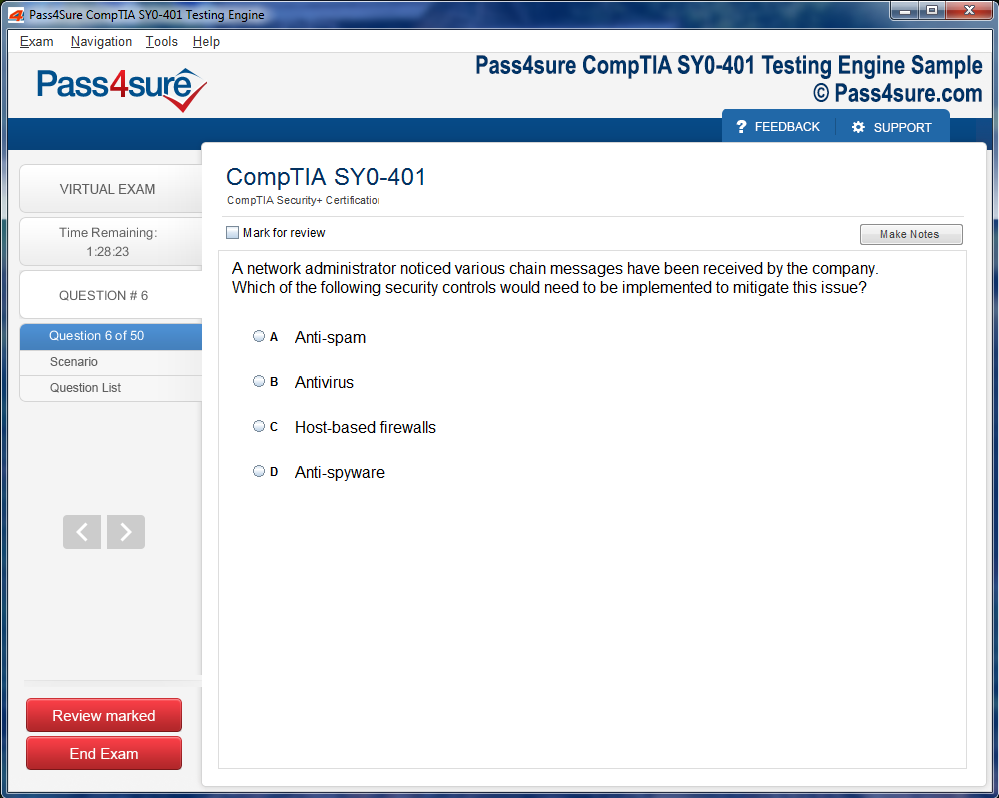
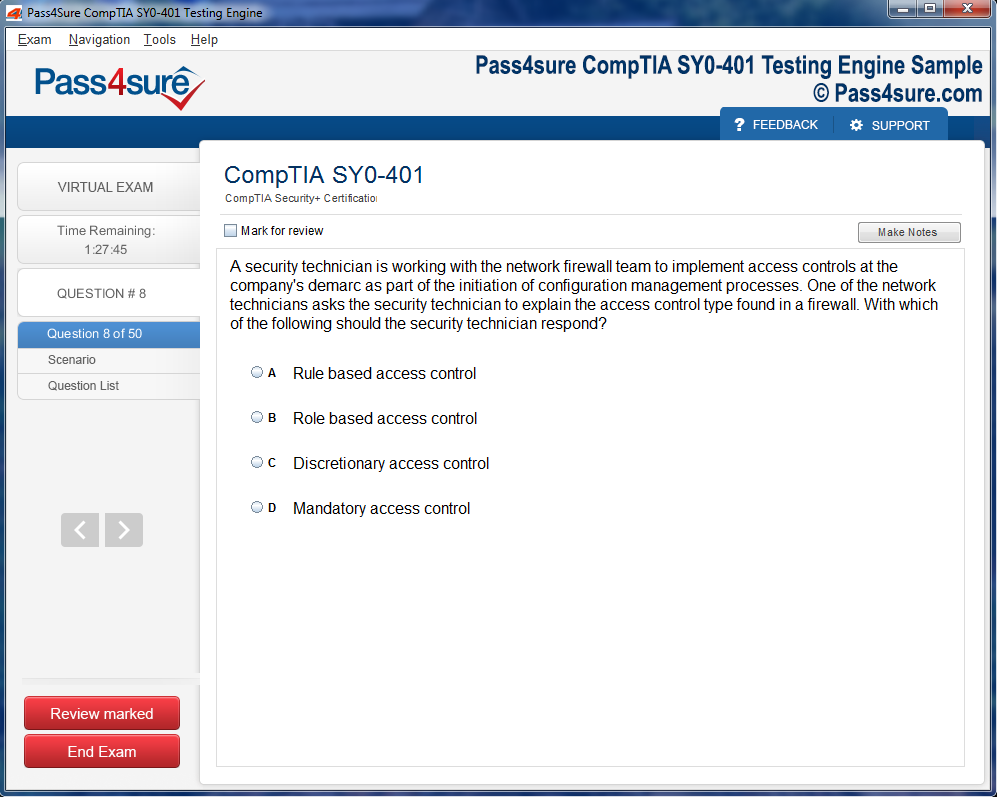
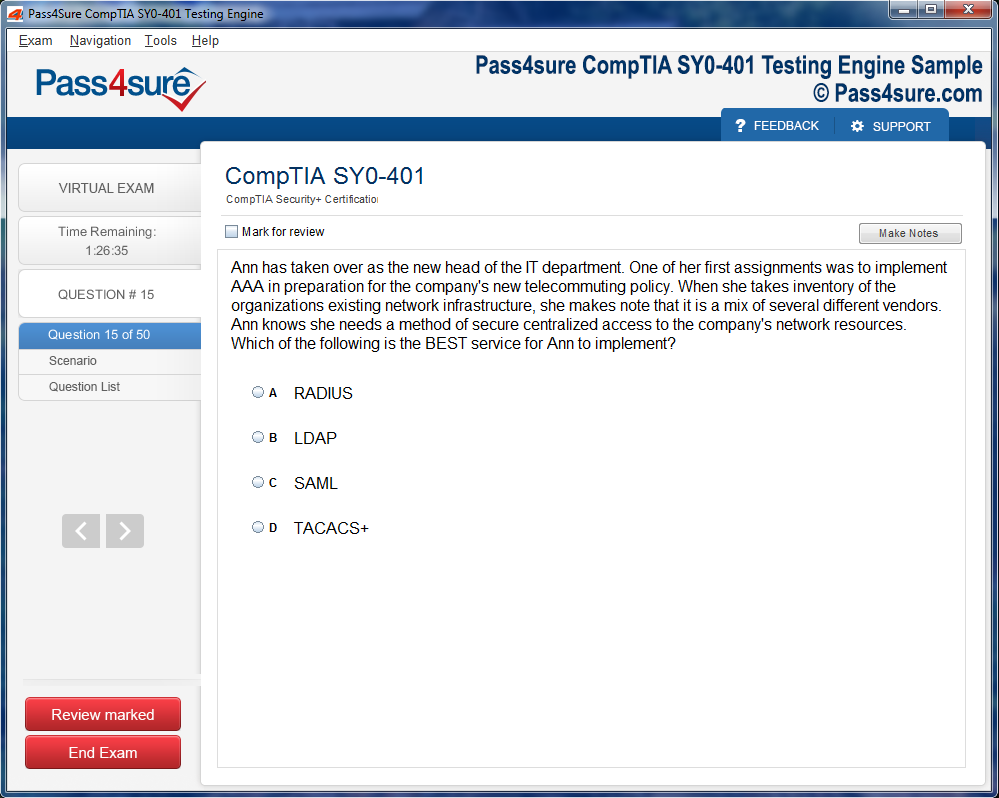
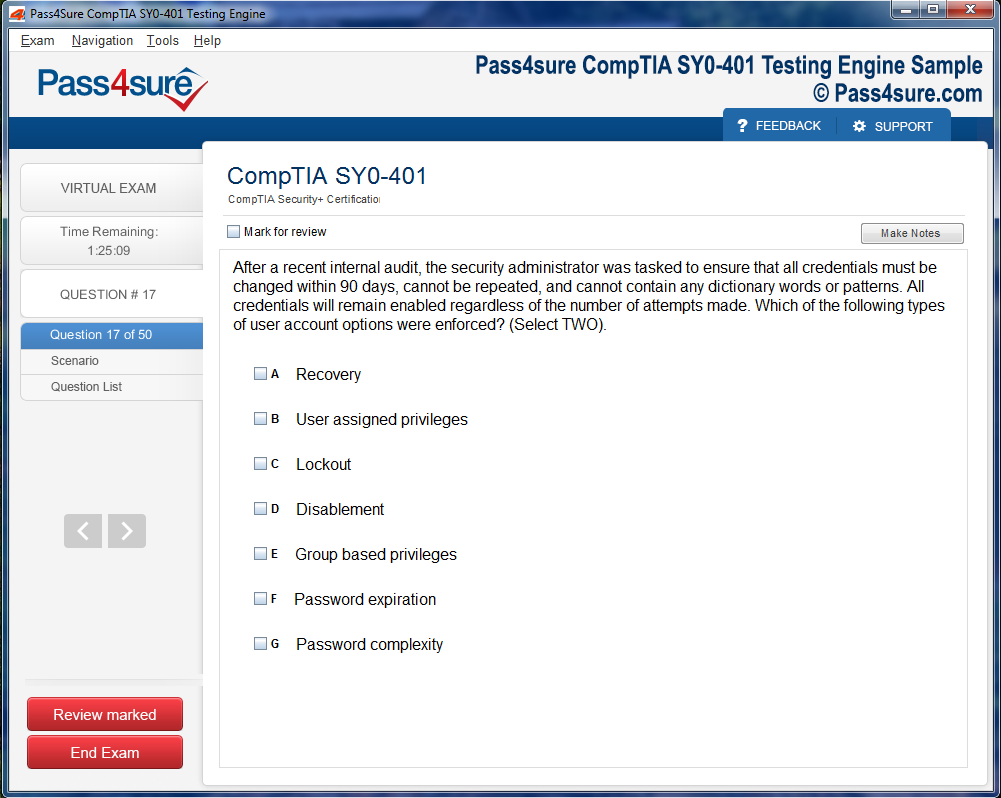
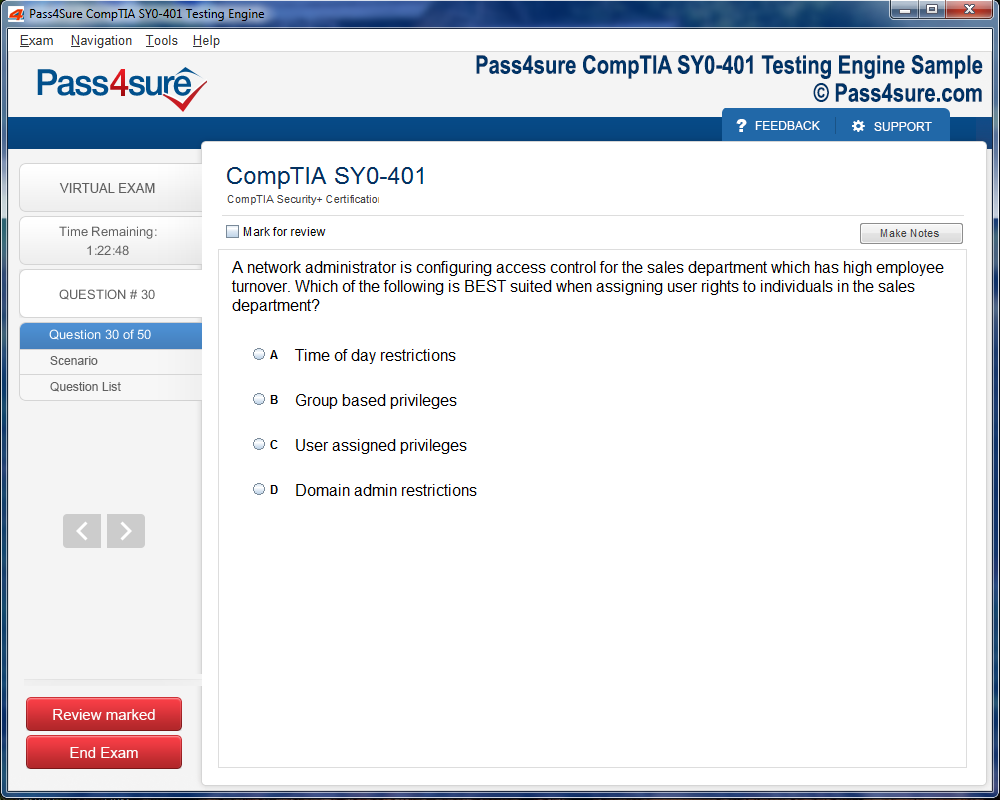
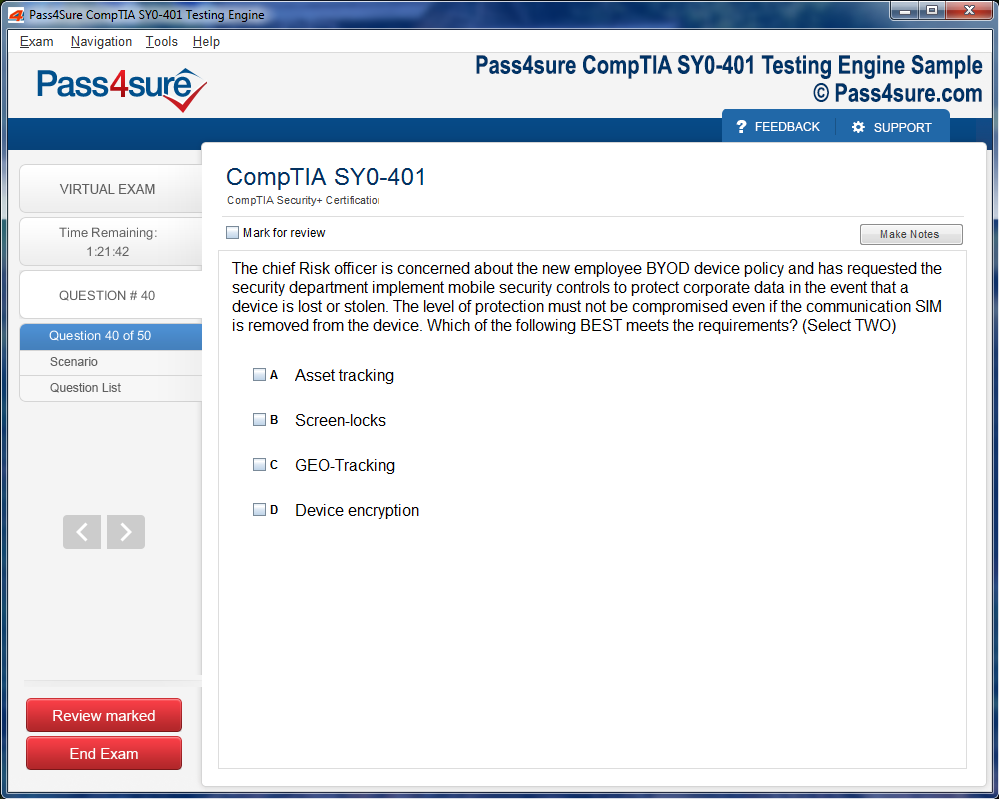
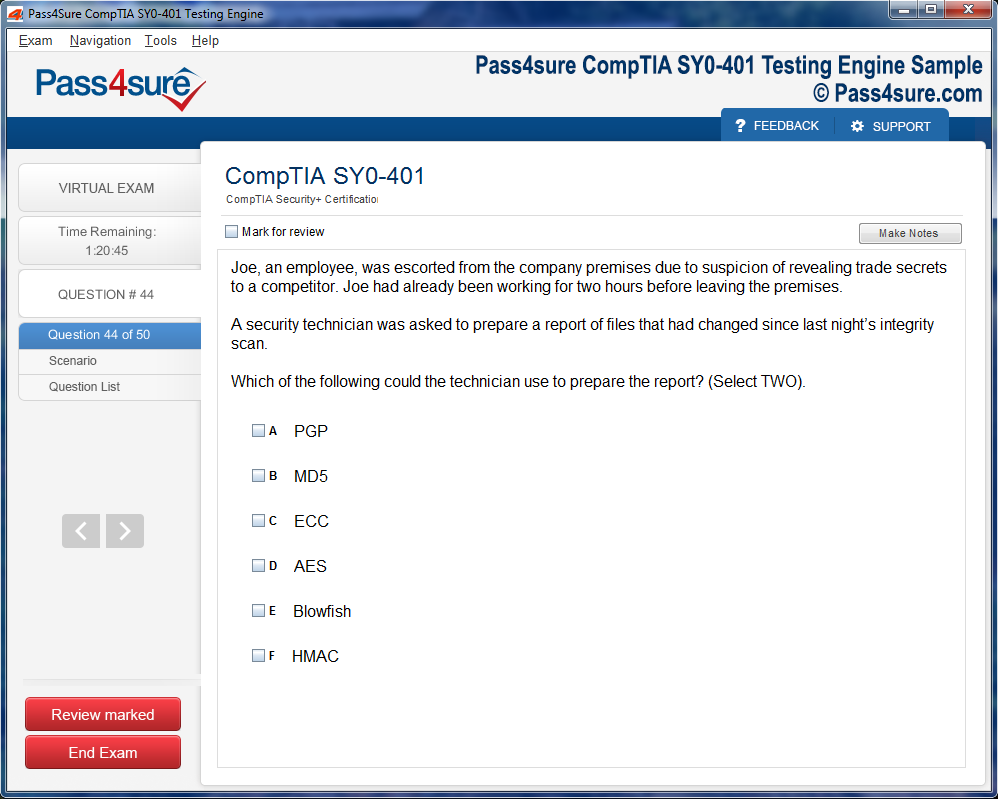
Once download and installed on your PC, you can practise test questions, review your questions & answers using two different options 'practice exam' and 'virtual exam'. Virtual Exam - test yourself with exam questions with a time limit, as if you are taking exams in the Prometric or VUE testing centre. Practice exam - review exam questions one by one, see correct answers and explanations.
How can I get the products after purchase?
All products are available for download immediately from your Member's Area. Once you have made the payment, you will be transferred to Member's Area where you can login and download the products you have purchased to your computer.
How long can I use my product? Will it be valid forever?
Pass4sure products have a validity of 90 days from the date of purchase. This means that any updates to the products, including but not limited to new questions, or updates and changes by our editing team, will be automatically downloaded on to computer to make sure that you get latest exam prep materials during those 90 days.
Can I renew my product if when it's expired?
Yes, when the 90 days of your product validity are over, you have the option of renewing your expired products with a 30% discount. This can be done in your Member's Area.
Please note that you will not be able to use the product after it has expired if you don't renew it.
How often are the questions updated?
We always try to provide the latest pool of questions, Updates in the questions depend on the changes in actual pool of questions by different vendors. As soon as we know about the change in the exam question pool we try our best to update the products as fast as possible.
How many computers I can download Pass4sure software on?
You can download the Pass4sure products on the maximum number of 2 (two) computers or devices. If you need to use the software on more than two machines, you can purchase this option separately. Please email sales@pass4sure.com if you need to use more than 5 (five) computers.
What are the system requirements?
Minimum System Requirements:
- Windows XP or newer operating system
- Java Version 8 or newer
- 1+ GHz processor
- 1 GB Ram
- 50 MB available hard disk typically (products may vary)
What operating systems are supported by your Testing Engine software?
Our testing engine is supported by Windows. Andriod and IOS software is currently under development.
PCM AMA Professional Certified Marketer Study Guide
Earning the PCM AMA certification is akin to undergoing a metamorphosis, wherein nascent knowledge evolves into sophisticated expertise. The journey transcends rote memorization and delves into the labyrinthine intricacies of consumer psychology, brand alchemy, and market symbiosis. This transformation cultivates a cognitive agility that enables professionals to anticipate trends with prescient acuity and craft campaigns that resonate on a subliminal level.
Marketing, in this elevated paradigm, becomes less a transactional exercise and more an orchestration of nuanced experiences. Certified marketers refine the ability to synthesize qualitative insights with quantitative analysis, creating strategies that harmonize emotion with logic. The mastery of this duality allows for not merely persuasive messaging but for the cultivation of enduring brand ecosystems that embed themselves into the cultural zeitgeist.
The Cognitive Cartography of Consumer Behavior
Central to the PCM AMA ethos is an intricate understanding of consumer behavior. This is not merely an examination of purchase patterns but an exploration of cognitive cartography—the mapping of perceptions, motivations, and subconscious drivers. Professionals learn to decode the subtle signals that govern decision-making, enabling them to sculpt campaigns that speak to latent desires rather than overt needs.
By discerning the psychosocial undercurrents of audience segments, marketers gain the ability to anticipate shifts in sentiment before they materialize. This prescience becomes a strategic advantage, permitting the orchestration of campaigns that feel intuitive, authentic, and profoundly engaging. The capacity to navigate these invisible currents distinguishes the certified marketer from the merely proficient practitioner.
Strategizing in the Era of Digital Osmosis
The digital epoch has instigated a form of marketing osmosis, where information permeates consumer consciousness with unprecedented velocity. The PCM AMA curriculum equips professionals to thrive in this environment, emphasizing agility in digital integration and the nuanced application of emerging technologies. Mastery involves understanding the interplay between content dissemination, platform dynamics, and audience receptivity.
Strategic digital execution is no longer confined to metrics; it requires a dramaturgical sensibility where each touchpoint contributes to a cohesive narrative. Professionals learn to orchestrate campaigns that are simultaneously data-driven and narratively compelling, transforming ephemeral engagement into sustained loyalty. This duality, difficult to achieve without structured guidance, becomes second nature for those navigating the rigorous certification pathway.
The Ethos of Ethical Marketing
Ethical discernment constitutes a pivotal pillar of the PCM AMA credential. In an era where transparency and social accountability dictate brand perception, marketers must navigate moral quandaries with both sophistication and integrity. The curriculum emphasizes the delicate equilibrium between persuasion and respect, instructing professionals on responsible use of data, truthful messaging, and conscientious targeting.
This ethical acumen extends beyond compliance; it becomes a strategic differentiator. Brands that embody integrity resonate with audiences on a profound level, cultivating trust that withstands market turbulence. Certified marketers, therefore, are not merely skilled executors but custodians of ethical stewardship in a complex commercial ecosystem.
Analytics as a Catalyst for Strategic Foresight
Analytics transcend their conventional role as retrospective tools, becoming a catalyst for anticipatory strategy. PCM AMA training imbues professionals with the ability to transform raw data into actionable foresight, predicting market shifts and optimizing campaigns with surgical precision. Mastery of analytics entails more than numerical proficiency; it demands the discernment to identify patterns amidst the noise, the sagacity to interpret ambiguous signals, and the creativity to translate insights into compelling initiatives.
In this context, data ceases to be inert and becomes a dynamic partner in decision-making. Certified marketers harness analytical intelligence to not only evaluate performance but to iterate strategies in real time, ensuring that each campaign evolves in resonance with audience behavior and emerging market currents.
The Semantics of Brand Storytelling
Brand storytelling in the PCM AMA paradigm is elevated to a lexicon of cultural resonance. Professionals are trained to craft narratives that encapsulate not just product benefits but ideological ethos, emotional cadence, and aspirational identity. Storytelling becomes a vehicle for transcendence, allowing brands to occupy symbolic space within societal consciousness.
Effective narrative architecture requires a confluence of creativity, linguistic precision, and strategic insight. Certified marketers are adept at constructing story arcs that integrate seamlessly with multi-channel campaigns, ensuring that each touchpoint reinforces the overarching thematic structure. In doing so, marketing evolves from a transactional interaction to a transformative experience that engenders loyalty and advocacy.
Adaptive Strategy in Volatile Markets
Volatility is the new norm in contemporary markets, and the PCM AMA framework instills an adaptive mindset essential for navigating uncertainty. Professionals learn to embrace flux, using it as an opportunity for innovation rather than a constraint. Adaptive strategy entails rapid scenario planning, dynamic resource allocation, and nimble decision-making informed by continuous market observation.
This agility fosters resilience, enabling certified marketers to pivot with dexterity in response to competitive pressures, technological disruptions, or shifting consumer preferences. The capacity to thrive amidst unpredictability becomes a hallmark of certification, distinguishing professionals capable of enduring success from those constrained by conventional paradigms.
The Architecture of Consumer Cognition in Market Perception
Understanding consumer cognition is not merely an exercise in psychology but a deliberate decoding of perceptual heuristics that govern choice architecture. Customers navigate complex decision matrices influenced by subliminal cues, associative branding, and episodic memory triggers. Astute marketers delve into these cognitive substrates, seeking the nexus between latent desire and overt purchasing behavior. By mapping the psychographic contours of a target demographic, organizations can craft campaigns that resonate at a preconscious level, cultivating affinity before rational deliberation intervenes.
This cognitive attunement necessitates a multidimensional approach. Beyond demographics and lifestyle segmentation, marketers interrogate affective responses, habitual patterns, and situational contexts. Observing micro-moments of engagement—such as ephemeral attention shifts on digital interfaces—can reveal friction points or amplifiable delight. By decoding these ephemeral signals, brands can orchestrate experiences that transform mundane interactions into memorable engagements, thus forging enduring consumer loyalty.
Synergistic Dynamics of Competitive Cartography
A robust marketing strategy demands an intricate understanding of competitive cartography—the mapping of rivals’ strategic maneuvers, resource deployments, and market positioning. This transcends conventional benchmarking by integrating anticipatory foresight with retrospective analysis. Marketers must discern patterns in competitor innovation cycles, promotional cadence, and audience penetration, distilling insights that anticipate market oscillations rather than merely reacting to them.
Through this lens, market disruption is not a hazard but an opportunity. By identifying gaps in competitor coverage or vulnerabilities in audience engagement, organizations can architect interventions that recalibrate consumer expectations. The interplay between competitor behavior and brand strategy becomes a dynamic chessboard, wherein proactive insights convert market intelligence into a tangible advantage.
Experiential Differentiation and Narrative Resonance
Creating a distinctive market presence relies on more than functional superiority; it requires experiential differentiation. Brands that excel do so by embedding themselves within the narrative tapestry of consumers’ lives, converting transactions into rituals, and products into symbolic tokens. Storytelling operates as the connective tissue between utility and emotion, transforming mundane offerings into culturally resonant artifacts.
This narrative alchemy demands precision. Every touchpoint—from packaging to digital interfaces—serves as a vector for meaning. Visual semiotics, linguistic cadence, and multisensory cues must coalesce into a coherent symbolic ecosystem. Successful marketers cultivate a perceptual halo, wherein the brand’s ethos permeates conscious and subconscious awareness, engendering preference through association rather than persuasion alone.
Multimodal Integration of Marketing Channels
The contemporary marketing landscape is characterized by flux and convergence. Digital, analog, and experiential modalities must operate in symphonic cohesion to achieve optimum resonance. The efficacy of integrated campaigns hinges on orchestrating disparate channels into a seamless continuum, allowing messaging to traverse platforms without perceptual dissonance. Social media interactions, search engine visibility, email cadence, and in-person experiential touchpoints must operate as complementary conduits rather than isolated silos.
Crucial to this integration is an appreciation of channel-specific affordances. Each medium carries inherent biases in attention, engagement, and receptivity. An adept strategist calibrates messaging to exploit these nuances, amplifying impact while preserving brand consistency. This harmonization extends to temporal sequencing, ensuring that consumer journeys are reinforced rather than fragmented across the marketing ecosystem.
Quantitative and Qualitative Alchemy in Data Interpretation
Data in isolation is inert; its potency emerges through analytical alchemy that transmutes raw metrics into actionable insights. Marketing professionals employ a synthesis of quantitative rigor and qualitative nuance, bridging statistical significance with interpretive subtlety. Behavioral analytics, sentiment mapping, and predictive modeling converge to illuminate latent patterns, guiding decisions that optimize resource deployment and campaign design.
This dual-pronged approach mitigates the risk of myopic strategy. Quantitative methods quantify reach, conversion, and velocity, while qualitative inquiry contextualizes meaning, elucidating the emotional substratum underpinning observable behavior. In tandem, these methodologies foster a feedback-rich environment where strategy evolves iteratively, guided by empirical observation yet informed by human sensibility.
Adaptive Resonance in Evolving Market Topologies
Markets are living organisms, constantly recalibrating in response to technological innovations, sociocultural shifts, and emergent consumer archetypes. Strategic agility is paramount; marketers must cultivate adaptive resonance—the ability to align brand offerings with fluid demand while maintaining core identity. Scenario planning, stress-testing, and iterative prototyping enable organizations to anticipate disruption and pivot without eroding the coherence of their value proposition.
The imperative for adaptability extends to both macro and micro scales. Organizational routines, campaign calendars, and budgetary allocations must remain malleable, ensuring that strategy does not ossify. Brands that exhibit adaptive resonance thrive not merely by meeting current expectations but by preempting future preferences, shaping market norms rather than succumbing to them.
Ethnographic Insights and Cultural Semiotics
A nuanced understanding of consumer behavior often emerges from ethnographic immersion rather than transactional observation. Cultural semiotics—the study of symbols, rituals, and shared meanings—provides a lens through which marketers decode collective identities and social narratives. Observing rituals, language patterns, and aspirational cues allows brands to embed themselves authentically within consumer milieus, enhancing relevance and fostering organic advocacy.
Ethnographic insights also illuminate subtle friction points and unarticulated desires, revealing avenues for innovation that purely quantitative research might overlook. By integrating cultural semiotics into strategic planning, marketers construct offerings that resonate with both explicit needs and latent motivations, engendering a symbiotic relationship between brand and audience.
The Enigma of Consumer Psyche
Consumer behavior is an ever-shifting tapestry woven from subconscious impulses, cultural narratives, and perceptual filters. Individuals rarely act in isolation; their choices are influenced by social osmosis, latent desires, and cognitive heuristics that often escape conscious recognition. Within this labyrinthine framework, marketers must navigate with sagacity, decoding nuanced signals embedded in language, gestures, and digital footprints. The interplay between intrinsic motivation and extrinsic triggers creates an intricate choreography of decision-making, demanding vigilance and adaptive strategy from professionals.
Emotional Resonance as a Strategic Lever
Beyond mere functionality, emotions govern the gravitation of consumers toward or away from brands. Affinity, nostalgia, and aesthetic pleasure operate as invisible catalysts that shape engagement trajectories. When brands curate experiences that stir deep emotional currents, they transcend transactional boundaries and embed themselves into memory palaces. Storytelling, synesthetic marketing, and narrative-driven campaigns act as conduits for this emotional transference, fostering subconscious bonds that endure beyond the ephemeral allure of promotions.
Behavioral Economics in Action
The axioms of behavioral economics illuminate why certain nudges triumph where rational appeals falter. Concepts such as hyperbolic discounting, loss aversion, and social proof offer marketers an arsenal of tools to subtly guide consumer action. By ethically leveraging these insights, brands can cultivate compliance without coercion, aligning business objectives with psychological authenticity. Scarcity, framing, and anchoring, when deployed judiciously, transform ordinary campaigns into compelling catalysts for engagement, encouraging micro-decisions that aggregate into enduring loyalty.
Curating Immersive Experiences
In the contemporary marketplace, experiences eclipse products as the prime vector of brand attachment. Experiential marketing, immersive digital environments, and multi-sensory campaigns create portals through which consumers enter the brand’s narrative universe. The choreography of these interactions—visual, auditory, and kinesthetic—fosters an ecosystem of engagement that encourages participation rather than passive observation. Every touchpoint becomes a deliberate opportunity to imprint the brand ethos onto the consumer psyche, ensuring a resonance that transcends mere utility.
Dialogue and Reciprocity in Relationship Management
Sustained engagement hinges on dynamic reciprocity, a dialogic process in which consumers and brands co-create value. Feedback loops, sentiment analysis, and proactive service interventions form the scaffolding for relationship longevity. Professionals adept in this domain deploy nuanced segmentation, personalized communications, and anticipatory solutions to reinforce trust and brand fidelity. By honoring consumer voices and responding with agility, brands transform ephemeral interactions into durable alliances, generating advocacy that manifests organically across social networks and communal spaces.
Mapping the Consumer Odyssey
Visualizing the consumer journey transcends superficial metrics, offering a cartographic representation of motivations, touchpoints, and friction zones. Journey mapping illuminates latent pain points, identifies opportunity clusters, and reveals the kaleidoscopic nature of decision-making pathways. Each stage—awareness, contemplation, acquisition, and retention—demands tailored interventions that harmonize with cognitive and emotional currents. A meticulously orchestrated journey fosters coherence, minimizing attrition and enhancing satisfaction, while simultaneously equipping marketers with predictive insights to optimize future engagement.
The Symbiosis of Technology and Intuition
Data analytics, artificial intelligence, and predictive modeling augment intuition, providing an empirical substrate to support human judgment. Behavioral datasets reveal patterns invisible to the unaided mind, while algorithmic insights inform segmentation, content personalization, and campaign timing. Yet, reliance on technology must be tempered with empathetic understanding; the human psyche remains nuanced, often irrational, and occasionally capricious. Mastery arises at the intersection of algorithmic precision and human sensibility, producing strategies that are both scalable and emotionally resonant.
Ethical Engagement as Competitive Advantage
In an era of ubiquitous surveillance and data commodification, ethical engagement distinguishes enduring brands from transient entities. Transparency, consent, and integrity are not merely moral imperatives but strategic differentiators that engender trust and loyalty. When marketing interventions respect cognitive autonomy, consumers reciprocate with heightened engagement and advocacy. This ethical foundation enables brands to navigate the delicate equilibrium between persuasion and manipulation, aligning commercial ambition with societal expectation.
Cultivating Adaptive Loyalty Ecosystems
Traditional loyalty mechanisms are insufficient in a landscape characterized by hyperchoice and transient attention. Adaptive loyalty systems—dynamic, context-sensitive, and emotionally attuned—respond to evolving consumer needs in real time. Gamified engagement, micro-incentives, and participatory programs sustain interest while reinforcing brand narratives. Loyalty thus becomes a living construct, evolving in tandem with consumer identity and lifestyle, rather than a static accumulation of transactional rewards.
Synthesizing Insights for Strategic Execution
Integrating the multidimensional insights of consumer behavior, engagement psychology, and relationship management produces a strategic mosaic of remarkable potency. Marketers must synthesize qualitative intuition with quantitative evidence, behavioral economics with narrative strategy, and digital efficiency with human empathy. In doing so, they forge pathways to sustained brand resonance, transforming ephemeral interactions into long-term value creation.
Strategic Brand Management and Identity Architecture
Brand management transcends mere logo recognition; it involves the orchestration of perception, narrative, and experiential resonance across multifarious touchpoints. Cultivating a brand identity requires an intricate understanding of semiotics, cultural signifiers, and consumer psychographics. Professionals must navigate the liminal space between aspiration and authenticity, crafting narratives that resonate with target audiences while preserving brand integrity.
Identity architecture entails the meticulous structuring of sub-brands, product lines, and endorsements to ensure coherence and synergetic amplification. Strategic brand custodians employ archetypal storytelling and mythopoetic frameworks to imbue offerings with symbolic gravitas. The subtle interplay of visual semiotics, tonality, and communicative cadence can profoundly influence consumer perception, engendering loyalty and advocacy.
Experiential Branding and Immersive Engagement
The contemporary brand landscape prioritizes immersive experiences over transactional interactions. Experiential branding leverages multi-sensory stimuli, narrative scaffolding, and environmental cues to create indelible emotional imprints. By engineering touchpoints that blend physical and digital realms, marketers transform passive consumers into co-creators of the brand narrative.
Synesthetic engagement, where sensory modalities intersect, heightens memorability and catalyzes cognitive association with brand values. Strategic brand designers orchestrate temporal and spatial elements to elicit anticipation, delight, and retention, cultivating a holistic brand ecosystem that thrives on repeat engagement and community formation.
Customer-Centric Brand Evolution
Sustainable brand stewardship necessitates a dynamic, customer-centric approach. Brands must continuously recalibrate based on evolving consumer psychodynamics, cultural trends, and competitive landscapes. Strategic listening, ethnographic observation, and sentiment analysis provide insights that inform iterative refinements in positioning, messaging, and product development.
In this paradigm, co-creation with consumers becomes pivotal. Engagement forums, user-generated content, and participatory campaigns amplify brand resonance and foster psychological ownership among audiences. By integrating consumer intelligence into strategic planning, brands cultivate adaptive resilience and long-term relevance.
Cross-Channel Synergy and Narrative Consistency
Brand efficacy is amplified when narratives and aesthetics are harmonized across multiple channels. Cross-channel synergy ensures that visual identity, messaging tone, and experiential cues are seamlessly integrated, reinforcing recognition and trust. This requires a meticulous mapping of audience journeys and a sophisticated understanding of platform-specific consumption behaviors.
Strategic brand managers leverage narrative modularity, crafting adaptable story arcs that maintain core identity while accommodating channel-specific nuances. The convergence of content, interaction design, and communication strategy engenders a coherent omnichannel presence, cultivating consumer familiarity and affinity at every touchpoint.
Quantitative and Qualitative Brand Intelligence
Advanced brand management integrates both quantitative and qualitative intelligence to guide decision-making. Metrics such as brand equity, share of voice, and Net Promoter Scores provide empirical insight into market positioning. Simultaneously, qualitative methods, including ethnographic studies, focus groups, and semiotic analysis, reveal latent perceptions and emotional undercurrents that numbers alone cannot capture.
By triangulating these data streams, professionals can discern both overt and subliminal factors shaping brand perception. This dual-lens approach empowers proactive strategy development, enabling brands to anticipate market shifts, preempt reputational risks, and optimize resonance with target audiences.
Ethical Stewardship and Societal Resonance
Brand custodianship encompasses a moral dimension. Transparent communication, social responsibility, and alignment with ethical imperatives reinforce authenticity and fortify consumer trust. In a climate of heightened scrutiny, brands must navigate the dialectic between profitability and societal contribution, ensuring that strategic initiatives advance both commercial objectives and communal welfare.
Corporate social alignment, purpose-driven storytelling, and sustainable practices augment brand gravitas, transforming transactional relationships into enduring, values-driven partnerships. Ethical stewardship is no longer ancillary; it is a strategic imperative woven into the fabric of brand identity and long-term viability.
Strategic Brand Management as an Experiential Conduit
Brand management transcends mere logos and slogans; it manifests as an experiential conduit that orchestrates perception across psychographic and demographic spectra. A brand's identity must crystallize into a synesthetic tapestry, where visuals, tonality, and narrative cadence interlace seamlessly. The quintessence of strategic stewardship lies not solely in visibility but in the nuanced resonance that evokes anticipation, loyalty, and advocacy. In an era of cognitive saturation, brands must craft mnemonic anchors that embed in consumer consciousness through subtle semiotics and cultural attunement.
Narrative Alchemy in Communication
Communication is alchemy when leveraged strategically, transforming mundane interactions into persuasive symphonies of meaning. Every touchpoint—whether ephemeral social media content or immersive experiential campaigns—becomes an opportunity to transmute brand values into tangible sentiment. Crafting such narratives demands an understanding of affective psychology, semiotic precision, and temporal cadence. Each utterance, visual cue, or sonic motif functions as a signifier, shaping subconscious interpretation and reinforcing the brand’s archetypal persona.
Perceptual Vigilance in Crisis Scenarios
The crucible of brand resilience is often tested in crises. Perceptual vigilance involves preemptive scenario mapping and responsive agility. Professionals must navigate the delicate interplay of transparency and strategic discretion, mitigating reputational hemorrhage while reinforcing consumer trust. The subtle choreography of message modulation—balancing urgency with reassurance—distinguishes ephemeral survival from enduring credibility. Mastery in this domain is less about reactive rhetoric and more about anticipatory orchestration that preserves the sanctity of the brand’s narrative continuum.
Cohesive Orchestration in Integrated Marketing
Integrated marketing communications function as an intricate lattice wherein each strand—advertising, digital strategy, public relations, and promotions—interlaces to form a coherent gestalt. The efficacy of this lattice lies in harmonization; disparate campaigns must converge into a singular narrative thrust. Strategic cohesion amplifies resonance, mitigates cognitive dissonance among audiences, and optimizes resource allocation. The meticulous calibration of timing, channel selection, and message tonality engenders a holistic brand ecosystem, wherein every engagement reinforces the overarching narrative edifice.
Adaptive Evolution and Cultural Resonance
Brands are not static artifacts; they are organisms subject to evolutionary pressures. Adaptive evolution requires vigilance toward technological, sociocultural, and behavioral currents. A PCM-certified professional embraces both continuity and innovation, safeguarding core identity while iteratively enhancing relevance. This necessitates a dialectic approach: harmonizing historical authenticity with forward-looking experimentation. By attuning to micro-trends, semiotic shifts, and emerging paradigms, brands sustain salience and cultivate enduring emotional resonance.
Experiential Brand Architecture
The architecture of a brand extends beyond messaging into orchestrated experiences. Spatial, digital, and tactile interfaces converge to create multidimensional perception. Strategists must conceive journeys that evoke serendipitous delight while reinforcing the brand’s thematic essence. Experiential architecture leverages environmental cues, sensory congruence, and narrative pacing to embed the brand into memory schemas. This immersion fosters a psychological ownership among consumers, transforming transactional encounters into relational legacies.
Semiotic Precision and Symbolic Equity
Symbolic equity is a function of semiotic precision. Every logo curve, typographic choice, color palette, and auditory motif communicates latent meaning, accruing cultural and emotional capital. Strategic brand managers decode these signifiers, ensuring that each element aligns with the intended archetype and societal zeitgeist. Symbolic resonance enhances memorability, fosters affective loyalty, and positions the brand as a referential anchor within its competitive milieu. The meticulous cultivation of symbolic assets is a hallmark of expert stewardship, reflecting a synthesis of creativity and analytical foresight.
Ethical Marketing as a Moral Compass
In the labyrinthine corridors of modern commerce, ethical marketing emerges as the lodestar for conscientious professionals. The crucible of principled decision-making demands more than mere compliance; it necessitates a nuanced synthesis of transparency, social responsibility, and cognitive empathy toward audiences. Ethical marketers navigate an intricate mosaic of dilemmas encompassing data sanctity, sustainability mandates, and veracity in messaging, ensuring campaigns transcend transactional success to cultivate enduring societal trust. Integrity becomes a currency more potent than ephemeral gains, and ethical discernment transforms into an indispensable hallmark of marketing virtuosity.
Leadership Beyond Hierarchy
True leadership in marketing transcends hierarchical authority, residing instead in the alchemy of influence, vision, and inspirational resonance. Leaders orchestrate symphonies of creativity and analytical acumen, guiding teams through the shifting topographies of consumer perception. Strategic foresight and adaptability coalesce with the capacity for mentorship, engendering environments where collaboration thrives and innovation flourishes. Leadership in this context is less about positional power and more about engendering catalytic change, enabling teams to explore unconventional paradigms while remaining tethered to measurable outcomes.
The Nexus of Career Advancement and Certification
Professional trajectory is indelibly shaped by credentials that signify mastery and dedication. Certification, particularly one that encompasses a rigorous exploration of ethical marketing and leadership dynamics, functions as a lodestar in competitive professional spheres. It signals commitment to lifelong learning, acumen in strategy, and an unwavering adherence to principled execution. Those who embrace such credentials unlock portals to managerial domains, advisory roles, and niche specializations, establishing themselves as luminaries whose expertise is both recognized and sought after.
Perpetual Learning in a Fluid Marketplace
The mercurial nature of the marketing ecosystem necessitates perpetual intellectual replenishment. Innovations in technology, oscillations in consumer behavior, and global socio-economic currents dictate that marketing professionals remain in a state of dynamic responsiveness. Lifelong learners immerse themselves in workshops, scholarly discourse, and experimental applications of emergent methodologies, ensuring that their cognitive toolkit remains both current and prescient. Mastery is not static but a continuum, wherein adaptability and curiosity are paramount to sustaining relevance and impact.
Networking as Intellectual Osmosis
Professional ascent is catalyzed by more than individual expertise; it is nurtured through vibrant networks and intellectual osmosis. Participation in communal knowledge exchanges, mentorship synergies, and industry symposiums cultivates avenues for cross-pollination of ideas and exposure to novel paradigms. Such engagements amplify creative problem-solving, fortify analytical dexterity, and foster the emergence of innovative strategies. Networking thus evolves beyond transactional utility, becoming an indispensable conduit for professional enrichment and serendipitous opportunity.
The Integration of Ethics, Leadership, and Growth
A holistic approach to marketing excellence demands the seamless integration of ethical rigor, visionary leadership, and strategic skill acquisition. Professionals who synthesize these elements position themselves as architects of industry standards, capable of sculpting organizational trajectories while preserving societal trust. This integrative paradigm nurtures not only professional competence but also personal fulfillment, embedding a sense of purpose within the pursuit of measurable impact. Ethical judgment, leadership prowess, and continual learning coalesce into a triad that distinguishes the exceptional from the merely competent.
Ethical Marketing as a Moral Compass
In the labyrinthine corridors of contemporary commerce, ethical marketing functions not merely as a procedural guideline but as an epistemic compass, orienting professionals toward judicious choices in morally ambivalent landscapes. The crucible of principled decision-making is fraught with dilemmas, from opaque data harvesting practices to the environmental ramifications of supply chains, demanding perspicacity and conscientious discernment. Ethical marketers navigate an intricate mosaic of choices, balancing organizational objectives with societal expectations, ensuring that messaging does not devolve into mere manipulation but instead cultivates authentic trust and relational longevity.
The notion of transparency extends beyond legal compliance; it embodies an almost liturgical devotion to candor and truth. Ethical marketers must interrogate every facet of communication, questioning implicit biases, latent assumptions, and the unintended consequences of persuasive narratives. Sustainability, too, becomes a moral imperative rather than a performative gesture. The conscientious marketer evaluates the ecological footprint of campaigns, product materials, and logistical frameworks, recognizing that long-term brand equity is intertwined with environmental stewardship. This intertwining of ethics and strategy engenders campaigns that resonate profoundly with audiences, converting transactional engagements into enduring relational bonds.
Furthermore, the stewardship of personal and customer data represents a particularly delicate ethical frontier. Beyond regulatory adherence, marketing professionals must cultivate a philosophy of custodianship, safeguarding information with vigilance and integrity. This entails not merely preventing breaches but proactively anticipating ethical quandaries that arise from algorithmic targeting, predictive analytics, and consumer profiling. In this sense, ethical marketing is less a set of prescriptive rules and more an adaptive moral praxis, where foresight, empathy, and principled judgment converge to shape decisions that are both profitable and socially commendable.
Leadership Beyond Hierarchy
Leadership in marketing is a phenomenon that eclipses positional authority, emerging instead from the synthesis of vision, influence, and the capacity to galvanize collective ingenuity. The effective leader functions as both architect and conductor, designing strategic frameworks while orchestrating the talents, perspectives, and idiosyncrasies of diverse teams. In this realm, the ability to communicate with crystalline clarity is paramount, as ideas and insights must traverse hierarchical and cognitive boundaries without distortion.
Mentorship forms the fulcrum of effective leadership. By fostering developmental pathways for emerging talent, leaders instill not only technical competence but also the ethical and strategic sensibilities that underpin sustained professional success. This cultivation of latent potential engenders a culture of innovation, where calculated risk-taking is encouraged, and iterative learning is valorized. The leader who masters this duality—strategic foresight and relational nurturing—creates ecosystems where creativity flourishes in tandem with measurable outcomes.
Adaptability is another defining attribute. Marketing landscapes are mercurial, shaped by volatile consumer preferences, emergent technologies, and geopolitical shifts. Leaders must exhibit not just cognitive flexibility but also emotional agility, navigating ambiguity without succumbing to paralyzing indecision. Visionary marketing leaders anticipate tectonic shifts, reframing challenges as opportunities for competitive advantage. Through this lens, leadership is an active, ongoing negotiation between aspiration and pragmatism, catalyzing both individual and organizational growth.
The Nexus of Career Advancement and Certification
Professional ascent is inextricably linked to recognition that attests to competence, ethical grounding, and strategic acumen. Certification functions as a symbolic and practical conduit for such recognition, signaling mastery to prospective employers, collaborators, and clients alike. It embodies not only technical proficiency but also a commitment to intellectual rigor, continuous improvement, and principled execution.
The attainment of specialized certification often catalyzes access to managerial positions, advisory capacities, and niche functional roles, elevating candidates above peers in competitive marketplaces. Yet the true value of certification lies not in mere credentialing but in its facilitation of professional metamorphosis. Certified individuals internalize frameworks for ethical decision-making, strategic prioritization, and leadership development, equipping them to navigate the vicissitudes of organizational life with both confidence and integrity.
This trajectory is reinforced by the symbiosis between personal branding and credentialing. A certification serves as a visible testament to expertise, yet its potency is amplified when coupled with demonstrable results, reflective practice, and sustained engagement with evolving industry paradigms. Professionals who embrace this duality cultivate a reputation not only for competence but for thought leadership, establishing themselves as architects of innovation within their domains.
Perpetual Learning in a Fluid Marketplace
The marketing ecosystem is characterized by incessant flux, driven by technological innovations, shifting sociocultural mores, and emergent consumer paradigms. Professionals who remain ensconced in static skill sets risk obsolescence, whereas those who embrace perpetual learning cultivate resilience, foresight, and adaptability. The commitment to lifelong education transforms professional development from a reactive process into a proactive strategy, ensuring preparedness for both anticipated and unforeseen challenges.
Learning in this context extends beyond formal instruction; it encompasses immersive engagement with industry discourse, experimental adoption of novel tools, and iterative refinement of strategic frameworks. Workshops, seminars, and collaborative think tanks provide fertile ground for ideation, enabling marketers to assimilate insights from diverse disciplines. The informed practitioner synthesizes these insights into actionable strategies, bridging the conceptual and the operational, the theoretical and the empirical.
Emergent technologies, from artificial intelligence to immersive analytics, demand not only technical literacy but also ethical discernment. As marketers experiment with predictive modeling, personalized targeting, and automation, they must calibrate innovation with moral responsibility, ensuring that efficiency does not eclipse empathy and strategic foresight does not compromise integrity. In this milieu, continuous learning is not merely a career enhancer; it becomes an existential imperative for relevance, efficacy, and ethical stewardship.
Networking as Intellectual Osmosis
The architecture of professional advancement is profoundly shaped by relational capital. Networking serves as a conduit for intellectual osmosis, enabling practitioners to absorb diverse perspectives, exchange experiential knowledge, and cultivate synergistic collaborations. Interaction within professional circles fosters an environment where innovation emerges through the interplay of disparate insights, facilitating creative problem-solving and strategic cross-pollination.
Mentorship exemplifies the transformative potential of networked learning. By embedding themselves in the developmental trajectories of less-experienced professionals, mentors amplify knowledge transfer, instill ethical and strategic norms, and cultivate emergent leadership. Conversely, mentees provide fresh perspectives, questioning entrenched assumptions and stimulating reflexive adaptation. This bidirectional flow exemplifies the symbiotic dynamism that networking can engender, transcending transactional connections to create enduring, mutually beneficial intellectual ecosystems.
Professional forums, conferences, and industry symposiums further expand this sphere, offering exposure to avant-garde methodologies, disruptive technologies, and emergent consumer paradigms. The marketing professional who actively engages in such forums does not merely participate but synthesizes insights into actionable strategies, leveraging collective intelligence to inform both personal growth and organizational efficacy. Networking, in this light, evolves from a peripheral activity into a core pillar of career development and thought leadership.
The Integration of Ethics, Leadership, and Growth
Excellence in marketing arises from the deliberate integration of ethical rigor, strategic leadership, and continuous skill acquisition. Professionals who cultivate this trinity position themselves not merely as competent executors but as architects of industry standards, capable of influencing both organizational trajectory and societal perception. Ethical judgment undergirds every decision, leadership catalyzes collective achievement, and perpetual learning ensures sustained relevance.
This integration fosters a professional identity characterized by resilience, adaptability, and moral clarity. It enables practitioners to navigate ambiguity with confidence, transform challenges into opportunities, and inspire both peers and protégés through example. The synergy between ethics, leadership, and continuous growth ensures that marketing interventions are not ephemeral but enduringly impactful, simultaneously driving organizational success and contributing positively to societal discourse.
In this holistic paradigm, professional development is inseparable from personal evolution. Marketers emerge not solely as strategists but as visionaries, cultivating relational, cognitive, and ethical sophistication that resonates across stakeholders. The capacity to balance principled action with creative audacity, analytical precision with empathetic understanding, and strategic foresight with adaptive flexibility defines the hallmark of exemplary practice.
Cognitive Engagement and Emotional Contagion
Brand management is a delicate interplay between cognition and emotion, where every touchpoint serves as a vector for affective contagion. Cognitive engagement is not merely awareness but involves active mental simulation, anticipation, and schema alignment. Professionals must craft stimuli that evoke nuanced emotional valences—delight, awe, nostalgia, or aspirational longing—triggering deeper encoding in memory circuits. Emotional contagion is amplified when narratives resonate with intrinsic values, personal identity constructs, and cultural scripts, creating reverberations that transcend immediate transactions. Brands that excel in this domain convert ephemeral attention into durable psychological attachment.
The Semiotics of Multisensory Branding
Brands that succeed in saturated markets often leverage multisensory semiotics, orchestrating sight, sound, touch, and even olfactory cues into an integrated mnemonic ecosystem. Typography, chromatic modulation, haptic interfaces, and sonic logos converge to produce synesthetic cues that reinforce brand archetypes. The strategic deployment of these semiotic vectors cultivates subconscious associations, heightening perceptual salience and fostering affective loyalty. Professionals must calibrate these elements with precision, balancing novelty with familiarity to avoid cognitive dissonance while stimulating engagement at multiple sensory loci.
Persuasive Storytelling as Strategic Leverage
Narrative remains the most potent conduit for persuasion in brand ecosystems. Storytelling is not mere rhetoric; it is a structured cognitive scaffolding through which audiences interpret, internalize, and propagate brand meaning. Effective stories employ temporal pacing, character archetypes, conflict resolution, and emotional arcs to create immersive experiences. The strategic embedding of brand values within these narratives ensures that messaging transcends transactional utility, becoming part of the audience’s personal mythos. The storyteller’s craft lies in harmonizing authenticity, aspirational messaging, and cultural resonance, producing narratives that compel both loyalty and advocacy.
The Psychology of Brand Loyalty
Brand loyalty emerges from a complex interplay of habit formation, emotional investment, and perceived self-congruence. Consumers internalize brands that reflect aspirational identities, social affiliations, or cognitive schemas, resulting in repeated behavioral reinforcement. Loyalty is strengthened when experiences consistently surpass expectation thresholds, creating what psychologists term “peak-end effects,” where memorable moments disproportionately influence overall perception. Professionals must design touchpoints to maximize these effects, employing techniques such as surprise, personalization, and narrative closure to forge enduring relational bonds.
Strategic Media Ecosystems
Modern brand communication operates within multifaceted media ecosystems, encompassing earned, owned, and paid channels. Strategic orchestration requires understanding the affordances and limitations of each channel, along with audience segmentation, content longevity, and engagement velocity. Synergistic deployment across digital platforms, broadcast media, and experiential touchpoints amplifies message penetration while maintaining narrative cohesion. Professionals must anticipate the fractal nature of audience attention, optimizing content formats and timing to achieve maximal resonance while avoiding oversaturation or message dilution.
Crisis Anticipation and Reputation Architecture
Beyond tactical crisis response, effective brand stewardship entails anticipatory architecture that maps potential reputational stressors. Scenario analysis, sentiment forecasting, and contingency planning enable proactive engagement, reducing vulnerability to virality-driven perception crises. Crisis narratives should be pre-aligned with core brand archetypes, ensuring that responses feel congruent and trustworthy. This architectural approach transforms crises into opportunities for reinforcing brand resilience, demonstrating accountability, and deepening audience trust. The professional adept at this domain blends foresight, emotional intelligence, and strategic articulation to safeguard long-term brand equity.
Experiential Immersion in Physical and Digital Spaces
The convergence of physical and digital interfaces allows brands to craft immersive experiences that transcend traditional transactional boundaries. Augmented reality, interactive installations, and multisensory retail environments transform engagement from passive observation to active participation. Immersion leverages cognitive load management, narrative sequencing, and environmental semiotics to create compelling, memorable experiences. Professionals must curate these experiences to be congruent with brand identity, leveraging novelty while maintaining semantic continuity. The ultimate goal is the creation of mental schemas where the brand becomes inseparable from positive experiential memories.
Ethical Brand Stewardship and Cultural Sensitivity
Strategic brand management increasingly demands ethical stewardship, where decisions consider cultural sensitivities, inclusivity, and social impact. Ethical lapses erode credibility, while responsible practices enhance trust and long-term engagement. Professionals must navigate moral semiotics, regulatory frameworks, and cultural nuances to ensure messaging aligns with both brand ethos and societal expectations. Cultural sensitivity involves nuanced interpretation of symbolism, idiomatic expression, and behavioral norms, enabling brands to resonate authentically across diverse markets.
Neurocognitive Insights in Consumer Behavior
Advances in neurocognitive research provide unprecedented insight into consumer decision-making, revealing how attention, memory, and emotion drive brand perception. Subtle cues such as tonal inflection, color saturation, or kinetic design can trigger neural pathways that influence preference and retention. Professionals who integrate neurocognitive principles into strategy can optimize engagement, enhance memorability, and increase persuasive efficacy. This requires a blend of scientific literacy and creative intuition, ensuring that interventions are both empirically grounded and experientially compelling.
Temporal Dynamics in Brand Perception
Perception of a brand is not static; it evolves across temporal dimensions. Initial impressions, cumulative experiences, and milestone interactions collectively shape long-term brand equity. Professionals must design longitudinal engagement strategies that consider timing, sequence, and duration of touchpoints. The principle of temporal layering ensures that each encounter reinforces prior perceptions while introducing incremental value, ultimately creating a cohesive and enduring narrative that withstands competitive and cultural flux.
Cross-Cultural Semiotics and Global Brand Strategy
Global brand management requires mastery of cross-cultural semiotics, where meaning is mediated by linguistic, symbolic, and behavioral variables. Messaging must account for local idioms, color symbolism, social norms, and historical context. Professionals must balance standardization for global coherence with localization to achieve cultural resonance. Failure to navigate these subtleties risks misinterpretation, brand dilution, or reputational harm, while success enhances transnational loyalty and positions the brand as culturally attuned and globally agile.
Innovation in Brand Experience Design
Innovation in brand experience is not solely technological; it encompasses conceptual and procedural creativity. Professionals must envision novel touchpoints, unexpected interactions, and dynamic narratives that differentiate the brand while maintaining identity coherence. Iterative prototyping, experiential testing, and data-driven insight allow for continual refinement. By fostering a culture of exploratory experimentation balanced with strategic discipline, brands achieve differentiation that is both sustainable and emotionally compelling.
Strategic Resonance and Market Differentiation
Ultimately, brand management is about creating strategic resonance—a harmonic alignment between organizational identity, consumer expectation, and cultural context. Differentiation emerges not merely through functional superiority but through perceptual and emotional distinctiveness. Brands that achieve resonance occupy mental and emotional “territory” within the audience psyche, becoming referential anchors and cultural touchstones. Professionals must continuously monitor competitive landscapes, emergent trends, and audience sentiment to ensure that resonance remains robust, adaptive, and strategically advantageous.
Cognitive Biases as Strategic Levers
Consumer behavior is riddled with cognitive distortions that influence perception and choice. Anchoring, confirmation bias, and the availability heuristic often govern decisions beneath conscious awareness, creating opportunities for subtle influence. Brands that decipher these biases can craft interventions that resonate with subconscious inclinations. By framing offers, narratives, and incentives to align with these latent cognitive patterns, marketers convert abstract insights into actionable strategy, enhancing the probability of sustained engagement.
Cultural Semiotics in Consumption
Beyond individual psychology, consumption is profoundly shaped by cultural semiotics. Symbols, rituals, and narrative archetypes imbue products with meaning that transcends utility. Marketers who decode these cultural signifiers can position offerings within broader societal narratives, generating resonance and emotional attachment. From aesthetic cues to linguistic nuance, each element communicates a story that situates the consumer within a desired identity framework. This cultural attunement elevates campaigns from transactional persuasion to experiential storytelling.
The Alchemy of Personalization
Personalization is not a mere marketing tactic; it is an alchemical process that transforms generic touchpoints into tailored experiences. Dynamic content, predictive recommendations, and behaviorally-informed communications converge to create interactions that feel anticipatory rather than reactive. The sophistication of personalization lies not only in relevance but in subtlety—delivering value without triggering discomfort or fatigue. In essence, brands become cognitive partners, understanding desires before they crystallize into demand.
Social Capital and Peer Influence
Engagement is amplified when consumers perceive alignment with social networks and peer communities. Social proof, influencer endorsement, and co-creation mechanisms leverage social capital to reinforce brand desirability. Consumers derive validation, belonging, and status from participation, which strengthens relational bonds and catalyzes advocacy. The orchestration of these social dynamics requires sensitivity; authenticity is paramount, as perceived manipulation can erode trust and fragment communities.
Sensory Marketing and Perceptual Immersion
Human perception is multisensory, and effective engagement taps into the full spectrum of sensory experience. Visual cues, auditory motifs, tactile textures, olfactory signals, and even gustatory elements contribute to a gestalt of brand presence. Sensory congruence enhances memorability, emotional resonance, and implicit preference. Immersive environments—whether virtual, physical, or hybrid—allow consumers to inhabit the brand’s narrative space, converting ephemeral attention into durable attachment.
Temporal Dynamics in Consumer Interaction
Timing is a critical determinant of engagement efficacy. Temporal dynamics—such as purchase cycles, attention spans, and context-specific triggers—shape receptivity and decision momentum. Sophisticated marketers calibrate interactions to these temporal rhythms, deploying nudges when cognitive openness peaks and engagement potential maximizes. By synchronizing communication cadence with natural behavioral cycles, brands reduce friction, increase responsiveness, and cultivate a perception of anticipatory care.
Storytelling as Cognitive Architecture
Narratives serve as cognitive scaffolds, structuring meaning and guiding interpretation. Storytelling in marketing is not ornamental; it is an architectural tool that channels perception, evokes emotion, and embeds brand identity into memory. Archetypal plots, tension-resolution dynamics, and character-driven vignettes provide familiar cognitive templates that facilitate comprehension and retention. When narratives align with personal experience or aspirational identity, they convert passive observation into active mental simulation, reinforcing engagement on a profound psychological level.
The Paradox of Choice and Decision Simplification
In an era of hyperabundance, the paradox of choice complicates decision-making. Overwhelming options can induce cognitive fatigue, reduce satisfaction, and inhibit action. Brands that implement decision simplification strategies—curated assortments, guided pathways, and recommendation hierarchies—ameliorate this cognitive burden. Simplicity does not imply reduction; it implies clarity, intentionality, and guidance, enabling consumers to navigate complexity while maintaining a sense of agency and autonomy.
Reciprocity and Emotional Contagion
Engagement is profoundly influenced by reciprocity and emotional contagion. Human interaction is inherently relational, and consumers respond to perceived benevolence, acknowledgment, and relational investment. Small gestures—personalized messages, anticipatory service, or thoughtful incentives—trigger a psychological reciprocation that deepens loyalty. Emotional contagion amplifies this effect, as enthusiasm, empathy, and authenticity ripple through social networks, reinforcing attachment and brand advocacy.
Digital Ethnography and Consumer Insight
Traditional market research often fails to capture the subtleties of evolving consumer behavior. Digital ethnography—observing online communities, social interactions, and digital footprints—provides nuanced insight into motivations, pain points, and emergent trends. By triangulating qualitative observation with quantitative analytics, marketers acquire a granular understanding of the consumer psyche. This knowledge allows for interventions that are contextually informed, culturally attuned, and emotionally resonant.
Anticipatory Marketing and Predictive Engagement
The apex of engagement lies in anticipatory marketing—preempting needs before they crystallize into conscious demand. Predictive algorithms, pattern recognition, and behavioral forecasting converge to enable brands to act proactively. Anticipatory interventions create a perception of omniscience and care, fostering a deeper psychological bond. The consumer experiences the brand not merely as a service provider, but as an intuitive partner embedded in the rhythms of everyday life.
Micro-Moments and Contextual Relevance
Consumer attention is fragmented, and engagement is increasingly contingent on micro-moments—fleeting instances of opportunity embedded in everyday life. Contextual relevance, immediacy, and responsiveness are paramount in capturing these ephemeral touchpoints. Every interaction must be precisely calibrated to situational context, cognitive state, and emotional readiness. Successful navigation of micro-moments transforms transient attention into lasting perception, anchoring brand presence in both memory and behavior.
Multidimensional Feedback Loops
Dynamic engagement necessitates continuous monitoring and iterative refinement. Feedback loops—gathering behavioral data, soliciting sentiment, and observing network effects—allow marketers to calibrate strategies in real time. These loops operate across multiple dimensions: cognitive response, emotional resonance, and behavioral action. By synthesizing feedback from diverse sources, brands construct an adaptive engagement ecosystem that evolves in synchrony with consumer expectation and market flux.
Experiential Metrics and Immersive Analytics
Quantifying the impact of engagement requires novel metrics that extend beyond traditional conversion statistics. Experiential analytics capture immersion, affective response, narrative absorption, and relational intensity. These multidimensional indicators provide insight into the qualitative texture of interaction, guiding optimization and innovation. Understanding not just what consumers do, but how they feel and perceive, equips marketers with a compass for crafting experiences that endure cognitively and emotionally.
Narrative-Driven Co-Creation
Modern engagement thrives when consumers become co-authors of the brand narrative. Participatory campaigns, collaborative content creation, and user-generated storytelling cultivate a sense of agency and ownership. Co-creation amplifies loyalty by embedding the consumer’s identity within the brand framework, transforming passive interaction into active investment. This symbiosis enhances authenticity, generates organic advocacy, and multiplies the reach of engagement efforts through network effects.
Interpersonal Dynamics in Loyalty Cultivation
Relationship management is not merely structural; it is profoundly interpersonal. Authentic engagement requires sensitivity to social norms, emotional intelligence, and relational dynamics. Customer interactions function as microcosms of larger social ecosystems, where trust, reciprocity, and empathy govern retention. Professionals who master these interpersonal subtleties create relational gravity, attracting sustained loyalty and facilitating advocacy that reverberates organically across personal and communal networks.
Conclusion
Achieving the PCM AMA Professional Certified Marketer credential is more than a milestone; it is a transformative journey that cultivates expertise, credibility, and strategic acumen. Across every domain—from understanding consumer behavior to mastering digital analytics, from strategic brand management to ethical leadership—this certification equips professionals with the knowledge and skills necessary to excel in an ever-evolving marketing landscape.
The series of articles highlights how a deep comprehension of marketing fundamentals, coupled with practical application and ethical insight, enables professionals to create meaningful customer experiences, optimize campaigns, and drive measurable results. PCM-certified marketers are uniquely positioned to anticipate trends, navigate complex market dynamics, and deliver value that transcends transactional relationships.
Ultimately, the certification is a testament to a commitment to lifelong learning, professional growth, and leadership. It empowers marketers to not only achieve career advancement but also to contribute meaningfully to their organizations and the broader marketing community. By embracing the principles, strategies, and practices outlined in this guide, aspiring marketers can transform potential into performance, vision into action, and knowledge into impact.