

Exam Code: NS0-003
Exam Name: NetApp Certified Technology Associate
Certification Provider: Network Appliance
Corresponding Certification: NCTA
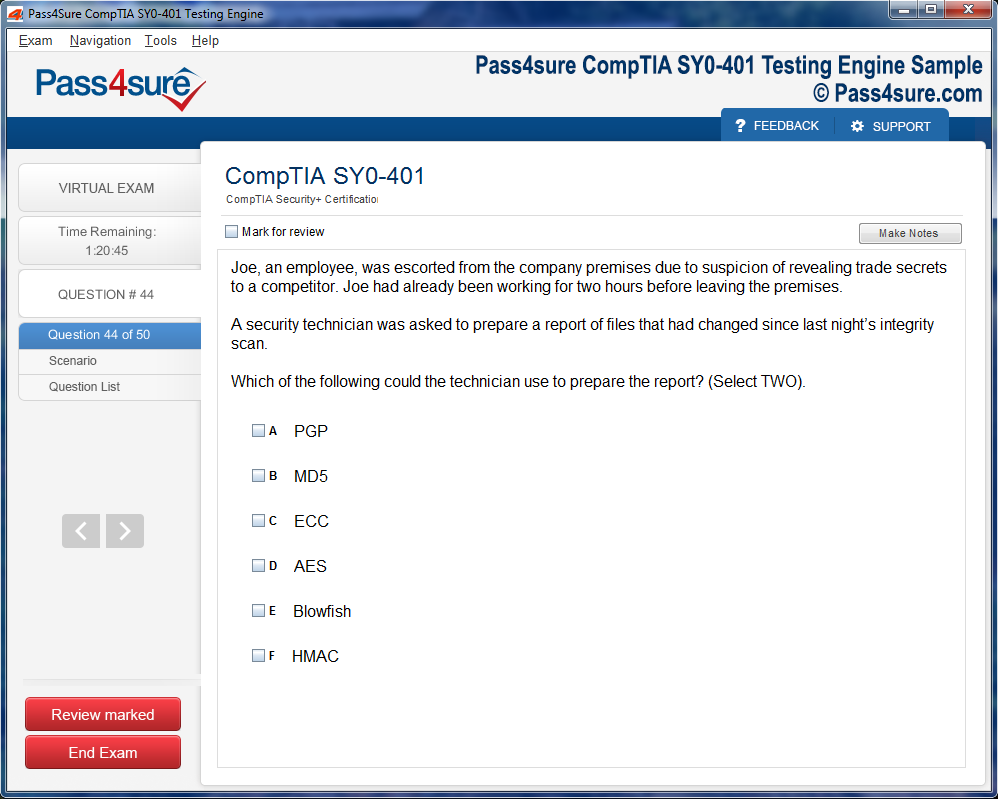
Product Screenshots
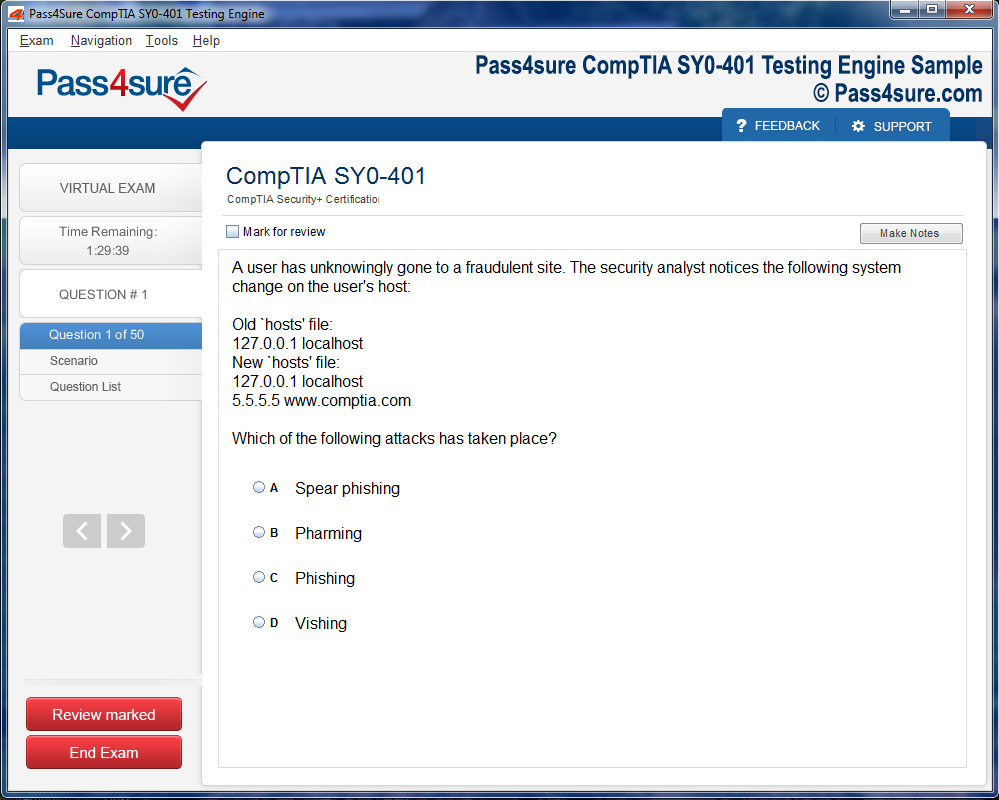
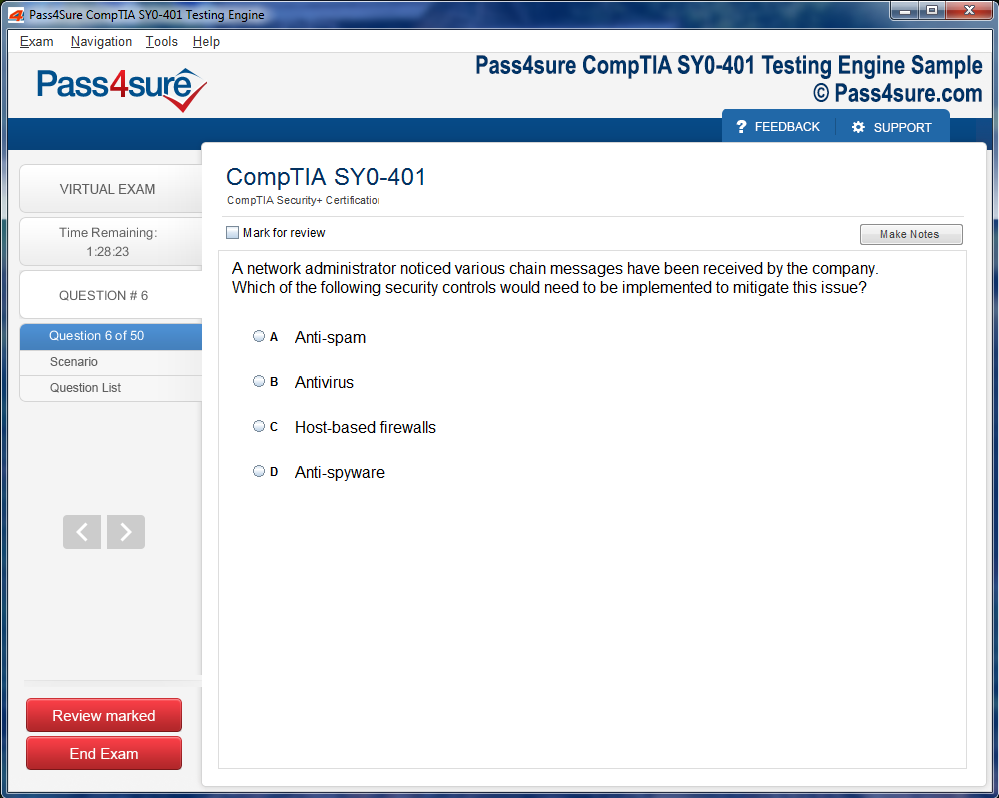
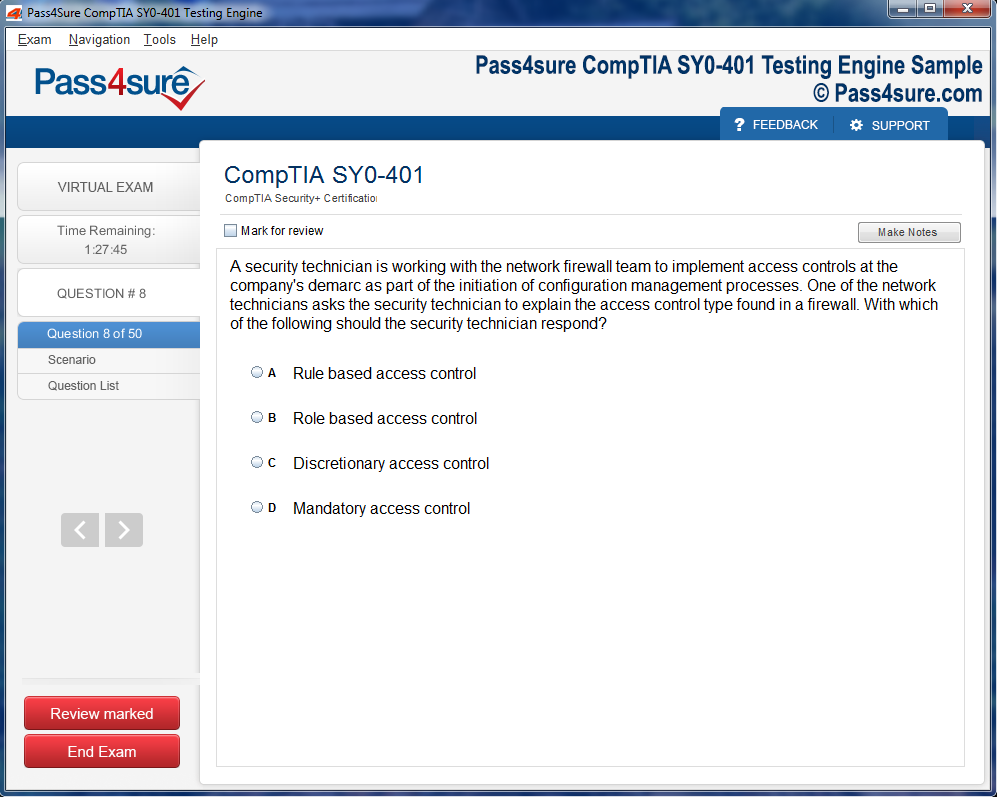

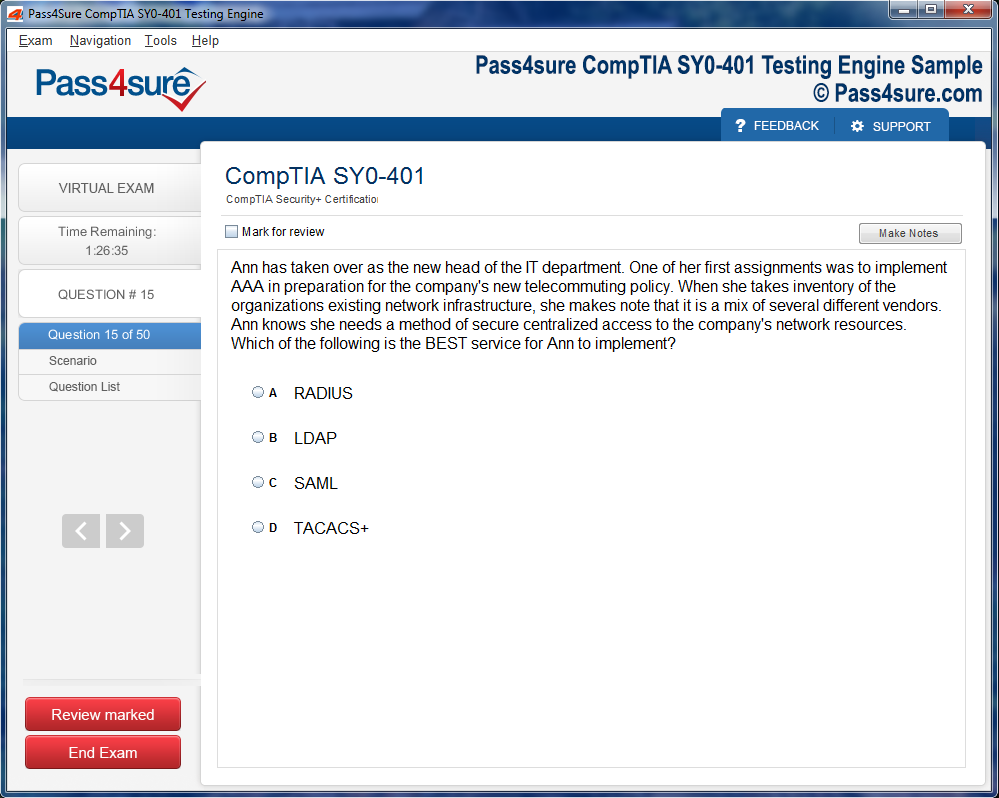
Frequently Asked Questions
How does your testing engine works?
Once download and installed on your PC, you can practise test questions, review your questions & answers using two different options 'practice exam' and 'virtual exam'. Virtual Exam - test yourself with exam questions with a time limit, as if you are taking exams in the Prometric or VUE testing centre. Practice exam - review exam questions one by one, see correct answers and explanations.
How can I get the products after purchase?
All products are available for download immediately from your Member's Area. Once you have made the payment, you will be transferred to Member's Area where you can login and download the products you have purchased to your computer.
How long can I use my product? Will it be valid forever?
Pass4sure products have a validity of 90 days from the date of purchase. This means that any updates to the products, including but not limited to new questions, or updates and changes by our editing team, will be automatically downloaded on to computer to make sure that you get latest exam prep materials during those 90 days.
Can I renew my product if when it's expired?
Yes, when the 90 days of your product validity are over, you have the option of renewing your expired products with a 30% discount. This can be done in your Member's Area.
Please note that you will not be able to use the product after it has expired if you don't renew it.
How often are the questions updated?
We always try to provide the latest pool of questions, Updates in the questions depend on the changes in actual pool of questions by different vendors. As soon as we know about the change in the exam question pool we try our best to update the products as fast as possible.
How many computers I can download Pass4sure software on?
You can download the Pass4sure products on the maximum number of 2 (two) computers or devices. If you need to use the software on more than two machines, you can purchase this option separately. Please email sales@pass4sure.com if you need to use more than 5 (five) computers.
What are the system requirements?
Minimum System Requirements:
- Windows XP or newer operating system
- Java Version 8 or newer
- 1+ GHz processor
- 1 GB Ram
- 50 MB available hard disk typically (products may vary)
What operating systems are supported by your Testing Engine software?
Our testing engine is supported by Windows. Andriod and IOS software is currently under development.
Network Appliance NS0-003 Study Guide: Certified Technology Associate Fundamentals
As storage ecosystems evolve, NS0-003 underscores the necessity of mastering advanced architectures that transcend rudimentary configurations. Contemporary data environments leverage hybrid arrays, converged infrastructures, and hyper-converged paradigms to meet the escalating demands of scalability, redundancy, and efficiency. Candidates are encouraged to delve into the nuances of tiered storage, understanding how cold, warm, and hot data tiers interact to optimize performance while minimizing costs. This tiered approach is not merely a cost-saving measure but a strategic orchestration of resources designed to maximize throughput and resilience.
The intricacies of data management extend beyond mere storage allocation. Effective administrators must possess a profound comprehension of data deduplication, compression algorithms, and snapshot methodologies. Each mechanism serves as a critical tool for conserving storage capacity, accelerating retrieval, and ensuring data integrity. NS0-003 emphasizes the interconnectedness of these techniques, fostering a mindset that considers both immediate operational gains and long-term system sustainability. By mastering these concepts, learners cultivate the foresight required to preempt storage bottlenecks and streamline resource utilization.
Networking and Connectivity Optimization
NS0-003 also immerses learners in the realm of storage networking, an area where precision and strategy are paramount. Storage Area Networks (SANs), Network Attached Storage (NAS), and emerging paradigms such as software-defined storage demand meticulous understanding of latency, throughput, and protocol selection. Practitioners are taught to evaluate Fibre Channel, iSCSI, and NVMe over Fabrics technologies, discerning their respective advantages and limitations. This analytical approach empowers candidates to design networks that harmonize speed, reliability, and scalability, ensuring optimal data delivery across complex infrastructures.
Connectivity optimization transcends mere hardware considerations. NS0-003 emphasizes the orchestration of logical topologies, zoning strategies, and multipathing configurations. Candidates learn to anticipate traffic patterns, mitigate congestion points, and implement redundancy mechanisms that safeguard against potential disruptions. By internalizing these principles, learners transform from reactive troubleshooters into proactive architects capable of sustaining high-performance environments under dynamic workloads.
Monitoring, Analytics, and Performance Tuning
A cornerstone of NS0-003 is cultivating the ability to monitor, analyze, and optimize storage performance. Modern storage systems generate vast volumes of telemetry data, encompassing IOPS metrics, latency distributions, throughput statistics, and error logs. Learners are trained to interpret these signals, identifying anomalies and correlating them with underlying causes. Performance tuning involves more than adjustments to configuration parameters; it requires a nuanced understanding of how applications interact with storage layers, how caching mechanisms influence responsiveness, and how network congestion impacts end-to-end efficiency.
The curriculum integrates analytics-driven decision-making, urging candidates to leverage dashboards, reporting tools, and predictive models. This analytical lens equips practitioners to forecast capacity constraints, preemptively redistribute workloads, and ensure consistent service-level agreements. By combining observational acuity with methodical optimization strategies, NS0-003 candidates develop a sophisticated operational intuition that transcends rote configuration knowledge.
Security, Compliance, and Risk Mitigation
Security in modern storage environments is both multidimensional and non-negotiable. NS0-003 training highlights encryption techniques, including at-rest and in-transit data protection, alongside authentication protocols and access governance. Learners explore role-based access controls, audit trails, and key management frameworks to maintain confidentiality, integrity, and availability of critical data assets. Beyond technical implementation, the curriculum emphasizes compliance with regulatory frameworks, guiding practitioners through best practices that align operational procedures with industry standards.
Risk mitigation is another pillar of secure storage management. NS0-003 explores disaster recovery planning, replication strategies, and high-availability architectures. Candidates are encouraged to evaluate failure scenarios, understand Recovery Point Objectives (RPOs) and Recovery Time Objectives (RTOs), and design resilient solutions capable of maintaining continuity in the face of unexpected events. Mastery of these concepts ensures that data not only remains secure but also accessible, reinforcing the dual imperatives of reliability and protection.
Practical Simulation and Operational Scenarios
To bridge the divide between theoretical knowledge and practical execution, NS0-003 immerses learners in simulated operational scenarios. These exercises replicate the complexities of enterprise-scale environments, from multi-protocol storage deployments to geographically distributed systems. Participants are challenged to apply problem-solving methodologies, troubleshoot latent issues, and optimize performance under realistic constraints. The hands-on approach solidifies cognitive retention, transforming abstract concepts into actionable expertise.
Simulation scenarios extend to capacity planning and lifecycle management. Learners evaluate forecast models, strategize hardware acquisitions, and implement provisioning schemes that accommodate evolving organizational requirements. This proactive approach instills a mindset of anticipatory management, where foresight and adaptability govern operational decisions, ensuring that storage systems evolve in harmony with enterprise growth trajectories.
The Anatomy of Storage Arrays
In the intricate lattice of modern storage infrastructure, storage arrays operate as the principal fulcrum around which data orchestration pivots. NS0-003 accentuates the necessity of discerning between diverse array architectures, elucidating the nuances that distinguish all-flash arrays from hybrid variants. All-flash arrays, with their astonishing access speeds and minimal latency, offer unprecedented acceleration of transactional workloads. Conversely, hybrid arrays employ a judicious amalgamation of solid-state drives and traditional disks, harmonizing cost-efficiency with performance imperatives. Disk-based systems, though older in paradigm, still exhibit resilience for archival purposes, underscoring the timeless axiom that legacy solutions retain strategic relevance.
Candidates are guided through the labyrinthine considerations of scalability and throughput. By examining data striping, cache hierarchies, and input/output operations per second (IOPS) metrics, learners cultivate the acumen to anticipate performance bottlenecks and tailor storage arrays to dynamic enterprise exigencies. This meticulous analysis engenders a profound appreciation for how architectural choices influence both short-term performance and long-term sustainability.
Data Protection Paradigms
A linchpin of NS0-003 competency lies in mastering data protection mechanisms. Within this domain, replication strategies emerge as both an art and a science. Synchronous replication guarantees real-time mirroring of data across disparate nodes, ensuring consistency but demanding careful attention to latency implications. Asynchronous replication, conversely, offers temporal flexibility, allowing storage nodes to synchronize at scheduled intervals, thus mitigating network strain without compromising recoverability.
Snapshot technologies augment replication by capturing point-in-time representations of data, facilitating rapid rollback and operational resilience. Disaster recovery protocols, often encompassing geographically dispersed arrays, embed redundancy into the very fabric of enterprise storage architecture. Candidates develop proficiency in evaluating the trade-offs between recovery point objectives and recovery time objectives, honing the judgment required to architect systems that are simultaneously robust and cost-efficient.
Network Connectivity and Protocol Sophistication
The nexus of storage architecture and network infrastructure is navigated through an intricate exploration of protocols and interconnectivity. Fibre Channel networks, with their deterministic latency and high throughput, remain stalwarts for mission-critical environments. iSCSI, leveraging ubiquitous Ethernet, democratizes storage connectivity, allowing flexible deployment without the need for specialized hardware. Network-attached storage (NAS) protocols further extend accessibility by facilitating file-level operations over standard network fabrics.
NS0-003 immerses candidates in the praxis of configuring multipathing, balancing traffic loads across redundant paths to bolster fault tolerance. Troubleshooting connectivity disruptions demands not only technical dexterity but also a systemic understanding of how data traverses network topologies. Mastery of these elements ensures that storage ecosystems are resilient, coherent, and performant even under strenuous operational demands.
Monitoring, Metrics, and Performance Calibration
A pivotal dimension of storage stewardship is the vigilant monitoring of system performance. NS0-003 emphasizes the interpretation of granular metrics such as latency histograms, IOPS distribution, and throughput patterns. By internalizing these signals, practitioners acquire the capacity to preemptively identify inefficiencies and recalibrate system configurations before they escalate into critical incidents.
Sophisticated analytics platforms provide visualization of workload patterns, enabling predictive scaling and judicious resource allocation. This proactive paradigm transcends mere reactive troubleshooting, positioning storage administrators as strategic arbiters of performance optimization. In high-demand environments, such anticipatory management transforms storage infrastructure into a dynamic, self-adjusting asset.
Security and Access Governance
Within NS0-003, the safeguarding of data is not an ancillary concern but a foundational tenet. Role-based access control (RBAC) delineates permissions with surgical precision, ensuring that operational responsibilities are segregated and auditable. Encryption, applied both at rest and in transit, acts as a cryptographic bulwark against data exfiltration and inadvertent exposure. Audit trails furnish forensic visibility, empowering administrators to reconstruct events with exactitude.
These protective mechanisms are not mere compliance artifacts; they are instrumental in preserving enterprise trust and operational integrity. Candidates learn to integrate security measures seamlessly into architectural designs, balancing protective rigor with the fluidity required by evolving business processes.
Architectural Synergy and System Integration
The culmination of NS0-003’s second phase is the synthesis of components into a cohesive architectural tapestry. Storage arrays, protection strategies, network protocols, and security frameworks must coalesce, forming an infrastructure that is more than the sum of its parts. Here, practitioners exercise judgment in aligning technology with operational strategy, ensuring that storage solutions scale gracefully and withstand the rigors of contemporary enterprise demands.
Through practical simulations and scenario-based exercises, learners cultivate an intuitive grasp of interdependencies and emergent behaviors. They explore how workload patterns influence array performance, how replication choices impact network utilization, and how monitoring insights inform proactive adjustments. This holistic perspective equips candidates to architect storage ecosystems that are simultaneously resilient, efficient, and strategically aligned.
Strategic Resource Allocation in Storage Environments
In NS0-003, strategic resource allocation transcends mere hardware management. Candidates explore the intricate interplay between storage tiers, bandwidth utilization, and latency-sensitive workloads. Advanced practitioners learn to orchestrate resources with a prescient understanding of peak demand periods, dynamic workload migration, and energy-efficient provisioning. This nuanced approach allows for a harmonized ecosystem where performance, cost, and reliability coexist without compromise.
Latency Mitigation and Throughput Enhancement
Reducing latency while enhancing throughput constitutes a pivotal focus in advanced operational techniques. NS0-003 equips learners with methodologies to dissect I/O patterns, implement intelligent caching mechanisms, and leverage data locality to minimize access delays. By integrating predictive analytics with workload characterization, practitioners can preempt bottlenecks and ensure consistently high system responsiveness, even in environments with unpredictable traffic surges.
Adaptive Storage Architectures
Modern storage landscapes necessitate architectures that are not only scalable but adaptive. NS0-003 delves into polymorphic storage solutions capable of self-optimization according to workload profiles. Candidates study hybrid architectures combining solid-state media with high-capacity spinning disks, automated tiering algorithms, and real-time resource orchestration. This adaptability ensures that performance metrics remain within defined thresholds while accommodating evolving data patterns.
Proactive Fault Management
Proactive fault management emerges as a cornerstone of operational mastery in NS0-003. Instead of reactive troubleshooting, candidates cultivate anticipatory strategies to detect incipient failures and anomalous behaviors. Techniques include predictive diagnostics using telemetry analytics, threshold-based alerting, and continuous health monitoring. By instituting such preemptive protocols, organizations mitigate downtime risks, preserve data integrity, and enhance overall infrastructure resilience.
Integrated Automation Frameworks
Automation in NS0-003 extends beyond repetitive scripting to holistic orchestration frameworks. Candidates are introduced to policy-driven automation engines, API-mediated configuration management, and event-triggered task execution. These frameworks facilitate cohesive coordination between disparate storage components, ensuring consistency, reducing human error, and accelerating response times. Mastery of these integrated systems empowers professionals to manage sprawling storage networks with minimal intervention.
Analytical Performance Benchmarking
Analytical performance benchmarking forms a crucial skill set for advanced NS0-003 practitioners. Learners engage with sophisticated benchmarking methodologies to evaluate throughput, IOPS, and latency under variable workloads. Comparative analysis of storage configurations, informed by real-time metrics, enables evidence-based optimization decisions. This analytical rigor ensures that enhancements are not speculative but grounded in empirical observation, fostering a culture of continuous operational refinement.
Resilient Data Replication Strategies
Resilient replication techniques are indispensable in high-availability storage ecosystems. NS0-003 explores synchronous and asynchronous replication, multi-site mirroring, and geo-dispersed data distribution. Candidates grasp the subtleties of replication topologies, bandwidth considerations, and consistency models, allowing them to engineer solutions that guarantee data accessibility even under extreme contingencies. Such strategies solidify an organization’s disaster recovery posture while maintaining operational fluidity.
Intelligent Workload Orchestration
Workload orchestration in advanced storage environments requires both tactical acuity and algorithmic insight. NS0-003 teaches dynamic resource scheduling, automated workload migration, and priority-based allocation to optimize performance across heterogeneous applications. Practitioners develop an intuitive understanding of system interdependencies, ensuring that critical workloads receive preferential treatment without compromising overall system equilibrium.
Holistic Security Integration
Security in advanced operations is inseparable from performance management. NS0-003 emphasizes the integration of encryption, access control, and audit mechanisms directly into storage operations. Candidates learn to balance security imperatives with operational efficiency, ensuring that protective measures do not unduly impede system throughput. This holistic perspective reinforces organizational trustworthiness and compliance while maintaining a seamless user experience.
Continuous Improvement and Metrics-Driven Governance
Finally, NS0-003 instills a culture of continuous improvement underpinned by metrics-driven governance. Learners are encouraged to establish key performance indicators, track operational trends, and iterate upon processes using data-driven insights. This iterative methodology fosters an environment of perpetual enhancement, where storage infrastructures evolve in tandem with organizational needs and technological advancements.
Practical Application and Use Cases of NS0-003
The veritable potency of NS0-003 manifests not merely in theoretical comprehension but in the tangible orchestration of storage ecosystems. Learners are meticulously guided to metamorphose conceptual acumen into operational dexterity, encountering scenarios that underscore the transformative leverage of sophisticated storage administration. The curriculum cultivates an experiential understanding, allowing aspirants to perceive the latent synergies between architecture design and organizational efficacy.
Enterprise data stewardship constitutes a central theater of application. Through NS0-003, candidates delve into methodologies for harmonizing disparate storage resources, optimizing data topology, and fortifying redundancy across multifarious nodes. The exploration of storage virtualization, tiering, and deduplication empowers learners to configure resilient infrastructures capable of sustaining prodigious workloads without succumbing to latency or bottleneck phenomena. These exercises illuminate the palpable gains derived from methodical storage architecture, rendering abstract concepts into operationally significant constructs.
Data protection scenarios form an indispensable facet of practical engagement. NS0-003 elucidates mechanisms for backup orchestration, incremental snapshots, synchronous and asynchronous replication, and disaster recovery simulations. Candidates actively manipulate recovery workflows, encountering diverse contingency conditions, which reinforces an appreciation for meticulous planning and operational vigilance. The pedagogical emphasis on restoration expediency, consistency verification, and rollback fidelity underscores the delicate equilibrium between performance imperatives and integrity assurance within storage landscapes.
Optimization and workload management are further extrapolated through real-world case analyses. Learners interrogate complex environments featuring heterogeneous storage arrays, latency-sensitive applications, and multi-tier workloads. By applying calibration techniques such as IOPS tuning, cache stratification, and adaptive provisioning, candidates discern how system configurations can be synchronized with performance objectives. These experiential investigations reveal the pragmatic dividends of aligning architecture with operational demand, demonstrating that mastery in storage administration yields measurable efficiency gains and mitigates systemic risks.
Security and compliance applications permeate the NS0-003 framework, emphasizing the intersection of operational control and regulatory fidelity. Learners engage with practical enactments of access governance, encryption schemas, and audit trail implementation. The curriculum cultivates an understanding of how these safeguards preserve data sanctity, facilitate adherence to statutory mandates, and bolster stakeholder trust in digital custodianship. By navigating these procedural landscapes, candidates internalize the intricate choreography required to defend sensitive assets in dynamically evolving infrastructures.
Cloud integration and hybrid deployment scenarios represent an emergent domain of practical relevance. NS0-003 acquaints learners with strategies for melding on-premises systems with elastic cloud platforms, balancing performance exigencies with scalable capacity. Through exercises in data migration, replication orchestration, and latency monitoring, candidates acquire the acumen to orchestrate seamless hybrid environments. This hands-on experience elucidates the nuanced considerations inherent in distributing workloads across heterogeneous infrastructures while sustaining operational coherence and service continuity.
NS0-003’s pedagogical philosophy revolves around actionable knowledge. By embedding learners in tangible operational milieus, the curriculum transcends rote memorization, fostering an instinctive understanding of system behaviors under realistic pressures. The applied exercises bridge the conceptual and the empirical, cultivating professionals adept at translating certification insights into demonstrable competence. Candidates emerge equipped not only to navigate certification requisites but to address the multifaceted exigencies of modern data-centric enterprises, where storage strategies directly impinge on organizational resilience and efficiency.
Preparation Strategies for NS0-003 Certification
Embarking upon NS0-003 certification necessitates more than superficial acquaintance with technical content; it demands a meticulously orchestrated approach that amalgamates comprehension, dexterity, and strategic foresight. The journey toward mastery is an intricate tapestry woven from systematic study, practical immersion, and cognitive fortification. Aspirants must cultivate a regimen that harmonizes theoretical acumen with pragmatic application, ensuring readiness to navigate the labyrinthine intricacies of the examination landscape.
Structured pedagogical pathways are indispensable for NS0-003 candidates. The curriculum's multifaceted nature benefits from segmentation into conceptual scaffolds, operational mechanics, and applied scenarios. Foundational comprehension serves as the bedrock, while operational proficiency permits seamless translation of knowledge into actionable competence. Iterative rehearsal and active recollection fortify neural circuits, enhancing retention and accelerating fluency in navigating complex problem spaces. Scenario-driven exercises cultivate adaptive reasoning, compelling learners to anticipate multifarious contingencies and reconcile abstract principles with tangible outcomes.
The primacy of hands-on engagement cannot be overstated. Immersive simulation environments, meticulous lab experimentation, and context-rich exercises cultivate dexterity and instill confidence. NS0-003 examinations reward candidates who possess not merely rote memorization but the ability to operationalize knowledge under pressure. Interaction with virtualized infrastructures and diagnostic scenarios nurtures intuition and hones troubleshooting prowess, transforming theoretical constructs into practical mastery. Through consistent, deliberate practice, aspirants internalize procedural intricacies, refining their capacity for rapid problem recognition and solution execution.
Cognitive reinforcement through conceptual mapping amplifies retention. Mind maps, comparative schema, and iterative analytical exercises enable candidates to structure knowledge hierarchically and interrelate disparate concepts. Translating abstract precepts into operational heuristics fosters agile recall, particularly under temporal and cognitive constraints. This process of mental crystallization ensures that principles are not merely memorized but understood at a functional level, empowering learners to synthesize, extrapolate, and innovate during evaluative encounters.
Mock evaluations and reflective self-assessment constitute another pillar of preparation. Practice examinations simulate the cognitive load and temporal pressure inherent in the actual NS0-003 assessment, offering invaluable metrics for performance calibration. Systematic review of errors and strategic missteps generates actionable insights, permitting candidates to recalibrate methodologies, rectify conceptual blind spots, and optimize problem-solving strategies. This feedback loop engenders iterative refinement, transforming weakness into competency and uncertainty into mastery.
Psychological fortitude is equally paramount. Candidates must cultivate resilience, focus, and composure to navigate the exigencies of high-stakes evaluation. Mindfulness techniques, circumspect pacing, and regulated cognitive rest safeguard against mental fatigue, ensuring sustained acuity. Strategic interval reinforcement and stress modulation techniques bolster attention span and facilitate efficient cognitive processing. By maintaining equanimity under pressure, candidates leverage their knowledge more effectively, translating preparation into performance with precision and confidence.
Time management serves as a subtle yet critical lever for NS0-003 success. Allocating study sessions with circadian alignment, prioritizing high-yield content, and sequencing review according to difficulty gradients enhances learning efficiency. Integrating focused microlearning segments with extended immersion periods achieves a balance between depth and breadth, fostering both comprehensive understanding and operational fluency. The judicious orchestration of temporal resources amplifies cognitive retention while mitigating burnout, optimizing the trajectory toward exam readiness.
Strategic engagement with supplementary materials further enriches the preparation process. Curated reference texts, procedural documentation, and scenario repositories complement foundational study, providing alternative perspectives and nuanced insights. Exposure to variant problem frames cultivates adaptive reasoning, broadens conceptual horizon, and deepens familiarity with practical contingencies. Through selective engagement, candidates refine analytical acuity and cultivate a versatile skill set aligned with NS0-003’s operational demands.
Metacognitive practices enhance learning efficacy and self-regulation. Candidates who employ reflective journaling, progress tracking, and adaptive strategy adjustments engage in an active dialogue with their own cognitive processes. Such introspection enables recognition of patterns in errors, identification of persistent conceptual gaps, and optimization of revision tactics. By externalizing thought processes and monitoring cognitive trajectories, learners achieve heightened awareness of their strengths, vulnerabilities, and evolving proficiency.
Integration of peer collaboration and discourse amplifies comprehension. Engaging in analytical discussions, scenario debriefs, and collaborative problem-solving fosters perspective diversity, reinforces understanding, and stimulates critical evaluation. Social learning mechanisms enhance memory consolidation through articulation, challenge assumptions through debate, and promote accountability through shared objectives. Candidates who combine independent mastery with collaborative synthesis develop robust, multidimensional cognition that extends beyond rote learning.
Ultimately, preparation for NS0-003 is a multidimensional endeavor, interweaving intellectual rigor with tactical strategy, experiential immersion, and psychological resilience. The synthesis of structured learning, hands-on engagement, cognitive reinforcement, evaluative feedback, and metacognitive reflection constitutes a holistic framework. Through deliberate orchestration of these components, candidates not only optimize performance for examination conditions but cultivate enduring professional competencies capable of transcending the immediate confines of certification assessment.
Future Trajectories in NS0-003 Storage Paradigms
NS0-003 embodies a dynamic landscape, ever-morphing under the influence of technological metamorphosis, operational ingenuity, and organizational exigencies. Anticipating future trajectories within this domain necessitates an acute cognizance of emergent paradigms that redefine storage orchestration and data stewardship. Cloud-native proliferation, hybrid architectures, and distributed resource elasticity constitute pivotal axes around which modern storage solutions pivot. Professionals attuned to these evolutions cultivate dexterity in seamlessly integrating on-premises frameworks with cloud ecosystems, harmonizing agility with steadfast reliability.
Automation and Cognitive Management
The advent of AI-infused operational frameworks has precipitated a cognitive renaissance in storage administration. NS0-003 underscores methodologies for predictive analytics, automated provisioning, and self-optimizing performance matrices. By leveraging intelligent algorithms and heuristic monitoring, practitioners can anticipate systemic bottlenecks, mitigate anomalies, and execute proactive maintenance with minimal human intervention. This paradigm not only elevates operational efficacy but instills a culture of anticipatory management, wherein latency, throughput, and resilience are dynamically calibrated through algorithmic insight.
Security, Compliance, and Ethical Data Stewardship
As digital ecosystems expand, the imperative for rigorous security protocols and ethical compliance intensifies. NS0-003 delineates strategies for incorporating multifaceted encryption schemas, privacy-preserving architectures, and regulatory adherence mechanisms. Practitioners navigate intricate legal frameworks and ethical considerations, ensuring sensitive datasets remain inviolable while operational transparency is preserved. Emerging standards necessitate vigilance in cryptographic innovation, audit readiness, and cross-jurisdictional compliance, compelling professionals to balance technical precision with strategic foresight.
Interdisciplinary Integration and Holistic Operations
Modern storage paradigms no longer exist in isolation; they interweave with networking, application delivery, and overarching IT orchestration. NS0-003 emphasizes cross-domain dexterity, equipping practitioners to harmonize storage operations with wider organizational imperatives. The integration of heterogeneous systems, multi-cloud environments, and containerized workloads demands a nuanced understanding of interdependencies. Mastery in this realm transforms storage management from a siloed function into a fulcrum of enterprise-wide operational coherence, fostering seamless collaboration and holistic IT agility.
Continuous Learning and Adaptive Mastery
Embedded within NS0-003 is an ethos of perpetual intellectual cultivation. Professionals are exhorted to engage in iterative learning, experimental exploration, and skill augmentation. This commitment transcends conventional certification, instilling adaptive mastery capable of navigating unforeseen technological shifts. Exposure to evolving protocols, emergent architectures, and avant-garde methodologies ensures practitioners remain at the vanguard of storage innovation. Knowledge, once static, becomes an evolving continuum, empowering professionals to harness change as an instrument of strategic leverage rather than an obstacle.
Anticipating the Next Frontier
The horizon of NS0-003 is characterized by fluidity, unpredictability, and potential for disruptive innovation. Trends such as autonomous storage networks, quantum-resilient data infrastructures, and AI-augmented decision frameworks beckon practitioners toward unexplored vistas of operational sophistication. Engaging with these developments requires both analytical rigor and imaginative foresight, merging empirical mastery with visionary strategizing. Professionals who internalize this forward-looking posture cultivate not merely competence, but the capacity to redefine storage paradigms themselves.
Future Trajectories in NS0-003 Storage Paradigms
NS0-003 is not merely a compendium of storage protocols; it represents a living, evolving architecture that thrives amidst technological turbulence and organizational metamorphosis. In contemporary data ecosystems, storage infrastructures are increasingly expected to perform with adaptive elasticity, orchestrating vast volumes of information across hybrid topologies while maintaining impeccable consistency. Professionals versed in NS0-003 principles gain the aptitude to anticipate structural bottlenecks, optimize throughput, and sculpt storage environments that are simultaneously resilient and malleable. The fusion of on-premises robustness with cloud-native nimbleness underscores a paradigmatic shift wherein storage systems are no longer passive repositories but dynamic participants in enterprise strategy.
As organizations increasingly adopt cloud-native and hybrid storage modalities, the conventional dichotomy between local and remote resources dissolves. NS0-003 practitioners are challenged to cultivate dexterity in orchestrating data lifecycles across geographically dispersed nodes, balancing latency-sensitive operations with high-availability imperatives. The emergent trend toward hyper-converged storage solutions requires not only familiarity with virtualization frameworks but also an appreciation for distributed intelligence, automated resource allocation, and proactive anomaly detection. Mastery in this realm entails a sophisticated comprehension of latency mitigation, tiered storage strategies, and asynchronous replication mechanisms that preserve integrity across multi-node topologies.
Automation and Cognitive Management
Automation in NS0-003 has transcended rudimentary scripting or static orchestration; it is now underpinned by AI-driven cognitive management systems capable of predictive insight and autonomous optimization. Storage infrastructures equipped with heuristic algorithms and real-time monitoring frameworks can anticipate systemic stressors, recalibrate performance parameters, and execute self-healing operations. These mechanisms extend beyond efficiency—they cultivate an anticipatory operational culture where latency, IOPS, and throughput are continuously refined by algorithmic foresight.
Predictive analytics, a cornerstone of this paradigm, enables practitioners to model failure probabilities, forecast capacity saturation, and simulate workload migrations with unparalleled precision. NS0-003 emphasizes the design and deployment of intelligent performance-tuning matrices that dynamically redistribute resources in response to both internal fluctuations and external demands. This cognitive orchestration fosters an operational environment where human intervention is strategically reserved for complex decision-making, while the infrastructure autonomously manages routine optimization. Professionals who internalize these principles become adept at interpreting algorithmic outputs, tuning automation policies, and ensuring that intelligent systems align with organizational objectives.
Furthermore, the integration of AI-driven management frameworks has redefined performance visibility. NS0-003 introduces practitioners to multi-dimensional telemetry systems that monitor access patterns, latency distribution, and I/O anomalies across heterogeneous storage pools. By interpreting these metrics through machine learning models, storage managers can preemptively address congestion, redistribute workloads, and refine caching hierarchies, ensuring optimal data delivery even under fluctuating demand.
Security, Compliance, and Ethical Data Stewardship
In a data-centric era, security and compliance are not auxiliary concerns—they are intrinsic to storage operations. NS0-003 situates security paradigms at the forefront of professional competence, emphasizing the implementation of multi-layered encryption, robust access control frameworks, and privacy-preserving methodologies. Practitioners are guided to navigate complex regulatory landscapes encompassing global privacy statutes, industry-specific compliance mandates, and evolving ethical considerations.
Cryptographic innovation is increasingly central to the NS0-003 syllabus. From asymmetric key rotations to homomorphic encryption for secure computation, professionals are trained to architect systems that maintain confidentiality, integrity, and availability without impeding performance. The nuanced interplay between security enforcement and operational efficiency demands analytical rigor and strategic foresight, as overly rigid protocols can hinder scalability while lax controls jeopardize trust and compliance.
Ethical stewardship complements technical security measures. NS0-003 underscores the importance of transparent data governance, accountability in automated operations, and adherence to societal expectations regarding privacy. Practitioners are expected to design policies and mechanisms that safeguard sensitive datasets, facilitate auditability, and preempt potential misuse. This dual focus on technical resilience and ethical responsibility ensures that storage infrastructures do not merely function efficiently but also align with broader organizational and societal imperatives.
Interdisciplinary Integration and Holistic Operations
The modern storage ecosystem cannot operate in isolation. NS0-003 emphasizes a cross-disciplinary perspective, wherein storage management is intricately interwoven with networking, virtualization, application orchestration, and enterprise IT strategy. Professionals are trained to navigate multi-layered interactions between storage arrays, software-defined networks, and distributed compute frameworks, ensuring that data flows seamlessly across organizational boundaries.
Interdisciplinary integration extends to cloud orchestration and containerized workloads. Storage must not only serve as a repository but as an intelligent participant in application deployment pipelines, supporting ephemeral container storage, persistent volumes, and dynamic scaling policies. NS0-003 encourages practitioners to comprehend the nuanced interdependencies between storage performance, network topology, and application latency. This holistic approach fosters operational coherence, transforming storage from a siloed utility into a fulcrum of enterprise-wide efficiency.
Multi-cloud and hybrid environments further complicate this landscape. NS0-003 practitioners develop the ability to orchestrate replication, failover, and disaster recovery across heterogeneous infrastructures. This requires familiarity with both proprietary and open standards, an understanding of interoperability challenges, and the capacity to automate policy enforcement across diverse platforms. Mastery in these domains allows professionals to architect resilient ecosystems capable of continuous operation despite hardware failures, network anomalies, or unanticipated workload surges.
Continuous Learning and Adaptive Mastery
The NS0-003 framework instills a culture of continuous learning, positioning adaptive mastery as a critical competency. Technological evolution ensures that yesterday’s expertise can quickly become obsolete, necessitating a proactive engagement with emergent tools, protocols, and methodologies. Practitioners are encouraged to pursue iterative learning cycles, combining theoretical knowledge with experimental validation to refine both skillset and judgment.
Continuous learning in NS0-003 encompasses both technical expansion and strategic acumen. Professionals are guided to explore novel storage paradigms such as edge data management, object-based storage architectures, and AI-assisted tiering strategies. Equally, they are encouraged to cultivate problem-solving heuristics, scenario-based decision-making, and foresight into systemic vulnerabilities. This dual emphasis ensures that practitioners remain both technically proficient and strategically insightful, capable of navigating uncharted operational terrain with confidence and precision.
The commitment to lifelong learning also fosters innovation. NS0-003 practitioners who actively engage in experimentation and exploratory analysis can identify inefficiencies, propose novel architectures, and influence the evolution of organizational storage strategy. Knowledge becomes a living instrument, dynamically shaped by experience, observation, and experimentation. In this way, the learning process transforms from a static accumulation of information into an adaptive, iterative engine driving professional growth and operational excellence.
Anticipating the Next Frontier
The frontier of NS0-003 is not merely technological—it is conceptual, strategic, and anticipatory. Emerging innovations such as autonomous storage networks, AI-mediated orchestration frameworks, and quantum-resilient infrastructures are poised to redefine the parameters of possibility within storage management. Professionals must cultivate a mindset attuned to both the present operational demands and the speculative trajectories of the field.
Autonomous storage systems, for instance, integrate predictive analytics, self-healing mechanisms, and policy-driven automation to minimize human oversight while maximizing operational resilience. Practitioners are challenged to design frameworks that allow these systems to function independently yet remain auditable, configurable, and aligned with organizational goals. Simultaneously, the advent of quantum-inspired storage architectures introduces considerations of data integrity, computational efficiency, and cryptographic resilience that require advanced theoretical understanding alongside practical deployment acumen.
Anticipating these trends necessitates a combination of intellectual curiosity, analytical rigor, and strategic foresight. NS0-003 fosters a culture wherein professionals are not merely reactive operators but proactive innovators capable of influencing the evolution of storage paradigms. By integrating predictive insight, adaptive learning, and interdisciplinary integration, practitioners position themselves at the vanguard of technological evolution, ready to navigate the complexities of future storage landscapes with dexterity, confidence, and transformative impact.
Cognitive Augmentation and Decision Intelligence
An emerging dimension within NS0-003 is the application of cognitive augmentation to decision-making processes. Professionals are increasingly expected to leverage data-driven insights alongside algorithmic recommendations to optimize resource allocation, risk mitigation, and workload orchestration. Cognitive augmentation involves synthesizing telemetry, predictive analytics, and historical performance data to inform operational strategies, creating a feedback loop where human intuition and machine intelligence coalesce.
This integration amplifies decision intelligence, allowing storage managers to identify latent inefficiencies, anticipate infrastructural stressors, and deploy interventions with surgical precision. NS0-003 provides methodologies for constructing dashboards, alerting systems, and simulation environments that enable rapid scenario evaluation. By cultivating fluency in these tools, professionals enhance both situational awareness and strategic responsiveness, ensuring that storage infrastructures operate at peak efficiency while remaining resilient against unanticipated disruptions.
Preparation Strategies for NS0-003 Certification
Mastery of NS0-003 demands a symphony of cognitive dexterity, methodical planning, and experiential immersion. Beyond the rudimentary accumulation of information, aspirants must develop an intuitive grasp of operational frameworks, discerning patterns, and procedural nuances that underpin complex network infrastructures. Preparation is therefore less a linear accumulation of facts and more an intricate choreography of study, practice, reflection, and cognitive rehearsal.
The cultivation of analytical acumen is central to preparation. NS0-003 challenges often probe the ability to deconstruct scenarios, isolate causative factors, and apply appropriate remediation techniques. Candidates benefit from iterative exercises that emphasize diagnosis and solution synthesis, fostering a mindset attuned to investigative reasoning. Such training develops not merely technical facility but also adaptive problem-solving, allowing aspirants to navigate novel configurations and emergent contingencies with confidence.
Immersion in virtualized lab environments accelerates skill internalization. These simulated ecosystems provide a safe yet rigorous context in which theoretical knowledge can be stress-tested and operationalized. Repetitive engagement with configuration scripts, fault injection, and troubleshooting protocols consolidates learning and enhances procedural memory. Each interaction strengthens the linkage between conceptual understanding and tangible execution, creating cognitive scaffolds that facilitate rapid recall and accurate application under exam conditions.
Conceptual interleaving is another potent strategy. Alternating between thematic domains—such as architecture, protocols, fault management, and security considerations—prevents cognitive plateau and promotes robust neural encoding. By juxtaposing related yet distinct topics, candidates achieve associative reinforcement, strengthening memory pathways and cultivating versatility. This method encourages agile switching between cognitive contexts, a capability particularly valuable when addressing multifaceted NS0-003 scenarios.
Cognitive visualization techniques augment preparation efficacy. Mental rehearsal, flowchart construction, and systemic diagramming translate abstract processes into concrete representations, enabling learners to apprehend interdependencies and operational sequences. Visualization enhances both memory retention and analytical foresight, empowering candidates to anticipate cascading effects, preempt potential failures, and optimize remediation strategies. This practice, when integrated with practical exercises, elevates both conceptual clarity and procedural confidence.
Strategic exposure to high-complexity scenarios sharpens evaluative judgment. NS0-003 frequently incorporates multi-layered cases requiring synthesis of diagnostic insight, technical knowledge, and procedural dexterity. Candidates who proactively engage with layered problem sets cultivate an intuitive sense of prioritization, recognizing critical fault lines and allocating attention where it yields maximal operational impact. The iterative confrontation with complex scenarios hones judgment under pressure, reducing cognitive latency and enhancing decision accuracy.
Integration of spaced repetition and cyclical review further consolidates expertise. Revisiting core principles at strategic intervals ensures that learning persists beyond transient recall, embedding knowledge within long-term memory. This approach counteracts cognitive decay, solidifies interrelated concepts, and maintains readiness for both examination and real-world application. When combined with scenario-based exercises, spaced repetition transforms rote memorization into functional expertise.
Meticulous attention to temporal strategy is crucial. Allocating study blocks according to cognitive peak periods maximizes retention and efficiency. Early-morning analytical sessions, mid-afternoon problem-solving exercises, and evening consolidation activities align with natural cognitive rhythms, enhancing focus and minimizing fatigue. Complementing these intervals with brief recovery periods ensures sustained attention, preventing burnout while maintaining high-quality engagement with study material.
Psychological scaffolding supports this intellectual endeavor. Candidates who cultivate resilience, stress modulation, and adaptive focus create a cognitive environment conducive to high-stakes performance. Techniques such as controlled breathing, mindfulness meditation, and progressive relaxation mitigate exam anxiety, sharpen attention, and sustain mental acuity. By fortifying the psychological substrate, aspirants optimize their capacity to convert preparation into precise, effective performance.
Peer engagement and collaborative synthesis provide an additional dimension of reinforcement. Interaction with fellow aspirants enables cross-pollination of ideas, elucidation of opaque concepts, and exposure to alternative problem-solving strategies. Discussion forums, study cohorts, and scenario debrief sessions cultivate social learning, reinforcing knowledge through articulation, critique, and iterative refinement. Candidates who combine autonomous mastery with cooperative dialogue develop a more resilient, adaptable cognitive framework.
Adaptive problem-solving exercises cultivate lateral thinking. NS0-003 scenarios often present unconventional challenges requiring innovative solutions. Candidates who practice divergent reasoning, constraint analysis, and heuristic evaluation develop the ability to navigate unforeseen complications with agility. This approach transcends mere procedural replication, instilling a capacity for strategic improvisation essential for both examination success and professional excellence.
Engagement with diagnostic heuristics enhances operational acuity. By systematically analyzing faults, mapping symptom-to-cause correlations, and simulating remedial interventions, candidates develop predictive insight into system behavior. This practice enables anticipatory troubleshooting, reduces error propagation, and reinforces the association between theoretical knowledge and practical application. Mastery of heuristics converts reactive problem-solving into proactive operational strategy, a hallmark of high-performing NS0-003 professionals.
Cognitive resilience is further strengthened through deliberate challenge calibration. Alternating between high-difficulty and moderate-difficulty exercises trains mental endurance, stress tolerance, and adaptive focus. Candidates exposed to escalating complexity cultivate confidence, sharpen analytic rigor, and develop a habitual orientation toward solution-oriented thinking. This incremental escalation also mitigates cognitive plateauing, sustaining engagement and promoting continuous skill accretion.
Documentation and reflective synthesis consolidate mastery. Keeping detailed notes, procedural logs, and analytical commentaries transforms passive study into active cognition. Candidates who externalize thought processes, annotate procedural insights, and track iterative learning progress reinforce memory retention, facilitate knowledge retrieval, and provide an empirical record for review. Such reflective practice bridges the gap between comprehension and application, embedding expertise within a durable cognitive framework.
Strategic engagement with supplemental material, including technical whitepapers, system manuals, and experiential narratives, broadens the conceptual horizon. Exposure to real-world operational anecdotes and nuanced configuration nuances supplements formal study, enriching understanding and fostering contextual awareness. By integrating these supplementary insights, candidates cultivate a multidimensional perspective, enhancing both analytical dexterity and practical adaptability.
Attention to micro-level detail is vital. NS0-003 evaluations often hinge upon recognition of subtle operational cues, configuration nuances, or procedural exceptions. Candidates who train to detect minor anomalies, interpret diagnostic signals, and correlate sequential events cultivate precision, reducing the likelihood of oversight and reinforcing reliability in execution. Micro-level vigilance, when combined with macro-level strategic insight, yields a holistic operational competence.
Iterative simulation exercises reinforce both cognitive agility and procedural fluency. Candidates who repeatedly navigate complex virtual networks, inject controlled faults, and test remedial strategies internalize operational sequences and develop instinctive response patterns. This repetition nurtures automaticity, enabling rapid, accurate execution under exam pressure and professional operational contexts. Each iteration strengthens both confidence and capability, converting preparation into habitual mastery.
Strategic prioritization of knowledge domains enhances efficiency. NS0-003 encompasses diverse content areas, each varying in complexity, recurrence, and operational significance. Candidates who allocate attention proportionally, emphasizing high-yield concepts while ensuring coverage of peripheral but essential domains, optimize cognitive investment. Prioritization fosters focused engagement, reduces unnecessary cognitive expenditure, and maximizes readiness for high-impact examination scenarios.
Finally, cultivation of intellectual curiosity augments preparation. Candidates who actively seek to understand underlying principles, question procedural assumptions, and explore alternative configurations develop a depth of comprehension that transcends rote memorization. Curiosity-driven engagement fosters retention, strengthens conceptual linkage, and cultivates the type of flexible intelligence that distinguishes proficient practitioners.
Practical Application and Use Cases of NS0-003
The experiential dimension of NS0-003 is accentuated through iterative engagement with multi-layered operational scenarios, where learners cultivate an intuitive grasp of storage orchestration under dynamic exigencies. The curriculum deliberately integrates simulations that replicate the idiosyncrasies of enterprise ecosystems, allowing candidates to decipher systemic interdependencies and optimize resource allocation with precision. This immersive approach transforms latent theoretical comprehension into tactical acumen, positioning learners to navigate intricate infrastructural challenges with strategic foresight.
In the domain of enterprise-scale storage consolidation, NS0-003 underscores methodologies for reconciling disparate storage arrays into cohesive operational entities. Candidates examine the intricacies of heterogeneous environments, exploring converged and hyper-converged architectures. By configuring logical storage pools and deploying adaptive tiering mechanisms, learners achieve enhanced throughput and diminished latency footprints. The curriculum emphasizes the subtleties of load balancing, where the judicious distribution of data across nodes mitigates hotspots and ensures equitable resource utilization. The practical exercises illustrate the symbiotic relationship between architectural design and systemic reliability, highlighting that meticulous planning translates into tangible operational dividends.
Backup orchestration and data recovery paradigms receive heightened attention due to their criticality in enterprise continuity planning. NS0-003 introduces learners to nuanced replication strategies, encompassing both synchronous and asynchronous models, tailored to the specific performance and recovery point objectives of diverse workloads. Hands-on exercises simulate failure conditions ranging from partial node outages to full-scale disaster scenarios, compelling candidates to execute rapid restoration workflows while preserving data fidelity. Through these engagements, learners internalize the strategic imperatives of redundancy planning, failover orchestration, and snapshot management, appreciating that the ability to recover seamlessly from contingencies is as crucial as preventive infrastructure design.
Performance tuning and workload optimization form another pivotal axis of NS0-003’s applied pedagogy. Candidates are immersed in scenarios featuring high-velocity transactional environments, latency-sensitive analytical operations, and complex multi-tier storage deployments. By leveraging sophisticated monitoring tools, predictive analytics, and real-time resource allocation algorithms, learners discern patterns of utilization and identify bottlenecks that impede efficiency. The curriculum advocates a granular approach to optimization, where adjustments to caching policies, queue depth, and throughput thresholds are calibrated to workload characteristics. This pragmatic focus equips learners with the capability to not only diagnose systemic inefficiencies but to implement corrective interventions that enhance operational resilience and maximize throughput.
Security enforcement and regulatory compliance are integral components of practical application in NS0-003. Learners engage with real-world enactments of access control matrices, role-based permissions, and cryptographic protocols. Scenarios encompass regulatory frameworks requiring stringent audit trails and encryption standards, compelling candidates to implement mechanisms that safeguard sensitive data while facilitating verifiable compliance. Through practical exercises, learners navigate the delicate balance between operational accessibility and stringent security mandates, internalizing best practices in secure storage architecture. The applied exposure to audit simulation, anomaly detection, and policy enforcement fosters an appreciation for proactive governance in high-stakes storage environments.
The curriculum also places pronounced emphasis on hybrid and multi-cloud deployments, reflecting contemporary trends in enterprise storage management. Candidates explore methodologies for orchestrating data flow across on-premises storage, private clouds, and public cloud platforms, balancing performance imperatives against cost efficiency. Practical exercises involve data migration planning, replication scheduling, and performance benchmarking in hybrid environments. Learners encounter challenges such as network latency, consistency synchronization, and failover orchestration, developing strategies to maintain seamless operations while optimizing resource expenditure. This immersion elucidates the complexities inherent in hybrid storage strategies, demonstrating how judicious design and operational oversight are pivotal in maximizing system efficacy and resilience.
NS0-003 also integrates real-world use cases where operational excellence is tested under peak load conditions. Learners analyze scenarios involving database-intensive applications, high-frequency transaction systems, and large-scale analytics platforms. Through simulation, candidates assess the impact of storage allocation strategies on system responsiveness and stability, applying lessons in real-time throughput management and capacity forecasting. The exercises underscore that effective storage administration is not merely reactive but anticipatory, requiring foresight in provisioning, monitoring, and optimizing resources to prevent degradation under demanding operational conditions.
An often underexplored dimension of NS0-003’s practical application is the orchestration of fault management protocols. Learners examine mechanisms for early detection, automated remediation, and predictive maintenance, leveraging monitoring tools to identify anomalies before they escalate into systemic failures. The curriculum emphasizes a proactive philosophy, where the integration of predictive analytics and intelligent alerting systems transforms reactive operations into preemptive strategies. By simulating fault scenarios across multi-tier storage infrastructures, candidates gain hands-on experience in contingency planning, root-cause analysis, and corrective intervention, reinforcing the operational tenet that resilience is engineered, not incidental.
Additionally, the practical framework of NS0-003 encompasses storage efficiency strategies, guiding learners through data lifecycle management, space reclamation, and thin provisioning techniques. Exercises involve evaluating storage consumption patterns, implementing deduplication protocols, and orchestrating archiving workflows that align with organizational policies. Through these engagements, candidates appreciate the symbiosis between operational efficiency, cost optimization, and environmental stewardship, recognizing that judicious management of digital assets mitigates waste while enhancing performance.
The applied dimension of NS0-003 further includes simulation of collaborative storage environments, where multiple teams or departments interface with shared resources. Learners navigate scenarios that necessitate concurrency control, quota enforcement, and policy-driven resource allocation. These exercises illustrate the nuances of multi-tenant environments, where misalignment between access policies and operational objectives can precipitate contention or performance degradation. By addressing these practical challenges, candidates cultivate a nuanced understanding of collaborative governance, reconciling operational expediency with equitable resource distribution.
Through iterative, scenario-based exercises, NS0-003 reinforces the linkage between conceptual understanding and operational execution. Learners emerge with a repertoire of strategies for configuring, optimizing, and securing storage ecosystems, informed by empirical insights derived from applied exercises. The curriculum cultivates a mindset attuned to both preventative and corrective measures, emphasizing that mastery in storage administration encompasses anticipation, intervention, and continual refinement of operational strategies. By engaging with a spectrum of practical applications, candidates not only prepare for certification assessments but acquire capabilities directly translatable to enterprise environments, where storage infrastructure underpins organizational agility, security, and performance.
Dynamic Resource Orchestration and Policy Enforcement
In advanced NS0-003 operational paradigms, dynamic resource orchestration is not merely about allocation but about continuous, policy-driven governance. Candidates learn to craft intelligent policies that autonomously reallocate storage and compute resources in response to shifting workload demands. These policies integrate predictive analytics, workload profiling, and temporal performance metrics to preemptively mitigate performance degradation. Practitioners gain the ability to enforce compliance across multiple storage tiers and ensure that operational thresholds are adhered to without constant human intervention.
Intelligent Caching and Data Placement Strategies
The strategic placement of data is a linchpin in achieving exceptional system performance. NS0-003 imparts knowledge of advanced caching mechanisms, including read-ahead, write-back, and hybrid cache strategies. Learners explore predictive algorithms that anticipate access patterns, dynamically reposition frequently accessed data to low-latency storage, and implement tiered data hierarchies that balance cost efficiency with responsiveness. Mastery of these strategies allows organizations to deliver consistently high-performance storage services even under fluctuating workload intensities.
Predictive Analytics for Storage Optimization
Predictive analytics forms a core competency for NS0-003 candidates, enabling proactive management of storage ecosystems. Through telemetry, log analysis, and anomaly detection, practitioners anticipate performance bottlenecks before they manifest. Machine learning models can forecast capacity consumption trends, I/O latency spikes, and system contention scenarios. By integrating these forecasts into operational planning, professionals can orchestrate preventive measures that sustain performance and availability, reducing both unplanned downtime and operational costs.
Autonomous Fault Remediation
Beyond traditional fault detection, NS0-003 introduces autonomous fault remediation frameworks. Candidates explore self-healing storage systems capable of identifying, isolating, and mitigating anomalies without manual intervention. Techniques such as automated failover, real-time reconfiguration, and dynamic error correction empower systems to maintain high availability autonomously. Mastery of these frameworks ensures that even complex multi-site storage environments exhibit resilience under unpredictable conditions.
Advanced Data Integrity Techniques
Ensuring data integrity extends beyond standard checksums and parity verification. NS0-003 explores sophisticated techniques such as continuous data scrubbing, cryptographic verification, and end-to-end integrity validation. Learners develop the capacity to design systems where every data movement is validated, and potential corruption is instantly corrected. This high-fidelity approach not only secures data but also strengthens confidence in disaster recovery plans and long-term archival strategies.
Multi-Dimensional Performance Monitoring
Advanced operational techniques rely on multi-dimensional monitoring to capture a holistic view of storage performance. NS0-003 instructs candidates to collect and analyze metrics across throughput, latency, queue depth, and resource utilization simultaneously. By employing visualization dashboards and correlation analysis, practitioners can identify latent inefficiencies and optimize across layers of the storage stack. This nuanced understanding transforms reactive monitoring into a proactive performance enhancement strategy.
Orchestrated Replication Across Heterogeneous Environments
Replication across diverse storage environments presents unique challenges addressed by NS0-003. Learners explore orchestrating replication between heterogeneous systems, accounting for protocol differences, latency variance, and consistency requirements. Strategies such as cross-protocol synchronization, selective data replication, and dynamic topology adjustment are introduced. By mastering these techniques, candidates ensure data continuity across complex, geographically distributed infrastructures while maintaining performance fidelity.
Intelligent Workload Prioritization and QoS Enforcement
Quality of Service (QoS) enforcement becomes critical in environments with mixed workloads. NS0-003 provides methodologies to categorize workloads based on criticality, I/O intensity, and temporal sensitivity. Practitioners apply intelligent scheduling algorithms that dynamically prioritize tasks, preventing resource contention and ensuring that latency-sensitive applications receive requisite bandwidth. This approach guarantees predictable performance, aligning storage behavior with business-critical objectives.
Holistic Security-Oriented Operations
Security-oriented operations in NS0-003 encompass encryption, access governance, and audit-driven accountability embedded into every workflow. Learners understand how to integrate cryptographic safeguards without compromising throughput, employ granular access controls, and implement continuous monitoring for anomalous activities. This operational model ensures that the storage environment is resilient not only against performance anomalies but also against potential breaches, thereby safeguarding enterprise data assets.
Continuous Optimization Through Feedback Loops
A defining feature of advanced operational proficiency is the utilization of feedback loops for continuous optimization. NS0-003 emphasizes iterative improvement mechanisms where real-time metrics inform adjustments to storage configurations, replication strategies, and caching policies. These feedback loops enable systems to self-tune, adapt to workload volatility, and sustain optimal performance autonomously. The application of these principles cultivates an operational mindset grounded in perpetual enhancement and anticipatory management.
Latency-Sensitive Storage Networking
Latency-sensitive networking constitutes an advanced consideration in NS0-003. Candidates explore high-speed interconnects, low-latency protocols, and congestion avoidance techniques. Understanding the interplay between network topology, protocol overhead, and storage device responsiveness allows practitioners to design infrastructures where network-induced delays are minimized. This focus ensures seamless interaction between storage nodes and clients, critical for real-time analytics and transaction-heavy applications.
Energy-Efficient Storage Operations
Energy-conscious operational strategies are increasingly relevant in modern storage management. NS0-003 instructs candidates in designing storage architectures that balance performance with sustainability. Techniques include dynamic power scaling, tiered energy allocation, and workload-aware energy budgeting. By adopting these practices, organizations reduce operational costs, adhere to environmental policies, and optimize energy consumption without undermining system responsiveness or reliability.
Policy-Based Compliance and Governance
Policy-based governance integrates operational efficiency with regulatory adherence. NS0-003 introduces frameworks where compliance rules, retention policies, and operational limits are codified into automated policies. These policies enforce consistent behavior across all storage layers, ensuring that operational decisions align with legal, financial, and organizational mandates. Mastery of policy-based governance transforms reactive audits into proactive compliance management.
Conclusion
The NS0-003 certification journey is a holistic exploration of storage management, operational excellence, and strategic foresight. From understanding fundamental architectures to mastering advanced operational techniques, learners develop a robust comprehension of storage systems, data protection strategies, and performance optimization. Each stage of learning builds upon the previous, ensuring that knowledge is not only theoretical but deeply applicable in real-world scenarios.
Mastery of NS0-003 requires more than memorization; it demands practical engagement, analytical reasoning, and adaptive thinking. By exploring storage arrays, replication strategies, network protocols, and disaster recovery methodologies, learners acquire the tools to design, implement, and manage resilient storage environments. Practical applications reinforce these skills, demonstrating how theory translates into measurable operational benefits across enterprise, hybrid, and cloud-integrated settings.
Certification preparation emphasizes structured study, hands-on practice, and psychological readiness. Through simulations, mock assessments, and reflective learning, candidates cultivate confidence and proficiency, positioning themselves for success in the examination and in professional practice. This structured approach ensures that technical mastery is matched with operational competence and strategic insight.
Looking forward, NS0-003 underscores the importance of adaptability and continuous learning. Emerging trends such as cloud-native storage, AI-driven automation, and evolving security frameworks require practitioners to remain agile, innovative, and informed. Lifelong learning becomes an essential component of professional growth, ensuring that skills remain relevant in a dynamic technological landscape.
Ultimately, NS0-003 is more than a certification—it is a mindset of excellence, precision, and strategic foresight. Those who embrace its principles emerge as capable, confident, and forward-thinking storage management professionals, equipped to navigate complex challenges and drive transformative impact in their organizations.
Top Network Appliance Exams
- NS0-165 - NetApp Certified Data Administrator, ONTAP
- NS0-005 - NetApp Certified Technology Solutions Professional
- NS0-521 - NetApp Certified Implementation Engineer - SAN, ONTAP
- NS0-094 - NetApp Hardware Support Engineer Professional
- NS0-164 - NetApp Certified Data Administrator, ONTAP
- NS0-194 - NetApp Certified Support Engineer
- NS0-184 - NetApp Certified Storage Installation Engineer, ONTAP
- NS0-004 - Technology Solutions
- NS0-604 - Hybrid Cloud - Architect