

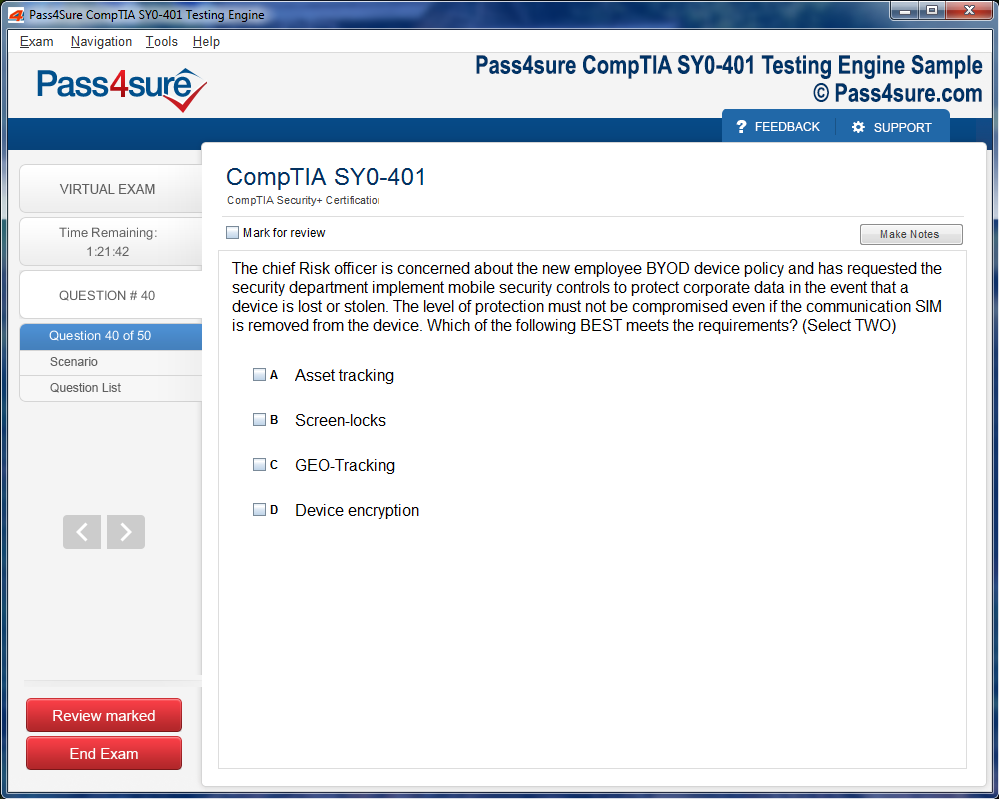
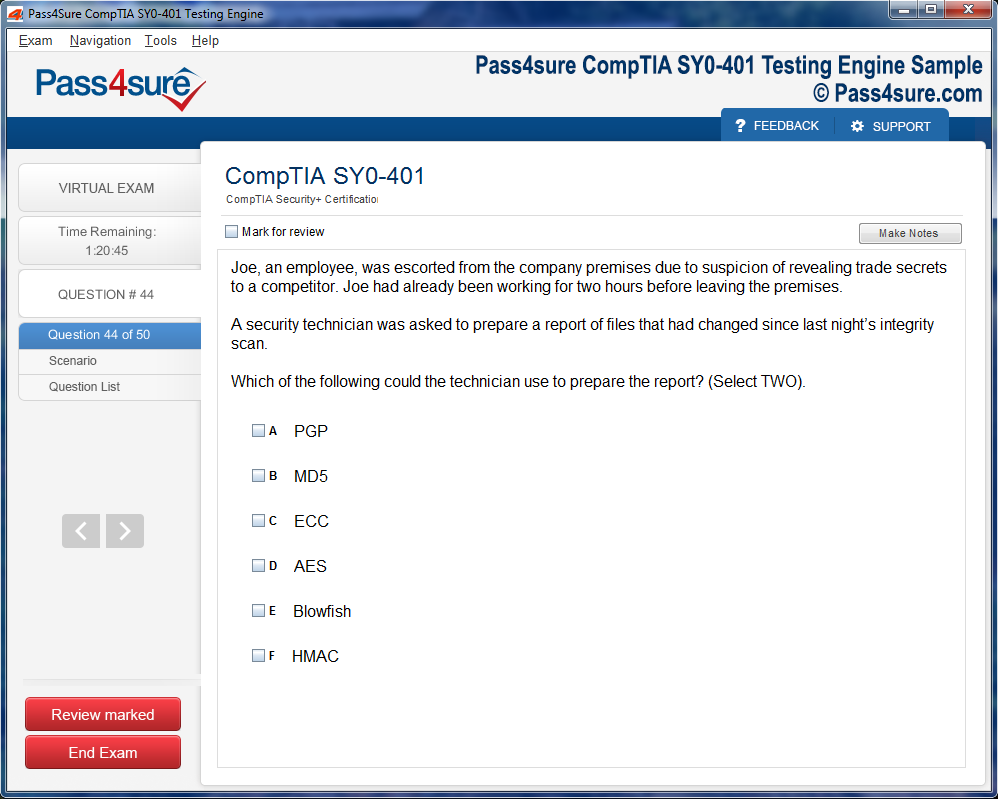
Product Screenshots
Frequently Asked Questions
How does your testing engine works?
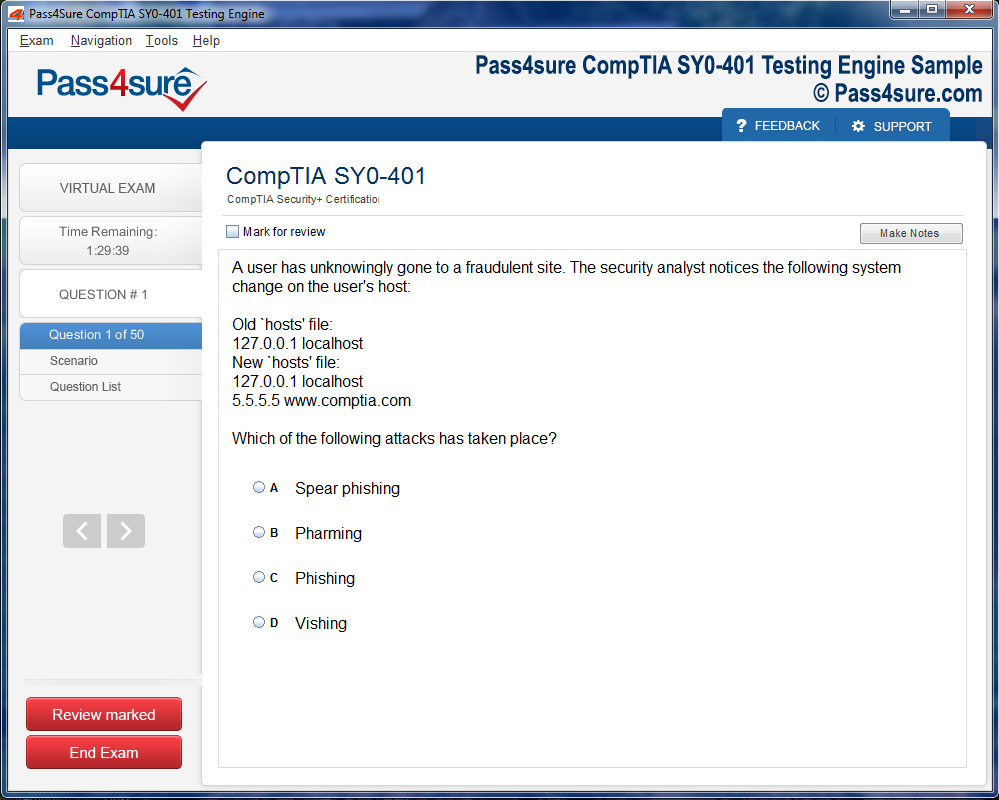
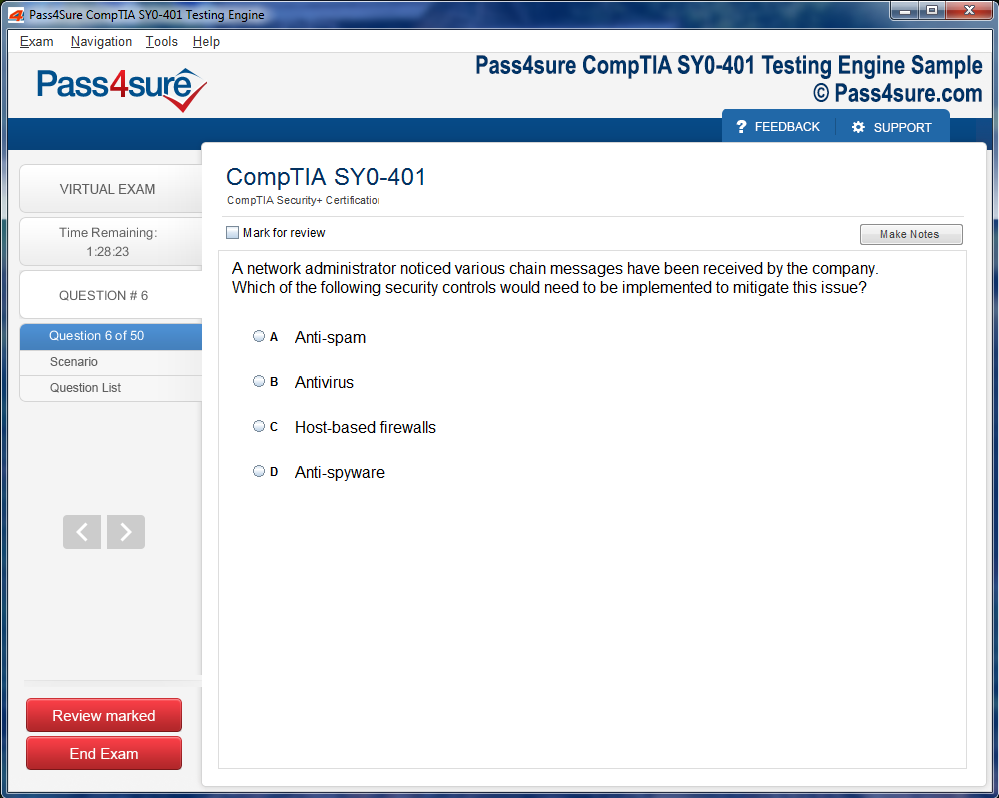
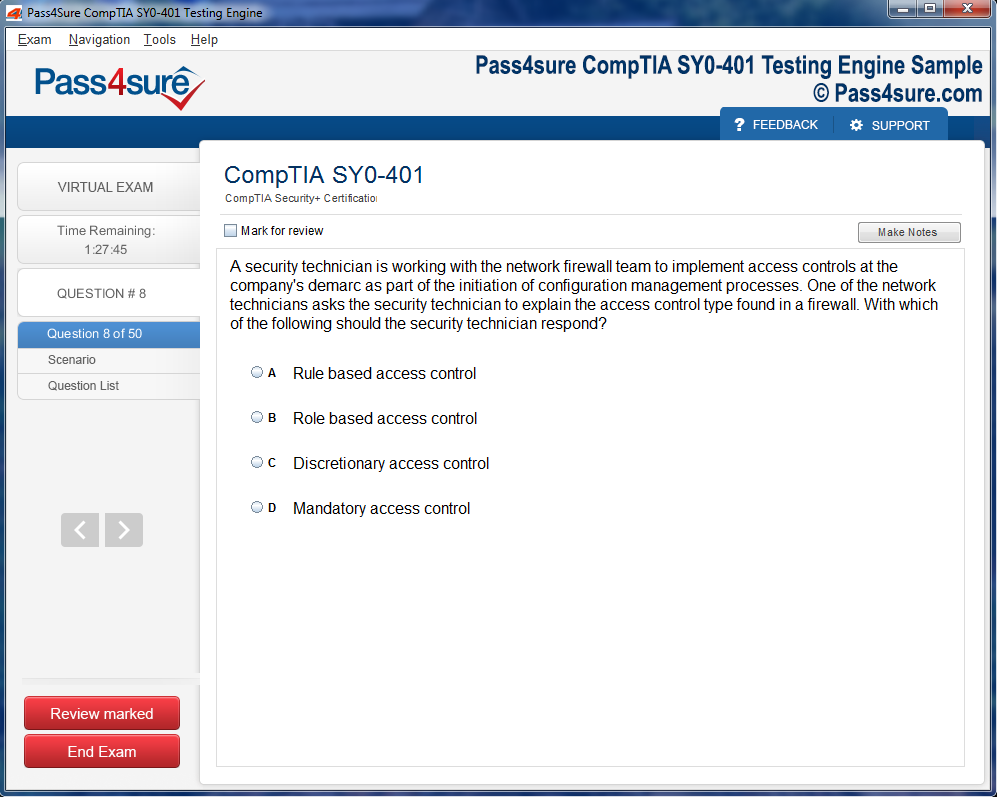
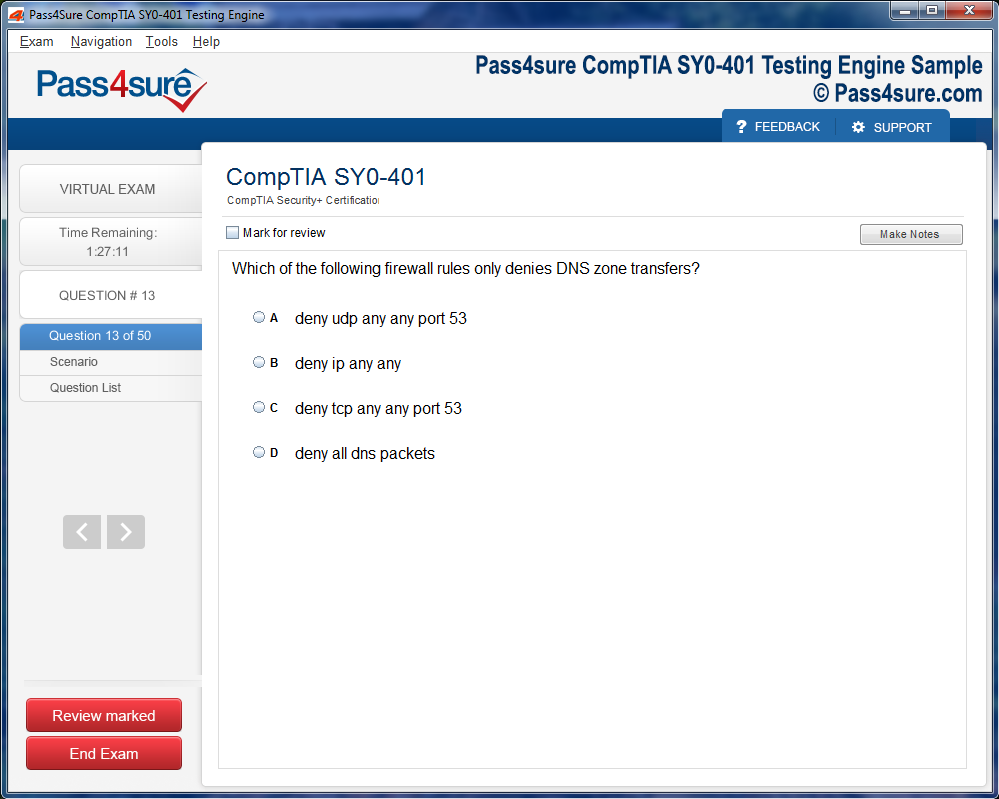
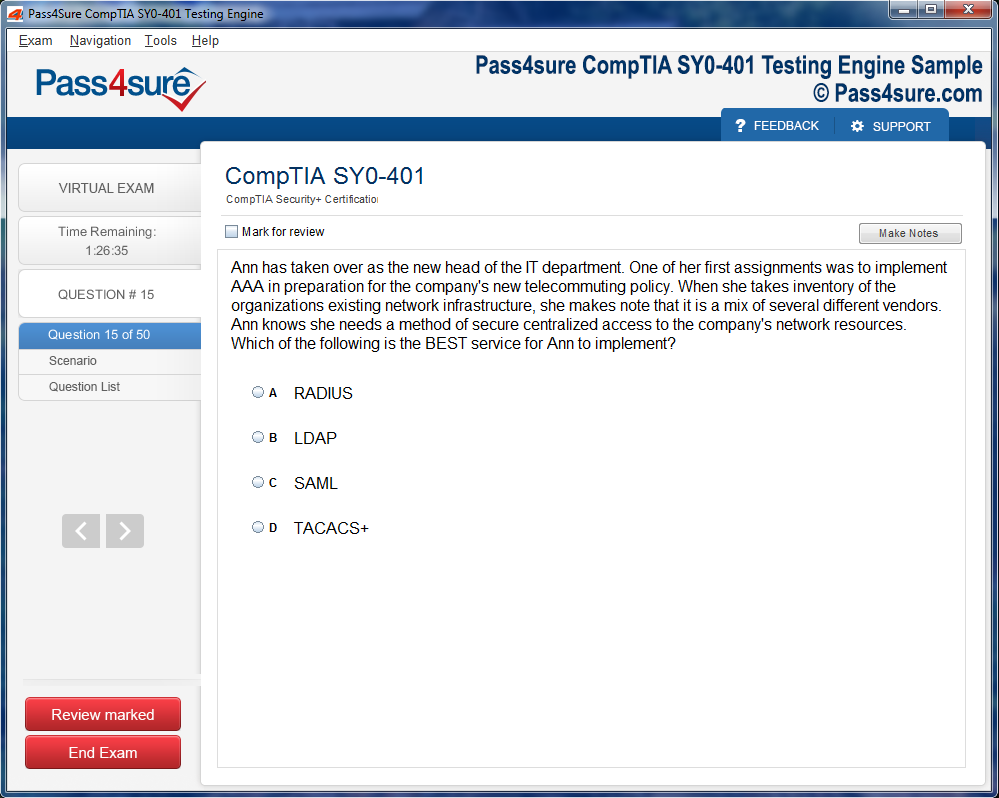
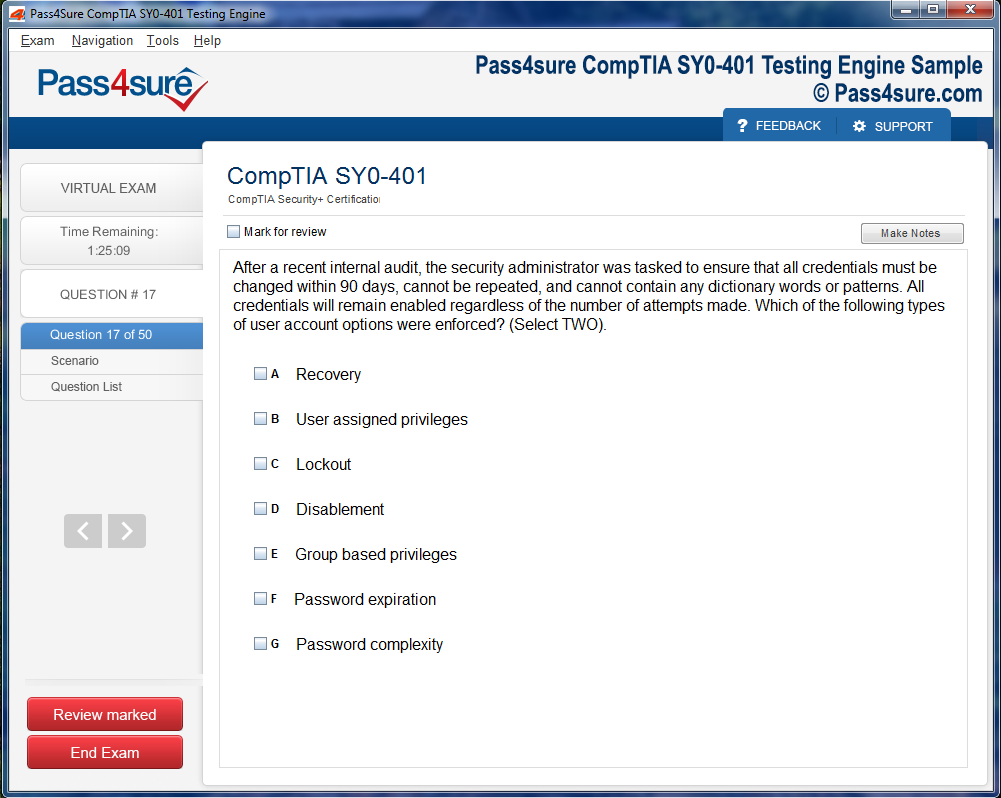
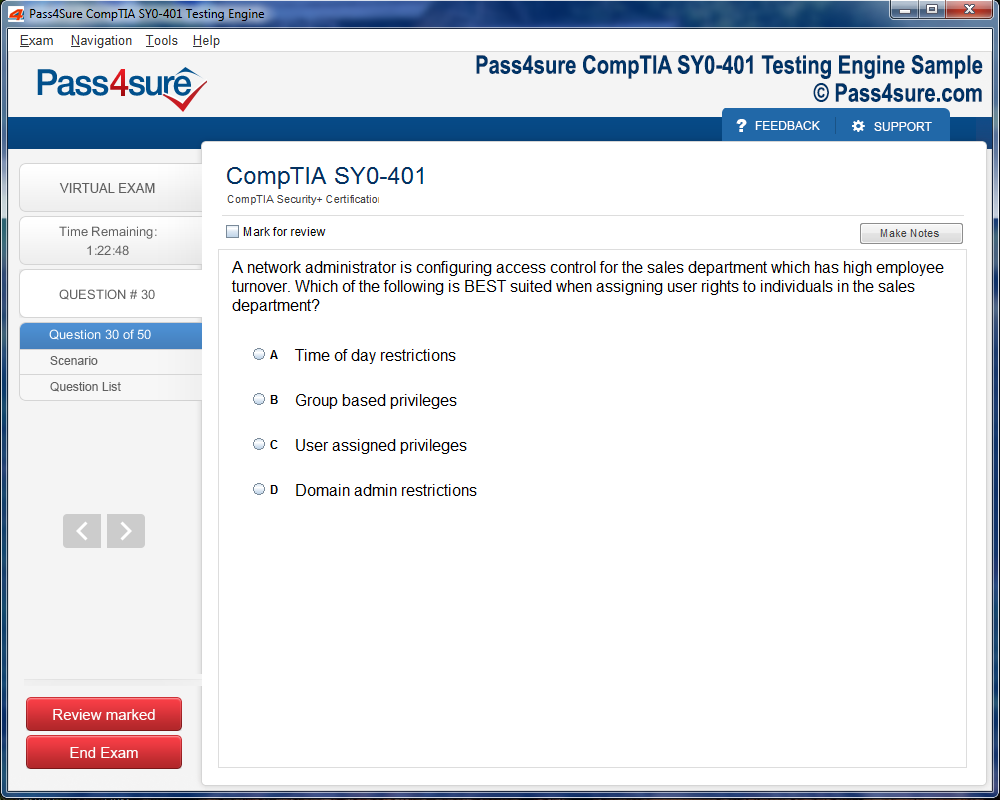
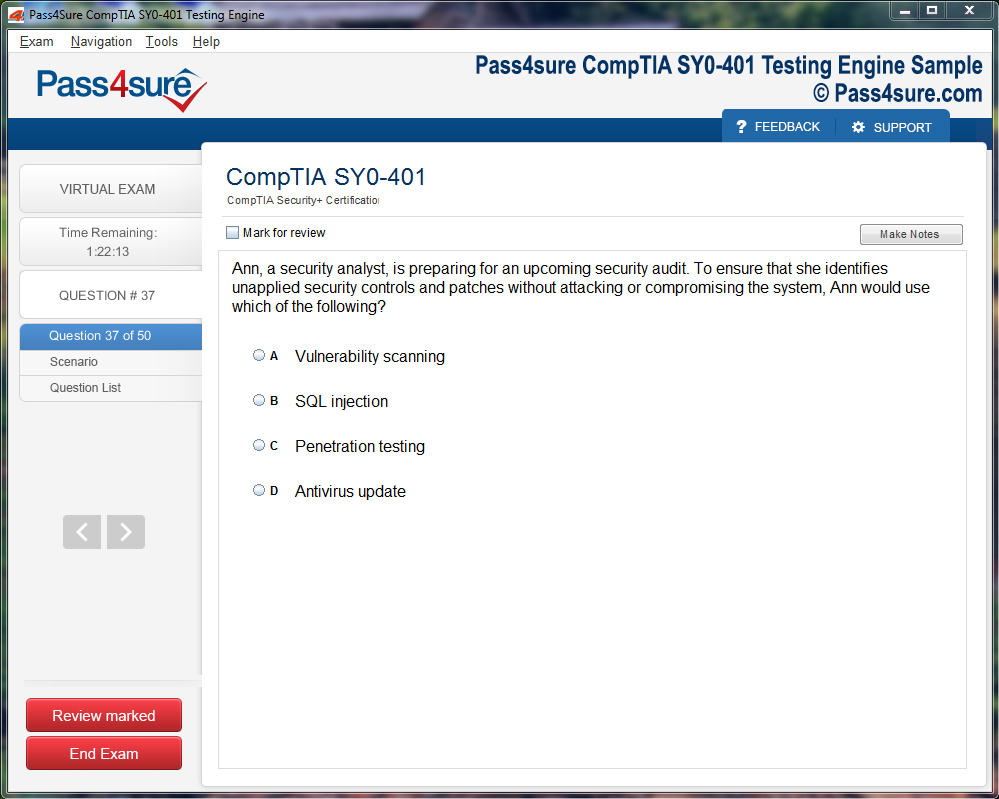
Once download and installed on your PC, you can practise test questions, review your questions & answers using two different options 'practice exam' and 'virtual exam'. Virtual Exam - test yourself with exam questions with a time limit, as if you are taking exams in the Prometric or VUE testing centre. Practice exam - review exam questions one by one, see correct answers and explanations.
How can I get the products after purchase?
All products are available for download immediately from your Member's Area. Once you have made the payment, you will be transferred to Member's Area where you can login and download the products you have purchased to your computer.
How long can I use my product? Will it be valid forever?
Pass4sure products have a validity of 90 days from the date of purchase. This means that any updates to the products, including but not limited to new questions, or updates and changes by our editing team, will be automatically downloaded on to computer to make sure that you get latest exam prep materials during those 90 days.
Can I renew my product if when it's expired?
Yes, when the 90 days of your product validity are over, you have the option of renewing your expired products with a 30% discount. This can be done in your Member's Area.
Please note that you will not be able to use the product after it has expired if you don't renew it.
How often are the questions updated?
We always try to provide the latest pool of questions, Updates in the questions depend on the changes in actual pool of questions by different vendors. As soon as we know about the change in the exam question pool we try our best to update the products as fast as possible.
How many computers I can download Pass4sure software on?
You can download the Pass4sure products on the maximum number of 2 (two) computers or devices. If you need to use the software on more than two machines, you can purchase this option separately. Please email sales@pass4sure.com if you need to use more than 5 (five) computers.
What are the system requirements?
Minimum System Requirements:
- Windows XP or newer operating system
- Java Version 8 or newer
- 1+ GHz processor
- 1 GB Ram
- 50 MB available hard disk typically (products may vary)
What operating systems are supported by your Testing Engine software?
Our testing engine is supported by Windows. Andriod and IOS software is currently under development.
NPAT: Complete Guide for National Test for Programs After Twelfth
The NPAT is meticulously designed to probe the labyrinthine corridors of a candidate’s cognitive faculties. Beyond rudimentary memorization, it evaluates the intricate interplay between logical reasoning, pattern recognition, and verbal dexterity. Each segment of the examination is calibrated to elicit nuanced problem-solving strategies, encouraging aspirants to navigate abstract constructs with intellectual agility.
Numerical aptitude in NPAT is not merely a test of arithmetic but a measure of analytical dexterity. Candidates are often confronted with data interpretation scenarios that demand both precision and foresight. Engaging with these problems hones the ability to synthesize information swiftly, transforming raw data into actionable insights. This scaffolds a mental framework that transcends conventional classroom exercises, priming students for real-world applications where decisions are contingent on complex variables.
Verbal reasoning, on the other hand, taps into the labyrinthine subtleties of language. It assesses comprehension, inference, and the capacity to discern nuanced implications from textual information. For candidates, mastering this facet entails cultivating a lexicon that is both expansive and adaptable, enabling them to decode intricate passages and extrapolate meaning with alacrity. The cognitive rigor of NPAT ensures that those who excel are not only knowledgeable but possess the intellectual elasticity to navigate uncertainty with poise.
Strategic Preparation Paradigms
Preparing for NPAT demands an orchestrated confluence of strategy, discipline, and reflective learning. Aspirants benefit from constructing a modular approach, partitioning study material into segments that facilitate iterative mastery. Regular timed assessments simulate exam conditions, instilling familiarity with the temporal pressures that typify high-stakes evaluation. Such practice cultivates both endurance and accuracy, essential traits for sustained cognitive performance.
Equally imperative is the cultivation of metacognitive awareness. Students who introspectively analyze their problem-solving methodologies gain insight into their cognitive biases and habitual errors. This reflective practice encourages adaptive learning, where strategies are continuously refined in response to empirical performance data. Through this cyclical process, preparation transcends rote learning and evolves into a dynamic journey of intellectual refinement.
In addition to structured study, engagement with lateral thinking exercises fosters creative problem-solving. NPAT challenges often reward unconventional approaches and the ability to synthesize disparate pieces of information. By immersing themselves in puzzles, simulations, and scenario-based exercises, candidates expand their cognitive repertoire, enhancing both flexibility and resilience in the face of unpredictable question patterns.
The Interdisciplinary Nexus of Skills
NPAT’s scope extends beyond the mere acquisition of knowledge; it cultivates an interdisciplinary nexus where analytical, numerical, and verbal competencies intersect. Aspirants learn to traverse the boundaries between abstract concepts and pragmatic reasoning. This integration of skillsets is particularly salient for business and commerce aspirants, where strategic foresight and data-driven decision-making are paramount.
The examination also fosters temporal efficiency and stress management. Navigating complex sections within stringent time constraints necessitates rapid prioritization and selective attention. Candidates who internalize these practices develop a cognitive stamina that is invaluable for academic and professional pursuits alike. The synthesis of precision, speed, and insight embodies the essence of NPAT’s evaluative philosophy.
Moreover, the preparatory journey nurtures soft skills that extend beyond the confines of the examination hall. Collaborative study sessions, peer-to-peer problem-solving, and mentorship engagements cultivate communication, negotiation, and analytical discourse. In essence, NPAT serves as both a cognitive crucible and a formative arena for holistic skill development.
Embracing the Psychological Dimension
Success in NPAT is inextricably linked to the psychological architecture of the candidate. Emotional regulation, confidence calibration, and resilience under pressure are as crucial as intellectual aptitude. Aspirants who develop mindfulness practices, stress mitigation techniques, and adaptive coping mechanisms often outperform peers, not solely due to knowledge, but because they maintain cognitive clarity under duress.
Visualization techniques, scenario rehearsal, and cognitive priming are employed by high-achieving candidates to optimize performance. By envisioning success pathways and mentally navigating complex problems before encountering them in the examination, students reinforce neural patterns that enhance efficiency and accuracy. This fusion of psychological readiness and intellectual preparation is emblematic of the multidimensional demands of NPAT.
Eligibility and Registration Process
Eligibility for NPAT is deceptively simple yet foundationally imperative. Candidates are required to have successfully navigated their 12th standard or an equivalent scholastic benchmark from a certified educational board. While the requisite subjects may subtly differ based on the program trajectory chosen, a robust grounding in mathematics and English is indispensable for analytical acuity and comprehension dexterity.
The registration conduit unfolds with meticulous completion of an online application form. Aspirants must delineate personal identifiers, scholastic chronicles, and program predilections with exactitude. Any lapse in precision can precipitate administrative complications or disqualification. The system mandates adherence to stipulated deadlines, underscoring the importance of strategic foresight.
The examination transpires in a virtual modality, where candidates are empowered to select an optimal time slot and proximate test center. This flexibility enables integration of examination planning into existing academic and personal schedules, mitigating undue stress. Selecting a conducive slot can amplify focus and cognitive fluidity during the assessment.
Proactive planning emerges as a quintessential facet of success. Embarking on preparation well in advance allows aspirants to internalize the examination schema, assimilate exemplar questions, and fortify areas of vulnerability. A systematic cadence in preparation cultivates confidence, diminishes performance anxiety, and fosters a resilient mindset conducive to optimal outcomes.
Exam Pattern Nuances and Intellectual Calibration
The NPAT evaluation transcends mere rote memorization, delving into the candidate’s ability to synthesize, extrapolate, and reason with finesse. Logical reasoning questions are not merely puzzles; they are intricate cognitive labyrinths designed to gauge analytical acuity. Candidates are expected to discern subtle patterns, juxtapose multiple sequences, and deduce non-obvious relationships that challenge conventional perception. Cultivating a mindset of pattern recognition and anticipatory reasoning can significantly enhance performance in this domain.
Quantitative aptitude is a crucible of numerical dexterity, assessing not just computational proficiency but conceptual clarity. Arithmetic forms the bedrock, requiring mastery over fractions, percentages, and ratios, while algebra challenges the solver to manipulate abstract variables with agility. Geometry and mensuration demand spatial visualization, and data interpretation tests the ability to extrapolate insights from charts, tables, and graphs. The synergy of speed and precision is paramount; candidates must strike a delicate equilibrium between swift calculation and meticulous verification.
Language comprehension transcends simple reading; it interrogates semantic depth, inferential reasoning, and contextual acuity. Vocabulary prowess is indispensable, as obscure words and nuanced phrases often define the contours of comprehension. Candidates must navigate passages with an eye for subtle connotations, rhetorical strategies, and logical coherence. Developing an ear for syntactic patterns and semantic layers can transform ordinary reading into incisive analytical practice, thereby refining interpretive efficiency.
Strategic Preparation for Holistic Mastery
Preparation for NPAT demands more than sporadic study; it requires a structured cognitive regimen. Candidates should cultivate a rhythm that oscillates between conceptual consolidation and rigorous practice. Logical reasoning thrives under iterative problem-solving, where repeated exposure to diverse question types nurtures intuition and reflexive insight. Engaging with unconventional puzzles and scenario-based questions can sharpen lateral thinking and adaptive strategy formulation.
Quantitative aptitude benefits from progressive layering, beginning with foundational principles and advancing toward intricate problem sets. Candidates should embrace a dialectic of theory and practice, whereby abstract understanding informs procedural execution. Employing time-bound drills and analytical retrospection cultivates not only computational speed but also error discernment, transforming potential weaknesses into strategic leverage.
Language comprehension flourishes through deliberate exposure to eclectic textual genres. Candidates are encouraged to immerse themselves in literary passages, editorials, technical articles, and expository essays, cultivating a dynamic understanding of syntax, tone, and rhetorical devices. Regular vocabulary enrichment, idiomatic exploration, and contextual inference exercises enhance cognitive elasticity, empowering candidates to navigate even the most arcane textual labyrinths with confidence.
Mock Tests and Adaptive Evaluation
Simulated examinations are pivotal in bridging the chasm between preparation and performance. Mock tests provide a crucible for evaluating time management, mental stamina, and strategic prioritization. Each session yields diagnostic insights, highlighting recurring errors, cognitive bottlenecks, and areas of latent potential. Candidates should meticulously analyze outcomes, refining approaches and recalibrating focus to maximize efficiency.
Adaptive evaluation techniques, such as iterative testing and sectional analysis, enhance readiness by replicating real-world exam dynamics. Exposure to fluctuating question difficulty cultivates resilience and adaptive problem-solving, training candidates to navigate uncertainty with composure. Integrating reflective practice with targeted reinforcement enables progressive mastery, transforming incremental gains into sustained competence.
Cognitive Endurance and Psychological Fortitude
Success in NPAT is as much a function of psychological endurance as intellectual acumen. Candidates must develop resilience against cognitive fatigue, distractions, and performance anxiety. Techniques such as mindfulness, mental rehearsal, and strategic pacing can fortify concentration and mitigate stress-induced errors. Cultivating an internal locus of control fosters confidence, allowing candidates to approach each section with focused clarity and measured decisiveness.
Equally, the interplay of self-assessment and adaptive recalibration is crucial. Candidates should continually monitor their progress, recognize evolving strengths, and address emergent weaknesses. This iterative cycle of preparation, evaluation, and refinement engenders both skill fluency and strategic agility, equipping aspirants with the cognitive dexterity essential for navigating the multifaceted demands of the NPAT examination.
Crafting an Effective Study Timetable
The cornerstone of NPAT preparation is a meticulously structured timetable that harmonizes intensity with recovery. A well-designed schedule partitions the day into dedicated intervals for practice, revision, and mental rejuvenation. Balancing subjects in a manner that alternates between cognitive-heavy and conceptual-heavy topics prevents mental fatigue and sustains engagement. Incorporating micro-breaks within long study sessions revitalizes attention spans and fortifies memory retention.
Harnessing the Power of Mock Tests
Simulated examinations are instrumental in cultivating exam familiarity and psychological resilience. Attempting mock tests under timed conditions acclimates candidates to the tempo and pressure of the actual exam. Each attempt unveils patterns in performance, highlights recurring mistakes, and provides insight into time management strategies. Analyzing results meticulously enables candidates to target weak areas, refine strategies, and reinforce strengths, creating a feedback loop of continuous improvement.
Enhancing Cognitive Agility
Beyond rote learning, NPAT aspirants benefit significantly from exercises that sharpen mental dexterity. Engaging with logical puzzles, pattern recognition drills, and problem-solving exercises nurtures analytical thinking. Reading comprehension tasks, spanning diverse genres and complex syntactic structures, not only improve vocabulary but also cultivate inferential reasoning skills. Such cognitive conditioning ensures that students are not merely recalling information but actively interpreting, evaluating, and synthesizing knowledge.
Optimizing Numerical Proficiency
Numerical aptitude is a domain where speed and accuracy converge. Employing mental calculation strategies and shortcuts for common mathematical operations enhances efficiency. Regular practice with varied problem sets cultivates familiarity with formulaic patterns and numerical manipulations. Visualization techniques, such as mentally mapping sequences or picturing numerical relationships, reinforce conceptual understanding and reduce dependency on written computation.
Elevating Verbal Mastery
Verbal ability transcends mere grammar rules; it is the orchestration of comprehension, articulation, and contextual interpretation. Engaging with eclectic reading material, including literature, editorials, and analytical essays, enriches vocabulary and hones interpretive skills. Incorporating writing exercises, such as summarizing passages or drafting reflective notes, reinforces comprehension and retention. This multidimensional approach ensures that candidates can decode complex texts with nuance and precision.
Maintaining Motivation and Mental Resilience
Sustaining motivation throughout the NPAT journey is essential. The preparation process is extensive, demanding consistent effort and adaptive strategies. Adopting a growth-oriented mindset allows students to perceive challenges as opportunities for refinement rather than obstacles. Integrating mindfulness practices, goal visualization, and periodic self-assessment nurtures resilience, enabling candidates to confront difficult sections with composure and confidence.
Strategic Revision Techniques
Effective revision is not merely repetition; it is an active engagement with knowledge. Utilizing techniques such as spaced repetition and interleaved practice reinforces memory consolidation. Conceptual mapping, where ideas are visually interconnected, enhances recall and deepens understanding. Reviewing incorrect attempts from prior tests, and analyzing the rationale behind errors, transforms weaknesses into learning opportunities, ensuring that each revision cycle elevates preparedness.
Balancing Study with Well-being
Cognitive performance thrives in tandem with physical and emotional well-being. Incorporating regular physical activity, adequate sleep, and balanced nutrition fortifies mental clarity and energy levels. Periodic disengagement from study material—through hobbies, social interaction, or relaxation—prevents burnout and promotes sustained focus. Recognizing the interdependence of mind and body equips students to approach preparation holistically rather than mechanistically.
Adaptive Learning Strategies
Personalized learning approaches amplify efficiency and retention. Identifying individual strengths and weaknesses allows for prioritization of effort. Adaptive strategies, such as focusing more on challenging topics while reinforcing familiar concepts, optimize time utilization. Flexibility within study plans ensures responsiveness to emerging learning gaps, creating a dynamic framework that evolves alongside the student’s progress.
Cultivating Exam Day Readiness
Preparation extends beyond content mastery to include psychological and logistical readiness. Familiarity with the examination environment, timing strategies, and stress-management techniques can mitigate performance anxiety. Simulated full-length tests, practiced under realistic conditions, enhance endurance and provide insight into pacing. Mental rehearsal of test scenarios, combined with relaxation exercises, cultivates confidence and equips candidates to approach the exam with poise.
Leveraging Collaborative Learning
Peer discussions and group problem-solving sessions can illuminate alternative perspectives and innovative approaches. Collaborative learning encourages articulation of thought, critical evaluation of ideas, and exposure to diverse problem-solving methods. Constructive feedback within a collaborative environment strengthens understanding and motivates sustained effort, creating a supportive network that supplements individual study.
Time Management Mastery During Preparation
Time management is not merely a procedural skill; it is an art of synchronizing cognitive energy with temporal resources. Aspiring NPAT candidates must cultivate an intrinsic awareness of how long each question or section consumes. The initial practice sessions should emphasize self-observation—tracking response durations, identifying personal lulls, and recognizing patterns of hesitation. Developing an internal chronometer allows for adaptive pacing, where difficult questions are approached with strategic allocation rather than impulsive urgency.
Structured timetables that interlace short bursts of intense study with intervals of reflective rest can enhance retention and prevent cognitive saturation. Candidates should experiment with varied temporal slices—forty-five minutes of rigorous problem-solving followed by brief meditative pauses can recalibrate focus. Incorporating micro-goals within these intervals, such as completing a subtopic or mastering a formula set, enhances motivation and fosters a sense of progressive achievement.
Furthermore, segmenting preparation by the nature of questions—logical reasoning, quantitative aptitude, and verbal acuity—permits nuanced time allocation. High-yield sections deserve concentrated attention early in the preparation cycle, whereas low-yield or complex sections may be approached iteratively. A symbiotic relationship between efficiency and efficacy underpins this methodology, ensuring candidates do not merely complete sections but internalize concepts with precision.
Psychological Readiness and Exam-Day Poise
Examination day transcends mere intellectual rigor; it is an orchestration of psychological resilience and physiological equilibrium. Restful sleep, ideally spanning multiple circadian cycles prior to the exam, fortifies neural plasticity and consolidates memory engrams. Nutritional prudence is equally paramount; a balanced breakfast suffused with complex carbohydrates and proteins sustains cognitive vitality while avoiding glycemic spikes that can precipitate mental fatigue.
Mental fortitude is nurtured through visualization techniques. Candidates can engage in structured mental rehearsal—imagining the sequence of entering the exam hall, reading questions, and methodically approaching each section. Such cognitive simulations reduce anticipatory anxiety and condition the mind to operate under the pressures of temporal constraints.
Maintaining equanimity is crucial; stress can manifest as cognitive rigidity, impairing problem-solving and deductive reasoning. Mindfulness exercises, deep-breathing techniques, and brief meditative interludes before the exam can anchor attention and modulate physiological arousal. Confidence emerges not merely from knowledge but from the synergy of preparedness, composure, and strategic execution.
Strategic Question Navigation
A critical facet of exam-day acumen lies in the strategic navigation of questions. Not all questions are equal in cognitive load or scoring potential. Candidates must cultivate discernment, rapidly distinguishing between straightforward items and those requiring intricate reasoning. Initial sweeps of the question paper allow for low-hanging achievements—tackling simpler questions first consolidates momentum and mitigates early-stage anxiety.
Equally important is the judicious management of difficult problems. Obsessive fixation can deplete precious time and erode confidence. An adaptive approach entails marking complex questions for subsequent review, ensuring that accessible points are secured before engaging in more convoluted problem-solving. Time awareness during these transitions is paramount; the ability to switch fluidly between sections prevents bottlenecking and preserves overall pacing integrity.
Cognitive Endurance and Adaptive Focus
Sustained attention is a scarce and fragile resource during examinations. Cognitive endurance can be bolstered through deliberate practice that simulates exam conditions—timed mock tests, environmental mimicry, and constrained problem sets enhance stamina and focus. Incremental exposure to extended periods of concentration reduces susceptibility to mental fatigue and maintains performance consistency across the exam duration.
Adaptive focus is equally essential. Interruptions, intrusive thoughts, and momentary lapses are inevitable; the candidate’s capacity to recalibrate attention determines resilience. Techniques such as brief micro-pauses, grounding exercises, or strategic eye closure can reset mental clarity, preventing minor distractions from escalating into major performance deficits.
Review and Precision Strategies
Exam strategy is incomplete without deliberate review mechanisms. Time permitting, revisiting completed sections can identify inadvertent errors, misinterpretations, or skipped nuances. This layer of verification not only enhances accuracy but reinforces confidence, as candidates witness tangible consolidation of their efforts.
Precision extends beyond answer accuracy to encompass procedural efficiency. Checking calculations, ensuring logical consistency, and confirming alignment with instructions are subtle yet impactful strategies that differentiate proficient candidates from merely prepared ones.
Harnessing Analytical Prowess
Analytical prowess is the cornerstone of NPAT success, demanding an intricate understanding of numerical, logical, and data-driven constructs. Candidates are compelled to dissect complex problems with surgical precision, unraveling multifaceted scenarios that test both breadth and depth of comprehension. The ability to break down abstract questions into manageable components is not only advantageous in examination contexts but also cultivates a mindset adept at strategic reasoning. Each solved problem reinforces a cognitive scaffold that primes aspirants for progressively intricate challenges, ensuring that intellectual growth is cumulative and resilient.
Data interpretation forms a central pillar of analytical acumen. Candidates encounter tabular datasets, graphical representations, and multidimensional charts requiring rapid assimilation and pattern detection. Beyond mechanical calculations, these exercises test the aspirant’s ability to extrapolate insights, evaluate trends, and anticipate outcomes. Mastery of such cognitive gymnastics demands not only familiarity with quantitative methods but also a mental agility that allows for the reconciliation of disparate informational strands. This intellectual dexterity is emblematic of NPAT’s rigorous evaluative framework.
Cultivating Numerical Intuition
Numerical intuition transcends the mere computation of figures; it embodies an instinctive grasp of mathematical relationships and probabilistic reasoning. Within NPAT, aspirants are challenged to navigate algebraic structures, geometric complexities, and arithmetic sequences with precision and speed. Developing a fluid relationship with numbers allows candidates to approach problems holistically, recognizing patterns and leveraging shortcuts without sacrificing accuracy. This interplay between speed and discernment is a hallmark of high-performing candidates.
Equally critical is the integration of estimation techniques and heuristic reasoning. In time-constrained scenarios, precise computation alone may not suffice. Candidates who cultivate an intuitive sense of magnitude, proportion, and relational patterns can navigate problems with elegant efficiency. This numerical fluency, nurtured through deliberate practice and iterative refinement, underpins the capacity to tackle NPAT’s most challenging sections with confidence and adaptability.
Verbal Dexterity and Cognitive Nuance
Verbal dexterity in NPAT extends beyond basic comprehension, encompassing semantic precision, syntactic agility, and inferential reasoning. Candidates are tested on the ability to interpret nuanced passages, discern implied meanings, and synthesize information under temporal constraints. Developing this skill requires immersion in diverse textual materials, fostering a lexicon that is simultaneously rich, contextual, and adaptable. Aspirants benefit from exercises that emphasize paraphrasing, logical sequencing, and thematic analysis, all of which enhance interpretative acuity.
Critical reasoning forms an intertwined dimension of verbal proficiency. Candidates must evaluate arguments, identify logical fallacies, and construct coherent responses with clarity. This intellectual exercise strengthens the capacity to engage with complex information critically, ensuring that reasoning is both structured and adaptable. Verbal dexterity, therefore, is not merely a linguistic skill but a cognitive instrument for strategic analysis and effective problem-solving.
Time Management as Cognitive Calibration
Temporal mastery is a subtle yet pivotal determinant of NPAT performance. Candidates must allocate attention judiciously, balancing the demands of accuracy with the imperatives of speed. Effective time management requires both preemptive planning and in-the-moment recalibration, as aspirants assess which problems demand deeper engagement and which can be navigated with heuristic shortcuts. By internalizing these strategies, students convert temporal pressure from a stressor into a catalyst for enhanced focus and precision.
Techniques such as sectional pacing, micro-break strategies, and dynamic prioritization enable candidates to sustain performance across the examination’s duration. These approaches foster cognitive endurance, allowing for sustained analytical rigor without mental fatigue. In essence, mastery of time is a form of cognitive calibration, aligning mental processes with the structural demands of NPAT’s multifaceted evaluation.
Interfacing Logic with Creativity
NPAT does not merely reward rote application of formulas; it valorizes the synergy between logic and creative cognition. Complex problem scenarios often require candidates to transcend conventional methods, integrating lateral thinking with analytical reasoning. This interplay enhances the aspirant’s capacity to generate innovative solutions, identify unconventional patterns, and navigate ambiguities with agility. Cultivating this dual competency involves deliberate practice in divergent thinking, scenario simulation, and reflective problem-solving exercises.
The creative dimension is particularly salient in sections involving critical analysis and quantitative reasoning. Candidates who embrace flexibility in approach, experimenting with multiple pathways and assessing outcomes iteratively, often discover solutions that are both efficient and elegant. By interfacing logic with creativity, aspirants transform NPAT challenges into opportunities for intellectual exploration and strategic ingenuity.
Strategic Resource Optimization
Aspirants’ preparation journeys are significantly influenced by their ability to optimize learning resources. Effective candidates selectively integrate reference materials, mock tests, and interactive problem-solving platforms to create a synergistic preparation ecosystem. The objective is not mere accumulation of information but strategic deployment of cognitive resources to maximize retention, conceptual clarity, and application efficiency.
Mock examinations serve as crucibles for refining performance under authentic conditions. By simulating the temporal and cognitive pressures of NPAT, candidates cultivate familiarity with question typologies, develop adaptive strategies, and identify areas necessitating targeted reinforcement. Complementing this with periodic reflection and analytic review ensures that preparation evolves from superficial practice to deep, iterative mastery.
The Role of Adaptive Learning
Adaptive learning methodologies are transformative in preparing for NPAT’s dynamic evaluative structure. Unlike static study routines, adaptive approaches continuously modulate difficulty levels, content focus, and problem typologies based on performance feedback. This iterative calibration enhances both competence and confidence, enabling aspirants to progressively tackle increasingly complex problems with precision. By embracing adaptive learning, candidates convert preparation into a responsive, self-regulating cognitive process.
Technological integration further amplifies adaptive learning benefits. AI-driven platforms, intelligent test generators, and data-analytic tools provide insights into performance patterns, cognitive bottlenecks, and progression trajectories. Candidates who harness these tools engage in targeted remediation, ensuring that strengths are consolidated while weaknesses are systematically addressed. This strategic engagement epitomizes a modernized approach to NPAT readiness.
Psychological Resilience and Performance Dynamics
The psychological dimension of NPAT preparation is often underestimated yet profoundly influential. Success is contingent upon the aspirant’s capacity to navigate stress, maintain focus, and modulate emotional responses under scrutiny. Developing resilience involves cultivating mindfulness practices, stress inoculation strategies, and cognitive reframing techniques that mitigate performance anxiety. These approaches enhance mental clarity, allowing candidates to apply their knowledge without interference from extraneous stressors.
Visualization and mental rehearsal are potent adjuncts in this process. By simulating examination scenarios and mentally executing problem-solving sequences, aspirants reinforce neural pathways associated with efficiency, accuracy, and confidence. This cognitive priming aligns psychological readiness with intellectual preparedness, creating a holistic framework for optimal performance.
Interdisciplinary Acumen and Real-World Relevance
NPAT aspirants are often beneficiaries of interdisciplinary skill development. The examination’s design encourages the integration of numerical, logical, verbal, and critical thinking faculties, fostering a holistic cognitive profile. Such integration is particularly valuable for real-world applications, where problems seldom conform to single-domain paradigms. Candidates who navigate interdisciplinary challenges during preparation develop versatile skill sets, capable of translating abstract reasoning into pragmatic decision-making.
The relevance of NPAT’s evaluative schema extends beyond academic achievement. Aspirants who cultivate interdisciplinary acumen acquire competencies that resonate in professional contexts, including strategic analysis, risk assessment, and evidence-based decision-making. This alignment between examination preparation and practical utility underscores NPAT’s transformative potential as a conduit for intellectual and career development.
Engaging with Mentorship and Collaborative Learning
Mentorship is an invaluable catalyst for aspirant growth, providing both guidance and critical feedback. Experienced mentors illuminate nuanced strategies, share insights on complex question patterns, and offer frameworks for efficient study. The interpersonal dimension of mentorship fosters accountability, encourages reflective learning, and accelerates the aspirant’s cognitive maturation.
Collaborative learning complements mentorship by exposing candidates to diverse problem-solving approaches. Engaging in peer discussions, analytical debates, and cooperative exercises cultivates adaptive thinking and enhances interpretative flexibility. These interactions encourage aspirants to confront cognitive blind spots, refine methodologies, and internalize alternative perspectives, thereby enriching both understanding and application.
Embracing Lifelong Cognitive Cultivation
While NPAT is a pivotal academic milestone, its preparation inculcates habits of lifelong cognitive cultivation. Aspirants develop metacognitive awareness, disciplined study routines, and adaptive problem-solving skills that extend far beyond the examination context. These faculties underpin continued intellectual growth, fostering the capacity to engage with complex ideas, assimilate knowledge efficiently, and innovate across domains.
Moreover, the preparation journey instills resilience, curiosity, and a strategic mindset, equipping candidates to navigate the evolving landscapes of higher education and professional endeavors. The cultivation of such holistic competencies ensures that the benefits of NPAT preparation are enduring, enriching both academic trajectories and future career pursuits.
Exam Pattern and Cognitive Blueprint
The NPAT examination is crafted as a cognitive crucible, meticulously designed to evaluate both reasoning agility and conceptual dexterity. The assessment is digitally administered, harmonizing convenience with standardized rigor. Questions traverse multiple domains, encompassing logical reasoning, quantitative aptitude, verbal articulation, and abstract analytical constructs. Each domain is calibrated to discern nuanced understanding rather than rote memorization, compelling aspirants to synthesize knowledge across varied intellectual terrains.
Temporal orchestration within the examination is critical. The duration of the test is structured to balance cognitive load and intellectual stamina. Effective time management emerges as a strategic determinant, where judicious pacing through complex problem clusters can significantly enhance overall performance. Aspirants who cultivate temporal awareness and prioritize high-yield sections often experience augmented efficiency.
Syllabus Intricacies and Intellectual Terrain
The NPAT syllabus unfolds as a multidimensional intellectual landscape. Logical reasoning questions probe the candidate’s capacity for pattern recognition, deductive inference, and lateral problem-solving. Quantitative sections demand not merely computational proficiency but also the ability to conceptualize abstract numerical relationships and apply them to real-world scenarios. Verbal ability, conversely, evaluates semantic precision, syntactic agility, and contextual interpretation, requiring an immersive engagement with language nuances.
Aspirants are encouraged to approach the syllabus with stratified preparation strategies. Initial familiarization with question typologies is followed by iterative practice sessions that emphasize cognitive agility. Strategic focus on high-weightage topics ensures maximization of scoring potential while reinforcing conceptual foundations.
Preparation Strategies and Mental Conditioning
The path to NPAT success extends beyond mere subject mastery; it encompasses mental conditioning and strategic regimen. Aspirants benefit immensely from structured study schedules that interlace focused learning periods with reflective interludes. Cognitive assimilation is enhanced when information is internalized incrementally rather than superficially crammed.
Active learning techniques, such as interleaving practice sessions and simulating real-time examinations, foster retention and adaptive thinking. Additionally, aspirants are advised to cultivate mindfulness routines, as sustained focus and emotional equilibrium contribute significantly to performance under time constraints. The interplay between intellectual preparation and psychological resilience cannot be overstated, as examinations test both knowledge and composure simultaneously.
Mock Assessments and Performance Analytics
Integral to a high-impact preparation strategy is the deployment of mock assessments. These simulated evaluations are instrumental in providing aspirants with diagnostic insights into strengths and vulnerabilities. Each mock session illuminates patterns in error propensity, time allocation inefficiencies, and domain-specific comprehension gaps.
Performance analytics derived from such simulations inform iterative refinement of preparation strategies. Candidates can recalibrate study focus, hone problem-solving techniques, and develop contingency approaches for challenging question clusters. The cyclical process of practice, analysis, and refinement fosters a progressive elevation in readiness, ensuring aspirants enter the examination milieu with informed confidence.
Resource Selection and Intellectual Arsenal
Equipping oneself with a judicious selection of preparatory resources is paramount. Textual repositories, practice compendiums, and digital learning platforms provide diverse avenues for knowledge acquisition and conceptual reinforcement. Aspirants are urged to critically evaluate resource authenticity and relevance to avoid superfluous engagement with non-essential content.
Augmenting traditional study materials with cognitive enhancement exercises—such as puzzle-solving, logical games, and language enrichment modules—broadens the intellectual arsenal. This holistic preparation paradigm cultivates versatility, enabling candidates to navigate heterogeneous question constructs with agility and acuity.
Time Management and Strategic Prioritization
Temporal dexterity within the examination environment is as critical as intellectual mastery. Candidates must orchestrate their approach to maximize scoring potential while minimizing avoidable pitfalls. Prioritization strategies, including initial engagement with high-confidence sections and deferred tackling of challenging clusters, can optimize cognitive throughput.
Strategic allocation of time necessitates rigorous practice under timed conditions. Aspirants who internalize temporal pacing develop a rhythm that mitigates anxiety and enhances problem-solving fluidity. Furthermore, adaptive time management allows for iterative revisitation of complex questions, facilitating meticulous evaluation without compromising overall test progression.
Analytical Reasoning and Abstract Cognition
NPAT places significant emphasis on analytical reasoning, a domain that synthesizes cognitive agility with abstract interpretation. Candidates are challenged to discern latent patterns, extrapolate logical sequences, and infer relationships from complex datasets. The examination evaluates the capacity to navigate ambiguity, identify critical variables, and deploy reasoned judgment under temporal constraints.
Developing proficiency in analytical reasoning necessitates engagement with multidimensional problem types. Aspirants benefit from exposure to both structured and unstructured reasoning challenges, cultivating adaptability and conceptual elasticity. This domain rewards intellectual perseverance, systematic exploration, and the ability to synthesize disparate information into coherent solutions.
Quantitative Aptitude and Numerical Fluidity
Quantitative aptitude in NPAT transcends routine computation, emphasizing conceptual clarity and applied numerical reasoning. Candidates encounter questions encompassing algebraic manipulation, geometric visualization, statistical inference, and combinatorial logic. Mastery requires a balance between procedural fluency and strategic insight, enabling efficient navigation of intricate problem frameworks.
Targeted practice, emphasizing both accuracy and speed, enhances numerical fluidity. Aspirants who internalize foundational principles and engage in iterative problem-solving are better equipped to approach novel scenarios with confidence. Integrative exercises, combining multiple mathematical domains, reinforce conceptual interconnections and bolster adaptive reasoning.
Verbal Proficiency and Linguistic Dexterity
Verbal sections are designed to probe the aspirant’s linguistic dexterity and interpretive acuity. Questions encompass reading comprehension, vocabulary precision, sentence correction, and critical reasoning. Beyond grammatical correctness, these assessments gauge semantic discernment, inferential capacity, and the ability to extrapolate nuanced meaning from textual stimuli.
Engagement with diverse literary genres, contextual vocabulary enrichment, and syntactic analysis sharpens verbal proficiency. Aspirants who cultivate a habit of reflective reading and analytical deconstruction of passages develop superior comprehension agility, enabling rapid yet accurate navigation of complex textual constructs.
Integrated Practice and Cognitive Synergy
Optimal preparation integrates all domains into a cohesive cognitive framework. Isolated practice, while foundational, must evolve into an interconnected approach wherein reasoning, numerical aptitude, and verbal proficiency are simultaneously honed. This integrated methodology cultivates cognitive synergy, allowing aspirants to transfer insights across problem types and domains seamlessly.
Simulated assessments that mirror the actual examination format reinforce this integrative skill set. Candidates learn to transition fluidly between quantitative, logical, and verbal challenges, maintaining consistency in accuracy and efficiency. Such synthesis transforms discrete preparation efforts into a coherent, high-functioning intellectual strategy.
Stress Management and Psychological Equilibrium
Examination success is inextricably linked to psychological composure. Stress and anxiety, if unmanaged, can erode cognitive performance and impair decision-making. Aspirants are encouraged to adopt mindfulness techniques, breathing exercises, and structured relaxation routines to cultivate mental equilibrium.
Equally important is the development of a resilient mindset, wherein setbacks during practice sessions are reframed as learning opportunities rather than deterrents. Cognitive resilience, reinforced through reflective self-assessment and adaptive strategies, empowers candidates to navigate the pressures of examination conditions with composure and strategic focus.
Revision Techniques and Memory Reinforcement
Revision strategies serve as the linchpin for retention and retrieval of learned concepts. Aspirants benefit from spaced repetition, active recall, and synthesis exercises that consolidate knowledge into long-term memory. Conceptual mapping and summarization techniques facilitate the organization of information, enabling rapid retrieval under time constraints.
Iterative revision cycles, interspersed with targeted problem-solving sessions, reinforce conceptual clarity and procedural accuracy. By continually revisiting critical topics, aspirants not only reinforce memory but also enhance the ability to recognize patterns and apply knowledge adaptively during the assessment.
Technological Tools and Digital Readiness
The digital modality of NPAT necessitates proficiency with technological interfaces. Familiarity with online test platforms, navigation protocols, and system functionalities mitigates procedural errors during the examination. Aspirants are advised to undertake mock digital simulations to acclimate to the virtual environment, ensuring seamless engagement on exam day.
Additionally, technological tools can augment preparation through interactive learning modules, adaptive question banks, and performance analytics dashboards. Integrating these resources into the study regimen amplifies efficiency, provides real-time feedback, and fosters a data-driven approach to skill enhancement.
Peer Interaction and Collaborative Learning
While individual preparation is paramount, strategic peer interaction can enhance cognitive depth. Collaborative problem-solving sessions, discussion forums, and conceptual debates expose aspirants to diverse perspectives, alternative strategies, and novel approaches. Such engagement fosters intellectual versatility and cultivates critical evaluation skills.
Aspirants who balance solitary focus with selective collaborative learning often experience enriched understanding and accelerated problem-solving agility. The interplay between independent mastery and collective insight cultivates a nuanced, adaptable preparation paradigm.
Analytical Precision and Mental Dexterity
Navigating the NPAT landscape demands not only knowledge but refined analytical precision. Candidates must cultivate a mental dexterity that allows them to dissect complex problems with meticulous scrutiny. Logical reasoning questions often conceal multi-layered patterns, necessitating a mindset that oscillates between micro-level scrutiny and macro-level synthesis. Developing this dual perspective enhances the ability to identify subtle correlations and anticipate unconventional solutions.
Quantitative reasoning is an arena where numerical intuition complements procedural mastery. Solvers must engage in a mental choreography, balancing rapid computation with deliberate verification. The capacity to mentally model problems, visualize numerical relationships, and predict outcomes is critical. Encouragingly, iterative practice with diverse problem sets fosters cognitive elasticity, equipping candidates to tackle both routine and anomalous challenges with confidence.
Temporal Management and Strategic Sequencing
Time, in the crucible of competitive exams, is both ally and adversary. NPAT aspirants must develop an acute sense of temporal management, calibrating effort across sections to maximize overall efficiency. Strategic sequencing is invaluable; by identifying sections of relative strength, candidates can secure confidence-boosting gains early, allocating more time to complex or weaker areas later.
Simulated practice with time constraints sharpens this skill, revealing personal pacing patterns and areas prone to temporal misjudgment. Beyond mere speed, temporal management incorporates judgment calls on question selection, prioritization of high-yield items, and judicious skipping of disproportionately time-consuming problems. Cultivating this balance transforms time from a limiting factor into a strategic instrument.
Heuristic Approaches and Problem-Solving Frameworks
Beyond rote techniques, NPAT success is anchored in heuristic strategies—intuitive, experience-based problem-solving approaches. Candidates benefit from developing mental heuristics for recurring question archetypes. For example, certain logical reasoning puzzles respond well to backward analysis, while complex quantitative problems may be approached through estimation, pattern recognition, or algebraic abstraction.
Implementing frameworks reduces cognitive load during the exam, allowing faster recognition of problem type and optimal solution pathway. This meta-cognitive awareness fosters efficiency, minimizes error probability, and cultivates adaptive flexibility. Students who internalize robust heuristics experience a compounding advantage, leveraging learned patterns to decode unfamiliar or deceptive questions with ease.
Integrative Conceptual Understanding
True mastery lies in integrative understanding—the ability to link disparate concepts across sections and disciplines. Quantitative aptitude, logical reasoning, and language comprehension are often interconnected, with patterns, sequences, and semantic structures sharing cognitive underpinnings. Candidates who perceive these interconnections can navigate complex, multi-step problems more efficiently, synthesizing solutions that are both precise and elegantly reasoned.
This integrative perspective also enriches critical thinking, allowing aspirants to approach problems with nuanced discernment. For instance, data interpretation may require both arithmetic precision and textual comprehension to evaluate accompanying passages. Cultivating such interdisciplinary acuity ensures readiness for questions that challenge compartmentalized thinking and reward cognitive synthesis.
Adaptive Learning and Incremental Mastery
Adaptive learning techniques are pivotal in elevating preparation quality. By systematically identifying weak points and adjusting practice accordingly, candidates experience incremental mastery rather than sporadic progress. Adaptive drills, variable-difficulty problem sets, and iterative revisions ensure that every session contributes to cognitive fortification.
This approach relies on meticulous self-evaluation, where performance analytics highlight areas of high error density, inefficient strategies, or conceptual gaps. By targeting these with focused practice, aspirants transform limitations into strengths, progressively consolidating knowledge while fostering enduring problem-solving confidence.
Cognitive Visualization and Mental Simulation
Visualization is an often-underestimated tool in competitive exam preparation. Candidates who can mentally simulate complex scenarios, geometric configurations, or logical sequences gain a pronounced advantage. Mental modeling allows for rapid evaluation of alternative solutions, error anticipation, and strategic decision-making without exhaustive computation.
For quantitative aptitude, visualization aids in conceptualizing relationships between variables, spotting proportional patterns, and intuitively understanding graphical data. In logical reasoning, imagining sequences, diagrams, or matrix arrangements accelerates solution derivation. Cultivating this skill requires dedicated exercises in spatial and abstract thinking, coupled with reflective review to reinforce neural pathways associated with problem-solving agility.
Lexical Precision and Semantic Acuity
Language comprehension in NPAT extends beyond vocabulary memorization; it is an exercise in semantic acuity and lexical precision. Candidates must develop sensitivity to subtle shifts in meaning, connotation, and syntactic nuance. Understanding the interplay between word choice, sentence structure, and implied inference allows for rapid, accurate interpretation of complex passages.
Engaging with eclectic textual genres—technical expositions, literary critiques, philosophical essays—enhances this capacity. Candidates are encouraged to annotate, analyze, and question each passage, actively dissecting rhetorical strategies and semantic layers. Over time, this practice cultivates not only comprehension speed but the ability to infer implicit meaning, a skill pivotal in high-stakes examinations.
Error Analysis and Iterative Refinement
Mastery of NPAT requires embracing errors as instruments of insight. Rigorous post-practice analysis illuminates cognitive blind spots, procedural inefficiencies, and misinterpretation tendencies. Candidates who systematically dissect their mistakes can recalibrate strategies, refine heuristics, and prevent repetition of similar errors.
Iterative refinement, wherein practice is followed by analysis and corrective action, fosters exponential improvement. The process strengthens both knowledge and strategic flexibility, creating a feedback loop that enhances exam readiness. Aspirants who internalize this cycle develop a dynamic preparation style that is both adaptive and resilient, capable of confronting evolving challenges with confidence.
Contextual Reasoning and Inferential Logic
NPAT frequently assesses a candidate’s ability to reason contextually and infer beyond the explicitly stated. Critical thinking exercises, comprehension passages, and scenario-based questions require interpretation of underlying assumptions, relationships, and consequences. Candidates must practice bridging gaps between explicit information and implicit meaning, integrating context clues with prior knowledge.
Developing inferential logic involves asking probing questions, hypothesizing outcomes, and verifying consistency within the provided data. This skill amplifies both language comprehension and analytical reasoning, equipping aspirants to navigate ambiguous or multi-layered problems with clarity and strategic insight.
Exam-Day Cognition and Tactical Execution
Preparation culminates in the actual exam, where cognitive endurance, mental agility, and tactical execution are tested simultaneously. Candidates must synchronize recall, reasoning, and decision-making under time pressure. Optimal performance hinges on maintaining composure, managing cognitive load, and executing pre-planned strategies with precision.
Tactical execution involves identifying low-hanging questions for rapid gains, allocating time for complex problems, and implementing fail-safe heuristics when uncertainty arises. Psychological preparedness—through visualization, positive reinforcement, and stress management—enhances focus and reduces the risk of performance lapses. This holistic readiness transforms preparatory effort into tangible exam success.
Pattern Recognition in Advanced Problem Solving
High-difficulty NPAT questions often rely on intricate patterns that defy superficial observation. Recognizing these advanced structures requires both analytical acumen and exposure to diverse problem types. Candidates must cultivate a keen eye for subtle repetitions, proportional relationships, and hidden sequences.
This skill extends beyond mere observation; it encompasses hypothesizing potential solutions, testing multiple approaches, and adapting strategies in real-time. Proficiency in pattern recognition enables aspirants to approach unfamiliar problems with confidence, transforming seemingly insurmountable challenges into solvable constructs.
Metacognitive Strategy and Self-Regulated Learning
Metacognition—thinking about one’s own thinking—is critical for high-level exam preparation. Candidates who actively monitor their cognitive processes, evaluate their strategic choices, and adjust approaches in real-time gain a significant advantage. Self-regulated learning involves setting specific goals, tracking progress, and systematically refining techniques based on ongoing reflection.
Integrating metacognition into preparation ensures that study sessions are purposeful and efficient. Rather than mindless repetition, each exercise becomes an opportunity for insight, adaptation, and mastery. Over time, this cultivates an internal feedback mechanism, enhancing both knowledge retention and strategic agility.
Cultivating Analytical Prowess
Analytical acumen is pivotal for excelling in NPAT, transcending memorization and entering the realm of critical thought. Candidates must immerse themselves in exercises that cultivate pattern recognition, cause-and-effect reasoning, and multidimensional analysis. Engaging with complex case studies, real-world scenarios, and abstract problem sets sharpens discernment, allowing students to parse layered questions with precision. This intellectual scaffolding strengthens the ability to identify core principles amidst peripheral data.
Mastering Time Allocation
Temporal management is often the differentiator between average and exceptional performers. Allocating precise time blocks to each section, while remaining flexible to adapt based on difficulty, enables strategic prioritization. Candidates can implement progressive timing exercises, gradually reducing the duration to improve speed without compromising accuracy. Understanding personal pacing patterns allows for preemptive adjustment during the examination, minimizing the risk of incomplete sections.
Implementing Mental Visualization Techniques
Visualization is a potent cognitive tool that enhances comprehension and recall. Students can practice mentally picturing numerical sequences, geometric configurations, and logical frameworks to reinforce memory. This technique also applies to verbal and analytical sections; visualizing paragraph structures, argument flows, and relational hierarchies facilitates quicker decoding and interpretation of information. Over time, visualization becomes an intuitive cognitive strategy, expediting problem-solving under timed conditions.
Engaging in Metacognitive Reflection
Metacognition, or thinking about thinking, is a transformative strategy in preparation. By reflecting on one’s thought processes, students gain insight into habitual errors, cognitive biases, and processing inefficiencies. Maintaining a reflective journal, wherein each mock test or practice session is analyzed, enhances awareness of strengths and vulnerabilities. This self-monitoring approach fosters adaptive learning, ensuring that study techniques evolve in accordance with individual cognitive patterns.
Integrating Cross-Disciplinary Knowledge
NPAT rewards candidates who draw connections across domains. Integrating knowledge from mathematics, logic, linguistics, and general awareness enables multidimensional problem-solving. Students can cultivate this skill by exploring interdisciplinary exercises, such as combining data interpretation with verbal reasoning or applying numerical insights to analytical case studies. Such synthesis strengthens cognitive flexibility and enhances the ability to navigate unconventional questions.
Enhancing Concentration Through Mindful Practice
Sustained concentration is a cornerstone of effective preparation. Mindfulness techniques, including focused breathing, guided meditation, and attention exercises, enhance cognitive endurance. Practicing sustained engagement with challenging material, devoid of external distractions, builds mental stamina. Over time, candidates develop the capacity to maintain intense focus across extended test sessions, mitigating susceptibility to fatigue-induced errors.
Leveraging Pattern Recognition
Pattern recognition is a subtle yet powerful skill, particularly for logical and numerical sections. Candidates can refine this ability by dissecting sequences, identifying recurrent themes, and predicting outcomes. Engaging with puzzles, series problems, and analytical reasoning tasks hones an intuitive understanding of recurring structures. With consistent practice, this capability allows students to bypass laborious computation in favor of strategic shortcuts, increasing speed and accuracy.
Employing Strategic Elimination
Strategic elimination is an advanced approach for multiple-choice sections. By systematically discarding implausible options based on analytical reasoning, students narrow down possibilities and enhance the probability of correct selection. This technique reduces cognitive overload and mitigates the risk of misinterpretation under time constraints. Mastering elimination requires both subject mastery and intuitive judgment, cultivated through repetitive exposure to diverse problem types.
Cultivating Emotional Regulation
Exam performance is not solely determined by intellectual preparation; emotional equilibrium plays a crucial role. Techniques such as visualization of success, positive self-talk, and controlled breathing regulate anxiety and maintain composure under pressure. Developing resilience to stress allows candidates to navigate unexpected difficulties with clarity. Emotional regulation transforms pressure from a hindrance into a catalyst for enhanced cognitive performance.
Developing Multi-Layered Memory Strategies
Memory is not merely about rote retention; it is a multidimensional construct. Candidates can implement mnemonic devices, conceptual mapping, and associative imagery to encode information more effectively. Linking abstract concepts to tangible examples or personal experiences deepens understanding and strengthens recall. Combining auditory, visual, and kinesthetic methods of learning caters to multiple memory pathways, ensuring robust retention across all sections of the exam.
Refining Question Interpretation Skills
Accurate question interpretation is a frequently underestimated skill. Students must learn to discern subtle distinctions in phrasing, identify key directives, and understand implicit assumptions. This requires careful reading, attention to nuance, and practice with high-complexity questions. Over time, candidates develop the ability to anticipate question traps and decode intricate wording swiftly, a skill that significantly reduces errors and time expenditure.
Optimizing Error Analysis
Every error presents an opportunity for advancement. Effective error analysis involves not merely noting the mistake but dissecting the underlying cognitive lapse. Whether the error arises from conceptual misunderstanding, calculation oversight, or interpretive misjudgment, identifying the root cause allows for targeted remediation. Maintaining an error log, categorized by type and frequency, enables structured correction and progressive reduction of recurring mistakes.
Adopting Simulation-Based Conditioning
Simulation exercises bridge the gap between preparation and actual examination conditions. Full-length mock tests, taken in an environment mimicking the exam hall, condition candidates to manage pressure, pacing, and fatigue. Incorporating environmental variables—timing, seating, and permissible tools—further enhances readiness. Repeated exposure to simulated conditions builds psychological resilience, ensuring that candidates remain composed and efficient on test day.
Leveraging Cognitive Load Management
Cognitive load refers to the total mental effort required to process information. Overloading the brain impairs problem-solving and retention. Candidates can manage cognitive load by segmenting complex problems, focusing on one cognitive element at a time, and gradually integrating layers of information. Mindful pacing, strategic breaks, and iterative practice ensure the brain operates at optimal capacity, maximizing performance while minimizing mental exhaustion.
Enhancing Reading Comprehension Through Synthesis
Reading comprehension transcends mere understanding of words; it requires synthesizing information, drawing inferences, and constructing mental models. Students can practice by analyzing dense articles, interpreting graphs and data, and summarizing arguments in their own words. Training in synthesis enables rapid assimilation of complex passages and facilitates identification of core ideas amidst peripheral details, a skill that significantly accelerates verbal sections.
Incorporating Spaced Retrieval Practice
Spaced retrieval is a scientifically validated memory strategy. Revisiting concepts at progressively increasing intervals strengthens retention and reduces forgetting. Candidates can structure practice schedules to repeatedly engage with previously studied material while introducing new content. This cyclical approach consolidates learning, transforms short-term knowledge into long-term mastery, and enhances readiness for cumulative assessments.
Building Intuition for Logical Deduction
Logical deduction is a skill developed through both formal reasoning and intuitive insight. Candidates can cultivate deduction by engaging with abstract reasoning tasks, analyzing conditional statements, and practicing scenario-based problem-solving. Over time, repeated exposure fosters intuitive pattern recognition, enabling candidates to anticipate logical outcomes rapidly and apply rules fluidly across diverse question types.
Balancing Breadth and Depth
Successful NPAT preparation requires both expansive coverage and deep mastery. Candidates must navigate the tension between exploring a wide spectrum of topics and delving deeply into complex areas. Structuring study sessions to alternate between surface-level familiarity and intensive exploration promotes comprehensive readiness. This dual-layered approach ensures adaptability, equipping candidates to address both straightforward and challenging questions with confidence.
Integrating Multisensory Learning Techniques
Multisensory learning enhances retention and engagement by stimulating multiple cognitive pathways. Candidates can combine reading, writing, auditory review, and kinesthetic exercises to reinforce learning. For instance, solving problems aloud while visualizing solutions or discussing abstract concepts with peers engages diverse neural circuits. This integrative approach not only consolidates memory but also improves adaptability and application under varied test conditions.
Harnessing Cognitive Flexibility
Cognitive flexibility refers to the ability to shift thinking strategies in response to new or complex challenges. Students develop this skill through exposure to unconventional problem types, adaptive practice methods, and iterative learning cycles. Flexibility enhances problem-solving efficiency, enabling candidates to navigate ambiguous questions, recalibrate strategies mid-test, and innovate solutions when standard approaches prove insufficient.
Utilizing Analogical Reasoning
Analogical reasoning allows students to draw parallels between known and novel problems. By mapping familiar structures onto unfamiliar scenarios, candidates can infer solutions more efficiently. Practicing analogical thinking through comparative exercises, case studies, and scenario analysis strengthens this skill. It not only accelerates problem-solving but also enhances creative thinking, an often-overlooked advantage in NPAT’s analytical sections.
Mastering Information Prioritization
Information prioritization is critical when confronted with data-rich passages or complex problem sets. Candidates must discern relevant facts, filter extraneous details, and construct hierarchical frameworks of importance. Developing this skill involves repeated practice with multifaceted materials, mental mapping exercises, and reflective analysis of decision-making processes. Efficient prioritization improves speed, reduces cognitive fatigue, and heightens accuracy under pressure.
Developing Adaptive Test-Taking Strategies
No two exams are identical, and adaptability is key. Candidates can cultivate adaptive strategies by varying practice approaches, simulating unexpected question types, and revising dynamically based on ongoing performance assessment. Adaptive preparation fosters agility, ensuring that students can pivot strategies seamlessly during the exam, whether encountering unfamiliar question formats or time constraints.
Harnessing Chronological Precision
Mastery over temporal flow during NPAT preparation requires more than superficial scheduling; it demands chronological precision. Candidates must internalize a metacognitive understanding of how their cognitive acuity fluctuates over the course of the day. Early morning hours often yield heightened analytical sharpness, optimal for tackling quantitative reasoning or data interpretation sections. Conversely, late afternoon or evening may favor creative verbal tasks, such as comprehension or vocabulary-based questions, where associative thinking prevails.
Segmenting study intervals according to circadian rhythms enhances efficiency. Temporal mapping—aligning high-intensity tasks with peak mental states—prevents energy dissipation on tasks less suited to specific periods. Additionally, interspersing active recall sessions with passive consolidation—such as reviewing notes aloud or teaching concepts to a peer—creates alternating neural stimulation patterns that fortify memory retention while sustaining mental vitality.
Incremental Complexity and Cognitive Layering
Effective NPAT preparation thrives on incremental complexity. Candidates should avoid indiscriminate immersion in challenging problems at the onset. Instead, an ascending cognitive scaffold should be adopted. Start with fundamental problems, internalize methodologies, and progressively escalate to intricate scenarios that demand multi-step reasoning. This cognitive layering not only enhances comprehension but reduces the risk of early burnout or frustration.
Micro-progressions within study blocks—gradually increasing the difficulty or introducing time pressure—train the mind to maintain performance under stress. For instance, attempting a series of logic puzzles within a decreasing time frame simulates exam conditions while reinforcing adaptability and decision-making efficiency.
Environmental Conditioning and Contextual Familiarity
The physical and environmental context in which preparation occurs profoundly influences performance. Candidates should replicate exam-like conditions in practice sessions. Silence, timed constraints, and realistic seating arrangements cultivate familiarity with the cognitive and physiological demands of the test. Even minor environmental cues—ambient lighting, desk posture, or noise exposure—affect attentional stability.
Strategic exposure to varied environments can enhance resilience. Practicing in slightly distracting surroundings trains candidates to maintain focus amidst unpredictability. Such environmental conditioning reduces susceptibility to stressors on the actual exam day, where variables like seat location, ambient noise, and time pressure are outside the candidate’s control.
Nutritional and Physiological Optimization
Beyond mental strategies, physiological preparedness is crucial. Optimal nutrition fuels cognitive processes. Complex carbohydrates, omega-3 fatty acids, and proteins enhance synaptic transmission, supporting sustained analytical and reasoning capabilities. Hydration is often underestimated; even minor dehydration can impair short-term memory and concentration. Candidates should cultivate a pre-exam dietary routine that stabilizes energy without inducing lethargy or gastrointestinal discomfort.
Physical conditioning complements mental preparedness. Light exercise, stretching, or yoga sessions during preparation periods enhance cerebral blood flow, reduce cortisol levels, and prime the body for stress resilience. On exam day, brief physical routines—such as controlled deep breathing or wrist stretches—can maintain circulation, alleviate tension, and preserve attentional clarity.
Mindset Cultivation and Psychological Resilience
Cognitive prowess alone is insufficient without an adaptive and resilient mindset. Candidates must foster psychological elasticity—an ability to navigate setbacks, recalibrate under pressure, and sustain motivation. Techniques such as affirmations, journaling, or reflective visualization reinforce self-efficacy and reduce performance anxiety.
The principle of cognitive decoupling is particularly effective: maintaining detachment from immediate stressors or perceived failures allows the candidate to focus on process rather than outcome. This mindset prevents panic from propagating across sections, ensuring that errors in one area do not cascade into broader performance deficits.
Adaptive Pacing and Dynamic Allocation
Exam-day strategy must integrate adaptive pacing. Fixed adherence to arbitrary time limits per question can be detrimental; instead, dynamic allocation based on real-time assessment of difficulty and cognitive flow is optimal. Rapidly solvable questions should be expedited, creating temporal buffers for complex items that require deliberation.
Dynamic pacing also entails monitoring subjective indicators of mental fatigue or stress. Recognizing the signs of cognitive slowdown—hesitation, repetitive errors, or diminished recall—triggers tactical interventions: brief micro-breaks, mental resetting, or strategic skipping of intricate questions to maintain overall performance.
Analytical Prioritization and Strategic Sequencing
Prioritization on the exam transcends mere selection of easy versus hard questions. It involves assessing point density, interdependencies between questions, and personal strengths. Analytical sequencing—structuring the approach to maximize scoring potential—enhances efficiency and minimizes opportunity cost.
For example, in a section with combinatorial or multi-part questions, candidates may first solve sub-components with immediate clarity, deferring sections requiring extended calculation or inferential leaps. This strategic sequencing preserves momentum and avoids cognitive stagnation.
Metacognitive Calibration and Real-Time Self-Monitoring
Metacognition—the awareness of one’s own cognitive processes—is a cornerstone of exam proficiency. Candidates must continuously evaluate their understanding, confidence levels, and time expenditure. Real-time self-monitoring allows for course correction, such as reallocating time, reassessing problem-solving strategies, or opting for elimination techniques when uncertainty arises.
Techniques like mental tagging—marking questions based on confidence levels or anticipated difficulty—aid in this metacognitive regulation. Such systems reduce impulsivity and facilitate structured revisitation, ensuring that the highest scoring opportunities are prioritized without succumbing to indecision or cognitive overload.
Stress Modulation Through Controlled Rituals
Small, controlled rituals on exam day can regulate stress responses. These may include rhythmic breathing sequences, brief mindfulness exercises, or tactile anchors such as holding a pen with conscious intent. Ritualized behaviors create psychological stability, signaling the brain to transition from preparation to performance mode.
Additionally, pre-exam micro-rehearsals—visualizing solving problems, navigating sections, and reviewing instructions—enhance anticipatory control. Candidates who mentally simulate their actions often experience reduced adrenaline surges and greater clarity under temporal pressure.
Error Mitigation and Cognitive Redundancy
Mistakes are inevitable, but structured strategies can mitigate their impact. Cognitive redundancy—double-checking calculations, cross-referencing answers, and verifying instructions—reduces avoidable errors. Allocating the final minutes of each section to meticulous review creates a buffer against oversight and consolidates precision.
Moreover, cultivating an adaptive attitude toward errors—viewing them as informational feedback rather than catastrophic failures—sustains confidence. Candidates who respond to mistakes with composure are less likely to experience cascading cognitive impairment, preserving overall exam performance.
Strategic Energy Management
Cognitive endurance is intimately tied to energy management. Candidates must recognize that mental fatigue is cumulative, influenced by prolonged attention, stress, and emotional arousal. Strategic energy deployment entails alternating high-focus tasks with lower-intensity activities within preparation blocks, ensuring sustained performance across the exam.
On the day itself, managing micro-energy bursts—sipping water, brief muscle stretches, and positive self-talk—maintains alertness. Avoiding excessive caffeine or sugar spikes prevents post-consumption energy crashes that compromise focus.
Simulated Pressure and Desensitization
Practicing under simulated exam pressure builds resilience. Timed mock tests, enforced silence, and replicated exam constraints induce stress responses similar to the actual test. Over repeated exposure, candidates become desensitized, reducing physiological and psychological reactivity. This habituation enhances composure, allowing cognitive resources to be directed toward problem-solving rather than anxiety management.
Furthermore, reflective post-mock analysis—identifying bottlenecks, recurrent errors, and pacing deviations—enables iterative improvement. Each cycle of simulation and reflection fine-tunes mental and temporal strategies, cultivating mastery over both content and context.
Conclusion
The NPAT serves as more than just an entrance examination; it is a comprehensive measure of aptitude, analytical thinking, and academic preparedness. For students transitioning from high school to higher education, it offers a platform to demonstrate not only knowledge but also speed, reasoning, and problem-solving abilities. The journey of preparing for NPAT cultivates discipline, resilience, and strategic thinking, qualities that remain invaluable throughout one’s academic and professional life.
Clearing the NPAT opens doors to a multitude of undergraduate programs, providing opportunities for holistic growth and future career prospects. Beyond the scores and ranks, the preparation process itself equips students with skills that extend into real-world scenarios, fostering confidence and adaptability. Whether the path leads to immediate admission or guides future attempts, NPAT stands as a milestone that shapes academic direction and personal development.
In essence, NPAT is not merely an exam but a gateway to aspirations, a test of perseverance, and a journey toward intellectual maturity. Students who approach it with preparation, focus, and determination often find that the experience enriches both their minds and their ambitions, creating a foundation for lifelong learning and success.