

Exam Code: M70-101
Exam Name: Magento Certified Developer
Certification Provider: Magento
Corresponding Certification: Magento Developer
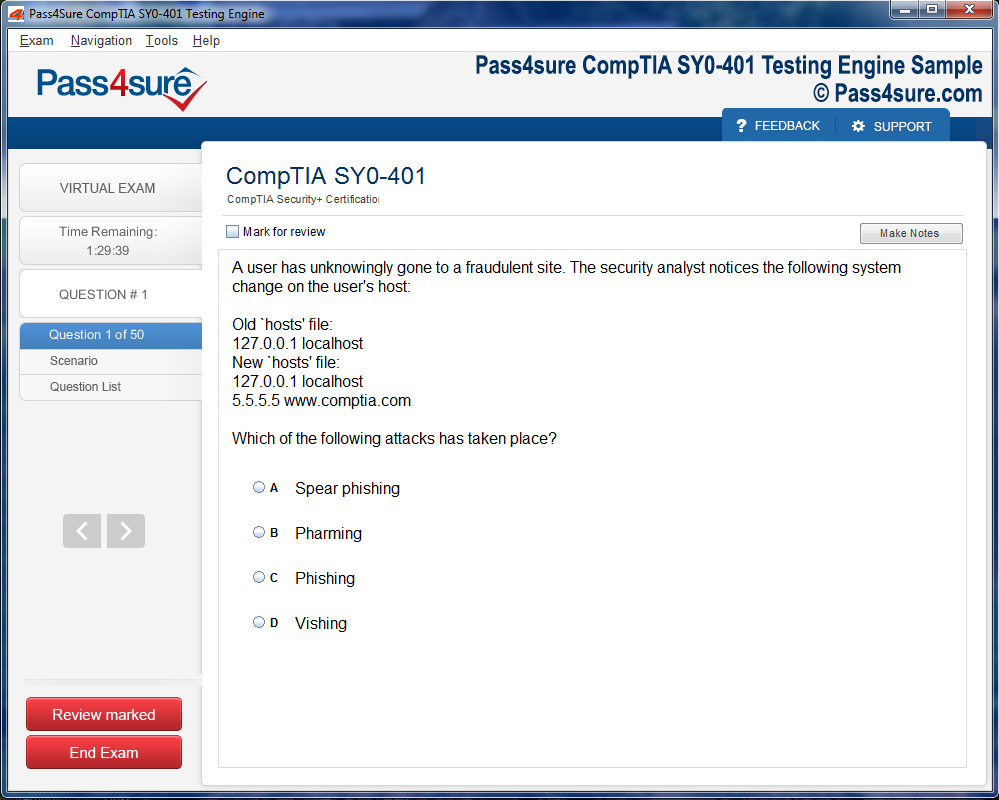
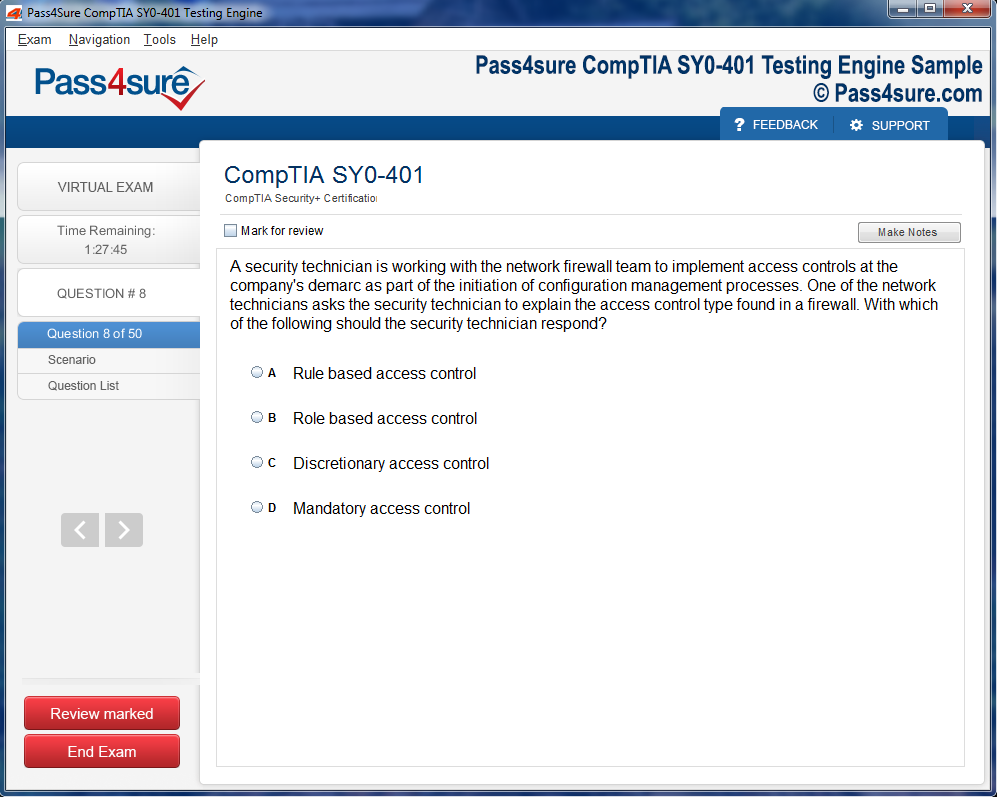
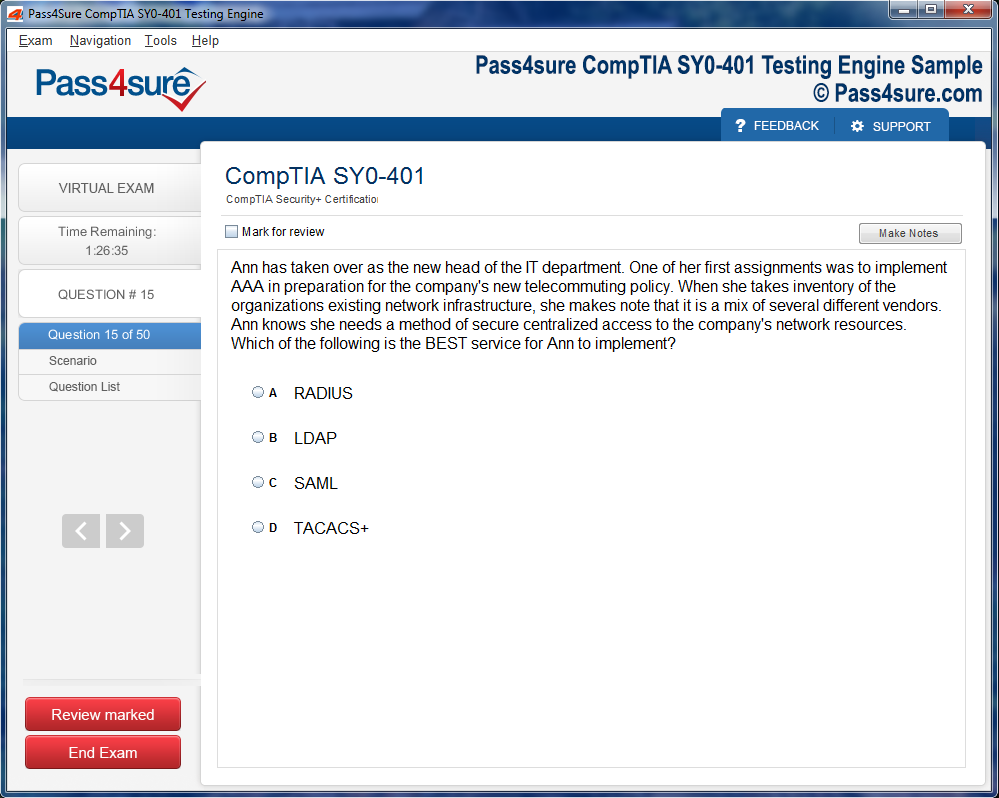
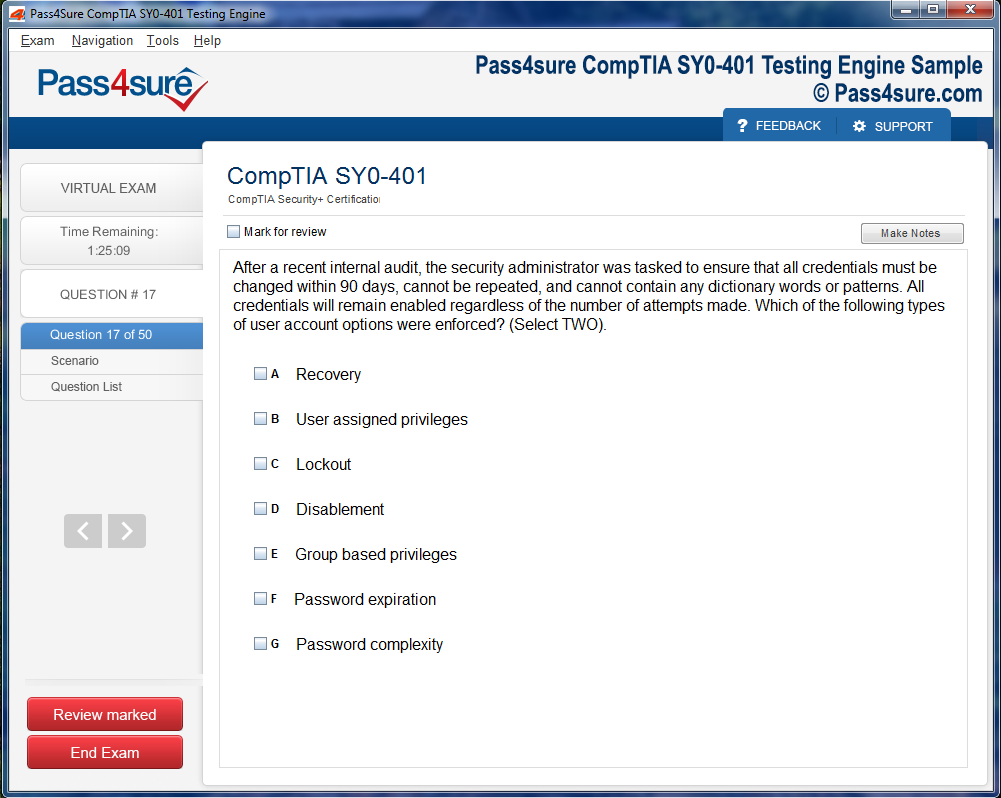
Product Screenshots



Frequently Asked Questions
How does your testing engine works?
Once download and installed on your PC, you can practise test questions, review your questions & answers using two different options 'practice exam' and 'virtual exam'. Virtual Exam - test yourself with exam questions with a time limit, as if you are taking exams in the Prometric or VUE testing centre. Practice exam - review exam questions one by one, see correct answers and explanations.
How can I get the products after purchase?
All products are available for download immediately from your Member's Area. Once you have made the payment, you will be transferred to Member's Area where you can login and download the products you have purchased to your computer.
How long can I use my product? Will it be valid forever?
Pass4sure products have a validity of 90 days from the date of purchase. This means that any updates to the products, including but not limited to new questions, or updates and changes by our editing team, will be automatically downloaded on to computer to make sure that you get latest exam prep materials during those 90 days.
Can I renew my product if when it's expired?
Yes, when the 90 days of your product validity are over, you have the option of renewing your expired products with a 30% discount. This can be done in your Member's Area.
Please note that you will not be able to use the product after it has expired if you don't renew it.
How often are the questions updated?
We always try to provide the latest pool of questions, Updates in the questions depend on the changes in actual pool of questions by different vendors. As soon as we know about the change in the exam question pool we try our best to update the products as fast as possible.
How many computers I can download Pass4sure software on?
You can download the Pass4sure products on the maximum number of 2 (two) computers or devices. If you need to use the software on more than two machines, you can purchase this option separately. Please email sales@pass4sure.com if you need to use more than 5 (five) computers.
What are the system requirements?
Minimum System Requirements:
- Windows XP or newer operating system
- Java Version 8 or newer
- 1+ GHz processor
- 1 GB Ram
- 50 MB available hard disk typically (products may vary)
What operating systems are supported by your Testing Engine software?
Our testing engine is supported by Windows. Andriod and IOS software is currently under development.
Master Magento M70-101 Certification Step by Step
Magento’s modular framework is a labyrinthine construct designed for extensibility and configurability. Unlike monolithic architectures, this system allows developers to interlace modules seamlessly while preserving the sanctity of core functionalities. Each module operates as an autonomous entity yet remains tethered to a broader ecosystem through dependency injections and event observers. Understanding these interconnections is paramount, as they form the backbone of advanced customization strategies.
The Observer pattern in Magento exemplifies a sophisticated event-driven paradigm. It facilitates asynchronous responses to system events without perturbing primary processes. For certification aspirants, mastering the Observer and Plugin mechanisms is indispensable. Plugins, in particular, allow interception of method execution, creating opportunities for augmenting functionality without overwriting original code—a principle that underscores Magento’s emphasis on sustainable development practices.
Navigating Magento’s Layout and XML Architecture
The interplay between XML configuration and Magento’s layout system defines the visual and functional composition of a storefront. XML files dictate the positioning of blocks, containers, and templates, orchestrating a dynamic and adaptive front-end structure. A thorough grasp of layout hierarchy is critical for both theme development and module integration, enabling developers to implement granular changes with surgical precision.
Beyond layout, XML serves as the configuration lingua franca across Magento’s subsystems. From defining dependency injections to establishing system configurations, XML ensures that disparate modules communicate efficiently. Certification examinations frequently probe the candidate’s ability to manipulate XML for extending functionalities, highlighting the necessity of intimate familiarity with schema definitions and node hierarchies.
EAV Paradigm and Database Dexterity
Magento’s adoption of the Entity-Attribute-Value (EAV) model represents a paradigm shift in database architecture. Unlike conventional relational schemas, EAV accommodates fluid attribute sets, permitting the expansion of product and customer data without restructuring the database. While this affords remarkable flexibility, it imposes cognitive demands on developers who must optimize queries and manage data proliferation.
Practical mastery entails fluency in SQL joins, indexing strategies, and query optimization techniques. Candidates must be capable of navigating multi-table relationships and understanding Magento’s backend data flow. Exercises that simulate large-scale catalog management or customer segmentation provide invaluable experience, reinforcing the integration of database acumen with Magento’s architectural principles.
Extension Development and Customization Tactics
Extension development embodies Magento’s ethos of modular innovation. Creating extensions requires adherence to coding standards, namespace conventions, and dependency management protocols. Beyond mere functionality, extensions must align with performance benchmarks, security paradigms, and upgrade compatibility requirements. Certification evaluation often emphasizes the candidate’s ability to construct resilient modules capable of surviving core updates and high-traffic conditions.
Customization transcends superficial alterations, delving into the augmentation of core behaviors. This can range from modifying checkout workflows to engineering complex pricing algorithms. Mastery of this domain hinges on understanding the interplay between observers, plugins, and layout updates. Simulation exercises involving real-world business logic are particularly effective in honing problem-solving dexterity, a skill heavily weighted in certification scenarios.
Performance Optimization and Scalability Strategies
Magento’s power is inextricably linked to its complexity, which makes performance optimization a non-trivial endeavor. Candidates must familiarize themselves with caching layers, indexing mechanisms, and the nuances of full-page caching. Redis, Varnish, and other caching solutions play pivotal roles in accelerating response times and ensuring fluid user experiences across high-volume stores.
Profiling tools and logging mechanisms offer granular insight into system bottlenecks, enabling developers to deploy targeted interventions. Certification often evaluates the ability to discern performance impediments and implement corrective strategies. Understanding asynchronous operations, batch processing, and load balancing strategies is therefore essential, merging technical precision with pragmatic scalability foresight.
Security Protocols and Compliance Considerations
Magento’s vast ecosystem necessitates robust security protocols to safeguard transactional integrity and user data. Developers must be conversant with XSS prevention, SQL injection mitigation, and proper session handling techniques. Certification questions often situate candidates in hypothetical attack scenarios, requiring both analytical rigor and familiarity with Magento’s security architecture.
Compliance extends beyond immediate technical safeguards. Awareness of GDPR, PCI DSS, and other regulatory frameworks is increasingly relevant, influencing how data is structured, stored, and transmitted. Developing modules and extensions with compliance in mind exemplifies best practices, demonstrating the candidate’s holistic understanding of secure, sustainable e-commerce solutions.
Magento Architecture: An Intricate Digital Tapestry
Magento’s architecture exemplifies a labyrinthine, yet meticulously orchestrated, framework that empowers developers to sculpt complex e-commerce ecosystems. Its layered paradigm—encompassing presentation, business logic, and persistence layers—forms an interdependent triad, allowing seamless modular integration. Comprehending this structural symphony is not merely academic; it is pivotal for crafting resilient, extensible, and high-performance digital commerce environments.
Presentation Layer: The Aesthetic Conduit
At the forefront of Magento’s architecture lies the presentation layer, the visual interlocutor between the user and the underlying mechanics. Here, themes, templates, and layout XML coalesce to render an immersive user experience. Developers navigating this layer encounter PHTML files—precise repositories of HTML interlaced with PHP logic. Mastery over block classes facilitates dynamic content injection, while layout XML orchestrates hierarchical arrangement with surgical precision. The sagacious developer must balance customization with preservation of core functionality, avoiding the quagmire of deprecated overrides or inadvertent layout collisions.
Business Logic Layer: The Cerebral Nexus
Beneath the visual veneer resides the business logic layer, a cerebral nexus where operations are meticulously orchestrated. Models, resource models, and collections function as custodians of data integrity and relational coherence. Observers and events form a reactive tapestry, responding to transactional flux with event-driven elegance. Dependency injection ensures decoupled, maintainable interactions between components. For aspirants, creating custom modules and strategically connecting them to specific events transcends rote memorization—it demands conceptual dexterity and architectural foresight.
Persistence Layer: The Choreography of Data
Magento’s persistence layer subverts conventional database paradigms through the Entity-Attribute-Value (EAV) model. This polymorphic schema facilitates unprecedented flexibility in product attributes and customer data, yet demands rigorous comprehension. Entity types, attribute sets, and indexing mechanisms operate in concert to maintain data coherence across volatile transactional states. Novices often encounter cognitive friction here; true mastery arises from visualizing the intricate interplay between entity abstraction and physical storage.
Caching Mechanisms: Accelerated Computational Alacrity
Performance optimization in Magento is inseparable from its caching strategies. Full-page caching, block caching, and session caching operate as accelerants, minimizing server latency while enhancing perceived responsiveness. Understanding the nuance of cache invalidation, cache tags, and lifetime settings is not mere minutiae; it is a fulcrum of scalable, high-throughput implementations. During certification, scenario-based inquiries frequently probe a candidate’s ability to leverage caching without compromising data fidelity or transactional accuracy.
Modular System: The Architecture of Extensibility
Magento’s modular system epitomizes the principle of encapsulation, permitting extensions to be created, customized, or overridden without perturbing core files. Modules serve as atomic units of functionality, orchestrating business logic, UI elements, and configuration parameters in isolation. Designing reusable modules demands not only syntactical proficiency but also strategic foresight, anticipating long-term maintainability and cross-dependency effects. In practical scenarios, the aptitude to refactor and extend modules while preserving interoperability is a hallmark of expert developers.
Configuration XML: The Linguistics of System Governance
Every Magento module is governed by a configuration XML file—a linguistic blueprint dictating models, blocks, helpers, events, and routing schemas. Developers must internalize XML syntax, node hierarchy, and scope distinctions to enact coherent custom functionality. Misalignment in configuration can precipitate cascading errors, from unregistered observers to misrouted controllers. Proficiency in XML governance is thus tantamount to the ability to orchestrate the entire Magento ecosystem with surgical accuracy.
Event-Driven Architecture: Synchrony Through Observers
Magento’s event-driven architecture undergirds its modular paradigm, enabling asynchronous responsiveness and decoupled component interactions. Events act as digital emissaries, triggering observers to execute predefined logic without direct intervention in the core process. This mechanism promotes extensibility and mitigates the risk of brittle integrations. For developers, discerning which events to intercept and crafting observers that maintain transactional atomicity is an advanced skill with tangible operational dividends.
Dependency Injection: The Art of Loose Coupling
Dependency injection in Magento is an architectural leitmotif that reinforces loose coupling and enhances testability. By delegating component instantiation to the framework’s object manager, developers achieve decoupled interactivity, thereby fostering modularity and maintainable codebases. Understanding constructor and setter injection, coupled with preference configuration in DI XML, is instrumental in architecting scalable modules. This proficiency is often evaluated through practical tasks in certification exercises.
EAV Versus Flat Tables: The Philosophical Divergence
The EAV model contrasts sharply with traditional flat-table paradigms, offering multidimensional flexibility at the cost of increased computational complexity. Products, customers, and categories can embody polymorphic attribute sets, facilitating bespoke data structures and dynamic schemas. Yet, indexing and query optimization become imperative to mitigate performance degradation. Cognizance of the philosophical divergence between EAV and flat tables equips developers with strategic insight, enabling informed architectural decisions and tactical trade-offs in high-volume deployments.
Advanced Indexing and Search Optimization
Magento’s indexing mechanisms transform dynamic EAV data into query-efficient formats, enabling swift retrieval and faceted search capabilities. Indexers orchestrate updates to product, category, and customer data, ensuring consistency across multiple storefront views. Knowledge of indexer modes—real-time, scheduled, or manual—is essential for maintaining system responsiveness. Additionally, understanding Elasticsearch integration, layered navigation, and relevance tuning imparts a nuanced edge in optimizing the search experience.
Security Architecture: Safeguarding Digital Commerce
Magento’s security architecture interweaves authentication, authorization, and encryption protocols to fortify transactional integrity. Role-based access control, admin routing obfuscation, and secure API tokens exemplify mechanisms designed to mitigate vulnerabilities. Developers must grasp cross-site scripting (XSS), SQL injection, and CSRF mitigation strategies to implement secure extensions. Security acumen is not merely preventative; it is a competitive differentiator in ensuring user trust and operational continuity.
Performance Profiling and Bottleneck Analysis
High-performance Magento implementations necessitate meticulous profiling and bottleneck analysis. Tools such as profiler modules, query loggers, and performance dashboards elucidate latency sources. Developers adept at identifying slow queries, inefficient observers, or suboptimal block rendering can implement targeted optimizations. Knowledge in this domain transforms Magento from a functional platform into a highly responsive, enterprise-grade commerce engine.
Multi-Store Architecture: Polymorphic Storefronts
Magento’s multi-store architecture enables polymorphic storefront management, supporting varied domains, languages, and currencies from a single instance. Understanding store, website, and store view hierarchies is crucial for implementing differentiated pricing, promotions, and content strategies. Developers must also master scope-specific configurations to ensure seamless administration across complex organizational structures, an area often emphasized in scenario-based assessments.
Dependency Mapping and Module Interoperability
Complex Magento ecosystems demand vigilant dependency mapping and module interoperability planning. Mismanaged interdependencies can precipitate circular references, breaking module functionality and degrading user experience. A strategic approach involves visualizing module hierarchies, leveraging dependency injection wisely, and adhering to best practices in observer registration. This cerebral foresight differentiates seasoned architects from novice implementers.
Workflow Orchestration and Business Rule Implementation
Business rules and workflow orchestration in Magento extend beyond transactional processing, encompassing customer journeys, cart behavior, and promotional logic. Understanding the sequence of request flow—from controller invocation to block rendering—allows developers to implement rules efficiently. Observers, plugins, and cron jobs operate as instruments of this orchestration, ensuring that complex business logic executes predictably and reliably under varying operational loads.
Understanding Magento’s Intricate Architecture
Magento’s labyrinthine architecture is a tapestry of interconnected components, each meticulously designed to enable robust e-commerce solutions. The modular framework encourages compartmentalization, allowing developers to append functionality without corroding core structures. To navigate this ecosystem, one must first apprehend the hierarchical directory schema, which serves as the backbone of module orchestration.
The app/code directory is the crucible for custom module inception. Within this directory, controllers, models, blocks, and view files coalesce into a cohesive functional unit. Naming conventions and namespace fidelity are paramount; any deviation may render the module invisible to Magento’s autoloader, a sentinel that orchestrates class resolution.
Controllers: The Custodians of Request-Response Cycles
Controllers serve as sentinels of user interactions, orchestrating the journey from request reception to response dissemination. They act as intermediaries, processing input data, invoking business logic, and ultimately rendering output in a structured format. Mastery of both frontend and admin controllers is indispensable, demanding fluency in dependency injection paradigms that foster modular and testable code structures.
The nuanced interplay between controllers and blocks accentuates the importance of the separation of concerns. Blocks mediate between the data-rich models and the presentation layer, ensuring logic and interface remain disentangled. Complementary helpers facilitate reusable utility functions, enhancing code maintainability and reducing cognitive load during complex implementations.
Crafting Custom Models and Data Entities
At the nucleus of Magento’s data manipulation capabilities lie models, which epitomize domain-specific entities. Proficient developers must cultivate the dexterity to create custom models, define resource models, and orchestrate collections for efficient data retrieval. This necessitates an intimate understanding of EAV (Entity-Attribute-Value) architecture, which underpins dynamic data storage mechanisms.
Indexing emerges as a pivotal consideration, optimizing query performance and accelerating data access. Developers must embrace indexing strategies and caching mechanisms, ensuring the system sustains responsiveness even under onerous workloads. By internalizing these principles, candidates demonstrate a mastery that transcends superficial configuration and delves into performance-conscious engineering.
Observers and Plugins: Orchestrating Event-Driven Customization
Observers and plugins epitomize Magento’s commitment to extensibility. Observers act as vigilant sentinels, intercepting events and executing actions without contaminating core logic. This decoupled approach allows developers to introduce sophisticated behaviors while preserving upgrade integrity.
Plugins offer an even more granular layer of intervention, enabling pre-processing, post-processing, or full method interception. Crafting these requires a precise understanding of class dependencies, method signatures, and potential side effects. A judicious application of these techniques transforms routine module creation into an art of anticipatory architecture.
Frontend Customization and Theme Sculpting
The visual and experiential dimension of Magento rests upon frontend customization. Theme development transcends mere aesthetics; it dictates usability, brand resonance, and conversion efficacy. Developers must command layout XML modifications, template adjustments, and CSS refinements to engender unique and responsive user experiences.
Dynamic content integration via blocks allows for contextually rich interfaces. Mastery of layout handles, XML directives, and template overrides ensures developers can orchestrate intricate UI behaviors. Beyond visual manipulation, these skills underpin the creation of a cohesive digital narrative that aligns with business objectives and user expectations.
Debugging, Testing, and Performance Optimization
No development cycle reaches completion without rigorous testing and diagnostic rigor. Magento furnishes developers with logging frameworks, exception handling utilities, and diagnostic instruments designed to elucidate system behavior. Acumen in these tools facilitates rapid identification of anomalies, safeguarding against regressions and performance bottlenecks.
Developers must cultivate an investigative mindset, using profiling, log analysis, and incremental testing to preemptively address potential issues. This methodology not only ensures certification readiness but also instills professional best practices vital for production-grade module deployment.
Integration of Real-World Scenarios
Practical application solidifies theoretical constructs. Simulated projects, hands-on workshops, and incremental module development enable candidates to traverse the chasm between abstract knowledge and operational proficiency. Real-world scenarios illuminate nuances often obscured in documentation: dependency conflicts, cache invalidation, and complex data migrations.
By engaging with these scenarios, developers hone problem-solving agility, cultivating an intuition for Magento’s idiosyncrasies. This iterative approach fosters confidence, allowing candidates to navigate unexpected exigencies with poise, a skill set that certification alone cannot fully quantify.
Leveraging Dependency Injection and Service Contracts
Dependency injection (DI) underpins modular, testable, and maintainable code. Mastery of DI empowers developers to decouple class dependencies, fostering a flexible architecture capable of accommodating evolving requirements. Service contracts, often coupled with DI, delineate formal APIs for module interaction, establishing clear interfaces and reducing inadvertent coupling.
These paradigms promote code longevity and facilitate collaborative development in multi-developer environments. Candidates proficient in these principles can construct modules that are not only functionally sound but also resilient to architectural perturbations.
Orchestrating Event-Driven Architectures
Event-driven programming lies at the core of Magento’s adaptability. Developers orchestrate workflows by responding to system events, enabling reactive and proactive behaviors. Observers, coupled with plugins, create a lattice of interceptors that shape module behavior in precise, predictable ways.
Understanding the chronological sequence of events and method interception hierarchies is paramount. Misalignment can precipitate unintended consequences, underscoring the need for meticulous planning and disciplined implementation. Proficiency in these techniques reflects a developer’s capability to extend Magento’s functionality without destabilizing foundational operations.
Embracing Advanced Caching Strategies
Caching strategies significantly influence performance and scalability. Developers must comprehend the nuances of full-page cache, block cache, and data cache layers. Effective cache invalidation, tagging, and preloading enhance responsiveness, particularly in high-traffic scenarios.
By integrating caching considerations into module design, developers ensure optimal load times and efficient resource utilization. Such foresight distinguishes superficial implementations from those engineered for resilience and high throughput.
Navigating Magento’s API Ecosystem
Magento’s extensive API ecosystem offers avenues for both internal and external integrations. REST and GraphQL endpoints facilitate seamless data exchange with third-party systems, enabling omnichannel strategies and microservice architectures.
Developers must architect modules with API consumption and provision in mind, ensuring data consistency, security, and transactional integrity. Proficiency in this domain amplifies module versatility, aligning it with contemporary e-commerce paradigms and enterprise-grade interoperability requirements.
Implementing Security Best Practices
Security remains an omnipresent consideration. Modules must incorporate rigorous validation, sanitization, and authorization mechanisms to mitigate vulnerabilities. Adherence to security best practices, including CSRF protection, input filtering, and role-based access control, ensures modules remain robust against malicious exploits.
Candidates proficient in secure coding principles demonstrate not only technical competence but also professional maturity. Security-conscious modules contribute to overall platform stability, safeguarding business assets and user trust.
Continuous Learning and Module Iteration
Hands-on module development is an iterative process. Each cycle—design, implementation, testing, deployment—offers insights that refine subsequent efforts. Continuous learning, encompassing code reviews, peer collaboration, and self-driven experimentation, cultivates an adaptive mindset essential for long-term success.
By embracing this iterative philosophy, developers evolve from task executors to architects capable of anticipating challenges, optimizing workflows, and delivering sophisticated, maintainable solutions.
The Imperative of Performance Optimization in Magento Ecosystems
Magento’s malleability confers boundless opportunities but can metamorphose into a labyrinthine bottleneck without meticulous performance orchestration. For developers and architects, the mastery of caching, indexing, and query dexterity is tantamount to fortifying the very sinews of e-commerce architecture. A perfunctory understanding is insufficient; one must immerse oneself in the intricacies of memory allocation, server throughput, and the ramifications of asynchronous processing on transactional velocity. The adept candidate recognizes that latency is not merely a technical nuisance but an erosive force that diminishes conversion cadence and user retention.
Full-page caching mechanisms, epitomized by Varnish and Redis, constitute the fulcrum of scalable performance. Redis, with its ephemeral yet persistent data structures, mitigates database I/O stress, whereas Varnish, deployed as a reverse proxy, intercepts superfluous HTTP requests, engendering a quasi-instantaneous page delivery. Comprehension of the interplay between these caches and Magento’s native indexing apparatus is pivotal. Indexers, the unseen custodians of data congruence, orchestrate efficient retrieval from sprawling entity-attribute-value (EAV) models, ensuring that even the most labyrinthine catalog queries are executed with minimal temporal latency.
Query Optimization and Database Alchemy
Database optimization transcends mere syntactic efficiency; it necessitates a dialectic understanding of structural, relational, and transactional paradigms. In Magento’s heterogeneous database landscape, developers frequently grapple with EAV and flat table schema dichotomies. EAV confers a protean flexibility at the expense of query simplicity, whereas flat tables expedite retrieval through denormalization. A perspicacious architect evaluates these trade-offs with an eye toward both scalability and maintainability.
Efficient queries eschew gratuitous joins and redundant subqueries. Indexing, when judiciously applied, transmutes otherwise lethargic searches into nimble operations. Understanding the cardinal principles of indexing—clustered versus non-clustered, composite indices, and cardinality—is non-negotiable. Beyond the theoretical, practical acumen in query profiling, execution plan dissection, and bottleneck identification distinguishes the neophyte from the seasoned practitioner.
Cache Harmonization and Indexer Synergy
The orchestration of cache layers is akin to conducting a symphony, wherein Redis, Varnish, and internal full-page caches must operate in concordance rather than cacophony. Misaligned cache purges or misconfigured TTLs (time-to-live) can precipitate data staleness, undermining both user experience and transactional integrity. Candidates must cultivate fluency in observing cache hierarchies, discerning which entities necessitate aggressive caching and which require real-time computation.
Indexers, often overlooked, serve as the fulcrum of this harmony. They propagate updates across product, stock, and price tables, ensuring that front-end requests are served expeditiously. The candidate who internalizes the nuances of scheduled versus real-time indexation can anticipate the ramifications of bulk data modifications, a scenario ubiquitous in enterprise deployments.
Fortifying Security Posture in Magento
Performance is impotent without security. Magento’s stewardship of sensitive customer data renders it a perennial target for malevolent actors. The sagacious developer internalizes the precepts of secure coding: rigorous input validation, meticulous sanitization, and defense against pernicious vectors such as SQL injection, cross-site scripting (XSS), and cross-site request forgery (CSRF). Each line of code is a potential ingress point, demanding both prophylactic scrutiny and proactive mitigation.
Admin interface security is equally critical. The implementation of two-factor authentication and meticulous role-based access control erects formidable barriers against unauthorized incursions. Moreover, security is not static; it is an ongoing vigilance that demands timely patch application, vigilant monitoring, and an ever-adaptive threat intelligence mindset.
Patch Management and Continuity Planning
Magento’s cadence of security updates necessitates agile patch management. The practitioner must possess the dexterity to apply patches without engendering regressions or compromising transactional workflows. Beyond patching, robust backup strategies are paramount. Incremental, differential, and full backups must be harmonized with disaster recovery protocols to ensure that catastrophic data loss remains a theoretical rather than realized threat.
Comprehending the orchestration of backup snapshots, replication, and failover mechanisms elevates a developer from routine maintenance to strategic stewardship. Such skills are indispensable in certification contexts, but they also signal preparedness for enterprise-scale operational exigencies.
Holistic Approach to Enterprise-Level Magento Stewardship
The synthesis of performance optimization and security vigilance culminates in an enterprise-grade Magento deployment. Developers who cultivate expertise in these domains are not merely technicians; they are architects capable of shaping resilient, high-velocity, and secure digital storefronts. The interplay between caching, indexing, query optimization, and cybersecurity forms a lattice upon which sustainable, scalable e-commerce operations can be constructed.
Candidates poised for certification examinations benefit immensely from experiential engagement—configuring caches, auditing queries, hardening admin interfaces, and simulating attack vectors. Such immersion transcends rote memorization, embedding a practical cognizance that is invaluable in high-stakes deployments.
Performance Diagnostics and Analytical Acumen
Understanding performance metrics is not ancillary but central. Metrics such as time-to-first-byte, full-page load, and database query latency are critical diagnostic indicators. Profiling tools, log analysis, and performance dashboards furnish actionable intelligence, enabling developers to pinpoint inefficiencies and preempt degradation. The sophisticated practitioner synthesizes these insights, applying corrective measures that span configuration tuning, query restructuring, and infrastructure augmentation.
Analyzing bottlenecks requires both quantitative acumen and qualitative judgment. The interplay between server load, cache efficacy, and indexing strategy is dynamic; a minor misconfiguration can propagate latency in non-obvious ways. Mastery emerges from iterative testing, empirical observation, and a willingness to interrogate assumptions.
Modular Architecture and Performance Scalability
Magento’s modular architecture affords tremendous flexibility, but each module can also become a latent performance liability. The judicious developer assesses the computational footprint of custom extensions, refactoring where necessary to minimize resource contention. Asynchronous processing, message queues, and deferred execution patterns can mitigate performance hits while preserving functional richness.
Scalability is not solely a function of hardware augmentation; it is also architectural foresight. Load balancing, database sharding, and horizontal scaling strategies synergize with caching layers to create a resilient ecosystem capable of accommodating exponential traffic growth.
Integration Paradigms in Modern E-Commerce
Integration in contemporary e-commerce ecosystems transcends mere data synchronization; it embodies an orchestration of multifarious systems into a cohesive symphony. Enterprises increasingly seek to transcend monolithic architectures by adopting modular integrations, facilitating seamless interoperability between ERP, CRM, inventory, and payment gateways. Magento, with its robust REST and SOAP API frameworks, epitomizes this paradigm, allowing developers to forge intricate connections that are simultaneously secure and extensible.
The quintessence of integration resides in the meticulous mapping of data schemas and transactional endpoints. JSON and XML payloads are ubiquitous in data exchange, yet the subtleties of serialization and schema validation often delineate effective integrations from error-prone implementations. Developers must adeptly navigate asynchronous processing, webhook management, and idempotent operations to ensure transactional integrity across multiple systems.
API Governance and Security Protocols
API management is not merely a technical endeavor but a strategic imperative. Authentication protocols such as OAuth 2.0, token-based access, and API keys are foundational to securing sensitive commerce data. Beyond authentication, rate-limiting, throttling, and logging mechanisms safeguard infrastructure against abuse while providing granular observability for diagnostic purposes.
An efficacious API strategy also necessitates versioning policies that prevent disruption of dependent systems. Semantic versioning, backward compatibility, and deprecation notices are essential for sustaining long-term operational harmony. Moreover, crafting idempotent endpoints and adhering to RESTful principles enhances predictability and reduces systemic friction.
Multistore Architectures and Global Commerce
Global e-commerce is inherently polycentric, demanding configurations that transcend monolithic store concepts. Magento’s multi-store and multi-language capabilities exemplify the sophistication required for global operations. Enterprises can deploy multiple storefronts under a singular backend, each tailored with distinct currencies, tax regimes, and pricing structures.
The intricate interplay between websites, stores, and store views necessitates precise configuration management. Price rules, shipping methods, tax zones, and promotional logic must be harmonized to avoid discrepancies that could erode customer trust. Mastery of these configurations requires both technical acumen and business discernment.
Dynamic Catalog Management
Catalog management in e-commerce is a nuanced discipline where taxonomy, metadata, and inventory control converge. Magento’s flexible product structures allow for configurable, bundled, and virtual products, each demanding tailored attribute sets and indexing strategies. Efficient catalog management enhances search relevance, streamlines inventory visibility, and fortifies user experience.
Promotional strategies, including tiered discounts, flash sales, and loyalty programs, must be algorithmically synchronized with inventory data to prevent stockouts or pricing anomalies. Customer segmentation, informed by behavioral analytics, further refines catalog targeting, optimizing conversion rates and revenue per visitor.
Omnichannel Commerce Strategies
Omnichannel commerce extends beyond mere online presence; it orchestrates an integrated customer journey across physical, digital, and mobile touchpoints. Magento supports omnichannel workflows through APIs, facilitating real-time inventory synchronization, order routing, and customer data aggregation.
The strategic deployment of omnichannel techniques includes personalized recommendations, cross-sell/up-sell mechanisms, and unified loyalty programs. Businesses that harmonize offline and online experiences gain a competitive advantage, leveraging data-driven insights to enhance engagement and retention.
Performance Optimization and Scalability
Technical performance is the lifeblood of e-commerce resilience. Magento deployments necessitate optimization strategies encompassing caching, query indexing, and asynchronous job processing. Varnish, Redis, and message queues exemplify tools that enhance response latency and throughput in high-traffic environments.
Scalability extends beyond hardware provisioning; it requires architectural foresight. Load balancing, database sharding, and horizontally scalable modules mitigate bottlenecks, ensuring consistent user experiences during peak demand. Continuous profiling, performance regression testing, and monitoring metrics are integral to sustaining operational excellence.
Advanced Marketing Integration
Marketing strategies increasingly rely on the confluence of technology and analytics. Magento’s APIs enable seamless integration with third-party marketing platforms, CRM systems, and customer engagement tools. Personalized campaigns, automated workflows, and real-time analytics empower enterprises to dynamically respond to consumer behavior.
Segmenting customers based on purchase patterns, demographic information, and engagement metrics allows for targeted messaging, improving retention and average order value. Marketing automation, coupled with data-driven insights, transforms e-commerce into an adaptive, responsive ecosystem.
Strategic Payment Gateway Configurations
Payment gateway integration is both an operational and strategic imperative. Magento supports a variety of payment processors, requiring nuanced configuration for currency compatibility, fraud detection, and regulatory compliance. Tokenization, secure redirect flows, and PCI DSS adherence are critical to maintaining customer trust.
Advanced strategies involve multi-currency routing, regional tax compliance, and adaptive payment experiences. By leveraging API endpoints, businesses can dynamically select optimal payment methods, reduce transaction failures, and enhance the checkout experience.
Modular Development and Reusability
Modular design underpins sustainable e-commerce development. Magento encourages the creation of reusable modules, decoupled from the core system, promoting maintainability and future-proofing deployments. Dependency injection, event-driven architecture, and service contracts epitomize modern development practices in this domain.
Module interoperability requires adherence to coding standards, consistent naming conventions, and comprehensive documentation. High-quality modular design facilitates rapid iteration, simplified upgrades, and seamless collaboration across distributed development teams.
Exam Preparation and Practical Application
Certification in Magento development, such as M70-101, emphasizes both theoretical knowledge and applied proficiency. Candidates must master API creation, data consumption, authentication strategies, and module deployment. Practicing within a controlled Magento instance consolidates these skills.
Time management during examinations is critical, particularly when confronted with scenario-based or debugging questions. Candidates should simulate enterprise environments, deploying multi-store configurations, catalog updates, and complex promotional rules to internalize concepts.
Real-World Deployment Challenges
Practical deployment of Magento modules involves navigating complex enterprise environments. Staging, testing, and performance benchmarking are pivotal steps before production release. Real-world scenarios often present unpredictable integration conflicts, demanding analytical troubleshooting and adaptive strategies.
Collaboration in team settings, contribution to open-source projects, and adherence to development best practices enhance professional competence. Enterprise-level deployments further emphasize documentation, maintainability, and modular extensibility, bridging the gap between certification knowledge and operational expertise.
Continuous Learning and Ecosystem Engagement
The Magento ecosystem evolves rapidly, necessitating continual learning. Developers must stay abreast of platform updates, security patches, and emerging trends. Participation in community forums, workshops, and collaborative projects fosters knowledge exchange and exposes practitioners to innovative approaches.
Ongoing experimentation, rigorous testing, and engagement with evolving tools solidify mastery. Beyond certification milestones, sustained practice cultivates the nuanced judgment required for complex integrations, performance optimization, and strategic e-commerce decision-making.
Plugin System: The Elegance of Interception
Magento’s plugin system introduces an elegant methodology for modifying behavior without overriding core classes. Plugins, also known as interceptors, operate at three levels: before, after, and around method execution. This mechanism empowers developers to inject custom logic while preserving the sanctity of the original class. Before plugins are invoked, prior to method execution, permitting validation or parameter alteration. After plugins act post-execution, suitable for logging or result transformation. Around plugins encapsulate the original method entirely, providing maximal control over execution flow. Understanding the nuances of plugin precedence, virtual types, and potential conflicts is essential for architecting non-intrusive, maintainable modules.
Dependency Injection: Beyond Basics
The subtleties of dependency injection (DI) extend beyond conventional constructor injection. Magento allows the definition of preferences, virtual types, and type interceptors within DI XML, enabling polymorphic behavior and modular flexibility. Developers can substitute core classes with custom implementations while preserving interface contracts. For advanced scenarios, leveraging DI to inject service classes, repositories, or API clients allows scalable decoupling. A deep understanding of DI not only simplifies testing and refactoring but also ensures that complex interdependencies remain coherent across expansive ecosystems.
Repositories and Service Contracts: Encapsulation Paradigm
Service contracts and repositories exemplify Magento’s commitment to encapsulation and API-driven architecture. Repositories abstract CRUD operations, offering a stable interface while insulating underlying models and EAV intricacies. Service contracts, defined through interfaces, formalize interactions between modules and external consumers, ensuring backward compatibility and decoupling. Developers proficient in these paradigms can construct robust, future-proof modules while mitigating the risk of breaking dependencies. Practical applications include exposing product, order, or customer data via REST or GraphQL endpoints, ensuring seamless integration with external systems.
Event-Driven Ecosystem: Observers in Action
While plugins modify behavior at the class level, Magento’s observers offer an orthogonal paradigm, reacting to dispatched events throughout the application. Events such as sales_order_place_after or customer_register_success provide hooks for executing auxiliary logic. Observers allow the insertion of functionality without entangling core code, promoting modular extensibility. Advanced developers anticipate concurrency challenges, transaction consistency, and observer execution order, ensuring that critical operations execute atomically without introducing side effects or performance regressions.
Cron Jobs: Temporal Orchestration
Temporal orchestration within Magento is achieved via cron jobs, enabling the scheduled execution of scripts, data processing, or cache invalidation tasks. Cron jobs are defined declaratively in crontab.xml and can be tuned for frequency, scope, and concurrency. They facilitate automation of maintenance tasks, such as reindexing, email dispatch, or external API synchronization. Understanding Magento’s cron lifecycle, queue management, and error handling is essential for developing resilient, self-sufficient modules capable of operating under fluctuating load conditions.
API Integration: Extending Boundaries
Magento’s API framework encompasses REST, SOAP, and GraphQL, offering developers unprecedented flexibility for system integration. REST APIs enable lightweight, stateless interactions; SOAP provides robust contract-driven operations; and GraphQL allows precise query selection, minimizing payloads. Developers must consider authentication mechanisms, rate limiting, and versioning to maintain secure and efficient integrations. Advanced integration scenarios include headless commerce setups, mobile application synchronization, and multi-channel inventory orchestration.
GraphQL: Precision Data Retrieval
GraphQL represents Magento’s modern approach to querying, enabling clients to request only the data they require. This paradigm reduces bandwidth consumption, accelerates response times, and enhances flexibility in front-end development. Mastery of GraphQL schemas, resolvers, and mutations allows developers to craft optimized queries and mutations for custom modules. Integrating GraphQL effectively often necessitates familiarity with service contracts, repositories, and data transformers, ensuring consistent and performant responses.
Multi-Language and Localization: Global Commerce
Magento’s localization framework underpins its multi-lingual, multi-currency capabilities, enabling enterprises to operate across geopolitical boundaries. Translation dictionaries, locale-specific formatting, and currency conversion mechanisms ensure a consistent user experience. Developers must navigate translation CSVs, XLIFF standards, and store view configurations to deliver culturally and linguistically coherent storefronts. Advanced implementations include dynamic content translation, locale-specific pricing strategies, and regionally tailored promotions.
Full-Page Caching and Varnish Integration
Full-page caching (FPC) accelerates page load times by storing rendered HTML pages, obviating repeated backend computations. Magento’s native FPC is often augmented with Varnish, an HTTP accelerator designed for high-throughput environments. Developers must comprehend cache tags, invalidation triggers, and session-sensitive content handling to ensure that personalized experiences remain consistent. Misconfigured caching can lead to stale content delivery or cache pollution, making expertise in FPC critical for large-scale deployments.
Indexing Mechanisms: Data Harmony
Magento’s indexing subsystem orchestrates data synchronization between EAV entities and query-efficient storage. Indexers transform dynamic, relational data into static representations suitable for rapid retrieval, encompassing products, categories, and pricing structures. Indexing modes—update on save, scheduled, or manual—allow fine-grained control over performance and consistency trade-offs. Deep understanding of indexer dependencies, partial reindexing, and index queue management enables developers to maintain data harmony in high-traffic environments.
Layered Navigation and Faceted Search
Magento’s layered navigation empowers shoppers with faceted search, filtering products by attributes, price, or custom criteria. Implementing efficient faceted navigation requires optimization of EAV queries, Elasticsearch tuning, and cache integration. Developers must account for attribute indexing, aggregations, and response time minimization to deliver responsive, feature-rich catalog experiences. Advanced considerations include custom filters, multi-attribute sorting, and dynamic result ranking.
Security Enhancements: Beyond Basics
Securing a Magento installation transcends standard authentication and encryption measures. Advanced security practices include two-factor authentication for admin users, rate-limiting API endpoints, and implementing Content Security Policies (CSP) to mitigate cross-site scripting attacks. Understanding Magento’s permission hierarchy, session management, and token-based API security is vital for safeguarding enterprise-grade storefronts. Security audits, code reviews, and vulnerability scanning form integral components of proactive defense strategies.
Payment Gateway Integration: Complex Financial Flows
Integrating payment gateways in Magento necessitates a meticulous understanding of API protocols, security standards such as PCI-DSS, and asynchronous transaction handling. Developers must handle transaction states, error callbacks, and refund processes reliably, ensuring both regulatory compliance and seamless user experience. Advanced scenarios include multi-currency processing, split payments, and subscription-based billing models. Proficiency in this domain often distinguishes competent developers from mere implementers.
Shipping and Logistics Modules: Operational Precision
Magento’s shipping modules interface with carriers, inventory systems, and fulfillment platforms to deliver operational precision. Developers must orchestrate rate calculations, tracking integration, and dynamic shipping rules to optimize logistical workflows. Advanced customizations include conditional shipping options, warehouse-specific inventory allocations, and automated carrier selection based on cost or delivery time. A deep understanding of these integrations enhances operational efficiency and customer satisfaction.
Advanced Frontend Technologies: PWA and Beyond
Magento’s adoption of Progressive Web Applications (PWA) revolutionizes frontend engagement, delivering near-native mobile experiences through responsive, app-like interfaces. Integration with PWA Studio, GraphQL endpoints, and React components allows developers to decouple frontend and backend, facilitating rapid UI experimentation and performance tuning. Mastery of service workers, caching strategies, and offline-first functionality elevates the user experience to enterprise-level sophistication.
Event Queueing and Asynchronous Processing
High-volume Magento deployments often leverage message queues to decouple time-intensive operations from synchronous requests. RabbitMQ or similar queue systems enable asynchronous processing of order emails, inventory updates, and analytics aggregation. Understanding queue consumers, message acknowledgments, and dead-letter handling ensures reliability under peak load conditions. Developers must architect modules to gracefully handle retries, idempotency, and failure recovery.
Enterprise Scalability: Multi-Tenant Environments
Scaling Magento for enterprise-level operations involves multi-tenant architectures, horizontal scaling of web servers, and distributed caching. Database replication, read-write separation, and session storage via Redis or Memcached support concurrent user loads. Developers must plan for data sharding, CDN integration, and microservices-based extensions to maintain responsiveness and stability. Strategic scalability planning is critical for sustaining global commerce platforms.
Logging and Monitoring: Observability Excellence
Observability is crucial for diagnosing performance issues and maintaining uptime. Magento supports integrated logging mechanisms, including Monolog, enabling structured, level-based logging. Developers can extend logging for custom modules, monitor system health via dashboards, and integrate with external observability tools. Advanced monitoring encompasses alerting on query latency, cache hit ratios, and transaction anomalies, providing actionable insights for proactive maintenance.
Theme Inheritance and Customization Hierarchy
Magento’s theme system leverages inheritance, allowing child themes to override parent templates selectively. Understanding fallback hierarchies, static content deployment, and LESS/CSS compilation is essential for maintaining design consistency while enabling localized customization. Advanced strategies include dynamic theme switching, store-view-specific overrides, and modular frontend components that promote reusability.
Advanced Event-Driven Techniques for Module Customization
Magento’s event-driven paradigm offers a rich tapestry for implementing nuanced behaviors. Beyond simple observers, developers can leverage composite event chains, conditional triggers, and custom event propagation. Understanding event priorities and execution order allows modules to perform complex workflows without introducing unintended side effects.
For instance, custom observers may be orchestrated to perform post-checkout validation, inventory synchronization, or customer notification dispatch. By coupling observers with granular event filters, developers can craft precise interventions that activate only under specific conditions, reducing unnecessary system load and improving performance.
Practicing the creation of multi-layered event chains enhances problem-solving acumen. Developers should simulate real-world scenarios where multiple observers listen to overlapping events, ensuring robust handling of concurrency, transaction rollback, and error propagation.
Crafting Sophisticated Plugins for Method Interception
Plugins, also known as interceptors, offer unprecedented control over class behavior. Mastery of before, around, and after methods enables developers to manipulate input arguments, control execution flows, or modify results without altering the original class code.
An advanced plugin might, for instance, validate customer loyalty points before an order submission or adjust pricing dynamically based on geolocation data. Each plugin must be meticulously scoped to avoid conflicts, and developers should practice isolating dependencies to ensure modular stability. Understanding plugin hierarchy and conflict resolution strategies becomes vital when multiple modules intercept the same method.
Hands-on exercises should include creating plugins that interact with third-party APIs, perform data aggregation, and dynamically adjust system behavior based on contextual inputs. This cultivates a mindset attuned to scalability, resilience, and adaptability.
Implementing Multi-Level Dependency Injection
Dependency injection in Magento is more than a mere mechanism for passing objects; it is a conduit for architectural elegance. Developers can inject services, repositories, factories, and helpers at multiple levels of abstraction, facilitating modular, testable code.
Advanced exercises should include chaining injections, using virtual types, and configuring preferences in di.xml to override default implementations. Such techniques allow developers to craft highly specialized modules while maintaining alignment with Magento’s extensible ecosystem. Proper application ensures loose coupling, reducing regression risks during upgrades.
Developers should simulate scenarios where injected dependencies have circular references or optional parameters. These exercises cultivate debugging acumen and enhance understanding of Magento’s object manager internals.
Dynamic Layout Generation and Conditional Templates
The frontend layer demands more than a static theme application. Dynamic layout generation allows modules to render content conditionally based on user roles, geolocation, session parameters, or backend configurations. XML layout updates serve as the blueprint for these dynamic behaviors, guiding block placement, container nesting, and template overrides.
Practical exercises include creating modules that switch templates based on promotional campaigns, enable A/B testing scenarios, or adjust checkout flows dynamically. Integrating JavaScript widgets and asynchronous data fetching further enhances interactivity and responsiveness, mirroring production-level implementations.
Advanced EAV Model Manipulation
Magento’s EAV (Entity-Attribute-Value) architecture is a double-edged sword: highly flexible but demanding careful handling. Developers should practice creating custom EAV entities, defining attributes programmatically, and managing attribute sets for different contexts.
Advanced exercises include implementing multistore attribute synchronization, configuring attributes with custom frontend input types, and ensuring proper indexing to optimize query performance. Understanding EAV indexing internals is crucial for maintaining performance as datasets scale, particularly for catalog and customer entities.
Complex Collection Queries and Optimized Data Retrieval
Collections are the lifeblood of data retrieval in Magento. Beyond simple load operations, advanced developers should master filtering, joining, grouping, and aggregation within collections. Techniques such as lazy loading, pagination, and batch processing enable efficient handling of large datasets.
Exercises should include building custom reports, generating dynamic dashboards, and performing cross-entity joins to extract business insights. Mastery of collection mechanics ensures modules remain performant under heavy traffic conditions and contribute to a responsive user experience.
Custom API Development and Integration
Magento’s API ecosystem supports complex integrations with external systems. Developing custom REST and GraphQL endpoints allows modules to expose functionality for mobile apps, third-party marketplaces, or analytics platforms. Developers should design APIs with versioning, authentication, and throttling in mind, ensuring secure and maintainable integrations.
Hands-on exercises may include creating endpoints for real-time inventory updates, customer segmentation queries, or automated order synchronization. Proper error handling, response formatting, and rate-limiting implementation are critical for real-world applicability.
Multi-Layer Caching Strategies for High-Performance Modules
Caching is a cornerstone of Magento’s performance architecture. Developers must design modules that leverage full-page cache, block-level cache, and custom cache types. Tagging and cache invalidation mechanisms ensure that dynamic content remains accurate while reducing database load.
Advanced exercises involve creating modules with intelligent cache purging, integrating cache warmers, and implementing conditional cache logic for high-traffic scenarios. Developers should also explore Redis or Varnish integration to optimize caching at the infrastructure level, aligning module design with enterprise-grade performance requirements.
Security Hardened Module Practices
Modules must be secure from inception. Beyond basic validation and sanitization, advanced developers should implement role-based access controls, input escaping, CSRF token validation, and encryption where applicable.
Exercises include crafting modules that enforce permission hierarchies for admin actions, secure sensitive data during API transactions, and log unauthorized access attempts. Security audits and automated static code analysis can reinforce these practices, ensuring compliance with industry standards.
Integration with Third-Party Systems
E-commerce ecosystems rarely exist in isolation. Modules often need to communicate with ERP systems, payment gateways, CRM platforms, or logistics providers. Developers should design modules capable of robust, asynchronous integrations, with retry mechanisms, error logging, and transactional integrity.
Hands-on exercises include building modules that synchronize product catalogs, update stock levels in real time, or automate customer notifications across multiple channels. Such integrations demand advanced exception handling and resilience against network or data inconsistencies.
Observability, Logging, and Analytics
Modern module development requires observability. Logging, monitoring, and analytics capabilities allow developers to trace module performance, identify bottlenecks, and detect anomalous behaviors.
Exercises may include implementing custom log channels, integrating with centralized logging solutions, and producing dashboards that visualize module interactions and performance metrics. Such insights inform continuous optimization, ensuring modules remain robust under evolving business demands.
Multi-Store and Localization Challenges
Magento’s multi-store architecture introduces unique complexities. Modules must accommodate different store views, currencies, languages, and tax regimes. Developers should practice designing modules that respect locale-specific formatting, configurable product availability, and store-specific business rules.
Hands-on scenarios include creating modules that dynamically adjust pricing, content, or promotions based on store view, geolocation, or customer segment. Proper design ensures modules scale seamlessly across global deployments.
Automated Testing and Continuous Integration
Hands-on module development extends into automated testing. Developers should create unit tests, integration tests, and functional tests to validate module behavior. Leveraging PHPUnit, Magento testing frameworks, and continuous integration pipelines enhances reliability and reduces manual verification effort.
Exercises include writing tests for data integrity, event handling, plugin behavior, and API endpoints. CI/CD integration ensures that every code change is validated, promoting code quality and reducing deployment risk.
Advanced Theme and Frontend Module Synergy
Modules and themes must coalesce seamlessly. Developers should explore advanced scenarios where modules provide dynamic blocks, widgets, or custom JavaScript components that integrate with theme layers. Conditional rendering, lazy loading, and asynchronous interactions enhance performance and user experience.
Practical exercises include crafting modules that adapt layout, behavior, and appearance based on contextual parameters, such as device type, customer tier, or ongoing campaigns. Mastery of frontend-module synergy is essential for crafting highly engaging digital storefronts.
Continuous Performance Profiling and Optimization
Performance optimization is iterative. Developers must utilize profiling tools, query analyzers, and execution tracing to identify bottlenecks. Real-world exercises should include optimizing module load times, reducing database queries, and minimizing frontend render-blocking resources.
Advanced profiling scenarios may involve benchmarking high-concurrency sessions, analyzing memory consumption, or stress-testing modules under peak loads. Such diligence ensures modules remain performant and scalable.
Enterprise-Grade Module Documentation
Documentation is often overlooked yet critical for maintainability. Advanced developers should produce comprehensive module documentation, including architecture diagrams, API references, configuration guidelines, and troubleshooting instructions.
Hands-on exercises involve creating living documentation that evolves alongside the module, enabling team members, auditors, and integrators to understand and extend functionality reliably.
Harnessing Observers, Plugins, and Dependency Graphs for Large-Scale Projects
In enterprise contexts, modules rarely exist in isolation. Developers must navigate complex dependency graphs, ensuring observers and plugins interoperate without conflicts. Techniques such as event prioritization, scoped plugins, and virtual type overrides become essential.
Practical exercises include constructing multi-module ecosystems, simulating dependency conflicts, and resolving them through architectural redesign or configuration management. Such experiences cultivate advanced problem-solving capabilities.
The Crucible of Performance Optimization in Magento
Magento’s elasticity is both a boon and a labyrinthine challenge. Without meticulous performance orchestration, even a well-designed store can become lethargic under transactional stress. Performance optimization is not a perfunctory step; it is a crucible where speed, scalability, and user experience converge. Developers must internalize the subtleties of caching, indexing, and query execution to prevent latency from eroding conversion rates and user retention.
Full-page caching, Redis, and Varnish integration form the triad of high-velocity page delivery. Redis, with its ephemeral yet persistent data structures, reduces database I/O stress, while Varnish intercepts redundant HTTP requests, enabling near-instantaneous page loads. Understanding how these caches interact with Magento’s indexers is critical. Indexers maintain data coherence across catalog, stock, and price information, ensuring rapid retrieval even in vast catalogs.
Query Optimization and Database Alchemy
Database efficiency is pivotal. Magento’s architecture, with its entity-attribute-value (EAV) and flat table dichotomy, requires a strategic approach. EAV tables provide immense flexibility but can introduce query complexity, whereas flat tables expedite data retrieval at the cost of some malleability. Mastery of these schemas allows developers to design modules that balance performance with maintainability.
Query optimization transcends writing syntactically correct SQL. Developers must minimize unnecessary joins, leverage indexing intelligently, and utilize execution plan analysis to identify bottlenecks. Understanding clustered versus non-clustered indices, composite indexing, and query cardinality enhances both database throughput and system responsiveness.
Cache Synergy and Indexer Precision
Caching is only efficacious when orchestrated with precision. Misaligned cache purges or misconfigured TTLs (time-to-live) can result in stale data, compromising user experience and transactional integrity. A developer must discern which data sets require aggressive caching and which necessitate real-time computation. Redis and Varnish operate as complementary layers, while Magento’s internal full-page cache serves as the first line of response acceleration.
Indexers act as custodians of this synergy, propagating updates across products, prices, and stock tables. Scheduled versus real-time indexing presents trade-offs between system load and data freshness. Candidates preparing for certification must comprehend these dynamics, as real-world deployments often hinge on timely indexer operation.
Fortifying Security Posture in Magento
Performance is impotent without security. Magento manages sensitive customer information, making secure coding practices indispensable. Developers must implement input validation, rigorous data sanitization, and robust defenses against SQL injection, cross-site scripting (XSS), and cross-site request forgery (CSRF). Each line of code is a potential ingress point, demanding vigilance and preemptive mitigation.
Admin interface security is equally critical. Two-factor authentication and role-based access control erect formidable barriers against unauthorized access. Monitoring login attempts, enforcing password complexity, and auditing user activity ensure a hardened administrative perimeter that safeguards enterprise assets.
Patch Management and Resilient Backups
Magento’s cadence of security updates requires agile patch management. Applying patches without disrupting transactional functionality is an exercise in precision. Beyond patching, backup strategies are essential. Incremental, differential, and full backups, combined with disaster recovery plans, mitigate the risks of data loss. Replication, snapshotting, and failover mechanisms ensure continuity in the event of server failures or catastrophic incidents.
Developers must anticipate failure points and design systems that are resilient, not merely functional. Backup testing and disaster recovery drills provide practical validation of contingency measures, embedding confidence in operational continuity.
Performance Diagnostics and Analytical Insight
Understanding and measuring performance is crucial. Metrics such as time-to-first-byte, database query latency, and full-page load provide diagnostic insight. Profiling tools, logging mechanisms, and analytics dashboards furnish actionable intelligence, enabling developers to isolate inefficiencies and implement remedial measures.
Analyzing bottlenecks demands both quantitative and qualitative acumen. The interplay between server load, cache hierarchy, and indexer activity is dynamic; a seemingly trivial misconfiguration can propagate systemic latency. Iterative testing, empirical observation, and informed adjustments are indispensable in achieving optimal performance.
Conclusion
Magento’s modular architecture provides immense flexibility but carries inherent performance risks. Each module, if poorly architected, can become a latent bottleneck. Developers must evaluate extensions for computational overhead, refactor inefficient logic, and leverage asynchronous processing where appropriate. Message queues and deferred execution patterns allow heavy operations to execute without blocking user interactions.
Scalability transcends hardware augmentation; architectural foresight is paramount. Load balancing, database partitioning, horizontal scaling, and caching strategies collectively ensure that the system remains resilient under growing traffic loads, creating a robust foundation for enterprise-level deployment.