

Exam Code: HFCP
Exam Name: Hyperledger Fabric Certified Practitioner
Certification Provider: Linux Foundation
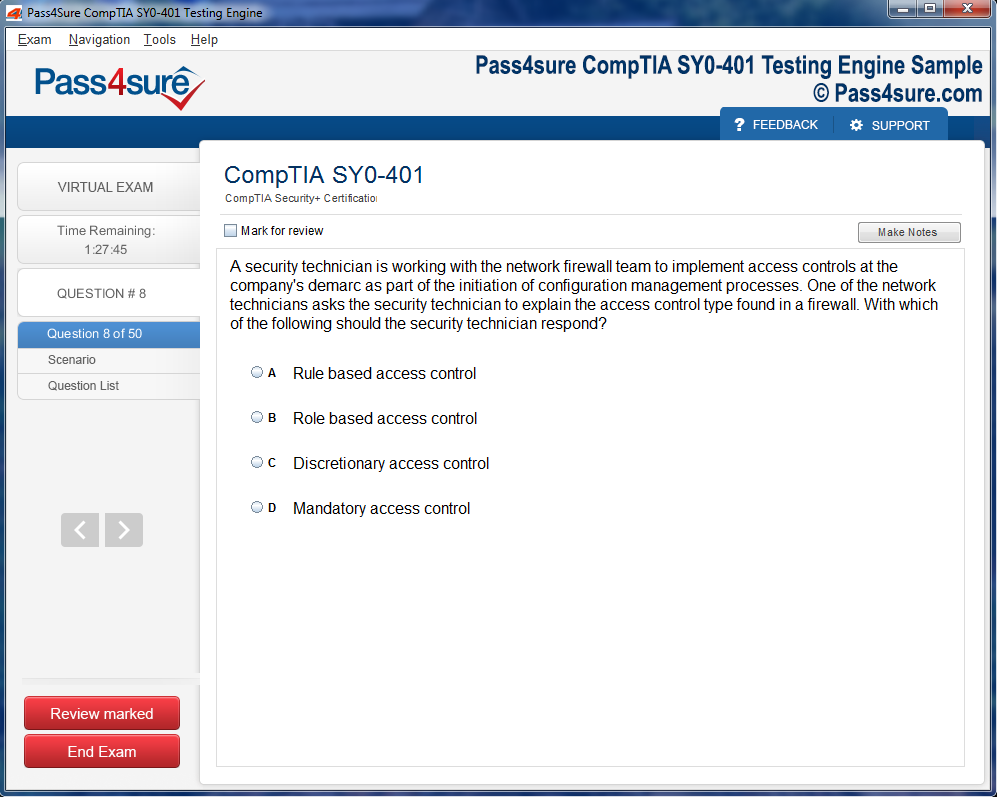
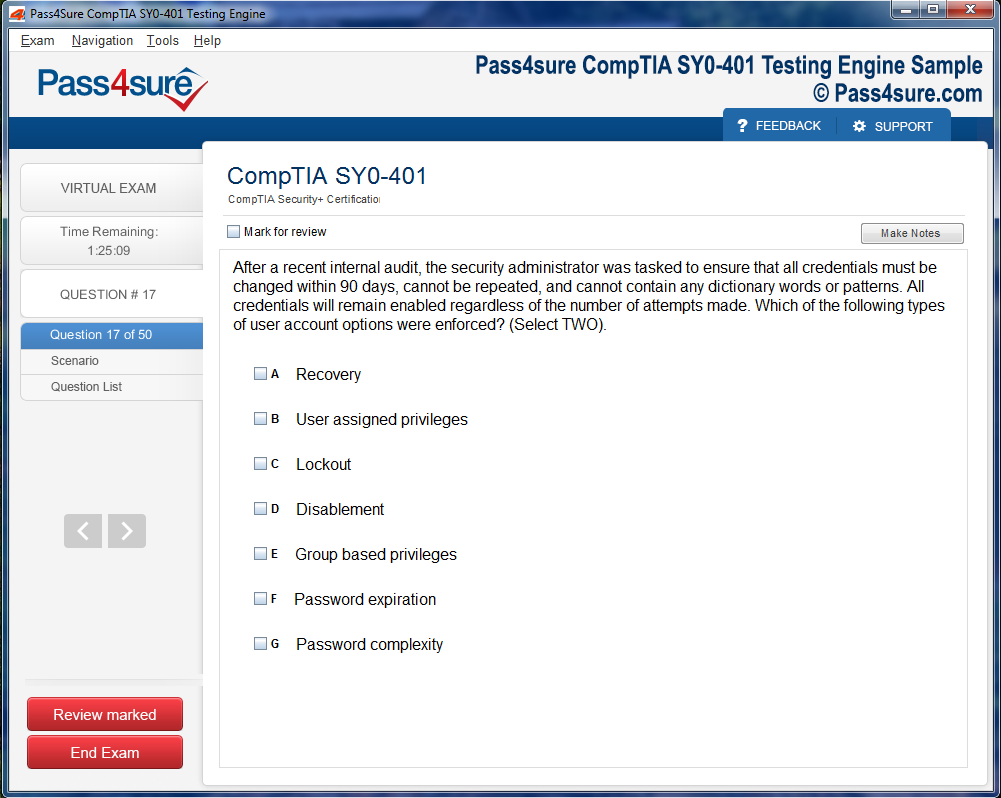
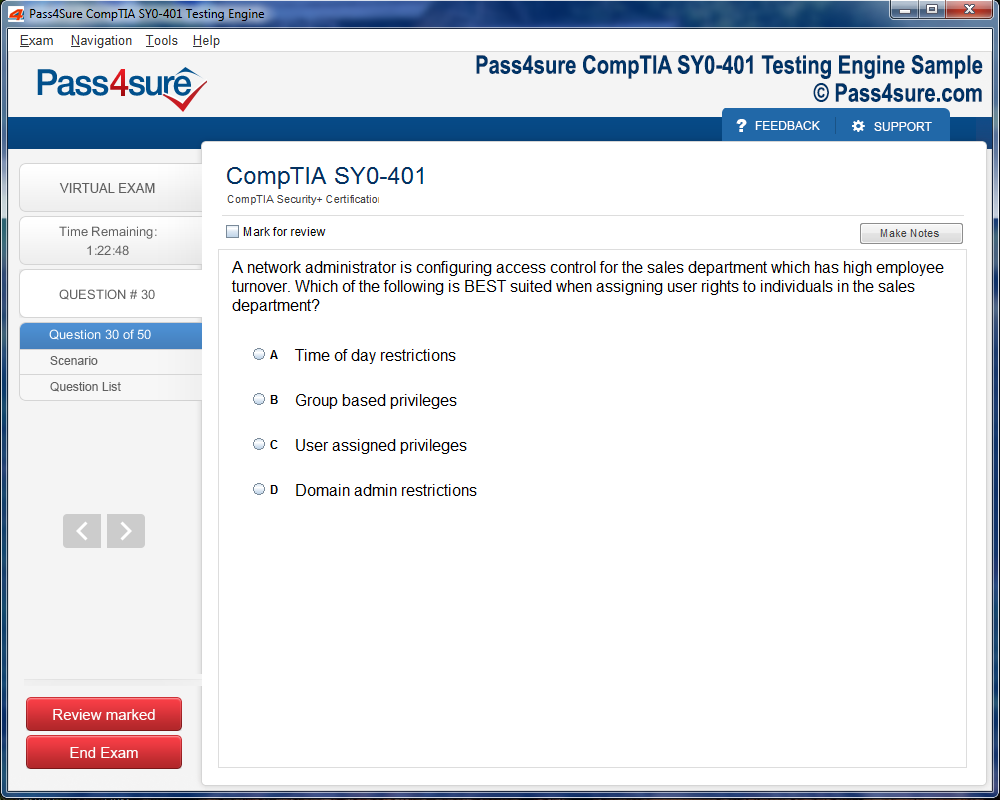
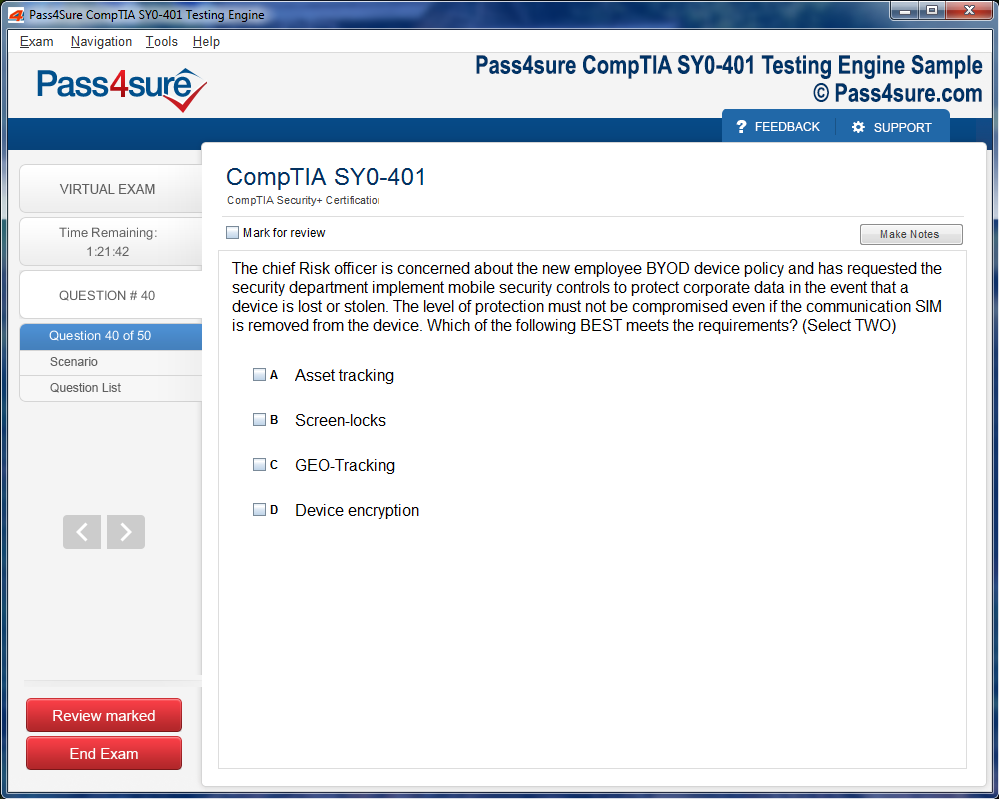
Product Screenshots






Frequently Asked Questions
How does your testing engine works?
Once download and installed on your PC, you can practise test questions, review your questions & answers using two different options 'practice exam' and 'virtual exam'. Virtual Exam - test yourself with exam questions with a time limit, as if you are taking exams in the Prometric or VUE testing centre. Practice exam - review exam questions one by one, see correct answers and explanations.
How can I get the products after purchase?
All products are available for download immediately from your Member's Area. Once you have made the payment, you will be transferred to Member's Area where you can login and download the products you have purchased to your computer.
How long can I use my product? Will it be valid forever?
Pass4sure products have a validity of 90 days from the date of purchase. This means that any updates to the products, including but not limited to new questions, or updates and changes by our editing team, will be automatically downloaded on to computer to make sure that you get latest exam prep materials during those 90 days.
Can I renew my product if when it's expired?
Yes, when the 90 days of your product validity are over, you have the option of renewing your expired products with a 30% discount. This can be done in your Member's Area.
Please note that you will not be able to use the product after it has expired if you don't renew it.
How often are the questions updated?
We always try to provide the latest pool of questions, Updates in the questions depend on the changes in actual pool of questions by different vendors. As soon as we know about the change in the exam question pool we try our best to update the products as fast as possible.
How many computers I can download Pass4sure software on?
You can download the Pass4sure products on the maximum number of 2 (two) computers or devices. If you need to use the software on more than two machines, you can purchase this option separately. Please email sales@pass4sure.com if you need to use more than 5 (five) computers.
What are the system requirements?
Minimum System Requirements:
- Windows XP or newer operating system
- Java Version 8 or newer
- 1+ GHz processor
- 1 GB Ram
- 50 MB available hard disk typically (products may vary)
What operating systems are supported by your Testing Engine software?
Our testing engine is supported by Windows. Andriod and IOS software is currently under development.
Everything You Need to Know About Linux HFCP
Linux HFCP, or High-Fidelity Control Protocol, transcends the traditional understanding of system orchestration, evolving into an intricate tapestry where kernel dynamics, hardware communication, and user-level applications converge. It is more than a mere conduit for data exchange; it embodies a paradigm of meticulous control, privileging deterministic performance and resiliency even in tumultuous computational landscapes. The protocol is imbued with a philosophy that emphasizes modularity, observability, and adaptability, shaping it as an indispensable instrument in the architecting of contemporary high-performance Linux ecosystems.
The Genesis and Evolution of HFCP in Linux Environments
The inception of HFCP is entwined with the exigencies of high-performance computing and real-time systems. Legacy communication protocols, constrained by monolithic architectures and opaque operational semantics, often succumbed to bottlenecks and inefficiencies. Linux HFCP emerged as a remedy, synthesizing insights from microkernel theory, reactive programming, and asynchronous design patterns. Through its layered abstraction model, HFCP encapsulates low-level hardware interactions within a transparent and malleable framework, allowing developers to interface with devices without confronting the labyrinthine intricacies of kernel internals.
Architectural Nuances and Modular Design
At its core, HFCP is predicated upon modularity. Each facet of its architecture—from device drivers to user-space interfaces—is decoupled to facilitate extension without destabilizing the kernel substrate. Hooks embedded within the protocol enable kernel modules to register capabilities, manage state transitions, and communicate asynchronously with minimal overhead. This modular design is not merely utilitarian; it cultivates an environment where resilience is intrinsic, ensuring that computational exigencies do not precipitate systemic fragility. The architecture embodies a meticulous calibration of granularity, whereby task prioritization and error recovery are seamlessly orchestrated.
Asynchronous Data Flows and Deterministic Performance
A defining feature of HFCP lies in its commitment to asynchronous data flows. Unlike conventional synchronous protocols, HFCP allows kernel modules and user-space applications to interact without incurring blocking operations, thereby mitigating latency and promoting fluidity in data propagation. This design decision manifests in deterministic performance, a prerequisite in domains where temporal precision is non-negotiable. Asynchronous mechanisms, coupled with intelligent prioritization heuristics, ensure that high-priority computational threads are accorded precedence while preserving holistic system stability.
Layered Abstraction Model and Device Interfacing
The HFCP layered abstraction model is a masterstroke of software engineering, disentangling hardware-specific idiosyncrasies from high-level application logic. Low-level device interactions are encapsulated within discreet layers, providing a cohesive interface that masks complexity while retaining extensibility. Such abstraction allows developers to implement intricate functionalities—such as dynamic resource allocation and real-time monitoring—without delving into convoluted hardware protocols. This stratification enhances maintainability, reduces error propagation, and fosters innovation within high-performance environments.
Dynamic Configuration Paradigms
Linux HFCP eschews the rigidity of static configuration, embracing a dynamic paradigm that accommodates real-time adjustments. System administrators can manipulate protocol behavior via command-line utilities, scripting APIs, or graphical interfaces, each affording granular control over operational parameters. This dynamism is pivotal in heterogeneous environments, where workloads fluctuate and hardware heterogeneity necessitates adaptive orchestration. The protocol’s configurability is both pragmatic and philosophical, reflecting its ethos of empowering users to sculpt system behavior with precision.
Integration with Kernel Modules and Extensible Hooks
The symbiotic relationship between HFCP and kernel modules is a cornerstone of its operational efficacy. Extensible hooks embedded within the kernel interface facilitate module registration, state monitoring, and asynchronous communication. These hooks are meticulously engineered to impose minimal computational overhead while maximizing predictability, ensuring that mission-critical applications operate within rigorously defined temporal boundaries. By harmonizing kernel-level interactions with user-space workflows, HFCP enables a cohesive ecosystem where reliability is pervasive and interruptions are meticulously contained.
Observability and Telemetry in High-Fidelity Control
Observability is not an afterthought in Linux HFCP; it is a structural imperative. Integrated logging, telemetry hooks, and diagnostic utilities furnish granular insights into system behavior, including timing, throughput, and error propagation. These capabilities allow administrators to undertake precise tuning and fault isolation without intrusive interventions, preserving operational continuity. The protocol’s observability framework fosters a culture of transparency, equipping teams with empirical intelligence to preempt performance degradation and optimize system efficiency across diverse computational contexts.
HFCP in Real-Time and High-Performance Computing
The real-time applications of Linux HFCP are manifold. In high-performance computing clusters, the protocol orchestrates intricate workflows, ensuring deterministic task scheduling and minimal latency. Embedded systems leveraging HFCP benefit from its responsiveness and modular extensibility, enabling sophisticated sensor networks, robotics frameworks, and industrial control systems. The protocol’s architectural rigor allows it to accommodate heterogeneous hardware landscapes, from conventional CPUs to specialized accelerators, while maintaining reliability and throughput fidelity.
Security Considerations and Protocol Resilience
Security within the HFCP framework is seamlessly integrated into its modular design. Authentication, access control, and secure communication channels are embedded within the protocol’s core, ensuring that high-fidelity operations remain insulated from external perturbations. Resilience mechanisms, such as transactional state management and rollback capabilities, fortify the protocol against transient failures and computational anomalies. In environments where both reliability and security are paramount, HFCP achieves a synthesis of vigilance and performance, creating a robust foundation for critical infrastructure deployment.
Installing Linux HFCP – Step-by-Step Implementation
Installing Linux HFCP requires a meticulous orchestration of system-level parameters and kernel optimizations. The initial consideration hinges upon kernel compatibility, as HFCP modules necessitate synchronous interaction with the kernel’s scheduling and asynchronous I/O mechanisms. While HFCP exhibits a degree of backward compatibility with prior kernel iterations, its pinnacle performance emerges on kernels that facilitate advanced thread multiplexing, adaptive preemption, and high-fidelity event handling. Ensuring kernel headers are aligned with the active kernel version is imperative for successful compilation, preventing elusive incompatibility errors that could cascade into runtime anomalies.
Environment Preparation for HFCP Installation
The environment preparation phase is not merely procedural; it involves cultivating a system substrate capable of absorbing the complexities of HFCP modules. System administrators must curate package repositories, prune extraneous dependencies, and verify that filesystem hierarchies possess ample capacity for module compilation and installation. Disk fragmentation or inadequate inode availability can precipitate compilation aberrations. Concurrently, environment variables related to compilation flags, such as CFLAGS and LDFLAGS, should be scrutinized to ensure that the resultant binaries leverage processor-specific instruction sets, cache alignment, and NUMA-aware memory allocation.
Choosing Between Precompiled Binaries and Source Compilation
HFCP installation bifurcates into two prominent pathways: deploying precompiled binaries or undertaking source compilation. Precompiled binaries are expedient, reducing installation latency; however, they often eschew fine-grained optimizations. Source compilation, conversely, is labor-intensive yet empowering, granting administrators full dominion over module parameters, feature toggling, and kernel integration strategies. Source compilation allows meticulous tailoring for heterogeneous architectures, including x86_64, ARM64, and RISC-V, while facilitating experimentation with experimental HFCP functionalities such as dynamic congestion adaptation and priority-aware packet queuing.
Acquiring and Verifying HFCP Source Packages
Source package acquisition is the prelude to compilation. HFCP packages are disseminated through official repositories or cryptographically verified mirrors. Integrity verification is paramount; checksums and digital signatures must be meticulously cross-referenced. After acquisition, the tarball is unpacked, and ancillary documentation such as README or INSTALL files must be consulted. These documents often contain nuanced directives concerning optional modules, dependency resolution, and kernel configuration recommendations. Ignoring these subtleties can precipitate subtle, system-level discrepancies that manifest only under peak operational stress.
Configuration Paradigms and Hierarchical Parameters
HFCP’s configuration framework is distinguished by its hierarchical and context-sensitive design. Configuration files support inheritance, conditional evaluation, and environment-specific overrides, permitting administrators to instantiate multiple HFCP subsystems without interdependency conflicts. Subsystem-specific parameters, such as buffer allocation thresholds, queue prioritization, and timeout policies, can be defined granularly, enabling high-throughput interfaces to operate independently from latency-sensitive channels. This architectural flexibility is particularly advantageous in multi-tenant environments or hybrid virtualized infrastructures where disparate workloads coexist.
Compilation Process and Kernel Module Integration
The compilation phase necessitates an orchestrated sequence of commands and environmental preparation. Following the configuration, make and make install procedures incorporate HFCP kernel modules into the active kernel tree. Module compilation benefits from parallelization techniques, harnessing multicore processors to expedite build times. Post-compilation, module integrity verification is critical. Utilities such as modprobe and lsmod provide real-time insights into loaded modules, while dmesg offers a detailed chronicle of kernel-level interactions during HFCP initialization. This stage also includes resolving runtime dependencies, ensuring that shared libraries, protocol stacks, and ancillary utilities are coherently aligned with module expectations.
Diagnostic Evaluation and Performance Testing
Testing HFCP necessitates a rigorous and multifaceted approach. HFCP’s diagnostic suite enables emulation of traffic scenarios, latency measurement, and stress-testing under peak load conditions. These simulations reveal potential bottlenecks, misconfigurations, and resource contention before production deployment. Elevated logging verbosity provides comprehensive traces of module interactions, enabling forensic analysis of event propagation and inter-module dependencies. Performance benchmarks, including throughput analysis, jitter assessment, and packet loss quantification, guide administrators in fine-tuning kernel parameters, such as scheduling classes, interrupt coalescing thresholds, and buffer pool sizing.
Advanced Kernel Optimization for HFCP
Achieving peak HFCP performance often necessitates kernel-level optimization. Administrators may adjust preemption models, refine I/O scheduler selections, or employ real-time patches to reduce latency variability. HFCP’s asynchronous processing capabilities are contingent upon precise memory allocation strategies, cache alignment, and NUMA topology awareness. Configuring CPU affinity for critical threads ensures that latency-sensitive operations remain insulated from background processes, maximizing deterministic response times. Additionally, fine-tuning network stack parameters such as congestion window growth, acknowledgment aggregation, and selective retransmission intervals can substantially enhance throughput under high contention.
Integration with System Services and Automation
Seamless integration of HFCP with existing system services is a non-trivial undertaking. HFCP must coalesce with networking daemons, storage subsystems, and monitoring utilities without conflict. Systemd service files or equivalent init scripts should be meticulously authored to guarantee deterministic startup sequences. Environment variables, module parameters, and logging verbosity levels must propagate correctly during system boot, enabling HFCP to assume operational control without manual intervention. Automated scripts may also enforce periodic integrity checks, module updates, and parameter validation, ensuring continuous alignment with evolving workload patterns.
Network and Storage Coexistence
HFCP operates optimally when harmonized with both network and storage subsystems. Network interfaces must be provisioned with buffer capacities commensurate with expected traffic bursts, while storage backends require synchronous access coordination to prevent I/O starvation. HFCP’s packet scheduling algorithms are designed to negotiate these dual constraints, dynamically reallocating resources to sustain low latency and high throughput. This coexistence is particularly critical in environments employing high-speed NVMe arrays, RDMA-capable network adapters, or software-defined networking overlays, where the interplay between storage and network latency can materially affect overall system performance.
Module Update and Maintenance Strategies
Maintaining HFCP involves systematic update procedures and proactive monitoring. Administrators must track upstream HFCP releases, kernel updates, and dependency patches. Updating modules requires recompilation or binary replacement, followed by regression testing to confirm backward compatibility. Monitoring tools can provide telemetry on module health, performance metrics, and error conditions, enabling preemptive corrective actions. This vigilant approach ensures that HFCP remains resilient, secure, and optimized in perpetuity, mitigating risk from both evolving workloads and emergent software vulnerabilities.
Leveraging Experimental Features
HFCP offers a plethora of experimental functionalities that, while not essential for baseline operation, can significantly enhance system performance. Features such as dynamic traffic shaping, latency prediction algorithms, and protocol-level load balancing can be enabled selectively. Careful experimentation, coupled with detailed logging, allows administrators to quantify performance gains, assess stability under stress, and gradually incorporate these features into production environments. Understanding the interplay between experimental and core features is essential to avoid destabilizing the system while extracting the maximum operational benefit.
Observability and Logging Nuances
Comprehensive observability is indispensable for HFCP deployment. Logging must capture nuanced interactions among kernel modules, protocol handlers, and subsystems. Configurable verbosity enables administrators to toggle between high-detail traces for debugging and streamlined logging for operational efficiency. Sophisticated log parsers can detect anomalies such as packet drops, buffer overflows, or thread starvation events. These insights facilitate informed adjustments to scheduling policies, buffer allocations, and priority schemes, thereby enhancing both reliability and throughput under diverse workloads.
Security Considerations for HFCP
HFCP modules operate within kernel space, rendering security vigilance paramount. Administrators must audit module permissions, enforce access control, and employ sandboxing where feasible. Kernel-level vulnerabilities, if left unmitigated, can propagate across system boundaries, compromising both network and storage integrity. Cryptographic validation of HFCP binaries, combined with runtime integrity checks, fortifies the system against tampering or inadvertent corruption. Additionally, adherence to best practices in secure configuration—such as minimizing unnecessary module exposure and restricting privileged access—safeguards operational continuity.
Scaling HFCP in Multi-Node Environments
Deploying HFCP in clustered or distributed architectures introduces new complexities. Network latency, inter-node synchronization, and resource contention must be rigorously managed. HFCP’s hierarchical configuration model facilitates node-specific tuning, allowing administrators to tailor parameters for distinct network topologies and workload distributions. Load-balancing strategies, inter-node packet routing, and failover mechanisms are integral to maintaining consistent performance across a distributed deployment. Observability tools can aggregate metrics from multiple nodes, providing a holistic view of system health and operational efficiency.
Leveraging HFCP for High-Performance Workloads
High-performance workloads, such as real-time analytics, financial transaction processing, and large-scale simulation, benefit immensely from HFCP’s advanced scheduling and traffic management features. Fine-grained control over packet queuing, prioritization, and congestion mitigation ensures that latency-sensitive operations are insulated from background processing. Administrators can tune HFCP parameters to align with workload-specific requirements, optimizing memory allocation, CPU scheduling, and network throughput. This targeted optimization amplifies system responsiveness and underpins reliable execution of mission-critical tasks.
Automation and Continuous Integration
Integrating HFCP deployment into automated pipelines enhances reliability and repeatability. Continuous integration frameworks can validate module compilation, configuration accuracy, and regression testing before production deployment. Scripts can automate parameter adjustment, dependency resolution, and telemetry collection, reducing manual intervention and human error. Automation not only expedites deployment but also establishes a robust framework for iterative performance tuning and proactive system maintenance, ensuring HFCP remains aligned with evolving operational demands.
Linux HFCP Architecture – A Deep Dive
The architecture of Linux HFCP is an intricate tapestry of interdependent strata, each layer meticulously engineered to execute discrete functionalities while presenting a cohesive interface for both developers and administrators. At the foundational stratum resides the transport layer, a conduit for seamless data translocation between kernel modules and user-space applications. Its design is predicated on concurrency, employing sophisticated queueing heuristics and non-blocking I/O paradigms that ensure minimal latency and maximal throughput.
Transport Layer Dynamics
The transport layer operates as the circulatory system of HFCP, channeling discrete packets with surgical precision. Unlike conventional systems, it integrates speculative dispatching algorithms that preemptively allocate resources in anticipation of workflow fluctuations. By leveraging lock-free data structures and cache-conscious memory management, this layer mitigates the deleterious effects of contention and latency spikes, allowing HFCP to sustain high-bandwidth operations even under stochastic loads.
Protocol Layer Orchestration
Ascending from the transport substrate, the protocol layer embodies the cognitive nucleus of HFCP. Here, commands are interpreted, session states meticulously maintained, and retransmission strategies dynamically adjusted. Its architecture employs predictive heuristics for error correction, enabling preemptive mitigation of cascading failures that might otherwise compromise systemic integrity. This layer also facilitates adaptive negotiation between endpoints, ensuring that communication channels remain resilient amidst network perturbations.
Service Layer Interfaces
The service layer functions as the outward-facing interface of HFCP, exposing a suite of functionalities for applications and administrators alike. Through a rich set of APIs, it allows granular control over devices, retrieval of telemetry, configuration of logging verbosity, and dynamic policy management. By abstracting the idiosyncrasies of lower layers, this stratum empowers developers to integrate HFCP with minimal friction, reducing the probability of human-induced inconsistencies and accelerating deployment cycles.
Modular Plug-in Ecosystem
One of HFCP’s most compelling attributes is its modular plug-in ecosystem. These plug-ins can be dynamically loaded at runtime, obviating the need for kernel recompilation while extending the protocol’s capabilities. This design fosters third-party innovation and supports highly specialized workloads, ranging from real-time video rendering to high-frequency scientific simulations. The modular paradigm also ensures that experimental extensions can coexist with core functionality without destabilizing the overarching architecture.
Error Handling Stratagem
Error handling within HFCP is an exemplar of layered resilience. Each stratum is empowered to intercept and rectify anomalies, minimizing disruption to superior layers. Detailed diagnostics are preserved for system administrators, ensuring that root causes are traceable with precision. Coupled with comprehensive logging, event correlation, and anomaly detection mechanisms, HFCP exhibits a robustness that is both proactive and reactive, significantly enhancing operational continuity.
Security Integration
Security is not an afterthought in HFCP but a pervasive element of its design. Authentication, access control, and cryptographic validation are interwoven across multiple layers, intercepting unauthorized commands and neutralizing malicious payloads before they propagate. This multi-tiered defense strategy aligns with contemporary paradigms in cybersecurity while ensuring that performance is uncompromised. HFCP’s architecture thus exemplifies how rigorous security can coexist with high-throughput, low-latency operations.
Telemetry and Observability
In addition to core functionalities, HFCP integrates advanced telemetry and observability features. Metrics are harvested from the transport, protocol, and service layers, providing a holistic view of system behavior. These telemetry streams enable predictive analytics, allowing administrators to anticipate performance degradation and preemptively tune operational parameters. Observability extends beyond raw metrics, incorporating contextualized event logging and anomaly detection, facilitating forensic analysis and continuous optimization.
Dynamic Resource Management
Resource orchestration within HFCP is another facet of its sophisticated design. Through dynamic allocation and reclamation strategies, the system adjusts compute, memory, and I/O resources in real time based on workload flux. Predictive modeling anticipates peak demands, while adaptive throttling ensures that critical processes maintain precedence. This dynamic equilibrium prevents resource starvation, optimizes utilization, and underpins the protocol’s ability to sustain heterogeneous workloads with minimal jitter.
Interoperability and Extensibility
HFCP’s architectural blueprint emphasizes interoperability with other subsystems while remaining extensible. Abstractions and standardized interfaces allow seamless integration with Linux kernel modules, third-party monitoring tools, and bespoke applications. Extensibility is not only a design philosophy but a practical imperative, enabling the protocol to evolve in concert with emerging technologies and organizational requirements without incurring significant refactoring overhead.
Latency Mitigation Techniques
Latency is an omnipresent challenge in high-performance systems, and HFCP addresses it through multiple stratagems. Speculative execution, preemptive caching, and asynchronous processing converge to minimize delays at every juncture. Additionally, congestion-aware routing algorithms prioritize time-sensitive packets, ensuring that critical operations are executed with minimal latency. The confluence of these techniques renders HFCP exceptionally suited for environments where temporal precision is paramount.
Adaptive Logging and Diagnostics
HFCP distinguishes itself through its adaptive logging infrastructure. Rather than relying on static verbosity levels, the system dynamically modulates logging granularity based on operational context. Critical errors trigger verbose diagnostics, while routine events are compacted to conserve storage and processing bandwidth. This intelligent logging paradigm facilitates rapid troubleshooting, minimizes overhead, and enhances situational awareness for administrators monitoring complex deployments.
Predictive Error Mitigation
A defining hallmark of HFCP is its predictive error mitigation framework. Leveraging historical data, real-time metrics, and probabilistic modeling, the system anticipates anomalies before they manifest as operational failures. Corrective actions—ranging from session retries to resource reallocation—are executed autonomously, mitigating disruptions and preserving systemic stability. This anticipatory approach transcends conventional reactive error handling, reflecting a paradigm shift in protocol resilience engineering.
Real-Time Policy Enforcement
HFCP incorporates real-time policy enforcement mechanisms that govern workflow execution, resource allocation, and access control. Policies are dynamically evaluable, allowing the system to adapt to fluctuating conditions without manual intervention. This ensures that operational constraints are consistently adhered to, even in highly volatile environments, and reduces the cognitive load on administrators tasked with maintaining compliance across distributed deployments.
Configuring Linux HFCP – Best Practices and Tips
Configuration is where Linux HFCP truly shines, offering administrators unparalleled control over system behavior. Effective configuration begins with understanding the protocol’s parameter hierarchy. HFCP allows global, interface-specific, and session-specific parameters, each influencing different aspects of system operation.
A core principle of HFCP configuration is incremental tuning. Start with default settings to ensure baseline functionality, then gradually adjust parameters such as queue depth, retry intervals, buffer sizes, and logging levels. Small, measured changes allow you to observe their impact without introducing instability.
Dynamic reconfiguration is a standout feature. HFCP supports runtime adjustments via command-line utilities and scripting APIs. For example, administrators can adjust traffic shaping policies on the fly, enable verbose logging for specific modules, or redirect telemetry streams to alternative sinks without restarting the system.
Logging deserves a focused approach. HFCP supports multiple logging levels, structured log formats, and flexible output targets. Structured logs, particularly in JSON format, facilitate automated parsing and integration with monitoring systems. Additionally, administrators can configure alert thresholds to proactively identify anomalies before they escalate.
Another best practice is redundancy planning. HFCP supports failover configurations, where multiple interfaces or nodes can seamlessly take over in case of a failure. Properly configured failover not only enhances uptime but also ensures deterministic performance in mission-critical environments.
Security-focused configuration is equally critical. Administrators should enforce least-privilege access, enable encrypted communication channels, and regularly review audit logs for unusual activities. HFCP provides native support for cryptographic modules and authentication schemes, which, when properly configured, can protect against both internal and external threats.
Finally, documentation and version control of configurations are indispensable. HFCP configurations can be complex, with interdependencies that are difficult to track without proper records. Maintaining a repository of configuration snapshots enables rapid rollback, facilitates audits, and enhances collaboration among system engineers.
Parameter Hierarchies and Systemic Calibration
Understanding HFCP’s parameter hierarchies is imperative for achieving optimal operational fluidity. System parameters encompass kernel-level behaviors, interface-layer optimizations, and session-specific latencies. Each stratum of parameters requires meticulous scrutiny; even marginal misconfigurations can precipitate cascading performance anomalies.
Interface-specific calibration involves fine-tuning metrics such as bandwidth throttling coefficients, jitter attenuation settings, and packet prioritization thresholds. Seasoned administrators leverage analytic utilities to measure throughput variances, employing these empirical insights to iterate configuration cycles with surgical precision.
Session-specific parameters afford granular control over transient connections, enabling administrators to prescribe ephemeral resource allocations, connection lifetimes, and transient logging scopes. The capacity to modulate these parameters without rebooting ensures minimal service disruption and operational continuity.
Dynamic Reconfiguration and Runtime Adaptation
HFCP’s intrinsic support for dynamic reconfiguration is one of its hallmark differentiators. Real-time adaptation empowers administrators to recalibrate system behaviors in response to emergent load conditions or anomalous patterns. Traffic shaping, congestion management, and packet rerouting can be altered on the fly, allowing continuous optimization without operational downtime.
Scripted API interactions extend this adaptability, facilitating automation of routine configuration changes. Administrators can deploy scheduled scripts to adjust logging verbosity during peak periods or dynamically modify buffer allocations to accommodate burst traffic, ensuring systems remain resilient under fluctuating demands.
Structured Logging and Telemetry Management
Robust logging is central to system observability. HFCP supports structured log formats, including JSON, which harmonizes seamlessly with modern telemetry and analytics platforms. Structured logging not only streamlines troubleshooting but also enables predictive diagnostics by integrating with anomaly-detection frameworks.
Administrators can define multifaceted logging policies, establishing thresholds that trigger automated alerts when specific events occur. This proactive approach to observability mitigates latent errors, providing early warning signals that prevent systemic degradation or failure.
Redundancy Architectures and Failover Design
Redundancy planning within HFCP is not merely a contingency strategy but a cornerstone of deterministic performance. Multi-node failover configurations permit instantaneous transition of operations from a compromised interface to a standby counterpart. Proper orchestration ensures minimal latency disruptions, preserving throughput and operational fidelity.
Advanced redundancy strategies incorporate load-balancing algorithms and stateful session replication. This ensures that failover nodes inherit current operational contexts, preventing session termination and sustaining user experience continuity. The strategic deployment of redundant pathways mitigates risk across diverse infrastructural topologies.
Security-Conscious Configuration Paradigms
Security within HFCP transcends conventional access control. Administrators must adopt a multi-layered paradigm encompassing cryptographic enforcement, authentication rigor, and vigilant audit practices. Encryption schemes protect sensitive communication channels, while modular cryptographic implementations ensure scalable, adaptive defenses.
Audit logging should capture nuanced events, from anomalous session attempts to configuration alterations. These logs, when systematically reviewed, unveil subtle attack vectors, enabling preemptive remediation. HFCP’s native support for secure modules facilitates this proactive stance, fortifying both internal and external threat resilience.
Version Control and Documentation Discipline
The complexity of HFCP configurations mandates rigorous documentation and versioning discipline. Configuration snapshots enable administrators to trace parameter evolutions, identify regressions, and perform rapid rollbacks when instability emerges. Such discipline also enhances collaborative troubleshooting, allowing multiple engineers to understand and modify configurations with confidence.
Repository-based management systems can integrate with automated deployment pipelines, ensuring that configuration updates propagate predictably and verifiably across distributed systems. Comprehensive documentation reduces cognitive overhead, transforming intricate configurations into traceable, auditable artifacts.
Advanced Queue Management Techniques
Queue management is an arcane yet vital facet of HFCP administration. Sophisticated queuing strategies, including hierarchical scheduling and weighted fair queuing, enable precise traffic arbitration. Administrators can define priority gradients, ensuring that latency-sensitive packets receive precedence while bulk transfers remain regulated.
Empirical monitoring of queue depths, coupled with adaptive buffer tuning, permits proactive avoidance of congestion collapse. By iteratively refining these parameters, administrators cultivate a resilient network ecosystem capable of sustaining high-throughput, low-latency operations.
Latency Optimization and Jitter Attenuation
HFCP configurations can dramatically influence end-to-end latency and jitter characteristics. Fine-grained parameterization of packet pacing, acknowledgment intervals, and retransmission strategies mitigates latency spikes. Jitter attenuation mechanisms stabilize inter-packet arrival times, enhancing the performance of real-time applications such as video streaming or industrial telemetry.
Administrators may employ synthetic benchmarking tools to measure the latency distribution across various interface topologies. These insights inform iterative adjustments, enabling precise harmonization of network performance with application-level expectations.
Unveiling the Intricacies of Linux HFCP
Linux HFCP represents a paradigm of computational orchestration, wherein deterministic latency and modular flexibility converge to facilitate multifaceted applications. The protocol’s design is emblematic of systems engineering ingenuity, providing low-overhead inter-process communication that scales across heterogeneous architectures. Unlike conventional protocols, HFCP thrives in contexts demanding both agility and unyielding precision, making it a cornerstone in advanced computational environments.
High-Performance Computing: Orchestrating the Extraordinary
Within high-performance computing ecosystems, Linux HFCP acts as the silent architect of complexity. Scientific simulations, from quantum modeling to climate projection algorithms, rely on HFCP’s capacity to harmonize thousands of concurrent processes. The protocol’s deterministic nature ensures that latency remains constant even under extreme computational load, mitigating jitter-induced anomalies. Computational workflows, such as large-scale matrix operations or genome sequencing pipelines, achieve unprecedented efficiency through HFCP’s intelligent scheduling mechanisms.
Embedded Systems and the IoT Confluence
In the realm of embedded systems, HFCP’s lightweight architecture exhibits extraordinary resilience. Microcontrollers, edge devices, and sensor networks exploit their modularity to orchestrate telemetry streams and actuators with minimal footprint. The protocol’s dynamic reconfiguration capabilities are particularly valuable in IoT ecosystems, allowing devices to recalibrate operational parameters in response to fluctuating environmental stimuli without requiring downtime. This adaptability enhances sustainability, prolonging operational longevity and reducing systemic fragility.
Enterprise Data Centers: Orchestration of the Omnipresent
Enterprise infrastructures leverage HFCP for orchestration across labyrinthine networks of storage arrays, compute nodes, and virtualized environments. The protocol’s integrated logging and predictive error-handling mechanisms empower administrators with actionable insights, ensuring seamless fault mitigation. Within hyper-scale data centers, HFCP facilitates the orchestration of multi-tiered workloads, optimizing resource allocation and enhancing throughput. The ability to preempt cascading failures underscores the protocol’s indispensability in high-stakes operational contexts.
Real-Time Multimedia Synchronization
Emergent applications of Linux HFCP include real-time multimedia processing, where precision is paramount. Broadcast systems, teleconferencing platforms, and streaming services benefit from the protocol’s capacity to synchronize audio, video, and ancillary data streams. Adaptive retransmission strategies mitigate latency spikes, preserving quality under variable network conditions. HFCP’s deterministic scheduling ensures frame coherence, enabling immersive user experiences even during high-bandwidth contention.
High-Frequency Financial Systems
In the financial domain, Linux HFCP’s deterministic latency is leveraged for high-frequency trading systems, where microsecond-level timing confers strategic advantage. Error resilience, coupled with predictable response intervals, allows institutions to execute algorithmic trades with unmatched reliability. HFCP’s architecture supports transactional orchestration across distributed nodes, facilitating real-time market analysis and execution. The protocol’s capabilities in this arena exemplify the intersection of technological sophistication and strategic competitiveness.
Autonomous Systems and Robotics
Autonomous systems, including aerial drones, autonomous vehicles, and robotic manipulators, harness HFCP for high-fidelity communication between subsystems. Sensors, actuators, and decision-making algorithms interact seamlessly, coordinated by HFCP’s low-latency messaging. The protocol’s deterministic timing ensures collision avoidance, path optimization, and adaptive task execution. In robotic swarms, HFCP facilitates synchronized behaviors, enhancing operational efficiency while reducing error propagation.
Cyber-Physical Systems and Industrial Automation
Industrial environments increasingly integrate HFCP into cyber-physical systems, where reliability and timing precision are imperative. Manufacturing lines, energy grids, and logistics frameworks exploit HFCP to orchestrate actuators, sensors, and monitoring nodes. Real-time diagnostic telemetry ensures predictive maintenance, reducing downtime and mitigating operational risks. HFCP’s ability to integrate seamlessly with legacy industrial protocols further amplifies its utility in complex, hybridized environments.
Scientific Exploration and Astrodynamics
The protocol’s precision renders it invaluable in scientific exploration, particularly in astrodynamics and space-based research. Satellite constellations, telescopic arrays, and space probes benefit from HFCP’s deterministic orchestration to synchronize observation instruments and data relays. Mission-critical telemetry, navigation algorithms, and payload management rely on the protocol’s capacity to mitigate latency variability, enhancing mission success probabilities in environments where communication delays are inherently challenging.
Machine Learning and Artificial Intelligence Deployment
HFCP also extends its utility into artificial intelligence and machine learning ecosystems. Distributed model training, neural network synchronization, and real-time inference pipelines capitalize on HFCP’s low-latency interconnectivity. By ensuring predictable message delivery and coordinated parameter updates, HFCP minimizes gradient divergence in distributed learning architectures. The protocol’s adaptability allows for seamless scaling across GPU clusters, facilitating rapid iteration cycles and enhancing model convergence efficiency.
Telecommunications and Network Function Virtualization
Within telecommunications, HFCP provides orchestration for network function virtualization and software-defined networking environments. Packet scheduling, real-time routing decisions, and dynamic bandwidth allocation are managed deterministically, optimizing quality of service under fluctuating network loads. The protocol’s robust error-handling ensures uninterrupted service delivery, critical in latency-sensitive contexts such as 5G networks, telemedicine, and emergency communication systems.
Unveiling the Intricacies of Linux HFCP
Linux HFCP represents a paradigm of computational orchestration, wherein deterministic latency and modular flexibility converge to facilitate multifaceted applications. The protocol’s design is emblematic of systems engineering ingenuity, providing low-overhead inter-process communication that scales across heterogeneous architectures. Unlike conventional protocols, HFCP thrives in contexts demanding both agility and unyielding precision, making it a cornerstone in advanced computational environments.
High-Performance Computing: Orchestrating the Extraordinary
Within high-performance computing ecosystems, Linux HFCP acts as the silent architect of complexity. Scientific simulations, from quantum modeling to climate projection algorithms, rely on HFCP’s capacity to harmonize thousands of concurrent processes. The protocol’s deterministic nature ensures that latency remains constant even under extreme computational load, mitigating jitter-induced anomalies. Computational workflows, such as large-scale matrix operations or genome sequencing pipelines, achieve unprecedented efficiency through HFCP’s intelligent scheduling mechanisms.
Embedded Systems and the IoT Confluence
In the realm of embedded systems, HFCP’s lightweight architecture exhibits extraordinary resilience. Microcontrollers, edge devices, and sensor networks exploit their modularity to orchestrate telemetry streams and actuators with minimal footprint. The protocol’s dynamic reconfiguration capabilities are particularly valuable in IoT ecosystems, allowing devices to recalibrate operational parameters in response to fluctuating environmental stimuli without requiring downtime. This adaptability enhances sustainability, prolonging operational longevity and reducing systemic fragility.
Enterprise Data Centers: Orchestration of the Omnipresent
Enterprise infrastructures leverage HFCP for orchestration across labyrinthine networks of storage arrays, compute nodes, and virtualized environments. The protocol’s integrated logging and predictive error-handling mechanisms empower administrators with actionable insights, ensuring seamless fault mitigation. Within hyper-scale data centers, HFCP facilitates the orchestration of multi-tiered workloads, optimizing resource allocation and enhancing throughput. The ability to preempt cascading failures underscores the protocol’s indispensability in high-stakes operational contexts.
Real-Time Multimedia Synchronization
Emergent applications of Linux HFCP include real-time multimedia processing, where precision is paramount. Broadcast systems, teleconferencing platforms, and streaming services benefit from the protocol’s capacity to synchronize audio, video, and ancillary data streams. Adaptive retransmission strategies mitigate latency spikes, preserving quality under variable network conditions. HFCP’s deterministic scheduling ensures frame coherence, enabling immersive user experiences even during high-bandwidth contention.
High-Frequency Financial Systems
In the financial domain, Linux HFCP’s deterministic latency is leveraged for high-frequency trading systems, where microsecond-level timing confers strategic advantage. Error resilience, coupled with predictable response intervals, allows institutions to execute algorithmic trades with unmatched reliability. HFCP’s architecture supports transactional orchestration across distributed nodes, facilitating real-time market analysis and execution. The protocol’s capabilities in this arena exemplify the intersection of technological sophistication and strategic competitiveness.
Autonomous Systems and Robotics
Autonomous systems, including aerial drones, autonomous vehicles, and robotic manipulators, harness HFCP for high-fidelity communication between subsystems. Sensors, actuators, and decision-making algorithms interact seamlessly, coordinated by HFCP’s low-latency messaging. The protocol’s deterministic timing ensures collision avoidance, path optimization, and adaptive task execution. In robotic swarms, HFCP facilitates synchronized behaviors, enhancing operational efficiency while reducing error propagation.
Cyber-Physical Systems and Industrial Automation
Industrial environments increasingly integrate HFCP into cyber-physical systems, where reliability and timing precision are imperative. Manufacturing lines, energy grids, and logistics frameworks exploit HFCP to orchestrate actuators, sensors, and monitoring nodes. Real-time diagnostic telemetry ensures predictive maintenance, reducing downtime and mitigating operational risks. HFCP’s ability to integrate seamlessly with legacy industrial protocols further amplifies its utility in complex, hybridized environments.
Scientific Exploration and Astrodynamics
The protocol’s precision renders it invaluable in scientific exploration, particularly in astrodynamics and space-based research. Satellite constellations, telescopic arrays, and space probes benefit from HFCP’s deterministic orchestration to synchronize observation instruments and data relays. Mission-critical telemetry, navigation algorithms, and payload management rely on the protocol’s capacity to mitigate latency variability, enhancing mission success probabilities in environments where communication delays are inherently challenging.
Machine Learning and Artificial Intelligence Deployment
HFCP also extends its utility into artificial intelligence and machine learning ecosystems. Distributed model training, neural network synchronization, and real-time inference pipelines capitalize on HFCP’s low-latency interconnectivity. By ensuring predictable message delivery and coordinated parameter updates, HFCP minimizes gradient divergence in distributed learning architectures. The protocol’s adaptability allows for seamless scaling across GPU clusters, facilitating rapid iteration cycles and enhancing model convergence efficiency.
Telecommunications and Network Function Virtualization
Within telecommunications, HFCP provides orchestration for network function virtualization and software-defined networking environments. Packet scheduling, real-time routing decisions, and dynamic bandwidth allocation are managed deterministically, optimizing quality of service under fluctuating network loads. The protocol’s robust error-handling ensures uninterrupted service delivery, critical in latency-sensitive contexts such as 5G networks, telemedicine, and emergency communication systems.
Kernel Integration Nuances
Linux HFCP’s integration with the kernel is an intricate ballet of synchronization and low-level orchestration. Kernel hooks are strategically employed to monitor I/O paths, intercept system calls, and regulate memory access patterns. By leveraging asynchronous callback mechanisms and per-CPU data structures, HFCP reduces cross-CPU contention and enhances parallelism. This meticulous kernel coupling allows the protocol to operate near hardware limits without compromising stability or predictability.
Advanced Session Management
Session management in HFCP transcends conventional paradigms by implementing ephemeral, stateful sessions with fine-grained lifecycle control. Each session encapsulates not only command sequences but also context-sensitive telemetry and error heuristics. Sessions are orchestrated using hierarchical finite state machines, enabling nuanced transitions and recovery mechanisms. This architecture ensures minimal session loss even under network perturbations or abrupt process termination.
Predictive Congestion Control
HFCP introduces predictive congestion control that synthesizes historical data and real-time metrics to preemptively alleviate traffic bottlenecks. Rather than reacting to packet loss post hoc, the system dynamically modulates window sizes, prioritizes critical flows, and leverages speculative routing. This preemptive modulation enhances throughput determinism, crucial in high-frequency applications where microsecond deviations can cascade into systemic instability.
Modular Plug-In Ecosystem – Advanced Perspectives
The modular plug-in system is further distinguished by its ability to host polymorphic plugins, which adaptively modify their behavior based on environmental cues. These plugins can implement domain-specific enhancements, such as real-time encryption, low-latency compression, or intelligent packet prioritization. By isolating plugin execution in sandboxed environments, HFCP ensures that experimental modules cannot compromise kernel integrity, offering a balance between innovation and operational security.
Cryptographic Integration
Security within HFCP is augmented by cryptographic primitives embedded at multiple layers. End-to-end integrity verification, ephemeral session keys, and hardware-accelerated encryption coalesce to create a fortified communication fabric. Furthermore, cryptographic agility allows algorithms to be upgraded seamlessly, maintaining security posture against evolving threats. This integration ensures that high-throughput performance does not come at the expense of confidentiality or data integrity.
Hierarchical Resource Scheduling
The scheduling subsystem in HFCP employs a hierarchical, multilevel approach to resource allocation. Compute, memory, and I/O bandwidth are allocated based on workload criticality, session priority, and predicted operational demand. Sub-schedulers at each layer perform micro-optimizations, while a global scheduler harmonizes resource distribution to prevent starvation or thrashing. This hierarchy enables deterministic performance under unpredictable load conditions.
Event-Driven Architecture
HFCP is inherently event-driven, relying on asynchronous signals to trigger state transitions and operations. Events are categorized and prioritized, allowing high-priority signals to preempt less critical tasks. This model reduces idle cycles, enhances throughput, and ensures that time-sensitive operations are executed with minimal latency. Event tracing and correlation further enable administrators to visualize complex interdependencies within the system.
Intelligent Telemetry Streams
Beyond simple metric collection, HFCP’s telemetry subsystem interprets raw data streams, extracting actionable intelligence. Predictive algorithms analyze patterns of resource utilization, error occurrence, and throughput anomalies. Telemetry is then transformed into decision-making inputs, informing adaptive policy enforcement, resource redistribution, and dynamic session adjustments. This intelligent feedback loop elevates system observability from passive monitoring to proactive orchestration.
Adaptive Logging Paradigms
HFCP’s logging architecture is not merely adaptive but introspective. It employs semantic logging, where events are contextualized with causality chains and temporal metadata. This allows anomaly detection systems to discern not just what occurred, but why it occurred. Coupled with log compaction strategies and asynchronous storage, this approach minimizes overhead while maximizing diagnostic value.
Multi-Tiered Error Containment
Error handling within HFCP is layered and anticipatory. Each stratum contains its own set of predictive monitors and mitigation routines, ensuring that anomalies are quarantined at the lowest level possible. Cross-layer feedback mechanisms allow higher layers to adjust expectations and workflows dynamically. This proactive containment minimizes cascading failures and preserves systemic equilibrium even in the face of simultaneous faults.
High-Precision Timing
In environments requiring microsecond-level determinism, HFCP leverages high-precision timers and clock synchronization protocols. Timing data guides packet scheduling, session arbitration, and congestion control mechanisms. By synchronizing across distributed nodes, HFCP maintains temporal consistency critical for real-time trading platforms, scientific simulations, and multimedia streaming services.
Intelligent Retry Mechanisms
HFCP implements sophisticated retry strategies that blend exponential backoff with predictive adaptation. Retries are informed by real-time network conditions, session history, and congestion predictions. This avoids unnecessary retransmissions, reduces network load, and accelerates recovery from transient failures. Intelligent retries contribute significantly to HFCP’s low-latency, high-reliability profile.
Predictive Maintenance Integration
HFCP is designed to interface with predictive maintenance frameworks. Telemetry and error patterns feed machine learning models capable of forecasting hardware or network degradation. Maintenance windows are dynamically scheduled, preventing unplanned downtime and enhancing system longevity. This integration aligns HFCP with Industry 4.0 paradigms, where data-driven preemption is a core operational principle.
Adaptive Policy Enforcement Engines
HFCP’s policy engines are capable of on-the-fly adaptation. Policies can respond to network congestion, session anomalies, or workload spikes without manual intervention. These engines leverage a rule-based system augmented by probabilistic modeling, allowing policies to evolve based on historical outcomes and predictive insights. This self-optimizing capability ensures compliance and operational efficiency even under dynamic conditions.
Context-Aware Data Routing
Data routing in HFCP is contextually intelligent. Routing decisions consider packet priority, session criticality, network congestion, and predictive performance metrics. By dynamically adjusting paths and employing speculative routing, HFCP minimizes latency and optimizes throughput. Context-awareness ensures that critical traffic reaches its destination expeditiously, even in congested or volatile network environments.
High-Availability Mechanisms
HFCP incorporates redundancy and failover strategies across all layers. Transport paths, protocol states, and service endpoints are replicated with quorum-based consistency checks. Failover mechanisms are triggered automatically upon anomaly detection, ensuring that critical services remain operational. This design philosophy prioritizes uninterrupted availability, making HFCP suitable for mission-critical deployments.
Advanced Monitoring Dashboards
HFCP provides administrators with granular, real-time dashboards. These interfaces aggregate telemetry, logs, policy states, and session metrics into intuitive visualizations. Customizable alerts, trend analysis, and anomaly detection widgets empower administrators to make informed decisions rapidly. The monitoring layer is both descriptive and prescriptive, guiding proactive operational adjustments.
Kernel Module Isolation
To mitigate the risk of systemic instability, HFCP enforces rigorous isolation for kernel modules. Modules execute in controlled memory domains, with inter-module communication mediated by secure, deterministic interfaces. This isolation prevents faults in one module from propagating, enhancing overall system resilience while permitting concurrent experimentation and extension.
Distributed Coordination Mechanisms
HFCP supports distributed deployments with sophisticated coordination protocols. State synchronization, leader election, and consensus mechanisms ensure consistency across nodes. Distributed telemetry aggregation and policy propagation maintain operational coherence, enabling HFCP to scale seamlessly across clusters without compromising determinism or security.
Workflow Optimization Algorithms
The protocol incorporates algorithms designed to optimize workflow execution. By analyzing historical session patterns and real-time metrics, HFCP can reorder, prioritize, or batch operations to maximize throughput. These algorithms adapt continuously, ensuring that operational efficiency is maintained even as workloads evolve.
Contextual Security Policies
Security policies in HFCP are contextually enforced, adapting to session criticality, network environment, and operational parameters. Real-time threat intelligence feeds into policy adjustments, enabling rapid response to evolving attack vectors. This dynamic security paradigm minimizes exposure while maintaining high operational efficiency.
Fine-Tuning HFCP Scheduling Policies
HFCP provides administrators with an intricate palette of scheduling policies that can be meticulously tailored to system demands. Beyond conventional FIFO or round-robin scheduling, HFCP introduces priority-aware scheduling, latency-sensitive threading, and adaptive congestion mitigation. Administrators can define per-interface priorities, implement hierarchical queuing disciplines, and modulate execution windows for I/O-bound processes. Fine-tuning these parameters requires both analytical foresight and empirical measurement; synthetic workloads can be employed to simulate peak demand, revealing subtle scheduling anomalies such as priority inversion, CPU starvation, or buffer-induced jitter.
Memory Management Strategies in HFCP
Memory allocation is a linchpin of HFCP performance. Default kernel allocation strategies may suffice for nominal workloads, but high-throughput or real-time scenarios necessitate NUMA-aware allocation, slab caching, and large-page memory utilization. HFCP modules can exploit per-CPU memory pools, minimizing inter-processor contention and reducing cache-line bouncing. Administrators should also consider ephemeral buffer pools, dynamically resizing them in response to traffic patterns, and implement memory reclamation policies that preemptively recycle stale allocations. These strategies mitigate latency spikes and prevent memory fragmentation from degrading module performance.
HFCP in Virtualized Environments
Deploying HFCP within virtualized or containerized ecosystems introduces unique complexities. Hypervisor interaction, virtual NIC scheduling, and kernel parameter propagation must be carefully coordinated. Paravirtualized drivers or SR-IOV-enabled interfaces can dramatically reduce overhead and enhance deterministic throughput. HFCP’s hierarchical configuration allows virtual machines or containers to inherit system-wide parameters while maintaining isolated, workload-specific overrides. Proper tuning ensures that high-priority traffic within a VM does not suffer undue latency due to contention from neighboring instances or hypervisor scheduling delays.
Troubleshooting HFCP Initialization Errors
Kernel module initialization can produce subtle, often perplexing error patterns. HFCP initialization failures may manifest as module load errors, undefined symbol warnings, or silent runtime anomalies. System logs, particularly dmesg, are essential diagnostic tools. Common issues include misaligned kernel headers, unresolved dependencies, insufficient permissions, or conflicts with existing kernel modules. Administrators may employ strace-like techniques to trace system calls during module loading, isolating discrepancies between expected and actual behavior. Additionally, validating configuration files against schema definitions ensures that conditional parameters and hierarchical overrides are syntactically correct and semantically meaningful.
Network Congestion Analysis and HFCP Response
HFCP excels in environments characterized by fluctuating network load. Its congestion analysis mechanisms include dynamic queue depth adjustment, packet prioritization, and backpressure signaling. Administrators can monitor packet latency, jitter, and loss using HFCP diagnostic utilities, correlating observed patterns with configuration parameters. In multi-hop topologies, HFCP can implement traffic shaping and intelligent rerouting, mitigating bottlenecks without compromising throughput. For highly sensitive latency environments, predictive congestion algorithms analyze historical traffic trends to preemptively adjust buffer allocations and scheduling priorities, reducing the probability of packet loss and latency spikes.
Leveraging HFCP Logging for Proactive Management
Beyond post-mortem analysis, HFCP logging can be harnessed for proactive system management. High-frequency logging captures transient anomalies, subsystem contention, and micro-latency events. Administrators can integrate these logs with machine-learning-powered monitoring systems, enabling predictive maintenance and automatic parameter tuning. Structured logging formats, such as JSON or Protobuf, facilitate downstream analytics and visualization, allowing operational teams to identify correlations between module interactions, traffic patterns, and hardware utilization. Logging verbosity should be dynamically adjustable to balance diagnostic depth with operational efficiency.
Integrating HFCP with Security Frameworks
Operating in kernel space necessitates a heightened security posture. HFCP modules must be integrated with kernel security modules (KSMs), AppArmor, or SELinux policies to enforce access control and limit attack surfaces. Cryptographic signing of module binaries ensures integrity, preventing tampering. Runtime security checks can monitor for abnormal packet patterns or unauthorized module interactions, providing alerts in near real-time. Administrators should also consider isolating HFCP-intensive threads in hardened cgroups or namespaces, minimizing exposure to potential privilege escalation or resource abuse attacks.
High-Fidelity Packet Tracing
For advanced troubleshooting and performance optimization, HFCP supports high-fidelity packet tracing. Tracing captures each stage of the packet lifecycle—from ingress through scheduling, queuing, and eventual egress. Trace logs reveal micro-level timing anomalies, queue overflows, or priority inversion events. Integrating these traces with time-synchronized telemetry allows administrators to construct a chronological view of packet flow, identify bottlenecks, and correlate observed behavior with underlying kernel parameters. Advanced tracing enables experimental deployments to measure the effect of novel HFCP features under controlled stress conditions.
Dynamic Module Reloading and Hot Patching
HFCP supports dynamic module reloading, allowing runtime updates without necessitating a system reboot. Hot patching facilitates incremental feature deployment, bug fixes, and parameter adjustments with minimal disruption. Administrators can load, unload, or replace specific HFCP submodules while preserving active connections, ensuring uninterrupted service. Hot patching also enables testing of experimental features in production-like environments, with rollback mechanisms in place to revert to stable configurations if anomalies are detected. Proper instrumentation and logging are critical to verify module state consistency during these operations.
Real-Time Monitoring and Telemetry
HFCP’s operational efficacy can be enhanced via real-time monitoring frameworks. Telemetry systems ingest metrics such as throughput, packet latency, error rates, buffer utilization, and CPU affinity statistics. These metrics enable adaptive tuning, where HFCP dynamically adjusts scheduling, buffer allocation, and prioritization to maintain deterministic performance under variable workloads. Integration with observability platforms allows alerting on threshold violations, historical trend analysis, and capacity planning. Real-time telemetry is particularly valuable in multi-tenant or cloud-scale environments, where rapid detection and remediation of anomalies are crucial to SLA adherence.
HFCP in Edge and IoT Deployments
Edge computing and IoT environments impose unique constraints on HFCP deployment. Resource-limited devices necessitate lean configurations, efficient memory usage, and minimal CPU overhead. HFCP’s modular architecture allows selective feature activation, enabling critical subsystems while disabling non-essential components. Network congestion mitigation and adaptive scheduling become even more critical in bandwidth-constrained or high-latency edge networks. Administrators may employ hierarchical configuration to tailor HFCP behavior per device, ensuring that latency-sensitive IoT traffic remains prioritized without overwhelming system resources.
Leveraging HFCP for Hybrid Cloud Architectures
Hybrid cloud deployments combine on-premises infrastructure with public cloud resources, presenting intricate challenges for HFCP deployment. Multi-path routing, variable latency, and disparate resource provisioning must be considered. HFCP can facilitate consistent packet prioritization across hybrid environments, dynamically adapting buffer and scheduling strategies in response to variable cloud network conditions. Hierarchical configuration allows administrators to define node-specific parameters, enabling seamless interoperability between private and public cloud nodes. Advanced telemetry ensures visibility into inter-environment packet flows, highlighting bottlenecks or misaligned configurations.
Advanced Congestion Control Algorithms
HFCP incorporates sophisticated congestion control algorithms designed for high-throughput, low-latency applications. Beyond conventional window-based mechanisms, HFCP supports predictive, AI-driven congestion mitigation, selective acknowledgment prioritization, and dynamic queue reshaping. Administrators can analyze traffic patterns and adjust algorithmic parameters to balance throughput, latency, and packet loss. Multi-tier congestion control can be employed for large-scale deployments, prioritizing mission-critical flows while gracefully throttling non-essential traffic, thus maintaining overall system equilibrium.
HFCP Kernel Parameter Profiling
Profiling kernel parameters is a vital aspect of HFCP optimization. Tools such as perf, ftrace, and eBPF enable administrators to quantify CPU cycles, memory accesses, and I/O latency associated with HFCP modules. Profiling reveals hotspots, suboptimal scheduling, or inefficient memory usage. By correlating profiling data with configuration parameters, administrators can iteratively refine HFCP settings, achieving maximal throughput, minimal jitter, and predictable latency. Profiling also assists in capacity planning, ensuring that hardware resources are sufficient to sustain peak load demands.
Multi-Interface Coordination
HFCP supports operation across multiple network interfaces simultaneously. Coordinating traffic across diverse interfaces requires attention to interface-specific MTU, queue depth, and scheduling policies. HFCP’s hierarchical configuration facilitates per-interface tuning, enabling administrators to allocate bandwidth, prioritize traffic, and manage congestion adaptively. Interface-level monitoring provides visibility into packet distribution, latency variance, and error occurrences, guiding configuration adjustments that optimize aggregate throughput while preserving low-latency flows.
Conclusion
Maintaining HFCP involves systematic automation of updates and regression testing. Continuous integration pipelines can compile modules, execute synthetic workloads, and verify configuration integrity before deployment. Automated regression tests identify performance regressions, subtle configuration conflicts, or incompatibilities with new kernel versions. These practices reduce operational risk, accelerate update cycles, and maintain system reliability, particularly in large-scale or mission-critical environments.
Top Linux Foundation Exams
- KCNA - Kubernetes and Cloud Native Associate
- KCSA - Kubernetes and Cloud Native Security Associate
- LFCS - Linux Foundation Certified System Administrator
- CKS - Certified Kubernetes Security Specialist
- LFCA - Linux Foundation Certified IT Associate
- CKA-Linux Foundation - Certified Kubernetes Administrator
- CCA-Linux Foundation - Cilium Certified Associate