

Exam Code: ECP-206
Exam Name: Ericsson Certified Associate - IP Networking
Certification Provider: Ericsson
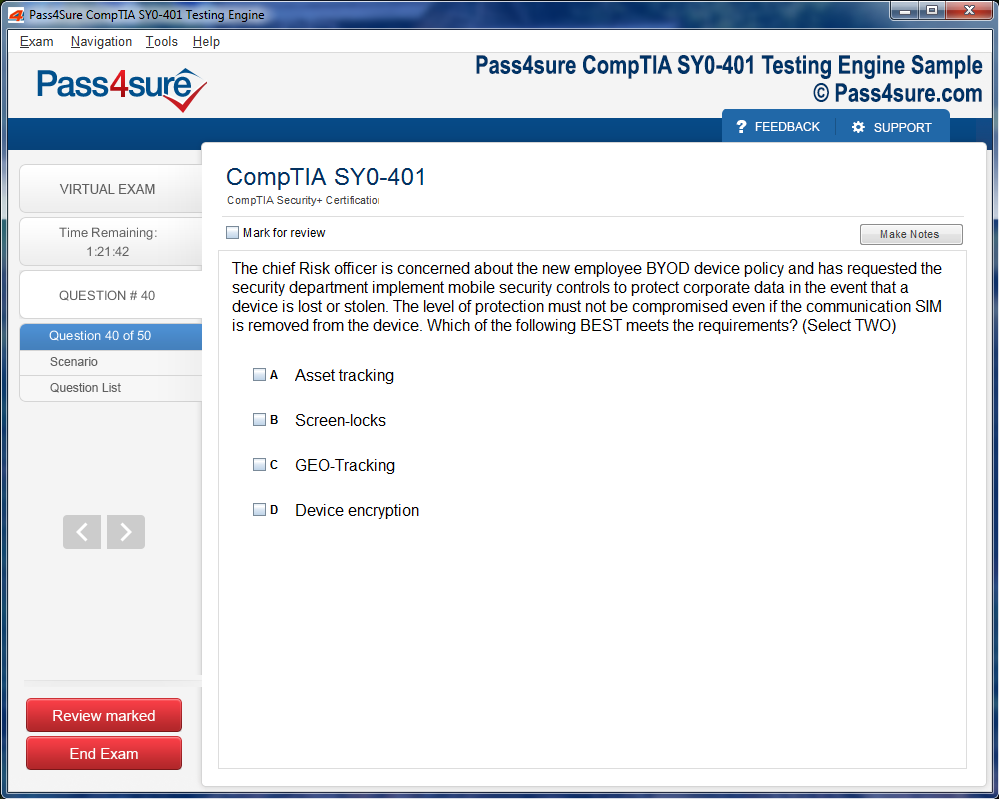
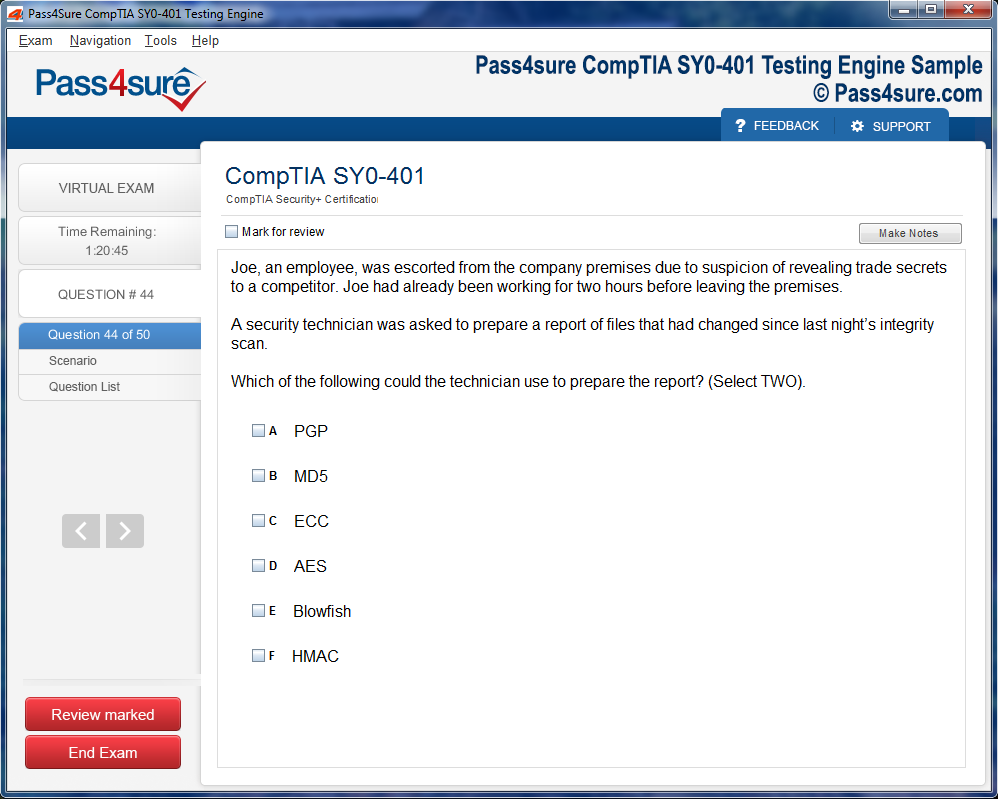
Product Screenshots
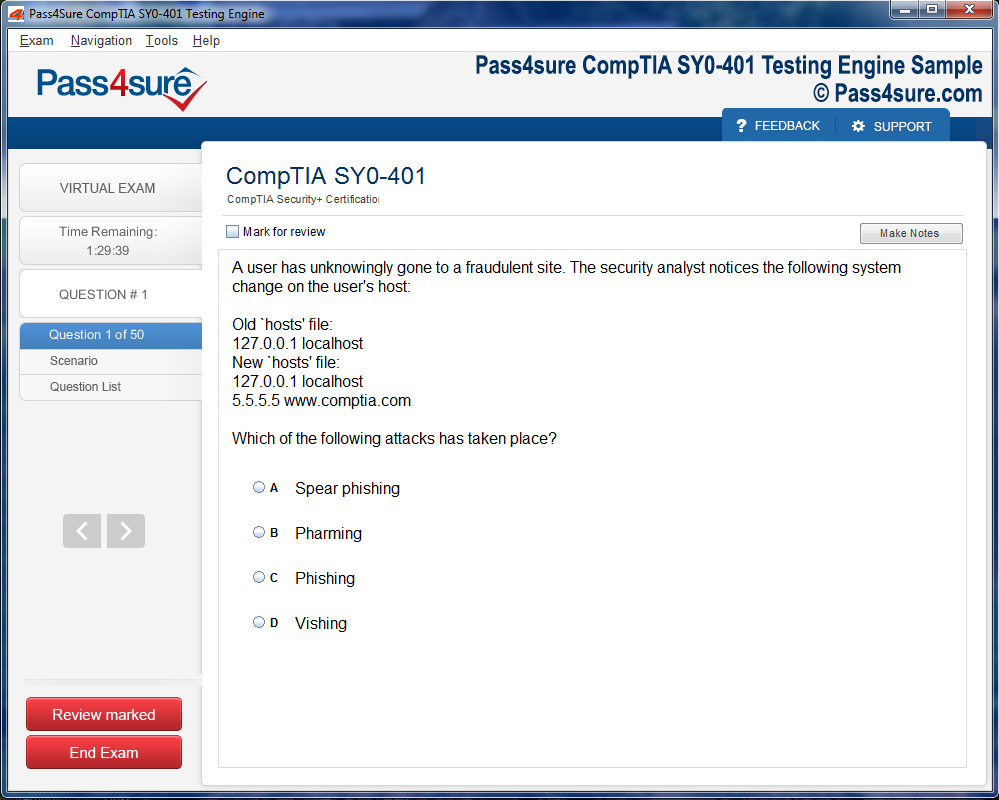
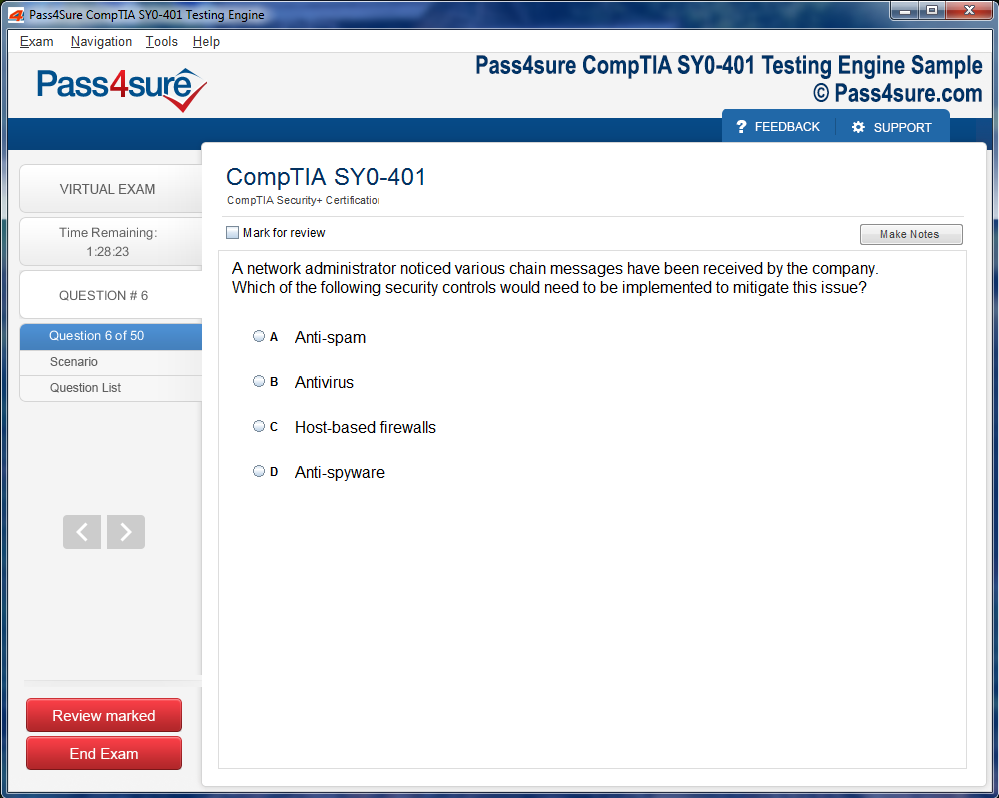
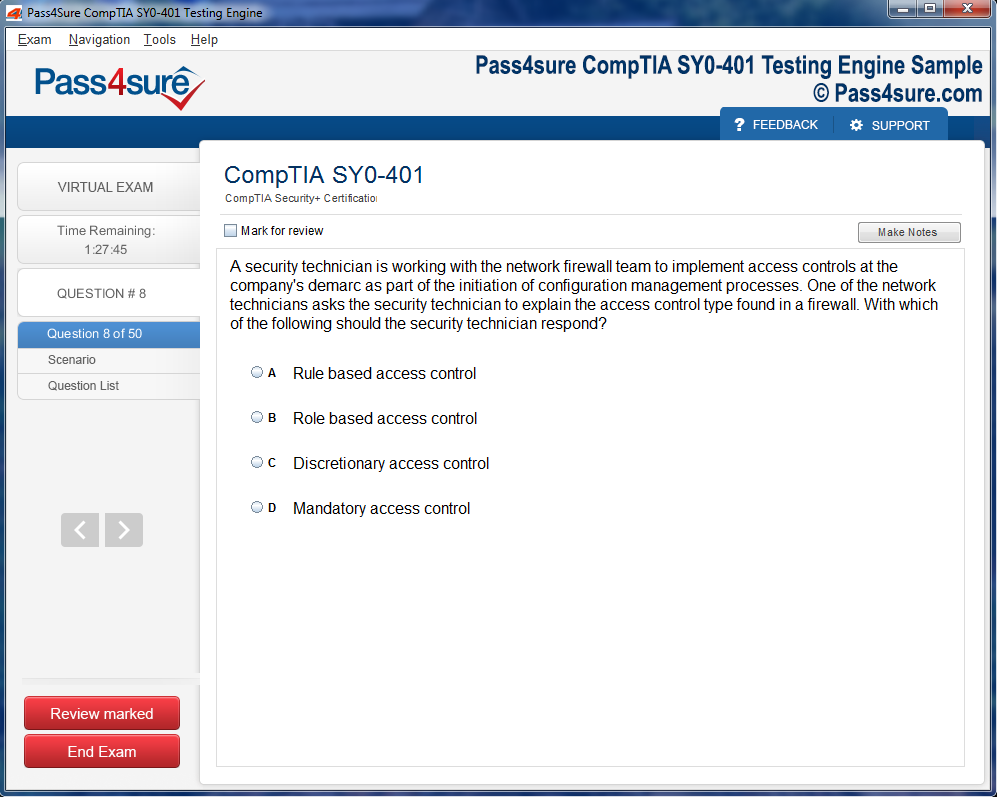
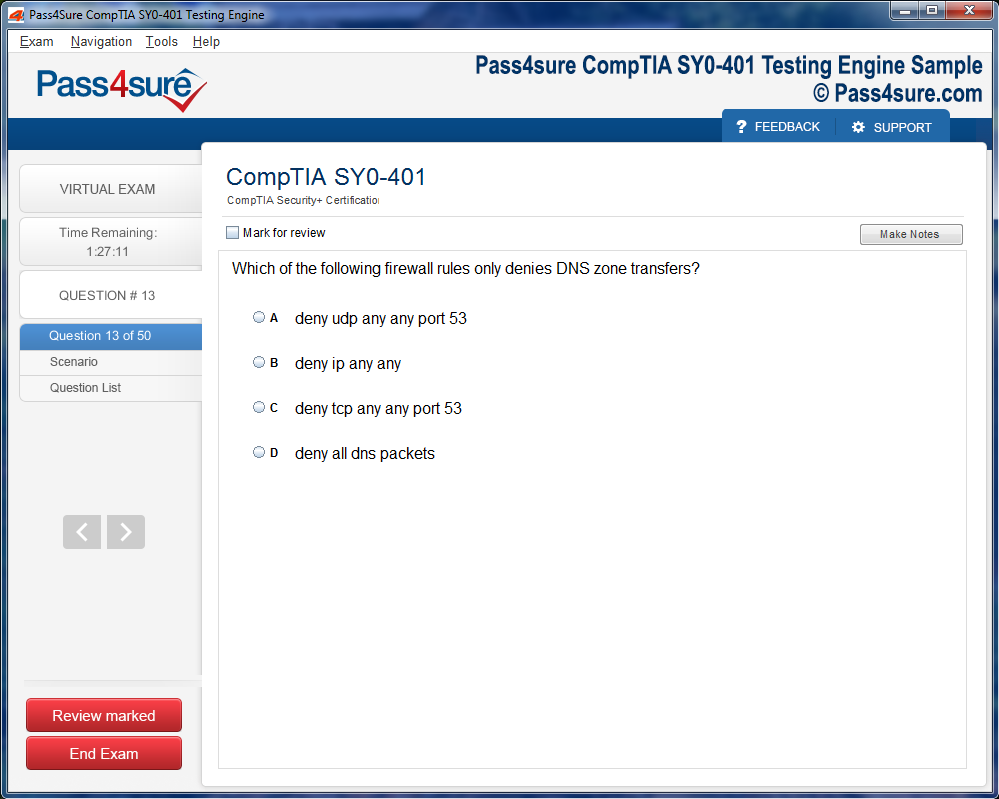
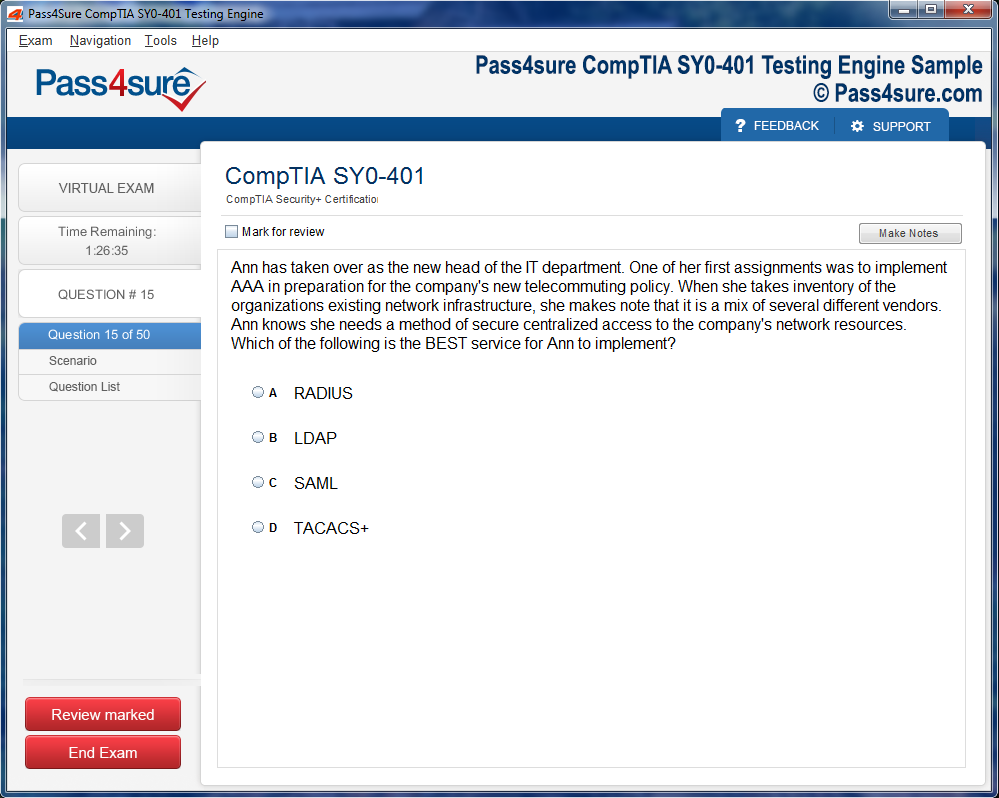
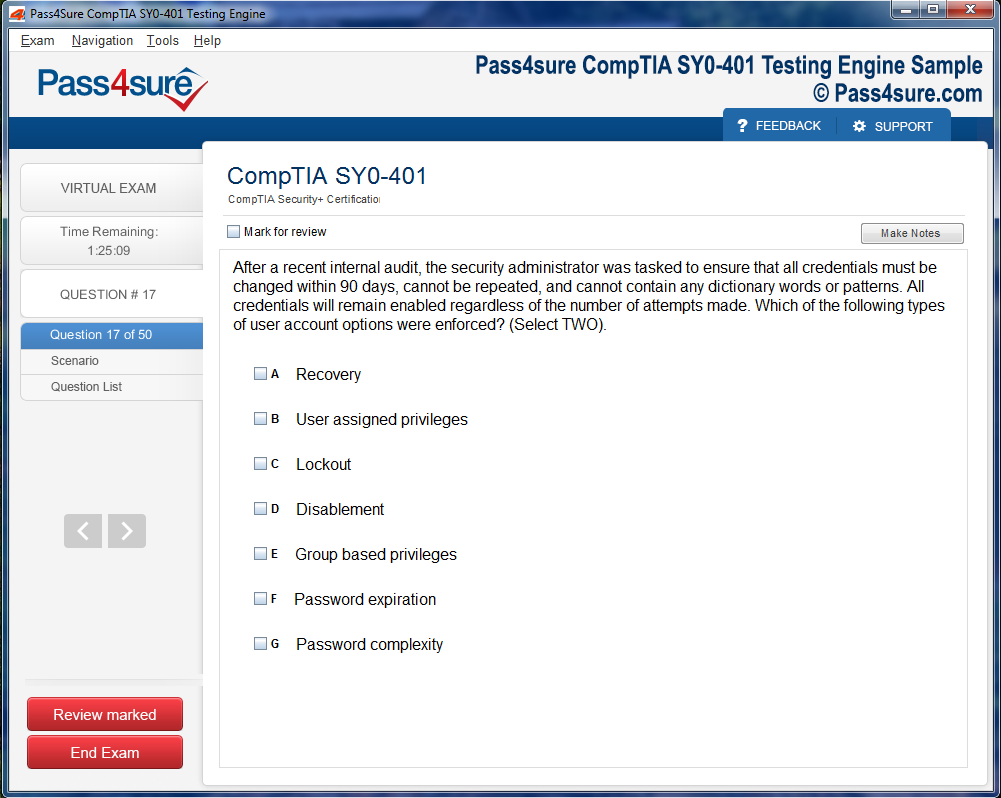
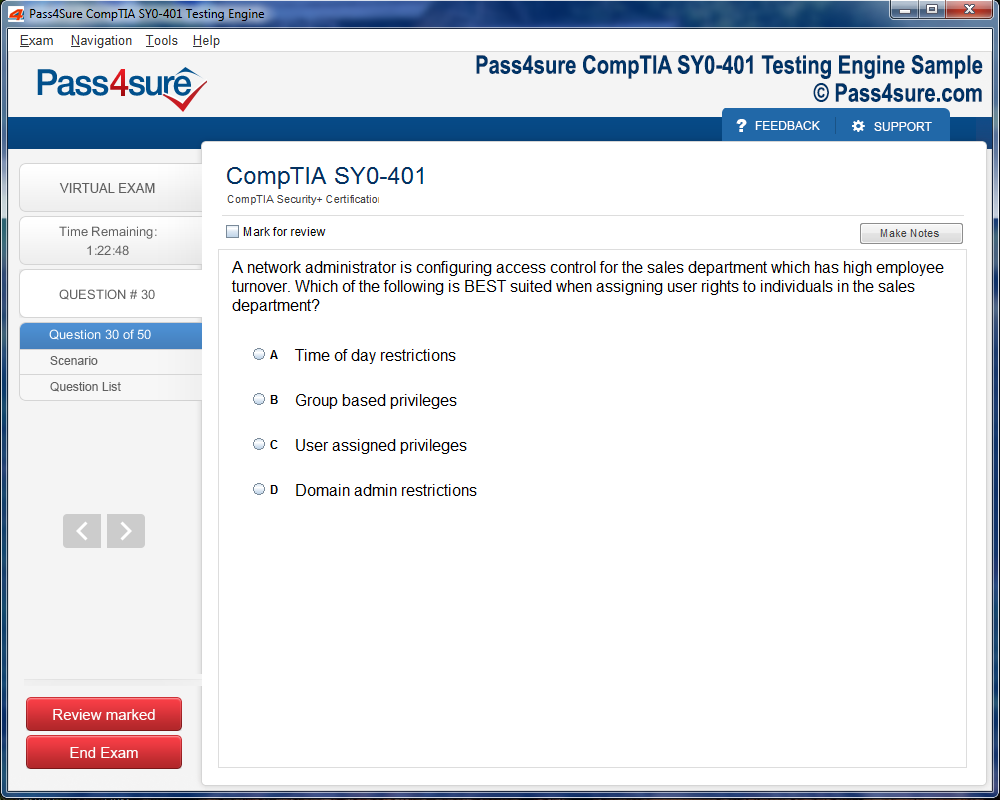
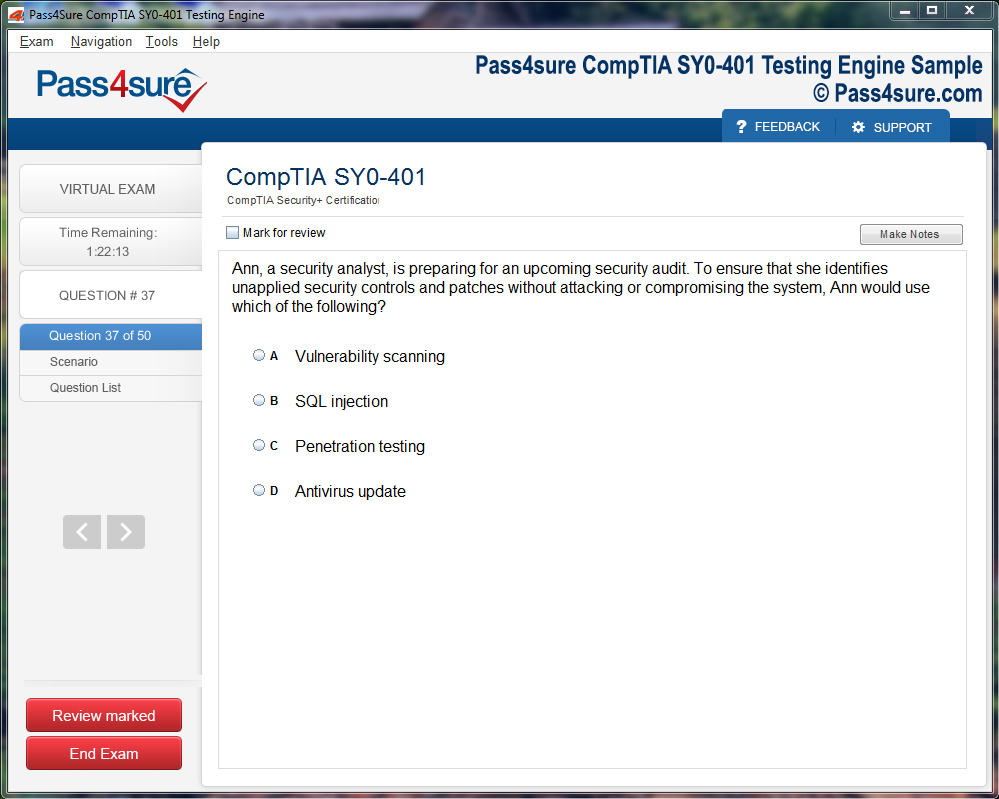
Frequently Asked Questions
How does your testing engine works?
Once download and installed on your PC, you can practise test questions, review your questions & answers using two different options 'practice exam' and 'virtual exam'. Virtual Exam - test yourself with exam questions with a time limit, as if you are taking exams in the Prometric or VUE testing centre. Practice exam - review exam questions one by one, see correct answers and explanations.
How can I get the products after purchase?
All products are available for download immediately from your Member's Area. Once you have made the payment, you will be transferred to Member's Area where you can login and download the products you have purchased to your computer.
How long can I use my product? Will it be valid forever?
Pass4sure products have a validity of 90 days from the date of purchase. This means that any updates to the products, including but not limited to new questions, or updates and changes by our editing team, will be automatically downloaded on to computer to make sure that you get latest exam prep materials during those 90 days.
Can I renew my product if when it's expired?
Yes, when the 90 days of your product validity are over, you have the option of renewing your expired products with a 30% discount. This can be done in your Member's Area.
Please note that you will not be able to use the product after it has expired if you don't renew it.
How often are the questions updated?
We always try to provide the latest pool of questions, Updates in the questions depend on the changes in actual pool of questions by different vendors. As soon as we know about the change in the exam question pool we try our best to update the products as fast as possible.
How many computers I can download Pass4sure software on?
You can download the Pass4sure products on the maximum number of 2 (two) computers or devices. If you need to use the software on more than two machines, you can purchase this option separately. Please email sales@pass4sure.com if you need to use more than 5 (five) computers.
What are the system requirements?
Minimum System Requirements:
- Windows XP or newer operating system
- Java Version 8 or newer
- 1+ GHz processor
- 1 GB Ram
- 50 MB available hard disk typically (products may vary)
What operating systems are supported by your Testing Engine software?
Our testing engine is supported by Windows. Andriod and IOS software is currently under development.
ECP-206 Certification Made Easy: Step-by-Step Preparation
The realm of network security is a multifaceted labyrinth, where every node, protocol, and firewall presents both potential vulnerability and opportunity. ECP-206 certification immerses candidates in this intricate web, demanding a sophisticated understanding of defensive architectures and anticipatory strategies. Professionals are trained to identify latent threats before they manifest into full-scale breaches, transforming reactive troubleshooting into proactive fortification. The intellectual rigor involved extends beyond memorizing port numbers or protocol hierarchies—it necessitates cultivating an intuitive grasp of systemic interdependencies and the dynamic interplay between hardware, software, and human factors.
Within this labyrinth, the mastery of intrusion detection systems, traffic analysis, and cryptographic methodologies is not optional but imperative. Candidates learn to discern subtle anomalies, patterns that hint at underlying vulnerabilities, and inconsistencies in system behavior that could herald imminent compromise. The ECP-206 framework emphasizes not only the technical acumen required but also the cognitive agility to anticipate adversarial maneuvers, fostering a mindset that marries analytical precision with creative foresight.
The Cognitive Architecture of System Administration
System administration under the ECP-206 paradigm transcends conventional operational management. It is a disciplined orchestration of computational symphonies, where each process, service, and permission interacts in a meticulously choreographed dance. Candidates are instructed to navigate complex hierarchies of operating systems, implement resilient backup strategies, and configure services with an eye toward optimal performance and security. This dimension of the certification instills a blend of procedural exactitude and adaptive problem-solving, where one must balance efficiency with reliability.
ECP-206 advocates for an anticipatory approach to system maintenance. Professionals are encouraged to cultivate heuristics for identifying performance bottlenecks, predicting system failures, and deploying preventive interventions. This cognitive architecture of administration requires an intellectual elasticity, enabling administrators to simultaneously monitor, diagnose, and enhance sprawling infrastructures. The certification molds candidates into stewards of computational ecosystems, capable of preserving integrity while promoting seamless operational continuity.
Cryptography as a Language of Trust
In the ECP-206 curriculum, cryptography is not merely a technical tool—it is a language of trust, encoding integrity and confidentiality into every byte of transmitted data. Candidates are introduced to symmetric and asymmetric encryption algorithms, hashing mechanisms, and secure key management strategies. Beyond the mechanics, they are encouraged to appreciate cryptography as a philosophical and strategic discipline, one that safeguards not only information but also the trust networks upon which modern organizations depend.
The examination hones skills in practical implementation, requiring candidates to architect secure communication channels, configure certificate authorities, and defend against cryptanalytic attacks. This focus on cryptography underscores the certification’s broader ethos: technical expertise intertwined with ethical responsibility, ensuring that the power to protect is exercised with discernment and foresight.
Threat Intelligence and Predictive Analytics
Modern IT security is increasingly predicated on the capacity to anticipate rather than merely react. The ECP-206 curriculum immerses candidates in threat intelligence paradigms, equipping them to analyze historical data, detect emerging patterns, and forecast potential incursions. Predictive analytics becomes a cornerstone of professional practice, transforming raw logs and network telemetry into actionable intelligence.
Through scenario simulations, candidates cultivate an instinct for identifying indicators of compromise, understanding attack vectors, and prioritizing mitigative interventions. The emphasis is on cultivating a prescient mindset, one that perceives not only the immediate threats but the cascading consequences that unchecked vulnerabilities could propagate. This dual focus on analysis and foresight reinforces the holistic nature of the certification, marrying technical depth with strategic acuity.
Operational Resilience and Incident Response
Operational resilience is a linchpin of ECP-206 mastery. Candidates are trained to construct fault-tolerant systems, anticipate potential points of failure, and devise response protocols that minimize downtime. Incident response exercises are designed to simulate high-pressure scenarios, where rapid diagnosis, containment, and remediation are paramount. This immersion fosters a combination of composure, decisiveness, and analytical clarity, ensuring that professionals can navigate crises with both efficiency and foresight.
The certification emphasizes that resilience is as much about human processes as technological safeguards. Communication, documentation, and structured escalation procedures are integral, transforming isolated technical expertise into coordinated organizational competence. ECP-206 professionals emerge as architects of stability, capable of sustaining operational continuity amidst volatility and uncertainty.
Ethical Considerations in Cybersecurity Practice
The ethical dimension of cybersecurity is a recurrent theme within the ECP-206 framework. Candidates explore the moral imperatives underlying data protection, privacy, and responsible system administration. Ethical reasoning is interwoven with technical practice, reinforcing the notion that skill without integrity can imperil both organizations and society. By embedding ethics into the core of training, ECP-206 cultivates professionals who exercise discernment, accountability, and judicious authority in every decision.
This focus extends to compliance with regulatory frameworks, understanding of legal obligations, and the nuanced interpretation of organizational policies. Ethical practice becomes a differentiator, transforming certified professionals from mere technicians into trusted custodians of information integrity and systemic reliability.
Embarking on the Odyssey of ECP-206 Preparation
The voyage toward ECP-206 certification can initially seem labyrinthine, a maze brimming with intricate knowledge nodes and practical intricacies. Yet, adopting a methodical cadence transforms the expedition from overwhelming to navigable. Structured schematics, habitual study rituals, and judicious practice intertwine theory with application, rendering the seemingly formidable eminently achievable. Success hinges not on sporadic effort but on orchestrated diligence that harmonizes cognition with action.
Appraising Your Intellectual Baseline
Prior to immersing in voluminous study tomes, a meticulous appraisal of one’s current intellectual repertoire is indispensable. Diagnostic evaluations or practice examinations illuminate strengths and unearth lacunae, acting as a navigational compass throughout the preparation journey. Ignoring this assessment risks scattershot learning, dissipating energy across inconsequential areas while critical deficiencies remain unaddressed.
Equally crucial is discerning one’s idiosyncratic learning proclivities. Visual acumen, kinesthetic engagement, and textual immersion resonate differently with each aspirant. Identifying these propensities allows the tailoring of study methodologies, converting rote memorization into intuitive assimilation and alleviating cognitive strain.
Sculpting Attainable Milestones
Fragmenting preparation into incremental, achievable milestones cultivates sustained momentum. Dividing the syllabus into coherent segments—network fundamentals, cryptographic frameworks, operating systems intricacies, and systematic troubleshooting—anchors learning in manageable portions. Assigning temporal benchmarks to each segment, whether daily, weekly, or monthly, confers tangible markers of progression.
Incorporating deliberate intervals for iterative revision is equally imperative. Cognitive neuroscience underscores the efficacy of spaced repetition in fortifying retention, particularly for technical lexicons, protocol schemas, and configuration paradigms. Recurrent engagement with concepts fosters not only memory consolidation but also analytical agility when confronted with novel problem scenarios.
Curating a Reservoir of Resources
The judicious selection of study materials constitutes a pivotal determinant of preparedness. While canonical textbooks provide foundational scaffolding, they are frequently impenetrable in isolation. Augmenting textual resources with interactive tutorials, visual lectures, and hands-on virtual laboratories engenders a richer, experiential comprehension. Scenario-based simulations, meticulously designed to mirror examination exigencies, bridge the oft-intangible chasm between theory and praxis.
Communities of aspirants offer supplementary insight, facilitating discourse, problem-solving, and strategic exchange. Yet, discernment remains paramount; unvetted or anecdotal advice may obfuscate rather than illuminate, underscoring the necessity of filtering information through a critical lens.
Immersive and Active Learning Modalities
Passive reading is insufficient for mastering the cognitive and practical demands of ECP-206. Active engagement—translating concepts into personalized narratives, instructing imaginary interlocutors, and executing timed problem-solving exercises—enhances neural encoding and consolidates comprehension.
Scenario-driven praxis proves particularly efficacious. Constructing virtual network topologies, debugging simulated configurations, or analyzing security vulnerabilities cultivates not merely procedural fluency but anticipatory reasoning. Candidates become adept at extrapolating principles into novel contexts, an indispensable skill under the temporal constraints of examination conditions.
Refining Exam-Oriented Acumen
ECP-206 demands not only knowledge acquisition but also the capacity to apply information under cognitive pressure. Rigorous practice with simulated, time-bound examinations enhances stamina, accelerates pattern recognition, and fortifies strategic discernment. Attention to recurring question archetypes, analytical pitfalls, and nuanced problem structures cultivates an anticipatory mindset.
Equally, psychological resilience is a cornerstone. Mindfulness protocols, structured intermissions, and mental rehearsals attenuate stress, maintaining focus and optimizing cognitive throughput. A poised mind navigates complexities more adroitly than one beleaguered by apprehension.
Monitoring Progress with Reflexive Adaptation
Vigilant documentation of learning trajectories—chronicling mastered topics, persistent challenges, and efficacious techniques—anchors preparation in reflective praxis. Iterative reassessment permits dynamic recalibration of strategies, ensuring that evolving competencies are harmoniously integrated into the overarching plan. Such adaptability forestalls stagnation and amplifies efficiency, ensuring steady, cumulative advancement.
Sustaining Motivation and Cognitive Tenacity
Consistency undergirds successful preparation. Fluctuating motivation is an anticipated phenomenon, particularly amid intricate topics or repetitive setbacks. Establishing micro-rewards, envisioning success vividly, and engaging with supportive peers sustains engagement. Deliberate perseverance often eclipses innate aptitude; methodical, persistent effort yields exponential dividends over time, translating incremental diligence into profound mastery.
Transmuting Theory into Experiential Acumen
Mere cognitive absorption of material seldom suffices for conquering the ECP-206 examination. Knowledge must be transmuted into applied dexterity to cultivate an instinctive mastery over intricate scenarios. Engaging directly with the systems, networks, and security frameworks transforms ephemeral understanding into enduring proficiency, enabling aspirants to navigate labyrinthine problems with adroit precision.
Simulated Environments for Tangible Mastery
Immersive virtual laboratories serve as crucibles for cultivating experiential competence. Through the orchestration of virtual machines, sandboxed networks, and intricate simulators, candidates can enact complex configurations, scrutinize latent anomalies, and validate defensive protocols in a risk-free milieu. Constructing multi-node topologies elucidates data traversal, routing conundrums, and firewall orchestration, yielding an internalized comprehension unattainable through rote study alone.
Repetitive immersion in these exercises fosters neural pathways where error transforms into insight. Each corrective measure engrains patterns of logic, refining intuition and fortifying resilience. This iterative choreography of trial, misstep, and rectification primes candidates for the cognitive demands of examination, particularly in sections requiring adroit problem-solving under temporal constraints.
Cybersecurity Praxis and Threat Anticipation
The ECP-206 curriculum accentuates the centrality of security, demanding proficiency beyond superficial configuration. Engaging in exercises that involve firewall orchestration, encryption deployment, and intrusion analysis cultivates both skill and foresight. When these activities are juxtaposed with meticulously crafted case studies, aspirants apprehend the nuanced mechanisms by which vulnerabilities are exploited and mitigated.
Simulated incident response cultivates a cognitive schema of prioritization and strategic triage. Pinpointing the genesis of network incursions, quarantining compromised nodes, and orchestrating remedial protocols cultivates a mindset that harmonizes technical dexterity with tactical discernment. Over time, candidates internalize not merely procedural responses but a strategic framework that anticipates contingencies.
Experiential System Administration
Mastery of system administration emerges from iterative engagement rather than ephemeral memorization. Candidates benefit from recurrently provisioning user accounts, calibrating permissions, monitoring system metrics, and diagnosing anomalies. Virtual platforms offer a polyglot of operating systems and administrative tools, permitting exploratory experimentation that engenders a versatile operational lexicon.
Through this praxis, understanding transcends procedural rote; the underlying rationales and mechanistic interdependencies become intuitively apprehensible. Analytical acumen is sharpened, enabling swift navigation through unprecedented challenges both within examinations and in authentic technological environments.
Synthesis of Cognition and Application
The apogee of preparation arises from the seamless amalgamation of theory and praxis. Conceptual comprehension must be immediately validated in a controlled operational theatre. For instance, theoretical mastery of IP schemas should be complemented by constructing subnet-diverse networks, while firewall paradigms demand hands-on rule implementation and scrutiny of resultant traffic modulation.
This synthesis engenders a cerebral scaffolding wherein memory, comprehension, and intuitive problem-solving coalesce. The aspirant evolves a panoramic perception of interconnected principles, an indispensable asset for surmounting the multifaceted demands of ECP-206.
Iterative Refinement Through Repetition
Recurrent engagement with practical scenarios transmutes initial apprehension into confident execution. Mistakes become analytical fulcrums, and successful interventions reinforce procedural fluency. The cadence of repeated application ensures that theoretical constructs solidify into habitual cognitive responses, priming candidates for rapid, accurate, and resilient performance under evaluative pressure.
Strategic Immersion in Realistic Contexts
Contextualized exercises, mirroring authentic operational dilemmas, enhance cognitive elasticity. Simulated breaches, resource misallocations, and misconfigured nodes prompt adaptive reasoning and creative remediation. Candidates develop a repertoire of responses that are not merely reactive but anticipatory, harmonizing technical knowledge with strategic foresight.
Cognitive Integration and Intuition Cultivation
Beyond technical proficiency, repeated application fosters an intuitive comprehension of systemic interrelations. Observing the cascading effects of modifications across network layers, access controls, and security protocols deepens insight into the intricate choreography of digital ecosystems. This cultivated intuition enables rapid assessment and informed decision-making, both during examinations and in dynamic professional milieus.
Understanding the Exam Topography
Navigating the labyrinthine structure of ECP-206 requires more than rote memorization; it demands cognitive dexterity and anticipatory acumen. The exam’s architecture interweaves multiple-choice inquiries, scenario-laden conundrums, and pragmatic reasoning exercises. Acquainting oneself with the proportional distribution of these segments cultivates an intuitive sense of temporal allocation and mental stamina. Candidates who internalize the blueprint of the examination often transcend superficial preparation and adopt a strategy imbued with precision.
Scenario-based questions are veritable crucibles for analytical ingenuity. These enigmas eschew simple recollection, instead compelling examinees to discern subtle patterns, unravel intricate statements, and orchestrate sequential reasoning. Repeated immersion in sample scenarios or archival question banks nurtures cognitive elasticity, enabling candidates to circumvent common pitfalls and execute solutions with alacrity.
Temporal Dexterity in Examination
Chronometric mastery during the examination constitutes an underappreciated yet pivotal determinant of success. Segregating the exam into defined temporal segments prevents cognitive fatigue and ensures comprehensive coverage. Prolonged engagement with a singular recalcitrant question risks squandering finite minutes, hence the judicious strategy is to annotate such challenges and revisit them post the completion of tractable inquiries.
Time efficacy is not merely a function of speed but of interpretative fidelity. Many candidates falter not from inadequate preparation but from misapprehension of question prompts. Cultivating meticulous reading habits and parsing syntax with deliberate scrutiny mitigates misinterpretation, thereby optimizing scoring potential.
Strategic Hierarchization of Questions
The art of prioritization imbues candidates with a tactical advantage. Addressing facile questions initially fosters psychological momentum and secures foundational marks, while confronting complex scenario-driven problems is more efficacious once confidence is established. Systematic review of responses acts as a safeguard against minor lapses, amplifying overall accuracy.
The judicious employment of probabilistic elimination is an ancillary strategy worth mastering. When confronted with uncertainty, excising patently incorrect alternatives enhances the probability of a correct selection. Such disciplined guesswork exemplifies the convergence of knowledge and strategic discernment, a hallmark of top-tier performance.
Cognitive Equanimity and Sustained Concentration
Sustaining focus under the pressure of the examination hall necessitates both physiological and psychological regulation. Techniques such as controlled respiration, guided visualization, and brief cognitive interludes sustain attentional vigilance. Reinforcement through positive affirmations and timed practice examinations attenuates anxiety and cultivates a resilient mindset.
Cognitive equanimity is further bolstered by habituating the mind to the rhythm of high-stakes testing. Familiarity with temporal constraints and question typologies engenders a serene confidence, transforming potential trepidation into calculated engagement. This confluence of mental poise and methodical strategy often delineates successful candidates from those who succumb to pressure-induced errors.
Strategic Consolidation of Knowledge
The ultimate echelon of ECP-206 preparation pivots upon the meticulous orchestration of prior learning. Knowledge consolidation transcends rote repetition, transforming cognitive fragments into a cohesive lattice of comprehension. By integrating topics through synthesis and cross-referencing, candidates cultivate a nuanced awareness of interconnections, ensuring retention beyond superficial familiarity. Analytical rehearsal, wherein principles are dissected and reassembled, fortifies understanding and fortifies the mental architecture needed for rapid information retrieval under examination duress.
Spaced Repetition and Cognitive Entrenchment
Temporal distribution of study sessions engenders profound mnemonic permanence. Spaced repetition is more than cyclic review; it is a deliberate manipulation of intervals to exploit the brain’s proclivity for long-term encoding. Revisiting concepts after incremental lapses cultivates neuroplastic reinforcement, converting ephemeral recall into enduring mastery. Summarization, linguistic transmutation of dense material into personalized lexicons, further catalyzes comprehension. When concepts are verbalized, diagrammed, or taught to an interlocutor, cognitive scaffolding solidifies, revealing latent lacunae in knowledge.
Active Recall and Mental Fortitude
The sinews of memory are strengthened through active engagement. Passive perusal is insufficient; deliberate retrieval exercises fortify synaptic pathways. Testing oneself through scenario simulations, interrogative flashcards, or hypothetical applications enhances memory trace durability and instills an instinctual capacity to summon information under temporal constraints. The mind, conditioned through repetition and challenge, develops a form of intellectual resilience, enabling candidates to confront unforeseen question formats with equanimity.
Mock Examination and Situational Simulation
Immersive simulation of the examination environment fosters both psychological acclimatization and tactical proficiency. Timed mock exams emulate the rigor of real conditions, sharpening temporal judgment and revealing idiosyncratic weaknesses. The exercise is as much about endurance as it is about intellect, training the candidate to navigate prolonged cognitive exertion while maintaining accuracy. Observing performance metrics during these rehearsals elucidates patterns of error, permitting iterative refinement of strategies and facilitating incremental growth.
Analytical Review and Strategic Refinement
Examination rehearsal reaches its zenith when coupled with scrupulous review. Dissecting incorrect responses, probing the rationale behind each mistake, and reconfiguring problem-solving methodologies transform raw experience into actionable insight. This analytical rigor engenders metacognitive awareness, allowing candidates to anticipate pitfalls and adjust approaches proactively. Continuous cycles of practice, reflection, and recalibration cultivate an adaptive intellect capable of fluid reasoning under pressure.
Confidence Cultivation and Psychological Resilience
Confidence is an emergent property of systematic preparation rather than a mere affective state. Fostering belief in one’s own competence begins with recognizing incremental achievements and internalizing progress. Cognitive visualization of successful performance primes the psyche, reinforcing expectation and mitigating anxiety. Affirmative self-dialogue, when integrated into study routines, functions as a psychological lubricant, facilitating mental clarity and sustaining focus. Candidates attuned to their preparation can approach the examination as a demonstration of capability rather than a judgment of worth.
Mindset Optimization and Cognitive Equilibrium
The cultivation of an adaptive mindset is as critical as knowledge acquisition. Perceiving the examination as an intellectual dialogue rather than an evaluative gauntlet reduces cognitive friction and enhances problem-solving efficiency. Emotional equanimity, achieved through deliberate mindfulness and rational framing of the testing scenario, stabilizes physiological responses and preserves executive function. Cognitive poise allows candidates to navigate complex questions with composure, ensuring reasoning is dictated by logic rather than stress-induced impulsivity.
Day-of-Examination Logistics
Examination day demands an orchestration of both mental and physical preparedness. Early arrival, verification of materials, and adherence to habitual routines mitigate avoidable stressors. Sleep and nutrition act as underappreciated pillars of performance, sustaining concentration and bolstering cognitive endurance. Caution against last-minute cramming is warranted, as acute information overload often induces anxiety that hampers retrieval rather than enhancing it. Familiarity with procedural logistics, including seating arrangements and permitted materials, confers a subtle yet decisive advantage.
Strategic Pacing During Examination
During the examination itself, methodical pacing and deliberate reading of each prompt optimize accuracy. Application of pre-established strategies, such as prioritizing high-yield sections or time allocation per question, ensures comprehensive coverage. Candidates should employ a conscious rhythm, oscillating between analytical intensity and brief cognitive pauses to maintain sustained mental acuity. Trusting in the months of meticulous preparation allows focus to remain on problem-solving rather than apprehension, converting preparation into decisive execution.
Iterative Mastery Through Simulation
Repeated engagement with practice scenarios engenders a form of cognitive habituation. By encountering questions in controlled yet varied contexts, candidates internalize patterns, anticipate potential complexities, and enhance adaptability. This iterative immersion transforms theoretical knowledge into operational competence, wherein recall and application coalesce seamlessly. Mock examinations thus function not merely as evaluative instruments but as crucibles for intellectual refinement and psychological acclimatization.
Whispers of the Forgotten Vale
In the half-light of a liminal dawn, the vale unfolded like a tapestry of half-remembered dreams, its contours etched in a chiaroscuro of mist and shadow. Each tendril of fog seemed to murmur secrets older than the timbered hills that cradled the horizon. Time here was an elastic, undulating presence, neither linear nor bound to the ordinary cadence of mortal perception. It slithered across the landscape with a deliberate languor, coaxing the observer into a state of contemplative vertigo.
The flora thrummed with an almost sentient resonance, leaves quivering as if in response to an unspoken dialogue. Ferns unfurled in meticulous choreography, and iridescent fungi punctuated the undergrowth like minute beacons in a subterranean cathedral. Here, the ordinary laws of nature were subservient to a more enigmatic rhythm, an ancient cadence that humans rarely discerned. The air was tinctured with the aromatic residue of petrichor and something indefinably sweeter, a fragrance that hinted at eldritch symphonies woven into the very soil.
The Luminiferous Streams
The streams of the vale moved with a mesmerizing fluency, their waters refracting light into spectral tessellations that danced upon jagged stones. Each droplet contained a miniature cosmos, a microcosm reflecting the kaleidoscopic intricacies of the universe itself. As one bent to peer into the aqueous lens, the reflection seemed to pulse with subtle sentience, revealing glimpses of temporal corridors and shadowed echoes of forgotten entities. It was a liminal mirror, a threshold between the corporeal and the ineffable.
The banks were adorned with flora of extraordinary pigmentation, blossoms that refracted moonlight even at dawn, petals shimmering in hues that defied ordinary description. Their subtle luminescence imbued the surroundings with a gentle, otherworldly glow, transforming even the most mundane rock or reed into a vessel of cosmic narrative. Walking beside these streams, one became acutely aware of the intricate symphony of life, an orchestration so meticulous it suggested a conscious, deliberate authorship behind the seeming chaos.
Phantasmagoria of the Winds
The wind here was not merely a mechanical current; it was a bearer of memories and incantations, a sentient presence that whispered through the hollowed trees. It carried the scent of distant lands and epochs long extinguished, folding the vale into a narrative of cosmic interplay. At times it rose to a frenzied crescendo, tangling branches in a capricious ballet, while at other moments it lulled the vale into serene stasis, a breath suspended in the vast chronicle of existence.
One could discern motifs in the wind, subtle undulations that hinted at the cadence of events both imminent and long past. It seemed to speak in a polyphonic tongue, where syllables were replaced by vibrations, and meanings were layered in strata of temporal complexity. Those attuned to its rhythm might decipher tales of ephemeral beauty and transient melancholy, stories that transcended mere verbal articulation and entered the domain of pure, emotive understanding.
Arboreal Sentinels
The trees of the vale were not mere vegetation but venerable custodians of memory, their gnarled branches inscribed with the silent runes of centuries. Bark furrowed and fissured like the pages of a chronicle, each groove mapping epochs of clandestine events and spectral interludes. The canopy above swayed with a deliberation that suggested cognizance, each leaf a participant in a silent, peripatetic dialogue that spanned the expanse of the vale.
Beneath their shade, shadows coalesced into semi-conscious forms, faint impressions of beings that once traversed the vale or perhaps never existed at all. The interplay of light and darkness created ephemeral tapestries that shifted with imperceptible cadence, offering fleeting glimpses into alternate realities. To linger here was to encounter a liminality that challenged perception, a juncture where imagination and actuality merged into a singular, ineffable experience.
Transmuting Theory into Experiential Acumen
Acquisition of theoretical knowledge, while foundational, remains insufficient when confronting the multifaceted intricacies of the ECP-206 examination. Intellectual absorption must be augmented by applied dexterity, translating abstract concepts into operational fluency. Candidates who engage deeply with practical exercises cultivate a form of expertise that transcends rote memorization, enabling them to respond to nuanced scenarios with fluidity and precision. This transmutation of knowledge into experiential acumen ensures that aspirants internalize patterns of logic, anticipate emergent challenges, and navigate complex systems with a refined sense of procedural intuition.
The interplay between comprehension and execution underpins the development of professional agility. Cognitive familiarity alone cannot prepare candidates for real-world contingencies, where variables are neither static nor predictable. By fostering hands-on engagement, aspirants cultivate an adaptive mindset, attuning themselves to the rhythms of system behavior, network flows, and security threats. This approach instills resilience, nurturing both confidence and analytical acuity in the face of novel problems.
Simulated Environments for Tangible Mastery
Immersive virtual laboratories constitute indispensable arenas for experiential cultivation. Through the orchestration of virtual machines, sandboxed networks, and intricate simulators, candidates can enact complex configurations, diagnose subtle anomalies, and validate defensive protocols without exposing live systems to risk. The replication of multi-node topologies illuminates the intricacies of data traversal, routing logic, and firewall orchestration, converting abstract knowledge into a tangible operational skill set.
Repeated immersion in such simulations reinforces neural pathways where error metamorphoses into insight. Each corrective measure imprints a pattern of logical reasoning, enhancing instinctual problem-solving and fortifying resilience under evaluative pressure. The iterative choreography of experimentation, misstep, and rectification primes candidates for examinations demanding rapid analytical agility, particularly in problem-solving sections where scenarios mirror real-world complications.
Incorporating complex simulation exercises expands perceptual depth. Network latency, packet loss, and protocol conflicts, when encountered in controlled environments, provide a profound understanding of operational dynamics. Observing the cascading effects of misconfigurations or policy alterations cultivates foresight, enabling candidates to anticipate and mitigate potential disruptions efficiently.
Cybersecurity Praxis and Threat Anticipation
The ECP-206 examination emphasizes security mastery, necessitating both procedural knowledge and strategic foresight. Engaging with firewall orchestration, encryption deployment, and intrusion analysis cultivates an anticipatory mindset, equipping candidates to identify vulnerabilities and mitigate emergent threats effectively. Simulated attack scenarios, designed to replicate realistic breach attempts, illuminate the pathways through which malicious actors exploit systemic weaknesses, providing an invaluable lens into defensive strategy formulation.
Practicing incident response cultivates analytical prioritization and strategic triage. Determining the origin of network incursions, isolating compromised nodes, and implementing remedial protocols develops a cognitive framework that harmonizes technical skill with operational acumen. Over time, these iterative engagements cultivate a nuanced understanding of threat landscapes, transforming procedural competence into strategic foresight.
Real-world case studies further enrich this praxis, contextualizing threats and preventive measures within operational frameworks. By dissecting historical breaches, candidates appreciate the interplay between technological vulnerabilities and human factors, fostering a holistic perspective essential for cybersecurity proficiency. This dual focus—technical execution and strategic reasoning—ensures aspirants emerge not merely as technicians but as critical thinkers capable of preempting and responding to multifaceted security challenges.
Experiential System Administration
System administration, at its core, demands iterative engagement rather than superficial memorization. Recurrent configuration of user accounts, meticulous calibration of permissions, and proactive monitoring of system performance cultivate operational fluency. Virtual platforms offer a rich diversity of operating systems, file structures, and administrative tools, creating an environment conducive to exploratory experimentation and nuanced skill development.
Through these experiential exercises, understanding transcends rote memorization; the rationale underpinning each command, configuration, and policy becomes internally apprehensible. Analytical acumen deepens as candidates interpret system behavior, anticipate resource conflicts, and troubleshoot emergent anomalies. This approach nurtures adaptability, enabling practitioners to navigate novel administrative challenges with confidence and dexterity.
The practice of system administration in simulated environments also encourages risk-free innovation. Candidates may experiment with unconventional configurations or complex automation scripts, observing systemic consequences without jeopardizing operational stability. Such experimentation fosters creative problem-solving, allowing aspirants to approach unfamiliar scenarios with both analytical rigor and imaginative flexibility.
Synthesis of Cognition and Application
Optimal preparation for the ECP-206 examination emerges from the seamless integration of cognitive understanding and applied practice. Conceptual mastery must be corroborated through immediate operational application. For instance, theoretical comprehension of IP addressing and subnetting should be complemented by the construction of networks with varied subnet structures, while understanding of firewall protocols demands hands-on implementation and scrutiny of resultant traffic modulation.
This synthesis reinforces cognitive scaffolding, embedding concepts within a practical context that enhances memory retention, analytical agility, and problem-solving intuition. Candidates begin to perceive the interdependencies between distinct technical domains, fostering a holistic understanding of systems architecture, security policy, and operational workflows. Such integrative learning is indispensable, as the examination often evaluates the capacity to navigate multifaceted, interconnected challenges rather than isolated procedural knowledge.
Repeated cycles of applied learning consolidate expertise, transforming initially laborious processes into instinctive responses. Tasks that once required deliberate contemplation become intuitive, allowing candidates to focus cognitive resources on higher-order analysis and strategic decision-making. This iterative refinement ensures that aspirants develop not only proficiency but also efficiency, resilience, and adaptability.
Iterative Refinement Through Repetition
Repetition serves as the crucible in which proficiency is forged. Each encounter with practical scenarios, whether a misconfigured router or an erroneous permission schema, becomes a catalyst for learning. Mistakes, rather than being deterrents, are reframed as analytical fulcrums, offering insights into systemic interrelations and potential contingencies. Successful interventions reinforce procedural fluency, embedding patterns of logic and response into cognitive memory.
The cadence of repeated application encourages refinement of approach, fostering cognitive flexibility and operational precision. Candidates learn to anticipate anomalies, evaluate multiple remediation strategies, and execute interventions with confidence. Over time, this iterative process cultivates a repertoire of responses that are both rapid and reliable, ensuring preparedness for the dynamic challenges of examination scenarios.
Strategic Immersion in Realistic Contexts
Engagement with exercises that mirror authentic operational dilemmas enhances both skill and judgment. Simulated breaches, resource misallocations, and misconfigured nodes require candidates to deploy adaptive reasoning, synthesizing technical knowledge with situational awareness. The immersion in realistic contexts cultivates anticipatory thinking, enabling aspirants to forecast potential failures, devise contingency plans, and implement corrective measures with strategic foresight.
The interplay of technical execution and contextual comprehension nurtures a sophisticated problem-solving mindset. Candidates not only respond to challenges but actively interpret their implications, discerning underlying patterns and systemic vulnerabilities. Such immersive practice bridges the gap between theoretical preparation and practical performance, fostering a capacity for agile decision-making in both examinations and real-world environments.
Cognitive Integration and Intuition Cultivation
Beyond technical mastery, repeated practical engagement cultivates cognitive integration and intuitive perception. Observing the cascading effects of configuration changes across network layers, access controls, and security protocols deepens comprehension of systemic interrelations. This heightened awareness enables candidates to anticipate consequences, identify emergent patterns, and execute interventions with both speed and accuracy.
Intuition, forged through sustained engagement and reflective practice, transforms procedural knowledge into instinctive action. Candidates develop an inherent sense of system behavior, allowing them to navigate unfamiliar challenges with confidence and precision. The cultivation of such intuition represents the apex of preparation, where applied experience and cognitive insight converge to produce operational excellence.
Experiential Versatility Across Technological Domains
The scope of ECP-206 extends across multiple domains, requiring candidates to synthesize expertise in networking, security, and administration. Practical engagement across these domains nurtures versatility, enabling aspirants to traverse complex technological landscapes with agility. Virtual laboratories and simulated scenarios provide the ideal milieu for cultivating such versatility, permitting exploration of diverse architectures, protocols, and administrative paradigms.
By alternating between domains, candidates learn to perceive systemic interconnections, appreciating how decisions in one area reverberate across others. This multidimensional perspective enhances both analytical depth and operational foresight, preparing aspirants to approach examination scenarios with a holistic, integrative mindset. Versatility, in turn, fosters resilience, equipping candidates to confront novel or unanticipated challenges with confidence.
Understanding the Exam Topography
Navigating the labyrinthine structure of ECP-206 demands more than rote memorization; it requires cerebral agility and anticipatory sagacity. The exam’s architecture is an intricate mosaic, interweaving multiple-choice inquiries, scenario-laden conundrums, and pragmatic reasoning exercises that probe conceptual dexterity. Familiarity with the proportional distribution of these segments cultivates an intuitive sense of temporal allocation and cognitive stamina. Candidates who internalize the blueprint of the examination transcend superficial preparation, embracing a strategy suffused with precision.
Scenario-based questions function as crucibles of analytical ingenuity. These enigmas eschew mere recollection, compelling examinees to discern subtle patterns, deconstruct convoluted statements, and orchestrate sequential reasoning. Immersion in archival question banks and practice scenarios fosters cognitive elasticity, enabling candidates to circumvent common pitfalls and execute solutions with alacrity. The subtleties in problem phrasing often conceal implicit constraints or assumptions; recognizing these nuances is a hallmark of mastery.
Developing a meta-cognitive approach to preparation is essential. Candidates benefit from dissecting each question type, evaluating their strengths and weaknesses in distinct areas, and creating a dynamic study plan that evolves with increasing familiarity. Such meticulous preparation transforms raw knowledge into applied competence, allowing for fluid adaptation under timed pressure.
Temporal Dexterity in Examination
Chronometric mastery within the examination hall is often the invisible differentiator between high and average performers. Segmenting the exam into defined temporal blocks prevents cognitive fatigue and ensures comprehensive coverage. Excessive focus on a recalcitrant question risks the depletion of precious minutes; annotating difficult questions for subsequent review safeguards efficiency and mental equilibrium.
Time management extends beyond numerical allocation; it encompasses interpretative fidelity. A prevalent source of error is misreading question prompts rather than lack of subject knowledge. Cultivating disciplined reading habits and parsing complex syntax with methodical scrutiny mitigates misinterpretation. Candidates who internalize this habit develop a dual advantage: they navigate intricate problems with clarity and reduce avoidable mistakes stemming from haste.
Micro-strategies for temporal regulation include pacing oneself through mental checkpoints. For example, dividing sections into thirds allows for real-time monitoring of progress, prompting necessary acceleration or deceleration. Integrating these checkpoints ensures that no segment is disproportionately neglected and that energy is conserved for challenging questions. Over time, these techniques coalesce into an almost instinctual sense of exam rhythm.
Strategic Hierarchization of Questions
The art of prioritization in ECP-206 is not merely tactical; it is fundamentally psychological. Beginning with less complex questions fosters a sense of achievement and builds psychological momentum, which is crucial in high-stakes environments. This early accumulation of marks establishes confidence, reducing cognitive interference during subsequent, more complex inquiries.
Complex scenario-based problems are best approached once initial momentum is secured. Candidates who tackle these after establishing a base of solved questions experience less stress-induced cognitive overload, which allows for more deliberate, analytical reasoning. Systematic review of responses is indispensable; revisiting earlier answers ensures minor lapses or miscalculations are detected and corrected, reinforcing overall accuracy.
Another essential dimension is probabilistic reasoning under uncertainty. When confronted with ambiguous options, eliminating patently incorrect alternatives significantly enhances the probability of selecting the correct answer. This disciplined approach to educated guessing exemplifies the fusion of knowledge and strategic cognition, a hallmark of top-tier candidates. Moreover, maintaining a fluid hierarchy between question difficulty and personal comfort zones allows for adaptive, real-time prioritization during the examination.
Cognitive Equanimity and Sustained Concentration
Examination success is as much about psychological composure as it is about knowledge. Sustaining focus under pressure requires the orchestration of both physiological and cognitive regulation. Techniques such as controlled respiration, focused visualization, and brief mental interludes maintain attentional vigilance. Coupling these practices with positive self-affirmation and timed mock examinations reduces anxiety and nurtures a resilient mindset.
Developing sustained concentration is an iterative process. Regular engagement with practice exams under timed conditions simulates the pressures of the actual test, conditioning the mind to maintain composure when confronted with unexpected challenges. Cognitive equanimity is further reinforced by cultivating mental routines, such as systematic question review patterns or anticipatory planning for challenging scenarios. This habitual mental scaffolding transforms potential trepidation into structured engagement.
Integrating mindfulness strategies during preparation also enhances focus. Even brief sessions of reflection or meditative attention can reduce cognitive clutter, sharpen problem-solving acuity, and facilitate rapid adaptation to unforeseen complexities. Candidates who internalize such strategies often find that their cognitive endurance surpasses that of peers, allowing sustained performance across protracted testing periods.
Analytical Acumen in Scenario-Based Problems
Scenario-based questions in ECP-206 are deliberately designed to probe higher-order reasoning. Success in these sections hinges upon the ability to deconstruct multifaceted situations, identify latent variables, and synthesize coherent solutions. This requires candidates to transcend superficial reading and engage with questions on an inferential plane.
Pattern recognition is paramount. By discerning recurring structures within scenarios, candidates can anticipate potential outcomes and optimize their problem-solving sequence. Equally critical is the ability to mentally simulate the implications of various approaches before committing to a solution. Such cognitive rehearsals reduce error likelihood and enhance the efficiency of strategic reasoning.
Another nuanced skill is the management of cognitive load. Scenario questions often integrate extraneous details designed to distract or overwhelm. Candidates must cultivate the ability to filter relevant from irrelevant information, ensuring that analytical energy is expended on substantive elements rather than peripheral distractions. This selective attention enhances accuracy and reinforces confidence.
Mental Resilience and Adaptive Thinking
Examination performance is deeply intertwined with mental resilience. High-performing candidates exhibit the capacity to adapt under duress, recalibrating strategies in response to emergent challenges. This adaptability is cultivated through deliberate exposure to varied question types and progressive complexity during preparation.
Adaptive thinking is complemented by self-monitoring. Candidates benefit from periodically evaluating their emotional state, energy levels, and cognitive clarity during practice sessions. Recognizing moments of diminishing focus allows for strategic intervention—be it a brief mental pause, recalibration of approach, or reallocation of time resources. Such meta-cognitive awareness empowers examinees to sustain optimal performance despite fluctuating stress levels.
The cultivation of resilience also involves reframing errors as informational feedback rather than failures. Each misstep during practice becomes an opportunity to refine strategy, hone judgment, and reinforce problem-solving agility. Over time, this iterative approach instills both confidence and composure, ensuring readiness for the multifaceted challenges of ECP-206.
Advanced Network Architecture and Strategic Design
The intricacies of network architecture extend far beyond the superficial arrangement of switches and routers. Within the ECP-206 framework, candidates are immersed in the art of strategic design, where every topology, segmentation, and redundancy plan is evaluated not just for efficiency but for resilience and security. Professionals learn to orchestrate complex infrastructures that balance scalability with containment, ensuring that a breach in one segment does not cascade catastrophically throughout the system.
Redundancy is not merely a matter of duplicating hardware; it is an exercise in foresight, contingency planning, and resource optimization. Candidates are instructed to simulate failure scenarios, stress-test networks, and implement failover mechanisms that preserve operational continuity under duress. Layered architectures are dissected and rebuilt conceptually, fostering an intuitive grasp of interdependencies and emergent vulnerabilities. Through these exercises, ECP-206 aspirants cultivate a mindset that sees networks as living ecosystems, dynamic and interwoven, rather than static assemblages of devices.
Behavioral Analytics and Anomaly Detection
The digital landscape is replete with subtle anomalies—minute deviations in packet flow, irregular access patterns, or unusual login attempts—that presage potential compromise. ECP-206 certification emphasizes the cultivation of analytical acumen to detect these signals amidst a cacophony of routine operations. Behavioral analytics emerges as a critical competency, teaching candidates to differentiate between benign irregularities and genuine threats with surgical precision.
Through practical exercises, professionals learn to configure monitoring systems, define baseline behaviors, and establish thresholds that trigger alerts without succumbing to excessive false positives. This training imparts both technical skill and cognitive discipline, sharpening the ability to perceive hidden correlations and anticipate adversarial maneuvers. By mastering anomaly detection, ECP-206 holders acquire a proactive posture, turning surveillance into an anticipatory instrument rather than a reactive measure.
Security Frameworks and Policy Implementation
Technical expertise alone is insufficient without the scaffolding of structured security frameworks. The ECP-206 curriculum immerses candidates in international standards, policy formulation, and governance mechanisms that underpin robust IT ecosystems. Candidates explore frameworks that dictate risk assessment methodologies, access control hierarchies, and incident response protocols. This dual emphasis on technical implementation and regulatory adherence ensures that professionals can operate within both organizational and legal boundaries while optimizing operational security.
Policy implementation is treated as a strategic exercise. Candidates learn to translate abstract guidelines into enforceable practices, calibrating rules for user access, data retention, and system monitoring. Compliance is not approached as a perfunctory requirement but as an instrument of integrity, transforming ethical principles into actionable, enforceable measures. Through this lens, ECP-206 certification cultivates professionals who wield policy as both shield and compass, guiding decision-making and reinforcing systemic resilience.
Encryption Strategies and Data Obfuscation
The practice of encrypting information is akin to weaving imperceptible threads of security into the digital fabric. ECP-206 candidates delve into a spectrum of encryption paradigms—from symmetric key systems to sophisticated public key infrastructures—and explore the nuanced trade-offs between speed, complexity, and cryptographic robustness. Beyond algorithmic comprehension, aspirants are trained to integrate encryption into broader operational contexts, ensuring that data remains impervious during storage, transit, and processing.
Obfuscation strategies complement encryption, creating layers of opacity that confound malicious actors. Professionals learn to deploy tokenization, pseudonymization, and secure hashing to minimize exposure of sensitive information. This dual mastery—encrypting and obfuscating—elevates data security from reactive defense to proactive deterrence, instilling a mindset that anticipates exploitation and neutralizes vulnerabilities before they are actionable.
Incident Forensics and Root Cause Analysis
When breaches occur, comprehension of causality becomes paramount. ECP-206 equips candidates with forensic skills to reconstruct events, trace intrusions, and identify underlying systemic weaknesses. Professionals are trained to dissect logs, scrutinize network traffic, and extract actionable intelligence from residual digital traces. The objective extends beyond attributing blame; it is to transform incidents into learning opportunities, fortifying systems against recurrence.
Root cause analysis within the ECP-206 framework blends methodical investigation with intuitive insight. Candidates learn to discern patterns of compromise, link seemingly disparate anomalies, and propose corrective measures that address both symptoms and underlying conditions. By mastering incident forensics, professionals evolve from passive responders to strategic problem solvers, capable of restoring operational equilibrium while enhancing long-term security posture.
Emerging Threat Vectors and Adaptive Strategies
The digital threat landscape is in perpetual flux, with novel exploits, zero-day vulnerabilities, and sophisticated malware emerging at a rapid cadence. ECP-206 certification cultivates a mindset of adaptive vigilance, where professionals anticipate change rather than react belatedly. Candidates study emerging threat vectors, dissect advanced persistent threats, and explore unconventional attack methodologies, equipping them to formulate preemptive countermeasures.
Adaptation is both technical and cognitive. Professionals are encouraged to cultivate flexible protocols, modular system designs, and iterative testing practices. This dynamic orientation ensures that security measures evolve alongside adversarial tactics, transforming the ECP-206 professional into a sentinel capable of navigating volatility with agility and foresight.
Holistic Risk Management and Strategic Mitigation
ECP-206 training transcends isolated technical skills, emphasizing a holistic approach to risk management. Candidates learn to identify, quantify, and prioritize risks across organizational domains, integrating technical vulnerabilities with operational, financial, and reputational considerations. Strategic mitigation involves balancing resource allocation, potential impact, and probability, enabling informed decision-making that safeguards both assets and continuity.
Risk management exercises extend beyond theoretical scenarios, demanding actionable solutions under constrained timelines and incomplete information. This experiential rigor fosters cognitive resilience, sharpening the ability to synthesize data, anticipate contingencies, and implement solutions that optimize systemic stability. By internalizing these principles, ECP-206 professionals emerge as architects of strategic foresight, capable of harmonizing operational efficiency with comprehensive security assurance.
Cognitive Load Management in High-Stakes Environments
High-stakes IT environments impose substantial cognitive demands, where simultaneous monitoring, troubleshooting, and decision-making are routine. ECP-206 prepares candidates to manage this cognitive load effectively, cultivating mental frameworks that prioritize, segment, and sequence tasks with precision. Techniques include situational awareness drills, decision trees, and scenario-based simulations designed to sharpen analytical acuity under pressure.
This cognitive discipline translates directly into operational performance. Professionals are better equipped to navigate complex incidents, reduce errors, and maintain clarity amidst uncertainty. By integrating cognitive load management into the certification, ECP-206 ensures that technical mastery is reinforced by mental agility, producing professionals capable of sustained excellence in high-pressure contexts.
Navigating the Labyrinth of Network Fundamentals
The substratum of ECP-206 preparation is an intimate acquaintance with network fundamentals. Networks are not merely cables and routers; they are dynamic, interwoven ecosystems where protocols, topologies, and traffic patterns coalesce into intricate symphonies of data exchange. Understanding these undercurrents demands more than rote memorization; it requires conceptual visualization of packet flow, latency bottlenecks, and protocol hierarchies.
Comprehending network architecture involves dissecting OSI and TCP/IP layers, elucidating the distinct yet interdependent roles of each stratum. For instance, mastering the nuanced orchestration between the transport and application layers confers an ability to anticipate the impact of protocol anomalies on end-to-end communication. Practical exercises—such as simulating packet traversal through virtual routers or examining header modifications in protocol analyzers—imbue abstract knowledge with tangible understanding, reinforcing neural pathways and accelerating recall under examination pressure.
Cryptographic Constructs and Security Paradigms
Security within the ECP-206 framework is not an ancillary topic but a foundational pillar. Modern networks teem with vulnerabilities; understanding cryptographic constructs transforms candidates into adept custodians of digital fortresses. Encryption algorithms, key distribution mechanisms, and authentication protocols form a dense latticework of interdependent safeguards.
The challenge lies in transcending superficial recognition of terminologies. Candidates must cultivate an intuition for how symmetric and asymmetric cryptography operate, how digital signatures confer authenticity, and how certificate chains underpin trust hierarchies. Hands-on exercises—such as configuring secure channels or analyzing cryptographic logs—enable the translation of theory into praxis. Engaging with simulated security breaches enhances anticipatory reasoning, teaching aspirants to preempt vulnerabilities rather than merely react to them.
Operating Systems: The Arcane Underpinnings
Operating systems represent the clandestine engines powering computational landscapes. Mastery of OS principles is not mere familiarity with commands; it involves understanding process scheduling, memory management, and file system structures at a granular level. A proficient candidate can anticipate how operating system decisions propagate through networked environments, influencing security, performance, and fault tolerance.
Virtualized labs afford a sanctuary for experimentation. By orchestrating kernel-level configurations, managing permissions, and simulating resource contention, aspirants develop an instinctive comprehension of OS behaviors. This experiential learning ensures that when confronted with complex, scenario-driven questions, candidates can reason through the interplay between system processes and network functionality with analytical precision.
Scenario-Based Troubleshooting: Cultivating Analytical Acumen
ECP-206 rewards candidates who approach challenges as analytical puzzles rather than rote tasks. Scenario-based troubleshooting transforms abstract problems into structured cognitive exercises, requiring systematic identification of root causes, synthesis of contextual data, and application of methodical solutions.
Effective troubleshooting begins with meticulous observation: packet logs, error codes, and system alerts become clues within a complex mosaic. By hypothesizing potential causes, testing them in controlled environments, and iteratively refining strategies, candidates cultivate not just problem-solving ability but a mental agility attuned to ambiguity. This mode of learning mirrors the real-world demands of network administration, ensuring that examination performance aligns seamlessly with practical competence.
Cognitive Mapping of Exam Content
A sophisticated strategy involves the cognitive mapping of syllabus content. Visualizing interconnections between protocols, security constructs, and operational procedures creates a mental latticework that facilitates retrieval under pressure. Mind maps, flow diagrams, and concept linkages serve as cognitive scaffolding, enabling candidates to navigate the dense material with efficiency.
Moreover, linking theoretical principles to experiential exercises reinforces synaptic pathways. For example, correlating the concept of packet loss with virtual network simulations elucidates abstract theory through tangible cause-and-effect relationships. This multidimensional learning approach consolidates knowledge, ensuring that recall is rapid, precise, and contextually nuanced.
Integrating Time Management with Study Rhythms
Temporal strategy is a frequently underestimated dimension of preparation. Time management encompasses not merely scheduling study sessions but orchestrating cognitive rhythms to maximize retention and efficiency. The brain exhibits variable receptivity across the diurnal cycle; identifying periods of heightened focus allows candidates to tackle complex subjects when neural efficiency peaks.
Segmenting study periods into intensive, concentrated intervals interspersed with deliberate relaxation optimizes memory consolidation. Techniques such as the Pomodoro method, coupled with reflective journaling, ensure that effort is both deliberate and measurable. Over time, this disciplined temporal architecture scaffolds a sustainable, high-yield preparation regimen that accommodates the breadth of ECP-206 content without cognitive exhaustion.
Psychological Resilience and Cognitive Fortitude
Beyond knowledge and technique, psychological resilience constitutes a decisive determinant of performance. Cognitive stressors—time pressure, complex problem scenarios, and high stakes—necessitate a composure that can only be cultivated through deliberate practice. Mental rehearsal, mindfulness exercises, and structured breathing protocols fortify candidates against anxiety-induced cognitive lapses.
Visualization techniques further enhance resilience. By mentally simulating examination scenarios, aspirants acclimate to the pressures of timed assessments, reducing novelty-induced stress. This rehearsal primes neural circuits for high-stakes performance, ensuring that analytical reasoning and procedural knowledge manifest fluidly under scrutiny.
Leveraging Peer Discourse and Collaborative Insight
Although preparation is inherently individual, engagement with a community of aspirants enriches understanding. Peer discourse exposes candidates to alternative reasoning approaches, nuanced problem-solving tactics, and interpretative variations of core concepts. Such interactions encourage reflective cognition, compelling aspirants to articulate, defend, and refine their understanding.
Structured study groups, discussion forums, and scenario debriefs facilitate collaborative insight. Critically evaluating peer strategies hones discernment, distinguishing robust methodologies from superficial heuristics. This dialectical approach fosters a metacognitive perspective, whereby candidates not only absorb information but also interrogate, synthesize, and contextualize it within a broader conceptual framework.
Iterative Feedback Loops and Adaptive Learning
The most effective preparation regimens incorporate iterative feedback loops. Regular assessment, reflection, and recalibration prevent stagnation and ensure continuous skill enhancement. After completing practice scenarios or mock examinations, meticulous analysis of errors uncovers cognitive blind spots, procedural inefficiencies, and conceptual ambiguities.
Adaptive learning—modifying strategies based on these insights—optimizes future study sessions. This reflexive methodology converts mistakes into opportunities for profound understanding, transforming challenges into instruments of progressive mastery. Candidates learn to anticipate pitfalls, internalize corrective measures, and progressively refine their analytical dexterity.
Harmonizing Theory and Praxis Through Simulated Labs
Simulated laboratories constitute a crucible where theoretical principles are stress-tested in controlled yet dynamic environments. Configuring virtual networks, emulating security breaches, and executing operational procedures bridge the chasm between abstract knowledge and functional competence.
This experiential immersion cultivates intuition—a subtle, almost instinctual ability to anticipate system responses and diagnose anomalies. Over time, candidates internalize procedural heuristics, transforming deliberate problem-solving into fluid, confident action. This synthesis of theory and praxis ensures that examination scenarios, no matter how intricate, are met with calibrated, effective responses.
Conclusion
Achieving the ECP-206 certification is more than earning a credential; it is a transformative journey that enhances technical expertise, analytical thinking, and professional credibility. Throughout this six-part guide, candidates have explored the essence of the certification, step-by-step preparation strategies, mastery of key concepts, hands-on practice, exam tactics, and effective revision techniques.
Success in ECP-206 requires a combination of knowledge, practical skills, strategic planning, and mental readiness. By approaching preparation systematically—assessing strengths and weaknesses, setting realistic goals, engaging with both theory and practice, and refining exam strategies—candidates position themselves for not only exam success but also long-term career growth.
The journey also instills confidence, discipline, and a mindset of continuous learning. Certified professionals emerge with the ability to adapt to evolving technologies, tackle complex challenges, and contribute meaningfully to their organizations. Ultimately, ECP-206 certification is a testament to dedication, mastery, and the pursuit of excellence in the dynamic field of IT.
Success is achievable for anyone willing to commit, plan diligently, and engage fully with the preparation process. With persistence, focus, and structured effort, ECP-206 certification becomes not just a goal, but a gateway to professional distinction and opportunity.