

Exam Code: S90.03
Exam Name: SOA Design & Architecture (S90-03A)
Certification Provider: SOA
Corresponding Certification: Certified SOA Architect
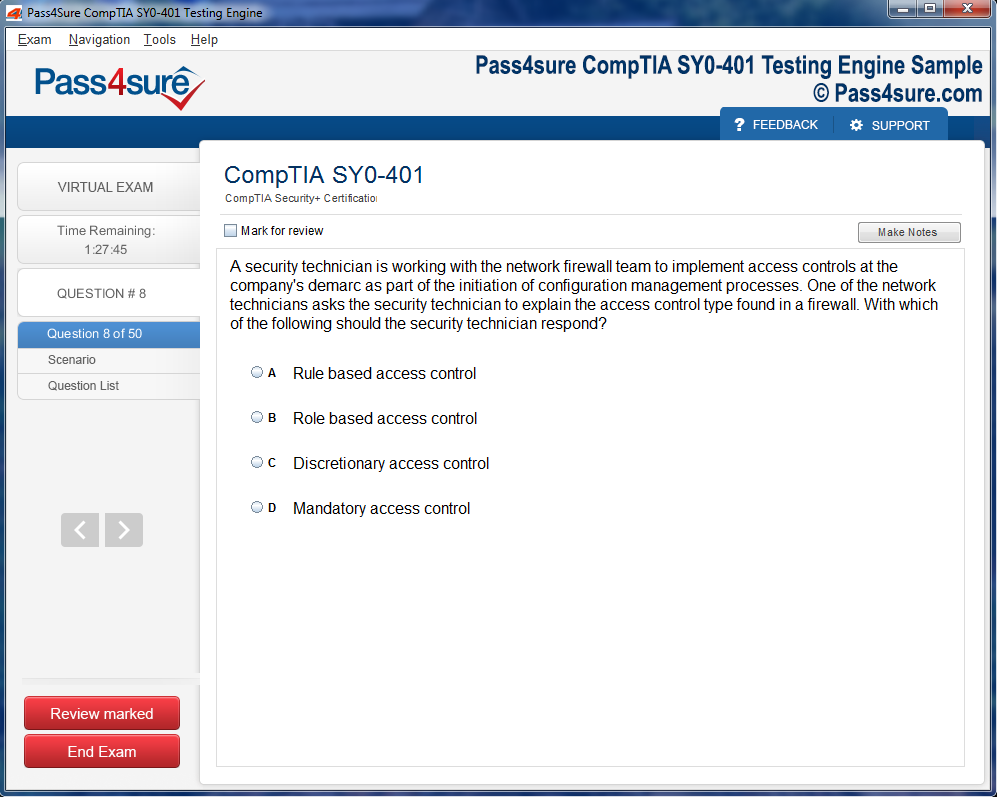
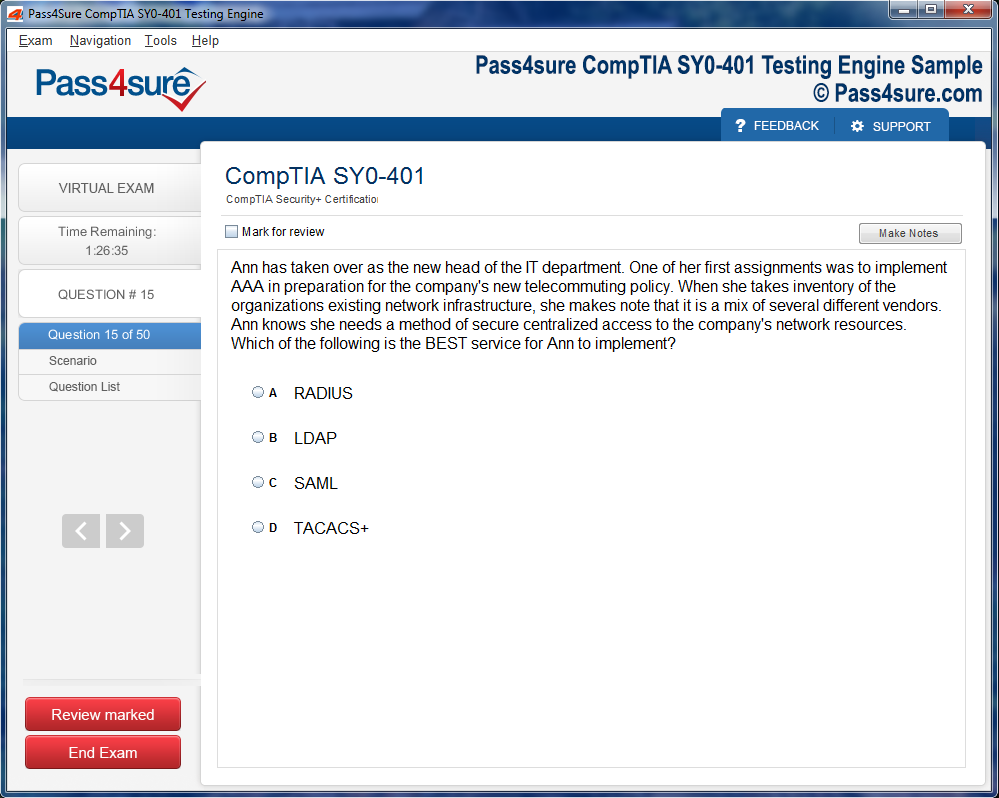
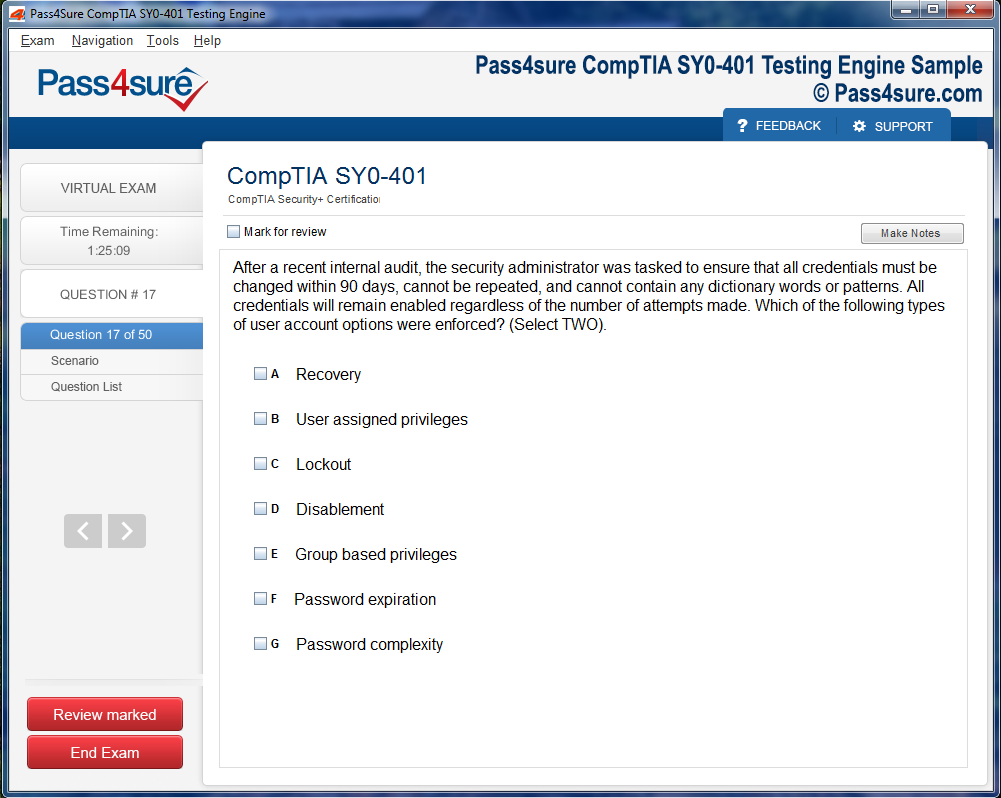
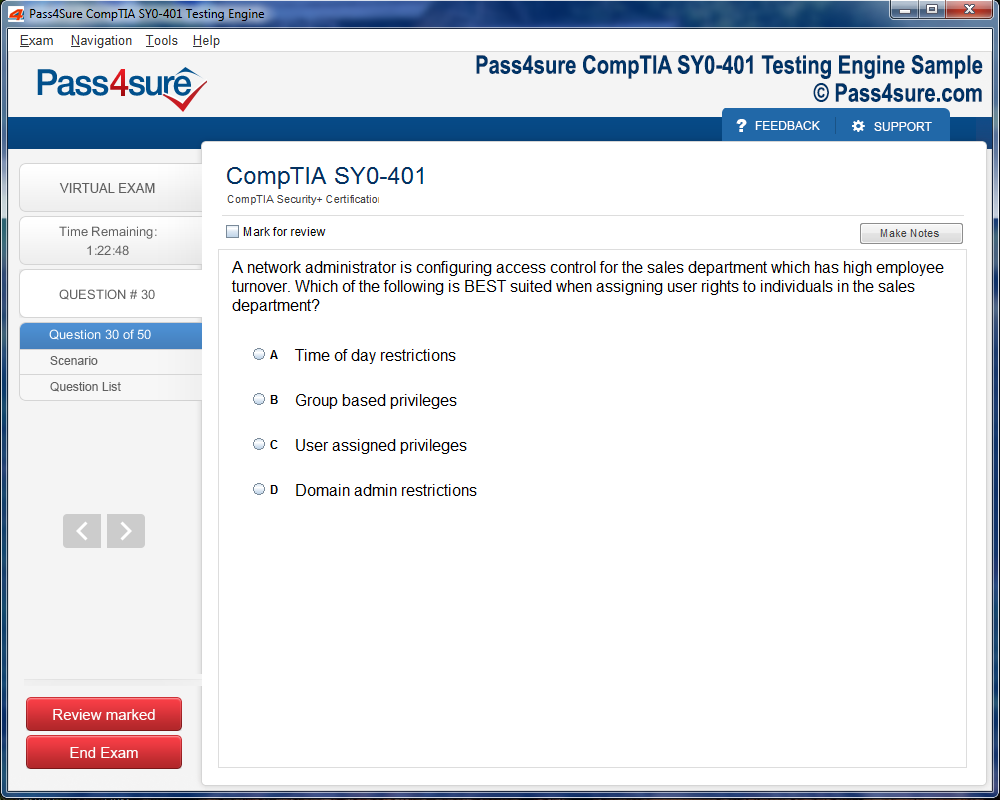
Product Screenshots





Frequently Asked Questions
How does your testing engine works?
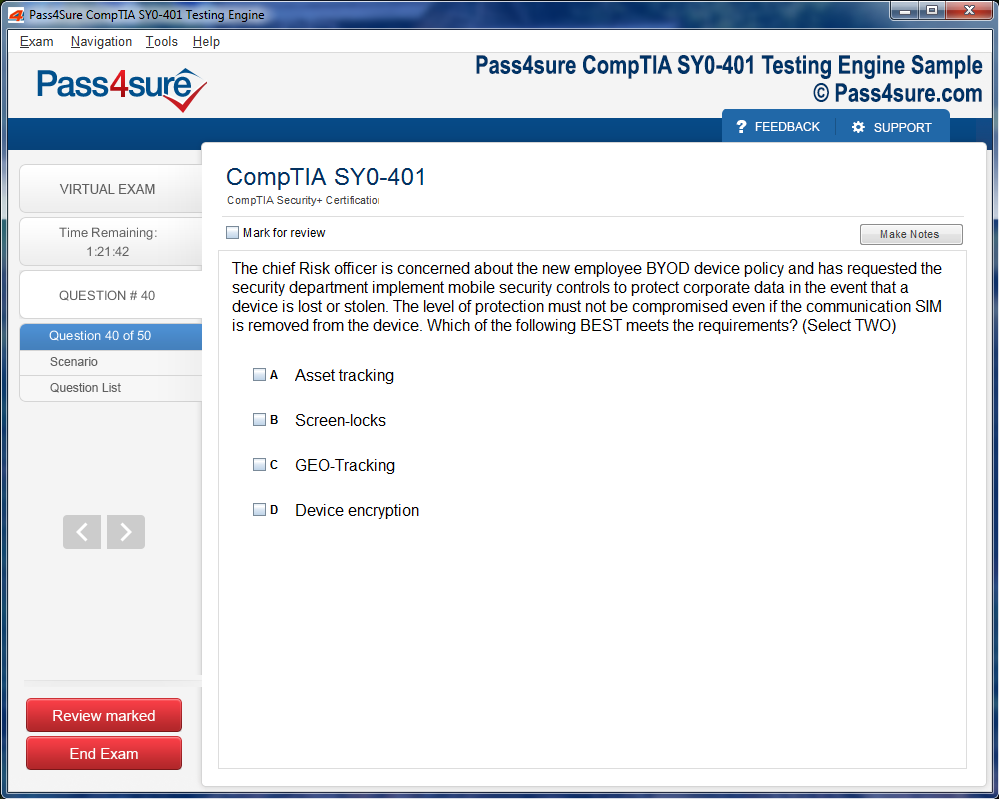
Once download and installed on your PC, you can practise test questions, review your questions & answers using two different options 'practice exam' and 'virtual exam'. Virtual Exam - test yourself with exam questions with a time limit, as if you are taking exams in the Prometric or VUE testing centre. Practice exam - review exam questions one by one, see correct answers and explanations.
How can I get the products after purchase?
All products are available for download immediately from your Member's Area. Once you have made the payment, you will be transferred to Member's Area where you can login and download the products you have purchased to your computer.
How long can I use my product? Will it be valid forever?
Pass4sure products have a validity of 90 days from the date of purchase. This means that any updates to the products, including but not limited to new questions, or updates and changes by our editing team, will be automatically downloaded on to computer to make sure that you get latest exam prep materials during those 90 days.
Can I renew my product if when it's expired?
Yes, when the 90 days of your product validity are over, you have the option of renewing your expired products with a 30% discount. This can be done in your Member's Area.
Please note that you will not be able to use the product after it has expired if you don't renew it.
How often are the questions updated?
We always try to provide the latest pool of questions, Updates in the questions depend on the changes in actual pool of questions by different vendors. As soon as we know about the change in the exam question pool we try our best to update the products as fast as possible.
How many computers I can download Pass4sure software on?
You can download the Pass4sure products on the maximum number of 2 (two) computers or devices. If you need to use the software on more than two machines, you can purchase this option separately. Please email sales@pass4sure.com if you need to use more than 5 (five) computers.
What are the system requirements?
Minimum System Requirements:
- Windows XP or newer operating system
- Java Version 8 or newer
- 1+ GHz processor
- 1 GB Ram
- 50 MB available hard disk typically (products may vary)
What operating systems are supported by your Testing Engine software?
Our testing engine is supported by Windows. Andriod and IOS software is currently under development.
From Concept to Function Understanding Service-Oriented Architecture S90.03
At the heart of Service-Oriented Architecture lies a latticework of architectural principles that imbue digital ecosystems with resilience, malleability, and coherence. SOA champions loose coupling, an ethos that permits services to interact without undue entanglement, thereby ensuring modifications in one node do not propagate disruptive ripples throughout the system. This is an essential antidote to architectural rigidity, allowing enterprises to pivot and reconfigure workflows with minimal friction.
Another cardinal principle is service abstraction. By obfuscating internal mechanics, services reveal only essential behaviors to consumers, engendering encapsulation and shielding sensitive logic from inadvertent exposure. This abstraction fosters a lingua franca of interoperability, where heterogeneous systems converse fluently irrespective of their underlying technology stack.
Service autonomy constitutes another foundational tenet. Each service must exercise control over its own execution environment and governance, minimizing dependencies on external components. Autonomy amplifies reliability, mitigates cascading failures, and enhances system resilience during unexpected perturbations. It transforms software from a brittle construct into a resilient lattice capable of adaptive reorganization.
Reusability is the sine qua non of SOA’s allure. Well-crafted services transcend ephemeral project boundaries, becoming enduring artifacts that can be orchestrated into novel workflows. Enterprises benefit from economies of scale and accelerated time-to-market, as modular services are woven into bespoke solutions without incurring redundant development costs.
Service discoverability, closely allied to abstraction and reuse, is the linchpin for operational efficiency. By cataloging services in registries with precise metadata, SOA ensures that applications can dynamically locate the requisite service endpoints. This mechanism diminishes friction in integration efforts, fostering an environment of spontaneous composition and real-time adaptation.
Finally, service composability exemplifies SOA’s strategic elegance. Independent services can be choreographed into intricate business processes, akin to the interlacing motifs of a baroque composition. This orchestration transforms discrete capabilities into holistic solutions, enabling organizations to respond to emergent business exigencies with agility and foresight.
Implementation Stratagems for Scalable SOA
Translating the theoretical virtues of SOA into operational reality demands meticulous implementation strategies. Enterprises embarking on SOA adoption encounter a labyrinthine landscape of design decisions, platform selections, and governance protocols, each bearing implications for scalability, maintainability, and robustness.
Service identification constitutes the inaugural step. This involves deconstructing enterprise processes into atomic functionalities, discerning which operations merit encapsulation as discrete services. Employing techniques such as domain-driven design and business capability mapping ensures that services are aligned with organizational imperatives, rather than technical convenience.
Once identified, service specification becomes paramount. Here, formalized contracts delineate inputs, outputs, and behavioral expectations. Leveraging interface definition languages and schema-driven protocols enhances interoperability, ensuring that services remain intelligible to disparate consumers. This formalism is critical for sustaining consistency in complex, multi-vendor environments.
Service implementation should emphasize platform agnosticism. Leveraging stateless, loosely coupled constructs facilitates horizontal scalability, while judicious use of asynchronous messaging enhances throughput and latency management. Frameworks supporting standardized communication protocols such as SOAP, REST, and emerging event-driven paradigms amplify the reach and adaptability of services.
Orchestration and choreography are complementary mechanisms for composing services into cohesive workflows. Orchestration centralizes control, directing service interactions via a master process, whereas choreography permits autonomous collaboration, where services negotiate interactions dynamically. Both approaches require meticulous design to prevent deadlocks, latency bottlenecks, and semantic inconsistencies.
Testing and validation are non-negotiable. End-to-end testing, contract verification, and performance benchmarking ensure that services meet functional and non-functional requirements. Automated testing frameworks and continuous integration pipelines can accelerate verification cycles, mitigating deployment risk in expansive SOA landscapes.
Finally, operational monitoring and management underpin sustainable SOA. Instrumentation for logging, tracing, and metrics collection enables proactive detection of anomalies and performance degradation. Governance frameworks codify lifecycle management, versioning, and deprecation policies, safeguarding the integrity and longevity of service ecosystems.
Real-World Applications and Transformational Case Studies
Service-Oriented Architecture transcends theoretical abstraction; its influence permeates industries with remarkable efficacy. Enterprises in finance, healthcare, telecommunications, and logistics leverage SOA to orchestrate complex processes, reduce latency, and foster adaptive innovation.
In financial services, SOA enables seamless integration of disparate trading platforms, payment gateways, and compliance modules. Services encapsulate critical operations such as transaction processing, risk analysis, and reporting, allowing rapid reconfiguration in response to regulatory shifts or market volatility. This modularity mitigates operational risk and enhances strategic flexibility.
Healthcare organizations exploit SOA to unify heterogeneous electronic health record systems, diagnostic tools, and patient engagement platforms. By abstracting medical workflows into interoperable services, providers can deliver personalized care, streamline administrative processes, and ensure secure information exchange across institutional boundaries.
Telecommunications companies employ SOA to manage sprawling network infrastructures, customer service portals, and billing systems. Service composability allows rapid deployment of new offerings, integration of third-party solutions, and orchestration of multichannel customer interactions, all while maintaining operational resilience and cost efficiency.
Logistics and supply chain enterprises capitalize on SOA to harmonize inventory management, transportation scheduling, and supplier coordination. Services provide real-time visibility, predictive analytics, and automated exception handling, transforming traditionally reactive operations into proactive, data-driven ecosystems.
Emergent domains such as Internet of Things (IoT) and edge computing are increasingly embracing SOA principles. Services abstract sensor data ingestion, event processing, and decision automation, enabling scalable and intelligent networks capable of dynamic adaptation to environmental stimuli.
Governance Frameworks in Service-Oriented Ecosystems
Effective SOA adoption necessitates rigorous governance frameworks to harmonize design, deployment, and operational management. Governance mitigates risks, enforces standards, and ensures alignment between IT and business objectives.
Service lifecycle management forms a cornerstone of governance. It encompasses service conception, development, deployment, versioning, retirement, and archival. Comprehensive documentation, metadata annotation, and registry maintenance ensure transparency, accountability, and discoverability throughout the service lifespan.
Policy enforcement is another critical vector. Standards for security, data privacy, compliance, and performance benchmarks must be codified and monitored. Policies enable automated validation of service interactions, adherence to contractual obligations, and rapid remediation of anomalies.
Change management protocols orchestrate service evolution, minimizing disruption in dependent systems. Versioning strategies, backward compatibility considerations, and deprecation plans allow enterprises to introduce enhancements while preserving operational continuity.
Metrics and auditing mechanisms provide empirical insights into service performance and utilization. Monitoring transaction volumes, latency, error rates, and service consumption patterns informs optimization strategies, capacity planning, and predictive maintenance.
Finally, governance frameworks cultivate a culture of stewardship and collaboration. By establishing clearly defined roles, responsibilities, and communication channels, enterprises foster shared ownership of services, incentivize adherence to standards, and enable continuous process refinement.
The Philosophical Underpinnings of Service-Oriented Architecture
Service-Oriented Architecture is not merely a technical construct; it is an epistemological lens through which the intricacies of enterprise ecosystems are deciphered. The architecture embodies a dialectical synthesis of autonomy and interconnectedness, promoting modularity while ensuring that disparate services coalesce into a coherent operational symphony. By embracing an ontological approach to design, organizations imbue their digital ecosystems with both elasticity and resilience, allowing them to evolve alongside shifting business exigencies.
Loose Coupling and Its Strategic Imperatives
Loose coupling serves as the linchpin for SOA’s operational dexterity. In essence, services maintain a delicate balance of independence while participating in a broader orchestration. By enforcing minimal interdependencies, organizations mitigate the risk of systemic contagion when individual components undergo transformation. This paradigm also facilitates rapid iteration, enabling enterprises to recalibrate business processes with minimal perturbation. The formalization of interface contracts, encoded via protocols such as SOAP, REST, or gRPC, functions as the codified lingua franca of inter-service dialogue.
Abstraction as a Catalyst for Cognitive Economy
Abstraction in SOA extends beyond a mere design convenience; it is a cognitive mechanism that reduces informational entropy. By concealing internal complexities, services allow consumers to engage with a distilled interface, promoting clarity and minimizing cognitive overhead. This encapsulation fosters a milieu in which teams can innovate autonomously without jeopardizing systemic cohesion. Moreover, abstraction serves as an instrument for enforcing domain-specific epistemic boundaries, ensuring that knowledge silos do not metastasize into operational inefficiencies.
Autonomy and the Architecture of Independence
Autonomy imbues services with an operational sovereignty that is both pragmatic and strategic. Each service embodies a self-contained microcosm of logic, data stewardship, and governance protocols. This autonomy enables differential scaling, asynchronous evolution, and isolated fault tolerance, particularly in distributed or cloud-native environments. The autonomy principle engenders a landscape where services are not merely functional units but quasi-sovereign agents capable of adaptive behavior under variable workloads.
Discoverability: The Cartography of Service Landscapes
Discoverability transforms SOA into an atlas of operational potential. Services, when meticulously cataloged within repositories, reveal their capacities, constraints, and interaction protocols. This meta-level visibility accelerates integration, mitigates duplication, and catalyzes systemic efficiency. Discoverability is not passive; it encourages an active exploration of capabilities, prompting innovation by highlighting latent opportunities within the service ecosystem.
Service Providers: Architects of Functional Artifacts
Service providers are the artisans of digital capability. They instantiate functionalities, expose well-defined interfaces, and adhere to rigorous contract stipulations. Providers operate within a complex lattice of dependencies, orchestrating their outputs in alignment with overarching business objectives. Their craftsmanship dictates the reliability, scalability, and agility of the entire ecosystem, underscoring the symbiotic relationship between design excellence and operational performance.
Service Consumers: Navigators of Capability Networks
Service consumers traverse the labyrinthine network of capabilities, invoking services to achieve precise outcomes. Consumers are not passive entities; they dynamically negotiate contracts, adapt to evolving service specifications, and optimize workflows through orchestration. Their role exemplifies the interactive dimension of SOA, where value is co-created through continuous engagement rather than static provisioning.
The Service Registry as the Nexus of Connectivity
The service registry functions as the cartographic nexus of the SOA landscape. It catalogues available services, delineates access protocols, and maintains metadata essential for operational alignment. The registry is both a directory and an arbiter, ensuring that services are discoverable, compliant, and orchestrated coherently. Its existence transforms the architecture from a fragmented set of components into an interconnected ecosystem capable of emergent behavior.
Messaging: The Linguistics of Inter-Service Communication
Messaging constitutes the linguistic substrate of SOA. Services communicate through standardized message formats, often leveraging XML, JSON, or other serializable constructs. Message orchestration facilitates multi-step transactions, ensuring that complex workflows are executed atomically. The architecture of messaging embodies both syntactic precision and semantic richness, enabling services to convey intent, state, and contextual nuance in a decoupled manner.
Event-Driven Paradigms: Synchrony in Asynchrony
Modern SOA increasingly incorporates event-driven paradigms. Rather than relying solely on synchronous request-response mechanisms, services broadcast events to signal state changes. Subscribers react in near real-time, fostering an ecosystem characterized by responsiveness and temporal decoupling. This pattern reduces latency, enhances throughput, and aligns system behavior more closely with real-world business dynamics, where change is perpetual and non-linear.
Security: The Sentinels of Digital Integrity
Security in SOA transcends mere access control; it is a multi-dimensional framework safeguarding data, operations, and governance protocols. Standardized policies for authentication, authorization, encryption, and auditability are meticulously enforced, ensuring resilience against both internal and external threats. Security is not an adjunct; it is intrinsic to the architecture, shaping service design, communication patterns, and operational governance in a holistic manner.
Governance: The Ethos of Systemic Compliance
Governance codifies operational and ethical norms, ensuring that services conform to enterprise standards and regulatory frameworks. Through governance, organizations establish a disciplined architecture capable of self-regulation, risk mitigation, and adaptive compliance. Policies, monitoring, and procedural rigor converge to create an ecosystem where innovation is harmonized with accountability.
Quality-of-Service: Metrics of Reliability and Performance
Quality-of-Service (QoS) considerations operationalize expectations regarding availability, latency, throughput, and fault tolerance. By embedding QoS metrics into service contracts, organizations can guarantee predictable performance under variable loads. This attention to detail transforms abstract principles into measurable outcomes, enabling both technical and business stakeholders to assess operational efficacy quantitatively.
Orchestration and Choreography: Symphonic Coordination
Orchestration and choreography delineate two complementary modalities of service interaction. Orchestration centralizes control, dictating execution sequences and managing interdependencies. Choreography, in contrast, emphasizes decentralized coordination, allowing services to respond autonomously while maintaining systemic harmony. Together, these paradigms facilitate scalable, resilient workflows capable of adapting to unpredictable operational contexts.
Modular Evolution and Technological Plasticity
The architectural flexibility inherent in SOA enables modular evolution. Services can be added, modified, or deprecated without destabilizing the broader system. This plasticity is crucial in fast-paced technological landscapes, where innovation cycles are compressed and market demands are fluid. The modular nature of SOA ensures that strategic pivots can be executed with minimal friction, maintaining continuity while fostering growth.
Semantic Interoperability: The Bridge Across Domains
Semantic interoperability ensures that services share a coherent understanding of data, context, and intent. Beyond syntactic conformity, this principle addresses meaning alignment, enabling services to exchange information accurately across heterogeneous domains. By establishing a shared semantic framework, organizations reduce miscommunication, prevent data corruption, and facilitate seamless integration across disparate systems.
Observability and Adaptive Intelligence
Observability transforms SOA into an intelligent ecosystem. Through telemetry, logging, and monitoring, services provide real-time insight into operational status, performance anomalies, and emergent behaviors. Observability not only enables reactive interventions but also informs predictive analytics, allowing systems to self-tune, preempt failures, and optimize resource utilization proactively.
Eventual Consistency and Resilient State Management
SOA often embraces eventual consistency over strict transactional integrity to enhance scalability. Services maintain local state while propagating updates asynchronously, accepting transient inconsistencies in exchange for resilience and responsiveness. This principle balances operational rigor with pragmatic performance, enabling distributed systems to function reliably under high load or partial network failures.
Composability and Reusable Artefacts
Composability transforms services into reusable building blocks. By designing with interoperability and generality in mind, individual services can be combined in novel ways to fulfill complex requirements. This approach amplifies the utility of each service, accelerates development, and promotes architectural sustainability, establishing a culture of iterative enhancement rather than one-off implementation.
The Intricacies of Service Identification
Service identification is an enigmatic yet foundational stage in the orchestration of a Service-Oriented Architecture. It involves dissecting the enterprise into elemental units of functionality, each ripe for encapsulation as a discrete service. Architects employ a kaleidoscopic lens, analyzing workflows, data trajectories, and operational dependencies to extract service candidates. These candidates must exhibit cohesion, autonomy, and elasticity, ensuring they can be reutilized across multifarious processes without redundancy.
A critical dimension in service identification is granularity. Oversized services may obfuscate responsibility boundaries, whereas excessively granular services can precipitate operational inefficiencies. Striking an equilibrium requires meticulous examination of business logic, ensuring that each service embodies a singular, meaningful unit of work. The identification phase thus serves as a crucible where business processes are transmuted into modular, reusable constructs.
Harmonizing Business Processes and Technical Architecture
The marriage of business processes and technical architecture is a delicate symphony. Understanding the interplay between operational workflows and digital infrastructure is essential for crafting resilient services. Workflow modeling, often augmented by process mining tools, elucidates dependencies and potential bottlenecks. These insights inform service demarcation, enabling architects to map functions with precision.
The objective is to achieve a harmonious alignment where technology amplifies business agility. This requires not only identifying functional endpoints but also anticipating future evolution, thereby crafting services with adaptability embedded in their DNA. The orchestration of this synergy is pivotal in preventing architectural ossification and ensuring long-term sustainability.
Interface Definition and Data Contract Semantics
Once services are crystallized, defining their interfaces is paramount. Interfaces serve as the lingua franca for inter-service communication, dictating permissible interactions and data exchanges. A meticulously articulated interface minimizes ambiguity, enhances interoperability, and mitigates error propagation. Architects often leverage formal specifications, schemas, and standardized protocols to codify service interactions.
Data contracts complement interface definition by stipulating the structure, constraints, and semantics of exchanged information. A robust data contract not only facilitates accurate communication but also enforces validation rules that prevent schema drift. This stage is a fulcrum where abstract requirements coalesce into executable service blueprints, laying the groundwork for resilient integration.
Implementing Service-Oriented Paradigms
The implementation phase transforms conceptual service models into operational entities. Developers harness a panoply of technologies, frameworks, and middleware capable of sustaining distributed service paradigms. Web services, API gateways, and message brokers constitute the connective tissue of the architecture, ensuring reliable, low-latency communication across heterogeneous environments.
Implementation is not merely a technical exercise; it demands foresight regarding versioning and backward compatibility. Services must evolve without disrupting dependent consumers, necessitating meticulous change management, semantic versioning, and deprecation strategies. Such foresight ensures that the architecture remains nimble and responsive amid shifting business landscapes.
Integration and Automated Testing Pipelines
Testing in a service-oriented ecosystem transcends traditional unit evaluation. Integration testing validates interactions between services, ensuring that composite workflows operate as intended. End-to-end testing extends this validation across networks, platforms, and organizational boundaries, capturing emergent behaviors that isolated tests might overlook.
Automated pipelines enhance both reliability and velocity, facilitating continuous integration and continuous deployment (CI/CD). Test automation frameworks orchestrate regression testing, anomaly detection, and load evaluation, yielding actionable intelligence to preempt performance degradation. This proactive posture is indispensable for sustaining high-availability, mission-critical systems.
Service Orchestration and Workflow Management
Service orchestration embodies the choreography of autonomous services to deliver cohesive, higher-order functionalities. Tools such as modern workflow engines and process execution languages provide both visual and programmatic avenues to define service interactions. Orchestration encapsulates conditional logic, error handling, and transactional integrity, ensuring that composite operations execute seamlessly.
The orchestration layer is also instrumental in scalability, enabling dynamic reconfiguration of service flows in response to fluctuating workloads. By abstracting process logic from individual services, organizations gain agility, maintainability, and the ability to rapidly adapt to emergent business scenarios.
Monitoring, Logging, and Observability
Observability constitutes the sensory apparatus of a distributed architecture. In SOA, services often operate across decentralized nodes, making real-time insight indispensable. Monitoring tools capture metrics such as latency, throughput, and error rates, providing a panoramic view of system health. Predictive analytics and anomaly detection further empower administrators to preempt disruptions before they escalate.
Logging complements monitoring by offering granular traceability and forensic evidence. Detailed logs enable root-cause analysis, compliance verification, and auditability. Together, monitoring and logging constitute a feedback loop that informs optimization, capacity planning, and continuous improvement, thereby sustaining architectural vitality.
Adaptability, Modularity, and Extensibility
A hallmark of a mature SOA implementation is its adaptability. Services must accommodate evolving business requirements, technological advances, and scaling imperatives. Modularity ensures that components can be independently upgraded or replaced without cascading impacts. Extensibility imbues services with the ability to assimilate future functionalities, preserving relevance over time.
Architects often employ design patterns such as dependency injection, event-driven messaging, and feature toggles to reinforce flexibility. Such patterns create a resilient scaffolding that accommodates innovation without compromising stability. The cumulative effect is an architecture that is robust yet malleable, capable of evolving alongside the enterprise it serves.
Transmuting Conceptual Blueprints into Operational Ecosystems
The culmination of the design-to-implementation journey is the transmutation of abstract blueprints into operational ecosystems. This process demands a confluence of architectural rigor, technical dexterity, and business acumen. By embedding principles of clarity, reusability, and resilience, SOA implementations transcend mere functionality, becoming catalysts for enterprise agility.
Successful ecosystems are characterized by their self-healing capacities, responsiveness to change, and the seamless interoperability of constituent services. These traits not only enhance operational efficiency but also empower organizations to swiftly pivot in response to market perturbations and strategic imperatives.
Financial Services: Agile Symbiosis and Operational Elasticity
In the financial stratosphere, Service-Oriented Architecture manifests as an agile symbiosis between legacy mainframes and cutting-edge fintech innovations. Transactional frameworks, once ensconced in rigid monolithic architectures, now exploit granular services to orchestrate real-time loan adjudication, dynamic risk assessment, and fraud detection with unprecedented alacrity. Service encapsulation permits banks to propagate novel offerings without perturbing incumbent operations, engendering operational elasticity. Interfacing disparate platforms—core banking engines, customer relationship management, and digital wallets—becomes an exercise in seamless interoperability, minimizing latency and circumventing infrastructural ossification.
Healthcare Ecosystems: Data Synthesis and Prognostic Precision
Within healthcare ecosystems, SOA functions as the cerebral cortex of data synthesis. Services facilitate the confluence of electronic health records, diagnostic imaging modalities, laboratory information systems, and telemedicine portals. By enabling synchronous and asynchronous communication among heterogeneous platforms, SOA mitigates informational silos and reduces epistemic opacity in patient management. Prognostic algorithms ingest service-mediated data streams to generate predictive insights, improving clinical decision-making. Moreover, inter-hospital data orchestration via secure service endpoints fosters collaborative care networks, enhancing therapeutic efficacy while preserving patient confidentiality.
E-Commerce Platforms: Transactional Choreography and Scalability
E-commerce domains leverage SOA to orchestrate intricate transactional choreography. Inventory management, payment processing, personalized recommendation engines, and dynamic pricing models are modularized into discrete services. This stratagem facilitates horizontal scalability, ensuring systems endure peak transactional surges without degradation. Service interfaces mediate interactions with third-party logistics, digital wallets, and marketing platforms, creating a harmonized ecosystem. Furthermore, ephemeral services can be instantiated for promotional campaigns or ephemeral product launches, exemplifying SOA’s adaptability in high-velocity commercial contexts.
Government Services: Transparency and Interoperable Governance
Public sector entities exploit SOA to architect transparent, interoperable governance frameworks. Services enable modular aggregation of citizen-facing applications, workflow automation, and cross-agency data harmonization. Secure service exposure minimizes bureaucratic opacity, reduces duplicative processes, and fosters agile responsiveness to emergent civic demands. In disaster management, taxation, or digital identity programs, SOA underpins a seamless conduit for information dissemination, ensuring cohesive policy execution while preserving data integrity and compliance with regulatory mandates.
Internet of Things: Sensorium Integration and Predictive Orchestration
In the burgeoning realm of the Internet of Things, SOA provides the lingua franca for device interaction. Sensors, actuators, and cloud services communicate via standardized interfaces, enabling a sensorium of intelligent automation. Predictive maintenance algorithms leverage service-mediated data to preempt equipment failures, optimize energy consumption, and enhance operational reliability. Smart infrastructure, from autonomous transport grids to intelligent energy networks, depends on SOA’s modularity for responsive control systems, ensuring scalability and minimizing systemic fragility.
Cloud Computing: Elastic Services and Interoperable Ecosystems
Cloud environments epitomize the synergy between SOA and distributed computing paradigms. Microservices, containerized applications, and serverless functions leverage service interfaces to establish interoperable ecosystems spanning heterogeneous cloud providers. Elastic deployment models allow instantaneous resource provisioning in response to fluctuating computational demands. SOA facilitates multicloud integration, permitting enterprises to evade vendor lock-in while achieving high availability, fault tolerance, and operational resilience. Service choreography in this domain ensures workloads are distributed efficiently, optimizing latency and throughput across geographies.
Telecommunication Networks: Orchestrated Connectivity
Telecommunication infrastructures benefit from SOA by converting convoluted network operations into modular, service-oriented constructs. Network function virtualization, session management, and billing systems interact through standardized service endpoints. This modularity accelerates the deployment of new communication protocols and adaptive network policies. Furthermore, service abstraction permits seamless integration with over-the-top (OTT) applications, enabling service providers to deliver enriched experiences without disruptive infrastructural overhauls. The orchestration of services ensures high availability, latency optimization, and dynamic resource allocation across sprawling networks.
Retail and Supply Chains: Modular Logistics and Demand Synchronicity
In retail logistics, SOA catalyzes modular orchestration of supply chains, integrating warehousing, procurement, inventory forecasting, and last-mile delivery services. Service endpoints facilitate dynamic demand-response mechanisms, predictive replenishment, and inter-enterprise visibility. Seasonal surges and promotional volatility are mitigated by ephemeral service instantiation, preserving operational continuity. By harmonizing disparate enterprise resource planning systems through service abstraction, retailers achieve seamless interoperability while maintaining analytical granularity for market responsiveness.
Energy and Utilities: Predictive Grid Management
Energy grids and utility networks exploit SOA to attain predictive management and fault resilience. Services aggregate data from distributed generation units, smart meters, and environmental sensors, enabling real-time load balancing and predictive outage detection. Service-oriented orchestration ensures that renewable energy integration, demand-response mechanisms, and maintenance scheduling are executed with operational precision. By transforming monolithic energy management frameworks into modular service ecosystems, utilities achieve agility in both regulatory compliance and consumer engagement, while reducing infrastructural brittleness.
Transportation and Logistics: Intelligent Flow Optimization
SOA empowers transportation networks through intelligent flow optimization. Vehicle routing, fleet management, traffic monitoring, and predictive maintenance services coalesce to enhance operational efficiency. Modular service integration allows adaptive route recalibration in real-time, minimizing delays and fuel consumption. Intermodal transport systems benefit from service abstraction, enabling seamless coordination between rail, road, air, and maritime logistics. Data-driven orchestration fosters proactive disruption management, ensuring resilient and responsive mobility frameworks.
Media and Entertainment: Personalized Content Delivery
In media ecosystems, SOA facilitates personalized content curation and delivery. Streaming platforms, recommendation engines, advertising networks, and rights management systems are decoupled into autonomous services. This decoupling enables elasticity, allowing platforms to accommodate viral demand fluctuations while ensuring uninterrupted content distribution. Service interfaces enable multi-platform interoperability, supporting cross-device synchronization and interactive experiences. Additionally, ephemeral services can orchestrate seasonal campaigns or limited-time content offerings, demonstrating SOA’s adaptability in dynamic entertainment landscapes.
The Imperative of Governance in Service-Oriented Architectures
Governance within Service-Oriented Architecture (SOA) is an indispensable fulcrum upon which operational coherence pivots. The kaleidoscopic proliferation of services in contemporary enterprises necessitates a rigorously orchestrated governance framework. Without meticulous oversight, service landscapes can devolve into labyrinthine mazes of redundancy, inefficiency, and opacity. Governance is not merely administrative—it is a strategic enabler that ensures alignment between technological orchestration and overarching business imperatives.
At its essence, governance encompasses the codification of policies, protocols, and procedural canons that dictate the lifecycle of each service. Service lifecycle management, versioning schemas, and compliance enforcement are cardinal elements. Enterprises are compelled to implement oversight mechanisms that guarantee service conformity to pre-established standards. These mechanisms act as sentinels, preserving the sanctity of architectural integrity while curbing entropy. Governance extends its remit to the establishment of service registries and repositories, which serve as panoptic vistas into the enterprise’s service topology.
Architecting Security as a Non-Negotiable Imperative
In the tapestry of SOA, security assumes a preeminent position, transcending perfunctory defensive postures. Services frequently traverse public or semi-public networks and interact with multifarious external entities, introducing vectors of vulnerability that must be preemptively mitigated. Security cannot be relegated to retroactive measures; it must be intrinsically woven into the architectural DNA.
Authentication paradigms, whether multifactor, certificate-based, or federated, form the first bastion of defense. Role-based access controls (RBAC) provide a granulated stratification of permissions, ensuring that only sanctioned actors engage with sensitive service endpoints. Encryption, both in transit and at rest, obfuscates data against prying adversaries, while auditing and forensic mechanisms allow retrospective scrutiny and anomaly detection. Security policies must be codified into service contracts, establishing immutable parameters for acceptable operation.
Quality Assurance Beyond Conventional Metrics
Quality assurance within SOA transcends traditional software verification paradigms. Beyond mere correctness and defect minimization, SOA QA encompasses performance, resilience, scalability, and operational fidelity. A service’s reliability is a crucible in which business continuity is tested. Enterprises are increasingly reliant on continuous monitoring, automated testing pipelines, and real-time analytics to gauge and sustain service quality.
Service-level agreements (SLAs) operationalize these benchmarks, translating nebulous quality expectations into tangible, measurable indicators. Latency thresholds, uptime guarantees, throughput ceilings, and fault-recovery mandates are enumerated within these agreements, providing a contractual scaffold that guides service providers and consumers alike. QA in SOA is thus both preventative and prescriptive, ensuring that each service remains a paragon of operational robustness.
Compliance as a Catalyst for Structured Operations
In contemporary regulatory milieus, enterprises must navigate labyrinthine compliance frameworks encompassing data privacy, retention, and reporting. SOA facilitates compliance not merely through procedural adherence but through architectural enforcement. Standardized interfaces, robust logging, and auditable access trails transform compliance from a reactive chore into a proactive safeguard.
Regulatory adherence benefits from centralization, where service repositories provide both transparency and traceability. By documenting service interdependencies, access histories, and operational parameters, enterprises maintain an unassailable audit trail. This systemic visibility reduces the likelihood of inadvertent non-compliance, simultaneously enhancing accountability and operational discipline.
Mitigating Risks in Expanding Service Ecosystems
As organizations scale, the expansion of services can engender combinatorial complexity, which, if unmanaged, precipitates inefficiencies and operational risk. Governance frameworks act as navigational instruments, mitigating risks associated with service proliferation. Structured policies enforce coherence, prevent redundancy, and optimize reusability.
A disciplined governance approach ensures that new services are integrated with architectural foresight rather than ad hoc improvisation. This curtails the entropic drift that often accompanies unrestrained service creation. Centralized service registries, coupled with rigorous lifecycle management, provide the scaffolding for sustainable scalability. Enterprises thus preserve the strategic advantages of SOA while minimizing operational fragility.
Embedding Security in the Service DNA
Beyond mere transactional protection, security within SOA must be anticipatory, context-aware, and resilient. Threat modeling, penetration testing, and anomaly detection frameworks ensure that services are not only fortified but also dynamically adaptive to evolving threat landscapes. Intrusion detection systems, runtime monitoring, and proactive remediation pipelines create a defense-in-depth posture that safeguards both enterprise assets and client trust.
Security architecture is symbiotic with governance: policies, controls, and monitoring mechanisms form an integrated ecosystem. Each service is designed with explicit security considerations, from authentication protocols to cryptographic standards, ensuring that protective measures are neither perfunctory nor circumstantial.
Real-Time Analytics as a Pillar of Quality Assurance
Monitoring service performance in real time is no longer a luxury but a strategic necessity. Continuous observability enables enterprises to anticipate failures, optimize throughput, and enhance user experience. Predictive analytics, anomaly detection, and event correlation frameworks empower organizations to act preemptively, forestalling service degradation before it affects stakeholders.
These analytics provide actionable intelligence for iterative improvement, highlighting bottlenecks, latency spikes, and resource inefficiencies. By integrating monitoring with automated remediation protocols, enterprises achieve a state of resilient, self-correcting service ecosystems. Quality assurance, in this paradigm, is both reactive and anticipatory, ensuring unwavering operational fidelity.
Service-Level Agreements as Operational North Stars
SLAs crystallize expectations between service providers and consumers into codified commitments. These agreements specify performance metrics, reliability thresholds, and remediation protocols. By transforming abstract expectations into quantifiable parameters, SLAs serve as navigational compasses within complex service landscapes.
Enterprises leverage SLAs not only for accountability but as instruments of optimization. Continuous assessment against SLA benchmarks drives iterative refinement, operational discipline, and sustained excellence. These agreements foster transparency, trust, and predictable performance, which are indispensable in multi-service ecosystems.
Centralized Repositories as Governance Hubs
Centralized repositories are the nexus of visibility, control, and standardization within SOA governance. They provide a panoramic view of service availability, dependencies, utilization patterns, and operational status. By consolidating service metadata, repositories enable enterprises to enforce policies, streamline integration, and facilitate discovery.
Moreover, repositories act as instruments for risk management. By mapping service interconnections and redundancies, organizations can identify potential points of failure, optimize resource allocation, and reduce architectural entropy. This centralized intelligence is the backbone of disciplined, scalable service management.
Lifecycle Management as a Strategic Instrument
Service lifecycle management orchestrates the journey from inception to retirement with meticulous precision. It encompasses design, implementation, deployment, versioning, deprecation, and retirement. Each phase requires policy enforcement, quality checks, and security validation to ensure alignment with enterprise standards.
Version control is integral to lifecycle governance. Backward compatibility, dependency mapping, and change propagation protocols ensure that service evolution does not compromise ecosystem integrity. By formalizing lifecycle governance, enterprises convert service proliferation from a potential liability into a structured, strategic asset.
Orchestrating Resilience Through Fault Tolerance
Fault tolerance is a cardinal pillar of SOA quality assurance. Services must be designed to endure failures, degrade gracefully, and recover autonomously. Redundancy, failover mechanisms, and circuit breaker patterns are among the techniques employed to achieve this resilience.
The efficacy of fault-tolerant designs is amplified when combined with continuous monitoring and predictive analytics. Potential failures are detected and mitigated preemptively, ensuring that business processes remain uninterrupted. This orchestration transforms SOA from a reactive architecture into a dynamically resilient ecosystem.
Strategic Reusability as a Governance Objective
Reusability is a defining promise of SOA, but its realization requires deliberate governance. Services must be modular, loosely coupled, and designed for extensibility. Governance frameworks enforce design principles that prevent duplication, encourage abstraction, and maximize utility across diverse business functions.
Through strategic reusability, organizations realize cost efficiencies, accelerate time-to-market, and reduce maintenance overhead. Governance ensures that reusable services maintain consistency, reliability, and alignment with enterprise architecture, preserving SOA’s transformative potential.
Auditing as a Mechanism of Accountability
Auditing mechanisms are integral to both governance and security. Comprehensive audit trails capture service interactions, access events, and configuration changes, providing forensic clarity and regulatory compliance. Audit data supports performance evaluation, anomaly detection, and strategic decision-making.
In regulated industries, auditing serves as a veritable lifeline, ensuring transparency and evidentiary compliance. Coupled with centralized repositories and monitoring frameworks, auditing reinforces trust, accountability, and operational integrity across the service ecosystem.
Embedding Governance into Architectural DNA
Governance in SOA is most effective when architecturally ingrained rather than externally imposed. Policies, compliance mechanisms, and security protocols must be integral components of service design. This intrinsic governance paradigm ensures consistency, reduces operational friction, and aligns service behavior with organizational strategy.
By embedding governance into architectural DNA, enterprises cultivate an environment where services self-regulate, adapt, and conform to prescribed standards, mitigating the need for manual oversight and corrective intervention.
Proactive Risk Management in Service Proliferation
Service proliferation introduces combinatorial complexity, increasing the likelihood of redundancy, incompatibility, and performance degradation. Proactive risk management frameworks within governance mitigate these challenges. Dependency mapping, impact analysis, and scenario modeling enable enterprises to anticipate potential pitfalls and implement corrective measures preemptively.
Risk mitigation is further reinforced by centralized oversight, lifecycle management, and robust SLA frameworks, ensuring that service expansion occurs in a controlled, strategic manner without compromising reliability or security.
Dynamic Policy Enforcement for Operational Coherence
Dynamic policy enforcement ensures that governance frameworks remain agile and responsive to evolving operational contexts. Policies related to versioning, deprecation, security, and compliance are codified into automated enforcement mechanisms. This reduces human error, accelerates decision-making, and maintains systemic coherence.
By dynamically enforcing governance policies, organizations achieve a delicate equilibrium between flexibility and discipline, enabling rapid innovation without compromising architectural integrity.
Continuous Improvement Through Metrics and Analytics
Metrics and analytics are the engines of continuous improvement in SOA governance and quality assurance. Performance dashboards, anomaly detection, and usage analytics provide actionable insights for iterative refinement.
Enterprises leverage these insights to optimize service composition, enhance fault tolerance, and streamline resource allocation. This continuous feedback loop transforms operational data into strategic intelligence, perpetually elevating service quality and architectural coherence.
Integrating Security, Governance, and Quality as a Holistic Ecosystem
The convergence of governance, security, and quality assurance creates a holistic, self-reinforcing ecosystem. Security protocols enhance trust, governance frameworks ensure coherence, and quality assurance preserves operational excellence.
This triad transforms SOA from a mere architectural paradigm into a disciplined operational framework capable of supporting scalable, resilient, and reliable enterprise services. Services are no longer isolated constructs; they become interoperable components of a cohesive, strategically governed ecosystem.
Adaptive Monitoring for Anticipatory Response
Adaptive monitoring leverages machine learning, anomaly detection, and predictive analytics to provide anticipatory insights. Services are continuously evaluated against operational benchmarks, with deviations triggering preemptive interventions.
This anticipatory approach ensures that potential failures, performance degradation, or security breaches are mitigated before impacting stakeholders, establishing a culture of proactive resilience and operational vigilance.
Strategic Orchestration of Service Dependencies
Service dependencies introduce complexity that must be meticulously managed. Strategic orchestration involves mapping inter-service relationships, identifying critical paths, and mitigating single points of failure.
By codifying dependency rules and automating orchestration workflows, enterprises maintain operational harmony, prevent cascading failures, and ensure that service interactions remain predictable and reliable.
The Multifaceted Labyrinth of SOA Challenges
Service-Oriented Architecture, despite its celebrated virtues, often confronts a labyrinthine array of impediments. Complexity pervades the structural and procedural dimensions, manifesting in convoluted service interdependencies that demand meticulous orchestration. Organizational inertia and cultural reticence exacerbate these technical intricacies, as stakeholders hesitate to embrace paradigmatic shifts from monolithic constructs to modular service schemas. Legacy system entanglements amplify this quandary, creating friction between contemporary innovations and entrenched infrastructural frameworks.
The Artistry of Designing Reusable Services
Crafting reusable services transcends mere technicality; it is an artistry steeped in foresight and methodical rigor. Architects must anticipate evolving functional demands while ensuring composability and adaptability. The conceptualization of services as autonomous yet interoperable units necessitates a cognitive dexterity that harmonizes technical precision with anticipatory strategy. Strategic advocacy within organizational hierarchies becomes essential, as understanding and alignment of objectives can transform skepticism into enthusiastic adoption.
Technical Conundrums and Operational Friction
Technical impediments in SOA are nuanced and pervasive. Message latency introduces temporal dissonance, while orchestration complexity can spiral into opaque dependencies that impede visibility and control. Version management demands scrupulous oversight, as subtle inconsistencies propagate cascading disruptions across service ecosystems. Network fallibilities, data inconsistencies, and mutable requirements impose relentless operational friction, underscoring the necessity for vigilant monitoring, agile iteration, and robust governance.
Evolutionary Trajectories: Microservices and Containerization
SOA’s evolution is intrinsically dynamic, propelled by innovations that redefine service granularity and deployment modalities. Microservices epitomize this refinement, offering lightweight, independently deployable units that preserve modularity while facilitating agile iteration. Containerization synergizes with microservices, encapsulating environments and dependencies to enhance portability and reproducibility. Cloud-native architectures augment this evolution by injecting elasticity and scalable resilience, enabling services to adapt instantaneously to fluctuating workloads while preserving observability.
Intelligence Amplified: AI and Event-Driven Paradigms
The confluence of artificial intelligence and event-driven architectures has invigorated SOA with predictive and adaptive capacities. Services now possess the capability to assimilate real-time data, forecast trends, and autonomously recalibrate workflows. Event-driven ecosystems facilitate instantaneous responsiveness, while AI-driven analytics enable self-optimizing orchestration. This synergy fosters intelligent digital ecosystems, wherein services operate not merely as functional units but as adaptive, anticipatory agents within a complex organizational lattice.
Resilience Amidst Transformational Flux
SOA’s enduring relevance hinges upon its capacity for resilience in the face of relentless technological flux. Its modularity and interoperability serve as bulwarks against obsolescence, ensuring that enterprises can recalibrate strategies without compromising foundational integrity. Alignment with business objectives remains the lodestar of successful implementation, anchoring technological innovation to operational imperatives. This equilibrium between agility and stability is indispensable for navigating the ceaselessly evolving digital landscape.
Strategic Imperatives for Organizational Buy-In
Achieving widespread organizational adoption of SOA necessitates more than technical proficiency; it demands strategic pedagogy and persuasive advocacy. Cultivating a culture receptive to modular, service-oriented paradigms involves continuous education, transparent communication, and demonstrable value articulation. Leaders must champion not only the functional benefits but also the strategic implications, illustrating how SOA can optimize resources, streamline operations, and catalyze innovation across the enterprise ecosystem.
Monitoring, Governance, and Agile Practices
Robust monitoring and governance frameworks constitute the scaffolding that sustains SOA initiatives. Without vigilant oversight, services risk fragmentation, inefficiency, or stagnation. Agile methodologies complement this scaffolding by fostering iterative improvement, rapid response to emergent issues, and adaptive planning. The integration of real-time monitoring, predictive diagnostics, and continuous feedback loops transforms SOA from a static architectural philosophy into a dynamic, self-sustaining ecosystem.
Convergence with Cloud and Distributed Architectures
Cloud computing and distributed architectures amplify SOA’s transformative potential. Elastic infrastructures enable on-demand scaling, while distributed nodes enhance redundancy and resilience. The convergence of cloud paradigms with service orientation facilitates global accessibility, cost optimization, and instantaneous provisioning. By embracing distributed intelligence and decentralization, organizations can transcend traditional limitations, cultivating ecosystems that are both scalable and highly responsive to emergent demands.
Future Trajectories: Self-Optimizing Digital Ecosystems
Looking ahead, SOA is poised to underpin self-optimizing digital ecosystems where services exhibit anticipatory intelligence, autonomous orchestration, and adaptive resilience. Predictive algorithms, coupled with real-time event processing, will imbue services with a capacity for proactive intervention. Organizations that internalize these principles can cultivate agile, scalable, and innovative architectures that remain relevant amidst the accelerating cadence of technological change.
The Philosophy of Modularity and Strategic Agility
Beyond its technical manifestations, SOA embodies a philosophical commitment to modularity, strategic agility, and business alignment. Services are conceived not merely as functional components but as conceptual instruments enabling organizational dexterity. Mastery of SOA principles equips enterprises to navigate complexity, optimize resources, and orchestrate emergent opportunities, transforming abstract architectural concepts into tangible operational advantage.
Navigating Complex Challenges in Service-Oriented Architecture
Despite its transformative potential, Service-Oriented Architecture presents multifaceted challenges that demand strategic foresight and meticulous execution. These challenges are often less technical than organizational, requiring harmonization of human, procedural, and technological dimensions.
Interoperability, while a hallmark of SOA, can become a thorn when heterogeneous systems exhibit incompatible data models, divergent protocols, or inconsistent semantics. Bridging these gaps necessitates sophisticated mediation layers, canonical data models, and precise schema mappings. Without careful orchestration, seemingly trivial inconsistencies can cascade into operational bottlenecks.
Latency and performance degradation constitute another critical concern. As services proliferate and dependencies multiply, end-to-end response times may deteriorate. Strategies such as asynchronous messaging, load balancing, caching, and intelligent throttling mitigate performance penalties, but their implementation requires granular monitoring and adaptive tuning.
Security challenges escalate in distributed service landscapes. Each service interaction introduces potential vectors for unauthorized access, data leakage, and denial-of-service attacks. Robust authentication, encryption, role-based access control, and auditing mechanisms are indispensable to safeguard sensitive operations without impairing functionality or responsiveness.
Service versioning introduces complexity in lifecycle management. When multiple consumers depend on evolving services, backward compatibility and graceful deprecation become essential. Enterprises must implement clear versioning strategies, including semantic versioning, compatibility testing, and automated migration paths, to avoid service fragmentation and operational disruption.
Organizational alignment often poses the greatest hurdle. SOA is not solely a technical framework; it demands cultural adaptation. Development teams, business analysts, and operations staff must embrace a shared lexicon, collaborative workflows, and governance practices. Misalignment can result in siloed services, redundant implementations, and a protracted path to value realization.
Advanced Patterns in Service-Oriented Architecture
To overcome complexity and enhance robustness, advanced design patterns have emerged as essential tools in SOA. These patterns provide templates for structuring services, managing interactions, and ensuring resilience in dynamic environments.
The Facade Pattern abstracts underlying complexities by exposing a simplified interface to consumers. This reduces coupling, standardizes communication, and enhances usability across heterogeneous systems. By mediating between intricate service internals and external callers, the facade pattern streamlines integration and reduces cognitive overhead for developers.
The Adapter Pattern addresses interoperability challenges, translating incompatible interfaces into compatible forms. In SOA, adapters facilitate communication between legacy systems and modern services, enabling seamless integration without requiring wholesale refactoring. This pattern is instrumental in hybrid environments where legacy and cloud-native services coexist.
The Aggregator Pattern consolidates multiple service responses into a single composite output. Aggregators are particularly valuable in orchestrated workflows, enabling clients to receive cohesive results without managing multiple service calls individually. This pattern enhances efficiency and reduces network chatter in distributed architectures.
The Event-Driven Pattern decouples services by enabling asynchronous communication through events. Event brokers, message queues, and pub/sub mechanisms allow services to react to changes in state without tight coupling. This pattern supports real-time responsiveness, scalability, and resilience, particularly in complex, high-throughput systems.
The Circuit Breaker Pattern enhances fault tolerance by preventing repeated invocation of failing services. By monitoring failure rates and dynamically halting requests, circuit breakers protect the ecosystem from cascading failures and enable graceful degradation under stress. This pattern is indispensable in mission-critical, large-scale deployments.
SOA in the Age of Cloud and Microservices
The proliferation of cloud computing and microservices has profoundly influenced the evolution of SOA, reinforcing its principles while introducing novel paradigms for deployment, scalability, and resilience. SOA principles underpin microservices architectures, where independently deployable units echo the modularity, autonomy, and composability intrinsic to SOA.
Cloud platforms provide a malleable substrate for SOA, offering elastic resources, managed orchestration services, and distributed networking. By deploying services in cloud environments, enterprises can leverage global scalability, automated fault recovery, and cross-region redundancy. These capabilities elevate service resilience and accelerate time-to-market.
Containerization technologies, such as lightweight runtime environments, enable rapid deployment, isolation, and replication of services. Containers facilitate consistent execution across heterogeneous infrastructures, reducing environmental discrepancies and operational friction. When combined with orchestrators, they enable sophisticated service lifecycle management, auto-scaling, and fault containment.
Microservices complement SOA by accentuating fine-grained modularity, promoting independent service evolution, and simplifying deployment pipelines. While SOA emphasizes service orchestration at the enterprise level, microservices focus on granular, business-aligned capabilities, yielding a hybrid approach that balances strategic coherence with operational agility.
Serverless computing introduces an additional dimension, abstracting infrastructure management entirely. Functions as a Service (FaaS) allow ephemeral, event-triggered service execution without persistent infrastructure. By integrating serverless paradigms into SOA, enterprises achieve ultra-scalable, cost-efficient workflows that respond dynamically to fluctuating demand.
Observability and Metrics in Service-Oriented Ecosystems
In sprawling service ecosystems, observability is not a luxury but a necessity. Monitoring, tracing, and logging are indispensable for understanding system behavior, diagnosing anomalies, and optimizing performance.
Metrics capture quantifiable attributes of service behavior, such as latency, throughput, error rates, and resource utilization. By analyzing these metrics, organizations can identify bottlenecks, predict failures, and inform capacity planning. Metrics-driven insights support proactive decision-making and continuous improvement.
Tracing elucidates service interactions across distributed workflows. End-to-end tracing allows developers to reconstruct the path of a transaction, uncovering latency hotspots, dependency chains, and points of failure. Observability platforms integrate tracing with metrics, providing a holistic view of system health.
Logging preserves a historical record of service activity, enabling forensic analysis, compliance auditing, and anomaly detection. Structured, centralized logs facilitate searchability and correlation, transforming raw data into actionable intelligence.
Alerting and dashboards translate observability data into operational insights. By defining thresholds, anomaly detection rules, and visualization metrics, enterprises empower operators to respond swiftly to emerging incidents, ensuring continuity and reliability.
SOA and Artificial Intelligence Integration
Artificial Intelligence is increasingly synergistic with SOA, enabling intelligent orchestration, predictive analytics, and autonomous decision-making. AI services can augment traditional workflows, transforming reactive systems into anticipatory, self-optimizing ecosystems.
Predictive maintenance is one domain where SOA and AI converge. Services ingest sensor data, analyze historical patterns, and forecast potential failures. Autonomous workflows can preemptively adjust configurations, allocate resources, or trigger maintenance, reducing downtime and operational costs.
Intelligent orchestration leverages AI to optimize service composition dynamically. By analyzing usage patterns, resource availability, and operational constraints, AI algorithms can determine the optimal sequence and combination of services, enhancing efficiency and responsiveness.
Natural Language Processing (NLP) services integrated into SOA enable conversational interfaces, automated support systems, and semantic data extraction. These AI-enhanced services bridge human-computer interactions, augmenting usability and accessibility across enterprise applications.
AI also strengthens governance by analyzing compliance metrics, security logs, and operational anomalies. Predictive insights and anomaly detection enhance decision-making, enabling proactive risk mitigation and continuous process refinement.
Orchestration Complexity and Adaptive Interdependencies
In the intricate tapestry of SOA, orchestration complexity emerges as both a challenge and an opportunity for ingenuity. Each service, though ostensibly autonomous, interacts with myriad interdependencies that demand orchestration with surgical precision. Adaptive interdependencies evolve over time, responding to fluctuating workloads, external stimuli, and shifting business priorities. Mismanagement in this domain can precipitate cascading failures, yet meticulous orchestration fosters resilience and emergent synergy. Architects must therefore cultivate both predictive foresight and real-time responsiveness to harmonize this complex ecosystem.
Navigating the Chasm of Legacy Systems
Legacy systems, with their rigid architectures and antiquated protocols, often form the invisible bedrock beneath contemporary enterprises. Integrating these systems with modern SOA constructs necessitates a delicate balance between innovation and preservation. Wrappers, adapters, and translation layers serve as bridges, enabling seamless interoperability while shielding legacy components from disruptive modifications. This integration requires a nuanced understanding of historical architectures, as well as a strategic vision for gradual, non-disruptive evolution toward a service-oriented paradigm.
Latency Mitigation and Performance Alchemy
Message latency represents a subtle yet formidable adversary within SOA ecosystems. Each transaction, though microcosmic in isolation, compounds into perceptible delays across orchestrated workflows. Performance alchemy, the art of transmuting potential bottlenecks into efficient conduits, is essential. Techniques such as asynchronous communication, caching stratagems, and load-balancing orchestration imbue systems with temporal elasticity. By treating latency not merely as a technical constraint but as a design element, architects can engineer experiences that appear instantaneous, fostering both reliability and user satisfaction.
Version Management: Navigating Evolutionary Divergence
Service versioning embodies a paradox of continuity and evolution. As services adapt to emergent requirements, backward compatibility must coexist with innovation, preventing fragmentation across the ecosystem. Semantic versioning, rigorous interface contracts, and automated regression testing constitute the scaffolding that preserves coherence amidst change. Version management, when executed with strategic precision, transforms potential discord into structured evolution, ensuring that each iteration enhances both capability and reliability.
Cultivating a Culture of Service-Oriented Cognition
Technical excellence alone cannot guarantee SOA success; the organizational psyche must also evolve. Cultivating a service-oriented cognition entails embedding modular thinking into the collective mindset, encouraging teams to conceptualize processes as composable, interoperable units. Workshops, simulations, and iterative training programs serve as catalysts for this cultural metamorphosis. When personnel internalize the philosophy of services, strategic alignment becomes intrinsic rather than enforced, accelerating adoption and magnifying operational efficacy.
Event-Driven Dynamics and Temporal Fluidity
Event-driven architectures impart temporal fluidity to service ecosystems, allowing services to react instantaneously to discrete triggers. Unlike traditional polling mechanisms, which impose rigid temporal constraints, event-driven systems embrace stochastic dynamism. Services ingest streams of events, evaluate contextual relevance, and execute adaptive workflows in real-time. This paradigm enhances both responsiveness and efficiency, transforming the enterprise into an agile organism capable of sensing and responding to environmental flux with unparalleled alacrity.
Predictive Analytics as a Service Catalyst
Artificial intelligence amplifies the potency of SOA by introducing predictive intelligence into service workflows. Predictive analytics, informed by historical patterns and emergent signals, enable services to anticipate demands, allocate resources optimally, and preempt potential bottlenecks. The fusion of AI with SOA elevates services from reactive entities to proactive orchestrators, capable of shaping business outcomes rather than merely responding to them. In this symbiosis, data becomes not only a record of past events but also a compass for future strategic maneuvers.
Self-Healing and Autonomous Service Ecosystems
The aspiration toward self-healing architectures epitomizes the zenith of SOA evolution. Autonomous monitoring agents detect anomalies, remediate failures, and reconfigure interdependent services without human intervention. This autonomous resilience transforms conventional IT ecosystems into sentient-like architectures, minimizing downtime and maximizing operational continuity. The self-healing paradigm, when combined with predictive analytics and event-driven dynamics, cultivates a digital ecosystem that adapts fluidly to perturbations while preserving systemic equilibrium.
Cloud-Native Symbiosis and Elastic Scalability
Cloud-native infrastructures enhance SOA by embedding elasticity and resilience into the very fabric of service deployment. Horizontal and vertical scaling mechanisms enable services to accommodate fluctuating demands seamlessly, while redundancy ensures continuity in the face of infrastructural perturbations. This symbiosis between SOA and cloud-native paradigms fosters an environment in which services are not merely operational units but dynamically evolving constituents of a scalable, self-sustaining ecosystem. By leveraging distributed nodes, organizations achieve both geographic redundancy and operational versatility.
Security Imperatives in a Decentralized Topology
As SOA ecosystems expand and interconnect, security emerges as a multifaceted imperative. Decentralized architectures increase the attack surface, necessitating robust authentication, encryption, and policy enforcement mechanisms. Security is no longer an afterthought; it is an intrinsic facet of service design. Zero-trust frameworks, tokenized authentication, and granular access controls transform SOA into a fortress of operational integrity, ensuring that modularity and openness do not compromise confidentiality, integrity, or availability.
Observability and Telemetry-Driven Insights
Observability transcends traditional monitoring by providing holistic, telemetry-driven insight into service health, performance, and interdependencies. Distributed tracing, log aggregation, and real-time analytics enable architects to visualize complex service interactions with unprecedented granularity. This granular observability empowers proactive intervention, facilitates performance optimization, and informs strategic evolution. Services, thus instrumented, become not opaque black boxes but transparent entities whose behavior can be predicted, analyzed, and refined continuously.
Interoperability and the Symphony of Standards
SOA thrives on interoperability, the ability of disparate services to communicate seamlessly across heterogeneous environments. Adherence to open standards, well-defined protocols, and uniform data schemas ensures that services, regardless of origin, can participate harmoniously in orchestrated workflows. Interoperability is not a static achievement but a continuous pursuit, requiring vigilant alignment with emerging standards, evolving interfaces, and cross-domain integration challenges. When executed with rigor, interoperability transforms SOA into a symphonic architecture, where each service contributes to a coherent and elegant operational composition.
Economic and Strategic Leverage through SOA
Beyond its technical ramifications, SOA delivers profound economic and strategic leverage. Modular services reduce redundancy, optimize resource allocation, and accelerate time-to-market for new capabilities. Enterprises gain strategic agility, able to reconfigure workflows rapidly in response to market signals or regulatory shifts. This dual advantage—cost efficiency coupled with strategic responsiveness—renders SOA not merely an architectural choice but a competitive differentiator in a landscape characterized by volatility and complexity.
Conclusion
Service-Oriented Architecture transcends mere technical design—it represents a mindset that aligns technology with business strategy. From its conceptual origins to real-world implementation, SOA has demonstrated its ability to transform complex, rigid systems into agile, modular, and reusable digital ecosystems. Its principles of loose coupling, abstraction, autonomy, and discoverability empower organizations to innovate rapidly while maintaining operational stability.
Through careful design, robust governance, and strategic orchestration, SOA enables enterprises to navigate technological and organizational complexity with confidence. Real-world applications across banking, healthcare, e-commerce, and government illustrate its versatility and transformative potential. Moreover, the evolution toward microservices, cloud integration, and intelligent, event-driven architectures ensures that SOA remains relevant in an era of rapid digital change.
Ultimately, the enduring impact of Service-Oriented Architecture lies in its capacity to harmonize systems, processes, and people. By embracing modularity, reusability, and adaptability, organizations can build resilient and future-ready digital ecosystems, capable of responding swiftly to evolving business demands while fostering innovation and strategic growth.