

Product Screenshots
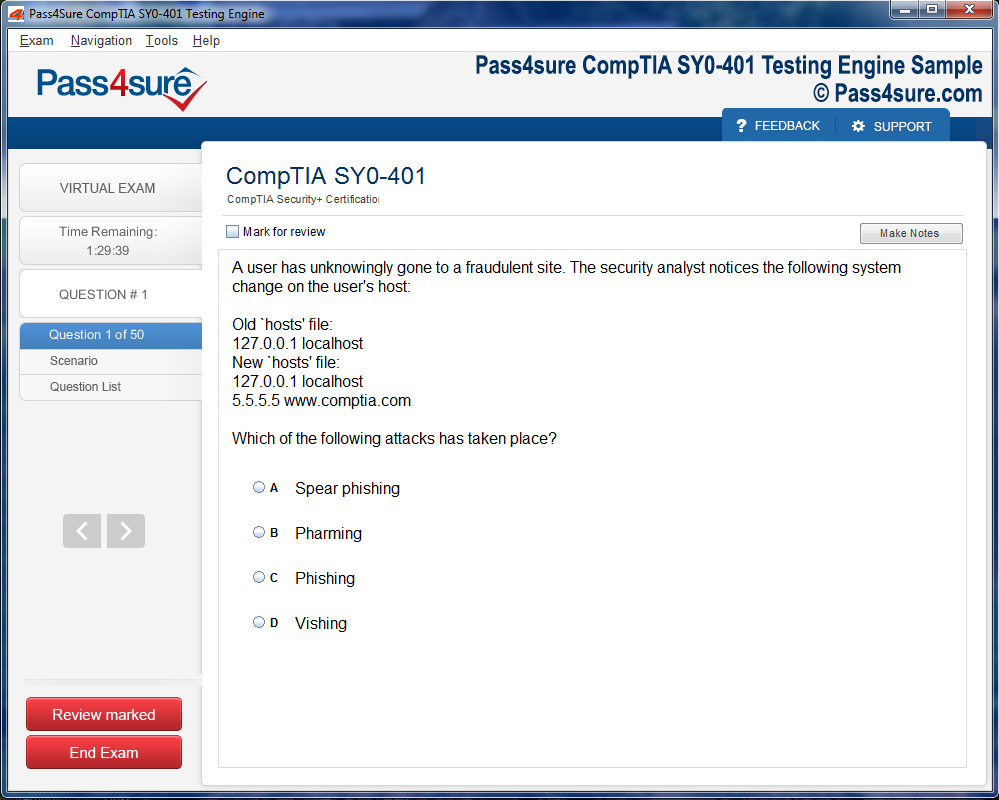
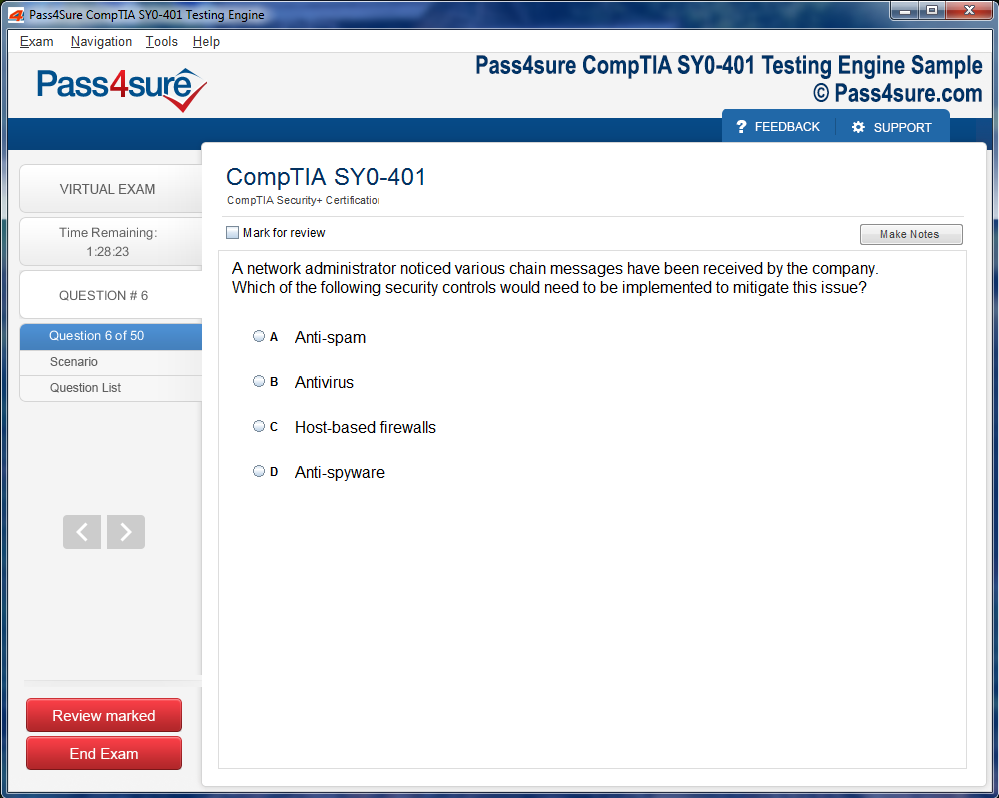
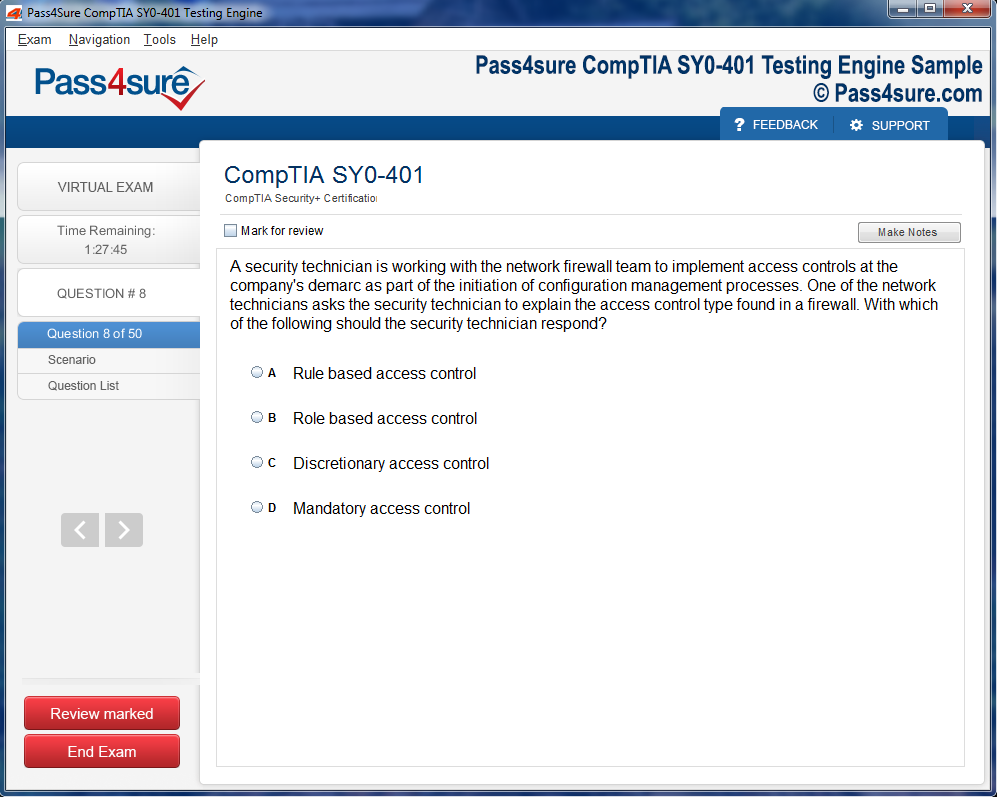
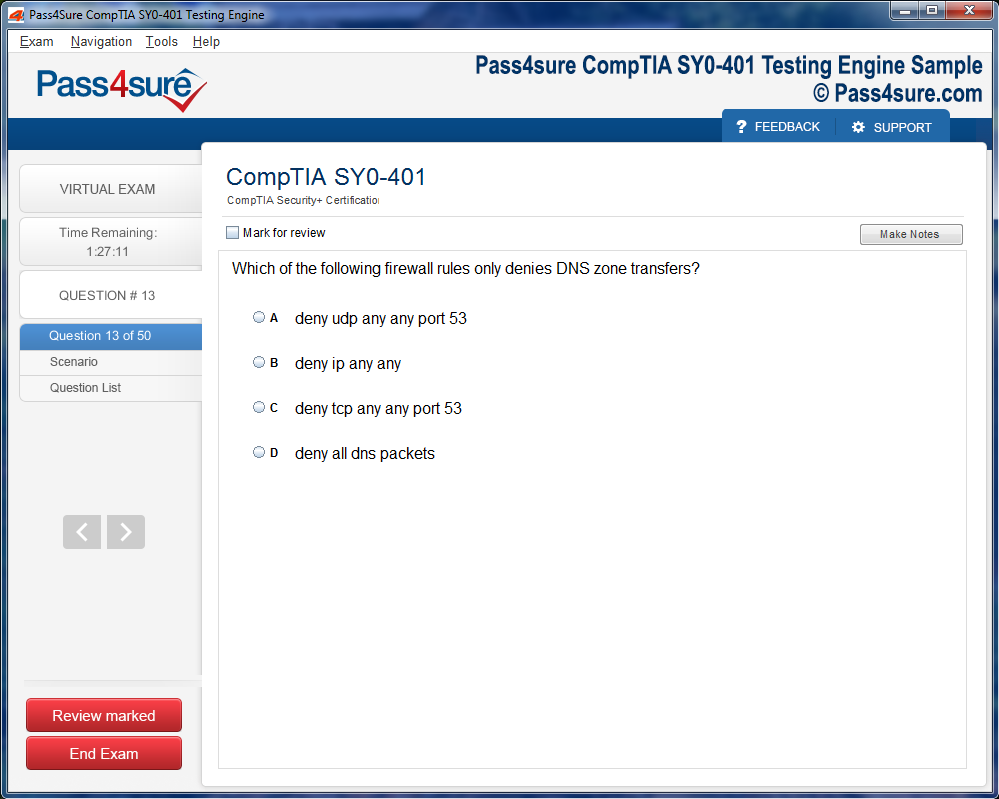
Frequently Asked Questions
How does your testing engine works?
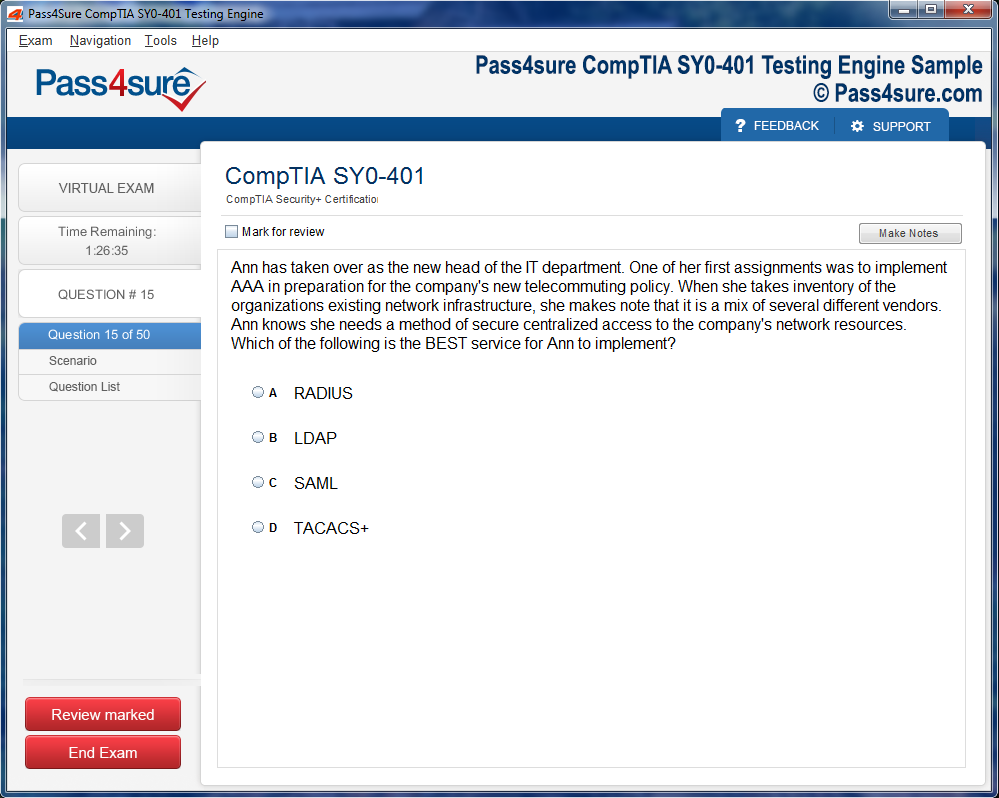
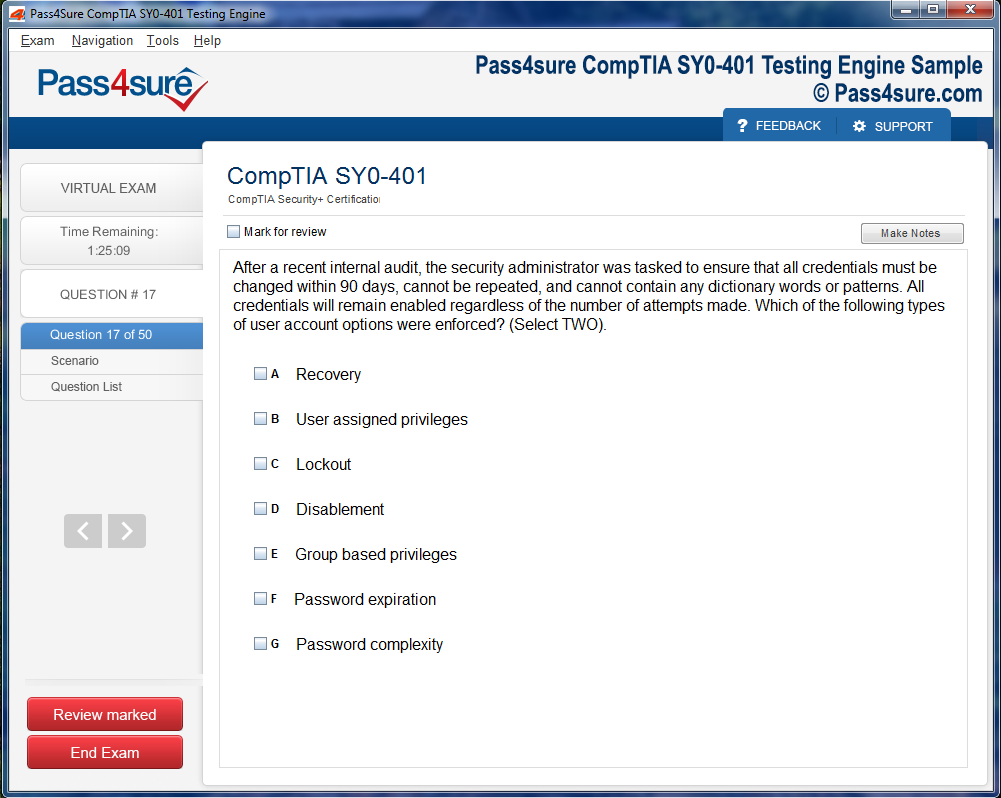
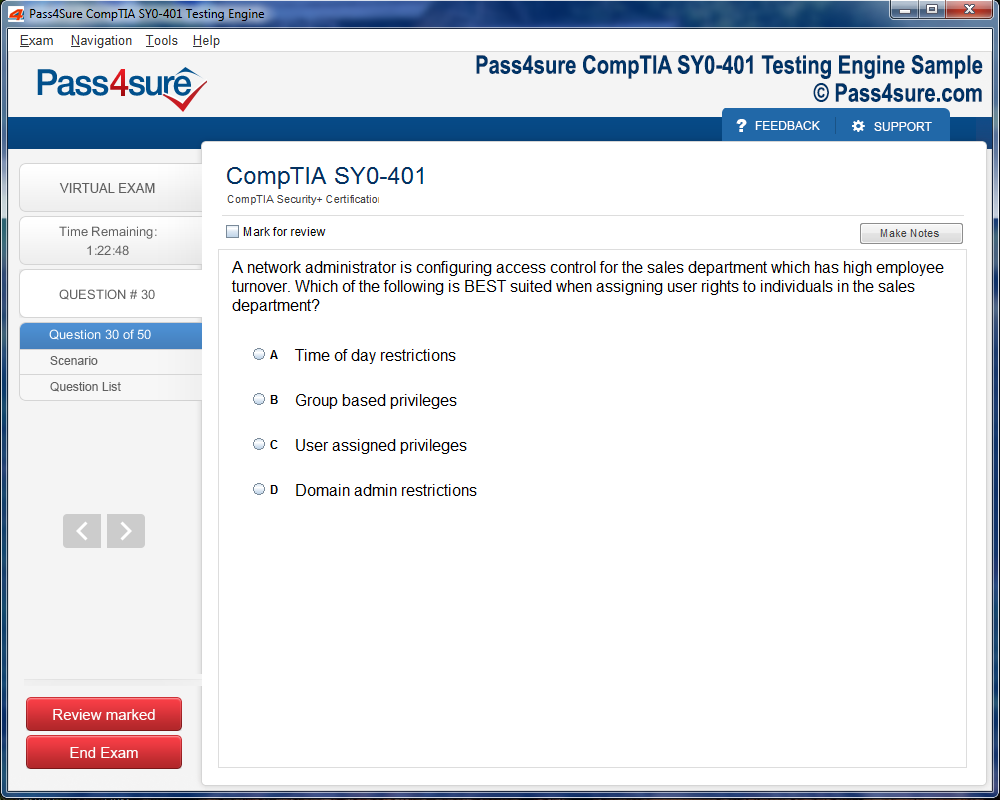
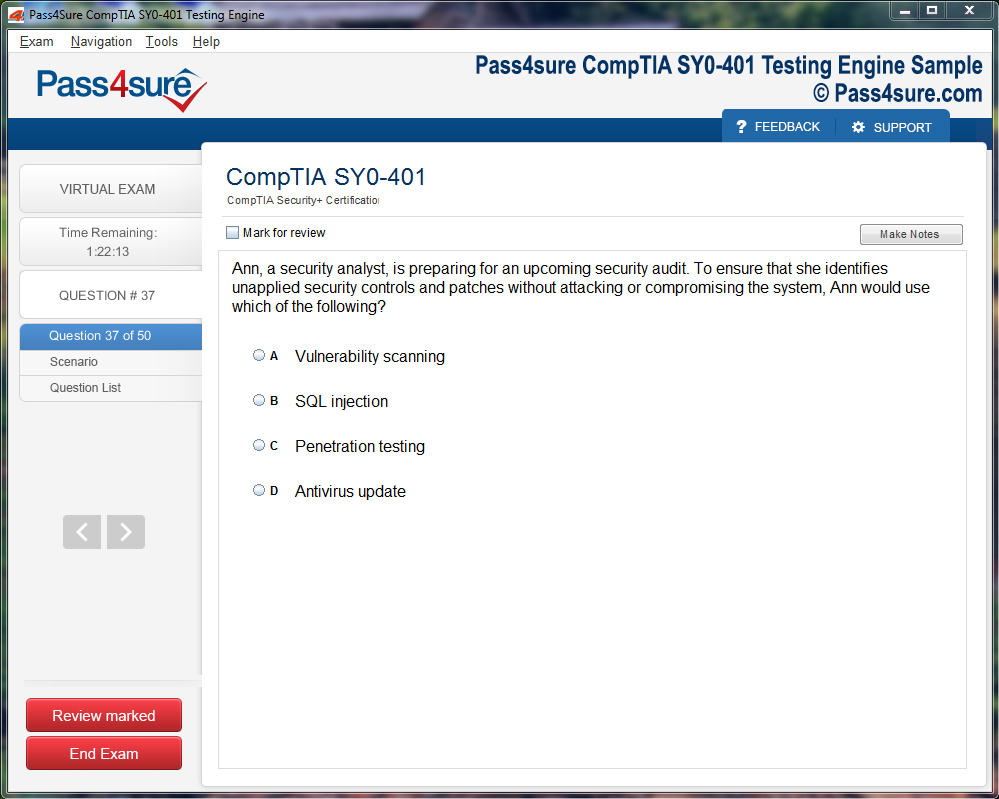
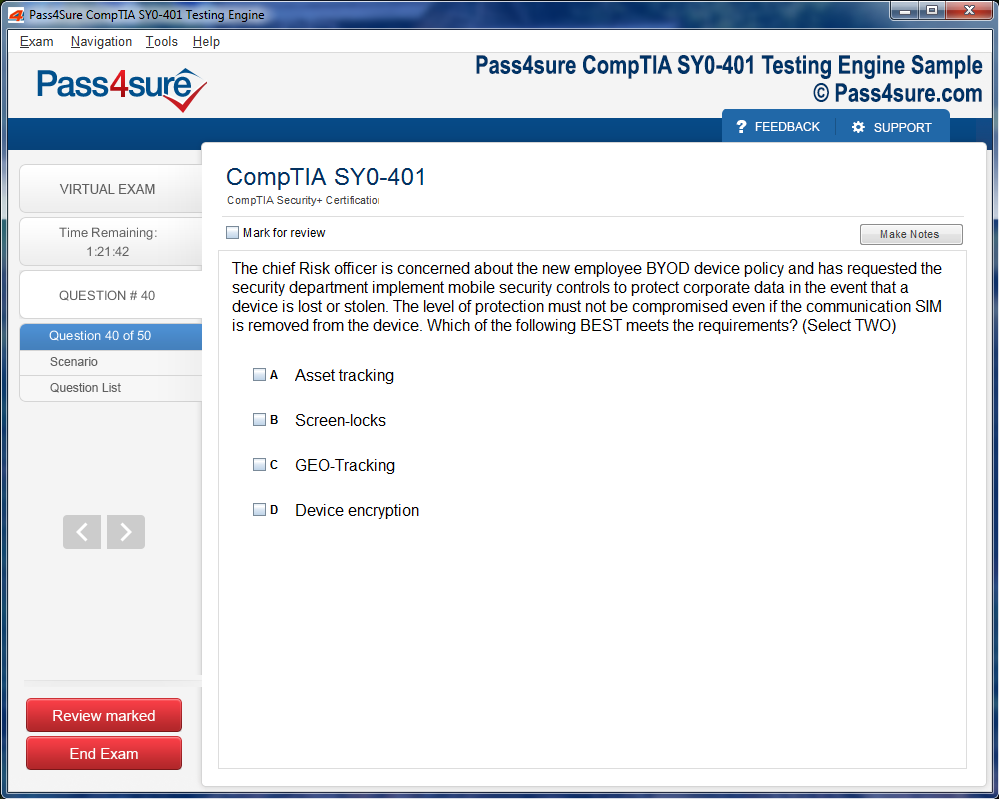
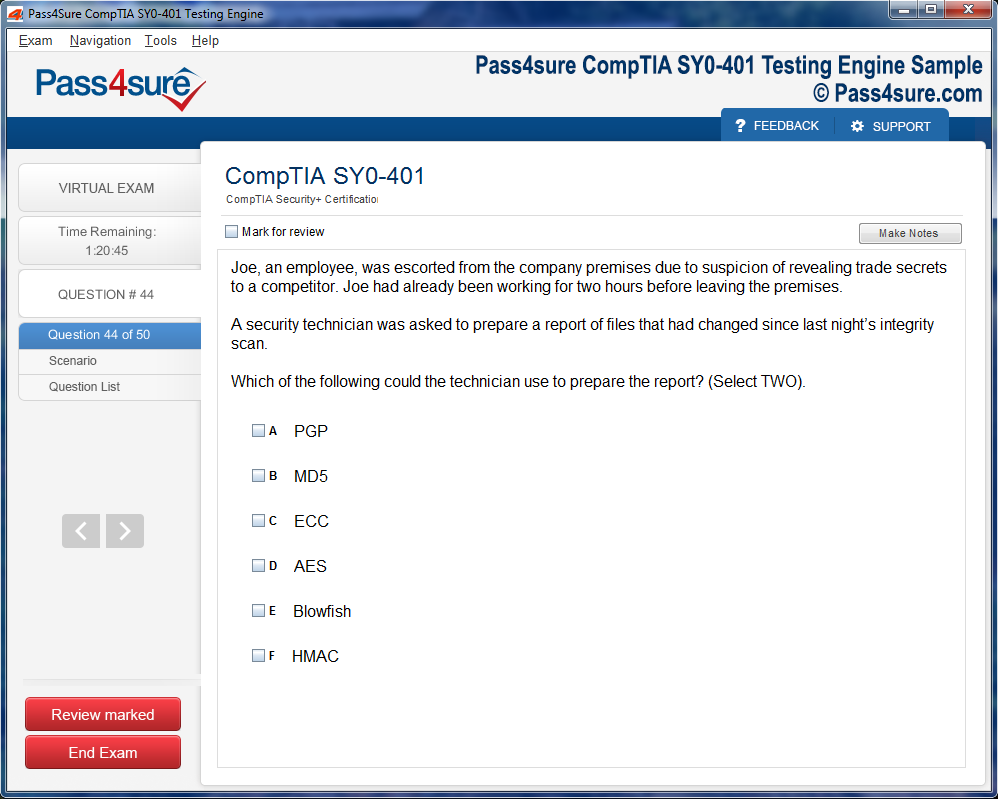
Once download and installed on your PC, you can practise test questions, review your questions & answers using two different options 'practice exam' and 'virtual exam'. Virtual Exam - test yourself with exam questions with a time limit, as if you are taking exams in the Prometric or VUE testing centre. Practice exam - review exam questions one by one, see correct answers and explanations.
How can I get the products after purchase?
All products are available for download immediately from your Member's Area. Once you have made the payment, you will be transferred to Member's Area where you can login and download the products you have purchased to your computer.
How long can I use my product? Will it be valid forever?
Pass4sure products have a validity of 90 days from the date of purchase. This means that any updates to the products, including but not limited to new questions, or updates and changes by our editing team, will be automatically downloaded on to computer to make sure that you get latest exam prep materials during those 90 days.
Can I renew my product if when it's expired?
Yes, when the 90 days of your product validity are over, you have the option of renewing your expired products with a 30% discount. This can be done in your Member's Area.
Please note that you will not be able to use the product after it has expired if you don't renew it.
How often are the questions updated?
We always try to provide the latest pool of questions, Updates in the questions depend on the changes in actual pool of questions by different vendors. As soon as we know about the change in the exam question pool we try our best to update the products as fast as possible.
How many computers I can download Pass4sure software on?
You can download the Pass4sure products on the maximum number of 2 (two) computers or devices. If you need to use the software on more than two machines, you can purchase this option separately. Please email sales@pass4sure.com if you need to use more than 5 (five) computers.
What are the system requirements?
Minimum System Requirements:
- Windows XP or newer operating system
- Java Version 8 or newer
- 1+ GHz processor
- 1 GB Ram
- 50 MB available hard disk typically (products may vary)
What operating systems are supported by your Testing Engine software?
Our testing engine is supported by Windows. Andriod and IOS software is currently under development.
OG0-061 Complete Prep: Key Concepts and Insider Tips
The IT4IT Reference Architecture extends beyond mere operational guidelines; it serves as a strategic compass for aligning IT with overarching business objectives. Organizations that adopt IT4IT principles gain the ability to manage IT investments more judiciously and optimize service delivery. Strategic integration begins with a deep comprehension of the value streams, enabling decision-makers to anticipate outcomes and align resources effectively.
When integrating IT4IT principles, it is essential to identify the key performance indicators that reflect the success of IT initiatives. These indicators might include efficiency metrics, service quality benchmarks, and value delivery measurements. By systematically tracking performance, organizations can recalibrate processes and ensure that IT initiatives remain in harmony with business goals.
A robust strategy also considers risk management. IT4IT encourages a proactive approach to risk identification, emphasizing early detection and mitigation. Understanding potential bottlenecks and vulnerabilities within each value stream allows leaders to implement preventive measures, reducing operational disruptions and enhancing resilience.
Optimizing the Requirement to Deploy Value Stream
The Requirement to Deploy value stream is pivotal in transforming conceptual requirements into tangible solutions. Mastery of this stream necessitates an understanding of the end-to-end development lifecycle. It begins with meticulous requirements gathering, which captures both functional and non-functional specifications, ensuring alignment with user expectations and business demands.
Designing solutions within the IT4IT framework demands not only technical expertise but also strategic foresight. IT architects and developers must consider scalability, maintainability, and interoperability to create solutions that withstand evolving organizational needs. The deployment phase then orchestrates the seamless introduction of these solutions into production environments, minimizing downtime and ensuring continuity.
An often-overlooked aspect of R2D is feedback integration. By incorporating user feedback post-deployment, organizations can refine processes and enhance service quality. This iterative approach cultivates a culture of continuous improvement, where learning from each deployment informs future development cycles.
Enhancing Efficiency in the Request to Fulfill Stream
The Request to Fulfill stream is instrumental in delivering consistent, high-quality IT services to end-users. Efficiency in this domain relies on a structured approach to service catalog management, request orchestration, and fulfillment monitoring. Understanding the interplay between service offerings and operational capabilities is essential for seamless delivery.
Automation emerges as a transformative factor in this stream. By automating routine service requests and approvals, organizations reduce manual effort, accelerate response times, and free IT personnel to focus on strategic initiatives. IT4IT emphasizes the importance of integrating automation with oversight mechanisms to maintain accountability and service quality.
Equally important is the capacity for adaptation. As organizational needs evolve, the R2F stream must remain flexible, accommodating new services and adjusting fulfillment processes without compromising quality. This adaptability ensures that IT services remain relevant, responsive, and aligned with user expectations.
Detecting and Correcting IT Challenges Effectively
The Detect to Correct value stream embodies the principles of vigilance and agility within IT operations. Effective monitoring and rapid problem resolution are crucial for sustaining service reliability and minimizing disruption. Understanding the causal relationships among incidents, problems, and changes enables IT teams to prioritize interventions strategically.
Proactive detection mechanisms, such as predictive analytics and real-time monitoring, empower organizations to identify potential issues before they escalate. The ability to anticipate and preempt disruptions enhances operational stability and fosters user confidence in IT services.
Corrective measures extend beyond mere problem resolution; they involve analyzing root causes and implementing systemic improvements. By addressing underlying deficiencies, organizations not only resolve immediate incidents but also prevent recurrence, cultivating a culture of continuous refinement and operational excellence.
Leveraging Functional Components for Seamless Integration
Functional components are the structural backbone of IT4IT, facilitating coordination across disparate systems and processes. Mastery of these components entails understanding their roles, interactions, and dependencies within each value stream. The effective integration of functional components ensures coherent information flow, optimized resource utilization, and streamlined service delivery.
Organizations that excel in leveraging functional components recognize the importance of modularity. Modular design enables flexibility, allowing components to evolve independently while maintaining compatibility. This approach supports scalability, simplifies maintenance, and enhances the adaptability of IT solutions.
Data objects, closely intertwined with functional components, serve as the carriers of information and insights. By comprehensively managing data objects, organizations can achieve enhanced transparency, improved decision-making, and a unified view of IT operations. This synergy between components and data objects underpins the operational coherence that IT4IT seeks to establish.
Cultivating a Culture of Continuous Learning and Improvement
Beyond technical mastery, the IT4IT framework encourages organizations to nurture a culture of continuous learning. Certification candidates, as well as IT professionals, benefit from adopting a mindset that prioritizes ongoing education, skill enhancement, and reflective practice. This approach not only supports personal career growth but also drives organizational innovation.
Learning within the IT4IT context involves studying case studies, analyzing operational scenarios, and applying theoretical knowledge to practical challenges. Regular engagement with emerging technologies and industry trends equips professionals with the insights needed to anticipate shifts and respond effectively.
Improvement is not limited to individual development; it extends to process optimization. Organizations that embrace continuous improvement systematically review value streams, functional components, and data flows. By identifying inefficiencies, implementing corrective actions, and monitoring outcomes, they foster an environment where excellence becomes habitual and progress perpetual.
Achieving Mastery Through Practical Experience
Knowledge alone is insufficient for mastering IT4IT principles; practical experience is indispensable. Immersing oneself in real-world scenarios allows candidates to internalize concepts, develop problem-solving skills, and understand the nuanced interdependencies within IT operations. Hands-on practice bridges the gap between theory and application, reinforcing comprehension and boosting confidence.
Simulated exercises, project involvement, and shadowing experienced professionals provide opportunities to witness IT4IT principles in action. These experiences reveal the dynamic nature of IT management and highlight the importance of adaptability, foresight, and collaboration.
Practical engagement also enhances strategic thinking. By observing outcomes, analyzing patterns, and reflecting on decisions, professionals cultivate an intuitive understanding of the IT4IT framework. This experiential knowledge empowers them to apply concepts judiciously, anticipate challenges, and deliver sustainable value.
The Significance of Investment Lifecycle Management
Investment lifecycle management forms the nucleus of Strategy to Portfolio and represents a sophisticated orchestration of ideation, planning, execution, and optimization. It is more than a chronological set of phases; it embodies a continuous cycle where business strategy, technology capabilities, and financial stewardship converge. Understanding this lifecycle is crucial for candidates preparing for the OG0-061 exam, as it reflects the practical mechanisms that translate strategy into actionable IT initiatives.
In the ideation phase, organizations gather insights from market trends, emerging technologies, and stakeholder expectations. Candidates must recognize the value of structured ideation techniques, such as scenario planning and capability assessments, which ensure that proposed initiatives resonate with business priorities. Every idea is meticulously evaluated, not only for its potential returns but also for its alignment with long-term organizational vision. The documentation of these evaluations forms the foundation for informed decision-making, ensuring transparency and traceability in investment decisions.
Planning within the investment lifecycle encompasses resource allocation, risk assessment, and prioritization. It requires a deep understanding of interdependencies between projects, applications, and infrastructure. Candidates should note that the effectiveness of planning hinges on accurate data and integrated tools that consolidate information across portfolios. This integration enables decision-makers to visualize the implications of funding one initiative over another, balancing short-term benefits with strategic, long-term goals.
Execution is where theoretical plans transform into operational realities. Strong project governance, milestone tracking, and performance monitoring are pivotal during this phase. IT leaders rely on key metrics to ensure initiatives remain on schedule, within budget, and aligned with anticipated value creation. Candidates must appreciate the significance of iterative reviews, as feedback loops facilitate course corrections and enhance the probability of success across the portfolio.
Optimization represents the final, yet ongoing, stage of the lifecycle. Continuous evaluation of investment performance allows organizations to reallocate resources dynamically, sunset underperforming initiatives, and enhance value delivery. This stage embodies the principle of adaptive strategy, emphasizing that portfolio management is not a static endeavor but a responsive and forward-looking process that drives sustained organizational success.
Aligning Enterprise Architecture with Strategic Goals
Enterprise architecture serves as the connective tissue between strategy and operational execution. In the Strategy to Portfolio paradigm, architecture is more than a blueprint; it is a strategic enabler that ensures IT capabilities support business objectives efficiently and sustainably. Candidates should internalize that architecture provides a common language for stakeholders, facilitating coherent decision-making across the enterprise.
Strategic alignment begins with understanding business capabilities and identifying gaps in the current state of technology. Architecture teams analyze workflows, system interdependencies, and technical standards to propose solutions that are feasible, scalable, and cost-effective. This alignment ensures that investments are targeted at areas delivering maximum strategic impact. Candidates preparing for the OG0-061 exam must grasp that misalignment between architecture and portfolio can result in wasted resources, operational inefficiencies, and missed opportunities.
Architecture governance plays an equally critical role, establishing principles, policies, and standards that guide investment decisions. Governance frameworks integrate with portfolio oversight mechanisms, providing checks and balances that enforce strategic consistency. Effective governance ensures that all initiatives adhere to organizational norms, reduces risk exposure, and fosters accountability.
Integration of emerging technologies, such as cloud services, automation, and advanced analytics, further accentuates the role of architecture in strategic alignment. Candidates should understand how architecture provides the scaffolding for adopting innovations without compromising stability or operational continuity. By internalizing these principles, learners can appreciate how enterprise architecture functions as both a compass and a control mechanism within Strategy to Portfolio.
Governance and Accountability Mechanisms
Governance within Strategy to Portfolio extends beyond mere compliance. It represents a structured, principled approach to decision-making that safeguards organizational interests while promoting accountability. Candidates must study governance frameworks and understand the interlocking mechanisms that ensure initiatives are justified, monitored, and optimized.
Central to governance are performance metrics, which quantify the efficacy of investments in tangible and intangible terms. Financial returns, risk mitigation, resource utilization, and strategic alignment are common metrics. The integration of real-time reporting tools enables executives to track portfolio health continuously, identify variances early, and implement corrective actions promptly. Candidates must appreciate the symbiotic relationship between metrics and decision-making, as informed governance is contingent upon accurate, timely data.
Executive decision-making bodies are integral to governance. They provide oversight, resolve conflicts, and make high-stakes investment determinations. Understanding the hierarchy and function of these bodies prepares candidates to analyze case studies and scenarios typical in the OG0-061 exam. Governance also incorporates formal and informal review processes, including audits, steering committees, and risk assessments, which collectively ensure initiatives contribute meaningfully to organizational strategy.
Data-Driven Decision Making
The Strategy to Portfolio value stream thrives on data-driven decision-making. Candidates must recognize that high-quality information underpins every aspect of portfolio management, from evaluating potential initiatives to optimizing completed projects. Data objects such as investment records, business capability models, and risk registers serve as repositories of organizational knowledge.
Analytical techniques, including trend analysis, predictive modeling, and performance benchmarking, empower decision-makers to make precise, evidence-based choices. Candidates should note that the integration of these techniques with portfolio management systems enhances visibility, improves forecasting accuracy, and strengthens strategic alignment.
Moreover, data governance is essential to ensure integrity, accuracy, and accessibility. Candidates must understand the mechanisms that safeguard data quality, including validation protocols, metadata management, and stewardship practices. These measures ensure that insights derived from data are reliable and actionable, enabling organizations to respond swiftly to changing business landscapes.
The continuous evolution of data analytics also emphasizes agility. As business conditions shift, historical data alone may not suffice. Advanced analytics, machine learning, and scenario modeling provide predictive insights that inform strategic decisions, helping organizations anticipate challenges and capitalize on opportunities. Understanding these dynamics equips candidates to approach the OG0-061 exam with a comprehensive perspective on modern, data-driven portfolio management.
Strategic Agility and Adaptive Planning
Strategic agility is a hallmark of effective Strategy to Portfolio execution. Organizations must continuously refine their plans to respond to market fluctuations, technological innovations, and evolving business needs. Candidates should appreciate that agility is not synonymous with ad hoc decision-making but represents a structured yet flexible approach to planning.
Adaptive planning involves iterative reviews, scenario analysis, and contingency management. It ensures that strategic objectives remain relevant and that resources are dynamically allocated to initiatives promising maximum impact. Candidates should internalize that the IT4IT framework provides mechanisms to institutionalize agility, allowing organizations to maintain coherence while embracing change.
The interplay between agility and portfolio management extends to resource optimization. By anticipating shifts in demand, organizations can reallocate personnel, budget, and technology assets efficiently, minimizing waste and enhancing value creation. Candidates must also understand the cultural dimension of agility, emphasizing collaborative decision-making, transparent communication, and empowerment at all organizational levels.
Strategic agility further requires constant monitoring of performance against evolving goals. Adaptive planning processes integrate feedback loops, lessons learned, and predictive insights to refine investments continuously. This iterative process ensures that organizations are not merely reactive but proactively positioned to exploit emerging opportunities while mitigating potential risks.
Real-World Applications and Case Studies
Theoretical understanding of Strategy to Portfolio gains practical depth through real-world applications. Candidates benefit from examining case studies that illustrate successful portfolio management, architecture alignment, governance, and adaptive planning. These examples demonstrate how abstract principles translate into concrete business outcomes, reinforcing the relevance of the value stream in organizational success.
Case studies often highlight challenges such as competing priorities, constrained budgets, and rapidly evolving technology landscapes. By analyzing how organizations navigate these complexities, candidates can develop a nuanced understanding of best practices, pitfalls, and critical success factors. Lessons learned from these applications underscore the importance of holistic thinking, data-driven insights, and strategic alignment.
Real-world applications also emphasize cross-functional collaboration. Effective Strategy to Portfolio execution requires coordination among business units, IT teams, finance departments, and executive leadership. Candidates should recognize that fostering communication, shared understanding, and accountability across these groups is essential for achieving desired outcomes.
Finally, case studies illustrate the long-term impact of strategic portfolio management. They show how organizations achieve sustained value, optimize resource utilization, and maintain competitive advantage through disciplined, adaptive approaches to investments. For OG0-061 candidates, these examples provide a bridge between theoretical frameworks and practical execution, equipping them with insights applicable both in exams and professional practice.
Requirement to Deploy as the Operational Backbone
The Requirement to Deploy value stream serves as the operational backbone of IT service delivery. It is not merely a sequence of tasks but a carefully orchestrated set of activities that transforms conceptual ideas into tangible, functioning solutions. Within this stream, precision and clarity are paramount. Each functional component plays a distinct role, interacting with data objects that encapsulate requirements, design artifacts, and validation outputs. Stakeholders rely on the seamless flow of these interactions to ensure that solutions reflect strategic intent while remaining technically viable.
In practical terms, Requirement to Deploy demands fluency in multiple domains. Business analysts, architects, and developers must operate in concert, often within overlapping cycles of design, testing, and validation. Candidates preparing for professional certification must internalize how these interactions manifest in real-world environments. Beyond procedural knowledge, they must appreciate the subtle interplay between process rigor and adaptive flexibility that characterizes successful deployments. Mastery of this stream is therefore both conceptual and applied, requiring a blend of analytical thinking and operational acuity.
Gathering and Translating Requirements
Requirement elicitation is the foundation upon which the entire deployable solution rests. Without accurate, exhaustive requirements, downstream activities risk misalignment, inefficiency, and failure. This process entails engaging stakeholders across multiple levels, capturing explicit needs, and surfacing latent expectations. Techniques range from structured interviews and workshops to observational studies, each selected to optimize clarity and completeness.
Once gathered, requirements must be translated into structured data objects that can guide design and development activities. These objects are not mere documentation; they are dynamic artifacts that inform functional components responsible for analysis, modeling, and verification. Requirements are often interdependent, and understanding their relationships ensures coherent system behavior. The candidate’s challenge lies in visualizing how these abstract needs manifest within operational structures, bridging the gap between strategic vision and executable plans.
Iterative Design and Development Processes
Following requirement translation, the focus shifts to design and development, a phase marked by iteration and collaboration. Modern IT paradigms emphasize concurrent workflows, where architecture formulation, coding, and preliminary testing occur in parallel. This approach reduces latency between concept and deployment, facilitating rapid feedback loops and continuous refinement.
Functional components within this stage support modularization, ensuring that discrete capabilities can be developed, tested, and deployed independently. Data objects act as connective tissue, maintaining integrity across versions and iterations. Candidates must understand the principles of continuous integration and continuous delivery as applied within this stream. Automated pipelines, environment orchestration, and validation scripts are integral tools, enabling controlled yet agile delivery that aligns with enterprise objectives. Awareness of these mechanisms enhances the candidate’s capacity to implement real-world solutions efficiently.
Deployment Coordination and Risk Mitigation
Deployment is the phase where planning meets execution. It involves meticulous coordination across multiple teams, environments, and schedules. Change management practices ensure that modifications are introduced with minimal disruption, while release management orchestrates the timing and sequencing of activities. Functional components responsible for configuration management and build automation underpin these processes, providing visibility and control.
Risk mitigation is a critical concern. Effective deployment requires an understanding of potential failure modes, environmental dependencies, and rollback strategies. Version control, dependency mapping, and automated testing frameworks form the operational toolkit for minimizing adverse impacts. Candidates must not only memorize process steps but also internalize the rationale behind each control, appreciating how strategic foresight translates into operational resilience. This perspective transforms deployment from a mechanical task into a strategic, value-creating activity.
Quality Assurance and Validation Dynamics
The assurance of quality is inseparable from the act of deployment. Validation processes ensure that solutions conform to both business expectations and technical standards. This involves systematic testing, continuous monitoring, and verification of functional and non-functional requirements. Functional components interact with data objects to capture testing outcomes, track defects, and validate compliance with predefined criteria.
Quality assurance is iterative and multidimensional. Unit tests verify component behavior, integration tests ensure interoperability, and system tests evaluate end-to-end functionality. Beyond these traditional paradigms, operational monitoring provides ongoing validation after deployment, highlighting performance deviations and facilitating proactive corrections. Candidates must understand how these layers interrelate, appreciating the continuous feedback loop that reinforces operational integrity and sustains enterprise confidence in deployed solutions.
Continuous Improvement and Feedback Loops
The Requirement to Deploy stream is not static; it is a living cycle shaped by continuous feedback. Post-deployment reviews capture lessons learned, revealing both successes and areas for refinement. Functional components must accommodate these insights, evolving in response to real-world usage patterns. Feedback mechanisms inform future requirements, design iterations, and deployment strategies, creating a virtuous cycle of improvement.
This continuous improvement mindset is essential for professionals seeking mastery. It emphasizes adaptability, resilience, and reflective practice. Candidates are encouraged to understand not only the mechanics of solution delivery but also the philosophical underpinnings of iterative progress. Recognizing patterns in feedback, adjusting processes accordingly, and anticipating downstream consequences transforms Requirement to Deploy from a procedural framework into a strategic advantage. It is within this dynamic interplay that IT4IT principles reveal their full value, linking operational efficiency to enterprise agility.
Integration with Enterprise Strategy
The Requirement to Deploy stream operates within the larger context of enterprise strategy. Each deployment is a manifestation of broader organizational goals, and misalignment can compromise both technical effectiveness and business outcomes. Candidates must grasp how functional components interface with strategic objectives, ensuring that solutions contribute measurable value.
Integration entails harmonizing technology choices, operational processes, and stakeholder priorities. This requires awareness of interdependencies across value streams, emphasizing coherence over isolated efficiency. Data objects serve as bridges, translating strategic intent into actionable artifacts that guide development and deployment. By understanding this integrative function, professionals can move beyond task execution to strategic orchestration, positioning themselves as indispensable contributors to enterprise success.
Enhancing Operational Visibility
Operational visibility is a crucial enabler of effective Requirement to Deploy practices. Real-time monitoring of deployment pipelines, resource utilization, and system performance provides actionable insights for both immediate intervention and long-term planning. Functional components designed for analytics, logging, and reporting capture critical metrics, transforming raw data into knowledge that informs decisions.
Visibility also fosters accountability and transparency, reinforcing stakeholder confidence. Candidates should understand how dashboards, alerts, and automated reporting mechanisms contribute to situational awareness. This awareness not only mitigates risk but also enhances adaptability, enabling teams to respond rapidly to unexpected challenges. Operational visibility thus represents both a tactical tool and a strategic capability, strengthening the organization’s capacity to deliver consistent, high-quality solutions.
Leveraging Automation and Orchestration
Automation and orchestration are cornerstones of a mature Requirement to Deploy stream. By minimizing manual interventions, organizations reduce error rates, accelerate delivery cycles, and optimize resource utilization. Functional components for automated builds, testing scripts, and deployment pipelines enable consistent, repeatable execution of complex tasks.
Orchestration extends these benefits by coordinating interdependent activities across multiple environments and teams. It ensures that sequences occur in the correct order, dependencies are respected, and rollback strategies are available. Candidates must understand how automation and orchestration integrate with functional components and data objects, forming a cohesive framework that supports reliable, scalable, and agile solution delivery. Mastery of these principles differentiates proficient practitioners from mere implementers.
Practical Application in Real-World Scenarios
The theoretical understanding of Requirement to Deploy is insufficient without practical application. Candidates should engage with scenarios that simulate real-world complexities, such as multi-environment deployments, cross-team coordination, and emergency remediation. These exercises reinforce conceptual knowledge while developing problem-solving agility.
Functional components and data objects serve as scaffolding for applied learning. By tracing requirements from inception through design, development, testing, deployment, and feedback, candidates cultivate a holistic perspective. This comprehensive understanding prepares professionals to navigate operational challenges, anticipate risks, and optimize solution delivery, embodying the full potential of IT4IT principles in practice.
Understanding the Essence of Request to Fulfill
The Request to Fulfill value stream occupies a pivotal position in IT service management. Its primary objective revolves around ensuring that end-users receive their requested services efficiently, reliably, and with consistent quality. This stream is an intricate tapestry of processes, data flows, and functional components that together enable organizations to deliver operational excellence. For OG0-061 aspirants, mastery of this domain is indispensable, as it demonstrates proficiency not only in technical processes but also in service orchestration and operational governance.
At its core, Request to Fulfill is about bridging user expectations with organizational capabilities. The value stream is designed to manage the lifecycle of service requests, from initial submission to successful fulfillment. Every component, whether functional or data-centric, plays a critical role in maintaining the fluidity and effectiveness of the process. Candidates are expected to comprehend not only the theoretical underpinnings but also the practical applications that lead to operational efficiency and user satisfaction.
Service Catalog Management as the Backbone
Service catalog management forms the cornerstone of the Request to Fulfill stream. A well-maintained service catalog provides a clear, structured view of available services, offering transparency to users and operational clarity to IT teams. Each service description within the catalog is meticulously defined, capturing the purpose, scope, and expected outcomes of the service. Functional components facilitate the creation and maintenance of these catalog entries, ensuring consistency across the organization.
Data objects associated with service catalog management track user entitlements, approval hierarchies, and fulfillment statuses. These elements work harmoniously to provide a comprehensive view of service availability and accessibility. The integration of automated workflows within the catalog management process reduces human intervention, streamlining approvals, notifications, and status updates. For candidates, understanding how catalog entries interrelate with functional components and data objects is essential, as this knowledge forms the basis for answering operationally focused exam questions.
The Dynamics of Request Management
Request management is the operational heart of the R2F stream. This activity begins the moment a user submits a service request. The system evaluates the request’s validity, categorizes it according to predefined criteria, and routes it to the appropriate fulfillment channel. Efficiency in this stage is critical, as it directly influences user satisfaction and organizational agility.
Functional components support these operations by automating the flow of requests, enabling approvals, and generating notifications to stakeholders. Automation reduces the potential for manual errors and accelerates fulfillment timelines. Data objects capture the historical and real-time details of each request, including its status, ownership, and completion metrics. OG0-061 candidates must appreciate the interplay between these components, recognizing how automation and data governance together facilitate seamless request handling.
Fulfillment Process and Operational Precision
The fulfillment process is the culmination of Request to Fulfill activities. It is here that operational precision is most evident. A request may involve multiple sub-processes, including provisioning software, configuring hardware, granting access permissions, or delivering information resources. Each step must align with predefined service definitions to ensure accuracy, efficiency, and compliance with organizational standards.
Functional components orchestrate the sequence of activities, while data objects maintain records of actions taken, approvals granted, and fulfillment status. Effective orchestration ensures that dependencies are respected, resources are allocated appropriately, and timelines are adhered to. For candidates, a thorough understanding of how these mechanisms interlock is crucial, as it provides insight into operational risk management and quality assurance within IT service delivery.
Service Level Management in the R2F Context
Service level management is integral to Request to Fulfill, providing a framework to measure and enforce operational commitments. Each service comes with defined performance expectations, often captured in service level agreements (SLAs). Monitoring these agreements ensures that services are delivered within the agreed-upon parameters, protecting user trust and organizational reputation.
Functional components facilitate the collection of performance data, while data objects store critical metrics such as response times, resolution times, and fulfillment rates. When service levels are not met, corrective actions can be initiated based on this data. For candidates, understanding how service level management integrates with request management and fulfillment processes is pivotal. It illustrates the continuous cycle of monitoring, evaluation, and improvement that underpins operational excellence.
Reporting and Analytics as Enablers of Improvement
Insightful reporting and analytics are vital to enhancing the R2F stream. By systematically capturing and analyzing data, organizations can identify bottlenecks, inefficiencies, and opportunities for process optimization. Reporting components aggregate data from multiple sources, enabling the creation of actionable intelligence that drives informed decision-making.
Data objects underpin these analytics, storing historical trends, performance metrics, and fulfillment patterns. Through sophisticated dashboards and reports, IT teams can visualize operational performance, predict potential delays, and proactively address service deficiencies. Candidates must grasp the significance of these analytical tools, recognizing their role not only in compliance and governance but also in fostering a culture of continuous improvement within service operations.
Real-World Implications and Practical Scenarios
The theoretical knowledge of Request to Fulfill gains depth when contextualized with real-world scenarios. Organizations that excel in service fulfillment exhibit highly streamlined processes, minimal errors, and exceptional user satisfaction. Examples of such high-performing environments illustrate the importance of integrating automation, precise data management, and responsive operational strategies.
By examining practical scenarios, candidates can correlate exam concepts with tangible outcomes. For instance, automated workflows that handle routine requests reduce operational overhead while ensuring consistency. Service catalogs that are meticulously maintained prevent misunderstandings and expedite fulfillment. Performance metrics, monitored through robust reporting mechanisms, enable proactive interventions that maintain service quality. The practical application of these principles is a testament to the strategic value of the R2F stream in organizational success.
Detect to Correct – Ensuring Operational Excellence
The Detect to Correct value stream forms the linchpin of operational stability within IT landscapes, emphasizing the delicate balance between vigilance and responsiveness. It is the compass that guides organizations through the labyrinth of modern IT operations, where rapid change and complex interdependencies can easily obscure emerging issues. At its core, this value stream intertwines proactive foresight with reactive precision, allowing teams to preserve service integrity while continually refining processes. Candidates preparing for the OG0-061 exam must internalize this stream not only as a theoretical construct but as a practical blueprint for maintaining service excellence across diverse IT ecosystems.
Monitoring, as the initial sentinel in Detect to Correct, encompasses a spectrum of continuous observation techniques. From telemetry that traces system behaviors to log analytics that deciphers nuanced anomalies, monitoring acts as the foundation of situational awareness. It is not merely about gathering data but transforming raw inputs into intelligible narratives that reveal underlying system health and potential disruptions. Functional components play a crucial role by structuring this information into actionable insights, ensuring that IT teams can anticipate deviations before they evolve into service-impacting incidents. For instance, performance metrics are interpreted not just in isolation but as part of broader trends, enabling predictive maintenance and strategic prioritization.
Detection mechanisms thrive on integration, drawing from multiple sources to present a coherent operational picture. Alerts, events, and anomalies converge into dashboards that highlight areas of concern, while automated correlation engines filter noise from critical signals. This synthesis is vital, as it allows organizations to detect patterns invisible to isolated observation, thereby reducing mean time to detection and increasing the efficacy of corrective interventions. Candidates should comprehend how these components interact with data objects such as incidents, alerts, and health indicators, forming an intricate network that translates operational observations into immediate action points.
Incident management constitutes the reactive core of this value stream. Incidents, defined as unplanned interruptions or degradations in service, demand swift, structured responses to limit disruption and restore functionality. The lifecycle of an incident encompasses identification, logging, classification, prioritization, investigation, resolution, and closure. Each step is supported by functional components designed to streamline workflows and ensure consistency. Candidates must appreciate how incident management is underpinned by accurate information capture, traceable resolution paths, and coordination across multiple teams, thereby ensuring operational coherence even amid chaotic events.
Problem management complements this reactive layer by addressing the root causes behind incidents. Unlike incidents, which are symptomatic, problems delve into systemic weaknesses, latent defects, and recurring failures that threaten long-term stability. Root cause analysis is paramount, leveraging historical data, event correlations, and diagnostic insights to pinpoint origins and implement corrective strategies. Proficiency in mapping incidents to underlying problems enables IT teams to reduce recurrence, optimize service delivery, and strengthen resilience. Exam candidates should internalize not only the procedural aspects of problem management but also its strategic significance in sustaining operational excellence.
Corrective actions blend reactive urgency with proactive foresight. Immediate remediation addresses the pressing impact of disruptions, employing predefined workflows, runbooks, and escalation protocols to restore normalcy efficiently. Proactive strategies, however, extend beyond immediate containment, seeking to fortify systems against future occurrences. Leveraging data analytics, lessons learned, and predictive modeling, organizations can anticipate vulnerabilities and implement preventive measures. Functional components orchestrate these actions by facilitating change management, remediation planning, and post-incident evaluations, thereby embedding a culture of continual refinement into daily operations.
Integration with other value streams amplifies the efficacy of Detect to Correct. No operational process exists in isolation; insights gathered from monitoring and incident management inform strategic decision-making, development priorities, and service enhancements. Strategy to Portfolio contributes contextual understanding, Requirement to Deploy ensures alignment of corrective initiatives with development pipelines, and Request to Fulfill enables seamless translation of operational adjustments into service requests. This interconnectedness transforms reactive processes into a feedback loop that strengthens the entire IT lifecycle, offering candidates a holistic view crucial for exam success and practical application.
Operational reporting and analytics form the reflective layer of this value stream. Dashboards, visualizations, and performance reports provide management with actionable intelligence, guiding decisions that optimize resource allocation, improve service quality, and elevate customer experience. These outputs not only measure the efficacy of corrective measures but also illuminate areas for process enhancement. Continuous improvement emerges as a natural extension, where iterative learning cycles embed resilience, adaptability, and efficiency into organizational operations. Candidates benefit by understanding how these outputs close the loop between detection, correction, and operational evolution, translating theory into tangible, high-impact practices.
The Detect to Correct value stream thrives on the orchestration of complex yet intuitive workflows. Each component, from monitoring to problem resolution, operates as a cog within a finely tuned mechanism that ensures service continuity. Understanding the nuances of data flows, incident interdependencies, and corrective methodologies equips candidates to approach operational challenges with confidence and precision. This stream exemplifies the symbiosis between automation and human judgment, illustrating that technology, when paired with structured processes, can transform reactive firefighting into strategic service stewardship.
Data fidelity is another cornerstone of operational excellence within Detect to Correct. Accurate, timely, and contextual data underpins every decision, enabling predictive insights and precise corrective actions. Functional components employ sophisticated algorithms, event correlation mechanisms, and trend analyses to ensure that data is not only abundant but meaningful. Candidates must appreciate the role of data governance, consistency, and integrity in ensuring that operational interventions are both appropriate and effective. In practice, this translates to reduced downtime, optimized resource utilization, and enhanced service reliability—outcomes that resonate across organizational hierarchies.
Incident prioritization, informed by business impact and urgency, determines the order and intensity of response. This triage process ensures that high-risk incidents receive immediate attention while lower-impact disruptions are managed efficiently. Functional components support prioritization through scoring matrices, workflow automation, and contextual alerts. Candidates preparing for the OG0-061 exam must understand how prioritization aligns with overall service objectives, ensuring that operational resources are deployed where they deliver maximum value. This strategic alignment transforms incident management from a reactive necessity into a deliberate, value-driven practice.
Proactive maintenance strategies extend the value stream beyond immediate corrective action. Predictive analytics, trend monitoring, and scenario simulations allow organizations to anticipate disruptions before they occur. These strategies reduce service downtime, enhance user satisfaction, and optimize operational costs. Candidates should study how functional components facilitate preventive interventions, maintenance schedules, and automated alerts that preemptively address vulnerabilities. Mastery of these concepts reflects an understanding that operational excellence is not merely about response but about anticipation and strategic foresight.
Collaboration and communication underpin the effectiveness of the Detect to Correct stream. Functional components support cross-team coordination, incident handoffs, and knowledge sharing, ensuring that expertise is leveraged efficiently across the organization. Structured communication channels, automated notifications, and integrated collaboration platforms enable teams to respond with precision, even in high-pressure scenarios. Candidates should internalize the importance of seamless interaction between monitoring systems, incident managers, problem analysts, and development teams, recognizing that human and technological synergy is essential for operational resilience.
Root cause documentation, lessons learned, and knowledge repositories transform episodic disruptions into organizational intelligence. Post-incident reviews provide insights that inform process refinement, training programs, and system enhancements. Functional components capture these learnings, embedding them into workflows to prevent recurrence and accelerate future response times. Candidates must understand the iterative nature of this learning cycle, where each incident contributes to a growing body of operational wisdom that continuously elevates service quality and organizational agility.
The interplay between automation and human oversight is particularly evident in corrective processes. While automated detection, correlation, and alerting streamline initial responses, human expertise remains critical for nuanced diagnosis, strategic decision-making, and contextual judgment. Candidates preparing for the OG0-061 exam must grasp this balance, recognizing that operational excellence emerges not from automation alone but from the integrated application of technology and human insight. This understanding empowers IT professionals to design resilient systems that adapt to dynamic challenges without compromising reliability or performance.
Change management and remediation planning constitute the forward-looking dimension of Detect to Correct. Functional components facilitate controlled modifications, ensuring that corrective actions do not introduce new risks or disruptions. By aligning remediation strategies with broader operational goals, organizations achieve a sustainable balance between immediate fixes and long-term stability. Candidates benefit by studying the mechanisms that govern change approvals, risk assessment, and impact analysis, internalizing how structured processes safeguard both service integrity and organizational objectives.
In summary, the Detect to Correct value stream represents a multifaceted approach to operational excellence. It encompasses monitoring, detection, incident and problem management, corrective actions, integration with other value streams, reporting, and continuous improvement. Each component contributes to a cohesive framework that transforms operational challenges into opportunities for learning, adaptation, and strategic enhancement. Candidates who master the intricacies of this stream gain not only a tactical understanding of IT operations but also a strategic perspective that aligns operational practices with organizational objectives, laying the foundation for long-term success in the OG0-061 exam and beyond.
Synthesizing Knowledge Across Value Streams
Mastery of IT4IT requires more than memorization; it demands the ability to synthesize information across multiple value streams. Candidates preparing for the OG0-061 exam must internalize how Strategy to Portfolio, Requirement to Deploy, Request to Fulfill, and Detect to Correct interrelate. Each stream represents a distinct perspective on IT management, yet their interdependencies create a cohesive operational ecosystem. Understanding these connections ensures that candidates can navigate complex scenarios with fluency.
The flow of functional components and data objects across value streams illustrates how information and control move through an IT landscape. By tracing these flows in practical exercises, candidates can visualize dependencies that often underpin exam questions. Recognizing that actions in one stream can have cascading effects in another reinforces the necessity of holistic comprehension. Conceptual mapping becomes indispensable here, allowing for mental diagrams that clarify the sequences and interactions of IT processes.
Consolidation of knowledge also encourages integration of nuanced details. For example, the interaction between service portfolio management in Strategy to Portfolio and deployment orchestration in Requirement to Deploy requires understanding both strategic intent and operational execution. Candidates who excel in connecting these dots demonstrate superior analytical skills and are better equipped to anticipate the implications of scenario-based questions.
Practical Application Through Scenario-Based Exercises
Engaging in scenario-based exercises offers an avenue to convert theoretical understanding into applied knowledge. The OG0-061 exam emphasizes scenarios reflective of real-world IT challenges. Candidates are often presented with complex situations requiring the identification of optimal workflows, functional components, or data objects. These exercises demand critical thinking and decision-making under constrained information conditions, simulating actual organizational dilemmas.
By regularly practicing scenario-based questions, candidates cultivate an instinct for recognizing patterns, relationships, and critical dependencies. It also highlights gaps in understanding that might otherwise be overlooked during passive study. The process of analyzing a scenario, identifying relevant components, and predicting potential outcomes mirrors the actual dynamics of IT4IT operations. In turn, this reinforces confidence in applying knowledge to unfamiliar contexts.
Furthermore, integrating role-based scenarios into preparation encourages a practical mindset. Understanding the perspective of IT managers, architects, or service delivery leads provides richer insights into value stream interactions. This multidimensional approach strengthens conceptual clarity and enhances the ability to respond accurately under exam conditions.
Time Management and Exam Pacing
Efficient time management is a pivotal aspect of OG0-061 preparation. The exam requires not only precision but also the ability to analyze and respond within a finite period. Developing a structured pacing strategy can significantly improve performance and reduce stress.
Candidates should simulate exam conditions through timed practice sessions. Allocating time to carefully read each question, analyze contextual clues, and methodically select the best response fosters disciplined examination habits. Practicing these techniques repeatedly builds familiarity with pacing, allowing candidates to approach each question with a composed mindset.
Time management also involves prioritization. Questions that involve straightforward identification of data objects or functional components can be addressed quickly, reserving more complex scenario analyses for focused attention. This strategy ensures that candidates avoid rushing through intricate scenarios, reducing the likelihood of errors stemming from oversight or haste.
By adopting a conscious approach to time allocation, candidates enhance both efficiency and accuracy, establishing a rhythm that can be sustained throughout the exam.
Recognizing Patterns and Relationships
A profound understanding of IT4IT emerges from recognizing recurring patterns and relationships. The exam frequently tests comprehension of interactions between value streams, the flow of data objects, and the influence of functional components. Candidates who can identify these patterns gain a strategic advantage.
Flow diagrams and mental models serve as practical tools to internalize these relationships. Mapping how a service request moves from inception in Request to Fulfill through deployment in Requirement to Deploy, and ultimately to monitoring in Detect to Correct, provides clarity on process interdependencies. Similarly, observing patterns in data object transformations enhances conceptual retention and supports quick recall during the exam.
Focusing on these relationships transforms rote memorization into actionable insight. It allows candidates to anticipate logical outcomes in complex scenarios, demonstrating analytical acumen. This capacity for synthesis is often the differentiator between candidates who achieve high proficiency and those who struggle to navigate interconnected concepts.
Leveraging Advanced Preparation Resources
Effective preparation involves engagement with advanced resources and contemporary industry practices. Staying aligned with updates to the IT4IT Reference Architecture ensures that candidates are familiar with the latest standards and methodologies. Integrating case studies, expert analyses, and whitepapers into study routines enriches understanding and offers practical context for theoretical concepts.
These resources provide nuanced insights into real-world implementations of IT4IT principles. Candidates can observe how organizations manage value streams, optimize data flows, and leverage functional components for operational efficiency. By reflecting on these examples, candidates gain a broader perspective that extends beyond the confines of the exam.
Additionally, advanced preparation encourages critical evaluation. Candidates develop the ability to assess the applicability of specific practices in varying contexts, honing judgment and adaptability. This depth of understanding reinforces both exam readiness and professional competency in IT management.
Cultivating Strategic Thinking and Confidence
The cognitive dimension of exam success is inseparable from psychological preparation. Confidence and strategic thinking significantly influence performance. Regular review sessions, iterative practice tests, and reflective analysis of errors build resilience and familiarity with exam structure.
Strategic thinking involves anticipating the implications of choices within scenarios, weighing potential outcomes, and selecting the most effective course of action. It also entails flexibility, recognizing that multiple approaches may appear valid, yet only one aligns with IT4IT principles and best practices. Cultivating this mindset allows candidates to navigate ambiguity with poise.
Confidence arises from repeated exposure and mastery. By systematically revisiting challenging concepts, practicing scenario responses, and reviewing previous mistakes, candidates internalize a sense of preparedness. This psychological readiness reduces exam anxiety, allowing knowledge application to flow seamlessly under timed conditions.
Moreover, the integration of conceptual mastery with strategic thinking prepares candidates not only for exam success but also for practical implementation in professional environments. The skills honed during preparation translate into enhanced decision-making, improved process management, and more effective collaboration across IT domains.
Integrating Knowledge for Long-Term Growth
True proficiency in IT4IT extends far beyond merely passing the OG0-061 exam. While exam success demonstrates familiarity with key concepts, long-term mastery arises from the ability to synthesize knowledge across the IT value stream, recognize systemic patterns, and apply strategic thinking in operational contexts. Professionals who integrate these elements position themselves for sustained growth, not only in their careers but also in their capacity to influence organizational efficiency and innovation. Exam preparation serves as a foundational scaffold, offering a structured framework that enables candidates to understand core processes, principles, and best practices. However, this structured preparation is only the first step. The real development occurs when practitioners translate this knowledge into practical insights and tangible outcomes within their organizations.
Holistic integration of IT4IT knowledge allows professionals to perceive the organization as a connected ecosystem rather than a collection of isolated processes. By understanding interdependencies between value streams, teams, and technologies, IT leaders can anticipate potential risks, identify bottlenecks, and design interventions that optimize workflows. This perspective fosters proactive problem-solving, enabling organizations to adapt to challenges rather than react to them. For example, recognizing how changes in service management can ripple across operational support, portfolio management, and enterprise architecture provides leaders with the foresight needed to implement solutions that minimize disruption while maximizing efficiency. Such systemic insight is often what differentiates competent practitioners from true IT strategists.
Data-driven decision-making is another critical aspect of long-term growth in IT4IT. Professionals who move beyond rote memorization to leverage analytical capabilities can extract actionable insights from operational metrics, performance dashboards, and process analytics. Understanding patterns in data allows for informed predictions about system performance, resource allocation, and risk exposure. By applying these insights, IT managers can make strategic adjustments to processes, optimize resource utilization, and enhance the quality of service delivery. This not only improves operational outcomes but also builds credibility with stakeholders who rely on data-backed decisions. Over time, this practice strengthens organizational agility, enabling IT departments to respond effectively to changing business priorities.
Embedding IT4IT principles into daily practice also cultivates a mindset of continuous improvement. When practitioners regularly assess workflows, benchmark performance against established standards, and seek opportunities to refine processes, they develop habits that extend beyond exam preparation. Continuous improvement is not limited to operational tweaks; it involves cultivating an organizational culture that values efficiency, transparency, and innovation. Professionals who consistently apply these principles create environments where learning, adaptation, and growth are normalized. This mindset allows teams to anticipate challenges, iterate on solutions, and sustain high levels of performance over time, ultimately contributing to long-term organizational resilience.
Strategic foresight is equally important in translating IT4IT knowledge into practical expertise. By anticipating future trends, emerging technologies, and evolving business requirements, professionals can align IT initiatives with broader organizational objectives. Strategic thinking enables leaders to identify opportunities for innovation, guide investment decisions, and position their organizations to capitalize on market shifts. For example, recognizing the potential impact of cloud adoption, automation, or artificial intelligence on value streams allows IT leaders to proactively redesign workflows, reallocate resources, and train teams in advance. This forward-looking approach minimizes operational surprises and ensures that IT remains a driving force for business success rather than a reactive support function.
Professional growth in IT4IT is further reinforced through collaborative learning and knowledge sharing. Engaging with peers, mentors, and industry communities allows practitioners to test their understanding, validate assumptions, and discover alternative approaches. Collaborative problem-solving fosters a culture of shared expertise, where lessons learned in one team or project can be applied elsewhere. By participating in these exchanges, professionals develop nuanced insights into the practical application of IT4IT principles, gaining perspectives that go beyond textbook scenarios. This network of shared knowledge enhances decision-making and reinforces long-term competency, creating a virtuous cycle of learning and application.
Moreover, integrating IT4IT knowledge into leadership practice enables professionals to drive meaningful organizational transformation. Operational insight, analytical capability, and strategic foresight converge to inform policies, governance structures, and process optimizations. Leaders who can articulate how changes in IT processes affect business outcomes can influence decision-making at the executive level, secure resources for critical initiatives, and guide teams toward shared objectives. The ability to connect technical expertise with organizational strategy transforms IT from a functional necessity into a strategic asset, reinforcing the value of long-term mastery.
Another dimension of long-term growth is cultivating adaptability. The IT landscape is dynamic, characterized by rapid technological advances and shifting business priorities. Professionals who have internalized IT4IT principles can adapt to these changes with agility, applying foundational knowledge to new tools, processes, or business models. Adaptable practitioners are able to integrate emerging technologies, reengineer workflows, and adjust governance models without losing sight of strategic objectives. This adaptability ensures that IT4IT mastery is not static; it evolves alongside technological progress, making the professional continuously relevant in a competitive landscape.
Finally, viewing the OG0-061 exam as a milestone rather than a final destination is essential for long-term professional development. While the exam validates foundational knowledge, it is the ongoing application, synthesis, and evolution of this knowledge that establishes true expertise. Each project, process improvement initiative, or strategic intervention represents an opportunity to refine skills, deepen understanding, and expand influence. By embedding IT4IT principles into their daily work, professionals transition from theoretical understanding to applied expertise, shaping the trajectory of their careers and contributing meaningfully to organizational success.
In conclusion, integrating IT4IT knowledge for long-term growth requires a deliberate, multifaceted approach. It involves combining operational insight with strategic foresight, leveraging data for informed decisions, fostering continuous improvement, embracing collaboration, and cultivating adaptability. Professionals who adopt this holistic approach are not merely exam achievers; they are strategic IT practitioners capable of driving sustainable value across their organizations. The OG0-061 exam becomes a significant milestone in a broader journey, marking the point at which knowledge begins to transform into enduring expertise and measurable impact. Through persistent application and reflective practice, IT4IT mastery evolves from a collection of concepts into a powerful framework for professional growth, organizational innovation, and sustained success.
Conclusion
The OG0-061 IT4IT exam requires a deep understanding of IT4IT concepts, functional components, and value streams. This six-part series has covered foundational knowledge, value stream specifics, practical applications, and exam strategies. Candidates who engage thoroughly with each value stream, practice scenario-based exercises, and employ strategic preparation techniques will be well-equipped to achieve certification. Mastery of IT4IT not only ensures exam success but also equips IT professionals with the skills to optimize, manage, and transform IT operations effectively within their organizations.
Top The Open Group Exams
- OGEA-103 - TOGAF Enterprise Architecture Combined Part 1 and Part 2
- OGEA-101 - TOGAF Enterprise Architecture Part 1
- OG0-093 - TOGAF 9 Combined Part 1 and Part 2
- OGEA-102 - TOGAF Enterprise Architecture Part 2
- OG0-092 - TOGAF 9 Part 2
- OG0-091 - TOGAF 9 Part 1
- OGBA-101 - TOGAF Business Architecture Foundation
- OGA-031 - ArchiMate 3 Part 1
- OGA-032 - ArchiMate 3 Part 2
- OGEA-10B - TOGAF Enterprise Architecture Bridge