

Exam Code: NCM-MCI v6.5
Exam Name: Nutanix Certified Master - Multicloud Infrastructure v6.5
Certification Provider: Nutanix
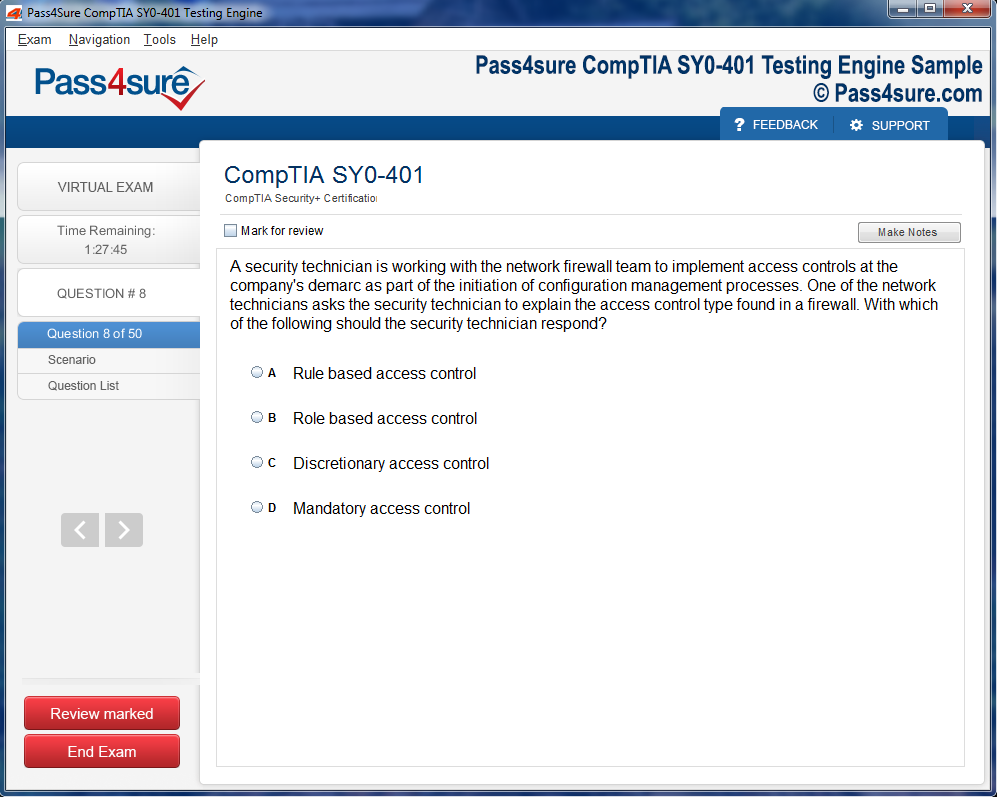
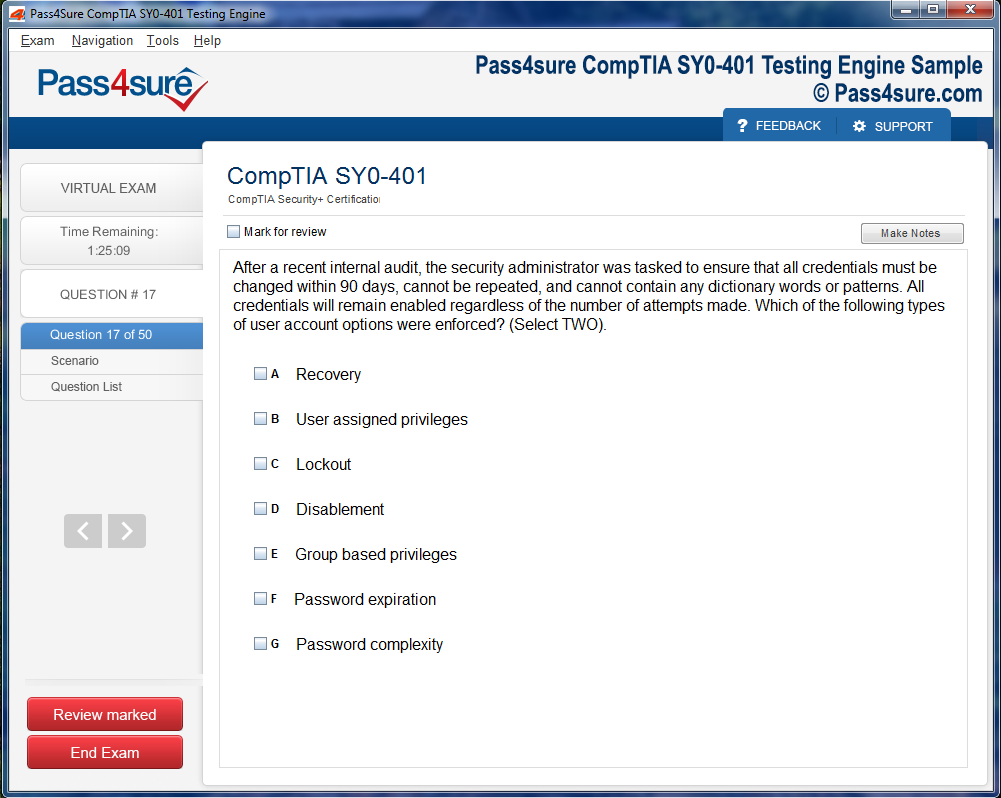
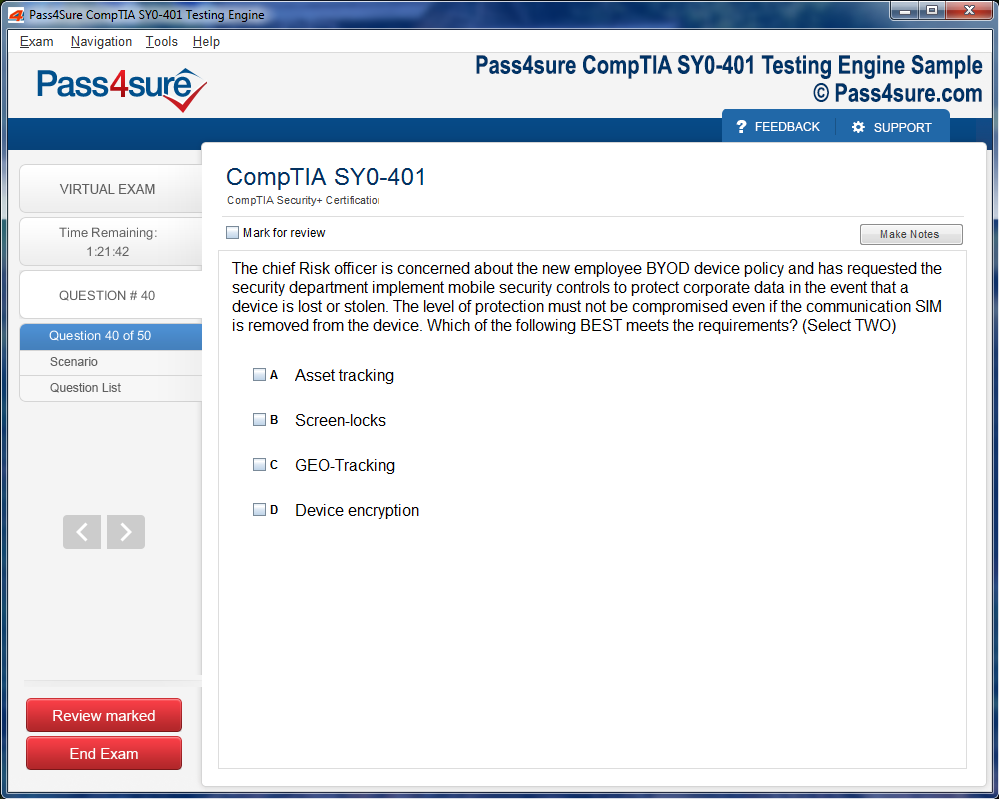
Product Screenshots







Frequently Asked Questions
How does your testing engine works?
Once download and installed on your PC, you can practise test questions, review your questions & answers using two different options 'practice exam' and 'virtual exam'. Virtual Exam - test yourself with exam questions with a time limit, as if you are taking exams in the Prometric or VUE testing centre. Practice exam - review exam questions one by one, see correct answers and explanations.
How can I get the products after purchase?
All products are available for download immediately from your Member's Area. Once you have made the payment, you will be transferred to Member's Area where you can login and download the products you have purchased to your computer.
How long can I use my product? Will it be valid forever?
Pass4sure products have a validity of 90 days from the date of purchase. This means that any updates to the products, including but not limited to new questions, or updates and changes by our editing team, will be automatically downloaded on to computer to make sure that you get latest exam prep materials during those 90 days.
Can I renew my product if when it's expired?
Yes, when the 90 days of your product validity are over, you have the option of renewing your expired products with a 30% discount. This can be done in your Member's Area.
Please note that you will not be able to use the product after it has expired if you don't renew it.
How often are the questions updated?
We always try to provide the latest pool of questions, Updates in the questions depend on the changes in actual pool of questions by different vendors. As soon as we know about the change in the exam question pool we try our best to update the products as fast as possible.
How many computers I can download Pass4sure software on?
You can download the Pass4sure products on the maximum number of 2 (two) computers or devices. If you need to use the software on more than two machines, you can purchase this option separately. Please email sales@pass4sure.com if you need to use more than 5 (five) computers.
What are the system requirements?
Minimum System Requirements:
- Windows XP or newer operating system
- Java Version 8 or newer
- 1+ GHz processor
- 1 GB Ram
- 50 MB available hard disk typically (products may vary)
What operating systems are supported by your Testing Engine software?
Our testing engine is supported by Windows. Andriod and IOS software is currently under development.
Nutanix NCM-MCI v6.5 Made Easy for IT Professionals
Nutanix NCM-MCI v6.5 represents a revolutionary paradigm in hyperconverged infrastructure, where elegance converges with computational potency. The platform transcends conventional datacenter conventions by orchestrating compute, storage, and networking within a unified tapestry. In an era where operational efficiency is synonymous with competitive advantage, comprehending the intricate latticework of Nutanix NCM-MCI v6.5 is indispensable for IT virtuosos seeking both agility and resilience.
At its nucleus, Nutanix embodies the quintessence of hyperconvergence, integrating traditionally siloed data center components into a coherent, synergistic ecosystem. Conventional infrastructures often rely on fragmented arrays and discrete network topologies, engendering latency and operational entropy. Nutanix dismantles these constraints through a distributed architectural philosophy, where data flows fluidly across nodes, mitigating bottlenecks and fostering resource symbiosis. This hyperconverged approach empowers enterprises to embrace modularity and elasticity without succumbing to architectural complexity.
Modular Scalability: Horizontal and Vertical Dimensions
NCM-MCI v6.5 introduces a nuanced modularity that facilitates both horizontal and vertical scaling. Horizontal expansion entails the infusion of additional nodes into an extant cluster, enhancing aggregate throughput and storage capacity. Vertical augmentation, conversely, optimizes the existing node architecture by amplifying computational, memory, or storage capabilities. This dual-scaling paradigm enables organizations to navigate fluctuating workloads with surgical precision, ensuring that capacity and performance harmonize with dynamic operational demands.
Cluster Architecture and Distributed Cohesion
The cornerstone of Nutanix NCM-MCI v6.5 lies in its meticulously engineered cluster architecture. Each cluster is a consortium of nodes that operates as a cohesive gestalt, delivering redundancy, high availability, and operational continuity. Nodes intercommunicate through high-velocity internal networks, which facilitate instantaneous replication and data synchronization. A distributed metadata engine orchestrates data locality, monitors node vitality, and autonomously optimizes storage allocation. This distributed orchestration cultivates a self-healing infrastructure, reducing manual intervention and augmenting reliability for mission-critical workloads.
Prism Element and Prism Central: Duality of Management Interfaces
Nutanix furnishes two distinctive yet complementary management paradigms: Prism Element and Prism Central. Prism Element functions as the localized command nexus for individual clusters, enabling administrators to manipulate resources with granular precision. Prism Central, however, consolidates multi-cluster oversight into a singular operational portal. Through sophisticated analytics and predictive forecasting, Prism Central anticipates capacity exhaustion, highlights potential performance bottlenecks, and recommends preemptive optimization strategies. The interface is deliberately intuitive, affording administrators a panoramic view while alleviating cognitive strain in multifaceted infrastructures.
The Distributed Storage Fabric: Abstraction and Optimization
At the heart of NCM-MCI v6.5 resides a distributed storage fabric that abstracts physical disks into a malleable virtual pool. This virtualization allows dynamic allocation of storage based on workload exigencies, ensuring both high throughput and low latency. The platform integrates fine-grained deduplication and compression mechanisms, significantly reducing storage footprint without compromising data fidelity. Additionally, erasure coding enhances fault tolerance, permitting resilient data reconstruction even in the face of multiple node failures. The confluence of storage and compute within a singular hyperconverged stratum simplifies administration while fostering architectural robustness.
Networking Intricacies and Virtual Overlays
Networking in Nutanix NCM-MCI v6.5 transcends conventional topologies through virtual overlay abstraction. Virtual machines enjoy seamless mobility, uninhibited by the constraints of underlying physical networks. Microsegmentation allows administrators to implement security at an unprecedented granularity, isolating workloads at the VM level. Adaptive load balancing ensures equitable traffic distribution across nodes, mitigating performance bottlenecks and enhancing network elasticity. By integrating networking into the hyperconverged matrix, Nutanix guarantees that connectivity impediments seldom impair operational throughput.
High Availability and Non-Disruptive Operations
The cluster’s fault-tolerant design is a testament to resilient engineering. Nodes replicate data using synchronous and asynchronous modalities, ensuring continuity in the event of hardware aberrations. Workloads are dynamically redistributed across functional nodes, preserving uninterrupted service delivery. Moreover, NCM-MCI v6.5 supports non-disruptive software and firmware updates, enabling enterprises to implement critical enhancements without incurring downtime. This continuous availability paradigm aligns with contemporary business imperatives for 24/7 operational reliability.
Node: The Fundamental Unit of Hyperconvergence
In Nutanix parlance, the node constitutes the elemental building block of the cluster. Each node amalgamates computational, storage, and networking resources into a singular entity. Nodes collaborate synergistically to form clusters, with each contributing to high availability and load distribution. Understanding node architecture, resource allocation, and inter-node communication is vital for administrators seeking to harness the platform’s full potential.
Cluster Dynamics: Logical Cohesion and Resource Pooling
A cluster embodies a logical aggregation of nodes functioning as a unified entity. Clusters enable horizontal scalability, permit fault-tolerant operations, and optimize resource utilization. The orchestration of nodes within a cluster is mediated by the distributed metadata engine, which monitors system health, manages data placement, and ensures performance equilibrium. For IT professionals, mastery of cluster dynamics is paramount to architecting resilient and scalable environments.
Self-Healing Mechanisms and Autonomous Optimization
Nutanix NCM-MCI v6.5 excels in automated resilience through self-healing mechanisms. When nodes or disks fail, data is autonomously redistributed across operational nodes, minimizing service disruption. The system continuously monitors performance metrics, reallocates resources dynamically, and implements storage optimizations without manual intervention. This level of autonomous orchestration allows enterprises to maintain consistent performance while reducing operational complexity.
Microsegmentation: Security Reimagined at the VM Level
Microsegmentation provides an innovative security model by enforcing granular policies at the virtual machine level. Unlike traditional perimeter-based security frameworks, microsegmentation ensures that lateral movement within the network is constrained, significantly mitigating potential breaches. By integrating security directly into the hyperconverged fabric, Nutanix fortifies workloads while enabling dynamic policy enforcement aligned with operational exigencies.
Data Deduplication, Compression, and Erasure Coding
NCM-MCI v6.5 incorporates advanced data reduction techniques to optimize storage efficiency. Deduplication eliminates redundant data segments, while compression further condenses storage consumption without compromising integrity. Erasure coding partitions data into fragments, enabling reconstruction in the event of partial data loss. These mechanisms collectively ensure resilient, space-efficient storage that supports both latency-sensitive applications and voluminous datasets.
Prism Central Analytics and Predictive Insights
Prism Central is not merely a management interface; it is an intelligence engine. By leveraging historical performance metrics, capacity trends, and workload analysis, it predicts potential bottlenecks and prescribes corrective actions. Predictive insights enhance proactive infrastructure management, ensuring that administrators can mitigate performance degradation before it manifests. This analytical foresight is instrumental for enterprises navigating complex, multi-cluster environments.
Horizontal and Vertical Scaling: Navigating Growth Trajectories
The dual-scaling paradigm of NCM-MCI v6.5 ensures that infrastructure growth can be navigated with agility. Horizontal scaling accommodates increasing workload demands by incorporating additional nodes, whereas vertical scaling optimizes the capabilities of existing nodes through hardware augmentation. This duality allows organizations to tailor growth strategies according to operational priorities, maintaining equilibrium between performance, capacity, and cost.
Adaptive Load Balancing and Traffic Optimization
Traffic management within NCM-MCI v6.5 leverages adaptive load balancing, which dynamically distributes workloads to prevent node-level saturation. By continuously monitoring network utilization and computational load, the system redistributes traffic to maintain equilibrium. This adaptive approach not only enhances performance predictability but also reduces the likelihood of latency spikes and resource contention.
Integrated Compute and Storage Layer
The unification of compute and storage in a singular hyperconverged stratum represents a paradigm shift in IT infrastructure. Traditional architectures often separate compute and storage, introducing latency and management overhead. NCM-MCI v6.5 merges these layers, facilitating direct data access, minimizing data path complexity, and streamlining operational workflows. This convergence significantly reduces administrative burden while enhancing performance consistency.
Fault Tolerance Through Synchronous and Asynchronous Replication
Nutanix ensures data resilience through the strategic deployment of synchronous and asynchronous replication modalities. Synchronous replication guarantees real-time data parity across nodes, while asynchronous replication accommodates geographically distributed clusters without impeding local performance. The judicious combination of these modalities fortifies data integrity, providing enterprises with confidence in mission-critical operations.
Virtual Networking Overlays and VM Mobility
Virtual networking overlays decouple workloads from the constraints of physical topology. This abstraction allows virtual machines to migrate seamlessly across nodes and clusters without disruption. VM mobility enhances operational flexibility, facilitates maintenance activities, and enables dynamic workload redistribution, ensuring that resources are continuously aligned with application demand.
Storage Fabric Resilience and Optimization Strategies
The distributed storage fabric in NCM-MCI v6.5 is both resilient and intelligent. Data placement strategies consider node health, performance metrics, and redundancy requirements to optimize storage allocation. Continuous monitoring and automated rebalancing maintain high-performance data access while safeguarding against node-level anomalies. These mechanisms collectively establish a robust and adaptive storage ecosystem.
Predictive Capacity Management and Optimization
Capacity planning in hyperconverged environments is often complex due to fluctuating workloads and dynamic growth. Prism Central’s predictive analytics alleviate this complexity by forecasting capacity consumption trends and recommending optimization strategies. Administrators can preemptively allocate resources, ensuring sustained performance and preventing infrastructure strain.
Self-Service Automation and Operational Efficiency
NCM-MCI v6.5 empowers administrators through self-service automation, reducing the need for manual orchestration. Routine operations such as provisioning, resource allocation, and maintenance are automated, freeing IT teams to focus on strategic initiatives. This level of automation enhances operational efficiency and ensures consistency across the infrastructure landscape.
Integrated Security and Compliance Mechanisms
Beyond microsegmentation, NCM-MCI v6.5 integrates security and compliance frameworks directly into the infrastructure layer. Continuous monitoring, automated policy enforcement, and audit-ready reporting ensure that both operational integrity and regulatory mandates are consistently maintained. This proactive approach mitigates risk while simplifying compliance management.
Workload-Aware Resource Allocation
Resource allocation in Nutanix is workload-aware, dynamically aligning compute, storage, and network resources based on application requirements. High-priority workloads receive optimized performance paths, while lower-priority processes are efficiently scheduled. This intelligent orchestration maximizes infrastructure utilization and enhances overall service quality.
Non-Disruptive Maintenance and Upgrade Paths
A defining feature of NCM-MCI v6.5 is its support for non-disruptive upgrades. Nodes can undergo software and firmware updates without halting operational processes, enabling continuous availability. This capability is critical for organizations demanding 24/7 uptime while implementing security patches, feature enhancements, or performance improvements.
Intelligent Analytics for Operational Insight
Analytics in Prism Central extend beyond capacity forecasting to include detailed operational insights. Performance bottlenecks, underutilized resources, and potential failure points are identified proactively. These insights allow administrators to make data-driven decisions, optimizing both cost efficiency and performance reliability.
Storage and Compute Convergence: Implications for IT Strategy
The integration of compute and storage resources in a single hyperconverged plane has profound implications for IT strategy. Organizations can reduce datacenter footprint, minimize latency, and simplify operational workflows. For IT leaders, this convergence enables strategic resource allocation, cost containment, and enhanced responsiveness to evolving business demands.
Pre-Installation Contemplations for Hyperconverged Ecosystems
Embarking on a Nutanix NCM-MCI v6.5 deployment necessitates cerebral foresight. The pre-installation stage is less about physical assembly and more about orchestrating digital symphonies. Define computational exigencies by quantifying CPU cycles, memory bandwidth, and storage latency tolerances. These metrics underpin judicious decisions regarding node sizing and architectural distribution.
Concurrently, dissect the network topology with meticulous granularity. Hyperconverged clusters thrive on low-latency, high-throughput conduits. A minimum 10GbE backbone is advocated, with careful attention to redundancy and failover constructs. Envision VLAN schematics, subnet hierarchies, and IP distribution as cartographic blueprints guiding subsequent configurations.
Operational edicts must also be codified. Draft disaster recovery algorithms, backup cadences, and maintenance windows. Such preemptive documentation attenuates misconfiguration risks and enforces conformity with institutional governance paradigms.
Hardware Vetting and Node Fortification
Nodes in Nutanix parlance are composite entities, amalgamating compute, storage, and network resources. A rigorous hardware audit is imperative. Cross-verify firmware and BIOS iterations against v6.5 compatibility matrices. Storage media—whether SSD or NVMe—must be verified for integrity and latency characteristics to ensure optimal tiered storage functionality.
Labeling nodes, interfaces, and ports with perspicuous identifiers precludes confusion during cluster orchestration. Additionally, management interfaces such as IPMI or equivalent out-of-band conduits should be configured for remote diagnostic capabilities, empowering administrators to surveil hardware health and remediate anomalies pre-boot.
Cluster Inception through Nutanix Foundation
Cluster initialization constitutes the fulcrum of deployment. Utilizing the Nutanix Foundation tool streamlines the orchestration of firmware provisioning, hypervisor installation, and cluster aggregation. Initially, nodes undergo discovery via network probing, followed by synchronized firmware and OS deployment, ensuring homogeneity across the cluster.
The aggregation phase culminates in a coherent cluster structure, harmonizing metadata schemas and storage constructs. Automation here mitigates human error, guaranteeing that nodes are production-ready with minimal manual intervention.
Prism Element Assimilation and Configuration
Prism Element serves as the local cluster sentinel, furnishing a panoramic view of operational metrics. Administrators assign cluster IPs, integrate DNS entries, and configure NTP synchronization to preserve temporal consistency across nodes.
Creating storage pools and containers facilitates workload stratification, while initial deduplication, compression, and erasure coding policies optimize resource utilization. Prism Element’s dashboard manifests health indices, performance telemetry, and capacity utilization in a digestible, actionable interface, forming the nucleus of operational governance.
Network Orchestration and Virtual Fabric Design
Networking within NCM-MCI v6.5 transcends cabling and switches; it encompasses a nuanced virtual topology. VLAN delineation segregates traffic types, mitigating congestion and fortifying security perimeters. IP address allocation—whether static or DHCP—must anticipate future scalability to avoid post-deployment conflicts.
Redundant link configurations, leveraging bonding or LACP, establish failover resilience. Virtual networking enables fluid VM mobility, enforces microsegmentation, and sustains multi-tenant frameworks without sacrificing performance integrity.
Validation of Infrastructure Integrity
Before initiating production workloads, rigorous validation is paramount. Examine node health, scrutinize storage replication fidelity, and test VM lifecycle operations including creation, migration, and deletion.
Network diagnostics should confirm cross-VLAN connectivity, redundancy efficacy, and throughput benchmarks. Prism dashboards act as a litmus test, flagging anomalous metrics and enabling corrective action prior to operational ingress.
Documentation and Institutional Memory
Post-deployment, meticulous documentation ensures the longevity of operational knowledge. Record cluster topologies, storage configurations, IP schemas, and policy applications. This archival practice preserves institutional memory, accelerates troubleshooting, and facilitates future expansions or upgrades.
Integration of Monitoring and Observability Tools
Continuous monitoring is a sine qua non for hyperconverged infrastructures. Integrate Nutanix telemetry with enterprise observability platforms to detect deviations from baseline performance, preempt capacity exhaustion, and streamline alerting mechanisms.
Automated monitoring mitigates reactive firefighting, allowing administrators to anticipate anomalies before they impact service levels.
Non-Disruptive Updates and Lifecycle Management
Regularized firmware and software upgrades are crucial for sustaining operational fidelity. Employ non-disruptive update protocols to maintain high availability while applying patches, enhancements, or hypervisor upgrades. Lifecycle management becomes a cyclical endeavor rather than a sporadic intervention, reducing both downtime and administrative overhead.
Training and Skill Consolidation for Administrators
Human capital is an oft-overlooked vector of stability. Administrators must internalize Prism Element navigation, performance tuning methodologies, and troubleshooting heuristics. Structured training regimens, simulations, and scenario-based drills ensure the team possesses both procedural and diagnostic fluency.
Security Hardening and Policy Enforcement
Cluster security should be interwoven into configuration from inception. Implement role-based access control, network microsegmentation, and encryption policies at rest and in transit. Preemptive threat modeling fortifies nodes against both internal misconfigurations and external incursions, sustaining compliance with regulatory frameworks and industry best practices.
Storage Optimization and Tiering Strategies
Effective storage orchestration leverages multi-tier hierarchies. SSDs cater to latency-sensitive workloads, NVMe accelerates transactional throughput, while conventional HDDs handle archival or sequential access tasks. Employ deduplication, compression, and erasure coding judiciously to maximize usable capacity without sacrificing IOPS performance.
Performance Benchmarking and Workload Simulation
Before production assimilation, simulate representative workloads to validate cluster responsiveness. Utilize synthetic benchmarks to stress CPU, memory, storage, and network resources. Observing latency spikes, bottleneck patterns, and throughput anomalies informs subsequent tuning and resource allocation decisions.
Scalability Planning and Node Expansion
Future-proofing deployment necessitates scalability foresight. Determine expansion thresholds for CPU, RAM, storage, and network bandwidth. Document node addition procedures, ensuring that scaling operations integrate seamlessly without perturbing existing workloads or metadata synchronization.
High-Availability Configurations and Fault Tolerance
Design clusters with resiliency at their core. Configure node redundancy, storage replication, and network failover mechanisms. Establish automatic failback protocols and ensure synchronous mirroring across critical nodes. These measures underpin uninterrupted operations even amidst component failures.
Automation and Operational Orchestration
Automate repetitive tasks including snapshot scheduling, VM provisioning, and health checks. Incorporate scripting or workflow engines to reduce manual intervention, minimize human error, and elevate operational consistency. Automation transforms cluster management from a reactive task into a proactive strategy.
Environmental and Power Considerations
Ensure the deployment environment adheres to recommended thermal and power specifications. Nodes require stable voltage, controlled humidity, and optimal airflow. Physical environmental integrity is as pivotal as digital configuration for sustained operational excellence.
Audit Trails and Compliance Verification
Enable comprehensive logging to track configuration changes, access events, and operational anomalies. Audit trails serve both forensic and compliance purposes, providing visibility into system modifications and user activities. This transparency reinforces governance, security, and accountability.
Disaster Recovery and Contingency Protocols
Establish DR strategies aligned with business continuity objectives. Define recovery point and recovery time objectives, test failover processes, and validate replication integrity across sites. Preemptive rehearsals of disaster scenarios ensure that clusters can recover gracefully under duress.
Advanced Troubleshooting Techniques
Develop diagnostic acumen for identifying latent anomalies. Leverage Prism logs, node metrics, and network telemetry to triangulate root causes. Advanced troubleshooting combines analytical reasoning with methodical elimination, ensuring persistent issues are remediated efficiently.
Policy-Driven Workload Orchestration
Implement policy-based governance to automate VM placement, storage tiering, and resource prioritization. Policies codify organizational priorities, optimize utilization, and maintain consistency in multi-tenant deployments.
Continuous Optimization and Performance Tuning
Performance is not static. Continuously monitor metrics, recalibrate resource allocation, and refine storage configurations. Proactive tuning minimizes latency, maximizes throughput, and extends the effective lifespan of cluster hardware.
Knowledge Management and Institutional Continuity
Maintain an internal repository of lessons learned, configuration nuances, and operational heuristics. Knowledge management ensures organizational continuity, mitigates personnel turnover impact, and preserves deployment intelligence for future initiatives.
Multi-Cluster Interconnect and Federation
As enterprise environments scale, consider multi-cluster federation. Establish inter-cluster connectivity, orchestrate data mobility, and ensure consistent policy application across disparate deployments. Federation enables resource pooling, cross-site failover, and simplified administration at scale.
Observability Beyond Native Dashboards
Supplement Prism with external observability tools to correlate logs, metrics, and alerts across hybrid environments. Enhanced visibility fosters predictive maintenance, anomaly detection, and capacity planning with unprecedented granularity.
Cluster Lifecycle Management: Orchestrating Continuous Vitality
Cluster lifecycle management within Nutanix NCM-MCI v6.5 embodies an intricate symphony of vigilance, automation, and strategic foresight. Administrators navigate the labyrinth of hyperconverged infrastructure with unprecedented dexterity, empowered by automated workflows that attenuate human intervention without compromising operational granularity. Scheduling non-disruptive upgrades ensures the perpetuity of mission-critical workloads while circumventing temporal interruptions.
Health monitoring functions incessantly, scrutinizing nodal telemetry, storage I/O throughput, and network latency vectors. Alert prioritization stratifies issues by gravitas, channeling administrative cognition toward anomalies that could precipitate systemic deterioration. This proactive oversight fosters a resilient operational continuum, mitigating risks of latent performance erosion and structural instability across distributed nodes.
Lifecycle management is no longer a linear endeavor but a recursive feedback ecosystem. Predictive diagnostics leverage historical performance datasets to anticipate capacity constraints and preempt bottlenecks. In this environment, administrators evolve from reactive troubleshooters into strategic custodians of resource equilibrium.
Workload Balancing and Scheduling: Harmonizing Computational Flux
v6.5 introduces an orchestration mechanism capable of discerning workload imbalances with surgical precision. The automated distribution engine dynamically equilibrates computational loads across nodes, optimizing for CPU cycles, memory bandwidth, and storage IOPS.
Dynamic scheduling facilitates proactive VM migrations, alleviating node-level congestion before latency impacts end-user experiences. Affinity rules codify interdependencies, ensuring that symbiotic workloads cohabit harmoniously while avoiding detrimental collocation. Predictive analytics forecast impending resource exhaustion, providing a prescient lens for capacity augmentation strategies.
This confluence of automated scheduling and predictive intelligence guarantees a robust response to ephemeral demand spikes, sustaining performance parity even under volatile operational conditions. Administrators can fine-tune algorithms to prioritize latency-sensitive applications, creating a performance tapestry that aligns with business imperatives.
Storage Optimization Techniques: Sculpting Data Topography
Nutanix v6.5 enshrines an array of sophisticated storage optimizations, transforming raw capacity into a malleable, high-performance substrate. Data tiering segregates information based on access frequency, situating hot data on SSD or NVMe arrays while relegating cold data to HDD strata.
Deduplication and compression operate synergistically, contracting storage footprints without eroding data integrity. Erasure coding furnishes fault tolerance while preserving storage efficiency, a quintessential feature in distributed, failure-prone environments.
Administrators wield granular control over these mechanisms, harmonizing performance imperatives with economic constraints. The system’s polymorphic adaptability allows different workloads to occupy customized storage strata, optimizing read/write latency while safeguarding redundancy. This nuanced orchestration converts storage from a passive receptacle into a responsive, intelligent asset.
Snapshot and Cloning Capabilities: Temporal Replication Mastery
Snapshots in Nutanix transcend mere backup functionality, functioning as ephemeral temporal mirrors of VMs. Incremental snapshots conserve storage by isolating changed data segments, shrinking backup windows and streamlining recovery operations.
Application-consistent snapshots preserve transactional integrity, a crucial safeguard for database-driven workloads. Rapid cloning amplifies operational agility, enabling instantaneous deployment of VM replicas for development, testing, or disaster recovery scenarios.
These capabilities transform the cluster into a malleable sandbox environment, fostering experimentation without jeopardizing production stability. Administrators benefit from accelerated deployment cycles, reduced recovery objectives, and the capacity to validate system changes with minimal operational friction.
Self-Healing and Automation: Autonomous Remediation Paradigms
Nutanix v6.5 clusters exhibit a quasi-autonomous sentience in managing anomalies. Node failures initiate automatic data redistribution, ensuring continuity of service and data durability. Routine maintenance, alert generation, and remedial scripting can be delegated to the automation engine, liberating IT personnel from repetitive intervention.
This paradigm shift from manual oversight to automated remediation permits administrators to allocate cognitive resources toward strategic architecture improvements. The self-healing mechanisms reduce mean time to recovery (MTTR) and enhance overall cluster resilience. By integrating autonomous corrective loops, the system becomes a living infrastructure capable of self-preservation and adaptive optimization.
Advanced Monitoring with Prism Central: A Panoramic Operational Lens
Prism Central functions as the cerebral nexus for multi-cluster governance. Its unified dashboard aggregates nodal health, storage utilization, and network performance across dispersed environments. Predictive insights employ machine learning algorithms to preempt bottlenecks, transforming voluminous telemetry into actionable intelligence.
Capacity forecasting elucidates future expansion needs, facilitating judicious hardware investments and optimal storage allocation. This comprehensive oversight empowers administrators to enact data-driven strategies, maximizing resource efficiency while maintaining service-level adherence. The panoramic visibility provided by Prism Central transforms multi-cluster management from a reactive burden into a proactive strategic instrument.
Security and Multi-Tenancy: Safeguarding Hierarchical Integrity
Granular security in Nutanix v6.5 manifests through microsegmentation, isolating workloads and thwarting lateral threat propagation. Role-based access control enforces privilege demarcations, ensuring that administrators, developers, and auditors operate within tightly constrained operational perimeters.
Multi-tenancy extends these security paradigms, enabling concurrent hosting of multiple organizational units or external clients within a single cluster. Isolation mechanisms preserve operational boundaries without compromising the efficiency of shared infrastructure. This architectural rigor ensures that both internal and external workloads coexist securely, fostering trust in multi-user environments.
Best Practices for Cluster Optimization: Prescriptive Operational Doctrine
Sustaining high-performance clusters requires adherence to methodical optimization practices. Regular health checks, both automated and manual, preemptively identify nascent anomalies. Continuous resource monitoring ensures that CPU, memory, and storage remain unencumbered, preventing latent contention from escalating into systemic disruption.
Policy enforcement codifies operational standards for backup, snapshot, and deduplication routines. Capacity planning, guided by predictive analytics, forestalls unanticipated performance degradation. Comprehensive documentation of cluster configurations, modifications, and tuning interventions cultivates institutional knowledge, streamlining future operational decisions.
Optimization extends beyond reactive measures into a culture of anticipatory stewardship. By marrying proactive monitoring, automated maintenance, and strategic capacity planning, administrators create clusters that are resilient, adaptive, and performant across fluctuating workloads and evolving business requirements.
Performance Analytics and Predictive Resource Management
v6.5 leverages sophisticated telemetry to construct a real-time performance tapestry. Metrics encompassing CPU cycles, memory bandwidth, IOPS, and network throughput coalesce into a holistic operational model. Predictive resource management anticipates contention points, enabling preemptive redistribution or scaling.
Machine learning algorithms digest historical patterns, identifying subtle trends that might elude human observation. By pre-emptively redistributing workloads or alerting administrators, the system maintains equilibrium under volatile conditions, transforming reactive troubleshooting into anticipatory orchestration.
Hypervisor Integration and Heterogeneous Workload Support
The Nutanix cluster seamlessly integrates with diverse hypervisors, providing a polymorphic environment that accommodates heterogeneous workloads. v6.5 supports both statically assigned resources and dynamic provisioning, allowing administrators to tailor computational delivery to the idiosyncrasies of individual applications.
Workloads with specialized latency or I/O requirements can be strategically co-located or isolated, while legacy applications benefit from encapsulated hypervisor environments. This flexibility empowers organizations to maintain operational continuity while progressively modernizing infrastructure without disruption.
Network Optimization and Latency Reduction Strategies
Advanced network optimization in Nutanix clusters mitigates latency and enhances throughput. Traffic shaping, adaptive routing, and congestion management reduce packet loss and jitter, ensuring deterministic performance for critical applications.
Integration with software-defined networking (SDN) constructs allows administrators to enforce policy-driven network topologies. These configurations dynamically adapt to workload shifts, preserving quality of service and facilitating seamless cross-node communication. Network optimizations thus operate symbiotically with storage and compute balancing, creating a cohesive, high-efficiency ecosystem.
Data Protection and Disaster Recovery Innovations
Nutanix v6.5 implements robust data protection and disaster recovery protocols. Continuous data replication, combined with incremental snapshotting, enables near-zero RPO (Recovery Point Objective). Automated failover orchestrates rapid restoration, ensuring minimal business disruption during catastrophic events.
Administrators can define tiered disaster recovery strategies, aligning redundancy levels with business-critical workloads. Integration with cloud-based storage adds an additional layer of resilience, providing geographically dispersed failover options that fortify organizational continuity.
Operational Efficiency Through Automation Pipelines
Automation pipelines in v6.5 extend beyond remediation, encompassing deployment, scaling, and policy enforcement. Declarative templates codify repetitive operations, allowing clusters to self-provision according to defined performance blueprints.
Routine operational tasks, from patching to load redistribution, can be executed autonomously. This shift toward algorithm-driven governance accelerates deployment cycles, reduces human error, and fosters consistent operational fidelity. Clusters evolve into intelligent, self-directing entities capable of aligning themselves with evolving business and technological demands.
Continuous Improvement Through Observability
Observability in Nutanix v6.5 transcends traditional monitoring, capturing a rich continuum of metrics, logs, and traces. Real-time dashboards provide administrators with granular visibility, while historical analytics reveal performance trends and latent inefficiencies.
Insights derived from observability inform iterative improvements, enabling fine-tuning of resource allocation, storage hierarchies, and workload placement. This continuous improvement loop cultivates an ecosystem where performance is not static but evolves dynamically in response to operational and environmental stimuli.
Strategic Capacity Forecasting and Expansion Planning
v6.5 equips administrators with predictive modeling tools for capacity forecasting. By analyzing historical utilization and anticipated workload growth, organizations can project storage, compute, and network needs with remarkable accuracy.
Strategic expansion planning reduces overprovisioning and capital expenditure while safeguarding against resource starvation. The convergence of predictive analytics with real-time telemetry enables a harmonious alignment of operational capacity and business growth trajectories.
Intelligent Policy Frameworks for Performance Consistency
Policy frameworks in Nutanix clusters codify performance and operational expectations. Administrators can enforce rules for deduplication, snapshot retention, workload placement, and resource allocation, ensuring consistency across the infrastructure.
These intelligent policies are adaptive, responding to environmental changes and workload fluctuations while maintaining baseline service-level objectives. This approach minimizes administrative overhead, reduces variability in operational outcomes, and safeguards against inadvertent configuration drift.
Networking and Storage Integration in Nutanix NCM-MCI v6.5
Networking and storage integration represent the quintessence of high-performance hyperconverged architectures in Nutanix NCM-MCI v6.5. Efficient orchestration of these components is indispensable for maintaining resilient infrastructures capable of handling voluminous workloads and complex virtualization environments. Networking and storage are not merely infrastructural amenities; they are the sine qua non of operational fidelity, determining latency thresholds, throughput maxima, and fault tolerance efficacy.
Networking Architecture Overview
The networking paradigm within Nutanix NCM-MCI v6.5 is characterized by a stratified architecture that delineates management, storage, and virtual machine (VM) traffic. This tripartite segregation is essential to mitigate cross-traffic interference while preserving rapid inter-node communications.
The management network orchestrates administrative functions, cluster health audits, and metadata propagation. Storage networks, conversely, facilitate replication, snapshot operations, and seamless distributed storage access. Meanwhile, VM traffic flows independently, ensuring tenant applications remain insulated from background operations.
This layered methodology engenders latency diminution, congestion abatement, and fortification against single points of failure, enabling predictable performance even under intense workload surges.
Virtual Networking Concepts
Virtual networking in Nutanix NCM-MCI v6.5 transcends mere abstraction, engendering a malleable fabric that simplifies VM migration and fosters horizontal scalability. Each node supports virtual NICs (vNICs), which permit nuanced traffic engineering and redundancy configurations. VLAN isolation further reinforces tenant segregation, preventing inadvertent inter-tenant traffic leakage.
Network bonding and Link Aggregation Control Protocol (LACP) combine multiple physical interfaces into a cohesive logical link, ensuring sustained bandwidth availability and high availability. This virtualization of network interfaces allows administrators to maintain continuity and operational fluidity, even amidst node maintenance or transient network perturbations.
Storage Fabric and Data Distribution
The distributed storage fabric epitomizes the synergy between storage and networking. Each node contributes to a unified pool, orchestrating a seamless data layer that supports dynamic replication, erasure coding, and data locality optimizations.
Data locality is paramount: by storing frequently accessed datasets proximate to the corresponding VM, latency is significantly curtailed, and throughput is enhanced. Erasure coding facilitates storage efficiency without compromising redundancy, allowing administrators to judiciously balance performance with capacity. Dynamic replication ensures consistent data copies across nodes, safeguarding against potential failures and reinforcing cluster resiliency.
Advanced Storage Integration Techniques
To exploit Nutanix NCM-MCI v6.5 fully, practitioners should harness advanced integration techniques. Tiering mechanisms automate the relocation of “hot” data to low-latency SSD or NVMe storage while relegating “cold” data to slower HDDs, balancing speed with cost efficiency.
Compression and deduplication algorithms further optimize storage utilization, reducing footprint without impairing access times. Snapshots and clones enhance operational agility, permitting quick rollbacks, testing environments, or backup operations without saturating network channels. Collectively, these techniques augment storage efficiency while maintaining rapid data accessibility and operational continuity.
Optimizing Network Performance
Network optimization in a hyperconverged cluster requires meticulous planning, ongoing monitoring, and proactive mitigation of congestion. Latency monitoring tools, such as the Prism interface, provide real-time insights into traffic bottlenecks, enabling preemptive resolution.
Redundant physical paths guarantee high availability, allowing data flows to reroute automatically in the event of network anomalies. Traffic segregation ensures that storage replication, VM operations, and management tasks do not contend for the same bandwidth, preventing oversubscription and maintaining predictable latency.
Redundant Network Architectures
Designing redundant network architectures entails creating multiple parallel pathways for critical data flows. Each inter-node connection should have failover contingencies, reducing susceptibility to single-link disruptions. Utilizing high-speed NICs, preferably 10GbE or higher, maximizes cluster interconnect performance while minimizing transmission jitter and packet loss.
Redundant architectures also enable seamless maintenance, permitting administrators to upgrade or replace network interfaces without inducing downtime or performance degradation. This redundancy paradigm is foundational for sustaining enterprise-class availability in dynamic, high-throughput environments.
Traffic Segregation Strategies
Segregating traffic remains a cardinal best practice within hyperconverged infrastructures. By isolating management, storage, and VM traffic into dedicated VLANs, clusters can mitigate cross-domain congestion while preserving security boundaries.
Segregation enables granular quality-of-service (QoS) management, allowing storage replication and backup processes to consume network resources without impinging upon latency-sensitive VM workloads. Properly implemented, traffic segregation translates directly into enhanced cluster predictability, throughput, and tenant satisfaction.
Data Locality and Tiering Considerations
Data locality and tiering constitute complementary mechanisms that synergistically enhance cluster performance. Frequently accessed datasets are retained on proximate nodes or higher-speed storage media, reducing latency and improving I/O responsiveness.
Tiering mechanisms, dynamically shifting hot and cold data, ensure efficient utilization of SSD, NVMe, and HDD storage tiers. Administrators benefit from automated placement policies that optimize both performance and cost efficiency, reducing manual intervention while maintaining high service levels.
Compression and Deduplication Techniques
Compression and deduplication techniques are instrumental in reducing storage footprint without sacrificing performance. Deduplication identifies redundant data blocks across VMs, consolidating them into singular instances. Compression algorithms then reduce data size further, optimizing storage density.
These mechanisms are particularly beneficial in environments with repetitive datasets, such as virtual desktop infrastructures or development/testing sandboxes. Efficient data reduction lowers storage expenditure while preserving accessibility, providing measurable cost and performance benefits.
Snapshot and Cloning Workflows
Snapshots and cloning in Nutanix NCM-MCI v6.5 provide operational flexibility without overburdening network resources. Snapshots capture incremental changes, enabling rapid rollbacks for testing, backups, or recovery scenarios.
Cloning allows administrators to replicate entire VMs or storage volumes for development, staging, or disaster recovery purposes. These workflows enhance operational agility and safeguard business continuity while minimizing the impact on ongoing production operations.
Latency Monitoring and Analytics
Latency monitoring constitutes a proactive approach to sustaining high network performance. Real-time analytics tools, such as Prism dashboards, facilitate visibility into congestion points, inter-node delays, and traffic anomalies.
By correlating latency metrics with workload patterns, administrators can fine-tune network configurations, adjust virtual NIC assignments, and prioritize critical traffic streams. This analytic-driven strategy reduces performance unpredictability and enhances cluster responsiveness under varying load conditions.
High Availability and Redundant Paths
Ensuring uninterrupted cluster operation demands redundant network paths. Multipath configurations allow the cluster to seamlessly reroute traffic in case of link failure, mitigating downtime and service interruptions.
High-availability strategies extend to both physical and virtual layers, incorporating NIC bonding, multipathing, and failover protocols. Collectively, these mechanisms provide a resilient networking foundation capable of sustaining enterprise-grade performance under stress.
VLAN Design and Implementation
Meticulous VLAN design underpins effective network segmentation. Assigning separate VLANs to management, storage, and VM traffic prevents bandwidth contention while enhancing security.
Administrators should implement consistent VLAN tagging policies, maintain comprehensive documentation, and periodically review configurations to ensure optimal segmentation. Proper VLAN design minimizes misconfigurations, reduces troubleshooting complexity, and sustains predictable performance levels.
NIC Selection and Cluster Interconnectivity
High-performance NIC selection is critical for sustaining inter-node communication in a hyperconverged environment. Opting for 10GbE or faster interfaces enhances throughput, reduces packet loss, and improves cluster scalability.
Cluster interconnectivity should be optimized for redundancy, low latency, and high bandwidth. Aggregating multiple NICs via LACP provides both performance and fault tolerance, ensuring that the network backbone remains robust under intensive workloads.
Dynamic Replication and Data Redundancy
Dynamic replication ensures that data persists across multiple nodes, enhancing resilience and protecting against hardware or software failures. Nutanix NCM-MCI v6.5 implements configurable replication factors, allowing administrators to balance redundancy with storage efficiency.
Replication strategies complement erasure coding and tiering, providing multiple layers of data protection. These measures collectively uphold data integrity, availability, and rapid recoverability in enterprise operations.
Documentation and Operational Visibility
Thorough documentation of network and storage configurations is indispensable for operational transparency. Maintaining detailed records of VLANs, NIC mappings, storage pools, and replication policies simplifies troubleshooting, reduces downtime, and accelerates incident response.
Operational visibility extends to real-time monitoring, logging, and alerting systems that provide insights into network health, storage utilization, and VM traffic patterns. Such visibility enables predictive maintenance and informed decision-making.
Best Practices for Network and Storage Integration
Best practices encompass a range of strategic and operational measures, including designing dedicated VLANs, utilizing high-speed NICs, enforcing data locality, and continuously monitoring traffic patterns. Administrators should integrate tiering, compression, and deduplication to maximize efficiency while implementing snapshots and clones to enhance flexibility.
Periodic review of virtual network topologies, storage configurations, and traffic analytics ensures sustained performance, resilience, and operational efficiency. Adhering to these practices positions Nutanix clusters for long-term scalability and robust workload management.
Security Fundamentals
In the labyrinthine architecture of Nutanix NCM-MCI v6.5, security is not an afterthought but an omnipresent bulwark. Microsegmentation orchestrates a meticulous isolation of workloads, constraining lateral threat proliferation with surgical precision. Each node becomes a bastion, impervious to unauthorized ingress, while preserving fluid interconnectivity. Role-Based Access Control (RBAC) delineates a hierarchical mosaic of permissions, allowing administrators, auditors, and developers to navigate the cluster with calibrated authority. Encryption operates as the silent sentinel, safeguarding data both at rest and in transit with cryptographic sophistication that resists even the most esoteric intrusion vectors. Embedded security, thus, cultivates a fortification that balances invulnerability with operational dexterity, ensuring resilience without sacrificing performance.
Monitoring with Prism Central
Prism Central emerges as the nerve center for observability, transforming multi-cluster environments into comprehensible, analyzable constructs. Health checks function as sentient evaluators, perpetually gauging the vitality of nodes, virtual machines, and storage matrices. Performance metrics unravel the intricate choreography of CPU, memory, storage IOPS, and network throughput, revealing hidden inefficiencies and latent bottlenecks. Predictive analytics employ a synaptic approach, leveraging machine learning algorithms to preempt capacity constraints and forecast performance degradation. This proactive surveillance empowers administrators to intercept anomalies before they metastasize into systemic failures, cultivating a preemptive culture of reliability.
Logging and Auditing
Comprehensive logging constitutes the sinews of effective troubleshooting. Event logging meticulously chronicles cluster activities, from configuration amendments to ephemeral user interactions, forming a continuous narrative of operational history. Audit trails provide forensic granularity, tracing administrative interventions to ensure regulatory adherence and internal policy compliance. Together, these mechanisms offer an invaluable repository of insight, illuminating patterns, uncovering latent anomalies, and furnishing the empirical substrate for decisive interventions. In essence, robust logging transmutes nebulous incidents into actionable intelligence, enabling a precision-guided approach to cluster stewardship.
Troubleshooting Common Issues
Nutanix simplifies the labyrinthine process of problem resolution through intuitive, algorithmically driven tools. Node failures activate automatic failover mechanisms, orchestrating an agile redistribution of workloads across resilient nodes, thereby neutralizing potential downtime. Storage latency, often the silent saboteur of performance, is elucidated through Prism dashboards, which highlight operational hotspots and recommend strategic mitigations. Virtual machine connectivity issues are rapidly diagnosed using layered network overlays and granular logging, expediting the restoration of seamless communications. This structured, multi-pronged methodology, integrating monitoring, logging, and automated alerts, ensures that anomalies are addressed with alacrity, minimizing disruption and sustaining operational cadence.
Backup and Disaster Recovery Integration
The resilience of Nutanix NCM-MCI v6.5 is augmented through sophisticated backup and disaster recovery (DR) paradigms. Snapshots and clones provide ephemeral yet robust recovery points, facilitating rapid restoration without imposing significant storage overhead. Remote replication extends the protective lattice, transmitting data to secondary sites to mitigate the impact of catastrophic failures. Furthermore, integration with third-party enterprise backup solutions allows extended retention and compliance with rigorous data governance mandates. By synergizing monitoring, security, and DR strategies, IT teams can achieve near-zero Recovery Point Objective (RPO) and minimal Recovery Time Objective (RTO), rendering operational continuity virtually impervious to environmental perturbations.
Best Practices for Security and Monitoring
Operational excellence in Nutanix clusters is anchored upon methodical adherence to security and monitoring best practices. Microsegmentation should be universally deployed for mission-critical workloads, erecting a barrier against lateral threats. Prism Central dashboards must be leveraged continuously, providing real-time visibility into performance metrics and capacity utilization. Logs and audit trails should be scrutinized with forensic rigor, exposing anomalies and enabling preemptive remediation. Tiered backup and replication strategies are recommended, ensuring redundancy and rapid recoverability. Finally, administrators should be rigorously trained in security protocols and troubleshooting methodologies, fostering an ecosystem of vigilance, responsiveness, and operational mastery.
Proactive Security Audits
The praxis of proactive security audits entails periodic, meticulous inspections of cluster configurations and access controls. Vulnerability scanning is conducted with algorithmic precision to identify latent susceptibilities before they are exploited. Configuration baselines are compared against best-practice benchmarks, ensuring that deviations are immediately rectified. This process is not merely preventative; it serves as a diagnostic lens, revealing subtle weaknesses that may compromise the integrity of the environment. By institutionalizing audit cycles, administrators can cultivate an anticipatory posture, preempting threats before they manifest.
Performance Optimization Insights
Performance optimization within Nutanix NCM-MCI v6.5 necessitates an analytical mindset combined with empirical observation. Resource contention is continuously evaluated, and CPU or memory saturation is addressed through dynamic rebalancing of workloads. Storage IOPS distribution is monitored with surgical scrutiny, revealing micro-latencies that may impact critical applications. Network throughput is calibrated to minimize packet loss and maximize deterministic data flows. This iterative process, combining monitoring insights with automated optimization routines, ensures that clusters operate at peak efficiency without compromising resilience or security.
Anomaly Detection and Predictive Remediation
Advanced predictive analytics transform monitoring from a reactive exercise into a proactive science. Machine learning models ingest historical performance data to construct behavioral baselines, detecting deviations that may signify emerging faults. These anomalies trigger preemptive remediation workflows, such as workload migration or capacity scaling, mitigating potential disruptions. The integration of predictive intelligence allows administrators to navigate complex operational landscapes with foresight, converting raw data streams into actionable strategies that sustain uninterrupted cluster performance.
Integrated Compliance Management
Nutanix NCM-MCI v6.5 embeds compliance management within its operational framework, aligning technical enforcement with regulatory mandates. Automated logging, encryption, and access controls collectively create an environment where adherence to industry standards becomes an intrinsic characteristic rather than an extrinsic requirement. Continuous monitoring of configuration and policy enforcement ensures that deviations are detected and rectified in real time. By coupling compliance with operational visibility, IT teams can simultaneously achieve regulatory alignment and operational excellence, reducing risk exposure while maintaining high availability.
Real-Time Alerting and Incident Response
Real-time alerting systems serve as the sentinels of Nutanix environments, providing instantaneous notifications of emergent issues. Alerts are finely tuned to distinguish between transient fluctuations and genuine anomalies, reducing noise and enhancing situational awareness. Incident response workflows are codified, allowing administrators to rapidly triage and remediate issues. This symbiosis of alerting and response accelerates resolution cycles, ensuring that even complex incidents are addressed before cascading failures can occur, preserving cluster integrity and user trust.
Workload Migration Strategies: Orchestrating Seamless Transitions
Migrating workloads to a contemporary hyper-converged infrastructure demands a meticulous orchestration of both resources and foresight. Nutanix NCM-MCI v6.5 endows administrators with a palette of mechanisms to effectuate this transition with minimal perturbation to operational continuity.
VM Import/Export emerges as a preeminent strategy, facilitating the translocation of virtual machines from legacy hypervisors while mitigating service interruptions. Data replication complements this process, ensuring that storage volumes traverse across nodes with immaculate fidelity, safeguarding data integrity. Prism, the central management prism of Nutanix, empowers non-disruptive migration, permitting live workload transfers with zero downtime, a quintessential necessity for mission-critical services.
The judicious selection of migration methodology predicates organizational resilience. By harmonizing these mechanisms, enterprises can modernize infrastructure while circumventing operational fragility.
Scaling Clusters Effectively: Cultivating Elastic Ecosystems
Scalability in contemporary IT landscapes transcends mere expansion; it necessitates elastic ecosystems that grow congruently with business exigencies. Nutanix v6.5 accommodates this imperative through both horizontal and vertical scaling paradigms.
Horizontal scaling engenders the seamless integration of additional nodes into existing clusters, amplifying compute and storage capacity without perturbing running workloads. Vertical scaling, conversely, magnifies the resource envelope of extant nodes by augmenting CPU, memory, or storage, effectuating capacity enhancement sans operational disruption.
Elastic storage mechanisms orchestrate dynamic redistribution of data, equilibrating load across nodes and optimizing performance metrics. This dynamic recalibration fosters an environment where clusters evolve symbiotically with enterprise demand curves, ensuring perpetual alignment with operational objectives.
Performance Optimization: Sustaining Pinnacle Efficiency
Achieving sustained high performance necessitates more than mere hardware augmentation; it demands proactive, strategic tuning of resources. Continuous workload monitoring, paired with adaptive resource allocation, permits administrators to preempt bottlenecks before they manifest into tangible disruptions.
Storage optimization through tiering, deduplication, and compression enables maximal utilization of existing infrastructure while curbing waste. Network traffic requires vigilant oversight; adjusting VLAN configurations and aggregating bonds ensures throughput remains unimpeachable, preventing latent congestion.
Such deliberate, methodical tuning prolongs the longevity of hardware assets, preserves service consistency, and sustains the enterprise’s competitive edge in latency-sensitive applications.
Automation and Scripting: Forging Effortless Continuity
Automation in Nutanix v6.5 transcends convenience—it instills a deterministic, repeatable framework for operational excellence. APIs and scripting afford administrators the capability to automate routine cluster maintenance, monitor system health, and provision resources with preordained precision.
Scripts can instantiate virtual machines, configure virtual networks, and create snapshots in a manner that eschews human error while accelerating workflow velocity. Integrating these processes into CI/CD pipelines propels rapid deployment cycles, allowing organizations to respond to business imperatives with unparalleled alacrity.
By delegating repetitive or complex tasks to automation, IT teams are liberated to focus on strategic initiatives, reducing operational latency while amplifying systemic reliability.
Real-World Best Practices: Institutionalizing Operational Finesse
Operational efficacy is cemented not solely through technology but via disciplined best practices. Comprehensive documentation of configurations, IP schemas, and cluster topologies establishes a reference matrix that mitigates knowledge gaps during critical incidents.
Change management must be methodical; updates, patches, and firmware upgrades require meticulously planned windows to avert unanticipated disruptions. Predictive capacity planning, informed by analytics, anticipates future hardware requisites, forestalling performance bottlenecks.
Security audits remain paramount; continual evaluation of microsegmentation, role-based access control, and network policies ensures defense-in-depth integrity. Concomitantly, periodic training programs keep IT personnel conversant with the evolving Prism dashboard, networking paradigms, and storage optimization methodologies, perpetuating operational acumen.
Future-Proofing IT Infrastructure: Navigating an Evolving Paradigm
Future-readiness is synonymous with adaptive, resilient, and automated IT ecosystems. Nutanix NCM-MCI v6.5 facilitates the embracement of hybrid cloud architectures, multi-cluster deployment models, and elastic storage strategies, empowering organizations to respond nimbly to emergent business demands.
By institutionalizing practices that combine scalability, automation, and vigilant governance, enterprises avert disruptive re-architecting, achieving a state of perpetual operational evolution. Infrastructure becomes a living, responsive organism, capable of dynamic adaptation while retaining systemic integrity.
Hybrid Cloud Strategies: Integrating Distributed Environments
Hybrid cloud adoption is no longer ancillary; it is essential for contemporary digital enterprises. Nutanix enables seamless interaction between on-premises clusters and public cloud environments, fostering a federated infrastructure capable of elastically accommodating workloads.
Data locality, latency considerations, and compliance requirements are harmonized through intelligent orchestration, ensuring that applications execute in optimal environments. This symbiosis between private and public resources accentuates agility while preserving security postures, reducing the friction traditionally associated with hybrid deployments.
Multi-Cluster Management: Harmonizing Complexity
As organizations scale, managing disparate clusters can become labyrinthine. Nutanix’s multi-cluster management capabilities consolidate disparate operations into a singular interface, delivering holistic visibility and granular control.
Administrators can orchestrate policies, monitor performance, and implement changes across multiple clusters with minimal latency. This centralized oversight reduces operational overhead, mitigates configuration drift, and ensures that best practices propagate consistently across the enterprise.
Predictive Analytics for Capacity Planning
Predictive analytics transforms reactive capacity planning into a preemptive, data-driven discipline. By analyzing trends in workload consumption, storage growth, and network throughput, administrators can anticipate future infrastructure requirements with uncanny precision.
Forecasting tools within Nutanix v6.5 leverage historical telemetry to propose optimal scaling strategies, guiding both horizontal expansion and vertical augmentation. This foresight prevents resource contention, avoids overprovisioning, and aligns operational capacity with business projections.
Disaster Recovery and Resilience Strategies
Ensuring high availability extends beyond routine maintenance; it encompasses disaster recovery and resilient architecture. Nutanix v6.5 provides native mechanisms for synchronous and asynchronous replication, enabling rapid recovery of critical workloads.
Failover orchestration can be automated to ensure business continuity under catastrophic conditions, while snapshot and backup functionalities offer granular recovery points. By embedding resilience into the operational fabric, organizations mitigate the risk of extended downtime and data loss, securing trust with stakeholders and clients alike.
Continuous Monitoring and Observability
Proactive observability is the bedrock of operational excellence. Nutanix clusters benefit from continuous monitoring, collecting telemetry on performance, utilization, and fault domains.
Intelligent alerting systems prioritize anomalies, allowing administrators to intervene before minor deviations escalate. By synthesizing data into actionable insights, observability frameworks not only detect issues but also guide optimization strategies, ensuring infrastructure remains both performant and resilient.
Integrating AI and Machine Learning in Operations
Advanced Nutanix deployments can leverage artificial intelligence and machine learning to enhance operational efficiency. Predictive algorithms analyze historical workload patterns to optimize resource allocation, detect anomalies, and recommend corrective actions.
By embedding AI-driven intelligence into cluster operations, organizations unlock the ability to anticipate bottlenecks, automate remediation, and reduce the cognitive load on IT personnel. This synergy of automation and intelligence elevates infrastructure management from reactive to prescient.
Security-First Deployments: Microsegmentation and RBAC
Security in hyper-converged environments transcends traditional perimeter defenses. Nutanix emphasizes microsegmentation, isolating workloads to limit lateral movement of threats.
Role-based access control ensures that permissions are meticulously aligned with operational responsibilities, minimizing the risk of inadvertent or malicious configurations. Continuous auditing of both policies and network behavior ensures that the security posture remains adaptive and robust, even as clusters scale or evolve.
Energy Efficiency and Sustainability in IT
Modern infrastructure demands ecological cognizance. Nutanix clusters incorporate energy-aware scheduling, optimizing compute and storage utilization to minimize power consumption.
By consolidating workloads efficiently and leveraging intelligent storage tiering, organizations reduce operational carbon footprints while achieving cost savings. Sustainability becomes an intrinsic metric of infrastructure performance, aligning environmental stewardship with business efficiency.
Operational Governance and Compliance
Maintaining compliance across sprawling clusters requires rigorous governance frameworks. Nutanix enables automated policy enforcement, ensuring that configuration standards, access controls, and operational procedures align with internal and regulatory mandates.
Auditable logs and real-time compliance dashboards provide both transparency and accountability. This procedural rigor reduces risk exposure, strengthens stakeholder confidence, and streamlines both internal and external audits.
Community-Driven Innovation and Knowledge Sharing
The evolution of hyper-converged platforms is accelerated by community engagement. Nutanix’s ecosystem fosters knowledge exchange, best practice dissemination, and collaborative troubleshooting.
By tapping into community insights, organizations gain exposure to unconventional use cases, innovative optimization strategies, and emerging operational paradigms. This collective intelligence enhances institutional proficiency, enabling IT teams to implement cutting-edge practices with confidence.
Conclusion
Nutanix NCM-MCI v6.5 represents a paradigm shift in enterprise IT, seamlessly integrating compute, storage, and networking into a unified, hyperconverged environment. Across this series, we explored the platform’s architecture, installation processes, cluster management, networking and storage integration, security, monitoring, and best practices for migration and scaling.
For IT professionals, mastering v6.5 means more than understanding its features—it involves embracing automation, predictive analytics, and resilient design principles to ensure operational efficiency and future-ready infrastructure. The combination of Prism Central’s centralized intelligence, self-healing clusters, and advanced storage optimizations empowers teams to maintain high availability, optimize performance, and minimize operational overhead.
By applying the strategies and insights outlined in this series, administrators can confidently deploy, manage, and scale Nutanix clusters, transforming complex data center operations into a streamlined, efficient, and resilient system. Whether managing mission-critical workloads or planning for future growth, Nutanix NCM-MCI v6.5 equips IT teams with the tools and knowledge to achieve operational excellence in modern IT landscapes.
Top Nutanix Exams
- NCP-MCI v7.5 - Nutanix Certified Professional - Multicloud Infrastructure v7.5
- NCP-MCI v6.10 - Nutanix Certified Professional - Multicloud Infrastructure v6.10
- NCA v6.10 - Nutanix Certified Associate v6.10
- NCP-CN v6.10 - Nutanix Certified Professional - Cloud Native v6.10
- NCA - Nutanix Certified Associate
- NCP-MCA v6.10 - Nutanix Certified Professional - Multicloud Automation v6.10
- NCP-CI-AWS v6.7 - Nutanix Certified Professional - Cloud Integration - AWS v6.7