

Exam Code: FM0-308
Exam Name: Developer Essentials for FileMaker 13
Certification Provider: FileMaker
Corresponding Certification: FileMaker 13 Certified Developer
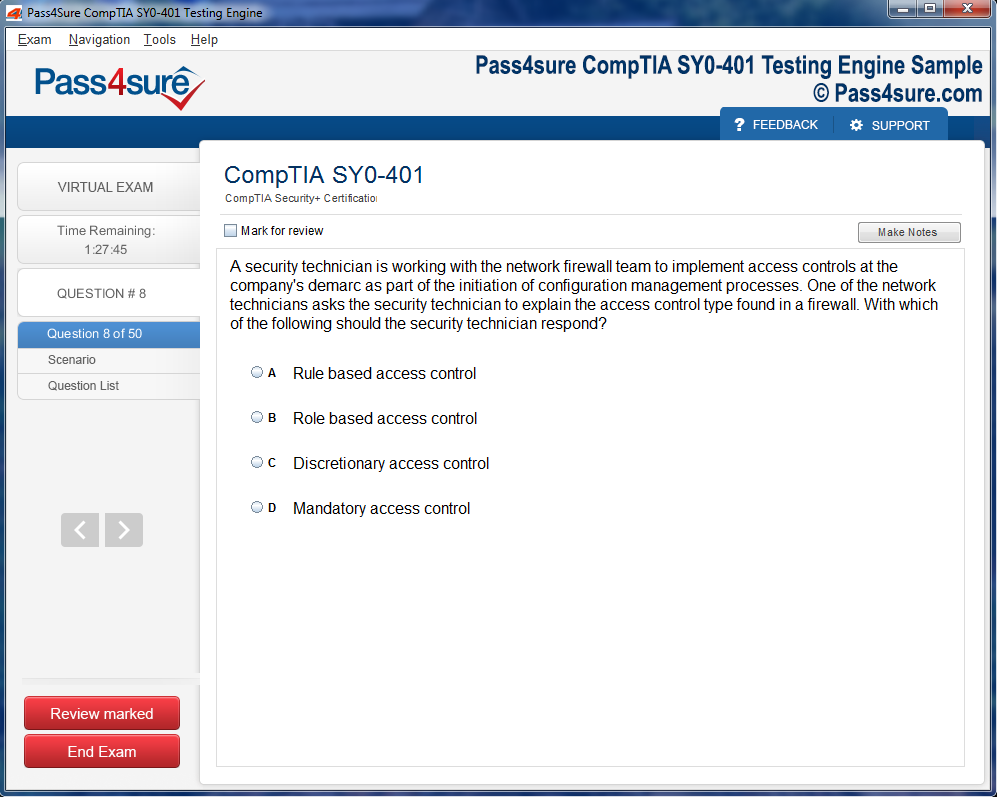
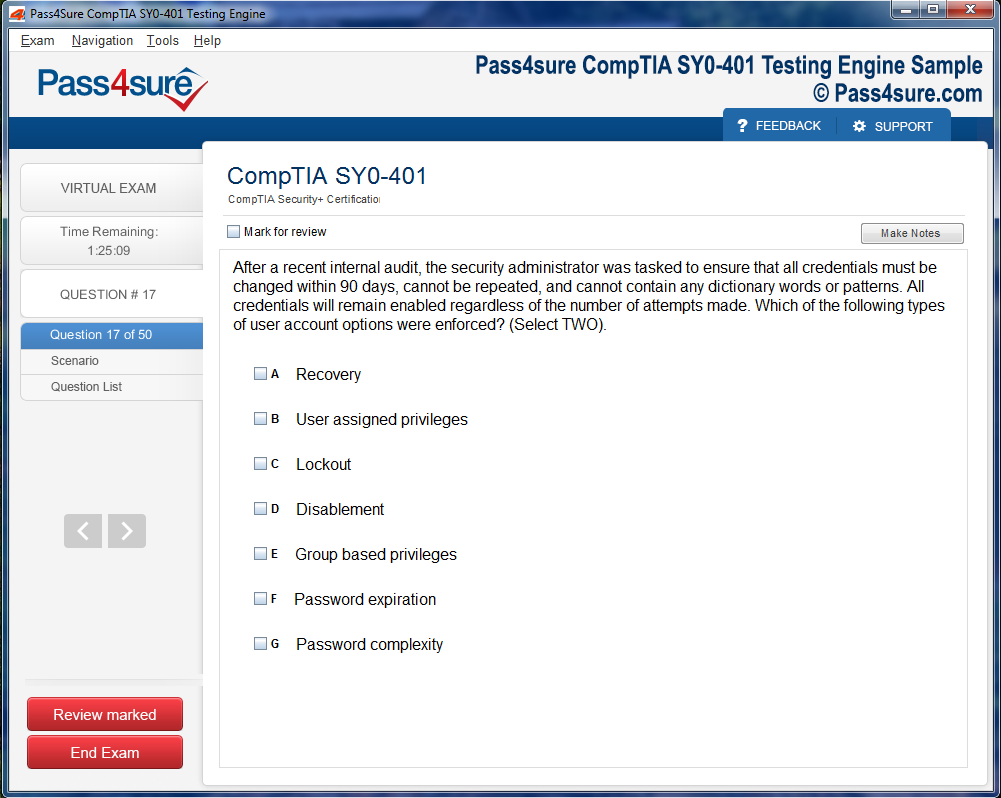
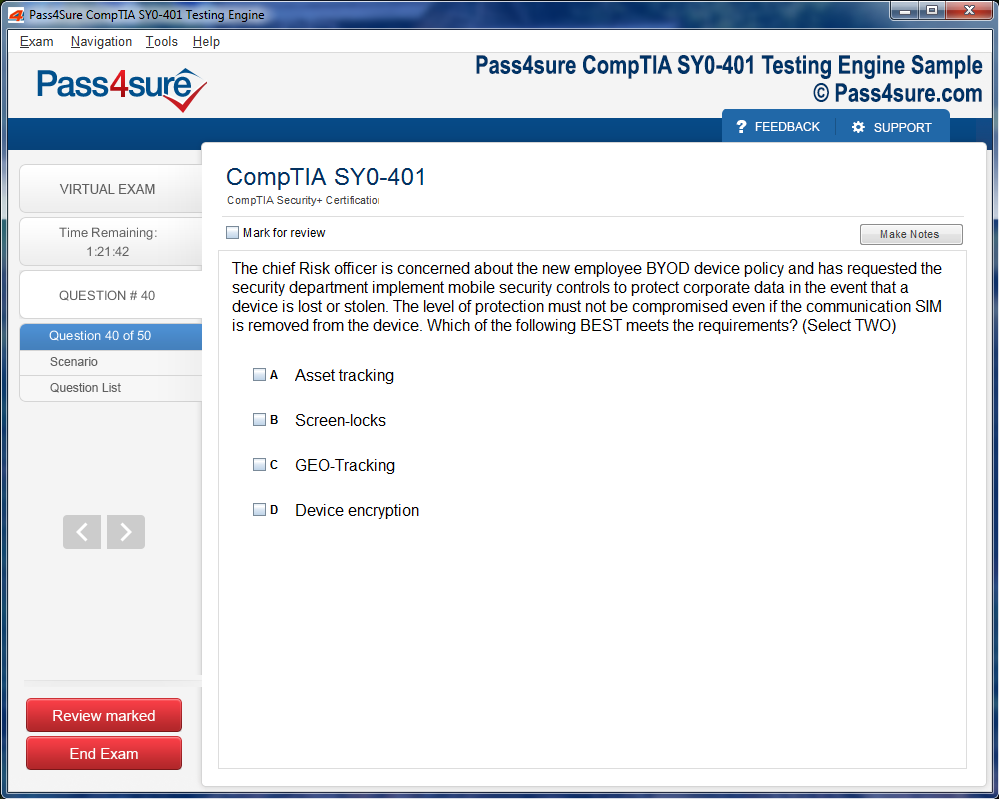
Product Screenshots







Frequently Asked Questions
How does your testing engine works?
Once download and installed on your PC, you can practise test questions, review your questions & answers using two different options 'practice exam' and 'virtual exam'. Virtual Exam - test yourself with exam questions with a time limit, as if you are taking exams in the Prometric or VUE testing centre. Practice exam - review exam questions one by one, see correct answers and explanations.
How can I get the products after purchase?
All products are available for download immediately from your Member's Area. Once you have made the payment, you will be transferred to Member's Area where you can login and download the products you have purchased to your computer.
How long can I use my product? Will it be valid forever?
Pass4sure products have a validity of 90 days from the date of purchase. This means that any updates to the products, including but not limited to new questions, or updates and changes by our editing team, will be automatically downloaded on to computer to make sure that you get latest exam prep materials during those 90 days.
Can I renew my product if when it's expired?
Yes, when the 90 days of your product validity are over, you have the option of renewing your expired products with a 30% discount. This can be done in your Member's Area.
Please note that you will not be able to use the product after it has expired if you don't renew it.
How often are the questions updated?
We always try to provide the latest pool of questions, Updates in the questions depend on the changes in actual pool of questions by different vendors. As soon as we know about the change in the exam question pool we try our best to update the products as fast as possible.
How many computers I can download Pass4sure software on?
You can download the Pass4sure products on the maximum number of 2 (two) computers or devices. If you need to use the software on more than two machines, you can purchase this option separately. Please email sales@pass4sure.com if you need to use more than 5 (five) computers.
What are the system requirements?
Minimum System Requirements:
- Windows XP or newer operating system
- Java Version 8 or newer
- 1+ GHz processor
- 1 GB Ram
- 50 MB available hard disk typically (products may vary)
What operating systems are supported by your Testing Engine software?
Our testing engine is supported by Windows. Andriod and IOS software is currently under development.
FM0-308 Exam Guide: How to Pass the FileMaker Developer Certification
Data modeling in FileMaker transcends mere structural organization; it is an exercise in cognitive architecture. Each table, field, and relationship forms a lattice of information that must be meticulously conceived. Understanding how entities interconnect allows developers to anticipate workflows and user behavior. A well-constructed graph schema is akin to a blueprint for intelligent functionality. Many-to-many relationships, often the nemesis of beginners, become intuitive when visualized as intermediary tables mediating complex interrelations. Beyond the mechanics, the act of modeling requires a subtle appreciation for efficiency and scalability. Exam questions probe whether a candidate can discern which relationships facilitate both functional execution and maintainable expansion, making this comprehension indispensable.
Mastery of Layout Design and User Intuition
The aesthetics of a FileMaker solution are inseparable from its usability. Layouts dictate not only what users see but how they engage with the underlying system. Proficient developers orchestrate elements such as portals, buttons, and tab controls in a symphony of intuitive navigation. Attention to alignment, spacing, and workflow sequence transforms ordinary screens into self-explanatory interfaces. The FM0-308 exam often evaluates candidates on their capacity to reconcile functional necessity with ergonomic design. Understanding the psychological tendencies of end-users—predictable scanning patterns, reaction times, and error likelihoods—elevates layout creation from mere arrangement to anticipatory guidance. Such foresight is not simply aesthetic but strategic, impacting workflow efficiency and user satisfaction.
Scripting Logic and Algorithmic Finesse
Scripts in FileMaker are more than mechanistic sequences; they are manifestations of strategic thought. Each step within a script communicates intent and orchestrates actions across the solution. Mastery of script steps involves understanding context, optimizing execution order, and employing conditional logic with precision. A seasoned developer can foresee potential errors, integrating error capture gracefully without overcomplicating the process. The FM0-308 assessment emphasizes both syntactic knowledge and cognitive agility: can candidates anticipate the implications of each step, streamline operations, and construct robust solutions? Habitual practice in scripting fosters mental models that transform abstract commands into tangible problem-solving tools, reinforcing both confidence and adaptability.
Security Architecture and Data Integrity
FileMaker solutions rarely exist in isolation. Multi-user environments demand a rigorous approach to security and data integrity. Privilege sets, account hierarchies, and field-level protections are tools through which a developer enforces accountability and confidentiality. Balancing accessibility with restrictions requires nuanced judgment. Exam scenarios may present dilemmas where sensitive data must be shielded while maintaining legitimate workflow—a crucible that tests both technical understanding and strategic reasoning. Beyond compliance, security in FileMaker is an ethical obligation, embedding trustworthiness into every transaction and interaction within the system.
Advanced Relationships and Functional Optimization
At a more intricate level, relational complexity is not merely technical; it is an intellectual exercise in optimization. Understanding when to deploy self-joins, conditional relationships, or unstored calculations can drastically alter system performance. Developers must cultivate an eye for relational nuance, recognizing patterns that allow for efficient querying and accurate reporting. Exam questions often present hypothetical systems laden with interdependencies, challenging candidates to devise schemas that minimize redundancy while maximizing clarity. A well-optimized relationship graph reduces computational overhead and enhances user experience, reflecting both ingenuity and foresight.
Holistic Integration and Cross-Platform Considerations
FileMaker’s ecosystem spans desktop, mobile, and server deployment, each with its unique intricacies. Cross-platform awareness is a hallmark of advanced practitioners. Developers must anticipate how scripts, layouts, and data structures perform in diverse environments, ensuring consistency and responsiveness. The FM0-308 certification probes such understanding through scenarios requiring thoughtful adaptation, emphasizing the interplay between local processing, network latency, and mobile interface constraints. Mastery involves not only technical competence but also foresight and strategic planning, embedding resilience and flexibility into every solution.
Hands-On Experimentation and Iterative Refinement
Practical engagement is the catalyst for genuine mastery. Passive study cannot replicate the insights gained from iterative construction, testing, and troubleshooting. Crafting sample projects allows candidates to internalize principles through tactile exploration. Each mini-solution becomes a microcosm of real-world complexity, where relational design, scripting logic, and interface considerations converge. By experimenting with alternative approaches, measuring performance, and reflecting on outcomes, developers cultivate an intuitive understanding of optimal practices. The exam rewards not memorization, but the capacity to synthesize knowledge dynamically and apply it to unforeseen challenges.
Cognitive Approaches to Exam Readiness
Approaching the FM0-308 exam demands more than procedural recall; it requires cognitive agility. Candidates must navigate scenarios, anticipate system behavior, and evaluate multiple possible solutions under temporal constraints. The mental preparation involves recognizing patterns, predicting outcomes, and exercising logical foresight. The development process itself—constructing, debugging, refining—mirrors the intellectual demands of the exam. Those who engage in mindful, deliberate practice cultivate a confidence that transcends rote preparation, enabling them to respond adaptively to nuanced questions and complex problem-solving exercises.
The Alchemy of Data Modeling in FileMaker
Data modeling in FileMaker transcends mere structure; it is an alchemy of logic and imagination. Each table, field, and relationship embodies an intentionality that resonates beyond simple storage. When preparing for the FM0-308 certification, aspirants must cultivate an instinctive understanding of data's ebb and flow, discerning how entities interweave and how schema design orchestrates operational symphonies. A meticulously sculpted data model is not just a repository; it is a lattice that mitigates anomalies, magnifies scalability, and ensures predictability even under systemic stress.
Navigating the Relationship Graph
At the nucleus of FileMaker’s architecture lies the relationship graph, a nexus where theoretical constructs converge with pragmatic functionality. Each node, representing a table occurrence, serves either as a tangible dataset or a logical abstraction. The connective threads, or relationships, range from the simplistic to the intricately stratified. Mastery requires recognizing the subtleties of one-to-one, one-to-many, and many-to-many interactions, understanding that the graph is more than a visual aid—it is a blueprint for operational cognition. Exam scenarios often demand crafting relationships that anticipate real-world contingencies, reinforcing the necessity of a nuanced, context-sensitive approach.
The Subtle Art of Normalization
Normalization is the linchpin of resilient schema design. By disaggregating data into coherent, logical units, developers avert redundancy, prevent errant propagation, and simplify updates. While the allure of field consolidation tempts expedience, it risks undermining systemic integrity. Candidates must develop the acuity to discern repeating clusters, redundant storage nodes, and opportunities for abstraction via related tables. FM0-308 assessments frequently probe these skills, challenging aspirants to rearchitect tables in a manner that harmonizes evolving requirements with structural coherence.
Calculation Fields: Stored and Unstored Dynamics
Calculation fields in FileMaker occupy a liminal space between static storage and dynamic computation. These virtual columns facilitate on-the-fly transformations and aggregations, with unstored calculations offering agility for perpetually shifting datasets. Yet this flexibility incurs performance considerations. Candidates must balance the immediacy of unstored computations against the efficiency of stored equivalents, anticipating how each choice reverberates across the application. The FM0-308 examination scrutinizes these discernments, gauging whether developers can predict the operational ramifications of their schema architecture.
Portals as Windows into Relational Realities
Portals extend the conceptual power of relationships into the tangible user interface. Far from mere display constructs, they offer portals into related datasets, filtering, sorting, and contextualizing information. Proficiency demands an appreciation of how context shapes the manifestation of relationships, enabling the creation of dynamic interfaces without resorting to convoluted workarounds. Candidates encounter exam scenarios that test the ability to manipulate portal behavior in service of clarity and operational insight.
Recursive and Conditional Relationships
Advanced schema design entails embracing recursion, self-joins, and conditional relational structures. These patterns expand FileMaker’s expressive potential, supporting hierarchical modeling, temporal tracking, and sophisticated aggregation. Mastery is achieved through experimentation: mapping employee reporting hierarchies, modeling inventory adjustments over time, or configuring conditional workflows. The FM0-308 exam rewards those who internalize these structures, demonstrating both conceptual dexterity and practical acumen in applying them to nuanced scenarios.
Performance Optimization in Schema Design
Efficiency is an often-underestimated facet of data modeling. Thoughtless design can spawn sluggish systems, convoluted calculation fields, and index saturation. Candidates must internalize principles of indexing, judicious traversal of relationships, and prudent allocation of calculation fields. Optimization is not merely technical—it is strategic, requiring foresight and anticipatory thinking to balance functionality against systemic performance. Examiners test this holistic comprehension, evaluating candidates’ ability to craft schemas that perform robustly under diverse operational loads.
Iterative Exploration and Design Intuition
The cultivation of design intuition is a recursive, iterative process. Constructing micro-systems, exploring relationship permutations, testing calculation ramifications, and reflecting on the consequences of design choices are indispensable exercises. Data modeling becomes an artisanal practice, where trial, refinement, and contextual awareness converge. Aspirants who immerse themselves in iterative exploration develop an instinctual grasp of how architecture shapes usability, reliability, and scalability, reinforcing lessons that endure far beyond examination preparation.
Hierarchical Structures and Recursive Design Patterns
Hierarchical data introduces intricate considerations, particularly when relationships loop back upon themselves. Recursive patterns allow the modeling of organizational charts, nested categorization, or temporal lineage of records. FileMaker accommodates these patterns through self-joins and carefully managed table occurrences. Mastery of recursion empowers candidates to represent complex, multi-tiered data without redundancy, crafting systems that mirror the organic intricacies of real-world operations.
Dynamic Workflows and Contextual Relationships
Modern FileMaker applications often require workflows that shift dynamically based on context. Conditional relationships, filters, and calculations facilitate responsive systems that adapt to user interaction or temporal triggers. Understanding the interplay of context, calculation, and relationship enables the construction of applications that are both intuitive and robust. The FM0-308 exam frequently challenges candidates to design relational architectures that anticipate and accommodate these shifting contexts without sacrificing integrity or performance.
Indexing, Caching, and Performance Nuances
Indexing is not merely an optimization—it is an enabler of functional elegance. Proper indexing accelerates searches, streamlines calculations, and mitigates latency in complex relationships. Yet indiscriminate indexing can inflate storage and introduce maintenance burdens. Candidates must develop a nuanced understanding of how indexing interacts with stored and unstored calculations, portal filtering, and relationship traversal. Awareness of caching mechanisms and performance thresholds further empowers developers to anticipate bottlenecks and engineer solutions that sustain responsiveness at scale.
Modeling Temporal Data and Historical Integrity
Temporal data demands careful consideration to preserve historical fidelity. Whether tracking inventory movements, employee role changes, or transactional histories, schema must account for temporal dimensions. Historical tables, calculated fields, and conditional relationships converge to provide a coherent, audit-ready record of events. Mastery involves recognizing the trade-offs between storage, performance, and retrieval accuracy, preparing candidates to design systems that faithfully capture the past while remaining agile for future operations.
Exploratory Practice and Conceptual Mastery
Deep conceptual mastery emerges from active exploration. Constructing exemplar systems, stress-testing relational configurations, and evaluating calculation performance are integral to developing expertise. FileMaker's flexibility allows candidates to experiment safely, internalizing principles that govern effective schema design. Iterative practice fosters intuition, allowing developers to anticipate the downstream impact of architectural choices, ensuring that both the FM0-308 exam and real-world deployments benefit from considered, anticipatory design.
The Alchemy of Scripted Orchestration
Scripting in FileMaker transcends mere procedural mechanics; it is a symphony of intentional actions orchestrated to breathe vitality into data structures. Each script embodies a choreography where steps interlace with logic, forming a seamless cascade of operations. The practitioner must cultivate a sensibility for anticipatory thinking, perceiving not just the immediate outcome but the ripples of consequence across the database ecosystem. In the crucible of the FM0-308 examination, success hinges upon this nuanced comprehension, for scripts without deliberate purpose often falter under scrutiny.
Scripts confer transformative potency upon the database, permitting navigational dexterity, record manipulation, and calculation alchemy. They serve as conduits between the tangible and the abstract, automating workflows that would otherwise succumb to human oversight. Understanding the temporal and contextual placement of each script step is tantamount to mastery. A loop may traverse a multitude of records, yet the discerning developer recognizes when termination conditions must be exacting, or when a simple found set suffices to achieve the intended outcome with elegant efficiency. Complexity without discernment is a quagmire; simplicity, judiciously applied, reveals the artistry of automation.
The Esoterica of Variables
Variables in FileMaker are the lifeblood of script dynamism, conduits of ephemeral and persistent thought. Local variables encapsulate transient intelligence within a script, while global variables traverse sessions, weaving continuity across disparate layouts and routines. Mastery of variables demands an intimate acquaintance with scope, naming rituals, and memory stewardship. The FM0-308 examination interrogates this understanding, probing the candidate’s insight into persistence, scope conflicts, and inter-script communication. Conceptualizing variables as cognitive threads can forestall errors that otherwise metastasize in complex orchestrations, ensuring a seamless interplay of data and logic.
The judicious deployment of variables fosters scripts that are agile and anticipatory. They serve not merely as repositories of information, but as instruments for conditional nuance, calculation propagation, and context-aware adaptation. Recognizing the subtle interplay between temporary and enduring data structures distinguishes proficient developers from those who rely on rote syntax without structural foresight.
Conditional Cognition in Automation
The capacity for scripts to emulate adaptive reasoning lies at the heart of their efficacy. Conditional logic empowers automation to respond to multifarious contingencies with precision. If constructs, case functions, and logical operators form the lexicon through which scripts converse with circumstance. The FM0-308 exam challenges candidates to architect scripts resilient to ambiguity—scripts that negotiate incomplete data, reconcile conflicting inputs, or navigate divergent record contexts without misstep. Understanding that script behavior is inseparable from its relational context is paramount; the same sequence that flourishes in one layout may falter in another if relational scaffolding or record state is misaligned. This subtlety is the hallmark of sagacious developers.
Beyond the mechanics, conditional design embodies philosophical foresight. It demands anticipation of every conceivable state, a mental cartography of possibilities that guides the script toward equilibrium. Scripts that fail to anticipate consequence reveal not a deficiency in syntax but a paucity of systemic imagination.
Resilience Through Error Artistry
Error handling in FileMaker scripting is an exercise in prescience. The unanticipated can manifest as absent records, permission denials, or calculation incongruities. A script’s elegance is measured not merely by its functional trajectory, but by its capacity to navigate adversity with poise. Crafting fallback mechanisms, implementing error capture routines, and maintaining graceful recovery pathways are practices that elevate routine scripting to an art form. Candidates confronting FM0-308 scenarios are frequently tasked with demonstrating proficiency in these anticipatory safeguards. Mastery entails the ability to visualize and preempt the spectrum of operational anomalies, rendering scripts robust against the vicissitudes of real-world deployment.
Error resilience intertwines with cognitive clarity. A well-constructed script not only mitigates failures but educates its developer through iterative exposure, cultivating a feedback loop wherein understanding deepens with each unforeseen eventuality encountered and rectified.
Interfacing the External Pantheon
FileMaker’s scripting paradigm extends beyond the internal universe, enabling symbiosis with external systems. APIs, file manipulations, and messaging conduits transform the database from insular repository to interactive nexus. While FM0-308 examination priorities focus on conceptual fluency rather than syntactic dexterity, comprehension of these external interfaces enhances strategic discernment. Visualizing data flux between FileMaker and extrinsic sources illuminates otherwise opaque queries and fosters inventive automation strategies. Integration is not an appendage but a fundamental dimension, expanding the horizon of what scripts can orchestrate within interconnected technological ecologies.
Scripts that interact with external entities demand meticulous consideration. Transaction integrity, timing, and error recovery are magnified when crossing system boundaries. The adept developer anticipates these complications and fashions solutions that maintain coherence and reliability, transforming potential fragility into operational elegance.
The Praxis of Testing and Debugging
The crucible of iterative testing transforms scripting from tentative construction to assured execution. FileMaker furnishes instruments for meticulous scrutiny—breakpoints, stepwise execution, and real-time variable inspection. Developing a methodical regimen of testing cultivates scripts capable of navigating unforeseen scenarios with assuredness. Modifying incremental segments and observing outcomes fosters confidence, mitigating risk in live deployment while reinforcing cognitive models of script behavior.
Debugging transcends mere correction; it is an epistemological exercise. It necessitates the developer to interrogate assumptions, discern subtle interactions, and internalize the contingencies of context-dependent logic. FM0-308 examination scenarios reward candidates who demonstrate not only functional scripts but reflective insight into the processes that render them reliable. Through disciplined praxis, scripts evolve from mechanistic sequences into living instruments of workflow mastery.
The Synthesis of Creativity and Logic
The apex of scripting mastery is realized when creativity, logic, and foresight coalesce. Small-scale automation experiments, thoughtful manipulation of variable scope, and rigorous error-handling drills cultivate an intuition that surpasses rote memorization. Scripts become extensions of the developer’s cognitive architecture, enforcing business rules, guiding users, and enabling operations that balance complexity with elegance. Candidates who internalize these principles approach the FM0-308 examination not as a test of recall, but as an arena to demonstrate the ability to think and operate as an accomplished FileMaker artisan.
The artistry of scripting lies in its synthesis—the interweaving of imaginative anticipation with procedural rigor. Scripts thus become more than a utility; they are a manifestation of deliberate cognition, capable of executing intricate tasks with minimal supervision, yet adaptable to the fluid dynamics of data and user interaction. In this light, mastery of FileMaker scripting is both technical and philosophical, demanding a blend of precision, foresight, and innovative thinking.
The Quintessence of Layouts in Database Design
Layouts in FileMaker are more than mere aesthetic facades; they are the apertures through which users interface with complex datasets. Each layout functions as a cognitive conduit, translating abstract data into perceptible, actionable constructs. In the crucible of professional development, understanding the symbiosis between data architecture and interface design is paramount. The FM0-308 examination scrutinizes this competency, demanding that candidates create layouts that navigate the labyrinth of information with both precision and grace. Layouts serve as cognitive scaffolds, guiding users intuitively through the digital landscape without superfluous ornamentation.
Contextual Fluidity and Data Cohesion
At the core of proficient layout design lies the principle of contextual fidelity. Every layout is inextricably linked to a table occurrence, the crucible of data relevance. The essence of each element—portals, fields, buttons, and controls—emanates from the underlying relational architecture. Ensuring data consistency across disparate layouts is an exercise in logical rigor. Candidates must anticipate the ramifications of shifting contexts, where even minor misalignments can propagate cognitive dissonance for the user. The FM0-308 examination probes this acumen, challenging examinees to reconcile interface elegance with underlying data integrity.
Portals as Dynamic Vistas
Portals epitomize the art of dynamic data presentation. They transform static repositories into living tableaux, allowing users to traverse related records seamlessly. Mastery of portal mechanics involves nuanced comprehension of filtering, sorting, and conditional emphasis. Filtered portals exemplify real-time responsiveness, adapting instantaneously to evolving contexts. Recognizing how context shapes visible records empowers developers to craft layouts that are simultaneously concise and expansive. In the examination, scenarios often mimic real-world reporting exigencies, demanding solutions that are simultaneously functional and aesthetically coherent.
Reporting and Summarization Mastery
The domain of reporting is both analytical and creative. FileMaker furnishes developers with robust tools—summary fields, sub-summary layouts, and script-triggered reports—to render data intelligible. Constructing reports that communicate insights requires a delicate balance of grouping, sorting, and aggregative logic. The FM0-308 exam tests candidates’ abilities to orchestrate these elements into cohesive, insightful narratives. Proficiency entails understanding not only how to aggregate data but also how to sculpt it into forms that illuminate rather than obfuscate. Each report is a microcosm of design intelligence, reflecting both technical skill and interpretive acumen.
Navigational Architecture and Interface Psychology
Effective user interfaces transcend mere visibility of information; they shape user behavior. Buttons, popovers, tab panels, and slide controls orchestrate the user journey, transforming potentially labyrinthine workflows into guided odysseys. Examination questions often simulate multi-step interactions within a single layout, evaluating the candidate’s capacity to harmonize usability with cognitive ergonomics. The judicious arrangement of interface elements can mitigate user error, enhance task efficiency, and foster engagement. Understanding the psychological underpinnings of navigation is thus as crucial as the technical deployment of elements themselves.
Conditional Aesthetics and Adaptive Visibility
Conditional formatting is a subtle yet potent instrument in the designer’s toolkit. Fields and objects can metamorphose according to criteria, signaling priorities, exceptions, or temporal significance. Visibility controls further refine user perception, presenting only the most pertinent data at each juncture. The FM0-308 exam frequently constructs scenarios that necessitate anticipatory design thinking, where layouts respond dynamically to evolving datasets. Competence in these techniques cultivates interfaces that are not merely functional but semantically expressive, guiding users with minimal cognitive friction.
The Imperative of Performance Optimization
Elegance in design must coexist with efficiency. Unrestrained unstored calculations, labyrinthine portals, and excessive object layering can degrade system performance, undermining even the most polished interface. Developers must cultivate an awareness of performance implications, balancing functionality with computational prudence. Examination scenarios may probe this intersection, evaluating candidates’ capacity to streamline layouts without compromising utility. The adept designer internalizes this principle, crafting solutions that are both swift and intellectually navigable.
Iterative Refinement and Experiential Validation
No layout achieves perfection in isolation. Iterative design, reinforced by empirical user testing, is the crucible of excellence. Multiple iterations, honed against real or simulated data, reveal latent inefficiencies and cognitive bottlenecks. Adjustments informed by observation and experimentation enhance both usability and aesthetic consonance. Mastery of this iterative process ensures that layouts are resilient, adaptable, and intuitively comprehensible. In the context of FM0-308 preparation, it underscores the intersection of theoretical knowledge and practical implementation, preparing candidates to confront real-world challenges with poise and sophistication.
Philosophical Underpinnings of FileMaker Security
In the labyrinthine architecture of modern database ecosystems, FileMaker security transcends mere gatekeeping. It embodies a conceptual scaffolding that safeguards informational sanctity while orchestrating operational coherence. Security is neither a static barricade nor an afterthought; it is a dynamic continuum, an epistemological framework through which data integrity, trust, and functional reliability coalesce. Every nuance of account management, privilege delineation, and field-level access serves as an orchestrated bulwark against inadvertent or malicious perturbations. For aspirants preparing for the FM0-308 examination, comprehension of this conceptual lattice is indispensable.
Accounts, Privilege Sets, and the Architecture of Access
Every FileMaker ecosystem thrives upon the meticulous construction of accounts and privilege sets, each a microcosm of authority and limitation. An account is not merely a credential; it is a vector for relational power, a conduit through which operational capabilities flow. Privilege sets imbue accounts with specific authorizations, balancing the necessity of access against the imperative of restriction. Sophisticated understanding involves predicting potential conflict zones where functional freedom may imperil structural integrity. Scenarios in examinations often probe this foresight, asking candidates to architect access hierarchies that prevent unintentional data corruption while permitting efficient workflow.
Granular Control through Field-Level Access
Field-level access manifests as a scalpel in the database surgeon’s toolkit, enabling surgical precision in determining who may perceive, alter, or obscure discrete units of information. This level of granularity ensures that sensitive data is neither inadvertently revealed nor capriciously restricted. For exam purposes, candidates must envision complex user matrices, designing adaptive visibility frameworks where data accessibility morphs according to role, context, and workflow exigencies. Field-level permissions, when harmonized with overarching privilege sets, create an elegant lattice of control that fortifies both security and operational fluidity.
Encryption, Authentication, and the Trust Paradigm
Encryption is the cryptographic sinew that binds FileMaker security into a cohesive entity, rendering data inscrutable to unauthorized actors while preserving accessibility for legitimate users. FileMaker’s encryption repertoire—ranging from file-level ciphers to SSL-mediated network traffic shielding—forms an essential component of the security apparatus. Authentication mechanisms, whether internal, directory-based, or OAuth-enabled, operationalize trust, defining which users are credible agents within the system. The FM0-308 examination often challenges candidates to select appropriate encryption and authentication paradigms suited to nuanced organizational landscapes, reflecting the imperative to harmonize security with seamless functionality.
Ensuring Data Integrity through Validation and Relational Constraints
Data integrity is the gravitational core around which all database fidelity revolves. Validation rules, auto-entry calculations, and relational constraints function as sentinels, maintaining accuracy and consistency across interdependent tables and fields. Aspirants must grasp how to preclude duplication, enforce mandatory field completion, and orchestrate cascading updates triggered by relational dynamics. Examination scenarios frequently simulate high-concurrency environments, requiring logical acumen to reconcile multi-user interactions with unbroken data consistency. Mastery of these mechanisms underscores both technical proficiency and philosophical commitment to database sanctity.
Audit Trails and Accountability Mechanisms
Audit trails, often underestimated in their significance, provide a metrological lens through which user activity is monitored and scrutinized. Recording changes, tracking user behavior, and generating forensic reports are not mere bureaucratic exercises; they are critical instruments for accountability, transparency, and operational reassurance. While the FM0-308 examination may not require exhaustive implementation skills, understanding the rationale, architecture, and potential pitfalls of audit tracking situates candidates to design resilient and auditable solutions.
Backup Strategies and Resilience Architecture
The axiom of redundancy underpins all robust FileMaker solutions. Backup strategies encompass more than mere duplication; they entail versioning, temporal fidelity, and systematic verification of recoverability. Candidates must appreciate the existential risks posed by single points of failure, the criticality of automated backup scripts, and the orchestration of recovery drills to validate data resilience. Examination questions often probe awareness of these principles, highlighting the necessity of embedding resilience architecture into routine database stewardship.
Anticipatory Security and Operational Equilibrium
Ultimately, FileMaker security is an exercise in anticipation, equilibrium, and control. Beyond the implementation of technical mechanisms lies a philosophical engagement with potential vulnerabilities, workflow dynamics, and organizational exigencies. Candidates must internalize this holistic perspective, appreciating that true security integrates privilege orchestration, encryption, validation, auditing, and backup strategy into a coherent, self-reinforcing system. The FM0-308 examination thus evaluates not only factual knowledge but also the candidate’s capacity to envision a harmonized, trustworthy database ecosystem capable of sustaining operational fidelity across unpredictable contingencies.
Philosophical Nuances of User Management
User management in FileMaker is a delicate negotiation between autonomy and oversight. Each account embodies a nexus of responsibility and limitation, mediating the tension between individual initiative and systemic stability. Exam scenarios often simulate conflicting demands, requiring candidates to engineer solutions that balance productivity with vigilance. This entails anticipatory reasoning, the ability to foresee potential misuse, and the skill to construct adaptive privilege sets that reflect evolving operational realities without undermining security.
Integrative Approach to Multi-Layered Security
The pinnacle of FileMaker mastery lies in integrative thinking, synthesizing account management, privilege design, field-level access, encryption, authentication, validation, auditing, and backup into a cohesive security ecosystem. Candidates must appreciate interdependencies, understanding how adjustments in one layer reverberate throughout the system. Such an integrative lens cultivates both the technical precision and strategic foresight necessary for designing resilient databases, equipping aspirants to navigate both examination scenarios and real-world complexities with dexterity and assurance.
Troubleshooting: Navigating the Arcana of Errors
Troubleshooting within the FileMaker ecosystem demands an almost forensic acuity, as issues can arise from esoteric misconfigurations, ephemeral calculation anomalies, or the subtle interplay of scripts and relationships. Developers must cultivate a methodical mindset, parsing through layers of abstraction to isolate errant behavior. This process begins with meticulous reproduction of the anomaly, ensuring that observed phenomena are consistent and not transient. Hypotheses must then be formulated and tested iteratively, a process requiring both patience and creative analytical dexterity. Tools such as the script debugger or data viewer serve not merely as instruments but as extensions of cognitive reasoning, allowing developers to visualize dependencies and trace intricate causal chains. The examination scenarios for FM0-308 often simulate realistic operational conundrums, emphasizing the necessity for both analytical perspicacity and the ability to apply foundational principles in dynamic contexts.
Performance Optimization: Sculpting Responsive Solutions
Ensuring a FileMaker solution maintains responsiveness under the weight of voluminous datasets and multiple concurrent interactions is as much an art as a science. Performance optimization necessitates a deep understanding of indexing subtleties, the judicious use of stored versus unstored calculations, and the strategic crafting of relational architectures. Developers must recognize the hidden costs embedded within repeated script loops or unnecessarily complex calculations. The judicious design of relationships, particularly in the context of portal filtering and summary field computation, can drastically affect response times. In deployment scenarios, optimizing performance is not simply a matter of technical efficiency; it also underpins user satisfaction and operational continuity. The FM0-308 examination evaluates candidates’ comprehension of these principles by presenting situational problems that require a synthesis of conceptual knowledge and applied reasoning.
Deployment Strategies: Architecting Sustainable Ecosystems
Deployment is a multidimensional endeavor, extending beyond the mere relocation of a database to a server environment. Architects of FileMaker solutions must navigate the intricacies of network topology, security stratagems, and user-centric accessibility. Each deployment scenario—whether on FileMaker Server, FileMaker Cloud, or FileMaker Go—imposes unique constraints and requires a tailored approach. Strategic considerations encompass client connection management, automated backup scheduling, server health monitoring, and contingency planning. A nuanced understanding of these elements enables developers to foresee potential bottlenecks and preemptively address them. FM0-308 questions often probe a candidate’s ability to conceptualize deployment holistically, intertwining technical robustness with pragmatic user-centered design.
User Issue Resolution: Empathy Meets Technical Acumen
Technical proficiency alone is insufficient when addressing user-reported issues; empathy and perceptive observation are equally critical. Users often encounter difficulties not because of systemic errors but due to contextual misapprehensions, permission limitations, or inadvertent navigation through interface anomalies. Effective resolution demands that developers inhabit the user perspective, diagnosing problems with both technical precision and psychological insight. The ability to discern subtle cues from user behavior and correlate them with underlying database logic exemplifies advanced troubleshooting skill. FM0-308 assessments frequently simulate these conditions, requiring candidates to infer probable causes and prescribe methodical remedial strategies that prioritize clarity, efficiency, and sustainability.
Exam Strategy: Navigating Scenario-Based Challenges
The FM0-308 examination transcends mere recollection of facts, instead emphasizing judgment, analytical agility, and strategic problem-solving. Scenario-based questions demand that candidates decode layered instructions, identify the essential requirements, and eliminate superfluous information. Cognitive economy is crucial: over-investing time in a single scenario can compromise overall performance. Candidates benefit from deliberate exposure to sample questions, mini-project exercises, and timed simulations, which cultivate both familiarity and decisiveness. Developing a mental repository of best practices, recurring pitfalls, and pattern recognition enables examinees to approach each scenario with agility and confidence. Time management, logical sequencing, and the ability to reason under pressure coalesce to differentiate proficient candidates from those reliant solely on rote memorization.
Mindset and Preparatory Habits: Crafting Resilient Expertise
Examination success is inseparable from the cultivation of a disciplined, reflective mindset. Confidence is not a byproduct of innate ability but emerges from iterative practice, thoughtful reflection on errors, and deliberate experimentation. Candidates who engage with diverse facets of FileMaker—ranging from scripting intricacies to layout aesthetics, security protocols, and relational design—develop a flexible cognitive toolkit that can be applied adaptively in both exam and professional contexts. The act of experimenting, observing outcomes, and refining approaches instills an experiential understanding that far surpasses static memorization. FM0-308 rewards not only knowledge but the capacity to navigate novel challenges with insight and composure, reflecting the demands of real-world FileMaker development.
Analytical Reasoning: The Confluence of Logic and Creativity
Mastery of FileMaker demands a symbiosis of logical rigor and creative problem-solving. Developers encounter challenges that are seldom linear; solutions often require lateral thinking to reimagine relationships, script sequences, and user flows. Analytical reasoning involves dissecting complex problems into manageable subcomponents while maintaining an awareness of systemic interactions. The FM0-308 exam leverages this principle by presenting multifaceted scenarios where solutions are contingent upon both technical proficiency and inventive application. Cultivating this mindset encourages candidates to anticipate potential complications, devise contingency strategies, and maintain adaptability in dynamic problem spaces. The cognitive discipline developed in this process enhances both exam performance and practical competency.
Iterative Testing and Validation: Ensuring Reliability
Iterative testing constitutes a foundational practice in both preparation and deployment. Each modification, whether in calculation formulas, script logic, or interface design, introduces potential variability that must be validated rigorously. Systematic testing frameworks, coupled with meticulous record-keeping of observed outcomes, enable developers to identify unintended side effects and reinforce solution integrity. Validation extends beyond technical accuracy to encompass usability, security compliance, and performance metrics. Candidates who internalize iterative testing principles approach both the exam and real-world projects with a methodology that anticipates errors, mitigates risks, and fosters resilient outcomes.
Cognitive Flexibility: Adapting Under Examination Pressure
The ability to pivot mentally when confronted with unfamiliar or complex scenarios is a hallmark of exam mastery. Cognitive flexibility allows candidates to draw upon disparate knowledge domains, synthesize novel solutions, and adjust strategies in real-time. In the FM0-308 context, questions may present atypical configurations or contradictory information, testing not only technical recall but adaptive problem-solving acumen. Developing this skill involves deliberate exposure to diverse problem sets, reflection on alternative approaches, and a willingness to reframe challenges dynamically. Such mental agility is not merely advantageous for examinations but mirrors the demands of real-world FileMaker development, where unexpected constraints are routine.
Synthesis of Knowledge: Integrating Multidimensional Concepts
The FM0-308 exam underscores the integration of diverse knowledge areas—scripting, layouts, relationships, security, and deployment—into coherent, functional solutions. Candidates must navigate the interplay of these elements, understanding how decisions in one domain ripple across others. For example, a seemingly minor adjustment in a calculation field may influence layout rendering, relationship filtering, or script execution timing. Recognizing these interdependencies and synthesizing a holistic solution distinguishes adept practitioners. Examination scenarios are crafted to test this integrative reasoning, requiring that candidates evaluate trade-offs, anticipate downstream effects, and implement robust, elegant solutions.
Resilience in Error Correction: Learning Through Iteration
Errors and unexpected outcomes serve as critical learning vectors in FileMaker proficiency. Developing resilience entails approaching mistakes not as setbacks but as opportunities for insight. Each error elucidates hidden system behaviors, exposes overlooked dependencies, and refines problem-solving strategies. Candidates who embrace iterative correction cultivate a mental schema for troubleshooting that extends far beyond the examination environment. This iterative resilience—observing, hypothesizing, testing, and refining—anchors both technical expertise and cognitive confidence, ensuring that challenges encountered in professional settings can be navigated with poise and efficacy.
Dynamic Data Manipulation and Transformative Calculations
FileMaker’s power emerges most vividly when raw data is transformed into actionable intelligence. Calculations, once understood superficially, evolve into instruments of sophisticated manipulation. Fields that seem inert become catalysts for insight when paired with calculation formulas that are precise yet elegant. Candidates preparing for FM0-308 must not only memorize functions but understand their operational subtleties. Functions like Case, PatternCount, and ExecuteSQL are more than utilities—they are the scaffolding upon which dynamic solutions are constructed. Recognizing the nuances of evaluation order, data type conversion, and context propagation allows developers to sculpt datasets into refined, responsive constructs. Exam scenarios frequently simulate the need for complex calculations under varying contexts, emphasizing the necessity for both theoretical mastery and intuitive application.
Portal Utilization and Multi-Context Visualization
Portals in FileMaker offer a window into relational depth, displaying associated records in ways that illuminate connections while preserving context. Advanced developers see portals not merely as display tools but as instruments for strategic interface architecture. Choices about sorting, filtering, and conditional formatting directly influence usability and efficiency. The FM0-308 exam often evaluates how candidates leverage portals to reconcile the tension between visual clarity and data density. Understanding when to deploy unstored calculations within a portal, how to manage relational dependencies, and how to anticipate user navigation patterns is critical. Each portal represents a microcosm of relational logic, demanding foresight and deliberate structuring to prevent cascading errors or user confusion.
Script Triggers and Event-Driven Architecture
Event-driven scripting is a hallmark of seasoned FileMaker developers. Script triggers allow systems to respond dynamically to user interactions or environmental changes, transforming static applications into responsive ecosystems. The exam assesses whether candidates can strategically deploy triggers without overcomplicating workflows or introducing unintended side effects. Mastery involves understanding precedence, performance implications, and context-specific behaviors. For instance, an OnObjectSave trigger may interact differently with unstored calculations than an OnRecordLoad trigger, necessitating careful orchestration. Developing mental models for event propagation and timing sharpens problem-solving acumen, equipping developers to anticipate consequences before they manifest in production environments.
Advanced Security Paradigms and Contextual Authorization
Security in FileMaker is a multilayered discipline that extends beyond privilege sets and account permissions. Candidates must appreciate the subtleties of contextual authorization, ensuring that access is granted with precision and that sensitive operations are safeguarded without impeding legitimate workflows. Field-level access, custom menus, and script-level restrictions all contribute to a comprehensive security schema. The FM0-308 exam frequently presents scenarios that require nuanced decision-making, where candidates must balance operational freedom with rigorous control. Understanding the interdependence of security components enables developers to construct solutions that are simultaneously robust, flexible, and resilient against inadvertent breaches.
Performance Optimization and Efficiency Cognition
The sophistication of FileMaker solutions often hinges on their efficiency. Large datasets, complex relationships, and intricate calculations can strain performance if not meticulously optimized. Experienced developers cultivate an awareness of query costs, script step efficiency, and indexing strategies. Techniques such as script consolidation, relationship simplification, and calculated field caching are deployed with surgical precision. Exam questions may simulate environments where performance bottlenecks impact usability, testing whether candidates can diagnose issues and implement elegant remedies. This focus on optimization underscores the symbiotic relationship between design foresight and practical execution, reinforcing the necessity of both analytical acumen and creative ingenuity.
Reusable Components and Modular Architecture
FileMaker solutions gain resilience and scalability through modular design. Scripts, layouts, and calculations that are constructed with reusability in mind allow for rapid iteration and maintenance. Understanding when and how to abstract functionality into reusable components demonstrates both technical maturity and strategic vision. The FM0-308 assessment rewards candidates who recognize patterns and construct solutions that anticipate future adaptation. Modular architecture also facilitates collaborative development, as discrete, self-contained components can be understood, modified, and extended independently. This approach embodies the convergence of logic, foresight, and craftsmanship that distinguishes advanced FileMaker practitioners.
Contextual Problem-Solving and Scenario Analysis
One of the most challenging aspects of the FM0-308 exam lies in its scenario-based questions. Candidates are rarely asked to recall isolated facts; instead, they must navigate complex, multifaceted situations that demand both technical knowledge and strategic judgment. This requires cultivating a form of cognitive elasticity, the ability to shift perspectives, evaluate alternative pathways, and synthesize solutions rapidly. Each scenario presents hidden constraints and subtle interdependencies that can mislead the unwary. Developing the capacity to dissect problems, anticipate outcomes, and implement efficient, maintainable solutions is an intellectual skill cultivated through deliberate, reflective practice rather than rote memorization.
Scripted Automation and Workflow Orchestration
Automation elevates FileMaker from a passive data repository to an active facilitator of organizational efficiency. Scripts, when orchestrated effectively, reduce redundancy, prevent human error, and enhance overall productivity. Candidates must understand not only the mechanics of automation but the strategic rationale for its deployment. Effective automation involves anticipating user behavior, minimizing context switching, and preserving data integrity throughout every step. The FM0-308 exam challenges developers to identify which processes benefit from automation and how to implement them without introducing fragility or complexity. Mastery in this domain requires a blend of analytical rigor, foresight, and a touch of creative ingenuity to balance efficiency with maintainability.
Unstored Calculations and Real-Time Data Dynamics
Unstored calculations offer unparalleled flexibility, enabling data to be derived dynamically without occupying persistent storage. This functionality, however, comes with performance considerations and contextual sensitivities that must be judiciously managed. Understanding when and how to deploy unstored calculations, particularly within portals or summaries, is critical for crafting responsive and efficient solutions. Exam scenarios often test the candidate’s ability to balance the benefits of real-time computation against potential performance penalties, highlighting the importance of strategic discernment. Mastery involves cultivating an intuition for when live calculation is necessary and when precomputed data better serves both system responsiveness and user experience.
Audit Trails and Accountability Mechanisms
Maintaining a robust audit trail is essential for systems where accountability and historical accuracy are paramount. FileMaker provides tools for tracking changes, logging user interactions, and safeguarding transactional integrity. Candidates preparing for FM0-308 must understand how to implement these mechanisms without degrading performance or compromising usability. Effective audit design requires both technical knowledge and an appreciation for the human behaviors that produce errors or inconsistencies. By embedding accountability into the solution architecture, developers create environments where reliability and trust are inherent, not afterthoughts.
Integration Strategies and Interoperability
FileMaker seldom exists in isolation; integration with external systems, APIs, and data sources is increasingly common. Candidates must understand the mechanisms through which FileMaker communicates with other platforms, whether via cURL, ESS, or ODBC connections. Exam scenarios may probe the candidate’s ability to navigate data synchronization, handle errors gracefully, and preserve transactional integrity across disparate systems. Mastery in integration demands both technical precision and strategic foresight, recognizing that external dependencies introduce variables requiring careful consideration in design, testing, and deployment.
Mental Models and Conceptual Visualization
Success in FileMaker development—and in the FM0-308 exam—relies heavily on the development of internal mental models. These models enable developers to visualize data flow, anticipate script execution, and foresee relational outcomes without requiring constant hands-on simulation. Conceptual visualization bridges the gap between abstract logic and tangible implementation, providing a cognitive framework for problem-solving under pressure. Cultivating such models involves repeated engagement, reflective analysis, and deliberate abstraction, resulting in a form of intellectual fluency that allows candidates to navigate complex exam scenarios with confidence and precision.
Advanced Calculation Strategies in FileMaker
Calculation fields, when wielded skillfully, become instruments of both insight and efficiency. Beyond the fundamental arithmetic or text manipulations, advanced calculations allow the creation of dynamic metrics, conditional aggregations, and context-sensitive logic. FileMaker developers must understand the dichotomy between stored and unstored calculations. Stored calculations enhance retrieval speed but consume storage and may require triggers to maintain integrity. Unstored calculations, conversely, offer agility but can introduce latency in large datasets. Exam candidates must weigh the subtleties of these trade-offs, understanding how each decision cascades across relational dependencies and user interface responsiveness.
Conditional Calculations and Scenario-Based Logic
Conditional logic within calculations is a cornerstone of sophisticated FileMaker solutions. By leveraging functions that evaluate state, temporal conditions, or related record existence, developers can produce adaptive data responses. For instance, a calculation that differentiates pricing tiers based on client classification or seasonal parameters exemplifies scenario-specific logic. Mastery of conditional calculations entails foreseeing edge cases, avoiding circular dependencies, and ensuring that performance scales with dataset complexity. FM0-308 examinations often probe these capabilities, assessing the candidate’s aptitude for predictive, scenario-aware design.
Optimizing Relationships for Complex Interfaces
Portals, lists, and related record displays are manifestations of relational design in the user interface. In large-scale applications, naïve relationship architecture can degrade performance, produce inaccurate displays, or necessitate convoluted scripts. Developers must architect relationships that are both semantically meaningful and computationally efficient. For instance, filtered portals that rely on conditional relationships require careful indexing to avoid recalculation overhead. Understanding context propagation and table occurrence specificity is crucial, as portal behavior is inexorably tied to the relationship graph’s topology. Candidates proficient in optimizing these relationships exhibit a capacity to balance interface clarity with systemic performance.
Recursive Relationships and Hierarchical Modeling
Recursive relationships unlock the ability to model hierarchical data elegantly. These self-referential constructs allow representation of multi-tiered structures such as organizational charts, product assemblies, or nested project tasks. Mastery requires understanding the interplay of parent-child linkages, recursive portal configuration, and calculation propagation. For example, calculating cumulative budget allocations across a multi-level project hierarchy demands both relational precision and efficient unstored calculations. FM0-308 scenarios frequently test candidates’ ability to implement recursive patterns that maintain accuracy, prevent infinite loops, and sustain performance under substantial datasets.
Schema Evolution and Adaptability
A high-functioning FileMaker application is never static. Schema evolution, the capacity to adapt tables, fields, and relationships over time, is critical. Developers must anticipate the inevitability of changing business requirements, ensuring that schema modifications preserve data integrity and backward compatibility. Techniques such as abstracting common fields into reference tables, employing conditional relationships, and modular table occurrence design are essential. Candidates must demonstrate an understanding of how schema evolution influences calculations, portals, scripts, and indexing, reflecting real-world constraints where systems must evolve without interruption.
Temporal Aggregation and Historical Calculations
Incorporating historical context into FileMaker models elevates the application’s analytical capacity. Tracking changes over time requires strategies that integrate temporal aggregation, versioned records, and historical tables. For instance, calculating month-over-month performance metrics necessitates accurate snapshots and careful management of unstored calculation fields. Temporal modeling allows developers to answer questions about trends, shifts, and anomalies while maintaining the fidelity of historical data. FM0-308 scenarios often simulate these challenges, requiring candidates to balance historical preservation with system performance.
Optimizing Portals for Dynamic Data Presentation
Portals are more than static views; they are conduits for dynamic insights. Optimizing portals involves managing sort orders, filters, and conditional relationships in a way that preserves performance. Large datasets pose challenges such as recalculation latency and inefficient indexing. Developers can mitigate these issues by employing summary fields, targeted indexing, and context-specific table occurrences. Mastery of portal optimization enhances both user experience and operational efficiency, enabling real-time exploration of relational datasets without sacrificing responsiveness or accuracy.
Advanced Relationship Patterns
Complex applications demand relationship patterns that extend beyond simple one-to-many structures. Techniques such as join tables, conditional joins, and multi-layered relationships enable nuanced data representation. Join tables facilitate many-to-many relationships while preserving normalization. Conditional joins allow relationships to adapt dynamically based on user input or record state. Multi-layered relationships permit aggregations across intermediate tables, supporting advanced reporting and analytics. Candidates preparing for FM0-308 must internalize these patterns, understanding both their logical implications and performance considerations.
Calculation Dependencies and Performance Tuning
Advanced FileMaker design requires meticulous attention to calculation dependencies. Interdependent calculations can create cascading recalculations, affecting performance and predictability. Developers must map dependencies, employ summary fields strategically, and utilize unstored calculations judiciously. Performance tuning involves monitoring recalculation triggers, indexing relevant fields, and structuring calculations to minimize redundant operations. The FM0-308 exam probes candidates’ capacity to anticipate and mitigate these performance challenges, reflecting real-world demands for scalable, responsive applications.
Self-Joins and Analytical Scenarios
Self-joins, a specialized form of relationship, allow a table to relate to itself, enabling intricate analytical scenarios. Examples include comparing an employee’s current role with historical positions, tracking versioned product components, or evaluating transaction sequences. Self-joins require careful table occurrence management and context understanding to avoid circular references and ensure accurate data retrieval. Candidates must demonstrate the ability to implement self-joins effectively, optimizing both relational clarity and computational efficiency.
Integrating Calculations with Reporting
Reporting is a primary endpoint of FileMaker’s relational power. Advanced calculations integrated into reporting structures allow dynamic aggregation, conditional formatting, and context-aware presentation. Developers can design reports that adjust based on filter parameters, related record counts, or temporal conditions. Mastery entails understanding how unstored calculations, summary fields, and conditional relationships converge to produce accurate, performant reporting outputs. FM0-308 candidates are often challenged to design schemas and calculations that seamlessly integrate with reporting needs without creating performance bottlenecks.
Modular Schema Design for Scalability
Scalability is predicated on modular, reusable schema components. By abstracting common entities into reference tables, leveraging global fields for contextual calculations, and structuring table occurrences for flexibility, developers craft systems capable of growth without structural compromise. Modular design promotes maintainability, reduces redundancy, and facilitates schema evolution as new requirements emerge. Candidates must grasp the principles of modularity, ensuring that each design decision anticipates both immediate functionality and future scalability demands.
Complex Aggregations and Summary Fields
Summary fields allow efficient aggregation of related record data, supporting advanced calculations without imposing undue performance costs. Combining summary fields with unstored calculations or conditional relationships can yield complex metrics such as weighted averages, cumulative totals, or trend indicators. Mastery involves understanding the interplay between calculation storage, relationship context, and reporting requirements. FM0-308 scenarios frequently require designing aggregation strategies that maintain accuracy and efficiency across extensive datasets.
Dynamic Filtering and Contextual Portals
Dynamic filtering transforms portals from static lists into interactive analytical tools. Conditional relationships, combined with unstored calculation filters, allow portals to display records relevant to the current user, time period, or operational state. Context-aware portals enhance usability and insight but require careful management of performance implications. Candidates must anticipate calculation overhead, indexing requirements, and relational complexity to optimize portals for both speed and accuracy.
Leveraging Global Fields in Schema Design
Global fields are versatile instruments in FileMaker schema design. They serve as temporary storage, context setters, and filter criteria across sessions. Used strategically, global fields simplify conditional calculations, drive user-specific interfaces, and facilitate dynamic relationship filtering. Mastery involves recognizing where globals can replace complex scripts or redundant data structures, optimizing both system simplicity and responsiveness. FM0-308 candidates must demonstrate proficiency in leveraging global fields for practical, high-performance solutions.
The Subtle Geometry of Workflow
Workflow in FileMaker is more than sequential action; it is a spatial-temporal construct that maps human intention onto a digital canvas. Each script step occupies a locus within a broader constellation, influencing antecedent and subsequent operations. Understanding the geometry of workflow involves anticipating friction points, bottlenecks, and redundancies. The FM0-308 exam examines the candidate’s capacity to envision these complex interdependencies, recognizing that the elegance of a solution often lies in minimizing unnecessary traversal while maximizing clarity and reliability.
The spatial dimension of workflow also informs layout navigation. Scripts that traverse multiple layouts must be cognizant of context shifts—what variables persist, which records are in scope, and how interface elements interact dynamically. By perceiving workflow as a multidimensional landscape rather than a linear procession, developers cultivate an intuition for efficiency and resilience. This conceptual model encourages solutions that are anticipatory, context-sensitive, and elegantly integrated.
Temporal Cognition in Scripting
Time is an omnipresent factor in scripting that is often underappreciated. FileMaker scripts execute in discrete chronological sequences, yet their implications ripple into asynchronous interactions, delayed data writes, and user-dependent triggers. Mastery requires an awareness of temporal causality—understanding not just what a script does, but when, in relation to user actions, system events, or external processes.
Loops, conditional branching, and scheduled scripts illustrate the subtleties of temporal reasoning. A loop executed too early or without proper exit conditions may inadvertently overwrite critical data, while delayed operations might disrupt user experience or create conflicts in multi-user environments. Candidates who internalize temporal cognition can foresee the sequencing consequences of complex automation, mitigating risks before they manifest.
The Elegance of Modular Architecture
Scripts are most maintainable when constructed modularly, a principle akin to architectural design. Each script can be conceptualized as a self-contained edifice, performing a distinct function yet capable of integrating seamlessly with other modules. Modular design promotes reusability, clarity, and reduced cognitive load—qualities that are particularly valuable under the constraints of FM0-308 scenario-based questions.
Modular architecture extends beyond simple organization. It allows for recursive testing, targeted debugging, and scalable automation strategies. Developers can abstract complex logic into discrete units, invoking them as needed without redundancy. Such practices not only facilitate exam preparation but also reflect professional standards for robust FileMaker development.
Cognitive Resonance of Script Design
The artistry of scripting lies not solely in technical execution but in cognitive resonance—the ability for scripts to embody thought processes in a form that is both predictable and intuitive. Scripts should communicate intent as clearly to a future developer as to their creator. This requires deliberate naming conventions, judicious commenting, and logical sequencing that mirrors human reasoning.
Cognitive resonance reduces the mental load required to comprehend complex scripts, making maintenance and iterative improvement feasible. FM0-308 scenarios often test the candidate’s capacity to reason through unfamiliar scripts; those with high cognitive resonance facilitate insight and rapid adaptation, whereas opaque scripts impede understanding. Mastery, therefore, encompasses both operational precision and clarity of conceptual expression.
Scripting as Data Stewardship
At its core, scripting in FileMaker is an exercise in data stewardship. Every automated action impacts the integrity, accessibility, and interpretability of information. Developers must balance operational efficiency with scrupulous oversight, ensuring that scripts enforce business rules, validate inputs, and maintain relational coherence.
Error-checking routines, validation logic, and rollback mechanisms exemplify stewardship in action. A well-crafted script anticipates scenarios where human input might deviate from expected norms and intervenes preemptively. Candidates for FM0-308 are often assessed on their ability to design scripts that act as custodians of information, protecting the database from corruption while facilitating fluid workflows.
The Poetics of Iteration
Iteration in scripting is a poetic process—a recursive dialogue between developer, data, and user. Each test, adjustment, and refinement cycles closer to an ideal balance of functionality, clarity, and resilience. Iteration cultivates both skill and insight, revealing latent interactions and subtle dependencies that might otherwise escape notice.
This poetic sensibility extends to loops and repeated operations. Loops are not merely mechanical repetitions; they are opportunities for refinement, enabling patterns to be recognized, anomalies to be addressed, and workflows to harmonize. The FM0-308 examination rewards candidates who demonstrate iterative sophistication, recognizing the difference between superficial repetition and strategic recursion.
Integration as Symbiotic Strategy
FileMaker scripting achieves its fullest potential when conceived as part of a symbiotic technological ecosystem. Integration with external APIs, document systems, and communication channels transforms a static repository into a dynamic, responsive network. Understanding this symbiosis requires cognitive agility, envisioning data as flowing currents that interact with multiple touchpoints.
Effective integration is neither haphazard nor purely functional. Scripts must manage latency, ensure transactional integrity, and accommodate contingencies such as unavailable endpoints or format discrepancies. Candidates who internalize the symbiotic nature of integration are able to construct automation that is both resilient and adaptive, demonstrating strategic foresight beyond mere technical execution.
Debugging as Exploratory Cartography
Debugging is not simply error correction; it is exploratory cartography, mapping the unseen terrain of script execution. Tools such as breakpoints, data viewers, and stepwise execution reveal the hidden currents of variable state and logic flow. Each debugging session expands the developer’s mental map, providing insight into emergent behaviors and unforeseen interactions.
Through repeated exploration, candidates cultivate an anticipatory mindset, perceiving potential failure points before they manifest. FM0-308 scenarios often simulate unfamiliar or ambiguous scripts, rewarding those who can navigate complexity with both rigor and intuition. Debugging thus becomes a form of cognitive reconnaissance, illuminating the architecture and dynamics of automation.
Cognitive Alchemy of Variables
Variables in advanced scripting are more than placeholders—they are instruments of cognitive alchemy. Local variables encapsulate ephemeral insight, while global variables act as persistent conduits bridging temporal and contextual boundaries. Mastery of variables involves subtle discernment, recognizing when to isolate information, when to propagate it, and how to avoid contamination across scripts.
Candidates must conceptualize variables as active agents within a dynamic system, not passive storage containers. The FM0-308 examination tests understanding of scope, lifecycle, and inter-script interactions, challenging candidates to predict the ripple effects of variable usage across multifaceted workflows. This cognitive alchemy elevates scripting from mechanical routine to strategic foresight.
Conclusion
Preparing for the FM0-308 FileMaker Developer Certification is more than memorizing steps or passing an exam. It is an invitation to think like a developer, to embrace problem-solving with creativity, and to design solutions that are both functional and elegant. Throughout this series, we explored every aspect of FileMaker development—from understanding the ecosystem and modeling data, to mastering scripting, layouts, security, and deployment strategies. Each step in this journey contributes to building a comprehensive skill set that will serve well beyond the test.
Certification success is rooted in understanding, not rote memorization. Candidates who internalize relationships, scripting logic, layout design principles, and security frameworks can approach scenarios with clarity and confidence. The FM0-308 exam evaluates practical thinking and decision-making, rewarding those who can navigate real-world challenges with insight and foresight.
Equally important is the mindset cultivated during preparation. Experimentation, iterative testing, and reflective learning transform mistakes into opportunities for growth. Building sample projects, troubleshooting scripts, and optimizing layouts not only sharpens technical skills but also fosters resilience and adaptability—qualities essential for any professional developer.
Passing the FM0-308 exam is a milestone, but it is also a springboard. The knowledge, habits, and intuition developed through deliberate practice become tools for designing solutions that improve workflows, enhance user experiences, and protect data integrity in the real world. Each layout created, each script refined, and each schema optimized reflects a deeper understanding of how FileMaker can transform ideas into actionable, efficient applications.
In the end, mastery of FileMaker is both technical and creative. It combines logic with intuition, structure with flexibility, and security with accessibility. Candidates who approach the certification process holistically—valuing understanding over memorization, practice over theory, and design thinking over shortcuts—emerge not just as certified developers, but as confident, versatile professionals ready to tackle complex challenges.
The journey toward FM0-308 certification is an investment in skill, creativity, and confidence. With the right preparation, a methodical approach, and the curiosity to explore beyond the basics, success is not only attainable—it is transformative. Embrace the process, trust your skills, and let your FileMaker expertise flourish both in the exam room and in every solution you create afterward.