

Exam Code: CDCP-001
Exam Name: Certified Data Center Professional
Certification Provider: GAQM
Corresponding Certification: CDCP
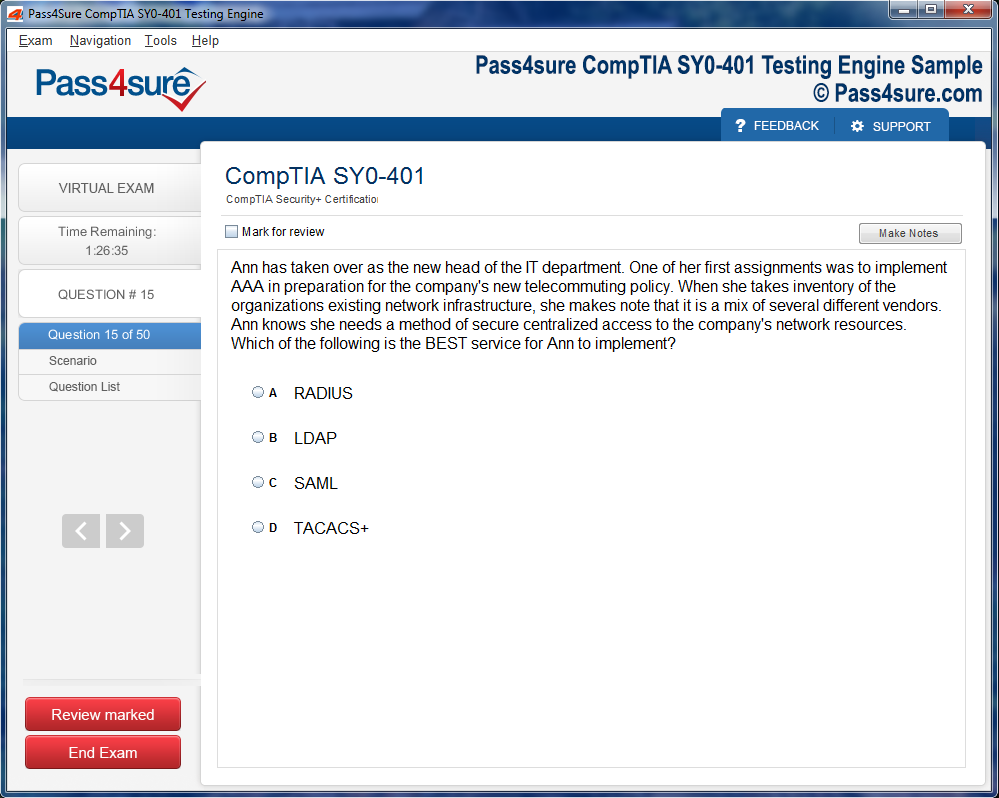
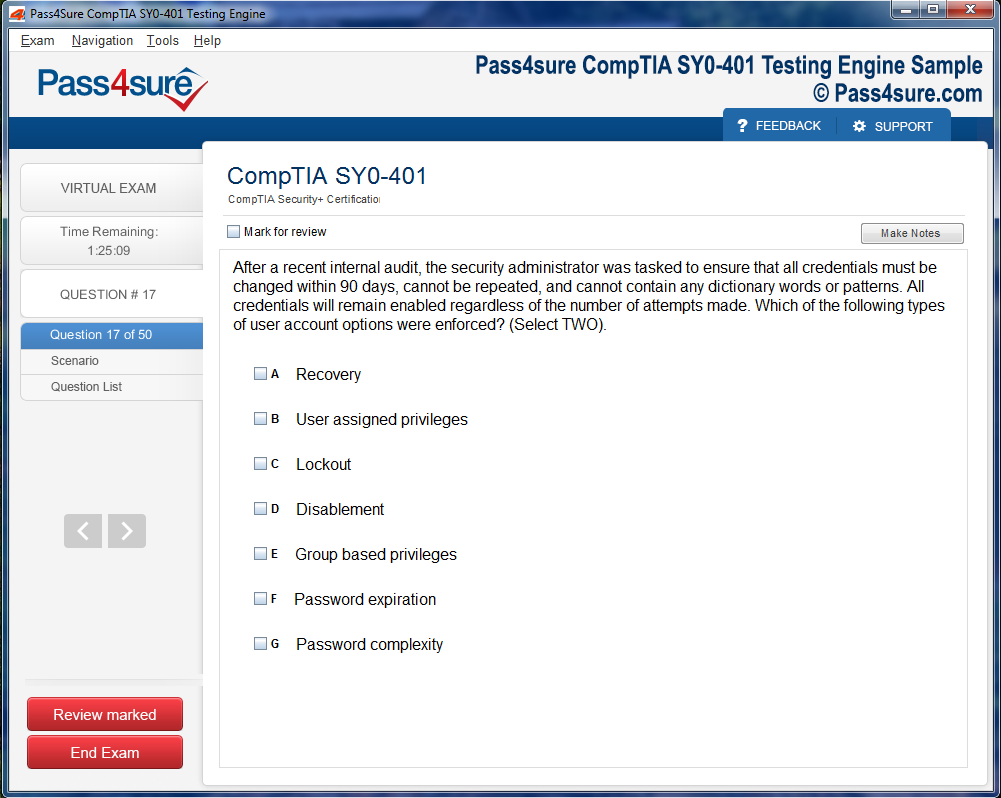
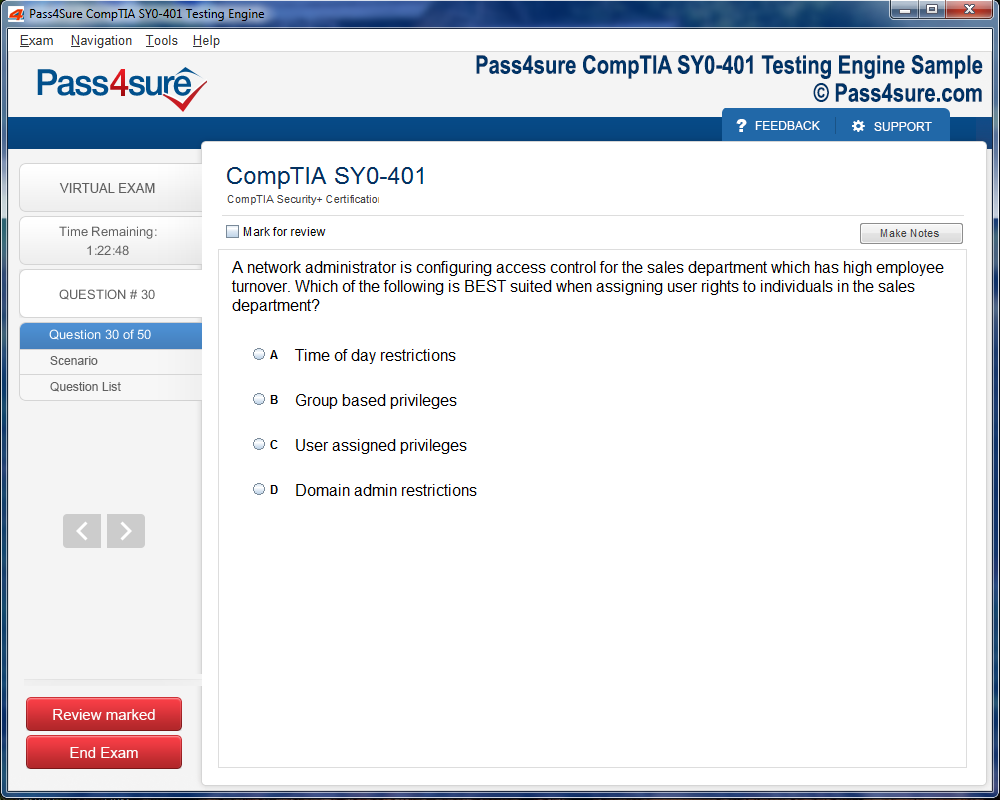
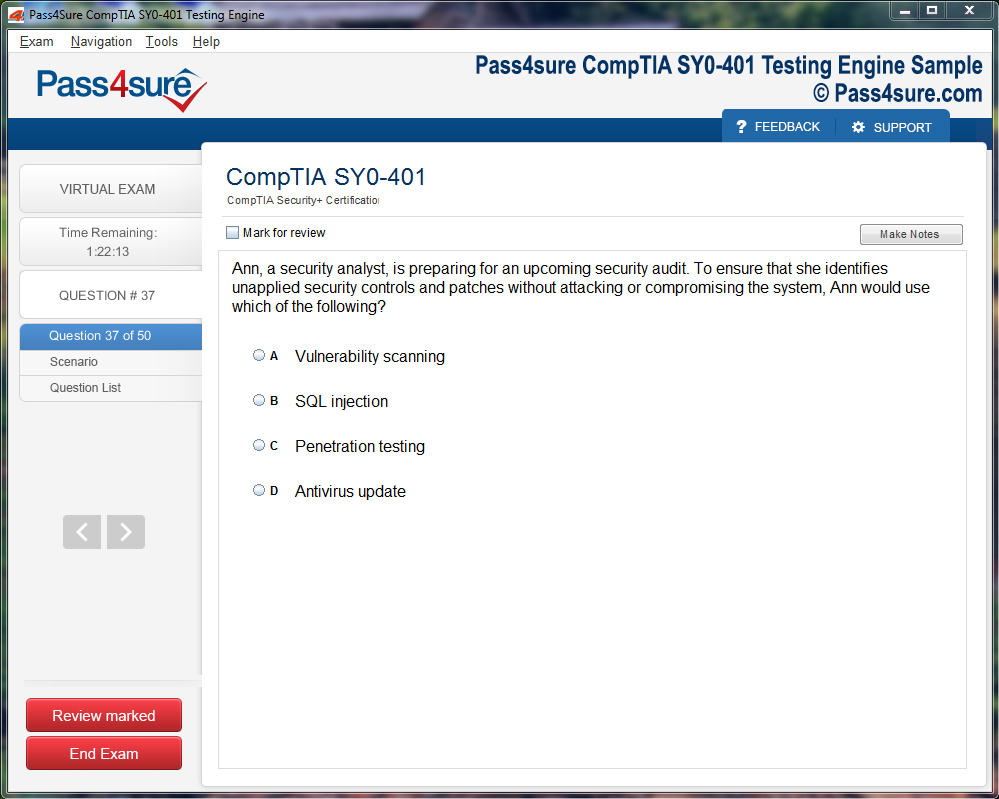
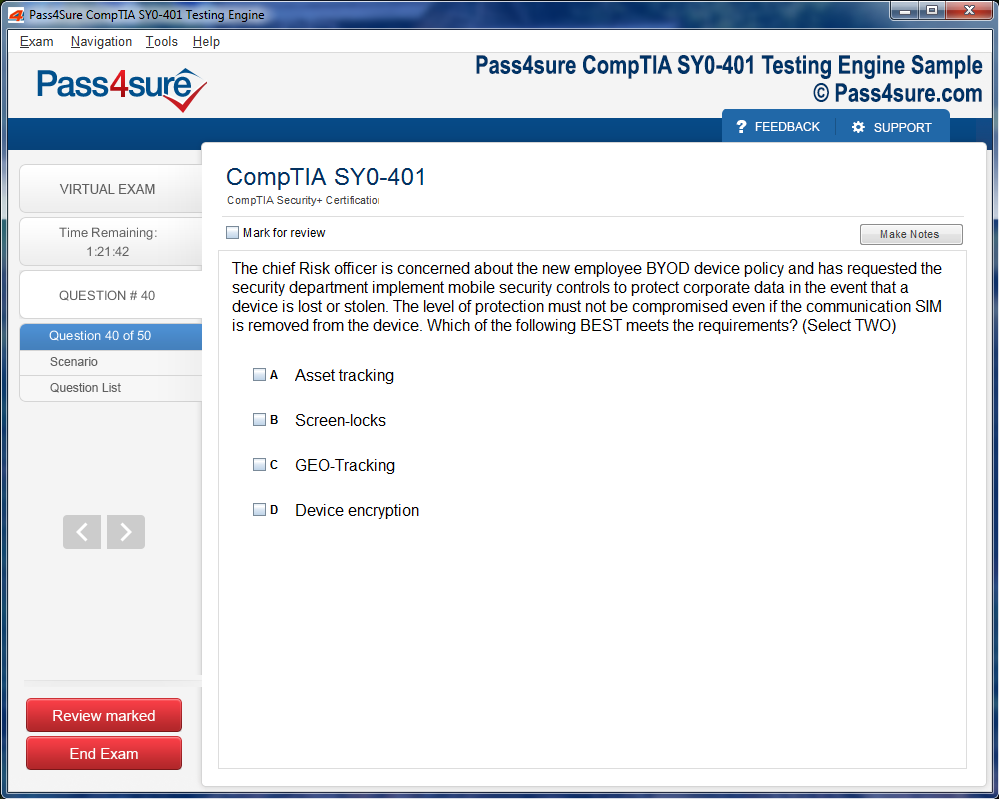
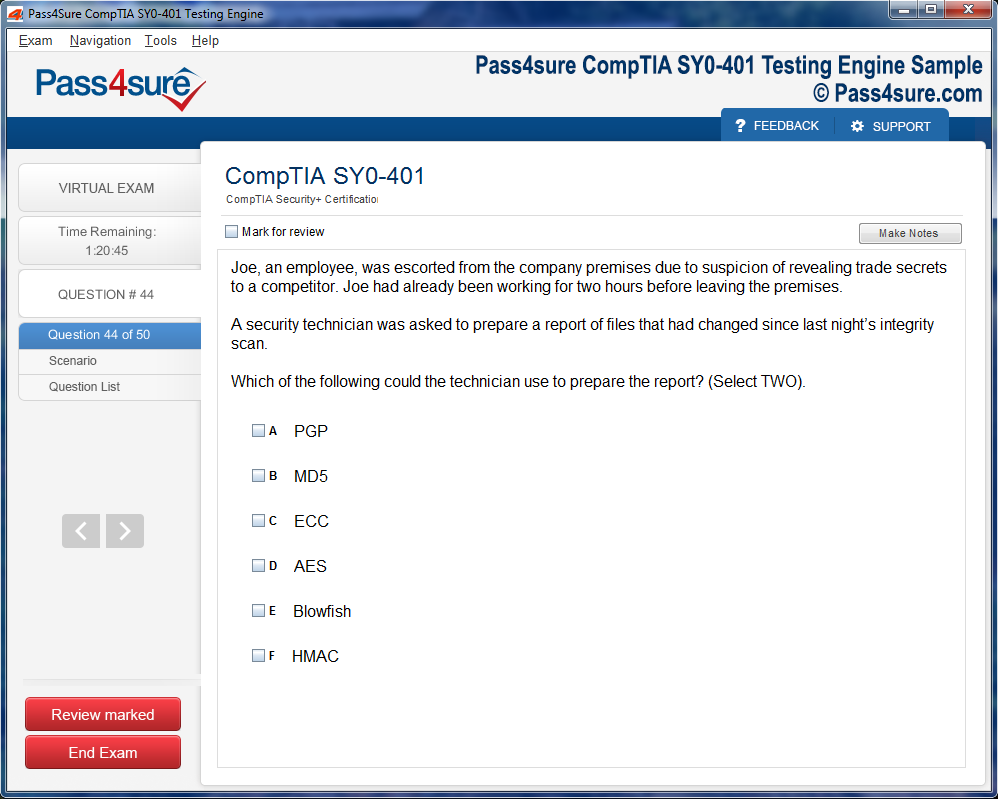
Product Screenshots
Frequently Asked Questions
How does your testing engine works?
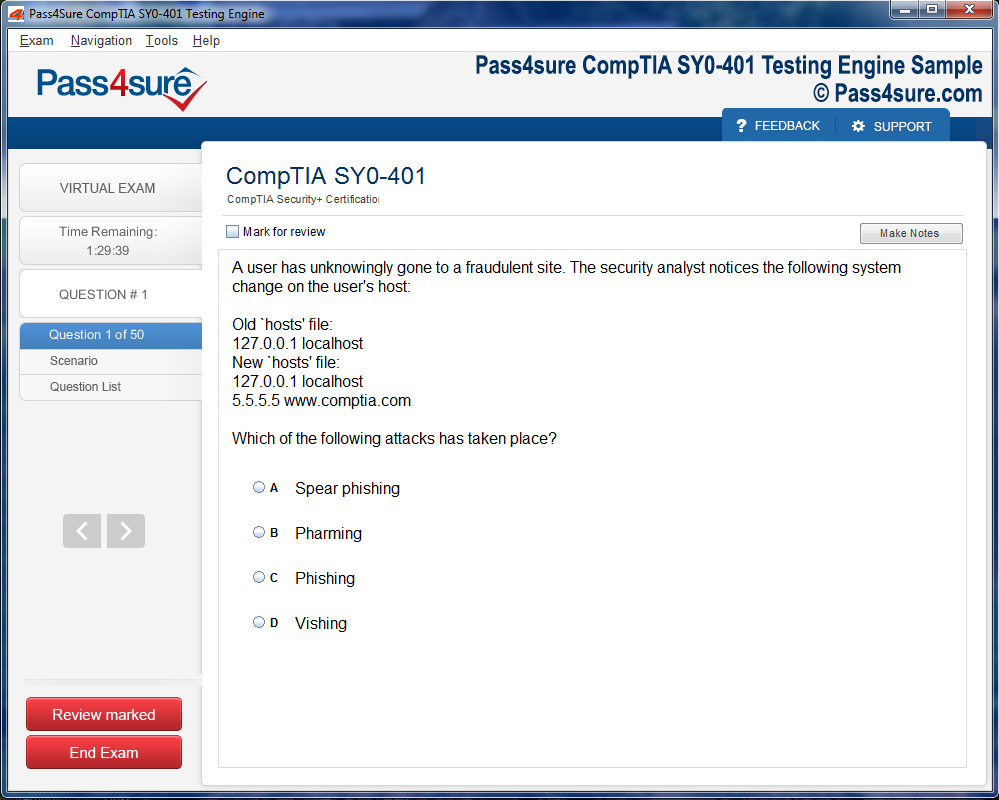
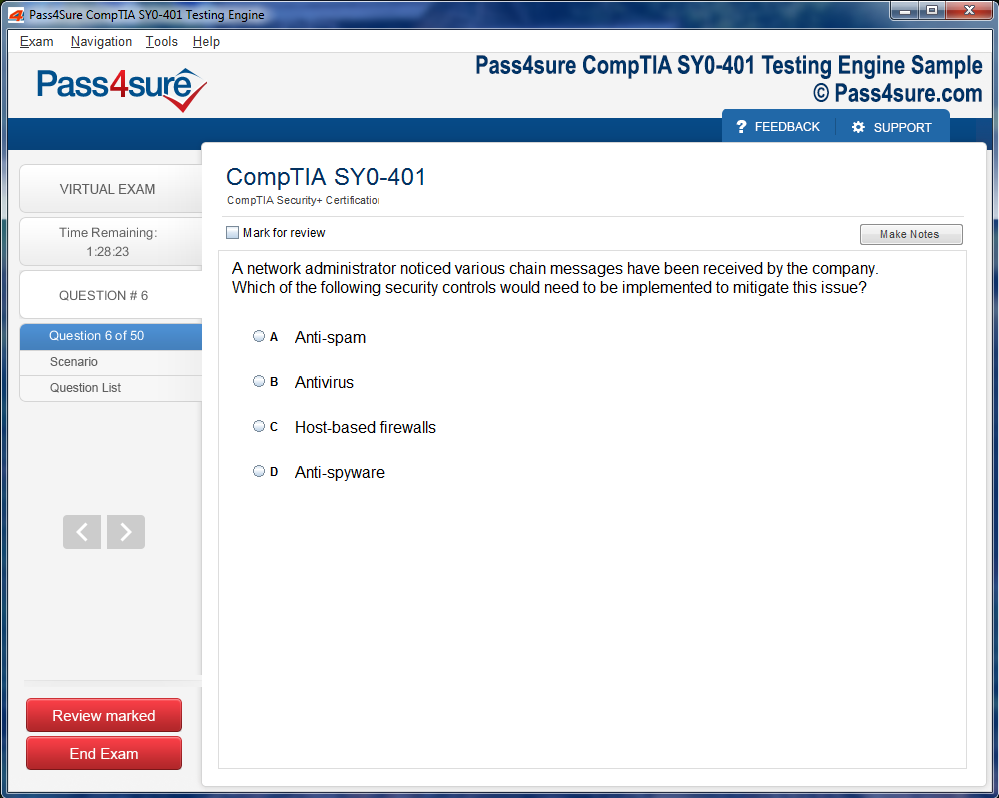
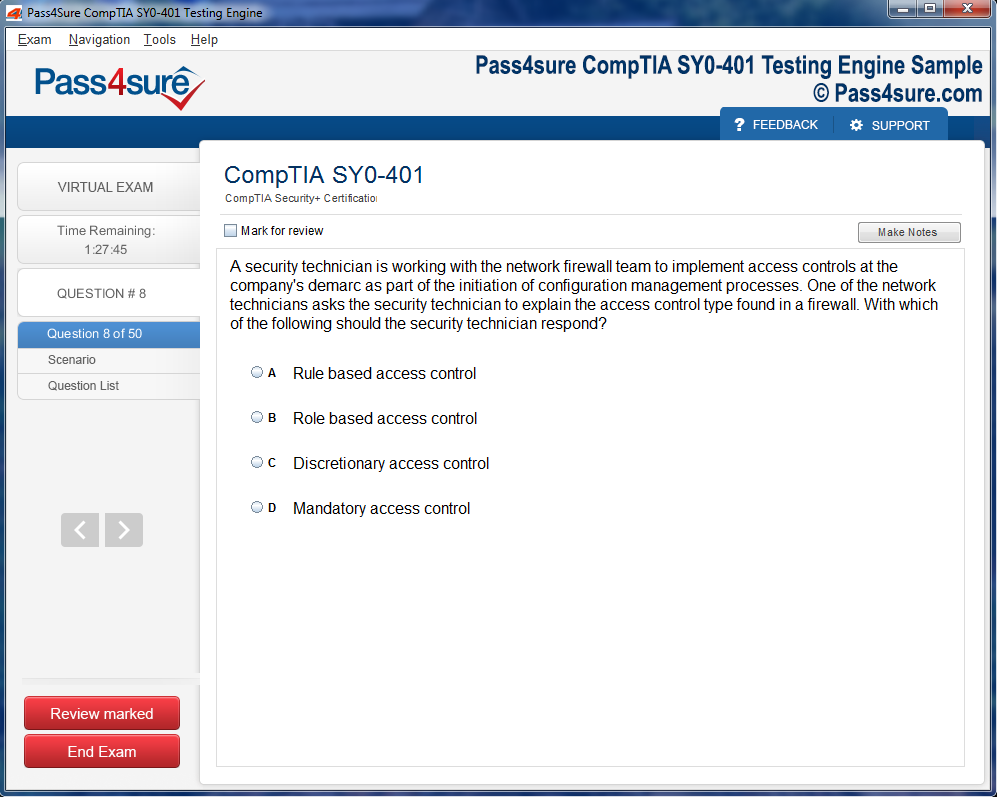
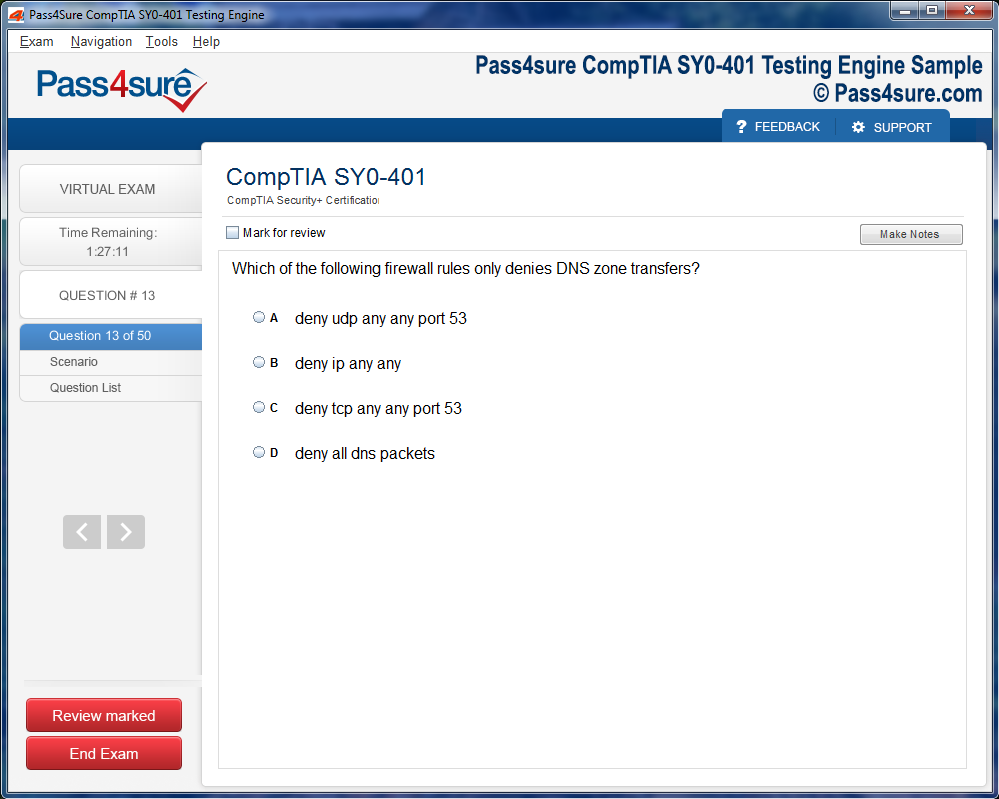
Once download and installed on your PC, you can practise test questions, review your questions & answers using two different options 'practice exam' and 'virtual exam'. Virtual Exam - test yourself with exam questions with a time limit, as if you are taking exams in the Prometric or VUE testing centre. Practice exam - review exam questions one by one, see correct answers and explanations.
How can I get the products after purchase?
All products are available for download immediately from your Member's Area. Once you have made the payment, you will be transferred to Member's Area where you can login and download the products you have purchased to your computer.
How long can I use my product? Will it be valid forever?
Pass4sure products have a validity of 90 days from the date of purchase. This means that any updates to the products, including but not limited to new questions, or updates and changes by our editing team, will be automatically downloaded on to computer to make sure that you get latest exam prep materials during those 90 days.
Can I renew my product if when it's expired?
Yes, when the 90 days of your product validity are over, you have the option of renewing your expired products with a 30% discount. This can be done in your Member's Area.
Please note that you will not be able to use the product after it has expired if you don't renew it.
How often are the questions updated?
We always try to provide the latest pool of questions, Updates in the questions depend on the changes in actual pool of questions by different vendors. As soon as we know about the change in the exam question pool we try our best to update the products as fast as possible.
How many computers I can download Pass4sure software on?
You can download the Pass4sure products on the maximum number of 2 (two) computers or devices. If you need to use the software on more than two machines, you can purchase this option separately. Please email sales@pass4sure.com if you need to use more than 5 (five) computers.
What are the system requirements?
Minimum System Requirements:
- Windows XP or newer operating system
- Java Version 8 or newer
- 1+ GHz processor
- 1 GB Ram
- 50 MB available hard disk typically (products may vary)
What operating systems are supported by your Testing Engine software?
Our testing engine is supported by Windows. Andriod and IOS software is currently under development.
How to Pass the CDCP-001 Exam on Your First Attempt
The CDCP-001 examination manifests as a formidable crucible for aspirants seeking mastery in cloud data management. Its architecture is intentionally designed to sieve candidates who possess not merely rote knowledge but an incisive comprehension of multifaceted concepts and their pragmatic applications. Many novices falter by adopting superficial memorization techniques, unaware that the essence of triumph lies in synthesizing knowledge with analytical dexterity.
Knowing the Exam Structure
To navigate the labyrinthine corridors of the CDCP-001 exam, one must first internalize its structural nuances. The assessment encompasses a constellation of domains—ranging from cloud fundamentals and architectural paradigms to data security, backup methodologies, and disaster recovery protocols. Each domain carries differential weight, and an astute candidate discerns the areas with maximal scoring leverage.
Scenario-based interrogatives dominate the examination, compelling candidates to transpose theoretical knowledge into pragmatic problem-solving. These questions simulate real-world exigencies, reflecting the type of decision-making one will confront in professional capacities. Hence, understanding definitions alone is insufficient; candidates must cultivate an intellectual agility that allows them to navigate unforeseen challenges.
Setting a Strategic Study Schedule
A meticulously orchestrated study schedule is a sine qua non for exam mastery. Fragmenting preparation into digestible segments enables focused immersion in each domain sequentially. Incorporating a mélange of learning modalities—textual exegesis, visual schematics, interactive tutorials, and practice interrogatories—enhances cognitive retention.
Visual analogies, such as flowcharts representing data replication or encryption algorithms, transmute abstract constructs into tangible comprehension. Equally critical is cyclical reinforcement; periodic revisitation of previously studied topics consolidates knowledge and fortifies confidence. By internalizing such repetition as an iterative ritual, aspirants circumvent the erosion of retention predicted by the forgetting curve.
Harnessing High-Quality Resources
The informational milieu for CDCP-001 preparation is replete with heterogeneous resources, yet not all are germane or reliable. Selection criteria must prioritize recency, authoritativeness, and congruence with the exam blueprint. Official manuals and documentation from the certifying body provide the bedrock of veracity, while select third-party pedagogical content can elucidate practical intricacies.
Engagement with case studies of enterprises implementing cloud frameworks offers a rare vantage point into the subtle nuances of operational deployment. Furthermore, interactive learning platforms—encompassing timed quizzes, peer discussion forums, and error analysis exercises—foster an experiential learning environment. Mistakes become didactic instruments, simulating high-pressure problem-solving and reinforcing adaptive cognition.
Developing Conceptual Clarity
A lacuna in many aspirants’ preparation is the absence of profound conceptual clarity. Understanding the rationale behind strategic choices in cloud ecosystems eclipses rote procedural knowledge. For instance, discerning why a multi-region backup schema is preferable to a single-region strategy in certain compliance environments conveys a depth of insight that procedural memorization cannot replicate.
Key concepts warranting deep exploration include cloud deployment archetypes, storage typologies, redundancy schemas, and regulatory compliance landscapes. Employing analogical reasoning—such as likening data replication to a network of arterial highways—renders complex abstractions accessible and memorable, facilitating long-term retention and agile application under examination pressure.
Mindset and Exam Psychology
Cognitive fortitude and emotional equanimity constitute the sinews of exam success. Examination-induced anxiety can sabotage analytical faculties, rendering even well-prepared candidates vulnerable. Cultivating a disciplined, centered mindset through visualization exercises, mindfulness routines, and scenario rehearsal enhances focus and mitigates stress.
Confidence is symbiotic with preparation, yet must be tempered with prudence. Overconfidence can precipitate oversight, while judicious self-assurance promotes methodical problem-solving. Scenario-based inquiries demand logical dissection, and maintaining a clear, unflustered mental landscape ensures optimal performance.
Active Learning Strategies for Cognitive Fortification
Immersive cognition requires more than passive perusal; it necessitates active engagement with the corpus of knowledge. Self-quizzing is a superlative technique to consolidate mnemonic retention. After absorbing a section, close reference materials and endeavor to reconstruct pivotal points from memory. This iterative recall cultivates neural pathways and exposes latent gaps requiring reinforcement.
Articulating concepts vocally, even soliloquially, magnifies comprehension. The act of translating abstract theories into personalized lexicon enkindles clarity and identifies inconsistencies in reasoning. Equally, flashcards wield formidable efficacy. Whether targeting definitions, cloud service acronyms, or regulatory mandates, flashcards paired with digital spaced repetition optimize retention while curtailing superfluous repetition.
Active engagement metamorphoses rote memorization into enduring expertise, ensuring concepts endure beyond ephemeral rehearsal.
Scenario-Based Practice for Applied Proficiency
The CDCP-001 examination privileges applied cognition over rote memorization. Scenario-based exercises bridge theoretical knowledge and pragmatic execution. For instance, envision a corporation necessitating a disaster recovery blueprint. Scrutinize optimal backup methodologies, replication architectures, and cybersecurity stratagems. This analytical simulation not only mirrors examination exigencies but cultivates professional acuity.
Mini-projects executed in sandbox cloud environments provide invaluable experiential learning. Adjust storage topologies, test replication contingencies, and calibrate access control matrices. Tangible experimentation renders abstruse constructs perceptible, enhancing both competence and confidence. Iterative problem-solving within authentic contexts transforms abstract concepts into actionable expertise.
Temporal Optimization During Study Regimens
Temporal allocation is paramount; excessive immersion in familiar topics at the expense of weaker domains impedes holistic mastery. Initial baseline assessments illuminate cognitive lacunae. Disproportionate effort should fortify these nascent zones while cursory review preserves proficiency in familiar areas.
Daily and weekly benchmarks sustain disciplined momentum. Mornings may be devoted to theoretical exploration, afternoons to application-based exercises. Concise, concentrated sessions eclipse protracted, undirected marathons in efficacy. Consistency fosters gradual internalization of multifaceted concepts, such as cloud topology schemas or data retention paradigms, producing resilient mastery over ephemeral familiarity.
Leveraging Heterogeneous Resources
Pedagogical diversity enhances comprehension. Integrating textbooks, online curricula, practice assessments, and peer forums fosters multidimensional understanding. Forums facilitate dialogic learning; exchanging insights with fellow aspirants elucidates ambiguities. Discerning selection of information is imperative; prioritize contemporaneous, verified material congruent with CDCP-001 objectives.
Visual learners derive substantial benefit from demonstrative content. Multi-region redundancy, encryption protocols, and other abstract constructs crystallize when visualized. Annotating video materials and iterative review solidify conceptual retention, bridging the divide between theory and operational acuity.
Adaptive Progress Monitoring and Strategic Recalibration
Systematic self-evaluation ensures continuous advancement. Tracking performance across practice examinations illuminates improvement trajectories. Stagnation in specific domains warrants methodological recalibration. For example, if backup strategies remain abstruse, transitioning from textual review to schematic flowcharts or mind maps may engender comprehension breakthroughs.
Flexibility in cognitive strategy, rather than rigid adherence, cultivates sustained progression. Iterative adjustment ensures study sessions remain productive and aligned with evolving proficiency levels, fostering both resilience and adaptive intelligence.
Mindful Study and Cognitive Rejuvenation
Cognitive overload is antithetical to efficacious learning. Integrating intermissions, physical activity, and mindfulness practices preserves neurocognitive acuity. Optimal session design comprises 50–60 minutes of concentrated study punctuated by 10–15 minute restorative intervals. Quality of attention supersedes sheer duration; a lucid, refreshed mind assimilates intricate cloud management doctrines more efficiently than fatigued cognition.
Prioritizing mental equilibrium alongside study rigor amplifies retention, mitigates burnout, and cultivates sustainable learning habits. Mindful engagement transforms preparation from mechanical repetition into a dynamic, rewarding cognitive endeavor.
Practical Exercises for Scenario Synthesis
Hands-on exercises anchor abstract theory within tangible experience. Constructing mock cloud architectures, simulating multi-region replication, or configuring access governance enhances both comprehension and practical skill. Immersive practice reinforces cognitive connections, translating theoretical knowledge into operational competence.
Scenario synthesis also enhances problem-solving agility. By encountering diverse, unpredictable challenges in simulated environments, candidates develop adaptive strategies transferable to real-world cloud management. This dual advantage—exam preparedness and professional skill development—maximizes return on preparatory investment.
The Imperative of Practice Exams
Practice examinations transcend mere evaluation; they are crucibles for honing cognitive dexterity and temporal acuity. Engaging with these exercises under progressively stringent conditions cultivates familiarity with nuanced question archetypes while sharpening analytical instincts. Initially, immerse in untimed iterations, allowing the intellect to scrutinize principles without the encumbrance of chronological constraints. Subsequently, transition to timed simulations to mimic the crucible of the official test, where temporal pressure is omnipresent.
Analyzing missteps during practice is paramount. Each incorrect selection is a pedagogical opportunity to unearth latent misconceptions and fortify conceptual scaffolding. Superficial memorization may temporarily inflate confidence but invariably collapses under scenario-based scrutiny. Understanding the rationale behind correct and incorrect answers fosters a durable and transferable knowledge base.
Techniques for Targeted Practice
Strategic engagement with practice questions enhances retention and elucidates conceptual lacunae. Begin by categorizing queries according to thematic clusters, revealing repetitive patterns that may otherwise remain obscured. This taxonomy directs revision toward areas of deficiency while reinforcing recurring principles.
Maintaining meticulous error logs is an efficacious habit. Document every mistake alongside an explanation, creating a dynamic repository for pre-exam review. Repeated consultation of this log consolidates learning, transforming erstwhile weaknesses into fortresses of knowledge.
Simulating exam environments is another pivotal strategy. Construct distraction-free zones, adhere strictly to temporal constraints, and employ only permitted materials. This deliberate mimicry conditions the mind to operate under stress while minimizing cognitive fragmentation during the official assessment.
Temporal Navigation Strategies
Time management constitutes one of the most formidable challenges in high-stakes assessments. Establish a systematic approach: initially address questions of assured proficiency, proceed to moderately challenging items, and reserve ambiguous or intricate queries for subsequent attention. Avoid temporal fixation on singular questions; marking them for later review preserves cognitive bandwidth and mitigates panic-induced errors. Prudent allocation of time ensures comprehensive coverage without sacrificing deliberative thought.
Psychological Resilience Techniques
Anxiety is an insidious adversary that erodes analytical capacity. Employing deliberate stress-reduction techniques preserves mental acuity. Deep diaphragmatic breathing, intermittent stretching, and guided visualization can stabilize cognitive function under duress. Envisioning successful navigation through complex scenarios enhances neural preparedness, facilitating agile problem-solving.
Emphasizing Conceptual Mastery
Examinations predicated on scenario-based reasoning challenge candidates to transcend rote memorization. Understanding the foundational principles—why certain redundancy strategies are favored, the mechanics of data replication, and security protocols for breach prevention—equips aspirants to tackle unforeseen questions with composure. Conceptual mastery empowers flexible application, allowing candidates to extrapolate knowledge to novel contexts.
Pre-Exam Priming
Optimal pre-exam preparation balances cognitive refreshment with physiological readiness. Focused review of summaries, diagrams, and previously compiled error logs invigorates recall while avoiding mental saturation. Adequate sleep, balanced nutrition, and logistical preparedness further enhance performance, ensuring the mind operates at peak capacity. Confirming exam location, allowable materials, and identification requirements mitigates avoidable stressors, channeling mental energy toward problem-solving.
Confidence Cultivation
Confidence emerges from sustained preparation, reflective practice, and iterative reinforcement. Recognizing progress in practice assessments fortifies self-efficacy, enabling methodical engagement with complex questions. Confidence acts as a cognitive lubricant, reducing indecision and enhancing strategic thinking under temporal constraints.
Conceptual Cartography for Cognitive Agility
Conceptual cartography, akin to cognitive topography, transcends rudimentary note-taking by weaving abstract notions into interlaced cognitive maps. By plotting entities such as hybrid cloud architectures, data sovereignty imperatives, and latency mitigation strategies on a mental canvas, learners cultivate an intricate lattice of interdependencies. This cartographic approach enhances synaptic retrieval pathways, allowing exam takers to conjure interconnected concepts instantaneously under temporal pressure. Furthermore, visual mapping of regulatory frameworks alongside technical implementations reveals latent patterns often overlooked in linear study methods.
Hierarchical Assimilation of Knowledge
Hierarchical assimilation, or stratified comprehension, promotes layered engagement with complex constructs. Initial exposure involves macroscopic examination—surveying overarching cloud paradigms and service models. Subsequent passes delve into minutiae, exploring nuanced mechanisms like asymmetric encryption schemas, multi-zone replication intricacies, and granular compliance matrices. Ultimately, cognitive excavation reaches application synthesis, where theoretical constructs are juxtaposed against practical deployment scenarios. This tiered progression mitigates cognitive saturation while engendering robust neural encoding of multifaceted subject matter.
Mnemonic Constructs and Imaginative Anchoring
Harnessing mnemonic constructs for retention leverages the brain’s predilection for narrative and imagery. Associating ephemeral technical lexicons with vivid mental tableaux—for instance, envisioning immutable storage blocks as crystalline fortresses safeguarding ephemeral data—anchors otherwise elusive notions. Similarly, regulatory nuances may be encoded via allegorical vignettes, transforming abstract statutory clauses into memorable cognitive artifacts. This mnemonic alchemy not only expedites retrieval under high-pressure examination conditions but also fosters enduring intellectual scaffolding for long-term professional application.
Experiential Integration of Cloud Paradigms
Abstract theory attains durability when juxtaposed against concrete exemplars. Immersing oneself in meticulously documented case studies of enterprises navigating cloud backup orchestration or compliance labyrinths engenders tacit knowledge inaccessible through passive reading alone. Analyzing the architectural decisions, redundancy frameworks, and security postures in these scenarios cultivates intuitive problem-solving capabilities. Such immersion bridges the chasm between conceptual familiarity and operational fluency, equipping candidates to tackle situational queries with incisive precision.
Dialogic and Collaborative Cognition
Dialogic cognition emphasizes the dialectical refinement of understanding through interpersonal discourse. Engaging with peers in structured study circles or asynchronous forums facilitates cross-pollination of insights and elucidates latent misconceptions. Articulating complex constructs aloud, debating hypothetical contingencies, or collaboratively dissecting practice prompts fortifies analytical agility. Moreover, exposure to diverse cognitive heuristics within a community environment accelerates the identification of nuanced solution pathways often absent in solitary study routines.
Dynamic Retrieval and Temporally Spaced Rehearsal
Dynamic retrieval, synergized with temporally spaced rehearsal, constitutes the cornerstone of durable memory consolidation. Systematic self-quizzing, iterative flashcard engagement, and progressive interval reinforcement fortify neural traces, rendering knowledge reflexive rather than deliberative. Strategically revisiting high-difficulty modules—such as cryptographic permutations, cross-region replication logistics, or regulatory variance—at expanding temporal intervals ensures mastery beyond ephemeral memorization. This rhythmic re-engagement converts rote familiarity into instinctive proficiency, an invaluable asset for scenario-driven evaluations.
Applied Scenario Simulation
Simulating real-world operational scenarios serves as a crucible for cognitive synthesis. Candidates may design hypothetical cloud infrastructures, incorporating risk mitigation, redundancy orchestration, and compliance adherence, then test these constructs against plausible incident vectors. This immersive exercise consolidates abstract theory into actionable strategy, fostering anticipatory reasoning skills critical for both examination performance and practical cloud management. The iterative feedback loop derived from simulated deployment refines judgment, sharpens troubleshooting acumen, and cultivates an adaptive problem-solving mindset.
Understanding the Subtle Nuances of Question Traps
Examinations often conceal quagmires within ostensibly simple queries. Scenario-driven questions are particularly prone to subterfuge, embedding intricacies that challenge cognitive dexterity. An answer may appear superficially correct yet deviate from optimal praxis. It is imperative to decipher the intent behind each inquiry. Keywords such as “most efficacious,” “paramount practice,” or “immediate exigency” serve as semiotic beacons, directing attention toward the solution that aligns with the underlying principles. Attentive parsing of phrasing and contextual cues prevents ensnarement in deceptively plausible alternatives.
Strategic Elimination of Superfluous Options
When confronted with labyrinthine options, systematic elimination fortifies clarity. Discarding manifestly erroneous choices reduces cognitive load, enabling more precise deliberation. This analytical culling does not merely increase the probability of selecting the correct answer—it transforms ambiguity into discernible pathways. Even in instances where certainty is elusive, the removal of distractors illuminates the viable trajectory. Candidates attuned to this stratagem cultivate both efficiency and acuity, mitigating the paralyzing effects of indecision.
Conceptual Reasoning Over Memorization
Complex queries are designed to assay comprehension rather than rote recall. Grasping foundational principles is paramount. For example, differentiating between cold, warm, and hot data recovery paradigms transcends mere definitional knowledge; it enables reasoning through exigent scenarios, evaluating latency, redundancy, and operational impact. By internalizing the mechanics of methodologies, candidates are equipped to extrapolate solutions to unfamiliar or unprecedented dilemmas. Conceptual fluency engenders adaptive cognition, empowering nuanced decision-making under pressure.
Temporal Acuity in Exam Navigation
Temporal management is often as decisive as technical correctness. Confronted with dense or intimidating questions, candidates should adopt a tiered response methodology. Initial engagement with straightforward inquiries builds confidence and preserves temporal resources. Subsequent attention to moderately challenging scenarios consolidates understanding and primes analytical faculties. Complex conundrums are best approached once cognitive momentum is established, with provision for review if temporal latitude permits. This graduated schema harmonizes precision with efficiency, circumventing the pitfalls of procrastination and mental fatigue.
Cultivating Cognitive Elasticity
The capacity to transpose core principles onto novel scenarios is a hallmark of high-performing candidates. Rigid adherence to memorized patterns constrains adaptability, whereas cognitive elasticity facilitates inventive problem-solving. Immersive exposure to diverse case studies, simulation exercises, and experimental lab work fosters this pliability. By practicing cognitive transposition—applying familiar frameworks to unprecedented contexts—candidates develop a dexterity that transcends conventional preparation, bridging theory and pragmatic execution.
Guarding Against Overanalysis
Excessive rumination can inadvertently erode accuracy. While meticulous scrutiny is indispensable, overanalysis often seeds uncertainty, leading to the abandonment of otherwise correct solutions. Trust in foundational understanding and instinctive alignment with core principles is crucial. Overthinking can distort perception, introducing spurious doubts where clarity exists. Disciplined candidates cultivate a balance between analytical rigor and instinctive confidence, ensuring judicious application of reasoning without succumbing to counterproductive speculation.
Post-Exam Contemplation and Metacognitive Reflection
Traversing the rigors of the CDCP-001 exam is a crucible for both intellect and strategy. Upon emerging from this cognitive gauntlet, it is imperative to embark on a period of deliberate introspection. Metacognitive reflection entails dissecting your own cognitive strategies during the exam, identifying instances where analytical pathways faltered or intuition misaligned with procedural knowledge. Even a triumphant score conceals latent zones of epistemic fragility. Documenting these fissures not only consolidates triumphs but illuminates corridors for refinement. Many adept practitioners harness this post-exam lucubration to sculpt adaptive expertise, transforming transient memorization into durable competence.
Consolidating Cognitive Resonance Through Spaced Reengagement
The peril of post-examination atrophy is insidious; knowledge unreinforced withers in the synaptic lattice. To forestall cognitive erosion, employ a regimen of spaced reengagement. This strategy leverages the neuroscience of long-term potentiation, interspersing reviews of critical constructs—cloud architectures, cryptographic contingencies, and resilient backup schemas—across temporal intervals. Each encounter with the material invigorates memory engrams, fostering retention that transcends rote recitation. Integrating mnemonic scaffolds, analogical reasoning, and interleaved problem-solving exercises enhances neural consolidation, embedding skills deeply within procedural memory. This is not mere review—it is an orchestrated cognitive symphony that fortifies professional acumen.
Pragmatic Incubation of Learned Competencies
True mastery emerges when theory undergoes alchemy into praxis. Seek environments—laboratories, sandboxes, or controlled cloud ecosystems—where knowledge can be operationalized. Configuring multifaceted cloud infrastructures, architecting disaster recovery matrices, and instituting robust security protocols transforms abstract principles into palpable expertise. Each hands-on endeavor amplifies analytical agility, hones anticipatory reasoning, and cultivates a tactile intuition for complex systems. By embracing iterative experimentation, you convert ephemeral comprehension into actionable dexterity, bridging the chasm between conceptual familiarity and occupational virtuosity.
Immersive Continuity in Learning Ecosystems
In the protean domain of cloud computing, stagnation is antithetical to success. To maintain epistemic relevance, immerse yourself within dynamic learning ecosystems. Engage with specialized professional forums, niche webinars, and avant-garde workshops. These platforms are crucibles for novel paradigms, exposing participants to eclectic methodologies and emergent best practices. Networking in these contexts does more than disseminate information; it engenders a cognitive cross-pollination, expanding problem-solving horizons and enriching tactical repertoires. Continuous education becomes not a perfunctory obligation but a conduit for perpetual innovation.
Deliberate Navigation of Career Trajectories
Certification is not an endpoint; it is a navigational beacon within your professional odyssey. Identify vocations and projects that allow CDCP-001 competencies to flourish. Whether spearheading cloud orchestration endeavors, architecting enterprise-level data fortifications, or optimizing redundant storage topologies, aligning skills with opportunities transforms certification into operational leverage. Establishing measurable career objectives imbues professional endeavors with intentionality, ensuring that each project undertaken contributes incrementally to cumulative expertise and influence within the domain.
Cultivating Epistemic Confidence and Adaptive Resilience
The vicissitudes of technological landscapes necessitate more than technical prowess—they demand epistemic confidence intertwined with adaptive resilience. Professionals who internalize foundational principles while remaining malleable in the face of evolving cloud paradigms cultivate a cognitive elasticity essential for sustained success. Confidence fuels decisive action, while adaptability enables agile responses to unforeseen contingencies. By consciously balancing these traits, practitioners not only navigate contemporary challenges but anticipate emergent complexities, positioning themselves as linchpins in organizational innovation.
Integrative Reflection and Iterative Skill Refinement
The post-certification phase is an opportune moment for integrative reflection. Synthesize insights gleaned from exam performance, practical implementation, and ongoing learning engagements. Construct feedback loops wherein successes and missteps inform iterative refinement. This approach transforms isolated experiences into cumulative wisdom, ensuring that each subsequent engagement—be it technical implementation, strategic planning, or collaborative innovation—benefits from a foundation of scrutinized and contextualized knowledge. Over time, this cultivates an adaptive expertise, enabling practitioners to respond fluidly to both anticipated and novel challenges within the cloud ecosystem.
Post-Exam Contemplation and Metacognitive Reflection
Traversing the rigors of the CDCP-001 exam is a crucible for both intellect and strategy. Upon emerging from this cognitive gauntlet, it is imperative to embark on a period of deliberate introspection. Metacognitive reflection entails dissecting your own cognitive strategies during the exam, identifying instances where analytical pathways faltered or intuition misaligned with procedural knowledge. Even a triumphant score conceals latent zones of epistemic fragility. Documenting these fissures not only consolidates triumphs but illuminates corridors for refinement. Many adept practitioners harness this post-exam lucubration to sculpt adaptive expertise, transforming transient memorization into durable competence.
Engaging in meticulous self-analysis also enhances cognitive mettle for subsequent endeavors. By cataloging the mental heuristics employed during problem-solving, one can discern patterns of cognitive bias, habitual overreliance on familiar solutions, or misjudgments in time allocation. For instance, an examinee may realize that nuanced backup schema questions provoked hesitation due to insufficient scenario-based practice. Capturing such insights fosters a meta-awareness that can guide the design of personalized post-exam study regimens, ensuring weaknesses do not ossify into enduring vulnerabilities.
Consolidating Cognitive Resonance Through Spaced Reengagement
The peril of post-examination atrophy is insidious; knowledge unreinforced withers in the synaptic lattice. To forestall cognitive erosion, employ a regimen of spaced reengagement. This strategy leverages the neuroscience of long-term potentiation, interspersing reviews of critical constructs—cloud architectures, cryptographic contingencies, and resilient backup schemas—across temporal intervals. Each encounter with the material invigorates memory engrams, fostering retention that transcends rote recitation. Integrating mnemonic scaffolds, analogical reasoning, and interleaved problem-solving exercises enhances neural consolidation, embedding skills deeply within procedural memory. This is not mere review—it is an orchestrated cognitive symphony that fortifies professional acumen.
Beyond mere repetition, sophisticated learners can employ elaborative rehearsal, connecting newly acquired knowledge with pre-existing mental frameworks. Consider cloud redundancy principles: linking them to familiar real-world analogues such as multi-tiered infrastructure in telecommunications or distributed logistics networks enhances retention through relational encoding. The deployment of retrieval practice, wherein concepts are actively recalled rather than passively reviewed, further solidifies synaptic pathways. Over weeks and months, this orchestrated reinforcement transmutes ephemeral familiarity into lasting operational fluency.
Pragmatic Incubation of Learned Competencies
True mastery emerges when theory undergoes alchemy into praxis. Seek environments—laboratories, sandboxes, or controlled cloud ecosystems—where knowledge can be operationalized. Configuring multifaceted cloud infrastructures, architecting disaster recovery matrices, and instituting robust security protocols transforms abstract principles into palpable expertise. Each hands-on endeavor amplifies analytical agility, hones anticipatory reasoning, and cultivates a tactile intuition for complex systems. By embracing iterative experimentation, you convert ephemeral comprehension into actionable dexterity, bridging the chasm between conceptual familiarity and occupational virtuosity.
Simulation-based exercises serve as a potent vehicle for experiential crystallization. By orchestrating mock failure scenarios—such as orchestrating a simulated data center outage or initiating deliberate encryption protocol conflicts—learners experience real-time problem resolution without jeopardizing actual operations. Such immersive engagements cultivate anticipatory cognition, enabling practitioners to recognize subtle systemic signals before they escalate into operational crises. Furthermore, documenting procedural outcomes and debriefing with peers or mentors reinforces both procedural fluency and metacognitive awareness, cultivating an ever-deepening reservoir of applied knowledge.
Immersive Continuity in Learning Ecosystems
In the protean domain of cloud computing, stagnation is antithetical to success. To maintain epistemic relevance, immerse yourself within dynamic learning ecosystems. Engage with specialized professional forums, niche webinars, and avant-garde workshops. These platforms are crucibles for novel paradigms, exposing participants to eclectic methodologies and emergent best practices. Networking in these contexts does more than disseminate information; it engenders a cognitive cross-pollination, expanding problem-solving horizons and enriching tactical repertoires. Continuous education becomes not a perfunctory obligation but a conduit for perpetual innovation.
Another avenue to reinforce relevance is the meticulous scrutiny of contemporary case studies. Analyzing incidents of cloud system breaches, backup failures, or misconfigured disaster recovery deployments provides a rarefied lens into practical vulnerabilities. By dissecting causality and solution pathways, professionals internalize lessons otherwise inaccessible through rote learning. The act of synthesizing these insights into personal best practices or procedural guidelines fosters an ongoing dialectic between knowledge acquisition and pragmatic implementation, ensuring learning remains dynamic, contextual, and anticipatory rather than static.
Deliberate Navigation of Career Trajectories
Certification is not an endpoint; it is a navigational beacon within your professional odyssey. Identify vocations and projects that allow CDCP-001 competencies to flourish. Whether spearheading cloud orchestration endeavors, architecting enterprise-level data fortifications, or optimizing redundant storage topologies, aligning skills with opportunities transforms certification into operational leverage. Establishing measurable career objectives imbues professional endeavors with intentionality, ensuring that each project undertaken contributes incrementally to cumulative expertise and influence within the domain.
Strategic career mapping requires both introspective clarity and market acuity. Scrutinize industry trajectories, emerging technological niches, and organizational exigencies to identify spaces where advanced cloud knowledge catalyzes impact. Align personal proficiency with roles requiring strategic oversight of data resiliency or innovative cloud optimization. By anchoring career decisions in both capability and opportunity, certification transcends symbolic recognition, becoming a tactical instrument for professional ascendancy.
Cultivating Epistemic Confidence and Adaptive Resilience
The vicissitudes of technological landscapes necessitate more than technical prowess—they demand epistemic confidence intertwined with adaptive resilience. Professionals who internalize foundational principles while remaining malleable in the face of evolving cloud paradigms cultivate a cognitive elasticity essential for sustained success. Confidence fuels decisive action, while adaptability enables agile responses to unforeseen contingencies. By consciously balancing these traits, practitioners not only navigate contemporary challenges but anticipate emergent complexities, positioning themselves as linchpins in organizational innovation.
Adaptive resilience can be augmented through scenario diversification. Expose yourself to problems outside your conventional domain: cross-functional collaboration, hybrid cloud deployments, and complex regulatory compliance scenarios sharpen the ability to integrate knowledge under uncertainty. This cognitive diversification fortifies professional self-efficacy, rendering practitioners less susceptible to performance anxiety and more capable of navigating unanticipated operational disruptions with equanimity and precision.
Integrative Reflection and Iterative Skill Refinement
The post-certification phase is an opportune moment for integrative reflection. Synthesize insights gleaned from exam performance, practical implementation, and ongoing learning engagements. Construct feedback loops wherein successes and missteps inform iterative refinement. This approach transforms isolated experiences into cumulative wisdom, ensuring that each subsequent engagement—be it technical implementation, strategic planning, or collaborative innovation—benefits from a foundation of scrutinized and contextualized knowledge. Over time, this cultivates an adaptive expertise, enabling practitioners to respond fluidly to both anticipated and novel challenges within the cloud ecosystem.
Iterative refinement extends beyond individual cognition to encompass team and organizational learning. Mentoring junior colleagues, conducting knowledge-sharing sessions, or documenting institutional best practices transforms personal experience into collective competency. This reciprocal exchange accelerates both skill maturation and systemic resilience, embedding the principles of the CDCP-001 within broader operational cultures. Practitioners evolve into nodes of expertise, capable of both executing and propagating best practices, thereby amplifying the long-term value of certification.
Strategic Mental Conditioning and Cognitive Endurance
Long-term retention and professional efficacy are contingent upon sustained mental conditioning. Cognitive endurance entails the cultivation of attentional stamina, analytical persistence, and strategic focus. Incorporate deliberate mental exercises—complex problem decomposition, scenario anticipation, and multi-layered contingency mapping—into post-exam routines. These practices enhance synaptic robustness, sharpen executive function, and fortify the neural circuits essential for adaptive reasoning in high-stakes environments. Cognitive conditioning is analogous to muscle training: incremental, deliberate, and systematically reinforced to produce durable functional capacity.
Equally important is emotional and psychological regulation. The post-certification landscape can evoke both elation and latent insecurity. Techniques such as reflective journaling, peer discourse, and structured feedback mechanisms mitigate cognitive distortions, prevent overconfidence, and sustain balanced professional self-perception. Integrating these methods ensures that knowledge retention is not merely intellectual but embodied within a resilient, adaptable, and strategically oriented cognitive framework.
Navigating Ambiguous Scenarios with Precision
In many examinations, ambiguity is an intentional instrument of assessment. Questions may present incomplete data, conflicting priorities, or multiple superficially viable solutions. Success lies in discerning the latent cues embedded in the scenario. Words such as “optimum efficiency,” “highest reliability,” or “critical priority” are not mere rhetoric—they signify the evaluative lens through which the examiner expects candidates to interpret the scenario. Candidates must engage in analytical triangulation, cross-referencing situational variables with core principles, rather than succumbing to superficial associations or heuristic shortcuts. Developing a meta-cognitive awareness of question intent enhances both interpretive accuracy and strategic foresight.
The Power of Incremental Deduction
Incremental deduction is a subtle yet potent method for tackling complex queries. Instead of attempting a holistic solution immediately, break the problem into smaller, discernible components. Assess each component individually, considering constraints, dependencies, and potential implications. This technique mirrors diagnostic reasoning in real-world systems, where multifactorial analysis prevents cascading errors. By decomposing the question, candidates reduce cognitive overload, facilitate systematic elimination, and reveal underlying patterns that inform optimal selection. Incremental reasoning also reinforces confidence, as each micro-resolution validates the pathway toward the final solution.
Cognitive Anchoring in Scenario Interpretation
Anchoring, when judiciously applied, aids decision-making under uncertainty. By establishing a conceptual reference point—often a fundamental principle or benchmark—the candidate creates a cognitive scaffold upon which reasoning can be layered. For instance, when faced with resource allocation dilemmas in a cloud environment, anchoring on baseline operational thresholds or recovery time objectives provides a frame of reference for evaluating alternative strategies. This approach mitigates susceptibility to misleading distractors and preserves analytical coherence, especially under time constraints.
Heuristic Flexibility for Novel Situations
Heuristics are mental shortcuts that simplify complex decision-making. However, rigid adherence to habitual heuristics can be perilous in examinations designed to test adaptability. Flexibility in heuristic application allows candidates to modify familiar rules to fit unanticipated circumstances. For example, while prioritizing high-availability architectures might generally favor redundancy, certain disaster recovery scenarios may necessitate temporary deviation for expediency or resource optimization. Cultivating flexible heuristics requires both experiential exposure and reflective analysis, promoting agile reasoning across heterogeneous question landscapes.
Psychological Calibration During Exams
Examination performance is as much psychological as it is intellectual. Candidates often experience heightened cognitive arousal, which can either sharpen analytical faculties or impair judgment through anxiety-induced tunnel vision. Conscious calibration of mental state—through brief pauses, controlled breathing, and positive self-instruction—enhances focus and mitigates impulsive decision-making. Establishing a rhythm of periodic cognitive resets allows sustained engagement with high-complexity scenarios, preserving clarity and preventing the degradation of analytical quality over extended testing periods.
Layered Analysis for Multi-Faceted Questions
Some questions incorporate multiple subcomponents or conditional dependencies that must be evaluated sequentially. A layered analysis approach involves systematically addressing each subcomponent while maintaining an awareness of overarching objectives. For instance, a question involving deployment, scaling, and security considerations in a distributed network requires sequential reasoning: first assessing deployment feasibility, then scalability implications, and finally security trade-offs. Layered analysis not only ensures comprehensive coverage but also uncovers interdependencies that might otherwise be overlooked, enhancing solution robustness.
Mitigating Cognitive Biases
Cognitive biases, subtle yet pervasive, can distort reasoning under exam conditions. Confirmation bias may lead candidates to favor options that align with preconceptions, while recency bias might overweight recently studied material. Awareness and proactive mitigation of such biases are crucial. Techniques include explicit hypothesis testing, alternative scenario consideration, and structured self-questioning. By interrogating initial impressions and evaluating options through multiple analytical lenses, candidates reduce the risk of bias-induced errors, bolstering the reliability of their judgments.
Scenario Simulation and Mental Rehearsal
Mental rehearsal—imagining scenario execution step by step—reinforces procedural fluency and anticipatory reasoning. This cognitive simulation allows candidates to pre-empt potential pitfalls, visualize optimal pathways, and internalize cause-effect relationships. In complex disaster recovery or resource allocation questions, mentally simulating data flow, latency impacts, and system interdependencies facilitates intuitive reasoning. Frequent practice of mental simulation enhances pattern recognition, decision speed, and situational adaptability, translating directly into superior exam performance.
Leveraging Comparative Reasoning
Comparative reasoning involves juxtaposing multiple solution options against a standardized set of evaluative criteria. Rather than assessing each option in isolation, candidates analyze relative advantages, trade-offs, and risk profiles. For instance, choosing between database replication strategies necessitates weighing consistency, availability, and resource utilization. Comparative reasoning crystallizes distinctions that might be subtle but consequential, steering decision-making toward the most rational and contextually appropriate alternative.
Developing an Internal Prioritization Framework
Time scarcity in examinations demands effective prioritization. Candidates benefit from constructing an internal hierarchy of question attributes, ranking them according to factors such as potential point yield, conceptual difficulty, and personal expertise. Early engagement with high-value, familiar questions secures foundational points, while reserving challenging or time-intensive scenarios for later maximizes overall efficiency. Prioritization frameworks act as cognitive compasses, guiding decision allocation and preventing disproportionate expenditure of effort on low-impact items.
Integrating Pattern Recognition and Principle Application
Pattern recognition is a cognitive skill that allows rapid identification of familiar structures within novel scenarios. When integrated with principle application, it becomes a formidable analytical tool. Recognizing recurring patterns in question formulation, data presentation, or system behavior permits faster and more accurate deductions. Simultaneously, mapping these patterns onto underlying principles ensures that intuitive responses are anchored in sound logic rather than superficial resemblance, harmonizing speed with accuracy.
ognitive Interleaving for Enhanced Retention
Cognitive interleaving involves alternating between disparate but related domains of knowledge, forcing the brain to continuously recalibrate associations. Rather than studying replication strategies in isolation, candidates might juxtapose them with encryption schemas or latency optimization techniques. This oscillating engagement fosters neuroplasticity, strengthening mental pathways that underpin integrative reasoning. Interleaving also curtails the plateau effect of monotonic study sessions, transforming rote memorization into adaptable problem-solving dexterity capable of withstanding the unpredictability of scenario-based questions.
Metacognitive Reflection and Self-Calibration
Metacognition, the reflective observation of one’s own learning processes, is a pivotal tool for deep comprehension. By periodically assessing which concepts remain opaque—be it multi-cloud orchestration, regulatory compliance nuances, or backup lifecycle management—learners can recalibrate their study trajectories. Recording thought patterns, tracking response latency in practice assessments, and analyzing error typologies illuminate blind spots invisible to superficial study. This meta-awareness not only refines retention strategies but also enhances exam performance by fostering anticipatory adjustments before critical decision points arise.
Analogical Reasoning Across Cloud Architectures
Analogical reasoning leverages familiar frameworks to interpret novel constructs. For example, equating distributed storage replication to a symphonic orchestration—with each node acting as an instrument maintaining harmony—renders abstract redundancy principles cognitively tangible. Analogies serve as cognitive bridges, allowing candidates to extrapolate prior knowledge onto unfamiliar questions while maintaining conceptual fidelity. By internalizing these analogical frameworks, learners cultivate rapid mental translation of complex diagrams, compliance matrices, and multi-layered architectures into intuitive understanding.
Semantic Chunking for Memory Optimization
Semantic chunking partitions intricate information into digestible cognitive units, enhancing recall and reducing mental load. For instance, regulatory compliance can be subdivided into data retention statutes, cross-border governance, and auditability requirements. Similarly, cloud service models may be chunked by deployment type, resource scalability, and security responsibilities. This method not only accelerates information retrieval during timed assessments but also promotes structural understanding, enabling candidates to reconstruct comprehensive conceptual maps from modular memory units.
Scenario-Based Cognitive Conditioning
Scenario-based conditioning simulates high-pressure decision-making environments, reinforcing both procedural knowledge and adaptive reasoning. Constructing hypothetical contingencies—such as a simultaneous failure of primary and secondary storage nodes in a geographically distributed system—trains candidates to rapidly evaluate mitigation pathways. This exercise integrates conceptual knowledge, operational foresight, and risk prioritization, ensuring that the candidate’s cognitive apparatus is pre-adapted to the multifaceted challenges presented in the CDCP-001 evaluation.
Integrative Cross-Referencing
Cross-referencing disparate informational nodes fosters integrative cognition by revealing latent relationships. Mapping disaster recovery strategies against compliance frameworks, or linking latency optimization to cost efficiency, transforms isolated knowledge fragments into a cohesive mental network. By cultivating this synoptic vision, candidates develop the capacity to synthesize complex, multidimensional questions swiftly. This methodology amplifies analytical agility, ensuring nuanced understanding of interactions between technical imperatives and regulatory constraints.
Embodied Learning Techniques
Embodied learning leverages physical interaction to reinforce cognitive retention. Kinesthetic study methods—such as diagrammatic gesturing, model manipulation, or hands-on virtual lab environments—anchor abstract cloud concepts in tactile experience. Performing replication exercises in simulated environments or physically sketching multi-region infrastructures engages sensorimotor pathways, producing multisensory memory traces. Such embodied encoding not only strengthens recall fidelity but also enhances conceptual intuition, allowing learners to navigate scenario-based questions with both confidence and efficiency.
Cognitive Elaboration Through Questioning
Elaborative interrogation, the practice of generating probing questions, deepens comprehension by compelling active engagement with the material. Asking “why does asynchronous replication reduce latency risk in multi-zone architectures?” or “how does data immutability intersect with compliance mandates?” forces learners to articulate causal linkages rather than relying on superficial recognition. This cognitive elaboration solidifies connections between abstract theory and practical application, fostering mental flexibility and producing a repository of self-generated heuristics for rapid reasoning.
Temporal Spacing and Sleep-Enhanced Consolidation
Temporal spacing of study sessions, complemented by sleep-enhanced consolidation, exploits natural neural encoding mechanisms. Distributing learning episodes over days or weeks—rather than massed cramming—promotes durable synaptic potentiation. Moreover, sleep cycles actively consolidate newly acquired knowledge, transferring volatile short-term memory into resilient long-term stores. Strategically scheduling challenging topics before periods of rest enhances retention and ensures that intricate topics, such as encryption permutations or cross-region redundancy protocols, remain cognitively accessible under exam conditions.
Reflexive Practice Through Micro-Assessments
Micro-assessments, consisting of brief, high-frequency quizzes targeting specific subdomains, reinforce continuous learning. By isolating discrete competencies—such as snapshot retention policies or tiered storage hierarchies—candidates gain immediate feedback on mastery levels. Reflexive engagement with these assessments fosters iterative correction of misconceptions and accelerates the transition from conscious deliberation to automated fluency. This micro-practice approach cultivates both precision and speed, crucial attributes for navigating complex scenario-based examinations.
Cognitive Scaffolding Via Progressive Complexity
Progressive complexity entails introducing concepts in incremental difficulty tiers, scaffolding knowledge without overwhelming cognitive resources. Learners might begin with elementary cloud storage concepts, then integrate disaster recovery, followed by regulatory nuances, and finally analyze multi-variable operational scenarios. This structured scaffolding consolidates foundational understanding while progressively expanding intellectual bandwidth, enabling candidates to confidently tackle multi-layered questions without succumbing to cognitive overload.
Visual Mnemonics and Diagrammatic Encoding
Visual mnemonics transform abstract technical constructs into spatially organized representations. Diagrammatic encoding—illustrating data replication flows, latency bottlenecks, or compliance audit trails—creates vivid mental anchors. Spatial reasoning coupled with mnemonic symbolism enhances both comprehension and recall, providing candidates with a rapid-access cognitive map during timed examinations. This dual coding, visual plus semantic, leverages multiple neural pathways, producing robust memory retention even under stress-induced conditions.
Cognitive Redundancy Awareness
Redundancy, a core cloud principle, extends beyond technical architecture into cognitive strategies. Cultivating cognitive redundancy involves maintaining multiple retrieval pathways for the same information. For example, understanding replication not only through conceptual diagrams but also via mnemonics, analogies, and applied simulations ensures that recall is resilient to context shifts. This mental redundancy parallels system-level replication, safeguarding knowledge accessibility when confronted with novel problem formulations.
Adaptive Heuristic Development
Heuristics, or cognitive shortcuts, allow rapid decision-making under uncertainty. Candidates develop adaptive heuristics by distilling repeated exposure to scenario-based questions into pattern-recognition strategies. Recognizing that certain latency patterns correlate with replication failures or that specific compliance triggers predict audit challenges enables quick, confident responses. By refining these heuristics through iterative practice, learners cultivate intuitive judgment capable of bridging theoretical knowledge and practical exigencies.
Nuances of Cognitive Conditioning
The mind, like a finely-tuned instrument, responds to repetitive stress in patterned ways. Cognitive conditioning through practice exams cultivates both endurance and precision. Approaching each test question as a microcosm of problem-solving allows candidates to internalize logical frameworks rather than memorizing discrete answers. This approach nurtures synaptic resilience, enabling rapid retrieval of interconnected concepts during high-pressure scenarios.
Cognitive conditioning also involves oscillating between divergent and convergent thinking. Divergent thinking permits exploration of unconventional solution pathways, while convergent thinking refines choices toward optimal correctness. Balancing these thought modalities is critical in navigating scenario-based questions, which often obscure the path to resolution with extraneous data.
Incremental Complexity in Simulated Exams
A stratified approach to practice exams amplifies efficacy. Begin with fundamental-level questions to solidify baseline understanding. Gradually introduce complex, multi-layered problems that mirror the intricacies of the actual CDCP-001 exam. This incremental escalation not only reinforces knowledge but also accustoms the candidate to cognitive fatigue, a common impediment during prolonged assessments.
When practicing complex questions, annotate the thought process in real-time. Documenting each logical step transforms ephemeral reasoning into concrete patterns. Reviewing these annotations before subsequent practice sessions reveals cognitive blind spots, enabling targeted reinforcement.
Analytical Reflection Post-Practice
Post-practice reflection is often overlooked yet is arguably the most critical phase of preparation. Candidates should scrutinize not only which answers were incorrect but why errors occurred. Were they due to conceptual misunderstandings, careless oversight, or misinterpretation of question phrasing? This meta-cognitive awareness fosters adaptive learning, enabling future responses to be informed by reflective insight rather than instinct alone.
Reflection also encourages cross-pollination of concepts. For instance, misjudgments in backup strategies may illuminate weaknesses in understanding replication principles. Recognizing these intersections allows candidates to consolidate disparate knowledge streams, enhancing both retention and application.
Sophisticated Question Categorization
Moving beyond rudimentary topic grouping, advanced categorization considers conceptual depth and pattern frequency. Identify high-yield clusters—concepts that appear repeatedly across practice exams and that underpin multiple question types. Prioritize these clusters in revision schedules, but maintain a rotational review of low-frequency topics to avoid vulnerability from unfamiliar scenarios.
Within each category, further segment questions by difficulty and cognitive demand. Simple recall, analytical application, and integrative reasoning represent escalating tiers. Practicing across this spectrum ensures readiness for the full gamut of exam challenges.
Strategic Error Logging
Error logging need not be perfunctory. Maintain a dynamic compendium of mistakes, augmented by cognitive annotations detailing why alternative answers were plausible yet incorrect. Incorporate mnemonic devices, illustrative diagrams, and comparative tables to crystallize distinctions. Revisiting this enriched error log periodically stimulates active recall, enhancing memory consolidation while simultaneously reducing cognitive friction on exam day.
Furthermore, employ color-coding or hierarchical prioritization within logs. Assign higher attention to recurring errors or concepts integral to multiple question archetypes. Such stratification ensures that study effort is efficiently directed toward areas with maximal impact.
Environmental Fidelity in Simulation
Simulating exam conditions is more than a superficial exercise; environmental fidelity profoundly influences psychological readiness. Replicate auditory and temporal distractions that may arise in the examination hall. Practice maintaining composure despite intermittent interruptions, whether external (ambient noise) or internal (anxiety triggers).
Introduce deliberate constraints—restricting allowed reference materials, timing breaks, and using only permitted calculators or software. This procedural mimicry trains cognitive adaptability, allowing the brain to focus on problem-solving rather than procedural navigation during the actual exam.
Temporal Segmentation During the Exam
Efficient time management hinges on segmentation, breaking the exam into manageable temporal blocks. Allocate initial periods to high-confidence questions, allowing early accumulation of points and reinforcing psychological momentum. Subsequent segments should address intermediate difficulty items, while reserving the final block for ambiguous or multi-step problems.
Adopt a micro-monitoring approach: track elapsed time at predetermined intervals to maintain pacing awareness. This mitigates the risk of temporal myopia, wherein disproportionate attention to a single question compromises overall completion. Employing a “triage” method—answer, flag, revisit—ensures maximal coverage while minimizing cognitive bottlenecks.
Stress Modulation Techniques
High-stakes testing inherently induces physiological arousal, which, if unchecked, can impair working memory and analytical clarity. Techniques for stress modulation should be rehearsed, not improvised. Controlled diaphragmatic breathing, progressive muscle relaxation, and brief meditative interludes are effective in re-centering focus.
Visualization strategies extend beyond superficial imagery. Mentally rehearsing complex scenarios, including potential pitfalls and their resolutions, enhances procedural memory. This form of cognitive preconditioning primes the mind for rapid, accurate decision-making under pressure.
Conceptual Fluency Over Memorization
Memorization offers fleeting security; conceptual fluency ensures adaptive problem-solving. Candidates must interrogate the rationale underpinning every principle. Why is a particular backup method optimal under certain constraints? How do replication strategies differ across system architectures? What threat vectors are mitigated by specific security protocols?
By cultivating explanatory depth, candidates acquire a versatile toolkit, capable of addressing novel scenarios and hybrid questions. Fluency allows immediate contextual analysis rather than delayed, effortful recall, which is particularly critical under stringent temporal constraints.
Adaptive Learning Through Feedback Loops
Iterative practice thrives on feedback loops. Immediate review of practice exams generates actionable insight, informing subsequent study iterations. Adaptive learning encourages modification of study strategies, resource allocation, and focus areas based on performance trends rather than intuition alone.
This iterative cycle fosters metacognition: the awareness of one’s own cognitive processes. Candidates gain insight into strengths, weaknesses, and idiosyncratic learning patterns. Leveraging this awareness enhances both efficiency and efficacy of exam preparation.
Cognitive Resilience Under Fatigue
Examinations, particularly those of substantial length, test not only knowledge but endurance. Cognitive resilience, the capacity to maintain focus and reasoning under mental fatigue, is cultivated through extended practice sessions. Gradually increase practice durations to approximate the temporal demands of the actual test. Incorporate periodic but controlled breaks to simulate real-world attention spans, conditioning the mind to recover and sustain performance.
Nutrition and hydration further support resilience. Glucose regulation, electrolytic balance, and circadian rhythm synchronization influence neural processing efficiency. Candidates who optimize physiological states often demonstrate superior analytical stamina, particularly during late-exam stages.
Advanced Pre-Exam Priming
Beyond conventional review, pre-exam priming encompasses neurocognitive, emotional, and logistical preparation. Engage in targeted mental exercises, such as summarization drills, diagrammatic reasoning, and rapid conceptual recall. These exercises awaken neural networks, ensuring they operate at maximal efficiency during the exam.
Emotionally, cultivate anticipatory confidence through affirmations and scenario visualization. Mentally rehearsing success pathways reduces susceptibility to panic responses when confronted with challenging questions. Logistically, double-check exam location, allowed materials, and identification requirements. Mental energy conserved from logistical certainty can be fully redirected toward cognitive performance.
Confidence as a Cognitive Catalyst
Confidence is both psychological and functional. It lubricates decision-making processes, reduces second-guessing, and enhances the fluidity of reasoning under time constraints. Confidence is constructed through sustained practice, reflective insight, and tangible proof of progress via simulated assessments.
Micro-strategies to bolster confidence include pre-exam rituals, recall of previous successes, and incremental goal-setting within practice sessions. Each successful completion of a practice subset reinforces self-efficacy, creating a positive feedback loop that amplifies exam-day performance.
Integrative Scenario-Based Mastery
Finally, scenario-based questions represent the pinnacle of assessment complexity. Mastery requires integrating multiple knowledge streams—backup strategies, replication methodologies, security protocols, and operational contingencies—into cohesive problem-solving approaches. Practice scenarios should be multi-dimensional, reflecting the intersectionality of real-world challenges.
Approach each scenario by deconstructing it into component principles, assessing interdependencies, and hypothesizing solutions before verifying against correct models. This integrative approach transforms theoretical understanding into operational competence, ensuring readiness for the unpredictability inherent in high-stakes examinations.
Conclusion
Passing the CDCP-001 exam on the first attempt is not a matter of luck—it is the result of deliberate preparation, strategic planning, and disciplined execution. Across the six-part series, we have explored every essential aspect of the journey, from understanding the exam structure to mastering complex scenarios, optimizing study methods, and applying knowledge practically.
Success begins with building a strong foundation: knowing the domains, creating a structured study schedule, and choosing high-quality resources ensures that your preparation is focused and effective. Progressing further, practical study techniques like active recall, scenario-based practice, and time management enhance comprehension while keeping motivation high.
Equally important is the mental approach. Confidence, stress management, and strategic decision-making under exam conditions allow you to navigate challenging questions efficiently. Advanced methods, including concept mapping, layered learning, and real-world case studies, transform memorization into deep understanding that lasts well beyond the exam.
Finally, passing the CDCP-001 exam is only the beginning. Post-exam reflection, continual reinforcement of knowledge, hands-on application, and engagement in professional networks convert certification into real-world competence and career growth.
The key takeaway is that preparation is holistic—it combines knowledge, skill, strategy, and mindset. By following this roadmap, you are not only equipping yourself to pass the exam on your first attempt but also laying a foundation for excellence in cloud data management and beyond. With dedication, practice, and confidence, success is not just possible—it is inevitable.