

Exam Code: 1D0-442
Exam Name: CIW Enterprise Specialist
Certification Provider: CIW
Corresponding Certification: Master CIW Enterprise Developer
Product Screenshots
Frequently Asked Questions
How does your testing engine works?
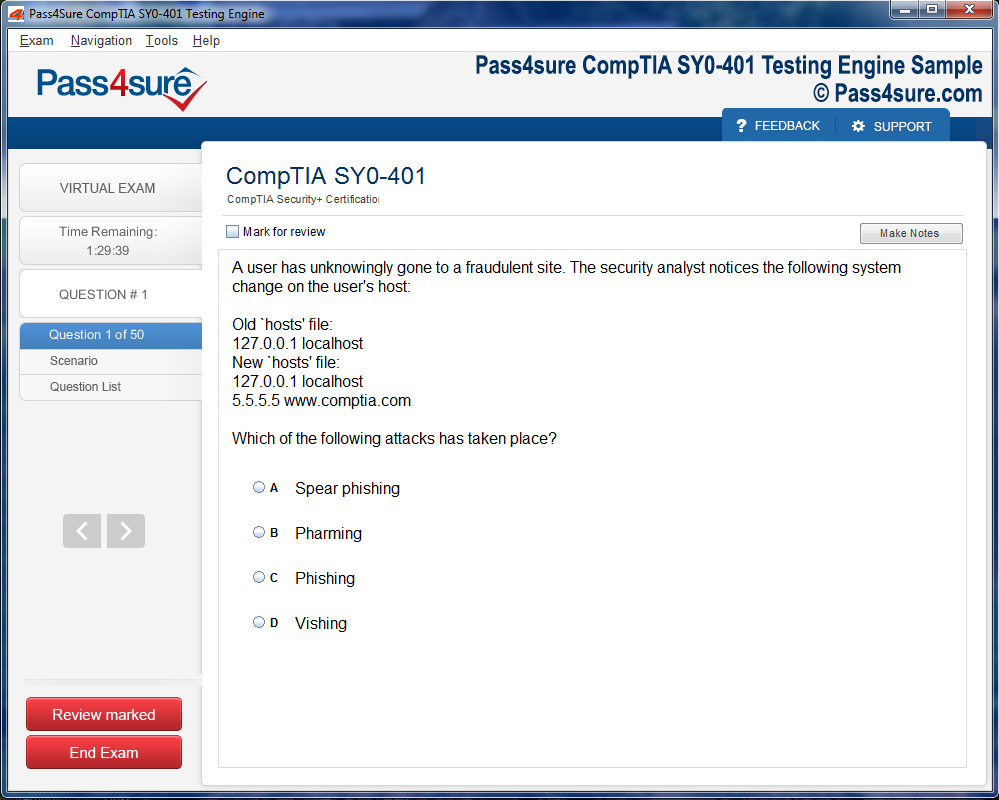
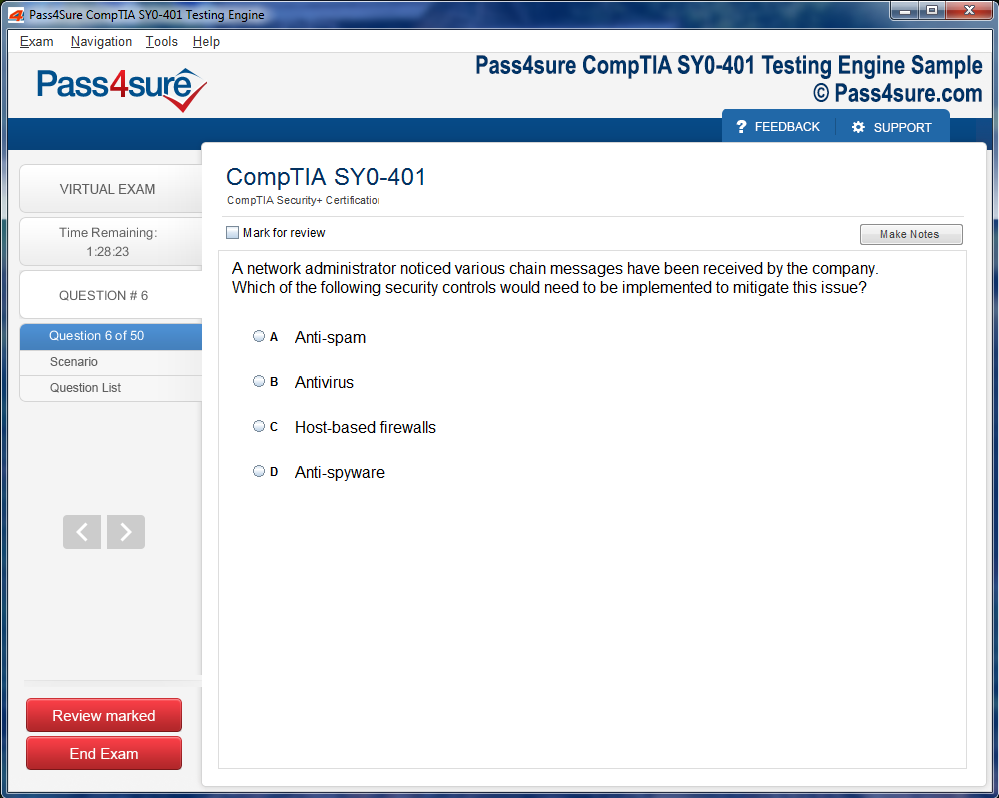
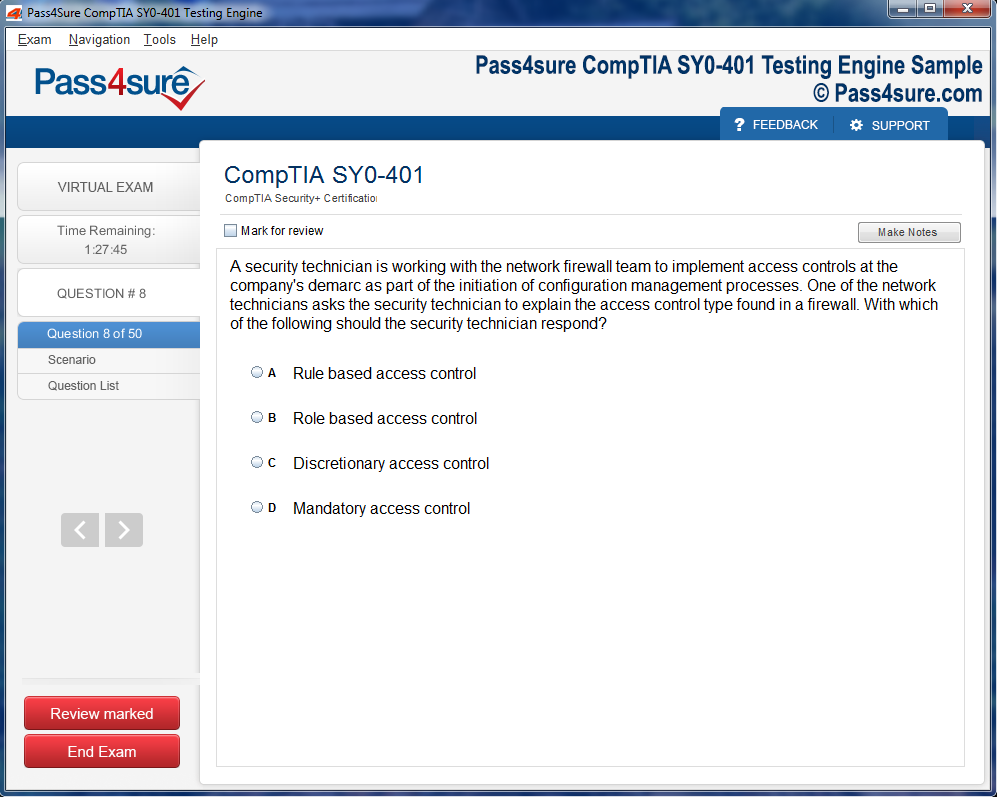
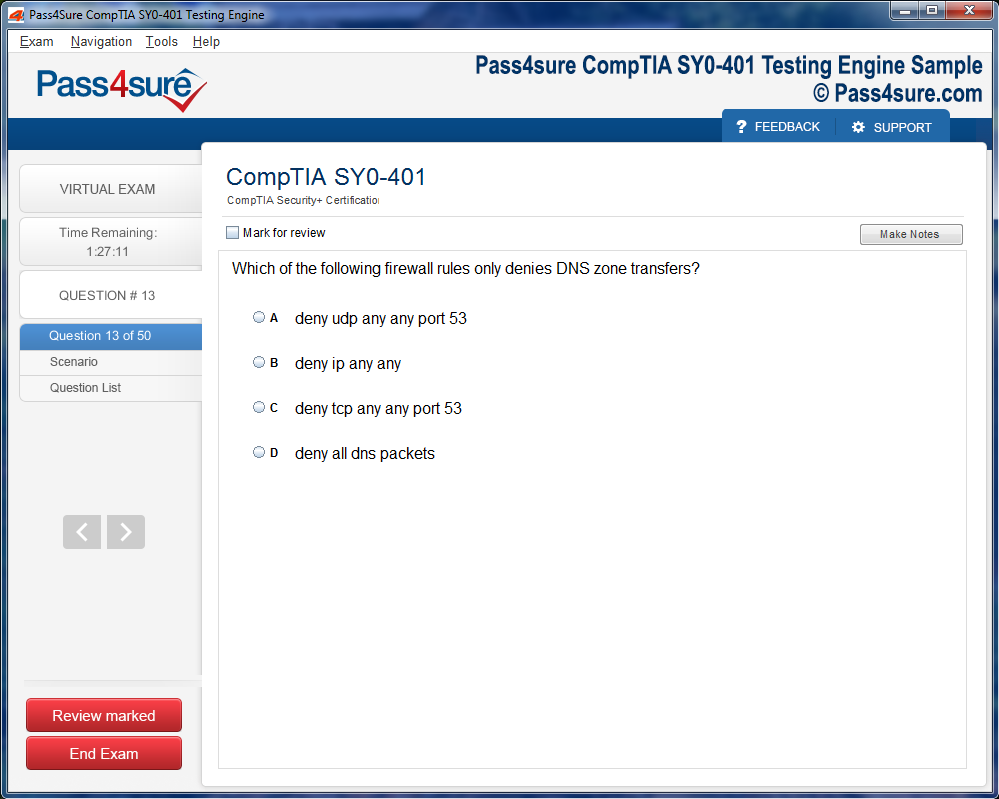
Once download and installed on your PC, you can practise test questions, review your questions & answers using two different options 'practice exam' and 'virtual exam'. Virtual Exam - test yourself with exam questions with a time limit, as if you are taking exams in the Prometric or VUE testing centre. Practice exam - review exam questions one by one, see correct answers and explanations.
How can I get the products after purchase?
All products are available for download immediately from your Member's Area. Once you have made the payment, you will be transferred to Member's Area where you can login and download the products you have purchased to your computer.
How long can I use my product? Will it be valid forever?
Pass4sure products have a validity of 90 days from the date of purchase. This means that any updates to the products, including but not limited to new questions, or updates and changes by our editing team, will be automatically downloaded on to computer to make sure that you get latest exam prep materials during those 90 days.
Can I renew my product if when it's expired?
Yes, when the 90 days of your product validity are over, you have the option of renewing your expired products with a 30% discount. This can be done in your Member's Area.
Please note that you will not be able to use the product after it has expired if you don't renew it.
How often are the questions updated?
We always try to provide the latest pool of questions, Updates in the questions depend on the changes in actual pool of questions by different vendors. As soon as we know about the change in the exam question pool we try our best to update the products as fast as possible.
How many computers I can download Pass4sure software on?
You can download the Pass4sure products on the maximum number of 2 (two) computers or devices. If you need to use the software on more than two machines, you can purchase this option separately. Please email sales@pass4sure.com if you need to use more than 5 (five) computers.
What are the system requirements?
Minimum System Requirements:
- Windows XP or newer operating system
- Java Version 8 or newer
- 1+ GHz processor
- 1 GB Ram
- 50 MB available hard disk typically (products may vary)
What operating systems are supported by your Testing Engine software?
Our testing engine is supported by Windows. Andriod and IOS software is currently under development.
Step-by-Step Roadmap to Success on the 1D0-442 CIW Exam
Mastery of the 1D0-442 exam demands more than mechanical recall; it necessitates fluency in the esoteric lexicon of e-commerce. Terms like conversion funnel, cart abandonment, and multichannel optimization are not mere jargon—they represent nuanced phenomena that dictate online commercial efficacy. Candidates must internalize these concepts with semantic precision, understanding not only definitions but operational implications.
Digital semantics underpin the architecture of websites and online marketplaces. An intricate comprehension of metadata, schema markup, and hyperlink ecosystems enriches your ability to diagnose issues and design interventions. These elements, often invisible to casual observation, have profound effects on search visibility and user experience. Conceptualizing the interdependencies between content architecture and technical implementation reveals patterns that are likely to surface in scenario-based questions.
Engagement metrics, a cornerstone of e-commerce analytics, are another realm where semantic awareness pays dividends. Interpreting bounce rates, dwell time, and click-through ratios through an analytical lens allows one to extrapolate actionable strategies. Here, candidates benefit from experiential learning—immersing in analytic dashboards or dissecting case studies cultivates an intuitive grasp of the subtleties of user behavior.
Architecting Transactional Security and Data Sanctity
The 1D0-442 exam rigorously probes candidates’ understanding of secure e-commerce frameworks. Transactional security extends beyond mere encryption protocols; it encompasses authentication stratagems, tokenization methodologies, and regulatory adherence. The modern online marketplace is fraught with vulnerabilities, from phishing vectors to cross-site scripting, and the exam evaluates your ability to anticipate and mitigate these threats.
Equally critical is the domain of data sanctity. Personal information, financial credentials, and behavioral insights constitute digital assets whose compromise can trigger cascading ramifications. Familiarity with compliance standards, privacy legislation, and secure storage practices is paramount. Candidates who cultivate a mindset attuned to potential exploitations can navigate exam scenarios with aplomb, demonstrating not just theoretical comprehension but anticipatory acumen.
Risk modeling forms a bridge between security knowledge and practical application. Conceptualizing threat matrices and contingency frameworks mirrors real-world e-commerce operations. Engaging with simulations or hypothetical breaches can crystallize understanding, equipping candidates with the capacity to rationally prioritize security interventions.
Synthesizing Marketing Stratagems with Technological Fluency
An undercurrent of the 1D0-442 exam is the convergence of marketing strategy with technological dexterity. Mastery involves more than memorizing campaign frameworks; it entails discerning the synergy between content, SEO, and user engagement algorithms. The exam rewards candidates who can extrapolate strategic insights from analytics, tailoring campaigns to optimize conversion trajectories.
Email automation, social media outreach, and pay-per-click orchestration each require discrete technical knowledge, yet the holistic challenge lies in integration. Candidates must appreciate the cadence of multi-channel engagement, understanding how timing, segmentation, and personalized messaging influence transactional outcomes. Case-based study of integrated campaigns illuminates this nexus, bridging conceptual abstraction and operational execution.
Artificial intelligence and machine learning are increasingly entwined with marketing efficacy. Predictive analytics, recommendation engines, and sentiment analysis augment human decision-making, presenting candidates with scenarios where technical literacy and marketing intuition intersect. Proficiency in these areas signals readiness not only for the exam but for the evolving landscape of e-commerce practice.
Cultivating Cognitive Endurance and Exam Agility
The 1D0-442 exam does not solely evaluate knowledge; it probes cognitive endurance and agility. The capacity to swiftly assimilate information, navigate complex problem statements, and render decisions under temporal constraints distinguishes high-performing candidates. Mental stamina is cultivated through deliberate practice sessions, iterative review cycles, and cognitive scaffolding techniques.
Scenario-based questions, a prominent component of the exam, test analytical elasticity. Candidates encounter situations requiring synthesis of disparate concepts—from web usability principles to marketing analytics—within limited timeframes. Developing heuristics, mental shortcuts grounded in robust understanding, enhances performance without compromising accuracy.
Mindfulness and focused attention exercises, often undervalued, have measurable effects on cognitive resilience. By habituating the mind to sustained concentration and strategic pacing, candidates can mitigate fatigue-induced errors, maintaining consistency across the breadth of exam content.
Immersive Practice Through Case-Based Simulations
A cardinal principle of exam preparation is experiential immersion. Textual knowledge attains potency only when applied in simulated environments that mimic real-world e-commerce decision-making. Candidates who engage in case-based simulations refine their analytical intuition, uncover latent knowledge gaps, and cultivate adaptive strategies.
These exercises encourage a dialogic approach to learning. By hypothesizing outcomes, testing assumptions, and iteratively refining interpretations, candidates internalize principles far more effectively than through passive study. Exposure to multifaceted scenarios—ranging from inventory management dilemmas to website redesign implications—fosters cognitive versatility, a skill directly translatable to the 1D0-442 examination context.
Furthermore, reflective practice—critically evaluating performance in simulations—fortifies metacognitive awareness. Recognizing patterns of error, understanding their origins, and implementing corrective strategies creates a feedback loop of continuous improvement, sharpening both proficiency and confidence.
Cognitive Alchemy – Transforming Knowledge into Mastery
The essence of deep learning resides not merely in accumulation, but in cognitive alchemy—the transmutation of raw information into durable mental constructs. Synaptic plasticity responds to strategic repetition interlaced with reflective pauses. This oscillation between active engagement and contemplative review fosters a lattice of neural interconnections, rendering knowledge retrievable even under high-pressure scenarios. Analogical reasoning, when harnessed judiciously, functions as a fulcrum for bridging disparate concepts, creating a scaffold upon which intricate ideas can perch securely.
Temporal Architecture – Optimizing the Chronology of Study
Temporal architecture refers to the orchestration of study intervals to synchronize with circadian and ultradian rhythms. Short, intense bursts of focused learning, separated by restorative interludes, augment cognitive endurance far beyond monotonous marathons of passive reading. Strategic sequencing of subjects—prioritizing cognitively demanding material when the mind is freshest—prevents mental satiation. Incorporating micro-reviews at incrementally extended intervals cements long-term retention, while periodic immersion in tangentially related fields sparks serendipitous cross-pollination of ideas.
Mnemonic Cartography – Navigating the Labyrinth of Memory
Memory, often capricious in its retrieval, can be tamed through mnemonic cartography—the mapping of abstract information onto vivid, emotionally resonant imagery. This cartography transforms ephemeral data into durable loci within the mental landscape. Constructing idiosyncratic symbols for procedural steps, or weaving narratives around otherwise sterile facts, cultivates a memory palace that facilitates rapid recollection. The emotional valence attached to these mnemonics amplifies synaptic retention, rendering the learning experience both immersive and indelible.
Metacognitive Resonance – Tuning the Inner Compass
Metacognition, the practice of thinking about one’s own thinking, functions as an internal compass guiding study efficacy. Periodic self-audits—assessing comprehension, identifying cognitive biases, and recalibrating strategies—ensure that effort aligns with desired outcomes. Engaging in dialogic reflection, either verbally or in written form, solidifies the distinction between superficial familiarity and profound mastery. Through metacognitive resonance, learners develop adaptive intelligence, the capacity to pivot strategies fluidly in response to novel challenges, a skill crucial in high-stakes testing environments.
Interdisciplinary Synthesis – Cultivating Intellectual Constellations
True intellectual dexterity emerges from the synthesis of knowledge across domains. Isolated facts gain exponential utility when woven into interdisciplinary constellations. For instance, understanding encryption protocols not only requires technical proficiency but also an appreciation of algorithmic logic, probability theory, and even human behavioral patterns in cybersecurity contexts. This integrative approach fosters cognitive flexibility, enabling the learner to navigate unfamiliar problem sets with innovative solutions, transcending rote memorization.
Embodied Cognition – Harnessing the Physical Vessel
The body, far from being a passive vessel, plays an active role in cognitive performance. Posture, breathing rhythm, and kinesthetic engagement modulate neural efficiency. Walking while rehearsing concepts, gesturing to visualize abstract processes, or manipulating physical models can anchor intangible principles in concrete sensory experiences. This embodied cognition reinforces memory consolidation, bridges the gap between theory and praxis, and transforms passive learners into dynamic participants in their own cognitive evolution.
Curatorial Reading – Distilling Information with Surgical Precision
Not all information carries equal epistemic weight. Curatorial reading involves selective, meticulous engagement with content, extracting high-yield insights while discarding cognitive flotsam. Marginalia, reflective annotations, and thematic tagging transform a text into a living document, facilitating future retrieval and synthesis. This practice cultivates discernment, the ability to evaluate sources critically and prioritize actionable intelligence, a hallmark of sophisticated learners.
Adaptive Resilience – Navigating Cognitive Turbulence
Learning trajectories are rarely linear; they are punctuated by plateaus, regressions, and unexpected cognitive turbulence. Adaptive resilience—the capacity to maintain equilibrium amid these fluctuations—is cultivated through deliberate exposure to challenge, iterative problem-solving, and reflective recalibration. Embracing setbacks as informative data points rather than indicators of failure fosters intellectual grit, an indispensable asset for enduring the sustained rigor of professional examinations.
Semblance of Flow – Immersive Engagement for Peak Performance
Flow, the psychological state in which time dilates and effort feels effortless, is the apex of productive study. Achieving this semblance requires an optimal balance of challenge and skill, a distraction-free environment, and intrinsic motivation. In flow, neural networks operate in synchrony, associative memory is heightened, and complex problem-solving becomes intuitive. Structured immersion into tasks aligned with personal mastery aspirations catalyzes flow, transforming study sessions from mundane chores into exhilarating cognitive adventures.
Symbolic Integration – Crafting Cognitive Palettes
Symbolic integration involves the harmonization of concepts through abstract representation, diagrammatic reasoning, and systemic visualization. Mapping theoretical constructs onto visual schemas or metaphorical frameworks illuminates hidden relationships and facilitates pattern recognition. This integrative artistry enables learners to navigate ambiguity, generalize principles across contexts, and deploy knowledge with both precision and creativity—a cognitive dexterity critical for mastering intricate examinations.
E-Commerce Ecosystems and Digital Marketplaces
E-commerce ecosystems transcend mere transactional interfaces; they form a labyrinthine nexus of interdependent components that catalyze consumer engagement and revenue proliferation. Digital marketplaces function as confluences of demand and supply, where algorithmic orchestration and experiential design dictate success. Candidates preparing for the 1D0-442 CIW Exam must apprehend not just the mechanics of storefront deployment but the semiotics of consumer interaction. The subtle nuances of interface aesthetics, load latency, and navigational heuristics directly influence conversion trajectories.
The cadence of user engagement often pivots on microinteractions—minute yet potent gestures that anchor customer attention. Understanding the psychological underpinnings of click patterns, scroll behavior, and hover tendencies enables aspirants to sculpt more intuitive digital experiences. In effect, mastery of e-commerce fundamentals is a symphony of cognitive psychology, technological fluency, and market insight. By internalizing these interdependencies, candidates fortify their ability to translate theoretical concepts into actionable, revenue-oriented strategies.
SEO Alchemy and Traffic Magnetism
Search engine optimization, in the context of e-commerce, becomes an alchemical process where visibility transmutes into tangible profitability. Beyond mere keyword placement, it entails the orchestration of semantic relevance, latent topical authority, and backlink provenance. Each metadata fragment, URL structuring nuance, and schema implementation becomes a vector for search engine cognizance.
Analytical discernment is indispensable; candidates must cultivate an intuitive understanding of web traffic flow, bounce ratios, and engagement metrics. By conducting comprehensive audits, identifying bottlenecks in crawlability, and optimizing internal link hierarchies, aspirants reinforce their grasp of digital prominence. This fusion of technical dexterity and strategic foresight transforms SEO from a mechanical chore into a potent instrument of business influence, resonating across digital ecosystems.
Cryptographic Stewardship and Secure Transactions
The sanctity of e-commerce transactions hinges upon cryptographic stewardship. Understanding encryption algorithms, digital certificates, and multifactor authentication constitutes the bedrock of security literacy. Candidates must visualize the ephemeral journey of data through secure conduits, demystifying abstract protocols into tangible cognitive constructs. The interplay between symmetric and asymmetric encryption, certificate authorities, and transport layer security forms the conceptual scaffolding required for both exam mastery and professional competence.
Experiential learning through simulated transaction environments reinforces theoretical understanding. Engaging with mock platforms elucidates the mechanics of secure checkout flows, tokenized payment gateways, and fraud mitigation protocols. This practical immersion cultivates a nuanced appreciation of how security imperatives intersect with user experience, reinforcing the multidimensional perspective essential for CIW aspirants.
Business Models and Monetization Mechanics
E-commerce success is predicated not merely on technological proficiency but on an astute comprehension of business models and monetization architectures. Subscription frameworks, freemium paradigms, and hybrid revenue structures demand critical evaluation to discern underlying principles of scalability and customer retention. Candidates benefit from deconstructing exemplary case studies, extracting heuristics applicable across diverse digital contexts.
Analyzing user acquisition funnels, lifetime value projections, and churn dynamics illuminates the rationale behind strategic decisions. This synthesis of analytical reasoning and operational insight enables candidates to transcend rote memorization, fostering a holistic understanding of digital commerce ecosystems. The CIW examination rewards such integrative cognition, emphasizing the confluence of technical mastery and business acumen.
Emerging Paradigms and Technological Foresight
E-commerce landscapes are in perpetual flux, shaped by nascent technologies and shifting consumer proclivities. Blockchain, AI-driven personalization engines, and augmented reality interfaces redefine engagement paradigms and transactional norms. Candidates must cultivate technological foresight, anticipating how these innovations influence both user expectations and operational workflows.
Dynamic engagement with industry discourse, webinars, and interactive demonstrations transforms preparation into a proactive exploration of future trends. By internalizing the trajectory of digital innovation, aspirants position themselves to adapt strategies preemptively rather than reactively. This forward-looking posture not only enhances exam readiness but fosters enduring professional resilience in an ever-evolving digital commerce domain.
Integrative Pedagogy and Experiential Mastery
The confluence of technical, analytical, and strategic competencies is best reinforced through integrative pedagogy. Candidates should engage in scenario-based exercises that simulate real-world e-commerce challenges. This may include optimizing checkout processes for mobile responsiveness, refining product recommendation algorithms, or auditing web properties for search engine compliance. Each exercise cements theoretical principles through applied practice, bridging abstract knowledge with actionable skill.
Experiential mastery also cultivates adaptive problem-solving acumen. Navigating unexpected system behaviors, debugging transactional anomalies, and interpreting analytic dashboards engenders confidence and cognitive flexibility. Such immersion transforms candidates from passive recipients of knowledge into proactive orchestrators of digital commerce excellence, embodying the multidimensional expertise celebrated in the CIW framework.
Cultivating Cognitive Dexterity Through Simulation
The architecture of superior examination performance resides not only in rote memorization but in the cultivation of cognitive dexterity. Candidates benefit immensely from simulated environments that mirror the multifaceted intricacies of real-world IT operations. Immersing oneself in mock scenarios such as orchestrating multi-layered network configurations or debugging intricate database anomalies amplifies mental agility. Such exercises nurture adaptive reasoning, equipping aspirants to traverse unexpected question structures with fluidity and assurance.
Simulative exercises extend beyond mere replication; they invoke imaginative reconstruction. By envisioning divergent outcomes to system failures or interface disruptions, candidates train their foresight and anticipatory faculties. The subtle nuance between theoretical comprehension and practical execution becomes apparent, instilling a mental schema that balances procedural rigor with inventive problem-solving.
Enhancing Metacognitive Awareness
Metacognition—the art of thinking about one’s own thinking—is an often-undervalued conduit to mastery. Developing metacognitive awareness enables candidates to recognize cognitive biases, habitual missteps, and gaps in procedural logic. Maintaining a reflective journal, documenting strategic approaches, and evaluating decision-making trajectories fosters introspective clarity. This iterative self-assessment transforms fragmented knowledge into an organized, actionable framework.
Moreover, metacognitive acuity empowers candidates to prioritize effort efficiently. By discerning which topics provoke uncertainty or slow reasoning, aspirants can allocate their cognitive resources with precision. This disciplined introspection cultivates resilience under timed conditions and fortifies the capacity to pivot seamlessly across disparate subject domains.
Leveraging Analytical Heuristics
Analytical heuristics act as cognitive accelerants, condensing complex problem landscapes into navigable constructs. Techniques such as root-cause decomposition, pattern recognition, and probabilistic estimation enable rapid evaluation of exam scenarios. For example, deconstructing an e-commerce transaction anomaly through layered heuristics reveals systemic weaknesses and potential compliance pitfalls with unparalleled clarity.
Heuristics are not mere shortcuts; they embody synthesized experience. Repeated application across diverse contexts transforms them into instinctual cognitive instruments, allowing candidates to approach unfamiliar problems with a structured, yet flexible methodology. Mastery of these mental tools underpins the swift, confident responses that distinguish exceptional candidates from the merely prepared.
Refining Technical Fluency Through Iterative Practice
Technical fluency emerges from iterative exposure and deliberate practice. Candidates must navigate an array of software architectures, network protocols, and cybersecurity measures to internalize procedural knowledge. Each iteration reinforces neural pathways, fostering an automaticity that allows attention to focus on analytical interpretation rather than foundational mechanics.
Deliberate engagement with error-laden scenarios—such as misconfigured firewalls or inconsistent database queries—cultivates diagnostic precision. Recognizing subtle anomalies and tracing them to systemic causes develops a nuanced understanding unattainable through passive study. This recursive loop of practice, reflection, and refinement amplifies technical competence while fortifying cognitive resilience.
Synthesizing Theory and Applied Knowledge
Exemplary candidates demonstrate the ability to synthesize abstract theoretical constructs with tangible operational tasks. Understanding encryption algorithms is augmented when paired with implementing secure checkout modules; grasping network topologies gains depth when juxtaposed with troubleshooting latency bottlenecks. The integration of conceptual knowledge with hands-on execution reinforces retention and enhances adaptive reasoning.
This synthesis extends to interdependent systems as well. Evaluating the implications of database design choices on application performance or assessing the downstream effects of API security measures exemplifies the multidimensional thinking rewarded in high-stakes examinations. Candidates who cultivate this integrative approach develop a cognitive elasticity that allows them to tackle composite, scenario-driven questions with confidence.
Mastering Temporal and Cognitive Resource Allocation
Effective examination performance is as much about managing temporal and cognitive resources as it is about content mastery. Developing an acute awareness of pacing—allocating sufficient cognitive bandwidth to complex questions without succumbing to time-induced pressure—is paramount. Techniques such as mental segmentation, checkpoint evaluation, and priority triaging optimize performance under stringent time constraints.
Equally critical is managing cognitive fatigue. Structured study schedules, interspersed with reflective pauses and targeted review, sustain mental acuity. Candidates who internalize patterns of attention, energy fluctuation, and conceptual retention cultivate endurance that ensures peak performance from the first question to the final item.
Temporal Cognition and Strategic Exam Dexterity
Examination success transcends mere retention of technical content; it is anchored in the orchestration of temporal cognition and strategic dexterity. The 1D0-442 CIW Exam, with its labyrinthine structure and eclectic question typologies, demands more than rote memorization. Candidates must cultivate an acute awareness of chronometric resource allocation, delineating the assessment into discrete temporal partitions. Each block, whether devoted to multiple-choice evaluation, scenario-based exploration, or technical problem-solving, requires meticulous premeditation. By simulating real-time constraints during practice, aspirants internalize a cadence where alacrity coalesces with precision, fostering a state of anticipatory readiness.
Navigational Acumen Across Cognitive Terrain
Exam navigation necessitates an almost cartographic precision of mental topography. Initial reconnaissance of facile questions acts as a scaffolding for confidence, enabling immediate accrual of foundational points. Subsequent engagement with more abstruse items, revisited with calibrated persistence, mitigates the propensity for cognitive fatigue. A sophisticated schema for annotating ambiguous queries—whether through symbolic marking or transient deferral—optimizes cerebral bandwidth. Such strategies prevent the inadvertent expenditure of temporal capital and diminish the susceptibility to precipitous errors, enhancing both efficiency and resilience under duress.
Psychophysiological Regulation and Performance Equilibrium
Cognitive acuity is inexorably linked to psychophysiological equilibrium. Stress modulation techniques, ranging from diaphragmatic respiration to micro-pauses interspersed throughout the exam, stabilize neural function and preserve working memory integrity. Employing affirmative self-dialogue catalyzes a constructive internal narrative, counteracting the deleterious effects of anxiety. Mental rehearsal, wherein candidates visualize fluid problem-solving and sequential progression through question sets, establishes a preemptive psychological scaffold. This rehearsal engenders a transformation of apprehension into measured vigilance, ensuring that high-pressure scenarios elicit performance rather than paralysis.
Pattern Recognition and Cognitive Fluidity
While superficial memorization is insufficient for enduring success, the capacity to discern underlying patterns in question construction serves as a formidable cognitive lever. Recurrent syntactical structures and thematic consistencies within questions provide heuristics for accelerated comprehension and decisive response selection. Such pattern recognition, integrated with adaptive prioritization and judicious time allotment, converts the examination into a navigable cognitive landscape. The adept candidate leverages this insight to anticipate problem trajectories, preemptively curtailing indecision and enhancing executional fluidity.
Iterative Refinement Through Post-Practice Analysis
Post-practice introspection constitutes a crucible for refinement. Detailed deconstruction of mock examinations illuminates not only content deficiencies but also temporal inefficiencies and suboptimal decision-making. Identifying questions skipped prematurely or misallocated time intervals enables the iterative enhancement of both intellectual and procedural strategies. Through successive cycles of practice, analysis, and recalibration, candidates cultivate a dual mastery: robust technical competence and a finely tuned tactical approach, each reinforcing the other in preparation for the actual evaluative experience.
Adaptive Prioritization and Dynamic Resource Allocation
A nuanced approach to exam strategy involves dynamic prioritization of cognitive and temporal resources. Certain question categories, by virtue of complexity or point weighting, merit heightened focus, while others may be optimally addressed with rapid, heuristic-driven judgments. The interplay between analytical depth and temporal expedience requires continuous micro-assessment, wherein the candidate evaluates the opportunity cost of prolonged engagement with any single item. Mastery of this dynamic allocation enhances the probability of maximizing score yield across heterogeneous question types.
Cognitive Ergonomics and Sustained Attention
The architecture of attention is pivotal in sustaining performance over the duration of a high-stakes exam. Cognitive ergonomics—the design and modulation of mental workflow—encompasses strategies for mitigating attentional drift, optimizing mental stamina, and preventing decision fatigue. Techniques such as deliberate micro-breaks, sensory recalibration, and focused micro-tasks serve to preserve neural efficiency. Sustained attention, when coupled with pattern recognition and strategic time allocation, transforms the exam from a trial of endurance into a carefully orchestrated sequence of cognitive maneuvers.
Metacognitive Strategies and Self-Monitoring
Metacognition, the conscious monitoring and regulation of one’s own cognitive processes, amplifies strategic efficacy. During the exam, self-assessment of comprehension, confidence, and temporal pacing allows the candidate to recalibrate approaches in real time. The judicious use of metacognitive checkpoints, wherein one evaluates progress against remaining temporal resources, prevents myopic engagement with low-yield questions. This layered awareness integrates seamlessly with broader strategic frameworks, ensuring that decision-making is both deliberate and adaptive.
Stress Inoculation Through Simulated Examination Environments
Preparation extends beyond knowledge acquisition to encompass stress inoculation. Engaging with simulated exam conditions—complete with temporal constraints, environmental stimuli, and cognitive load variations—conditions the mind to operate under authentic evaluative pressures. This form of cognitive conditioning reduces susceptibility to performance degradation under stress, allowing the candidate to approach the actual exam with equanimity. The internalization of these conditions transforms potential anxiety into focused vigilance, a crucial determinant of optimal output.
Reflexive Adjustment and Contingency Planning
Strategic acumen in examination contexts also entails contingency planning. Candidates must anticipate potential obstacles, such as unexpectedly difficult questions or lapses in attention, and develop reflexive adjustment protocols. This might involve immediate recalibration of pacing, selective deferral of problematic items, or micro-interventions to restore concentration. The capacity to execute these adjustments fluidly, without disruptive cognitive overhead, distinguishes proficient candidates from those whose performance is brittle under pressure.
Cognitive Economy and Mental Load Distribution
Efficient examination performance is underpinned by the principle of cognitive economy, wherein mental resources are judiciously allocated to maximize utility. Distribution of cognitive load involves segmenting tasks to prevent overexertion of working memory, particularly during high-complexity problem-solving. By modularizing the examination into discrete cognitive operations, the candidate can maintain clarity of thought, reduce error likelihood, and optimize both speed and accuracy. The strategic orchestration of mental load ensures that peak cognitive capacity is applied to high-impact tasks.
Experiential Integration and Procedural Automatization
Repeated engagement with simulated examination scenarios fosters procedural automatization, wherein frequently encountered problem types are executed with minimal cognitive deliberation. This experiential integration reduces the burden on conscious reasoning, freeing cognitive bandwidth for novel or unexpected challenges. Over time, such automatization generates a rhythm of response that is both rapid and resilient, allowing candidates to navigate the exam environment with heightened confidence and reduced susceptibility to fatigue-induced lapses.
Psychological Resilience and Cognitive Fortitude
Endurance in the examination context is as much psychological as it is intellectual. Cultivating resilience involves developing strategies to rebound from errors, maintain composure, and sustain effort despite temporary setbacks. Cognitive fortitude is reinforced through both preparatory practice and in-situ regulation techniques, ensuring that transient difficulties do not cascade into pervasive performance deficits. The synergistic interplay of resilience, metacognition, and strategic foresight constitutes a formidable foundation for consistent, high-level exam execution.
Temporal Simulation and Predictive Anticipation
Advanced preparation entails not only practice under timed conditions but also the construction of mental simulations predicting the sequential unfolding of the exam. This predictive anticipation allows candidates to preemptively allocate attention, identify likely cognitive bottlenecks, and implement pacing strategies. By rehearsing these temporal trajectories internally, the candidate effectively internalizes a scaffold of expectation, reducing the cognitive shock of unforeseen question complexity and enhancing the capacity for strategic adjustment mid-exam.
Cognitive Synchronization and Mental Rhythm
Examination mastery is facilitated by the cultivation of a mental rhythm that synchronizes analytical effort with temporal constraints. This rhythm harmonizes rapid recognition of familiar patterns with deliberate exploration of complex problems. Through iterative practice, candidates internalize a cadence that balances impulsive and reflective cognition, ensuring neither speed nor depth is sacrificed. The resulting synchronization enhances overall performance consistency, enabling sustained cognitive engagement from the initial question to the final item.
Cultivating Enduring Motivation
Sustaining motivation is an enigmatic endeavor that requires a fusion of purpose, anticipation, and self-generated momentum. Motivation is not a static ember but a combustible continuum, fueled by incremental triumphs and purposeful reflection. Each study session or practice exercise becomes a microcosm of achievement when framed within a broader, aspirational vision. Even minor accomplishments, such as dissecting intricate scenarios or mastering labyrinthine concepts, reverberate as affirmations of capability, fortifying psychological stamina and perseverance. Motivation thrives in this ecosystem of deliberate progress and conscious acknowledgment.
Harnessing the Power of Peer Discourse
Engaging with peers and mentors engenders an intellectual symbiosis that transcends solitary study. The dialectic of debate, scrutiny of solutions, and collaborative exploration of theoretical constructs fosters a cognitive elasticity essential for navigating complex challenges. Dialogues with experienced practitioners provide a kaleidoscopic lens on practical application, revealing latent nuances often obscured in textual study. Such interaction cultivates empathy for alternative problem-solving paradigms and cultivates an adaptive, agile mindset—qualities indispensable in the mercurial landscape of e-commerce and digital ecosystems.
Iterative Self-Assessment
Self-assessment operates as the compass by which aspirants navigate the labyrinthine terrain of exam preparation. Periodic reflection on personal performance, juxtaposed against predetermined objectives, illuminates both latent strengths and areas necessitating refinement. This iterative process encourages a dynamic recalibration of strategies, integrating lessons from past miscalculations into future endeavors. Through disciplined self-scrutiny, candidates cultivate a metacognitive awareness that enhances resilience, sharpens strategic foresight, and nurtures an intrinsic capacity for sustained growth across both academic and professional domains.
Rituals of Incremental Achievement
Incremental achievement transforms abstract ambitions into tangible milestones, infusing the preparation journey with a rhythm of discernible progress. Each module completed or conceptual hurdle surmounted is not merely a task accomplished but a testament to sustained discipline and cognitive investment. By embedding micro-celebrations into the preparatory process, aspirants transform potential monotony into a series of affirming experiences, reinforcing engagement while attenuating cognitive fatigue. The architecture of incremental accomplishment scaffolds long-term motivation, creating a self-perpetuating cycle of effort and reward.
Adaptive Learning Strategies
True mastery emerges from an adaptive approach to knowledge acquisition, one that embraces flexibility and responsiveness to evolving challenges. Static routines may provide structure, yet adaptive strategies cultivate the cognitive dexterity necessary to navigate unforeseen problems and novel scenarios. Incorporating diverse learning modalities, leveraging technological simulations, and engaging with multidimensional problem sets expand both understanding and intuition. Candidates who internalize adaptability foster an intellectual agility that mirrors the dynamism of the professional landscapes they aspire to navigate.
Embracing Continuous Intellectual Evolution
Preparation is not merely a temporal endeavor but a gateway to lifelong intellectual evolution. Candidates who internalize the principles of continuous improvement approach challenges with curiosity, humility, and strategic intent. Awareness of emerging trends, assimilation of innovative methodologies, and an openness to ongoing refinement ensure that knowledge remains vital rather than static. Continuous intellectual evolution is the crucible in which both competence and confidence are forged, equipping aspirants to transcend exam success and thrive within the fluid, ever-transforming spheres of digital enterprise and technological innovation.
The Architecture of Persistent Engagement
Sustaining intellectual engagement over prolonged periods requires constructing a personal architecture of focus and curiosity. Motivation, while elusive, can be engineered through deliberate scaffolding of study sessions, alternating intensity with reflective pauses. The cadence of preparation mimics a symphony, where crescendos of deep cognitive effort are interspersed with measured interludes for consolidation and self-reflection. This orchestration allows the mind to remain receptive, avoids cognitive burnout, and transforms mundane repetition into a ritual of mastery. A mind attuned to this rhythm becomes not merely prepared but attuned to the very mechanisms of its own learning.
Cognitive Alchemy Through Micro-Reflections
Reflection operates as a form of cognitive alchemy, transmuting ordinary experiences into insights of rare potency. Daily or weekly reflection sessions, though brief, serve as crucibles in which knowledge is distilled, misconceptions purged, and strategies refined. The act of reviewing errors, dissecting reasoning pathways, and reimagining solutions catalyzes metacognitive awareness. This awareness is not mere introspection; it is an intellectual lucidity that equips aspirants to navigate future complexities with both precision and creativity. Reflection, when ritualized, becomes a source of inexhaustible mental energy.
The Subtle Art of Momentum Cultivation
Momentum is the invisible current that propels sustained effort beyond the confines of discipline alone. It is cultivated not through sporadic bursts of intensity but through deliberate accumulation of small victories. Mastering a particularly convoluted module, solving a previously insurmountable problem, or achieving a benchmark in practice assessments generates kinetic energy within the psyche. This energy, once harnessed, reduces the friction of subsequent tasks, making the continuation of effort almost effortless. Momentum transforms preparation from a chore into a self-propelling journey toward mastery.
Mentorship as a Catalyst for Cognitive Expansion
Engagement with mentors and domain experts functions as a catalyst for profound cognitive expansion. Mentorship transcends conventional instruction; it is a dynamic interplay of guidance, challenge, and perspective. Mentors illuminate blind spots, challenge assumptions, and offer heuristics distilled from experience. Their insights transform abstract theory into applied understanding, accelerating both competence and confidence. Regular discourse with mentors fosters intellectual humility while cultivating discernment, enabling candidates to anticipate pitfalls and innovate solutions in ways that solitary study cannot achieve.
Peer Collaboration and the Ecology of Ideas
Collaboration with peers generates an ecology of ideas, wherein diverse cognitive styles interact to produce novel insights. Discussing alternative approaches, debating interpretations, and cross-examining assumptions stimulates critical thinking at a level unattainable in isolation. Peer interaction cultivates a dialectical mindset, emphasizing adaptability and receptivity. Exposure to multiple problem-solving frameworks not only broadens comprehension but also enhances resilience, preparing aspirants to confront the unpredictable contingencies of professional practice. In this environment, knowledge becomes a living organism, evolving through communal refinement.
Psychological Resilience and Intellectual Grit
The journey toward mastery is as much psychological as it is intellectual. Cultivating resilience—the capacity to recover from setbacks—and intellectual grit—the sustained application of effort despite difficulty—is central to long-term success. Encountering challenging concepts or underperforming in practice assessments should be reframed as opportunities for growth rather than markers of inadequacy. By internalizing setbacks as integral to the learning process, candidates transform potential discouragement into motivational fuel. This mindset fosters tenacity, ensuring that preparation is both enduring and adaptive in the face of inevitable challenges.
Temporal Optimization for Maximum Cognitive Yield
Time, when managed strategically, becomes a multiplier of cognitive yield. Temporal optimization involves not merely scheduling study hours but orchestrating them in alignment with circadian rhythms, cognitive peaks, and task complexity. High-intensity analytical work is most effective during periods of maximal alertness, whereas review, consolidation, and reflection flourish during lower-energy intervals. Integrating such temporal awareness into preparation routines enhances retention, accelerates comprehension, and minimizes mental fatigue. Time thus ceases to be a passive resource and becomes an active instrument of mastery.
The Subconscious Mind as a Co-Conspirator
Harnessing the power of the subconscious mind transforms study from laborious effort into a cooperative venture. Techniques such as deliberate visualization, scenario rehearsal, and mental modeling engage neural pathways beyond conscious cognition, embedding complex patterns of reasoning into intuitive reflexes. The subconscious mind, once primed, offers rapid access to solutions under pressure, enhancing both speed and accuracy. By cultivating this internal co-conspirator, aspirants convert hours of conscious effort into enduring mental schemas, ready for deployment when challenges arise.
Embracing Uncertainty as a Learning Vector
Excellence emerges not from avoidance of uncertainty but from the deliberate engagement with it. Complex exams and professional environments alike present problems that are ill-defined, multifaceted, and dynamically evolving. Developing comfort with ambiguity encourages flexible thinking, creative problem-solving, and adaptive strategy formulation. Candidates who embrace uncertainty cultivate a mindset that transforms the unfamiliar from an obstacle into a vector of insight. This perspective encourages exploration, experimentation, and the development of heuristic thinking capable of navigating unprecedented scenarios.
Lifelong Curiosity as a Strategic Asset
Sustained success hinges on cultivating an enduring intellectual curiosity. Curiosity drives the continuous acquisition of knowledge, the exploration of emerging methodologies, and the integration of novel tools into existing cognitive frameworks. Candidates who foster curiosity approach preparation not as a finite task but as a gateway to ongoing professional evolution. This disposition ensures that mastery remains dynamic, responsive, and resilient, equipping aspirants to thrive in an ever-shifting landscape of digital innovation and commerce.
Ritualizing the Journey to Expertise
Turning preparation into a ritual transforms effort into an automatic, intrinsically rewarding practice. Ritualization involves embedding structured habits into daily routines, creating a psychological framework that supports consistent engagement. Whether it is a morning review session, evening problem deconstruction, or periodic conceptual synthesis, these rituals anchor motivation, reduce decision fatigue, and instill a sense of ceremony into the learning process. Through ritualization, preparation becomes a lifestyle, seamlessly integrating growth into the fabric of daily life.
Meta-Learning: Learning How to Learn
Meta-learning, or the conscious cultivation of strategies to enhance learning efficiency, represents the apex of preparatory sophistication. By analyzing personal cognitive patterns, identifying preferred modalities, and experimenting with mnemonic, visualization, and retrieval techniques, aspirants gain unprecedented control over their educational trajectory. Meta-learning transforms passive absorption into strategic acquisition, optimizing both retention and application. Candidates who master this discipline approach challenges with a tactical advantage, capable of accelerating comprehension while reducing wasted effort.
Integrating Knowledge into Practice
Theory gains potency when integrated into practice. Candidates who contextualize abstract concepts within realistic scenarios solidify comprehension and anticipate practical obstacles. Application-driven learning fosters a deeper connection between understanding and execution, transforming knowledge from static memorization into dynamic capability. Practicing under realistic constraints, simulating complex problem-solving environments, and iteratively refining strategies enhances both confidence and competence, ensuring readiness for the multifaceted demands of professional examination and career application.
Psychological Anchoring Through Positive Reinforcement
Positive reinforcement acts as a psychological anchor, stabilizing engagement and sustaining momentum. Recognizing achievement, rewarding effort, and celebrating incremental progress condition the mind to associate preparation with satisfaction. This approach leverages intrinsic motivation, creating a feedback loop wherein engagement begets accomplishment and accomplishment reinforces engagement. Anchoring preparation in positivity diminishes stress, enhances retention, and cultivates an enduring enthusiasm for both learning and professional advancement.
Adaptive Strategy in Dynamic Contexts
Mastery is not a static state but a dynamic interplay between strategy, execution, and reflection. Adaptive strategizing involves continuous monitoring of performance, iterative adjustment of methods, and rapid response to emerging challenges. Candidates who embrace adaptability are resilient to unforeseen complications, capable of navigating novel problem structures, and proficient at leveraging evolving tools and technologies. By internalizing adaptive thinking, aspirants develop a cognitive elasticity essential for enduring success in both examination and professional contexts.
Strategic Cognitive Calibration
Optimal examination performance is contingent upon deliberate calibration of cognitive faculties. Strategic cognitive calibration entails aligning one’s mental energy with anticipated task complexity, ensuring that attentional resources are neither squandered on low-yield questions nor depleted prematurely. Candidates must learn to detect the subtle oscillations in mental clarity that occur over extended periods of concentration, adjusting intensity and focus dynamically. This form of cognitive self-regulation requires heightened introspection, allowing for micro-adjustments that sustain optimal problem-solving efficacy across diverse question typologies.
Temporal Flexibility and Adaptive Pacing
Rigid adherence to a preordained pacing schema can undermine performance in the fluid context of an examination. Temporal flexibility—an adaptive capacity to reallocate time in response to emergent challenges—enhances efficiency. Candidates benefit from maintaining a mental ledger of elapsed time versus remaining content, enabling informed decisions on when to accelerate, decelerate, or temporarily defer specific items. Adaptive pacing is reinforced through repeated exposure to timed simulations, fostering an intuitive sense of temporal elasticity that prevents the cognitive constriction often triggered by time pressure.
Cognitive Triangulation and Multi-Angular Problem Solving
Examinations of high complexity, such as the 1D0-442 CIW Exam, reward candidates capable of cognitive triangulation: the simultaneous consideration of multiple perspectives to converge upon an optimal solution. Multi-angular problem solving involves oscillating between conceptual frameworks, technical rules, and practical application, ensuring that no single interpretive lens dominates at the expense of accuracy. This technique mitigates the risk of cognitive tunnel vision, allowing for holistic assessment and the detection of subtle nuances embedded within scenario-based questions.
Micro-Interventions and Focus Recalibration
During extended periods of intensive concentration, mental drift is inevitable. Micro-interventions—brief, deliberate actions designed to recalibrate focus—serve as essential tools in sustaining performance. These may include targeted stretches, brief ocular rest to mitigate visual fatigue, or rapid mindfulness exercises to anchor attention. Even transient lapses, if uncorrected, can cascade into more substantial errors; thus, integrating micro-interventions into one’s examination routine preserves cognitive fidelity, ensuring that each question receives adequate deliberative processing.
Cognitive Heuristics and Strategic Simplification
Heuristics, the mental shortcuts employed to navigate complex problems, can serve as formidable allies in high-stakes examinations. Strategic simplification involves identifying recurring structural elements within questions and applying pre-learned heuristic pathways to expedite resolution. This does not equate to rote memorization but rather reflects an elevated understanding of systemic patterns. Candidates employing heuristics judiciously can allocate cognitive resources to novel challenges, effectively enhancing both efficiency and overall performance without sacrificing analytical rigor.
Mental Contingency Planning
Examinations invariably introduce unexpected cognitive obstacles: unusually complex questions, ambiguities in phrasing, or temporary attentional lapses. Mental contingency planning equips candidates to navigate such perturbations without succumbing to stress-induced disruption. By envisioning potential impediments prior to the exam and establishing pre-emptive response strategies, candidates create a cognitive safety net. This preparedness reduces reactive anxiety and allows for swift strategic adjustments, maintaining continuity of thought and preserving performance integrity under fluctuating cognitive demands.
Neurocognitive Endurance and Energy Optimization
Sustained intellectual performance hinges upon neurocognitive endurance, the capacity to maintain peak neural function across extended intervals. Energy optimization strategies—including judicious pre-exam nutrition, hydration, and micro-rest periods—support sustained neurotransmitter efficacy, reducing fatigue and enhancing attentional stability. Beyond physiological preparation, mental exercises that simulate prolonged problem-solving scenarios cultivate endurance at the neural level, training circuits responsible for working memory, pattern recognition, and logical reasoning to operate consistently under cognitive duress.
Strategic Error Management
Mistakes are inevitable, but their impact can be strategically mitigated. Candidates should adopt a reflexive approach to error management, rapidly identifying missteps without allowing them to disrupt subsequent performance. This involves both the technical correction of errors and the psychological decoupling of failure from confidence. Maintaining equanimity and redirecting cognitive resources toward remaining questions prevents error amplification, ensuring that isolated lapses do not disproportionately affect overall outcomes.
Cognitive Load Partitioning
The concept of cognitive load partitioning involves segmenting complex mental operations into discrete units to reduce strain on working memory. High-stakes examinations often present compound problems that, if approached monolithically, overwhelm cognitive bandwidth. By decomposing these problems into modular steps—analyzing each component sequentially—candidates preserve clarity, minimize error, and enhance strategic oversight. This method also allows for flexible reallocation of attention should one segment prove unexpectedly challenging, providing a buffer against cognitive overextension.
Dynamic Confidence Calibration
Self-assessment of confidence is a subtle yet powerful determinant of decision-making efficiency. Overconfidence can lead to superficial engagement, while underconfidence may induce unnecessary delays and second-guessing. Dynamic confidence calibration entails continuous monitoring of one’s own certainty levels, adjusting effort and verification strategies accordingly. By cultivating an accurate internal gauge of knowledge versus uncertainty, candidates navigate the examination with a balanced blend of assertiveness and caution, optimizing both speed and accuracy.
Psychological Anchoring and Positive Priming
Cognitive performance is profoundly influenced by psychological context. Anchoring techniques, wherein a candidate establishes stable mental reference points—such as familiar formulas, key conceptual frameworks, or mnemonic triggers—facilitate rapid access to relevant information. Positive priming, achieved through affirmations or visualization of successful task completion, reinforces a mindset conducive to optimal cognitive functioning. Together, these strategies construct a psychological scaffolding that supports sustained engagement, mitigates anxiety, and enhances recall under pressure.
Temporal Micro-Management
While overall pacing is crucial, granular temporal micro-management can yield disproportionate benefits. Candidates benefit from internally segmenting each question into micro-deadlines: intervals for comprehension, analytical processing, verification, and answer selection. This sub-division ensures balanced allocation of cognitive effort, preventing overinvestment in any single phase of problem-solving. Micro-management also aids in detecting time drift early, enabling corrective adjustments that preserve overall pacing strategy.
Experiential Reflection and Meta-Learning
Post-practice reflection extends beyond mere content review; it embodies meta-learning, the conscious analysis of how one learns and applies knowledge. This reflective process uncovers subtle cognitive biases, habitual time misallocations, and patterns in decision-making errors. By integrating these insights into subsequent practice, candidates enhance both the efficiency of learning and the efficacy of execution. Over successive cycles, meta-learning fosters a sophisticated awareness of one’s cognitive architecture, translating into nuanced, adaptive exam strategies.
Multisensory Cognitive Anchoring
Integration of multisensory cues can significantly enhance memory retrieval and problem-solving agility. Associating visual, auditory, or kinesthetic markers with key concepts creates a richer cognitive network, facilitating rapid recall under pressure. For example, mentally linking diagrams with verbal mnemonics or subtle physical gestures can reinforce neural pathways, reducing the time required to access complex information during the examination. Such techniques exemplify the depth of strategic preparation, transforming abstract knowledge into operationally retrievable intelligence.
Incremental Mastery and Strategic Layering
Examination preparation benefits from a layered approach, wherein knowledge acquisition, skill refinement, and strategic application are incrementally integrated. Each practice session reinforces prior learning while introducing progressively complex challenges, embedding both technical understanding and tactical proficiency. This strategic layering mirrors scaffolding in architecture: foundational mastery supports subsequent structural complexities, allowing candidates to tackle nuanced scenarios with confidence and efficiency.
Cognitive Redundancy and Error Containment
Building redundancy into cognitive strategies serves as a safeguard against errors. This involves maintaining parallel pathways of reasoning, verifying calculations through alternate methods, and cross-referencing assumptions before committing to final answers. Cognitive redundancy mitigates the impact of lapses, ensuring that isolated misjudgments do not cascade into systemic failure. It also fosters a deeper comprehension of underlying principles, enhancing both accuracy and adaptive capacity in unfamiliar contexts.
Strategic Anticipatory Modeling
Anticipatory modeling, the practice of projecting potential examination trajectories, enables candidates to preemptively allocate resources and plan contingencies. By simulating likely sequences of question difficulty, time consumption, and cognitive load, candidates cultivate foresight that enhances in-situ decision-making. This proactive strategy transforms reactive problem-solving into a structured, anticipatory process, allowing for seamless adaptation to emergent challenges while preserving mental composure.
Advancing Cognitive Flexibility
Cognitive flexibility is the linchpin of superior analytical performance. Candidates who cultivate the ability to shift seamlessly between divergent thought processes—abstract theorization, procedural execution, and strategic evaluation—demonstrate unparalleled adaptability. Exercises that juxtapose disparate scenarios, such as simultaneous network optimization and cybersecurity threat mitigation, foster this mental elasticity. Each task strengthens the capacity to recalibrate priorities, synthesize emerging data, and pivot strategies without cognitive inertia.
Flexibility also encompasses the management of conflicting information. Candidates often encounter contradictory datasets or ambiguous problem statements. Approaching these with an inquisitive, non-linear mindset enhances resilience. Rather than succumbing to paralysis or over-reliance on familiar heuristics, flexible thinkers evaluate multiple vectors of reasoning, integrating insights into coherent, actionable solutions.
Integrating Probabilistic Reasoning in Decision-Making
Probabilistic reasoning is a subtle yet potent tool in analytical acumen. Many examination scenarios present uncertainty—whether in network behavior, user interaction patterns, or data anomalies. The ability to assign likelihoods, estimate risk, and weigh competing outcomes transforms indecision into structured judgment.
Practical application involves evaluating scenarios where outcomes are contingent on multiple variables. For instance, predicting the security implications of a partial system update requires assessing potential vulnerabilities, user behavior deviations, and systemic interactions. Candidates who cultivate probabilistic frameworks can navigate uncertainty with methodological rigor, enhancing both efficiency and accuracy.
Amplifying Pattern Recognition Capabilities
Pattern recognition is a cognitive amplifier, enabling rapid identification of systemic regularities and latent anomalies. In technical examinations, recurrent structures—be it in code syntax, traffic patterns, or interface workflows—often signal underlying principles. Training pattern recognition involves deliberate exposure to diverse datasets, historical problem sets, and scenario-based simulations.
The skill extends beyond mere observation. High-level pattern recognition synthesizes disparate signals into predictive insights. Detecting subtle correlations between network latency spikes and concurrent authentication errors, or inferring user friction points from micro-interaction anomalies, exemplifies the strategic advantage of this competence. Repeated engagement with multifaceted data deepens intuitive grasp, turning complex problem landscapes into navigable cognitive terrain.
Harnessing the Power of Iterative Error Analysis
Error analysis is more than identifying mistakes; it is an engine for accelerated mastery. Each misstep reveals hidden assumptions, conceptual blind spots, or procedural oversights. Systematic deconstruction of errors—examining causality, context, and consequence—transforms setbacks into intellectual leverage.
Candidates should develop a rigorous, iterative approach: replicate errors, trace underlying causes, hypothesize alternative strategies, and validate solutions. This methodical cycle cultivates both precision and adaptive reasoning. Over time, habitual error analysis internalizes a self-correcting mechanism, reducing future misjudgments and enhancing confidence in high-stakes conditions.
Fostering Strategic Mental Modeling
Mental modeling is the scaffolding upon which complex problem-solving rests. Candidates who construct dynamic, multi-layered cognitive representations of systems, workflows, or user interactions can simulate outcomes without external tools. These models integrate procedural steps, conditional dependencies, and potential failure points into a cohesive mental architecture.
Dynamic modeling transcends rote memorization by facilitating anticipatory planning. For example, visualizing the end-to-end process of data encryption, from key generation to secure transmission, allows candidates to identify vulnerabilities, optimize efficiency, and anticipate user errors. Mental models become cognitive shortcuts that preserve analytic bandwidth while enhancing strategic insight.
Elevating Information Synthesis
Information synthesis is the art of distilling multifarious inputs into coherent, actionable knowledge. Examination scenarios often require candidates to reconcile textual instructions, statistical data, system logs, and user feedback simultaneously. The ability to extract salient details, identify interdependencies, and construct structured conclusions is paramount.
Practicing synthesis involves iterative exercises that combine diverse data sources. Analyzing campaign metrics alongside backend logs, for instance, fosters integrative reasoning. Candidates learn to transcend superficial understanding, constructing multi-dimensional insights that inform strategic decision-making and solution design.
Cultivating Resilience Under Cognitive Load
High-pressure examination environments demand cognitive resilience. The capacity to maintain focus, analytical clarity, and decision-making precision under sustained mental load is a distinguishing trait of top performers. Strategies for resilience include mental rehearsal, paced problem-solving, and adaptive focus techniques.
Cognitive load management also entails prioritization. Candidates must discern which elements of a complex problem require immediate attention versus those that can be deferred or approximated. This judicious allocation of mental resources preserves accuracy while mitigating fatigue, enabling sustained high-level performance throughout the exam.
Engaging in Multi-Dimensional Scenario Analysis
Multi-dimensional scenario analysis involves exploring problems from multiple lenses simultaneously. Candidates must consider technical, user-centric, regulatory, and operational dimensions when formulating solutions. For example, optimizing a checkout process requires balancing interface usability, encryption protocols, compliance mandates, and backend efficiency.
Engagement in this analytic practice fosters integrative cognition. By systematically evaluating trade-offs, predicting consequences, and cross-referencing impacts, candidates cultivate a holistic perspective. This skill is directly translatable to exam scenarios, where nuanced, context-aware reasoning is rewarded over superficial or fragmented solutions.
Nurturing Adaptive Memory Retention
Adaptive memory retention transcends simple recall by embedding knowledge within contextual frameworks. Candidates benefit from connecting abstract concepts to practical applications, forming associative networks that enhance retrieval speed and accuracy.
Techniques include scenario-based memorization, mnemonic structuring of procedural steps, and context-rich repetition. For instance, linking encryption concepts to a simulated e-commerce transaction embeds technical knowledge in a tangible framework, improving both retention and applicability under pressure.
Leveraging Reflective Iteration for Mastery
Reflective iteration is the continual refinement of skill through repeated practice, evaluation, and adjustment. Candidates who habitually revisit challenging scenarios, dissect reasoning paths, and adjust strategies cultivate a self-sustaining cycle of improvement.
This iterative approach extends to all facets of preparation: technical fluency, analytical reasoning, cognitive resilience, and problem-solving strategies. Each cycle reinforces proficiency, sharpens judgment, and fortifies confidence, establishing a performance standard that endures beyond the confines of the examination.
Synchronizing Analytical Insight with Practical Execution
The zenith of examination competence resides in the synchronization of analytical insight with practical execution. Understanding theoretical principles is insufficient unless paired with the ability to apply them fluidly within operational contexts.
Candidates can cultivate this alignment by engaging in exercises that demand both conceptual reasoning and hands-on implementation. Whether configuring server parameters, designing secure workflows, or analyzing conversion metrics, the interplay of insight and execution enhances precision, anticipatory foresight, and overall effectiveness.
Cognitive Architecture of User Experience
E-commerce efficacy is inseparable from a sophisticated comprehension of cognitive architecture. User experience is not merely an aesthetic veneer but a meticulously orchestrated interface that aligns with mental schemas and anticipatory heuristics. Candidates must discern how perceptual load, attentional focus, and cognitive friction influence behavioral outcomes. Each interaction, from microcopy to call-to-action positioning, functions as a node in a broader experiential lattice that subtly guides decision-making.
The temporal dynamics of attention, such as dwell time and scroll velocity, illuminate subconscious engagement patterns. Heatmaps, eye-tracking data, and session recordings provide empirical insights that bridge abstract theory with actionable design refinements. By internalizing these cognitive signatures, candidates can architect interfaces that seamlessly align intention with action, thereby optimizing conversion potential while reinforcing psychological satisfaction.
Algorithmic Personalization and Predictive Commerce
The modern digital marketplace is increasingly dominated by algorithmic personalization, a confluence of machine learning, behavioral analytics, and probabilistic modeling. Understanding predictive commerce mechanisms allows candidates to anticipate user preferences and sculpt adaptive experiences. Recommendation engines, clustering algorithms, and collaborative filtering paradigms exemplify how data-driven insight translates into tangible engagement gains.
Beyond algorithmic logic, candidates must appreciate the ethical dimensions of personalization. Bias mitigation, transparency, and data privacy are not peripheral concerns but integral to sustainable e-commerce strategy. Engaging with synthetic datasets, experimenting with preference weighting, and simulating recommendation pipelines reinforces both conceptual mastery and operational competence, bridging the chasm between theory and applied analytics.
Cross-Channel Synergy and Omni-Presence
E-commerce no longer exists in isolated digital silos. Candidates must grasp the intricacies of cross-channel synergy, where social media, email marketing, mobile applications, and web platforms coalesce into a unified narrative. Omni-presence entails not merely replication across channels but coherent messaging, responsive adaptation, and behavioral congruence. Each touchpoint represents a probabilistic vector influencing brand perception, engagement intensity, and transactional likelihood.
Understanding attribution models becomes crucial, as it allows aspirants to deconstruct the influence of each channel on conversion outcomes. Cohort analyses, multi-touch tracking, and funnel segmentation provide empirical grounding for strategic decisions. Candidates who internalize these multidimensional interactions cultivate the analytical dexterity required to navigate the interconnected web of contemporary digital commerce.
Data-Driven Decision Matrices
Decision-making in e-commerce is increasingly predicated on rigorous data synthesis rather than instinctual conjecture. Candidates must become adept at constructing decision matrices that integrate quantitative metrics, qualitative insights, and probabilistic forecasting. Key performance indicators, retention rates, and microconversion patterns become instruments for strategic calibration, revealing hidden correlations and latent opportunities.
Scenario modeling, A/B testing, and multivariate experimentation constitute the experiential substratum for developing predictive insight. By engaging with iterative cycles of hypothesis formulation, data collection, and outcome analysis, aspirants cultivate a sophisticated decision-making framework. This praxis transforms analytical acumen into strategic foresight, allowing candidates to anticipate market shifts and optimize operational efficiency.
Digital Payment Ecosystems and Fintech Integration
The architecture of digital payment ecosystems represents a confluence of financial engineering, cryptographic assurance, and user interface design. Candidates must comprehend the diverse spectrum of transaction modalities, from tokenized gateways to decentralized ledgers, appreciating both their functional mechanics and strategic implications. Payment orchestration influences not only security compliance but also user trust and conversion velocity.
Understanding chargeback dynamics, fraud detection heuristics, and settlement latency informs operational decision-making. Engaging with sandbox environments to simulate transaction failures, validate API integrations, and analyze error logs reinforces both conceptual mastery and practical competence. This intersection of fintech literacy and e-commerce strategy underscores the multidimensional perspective valued in CIW certification.
Semantic Architectures and Content Taxonomies
Effective e-commerce strategy is inseparable from semantic architecture, where content taxonomies, metadata hierarchies, and contextual labeling govern discoverability and engagement. Candidates must navigate the interplay between information scent, navigational predictability, and content relevance. Each page, product description, and microcopy element operates within an ontological framework that guides both search engine comprehension and user cognition.
Advanced comprehension of structured data, schema markups, and ontological mappings allows aspirants to optimize both visibility and interpretability. The alignment of semantic clarity with behavioral heuristics enhances engagement while reducing cognitive dissonance, creating a seamless navigational experience. This dual emphasis on human and machine-readable architecture exemplifies the multidimensional analytical sophistication required for CIW proficiency.
Mobile Commerce Dynamics and Responsive Design
The ascendance of mobile commerce necessitates an intimate understanding of responsive design principles and device-specific ergonomics. Candidates must appreciate how viewport variability, touch mechanics, and context-aware content influence user interaction. Adaptive interfaces, dynamic image scaling, and latency optimization are not merely technical minutiae but decisive determinants of conversion efficacy.
Simulated testing across diverse mobile environments, coupled with analytic review of mobile-specific metrics such as tap accuracy, scroll depth, and session fragmentation, cultivates actionable insight. Mastery of these dynamics allows candidates to anticipate user friction points and design interventions that optimize both usability and monetization outcomes, demonstrating holistic technical and experiential proficiency.
Augmented Reality and Immersive Shopping Experiences
Augmented reality represents a transformative frontier in e-commerce, bridging digital interfaces with tangible sensory perception. Candidates must comprehend both technological frameworks and psychological impacts of immersive shopping experiences. AR-enabled product visualization, virtual try-ons, and spatial contextualization create an elevated interaction layer that reshapes traditional decision pathways.
Understanding human-computer interaction principles within AR contexts enhances the efficacy of these experiences. Depth perception, motion tracking, and cognitive load considerations inform design choices that maximize engagement while minimizing disorientation. By integrating these insights into strategic planning, candidates can envision next-generation commerce paradigms, preparing for both examination rigor and professional innovation.
Behavioral Economics and Purchase Propensity
The undercurrents of consumer behavior are often more influential than overt interface elements. Candidates must internalize principles of behavioral economics, including anchoring, scarcity heuristics, and decoy effects. These cognitive levers subtly shape purchase propensity, informing pricing strategies, promotional campaigns, and user interface design.
Experimentation with psychological framing, incentive structures, and temporal nudges enhances understanding of how behavioral stimuli interact with technological affordances. By blending economic insight with experiential design, candidates cultivate a multidimensional analytical lens that elevates both strategic thinking and practical execution.
Neuroplastic Cartography – Sculpting the Cerebral Terrain
The mind is not a static repository but a malleable terrain capable of remarkable transformation through neuroplastic cartography. Each deliberate study session etches new pathways, strengthening synaptic junctions and enhancing recall fidelity. Techniques such as spaced repetition and interleaved practice act as cartographic instruments, charting routes across complex cognitive landscapes. By continually revisiting and recontextualizing knowledge, learners fortify their mental topography, converting ephemeral understanding into durable mastery. This cerebral sculpting is both an art and a science, demanding conscious orchestration of focus, emotion, and reflection.
Cognitive Divergence – Embracing Multiplicity of Thought
True intellectual sophistication arises from cognitive divergence—the deliberate cultivation of multiple perspectives on a single concept. Approaching problems through various heuristic lenses encourages lateral thinking, enabling solutions that transcend linear reasoning. In technical domains, for instance, a single algorithm may be understood through formal logic, visual simulation, and real-world analogy. This multiplicity not only deepens comprehension but also prepares the mind for the unpredictable nature of examinations, where conventional approaches often falter under novel problem contexts.
Mnemonics as Latticework – Structural Memory Engineering
Memorization is elevated from rote recitation to structural engineering when mnemonic frameworks are employed as latticework. Anchoring abstract principles to elaborate, emotionally resonant constructs produces memory architectures that endure under cognitive strain. The strategic use of acrostics, narrative weaving, and symbolic mapping transforms scattered data into cohesive networks. Each node interacts dynamically with others, permitting rapid reconstruction of entire conceptual systems from minimal cues. This method transcends conventional flashcard repetition, embedding information in a resilient, interconnected mental scaffold.
Epistemic Vigilance – Guarding Against Cognitive Drift
As learners immerse in complex subject matter, epistemic vigilance becomes paramount. Cognitive drift—the gradual erosion of accuracy due to misinterpretation or overconfidence—can compromise mastery if left unchecked. Maintaining vigilance requires systematic verification of facts, critical appraisal of assumptions, and iterative recalibration of understanding. Engaging in self-questioning and peer discourse cultivates a culture of skepticism, preventing intellectual complacency. This disciplined scrutiny transforms passive consumption into active interrogation, fostering a mind that is both precise and agile.
Somatic Synchrony – Integrating Body and Mind
Cognition is profoundly influenced by somatic synchrony, the alignment of physiological and neural processes. Breath regulation, postural adjustments, and rhythmic movement can modulate attention, memory retention, and emotional resilience. Kinesthetic engagement—such as tracing diagrams physically, manipulating models, or verbalizing concepts while gesturing—anchors abstract knowledge in sensory experience. This integration enhances neural connectivity, creating a holistic learning environment where body and mind operate in concert, reinforcing the durability and accessibility of acquired knowledge.
Experiential Extrapolation – Learning Through Iteration
Knowledge attains depth when filtered through experiential extrapolation—the iterative testing of ideas in progressively complex scenarios. Conceptual understanding, while necessary, achieves potency only when applied, challenged, and refined through practical exercises. By simulating exam conditions, reconstructing case studies, or conducting mental “dry runs,” learners develop the ability to adapt principles to unforeseen problems. This process not only solidifies memory but also cultivates strategic flexibility, ensuring readiness for high-pressure evaluative environments.
Temporal Cognition – Mastering the Rhythm of Study
Temporal cognition—the awareness and management of cognitive rhythms—dramatically influences learning efficacy. Optimal timing of study sessions, aligned with circadian energy peaks, maximizes attentional capacity and information absorption. Alternating intense focus periods with restorative breaks exploits ultradian cycles, preventing fatigue and consolidating learning. Additionally, backward planning—structuring review sessions relative to the exam timeline—ensures progressive mastery and minimizes last-minute cognitive overload. This orchestration of time transforms study from reactive engagement to proactive strategy.
Semantic Alchemy – Transforming Words into Insight
Language is more than a conduit for information; it is a medium for semantic alchemy. By distilling dense technical jargon into personally meaningful constructs, learners convert inert symbols into dynamic knowledge. Translating procedural descriptions into narratives, metaphors, or visual analogies embeds principles within a cognitive context that resonates with memory and imagination. This process fosters both understanding and retention, equipping learners to retrieve and apply knowledge with agility under evaluative pressure.
Heuristic Sculpting – Refining Problem-Solving Intuition
Problem-solving intuition is cultivated through heuristic sculpting—the systematic refinement of rules of thumb derived from repeated practice. By analyzing patterns, identifying invariants, and extrapolating from prior solutions, learners construct flexible mental heuristics capable of navigating unfamiliar challenges. This sculpting process encourages adaptive reasoning, enabling rapid assessment of complex problems and selection of efficient strategies. Over time, heuristics evolve into robust cognitive tools, bridging the gap between mechanical recall and innovative application.
Cognitive Symbiosis – Collaboration as a Catalyst
While solitary study hones individual mastery, cognitive symbiosis—engagement with peers—serves as a catalyst for accelerated learning. Dialogue stimulates reflective thought, exposes hidden misconceptions, and introduces alternative approaches. Collaborative problem-solving also enhances metacognitive awareness, as articulating reasoning forces precision and clarity. Beyond intellectual enrichment, such interactions cultivate resilience, emotional support, and motivation, transforming the solitary endeavor of study into a vibrant ecosystem of shared knowledge.
Resonant Reflection – Amplifying Learning Through Contemplation
Reflection is the resonant echo that amplifies learning, converting ephemeral experience into enduring insight. Post-study contemplation, journaling, or verbal synthesis reinforces neural connections, highlighting patterns and discrepancies that might escape immediate notice. This process of metareview ensures that learning is not merely superficial accumulation but a layered, integrative understanding. By consistently engaging in reflective practice, learners cultivate a deep internal map of knowledge, capable of guiding them through novel and complex exam scenarios with confidence.
Analogical Weaving – Bridging Concepts Across Domains
Analogical weaving—the art of linking concepts across seemingly unrelated domains—enhances cognitive flexibility and problem-solving acumen. Drawing parallels between encryption logic and everyday sequences, or between network security and ecological systems, for instance, strengthens conceptual scaffolds. Such connections foster intuitive understanding and facilitate transfer of knowledge to novel contexts. Analogical thinking transforms learning from linear memorization into dynamic interconnection, rendering knowledge more robust and accessible under diverse circumstances.
Attentional Cartography – Mapping Focus for Maximum Yield
Sustained attention is not incidental but cultivated through attentional cartography—the strategic mapping of focus to cognitive priorities. Identifying high-impact topics, segmenting study into micro-objectives, and actively redirecting attention during lapses maximizes intellectual yield. Mind-wandering, when monitored, can also serve as a creative incubator, allowing subconscious integration of concepts. This deliberate management of attention transforms study into a precision instrument, optimizing effort and producing disproportionately high returns in understanding and retention.
Adaptive Feedback Loops – Harnessing Error for Growth
Errors are not failures but critical data points within adaptive feedback loops. By systematically analyzing mistakes, identifying root causes, and implementing corrective strategies, learners convert errors into catalysts for growth. This iterative process deepens conceptual clarity and enhances strategic competence. Feedback loops, when embraced with disciplined curiosity, transform the study experience into a dynamic cycle of continuous improvement, ensuring that each misstep strengthens the foundation of mastery rather than undermining confidence.
Navigating the Nuances of User Experience Design
E-commerce proficiency transcends technical and marketing knowledge; it is inextricably linked to the artistry of user experience. The 1D0-442 exam evaluates candidates’ comprehension of interface ergonomics, cognitive load management, and intuitive navigation pathways. A superficial grasp of layout principles is insufficient—examiners probe your ability to anticipate user behavior and craft seamless journeys from landing page to checkout.
Microinteractions, often overlooked, carry disproportionate weight in shaping user perception. Subtle cues, such as hover states, button feedback, and transition animations, contribute to cognitive fluency and perceptual satisfaction. Candidates who internalize these principles can evaluate website efficacy holistically, understanding that minor friction points can precipitate abandonment, regardless of the robustness of marketing campaigns or backend systems.
The psychological underpinnings of UX demand equal attention. Color theory, typographic hierarchy, and visual salience interact with emotional triggers to influence decision-making. By dissecting user personas and mapping behavioral archetypes, candidates can translate abstract heuristics into practical design interventions. Mastery in this domain signals readiness to integrate technical acumen with human-centered strategy, a recurring theme in exam scenarios.
Mastering Analytics Beyond the Surface
Data fluency is not merely the capacity to read metrics; it is the ability to interpret, contextualize, and forecast. In the realm of e-commerce, analytics serve as both compass and chronicle, documenting past behaviors while illuminating optimal trajectories. The 1D0-442 exam rewards those who approach data with both rigor and imaginative inference.
Multivariate analysis, cohort tracking, and funnel diagnostics exemplify the depth of proficiency expected. Candidates should understand not only the numerical outputs but the underlying patterns that drive them. For instance, a spike in cart abandonment during checkout may suggest interface friction, payment gateway inefficiency, or a misaligned promotional strategy. Analytical acuity allows one to triangulate causes and propose evidence-based interventions—a skill directly tested in scenario-driven questions.
Predictive analytics further extends the cognitive horizon. By engaging with forecasting models and behavioral simulations, candidates cultivate an anticipatory mindset. Recognizing trends, outliers, and latent correlations transforms data from static records into strategic instruments. Those who can synthesize historical patterns with predictive insight demonstrate both technical literacy and strategic foresight, traits highly prized in both exam and professional contexts.
Integrating Mobile Commerce and Multiplatform Ecosystems
The proliferation of mobile devices has transformed transactional behavior, demanding that e-commerce specialists adopt a multiplatform perspective. The 1D0-442 exam probes familiarity with responsive design principles, progressive web applications, and mobile-specific user interaction patterns. Candidates must appreciate that a frictionless experience on desktop does not guarantee success on handheld devices.
Touch-based navigation, limited screen real estate, and performance constraints introduce distinct design and technical challenges. Awareness of these nuances allows candidates to critique and optimize cross-platform functionality, ensuring uniformity of experience. Case studies highlighting mobile-first strategies, app store optimization, and adaptive content deployment can enhance conceptual retention and practical intuition.
Moreover, the integration of omnichannel strategies reflects the real-world convergence of digital touchpoints. Social commerce, in-app purchases, and cross-device retargeting exemplify how transactional pathways increasingly blur, requiring candidates to think holistically. Exam scenarios often simulate these ecosystems, testing the ability to reconcile multiple platforms while maintaining brand consistency and operational efficiency.
Harnessing Search Engine Optimization and Visibility Dynamics
Search engine optimization (SEO) is a crucible of both technical precision and creative articulation. The 1D0-442 exam emphasizes candidates’ comprehension of indexing algorithms, semantic structuring, and backlink ecosystems. Superficial familiarity with keyword density is inadequate; success hinges on understanding how search engines interpret intent, context, and authority signals.
Technical SEO considerations, such as site speed, canonicalization, and schema deployment, form the scaffolding upon which content effectiveness rests. Candidates must recognize that even compelling content can languish if structural deficiencies impede discovery. Similarly, on-page optimization—meta descriptions, title tags, and internal linking—demands nuanced application to maximize both visibility and engagement.
The dynamic nature of search algorithms introduces an element of unpredictability. Candidates who cultivate an adaptive mindset, constantly evaluating trends and emergent best practices, can navigate exam questions with agility. Strategic integration of SEO with broader marketing initiatives, such as content marketing and social media amplification, demonstrates holistic comprehension, a recurring evaluative criterion within the 1D0-442 framework.
Engaging with Content Strategy and Persuasive Narrative
Content is the lifeblood of digital commerce, mediating the interface between brand and consumer. The 1D0-442 exam challenges candidates to consider content not merely as information but as a strategic instrument of persuasion. Crafting narratives that resonate, inform, and convert requires an appreciation of tone, cadence, and semantic alignment with target audiences.
Microcopy, instructional text, and calls-to-action serve as pivotal levers influencing user behavior. Candidates must evaluate the efficacy of these elements through analytical and experiential lenses, recognizing that linguistic precision can materially affect conversion rates. Interactive content, multimedia integration, and dynamic personalization further amplify engagement, introducing layers of complexity that the exam probes through scenario-based questioning.
Strategic content planning extends to lifecycle management. Awareness of content hierarchies, evergreen material, and refresh cycles ensures sustained relevance and utility. Those who internalize these principles can anticipate user needs, optimize resource allocation, and propose coherent, measurable strategies in exam simulations.
Orchestrating Payment Gateways and Transactional Fluidity
The transactional backbone of e-commerce hinges upon seamless integration of payment gateways. The 1D0-442 exam assesses candidates’ understanding of gateway architecture, settlement processes, and security protocols. Beyond mere technical familiarity, candidates must appreciate the experiential ramifications of friction in payment pathways.
Tokenization, encryption, and authentication mechanisms safeguard both merchant and consumer, yet their operational nuances must be understood in context. Candidates should explore failure scenarios—abandoned transactions, declined authorizations, or fraud attempts—and their systemic implications. Scenario-based questions often simulate these complexities, requiring precise diagnostic reasoning and strategic resolution proposals.
Integration extends beyond payment mechanisms to encompass order management, inventory synchronization, and fulfillment logistics. Candidates who perceive these components as interdependent rather than isolated tasks demonstrate a holistic command of e-commerce ecosystems. This comprehension not only enhances exam performance but mirrors the analytical frameworks employed by seasoned professionals.
Leveraging Social Proof and Behavioral Economics
Consumer psychology exerts profound influence over digital commerce, and the 1D0-442 exam integrates this dimension through questions on behavioral economics and social proof. Candidates must recognize the subtle mechanisms that drive decision-making—scarcity cues, authority endorsements, and peer validation—and apply these insights to transactional design.
Reviews, testimonials, and user-generated content serve as powerful instruments of trust-building. Candidates should analyze both quantitative and qualitative metrics of social proof, understanding their differential impact across demographics and platforms. Behavioral nudges, such as personalized recommendations or limited-time offers, further demonstrate the interplay between psychology and operational strategy.
Scenario-based questions often simulate ethical dilemmas, testing candidates’ ability to balance persuasive strategies with authenticity and compliance. Those who can integrate psychological insight with technical execution navigate these challenges with nuanced reasoning, showcasing the cognitive sophistication that the 1D0-442 exam rewards.
Conclusion
Mastering the 1D0-442 CIW Exam is a journey that extends beyond memorizing concepts—it is a deliberate orchestration of knowledge, practice, strategy, and mindset. Throughout this roadmap, candidates have been guided to build a strong foundation, craft an efficient study plan, internalize e-commerce principles, hone analytical skills, and develop strategic exam execution. Each layer, from understanding secure transactions to interpreting data and optimizing time management, contributes to a holistic preparation that mirrors real-world applications.
Success on the exam is not an isolated achievement but the culmination of disciplined effort, reflective practice, and sustained motivation. By integrating theoretical insights with practical exercises, embracing scenario-based problem solving, and continuously refining your strategies, you cultivate not only readiness for the exam but also lasting professional competence.
Ultimately, the journey toward 1D0-442 mastery is as much about cultivating confidence and resilience as it is about acquiring knowledge. By following this roadmap with persistence, focus, and curiosity, you position yourself not just to pass the exam, but to excel in the dynamic world of e-commerce, translating learning into meaningful impact.