

Certification: GSNA
Certification Full Name: GIAC Systems and Network Auditor
Certification Provider: GIAC
Exam Code: GSNA
Exam Name: GIAC Systems and Network Auditor
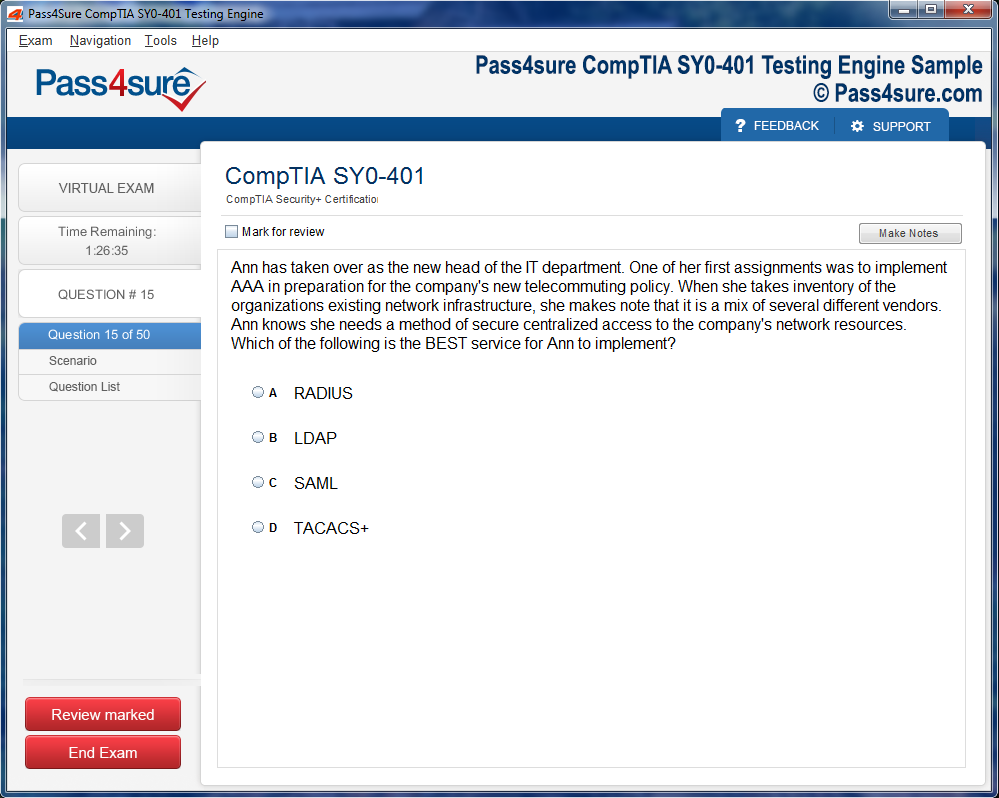
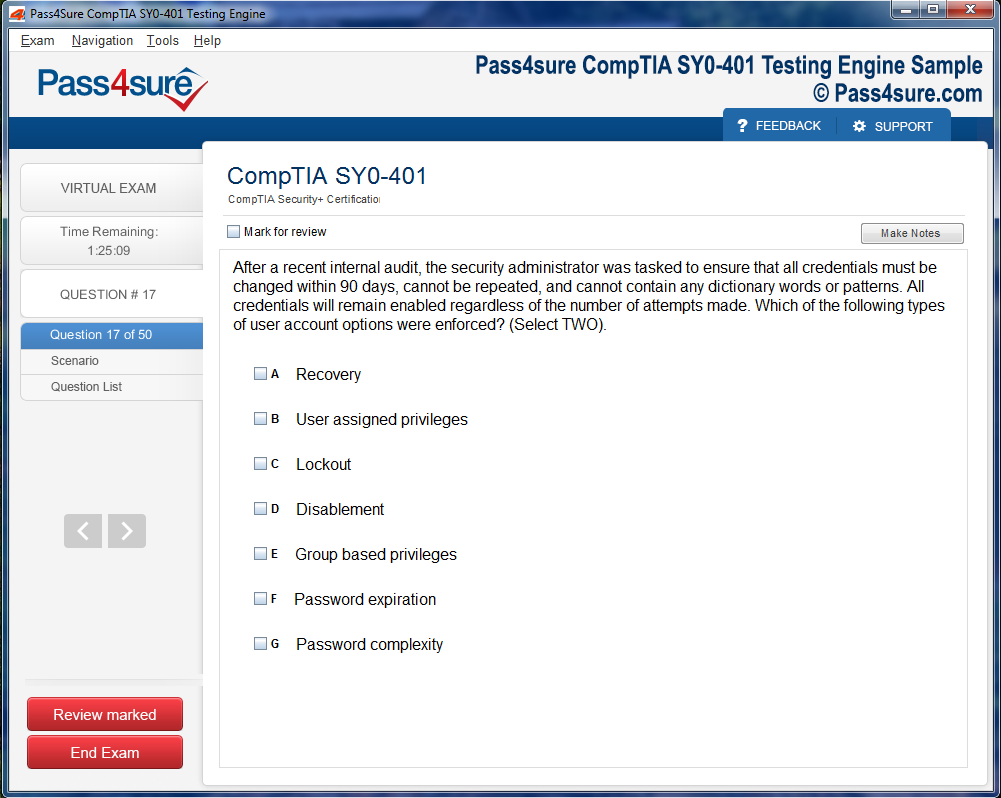
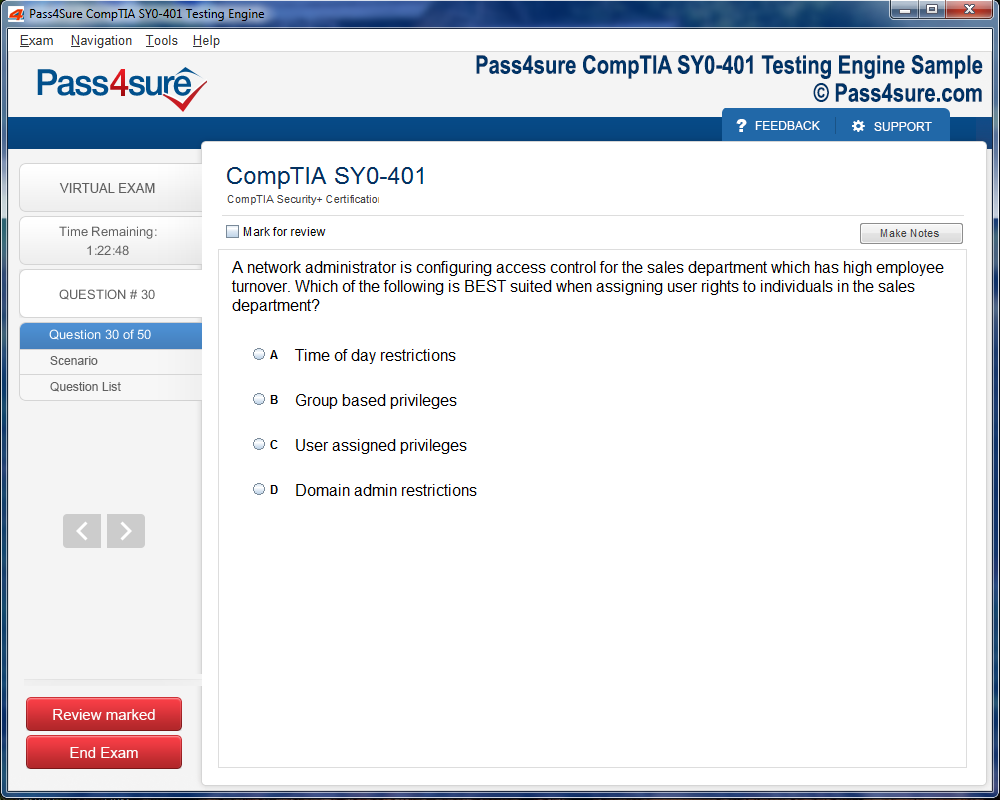
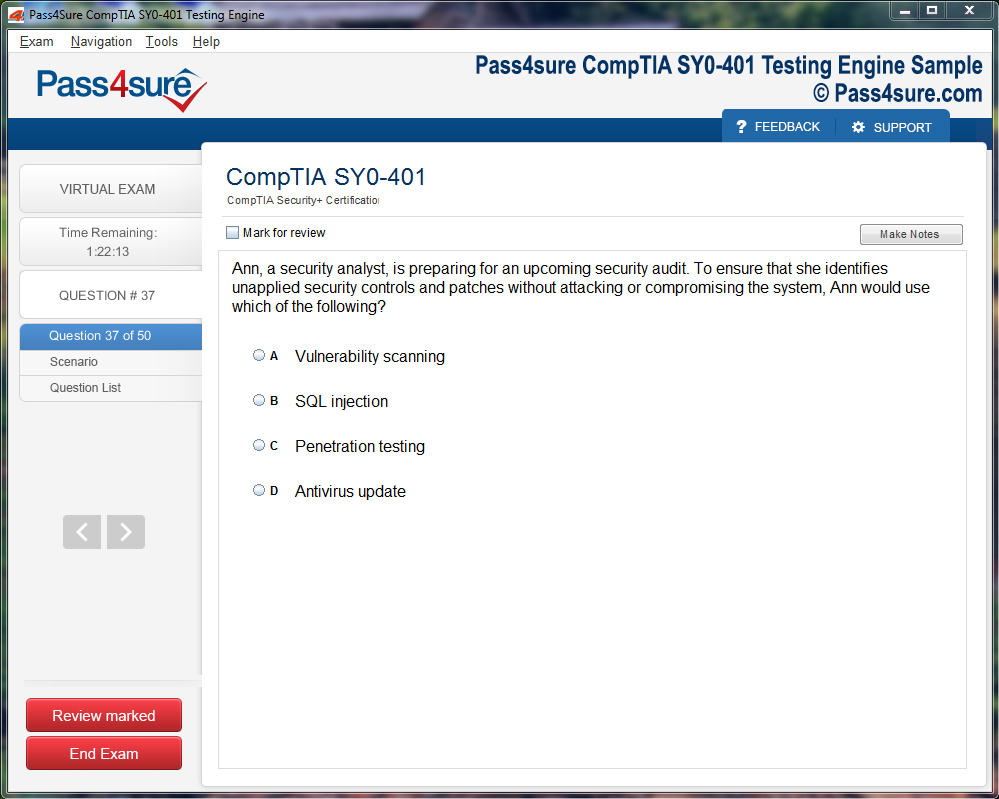
Product Screenshots
Step-by-Step Guide to Passing the GIAC GSNA Exam
The GIAC Systems and Network Auditor certification embodies a professional’s determination to master the art of securing digital landscapes. It is not merely an examination but a sophisticated benchmark that evaluates the alignment of knowledge with practical expertise. The design of this certification encapsulates the delicate balance between system auditing and network protection, highlighting how modern organizations rely on specialists capable of analyzing risks, auditing protocols, and reinforcing digital structures. Unlike generalized credentials, the GSNA offers precision, focusing on how to navigate the intricate fabric of TCP/IP protocols, encryption methodologies, policy enforcement, and the architectural backbone of enterprise-level networks. It transforms theoretical awareness into operational strength, ensuring that certified professionals carry tangible value into their workplaces.
A central dimension of its essence lies in its global recognition. This certification does not confine its worth within the boundaries of one region; instead, it resonates across the globe, serving as a language of trust and competence in cybersecurity. Its performance-based orientation requires candidates to demonstrate practical fluency, not superficial memorization. By testing applied knowledge in authentic scenarios, the GSNA guarantees that its holders can serve as both guardians and strategists, prepared to resist the complexities of today’s relentless cyber threats.
Structure and Format of the Examination
The GSNA certification examination is deliberately crafted to measure depth, endurance, and precision of knowledge. The format includes 115 multiple-choice questions, with candidates expected to complete the task within three hours. This tight framework pushes examinees to demonstrate not only intellectual grasp but also time management and prioritization skills under pressure. A minimum score of seventy-two percent is required to pass, symbolizing a threshold that insists on seriousness of preparation.
One of the most notable aspects of this exam is its open-book format. At first glance, this may appear to simplify the process, but in reality, it demands a higher order of preparation. Success requires candidates to prepare meticulous indexes, organize notes strategically, and ensure immediate access to relevant concepts during the examination window. This creates an environment that mirrors professional practice, where the ability to locate, evaluate, and apply knowledge swiftly is as critical as remembering information.
The exam’s financial commitment is set at nine hundred forty-nine dollars, which includes two invaluable practice tests. These practice tests act as mirrors, reflecting both strengths and weaknesses, and helping candidates refine their strategies before the final assessment. With each simulation, examinees gain insight into the exam’s rhythm, strengthening their confidence while sharpening their precision.
Core Domains of Knowledge
The intellectual architecture of the GSNA revolves around multiple domains that define the practice of network security auditing. Each domain functions as a pillar, supporting the integrity of the certification and the credibility of those who hold it. Network architecture forms the initial dimension, where candidates learn to map, assess, and secure structures against internal weaknesses and external attacks. TCP/IP, the language of network communication, is dissected in depth, with emphasis on vulnerabilities, packet analysis, and monitoring strategies.
Cryptography forms another crucial segment. Candidates are expected to understand both the theoretical principles and practical applications of encryption, decryption, and key management. This knowledge prepares them to implement strategies that safeguard sensitive data against interception and manipulation. Intrusion detection and prevention systems stand as further focal points, reflecting the pressing need for defense mechanisms that can not only identify but also neutralize malicious activities in real time.
Policy development and enforcement provide a managerial counterbalance to the technical content. Cybersecurity is not sustained through tools alone; it requires governance, structure, and adherence to consistent policies that guide both technology and human behavior. This area ensures that GSNA-certified professionals can transition smoothly between technical roles and strategic oversight.
The Preparation Journey
The pathway to the GSNA is marked by rigor, patience, and methodical study. Passive reading is insufficient, as the exam requires integration of knowledge into usable skills. The open-book design rewards those who invest time in creating comprehensive, well-structured indexes, turning their resources into reliable maps during the timed assessment. This habit of organization reflects real-world practice, where the ability to locate precise information under duress is invaluable.
The practice exams included with the registration fee serve as milestones. The first attempt highlights vulnerabilities in comprehension, guiding candidates toward areas requiring refinement. The second practice exam allows candidates to measure progress, calibrate strategies, and determine readiness for the actual test. In between, consistent review sessions bind the fragmented elements of knowledge into a unified perspective, enabling clarity under examination pressure.
Some candidates enhance their journey by following structured training courses, where each domain is explored in the context of real-world threats. This deepens not only exam readiness but also professional maturity, as the lessons extend far beyond passing the test. Through such preparation, individuals transform into professionals capable of addressing diverse organizational challenges.
Career Advancement Through Certification
The GSNA certification does not operate in isolation; it serves as a catalyst for career progression. Modern enterprises, confronted with incessant waves of cyber threats, seek individuals who can marry technical insight with auditing discipline. Holding the GSNA signals the capacity to identify vulnerabilities, audit systems, and reinforce networks with decisive authority. This elevates certified professionals into positions of responsibility, opening doors to higher compensation and broader influence.
The global recognition of this credential amplifies its impact. Both government institutions and private enterprises place considerable trust in certified professionals, often making certification a prerequisite for critical roles. This trust reflects the rigorous evaluation embedded within the GSNA, positioning its holders as reliable custodians of digital security. Beyond titles and promotions, the credential fosters a sense of identity, marking individuals as part of an elite cadre of professionals who uphold the sanctity of secure communication and robust system architecture.
The Practical Value in Organizational Settings
Organizations that employ GSNA-certified professionals gain more than symbolic validation; they benefit from concrete improvements in their security posture. Certified individuals bring structured approaches to auditing, ensuring that vulnerabilities are identified systematically rather than haphazardly. Their mastery of cryptographic measures translates into practical defense of sensitive data, while their understanding of network architecture allows for resilient designs that anticipate and neutralize threats.
The ability to draft, implement, and enforce policies creates cohesion within organizations, aligning technological defenses with human practices. In moments of crisis, such as attempted intrusions or breaches, GSNA-certified professionals act with confidence, leveraging their preparation to protect organizational interests swiftly. This blend of foresight, analysis, and decisive action elevates the operational resilience of any enterprise that invests in certified talent.
The Broader Implications of the GSNA
The GSNA certification represents more than individual achievement; it reflects a broader cultural movement within cybersecurity. As digital landscapes expand and threats evolve, the world requires professionals who view security not as a checklist but as a discipline of vigilance. This credential nurtures such a mindset, encouraging individuals to see themselves as custodians of trust in a global networked society.
The intellectual curiosity required to pursue this certification fosters continuous growth. Certified professionals rarely rest after the exam; they carry forward habits of structured study, critical evaluation, and strategic foresight. These habits ripple into their organizations, influencing teams, shaping policies, and reinforcing collective resilience. In a digital age where fragility and strength coexist, the GSNA cultivates professionals who embody reliability.
The Purposeful Structure of the GSNA Exam
The GIAC Systems and Network Auditor exam carries a weight that extends far beyond a mere test of theory. Its architecture is built to mirror the living pulse of operational cybersecurity, where decisions must be precise, swift, and rooted in authentic understanding. Candidates are given three hours to complete 115 questions, yet the intention is not to measure endurance alone. Instead, the exam places professionals in scenarios that simulate what they will encounter in day-to-day defense of networks and systems.
Every section of the exam has been woven carefully to assess the depth of comprehension and the ability to translate knowledge into immediate, actionable solutions. It is not a static framework, but a dynamic evaluation of whether a professional can adapt in environments where threats emerge with speed and persistence. The questions do not merely recall definitions but probe the candidate’s insight into why a decision matters and how a wrong turn could compromise the entire security posture of an organization.
Within this structure lies a purposeful demand for both efficiency and accuracy. Time pressure ensures that only those who can balance deep analysis with quick reasoning succeed. The exam replicates what seasoned auditors and security analysts face daily: high stakes where seconds matter, and where clarity of thought can determine whether an intrusion is stopped or allowed to expand unchecked.
The Core Domain of Network Architecture
At the heart of the GSNA exam lies the intricate study of network architecture. This domain explores the very skeleton of digital communication, requiring candidates to recognize the nuanced interplay of routers, switches, firewalls, and layered protocols. Success here depends not simply on memorization but on understanding the choreography of interactions between devices and software.
A professional facing this part of the exam must visualize the flow of data across various junctions, noting where weak seams could allow adversaries to slip through. Firewalls misconfigured by a single rule, or routers left with outdated firmware, can undo even the most expensive security measures. Thus, the GSNA challenges candidates to not only identify technical faults but also recognize the potential cascading consequences of oversight.
Network segmentation, redundancy, and secure topologies all form key elements in this examination. Professionals must be able to discern why dividing traffic into zones enhances resilience, or why layered defenses can transform a fragile framework into one capable of withstanding relentless assault. These insights are critical, for architecture is the stage upon which every other security measure must perform.
The Examination of TCP/IP Protocols
The GSNA exam delves deeply into the lifeblood of modern networking: the TCP/IP suite. This domain scrutinizes candidates’ ability to understand packet structures, address allocation, and the flow of communication sessions. But its challenge runs deeper than abstract technicalities.
Candidates must envision what happens when normal communication is disrupted. For instance, how does a packet behave under the weight of a denial-of-service flood? How might an attacker manipulate headers to redirect or intercept traffic? These questions are not mere hypotheticals but simulations of the disruptions that real professionals must address.
The exam compels candidates to be more than readers of protocol diagrams. They must become interpreters of anomalies, capable of tracing broken communication trails and recognizing the subtle markers of malicious interference. A professional who can diagnose protocol behavior under stress embodies the vigilance required to guard networks against manipulation.
The Domain of Cryptography and Data Integrity
Another vital domain within the GSNA exam is cryptography. Unlike academic exercises that linger on formulas, the exam grounds its cryptographic section in lived application. Candidates must show mastery in deciding when to use symmetric methods versus asymmetric ones, how to manage keys securely, and how to align algorithms with the protection needs of sensitive information.
Encryption is not simply about obscuring data but about ensuring confidentiality, authenticity, and integrity. Misuse of algorithms or careless management of cryptographic keys can render even the most robust system vulnerable. The GSNA highlights this truth by placing candidates in evaluative scenarios where they must recognize not just how encryption works, but when and why a given method should be deployed.
The practical bent of this domain ensures that certified professionals are prepared to protect the flow of communication in ways that hold up under scrutiny. They leave the exam not only with theoretical awareness but with sharpened instincts about what makes cryptographic safeguards reliable or fragile.
The Role of Intrusion Detection and Prevention
Intrusion detection and prevention form another anchor of the GSNA exam. Here, candidates must display fluency in reading system logs, interpreting alerts, and distinguishing false positives from genuine threats. But the exam goes further by testing whether professionals understand the proactive dimension of defense.
It is not enough to recognize when an intrusion occurs; the exam requires candidates to anticipate how and where such attempts might surface. The emphasis is on both immediate response and longer-term resilience. Professionals are evaluated on their grasp of behavioral analysis, anomaly recognition, and the strategies that can turn raw monitoring into actionable security intelligence.
In this way, the exam reflects the duality of a modern security role: reactive vigilance paired with predictive strength. The goal is to ensure that certified auditors can not only address breaches but also evolve systems to prevent their recurrence.
The Importance of Network Security Policy
Although many may view policy as a purely administrative concern, the GSNA exam underscores its role as the framework that unites technical defenses with organizational discipline. A well-crafted policy dictates how access is granted, how data is used, and how incidents are escalated. Poorly defined policies, on the other hand, leave gaping holes for exploitation.
Candidates are tested on their ability to align technical measures with structured rules, ensuring that governance does not drift into abstraction but remains tethered to the daily reality of cybersecurity operations. Understanding compliance requirements, user behavior regulations, and incident-handling procedures ensures that professionals do not treat policy as a mere formality. Instead, they learn to see it as a vital layer of defense, guiding how all other measures function.
This domain insists that cybersecurity is not only a technical field but also a discipline of organization and foresight. It ensures that certified auditors can navigate the delicate balance between authority and flexibility, creating security frameworks that are both firm and functional.
The Open-Book Nature and Practice Advantage
A unique feature of the GSNA exam is its open-book design. This structure shifts the emphasis away from memorization and toward resourcefulness. Professionals who prepare with organized notes, indexed references, and practical guides hold a significant advantage. They can locate key information rapidly, just as they would in a real operational environment where documentation often serves as a trusted companion.
The exam’s format reflects the truth of cybersecurity work: accuracy often depends not on what one can recite but on the ability to retrieve and apply knowledge quickly under pressure. By encouraging candidates to bring prepared references, the GSNA transforms the exam into an exercise in efficiency and applied decision-making.
Adding to this advantage are the included practice tests. These simulations provide candidates with a clear mirror of their readiness, exposing weak areas and highlighting strengths. Those who use practice attempts effectively enter the main exam with a steadier hand and a clearer vision. The rhythm of timed testing, the familiarity of structure, and the exposure to challenging scenarios all prepare candidates to perform at their best.
The Respect Earned Through Rigor
The GSNA exam is not framed as a casual hurdle but as a demanding gateway. Its rigor ensures that only those who truly invest in preparation and demonstrate resilience succeed. This exclusivity is not intended to discourage but to heighten the respect that follows certification.
Employers and peers recognize GSNA-certified professionals as individuals who have navigated an examination that measures more than superficial understanding. These professionals embody the qualities most sought in cybersecurity: precision, calm under pressure, and the ability to balance technical and organizational demands. The structure and domains of the exam act as a crucible, forging not only knowledge but also character.
The respect that follows successful completion of the GSNA is thus earned through rigor. It marks a professional not only as competent but as dependable, trusted to guard the digital arteries of organizations where compromise is never an option.
The Expanding Role of Cybersecurity Professionals
The realm of cybersecurity has grown from a technical specialty into a cornerstone of organizational resilience. In today’s interconnected world, where systems exchange sensitive data across global networks, the importance of vigilant defenders cannot be overstated. Organizations are not only seeking individuals who can identify vulnerabilities but also those who can anticipate threats and design systems that withstand disruption. This evolution has created an expanding role for cybersecurity professionals, one that requires both technical expertise and strategic awareness. The GIAC GSNA certification was shaped within this context, offering professionals a way to validate their preparedness for this broader scope of responsibility.
Cybersecurity is no longer limited to firewalls, passwords, and basic encryption. Modern infrastructures involve cloud deployments, hybrid environments, mobile ecosystems, and countless applications that interact in complex ways. Every connection point represents a potential vulnerability, and every overlooked configuration can become an open door to exploitation. Professionals who pursue certifications like GSNA immerse themselves in the nuances of auditing, risk evaluation, and proactive defense. They emerge not only as system guardians but also as advisors who can guide organizations through intricate landscapes of compliance, governance, and operational integrity.
The growth of this role also emphasizes adaptability. Threat actors continually refine their methods, creating sophisticated campaigns that bypass traditional defenses. Cybersecurity professionals who pursue GSNA acquire a structured mindset that balances technical acumen with investigative depth, ensuring they remain prepared even as adversaries evolve. This readiness is what distinguishes certified practitioners from those who rely solely on experience without formal validation.
Why System and Network Administrators Benefit Greatly
Among the many professionals who gravitate toward the GSNA certification, system and network administrators occupy a unique position. They form the first line of defense within digital environments, holding direct responsibility for configuring servers, managing endpoints, and maintaining network integrity. Their daily tasks require attention to detail, technical dexterity, and an awareness of emerging vulnerabilities. Yet, without formal acknowledgment of their capabilities, their expertise can sometimes be overlooked or underestimated.
The GSNA bridges this gap by validating administrators’ proficiency in securing architectures and applying structured defense mechanisms. For an administrator, the certification becomes more than a credential—it becomes a badge of credibility. It confirms their ability to detect unusual activity, interpret logs effectively, and implement protective configurations that withstand exploitation attempts. It equips them with advanced auditing methods, allowing them to move beyond reactive troubleshooting into proactive risk mitigation.
Administrators who earn GSNA also benefit from elevated career opportunities. In competitive employment markets, organizations consistently search for professionals who possess verifiable knowledge, particularly in areas of audit and system assurance. The certification signals to employers that the individual is not only capable of maintaining systems but also skilled in scrutinizing them for weaknesses and ensuring compliance with established standards. This dual capability greatly expands an administrator’s career trajectory.
Furthermore, GSNA-certified administrators find themselves better prepared to collaborate with broader security teams. Their awareness extends beyond configuration into strategy, bridging gaps between day-to-day operations and long-term resilience. This collaboration fosters environments where system health and security are not treated as separate entities but as interconnected pillars of organizational stability.
The Significance for Risk Analysts and Security Evaluators
Risk analysts and evaluators live at the heart of decision-making processes, where numbers and technical observations converge into actionable insights. Their role requires not only identifying vulnerabilities but also determining their potential impact, likelihood, and urgency. Without structured frameworks, this task can easily become subjective. The GSNA certification empowers these professionals with methodologies that bring consistency and precision into their assessments.
For risk analysts, the certification provides tools for executing vulnerability assessments and penetration simulations with discipline. It emphasizes the balance between technical depth and structured evaluation, ensuring that every identified weakness is categorized and prioritized effectively. This reduces the chance of critical flaws being overshadowed by less significant issues. The GSNA also sharpens an analyst’s ability to communicate findings to stakeholders who may lack technical expertise. By translating risks into business implications, certified professionals create a bridge between technical realities and executive decision-making.
The demand for such skills has grown significantly as organizations face external regulatory expectations. Governments, industries, and international bodies continue to enforce compliance frameworks that require rigorous risk assessments. Analysts who carry the GSNA credential demonstrate their readiness to align organizational practices with these expectations, sparing businesses from costly penalties or reputational damage.
Moreover, GSNA-certified evaluators contribute to cultivating a culture of accountability. Their assessments extend beyond identifying problems—they also propose systematic improvements that reinforce resilience over time. This mindset positions them as indispensable advisors in environments where uncertainty and threat are constants.
Opportunities for IT Professionals Outside Core Security
The influence of cybersecurity reaches far beyond dedicated security departments. IT professionals in system support, application management, and compliance oversight all find themselves navigating responsibilities that intertwine with protective measures. A database administrator, for instance, must understand not only performance tuning but also access control and encryption. Similarly, an application manager must ensure that updates and integrations do not expose critical weaknesses.
For these professionals, the GSNA certification represents an opportunity to expand their scope of expertise. It broadens their perspective beyond technical operations, encouraging them to see every system component as part of a larger defense architecture. This shift enhances their versatility, making them more valuable in workplaces that increasingly favor multi-skilled employees.
By pursuing the GSNA, IT professionals gain recognition for their security-conscious approach. In environments where cross-functional collaboration is essential, this recognition distinguishes them from peers who view cybersecurity as an external concern. Instead, certified individuals are trusted as contributors who proactively incorporate protection into their responsibilities.
The long-term advantage lies in adaptability. As organizations integrate digital systems across every department, professionals who combine technical specialties with security knowledge remain indispensable. The GSNA ensures that even those not directly positioned in security roles can confidently navigate evolving requirements, contribute to organizational resilience, and pursue broader career growth.
Pathways for Newcomers Entering Cybersecurity
For individuals just beginning their journey into cybersecurity, the field can feel overwhelming. The breadth of technologies, threats, and terminologies often intimidates those who aspire to build meaningful careers. Employers, on the other hand, frequently seek assurance that prospective candidates possess a reliable baseline of knowledge before offering them critical roles. This is where the GSNA certification becomes an invaluable entry point.
The certification provides newcomers with a structured framework to learn and demonstrate essential principles. It covers fundamental aspects of system auditing, network defense, and protocol analysis, ensuring candidates build confidence in their technical foundation. For aspirants lacking years of hands-on experience, this credential acts as proof of commitment, signaling to employers that they are serious about pursuing cybersecurity as a profession.
Newcomers also benefit from the GSNA’s reputation in the industry. Employers recognize GIAC certifications as indicators of both competence and dedication, and holding one early in a career helps distinguish candidates from peers who may only have academic backgrounds. This differentiation often results in faster access to opportunities, whether in entry-level security operations, compliance roles, or audit teams.
The GSNA also instills a mindset of continuous growth. For those just entering the field, this perspective is invaluable. Cybersecurity is not static—it evolves daily with emerging threats and technologies. By starting their careers with the GSNA, newcomers establish a habit of continual learning and a readiness to pursue advanced specializations as they gain experience.
The Growing Relevance Across Industries and Agencies
Beyond individual career aspirations, the GSNA certification carries growing relevance across organizations, industries, and government agencies. The digital transformation sweeping through the global economy has redefined how institutions operate, store data, and interact with clients. With these advancements come heightened risks, prompting leadership teams to seek employees who can navigate both technical and compliance landscapes with authority.
Government agencies, in particular, often require certifications as part of internal mandates for employees handling sensitive information. The GSNA meets these expectations, giving professionals a competitive edge when seeking roles in public-sector organizations. Similarly, private enterprises view the certification as a mark of trustworthiness and diligence, especially in industries where client confidence and regulatory adherence are paramount.
Industries such as finance, healthcare, energy, and manufacturing are especially dependent on professionals who can audit systems and ensure operational resilience. In these environments, even minor disruptions can result in enormous consequences, from financial losses to endangerment of human lives. GSNA-certified practitioners become integral players, capable of identifying hidden risks and reinforcing organizational defenses against both internal and external threats.
This widespread relevance also means the certification enhances mobility. Professionals are not confined to a single industry but can transfer their expertise across diverse domains. The assurance of skill that the GSNA provides is universally respected, opening doors to opportunities worldwide.
Building a Long-Term Career Foundation with GSNA
The value of the GSNA extends beyond immediate recognition. For many professionals, it serves as the cornerstone of a long-term career within cybersecurity. GIAC certifications are structured in pathways that allow individuals to pursue specialization in various domains, from penetration testing to incident response. By beginning with the GSNA, professionals establish a strong foundation upon which advanced certifications can be built.
This progression encourages professionals to envision their careers not as isolated achievements but as evolving journeys. The GSNA validates initial competence in auditing and assurance, while subsequent certifications enable deeper specialization. This layered approach reflects the natural growth of a cybersecurity career, where practitioners move from generalist knowledge to advanced mastery.
Holding the GSNA also signals resilience and dedication. It shows employers that an individual is not merely seeking short-term recognition but is invested in ongoing development. This commitment resonates strongly in a field where adversaries constantly adapt, and only those who evolve alongside them remain effective.
Ultimately, the GSNA is more than a credential. It symbolizes a mindset—an acknowledgment of responsibility, an eagerness for growth, and a readiness to serve as a custodian of digital trust. For professionals across every stage of their careers, from administrators and analysts to newcomers and seasoned experts, it represents an enduring step toward relevance and resilience in the ever-expanding domain of cybersecurity.
The Essence of the GSNA Certification
The GSNA certification has grown into a distinguished benchmark within the landscape of cybersecurity and auditing. It represents a fusion of theoretical depth and applied competence, demonstrating that a professional is equipped to evaluate, analyze, and strengthen digital ecosystems. Unlike many technical milestones that remain confined to narrow skills, this certification embodies a holistic vision of safeguarding information networks. Its value stretches far beyond the test of knowledge; it reflects the discipline, rigor, and mastery required to thrive in the intricate fabric of modern security challenges.
A defining feature of the GSNA is its ability to validate practical capability. Employers and organizations often search for evidence that an individual can do more than merely recite concepts—they must translate theory into practice. The certification establishes exactly this form of validation. It proves that the bearer can navigate complex infrastructures, dissect vulnerabilities, and recommend actionable solutions with clarity. In industries where reliability is paramount, such assurance builds credibility and distinguishes candidates from the countless others who may lack proven expertise.
The GSNA also radiates prestige in a way that transcends paper recognition. It is not merely a badge to display but a testament to perseverance and intellectual stamina. Those who achieve it are immediately perceived as professionals who embrace diligence, continuous improvement, and responsibility in equal measure. This aura of professional stature attracts respect not only from employers but also from peers and colleagues who recognize the caliber of commitment required to succeed.
By weaving technical acumen with strategic comprehension, the GSNA bridges two critical worlds: the domain of rigorous analysis and the realm of organizational application. Professionals holding the credential demonstrate an ability to interpret complex systems with sharp insight while presenting their evaluations in ways that decision-makers can rely upon. This rare balance contributes to the certification’s remarkable significance.
The Role of GSNA in Expanding Career Horizons
Career trajectories often shift dramatically once a professional earns the GSNA certification. Its presence on a résumé acts as a catalyst for fresh opportunities, signaling to employers that the candidate is prepared to address sensitive, high-stakes responsibilities. Many industries, from healthcare and government to finance and technology, gravitate toward certified individuals because their roles demand a heightened degree of trust. Sensitive data, regulatory compliance, and critical infrastructure require guardians who have verifiable credentials, and the GSNA fits seamlessly into this expectation.
For aspirants seeking new employment, the certification broadens the spectrum of positions available. Roles that may have previously felt inaccessible become attainable, as hiring managers interpret the certification as a guarantee of readiness. It does more than simply open doors; it unlocks pathways into specialized roles such as information security auditor, network assessor, or compliance analyst. Each of these avenues offers unique challenges, yet the unifying factor is the preference for certified individuals who can balance precision with accountability.
For professionals already embedded in organizations, the GSNA serves as a ladder toward advancement. Employers often recognize certification holders as assets capable of handling leadership responsibilities, guiding policy reforms, or spearheading risk management initiatives. This recognition translates into promotions, enhanced responsibilities, and exposure to strategic decision-making forums. The career impact, therefore, is not confined to initial job acquisition but extends across the professional timeline, enabling upward momentum at multiple stages.
The Financial and Professional Rewards of GSNA
While passion for the field may drive professionals toward certification, the financial incentives are impossible to overlook. Employers commonly reward the accomplishment with increased salaries, bonuses, and superior benefits. This financial acknowledgment is not arbitrary—it reflects the tangible value a certified professional adds to the organization’s security posture. By mitigating risk, strengthening compliance, and ensuring network resilience, the certified individual safeguards resources and prevents costly breaches. The economic advantage is mutual, benefitting both the professional and the employer.
For individuals, this uplift in compensation represents more than numbers on a paycheck. It enhances quality of life, reduces financial anxiety, and validates the dedication poured into achieving the certification. The GSNA thus evolves into a dual reward system: professional fulfillment through recognition and material satisfaction through improved compensation. This combination reinforces the decision to pursue certification, making the journey worthwhile on both intellectual and practical grounds.
Beyond salary, certified individuals often enjoy professional recognition that is equally gratifying. Invitations to join specialized projects, participation in elite working groups, and opportunities to attend advanced training sessions often follow certification. These rewards amplify professional visibility and expand one’s network, creating circles of influence that continue to multiply as the career unfolds.
The Ongoing Relevance of Recertification
The GSNA certification does not remain static once obtained. Its requirement for recertification ensures that professionals remain aligned with a constantly shifting technological landscape. The world of cybersecurity evolves at an unrelenting pace, with new vulnerabilities, attack vectors, and innovations emerging regularly. By mandating updates, the certification guarantees that its holders stay current with modern methodologies and industry expectations.
Although recertification may initially seem like an added obligation, it actually transforms into an advantage. It cultivates the habit of lifelong learning, instills adaptability, and prevents stagnation. Professionals who continuously engage in skill refinement become more agile in their roles, ready to address both anticipated and unforeseen challenges. This ongoing cycle strengthens resilience, ensuring that certified individuals remain competitive and valuable across decades of technological change.
The recertification process also deepens the bond between certified professionals and their industries. It fosters an enduring sense of accountability, reminding individuals that their knowledge must remain relevant to uphold the trust that organizations and communities place in them. In this way, the GSNA becomes not just a one-time achievement but a living commitment to excellence.
Organizational Strength Through Certified Professionals
The influence of GSNA extends far beyond individual career growth; it reverberates through entire organizations. When companies employ certified professionals, they acquire not only technical skill but also structured methods of evaluation and implementation. These individuals bring systematic approaches to risk analysis, policy creation, and vulnerability testing, reducing the likelihood of oversights that could lead to damaging breaches.
The presence of certified staff elevates an organization’s overall security posture. Clients, stakeholders, and regulatory bodies perceive the company as more trustworthy when they know its defenses are managed by individuals with proven credentials. This perception enhances reputation, attracts business opportunities, and fosters long-term stability. It is not merely about preventing loss; it is about cultivating confidence in the integrity of the institution.
Furthermore, certified professionals often play vital roles in mentoring colleagues, sharing knowledge, and leading internal training sessions. Their influence extends horizontally across teams, creating a ripple effect of improved practices. In this way, the GSNA certification multiplies its impact, strengthening not just one career but entire networks of professionals who contribute to organizational safety.
Intellectual Fulfillment and Personal Growth
For many individuals, the journey toward GSNA certification is not driven solely by external rewards. It also offers profound personal enrichment. The process requires immersion in rigorous study, problem-solving exercises, and continuous self-assessment. This intellectual journey cultivates patience, perseverance, and analytical acuity. The transformation that occurs during preparation often instills habits of discipline that extend into broader aspects of life.
After certification, professionals experience a renewed sense of confidence. They know that they have met a globally recognized standard and can therefore face challenges with greater assurance. This confidence radiates into decision-making, communication, and leadership, allowing them to advocate for stronger practices and present their ideas with conviction. The GSNA thus becomes not only an external credential but also an internal source of empowerment.
The satisfaction also arises from the pursuit of mastery. Cybersecurity is a field of perpetual evolution, and professionals who thrive within it often enjoy the thrill of discovery. The GSNA certification acts as a gateway to higher learning, paving the way for further specialization and advanced recognition. For those who cherish intellectual exploration, this progression offers both professional growth and personal joy.
GSNA as a Gateway to Continuous Advancement
The GSNA often acts as a stepping stone toward even greater achievements in the cybersecurity domain. By laying a strong foundation in auditing and network defense, it prepares professionals to pursue advanced certifications and deeper expertise in specialized areas. This pathway reinforces the principle that learning is not finite but a continuous expedition.
Each subsequent step builds upon the confidence and capability earned through the GSNA. Whether advancing into leadership, pursuing technical mastery, or exploring adjacent fields of governance and compliance, the certification anchors the professional’s journey. It does not mark the conclusion of growth but rather the beginning of a lifelong trajectory filled with evolving possibilities.
The sense of direction provided by the GSNA ensures that professionals remain forward-looking. Instead of becoming complacent after achieving one milestone, they are inspired to seek new challenges, embrace change, and refine their identity within the profession. This momentum keeps their careers dynamic, ensuring that their relevance and value expand rather than diminish over time.
The Broader Impact of Certified Professionals in Society
The contributions of GSNA-certified professionals ultimately extend into the wider fabric of society. By protecting networks, analyzing vulnerabilities, and ensuring data integrity, they safeguard not only corporate assets but also the personal information of millions of individuals. The work they perform reduces risks of identity theft, financial fraud, and critical disruptions to essential services.
Communities, industries, and even nations benefit from the vigilance of these professionals. Their ability to anticipate threats and fortify defenses upholds public trust in digital infrastructure. As societies become increasingly reliant on interconnected systems, the importance of such guardianship cannot be overstated. The GSNA certification thus represents more than personal accomplishment; it symbolizes a broader contribution to the safety, stability, and resilience of modern civilization.
Building a Strong Foundation of Knowledge
Effective preparation for the GSNA exam begins with building a strong base of understanding in cybersecurity principles. This stage is not about rushing into memorization but about allowing concepts to take root and form meaningful connections. Candidates should start by engaging deeply with the core subjects covered in the exam, including risk analysis, security controls, and auditing processes. These themes are not isolated blocks of knowledge but part of a vast interconnected framework. By studying with a mindset of discovery, rather than obligation, learners allow the material to sink in more naturally. Reading through course materials slowly, revisiting examples, and reflecting on how each concept applies in real-world scenarios fosters a sense of familiarity that lasts longer than surface-level cramming. This stage is akin to constructing the foundation of a house—without it, the entire structure would lack stability.
The key lies in patience and steady progress. Candidates who attempt to rush through topics may find themselves overwhelmed by complexity, while those who proceed deliberately will often uncover nuances that strengthen their grasp. The GSNA exam rewards those who can understand relationships between ideas, and this understanding comes through careful reading, consistent note-taking, and active engagement with examples. By building knowledge in this way, candidates set the stage for all the subsequent strategies of exam preparation.
Harnessing the Power of Practice
Once the foundational knowledge is established, practice becomes the most important tool in refining readiness. The GSNA exam provides access to practice tests, which serve as mirrors of both ability and progress. These simulations are not merely trial runs but crucial opportunities for self-assessment. The first practice exam should be approached with openness, not pressure. It reveals where a candidate excels and where weaknesses still exist. Every mistake, rather than a setback, becomes a map pointing toward areas that demand more focus.
With each practice attempt, candidates learn not just the material but also the rhythm of the exam. Time management, information retrieval, and decision-making all improve through repeated exposure. By treating practice exams as rehearsals for the real performance, candidates develop familiarity with the testing environment and reduce the fear of the unknown. The experience of grappling with complex questions under timed conditions trains the mind to stay composed, even when uncertainty arises.
Through consistent practice, knowledge transforms from abstract theory into usable skill. It sharpens recall, strengthens reasoning, and enhances confidence. By the second practice test, candidates often find themselves not only more accurate in their responses but also more efficient in their use of resources. Practice, therefore, is not a supplementary activity—it is the very arena where preparation is tested and strengthened.
Mastering the Art of Organization
Because the GSNA exam follows an open-book format, organization of study materials becomes one of the most decisive strategies. Candidates cannot afford to waste time flipping through pages aimlessly; they must be able to retrieve precise information quickly. To achieve this, many create detailed indexes that catalog key terms, concepts, and page references. This indexing process is not only about creating a reference tool but also about reinforcing memory. Each time a candidate categorizes information, they revisit the material in a meaningful way, strengthening both recognition and recall.
The best indexes are not overly simplistic but thoughtfully constructed. They allow the user to find subtopics, definitions, and even case examples within seconds. An organized binder or digital reference file becomes an extension of the candidate’s mind during the exam. This structure also provides peace of mind, reducing the stress of searching under pressure. Candidates who invest time in creating a personalized system of organization often discover that their preparation feels less chaotic and more controlled.
Ultimately, organization is a discipline that mirrors the very essence of cybersecurity—where precision, clarity, and structure determine success. Just as networks require order to resist threats, exam preparation requires order to resist confusion. A well-prepared index is not simply a tool but a trusted ally in the examination room.
Refining Understanding Through Review
As the exam approaches, review becomes the bridge between knowledge and performance. Reviewing is not about revisiting every single page but about identifying patterns and reinforcing the big picture. At this stage, candidates should focus on integrating fragmented details into a coherent whole. Revisiting practice questions, going over indexed notes, and scanning key diagrams or case studies helps solidify connections across topics.
The act of reviewing should be purposeful. Instead of passively rereading, candidates should actively test themselves by summarizing concepts aloud, writing short explanations in their own words, or teaching the material to someone else. This approach reveals gaps in understanding and strengthens long-term retention. The more candidates can explain a concept without relying on notes, the more likely they are to recall it under exam conditions.
Review is also the time to refine weak areas identified during practice exams. Instead of panicking over gaps, candidates should treat them as opportunities to turn vulnerabilities into strengths. By focusing extra energy on topics that once caused difficulty, they transform uncertainty into confidence. This final stage of preparation ensures that the knowledge carried into the exam is not fragmented or shallow but cohesive and resilient.
Cultivating Mental Readiness
Examination performance is influenced as much by mental state as by knowledge. For the GSNA exam, candidates must approach the day with composure, clarity, and balance. Stress and exhaustion are silent adversaries that can erode recall and judgment, no matter how strong the preparation has been. To counter this, mental readiness must be cultivated alongside academic study.
This involves establishing a preparation schedule that allows for both study and rest. Overloading the final days with frantic cramming only increases anxiety, while a steady rhythm of review and rest fosters calm confidence. Sleep, nutrition, and hydration play critical roles in maintaining sharpness of mind. Candidates should also practice mindfulness techniques, such as deep breathing or short meditative breaks, to ease tension.
Equally important is adopting a mindset of resilience. Entering the exam room with the understanding that not every question will be easy allows candidates to stay steady in the face of challenge. Confidence arises not from perfection but from trust in preparation. By nurturing both body and mind, candidates position themselves to access their full potential during the exam.
Developing Exam-Day Strategy
Even with preparation, the actual day of the exam demands strategy. Candidates should begin by managing their time wisely, allocating appropriate minutes to each section while leaving room to review marked questions. The open-book format makes it tempting to over-consult references, but restraint is essential. Candidates should rely first on their knowledge and use references only when necessary. This balance keeps momentum strong and prevents time from slipping away.
Strategic answering also involves prioritization. If a question seems too complex at first glance, moving ahead and returning later prevents wasted minutes. By approaching the exam with a calm and methodical pace, candidates avoid the trap of panic. Familiarity gained through practice exams becomes invaluable here, as candidates know the rhythm of managing questions under time constraints.
Another element of exam-day strategy is maintaining focus for the entire duration. Three hours of testing can be mentally demanding, but short pauses to stretch or adjust breathing can refresh concentration. By pacing themselves, candidates ensure steady energy rather than exhausting bursts. This careful orchestration of time, resources, and focus often makes the difference between a good attempt and an exceptional one.
Transforming Preparation into Growth
The GSNA exam is more than a test—it is an experience that transforms both skill and mindset. The process of preparing sharpens discipline, organization, and resilience. It instills habits of structured learning, practical application, and reflective review that extend far beyond the exam room. Candidates emerge not only with a certification but with strengthened capabilities that serve them in professional roles.
Preparation for this exam is not about shortcuts but about embracing the journey. Through steady learning, deliberate practice, precise organization, focused review, and mindful readiness, candidates equip themselves not only for success but also for growth. The journey of preparation becomes a rehearsal for real-world challenges, where clarity, adaptability, and perseverance are the most powerful assets.
Conclusion
The GIAC GSNA certification is more than a professional credential; it is a transformative journey that validates both technical depth and strategic insight. By covering crucial areas such as network architecture, protocol analysis, cryptography, intrusion prevention, and security policy, it ensures that certified individuals are fully prepared to defend and audit complex systems. The exam’s open-book structure reflects the reality of professional practice, valuing organization, resourcefulness, and applied understanding over rote memorization.
For system administrators, network defenders, auditors, and aspiring cybersecurity specialists, the GSNA provides not only recognition but also an avenue for growth, higher career opportunities, and enhanced confidence. Organizations benefit as well, gaining employees who are not only skilled but also dedicated to maintaining strong and resilient infrastructures.
Success in the GSNA requires careful preparation, deliberate study, and a disciplined mindset. Yet, the reward extends far beyond passing the exam. It fosters credibility, continuous learning, and a deeper commitment to the responsibility of securing today’s digital landscape. For professionals eager to advance their careers and strengthen their expertise, the GSNA certification stands as a powerful and lasting achievement.
Frequently Asked Questions
How does your testing engine works?
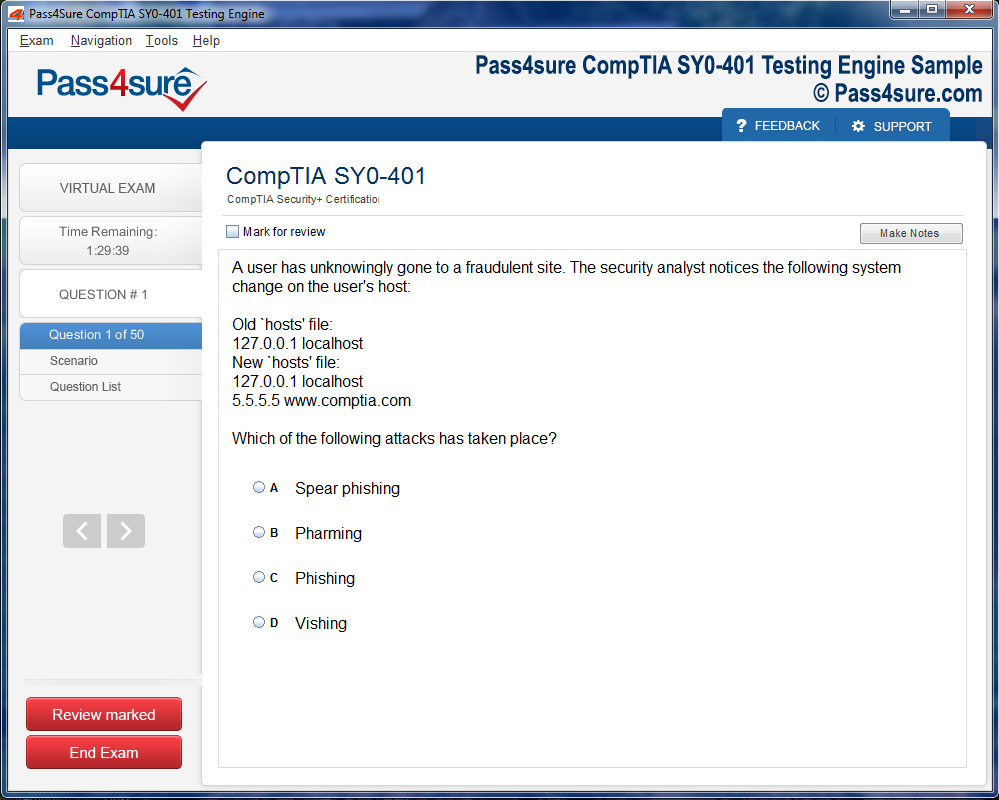
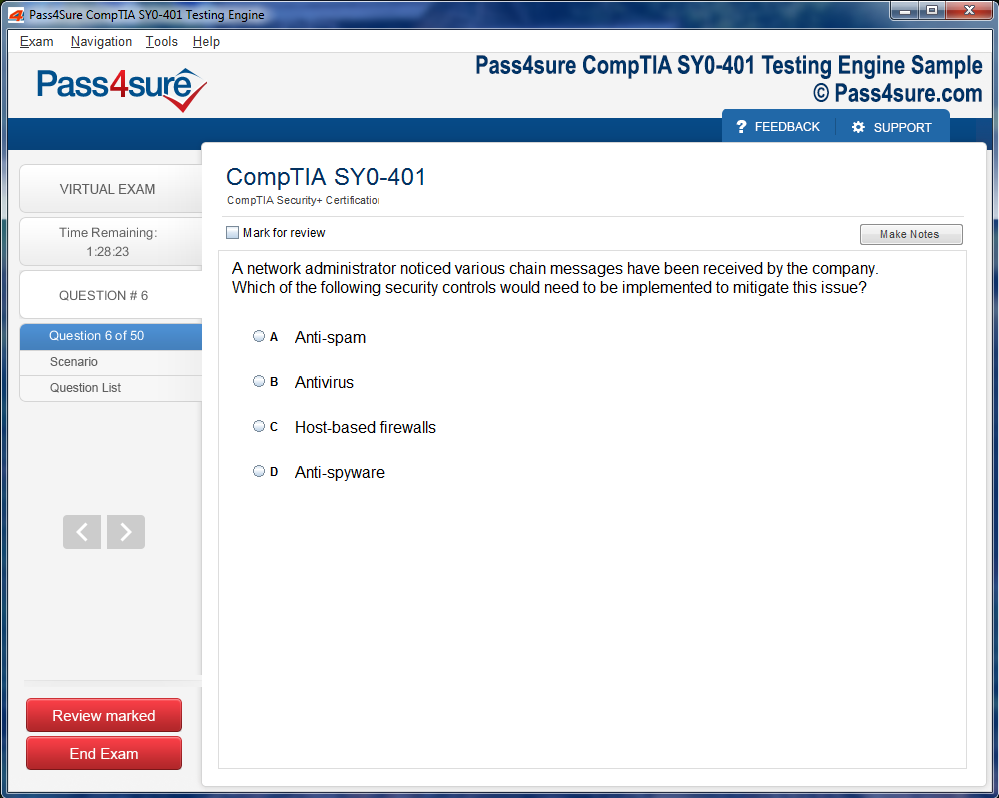
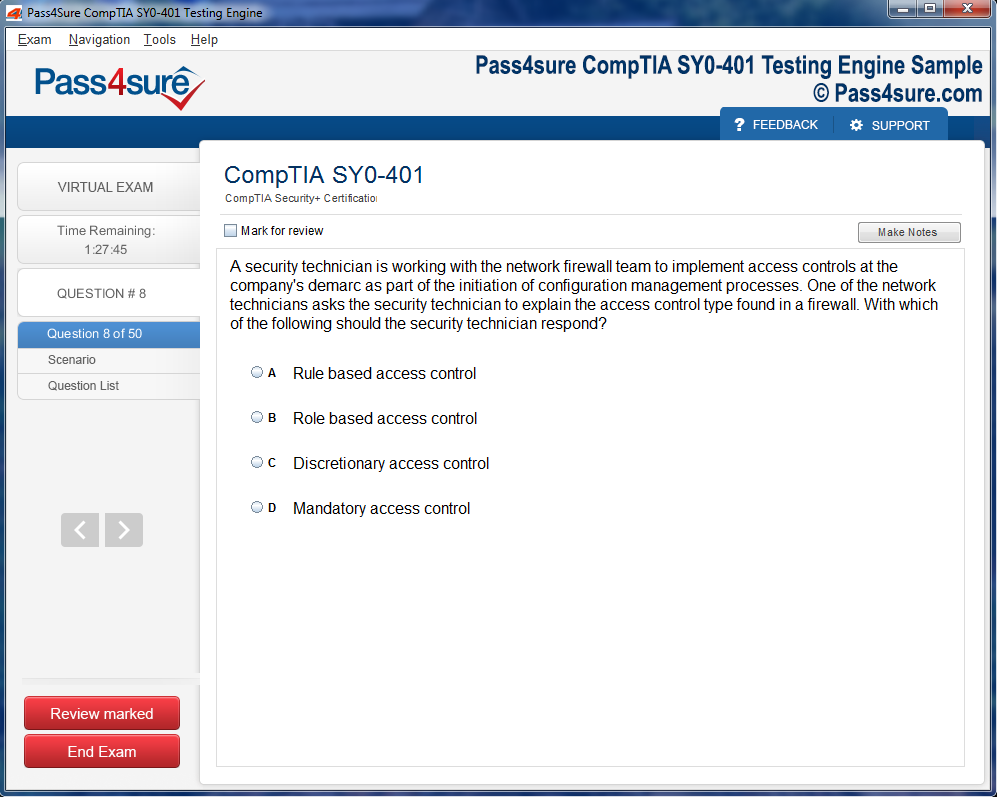
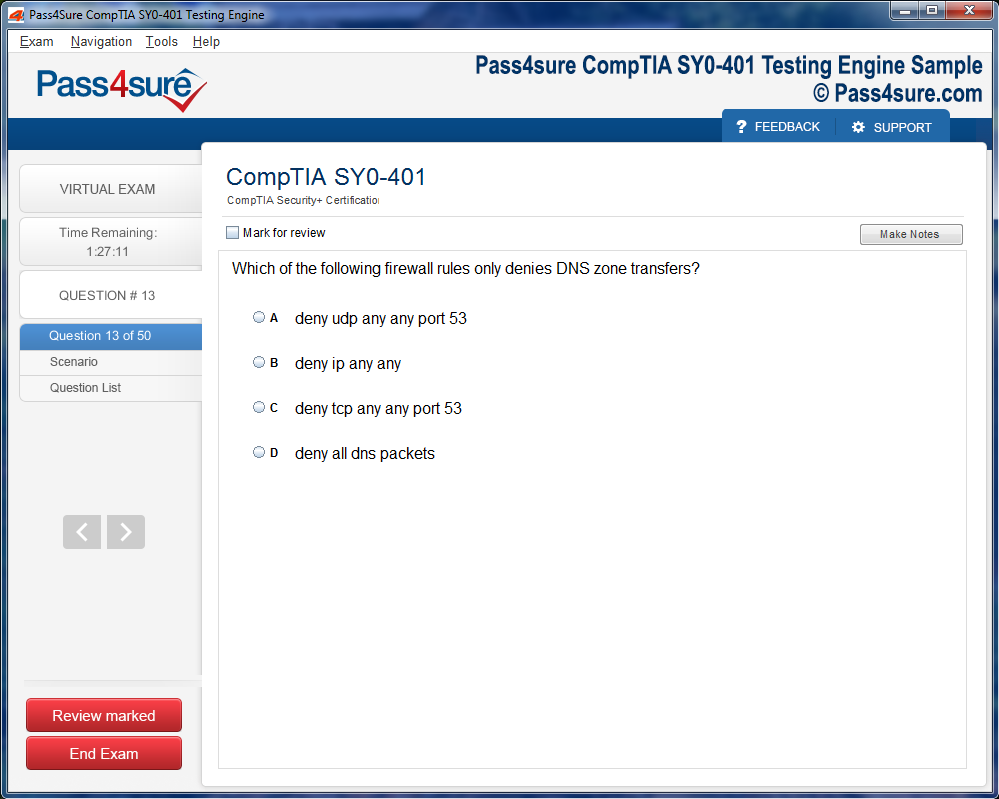
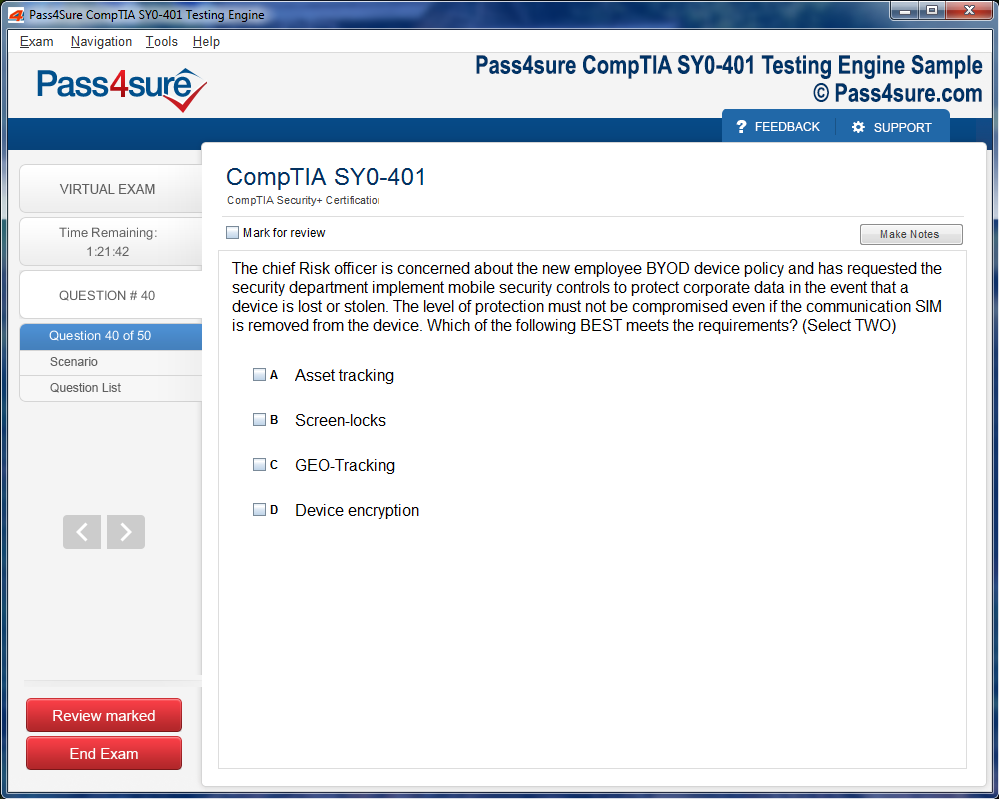
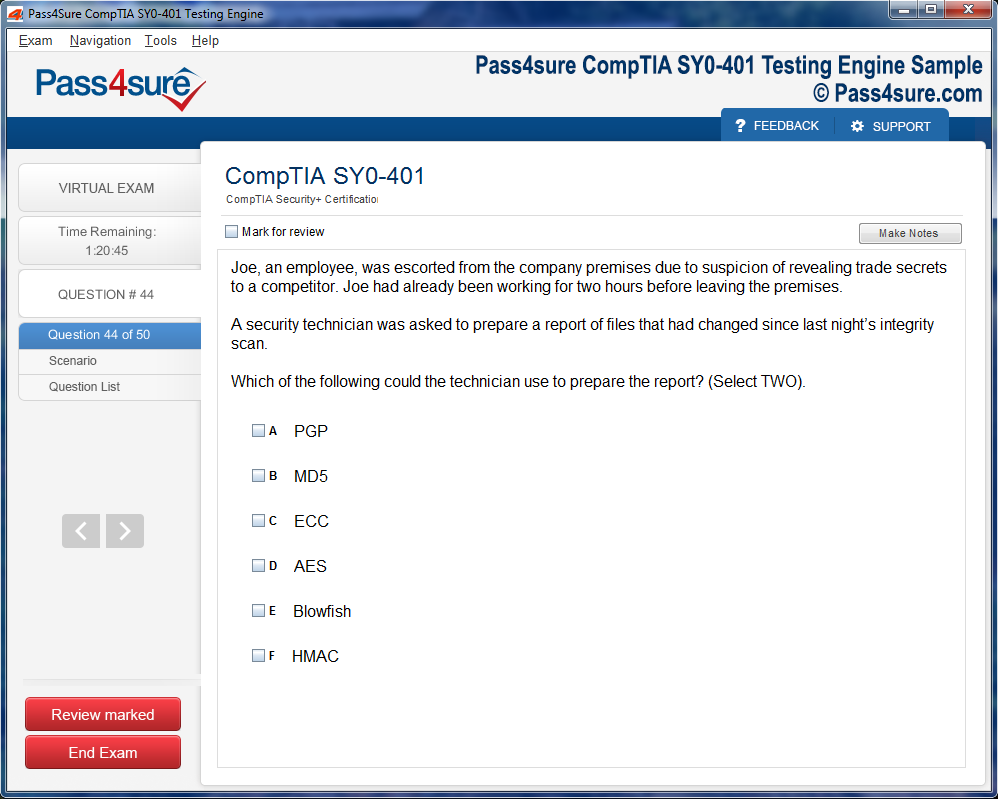
Once download and installed on your PC, you can practise test questions, review your questions & answers using two different options 'practice exam' and 'virtual exam'. Virtual Exam - test yourself with exam questions with a time limit, as if you are taking exams in the Prometric or VUE testing centre. Practice exam - review exam questions one by one, see correct answers and explanations).
How can I get the products after purchase?
All products are available for download immediately from your Member's Area. Once you have made the payment, you will be transferred to Member's Area where you can login and download the products you have purchased to your computer.
How long can I use my product? Will it be valid forever?
Pass4sure products have a validity of 90 days from the date of purchase. This means that any updates to the products, including but not limited to new questions, or updates and changes by our editing team, will be automatically downloaded on to computer to make sure that you get latest exam prep materials during those 90 days.
Can I renew my product if when it's expired?
Yes, when the 90 days of your product validity are over, you have the option of renewing your expired products with a 30% discount. This can be done in your Member's Area.
Please note that you will not be able to use the product after it has expired if you don't renew it.
How often are the questions updated?
We always try to provide the latest pool of questions, Updates in the questions depend on the changes in actual pool of questions by different vendors. As soon as we know about the change in the exam question pool we try our best to update the products as fast as possible.
How many computers I can download Pass4sure software on?
You can download the Pass4sure products on the maximum number of 2 (two) computers or devices. If you need to use the software on more than two machines, you can purchase this option separately. Please email sales@pass4sure.com if you need to use more than 5 (five) computers.
What are the system requirements?
Minimum System Requirements:
- Windows XP or newer operating system
- Java Version 8 or newer
- 1+ GHz processor
- 1 GB Ram
- 50 MB available hard disk typically (products may vary)
What operating systems are supported by your Testing Engine software?
Our testing engine is supported by Windows. Andriod and IOS software is currently under development.