

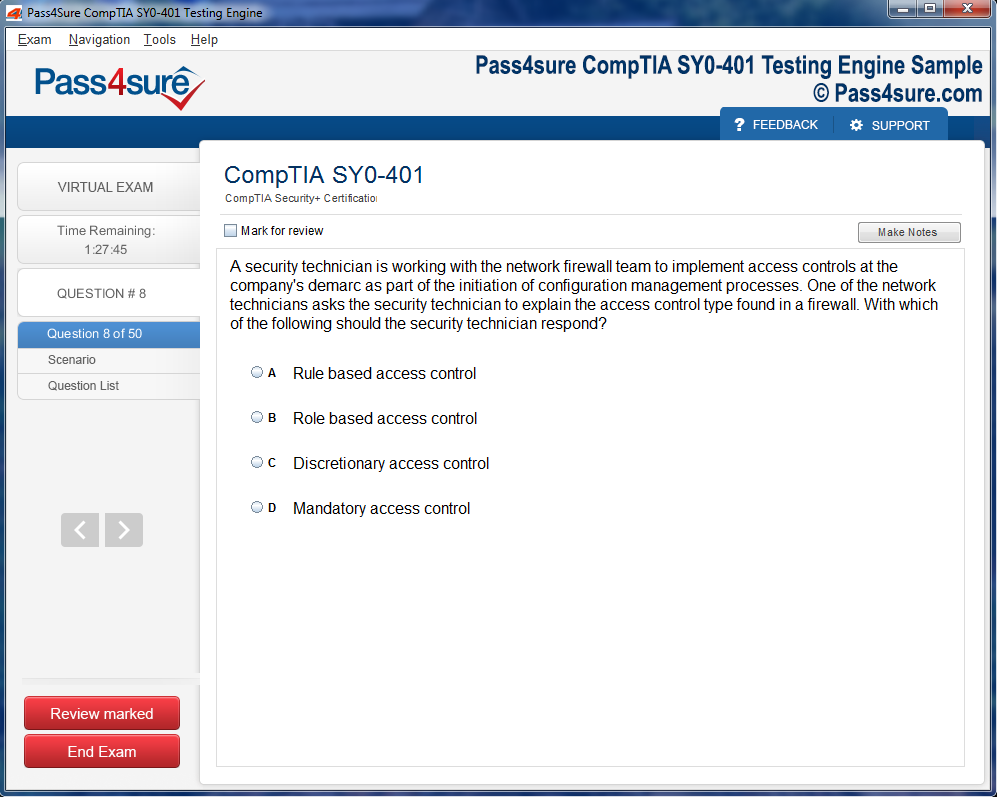
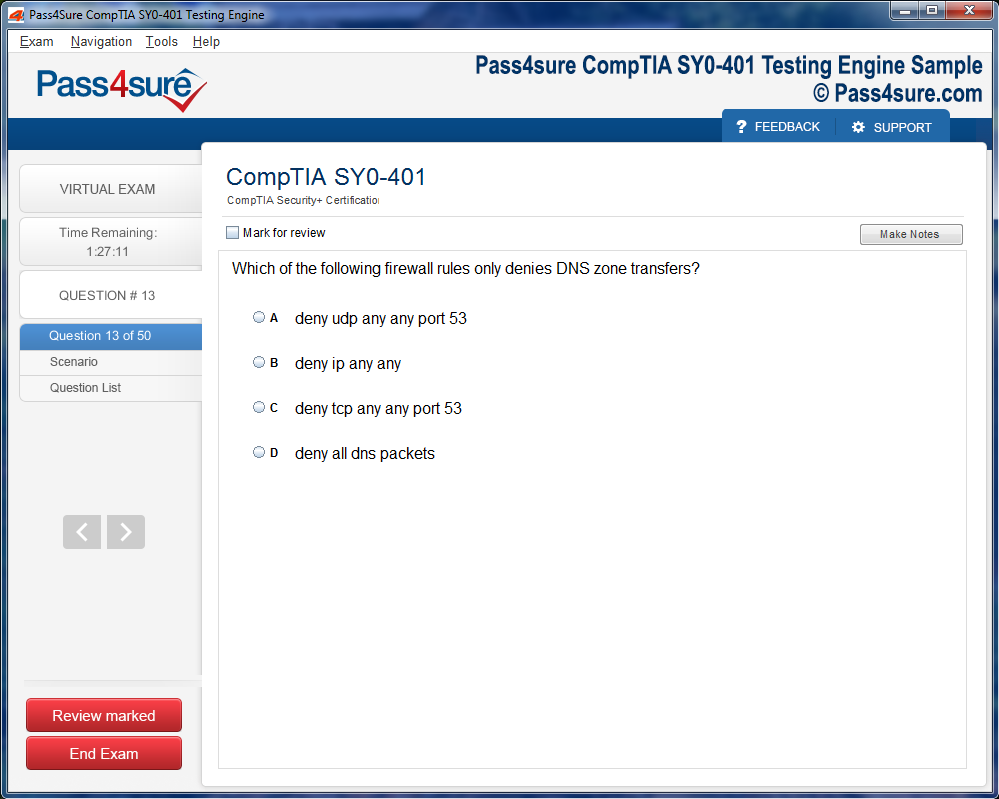
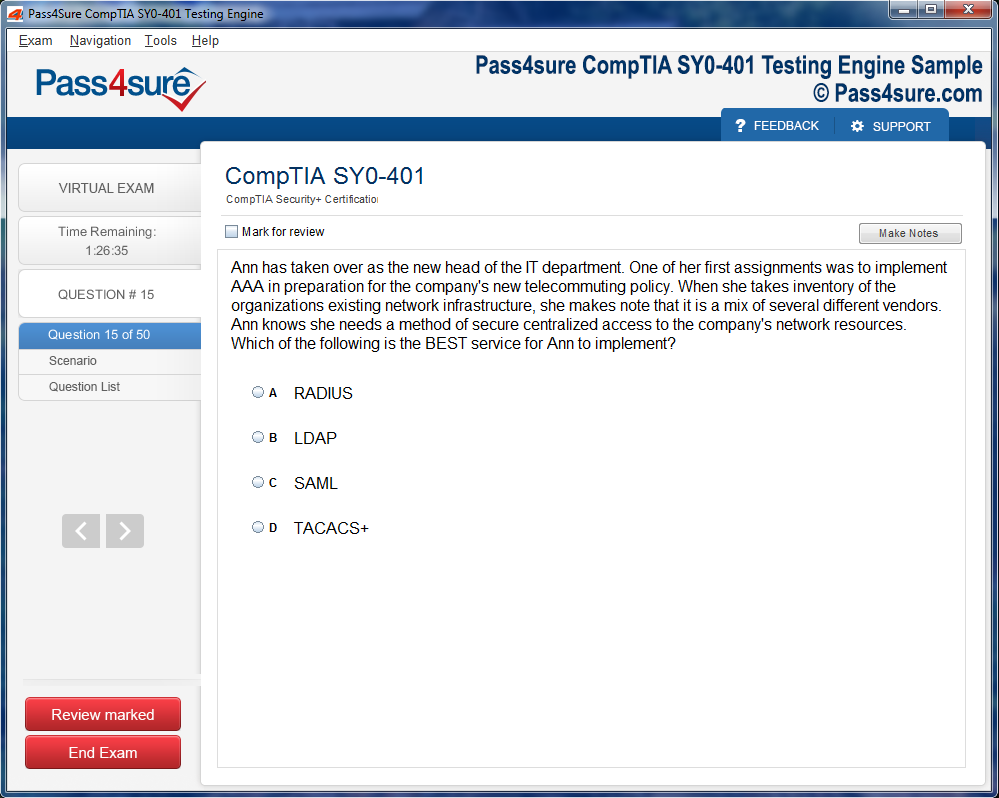
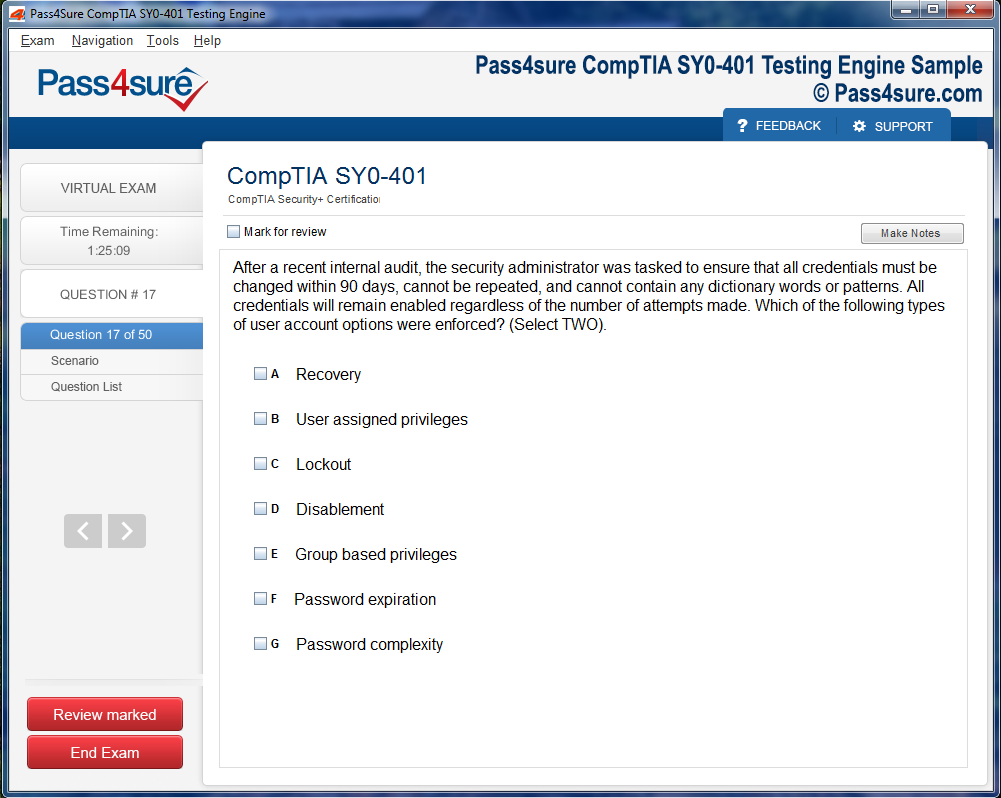
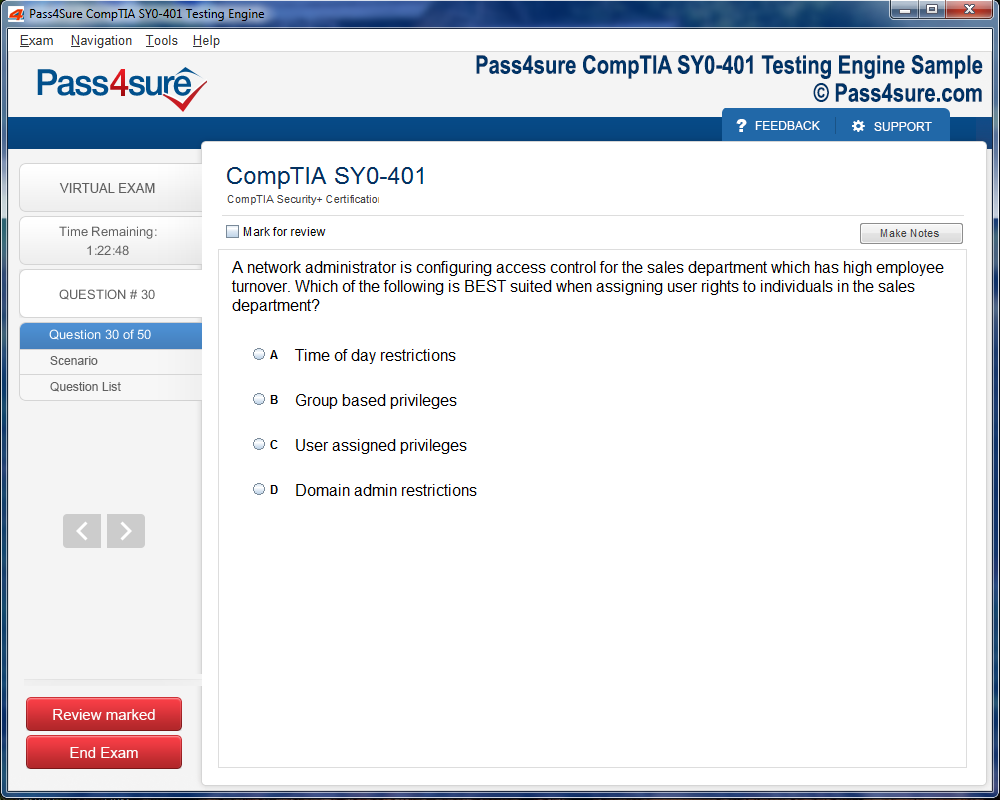
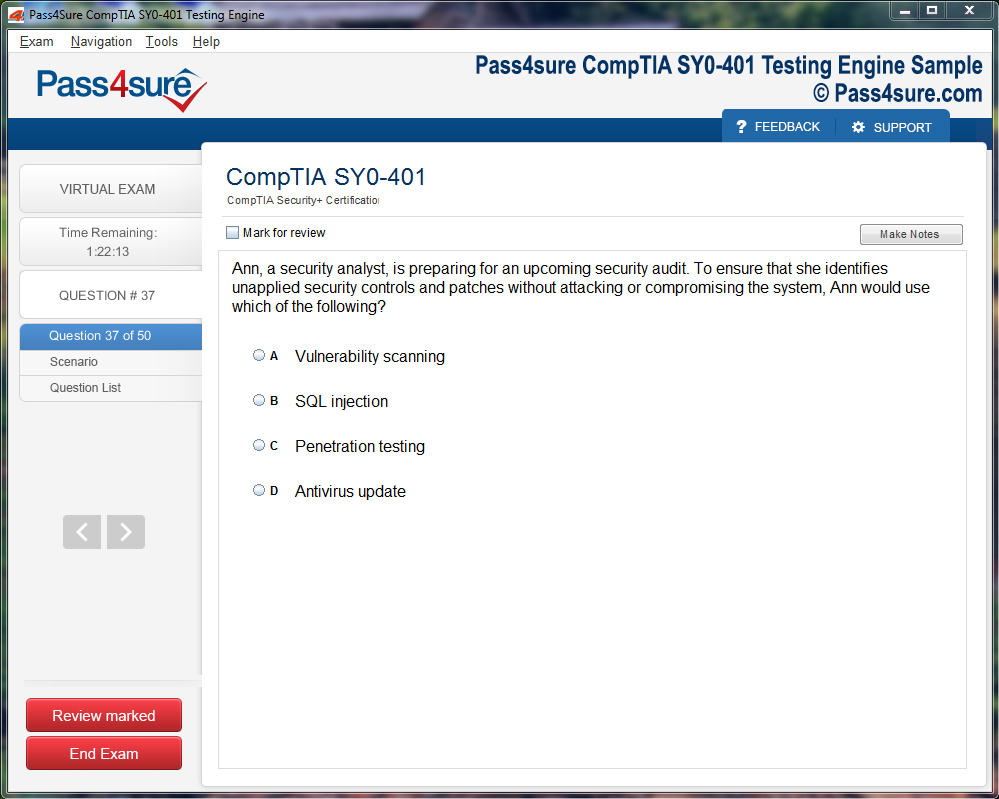
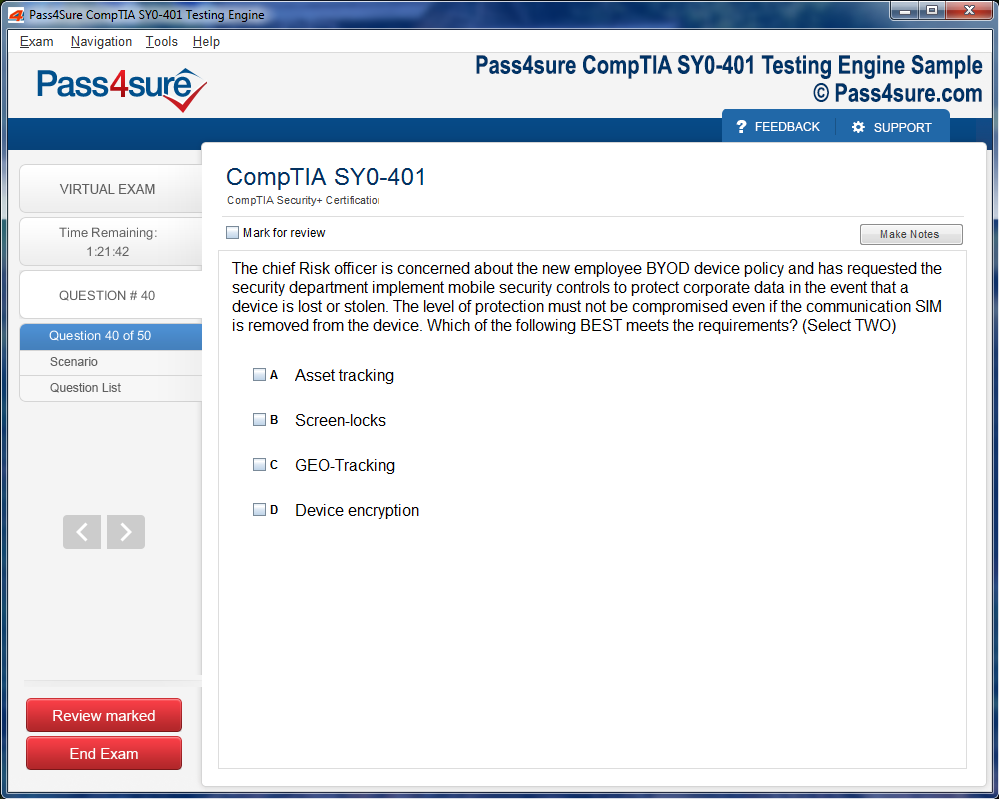
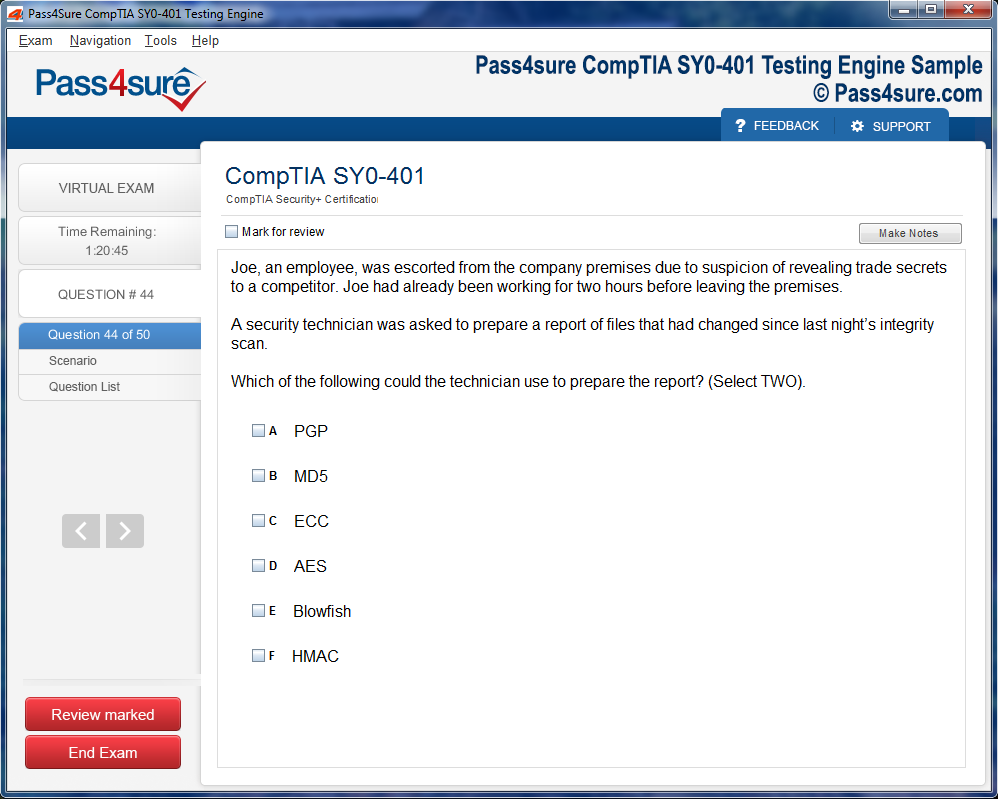
Product Screenshots


Frequently Asked Questions
How does your testing engine works?
Once download and installed on your PC, you can practise test questions, review your questions & answers using two different options 'practice exam' and 'virtual exam'. Virtual Exam - test yourself with exam questions with a time limit, as if you are taking exams in the Prometric or VUE testing centre. Practice exam - review exam questions one by one, see correct answers and explanations.
How can I get the products after purchase?
All products are available for download immediately from your Member's Area. Once you have made the payment, you will be transferred to Member's Area where you can login and download the products you have purchased to your computer.
How long can I use my product? Will it be valid forever?
Pass4sure products have a validity of 90 days from the date of purchase. This means that any updates to the products, including but not limited to new questions, or updates and changes by our editing team, will be automatically downloaded on to computer to make sure that you get latest exam prep materials during those 90 days.
Can I renew my product if when it's expired?
Yes, when the 90 days of your product validity are over, you have the option of renewing your expired products with a 30% discount. This can be done in your Member's Area.
Please note that you will not be able to use the product after it has expired if you don't renew it.
How often are the questions updated?
We always try to provide the latest pool of questions, Updates in the questions depend on the changes in actual pool of questions by different vendors. As soon as we know about the change in the exam question pool we try our best to update the products as fast as possible.
How many computers I can download Pass4sure software on?
You can download the Pass4sure products on the maximum number of 2 (two) computers or devices. If you need to use the software on more than two machines, you can purchase this option separately. Please email sales@pass4sure.com if you need to use more than 5 (five) computers.
What are the system requirements?
Minimum System Requirements:
- Windows XP or newer operating system
- Java Version 8 or newer
- 1+ GHz processor
- 1 GB Ram
- 50 MB available hard disk typically (products may vary)
What operating systems are supported by your Testing Engine software?
Our testing engine is supported by Windows. Andriod and IOS software is currently under development.
Boost Your Finance Career with CIFC Canadian Investment Funds Course IFSE Institute
In the contemporary financial milieu, the intricacies of investment landscapes necessitate a nuanced comprehension that surpasses conventional knowledge. The Canadian investment domain, teeming with multifarious instruments ranging from mutual funds to exotic derivatives, demands not merely rudimentary awareness but a sophisticated acumen to decipher market signals. The CIFC Canadian Investment Funds Course furnishes aspirants with this elevated cognizance, merging theoretical scaffolding with pragmatic exercises that cultivate analytical dexterity. Through immersive engagement with the Canadian investment tapestry, learners acquire an aptitude to orchestrate well-diversified portfolios while anticipating market oscillations with perspicacity.
Syncretizing Theory with Pragmatic Financial Acumen
The CIFC curriculum exemplifies a meticulous synthesis of conceptual frameworks and hands-on application. Participants are guided through labyrinthine methodologies, including the dissection of financial statements, scrutiny of corporate solvency, and evaluation of risk-adjusted returns. Case-based learning engenders a reflective comprehension of real-world investment quandaries, enabling learners to transcend superficial interpretations and embrace strategic foresight. This syncretic approach cultivates a cadre of professionals adept in both analytical rigor and operational pragmatism, primed to navigate the vicissitudes of Canada’s financial sectors.
Cultivating Analytical Perspicacity in Investment Decisions
A quintessential feature of the CIFC course is the meticulous cultivation of analytical perspicacity. Students learn to deconstruct market signals, discern latent trends, and extrapolate actionable insights. This cognitive refinement extends beyond mechanical formulae, embedding an intuitive grasp of macroeconomic variables, sectoral dynamics, and investor psychology. The ability to anticipate market perturbations and respond with calibrated strategies is an invaluable asset, distinguishing graduates as astute decision-makers equipped for multifarious investment contexts.
Ethical Rectitude and Regulatory Cognizance
Within the kaleidoscopic arena of finance, ethical rectitude and regulatory sagacity are indispensable. The CIFC program foregrounds these principles, ensuring that learners internalize the ethical imperatives and statutory mandates governing Canadian investment practices. By instilling a rigorous adherence to fiduciary responsibility, transparency, and compliance, the course engenders professionals capable of engendering trust with clients while mitigating potential legal entanglements. This dual emphasis on ethics and law elevates practitioners beyond mere technical proficiency, nurturing principled leaders in the financial sphere.
Career Versatility and Strategic Trajectories
Enrolling in the CIFC course catalyzes a spectrum of career trajectories, offering ingress into retail and institutional investment firms, private banking, and advisory roles. Graduates benefit from the versatility conferred by comprehensive knowledge, enabling seamless adaptation to evolving market paradigms. Moreover, the course equips participants with credentials recognized by regulatory authorities, enhancing professional gravitas and employability. This strategic positioning fosters both lateral mobility and vertical ascension, positioning learners for sustained success in a competitive milieu.
Experiential Learning Through Dynamic Modules
The CIFC pedagogical model emphasizes experiential learning through dynamic modules, interactive simulations, and scenario-driven exercises. By navigating intricate financial scenarios, participants hone decision-making acumen and cultivate resilience against market volatility. The integration of real-time analytics, portfolio simulations, and evaluative case studies ensures that theoretical constructs are continually reinforced by practical application, engendering an immersive learning experience that is both stimulating and consequential.
Bridging Cognitive Gaps with Advanced Investment Strategies
A salient aspect of the CIFC course is its capacity to bridge cognitive gaps between elementary investment comprehension and advanced strategic deployment. Learners are immersed in complex asset allocation paradigms, derivative instruments, and risk mitigation techniques. This stratified approach enables participants to engage with multifaceted investment dilemmas, fostering intellectual dexterity and strategic creativity. By internalizing sophisticated methodologies, graduates are positioned to craft bespoke investment solutions responsive to diverse client needs and market contingencies.
Fostering Long-Term Professional Gravitas
Beyond immediate technical proficiency, the CIFC program imbues learners with long-term professional gravitas. The cultivation of analytical rigor, ethical discernment, and strategic foresight coalesces to form a resilient foundation for enduring career advancement. Graduates emerge not only as competent practitioners but as thought leaders capable of navigating uncharted financial terrains, innovating within their domains, and mentoring emerging professionals in complex investment ecosystems.
Conceptual Foundations of the CIFC Canadian Investment Funds Course
The CIFC Canadian Investment Funds Course embodies a kaleidoscopic approach to financial literacy, intertwining intricate theoretical constructs with pragmatic application. At its core, the curriculum immerses learners in an array of investment vehicles, elucidating the nuances of mutual funds, segregated funds, and alternative asset classes. The pedagogical framework emphasizes not merely rote knowledge acquisition but a symphonic comprehension of market dynamics, risk stratification, and portfolio architecture. By navigating through these conceptual terrains, students cultivate an analytical dexterity that transcends conventional financial paradigms, fostering a mindset attuned to nuanced investment evaluation.
Portfolio Management and Strategic Allocation
A paramount pillar of the CIFC course is the meticulous cultivation of portfolio management acumen. Learners explore the alchemy of risk and return, discerning the interplay between equity, fixed income, and hybrid instruments. The program accentuates strategic diversification, enabling learners to orchestrate balanced portfolios tailored to heterogeneous client objectives. Through iterative simulations, students engage with asset allocation models, scenario analyses, and sensitivity testing, cultivating a prescient understanding of market oscillations. The emphasis on bespoke portfolio engineering ensures that graduates can navigate both burgeoning opportunities and latent vulnerabilities with judicious foresight.
Analytical Prowess Through Fundamental and Technical Insights
Investigation into the empirical and interpretive dimensions of financial analysis constitutes a central thrust of the CIFC curriculum. Students are inducted into the lexicon of fundamental metrics, exploring valuation paradigms, balance sheet intricacies, and profit margin diagnostics. Complementing this, technical analysis techniques provide a scaffolding for deciphering market sentiment, price trends, and momentum indicators. By synthesizing these methodologies, learners acquire the competence to formulate evidence-based investment hypotheses, eschewing heuristic-driven conjectures. Immersive exercises and case studies fortify this analytical acumen, engendering an aptitude for dissecting multifaceted financial phenomena with surgical precision.
Ethical Imperatives and Regulatory Acumen
An exceptional attribute of the CIFC course is its rigorous integration of ethical frameworks and regulatory literacy. The curriculum imparts a profound appreciation for fiduciary responsibility, transparency mandates, and compliance protocols within the Canadian investment milieu. By navigating statutory obligations and professional standards, students internalize a principled ethos, ensuring their advisory practices remain both legally compliant and morally defensible. This ethical orientation is pivotal in cultivating client trust, mitigating reputational risk, and fostering sustainable professional relationships in a sector where integrity is paramount.
Client Communication and Advisory Efficacy
Mastery in investment theory is augmented by an equally robust focus on communicative efficacy. The course equips learners with the skills to demystify complex financial concepts, translating esoteric information into intelligible guidance for clients of diverse financial literacy levels. This capability enhances client engagement, fortifies advisory credibility, and facilitates the implementation of tailored investment strategies. Through role-playing scenarios, written case studies, and interactive simulations, students refine their ability to convey nuanced insights with clarity, empathy, and persuasiveness, a cornerstone of professional advisory excellence.
Integration of Market Dynamics and Product Knowledge
The CIFC curriculum fosters a panoramic understanding of the Canadian investment landscape, embedding learners in the intricate tapestry of economic indicators, interest rate fluctuations, and fiscal policy implications. Students explore a spectrum of investment products, dissecting their structural composition, performance metrics, and suitability across client profiles. This integrative approach ensures a holistic grasp of market interdependencies, enabling graduates to anticipate market perturbations, identify strategic entry points, and implement tactical adjustments. The confluence of theoretical rigor and pragmatic insight produces professionals adept at navigating the labyrinthine contours of contemporary investment ecosystems.
Applied Learning Through Case Studies and Simulations
Practical application permeates every facet of the CIFC program. Learners engage in meticulously crafted simulations and case studies that mirror real-world investment scenarios, from portfolio optimization challenges to risk mitigation conundrums. These experiential exercises consolidate theoretical knowledge, cultivate critical thinking, and hone decision-making under conditions of uncertainty. By confronting dynamic market scenarios and client-specific dilemmas, students develop a dexterous approach to problem-solving that seamlessly integrates analytical reasoning, regulatory compliance, and ethical judgment.
Strategic Differentiation in Financial Advisory Roles
The CIFC Canadian Investment Funds Course empowers graduates to distinguish themselves in competitive advisory environments. By marrying technical competence with client-centric strategies, learners are equipped to offer bespoke solutions that resonate with diverse clientele. The program fosters a mindset oriented toward continuous learning, adaptive problem-solving, and strategic foresight, ensuring graduates can navigate evolving market landscapes with agility. This synthesis of knowledge, ethical integrity, and communicative proficiency positions CIFC-trained professionals as catalysts for informed investment decision-making, capable of engendering enduring client confidence and long-term wealth creation.
Proliferating Vistas of Financial Vocation
Acquiring the CIFC Canadian Investment Funds certification catalyzes a proliferation of vocational avenues within the labyrinthine corridors of Canada’s financial sector. This credential is particularly salubrious for aspirants targeting roles in fiduciary advisement, capital markets, asset allocation, and mutual fund orchestration. Possession of the CIFC imprimatur signals to financiers and institutions that the candidate embodies both perspicacious technical acumen and an unwavering allegiance to professional edification.
Artistry in Mutual Fund Advisory
One of the preeminent trajectories for CIFC laureates is the role of a mutual fund advisor, an occupation that marries analytical rigor with client-centric sagacity. In this capacity, professionals shepherd clients through labyrinthine investment landscapes, calibrate portfolio performance, and prescribe stratagems for financial amplification. The CIFC curriculum endows aspirants with perspicuity in regulatory mandates and evaluative techniques, allowing them to proffer guidance that is both scrupulous and judicious—a sine qua non for cultivating fiduciary trust.
Ascendancy in Institutional Finance
For those enamored with the cerebral rigors of institutional finance, CIFC certification amplifies opportunities in investment analysis and portfolio stewardship. Practitioners in these realms scrutinize securities with meticulous exactitude, extrapolate market vicissitudes, and architect investment frameworks optimized for return maximization and risk attenuation. The program’s accentuation of portfolio construction and probabilistic risk assessment furnishes graduates with the intellectual armamentarium requisite to navigate volatile fiscal milieus with aplomb.
Catalyzing Organizational Mobility
Completing the CIFC program confers an imprimatur of initiative, often serving as a catalyst for hierarchical ascension within financial organizations. Employers revere candidates who exhibit a proclivity for specialized credentialing, which can precipitate promotions, augmented responsibilities, and amplified remuneration. Moreover, the CIFC certification frequently functions as a prelude to avant-garde designations, including the Chartered Financial Analyst or Certified Financial Planner titles, thereby amplifying professional trajectory and gravitas.
Cultivation of Intangible Competencies
The CIFC curriculum extends beyond the prosaic boundaries of technical mastery, nurturing intangible competencies indispensable for vocational longevity. Discernment in ethical decision-making, eloquence in client communication, and deftness in relationship management are woven into the pedagogical fabric. Professionals who internalize these proficiencies are poised to engender enduring client alliances, navigate organizational intricacies, and flourish in leadership echelons with dexterity.
Strategic Synergy of Knowledge and Practice
At its core, the CIFC Canadian Investment Funds Course is a synthesis of theoretical erudition and pragmatic dexterity. Graduates emerge with a harmonized repertoire of analytical expertise, regulatory cognizance, and interpersonal dexterity, rendering them formidable actors in Canada’s competitive financial theater. This amalgamation of skills ensures that alumni are not merely credentialed, but imbued with the perspicacity necessary to innovate, influence, and excel in multifarious fiscal contexts.
Experiential Learning through Portfolio Simulation
A quintessential attribute of the CIFC course lies in its employment of experiential learning modalities. Students are immersed in meticulously designed portfolio simulations that replicate the volatility and capricious nature of real financial markets. These exercises cultivate a sense of anticipatory acuity, fostering the capacity to foresee potential asset behavior before it manifests in tangible outcomes. Participants are urged to juxtapose various investment methodologies, gauge their efficacy under fluctuating market dynamics, and refine adaptive strategies that withstand both exuberant surges and precipitous downturns.
Simulated environments also facilitate iterative learning, whereby learners engage in a cyclical process of hypothesis, experimentation, and recalibration. This deliberate exposure to market vicissitudes fosters resilience and hones decision-making faculties, ensuring that professionals are not merely reactive but exhibit preemptive foresight in the deployment of capital. Such immersive practices instill confidence, enabling practitioners to navigate real-world complexities with dexterity and strategic precision.
Analytical Acumen in Financial Forensics
The CIFC curriculum accentuates the cultivation of analytical acumen, particularly in the domain of financial forensics. Professionals are trained to scrutinize corporate balance sheets, income statements, and cash flow matrices with meticulous attention to detail. Beyond conventional number-crunching, learners are guided to discern latent patterns, identify aberrations, and extrapolate insights that inform investment judgment. This methodical approach transforms raw data into actionable intelligence, allowing practitioners to pinpoint undervalued opportunities and mitigate exposure to systemic risks.
Equipped with advanced analytical techniques, learners develop the capacity to decode market sentiment and interpret macroeconomic signals. This enables a granular understanding of interrelated financial ecosystems, facilitating informed prognostications on asset performance. By mastering the synthesis of quantitative and qualitative indicators, professionals achieve a rare equilibrium between empirical rigor and strategic intuition.
Regulatory Proficiency and Ethical Dexterity
Navigating the labyrinthine structure of Canadian financial regulation is another pivotal component of the CIFC experience. The course imbues participants with an intricate understanding of securities legislation, fiduciary duties, and ethical mandates governing investment practice. Mastery of these frameworks ensures not only legal compliance but also the embodiment of principled advisory conduct, which underpins client confidence and institutional integrity.
The curriculum encourages proactive engagement with regulatory paradigms, prompting learners to evaluate the implications of evolving policies and adjust strategies accordingly. Ethical dexterity is emphasized alongside technical knowledge, cultivating practitioners who are both legally astute and morally conscientious. Such dual competence is invaluable, particularly in high-stakes advisory contexts where trustworthiness and judgment are inseparable from financial acumen.
Client-Centric Communication and Persuasive Narratives
A distinguishing element of professional excellence emphasized in the CIFC course is the art of client-centric communication. Beyond the mere transmission of data, students are instructed in the crafting of persuasive narratives that elucidate complex financial instruments in accessible terms. This skill encompasses a spectrum of modalities, from one-on-one consultations to multimedia presentations, each designed to foster clarity, confidence, and rapport with clients.
Learners are encouraged to cultivate empathy, tailoring explanations to diverse client profiles while preemptively addressing concerns and potential misconceptions. Such communicative prowess strengthens relational bonds, engenders trust, and enhances client retention. The interplay between financial expertise and narrative fluency equips graduates to bridge the chasm between abstract market analysis and actionable client advice.
Strategic Problem-Solving and Contingency Planning
The CIFC course also engenders strategic problem-solving capabilities through exposure to multifaceted financial dilemmas. Participants are confronted with scenarios demanding meticulous evaluation of risk vectors, contingency planning, and scenario forecasting. This pedagogical approach nurtures an anticipatory mindset, where learners systematically explore alternative outcomes and devise resilient strategies in the face of uncertainty.
By navigating these simulated conundrums, professionals cultivate both analytical versatility and adaptive reasoning. The iterative process of encountering challenges, formulating responses, and evaluating consequences reinforces cognitive agility, ensuring that graduates are equipped to devise pragmatic solutions when confronted with analogous issues in their professional milieu. Such proficiency is indispensable in the dynamic, often unpredictable terrain of investment management.
Integrative Approach to Market Intelligence
The CIFC curriculum promotes an integrative approach to market intelligence, synthesizing macroeconomic analysis, microeconomic indicators, and behavioral finance insights. Learners are encouraged to adopt a panoramic perspective, considering how geopolitical events, fiscal policies, and consumer trends converge to shape asset performance. This holistic methodology engenders a nuanced comprehension of market mechanisms and cultivates foresight that transcends conventional analytical paradigms.
Students are trained to reconcile conflicting data streams, balance short-term volatility with long-term objectives, and calibrate investment strategies to align with overarching client aspirations. By internalizing this integrative framework, professionals acquire the capacity to navigate market complexity with discernment, leveraging insight as a strategic differentiator in advisory practice.
Experiential Mastery of Risk Mitigation
Risk mitigation constitutes a cornerstone of the CIFC experience, emphasizing both quantitative assessment and qualitative judgment. Participants learn to dissect exposure across diverse asset classes, evaluate correlation matrices, and implement hedging strategies designed to safeguard client portfolios. Beyond technical proficiency, the course instills an intuitive grasp of market psychology, enabling practitioners to anticipate behavioral responses that can exacerbate or attenuate risk.
This dual emphasis on empirical analysis and psychological acuity equips graduates with a multidimensional toolkit for safeguarding investments. By fostering a proactive approach to uncertainty, the program ensures that practitioners are prepared to navigate the inherent turbulence of financial markets with prudence and strategic insight.
The Intricacies of Investment Cognition
Financial erudition forms the fulcrum upon which sophisticated investment strategies pivot. The CIFC Canadian Investment Funds Course meticulously scaffolds learners’ acumen, instilling an unparalleled understanding of asset orchestration, market vicissitudes, and client-centric investment paradigms. Participants traverse the labyrinthine contours of capital markets, acquainting themselves with nuanced financial instruments that underpin wealth proliferation. This immersion fosters a perspicacious comprehension of the symbiotic relationship between risk stratification and return optimization.
Architecting Foundational Investment Tenets
At the heart of the CIFC curriculum lies a rigorous exploration of foundational investment principles. Learners are initiated into the taxonomy of asset classes, the calculus of risk-reward equilibrium, and the multitudinous variables that precipitate market oscillations. Real-world vignettes and case studies punctuate theoretical instruction, cultivating the ability to transpose abstract financial constructs into actionable strategies. This scaffolding equips students with the cognitive apparatus to navigate market perturbations with dexterity and foresight.
Delving into Canadian Mutual Funds
A substantial component of the program is devoted to Canadian mutual funds, encompassing their structural anatomy, managerial nuances, and performance appraisal methodologies. Participants scrutinize fund architectures, decipher the ramifications of active versus passive management, and dissect evaluative metrics that gauge fund efficacy. Strategizing fund selection involves harmonizing client objectives with prevailing market dynamics, a skill that amplifies advisory precision and client satisfaction. Such specialization engenders a rarefied expertise essential for those aspiring to transcend conventional investment advisory roles.
Analytical Prowess and Market Interpretation
The CIFC course accentuates analytical rigor, fostering the capacity to distill complex financial datasets into cogent insights. Learners cultivate proficiency in interpreting macroeconomic indicators, financial ratios, and market sentiment analyses. This analytical lens empowers professionals to detect emergent trends, preempt market shifts, and formulate sagacious investment recommendations. The synthesis of intricate information into strategic counsel distinguishes proficient financial advisors from their peers, rendering analytical acumen a linchpin of professional excellence.
Ethical Discernment and Fiduciary Integrity
Ethical discernment is interwoven throughout the CIFC pedagogy, underscoring the imperatives of fiduciary responsibility and regulatory compliance. Participants are schooled in the praxis of transparent advisory conduct, ethical decision-making, and adherence to Canadian financial statutes. This moral compass enhances professional credibility, fortifies client trust, and engenders a culture of integrity within investment practice. The integration of ethics with technical proficiency produces advisors who are not merely knowledgeable but principled in their counsel.
Strategic Synthesis and Portfolio Optimization
The curriculum further cultivates the ability to synthesize multifaceted financial knowledge into coherent investment strategies. Learners explore asset allocation methodologies, portfolio diversification tactics, and dynamic rebalancing techniques that mitigate risk while optimizing returns. Advanced simulations and scenario analyses reinforce strategic thinking, enabling participants to adapt to fluctuating market conditions with nimbleness. This strategic acumen is pivotal in constructing resilient portfolios capable of weathering economic volatility.
Navigating Regulatory Landscapes
Comprehension of regulatory frameworks constitutes an essential pillar of the CIFC course. Participants engage with the intricacies of Canadian financial legislation, compliance mandates, and reporting protocols. Mastery of regulatory nuance equips advisors to preempt potential pitfalls, ensure legal adherence, and safeguard client interests. Such regulatory literacy, paired with practical investment insight, forms a composite skill set that elevates advisory efficacy and professional gravitas.
Cultivating Client-Centric Advisory Competence
A distinctive feature of the CIFC program is its emphasis on client-centric advisory skills. Beyond technical mastery, learners acquire the ability to tailor investment recommendations to individual risk tolerances, temporal horizons, and financial aspirations. Role-playing exercises, scenario-based simulations, and behavioral finance insights enhance empathic engagement with clients, fostering long-term relationships grounded in trust and informed counsel. This interpersonal sophistication complements analytical expertise, rendering graduates holistic investment advisors.
Macroeconomic Acumen and Global Interconnectivity
The course situates Canadian investment knowledge within a broader macroeconomic and global context. Participants explore interconnections between domestic markets and international capital flows, geopolitical influences, and currency fluctuations. By understanding global market symbiosis, advisors can anticipate cross-border investment impacts, hedge against external shocks, and leverage international opportunities. This macroeconomic literacy amplifies strategic foresight and enriches investment decision-making capabilities.
Integrating Technology in Investment Practice
Modern financial ecosystems necessitate technological fluency. The CIFC curriculum introduces participants to advanced analytical platforms, portfolio management software, and data visualization tools. Mastery of these technological instruments enables advisors to perform high-precision analyses, automate routine processes, and enhance client reporting. Technology integration not only augments operational efficiency but also empowers advisors to harness data-driven insights in formulating nuanced investment strategies.
Advanced Risk Management Techniques
The CIFC course delves into sophisticated risk management frameworks. Learners investigate hedging strategies, derivative instruments, and volatility modeling techniques that mitigate exposure across diverse asset classes. This rigorous risk-focused education enhances the ability to construct resilient portfolios capable of weathering market turbulence. A nuanced understanding of probabilistic outcomes, stress testing, and scenario planning distinguishes the adept advisor from the merely competent practitioner.
Strategic Leverage of CIFC Certification in Professional Trajectories
The CIFC Canadian Investment Funds Course transcends conventional academic pursuits, functioning as an intellectual endowment that can catalyze profound professional ascension. Possession of this certification denotes not only mastery over financial instruments but also an unwavering commitment to continuous professional enrichment. In an era where the labyrinthine nature of investment products demands sagacious acumen, the CIFC credential confers a rarefied imprimatur upon its bearers, signaling proficiency and strategic foresight to prospective employers and clientele alike. This emblem of expertise amplifies employability in multifaceted capacities, ranging from advisory functions to portfolio management, thereby catalyzing career mobility and remuneration elevation.
Amplification of Marketability and Professional Distinction
Credentialed professionals occupy a liminal space in the competitive investment ecosystem. The CIFC certification engenders an aura of specialized competence, differentiating its holders from peers who may possess generalized financial knowledge but lack granular understanding of Canadian investment paradigms. This differentiation manifests tangibly through accelerated recruitment opportunities, preferential consideration for leadership tracks, and access to high-value client portfolios. The credibility associated with the certification functions as a professional lodestar, signaling to industry stakeholders a commitment to ethical practice, analytical rigor, and continuous upskilling—a triad that underpins sustainable career trajectories in financial services.
Network Accretion and Strategic Alliances
Engagement with the CIFC program is not merely an academic endeavor; it constitutes an entryway into a vibrant professional ecosystem. Learners interface with seasoned instructors, industry luminaries, and a diverse cohort of peers, thereby cultivating a constellation of professional relationships. These connections are conduits for mentorship, collaborative innovation, and referrals that can substantially expedite career advancement. The serendipitous intersections arising from such networks often yield unforeseen opportunities, ranging from project partnerships to invitations for thought leadership forums, enhancing visibility and influence within the investment community.
Continuous Intellectual Evolution in a Dynamic Industry
The financial landscape is characterized by relentless evolution, with regulatory shifts, emergent investment vehicles, and market volatility demanding adaptive proficiency. The CIFC certification equips professionals with a robust foundational knowledge of Canadian investment instruments, enabling agile response to systemic perturbations and market novelties. Moreover, the curriculum instills a cognitive scaffolding conducive to lifelong learning, facilitating the pursuit of advanced credentials and specialization in niche domains such as structured products, ESG investing, and alternative asset management. By fostering intellectual dexterity, the CIFC credential ensures its holders remain salient in a perpetually mutating industry.
Enhancement of Credibility and Client Trust
Professional credibility is an intangible yet invaluable asset in financial advisory roles. Graduates of the CIFC program are imbued with the analytical tools and ethical frameworks necessary to navigate complex client scenarios, structure diversified portfolios, and provide judicious financial counsel. This competency cultivates trust, a currency more potent than remuneration in securing long-term client relationships and repeat engagements. Through methodical application of learned principles, CIFC-certified advisors can demonstrate a tangible impact on client wealth trajectories, thereby consolidating their reputation as sagacious and reliable professionals.
Strategic Thinking and Executive Readiness
The CIFC curriculum emphasizes not only technical mastery but also the cultivation of strategic thinking—a skillset critical for leadership ascension. Professionals who internalize these paradigms are equipped to evaluate macroeconomic indicators, anticipate market perturbations, and orchestrate investment strategies that align with organizational objectives. The development of such cognitive frameworks enhances executive readiness, enabling professionals to assume managerial or entrepreneurial roles with confidence. This dimension of the certification underscores its utility beyond immediate employability, positioning graduates for sustained influence in both corporate and advisory milieus.
Economic Upside and Compensation Trajectories
Empirical observations suggest that credentialed professionals often experience accelerated compensation growth compared to non-certified counterparts. The CIFC certification, by virtue of its specialized rigor, augments bargaining power in salary negotiations, eligibility for performance-based incentives, and access to high-yielding client portfolios. Beyond immediate fiscal advantages, the credential functions as an investment in long-term earning potential, fostering financial resilience and providing the resources necessary for continual skill augmentation, professional development, and strategic mobility within the industry.
Ethical Grounding and Professional Integrity
In contemporary finance, ethical acumen is as vital as technical proficiency. The CIFC curriculum embeds a rigorous understanding of fiduciary responsibilities, compliance imperatives, and ethical decision-making frameworks. Professionals who internalize these principles navigate the financial landscape with moral clarity, mitigating reputational risk and enhancing institutional trust. This alignment of technical capability with ethical stewardship is particularly consequential in client-facing roles, where credibility is inseparable from perceived integrity.
Cultivation of Adaptive Expertise
Adaptive expertise—the ability to apply knowledge flexibly across diverse contexts—is a hallmark of CIFC-certified professionals. By engaging with case studies, scenario-based exercises, and contemporary market simulations, learners develop the cognitive elasticity necessary to navigate unprecedented challenges. This competence enables the translation of theoretical insights into actionable strategies, ensuring resilience in the face of market disruptions, regulatory flux, and evolving client demands.
Long-Term Professional Visibility and Thought Leadership
Certification functions as a launchpad for enhanced visibility within the investment sector. Graduates are often invited to contribute to professional discourse, participate in seminars, or author insights that influence industry standards. Such engagements cultivate thought leadership, positioning professionals as authorities in Canadian investment funds and related disciplines. Over time, these contributions not only reinforce personal branding but also expand career avenues, including consultancy, advisory board membership, and strategic partnership opportunities.
Integration of Analytical Rigor and Intuitive Insight
The CIFC program marries quantitative acumen with qualitative discernment, fostering an integrated decision-making paradigm. Professionals trained in this dual modality are adept at both numerical modeling and contextual interpretation, enabling holistic portfolio construction and nuanced risk assessment. This synergy between analysis and intuition enhances the efficacy of investment strategies and elevates client confidence in advisory recommendations, further entrenching the professional’s value proposition.
Global Applicability and Cross-Border Opportunities
While anchored in Canadian investment frameworks, the competencies gained through the CIFC certification possess transnational relevance. Global financial markets increasingly intersect, and professionals with a sophisticated grasp of fund structures, regulatory compliance, and portfolio diversification can engage in cross-border advisory roles. This portability of expertise expands career horizons, affording opportunities in multinational institutions, international consultancy, and global investment networks.
Professional Agility and Navigating Market Volatility
In the contemporary investment ecosystem, volatility is the omnipresent undercurrent that defines both risk and opportunity. CIFC-certified professionals acquire not merely knowledge of investment instruments but the cognitive dexterity to anticipate, interpret, and respond to fluctuating market dynamics. The ability to translate abstract trends into actionable strategy is a hallmark of elite financial advisors. By synthesizing historical performance, regulatory trajectories, and emerging macroeconomic signals, these professionals cultivate prescient foresight, minimizing exposure to erratic market perturbations. This agility extends beyond reactive measures, enabling proactive portfolio adjustments that capitalize on transient anomalies or nascent asset classes.
Cognitive Differentiation Through Analytical Rigor
Beyond practical acumen, the CIFC certification fosters intellectual distinctiveness. The curriculum emphasizes analytical rigor, compelling learners to deconstruct complex financial instruments, dissect fund structures, and model risk-adjusted returns with precision. This cognitive differentiation is not merely theoretical; it manifests as enhanced problem-solving capacity in high-stakes decision-making environments. Professionals capable of navigating multifactorial financial challenges are invariably positioned for accelerated career advancement, as organizations seek individuals whose insights consistently yield measurable, strategic impact.
Mentorship Synergies and Knowledge Transmission
The value of the CIFC network extends beyond immediate professional connections. Mentorship, a pivotal vector in career acceleration, is embedded in the program’s ethos. Graduates often engage in dyadic learning relationships with senior practitioners, gaining insights into tacit knowledge that textbooks cannot convey. These mentorship synergies facilitate skill transference, the internalization of institutional wisdom, and exposure to nuanced decision-making heuristics. Moreover, the iterative cycle of mentorship fosters leadership development, as professionals evolve from mentees into advisors capable of cultivating talent within their organizations.
Adaptive Portfolio Management and Strategic Asset Allocation
In addition to enhancing advisory capability, the CIFC credential imbues professionals with advanced portfolio management methodologies. The curriculum emphasizes dynamic asset allocation, risk mitigation strategies, and scenario-based stress testing, cultivating practitioners capable of optimizing returns while maintaining rigorous compliance with fiduciary obligations. By integrating these principles, CIFC-certified professionals can navigate the interplay of equities, fixed-income instruments, and alternative assets, tailoring strategies to align with both market conditions and client objectives. The capacity to balance quantitative rigor with strategic foresight elevates these professionals as indispensable assets within institutional frameworks.
Leveraging Certification for Leadership Ascension
Career ascension in the financial sector increasingly favors those who exhibit both technical mastery and strategic acumen. The CIFC program, by design, cultivates a dual competency framework, enabling graduates to transcend transactional roles and assume managerial or executive responsibilities. Mastery of fund structures, coupled with an understanding of client psychology and regulatory landscapes, equips professionals to orchestrate teams, design organizational investment policies, and spearhead strategic initiatives. Consequently, the certification functions not merely as a credential but as an enabler of leadership potential, bridging the divide between operational proficiency and strategic influence.
Cultivation of Intellectual Resilience
The financial sector’s rapid evolution necessitates not only technical competence but also intellectual resilience. Professionals often encounter cognitive dissonance, regulatory ambiguity, or unforeseen market disruptions. The CIFC curriculum fosters resilience by encouraging analytical adaptability, ethical discernment, and reflective practice. Graduates are trained to approach complex scenarios with equanimity, applying structured frameworks to dissect problems, weigh alternative strategies, and implement optimal solutions. This resilience ensures that professionals maintain efficacy and composure under pressure, a trait highly coveted by organizations navigating turbulent financial climates.
Strategic Networking for Long-Term Influence
While immediate networking benefits of CIFC are evident, the long-term influence of sustained professional relationships is even more consequential. Graduates are positioned to leverage their networks for strategic collaborations, industry advocacy, and thought leadership initiatives. These enduring relationships often serve as catalysts for high-impact projects, consultancy engagements, and invitations to industry symposia. By cultivating a network grounded in mutual expertise and trust, CIFC professionals amplify their visibility, influence decision-making forums, and contribute substantively to shaping investment practices at both institutional and policy levels.
Enhanced Negotiation and Client Engagement Capabilities
Client engagement represents a nexus of trust, communication, and expertise. The CIFC program equips professionals with a sophisticated toolkit for client interaction, encompassing nuanced financial literacy, persuasive communication strategies, and behavioral finance insights. This combination allows advisors to elucidate complex concepts with clarity, tailor investment solutions to individual risk appetites, and negotiate fee structures with confidence. The resultant elevation in client satisfaction, retention, and referral potential underscores the certification’s tangible value in professional practice.
Multidimensional Competence in Risk Assessment
Risk is a multidimensional construct, encompassing market volatility, regulatory uncertainty, and behavioral biases. CIFC-certified professionals acquire the analytical frameworks to evaluate risk holistically, integrating quantitative modeling with qualitative assessment. This multidimensional competence enables informed decision-making under uncertainty, enhancing portfolio resilience and safeguarding client assets. Furthermore, by demonstrating a systematic approach to risk, professionals reinforce credibility and engender client trust, positioning themselves as indispensable strategic partners rather than transactional intermediaries.
Longitudinal Career Sustainability and Relevance
The dynamic nature of financial markets necessitates ongoing recalibration of professional skills. CIFC certification fosters longitudinal career sustainability by embedding principles of continuous learning and professional curiosity. Graduates are equipped not only to navigate current industry landscapes but also to anticipate and adapt to future developments. This proactive mindset mitigates obsolescence risk, ensuring enduring relevance in a field where technological innovation, regulatory transformation, and macroeconomic shifts constantly redefine professional expectations.
Integration of Ethical Frameworks in Strategic Decision-Making
Ethics constitute the sine qua non of sustainable financial practice. CIFC-certified professionals internalize rigorous ethical frameworks, enabling them to align client interests, organizational objectives, and regulatory imperatives. This integration of ethical principles into strategic decision-making enhances professional credibility and mitigates reputational risk. Furthermore, ethical rigor serves as a differentiator in highly competitive markets, signaling to stakeholders that decisions are underpinned by integrity and conscientious judgment rather than opportunistic expedience.
Expanding Horizons Through Specialized Knowledge
The CIFC curriculum imparts specialized knowledge in Canadian investment structures, mutual funds, and regulatory compliance, which can serve as a springboard for further specialization. Graduates may pursue niche areas such as socially responsible investing, alternative asset management, or quantitative portfolio modeling. This depth of expertise not only enhances marketability but also allows professionals to command premium advisory fees, engage in strategic consulting, and influence sectoral best practices. The ability to cultivate niche authority amplifies professional differentiation and long-term career impact.
Cognitive Synthesis of Quantitative and Qualitative Insights
A hallmark of CIFC-trained professionals is the ability to synthesize quantitative and qualitative data seamlessly. Investment decisions are rarely unidimensional; they require the integration of empirical metrics with contextual judgment, client preferences, and behavioral insights. The CIFC program emphasizes this duality, equipping professionals to construct portfolios that balance statistical robustness with strategic nuance. Such cognitive synthesis fosters innovative solutions, reinforces analytical credibility, and enhances advisory efficacy, positioning graduates as strategic partners in wealth creation.
Opportunities for Thought Leadership and Knowledge Dissemination
Graduates of the CIFC program often leverage their expertise to influence broader industry discourse. By authoring white papers, participating in professional panels, or mentoring emerging advisors, they cultivate thought leadership and contribute to the evolution of investment practices. These opportunities not only elevate personal branding but also enhance professional networks, create pathways for high-level consultancy, and reinforce credibility among peers and clients alike. The ability to disseminate knowledge effectively positions CIFC professionals as both practitioners and influencers within the financial ecosystem.
Quantitative Analysis and Portfolio Dynamics
Within the CIFC curriculum, quantitative analysis emerges as a cardinal pillar. Participants engage with statistical methodologies, regression models, and probabilistic projections that illuminate patterns within ostensibly chaotic markets. Such analytical scaffolding equips learners to dissect historical performance, project future trajectories, and quantify risk exposures with precision. Portfolio dynamics are explored through Monte Carlo simulations, correlation matrices, and sensitivity analyses, enabling participants to identify hidden interdependencies between assets. The skillful integration of quantitative metrics with qualitative insights cultivates a sophisticated advisory lens, empowering professionals to anticipate market inflections and optimize portfolio construction with surgical acuity.
Behavioral Finance and Investor Psychology
Understanding the cognitive and emotional undercurrents that drive investor behavior constitutes a distinctive emphasis of the CIFC course. Participants probe the nuances of behavioral finance, examining biases such as overconfidence, loss aversion, and herd mentality. Through case studies and empirical research, learners discern how psychological proclivities can distort market perceptions, precipitate suboptimal investment decisions, and influence client expectations. Mastery of these behavioral intricacies enables advisors to counsel clients with empathy, design strategies that mitigate cognitive distortions, and foster disciplined investment approaches that align with long-term financial objectives.
Asset Valuation and Intrinsic Worth Assessment
Asset valuation represents a core competency cultivated within the CIFC program. Participants are trained to employ multifarious valuation techniques, including discounted cash flow models, comparative market analysis, and real options evaluation. These methodologies allow learners to ascertain the intrinsic worth of securities with rigorous precision, distinguishing between market price fluctuations and fundamental value. Such valuation acumen is critical in constructing portfolios resilient to speculative volatility and in providing clients with transparent, evidence-based guidance. Advanced exercises incorporate scenario stress-testing, sector-specific valuations, and sensitivity analyses to reinforce practical mastery.
Sectoral Analysis and Industry Dissection
The CIFC curriculum extends beyond generalist investment principles to encompass sector-specific scrutiny. Participants examine cyclical and non-cyclical industries, dissecting supply chain dynamics, regulatory pressures, and competitive moats. Sectoral analysis involves evaluating profitability margins, capital expenditure trends, and technological disruption risks. By cultivating the ability to differentiate high-potential industries from underperforming sectors, advisors enhance portfolio diversification strategies and pinpoint investment opportunities with asymmetric returns. This granular comprehension of sectoral forces imbues participants with the capacity to tailor client portfolios with strategic sophistication.
Tax-Efficient Investment Strategies
Taxation considerations are inseparable from prudent investment planning. The CIFC course provides participants with a comprehensive framework for tax-efficient portfolio structuring, encompassing registered accounts, tax-deferred vehicles, and capital gains optimization. Learners explore the interplay between investment horizons, asset location, and regulatory provisions to devise strategies that minimize tax liabilities while preserving growth potential. Practical exercises include scenario-based tax planning, comparative analysis of account types, and modeling after-tax returns, all designed to equip advisors with actionable, client-centric tax strategies that enhance overall financial outcomes.
Advanced Fixed-Income Instruments
Fixed-income analysis is treated with meticulous depth within the CIFC program. Participants investigate the characteristics, valuation, and yield dynamics of bonds, debentures, and other debt instruments. Emphasis is placed on interest rate sensitivity, credit risk assessment, and duration management, allowing learners to construct fixed-income portfolios that optimize income streams while mitigating risk. Complex instruments, including structured notes and callable bonds, are explored to provide advisors with a comprehensive toolkit for tailoring fixed-income solutions to diverse client risk profiles and financial objectives.
Alternative Investments and Portfolio Diversification
Recognizing the limitations of traditional asset classes, the CIFC curriculum introduces learners to alternative investment vehicles. Real estate, commodities, hedge funds, and private equity are analyzed in terms of risk-return characteristics, liquidity constraints, and correlation with traditional portfolios. Participants explore the strategic integration of alternatives to enhance diversification, reduce portfolio volatility, and capture non-linear growth opportunities. Detailed case studies illuminate the operational, regulatory, and market-specific challenges inherent to these asset classes, ensuring that advisors are prepared to judiciously incorporate alternatives into client portfolios.
Ethical Investment and ESG Considerations
The CIFC course integrates environmental, social, and governance (ESG) frameworks into investment analysis. Participants examine the material impact of ESG factors on long-term performance, corporate sustainability, and reputational risk. Ethical investment principles are juxtaposed with fiduciary obligations, enabling learners to reconcile value-driven investing with client objectives and regulatory compliance. Through practical evaluation of ESG metrics, sustainability reporting, and corporate governance structures, advisors acquire the acumen to guide clients toward investment choices that align with both financial and ethical imperatives.
Scenario Planning and Contingency Modeling
Scenario planning constitutes a critical component of strategic investment foresight. CIFC participants learn to construct multiple market simulations encompassing macroeconomic shocks, geopolitical disruptions, and sector-specific volatility. Contingency modeling allows learners to evaluate potential portfolio responses, identify vulnerabilities, and formulate adaptive strategies. These exercises cultivate resilience in advisory practice, fostering the capacity to anticipate market perturbations and deploy preemptive measures that safeguard client wealth. The ability to simulate and stress-test financial hypotheses distinguishes advanced advisors from conventional practitioners.
Client Communication and Advisory Artistry
Technical mastery alone is insufficient; the CIFC course emphasizes the artistry of client communication. Participants cultivate persuasive articulation, narrative framing, and pedagogical techniques to convey complex financial concepts in accessible terms. Role-playing scenarios, presentation workshops, and behavioral feedback exercises hone skills in managing client expectations, navigating objections, and reinforcing trust. This synthesis of analytical rigor with interpersonal dexterity ensures that advisors can translate intricate strategies into tangible value for clients, cultivating loyalty and long-term engagement.
Global Macroeconomic Interdependencies
A sophisticated understanding of global financial ecosystems is integral to advanced investment practice. Participants analyze interrelated macroeconomic variables, including trade flows, currency fluctuations, and international policy shifts, to anticipate market implications. The CIFC curriculum emphasizes the interplay between domestic investment landscapes and global capital movements, enabling advisors to strategically position portfolios in response to cross-border dynamics. By integrating global perspectives, participants develop anticipatory insights that transcend localized market trends, enhancing both portfolio resilience and opportunity capture.
Derivatives and Hedging Mechanisms
Derivatives education forms a pivotal segment of the CIFC program. Participants engage with options, futures, swaps, and other derivative instruments, dissecting their strategic applications in risk mitigation, income generation, and speculative positioning. Hedging methodologies are explored in depth, including delta hedging, duration matching, and volatility arbitrage. Through simulation exercises and quantitative modeling, learners acquire the capability to incorporate derivatives judiciously, balancing potential rewards against embedded risks. Such expertise elevates portfolio sophistication and reinforces advisory acumen.
Strategic Rebalancing and Tactical Allocation
CIFC participants master the principles of portfolio rebalancing and tactical asset allocation. Emphasis is placed on periodic review, adaptive strategy implementation, and alignment with evolving client objectives. Learners explore quantitative triggers, performance benchmarks, and market signal interpretations that inform rebalancing decisions. By integrating proactive allocation strategies with long-term investment planning, advisors enhance portfolio efficiency, optimize risk-adjusted returns, and maintain congruence with client goals. Practical exercises simulate real-market volatility, reinforcing decision-making under dynamic conditions.
Financial Modelling and Predictive Analytics
The course equips learners with advanced financial modeling and predictive analytics competencies. Participants develop integrated spreadsheets, scenario analyses, and probabilistic forecasts to project portfolio outcomes under varying conditions. Regression analysis, factor modeling, and Monte Carlo simulations are utilized to derive statistically grounded insights, enhancing strategic precision. By mastering these tools, advisors gain the ability to anticipate trends, quantify uncertainties, and provide clients with empirically informed guidance. This combination of foresight and rigor amplifies both client confidence and professional credibility.
Advanced Derivative Strategies and Tactical Instrumentation
The CIFC curriculum extends beyond conventional equities and bonds, delving into the intricate domain of derivative instruments. Students explore options, futures, and swaps not merely as theoretical constructs but as tactical tools for hedging, arbitrage, and speculative positioning. The pedagogical emphasis lies in discerning the subtle interplay between underlying assets, volatility indices, and temporal decay—a trinity that dictates derivative valuation with exquisite precision.
Learners cultivate the ability to engineer bespoke derivative strategies tailored to client objectives, integrating considerations of liquidity, margin requirements, and regulatory constraints. By simulating diverse market contingencies, participants gain proficiency in adjusting positions dynamically, thereby mitigating exposure to unforeseen perturbations. This strategic dexterity equips practitioners with a rare blend of technical mastery and anticipatory acumen, elevating their advisory capabilities to a level commensurate with elite investment practitioners.
Alternative Asset Class Exploration
A distinguishing feature of advanced financial literacy in the CIFC program is its rigorous examination of alternative asset classes. Students engage with commodities, real estate investment trusts, private equity structures, and hedge fund mechanisms, understanding each instrument’s idiosyncratic risk-return profile. The curriculum emphasizes correlation analytics, illuminating how these alternatives can enhance diversification and bolster portfolio resilience against systemic shocks.
Through scenario-based exercises, learners investigate the ramifications of macroeconomic shifts on asset valuation, from interest rate perturbations to geopolitical tensions impacting commodity markets. This multi-layered analysis fosters an integrative mindset, enabling professionals to calibrate investment strategies in a manner that optimizes both yield and capital preservation. The course thus produces advisors capable of orchestrating portfolios with symphonic harmony, balancing conventional instruments with avant-garde asset classes to achieve nuanced objectives.
Behavioral Finance and Investor Psychology
Recognizing that markets are not governed solely by arithmetic, the CIFC curriculum incorporates a deep dive into behavioral finance. Students explore cognitive biases, herd mentality phenomena, and emotional distortions that influence investor decisions. By understanding these psychological undercurrents, professionals acquire the ability to anticipate market overreactions, identify irrational exuberance, and counsel clients toward disciplined decision-making.
Experiential exercises in this domain often involve scenario role-playing, where participants adopt various investor personas with distinct risk tolerances, emotional triggers, and temporal preferences. Such exercises cultivate empathy and sharpen the capacity to devise advisory strategies that align with client psychology while maintaining objective, rational oversight. By merging quantitative rigor with qualitative insight, graduates achieve a rare equilibrium in guiding both assets and human sentiment.
Strategic Taxation and Fiscal Optimization
A further practical pillar of the CIFC program is the mastery of taxation and its impact on investment outcomes. Students dissect Canadian tax frameworks, evaluating capital gains, dividend treatment, and registered account implications on portfolio performance. Instruction emphasizes strategic optimization—how to structure investments in a tax-efficient manner without compromising regulatory compliance or ethical responsibility.
Learners are challenged to construct hypothetical portfolios under varying fiscal scenarios, considering both immediate tax implications and long-term compounding effects. This deliberate interplay between taxation awareness and strategic execution cultivates a nuanced understanding of wealth preservation. Professionals emerge capable of offering sophisticated advice that harmonizes investment objectives with the intricacies of fiscal policy, a competency that is indispensable for high-net-worth client advisory.
Corporate Governance and Ethical Stewardship
Embedded in the CIFC philosophy is a focus on corporate governance and ethical stewardship. Students examine board structures, executive accountability, and shareholder rights as mechanisms for safeguarding investor interests. This lens encourages professionals to assess companies not only on financial metrics but also on governance quality, social responsibility, and operational integrity.
By integrating governance evaluation into investment analysis, learners develop a multidimensional perspective that transcends surface-level profitability. The curriculum nurtures discernment, enabling advisors to identify organizations that exemplify sustainable practices and long-term resilience. Such ethical cognizance enhances professional credibility, as clients increasingly prioritize responsible investment alongside conventional performance metrics.
Macro-Financial Synthesis and Economic Interdependence
The CIFC course cultivates macro-financial literacy, encouraging learners to perceive markets as interdependent ecosystems influenced by multifarious economic, political, and social vectors. Students analyze central bank policies, inflationary trends, currency fluctuations, and international trade dynamics to construct holistic investment strategies. This synthesis is predicated on a systems-thinking approach, wherein isolated financial indicators are interpreted in the broader context of global economic interdependence.
Scenario modeling in this sphere enables professionals to anticipate systemic vulnerabilities, identify cross-market arbitrage opportunities, and devise proactive strategies. Graduates emerge with the capacity to integrate global macroeconomic insight into tactical decision-making, transforming complex data into actionable foresight that informs both portfolio construction and client advisory.
Financial Technology and Analytical Innovation
In recognition of the technological transformation of investment practice, the CIFC curriculum integrates instruction on financial technology (FinTech) and data analytics. Students explore algorithmic trading, artificial intelligence-driven market prediction, and digital portfolio management platforms. This immersion in technological tools enhances analytical precision, expedites research, and streamlines decision-making processes.
Learners are encouraged to evaluate the limitations and ethical considerations of automated trading, balancing computational efficiency with strategic judgment. The interplay between technology and human insight cultivates a hybrid skill set, positioning professionals at the vanguard of contemporary investment practice. Such fluency in digital innovation ensures graduates remain competitive in an increasingly tech-driven financial landscape.
Crisis Management and Contingency Strategy
A hallmark of professional resilience emphasized in the CIFC program is crisis management. Participants engage with scenarios involving sudden market downturns, corporate defaults, or macroeconomic shocks, requiring rapid assessment, adaptive strategy, and decisive execution. These simulations cultivate an anticipatory mindset, enabling practitioners to navigate volatility with composure and strategic acuity.
The curriculum emphasizes contingency planning, including liquidity management, portfolio rebalancing, and client communication protocols during periods of financial stress. By internalizing these practices, professionals acquire the capability to transform crisis into opportunity, maintaining client trust and safeguarding portfolio integrity under extreme conditions.
Leadership in Financial Advisory and Client Advocacy
Beyond technical proficiency, the CIFC course fosters leadership acumen within the financial advisory context. Learners are encouraged to cultivate persuasive influence, mentor junior colleagues, and advocate for client interests with authority and credibility. This dimension of the curriculum emphasizes interpersonal dexterity, strategic vision, and principled decision-making, integrating professional competence with leadership capacity.
Practical exercises often involve group decision-making, advisory role simulations, and stakeholder negotiations. These experiences cultivate confidence, collaboration skills, and ethical assertiveness, ensuring that graduates can navigate organizational hierarchies while championing client objectives. Leadership, in this context, is inseparable from advisory excellence, as both require a balance of analytical insight, strategic foresight, and human understanding.
Integrating Sustainability and ESG Considerations
Emerging imperatives in investment practice include environmental, social, and governance (ESG) integration. The CIFC program equips professionals with the tools to evaluate ESG factors, measure corporate sustainability performance, and incorporate these insights into portfolio construction. Students explore frameworks for assessing climate risk, social impact, and governance standards, learning to reconcile ethical considerations with performance objectives.
This integration of sustainability augments both analytical depth and client alignment, as investors increasingly prioritize responsible stewardship alongside financial returns. Professionals trained in ESG evaluation emerge with a distinctive advisory edge, capable of guiding investments that are both financially robust and socially conscientious.
Deciphering the Nuances of Mutual Fund Architecture
The architecture of mutual funds in Canada exhibits a labyrinthine complexity that necessitates nuanced understanding. Investors are often confronted with a plethora of fund types, ranging from equity and fixed-income mandates to balanced and specialty funds. The CIFC Canadian Investment Funds Course meticulously delineates these structures, elucidating the underlying mechanics, fee frameworks, and performance metrics. Participants learn to discern subtle distinctions between actively managed funds and passive instruments, thereby cultivating the acumen necessary to optimize portfolio composition. This analytical rigor is augmented by case-based evaluations of historical fund performance, enabling learners to apprehend both volatility patterns and cyclical market behaviors with clarity.
Advanced Techniques in Risk Calibration
Risk calibration extends beyond simplistic numerical evaluation; it entails a multifactorial comprehension of systemic and idiosyncratic exposures. Within the CIFC framework, learners are introduced to advanced methodologies, including Value at Risk (VaR), stress testing, and scenario analysis, which facilitate sophisticated appraisal of potential portfolio vulnerabilities. Emphasis is placed on the interplay between macroeconomic indicators, geopolitical developments, and sector-specific perturbations, fostering an anticipatory mindset. Graduates emerge equipped not merely to mitigate risk but to strategically leverage it, transforming potential market hazards into calculated opportunities for portfolio enhancement.
Cognitive Alchemy in Financial Decision-Making
The CIFC program cultivates a form of cognitive alchemy in financial decision-making, merging quantitative precision with qualitative insight. Participants develop the capacity to synthesize diverse streams of information—from regulatory edicts to investor sentiment—into coherent strategic action. This integrative cognition enables professionals to navigate informational asymmetries, detect latent market inefficiencies, and exploit arbitrage opportunities with discernment. By fostering both analytical depth and creative intuition, the course engenders practitioners capable of transcending rote methodologies and embracing holistic problem-solving in complex financial contexts.
Behavioral Finance and Investor Psychology
No comprehension of investment strategy is complete without an appreciation for behavioral finance and the subtle biases that shape investor behavior. The CIFC curriculum immerses students in the psychology of decision-making, elucidating cognitive distortions such as overconfidence, anchoring, and loss aversion. By understanding these behavioral propensities, professionals are better equipped to advise clients, design investment solutions, and anticipate market reactions. This psychological literacy complements quantitative proficiency, producing investment advisors who blend empirical rigor with empathetic engagement.
Navigating Regulatory Topography
Canada’s regulatory landscape is both intricate and dynamic, encompassing statutory frameworks, provincial mandates, and ethical codes that govern investment practices. The CIFC course furnishes participants with an exhaustive survey of these regulations, ensuring comprehension of compliance requirements and fiduciary obligations. Through the exploration of case studies, students internalize the ramifications of noncompliance and the mechanisms for navigating legal ambiguities. This regulatory fluency cultivates confidence in professional conduct and safeguards both practitioners and clients against potential infractions.
Constructing Resilient Investment Portfolios
Portfolio construction is an art and science that necessitates harmonizing risk, return, and liquidity considerations. Within the CIFC pedagogy, learners engage in the meticulous design of diversified portfolios, leveraging advanced allocation strategies across asset classes, sectors, and geographies. Emphasis is placed on strategic diversification, correlation analysis, and periodic rebalancing, ensuring that portfolios are resilient to market vicissitudes. By integrating macroeconomic foresight with tactical adjustments, students cultivate the capacity to optimize long-term performance while mitigating susceptibility to market shocks.
Strategic Application of Exchange-Traded Funds
Exchange-Traded Funds (ETFs) have emerged as a cornerstone of contemporary investment strategy, offering liquidity, transparency, and cost efficiency. The CIFC course provides an in-depth examination of ETF structures, tracking methodologies, and market impact. Participants analyze replication techniques, management fees, and tax implications, fostering the capacity to deploy ETFs strategically within multifaceted portfolios. This expertise enables learners to balance active and passive approaches, harnessing ETFs for both core exposure and tactical positioning in response to market dynamics.
Integrating Tax Efficiency into Investment Planning
Tax efficiency constitutes a pivotal determinant of net portfolio performance, particularly in the context of Canada’s progressive tax environment. The CIFC curriculum equips participants with the analytical tools to integrate tax considerations into investment strategy, including the optimization of registered accounts, capital gains management, and income splitting mechanisms. By embedding tax-consciousness into portfolio design, learners enhance after-tax returns and craft solutions tailored to clients’ unique financial circumstances. This sophistication underscores the course’s commitment to producing well-rounded, pragmatic investment professionals.
Portfolio Analytics and Performance Attribution
Advanced portfolio analytics and performance attribution are critical to evaluating investment efficacy and strategic alignment. Within the CIFC program, participants engage with multifaceted metrics, including alpha, beta, Sharpe ratio, and tracking error, to assess portfolio outcomes relative to benchmarks. Emphasis is placed on decomposing performance drivers, distinguishing between market-wide influences and manager-specific skill. This analytical depth fosters a culture of continuous improvement and evidence-based decision-making, ensuring that investment recommendations are underpinned by empirical rigor and strategic clarity.
Adaptive Strategies for Market Volatility
Market volatility is an omnipresent characteristic of the investment ecosystem, demanding adaptive strategies that balance opportunism with prudence. CIFC students are trained to implement dynamic asset allocation, hedging techniques, and liquidity management practices to navigate periods of turbulence. This proactive approach cultivates resilience, enabling professionals to capitalize on short-term dislocations while safeguarding long-term portfolio objectives. By mastering the interplay between risk management and tactical positioning, graduates acquire a competitive edge in an environment defined by uncertainty and rapid change.
Cultivating a Global Investment Perspective
While the Canadian market constitutes the primary focus, the CIFC curriculum encourages a global investment perspective, emphasizing cross-border opportunities and intermarket correlations. Students explore international diversification, currency exposure, and geopolitical risk, fostering a comprehensive understanding of how global developments influence domestic portfolios. This cosmopolitan viewpoint equips practitioners to construct robust, globally informed strategies, expanding the horizon of investment possibilities beyond conventional boundaries.
Enhancing Client Advisory Proficiency
Effective client advisory extends beyond technical competence; it necessitates the cultivation of trust, communication, and personalized guidance. The CIFC course integrates modules on client profiling, risk tolerance assessment, and behavioral alignment, empowering participants to deliver bespoke advice. By harmonizing analytical rigor with relational acuity, graduates are positioned to foster enduring client relationships, translating technical insight into tangible, client-centered value. This dual emphasis on intellect and interpersonal skill distinguishes top-tier investment professionals in a competitive marketplace.
Conclusion
The CIFC Canadian Investment Funds Course from IFSE Institute is more than just a learning program—it is a transformative pathway for anyone aspiring to excel in Canada’s finance industry. By combining practical skills, in-depth financial knowledge, ethical training, and regulatory understanding, this course equips professionals with the tools needed to thrive in a competitive and dynamic market.
Graduates of the program gain the confidence to analyze complex investment opportunities, construct diversified portfolios, and provide client-focused financial advice. Beyond technical expertise, the certification enhances credibility, opens doors to diverse career paths, and fosters long-term professional growth.
Whether your goal is to become a mutual fund advisor, portfolio manager, or financial strategist, completing the CIFC course empowers you to achieve these ambitions while positioning yourself as a trusted, knowledgeable, and ethical finance professional. Investing in this certification is an investment in your future—unlocking opportunities, career advancement, and lasting success in Canada’s financial sector.