

Exam Code: 050-730
Exam Name: Certified NetIQ Identity Manager Administrator
Certification Provider: Novell
Corresponding Certification: CNIMA
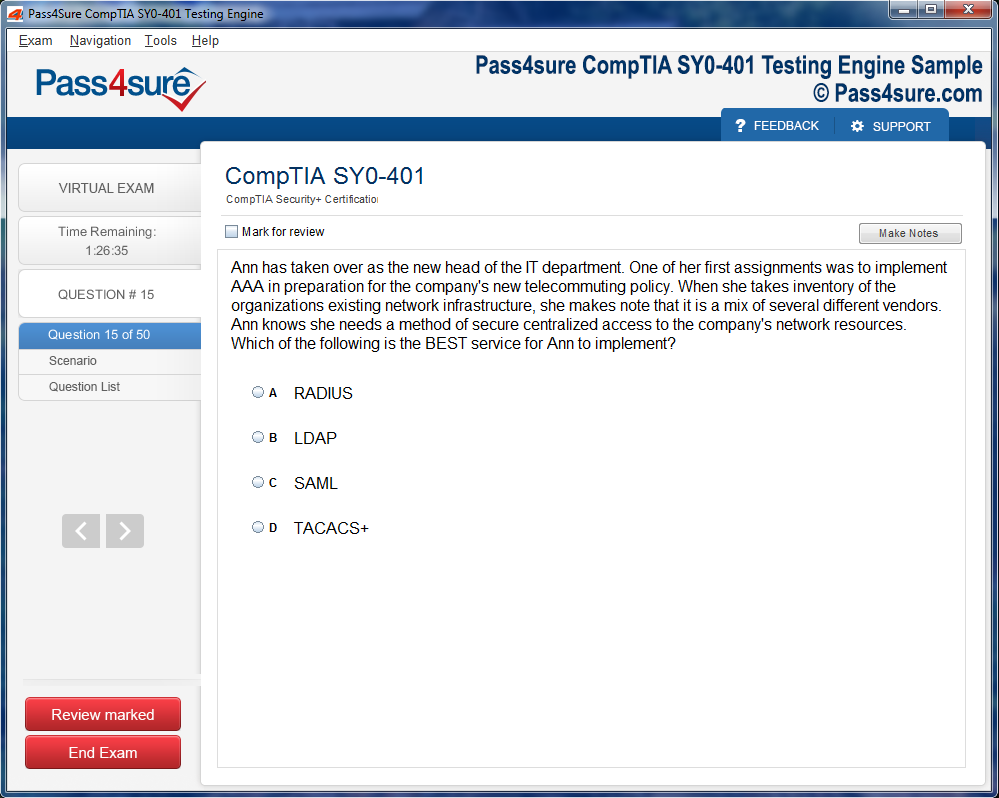
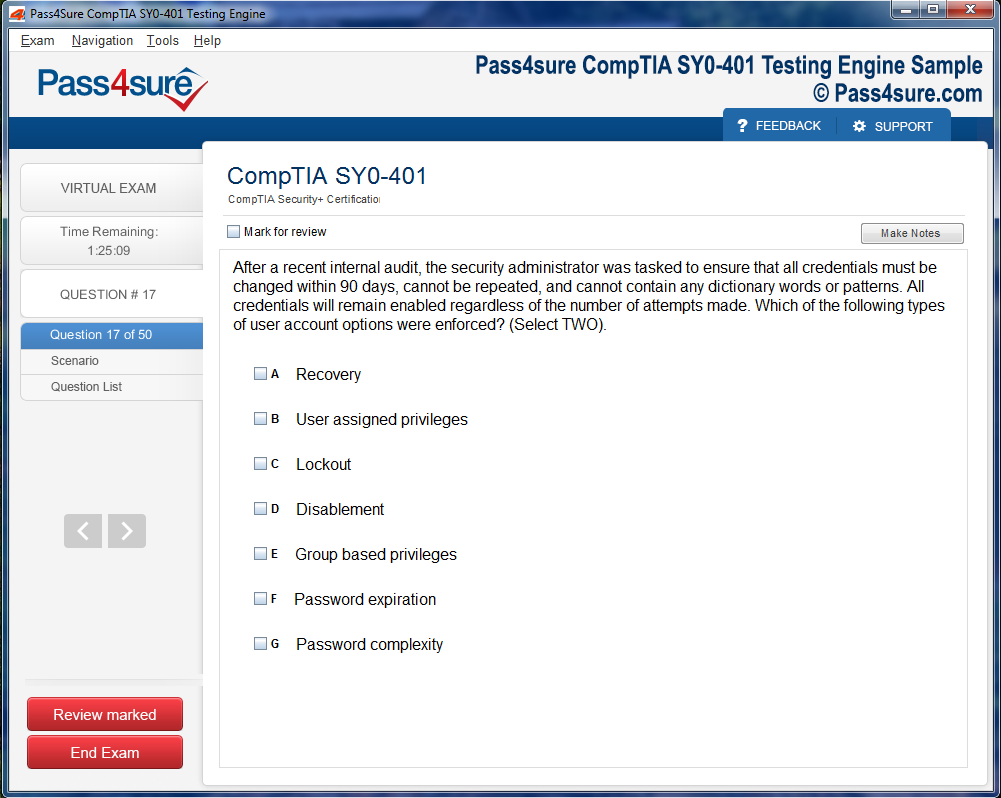
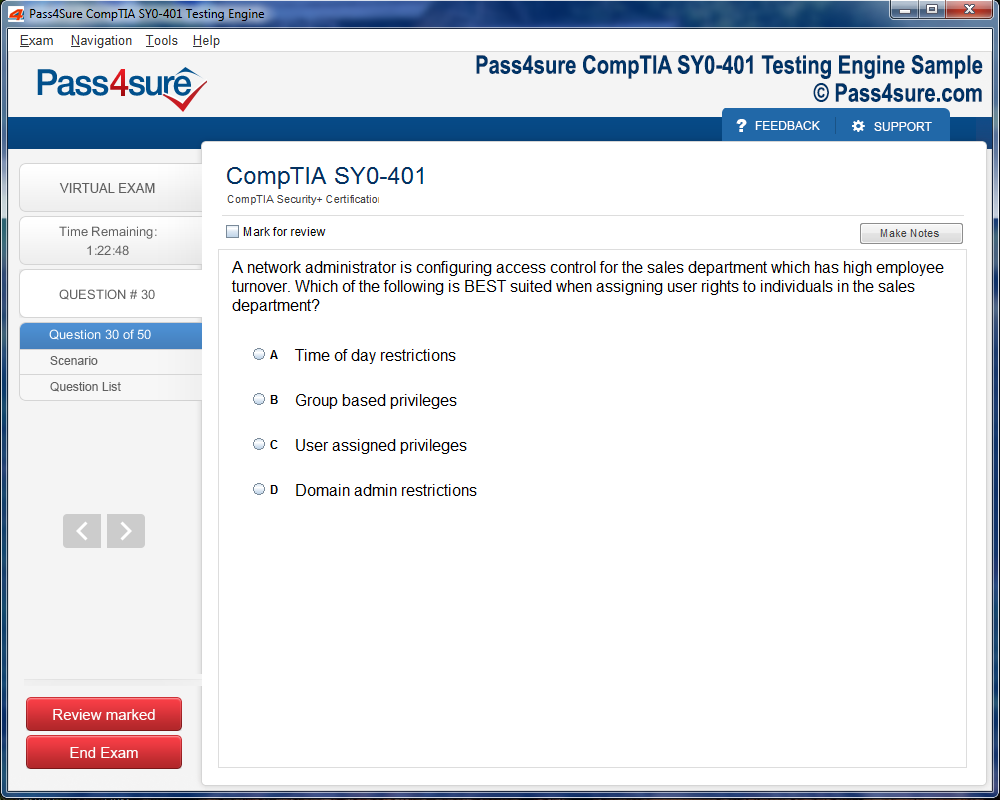
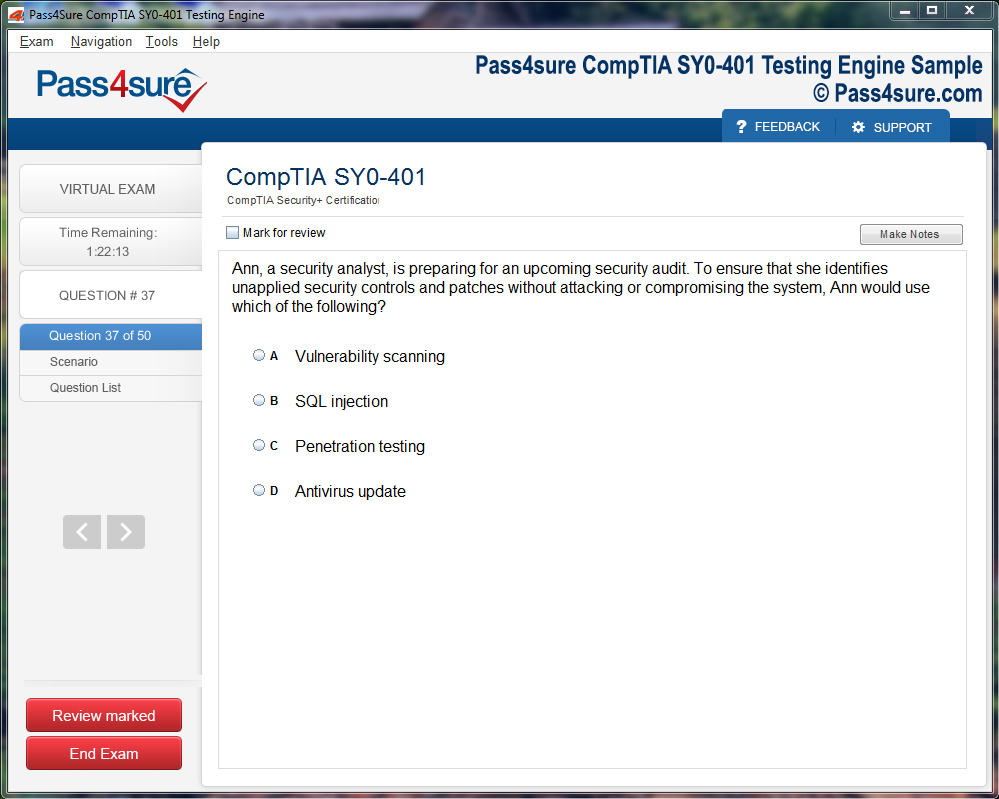
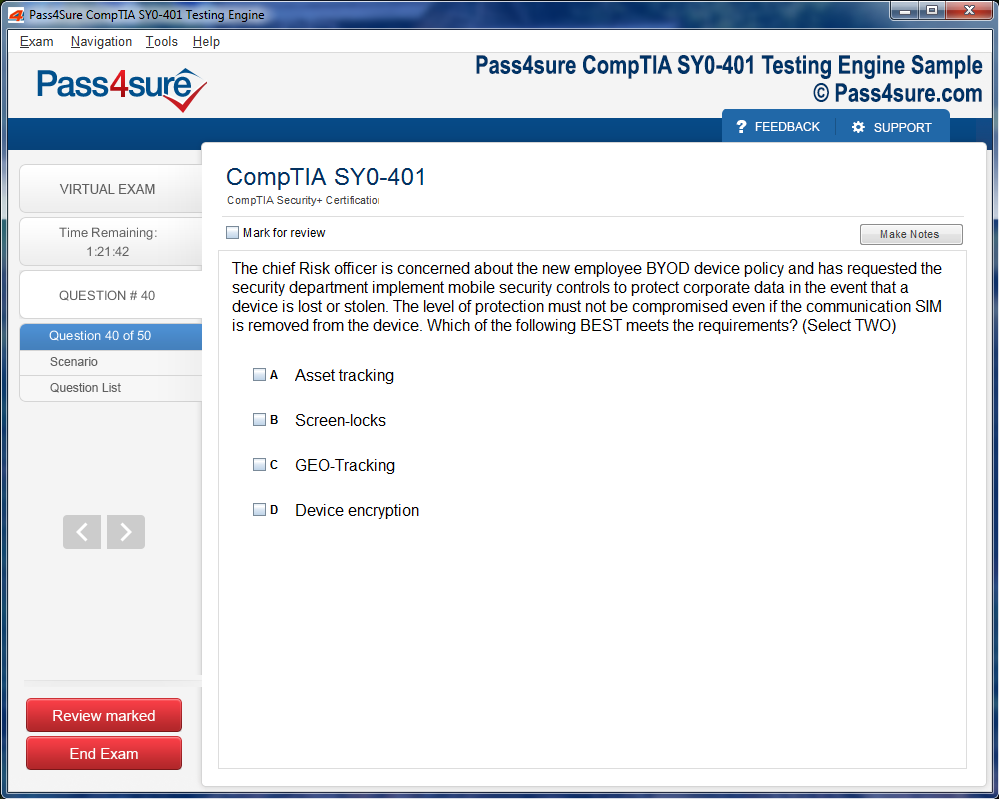
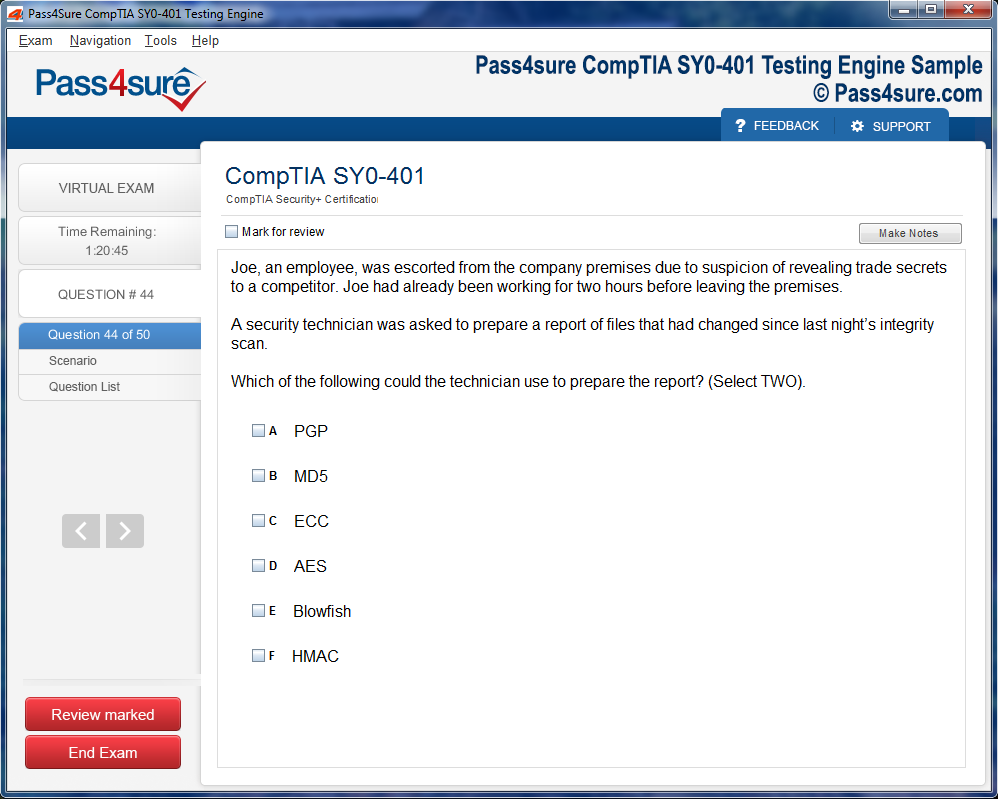
Product Screenshots
Frequently Asked Questions
How does your testing engine works?
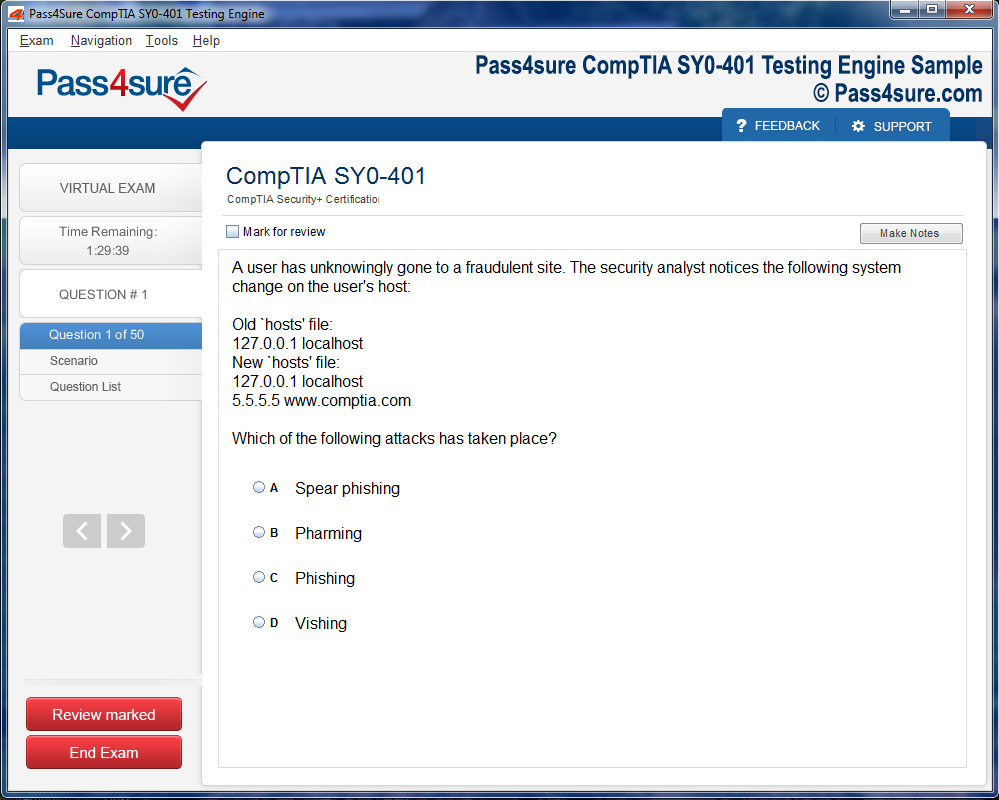
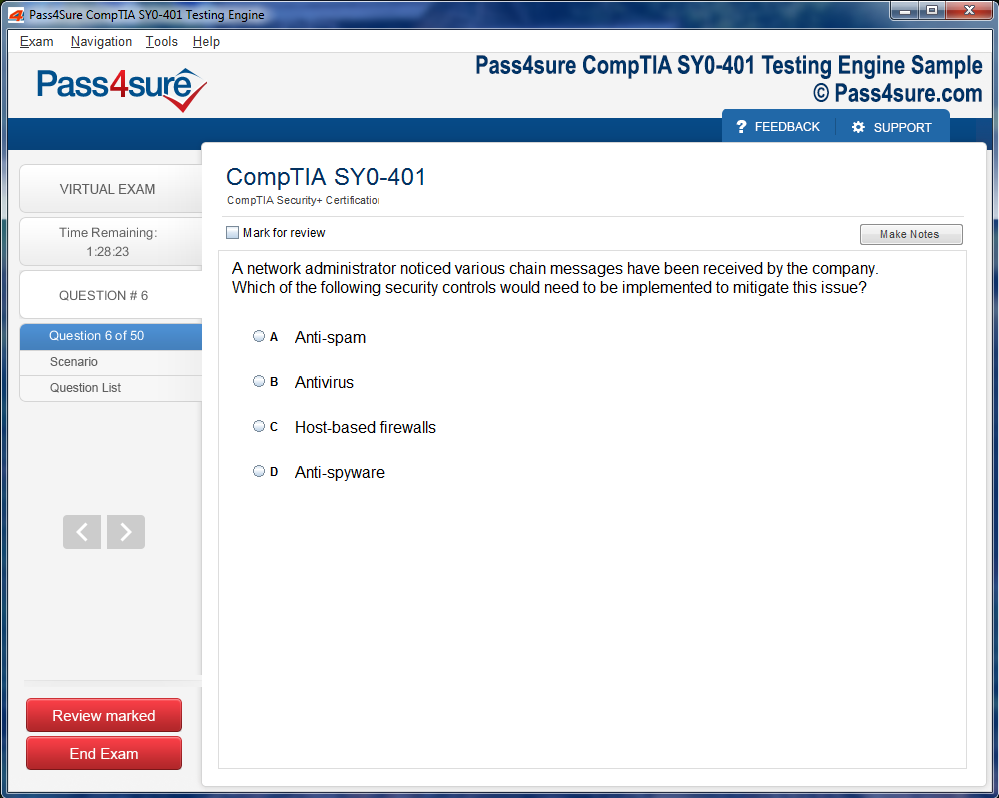
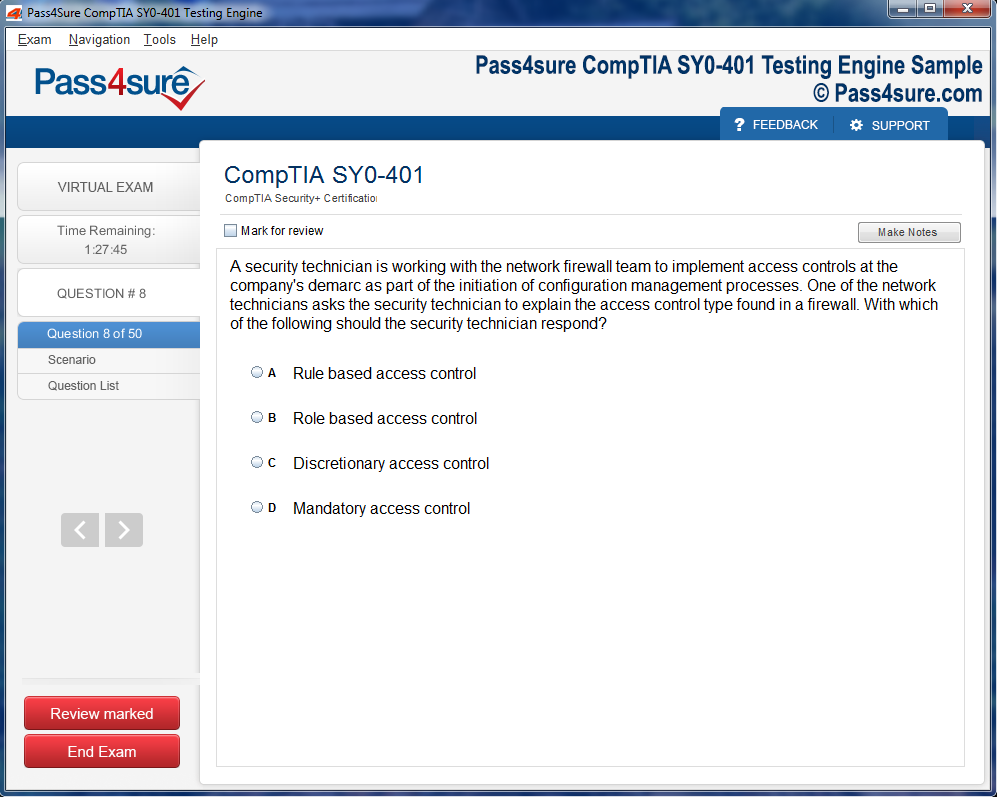
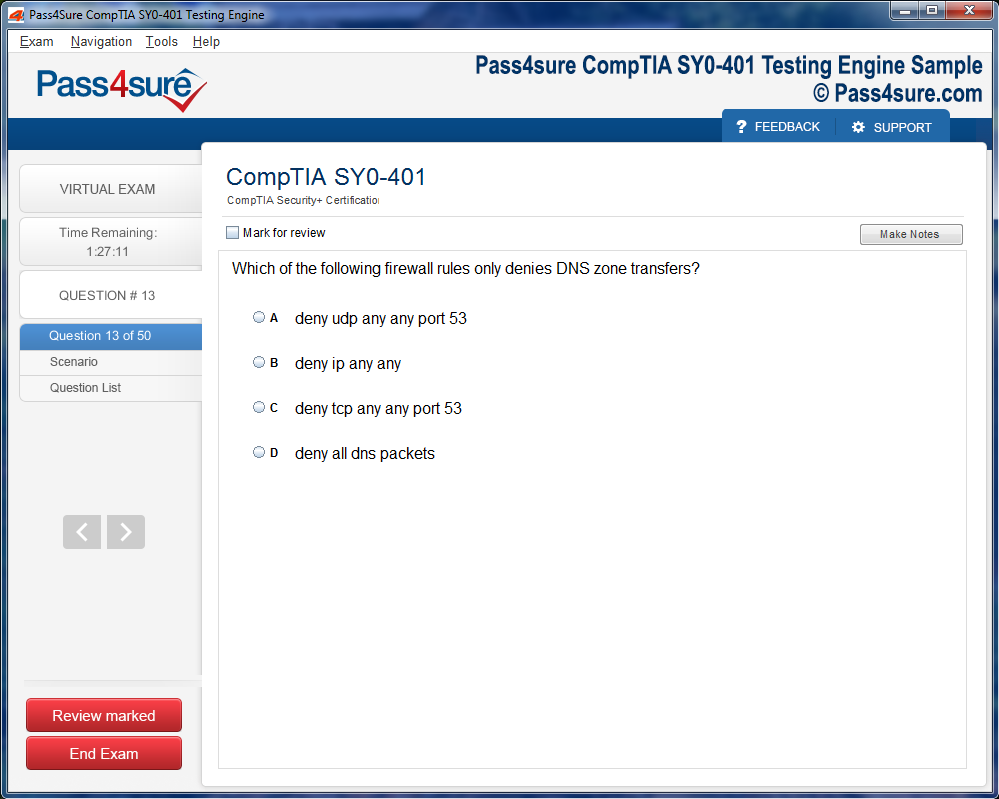
Once download and installed on your PC, you can practise test questions, review your questions & answers using two different options 'practice exam' and 'virtual exam'. Virtual Exam - test yourself with exam questions with a time limit, as if you are taking exams in the Prometric or VUE testing centre. Practice exam - review exam questions one by one, see correct answers and explanations.
How can I get the products after purchase?
All products are available for download immediately from your Member's Area. Once you have made the payment, you will be transferred to Member's Area where you can login and download the products you have purchased to your computer.
How long can I use my product? Will it be valid forever?
Pass4sure products have a validity of 90 days from the date of purchase. This means that any updates to the products, including but not limited to new questions, or updates and changes by our editing team, will be automatically downloaded on to computer to make sure that you get latest exam prep materials during those 90 days.
Can I renew my product if when it's expired?
Yes, when the 90 days of your product validity are over, you have the option of renewing your expired products with a 30% discount. This can be done in your Member's Area.
Please note that you will not be able to use the product after it has expired if you don't renew it.
How often are the questions updated?
We always try to provide the latest pool of questions, Updates in the questions depend on the changes in actual pool of questions by different vendors. As soon as we know about the change in the exam question pool we try our best to update the products as fast as possible.
How many computers I can download Pass4sure software on?
You can download the Pass4sure products on the maximum number of 2 (two) computers or devices. If you need to use the software on more than two machines, you can purchase this option separately. Please email sales@pass4sure.com if you need to use more than 5 (five) computers.
What are the system requirements?
Minimum System Requirements:
- Windows XP or newer operating system
- Java Version 8 or newer
- 1+ GHz processor
- 1 GB Ram
- 50 MB available hard disk typically (products may vary)
What operating systems are supported by your Testing Engine software?
Our testing engine is supported by Windows. Andriod and IOS software is currently under development.
Novell 050-730: Step-by-Step Preparation for Exam Success
Understanding eDirectory requires more than surface-level acquaintance. It is a sophisticated hierarchical database that orchestrates network resources with meticulous precision. Each object within eDirectory—whether a user, group, or device—possesses attributes that dictate access privileges and interaction patterns. Candidates must internalize these hierarchies, appreciating the nuanced dependencies that govern replication, inheritance, and trust relationships. Mismanagement at this level can cascade into systemic inefficiencies, highlighting why mastery is indispensable.
Replication mechanisms in eDirectory are pivotal. They ensure consistency across geographically dispersed servers, safeguarding data integrity and reducing the risk of conflicts. Knowledge of replication topology, timing, and conflict resolution strategies empowers administrators to maintain resilient networks. This requires both theoretical understanding and practical experimentation, as replication intricacies often manifest differently under variable network loads.
Navigating NetWare Services
NetWare remains a cornerstone of Novell environments, underpinning critical enterprise functions. Its services extend beyond basic file storage, encompassing authentication, print management, and inter-server communication protocols. Grasping the interrelation between these services and their impact on overall network behavior is vital. For instance, improper configuration of authentication services can impede user access, while mismanaged file services can result in latency and data bottlenecks.
Effective administration demands predictive insight. Observing patterns in service utilization, diagnosing anomalies, and implementing proactive adjustments cultivate an anticipatory approach to network management. This proficiency distinguishes candidates who merely understand NetWare from those who can optimize it for operational excellence.
Policy Implementation and Security Governance
Policies in Novell environments serve as the backbone of security and operational governance. Understanding policy types, from login scripts to access control rules, is essential for maintaining system integrity. Administrators must grasp how policies propagate, interact, and occasionally conflict, ensuring that configurations align with organizational standards.
Security governance involves meticulous attention to access privileges and permissions. By mastering inheritance rules and delegation strategies, candidates can prevent unauthorized access while streamlining administrative overhead. This balance of security and usability underscores the strategic significance of the 050-730 certification.
Building a Strategic Lab Environment
Hands-on practice is indispensable for Novell certification. Constructing a lab environment allows candidates to experiment with complex configurations, simulate failures, and observe the consequences of administrative decisions. This controlled experimentation fosters intuitive understanding, translating theoretical knowledge into practical expertise.
A robust lab setup replicates real-world network architectures, encompassing multiple servers, domain structures, and user groups. Through iterative testing, candidates can develop troubleshooting acumen, refine configuration strategies, and anticipate potential challenges. This experiential learning approach accelerates mastery, bridging the gap between academic preparation and professional application.
Cultivating Analytical and Troubleshooting Skills
Novell certification is as much about problem-solving as it is about knowledge retention. The 050-730 exam evaluates the ability to diagnose and resolve intricate issues within live network environments. Candidates must develop analytical frameworks that allow them to systematically identify root causes, assess interdependencies, and implement corrective actions with precision.
Exposure to diverse troubleshooting scenarios enhances adaptability. Whether confronting replication conflicts, policy misconfigurations, or service failures, candidates learn to navigate uncertainty with composure. This capability extends beyond the exam, equipping professionals to maintain operational continuity in high-stakes environments.
Psychological Preparedness and Professional Resilience
The cognitive demands of Novell certification necessitate psychological readiness. Perseverance, discipline, and a structured study approach are essential. Candidates must embrace challenges as opportunities for growth, cultivating resilience in the face of complex technical problems.
Establishing a study rhythm, balancing conceptual review with practical exercises, and maintaining a growth-oriented mindset contribute to sustained progress. These attributes, combined with technical proficiency, define a certified professional capable of navigating sophisticated Novell networks with confidence and strategic insight.
Integrating Conceptual Knowledge with Practice
True mastery emerges when conceptual understanding converges with hands-on experience. Novell certification requires candidates to internalize principles of directory services, network architecture, and policy management while simultaneously applying them in practical settings.
This dual approach strengthens cognitive retention, facilitates rapid problem-solving, and reinforces intuitive system comprehension. Candidates who harmonize theoretical study with experimental learning are uniquely equipped to excel in both the examination and real-world administrative scenarios.
Embracing Continuous Learning and Adaptation
Technology landscapes are dynamic, and Novell environments evolve in tandem with emerging enterprise requirements. Certification is not a terminal achievement but a gateway to continuous professional development. Candidates must remain vigilant, updating skills, exploring novel tools, and adapting strategies to accommodate shifting network paradigms.
Continuous learning ensures that the expertise validated by the 050-730 certification remains relevant. Administrators who embrace iterative improvement and knowledge expansion cultivate long-term career resilience, maintaining competitive advantage in complex IT ecosystems.
Advanced Directory Manipulation Techniques
Beyond the foundational eDirectory constructs, mastery of advanced directory manipulation distinguishes proficient administrators. Directory partitions, context boundaries, and schema extensions enable nuanced customization of network architecture. Candidates should immerse themselves in creating custom object classes, attribute definitions, and inheritance structures. Understanding the subtleties of referential integrity and directory chaining ensures seamless integration of novel configurations without destabilizing existing structures.
Scripting remains a potent tool in elevating directory management from routine to sophisticated. Leveraging scripting languages for bulk modifications, automated auditing, and dynamic attribute adjustments allows administrators to preemptively mitigate errors and streamline recurring operations. Simulation of complex directory hierarchies in controlled environments reinforces theoretical comprehension and solidifies practical expertise.
Replication Nuances and Conflict Resolution
Replication, while conceptually straightforward, contains intricate nuances that determine network resiliency. Candidates must comprehend multi-master replication dynamics, server-to-server communication protocols, and the subtleties of replica ring design. Delving into conflict resolution mechanisms—particularly timestamp hierarchies, version vectors, and precedence rules—enables precise management of divergent data sets and ensures continuity of operations during network volatility.
Monitoring replication requires more than superficial observation. Understanding replication logs, anomaly detection, and latency analysis provides predictive insight into potential failures. Hands-on experimentation with controlled replication delays, conflict induction, and recovery scenarios cultivates a mindset attuned to both preventive and reactive network stewardship.
Fine-Grained Access Control and Policy Enforcement
Security in Novell networks transcends basic authentication; it encompasses meticulous orchestration of access control and policy enforcement. Grasping the intricacies of trustee rights, effective permissions, and inheritance propagation is paramount. Candidates should simulate varying user contexts to observe permission hierarchies, detect unintended privilege escalations, and refine policy application.
Policy management extends to login scripts, automated procedures, and contextual restrictions. Understanding the interplay between client configurations, server directives, and directory policies fosters a proactive security posture. Knowledge of encryption protocols, certificate handling, and authentication sequences further equips administrators to safeguard sensitive information against both internal misconfigurations and external threats.
Performance Analytics and Resource Optimization
Optimal network performance is rarely accidental; it is the product of meticulous analytics and adaptive resource allocation. Candidates should master the principles of server load balancing, directory caching, and query optimization. Exploring diagnostic utilities that monitor CPU cycles, memory usage, and disk I/O patterns enables informed decision-making for resource distribution.
Predictive modeling of network behavior under variable loads cultivates an anticipatory approach to administration. By simulating peak usage, stress-testing directory queries, and analyzing response latencies, administrators gain a granular understanding of performance bottlenecks and corrective strategies. This analytical rigor is indispensable both for examination preparedness and professional credibility.
Troubleshooting Paradigms and Systemic Diagnostics
Troubleshooting constitutes the nexus of theoretical knowledge and applied competence. Candidates must develop a systematic methodology encompassing hypothesis formulation, diagnostic verification, and iterative problem resolution. Familiarity with log structures, error codes, and network traces empowers administrators to decode symptoms, identify root causes, and implement precise remedies.
Proficiency in systemic diagnostics also involves anticipating cascading failures and interdependent anomalies. Simulating failure scenarios—such as partial replication loss, permission misalignment, or service latency—equips candidates to implement robust contingency strategies. This immersive approach cultivates analytical acumen, reduces reactionary troubleshooting, and instills confidence in managing complex network topologies.
Integration Strategies and Cross-Platform Synergy
Modern enterprise environments demand interoperability between Novell networks and heterogeneous systems. Understanding directory synchronization with alternate platforms, cross-protocol authentication, and data federation techniques enables administrators to bridge legacy architectures with contemporary frameworks. Candidates should explore practical integration scenarios, testing authentication interoperability, file system compatibility, and policy harmonization.
Strategic integration necessitates attention to latency, data integrity, and conflict mitigation. Candidates benefit from simulating multi-vendor network interactions, evaluating schema consistency, and auditing synchronization pathways. This expertise not only reinforces examination preparation but also empowers administrators to architect networks that are resilient, flexible, and future-proof.
Automation and Predictive Management
Automation represents the frontier of network mastery, transforming repetitive tasks into predictable, reliable processes. Candidates should focus on scripting, policy-driven automation, and event-triggered workflows. Understanding how to employ monitoring hooks, automated remediation, and intelligent alerts ensures that network anomalies are addressed before they escalate into critical failures.
Predictive management integrates data analytics, trend observation, and heuristic modeling. Administrators leveraging predictive insights can optimize server load, forecast directory growth, and preemptively identify replication hazards. Mastery in this domain signifies an evolution from reactive administration to strategic orchestration, aligning operational efficiency with long-term network sustainability.
Immersive Simulation Environments
Constructing immersive simulation environments elevates comprehension from mere memorization to cognitive dexterity. By crafting intricate network topologies, candidates can perceive the interplay of directory services, replication nuances, and inter-server communication with tactile precision. These environments permit iterative experimentation, where missteps transform into instructive revelations, fostering adaptive reasoning and strategic foresight.
Virtualized infrastructures provide unparalleled flexibility. Experimentation with multiple operating system instances, network segmentation, and service dependencies grants insight into systemic behaviors that remain opaque in purely theoretical study. Mastery emerges through deliberate immersion, where repetition entwines with reflective analysis to fortify conceptual retention.
Advanced Directory Manipulation
Proficiency in directory manipulation demands more than cursory familiarity; it necessitates nuanced understanding of hierarchies, inheritance, and relational dependencies. Candidates must traverse the lattice of organizational units, groups, and access control mechanisms with methodical precision. Experimentation with schema extensions, attribute modifications, and object replication cultivates an intuition for potential conflicts and optimizes configuration strategies.
Advanced exercises include crafting composite structures and monitoring cascading permissions. Observing the propagation of policy changes illuminates the subtleties of directory logic and highlights the ramifications of misapplied settings. Such exercises transform theoretical constructs into operational dexterity.
Network Replication Dynamics
Replication dynamics within enterprise networks are inherently multifaceted. Candidates benefit from simulating diverse topologies, including hub-and-spoke and mesh configurations, to observe data propagation, latency effects, and conflict reconciliation. Deliberate induction of network perturbations—link failures, latency spikes, or inconsistent updates—enables candidates to develop predictive understanding and preemptive mitigation strategies.
Monitoring replication performance and analyzing synchronization logs imparts clarity regarding systemic behaviors under duress. This hands-on methodology cultivates a practitioner’s intuition, where anticipation of anomalies and proactive interventions become second nature.
Troubleshooting Methodologies
The ability to troubleshoot with methodical rigor differentiates adept administrators from novices. Engaging with staged anomalies—from corrupted object attributes to failed authentication attempts—develops both procedural discipline and diagnostic creativity. Systematic approaches, including hypothesis formulation, controlled testing, and iterative validation, reinforce analytical acumen and reinforce the candidate’s resilience in unpredictable operational contexts.
Integrating monitoring utilities, log analytics, and automated alerting systems into exercises hones efficiency. Candidates learn to discern symptomatic patterns from incidental noise, ensuring precision in interventions. Such iterative exposure to failure conditions cultivates both technical competence and confidence.
Security Implementation and Validation
Security exercises occupy a pivotal role in the practical laboratory. Candidates implement multifactor authentication, encryption protocols, and granular access controls while evaluating compliance against policy frameworks. Simulated breaches and vulnerability assessments provide immediate feedback, reinforcing the symbiosis between security theory and applied defense strategies.
Deliberate exposure to threat vectors—ranging from insider misconfigurations to network intrusion simulations—enhances vigilance and anticipatory skill. Observing the effects of defensive measures in controlled settings nurtures a profound understanding of operational security, preparing candidates for the unpredictability of real-world scenarios.
Iterative Skill Refinement
Iterative refinement underpins mastery. Candidates benefit from escalating complexity, revisiting foundational exercises with novel constraints, and exploring alternative solution pathways. Reflective analysis after each session encourages recognition of patterns, understanding of underlying principles, and anticipation of future challenges.
By iteratively challenging cognitive and operational boundaries, candidates internalize both the procedural rigor and intuitive insight necessary for proficient administration. The culmination of these exercises is an ingrained capacity to respond dynamically to emergent scenarios with both analytical clarity and adaptive dexterity.
Cognitive Structuring for Mastery
Mastering complex subjects like the 050-730 examination demands deliberate cognitive structuring. Conceptual hierarchies, interlinking theory with practical execution, form the backbone of robust understanding. Rather than superficial memorization, candidates benefit from constructing mental schemas that interconnect directory services, network topology, and system management principles. This framework allows rapid retrieval of information and the ability to adapt knowledge fluidly to novel scenarios.
Engaging multiple cognitive modalities reinforces mastery. Reading, writing, and kinesthetic interaction with lab environments produce layered neural encoding. Candidates who simulate network environments, configure virtual directories, or troubleshoot hypothetical faults deepen their understanding, creating durable, actionable knowledge rather than ephemeral recall.
Analytical Dissection of Exam Patterns
A strategic preparation regimen includes meticulous analysis of the examination’s structure. Familiarity with question typology, from scenario-driven prompts to targeted troubleshooting queries, allows candidates to anticipate cognitive demands. Identifying recurrent themes and weighting in prior assessments enables prioritization of study efforts without fragmenting attention across less pertinent material.
Pattern recognition enhances efficiency. By dissecting common errors and mapping them to misunderstood concepts, candidates create a diagnostic blueprint for their preparation. This approach converts historical examination data into actionable intelligence, transforming perceived randomness into structured learning opportunities.
Immersive Simulation Practices
Simulation exercises extend beyond rote practice by mimicking authentic operational challenges. Engaging in scenario replication, where directory modifications or network configurations must be implemented under timed conditions, cultivates adaptive expertise. Candidates internalize procedural sequences and decision-making heuristics, reducing cognitive friction during the actual assessment.
Immersive practice also nurtures cognitive resilience. Encountering unexpected system behaviors in a controlled environment trains candidates to remain composed, analyze anomalies systematically, and deploy corrective strategies. This experiential learning translates directly to higher efficiency under exam stress and real-world application.
Multisensory Reinforcement Techniques
Retention of intricate content is amplified through multisensory reinforcement. Visual mapping, schematic diagramming, and color-coded annotation enhance spatial memory and conceptual clarity. Auditory reinforcement, such as self-explanation or verbal recitation of procedural steps, embeds procedural knowledge deeper than silent review alone.
Mnemonic systems, creatively tailored to complex sequences, assist in bridging gaps between abstract theory and tangible practice. Scenario chaining, where multiple interdependent procedures are mentally enacted as a contiguous narrative, fosters rapid recall and situational problem-solving. Candidates who integrate these techniques often report higher confidence and reduced cognitive fatigue during intensive review periods.
Temporal Optimization of Study Intervals
Strategic time allocation is pivotal for sustained learning. Microcycles of focused study interspersed with deliberate rest phases enhance synaptic consolidation and prevent burnout. Spaced repetition of core concepts ensures durable encoding, while interleaving contrasting topics stimulates deeper associative processing.
Temporal optimization extends to assessment rehearsal. Scheduling practice exams with incremental difficulty and varied time constraints strengthens adaptive proficiency. Candidates who progressively challenge themselves with accelerated or compound scenarios develop mental agility, a skill crucial for navigating the unpredictable structure of the 050-730 evaluation.
Reflective Analytical Review
A disciplined reflective process consolidates knowledge and refines technique. After each study session or simulation exercise, a detailed review highlights cognitive bottlenecks, procedural misunderstandings, and emergent patterns in performance. This meta-cognitive approach allows continuous recalibration of study strategies, optimizing time and effort for maximum outcome.
Reflection also fosters intrinsic motivation. Recognizing incremental mastery, celebrating small breakthroughs, and documenting progressive improvement reinforce engagement and persistence. Over time, these reflective cycles build a resilient learning identity, equipping candidates with both technical knowledge and adaptive strategies.
Cognitive Resilience and Stress Modulation
Examination success hinges not only on technical competence but also on psychological resilience. Stress modulation strategies, such as controlled breathing, mindfulness meditation, and deliberate physical activity, stabilize cognitive performance. Anxiety reduction techniques prevent tunnel vision and facilitate flexible problem-solving under time constraints.
Developing mental resilience involves creating cognitive buffers. Preparing for the unexpected, rehearsing contingency procedures, and simulating high-pressure scenarios imbue candidates with confidence. By embracing controlled challenge, candidates cultivate poise and mental endurance, essential qualities for excelling in demanding assessments.
Synergistic Peer Engagement
Collaborative study environments provide unique advantages. Interacting with peers encourages knowledge exchange, exposes candidates to alternative reasoning patterns, and highlights overlooked insights. Constructive debate over problem-solving strategies reinforces comprehension and sharpens analytical acumen.
Peer engagement also introduces accountability. Structured group sessions motivate consistent effort and provide opportunities for reciprocal teaching, which is widely recognized as a method that consolidates both the teacher’s and the learner’s understanding. These interactions often illuminate nuanced concepts that solitary study might obscure.
Strategic Integration of Theoretical and Practical Knowledge
Examination readiness is maximized when theoretical understanding seamlessly integrates with practical application. For example, mastering directory architecture requires both memorization of hierarchical structures and hands-on configuration of directory objects. Bridging the abstract with the tangible transforms rote information into actionable competence.
This integrated approach encourages dynamic reasoning. Candidates learn to anticipate consequences of configuration choices, identify potential conflicts, and propose corrective measures. The interplay between conceptual knowledge and operational execution builds a mental model that is both flexible and robust, suitable for the adaptive challenges of the 050-730 examination.
Iterative Skill Refinement
Skill acquisition is a recursive process. Each cycle of study, practice, and reflection uncovers new opportunities for refinement. By systematically iterating on weaknesses, candidates develop precision and efficiency. Errors are reframed as diagnostic signals, guiding the next stage of preparation with empirical evidence rather than conjecture.
Iterative refinement also applies to procedural fluency. Repeated execution of network management tasks, directory configuration, or troubleshooting scenarios ingrains automated competence, reducing cognitive load during examination performance. Mastery emerges not from one-time exposure but from carefully calibrated repetition combined with adaptive reflection.
Precision Diagnostics and Analytical Methodologies
Mastery in network administration extends beyond reactive troubleshooting into precision diagnostics. Cultivating the ability to discern subtle irregularities within logs, traffic flows, and system events elevates an administrator from competent to exceptional. Analytical methodologies involve correlating disparate data points, identifying anomalous trends, and constructing hypotheses that anticipate systemic behavior. By embracing a meticulous and methodical approach, candidates can convert opaque symptoms into intelligible solutions, minimizing downtime and fortifying operational resilience.
Resource Orchestration and Performance Calibration
Optimal network performance is the product of deliberate resource orchestration and performance calibration. Administrators must scrutinize memory utilization, process prioritization, and bandwidth distribution to achieve equilibrium across the infrastructure. Sophisticated techniques, such as indexing schema refinement, caching strategies, and query optimization, yield measurable improvements. Precision in these adjustments prevents bottlenecks, enhances response times, and sustains high availability, exemplifying the nuanced competence rewarded in the 050-730 evaluation.
Proactive Systemic Surveillance
Anticipatory monitoring transforms administration from a reactive task into a proactive discipline. Implementing real-time alerts, behavioral baselines, and anomaly detection frameworks empowers administrators to preempt failures before they escalate. Continuous surveillance of server health, directory consistency, and access patterns not only mitigates risk but also cultivates a culture of vigilance. The capacity to forecast potential disruptions underscores analytical foresight and strategic foresight, hallmarks of advanced network stewardship.
Algorithmic Load Balancing and Dynamic Distribution
Sophisticated networks demand algorithmic load balancing and dynamic distribution strategies. By analyzing transaction volumes, session persistence, and request latency, administrators can implement mechanisms that evenly allocate workloads. These interventions optimize throughput and resilience, reducing contention for resources while sustaining service quality. Mastery in this domain demonstrates an integrative understanding of network topologies, traffic behaviors, and system interdependencies, essential for high-level performance optimization.
Contingency Modeling and Redundancy Engineering
Beyond immediate problem resolution, mastery requires a profound understanding of contingency modeling and redundancy engineering. Crafting redundant pathways, failover protocols, and data replication strategies ensures operational continuity even under catastrophic scenarios. Administrators must simulate failures, stress-test recovery mechanisms, and validate protocol efficacy under variable conditions. Such proactive engineering fortifies network robustness, mitigating both predictable and emergent risks while reinforcing organizational confidence in infrastructural integrity.
Cognitive Pattern Recognition in Security Analysis
Security mastery transcends rote defense implementation into cognitive pattern recognition. Advanced administrators can detect irregularities in access attempts, anticipate vectors of intrusion, and interpret cryptic indicators of compromise. Employing heuristic analysis alongside conventional auditing tools fosters a nuanced understanding of threat landscapes. Anticipating adversarial behavior and preemptively instituting protective protocols exemplifies a proactive, strategic mindset crucial for safeguarding critical digital assets.
Integrative Scenario Simulation
Developing professional intuition is intimately linked to integrative scenario simulation. Candidates must immerse themselves in complex, multi-layered case studies that challenge conventional problem-solving pathways. By orchestrating simulations that incorporate variable failures, interdependent system behaviors, and cascading errors, administrators cultivate adaptive thinking. This process strengthens the capacity to innovate under pressure, reconcile conflicting priorities, and devise solutions that harmonize operational efficiency with systemic resilience.
Adaptive Configuration Tuning
Subtle, adaptive configuration tuning differentiates accomplished administrators from merely competent ones. Beyond default settings, nuanced adjustments to service parameters, directory replication cycles, and protocol thresholds can yield substantial efficiency gains. Such tuning requires both empirical observation and predictive modeling, merging data-driven insights with experiential judgment. Mastery of this discipline ensures systems operate at peak capacity while remaining robust against unforeseen perturbations.
Strategic Resource Prioritization
Advanced proficiency mandates strategic resource prioritization. Administrators must determine which processes, services, and tasks merit immediate attention based on criticality, risk, and impact. Allocating bandwidth, memory, and processing power according to dynamic operational demands prevents systemic strain and ensures mission-critical functionality remains uninterrupted. This principle reinforces disciplined governance of network ecosystems, aligning operational priorities with overarching organizational objectives.
Reflective Practice and Continuous Refinement
Finally, the cultivation of reflective practice and continuous refinement underpins enduring expertise. Reviewing prior incidents, dissecting troubleshooting strategies, and evaluating optimization outcomes fosters iterative improvement. Through sustained reflection, administrators internalize lessons from successes and missteps alike, enhancing judgment, precision, and anticipatory acumen. This cyclical process ensures proficiency evolves in tandem with technological innovation, reinforcing the competencies valued in advanced Novell network administration.
Lifelong Learning and Sustained Professional Growth
Certification is merely an inflection point, not the terminus of professional evolution. Sustaining expertise necessitates an insatiable curiosity, deliberate practice, and nimble adaptation to ceaselessly metamorphosing technological landscapes. The Novell 050-730 credential functions as a fulcrum, enabling continuous professional elevation and enduring career trajectory expansion.
Engaging with technological vicissitudes fortifies proficiency. Professionals attuned to directory services enhancements, cloud orchestration innovations, fortified security protocols, and network optimization methodologies preserve a vanguard competence. Remaining abreast of emergent paradigms ensures that knowledge is both pertinent and anticipatory, rather than reactive.
Mentorship cultivates intellectual resonance and symbiotic knowledge proliferation. Guiding colleagues, partaking in specialized communities, and contributing to collective undertakings augments comprehension and hones leadership dexterity. Immersion in heterogeneous perspectives accelerates problem-solving acuity and strengthens collaborative dexterity, forging robust professional networks imbued with shared wisdom.
Reflective praxis consolidates experiential insight. Meticulous scrutiny of prior endeavors, discerning analysis of successes and missteps, and judicious integration of these cognitions into forthcoming undertakings foster strategic acumen and adaptive thinking. Lifelong learning thus transmutes professional praxis into a dynamic continuum, ensuring sustained relevance, agility, and influence.
Contribution to the Novell ecosystem amplifies mastery. Engaging in dialogue within forums, authoring instructive expositions, and co-creating technical projects not only reinforces knowledge retention but also cultivates professional gravitas and visibility. This interplay between personal advancement and communal enrichment epitomizes enduring professional distinction.
Cultivating intellectual audacity and experimental rigor ensures perpetual engagement. Novell certification transcends nominal credentialing, functioning as a portal to innovation, discovery, and sustained achievement within network administration. Professionals embracing this ethos remain versatile, insightful, and indispensable amidst a perpetually evolving technological milieu.
Transcendent Strategies for Professional Ascendancy
In the labyrinthine corridors of modern technology, mere familiarity with tools is insufficient. Professionals must cultivate a nuanced lexicon of strategic cognition, harmonizing analytical rigor with creative audacity. Ascendancy in the professional domain requires a symbiotic marriage of foresight and adaptability, enabling individuals to anticipate systemic shifts rather than react post hoc. The cultivation of intellectual dexterity becomes paramount, serving as a lodestar in navigating convoluted networks, intricate software ecosystems, and fluctuating security landscapes.
Cognitive Agility and Adaptive Expertise
The contemporary professional milieu rewards cognitive agility, the ability to oscillate seamlessly between divergent thought paradigms. Adaptive expertise is not merely the accumulation of procedural knowledge; it is the facility to reconceptualize problems, synthesize disparate datasets, and envision latent opportunities. Engaging with multifaceted challenges cultivates neural elasticity, allowing professionals to respond to unforeseen technological disruptions with dexterous precision. This iterative engagement between problem, solution, and reflective recalibration fosters a dynamic feedback loop, enhancing both proficiency and anticipatory capacity.
Experiential Immersion in Technological Ecosystems
True mastery emerges through experiential immersion within technological ecosystems. Passive consumption of information yields superficial competence, whereas active engagement engenders profound insight. Professionals navigating complex directory services, orchestrating intricate cloud architectures, or implementing fortified security protocols derive unparalleled comprehension through iterative practice and iterative failure. Each misstep becomes a catalyst for cognitive refinement, embedding tacit knowledge that formal documentation rarely captures. Immersion, therefore, is not a transient endeavor but an enduring commitment to skill acquisition and refinement.
Synergistic Collaboration and Communal Innovation
Collaboration extends beyond mere coordination; it is a crucible for communal innovation. Professionals who immerse themselves in dynamic peer networks leverage collective intelligence, transcending individual limitations. Cross-pollination of ideas within multidisciplinary teams cultivates creative synthesis, often yielding solutions inconceivable in isolation. This synergistic milieu fosters both technical acumen and emotional intelligence, enhancing negotiation, mentorship, and leadership capacities. Participation in collaborative ventures accelerates knowledge proliferation, ensuring that expertise evolves in concert with emergent technological paradigms.
Reflexive Analysis and Iterative Refinement
Reflexive analysis is the fulcrum of sustained growth. Professionals must engage in deliberate reflection, scrutinizing prior successes, dissecting failures, and extrapolating actionable insights. This meta-cognitive process transforms experience into strategic capital, enabling professionals to anticipate patterns, preempt complications, and optimize systemic performance. Iterative refinement is not linear; it is a recursive interplay of observation, experimentation, and recalibration, cultivating resilience and fostering intellectual fortitude.
Strategic Innovation in Operational Domains
Innovation within operational domains necessitates a keen awareness of systemic interdependencies. Professionals attuned to the subtleties of network orchestration, directory integration, and security frameworks can identify latent inefficiencies and latent potentialities. Strategic intervention is both proactive and imaginative, leveraging data-driven insight while embracing calculated risk. Such innovation transforms mundane operations into optimized systems, generating value not only through efficiency but also through enhanced adaptability and resilience.
Mentorship as Catalytic Professional Evolution
Mentorship is not merely a pedagogical tool; it is catalytic to professional evolution. Engaging in mentor-mentee dynamics accelerates the internalization of complex concepts while fostering leadership acumen. The act of elucidating intricate processes for others consolidates the mentor’s expertise, reinforcing cognitive networks and highlighting novel perspectives. Mentorship propagates organizational knowledge, cultivates emergent talent, and perpetuates a culture of intellectual curiosity and collaborative problem-solving, ensuring that collective proficiency scales with individual growth.
Intellectual Curiosity and Experimental Rigor
The fulcrum of professional longevity lies in sustained intellectual curiosity and experimental rigor. Professionals who embrace uncertainty, probe novel methodologies, and interrogate entrenched assumptions cultivate a reservoir of innovative potential. Experimentation, when methodically integrated into routine practice, yields incremental insights that coalesce into transformative expertise. Intellectual curiosity fuels engagement, drives continuous learning, and serves as a counterbalance to obsolescence in an ever-evolving technological milieu.
Navigating Complexity with Systemic Foresight
Complex systems are characterized by intricate interrelations and emergent behaviors. Professionals equipped with systemic foresight can navigate these complexities by discerning patterns, anticipating cascading effects, and implementing adaptive strategies. This anticipatory mindset transcends rote procedural execution, enabling practitioners to operate with both strategic vision and tactical dexterity. Systemic comprehension is a cumulative achievement, forged through persistent observation, cross-contextual analysis, and experiential iteration.
Integrative Knowledge and Cross-Domain Synthesis
The boundaries between technological domains are increasingly permeable. Professionals capable of cross-domain synthesis integrate knowledge from disparate fields to generate innovative solutions. Integrative knowledge fosters versatility, allowing practitioners to adapt methodologies from one context to another, enriching problem-solving approaches and enhancing operational resilience. The capacity for synthesis transforms isolated technical expertise into holistic mastery, elevating the professional from a mere executor to an orchestrator of complex systems.
Latency Analysis and Throughput Optimization
Effective network administration transcends mere functionality, encompassing the nuanced orchestration of latency and throughput. Candidates must dissect the propagation delays, queueing phenomena, and protocol inefficiencies that impede seamless data flow. By leveraging sophisticated metrics, such as jitter analysis, packet inter-arrival times, and congestion modeling, administrators can pinpoint latent performance barriers. Optimizing throughput involves harmonizing resource allocation, refining session handling, and judiciously adjusting protocol windows to maximize efficiency while preserving reliability.
Hierarchical Directory Management
Advanced proficiency requires mastery over hierarchical directory management. Administrators must navigate complex schema structures, ensuring logical coherence and streamlined accessibility. Understanding the ramifications of inheritance, object replication, and attribute synchronization is vital for maintaining consistency across distributed systems. Precision in directory organization accelerates query responses, reduces lookup conflicts, and minimizes administrative overhead, reinforcing both operational fluidity and structural integrity within Novell networks.
Quantum-Inspired Problem Decomposition
Tackling intricate network anomalies often demands quantum-inspired problem decomposition. This methodology involves breaking multifaceted issues into orthogonal subproblems, assessing them independently, and subsequently synthesizing cohesive solutions. By applying probabilistic reasoning and scenario weighting, administrators can anticipate secondary effects, minimize cascading failures, and devise preemptive interventions. Such an analytical approach fosters resilience, mitigates error propagation, and exemplifies the cognitive sophistication evaluated in advanced certification contexts.
Dynamic Policy Enforcement
Policy enforcement within complex networks requires dynamic adaptability. Administrators must not only implement rules but anticipate the evolving interplay between security protocols, access hierarchies, and operational exigencies. Employing adaptive mechanisms, such as conditional access logic, time-bound restrictions, and context-sensitive permissions, ensures compliance without hindering efficiency. Mastery in this arena reflects the ability to balance rigorous governance with operational flexibility, an essential hallmark of advanced network stewardship.
Anomalous Behavior Profiling
Understanding and mitigating anomalous behavior is critical for preserving network integrity. Administrators must detect subtle deviations in user activity, resource utilization, and traffic patterns that may presage systemic disruptions. Techniques such as behavioral baselining, heuristic anomaly scoring, and cross-correlation analysis enable early intervention. Profiling anomalies not only safeguards against operational degradation but also fortifies networks against latent security threats, demonstrating strategic foresight and technical acumen.
Multi-Tiered Redundancy Schemes
Reliability in sophisticated networks is often achieved through multi-tiered redundancy schemes. Administrators should design layered failover architectures, encompassing server mirroring, redundant pathways, and distributed storage replication. Simulating multiple failure modes and stress-testing recovery protocols validates system robustness. Such redundancy ensures uninterrupted access to critical services, bolsters fault tolerance, and exemplifies proactive engineering that anticipates and mitigates risk.
Iterative Load Forecasting
Advanced network management necessitates iterative load forecasting. By analyzing historical traffic data, seasonal fluctuations, and emergent usage patterns, administrators can predict future resource demands with high precision. Coupled with proactive capacity planning, this practice prevents performance degradation, informs strategic procurement, and optimizes workload distribution. Iterative refinement of predictive models strengthens operational agility and supports resilient infrastructure design.
Cross-Platform Synchronization
In heterogeneous environments, cross-platform synchronization is pivotal. Administrators must reconcile differences between operating systems, directory services, and protocol implementations, ensuring data consistency and operational harmony. Techniques such as schema mapping, protocol bridging, and timed replication cycles facilitate seamless interoperability. Mastery of cross-platform synchronization minimizes errors, accelerates access, and enhances system cohesiveness across distributed infrastructures.
Contingency Simulation Exercises
Proactive contingency simulation exercises cultivate both tactical competence and strategic foresight. By orchestrating controlled disruptions, administrators can evaluate recovery protocols, resource prioritization, and interdependency resilience. Simulation outcomes inform iterative refinement of policies, optimize failover sequences, and expose latent vulnerabilities. Engaging in these exercises strengthens decision-making under duress, fostering adaptive problem-solving capabilities essential for high-stakes network administration.
Cognitive Load Management
Professional excellence demands cognitive load management—balancing analytical rigor with operational efficiency. Administrators must process vast arrays of diagnostic information without succumbing to overwhelm, prioritizing critical tasks while delegating non-essential ones. Developing mental schemas, pattern recognition heuristics, and systematic workflows enhances decision-making precision. Cognitive discipline ensures that complex troubleshooting remains both effective and sustainable, even in high-pressure scenarios.
Protocol Fine-Tuning and Customization
Deep expertise involves protocol fine-tuning and customization beyond default configurations. Administrators should evaluate handshake frequencies, acknowledgment intervals, and timeout thresholds, adapting protocols to the specific demands of their environment. Tailoring these parameters enhances reliability, minimizes latency, and optimizes resource utilization. Such refinements demonstrate a granular understanding of network mechanics and underscore the nuanced judgment required for advanced certification mastery.
Reductive Analysis of Systemic Failures
When confronting complex failures, reductive analysis offers clarity. This approach involves isolating variables, deconstructing interdependent processes, and tracing anomalies to their origin points. By methodically dissecting the systemic interactions, administrators can implement precise corrective measures without introducing collateral disruptions. Reductive analysis transforms ambiguous challenges into actionable insights, exemplifying disciplined, strategic thinking in the highest echelons of network administration.
Adaptive Security Posture Management
Security management in advanced networks is dynamic and context-driven. Administrators must continuously adjust the security posture in response to emerging threats, policy changes, and operational developments. Techniques include temporal rule adjustments, multi-factor enforcement, and environment-aware restrictions. Maintaining an adaptive security stance ensures resilience against both internal misconfigurations and external adversarial activities, reflecting a sophisticated integration of policy, technology, and foresight.
Autonomous System Behavior Modeling
Autonomous system behavior modeling enables administrators to anticipate performance and security deviations. By simulating self-governing network components, resource contention, and traffic anomalies, administrators gain predictive insight into potential failures. Leveraging stochastic modeling and feedback loop analysis illuminates subtle interdependencies that could undermine stability. This proactive foresight enhances preemptive strategy formulation, ensuring systems operate optimally under varying operational conditions.
Multi-Dimensional Performance Metrics
Advanced optimization requires consideration of multi-dimensional performance metrics. Beyond throughput and latency, administrators must evaluate energy consumption, memory fragmentation, concurrency conflicts, and error propagation rates. Integrating these metrics into holistic dashboards facilitates informed decision-making, enabling nuanced trade-offs between efficiency, reliability, and scalability. Mastery in this domain demonstrates a comprehensive appreciation for both technical and operational intricacies.
Scenario-Based Risk Anticipation
Scenario-based risk anticipation empowers administrators to prepare for improbable yet high-impact contingencies. Constructing diverse situational models—ranging from cascading hardware failures to sophisticated cyber-attacks—facilitates strategic mitigation planning. By assessing probability-weighted consequences, resource dependencies, and recovery pathways, administrators can implement preemptive safeguards that minimize operational disruptions. Such foresight is emblematic of the analytical sophistication recognized in advanced Novell network certification.
Holistic Workflow Orchestration
Optimizing complex networks involves holistic workflow orchestration. Administrators must align interdependent processes, automate routine tasks, and harmonize human oversight with system autonomy. Leveraging scripting, conditional triggers, and orchestration frameworks streamlines operations, reduces manual intervention, and enhances reliability. Holistic orchestration ensures cohesive system behavior, translating intricate network architectures into seamlessly functional infrastructures.
Continuous Iteration and Enhancement
Sustaining operational excellence relies on continuous iteration and enhancement. Administrators should regularly reassess configurations, monitor evolving usage patterns, and incorporate lessons from prior anomalies. Iterative improvement cycles foster resilience, refine performance, and elevate administrative precision. By embracing perpetual evolution rather than static maintenance, administrators demonstrate both technical mastery and an enduring commitment to network excellence.
Predictive Fault Isolation
Predictive fault isolation involves anticipating points of failure before they manifest. Through historical analysis, probabilistic modeling, and sensor integration, administrators can detect early indicators of degradation. Implementing corrective actions preemptively reduces downtime, preserves service quality, and fortifies confidence in network reliability. This anticipatory capability is a hallmark of advanced practitioners, blending data science, experiential intuition, and strategic foresight.
Meta-Analysis of Network Dynamics
Meta-analysis of network dynamics encompasses evaluating complex interactions across multiple subsystems. By synthesizing performance metrics, fault logs, and traffic simulations, administrators discern patterns imperceptible through linear inspection. This macroscopic perspective informs systemic adjustments, prevents bottleneck proliferation, and enhances operational cohesion. Meta-analysis exemplifies the cerebral depth required for high-level mastery, marrying analytical rigor with practical implementation.
Meticulous Cognitive Cartography
Strategic mastery of complex subjects necessitates meticulous cognitive cartography. Mapping abstract knowledge into interconnected conceptual terrains allows candidates to navigate multifaceted topics with agility. Directory structures, network hierarchies, and configuration paradigms are not merely memorized; they are mentally encoded as relational ecosystems, each node and connection carrying functional significance. This structured cognition accelerates retrieval and enhances the capacity for adaptive problem-solving under examination pressure.
Cognitive cartography extends to procedural schemas. Visualizing the flow of tasks, from initial configuration to potential troubleshooting sequences, embeds systemic understanding. By mentally rehearsing these pathways, candidates transform static knowledge into dynamic operational awareness, priming themselves for scenarios that diverge from textbook examples.
Dynamic Assimilation of Knowledge
Deep learning arises from dynamic assimilation rather than passive absorption. Candidates must continuously juxtapose new insights with pre-existing mental frameworks, identifying gaps, contradictions, and synergies. This iterative integration fosters an evolving comprehension that adapts to increasingly complex scenarios.
Employing active interrogation techniques, such as questioning “why” and “how” at each step of network configuration or directory management, catalyzes analytical reasoning. These mental exercises convert rote procedures into intelligible patterns, facilitating fluid adaptation when confronted with unfamiliar problem contexts.
Experiential Learning and Cognitive Embodiment
Experiential engagement enhances retention through cognitive embodiment. By physically interacting with simulated environments or virtual labs, candidates translate abstract theory into tangible experience. Manipulating directory objects, configuring network nodes, or executing simulated troubleshooting exercises anchors knowledge in procedural memory.
This embodiment is amplified by scenario complexity. Engaging with multifactorial challenges that intertwine system components cultivates holistic understanding. Candidates learn to anticipate interdependencies, evaluate cascading effects, and apply corrective strategies with precision. Experiential learning thus bridges the chasm between theoretical comprehension and operational proficiency.
Strategic Pattern Synthesis
Recognizing and synthesizing patterns is critical for efficient problem-solving. Examination scenarios often present subtle cues that hint at underlying principles. Candidates who can detect these patterns reduce cognitive load and accelerate solution formulation.
Pattern synthesis involves comparative analysis. By reviewing multiple practice scenarios, candidates discern recurrent configurations, typical errors, and frequent performance pitfalls. This meta-analytical approach allows preparation to transcend rote memorization, equipping candidates with heuristic frameworks applicable to novel challenges.
Adaptive Metacognition
Adaptive metacognition underpins superior exam performance. Candidates who monitor their cognitive processes, evaluate comprehension depth, and adjust strategies in real time maintain efficiency while minimizing errors. This self-regulatory capacity allows learners to pivot between conceptual review, practical simulation, and reflective analysis according to situational demands.
Metacognitive strategies include tracking progress through iterative checkpoints, evaluating confidence levels for each topic, and calibrating study intensity. Such conscious regulation not only optimizes learning but also mitigates cognitive fatigue during intensive preparation periods.
Temporal Sequencing for Optimal Retention
Temporal sequencing enhances memory consolidation and knowledge retrieval. Structured study intervals, designed to balance intensity with rest, leverage neurological principles such as synaptic reinforcement and spaced repetition. Candidates who distribute learning sessions strategically, revisiting critical concepts at optimal intervals, achieve durable retention with minimal redundancy.
Temporal sequencing is equally essential for skill rehearsal. Staggered practice of procedural tasks, interleaved with theoretical review, ensures that knowledge remains versatile rather than compartmentalized. This temporal orchestration enhances both speed and accuracy under timed assessment conditions.
Cognitive Flexibility through Scenario Variation
Exposing oneself to varied scenarios cultivates cognitive flexibility. Candidates who practice configurations across multiple network topologies, directory hierarchies, and fault conditions develop adaptive problem-solving instincts. This flexibility reduces reliance on memorized procedures and encourages innovative approaches when standard solutions fail.
Scenario variation also reinforces resilience. Encountering unexpected outcomes in controlled practice strengthens analytical endurance and emotional regulation. Candidates become adept at diagnosing atypical issues, anticipating cascading effects, and applying corrective strategies with confidence.
Integrative Reflection and Analytical Journaling
Reflection consolidates knowledge and strengthens metacognitive acuity. Analytical journaling, documenting procedural steps, reasoning patterns, and error analyses, transforms experience into structured insight. Candidates can revisit these reflections to identify recurring challenges, track progression, and refine preparation strategies with empirical clarity.
Integrative reflection also nurtures cognitive synthesis. By interlinking theoretical principles with practical execution and personal observations, learners develop a cohesive mental schema. This unified framework supports rapid application, cross-topic reasoning, and adaptive decision-making during high-stakes assessments.
Precision in Procedural Fluency
Fluency in procedural tasks requires deliberate, repetitive practice. Beyond understanding theoretical concepts, candidates must execute network configurations, directory modifications, and troubleshooting protocols with precision and efficiency. Procedural mastery reduces cognitive load during examinations, freeing mental resources for complex analysis and adaptive reasoning.
Deliberate repetition is most effective when coupled with incremental complexity. Introducing constraints, anomalies, or compound tasks during practice accelerates skill consolidation and prepares candidates for the nuanced challenges presented by the 050-730 evaluation.
Multimodal Reinforcement Techniques
Harnessing multiple sensory channels enhances retention and comprehension. Visual schematics, kinesthetic lab interactions, and verbal articulation of procedural steps activate complementary neural pathways, producing layered memory traces. This multisensory engagement ensures that knowledge is not only retained but also readily accessible under pressure.
Candidates may employ visualization strategies such as mental mapping of network hierarchies or scenario sequencing. Pairing these techniques with verbal explanation, simulation practice, and reflective analysis fosters integrated understanding, improving recall and problem-solving agility.
Contextualized Problem-Solving
Exam success hinges on the ability to contextualize problems. Candidates must interpret scenarios, identify critical variables, and apply appropriate solutions grounded in systemic logic. Contextualized reasoning moves beyond procedural regurgitation, emphasizing analytical insight and adaptive application.
This approach encourages strategic prioritization. Recognizing the core components of each scenario, candidates allocate attention efficiently, mitigating cognitive overload and maximizing solution accuracy. Contextualized problem-solving thus transforms preparation from static learning to dynamic intellectual engagement.
Stress Calibration and Cognitive Equilibrium
Effective preparation incorporates deliberate stress calibration. Simulating timed exams and high-pressure scenarios conditions candidates to maintain cognitive equilibrium under duress. Controlled exposure to performance pressure fosters resilience, reduces anxiety, and enhances operational clarity.
Cognitive equilibrium is further reinforced through mindfulness practices, physical activity, and deliberate breathing exercises. These techniques stabilize attention, improve working memory, and facilitate adaptive thinking when facing unfamiliar or complex examination prompts.
Synergistic Peer Interaction and Collective Intelligence
Collaborative learning harnesses collective intelligence. Engaging with peers exposes candidates to diverse reasoning approaches, alternative problem-solving heuristics, and overlooked insights. Structured dialogue, joint troubleshooting, and scenario analysis accelerate understanding while cultivating critical evaluation skills.
Peer interaction also reinforces accountability and motivation. Reciprocal teaching encourages mastery, as explaining concepts to others demands clear articulation, logical structuring, and procedural confidence. This social dimension transforms preparation from solitary effort to dynamic, interactive growth.
Hierarchical Integration of Theory and Practice
True mastery emerges when theoretical knowledge and practical execution are seamlessly integrated. Abstract concepts, such as directory schema or network permissions, acquire functional significance only when operationalized. Candidates who navigate both dimensions simultaneously achieve a holistic understanding that facilitates adaptive reasoning.
Hierarchical integration encourages predictive cognition. By anticipating outcomes of configuration choices, evaluating dependencies, and visualizing procedural consequences, learners develop mental models that accommodate complexity, variability, and systemic interconnections.
Iterative Enhancement and Self-Optimization
Skill refinement is an iterative journey. Continuous cycles of practice, reflection, and adaptation identify cognitive bottlenecks and procedural inefficiencies. Candidates employ feedback loops to optimize both learning strategies and operational performance, steadily progressing toward mastery.
Iterative enhancement extends to decision-making proficiency. Repeated exposure to nuanced scenarios cultivates rapid diagnostic capability, accurate prioritization, and effective contingency planning. This ongoing self-optimization ensures that preparation remains responsive, targeted, and resilient against unforeseen challenges.
Neurocognitive Reinforcement Through Applied Scenarios
Applied scenarios serve as neurocognitive reinforcement. Encountering real-world-like problems consolidates theoretical learning and procedural fluency, embedding knowledge in actionable pathways. This reinforcement fosters automaticity, reducing cognitive strain during critical decision-making under timed conditions.
Candidates enhance this reinforcement through incremental complexity. Beginning with foundational configurations, advancing to multi-tiered problem sets, and culminating in integrated systems challenges cultivates both competence and confidence. The neural imprint of repeated, contextually meaningful practice solidifies mastery.
Proactive Anticipation of Examination Dynamics
Strategic candidates anticipate examination dynamics with proactive preparation. Predicting possible scenario variations, evaluating time allocation, and rehearsing adaptive strategies ensures readiness for both common and exceptional prompts. This forward-thinking approach transforms uncertainty into manageable, structured challenge.
Proactive anticipation also includes contingency preparation. By considering potential pitfalls, candidates preempt cognitive bottlenecks and procedural errors, thereby reducing the probability of missteps and reinforcing performance reliability.
Precision in Cognitive Sequencing
Cognitive sequencing optimizes performance. Arranging study content, practice exercises, and reflection in a deliberate order maximizes assimilation. Foundational principles precede advanced applications, simple configurations precede complex problem sets, and theoretical review complements procedural rehearsal.
Precision in sequencing also governs examination execution. Prioritizing simpler, high-confidence questions before tackling complex scenarios ensures efficient time management and reduces cognitive interference, enhancing overall performance under stringent constraints.
Dynamic Network Configuration
Navigating dynamic network configurations demands both prescient planning and adaptive improvisation. In laboratory scenarios, candidates should experiment with routing protocols, VLAN segmentation, and cross-server dependencies. Observing packet flow, latency anomalies, and traffic bottlenecks reveals subtle inefficiencies invisible in static designs. Iteratively adjusting configurations in response to real-time diagnostics fosters strategic thinking, where every modification carries tangible operational consequences.
Candidates can simulate complex topologies with redundant pathways and failover nodes to evaluate resilience. Understanding how topology alterations influence service accessibility, replication, and security protocols cultivates a nuanced appreciation for systemic interdependencies. Such exercises transform conventional knowledge into actionable expertise.
Intricate Access Control Engineering
Engineering intricate access controls requires more than rote policy application; it demands an appreciation of organizational dynamics and risk vectors. Candidates should construct multi-tiered permissions, enforce segregation of duties, and simulate policy conflicts to comprehend the ramifications of hierarchical and lateral access structures. Observing inheritance patterns, denial precedence, and propagation effects elucidates potential security pitfalls before they manifest in production environments.
By experimenting with composite roles, conditional access, and attribute-driven policies, candidates gain insight into scalable and maintainable permission schemes. These exercises highlight the symbiosis between operational efficiency and security integrity, emphasizing the necessity for foresight and meticulous design.
High-Fidelity Directory Troubleshooting
High-fidelity directory troubleshooting moves beyond superficial error correction into investigative analysis of systemic irregularities. Candidates should simulate data corruption, schema inconsistencies, and object misalignment to experience the full spectrum of operational anomalies. Logging tools, directory snapshots, and replication monitoring facilitate granular inspection, enabling practitioners to isolate root causes and implement precise remedies.
This hands-on exposure cultivates a problem-solving mindset grounded in diagnostic precision. The iterative nature of such exercises encourages pattern recognition, predictive reasoning, and the anticipation of cascading effects in complex environments.
Multi-Domain Replication Strategies
Advanced laboratory exercises should encompass multi-domain replication strategies to mirror enterprise-level complexity. Candidates can simulate asynchronous replication, cross-domain conflicts, and latency-induced discrepancies to assess the reliability and consistency of directory services. Monitoring convergence times, conflict resolution mechanisms, and data integrity validations enhances comprehension of replication subtleties.
Simulating large-scale networks with geographically dispersed nodes introduces additional variables, including bandwidth constraints, failover latency, and security compliance. Mastery emerges from iterative experimentation, where observation informs adjustment, and adjustment drives experiential learning.
Automation and Scripting Proficiency
Automation and scripting proficiency elevates operational effectiveness to an advanced echelon. Candidates should craft scripts to manage directory objects, automate routine maintenance, and enforce policy compliance. Through iterative testing, error-handling refinement, and performance optimization, candidates develop both technical agility and operational efficiency.
Scripting exercises should incorporate conditional logic, batch processing, and API integration. Such practice not only streamlines routine administrative tasks but also cultivates a mindset oriented toward scalability, reproducibility, and systematic problem-solving in real-world environments.
Advanced Security Simulation
Engaging in advanced security simulations equips candidates with anticipatory defensive capabilities. Beyond static policy implementation, exercises can introduce simulated insider threats, man-in-the-middle attacks, and privilege escalation attempts. Candidates analyze security logs, audit trails, and event correlation to identify vulnerabilities and evaluate the effectiveness of countermeasures.
Controlled experimentation with encryption algorithms, certificate management, and authentication workflows deepens understanding of cryptographic principles. Observing the interplay between security mechanisms and operational workflows fosters insight into balancing protection with accessibility, a critical skill for high-stakes administration.
Performance Optimization and Monitoring
Laboratory exercises focusing on performance optimization cultivate operational acumen and proactive management. Candidates should analyze server loads, replication throughput, and network latency, applying adjustments to improve efficiency. Simulation of peak workloads and stress testing provides real-time feedback on systemic capacity and potential bottlenecks.
Monitoring tools enable visualization of resource utilization, alert patterns, and trend analysis. Iterative adjustments based on empirical observation teach candidates to preemptively address performance degradation, ensuring system stability and reliability under variable conditions.
Disaster Recovery Drills
Disaster recovery drills are instrumental in developing resilience and procedural fluency. Candidates should simulate catastrophic scenarios, including server failures, data corruption, and network partitioning. Executing recovery procedures, validating data integrity, and restoring service continuity reinforces the operational significance of meticulous planning and procedural adherence.
Incorporating redundancy testing, snapshot management, and rollback strategies ensures that candidates comprehend both the theoretical and practical dimensions of business continuity. Repeated drills cultivate both confidence and competence, transforming abstract concepts into actionable readiness.
Adaptive Troubleshooting Scenarios
Adaptive troubleshooting scenarios challenge candidates to apply knowledge flexibly in unpredictable conditions. By introducing simultaneous errors, cascading failures, or intermittent anomalies, candidates develop rapid diagnostic acuity. Structured reflection post-exercise allows for identification of cognitive biases, refinement of heuristics, and enhancement of decision-making under pressure.
This approach emphasizes mental agility and contextual analysis, preparing candidates to confront real-world operational complexities with both efficiency and insight. Over time, exposure to adaptive scenarios fortifies intuition and reinforces procedural discipline.
Policy and Compliance Enforcement
Laboratory exercises focusing on policy and compliance enforcement immerse candidates in governance frameworks. Simulated audits, compliance checks, and regulatory scenarios necessitate meticulous configuration and thorough documentation. Candidates must evaluate access controls, replication integrity, and encryption adherence against predefined benchmarks.
Through iterative verification, candidates internalize both the procedural and ethical dimensions of administration. Experiential learning in this domain bridges the gap between technical execution and organizational responsibility, enhancing professional competence.
Multi-Layered Authentication Challenges
Exploring multi-layered authentication challenges develops both technical skill and security awareness. Candidates implement sequential authentication steps, integrate biometric or token-based methods, and assess the operational impact on user workflows. Simulated authentication failures and recovery exercises illuminate vulnerabilities and provide opportunities for procedural refinement.
Such immersive practice fosters a comprehensive understanding of access dynamics, risk mitigation strategies, and operational efficiency. Candidates emerge with the capacity to balance user experience with security imperatives effectively.
Integrative Scenario Modeling
Integrative scenario modeling synthesizes multiple domains of expertise into cohesive practice exercises. Candidates construct scenarios combining replication intricacies, directory manipulation, security enforcement, and disaster recovery elements. This holistic approach reinforces systemic thinking, contextual awareness, and adaptive problem-solving.
Observing how changes in one domain propagate across others cultivates foresight and strategic insight. Integrative exercises bridge the divide between isolated skill proficiency and comprehensive operational mastery, embedding a nuanced understanding of enterprise-level administration.
Conclusion
Earning the Novell 050-730 certification is more than a professional milestone; it is a testament to dedication, analytical skill, and practical expertise. The journey from mastering foundational concepts to advanced troubleshooting and optimization equips candidates with the ability to navigate complex network environments with precision and confidence. Each stage of preparation—understanding architecture, engaging in hands-on labs, refining study strategies, and embracing advanced problem-solving—contributes to a holistic mastery that extends far beyond the examination itself.
Preparation for the 050-730 exam cultivates essential professional attributes: meticulous attention to detail, systematic thinking, and the ability to anticipate and resolve challenges proactively. These skills are invaluable not only for achieving certification but also for ensuring operational excellence in real-world Novell networks. Professionals who integrate theory with practice emerge capable of optimizing system performance, implementing robust security measures, and sustaining network reliability under diverse conditions.
Furthermore, certification fosters a mindset of continuous growth. Staying current with evolving technologies, participating in professional communities, and reflecting on experiences ensures that knowledge remains relevant and dynamic. Lifelong learning transforms the credential from a singular achievement into a foundation for enduring expertise, innovation, and career advancement.
In essence, the path to Novell 050-730 mastery is both a professional and personal journey. It cultivates competence, resilience, and adaptability, empowering individuals to excel in challenging environments. Those who embrace this process fully gain not only a distinguished certification but also the knowledge, confidence, and foresight to thrive as exceptional Novell professionals in an ever-evolving technological landscape.