

Product Screenshots
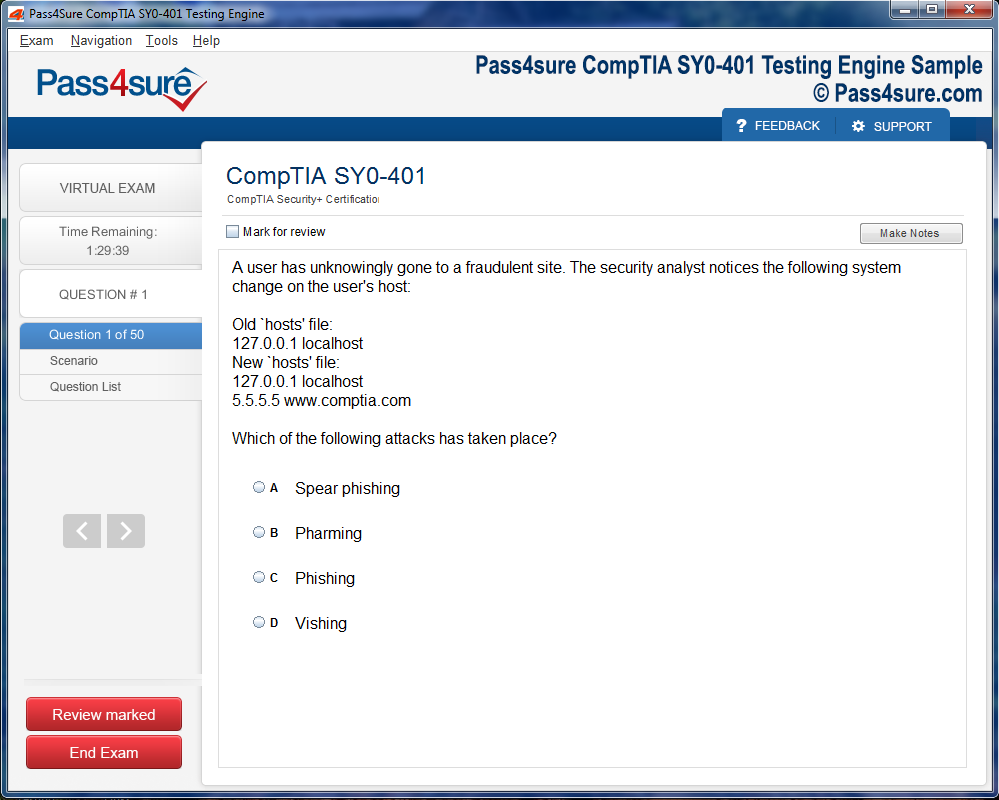
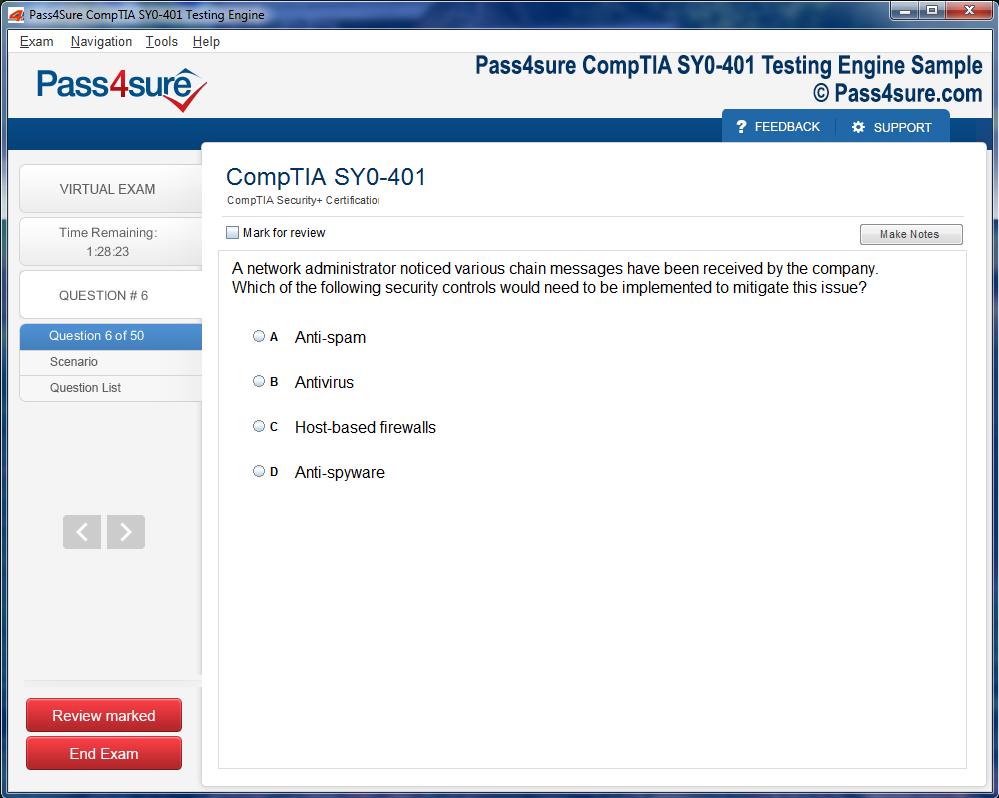
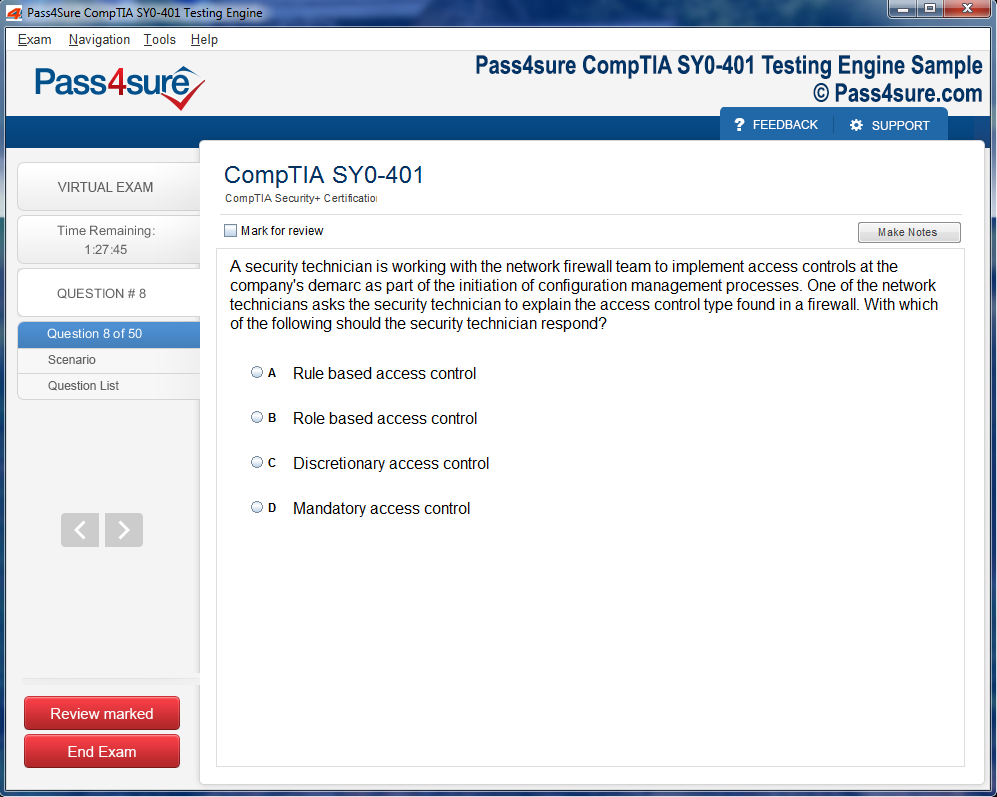

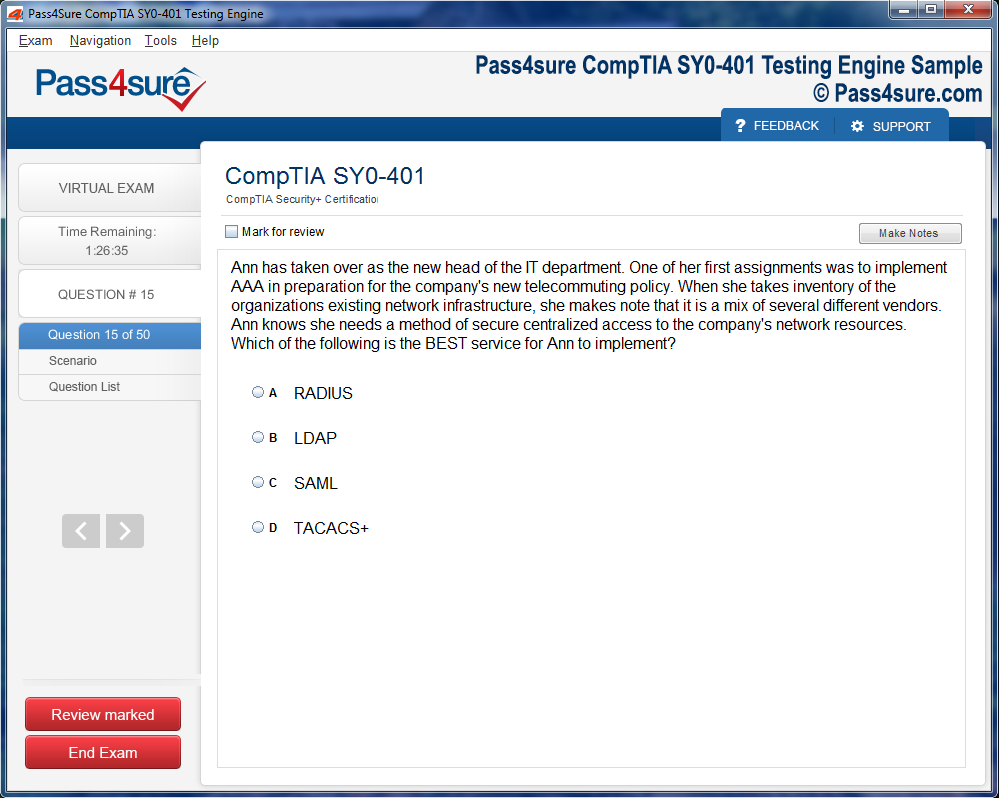
Frequently Asked Questions
How does your testing engine works?
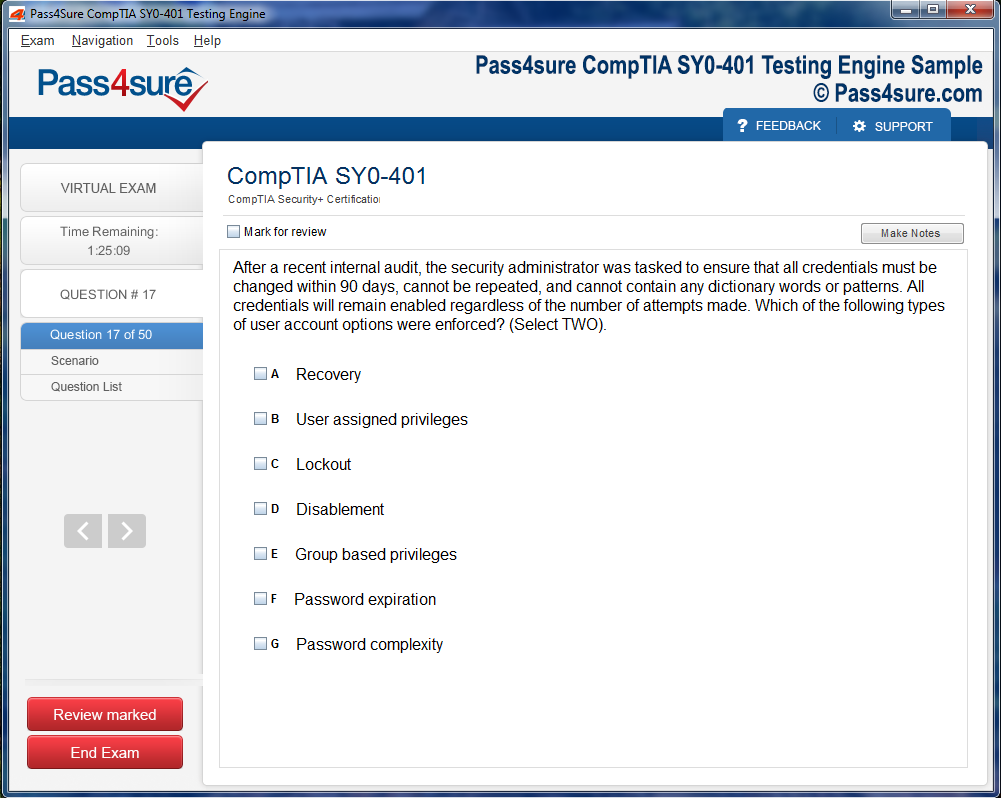
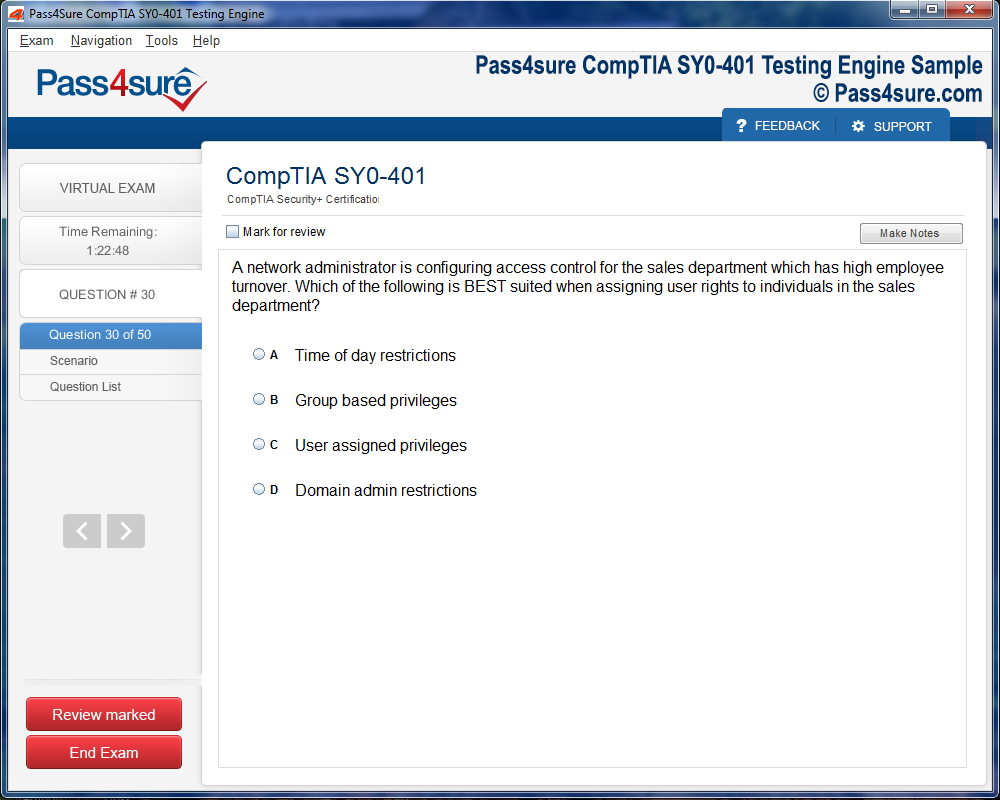
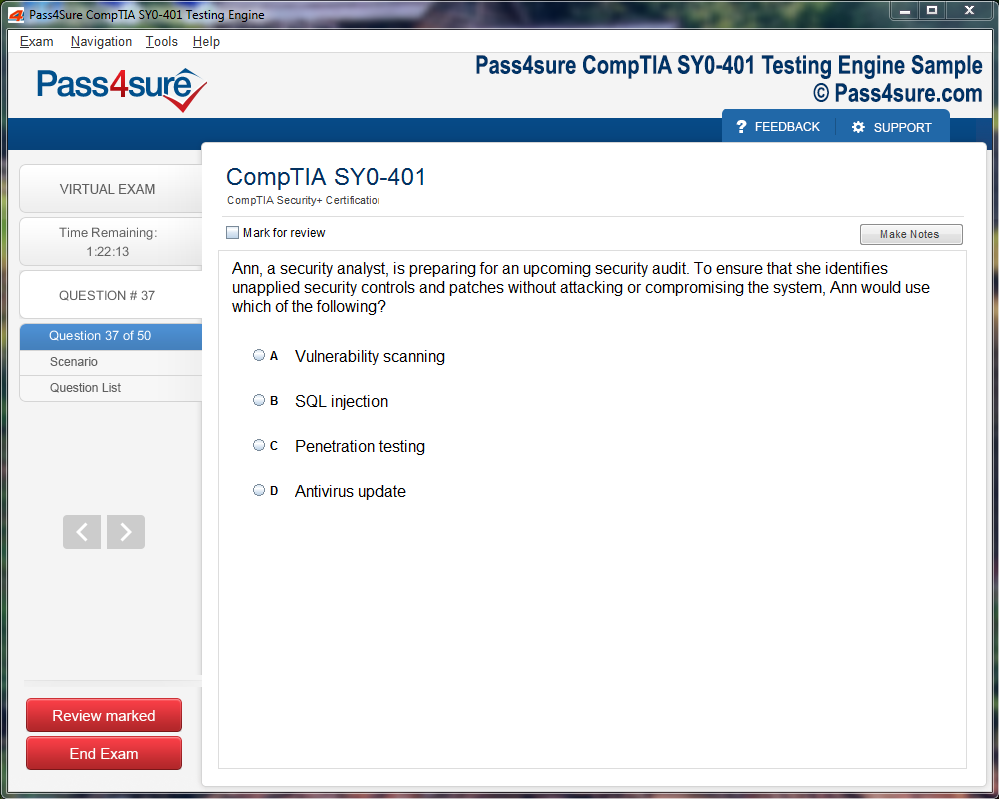
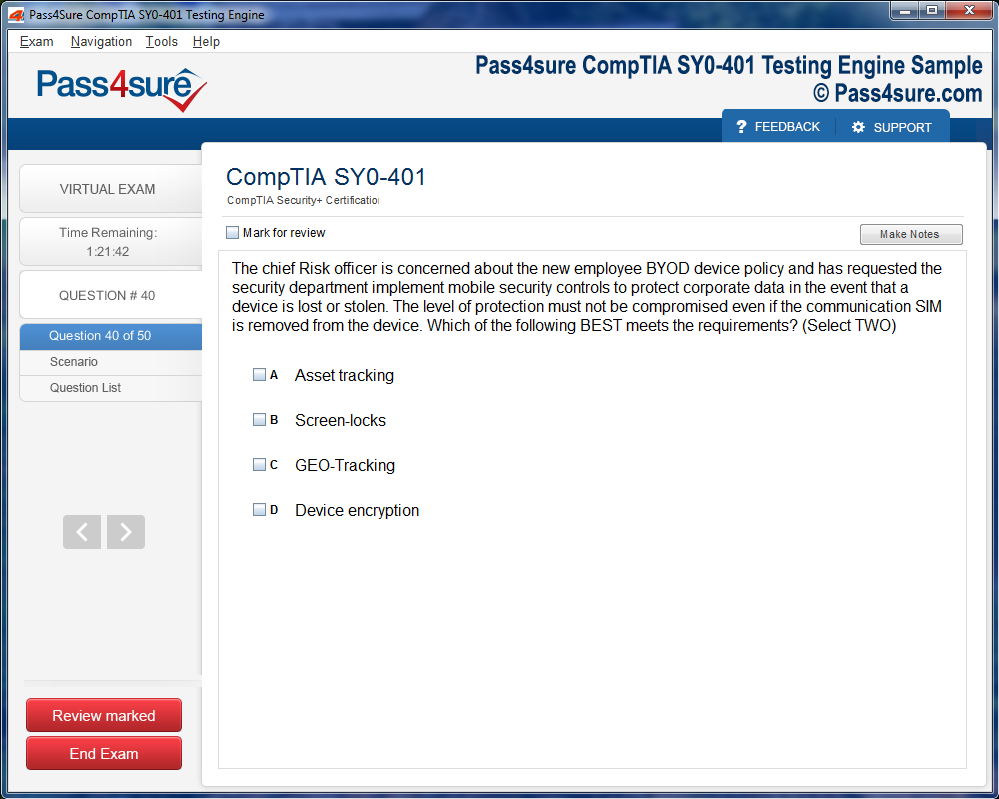
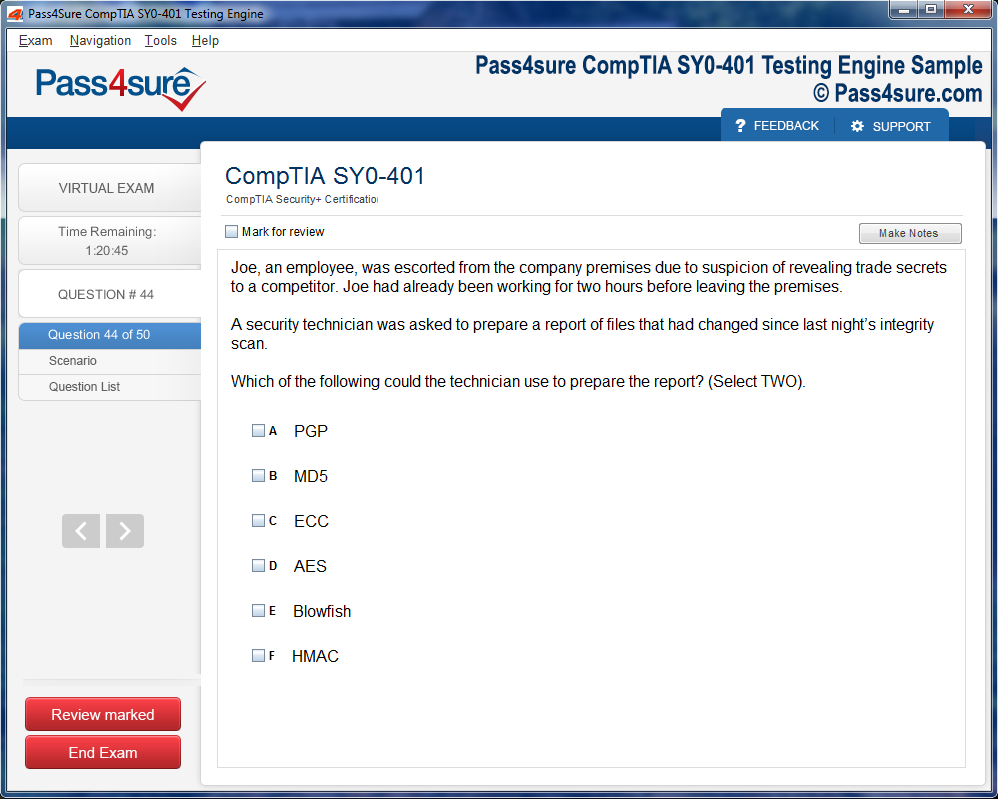
Once download and installed on your PC, you can practise test questions, review your questions & answers using two different options 'practice exam' and 'virtual exam'. Virtual Exam - test yourself with exam questions with a time limit, as if you are taking exams in the Prometric or VUE testing centre. Practice exam - review exam questions one by one, see correct answers and explanations.
How can I get the products after purchase?
All products are available for download immediately from your Member's Area. Once you have made the payment, you will be transferred to Member's Area where you can login and download the products you have purchased to your computer.
How long can I use my product? Will it be valid forever?
Pass4sure products have a validity of 90 days from the date of purchase. This means that any updates to the products, including but not limited to new questions, or updates and changes by our editing team, will be automatically downloaded on to computer to make sure that you get latest exam prep materials during those 90 days.
Can I renew my product if when it's expired?
Yes, when the 90 days of your product validity are over, you have the option of renewing your expired products with a 30% discount. This can be done in your Member's Area.
Please note that you will not be able to use the product after it has expired if you don't renew it.
How often are the questions updated?
We always try to provide the latest pool of questions, Updates in the questions depend on the changes in actual pool of questions by different vendors. As soon as we know about the change in the exam question pool we try our best to update the products as fast as possible.
How many computers I can download Pass4sure software on?
You can download the Pass4sure products on the maximum number of 2 (two) computers or devices. If you need to use the software on more than two machines, you can purchase this option separately. Please email sales@pass4sure.com if you need to use more than 5 (five) computers.
What are the system requirements?
Minimum System Requirements:
- Windows XP or newer operating system
- Java Version 8 or newer
- 1+ GHz processor
- 1 GB Ram
- 50 MB available hard disk typically (products may vary)
What operating systems are supported by your Testing Engine software?
Our testing engine is supported by Windows. Andriod and IOS software is currently under development.
GIAC GSSP-JAVA Certification: Rise as a Secure Java Programmer
In the dynamic world of software development, the importance of creating secure applications cannot be overstated. Developers are tasked not only with building functional applications but also with ensuring that these systems are resistant to security vulnerabilities. As technology evolves, the need for developers who can craft secure software grows more urgent, and certifications like the GIAC Secure Software Programmer – Java (GSSP-JAVA) offer a tangible way to validate these skills. The GSSP-JAVA certification is designed specifically to equip Java developers with the knowledge and practical expertise required to develop secure Java applications that stand the test of malicious threats.
Java remains one of the most widely used programming languages in the world. Its versatility, scalability, and robustness make it the preferred choice for building everything from mobile apps to large enterprise systems. However, with widespread use comes the increased potential for security breaches. Developers must adopt secure coding practices to protect sensitive user data, prevent unauthorized access, and maintain the overall integrity of their systems. Insecure code can expose software to numerous risks, including data theft, system compromise, and malicious attacks. Understanding the critical importance of secure coding practices is the first step in reducing the vulnerability of your Java applications.
Key Concepts in Secure Software Programming for Java
When aiming for a certification such as the GSSP-JAVA, developers must grasp several core concepts that form the foundation of secure software development. These principles are designed to mitigate common vulnerabilities and safeguard applications against cyber threats. Key topics include input validation, secure coding practices, error handling, and cryptographic techniques. Secure software programming involves writing code that prevents exploitation of weaknesses, such as SQL injection attacks, cross-site scripting (XSS), and buffer overflows, which are frequently targeted by malicious actors.
In addition to securing code, developers must also implement secure communication protocols and properly manage user authentication and authorization processes. Understanding how to identify and mitigate security risks throughout the software lifecycle ensures that your Java applications are more resistant to attacks and operate reliably in production environments.
Examining the GSSP-JAVA Certification Process
The GSSP-JAVA exam is designed to validate a developer’s ability to write secure Java code and to effectively recognize and address security vulnerabilities in Java applications. The certification is intended for developers who have a fundamental understanding of Java programming but wish to advance their knowledge of security best practices within the Java ecosystem.
The exam consists of 75 multiple-choice questions, and candidates are given a total of 180 minutes to complete it. Achieving a passing score requires answering at least 55 questions correctly, which corresponds to a minimum score of 73.3%. This rigorous examination process ensures that only those with a deep understanding of Java security concepts can achieve certification.
Preparing for the GSSP-JAVA Certification
To succeed in the GSSP-JAVA certification exam, developers must first establish a comprehensive study plan. The exam covers a wide range of topics, including secure coding techniques, cryptography, and secure software design. A focused preparation approach should include familiarization with the following subject areas:
Secure Coding Standards: Understanding and applying secure coding practices is essential for writing Java code that is robust against known security vulnerabilities. This includes implementing proper input validation, avoiding the use of unsafe functions, and adhering to established secure coding guidelines.
Vulnerability Identification and Mitigation: Developers must know how to spot common vulnerabilities in their code and how to fix them before deployment. This includes recognizing threats such as buffer overflows, cross-site scripting (XSS), and injection attacks.
Authentication and Authorization: Understanding how to implement secure authentication mechanisms, such as multi-factor authentication, is key to ensuring that only authorized users can access sensitive information or perform certain actions within the application.
Cryptography: A solid understanding of cryptographic algorithms and techniques, such as public-key cryptography and hashing functions, is essential for securing data in transit and at rest.
Secure Communication Protocols: The use of secure communication protocols, such as HTTPS and SSL/TLS, is necessary to protect data transmitted between clients and servers.
Threat Modeling and Risk Assessment: Developers must also be proficient in identifying potential threats during the software development lifecycle and assessing the risks posed by different types of vulnerabilities.
Using study materials such as official GIAC resources, online courses, practice exams, and reference books can help reinforce these topics and give you the best chance of success in the exam. The key is to balance theoretical knowledge with practical, hands-on experience. Developers should experiment with secure coding techniques and apply them to real-world projects to gain valuable insight into how these practices work in different scenarios.
Practical Benefits of the GSSP-JAVA Certification
Earning the GSSP-JAVA certification provides several practical benefits for developers looking to advance their careers in secure software development. This credential is not just a badge of honor; it has real-world value. Here are some of the key advantages of achieving the GSSP-JAVA certification:
Enhanced Job Prospects: The demand for developers who can write secure code is on the rise. By obtaining the GSSP-JAVA certification, you demonstrate to potential employers that you have the specialized skills needed to develop secure Java applications. This can increase your attractiveness as a job candidate and open doors to a broader range of career opportunities.
Competitive Edge: The software development field is highly competitive, and standing out from the crowd is crucial. The GSSP-JAVA certification gives you an edge over other candidates who may not have demonstrated the same level of commitment to secure coding practices. Employers are often willing to pay a premium for developers who can minimize security risks and ensure the safety of their systems.
Increased Earning Potential: Certified professionals in the field of software development often command higher salaries compared to their non-certified counterparts. As a GSSP-JAVA certified developer, you become a valuable asset to employers, leading to increased compensation and career growth opportunities.
Global Recognition: GIAC certifications are recognized and respected worldwide. This global recognition means that you can pursue career opportunities not just in your local area but across international markets. Many organizations around the world follow best practices in secure software development, and GSSP-JAVA certification aligns you with those standards.
Networking Opportunities: Becoming a part of the GIAC community connects you with other professionals in the field of secure software programming. Networking opportunities can lead to collaborations, job referrals, and industry insights that are invaluable for career advancement.
The Growing Need for Secure Software Developers
As the world becomes more interconnected and reliant on digital technologies, the need for secure software development has never been greater. Data breaches, hacking incidents, and cyberattacks are becoming more frequent and more sophisticated, with attackers using advanced techniques to exploit vulnerabilities in applications. In this environment, the role of a developer extends beyond writing code to ensuring that the software is resilient against a wide range of threats.
Secure software developers are at the forefront of this battle, and their expertise is in high demand. Companies in industries like finance, healthcare, e-commerce, and government need developers who understand how to build software that protects sensitive data and complies with regulations such as the General Data Protection Regulation (GDPR) and the Health Insurance Portability and Accountability Act (HIPAA). The GSSP-JAVA certification is an ideal way for Java developers to demonstrate their commitment to building secure applications and to gain recognition as trusted professionals in the field.
The Future of Secure Software Programming and Certification
As the landscape of cyber threats continues to evolve, so too will the demand for developers who are skilled in secure programming practices. The GIAC Secure Software Programmer – Java (GSSP-JAVA) certification represents a crucial stepping stone for developers looking to stay ahead of the curve. By embracing secure software programming principles, developers can contribute to the development of more resilient systems and help protect the digital world from the increasing threats posed by cybercriminals.
With the increasing complexity of software systems and the growing importance of data security, the need for specialized certifications like GSSP-JAVA will only continue to rise. As more organizations recognize the importance of secure software development, the demand for certified developers will expand, offering significant career opportunities for those who are prepared.
In conclusion, the GSSP-JAVA certification offers Java developers the opportunity to validate their skills in secure software programming, gain a competitive edge in the job market, and contribute to a safer digital ecosystem. By mastering the principles of secure coding and preparing thoroughly for the certification exam, developers can set themselves up for long-term career success in a rapidly evolving field.
The GIAC Secure Software Programmer – Java (GSSP-JAVA) exam is a prestigious certification aimed at validating the skills and knowledge required to develop secure Java-based applications. As the world becomes more reliant on web and mobile applications, ensuring that software is resistant to attacks and vulnerabilities is of paramount importance. This certification provides professionals with the tools to assess security risks, integrate security protocols, and implement coding practices that protect systems from potential threats.
Understanding the exam syllabus is essential for successful preparation. The GSSP-JAVA exam tests a wide array of topics that are fundamental to secure coding, such as secure communication, vulnerability detection, cryptographic implementations, and the proper handling of authentication and authorization. This article provides a comprehensive overview of the key areas covered in the GSSP-JAVA exam, designed to help candidates navigate through the essential components of the syllabus.
Secure Coding Practices in Java
At the core of the GSSP-JAVA exam lies the emphasis on secure coding practices. Secure coding is about writing software that avoids common vulnerabilities and follows best practices to mitigate potential security risks. As Java is one of the most widely used programming languages, ensuring that your Java applications are secure is crucial. Some of the key secure coding topics in the exam include:
Input Validation
Input validation is the first line of defense against malicious attacks. Unvalidated inputs can lead to devastating security vulnerabilities such as SQL injection and Cross-Site Scripting (XSS). Ensuring that every piece of data received by the application is thoroughly validated is essential. Proper validation rules must be in place to guarantee that input data is appropriate and follows specific formats, reducing the risk of unexpected behavior in the system.
Error Handling
Error handling ensures that exceptions and unexpected behaviors do not expose sensitive information or allow attackers to exploit vulnerabilities. Proper error management involves logging errors securely and preventing the system from revealing crucial internal details, such as stack traces, in production environments. Effective exception management prevents attackers from gathering insights into the system architecture, making it more resilient against reverse engineering.
Secure Logging
Logs are vital for monitoring and auditing purposes, but improperly configured logs can become a significant security risk. Secure logging ensures that sensitive information, such as passwords or personal data, is not recorded in the log files. Logs should only include the necessary information for debugging and troubleshooting without compromising the system's security posture. The secure logging best practices include obfuscating sensitive data and ensuring that logs are stored and managed properly to prevent unauthorized access.
Code Obfuscation
Code obfuscation is an effective technique for protecting Java applications against reverse engineering. By making the source code more difficult to understand, obfuscation adds a layer of protection, making it more challenging for attackers to analyze the code and identify vulnerabilities. This is particularly important for applications that contain sensitive business logic or proprietary code.
Authentication and Authorization
Authentication and authorization are foundational aspects of any secure application. They ensure that only authorized users can access sensitive resources and that their identities are correctly verified. The GSSP-JAVA exam evaluates your understanding of different authentication and authorization mechanisms and your ability to implement them securely in Java applications.
Authentication Protocols
The implementation of secure authentication protocols is essential for verifying the identity of users accessing your application. The GSSP-JAVA exam covers various authentication protocols such as OAuth, OpenID Connect, and SAML, which allow users to authenticate securely. Implementing these protocols involves understanding how tokens, session management, and encryption mechanisms work together to protect user identity.
Role-based Access Control (RBAC)
Role-based access control is an access control model that restricts system access based on the user's role within the organization. The GSSP-JAVA exam requires candidates to demonstrate knowledge in implementing RBAC to ensure users only access the resources they are authorized to use. Proper implementation of RBAC ensures that users cannot access sensitive data or perform actions beyond their privilege level.
Multi-factor Authentication (MFA)
Multi-factor authentication adds a layer of security by requiring users to provide two or more verification factors to gain access. This might include something they know (a password), something they have (a mobile device), or something they are (biometric data). Understanding how to implement MFA securely in Java applications is critical, as it reduces the likelihood of unauthorized access even if user credentials are compromised.
Secure Communication and Cryptography
In the realm of secure software development, protecting data during transit is a top priority. Cryptography and secure communication protocols are fundamental to ensuring data confidentiality and integrity when transmitted over the internet. The GSSP-JAVA exam explores your knowledge and ability to implement cryptographic protocols and techniques within Java applications.
SSL/TLS Protocols
The SSL (Secure Sockets Layer) and TLS (Transport Layer Security) protocols are essential for encrypting data during communication over the internet. They protect the data from being intercepted by attackers. Implementing SSL/TLS protocols in Java applications ensures that sensitive information, such as login credentials and credit card details, remains confidential while being transmitted. Proper configuration of SSL/TLS ensures that data remains secure and cannot be tampered with.
Cryptographic Algorithms
The GSSP-JAVA exam evaluates your understanding of cryptographic algorithms, including both symmetric and asymmetric encryption techniques. Symmetric encryption algorithms, such as AES (Advanced Encryption Standard), use the same key for both encryption and decryption, while asymmetric algorithms, like RSA, use a pair of keys (public and private) for secure data exchange. Implementing these algorithms correctly is critical to ensuring that sensitive data remains protected and inaccessible to unauthorized parties.
Hashing and Digital Signatures
Hashing and digital signatures are essential techniques for verifying data integrity and authenticity. Hash functions convert input data into a fixed-size output, making it easier to compare and verify data without revealing the original content. Digital signatures provide a mechanism for verifying the authenticity of data and ensuring it hasn't been altered during transmission. In Java, implementing these techniques securely is vital to maintain the integrity and trustworthiness of your application.
Security Vulnerabilities in Java Applications
Identifying and mitigating security vulnerabilities is a key skill required for the GSSP-JAVA certification. The exam tests your ability to recognize common security flaws in Java applications and apply best practices to avoid them.
Injection Attacks
Injection attacks, such as SQL injection, occur when attackers insert malicious code into input fields, exploiting improper input validation or inadequate security measures. This type of attack allows the attacker to execute arbitrary commands, potentially gaining unauthorized access to databases or other critical resources. Understanding how to prevent injection attacks by validating user inputs and using secure coding practices, like prepared statements, is essential for preventing such vulnerabilities.
Cross-Site Scripting (XSS)
Cross-Site Scripting (XSS) attacks occur when attackers inject malicious scripts into a website, which are then executed in the user's browser. These scripts can be used to steal cookies, session tokens, or other sensitive data. In the GSSP-JAVA exam, you'll need to understand how to prevent XSS by properly escaping user input and using security headers such as Content Security Policy (CSP).
Cross-Site Request Forgery (CSRF)
Cross-Site Request Forgery (CSRF) attacks exploit the trust a website has in a user's browser. In a CSRF attack, an attacker tricks a user into performing an unwanted action, such as changing account settings, without their knowledge. Preventing CSRF requires implementing security mechanisms such as anti-CSRF tokens and ensuring that all state-changing requests require authentication.
Secure Java Frameworks and Libraries
Java developers often rely on frameworks and libraries to speed up development, but these tools can introduce security vulnerabilities if not used properly. The GSSP-JAVA exam examines your understanding of how to securely implement and configure common Java frameworks and libraries.
Spring Security
Spring Security is a widely used framework for securing Java applications. It provides comprehensive authentication, authorization, and protection against common threats like CSRF, session fixation, and more. The GSSP-JAVA exam will test your ability to configure Spring Security to safeguard your application from a variety of attacks while ensuring seamless integration with other security protocols.
Hibernate Security
Hibernate is an object-relational mapping (ORM) framework that simplifies database interactions. However, improper use of Hibernate can lead to vulnerabilities, such as SQL injection. The GSSP-JAVA exam requires you to understand how to securely implement Hibernate, such as by using parameterized queries and avoiding unsafe database queries that could compromise the security of your application.
The GSSP-JAVA exam covers a broad range of topics, from secure coding practices to cryptographic protocols, authentication, and vulnerability management. Each section of the syllabus is designed to test your ability to develop robust, secure applications in Java. To succeed, you need a deep understanding of security principles and the ability to implement them in a real-world Java development environment. Mastery of these topics will not only prepare you for the certification exam but also enhance your skills as a secure software programmer.
In the fast-paced world of technology and cybersecurity, certifications like the GIAC Secure Software Programmer – Java (GSSP-JAVA) have become crucial for professionals who want to demonstrate their expertise in secure coding practices. Preparing for such a demanding certification requires not just technical knowledge but also a well-structured and effective study plan. Without a clear strategy, even the most diligent effort can become scattered, leading to confusion and wasted time. The importance of crafting the perfect study plan cannot be overstated. This section will guide you through a step-by-step approach to building a comprehensive, personalized study plan that will give you the best chance of success on the GSSP-JAVA exam.
Assessing Your Current Knowledge
The first and most essential step in any successful study plan is an honest assessment of your current knowledge base. It’s tempting to jump straight into study materials, but without a clear understanding of where you stand, you could end up spending unnecessary time on topics you’re already familiar with or, conversely, neglecting areas where you need the most improvement. Begin by reviewing the key topics outlined in the GSSP-JAVA syllabus. Reflect on your past experiences with Java and secure coding. Have you worked with encryption algorithms or secure coding frameworks before? Or are these concepts entirely new to you?
To get a more objective sense of your current proficiency, consider taking a self-assessment or a practice test. These tools are designed to give you insights into your strengths and weaknesses. After completing this evaluation, analyze the results carefully. Which areas were you already confident in? Which sections left you puzzled or unsure? This data will form the foundation of your study plan, helping you allocate your time and energy to areas where it’s most needed.
Breaking Down the Syllabus
The GSSP-JAVA syllabus can initially seem overwhelming due to the vast range of topics it covers. However, breaking it down into smaller, more manageable chunks will make the material feel more approachable. The goal is to create a roadmap that covers all areas of the exam but is flexible enough to accommodate your unique learning pace. To do this effectively, categorize the syllabus into core areas of focus.
Here’s a suggested breakdown to guide your study journey:
Week 1-2: Secure Coding Practices
Secure coding practices are the foundation of Java security. This includes topics such as input validation, error handling, exception management, and other fundamental aspects of secure software development. Allocate two weeks to deeply understand these practices and explore how they can prevent common security vulnerabilities.Week 3-4: Authentication and Authorization
Next, dive into authentication and authorization protocols. These are critical for ensuring that users accessing the software system are properly authenticated and granted appropriate permissions. Explore OAuth, SAML, and other authentication mechanisms that are commonly used in Java-based systems.Week 5-6: Cryptography
Cryptography is an essential area of study for any software security certification. Focus on encryption algorithms, key management, digital signatures, and secure communication protocols. This period will be critical for understanding how to protect sensitive data in a Java application.Week 7: Java Security Vulnerabilities
Java applications are prone to specific vulnerabilities such as SQL injection, cross-site scripting (XSS), and buffer overflows. During this week, focus on identifying these weaknesses and learning about mitigation strategies. Understanding these vulnerabilities is key to building secure Java applications.Week 8: Final Review and Practice Tests
The final stage of your study plan should be reserved for reviewing all the topics you’ve covered. This is the time to reinforce weak areas and take mock exams. The more practice tests you take, the more familiar you’ll become with the structure and style of questions in the actual exam. Analyze your results and target any remaining gaps in knowledge.
This breakdown allows for a steady, progressive approach to mastering the material. You can adjust the pace based on your personal progress, but make sure to stick to a consistent study schedule.
Using the Right Resources
A well-designed study plan is only as effective as the resources it relies upon. For the GSSP-JAVA exam, it’s essential to use high-quality materials that cover the entire syllabus in detail. The internet is filled with resources ranging from textbooks to online courses, but not all of them will serve your needs. The key is to focus on trusted, comprehensive materials that are specifically designed for this certification.
Start with reputable study guides that break down complex concepts into digestible chunks. Books and guides designed by certified professionals who have experience with the exam tend to provide reliable information. Supplement your reading with video lectures that offer different perspectives on the same material. Visual aids can make intricate topics like cryptography and secure coding practices easier to understand.
Practice exams are an absolute necessity in your study journey. They simulate the actual test environment and help you get accustomed to answering questions under time constraints. Look for practice exams that mimic the format and difficulty of the real exam. This will help you get an accurate gauge of your readiness and reduce any anxiety on the day of the test.
Online communities and forums dedicated to security certifications can also be valuable resources. Here, you can engage with fellow candidates, ask questions, and learn from others’ experiences. Keep in mind, however, that not all advice on these platforms is equally reliable, so be discerning when choosing which resources to follow.
Consistent Practice and Mock Exams
Once you’ve gathered your study materials, it’s time to put your knowledge into practice. Consistent practice is one of the most effective ways to ensure that the concepts you’ve learned stick. Mock exams play a critical role in this process. These tests are designed to mimic the conditions of the actual GSSP-JAVA exam, offering a chance to practice both your knowledge and your test-taking strategies.
Mock exams help you identify areas where you may be underperforming. If you find that you’re struggling with a specific topic, it’s a sign that you need to allocate more time to studying that particular section. Regularly revisiting weak areas and attempting practice questions will reinforce your understanding.
It’s important to approach mock exams with a strategic mindset. Initially, focus more on the process of answering the questions rather than on achieving perfect scores. In the beginning, you’re aiming to familiarize yourself with the question format and test conditions. As you progress, start timing yourself and aim for accuracy. The more mock exams you take, the more confident you’ll feel on the actual exam day.
After each practice test, spend time reviewing your mistakes. For each question you got wrong, determine why the correct answer is right and where you went wrong. This analysis will deepen your understanding and reduce the likelihood of making the same mistakes again.
Time Management During Your Study Sessions
Time management is a skill that is essential not just during the exam, but throughout your study process. Effective time management allows you to maintain focus, reduce stress, and make steady progress. Start by setting realistic goals for each study session. Break your study time into focused blocks, typically 45 minutes to an hour, followed by a short break. This method, known as the Pomodoro technique, helps maintain high levels of concentration and reduces mental fatigue.
Another important aspect of time management is prioritizing your study sessions. Given the wide range of topics you need to cover for the GSSP-JAVA exam, it’s easy to feel overwhelmed. However, by focusing on one topic at a time and diving deep into it, you’re more likely to retain information and build confidence.
Make sure to set aside time for regular reviews. After completing each section, schedule brief review sessions to ensure the information remains fresh. Spaced repetition—the practice of reviewing material at increasing intervals—is a powerful technique for retaining information long-term.
In addition, track your progress regularly. Assess your strengths and weaknesses after each study session and adjust your plan accordingly. If you’re consistently excelling in one area but struggling with another, it may be time to reallocate your study time to balance your progress.
Managing Stress and Staying Motivated
Preparing for a challenging certification exam like the GSSP-JAVA can be stressful, but managing stress is crucial to maintaining focus and motivation. One of the most effective ways to reduce stress is by sticking to a study schedule that feels achievable. Avoid cramming or last-minute panic sessions, as they will only increase your anxiety and hinder your progress.
Staying motivated is another challenge you will face throughout your preparation journey. To keep yourself motivated, set clear, attainable goals for each study session. Celebrate your achievements along the way, whether it’s mastering a difficult topic or scoring well on a practice exam. Recognizing these small victories helps build momentum.
Incorporating breaks into your schedule is also vital for mental well-being. During these breaks, engage in activities that relax you, such as a walk, meditation, or listening to music. These moments of rest will refresh your mind, preventing burnout and helping you maintain a balanced approach to your studies.
Finally, maintain a positive mindset. If you encounter setbacks, remind yourself that they are part of the learning process. Persistence and consistency are the keys to overcoming challenges and achieving success.
Effective Exam Strategies for GSSP-JAVA
When preparing for the GSSP-JAVA exam, it’s crucial to adopt a set of well-thought-out strategies that not only help you manage your time effectively but also enhance your chances of success. With 75 questions and a strict 180-minute time limit, every minute counts. This article will provide you with key strategies that focus on effective time management, handling multiple-choice questions, and staying focused during the exam. Let's dive into how you can optimize your exam-taking experience.
Time Management During the Exam
One of the most critical aspects of performing well on the GSSP-JAVA exam is managing your time. Given the exam's structure and the number of questions you need to answer, efficient time management is the cornerstone of success. Here are several effective strategies to help you make the most of the limited time available.
Skim Through the Exam First
When you begin the exam, avoid jumping straight into answering questions. Instead, take a few minutes to skim through all the questions. This overview allows you to gauge the difficulty of the questions and gives you an opportunity to plan your approach. By doing this, you’ll be able to spot the sections that you’re most comfortable with, and you can prioritize answering those first. Moreover, skimming through the exam will help you avoid wasting time on questions that may seem too complex at first glance.
Answer Easy Questions First
The first step in effective time management is to build momentum. Start by answering the questions that you find the easiest. These questions should be familiar, and you should be able to solve them quickly. By answering the simpler questions first, you will not only gain confidence but also ensure that you don't run out of time on questions that require more thought. As you progress through the exam, you’ll have a clearer picture of how much time you’ve spent, which will help you pace yourself.
Don't Dwell on Difficult Questions
It’s normal to encounter a few challenging questions, but it's vital not to spend too much time on any one question. If you find yourself stuck on a particular question, mark it and move on. It's easy to become frustrated or discouraged when faced with a tough problem, but dwelling on it will only waste valuable time and energy. By leaving difficult questions for later, you allow yourself to tackle them with a fresh perspective. When you return to them after completing the easier questions, you may find that they are more manageable.
Look for Hidden Clues
Many exam questions contain subtle hints that can help you identify the correct answer. These hidden clues could be embedded in the wording of the question itself. For example, certain keywords or phrases may hint at a specific Java concept or programming technique. By being vigilant and reading each question carefully, you can often uncover these subtle clues. Keep an eye out for terminology, examples, or patterns that could point you in the right direction.
Handling Multiple-Choice Questions
The GSSP-JAVA exam is largely composed of multiple-choice questions, and answering them requires a different approach than other question formats. Here are several techniques that will help you maximize your performance on multiple-choice questions.
Eliminate Obvious Incorrect Answers
When faced with a multiple-choice question, the first step is to eliminate any answers that you can immediately identify as incorrect. By narrowing down the options, you increase your chances of selecting the correct answer. If you’re able to eliminate one or two choices, you effectively boost your odds of guessing the right answer if needed. This process of elimination is particularly useful when you’re unsure of the correct answer but can confidently rule out certain options.
Look for the Best Answer
In some cases, multiple answers may seem plausible, but only one will be the best choice. It's important to understand that the exam is not just about selecting the correct answer, but also about identifying the most appropriate solution for the given situation. In cases where more than one option seems correct, carefully consider the nuances of each answer. The correct choice will often be the one that aligns most closely with the context of the question.
Read All Choices Carefully
It's common for exam questions to feature multiple answers that are worded similarly. This is a tactic used to challenge your understanding of the material. Always take the time to read each option thoroughly before making your decision. Even if one answer seems like the obvious choice, it’s important to check if there is another option that more precisely matches the question. Skipping over one of the choices too quickly could lead to an incorrect answer.
Staying Calm and Focused
While exam anxiety is a common issue, maintaining a sense of calm and focus during the GSSP-JAVA exam is key to performing well. Your ability to stay composed under pressure will significantly impact your decision-making and efficiency. Here are a few strategies to help you stay relaxed and focused during the exam.
Practice Deep Breathing
When stress levels rise, it’s easy to feel overwhelmed. One simple yet effective technique to combat exam anxiety is deep breathing. Taking slow, deep breaths helps reduce stress and restore focus. If you begin to feel anxious during the exam, pause for a moment, take a deep breath, and center yourself. This can help calm your nerves and improve your concentration.
Focus on the Process, Not the Outcome
It's natural to be concerned about the outcome of the exam, but focusing too much on the result can add unnecessary pressure. Instead of fixating on the score, concentrate on the process of answering each question to the best of your ability. By focusing on one question at a time, you minimize distractions and reduce the mental burden that can lead to stress.
Don’t Let One Question Affect Your Confidence
It's easy to get discouraged if you encounter a difficult question, but it’s important not to let it affect your overall mindset. If you struggle with a particular question, don’t allow it to impact your performance on the rest of the exam. Remember, there are plenty of other questions to answer, and one tough question does not define your success. Stay confident and trust in your preparation.
Understanding Key Java Concepts
While effective exam strategies are crucial, so is having a solid understanding of Java concepts. To succeed in the GSSP-JAVA exam, you need to have a deep comprehension of various Java topics. Below are a few core concepts that are commonly tested in the exam.
Object-Oriented Programming (OOP)
Java is an object-oriented language, which means that understanding the principles of OOP is essential for exam success. Familiarize yourself with concepts such as classes, objects, inheritance, polymorphism, and encapsulation. Understanding how these concepts work together will help you answer questions related to object creation, method invocation, and class design. Practice writing code snippets that demonstrate these principles, as this will improve your ability to recognize OOP-related problems during the exam.
Exception Handling
Exception handling is another critical concept to master. Java’s exception handling mechanism helps manage errors in a program by using try, catch, throw, and finally blocks. Be sure to understand the difference between checked and unchecked exceptions, and know when and how to use them. Exam questions often involve handling exceptions, so practice identifying potential exceptions in code and determining the best course of action for handling them.
Java Collections Framework
The Java Collections Framework is a set of classes and interfaces that implement commonly used collections of objects, such as lists, sets, and maps. Knowing when and how to use each type of collection is crucial for solving many exam questions. Understand the differences between the different collection types and be able to write efficient code that utilizes the right collections for the given problem.
Streams and Lambdas
Streams and lambda expressions are essential components of modern Java programming. The ability to process collections of data efficiently using streams is a skill that is often tested in the GSSP-JAVA exam. Understand how to use the Stream API to filter, map, and reduce data, as well as how to apply lambda expressions to simplify code.
Exam Day Tips for Success
On the day of the exam, your mental state and preparedness will play a significant role in your performance. Here are a few last-minute tips to help you stay on track and boost your chances of success.
Get Plenty of Rest
Rest is crucial for cognitive function, so make sure to get a good night's sleep before the exam. Lack of sleep can negatively affect your focus, memory, and decision-making abilities, which could hurt your performance. Aim for at least 7-8 hours of sleep the night before the exam to ensure that your brain is well-rested and ready for the challenge.
Arrive Early and Prepare Mentally
Arriving early to the exam location allows you to settle in and mentally prepare for the test. Rushing in at the last minute can increase anxiety and reduce your ability to think clearly. Take a few moments to relax, review any key concepts you may have forgotten, and mentally prepare for the task ahead.
Bring Necessary Items
Make sure you bring all the necessary items with you on exam day, such as identification, exam confirmation, and any allowed materials (e.g., a calculator or scratch paper). Being prepared will eliminate any last-minute stress and allow you to focus solely on the exam.
Stay Hydrated
It’s important to stay hydrated during the exam to maintain mental clarity. Dehydration can cause fatigue and impair your ability to think clearly. Bring a bottle of water with you, and make sure to take small sips as needed to stay refreshed.
By implementing these exam strategies and ensuring that you're mentally and physically prepared, you will be well-equipped to tackle the GSSP-JAVA exam with confidence and success.
The Importance of Maintaining Your GIAC GSSP-JAVA Certification
Earning a certification like the GIAC GSSP-JAVA is a significant accomplishment in your professional journey. However, obtaining the certification is just the first step in a continuous learning process. As the world of technology evolves at a breakneck pace, so too must your skills and knowledge. This certification is not a one-time achievement but a milestone that requires dedication to maintaining its validity. To keep your GSSP-JAVA certification active, you will need to focus on ongoing professional development, earn continuing education credits, and stay updated on industry trends. Here, we delve into the significance of maintaining your certification and how you can stay on top of your game.
Maintaining certifications like the GIAC GSSP-JAVA ensures that you remain relevant in an ever-changing job market. As companies continue to embrace advanced software development practices, especially in secure programming for Java applications, your expertise will be crucial. Whether you're a seasoned developer or just beginning your career, continual education is essential to ensure your skills are both cutting-edge and aligned with industry demands.
The Process of Renewal: Earning Continuing Professional Education (CPE) Credits
A critical aspect of maintaining your GIAC GSSP-JAVA certification is earning Continuing Professional Education (CPE) credits. These credits demonstrate that you are actively engaging in learning and developing your professional skills. After obtaining the certification, you will need to earn a specific number of CPE credits every three years to maintain its validity. The number of credits required typically varies by certification but is often set at around 36 CPEs over three years.
There are various ways to earn these credits. Participating in formal training programs, attending webinars, or engaging in relevant work projects are all viable options. Additionally, contributing to the field through writing articles or delivering presentations at conferences can also count towards your CPE credit requirement. Some certifications even allow credits to be earned for self-study or by attending local security-focused meetups, providing flexibility in how you continue your education.
One of the most important elements of earning CPE credits is ensuring that the educational activities are relevant to your role and the certification. The GIAC GSSP-JAVA certification is centered around secure Java programming, so any training or education you pursue should further your skills in this area. Topics like secure coding practices, threat analysis, penetration testing, and software vulnerability mitigation are all aligned with the spirit of the certification and will contribute to your career growth.
The Impact of Industry Trends on Your Certification
As industries evolve, the demands and challenges surrounding secure software development grow. Keeping up with the latest trends and technologies is crucial for staying competitive in the field. The realm of secure Java programming is no exception; emerging technologies like blockchain, artificial intelligence, and cloud computing are influencing the way developers approach security.
By staying current with industry trends, you not only increase your CPE credits but also ensure that you remain at the forefront of technological advancements. For example, the rise of cloud-based applications and microservices architecture has created new challenges for secure application development. As security risks become more complex, your knowledge of secure coding practices will need to be expanded to address these modern threats.
For those maintaining a GIAC GSSP-JAVA certification, this means adapting your practices to new security concerns that were not as prevalent when you first earned your certification. This includes understanding how to secure Java applications in environments that utilize distributed systems, or how to incorporate machine learning algorithms into security protocols. These advancements require that certified professionals stay engaged in learning about new tools and techniques that mitigate modern security risks.
Balancing Certification Maintenance with Your Professional Life
Maintaining your certification may seem like a daunting task, especially when balancing the demands of your professional and personal life. However, with proper planning, you can ensure that this process is manageable and aligned with your career goals. A key factor in managing the certification renewal process is organization.
It’s crucial to establish a schedule that includes periodic review of your CPE credit accumulation. Many professionals overlook the importance of tracking their progress, which can lead to last-minute scrambling to earn credits. Taking a proactive approach can help you stay on track and avoid unnecessary stress as your certification expiration date approaches.
One effective strategy is to integrate CPE activities into your regular work schedule. For instance, if you're attending a conference for work or participating in a team project, you may be able to earn CPE credits for your involvement. Even if you are already doing the work, it’s important to track these activities and ensure they align with the requirements set by GIAC.
In addition to work-related activities, you can take advantage of personal learning opportunities. Online courses, security-related webinars, and reading academic papers or industry reports are all excellent ways to accumulate CPE credits while expanding your knowledge. By approaching the renewal process with foresight and discipline, you can maintain your certification without overwhelming your day-to-day responsibilities.
The Role of Networking in Continuing Education
Networking plays a pivotal role in professional development, and it’s no different when it comes to maintaining your GIAC GSSP-JAVA certification. Interacting with peers, joining industry-specific groups, and attending events are all invaluable ways to stay informed about changes in the field. Engaging in conversations with colleagues and experts will allow you to learn from others’ experiences, which is crucial for both your personal and professional growth.
By being part of professional communities, you not only gain access to additional learning opportunities but also broaden your professional network. These connections could lead to opportunities to collaborate on projects, gain insights into best practices, or even discover new methods for securing Java applications. Networking also provides a platform for sharing knowledge and challenges, helping you stay grounded and aware of current issues affecting the industry.
Another great benefit of networking is the chance to gain firsthand knowledge about new tools, techniques, and certifications that may be relevant to your career. By attending conferences or engaging in online forums, you can get a sense of what other professionals are working on and how they’re staying up-to-date in a rapidly changing field. This can catalyze your own continued education, prompting you to explore areas that you might not have considered on your own.
Final Exam Preparation: Mental and Logistical Preparation
The journey to obtaining the GIAC GSSP-JAVA certification begins with preparation for the final exam. For many, this exam represents the culmination of months or even years of learning and practice. However, achieving success on the exam is not solely about understanding the material. Mental and logistical preparation are just as important to ensure a smooth and successful testing experience.
One of the first things to consider is the environment in which you’ll be taking the exam. Whether you are testing in person or online, the space must be quiet, free from distractions, and equipped with all necessary resources. Ensure that your computer, internet connection, and any required software are fully functional before the test. Arriving early to the testing center is also important, as it gives you time to settle in and alleviate any pre-test anxiety.
On the mental side of preparation, practice is key. Taking practice exams, reviewing sample questions, and revisiting areas where you feel less confident can all help you feel more prepared. It's also advisable to manage your stress and anxiety in the weeks leading up to the exam. Simple techniques such as mindfulness or proper sleep hygiene can have a significant impact on your mental clarity and focus during the test.
Many candidates also find it helpful to build a study routine that includes periodic breaks and structured study sessions. Cramming the night before the exam may lead to exhaustion and burnout, whereas regular, consistent study habits are far more effective in absorbing the material and retaining it.
By preparing both mentally and logistically, you set yourself up for success and make the process of certification both achievable and enjoyable.
Staying Focused on Long-Term Career Growth
While maintaining your GIAC GSSP-JAVA certification is essential for professional development, it’s equally important to stay focused on the bigger picture of your career trajectory. Earning certifications like GSSP-JAVA should be viewed as a stepping stone to broader career growth. In the long term, these credentials can lead to advanced roles, higher salaries, and more prestigious positions in the software development and cybersecurity industries.
When pursuing continued education and professional growth, always keep your long-term goals in mind. Think about where you want your career to go over the next 5 or 10 years and how certifications and learning opportunities can help you get there. Whether you aspire to become a security architect, a senior developer, or an industry leader, maintaining certifications like the GSSP-JAVA is an important part of the journey.
Moreover, a commitment to lifelong learning is a key trait of successful professionals. In addition to earning CPE credits, actively seek out new challenges and constantly question how your current skill set can be expanded. Embrace a growth mindset by viewing each opportunity as a chance to learn and grow, whether through formal courses, peer-to-peer learning, or hands-on experience.
The GIAC Secure Software Programmer – Java (GSSP-JAVA) certification is a powerful tool for developers looking to enhance their skills in secure coding practices, particularly within the Java programming language. Throughout this series, we have seen that this certification not only validates your ability to write secure, efficient code but also provides a significant boost to your career prospects. It opens doors to higher-paying roles, advanced positions in software development, and a more extensive professional network.
Pursuing the GSSP-JAVA certification is undoubtedly a challenging but rewarding journey. Mastering core concepts such as secure coding practices, cryptography, vulnerability management, and secure software development frameworks will prepare you to prevent potential security risks in Java applications. In a world where cyber threats are increasingly sophisticated, the role of a secure software programmer has become more vital than ever. The certification exam tests not just your technical skills but your ability to apply secure coding principles in real-world scenarios, ensuring that you are ready to tackle security challenges in professional environments.
The exam itself consists of 75 multiple-choice questions that cover a broad range of topics, including secure software design, cryptography, and authentication. With a passing score of 73.3%, it is evident that the GSSP-JAVA exam is designed to be rigorous and demanding. This ensures that those who achieve the certification are equipped with the knowledge and expertise necessary to build secure, reliable software applications. The effort required to pass the exam is substantial, but the rewards are well worth it, both in terms of career advancement and personal development.
Earning the GSSP-JAVA certification goes beyond just having a certificate. It represents your ability to write secure code, build applications that protect sensitive data, and minimize the risk of security vulnerabilities. This is highly valued in industries such as finance, healthcare, and government, where the integrity of software systems is crucial. A certified GSSP-JAVA developer stands out as a trusted expert capable of delivering secure solutions. In an era where security breaches are not only costly but can severely damage a company’s reputation, being skilled in secure software development can make a significant difference in the safety and success of a business.
One of the essential aspects of preparing for the GSSP-JAVA exam is creating an effective study plan. Breaking down the syllabus into manageable sections, understanding core concepts, and practicing regularly will ensure that you are well-prepared. Using study guides, online courses, practice exams, and other reliable resources will help you cover all necessary topics. The key is to remain consistent and disciplined throughout your preparation. By dedicating time each day to studying, focusing on your weak areas, and taking mock exams, you will steadily build the confidence needed to succeed.
Another critical element of preparation is practicing with mock exams. These practice tests simulate the real exam environment and allow you to assess your knowledge under timed conditions. Regularly taking mock exams will help you familiarize yourself with the types of questions you may encounter, refine your ability to answer them efficiently, and identify areas where you need to improve. Don’t aim for perfection on your first attempt; instead, use these tests to assess your strengths and weaknesses, and gradually improve your performance.
In addition to exam preparation, earning the GSSP-JAVA certification brings long-term benefits. Once you achieve the certification, you’ll become part of an exclusive group of professionals recognized for tyourability to build secure applications. This recognition can lead to higher-paying job opportunities and increased credibility within the industry. The certification also demonstrates your commitment to staying updated with the latest security trends and best practices, further enhancing your career prospects. Moreover, the GIAC community provides a network of professionals who share similar goals, offering opportunities for collaboration and continued learning.
Conclusion
Achieving the GSSP-JAVA certification is just the beginning of a rewarding career in secure software development. It not only validates your technical expertise but also signals to employers that you are dedicated to maintaining high standards of security and best practices in coding. As technology continues to evolve, and as the demand for secure applications grows, the GSSP-JAVA certification will continue to be a valuable asset that sets you apart as a leader in secure software development.
Ultimately, the GSSP-JAVA certification is more than just a credential; it is a mark of expertise and dedication. By committing to mastering secure coding practices and preparing diligently for the exam, you will not only pass but excel. This certification will empower you to take on more complex roles in software development and cybersecurity, opening new doors for career advancement and personal growth. Through consistent preparation, a structured study plan, and dedication to learning, you will be equipped with the knowledge and confidence needed to succeed in both the exam and your professional career.
